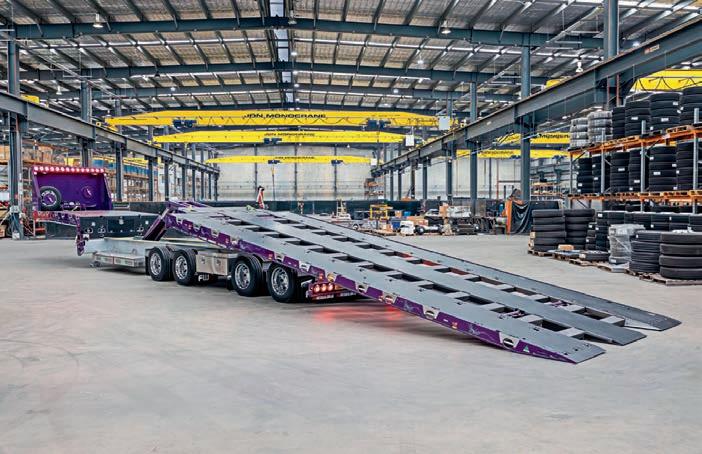
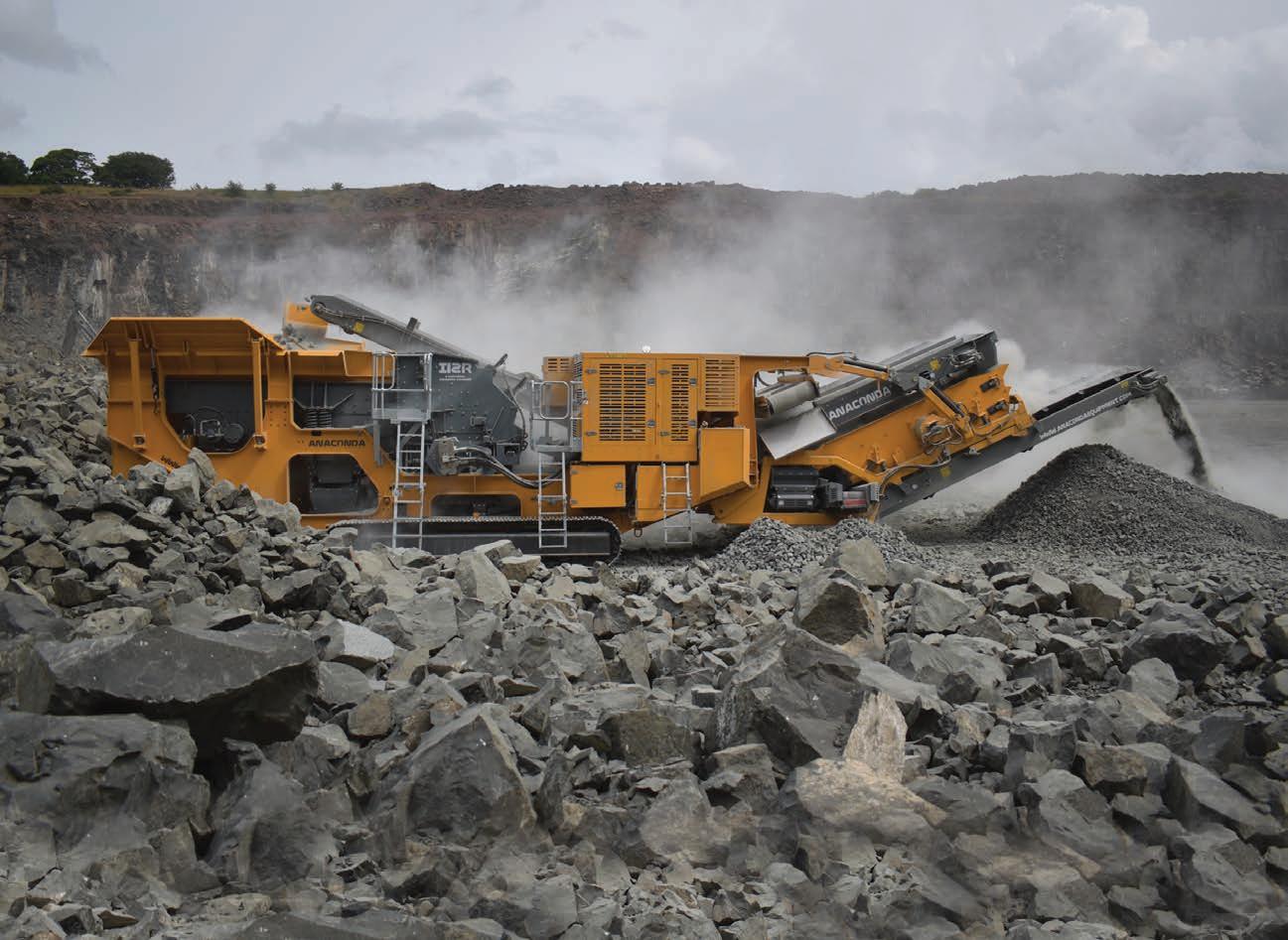
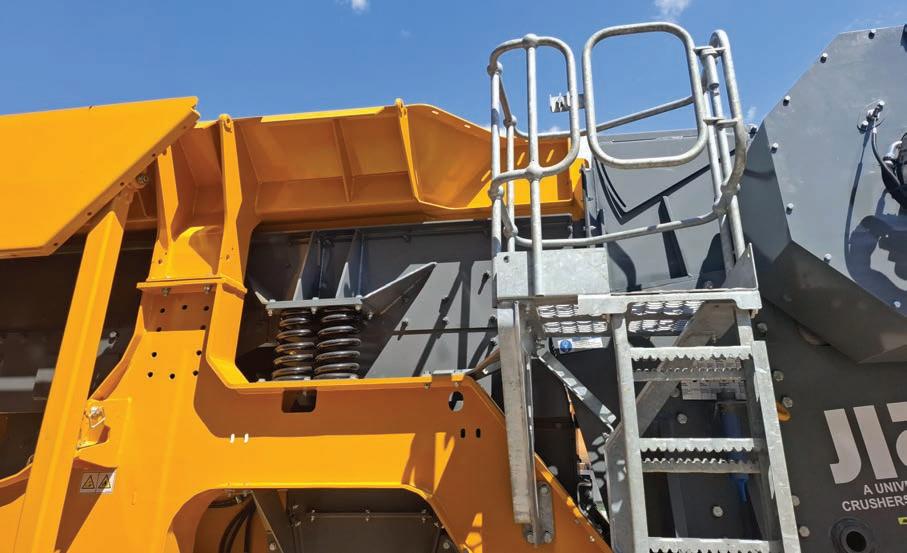
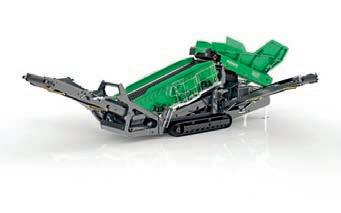
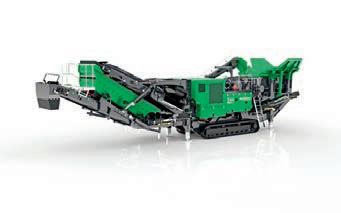
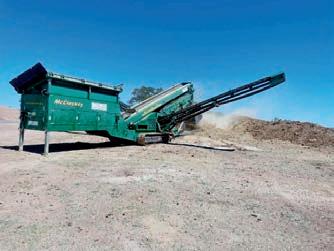
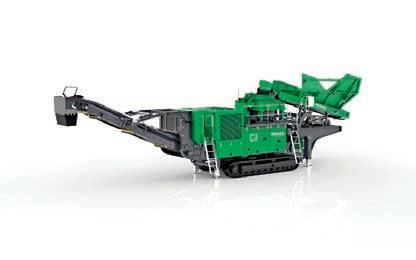
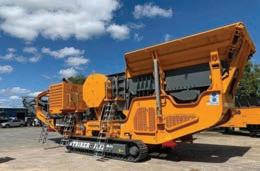
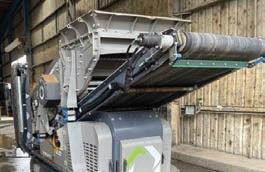
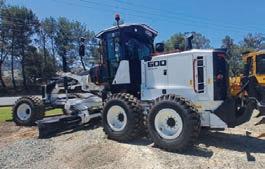
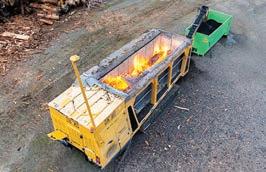
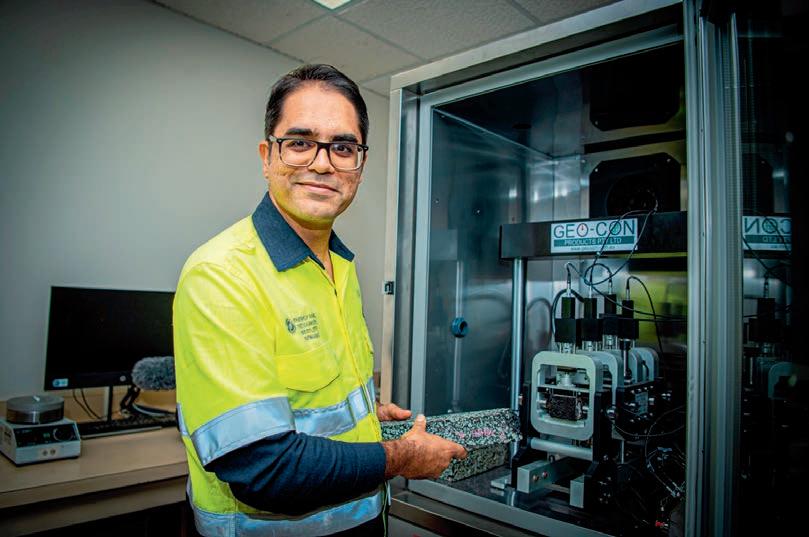
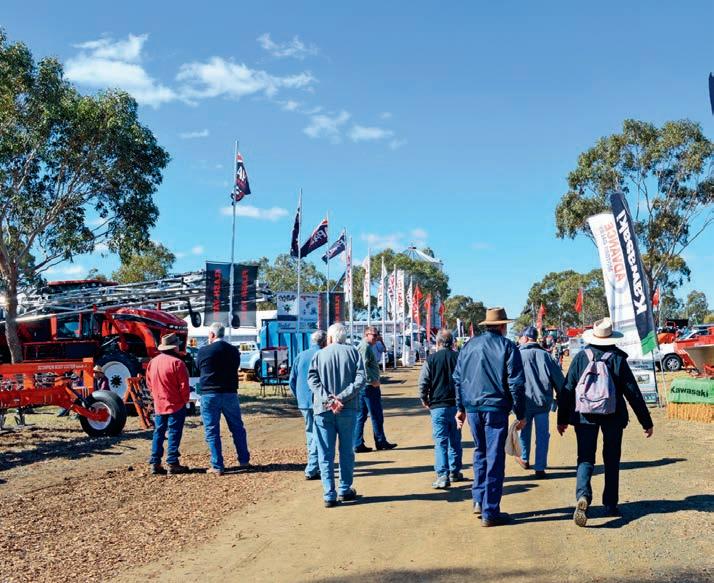
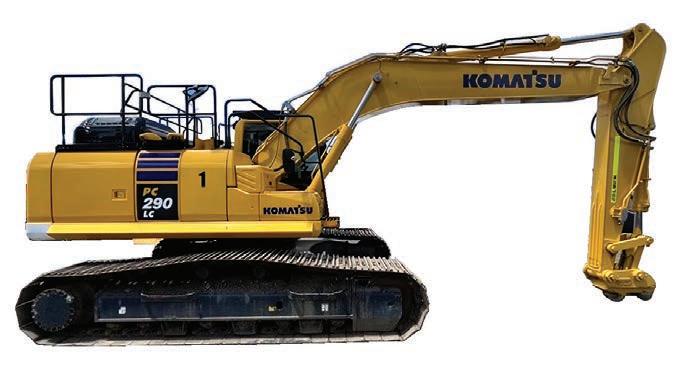
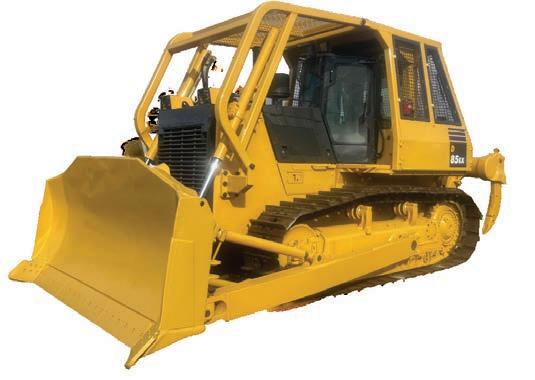
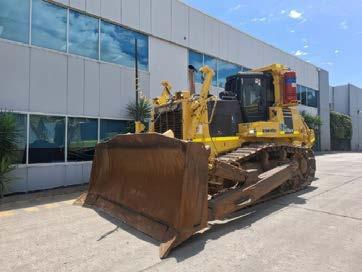
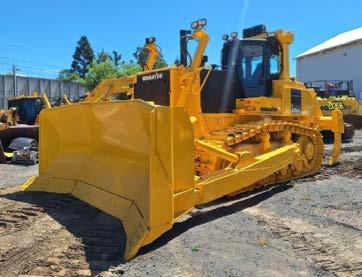
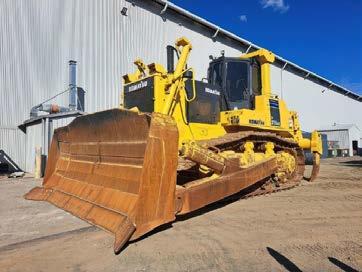
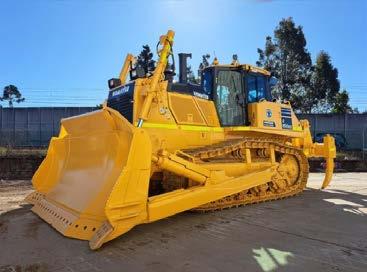
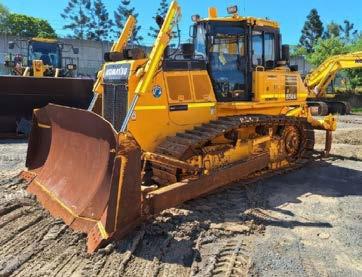
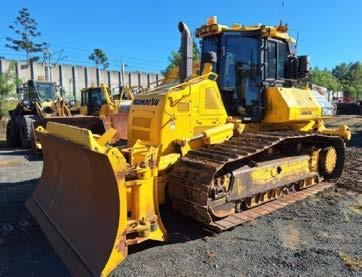
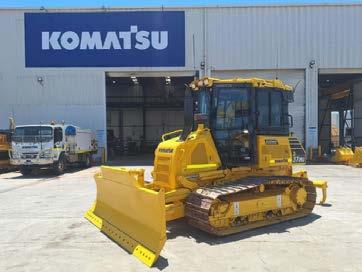
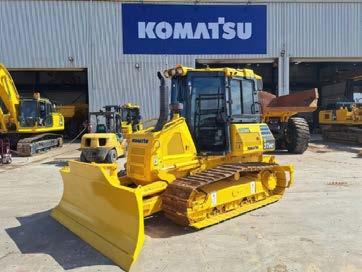
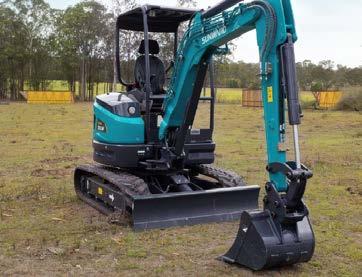
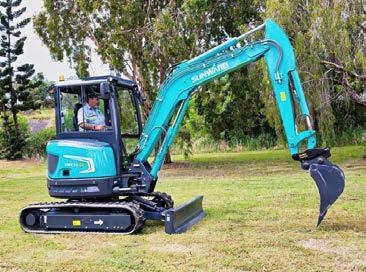
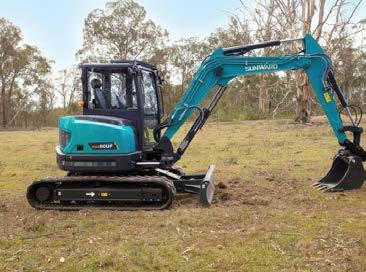
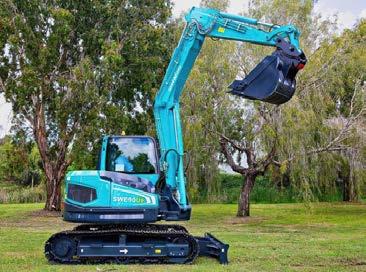
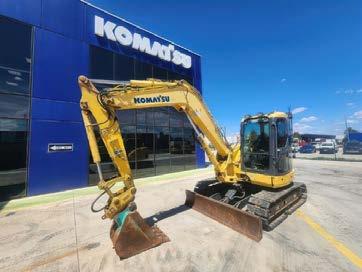
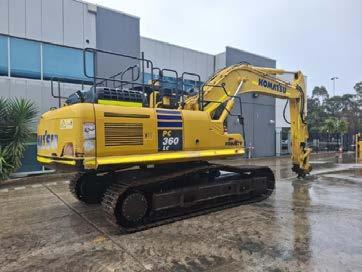
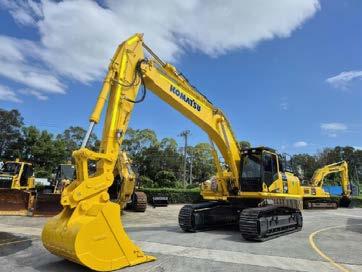
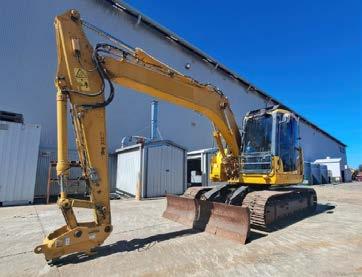
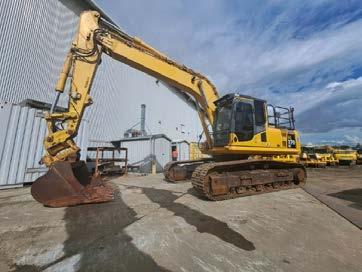
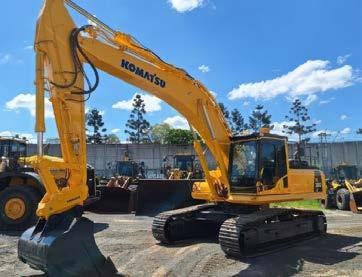
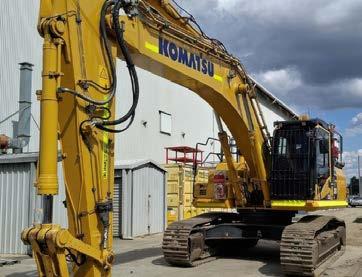
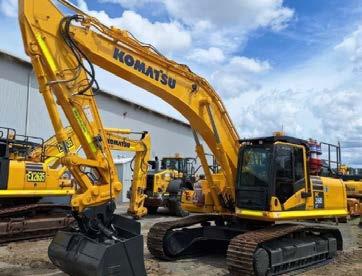
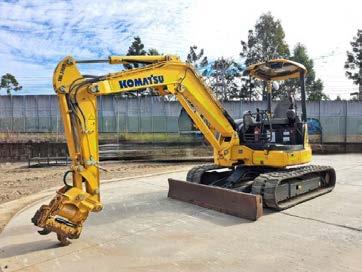
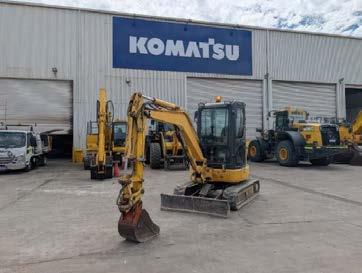
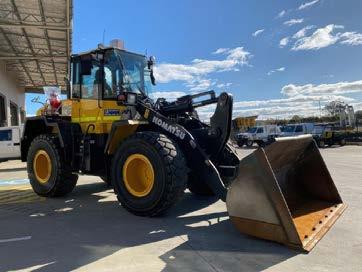
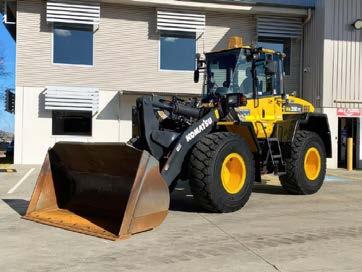
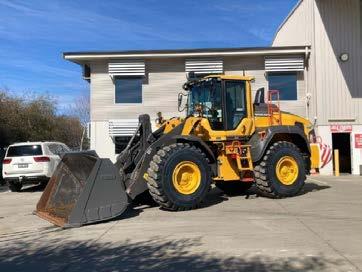
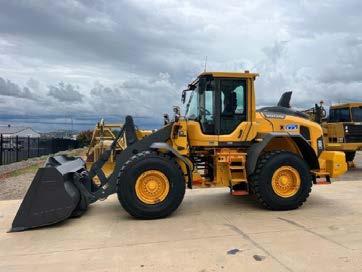
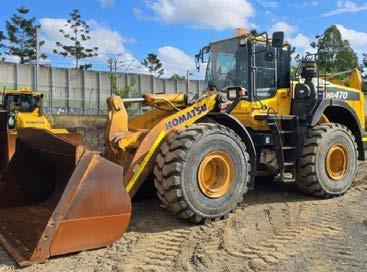
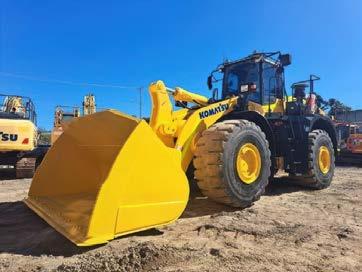
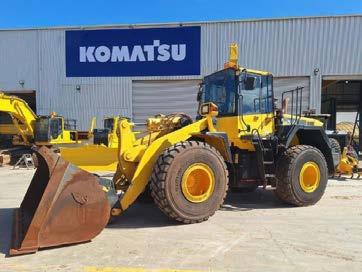
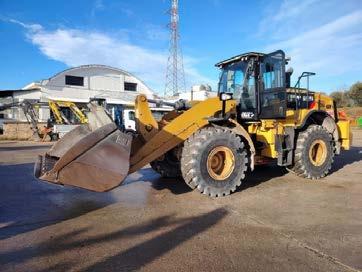
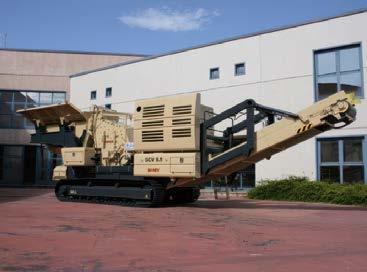
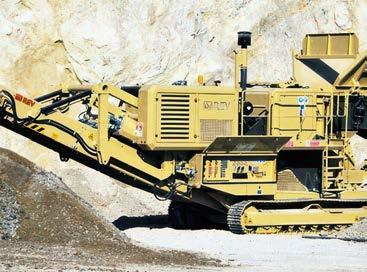
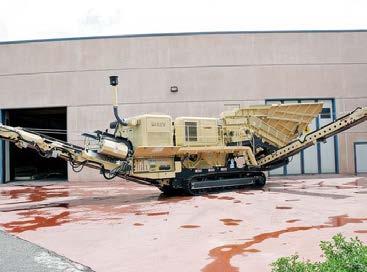
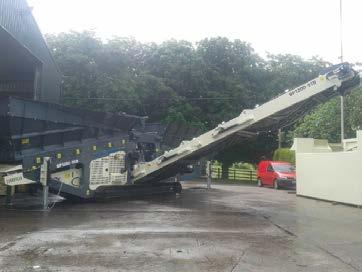
In this issue’s cover story Komatsu outlines how its performance-driven mindset goes beyond the job site through its partnership with the Atlassian Williams F1 Team 10
News
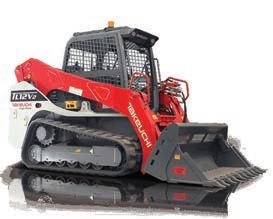
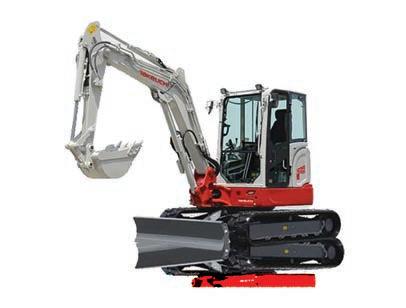
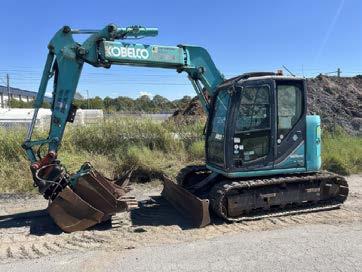
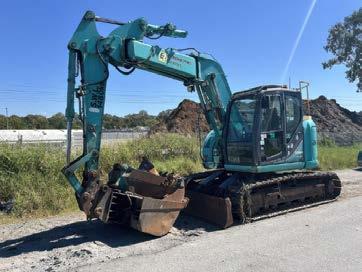
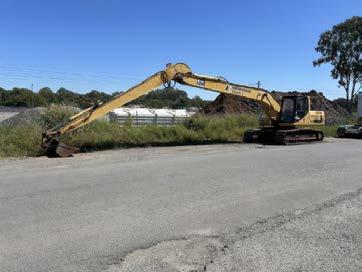
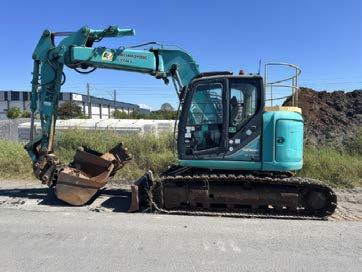
In the news, the Australian Constructor’s Association announces new CEO, Takeuchi moves to new dealer, Rokbak trucks reach the end of the line and 2026 Australian Construction Achievement Award winners are announced
Features
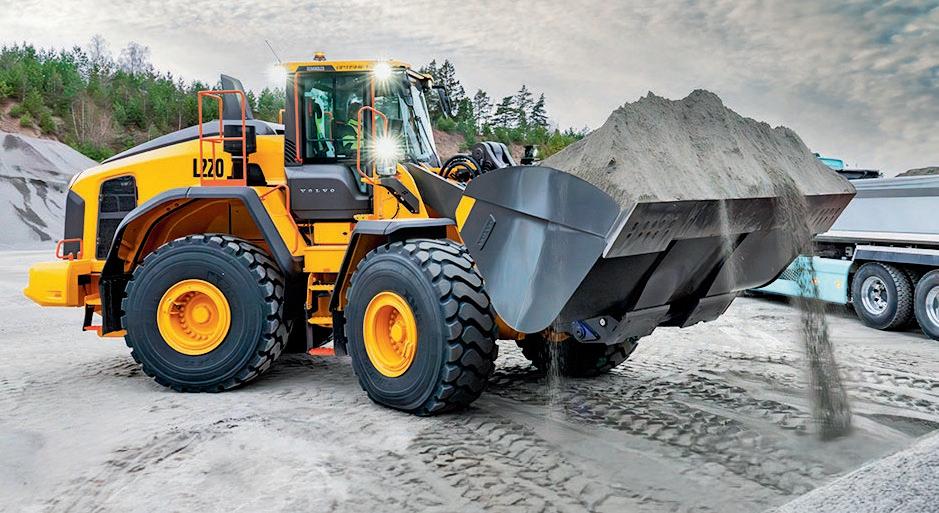
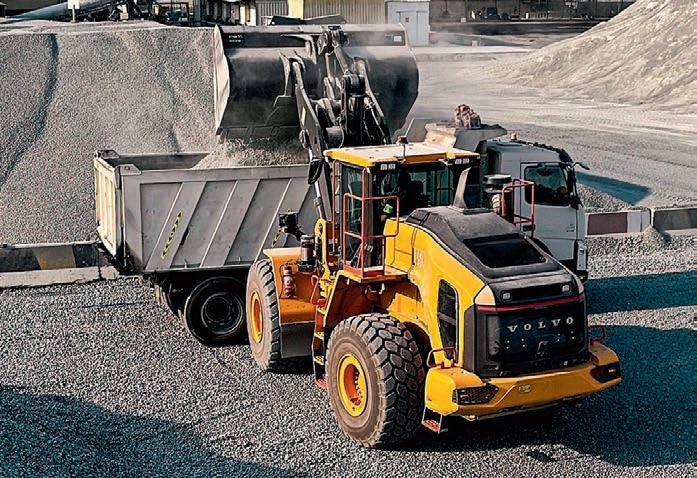
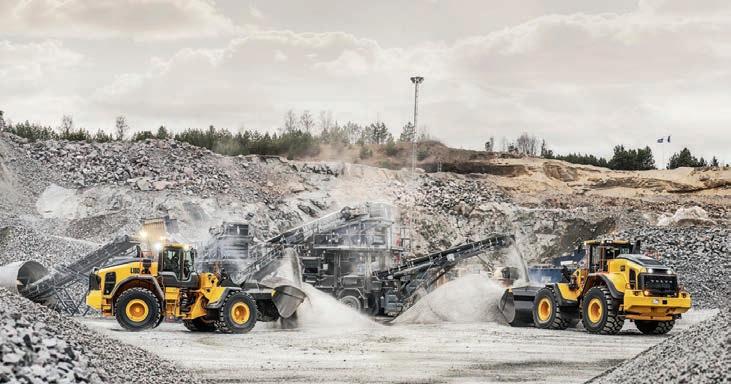
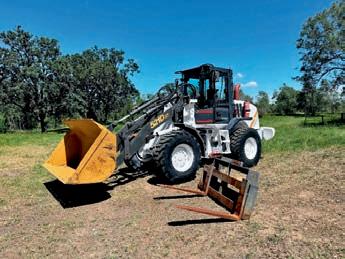
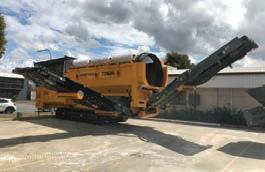
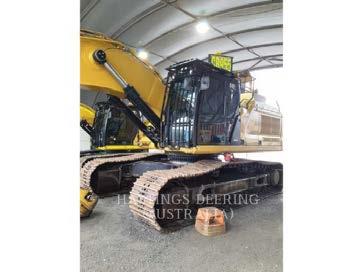
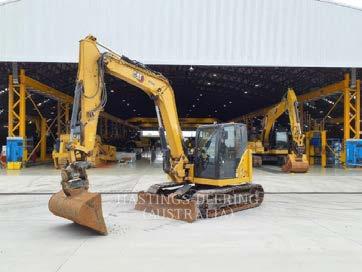
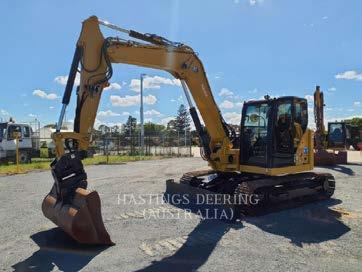
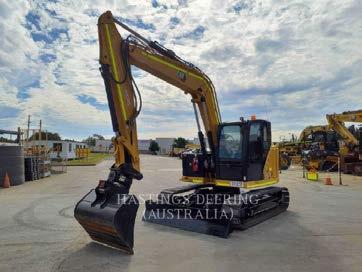
VisionLink from Caterpillar is helping Hastings Deering customers make the most of their fuel usage 12 The new Anaconda C12R mobile cone crusher is now available from Onetrak 15 CJD Equipment explains why Volvo’s K series wheel loaders are more than just standard machines
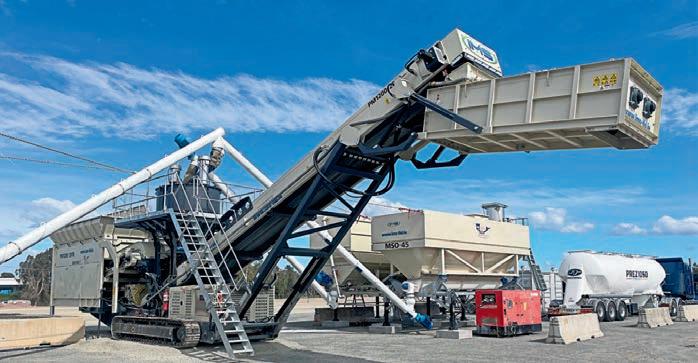
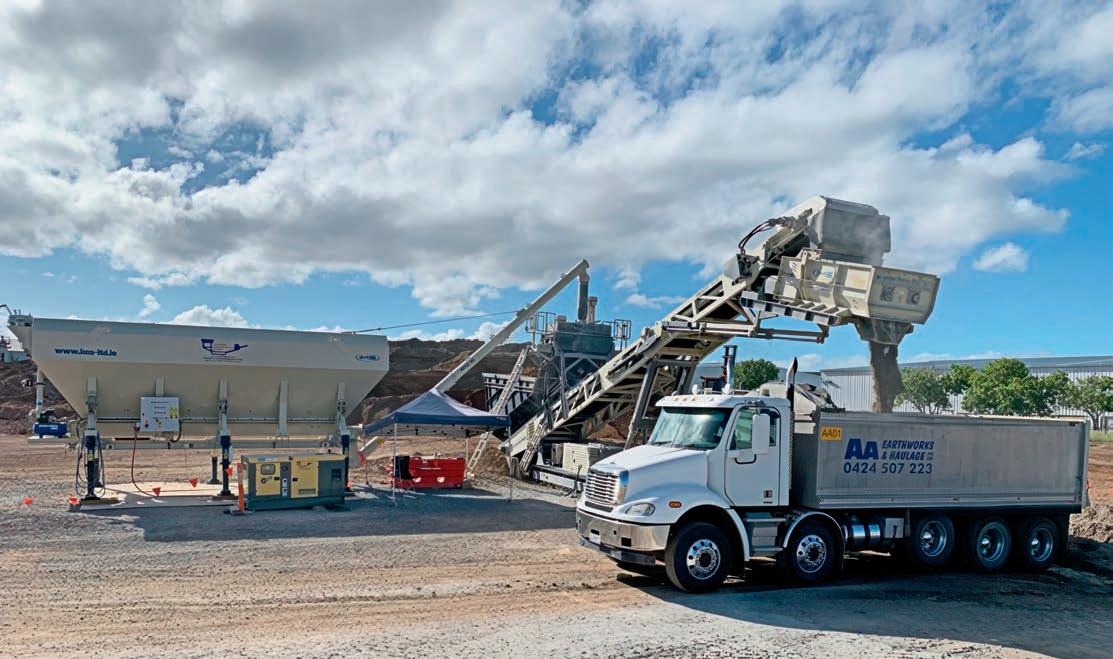
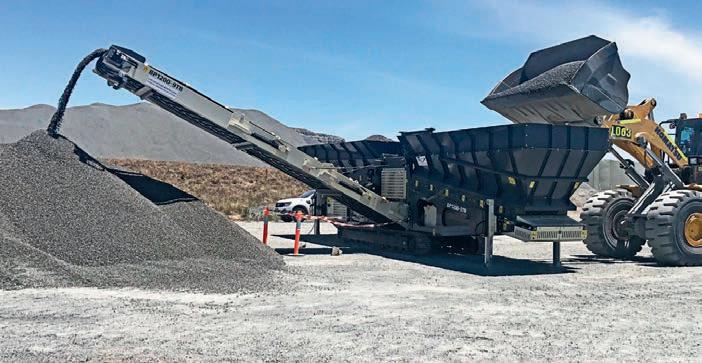
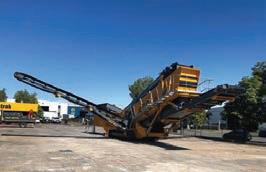
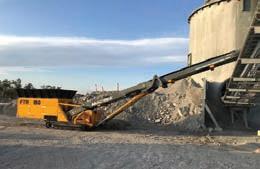
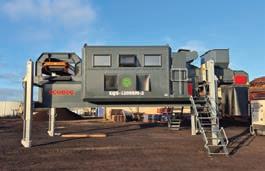
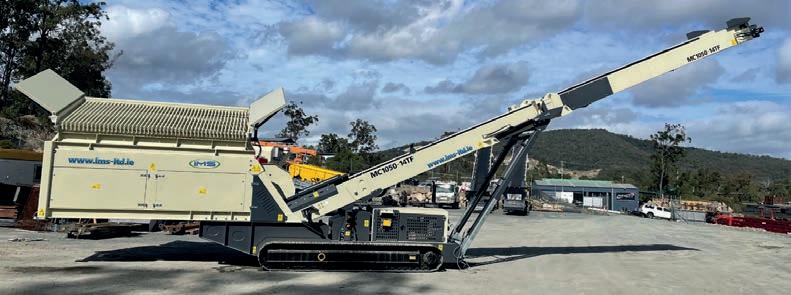
Crusher Screen Sales & Hire has partnered with IMS to design a reliable and accurate pugmill
Editorial & Design
Editor Cat FitzJohns
catherine.fitzjohns@primecreative.com.au
Journalist Jackson Haddad jackson.haddad@primecreative.com.au
Contributors
Damian Long, Cathryn Greville, Trevor Schwenke
Managing Editor Eugene Du y
Art Director/Design Daz Woolley
Cover Image Komatsu
Industry opinion
CCF QLD CEO Damian Long highlights the need for better access to increasing amounts of building material
WorldSkills CEO Trevor Schwenke highlights how skills development drives shared success
NAWIC CEO Cathryn Greville is encouraging the industry to join the male allies challenge and be part of the culture shi
Event News
Municipal Works Australia’s National Conference showcased the latest equipment available to local government
Atlas Copco and Australian Power Equipment share their support for the Women in Industry Awards
Regulars
Exciting changes
Each issue of Earthmovers & Excavators is now packed with even more value as we join with Deals on Wheels
Welcome to the April issue of Earthmovers & Excavators and you will have noticed something a bit di erent this time. From this issue onwards we will be co-printed with sister magazine Deals on Wheels, which has reported on Australia’s trucking industry for decades.
This means that every issue will now highlight fantastic news, features and pro les of businesses and people working across construction and transport.
With many contractors also running trucks and trailers, bringing the two magazines together o ers greater value to readers of both magazines and I extend a warm welcome to the Deals on Wheels team as we move forward together.
This means there are a couple of changes to the structure with Plant & Equipment now located in the Deals on Wheels section, just ip the mag, but the content is unchanged.
I encourage you to take a look at the fantastic features in Deals on Wheels to see some striking photography of Kenworths, Macks and more as well as great marketplace deals.
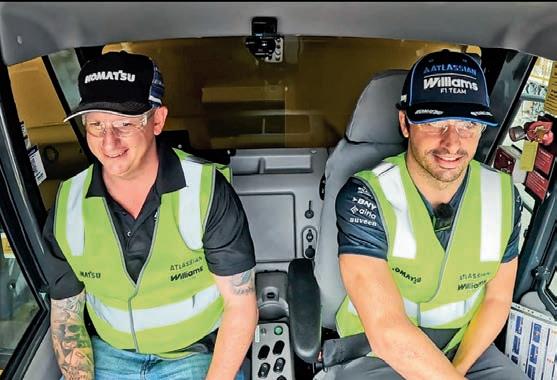
On the cover of this issue, we focus on Komatsu’s thrilling involvement with the Atlassian Williams F1 Team. As its Principal Partner, Komatsu hosted driver Carlos Sainz
at its Fair eld facility in Western Sydney, and two of its employees experienced the Australian Grand Prix from inside the team’s garage.
In other features, Hastings Deering explains how eet management application VisionLink from Caterpillar can help contractors and operators make the most of their fuel usage – a topic more important now than ever – while Onetrak introduces the Anaconda C12R mobile cone crusher to Australia.
CJD Equipment highlights the Volvo K series wheel loaders, which it says are built not as standalone loaders, bur integrated with the operator for consistent performance, while for those looking for a reliable and accurate pugmill, Crusher
Screen Sales & Hire has partnered with IMS to design a machine suited for the Australian environment.
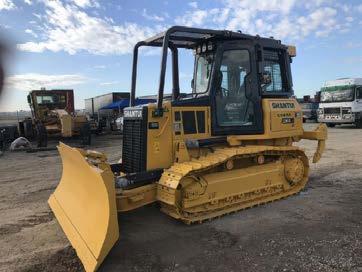
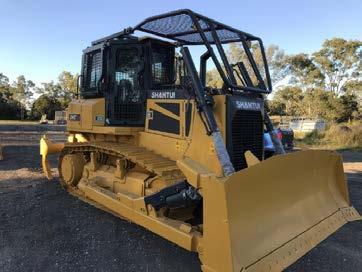
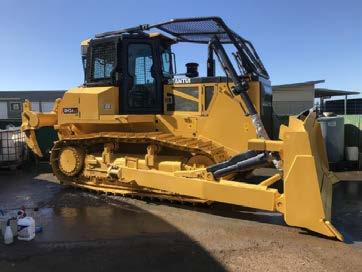
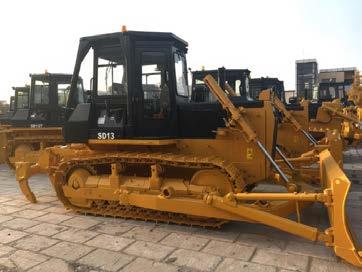
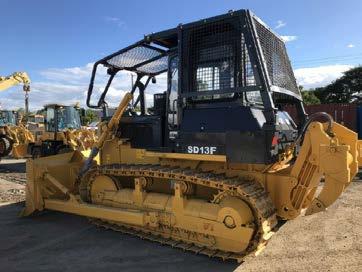
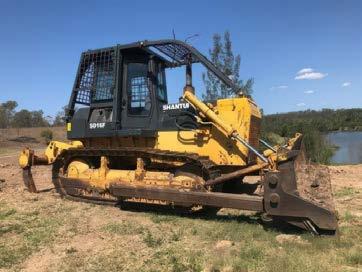
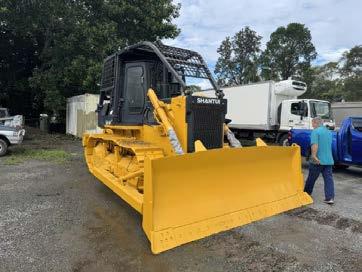
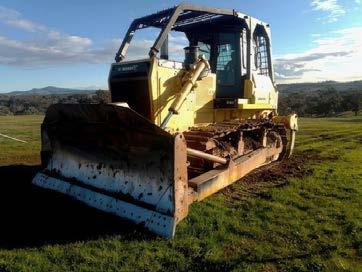
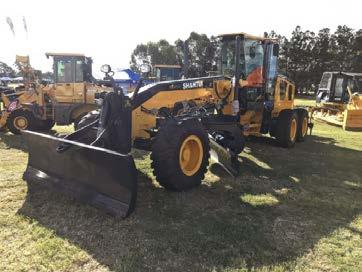
Backed by industry experience and global connections, we look at the rise of Cobra Equipment, which o ers quality Shantui machinery with customisable options, and we also catch up with Roma Tilt Trucks’ Chris Hof to nd out how he has helped shaped FWR’s Super Tilt trailer model.
Having attended Municipal Works Australia’s 2026 National Conference, we provide some of the highlights
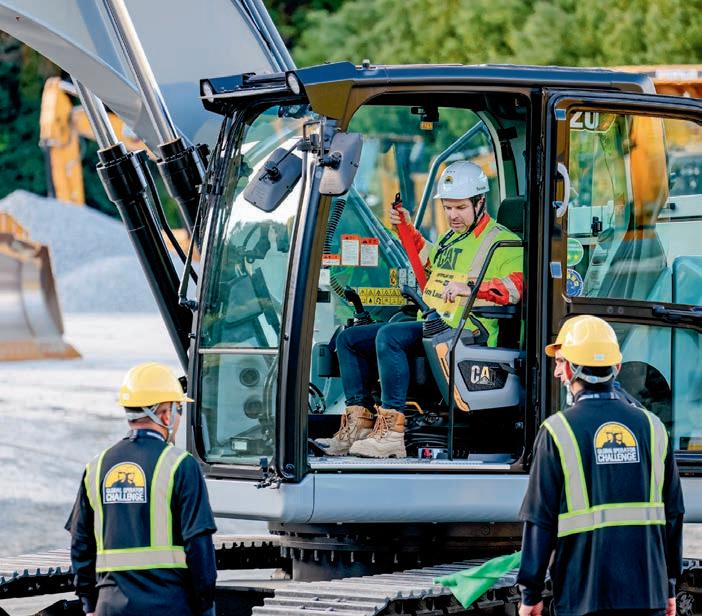
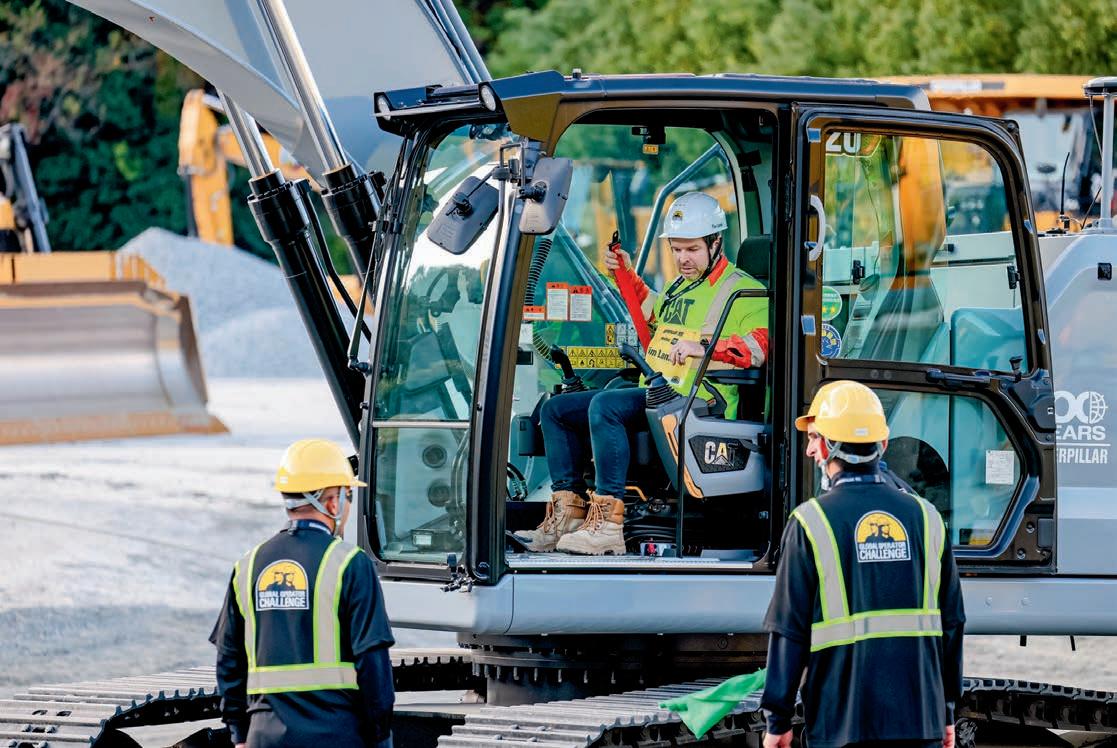
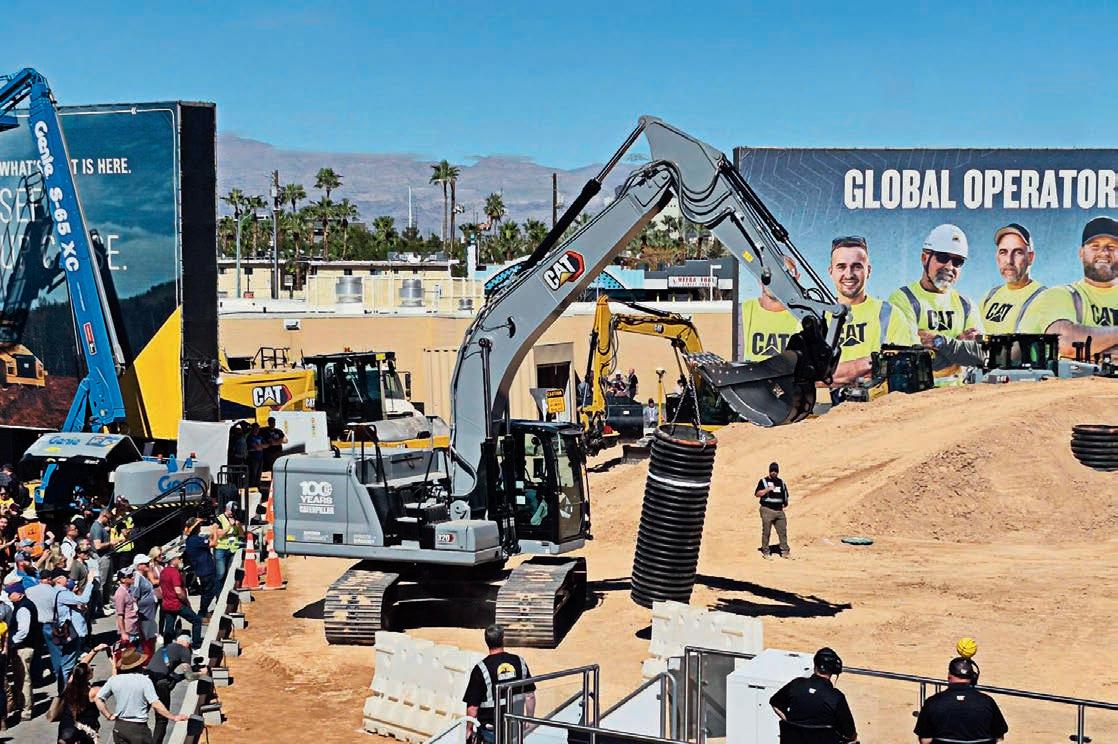
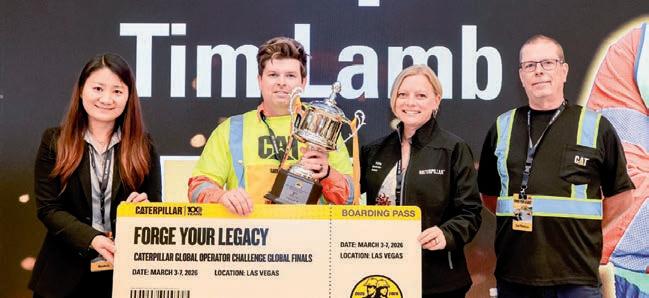
Australian operator Tim Lamb recently competed in the Caterpillar Global Operator Challenge. We caught up with him to chat about his experiences at the final. See page 36 for the full story
from the event’s exhibitor showcase, including an overview of some new machinery available on the market.
Fresh from participating in the Cat Global Operator Challenge at CONEXPO, Daracon Group plant operator Tim Lamb chats about his experience handling the pressure of solving tasks in front of a huge crowd.
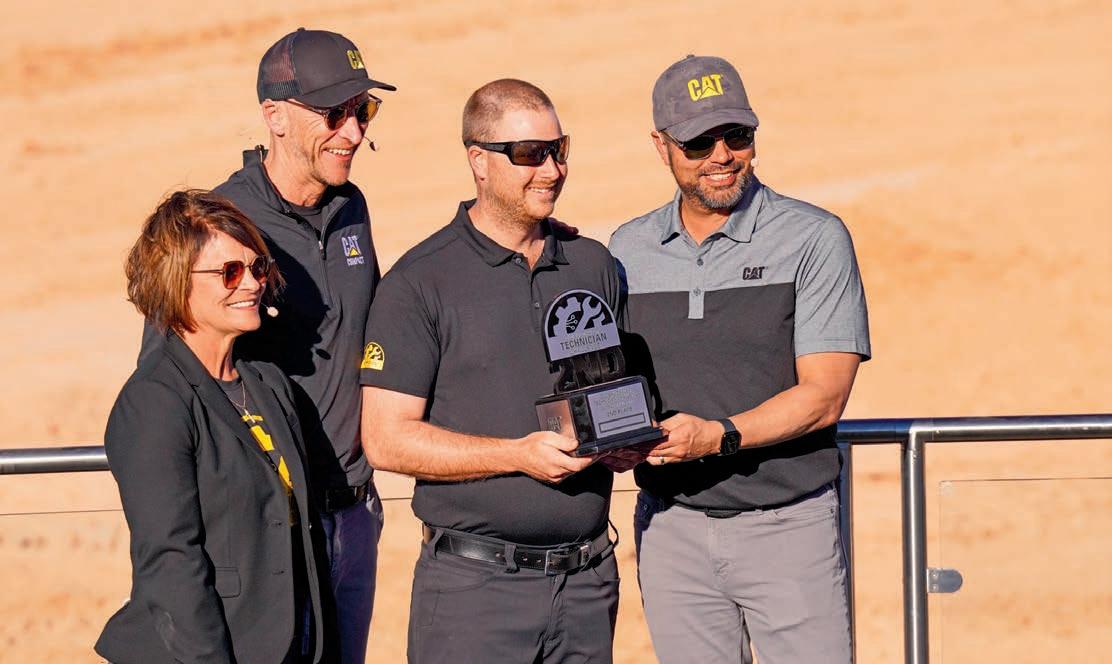
WesTrac eld service technician
Leon Archibald also recently competed in an international skills competition, having placed second in the Caterpillar Global Dealership Technician Challenge. Here he explains his background in the industry, what the challenge involved, and the excitement of competing on a global stage.
In other event news, we hear from Atlas Copco Group and Australian Power Equipment on why the Women in Industry Awards can help secure the long-term success of industrial sectors.
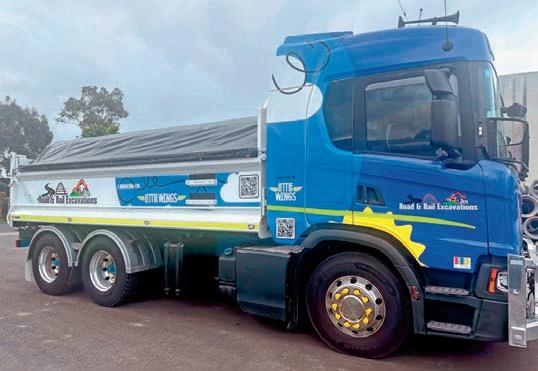
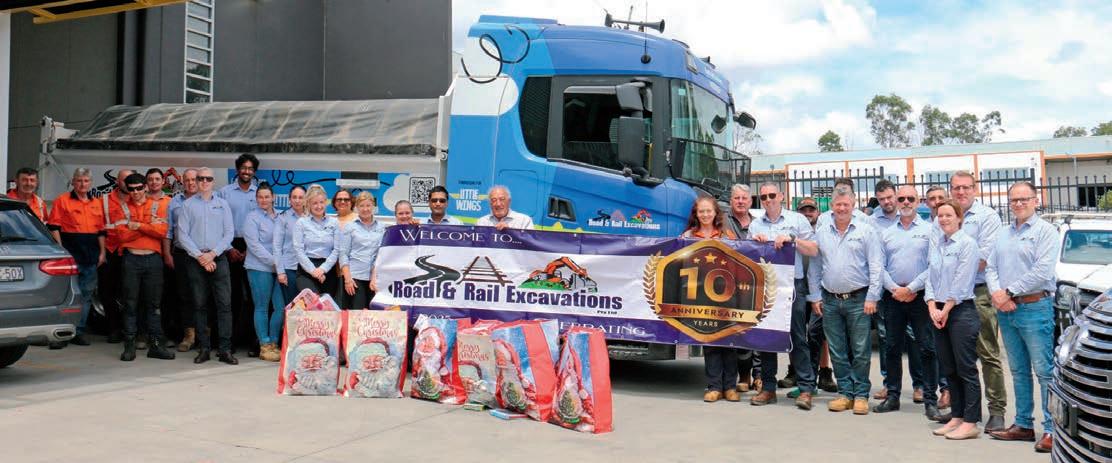
Finally, we focus on Road & Rail Excavations’ specialist works on Sydney’s Warringah Freeway Upgrade, and learn how one of its branded trucks is ying the ag for the Little Wings children’s charity.
All of this is in addition to industry comment from CCF QLD, NAWIC and WorldSkills, plus the latest news.
Happy reading!
Cat FitzJohns Editor, Earthmovers & Excavators
Image:
Caterpillar
LEADERSHIP
Peter Colacino will take the helm of the Australian Constructors Association from May
New appointment
The Australian Constructors Association (ACA) has appointed Peter Colacino as its next CEO, e ective May 4, 2026. He succeeds Jon Davies, who will step down a er six years and remain with the ACA until June to support the transition.
ACA president Annabel Crookes says Colacino brings a unique combination of industry insight and policy experience.
“Peter understands the construction sector from every angle having worked closely with contractors and been at the centre of government policy discussions shaping the industry’s future,” Crookes says.
“Peter is well placed to translate the work that has gone before into change felt on the ground. With major initiatives such as the National Construction Strategy now well progressed, the task ahead is to turn that work into improvements
for contractors, clients and workers across the sector. At a time when Australia is asking more of the construction industry than ever, that focus on delivery will be essential.”
Paying tribute to Davies, Crookes says his impact extended well beyond his formal role.
“Coming from industry, Jon wore his heart on his sleeve. He approached every conversation from a place of genuine care for building a better sector,” Crookes says.
“He has played a foundational role in establishing the ACA as a trusted partner to government and a leading advocate for industry reform. He leaves the association in a strong position, with a clear strategy and real momentum for change. Jon will remain a close friend of the ACA.”
Davies says it had been a privilege to lead the ACA through a period marked by COVID-19 and signi cant industrial relations uncertainty.
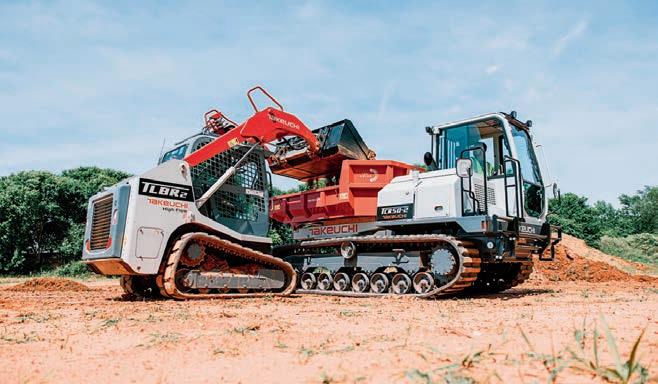
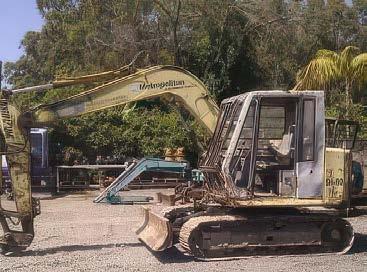
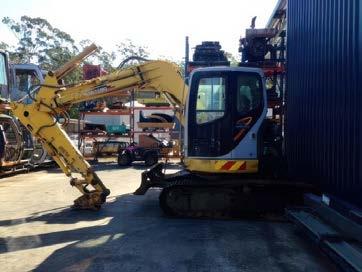
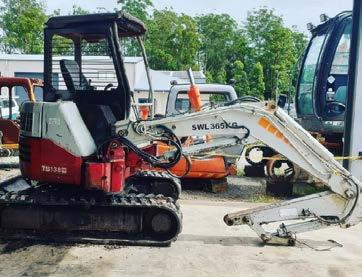
Takeuchi construction equipment will no longer be distributed by Semco Group
Semco has transitioned distribution of the Takeuchi brand in Australia, following 26 years as its national distributor.
Toyota Material Handling Australia has assumed responsibility for sales,
parts and service support for Takeuchi customers throughout the country.
Since introducing Takeuchi to Australia in 1999, Semco has played a huge role in establishing the brand as a trusted name
“I am really proud of what the association has achieved in elevating the voice of major contractors and progressing important industry reforms,” Davies says.
“I leave con dent that the ACA will be in the front row as the transformative change we’ve worked so hard to set in motion becomes real on the ground. The foundations are in place, the momentum is there and the sector is on the cusp of meaningful improvement.”
in compact construction equipment.
“We would like to sincerely thank all of our customers, resellers and partners who have supported Semco and the Takeuchi brand over the past 26 years,”
Semco Group CEO Steve Zivkovich says.
“It has been a privilege to build long-standing relationships across the industry and to support our customers with equipment, parts and service over.
“As we transition, our priority is ensuring continuity and support for our customers, and we trust that Toyota Material Handling Australia will continue to look after them into the future.”
Semco will work closely with Takeuchi and TMHA over the coming months to ensure a smooth transition for customers, dealers and partners.
Toyota Material Handling Australia is now responsible for sales, parts and service support for Takeuchi customers. Image: Toyota Material Handling Australia
Peter Colacino. Image: ACA
Rokbak will no longer be producing haulers.
BUSINESS
Stopping production
Rokbak haulers will stop being built later in the year after operational losses
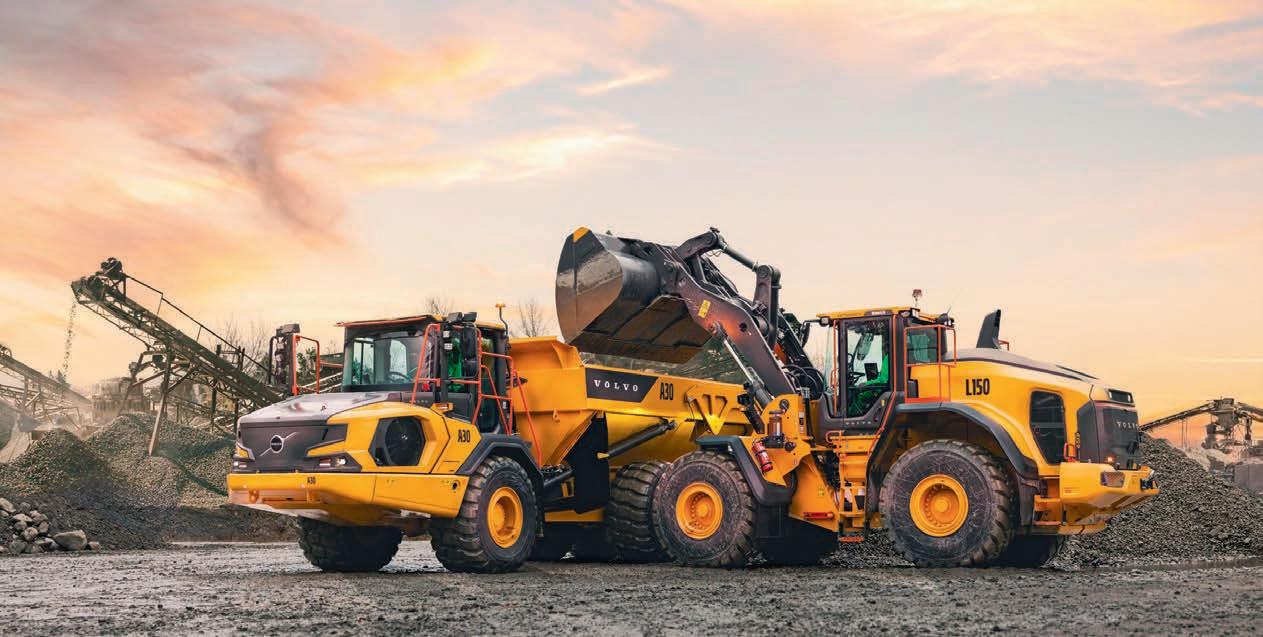
Volvo Construction Equipment has announced that, due to the unsustainable pro tability of the Rokbak business, Rokbak will be closed and Volvo CE will continue to focus on its other hauling solutions.
For more than four decades, Rokbak – formerly Terex Trucks – has manufactured o -highway articulated haulers from its site in Motherwell, Scotland.
However, rising operational and supply chain costs, combined with global trade challenges, have signi cantly impacted nancial performance, Volvo CE says, making continued operation unsustainable.
The anticipated production stop of Rokbak articulated haulers is scheduled to happen in the second half of 2026.
Volvo CE says that closing Rokbak enables the company to concentrate resources on advancing and launching other hauling solutions.
The Motherwell facility will continue as a key hub for designing and manufacturing Volvo rigid haulers and will drive development of future product lines.
The closure is subject to completion of a collective consultation process which is expected to be concluded by Quarter 3, 2026.
Outstanding projects
The nation’s most outstanding construction projects have been named as nalists of the 2026 Australian Construction Achievement Award
Seven major projects from across the country, representing more than $17 billion in construction value, have been announced as nalists for the 2026 Australian Construction Achievement Award (ACAA).
This year’s shortlist spans city-de ning education precincts, nation-building transport links, world-class health infrastructure, marine and aviation gateways, and rapid disaster-recovery works.
The winner will be announced at a black-tie dinner at the Hyatt Regency Sydney on August 20 2026, held alongside the Australian Constructors Association’s Foundations and Frontiers Forum.
The ACAA nalists for 2026 are:
• ECU City Campus (Western Australia), by Multiplex
A transformational inner-city campus delivering Perth’s rst comprehensive CBD university, the 66,107 square metre vertical campus was delivered above live transport infrastructure.
A fast-tracked, cyclone-recovery e ort that stabilised and rebuilt critical export infrastructure a er Tropical Cyclone Megan. In just 12 months, the team restored operations through a complex marine program drawing on eets from Australia, Singapore and the UAE.
• Kimberley Marine Support Base (Western Australia), by TAMS Group
A new 250m long oating wharf designed to accommodate large tidal variations and expand capacity at the Port of Broome.
• Metro Tunnel Project (Victoria),
Melbourne’s Metro Tunnel Project was named as a finalist.
Image: Michael Evans/ stock.adobe.com
by Cross Yarra Partnership & Rail Network Alliance
The largest overhaul of Melbourne’s rail network in 40 years included two 9-kilometre tunnels, ve new underground stations and 97 kilometres of upgraded corridor.
• New Footscray Hospital (Victoria), by Multiplex
A 504-bed health precinct and one of Victoria’s largest ever hospital investments, the 192,000 square metre facility expands emergency, mental health, subacute and specialist services, while increasing capacity for 35,000 additional patients each year.
• New Sydney Fish Market (NSW), by Multiplex
A modern, world-class waterfront destination revitalising Sydney’s seafood industry with over 12,000 square metres of public domain.
• Western Sydney International (Nancy-Bird Walton) Airport (WSI) Airside, Civil & Pavement Works and Terminal & Specialty Services (ACP & TSS) (NSW), by Western Sydney Airport Corporation, Bechtel, CPB Contractors, Acciona and Multiplex Delivered ahead of schedule and within budget, these works established the core aviation infrastructure for Australia’s newest international airport. The project includes a 3.7km runway, advanced air eld systems, a 96,000 square metre terminal and integrated aviation services.
Image: Volvo CE
Cover story
Performance driven
Komatsu is taking its performance-driven mindset beyond the job site through its partnership with the Atlassian Williams F1 Team
Komatsu’s global partnership with the Atlassian Williams F1 Team is built on a shared pursuit of engineering excellence, performance and innovation.
While one operates on construction sites and mine sites around the world and the other competes around a race track, both organisations are driven by the same principles – precision, advanced technology and continuous improvement.
The relationship builds on a history between the two organisations dating back to the 1990s, when Komatsu rst worked with the Williams team on technical initiatives.
Today, Komatsu is a Principal Partner of the Atlassian Williams F1 Team, bringing together two globally recognised engineering brands with a common focus on high-performance design and problem solving.
In elite motorsport racing, the smallest technical improvement can mean the di erence between
winning and losing. Teams analyse vast amounts of data, re ne designs down to the smallest detail and rely on exceptional teamwork to deliver exceptional performance under extreme pressure.
Those same philosophies underpin Komatsu’s approach to developing machines and technologies that support productivity, safety and e ciency across construction, quarry and mining operations.
Celebrating together
Beyond the engineering parallels, the partnership also creates opportunities to inspire employees, engage customers and celebrate the people behind both organisations.
One example came earlier this year when two Komatsu employees experienced the excitement of the Australian Grand Prix from inside the Williams garage.
Western Australian eld service technicians Caitlyn Hayes and Brayden Rodda traded remote mine sites for the world of elite motorsport when they travelled to Melbourne
for a once-in-a-lifetime experience at the 2026 Australian Grand Prix. Nominated by their peers through Komatsu’s employee recognition program, the pair spent the race weekend as honorary members of the Atlassian Williams F1 Team.
The experience placed them inside one of the most high-pressure environments in global motorsport, giving them rare behind-the-scenes access to the Williams garage and pit operations.
Hayes says stepping into the garage was an eye-opening experience.
“Seeing the level of precision, communication and teamwork required to prepare a car for a Grand Prix race really puts into perspective how much goes on behind the scenes,” she says.
“Every person has a role and everything happens with such speed and accuracy to get the car ready to race.”
Across the weekend, Hayes and Rodda experienced many of the fast-paced moments that power a racing team, including crew practice
Images: Komatsu
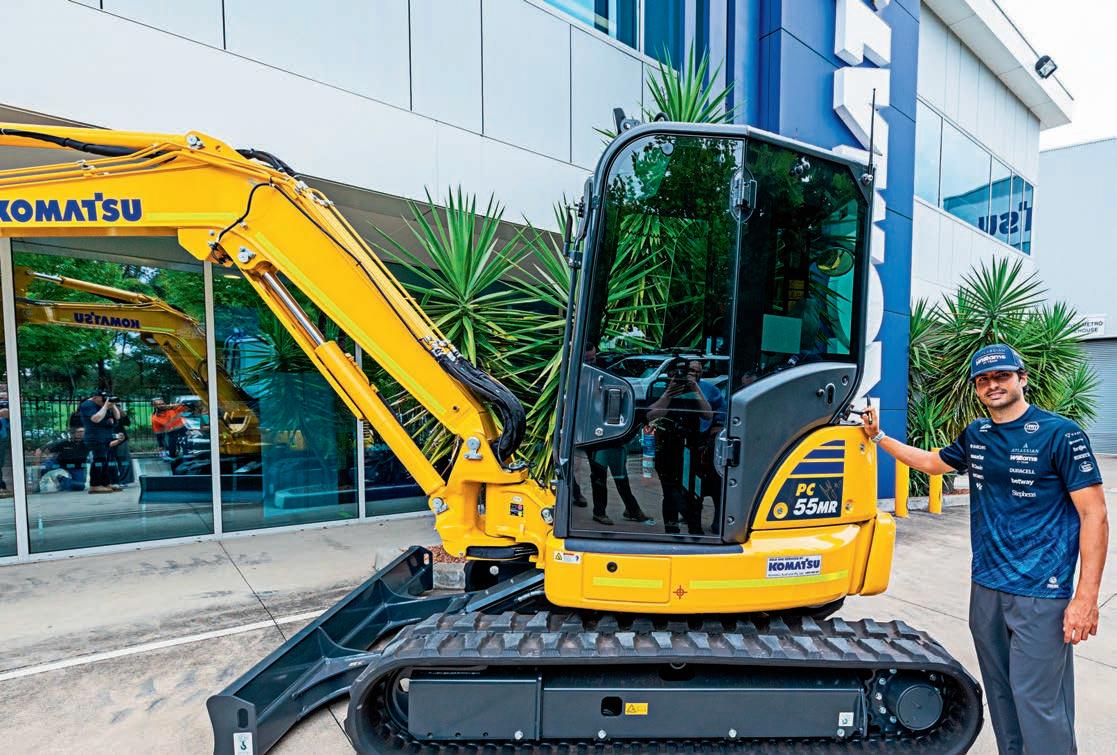
Driver Carlos Sainz visited Komatsu’s Fairfield facility in Western Sydney and signed a Komatsu PC55 mini excavator
sessions, sitting in on engineering brie ngs with the drivers and watching the team operate during live practice sessions.
The pair also had the chance to take part in pit crew drills and speak directly with mechanics and engineers about the technology and coordination required to compete at the highest level of motorsport.
“It was de nitely a change going from the red dirt of my swing at work to the crowds and bustle of Melbourne,” Hayes says.
“The buzz around the paddock and in the pits is something that’s hard to describe until you’re able to experience it yourself.”
For Rodda, the opportunity provided a rare chance to see another side of high-performance engineering.
“It’s not something I’d ever imagined experiencing in my career,” he says.
“Getting that kind of access and seeing how another industry operates at such a high level was really interesting. It also shows how much Komatsu backs its people and gives them opportunities you wouldn’t normally expect.”
Swapping car for cab
The partnership was also brought closer to home when Atlassian Williams F1 Team driver Carlos Sainz visited Komatsu’s Fair eld facility in Western Sydney ahead of the Australian Grand Prix.
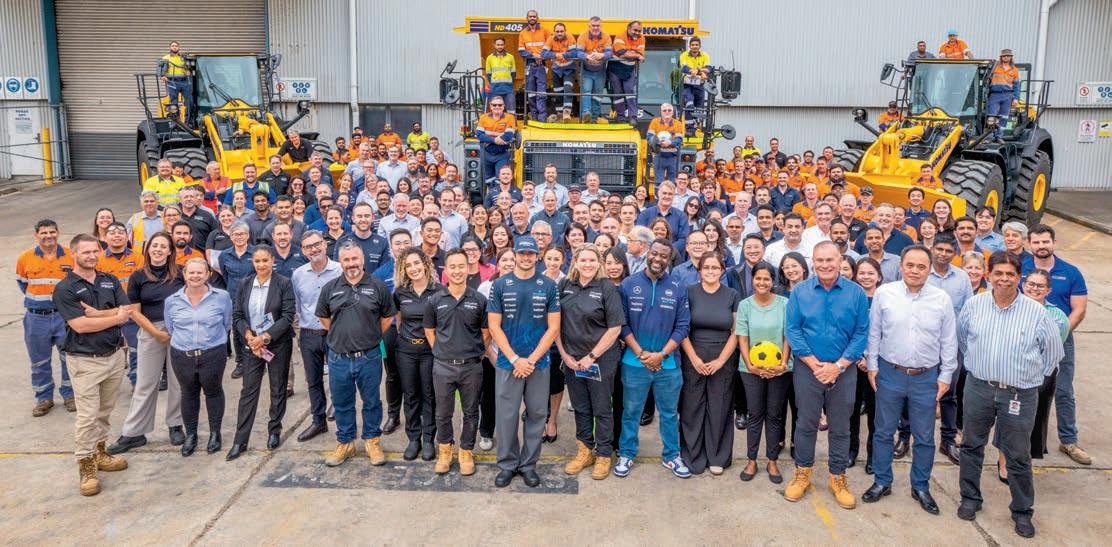
The visit marked the rst time the Williams team had appeared at the Sydney facility and attracted more than 300 employees and customers, creating a rare opportunity for attendees to hear directly from one of motorsport racing’s most recognisable drivers and gain insight into the world of elite motorsport.
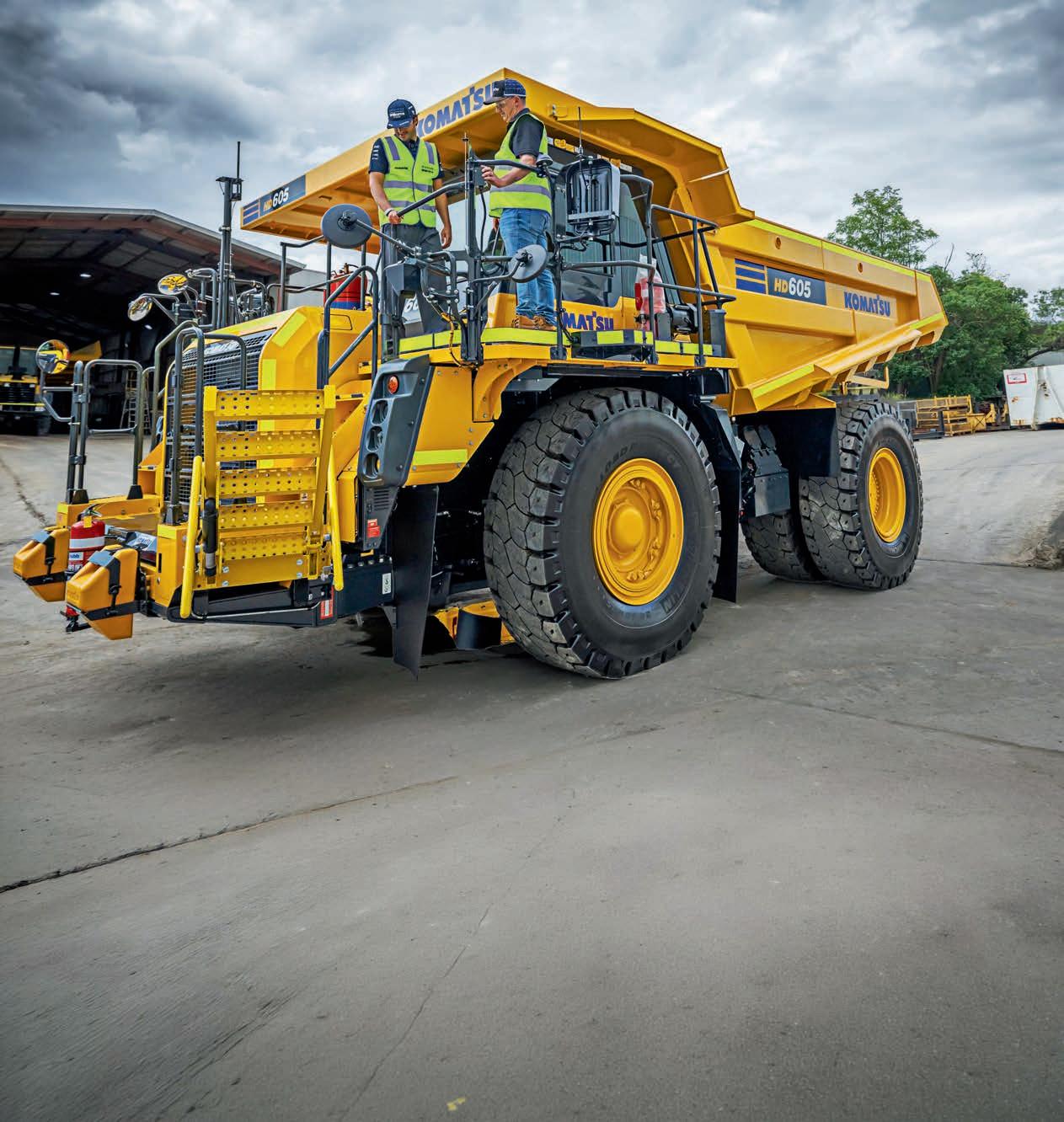
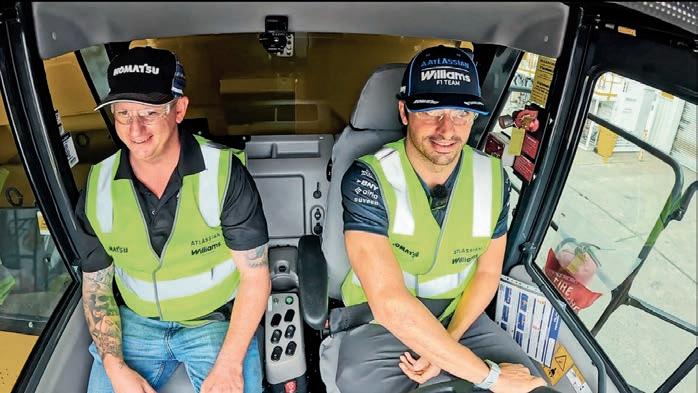
During the event, Sainz took part in a Q&A session with employees and customers before stepping into the cab of a Komatsu HD605 rigid dump truck, swapping the FW48 cockpit for heavy machinery
controls in a moment that quickly became a highlight of the day.
The driver also signed a Komatsu PC55 mini excavator, a tting choice given the model number mirrors Sainz’s racing number, 55, creating a symbolic link between motorsport performance and Komatsu’s own engineering capability.
For Komatsu, experiences like these demonstrate how the partnership extends well beyond branding or sponsorship. By connecting employees, customers and engineering communities with the world of elite motorsport, the collaboration highlights the shared culture of innovation, teamwork and performance that de nes both organisations.
For more information, visit: komatsu.com.au
Carlos Sainz took a turn in a Komatsu HD605 rigid dump truck
Komatsu’s Fairfield facility enjoyed hearing a Q&A with Carlos Sainz
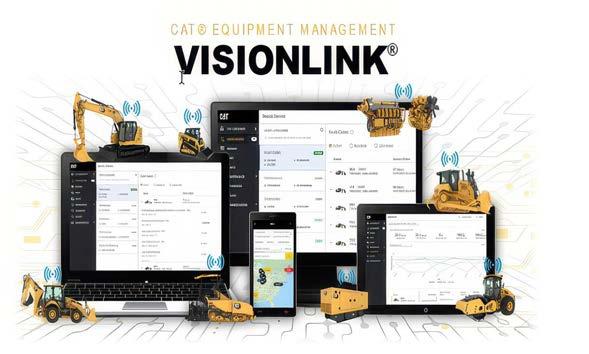
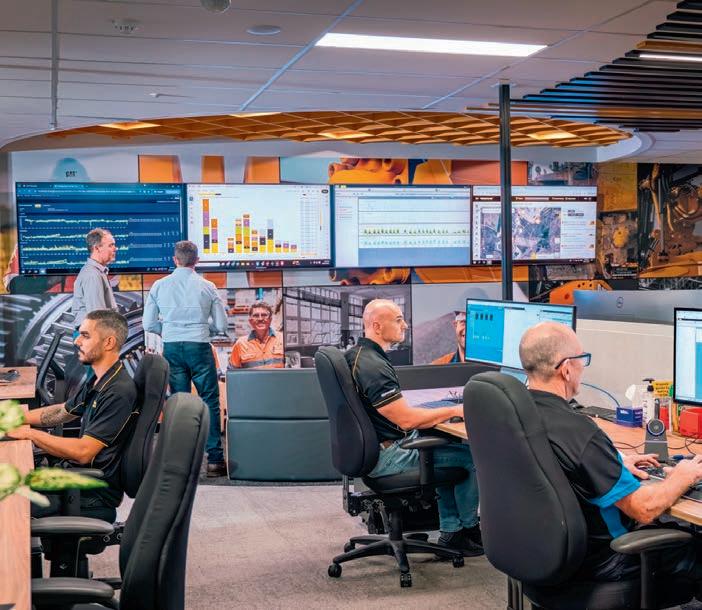
VisionLink o ers key equipment data insights and is available on any new Cat machine purchased from Hastings Deering
Saving on fuel
Fleet management application VisionLink from Caterpillar and Hastings Deering can help contractors and operators make the most of their fuel usage
Fuel is already one of the most signi cant everyday equipment operating costs, and with the current rise in diesel prices, it’s becoming a major concern for contractors and machine owners.
Many businesses are now questioning how they can increase the e ciency of their fuel usage and minimise potential wastage.
This normally would require extensive data collation, which can be a time-consuming process and a strain on resources which many contractors don’t have.
However, technologies such as VisionLink from Caterpillar and Hastings Deering can streamline this process by providing equipment data seamlessly to a desktop or mobile
device – allowing contractors to make informed decisions.
This cloud-based so ware application takes the guesswork out of eet management, o ering several key insights to maximise performance, and is available on any new Cat® machine purchased from Hastings Deering.
“A product link device which reports into VisionLink is installed in every new Cat machine,” Hastings Deering customer solutions manager – asset solutions Chris Caine says.
“Customers can log into VisionLink on the web-based platform and the mobile app to track their machines and their eet.”
It is available as a web-based platform and as a mobile app
Maximising usage
Many of Hastings Deering’s customers are reporting the impact of increased diesel prices is already hurting their businesses, with VisionLink being a key tool in helping alleviate some of this pressure.
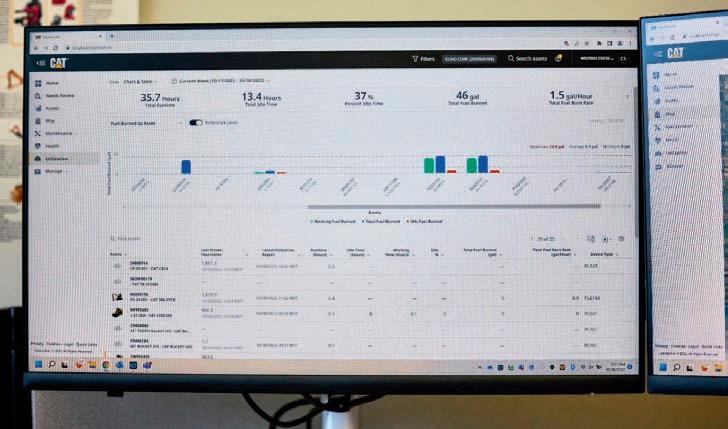
Able to produce machine fuel burn data – both while working and in idle – VisionLink is being used by Hastings Deering’s customers to gain a better understanding of how they can make cost-savings.
By generating fuel burn reports, contractors and operators can see which machines in their eet are using more fuel than others and identify if it is going to waste.
“If one machine is idling more than similar machines in the eet with the same application, then that’s unproductive fuel burn and a conversation can be had with the operator to identify training gaps or if resources can be directed elsewhere on the project,” Caine says.
Another feature of VisionLink is the ability to monitor machine fuel levels, and with push noti cation capabilities – via the mobile app, text message or email – contractors and operators can be alerted to when a machine is low on fuel.
This is especially useful for identifying if fuel has been stolen
Images: Hastings Deering
from a machine, as customers will be noti ed if fuel levels have drastically dropped from the time a machine was last turned o .
Data provided by VisionLink can also help determine if a machine is being used to its full potential, based on idling data.
“If a machine is running for 10 hours a day and half of it is idle, this could potentially be reduced to get the job done quicker,” Caine says.
“This could also help businesses identify if they can save costs on operator rates, especially in pay by hour scenarios.
“There’s a lot of ways VisionLink can be used, it depends how you want to interpret the data.”
Information hub
Beyond using VisionLink for fuel data, it is a vital eet management tool which can provide a wide range of information about any machine, including hours of operation, individual locations, fault codes, and overall health status to ensure maintenance issues are spotted and addressed before a breakdown.
Supported by third-party data integration, VisionLink can also be integrated with machinery from other brands, meaning data can be collated all in one place
by contractors with mixed eets, whether owned or rented.
Utilisation targets can be set and monitored as part of an overall strategy to increase productivity and reduce operating costs.
Work ows can also be created to schedule and track tasks, such as buying parts or requesting servicing.
Automated machine reporting can reduce the time it takes si ing through data to ensure machines are being used to their full potential, while push noti cations can have plenty of uses beyond just monitoring fuel levels.
“VisionLink can provide a noti cation if a machine comes out of a geofence and leaves a
particular project,” Caine explains.
“VisionLink has also been used to locate a number of machines that have been stolen.”
Additionally, the technology can act as a user manual, with access to information relating to operating a machine and performing maintenance. This includes ‘quick links’ to training videos, with tutorials showing how to operate di erent features on a machine.
With four di erent VisionLink subscription options, customers can get just what they need at a cost that makes sense for their business.
Starting with the standard VisionLink Connect, customers are provided core telematics data, so they can better control their operating costs, while the top-of-therange VisionLink PerformancePro adds the ability to track productivity, including precise payload, location and time details.
“VisionLink aggregates all machine data into one place for customers to look at and create their own reports,” Caine says.
“Customers can download the mobile app from the Apple Store or Google Play Store and it will provide fuel burn information, with the ability to set up push noti cations.”
For more information on VisionLink, visit hastingsdeering.com.au
Contractors and operators can use VisionLink to generate fuel burn reports
Hastings Deering customers are gaining a better understanding of their fuel usage through VisionLink
Crush the competition
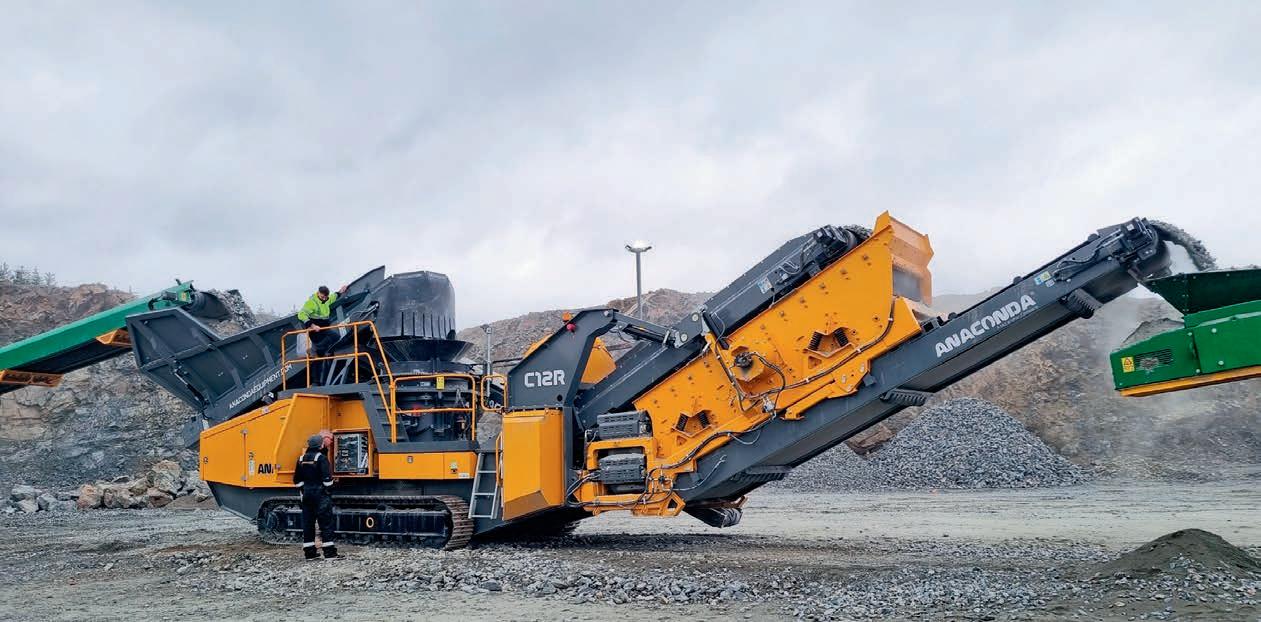
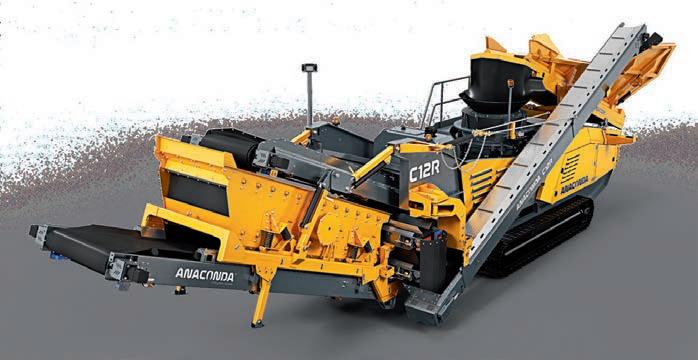
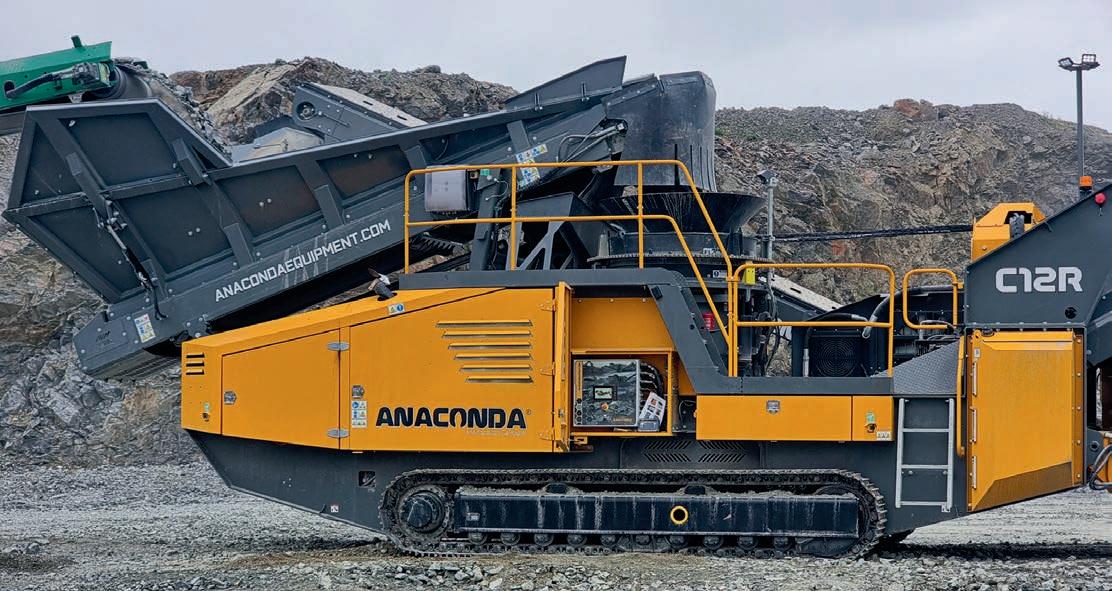
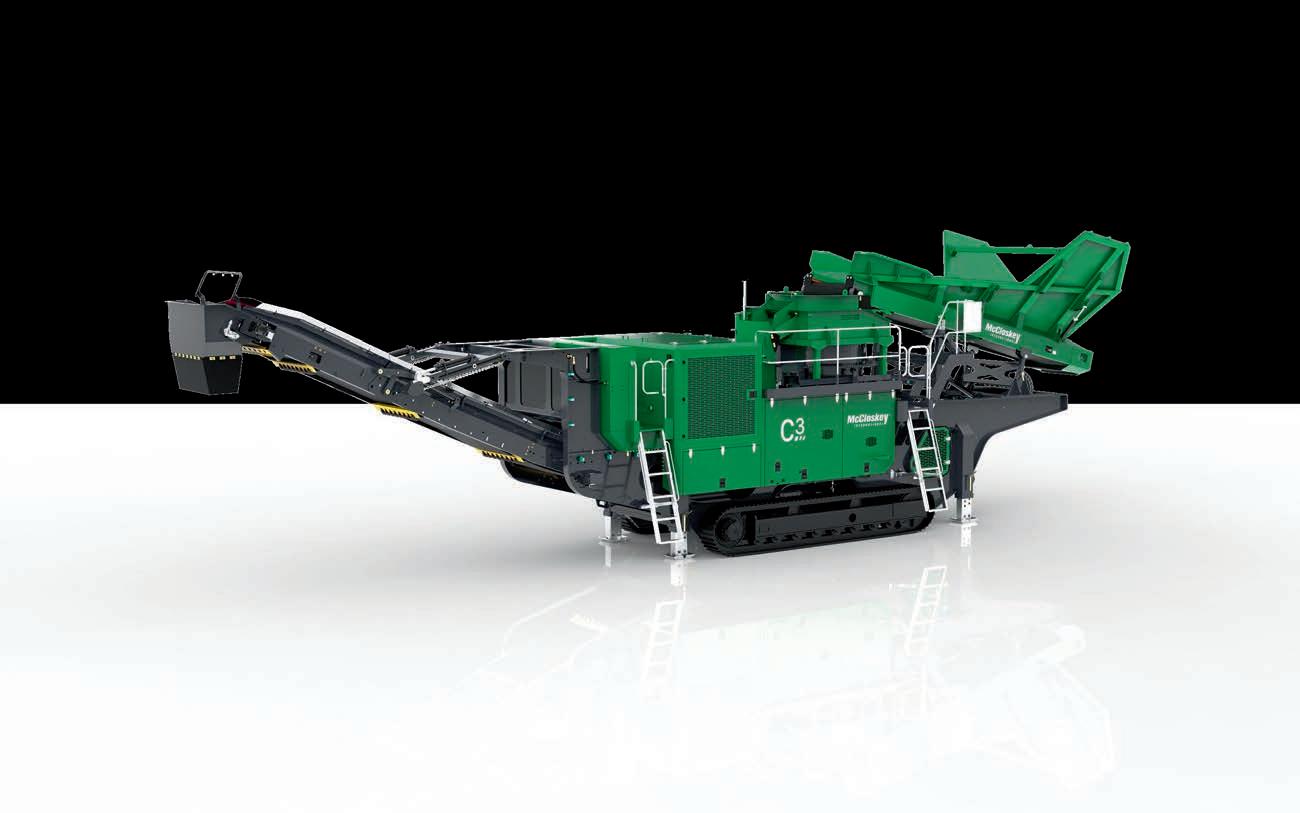
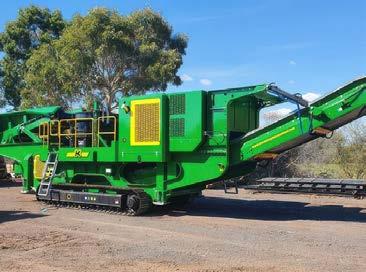
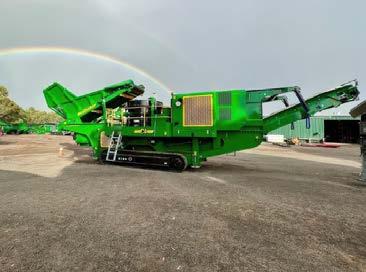
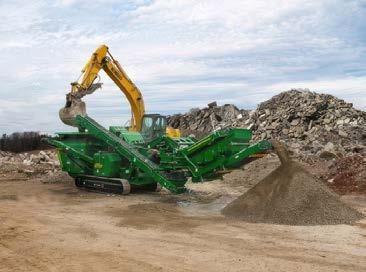
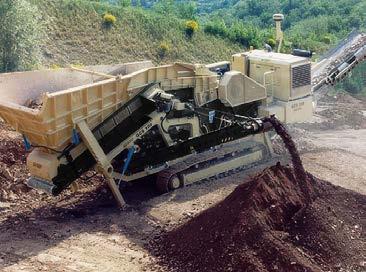
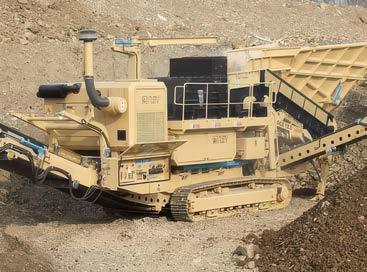
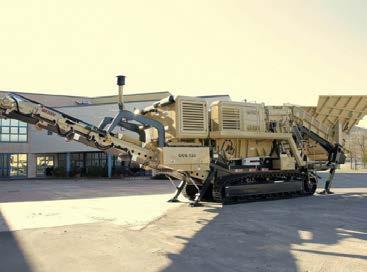
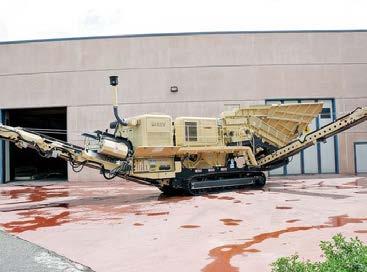
The new Anaconda C12R mobile cone crusher, available from Onetrak, is a closed-circuit mobile crushing solution for various aggregate applications
A er proving its worth in the European market, the Anaconda C12R mobile cone crusher recently arrived on Australian shores courtesy of Anaconda’s national distributor – Onetrak.
Originally launched at Hillhead 2024 – the United Kingdom’s largest quarrying, construction, and recycling equipment exhibition –the Anaconda C12R cone crusher continues to thrive across the construction, recycling, civil infrastructure and mining sectors.
The closed-circuit mobile cone crusher is designed for secondary and tertiary crushing and to produce nished material in a single pass.
It is built around the proven FLSmidth Raptor 250 cone chamber, delivering up to 240 tonnes per hour when choke-fed for reliable reduction and a cubical product. This is powered by a Cat 9.3 LRC Tier 2 engine, generating 310kW (416hp).
With a 920mm crusher size, 89mm throw and 235mm maximum feed, Onetrak crushing and screening business manager Heiner Guenzel says the FLSmidth Raptor 250 cone chamber is larger than many equivalents on the market.
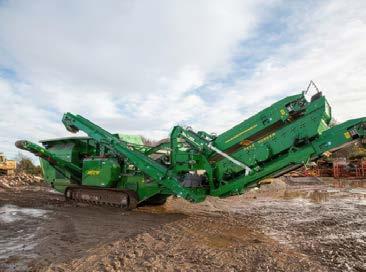
A 3,660mm by 1,520mm (12 by 5 ) two-deck a erscreen also features, separating material into nes, mids and oversize.
Fines are discharged on a dedicated conveyor, while transfer conveyors carry oversize from the top and bottom decks to the radial return conveyor.
Oversize material can be recirculated to the cone or diverted to stockpile, giving operators exibility across di erent applications including sand and gravel, river rock, blasted rock, processed ores and processed minerals.
Weighing in at 44 tonnes, Guenzel says the Anaconda C12R is well suited to smaller concrete recycling contractors and those producing road base, as well as smaller quarries.
Operator-centric design
To prevent machinery damage and costly downtime, the Anaconda cone crusher is equipped with a twin-coil metal detector, which stops metal from damaging the chamber. An optional purge chute is also available to clear uncrushable feed.
By reliably detecting tramp metal before it enters the machine, operators can reduce the risk of serious damage, lower repair costs, and increase their productivity.
“The twin-coil metal detector setup provides greater detection sensitivity creating a more consistent detection eld across the full belt width,” Guenzel says.
“This leads to better detection of smaller metal contaminants and more reliable performance across uneven material ow.”
Guenzel adds twin-coil systems are great at distinguishing between actual metal and background interference, such as vibration or wet material, which helps to reduce false triggers.
By doing so, operators can minimise unnecessary downtime looking for metal in the crusher which isn’t there.
“Twin-coil metal detectors o er improved performance with di cult wet or conductive materials and in high-volume or deep burden applications,” Guenzel says.
“As a result of this, twin-coil metal detectors provide stable operation
Images: Onetrak
The Anaconda C12R mobile cone crusher recently arrived in Australia
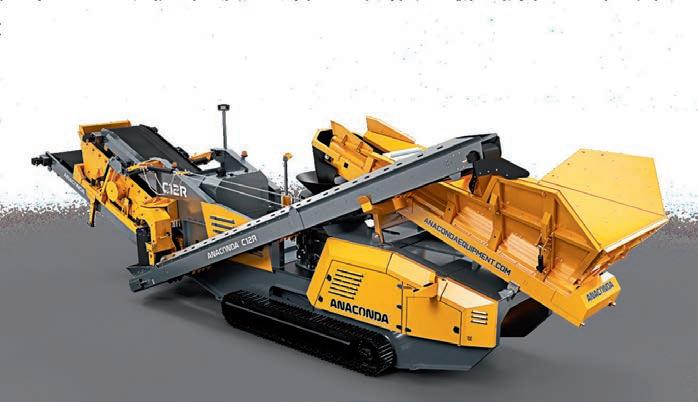
The quick-disconnect of the return conveyor allows the machine to change from a closed-circuit to an open-circuit
where single-coil systems may tend to struggle.”
Operators can transform the Anaconda C12R from a closed-circuit to an open-circuit with a quickdisconnect of the return conveyor.
Since the return conveyor can be removed, reattached and recon gured, the Anaconda cone crusher can be both set up and disassembled faster.
Able to be set up in approximately 10 minutes, the cone crusher is always ready for operation with minimal delays.
When the return conveyor is disconnected, the couplings are designed to seal – minimising hydraulic oil loss and providing a cleaner working environment with less risk of contamination.
Since there’s no need for tools or to drain lines, the quick-disconnect
not only reduces downtime, but also provides safer operation. This is because the risk of manually handling tools around hydraulic systems has been eliminated.
“Operators have greater exibility onsite due to the quick-disconnect feature of the return conveyor,” Guenzel says.
“It allows them to remove the return conveyor for transport, perform maintenance more easily, and swap con gurations, such as with or without recirculation.”
Radio remote control capabilities improve safety and operational exibility onsite, while hydraulic folding conveyors and the tracked mobility capabilities simplify transport and setup.
Optional telematics can also provide remote access to production and utilisation data.
Reduced maintenance
Featuring a direct drive clutch and pulley, the Anaconda C12R combines e ciency with low maintenance.
The hydraulically adjustable closed side setting tramp protection, and folding hopper wing plates, ensure safe, continuous crushing with minimal downtime.
Integrated ultrasonic level sensors, continuous load and material monitoring, and localised greasing points make the machine easy to operate and maintain, all from ground level.
The C12R features a recirculating screenbox with top and bottom decks, auxiliary transfer conveyor, and side discharge dirt belt, allowing operators to achieve clean, saleable material in a single pass.
This portable machine delivers precise product sizing, consistent throughput, and reliable operation, making it a standout choice among modern mobile cone crushers.
“Feedback on the Anaconda C12R cone crusher has been positive, with customers impressed with the throughput,” Guenzel says.
“They have really liked the FLSmidth Raptor 250 cone chamber, nding that it is outperforming competitors when material is properly prepped.”
For more information on the Anaconda C12R cone crusher, visit onetrak.com.au
A twin-coil metal detector ensures metal doesn’t enter the chamber
3.25%
Complete integration
Volvo’s new K series wheel loaders aren’t just machines, they’re complete operator systems which are designed for consistent performance, CJD Equipment says
In Australian earthmoving operations, most eets are still measured on tonnes produced per hour, and per litre of fuel burnt.
But high-performing operations know output is not driven solely by the machine – it’s driven by how well the operator and the machine perform together.
The Volvo K series wheel loaders are built on that very principle; not as standalone loaders, but integrated with the operator, and designed for consistent, repeatable performance.
Fuel performance
Fuel is where Volvo quietly outperforms. Across comparable loaders, competitors can appear similar on paper, but real-world operation tells a di erent story.
Cycle times, hydraulic performance, operator input and idle time all drive fuel performance.
The K series wheel loaders are engineered to reduce wasted movement and over-correction, meaning fewer throttle spikes, smoother bucket lling, reduced rehandling times,and lower idle time.
Matched operators can make the biggest di erence, with typical outcomes including a reduction in fuel per tonne moved – depending on site and operator baseline – and more consistent fuel burn across shi s.
This is not about peak e ciency; it’s about repeatable e ciency – and that’s what eets can bank.
Safety as a production driver
Safety in loader operations is o en framed as compliance, but in high-output environments, safety is directly linked to the operator, site set up and application, and the machine doing the work.
The K series loaders improve
safety through increased visibility, integrated 360-degree cameras that reduce blind spots, stable machine balance during load and carry, and reduced cabin noise and vibration – improving awareness and overall operator comfort.
As a result, K series wheel loaders o er faster, more con dent operation, reduced hesitation in loading and positioning, and lower incident risk across mixed-equipment sites.
Safe operators are decisive operators, and decisive operators move more material.
From delivery to performance
Where most machines fail is not in capability, but in adoption into the correct application.
During the pre-delivery phase CJD Equipment provides a thorough application review –focusing on material type, load pro le, and site layout – to ensure the machine con guration matches the task.
On-site commissioning includes the machine being set up for site conditions, operator onboarding and familiarisation, as well as baseline performance benchmarking.
Volvo-certi ed operator training programs are provided as part of CJD’s structured onboarding, focusing on e cient loading techniques, machine response understanding, fuel-e cient operation habits, and adjusting machine setting and work ows. Operator-speci c coaching also
Images: CJD
The Volvo K series wheel loaders are designed to reduce wasted movement and over-correction
Integrated 360-degree cameras reduce blind spots for operators
focuses on e ciency and machine control, ensuring operators are not only trained but also operating at the machine’s intended capability.
This all leads to the machine reaching optimal performance faster and staying there.
The real di erence in performance is consistency across shi s.
Most eets don’t struggle with peak performance; they struggle with work variation.
This includes di erent operators which provide di erent results, the drop in output from the morning compared to the end-of-shi , inconsistent fuel burn and variable machine wear.
Volvo K series wheel loaders reduce that variation by standardising operator interaction, reducing fatigue and improving machine predictability – because consistency is where margin is built.
Support after purchase
At CJD Equipment, support is built around connected insight using Volvo Connect to link machine performance, utilisation and service into one continuous view.
This allows decisions to be made based on how equipment is actually operating onsite – not assumptions.
Volvo Connect provides real-time data on utilisation, fuel e ciency and machine health, providing clarity across a eet.
Service intervals are informed by actual operating hours and conditions, helping reduce
unnecessary downtime and avoiding premature wear.
Potential issues can be identi ed early with machine data, which highlights emerging faults before they escalate, supporting more proactive service planning.
Volvo Connect also provides visibility into how machines are being used, supporting targeted operator training and more consistent performance across shi s.
This is all supported by application specialists who can interpret the data in the context of your application and operating environment.
The objective is not simply uptime – it’s performance uptime where availability, e ciency and operator output work together.
This operator focus can translate into a positive commercial impact, as lower fuel consumption leads to an immediate cost reduction, reduced operator fatigue leads to sustained output across shi s, fewer errors mean less rework and material loss,
and improved machine care results in lower maintenance and a longer asset life.
Complete operator system
Volvo K series wheel loaders can be customised for speci c site-based needs both at the machine and system level.
This includes application-speci c con gurations including the bucket type, hydraulics, and setup, operator preference adjustments, such as controls and response tuning, as well as integration into existing eet systems and work ows.
The objective is not to t your operation to the machine – it’s to t the machine into your operation.
The K series loaders are not de ned by horsepower or breakout force. They are de ned by how consistently they perform, how e ectively they support the operator, and how well they integrate into real operations –because in modern earthmoving, the gap is no longer between machines, it is between systems.
If your eet performance varies from shi to shi , or your fuel and production data lacks consistency, then the issue is not speci cation, it’s about integration.
Talk to CJD Equipment about how the new K series loaders can be deployed as part of a complete operator system designed for Australian conditions, because in high-performance operations, the operator is the system.
The Volvo K series wheel loaders can be customised for specific site needs
CJD o ers Volvo-certified operator training programs
CSSH contributed to the design of the IMS PM1200-20TB pugmill
Global collaboration
Crusher Screen Sales & Hire has partnered with IMS to design a machine for Australian operators in need of both a reliable and accurate pugmill
Australia’s climate can o en take its toll on machinery working in tough conditions, which is why operators will always seek equipment that stands the test of time.
Having reliable and durable machinery not only increases productivity but also reduces costly downtime.
It’s why Crusher Screen Sales & Hire (CSSH) – the long-time national distributor for IMS – has frequently collaborated with the Ireland-based manufacturer to design and produce equipment speci cally suited for the Australian market.
The most recent evidence of this is the development of the IMS PM120020TB pugmill, which has been a popular choice for CSSH customers
looking for reliability and accuracy.
CSSH manager John Andersen says the pugmill has been designed to meet the evolving needs for blended material in the quarry, construction, and mining sectors.
The patented track pugmill has two ve-metre-long feed hoppers holding 12 cubic metres each, with separate hopper conveyors tted with belt scales enabling the blending of two products with accuracy.
It has the option of one or two powder hoppers and the ability to add two liquids.
This is fully automated with a programmable logic controller (PLC) and recording system that can be operated with an iPad in a loader or in a site o ce – allowing operators to be
more proactive in their maintenance.
CSSH can also oversee the system from its service department and provide additional support to customers a er the machine sale when needed.
The reporting program displays data in an easy, digestible way, including percentages of each product used and graphs for each batch. The machine is equipped with an auto-stop feature if the blend does not match the programmed percentages.
CSSH contributed to the design of the IMS PM1200-20TB pugmill, including the integration of the Australian-developed PLC control and recording system.
“This PM1200-20TB o ers the ultimate exibility in the quarry industry. The two feed hoppers can blend nes into a road base or have two di erent products ready for direct loading into trucks and blending powder and water with accuracy,” Andersen says.
“The twin powder hoppers can be connected to two silos with di erent powders that can be blended in one, or the exibility of having di erent powders ready for blending without having to change silo connections and emptying the powder hopper.”
Both feed hoppers can be tted with hydraulic vibrating tipping
Images:
CSSH
A four-sided access platform with stairs gives operators greater visibility during maintenance and when the feed is in operation
grids, and Andersen says the three-metre pughead ensures a quality mix when blending a high percentage of powder such as roller compacted cement.
A four-sided access platform –which includes stairs – also features, giving operators greater visibility during maintenance and when the feed is in operation.
“The PM1200-20TB pugmill stands out, as it is the only pugmill blender on the market that has two separate conveyors on both feed hoppers,” Andersen says.
“Others have a dividing wall on the feed hopper, but only one conveyor belt, so you can only adjust the percentage of product from both sides with a front of hopper ow gate.
“The PM1200-20TB has the front of hopper adjustable ow gate plus a variable speed conveyor belt tted with belt scales and PLC control system, making it more accurate.”
Full lineup
Beyond the IMS PM1200-20TB, CSSH o ers a range of IMS pugmills and blenders which are available both for sale and hire.
The patented IMS BP1200-48TB blender has four ve-metre-long feed hoppers, holding 12 cubic metres with a fully automated PLC. It is powered by a Cat C7 generator
which Andersen says can be connected to a main power electrical grid and produce up to 1,000 tonnes per hour.
Additionally, Andersen says the BP1200-48TB can operate with the IMS pugmills and silos working under one PLC recording system with its own WiFi.
CSSH has also seen several units of its IMS PM1050-16TB single feed hopper pugmill operating throughout Australian quarry and construction sites.
Andersen says these machines are well-suited to producing ‘main road’ specs and can deliver up to 500 tonnes per hour.
The PM1050-16TB operates the same PLC and recording system as
the other pugmills and blenders and can be integrated.
Rounding out the IMS lineup is the BP1200-9TB blender, which has twin ve-metre-long feed hoppers holding 10 cubic metres each.
This machine is powered by a Cat C4.4 engine and has a hydraulic mixer which moves to one side when it is not in use.
Variable speed belts also feature on each hopper and the front has an adjustable ow gate.
Andersen says the machine can power a 20-metre stacker conveyor and can produce up to 1,000 tonnes per hour.
For more information, visit crusherscreen.com
The IMS BP1200-9TB twin feed hopper blender
The IMS PM1050-16TB pugmill and IMS MSO40 tonne cement silo loading trucks
The Civil Contractors New Zealand CablePrice National Excavator Operator Competition o ered a light-hearted approach to machine manoeuvring
The Civil Contractors New Zealand CablePrice National Excavator Operator Competition took place in mid-March, with 12 top operators across New Zealand competing across a series of events designed to showcase their speed and accuracy.
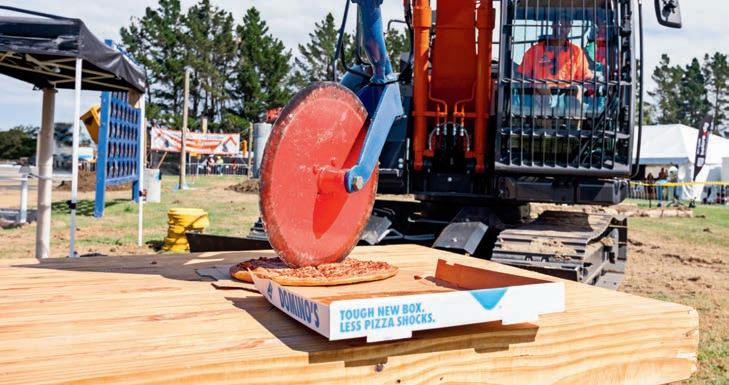
This included challenges involving slicing up a pizza, playing a supersized board game and pouring a cup of tea using their digger.
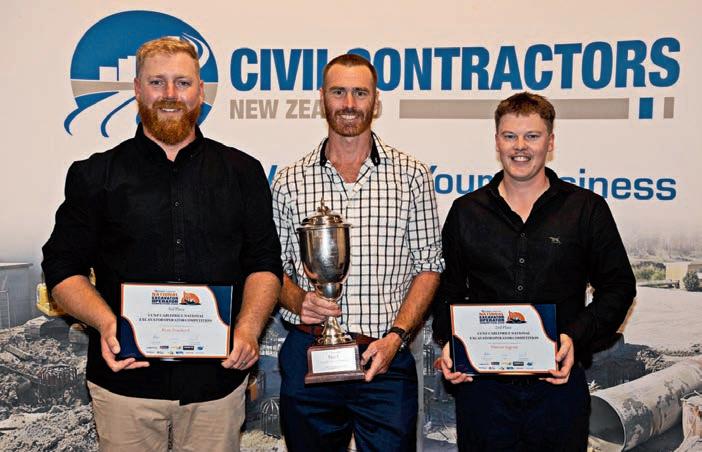
The overall winner was Whangarei’s Steven George, who for the second year in a row beat the competition at the Central Districts Field Days in Feilding.
He narrowly held o runner-up Marcus Ingram from Napier to clinch the victory, while Ryan Prankerd, from Taranaki, mounted the podium in third place.
George says it was “bloody good” to win, especially when considering the number of new competitors and challenges out on the competition course this year.
“I came into this weekend not knowing what to expect,” he says.
“There were a bunch of new faces, as well as guys who have done it a few times before.”
This year’s event marked the competition’s 32nd anniversary. It showcased ne motor skills as the competitors used their machines to slam-dunk basketballs, paint pictures and serve ice cream to the crowd.
More conventional skills were also tested, including bulk trenching, digging around underground
services, truck loading, and health and safety knowledge.
Marton operator Dean Cave took the top spot in the Connexis One-day Job Challenge, which tested operators on their ability to plan and execute a complex task from start to nish, a er impressing the panel of judges with his meticulous approach.
The Humes MVP award was presented to Prankerd for his sterling display of spirit and camaraderie throughout the event when interacting with his fellow contestants, as well as the general public, judges and supporters at the show ground.
The Geo Du Memorial Trophy, which recognises the person achieving the best scores across the truck-loading challenges, was also awarded. The trophy, which commemorates former national excavator operator competition
judge Geo Du , was awarded to Golden Bay operator Daniel Bruning of Takaka.
Civil Contractors New Zealand chief executive Alan Pollard congratulated all the competitors for their outstanding displays of skill, and Steven George on his victory.
Pollard says this year’s competition carried extra signi cance considering the essential work excavator operators had played in disaster-response e orts across the Upper North Island in January.
“The competitors at this year’s event represent the very best of an industry that is more important to New Zealand than ever,” he says.
“These people are role models, who not only highlight the expertise and professionalism in our industry, but also inspire others to take up the tools and join the pool of talent required to build the infrastructure that will support the future of New Zealand.”
This year marked a special milestone for Alistair McIntyre, who celebrated his 20th appearance at the national nals. For two decades, he and his partner Barbara Busst have run the beloved Doug the Digger children’s mini-dig experience, inspiring countless young Kiwis to consider careers in civil construction. Donations collected at this year’s mini dig will be given to charity Camp Quality, which provides holidays for children living with cancer.
Images:
Winner Steven George (centre) with runner up Marcus Ingram (right) and third place finisher Ryan Prankerd (left)
Steven George slicing up a pizza with his excavator. The unique challenge made its debut at this year’s competition
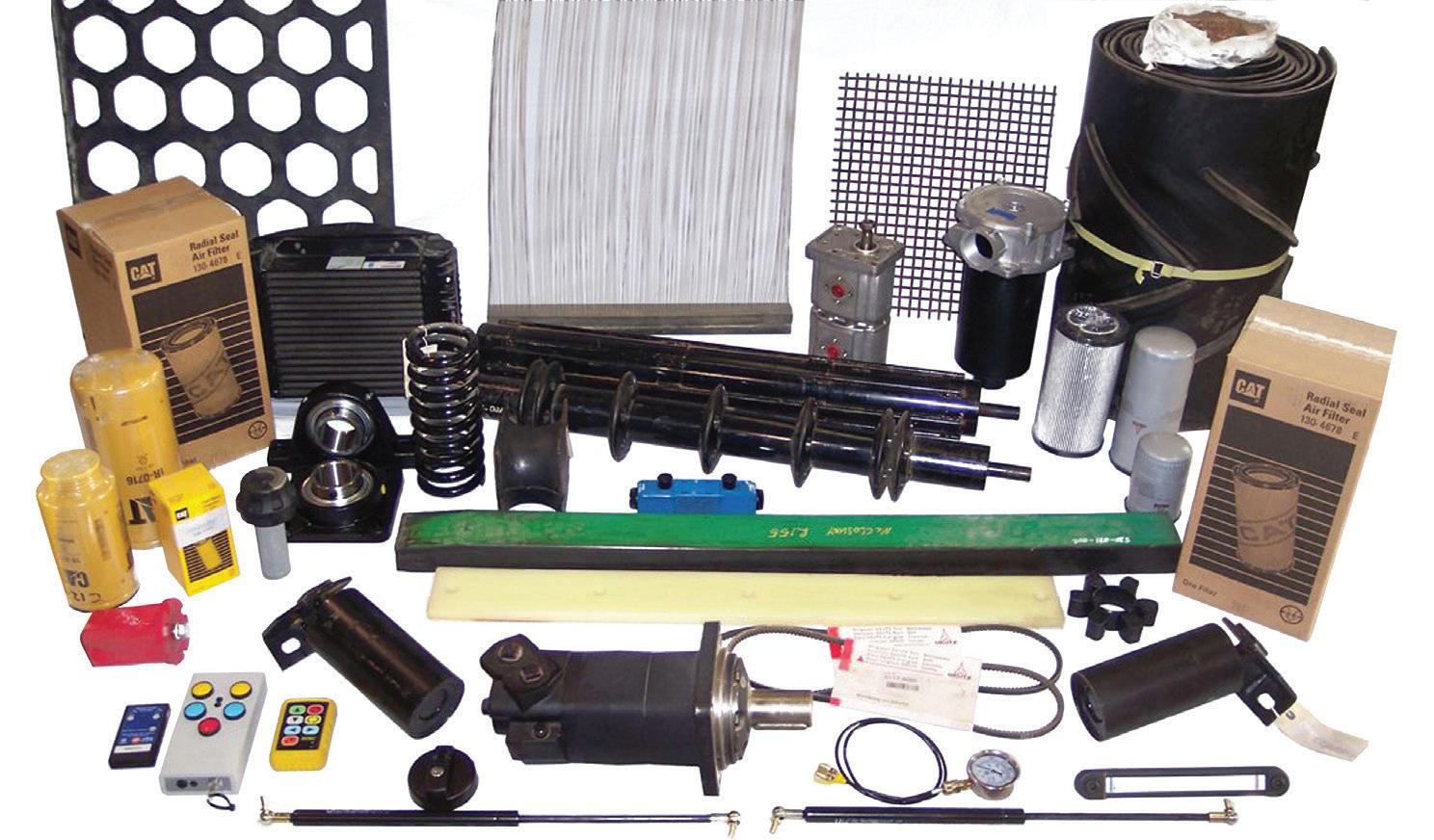
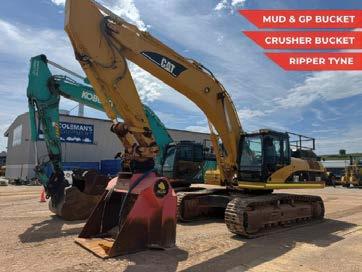
For a huge range of new and used Cat® parts visit CatUsed.com today.
Quality delivered
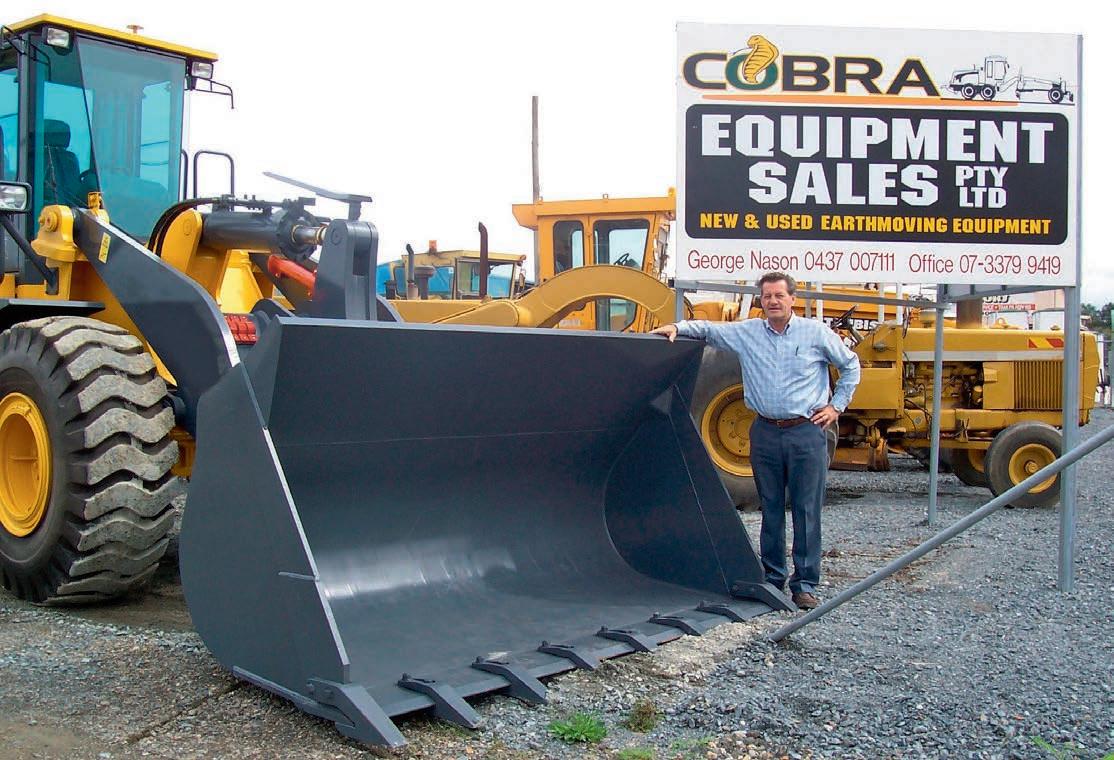
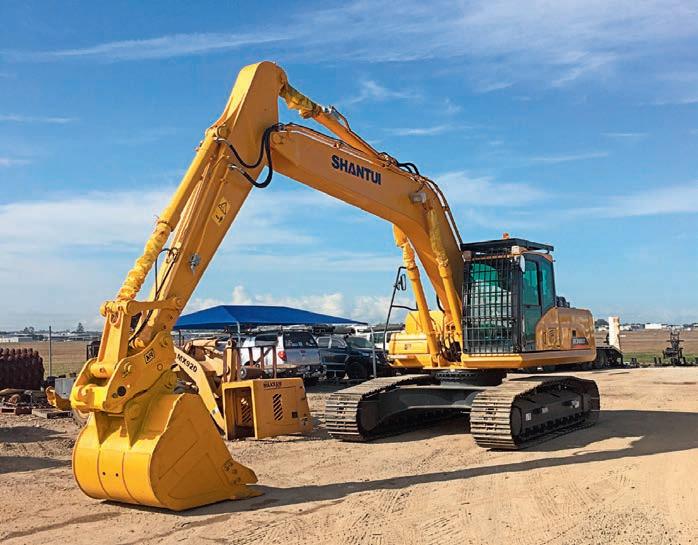
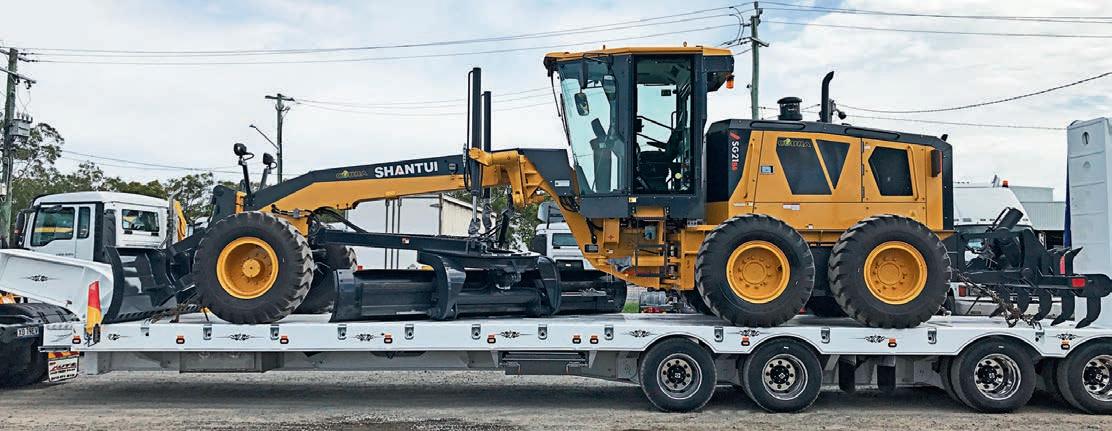
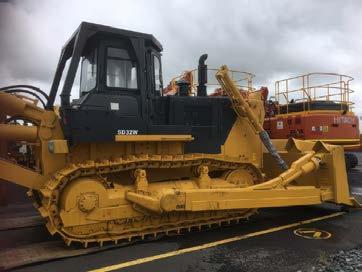
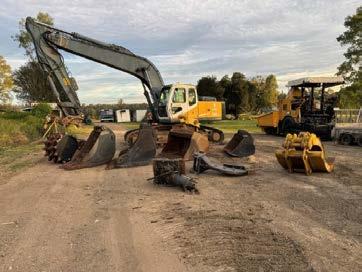
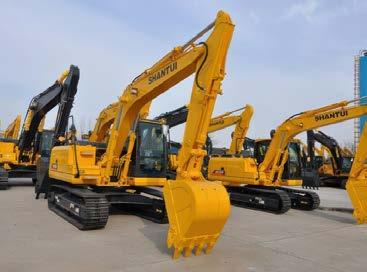
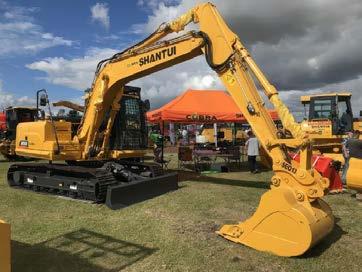
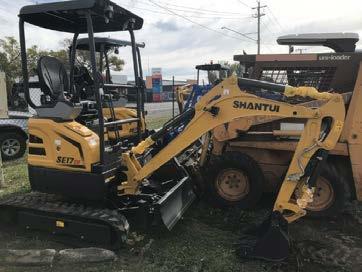
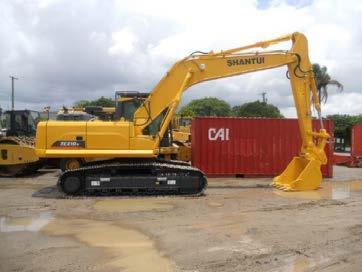
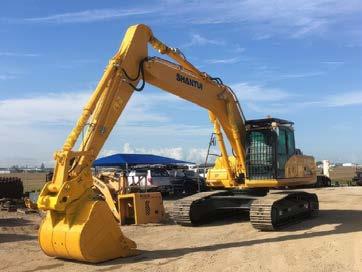
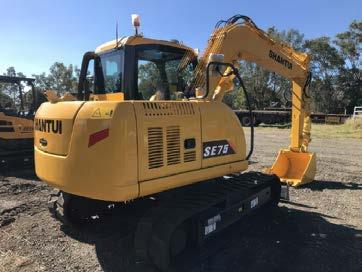
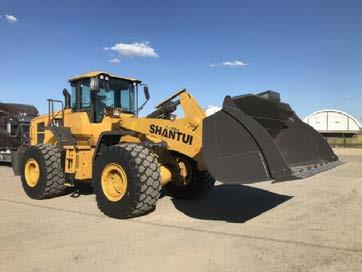
Backed by industry experience and global connections, Cobra Equipment o ers quality Shantui machinery with customisation abilities
For more than 20 years, Cobra Equipment has been selling new and used earthmoving equipment, as well as parts sourced from China.
With a focus on quality equipment manufactured by major companies – as opposed to cheaply assembled products from small factories –Cobra has built a solid reputation over this time for good ‘old-fashioned deals’ backed by the coveted direct Cobra warranty.
This allows the business to provide hassle-free support when it really matters, minimising costly downtime for contractors and operators.
“No-one wants to be stu ng around providing warranty claim reports and evidence to lodge with the factory when they just want their machine up and working again,” Cobra director George Nason says.
Many of Cobra’s customers are repeat clients or have been recommended by their friends or business associates – a testament to Cobra’s quality.
Nason himself bought his rst piece of equipment at the age of 19, and
now with 40 years of experience in the earthmoving industry, he says he can e ectively evaluate the quality of any type of machine and how it will perform onsite.
Over the past two decades, Nason has been frequently visiting China and has built an extensive network of contacts, allowing him to know which companies and factories o er the standards which Australian consumers expect.
“Chinese equipment can vary wildly in quality, and we are only interested in the best and most reliable product,” he says.
Trusted brand
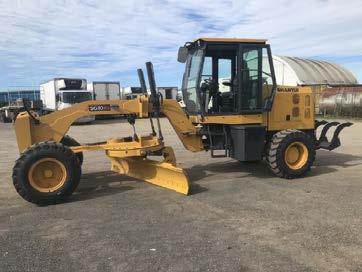
As the authorised national distributor and dealer for Shantui machinery, Cobra o ers its customers a range of top quality, well-manufactured new equipment.
Cobra was rst approached by Shantui nine years ago to introduce the brand as a quality equipment manufacturer in the Australian market, which was an attractive proposition for the business, as
Nason says Shantui is the world’s largest manufacturer of bulldozers.
However, Shantui is not just a bulldozer manufacturer, with Nason likening the brand to a ‘production powerhouse’ with products to suit every application.
Now having sold Shantui bulldozers, excavators, wheel loaders and graders to most states in Australia, Cobra has shown it has the expertise to provide solid service and support to its customers.
Previously working to promote other brands in Australia before turning its focus to the establishment of Shantui, Cobra’s strategy has been to select quality manufacturers which o er signi cant savings.
Cobra also has history providing equipment which is not available directly ‘o the shelf’, such as custom-made machinery.
Examples include bulldozers with Power-Angle-Tilt (PAT) blades, extra heavy-duty machines like amphibious excavator set ups, as well as customised con gurations for speci c working environments
Images: Cobra
Cobra director George Nason has 40 years of experience in the earthmoving industry
– including extra wide machines, sealed and lubricated track chains (SALT), alligator links and pyramid plates.
The option to customise machinery is o en key for many contractors, and it’s why Cobra goes over and beyond to ensure it can source speci c attachments for customers.
Having reliable machinery and access to spare parts are other main considerations for machinery owners, with Cobra’s parts department helping source components for people and businesses that Nason says have been burnt by importers that haven’t gone the distance.
“A lot of people thought they could get into the game by buying cheap equipment from China, and it didn’t last because they weren’t buying from top-quality brands,” he says.
“Once these businesses went broke and stopped trading, they couldn’t support their machines anymore and now there are so many people trying to nd parts.”
Due to this, spare parts have become a major part of Cobra’s ongoing success.
Using his connections in China, Nason says he can help customers nd speci c spare parts – even if the equipment was bought from a business that no longer exists.
Proven performance
Across Australia, Cobra’s Shantui machines are working on a wide range of projects, from subdivision development and road construction to quarry operations and rural infrastructure works.
Contractors and operators rely on the equipment for bulk earthworks, site clearing and material handling, where durability and ease of maintenance are critical to keeping projects on schedule.
Operators o en highlight Shantui’s straightforward design, which allows servicing to be carried out quickly without excessive electronic complexity.
This practicality is particularly valued in regional and remote areas, where downtime can quickly become costly.
By pairing robust machinery with accessible spare parts and local support, Cobra has helped many businesses con dently integrate newer equipment into their eets while maintaining productivity and controlling operating costs in demanding Australian conditions.
“Sometimes imported products can lack in quality, but we stand behind the Shantui brand and its durability for Australian customers,” Nason says.
“I started Cobra because I saw the potential in quality Chinesemade new equipment for customers that would normally be looking at used equipment.”
For more information, visit cobraequipmentsales.com.au or call 07 3379 9419.
Cobra is the authorised national distributor and dealer for Shantui machinery
Cobra has a wide range of solutions for its customers’ needs
Day one backing
Roma Tilt Trucks is raising the bar, one heavy haul at a time, thanks to a partnership with trailer manufacturer FWR Australia
From publican to truck operator, Chris Hof’s journey into the world of heavy haulage has been anything but typical.
Just a few years ago, he was running a pub and managing daily life at the bar – something he’d done for 25 years – but a er COVID hit, months of lockdown and admittedly driving his wife Deb crazy, he knew it was time for a new challenge.
With guidance from Deb, Hof took the leap and acquired Roma Tilt Trucks based in Roma in rural Queensland – a move which would rede ne his professional career and grow into something far bigger than he ever imagined.
“She was the one that suggested buying Roma Tilt Trucks as it was up for sale and the gures looked good,” Hof says.
“With no previous experience driving tilt trucks, I worked for the business owner for eight months to gain experience.
“We then decided to purchase the business with our daughter Madison and her husband Storm, who had
heaps of truck driving experience.”
Truck availability would o en struggle to meet the local demand when he rst took on the business, but this quickly changed.
“Deb would ring me almost weekly and say ‘can you get me another truck?’ as I have heaps of work on and need more,” Hof says.
In just a few years, Hof has transformed a modest operation into a fast-growing eet.
What started as three trucks has expanded to 10, with every vehicle a re ection of hands-on experience and practical innovation.
“We still operate in the same way as when we started – o ering great
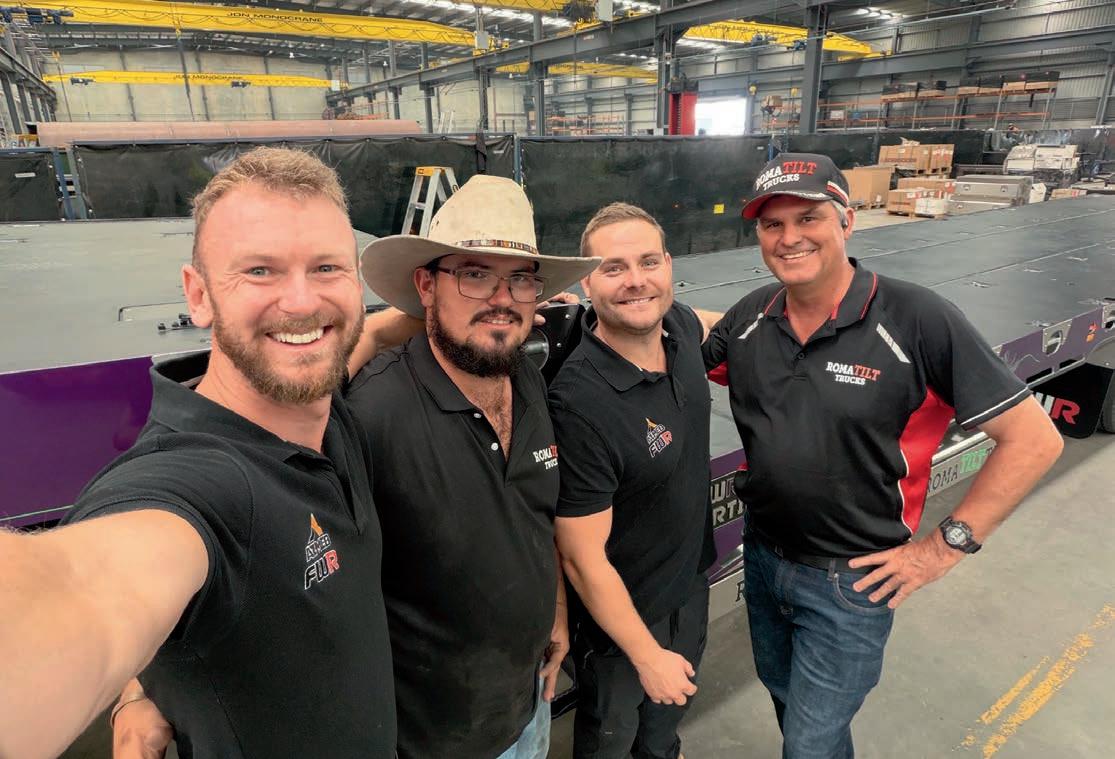
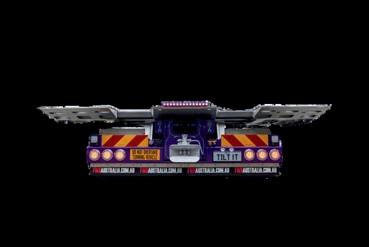
Roma Tilt Trucks has partnered with trailer manufacturer FWR Australia. From left to right: FWR director Arron MacCue, Roma Tilt Trucks’ Storm, FWR sales manager Leon Kennedy, Roma Tilt Trucks’ Chris Hof
Images:
Hof has been an active voice in shaping FWR’s flagship Super Tilt model
customer service with clean and tidy trucks,” Hof says.
“We push our equipment to its limits in some of the harshest conditions Australia can throw at us.”
Ongoing partnership
This mindset naturally led to his partnership with trailer manufacturer FWR Australia.
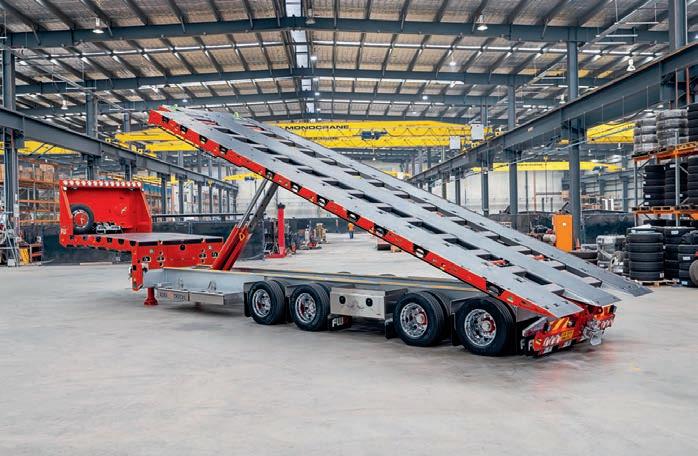
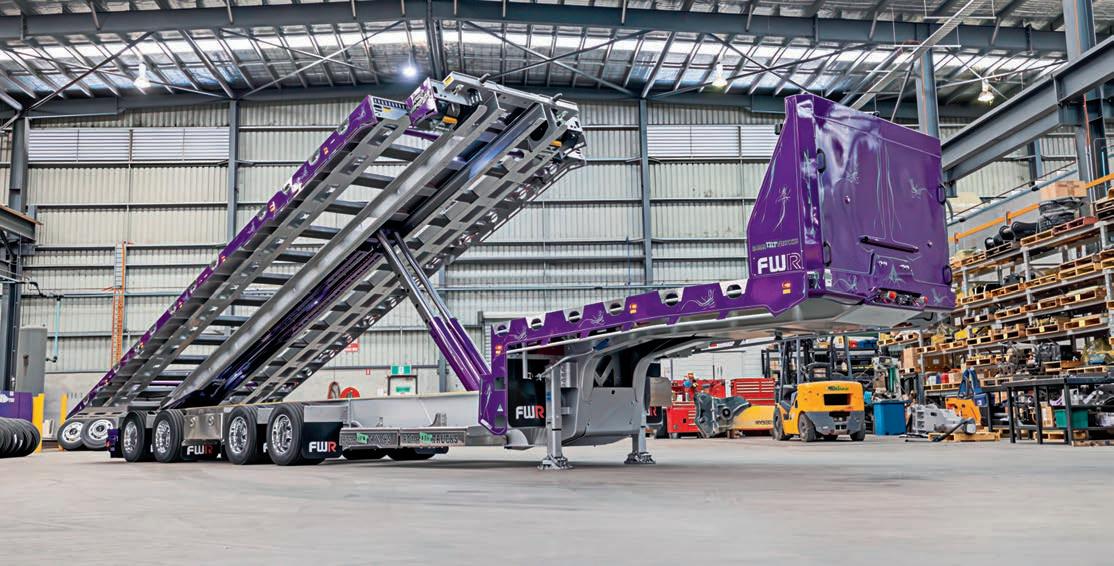
Hof hasn’t just been a FWR customer, he’s been part of the process. An active voice in shaping FWR’s agship Super Tilt model, his feedback has helped re ne everything from functionality to operator ease.
The features that now come as standard aren’t guesses from a drawing board, they’re solutions
forged from real jobs, real loads and real challenges.
Hof’s latest Super Tilt build isn’t just a visually striking piece of machinery, it’s a product made from real-world experience.
Built to handle serious work, it re ects the growth, insight, and expertise Hof has poured into his eet over the last four years.
“Having a manufacturer who we can work so closely with us to make improvements and use new technology has been a great asset to our business,” he says.
“It makes the process very easy when we can have honest discussions with FWR about how we want to use the equipment.
“FWR have listened and worked
with us from when we were a tiny company. Other manufacturers wouldn’t even give us quotes.”
Hof’s approach to equipment is built on speci c values that align perfectly with FWR’s trailers – quality and versatility.
Looking ahead, Hof isn’t slowing down. With his daughter Madison and son-in-law Storm involved in the business, the next generation is stepping up, ensuring knowledge, skills and innovation are passed on as the business expands.
“We’re always looking for ways to grow and adapt as the industry changes,” Hof says.
Listen, build and evolve
Every trailer FWR builds is shaped by operators like Hof. FWR’s approach is ‘we listen, we take it on board, and we build it better’.
It’s why FWR’s trailers perform where it matters most, out in the eld, under pressure, and getting the job done day in and day out.
Because when customers push the limits, FWR doesn’t just keep up, it builds for it.
Hof’s story is a testament to hard work, practical innovation, and true collaboration.
As operators like Hof continue to raise the bar, FWR will be right there alongside them, building what’s next.
For more information, visit fwr.com.au
Hof says Roma Tilt Trucks’ partnership with FWR has been a great asset to the business
Every trailer FWR builds is shaped by operators like Hof
Onetrak
Navigating limited inputs
Supply chains – not just a buzz word
Over the next 12 months we will be faced with a huge test as an industry. Not because it will be tough, but because there’s work to be done, but it’s increasingly di cult to nd things to do it with.
Members know how many di erent components it takes to build a bridge or a road, and the supply of these essential components is dictated by a complex maze of interrelated entities and global trading routes.
As we have learnt over the past month, one chink in this extremely complicated chain can cause reverberations across the world.
Whilst I do not purport to understand the mind of Donald Trump, I would have to assume that he perhaps understands now that even the most powerful man in the world cannot bend global supply chains with the click of a nger.
Whilst the current oil crisis is on everyone’s lips at the time of writing, and I expect it will be still felt for some time; the fact remains that while oil is an input cost on virtually every good or service, I remain concerned about other input supplies in the medium term.
Critically, the supply of quarry products and aggregates remains a worry, as does the supply of many precast concrete materials.
Put simply, we are, on current
Damian Long, CEO CCF QLD
production levels, several million tonnes short of where we need to be. This is not an attack of the quarrying industry, who are working overtime to deliver what they are allowed to, but an acknowledgment on some of the geographic and political constraints they are placed under.
Quarries need to be located close to works to be viable, SouthEast Queensland is a large, urban sprawl dominant region. Most viable resources are near existing residential communities, many of whom will not want a quarry near them, regardless of any mitigation works done by operators.
The planning legislation, coupled with social media allows for large, coordinated, community resistance to many virgin material product sources. Whilst we may be empathetic to the concerns of a given community, the cumulative e ect of this is a need to examine solutions to deliver the supply we so desperately need to deliver the pipeline that we are expected to.
In Victoria, around three million
The supply of many precast concrete materials remains a worry under current conditions. Image: CCF QLD
tonnes of recycled cement, concrete and aggregate products go into state infrastructure projects each year.
In Queensland, this is around 300 thousand tonnes. Whilst people may be quick to point out the population di erence between the two states, it is certainly not tenfold, and Queensland also has many, many thousands more kilometres of road across our vastly greater geography. Policy changes and investment is needed to use this economically sustainable and environmentally sound method to help meet current shortfalls. In addition to this, there would be something poetic in my view about the old Gabba being used to build the new stadium.
Similarly, CCF QLD is working on new ways and partnerships to help drive new supply chain opportunities for our members. Important building products have surged since COVID, and a er renormalising to a degree many have surged again.
Developing independent capacity to help contractors be exible, as well as encouraging government where possible to help create supply chain resilience in Queensland will be part of our advocacy strategy going forward.
I should nish my piece by noting, as I o en do, that our biggest current shortfall is skilled labour, and we continue to work proactively on this. Whilst I am loathe to suggest people are part of the supply chain, they are the lifeblood of our industry, and we need enough highly skilled human capital in civil construction to make Queensland the best place it possibly can be.
Lamb says the operator challenge was a fantastic experience
Extraordinary experience
Tim Lamb says his participation in the nal of the Caterpillar® Global Operator Challenge was an amazing chance to meet other operators, experience CONEXPO and drive some cutting-edge Cat® machinery. Here we have a chat about handling the pressure of doing tasks in front of a huge crowd and making the most of his trip to the US
For Daracon Group plant operator Tim Lamb, it was a dream come true when he competed in the nal of the Cat Global Operator Challenge at CONEXPO in Las Vegas in early March.
Having competed in the New South Wales regional competition before heading to Japan where he nished third at the Asia Paci c Regional Final and earning the Excavator Champion title, CONEXPO saw Lamb join eight other operators from around the world to undertake the nal set of challenges.
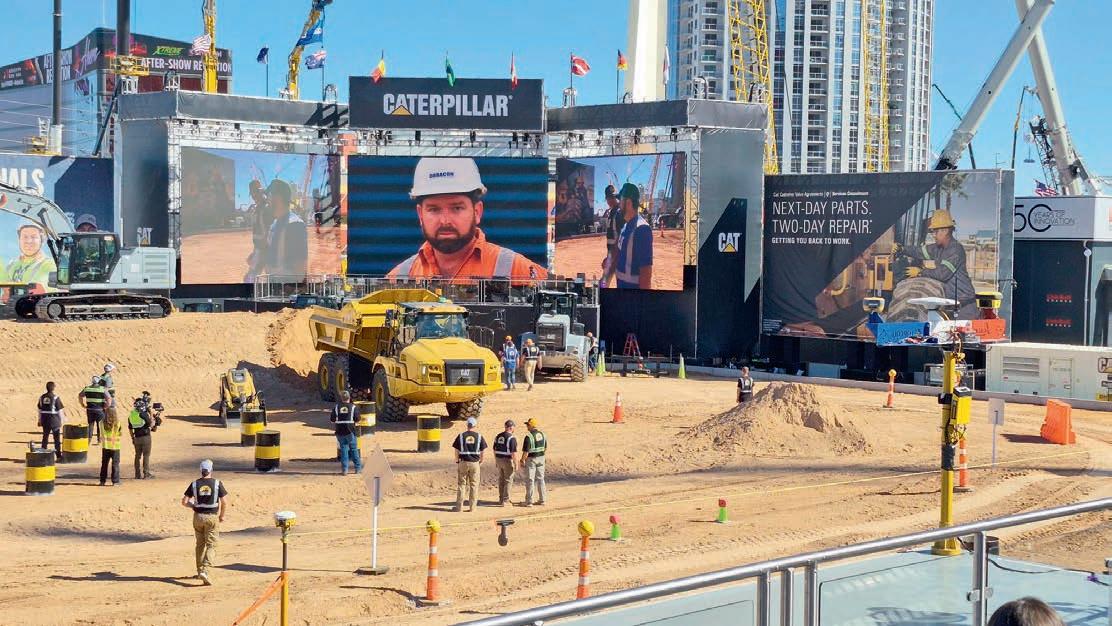
When asked what it was like to walk out into Caterpillar’s purpose-built arena at CONEXPO and have a huge crowd cheering him on, Lamb says it was an extraordinary experience for “an ordinary dude”.
“It was pretty surreal, to be honest,” he says.
“When you’re used to just going to work every day and digging holes, and then next minute you’re in front of thousands of people, it’s a pretty
hectic feeling. It de nitely gets the adrenaline and the nerves going.
“I tried to slow down, take it all in, experience it for what it was and just do my best to enjoy it.”
Speed and accuracy
The rst challenge required operators to use a Cat 938 Centennial wheel loader to load a truck in two passes to get as close to 9 tons as possible. They had to then switch the bucket out for forks, pick up a pipe and, as they travelled through the course, knock over a sequence of foam dice from cones along the route, before placing the pipe and returning to the start point.
In the second Street Gambler excavator challenge, operators had to use a Cat 320 Centennial excavator to pick up a 30-inch pipe and insert it into a 36-inch tube before picking up a manhole cover with the bucket and placing it perfectly on a riser.
The operator had to then use three passes to move the largest amount of
dirt they could into the bed of a Cat 730 articulated truck.
In the third challenge a Cat D4 Centennial dozer was used where operators rst pushed a tyre between a series of barrels by manoeuvring the front blade, before dozing a pile of dirt to ll a hole to grade. There was then a series of poker chip chases where they had to use the blade to slide a marker along a line to a speci c point, while driving along various banks before reversing back to the start point and positioning the rear ripper into a ring.
Lamb, who came sixth in the nal, says the event was a fantastic experience that threw some curveballs at him.
“The excavator one was quite challenging,” he says.
“It was more moving around objects and picking up other objects, not so much digging. So that caught me by surprise.
“The loading one was tricky because the course was so tight,
you only had a couple of inches either side of the machine between the bollards.
“But the loader in the competition was the actual rst Centennial machine produced – it’s number one out of the 100 bits of Centennial gear that they’ve made. So that was pretty cool to operate that.”
As one of two Aussies in the nal, with Diamond Excavators’ Shane Poole nishing fourth, Lamb says it was fantastic to have his family at the show cheering him on, plus friends and family watching the live feed back home.
“Me and Shane got along like a house on re and we were in each other’s corner at the comp as well,” he says.
“I love Cat gear, I’ve been a Cat fanboy since I was about 10. With the chance to play in all the new gear I was like: ‘Yep, I’ll do that’.
“I’ve been in the industry now for 10/11 years and that’s been a huge dream of mine, to one day check out CONEXPO. So having the opportunity to go if I got into the nal was half of the attraction for doing the competition. Yeah, it’d be sick to win the comp, but being able to check out the show was on my bucket list.”
Learning experience
Lamb started out as a carpenter before eventually migrating towards trucks and machinery.
He says Caterpillar’s next gen excavators are currently his favourite thanks to the advanced technology in them. The trip to CONEXPO was a great way for him to explore not just the Cat tech and unique machines on site, he says, but also meet other
operators from around the world and check out what was at the show.
“The night before the competition, they did a meet and greet with all of the competitors and some of the top names at Caterpillar, so that was great to walk around and meet everyone. And everybody’s in the same boat,
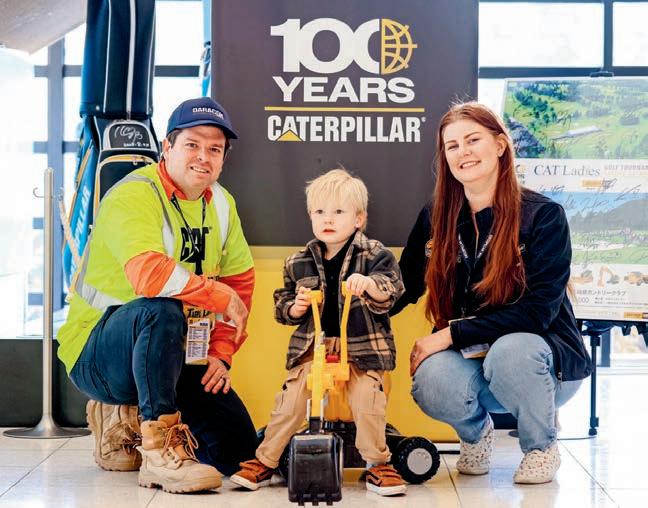
Tim Lamb with his family, Theo and Beth, who joined him on the trip to CONEXPO
A Centennial Cat 320 excavator was used in the second task for tasks involving dexterity
they’re all a bit nervous but they’re all awesome lads,” he says.
“I also got to meet Joe Creed who is the CEO at Caterpillar, that was really cool and something I’ll carry with me for the rest of my life.”
“I tried to meet as many people as I could and learn about what others do and what they make – whatever can make this industry better.”
As to whether he would compete again in the next competition, Lamb says he’ll sign up but he’d also like to see others have the opportunity to experience the event as well because of how much he got out of it.
“I’m mates with a lot of people that I would love to see having a crack at the competition because it was an awesome experience,” he says.
“I’d love to see women make it through to the nals, that would be really cool.
“I think it taught me a lot of life lessons, like not freaking out under pressure and being able to concentrate when you’ve got so much stu going on in your head.”
Lamb says watching the other operators undertake a challenge before he took his turn was nerve-wracking but also interesting to see how they did things di erently.
“There was a lot of pressure to pre-plan how I was going to attack each task, because a lot of the time you could do something in multiple
di erent ways, but if you choose one particular method to start with, it might wreck the later part of that task,” he says.
“We would all have our own little methods. So you watch the rst person go out and they try method A, and then you watch the next person who tries method B, which meant I was re-evaluating my approach. That was interesting.
“But a lot of it came down to not letting yourself get too nervous and trying to look at it with a positive light and just enjoy it.”
He says he encourages all operators to give it a go if they can and to not worry about the audience.
“A lot of people I’ve chatted to didn’t enter the competition because they didn’t want to embarrass themselves, thinking they would look like an idiot,” Lamb says.
“My perspective is: we all look a bit silly out there, because we’re rushing around trying to do things as fast as possible. But, at the end of the day, it’s a really awesome experience to be involved in.
“I’m thankful that Caterpillar put on something like that for operators like ourselves who just go to work Monday to Saturday, and dig holes
in the ground and ll them back in again. It’s really awesome that they do something like that for us.”
Lamb also gives a special shout out to Cat dealer WesTrac and employer Daracon Group for accommodating his family on the trip.
“We travelled with our toddler, so everything around that is quite tricky, and WesTrac and Daracon just supported us through the whole thing,” he says.
“They went above and beyond for our family over there and made everything seamless.”
As to whether he thinks his son will follow in his digging footsteps, Lamb says there are encouraging signs.
“Oh, he loves it – he knows the names of all of the machines,” he says.
“It was pretty awesome to see him cheering me on from the crowd.”
Scan to watch a live stream of the Cat Global Operator Challenge and Tim Lamb’s performance.
One of the challenges involved loading as much material into a truck as possible with three passes
Lamb travelled to Japan for the regional heats and was named Excavator Champion
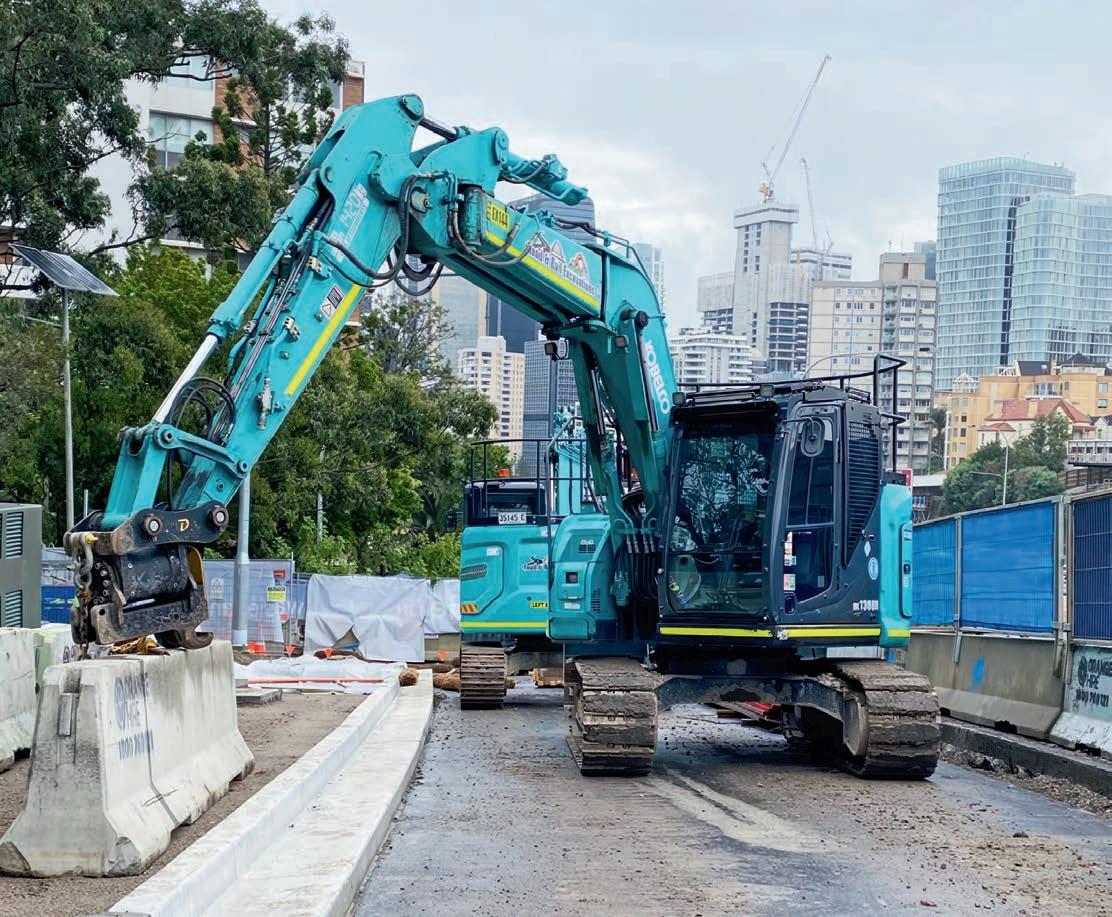
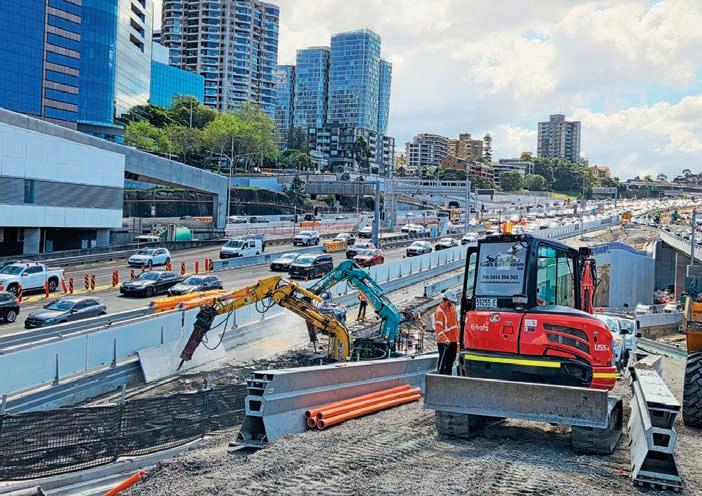
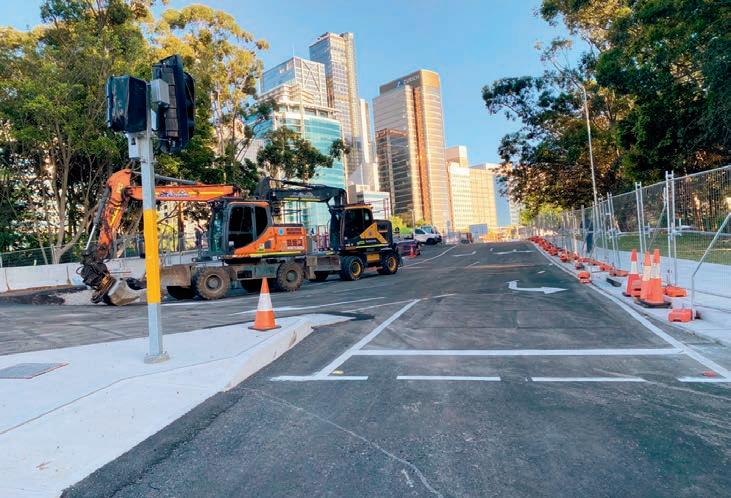
Road & Rail Excavations commenced work on the Warringah Freeway Upgrade in October 2022
Cutting through congestion
Road & Rail Excavations is carrying out a range of specialist works on Sydney’s Warringah Freeway Upgrade, with a branded truck ying the ag for the Little Wings children’s charity
Celebrating its 10th anniversary last year, New South Wales-based specialist contractor Road & Rail Excavations is currently hard at work on one of its most signi cant projects to date – Sydney’s Warringah Freeway Upgrade.
This transformative project – to be delivered by CPB Contractors in a 70:30 joint-venture with DT Infrastructure (CPBDTI JV) – will upgrade four kilometres of the key freeway between North Sydney and Naremburn.
It aims to reduce road congestion and improve tra c ow for the approximately 250,000 vehicles travelling along it each day, making it one of the busiest road stretches throughout the country.
Having worked with CPB Contractors previously on the
Parramatta Light Rail Stage 1 project, Road & Rail Excavations was engaged by CPBDTI JV to carry out a range of specialist works, which commenced in October 2022.
This includes the installation and relocation of various utilities such as water main installations, the relocation of steel and polyethylene gas pipelines, stormwater pit and pipe installations, communications and intelligent transport systems conduit installations, and the relocation and installation of various low-voltage and high-voltage Ausgrid overhead and underground electrical assets.
Additionally, Road & Rail Excavations has been engaged to undertake extensive deep excavation works and major bulk earthworks, including cut-and- ll operations, as part of
the construction of on and o vehicle access ramps to the Warringah Freeway.
The scope also encompassed road pavement construction, as well as the installation of compliant tra c barrier systems and fencing, delivered in accordance with stringent project and safety requirements.
The scale and complex nature of this project meant it was of the upmost importance that Road & Rail Excavations coordinated closely with the relevant authorities and asset owners.
“Our pre-construction phase included a comprehensive review of Road and Rail Excavations’ Construction Management Systems, as well as client design requirements, utility asset owner speci cations,
and both council and RMS road construction standards,” Road and Rail Excavations senior project engineer Darren Durkan says.
“All existing utilities were located by trained underground service locating professionals using specialist equipment, including ground-penetrating radar.
“A Permit to Excavate system was implemented to ensure all known utilities were identi ed and positively veri ed. Once all existing utilities were con rmed and the permit was reviewed signed by the relevant engineers and supervisors, we commenced the excavation process.”
Safe practice
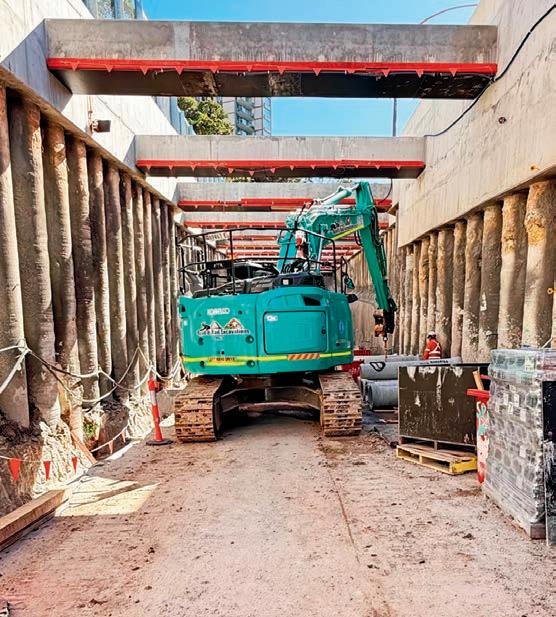
Various machines were called in to tackle these works with everything from 38-tonne and 23-tonne zero-swing excavators being utilised for deep trenches to 1.7-tonne excavators navigating tight areas.
Before any road construction could take place, the existing live gas pipelines owned by Jemena needed to be relocated safely, with Road & Rail Excavations digging the trench for the installation of both steel and polyethylene gas pipelines.
A er being installed by a thirdparty, the trench was back lled
in accordance with Jemena speci cations.
The same went for the comms and intelligent transport systems, with the conduit piping installed in the correct con guration, before being back lled with the nominated material and compacted to the design requirements.
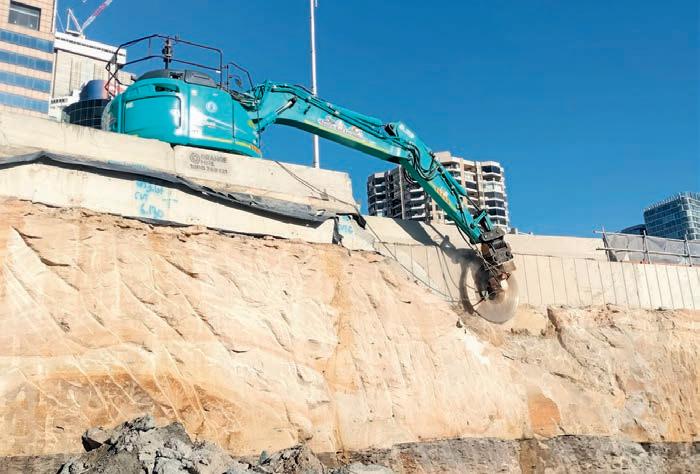
One of the early challenges Road & Rail Excavations encountered was the demolition of a 10m high rock cli face, which will make way for a new tra c o -ramp.
Located directly adjacent to live freeway tra c lanes, the demolition of the rock cli face required strategic planning and careful management to minimise disruption and ensure the safety of the road users.
“Rock saws were attached to large
excavators, allowing each cut section to be managed in a controlled and safe manner,” Durkan says.
Road & Rail Excavations also used hydraulic breakers and drum cutters to break through the hard sandstone rock in sections, rather than large chunks – reducing safety risks.
“Achieving the rock face pro les o en required detailed trimming works, so experienced excavator operators were essential to ensure accuracy and to protect nearby assets,” Durkan says.
“Due to the proximity of existing boundaries and alignment constraints, rock walls had to be o set using a twin drum cutter attachment tted to a 23-tonne excavator to achieve the required pro le and maintain structural integrity, whilst minimising vibrations to surrounding structures.”
This led to various environmental and safety challenges that had to be managed, such as exposure to silica dust and noise pollution.
Road & Rail Excavations implemented misting cannons and powered air-purifying respirator units for its work crews to control the dust, while noise blankets were installed on the site perimeter to nullify the noise to nearby residents.
Following the completion of the excavation works, the ground was built back up in preparation for services installation.
Stormwater lines were installed prior to back lling operations, with Transport for NSW speci cationcompliant material imported to complete the back ll and
Around 250,000 vehicles travel along this stretch of road every day
The project aims to reduce road congestion and improve tra ic flow
compaction stages – forming the pavement structure for the on-ramp.
Overcoming challenges
Working beside live tra c meant there was limited workspace, so Road & Rail Excavations adopted a carefully staged and planned approach to ensure working under tight constraints was done both safely and e ciently.
“Close coordination with tra c management teams, temporary removal of barriers as well as planning works in o peak times and nights allowed us to achieve our goals,” Durkan says.
“Strong site supervision and civil crew experience was key to delivery of the complex scopes under tight time constraints and limited workspace.”
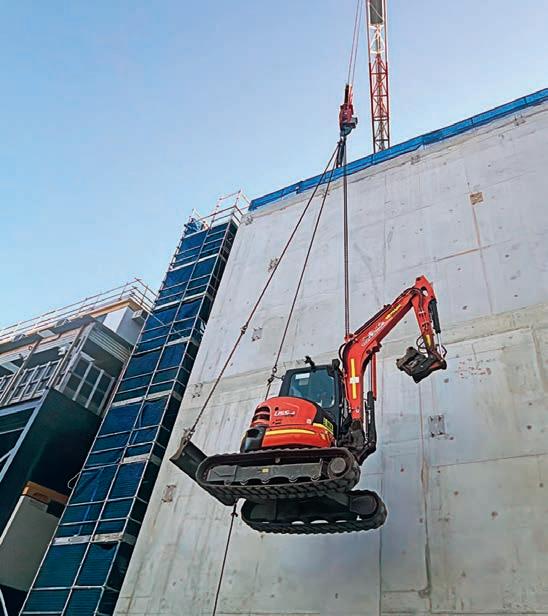
Given the lack of room to move manoeuvre heavy machinery throughout the project, Road & Rail Excavations found on one occasion it couldn’t simply drive an excavator into a speci c work area.
Instead, an on-site crane was used to safely li the machine over the obstruction, so it could be repositioned.
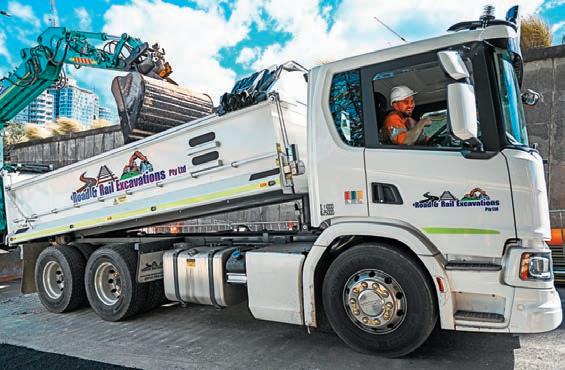
The restricted site access also meant material was removed using
Rock saws were used to demolish a 10m high cli face
12-tonne tipper trucks rather than opting for larger haulage vehicles.
While navigating sensitive areas, these tipper trucks had to follow strict haulage routes, and a just-intime construction logistics strategy was adopted to ensure materials were transported directly to the site and installed as soon as they arrived – optimising work ow and minimising on-site storage.
Contaminated soil presented challenges to the project’s timeline, with Road & Rail Excavations having to stop work to engage environmental consultants for sampling and classi cation.
Following on from this a remediation plan was activated and followed according to project and safety requirements.
“All the relevant environmental controls were put into place on the project and any contaminated materials were removed and then transported to a licensed disposal facility,” Durkan says.
“All works were completed in accordance with the project
Deep excavation and bulk earthworks are among Road & Rail Excavations’ specialities
An on-site crane was used on one occasion to safely lift an excavator into its working area
environmental management plan.”
The road widening portion of the project is now approaching completion and is on track to be fully nished and open to the public by the end of 2026.
Once complete, the upgraded sections will signi cantly improve tra c ow, enhance safety for motorists, and support the growing transport demands of the region, marking a major milestone in this complex and carefully coordinated infrastructure program.
Road & Rail Excavations says it is proud to be a key contributor to this important infrastructure project, bringing its expertise, precision, and commitment to safety and quality to every stage of the works.
Its team’s dedication ensures complex excavation, utility relocation, and construction tasks are delivered e ciently and to the highest industry standards, supporting the successful delivery of a project that will bene t the community for years to come.
Little Wings
With a deep commitment to giving back to the community, Road & Rail Excavations is a proud supporter of the Little Wings children’s charity – a cause that means so much to its entire team.
The charity provides free, professional and safe ight and ground transportation for sick children and their families living in regional and remote NSW, Queensland and the ACT.
Road & Rail Excavations’ support of Little Wings started in November 2024, when managing director Adrian Ruane donated his own $1 million aircra to the charity.
Last year, Road & Rail Excavations fully re-branded one of its new Scania trucks in the Little Wings colour scheme, with QR codes featuring on both sides – making it easy for people to donate as it passes by on the Warringah Freeway Upgrade.
It doesn’t stop there though, with Road & Rail Excavations having announced it will donate 100 per
cent of the pro ts generated by the Scania truck over the next 12 months, following a $15,000 donation made to Little Wings in January.
Additionally, Little Wings had the chance to use the truck at last year’s Clarendon Classic Machinery Rally to help increase its presence at the event, and will once again receive it to use at the Kempsey Truck Show this September.
“We’re hoping to make more people aware of the Little Wings charity and every year we try to come up with an innovative way to promote it,” Road & Rail Excavations CEO and general manager Shane Coleman says.
“We haven’t decided on what we’ll do for 2026, but one of our ideas is to decorate an excavator in Little Wings colours and branding.”
For more information on Road & Rail Excavations, visit: rnre.com.au
To find out more about Little Wings, visit: www.littlewings.org.au
12-tonne tipper trucks were used to remove material
Road & Rail Excavations fully re-branded one of its Scania trucks in the Little Wings colour scheme
Road & Rail Excavations celebrated its 10th anniversary in 2025
Equipment showcase
A range of earthmoving equipment was on show at the 2026 Municipal Works Australia National Conference, highlighting the latest products available to local government
Municipal Works Australia (MWA) held its 2026 National Conference from March 18–19, bringing industry leaders, innovators, and municipal professionals from across the country to regional Victoria’s Prince of Wales Showgrounds in Bendigo.
The theme for the two-day event was ‘resilience & reinvention’, which explored how local government and the municipal works sector are adapting to change, embracing innovation and building stronger, more sustainable communities.
Attendees were treated to a comprehensive conference program touching on everything from climate adaptation and workforce renewal to digital transformation and
community engagement, while also having the opportunity to discover some of the latest machinery on the market in the exhibitor showcase.
The Earthmovers & Excavators team was there to check it out. Here were some of the machinery highlights from the show:
Komatsu
As the major corporate partner of the event, Komatsu had one the largest displays of machinery including a striking PC220LCi-12 excavator, which greeted attendees before they headed through the conference doors.
The 24.5-tonne model arrived in Australia in late-2025, boasting
a 172hp (129kW) engine and incorporates Komatsu’s latest intelligent machine control (iMC) 3.0 smart technology.
The iMC 3.0 system brings new features to the market, such as 3D boundary control, auto-stop control, auto grade assist, tiltrotator integration and control, auto swing, and an advanced payload meter.
3D boundary control improves operator safety by preventing the boom, arm or bucket from moving outside of a set boundary, to protect structures such as overhead wiring or buildings.
Auto-stop control stops the bucket edge on the design surface to stop over-digging past the desired grade,
Images: Prime Creative Media
Komatsu’s PC220LCi-12 excavator
Komatsu’s WA320 wheel loader
Industry leaders and municipal professionals from across the country had the opportunity to discover some of the latest machinery on the market
while auto grade assist automatically raises the boom and bucket edge to accurately trace the design surface when grading.
More Komatsu equipment was on show in the exhibition hall, with its booth presenting the WA320 15.48tonne wheel loader and the PC18MR3 1.78-tonne mini excavator.
Additionally, a Komatsu machine simulator put visitors’ skills to the test, replicating a real-world scenario where an excavator was used to ll a dump truck with material.
William Adams
This year, William Adams is celebrating 100 years of being a Caterpillar dealer – making it the sixth oldest Cat dealer globally.
To commemorate this milestone, William Adams showcased a customer’s Cat 140 grader wrapped in the Centennial Grey colourway, which was supplied by Cornfoot Bros Earthmoving.
Visitors were given another treat in the exhibition hall, as they laid their
eyes on the rst next generation Cat 140 joystick and lever operated motor graders in Australia.
These next generation grader models feature a Cat C7.1 engine, with a net engine power range of 126–233hp (94–174kW) and on the all-wheel drive model, 131–260hp (98–194kW).
A 12 (3.7m) moldboard comes as standard, increasing to 14 (4.3m) on the all-wheel drive model, and the top forward speed is 48.3km/h.
Attendees of the event were invited to step into the cabin of both pre-production units, with the nal models expected to be available to the market from July.
CEA
The JCB 3CX Pro backhoe loader was a highlight of CEA’s exhibit, with the machine powered by a 109hp (81kW) JCB EcoMax Stage V engine.
This highly versatile model o ers road speeds up to 50km/h and comes with JCB’s Dual Drive feature, which allows the cabin seat to be turned
around so the machine can be driven and manoeuvred from the backhoe facing position.
With the Dual Drive foot throttle and brake pedal located at the rear of the machine, operators can easily reposition the backhoe in jobs such as trenching, ditching, and grading.
Additionally, the new ‘Command’ cabin comes with a 7” (17.8cm) LCD multifunction display which makes monitoring information simple and fast for the operator.
The cabin also provides excellent visibility with an extra-large 6.4 cubic metre tinted glass area, which improves operator safety.
Colbrook Industries
Diamond Mowers’ Australian dealer Colbrook Industries had several vegetation management attachments on display at its booth, including the Diamond Mowers drum mulcher Depth Control (DC) Pro X2 – which was con gured onto a compact track loader.
This next-generation attachment
William Adams customer Cornfoot Bros Earthmoving’s Cat 140 grader in the Centennial Grey colourway
The JCB 3CX Pro backhoe loader
The Diamond Mowers drum mulcher Depth Control Pro X2
The next generation Cat 140 lever operated motor grader
was released late last year and is also available in an open drum (OD) con guration.
It comes with either a 60-inch or 72-inch cutting width, with power to process material up to nine inches in diameter.
A redesigned push bar means serrated edges improve debris manipulation, giving operators better control over material, while an optimised infeed increases the e ciency of both cutting and processing material.
The DC model comes standard with Diamond Mowers’ proprietary Edge hardened steel teeth, which have taller ‘paddles’ to ingest more material for a more comprehensive and cleaner mulch on the rst pass.
Brandt
The world’s largest John Deere dealership – Brandt – showcased a range of compact construction equipment, including the 333 P-Tier compact track loader.
The 5.5-tonne John Deere machine
has a rated operating capacity of 1.7tonnes and is powered by a 108.5hp (80.9kW) engine – which provides an 8 per cent gross horsepower increase over the 333G model.
A completely redesigned cabin is a highlight of the model and is larger than the previous G-Series. It was designed from operator feedback.
This includes a one-piece design which is completely sealed and pressurised, minimising outside noise and better protecting the operator from the elements like dust, debris and water.
John Deere has also integrated a new pressure compensated load sensing (PCLS) hydraulic system on the 333 P-Tier, providing better multifunctioning, smoother machine control and up to 15 per cent better fuel economy than previous models.
Alongside the compact track loader, Brandt also displayed the larger John Deere 19.2-tonne 670GP motor grader, which is powered by a 235hp (175kW) engine.
Construction Diesel Equipment
Victoria’s exclusive XCMG road machinery dealer Construction Diesel Equipment (CDE) – a Farm & Diesel Company – displayed a XC948 wheel loader.
This 14.5-tonne machine is powered by a 190.4hp (142kW) Cummins engine and has a 4-tonne rated operating load, making it well-suited for a large variety of civil construction jobs, quarry work, bulk handling and various other applications where a wheel loader would be needed.
CDE says the XCMG XC948 provides stronger li capacity than its predecessor, solid stability for heavier buckets and uneven ground, and reliable engine performance for long, hot Aussie days.
Additionally, no-nonsense controls make it easy for any operator to jump in the loader and navigate the machine, while accessible internal components help ensure daily checks are done right, and servicing is easy and e cient.
The XCMG XC948 wheel loader
The John Deere 333 P-Tier compact track loader The John Deere 670GP motor grader
WesTrac eld service technician Leon Archibald talks about how a childhood interest in heavy machinery has led to him placing in the top two of an international Caterpillar skills competition
In early March, WesTrac eld service technician Leon Archibald was crowned runner up in the Caterpillar Global Dealership Technician Challenge, which was held over three days in Illinois, USA.
The global competition – which was rst introduced in 2024 – recognises the critical role technicians play in keeping machinery operating, while also showcasing the world-class technical skills across Caterpillar’s worldwide dealer network.
Earthmovers & Excavators caught up with Archibald to learn more about his background in the industry, what the challenge involved, and the excitement of competing on an international stage.
Sparking an interest
Like most people with an interest in heavy equipment, Archibald’s rst memories of sitting in machines were from a very young age.
Having spent a lot of time of on his grandfather’s farm, Archibald was fascinated by various machines,
including an old Hitachi dozer.
“One of my earliest memories was being on that dozer with my grandfather,” Archibald says.
“That was probably where my
interest for earthmoving equipment came from.”
The farm was also where he worked out that he wanted to undertake an apprenticeship, but not just any apprenticeship.
“I always wanted to get an apprenticeship working with Cat equipment, as Caterpillar is seen as the pinnacle of machinery – that’s why I applied at WesTrac,” he says.
“I did apply for a couple others and could have gone elsewhere, but they were always just backups.”
Archibald started as a WesTrac Western Australia apprentice in 2008, before graduating to a eld service technician in 2011.
He has been with the company ever since. As part of this role, he is responsible for servicing, maintaining and troubleshooting any piece of Cat equipment, with a focus on advanced diagnostics.
While he predominately focuses on civil construction-sized machines, Archibald’s time at WesTrac has seen him work on everything from Cat
Images: WesTrac
Leon Archibald was crowned runner up in the Caterpillar® Global Dealership Technician Challenge
Archibald started his WesTrac apprenticeship in 2008
301 mini excavators up to a Cat 6090 hydraulic mining shovel.
These experiences held him in good stead for the Caterpillar Global Dealership Technician Challenge, in which he was tested on his ability to diagnose and repair complex mechanical faults, through a series of high-pressure, real-world scenarios –all under strict time limits.
Global competition
Archibald’s journey to the nal of the Caterpillar Global Dealership Technician Challenge all started with a dealer-level competition in WA where he excelled, before heading to the regional iteration in Melbourne, and then to Spain for the semi- nals, which were held last year.
With an outstanding performance at the semi- nals, Archibald placed rst against elite technicians from Europe, Asia, the Americas and the Middle East, securing his spot in the Illinois-based nal.
However, there was no way he or the other challengers could prepare
themselves for what they would face.
“In the lead up to the nal, we had no idea what we were walking into –we didn’t know the type of challenge, the type of machine or the systems involved,” he says.
“When we walked into the assessment, the clock started as soon as you read what the issue was and the task.”
The time limits varied depending on the mechanical fault, with some challenges going for as little as half an hour and others lasting as long as three hours.
“The challenges weren’t just simply one fault, they were compound in terms of one thing going wrong a er another,” Archibald says.
“For example, you may have had to start a machine, but it wouldn’t power up. Then you’ve got to got to try and get the machine to power up, but when you try and start it, you’d have a starting fault.
“Then you’ve got to resolve the starting fault, before moving an implement, and if that didn’t move,
you’d have to work on nding a solution for that.”
Finishing in the top two of the global competition is no small feat, with Archibald crediting his signi cant experience as a eld service technician for helping him navigate the complexity of the challenges involved.
“I’ve been learning about Cat machines since I started my apprenticeship at WesTrac when I was 17,” he says.
“I’m 35 now, so I’ve had 18 years of exposure to products, systems and machines, which has allowed me to adapt to anything thrown at me.”
Aside from the competition itself, Archibald and the other nalists were treated to Caterpillar factory tours throughout Illinois, showcasing where various machines are made.
This allowed the competitors to get to know each other better in a more relaxed environment, with Archibald meeting high-level technicians from Cat dealers all around the world.
“It’s a great experience to meet
Archibald has been a WesTrac field service technician since 2011
The competition saw Archibald tested on his ability to diagnose and repair complex mechanical faults
people that do the same thing as me, but do it elsewhere,” he says.
“Caterpillar put on a great show and it was well organised.
To be a part of the competition and all the extras that were put on was a pretty great experience.”
Validating hard work
There are a many reasons Archibald could list as to why enjoys his role as a WesTrac eld service technician, but at the top would be the satisfaction of nding a solution to a machine issue.
Work variation is another key aspect for Archibald, considering he could be working on a di erent machine every day, with everything from excavators and wheel loaders to dozers and graders.
He adds there’s also a sense of freedom, as he’s not based at the workshop all the time. Instead, he gets to travel to sites of di erent WesTrac customers.
“I get to work directly with the
customer and see the issues they are having,” Archibald says.
“Seeing the machine go back to work a er resolving the issue is very satisfying.”
While WesTrac provides extensive training to its eld service technicians, Archibald says you can’t rely simply on the teachings.
Instead, he says you need to do your own research as well.
For this reason, he’s made a signi cant investment over time to
further his own personal learning and to grow his skillset, so placing in the top two of the Caterpillar Global Dealership Technician Challenge was the recognition he deserved.
“This achievement was validation for all the time and e ort I’ve put into bettering myself in my role,” Archibald says.
“It’s been a long process, nearly two years since the rst challenge, so to go through all that and get this result is amazing.”
Archibald says the achievement has been validation for the time he’s put into expanding his skillset
Professional development
Strengthening skills development drives shared success
With skills education and development critical for the economic success of Australia, in recent years federal and state governments have focused on investing in the vocational education and training (VET) sector to ensure there are enough skilled workers coming through the system to meet industry needs.
Notably, there are de nite improvements to the skills shortage becoming evident as a result.
Registered Training Organisations (RTOs) – including TAFEs, as well as private and industry providers – have undertaken the majority of the work in this area and deserve recognition for the results achieved.
But while the VET sector is the primary deliverer of skills education, there remains a unique role for WorldSkills Australia to contribute to the promotion and development of skills excellence.
We see our role as a “value-add” –not just to the work of RTOs, but also to apprentices and trainees, their employers, and indeed the broader Australian economy.
One of the key ways WorldSkills
Trevor Schwenke, CEO, WorldSkills Australia.
Australia achieves this goal is via our biennial Australian Skills Excellence Forum, which we recently held in Perth at the end of March.
Hosted by the Western Australia government via the Department of Training and Workforce Development, with support from North and South Metropolitan TAFEs, the forum focused on upskilling and professional development.
More than 100 participants had the opportunity to further develop their skills in hands-on sessions while also learning about networking, personal branding and workplace mental health.
Already high achievers within their specialist skill, forum participants had the opportunity to broaden and deepen their skills while building on the high-quality education they have
already received from their regular RTO and workplace.
This masterclass-style learning environment is unique within the skills education sector, and its impact is almost immediate. Participants return to their work and training with upgraded skills and increased enthusiasm – both of which can translate into increased productivity and achievement.
Importantly, participation in events like the WorldSkills Australia Skills Excellence Forum has a direct ow on e ect to apprenticeship completion rates, which remain an area of concern in the VET system.
When asked as part of our post-event survey, 93 per cent of respondents said that being involved with WorldSkills Australia motivated them to nish their current education – a signi cant value-add which delivers bene ts right across the Australian economy.
Learn more about our work to develop and celebrate skills excellence at www.worldskills.org.au
Participants of the Australian Skills Excellence Forum had the opportunity to further develop their skills in hands-on sessions
IMS have added the new BP1200-48TB track electric twin power blender to its impressive collection of ed hopper each five meters long holding and controlled by a PLC control and recording system that can be operated from an iPad or phone from its own Wi-Fi system from a loader or ll fitted with invertors offering variable speed to each feed hopper conveyor. The generator can be connected to mains power and could power an
IMS-MS104T
Scalping Screen with a 10 x 4 two deck screen producing three products on high rise tracks
Price $227,000
New IMS-MC1050-14TF
Track Conveyor with a five-meterlong feed hopper with a hydraulic remote-control tipping gride
Price $244,000 Plus GST
A new IMS-PM1200-20TB Track Pugmill with twin 10m3 feed hoppers has just commissioned to Braeside he PM1200-20TB offered Braeside fines into roadbase to make spec or ol and CTB. The PLC control and recording system can be operated from an iPad in a loader managing all aspects of the operation including loading trucks and multiple trailers stopping when the required weight has been reached for each unit and
Nordmann T-750
Jaw Crusher with a single deck screen producing two finished products. Diesel electric which is very quiet and only uses 12 LPH
Price Reduced - $449,000 Plus GST
Used 2021 & 2022 Rubble Master
Three deck screens in good condition – 18x5 & 22x5
Price $295,000 Plus GST
Price Reduced - $270,000 Plus GST
Championing talent
Women in Industry Awards principal partner Atlas Copco Group and platinum partner Australian Power Equipment share how supporting initiatives like the awards can secure the long-term success of industrial sectors
Prime Creative Media’s Women in Industry Awards celebrate and recognise the outstanding women who are rede ning what’s possible across traditionally-male dominated industries such as construction, mining, and transport.
By celebrating the achievements of these exceptional women, the Women in Industry Awards is showcasing a drive for change, breaking down barriers and creating new possibilities for the next generation.
The Awards are moving from Melbourne to Sydney in 2026 to accommodate the growing popularity of the event, with the award ceremony to be held at Sydney’s Doltone House Darling Island Wharf on June 18.
There will be a total of 16 award categories, including several new categories for the 2026 event, which are designed to represent a wide range of talent and skills across varying industries.
This year, the program is proudly
supported by the principal partner Atlas Copco Group, Australian Power Equipment as a platinum partner, as well as Kenter and Grundfos Pumps as gold partners.
Their commitment re ects a shared vision to foster diversity, inclusion and long-term sustainability across critical industries, like construction, that power Australia’s economy.
Long-term partnership
Atlas Copco Group has had a decade-long partnership with the Women in Industry Awards, driven by a rm belief that ‘inclusion fuels innovation’, and a deep commitment to diversity, equity and inclusion.
As a company, Atlas Copco Group prioritises creating opportunities where all talent can ourish and it believes strongly in recognising those who challenge norms and push boundaries.
“By supporting this platform, we aim to recognise and elevate the contributions of women who are reshaping traditionally male-dominated sectors,” Atlas Copco Group communications manager, Holding Southeast Asia & Oceania Natalie Douglas says.
“Sponsorship enables Atlas Copco Group to actively champion
Images:
Prime Creative Media
The Women in Industry Awards will be held at Sydney’s Doltone House Darling Island Wharf on June 18
The event is proudly supported by the principal partner Atlas Copco Group, platinum partner Australian Power Equipment and gold partner Kenter
emerging leaders, unite curious minds and celebrate their achievements, and contribute to building a more equitable and future-ready industrial landscape.
“This support highlights our ambition to lead by example –showing that meaningful progress happens when organisations invest in people, enable equitable access to opportunities, and celebrate the leaders shaping a more inclusive future.”
Women o en face barriers to entry, visibility, and advancement across many industrial elds, so Douglas says supporting women in these sectors is essential to unlocking diverse perspectives that drive creativity, better decision-making and sustainable growth.
“Empowering women helps strengthen the entire industry by broadening the talent pool, encouraging innovation, and creating more balanced and resilient workplaces,” Douglas says.
“Ensuring women can thrive is not only a collective responsibility – it is fundamental to the long-term health of the industrial ecosystem.”
Douglas adds the Women in Industry Awards play a powerful role in accelerating change across the sector by shining a spotlight on women’s achievements and
amplifying voices that are o en underrepresented.
By doing so, it inspires future generations, challenges outdated perceptions and demonstrates what’s possible when talent is recognised and supported.
“It helps organisations benchmark progress, encourage industry-wide collaboration, and build momentum toward more diverse leadership pipelines,” Douglas says.
“Ultimately, the Women in Industry Awards normalise women’s success in elds where they have historically been overlooked, paving the way for a more inclusive industrial future.”
Personal experience
For Australian Power Equipment director Abby Crawford, being named a nalist in the Business Development Success category at the 2025 Women in Industry Awards was a meaningful moment.
Whilst she didn’t take home the award, it gave her a greater appreciation for the importance of visibility and recognition, and she wants to support more of these moments for other women.
“Sponsoring the awards felt like a natural extension of what we believe in – not only to recognise the incredible contribution of women across traditionally male-dominated sectors, but to actively play a role in elevating their visibility and opportunities,” Crawford says.
“It re ects our commitment to being a values-led organisation. At Australian Power Equipment, we
prioritise long-term impact – whether that’s through our circular economy initiatives, our ESG commitments, or the people we support.
“Sponsoring the Women in Industry Awards reinforces our belief in creating opportunities, recognising excellence, and contributing to a more inclusive and forward-thinking industry.”
Industrial sectors like construction, mining, energy, and infrastructure are evolving rapidly, and Crawford says diversity of thought is critical to that progress.
By providing women with equal access to opportunities, leadership and recognition, Crawford says it can drive better decision-making, innovation, and long-term sustainability across these industries.
“Supporting women in these industries isn’t just about equity – it’s about strengthening the sectors as a whole,” she says.
“Initiatives like the Women in Industry Award play a critical role in shi ing both perception and reality.
“They provide visibility to role models, celebrate achievements that might otherwise go unrecognised, and create a ripple e ect across organisations.
“When success is visible, it becomes attainable – encouraging more women to enter, stay, and lead within these industries, while also challenging businesses to step up and support that progression.”
Atlas Copco Group believes strongly in recognising those who challenge norms and push boundaries
The Awrds highlight excellence across a range of sectors
Cultural shi
Join the male allies challenge and be part of the culture shi
The o cial launch of the Allyship in Action: Transforming Culture to Attract and Retain Women project’s Male Allies Training Course in March marked a major milestone in our innovative initiative.
We’re encouraging all men in construction to sign up for the free online course and inviting workplaces to take part in an industry challenge that runs from April 23 until July 28, 2026.
The challenge is a free, national initiative inviting organisations and worksites across the built sector to show what leadership really looks like.
Construction, infrastructure, engineering, property, planning, architecture, government, and industry partners of all di erent sizes are welcome.
Our three-year Allyship in Action project received $5 million in funding from the Australian government’s Building Women’s Careers (BWC) Program last year and is being delivered with sector partners including ADCO Constructions, CPB Contractors, The Australian Workers’ Union and the Holmesglen Institute. Federal minister for skills and training Andrew Giles attended the March 16 launch event hosted by ADCO Constructions at its Loganlea State High School project site.
Cathryn Greville, CEO, NAWIC
The BWC, delivered through the Department of Employment and Workplace Relations, supports practical action to improve training and job opportunities for women in industries where men make up most of the workforce, including construction, clean energy, advanced manufacturing and digital and technology.
Women make up approximately 13 per cent of Australia’s building and construction workforce, with only about 3 per cent working on the tools.
Allyship in Action is designed to speci cally engage with men in the sector, placing them at the centre of cultural transformation by engaging them as active partners in change.
Research shows that men in allyship programs are three times more likely to advance gender equity, almost 70 per cent of women want more men involved in gender equity, and these initiatives are most e ective when men are involved as allies and champions.
We know the challenges women face in the construction sector are not women’s issues, but societal and sector issues, which means we all share both the responsibility and the potential to address them.
Allyship in Action is about giving individuals and businesses the tools to be part of the solution to positively address gender bias through culture change. This free online course isn’t about blame – it’s about awareness, accountability and li ing the working standard.
When we prioritise a culture of fairness, inclusion and respect, we create an environment where everyone feels valued and able to succeed in their role.
This is critical to attract more women into the industry, retain them, and foster a strong pipeline of future leaders. We have billions of dollars of construction projects to deliver and we have an untapped pool of women available to help build it.
Why should I sign up?
The Male Allies Training Course gives men practical, evidence-based tools to handle real workplace situations with con dence, helping them to speak up early, respond to inappropriate behaviour and set the standard.
Federal minister for skills and training Andrew Giles (left), NAWIC CEO Cathryn Greville and NAWIC senior project manager Greg Belle at the launch event hosted by ADCO Constructions in Loganlea, Queensland
The online course is free and self-paced, with ve short modules that can be completed on a phone, tablet or computer.
Individuals and organisations can register online to take part.
The initiative expands upon NAWIC’s existing o ering into a multi-pronged national framework that will:
• Tackle harmful attitudes and behaviours
• Empower men to sponsor women into leadership
• Activate cultural ambassadors to embed change onsite
• Apply best-practice cultural reform approaches across all market segments.
Join the industry challenge
This is your opportunity to move beyond intention and make your commitment visible to your workforce, your industry, and the communities you build for.
“Taking part in the challenge will help to strengthen psychological safety and team cohesion, equip supervisors and leaders with practical tools for inclusive workplaces, improve retention and employee wellbeing in addition to aligning with growing industry expectations for safer, more
How does it make a di erence?
In male-dominated industries, particularly construction, many women still face barriers that a ect their safety, con dence and ability to stay in the job.
These range from everyday assumptions and behaviour through to systemic issues that limit opportunity and progression.
“This training unpacks what the data shows and what women working on site actually experience,” Belle says.
“It explores how workplace culture directly impacts safety, wellbeing, performance and retention and why getting it right matters for everyone in the workplace.
“Unlike generic diversity training, the program uses realistic sitebased and o ce-based scenarios, focuses on practical everyday behaviours, builds con dence to intervene and call out disrespect and reinforces that respectful culture is everyone’s responsibility.
“We are already getting positive feedback. Emma, an apprentice, said programs like NAWIC’s Allyship
in Action are laying the foundations for the cultural shi the industry urgently needs.
“She felt fortunate to work alongside men who see allyship not as an exception, but as a normal and necessary part of building a stronger, more inclusive construction industry.”
Find out more about the Allyship in Action and sign up at nawic. com.au/allyshipinaction
NAWIC is the peak membership body for women working in the construction industry and supporting sectors across the built environment. A national not-for-profit association dedicated to the attraction, development and retention of women in the construction industry, NAWIC has local chapters in every state and territory, and forms part of a global NAWIC network of like-minded people focused on driving gender equity. You can find out more about NAWIC through its social media channels @nawicau or website nawic.com.au
respectful workplaces,” NAWIC Allyship in Action senior project manager Greg Belle says.
NAWIC senior project manager Greg Belle (left), NAWIC CEO Cathryn Greville, federal minister for skills and training Andrew Giles, federal member for Forde Rowan Holzberger, Holmesglen Dean Building, Construction, Design and Electrotechnology Liz Jansz, ADCO Constructions Queensland state manager James Patent and NAWIC vice-chair Susan Mercer. ADCO Constructions hosted the launch at its Loganlea State High School project site
Victorian civil contractors will be key in delivering infrastructure and services for new housing. Image: Jimmy/stock.adobe.com
HOUSING
Growing activity
Forecasts of increased construction in Victoria’s housing infrastructure sector is expected to benefit civil contractors, CCF Victoria says
Civil Contractors Federation Victoria has released new data which shows activity in the state’s land development sector is forecast to rise almost 40 per cent by 2030, o setting recent stagnant growth and concerns around persistent housing shortages.
The data reveals the housing infrastructure sector will benefit from an increasing contraction of investment and activity in transport construction.
Total subdivisions construction activity is forecast to rise from $1.9 billion in FY2025 to $2.7 billion in FY2030.
Victoria had a record population increase in FY2023 of 182,000 persons, remaining elevated through FY2024, which widened the state’s dwelling stock deficiency.
Dwelling commencements are expected to rise 52 per cent to $43 billion by FY2030.
“Housing is arguably the biggest public policy priority across Victoria and Australia at present,” CCF Victoria interim executive director Annie Kessell says.
“As the state’s population continues to soar, the government will only prioritise and accelerate housing stock rollout further.
“This will rely heavily on civil contractors to deliver the enabling infrastructure and services, such as demolition, land clearing and development and subdivisions construction.”
New requirements
New South Wales’ construction industry will have a 12-month transition period to adjust to the new requirements of the National Construction Code
The New South Wales government has announced it will adopt the new National Construction Code (NCC 2025) on May 1, 2027.
The NCC is Australia’s primary set of building standards covering essential health, safety, amenity and sustainability requirements, published by the Australian Building Codes Board (ABCB) in collaboration with the Australian and state and territory governments.
NCC 2025 implements new provisions for the commercial construction sector and a small subset of essential quality and safety improvements for residential building.
The ABCB recently published a preview version of the NCC 2025 detailing the changes to the code, which will be available for adoption by state and territory governments from May 1, 2026.
NSW’s 12-month transition period to commencing NCC 2025 will provide the construction industry with more time to adjust to the changes so they can continue to build homes, while ensuring key amendments in the code can still be applied to new building work without signi cant delay.
It will also minimise future compliance risk and disruption to projects set to commence early next year.
NCC 2025 implements new provisions for the commercial construction sector and a small subset of essential quality and safety improvements for residential building. Image: David Parker/stock. adobe.com
NSW also plans on making several variations to the NCC 2025, to ensure changes align with the state government’s policy settings and have minimal impact on the residential construction sector.
The variation process will also ensure that the new provisions do not con ict with requirements set out in state legislation and the technical building, plumbing and drainage requirements applicable in NSW.
The NSW variations to the NCC will include giving apartment building owners undertaking remedial building works the choice to utilise the waterproo ng requirements set out in either the current edition of the NCC or the new NCC 2025.
This exibility is expected to keep costs down for homeowners.
Additionally, under the package of variations, the new energy e ciency standards in the NCC 2025 will not apply to the common areas of apartment buildings.
Information on all NSW variations will be available when the full suite of the NCC 2025 is published on May 1, 2026.
Underpass
PROJECT Breaking through
21,000 tonnes of soil have been excavated so far as part of Melbourne’s Webster Street level crossing removal project
Melbourne’s Webster Street level crossing removal project in Dandenong has reached a major milestone, with excavators digging a new road under the rail line creating a breakthrough.
Dandenong’s new road underpass –connecting Princes Highway-Lonsdale Street to Cheltenham and Hammond roads – will open later this year, providing motorists an alternative route across the rail line and taking trucks out of the Dandenong CBD.
The new road underpass will reduce congestion, deliver a more reliable road network, and prepare Dandenong for future development.
About 13 Olympic swimming pools of soil are being excavated to form the underpass and so far, more than 21,000 tonnes of soil have been removed.
The excavated soil is being donated to a quarry rehabilitation project in Harkaway, and cement-based materials – such as piling pads – are being sent to recycling partners for reuse.
Due to the proximity of the Dandenong Creek to the new underpass, specialised equipment is being used to safely remove groundwater and keep the site dry during the excavation.
Excavation will continue east of the rail line following the successful relocation of one of Melbourne’s major gas pipelines in March.
Upskilling the workforce
As pressure grows to build more homes faster, the Future of Housing Construction Centre of Excellence’s training programs are helping workers to meet the demand
Melbourne Polytechnic’s Future of Housing Construction Centre of Excellence has made its inaugural course available online and con rmed dates for the rollout of its 2026 priority training programs to help upskill Australia’s construction workforce.
The free two-hour course – Rethinking Construction:
Introduction to Modern Methods of Construction – is open to anyone interested in modern construction methods, whether they are entering the industry, building on existing trade skills or exploring new career pathways.
It introduces key approaches, including prefabrication, modular construction and volumetric construction, and shows how they are already being used across Australia to deliver faster, safer and higher-quality builds.
With a national target of 1.2 million new homes by 2029, Melbourne Polytechnic says the construction sector is under pressure to li productivity and shorten build times while maintaining quality and sustainability.
The Future of Housing Construction Centre of Excellence is responding to this through its rst free online education o ering, helping workers understand how modern methods of construction
Melbourne Polytechnic’s Future of Housing Construction Centre of Excellence has made its inaugural course available online. Image: Melbourne Polytechnic
builds on existing skills and can support industry in meeting the country’s housing demand.
Melbourne Polytechnic chief executive Frances Coppolillo says addressing Australia’s housing challenge requires both expanding the workforce and transforming how it operates.
“Through the Future of Housing Construction Centre of Excellence, Melbourne Polytechnic is working with industry and the TAFE Network to build the capability needed for modern methods of construction at scale,” Coppolillo says.
“This is about ensuring Australia’s training system is aligned to how homes will be built in the future, and that our workforce is ready to deliver on that demand.”
Melbourne Polytechnic vocational trainer Craig Battams adds improving understanding of modern methods of construction across the workforce was critical to industry transition.
“By taking our introductory course online, we’re making modern methods of construction accessible to workers nationally, empowering them to build the skills needed for the future,” Battams says.
excavation breakthrough beneath the rail line. Image: Victoria’s Big Build
The new plaza will create more green open space and seating. Image: Victoria’s Big Build
PROJECT
Paving the way
Excavators working on Melbourne’s Boronia Station Upgrade are clearing the area where a new community plaza will be built
Major construction has started on Melbourne’s Boronia Station Upgrade, with the project set to improve accessibility across the precinct and deliver a new landscaped plaza on Dorset Road.
Crews have started using excavators to clear the area where a new community plaza will be built, connecting the station forecourt on Lupton Way with Dorset Road.
The new plaza will create more green open space and seating, while making it safer and easier for people to travel between the station and Boronia’s busy shopping precinct.
A new signalised pedestrian crossing will also be installed on Dorset Road, providing a safer way for people to access the station and make their way to nearby shops.
Accessibility will also be improved with an updated pick-up and drop-o zone on Lupton Way, upgraded footpaths to both station entrances, more bike hoops, as well as better connections for cyclists.
The Boronia Station Upgrade is expected to be completed in spring this year.
Priority list
Infrastructure Australia has updated its Infrastructure Priority List for 2026, with the 68 projects it says should be considered for investment
The investment blueprint to address the nation’s critical infrastructure needs and opportunities over the next decade has been laid out in Infrastructure Australia’s new Infrastructure Priority List.
The new Infrastructure Priority List (IPL) is Infrastructure Australia’s independent, evidence-based advice to the Australian government on the highest-priority proposals that should be considered for investment over the next 10 years.
The list features 68 proposals that aim to strengthen the nation’s transport connectivity, ports and freight networks, water security, and support the transition to a net zero and clean energy economy.
Projects include the Paradise Dam improvement project in Queensland, improved road access for remote communities in Western Australia, Great Northern Highway improvements between Broome and Kununurra, Melbourne Airport Rail, public transport improvements in the Gold Coast, Canberra and Adelaide, and upgrading the Hume Highway.
Infrastructure Australia CEO Adam Copp says the list represents Infrastructure Australia’s top-down view – based on its assessment of the infrastructure gaps and opportunities across the nation – of the proposals that can best strengthen the nation’s productivity, liveability and sustainability now and for the future.
The Paradise Dam improvement project is one of several water infrastructure works on the priority list. Image: John/stock.adobe.com
“From our growing population and the strength of our economy to the liveability and connectivity of our cities and regions – everything hinges on having the right infrastructure invested in at the right time,” he says.
“This investment blueprint will give the Australian government the con dence, clarity and evidence it needs on what the highest priority proposals are for the country that can address critical infrastructure gaps and unlock economic opportunities.”
Infrastructure Australia’s IPL strategically targets proposals that should be considered for planning or delivery investment now, as well as those that should be targeted for investment over the next 10 years.
Each proposal on the new IPL responds to one of ve key priority areas identi ed by Infrastructure Australia to meet the nation’s critical needs and aspirations now and into the future.
These priority areas include high productivity freight networks; ports capacity and connectivity; highcapacity transport for growing cities; secure sustainable water for growth; and delivering net zero and clean energy economy.
The WIRED program will deliver targeted training for roles including machinery operators. Image: Nenad/stock.adobe.com
TRAINING
Greater workforce
A new Queensland-based pilot program will strengthen the state’s resources workforce by training women into higher-skilled operator and technician roles
The Queensland Resources Council has received $500,000 in funding to deliver the Women in Resources: Empowering Development (WIRED) pilot program, focused on upskilling and reskilling women into advanced site-based roles.
The WIRED program will deliver targeted training for roles including machinery operators, plant technicians, and site supervisors, while supporting women transitioning into higher-level operator and technician roles.
Early engagement across the sector has commenced, with the program expected to launch in mid-2026.
Queensland Resources Council CEO Janette Hewson says WIRED was part of the Council’s drive to attract and retain exceptional talent.
“This program is about enabling and retaining women in technician and operator roles to move into site-based leadership roles,” Hewson says.
“Our vision is an industry where women with technical skills have a clear pathway to obtain more senior roles and can thrive in these roles long-term.
“By supporting women who are working onsite, we create a workplace culture where everyone can thrive.”
Water works
Projected construction activity increases in Victoria’s water infrastructure sector may create more opportunities for civil contractors, CCF Victoria says
New data released from Civil Contractors Federation Victoria shows the state’s water infrastructure is expected to experience sustained increases in annual activity over the next ve years as construction of major water pipelines, irrigation and distribution networks expands.
The ‘Victorian Civil Construction Outlook: Water Sector’ report, produced by Oxford Economics Australia, reveals the Victorian water and sewerage infrastructure sector will bene t from an easing of investment and activity in transport construction.
It also highlights the role Victoria’s expanding population forecasts will play in driving increased opportunities for civil contractors, despite continuing market conditions and economic challenges.
“Water and sewerage plays a key role enabling residential, commercial and industrial infrastructure, and so Victoria’s growing economy and population will necessitate increased levels of construction in this space,” CCF Victoria interim executive director Annie Kessell says.
“This will be particularly true moving forward, given nearly eight years of stagnant growth in activity, at a time when Victoria’s needs have increased.”
The report shows total water and sewerage construction activity is forecast to rise from $1.4 billion in
FY2025 to a peak of $2.4 billion in FY2030 – a 70 per cent increase.
The ve-year pipeline of water infrastructure projects up to 2030 is projected to be worth $10 billion, and sewerage construction is forecast to climb nearly 80 per cent from $640 million in FY2025 to $1.1 billion by FY2030.
Beyond broad population and housing drivers, CCF Victoria says increased bulk water capacity will be required for Victoria to reach critical policy goals across energy transition and manufacturing as well as new technologies such as water-thirsty data centres.
“Not withstanding competing policy positions, the bottom line remains the same – Victoria is in a state of seemingly perpetual growth, including a population that is forecast to soar to 10 million by mid-century,” Kessell says.
“This means water services will continue to be in demand. The signi cant upli being forecast in subdivisions work to help realise the government’s housing targets will be entirely dependent on the enabling civil infrastructure underneath, including water and wastewater infrastructure.”
Malmsbury Reservoir Bridge Refurbishment. Image: Coliban Water/ Civil and Earth Australia
The current Gabba stadium will be demolished and a new arena built on the site. Image: Ant/stock.adobe.com
PROJECT
New-look Gabba
Ground testing is being undertaken across the site of a new stadium and housing complex
Ground has been broken on the Gabba Entertainment and Housing Precinct, which will include a 17,000-seat indoor arena along with housing and mixeduse spaces.
A geotechnical drill is testing ground conditions throughout the site to support foundation designs for the arena. Site preparation and enabling works will also commence mid-year.
The milestone also marks the o icial transition of the Cross River Rail site into the Gabba arena project.
The shortlist of consortia who will deliver the project have also been announced ahead of the final decision.
The Brisbane Entertainment Alliance Consortium includes Capella Capital, Lendlease (Construction & Development), AEG and Legends Global.
The Gather Brisbane Consortium includes Plenary Group, Live Nation and OVG.
Both will now provide detailed design proposals, with the successful proponent to be announced later this year and construction starting in the first half of 2027.
“The Gabba Entertainment and Housing Precinct is a once-in-ageneration development that will transform Brisbane and leave an economic, cultural and social legacy well beyond the 2032 Games,” Queensland deputy premier Jarrod Bleijie says.
Road tech
Charles Darwin University has opened a new research hub focused on asphalt and road technologies
The Northern Territory is on the road to smoother, safer commutes with innovative support and research from Charles Darwin University’s (CDU) new Centre for Asphalt and Road Technologies (CART).
CART will expand on existing work carried out through the University’s pavement research program, which commenced in 2024 with funding support from the NT Government’s Department of Logistics and Infrastructure (DLI) and Tyre Stewardship Australia (TSA).
The team behind the Centre, led by CDU Senior Lecturer of Engineering Dr Ali Rajabipour, has the capability and expertise to deliver high-impact research, innovation, and technical services in pavement and road technologies – all of which are in growing demand in the NT.
Dr Rajabipour says his team’s work spanned multiple elements of road research and development, which helps drive industry collaboration, and commercialisation of technology breakthroughs.
“Bringing this breadth of activity together requires a dedicated hub –one that can coordinate partnerships, streamline engagement with industry and government, and translate research into real-world outcomes for the Northern Territory,” Rajabipour says.
“At its core, the Centre is about delivering better-quality roads that last longer and cost less to maintain.
“This means safer travel, reduced disruption, and better use of public funds – which are outcomes that
CDU Senior Lecturer of Engineering Dr Ali Rajabipour will lead the University’s new Centre for Asphalt and Road Technologies (CART). Image: Charles Darwin University
directly bene t communities across the Northern Territory.”
The Centre is the latest initiative operated through CDU’s Energy and Resources Institute, which focuses on developing sustainable and environmentally friendly solutions in the energy and resources sectors.
CDU Energy and Resources Institute (ERI) director Professor Maurizio Cirrincione says expanding the pavement team’s research through CART was a major step for both the University and the Northern Territory.
“CART will provide the region with dedicated expertise in sustainable, climate resilient road technologies at a time when reliable infrastructure is critical,” Cirrincione says.
“CART reinforces CDU’s position as a leader in applied research for the Northern Territory. This Centre will help improve local roads, support emerging industries, and create new opportunities for students, researchers and Territory businesses.
“I’m excited to see CART strengthen our ability to deliver high impact research, real-world testing and industry collaboration. The development of advanced facilities, including our path toward NATA accreditation, will greatly enhance our capability to support Territory infrastructure.”
Event news
construction events
Here are upcoming events for 2026. Information was current as of going to press
Sydney Build 2026
This two-day event focuses on the construction, architecture, engineering and infrastructure industries, bringing together contractors, architects, engineers, housebuilders, developers, government and construction professionals. 15 stages cover topics such as BIM, Construction Safety, Site Safety, Architecture, Infrastructure, Digital Construction, New Rules, HVAC, Sustainability and Government, while 600 exhibitors ll four exhibition halls.
WHEN: April 29–30, 2026
MORE INFO: www.sydneybuildexpo.com
Tocal Field Days – Hunter Valley
Located in Paterson, NSW Tocal Field Days is an agricultural eld day event that includes some construction machinery exhibitors.
WHEN: May 1–3, 2026
MORE INFO: www.tocal elddays.com
SA Major Projects Conference –Adelaide
The South Australian Government is investing in transformative infrastructure across the state, including $21 billion towards public sector infrastructure and almost $10 billion towards roads and public transport. The two-day conference will bring together over 20 seniorlevel professionals and 150 delegates to discuss major infrastructure projects in store for the state, connecting industry stakeholders and providing a platform for valuable networking opportunities, discussion, and business.
WHEN: May 4–5, 2026
MORE INFO: www.expotradeglobal.com/events/ samajorprojects
Global Resources Innovation
Expo – Perth
Spanning three energised days, GRX26 will bring together industry leaders, innovators, researchers, government, and international delegations to share insights, spark collaboration, and showcase what’s next across the global resources landscape.
WHEN: May 5–7, 2026
MORE INFO: www.grx.au
Women in Construction Summit –Sydney and Melbourne
The Women in Construction Summit provides the opportunity to hear from inspirational & industry-leading women working at the forefront of construction or infrastructure in both the public and private sector. Attendees will gain rsthand insights into new innovations revolutionising the industry as well information on how to develop strategies to grow leadership and project management skills.
WHEN: May 5–7, 2026 (Sydney) / May 12–14, 2026 (Melbourne)
MORE INFO: womeninconstructionsummit.com.au
Future of Construction Summit –Brisbane
The Future of Construction Summit (FCON) is focused on creating a more progressive, productive and sustainable construction industry which includes pre-summit site visits to some of Brisbane’s civil and commercial construction projects.
WHEN: May 19–20, 2026
MORE INFO: futureofconstructionsummit.com
Workplace Health and Safety Show – Melbourne
The Workplace Health and Safety Show will feature a program of events including live demonstrations, seminars, interactive forums and round table discussions on health, wellbeing, manual handling, major hazards, innovation, technology advancements, new safety products, injury prevention and height safety, amongst other topics.
WHEN: May 20–21, 2026
MORE INFO: www.whsshow.com.au
HIRE26 – Sydney
Focused on the equipment rental market in Australia, HIRE26 will be held over two days in Melbourne. Focusing on the latest in technologies and equipment, the program includes keynote speakers, networking opportunities for young industry professionals and workshops alongside an exhibition.
WHEN: May 20–21, 2026
MORE INFO: www.hriaconvention.com.au
Primex – Lismore
Primex works with specialists within the civil construction and forestry industries to build an event that features leading national suppliers committed to servicing NSW & southern QLD industry sectors. The latest services, technologies, equipment and machinery are presented with demonstrations and contractor, trade and operator network activities.
WHEN: May 21–23, 2026
MORE INFO: www.primex.net.au
Proven Performance
Performs in real conditions not spec sheets
Superior Mobility
Traction that keeps you moving when others slow down
Fuel Efficiency
Built to move more with less every cycle
Smart Technology Systems that support the operator, not distract them
Safety Focused Control where it counts in tight, high-pressure work
Durable Drivetrain
Engineered for years of load, not months
2015 Komatsu
Kubota engines Japanese hydraulic components, bi-directional piping for attachments, hydraulic quick hitches, three buckets and ripper, some models with thumb and auger drive units with post hole auger, rubber tracks, widening base on smaller units. 1 to 3.5 tonne models available. Prices start at $16,000 plus GST = $17,600.
Anson AX-18.5 mini excavator
1.76 tonne with hydraulic quick hitch, GP excavating bucket, 1000mm plain bucket, trench bucket, and ripper. Japanese-made Kubota 10.3kW engine, Nachi hydraulic pump and double-speed walking motor, swing boom. $22,500 plus GST = $24,750
Anson AX30.5 excavator with tilting quick hitch 3.375 tonne with hydraulic quick hitch, GP excavating bucket, 300mm trench bucket, 1200mm plain bucket, thumb, auger, tilting quick hitch and ripper. Japanese made Yanmar 19.6kW engine, Nachi hydraulic pump and swing /rotation motor. $45,250 plus GST = $49,775
19.6kW
NEW & USED PARTS AVAILABLE
WRECKING LIST
CASE
1 x CX14
1 x CX47
1 x CX80
2 x CX145CSR
2 x CX210
1 x CX210B
1 x 9010B
CATERPILLAR
1 x 301.8
1 x 303CR
1 x 312C
2 x 313BCR
1 x 325CL
2 x 314CCR
2 x 315FL
1 x 320A 1 x 320BL
1 x 320C 1 x 320FL 1 x 322BL 1 x 323DL
2 x 325C 1 x 325CL 2 x 336D 1 x 336DL 2 x 308BSR 1 x EL240B 1 x MM55SR
32 x Berco Roller DF CR5615c D11 $2,200 13 x Berco Roller SF CR5614c D11 $2,000
4 x Segment with B/N $5,500
4 x D11T Idlers NEW $9,626
160 x 32” Shoes 1B $330
CATERPILLAR D85
2 x 41 SALT Track
82 x 24” Shoes 1B assembled
2 x Segment Groups
x Bolts & Nuts
[SPECIAL]
CATERPILLAR D9 / D9L
2 x 47 SALT 24” HD Shoes $31,736 [SPECIAL]
4 x SALT 47 Link [SPECIAL] $16,000
CATERPILLAR D10 R/T
Re-Barred Shoes 24” $110
Link assy…rollers DF & SF ..Idlers .. Shoes.. Bolt / nuts.. Segment Groups $POA 16 x Rollers SF $2,400 14 x Rollers DF
4 x Idler Re-man Cat OEM
x Segments
1150D 80 x Shoes 18”
EX1200
4 x 49 Link Tracks 700mm Shoes $30,000 [SPECIAL]
2 x pin &
HOESINSTOCK.7379. TA1238951. POA
$16,450INCLGST
TA1131026.
tyresexcellent.7083.
$4,600INCLGST
$4,600INCL GST
SPIKEROLLER CustomSpikeRoller.7302. TA1204674.
$23,000INCLGST
1bucket,airconcab,3,230hoursapproxshowingonhour meter, tyres85%allround,serialno:CAT0226BPMWD01189, with operatorsmanualandservicehistory,notregistered, motor