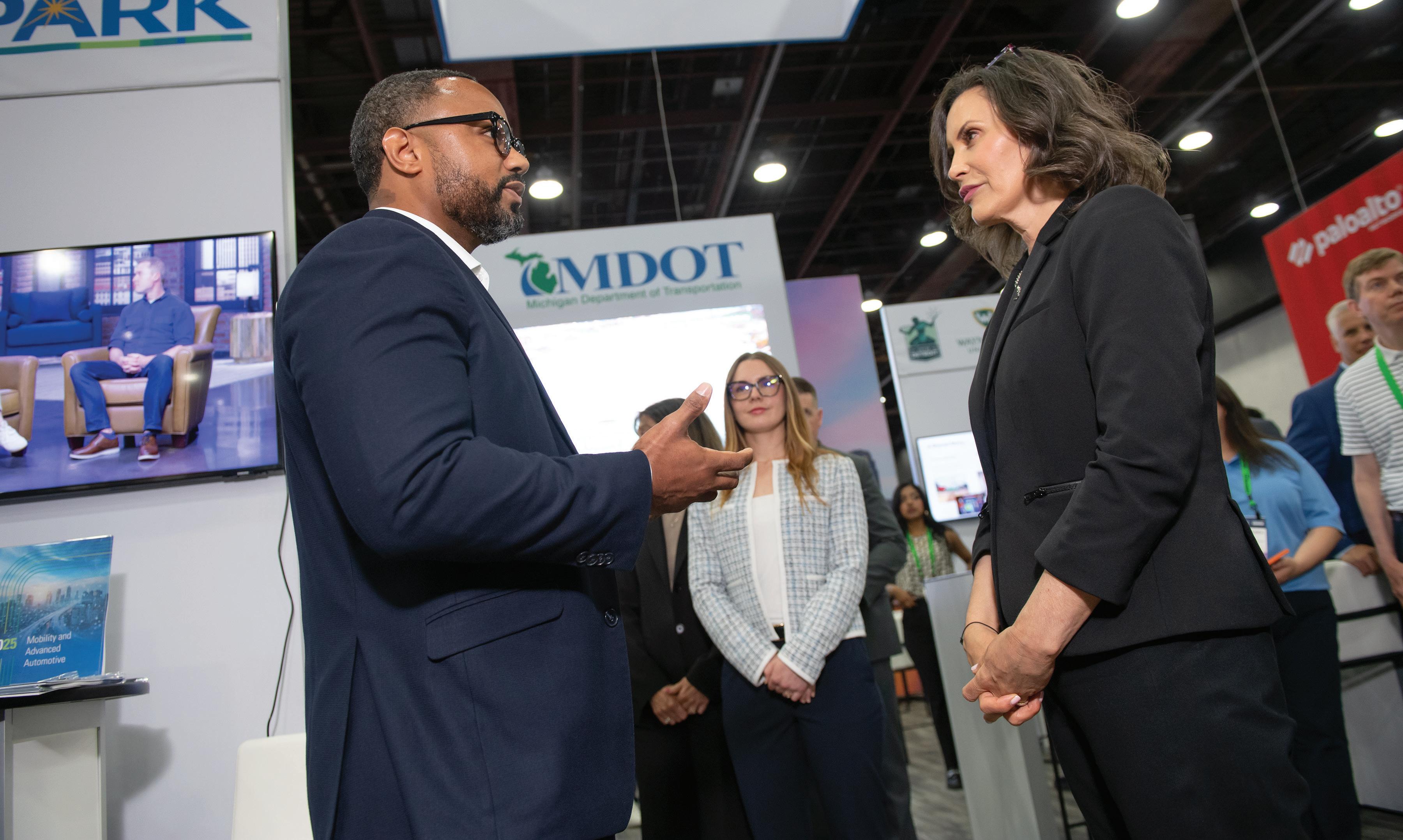
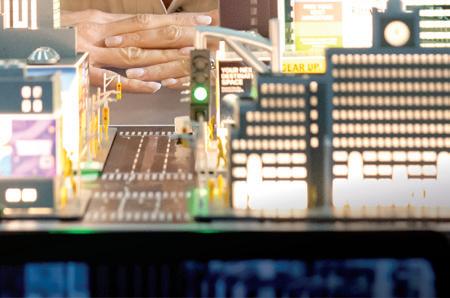
e importance of reliable and safe transportation to the economy and quality of life in Michigan was perfectly illustrated by the visit of state governor Gretchen Whitmer to ITS America 2026 Conference & Expo. She spoke to delegates and toured the Exhibit Hall, spending time at the Michigan Department of Transportation (MDOT) booth in particular.
She listened to many representatives of the organisations co-exhibiting there, including Loren Townes jr (pictured,
MICHIGAN IS ‘EAGER PARTNER’ FOR ITS INNOVATION
above left, with the governor), director of entrepreneurial services at Ann Arbor Spark. She asked Semtoc (Southeast Michigan Transportation Operations Center), which is run by Aecom, how drivers had been responding to Flex Route, a lane control system on I-96 and US-23 that uses a combination of signs, cameras and electronic message boards to let drivers know when an additional lane is available for use during morning and afternoon peak travel periods. Michigan – and
particularly the area between Lansing, Ann Arbor and Detroit – is a magnet for future transportation, driving growth, education and workforce development. Whitmer also talked to the University of Michigan Transportation Research Institute – which has just launched a drone mobility arm called M Air - about funding. When it comes to mobility innovation, she added: “We are an eager partner.”
Booth 5031 www.michigan.gov/mdot
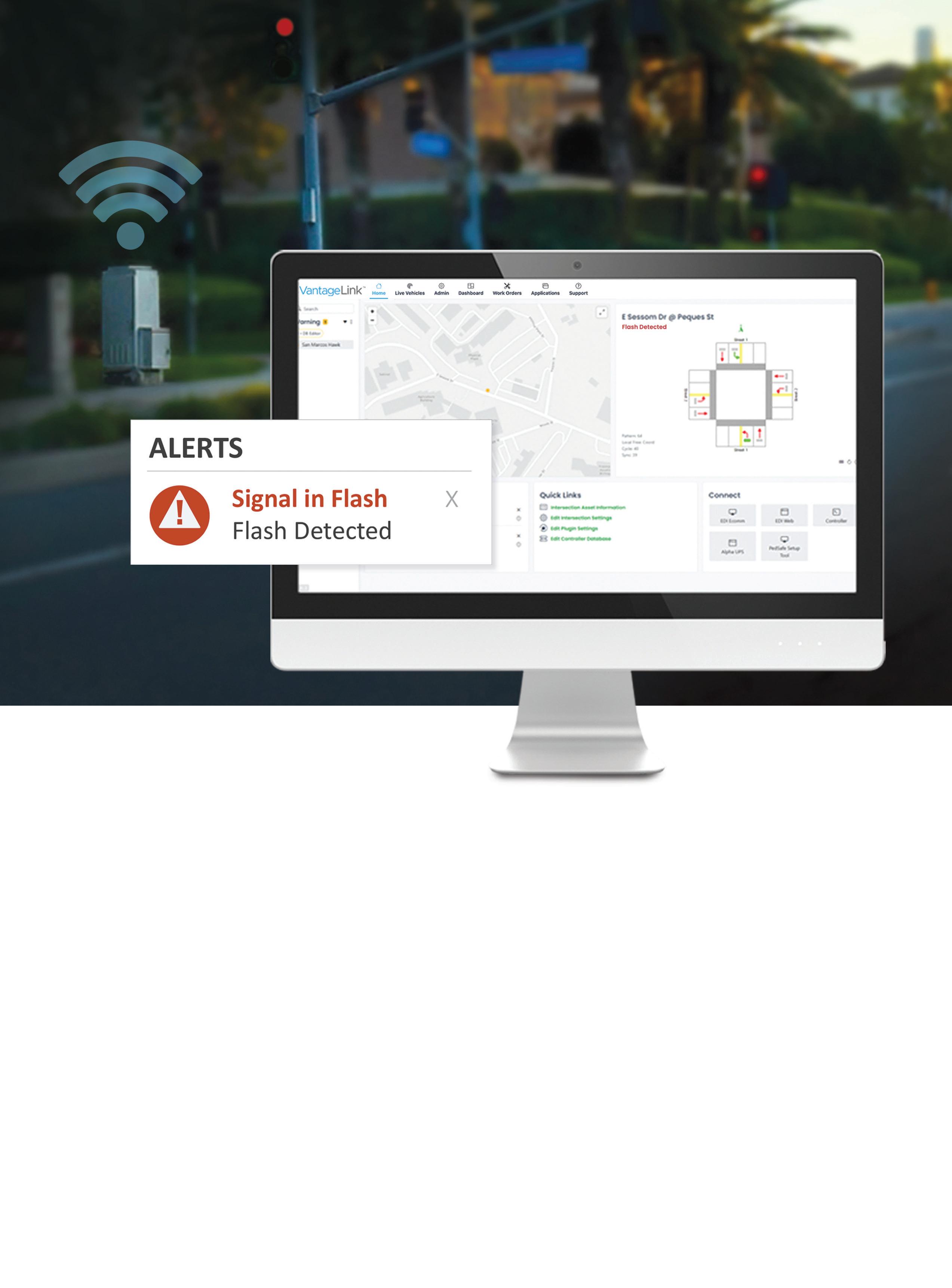
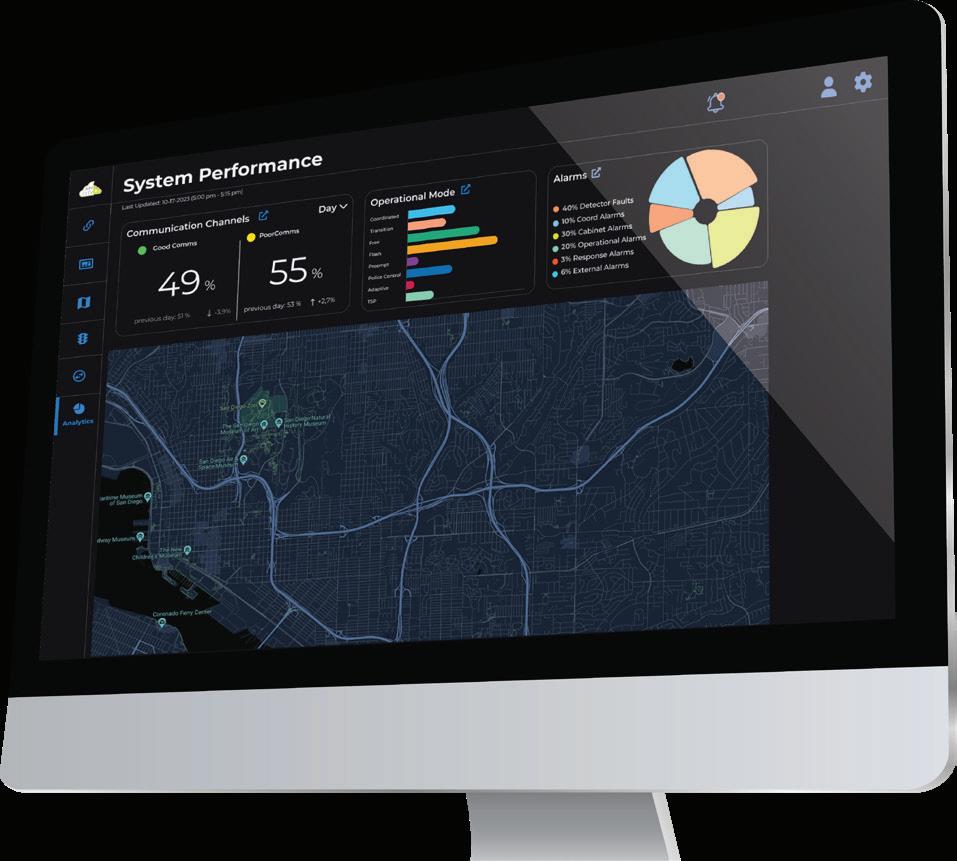
Stop flying blind inside your cabinets.
Iteris VantageLink™ extends secure connectivity to traffic cabinets, delivering real-time visibility, remote access, and continuous operational control through a cloud-based dashboard. Real-time alerts, data, and analytics help agencies move from reactive repairs to proactive asset management — reducing field visits and improving system reliability.
CYNAPSE.AI SWITCHES TRAFFIC CAMERAS TO ‘ALWAYS ON’
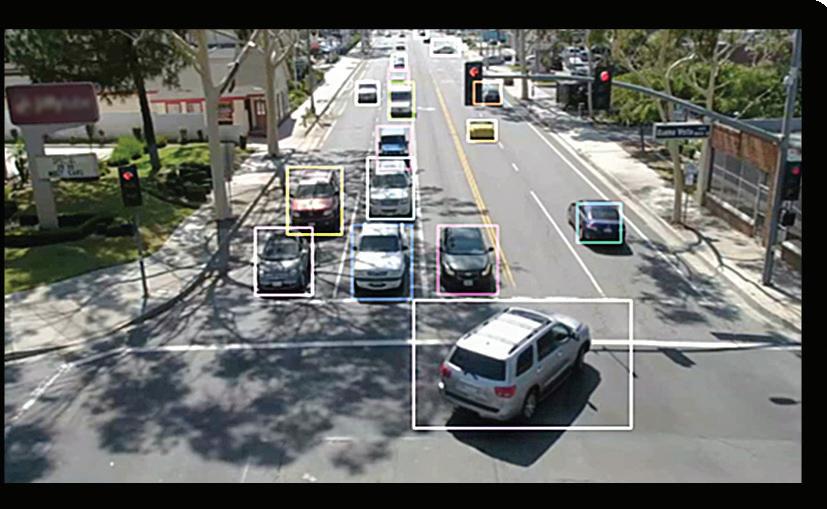
Cynapse.ai has launched CyRoad, an agentic video intelligence platform that transforms existing highway cameras into AI-powered road and tra ic intelligence systems.
The company says that, across the US, thousands of roadway cameras operate simply as passive recording devices. This means they capture critical events but these go unnoticed until congestion builds, secondary incidents occur, “and the cost of inaction becomes unavoidable”.
“DoTs and transportation agencies are being asked to do more with what they have, and the pressure to improve highway safety and response times has never been greater,” says Cynapse. ai president Paul Wilson.
CyRoad helps to modernise highway operations without significant infrastructure replacement costs, by transforming in real time raw footage from every connected camera into intelligence for departments of transportation, agencies and tra ic management centres. This includes vehicle counts, types, directions, lanes, speeds, congestion levels, and queue lengths. Autonomous AI agents continuously monitor roadway and tra ic conditions, trigger alerts, and coordinate response workflows in real time.
Cynapse says the new product helps teams detect incidents faster, respond more intelligently, and improve safety across every mile of roadway.
Booth 4050 www.cynapse.ai
Chief operating o icer
Andrew Barriball
andrewb@primeglobalpublishing.com
Sales director
Dan Emmerson
dane@primeglobalpublishing.com
Editor James Foster
Editorial team
Adam Hill, David Arminas, Andrew Bardin Williams,
Head of digital
Sarah Biswell
SAFER ROADS START WITH REAL-TIME VISIBILITY
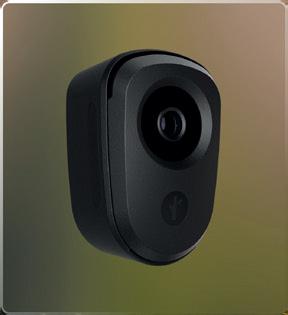
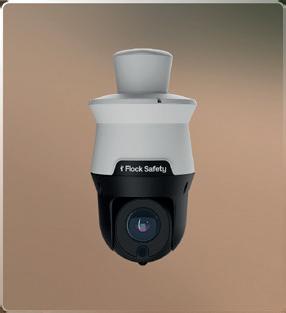
Flock is bringing real-time roadway intelligence to its booth here in Detroit, showcasing AIpowered solutions that help transportation agencies improve safety, tra c operations and incident response. Attendees can see how Flock delivers rapidly deployable technology that provides real-time visibility without road closures or costly infrastructure upgrades.
Flock will showcase solutions for real-time crash and incident detection, wrong-way driving alerts, AI-powered tra c analytics and continuous vehicle counting, speed trend analysis for safer roadways, live roadway monitoring with solar-powered cameras and drones, and faster coordination across DOTs, law enforcement and emergency response teams. Agencies are already using Flock to improve roadway safety outcomes. In Southeast
Virginia, Flock’s real-time crash detection alerted o cers to an injury crash nearly three minutes before the rst 911 call, enabling faster emergency response when every minute matters.
Attendees will also learn how the Chamblee Police Department in Georgia reduced tra c accidents by 50% at a targeted intersection by utilising Flock and partnering with their tra c engineering team.
Headquartered in Atlanta, Georgia, Flock provides NDAA-compliant solutions built for public sector agencies nationwide. Visitors are encouraged to stop by to meet the team and learn how agencies are building safer, smarter and more resilient transportation networks. Booth 5023 www.flocksafety.com
Produced by
Adam Snow of Flock
Unified Camera Intelligence and Real-Time Analytics for Traffic Video Management.
Commsignia inspires Trust
Commsignia has launched its Trust Engine, a road safety digital twin platform designed to establish “a single source of truth for tra c ecosystems”.
It uses cloud-based fusion to ingest, normalise and cross-examine separate sensor object streams into a single model.
For instance, when a vulnerable road user enters a crosswalk, independent data
points from cameras, Lidar and vehicle messages are instantly de-duplicated into one de nitive object.
e vendor-agnostic foundation integrates directly with existing hardware, enabling agencies to build system-level intelligence across multi-vendor ecosystems.
Commsignia provides its own GUI for the platform, and users will have access to
toolkits including the Roadway Intelligence Suite for day-to-day road operators; the Emergency Safety Suite to protect and grant priority to rst responders; and the Fleet Suite, which delivers targeted priority services to urban maintenance and bus transit eet operators.
Booth 4070
www.commsignia.com
ITS IS ‘FOCUSED ON SYSTEM-LEVEL
BENEFITS’,
SAYS LAURA CHACE
Local communities and public sector agencies looking for road safety improvements don’t have to be experts in technology, said Laura Chace, president and CEO of ITS America. “They need to be experts in what they’re trying to solve,” she explained at the Detroit Conference & Expo. “Then let private sector vendors, who are experts in what their solution can and can’t do, to come in and say: ‘This is how I can solve that for you’.” That sort of cooperation model is the way forward.
“Nationally, we are very focused on system-level benefits and the methods and tools that are out there,
with newer solutions on the market that are actually driving these gains,” Chace continued. Much of the time, that involves feeding in real-time data and sources that maybe weren’t available before or were not fed into a tra ic management system. “When a city has done that – and Detroit has – they’ve seen about a 30% improvement in travel reliability,” she concluded. “If we start to see these benefits in di erent cities and states across the country, we can drive down not only fatalities but also the time people lose sitting in congestion.”
Booth 4077 www.itsa.org
Szabolcs Patay (le ) & Laszlo Virag of Commsignia
High-performance video detection
Smart City ready with vehicle, bicycle, and pedestrian detection
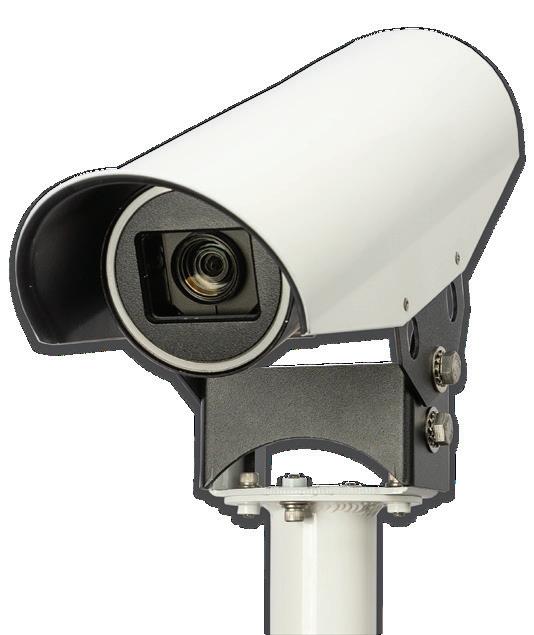
Autoscope® OptiVu is taking video detection to new heights by offering smart object detection algorithms powered by AI and machine learning. The camera and processor provide high performance vehicle detection, bicycle and pedestrian detection, enhanced traffic data collection in real-time, and Smart City readiness with connectivity to other systems.
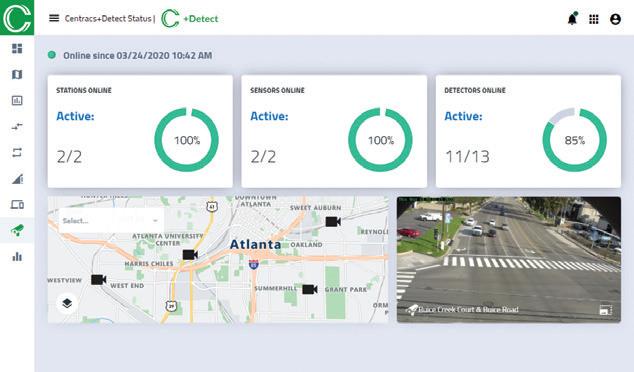
Maximize your Autoscope OptiVu detection system with Centracs® +Detect, our revolutionary cloudbased data analytics, monitoring, and reporting platform. +Detect supports informed traffic management decision making and signal optimization.
Today’s conference sessions
With advanced driver assistance systems now standard in most new vehicles, the relationship between driver and vehicle is changing quickly. This timely panel session Behind the Wheel: Educating Drivers on Their Evolving Role (09:00-10:00 Room 310B) explores what that means in practice, and how the industry can build public understanding as automation advances. Hear leading voices from automotive innovation discuss driver trust, responsibility and the arrival of Level 3 systems. The conversation will o er practical perspectives on education, communication and safety, making this a valuable session for anyone focused on the future of connected and automated mobility.
As automated mobility develops, accessibility must be built in from the start. The engaging engaging session Co-Designing Accessibility: Human-Driven Design for Inclusive Automated Mobility (09:00-10:00 Room 310A) brings together engineering, assistive technology and lived experience to explore how co-design can shape transport systems that genuinely work for everyone. Through real examples and user-led insights, speakers will examine accessibility challenges, inclusive design features and operational improvements that strengthen confidence and usability. A thoughtful and practical discussion for delegates looking to ensure the future of mobility is both innovative and genuinely inclusive.
Discover how agentic AI is becoming a practical tool for tra ic operations teams. Supercharge your Team with an AIPowered Virtual Tra ic Operations Agent (09:00-10:00 Room 312 A/B) looks at virtual assistants built specifically for transport engineering, capable of analysing data, diagnosing issues and suggesting next steps in plain language. From validating citizen complaints to supporting sta development and identifying operational improvements, the technology promises real gains in e iciency while keeping engineers firmly in control. A smart and highly relevant session for agencies exploring how AI can strengthen tra ic operations without increasing resources.
Transforming Safety with Kinetic Energy Analytics and V2X Technology (09:0010:00 Room 321) explores how AI-powered video analytics and V2X technology are being combined to identify risks, protect vulnerable road users and improve fleet safety. With examples from live deployments, attendees will see how connected infrastructure can deliver immediate alerts and support proactive interventions at intersections. It o ers a practical look at how agencies can turn data into action while making measurable progress towards safer, smarter streets.
Road maintenance is entering a new era, with AI and machine learning helping agencies move from reactive repairs to smarter, preventative action.
The Predictive Infrastructure Shi — From Reactive Maintenance to Strategic Road Safety (10:30–11:30, Room 310A) examines how predictive technology is transforming maintenance planning, using continuous analysis of pavement, signs and roadside conditions to identify risks before they become costly problems. Featuring a compelling case study from the Hawaii Department of Transportation, speakers will show how AI, lidar and communitysourced imagery are reshaping day-to-day operations. This is a practical and forwardlooking session for anyone interested in how digital tools are improving safety, reducing costs and strengthening infrastructure performance.
Digital twins are becoming a powerful tool for agencies managing increasingly connected transport networks. Active Digital Twins for Safer, Smarter Roadway Operations (10:30–11:30, Room 321) explores how real-time, AI-enhanced digital models can help turn complex streams of roadway, vehicle and environmental data into practical action. Industry and public-sector leaders share how active digital twins are improving incident response, supporting predictive maintenance and helping teams make faster, more informed decisions. With clear links to safety, resilience and operational e iciency, this session o ers valuable insight into how virtual infrastructure is creating measurable improvements on real roads. Continued
Mobility for All: Cross-Sector Innovation Driving Equitable Multimodal Access (10:30–11:30, Room 310B) looks at how transport agencies, local organisations and private mobility providers are working together to deliver more inclusive and reliable multimodal travel. Speakers will share practical examples involving microtransit, demand-responsive services, volunteer driver schemes and mobility wallets, showing how collaboration can break down barriers and widen access. With a strong focus on community engagement and real-world delivery, the session o ers valuable ideas for anyone looking to build transport systems that are flexible, accessible and genuinely centred around people’s needs.
Electronic tolling remains essential to mobility and infrastructure funding, but new pressures are creating both risk and opportunity.
Connected Roads: V2X and the Future of Electronic Tolling (10:30–11:30, Room 330A) how V2X technology could strengthen and expand tolling systems while opening the door to broader connected mobility services. From seamless toll and parking payments to wider safety applications, speakers will examine how a single connected platform could support both operational e iciency and driver experience. It is an insightful look at how agencies and manufacturers can future-proof infrastructure while accelerating the wider adoption of connected vehicle technology.
Eyes Beyond the Camera Pole: Integrating Drone-as-First-Responder Into the Modern Tra ic Management Centre (10:30 - 11:30 Room 312 A/B) explores how state DOTs and municipal tra ic management centers are deploying autonomous drones as a new class of ITS sensor, dispatched in seconds to verify incidents, assess severity, and stream live aerial intelligence directly into operator workflows. Panelists will discuss expected outcomes, integration with existing ATMS and CAD platforms, FAA waiver pathways for beyond-visual-line-of-sight operations over roadways, and the operational and policy considerations DOTs should weigh as drones move from pilot programme to core infrastructure.
As transport systems become more connected and data-driven, agencies are increasingly using the ‘crowd-as-a-sensor’ – drawing data from smartphones, dashcams, and connected vehicles to improve roads.
The four-part presentation The Crowd as a Sensor: Powering Digital Infrastructure from the Ground Up (13:00–14:00, Room 313A) explores how everyday road users are helping build responsive and cost-e ective digital infrastructure.
1 Crowd-Sourced Turning Movement Counts: Florida DOT uses anonymised vehicle trajectory data to generate continuous turning counts, supporting signal optimisation without manual counts.
2 AI-Powered Dash Cam Insights: Pilots are using AI-enhanced dashcam analytics to detect events like debris or near-misses, turning footage into structured data for better tra ic awareness.
3 Crowd-Sourced So ware for Real-Time Operations: Georgia DOT integrates crowd-sourced data from platforms such as RITIS and TomTom to enhance realtime decision-making and performance monitoring.
4 Smartphone-Based Roadway Health Inventory: Using AI-powered smartphones, this approach passively captures road condition and asset data from everyday drivers, improving accuracy and reducing costs for GIS and maintenance systems.
As transport systems become more connected, agencies are combining physical infrastructure with digital intelligence to improve safety and performance.
From Asphalt to Algorithms – Digital Infrastructure for Tomorrow’s Transportation (13:00–14:00, Room 310B) examines how infrastructure owners and operators are using data analytics, artificial intelligence and intelligent transport systems to strengthen day-to-day operations. Through real examples, speakers will show how digital infrastructure can support incident response, asset monitoring and real-time decision-making while improving outcomes for the travelling public. A practical and informative session for anyone interested in how smarter systems are reshaping transport management and operations.
Connected vehicle technology promises major safety benefits, but those benefits rely on systems working seamlessly across regions. A Digital Seatbelt: Interoperable V2X Traveler Information Messages (13:00–14:00, Room 310A) focuses on Traveler Information Messages and the critical need for interoperability. Featuring the first collaborative guidance developed through the Connecting the West programme, speakers will share how states including Utah, Wyoming and Colorado are creating a more consistent approach to V2X messaging. The result is a timely discussion on standards, collaboration and practical deployment, with clear lessons for anyone working to advance connected vehicle safety on a broader scale.
Evaluating Next Generation Transit Signal Priority (13:00 - 14:00 Room 312 A/B) brings together innovative project and programme treatments for transit priority from di erent US Cities. Gated TSP busways, to tourist destinations, to advanced cloud-based TSP implementations will be discussed from industry, agency and consulting perspectives. Each project leveraged measured signal performance measures and corridor metrics to understand the e ectiveness of the various TSP treatments. Panelists will give a brief 10-minute presentation each, then there will be a facilitated panel discussion, a er which questions from the audience will be taken. Presentations on Pigeon Forge Transit Priority Pilot, IndyGo’s TSP programme, and the Miami-Dade Busway project make up the session.
• Real-Time System Visibility
• Centralized Signal Management
• Adaptive Traffic Operations
• Intelligent Event Notifications
• Corridor-Wide Intersection Control
• Historical Performance Analysis
• Data-Driven Traffic Optimization
The Result? A central system that doesn’t limit your options , but expands them.
ITS America 2026 | Let's connect at Booth #5001
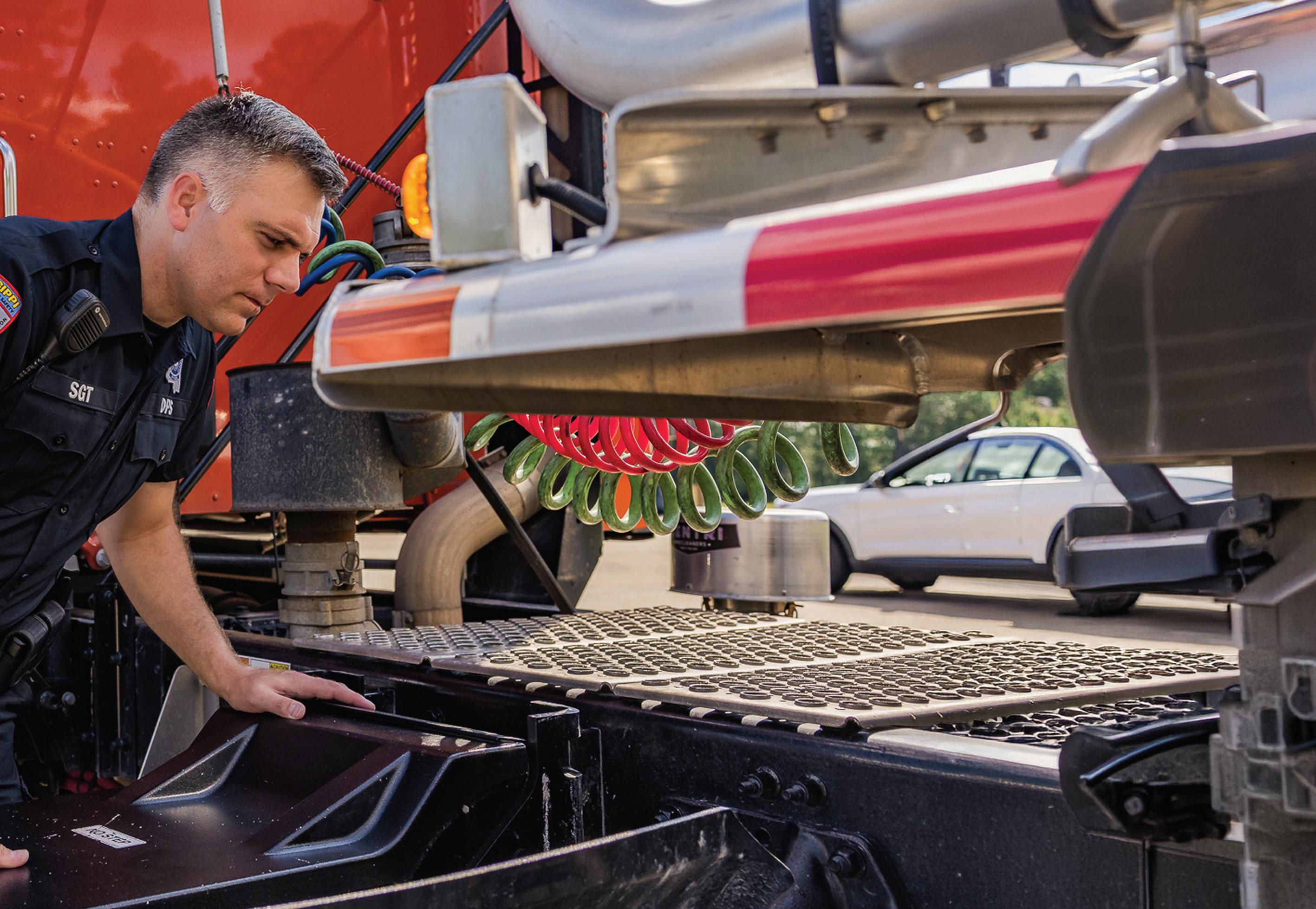
Helping enforcement focus on high-risk trucks.
PrePass Safety Alliance works alongside enforcement teams to deliver intelligent screening solutions that improve safety without compromising efficiency.
Stop by booth #2037 to learn more.
The future of tra ic management is so ware-defined
Visitors to NoTra ic’s booth here at the ITS America Conference & Expo will be able to see how the company is redefining the future of mobility by transforming the way cities manage tra ic. At the heart of this transformation is So ware-Defined Infrastructure (SDI), a revolutionary shi for the transportation industry that moves tra ic operations beyond rigid, hardwarebound systems into a dynamic, scalable and intelligent framework.
By virtualising tra ic control and enabling real-time adaptability, SDI allows cities to maximise the capacity of
existing infrastructure, enhance safety, and seamlessly integrate new technologies without costly overhauls. Just as importantly, SDI dramatically improves operational e iciency by simplifying system management and enabling automated, continuous optimisation that keeps intersection performance operating at its highest potential.
Designed to unlock new functionality on demand, SDI empowers agencies to transition from reactive tra ic management to proactive, data-driven mobility operations. Through real-time analysis
of tra ic patterns and actionable system intelligence, cities can improve tra ic flow, reduce congestion, prioritise emergency response, and advance sustainability goals at scale.
With NoTra ic’s cutting-edge SDI technology, the future of tra ic management is not just about keeping up; it is about leading the way. The company is asking delegates: Are you ready to redefine mobility in your city?
Derq touts power of AI with SMART Grant recipients
Exhibitor Derq brought together a group of ITS practitioners from around the U.S. Tuesday a ernoon to share their experiences with ITS America attendees around the use of AI in their U.S. Department of Transportation (USDOT) SMART Grant pilot projects.
Titled “From Pilots to Impact” and moderated by Derq co-founder and COO Karl Jeanbart, the session focused on real-world, practical advice to transportation organisations looking to implement AI in their
operations: start small and iterate; don’t expect AI to replace human expertise; clearly define user workflows; put results into context of public benefits; and protect public trust.
“It’s important to understand how technology like AI can improve safety and reliability in real-world deployments,” Jeanbart said before turning the microphone over to the four practitioners from Detroit, Seattle, Southern Nevada, and Charleston. Over the course of the next hour, they shared firsthand, real-
world insights from their phase I projects—how they shaped their proposals, why their approaches were selected, lessons learned, what worked, what didn’t, challenges encountered, and measurable outcomes.
James Wallace, transportation Project Manager for the City of Charleston, talked about using AI-powered tra ic management systems to improve pedestrian and bike safety along a busy tourist and commercial corridor. Theresa Gaisser from the Regional Transportation Commission (RTC)
of Southern Nevada shared how her agency used AI to improve on-time rates of a key downtown bus route. Jason Cambridge, CIO of the Seatle Department of Transportation, shared how AI is helping the region minimise disruption from a planned highway reconstruction. And, finally, Detroit native Tony Geara showed how automated crash detection improved survival rates from serious injury crashes in the city by nearly 10 percent.
Booth 2030 www.derq.com
Nataliya Gilbert of NoTra ic
Michele Mueller, Manager of Connected, Automated and Electrification for MDOT
MDOT: on the road to the future
MDOT, Michigan Department of Transportation, has been spearheading the ITS America Conference & Expo’s outdoor demonstration experiences. But MDOT is also pushing the ITS boundaries throughout the state, highlighted by many of the conference presentations
Having ITS America back in Detroit is a great opportunity to showcase the mobility ecosystem that exists across all modes.
ere is little doubt that Detroit is now the heart of mobility innovation in the US.
But look further a eld and advances in ITS systems and technologies in the Detroit area are but one example of exciting work that MDOT is doing around the state. “ e ecosystem here in Michigan is something that doesn’t exist anywhere else,” says Michele Mueller, Manager of Connected, Automated and Electri cation for MDOT.
“We not only have signi cant partners across industry and academia but we also have key government partners across federal, state and local agencies. It is amazing that Michigan can also work collectively across state agencies and make business and technology advancements easy for them to be done in Michigan.”
Michigan is the US state that sees the most freight tra c arrive from and depart to Canada each year. Billions of dollars of goods and services ow across this boundary. Much of this will soon travel via the new Gordie Howe International Bridge, a $4.7 billion multi-year project encompassing six tra c lanes, 16 toll lanes and 60 Canada and US inspection lanes. Business is looking up.
ere are other crossing as well. MDOT is heavily involved in streamlining all its international vehicle processing. e state-
wide International Crossing Deployment plan is “another example of innovation for many reasons”, says Mueller. “ e initial stage of the plan brought together over 100 stakeholders between US and Canada to talk about the actual challenges that happen at the border crossings across Michigan. We had honest partnership conversations that led to that same group coming up with actual solutions to those challenges that we can utilise for pursuing funding opportunities to implement and be sustainable.”
Michigan was awarded two SMART grants - Strengthening Mobility and Revolutionising Transportation (SMART) Grants Programme. ese covered pilot projects, the Blue Water Bridge International Smart Freight Corridor and Advancing Rural Mobility: Michigan Public Transit Open Data Standards Programme.
e Blue Water Bridge pilot was aimed at providing predictable arrival and processing times for truck-borne goods movement across the Blue Water Bridge to the Port Huron Port of Entry from Canada.
e smart corridor project improves the ow of data between shipping companies, vehicles, border agencies and infrastructure operators along this key international freight corridor.
e $1.8 million SMART grant supported the pilot project to improve the movement of westbound goods into Michigan and
minimise border waiting times - and congestion.
is project decreased pollution from idling vehicles and decreased supply chain costs. e project supports pre-clearance of freight shipments and minimises queuing and backups, while maintaining data and information security.
Meanwhile, the Advancing Rural Mobility Program - ARMP - seeks to provide access to real-time public transit information and improve people’s ability to plan and book transit trips in rural communities. e project will help rural transit agencies create data feeds using open standards that allow the data to be shared easily and consistently. at data can be used to power such things as trip-planning apps, on-demand ridehailing services, and MDOT’s planned statewide mobility-as-a-service platform, which will help people in all areas of the state identify and access transportation options.
e timing of ITS America in Detroit and the opening of the new Gordie How Bridge shows that Michigan is welcoming the world and encouraging innovation. “ e Michigan Department of Transportation is proud to showcase the state of Michigan as a living laboratory for next generation transportation,” says Mueller. “As I always say, Michigan is open for business.” Booth 5031 www.michigan.gov/mdot
Get a clearer picture of roadway activity
• Live system status with dashboard view
• Alerts and notifications
• User and system management
• Easy to use software
Talk to our roadway experts and see demos in Booth 6001.
MX Series
Connected traffic beacons and signs
HIGHWAY-SCALE DETECTION FROM A SINGLE DEVICE
Sensys Networks is showcasing its RTMS Echo radar, highlighting a solution designed to modernise highway vehicle detection at scale.
e device delivers accurate, pervehicle data across up to 12 lanes from a single pole-mounted device, reducing the number of sensors required for wide roadway coverage. At the event, the company is emphasising how this approach helps agencies simplify infrastructure, lower installation costs and streamline long-term maintenance.
e system features a modern, IP-native architecture with a single Cat5x or Cat6x
connection and built-in Wi-Fi, enabling fast, on-site con guration through a browser-based interface.
Virtual aiming tools further reduce calibration time, allowing crews to complete installation in minutes rather than hours. For agencies concerned about long-term data control, RTMS Echo supports industry-standard NTCIP protocols and API integration. is allows agencies to incorporate detection data directly into existing tra c management systems without proprietary middleware, avoiding vendor lock-in. e technology has recently been deployed at scale by
Umovity scoops up Econolite ATMS and PTV Flows in a single integration
The team at Umovity slung ice cream and soda at their booth Wednesday a ernoon while announcing yet another integration between Econolite and PTV Group so ware. The integration pairs Econolite’s Advanced Transportation Management System (ATMS) with the predictive intelligence of PTV Flows. Now called Centracs Predict, the unified solution transforms tra ic signal optimization from a reactive process into a proactive one.
“Once an operator knows what happens on the roadway, they can start to make predictions about what
major US highway agencies in Florida and Tennessee, replacing hundreds of detection locations following eld evaluation. ese projects demonstrate both the technical capability and the responsive support model Sensys Networks brings to large-scale ITS programmes.
Sensys Networks is hosting in-person meetings throughout the event in Detroit. Attendees are encouraged to schedule a private brie ng in advance to see RTMS Echo in action at sensysnetworks.com/ scale.
www.sensysnetworks.com
FILL IN THE GAPS WITH ONYX
The ONYX Advanced Distributed Acoustic Sensing platform from Sintela o ers continuous, network-wide tra ic intelligence and incident detection.
will happen 30 minutes, 60 minutes or even 90 minutes later,” Brian Garrett, the company’s AVP of so ware sales, told a group of conference attendees taking in his presentation while drinking ice cream floats. “This leads to automated tra ic management strategies that can trigger predetermined plans based on real-time conditions.”
Centracs Predict can speed incident response, alleviate disruptions around special events and improve corridor congestion.
Booth 4001
www.umovity.com
The platform is designed for highways, rural corridors and smart mobility applications. It transforms standard fiber-optic cable into a real-time sensing system capable of monitoring road networks without gaps or blind spots.
Using existing or newly deployed roadside fiber, ONYX delivers AI-powered detection of vehicle movements, speeds, congestion, journey times and incidents in real time. There is no need for traditional roadside sensors or extensive civil works. The system provides persistent situational awareness across distances up to 80 miles per unit and integrates seamlessly with tra ic management centres, VMS platforms, SCADA systems and connected mobility architectures.
Booth 1036 www.sintela.com
Terry Stanoch of Sensys Networks
Building Optimized Cities
Transforming the way people move one intersection, community, and city at a time.
Let’s Build Your City. Together.
cubic.com/transportation
When Mobility Becomes a Target
On Wednesday, Palo Alto Networks and ITS America’s Cybersecurity Community of Practice jointly staged a highly successful interactive workshop here as a structured call-to-action for the industry. Here, Tony Knutson highlights the workshop and the key cybersecurity challenges facing the ITS industry today
Transportation agencies are pursuing an ambitious mission: zero roadway fatalities through Vision Zero, seamless vehicleto-everything (V2X) communication, and the safe integration of connected and automated vehicles. Every goal depends on trusted, resilient digital infrastructure. Yet tra c cameras are already being hijacked and repurposed as battle eld intelligence networks. e question is no longer whether connected transportation infrastructure will be attacked, but whether agencies will be ready to respond when attacks happen. Operational attackers (OT) average 185 days undetected before launching an attack. With US data breach costs averaging $10.2M and rising, a successful strike on transportation infrastructure shakes public con dence, disrupts safety, and forces costly restoration and compliance reviews.
Wednesday’s exercise simulated a multiphase cyberattack on a multi-agency DOT environment. It opened with SIM hijacking — exploiting compromised credentials and SMS-based MFA to gain a silent foothold. By Day 11, the attacker weaponised a vendor update pathway with a malicious DLL disguised as a legitimate patch. en came the critical moment: eld devices malfunctioned while the tra c management centre dashboard showed all systems normal. A ransomware inject then encrypted both IT and ITS environments, leaving every group with the same unanswered question: who has authority to declare a system untrustworthy without halting life-safety functions? No group had a clean answer. at gap is the vulnerability.
Strategic Takeaways: Confronting the Structural Problem
e exercise exposed what technical audits miss: a governance de cit beneath the infrastructure. IT and OT personnel lacked
a common operational language under pressure. Vendor access pathways became attack vectors once trust boundaries eroded. Early warnings went unconnected because no single role owned responsibility. ese failures are systemic. Most DOT ITS deployments carry the architectural debt of systems built for 20-to-30-year lifecycles, now connected to networks never originally anticipated. Legacy NTCIP protocols transmit signal timing commands in plain text with no native authentication, and detection-only tools require human action to respond against machine-speed ransomware. Additionally, legacy operating systems maintaining critical infrastructure controls leaves these systems open to even traditional cyber exploitation.
Zero Trust at Every Junction:
Building an Unbreachable ITS Cyberattacks exploit identities, vendor pathways, software updates, and eld devices alike. A compromised signal controller undermines the systems autonomous vehicles rely on; a spoofed V2X message feeds false data to connected vehicles at highway speed. e more intelligent our roads become, the greater the consequences.
e answer is Zero Trust — no user, device, or system is automatically trusted, even inside the network. Traditional perimeter security fails the moment it’s breached; Zero Trust continuously veri es every device and user at every access point, permitting only what is explicitly authorised. True cyber resilience must span the full ITS Cybersecurity Framework. Palo Alto Networks puts Zero Trust into practice across every layer: Next Generation Firewalls block unauthorised devices before credentials are ever tested. Device Security passively discovers connected assets,
including signal controllers, cameras, DMS, RSU, and EV chargers — no active scanning, no disruption — and ags behavioural deviations in real time. 5G Security links IMSI and IMEI through continuous signalling inspection to automatically block hijacked SIMs, delivering the identi cation, correlation, detection, and mitigation traditional routers can’t provide. Strata Cloud Manager uni es policy enforcement and compliance reporting from a single plane. Virtual patching shields unpatched assets without downtime. Compliance support for FHWA, NIST 800-82, and ISA/ IEC 62443 becomes automated — not a separate workstream competing for stretched agency resources. Georgia DOT proved this at scale, securing 8,000+ tra c cabinets statewide with zero operational disruption.
e Imperative: Moving Beyond Reactive Defence
e open, no-fault environment ITS America’s Cybersecurity Community of Practice champions is the prerequisite for exposing structural vulnerabilities before adversaries do. True transportation modernisation cannot happen without comprehensive cyber resilience. e window for proactive defence is open — agency leaders must act now.
Dr. Tony Knutson is a Consulting Director with Unit 42, the threat intelligence and incident response division of Palo Alto Networks. An active participant in ITS America’s Cybersecurity Community of Practice, he specialises in advanced persistent threats, nation-state actors, insider threats, and other security breaches.
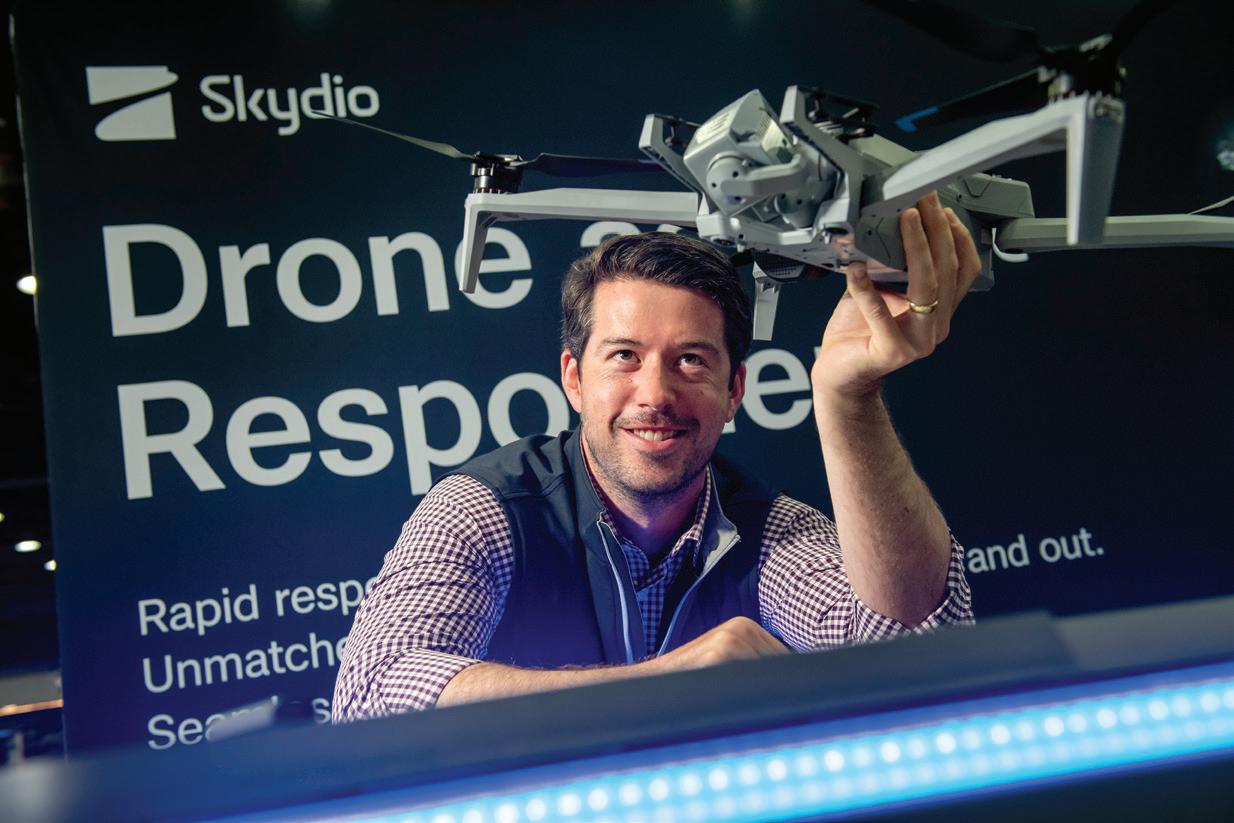
SKYDIO PILOTS DRONES INTO THE WORLD OF FIRST RESPONDERS
Drones as first responders? Why not, suggests Scott Cullinane of exhibitor Skydio. Drones can be deployed quickly and autonomously and fly to locations that are dangerous, costly and time-consuming for humans to reach on their own.
This mobility allows drones to send real-time video to first responders, providing critical situation awareness as they arrive on scene – even serving to deescalate dangerous situations.
Drones can verify crashes and other events, allowing humans to clear them more quickly. And drones can be used to identify damage to infrastructure due to these events – opening roadways and bridges quickly and safely.
According to Cullinane, Skydio drones have been doing
all this for transportation organisations, law enforcement agencies and first responders for years – including in Dearborn,
Las Vegas, Oklahoma City, San Francisco, and hundreds of other municipalities across the U.S.
Its flagship product, the Skydio X10, has up to 40 minutes of flight time and can reach speeds up to 45 miles per hour. It can be deployed in less than 40 seconds and can fit in backpack. The drone boasts high-resolution visual and radiometric cameras and onboard AI processing that allows organisations to automate complex data capture missions in places where humans can’t reach easily.
“Drones are now critical components of transportation infrastructure,” Cullinane said. “A remote operator can capture critical data at a moment’s notice – safely and autonomously.”
Booth 1080 www.skydio.com
Scott Cullinane of Skydio
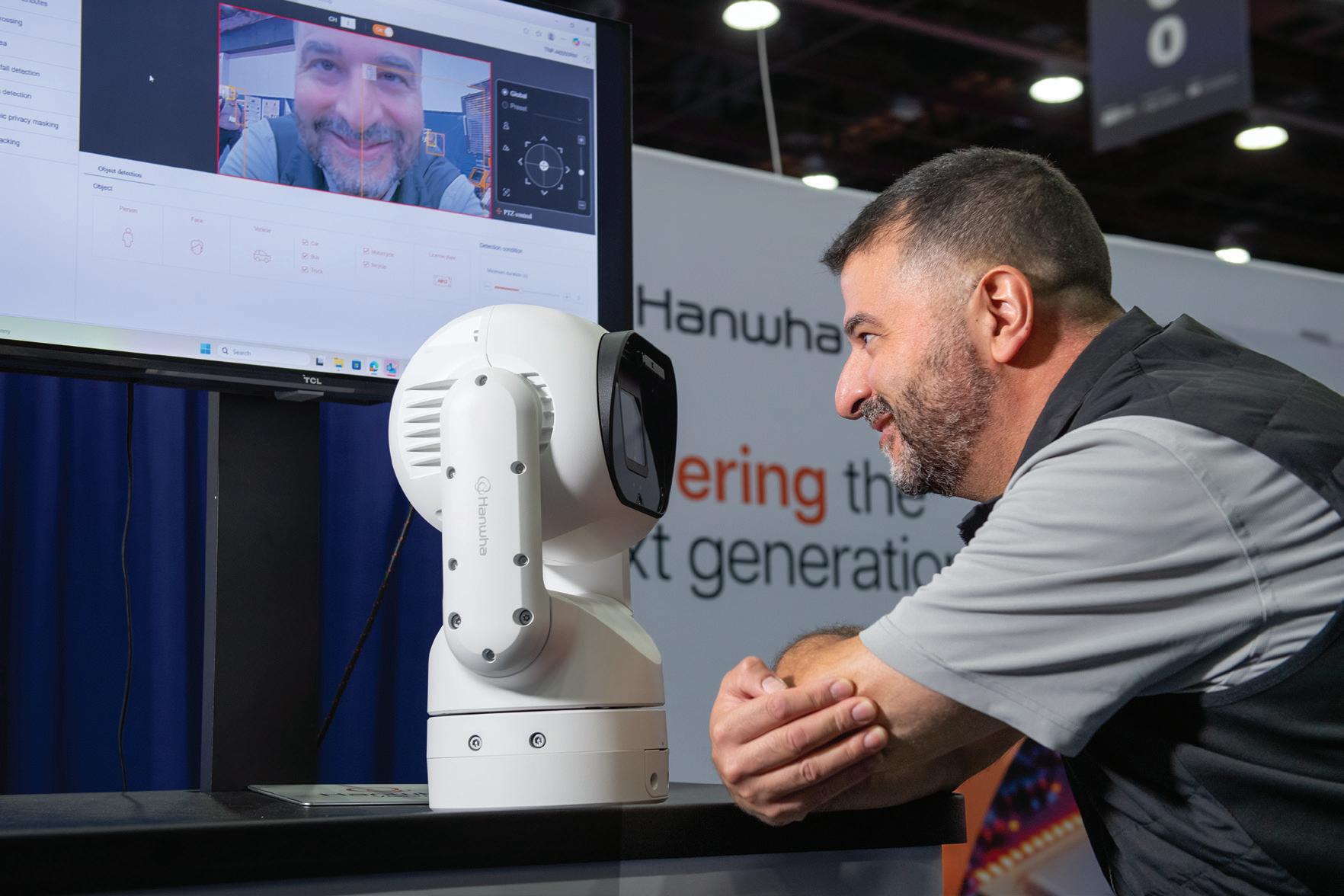
A cool camera from Hanwha Vision
Sales are hot for Hanwha’s recently launched vision camera that has advanced cold weather protection. Only out since January, the TNP-A7430RW camera has been ordered by road agencies in several US states, says Zareh Megerdoonian, business development manager for the intelligent tra c solutions division.
Apart from superior optics, what makes this camera winner is its ability to operate in very cold temperatures and capture images in very snowy conditions, from -50C to 60C. It has three heaters, including a defroster that automatically kicks when the unit is switched on. A pan heater on the base means the rotation assembly remains ice-free and the camera will always swivel, as well as move up and down 180 degrees.
e infrared red ability allows it to see at night up to 450m, around 1,500 feet, even in snowy conditions and a lens wiper operates when needed. e wind load maximum is 160mph. Meanwhile, analytics are based upon an AI engine.
Booth 1031
www.hanwhavisionamerica.com
Zareh Megerdoonian of Hanwha Vision
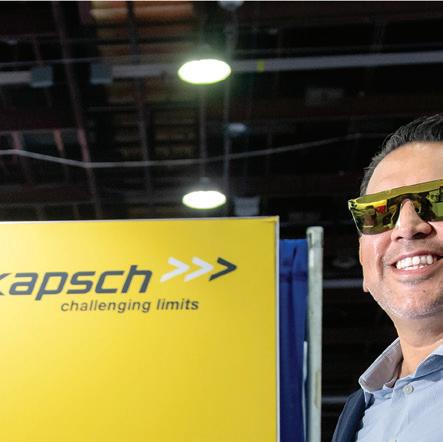
KAPSCH MOVES INTO SMART FREIGHT
Kapsch Tra cCom is taking the lessons it has learned as a leading tolling and tra c management provider and applying it to the smart freight market, showing yet another way to use V2X technology to make cities smarter.
According to Joseph Soliz, executive director of business development at Kapsch, the company’s underlying connected mobility solutions are being repurposed for new markets where safety and e ciency are growing in importance. is includes signal priority and alerting – two solutions that Soliz says will help move freight faster, more e ciently and with as little disruption to other transportation networks as possible.
Kapsch is currently working with Maricopa County in Arizona to add intelligence to the local freight network. e company’s signal priority solutions will speed up the ow of goods as they move from the railway to the highway. Alerting capabilities are integrated directly into the solution, ensuring the safety of nearby vehicles and pedestrians.
Booth 6052
www.kapsch.net
Joseph Soliz of Kapsch
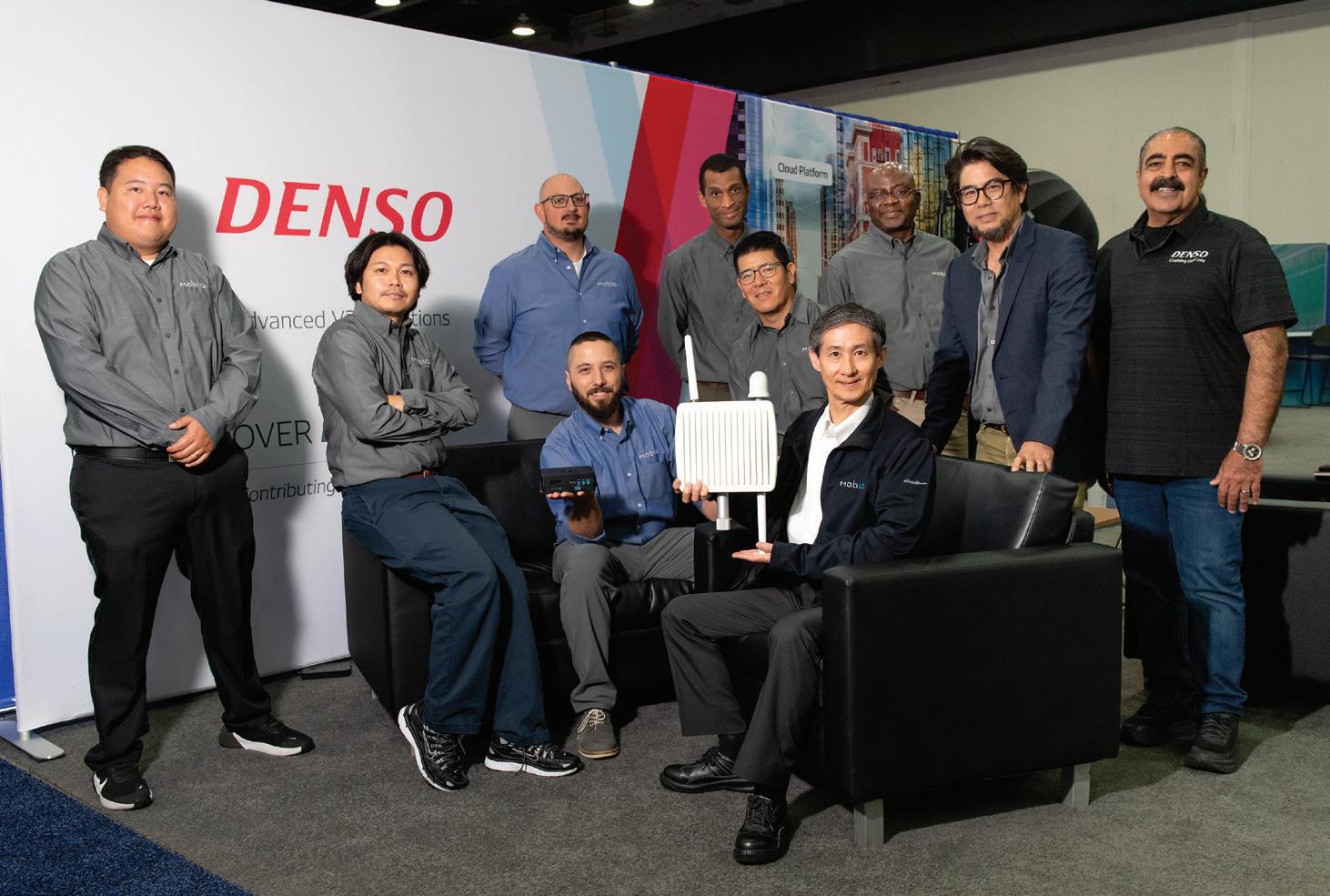
MobiQ by Denso makes crossroads safer
Visitors to Denso’s booth will see how connected technology can help make intersections smarter, safer, and more e cient.
Attendees will be able to learn how the company – one of the world’s largest automotive suppliers – is applying its proven technology to the world of V2X through its MobiQ smart mobility brand. e brand’s latest V2X roadside and on-board units are being showcased. ese are designed to support vehicle-to-vehicle and vehicle-toinfrastructure applications.
In addition, the company is also showing its newest RSU-5941 Kit. is enhanced roadside unit solution integrates with existing infrastructure, such as tra c signal controllers and networks, to optimise tra c ows and improve safety.
An interactive display demonstrates how the MobiQ solutions can transform existing crossroads into V2X-enabled intersections. ese support tra c signal priority, emergency vehicle pre-emption, traveller information messages, and other connected capabilities.
By combining roadside and on-board unit support, these solutions help enhance road safety, promote better tra c ow, and improve fuel e ciency. Denso is connecting with attendees to discuss how
they can work together to advance the safer, more e cient movement of people and goods.
Booth 2053 https://mobiq.io/
Tom Arakawa with the Denso team
ACCURATE DATA AND DETECTION WITH BUY AMERICA COMPLIANT VIDEO SENSORS
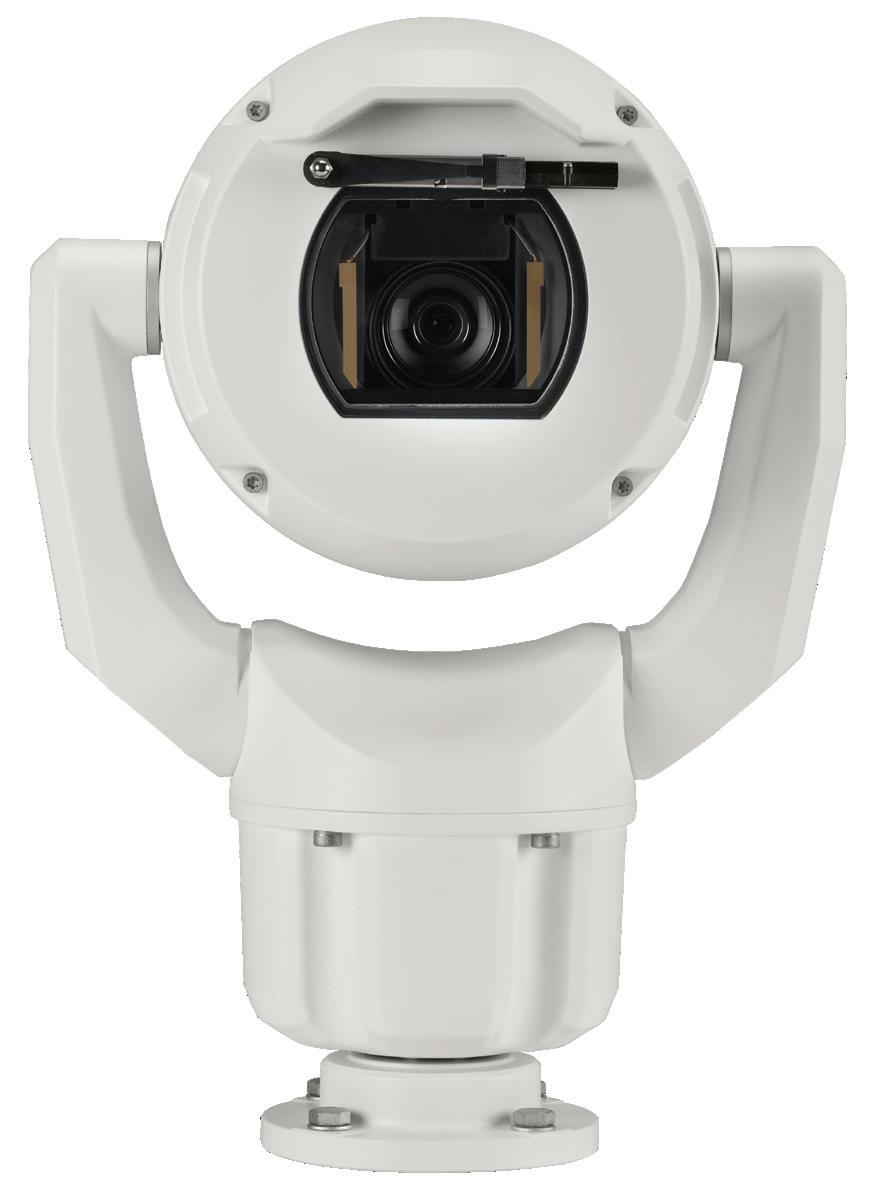
IQSIGHT, formerly Bosch Video Systems, empowers you to build a safer transportation ecosystem.
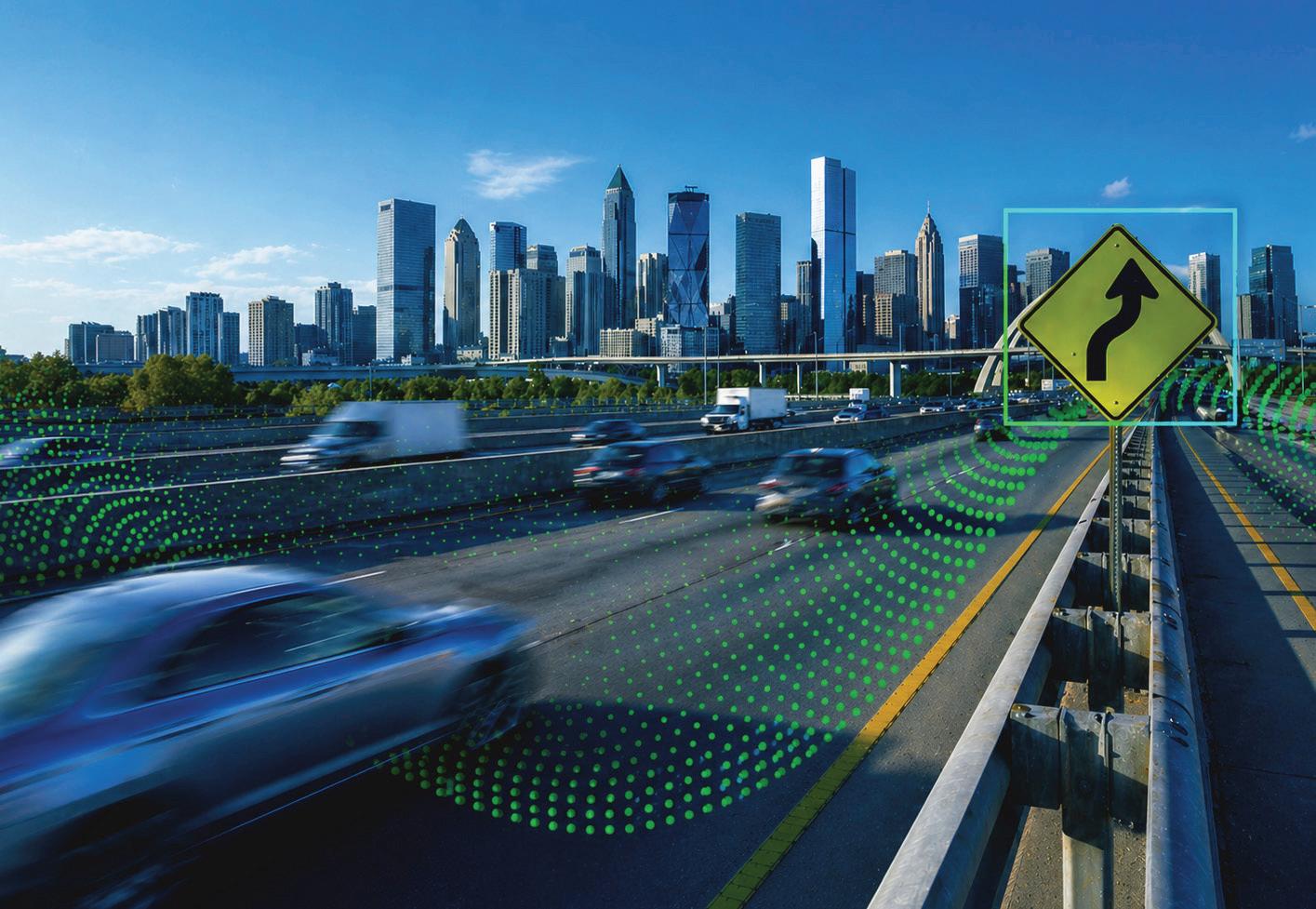
With edge-based AI, intelligent cameras enable video-as-a-sensor solutions that deliver highly accurate incident detection and valuable data insights on roadway usage and traffic flow for better highway and urban infrastructure planning.
Turn Roadway Data Into Action
Assess, manage, and prioritize roadway maintenance with greater visibility.
IMAGINE NEXT ®
OUSTER: CHECK OUT OUR NEW COLOR LiDAR AND WORLD CUP PROJECT
Ouster is o ering two exciting reasons to visit its booth at ITS America in Detroit this week: the completion of a project supporting the FIFA World Cup and the launch of the world’s rst native colour LiDAR detection system.
Integrating its Rev 8 digital LiDAR directly into Ouster BlueCity allows the solution to simultaneously
capture both colour and 3D depth information without the need for complex calibration. According to a press release announcing the product integration, “this breakthrough capability provides unmatched situational awareness, including precise, highdelity digital tra c twins, simpli ed zone set-up, and more intuitive event analysis
through improved colour visualisation. Importantly, the solution is designed for system-level privacy features at the edge while retaining the rich bene ts of colour data.”
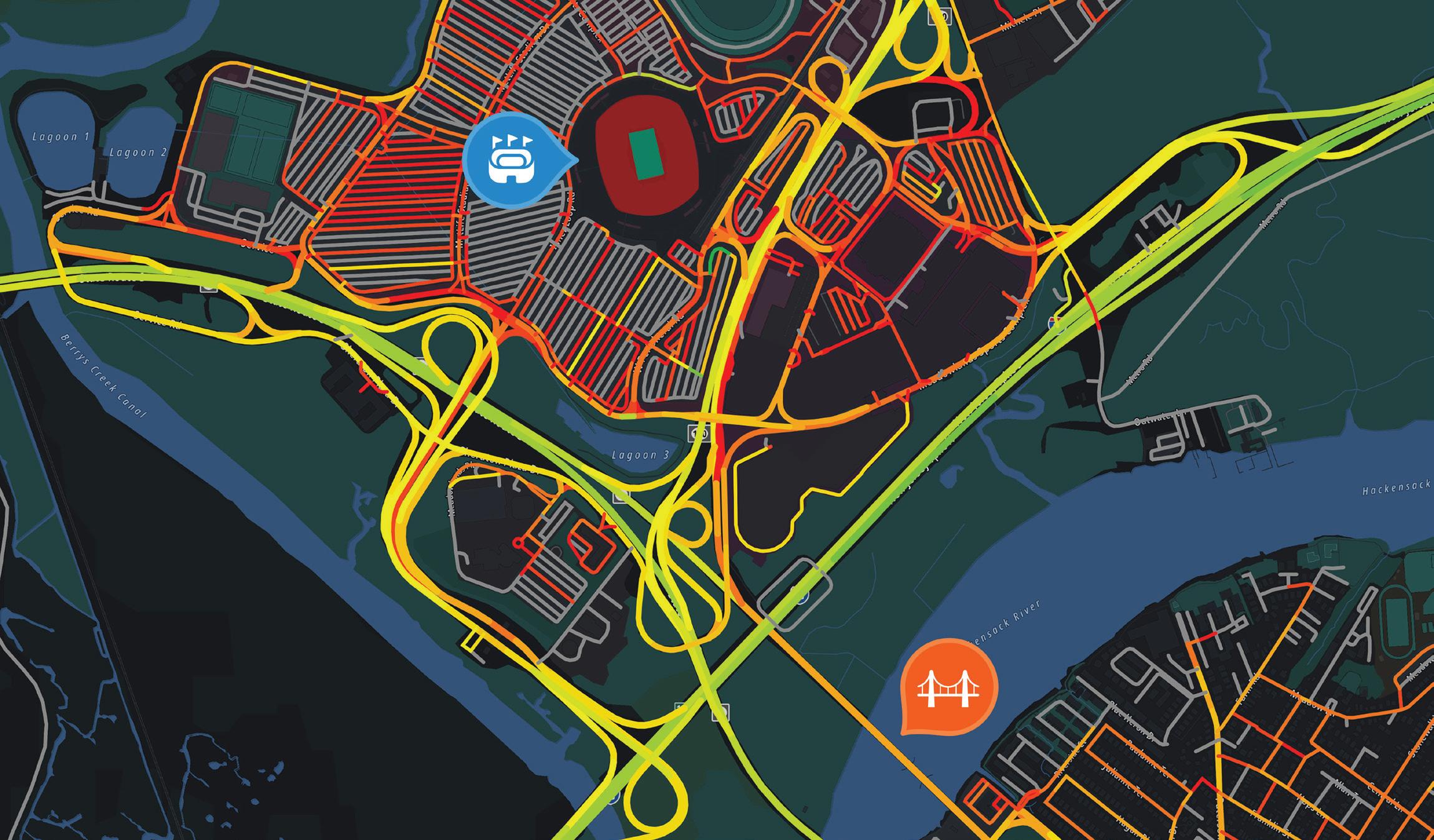
In other news, the New Jersey Department of Transportation (NJDOT) deployed Ouster BlueCity to improve congestion management on highways
surrounding MetLife Stadium in the lead up to the World Cup. It will provide highdelity tra c monitoring and real-time safety alerts in preparation for the massive in ux of game-day visitors. e goal is to alleviate the expected bottlenecks and safety events NJDOT expects to crop up.
Booth 5052
www.ouster.com
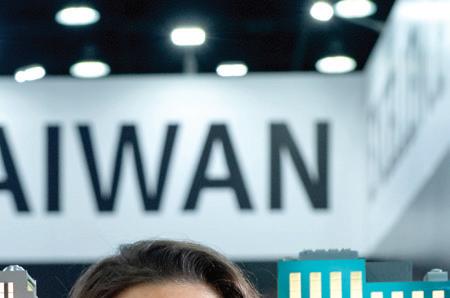
Taiwan showcases 16 companies for their ITS innovation
The Taiwan Ministry of Economic A airs (MOEA) is showcasing 16 Taiwan Excellence Award winners at ITS America Conference and Exposition this week, highlighting the country’s emerging innovation in the ITS space and its position as a trusted partner for the U.S. mobility ecosystem.
The companies were selected based on innovation, design, quality, and marketing and come from four distinct ITS segments: sensing and image intelligence, edge AI and autonomous computing, connected mobility and V2X communications, and smart infrastructure platforms.
“This is an amazing opportunity for these companies to showcase their technology with an American audience,” said Kara Sellentine, a representative for MOEA. “Taiwan is a hotbed of ITS innovation due to the unique characteristics of the country. Extreme weather, diverse transportation networks, dense population centers – these companies have extensive experience working through these challenges and can share their knowledge with the American market.” Booth 5065 www.taiwanexcellence.org/en
Kara Sellentine of ITS Taiwan
Asad Lesani of Ouster
Fleetworthy puts best feet forward
e Smart Roadways solution from Fleetworthy delivers real time, in cab alerts directly to commercial drivers. is gives advance notice of tra c slowdowns, work zones, incidents and public safety events. It does so precisely where and when drivers need it most, said the company, which was formerly called Fleetworthy Infrastructure Solutions but rebranded after the acquisition of Drivewyze.
By extending the reach of existing tra c management systems into the vehicle cab, agencies can in uence driver behaviour, reduce sudden braking and improve tra c ow. Smart Roadways enhances overall roadway safetyespecially during unexpected events.
Complementing this, Fleetworthy’s Smart Truck Parking solution addresses one of the industry’s most persistent challenges by simplifying the deployment, operation and maintenance of end to end truck parking management and noti cation systems. Drivers receive timely information about parking availability in order to reduce circling and unsafe parking as well as cutting congestion near rest areas and freight corridors.
Infrastructure solutions from Fleetworthy are designed to scale and to seamlessly integrate with existing ITS environments.
Booth 2061
www.fleetworthy.com
Safer Roads Start with Flock
Real-time crash and incident detection
Live roadway monitoring with solar-powered cameras and drones
Faster coordination across agencies and first responders
Quick deployment without road closures
Flock
Chris Bailey (le ) & Dennis Van Horn of Fleetworthy
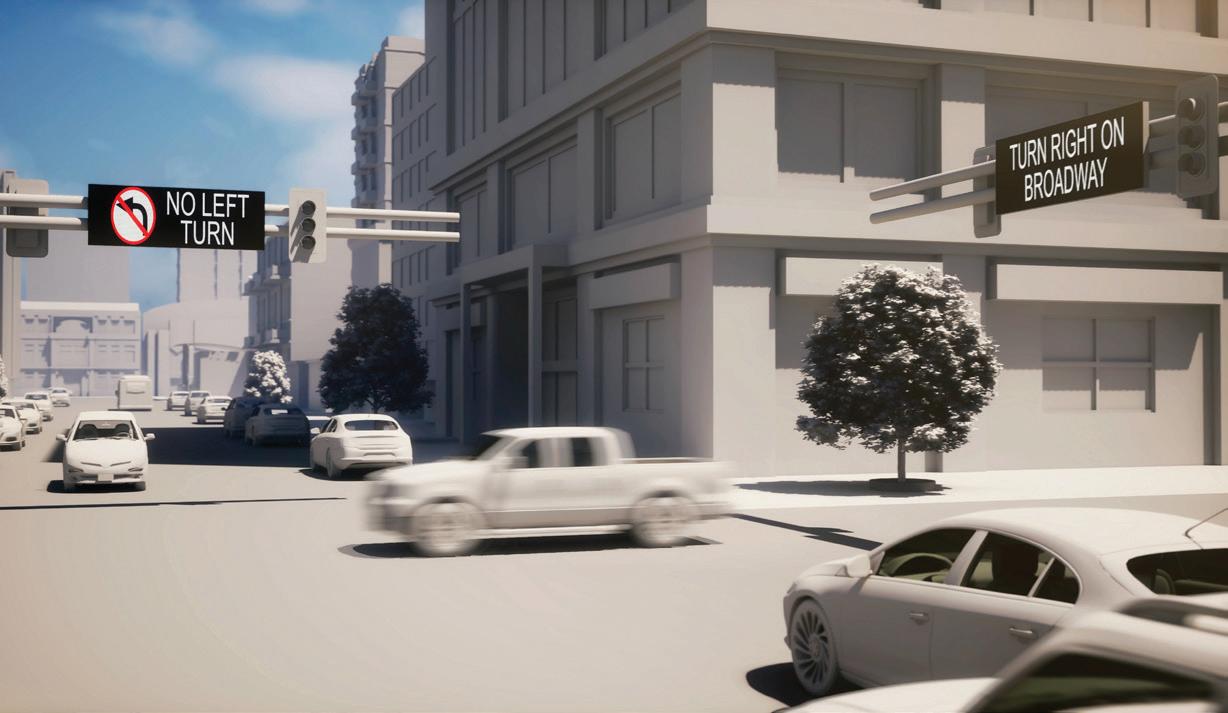
SMART CITIES USE DIGITAL FOR SMOOTH TRAFFIC FLOW
Daktronics Full-Color Dynamic Message Signs (DMS)
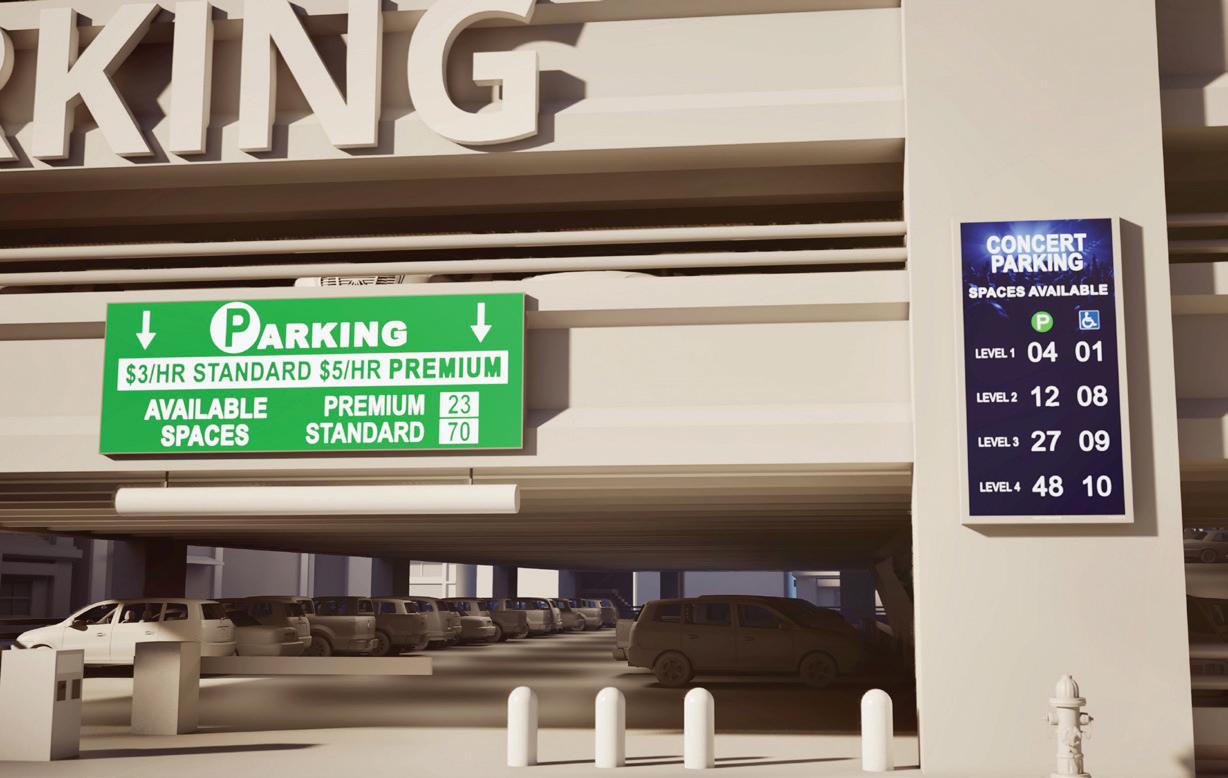
Smart cities use digital communication to reduce congestion and improve traffic flow on busy arterial roads and downtown corridors. Daktronics full-color DMS deliver clear, real-time information to help drivers make informed decisions.
Improve
Display parking availability to reduce circling and congestion
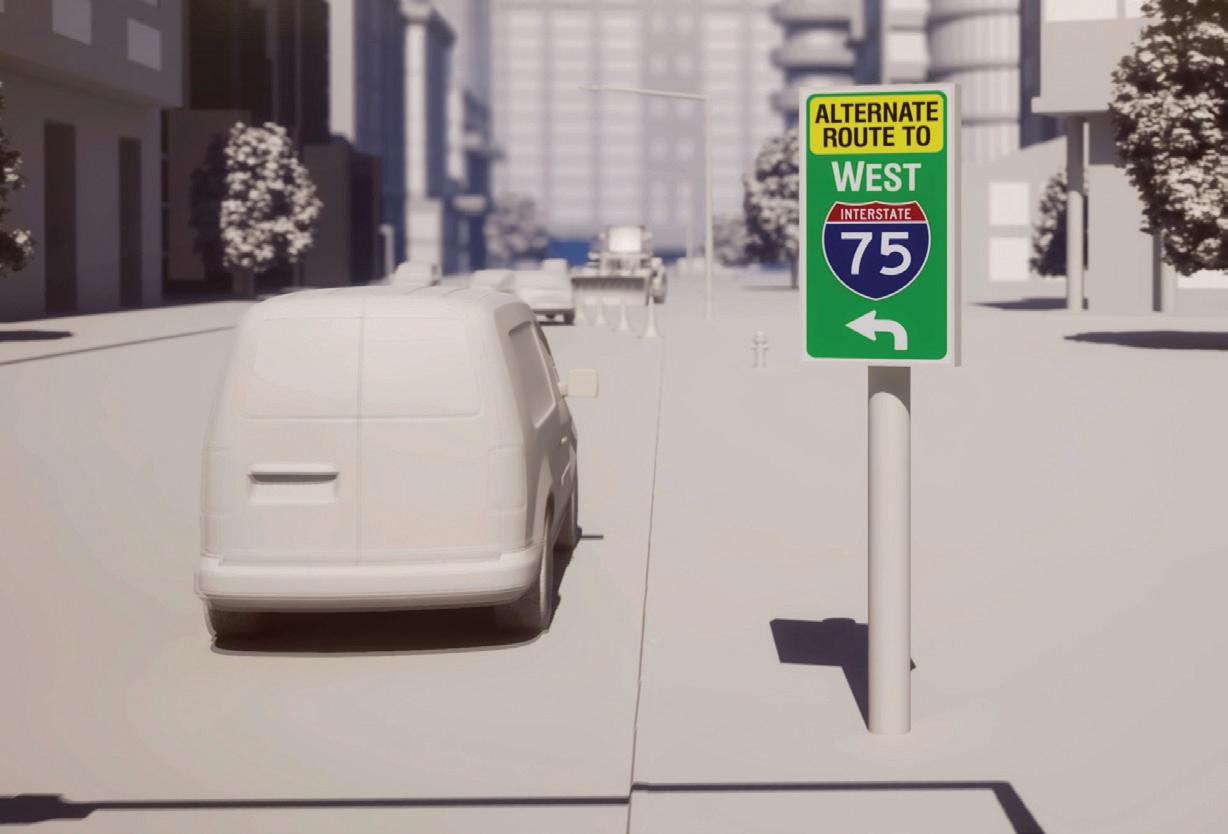
Provide alternate route guidance during congestion or incidents WITH DAKTRONICS DMS, SMART CITIES CAN:
Share real-time traffic conditions, delays and closures
SCAN TO EXPLORE SMART CITY TRAFFIC SOLUTIONS
RAPID DETECTION RECOVERY
DRILL. DROP. DETECT.
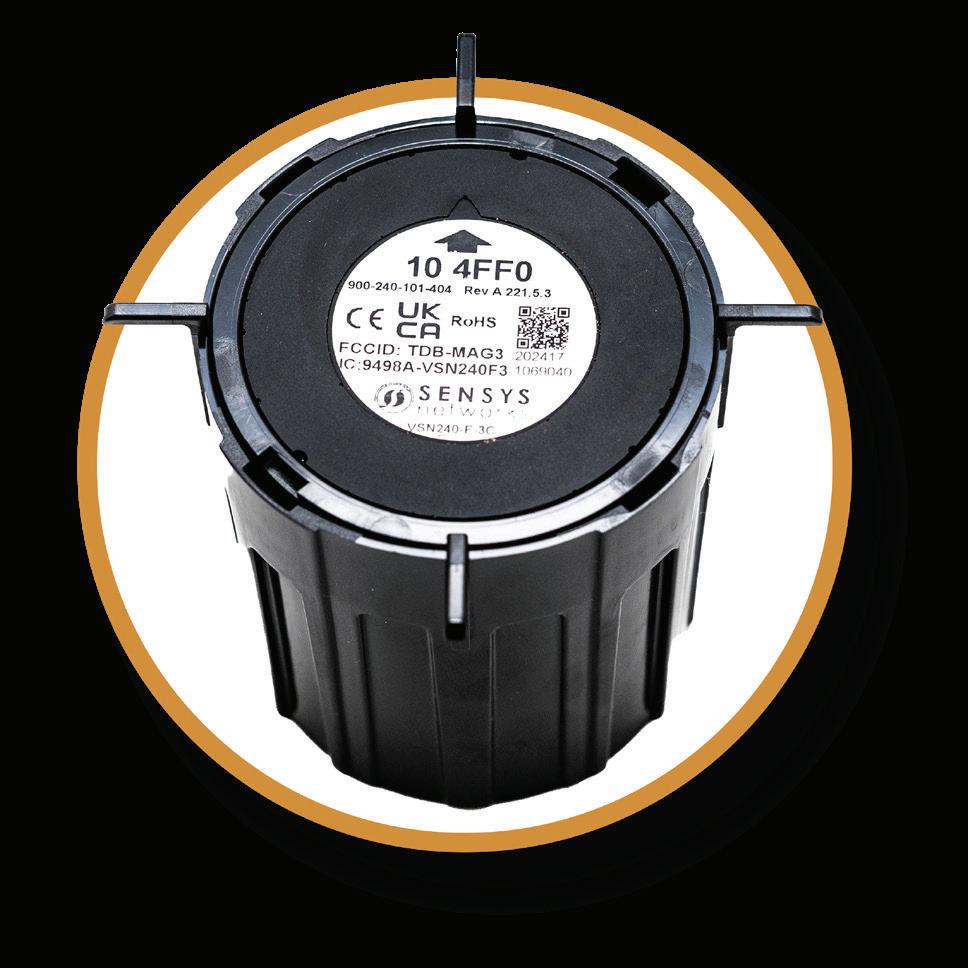
FlexMag3: the faster fix for failed detection.
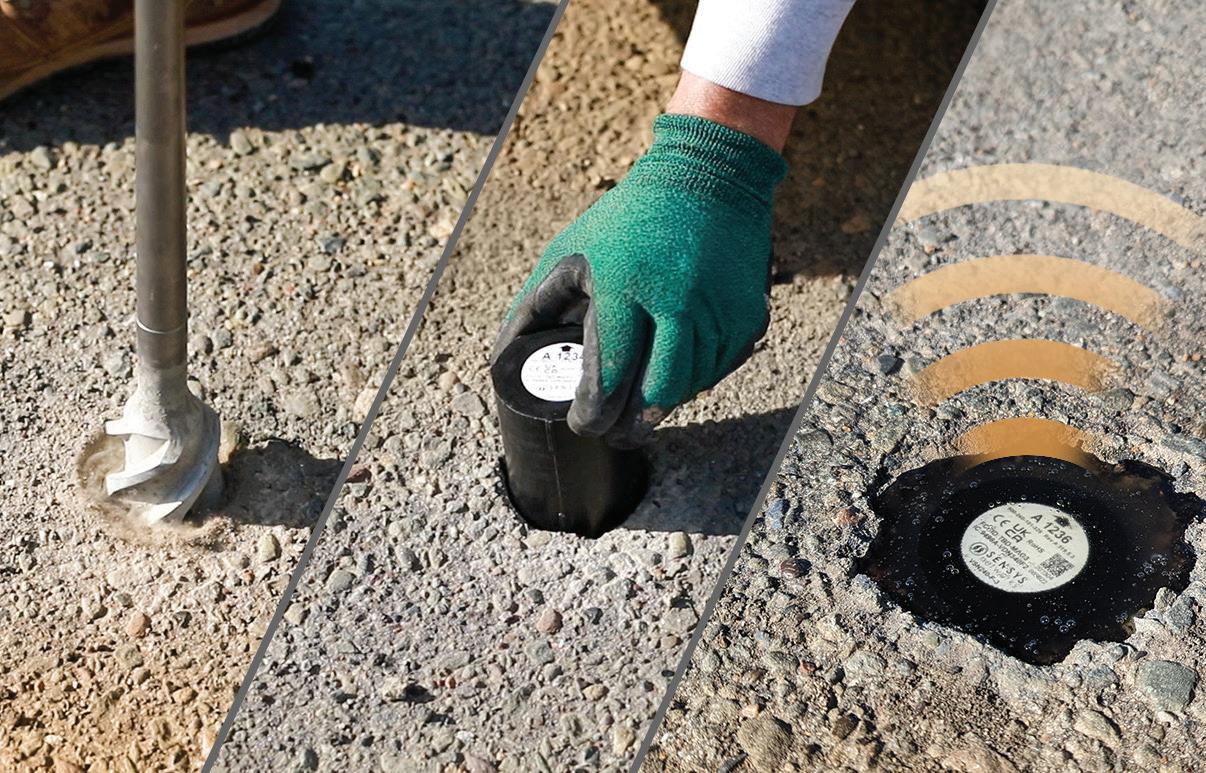
FlexMag3 is wireless - bypassing failed or damaged infrastructure entirely. Just drill, drop, and seal each sensor into the pavement to restore signal actuation in minutes. No trenching or cable pulls required.
• Replaces any detection technology
• 5-minute deployment per sensor
• Removable and reusable
ALONG CAME A SPYDER
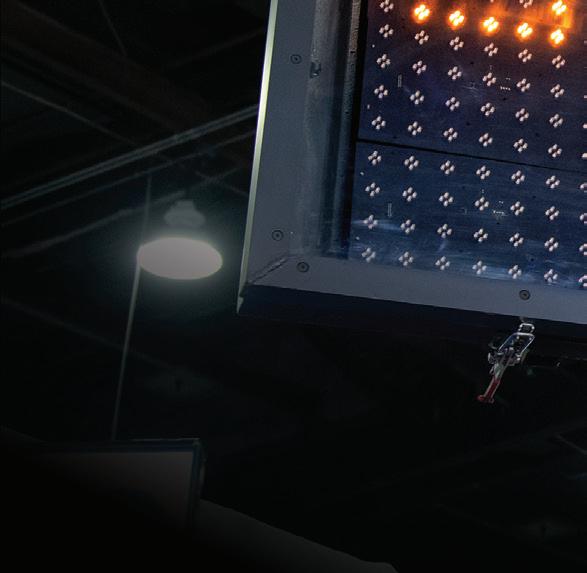
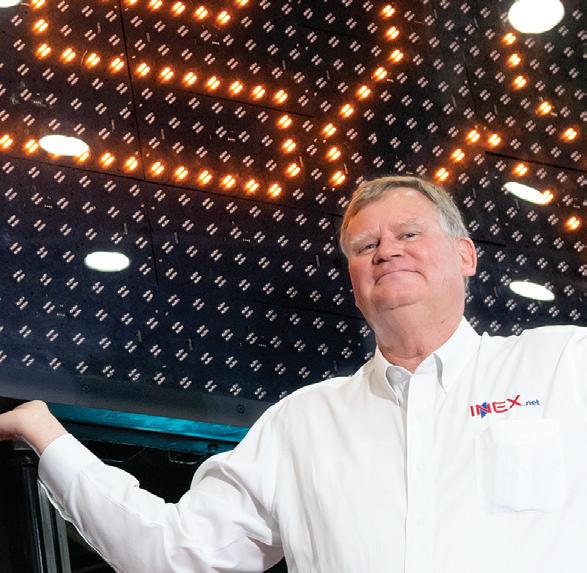
Inex is illuminating its Spyder Platform, a full-sized, MUTCDcompliant portable, variable message sign, at ITS America Conference & Expo in Detroit.
e manufacturer says its design reduces tip-overs, cuts setup time, and delivers consistent power where it’s needed.
e unit handles real-world wind loads up to 87 mph and can be positioned more than 18 ft from the travel lane. Data from the American Association of State Highway and Transportation O cials (AASHTO) suggests this is the distance at which collision risk drops by half.
Spyder deploys via a separate transport vehicle called the Jeep, which leaves the deployment site with its tyres, lights and axles. Because nothing vulnerable stays behind, there is nothing to steal – with the result that theft is eliminated.
Once deployed, Spyder Legs extend to a 12’ × 11’ footprint — which is nearly double the industry standard, creating stability. Cleated footplates grip uneven terrain and there are 416 lbs of integrated concrete ballast which replace sandbags entirely.
ROADSYS TURNS ANY CAMERA INTO A TRAFFIC SENSOR
Roadsys is showing agencies how to unlock powerful tra ic intelligence — without installing new hardware.
Using DataFromSky’s AI-driven platforms — Flow, Tra icSurvey, and Tra icXRoads — Roadsys transforms existing video into highly accurate, multimodal data in minutes. It counts vehicles, bikes, and pedestrians; measures speeds and trajectories; and detects near-misses and safety risks. Roadsys does all this using agencies’ existing cameras, including Axis Communications devices or drone footage.
Roadsys states this is not merely counting — it is engineering-grade insight. The company’s solutions
Power comes from the patent-pending Solar Opposing Tilt Array - a 480W opposing-tilt solar system paired with long-life LiFePO4 batteries, rated 10–11 years.
Inex says the design combines to give stable output across temperatures, with reduced requirements for servicing, and no routine battery changes. Booth 5070 www.inex.net
TWO ITS DATES FOR YOUR DIARY
provide lane-by-lane movement data, turning behaviour, and real-world safety analytics that help agencies optimise signal timing, validate designs, and secure funding with confidence.
The result is faster studies, lower costs, and better decisions backed by data that can be trusted. Roadsys is targeting attendees who still rely on tubes, manual counts, or partial data to show them what they are missing.
Live demonstrations at the company’s booth show how Roadsys can turn any camera into a powerful tra ic sensor, delivering the clarity needed to improve safety, e iciency, and mobility.
Booth 1009
www.roadsys.com
On the final day of ITS America 2026 Conference & Expo, thoughts turn to next year’s event, which will be held in Salt Lake City, Utah, from 12-15 April. You can now reserve your space there – with no obligation – by going to the Sales Booth at the back of the Exhibit Hall at Huntington Place and putting a temporary hold on the location of your choice. Early-bird pricing lasts until the end of July 2026. Before that, there is ITS World Congress 2026 in the Republic of Korea, which will be held at Gangneung Olympic Park from 19-23 October this year. JongKi Lee, secretary general of the 2026 Gangneung ITS World Congress Organising Committee Secretariat, told Daily News that 80% of booths have been sold. If you’re interested in attending the ‘ITS Olympics’ in the autumn, go to the organisation’s booth to find out more.
Booth 5053
www.2026itsworldcongress.org
Rusty Latenser of Inex
CRAIG SMITH
NEW ROADWAY SAFETY SOLUTION LAUNCHED BY OPSYS
Imagine being able to combine the visual resolution of a camera with the precise range-measurement capabilities of radar in a single intelligent sensor. at is the vision behind Altos-Way, the new roadway safety solution being launched here by Opsys Tech.
Built on Opsys’ Altos solid-state sensing technology, Altos-Way is an all-in-one wrong-way driving detection system designed to help transportation agencies identify dangerous vehicle movements in real time and respond before incidents
escalate into serious collisions. By combining high-resolution object classi cation with accurate distance and movement measurement, the system can determine vehicle presence, direction of travel, lane position, and motion behaviour with exceptional con dence.
Designed with integrators and operators in mind, Altos-Way reduces deployment complexity through embedded computing, on-device alarm generation, low power consumption, and simple Power over Ethernet (PoE)
Iteris achieves interoperability milestone
Iteris announced that its BlueTOAD Spectra CV roadside unit earned OmniAir Consortium certification – widely recognised as a benchmark for interoperability, conformance, and security in connected vehicle (V2X) technologies.
The third-party standard means that agencies can now deploy the roadside unit knowing that it will seamlessly communicate with
connected vehicles and other infrastructure components.
“Achieving OmniAir certification is an exciting step forward for our connected vehicle ecosystem,” said Will Cousins, chief product o icer at Iteris, in a companyissued press release. “It rea irms our commitment to delivering solutions that are interoperable, reliable, and ready for real-world deployments.”
installation. With no moving parts, the solid-state architecture is engineered for long-term reliability while minimising maintenance and roadside infrastructure requirements.
Ideal for highway ramps, divided roadways, tunnels, toll facilities, and managed lanes, Altos-Way gives agencies a smarter and faster way to deploy proactive wrong-way detection programmes.
Booth 3060 www.opsys-tech.com
BlueTOAD Spectra CV combines connected vehicle communications with Bluetoothbased travel-time detection in a single device, allowing agencies to support advanced safety and mobility applications while simultaneously collecting critical performance data – such as travel times, speed, vehicle counts, and origin-destination insights.
This dual capability eliminates the need for multiple pieces of hardware in the field.
According to Iteris, BlueTOAD Specra CV has existing certifications from the National Electrical Manufacturers Association (NEMA) and the Federal Communications Commission (FCC). Booth 4023 www.iteris.com
William Muller of Opsys
William Muller of Opsys
Intelligence that Moves the World
Thousands
Hundreds
BrainBoxes on lookout for compact switch champion
Fresh o an extensive rebranding, Liverpool-based Brainboxes is leaning into their British heritage to nd a lead customer for their latest Ethernet switch product – one it claims is the most compact 16port switch in the world.
Emblazoned with a new logo that represents the company’s past, present and future and designed and manufactured in
the U.K., the Ethernet switch is uniquely designed to t in any roadside cabinet – where space has increasingly become a premium.
With eight ports on the top and eight ports on the bottom (rather than positioned in a single line), the device is roughly the size of a business card and can be installed anywhere in the cabinet – even
on the back of the cabinet door. “Operators are having to cram as much equipment as they can in roadside cabinets, and we want to make it easier for them to get the connectivity they need to succeed,” said Helen Roston, a marketing manager for the company.
Attendees are getting a preview of the switch at ITS America this week in advance
of a general launch later this month. In fact, the team is on the lookout for a lead customer to announce in association with the product launch. ITS applications include tra c management, safety, parking and other transportation and industrial use cases.
Booth 4045 www.brainboxes.com
DETROIT DEBUT: ANTAIRA UNVEILS ULTRA-DEEP SWITCH
Antaira is here to launch the LMP-3228G4X24S-bt-T industrial 32-port distribution Layer 3 rackmount switch, which features an 8-inch depth for tra ic cabinet installation. It supports A.PoE (up to 100W per port), IEEE 802.3bt (up to 90W), High-Power-overEthernet (HPoE PoH, up to 100W), and 4PPoE (up to 100W) to power cameras designed for transportation applications from Avigilon, Axis, Bosch / IQ Sight, Flir, Hanwha, Idis, Pelco, WTI, and others.
This new distribution layer switch includes OSPFv2/v3, RIPv2/ng, VRRPv2/v3, and a
wide operating temperature range of -40°C to 75°C. It complements Antaira’s DIN-rail Light Layer 3 access layer switch series, which also delivers 100W per port and includes the LMP-1204G-SFP-bt-T, LMP-C602G-SFP-bt-T, and LMP-0702G-SFP-bt-T models. All PoE switch models support the auto-reboot by port feature, enabling automatic remote resetting of powered devices.
Antaira’s Airolinx-Gomax-Kit-IP67-T outdoor preconfigured wireless bridge kit is purpose-built for deployments where fast installation and predictable performance
are essential. Each kit ships as a matched pair that establishes a secure point-to-point link out of the box. The included Airolinx Go Studio So ware provides Layer 2 discovery, link validation, channel optimisation, antenna alignment, and commissioning workflows.
Antaira invites attendees to visit its booth to explore networking solutions ranging from Wi-Fi 6 (covering up to 20 miles), LTE and 5G cellular, PoE++ (up to 100W per port), and Layer 3 distribution switches. Booth 7009 www.antaira.com
Hellen Rostron of BrainBoxes
Secure Mobility Starts Here.
Modern transportation demands more than disconnected systems.
Q-Free helps agencies modernize traffic management with secure, interoperable platforms built for connected mobility, real-time operations, and a better experience for the communities they serve.