










Smarter tra c management



Rethinking engagement



















Published by
Smarter tra c management
Rethinking engagement
Published by
Chairman John Murphy
CEO
Christine Clancy
Publisher
Sarah Baker
Editor Kody Cook
Assistant Editor Kody Cook
Design Danielle Harris
Head of Design
Clayton Hawley
Business Development Manager
Brett Thompson
Client Success Manager
Cait Pillay
Head Office
Prime Creative Media
379 Docklands Drive Docklands Victoria 3008
P: +61 3 9690 8766 enquiries@primecreative.com.au councilmagazine.com.au
Subscriptions
P: +61 3 9690 8766 subscriptions@primecreative.com.au Council is available by subscription from the publisher. The rights of refusal are reserved by the publisher.
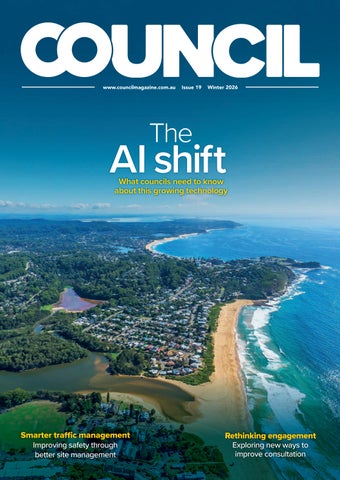
Cover image Central Coast Council.
Welcome to the Winter edition of Council!
As local government continues to navigate rapid technological, social and operational change, this edition explores the ways councils are adapting, innovating and planning for the future. From the growing role of artificial intelligence to evolving community expectations and safer infrastructure delivery, we’re taking a closer look at the challenges and opportunities shaping the sector right now.
One of the biggest topics in this edition is artificial intelligence (AI) and what it means for local government. While AI has quickly become part of everyday conversation, understanding how it works, where it can add value and the risks it presents remains a challenge for many organisations. In a special deep dive feature, we unpack the fundamentals of AI with insights from Professor of AI and Analytics at La Trobe University, Daswin de Silva, exploring how councils can begin approaching this technology strategically and responsibly.
As councils continue to modernise their operations, community expectations around engagement are also evolving. In this edition, we explore how local governments can improve consultation and survey methods to better connect with residents, gather meaningful feedback and build stronger participation in decision making.
We also examine the importance of safety and efficiency on road work sites, highlighting how smarter traffic management approaches are helping councils better protect workers, motorists and the broader community while minimising disruption.

Returning this edition is Counci l in Focus, where we shine a spotlight on the City of Greater Bendigo. With a strong regional identity and a growing reputation for innovation and collaboration, Greater Bendigo offers valuable insight into the opportunities and challenges facing regional councils today.
For this edition’s CEO Profile, we spoke with Central Coast Council CEO, David Farmer, whose career in local government has been defined by reform, recovery and rebuilding trust within organisations facing significant pressure. Farmer reflects on nearly three decades in the sector and shares the leadership lessons that have shaped his approach across councils in both New South Wales and Queensland.
As always, there’s plenty more to explore in this Winter edition of Council
We hope the stories, insights and experiences shared throughout these pages help spark new ideas and valuable conversations across the sector.
Happy reading!
Kody Cook Editor, Council magazine
If you have a story idea, tip or feedback regarding Council, I’d love to hear it. Drop me a line at kody.cook@primecreative.com.au and don’t forget to follow us on social media – find us on LinkedIn, X or Facebook.
Council acknowledges Aboriginal Traditional Owners of Country throughout Australia and pays respect to their cultures and Elders past and present.

14
Understanding AI: what councils need to know Artificial intelligence is already reshaping how councils plan, deliver and maintain services. But what actually is AI and how should local government approach it? This article breaks down the fundamentals and what they mean in practice. 17 Councils gain clearer flood visibility 20 What your best people shouldn’t be doing
Isolated legacy systems are consuming council resources and wasting valuable time, but connected platforms are helping staff focus on higher-value work.
23 Why the manhole matters: rethinking sewer inspections
26 Inside the lab driving filtration innovation 29 Closing the gap: how Interflow achieved pay equity
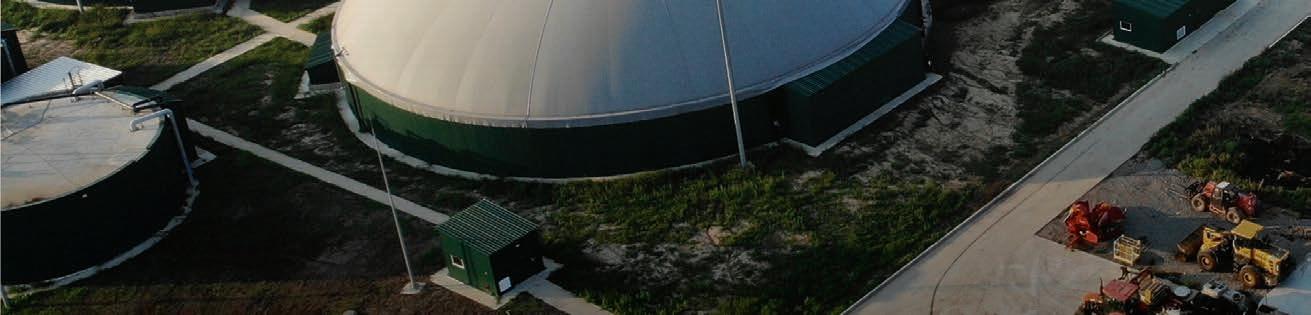
Turning waste into a resource
Taking control of fleet fuel costs 36 Securing infrastructure from the ground up 39 From field data to asset intelligence
42 Local government’s capacity crunch
New research reveals how councils are responding to mounting workforce, financial and community pressures. 45 Measuring what matters
As councils grapple with growth pressures, liveability data is helping to turn community sentiment into measurable outcomes.
Engagement beyond consultation
FOGO mandate could unlock biomethane future
Battery recycling: more than sustainability
56 Cross-border partnership driving unified growth 58 Turning empty rooftops into low-carbon homes


In each edition of Council, we’re shining a spotlight on the individuals steering local municipalities – exploring their career journeys, leadership philosophies, and the vision they bring to their communities. For this issue, we spoke with David Farmer, the CEO of Central Coast Council.
David Farmer has spent nearly three decades leading in local government, often stepping into organisations under intense pressure and guiding them through periods of structural repair and renewal. Now in his fifth year as Chief Executive Officer (CEO) of Central Coast Council, Farmer’s career spans five councils across New South Wales and Queensland, with a consistent theme of reform, recovery and rebuilding trust.
Farmer’s approach to leadership has been shaped not only by longevity in the sector, but also by the nature of the roles he has taken on.
What follows is a career defined less by steady-state administration and more by organisational reset points, where governance, finance and culture have all required attention at scale.
Farmer describes his path into local government as almost accidental in its permanence.
He explained that he began with a cadetship at a utility-style organisation on the south coast of New South Wales.
From there, he moved into general purpose local government at Wollongong City Council, before moving into the CEO
role at Mid-Western Regional Council –which was then called Mudgee Council.
“I’ve been doing it for a long time. I’ve been the CEO for five councils over the last 28 years,” he said. “Initially at Mudgee, then to Cairns in far north Queensland, and then I was at Wollongong City Council for almost 12 years, and then at Ipswich City Council in Queensland. And now I’ve been at Central Coast Council for the last five years.”
While the movement between councils has involved personal and professional adjustment, Farmer frames it as formative rather than disruptive.
“Every time you move, you learn something,” he said. “Each time
you relocate, you learn about a new community, new geography and a whole range of other things.”
That exposure to different communities has, in his view, been central to his development as a CEO, particularly in understanding how local government systems function under pressure and change.
Farmer’s early CEO experience at Cairns Regional Council marked his first encounter with large-scale organisational issues. He stepped into the organisation following a difficult merger and systemwide instability.
“It was a bit of an organisation in disarray,” he said.
“They had some financial problems and a whole range of systems problems. That was, I guess, my initiation into rebuilding an organisation in a difficult situation.”
From there, subsequent appointments would see him repeatedly placed into environments undergoing significant governance repair, including periods where councils were placed under administration due to major integrity or financial issues.
Farmer’s career has included leadership roles in councils that have faced serious governance breakdowns, including corruption investigations and financial collapse scenarios. The pattern across his roles is consistent: stabilise the organisation, restore systems, and rebuild trust.
At Wollongong, he returned to a council he had previously worked for, only to step into a major public integrity process shortly after commencing.
“There was an ICAC public hearing about six months after I started,” he said, referring to the Independent Commission Against Corruption process that followed earlier events within the organisation.
“It led to a major scandal and the sacking of the council, appointment of administrators and even criminal charges,” he said.
Farmer describes his role as one of organisational continuity during a period of external control.
“I had to lead the council through that, through administration,” he said.
“It was an unusual situation because, I had three administrators who didn’t live locally.”
Farmer explained that meant he was a key point of connection between the organisation and the local community during that period.
“In some ways, for the three and a half years of that administration, because we had no councillors, I had to play a pretty significant public role as well,” he said.
A similar pattern emerged later at Ipswich City Council, where Farmer was appointed following another major governance failure and administration process.
“Council was in administration, having had its own significant corruption scandal where the mayor and previous CEOs had been charged with criminal offences,” he said.
“It was a very serious breakdown in governance, systems and processes.”
Across both cases, Farmer emphasised that crises are rarely the result of a single failure point.
Instead, they reflect systemic breakdowns across governance, leadership and organisational culture.


“Every crisis I’ve dealt with, it’s been a failure at multiple levels of the organisation,” he said. “Whether that’s the elected group, senior staff, or even some of the line staff.”
His role in these environments, he suggested, is less about having immediate answers and more about creating structure in uncertain conditions.
“You don’t necessarily always have the answer in the moment,” he said.
“You’ve sometimes just got to work your way through those things. Try and stay calm through those particularly difficult times.”
Since joining Central Coast Council, Farmer has overseen a recovery process

following a significant financial crisis that left the organisation unable to meet basic obligations.
“When I came to Central Coast again, it was under administration, and it had a really significant financial crisis,” he said.
“It had lost about $160 million over two years.”
At one point, the council faced liquidity issues severe enough to impact payroll and supplier payments.
“It couldn’t pay its wages and creditors,” he said.
Farmer’s emphasis on composure extended to workforce stability during these periods of uncertainty.
“You had staff who had been told there’s some chance that they weren’t going to get paid,” he said.
“Imagine rebuilding trust with staff after that. Particularly as you had to shed close to one in four jobs, to ensure the council remained liquid.”
In such situations, he said leadership depends on credibility rather than certainty.
“It’s about keeping calm, being honest, being straightforward,” he said.
“Don’t make empty promises, because it’s a long journey to repair in certain circumstances.”
The immediate priority was stabilisation.
“There had to be some very quick action taken to generate some funds to be able to continue operations,” Farmer said.
Beyond immediate financial repair, Farmer’s focus has been on restoring structural sustainability. That has included addressing both revenue and expenditure pressures, while resetting organisational systems.
“We had to significantly address both Council’s income and its expenditure so it could be sustainable going forward,” he said.
The council has now returned to elected governance for approximately 18 months, following its period under administration. Farmer describes this phase as critical for embedding long-term discipline and rebuilding trust with the community.
“I’ve been working hard with Council to try and make them as successful as they can be, so they can serve the community in the best possible way,” he said.
However, the recovery process has not been without difficult public conversations. In order to stabilise finances, the council has had to increase rates while also reducing service levels.
“At the beginning we had to ask the community to pay more and get less,” Farmer said. “That’s a very difficult conversation to have.”
“You lose the trust of the community, and when that happens, it’s very hard to rebuild.”
The Central Coast presents additional complexity due to its size and geographic diversity. Spanning more than 2000 kilometres of roads, the region includes coastal systems, estuaries, rural areas and rapidly growing residential corridors.
“We’ve got a broad range of natural hazards to navigate,” Farmer said, pointing to coastal erosion, flooding and bushfire risk as ongoing challenges.
Recent years have included severe weather events and environmental pressures affecting multiple communities.
“There was a small but intense bush fire that destroyed 25 homes and damaged nine others in the lead up to Christmas,” Farmer said.
At the same time, areas such as the Tuggerah Lakes system face repeated flood-related issues, particularly in highly developed low-lying zones.
Despite these challenges, Farmer said there is opportunity to strengthen the Central Coast’s role as a regional centre,
particularly through investment in education, health and infrastructure. Key initiatives include the development of a new integrated library and community centre in Gosford and partnerships with the University of Newcastle.
“Those things together have the potential to increase the viability of Gosford as a centre for health, education and business services.
Gosford is also part of the plans for east coast high speed rail which the Federal Government has progressed to the next stage of planning,” he said.
Looking ahead, Farmer believes the broader challenge for local government is structural rather than episodic, particularly as fiscal pressures increase across all levels of government.
“Local government has to work out how it delivers its suite of services with less governmental support,” he said.
For Farmer, the answer lies in disciplined leadership, community engagement and a willingness to rethink traditional service delivery models.
In that environment, Farmer’s leadership philosophy remains grounded in clarity and discipline.
“Develop your plan. Stick with your plan. Be calm, methodically work through it. Don’t get distracted.”
It is a mindset shaped by experience at the sharp end of local government – where failure has already occurred, and recovery depends on steady, deliberate progress.
And while his career has been defined by crisis, Farmer is clear about what continues to motivate him.
“When it’s all going well, it’s fantastic,” he said.
“You build things and communities, and you see real changes on the ground. You plan and build a playground, and you get see the kids playing there.”







We’re Creating the Future of Water for people and communities, for generations to come
An aerial view of Lake Weeroona. Image: BendigoAerial/stock.adobe.com



In every edition of Council, we shine a spotlight on one local government from across Australia. Whether it’s a rural shire or a capital city, we want to highlight the best of local government and share valuable knowledge. This edition, we spoke to the City of Greater Bendigo.
1. What is the population size and land area of your council?
Located approximately 150 kilometres northwest of Melbourne in central Victoria, Bendigo is the principal city within the Greater Bendigo local government area, a major regional centre covering almost 3000 square kilometres. More than 125,000 residents call Greater Bendigo home.
2. How many employees work at your council?
We employ 1003 employees who work across a range of locations. This includes over 270 tradespeople, specialists and landscaping employees, and almost 250 administrative workers, such as our venues and customer service teams.
3. Who is the mayor?
Thomas Prince has served as Mayor of the City of Greater Bendigo since November 2025, after being elected unopposed by fellow councillors. He represents the Lake Weeroona Ward and was first elected to council at the 2024 local government elections, following earlier campaigns in 2016 and 2020 that demonstrated his long-term commitment to public service.
4. Who is the CEO?
Andrew Cooney is the Chief Executive Officer of the City of Greater Bendigo, appointed in December 2023, and is a senior local government executive with extensive experience across Victorian local and state government.
He joined the City in 2018 as Director Corporate Performance, later serving as Director Commonwealth Games, and has previously held executive roles with the Department of Environment, Land, Water and Planning, Coliban Water, Gannawarra Shire Council, and Loddon Shire Council, building a career focused on governance, financial management, major projects, and community development.
5. What is the council’s annual budget?
The Budget 2025/2026 is valued at $259 million, with an operating budget of $189 million funding services such as waste collection, street cleaning, environmental health, statutory planning, road maintenance, flood restoration works, early learning, immunisation, tourism and visitor services and much more. Council has a capital works budget of $70 million for new infrastructure projects across the community.
6. Can you give us a breakdown of spending for the budget year ahead?
At the time of writing, Council’s next budget, 2026/2027, is still under development, and will be presented to our community in June.
The budget will reflect what our community has told us matters most – affordable services, well-maintained infrastructure, healthy environments and strong, connected neighbourhoods.
7. What is your council’s vision for the community and its future?
Greater Bendigo celebrates and respects our diverse and growing community. We aim to be welcoming, sustainable and flourishing. Walking hand-in-hand with our First Nations communities. Building on our heritage for a safe and happy future.
8. What makes your council area special?
Greater Bendigo offers the best of both worlds: close proximity to Melbourne combined with a relaxed, welcoming regional lifestyle that’s hard to beat. Rich in history and creativity, the city thrives on a strong arts and culture scene reflected in its galleries, festivals, heritage streetscapes and
vibrant creative community. Sport and recreation are woven into everyday life, bringing people together across generations, while extensive parks, trails and natural landscapes support active, healthy living.
Greater Bendigo is proudly diverse, shaped by the world’s oldest continuous Chinese community outside Asia and enriched by people from many cultures and backgrounds who now call the city home. At its heart is a strong sense of community that values inclusion, innovation and connection.
9. What are some of the unique challenges the region faces, and how does council overcome these?
The City of Greater Bendigo, like many regional councils, faces a unique mix of pressures as our community grows and changes. Cost of living pressures are being felt by many residents, increasing demand for affordable services, community support and accessible infrastructure at a time when household budgets are under strain. Concurrently, Council operates within the constraints of rate capping, which limits revenue growth and requires careful, considered decision-making to balance immediate needs with long-term financial sustainability.
Community expectations are also growing and evolving. Residents rightly expect high quality services, well maintained roads and public spaces,
strong environmental stewardship, and inclusive programs that reflect the diversity of our community. As Greater Bendigo continues to grow, demand for housing, infrastructure and services continues to rise. We are planning for a population of about 200,000 people over the next 35 years, which will require the development of approximately 38,000 additional homes.
At the same time, Greater Bendigo is a city within a forest, surrounded by significant natural beauty and rich heritage. A key challenge for Council is accommodating growth while protecting what makes our city special. This requires thoughtful planning, careful land use decisions, and strong environmental leadership.
Council responds to these challenges through disciplined financial management, long-term strategic planning and a strong focus on collaboration. We prioritise investment to deliver the greatest community benefit, actively seek grants and partnerships with other levels of government, and continuously look for innovative and efficient ways to deliver services. Equally important is our commitment to listening to the community, ensuring decisions are informed by local needs, lived experience and shared values.
Shared partnerships are critical to our success. We work closely with other agencies and levels of government, being clear about our priorities while
understanding and supporting theirs. One of the key challenges associated with growth is ensuring sustainable water and wastewater solutions for residents, businesses and primary producers. Council has strong partnerships with our local water authority and actively supports their advocacy and investment priorities to ensure Greater Bendigo can grow sustainably.
By balancing ambition with affordability, managing growth responsibly, strengthening partnerships and engaging meaningfully with our community, Council continues to work towards a Greater Bendigo that is liveable, inclusive and resilient.
10. How is your council addressing climate change and reaching sustainability goals?
The City of Greater Bendigo is actively addressing climate change and sustainability through the delivery of its Climate Change & Environment Strategy, which provides a clear, long-term framework to guide action across council operations and the wider community.
The strategy focuses on reducing emissions, protecting and enhancing the natural environment, and building resilience to the impacts of a changing climate. Council is reducing its own carbon footprint through increased

use of renewable energy, improved energy efficiency in council buildings and facilities, and more sustainable fleet and transport choices.
Protecting biodiversity and landscapes is another key priority. Council continues to invest in tree planting, habitat restoration, water sensitive urban design and sustainable land management to support healthy ecosystems and greener neighbourhoods. These initiatives also help address urban heat, flooding and water security.
Council is also working closely with the community, businesses and partners to support more sustainable living. This includes education programs, waste reduction and circular economy initiatives, and planning policies that encourage environmentally responsible development and growth.
11. What is an exciting community program or initiative council has coming up in the future, or already underway?
The City of Greater Bendigo has a number of exciting, city-shaping programs already underway that will guide growth and strengthen opportunities for the community well into the future.
Bendigo 2050 is one of the most significant long-term initiatives currently in progress. It sets out a shared vision for how Greater Bendigo will grow and change over the next 25 years, focusing on housing, transport, employment, sustainability and liveability. Bendigo 2050 is about planning for a growing population while protecting what makes the city unique.
Another major project is the Bendigo Art Gallery redevelopment, which will be transformational for the city’s cultural and economic landscape. Building on the gallery’s international reputation, the redevelopment will significantly expand exhibition space and facilities, allowing Bendigo to host major global exhibitions, attract more visitors, and create new opportunities for local artists, creatives and businesses.
The Bendigo Regional Employment Precinct (BREP) is also a key initiative shaping the region’s future prosperity. Located close to road and rail links and near La Trobe University Bendigo, BREP is designed to support job creation, innovation and investment across industries including health, education, technology and advanced manufacturing. This precinct is critical to diversifying the local economy and providing long-term employment opportunities for our growing community.
12. Can you tell us about an interesting urban development project in the region?
An interesting urban development project in the City of Greater Bendigo is the Low Line, a long-term, city-shaping

initiative that reflects council’s future vision for a more connected, healthy and liveable Bendigo.
The Low Line repurposes a former rail corridor into a continuous, gentle grade shared path that is designed to grow over time into a major active transport spine for the city. While it already provides an important route for walking, cycling and recreation, its real significance lies in its future potential. Council envisions the Low Line as a transformative piece of urban infrastructure that will link neighbourhoods, employment areas, schools, parks and community destinations, creating safe, accessible connections for people of all ages and abilities.
Looking ahead, the Low Line is planned to do much more than move people from ‘A to B’. It is intended to function as a linear public space – a green corridor that supports environmental outcomes, urban cooling, biodiversity and improved amenity, while also inviting community activity, events and placemaking opportunities along the route. As adjoining areas evolve, the Low Line will help shape higher quality urban development around it, encouraging walkable neighbourhoods and reduced reliance on cars.
The project also aligns strongly with council’s long-term growth and sustainability goals. As Bendigo’s population increases, the Low Line provides a future-ready alternative to traditional road expansion, supporting active transport, healthier lifestyles and lower emissions. Its adaptable, staged delivery allows it to expand alongside the city, ensuring it continues to meet changing community needs over time.
13.How is your council embracing digitisation and growing its technological capabilities?
The City of Greater Bendigo is actively embracing digitisation as a key enabler of better services, stronger communities and a more efficient organisation. We are progressively modernising how we design and deliver services by putting digital-first thinking at the centre of customer and community experiences. This includes expanding online self service options, simplifying forms and transactions, and using digital channels to make it easier for residents, businesses and visitors to access information and interact with Council at a time and place that suits them.
At the organisational level, we are growing our technological capabilities by investing in modern, secure and scalable systems. This includes the responsible adoption of cloud-based platforms, strengthening our cyber security and data governance, and improving how we use data and insights to support evidence-based decision making. We are also focused on building digital capability across our workforce through training, change management and cross functional collaboration, ensuring technology is embedded in everyday work rather than treated as a standalone function.
Looking ahead, Council continues to explore opportunities in areas such as smart city technologies, automation and digital innovation and at times this occurs in partnership with other councils to ensure value for money. By aligning digitisation with our strategic objectives and community needs, we aim to improve service quality, increase operational efficiency and future proof the organisation as Greater Bendigo continues to grow and evolve.



















Intuitive, easy-to-use dashboards


National & regional benchmarks


Metrics for funding, tracking & reporting
















Artificial intelligence (AI) is already reshaping how councils plan, deliver and maintain services. But what actually is AI and how should local government approach it? Drawing on insights from a recent industry presentation, this article breaks down the fundamentals and what they mean in practice.
Artificial intelligence (AI) has quickly become one of the most talked about technologies in local government. Councils are trialling it in customer service, asset management and planning, while vendors are embedding it across platforms and services.
Yet for many, the conversation has moved beyond their understanding.
Speaking at the Municipal Works Australia Conference in Bendigo, Daswin de Silva, Professor of AI and Analytics at La Trobe University, set out to answer a deceptively simple question; “What’s all the fuss about?”
His answer was clear. AI is not just another tool, it is a new layer of technology that is driving a paradigm shift on the scale of the Industrial Revolution.
“Across the board, AI is impacting everything that we do,” de Silva said.
To explain the scale of change, de Silva pointed to the numbers. Millions of users,
billions in market value and trillions in projected economic impact.
“Close to ten per cent of the world’s population is using an AI tool,” he said.
Those tools are led by platforms such as ChatGPT or Claude, which have brought generative AI into the mainstream by allowing users to interact with powerful language models through simple, conversational prompts.
The strength of these Large Language Models (LLMs) lies in their versatility, from drafting documents and analysing data to supporting decision making, which has made it a default entry point for both individuals and organisations.
At the same time, companies including NVIDIA are leading on a different front by developing the specialised chips and computing infrastructure that make modern AI possible. These systems require


enormous processing power to train and run, and NVIDIA’s graphics processing units have become the global standard for that work.
Together, these software platforms and hardware providers sit at the centre of the current AI ecosystem, shaping both how the technology is used and how quickly it continues to advance.
de Silva explained that the generalpurpose nature of this technology is what makes it so universally transformative.
He added that AI could be placed in the same category as the steam engine, electricity or the computer. Technologies that do not just improve a single task but reshape entire economies.
“Where the Industrial Revolution automated physical labour, AI is beginning to automate some aspects of human thinking. It is mental work that is becoming automated,” de Silva said.
This distinction has major implications for councils. Much of local government


Many councils are already experimenting with how AI can enhance their processes. Image: KanawatTH/stock.adobe.com
work sits squarely in this category, from planning and compliance to customer engagement and reporting.
“It calls for reinvention and also resilience in the face of significant and disruptive change,” he said.
That disruption is already visible. de Silva pointed to recent job losses in software engineering as an early example of AI’s impact.

“AI is writing the code,” he said. “It can produce this at scale, and 24/7.”
At the same time, he emphasised that not all work will be affected equally. AI-generated code must still be evaluated by humans and tested across diverse real-world performance benchmarks.
AI is still confined to the digital world. This absence of real-world physical experience means trades and hands-on roles are less exposed, but even within those jobs, some tasks like customer engagement, image processing and workflow documentation, can be automated.
“Any job can be unpacked into a range of different constituent tasks, and some of those tasks can be automated,” he said.
For many people, AI is still synonymous with chatbots. Typing a question into a system and receiving a response. de Silva argued that this is a narrow view.
“It might be challenging to think of AI in this way, because usually it defaults to a tool,” he said. “It is not like simply knowing how to use a tool, like Excel.”
Instead, he encouraged organisations to think more broadly.
“Organisations must start to think of AI as part of systems, processes and the workforce, a digital species or digital companion,” he said.
This idea reflects how AI is evolving. Early systems responded to prompts.

Newer systems are beginning to act more independently, completing tasks, suggesting next steps and coordinating multiple actions.
“It’s like having your own little army of digital companions,” de Silva said.
The shift from tools to assistants and now to agents is central to understanding AI’s potential. It moves the technology from something that supports work to something that actively participates in it.
Assistants typically refer to systems that respond to prompts and help users complete defined tasks, such as drafting text. Agents go a step further, operating with a greater degree of autonomy by breaking down goals into steps, making decisions about how to complete those steps, and interacting with other systems or tools to carry out tasks.
More importantly, those systems are beginning to anticipate user needs.
“When modern models have completed a prompt for the user, they will have already considered the next two or three steps that you might have to do,” he said.
For councils, this opens the door to more proactive and integrated uses of AI, particularly in areas involving complex workflows or decision making.
To make sense of how AI fits into existing systems, de Silva described it as a layer built on top of data.
“First came the physical systems, such as infrastructure and machinery. Then came the data layer, with sensors and digital platforms providing visibility and insight,” de Silva said.
“On top of that sits the AI layer. This layer is where decisions are made. It makes the decision partially or entirely on behalf of the human users.”
In practice, this can mean identifying when an asset is likely to fail, optimising how resources are allocated or

streamlining processes that once required multiple steps and stakeholders.
“It can streamline or expedite what used to take several people and a lot of back and forth,” he said.
For local government, this has direct relevance across both office and fieldbased work.
In office environments, AI is already proving effective in tasks such as drafting, planning and reporting.
“A lot of the boring documentation type work, AI has perfected this,” de Silva said.

He pointed to examples such as automated meeting summaries and action tracking, which can reduce administrative burden and keep projects moving.
“We use that in the university,” he said. “It’s highly effective.”
In field work, the opportunities are more complex but equally significant.
“AI is not built for the physical environment,” he said. “AI can take data from devices like cameras or LiDAR, but the results of these kinds of detectors can be affected by something as small as the difference between it being sunny or cloudy.”
Despite the challenges of tuning AI to a changing environment, de Silva said that applications such as defect detection, predictive maintenance and safety monitoring are advancing quickly.
While the long-term potential of AI is transformative, de Silva emphasised that organisations should start with practical steps.
“It starts with having an AI-first mindset on productivity,” he said.
“This means looking at existing processes and asking where AI can improve output or quality. Given ‘X’ input, what’s the output, and is there an opportunity to explore how AI can improve the quality of that work?”
From there, organisations can move to innovation, doing things differently and identifying new opportunities. For councils, this might mean new ways of engaging with communities, delivering services or managing assets.
However, de Silva cautioned that realising these benefits requires deliberate effort.
“Consider where your teams spend most of their time. ‘In what areas is productivity being lost?’ These can be the best starting points for AI adoption,” he said.
Alongside its benefits, AI introduces new risks that councils must manage. One of the most immediate is accuracy.
“There can be what we call ‘hallucinations’,” de Silva said.

He referred to an incident in 2025, when Deloitte Australia delivered a flawed welfare compliance report to the Department of Employment and Workplace Relations (DEWR) that – having used generative AI –fabricated citations, legal quotes and academic references.
These false details are referred to as AI hallucinations and arise from the way LLMs can generate responses by predicting patterns of language rather than retrieving verified facts from a database, or applying real-world knowledge and experience as human workers would do.





“That’s one great example of the importance of keeping a human in the loop,” de Silva said.
Other risks include data sovereignty and reliance on overseas providers, which raise questions about control, privacy and alignment with local values.
“There can be certain omissions of information that align with ethics or belief systems,” he said.
Globally, different approaches are emerging. The European Union has introduced comprehensive regulation, while Australia is taking a more measured approach.

This creates opportunities to engage with universities and emerging talent, particularly students who are already experimenting with AI in their studies.
“The future is AI powered,” he said.
“For councils, that future is not abstract. It is already beginning to take shape in the systems they use, the services they deliver and the expectations of their communities.
“The challenge is not simply adopting new tools but understanding the shift underway and responding with intention.
“In that sense, the question is no longer what AI is, it is how local government chooses to engage with it.”





As councils face growing pressure to respond faster and plan smarter during extreme weather events, new monitoring technologies are o ering a clearer picture of what is happening on the ground, in places where visibility has never existed before.
For many councils, flood management has historically relied on operational experience and local understanding of how roads and waterways respond during rain events.
Traditionally when heavy rain arrives, crews are dispatched to known trouble spots, road closures are rolled out, and decisions are often based on experience rather than real-time data.
Now, a trial being delivered through the Natural Hazard Detection System (NHDS) Program is testing how remote monitoring technologies could transform that process.
Funded through a $3.3 million commitment from the New South Wales Government, the NHDS Program is designed to trial innovative technologies that improve disaster preparedness and emergency response.
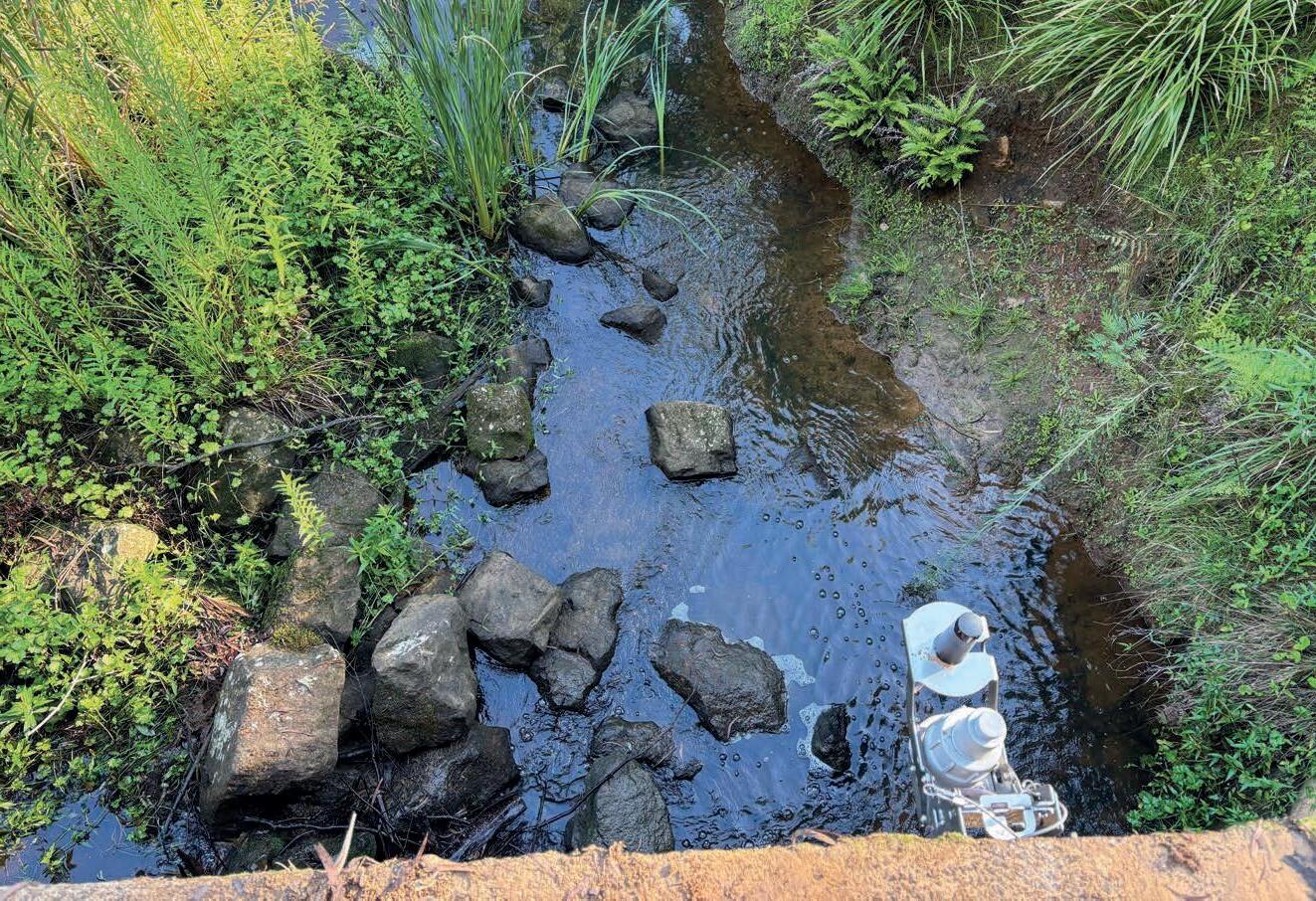
The program has supported field trials across the Shoalhaven and Clarence Valley local government areas of the state, with a focus on technologies that can provide earlier warnings and better operational visibility during natural disasters. Among the participants is Kallipr, a supplier of remote monitoring technology that has deployed a network of water level and rainfall sensors in floodprone areas throughout both councils.
According to Kallipr Chief Commercial Officer, Stelios Trikoulis, the first phase of the program focused on proving whether the technology could reliably operate in difficult conditions.
“We deployed 15 water level and flow sensors across Shoalhaven Council in high-risk flood zones,” Trikoulis said.
The goal was not only to capture accurate flood data, but also to test whether the devices could survive harsh conditions and continue reporting from locations with poor connectivity.
“In some of the places we deployed, they couldn’t even get satellite coverage. I’m talking deep valleys, and we were getting data,” Trikoulis said. “It’s always been done anecdotally.
“You speak to council and they’ll effectively say, ‘Okay, it starts raining, we know these sites are the first ones to go under, these sites are the second ones to go under’, and they’ve just got a recipe or cookbook of when to roll signs out and block roads.”


The difference with continuous monitoring is that councils can begin building a detailed and quantitative understanding of how floodwaters behave in different locations.
“This now gives much more granular data,” Trikoulis said.
“At ‘X’ amount of rainfall, this is the rate of ascension and recession of the water level. This is how quickly it goes up and how quickly it goes down.”
That visibility has the potential to improve decision making both during and after severe weather events. Councils can better understand which locations become inaccessible first, how quickly floodwaters rise and how much warning time may be available before roads are cut off.
The data can also support longer-term infrastructure planning.
“‘Which areas have the quickest water level rise that makes roads inaccessible?
Can we be doing more here to fix these roads? Can we put more infrastructure there?’,” Trikoulis said.
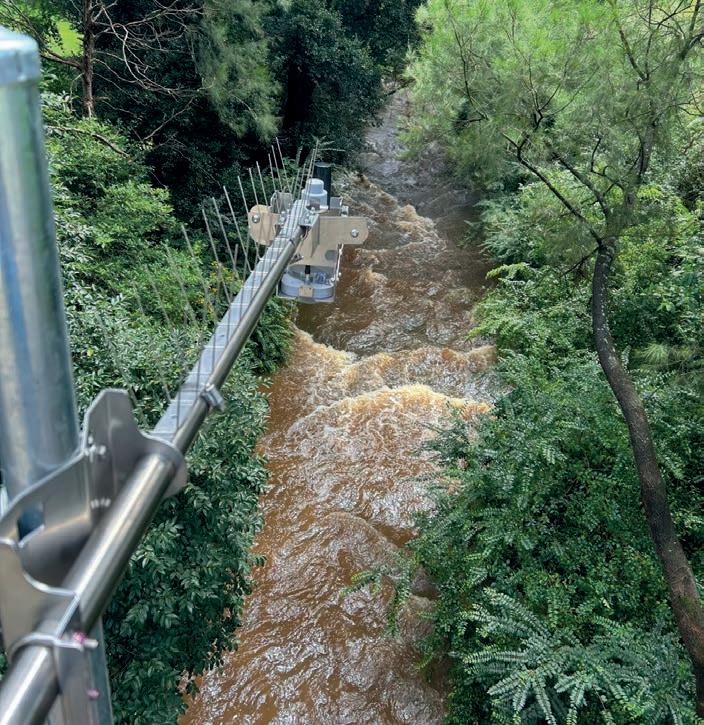
The rollout has already captured significant flood events. During one heavy rainfall period in the Shoalhaven region, sensors recorded water levels rising more than three metres in low-lying valley crossings.
“I remember the locals telling me how high the water gets up through there and I couldn’t believe them.
“But then the sensors captured it,” Trikoulis said.
The technology is also helping councils monitor areas that are already well known to local residents as flood hotspots.
“It’s very well known to the public what those flooding hotspots are,” Trikoulis said.
“What’s not well known is at what levels flooding occurs, as well as how they respond to different flooding events.”
One of the major challenges in flood monitoring is maintaining reliable infrastructure in remote or highrisk environments.
Traditional flood monitoring systems often rely on solar power, extensive cabling or large fixed installations, all of which can create additional failure points during severe weather events.
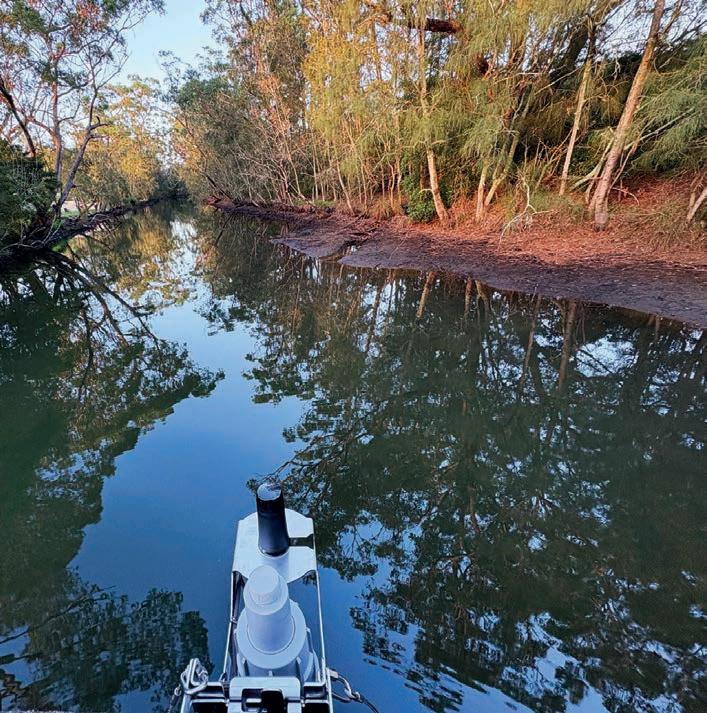
Kallipr’s approach instead uses compact, battery-powered devices that communicate over low-power cellular technologies such as Narrowband Internet of Things (NB-IoT) and Category-M1 networks.
“These networks are optimised for low power and very small data sets,” Trikoulis said.
The benefit is not only lower power consumption but also improved connectivity in regional and difficult terrain.
“Shoalhaven does have patchy 4G, but it’s got good NB-IoT coverage.”
The sensors themselves use noncontact radar technology to measure water levels.
“It’s effectively the same type of sensor that exists on your car when parking,” Trikoulis said.
“The radar beams down, detects the water and returns how much water is there.”
Because the units are fully enclosed and battery powered, they avoid many of the vulnerabilities associated with traditional monitoring infrastructure.

“As soon as you start putting solar panels and cabling into a high-risk flood zone, that’s more infrastructure getting washed away,” Trikoulis said.
“With ours, it’s a single enclosed unit that’s designed to withstand full submersion and everything a flood can throw at it. There are just fewer risk points.”
The systems are also designed for long operational life with minimal maintenance. Depending on reporting frequency, battery life can range from more than a year to up to a decade.
That low-maintenance design is particularly important for councils managing large geographic areas with limited operational resources.
“The biggest problem in council is limited labour capacity,” Trikoulis said.
“In Australia especially, there’s a lot of landscape to cover with a very small maintenance team.”
The deployment economics are also making whole-of-area monitoring achievable.



Battery-powered cellular devices cost a fraction of traditional fixed gauging stations across install, connectivity, maintenance and batteries.
“Councils have always had to ration where the monitoring dollars go,” Trikoulis said.
“What’s changed is the per-site economics. Councils can now cover their whole Local Government Area, not just the worst hotspots.”
Trikoulis said that following the success of the initial trial, Kallipr secured additional funding through the second phase of the NHDS Program, expanding deployments across Shoalhaven and Clarence Valley.
“Around 40 to 45 additional sensors have now been installed in Shoalhaven alone, alongside rainfall monitoring devices,” he said.
Looking ahead, Trikoulis said the sector is reaching a point where widespread adoption of flood monitoring technology is increasingly viable.
“We’re at this inflection point now where the technology is capable, the price point is where it needs to be, and councils are seeing the value,” he said.

“I think the combination of people, financial pressures and technology advancement is coming together, which will hopefully accelerate the next phase of adoption.”
To learn more, visit kallipr.com





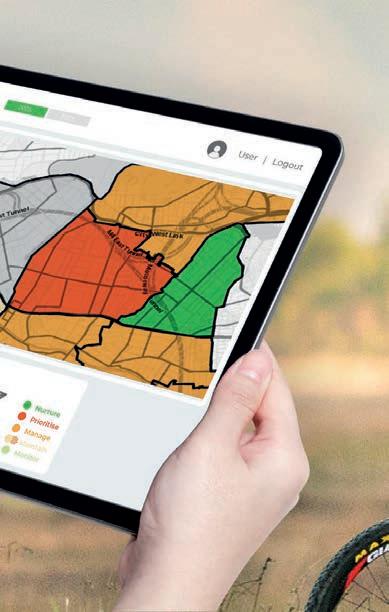
Asset Vision is the leading enterprise asset management solution built for and trusted by councils across Australia. Quick to deploy and simple to configure, it brings asset portfolios, valuations, AI defect detection, maintenance, built-in maps and capital works into one easy-to-use system.
Build a trusted asset register with GIS, attributes, components and hierarchies.


SCAN TO SEE ASSET VISION IN ACTION
www.assetvision.com.au


With advanced analytics and interactive dashboards, Asset Vision helps councils shift from reactive to proactive: anticipating issues, planning with confidence and delivering cost-efficient services. By smoothing the highs & lows of the asset lifecycle, councils create smarter, more resilient communities.
Capture field evidence, imagery and AI-assisted defect insights with AutoPilot.
Turn asset data into clear spatial insights, dashboards and decision support.
Plan, schedule, deliver and monitor all maintenance and capital works in a single platform
Forecast maintenance and capital plans using degradation patterns and asset health
Fo recast maintenance and capital plans using degradation patterns and asset health
Manage asset valuations, audits, compliance and executive reporting with trusted data.
Isolated legacy systems are consuming council resources and wasting valuable time, but connected platforms are helping sta focus on higher-value work.
Contributed by Datascape, Datacom’s local government software purpose-built for councils
Apattern shows up quickly when you look at how councils are working today – highly skilled team members are spending too much time on low-value tasks.
In many cases, it’s not the work itself that’s complex. It’s the systems behind it. Disconnected processes, manual steps and legacy tools create friction that pulls people away from the work they’re actually there to do.
It’s also what’s driving a shift towards more connected platforms like Datascape, which Datacom designed specifically for local government, to bring together community engagement, regulatory services, revenue, assets and corporate operations into one environment, so work flows properly across teams.
The team at Datascape has decades of experience working with councils, and one of the things they’ve learned works well is to start where the pain is sharpest. Here are a few examples of what that has looked like in practice for some Australian councils.
Lynda Davis’s job title says healthy lifestyles officer. Her actual day, until recently, looked like this: someone fills out an enquiry form. Lynda logs in, checks if
the space is free. If it is, she enters their details, generates a letter, sends it, waits for a signature, generates a confirmation letter, generates an invoice, then directs the customer to a separate website to pay.
Forty-five minutes to make a single booking. For one customer in one disconnected process. The length of that time she’s wondering: what if I accidentally double-book someone’s wedding?
Lynda works at the City of Greater Bendigo, a council delivering more than 60 services to 120,000 residents across Victoria’s third-largest economy. She was being consumed by a process that had nothing to do with her expertise and everything to do with a system that hadn’t kept pace with the work it was supposed to support.
She’s not unusual. She’s the norm.
Across Australia’s 538 councils, some version of this scene plays out every day. Different departments, different systems, same dynamic: capable people absorbed by tasks that don’t need their capability.
In South Australia’s Limestone Coast, fire prevention inspectors at Wattle Range Council were spending 11 to 12 days completing their rounds. Two people per vehicle, one driving, one entering data on a shared laptop. Only one team could inspect at a time. GPS mapping was outdated, which meant notices going to the wrong properties and hazards left unresolved. Staff worked long hours to meet critical deadlines, not because the inspections were complex, but because the process around them was cumbersome and outdated.
In regional Victoria, Moorabool Shire Council’s finance team was running a rating system the vendor had stopped supporting. For a growing council serving over 38,000 residents, that wasn’t a technology problem. It was an organisational risk sitting in plain sight. None of these are dramatic failures. That’s the point. It is the kind of friction that doesn’t get resolved, because it’s always been there.
Five-minute tasks repeated across every officer, every team, every week. The cumulative cost is enormous, but it never shows up in a single line item.

The obvious cost is time. But the less visible costs compound faster.
There’s the workforce cost. Councils already struggle to recruit and retain skilled staff. When experienced people spend their days on work that doesn’t use their experience, you don’t just lose efficiency. You lose them. To frustration, to disengagement, to other sectors that offer work worth doing.
There’s the community cost. Every minute spent navigating a workaround is a minute not spent looking after a resident. The ratepayer whose notice goes to the wrong address. The community group that never discovers council spaces exist. The caller on hold while someone cross-references three disconnected systems.
And there’s the decision cost, the one that hits the executive table. When data lives in silos, leadership can’t see what’s happening clearly enough to act.
Wattle Range CEO Ben Gower couldn’t make the case for legislative change on rate capping until financial data was finally visible and presentable.
“It builds trust between Council and the community, and it starts to inform your elected members about how efficiently the organisation is running, which is incredibly powerful,” he said.
Without connected systems, councils often struggle to demonstrate that stewardship, justify investment, or make the strategic calls they’re accountable for.
The councils that shifted this dynamic didn’t start with transformation.
Councils


They started with one process, the one costing them the most, and chose a platform designed for their world.
Moorabool replaced its unsupported rating system. Rate notice processing went from minutes to seconds, recovering weeks of productivity each year.
As each process connected, rating to property records, property to customer service, customer service to online forms, the gains compounded. Sixty per cent of service applications shifted to online submission. Staff say they’re spending less time on admin and more time
Wattle Range started with financial management, then extended to field operations. Fire inspections dropped from 12 days to five. Multiple inspectors now capture data simultaneously on mobile devices, an “office in the pocket” replacing the shared laptop. Ben Gower uses that data to brief state politicians. Trust between council and community grew because the evidence was finally in
Greater Bendigo’s new system launched and took off immediately. Lynda Davis went from dreading doublebookings to watching personal trainers, choirs, and community groups discover and reserve spaces on their own.
A pattern runs through these stories. Start where the pain is sharpest. Choose a platform where each process connects to the next, so value compounds rather
than duplicates. And measure what you recover. Not in transformation language, but in days saved, errors eliminated, and staff returned to the work that actually needs them.
What these councils found was that the gains came from connection. Rating systems linked to property records. Property linked to customer service. Field operations linked to compliance. Financial management linked to reporting.
Each process built on what came before, because the platform underneath, Datascape, was designed for how councils actually work. Not adapted from technology built for someone else.
Somewhere in your council, right now, someone with the skills to serve the community is navigating a workaround nobody asked for. Not because they’re inefficient. Because the system wasn’t built for the work they’re here to do.
The question isn’t whether better tools exist. It’s whether the platform you’re running was designed to give your best people back to the work that needs them.
To learn more, visit datacom.com/datascape or scan the QR code.

Make the most of your EOFY training budget with practical courses designed for today’s engagement challenges.
Communities expect more than consultation. Today’s councils need practical engagement capability that supports better decisions, stronger relationships and greater community trust.
Core Courses
Essentials of Engagement
Apply Engagement Methods
Design and Plan Engagement
Aboriginal and Torres Strait Islander Engagement
Applying Engagement Principles to Policy Design
Build practical engagement capability through the Engagement Institute’s Certificate of Engagement and specialised training courses. Designed for today’s engagement challenges across policy, projects and community decision-making.
Virtual and In-house delivery options available
Electives
Facilitate Engagement
Influencing for Engagement
Facing Conflict
Data Management for Engagement
Evaluate Engagement
Engaging in the Field (tailored for Energy projects and teams)
Digital Facilitation
Learn more and register

As councils and utilities work to better manage ageing sewer infrastructure, the industry is placing greater focus on the often-overlooked role manholes play in identifying defects early and improving long-term asset planning.
When it comes to sewer inspections, it’s easy to focus on what happens inside the pipe.
Crawler camera systems have become the industry standard for inspecting pipelines, identifying defects, and assessing asset condition.
Grant Brown, Head of Sales and Marketing at sewer inspection equipment provider SECA, said its an essential part of any inspection workflow, but there’s a blind spot in many inspection programs that continues to be overlooked.
“The manhole is the entry point to the entire sewer network, yet in many cases it receives only a quick visual glance before the crawler heads underground,” he said.
“That creates a major gap in the quality of asset data being collected.”
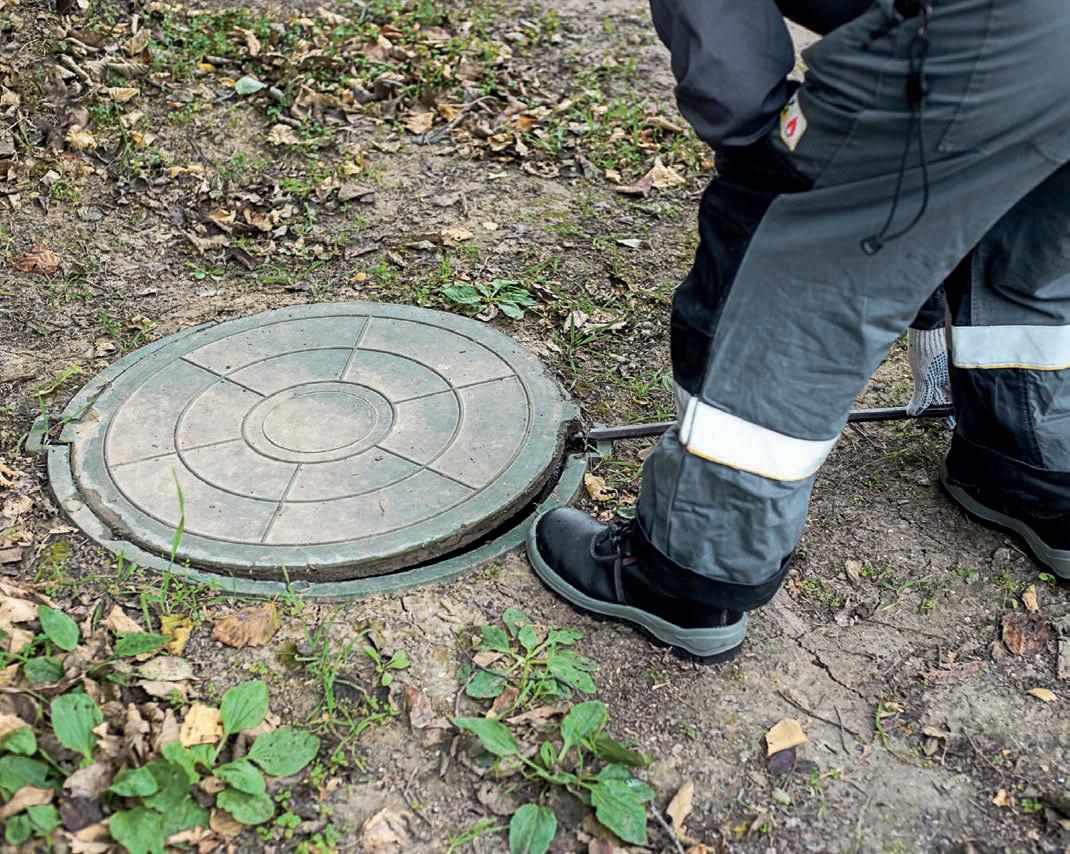
Manholes are often where some of the most critical structural issues first appear. Corrosion, infiltration, root ingress, joint
displacement, benching deterioration and signs of failure can all develop here long before problems are identified further down the line.
“If you are not properly inspecting the manhole, you are only seeing part of the story,” Brown said.
“That’s exactly why the QuickView 360 has become such a valuable tool for councils, utilities and contractors looking to improve inspection quality without slowing down productivity.”
Detailed inspections often require confined space entry, additional crew members, traffic management, paperwork and lengthy reporting processes.
For many contractors, that simply isn’t practical during routine sewer inspections.
“The challenge with traditional manhole inspections has always been time,” Brown said.
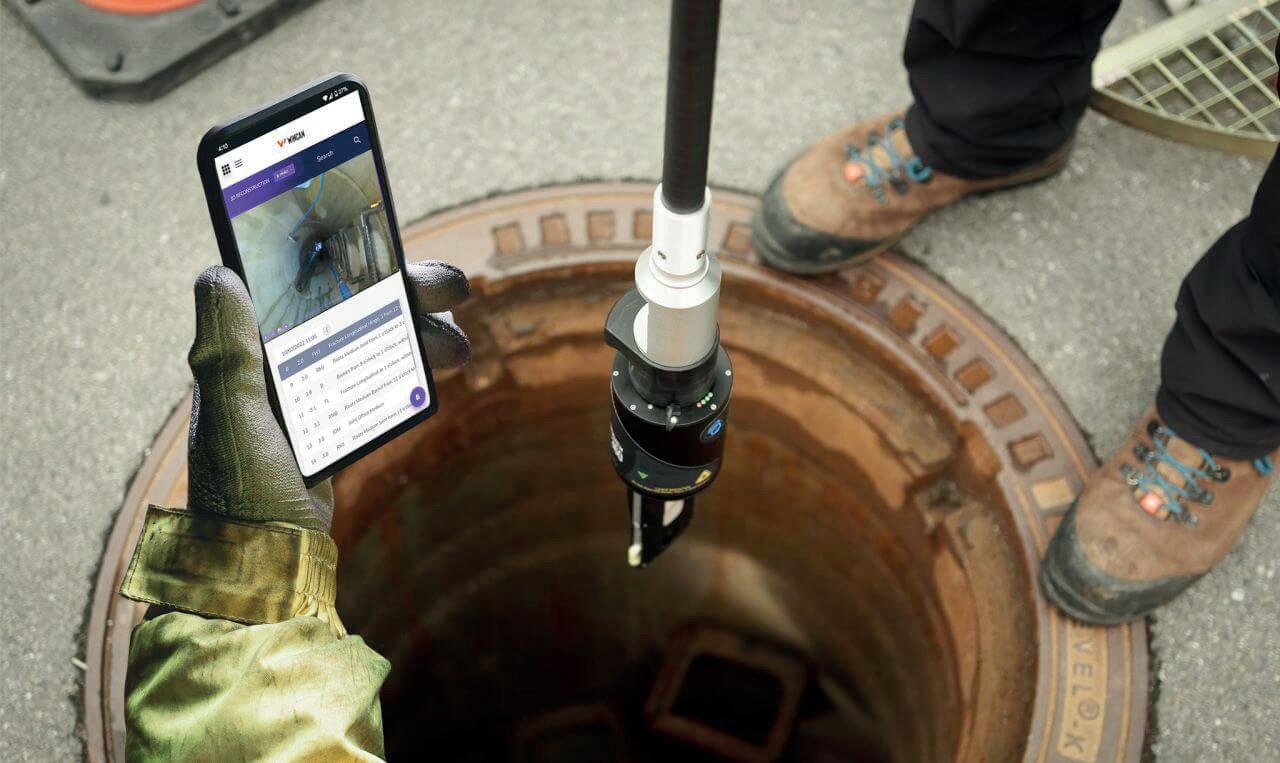
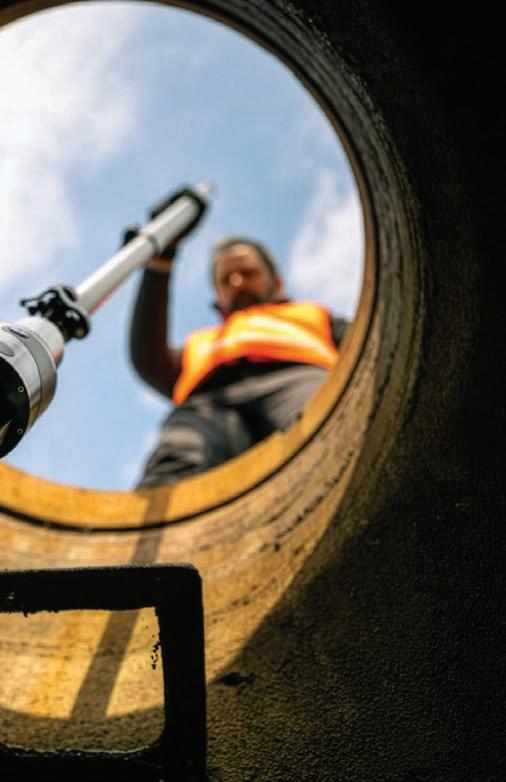
“QuickView 360 changes that completely. Designed as an automated manhole inspection camera, the system combines the simplicity of a pole camera with advanced cloudbased reporting and 360-degree visualisation. Operators can complete a full manhole assessment in around five minutes, without confined space entry and without disrupting workflow.”
Using a lightweight telescopic pole or the tripod and winch with twin 4K cameras, the system captures a complete 360-degree inspection of the manhole structure. Integrated LED lighting, laser range finding and wireless tablet control make the process straightforward for a single operator.
QuickView 360 was built to simplify inspections. Image: SECA.

Manholes are often where some of the most critical structural issues first appear. Image: Natalia/stock.adobe.com

In practical terms, that means contractors can inspect more assets, collect higher quality data and reduce time on site.
“A crawler camera inspection tells you what is happening inside the pipeline,” Brown said.
“QuickView 360 tells you what is happening at the access point. Together, they create a far more complete picture of asset condition.”
This is particularly important for councils and utilities managing ageing sewer infrastructure where maintenance budgets are under pressure and reactive repairs are costly.
Instead of relying on fragmented inspection data, operators can now capture full 360-degree manhole imagery, AI-supported defect coding and accurate structural condition data.
The system also provides 3D modelling and measurement capability, cloud-based reporting through WinCan Web and faster identification of defects before failure occurs.
“The result is better decision-making and more proactive maintenance planning,” Brown said.
“And frankly, it makes far more sense to identify a deteriorating access chamber early than wait until it becomes an emergency repair.”
Brown explained that one of the biggest misconceptions about advanced inspection technology is that it adds complexity.
“The reality is the opposite. QuickView 360 was built to simplify inspections,” he said.
“The workflow is straightforward; enter the inspection details, lower the camera into the manhole, capture the inspection, upload the data wirelessly to WinCan Web, review, analyse and generate reports. That’s it.”
Brown said that there are no complicated setups, no heavy equipment and no lengthy post-processing delays.
Inspection footage can be uploaded directly to the cloud and reviewed almost immediately.
For contractors, this means faster turnaround times and the ability to complete significantly more inspections each day.
For asset owners, it means receiving richer and more consistent inspection
data that can support long-term maintenance planning.
Brown said that the industry has spent years improving how pipes are inspected. Now the focus is shifting toward improving how the entire network is inspected.
QuickView 360 is helping contractors and utilities bridge the gap between traditional CCTV inspection and smarter asset management. By making manhole inspections faster, safer and easier to complete, the system removes one of the biggest barriers to collecting complete infrastructure data.
“Because the reality is simple,” Brown said.
“If you are only inspecting the pipe and ignoring the manhole, you are missing critical information. And in sewer infrastructure, missing critical information usually becomes expensive sooner or later.”
To learn more about the QuickView 360, contact the SECA team on 1800 028 584 or visit seca.com.au


You can't manage what you don't see

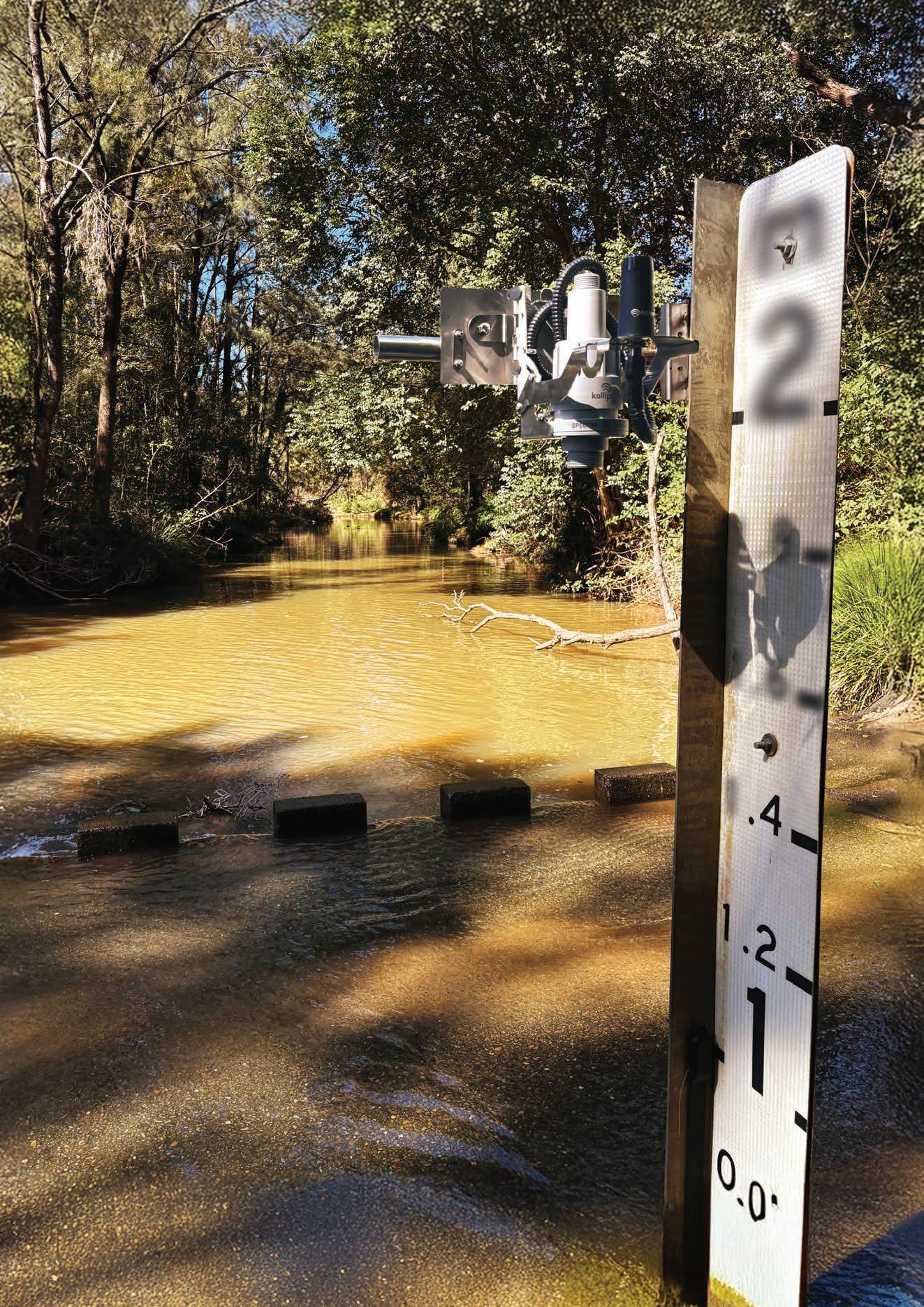
See rising water levels and network conditions while there’s still time to act.

In harsh Australian conditions, protecting fleet vehicles and heavy machinery assets from dust, contaminants and poor air quality can have a direct impact on reliability, maintenance costs and operational e ciency.
At Ryco’s purpose-built laboratory in Melbourne’s west, engineers and technicians are using advanced testing technology to develop filtration products designed for Australia’s demanding operating conditions, as well as bespoke filter options not found elsewhere in the filtration market.
For filtration specialist Ryco, its solutions arm and product development starts long before a filter reaches a vehicle or machine. At the company’s Altona North laboratory in Victoria, engineers undertake extensive testing and research aimed at improving the performance, durability and efficiency of filtration products used across automotive, industrial and fleet applications.
The facility is unique within the Australasian market. Ryco describes it as the region’s only dedicated filtration laboratory, with NATA (National Association of Testing Authorities) accreditation and the capability to test products against both SAE (Society of Automotive Engineers) and ISO (International Organisation for Standardisation) industry standards.
That capability is increasingly important as councils manage ageing assets, tighter operational budgets and growing expectations around reliability and uptime. Whether operating in dusty regional environments or stop-start metropolitan conditions, local government fleets are exposed to contaminants that can reduce engine performance, increase wear and shorten service life.
According to Ryco, its laboratory testing focuses on three key performance areas: efficiency, life and flow. The company uses specialised equipment including 3D scanners, 3D prototyping printers, air intake test rigs and triple-loop multi-pass filter test rigs to analyse how products perform under different operating conditions.
The laboratory also supports the company’s broader research and development work, allowing engineers to assess new materials, prototype designs and filtration technologies before products enter the market.
One of the laboratory’s key capabilities is multi-pass testing, which assesses how
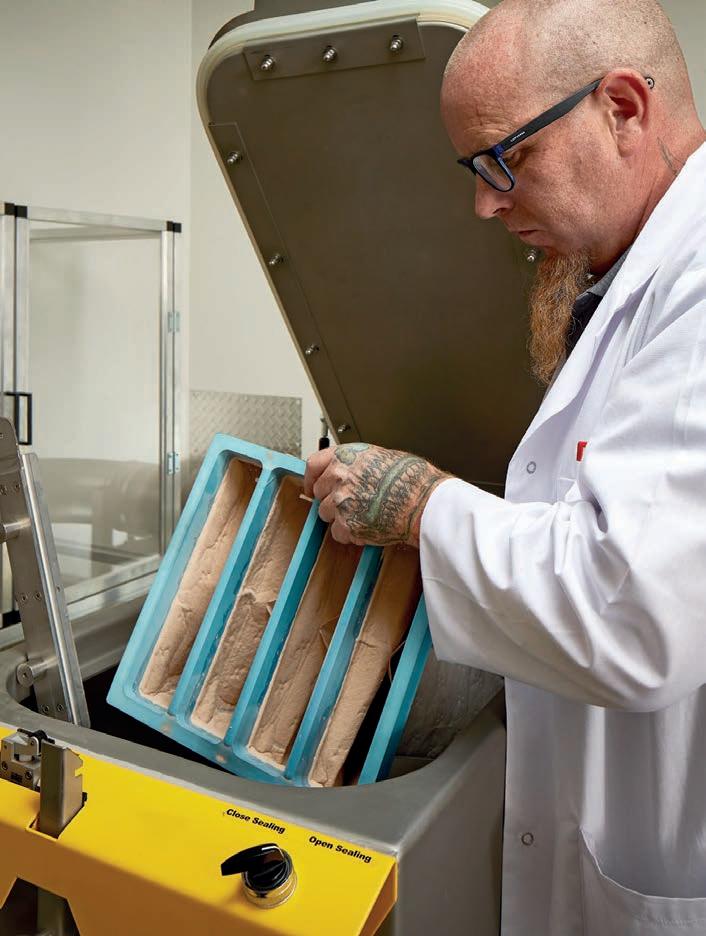
Ryco’s laboratory supports the company’s research and development work. Images: Ryco.
filter media with a high degree of accuracy, allowing engineers to gather detailed micron-level data during product development.
According to the company, this helps improve the design and manufacture of next-generation filters capable of operating effectively in Australia’s harsh and varied environments.
For councils, air quality and filtration performance can have implications beyond engine protection alone.
Cabin air filtration in fleet vehicles can contribute to driver comfort and workplace health, while effective filtration in heavy plant and machinery can support reliability in dusty operating environments.
Ryco’s focus on research and testing has also gained broader industry recognition. The company was named a finalist in the Australian Financial Review’s Most Innovative Companies list for Manufacturing and Consumer Goods in 2019, 2020 and 2021 for its new program releases. Ryco took out the award in 2024 for their development of
Engineers undertake extensive testing aimed at improving the performance and e ciency of filtration products.

effectively a filter removes contaminants
measured quantities of contaminants of known particle sizes into fluid that is continuously pumped through a filter. Samples are then collected upstream and downstream at timed intervals and analysed using particle counters.
From those measurements, engineers calculate a ratio by comparing the number of particles present before and after filtration. The results help determine how efficiently a filter captures contaminants across different particle sizes.
According to Ryco, the testing process provides detailed diagnostic information that can be used to refine filter design and assess long-term performance.
Beyond liquid filtration, the company has also invested heavily in air filtration testing capabilities.
Working with German particle and aerosol analysis specialist TOPAS and Australian instrumentation supplier Laftech, Ryco developed a purpose-built air filter test system designed to exceed the requirements of international testing standards.
The system analyses the size and quantity of particles that pass through
the N99 MicroShield Cabin Filter for Isuzu cabins, which previously only housed a leaf tray, offering very little by way of filtration for drivers and passengers before Ryco’s filter development.
That emphasis on innovation reflects broader priorities occurring across fleet management and asset maintenance. As councils seek to maximise vehicle life, reduce downtime and improve operational efficiency, component performance and product quality are increasingly important considerations.
By investing in local testing and development capabilities, manufacturers are also gaining a better understanding of the specific environmental and operational pressures facing Australian fleets.
For Ryco, the laboratory plays a central role in that process, providing engineers with the tools and data needed to continually refine filtration technology for real-world operating conditions.
To learn more, visit rycofilters.com.au







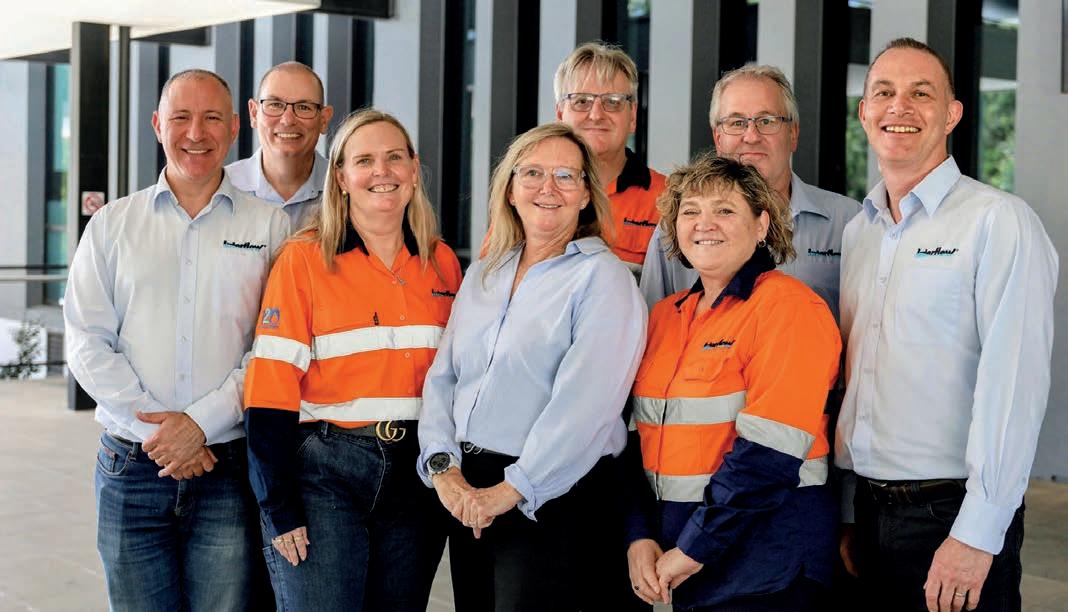
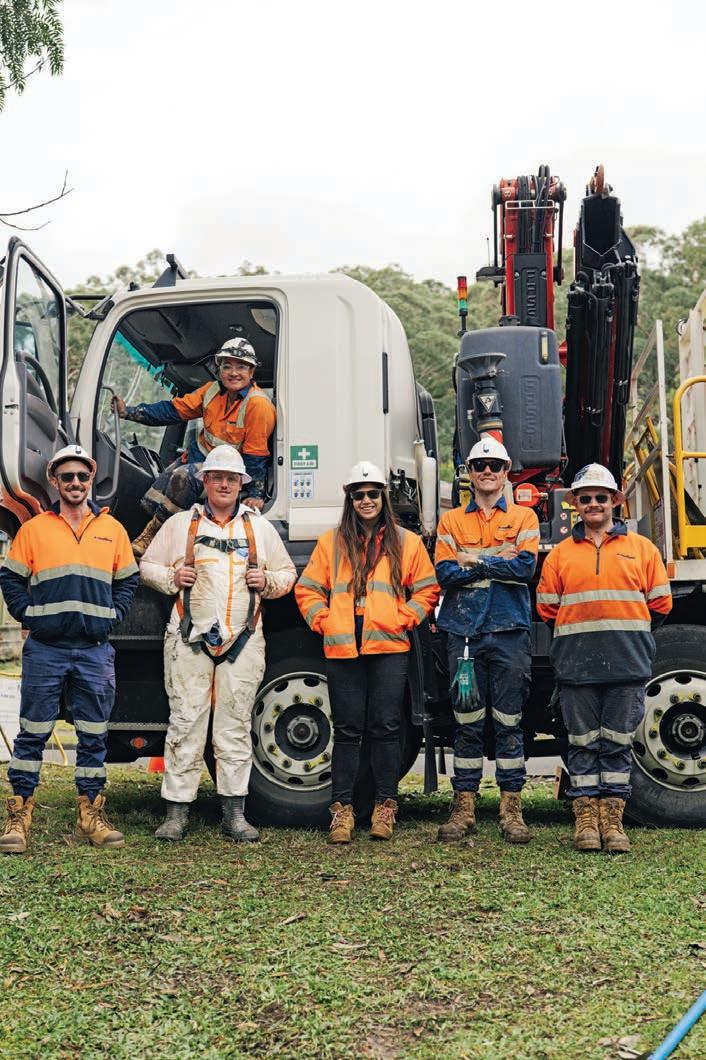
Interflow has eliminated its gender pay gap by embedding fair pay practices into every part of the business.
In construction and engineering, gender pay gaps have often been explained away as an unavoidable byproduct of workforce composition.
After all, the greater number of field roles tend to be held by men. But at Interflow, leaders decided that this explanation simply didn’t work.
Over the past few years, Interflow has implemented a series of structural and process changes to ensure people are paid fairly for their specific role, experience and contribution, regardless of gender. The result? Interflow now has no gender pay gap.
For a business operating in the male dominated industries of construction, utilities and water infrastructure, that outcome means a great deal. Internally, however, it was never considered a headline initiative. It instead came from a broader conscious focus on fairness and organisational culture.
Interflow Chief Financial Officer, Tracy Black, said the company’s approach was really about ensuring everyone was
paid appropriately and fairly, rather than according to gender.
“If I think back to the foundation of all of this, we weren’t trying to achieve gender pay equality,” she said.
“It was instead centred around diversity and inclusion, and about doing the right thing and attracting the right people by paying proper market rates.
“We pay superannuation while people are on parental leave, for example. So, we took a big-picture view of what fairness really means when it comes to pay.”
One of the first parts of the process was undertaking market assessments of salary ranges, hand in hand with an independent market analysis body, ensuring current internal roles aligned with benchmarks.
Since those first standards were established, updates continue to be made to the data to ensure salaries always sit within correct salary bands no matter the person’s gender.
The outcome – the elimination of the gender pay gap – was a natural result
of fair and consistent pay practices across Interflow. But that’s not the only positive result.
In any business, positive cultures are only reinforced at an operational level when systems and processes support and constantly encourage new ways of doing things, as well as new behaviours.
Once the original work was done around salaries at Interflow, it was embedded into the company’s processes and policies around the setting, reviewing and communication of future salaries. Most importantly, pay would never be influenced by gender, race, faith or any other personal characteristic.
Anne-Marie Vella, Interflow’s People Experience Manager, said a vital part of the process was the establishment of a clear policy and supporting salary framework for every role.
“It’s actually fairly simple in practise,” she said.

“We’ve got a role and a salary range. And no matter what, the people in that role need to be within that range. None of it has anything to do with gender.”
Each role has a defined salary band that aligns with current market data. People are positioned within the range based on performance, experience, capability and responsibility.
“We also look at things like parental leave,” Vella added.
“When someone re-enters the workplace, we test their salary against current data because the market may have shifted while they were away.”
Importantly, that framework does not then gather dust. Twice a year, or when someone is promoted or returns after a long absence, the ranges are revisited to ensure they are still good and fair.
That’s just the starting point. Of equal importance is how those standards are communicated across Interflow.
Around the time of annual salary reviews, leaders host sessions where they explain the framework and the principles that reinforce it. This is important, as it communicates the fact that the standards are not simply set by human resources (HR), but instead are understood and supported by the executive leadership team and senior leaders across the business.
“That was a big thing for me – I didn’t want it to come from HR,” Vella said.
“It has to come from the leaders, otherwise it’s not going to be embedded in the way we do business.”
Equality is part of Interflow’s purpose
For the Interflow leadership team, the motivation behind the concept of greater equality across the business connects to the organisation’s broader purpose.
“It’s actually all about our purpose,” Black said.
“Our purpose is to improve the lives of the people we work with, the communities we serve and the
environment we work in. More simply, it’s just not right to have it any other way.”
While the elimination of the gender pay gap at Interflow was a notable achievement in itself, and in fact earned the WORK180 award for Outstanding Achievements in Pay Equity in 2025, Black said the biggest challenge facing the organisation is stronger gender representation across the industry more broadly.


It’s no secret that construction and infrastructure related sectors have maledominated workforces.
“I think our real challenge now is around attracting and retaining equal female representation,” Black said.
“We have a focus on this in recruitment, from leadership appointments all the way through our workforce.”
When Black joined Interflow three years ago, she was the second of two women in the executive group. Now, three of eight Interflow executives are female.
For Black, those changes matter not just symbolically, but practically.
“When you’re looking at a new role, the last thing that gets you over the line is your sense of how you’re going to fit in,” she said.
“If it’s just a bunch of blokes sitting at the table, there’s no way a woman can feel like she’s going to fit in.”
Greater gender diversity at the highest level within a business naturally, and often dramatically, expands the organisation’s potential talent pool, Black added. That offers a critical advantage, culturally and commercially, as engineering and infrastructure firms across Australia face skills shortages.
Vella said that for Interflow, this is simply the way things work.
“It’s embedded into the way we do things,” she said.
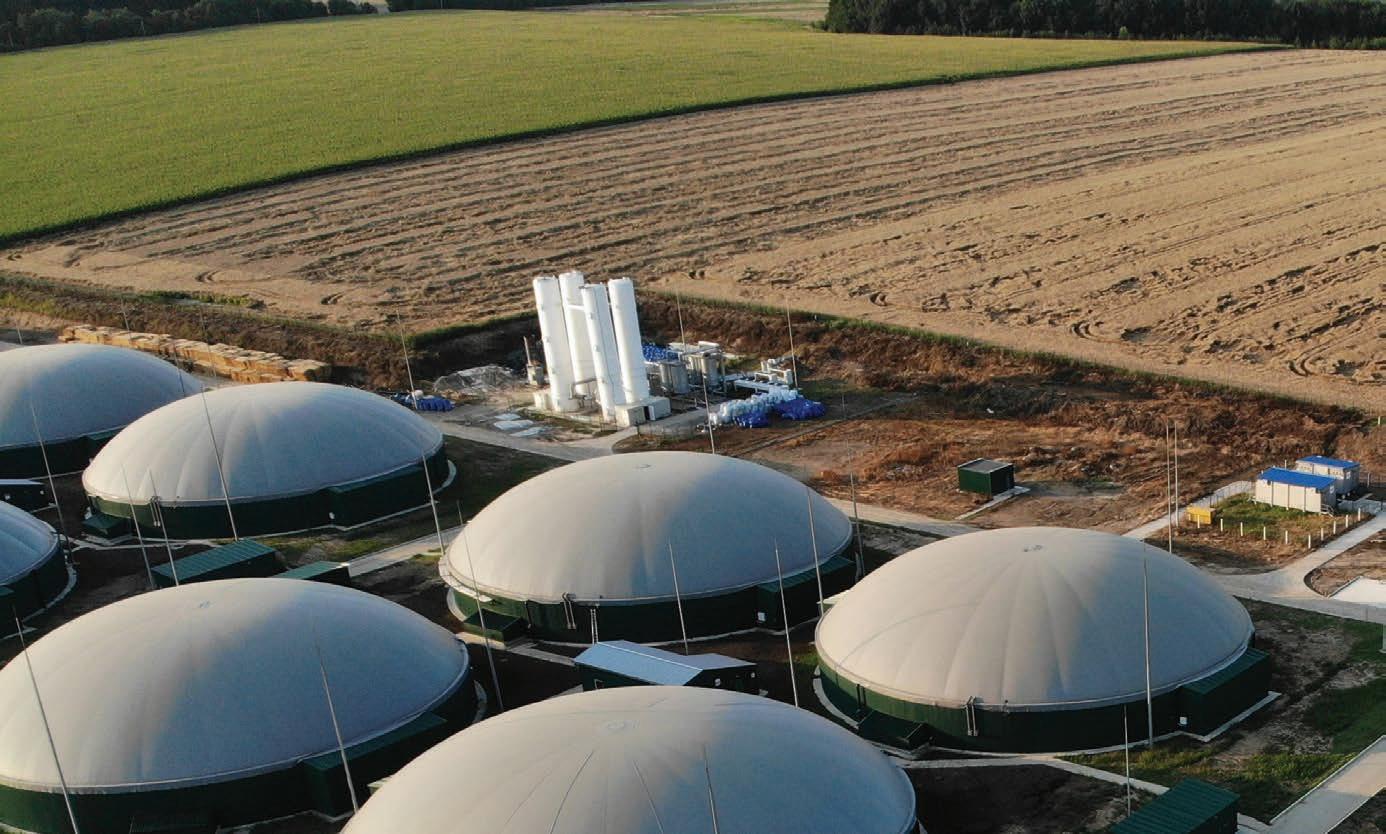




How on-site screening technology is helping councils cut costs, reduce waste and support circular construction.
Australia’s construction and infrastructure sectors are under increasing pressure to reduce waste, lower emissions and make better use of recycled materials. For councils managing civil works, road maintenance and demolition projects, that challenge is becoming more visible on every job site.
From excavated soil and green waste to reclaimed asphalt pavement and construction debris, councils are dealing with growing material volumes while also balancing landfill costs, transport expenses and sustainability targets.
According to the Department of Climate Change, Energy, the Environment
and Water, construction and demolition waste accounted for 26.8 million tonnes of waste in Australia during 2022-23. While much of that material was recovered, millions of tonnes still ended up in landfill.
According to Sami Rahman at Walkers Hammers, councils have the opportunity to process and reuse more material directly at the source through the ALLU screening bucket range.
Designed to transform excavators and loaders into mobile processing units, the attachments allow operators to screen, crush, separate and reuse materials on-site rather than transporting them elsewhere for processing.
Traditionally, councils and contractors managing waste materials have relied on a combination of loaders, crushers, screeners and haulage trucks to remove and process material. That approach can create significant costs through transport, fuel use, labour and machine overlap.
The ALLU D-Series screening bucket aims to streamline that process by combining screening and material handling into a single attachment. Mounted directly to an excavator or wheel loader, the bucket enables operators to process material while loading or stockpiling it.
The result is fewer machines on-site, reduced double handling and less reliance on external recycling facilities.
For councils working in urban or constrained environments, the ability to process material where it is generated can also reduce truck movements and minimise disruption to surrounding communities.
The D-Series buckets are used across a wide range of council applications, including processing topsoil, compost, construction and demolition waste, contaminated soil, road base materials and green waste. By separating reusable material from oversized or unwanted contaminants, councils can recover more usable product from existing waste streams.
The technology also supports broader circular economy initiatives now emerging across Australia. Governments at all levels are increasingly encouraging or mandating the use of recycled materials in infrastructure delivery, particularly in transport and road projects.
Rather than sending excavated or demolished material off-site, councils can instead repurpose it into reusable fill, aggregates or road base products directly on the project.
According to Rahman, this not only reduces disposal costs, but can also create additional value through the reuse of recovered material.
Asphalt remains one of the world’s most recycled construction materials, but processing reclaimed asphalt pavement
efficiently can still present challenges for councils and contractors.
To address this, ALLU has developed a dedicated Asphalt Screening Bucket designed specifically for processing cold-milled asphalt and reclaimed asphalt pavement on-site.
The attachment combines crushing and screening functions in a single pass, allowing operators to break down clumps, separate oversized material and produce reusable asphalt product directly at the work site.
A key feature of the bucket is its hybrid blade configuration, which combines screening and crushing blades to improve efficiency and material consistency.
The system is designed to produce a high percentage of finished material below target size, reducing the need for reprocessing and minimising material waste.
For councils undertaking road rehabilitation and resurfacing works, the ability to process reclaimed asphalt on-site can significantly reduce transport costs and dependence on additional crushing equipment.
The Asphalt Screening Bucket is also suited to urban worksites, where space can be limited and minimising equipment footprints is important. By reducing the need for separate crushers and additional material handling, operators can complete recycling processes more efficiently.
Available in multiple sizes for excavators and wheel loaders, the buckets are engineered for high-throughput applications while maintaining mobility and ease of operation. Features including reinforced frames and serrated cutting edges are designed to withstand aggressive asphalt processing conditions.
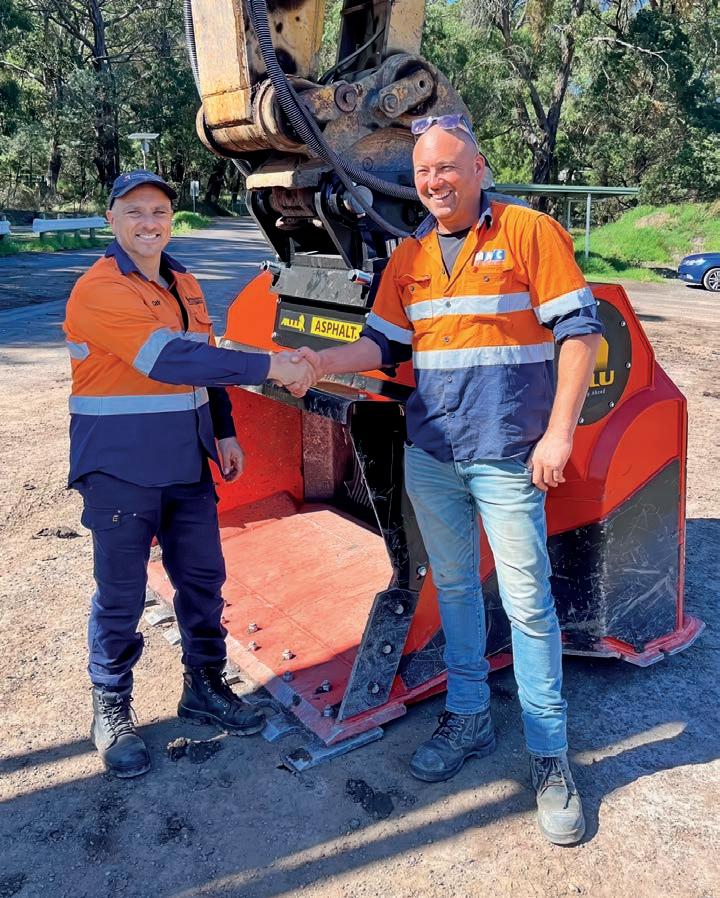
One customer, Mick Howard from MHC Mining Services, said the technology had significantly improved material recovery outcomes on-site for Yarra Ranges Council.
“Over the past two weeks the bucket has reduced waste down to two per cent from 50 per cent resulting in 95-98 per cent finished product. This is an excellent saving for Council and MHC Mining Services and for the environment,” he said.
As councils continue to deliver infrastructure upgrades and maintenance programs under increasing environmental scrutiny, technologies that improve resource recovery and reduce emissions are becoming more important across the sector.
On-site processing can contribute to sustainability goals in several ways, including reducing landfill volumes, lowering truck movements and decreasing fuel
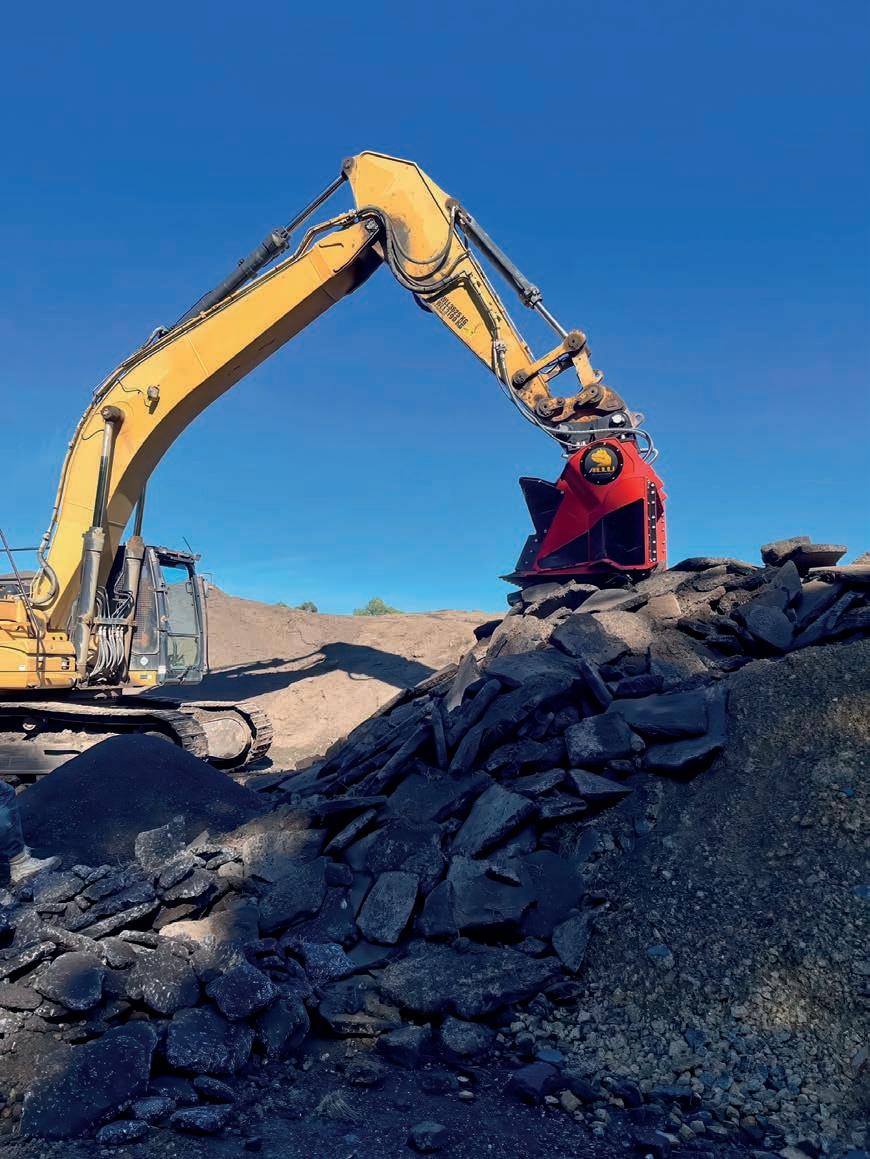
consumption associated with transporting material to and from recycling facilities.
Reducing reliance on virgin materials also plays an increasingly important role in helping councils meet recycled content targets and broader environmental objectives.
Importantly, the benefits are not limited to large-scale infrastructure projects. Screening buckets can also support smaller council works, including park upgrades, drainage works, road maintenance and waste management operations.
Because the attachments integrate directly with existing machinery fleets, councils and contractors can improve processing capability without investing
in dedicated standalone crushing or screening plants.
For Rahman, the appeal of the ALLU range lies in its ability to improve both environmental and operational outcomes simultaneously.
By turning excavators and loaders into mobile processing systems, councils can recover more usable material, reduce handling costs and improve efficiency across a broad range of civil and infrastructure applications.
ALLU buckets are distributed in Australia via a dedicated dealer network.
To find out more, visit attachmentspecialists.com.au/allu
With diesel prices climbing and supply pressures continuing, councils are turning to data-driven fleet management to protect budgets and improve e ciency.
Fuel costs have long been one of the biggest operational expenses for council fleets, but price spikes have sharpened the challenge for local government operators across Australia.
Wholesale diesel prices surged in early 2026, while ongoing global supply pressures continue to expose Australia’s reliance on imported fuel. For councils managing everything from waste trucks and maintenance utes to heavy plant and construction vehicles, the result is mounting pressure on already stretched operational budgets.
While fuel prices themselves remain outside the control of fleet managers, the way vehicles are operated is not. Increasingly, councils are looking to fleet telematics platforms to identify inefficiencies, reduce unnecessary fuel consumption and gain better visibility over day-to-day fleet performance.
Geotab Associate Vice President, Heavy Transport Australia, Andrew Hintz, said that driver behaviour, vehicle maintenance and route planning can collectively influence up to 30 per cent of fuel consumption, making them some of the most effective levers available to fleet operators seeking immediate savings.
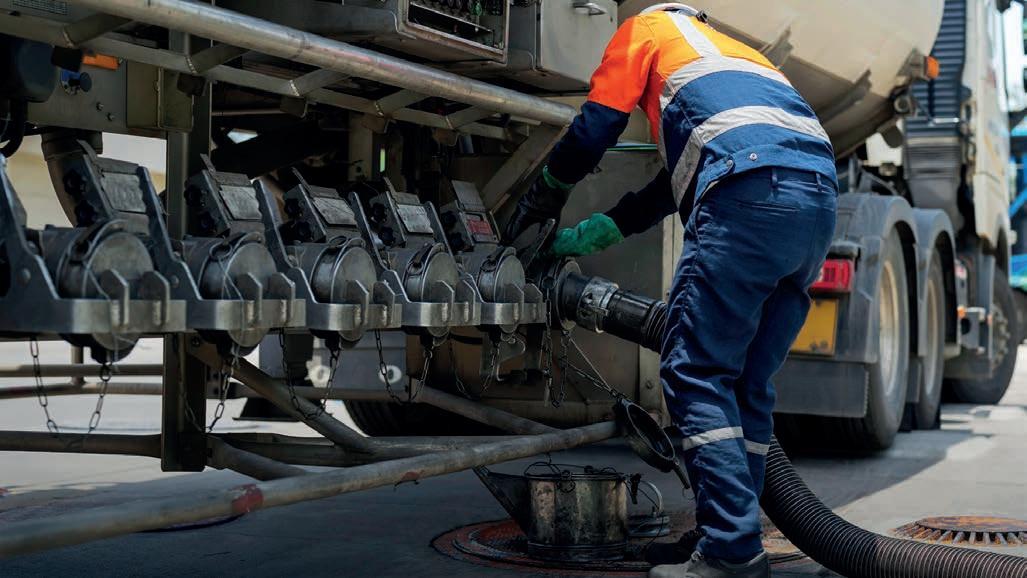
For councils with dozens of vehicles in operation regularly, the costs of ine ciencies can add up rapidly. Image: ellisia/stock.adobe.com
“The operators who are getting ahead right now are the ones using real-time data to coach their drivers and address inefficiencies before they compound,” he said.
One of the most significant contributors to fuel waste is driver behaviour. Speeding, harsh acceleration, aggressive braking and excessive idling can all dramatically increase fuel usage, particularly across large fleets operating daily.
Research from the Massachusetts Institute of Technology has found these behaviours can reduce fuel economy by between 15 and 30 per cent at highway speeds, and by as much as 40 per cent in stop-start traffic conditions.
For councils operating in urban environments with frequent stopping and congestion, those inefficiencies can quickly add up.
Telematics platforms provide real-time monitoring of vehicle activity, allowing fleet managers to track speeding events,
harsh braking, acceleration patterns, revolutions per minute and idle time across the fleet. This data can then be used to create driver scorecards and targeted coaching programs that encourage safer and more fuelefficient habits.
Even relatively small behavioural changes can deliver substantial savings.
Hintz said that reducing highway speeds from 100 kilometres per hour (km/h) to 90km/h can lower fuel consumption by almost ten per cent.
“Across a large council fleet operating year-round, that reduction can translate into hundreds of thousands of dollars in savings annually,” he said.
Idling remains another major and often overlooked source of fuel waste. Research conducted for the New South Wales Environment Protection Authority found heavy-duty trucks can consume between two and four litres of fuel per hour while idling.
For councils with dozens of vehicles operating daily, those costs can escalate rapidly. A mid-sized fleet of 30 trucks idling for an average of 45 minutes each day could burn through tens of thousands of litres of diesel annually without travelling a single kilometre.
Telematics systems help to tackle the problem by providing real-time idle tracking and configurable alerts when vehicles exceed set thresholds. Many fleets implementing telematics-based idle reduction programs have reportedly achieved reductions in unnecessary idling of around 30 per cent.
Beyond fuel savings, reducing harsh driving and idle time can also decrease wear and tear on vehicles, lowering maintenance costs and extending asset life – a significant benefit for councils managing long-term fleet replacement cycles.
“Predictive maintenance is also an important strategy that helps operators boost fuel efficiency,” Hintz said.
“With increasingly complex trucks, faulty electrical sensors or small mechanical issues can quickly increase fuel consumption. Telematics gives fleet managers the visibility to catch these problems early and keep heavy trucks running efficiently.”
Underinflated tyres, misaligned axles, clogged air filters and faulty sensors can all force engines to work harder and burn more fuel.
Hintz added that predictive maintenance is becoming one of the most
effective ways for fleets to address these hidden inefficiencies before they develop into costly problems.
“Unlike traditional servicing schedules based purely on kilometres travelled or fixed intervals, predictive maintenance uses real-time vehicle data to identify issues as they emerge,” he said.
“Telematics systems connected to Controller Area Network (CAN) Bus systems and tyre pressure monitoring systems can provide fleet managers with continuous visibility into vehicle health, fault codes and tyre performance.”
This enables maintenance teams to intervene early, before small issues impact fuel economy or lead to unplanned downtime.
For councils operating large and diverse fleets, predictive maintenance can also improve workshop planning and asset utilisation by reducing unexpected breakdowns and improving vehicle availability.
Route optimisation is another area where telematics is helping councils reduce fuel consumption.
The shortest route is not always the most fuel-efficient. Traffic congestion, road gradients, stop frequency and vehicle load can all influence how much fuel a vehicle consumes during a journey.
Telematics platforms analyse these variables in real time, helping operators compare planned routes against actual vehicle movements and identify opportunities to reduce unnecessary kilometres and fuel burn.
Industry studies consistently show route optimisation can reduce fuel costs by 10 to 15 per cent, particularly for fleets operating across large geographic areas.
For councils responsible for waste collection, road maintenance, parks operations and infrastructure works, those efficiencies can significantly improve operational performance while reducing costs.
Fuel efficiency improvements are also becoming increasingly important as councils work to meet sustainability targets and emissions reporting obligations.
Every litre of diesel saved reduces both operating costs and greenhouse gas emissions. According to Hintz, each litre of diesel avoided prevents approximately 2.7 kilograms of carbon dioxide emissions from entering the atmosphere.
“Telematics platforms can provide detailed emissions reporting at the vehicle, driver and route level, helping councils track progress against environmental targets and support broader sustainability initiatives,” he said.
This level of reporting is becoming increasingly valuable as organisations respond to growing environmental, social and governance expectations and evolving reporting frameworks. For councils with net-zero or emissions reduction commitments, MyGeotab’s detailed fleet-level emissions
reporting can feed directly into sustainability reports and government accountability frameworks.
Importantly, telematics also allows councils to move from reactive fleet management to proactive decisionmaking. Rather than relying on assumptions or manual reporting, fleet managers gain access to consolidated dashboards showing fuel consumption trends, driver performance, route efficiency and maintenance alerts in real time.
Hintz said effective fuel management solutions should include capabilities such as real-time fuel tracking, idle monitoring, driver scorecards, predictive maintenance alerts, route efficiency analysis and integration with fuel card systems to identify anomalies or discrepancies.
By consolidating this information in a single platform, councils can make faster operational decisions and continuously refine fleet performance over time.
While global oil markets remain unpredictable, the ability to monitor vehicle performance, reduce waste and improve operational efficiency is providing local governments with a practical pathway to protect budgets while improving safety and sustainability outcomes.
To see how MyGeotab is helping councils across Australia reduce fleet fuel costs, contact your local Geotab partner or visit geotab.com/au


Hidden beneath a Newport street, ground movement was quietly destabilising both a home and a council laneway. What looked like a surface issue quickly revealed deeper subsurface failure driven by legacy fill, ageing services and water ingress.
In established urban areas, some of the most significant infrastructure risks are hidden below ground, where ageing assets and legacy construction practices can quietly undermine stability.
Dr Philip Irwin, Business Development Manager at Rectify Group, a leading provider of chemical underpinning, ground engineering and asset remediation solutions, said that ground instability is becoming more common in older suburbs, driven by ageing infrastructure, historical fill materials and environmental factors.
Rectify Group specialises in engineered ground improvement solutions for complex sites, partnering with councils to deliver safe, efficient, and longterm outcomes.
“Many assets were built on poorly compacted fill or legacy materials that do not meet modern standards,” Irwin said.
“Over time, factors such as stormwater mismanagement, leaking services, and environmental cycles contribute to the gradual loss of soil strength.”
Such was the case in Newport, where ground movement was affecting both a residential dwelling and the adjoining rear laneway. Rectify Group was engaged by Hobsons Bay City Council to investigate and remediate the issue, delivering a targeted, non-invasive stabilisation solution that protected both private property and public assets.
Irwin said the Newport site reflected a broader pattern seen across established suburbs.
“At Newport, long-term stormwater issues combined with historical sinkhole infill, using uncompacted crushed rock, led to progressive subsidence and void formation beneath both the property and adjacent laneway,” he said.
“These types of legacy conditions are common across older suburbs and often remain hidden until failure occurs.”
The site had experienced progressive subsidence associated with a previously identified sinkhole beneath the rear yard and laneway corridor.
While the backfill addressed the immediate risk, investigations later confirmed that underlying conditions, combined with ongoing moisture ingress, had resulted in voiding and loosening of
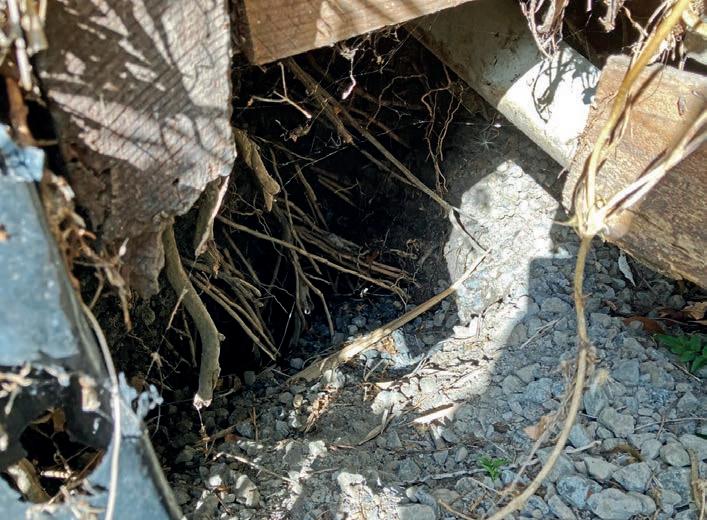

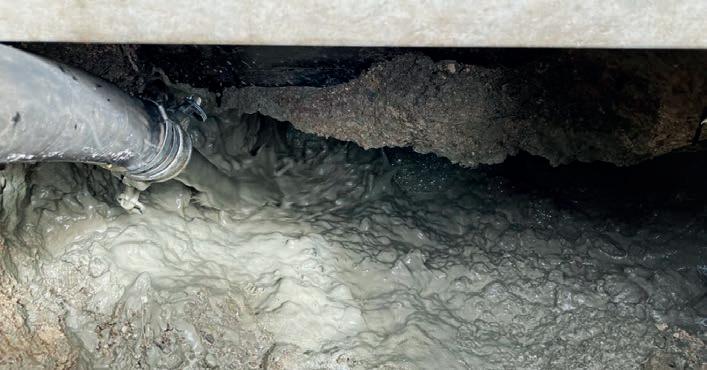
surrounding soils beyond the limits of the emergency works.
Over time, poor stormwater control within the laneway allowed water to migrate into the subsurface, washing away fine materials and increasing the potential for further ground collapse.
Additional contributing factors included the presence of nearby mature trees, which influenced soil moisture conditions and exacerbated ground movement through seasonal shrink-swell cycles.
“Laneways are especially vulnerable because they often act as service

corridors and drainage pathways, concentrating multiple risk factors,” Irwin said.
“They commonly contain ageing stormwater infrastructure that allows water ingress, as well as service trenches and conduits that create zones of disturbed and loosely compacted soil. Limited maintenance access also means issues can go undetected for extended periods.”
Together, these factors led to a loss of bearing capacity beneath the dwelling’s raft slab and increasing
instability within both the rear yard and council laneway.
The impacts were significant.
Investigations identified voiding to depths of approximately two metres, with differential settlement across the dwelling of around 128 millimetres, posing an ongoing risk to the structure and adjacent public infrastructure if left untreated.
Given the proximity of the dwelling, the presence of live sewer and stormwater services, and the restricted access conditions within the laneway, a traditional excavation-based remediation approach was neither practical nor desirable.
Rectify Group instead undertook a detailed, low-impact investigation program to understand subsurface conditions without disrupting the site.
“Rectify Group utilises a combination of non-invasive and minimally invasive investigation techniques to accurately assess subsurface conditions while avoiding disruption to the asset or surrounding environment,” Irwin said.
He said the approach combined Dynamic Cone Penetrometer (DCP) testing to assess soil strength, targeted drilling and sampling to identify voids and material variability, subsurface mapping technologies, and internal level surveys to quantify structural movement.
“At Newport, multiple test locations and DCP assessments confirmed voiding and strength loss to depths of approximately two metres, enabling a targeted remediation design without excavation,” Irwin said.
Understanding the full extent of the subsurface conditions, not just the area directly addressed by the initial backfill, was critical in developing a remediation strategy capable of preventing future soil mobilisation and ongoing ground collapse.
With excavation ruled out, Rectify Group designed a resin-based ground improvement solution tailored to the site’s constraints.
Irwin said resin injection was selected for its ability to address complex ground conditions without disturbing surrounding infrastructure.
“Resin injection offered a non-invasive, highly adaptable solution suited to the site constraints, particularly given the presence of active services and variable, non-cohesive fill materials,” he said.
“The resin was able to penetrate and bind the loose crushed rock, fill void pathways, and densify surrounding soils, restoring bearing capacity while maintaining service integrity and minimising disruption.”
Rectify’s remediation solutions are non-invasive and longlasting. Images: Rectify.
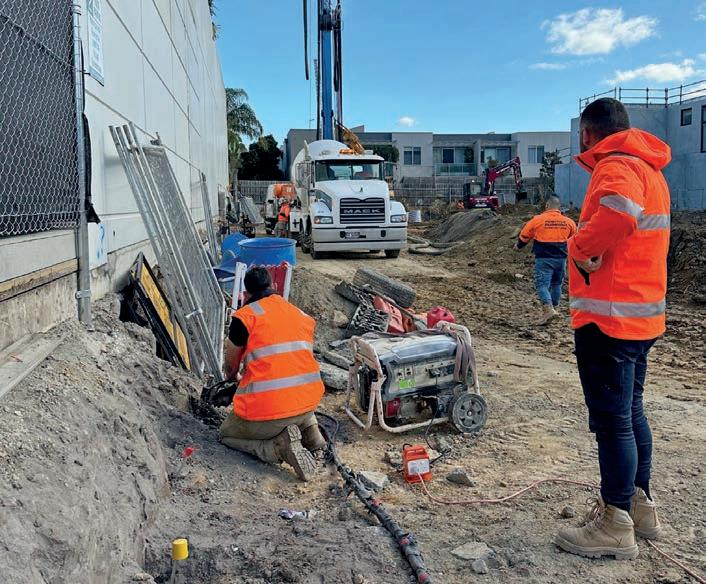
The treatment involved a carefully sequenced, multi-depth injection program. Targeted injections at depths of approximately 1.3-1.5 metres improved support adjacent to footing level while safeguarding nearby sewer infrastructure, while deeper injections to around two metres addressed weaker zones and voided soils beneath and around the backfilled area.
Crucially, the resin permeated and bound the crushed rock material, transforming the loose emergency backfill into a consolidated, stable mass. This approach prevented future soil mobilisation, limited the risk of additional collapse, and restored ground integrity without inducing damaging movement to the structure above.
The remediation works successfully stabilised subsurface conditions beneath both the residential dwelling and the adjoining laneway. Voids were eliminated within the treated zones, bearing capacity was restored, and posttreatment testing confirmed improved ground strength and uniformity.
Irwin said the approach offered clear advantages for councils managing ageing infrastructure in constrained urban environments.
“For councils, this method delivers minimal disruption to residents and traffic, rapid delivery, and cost efficiency by avoiding full reconstruction,” he said.
“It also allows problems to be treated at their source rather than just addressing surface symptoms, reducing risks to adjacent infrastructure and services.”

For Hobsons Bay City Council, the outcome reduced the likelihood of future subsidence impacting public infrastructure and neighbouring assets, delivering a durable, longterm solution without the disruption typically associated with excavationbased repairs.
For the homeowner, the works restored confidence in the performance and safety of the dwelling.
Importantly, the remediation addressed not only the visible symptoms of ground movement, but the broader subsurface conditions contributing to instability.
Irwin said this project highlights the importance of follow-up investigation and consolidation after emergency ground repairs, as untreated voids and surrounding weak soils can continue to undermine infrastructure if not properly addressed.
“Ground instability is rarely a surface issue. It is typically driven by water ingress, poor compaction, and the loss of material through voiding or washout,” he said.
“Undertaking early investigation and avoiding reliance on surface repairs alone can prevent escalation into major failures, reduce long-term maintenance costs, and extend the service life of infrastructure.”
Non-invasive ground improvement methods such as resin injection allow councils to strengthen both emergency backfill and adjacent ground quickly, safely, and cost-effectively, extending asset life while minimising disruption to residents and service networks.
To learn more, visit rectify.com.au



When you choose Ryco, you’re not just buying a filter; you’re buying industry leading quality, round-the-clock technical support, innovative solutions, and unparalleled expertise.
This means that when a truck is serviced utilising Ryco filters, fleet managers can be confident their New Vehicle Warranty is protected, whilst reducing downtime and maintenance costs. Contact Ryco to discuss your fleet’s requirements. So, when you need to get the job done, be Ryco Ready.


For larger urban councils, the real shift in asset management is moving beyond disconnected systems and static reporting towards connected, real-time asset intelligence that turns field evidence into confident decisions.
Roads, footpaths, drainage, open space, buildings, roadside assets, contractor works, customer requests, capital programs and compliance obligations all compete for attention.
That complexity is amplified in larger urban environments by dense networks, high community expectations, heavy usage, ageing infrastructure and increasing pressure to justify every dollar spent.
The challenge is no longer whether councils have asset data. Most do. The more important question is whether that data is current, trusted, spatially accurate and connected to the systems and people that rely on it every day.
When inspection images, defects, jobs, condition ratings and capital planning sit in separate systems, teams spend significant time reconciling information and manually preparing reports. That slows decisionmaking, creates inconsistencies in prioritisation and reduces confidence when reporting to executives, councillors and communities.
“Every council manages a complex infrastructure story,” said Damian Smith, Co-CEO of Asset Vision.
“The question is whether that information is connected in a way that supports confident decision-making.”
Modern asset management is moving beyond static registers and periodic condition reporting towards live, connected intelligence that reflects what is happening across the network.
Connected asset intelligence brings field capture, inspections, imagery, defects, jobs, Geographic Information System (GIS) data, reporting, valuations, capital planning and renewal forecasting into a more unified workflow. It creates a clearer line of sight from what is observed in the field through to what is prioritised, funded, scheduled and delivered.
For urban councils, this matters because asset management is shared across field crews, engineers, planners, finance teams, contractors and executives. Each requires a different
view of the same underlying asset truth. Without connection between systems, each group works from partial or delayed information.
A connected approach reduces this fragmentation. Field evidence can be linked directly to assets, defects and jobs, improving prioritisation and strengthening the evidence base for renewal planning and reporting.
Artificial intelligence (AI) is increasingly part of the asset management conversation, but councils remain cautious about tools that sit outside existing workflows or create new data silos.
Its value comes when it is embedded into day-to-day processes, helping teams review more of the network, identify issues earlier and improve consistency in inspections and reporting.
Asset Vision’s AutoPilot capability reflects this approach. Using image-based inspections and geospatial playback, it supports AI-assisted detection of defects across roads, footpaths and corridor
AutoPilot helps councils use imagery, ride quality data and AI-assisted defect detection to identify and prioritise road defects faster.


assets. Recent enhancements include ride quality insights and expanded detection capability, helping councils better interpret field conditions and asset performance.
“The value of AI is not just detection,” Smith said.
“It is connecting field evidence, asset data and works delivery so teams can move from inspection to action with more confidence.”
The important point is not simply identifying defects, but ensuring those insights flow into works management, audits, maintenance programs and renewal planning.
One of the ongoing challenges in asset management is the handover between systems. Field evidence is captured in one
platform, reviewed in another, exported into spreadsheets, discussed in meetings and then re-entered into works or planning systems. Each step introduces delay, duplication and risk.
A connected platform reduces this friction. Defects can be linked directly to assets, images can provide visual evidence, and jobs can be generated from reviewed inspections. Works can then be tracked against the same asset network, improving consistency from inspection through to delivery.
This also strengthens governance. Councils are better able to demonstrate what was inspected, when it was inspected, what evidence was captured and how decisions were made. That visibility is increasingly important for risk
management, funding justification and community accountability.
This shift depends on real-world implementation, not theory.
Deployments with councils including the City of Greater Dandenong in Melbourne, City of West Torrens in Adelaide and the City of KalgoorlieBoulder in Western Australia, demonstrate how enterprise asset management can scale across different environments, asset classes and workflows.
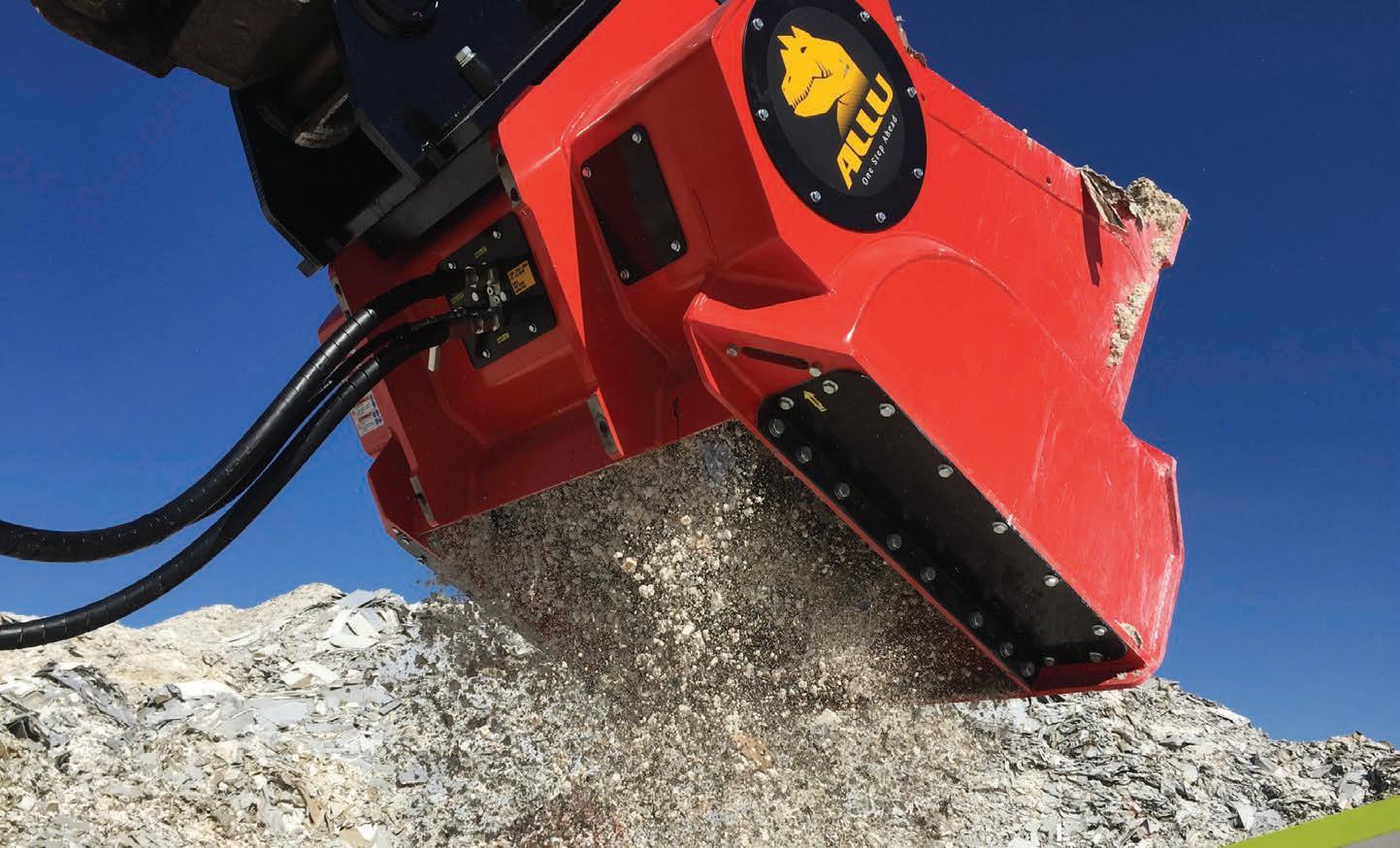
In


In Kalgoorlie-Boulder, the platform supports structured inspections, evidence capture, work management and reporting across a broad asset base, helping improve consistency and auditability across council operations.
The next opportunity for councils is closing the gap between operational asset management and strategic planning. Inspection results, defect trends, maintenance history and condition data should more directly inform renewal programs, budgets and long-term asset management plans.
For councils managing extensive and complex asset networks, connected asset intelligence can help reduce duplication, improve visibility and support more consistent decision-making across teams.
It also provides a stronger evidence base for funding discussions and community reporting, helping councils demonstrate how and why decisions are being made.
To book a demonstration, visit assetvision.com.au


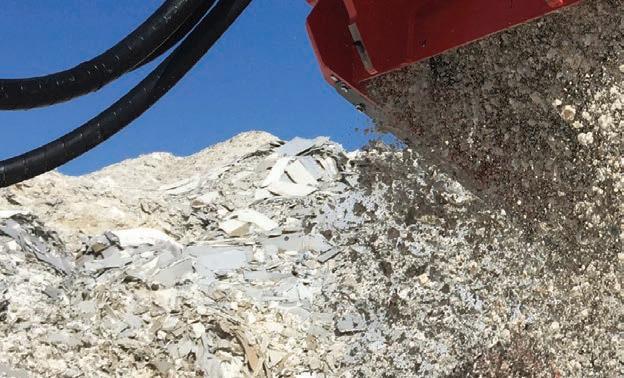

Councils and contractors are under pressure to do more with less - tighter budgets, stricter environmental targets and growing volumes of waste to manage. ALLU material processing buckets offer a practical, proven solution by enabling efficient on-site processing.
Transforming excavators and loaders into high-capacity screening and processing units, ALLU buckets screen, crush, mix and load in a single pass, directly at the source, eliminating unnecessary handling.
From infrastructure projects to landfill management, green waste processing and soil remediation, materials can be processed and reused at the source, reducing haulage, fuel use and landfill dependency.
Built to handle wet or dry materials, ALLU bucket delivers consistent performance across a wide range of applications, shortens project timelines and lowers cost per tonne.


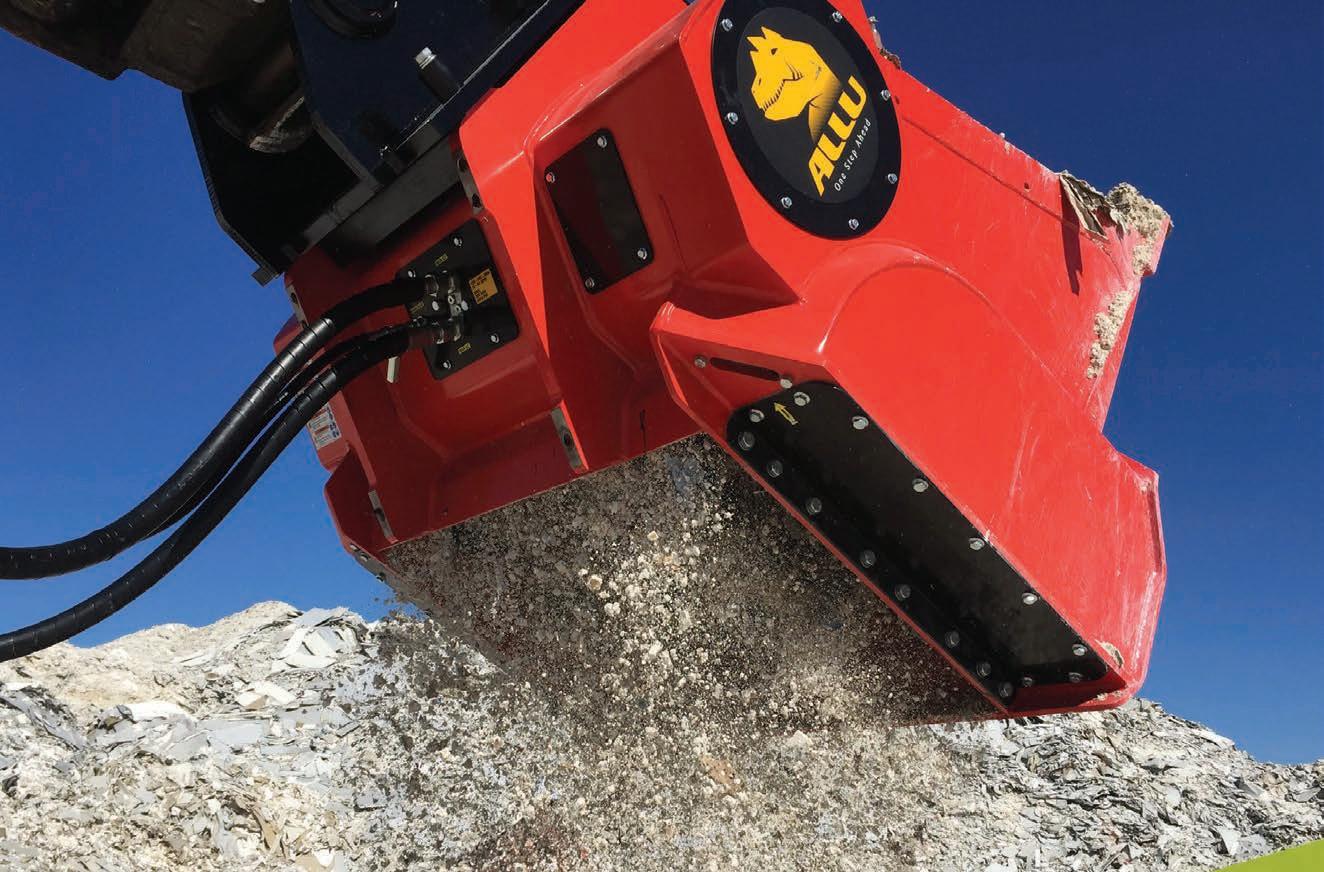
One-step processing - Process and load simultaneously
Reduced double handling - Fewer machines, less material movement
Lower operating costs - Cut fuel, transport and disposal expenses
On-site reuse - Turn waste into usable material immediately
Sustainable outcomes - Reduce landfill and support circular economy initiatives
Versatile - Handles wet, dry, mixed and contaminated materials



Something is shifting across Australian and New Zealand councils, and it goes deeper than budget pressures and workforce shortages. A new Gallup report reveals what’s really driving the gap between councils that are struggling and those finding a way through.
The pressures facing local government are well known. More being expected, less made available, and a community growing less patient.
A new report from Gallup, Local Government at a Turning Point: Evidence and Insights from Councils Across Australia and New Zealand, which draws on in-depth interviews with council leaders across Australia and New Zealand combined with international workforce and wellbeing data, found something more interesting than a sector in crisis.
It found a sector actively adapting, and the difference between councils managing well and those under the most strain often comes down to things that don’t show up in a budget – leadership behaviours, cultural decisions and how organisations treat the people inside them.
Australian councils manage around 32 per cent of the nation’s public infrastructure and 75 per cent of local roads on a fraction of national tax revenue.
That structural mismatch has always existed, but leaders interviewed for the report describe it as widening. State and federal responsibilities are increasingly absorbed at the local level, often without commensurate funding or consultation.
Community sentiment is shifting too. Gallup’s data shows resident satisfaction with local areas has declined in recent years, particularly among younger people, with affordable housing emerging as one of the strongest single drivers of dissatisfaction.
Separate Gallup global research from The World’s Most Important Problem: What People Need Leaders to Hear in 2026 underscores the scale of that challenge: Australia ranks among the top three high-income nations for residents citing housing affordability as their country’s biggest problem, with satisfaction with affordable housing falling to just 25 per cent in 2025.
For chief executives and general managers, this creates a particular kind of pressure. They’re held accountable for outcomes they don’t fully control while managing governance obligations, political scrutiny and operational delivery.
Several leaders described reform fatigue: the exhaustion of implementing new systems and compliance requirements without the capacity to absorb them properly. Burnout is becoming more common as vacancies load pressure onto remaining teams, and technical roles in engineering, planning and building remain especially hard to fill.
Faced with constraints they cannot simply spend their way out of, the councils reporting stronger outcomes share something more fundamental: a distinctive approach to leadership. The report identifies four behaviours that characterise effective council leaders in the current environment, and none of them require a budget line.
The first is consistent visibility. Leaders who regularly show up alongside their workforce, not for the photo opportunity but for the conversation, build a more accurate picture of what is actually happening inside their organisations.
“I want to make sure that, at least fortnightly, I’m embedded in a frontline

Councils manage about 32 per cent of the nation’s public infrastructure and 75 per cent of local roads. Image: Stefan/stock.adobe.com

team,” said the Chief Executive Officer (CEO) of a large metropolitan council.
“Whether I’m washing dishes or picking up rubbish behind the admin building, it’s not about the task itself. It’s about the conversations I’m having with staff while we do it.”
The second is psychological safety modelled from the top. Leaders who openly acknowledge their own mistakes and who visibly stand alongside staff when well-intentioned decisions go wrong build cultures where staff take initiative rather than waiting for direction.
The third is active investment in external networks: coaches, mentors and peer forums that provide the objective perspective the role itself precludes.
And the fourth, and perhaps the most foundational, is a visible, sustained commitment to public service purpose, particularly when the organisation comes under political pressure.
The findings also surface a striking connection in the data: councils whose leaders rate employee engagement highly also tend to rate community trust highly.
The workforce experience doesn’t stay inside the building.
“We have a workplace in which 80 per cent of employees are living and working in the same local government area. Every one of those people speaks to their family. We rely on the fact that people say the council’s a great place to work,” the CEO said.
When councils couldn’t reliably find the talent they needed on the open market, the most effective response was to build it internally.
In practice, this starts with how decisions are handled day to day. Leaders who consistently ask staff for their view before offering their own find that leadership potential surfaces and staff who are trusted with real decisions begin demonstrating capacities that would otherwise never be visible.
“The only way to really identify leadership potential is to give people a go,” said the CEO of a regional council.
Stretch assignments and acting roles are widely used to test that potential, but with a deliberate cultural shift in expectations. The goal is not flawless performance from day one, but a willingness to step up.
Recruitment has shifted too: several leaders now hire explicitly for values and public service orientation ahead of technical credentials, reasoning that character is harder to develop than capability, and that values-aligned staff are both more likely to stay and more likely to invest in others.
One large metropolitan council described an intensive leadership development pipeline, paired with
Communication and recognition are key to stronger worker engagement.
Image: qunica.com/ stock.adobe.com

that about 90 per cent of participants had gone on to occupy leadership roles.
Another used twice-yearly talent planning to identify excellence and target development support. Together, these practices make retention less dependent on winning every contest in the external labour market.
Two practices appeared consistently in councils with stronger engagement.
On communication, leaders described it not as an occasional event but as a consistent discipline, regular, honest and transparent about the reasoning behind decisions even when those decisions were unpopular. When staff knew exactly when they would next hear from leadership, that predictability reduced speculation and kept energy focused on delivery.
On recognition, the most effective examples worked at two levels: immediate enough to catch great work in the moment, and visible enough to create shared moments across the organisation. One council’s staff awards program generated over 400 nominations for 13 awards in its third year with the significance lying not just in the event, but in the volume of peer-to-peer recognition it produced. As one leader put it, sustained recognition turns compliance into relationships.
Artificial Intelligence (AI) and automation are entering the conversation across the sector, but the leaders Gallup interviewed said they see them not as a subsitute for staff, but primarily as a way to give stretched teams breathing room, such as by automating development application workflows, streamlining asset management and accelerating customer service responses.
make tools available and let confidence build through peer learning rather than mandates. But the report also captures where caution is warranted. Resident data, the development pathways of junior staff, and the pace at which organisations can absorb change were all named as risks requiring deliberate attention.
Across all the pressure and complexity, one theme runs consistently through the report, local government remains deeply purpose-driven work.
Leaders described the sector in terms of community impact and public value, and many said that sense of purpose continues to motivate staff even when financial and operational conditions are difficult.
“Everything we do inside our council is designed to try and align to the purpose of enhancing our community’s way of life… every decision we’re making is designed around the residents and making the lives of people who live here better every day,” another CEO said.
Gallup’s broader research finds that how people feel about their local services, housing, healthcare and education are the strongest predictor of confidence in institutions.
Trust is built, or lost, locally first. The councils that invest in their workforce culture, communicate clearly and stay anchored to public purpose are not just managing an internal challenge. They are shaping the conditions under which communities trust the institutions that serve them.
The full Local Government at a Turning Point: Evidence and Insights from Councils Across Australia and New Zealand report sets out what that looks like in practice and what the data says about the distance still to travel.
To receive the full report when it is released on 23 June, opt in at: advise. gallup.com/ANZ-Local-Report-Register
TUESDAY 23 JUNE 2026 | REGIONAL FORUM
Presenting Partner NBN
8:00am Registrations open
9:00am Opening Session
10:00am Morning tea
10:30am Session 1 - Disaster Management Fatigue
Meghan Hibbert, NEMA , Assistant Coordinator General NMTF
Dr Helen Durham, CEO, RedR
Dr Bhiamie Williamson, Associate Professor & Program Lead, National Indigenous Disaster Resilience Program, Monash University
11:30pm Session 2 - State of the Regions
Simon Kuestenmacher, The Demographics Group
12:30pm Lunch
1:30pm Session 3 - National Productivity and Local Roads
2:30pm Session 4 - Opportunities & Challenges
– Renewable Transition
Tony Mahar, Australian Energy Infrastructure Commissioner
Liz Ritchie, CEO, Regional Australia Institute
Mayor Andrew Smith, Western Downs
3:30pm Afternoon Tea
4:30pm Session 5 - Regional Health
Carol Mudford, AgriFutures 2025 Rural Women’s National Award Winner and Founder – CEO, sHedway
5:30pm Sessions Conclude
TUESDAY 23 JUNE 2026
5.30pm - 7.30pm Welcome Reception National Convention Centre Sponsored by Payble
WEDNESDAY 24 JUNE 2026
8:00am Registrations Open
9:00am Opening Session
Governor-General, Her Excellency the Honourable Sam Mostyn AC
10:00am Session 1 - David Speers (MC) in conversation with Ministers and Shadow Ministers
Invited Ministers include (attendance TBC):
The Treasurer, the Hon Dr Jim Chalmers MP
Minister for Infrastructure, Transport, Regional Development and Local Government, the Hon Catherine King MP
Leader of the Opposition, the Hon Angus Taylor MP, Shadow Treasurer, the Hon Tim Wilson MP
11:00am Meal Break
12:00pm Session 2 - Financial Sustainability
Launch of 2026 National State of the Assets Report Around the Grounds with State and Territory Association
Presidents
1:00pm Session 3 - Community Inclusion in Action
Keynote address: Michael Theo, Actor and Voice Over Artist
Launch of the new Disability Inclusion Guide
2:00pm Meal Break
3:00pm Session 4 - Debate on Motions
5.30pm Sessions Conclude
TUESDAY 23 JUNE 2026 | URBAN FORUM
Presenting Partner KPMG
8:00am Registrations open
9:00am Opening Session
10:00am Morning tea
10:30am Session 1 - State of the Cities
11:30am
Simon Kuestenmacher - The Demographics Group
Session 2 - Precinct Building: Creating Places People
Want To Be
Sponsored by Novoplan
12:30pm Lunch break
1:30pm Session 3 - Emergency Management: Communicating to Large Populations
Sponsored by Telstra
Mr Matt Prosser, CEO, Wellington City Council Meghan Hibbert, NEMA Assistant Coordinator General NMTF
2:30pm Session 4 - Future Fit: Towards Decarbonisation in Higher Density Living
3:30pm Afternoon tea
4:30pm Session 5 - Community Cohesion in Fast Growing Centres
5:30pm Sessions Conclude
National Convention Centre Canberra Canberra 23 - 25 June 2026 nga26.com.au

THURSDAY 25 JUNE 2026
8:00am Registrations open
8:30am Session 5 - Debate on Motions
11:00am Meal Break
12:00pm
Session 6 - Listen and Action with Jason Clarke
Launch of the Local Government Skills Audit, including the National Jobs Survey
Managing Financial Risk and Uncertainty
Sponsored by JLT
2:00pm Meal Break
3:00pm Session 7 - Practical Tools for the Modern Council Payble Research
Dailius Wilson, Chief Revenue Officer and Chief Economist, Payble
How to Get that Grant
Colin Steele, Managing Director, Section51
Asbestos Emergency Management
Jodie Deakes, ASSEA
Respectful Communication in an Online World Felicity Cull
4:30pm - 5:00pm NGA Close and Communiqué
7:00pm - 11:00pm General Assembly Dinner
Australian War Memorial
Keynote speaker: Prime Minister Anthony Albanese
Sponsored by Telstra
7:00pm - 11:00pm Networking Event
Market Hall, Verity Lane
Sponsored by Readytech
As councils grapple with growth pressures, liveability data is helping to turn community sentiment into measurable outcomes.
For local governments across Australia, the challenge is no longer simply delivering infrastructure – it is delivering the right infrastructure.
In fast-growing communities especially, councils are under pressure to balance housing growth, transport demand, social infrastructure, environmental resilience and community expectations, with finite resources and competing priorities. The question increasingly facing councils is not just what should be delivered next, but how to prove that those investments will genuinely improve quality of life.
That’s where liveability data is becoming an increasingly important decision-making tool.
Community engagement platform Place Score has built its approach around measuring what residents value most in the places they live, work and spend time. Through the Australian Liveability Census, conducted every two years, councils gain access to nationally benchmarked data that translates community sentiment into measurable indicators.
In 2023, more than 26,000 Australians participated in the census, including more than 8000 residents living in the nation’s fastest-growing local government areas.
The findings painted a stark picture. Residents in Australia’s fast-growing outer suburban local government areas (LGAs) rated liveability, on average, six per cent lower than the rest of the country and up to 11 per cent lower than neighbouring metropolitan areas. Yet these same growth areas are expected to accommodate an additional 2.5 million people by 2031.
For councils, the implications are significant. As communities expand, the pressure to ensure growth is matched with social infrastructure, amenity and connection also intensifies.

But the data also demonstrates something else – that liveability outcomes can improve when councils use evidence-based planning to guide investment decisions.
Unlike traditional consultation methods that often focus on isolated projects or individual priorities, Place Score’s liveability framework aims to provide councils with a broader understanding of how communities experience place as a whole.
The framework measures 50 liveability indicators, spanning everything from walkability and access to services through to social cohesion, safety, resilience and sense of belonging.
Importantly, the methodology aligns with broader national thinking around wellbeing measurement. Place Score shares its definition of liveability with the Australian education system, reinforcing a consistent understanding of what
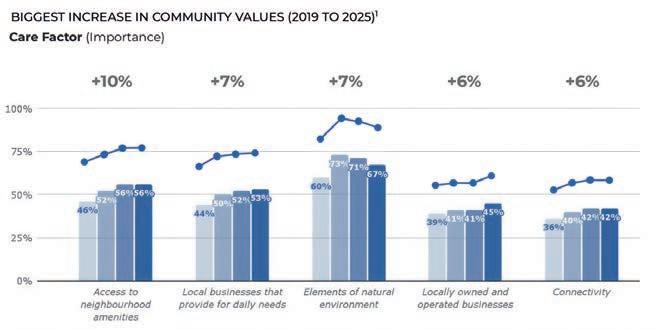

makes communities thrive across both civic and educational settings.
The Australian Liveability Census is also currently the only nationally benchmarked liveability research program in the country, allowing councils to compare local outcomes against regional, state and national averages.
For councils, this benchmarking capability can be particularly valuable. Community expectations are often shaped not only by local experiences, but also by perceptions of how their area compares to neighbouring regions.
Having defensible, comparative data allows councils to identify gaps, prioritise investments and advocate more effectively for external funding.
It also shifts conversations from anecdotal feedback toward measurable outcomes.
Rather than relying solely on who attends a community consultation session or which issues generate the loudest responses, councils can access statistically robust data showing what matters most across demographics, suburbs and neighbourhoods.
This can become especially important in high-growth corridors where rapid development risks outpacing community infrastructure.
For Camden Council in New South Wales, liveability data became an important tool for understanding how one of Australia’s fastest-growing regions could continue improving outcomes despite enormous population pressure.
Growth-area councils often face declining liveability scores as housing
density increases and infrastructure struggles to keep pace. But Camden has managed to move against that trend.
Using insights drawn from Place Score’s Liveability Census alongside broader wellbeing measurement frameworks, Council developed a more detailed understanding of the community’s priorities, strengths and vulnerabilities.
That work contributed to the development of the Camden Wellbeing Report 2025, which established a structured framework for measuring community outcomes across health, cohesion, resilience, safety and education.
The report highlighted how data-driven planning could improve transparency, collaboration and evidence-based decision making across the LGA.
Importantly, the process moved beyond simply collecting community feedback.
The liveability data was used to identify where investment gaps existed and where interventions could produce the greatest impact on residents’ daily lives.
The results were measurable.
Between 2023 and 2025, Camden recorded improvements across several Place Score liveability indicators, including sense of belonging, neighbourhood connection and perceptions of inclusiveness.
Residents rated Camden’s sense of belonging at 7.7 out of 10 in 2025, up from 7.4 in 2023 and above both state and national averages.
Perceptions of Camden being welcoming to all people also improved, rising from 7.9 to 8.2 over the same period.
Neighbourhood resilience and community connection similarly trended upward.
These improvements are significant because they run counter to broader national patterns identified in growtharea communities.
The data also gave Council stronger foundations for advocacy and longterm planning.
Mayor of Camden, Therese Fedeli, said it was pleasing to see residents

continue to feel connected to their neighbourhoods.
“Camden is one of the fastest-growing regions in the country, so it’s incredibly encouraging to see our community continuing to report stronger feelings of belonging, connection and inclusion as we grow,” she said.
“The insights from this data are helping Council better understand what matters most to our residents and where we can make the greatest impact in people’s everyday lives.
“We’re committed to ensuring Camden remains a connected, resilient and welcoming community now and into the future.”
Camden used the insights to help shape strategies around social infrastructure, transport, resilience and community services, while aligning local priorities with broader Federal and state wellbeing frameworks.
Council’s approach demonstrates how liveability data can move beyond community consultation and become embedded within governance, strategic planning and infrastructure prioritisation.
Rather than treating wellbeing as an abstract concept, the data created measurable indicators that could track progress over time and guide future investment.
For Hornsby Shire Council, the value of liveability data was particularly evident in funding advocacy.
Like many councils experiencing housing growth and increasing density, Hornsby faced the challenge of demonstrating where social infrastructure investment was most urgently needed.
As a Place Score Liveability Census partner since 2021, Council progressively integrated community insight into planning and decision-making processes.
By aligning Place Score’s 50 liveability metrics with its Community Strategic Plan, Hornsby established a clearer understanding of how residents
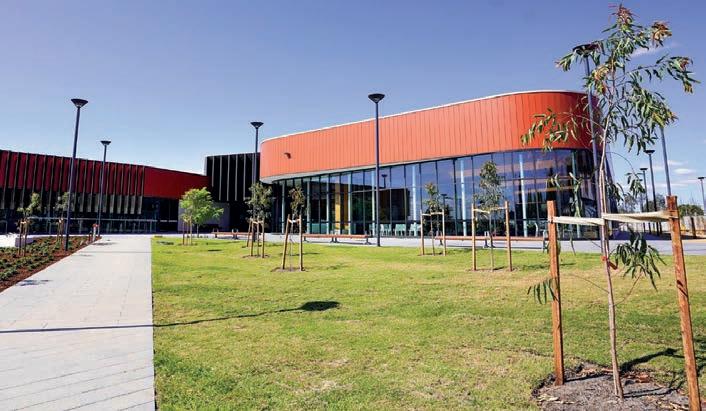
experienced different neighbourhoods and where infrastructure gaps were emerging.
That evidence became particularly valuable when seeking external funding support.
Using Place Score data, Hornsby Shire Council successfully supported a funding application through the Federal Government’s Thriving Suburbs program, securing more than $12 million for the Hornsby Park Field of Play project.
The liveability data helped Council demonstrate not only where population growth was occurring, but also the specific social infrastructure deficits affecting those communities.
Crucially, the data provided defensibility.
For councils, infrastructure decisions are increasingly scrutinised by governments, stakeholders and communities alike. Demonstrating why one project is prioritised over another can become difficult when decisions rely heavily on anecdotal evidence or fragmented consultation feedback.
Place-based liveability metrics help councils to ground those decisions in measurable community outcomes.
The geographically detailed nature of the data also allows councils to identify how priorities vary between demographics, suburbs and neighbourhoods, rather than assuming a one-size-fits-all approach to planning.
In practice, this gives councils stronger evidence when advocating for funding, designing infrastructure programs or responding to community concerns.
It also creates a clearer line between strategic planning and lived experience.
As councils continue responding to rapid growth, housing pressures and evolving community expectations, liveability measurement is likely to play an increasingly important role in local government decision making.
The traditional challenge for councils has never been a lack of community feedback. Rather, it has been how to interpret that feedback consistently, compare it meaningfully and translate it into long-term planning decisions.
Nationally benchmarked liveability data provides one pathway for doing that.
For growth-area councils in particular, the stakes are high. The communities absorbing much of Australia’s population growth are often also those experiencing the greatest infrastructure shortfalls and liveability pressures.
Place Score’s research found that between 2011 and 2016, Australia’s fastest-growing outer suburban LGAs absorbed 35 per cent of national population growth and generated 25 per cent of job growth, while receiving only 13 per cent of infrastructure investment.


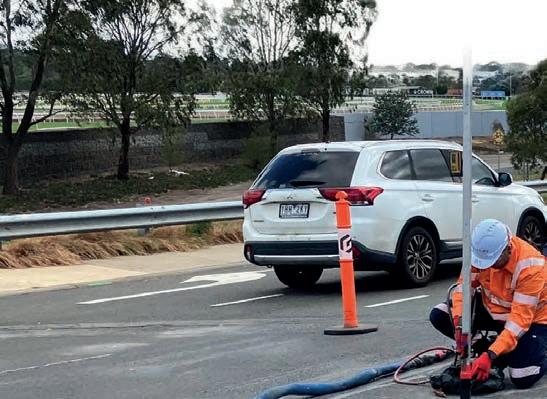





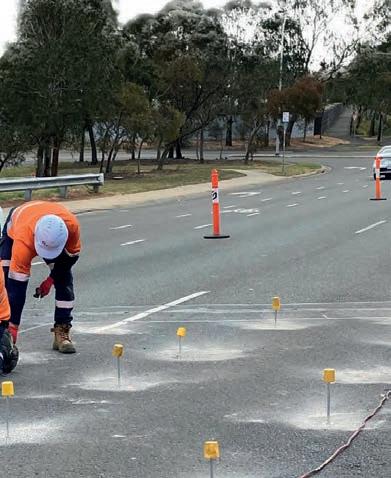

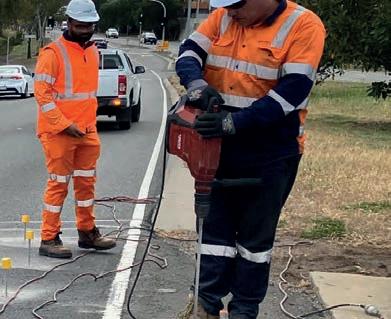




Councils are being asked to deliver faster, communicate better and maintain public trust, making strategic engagement more important than ever.
Community engagement is no longer viewed as a ‘nice-to-have’ in local government. Across Australia, councils are operating in an environment shaped by housing shortages, energy transmission projects, rapid infrastructure delivery, policy reform and increasingly vocal communities, expecting greater input and transparency in decision-making.
At the same time, councils are under pressure to deliver projects faster, often in constrained financial environments, while maintaining trust with the communities they serve.
According to the Engagement Institute, this shift is forcing organisations to rethink what good engagement actually looks like, and whether traditional consultation models are enough to meet modern expectations.
Rather than viewing engagement as a project-by-project exercise, the organisation is encouraging councils to see engagement as an organisational capability embedded across governance, leadership, systems and culture.
That philosophy underpins EngageMark, the Engagement Institute’s engagement maturity and certification tool, which assesses whether organisations have the structures and
processes needed to support consistent, meaningful engagement over time.
The tool comes as councils face growing scrutiny around how community feedback informs major decisions, particularly in areas such as housing density, renewable energy projects, infrastructure upgrades and strategic planning.
Engagement Institute CEO, Marion Short, said the challenge for many organisations is not a lack of intent, but a lack of organisational support.
“Engagement doesn’t fail because people don’t care,” Short said.
“It fails when we don’t resource it, including at a strategic level.”
For decades, engagement has often been approached primarily as a statutory requirement, something undertaken at key project milestones to satisfy legislative obligations.
But community expectations have changed.
Residents increasingly expect to be involved earlier in decision-making processes, particularly on issues that directly affect their neighbourhoods, services and quality of life. Simply providing a formal consultation window is no longer enough to build confidence or legitimacy.
Balancing community trust with delivering services on tightening budgets is a major challenge for councils.

The Engagement Institute argues that effective engagement is not defined by the number of surveys completed or submissions received, but by whether organisations consistently create the conditions for meaningful participation.
That includes leadership support, internal capability, governance structures, resourcing and clear feedback mechanisms demonstrating how community input influenced decisions.
As part of its development of EngageMark, the Engagement Institute developed an engagement maturity model and identified nine core elements underpinning contemporary engagement practice: culture, governance, leadership, capability, resourcing, practice, relationships, impact, and First Nations engagement.
According to Engagement Institute Honorary Fellow, Anne Patillo, one of the contributors behind the tool, good engagement cannot rely solely on individual practitioners.
“The impact of engagement isn’t simply determined by the skills of an individual practitioner,” she said.
“It takes an organisation to back that practice and sustain that promise over the long term.”
This broader organisational approach is becoming increasingly important as councils navigate contentious policy areas where community trust can quickly erode if residents feel project decisions have already been made.
Recent thought leadership report from the Engagement Institute argues that many project delays commonly blamed on engagement are often caused by poor engagement design and planning, unclear governance or engagement occurring too late in the decision-making process.
Its latest paper, Time Well Spent: Exploring the Impact of Engagement Timeframes, found that effective engagement is less about extending timelines and more about engaging at the right time, for the right purpose, with the right people.
The report also highlights the risks of rushed or poorly designed consultation processes, including reduced trust, community backlash and increased project opposition.
Importantly, it argues that engagement should be treated as a strategic asset capable of reducing risk and improving long-term project outcomes rather than as a compliance burden slowing delivery.
This conversation is particularly relevant for local government as councils manage mounting pressure to accelerate housing approvals and infrastructure projects.
Planning reforms across several Australian jurisdictions have focused heavily on streamlining approvals and shortening consultation timeframes in an effort to address housing shortages and delivery backlogs.
But the Engagement Institute warns that reducing engagement to a compressed statutory process can create unintended consequences.
Its research found communities often perceive engagement as tokenistic when consultation occurs after key decisions
are effectively locked in or when there is little transparency around how feedback will influence outcomes.
The result can be increased opposition, reputational damage and delays later in the project lifecycle.
According to the paper, meaningful engagement helps identify issues earlier, improves decision quality and reduces the likelihood of conflict emerging after projects are publicly announced.
The concept of ‘go slow to go fast’ emerged repeatedly throughout the research, with practitioners arguing that deliberate engagement planning early in a project lifecycle often prevents more significant delays later.
The report also highlights growing concerns around consultation fatigue, particularly in communities experiencing multiple concurrent infrastructure or planning projects.
Rather than repeatedly consulting communities without visible outcomes, the Engagement Institute advocates for more strategic and proportionate engagement approaches focused on decisions where community input can genuinely shape outcomes.
Transparency also plays a critical role. Councils are increasingly expected to clearly communicate what aspects of a project are open to influence, what constraints exist and how decisions are ultimately made.
Without that clarity, even technically compliant engagement processes can undermine trust.
Short said engagement done well creates stronger decisions and more resilient relationships with communities. It helps build community trust in government by building social cohesion, and demonstrates that councils or government are being good stewards of the public purse.
“When engagement is woven into the way we plan, consult and deliver, we see better outcomes,” she said.


“Blind spots shrink, buy-in grows, and complex challenges become more manageable when diverse voices are genuinely heard.”
One of the key ideas behind EngageMark is that engagement maturity can be measured and improved in the same way organisations assess safety, sustainability or governance capability.
The tool provides organisations with a structured way to assess their strengths, identify gaps and benchmark themselves against contemporary best practice.
Certification is awarded at ‘Bronze, Silver or Gold’ level following an independent assessment process and provided on public register.
However, the Engagement Institute says the greatest value often comes before certification itself.
The self-assessment process encourages organisations to examine how engagement functions internally, whether staff are supported, whether engagement insights influence decisions and whether communities can see evidence of impact.
For councils, this can help strengthen internal alignment around engagement expectations, while also building external credibility with communities, regulators and project partners.
EngageMark also places strong emphasis on First Nations engagement, recognising that culturally safe and respectful engagement requires longterm relationship building rather than short statutory consultation windows.
This is becoming increasingly important as councils work more closely with Traditional Owners and Aboriginal and Torres Strait Islander communities on planning, infrastructure and land management decisions.
The Engagement Institute recently launched new Aboriginal and Torres Strait Islander Community Engagement Principles and Guidelines aimed at supporting culturally safe, community-led engagement practices across Australia.
This is supported by a new course to support practitioners to move beyond awareness and into accountable, culturally grounded practice.
At the same time, the organisation has expanded its professional development offerings, including a new course focused on applying engagement principles to policy design and decision-making processes.
To learn more, visit engagementinstitute.org.au
As New South Wales prepares for mandatory Food Organics and Garden Organics recycling, councils are being handed more than a waste solution. The staged rollout could also lay the groundwork for further development of a nascent renewable gas industry, specifically biomethane.
The days of Food Organics and Garden Organics (FOGO) being treated as a ‘nice to have’ are coming to an end in New South Wales (NSW).
New legislation requires councils across the state to provide FOGO services to households by 2030, while businesses and institutions will begin transitioning even sooner, with the first mandates commencing from July 2026.
For local government, the changes represent one of the most significant shifts in waste management policy in decades.
But while much of the conversation has focused on landfill diversion and recycling targets, the reforms could also have another, less discussed impact: the unlocking of Australia’s emerging
biomethane industry and with it, a source of lower emission renewable gas.
The NSW Government’s mandates will provide something that has historically been difficult for renewable gas projects to secure – a large, reliable and sourceseparated stream of organic waste.
Nerise Cook, Executive General Manager of Gas Networks at Jemena – owner and manager of some of Australia’s most significant gas and electricity assets – said feedstock certainty has long been one of the biggest barriers to scaling anaerobic digestion and biomethane production in Australia.
For councils, the mandates are primarily about reducing the amount of food waste entering landfill. Greater Sydney is forecast to run out of landfill capacity by 2030 or earlier, while the
NSW Government has committed to halving organic waste sent to landfill by the same year under its Waste and Sustainable Materials Strategy 2041. Analysis conducted by the NSW Government found the household FOGO mandates alone could divert almost 950,000 tonnes of organic waste from landfill each year.
Traditionally, much of that recovered organic material has been used for composting. But increasingly, attention is turning to how these waste streams could also support renewable energy generation through biomethane production.
Biomethane is a renewable gas produced by refining the biogas that is created
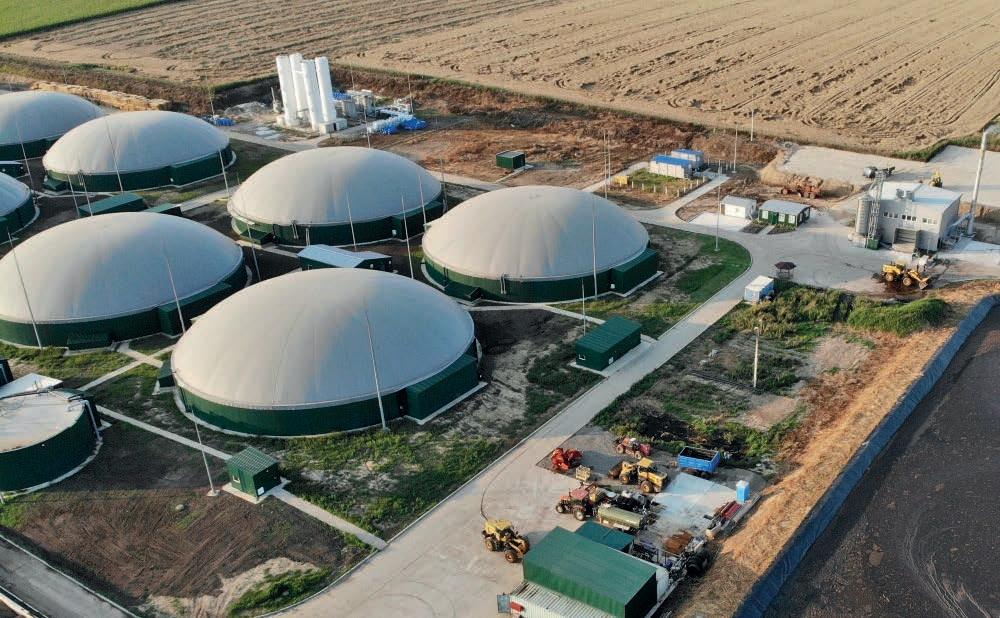



New legislation will require NSW councils to provide FOGO services to households by 2030. Image: aquariagirl1970/stock.adobe.com

when organic material breaks down through anaerobic digestion.
Food waste, agricultural waste, wastewater and other organic materials can all be used as feedstocks in the process. Once upgraded, biomethane can be injected directly into existing gas networks and used in homes, businesses and industrial manufacturing without modifications to existing infrastructure or appliances.
Cook stated that this compatibility is one of the technology’s greatest advantages, particularly for industries that are difficult to electrify and rely on high-temperature heat processes.
Sectors such as brickmaking, glass manufacturing, fertiliser production, food and beverage processing and heavy manufacturing all require consistent high-heat energy sources that electricity alone struggles to provide economically at scale.
Cook added that the NSW FOGO reforms could therefore do more than reduce landfill volumes – they could also help create the supply-side foundations needed for a viable biomethane industry. By mandating source-separated organic waste collections, the reforms improve both the quality and consistency of feedstock. That makes the material significantly more suitable for anaerobic digestion than mixed waste streams contaminated through traditional landfill collection systems.
The staged rollout also provides some of the assurances that investors and infrastructure developers are looking for.
Large supermarkets, hospitality venues and other major food waste generators will begin transitioning to sourceseparated food organics collections from July 2026, with additional businesses progressively included through to 2030 based on waste volumes. Household services will then become mandatory statewide by July 2030.
That creates a clearer long-term pipeline for potential biomethane projects, allowing industry and councils to plan infrastructure investments with greater confidence. The NSW
Government’s Renewable Fuel Strategy and Renewable Fuel Scheme are also expected to play a key role, helping to strengthen demand signals for renewable fuels and supporting the scale-up of biomethane production in NSW.
Importantly, these reforms also align multiple policy objectives simultaneously.
Reducing food waste to landfill lowers methane emissions from decomposing waste sites. At the same time, converting those organic materials into biomethane creates a renewable energy solution capable of displacing natural gas.
Combined with the production of compost and other circular economy products, the result is a waste stream that can potentially deliver multiple environmental and economic benefits from the same material.
STAND
For regional and rural councils in particular, the implications could extend beyond waste management outcomes alone.
Cook said that many of the feedstocks suitable for biomethane production are concentrated in regional areas through agriculture, food manufacturing, wastewater treatment and organic waste processing.
“That creates opportunities for new regional industries and local economic activity tied to renewable gas production,” she said.
According to the Australian Renewable Energy Agency’s Bioenergy Roadmap, Australia’s bioenergy sector could contribute around $10 billion in additional GDP annually, reduce emissions by approximately nine per cent and create more than 26,000 jobs nationally.
The NSW reforms may now provide some of the practical policy settings needed to help that broader opportunity materialise.
Jemena has already been involved in some of Australia’s earliest biomethane projects, including the Malabar Biomethane Injection Plant, which has been injecting biomethane into the NSW

gas distribution network since 2023, using gas generated at Sydney Water’s Malabar Wastewater Resource Recovery Plant. The Malabar project became the first in Australia to receive GreenPower certification for biomethane injected into a gas network.
Cook added that policies like the NSW FOGO mandate could help accelerate further projects by increasing feedstock availability and improving long-term investment confidence.
The NSW Environment Protection Authority (EPA) is working with councils and industry to support the transition, including through infrastructure grants, education programs and operational guidance. According to the EPA, 70 councils have already implemented or are planning FOGO services, while the mandates will apply to another 58 councils by 2030.
Weekly food waste collection services will also become standard under the reforms to improve food waste recovery and reduce contamination and odour issues.
Some councils may face infrastructure constraints, contract timing issues or challenges servicing multi-unit developments, with an exemption framework expected for limited circumstances where compliance may be difficult within mandated timeframes.
But despite these hurdles, the broader direction is now clear.
What was once considered simply a waste management reform is increasingly becoming part of a much larger conversation about renewable energy transition, emissions reduction and circular economy development.
For councils preparing for the rollout, the focus may currently be on bins, collection contracts and community education.
But the long-term significance of the reforms could ultimately extend far beyond kerbside waste collection.
A statewide push is making battery recycling safer and more accessible for Victorian households through council-led collection points.
Agrowing network of battery collection points is being rolled out across Victoria as the State Government works with councils to reduce fire risks and keep hazardous waste out of landfill, with support delivered through Sustainability Victoria.
The expansion forms part of a broader effort by the Victorian Government to make it safer and easier for households to recycle used batteries, while protecting waste workers, communities and the environment from the risks associated with improper disposal.
Under the program, 50 new battery collection points are being established across the state, alongside upgrades to existing sites. More than 30 of these locations will be based in regional
areas, improving access to safe disposal options for communities outside metropolitan centres.
Former Victorian Minister for Environment, Steve Dimopoulos, said the program was designed to make battery disposal more convenient while addressing a serious safety risk.
“We’re making it safer and easier to dispose of batteries, reducing fire risks and protecting our environment from harmful chemicals,” Dimopoulos said.
“When batteries are recycled correctly, the materials can be recovered and given a second life as a new product.”
The expansion comes as councils across Victoria continue to report the growing challenges associated with battery waste, particularly in kerbside collection systems where batteries can
cause fires if damaged or crushed in collection trucks.
The risks are not insignificant. Batteries can ignite under pressure or when exposed to heat, posing a threat to waste operators and infrastructure. Recycling them through specialist facilities ensures they are handled safely and that valuable materials such as copper, nickel and steel can be recovered and reused.
For Campaspe Shire Council, the program has come at a critical time.
Council applied for funding through the program to address a rising number of battery-related incidents in its kerbside waste collection system,


including multiple truck fires over an 18-month period.
Campaspe Shire Council Director Sustainability, Michael Sharp, said improving access to safe disposal options was a key priority.
“Council applied for the grant to further reduce the battery-related fire risk we’ve experienced in our kerbside service,” he said.
“We’ve had five truck fires in 18 months, so it’s clear there’s a real need to make safe battery and small e-waste drop-off more accessible and convenient for our community.”
While Council already provides battery drop-off options, Sharp said incidents were still occurring, highlighting the importance of expanding and improving infrastructure to support safer disposal practices.
The grant will enable Campaspe Shire Council to build on its existing network of eight battery drop-off points, adding seven new in-town locations across key community hubs.
These include five at council customer service centres and two at local libraries, with additional opportunities being explored in partnership with community organisations to further extend access over time.
The expansion reflects a shift towards embedding recycling infrastructure within everyday community spaces, making it easier for residents to dispose of batteries responsibly as part of their regular routines.

In addition to new collection points, the council will also upgrade its existing infrastructure across eight Resource Recovery Centres, with improvements funded through a combination of the grant and council investment
Sites at Echuca and Mt Scobie will receive direct funding through the program, while the remaining six will be upgraded by the council.
Each site will feature improved storage and separation systems, as well as enhanced signage designed to educate users and support correct disposal practices.
Safety remains a key focus in the rollout.
“Each proposed site requires an extensive risk assessment to confirm it is suitable to host a battery drop-off point,” Sharp said.
“This includes checks on placement, separation distances and appropriate signage. It’s critical that these batteries can be stored safely on an ongoing basis.”
To deliver the upgrades, Council has worked closely with internal teams including libraries, customer service and occupational health and safety specialists, ensuring all new and upgraded sites meet stringent safety requirements.
Education is also a central component of the program, complementing the physical infrastructure with ongoing community engagement.
Campaspe Shire Council already participates in the national B-cycle scheme, a recognised battery recycling program that provides accredited dropoff points across Australia through the B-cycle network.
Through its waste education campaign, WickED (Waste in Campaspe: Know, Educate, Do), Council delivers messaging across multiple channels including social media, council publications, its website and on-site signage.
The program also includes hands-on community education sessions, where residents can learn how to safely store used batteries at home before dropping them off.
“We also run education sessions, including practical activities where residents can create an at-home battery container to safely store used batteries until they can be dropped off,” Sharp said.
Council continues to direct residents to accredited drop-off locations through national platforms such as Recycling Near You and the RecycleMate app, ensuring households have access to up-to-date information on where and how to recycle batteries safely.
A new educational video, Dispose of Batteries – Avoid Truck Fires, has also been released, reinforcing the importance of safe disposal practices and highlighting
the risks associated with putting batteries in kerbside bins.
Sharp said the combination of education and infrastructure was key to driving behaviour change.
“This program will strengthen our efforts by pairing education with more visible, convenient, easy-to-use infrastructure in town,” he said.
The broader benefits of the program extend beyond safety.
“Expanding our battery recycling locations will reduce contamination in kerbside bins, lower the risk of waste truck fires and keep hazardous materials out of landfill,” Sharp said.
“It will also increase resource recovery and the recycling of valuable materials. This aligns with our waste strategy by minimising waste and prioritising recycling over disposal.”
For Sustainability Victoria, the program reflects a broader commitment to supporting local government in delivering practical, community-focused waste solutions.
The organisation has played a central role in enabling councils such as Campaspe to expand their recycling infrastructure, particularly in regional areas where access to specialised disposal facilities can be limited.
The funding provided through the program covers a significant portion of project costs, with Campaspe Shire Council noting that the grant will account for almost two thirds of the overall investment.
Sustainability Victoria has also provided templates and guidance to assist councils in planning and delivering their rollout, helping to streamline implementation and ensure consistency across the network of sites.
Looking ahead, Council will continue to monitor how residents use the new and upgraded collection points, using this data to inform future decisions about the program.
“We will monitor usage and collected volumes at each location and may adjust or expand the network based on community demand,” Sharp said.
As more collection points come online across the state, the initiative is expected to play an increasingly important role in reducing batteryrelated incidents and improving recycling outcomes.
For households, the message remains clear: batteries should never go in kerbside bins.
“Never bin batteries,” Sharp said.
“Using dedicated battery recycling points helps prevent truck fires, protects the environment from hazardous waste and ensures precious materials are recovered.”


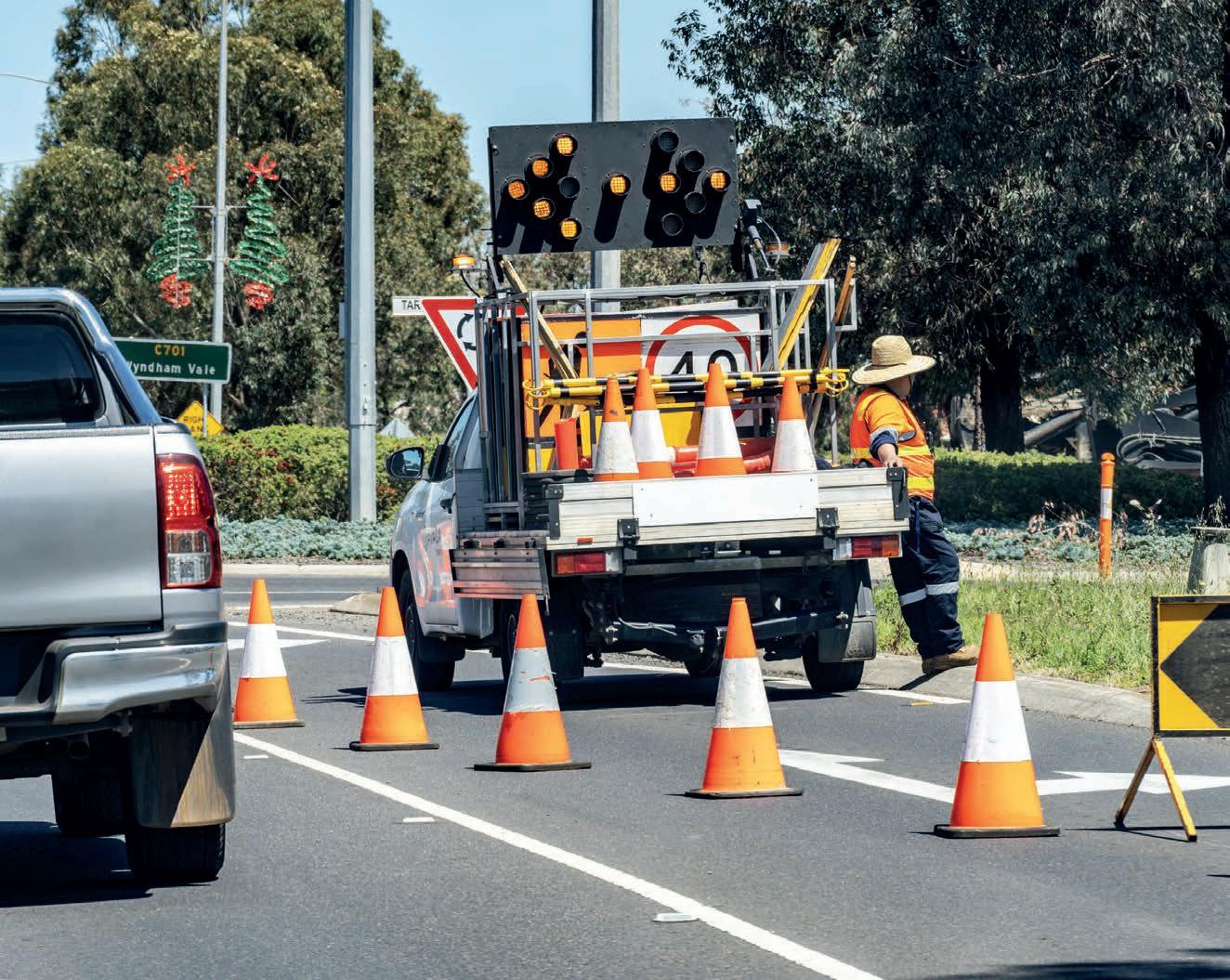
Temporary tra c management is one of the highest-risk areas in local government – but with the right planning, tools and oversight, councils can prevent incidents and save lives.
Poor temporary traffic management is not just inconvenient, it can be deadly and councils play a central role in getting it right.
At the 2026 Municipal Works Conference and Exhibition in Bendigo, Thuan Nguyen, Traffic Lead at Safe System Solutions and Lecturer in traffic and transport at Swinburne University, delivered a practical and at times confronting look at the realities of managing traffic through roadworks. Drawing on his experience in local government and consulting, Nguyen outlined why temporary traffic management remains one of the most challenging and critical areas for councils.
Nguyen told delegates that temporary traffic management should not be viewed as a standalone task, but as part of the broader Safe System approach.
“This is called a Safe System philosophy, every single council has adopted it,” Nguyen said.
He explained that the framework – encompassing safer roads, safer vehicles, safer road users and safer speeds – directly applies to work zones.
“Temporary traffic management covers all those four areas,” he said. “If council has committed to it, they need to invest in it.”
For local governments under pressure to allocate limited funding, Nguyen suggested this alignment provides a strong justification for improving traffic management practices, particularly as Victoria works towards ambitious road safety targets.
“We are committed to reducing fatalities by half in the next four years, which is a big challenge. If you work in this area, you have an opportunity to help achieve that,” he said.
Nguyen did not shy away from the risks. He described temporary traffic management as a “very challenging area”, shaped by unpredictable road user behaviour, changing traffic conditions and complex site constraints.
Using recent real-world examples, Nguyen showed how quickly situations can deteriorate, from impatient drivers crossing medians to avoid queues, to dangerous overtaking in two-way work zones.
“That’s what traffic management companies have to deal with. That’s what councils have to deal with,” Nguyen said.
He noted that even relatively minor inefficiencies, such as poorly timed temporary signals, can escalate risk.
“Someone could have adjusted the phasing of that light and given more green light to the outbound traffic in the afternoon, in peak hours. These small details can make a big difference,” he said.

Temporary tra c management is a “very challenging area”, due to unpredictable road user behaviour, changing tra c conditions and complex site constraints. Image: Doublelee/stock.adobe.com

More concerning, however, were the consequences of getting it wrong. Nguyen shared that he had been involved in investigations into three fatalities at roadwork sites in recent years.
“It is very sad, because as I go through all the paperwork, the trail of what happened, and my conclusion for all three of those fatalities were; it was a preventable death,” he said.
“That is why it is such a challenging environment – but also why it is so important.”
Under occupational health and safety legislation, Nguyen reminded councils that roadwork sites are classified as high-risk workplaces, bringing clear legal and moral responsibilities.
“You change traffic arrangements, you change speed environments, you introduce more conflict points,” he said.
“We’ve got vehicles, pedestrians, cyclists – and low compliance.”
A key message from Nguyen’s presentation was that many risks can be significantly reduced, or even eliminated, through better planning, design and procurement.
He pointed to the continued use of outdated or unsafe practices, such as placing traffic controllers on high-speed roads with stop/slow bats.
“You don’t put a human out there on those roads anymore,” Nguyen said.
Instead, he highlighted the increasing availability of portable traffic control devices, such as temporary signals, which remove workers from direct exposure to traffic.
“We have the solutions, it’s just a matter of using them,” he said.
While cost is often cited as a barrier, Nguyen argued that councils can address this through their procurement processes.
“When you put out tender documents, you can specify these requirements,” he said.
“You create a level playing field so all contractors price for the same safety measures.”
He also stressed the importance of regular auditing and independent review of work sites.
“Yesterday I was out there doing auditing, and it’s a very good tool,” Nguyen said.
“You can identify issues and fix them before something happens.”
Training and accreditation were also highlighted as critical, particularly in light of national harmonisation changes in temporary traffic management.
“Make sure your staff are trained, qualified and recognise the risks,” he said. Nguyen emphasised that effective traffic management must consider both workers and the travelling public.
Simple measures such as road closures, physical barriers and truck-mounted attenuators (TMAs) can significantly reduce risk when used correctly.
“Shut the road if you can. Use barriers. Use TMAs,” he said.
“These devices are effective. If you don’t have them, the consequences can be severe.”
However, he cautioned that these
“That’s why compliance is low. Sometimes we get it wrong in the first place.”
Queue management was another critical issue, particularly on higher-speed roads where congestion can extend beyond the immediate work site.
“The impact of work can go a lot further back than you think,” he said.
“If queues spill onto freeways, that’s a real risk.”
Nguyen pointed to tools such as traffic impact assessments, variable message signs and real-time monitoring as ways to better manage these risks.
Beyond physical controls, Nguyen highlighted the importance of clear communication with road users and stakeholders.
“People are very tech savvy now, and we have so many ways to reach the public. Make sure you tell them what’s happening,” he said.
Failure to communicate effectively can lead to frustration, unsafe behaviour and increased complaints.
Cyclists and pedestrians also require greater consideration, with Nguyen noting that they are often overlooked in traffic management planning.
“Some operators may just close a bike lane and say, ‘good luck’,” he said.
“That’s not good enough.”
Ultimately, Nguyen urged councils to take a proactive and collaborative approach, working closely with contractors and stakeholders to continuously improve.
One practical step he recommended was conducting worksite safety observations.
“You talk to the contractor, and a lot of the time they’ll say, ‘I never thought of that’, and you can reduce the risk
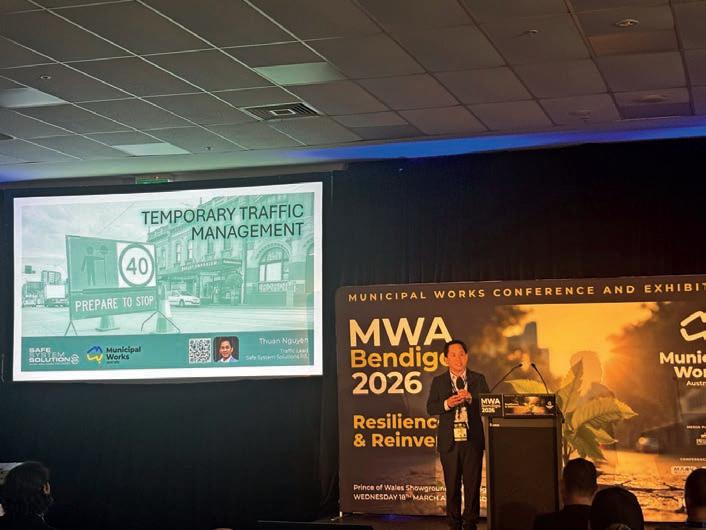


Two neighbouring councils have renewed their long-standing partnership agreement, strengthening a coordinated approach to regional planning, infrastructure delivery and advocacy across the cross-border Albury-Wodonga community.
Albury City Council and Wodonga Council have formally reaffirmed their partnership through the re-signing of the Two Cities One Community Partnership Agreement, first established in 2017.
The agreement continues to recognise the deep economic, social and infrastructure links between the neighbouring cities, which sit on either side of the New South Wales and Victorian border respectively.
With a combined population of more than 100,000, the Albury-Wodonga region functions as a single, interconnected urban centre despite being governed by two separate state jurisdictions. Residents regularly move across the border for work, health care, education, recreation and essential services, making coordination between the two councils central to effective regional planning.
The refreshed agreement formalises this shared reality, reinforcing a commitment to work collaboratively on issues that affect both communities.
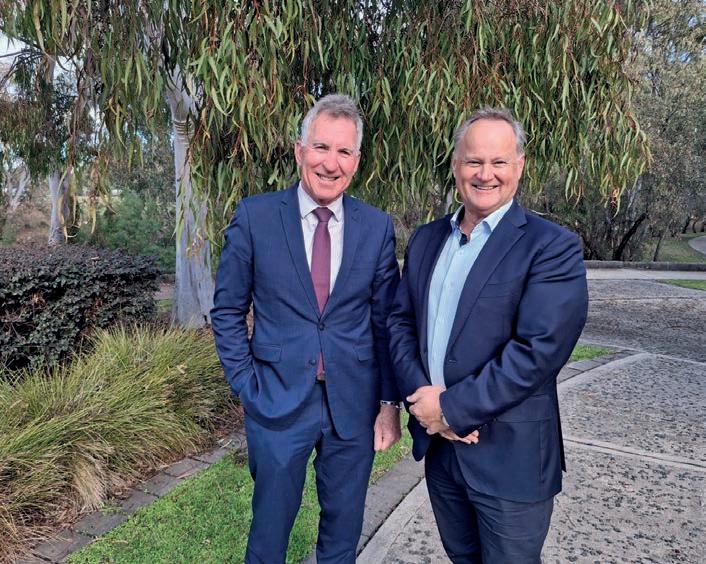
It also provides a structured framework for joint decision-making, helping ensure that planning and investment decisions are aligned with long-term community needs.
Underpinning the partnership are two long-term community visions, Towards Albury 2050 and Wodonga 2050, which guide each council’s strategic priorities while also identifying common aspirations for the broader region.
At the core of the renewed agreement is a shared commitment to more coordinated planning and delivery of infrastructure, economic development and community services. Both councils will continue working together to identify regional priorities, develop joint proposals, and advocate to the Federal and state governments with a unified voice.
The agreement emphasises collaboration in areas where cross-border alignment can improve outcomes, including transport networks, community facilities, environmental initiatives and economic development projects. By working together, the councils aim to maximise investment efficiency and avoid duplication across shared systems and infrastructure.
A key focus is ensuring that major regional projects are planned with a whole-of-region perspective, recognising that infrastructure in one city often directly impacts the other. This includes joint submissions for funding opportunities and coordinated planning for future growth corridors and community needs.
The partnership also supports regular reporting to the community, with progress updates to be provided every six months. This approach is designed


to maintain transparency while ensuring residents remain informed about how the collaboration is delivering outcomes across the region.
The agreement continues to sit under the broader Two Cities One Community Strategic Plan, which is structured around four key pillars: Leadership, Economy, Environment and Community. These pillars guide joint initiatives aimed at unlocking regional potential and supporting sustainable long-term growth.
Both councils have also reaffirmed the importance of strong governance principles underpinning the partnership, including openness, honesty, respect for each council’s individual priorities, and a commitment to sharing information where appropriate.
Albury Mayor, Kevin Mack, said the agreement provides a clear pathway to strengthen regional leadership and address long-standing cross-border issues.
“Our two cities don’t operate in isolation. We share the same roads, the same healthcare systems, the same sporting and cultural facilities, and many of the same aspirations for the future,” Mack said.
“This agreement provides a framework to work together more strategically and with greater impact for the benefit of our communities.”
Wodonga Mayor, Michael Gobel, said the renewed partnership demonstrates the councils’ commitment to working as one community.
“The Two Cities One Community partnership is a testament to the strength of our collaboration in delivering on real outcomes,” Gobel said.
“The commonalities between both community visions and council plans have allowed us to deliver major initiatives across the economy, environment, community, partnering and leadership. Our renewed partnership will allow us to continue to deliver on needs and aspirations of our community.”

Beyond formal governance structures, the partnership also encourages ongoing engagement between elected representatives and senior staff from both councils. This ensures alignment across policy, planning and delivery, while also enabling rapid coordination on emerging regional challenges.
The councils will also continue to engage with other local governments across the broader region on issues of shared significance, reinforcing the role of Albury-Wodonga as a key regional hub with influence extending beyond the immediate border area.
As the region continues to grow, the renewed agreement positions both councils to respond more effectively to future opportunities and challenges. By strengthening collaboration and aligning long-term planning, the partnership aims to ensure the Albury-Wodonga region remains well placed to deliver sustainable growth, improved services and stronger community outcomes.

Rooftop housing is one of few ways to add homes without the need for new land, new roads, or other infrastructure. Image: Aliaksandra/stock.adobe.com

As councils look to increase housing supply without adding more sprawl, rooftops are emerging as an untapped opportunity.
By Dr Ehsan Noroozinejad, Professor Greg Morrison, Thrive Construct Executive Chariman Barrie Harrop, and Founder Buy Airspace Warren Livesey
Walk through almost any Australian centre and look up, you will see thousands of flat roofs doing very little, a few plant rooms, some air-conditioning units, maybe a sign or two, and a lot of empty space.
At the same time, councils are under pressure from every direction.
Residents want housing they can afford, communities want less sprawl and traffic, businesses want footfall and a strong local economy, governments want faster approvals, and everyone wants lower emissions.
Rooftop housing through ‘airspace development’ will not solve the housing crisis alone, but it is one of the rare options that can add homes without new land, new roads, or pushing the city further out.
It can also help refresh older buildings, bring people closer to services, and cut carbon by reusing what we already have.
The missing link is not the crane or the construction method. It is the local
pathway. That is where councils make the difference between a good idea and a real housing pipeline.
Traditional housing supply starts with land, then roads, then services, then years of planning and delivery.
Rooftop housing starts with something already paid for: the building frame, the access to transport, and the services in the street. When extra homes go on top of an existing site, new residents can often ‘share’ what is already there: water, sewer, power connections, footpaths, public transport, and local shops.
There is also a clear carbon case for reuse. Infrastructure Australia noted that embodied carbon from building activity is a meaningful share of national emissions, and that ‘upfront’ emissions are locked in once a building is built. Cutting those emissions delivers immediate benefits. Reuse also tends to reduce whole-of-life impacts compared with demolition and
rebuilding, especially when performance is comparable.
This has been proven to work in Australia. Melbourne’s 55 Southbank Boulevard added ten levels using cross-laminated timber above an existing building, creating significant additional space and becoming a well-known local example of vertical extension.
Overseas, cities are treating rooftops as a city-wide resource. Rotterdam has highlighted the scale of its flat-roof opportunity (often cited as about 18.5 square kilometres) and is actively promoting ‘multifunctional roofs’ for outcomes such as water retention, energy, green space and public value.
THE BIGGEST
ENGINEERING. IT IS THE PROCESS. Most rooftop projects die in the mess between ‘possible’ and ‘approved’.
Even where the design is suitable, councils face the same hard questions: •Has this been demonstrated elsewhere?
•Will neighbours lose light or privacy?
•Will the streets cope during construction?
•Who pays for lift upgrades, fire upgrades, or services?
•Will this create better places, or just more boxes?
None of these are reasons to stop. They are reasons to set clear rules.
The UK experience is useful here, not because Australia should copy it line-by-line, but because it shows how a clearer pathway reduces delay. England introduced permitted development rights for some upward extensions, using a ‘prior approval’ approach where councils focus on specific impacts and quality checks.
Australia can take the same lesson: make rooftop housing predictable when it meets clear standards.
State targets are important. National building rules matter too. But councils control the daily reality: local planning rules, assessment priorities, design expectations, and community trust. Here is a practical council playbook:
1. Map the opportunity and publish it Councils do not need perfect data to start. They can build a simple ‘rooftop opportunity map’ using existing information: building footprints, heights, heritage layers, strata areas, proximity to centres and transport, and council asset registers.
Even a first-pass map helps industry focus on the right sites. It reduces speculative proposals, saves staff time and it signals that the council is open to the right kind of projects.
If NSW can point to a clear pipeline near centres and stations (its Low and MidRise Housing Policy targets up to 112,000 homes over five years, around 171 town centres and stations), councils elsewhere can also define their local rooftop pipeline with confidence.



2. Create a ‘good roof extension’ rule set
Most community concern comes from uncertainty. Councils can reduce conflict by setting clear pass/fail expectations upfront, including:
•Setbacks and step-backs from street edges
• Limits on overlooking and privacy impacts
•Daylight protection rules
• Noise and constructionhour conditions
•Clear requirements for landscaping, green roofs, and heat reduction
This is classic council work: turning broad goals into practical rules.
3. Set up a fast lane for compliant projects
Councils don’t need to approve “anything”. They need to approve the right things faster.
A fast lane could mean:
•A dedicated assessment pathway for rooftop proposals that meet preset criteria
•Shorter assessment timeframes for compliant projects
•Standard conditions and templates to reduce back-and-forth
This approach is common in other planning reforms, including programs designed to accelerate assessments while keeping proper checks.
4. Require a fair ‘share of benefits’ for the existing building and the neighbourhood
Rooftop housing should not feel like something being ‘done to’ a building or a street. It should feel like an upgrade. Councils can encourage benefit-sharing arrangements such as:
•Lift upgrades and accessibility improvements
•Solar and energy upgrades that reduce bills for existing residents
•Waterproofing and façade repairs funded by the new development value

•Public value outcomes where appropriate (shade, greening, safer streets, better frontage)
This is where rooftop housing links directly to community wellbeing. Better buildings, cooler roofs, more walkable centres, more customers for small businesses, and more residents close to services.
5. Start with council-owned sites to prove the model
Councils own car parks, depots, libraries, community centres, and administrative buildings. Not all are suitable, but some will be.
A small pilot on council sites can:
•Demonstrate construction staging with minimal disruption
•Create a template for design quality and community engagement
•Attract credible builders and financiers
•Build public confidence
Once residents see one good project, the conversation changes.
Market signals already point to scale.
Commercial Real Estate Services has described residential airspace as a major opportunity in Australia and has discussed the UK’s large airspace market and approval volumes as evidence of maturity overseas.
But the point is not the headline number. The point is that industry interest exists, and councils can either shape it early, towards quality and public value, or deal with it later, as unpredictable one-off proposals.
Within a year, any council could aim to deliver:
1. A published rooftop opportunity map (even if staged)
2. A clear local ‘good roof extension’ guide
3. A defined fast lane for compliant proposals
4. One pilot site (council-owned or partner-owned) moving into delivery
Rooftop housing is not just a supply tool. Done well, it is a city-shaping tool.


It can add homes where people already want to live. It can reduce long commutes. It can bring life back to centres after hours. It can fund upgrades to ageing buildings. And it can cut carbon by reusing structures instead of starting from scratch.
Councils are not a ‘step’ in this transition. They are the enablers.
If we want more housing without more sprawl, we need to treat rooftops as part of the solution, not as an exception, not as a special favour. It’s normal citybuilding, just one level higher.



With Geotab’s telematics technology, you can monitor almost every aspect of your vehicle fleet to gain the necessary insights to run operations smoothly and efficiently. Geotab’s devices can elevate your fleet management in numerous ways, including:

Vehicle monitoring to increase fleet visibility and cut down on costs.

Tracking and management to know exactly where your assets are.



Predictive maintenance and diagnostics to improve asset uptime.


On-vehicle cameras to help monitor garbage collection or driver safety.

Installation is quick and easy on all kinds of vehicles. Get in touch to find out what solution will work best for your fleet at www.geotab.com/au/