Efficiency shaped on-site
OPTIMISING PERFORMANCE WHERE IT COUNTS
Smart crushing, adapted to you
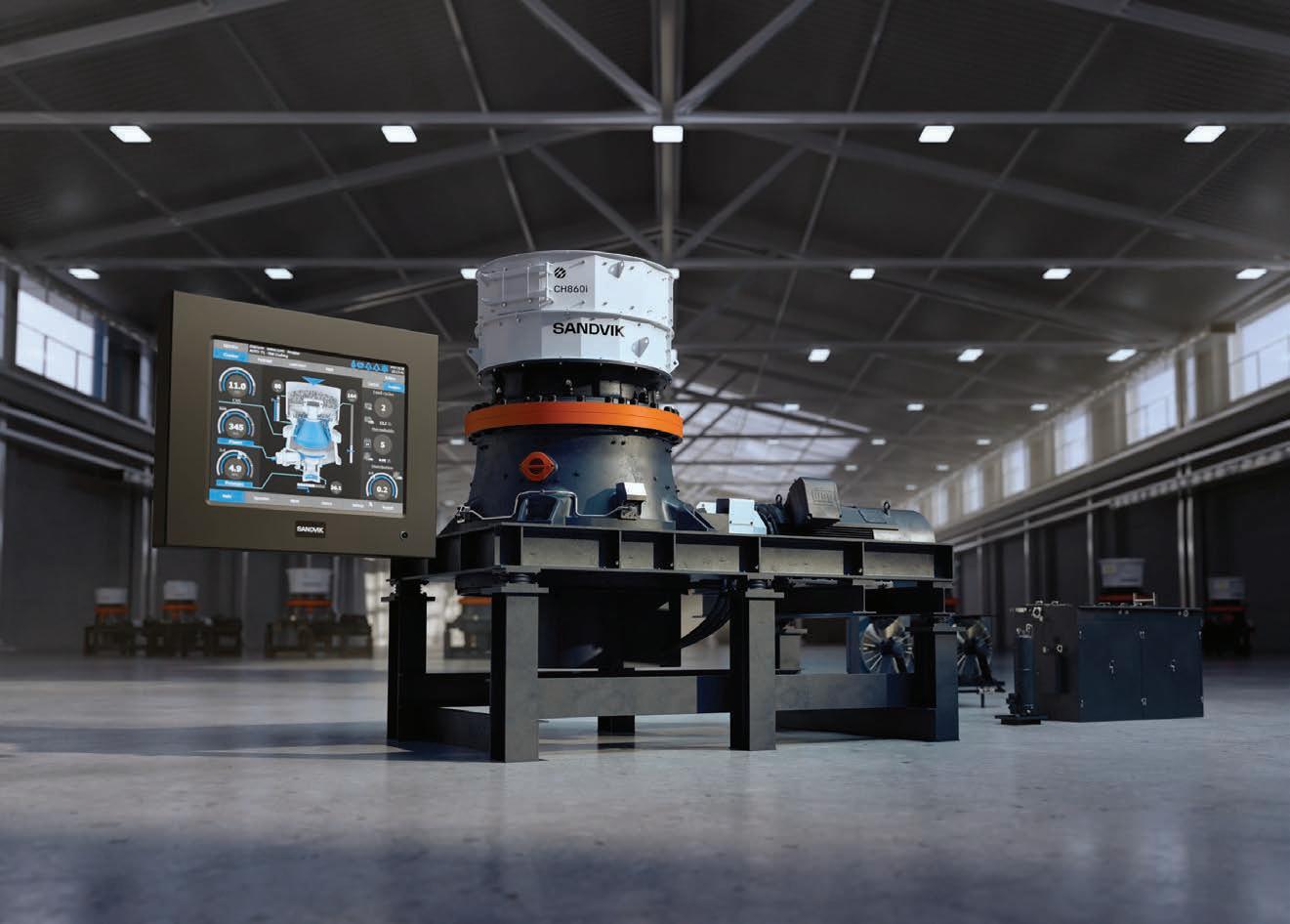
Upgraded 800i crushers with new ACS-c 5
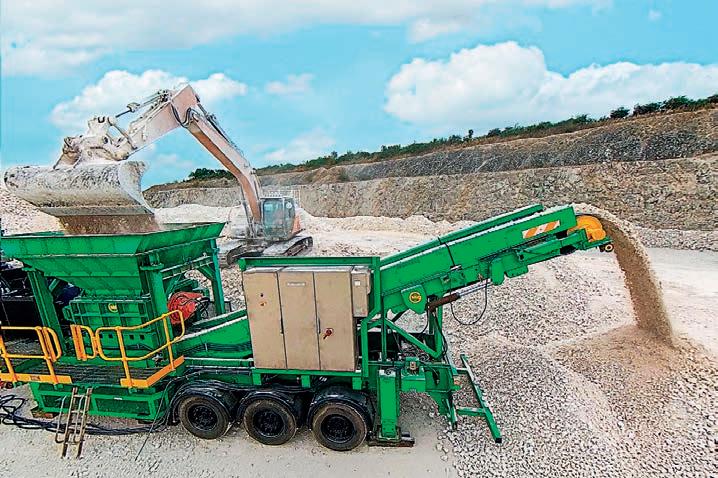
Even the best can always get better. Upgraded 800i crushers with new ACS-c 5 are our smartest, safest and most productive yet – designed around the needs of the people who work with them to raise the bar of what a crusher can be. Combining simple yet robust mechanical design with powerful user-friendly automation, 800i crushers are true workhorses that improve your ability to process more material, more accurately and more sustainably. Discover the upgraded 800i crusher series with new ACS-c 5 today, and see what’s possible when a crusher is designed with you in mind.
Paul Hayes
paul.hayes@primecreative.com.au

On track for change
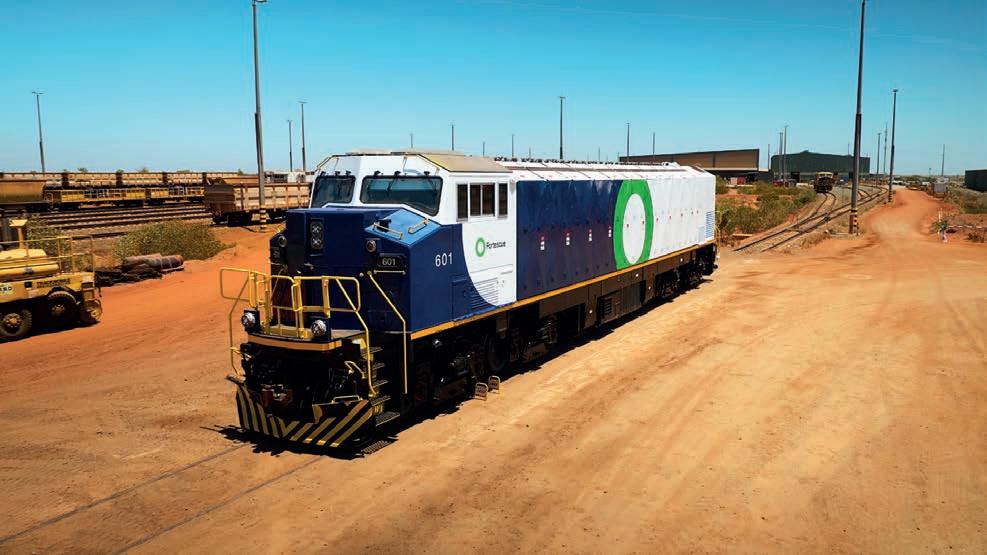
Battery-electric locomotives are emerging as a practical step forward as some of Australia’s largest miners reshape rail haulage in the Pilbara.
There are moments in mining where incremental change gives way to something more meaningful. The recent moves by Fortescue and BHP to deploy battery-electric locomotives at their Pilbara operations feel like those kinds of moments.
Rail has always been the quiet backbone of Australia’s iron ore sector. It is the critical link between pit and port, moving tens of thousands of tonnes of material across vast distances in some of the harshest operating environments on earth. But it’s also one of the industry’s most emissionsintensive systems, historically reliant on diesel at a scale few other sectors can match.
That’s why the shift to battery-electric locomotives matters.
Fortescue’s introduction of what are effectively the world’s largest battery-powered locomotives signals more than a technological milestone. These machines, equipped with 14.5MWh battery systems and regenerative braking, have the potential to significantly reduce diesel consumption by around one million litres per year in early deployments alone.
At the same time, BHP recently began trialling its own battery-electric locomotives in the Pilbara, purpose-built to withstand extreme heat while capturing and reusing energy through regenerative braking systems. These are not concept machines; they are being integrated into active haulage networks that underpin some of the largest iron ore operations in the world.
What makes these developments particularly significant is not just the technology itself, but where it is being applied.
The Pilbara is one of the most demanding heavy-haul rail environments in the world, where trains can stretch for kilometres and carry more than 30,000 tonnes of ore in a single journey. If electrification can gain traction out there, it can gain traction anywhere.
There is also a broader strategic shift at play.
For years, decarbonisation in mining has been framed around future technologies, things
like hydrogen, grid-scale electrification or breakthroughs yet to be commercialised.
Battery-electric locomotives represent something different: a solution that can be deployed now, within existing infrastructure, and scaled progressively.
That immediacy is critical.
Australia’s mining sector is under increasing pressure to reduce Scope 1 and Scope 2 emissions while maintaining productivity and cost competitiveness. Rail, as a major consumer of diesel, offers a clear opportunity to deliver measurable gains without compromising output. Early indications suggest battery-electric systems can recover significant energy during downhill runs, improving efficiency while reducing fuel burn.
But, perhaps most importantly, these initiatives signal intent.
When companies of the scale of Fortescue and BHP commit to electrifying core components of their operations, it sends a message across the industry. It demonstrates that decarbonisation is no longer confined to pilot projects or sustainability reports, but rather that it is becoming embedded in the operational fabric of mining.
There is still a long road (or track, if you will) ahead. Diesel fleets will not disappear overnight, and the economics of large-scale electrification will continue to evolve, but the direction is becoming clearer.
In an industry built on moving mountains, progress is often measured in tonnes. It will increasingly also be measured in how those tonnes are moved.
And on that front, Australian mining is firmly on track.
Paul Hayes Managing Editor
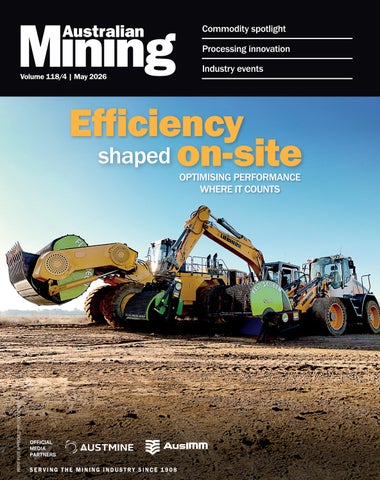
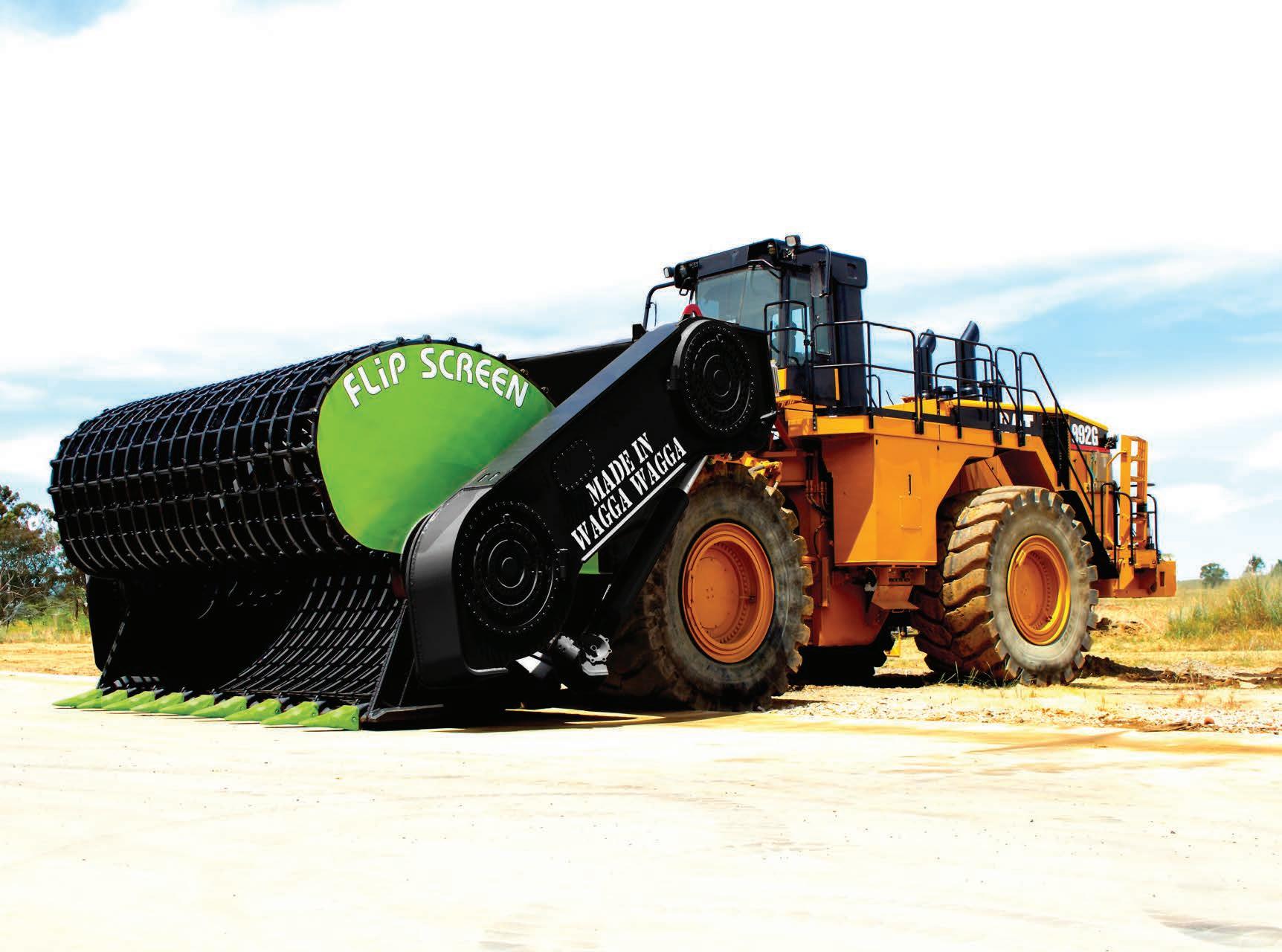
Front cover FlipScreen is a global innovator in scalping and screening bucket technology, designing and manufacturing attachments designed to transform almost any machine into a highperformance mobile screening solution. Its products are built to perform in the world’s toughest environments, from remote mine sites to construction, recycling and wastehandling operations. All FlipScreen attachments are engineered and built in-house at a centralised manufacturing operation within the FlipScreen Industrial Park. This gives the company full control over quality, innovation and delivery, from design through to dispatch. Driven by simplicity, durability and real-world performance, FlipScreen continues to redefine how industries screen, scalp, sort and succeed.
Cover image: FlipScreen
Chairman John Murphy
Chief executive officer Christine Clancy
Managing Editor Paul Hayes paul.hayes@primecreative.com.au
Assistant Editor Engel Schmidl engelbert.schmidl@primecreative.com.au
Journalists Dylan Brown dylan.brown@primecreative.com.au
Ben Cartwright ben.cartwright@primecreative.com.au
Ethan Benedicto ethan.benedicto@primecreative.com.au Client
Business Development Managers
Phipps 0466 005 715 james.phipps@primecreative.com.au
O’Bryan 0411 067 795 robert.obryan@primecreative.com.au Art Director Michelle Weston michelle.weston@primecreative.com.au
POWERING INDUSTRY. PROTECTING TOMORROW.
At Australian Power Equipment (APE), we deliver more than high-voltage power solutions – we deliver peace of mind. From brand-new transformers to expertly refurbished equipment, we help industries stay switched on with smarter, faster, and more sustainable options.
Our circular economy model means we don’t just supply power—we give old equipment new life. By refurbishing quality assets from decommissioned sites, we minimise waste, reduce lead times, and keep urgent projects moving. It’s better for business and better for the planet.
But our commitment doesn’t stop there. We actively support wildlife conservation and rewilding efforts across Australia –because powering progress should never come at the cost of our environment.
With a nationwide network and a lean, responsive team, APE sources and delivers critical equipment when and where it’s needed most. Whether it’s mining, infrastructure, or renewables, our clients trust us to keep operations running and downtime to a minimum.
Backed by decades of experience and a clear vision for the future, we’re proud to be shaping a more sustainable tomorrow.
AGENTS FOR




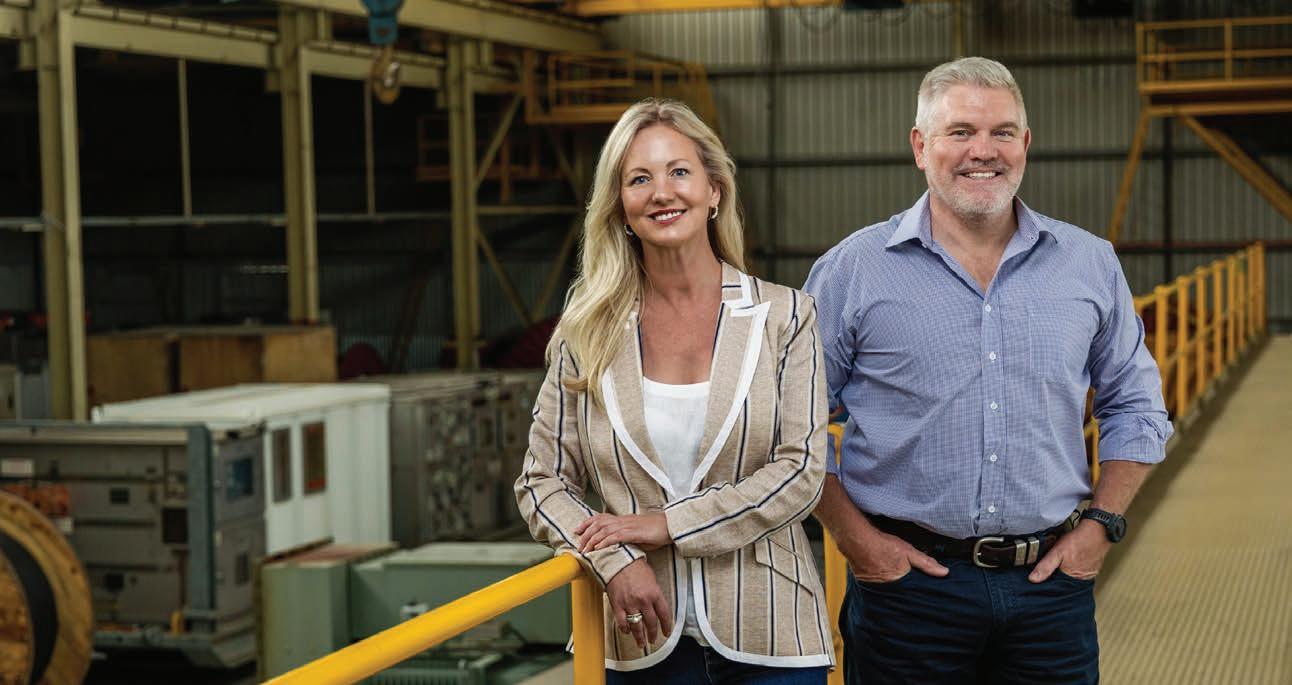
Directors Andrew Cockbain and Abby Crawford
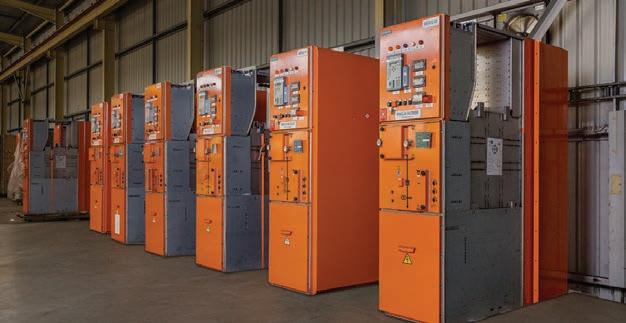
11kV Switchgear
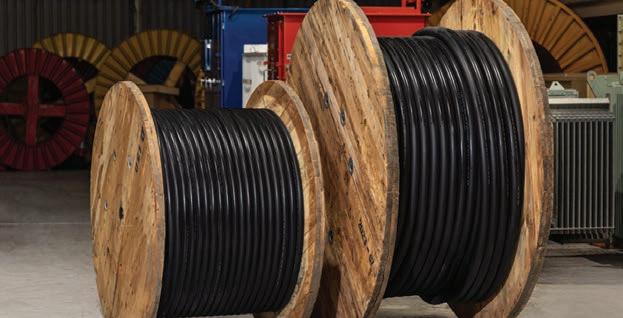
Type 241 cable
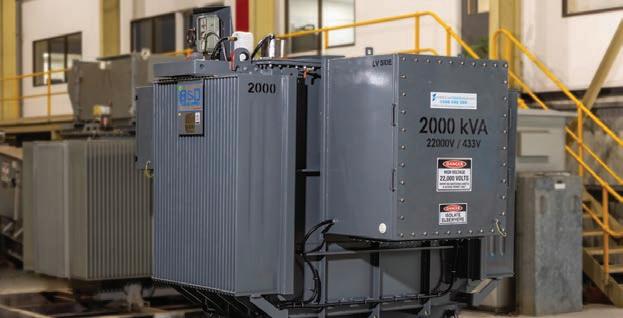
2000kVA transformer
In this issue
Tungsten’s turning point
Surging prices and tightening global supply chains are placing new focus on tungsten as a strategic opportunity for Australian producers.
how
Unlocking performance through network clarity
Machine Logic is realising the promise of data by making the invisible visible. 32 Efficiency beyond the spreadsheet Australian Power Equipment is redefining mining efficiency as a balance of reliability, availability and lifecycle performance amid ongoing supply chain pressures.
Company profile
34 Laying the foundations for multi-metal growth
From copper to gold, Magnetite Mines is quietly reshaping its South Australian portfolio.
Critical minerals
40 Turning the stone Turnstone Resources is repositioning itself for Europe’s critical minerals future, using a strategic rebrand to signal a broader shift beyond its potash roots.
Industry events
54 The Hunter Valley takes the stage The Hunter Valley is stepping into the spotlight with the launch of a dedicated mining event in 2027, creating a platform to showcase and shape the region’s future.
Industry insight
60 Shaping a mining giant
As Mike Henry calls time on the role of BHP chief, Australian Mining looks back at his legacy and what it has meant for the industry.
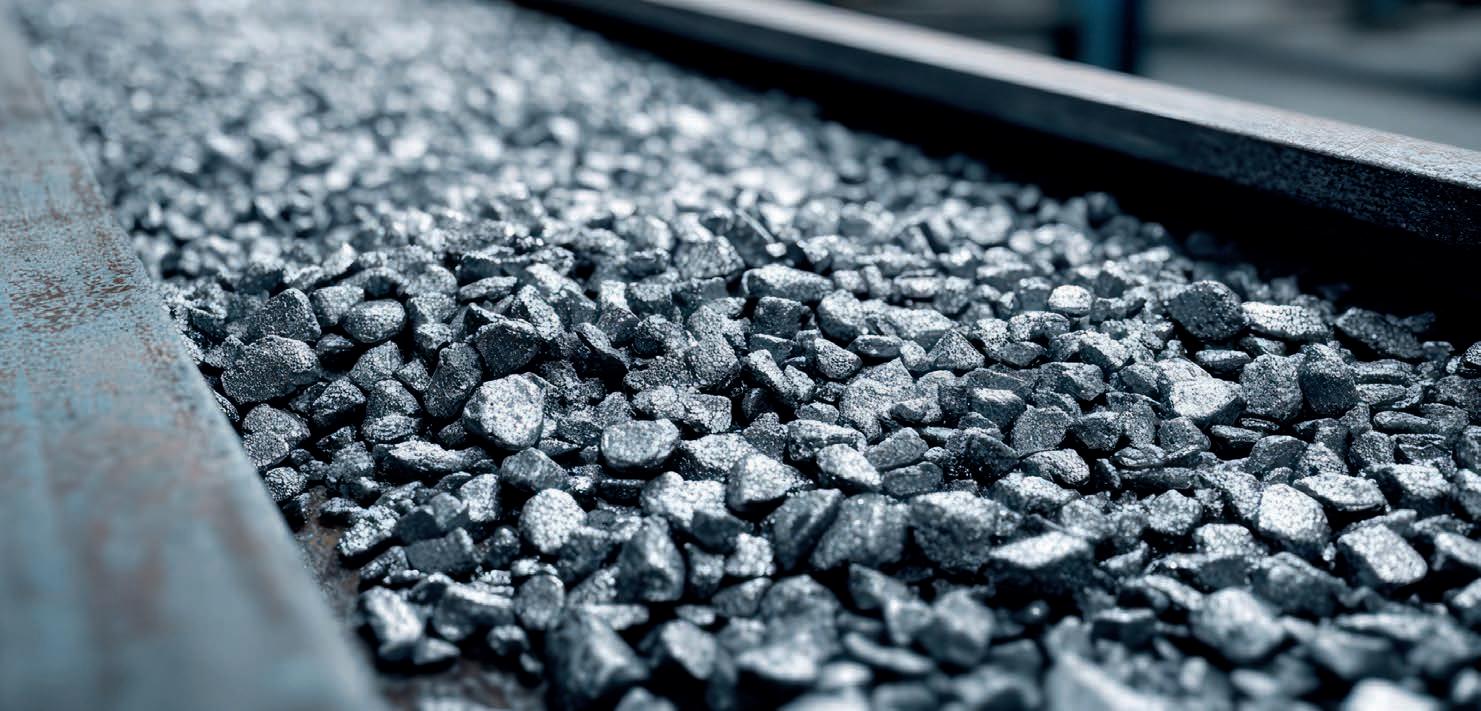
Once a by-product, silver is increasingly being leveraged as a strategic asset in modern mining finance.
Silver steps to the podium
By turning a by-product into billions, BHP has shone a light on silver’s growing role in mining strategy.
Silver is gaining newfound prominence in the mining world.
BHP’s recent $US4.3 billion silver streaming deal with Wheaton Precious Metals underscores a growing recognition: by-product metals can be central to a company’s financial strategy and project development pipeline.
Under the agreement tied to BHP’s 33.75 per cent stake in the Antamina mine in Peru, silver production becomes a monetisable asset rather than a passive output. BHP receives upfront cash in exchange for future silver deliveries, maintaining exposure to the mine’s primary metals.
This arrangement highlights an evolving approach that is increasingly being applied at the asset level. By-product metals are instruments to manage capital, reduce risk and drive shareholder returns while supporting ongoing operations and future growth.
The BHP–Wheaton deal offers a template for turning predictable, lower-margin metals into high-value, low-risk capital. For operators, this approach can unlock funding for mine development, infrastructure upgrades and sustaining capital without disrupting core production.
This structured approach also enhances predictability and resilience in a market
By-product metals, when strategically monetised, can rival the financial significance of a primary commodity and play a direct role in funding large-scale mining operations.”

BHP’s silver deal highlights how byproduct metals are being monetised to unlock capital, manage risk and enhance portfolio value.
sensitive to volatility, reinforcing silver’s role as a strategic component of BHP’s broader portfolio.
The strategic implications extend beyond balance sheets. Polymetallic operations like Antamina, located in the Andes Mountains of Peru, illustrate the complexity of modern mining portfolios.
By valuing secondary outputs, companies can optimise asset performance across multiple commodities and improve overall site economics. Silver’s industrial demand, from electronics to solar panels, adds a layer of strategic appeal, while investment demand enhances its potential as a financing tool.
This dual use elevates silver from byproduct to portfolio asset, demonstrating how miners can extract value from every ounce and strengthen project viability over the life of mine.
Streaming deals also reflect broader trends in risk management.
For the off-taker – in this case, Wheaton Precious Metals – long-term agreements provide low-cost, long-life exposure to a rising commodity without the operational risks of running a mine. For the producer – in this case, BHP – they mitigate price and operational uncertainty while unlocking immediate capital that can be redeployed across operations. This alignment is reshaping how miners approach financing and commodity strategy.
The Antamina deal is particularly notable for scale. Silver, often accounting for a small fraction of a mine’s revenue, is leveraged to generate billions in upfront funding. This demonstrates that by-product metals, when strategically monetised, can rival the financial significance of a primary commodity and play a direct role in funding large-scale mining operations.
It also highlights the potential for miners to revisit valuation frameworks. Rather than viewing secondary metals as supplementary, they can be treated as strategic levers with measurable financial impact across the lifecycle of an asset.
Looking beyond immediate financial gains, the deal could signal a long-term shift in mining culture. Companies are increasingly recognising the embedded options in polymetallic deposits.
By-product streams offer flexibility to fund growth, capitalise on market cycles and optimise shareholder returns without adding risk or placing additional strain on balance sheets. Smaller producers, in particular, can use similar structures to accelerate development or stabilise cash flow, showing that the approach scales across enterprise sizes.
In the context of the global commodities landscape, BHP’s strategy reflects a broader industry insight. Innovation is not confined to extraction or processing but extends to capital structuring.
Silver’s rise from by-product to a strategic asset serves to demonstrate the growing sophistication of mining financing mechanisms.
A key takeaway is that polymetallic deposits should be evaluated holistically. Every ounce has potential and the monetisation of secondary metals can materially alter a company’s financial and strategic trajectory while supporting more efficient and resilient mining operations.
The BHP–Wheaton deal offers a blueprint for how the industry can optimise capital, manage risk and unlock hidden value. In an era where efficiency and strategic flexibility are paramount, by-product metals are proving they can be genuine profit boosters. AM

Outperform The Rest
Mining tyre and wheel experts.
OTR is at the forefront of tyre, wheel and service innovation, proudly supporting Australia’s mining, construction, transport, agricultural and industrial sectors. We deliver unmatched capability, performance and reliability across every site and every haul road. Our commitment is simple, if your tyres or wheels stop, your production stops - so we’re here to keep you moving.
WHO WE ARE
OTR is Australia’s leading independent partner for off‑highway tyres, wheels, consumables and service solutions. With nationwide manufacturing, service hubs, and on‑site support teams, we provide the most comprehensive ground‑contact offering in the country.
With deep expertise across mining and heavy industry, OTR is trusted by major operations to deliver safe, compliant, and cost‑effective solutions built for tough Australian conditions.
WHAT WE DO TYRE SOLUTIONS
•Massive range & stocks of earthmover, truck & LV tyres.
•Full range from 6” through to 63” from leading global brands.
• Tyre fitting, rotation, change‑outs and on‑site support.
• Tyre pressure management and haul profile optimisation.
• Tyre valving, O‑rings & tooling
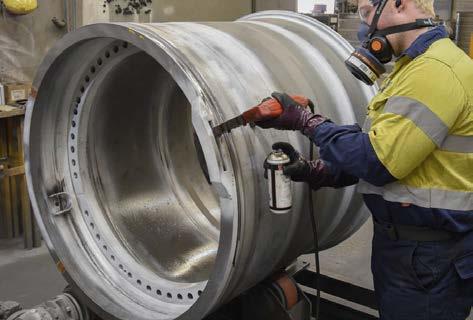
WHEEL & RIM SOLUTIONS
•Wheels, rims, assemblies & components.
• Australian manufactured with in‑house design.
• Test, repair & certification under Australian Standards AS4457.1.
•Latest MID and MRD compliance.
ON-SITE SERVICES
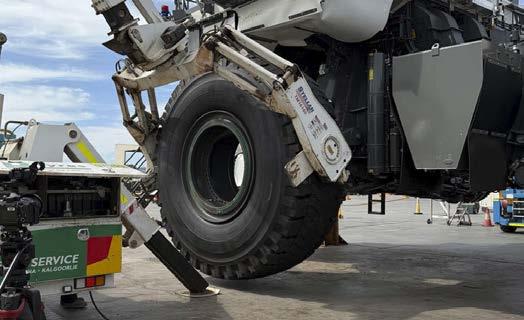
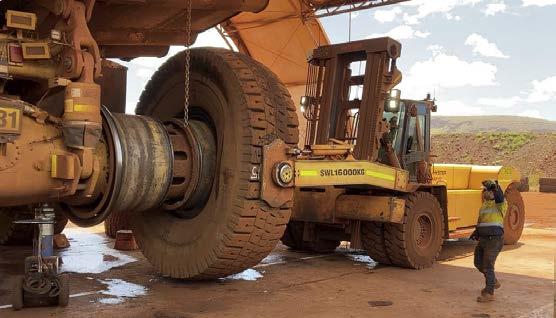
• Mobile fitting capability for large OTR assemblies.
• Dedicated tyre & wheel technicians for major mining operations.
• On‑site wheel, rim & tyre management programs.
•Tyre Handlers, mine site spec for sale or hire.
TRAINING
• Industry‑accredited Cert II tyre fitting and safety training.
• RTO provided on‑site or at OTR facilities.
WITH SERVICE HUBS AND MANUFACTURING FACILITIES
ACROSS AUSTRALIA, OTR PROVIDES RAPID RESPONSE AND CONSISTENT SUPPORT WHEREVER YOU OPERATE.


Tungsten’s turning point
Surging prices and tightening global supply chains are placing new focus on tungsten as a strategic opportunity for Australian producers.
Tungsten was once considered a niche industrial input, but it has rapidly evolved into a strategic commodity, with supply constraints exposing vulnerabilities in global value chains and prompting a renewed focus on diversification outside dominant producers.
For Australian producers, the shift is opening a rare window of opportunity to expand their role in secure, diversified supply chains at a time when international buyers are urgently seeking alternatives to dominant sources.
Global tungsten prices have climbed sharply over the past year, rising from around $US300 per metric tonne unit (mtu) in early 2025 to approximately $US2800–3150/mtu by March of this year. The increase has been driven largely by tighter export controls and production constraints in China, which remains the dominant global supplier.
These restrictions, combined with geopolitical tensions and drawdowns of strategic defence stockpiles, are placing pressure on downstream manufacturers across industrial and military supply chains. In response, governments and end users are increasingly looking to diversify
sourcing and secure long-term supply outside of China.
This tightening of supply is not occurring in isolation. It is part of a broader realignment of critical minerals markets, where security of supply is becoming just as important as price.
As a result, tungsten has rapidly shifted from a relatively stable industrial input to a strategically sensitive material embedded in defence, advanced manufacturing and high-performance engineering applications.
And Australian producers are beginning to capitalise on that shift.
A growing pipeline of exploration and development activity is underway across the country, with companies moving to strengthen their positions as prices and demand improve.
Tungsten Mining is advancing a 15,000m drilling program at its Watershed project in Queensland, with chair Gary Lyons noting that “tungsten prices remain robust, reinforcing the value of secure and timely supply of this vital critical mineral to global markets”.
Similarly, Larvotto Resources’ diamond drilling at the Metz Mining Centre in New South Wales continues
to return high-grade tungsten results, with managing director Ron Heeks highlighting the potential to enhance “the economic potential of the system as we look to build our exposure to critical minerals across our portfolio”.
The broader trend is also being reflected in capital markets, with funding activity supporting project development and expansion across the sector. This renewed financial backing is helping to accelerate timelines for exploration
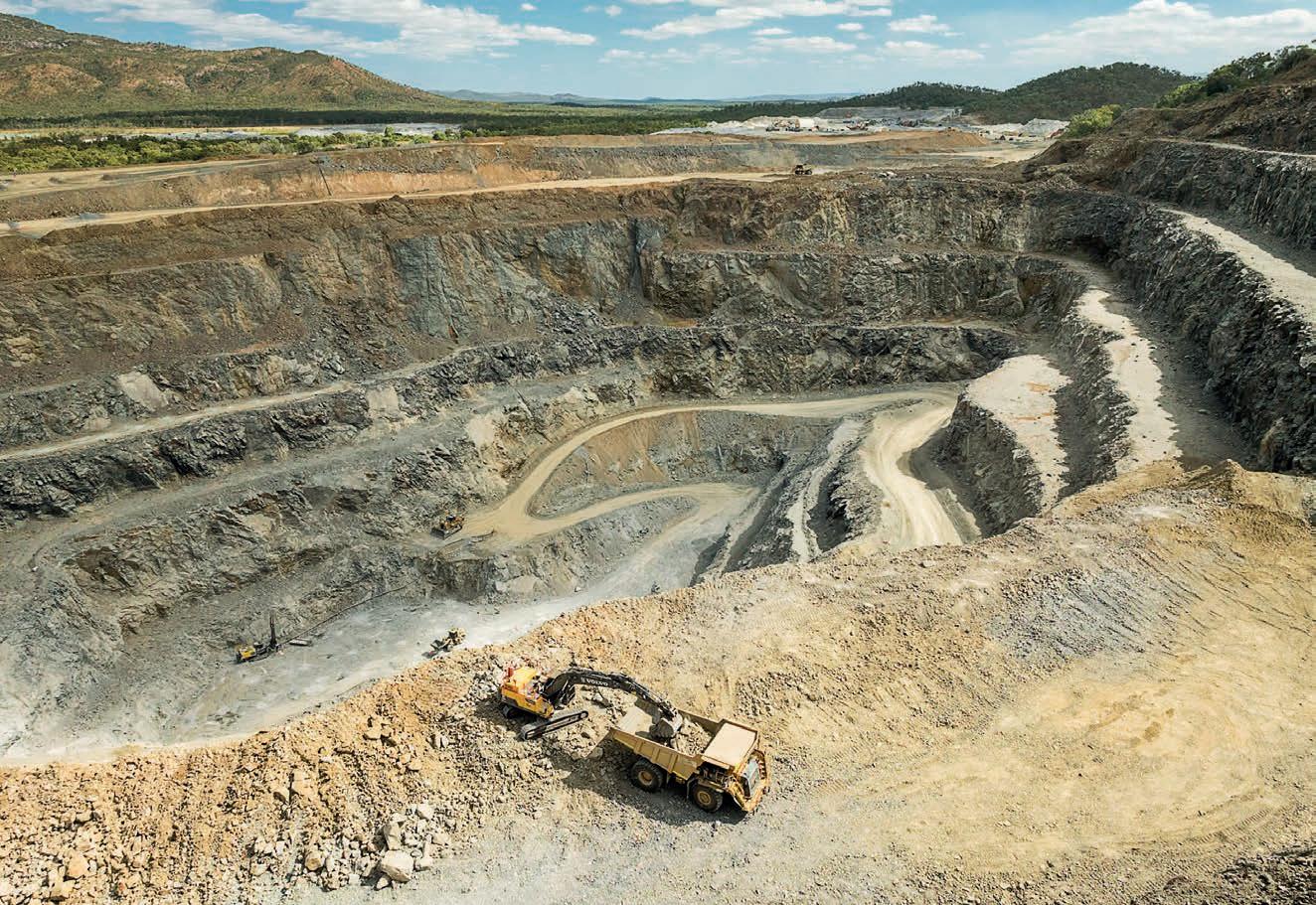
EQ Resources’ Mt Carbine tungsten project in far north Queensland remains relatively unexplored.
Image:
EQ Resources
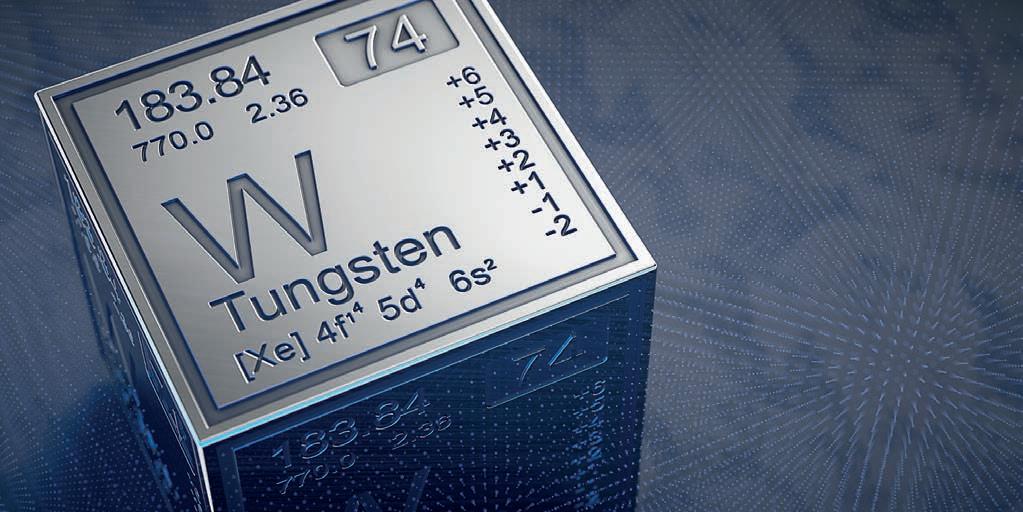
Tungsten has seen a massive surge in price over the past year.
and development, while also reinforcing confidence in the long-term fundamentals of tungsten as a critical mineral.
Tungsten Mining’s $53 million placement, for example, bolsters its balance sheet and supports accelerated work at its Mt Mulgine and Watershed projects, positioning the company to progress toward future development milestones.
Together, these developments point to a sector responding quickly to a fundamentally tighter global market, where secure supply is becoming increasingly valuable.
Against this backdrop, Australian miner EQ Resources (EQR) is operating within one of the most constrained and opportunity-rich tungsten environments in recent memory, with production assets in Queensland (Mt Carbine) and Spain (Barruecopardo) providing exposure to Western supply chains.
Managing director Craig Bradshaw said the current market imbalance highlights just how significant the supply shortfall has become outside China.
“You’ve got the rest of the world desperately short of material,” he told Australian Mining. “People are even asking for quotes to put it on planes and fly it around the world because they’re so short of tungsten.”
This urgency, Bradshaw said, reflects not only a supply shortage but also the strategic pressure created by defencelinked demand and restricted availability across global markets. In his view, the situation is fundamentally reshaping how tungsten is being valued and traded.
Traditionally modest production levels are now taking on new significance in the context of a global supply squeeze.
“Historically, we were running at around 1600 tonnes per annum of WO3 across both operations [Mt Carbine and Barruecopardo]. Even if we did nothing more than produce at that level, we would still be the number-one producer outside countries of concern at the moment,” Bradshaw said, referring to
Supply from non-Chinese or ‘noncountry-of-concern’ producers remains limited, according to estimates drawing on data from the International Tungsten Industry Association. However, a portion of this output is still linked to Chinese
This dynamic underscores the continued concentration of supply within the global tungsten market and reinforces expectations of structural tightness, particularly as demand grows and efforts to diversify supply chains face
This tightening supply outlook is driving renewed exploration and development interest across Australia, as companies seek to bring additional capacity online. It is also prompting a reassessment of existing projects, with previously marginal assets

now being reconsidered in light of stronger prices and constrained global availability.
The broader implication of current conditions is that tungsten is shifting from a relatively overlooked industrial input to a strategically sensitive material, particularly in defence applications where supply security is increasingly prioritised.
This has placed additional focus on jurisdictions like Australia, which offer political stability, established mining capability and growing support for critical minerals development. For the Australian industry, the opportunity reflects a repositioning of tungsten within supply chains, where diversification and resilience are becoming as important as cost.
The current market environment is also expected to provide a foundation for longer-term growth, even as new supply
eventually comes online. Development timelines for new tungsten projects are typically long, meaning near-term constraints are likely to persist.
“Even if governments fast-track projects, our view is it comes down to 5–10 years,” Bradshaw said. “We think we’ve got a runway ahead of us of five years.”
Beyond existing operations, Australian producers are also assessing further growth opportunities, including additional deposits and satellite projects that could be integrated into existing processing infrastructure.
At the same time, rising prices are improving project economics across the sector, creating stronger incentives for investment and expansion.
With tungsten now firmly embedded in global discussions around critical
minerals, defence security and industrial supply chains, Australia is increasingly positioned as a key alternative supplier in a tightening global market.
The combination of rising demand, constrained supply and geopolitical realignment suggests the current price environment may be part of a longer structural shift rather than a shortterm spike. For producers like EQR and its peers, the challenge now is to convert favourable market conditions into sustainable production growth, while navigating a sector where strategic importance is rising alongside commercial opportunity.
In a market once defined by niche industrial demand, tungsten is now firmly in focus, and Australia is emerging as one of the jurisdictions best placed to supply it. AM
Tungsten is a critical component in defence equipment and machinery.
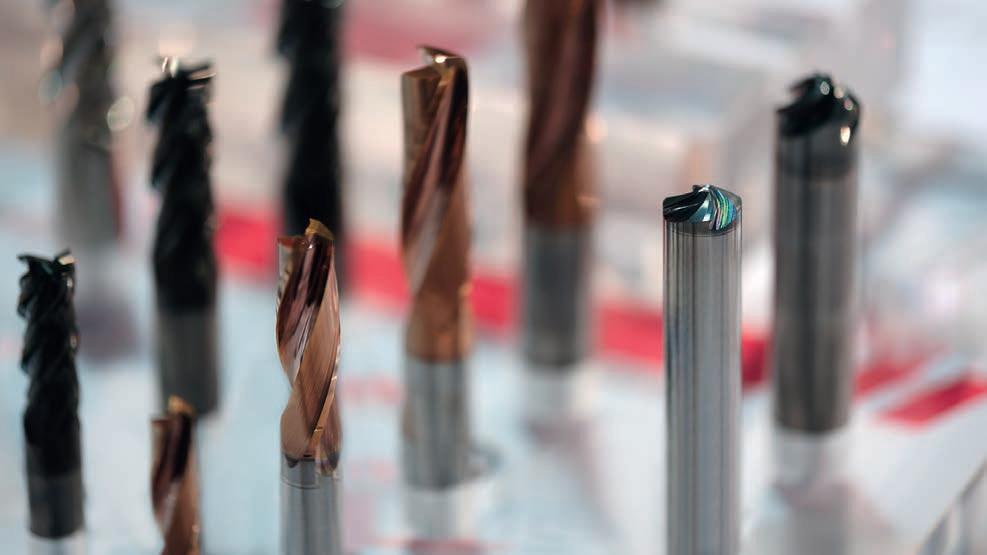
Tungsten’s hardness is highly valued by industrial toolmakers.
Where efficiency really lives
FlipScreen examines how scalping is reshaping mining performance.
In mining, efficiency is often measured in big numbers: tonnes per hour, fleet size, plant throughput. But on site, the reality is far more direct.
The biggest gains aren’t coming from capital-heavy upgrades to existing infrastructure or major overhauls. They’re coming from eliminating the points where operations get dragged down – where large oversize jams up crushers and chutes, as well as damages conveyers – requiring constant intervention to free up productivity.
There is a growing shift in how efficiency is being approached across Australian operations. Instead of chasing output alone, operators are asking a more honest question: where are we actually losing control?
For many, the answer leads straight to material handling.
From the moment material is extracted, every unnecessary movement adds cost. Haulage, stockpiling, rehandling and
feeding all stack up, burning fuel, increasing wear and creating more opportunities for things to go wrong. Oversize is moved further than it should be, problem material gets passed downstream and, eventually, it ends up where it causes the most damage –inside the crusher.
That’s where operations grind to a halt.
Large oversize entering the chamber doesn’t just reduce efficiency; it creates blockages, forces shutdowns and triggers manual removal of blockages that cost time, money and safety exposure.
Every time a crusher is jammed up, the entire chain feels it. Trucks queue, operators wait and production takes a hit.
This is where the shift toward large scale scalping is gaining serious traction.
By scalping at the point of excavation, operators take control before the problem starts. Material is processed immediately. Large oversize is removed before it has
a chance to travel, fines stay where they should, and the feed moving forward is consistent and controlled.
What was once a reactive process becomes a proactive one.
And nowhere is this more critical than in crusher performance.
Crushers are designed to operate within specific parameters, yet too often they’re forced to deal with inconsistent, contaminated feed. The result is predictable; blockages, excessive wear and constant interruptions. It becomes a cycle of jam, stop, clear, restart. Over and over again
Introducing scalping ahead of the crusher breaks that cycle.
By stripping out large oversize before it reaches the chamber, the crusher is allowed to do what it’s meant to do – run continuously. No sudden jams. No emergency shutdowns. No crews climbing in to manually remove
blockages. Just consistent throughput and controlled operation.
In challenging high-output environments, this isn’t a minor improvement but the difference between fighting the plant and running it.
Downtime doesn’t exist in isolation; one blocked crusher ripples across the entire site. Haulage backs up, stockpiles grow while machines sit idle. Equipment that prevents these events isn’t just supporting efficiency, it’s protecting production.
That’s why mobile scalping technology is being pulled into mining from outside traditional workflows. Proven in demanding earthmoving conditions, where efficiency is non-negotiable, these systems have been refined to handle unpredictable material with simplicity and reliability.
That same approach is now being scaled up, built tougher, built larger and built to meet mining demands head-on.
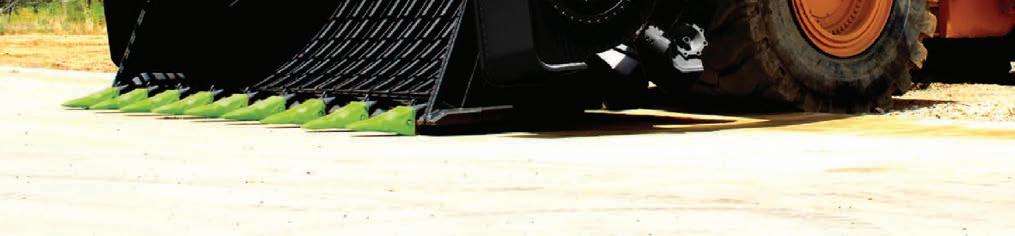
FlipScreen products are built to perform in the world’s toughest environments.
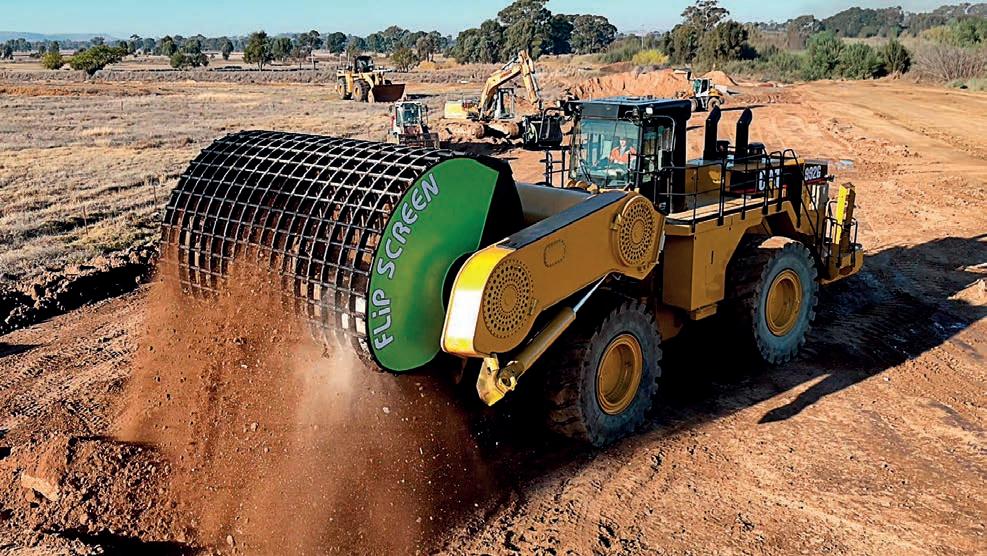

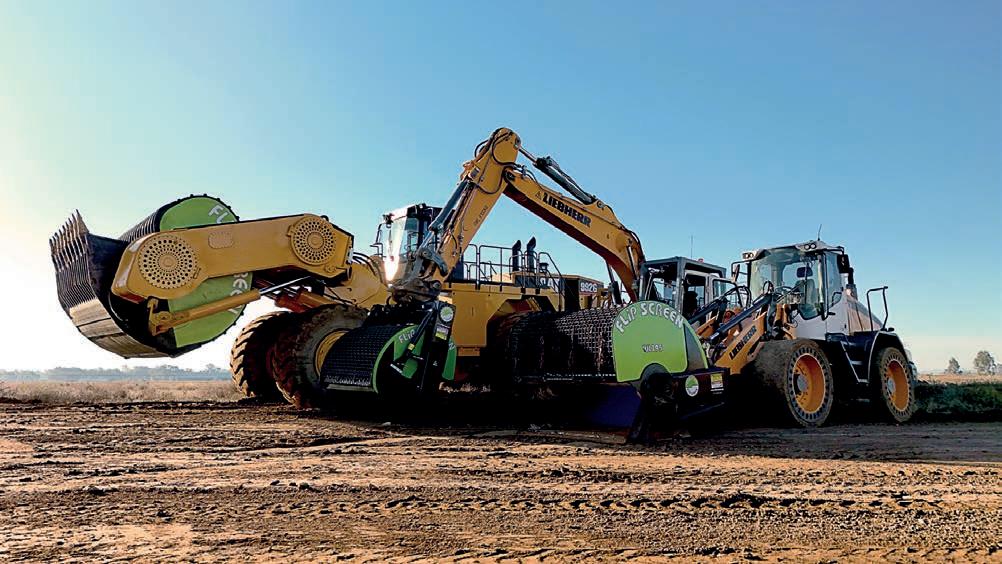
Mobility plays a major role in this shift. Instead of dragging material to fixed infrastructure, the process is brought directly to the face.
This reduces haul distances, cuts fuel consumption and removes unnecessary handling altogether. Operators can respond instantly to changing material conditions without being locked into rigid processing points.
And the scale has caught up.
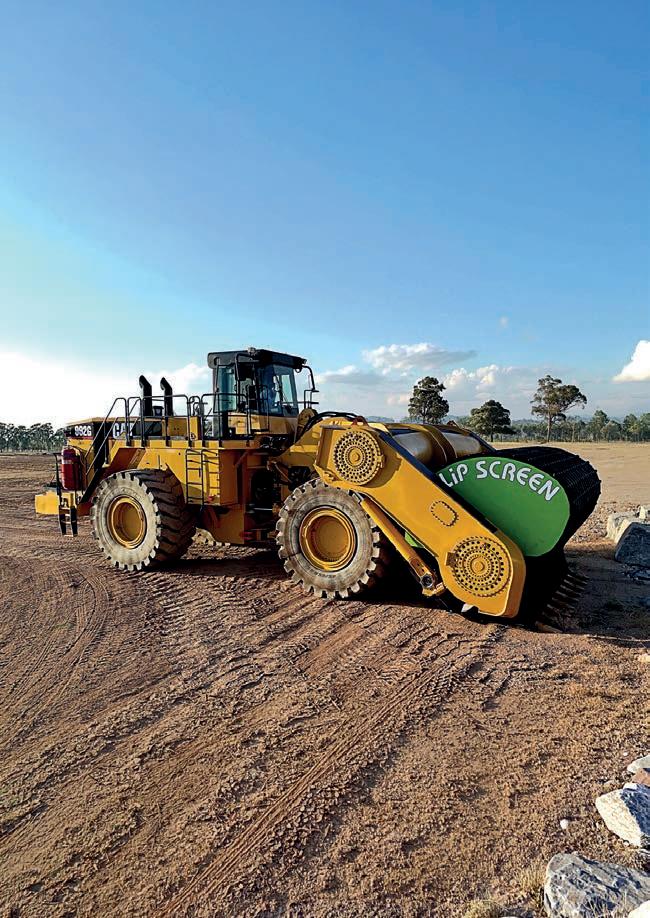
High-capacity systems are now capable of handling volumes that rival fixed plants, including the ability to scalp rare earth materials in serious quantities. At the top end of this capability are fully integrated systems built directly into mining-class wheel loaders.
Not attachments. Not add-ons. Just integrated solutions.
Material is loaded, separated and controlled in one continuous motion. No second pass. No rehandling. No duplication of effort. The operator maintains control from the first bucket.
As the largest portable scalping solution currently available, FlipScreen’s approach delivers exactly what mining
operations are chasing: consistent feed, reduced maintenance and zero tolerance for blockages. Large oversize is dealt with immediately, crushers stay clear, and the need for manual removal of blockages is dramatically reduced.
The result isn’t just improved efficiency, but a cleaner and more controlled operation.
However, the real shift isn’t just in the equipment. It’s in mindset.
The operations pulling ahead aren’t necessarily the ones spending the most. They’re the ones accepting inefficiencies as part of the process. They’re identifying where material flow breaks down and removing those problems completely.
In mining, performance isn’t lost in theory. It’s lost in jammed up crushers, oversized rock, and time spent fixing preventable issues.
Scalping is proving to be one of the most direct ways to take that control back.
Because, at the end of the day, genuine efficiency doesn’t come from working harder. It comes from removing what shouldn’t be there in the first place – and that’s exactly why FlipScreen has developed the WL3000. AM
Images:
FlipScreen
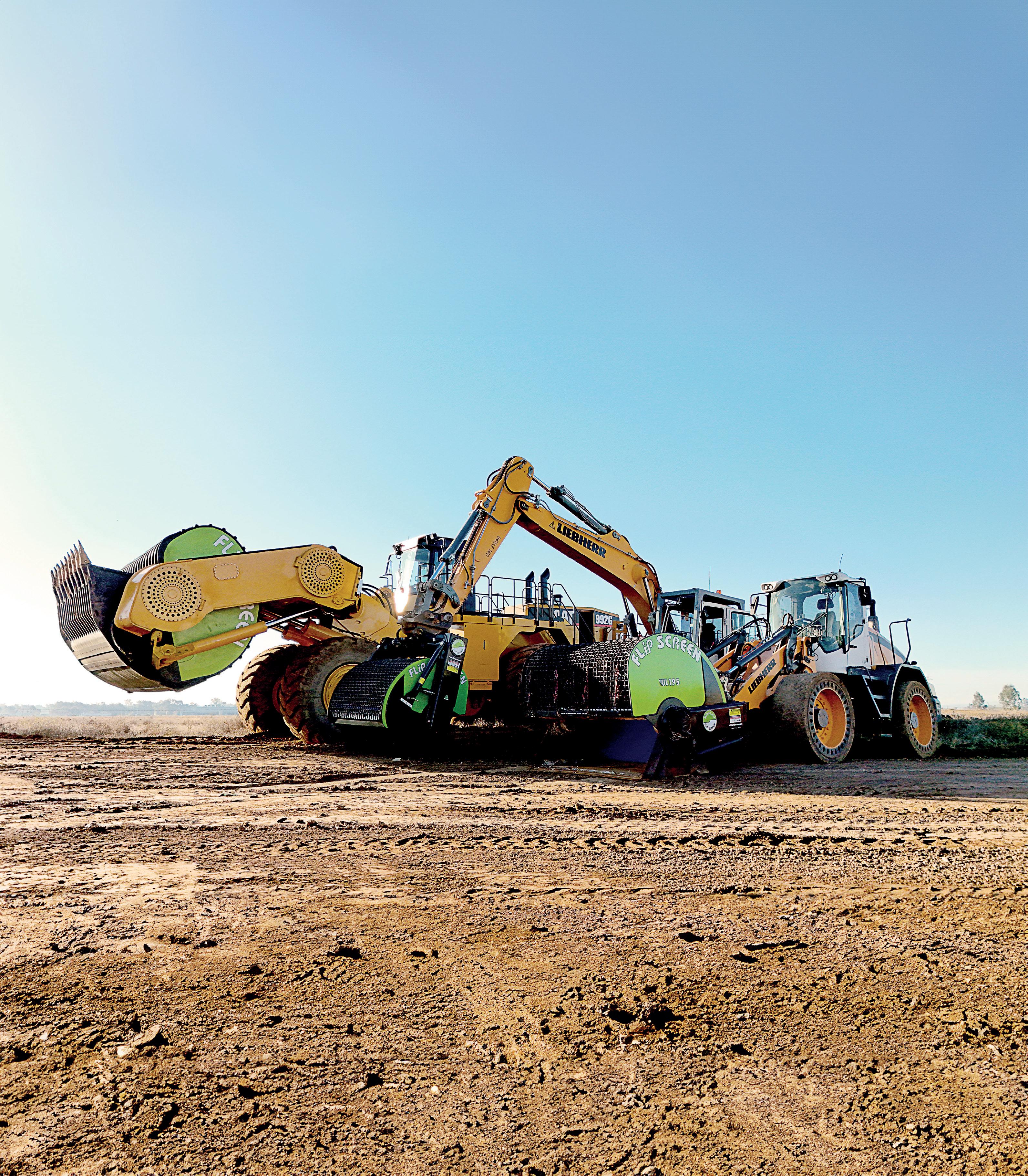
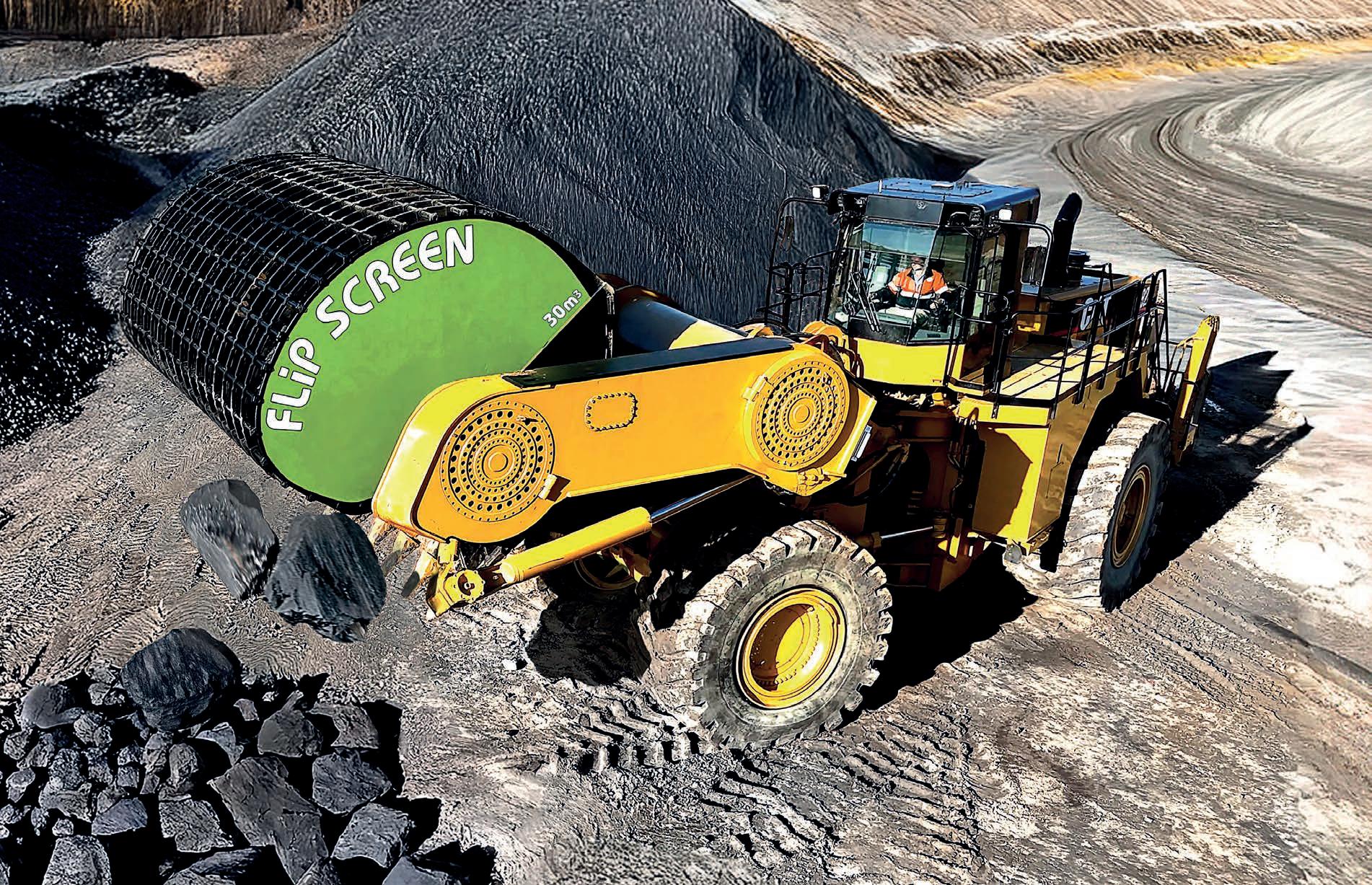
FlipScreen scalping buckets are designed for efficient, on-site screening.
FlipScreen’s approach delivers consistent feed, reduced maintenance and zero tolerance for blockages.
FlipScreen developed the WL3000 to help increase crusher efficiency and performance.
Engineering efficiency
How technology is optimising Australia’s modern mines.
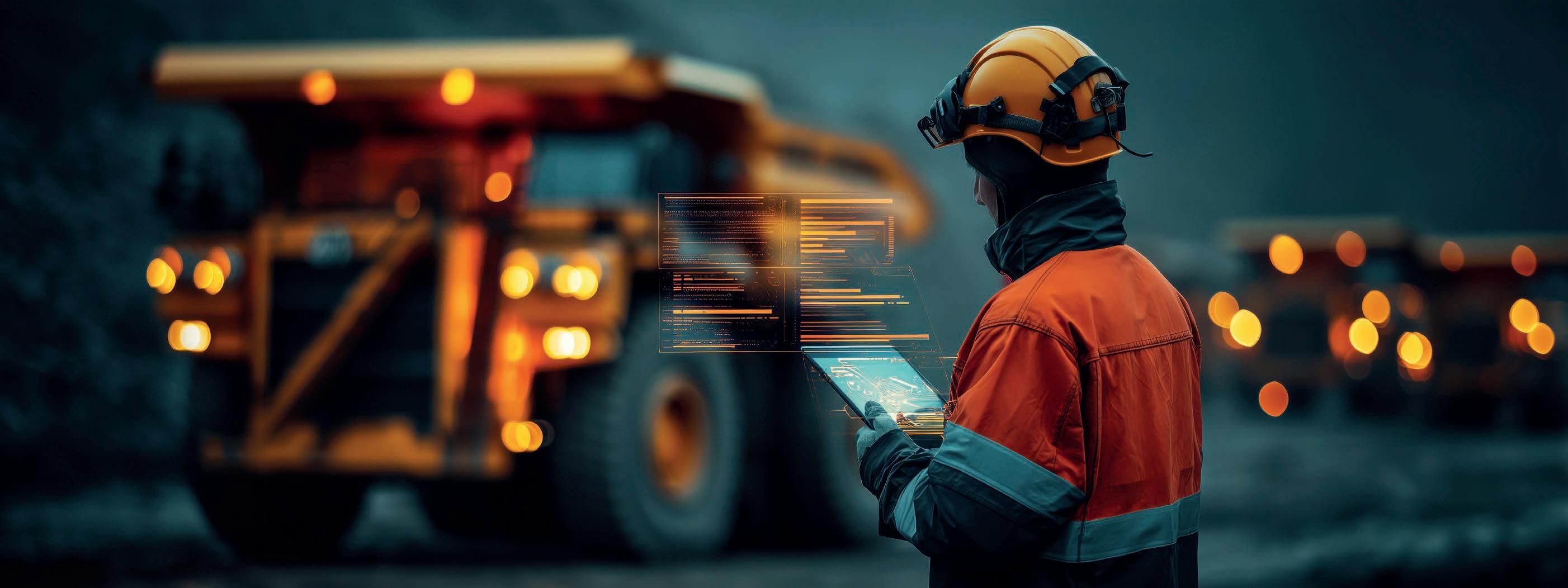
Efficiency has long been the foundation of Australia’s mining sector. But in today’s operating environment, one defined by evolving orebodies, cost pressures and the energy transition, efficiency is about doing things smarter as much as it is just about doing more with less.
Miners across Australia are rethinking how operations are designed, managed and optimised, embedding new technologies and integrated systems that are reshaping productivity at every stage of the value chain. From autonomous fleets to real-time data analytics and electrified infrastructure, the modern Australian mine is becoming a highly connected, continuously optimised ecosystem.
A data-driven industry
The scale of Australia’s resources sector underscores the importance of efficiency. According to the Australian Bureau of Statistics (ABS), mining accounted for more than half of the country’s export earnings in 2023–24, reinforcing its role as a cornerstone of the national economy.
Maintaining that position requires a laser focus on productivity.
One of the most significant shifts in recent years has been the move toward data-driven decision-making. Mine sites are generating vast volumes of operational data, from fleet performance and fuel consumption to geotechnical conditions and processing metrics.
The challenge has moved beyond data collection to interpretation.
Advanced analytics platforms are enabling operators to convert raw data into actionable insights in near real-time. This allows for faster adjustments to haulage routes, equipment utilisation and maintenance scheduling, reducing downtime and improving output consistency.
In practice, this means inefficiencies that once took weeks to identify can now be addressed within hours.
Beyond data, the next phase of efficiency is being driven by the increasing adoption of automation and autonomous systems across mine sites.
Autonomous haulage systems, first deployed at scale in the Pilbara, are now a proven contributor to productivity gains. By removing variability associated with manual operation, these systems deliver consistent cycle times, optimised fuel use and reduced wear on equipment.
And the overall benefits extend well beyond haulage.
Drilling, blasting and even elements of processing are increasingly being automated, enabling tighter control over production parameters and reducing the likelihood of unplanned disruptions.
This consistency is particularly valuable in high-volume operations, where even marginal gains in cycle efficiency can translate into significant improvements in overall output.
At the same time, the shift toward electrification is reshaping how energy is used, linking efficiency gains with broader decarbonisation goals.
Diesel has historically underpinned mining operations, but it is also a major source of cost and emissions – electrified equipment, including battery-electric vehicles and rail systems, offers a pathway to reducing both.
The recent introduction of batteryelectric locomotives in the Pilbara is demonstrating how energy efficiency can be improved within existing haulage systems. Regenerative braking, for example, allows energy to be captured and reused, reducing overall fuel consumption.
Similarly, battery-electric underground equipment is gaining traction in hard rock mining, where reduced heat and ventilation requirements can lead to lower operating costs. These technologies highlight a broader trend: efficiency and sustainability are increasingly aligned.
However, the greatest gains are not coming from individual technologies alone, but from how they are integrated across the entire mining system.
Mining is, at its core, a system. Loaders, trucks, processing plants, rail networks and ports must all operate in harmony to deliver consistent output.
Optimisation efforts have historically focused on individual components. Today, however, the emphasis is shifting toward system-wide performance.
Integrated platforms now enable operators to monitor and manage the entire production chain from a single interface. This type of holistic view allows for better coordination between departments, reducing bottlenecks and improving throughput.
For example, aligning mine planning with processing capacity helps to ensure that material is delivered at the right grade and volume, minimising rehandling and waste. Similarly, synchronising maintenance schedules across fleets can prevent cascading delays that impact production targets.
Supporting this systems-based approach is the growing use of digital twins, which are enabling a more predictive and proactive model of optimisation.
A digital twin is a virtual representation of a physical asset or operation, continuously updated with real-world data. This allows operators to simulate different scenarios, test operational changes and identify potential inefficiencies before they occur.
In mining, digital twins are being used to model everything from individual machines to entire sites. This capability is particularly valuable in complex or evolving environments, where conditions can change rapidly.
By testing different configurations in a virtual environment, operators can optimise performance without disrupting live operations.
Data-driven decision-making has been a key change in modern mining operations.
While technology underpins much of this transformation, the role of the workforce and industry collaboration remains equally critical.
As new systems and tools are introduced, the skill sets required on mine sites are evolving. Data analysis, systems thinking and digital literacy are becoming increasingly important alongside traditional operational expertise.
At the same time, collaboration among operators, equipment manufacturers and technology providers is playing a critical role.
Many of the most effective optimisation strategies are developed through partnerships, where insights from across the value chain are combined to solve complex challenges.
This collaborative approach is helping to accelerate the adoption of new technologies and ensure they are applied in ways that deliver tangible benefits.
Alongside innovation, a renewed focus on standardisation and scalability is helping operators translate efficiency gains across multiple assets
As operations become more complex, consistent processes and systems are essential to maintaining performance. Standardisation enables best practices to be replicated across sites, reducing variability and improving reliability.
This is particularly important for companies operating multiple assets across different regions.
fleet configurations, are also gaining traction. These approaches allow operators to adjust capacity in response to changing conditions without significant capital expenditure.
In emerging commodities, including those linked to the energy transition, this flexibility can be a significant advantage.
Resilience through optimisation
Efficiency is resilience as much as it is about productivity.
The mining sector operates in a dynamic environment, influenced by commodity cycles, regulatory changes and global demand shifts. Optimised operations are better equipped to respond to these challenges.
measures help to strengthen the long-term sustainability of operations.
This resilience is particularly important as the industry expands into new commodities and regions, where operating conditions may be less predictable.
These shifts point to a transformation in how Australia’s mining sector is positioning itself for long-term growth.
The integration of automation, electrification and digital systems is not only improving efficiency but positioning the industry for future growth. As global demand for resources evolves, particularly in areas such as critical minerals and renewable energy infrastructure, the ability to operate efficiently will be a key competitive advantage.
optimisation, Australian miners are working to ensure they remain at the forefront of the global resources industry.
In an industry built on a scale as vast as the Australian mining sector, even small improvements can deliver significant results.
But as the sector continues to evolve, it is clear efficiency is no longer just about incremental gains. It is about fundamentally rethinking how mines operate, integrating technology, people and processes into a cohesive, highperforming system.
And, in doing so, Australia’s mining industry is not only maintaining its position as a global leader but actively shaping the future of resource production. AM
The introduction of battery-electric locomotives in the Pilbara shows how energy efficiency can be improved in existing systems.
Engineering reliability into dust control
Nederman MikroPul delivers engineered air pollution control solutions that perform reliably in demanding environments.
Dust may be an unavoidable byproduct of mining, but managing it effectively is critical to ensuring safe, efficient and sustainable operations. For Nederman MikroPul, this challenge has defined decades of engineering innovation and close collaboration with the resources sector.
With more than 50 years of experience in Australia, Nederman MikroPul has established itself as a trusted partner to Tier 1 miners and leading engineering firms. Since commencing local operations in 1972, the company has built a strong track record supplying gas cleaning and product recovery systems, backed by a broad range of proven air pollution control technologies designed to perform in demanding industrial environments.
Today, as part of the global Nederman Group, MikroPul combines local expertise with international scale. Founded in 1944 and listed on the Nasdaq OMX in Stockholm, Nederman employs around 2500 people across multiple countries
and had reported order intake exceeding $800 million in 2025, reinforcing its position as a global leader in air pollution control solutions.
Nederman MikroPul national manager – engineered solutions Paul Purchase said the company’s origins continue to underpin its offering today.
MikroPul was the original inventor of pulse-jet technology, which has become the industry standard for most dust collector applications worldwide. That legacy has shaped the company’s engineering philosophy, which prioritises durability and long-term performance, with equipment lifespans of 20–30 years not uncommon.
“We pride ourselves on this,” Purchase said. “Our equipment is heavy-duty and reliable, and it tends to last for decades.”
This reliability is particularly valued in mining, where dust collection systems often operate in continuous process applications. While the core engineering principles behind dust collection have

remained largely unchanged, the demands placed on these systems are evolving.
Health and safety concerns are placing greater emphasis on effective dust management, while regulatory requirements and environmental, social and governance (ESG) considerations are driving companies to improve environmental performance.
“Issues like silicosis from silica dust have emerged as [concerns] that mine sites are having to address,” Purchase said.
Nederman MikroPul continues to refine its products, including air filtration and dust collection solutions. The company’s work spans new project developments and upgrades to existing operations, supporting capacity expansion, de-bottlenecking and efficiency improvements.
A key area of innovation for Nederman MikroPul has been improving system efficiency while reducing lifecycle costs. The company has invested heavily in optimising filter performance, including the development of longer filter bags, which allow for more compact systems without compromising effectiveness.
Advancements in inlet design are helping to improve airflow distribution within dust collectors. By reducing turbulence, these systems enhance preseparation of dust, extending filter life and lowering operating costs.
The company is also one of the few suppliers in Australia able to deliver wet scrubbers and scrubbing technology, further broadening its ability to support complex processing environments.
Nederman MikroPul’s offering extends beyond equipment supply to include
engineering, installation, commissioning and after-market support.
“We can supply flange-to-flange, complete systems, full installs, rebuilds, and commission ourselves,” Purchase said. This model is complemented by ongoing maintenance, spare parts and service contracts, ensuring systems continue to perform over the long term.
The company works with a wide range of clients, from small local operators to large blue-chip global organisations, including engineering, procurement and construction companies (EPCs), original equipment manufacturers (OEMs) and consultants, tailoring solutions to suit each operation’s specific requirements. Drawing on industry experience and proven technology, Nederman MikroPul delivers projects across Australia and into Southeast Asia, with a strong presence in key mining regions and growing activity in emerging markets.
As commodity markets strengthen, Nederman MikroPul is seeing increased project activity in Australia and around the world.
“Gold has raced ahead, and we’re doing a lot of gold projects. We’re starting to see more come through in copper and other metals,” Purchase said.
With decades of experience and a continued focus on innovation, Nederman MikroPul remains well placed to support the sector as it navigates challenges. From controlling dust and recovering valuable materials to meeting emissions regulations and protecting workers, the company’s systems play a steady but vital role in modern mining operations – often working in the background but always delivering where it matters most. AM
Images:
Nederman
MikroPul
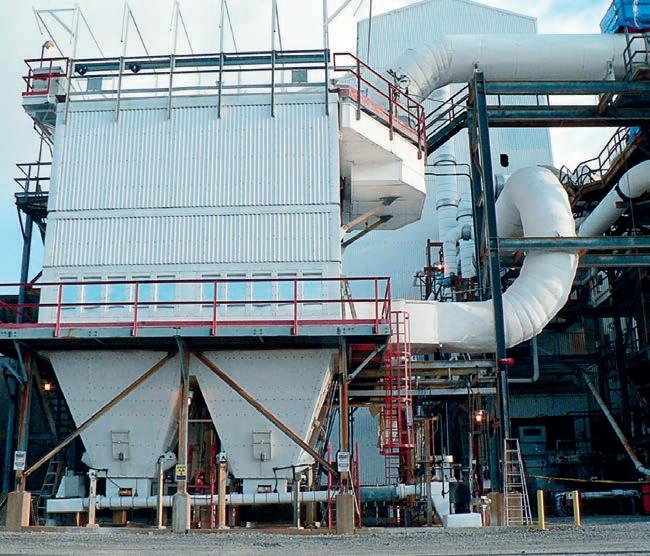
Nederman MikroPul’s baghouse dust collectors are suitable for various types of dusts.
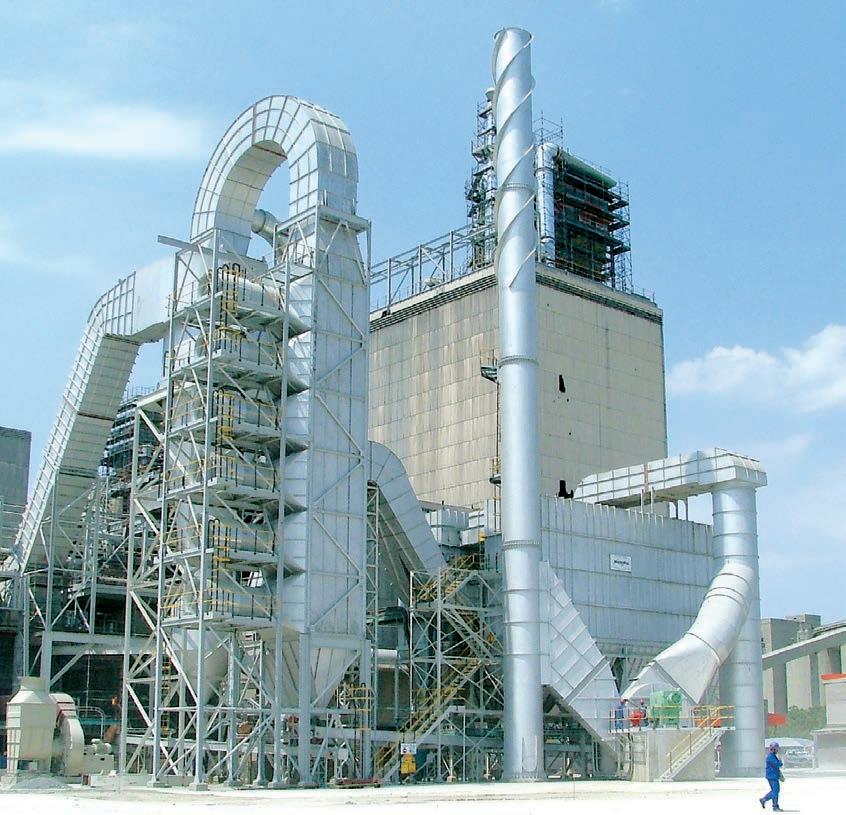
Dust collection systems often operate in critical process applications.






Unlocking performance through network clarity
Machine Logic is realising the promise of data by making the invisible visible.
In modern mining, the pursuit of digital transformation has become something of a holy grail for many operators.
From autonomous haulage and smart fleet management systems to real-time monitoring and data-driven decision-making, operations have invested heavily in technology to drive productivity and efficiency.
But beneath this growing digital ecosystem lies a less visible, often overlooked, foundation: the network.
Without a stable, transparent and well-understood network, even the most advanced systems and smartest devices can fall short of expectations.
Data gaps emerge, systems falter and productivity gains evaporate. For many operations, the issue is not the technology itself but the inability to see and understand how it is performing in real-time.
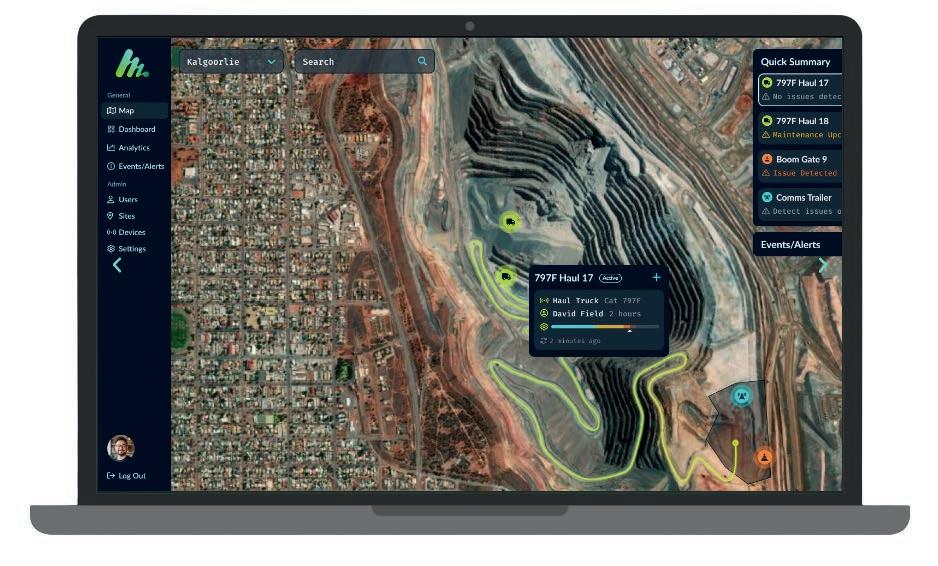
Machine Logic is tackling this challenge with its Asset Monitoring Tool (AMT), a software-based solution designed to make operational technology (OT) visible, accessible and actionable. Built in Microsoft Azure and deployable on local servers, the platform provides real-time visibility across network-
connected systems while prioritising simplicity and usability.
The origins of AMT lie in a lack of network visibility, which has been a persistent industry-wide challenge.
Machine Logic co-founder Aaron Innis, who has a background in autonomous mining, saw this gap repeatedly in the field. When AMT was recently deployed at a client site in Queensland, the results were immediate.
“It was pretty exciting,” Innis said. “We deployed the app on the customer’s server and integrated a few devices, and instantly we started to see issues, largely around the main access point where all the devices connect.
“That was what we call ‘flapping’ – it was on and off, causing network issues across the whole system. We picked it up almost instantly, mapped it and took it back to the customer, and they were blown away that we identified it so early.”
As more devices were added, broader patterns began to emerge, revealing systemic issues across the site that had previously gone unnoticed.
“Once we visualised it for the leadership team, they were surprised at how many issues existed,” Innis said. “It validated
early on that the application was delivering value straight away.”
Network performance has effectively been a blind spot in many operations. Innis said some sites lack the on-ground support needed to properly investigate network behaviour, leaving issues unresolved and often misdiagnosed.
From his experience, these challenges are widespread across the industry. Many operations face similar conditions: networks that appear functional on the surface but contain underlying inefficiencies.
“I think it’s everywhere. Apart from maybe a couple of the big players, most sites have similar issues,” Innis said. “People can’t see what’s going on, so they assume the network is fine. You might have one person responsible who says everything is working, and everyone else just accepts that.”
Rather than replacing existing teams, AMT has been designed to support them by improving capability.
“It’s not about highlighting gaps in people or teams,” Innis said.
“It’s about giving them a tool to visualise something that is very difficult to see and helping them troubleshoot faster.
“It helps narrow down the problem, whether it’s the network or something else.”
This capability becomes especially important as mining operations continue to invest in automation and advanced technologies. Innis pointed to his experience with autonomous systems, where network reliability is critical to maintaining confidence in those investments.
“My background is in autonomous mining, and those systems have very little flexibility. If the network is bad, the equipment stops and it quickly erodes confidence in the technology,” Innis said.
“I’ve seen autonomous haulage projects turned off because the network wasn’t performing, and that was one of the drivers for developing this tool. I knew the network was the issue, but I couldn’t show it.”
As mining companies invest more heavily in digital systems, the demand for reliable data continues to grow. Data may well be the new oil, as the saying goes, but without proper extraction and refining, it’s not especially useful.
“Everyone is data-hungry. They want AI, machine learning and more insights,
Machine Logic’s Asset Monitoring Tool is designed to remove operational blind spots.
but if the network isn’t there the data isn’t coming through,” Innis said.
“There are gaps in the data and that impacts the value of those systems. This is about supporting data integrity and ensuring a consistent flow of information.”
The platform is designed to integrate with a wide range of devices and systems across a mine site, regardless of vendor or interface maturity. While each new integration requires development work, once completed it can be replicated across other operations, improving deployment efficiency over time.
This scalability is particularly relevant as new technologies emerge. Machine Logic is already working to integrate data from systems such as Starlink, positioning the platform to support evolving connectivity solutions across mining operations.
At its core, AMT is intended to sit beneath the broader digital ecosystem, supporting data consistency and system performance, while providing the user with a quick and ready means of identifying issues that emerge.
“It’s a foundational layer that ensures data consistency,” Innis said.
“Once that’s in place, operations can focus on improving efficiency and productivity, knowing their systems are online and performing.”
Security has also been a key consideration in the platform’s design.
“It was about ensuring security and giving operations confidence that everything sits on their side of the fence,” Innis said.
Despite the complexity of the challenge it addresses, simplicity has remained central to AMT’s development.
The platform has been designed with an intuitive interface that allows users to quickly assess asset status and identify issues without requiring deep technical expertise.
As mining professionals with plenty of experience in the field, Machine Logic’s two co-founders have found the reception to the platform gratifying.
“The UX [user experience] and usability were always a key part of the vision,” Innis said. “The feedback has been overwhelmingly positive. People find it simple to use, and the dashboards make it easy to understand what’s happening.”
As mining operations become more complex and interconnected, the ability to identify and resolve issues quickly is becoming increasingly important. By making network performance visible and understandable, AMT allows operations to move beyond assumptions and take a more proactive approach to managing their systems.
In an environment where uptime, efficiency and data integrity are critical, that visibility provides a clearer pathway to unlocking the full value of digital investment. AM
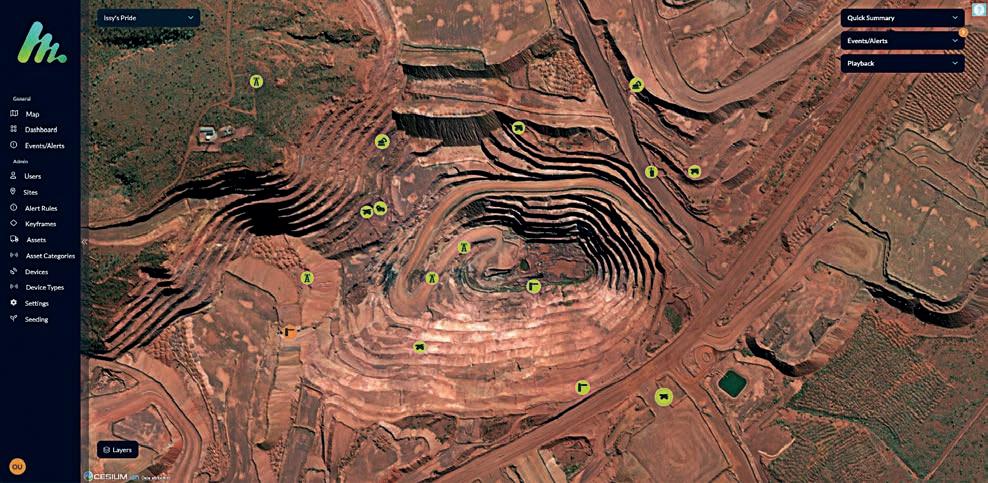
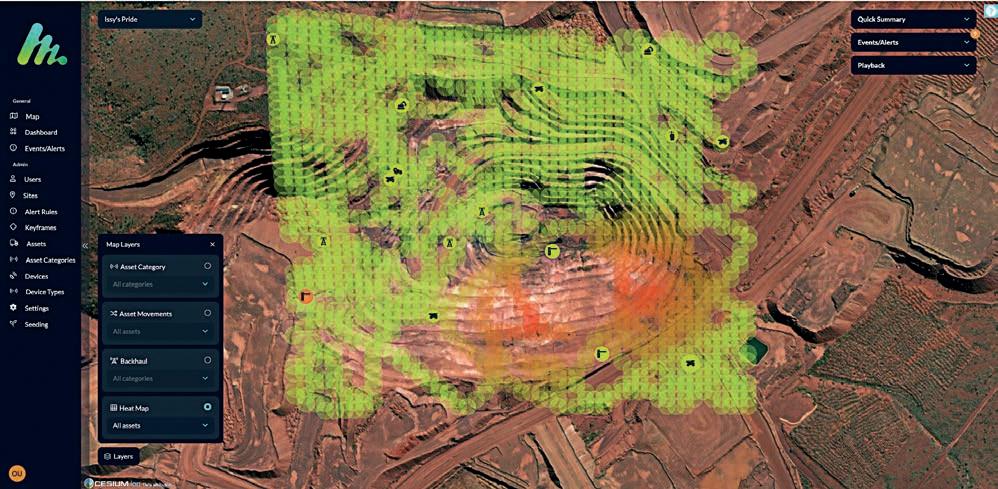
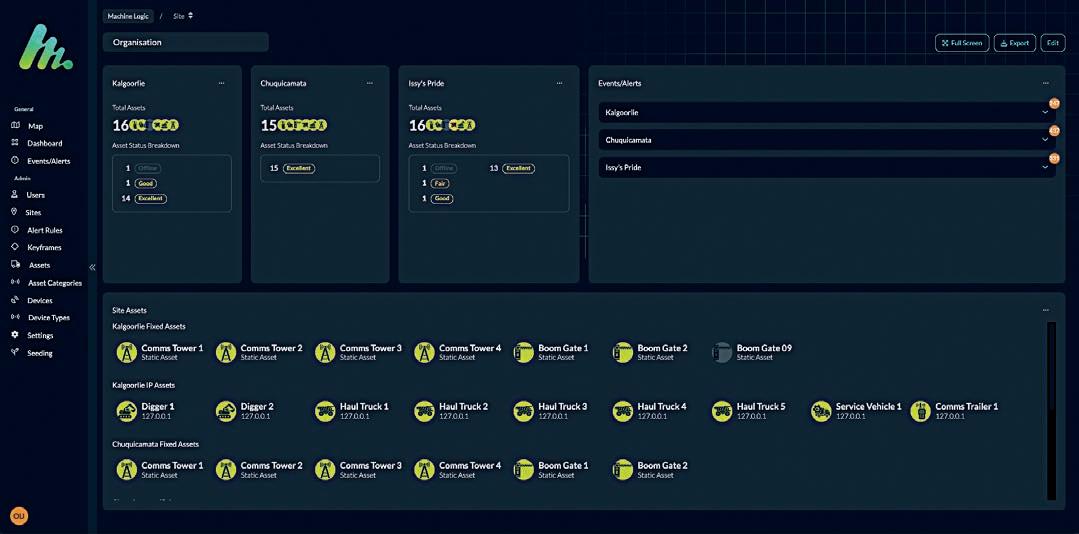
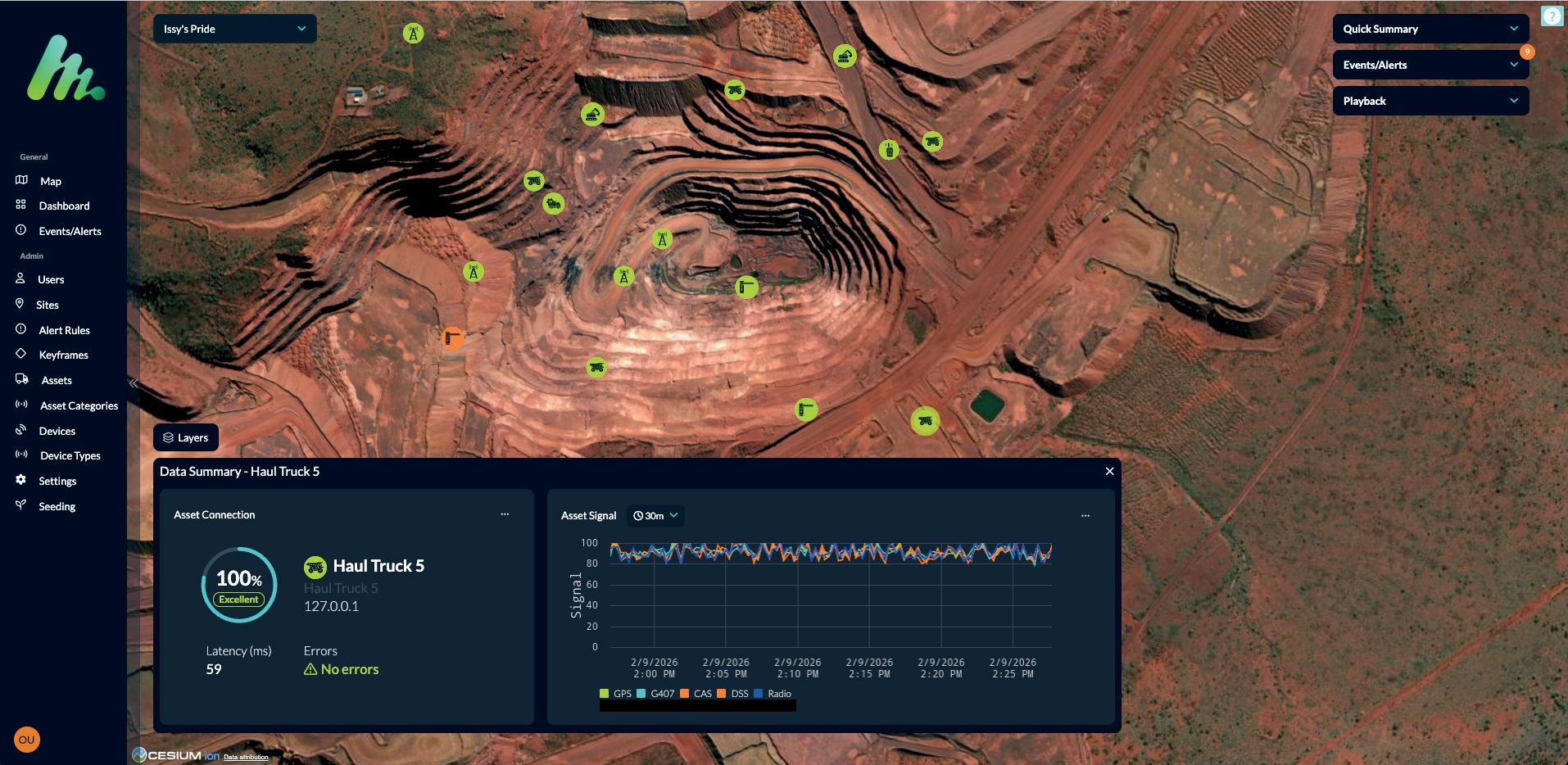
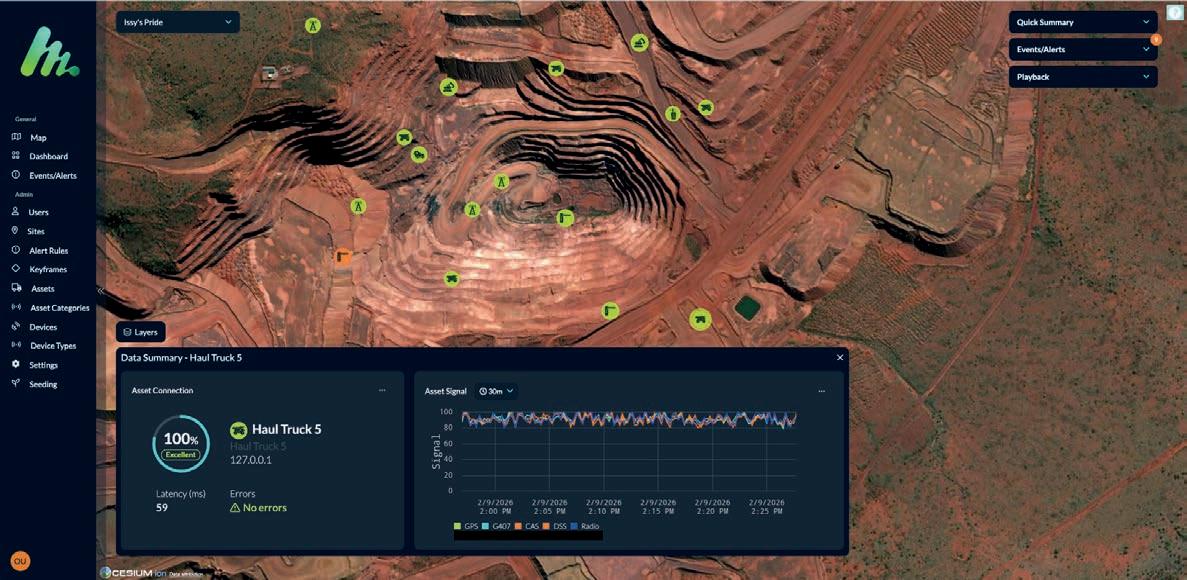
Features like heat maps keep operators abreast of issues at a glance.
Operators can access data quickly and easily to troubleshoot system faults.
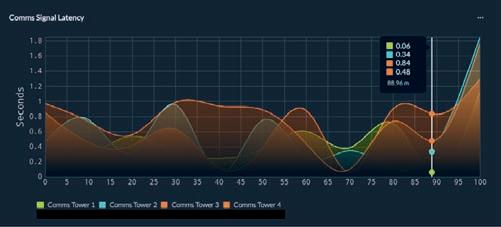
Data presented with simplicity provides network clarity.
Images: Machine Logic
Connected underground
Innovative Wireless Technologies is combining connectivity, analytics and ventilation monitoring to help mines respond faster, cut downtime and optimise production in real-time.
Ensuring a mine site’s performance depends on myriad factors, but a pillar of the process is operational intelligence: the seamless conveyance of information through uninterrupted channels delivered into a clear, accessible format.
Innovative Wireless Technologies (IWT) delivers exactly that through its wireless SENTINEL network of communication and remote monitoring devices paired with its analytics platform.
The network provides operators with real-time visibility to identify issues early, adapt quickly, and improve safety and productivity.
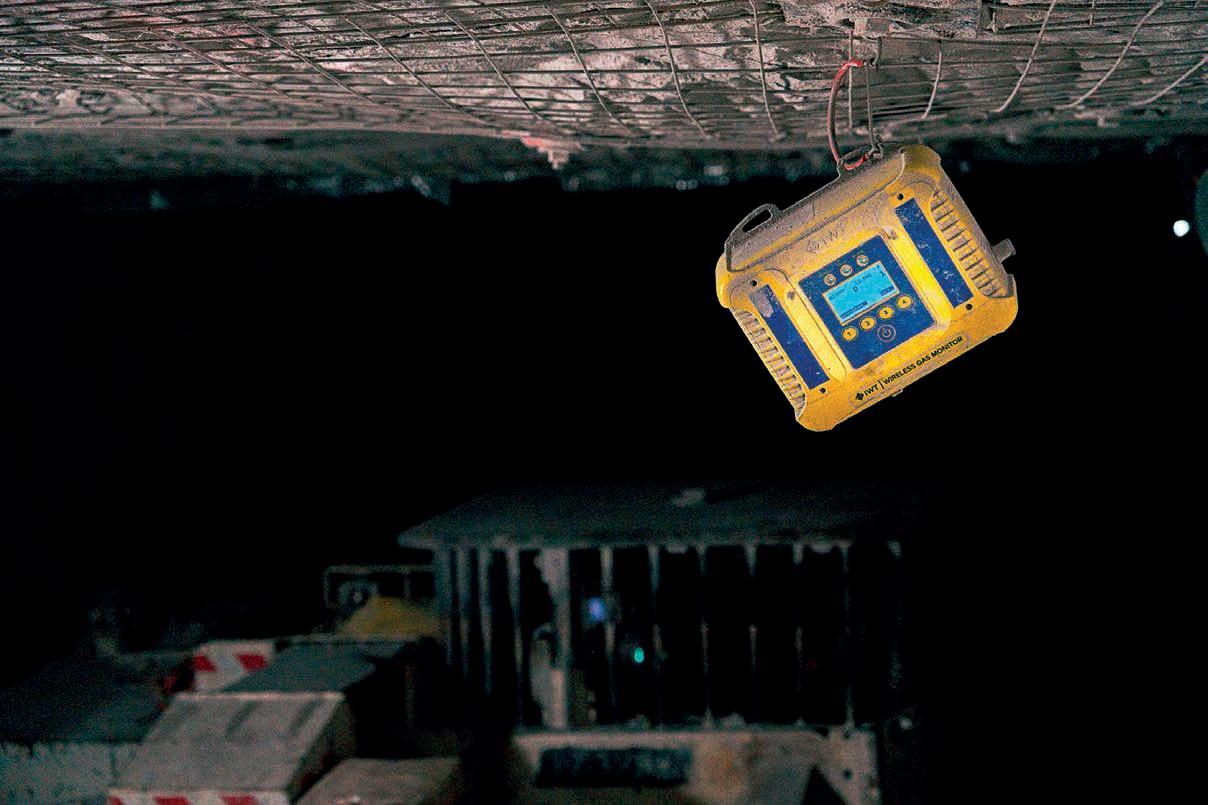
Combined with the SENTINEL Wireless Ventilation Monitor (WVM), the system enables distributed airflow observation in hard-to-reach areas, allowing earlier detection and faster responses. For underground operations, this level of visibility moves beyond convenience and becomes fundamental to performance and consistency across the mine.
Traditional communications systems have often struggle underground. Wi-Fi relies on predictable environments and clear lines of sight, while wired systems can be costly and slow to extend as mines evolve and headings advance.
“Mines are not clean, open, static environments,” IWT director of marketing Jeremiah Colling said.
“They are harsh, irregular and constantly changing.”
This reality underpins IWT’s meshbased approach, where each node becomes part of a broader communications layer, allowing data to move across multiple paths and reroute when conditions change. Instead of relying on a single connection point, the network becomes inherently more flexible and resilient.
This ‘data-hopping’ architecture allows information to move node-to-node until it reaches its destination, overcoming nonline-of-sight challenges that are common underground, resulting in a system that adapts with the operation.
That connectivity feeds into IWT’s analytics capability, which is aimed at turning raw data into actionable insight. That kind of real-time optimisation depends on data that is continuous, trusted and immediate.
“If the data is delayed, incomplete or only available in fragments, then managers are not optimising operations in realtime,” Colling said.
“They are reviewing history and reacting late. That is a completely different thing.
“Reliable transmission is what turns digital systems from a reporting tool into an operational tool. It allows mines to detect emerging issues sooner, coordinate people and assets with confidence, and make decisions while there is still time to influence the shift instead of just explaining what went wrong after the fact.”
Rather than overwhelming users with raw figures, the analytics platform organises data into trends, alerts,
exceptions and workflows that help to answer three questions:
• What is happening?
• Why it is happening?
• Where is attention needed?
In practical terms, production gains of 5–15 per cent are typically achieved not through one major change but by reducing repeated inefficiencies across a shift, such as delays, bottlenecks, idle time and poor coordination between crews and equipment.
“The point is not more data, but rather visibility into what is causing unplanned downtime,” Colling said.
The same principle applies to maintenance, with IWT pointing to savings of up to 40 per cent when shifting from reactive to planned workflows. Realtime monitoring provides earlier indicators of abnormal patterns, allowing teams to act before failures occur and better align maintenance with production windows.
Artificial intelligence (AI) and machine learning support this by identifying subtle
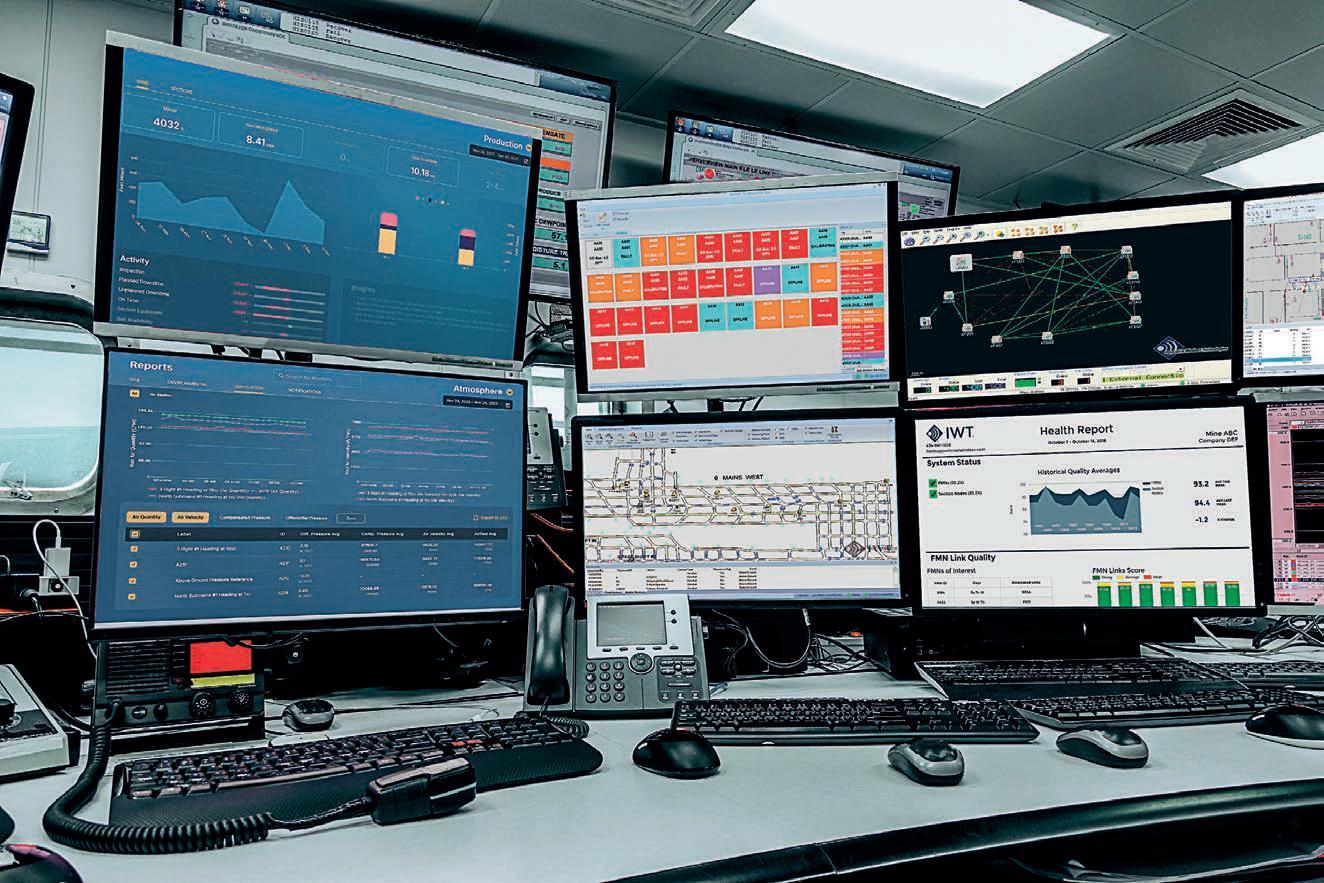
The IWT analytics platform provides continuous awareness of underground operations.
patterns, from recurring downtime causes to emerging risks and inefficiencies that may otherwise go unnoticed.
“Our philosophy is simple: let the system do the watching, the sorting and the pattern recognition; let the people do the deciding,” Colling said. “That is how you get scale without losing operational common sense.”
That balance is especially important in mining, where conditions change quickly and experienced personnel bring context that no model can fully replicate.
Building on this shift towards real-time operational visibility, ventilation emerges as one of the most critical underground applications of continuous monitoring.
Using microelectromechanical systems (MEMS)-based pressure sensing, the SENTINEL WVM enables continuous, distributed monitoring across more locations, shifting airflow management from periodic checks to a live operational condition.
When integrated into the analytics platform, ventilation data becomes part of a broader system view, allowing operators to compare zones, identify trends and pinpoint issues more efficiently and with greater confidence.
This helps to reduce time spent diagnosing problems, and as compared to traditional methods, real-time monitoring can cut detection times from hours to minutes, giving operators a clearer starting point for response. appropriate response.
For underground operators, shortening the gap between problem emergence, detection and response is one of the biggest advantages of a connected mine, particularly as operations continue to scale in complexity.
As mining operations grow more complex, IWT’s integrated, real-time visibility across communications, analytics and ventilation is becoming essential to improving safety, efficiency and decisionmaking underground. AM












Wireless devices provide continuous visibility where traditional infrastructure is difficult to deploy.

Turning data into value
How Minitab is driving mining performance.
As mining operations face increasing pressure to improve efficiency, reduce waste and maximise resource recovery, data-driven decisionmaking is becoming a defining factor in operational success.
For companies like Minitab, this shift presents an opportunity to support miners in unlocking measurable gains, transforming underperforming operations into high-value assets through advanced statistical analysis and process improvement.
Two case studies from global mining operations highlight how Minitab’s tools are helping deliver tangible results, offering insights that are equally relevant to the Australian mining industry as it looks to boost productivity and longterm sustainability.
Rock recovery performance
At the Wingate phosphate mine in Florida, operated by Mosaic Corporation, the challenge was stark. Rock recovery rates – a key measure of how much valuable material is extracted from ore – sat at just 47 per cent, well below the industry average of 85–90 per cent. The mine’s long-term viability was in question.
Armed with Lean Six Sigma methodologies and Minitab statistical software, a project team set out to identify
the root causes of inefficiency within the beneficiation process.
Using Minitab’s capability analysis, the team was able to quantify the extent of the problem, confirming that recovery rates frequently fell well short of targets. From there, they applied process mapping and cause-and-effect analysis to pinpoint the stages of the operation with the greatest potential for improvement.
Minitab’s design of experiments (DOE) functionality proved critical, enabling the team to evaluate multiple variables simultaneously and quickly determine which changes would have the greatest impact. As improvements were implemented, tools such as Gage R&R, variance testing and control charts were used to validate results and ensure gains were sustained.
The outcome exceeded all expectations. Recovery rates increased from 47 per cent to more than 68 per cent within 30 days. Over time, continued improvements pushed recovery beyond 80 per cent.
“Managers hoped for a two or three per cent increase in recovery rates,” Six Sigma black belt Joe Gliksman said. “They told us that sustained 70 per cent recoveries at this mine would be a miracle.”
Optimising silver recovery
A similar story of transformation can be seen at the Saucito silver mine in Mexico, operated by Fresnillo, where improving recovery rates presented a different but equally complex challenge.
Unlike phosphate, silver recovery is heavily influenced by the quality of the raw ore, a variable that cannot be controlled. The focus shifted to identifying and optimising the controllable factors within the processing system.
With support from Minitab, the project team analysed a range of variables affecting the extraction process, including raw material characteristics, water, air and chemical reagents.
then used contour plots and Minitab’s Response Optimizer to determine the optimal balance.
Further statistical analysis, including regression and hypothesis testing, revealed that variability in operatorselected settings within the mine’s control system was a major contributor to inconsistent performance.
By developing a new statistical model and embedding it into the control system, the team replaced subjective decisionmaking with data-driven optimisation. The results were substantial. Silver recovery increased from 87 to 89 per cent, while below-grade production fell by 68 per cent. At the same time, reagent use dropped by 12 per cent, reducing costs and waste. The improvements delivered more than $2 million in additional monthly revenue.
For the Australian mining sector, where operations are often remote, capitalintensive and increasingly complex, this capability is becoming essential. Technologies like Minitab are enabling companies to better understand their processes, reduce variability and make faster, more confident decisions. AM Data-driven
The financial impact was equally significant, delivering more than $12 million in annual benefits through increased production and reduced reagent use. Just as importantly, the project helped shift workplace culture, demonstrating the value of data-driven decision-making across the operation.
“Integrating all possible causes was the most important challenge we faced,” project leader Román Cruz said. “Minitab allowed us to analyse numerous variables, which set the course for the whole project.”
Using DOE, the team uncovered interactions between variables that had previously gone unnoticed. They identified key reagents that significantly influenced recovery and product grade,
Across both case studies, a common theme emerges: the ability to translate complex operational data into clear, actionable insights.






WHEN CLARITY IN COMPLEXITY MATTERS, TRUST GENUS
As mining operations become more complex, efficiency is no longer something you optimise later: it’s something you design upfront.


At Genus, we help de-risk projects through early contractor involvement and integrated, end-to-end delivery. By aligning design, engineering, and construction from the outset, we reduce rework, minimise delays, and deliver infrastructure that performs as intended.
With proven experience delivering large-scale power and transmission infrastructure across Australia, we know how to simplify complexity and build systems that work as one.
If you’re ready to unlock real efficiency, partner with the team that builds it in from the start.









Ground support in the Goldfields
Robit is delivering faster access to drilling consumables and cost-saving regrinding services through a revamped Kalgoorlie-Boulder facility designed to keep operations running.
Access to reliable drilling consumables is vital to maintaining a mine site’s productivity, especially in Western Australia’s Eastern Goldfields, where abrasive geology and remote operations define daily realities.
That is the setting for Robit’s revamped Kalgoorlie-Boulder branch, a development that establishes a permanent service base in one of Australia’s most active mining regions.
Spanning 2000m2, the facility combines warehousing for Robit’s full range of drilling consumables with a
conditions that demand consistent tooling performance and frequent maintenance.
Robit’s presence in Australia dates back to its 2016 acquisition of Drilling Tools Australia (DTA), through which it built relationships with major contractors and mine operators nationwide. The Kalgoorlie-Boulder branch represents a deeper commitment, placing product and expertise directly within the region’s main service hub.
At the heart of the new facility is its warehousing capability, stocking Robit’s complete range of Top Hammer, Down-
Robit is also working with customers on consignment stock and tailored supply arrangements, aligning inventory with site-specific drilling schedules.
Complementing the warehouse is a dedicated in-house bit-grinding facility, a key differentiator in the KalgoorlieBoulder branch’s offerings.
In hard-rock drilling, button bits gradually lose efficiency as tungsten carbide buttons wear flat. Once wear flats exceed roughly one-third of the button diameter, penetration rates drop and the risk of cracking increases.
Rather than discarding worn bits, Robit’s regrinding service restores them to operating specification, maintaining original geometry and hole accuracy.
The financial implications of this offering are significant. Regrinding typically costs a fraction of replacement, with well-maintained bits delivering cost reductions of up to 60 per cent over their service life, Robit said. In many cases, proper grinding practices can double bit service life, a critical advantage in highcost, high-demand drilling environments.
Beyond physical infrastructure, the Kalgoorlie-Boulder branch is staffed by Robit’s drilling specialists, who provide application advice, performance analysis and troubleshooting support. This includes guidance on selecting the right bit, hammer and rod configuration for local ground conditions, a factor that can materially influence cost-per-metre outcomes in the abrasive rock types common across the Goldfields.
Robit also supports product trials and ongoing performance monitoring, drawing on technical expertise from its global manufacturing bases operations in Finland, South Korea and the UK. With its Kalgoorlie-Boulder expansion, the company is reinforcing a broader strategy, pairing global capability with local presence.
For operators in WA’s Goldfields, that translates to faster access, longerlasting tools and on-the-ground expertise, all geared towards keeping drills turning in one of Australia’s most demanding mining environments. AM
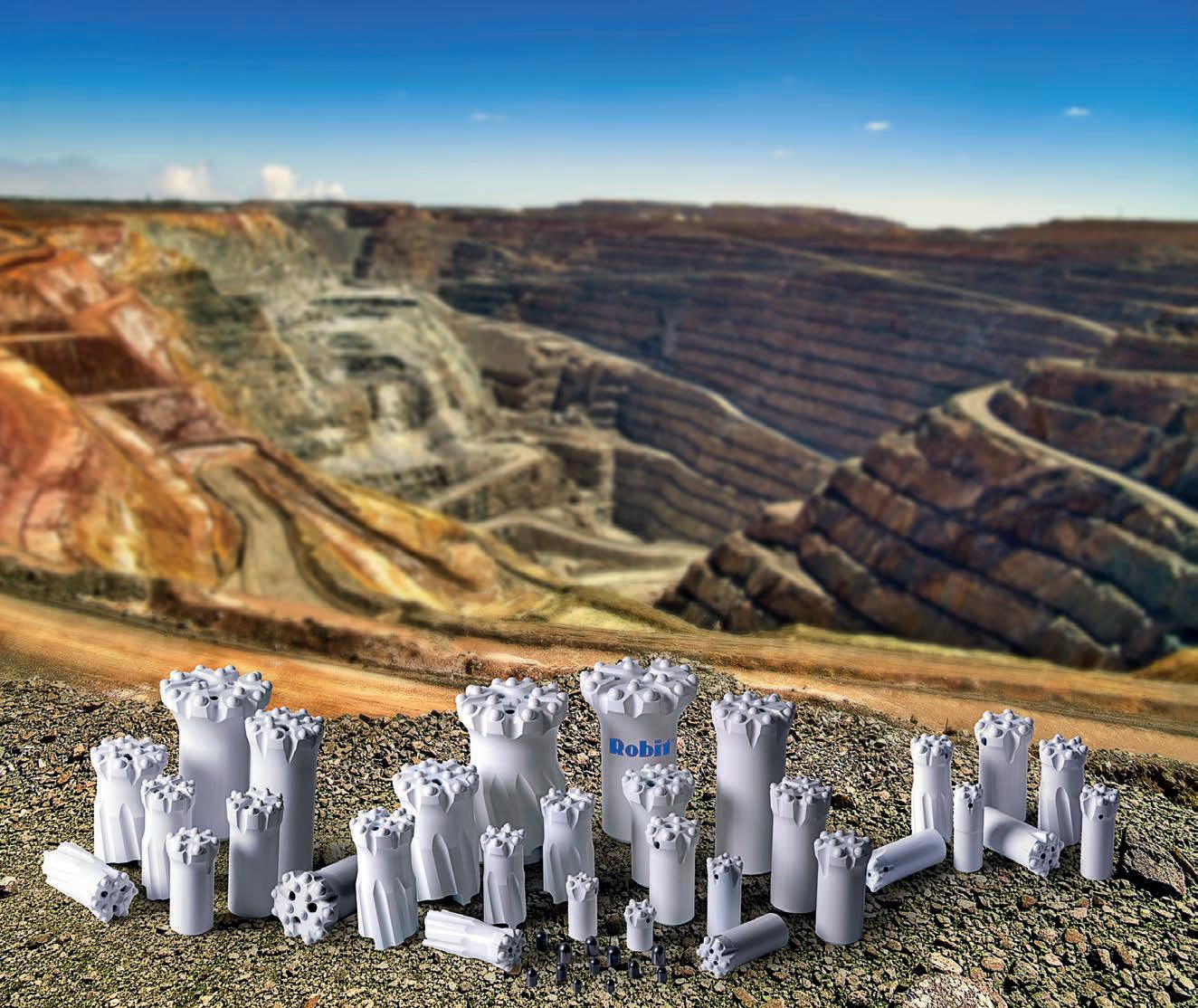
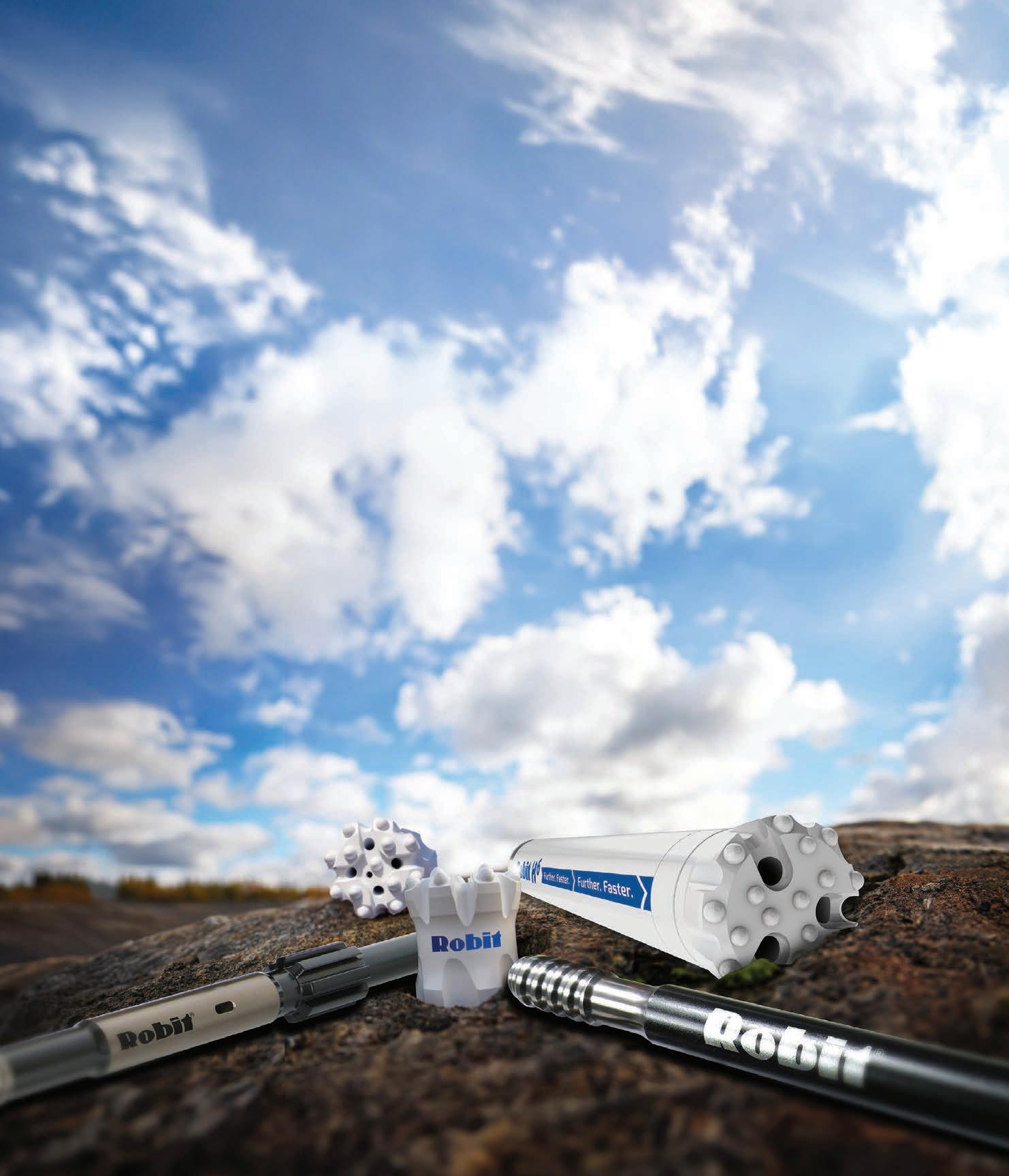
Robit’s button bits ensure productivity through durability in abrasive environments.
Image:
Robit





















Reliable pumps, fast maintenance
Alemlube is helping mine sites streamline fluid handling with solutions designed to manage multiple liquids safely, efficiently and reliably.
Fluid handling on mine sites often involves transferring a mix of diesel, waste oil, water, coolant and sludge across maintenance areas, workshops and field locations. Equipment used for these tasks needs to accommodate multiple fluid types while remaining serviceable under continuous use.
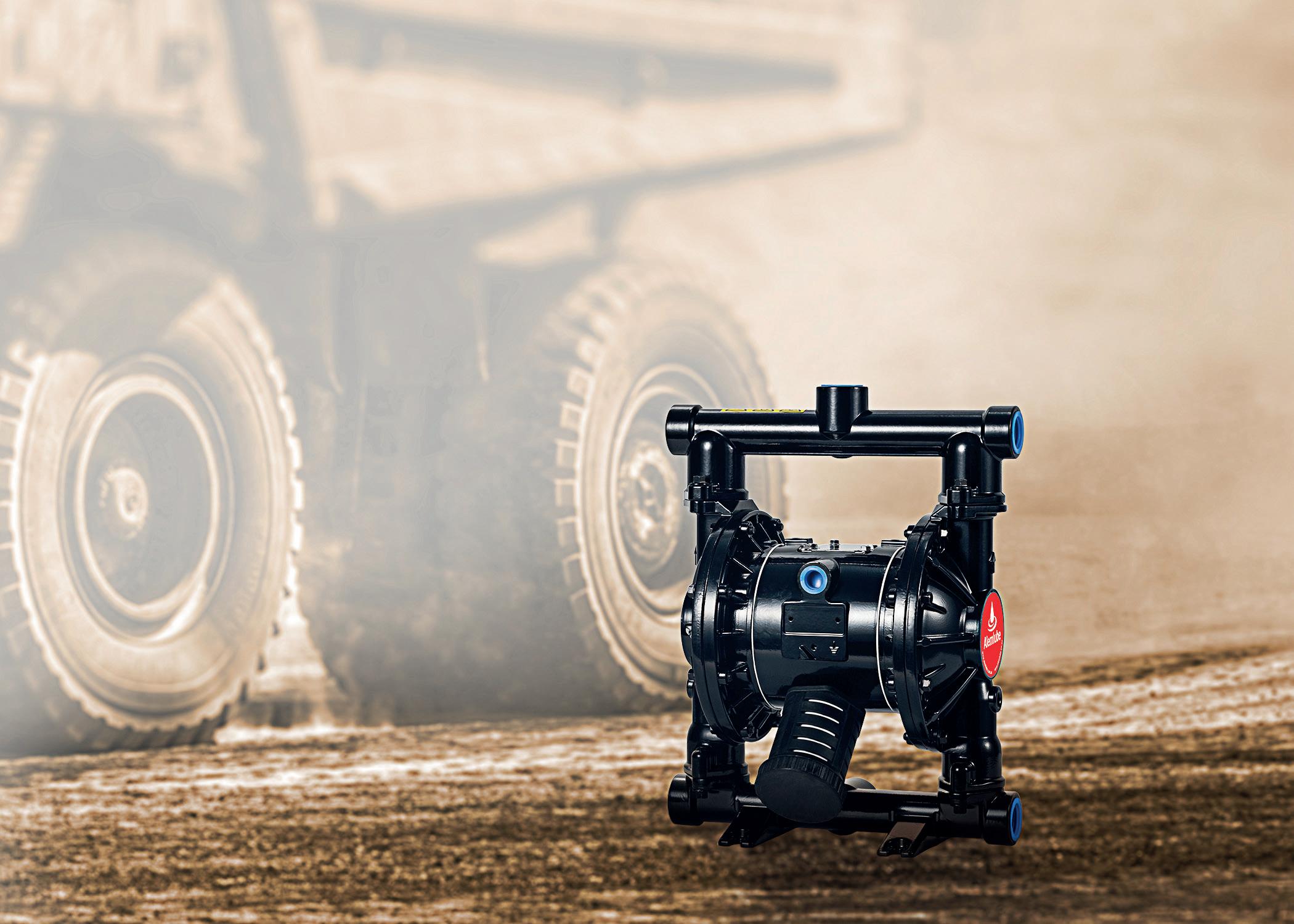
Alemlube has addressed these requirements with the release of its Dingo series of air-operated diaphragm pumps, a range developed specifically for mine site applications.
Pumps are built around multi-fluid capability and are designed to transfer and dispense liquids including diesel oil, wastewater and coolant, rather than requiring a separate pump for different fluids.
A key factor enabling this flexibility is the use of polytetrafluoroethylene (PTFE) diaphragms and balls as standard, combined with an aluminium body. PTFE is a durable, chemically resistant material that acts as a flexible seal inside the pump, allowing it to move fluids without leaking or degrading.
The diaphragms create the pumping action by flexing back and forth, while the balls act as one-way valves to control fluid
flow. PTFE components are typically safer and more resistant to wear over time, allowing the Alemlube Dingo series to handle a broader range of fluids safely and reliably.
The pumps are also designed to align with mine site specifications. Each unit is built for use in harsh conditions and remote locations, where reliability is critical. This includes environments where dust, variable temperatures and continuous operation place additional demands on equipment.
Safety and sealing integrity are addressed through the inclusion of a bolt-through fluid cover, designed to minimise the potential for leaks while in operation. Reduced leakage also contributes to improved reliability by maintaining consistent internal pressure and sealing performance over time. Pumps are also compliant across key industry safety metrics, including ISO9001 standards.
Installation and replacement is simple as a result of compatibility with existing equipment layouts, making them 100 per cent interchangeable with leading brands by using the same mounting bracket and bolt hole configuration. This means
existing pumps can be removed and replaced with the Alemlube Dingo series without modifying mounts or pipework.
Maintenance requirements have also been considered in the design thanks to two major repair kits being available across all models in the range, allowing straightforward servicing. Kits are intended to support fast maintenance, enabling site personnel to complete repairs efficiently and return equipment to service with minimal delay.
The Dingo series is offered in multiple sizes to suit different flow and transfer requirements, and allows operations to match pump capacity to specific tasks, whether for lower volume transfers or higher throughput applications.
While the pumps address fluid transfer, Alemlube’s product range also extends to lubrication equipment used in maintenance operations, such as the Alemite high-pressure grease pump designed for applications that need constant grease delivery.


equipment is typically used in workshop and field servicing environments, supporting routine maintenance of mobile and fixed plants.
By offering fluid transfer and lubrication equipment within the same product portfolio, Alemlube is positioning itself as a practical solutionprovider to maintenance and optimising equipment. In addition, Alemlube is the distributor of Alemite products across Australia and New Zealand, as well as offering Samoa and Piusi products that are suitable for mining service trucks.
This positions Alemlube as a key player in keeping pumps pumping, machines turning and trucks on the road, providing a product range intended to integrate with existing infrastructure while addressing fluid handling and lubrication requirements.
Such a comprehensive portfolio supports mine sites by providing equipment with proven reliability and serviceability.
With a 40:1 pressure ratio, the pump is suited to delivering grease to components operating under load, where effective lubrication is necessary to maintain performance and service life. This type of
In an environment where uptime is critical, Alemlube’s integrated approach to fluid handling and lubrication ensures mining operations can maintain performance, reliability and continuity. AM



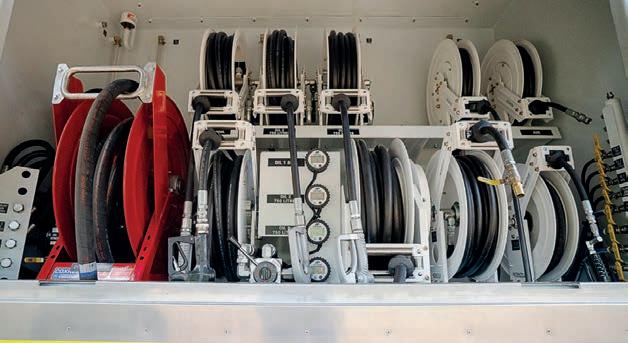




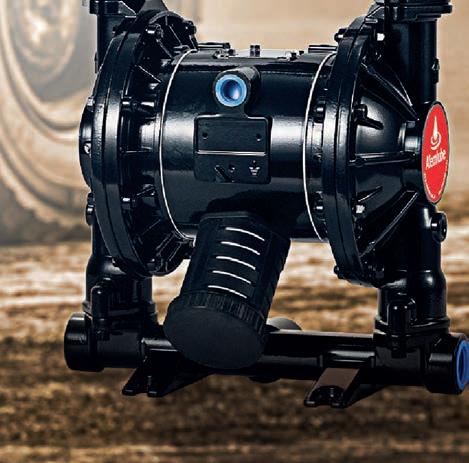

Image: Alemlube
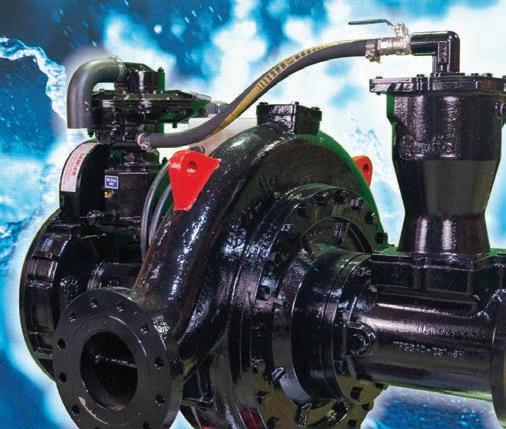
The Dingo series is offered in multiple sizes to suit different flow and transfer requirements.
Alemlube solutions help manage multiple liquids safely, efficiently and reliably.
Image: Plantman

Bradken® Undercarriage For R9600 Excavators
Engineered For Reliable Performance
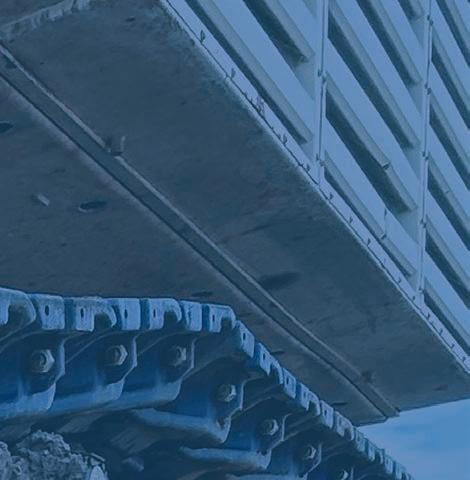
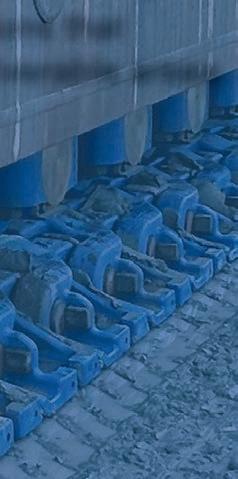
With more than four decades of expertise in delivering innovative undercarriage solutions globally across R9800 and R996 machines, Bradken® has now optimised the R9600 to improve performance for our customers.
From 2007 to 2021, Bradken designed, manufactured, and supplied the majority of the crawler shoes for R9800 and R996 machines to the OEM.
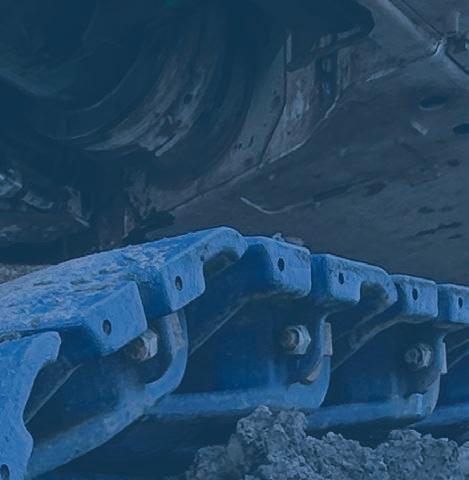
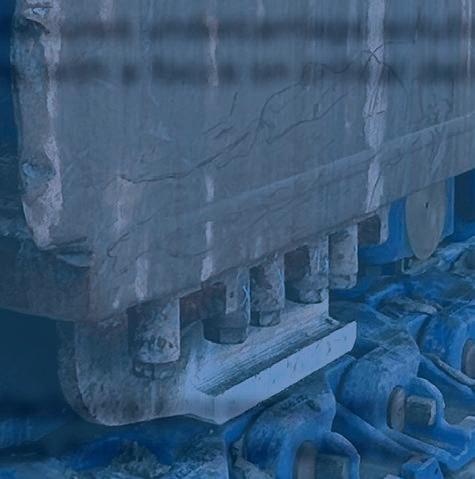
Now, we are delivering improved wear results for our aftermarket crawler shoes, with more than 50% longer wear life compared to competitors’ shoe wear life#.
Bradken® designs and manufactures undercarriage solutions that optimise customer operations, with a focus on critical deliverable areas.
Our products include:
•Crawler Shoes
•Drive Tumblers
•Return Rollers
•Load Rollers
•Idlers
Our innovative design, manufacturing processes, and continuous track improvements deliver longer wear life.



D ELIVE RING AN
SCAN TO LEARN MORE O PT IMISED FUTURE


The big Barracuda
Schlam was recently commissioned by global mining powerhouse to produce three bespoke wheel loader buckets designed to switch seamlessly between moving coal and waste at Australian sites.
What started as a discussion with one of the world’s largest mining operators around optimising truck bed efficiency turned into the creation of the largest capacity wheel loader bucket ever produced by Schlam.
Glencore commissioned the load and haul accessory manufacturer to deliver 40m3-capacity buckets to be used at mine sites across Queensland and New South Wales, specifically to allow greater flexibility in operations.
Schlam’s big Barracuda buckets were sought as a solution to complement new Caterpillar 995 wheel loader trucks that operate in coal stockpile and waste applications and improve efficiency by lifting coal extraction and waste capacity.
The three big buckets that were produced featured the same base but two different lips for ground engagement tools (GET), optimised to site requirements.
Schlam global product manager –attachments Ian Cornfoot said the design and construction leverage Schlam’s track record for high-quality solutions and benefit from experience in supplying mining truck beds to the Glencore mines.
“We knew Glencore’s haulage fleet, their material and their conditions,” Cornfoot said. “This helped us to foresee challenges and proactively mitigate them throughout the design and engineering process.”
The primary challenge for Schlam was optimising bucket capacity to maximise coal payloads while remaining compatible with current and future passmatch requirements.
In practice, these requirements limited the ability to fully realise the machine’s theoretical payload potential in coal, which meant the benefit of a lighter bucket in this application was marginal. As a result, durability was prioritised.
Steel was added into the design to help ensure the bucket could operate effectively in waste/overburden conditions, where it is exposed to digging forces, rather than loading, and where fill factor must be tightly controlled so maximum swung load is not exceeded.
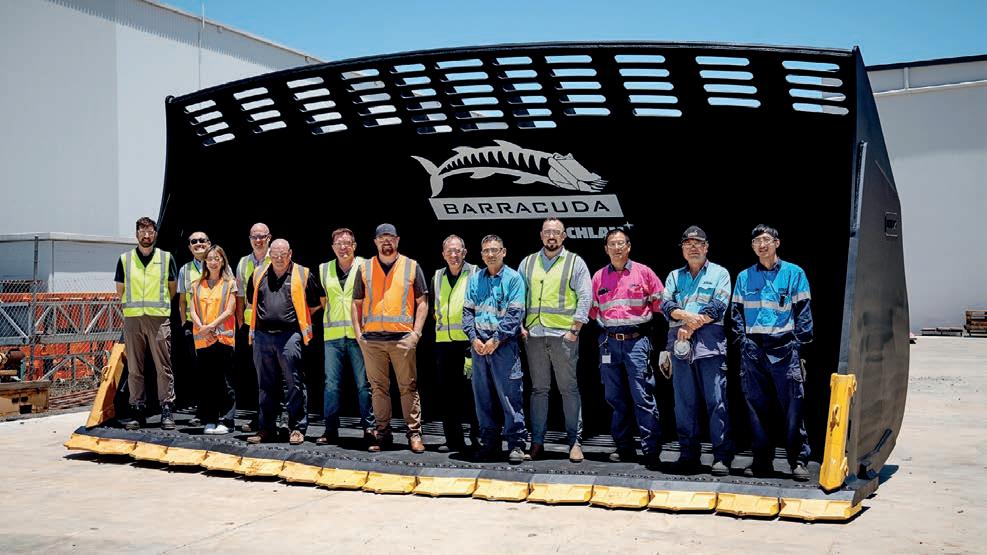
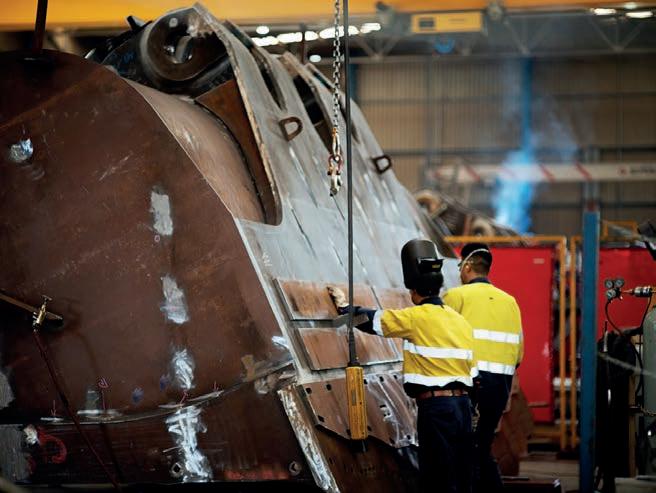
At 7m wide, 4m deep and 3.5m high, the new buckets are similar in size to a luxury caravan.
“We needed to demonstrate we could sustain the centre of gravity of this large bucket on the wheel loader and not destabilise or overload the machine,” Cornfoot said.
“The design also had to consider stresses when digging with such a wide bucket. Depending on the material being
The Barracuda was commissioned by Glencore to be used at mine sites across New South Wales and Queensland.
extracted, loads in corners can lever and amplify digging forces and create a large bending movement.”
Glencore engineers and third-party quality assurance and quality control inspectors worked with the Schlam team throughout the build.
“It’s a great example of the importance of collaboration among our team, our customers and our suppliers,” Cornfoot said. “The inspectors verified every step of the construction of the buckets. This provides a level of confidence when taking a novel approach to critical assets.”
The final design features 100 per cent high-strength steel construction, including a 25mm quench and tempered (Q&T) 450 shell and a curved spill guard for optimal visibility and loading. Importantly, weight was saved by minimising the application of wear protection liners in the design due to the low abrasiveness of the material moved.
The design is slightly smaller than a dedicated coal bucket for a CAT 995 at 43.6m3, but approximately 33 per cent larger than the previous buckets used on the sites, according to Schlam.
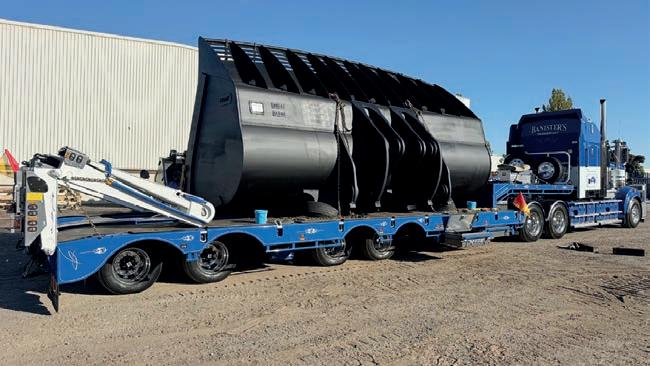
The first of the three big buckets to be delivered was dispatched in January and transported by road across country from the Schlam facilities at Forrestfield, Western Australia, to the Rolleston mine in Queensland. The remaining buckets will be delivered to the Bulga mine in New South Wales.
Schlam manufactures Barracuda loading attachments for 100–600-tonne backhoes, excavators and loaders. The
bucket’s design leverages Schlam’s track record for high-quality solutions.
company also manufactures lightweight Hercules mining truck beds for haulage trucks with capacity ranging from 100–400-plus tonnes.
Almost 3000 Hercules truck beds are in operation on more than 100 sites around the world, mining commodities including iron ore, coal, copper, gold,
silver, zinc, bauxite and lithium. Custom-engineered for performance, these large-capacity, long-life, weightoptimised products boost productivity, reduce downtime, reduce emissions and streamline maintenance, all while being supported by focused services designed to meet operational needs. AM
Images: Schlam
The first of the three big buckets was dispatched in January and transported by road.
The





As mining embraces automation, data is the key to unlocking its full potential. Minitab’s powerful analytics solutions integrate with your automated systems, providing insights that enhance efficiency, reduce downtime, and improve performance. You have data. We have solutions. Imagine the possibilities.
www.minitab.com


Taking the heat off manual checks
Bradken’s SmartRoller is transforming roller temperature monitoring by eliminating manual checks and delivering continuous, real-time insights directly to operators.
As mining operations push for safer, more efficient ways to manage equipment health, the shift from manual inspection to real-time monitoring is gaining momentum. Mining equipment solutions-provider Bradken is driving this change, leveraging its market position and SmartRoller technology to transform the way undercarriage health is monitored across mine sites around the world.
Manually checking load roller temperatures on mobile mining equipment remains a high-risk, inefficient process that requires personnel to enter the machine envelope. Load rollers are a well-known wear component on assets such as excavators. Temperature monitoring has traditionally relied on handheld infrared guns and periodic ground inspections, methods that increase exposure to safety risks and often delay the detection of developing faults.
Bradken is aiming to change that dynamic with its SmartRoller technology, shifting temperature monitoring from manual inspection to continuous remote monitoring in real-time. Ruggedised sensors with integrated temperature technology are mounted directly on rollers, delivering continuous, real-time data to the operator’s cab and eliminating delays associated with manual inspection and communication.
“Bradken’s SmartRoller product eliminates the need for personnel to enter the machine’s envelope, keeping them out of the line of fire, as they would
traditionally walk along measuring roller temperatures with a temperature gun,” Bradken product development manager Nathan Carter told Australian Mining
That process of is time-consuming, reactive, and sometimes even hazardous.
In instances where temperature thresholds were being approached, the machine would need to be stopped and cooled, either naturally or with water.
“Cooling alone could take anywhere from 10 to 30 minutes, depending on what part of the world you’re in,” Carter said, highlighting that manual systems can create delays that are difficult to absorb in high-production environments.
“With real-time visibility of temperature data, operators can proactively respond while the machine is in operation, either continuing to tram, slowing or stopping as required. When temperatures drop below set thresholds, they have the confidence to resume tramming, without negatively impacting load roller time”
Installation of the sensors has also been developed with ease of installation in mind, with the unit designed to be mechanically and electrically straightforward.
“Developed through multiple design iterations to withstand harsh mining environments, the sensor integrates temperature-monitoring technology and mounts directly to the load roller via a single-bolt fixing, so it’s robust enough to handle rock impacts and machine vibration without shifting,” Carter said.
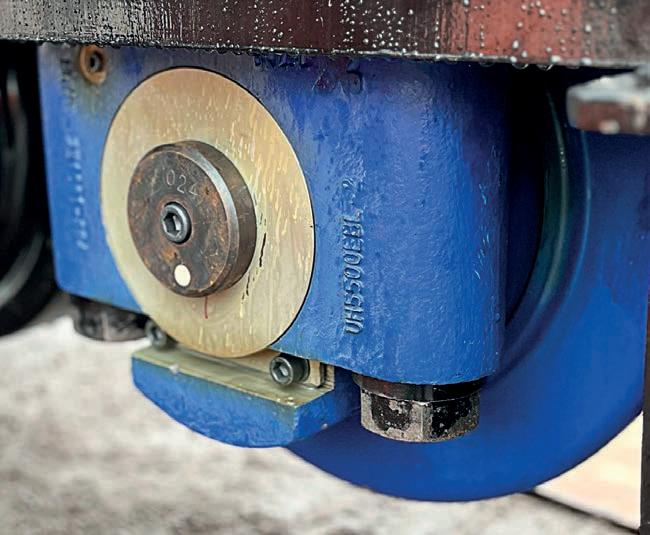
“The single-bolt fixing means you can bolt up an entire undercarriage very quickly. There are only a couple of key hardware components, with a few cables required to connect them. Compared to other on-board systems, it’s minimal, which means installation can typically be completed within a single shift”.
Beyond safety and ease of installation, Bradken’s SmartRoller is designed to ensure reliable, consistent productivity.
Continuous monitoring provides a stream of data that can be used to identify emerging issues before they result in failure. For example, if a roller along the undercarriage fails, the adjacent roller is automatically subject to increased stress,
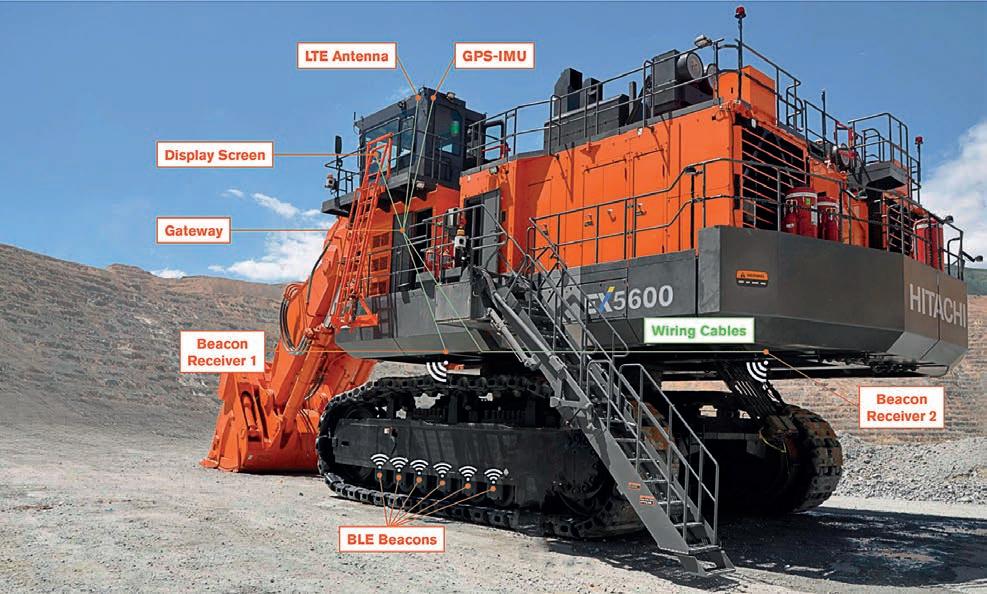
creating a domino effect. By identifying a high-temperature roller early, SmartRoller allows maintenance teams to intervene before that chain reaction begins.
The system’s alert functionality is designed to support this proactive approach. Thresholds can be configured to suit site-specific conditions, with visual indicators guiding the operator’s response.
“Operators have a screen that gives a clear, at-a-glance view of roller condition: green indicates normal operation, yellow flags a warning, and red signals a critical issue,” Carter said.
“Those visual cues ensure operators can quickly understand what’s happening and take action as soon as it’s required”.
Durability is also a focus of Bradken’s SmartRoller design, underpinning the system’s ability to deliver reliable, real-time insights when they matter most.
Unlike magnet-mounted alternatives, which can be dislodged under harsh conditions, Bradken’s bolt-on system offers robustness and reliability, enabling consistent data capture in environments where impact and vibration are unavoidable.
“[The system also has] the capability to automatically notify maintenance teams when a potential or foreseeable roller failure is detected,” Carter said. “That same continuous, real-time data is visible in the operator’s cab, removing the reliance on traditional inspection methods that inherently introduce delays and expose people to on-site safety risks.”
It’s this combination of real-time visibility for operators and proactive alerts for maintenance teams that represents a practical step forward, improving safety while enabling more timely, efficient maintenance responses.
Images: Bradken
The SmartRoller’s bolt-on system offers robustness and reliability.
SmartRoller can be integrated with large machinery to provide greater insights and eliminate the need for manual checking.
Service drives performance
OTR – Tyres Wheels Service is helping turn tyre management into a measurable driver of efficiency for mining operations.
Tyres have long been treated as consumables across the resources sector, but that mindset is evolving as operators are recognising their growing role in driving cost efficiency and fleet performance. As ultra-class tyre pricing and lead times fluctuate, mining operators are increasingly taking a more strategic approach to managing one of their most essential on-site components.
As fleets place greater emphasis on cost per hour rather than upfront purchase price, tyre management is emerging as one of the most effective levers for improving profitability.
This has seen tyre management and servicing emerge as core functions in controlling cost per hour and maintaining fleet productivity, something OTR – Tyres Wheels Service understands all too well. In fact, the company has built its service offering around this principle, focusing on maintaining tyres within defined performance parameters throughout their lifecycle rather than responding only when failures occur.
OTR – Tyres Wheels Service supplies and services wheels and tyres for the mining, industrial, construction, earthmoving, transport, agricultural, recreational and passenger markets. With a nationwide network of sales distribution and service hubs, the company provides solutions that can make a genuine difference to an operation’s bottom line.
Commercial rationale is grounded in the structure of mining costs. With haulage accounting for more than 50 per cent of operating expenditure in open-cut operations, tyre performance
is emerging as a critical driver of cost per hour, alongside fuel consumption. The impact of underperforming tyres extends well beyond the tyre itself, affecting the efficiency of the entire site.
This has driven greater focus on payload discipline, heat management and haul-road quality, key factors in maximising tyre life and performance.
OTR – Tyres Wheels Service’s model is designed to address this balance at a practical level. Its teams operate on site, delivering consistent monitoring, pressure management, fitment and rotation programs that are designed to ensure tyres operate within defined performance parameters.
The company also applies structured frameworks to align tyre capability with site conditions.
OTR – Tyres Wheels Service integrates these thresholds into its servicing programs, making sure tyres are not operating beyond their designed limits amid changing haul profiles, payloads and speeds.
This approach has a direct impact on equipment efficiency. When tyres operate within optimal parameters, rolling resistance is reduced, fuel consumption stabilises and stress on engines and drivetrains is minimised. The result is more predictable performance across the fleet.
OTR – Tyres Wheels Service’s teams will inspect and assess tyres for cracks, punctures, decreased pressure, baldness and signs of uneven tread wear, with service packages designed to get the most out of tyres in all kinds of applications.
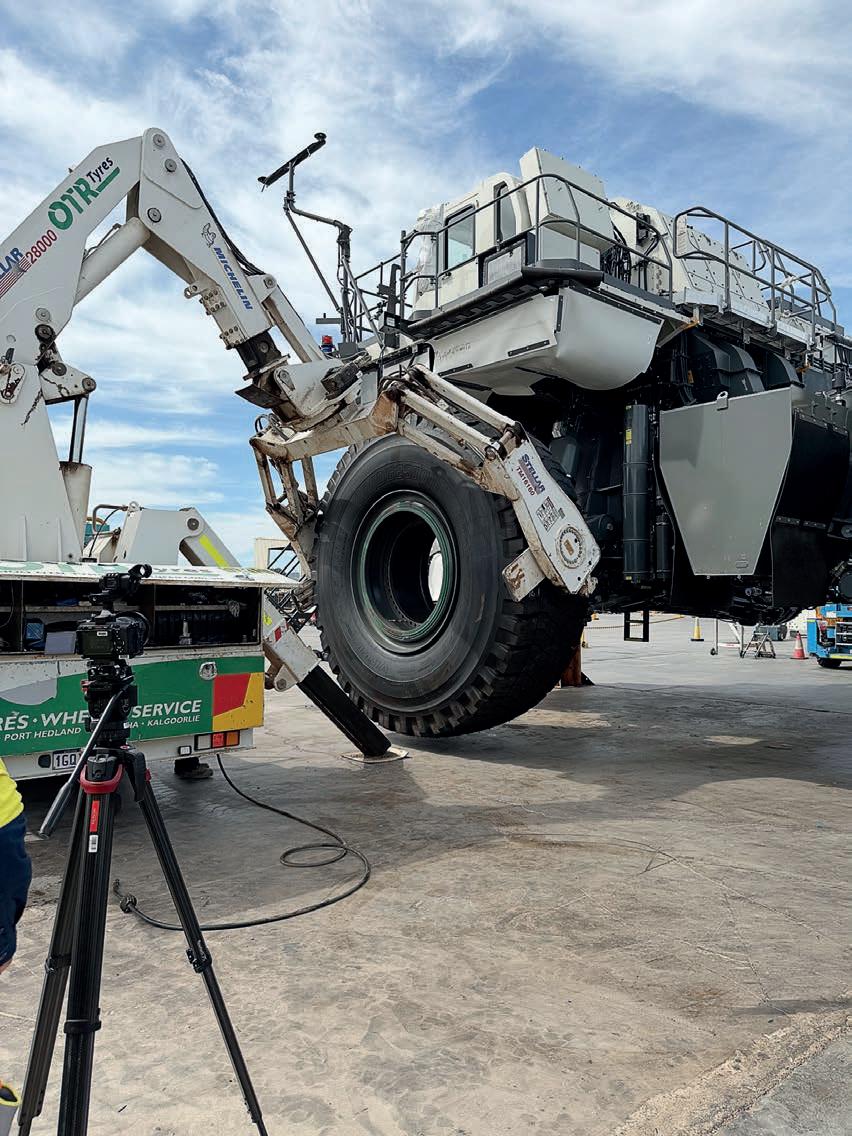
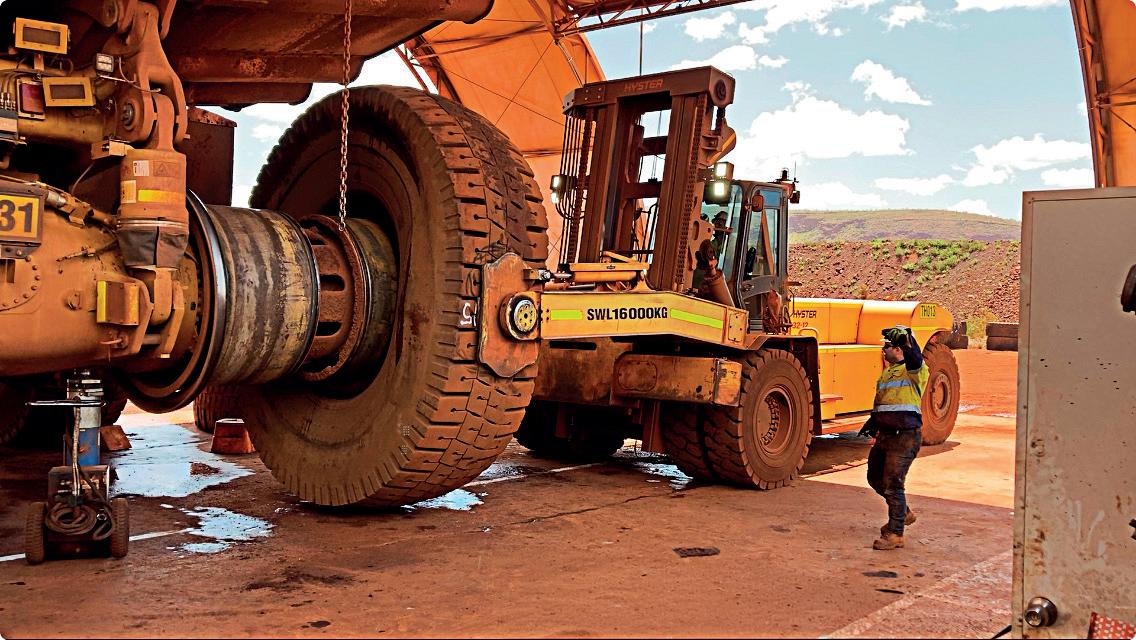
But the company’s involvement extends beyond the tyre itself, with servicing teams providing ongoing feedback on haul road condition and payload practices, both of which influence tyre performance.
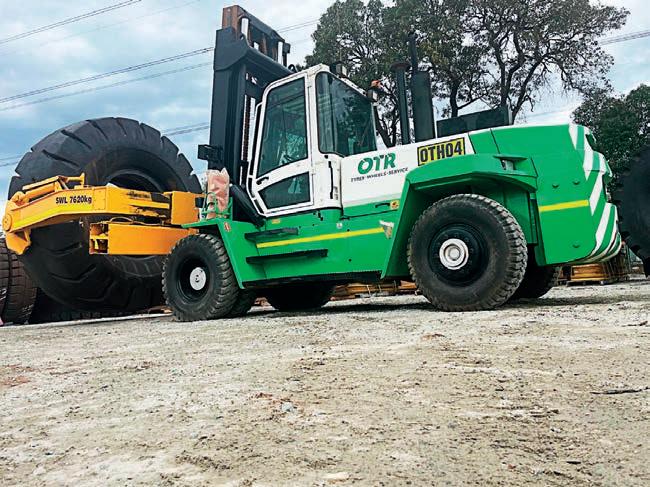
This integrated approach is reflected in operational outcomes. Industry data shows that improved tyre management can reduce tyre-related downtime by around 20 per cent and extend tyre life by up to 30 per cent, with these gains translating directly into lower cost per hour and improved fleet profitability.
For operators managing large fleets, these improvements translate into increased equipment availability and more consistent production, achieved through servicing and management rather than capital investment.
In a market where new tyre supply can be unpredictable, maximising the performance of existing assets provides a more immediate and controllable path to cost reduction, and OTR – Tyres Wheels Service’s model aligns with this reality. By combining tyre supply with embedded on-site servicing, the company provides a continuous view of tyre performance and the ability to act on it. This shifts management from a reactive maintenance task to an ongoing optimisation function. Through its service-led approach, OTR – Tyres Wheels Service is demonstrating that tyre management is not a secondary consideration, but a primary lever in controlling costs, improving equipment efficiency and maintaining productivity across the fleet. AM
Operators are given a continuous view of tyre performance and the ability to act on it thanks to on-site servicing.
OTR – Tyres Wheels Service supplies and services wheels and tyres for the mining market.
OTR – Tyres Wheels Service’s teams will inspect and assess tyres with service packages designed to get the most out of equipment.
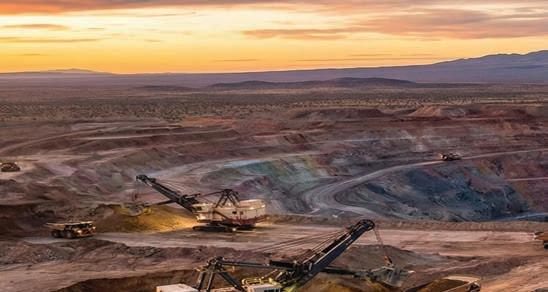
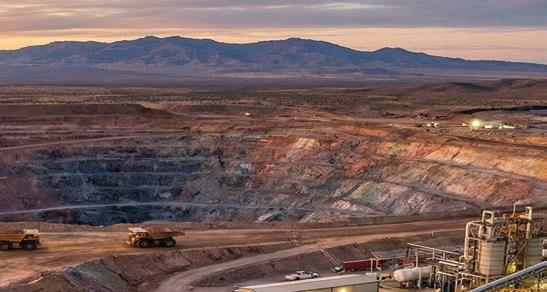
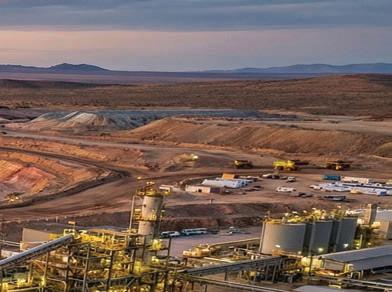

Clean Air, Dust Control and Product Recovery for Mining and Mineral Processing
Every mining operation is unique. With extensive eld experience and application expertise, Nederman MikroPul delivers reliable, durable, and high-performance dust collection systems designed speci cally for the realities of mining and mineral processing.
Nederman MikroPul is experienced in addressing both workplace and emissions-related air quality challenges in the mining industry. Mining operations are inherently dusty environments, where e ective dust control is essential to:
•Reduce dust escaping into the workplace
•Separate nes from product streams
•Recover valuable material
•Comply with environmental emission regulations
With decades of industry experience, MikroPul delivers engineered dust collection solutions tailored to demanding mining applications.
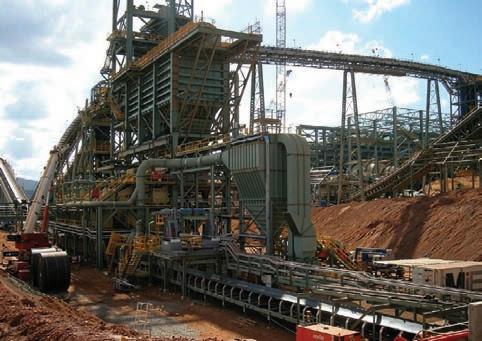

•Baghouse Dust Collectors
•Cyclone Separators
•Wet Scrubbers
•Gas Cooling & Controls

•High Dust Volumes
•Harsh Conditions
•Regulatory Compliance
•Cost E ective

•Design & Engineering
•Installation & Commissioning
•Maintenance & Support
•Turnkey Solutions
www.nedermanmikropul.com
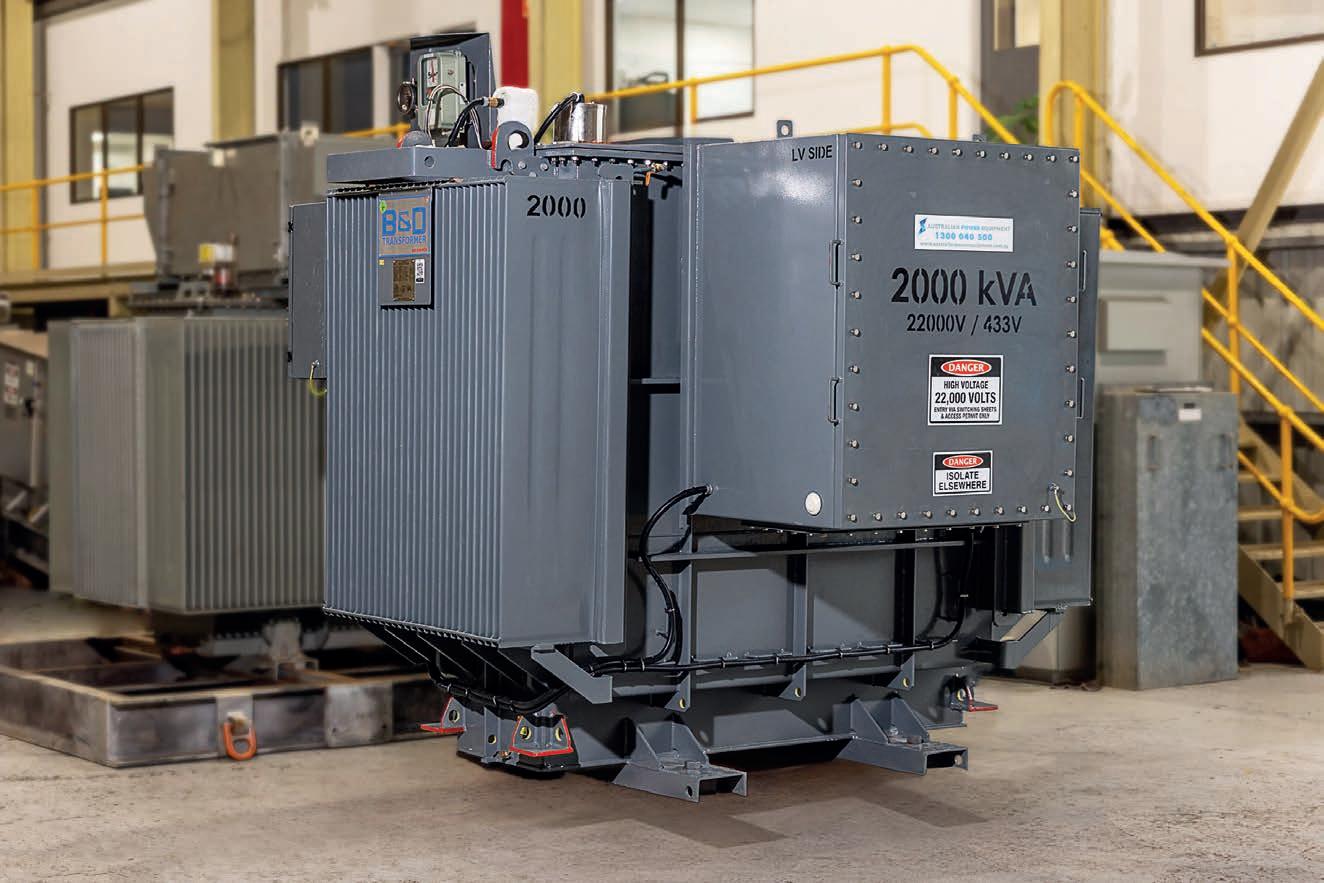
Efficiency beyond the spreadsheet
Australian Power Equipment is redefining mining efficiency as a balance of reliability, availability and lifecycle performance amid ongoing supply chain pressures.
In today’s mining environment, efficiency and optimisation are often framed through a lens concerning only reduced costs, faster procurement and leaner operations. In reality, true efficiency is far more complex.
More than just about doing things cheaper or quicker, it is about doing them smarter, safer and with long-term reliability in mind.
As global supply chains continue to face disruption – from shipping delays and geopolitical instability to fluctuating fuel and energy costs – the traditional definition of “efficient procurement” is being challenged. What once appeared to be a cost-saving on paper can quickly become a liability in the field.
At Australian Power Equipment (APE), efficiency is viewed as the intersection of availability, engineering integrity and lifecycle performance. The company’s FR3-filled, low-loss transformers are a clear example of how equipment selection can deliver measurable efficiency gains, not just operationally, but across the entire asset lifecycle.
Availability:
A technical advantage
In a market where lead times for new high-voltage equipment can extend from six months to more than a year, availability has become a critical operational consideration. While APE has always prioritised reduced lead times, ongoing global shipping constraints have further sharpened this focus.
Unplanned downtime continues to pose a significant challenge to mining operations. Delays in sourcing key infrastructure – transformers, switchgear, or cable systems – can impact production, compromise safety margins and place additional strain on existing assets.
Maintaining a strategic inventory of in-stock equipment allows operations to respond immediately to both failures and planned upgrades.
“From an engineering perspective, efficiency is about maintaining system integrity under pressure,” APE director
Andrew Cockbain told Australian Mining
“Having access to fit-for-purpose equipment immediately, whether new
or refurbished, can be the difference between controlled continuity and prolonged disruption.”
In many cases, in-stock or refurbished equipment provides a critical bridge that enables operations to maintain continuity while bespoke equipment is manufactured and delivered, allowing rapid start-ups to commence without delay.
While cost control remains essential, selecting equipment based solely on upfront pricing often introduces longterm inefficiencies.
Lower-cost equipment can result in increased maintenance requirements, reduced operational lifespan, and a higher likelihood of failure, particularly in demanding mining environments where load profiles, environmental conditions, and duty cycles exceed standard specifications.
True optimisation considers total lifecycle value, not just initial capital outlay.
APE’s supply of B&D transformers, utilising FR3 natural ester fluid, highlights this shift in thinking.
Unlike traditional mineral oil systems, FR3 is a high-performance insulating fluid, not a fuel, and is therefore not directly exposed to the volatility of global fuel pricing.
More importantly, these low-loss transformers are designed for high efficiency, reducing ongoing energy consumption across their operational life. While the initial capital cost may be higher, the reduction in losses translates directly to lower operating expenditure, particularly as energy costs continue to rise.
The outcome is a solution that is economically and environmentally efficient, delivering lower total cost of ownership while reducing demand on energy infrastructure over the asset lifecycle.
APE works closely with established international suppliers, engaging in ongoing design review, testing and product development to ensure equipment is suited to Australian mining conditions. This includes consideration of thermal
Australian Power Equipment’s supply of B&D transformers utilise FR3 natural ester fluid, not fuel.
Images: Australian Power Equipment
performance, insulation systems, mechanical durability and compliance with Australian Standards.
According to APE co-director, Abby Crawford, the result is equipment that performs reliably under realworld conditions, not just under ideal factory parameters.
“Efficiency isn’t about the lowest number on a spreadsheet, it’s about delivering equipment that performs when it matters most,” Crawford said.
“We focus on long-term outcomes, not short-term savings.”
Design-led efficiency
Optimisation begins at the design stage.
By working alongside clients and engineering teams during specification, APE ensures equipment selection, including low-loss transformers, supports overall network performance. This includes consideration of load demand, fault levels, protection coordination, and environmental constraints.
The result is a reduction in operational expenditure over the life of the asset, driven by improved efficiency and reduced system stress.
Refurbished equipment also plays a key role within this model.
and certified, refurbished assets can deliver performance comparable to new equipment, while offering significantly reduced lead times.
EFFICIENCY AND OPTIMISATION
Importantly, refurbishment enables targeted upgrades, ensuring assets are not only restored but enhanced to meet current operational requirements.
Efficiency today is also inseparable from supply chain resilience.
APE’s model is built on strong longterm partnerships with international suppliers, supported by regular site engagement, factory inspections, and alignment on quality and environmental, social and governance (ESG) standards. This provides visibility across manufacturing processes and ensures consistency in product delivery.
In parallel, diversification across regions and product lines reduces exposure to single points of failure, which is a critical consideration in an increasingly volatile global environment.
Efficiency and optimisation are not one-off decisions; they are ongoing disciplines that extend across engineering, procurement, and operations. They require a shift away from short-term cost reduction towards a more comprehensive view of performance, risk and long-term value, particularly in an environment shaped by global energy volatility.
At APE, this means balancing availability with quality, speed with reliability, and cost with lifecycle performance; because, in mining, true efficiency is not defined by what is saved upfront, but by what is avoided over the life of the asset. AM
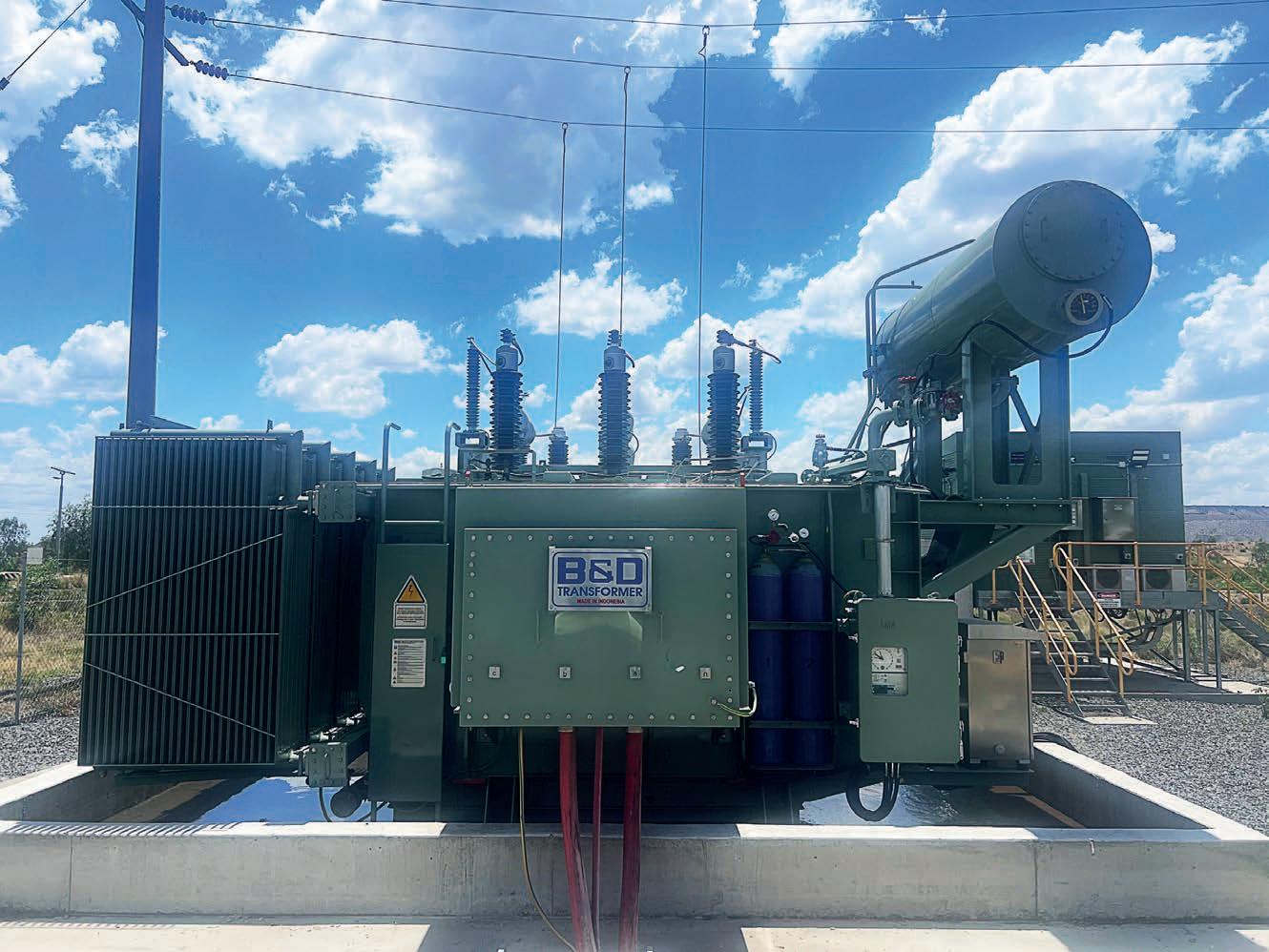
L–R: Australian Power Equipment directors Andrew Cockbain and Abby Crawford.
Australian Power Equipment’s transformers are designed for high efficiency.
Mining’s AI shift
Enterprise software provider
Workday is helping mining companies increase efficiency by using artificial intelligence to bridge the gap between insight and execution.
Artificial intelligence is reshaping mining operations by enabling faster, data-driven decision-making across sites and corporate functions.
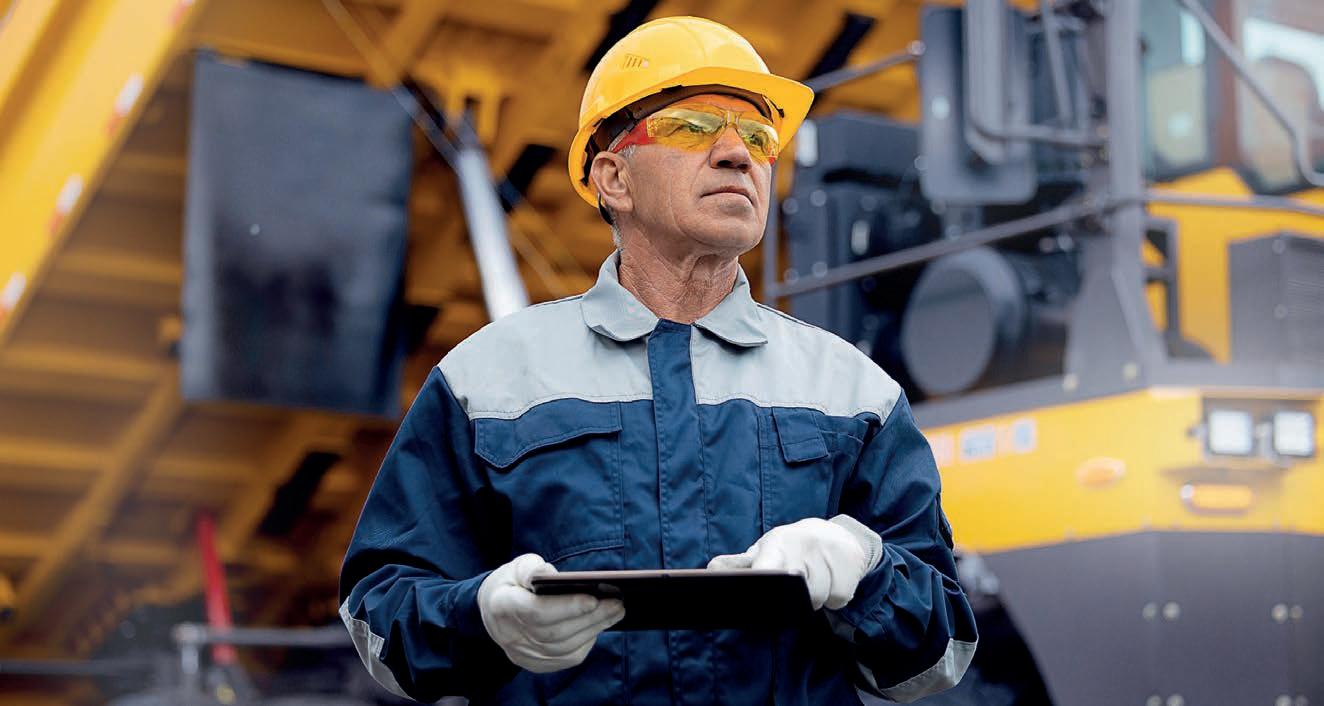
Mining is entering a new phase where artificial intelligence (AI) is reshaping how decisions are made on the ground.
Many mining organisations still work with fragmented systems across HR, finance and operations, limiting visibility and slowing coordination between sitebased teams and corporate functions.
Workday is an enterprise AI platform for managing people, money and agents. According to business architect Adam Krebet, the industry’s move toward agentic AI – autonomous, goal-oriented systems that operate with limited human oversight – reflects a broader evolution in enterprise software, shifting from systems that record activity to tools that help drive outcomes.
“In a mining context, that means AI embedded into and transforming core HR and finance processes, helping organisations respond faster to changes in workforce, cost and demand,” Krebet told Australian Mining
Decision-makers are increasingly moving from retrospective reporting to action within live workflows. However, a challenge remains in how work is structured across mining operations, with data and process fragmentation limiting real-time decision-making.
As a result, the opportunity is increasingly defined by how effectively organisations can move from insight to execution.
Krebet said this shift is moving from systems that observe what is happening towards platforms that support work
as it happens, coordinated by the flexibility and conceptual processing that AI can provide.
“It’s about enabling systems to participate in the execution of work, not just the observation of it,” he said.
As AI investment accelerates, many organisations are finding that translating capability into value is not straightforward. A key barrier is that AI tools are often deployed outside core systems, losing access to context that is essential for AI to operate effectively and separating insight from action.
“Many organisations fail to see value from AI investments because tools are disconnected from the deterministic workflows where business activity actually occurs,” Krebet said.
“If AI is separated from the business context and workflows, it becomes another layer rather than something
that meaningfully changes how work gets done.”
To address this issue, Workday’s Sana platform embeds intelligence directly into HR and finance environments. The aim is to bring data, workflow and decision-making into a single governed environment.
The platform enables users to access information from Workday and other enterprise platforms without switching systems, complete transactions in context and generate reporting from connected enterprise data, while automating processes such as approvals and compliance checks. Krebet said the strongest outcomes are emerging where AI can be made grounded, safe and reliable by being linked to structured data and repeatable processes.
“We are seeing organisations improve forecasting accuracy, accelerate financial

close and reduce administrative effort,” he said.
However, governance and integration remain essential.
“Where it breaks down is when AI is disconnected from core systems or trusted data.” Krebet said.
“For example, the activities that an AI agent takes should never be logged in your ERP [enterprise resource planning] system as if it was a human user doing it; the agent must have its own identity and constraints, and all of its actions traced. This requires for your core business systems to be built for AI.”
Many organisations remain in experimentation mode, with AI tools sitting alongside, rather than within, systems of work. Krebet said the limitation is not capability but how it is applied within operating models.
That’s why Workday’s approach focuses on delivering AI from its enterprise systems, helping to reduce system sprawl and improve coordination across platforms such as Microsoft, Google Workspace, Slack, ServiceNow, Jira and Salesforce.
For mining companies managing engineering schedules, contractor coordination and maintenance planning across multiple systems, tighter integration can improve alignment.
“The opportunity with AI isn’t just about efficiency; it’s about rethinking how work gets done,” Krebet said.
For mining organisations, that shift is ultimately about connecting people, finances and processes to support faster, more confident decision-making. AM
Image: Workday


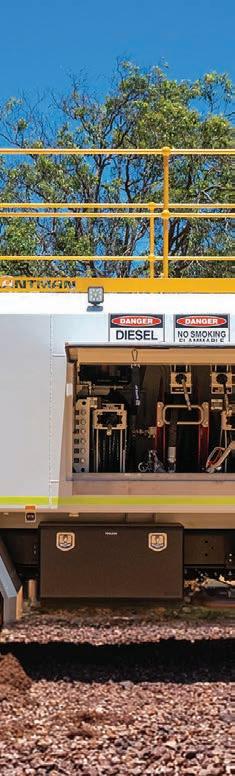

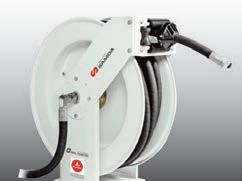


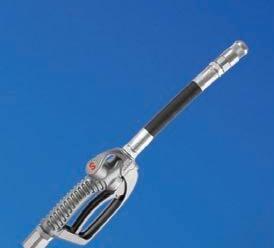

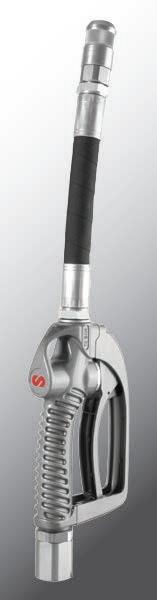





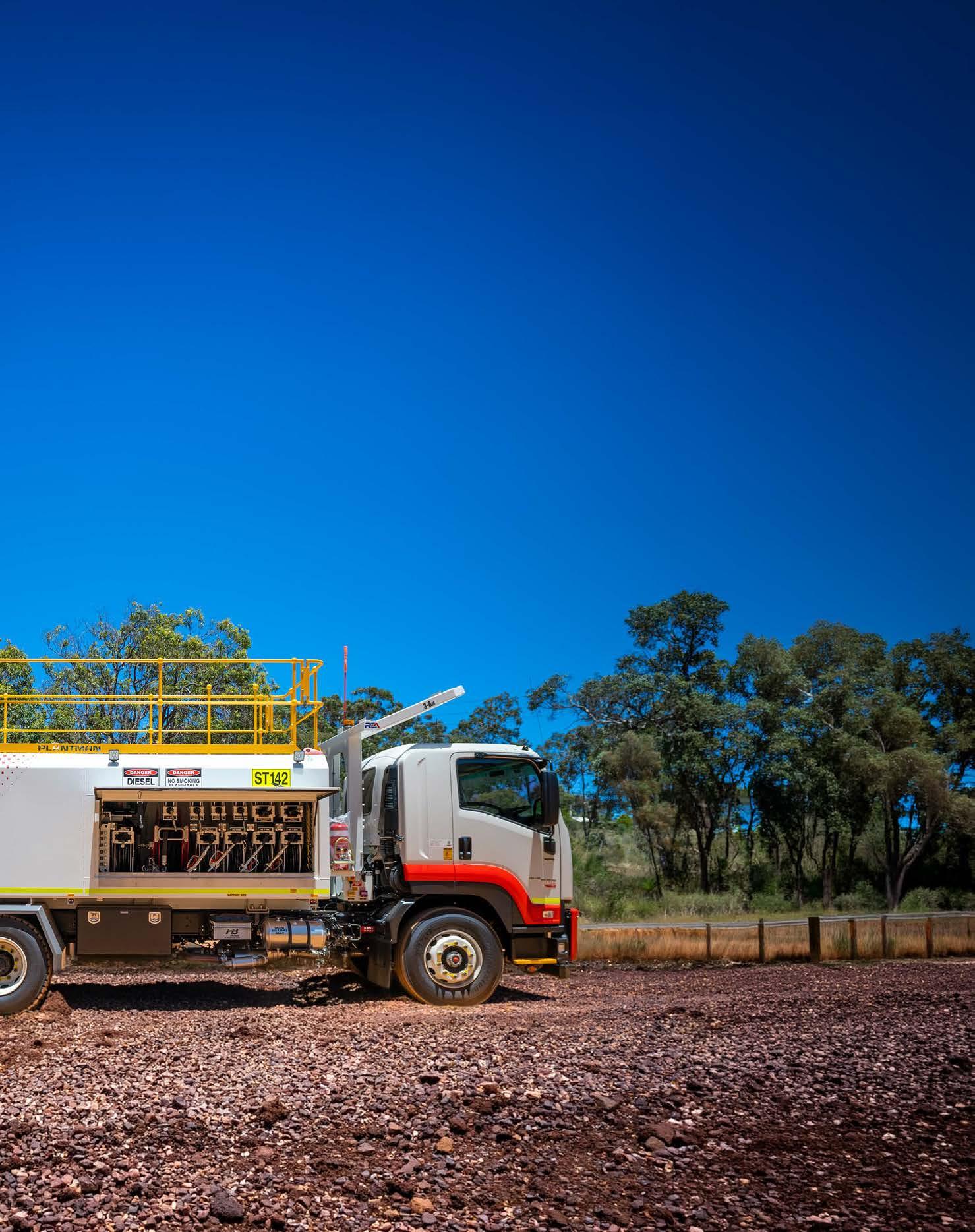
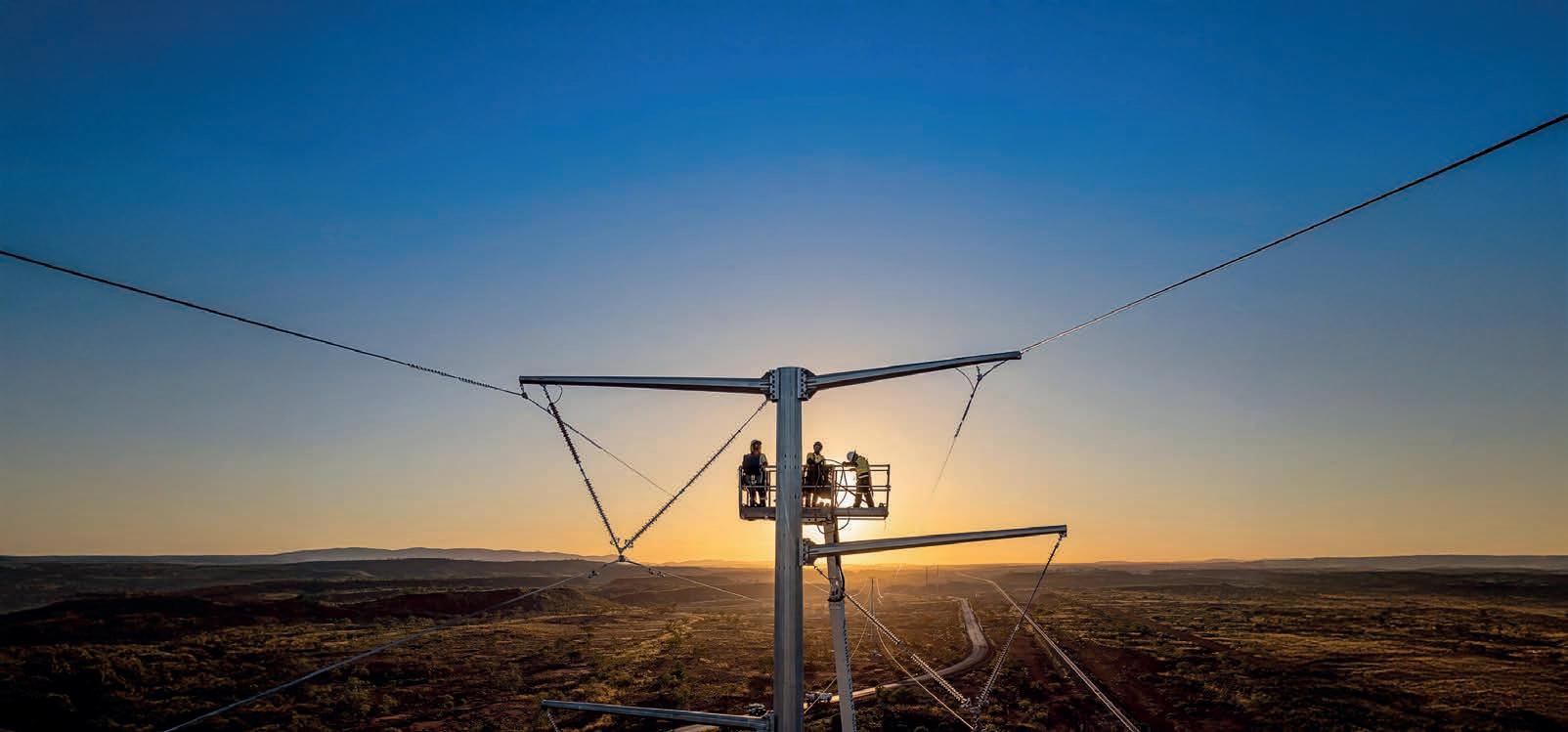
From early design to integrated delivery
Genus is rethinking mining efficiency, shifting the focus from operational optimisation to upfront design and fully integrated project delivery.
Mine site efficiency is often framed as a technological challenge calling for new software, smarter automation, better data. These tools matter, but they’re not where the biggest gains are made.
The real lever for optimisation sits much earlier: at the point of design.
Mining across Australia is entering a new phase of complexity. Electrification, renewable integration and rising energy demand are reshaping how sites are powered and operated. For Genus project
In this environment, efficiency is no longer something you improve after the fact. It’s determined upfront.
The biggest drivers of performance –cost, speed and reliability – are defined well before a single asset is commissioned.
Decisions made during design, planning and system integration shape how efficiently a mine will operate for decades.
This is where early contractor involvement becomes critical, and how Genus has built its delivery model.
Early engagement is the foundation
clients to identify risks early and resolve them before they reach site.
“De-risking starts long before a single pole is erected or a battery commissioned,” Genus general manager commercial Eoin Gorman said. “It begins at the planning table.”
The result is practical efficiency: less rework, fewer delays and infrastructure that performs in the field, not just on paper.
Fragmentation is another major barrier to performance.
Mining projects are often delivered in silos, with multiple contractors, disconnected scopes and misaligned systems. Each component may be optimised individually, but rarely as a whole. The result is interface risk, delays and inefficiencies that persist long after construction.
In contrast, integrated, end-to-end delivery, like the model Genus delivers, creates alignment.
With capability spanning design, engineering, construction, commissioning and maintenance, Genus connects every stage of the project lifecycle. This reduces interface risk and ensures infrastructure performs as a unified system, rather than a collection of parts.
This becomes even more important as power systems grow more complex.
“Connecting a mine is the easy part,” Stoner said. “Integrating that load into the network, that’s where the complexity lies.”
That challenge spans generation, storage, transmission and distribution. Treating them aspects separately creates friction; treating them as one system unlocks efficiency.
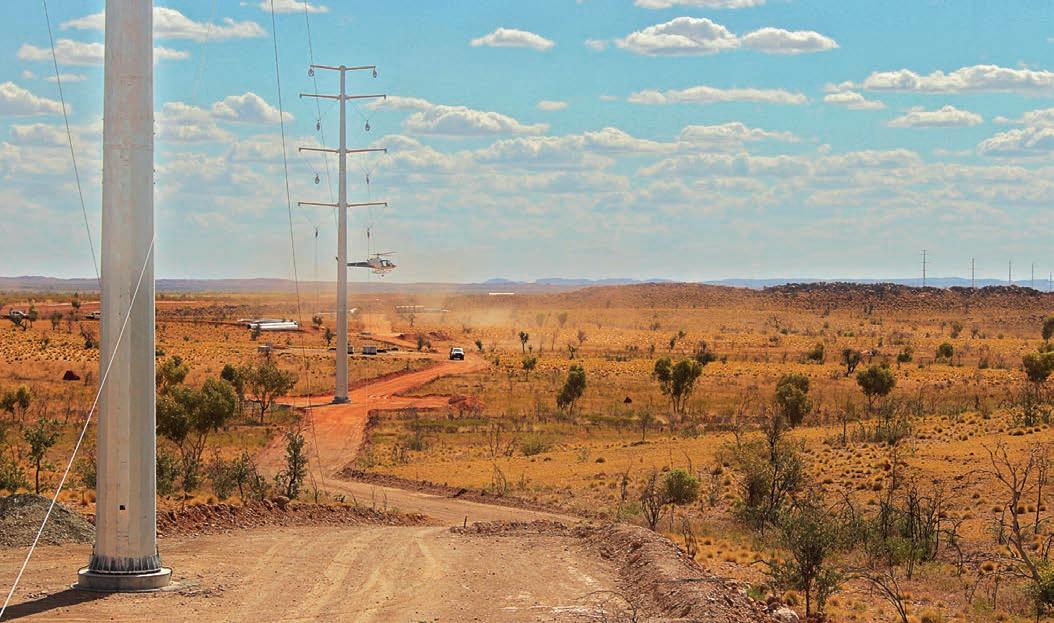
This systems-led approach is central to how Genus delivers modern energy infrastructure, particularly as mining operations transition towards hybrid power environments. It also reinforces the importance of collaboration.
“You can’t contract your way into trust,” Gorman said.
“True efficiency comes from alignment, teams working together from the outset, not managing risk through rigid handovers and siloed responsibilities.”
A shift in mindset
What’s emerging is a fundamental shift in how efficiency is understood.
It’s no longer just about running assets better; it’s about designing them better. It’s no longer just about technology; it’s about infrastructure. And it’s no longer about individual components; it’s about systems thinking.
For Genus, this means partnering with clients from the outset to translate operational requirements into practical, buildable solutions, ensuring the right infrastructure is in place to meet current and future demands.
It also means embracing a more agile and collaborative approach to delivery, one that reflects the pace and complexity of modern mining. Genus prioritises long-term partnerships over transactional delivery, aligning with clients to achieve shared outcomes, not just complete scopes.
In this environment, the miners who lead won’t be the ones who are the last to optimise. They’ll be the ones who design right from the start and partner with teams who know how to deliver it. AM
Genus believes the biggest drivers in performance come from key connection infrastructure.
Remote mine sites benefit from connectivity to streamline delivery of information.
It's
a new work day. Drill down to what works.
In mining, agility starts with people. That’s why Workday provides a unified platform to manage skills, talent and performance, while empowering you to adapt at speed. With Sana acting as your agentic teammate, leaders can make faster, smarter decisions at every level – and make the most of the new work day. Learn More
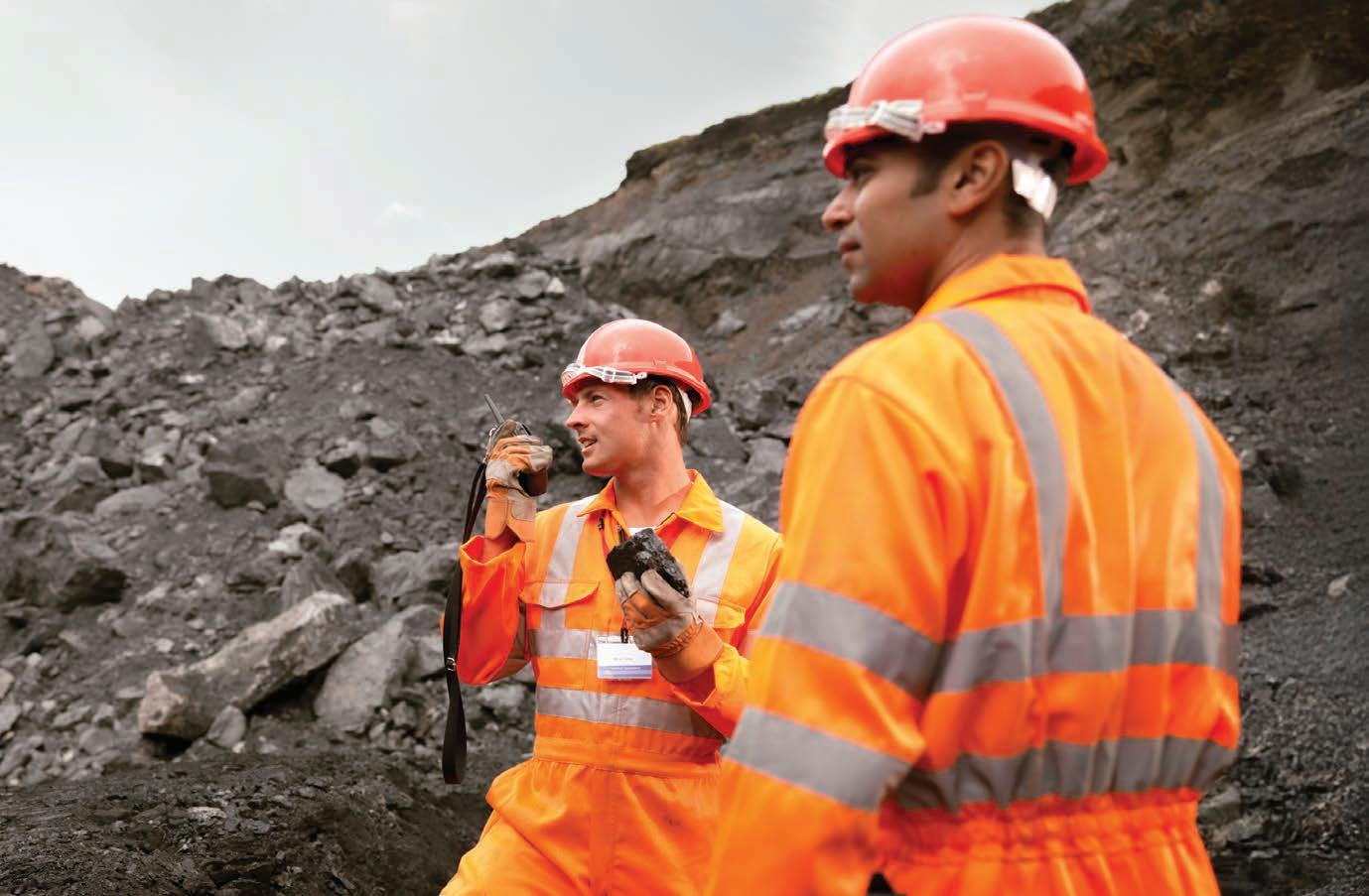
Laying the foundations for multi-metal growth
From copper to gold, Magnetite Mines is quietly reshaping its South Australian portfolio.
In the sunbaked landscapes of South Australia’s north-east and across its mineral-rich interior, Magnetite Mines has been quietly exploring more than iron.
For years, the company’s Razorback project – located in the Braemar iron region approximately 240km northeast of Adelaide – has dominated the story, steadily building toward majorscale production. Behind the scenes, however, a bolder narrative is emerging, with the miner diversifying a number of other commodities.
It all started with Mutooroo Ridge around 60km west of Razorback, a prospect long overlooked in historical exploration. Early drill cores, some decades old, revealed promising mineralisation: 11m at 1.4 per cent copper and 8m at 38.5 grams per tonne silver.
For Magnetite Mines managing director Tim Dobson, these numbers represent more than assays.
“Razorback is our anchor. But when we looked across our tenements, we
discovered potential for copper, silver, rare earths and gold,” Dobson told Australian Mining. “These areas have stories of their own to tell.”
The results from Mutooroo Ridge are just the beginning, an invitation to explore further. Dobson described the next stages as additional drilling, geophysical surveys and eventually defining a resource.
“It’s early-stage exploration,” he said. “But we’re aiming for a significant copper system that could complement Razorback.”
Gold adds another layer. Magnetite Mines’ acquisition of the Manna Hill tenement, roughly 100km north-east of Razorback, brings the company into a region with historical small-scale workings but limited modern exploration.

With gold prices recently hitting record highs, Manna Hill offers a low-cost, highpotential opportunity to reassess what lies beneath the surface.
“We moved quickly to secure Manna Hill,” Dobson said. “Our focus is on
compiling historical data, confirming land access and conducting field verification. It’s a disciplined approach that positions us to discover something meaningful.”
But exploration alone isn’t enough. Magnetite Mines is also focused on getting discoveries to market.
Through Green Iron SA, a consortium including Flinders Ports and CSL Australia, the mining company is advancing a concept to export iron ore concentrates via Port Pirie on South Australia’s Spencer Gulf. The plan leverages existing infrastructure, reduces community impacts and lays the groundwork for downstream processing.

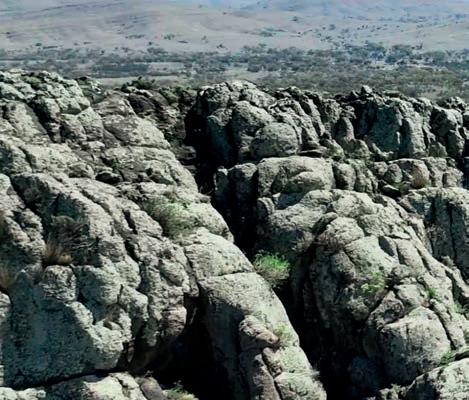
“We’re designing enclosed storage, covered conveyors and transport corridors to reduce dust, noise and road haulage,” Dobson said. “It’s about linking the Braemar iron province to global markets responsibly and efficiently.”
Green Iron SA recently completed highlevel engineering work to define a practical pathway for concentrate export. The study
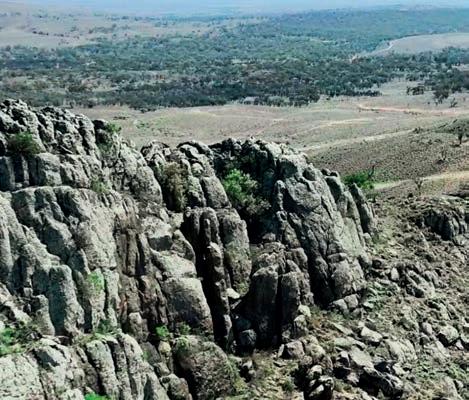
assessed existing industrial land and port precinct facilities, aiming to minimise community impact while maintaining efficient operations.
Proposed solutions include bottomdump rail unloading, covered storage sheds, and a sealed pipe conveyor to Berth 7 at Flinders Ports in Port Adelaide, allowing safe, dust-controlled transfer directly to ships.
The export system also incorporates a self-loading, self-discharging transshipment vessel for offshore transfer to cape-size bulk carriers, providing flexibility without requiring deep-draught berth access.
This approach builds on proven logistics models from Whyalla, a major industrial seaport located on South Australia’s Eyre Peninsula, demonstrating operational reliability. Local consultation has guided site selection and corridor alignment, with Green Iron SA working closely with the Port Pirie Regional Council to ensure community interests are considered throughout the project.

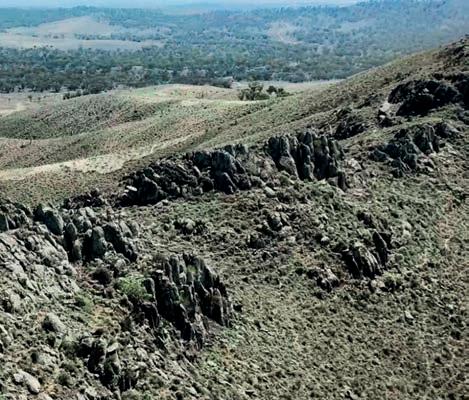
Magnetite Mines’ Razorback project in South Australia remains the company’s “anchor”.
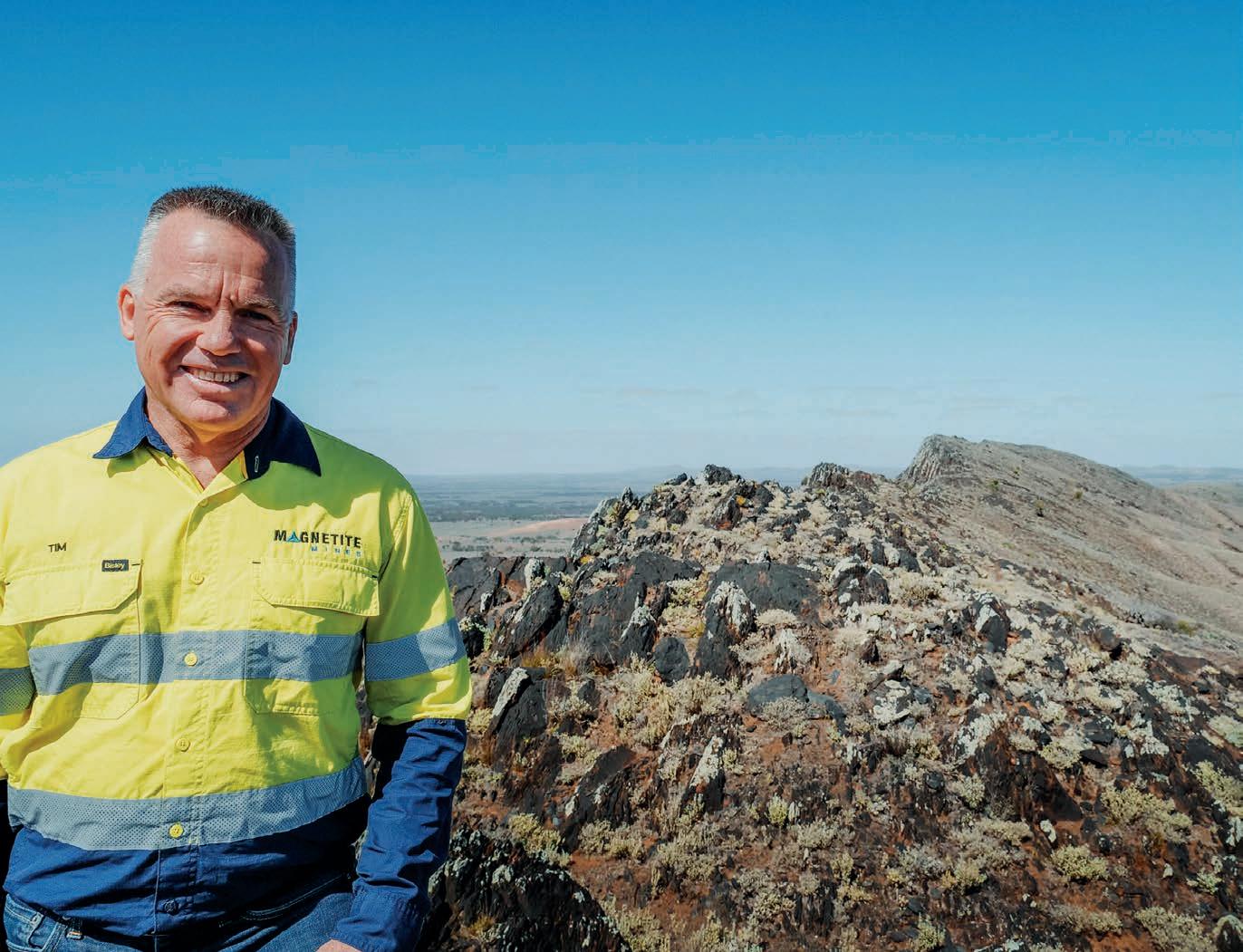
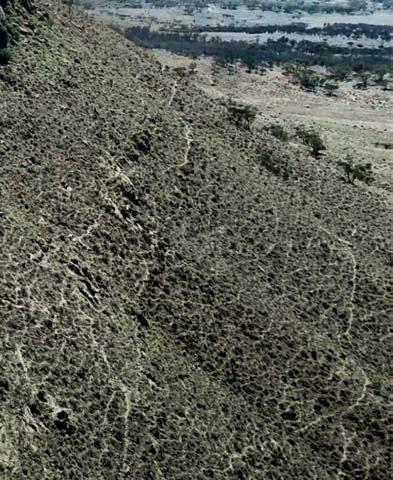
scale quartz vein gold workings, but modern exploration is limited.
Magnetite Mines is now compiling historical data, confirming land access, and conducting field verification to establish a disciplined foundation for potential follow-up drilling.
Together, these steps reflect a strategy that combines early-stage exploration with practical, infrastructure-led development, maximising the potential of iron ore and precious metal assets in South Australia.
Beyond individual projects, Magnetite Mines’ approach signals a broader vision for South Australia’s resource sector. By strategically integrating multiple commodities and aligning exploration with export infrastructure, the company is creating a flexible ‘mine-to-market’ model that could be replicated across the region.
This model not only strengthens operational efficiency but enhances resilience against commodity price fluctuations, as production is not reliant on a single mineral.
Sustainability is central to this vision. The design of covered storage, enclosed conveyors and minimised road haulage reduces environmental impact and demonstrates responsible stewardship of local communities.
Engagement with local councils, landowners and regional stakeholders
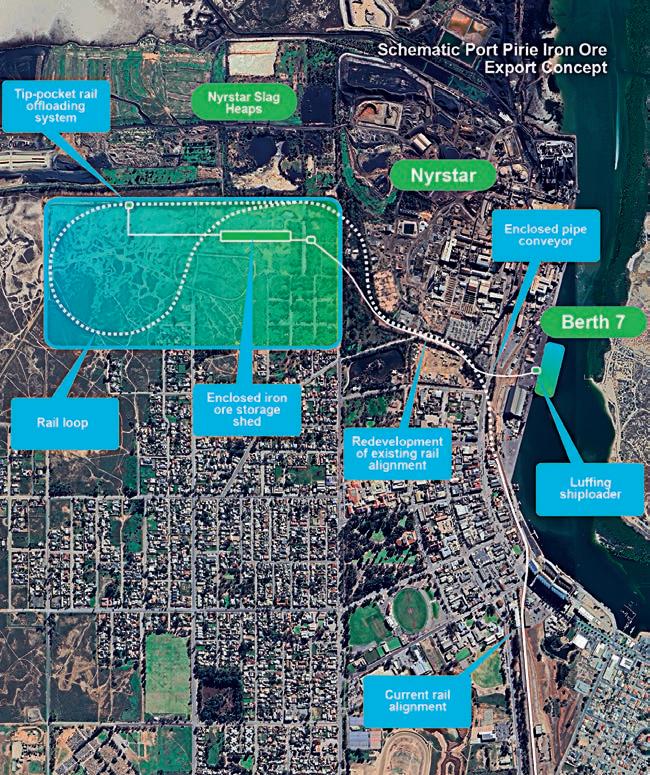
Magnetite Mines managing director Tim Dobson.
Magnetite Mines’ Port Pirie export concept.
helps to ensure that development respects existing land uses while generating economic opportunities.
Jobs, training programs and infrastructure improvements are expected to flow from these projects, positioning Magnetite Mines as a resource developer and a catalyst for regional growth.
In parallel, the company is exploring early-stage rare earth prospects, recognising the strategic value of these minerals in global clean energy markets.
While still speculative, a successful rare earth discovery could position South Australia as a key player in high-demand, future-facing commodities.
Collectively, the combination of iron ore, base metals, gold and rare earths underscores Magnetite Mines’ ambition to unlock multiple layers of value from the state’s mineral wealth while balancing economic, environmental and social considerations.
The synergy between exploration and infrastructure is compelling. Razorback’s eventual production footprint could support future mining operations for other commodities. Copper, silver, gold and rare earth discoveries could all benefit from existing water, power, rail and personnel. It’s a strategic layering that maximises the potential of each discovery.
Magnetite Mines is a player with a sprawling, high-potential portfolio. Each commodity represents an avenue for growth and, together, they form a diversified strategy that balances risk and amplifies potential returns.
But for Dobson and his team, the story is about more than numbers. It’s about reading the land, connecting decades of exploration data and recognising opportunities others may have overlooked. Rare earths, still in a greenfields stage, remain speculative, but the potential could be transformative if deposits are confirmed.
“The key is disciplined exploration,” Dobson said. “We’re not chasing trends; we’re evaluating what’s actually there, combining historical data, modern techniques and careful field assessment.”
Recognition has followed. Razorback was recently awarded Major Project Status by the Federal Government, and is currently the only iron ore project to hold that designation. For Dobson, it signals confidence in the project’s scale and national significance while boosting appeal to international investors.
As South Australia’s mining landscape evolves, Magnetite Mines is positioning itself at the intersection of traditional and emerging resource opportunities.
From copper and silver at Mutooroo Ridge to gold at Manna Hill and the promise of rare earths, the company demonstrates that diversification can be strategic, not scattershot.
“The region has enormous potential,” Dobson said. “We’re exploring what’s possible across several commodities. If even one of these projects succeeds,
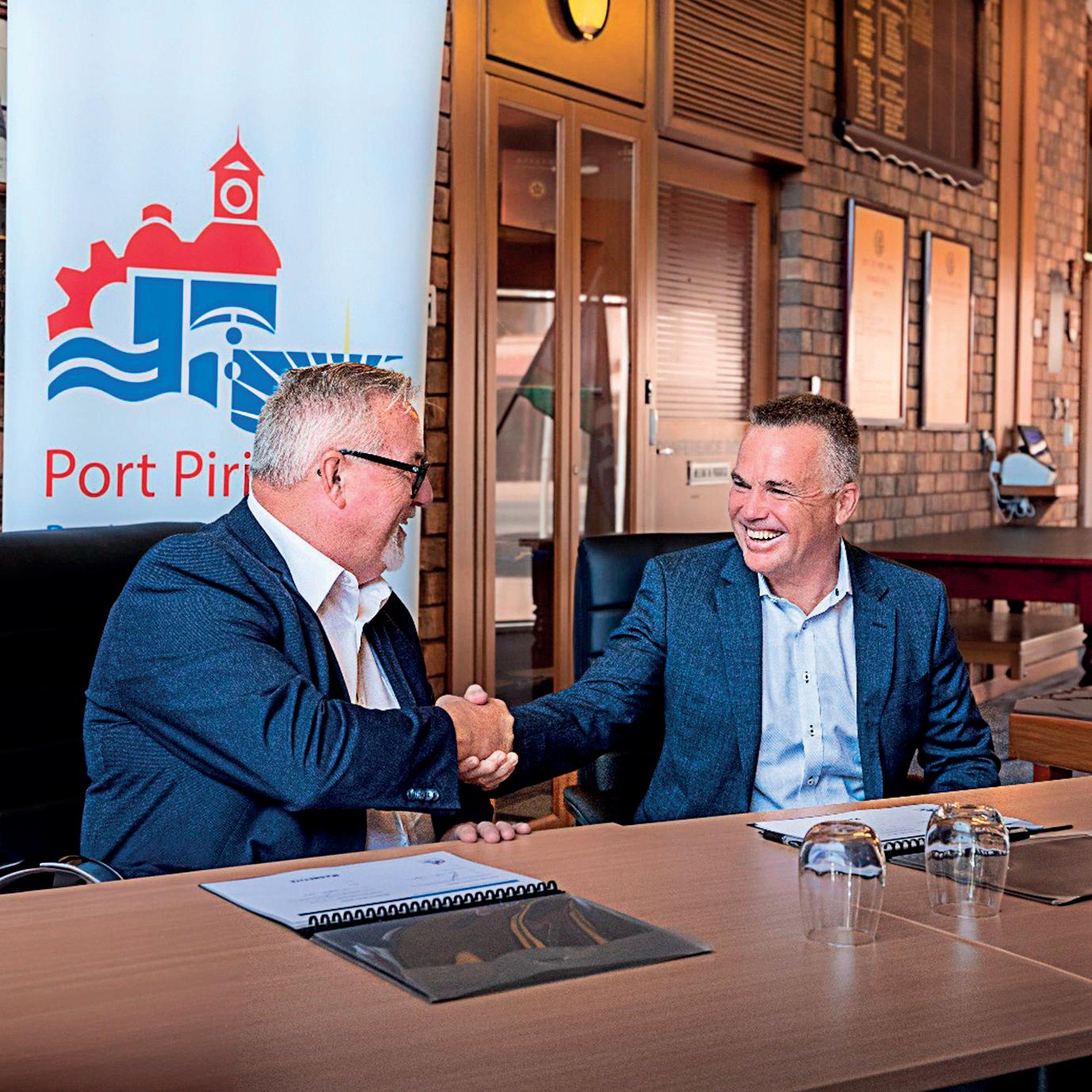
it could change the trajectory for the company and for South Australia’s resource sector.”
The coming months will see Magnetite Mines continue drilling, analysing and refining its projects.
But the story being written is already clear: a company once defined by iron ore is now carving out a multi-metal identity, one assay, one tenement and one infrastructure plan at a time. Much of South Australia may be sunburnt
and rugged, but beneath its red soils, Magnetite Mines is uncovering a narrative that stretches from copper veins to gold-bearing quartz, from rare earths to iron ore, a story of possibilities, patience and ambition. AM
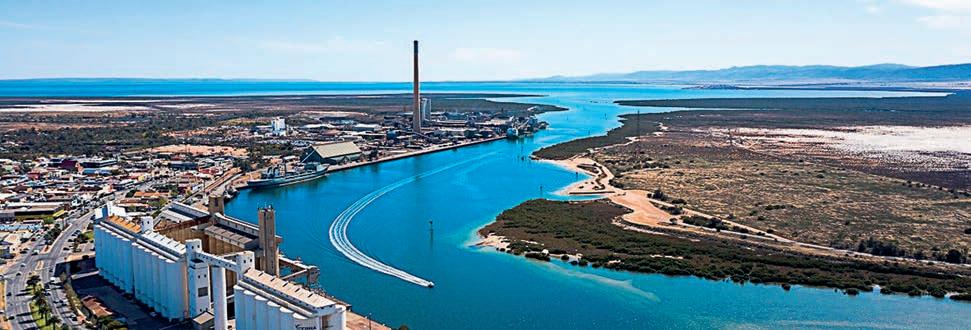
Stretching across South Australia’s mid-north into western New South Wales, the Braemar iron region has long been recognised for its vast magnetite resources, but only in recent decades has its true scale and strategic value begun to take shape. Early exploration in the region dates back to the late 19th and early 20th centuries, when pastoral expansion and small-scale prospecting first revealed iron-rich formations beneath the surface. However, the remoteness of the region and a lack of infrastructure meant development was constrained for much of its history. Renewed interest emerged in the late 20th century as advances in bulk mining, beneficiation and transport logistics made large, lower-grade magnetite deposits more economically viable. The Braemar province, characterised by extensive iron formations and consistent geology, began to attract exploration attention from companies seeking longlife, large-scale resource opportunities.
Today, the region is increasingly viewed as one of Australia’s most significant undeveloped iron ore provinces. Projects such as Magnetite Mines’ Razorback are helping to redefine its potential, demonstrating how modern processing techniques can unlock value from deposits that were once considered uneconomic. And ongoing exploration across the broader tenement package is revealing additional mineralisation beyond iron ore, including copper and other base metals.
As global demand shifts towards secure, long-term supply of critical minerals, the Braemar iron region is moving from a largely untapped geological province to a strategically important contributor to Australia’s resource sector, with Magnetite Mines among the companies helping to drive that transition.
L–R: Port Pirie Mayor Leon Stephens and Magnetite Mines managing director Tim Dobson signing a memorandum of understanding.
BRAEMAR IRON REGION: FROM PASTORAL FRONTIER TO CRITICAL MINERALS HUB
Magnetite Mines is advancing a concept to export iron ore concentrates via Port Pirie.




Achieve peak plant efficiency with a simplified, low-maintenance oxidation.


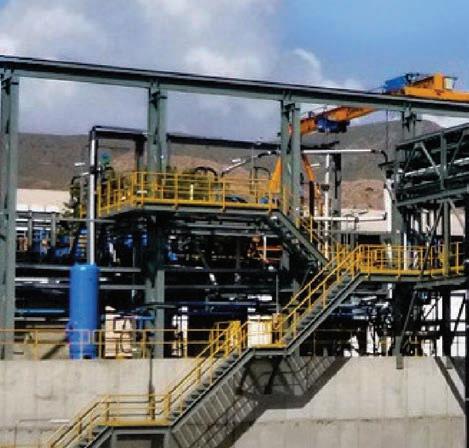


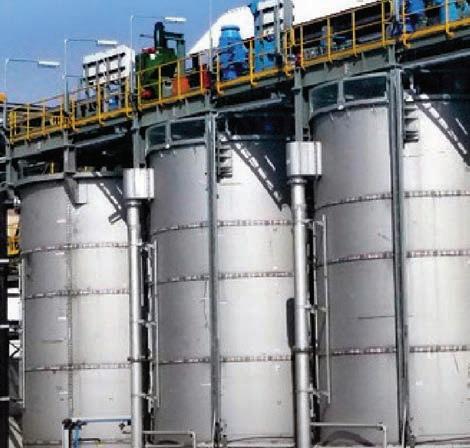
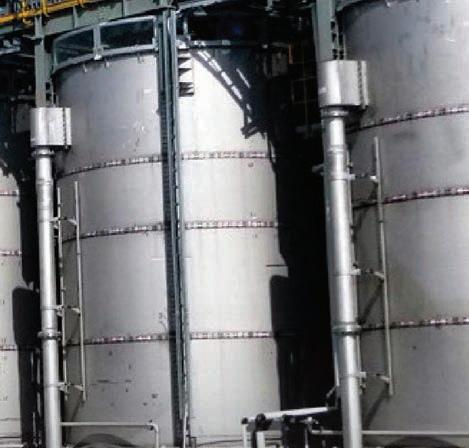
GlencoreTechnology.com to unlock your ore’s value.


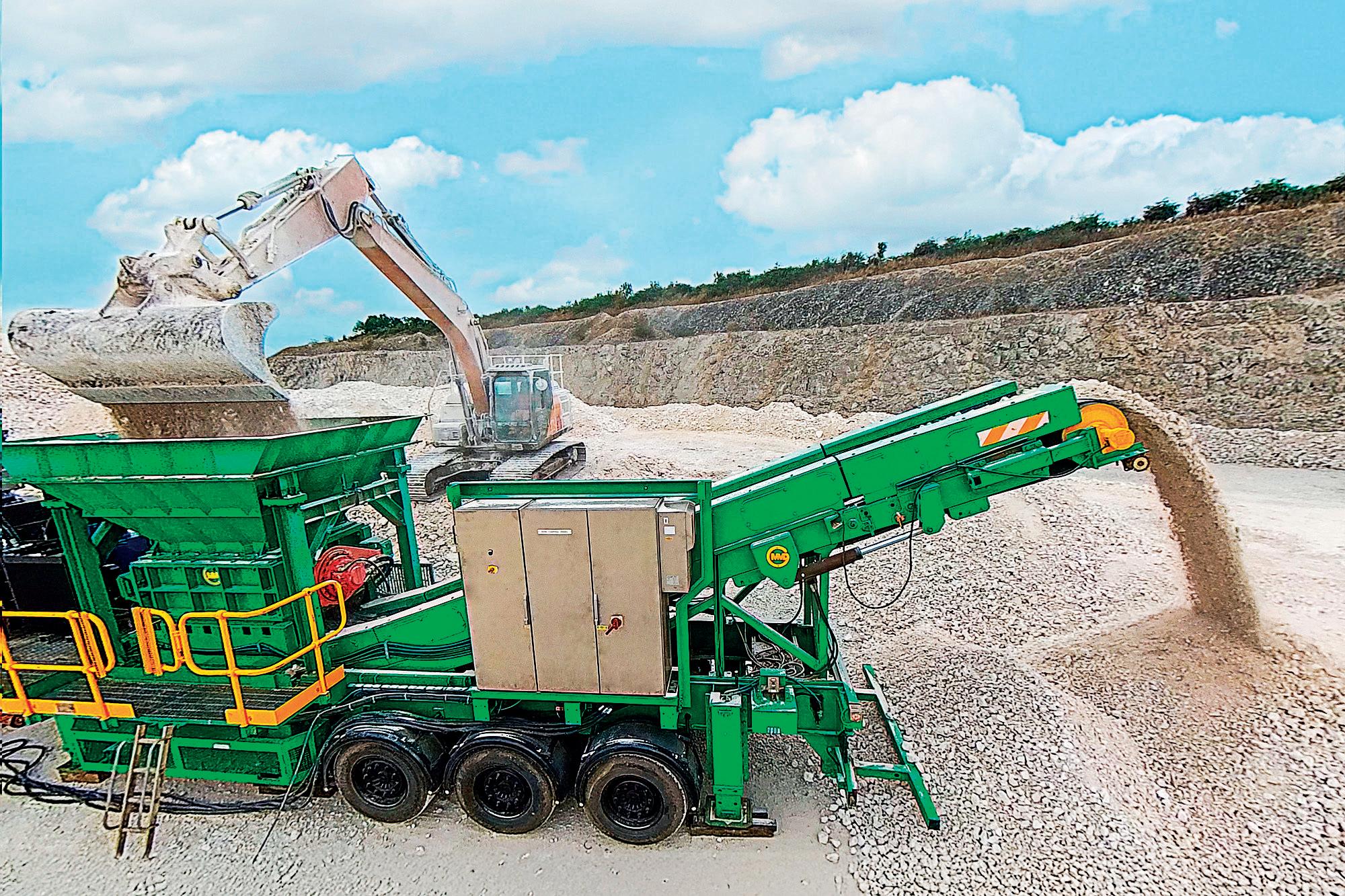
Sizing up a rare opportunity
The HYD Sizer incorporates design improvements tailored to emerging mining applications.
MMD Australia targets rare earth opportunity with its next-generation HYD Sizer.
As global demand for rare earth elements accelerates – driven by electrification, renewable energy and advanced manufacturing – mining operations are being pushed to adopt more efficient and adaptable processing technologies.
This shift marks a natural progression for Mining Machinery Developments (MMD) Australia. With more than four decades of experience in mineral sizing, MMD is extending its expertise into the rare earth sector with the introduction of the HYD Sizer, a solution designed for modern, evolving operations.
Rare earth deposits present distinct processing challenges. Unlike bulk commodities such as coal or iron ore, rare earth ores are typically fine-grained, variable in composition and require precise particle sizing to optimise downstream recovery processes such as flotation and leaching.
As a result, there is growing demand for equipment capable of delivering consistent product size while limiting fines and reducing energy use. Mineral sizers
are increasingly recognised as being well suited to these conditions, particularly due to their ability to handle wet, sticky and abrasive materials with controlled output.
MMD’s Twin Shaft Mineral Sizer has long been central to the company’s offering, using low-speed, high-torque shafts to break material through tensile, shear and compressive forces. This approach enables accurate sizing while minimising fines and dust generation.
The HYD Sizer builds on this foundation, incorporating design improvements tailored to emerging mining applications. In contrast to traditional large-scale systems, it has been developed to support modular, scalable installations, simplified transport and relocation, lower installation and structural requirements, and operation in space-constrained or remote environments.
These attributes make it particularly suitable for rare earth projects, which often require flexible and staged processing solutions.
A key advantage of MMD’s technology is its low-profile design, which reduces
infrastructure demands and allows installation in confined spaces, including underground operations.
The HYD Sizer advances this approach by optimising overall footprint and system integration. This delivers several practical benefits for operators:
• Improved mobility for in-pit or semimobile applications
• Reduced haulage distances and associated energy use
• Lower power consumption compared to conventional crushing methods
• Decreased environmental impact through streamlined material handling
As sustainability becomes an greater priority across the mining sector, these efficiencies are gaining importance.
Supporting the rare earth supply chain
Australia is positioning itself as a key player in global rare earth production, supported by growing investment across the value chain.
MMD’s expansion into this space reflects a broader industry trend of
adapting established technologies to meet the specific requirements of critical minerals. With its ability to deliver consistent sizing across variable ore types, the HYD Sizer is well aligned with the needs of next-generation rare earth projects.
As rare earth demand continues to rise, the need for efficient, flexible and sustainable processing solutions will only intensify.
For MMD Australia, the HYD Sizer signals a strategic move into a rapidly expanding sector.
This strategic direction is underpinned by a unified approach across MMD’s Australian operations, with close collaboration between teams in the east and west of the country ensuring consistent delivery, shared expertise and a cohesive national presence.
With its compact design, ease of maintenance, reduced weight and proven sizing technology, the HYD Sizer is well positioned to help miners and operators unlock the full potential of both rare earth deposits and emerging material streams. AM
Images:
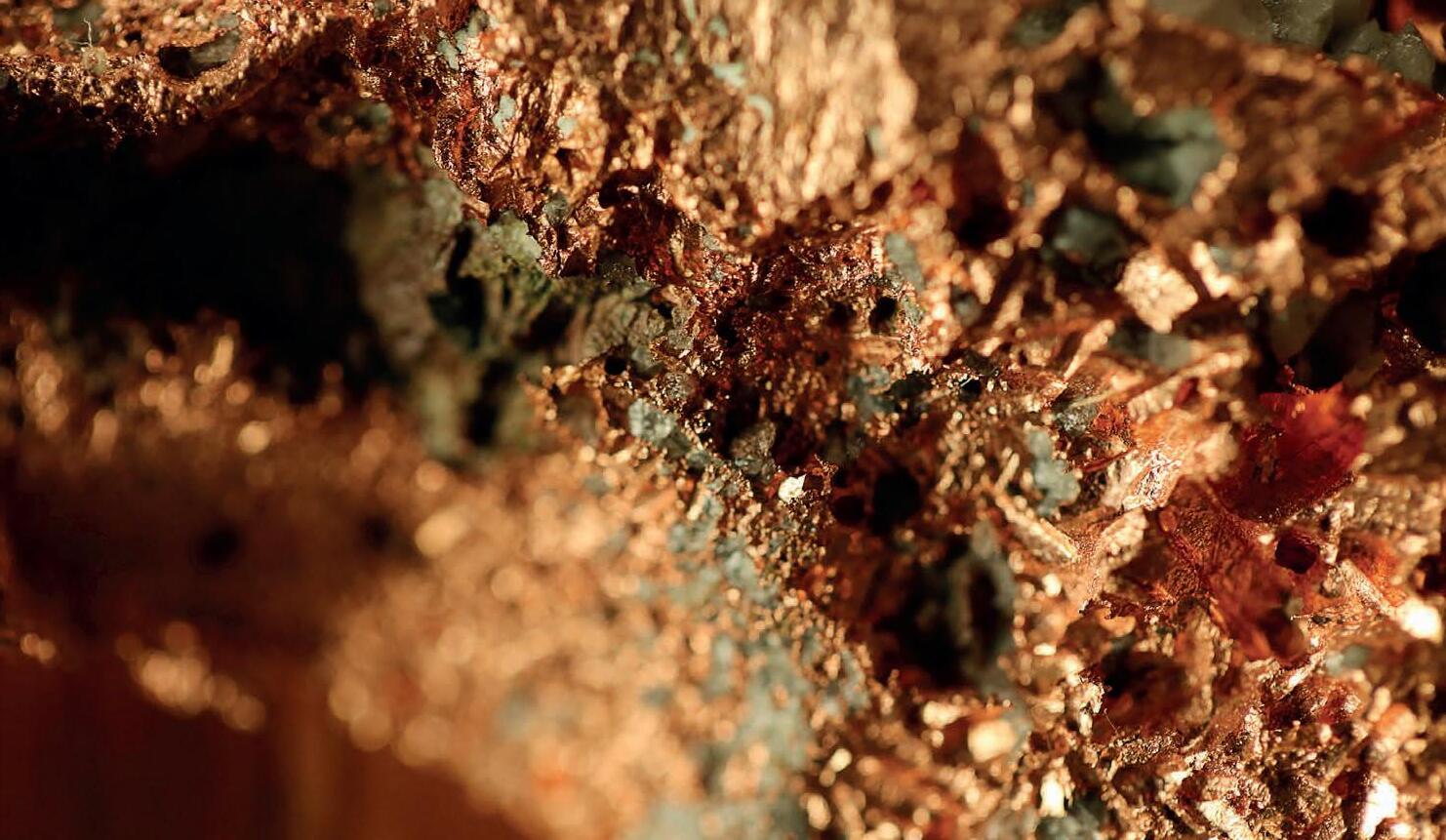
Turning the stone

Turnstone Resources is repositioning itself for Europe’s critical minerals future, using a strategic rebrand to signal a broader shift beyond its potash roots.

When South Harz Potash became Turnstone Resources, it marked the turning of a new stone, revealing a deeper ambition beneath.
For Turnstone Resources executive chair Len Jubber, the rebrand represents the start of a new era for the Australian company: maintaining its presence in Germany’s established potash operations while jumping into Europe’s fast-growing critical minerals markets.
“The meaning behind the new name is about uncovering value, it’s about turning a stone to see what’s beneath it,” Jubber told Australian Mining
“The rebrand is also a nod to the turnaround work I’ve spent my career doing, but also a reflection of the people, culture and credibility we’ve built over more than a decade.”
Jubber’s career began at Rio Tinto’s Rossing uranium project in Namibia, where he learned that leadership and culture are as vital to mining success as geology and engineering.
“You can have the best project, but without the right team execution will falter,” he said.
“That principle now guides Turnstone’s approach, from exploration to community engagement and investor relations.”
Drawing on years of experience reshaping companies, Jubber believes understanding a project’s true valuedrivers – whether they lie in geology, logistics or processing – is vital. But just as important is building trust with stakeholders, from investors to regulators and local communities. Establishing that credibility, he said, is what enables projects to move forward with confidence.
That focus on execution discipline is becoming increasingly important as capital markets tighten, with investors placing greater emphasis on development timelines, jurisdictional strength and clear pathways to production rather than conceptual resource potential alone.
While Turnstone’s German potash project remains central to the business, the company is increasingly focused on new opportunities further north in Sweden.
“We have a very real, very attractive potash project in a region that has been the genesis of much of the potash technology and experience globally,” Jubber said.
Backed by perpetual mining licences, environmental approvals and more than a decade of community engagement, the Swedish project offers a strong foundation. At the same time, its low holding costs allow Turnstone to be
patient, maintaining exposure to future upside while directing capital towards commodities currently in demand.
Sweden has emerged as the company’s next strategic focus. Combining geological potential with a transparent regulatory system and supportive investment climate, the Nordic region presents a compelling environment for exploration.
“We looked at prospectivity, ease of doing business and regulatory clarity. Sweden stood out,” Jubber said.
“They’re open to mining investment and have a history of supporting exploration and development.”
Turnstone’s projects in the Värmland Province, including Glava-Klinten and Torsby West, target copper and gold within a known mineralised belt.
These assets were acquired via an option agreement and the company was granted six exploration licences covering 10,600 hectares of prospective ground. Historical drilling and surface mineralisation point to a clear pathway towards resource definition, with drilling programs planned for later this year.
“All the majors are chasing copper because of the energy transition,” Jubber said. “Being in a known belt with infrastructure nearby, including smelters, makes it an exciting opportunity.”

Established infrastructure across the Nordic region strengthens that opportunity. Existing smelting capacity and a long mining history mean future development could benefit from lower logistics costs and well-understood supply chains, reducing some of the barriers typically faced by early-stage projects.
Investor sentiment towards European critical minerals exposure has also strengthened, with institutional capital increasingly flowing towards
Copper is central to Turnstone Resources’ ambitions.
Turnstone Resources executive chair Len Jubber.
jurisdictions seen as politically stable and supply-chain relevant.
This trend is reinforcing interest in early-stage explorers with credible European footprints, particularly those aligned with electrification metals and defence-linked supply chains.
Diversification sits at the heart of Turnstone’s strategy. While potash remains an anchor, the company is building a broader portfolio across multiple commodities and project stages.
“Not every project will be a winner, so we aim for a mix,” Jubber said. “We consider demand, supply and commodity outlook to build a portfolio that fits the scale of our company.”
A recent $1.25 million capital raising, which followed a 15:1 share consolidation in August 2025, has reshaped the company’s register, balancing long-term holders with new investors attracted to the critical minerals strategy.
At the same time, the board has evolved to reflect the company’s new direction. Recent appointments have strengthened expertise across project generation, European markets and off-take strategy.
Jubber highlighted non-executive directors Richard Pearce, experienced in initiating mining projects, and Christian Barbier, a French citizen experienced in critical minerals and
off-take strategy, alongside the capital markets experience of founding and major shareholder Rory Luff.
“Small companies need directors who can actively contribute,” Jubber said. “From exploration to investor engagement, the right mix of skills is critical.”
“The addition of Richard Pearce around the middle of last year, and his background in geophysics, project generation, initiating new companies … was a clear indication of how we recognise the importance of that skill set, given our change to exploration in critical minerals.”
Jubber said Barbier also adds a complementary commercial focus, with experience across critical minerals and commodities such as lithium and mineral sands.
“We were very fortunate to secure the interest of a gentleman on the other side of the spectrum, ie sales and marketing,” Jubber said.
“His expertise is particularly valuable in understanding how offtakers assess emerging developers and producers, and how companies like theirs are viewed in terms of potential investment and support.”
Europe’s focus on securing critical mineral supply chains continues to accelerate, supported by policy frameworks aimed at reducing import
dependence and fast-tracking domestic project development. This structural shift is expected to underpin long-term demand for projects located within stable Organisation for Economic Co-operation and Development (OECD) jurisdictions.
Jubber said shifting geopolitical dynamics and rising demand are reshaping how resources are prioritised, creating opportunities for companies already operating within Europe.
Turnstone’s exploration ambitions extend beyond copper and gold to include commodities such as antimony, tungsten, tin and rare earths, all of which are gaining strategic importance globally.
From its origins in Germany’s potash sector to its expanding footprint in Scandinavia, Turnstone is positioning itself to grow alongside Europe’s evolving resource needs.
“Turnstone is building character and credibility, uncovering value and positioning itself to benefit from Europe’s growing demand for critical minerals,” Jubber said.
“It’s an exciting time for our team, our shareholders and the markets we operate in.”
The company’s evolution reflects a broader shift in the industry, where adaptability, timing and strategic focus are becoming just as important as the assets themselves. AM
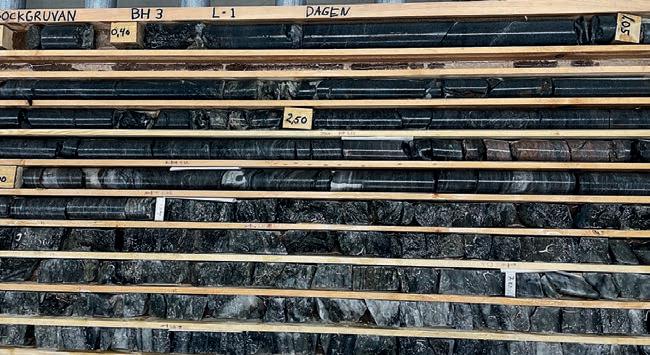

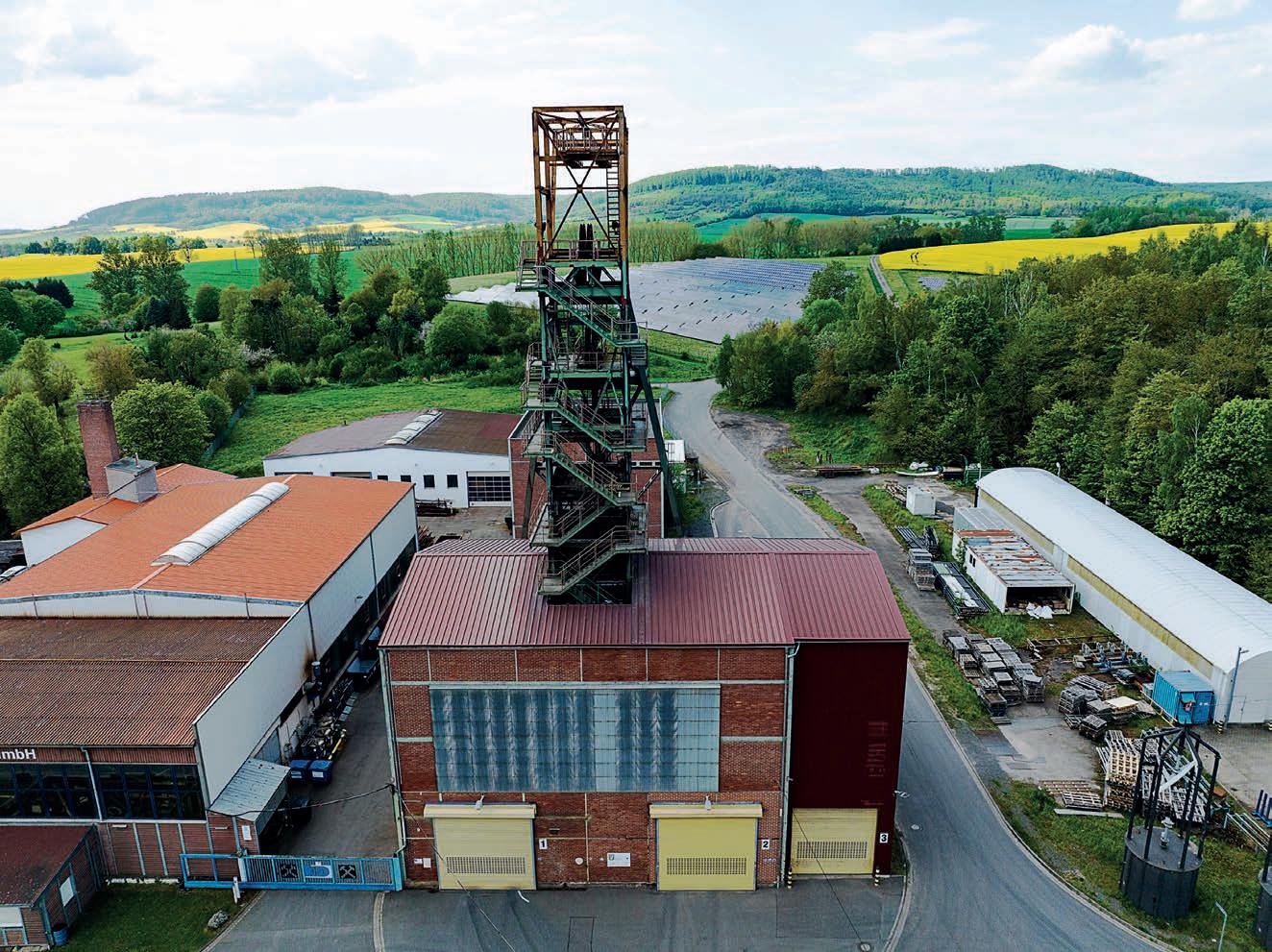
The Bernterode shaft at the Ohmgebirge project in central Germany.
Bockgruvan core from drilling conducted by Boliden at the Torsby West project in Sweden.
Building bridges
XCMG Australia is building bridges with Indigenous enterprise, taking its mining expertise from the Pilbara to the world.
When representatives from WirluMurra Enterprises travelled from the Pilbara to China’s industrial heartland, it was more than a factory visit; it represented a step toward building partnerships that connect Indigenous enterprise with the global mining supply chain.
The delegation from Wirlu-Murra Enterprises, the commercial arm of the Wirlu-Murra Yindjibarndi Aboriginal Corporation (WMYAC), visited XCMG Group’s headquarters in Xuzhou in China’s north-western Jiangsu province.
Established in 2010 and named after a creek on Yindjibarndi Country in Western Australia, WMYAC has grown into a leading example of self-determination in action; it is the only fully self-sustainable community organisation in the Pilbara town of Roebourne, a milestone that reflects strong governance, commercial capability and long-term strategic vision.
Through Wirlu-Murra Enterprises, WMYAC delivers contracting services across the Pilbara, including work for Fortescue Metals Group. Working in one of Australia’s largest iron ore regions, WMYAC supports mining operations while creating employment and training pathways for Yindjibarndi people.
The China visit offered XCMG Australia insight into the lifecycle of mining-class equipment. The delegation toured intelligent production lines, robotics integration, advanced welding systems and largescale assembly. Discussions covered operational requirements in Australian conditions, equipment durability, lifecycle support and the integration of emerging technologies.
Indigenous enterprises highlighted how
global manufacturers can align their operations with local community priorities.
The fact Fortescue facilitated the introduction between Wirlu-Murra Enterprises and XCMG serves as an example of how collaboration drives Australia’s mining sector. Major mining companies, equipment makers and Indigenous corporations all play important, connected roles in building a more sustainable industry.
The interaction also reflected trends in Australia’s mining sector. Partnerships between miners, equipment manufacturers and Indigenous groups are increasingly strategic, supporting productivity, decarbonisation and cost-efficiency while respecting cultural expectations.
WMYAC’s experience shows how Indigenous-owned businesses are helping to shape the sector, providing contracting, logistics and maintenance services while reinvesting revenue into community programs that create jobs and develop skills.
The journey from the Pilbara to Xuzhou, home to one of China’s largest hubs for construction and mining equipment, also demonstrates the increasingly global nature of Australia’s mining supply chain.
During the visit, Wirlu-Murra Enterprises representatives Jose Castillo, John Sandy and Jessica Wilson toured XCMG’s advanced production facilities and witnessed firsthand the scale, precision and automation that underpin the company’s operations.
As Australian miners focus on productivity, decarbonisation and cost efficiency, collaboration between original equipment manufacturers (OEMs), service
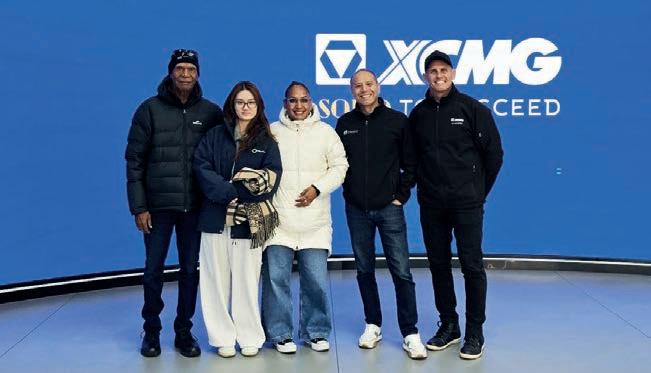

Indigenous-owned enterprises across Australia’s resources sector are playing a growing role in contracting, logistics and maintenance services.
WMYAC shows how communitydriven organisations can build sustainable commercial models while delivering social impact, creating employment pathways, developing skills and reinvesting revenue into community programs.
For XCMG Australia, the visit offered insight into the governance, priorities and operational structures of Indigenous organisations. It also marked a first step toward building strong relationships with Traditional Owners, ensuring future operations align with cultural expectations and community engagement.
XCMG’s visit is a part of the company’s broader strategy in Australia. While one of China’s largest equipment manufacturers, XCMG is focusing on long-term engagement, dealer network growth, and understanding local community contexts. It aims to provide reliable, high-capacity machinery suited to the Australian resources sector while embedding ethical and culturally-aware business practices.
As the industry adopts low-emission equipment and digital fleet management, OEMs like XCMG are innovating to balance performance, reliability and environmental responsibility. Direct engagement with Indigenous contractors
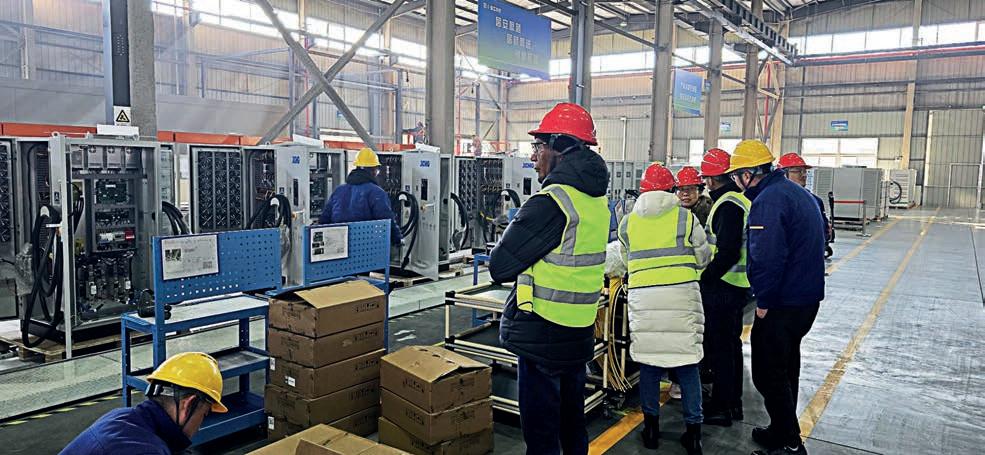
Australia’s mining sector is evolving rapidly, with decarbonisation, workforce challenges, digital transformation and community expectations reshaping operations. Partnerships that combine local leadership, community engagement, and global expertise are becoming increasingly important.
From Yindjibarndi Country to Xuzhou, the Wirlu-Murra Enterprises delegation’s journey represents a convergence of community enterprise, industry expertise, and global manufacturing excellence.
Strengthening these links creates opportunities for Indigenous businesses to grow, OEMs to adapt to local contexts, and the mining sector to operate more inclusively. In a sector defined by scale, innovation and long-term investment, progress is built on relationships.
XCMG Australia’s engagement with WMYAC shows that the future of mining is about collaboration, shared ambition and sustainable opportunity for all stakeholders. AM
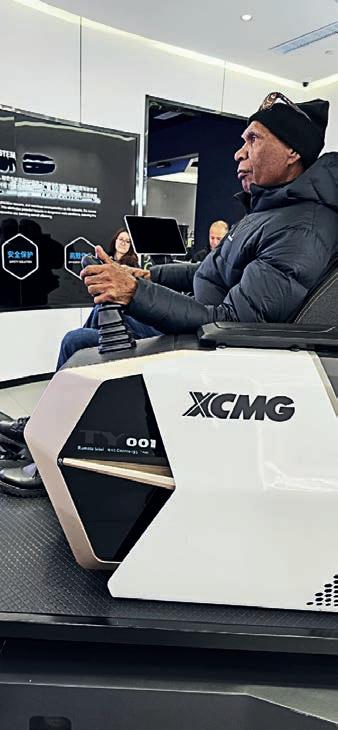
Images:
XCMG
Delegation members from Wirlu-Murra Enterprises during their visit to XCMG Group’s headquarters in Xuzhou.
XCMG’s technology can handle even the toughest working environments.
A Wirlu-Murra Enterprises delegate tests XCMG technology during a hands-on tour of its advanced manufacturing facilities.




Ventilation Monitoring
Moving air is easy. Tracking it is smart.




















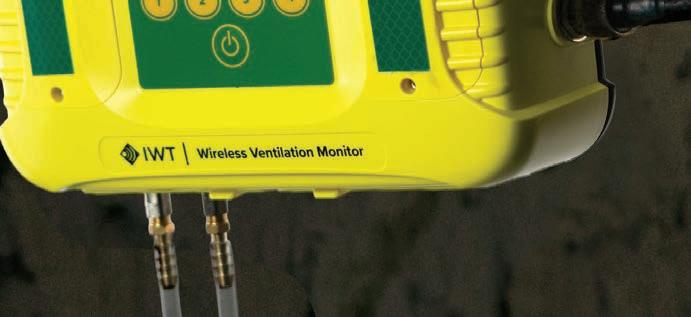


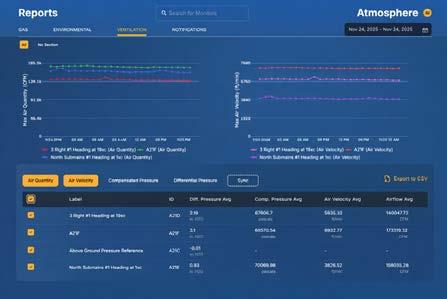








SENTINEL™ Wireless Ventilation Monitoring Solutions provide a clear view of airflow underground, with less guesswork and more control. Whether you need to validate ventilation models, comply with safety regulations, or improve day-to-day operations, IWT delivers the tools to make it happen quickly, accurately, and reliably.

Smart Connectivity for Better Results.


Unlocking gold’s harder edge
With refractory orebodies becoming central to future gold supply, processing solutions such as Glencore Technology’s Albion Process are moving into focus.
As gold miners are faced with increasingly complex orebodies, Glencore Technology’s Albion Process is emerging as a pathway to unlock refractory deposits, with Rox Resources’ Youanmi project in Western Australia offering a timely proving ground.
With the global gold sector entering a more complex period and free-milling deposits steadily depleting, miners are turning their attention to semi-refractory and refractory orebodies, resources that have historically been left behind due to processing challenges.
This reality is front and centre for Rox Resources, with Youanmi holding both free-milling and sulphide-hosted mineralisation, containing around 75 per cent free-milling gold and a further 20 per cent associated with sulphides such as arsenopyrite, material that requires more advanced treatment.
The Youanmi project is significant not just for Rox but for the Australian gold sector, serving as a fully funded restart
story gaining momentum, one bolstered by Glencore Technology’s Albion Process.
The asset, which last operated in 1997 when gold prices were around $400 per ounce (compared to today’s prices above $US2000 per ounce), is now being advanced towards production following a final investment decision and backing from a $350 million funding package.
Construction is set to begin across key infrastructure, with Rox targeting its first gold pour by mid-2027.
But while economics and timing have aligned, the metallurgy remains complex.
“We have a few metallurgical complexities that mean we can’t do a standard crush, grind and leach process,” Rox Resources general manager – studies Daniel Marchesi said.
With the majority of mineralisation hosted in sulphides and a semi-refractory component requiring partial oxidation, Rox turned to Glencore Technology’s Albion Process. Test work has delivered recoveries exceeding 94 per cent through
the Albion circuit, underpinning an overall plant recovery of about 91 per cent.
That challenge has led Rox to partner with Glencore Technology, selecting the Albion Process and IsaMill combination as the preferred solution, a decision that could position the project as a reference point for the wider industry.
When it came to the selection process, Rox said the choice was far from straightforward, with assessments of multiple processing pathways during scoping and pre-feasibility study work, such as concentrate sales, bacterial oxidation and pressure oxidation.
“Once we went through that process, doing all the metallurgical work and risk analysis, the Albion Process came up as the best option,” Marchesi said.
While pressure oxidation remains a proven route for refractory gold, its high capital intensity and scale requirements quickly ruled it out for Rox. The Albion Process offered a more balanced proposition, combining strong
metallurgical performance with lower upfront expenditure.
Crucially, it also aligned with the scale and variability of the Youanmi deposit.
At its core, the Albion Process is a twostage hydrometallurgical system.
First is the ultrafine grinding using Glencore Technology’s IsaMill, reducing particles to around 10–12 microns, critical in breaking down sulphide mineral structures and preparing them for oxidation.
The second phase is where the finely ground slurry undergoes oxidative leaching at atmospheric pressure, where oxygen is injected to liberate the gold.
“We do the fine grinding in the IsaMill and then put it through an oxidative leach process; it works together in tandem,” Glencore Technology manager of IsaMill and OxiLeach Paul Bullock said.
“The key thing is the simplicity of the Albion Process allows us to dial in, to be able to partially oxidise as much as we need and, therefore, trying to keep down
The Albion Process plant at Glencore’s Nordenham zinc refinery in Germany.
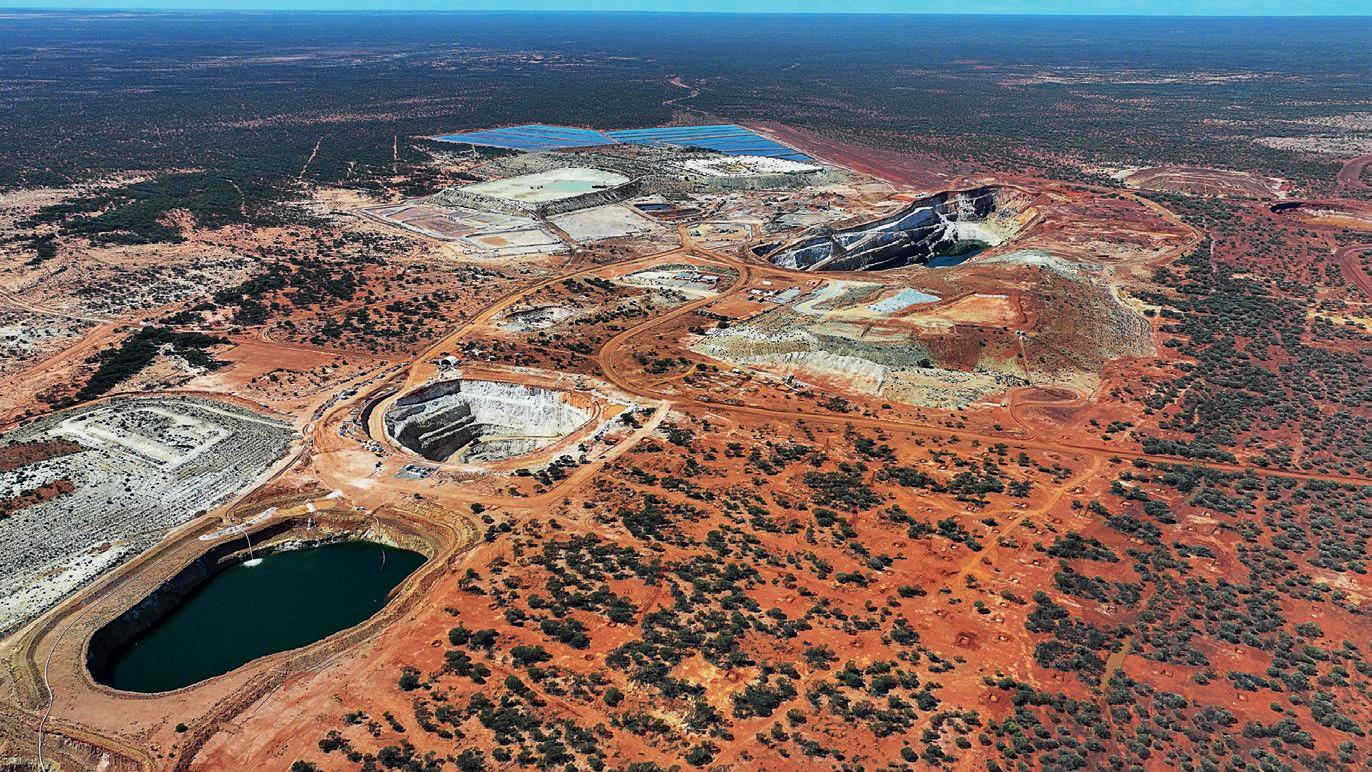
the operating cost to a minimum level and providing benefit in recovery.”
This combination is specifically designed to overcome passivation, one of the biggest barriers in sulphide processing.
Without ultrafine grinding, sulphide minerals form a surface layer during oxidation that blocks further reaction. By reducing particle size, the Albion Process ensures oxidation occurs before this barrier can form.
“To get past the passivation impact, we need ultrafine grinding, which the IsaMill provides,” Bullock said.
The result is a process that enables refractory gold to be treated using conventional downstream methods such as carbon-in-leach, and while recovery rates are a major driver, Rox’s decision was influenced by broader operational factors.
“The biggest reason for us is the ability of the Albion Process to deal with variation in feed,” Marchesi said. “So if our sulphur levels fluctuate, as we expect them to, we can adjust fairly simply on what we do and how we operate the plant to deal with that.”
This flexibility significantly reduces project risk and, from Glencore Technology’s perspective, this adaptability is a defining feature of the process, which is designed to partially oxidise only as much sulphide as required, keeping operating costs under control while maintaining recovery.
The technology also avoids the need for high-pressure systems, simplifying plant
design and reducing capital intensity, a key differentiator against traditional refractory gold solutions.
Beyond a single project, Glencore Technology and Rox Resources view partnership as part of a much larger shift.
“There’s a lot of deposits out there that are either refractory or semirefractory, and they’re not being mined,” Marchesi said.
As easily processed resources decline, these deposits are becoming increasingly important to the future gold pipeline.
Bullock agrees. He believes the decline in new refractory processing plants over the past decade has created a gap in available solutions.
“There’s a large opportunity in that refractory space, and projects like this help open up those market opportunities,” he said.
In this context, Rox’s project development becomes a potential case study for how modern processing technologies can unlock previously uneconomic orebodies.
Likewise, implementation is another edge the Albion Process possesses, with hydrometallurgical circuits traditionally associated with long commissioning times. However, the Albion Process can be brought online far more rapidly.
“The ramp-up time can be very, very fast,” Bullock said, pointing to the simplicity of oxygen transfer systems and the well-established nature of IsaMill installations.
This capability aligns directly with Rox’s development strategy.
“Having a robust way of processing the ore and getting high gold recoveries allows us to accelerate toward production,” Marchesi said.
As the gold sector evolves, technologies that can economically process more complex ores will play an increasingly critical role.
For Glencore Technology and Rox Resources, the partnership represents more
than a single deployment; it is a foothold in a resurging refractory gold market.
“There are a lot of projects sitting back and waiting to see their success. There will be a big ramp-up in that space,” Bullock said.
When Rox Resources delivers, the Albion Process can solve more than a single metallurgical challenge. It could also help to redefine how the industry approaches its most difficult gold resources. AM
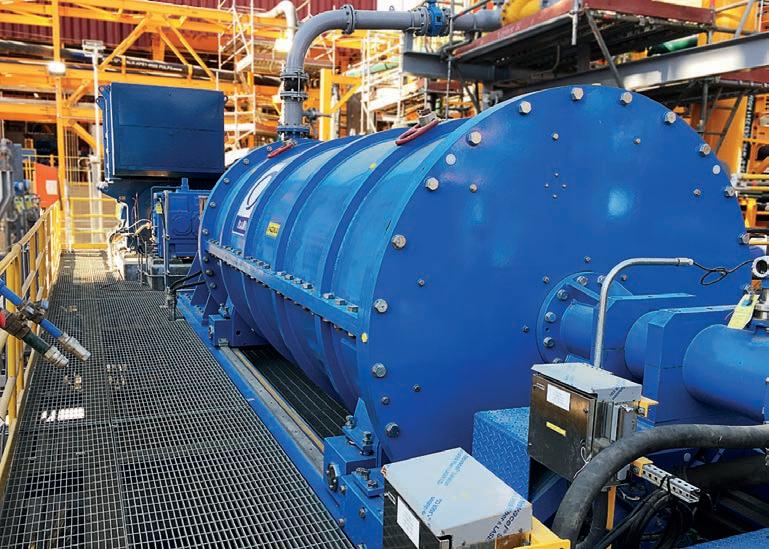
The M10,000 IsaMill stands as a centrepiece of efficiency and a critical component of the Albion Process.
The Youanmi gold project in Western Australia’s Murchison region will unlock semi-refractory ore through the Albion Process.
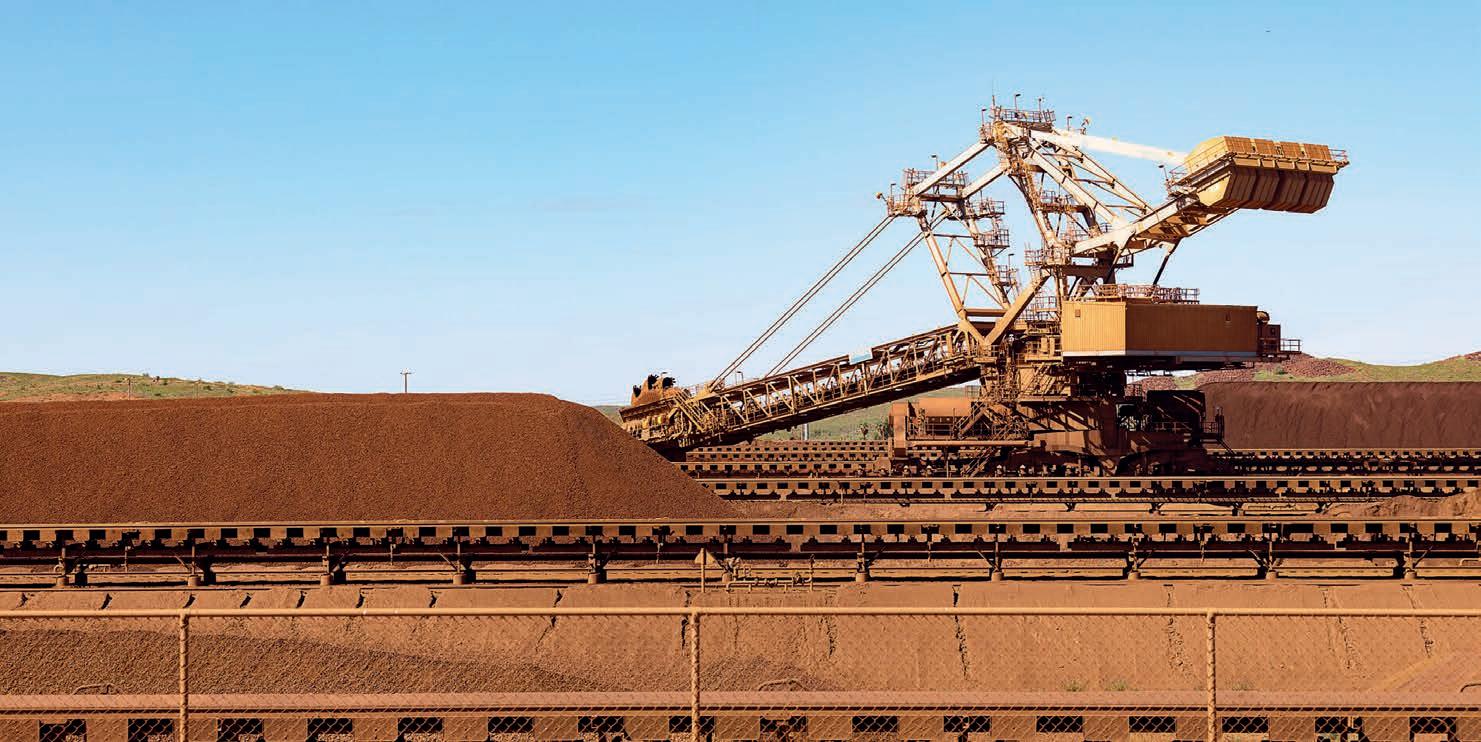
Getting connectivity right
Getting connectivity right is critical in mining OT environments, where device selection, site conditions and network architecture must all align.
Connectivity projects often don’t fail because the technology doesn’t exist. They fail because the wrong device ends up in the wrong part of the network.
A serial gateway rated for a climatecontrolled comms room gets installed in an outdoor switchyard. An edge computer without hazardous-area certification gets specified into a zone that requires it. A protocol converter handles the bench test perfectly but can’t sustain throughput under the real-world load of a 30-device Modbus network.
These aren’t edge cases. They’re the kinds of problems that turn a straightforward operational technology (OT) upgrade into a months-long rework. In the mining industry, the cost
Australia’s mining sector runs on OT infrastructure that spans enormous distances, harsh environmental conditions and mixed-generation control systems.
A single site might need serial connectivity for legacy analysers in a processing plant, Modbus conversion between field remote terminal units (RTUs) and a modern supervisory control and data acquisition (SCADA) platform, and wireless edge computing for remote pump stations that can’t be reached by cable.
Each of those problems has a different technical solution. And each of those solutions needs to account for temperature extremes, dust and vibration, power supply reliability, network topology, cybersecurity compliance and long-term maintainability, none of which are obvious from a product
“The datasheet tells you what a device can do,” Madison Technologies national
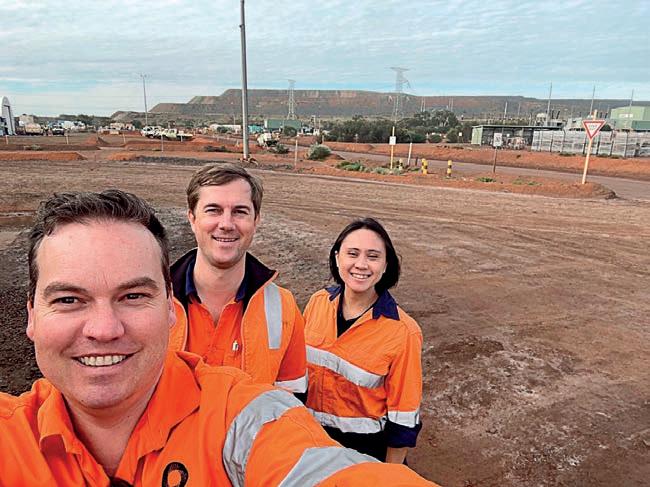
need dual DC inputs to protect against single-supply failure? Are you converting protocols or just bridging physical layers? Does this site fall under a hazardous-area classification? What’s your cybersecurity compliance roadmap?
vendors and customers goes deeper than
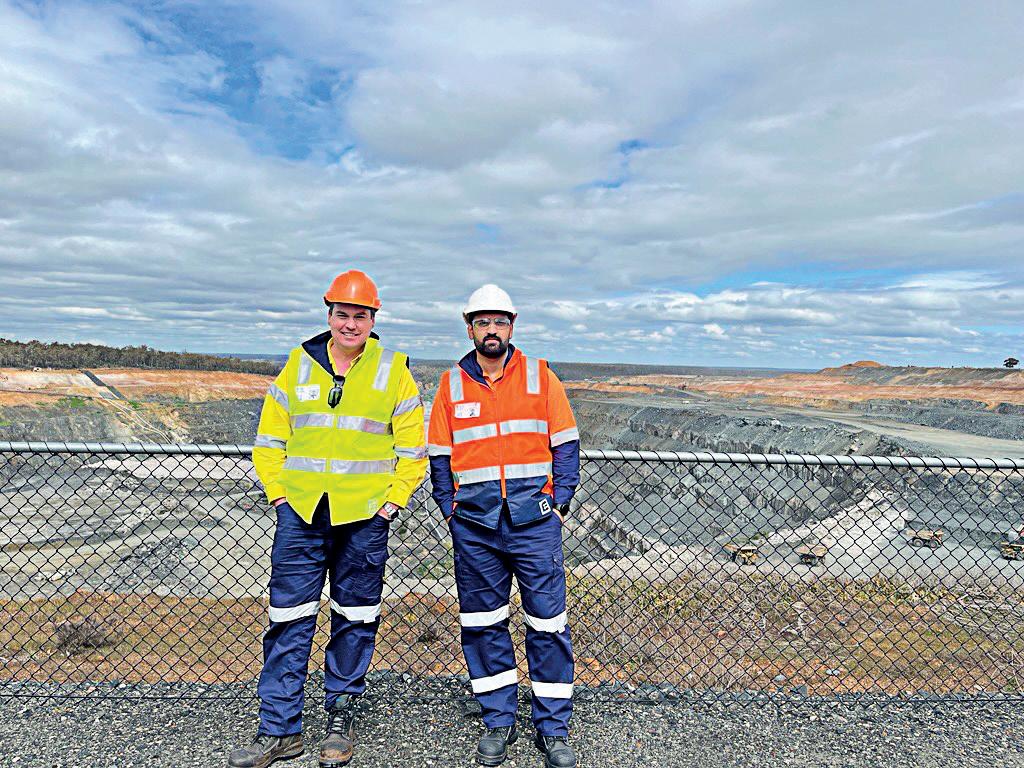
during the design phase – before the bill of materials (BOM) is finalised – to validate that the hardware being specified fits the
questions others don’t always ask. What’s
power available or does the device
The answers determine whether a project needs a simple serial device server, a protocol gateway with diagnostic capability, or a wireless edge computer with IEC 62443 security compliance and a 10-year OS support lifecycle.
These are different products solving different problems, and specifying the wrong one creates risk that doesn’t surface until commissioning, or worse, during operation.
“We’ve seen projects where the hardware was selected from a catalogue without enough consideration for site conditions or network architecture,” Madison Technologies solutions engineer Corey Nesbitt said.
“A 10-minute conversation early in the design phase can save weeks of rework and tens of thousands in project cost.”
Industrial hardware vendors have significantly lifted the baseline in recent years, with dual Ethernet for network redundancy, wide-temperature operation, cybersecurity compliance built in rather than bolted on. That’s a good thing, but it also means more models, more configuration variants and more certification options to navigate.
For integrators working across multiple sites with different environmental and compliance profiles, the selection matrix has grown alongside capability. Getting it right still comes down to understanding the site, the network and the operational requirements before opening a catalogue. When designing or upgrading OT connectivity on a mine site, that understanding is where the conversation should start. AM
Connectivity
L–R: WA regional sales manager Clint Elliott, solutions engineer Corey Nesbitt, and Moxa field application engineer Theresa Kao.
WA regional sales manager Clint Elliott (left) and WA business development manager Adil Shah on-site.

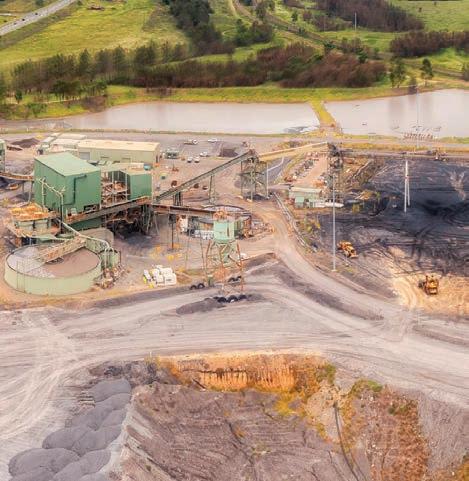

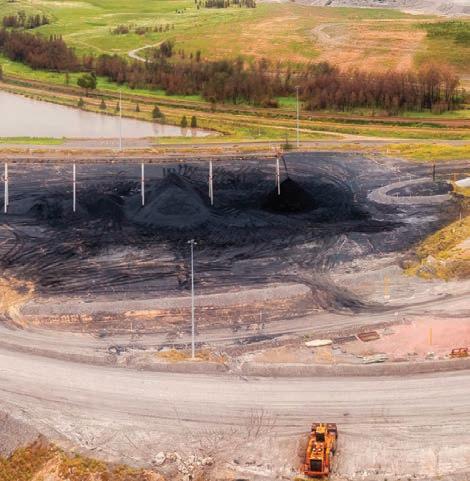


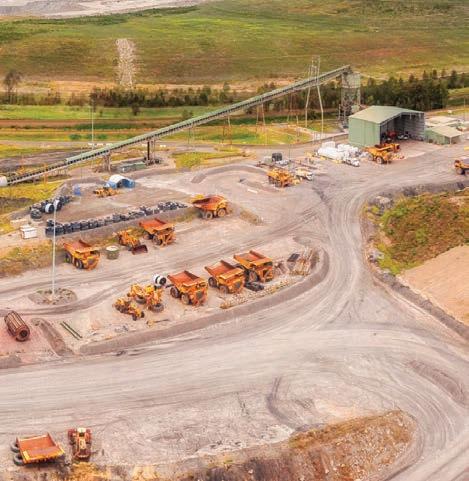

More

Inside the Australia–US minerals partnership
Investment has accelerated across a growing pipeline of critical minerals projects as Australia and the US move to strengthen shared supply chains.
The Australia–US critical minerals partnership has gathered momentum, with more than $5 billion has already been pledged to support new projects under the landmark framework agreement signed at the White House last year.
In the first six months of the agreement, funding exceeded the initial target of $3.5 billion ($US2 billion), underscoring the scale and pace of investment flowing into the sector.
Australian Federal Resources Minister Madeleine King and US Secretary of the Interior Doug Burgum have agreed on priority critical minerals and rare earths projects under the bilateral Critical Minerals Framework, signed by Prime Minister Anthony Albanese and US President Donald Trump last October.
“Australia is taking a global lead to diversify crucial supply chains for critical minerals and rare earths, which are vital to support economic and national security for Australia and our trading partners,” Minister King said in a statement updating progress on the agreement.
“Australia and the US are delivering on the commitments made in the
White House, with priority projects in Australia that support production of rare earths and critical minerals including nickel, cobalt, gallium, magnesium, vanadium and graphite.
“These materials are crucial to defence systems, advanced manufacturing and clean energy technologies that will help Australia and the world meet net-zero commitments.
“Australia is leading the world in diversifying critical minerals and rare earths supply chains, and ensuring we make more things right here where the minerals are found and building a Future Made in Australia.”
Federal Trade and Tourism Minister Don Farrell said Export Finance Australia (EFA) is supporting Australian projects alongside the US Export–Import Bank (EXIM).
“Australia has abundant deposits of critical minerals and rare earths, wellestablished resources and energy supply chains, and the expertise to extract and process those minerals,” Farrell said.
Together, EFA and EXIM are backing a range of priority developments through

coordinated letters of support and interest across key projects, including a rare earths refinery project being developed by Tronox Holdings. The initiative, which spans operations in Western Australia and the US, is being supported through coordinated letters of up to around $424 million each from EFA and EXIM, for a combined total of approximately $849 million. The project will leverage Tronox’s existing mining and processing capabilities to produce mixed rare earth carbonate containing both light and heavy rare earth elements.
Support has also been issued for Ardea Resources’ Kalgoorlie Nickel Project in WA, with EFA and EXIM each providing letters of support and interest of up to $500 million. The project hosts the largest nickel-cobalt resource in Australia and one of the largest in the developed world, and has been selected as a pilot project under the Australian Government’s Investor Front Door initiative.
In addition, a broader pipeline of projects has been supported under the Australia–US Critical Minerals Framework. These include the Alcoa
Gallium Recovery Project in WA, Arafura’s Nolans Rare Earths Project in the Northern Territory, and Astron’s Donald Rare Earths Project in Victoria. Other supported developments:
• Graphinex’s Esmeralda graphite mine (Queensland)
• RZ Resources’ Copi rare earths project (New South Wales)
• La Trobe Magnesium (Victoria)
• Northern Minerals’ heavy rare earths project (WA)
• VHM’s Goshen rare earths project (Victoria)
• Global Advanced Metals (WA)
• EQ Resources’ Mt Carbine tungsten project (Queensland)
Additional projects focused on minerals such as vanadium and scandium have also received indicative support from the Australian and US governments, further expanding the pipeline of strategic resources development under the framework.
As investment momentum builds, the Australia–US partnership is set to play an increasingly central role in shaping secure, resilient critical minerals supply chains for the decades ahead. AM























The Hunter Valley takes the stage
The Hunter Valley is stepping into the spotlight with the launch of a dedicated mining event in 2027, creating a platform to showcase and shape the region’s future.
The Hunter Valley mining region is set to take centre stage in 2027 with the launch of a new industry event designed specifically for one of Australia’s most important resources hubs.
The Hunter Valley Mining Expo will debut from May 19–20, 2027 at the Newcastle Entertainment Centre, creating a dedicated platform for the region’s mining sector to connect, share knowledge and explore emerging opportunities.
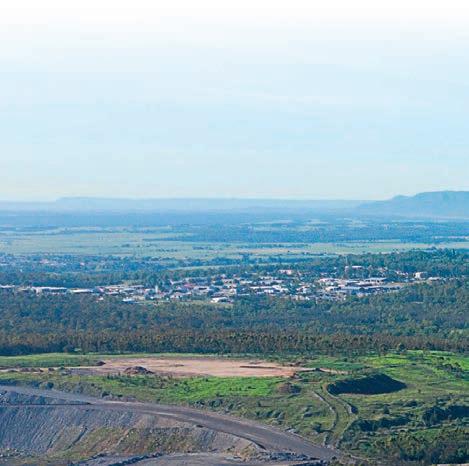
Developed by the team behind major industry events such as the Queensland Mining and Engineering Expo, WA Mining Conference and Exhibition, Asia-Pacific’s International Mining Expo and the PNG Industrial and Mining Resources Exhibition and Conference, the new expo brings a proven track record of large-scale industry engagement to the Hunter. Event organiser Prime Creative Media said it has been designed in response to demand for a focused regional platform.
The Hunter Valley Mining Expo creates a platform for the region’s mining sector to connect, share knowledge and explore opportunities.
“We saw a clear need for a dedicated mining event for the Hunter Valley, a region that plays such a critical role in Australia’s resources sector,” Prime Creative Media show director – mining events Rebecca Todesco said
“The scale, capability and future of this region deserve a platform that brings the industry together to connect, share knowledge and drive progress.”
Purpose-built for the region, the Hunter Valley Mining Expo will focus on the challenges and opportunities
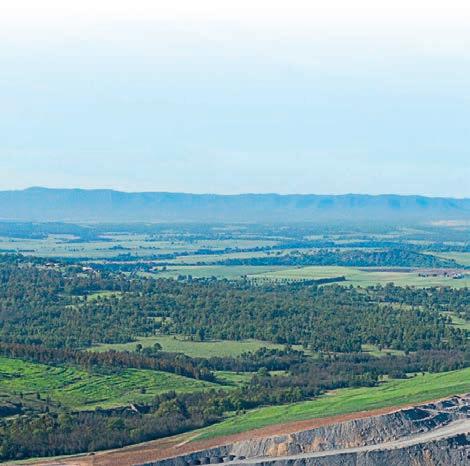
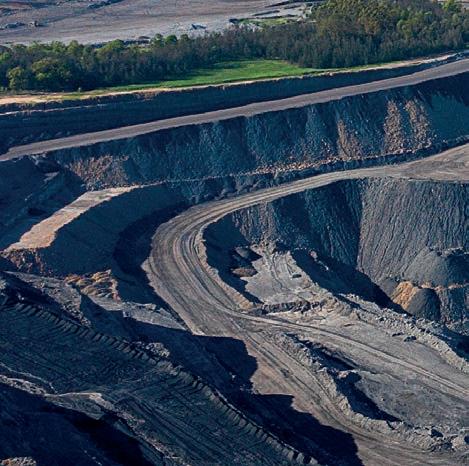
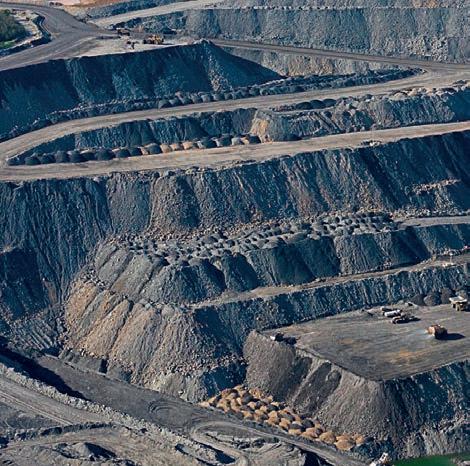
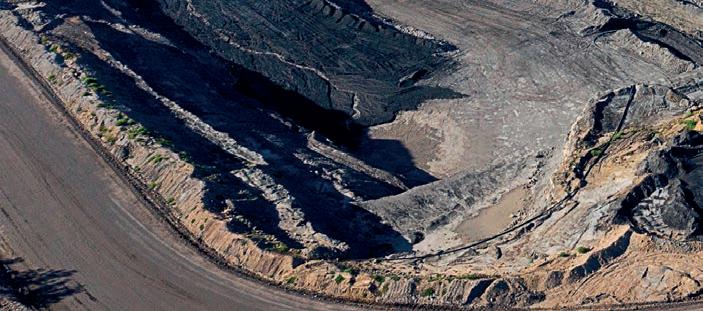
shaping the local industry, with an emphasis on practical, solution-driven content and insights into the ongoing transformation of the coal sector.
The event will feature a curated exhibition spanning six key industry verticals, connecting attendees with suppliers, technologies and services supporting performance across the mining lifecycle.
Alongside the exhibition, a two-day conference program will bring together industry experts to share technical
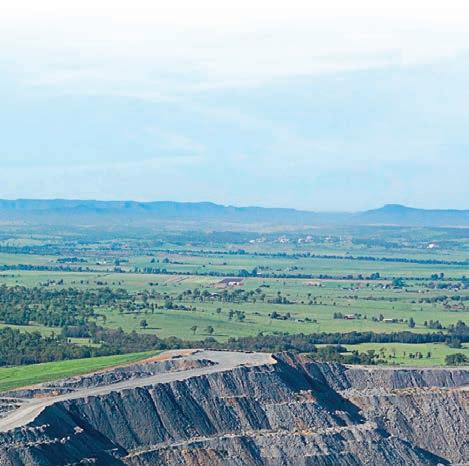
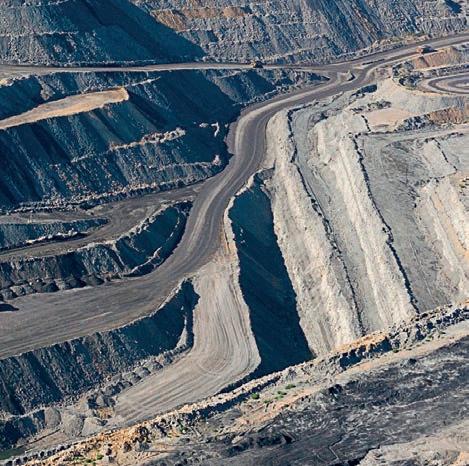
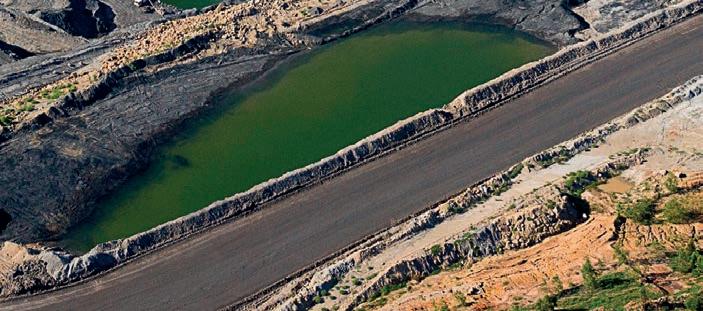
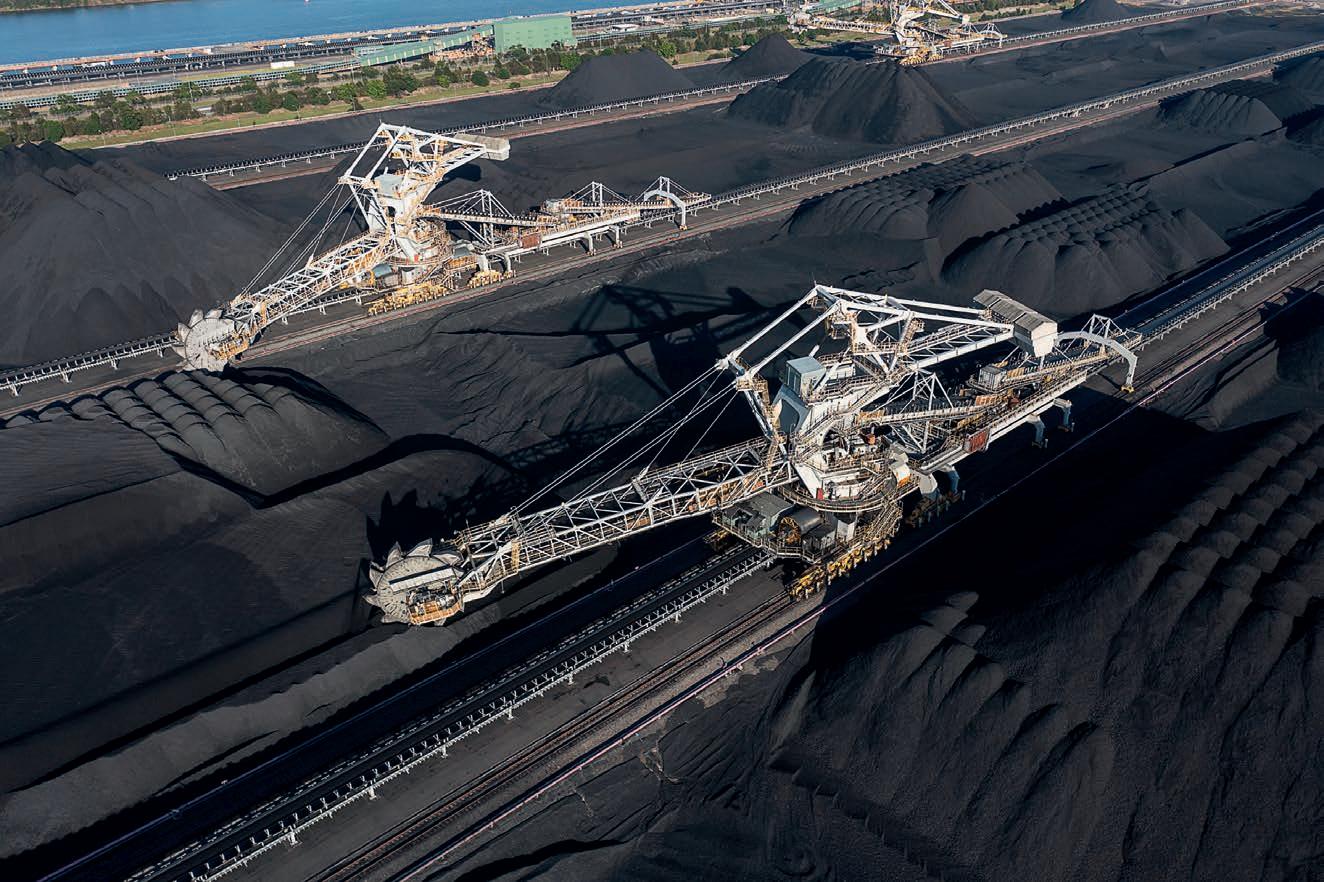
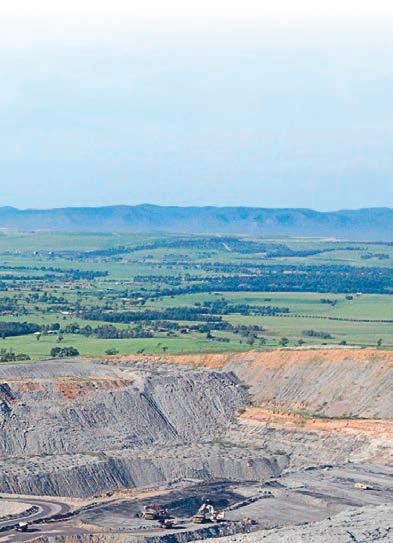
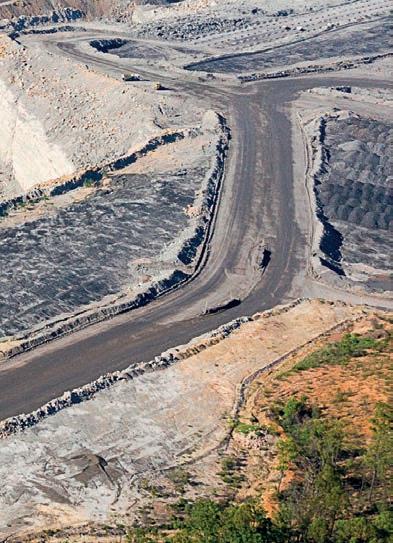
insights, real-world strategies and forward-looking perspectives aimed at supporting operations navigating change and planning for the future.
“We’re focused on creating real value for attendees and exhibitors, from practical insights they can take back to site to genuine business and networking opportunities for people within the Hunter region,” Todesco said.
A key feature of the expo will be the Mining Pavilion, which will showcase regional organisations and industry associations.
Networking will also be central to the event experience, with dedicated spaces including a barista lounge designed as a central meeting point for attendees, as well as networking drinks to encourage industry connection and collaboration.
Backed by Prime Creative Media’s broader portfolio of industry events and publications, the expo will be supported by a targeted marketing and content campaign aimed at attracting decision-makers, technical specialists and industry leaders.
With strong industry interest and a clear focus on delivering practical value, the Hunter Valley Mining Expo is positioned to become a key gathering point for the region’s mining community, supporting connection, collaboration and the ongoing evolution of the sector.
The Hunter Valley has been closely tied to mining since the early 19th century, when coal was first extracted in the region as part of the development of the New South Wales colony. Early coal mining helped establish the area as one of Australia’s foundational resource regions and a key supplier to emerging settlements and industry.
Over time, the region evolved into one of Australia’s most significant mining and energy hubs, with large-scale coal operations becoming a defining feature of its economy and infrastructure.
Today, the Hunter Valley remains a major coal-producing region in New South Wales, supporting a substantial mining workforce and an extensive export supply chain through the Port of Newcastle.
The area is recognised as a long-standing engine room of the state’s mining activity, with operations spanning multiple decades and underpinning regional employment and economic output.
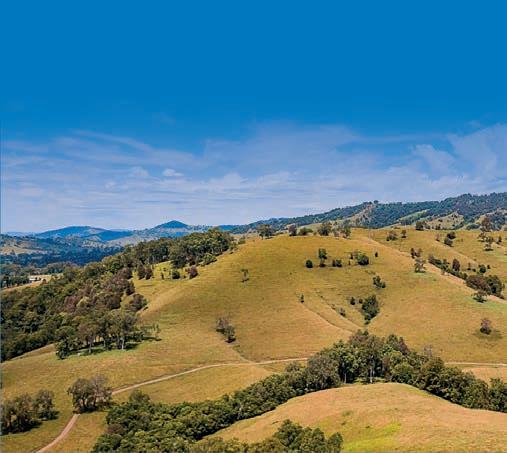
At the same time, the region has continued to evolve, with ongoing discussion around the future of coal production, mine rehabilitation and long-term economic transition shaping the next phase of its mining history.

MINING IN THE HUNTER VALLEY: A LONG LEGACY
The Hunter Valley has been closely tied to mining since the early 19th century.
The Hunter Valley supports an extensive export supply chain through the Port of Newcastle.
Image: Harley Kingston/stock.adobe.com
A light in the dark
In the vast archives of historical exploration data, decades of geological information has been stored but rarely fully understood – a gap RadiXplore is working to illuminate.
Mineral discoveries are becoming harder to find. For RadiXplore, the answer may lie not in generating new data, but in unlocking the vast volumes of information already collected.
The Australian technology company is focused on reconstructing historical exploration programs and extracting value from what it calls ‘dark data’, the unstructured geological information that has accumulated over decades but remains largely unused.
Being selected for BHP’s Xplor program marks a significant step in that journey.
With up to $US500,000 in equity-free funding and access to BHP’s technical specialists, RadiXplore is now accelerating the development of its Proactive Opportunity Engine, with a focus on high-value copper discovery in priority mineral belts.
For chief executive officer (CEO) Russell Menezes, the partnership reflects a broader shift in how the industry approaches exploration.
“BHP’s backing signals that major miners understand we can’t drill our way out of the critical minerals deficit using yesterday’s methods,” Menezes told Australian Mining

Near-surface discoveries, Menezes said, have largely already been made. The next generation of Tier 1 deposits will be deeper, undercover or effectively hidden within the extensive archive of historical exploration data.
“What this investment really validates is a structural shift in exploration strategy,” he said. “The biggest discoveries of the next decade may not come from generating new data alone but from finally reconstructing and synthesising the billions of dollars’ worth of exploration work already completed.”
At its core, RadiXplore is a geological intelligence platform designed to process and interpret this historical record at scale. Rather than relying on a single artificial intelligence (AI) model, the system uses a suite of specialised models that work together to analyse unstructured exploration data.
This includes geological reports, scanned PDFs, historical maps, crosssections and even handwritten field notes, materials that are typically difficult to search, compare or interpret in a meaningful way.
“Our platform can ingest and analyse the entire historical record for a given area – often thousands of documents – in a matter of hours,” Menezes said.
“But it goes beyond keyword search; the system reads for geological context. It identifies patterns, associations and what we call ‘near-misses’, instances where previous explorers intersected alteration, pathfinder geochemistry or peripheral mineralisation, but did not recognise the larger system at the time.”
These near-misses are central to RadiXplore’s value proposition. In many cases, earlier exploration programs encountered indicators of mineral systems but lacked the models, technology or economic drivers to pursue them further.
By revisiting that data with modern analytical tools, RadiXplore aims to reveal opportunities that were previously overlooked.
The concept of ‘dark data’ sits at the centre of this approach. Menezes describes it as the industry’s collective geological memory: information stored in formats that are not readily accessible or searchable.
This includes archived drill logs, government databases, legacy reports and hand-drawn interpretations that have never been fully digitised or integrated into modern systems.
“Dark data … functions like a vast library without an index,” Menezes said. “By structuring and contextualising it,
we transform a dormant archive into actionable geological intelligence.”
Applying this intelligence has the potential to change exploration workflows in two key ways.
The first is reducing costly repetition. Exploration is inherently cyclical and institutional knowledge can be lost over time.
“We’ve seen cases where historical errors or overlooked interpretations were unknowingly repeated decades later, leading to significant capital being misallocated,” Menezes said.
By making historical context searchable and synthesised, RadiXplore aims to prevent the industry from revisiting the same ground without the benefit of prior insights.
The second is compressing due diligence timelines. What once required weeks of manual document review can now be completed in minutes, with traceable links back to original source material.
This speed not only improves efficiency but also allows exploration teams to make more informed decisions earlier in the project lifecycle.
Beyond data processing, RadiXplore is also focused on shifting how opportunities are identified. Exploration teams have traditionally operated in a reactive
undercover or effectively hidden within the extensive archive of historical data.
Future deposits will be deeper,

model, assessing projects as they are brought to market by junior explorers or industry networks.
Menezes said this approach inherently limits visibility to assets that have already been positioned for sale.
“Proactive targeting flips that model,” he said. “Instead of waiting for opportunities to surface, we use AI to map both the geological and corporate landscape to identify high-quality assets before they are marketed.”
This includes identifying projects that may no longer align with a company’s strategic priorities; for example, a lithium asset within a predominantly copper portfolio, or a project located outside a company’s core operating region.
While these assets may be considered non-core, the underlying geology can
remain highly prospective. RadiXplore’s platform enables clients to identify and assess these opportunities systematically, creating an advantage based on information rather than speed alone.
For BHP, this capability aligns with a broader push to improve discovery success rates across the industry.
According to BHP Xplor head of product and program Marley Palin, the initiative is designed to tap into ideas and technologies beyond the company’s internal capabilities.
“The conversation that we’re having internally here at BHP is that we can’t keep doing what we’ve always been doing,”
Palin said.
“We have to change discovery success rates, and the biggest way to do that is to take the rapidly advancing tech in adjacent
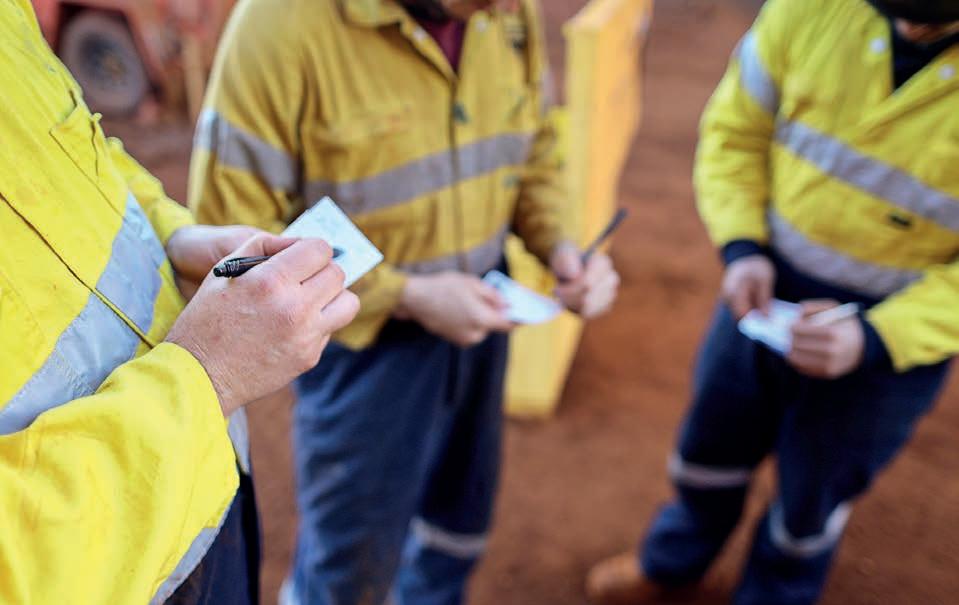
industries and apply that as quickly as we can to an exploration context.”
Palin said RadiXplore’s ability to bridge historical data and AI represents a significant opportunity.
“There are mountains of historical data, from government surveys to physical reports,” she said.
“RadiXplore has an offering to bring that value into the 21st century and apply machine-learning techniques to equip companies like BHP with the information we need to make decisions.”
The selection of RadiXplore for the Xplor program reflects not only the technology itself but also the team’s ability to develop and adapt it quickly. Palin highlighted the company’s agility and responsiveness to feedback as key factors in its inclusion.
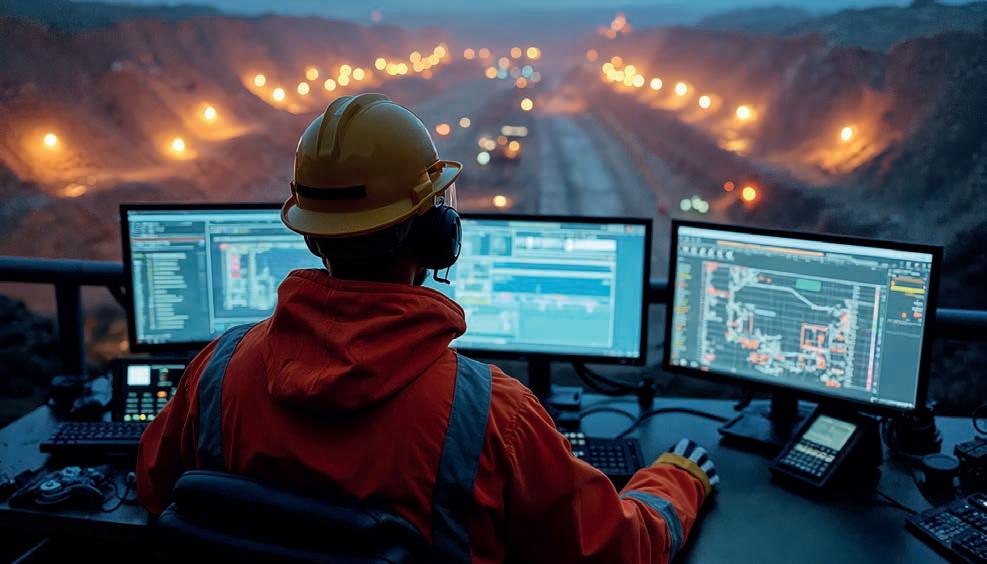
RadiXplore will work to integrate its platform into BHP’s exploration portfolio over the next 6–9 months, while also engaging with other participants in the Xplor cohort.
This collaborative environment presents further opportunities for the technology to be applied and refined across different contexts.
For Menezes, the funding is an important enabler, but the greater value lies in the ability to work alongside a company like BHP.
“Receiving this capital is a powerful accelerator,” he said.
“But the deeper value lies in working alongside a major player at that level, which sharpens the technology in ways that would otherwise take years to replicate.”
The next phase of development will focus on scaling the platform’s capabilities. This includes expanding engineering and data science capacity, improving model robustness and automation, and strengthening data infrastructure to handle larger and more complex datasets across multiple jurisdictions.
RadiXplore is also focused on refining the platform based on real-world use, ensuring it integrates seamlessly into existing exploration and mergers and acquisitions (M&A) workflows.
“The focus isn’t experimentation for its own sake,” Menezes said. “It’s about hardening and scaling a technology that is already delivering value.”
As demand for critical minerals continues to grow and discovery rates decline, the ability to extract new insights from existing data is becoming increasingly important.
For RadiXplore, the future of exploration may not lie in what hasn’t been found but in what has already been seen – and overlooked. AM
L
–R: RadiXplore’s Russel Menezes and Teryne Young are keen to see the doors that Xplor opens for the company.
The concept of ‘dark data’ is described as information stored in formats not readily accessible or searchable – even handwritten field notes.
Unlocking complex copper
An Australian innovation is playing a growing role in advancing the processing of complex copper resources as the industry looks beyond traditional methods.
Anew copper processing technology developed at Macquarie University could reshape how the critical metal is produced for the global mining industry, offering a cleaner, more efficient and potentially lower-cost alternative to conventional extraction methods.
Developed by Loop Hydrometallurgy, Halion Loop leaches, purifies and recovers copper directly using simple salt water, eliminating the need for the multi-stage, energy-intensive processing chain typically associated with copper production.
Traditional copper extraction has for decades relied on a process that often involves transporting large volumes of concentrate over thousands of kilometres for downstream processing, with as much as 90 per cent of material discarded as waste. The Halion Loop has been designed to address these inefficiencies at the source, enabling a more direct pathway from ore to metal at the mine site.
According to Loop Hydrometallurgy, the system requires up to 70 per cent less power than current methods and represents a significant shift away from the high-energy, high-impact nature of conventional copper refining.

“We use simple salt water at less than 100°C, with no noxious gas emissions and no liquid effluents, and we do it at the mine site,” Loop Hydrometallurgy chief executive officer (CEO) and founder Dave Sammut said.
An industrial chemist with more than 30 years’ experience working on the technology, Sammut said modelling suggests the process could reduce the net carbon footprint of copper production by up to 80 per cent.
“Saving energy – while extracting high volumes of copper – is our secret sauce,” he said.
“We’ve developed the hardware that can directly pull metals back into high-purity forms without having to convert them or use additional chemistry.”
The Halion Loop represents a closedloop cyclic hydrometallurgical process designed to produce high-purity copper metal directly at the mine site, while also capturing a broad range of other valuable elements as co-products and by-products.
The system has been engineered to generate only solid concentrates or tailings in, and safe, stable residues out, eliminating gaseous emissions and liquid effluents.
This closed-loop design positions it as a significant departure from conventional
Traditional copper extraction often sees up to 90 per cent of material discarded as waste in multi-stage processing.
processing systems that rely heavily on chemical inputs and complex downstream refining infrastructure.
The Halion Loop also incorporates a novel electrowinning cell, described by Loop Hydrometallurgy as the critical breakthrough that completes the processing chain.
The cell enables the direct recovery of high-purity copper from a halide system and is considered the final piece of a technological puzzle pursued through decades of global industrial research and development.
“Our novel Halion electrowinning cell is the key breakthrough that closes the technology loop,” Sammut said. “It is the first practical, operable design for the direct recovery of high-purity copper from the halide system.”
Loop Hydrometallurgy said halide extraction and purification systems have been extensively researched and validated to TRL7+, with hundreds of millions of dollars invested globally over the past 50 years. The Halion cell builds on this foundation to deliver a commercially viable solution for direct copper recovery.
The process itself is based on a threestage counter-current leach system, with solid-liquid separation occurring at each stage. In the final stage, anodic liquor leaches gold, platinum group metals and other high-value elements, which can then be recovered from the Stage 3 filtrate.
In Stage 2, cupric ions leach mineral into solution, producing cuprous ions that are re-oxidised by air, creating a catalytic reaction between mineral and air.
Stage 1 halts air introduction, allowing fresh mineral entering the leach to reduce most of the copper to the cuprous state. A polishing step then removes residual cupric content before purification and
recovery of additional elements such as cobalt and lead.
The clean solution is then transferred to the catholyte of the electrowinning cell, where high-purity copper dendrites are formed on the cathodes, completing the recovery cycle.
Beyond copper, the Halion Loop enables the capture of a range of other critical and valuable metals, including zinc, nickel, cobalt, silver, gold, platinum group metals and rare earth elements. This multi-metal recovery capability is particularly significant given growing demand for critical minerals driven by electrification, energy transition technologies and digital infrastructure.
Loop Hydrometallurgy has also highlighted the technology’s ability to unlock previously underutilised resources, including arsenic-contaminated copper deposits unsuitable for traditional processing methods. It has been estimated that around 25 per cent of Australia’s known copper resources contain arsenic contamination, representing a substantial untapped opportunity for domestic production.
By enabling the processing of these complex ores, the Halion Loop could expand Australia’s effective resource base while increasing the proportion of valueadded processing undertaken domestically.
Commercial implications are also significant. Loop Hydrometallurgy cofounder and commercial director Heath Warman described the technology as an “economic game-changer” for the mining sector, with the potential to materially reduce operating costs.
“The miners are going to save a lot of money. We estimate that a typical Australian mine could reduce operating costs by 30 to 40 per cent,” he said.
“Our vision for the Halion Loop is an industry transformed, revolutionising global copper production,” he said.
The technology has also gained recognition within the industry, winning Innovation Hour at the Copper to the World 2024 Conference and Exhibition in Adelaide. The award highlighted its potential to unlock value from low-grade, polymetallic and arsenic-contaminated feedstocks, while eliminating emissions and liquid waste streams.
The development of the Halion Loop is being supported through collaboration with the Macquarie University DeepTech Incubator and associate professor Koushik Venkatesan, alongside a STEM team largely drawn from student ranks. Notably, 75 per cent of the team comprises female engineers and scientists, reflecting the university’s innovation ecosystem.
Macquarie University pro vicechancellor for research, innovation and enterprise Professor Dan Johnson said the institution is focused on translating research into real-world impact.
Warman said governments could also benefit through increased royalties, as more value-added production would occur within Australia rather than overseas.
The company is currently advancing a pilot cell prototype capable of producing around 20kg of copper per day, with plans to scale up to commercial cells producing up to two tonnes per day.
Loop Hydrometallurgy has set an ambitious timeline, with expectations to begin commercial copper production by early 2028.
Sammut said the company’s long-term vision is to transform copper production.
“By supporting start-ups like Loop Hydrometallurgy, we are helping translate Australian ideas into global industries, delivering economic growth and tangible benefits for the nation,” he said.
The project has also received $1.3 million in Cooperative Research Centre Projects funding from the Federal Government, supporting development of the technology in collaboration with industry and academic partners.
As global demand for copper continues to rise, particularly for data centres and electrification infrastructure, technologies like the Halion Loop highlight the potential for Australian innovation to reshape how critical minerals are produced, processed and valued. AM
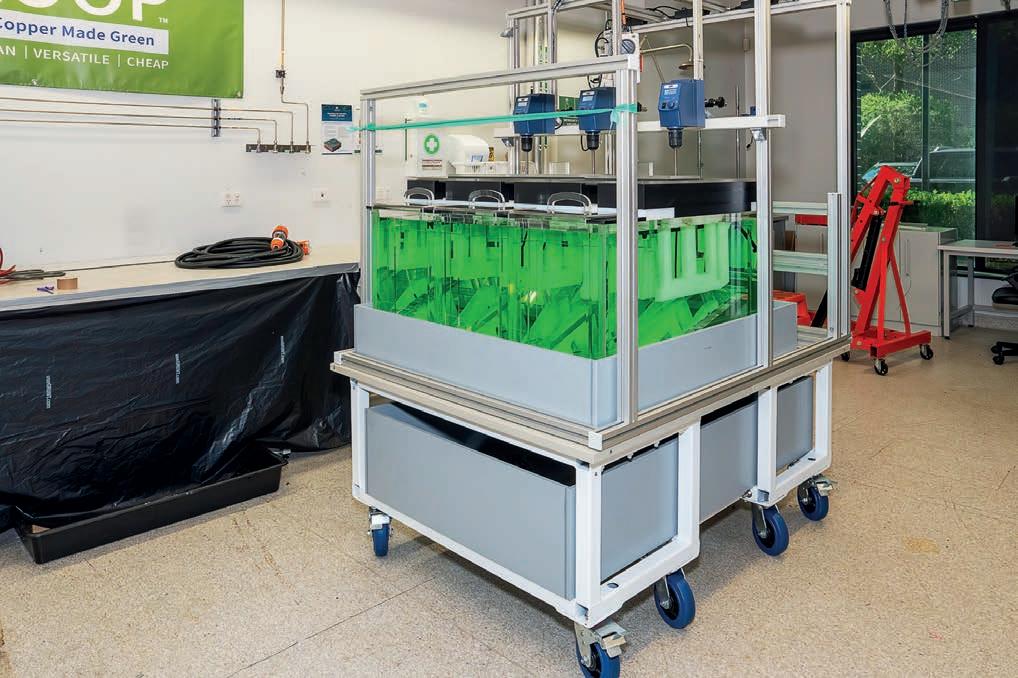
Loop Hydrometallurgy CEO and founder Dave Sammut (middle) and co-founder and commercial director Heath Warman (right) discuss the technology with Ryde mayor Trenton Brown.
Halion Loop leaches, purifies and recovers copper directly using simple salt water.
Shaping a mining giant
As Mike Henry calls time on the role of BHP chief, Australian Mining looks back at his legacy and what it has meant for the industry.
The departure of Mike Henry as chief executive officer (CEO) of BHP marks the end of a defining chapter not only for the company, but for the broader Australian mining industry.
Over six years at the helm, Henry –who will officially step down from the role on July 1 – has overseen a period of transformation that has reshaped BHP’s portfolio, strengthened its global position and reinforced Australia’s role as a leader in the evolving resources sector.
“It has been a privilege to serve as CEO of BHP and to have worked with so many truly talented people. I am proud of what we have achieved together. BHP is a safer and higher performing company and is better positioned for future growth,” Henry said.
While leadership transitions are a natural part of any major organisation, Henry’s tenure stands out for its clear
strategic direction and long-term focus. His approach centred on positioning BHP for the future of mining, one increasingly defined by critical minerals, decarbonisation and operational excellence, while maintaining the scale and reliability that underpin Australia’s export strength.
Perhaps the most significant shift under Henry’s leadership has been BHP’s evolution into a copper powerhouse. Long known for its dominance in iron ore, the company has steadily increased its exposure to copper, aligning its portfolio with the growing global demand driven by electrification, renewable energy and infrastructure development.
That strategy reached a milestone in the first half of the 2025–26 financial year (FY26), when copper accounted for the majority of BHP’s earnings for the first time. The division delivered a record

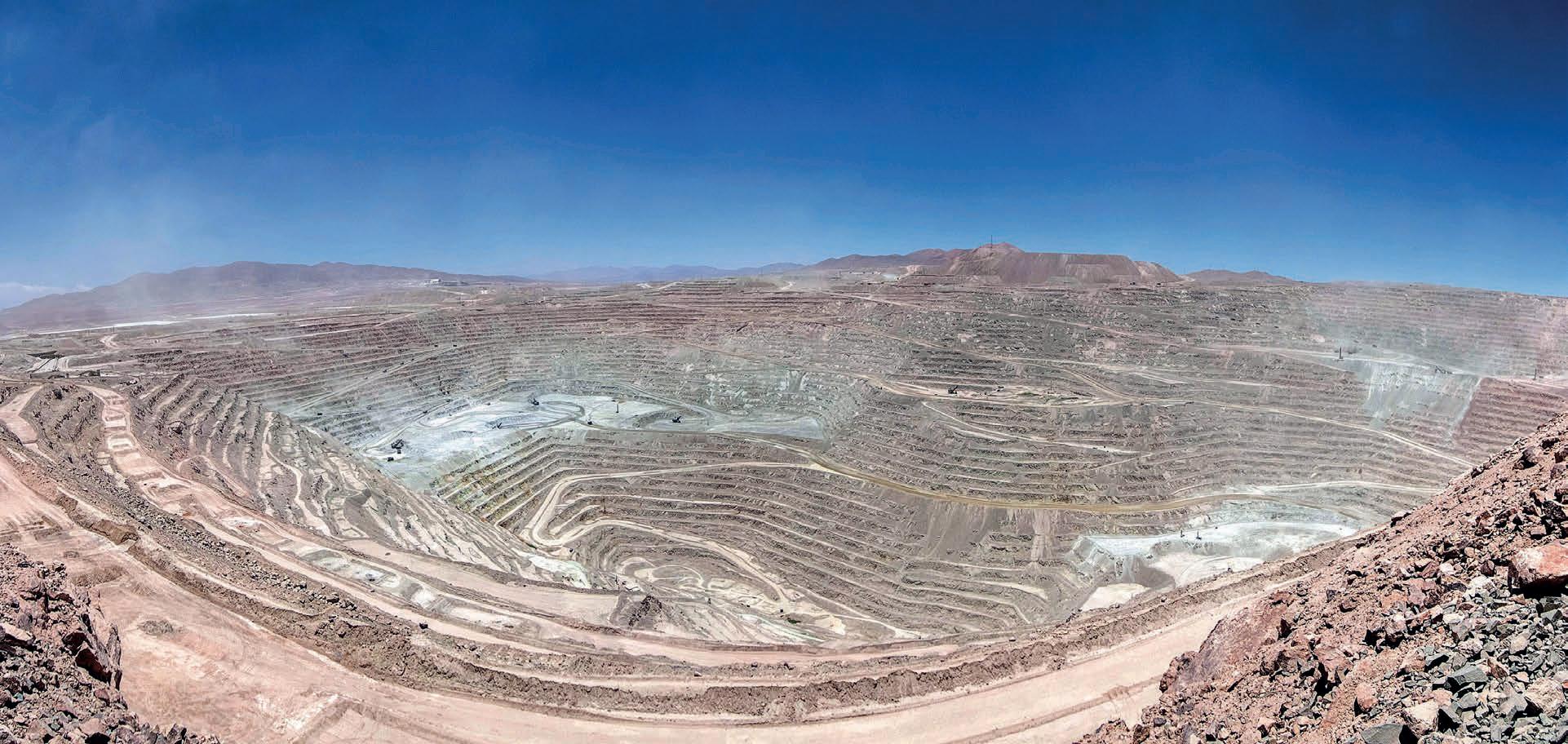
BHP evolved into a copper powerhouse under Henry’s leadership.
Henry described his time as CEO as a “privilege”.
Images:
BHP
performance, with underlying earnings before interest, taxes, depreciation and amortisation (EBITDA) rising sharply and margins reaching industry-leading levels.
The change did not come overnight. BHP expanded its copper production by approximately 30 per cent over four years, supported by disciplined investment and operational improvements across its asset base. The result has been a more diversified earnings profile and a stronger alignment with long-term commodity trends.
This pivot underscores a broader opportunity for the Australian mining industry. As global demand for copper accelerates, local producers are well positioned to play a larger role in supplying the materials required for electrification and energy transition technologies.
The financial outcomes of this strategy have been significant.
Henry’s tenure saw BHP strengthen its balance sheet, improve margins and deliver consistent returns to shareholders. This performance was reflected in the company’s market standing, with BHP reclaiming its position as the most valuable company on the ASX in early 2026.
Beyond financial metrics, Henry’s legacy is also defined by cultural transformation. BHP has consistently emphasised that a diverse and inclusive workforce is central to long-term success.
“I am absolutely convinced that having an inclusive culture and diverse workforce is mission-critical for BHP,” Henry said. “Getting this right will be a serious competitive advantage for BHP.”
It has been a privilege to serve as CEO of BHP and to have worked with so many truly talented people. I am proud of what we have achieved together. BHP is a safer and higher performing company and is better positioned for future growth.”
This philosophy translated into tangible outcomes. During his tenure, BHP achieved a gender-balanced workforce and met its Indigenous employment targets ahead of schedule, strengthening its connection with communities and reinforcing its social licence to operate.
At the same time, the company made measurable progress on sustainability, reducing operational greenhouse gas emissions and embedding decarbonisation into its long-term strategy.
As Henry steps down, leadership will pass to Brandon Craig, who inherits a business positioned for the next phase of growth.
“We are creating sustainable long-term value for our shareholders, our supply chain, partners and our communities,” Henry said. “Brandon is an excellent choice as CEO, and I wish him every success in the role.
The foundations laid over the past six years – a strong balance sheet, a future-facing commodity mix and a clear strategic direction – provide a platform for continued expansion.
For the Australian mining industry, this transition comes at a time of significant opportunity. Demand for critical minerals is accelerating, driven by global decarbonisation efforts and technological change. Companies that can combine scale with innovation and strong governance will be best placed to capture this growth
Henry himself acknowledged this momentum, saying that BHP is “creating sustainable long-term value for our shareholders, our supply chain, partners and our communities”, and expressing confidence in the company’s future under new leadership.
Henry’s tenure offers a blueprint for how Australian miners can adapt and thrive in a changing global landscape. By aligning portfolios with future demand, investing in people and maintaining
operational discipline, companies can navigate market cycles while shaping the next era of resource development.
As Australia looks to expand its role in critical minerals and support the global energy transition, the lessons from BHP’s recent evolution are clear. Growth will come from a combination of strategic foresight, technological capability and a commitment to sustainable, inclusive operations.
In that sense, Henry’s legacy extends beyond BHP. It reinforces the idea that Australian mining is not just responding to change but helping to lead it. AM
INSTRUMENTATION & CALIBRATION PTY LTD SPECIALISTS
Analytical Process Division
AMS have been suppliers of instrumentation and calibration equipment to all industries since 1973 representing some of the world’s leading manufacturers of the equipment in their field.



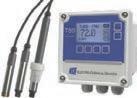





Incoming CEO Brandon Craig inherits a business positioned for the next phase of growth.

Building the northern arc
The Minerals Council of Australia has set out vision to unlock northern Australia’s industrial future.
Northern Australia is being positioned at the centre of a $44 billion blueprint that could reshape how the nation connects its resources, industries and export markets.
The Minerals Council of Australia (MCA) recently put forward an infrastructure blueprint designed to reshape northern Australia into a globally competitive minerals, energy, agriculture and defence hub, anchored by a continuous east–west and north–south transport axis spanning the nation’s northern arc. The proposal, submitted to the Joint Standing
Committee on Northern Australia’s inquiry into preparing for emerging industries, outlines a long-term vision to connect the Kimberley, Mount Isa and Townsville with the Darwin–Adelaide corridor. The objective is to establish a fully integrated minerals processing and manufacturing system capable of supporting mining, agriculture, defence, industry and communities.
MCA chief executive officer Tania Constable said the scale of opportunity across the north is significant but requires sustained infrastructure investment to
“While governments have already invested heavily in infrastructure in the Northern Territory, northern Western Australia and Queensland, further strategic investment in infrastructure will enable access to trillions of dollars in mineral resources as well as supporting agriculture, defence manufacturing and communities,” Constable said.
Constable believes not acting could come at a significant cost to Australia’s economic future and strategic positioning.
“If we neglect the development, growth and success of northern Australia, we will miss out on many opportunities to boost Australia’s economic future, national security and integration into the rapidly growing Southaast Asian region,” she said.
A nation-building transport spine
At the centre of the MCA’s submission is a coordinated infrastructure system designed to address missing freight and logistics links across the northern arc.
The plan features completion and strengthening of key freight routes, including the Great Northern Highway, and the full sealing of the Tanami Road. It also proposes new and upgraded rail corridors to integrate Australia’s north–south and east–west transport systems.
Key rail proposals include a new Halls Creek–Alice Springs or Halls Creek–Tennant Creek link, and a new Alice Springs–Mount Isa connection. These would be supported by upgrades between Mount Isa and the Port of Townsville, alongside intermodal and industrial hubs at Alice Springs, Katherine and Tennant Creek.
Constable said these investments are key to unlocking resource potential across the north.
“Geoscience Australia’s Mineral Potential Models suggest significant critical mineral and strategic material deposits across the north of Australia, including bauxite, manganese, vanadium, copper, gold, lithium and rare earth elements, along with one of the world’s largest potential agricultural expansions,” she said.
“Yet this remarkable region cannot develop its resource potential while it remains constrained by a lack of basic infrastructure for transport, water security, aviation, ports and power.”
The MCA said northern Australia already holds enormous resource potential, but fragmented infrastructure limits its ability to compete at scale. The proposed integrated corridor would create a backbone for mining, industrial development, agriculture, defence manufacturing and community activity, enabling more efficient movement of materials, personnel and products across vast distances.
It would also support the development of sovereign fuel-security capabilities, including biofuels, gas-to-liquids and coal-to-liquids production, strengthening domestic supply chains for defence and remote communities.
According to the MCA, the infrastructure system would also unlock economies of scale across multiple sectors, particularly in regions where projects are currently constrained by distance, cost and lack of connectivity.
MCA chief Tania Constable believes infrastructure investment is critical to unlocking northern Australia’s potential.
Vital freight moves vast distances across Northern Australia’s red desert highways.
Constable said infrastructure is the critical enabler of private investment and export competitiveness across the north.
“Limited freight and logistics connectivity, insufficient energy and communications infrastructure and under-investment in enabling services, compounded by a shortage of skilled local workers, all act to restrict private investment, weaken export competitiveness, and limit mobility,” she said.
The MCA submission places strong emphasis on the growing economic and strategic importance of Southeast Asia, which is expected to become one of the fastest-growing regions in the world.
Rising demand for critical minerals, renewable energy inputs, refined metals, food, fibre and defence supply chains presents a significant opportunity for Australia. Northern Australia, the MCA said, is uniquely positioned to become a reliable and secure supplier due to its proximity, resource base and geopolitical stability.
Constable said Australia’s ability to capitalise on this opportunity depends on infrastructure readiness.
“With coordinated infrastructure investment, Australia can unlock vast economic value while anchoring its national resilience and deepening its integration with Southeast Asia, delivering benefits to regional communities, national defence, global partners and future generations,” she said.
The submission also highlights the strategic importance of northern Australia’s infrastructure in supporting national defence objectives.
The MCA said logistics capability is central to Australia’s defence stance, particularly under the 2024 National Defence Strategy, which requires the ability to mobilise personnel, equipment and fuel across long distances.
However, these objectives are difficult to achieve without sufficient infrastructure, including freight rail, ports, roads, airfields and energy systems.
The MCA believes the same infrastructure required for defence readiness is also essential to enabling mining, agriculture and industrial development. It also points to potential gaps in existing transport systems, including reliance on single east–west freight corridors that lack redundancy in the event of disruption.
Building a connected industrial corridor
The proposed infrastructure system is designed to connect major production and processing centres across the north and central Australia, including Mount Isa, Tennant Creek, Alice Springs and Darwin.
These hubs would be linked through new rail corridors and intermodal facilities, enabling efficient movement of
minerals, agricultural products, energy inputs and manufactured goods.
The MCA said this will also strengthen the role of existing industrial centres, including Mount Isa and Port Pirie, by improving access to feedstock and enabling better utilisation of by-products such as acids across processing operations.
Improved connectivity would also support downstream processing of critical minerals, strengthening Australia’s sovereign capability in advanced manufacturing and defencerelated industries.
A key feature of the MCA’s proposal is the use of multi-user infrastructure designed to support public and private sector needs. By enabling access on a user-pays basis, the system would reduce upfront capital costs for individual projects and encourage private investment across mining, agriculture, energy and manufacturing.
This approach is intended to “crowd in” investment by making large-scale infrastructure financially viable while spreading benefits across multiple users and industries.
According to the MCA, this model will improve project feasibility, reduce risk and unlock development in regions previously considered uneconomic due to infrastructure constraints.
The MCA submission also highlights the significant economic contribution
already made by the mining sector across northern Australia, including royalties, taxation revenue, local procurement and community investment.
These contributions already underpin billions of dollars in economic activity across the Northern Territory, Western Australia and Queensland, supporting local businesses, services and regional development.
The MCA believes expanded infrastructure and new industrial activity will amplify these benefits by enabling new industries and improving access to markets. This includes better connectivity for goods and services, expanded education and training opportunities, and increased participation by Indigenous businesses and workers in regional economies.
While infrastructure is central to the MCA’s proposal, the submission also highlights workforce development as a critical enabler of northern Australia’s future growth.
The region faces ongoing shortages in technical, engineering, environmental and trades occupations, which are expected to intensify due to national demand and geographic constraints. Addressing these shortages will require stronger training pathways, improved access to education, and enhanced participation of Aboriginal and Torres Strait Islander people in technical and leadership roles.
The MCA emphasises that workforce capability and regulatory certainty are mutually reinforcing: a skilled workforce supports efficient project delivery, while stable policy settings encourage investment in training and development.
The MCA’s $44 billion proposal ultimately presents a long-term vision for transforming northern Australia into an integrated economic and strategic corridor.
By connecting resource regions, industrial hubs and export gateways, the plan aims to unlock vast mineral and agricultural potential while strengthening Australia’s defence capability and economic resilience.
As global demand for critical minerals, energy security and reliable supply chains continues to grow, the MCA argues that northern Australia has a unique opportunity to become a central pillar of the country’s economic future and its engagement with Southeast Asia.
As Constable said, the stakes are significant for industry, but also for the nation’s long-term prosperity and security.
“With coordinated infrastructure investment, Australia can unlock vast economic value while anchoring its national resilience and deepening its integration with Southeast Asia, delivering benefits to regional communities, national defence, global partners and future generations,” she said. AM
Mining activity underpins the case for expanded northern infrastructure investment.
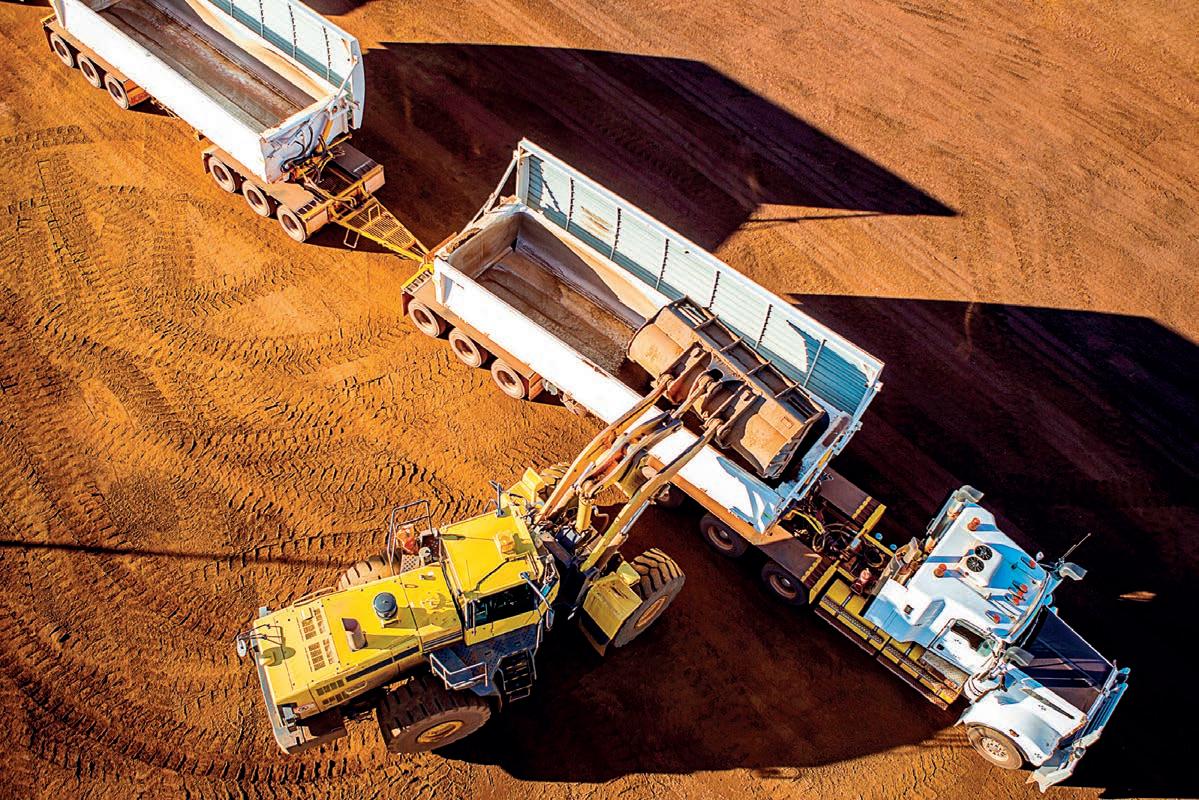
Nickel prices have been showing tentative signs of recovery after a prolonged downturn.

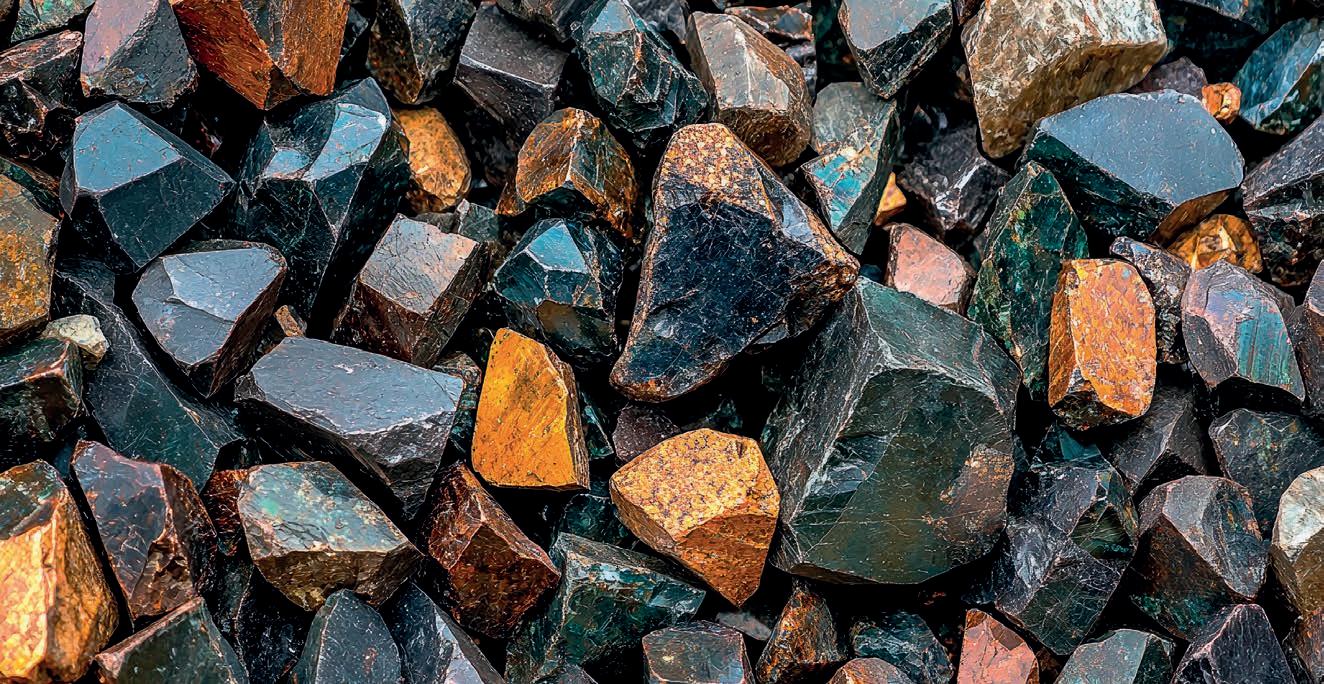
Policy support meets market recovery
A combination of targeted government support and early signs of price recovery is reshaping the outlook for Western Australia’s nickel sector.
When the Western Australian Government recently unveiled a $15 million interest-free loan program aimed at bolstering the state’s nickel miners, it signalled a strategic effort to stabilise operations, accelerate project restarts and support the growth of Australia’s battery metals sector.
Under the initiative, loans will be repayment-free until July 1, 2028, or until nickel prices exceed $US22,000 per tonne for two consecutive quarters, providing a significant buffer for miners navigating a volatile commodity environment. Following the interest-free period, repayments will be scheduled in quarterly instalments over two years.
Details on eligibility, maximum loan sizes, and application processes are to be developed by the Department of Energy and Economic Development in consultation with the departments of Mines, Petroleum and Exploration, and Treasury and Finance.
The move came amid nickel prices showing tentative signs of recovery after a prolonged downturn that saw several Western Australian operations idle or scale back production.
According to data from S&P Global Market Intelligence, London Metal Exchange (LME) nickel cash prices
have shown signs of recovery following a prolonged downturn. Market reporting indicates prices rose from multi-year lows in the vicinity of $US14,000-pertonne range in early-to-mid 2025 to levels approaching the $US16,000-pertonne range by early April this year, reflecting improving sentiment and evolving supply dynamics.
Price momentum has also been supported by evolving supply-side expectations and policy signals from major producing regions. Analysts at major investment banks, including Goldman Sachs and Macquarie, have noted the potential for tighter market conditions ahead, with some published outlook scenarios suggesting average prices could hold above $US17,000 per tonne in the near term, depending on the trajectory of Indonesian supply policy and broader demand trends.
In this environment of stabilising prices and a more disciplined supply outlook, the WA Government’s support package reflects confidence that the sector is on a firmer footing.
WA Mines and Petroleum Minister David Michael emphasised the dual role of nickel.
“Our nickel miners are competing internationally with mining jurisdictions
that have significantly lower environmental, social and governance [ESG] standards,” he said. “It’s important that they are supported to weather the storm of current market conditions and get back to what they do best, so they can be part of ongoing and future efforts to decarbonise the globe.”
The loan program represents a deliberate policy lever aimed at strengthening WA’s position as a global hub for downstream processing of battery metals. By providing low-cost, targeted financing, the state is helping domestic miners maintain operational continuity, accelerate project development, and attract further private investment.
This aligns with broader national objectives of securing supply chains for critical minerals amid growing global demand for electric vehicles (EVs), renewable energy storage, and decarbonisation technologies.
The initiative could lead to several outcomes for the WA nickel industry, including the restart of idle mines, accelerated ramp-up of existing projects, and reduced financial stress on operators navigating international competition. It also supports job retention and creation across regional communities heavily reliant on mining.
As the sector recovers, the combination of strong commodity fundamentals, strategic government support and a focus on ESG-compliant operations positions WA’s nickel industry to capitalise on near-term price improvements while also playing a role in the transition to a low-carbon global economy. AM
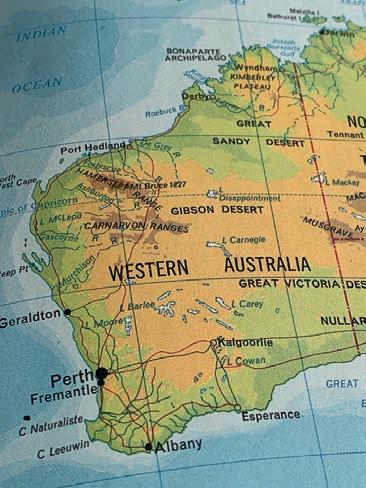
Western Australia is home to vast amounts of nickel.
16-17 September 2026 Perth
Women leading mining
From mine sites to boardrooms, the Women in Industry Awards continue to spotlight the leaders, innovators and advocates driving change.
The Women in Industry Awards are set to return in June with renewed scale and ambition that builds on the powerful stories and sector-wide impact of women that was highlighted at last year’s ceremony.
As the mining industry continues to evolve, the awards remain a key platform for recognising the women who are redefining leadership, culture and innovation across the sector.
“Every year, we are inspired by the calibre of nominees and the impact these women have on their industries,” Prime Creative Media head of events marketing Molly Hancock said.
The 2025 awards showcased just how far-reaching that influence can be. Among the standout winners was Becky Felstead, who took home the Excellence in Mining award for her work advancing mental health, inclusion and workplace culture.
Through her Strong Minds, Strong Mines initiative, Felstead has reached tens of thousands of workers across Australia, delivering tailored programs that address the unique challenges of flyin, fly-out (FIFO) and drive-in, drive-out (DIDO) workforces.
Her impact underscores a broader shift within mining. Success is increasingly defined by how companies foster safe, inclusive and supportive environments,
alongside traditional metrics such as productivity and operational efficiency.
Workforce wellbeing, psychological safety and cultural leadership are being increasingly recognised as central to longterm performance across the sector.
From reducing workplace bullying to improving engagement with mental health services, initiatives like Felstead’s are helping reshape what best practice looks like across the industry, while also encouraging organisations to embed wellbeing into everyday operational decision-making rather than treating it as a standalone program.
This shift in priorities will again be front and centre in 2026, as the awards move to Doltone House Darling Island Wharf in Sydney. The new location reflects the growth of the event and its expanding national profile, bringing together leaders from across mining and other heavy industries to celebrate excellence, share ideas and strengthen cross-sector collaboration.
The move also signals the continued evolution of the awards as a national platform, with growing participation from organisations across mining, energy,
engineering, construction and associated services. As interest expands, so too does the opportunity to highlight the breadth of women’s contribution across traditionally male-dominated sectors.
In line with this growth, the 2026 program introduces four new categories: Marketer of the Year, Excellence in Health and Medicine, Tradeswoman of the Year, and Rising Women in Leadership: C-Suite Executive Award.
These additions recognise the increasingly diverse roles women are playing across the sector, from operational positions on-site through to technical, commercial and strategic leadership roles in the boardroom. They also reflect the changing shape of industry itself, where capability is being defined by a broader mix of skills, perspectives and leadership styles.


The expansion of categories also signals a broader transformation underway in mining, with women entering the industry through multiple pathways and making meaningful contributions at every level, from frontline operations and technical services to executive leadership and policy influence.
Every year, we are inspired by the calibre of nominees and the impact these women have on their industries.”
By acknowledging this diversity, the awards highlight the many ways leadership and innovation can take shape, while reinforcing the importance of visibility for achievements that might otherwise go unrecognised across complex and fastmoving industries. In doing so, they help to ensure that career pathways across industry are more visible, more accessible and more aspirational for the next generation.
Beyond the accolades, the Women in Industry Awards serve as a powerful storytelling platform. Each finalist
Image: Becky Felstead
Becky Felstead won the Excellence in Mining award at last year’s Women in Industry Awards.
Images: Prime Creative Media
Attendees gather at the Women in Industry Awards to celebrate leadership and achievement across the sector.
The awards are a night of celebration recognising innovation, leadership and impact across industry.

represents not only personal achievement but also a narrative of progress within the sector, reflecting the gradual but significant cultural and structural changes taking place across industry.
From mentoring the next generation to driving cultural change and advocating for safer workplaces, these stories collectively demonstrate the depth of talent shaping Australia’s mining future, while also highlighting the role of leadership in building more inclusive and resilient organisations.
The event also continues to build momentum as a meeting point for industry leaders, providing a space where achievements are recognised and conversations about the future are brought into focus. It is both a celebration of excellence and a forum for connection, learning and shared ambition across sectors.
The legacy of leaders like Felstead continues to set the standard. Her work has helped normalise conversations around mental health in mining, embedding wellbeing into everyday operations and influencing how companies approach psychological safety. It is this kind of
impact that the awards aim to recognise and amplify, ensuring it is celebrated and replicated across the industry.
The 2026 event has attracted a strong field of nominations from across mining, engineering, energy and construction, reflecting both the growing visibility of women in industry and the increasing recognition of their contributions at all levels of leadership.
As the industry continues to transform, the Women in Industry Awards remain a vital platform for recognising those leading the way, while also continuing to shape the broader conversation around inclusion, leadership and the future of work across Australia’s industrial sectors AM
Get your tickets at womeninindustry.com.au/attend
WOMEN IN INDUSTRY AWARDS CATEGORIES
• Rising Star of the Year (30 years and younger)

• Business Development Success of the Year
• Industry Advocacy Award
• Mentor of the Year
• Safety Advocacy Award
• Excellence in Manufacturing
• Excellence in Transport
• Excellence in Engineering
• Excellence in Mining
• Excellence in Construction
• Excellence in Energy
• Woman of the Year (chosen from other winners)
• Marketer of the Year (new)
• Excellence in Health and Medicine (new)
• Tradeswoman of the Year (new)
• Rising Women in Leadership –C-Suite Executive Award (new)
For more information, visit womeninindustry.com.au
Honouring women leading change across mining, engineering and related industries.
QME is again set to be filled with exhibitors eager to showcase and attendees keen to see what the sector has in store.
Queensland’s next mining
chapter

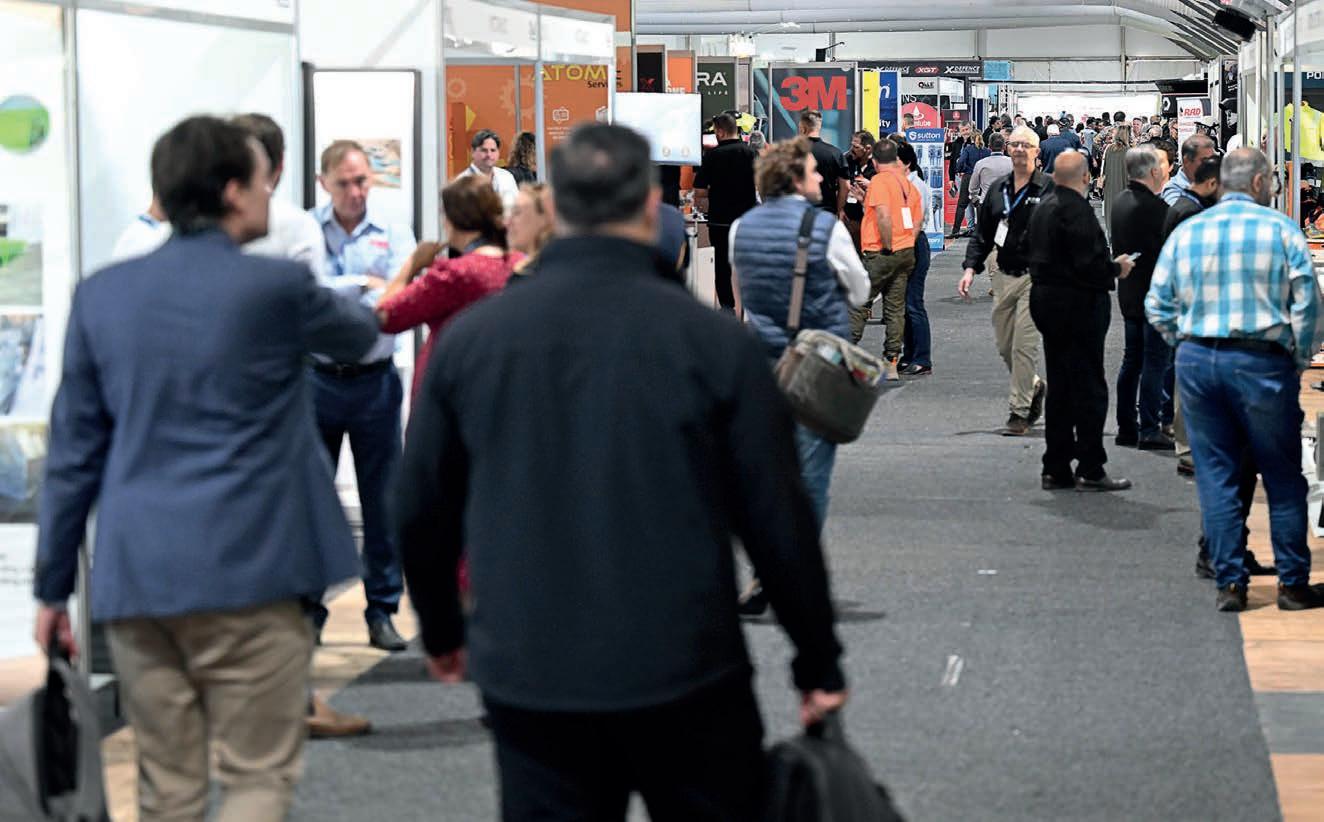
The Queensland Mining and Engineering
As anticipation builds for the Queensland Mining and Returning to the Mackay Showgrounds
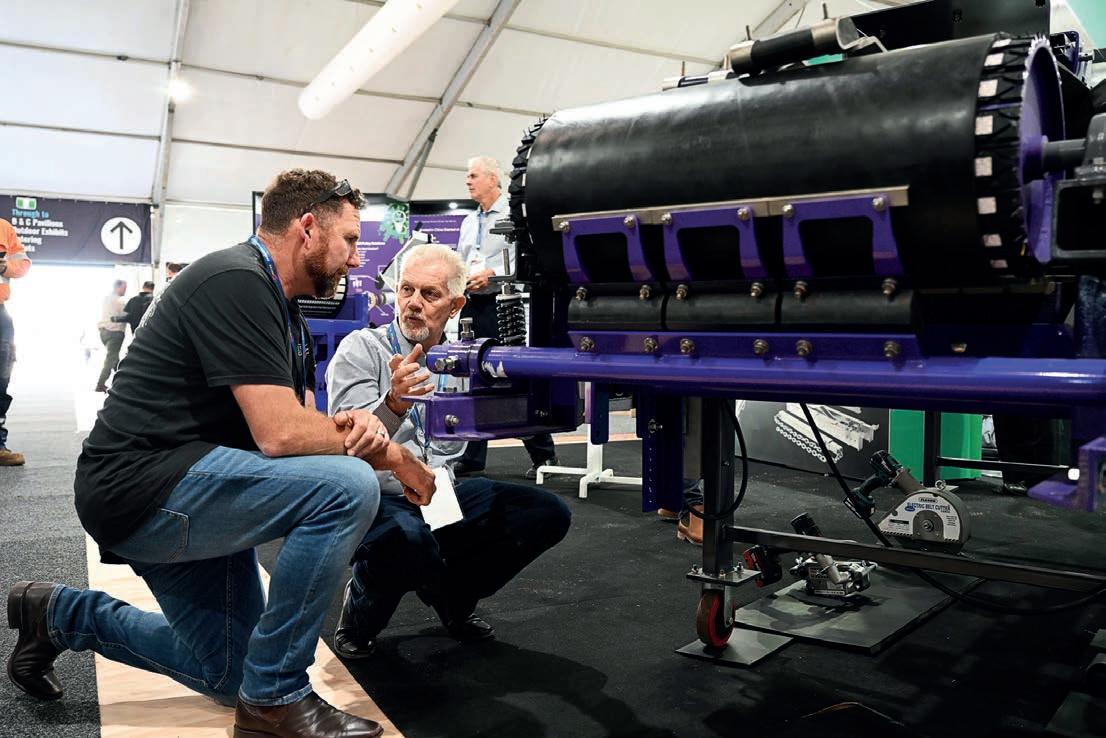
“The Mining Pavilion has always been where the industry comes together,” Prime Creative Media show director – mining events Rebecca Todesco said.
“It gives visitors direct access to the people behind major operations, while giving mining companies a powerful platform to engage, share insights and build lasting connections.”
QME’s strength lies in its ability to bring the entire mining ecosystem into one place. Original equipment manufacturers (OEMs), engineering firms, technology developers and site operators will all converge in Mackay, creating a rare opportunity for direct engagement across the supply chain.
Across the exhibition floor, attendees can move between heavy equipment displays, digital mining platforms, mineral processing technologies and specialised services, offering a comprehensive view of how mine sites are evolving. Live demonstrations, interactive displays and hands-on showcases will further bring these technologies to life, bridging the gap between concept and on-site application.
This hands-on approach is a defining feature of QME, allowing visitors to see equipment in action, speak directly with technical experts and better understand how solutions perform in real operating conditions. It also provides exhibitors with the opportunity to demonstrate capability
Images: Prime Creative Media
Tech that underscores the operational capability of mines will be on full display during QME.
in a way that goes further than brochures and specifications, creating more meaningful and informed conversations.
Looking beyond the exhibition floor, QME’s seminar sessions and leadership programs will run across the event’s three days, covering a range of industry topics. These sessions are designed to complement what is seen on the floor, giving attendees deeper insight into the trends, challenges and opportunities shaping the sector.
Industry leaders such as the Queensland Resources Council’s Simone Sakzewski, technical experts from companies such as Liebherr, and key stakeholders like the Aboriginal Enterprises in Mining, Energy and Exploration (AEMEE) will take to the stage.
Experiences and perspectives on productivity, sustainability, workforce development and the integration of new technologies will be discussed, ensuring the conference program reflects the evolving priorities of the sector.
These sessions also provide a platform for open discussion, enabling attendees to engage directly with speakers, ask questions and exchange ideas with peers facing similar operational challenges.
This interactive element reinforces QME’s role not just as an exhibition but as a collaborative environment for industry learning and knowledge sharing.
Hosting the event in Mackay places it at the centre of Queensland’s mining ecosystem. The region has long served as a hub for mining services, engineering expertise and supply chain logistics supporting the state’s resources sector, making it a natural meeting point for industry.
The location also reinforces QME’s strong connection to regional mining
challenges and opportunities discussed at the event are experienced firsthand. This proximity to operating mine sites adds a layer of relevance that is difficult to replicate in metropolitan settings.
While Queensland continues to balance its established coal sector with growing investment in critical minerals, QME provides a platform where both sides of the industry can be explored. From established operations to emerging projects, the exhibition captures the full spectrum of activity shaping the state’s resources sector, highlighting the technologies and partnerships required to support both.
This dual focus reflects broader industry trends, where maintaining productivity in existing operations sits alongside the development of new supply chains and capabilities to support futurefacing commodities.
It also highlights the importance of adaptability, as mining companies respond to shifting market demands, regulatory expectations and technological advancements.
More than a snapshot of the industry, QME serves as a working forum where ideas are exchanged, challenges are addressed and future opportunities begin to take shape.
As Australia reinforces its position in global supply chains, events like QME are becoming increasingly important for aligning the industry and maintaining momentum across the sector.
With strong demand already evident and the countdown well underway, Mackay is set to once again host one of the state’s most significant mining events.
Tickets are out now. Get your tickets at queenslandminingexpo.com.au/attendee-
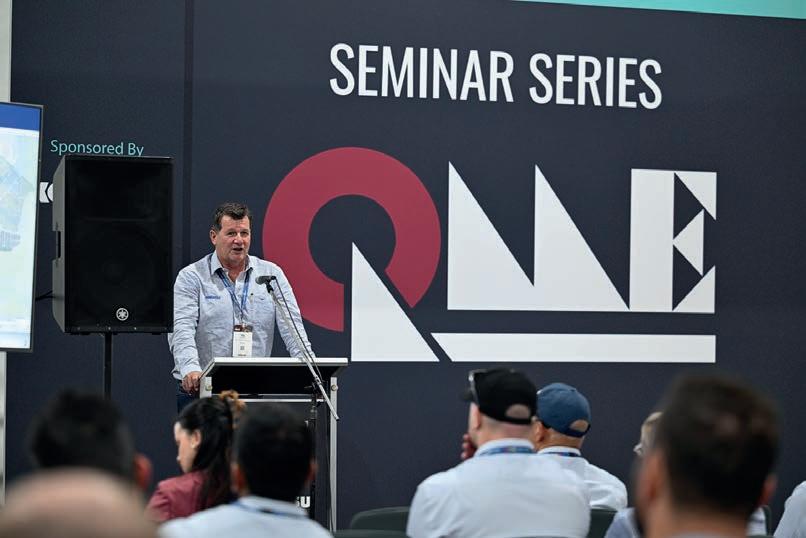
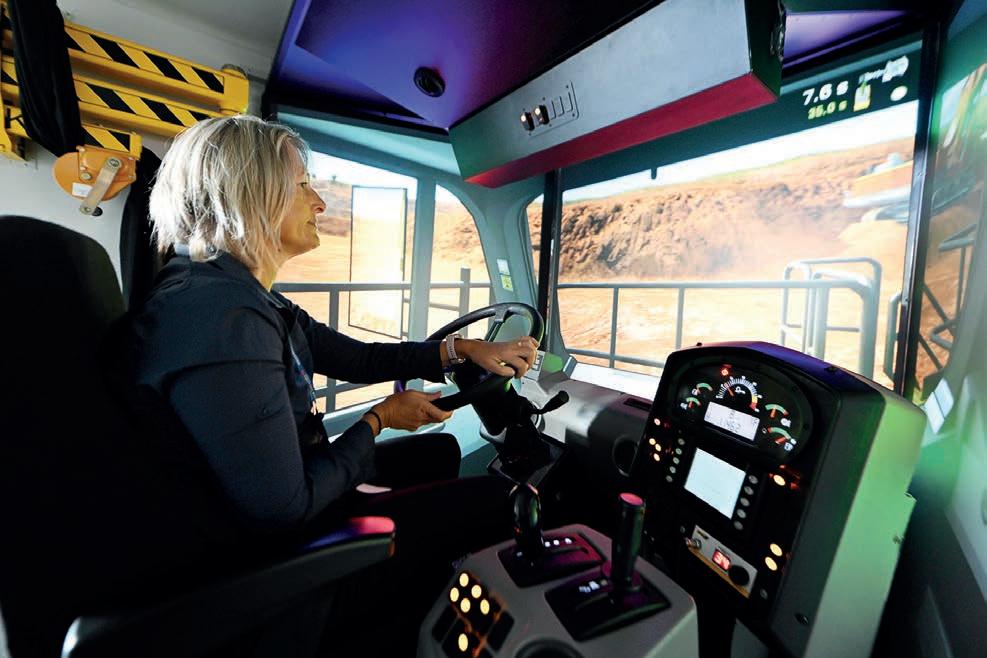
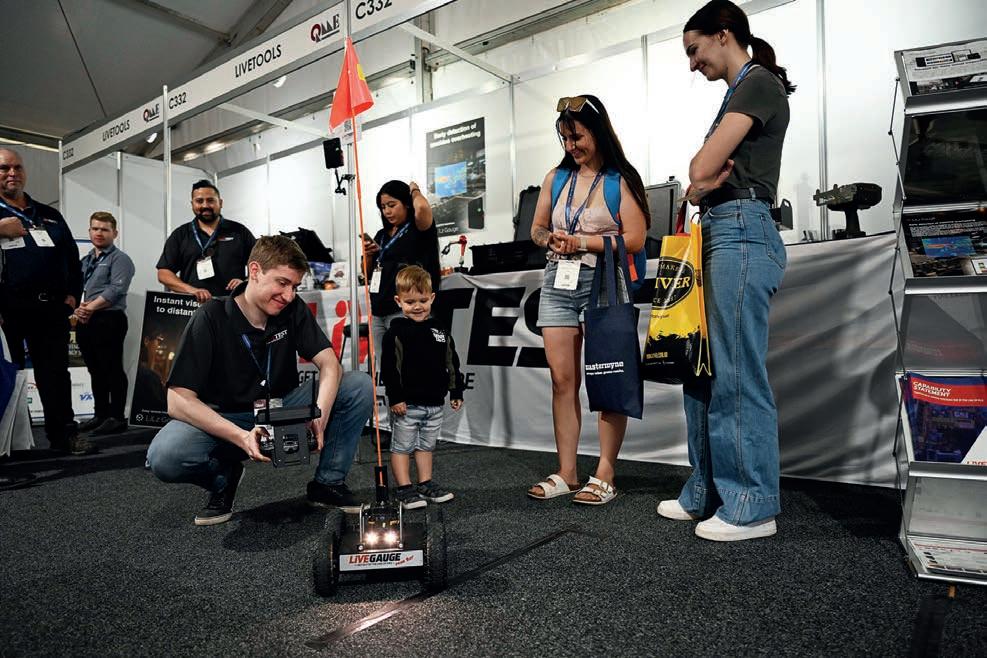
The event will feature hands-on, interactive experiences for a full-scale view on the state’s mining capabilities.
Seminar sessions and leadership programs will run across the three days.
An event for all, QME aims to delve into mining’s concepts and transition to on-site application.
Attendees will have a comprehensive view of how mine site equipment is evolving.
Partnering for impact
As Papua New Guinea’s mining sector continues to attract global attention, PNG Expo 2026 returns as a platform for investment, partnerships and commercial outcomes.
The PNG Industrial and Mining Resources Exhibition and Conference (PNG Expo) 2026 is a major platform for Papua New Guinea’s (PNG) mining and resources sector, uniting decision-makers, investors and industry leaders for two days of connection, insight and opportunity.
Following a successful 2025 edition, the event continues to gain momentum. Attendance grew by 10 per cent last year. With 65 per cent of attendees identifying themselves as directly involved in decisionmaking within their organisations, the expo’s value is reinforced as a forum where real business outcomes can be achieved. In addition, the majority attendees were came directly from within PNG, demonstrating the event’s strong local industry representation alongside international participation.
Such a high level of demand has been recognised in 2026 with an expanded
floorplan designed to enhance the overall experience while supporting the event’s continued trajectory as a leading industry platform for the Pacific region.
“PNG Expo is about bringing people together face to face,” Prime Creative Media show director – mining events Rebecca Todesco said.
“When industry, government and communities meet in one place, it creates real opportunities for growth, collaboration and long-term success in the mining sector and across the country.”
A key development for the 2026 iteration is the partnership with the Australian Trade and Investment Commission (Austrade). The collaboration underscores the PNG Expo’s position as a hub for trade and investment and introduces a new dimension of international engagement.
Austrade’s presence will support Australian exporters and investors seeking to strengthen existing relationships or
establish new ones within PNG’s mining and resources sector.
Australia’s trade and investment commissioner to PNG Esther Sun highlighted the importance of the partnership, saying PNG Expo provides a valuable forum for building commercial connections.
“Australia and PNG are sovereign partners who enjoy a strong and enduring economic relationship,” she said.
“PNG Expo 2026 will help reinforce our connection in a key industry sector that is vital to the economic prosperity of both our nations.”
Austrade’s role in facilitating trade support, investment opportunities and market insights aligns closely with the expo’s focus on creating meaningful business outcomes.
The two-day event will feature a conference program curated by a team of industry experts, with key leaders
presenting on current challenges and emerging opportunities, while mining companies offer practical insights on project updates.
Networking remains central to the PNG Expo experience. Delegates will have access to a structured program of social and professional events, including a welcome reception and official networking function.
Making an impact
Beyond networking and conference discussions on key industry issues, PNG Expo also supports community initiatives that showcase the best of the Pacific, including a new rugby league team contributing to the country’s growth.
Ahead of their inaugural season in the National Rugby League in 2028, the PNG Chiefs will be taking the stage as the event’s Impact Partner to dive deeper into the importance of such initiatives in
putting PNG on the map and supporting the future of rugby talent.
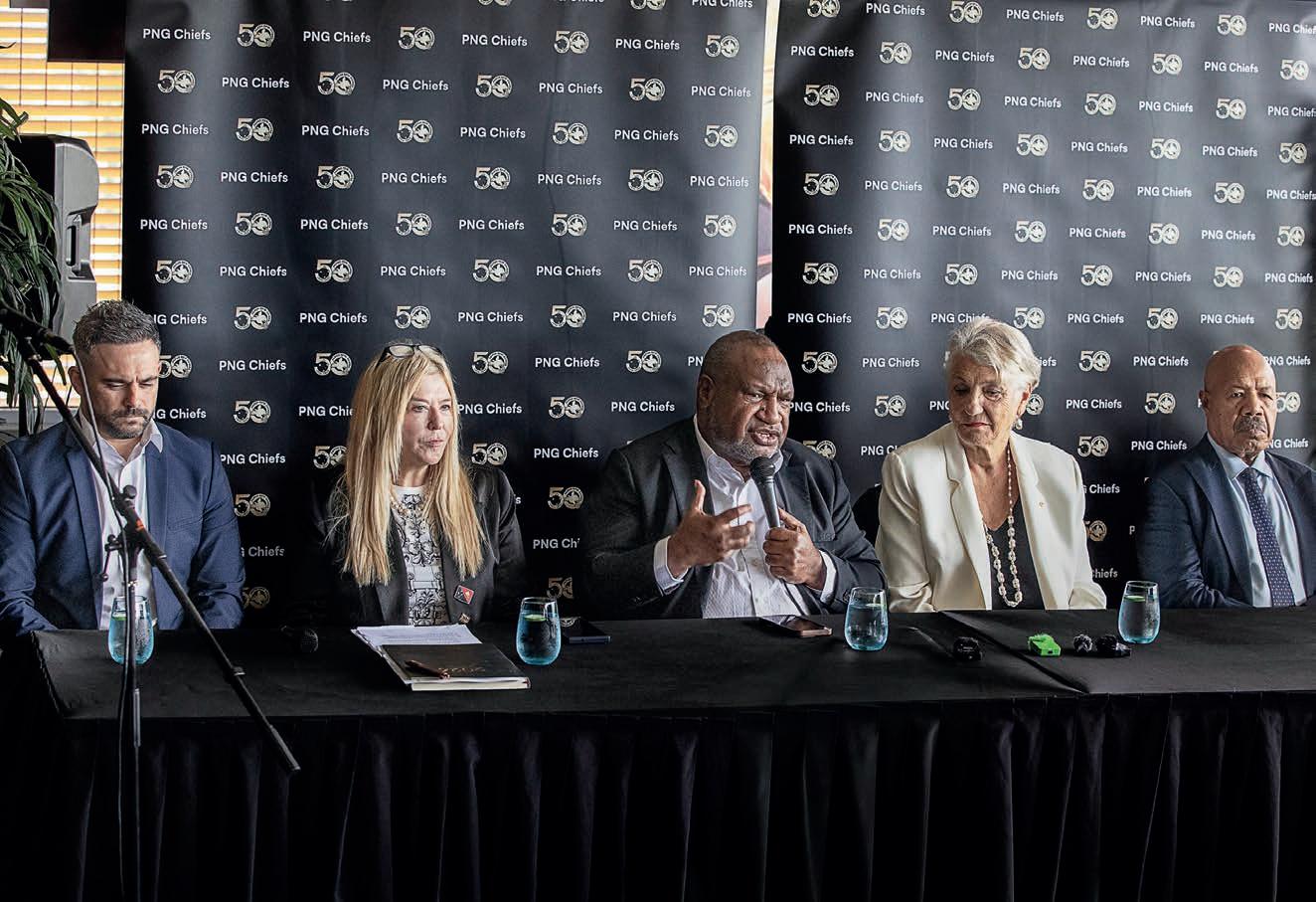
“This strengthens the connection between sport, business and community development,” PNG Chiefs chief executive officer Lorna McPherson told PNG Mining.
“For the PNG Chiefs, it’s important because it elevates our role as ambassadors for national unity and progress.
“For the wider PNG community, it creates a bridge between young people, industry leaders and potential employers, helping open doors to future pathways in education, sport, and industry.”
With NRL veteran Willie Peters taking on the role of head coach, work is already underway behind the scenes to bring the team to life. The PNG Expo helps develop that growth even more.
“Through our presence at PNG Expo we want to show that success can come from anywhere in PNG,” McPherson said.
“Ultimately, we aim to create increased awareness, more access to opportunities and a stronger sense of national pride, unity and community connection.”
“By partnering with the expo, the PNG Chiefs are helping bring attention to the incredible opportunities available across business, education, sport and community development. Our brand carries strong national support and using that platform to highlight positive developments is a responsibility we take seriously.”
From formal meetings on the exhibition floor to informal conversations during social events, every aspect of PNG Expo 2026 is designed to foster connection. With strong growth indicators and the added strength of the Austrade partnership, this year’s event is well positioned to deliver tangible value for businesses looking to engage with PNG’s evolving mining and resources landscape. AM

The PNG Chiefs begin life in the NRL in 2028, marking the first ever team from PNG to play in the competition.
Images: PNG Chiefs
The PNG Expo offers a number of social and networking events to connect with industry peers.
Image: Prime Creative Media
PNG Chiefs CEO Lorna McPherson makes up part of the events conference program.
What’s next for WA mining?
As mining pushes new frontiers, the WA Mining Conference and Exhibition brings together the technologies, partnerships and ideas shaping the sector’s next wave of growth.
Western Australia’s mining sector is entering a defining phase of growth and transition, with the WA Mining Conference and Exhibition (WA Mining) set to bring industry leaders together in Perth this September.
While iron ore still underpins the state’s economic strength, new opportunities are emerging, from lithium’s market reset and the push for downstream processing to the growing urgency of decarbonisation and infrastructure delivery.
WA Mining returns to the Perth Convention and Exhibition Centre from September 16–17 as a key forum to discuss sector innovation and knowledge that is helping shape the state as a global supplier.
WA Mining comes at a pivotal
of business-critical conversations.
Speaking on the conference stage, some of the sector’s most influential voices will unpack the forces shaping Western Australia’s future.
Minerals Council of Australia chief executive officer (CEO) Tania Constable, Hancock Iron Ore chief technology and information officer Kate Flanagan, Minerals Research Institute of Western Australia research portfolio manager Geoff Batt, and CSIRO Sustainable Mining Technologies Program senior spatial scientist Romana Dew are among those set to contribute to the program.
Their discussions will span the themes now defining much of the industry: project delivery, sustainability, workforce
Speakers will be taking on the stage to discuss the sector’s future, and how the state’s crucial players can help shape it.
Blackwoods, Treadwell Group, Harcher, and Sustainable Technology Equipment Group (STEG).
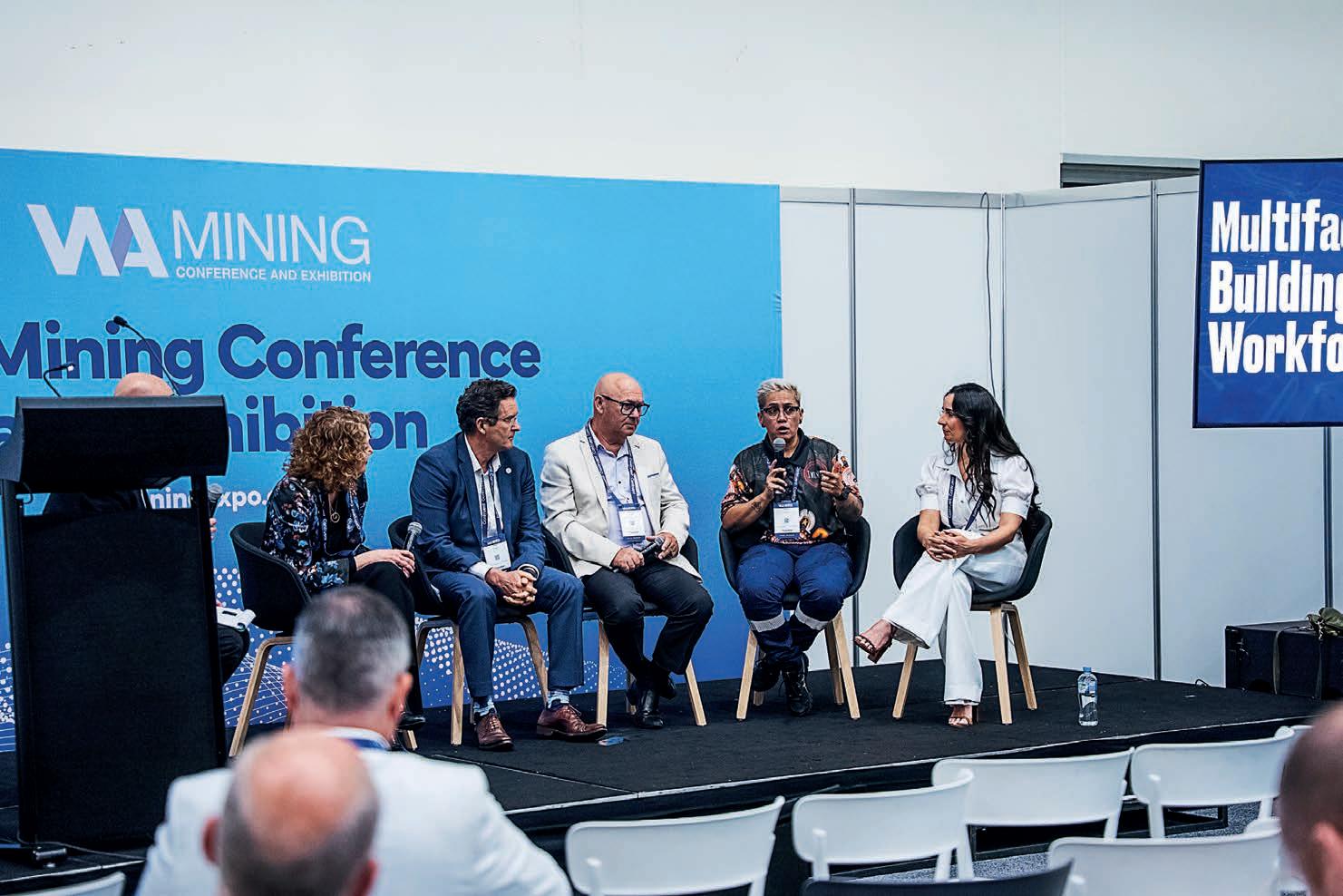
The exhibition will once again prioritise interactive, hands-on experiences, allowing attendees to engage directly with the technologies reshaping site operations. From live equipment demonstrations to dedicated innovation zones, the event is designed to move beyond theory and showcase practical solutions that can be deployed across Western Australia’s vast mining footprint.
A key feature of WA Mining 2026 will be the Mining Pavilion, bringing together leading companies, such as Fortescue and Glencore, and major
projects in one place. The space provides a focused platform for exploring investment opportunities, strengthening supply chains and gaining insight into the developments driving the state’s resources sector forward.
With previous years selling out, WA Mining continues to demonstrate its relevance in a dynamic and evolving industry environment.
Prime Creative Media show director – mining events Rebecca Todesco said WA Mining is where the state’s industry comes together to create real opportunities.
“We are thrilled to invite the key players of Western Australia’s resources
sector back to Perth,” Todesco said. “The city will once again become a buzzing hub of progression as the state’s industry unites for two days of networking, knowledge-sharing and celebrating the excellence across the sector.
“We are already seeing a strong response from exhibitors and attendees alike, and we are looking forward to another fantastic event.”
The event attracts a diverse professional audience, from mine managers and site engineers to procurement specialists and business leaders. For suppliers, it offers direct access to decision-makers actively seeking solutions to improve efficiency, reduce emissions and optimise operations.
Dedicated networking events spread across the event’s two days are designed to foster meaningful connections tailored to WA, helping local businesses build partnerships in the areas in which they operate, extending beyond the exhibition floor and into longterm collaboration.
As the state balances growth with transformation, WA Mining provides a platform not only to showcase innovation but to align the sector on the challenges and opportunities ahead. AM
Tickets for WA Mining 2026 are now available. Reserve your spot today at waminingexpo.com.au
BELT ON TRACK
Conveyor belt mistracking leads to potentially expensive problems such as material spillage, reduced life for belting and structure, and increased maintenance.
ESS Trackers will keep your conveyor belt aligned and your operation on track!
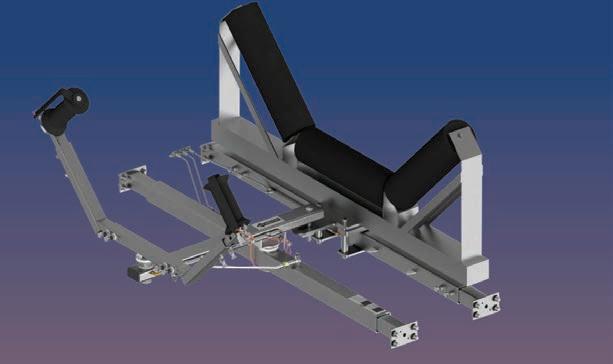
ESS BELT TRACKERS
Dynamic Belt Training Devices
Continuously correct the belt path for optimal alignment
Force Utilisation Design
Use the force of the wandering belt against the guide rollers to position the steering roller.
Versatile Application
Suitable for both the carry side and the return side of the belt
Standard and Heavy-Duty Options
Available in units for both standard and heavy applications.
OPTIONAL SAFETY FEATURES
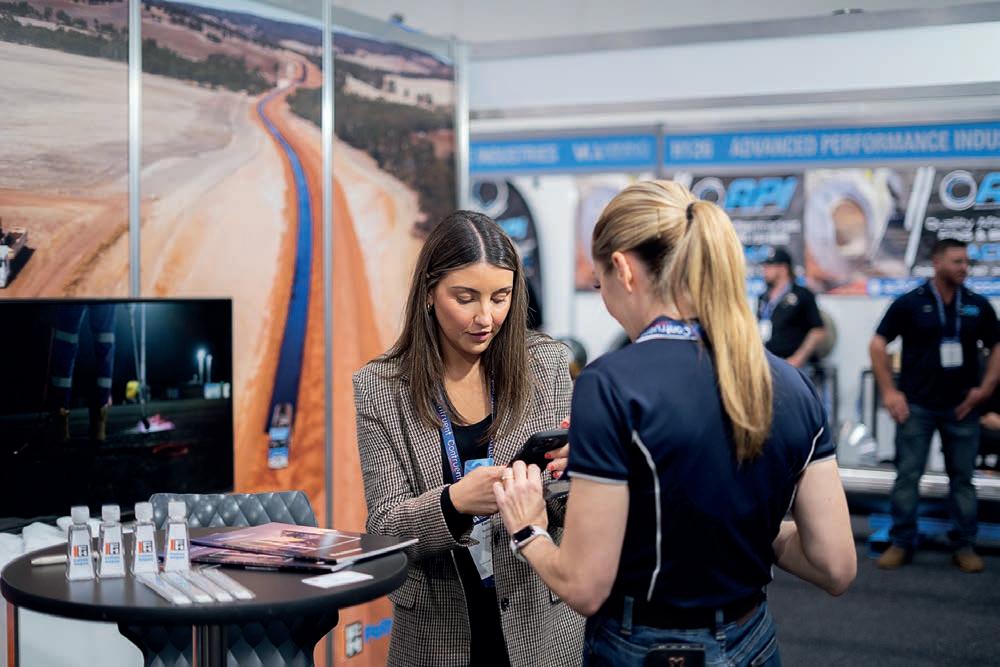
Enhanced Safety Retrofit Kit
Tethers major parts of the tracker assembly together, reducing the risk of falling objects.
ESS belt trackers can be combined with the ESS QCTM Retractable Idler frame to allow the safe withdrawal of the idlers from either side of the conveyor.

The event will feature plenty of interactive, hands-on experiences.


From theory to throughput
Bridging the gap between design and real-world performance is the focus of BULK2026, where onsite challenges take centre stage.
There’s no shortage of theory in bulk solids handling, but direct discussion about what works when conditions get challenging on-site can be harder to find.
That is the gap the conference program at the Bulk Handling Technical Conference and Expo (BULK2026) is aiming to fill.
Curated by the Australian Society for Bulk Solids Handling (ASBSH), the agenda is grounded in the operational issues that continue to test sites across Australia and around the world, from persistent dust to underperforming conveyors.
“We didn’t want a program that just talks at people,” Prime Creative Media head of marketing – events Molly Hancock said.
“We wanted to put together a conference that gets into the detail of what’s actually going wrong on site and what’s working to fix it.”
Bringing together engineers, operators and suppliers, the conference is designed to deliver practical insights that can be applied directly in the field, supported by a strong line-up of industry leaders and technical specialists.
The BULK26 program is built around five key themes, each reflecting real operational challenges across bulk handling environments.
Conveyors, mechanical handling and system performance
This stream takes a detailed look at conveying systems from the inside out, examining belt and mechanical handling performance. Sessions will explore fire safety, fibre optic monitoring, wear-resistance testing and the redesign of long-distance systems.
A standout presentation from Worley will revisit a 13km overland conveyor, demonstrating how modern technology is reshaping energy use, capital cost and lifecycle performance.
The theme also extends to mechanical conveying, covering bucket elevator engineering, low-breakage transport and practical lessons drawn from real-world system upgrades.
Dust, fire and operational risk
Dust remains one of the most persistent and high-risk challenges in bulk
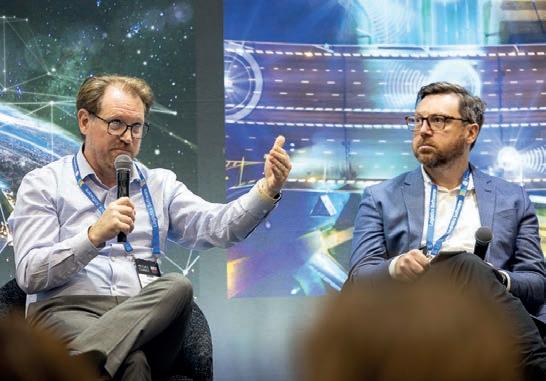

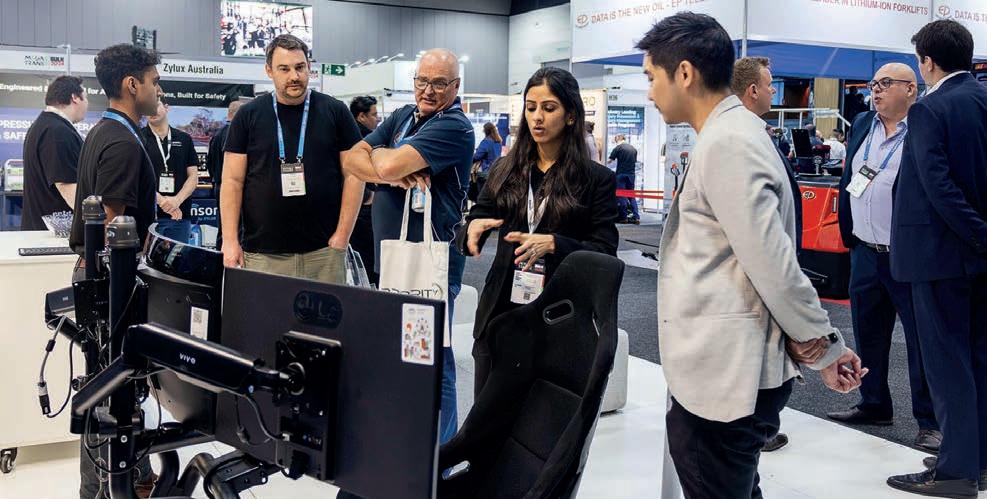
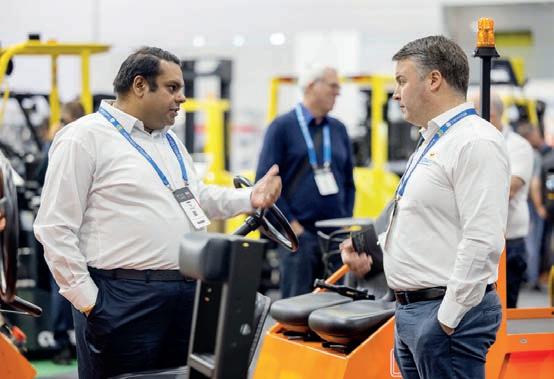
handling, with implications for safety and productivity.
This theme focuses on practical strategies to reduce risk, including explosion protection in terminals, proactive conveyor belt fire safety and targeted fixes to minimise dust leakage.
The emphasis is on solutions that can shift operations from reactive maintenance to more stable, uptime-driven performance.
Storage, stockpiles and material behaviour
Understanding how bulk materials behave in storage is critical to maintaining consistent operations.
This stream examines challenges such as unpredictable discharge loads and stockpile stability, particularly in iron ore applications. Intertek will present a method for improving bulk material tonnage assessment, addressing a longstanding issue in measurement accuracy and commercial reporting.
Sessions will also explore advanced storage systems and new approaches to tracking and maintaining material quality across stockyards.
Monitoring, measurement and wear
Visibility across bulk handling systems is the focus of this theme, with an emphasis on tools that improve accuracy and decision-making.
Topics include live wear monitoring of wall liners, dynamic weighing in industrial bagging systems and technologies that provide clearer insights into system condition and performance. TUNRA Bulk Solids will contribute multiple presentations, combining experimental and simulation-based approaches to wear resistance and safety.
Simulation, design and emerging technologies
This stream highlights the technologies and design approaches shaping the future of bulk handling.
Presentations will cover fast-coupled solid-fluid simulation tools, deep mining concepts and the complexities of designing high-performance systems. KOCH Solutions will showcase its IBEX system, offering insight into next-generation material handling in challenging underground environments.
Additional contributions from organisations including Luna Innovations, HMA, Syntechtron, Hawk Measurement Systems, University of Wollongong and others will further explore advances in digital engineering and infrastructure performance.
Together, these themes form a program that balances immediate operational needs with longer term innovation.
“This year’s conference is about what’s actually working on the ground and what will be helpful in the future,” Hancock said.
“From advanced simulation tools to practical safety solutions, the program has been curated to give attendees ideas they can take straight back to site.”
With its blend of technical depth and practical application, BULK2026 continues to position itself as a key forum for the bulk handling sector, connecting industry professionals with the insights and solutions needed to improve safety, efficiency and long-term performance. AM Get your tickets at bulkhandlingexpo.com. au/attend
The conference program will cover key themes affecting the bulk handling industry.
BULK2026 offers industry professionals the opportunity to engage directly with their peers.
Images: Prime Creative Media
New systems, technologies and processes will be on show.
GRX26 brings international delegates to Perth
Perth has confirmed its status as a global hub of mining and METS innovation, with international delegations converging on the city for the Global Resources Innovation Expo.
Co-hosted by Austmine and AusIMM, the leading industry bodies representing Australia’s mining equipment, technology and services (METS) sector and resources professionals, Global Resources Innovation Expo (GRX26) brings together mining companies, technology providers and innovators to tackle the industry’s biggest challenges and unlock new opportunities in the era of critical minerals.
International delegations from Canada, Chile, Peru, New Caledonia and the Philippines travelled to Perth with senior representatives from mining companies, technology firms, government and investment bodies.
Attendees include representatives from mining companies such as Poderosa, Alpayana and Nexa Resources from Peru, alongside executives from APEX Mining, Carmen Copper, Sagittarius Mines, Genluiching Mining Corporation and
Century Peak Holdings in the Philippines. Canadian clean-tech companies focused on battery minerals processing, renewable energy deployment and mine digitisation also have a presence, alongside industry representatives from Chile and New Caledonia seeking technology partnerships and operational solutions.
Austmine chief executive officer (CEO) Tony Davis said the international presence at GRX26 reflects the growing global demand for Australian mining innovation and mining equipment, technology and services (METS) capability.
“What makes GRX26 unique is that it brings together mining companies, technology innovators and global partners together in one place,” Davis said. “It creates the opportunity to share ideas, tackle real operational challenges and build the partnerships that will drive the next wave of mining innovation.
“For Australian METS companies, it’s also a powerful platform to showcase
their capability on the global stage and strengthen the export partnerships that are taking Australian innovation into mining operations around the world.”
AusIMM CEO Stephen Durkin agrees, saying “Australia is renowned for our mining and METS expertise”.
“At GRX26, that capability will be showcased,” he said. “Through welcoming international partners to Perth, GRX26 is building and strengthening relationships


that will help the sector navigate trade and supply chain uncertainty, unlock new opportunities, and maintain Australia’s competitive edge on the global stage.”
Among the key international bodies is the Canadian Trade Commissioner Service, which joins GRX26 as a Global Partner. The organisation will lead a Canadian delegation and host a pavilion on the exhibition floor, while delivering a dedicated B2B Connect workshop aimed at facilitating business matching and new commercial partnerships between Canadian and Australian companies.
GRX26 international delegates will participate in a curated tour of Western Australia’s mining innovation ecosystem. The tour includes visits to the Australian Automation and Robotics Precinct and BHP’s Integrated Remote Operations Centre (IROC), providing the international visitors with direct exposure to the technologies and operational systems driving productivity, safety and performance across the sector.
In addition to welcoming international delegations, GRX26 features the Global Open Innovation Colab. This challenge focuses on accelerating the journey from discovery to extraction for critical minerals, connecting mining companies with leading innovation hubs from around the world.
Delivered in collaboration with international partners including Expande (Chile), the Peru Mining Innovation Hub, and the Centre for Excellence in Mining Innovation (Canada), the Colab reflects the action-oriented nature of GRX26 and strengthens collaboration between global mining companies and technology providers.
AM
For more information, visit GRX.au
GRX26’s overarching theme is ‘Competing globally in the critical era’.
GRX26 will be meeting point for leaders to align strategy, showcase technologies and strengthen collaboration.
Images: AusIMM

BULK HANDLING EVENT
16-17 September 2026
EXHIBIT IN 2026. BE SEEN. BE HEARD. BE CHOSEN.
CONFERENCES, SEMINARS AND WORKSHOPS
Event submissions can be emailed to paul.hayes@primecreative.com.au

Critical Minerals Australia Conference and Exhibition Perth | May 20–21
The Critical Minerals Australia Conference and Exhibition is Australia’s longest running international critical minerals, investments, clean energy and technologies show, bringing the entire mineral resources value chain together in Perth.
The event will examine all aspects of mining exploration opportunities, financing options, development of new technologies, security of sustainable supply chains, First Nations and community engagement, ESG practices, processing, recycling and batteries, and more.
• criticalmineralsaustralia.com
Women in Industry Awards
Sydney | June 18
The Women in Industry Awards recognise outstanding women from across a range of industrials sectors, including those who work in mining, transport, manufacturing, engineering, logistics, bulk handling, waste management, rail and construction and infrastructure. The awards are an opportunity to recognise the women who are driving change across industries and,
in doing so, breaking down barriers and creating new possibilities for the next generation.
• womeninindustry.com.au
PNG Industrial and Mining Resources Exhibition and Conference Port Moresby | July 1–2
The PNG Industrial & Mining Resources Exhibition (PNG Expo) delivered a record-breaking edition in 2025, attracting more attendees than ever before.
The event saw more than 80 local, national and international manufacturers and suppliers showcase the latest innovations for the mining, industrial, and oil and gas sectors.
The exhibition will return in 2026, providing the perfect meeting place to connect and network with thousands of industry decision-makers across a broad industry reach, including senior management, procurement, government personnel, engineers, contractors and trade technicians.
With extensive support from key stakeholders in government, associations and industry, PNG Expo is a premier meeting place for industry trade and a forum for establishing high-quality customer contacts and conducting business.
• pngexpo.com
Queensland Mining and Engineering Exhibition Mackay | July 21–23
With a legacy spanning over 30 years, the Queensland Mining and Engineering Exhibition (QME) is Australia’s largest regional mining event.
Following a record-breaking 2024 edition, QME returns to Mackay from July 21–23, 2026, promising even more exhibitors, expanded content, and new networking opportunities.
Featuring live demonstrations, a free leadership series and hundreds of suppliers, QME is a vital hub for innovation, industry connection and regional growth.
QME 2026 is shaping up to be the most impactful edition yet, with many suppliers already signed up to participate after a strong rebooking phase.
• queenslandminingexpo.com.au
Critical Minerals and Energy Transition Conference and Exhibition
Sydney | August 11
Critical Minerals and Energy Transition Conference and Exhibition is Australia’s international renewable energy, critical minerals, green steel, hydrogen and technologies event, bringing together the whole energy
and mineral resources value chain to Sydney. Critical minerals are essential to the country’s security and economic prosperity and are key building elements of all advanced technologies
The event will showcase mining and energy companies, technology providers, downstream manufacturers, renewable energy, battery hubs and universities.
• australiaenergytransition.com
WA Mining Conference and Exhibition Perth | September 16–17
Perth’s flagship mining event, WA Mining Conference and Exhibition (WA Mining), is where the state’s mining industry gathers to conduct business, champion success and put its best foot forward.
After sold-out shows in 2024 and 2025, WA Mining will again transform the Perth Convention and Exhibition Centre into an epicentre of innovation, advancement and industry leadership. WA Mining 2026 is set to be bigger and better, with the return of the two-day paid conference that will run alongside the dynamic and expansive exhibition floor. The event is ideal for companies that see themselves at the forefront of the future of mining looking to connect with the WA mining industry.
• waminingexpo.com.au



GET TICKETS





Australia’s largest regional mining event

21-23 JULY 2026 MACKAY SHOWGROUNDS



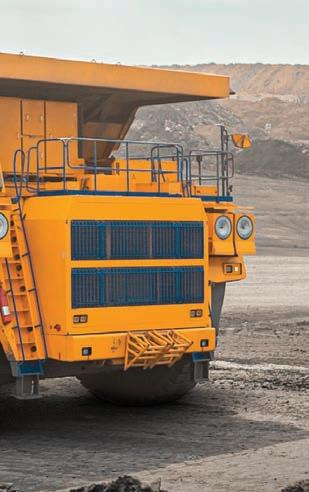


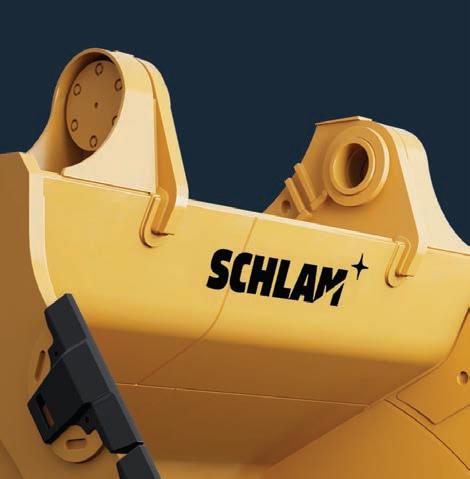








The Schlam Barracuda range of mining buckets is regarded for extending the payload performance of excavators and loaders operating in hard rock mining environments.
Renowned by leading miners in Australia, our comprehensive product range includes models compatible with major OEM mining excavators and loaders.
Each Barracuda bucket is individually engineered by a team with global OEM expertise, to overcome site specific challenges and to ensure the optimal performance of your mining equipment fleet.


With Barracuda’s dedicated after-sales support, our team is with you every step of the way to enhance your load and haul productivity and to help extend the life of your assets.
schlam.com/barracuda