Mineral processing
Battery-electric locomotives
Industry events

![]()
Mineral processing
Battery-electric locomotives
Industry events

How small gains deliver big savings


Reliable fuels and energy have always been key to Australia’s mining success.

From the Pilbara’s iron ore operations to the copper and gold mines scattered across the country’s interior, fuel powers almost every part of the resources value chain.
Diesel drives haul trucks and drilling equipment, supports power generation and keeps supply chains moving. It is one of the unseen foundations of the modern mining industry. For that reason, conversations about fuel security are becoming increasingly important for Australia’s resources sector.
Recent geopolitical tensions, including the conflict involving the US and Iran, have drawn global attention to the importance of stable energy supply chains.
Oil markets are inherently international, and developments thousands of kilometres away can influence pricing, shipping routes and availability across the Asia-Pacific.
Such developments serve as a timely reminder of how interconnected global energy systems are.
For the mining sector, this reinforces the value of planning, resilience and long-term energy strategy.
Australia remains a global resources powerhouse, supplying the world with iron ore, coal, critical minerals and liquefied natural gas. Yet, like many advanced economies, we import a large share of refined fuels.
Mining operations often take place in remote regions where access to infrastructure is limited. Reliable fuel supply is critical not only for production but also for the safety and efficiency of operations.
From powering heavy equipment to supporting on-site electricity generation, energy reliability underpins the productivity that has made Australia one of the world’s most competitive mining jurisdictions.
At the same time, the industry is actively exploring new ways to strengthen energy resilience.
Many companies are investing in hybrid power systems that combine diesel generation with renewable energy sources such as solar and battery storage.
Chairman John Murphy
Chief executive officer Christine Clancy
Managing Editor Paul Hayes paul.hayes@primecreative.com.au
Assistant Editor Engel Schmidl engelbert.schmidl@primecreative.com.au
Journalists Dylan Brown dylan.brown@primecreative.com.au
Ben Cartwright ben.cartwright@primecreative.com.au
Ethan Benedicto ethan.benedicto@primecreative.com.au
These systems can help to reduce fuel consumption while improving energy security at remote operations.
Electrification is another area gaining traction. Battery-electric mining equipment, while still emerging in many applications, has the potential to reduce reliance on diesel over time while supporting emissions reduction goals.
Alternative fuels are also part of the conversation. Renewable diesel, hydrogen and other emerging energy carriers are increasingly being explored as potential long-term solutions for heavy industry and transport.
Beyond new technologies, mining companies are working to strengthen fuel resilience through strategic on-site storage, improved logistics and data-driven monitoring.
By combining operational planning with trials of hybrid and electric equipment, as well as alternative fuels, operators are reducing reliance on imported diesel while maintaining productivity in remote operations
These technologies, while still developing, highlight the industry’s willingness to innovate and adapt.
What remains clear is that fuel security and resource development are closely linked.
Ensuring stable and reliable energy supply helps maintain Australia’s reputation as a dependable exporter of minerals and resources to global markets.
In an era of shifting geopolitics and growing demand for critical minerals, that reliability has never been more important.
With thoughtful policy settings and continued collaboration between government and industry, Australia can continue to strengthen its fuel security while supporting the growth of its world-class resources sector.
After all, keeping fuel flowing is about ensuring the mines that power the nation’s economy continue driving growth, supporting jobs, sustaining communities, and delivering the resources on which the world relies. AM

national distribution of construction equipment and trucks. Founded in 1974, the business has grown from a small dealership into one of Australia’s leading suppliers of heavy machinery and transport solutions for industries including mining, construction, agriculture and forestry. The company partners with major international manufacturers to deliver a portfolio of globally recognised brands, including Volvo Construction Equipment, SDLG, Kenworth, DAF, Isuzu and Fuso.
CJD Equipment operates a nationwide network of branches, dealers and service centres spanning major capital cities and regional mining hubs. This footprint allows the company to provide comprehensive aftersales support, including parts supply, maintenance and technical assistance, helping customers maximise equipment performance and uptime.
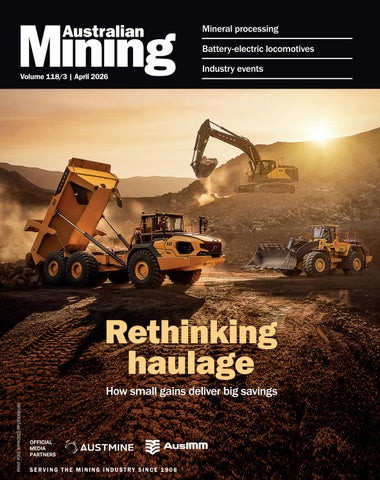
Cover image: CJD Equipment
Client Success Manager Janine Clements 02 9439 7227 janine.clements@primecreative.com.au
Sales Manager Jonathan Duckett 0498 091 027 jonathan.duckett@primecreative.com.au
Business Development Managers James Phipps 0466 005 715 james.phipps@primecreative.com.au Rob O’Bryan 0411 067 795 robert.obryan@primecreative.com.au
Art Director Michelle Weston michelle.weston@primecreative.com.au


1 Reliable rebuild completion – on time commitment
2 Cost certainty you can trust – no hidden costs
3 Lower upfront spend – bigger return


Industry insight
8 Ardea’s billion-dollar baby Ardea Resources CEO Andrew Penkethman sat down with Australian Mining to discuss the partnerships driving the Goongarrie project in WA.
Fleet optimisation
10 Capital discipline in high-volume haulage CJD on why marginal inefficiencies compound and how integrated site architecture is changing the equation.
Mineral processing
16 Australia’s competitive edge in a techdriven era
The country’s mineral processing sector is entering a new era, where technology and digital innovation are transforming how raw ore is turned into market-ready products.
22 A S.H.O.T. at smarter gold processing
Jenike & Johanson’s selective heat ore treatment – S.H.O.T. – is reshaping gold processing, using microwave technology to pre-crack ore, boost recovery and cut energy use.
26 Efficient screening for tough ore
Astec has unveiled a new screen designed to tackle clay-heavy, sticky ores, boosting throughput, reducing downtime and improving safety. 12 40 50 26
Decarbonisation
40 Inside Fortescue’s push to decarbonise rail
When Fortescue recently unveiled its first battery-powered electric locomotives in the Pilbara, Australian Mining was on the ground to witness the miner’s next phase of decarbonisation efforts.
Connectivity

44 A new Horizon in the Pilbara Hancock Iron Ore is transforming the Pilbara worksite experience with highspeed fibre, setting a new benchmark for mining operations.
Mining equipment
50 Next-generation partnership
What started as a simple question of refreshing a fleet of trucks turned into a next-generation rollout of Caterpillar 793 trucks by Hastings Deering at the South Walker Creek mine.
Discovery
60 Rich groundwork
Geoscience Australia has been charged with providing the scientific groundwork for the country’s future resources prosperity.

Australian miner Vulcan Energy is building Europe’s first integrated, low-carbon lithium supply chain.
As Europe accelerates its shift to electric vehicles (EVs), securing a reliable supply of batteryquality lithium has become critical. And ASX-listed Vulcan Energy Resources is positioning itself at the centre of that effort.
“The integrated supply chain winners are the ones that are probably going to be leading the pack in the next five to 10 years,” Vulcan Energy managing director and chief executive officer (CEO) Cris Moreno told Australian Mining For Vulcan, this means overseeing every stage of production – from lithium extraction to refining – within a 100km radius of its Lionheart project in Germany’s Upper Rhine Valley. The company relies on proprietary direct lithium extraction technology powered by geothermal energy.
“By producing battery-grade lithium locally, Vulcan avoids long, carbonintensive supply chains, which sets us apart from hard-rock producers that transport material thousands of kilometres for processing,” Moreno said.
While lithium is a relatively small global minerals player compared with commodities such as copper or iron ore, its growth is exceptional.

“In 2024 we produced one million tonnes globally, and this year we’ve produced 1.4 million,” Moreno said. “Not many industries are growing at 40 per cent compound growth.”
Moreno believes years of underinvestment during low-price cycles have left the market exposed.
“We need a lot more lithium,” he said. “But there’s been no investment. We’re going to see prices go up again.
“This makes Vulcan’s Lionheart project, which is targeting 24,000 tonnes of lithium hydroxide annually –enough for roughly half a million electric vehicles – particularly significant.”
Vulcan holds 17 licences along the Upper Rhine Valley but will initially use only two.
“It’s on us to start building out phase two and phase three every two to three years,” Moreno said.
“We will take lessons from phase one and apply them to future phases, continually improving capital efficiency.”
By scaling production in stages, Vulcan can match European demand while refining its processes. The project has attracted strong support on the continent.

“We are the first ever critical raw materials project to receive public equity from the German Government,” Moreno said. “That’s not luck; it’s hard work.”
With nearly €204 million ($332.4 million) in public grants and €150 million ($244.5 million) in equity, Vulcan has secured backing to the tune of more than half a billion dollars.
“That’s a clear signal about our criticality to the future of that state and continent,” Moreno said.
“If you go all the way downstream to where the automaker is, they’re at real risk of de-industrialising. The lifeline in the heart of that country is the automotive industry.”
Competitiveness has been marked as central to Vulcan’s appeal.
“If Vulcan couldn’t demonstrate cost efficiency, we wouldn’t even get to the starting line,” Moreno said.
Sustainability and a fully integrated supply chain, Moreno said, give Vulcan a clear advantage. Strategic partnerships also play a key role.
“Our collaboration with German industrial group BSF is to work with them to create a development to help decarbonise their energy side, and then we will keep the rights to the lithium side,” Moreno said.
Additional capital will be required for future phases, but Vulcan expects flexibility in sourcing it from investors and strategic partners.
Amid strong support, execution remains the focus. Drawing on decades of experience at Shell and Woodside, Moreno leads a delivery-focused team.
“We want to demonstrate that we can build this safely, on time and on budget and then start selling,” he said.
With a growth strategy, integrated lowcarbon supply chain, and strong backing, Vulcan is positioning itself as a linchpin for lithium in Europe, underpinning the continent’s EV ambitions. AM


OTR is at the forefront of tyre, wheel and service innovation, proudly supporting Australia’s mining, construction, transport, agricultural and industrial sectors. We deliver unmatched capability, performance and reliability across every site and every haul road. Our commitment is simple, if your tyres or wheels stop, your production stops ‑ so we’re here to keep you moving.

OTR is Australia’s leading independent partner for off‑highway tyres, wheels, consumables and service solutions. With nationwide manufacturing, service hubs, and on‑site support teams, we provide the most comprehensive ground‑contact offering in the country.
With deep expertise across mining and heavy industry, OTR is trusted by major operations to deliver safe, compliant, and cost‑effective solutions built for tough Australian conditions.
• Massive range & stocks of earthmover, truck & LV tyres.
• Full range from 6” through to 63” from leading global brands.
• Tyre fitting, rotation, change‑outs and on‑site support.
• Tyre pressure management and haul profile optimisation.
• Tyre valving, O‑rings & tooling
• Wheels, rims, assemblies & components.
• Australian manufactured with in‑house design.
• Test, repair & certification under Australian Standards AS4457.1.
• Latest MID and MRD compliance.
• Mobile fitting capability for large OTR assemblies.
• Dedicated tyre & wheel technicians for major mining operations.
• On‑site wheel, rim & tyre management programs.
• Tyre Handlers, mine site spec for sale or hire.
• Industry‑accredited Cert II tyre fitting and safety training.
• RTO provided on‑site or at OTR facilities.
WITH SERVICE HUBS AND MANUFACTURING FACILITIES
ACROSS AUSTRALIA, OTR PROVIDES RAPID RESPONSE AND CONSISTENT SUPPORT WHEREVER YOU OPERATE.


Goongarrie is positioned as a globally significant nickel-cobalt project backed by strong international
Ardea Resources managing director and CEO Andrew Penkethman sat down with Australian Mining to discuss the billion-dollar backing and international partnerships driving the Goongarrie project in WA.
partners and potential support from Australian and US export credit agencies.
Development is set to play a key role in strengthening Australia’s place in critical minerals supply chains.
The project is a joint venture with Kalgoorlie Nickel, which will own and develop the Goongarrie hub, located 70km north of the Kalgoorlie-Boulder. The hub itself hosts a mineral resource of 548 million tonnes at 0.69 per cent nickel and 0.043 per cent cobalt for four million tonnes of contained nickel and 250,000 tonnes of contained cobalt.
This sits within the wider Kalgoorlie Nickel project, which hosts the largest nickel-cobalt resource in Australia and one of the largest in the developed world. Total resource sits at 845 million tonnes at 0.71 per cent nickel and 0.045 per cent cobalt from 6.1 million tonnes of contained nickel and 386,000 tonnes of contained cobalt.
Ardea Resources has received conditional letters of support and interest from Export Finance Australia (EFA) and the Export-Import Bank of the United States (EXIM) for potential project financing. Under the proposed agreement, EXIM would provide up to $US350 million ($500 million), with EFA offering a further $500 million in support.
For Penkethman, the project represents a huge step forward for securing Australia’s future in critical minerals supply chains. He sat down with Australian Mining to discuss the Goongarrie developments and the importance of global partnerships to delivering key growth to the country’s critical minerals capabilities.
“This project is one of the biggest in the world, outside of direct or indirect control from Russia or China, so it has a great strategic appeal,” Penkethman said. “Being a part of team Australia and
interacting with all the agencies associated with it has been massively fortunate.
“I’ve been part of a number of critical minerals delegations in Japan, Korea, the European Union and the United States, and it’s an honour to be a part of those discussions at a state level and internationally.
“We’d like to think this will be the start, but there’s a lot of international support for the Goongarrie hub and seeing this project developed.”
Joint venture partners include Japanese powerhouse Sumitomo Metal Mining, as well as Mitsubishi Corporation, something described as an “enabler” to continue to grow the project.
“With the support from team Japan, we’re seeing the Ministry for Economy, Trade and Investment currently funding 50 per cent of our definitive feasibility study for the project, which is a great independent endorsement and

support that we’re very grateful for,” Penkethman said.

Goongarrie has also been certified with Major Project Status by the Australian Government, lasting until 2028, further emphasising its importance in keeping up with critical minerals demand.
“Recognising the geological endowment that Australia’s been blessed with gives us an incredible opportunity, especially with our proven track record in the resources sector,” Penkethman said.
“We have the ability to be a competitively priced, reliable, long-term supplier of critical minerals the world needs. We’ve seen a lot of discussion on rare earths, but we need to be looking at other minerals like nickel and cobalt for wider industry trends like the movement to a greener future.”
The strategic relevance of Goongarrie comes against the backdrop of China’s dominant position in the global critical minerals market. While Australia is a major miner of raw materials, China controls a significant share of downstream nickel and cobalt processing capacity, as well as battery precursor and cathode production.
This concentration has raised concerns among Western governments about supply chain security, particularly as demand accelerates through electric vehicle and energy storage industry growth.

“China currently dominates the nickel market, controlling about 70 per cent of production,” Penkethman said.
“Australia has a chance to help deliver on global strategies more broadly thanks to the country’s geology and track record for investment. You’re seeing that, in part, with interest in Goongarrie.”
A geologist by trade and with more than 30 years’ experience under his belt, Penkethman is no stranger to impressive critical mineral projects, having worked on the Husab uranium project in Namibia. Now tipped as one of the world’s leading uranium assets, it was Penkethman who was part of the team that took Extract Resources from a junior company to the ASX top 100. This experience helped him leverage support for Goongarrie.
“The scale and strategic importance of Husab had strong parallels with the Kalgoorlie Nickel Project, both globally significant mineral systems requiring longterm vision and disciplined execution,” Penkethman said.
Beyond the potential of the Goongarrie project, Penkethman credited it as a primary example of Western Australia’s position as a mining powerhouse.

“In my opinion, it’s the resources capital of the world – and for good reason,” he said. “There’s just so much potential left here and we’ve got such a well-established sector.
“We lead the world in safety and innovation, and I see that trend only accelerating over the coming years. We’re at a very exciting phase.”
Goongarrie’s scale and longevity could provide automakers and battery manufacturers with an alternative, stable source of ethically produced battery materials for decades.
As for what’s next, the future’s looking bright for bringing Goongarrie to the next phase, with definitive feasibility study work due in the June quarter of this year. AM
In high-volume extraction environments, marginal inefficiencies rarely remain marginal for long.
Across bulk commodities and emerging critical minerals projects alike, haulage systems rely on consistency. Load, haul, tip, return. Payload targets, cycle times, fuel curves and maintenance intervals underpin the production models that guide capital planning.
When those variables align, capital performs as forecast. When they drift, even slightly, variance compounds across tonnes moved, operating hours and financial years.
A two per cent payload deviation sustained across a fleet may appear insignificant at the machine level. Across a production campaign, it becomes deferred output. A modest increase in idle burn during loading congestion does not remain confined to a monthly fuel report. It multiplies across shifts, across machines and across the life of the operation.
Incremental cycle-time elongation often attributed to haul road condition, pit progression or operator variability can distort fleet balance and quietly increase the capital required to deliver the same production result.
High-volume haulage amplifies deviation because volume multiplies effect. For this reason, many operators are beginning to look beyond individual machine specifications and toward the broader interaction of the fleet as a system.
Integrated frameworks such as Volvo Site Solutions reflect this shift. Rather than optimising individual assets in isolation, these approaches focus on how loading tools, haul units, maintenance planning and telemetry interact across the site’s production architecture.
This distinction matters.
Traditional equipment evaluation has often centred on machine capability acquisition cost, rated payload, fuel consumption or component durability. These metrics remain important, but in complex extraction environments they rarely tell the whole story. Haulage performance is determined as much by interaction as by specification: the relationship between loading tools and trucks, the influence of haul profile on drivetrain performance, the impact of road geometry on tyre life, and how operational data is interpreted across the fleet.
In practice, haulage is not a collection of machines. It is a production system.
Where that system is fragmented mixed-fleet assumptions, unaligned service strategies or inconsistent data interpretation, accountability disperses.
Performance discussions often focus on isolated component issues or operator input. The structural design of the fleet itself receives less attention
Capital discipline in this context shifts from procurement to governance.
Disciplined haulage strategy begins with a clear question: what configuration of machines stabilises cost per tonne over the life of the operation? That question matters more than any single equipment specification. Boards and asset managers ultimately judge haulage performance not by payload ratings but by production reliability and operating cost stability.
This systems perspective becomes particularly relevant in operations where flexibility and capital efficiency are prioritised.
Many extraction sites, particularly
emerging critical minerals operations, smaller open pits and evolving midscale mines, operate under conditions where pit geometry changes frequently, haul distances evolve and infrastructure develops progressively.
In these environments, fleets built around efficient mid-size equipment can offer practical advantages. Articulated haul platforms, for example, can operate effectively on variable haul routes and typically require less intensive road engineering than larger rigid fleets. Lower infrastructure requirements can reduce early capital commitments while maintaining productive material movement.
Flexibility becomes a strategic asset. Operations that prioritise adaptable fleet structures can adjust more readily to ground conditions, production changes and evolving mine plans. Instead of committing immediately to highly specialised infrastructure and ultra-large equipment classes, some sites adopt staged fleet strategies that scale alongside the operation. This approach can lower capital intensity during early production phases while preserving operational efficiency.
Within integrated optimisation models, including Volvo’s broader site optimisation


methodology, the focus shifts toward engineering the interaction between machines. Loading tools are matched deliberately to haul capacity, fleet sizes are calibrated to maintain consistent cycle rhythm, telematics data is interpreted through a unified system linking site operations, engineering support and dealer service expertise.
The objective is not simply to deploy machines. It is to engineer a stable production system.
When fleet interaction is deliberately configured rather than incidental, payload variance narrows. When variance narrows, fuel modelling improves. When fuel modelling improves, costper-tonne forecasting becomes more reliable. Reliable cost-per-tonne outcomes strengthen capital planning, which in turn improves long-term production resilience. Importantly, this systems approach does not assume that every machine on a mine site originates from a single manufacturer. Many operations run mixed fleets combining different equipment platforms. Optimisation frameworks therefore focus on how sections of the operation function together rather than attempting to standardise the entire site.
In this context, Volvo equipment often contributes most effectively in areas where flexibility, efficient mid-size fleets and system optimisation create measurable operational value. These may include development phases, mid-production haulage environments, quarry-scale extraction and operational zones where
infrastructure demands, or ground conditions favour adaptable equipment configurations.
As extraction industries evolve, particularly with the growth of critical minerals supply chains, this type of operational flexibility is becoming increasingly relevant. Production systems must respond to shifting commodity demand, evolving processing technologies and dynamic project development timelines. Fleet configuration decisions made early in the life of a mine can influence operating cost structures for decades.
Haulage will always operate under dynamic conditions. Material properties change, site geometry evolves and production targets adjust. The goal is not to eliminate variability entirely but to prevent marginal deviation from compounding unchecked.
That requires visibility across the system, structured feedback between operational teams and engineering expertise, and a willingness to treat fleet configuration as an architectural decision rather than a transactional purchase.
In modern extraction environments, equipment meeting specification is the starting point. The real differentiator lies in how effectively the fleet functions as a system and how deliberately operations engineer interaction between machines to maintain consistency as conditions evolve.
That distinction increasingly defines capital discipline in high-volume haulage. AM

• Marginal deviations compound – small payload or cycle-time variances across a fleet quickly escalate into significant production and cost impacts
• Haulage is a system, not just machines – performance depends on the interaction between loaders, trucks, haul roads, maintenance planning and telematics
• C apital discipline begins with configuration – focus on fleet architecture and site-wide optimisation rather than isolated machine specs
• Flexibility is strategic – mid-size, adaptable fleets reduce early infrastructure costs and respond effectively to evolving pit layouts and production demands
• Integrated optimisation drives efficiency – align equipment, maintenance and operational data to narrow variance, improve fuel use and stabilise cost per tonne
• Mixed fleets work when managed systemically – standardisation is not required; coordination and understanding of interactions matter most
A
new partnership between
SANY and
national dealer CEA
is set to bring next-generation excavator solutions to Australia.
At a time when Australia’s mining is gearing up for a surge in activity, a new partnership is set to reshape the way heavy equipment hits the ground.
CEA has been appointed as a distributor for SANY excavators across a number of states, commencing operations in Queensland, New South Wales and South Australia.
As an emerging brand within the excavator market, SANY has quickly gained strong customer acceptance globally thanks to its build quality, competitive pricing and after-market offering. Securing these distribution rights aligns with CEA’s broader strategy of expanding across key market segments and meeting growing customer demand.
“Over the past six years, CEA has opened three new multi-million-dollar
90 tonnes,” CEA chief executive officer (CEO) Hylton Taylor said.
The addition of SANY not only strengthens CEA’s well-established footprint across Australia but enhances its ability to support a diverse range of customers with a broad equipment offering.
CEA is poised to challenge the excavator market with a leading product line-up that is competitively priced, aligning perfectly with the needs of the mature Australian market.
Backed by the scale and investment capability of the CFC Group, CEA is well placed to support the rollout with strong sales, service and after-market coverage – all key considerations for operators focused on uptime and whole-oflife asset value.
The partnership targets sectors including mining, rental and
to boost productivity while reducing operating costs.
“SANY is proud to partner with an Australian-owned business that has the size and scale of CEA”, Putzmeister Asia Pacific CEO Michael SchmidLindenmayer said.
“CEA’s extensive history in the market offers a strong sales channel, with local insights and market knowledge that will be critical to the long-term success of the SANY brand.”
CEA brings decades of experience supplying equipment to Australia’s heavy industries. Its recent investment in multi-million-dollar facilities strengthens its national presence and capability to support customers with sales, service and parts.
“SANY’s global manufacturing expertise with R&D [research and development] centres and plants in China, the US, Germany and Brazil, and their focus on electric and intelligent technology complement our existing portfolio perfectly,” CFC Group executive chair Philip Cardaci said.
According to Taylor, it was critical for CEA to partner with a brand that “understands the customer segment, delivers quality products and focuses on future industry needs”.
“This ensures the machines of tomorrow meet the evolving demands of our core customer base,” he said.
Founded in 1989, SANY has grown into one of the world’s major construction and mining equipment manufacturers, producing more than 80,000 units annually from its Shanghai Lingang and Kunshan facilities. Its global success stems from build quality, competitive pricing, and strong aftermarket support.
With ongoing product deliveries and the arrival of telehandlers and material handlers planned throughout the year, the SANY–CEA partnership signals a strong commitment to the Australian market.
As operators plan fleet investments ahead of the next phase of project delivery, the collaboration offers a compelling option focused on durability, efficiency and future-ready performance. AM


Cummins is celebrating 100 years in mining by
highlighting some of the people that have shaped the company’s success.
In 2026, Cummins celebrates 100 years of powering the global mining industry, a century defined by engines, innovation and a deep understanding of the world’s toughest operating environments.
In Australia, that legacy is evident across some of the most remote mining regions on the planet, from the iron ore pits of Western Australia’s Pilbara region to the coalfields of Queensland. Over the decades, Cummins has supported miners through technological shifts, economic cycles and evolving operational demands.
Yet behind every engine overhaul, reliability improvement and productivity gain lies something even more important who deliver world class service and support: people.
Around Australia, long-serving Cummins employees have built relationships with mining customers that span decades. Their knowledge, commitment and experience tell the story of what a century in mining looks like.

A career shaped by change
Few people have witnessed the evolution of mining as closely as John Juett, who joined Cummins in 1984 as a heavy vehicle diesel apprentice in Adelaide.
More than four decades later, he remains part of the industry and the Cummins team as site manager at the Clermont mine in Queensland.
Over the course of his career, Juett has worked across Australia, New Zealand, China and Papua New Guinea, supporting mining operations through every stage of development.
“The biggest shift I’ve seen is the move to full electronic control,” he said. “Fuel efficiency, reliability and builtin protection systems have completely changed how engines operate.”
The scale of equipment has changed just as dramatically. Early in Juett’s career, the largest engines he worked on produced around 625 horsepower. Today’s mining engines can exceed 4000 horsepower.
But one of the most significant transformations for Juett has been the evolution of safety culture within the industry.
“When I was an apprentice, we were going to sites with no hard hats and sometimes working in shorts in the middle of summer,” he said. “Safety was largely your own responsibility.
“Through the late-90s and early2000s there was a real shift. Companies like Cummins introduced things like lock out, tag out procedures and a much stronger focus on protecting people on site.”
These changes reflect how the mining industry has matured.
“I suppose I’ve been bleeding blue for a long time,” Juett said, referencing Cummins’ historic blue logo with which many long-serving employees identify.
“When you’ve spent that much time with the product and the people, it becomes part of who you are and you grow together.”
For Cummins’s Sam Van Leeuwen, mining is all about relationships.
After joining the company as an apprentice in Rotorua, New Zealand, in 2002, Van Leeuwen relocated to Australia, where he now works in central Queensland supporting mine sites and maintenance teams as a product support specialist. His role sits at the intersection between customer operations and Cummins’ technical expertise.
“We wear a lot hats,” Van Leeuwen said “Technical support, planning engine life, scheduling overhauls and working with maintenance managers, you become the link between the customer and Cummins.”
Mining operations depend heavily on reliability, and maintaining that reliability requires constant communication and trust.
“You’re dealing with production pressures, downtime risks and big


equipment fleets,” Van Leeuwen said. “The customer needs to know you’ll respond quickly and help solve the problem.”
Over time, those shared challenges build strong relationships.
“You see people grow through their careers on-site, just like we do,” Van Leeuwen said. You’ve been through the same situations together.”
That trust is often what keeps customers returning to Cummins year after year.
Shaping the next generation
In the Pilbara, Fintan Billings has spent decades working alongside miners mentoring the next generation of technicians.
An engine specialist supporting Rio Tinto’s Greater Tom Price operations, Billings has been mentoring apprentices for more than 14 years, guiding school leavers and mature apprentices through the demands of working in the industry.
“It’s about passing knowledge on. These young technicians are the future of the industry,” he said.
Billings’ dedication to developing young talent was recognised in 2018 when he received Rio Tinto’s Mentor Award, acknowledging the role he played in supporting and developing apprentices across the Pilbara region.
Billings’ workday begins before sunrise so he can meet with night and day shift supervisors, ensuring communication is clear and issues are addressed quickly.
“The last 10 years really changed things,” he said. “Fuel efficiency improvements, common rail fuel systems and emissions controls have all moved forward very quickly.”


While modern mining operations increasingly rely on innovation, Billings’ believes the human element will always remain essential.
“Technology helps us,” he said. “But it’s still people who solve the problems.”
Port Hedland branch, and now serves as mining business manager – major accounts, with customers including BMA, Peabody, Thiess and MACA.
“I’ve been very fortunate,” she said. “Cummins gives people opportunity.
Once they identify talent, they nurture it.”
Mentorship has played a major role in Green’s development.
JOINING THE MINING TEAM AT CUMMINS HAS BEEN THE BEST DECISION FOR MY CAREER. I’M LUCKY TO WORK WITH WELL-SEASONED PEOPLE, AND THEIR KNOWLEDGE AND WILLINGNESS TO TEACH ... HAVE BEEN INCREDIBLE.”
“Joining the mining team at Cummins has been the best decision for my career,” she said.
“I am very lucky to work with some very well-seasoned people, and their wealth of knowledge and their willingness to teach and the patience they have for me has just been incredible.”
Today, Green thrives on the responsibility of mentoring two young women within the business.

“When I joined, mining was still very male-dominated,” she said.
“Now it’s much closer to 50:50 in many workplaces.”
As the sector moves towards decarbonisation, electrification and digital monitoring, Cummins is already investing in new technologies that will shape the next century.
Hybrid power systems, improved fuel efficiency and advanced remote
monitoring are helping mines reduce emissions while maintaining productivity.
While full electrification may suit some applications, miners are looking for practical, transitional solutions that balance sustainability with operational reality.
“I don’t believe the engine is going away,” Billings said. “It will evolve. Hybrid, alternative fuels, that’s where the short-to-mid-term future is.”
For Cummins employees like John Juett, Sam Van Leeuwen, Fintan Billings and Kristy Green, the past century has been about far more than engines. It has been about building trust, sharing knowledge and supporting the industry that powers modern life.
After 100 years in mining, Cummins’ legacy is measured not only in horsepower or hours worked, but in the people who proudly stand behind the brand. AM
critical.

Australia’s mineral processing sector is entering a new era, where technology and digital innovation are transforming how raw ore is turned into market-ready products.
Australia’s mining and mineral processing sector stands at a pivotal moment. Anchored by its world-leading resource endowment and supported by deep industry innovation, the industry is confronting evolving market expectations, sustainability targets and the accelerating pace of digital transformation.
According to Geoscience Australia, the nation produces 19 significant minerals from more than 350 operating mines, positioning it among the world’s foremost producers of bauxite, iron ore, lithium, gold, uranium, and other strategic commodities. Meanwhile, recent numbers from the Australian Bureau of Statistics show exploration expenditure trending upwards, with mineral exploration spending rising two per cent in late 2025, reflecting continued industry confidence in discovering and developing tomorrow’s deposits.
At the heart of this value chain is mineral processing, the complex suite of technologies and operations that transform raw ore into market-ready concentrates, intermediates and refined products. From crushing and grinding through to concentration, separation and refining, this segment is today benefiting from some of the most advanced equipment and technology available globally.
What matters most today
As orebodies globally become more complex and grades decline, extracting maximum value from every tonne has never been more critical. Traditional comminution and flotation circuits remain the backbone of mineral processing plants, but they are now enhanced with advanced control systems and real-time process analytics that push recovery and throughput gains beyond what was previously attainable.
Innovations in advanced concentration and separation technologies, such as high-precision densimetric systems and sensor-enabled magnetic separation, are enabling the recovery of mineral fractions once deemed uneconomic. These technologies not only lift valuable product yields but also reduce energy and water consumption, aligning profitability with sustainability imperatives.
Environmental stewardship remains a central theme across modern mineral processing. Companies are leveraging instrumentation, automated control systems and data analytics to minimise reagent usage, cut energy demand and reduce waste. Better monitoring, including online mineralogical tools, enables plants to dynamically adjust process conditions based on real-time ore characterisation.
Digital technologies are now integral across the processing plant and throughout
the wider mining value chain. Automation, edge computing and predictive analytics are pushing plants closer to self optimising operations, reducing human error and improving consistency across shift changes and site teams.
Industry surveys continue to highlight strong uptake in automation technologies, from remote control of processing circuits to integrated optimisation platforms that can automatically tune plant parameters.
Plant control and automation systems, leveraging platforms from the industrial control majors, are central to modern mineral processing. Model predictive control (MPC) layers add an intelligence layer on top of traditional programmable logic controller (PLC) and supervisory control and data acquisition (SCADA) systems to optimise a plant against multiple objectives simultaneously, such as reduced energy use, improved throughput and tighter grade control.
These systems increasingly tie into broader digital ecosystems with realtime dashboards, enabling operations teams to make faster decisions with richer contextual insight from every plant segment.
While artificial intelligence (AI) adoption remains behind some other technologies, mining companies are
deepening their engagement with machine learning for tasks such as predictive maintenance, ore sorting and process model refinement. AI models can sift through historical and live data to recognise patterns that elude conventional statistical methods, unlocking minor and material performance uplift opportunities.
Predictive maintenance systems, for example, analyse equipment vibration, temperature, and operational load to pre-empt failures, reducing unplanned downtime and prolonging expensive asset life.
Digital twins – virtual replicas of physical processing plants – allow engineers to test control strategies, machinery changes and configuration trades in a simulated environment before deploying them on-site. This reduces risk, shortens commissioning time and supports continuous improvement.
Simulation tools help design and optimise circuit flows before physical implementation, reducing capital risk and improving confidence in new plant designs or plant expansions.
The integration of Internet of Things (IoT) sensors across grinders, flotation cells, conveyors and tanks enables granular tracking of process conditions and equipment health. Insights derived from these networks fuel operations and longer term strategic decision-making.

While many global mining leaders have spoken generally about technology investment and productivity goals, such as emphasising AI and automation to underpin growth, Australia’s position as an adopter is informed by operational need and labour market pressures.
Autonomous equipment, realtime process control, and advanced analytics are not just tech trends; they are practical responses to skills shortages, cost pressures and environmental expectations.
Challenges and pathways forward
Despite the clear benefits, pace of technology deployment varies. Barriers such as high upfront investment costs, legacy systems integration challenges and cultural resistance to change can slow adoption. Data silos, interoperability challenges between older plant systems and new digital solutions, and the need for specialised skills complicate transformation agendas.
The way forward increasingly emphasises culture and capability, investing in workforce training, aligning digital and operational teams, and prioritising interoperable architecture across processing assets.
Industry bodies and government initiatives, including Australia’s Critical Minerals Strategy, support investment in downstream processing and technology development to capture greater value domestically and


strengthen sovereign capability in critical minerals processing.
Mineral processing in Australia is evolving rapidly, shaped by economic forces, sustainability commitments and the relentless advance of technology. The sector’s ongoing digital transformation, from automation and AI through to real-time process control and simulation modelling is redefining what is possible while enhancing productivity.
For a nation that sits at the top of global resource rankings and continues to invest in innovation, modern mineral processing is at once a competitive advantage and a strategic imperative.
As operators, mining equipment, technology and services (METS) companies, and technology providers continue to align around common challenges and opportunities, Australia is poised to elevate its role in value-added processing well into the future. AM
Automation and control
• PLC and SCADA control machinery locally and monitor plantwide processes
• MPC optimises multiple objectives, boosting efficiency and throughput
AI and machine learning
• Predictive maintenance reduces downtime
• U se of AI improves ore sorting, process modelling and recovery
Digital twins and simulation
• V irtual plant replicas test changes safely
• Simulation tools optimise flows and reduce capital risk
IoT and real-time monitoring
• S ensors track equipment and process conditions
• Data enables real-time optimisation and strategic decisions
Sustainability and efficiency
• Advanced separation recovers previously uneconomic ore
• Automated controls cut energy, water and reagent use
Gear drives are used across many stages of mineral processing.

Processing operations quickly come to a halt without reliable gear units, which is why
SEW-EURODRIVE ensures its units continue to perform in the most demanding scenarios.
Gearboxes sit at the heart of mineral processing plants. Applications such as crushers, semi-autogenous grinding (SAG) mills and apron feeders generate extreme torque and shock loads, placing gear units under constant mechanical stress.
That’s why industrial gear drives play a critical role in maintaining the reliability and performance of processing circuits.
SEW-EURODRIVE – a global leader in mechatronic transmission systems, motor control electronics and related technology – understands what it takes to design, build and maintain gear units capable of performing in the harsh conditions common to mining operations.
According to SEW-EURODRIVE national industrial gear product manager Guido Wagner, when gear units stop, so does everything else.
“They can be seen as a small, almost insignificant part of the processing
plant in terms of capital expense, yet they are the most critical item in terms of reliability and productivity,” Wagner told Australian Mining
“With this huge benefit-to-cost ratio, it makes sense to select the drive solution that is of the highest quality and reliability.
“Apart from case carburised gearing and shot peening of the tooth root, modern gearing from SEW-EURODRIVE also features corrections to the microgeometry to equalise tooth pressures and remove stress concentrations based on the
WITH A HUGE BENEFIT-TO-COST RATIO, IT MAKES SENSE TO SELECT THE DRIVE SOLUTION THAT IS OF THE HIGHEST QUALITY AND RELIABILITY. YOU WOULDN’T SKIMP ON THE COST OF A PACEMAKER FOR YOUR HEART, WOULD YOU?”
“You wouldn’t skimp on the cost of a pacemaker for your heart, would you?”
SEW-EURODRIVE industrial gear units are designed to excel in extreme mining environments.
dynamics of the respective system,” Wagner said. “In short, designs for application-specific gearboxes are optimised to the loads the application exerts on the gearbox.
“Due to the extreme torque density of modern gearboxes, lubrication and cooling are more important than ever, which SEW-EURODRIVE also specialises in.”
Gear drives are used across many stages of mineral processing, from crushing and grinding through to material handling and slurry processing. Gearboxes vary significantly depending on the demands of each application.
“There are variabilities ranging from the obvious through to more complex case uses, the torque to external loads such as radial loads, axial loads or bending moments over vibrations to thermal stresses,” Wagner said.
“These also may not occur continuously or consistently; they can be highly dynamic, and a load spectrum needs to be considered. This is why it is of utmost importance that the gearbox supplier has a sound understanding of the application the gearbox is going into.


“Even a good gearbox, if selected incorrectly for the application, could fail.”
That’s why a gearbox supplier’s expertise and understanding of mineral processing is critical.
“You can have the most reliable equipment and things can still go wrong,” Wagner said.“There is human error and other unforeseeable events that can stop operations in their tracks.
“With all the right measures in place, a drive can still sometimes fail, the heart can stop. This is when you want to be near the hospital.”
With seven sales and service centres across Australia, as well as a 24hour hotline and $50 million in stock available at any time, SEW-EURODRIVE maintains a reliable and reassuring presence for its Australian customers.
“We are sure to be there when you need us,” Wagner said.
“Even if it’s not an emergency, if you just need the right advice and product for your plant, we have qualified engineers nearby ready to help.”
As processing plants look to improve their efficiency and reliability, SEW-EURODRIVE is drawing on its strong heritage of research and development to help operations optimise drive performance.
“Energy costs are skyrocketing and everybody talks efficiency with electric motors, but nobody considers the
Industrial gear units must perform reliably in unforgiving conditions.
gearbox and the rest of the equipment,” Wagner said. “Replacing old and inefficient gearboxes with modern, more efficient solutions will save you money in energy costs. It will not only save money and increase reliability but provide an opportunity to improve productivity.
“At SEW-EURODRIVE we are at the forefront in the development of gear efficiency.
“If you have an ageing processing plant with inefficient gearboxes, it does not cost anything to talk to us to see how it could be improved.”

• Up to 5,278m2 Light Coverage
• 420Wp solar panel
secure your stock today with our exclusive
• Compact design
• Robust HardHat® canopy
• Mask down feature as standard
As operators continue to look for ways to get the most from their processing plants and maximise throughput, SEWEURODRIVE works to ensure the beating heart of minerals processing keeps pumping. AM


Metso is on a mission to be number one in pumps.
Pump systems may not be the most attention-grabbing technology on a mine site, but inefficient or unreliable pumps can quickly cripple essential processes such as grinding, classification and dewatering. In the worst cases, they can bring the entire plant to a standstill.
Metso is tackling that challenge headon. With more than 130 years of global pumping expertise and a significantly expanded local presence, the company is pairing robust pump technologies with a holistic support model.
This model is designed to help Australian mining operations lift throughput, reduce downtime and lower total cost of ownership.
“We are committed to proving our pumps and services can handle the most challenging duties,” Metso director of pumps in Asia Pacific Chris Barnes said. “And our aim is to be the number one pumps choice for customers here in Australia.”
While Metso is already a pumps market leader in Europe, the company has invested heavily in people, capability and infrastructure to build a strong local footprint across Australia. That investment underpins its ability to respond quickly, provide on-the-ground support and deliver full-lifecycle pump solutions.
And for Australian operations, the approach is proving its value.
When Aeris Resources’ Tritton copper operation in New South Wales needed
more predictable pump performance and reduced maintenance burden, Metso stepped in to assess the existing circuit as Tritton’s older competitor pump required frequent rebuilds and tied up maintenance resources across the plant.
Beyond the pump Barnes also noted a growing shift across the mining industry: operators are moving away from transactional equipment purchases and toward long-term, performance-based partnerships.
Metso’s engineering team conducted a detailed review of the operating conditions, including power draw, throughput levels, bearing performance and gland behaviour. This analysis confirmed that the pumps were frequently operating outside their optimal efficiency window.
The solution was an upgrade to Metso’s mill discharge metal MDM250 mill pump. Its thicker casings and liners offer improved durability, while enhanced hydraulics keep the pump operating within its best efficiency zone, reducing internal stresses and extending wear life.
For Tritton, that translated into reduced rebuilds from seven to four each year, a doubling of wear life, fewer unexpected maintenance events and a more predictable maintenance regimen. In addition to reliability improvements, the pump upgrade also delivered measurable gains in water and energy efficiency.
Beyond reliability, the MDM250 at Tritton also delivered meaningful water and energy savings. Equipped with Metso’s Endura and Enviroseal gland sealing technologies, the pump achieved a dramatic reduction in gland water usage, around six times less than the previous set-up.
Metso’s Life Cycle Services (LCS) model reflects that trend. These multiyear agreements bundle equipment, technical support, condition monitoring tools, trials, spare parts and inventory management into a single, predictable solution.
“Our customers want a partner who supports them throughout the full lifecycle of their pumps,” Barnes said.
“With LCS, we bring a performancebased approach, improving efficiency, enhancing safety and ensuring reliable pumping performance year-round.
“Under LCS, Metso can deploy trial pumps to support customer evaluation and introduce upgraded equipment as part of long-term service partnerships.”
The company will also consign components as Metso-owned inventory, reducing customer holding costs while strengthening parts availability.
Metso’s investment in Australia extends beyond pumps, covering a broader slurry handling portfolio suited to local mining needs. This includes MHC hydrocyclones, slurry valves, and slurry hoses and pipe systems, equipment that supports consistent, reliable material movement across the processing flowsheet.

Recent portfolio additions, including the acquisitions of Australian companies Jindex (slurry valves and flow control expertise) and Q&R (slurry hose manufacturing), further strengthen in country capabilities. These

developments expand local manufacturing and support capacity, giving mining operations better access to regionally produced components, shorter supply chains and faster response times.
Digitalisation also features strongly in Metso’s pump strategy. Integrated condition monitoring and predictive analytics give operators real-time insights into pump health and slurry handling performance, enabling more accurate maintenance planning and helping to prevent failures before they occur.
These technologies are backed by Metso’s expanded regional service network across Asia Pacific. With service locations in Surabaya, Tomago, Mackay, Karratha and Perth, plus a dedicated pumps operation centre in Kalgoorlie, the company is well positioned to mobilise quickly and keep customer sites pumping. AM


Jenike & Johanson’s selective heat ore treatment – S.H.O.T. – is reshaping gold processing, using microwave technology to pre-crack ore, boost recovery and cut energy use.
Gold producers, like so many other miners, have always searched for ways to reduce processing costs while improving recovery rates.
One of the biggest challenges lies in the crushing and grinding stages of mineral processing, where large amounts of energy are required to break down ore and liberate valuable minerals. And that challenge is becoming even more significant as the global gold sector enters one of its strongest cycles in decades.
Australia’s gold industry generated around $71 billion in 2025, buoyed by record prices and strong production across the country.
High prices have fuelled renewed investment in exploration and mine development, with companies expanding operations and pushing to bring new ounces online.
The rally has also encouraged miners to process lower-grade ore and more complex deposits, placing additional
pressure on processing plants to operate more efficiently.
For many operations, this means extracting more gold from every tonne of ore while keeping energy consumption under control.
Bulk material engineering firm
Jenike & Johanson believes it may have found a solution through a microwave-based technology designed to weaken ore before it enters the grinding circuit.
Known as selective heat ore treatment (S.H.O.T.), the process uses microwave energy to selectively heat minerals within the rock matrix. By creating temperature differences between minerals and the surrounding host rock, the process generates internal stresses that cause microscopic fractures along grain boundaries. These fractures effectively pre-crack ore before mechanical comminution begins, allowing crushers and mills to break the rock more easily.

“The ideal candidates for this technology are ores … where the valuable minerals absorb microwaves and are embedded within very hard host rock,” Jenike & Johanson chief executive officer Herman Purutyan told Australian Mining
S.H.O.T. is primarily aimed at hard rock copper, gold, nickel and sulphide orebodies, where microwaves create microcracks that cut comminution energy by up to 20–30 per cent, boost throughput and recovery, reduce fines in tailings and water use, and can significantly speed up leaching.
This could be particularly significant for gold processing operations, where deposits often contain fine particles locked within host minerals such as quartz or sulphides. Liberating these particles typically requires intensive grinding, making comminution the single largest energy consumer in many gold processing plants.
S.H.O.T. aims to address this challenge by weakening the ore ahead of grinding. The microwave treatment stage requires only around 0.3–3 kilowatt-hours of energy per tonne, yet it can significantly improve the efficiency of downstream crushing and milling.
“The microwaves target certain parts of the ore that absorb energy, while the hard rock – being transparent to microwaves –doesn’t heat up,” Purutyan said.
“The heating parts expand, creating micro-cracks, and that’s where the benefits come from. For that to happen, the ore has to have a certain texture.”
The result is greater mineral liberation at a coarser grind size, which means gold producers may be able to achieve the same recovery levels while consuming less grinding energy or increasing plant throughput.
Improved liberation can also enhance downstream recovery processes such as gravity separation, flotation and cyanide leaching. When gold particles are more effectively exposed from the surrounding rock, reagents can access the metal more easily, increasing the amount of gold recovered from each tonne of ore.

THE IDEAL CANDIDATES FOR THIS TECHNOLOGY ARE ORES … WHERE THE VALUABLE MINERALS ABSORB MICROWAVES AND ARE EMBEDDED WITHIN VERY HARD HOST ROCK.”
This is especially important for complex or refractory gold deposits, where valuable minerals are tightly locked within sulphides or other host materials. Achieving adequate liberation in these ores often requires extremely fine grinding, increasing energy use and processing costs.
However, microwave pre-treatment offers an alternative approach.
By weakening mineral boundaries ahead of grinding, the process can allow equivalent or improved liberation without requiring the same level of comminution intensity.
For gold operations processing millions of tonnes of ore each year, even modest improvements in grinding efficiency could translate into significant cost savings through reduced energy

consumption, improved throughput and stronger recovery rates.
The technology may also support the industry’s broader push towards lowercarbon operations. Because S.H.O.T. relies on electricity rather than purely mechanical comminution, it can be integrated into operations powered by renewable energy sources.
As ore grades decline and deposits become increasingly complex, the mining industry is always striving to improve
processing efficiency while managing energy consumption.
For gold producers, the ability to weaken ore before it reaches the grinding circuit could prove transformative. If technologies such as S.H.O.T. can deliver meaningful improvements in liberation and energy efficiency at scale, they could reshape how gold processing plants approach one of their most fundamental challenges – breaking rock to recover the metal within. AM

The dual challenge of lower ore grades and decarbonisation is reshaping comminution strategies, with vertical grinding emerging as a key solution.
Although vertical mills have long been part of full-flowsheet provider FLS’s comminution portfolio, the company continues to advance the technology to enhance metal recovery and support its sustainability objectives.
According to FLS global product line manager for vertical regrind mills Peter Wulff, vertical media mills, in which material is broken down through attrition rather than impact, are playing an increasingly important role as ore grades continue to decline worldwide.
“As miners seek ways to maintain or improve recoveries from deposits whose ore grades are in decline, vertical grinding mills offer the advantages of internal classification and energy savings in one compact footprint,” Wulff said.
“The vertical orientation of the grinding chamber means that the basic laws of physics work in our favour to minimise overgrinding as finer particles can be discharged from the mill quickly, while coarser particles are held inside the grinding media charge until further reduced in size.
“This allows finer grinding while consuming less energy than traditional
Vertical mills are proven for their economical energy consumption compared to horizontal mills, achieving energy savings of up to 25–30 per cent, FLS said, leading to a lower carbon footprint. With deposits like copper, iron, and lead-zinc bearing ores, this increases the profitability of recovery in the downstream flotation process.
FLS’s tower mill, branded the FTM, with its central agitator screw being the only moving component in contact with the slurry and steel media, reduces energy and media consumption in hard ore applications while also minimising water use in secondary and tertiary grinding due to the high concentration of solids in the feed.
The robust design of components and proven wear materials provide higher operational availability, enhanced by intelligent operations management software to maximise circuit performance.
The company’s other vertical grinding technology is the VXPmill. This unit uses ceramic media rotated by a variable speed disc assembly, allowing it to be customised to specific grinding duties.
This vertical ceramic media stirred mill is for finer grinding applications and is easily capable of achieving product sizes below
impeller with removable discs and spacers to adjust the number of discs in operation to suit the target product size while avoiding excess energy consumption.
The footprint of FLS’s vertical grinding mills brings the advantage of occupying a relatively small space in a process plant.
“Having a reduced footprint in comparison to horizontal mills of the same capacity can support customers’ plant space optimisation, while also requiring less costly civil engineering infrastructure for its base,” Wulff said. “This lends the technology to easier retrofitting into an existing plant, especially where there are space constraints.”
Enhancing the cost effectiveness of these mills is the lower capital expenditure from components being factory tested and pre-assembled for rapid on-site erection, which results in significantly shorter lead times for installation and commissioning. These factors, combined with energy efficiency and high uptime, contribute to a lower total cost of ownership.
FLS said a recent indication of the popularity of this technology was an order from a customer in India for 18 FTM5000 vertical tower mills, reported to be the largest order yet for FLS and the wider industry. The mills will serve what is set to

become one of the world’s most efficient iron ore beneficiation plants.
Also significant is the fact the vertical grinding mills will be the largest of their type ever built and are employed in two separate grinding stages. The first stage of FTM tower mills receives the screened product of FLS’s largest high-pressure grinding rolls (HPGRs), featuring 3m diameter rolls with a 2m width, in a typical tertiary grinding application. The second stage of FTM-5000 receives the magnetic portion of the previous stage to further upgrade the iron content.
With efficiency and sustainability now central to mining, vertical grinding mills are emerging as a cornerstone of nextgeneration comminution. AM


BUDGET DRAIN
REACTIVE MAINTENANCE
REPEATED DOWNTIME

LOWER COST
ENGINE
HIGHER AVAILABILITY
EXTENDED ASSET LIFE
EXPLORE REDEFINING RELIABILITY

The Vari-Frequency screen is designed to deliver higher throughput, reduced downtime and improved safety for mining operations.
“The Vari-Frequency screen addresses a major pain point for our customers,” Astec business line manager Adam Gordon told Australian Mining
“Clogged screens in clay-heavy ore can stop production for up to 40 minutes while crews manually clear decks. This system completely changes that.”
The technology uses flexible deck surfaces supported by cables that generate G-force spikes, reducing blinding and maximising throughput. Production rates for sticky ores nearly doubled on local trial sites, while maintenance requirements dropped significantly.
Astec technical sales support Patrick Younes said there are also major safety improvements.
“Operators no longer need to climb between decks to unblock material, removing a major workplace hazard and reducing injuries,” he said.
The screen’s low-profile design allows operation on height-restricted mine sites and portability across different set-ups. It can accommodate multiple decks, letting
is part of a broader rollout of numerous innovative and industry leading products.
“This technology delivers higher production, reduces labour, increases safety and improves profitability,” he said.
“Mining operators are already seeing it handle clay-heavy ores efficiently, freeing crews to focus on productive work rather than clearing clogs.”
The Vari-Frequency screen is positioned on the bottom deck of a horizontal screen, increasing throughput and efficiency while further reducing plugging and blinding. The patentpending design uses a flexible deck surface supported by cables to create G-force spikes, which prevents blinding and boosts performance.
Reduced maintenance is another key benefit. Lower cleaning frequency and simplified service access help extend runtime and improve overall productivity. The innovative design allows significantly higher feed rates and throughput, while standard, side-tensioned screen cloth ensures commonality of parts.
The screen also interfaces easily with existing systems and requires no external power, making it a cost-effective and versatile solution.
The Vari-Frequency Technology is currently available in 1800mm and 2400mm width models, with a 6100mm length.
Through recent acquisitions, including Terrasource, Astec now operates multiple manufacturing facilities under
one corporate umbrella, enabling rapid development and deployment of innovations across its mining product range. For miners tackling sticky, clayladen ore, Astec’s Vari-Frequency screen is a practical, proven tool set to redefine efficiency, safety and output. AM


Atlas Copco’s ZS Screw blowers are quietly redefining what efficiency and reliability look like across today’s mining operations.
In today’s mineral processing plants, clean, reliable air is essential, not optional. Atlas Copco’s ZS oilfree screw blowers are helping mining operations achieve exactly that.
Combining Class 0 oil-free certification with energy-saving variable speed drive (VSD) technology, these units deliver stable, contamination-free airflow even in the harshest conditions.
“ZS blowers provide low-pressure, highefficiency, contamination-free air, which is essential across many mineral processing operations,” Atlas Copco’s product manager Dillon Smith told Australian Mining.
“Understanding the different applications and how low-pressure air is utilised in mineral processing is key for Atlas Copco.
“By understanding the individual process fully, we can work with our customers to select the correct technology and model of blower to provide the most efficient and reliable solution for that specific process stage.”
One of the most common uses for blowers is pneumatic conveying of minerals and concentrates. Whether
moving crushed ore, limestone or fine concentrates, plants rely on consistent lowpressure air to transport materials through pipelines. ZS blowers are built to handle the pressure fluctuations and variable loads typical in these systems.
“They deliver stable, energy-efficient, 100-per-cent-oil-free air, which prevents contamination of high-value minerals,” Smith said.
Flotation aeration is another area where ZS blowers make a difference.
Froth flotation remains a cornerstone for separating base metals such as copper, nickel, gold and lead-zinc. Success depends on continuous, pulsation-free airflow into flotation cells. Stable airflow creates consistent bubbles, ensuring minerals attach properly to collectors, which in turn improves recovery rates and process stability.
“While aeration is often highlighted for wastewater treatment, the same principles apply directly to flotation systems,” Smith said.
“ZS blowers ensure steady bubble formation and consistent mineral–collector attachment, which improves recovery rates and keeps processes stable.”

Downstream, ZS blowers play a key role in desulphurisation and gas treatment. Smelters and sintering operations often need low-pressure air for flue gas desulphurisation or off-gas treatment.
The ZS blowers meet these demands with energy-efficient continuous performance, making them suitable for smelter off-gas systems, sulphur capture and roasting or refining circuits.
“They are designed to run 24–7 in large, continuous-duty air systems, making them ideal for demanding smelting and refining operations,” Smith said.
Auxiliary systems such as air knife drying, dust handling and powder fluidisation provide further benefits.
Low-pressure, oil-free air removes moisture from concentrates, extracts dust from crushers and screens and keeps fine powders flowing in bins and silos. By protecting product quality and maintaining reliability in dusty, hot conditions, ZS blowers help to ensure these support systems operate smoothly.
The ZS series proves versatile even for general low-pressure utility air. Plants use these blowers for reagent mixing,
neutralisation tank aeration, instrument air, or vacuum and vent air movement.
Designed to operate in ambient conditions up to 50°C, the blowers are ready for the extreme environments typical of Australian mines.
“What sets the ZS3, ZS4, ZS5 and the newly released ZS6 VSD apart is their energy efficiency, reliability, and ability to adapt to the various applications seen in mineral processing,” Smith said.
“They provide consistent airflow while reducing energy waste, and the compact, plug-and-play design makes installation and maintenance straightforward.”
Atlas Copco’s ZS oil-free screw blowers are available in fixed speed and variable speed models, and are setting a new standard in mineral processing.
Engineered for precision and efficiency, these blowers provide stable, contamination-free airflow that mines can depend on across every critical function from pneumatic conveying to flotation aeration and more. Choosing Atlas Copco ZS screw blowers for a mining operation helps to ensures oil-free, low-pressure air operators can rely on 24–7. AM
As ore grades decline and deposits become more complex, miners are turning to Glencore Technology’s flotation and grinding innovations to boost recovery and profitability.
Global demand for critical minerals has presented new challenges for miners, who are facing declining ore grades and rising capital expenditure for new projects. It is against this backdrop that Glencore Technology, a global provider of metallurgical and mineral processing solutions, sees a greater need to produce more with less, starting with mineral processing.
As mineral processing technology remains laden with legacy automation, Glencore Technology global marketing manager Fraser Kendall said mines often face a steep investment curve, spending much of their capital before producing their first tonne of ore.
Fraser said mines still use standardised flotation and grinding circuits, a concept that has remained relatively unchanged for years.
“Some of the world’s biggest mines in development we’re working with are acknowledging that they can’t increase their outputs with the same old approach,” he said.
Glencore Technology director of technologies Stanko Nikolic believes a change is imperative, especially considering there is an “increased complexity” to the critical minerals being mined.
“It’s not just copper anymore, it’s copper-zinc-gold,” he said. “It’s [also] not just lead and zinc, and there’s even antimony in there.”
A detailed study on operations and a strong focus on capital costs and mineral resources are all considered when it comes to maintaining profitability for a project, especially when justifying a greenfield site.
“What we’re finding, though, is that one of the key levers is being forgotten –and that lever is the mineral processing plant,” Stanko said.
“When you consider it, a mine digs up the rocks and the materials, then brings it over to the next step … the first point at which you would have some losses of value is in the flotation plant.”
However, Stanko said companies’ desire to stay with legacy tech is partially built on concerns over monetary and operational risks. He highlighted major projects such as BHP’s Ravensthorpe Nickel, which experienced from cost overruns and delays and was shut after less than a year of operation, which commenced in 2009.
He also highlighted a Glencore nickel project in New Caledonia that utilised novel extraction technology, struggling with operation and entering care and maintenance in 2024 due to high operating costs and the long-term nickel prices.


compounded by the potential confusion between high-risk tech, such as smelting, leaching and refining, and low-risk tech, such as flotation and grinding plants, the latter of which can be added incrementally.
“When you look at mineral processing, the capital outlay is much less and the opportunity to correct [mistakes] is not going to be a huge capital expense compared to the potentially huge capital expenses of the extraction process,” Stanko said.
Stanko cited Glencore Technology’s vast installation base, with more than 160 IsaMill grinding mills across 23 countries, and over 500 Jameson Cell flotation installations worldwide demonstrating
advantage of the IsaMill is that it was developed to process the complex orebody at Glencore’s McArthur River deposit in the Northern Territory, where grinding to below 10 microns was required.
Complementing IsaMill’s grinding capability, Jameson Cell’s high-intensity flotation technology is designed to maximise contact between air bubbles and mineral particles. Compared with traditional tank flotation cells, it uses a downcomer and high turbulence to maximise the probability of bubbleparticle attachment, improving the recovery of fine and coarse particles, and removing the limitations of kinetics from flotation circuits.
Stanko said the proven effectiveness of IsaMill and Jameson Cell technology played a central role in building confidence among mining operators, demonstrating real-world performance and accelerating adoption.
“There’s no other ceramic grinding mill that has that same install base across such a wide range of commodities,” he said. “We also have a connection to our operating sites, which allows us to be both a user of the technology and the company rolling it out to other mines.”
Stanko said the true value of mineral processing technologies ultimately lies in their impact on recovery, where even small improvements can have significant economic implications.
“When we discuss with clients, yes, there are savings there, but the real focus is what you will achieve in terms of recovery,” he said. “If you can change your recovery from 85 to 90 per cent, that’s huge in terms of the impact that has on the project net present value.
“This is more than just a concept, we’ve proven this time and time again, with our most recent results being at Lundin’s Fruta Del Norte operation [in Ecuador], showing an over four per cent increase in gold recovery.”
Innovations in mineral processing could represent the most immediate pathway to unlocking additional value from existing resources, especially as the sector continues to evolve. AM
800i crushers are readytobe connected to the SAMby Sandvikcloud-based digital assistant, ourever-evolvingdata capture andanalysisservice.Lookat the status of your connected equipment, communicate acrossteams,view alerts and notifications, pro-actively order spare parts andmuchmore.
SAM is the digital assistant supporting operational excellenceincrushingand screening plants, that makes working with your 800i series crusherevenmore of a pleasure.


for speed, scale and security Network solutions for better connected mining sites.
Vocus powers the connections that drive progress. From the bustling heart of cities to remote regions, we deliver ultra-reliable, low-latency connectivity that powers automation, AI, and remote operations. Helping you boost productivity, minimise downtime, and keep your sites running e ciently.


Managing how motors start under load is key to maintaining reliability in mining bulk handling systems. This is where TECO Australia can help.
When managing bulk materials in a mining context, plants rely heavily on electric motors to drive key equipment like conveyors, crushers and pumps. In many of these installations, motors start under load and operate in demanding conditions where reliability and mechanical stability are critical.
One company helping to eliminate these issues is TECO Australia and New Zealand, which provides electric motors and variable speed drives for mining applications.
With global expertise, more than $30 million in stock across six branches in Australia and New Zealand, and in-house modification capabilities, TECO is well-positioned to support operators with specific needs around power generation.
TECO product manager for drives and automation in Australia and New Zealand Hamish Robertson spoke to Australian Mining about the role of soft starters in bulk handling environments.
“Motors driving conveyors, crushers or pumps are starting under load. When these motors start direct-on-line, full voltage is applied immediately,” he said.
“That creates high inrush current and instantaneous torque, which can put stress on both the electrical network and the mechanical drivetrain.”
Soft starters address this issue by controlling the voltage applied during startup. Instead of applying full torque instantly, the motor accelerates progressively. That reduces electrical
inrush compared with direct-on-line starting and helps to minimise mechanical shock across the system.
To address different industrial applications, TECO structures its soft starter product range across multiple solution levels.
The TECO RSXi soft starter range is designed for motors from 18–200 amps (A), operating at supply voltages of up to 575 volts (V), typically used in applications where controlled starting is required but advanced control features are not necessary.
The unit uses a compact closed-loop control architecture with two-phase control and internal bypass that allows the motor to run with minimal heat dissipation once it reaches full speed.
Adjustable current ramp and current limit functions allow the start profile to be tuned to the application, while integrated protection functions include motor overload protection, phase sequence protection, current imbalance protection, and excess start-time protection.
For larger motors and more heavy-duty applications, the TECO TSXi soft starter range supports currents from 24–1250A and operates at supply voltages up to 690V. The platform is able to provide multiple configurable start methods, including constant current, current ramp and adaptive control.
“Applications include industrial systems such as large pumps, crushers, mills and heavy conveyors, where controlled starting is required.” Robertson said.
The TECO TSXi platform also provides event logging, integrated metering and communication expansion modules, enabling integration with PLC and SCADA systems for monitoring and diagnostics.
Stopping behaviour can also be configured using adaptive stop, soft brake or direct current (DC) brake functions, allowing the deceleration profile to be matched to the behaviour of the driven equipment. This is particularly relevant for conveyors and crushers, where controlled stopping can influence system stability and mechanical load behaviour.
In large bulk handling plants, particularly those operating heavy conveyors, crushers or grinding mills, motor supply voltages and power levels can exceed the limits of standard lowvoltage motor control equipment. For these installations, TECO offers the TECO TSXi-1200V soft starter, designed for motors operating at 1000VAC, with current ratings from 202–1092A.


When considering selecting a soft starter, there are a number of key factors that need to be considered: motor current, supply voltage, application type, and the level of control required.
“Some applications simply need controlled starting to reduce electrical and mechanical stress. Others require more advanced features such as adaptive stopping, braking or communications integration,” Robertson said.
“Selecting the right level of solution depends on how critical the motor behaviour is to the overall system.”
This is designed for engineered motor control systems and requires external bypass and switching devices in the switchboard architecture. Applications include large pumps, crushers, mills, heavy conveyors, and high-power compressors and ventilation fans, where motors drive equipment subject to high mechanical loads and electrical constraints.
“It’s typically used in engineered installations where the motor control system forms part of a larger switchboard design,” Robertson said.

As mineral processing and bulk handling systems continue to increase in scale and throughput, managing how motors start and stop becomes increasingly important for electrical and mechanical system performance.
Controlled motor starting allows operators to reduce drivetrain stress, improve equipment behaviour during start-up and support more reliable plant operation, reducing unplanned downtime and ensuring operations can perform at maximum capacity. AM
Scrubbing systems work in combination with screening equipment to separate ore into different product streams.

Miners are increasingly turning to advanced processing, tailings management and smarter equipment strategies to maintain iron ore quality and throughput.
Iron ore remains one of Australia’s most important export commodities, underpinning a large portion of the nation’s mining sector. But while demand remains strong, the nature of the resource itself is changing.
As higher-grade deposits are gradually depleted, producers are facing new challenges in maintaining product quality, managing tailings and ensuring equipment reliability at massive scale.
These challenges are driving greater adoption of wet processing technologies and more sophisticated plant designs across iron ore operations.
Speaking in the Groundwork Podcast, McLanahan processing experts Luka Vasev and Richard Williams said the shift reflects the changing quality of orebodies across major mining regions.
“Historically, a lot of Australian iron ore operations were essentially crush-and-

ship operations,” Williams said. “The ore was high grade – often 60 to 65 per cent iron – so miners could simply crush the material and send it to port.
“But as the higher-grade ore has been mined out, producers increasingly need beneficiation to maintain quality.”
Today, many sites are supplementing traditional crushing and screening circuits with washing and beneficiation systems to remove unwanted materials such as clay, silica and gangue minerals.
Wet processing is often introduced through the addition of scrubbing systems. These units help break down and separate fine clays that adhere to iron ore particles.
“In many cases, a scrubber is one of the first upgrades miners consider,” Vasev said.
“It allows operators to wash off the clay and improve the quality of the final product without significantly increasing energy input.”
Scrubbing systems typically work in combination with screening equipment to separate ore into different product streams. At many operations, an initial screening stage produces lump and fines products – two distinct commodities with different market values.
“Maintaining lump production is important because it’s usually the highervalue product,” Vasev said. “But the fines stream often contains clay and unwanted materials that require further processing.”
To help address this issue, operations may introduce fines washing circuits incorporating equipment such as cyclones, classifiers or spirals to remove impurities and produce a saleable product.
As processing circuits become more complex, however, another challenge emerges in managing the resulting tailings and water. Wet processing significantly increases water volume in the system, and that must be recovered and reused wherever possible. Thickening technology plays a critical role in this stage.
“Almost every wet plant relies on some form of thickening process,” Williams said. “Historically, you’d see very large thickeners sitting directly on the ground, but more modern plants often use elevated high-rate thickeners that can deliver higher performance with smaller footprints.”
In regions where water scarcity is a concern, further dewatering steps such as filtration may also be required to minimise water consumption and enable dry stacking of tailings.
Dewatering challenges become even more significant when dealing with magnetite deposits rather than the more common hematite ores found in Western Australia.
Magnetite typically starts at a much lower iron grade and requires more intensive processing, including grinding and magnetic separation. While this can produce a higher-grade final product, it also creates much finer particles that are more difficult to dewater.
“When you grind the material that fine, removing the water becomes a much bigger challenge,” Williams said. “In those cases, high-pressure filtration systems are often required to achieve the low moisture levels needed for shipping.”
Beyond processing complexity, iron ore operations also face logistical and operational challenges driven by the sheer scale of production.
Many modern plants operate at capacities of 20 million tonnes or more per year, with some sites running multiple processing modules. At these throughputs, equipment reliability becomes critical.
“These operations might run for 12 or 13 weeks before shutting down for maintenance,” Williams said.
“During that time, equipment must perform consistently under very abrasive conditions.”
Managing wear is therefore a constant priority. Equipment suppliers work closely with mine operators to match wear
Companies are increasingly adopting more sophisticated plant designs.

component life with scheduled shutdown intervals, ensuring parts last long enough without failing prematurely.
Strong collaboration between suppliers and operators is also essential for optimising performance over time.
“Being close to the customer is important,” Vasev said. “Understanding wear patterns, adjusting equipment settings and improving materials all help extend maintenance intervals and maximise throughput.”
As iron ore operations continue to evolve, automation and digital monitoring are also becoming more prominent.
Remote operations centres and data-driven process optimisation are increasingly common across major mining regions. These technologies aim to help operators respond more quickly to variations in ore quality, which can fluctuate across large deposits.
“One of the biggest challenges in mining is variability,” Williams said. “Ore
hardness, mineralogy and clay content can change over time, so processing plants need the flexibility to adapt.”
Automation and advanced monitoring tools are expected to play a growing role in managing these variations while reducing downtime and improving efficiency.
For equipment providers such as McLanahan, the focus remains on helping miners navigate these challenges through robust equipment, testing and long-term operational support. AM


Targeted filtration improvements from Sefar are delivering productivity gains and cost savings for alumina refineries.
Alumina refineries are navigating the challenge of producing highquality products sustainably while maintaining profitability in a volatile global market.
Fluctuating commodity prices, rising costs and tighter environmental regulations are forcing producers to comb through every stage of their operations to improve efficiency and reduce waste.
Filtration plays a critical role in achieving these outcomes.
As a key step (or steps) in many mineral processing operations, filtration directly influences product quality, plant availability and operating costs. Improving filtration performance can deliver measurable gains in throughput and sustainability.
Sefar, a global specialist in industrial filtration solutions, is helping processors meet these challenges by providing high-performance filter media tailored to demanding process environments.
By combining extensive application expertise with a broad portfolio of advanced fabrics, the company develops customised filtration solutions designed to improve operational performance while reducing total cost of ownership.
Alumina refining provides a clear example of how targeted filtration improvements can deliver significant benefits.
Sefar managing director Stuart Lane explained to Australian Mining that the process involves several distinct filtration stages, each with its own objectives and technologies.
“No two refineries are the same,” Lane said. “At Sefar, we start by understanding the challenges posed by your Bayer circuit. We then engineer a robust and reliable filtration solution to help maximise productivity while lowering total cost of ownership.”
Red-mud security typically relies on Kelly filters to separate contaminants from pregnant liquor. This stage places heavy demands on filtration media, requiring durability, consistent fabric performance, and long service life to withstand harsh operating conditions. In contrast, seed deliquoring – during the precipitation phase – separates alumina seed crystals from the liquor based on particle size. This stage often uses rotary disc filters, reflecting the different material characteristics and process requirements involved.
For one leading alumina producer, the seed de-liquoring stage used during the Bayer process had become a significant operational challenge.
At the time, the refinery was consuming more than 6000 filter cloths each year, placing a huge demand on time and resources. The frequent cloth changeovers and unexpected failures were causing unplanned downtime and increasing maintenance costs, steadily driving up the plant’s total cost of ownership.
An in-depth assessment by Sefar revealed that much of the problem stemmed from the underperformance of the incumbent filter cloth. Addressing this presented an opportunity to rectify reliability issues and operational efficiency.
Working closely with the customer, Sefar developed a solution focused on several key objectives: reducing random failures and unplanned filter cloth changes; improving filter availability and productivity; extending filter media life; and simplifying maintenance. The existing dual-cloth system was also replaced with a more efficient single-cloth design.
Sefar supplied its seed de-liquoring double-layer weave fabric, engineered specifically for demanding alumina filtration environments. The robust cloth construction is designed to handle fine and coarse seed filtration, enabling a single specification to be used across multiple seed streams.
This allowed the refinery to standardise its filtration media, simplify maintenance procedures and
failures that had previously caused unplanned shutdowns.
The results were substantial. The new filtration media doubled the operational lifetime of the cloths while significantly reducing maintenance and changeover downtime. Improved filtration performance quickly delivered a 6.2 per cent boost to plant productivity.
At the same time, key operational metrics such as cake moisture, solids capture and throughput improved significantly, demonstrating that targeted filtration optimisation can greatly improve overall plant performance.
These improvements translated into major financial benefits.
achieved annual savings in the hundreds of thousands of dollars.
Longer-lasting filter media also meant fewer replacements and less maintenance intervention, freeing up resources, helping the operation reduce its environmental footprint, and delivering consistent product quality.
As mining and refining companies increasingly look to extract more value from their assets, technologies that improve efficiency and reduce total cost of ownership will play an increasingly important role.
Through its commitment to continual innovation in filtration media and close collaboration with customers, Sefar aims to help mineral processors improve performance while building more sustainable and profitable operations. AM


Atlas Copco’s ZS series blowers are redefining efficiency and reliability across mining operations.


Clean, Class 0 oil‑free air for contamination‑free mineral processing
VSD technology for major energy savings and stable, low‑pressure airflow
Built for harsh conditions, delivering reliable performance in flotation, conveying, drying, and gas treatment


Propeller is helping mine sites turn geospatial data into real-time insights by automating workflows that improve safety, compliance and operational efficiency.
Mine sites face constant pressure to keep haul roads safe and operations running smoothly. Propeller has found that listening to these challenges is the first step in developing tools that address day-to-day operational needs.
Propeller, a global technology company that combines high-precision drone mapping, 3D analytics and cloud-based data tools, works alongside mine teams to flag risks and provide answers the moment they’re needed.
By embedding automation and artificial intelligence (AI)-driven insights directly into data capture and analysis, miners can move from reactive reporting to real-time risk detection, reducing downtime and strengthening safety.
Propeller’s footprint in the mining industry has been forged over the last decade, with the company present at thousands of sites around the world. It also draws on decades of experience from industry veterans focused on delivering accurate, practical outcomes for mine sites.
Now, with the recent acquisition of geospatial analytics company Spacesium, Propeller has taken its next step in strengthening capabilities to further automate daily workflows. By bringing Spacesium into the fold, Propeller is
investing in what its mining customers have said they need: better tools for managing roads, safety and operational data. The integration allows Propeller to provide information tailored to on-theground realities.
The acquisition builds on Propeller’s drone mapping and analytics platform, expanding its ability to deliver AI insights for daily operations. Instead of sifting through survey data, teams can see where attention is needed almost immediately.
“For a long time, the industry focused only on collecting more data. With Spacesium’s expertise integrated into our platform, we are moving past the ‘what’ and into the ‘why’,” Propeller chief executive officer and co-founder Rory


San Miguel said. “We are championing a future where our customers don’t have to hunt for insights; the AI flags the noncompliant berm or the shifting haul road
for them, providing answers the moment the map is processed.”
A key part of this shift is working with a new team of experts experienced in developing specialised workflows specific to the mining industry.
Spacesium’s team has direct knowledge of the unique challenge of a mining operation and the high stakes of site compliance, bringing an algorithm into Propeller’s ecosystem and enhancing the ability to turn complex data into operational intelligence. In practice, this can mean a site team identifying a haul road issue during a shift, rather than after a report is compiled.
“By investing in geospatial experts, we ensure our sector isn’t just digitising but is evolving into a hightech ecosystem where data works as hard as the teams on the ground,” San Miguel said.
One of the first areas to reflect the integration is in Propeller’s Automated Haul Road Compliance system, particularly in terms of safety. Enhanced automated analytics within the system complement existing safety workflows by identifying risks such as berm heights, widths and road grades.
The platform also streamlines reporting through a one-click system, creating a consistent and reliable record to inform ongoing safety management. This reduces the need for manual checks and allows issues to be addressed before they escalate.


WE ARE COMMITTED TO BUILDING TOOLS THAT CATCH HAZARDS BEFORE THEY BECOME INCIDENTS, PROTECTING OUR CUSTOMERS’ MOST VALUABLE ASSET: THEIR PEOPLE.”
“Seeing our AI automatically validate haul road grades and berm heights in real-time is just the beginning,” San Miguel said.
“We are committed to building tools that catch hazards before they become incidents, protecting our customers’ most valuable asset: their people.”
Beyond safety, another advantage is improved efficiency, with trucks able to run on properly maintained haul roads.
The Spacesium integration reflects Propeller’s focus on being guided by the industry, turning complex geospatial data into collaborative 3D maps that teams can use to guide decisions in real-time. AM


When Fortescue recently unveiled its first battery-powered electric locomotives in the Pilbara, Australian Mining was on the ground to witness the miner’s next phase of decarbonisation efforts.
Standing in the heat of the Pilbara, Fortescue recently unveiled a milestone in mining decarbonisation: its first fully batteryelectric locomotives rolling onto heavy haul tracks.
The two brand-new units mark a decisive step in the miner’s Real Zero strategy.
Australian Mining was invited to Port Hedland to see the unveiling firsthand, with two 14.4-megawatt batteryelectric units now fully operational and part of Fortescue’s iron ore rail fleet, a feat accomplished in partnership with Progress Rail.
For a business that hauls 40,000-tonne trains across hundreds of kilometres in extreme heat, the achievement is as symbolic as it is technical.
Standing on a stage underneath a gazebo to protect from the sweltering conditions, Fortescue chief executive officer (CEO) Dino Otranto said the announcement marked a key turning
point for the mining industry’s rail operations, long considered one of the most difficult parts of the value chain to decarbonise.
“We now have technology at a point where it’s moving a train,” he said.
“I can’t wait to fill it up with another 40,000 tonnes of ore – and this will be business as usual.”
These first steps represent a move away from the long-held status quo, signalling progress in tackling one of mining’s toughest emissions challenges.
“The force and energy behind locomotives has been worked on for more than 200 years and has developed through the combustion two-stroke engine that has historically powered fleets like ours,” Otranto said.
“Even a company like us, who are so proud about what we’re doing on decarbonisation and making it profitable, rail is still out there as one of the hardest sectors to crack.
“The reason is simple: we push 40,000 tonnes up 400m, 300 to 400km away, multiple times a day.”
Each traditional two-stroke locomotive in Fortescue’s fleet consumes about one million litres of diesel a year.
The new units eliminate that diesel use entirely by using electric batteries, onboard power systems and traction motors to drive the wheels.
They are charged in two ways.
Firstly, through a regenerative braking system, much like how electric cars convert kinetic energy into electricity to recharge the battery.
Secondly, via a renewable grid connection in Port Hedland that Otranto said will be 100 per cent renewable, supported by multiple projects under construction across the Pilbara.

The scale of the battery system is significant. Each locomotive carries 14.4 megawatts of battery capacity and takes a couple of hours to charge.
Otranto likened the power onboard to “the equivalent of 200 to 300 average electric vehicles that you may have at home”.
Importantly, these locomotives are not prototypes. Otranto emphasised that what was once considered myth is now reality.
“This is real, and we’re getting on with it,” he said.
Fortescue operates a fleet of 70 locomotives. The two battery-electric units will be integrated into operations and tested together and alongside conventional diesel locomotives.
“We want to understand exactly the performance of these,” Otranto said.


“Then we’ll pull the trigger on a fully decarbonised solution for rail.”
Replacing the entire fleet will be a major undertaking. Once ordered, new locomotives can take a couple of years to manufacture and deliver. Still, Fortescue’s direction is clear.
“All of our decarbonisation investments will meet strict financial hurdles,” Otranto said. “We are not doing this out of charity. We need these machines to be economic.
“We want them to compete on the open market against the old technology.”
Otranto said the total cost of ownership, including upfront capital and operating costs, “must be cheaper than the diesel alternative,” and Fortescue has already proven that several of its deployed technologies have met that threshold.
Beyond emissions reduction, the shift to battery-electric rail is expected to deliver a number of operational benefits, including lower maintenance requirements due to fewer moving parts and reduced exposure to diesel price volatility.
The locomotives also generate less noise and heat, improving working conditions for rail crews in extreme Pilbara environments.
Over time, Fortescue intends to integrate charging infrastructure with expanded solar, wind and battery storage assets to create a fully optimised renewable energy ecosystem.
If successful at scale, the new model could provide a blueprint for other bulk commodity producers seeking to decarbonise heavy haul rail networks worldwide.
Australian Mining was also given a tour of Fortescue’s battery energy storage system at North Star Junction.
This represents another example of the work the miner is doing to push the envelope on decarbonisation, with the installation already paying dividends since its construction by helping to directly decarbonise energy supply.
Rows of storage systems, no bigger than power generators in Australian suburbs, contain multiple BYD blade batteries for safety, reliability and performance. These unites feature liquid cooling systems designed to operate efficiently in the Pilbara’s wide range of temperatures and conditions.
Already connected to a central power station, operations across the Pilbara are benefitting from the use of decarbonised energy.
For Otranto, these announcements represent a clear statement of intent for Fortescue to continue being the flagbearer of decarbonisation efforts in the Pilbara, an area well-endowed with solar and wind capabilities.

“We’re converting our entire fleet to go green. It’s a no brainer,” he said. “We operate the most efficient mining company in the world. We have the lowest costs of anyone on the market.”
As global peers reassess capital allocation toward decarbonisation, Fortescue is leaning in. The commissioning of batteryelectric locomotives in the Pilbara is a signal that heavy haul electrification is no longer theoretical. For Fortescue, it’s an operational reality. AM

Reliability starts long before failure, with components designed to perform under real mining conditions.
Reliability in mining is not defined by how quickly a breakdown is repaired; it is defined by how consistently equipment performs before anything goes wrong.
For mobile fleets working underground and on the surface, that consistency underpins development schedules, production targets and ultimately cost per tonne.
For MASPRO, reliability is not simply about making a component last longer. It is about ensuring the entire equipment system performs predictably across its lifecycle. In demanding underground environments, even small design changes can influence maintenance intervals, safety exposure and production continuity.
When a critical component fails earlier than expected, the impact is immediate. But the opportunity lies in understanding
why it happened and ensuring it does not happen again.
At MASPRO, many reliability investigations begin with a familiar challenge.
“Common issues affecting machine performance are generally related to failures or underperforming parts,” MASPRO sales director Martin Kennard told Australian Mining
“You might have something scheduled for a 3000-hour change-out and it fails well before that.
“It’s not planned and suddenly you’ve got a machine down.”
In underground drilling, where crews may be expected to achieve significant metres per shift to maintain development, unplanned downtime due to machine failure can quickly disrupt momentum.
“That machine either has to be repaired at the coalface or taken back to surface to
be brought back to operational condition,” Kennard said.
Rather than treating those events as isolated incidents, MASPRO approaches them as engineering problems to be solved. The first step is engaging directly with operators, planners, maintenance personnel and engineers to understand what is really happening in the field.
“We’re talking to the end users and asking what pain points they’re seeing and what recurring issues keep coming up,” Kennard said. “Then we take that feedback on board and dig into the problem.”
That investigation centres on rootcause analysis, combining field feedback with engineering modelling. MASPRO engineers assess load paths, fatigue points and operational stresses using tools such as finite element modelling and metallurgical analysis. This allows the team to understand not just how a component
failed, but why it behaved that way under real mining conditions.
The apparent failure point, MASPRO head of engineering Tony Waterman said, is not always the origin of the issue.
“Sometimes a problem is caused by a different condition somewhere else in the machine,” he said. “A part might be failing because another element can’t be maintained properly or is wearing out too fast. If that can’t be easily changed, then we need to improve the part that’s failing so it’s more robust.”
Engineering tools such as finite element analysis and stress modelling are used to better understand how forces are distributed and where fatigue is likely to occur. From there, components can be re-engineered to better handle real-world operating conditions.
In many cases, this leads to components being redesigned beyond their original


specifications. Material selection, geometry and wear surfaces can all be modified to improve durability and performance under the specific conditions in which a mine operates.
Throughout this process, safety considerations guide every design decision.
“In that design, safety is always at the forefront,” Kennard said. “We need to make sure these things perform to the same expectations or better. Obviously, we’re aiming to be better.”
Hydraulic cylinders and other assemblies used on underground drills and mobile equipment are among the key focus areas. These components operate under demanding and often variable loads, making durability and design precision critical.
The development process is iterative rather than one-off. Upgraded components are trialled in the field, monitored closely and refined where necessary.
The goal is not just to replace a failed part but to create a more reliable solution over time. By refining components based on field data and operational feedback, MASPRO aims to extend service intervals, reduce unplanned stoppages and give maintenance teams greater confidence in planning their shutdown schedules.
“You might get it out into the field and uncover something you hadn’t picked up initially,” Kennard said. “It’s a refinement process until it’s a proven product. Once
we’ve got that proven product released, we then offer that to the market.”
That collaborative model effectively turns reliability into a partnership between supplier and site. By aligning design with how equipment is used, the likelihood of repeat failures can be reduced, and service life extended.
For operators, the benefits extend beyond the individual component. When parts consistently meet or exceed their intended service intervals, maintenance becomes more predictable. Shutdowns can be planned with greater confidence, and production schedules become more stable.
At the front end of mining operations, where drills, loaders and other mobile equipment are responsible for bringing ore to surface, that reliability supports the entire downstream process.
Reliability by design is ultimately about moving from reaction to anticipation. It is about listening to what the equipment is saying, understanding the stresses it is under, and engineering solutions that match the realities of the field.
In an industry where uptime determines production performance, reliability has to be engineered long before a machine reaches the field.
Through collaboration with operators and rigorous engineering, MASPRO turns field insight into solutions that keep mining fleets moving – and downtime at a minimum. AM

Hancock Iron Ore is transforming the Pilbara worksite experience with highspeed fibre, setting a new benchmark for mining operations.
In the remote expanse of Western Australia’s Pilbara region, isolation has always been part of the mining life. But Hancock Iron Ore is rewriting that story.
The mining company is the first customer for Vocus’ Horizon fibreoptic cable, a 2000km link that will stretch from Geraldton to Port Hedland, connecting one of Australia’s most productive iron ore operations to the wider digital world.
For Hancock Iron Ore, the cable is more than an infrastructure upgrade. It’s a way to redefine life on-site and support a workforce that has thousands of fly-in, fly-out (FIFO) employees.
With 100Gbps of metro-grade broadband, the Horizon network will deliver a home-like internet experience to every worker, allowing them to stay connected with family, stream highdefinition entertainment, and access the digital tools they need for work.
“The ripple effect of this unprecedented level of connectivity will be felt across the industry, and we’re proud to be leading that charge with Roy Hill,” Vocus chief customer officer Matt Walsh said.
The timing could not be more important. Competition for skilled staff in the resources sector is fierce and workers increasingly value connectivity as much as other benefits.
Hancock Iron Ore chief technology and information officer Kate Flanagan said the upgrade is part of a broader effort to make the company an employer of choice.
“Our workers at the Roy Hill mine will enjoy similar – or better – connectivity than that of a city hotel, improving wellbeing and overall experience,” she said.
“Enhanced connectivity allows us to create a work and living environment that’s both productive and conducive to our employees’ wellbeing.”
Employees report that these investments in technology and quality of life make Hancock Iron Ore stand out among Australian mining companies, and innovations like Horizon reinforce that reputation.
Beyond improving the on-site experience, the Horizon fibre network helps to lay the foundation for nextgeneration mining.

Hancock Iron Ore is integrating advanced technologies, including artificial intelligence (AI), to improve safety, productivity and operational efficiency.
Hancock Iron Ore head of technology operations Greg Steer said the fibre will be essential for AI initiatives ranging from predictive maintenance to process optimisation.
“Whether we’re looking at predictive maintenance, process optimisation or safety monitoring, our ability to collect, transmit and analyse vast amounts of data hinges on the robustness of our network,” he said.
“The Horizon project is a significant step in Hancock Iron Ore’s focus of being a globally recognised, leading, AI-driven mining operation.”
For Hancock executive chair Dr Gina Rinehart AO, this partnership dovetails with the ongoing AI work across the companies.

“Hancock Iron Ore has been identifying and scaling pragmatic applications of AI, including areas such as maintenance, commercial operations and safety monitoring,” she said.
“The high-speed connectivity at the Roy Hill mine through Horizon will augment these AI capabilities.”
The design of Horizon also helps to ensure resilience. Its diverse path architecture provides separate northern and southern routes between Perth and the Pilbara and connects to Vocus’ undersea Darwin-JakartaSingapore Cable.
This redundancy protects operations against extreme weather and other disruptions, providing a stable platform for current and future digital initiatives.
For Hancock Iron Ore, the investment is about growth and mush as it is about technology. Scalable, secure connectivity enables the company to expand operations, implement autonomous haulage systems and introduce new technologies that make data-driven decision-making a reality. It also supports workforce wellbeing, which remains central to the company’s approach.
The partnership between Hancock Iron Ore and Vocus signals a broader shift in the mining industry.
Connectivity is no longer an operational afterthought; it is a strategic tool that can transform workplaces, enhance safety, attract and retain talent and unlock new levels of productivity.
With Horizon, Hancock Iron Ore has set a benchmark for how mining companies can combine human experience with technological ambition. It’s a story of connection – between people, technology and the future of mining. AM
Empowering
Empowering the future of mining
Fragmented equipment and service decisions create inefficiencies, instability and downtime. FLS brings process engineering, proven technologies and lifecycle services across the flowsheet, helping you make confident choices throughout the life of your mine.
Productivity - Integrated flowsheet design for stable, high-availability performance.
Explore more at fls.com
Profitability - Lower total cost of ownership through standardisation, optimisation and lifecycle support.
Sustainability - Technology pathways to reduce energy usage and water losses.

Targeting productivity improvements and sustainability outcomes can sometimes feel like two mutually exclusive objectives.
Operators are under pressure to move more material while meeting growing environmental expectations, but new approaches are showing that these objectives don’t have to be at odds. And Schlam is one company proving that’s possible.
Schlam’s Cost and Carbon Benefits Calculator demonstrates how lightweight truck beds can improve payload efficiency while reducing emissions. Drawing on more than a decade of operational experience with Hercules truck beds and industry research, the tool gives mining operators a clear picture of potential cost and carbon savings.
Schlam global technical director –engineering Brendan Waterman told Australian Mining that a key driver behind the company’s product innovations is helping the mining industry become more sustainable.
“Each Hercules truck bed is between five and 10 tonne lighter than the typical tray supplied by the truck manufacturer, which means you can carry between five and 10 tonnes more payload from day one,” Waterman said.
“Working in collaboration with our customers, we can assess productivity and carbon emissions per truck using mine inputs for the fleet size, cycle times and operating costs, particularly in terms of fuel consumption.
“As an example, we estimate one Australian mining company operating a fleet of 300 Hercules truck beds is saving millions in operating costs and has reduced emissions intensity by 114 tonnes of CO2-e annually per truck”
With some mines attributing an internal cost of carbon to capital investments in mining equipment, these savings can make a material difference to the total cost of ownership.
“It’s all tied up with helping equipment be more productive,” Waterman said.
“It’s also demonstrating how less carbon can be generated for every tonne of the base metals and critical minerals the world needs.”
The next step for Schlam, Waterman said, is to decarbonise production processes to reduce the emissions intensity of their load and haul products.
Data on annual greenhouse gas emissions collected over several years


has established a strong understanding of all upstream and downstream sources of emissions in Schlam operations. The company’s Environmental, Social and Governance (ESG) Roadmap commits to driving innovation to reduce its impact on the planet.
The roadmap targets carbon emissions reduction by prioritising energy efficiency, lean manufacturing processes and greater use of renewable energy. It also involves product innovation through the use of green steel.
In February, Schlam announced the launch of Xeroline, which is said is the world’s first open-pit mining truck
bed made from 100 per cent carbonfree steel and with 66 per cent fewer embedded emissions.
“We are working to embed lowemissions solutions at each stage of the lifecycle for Schlam products,” Waterman said. “Achieving this relies on collaboration across our whole value chain with suppliers and customers.
“It’s another example of how productivity and sustainability objectives can be complementary. The potential benefit for customers is through finding smarter ways to move material, extend equipment life and reduce our collective environmental footprint.”
Schlam manufactures Hercules mining truck beds for haulage trucks from 100–400-plus tonnes’ capacity and Barracuda loading attachments for 100–600-tonne backhoes excavators and loaders. There are now almost 3000 Hercules truck beds on over 100 global sites, mining commodities including iron ore, copper, gold, coal, silver, zinc, bauxite and lithium.
Custom-engineered for performance, these large-capacity, long-life, weightoptimised products boost productivity, reduce downtime and emissions, and streamline maintenance, supported by focused services designed to meet operational needs. AM


Proven technology to unlock value from the world’s most complex deposits Visit GlencoreTechnology.com to unlock your ore’s value.

Workforce competency has never been more critical, and ROAR Training Solutions is equipping leaders with the practical knowledge needed to keep mine sites productive and safe.
The mining industry has made significant strides in health and safety over the past decade, yet it remains one of the highest-risk sectors in Australia – and that is a reality ROAR Training Solutions understands deeply.
With more than 200 years of combined industry experience and full accreditation as a Registered Training Organisation, ROAR Training Solutions (RTO#6302) brings together the expertise and credibility required to meet Australia’s stringent on site safety standards.
“ROAR’s purpose is to upskill the industry so we can minimise accidents and risk,” ROAR chief executive officer (CEO) Michael Donaldson said. “The mining industry has a lot of new starters, and many don’t have the depth of knowledge or experience that long-term workers have built over decades. ROAR can bridge that gap, providing training grounded in real world mining experience.”
ROAR delivers a suite of mining courses focused on electrical engineering pathways for underground and open-cut operations. Its broader electrical training covers hazardous areas, isolation and lockout, high-voltage systems, electrical testing, work health and safety (WHS), risk management, and project management.
A major step forward is ROAR’s new Advanced Diploma in Electrical Engineering – Coal Mining, developed in response to the evolving demands of the profession and the tightening of Queensland’s regulatory framework.
Electrical engineering manager (EEM) is now a formally recognised statutory position requiring a competencybased qualification recognised by the Queensland Board of Examiners.
Likewise, EEMs are only appointed if the individual holds the prescribed competencies for managing a mine’s electrical engineering activities.
As these requirements apply to surface and underground mines, ROAR said the Coal Mining Safety and Health Act 1999 (Qld) establishes the framework for statutory roles, safety obligations, and competency requirements. Furthermore, the Coal Mining Safety and Health Regulation 2017 outlines the qualifications required for appointment as an EEM, factors that are all accounted for in ROAR’s new diploma.
“The skillsets have changed over the past 10 to 30 years, mainly because safety has become more regimented, more documented and more technically demanding,” Donaldson said.


Queensland’s regulatory landscape has shifted and Donaldson said ROAR is leading the charge by delivering the mandated EEM competencies with “unmatched technical depth” and realworld mining expertise. He said the company is helping sites elevate their electrical safety performance to a new standard, not just through training but through capability transformation.
“You’ve got to dig deep before you do a job to ensure you’re minimising or eliminating risk,” Donaldson said.
“This new diploma provides a higher-level, industry-focused skillset
for electrical engineering managers, supporting the development of advanced technical and operational capability.”
ROAR’s course offerings, including underground and open-cut EEM programs, are a pathway to the advanced diploma and branch further than “ticking boxes”. Training is about building real, transferable capability that improves safety outcomes.
“For example, being a site supervisor isn’t just a job title. You carry responsibilities and you must be accountable for your decisions,” Donaldson said.


“At the end of the day, what we’re trying to achieve is a safe workforce that can still push production. Poor housekeeping slows everything down, and good housekeeping drives efficiency.”
As a company, ROAR takes pride in its work, in giving back to the industry through high-quality training that builds confidence, competence and longterm capability.
“We understand the challenges, we’ve lived the same experiences ,” Donaldson said. “Participants walk out of our programs with greater confidence in their abilities.” AM

Mining operations run on margins. Every filtration decision affects downtime, output, and cost. Sefar brings together deep application expertise and a leading fabric portfolio to deliver filtration media that perform, reliably, consistently, and over the long run. The result: lower total cost of ownership and a filtration process you can build your operation around.
Increased operational lifespan
Decrease in downtime & maintenance
Improved quality of final product
Reduction in total cost of ownership
Diminishing your environmental footprint


What started as a simple question of refreshing a fleet of trucks turned into a next-generation rollout of Caterpillar 793 trucks by Hastings Deering at the South Walker Creek mine.
Operating a multi-million-tonne coal operation requires the best-of-thebest machinery to ensure operators are firing on all cylinders.
Stanmore Resources’ South Walker Creek mine in Queensland’s Bowen Basin produces more than six million tonnes per annum of high-quality low-volatile pulverised injection coal for steelmaking using truck-and-shovel methods.
Having the right trucks for the job, for Stanmore, was non-negotiable. What started as a strategy review resulted in a rollout of 31 Caterpillar (Cat) 793 trucks across central Queensland – the largest fleet on the east coast of Australia.
The Cat 793 Next-Gen mining truck has a target of 264 tonnes. This capacity provides Stanmore with an efficient pass match across its 400- and 600-tonne digger fleet, enabling highly flexible production planning.
In addition, superior fuel efficiency can be achieved because the truck’s low empty weight and high efficiency from the mechanical drivetrain results in a low-cost-per-tonne option. A redesigned cab also allows for 34 per cent increased space, enhancing comfort and boosting operator productivity.
Add to that cutting-edge connectivity through optimised electronics architecture, dual mode product link radio and faster data transfers specific for an operator-focus environment.
Initially planned for rollout by April 2026, the Hastings Deering team was able to beat the baseline project plan and ensure the rollout of trucks finished in March. This extended a previous plan of having 16 trucks arriving by Christmas, with 20 on-site on January 1.
A culture of open dialogue between parties is behind the success of the rollout.
“We’ve got constant communication between Stanmore and Hastings Deering representatives, and the product delivery team has all but joined the Stanmore team in terms of project execution,” project manager at South Walker Creek Brendan Paton said.
The 793 trucks, described as the “jewel” in Hastings Deering’s crown, show what is possible through trusted partnerships and bespoke solutions to keep mine sites across Australia on track to produce minerals for the future.
“We’re lucky enough to have 31 of them here at Stanmore,” Hastings Deering resource industries account manager Sean Ryan said. “It really is a step change, upgrading the 793 to make the best better.”
This sentiment is echoed by the wider team at South Walker Creek.
“It’s a world-leading truck in terms of its technology,” South Walker Creek general manager Jason Greig said. “There’s an uplift in payload, performance, bank cubic metres per hour, and the ABS braking technology increases safety performance.”
From Stanmore’s perspective, the outcomes were almost immediate.
“The feedback we got from the operators was almost instantaneously positive,” Greig said. “It was, ‘Wow, we absolutely love them’.
“They’re comfortable, they’re productive, they’re quiet, and you see operators driving round in the cabin with a smile on their face.
For Stanmore, the upgrades represent a clear step in the direction towards greater improvements. Not only are the trucks class-leading in terms of payload capacity,
Hastings Deering delivered the project ahead of time earlier this year.
and Cat, they also represent a low-risk operational option.
“This is an integral part of South Walker Creek’s growth strategy,” Greig said. We’re trying to get bigger; we want to do more with less and being able to increase our payload, increase our speeds and increase our safety performance fits extremely nicely with Stanmore’s overall business objectives.”
The rollout of Next-Gen Cat 793 haul trucks highlights the role strategic partnerships play in implementing tailored solutions that support long-term


ASD specialises in large-diameter ventilation shaft drilling using advanced vertical blind boring technology—one of Australia’s safest construction methods. Since 2004, we’ve completed 54 shafts for coal and metalliferous mining operations, continually refining our approach to ensure safety, efficiency and reliability.
Blind boring enables the completion of shafts ahead of underground development, minimising project delays and enhancing overall efficiency. Beyond ventilation, this method offers cost-effective solutions for:
> Mine Access: Establishing safe and reliable entry points.
> Mine Haulage: Facilitating efficient material transportation.
> Tunnel Access: Providing pathways for construction and maintenance.
> Emergency Egress: Ensuring critical escape routes for enhanced safety.
Our blind boring methodology begins with the excavation of a presink to allow for the installation of the drilling tools. The drilling phase involves the use of a specialised drill head to cut through varied strata, with cuttings extracted via reverse circulation, ensuring efficient material removal and minimal surface disruption. Once drilling is complete, the liner is installed and securely grouted into place. This method ensures structural integrity and is adaptable to a range of geological conditions, including weak clays, uncemented sand, sedimentary materials, basalt and granite, ensuring optimal outcomes for each project.

Safety is the foundation of our operations. We have maintained an impressive record of 7,948 days without a Lost Time Injury (LTI), and as of February 2026, our Medical Treatment Injury Frequency Rate (MTIFR) stands at 2.44 per million hours—demonstrating our commitment to maintaining the highest industry standards.
> Shaft Diameters: From 2.2 meters to 7.3 meters, tailored to project requirements.
> Lining Options: Including steel, concrete or a combination, selected based on strata conditions and shaft lifespan.
With a focus on cutting-edge technology, precision-driven processes and a steadfast commitment to safety, ASD continues to provide industry-leading shaft solutions for Australia’s mining sector.
Filtration remains a critical unit operation in wet mineral processing, as operations push for greater efficiency, responsible water use, and safer tailings practices.
Australian producers are facing increasingly variable ore characteristics, rising clay content, and tougher environmental expectations, bringing filtration performance to the forefront of operational reliability.
As orebodies become more complex and water stewardship standards tighten, pressure filtration is no longer a supporting process; it’s a frontline enabler of safe, efficient and predictable mineral production.
Pressure filtration has become the preferred approach in high throughput plants due to its ability to deliver lower residual moisture, tighter process control, and reliable cake consistency compared with vacuum systems.
For tailings management – particularly in the aftermath of global storage failures – the need for stackable, lowmoisture material has made filtration an operational safety requirement rather than an optional upgrade.
Across iron ore, base metals, industrial minerals and emerging critical mineral operations, Thejo supports producers with optimised filtration performance, improving productivity while lowering cost per tonne of production.
HIPO solutions
Complex mineralogy and more abrasive slurries are placing heavier demands on filtration components. The HIPO range covers all critical structural and wear elements of tower press systems, including membranes, VAT plates, frames, seals, grids, and stainless steel plates, along with essential spares such as eccentric sleeves, support links, hoses, rollers, scrappers, and collectors.
Modern filtration systems are frequently pushed beyond their intended operating windows as ore blends become more variable. Component failures –whether grids, plates or seals – are often symptoms of upstream instability.
Changes in particle size distribution, shifts in slurry density, evolving chemical profiles or inconsistent feed preparation can all manifest as premature wear or filtration inefficiencies.
Grid performance, for example, is highly dependent on the dimensional accuracy of the VAT plates accommodating them. Even subtle misalignment can compromise structural integrity and accelerate failure. Filter cloth selection also plays a critical role,
especially when mineralogy or chemical composition changes. Damaged grids, in turn, risk tearing cloths and deteriorating cake quality, leading to higher downtime and moisture variability.
Filter frames and stainless steel plates endure the brunt of high-pressure operation. Feed nozzle blockages remain a common cause of unbalanced pressure, leading to frame deformation and reduced press life. Reliable pre-screening and stable feed preparation are essential.
Uniform chamber filling continues to be a defining factor for cake formation and membrane longevity. With more sites integrating load cell-based monitoring, operators now gain real-time insights into filling behaviour and press dynamics, helping stabilise cycle times and improve cake consistency.
Thejo manufactures frames and plates using high-strength alloys engineered for abrasion, corrosion and high pressure, designed to maintain flatness and mechanical integrity across long cycles. Roller assemblies and seal interfaces require constant monitoring, as mistracking, worn linings or crystalline build-up can quickly erode filtration efficiency.
Abrasive slurries, common across Australian iron ore and hard rock circuits, create significant wear in filtrate outlet zones. HIPO VAT plates with integrated wear nozzles are engineered to extend service life, improve flow performance, and reduce unplanned maintenance. These nozzles are designed for quick installation and removal, offering greater maintainability.
Material options – including advanced polymers and engineered alloys – allow operations to tailor wear resistance to their slurry characteristics. Plants upgrading original equipment manufacturer (OEM) filtrate collectors to HIPO’s engineered polymers report stronger abrasion performance and more stable filtrate flow.

With Australian mines increasingly processing lower-grade, clay-rich, and alumina-heavy ores, filtration units face new challenges. These slurry types tend to retain water, blind cloths and restrict permeability, lengthening feeding, pressing, and blow cycles.
Thejo’s structured optimisation framework includes particle size and clay behaviour analysis; evaluation
of feed density, blow pressures and cycle times; cloth recommendations based on permeability and cake release characteristics; chamber flow and press dynamic assessments; and targeted mechanical upgrades or revamps.
These interventions help stabilise performance across variable ore blends and improve moisture outcomes while reducing cycle time volatility.
Filtration has become a strategic lever for mines seeking concentrate

Jenike has commercialized Selective Heat Ore Treatment (S.H.O.T.) Technology in partnership with Crescend Technologies bringing solid-state microwave energy from the lab to the mine. Comminution consumes ~4% of the world’s energy, and S.H.O.T. reduces this demand by preheating and weakening ore. The result is lower mechanical energy needs, improved mineral liberation, and stronger performance in grinding, flotation, and leaching. With systems designed per site requirements, S.H.O.T. offers a clear pathway to lower costs, lower carbon, and higher efficiency in mineral processing. To read more about S.H.O.T. Technology, scan the barcode.


The award recognises companies that demonstrate engagement and deliver change across the industry.

Queensland-based National Group is proud to be supporting the state’s resources sector by sponsoring a community award.
National Group has reaffirmed its commitment to Queensland’s resources sector by sponsoring the Community, Staff Engagement or Equal Opportunity Award at the upcoming Queensland Mining Awards.
Held as a signature event of the Queensland Mining and Engineering Exhibition (QME), Australia’s largest regional mining exhibition, the awards connect finalists and winners with more than 600 industry decision-makers.
The Community, Staff Engagement or Equal Opportunity Award recognises companies that demonstrate genuine engagement and deliver measurable change across the industry, whether through community partnerships, workforce initiatives or equal opportunity programs
As a Queensland-based company with deep roots in the state’s mining industry, National Group is proud to support a category that highlights the people and communities behind the sector’s success.
Open to all entrants, the award covers three key areas: community consultation and engagement, staff

engagement programs, and equal opportunity initiatives.
Projects may include initiatives focused on Indigenous employment, regional development, women in mining, mental health support or broader community partnerships.
What matters most to the judging panel is that the initiative produces real outcomes.
Entrants are encouraged to explain how their approach differs from traditional programs and whether it has the potential to be replicated across the mining sector.
Judges will be looking for evidence the initiative achieved its objectives and delivered measurable benefits for employees, communities or potential workers.
Entrants will need to outline their methodology, detailing how the initiative was developed, implemented and delivered.
This includes explaining the steps taken from conception to completion and how any challenges or constraints were addressed along the way.
The category is ultimately about demonstrating that engagement efforts deliver genuine, lasting value.
The award forms part of the Queensland Mining Awards, which have become one of the state’s most respected platforms for recognising innovation and excellence in the minerals and energy resources sector.
Now in their 12th year, the awards continue to grow alongside Queensland’s mining industry, which remains a major contributor to Australia’s overall resource output.
Entering the awards provides companies with an opportunity to showcase their achievements while strengthening their networks across the sector.
Mining companies, contractors and suppliers of all sizes are encouraged to enter, with the Queensland Resources Council serving as the event’s major partner and reinforcing the awards’ reputation as a benchmark for industry performance.
National Group’s involvement reflects its long-standing role in supporting Australia’s mining sector. For more than two decades, the company
has supplied heavy earthmoving equipment and end-to-end mining services to some of the world’s largest resource companies.
Today, National Group operates one of the largest and most advanced fleets of mining equipment in Australia, supporting exploration and production across commodities including iron ore, coal, gold and nickel.
Through its National Mining Services division, the company delivers whole-ofmine and infrastructure services backed by more than 80 years of combined management experience in large-scale contract mining.
By sponsoring the Community, Staff Engagement or Equal Opportunity Award, National Group aims to highlight programs that strengthen the industry’s workforce, support local communities and help build a more inclusive future for Queensland mining.
QME will be held at the Mackay Showgrounds from July 21–23, and the Queensland Mining Awards will be held at the Mackay Entertainment and Convention Centre on July 22. AM


https://training.roarsolution.com.au/

As mining operations become more connected, the line between cyber and physical risk is blurring, prompting operators to adopt integrated, all-hazards security frameworks.
In security, there is no such thing as partial effectiveness; you are as good as your weakest link. Australia’s mining sector operates in an environment where security risks aren’t separated into physical and cyber silos, and where an all-hazards mindset is a competitive necessity.
While mining is not designated as critical infrastructure under the Security of Critical Infrastructure (SOCI) Act 2018, Anchoram Head of Critical Infrastructure Security James Kambourian said leading operators are aligning with its security expectations despite sitting outside its formal obligations.
“This gap creates a risk of complacency in an environment where the consequences of disruption, environmental harm or community impact can rival those in official critical infrastructure sectors,” Kambourian said.
Anchoram, a firm specialising in connecting data, technology and cyber issues, aims to bridge that gap, drawing on experience supporting critical infrastructure operators to strengthen cyber–physical environments, including complex operational technology (OT) and remote systems.
“That experience, spanning rail, energy utilities and other high-availability environments, is directly applicable to
mining organisations seeking to attain maturity without waiting for regulation to force the issue,” Anchoram’s newly appointed Mining Sector Lead Mithran Manuel said. “Anchoram can help mining clients develop integrated security strategies that span physical, personnel, cyber and OT domains, supported by governance frameworks and playbooks aligned to an all-hazards philosophy.”
This approach extends to the interrelation of energy across the critical infrastructure sector, where electricity generation, transmission and distribution underpin operations. The removal of a significant portion of resources by any major participant could interrupt energy generation within the national energy market or wholesale electricity market.
“Forward-leaning miners are therefore adopting governance, risk and assurance practices aligned to critical infrastructure norms, including scenario-based planning for low-likelihood but high-impact events,” Kambourian said. “This means treating large mine complexes, integrated rail and port chains, and associated power and water systems as critical systems in all but regulatory name.”
Central to this shift is the all-hazards approach, which assumes threat vectors can interact and cascade across operations,
rather than being managed through separate risk registers across safety, security, environment and cyber.
Anchoram identified key elements of this framework, including risk, consequence analysis and unified response, and recovery playbooks linking site, regional and corporate teams.
“This is increasingly supported by standards-aligned approaches to OT and cyber–physical systems risk, such as applying IEC 62443 concepts to rail for autonomous haulage, process control, and remote operations centres,” Kambourian said.
Manuel, who has extensive experience within the mining sector, said integration is becoming critical as digital transformation converges IT systems with OT networks.
“Access control systems, vehicle telemetry, explosives management, logistics scheduling and safety systems now share data and control pathways across IT and OT, creating new failure modes when attacked or misconfigured,” he said.
“In remote Australian sites with limited local infrastructure, these converged threats are amplified by response delays, harsh operating environments for equipment, and
reliance on third-party connectivity and remote support.”
This convergence is addressed through aligned controls across physical and digital systems, including linking perimeter intrusion detection, CCTV analytics and OT anomaly detection, and integrating contractor onboarding, identity and access management, and remote access gateways so changes in role or risk profile update site and network permissions.
Anchoram also develops incident response runbooks where physical security, operations, health, safety and environment, and cyber teams rehearse joint scenarios rather than standalone incidents.
“Investors, insurers and major customers are asking more probing questions about cyber–physical resilience, supply chain continuity and crisis preparedness, particularly for operations in environmentally and socially sensitive regions,” Kambourian said.
With operations becoming more connected, remote and exposed to converging threats, Anchoram believes an integrated cyber–physical approach is no longer a future consideration but a present-day requirement to provide resilience. AM


A cyber–physical


Reliable motor starting for conveyors, crushers and pumping systems operating under heavy load.
Controlled motor acceleration and deceleration helps reduce mechanical stress and improves system stability in conveyors, crushers and large pumping systems.TECO soft starters provide controlled motor starting and stopping solutions designed for demanding industrial environments.
• TECO RSXi (18–200 A): Compact soft starter for general motor starting applications.
• TECO TSXi (24–1250 A): Industrial soft starter platform with adaptive acceleration, braking capability diagnostic monitoring and fieldbus communication options (some with Ground Fault Detection as standard).
• TECO TSXi-1200V (202–1092 A): Engineered solution for controlled starting of high-power motors operating at 1000VAC.
Explore the TECO soft starter range. Scan the QR code for further information.

How Australia and Canada are shaping the critical minerals race.
When Canadian Prime Minister Mark Carney made his recent visit to Australia, he made it a priority to meet with Rio Tinto chief executive officer Simon Trott, as well as with political leaders including Prime Minister Anthony Albanese.
The Carney–Trott meeting came shortly after Rio Tinto announced it had taken a majority stake (53.9 per cent) in Nemaska Lithium, a fully integrated spodumene-to-lithium hydroxide development project in Québec, while the Québec Government retains a 46.1 per cent share.
“Rio Tinto remains committed to Québec and Canada because we believe in the country’s potential to become a leader in the industries of the future, and we are determined to continue developing our assets here to supply the materials the world needs,” Rio Tinto aluminium and lithium chief executive Jérôme Pécresse said.
Australia and Canada are two of the world’s largest mining nations, and Carney’s visit to Canberra has helped deepen ties between the countries while opening new opportunities.
“We signed a series of new agreements on critical minerals, including Australia joining the G7 minerals alliance, the largest grouping of trusted democratic mineral reserves in the world,” Carney said in a speech to Australia’s parliament in early-March.
While Canada believes the best way to address concentrated critical minerals
supply is through a production alliance – or a buyers’ club – rather than price floors as Australia has pursued, alignment between the two nations remains strong.
Industry experts believe the growing alignment between the two nations could unlock significant opportunities for collaboration across the global mining sector.
Austmine director of international business Dr Robert Trzebski told Australian Mining there are significant synergies between the countries and their mining industries.
“Australia and Canada are the METS [mining equipment, technology and services] superpowers with their combined market dominance in mining innovation and technology advancement,” Trzebski said.
“Australia and Canada being leaders in production of iron ore, gold, lithium, uranium and rare earths positions both countries advantageously in the race for dominance and diversification of the global supply chains.”
While the two nations have historically been viewed as competitors, Trzebski said greater collaboration could unlock opportunities, particularly in critical minerals processing and production.
“This is a great opportunity for Australia and Canada to strengthen technology and skills exchange, which are badly needed to accelerate collaboration and combat concentration of supply and processing, which is currently dominated by China,” he said
Few industry leaders understand the similarities between the two mining sectors better than Metso president of Asia-Pacific Jessica Pringle.
The Canadian began her career with Rio Tinto in 2003 at the Iron Ore Company of Canada operation in northern Labrador in the Canadian province of Newfoundland before spending more than seven years in increasingly senior roles across BHP’s Western Australian Iron Ore operations.
Pringle said stronger ties between the two countries will benefit the entire mining ecosystem.
“Both countries bring deep technical expertise and strong mining cultures, so closer collaboration creates more opportunities to share innovation, attract investment and build resilient supply chains that can support the growing global demand for critical minerals,” she told Australian Mining.
“Our industries share a very similar foundation – strong governance, worldclass technical capability, and a clear commitment to responsible mining practices. That alignment makes collaboration very natural.”
Beyond the signing of new agreements on critical minerals, several additional undertakings emerged from the discussions between the two governments.
The countries agreed to strengthen collaboration on critical minerals investment and standards, while also
deepening alignment between Australia’s Critical Minerals Strategic Reserve and Canada’s Critical Minerals Sovereign Fund.
Resources ministers from both nations will meet annually to progress cooperation outlined in the agreement.
The talks also reaffirmed a commitment to sharing technical expertise on mapping critical mineral deposits and improving extraction and processing capabilities.
A Canada–Australia Mining Skills Exchange Pilot will also be developed in collaboration with industry stakeholders, academic institutions and government partners.
Carney highlighted the potential for deeper collaboration to leverage the complementary strengths of both nations as “critical minerals superpowers”.
“We are both committed to sustainability; we have each developed the most advanced extractive ecosystems that range from prospecting to engineering, logistics and capital markets; we’re blessed with abundance of foundational metals that power the batteries, the EVs [electric vehicles], the smartphones, the AI [artificial intelligence] systems of this century,” he said.
“Together, we produce one-third of global lithium, one-third of global uranium, 40 per cent of iron ore.
“We have a combined war chest right now of $25 billion to fast-track global projects. Globally, we’re one and two as the most attractive mining investment jurisdictions in the world.” AM


Compliant when built. What about now?


Geoscience Australia has been charged with providing the scientific groundwork for the country’s future resources prosperity.
Last year, Australia’s then ambassador to the US, Kevin Rudd, quipped that the country “more or less equals the periodic table” during a fireside chat with the Washington-based Center for Strategic and International Studies.
Speaking weeks before the October announcement of the landmark US–Australia Critical Minerals Framework deal, the former prime minister was bullish about why the land down under is uniquely positioned to help the US fulfil its critical minerals ambitions.
“Geology has been kind to us,” Rudd said. “It’s an ancient continent. It’s been worn flat. The stuff’s closer to the surface.
Rudd said that alongside being home to some of the biggest and best mining companies in the world, Australia also brings a “whole depth of technical expertise” to the table.
Some of that expertise is housed at Geoscience Australia, the Federal Government’s specialist earth sciences agency charged with delivering the pre-competitive geoscience that lays the groundwork for the discovery and exploration of the country’s rich mineral resources.
In 2024, the Federal Government announced a 35-year, $3.4 billion
by Geoscience Australia, is designed to accelerate the discovery and development of critical minerals and other resources and support Australia’s energy transition.
The Government’s previous geoscience initiative, Exploring for the Future, totalled $225 million between 2016 and 2024. Under RAP initiative, the government will invest $566.1 million over 10 years from 2024–25, with a further almost $2.9 billion earmarked for the 25 years beyond that initial period.
The four underlying pillars of the initiative are Australia-wide geoscience; national resource assessments; deep dives; and delivery, awareness and engagement.
These broad pillars – each with its own
In keeping with a clean energy agenda, rare earth elements, copper, nickel, cobalt and various battery minerals have been identified as priority commodities for the first 10 years of the initiative.
Geoscience Australia director of mineral potential of Australia Anthony Schofield told Australian Mining that over the life of the initiative, a national-scale understanding of Australia’s potential for all 36 critical minerals and strategic materials will be delivered.
“These materials are essential inputs to the modern and future economy, underpinning the energy transition, hightech manufacturing, artificial intelligence and the digital economy,” Schofield said.


Schofield said mapping the potential for any commodity requires an understanding of how mineral systems form, as well as the right data and information to identify key geological features and processes relevant to commodities of interest.
“Knowledge of the geological controls for several critical minerals is incomplete and is a key focus of research in the geoscience community,” he said. “Geoscience Australia works in partnership with research institutions, including in the university sector, to understand the fundamental processes driving mineral systems.”
Schofield said Geoscience Australia is embarking on the RAP initiative from a strong position.
“Australia’s pre-competitive geoscience datasets are world-leading and have underpinned exploration and discovery in Australia for decades,” Schofield said.

“As part of the RAP initiative, Geoscience Australia is continuing to collect new datasets, in partnership and collaboration with state and territory geological surveys, to provide new insights into the nation’s geology and resource potential and unlock new frontiers for discovery,” he said.
Schofield said input and consultation with a range of stakeholders, including industry and mining companies, has helped shape the initial 10-year roadmap.
“As well as having ongoing relationships with industry to support data acquisition and to collect samples for analysis, Geoscience Australia works in a range of ways with the resource sector, including through involvement in cooperative research centres, with explorers and miners as part of regional deep dives, and with downstream parts of industry which are critical for unlocking our mineral wealth, including smelters and refineries,” he said.
“Through our engagement with the resources sector, we seek to ensure the new insights from our data acquisition objectives and science questions are appropriate and fit for purpose for
Geoscience Australia has conducted significant fieldwork and data acquisition in the Cloncurry region of north-west Queensland.
those who use them the most in their decision-making.”
In addition to mapping regions for greenfield discovery and exploration, the RAP initiative incorporates national assessments for a range of resource types.
Broadly, these assessments will evaluate the potential for critical minerals (including rare earth elements), strategic materials, groundwater, natural hydrogen, geological storage of hydrogen and carbon dioxide, and suitability for offshore renewable energy infrastructure.
One of the first national resource assessments will be the rare earth elements prospectus, scheduled to be completed this year. This will be followed by a copper prospectus in 2027, then by a priority battery minerals prospectus covering cobalt, nickel, manganese, phosphorite, graphite, vanadium, lithium and silicon.
“These assessments will include a ‘mineral intelligence’ component which will focus on opportunities in known and discovered resources that can be realised in relatively near-term timeframes, complementing the key aims of the initiative, which are to stimulate exploration, as well as accelerate discovery through to development,” Schofield said.
Geoscience Australia will also consider the potential for re-mining mine waste facilities, given the ability of known deposits to produce critical mineral by-products, and will assess potential pathways for the development of Australia’s undeveloped critical mineral and strategic material deposits.
Work has already begun on the deep dive program, which will have completed assessments across 12 regions considered highly prospective yet under-explored over the life of the initiative. Six regions have been slated for investigation in the first decade. The Delamerian region deep dive is scheduled for completion in 2027, with the Birrindudu region deep dive set for completion in 2029.
“Their purpose is to comprehensively characterise the geology and provide detailed, multi-commodity assessments [minerals, energy and groundwater], that will enhance our understanding of resource prospectivity in the selected region,” Schofield said.
“Deep dives will leverage the results of the national mineral commodity prospectus to help inform scientific objectives and priority targets for investigation. They will provide a
platform to undertake targeted testing and validation of predictive mineral potential models, with the learnings fed back into enhanced future iterations of mineral potential maps.”
Prime Minister Anthony Albanese said the landmark investment in the RAP initiative underscores the Government’s plan to place the resources industry at the heart of its Future Made in Australia policy.
“There is no nation on earth better placed than Australia to achieve our goal of moving toward a clean energy future,” Albanese said.
“This investment highlights [the Federal] Government’s commitment to building a secure and sustainable future for all Australians. By investing significantly in geoscience, we can boost our progress towards net zero.”
With international trade deals firming, private investment growing, and Australian mining companies poised to capitalise on a generational opportunity, Geoscience Australia’s work under the RAP initiative is being closely watched and highly anticipated. AM
Watson-Marlow Fluid Technology Solutions is helping Australian mines boost reliability and efficiency with smarter fluid-handling technology in complex processing operations.
Australia’s mining industry is entering a defining era, where technological innovation, operational resilience and sustainability will determine who leads the global resources race.
As operations grow larger and more complex, supporting systems such as slurry transfer and chemical dosing can have a major influence on plant performance. They can determine whether processing circuits operate smoothly or face costly disruptions. For WatsonMarlow Fluid Technology Solutions, smarter fluid-handling technology is a key aspect of improving operational efficiency in modern operations.
Australia’s mines are increasingly dealing with more complex processing circuits and growing expectations around water stewardship and waste management. Within this environment, fluid-handling systems can be an overlooked contributor to operational performance, despite playing a central role in mineral processing.
Watson-Marlow believes improving reliability in these systems can significantly reduce downtime and improve plant efficiency, recommending a specific pump from its arsenal for challenging mineral processing applications to boost reliability and efficiency.
“Engineered to handle harsh materials,
sites, Bredel heavy-duty pump delivers efficiency, safety, durability and high performance, even in the most challenging environments,” WatsonMarlow Asia Pacific (APAC) head of process industries Jose Longo said.
“Operators will notice the difference immediately: longer hose life, cleaner, progressive wear, fewer blowouts, and reduced secondary damage.”
Traditional centrifugal and diaphragm pumps rely on mechanical seals, valves and dynamic components that are exposed directly to abrasive fluids. These components wear over time, which can lead to leaks, cavitation and maintenance interventions, challenges that are amplified at remote mine sites.
Watson-Marlow’s Bredel hose pump technology takes a different approach.
With a seal-less and gland-less design, the process fluid remains contained within a reinforced hose. These isolates wear to a single replaceable component, reducing unexpected failures and simplifying maintenance planning.
Beyond slurry transport, precision chemical dosing is another area where operational improvements can be achieved
Watson-Marlow sector sales manager for mining Graeme Allan said.

“In demanding duties like thickener underflow, hoses rarely fail due to pressure; they fail due to speed and heat,” Longo said. “By capping maximum revolutions per minute, running longer rather than harder, and planning hose change-outs, mines convert emergency
Flotation circuits, water treatment systems and reagent dosing all rely on accurate chemical delivery to maintain recovery rates and concentrate quality. Even small inconsistencies can affect metallurgical performance and operating costs.

Watson-Marlow’s Qdos peristaltic pumps are designed to address these challenges by providing accurate and repeatable dosing while eliminating many of the failure points associated with conventional metering pumps.
By removing valves and diaphragms that are susceptible to clogging or wear, Qdos pumps can deliver consistent low-flow dosing even when handling viscous or shearsensitive chemicals.
This improved dosing accuracy can translate into tighter process control, reduced chemical waste and greater confidence in recovery performance.
“By leveraging robust hose pump technology and precision metering, Australian mines can reduce unplanned downtime, control costs, enhance environmental stewardship and improve worker safety, all while increasing operational efficiency,”
“If we can plan wear instead of reacting to failure, everyone wins.”
Watson-Marlow is continuing to share these solutions with the wider mining industry, including at events such as May’s Global Resources Innovation Expo (GRX26) in Perth.
Hosted by Austmine in partnership with AusIMM, GRX has become an important meeting point for mining companies and mining equipment, technology and services (METS) providers to discuss the innovations shaping the future of the sector.
“GRX connects operators, engineers, and solution providers to address shared operational challenges,” Watson-Marlow APAC marketing process industries representative Faith Tang said.
“We greatly value GRX as a platform that allows us to gain industry insights, expand our network, and showcase our technology.
“Our solution represents a paradigm shift, from reactive firefighting to proactive, structural preparation. With our reliable pumps and accurate dosing, we provide Australian mines with a structural advantage, helping them build resilient, future-ready operations.”


The mining and resources sector is gearing up for the 2026 WA Mining Conference and Exhibition in Perth, with tickets now on sale for the September event.

Perth is preparing to host the next decade of resource innovation, with the WA Mining Conference and Exhibition (WA Mining) cementing its place as an essential calendar entry.
To be held at the Perth Convention and Exhibition Centre from September 16–17, the event will serve as a critical nexus for the local and global resources community. It brings together international industry leaders, technology pioneers and prominent site operators for two days of business conversations.
Major industrial players and international giants have already secured their spaces. Attendees can expect to see key operators such as Rema Tip Top, PowerLink Energy, Blackwoods, Treadwell Group, Harcher, and Sustainable Technology Equipment Group (STEG).
The conference stage is set to host some of the most influential voices shaping Western Australia’s resources sector, including Minerals Council Australia chief executive officer (CEO) Tania Constable, who will share her insights on the industry’s direction; Hancock Iron Ore chief technology and information officer Kate Flanagan; Minerals Research Institute of Western Australia research portfolio manager Geoff Batt; and CSIRO Sustainable Mining Technologies Program senior spatial scientist Romana Dew, who will bring her technical expertise to the comprehensive agenda.
From new technologies and sustainability to the future of site operations, the

discussions are designed for anyone who wants to stay ahead in the industry.
The conference program will tackle the critical themes defining the next era of resource extraction. It will explore upcoming projects, continuous improvement in rehabilitation performance, workforce resilience and the rapid rise of autonomous operations.
The 2026 exhibition will once again prioritise interactive, hands-on experiences to bring these industry breakthroughs to life. Visitors can engage directly with live equipment displays and dedicated
With the past two iterations of the event selling out, WA Mining continues to demonstrate its value to the sector.
Prime Creative Media show director –mining events Rebecca Todesco said the event is where the state’s industry comes together to create real opportunities.
“We are thrilled to invite the key players of Western Australia’s resources sector back to Perth for the WA Mining Conference and Exhibition,” Todesco said.
“The city will once again become a buzzing hub of progression as the state’s industry unites for two days of networking, knowledge-sharing and celebrating the excellence across the sector.
“We are already seeing a strong response from exhibitors and attendees alike, and we are looking forward to another fantastic event.”
The showcase attracts a highly diverse professional audience. It draws mine
managers, site engineers, procurement professionals, contractors, business owners, and industry decision-makers.
For suppliers and vendors, the event provides direct access to qualified buyers and key stakeholders operating across the local industry.
Dedicated networking events throughout the two days will offer delegates the chance to forge new partnerships and strengthen existing supply chains. In-person opportunities are designed to facilitate the conversations that lead to tangible, long-term outcomes for businesses of all sizes.

With strong industry backing, the 2026 showcase is set to attract the mining community under one roof once again. AM
Tickets for WA Mining 2026 are now available. Reserve your spot today at waminingexpo.com.au

Australia’s largest regional mining event

21-23 JULY 2026 MACKAY


From mine sites to boardrooms, the Women in Industry Awards celebrate the leaders, innovators and advocates driving change across Australia’s heavy industries.
Women are playing an increasingly influential role across Australia’s mining and heavy industries, shaping how the sector innovates, leads and grows.
The 2026 Women in Industry Awards will spotlight women who are not just participating in mining and heavy industries but leading, innovating, and transforming them. This year, the ceremony moves from Melbourne to the iconic Doltone House Darling Island Wharf in Sydney on June 18, reflecting the awards’ growth and ambition.
“Sydney provides a dynamic backdrop to celebrate the remarkable contributions of women in mining and beyond,” Prime Creative Media head of awards and conferences Caitlyn Douglas said. “The industry is evolving, and the awards are evolving with it.”
The 2026 awards introduce four new categories: Marketer of the Year, Excellence in Health and Medicine, Tradeswoman of the Year, and Rising Women in Leadership: C-Suite Executive Award. These additions recognise the diversity of roles women now hold, from operational leadership underground to executive boardrooms.
“To accompany the new location, these new awards were created to align with the growing industry and will bring more opportunity to celebrate success,” Douglas said.
All categories:
• R ising Star of the Year (30 years and younger)
• Business Development Success of the Year
• Industry Advocacy Award
• Mentor of the Year
• Safety Advocacy Award
• E xcellence in Manufacturing
• E xcellence in Transport
• E xcellence in Engineering
• E xcellence in Mining
• E xcellence in Construction
• E xcellence in Energy
• Marketer of the Year (new in 2026)
• E xcellence in Health and Medicine (new in 2026)
• Tradeswomen of the Year (new in 2026)
• R ising Women in Leadership: C-Suite Executive Award (new in 2026)
• Woman of the Year (chosen from winners of the other categories)
Beyond accolades, the awards tell a bigger story: women are taking on roles once considered unconventional, reshaping the future of industry in Australia. Rising stars are celebrated alongside seasoned executives, sending a clear message: women are at the forefront of a changing industry.
“The awards are a platform for connection, inspiration and progress,” Douglas said.

“Every winner and finalist reflects the calibre and resilience of women driving innovation and leadership across mining and other sectors.”
Perhaps the most compelling aspect of the awards is the human stories behind each nominee: women overcoming barriers, mentoring the next generation, advocating for safety and innovation, and redefining leadership. Their achievements are benchmarks for an industry in transformation.
Nominations for the 2026 Women in Industry Awards are open and organisers encourage women from all sectors to enter.
With a new location, expanded categories, and a continued focus on
Attendees can look forward to networking opportunities, keynote speakers and panels highlighting emerging trends.
impact, this year’s awards promise to be the most inclusive and inspiring yet. Attendees can look forward to networking opportunities, keynote speakers and panels highlighting emerging trends, while sharing experiences that drive personal and industry-wide growth. The ceremony not only recognises achievements but fosters a community of support, mentorship and collaboration, ensuring the next generation of women leaders continues to break boundaries and shape the future of mining and heavy industry. AM
For more information on all award categories, visit womeninindustry. com.au/nominations

and innovating.
As Australia strengthens its global critical minerals position, QME is set to bring the industry together to explore the technologies, partnerships and ideas shaping the next phase of resource development.
The sunshine state is no stranger to the mining industry, and the upcoming Queensland Mining and Engineering Expo (QME) is poised to be a crucial opportunity for sharing knowledge and information, with Australia leading the global landscape as a key critical minerals supplier. To be held at the Mackay Showgrounds from July 21–23, it remains the largest regional mining exhibition in Queensland.
This year’s event will again feature the Mining Pavilion, a central hub bringing together key companies and major contractors to showcase their latest projects. Prime Creative Media show director – mining events
“It gives visitors direct access to the people behind major operations, while giving mining companies a powerful platform to engage, share insights and build lasting connections.”
By placing operators alongside equipment manufacturers, engineering firms and technology developers, the pavilion offers a rare opportunity to see how new ideas move from concept to implementation. That kind of collaborative environment is particularly significant as the sector responds to rising global demand for critical minerals.
As demand accelerates across electrification, clean energy and defence
Australia already holds some of the world’s largest reserves of many of these commodities, and growing exploration activity and processing innovation are positioning the country as a cornerstone supplier to international markets.
For Queensland, the opportunity continues to expand.
While the state remains synonymous with coal exports, new investments in battery metals and advanced processing are broadening the resources landscape, pushing companies and suppliers to rethink everything from extraction methods to refining technologies.
Now in its third decade, QME helps to brings those developments into focus by gathering the entire mining ecosystem under one roof.

Across the event’s exhibition floor, attendees can move between heavy equipment displays, digital mining platforms, mineral processing technologies and specialised services, offering a comprehensive view of how modern mine sites operate.
For companies pursuing critical minerals projects, this environment is particularly valuable.
Unlike traditional bulk commodities, critical minerals often require specialised processing pathways, including advanced flotation systems, hydrometallurgical refining techniques, and monitoring systems designed to maximise recovery rates. These technologies are essential for transforming raw ore into the batterygrade materials demanded by global supply chains.
At QME, those innovations are not confined to presentations or white papers. Instead, they are demonstrated live on the exhibition floor.
Beyond the machinery and displays, QME’s seminar sessions and leadership programs have historically drawn strong participation from industry experts and policymakers. Topics often range from the future of coal, metals and minerals; the push toward more sustainable mining; and the latest thinking in safety, mental health, and workforce wellbeing.
Hosting the exhibition in Mackay also places the event within one of Australia’s most established mining regions. The city has long served as a hub for mining services, engineering expertise and supply chain logistics supporting Queensland’s resources sector.
As the industry transitions into new commodities and technologies, Mackay continues to serve as a meeting point for operators, suppliers and innovators.
For three days in July, that convergence will place the region at the centre of the national mining conversation.
As Australia strengthens its position in the global critical minerals supply chain, gatherings like QME become more than exhibitions. They become a place where the industry can examine its future and where the conversations shaping that future begin. AM
Tickets are out now. Get your tickets at queenslandminingexpo.com.au/attendeeenquiries.


Industry leaders, operators and engineers will converge in Melbourne this September for BULK2026, Australia’s only dedicated bulk handling conference and expo.
The bulk solids handling sector is set to come together later this year, as the Bulk Handling Technical Conference and Expo (BULK2026) returns to the Melbourne Convention and Exhibition Centre from September 16–17.
Tickets are now available, giving industry professionals the opportunity to secure their spot at Australia’s only dedicated conference and exhibition for bulk handling.
BULK2026 offers two days of insights, networking and showcases across the full spectrum of bulk handling operations. From conveying and storage solutions to dust control, wear management and operational optimisation, the event promises practical takeaways for every corner of the industry.


“Between the conference, the expo, the networking events and the awards, it’s shaping up to be a brilliant couple of days for the industry,” Prime Creative Media general manager – events Siobhan Rocks said.
The event kicks off with Networking Drinks, sponsored by SRO Technology, on the first night, giving attendees the chance to connect with peers, suppliers and industry leaders in a relaxed setting. Designed to spark conversation and build meaningful connections, the evening sets the tone for two days of collaboration and knowledge sharing across Australia’s bulk handling sector.

Beyond networking, the bulk handling technical conference offers a rich program of sessions designed to deliver actionable insights.
Attendees can expect discussions on a number of key themes, including smarter conveying systems, efficient storage and stockpile management, dust control and site safety, wear and maintenance solutions, and simulation and digital insights.
Industry engagement has been strong, with the conference receiving
backing from Australian Society for Bulk Solids Handling (ASBSH) and the International Cargo Handling Coordination Association of Australia.
Conveyor belt optimisation specialist Belt Wise has also joined as a Gold Sponsor, underlining the event’s relevance for professionals seeking cuttingedge solutions.
“If you’ve been thinking about coming along, this is the perfect time to jump in,” Rocks said.
“Demand is expected to be high, making now the best time to lock in a spot at this can’t-miss event.”
Attendees will have opportunities to explore the latest technology.

For operators and engineers, BULK2026 offers more than just exposure to suppliers and solutions. It provides a forum for peer-to-peer learning, knowledge-exchange and problem-solving. Attendees will have opportunities to explore the latest technology, engage in discussions about operational efficiency, and discover strategies to improve productivity while reducing downtime.
The event also showcases the evolving landscape of Australia’s bulk handling industry, highlighting innovations that can enhance operational resilience, sustainability and capital efficiency.
From advances in conveyor belt technology to automated storage systems, the expo demonstrates how modern bulk handling practices are responding to increased production demands, tighter environmental regulations, and workforce challenges.
As Australia’s resources sector continues to grow and diversify, BULK2026 is shaping up as a key platform for the exchange of ideas, technical solutions and practical strategies that will define the next generation of bulk handling operations. AM
Get involved at bulkhandlingexpo.com.au


Combining the resources of our respected editorial team with the knowledge and insights of some of the best and brightest minds in the sector, Mining keeps you up-to-date with the latest news, discussions, innovation and projects in the Australian mining sector.
With expansion occurring rapidly across Papua New Guinea’s resources sector, the PNG Expo fosters face-to-face engagement to unlock new opportunities.
As global mining enters a new phase of expansion, driven by demand for critical minerals and rapid technological change, the need for locally focused solutions is reshaping how projects are delivered.
In Papua New Guinea (PNG), these shifts are unfolding against a backdrop of strong economic growth and renewed investment in mining and energy. Industry forums are playing a growing role in aligning operators, suppliers and policymakers around shared challenges and emerging opportunities.
The PNG Industrial and Mining Resources Exhibition and Conference, known as PNG Expo, is positioning itself at the centre of this momentum.
Returning to the Stanley Hotel and Suites in Port Moresby from July 1–2, PNG Expo 2026 will bring together
days of networking, collaboration and innovation. With a redesigned floorplan, an expanded conference program and exhibitor demand rising, the event marks a new chapter for as country’s premier mining and resources showcase.
The exhibition floor will feature products, services and technologies supporting PNG’s mining and industrial sectors, along with structured networking sessions designed to connect attendees directly with decision-makers, suppliers and service providers.
The event comes at a time of continued growth across the Pacific nation’s resources sector. The country remains the fastest growing economy in Oceania, supported by strong output from gold, copper and liquefied natural gas projects.
The Asian Development Bank has revised PNG’s 2025 growth forecast to 4.6
Alongside the exhibition, the conference program will deliver presentations focused on local challenges, emerging opportunities and best practice in mining and industrial operations. As projects expand nationwide, the program offers a timely forum for knowledge sharing and cross-sector collaboration.
Previous editions have demonstrated the event’s commercial impact. In 2025, 65 per cent of attendees were directly involved in decision-making within their organisations, while 62 per cent were based in PNG.
These figures help to underline the importance of in-country participation and local partnerships.
Australian industrial and safety supplier Blackwoods is among the companies returning in 2026, citing the Expo’s ability to connect with key


Blackwoods business development manager James Stalker said the event provides more than a product showcase.
“The PNG Expo is a critical platform because it brings together key decisionmakers from mining, oil and gas, construction and industrial sectors in one place,” he said. “It is not just about showcasing products; it is about building relationships, understanding local challenges and reinforcing our commitment to supporting PNG’s growing industrial economy.”
Operating in PNG presents distinct challenges that require tailored solutions.
“The biggest challenges we see in PNG’s mining and industrial sectors include safety compliance and workforce protection in remote and high-risk environments, especially around sourcing quality goods fit for task, ethical sourcing and supply chain reliability for critical consumables and PPE [personal protective equipment],” Stalker said.
At the 2025 event, Blackwoods responded by presenting solutions designed for tropical and rugged conditions, along with customised safety initiatives such as glove audits and product standardisation programs.
“This reinforces our strategy to strengthen partnerships and deliver tailored solutions rather than one-size-fitsall products,” Stalker said.
In 2026, the company plans to highlight further product innovations while strengthening existing relationships and building new ones. Its focus remains on technologically advanced, practical

and resilient solutions that can withstand logistical constraints and challenging weather conditions.
Prime Creative Media show director –mining events Rebecca Todesco said the event reflects strong sector momentum.
“The launch of our 2026 event marks a new phase for the PNG Expo and one we are especially proud to lead,” Todesco said. “From a redesigned floorplan to stronger content streams and expanded networking
opportunities, everything we are doing is designed to add value for both exhibitors and attendees.”
Todesco emphasised the importance of face-to-face engagement in supporting long-term industry growth.
“PNG Expo is about bringing people together in person,” she said. “When industry, government and communities meet in one place, it creates real opportunities for growth, collaboration
and long-term success in the mining sector and across the country.”
With ticket registration now open and strong interest from exhibitors and attendees, PNG Expo 2026 is shaping up as an important event for companies operating in or supporting PNG’s mining and industrial sectors. AM
Secure your PNG Expo tickets now at pngexpo.com/attend
Mining geologists from across the globe will converge on Brisbane as the International Mining Geology Conference returns to Australia in April, highlighting the growing importance of geoscience in shaping the future of the resources sector.
Hosted by AusIMM, the two-day event will be held at the Brisbane Convention and Exhibition Centre from April 21–22, bringing together mining geology professionals, researchers and industry decision-makers to examine the evolving role of geology in modern mining.
As the sector navigates shifting market demands, the rise of critical minerals and the challenge of sustaining long-term resource pipelines, the work of geologists has become increasingly central to the industry’s future.
From the earliest stages of exploration through to mine development and production, geology underpins every stage of the minerals value chain. Accurate geological understanding informs everything from resource definition and mine planning to operational efficiency and long-term asset value.
This role is only becoming more significant as governments and industry pursue greater value from mineral resources, whether through expanded processing capacity, downstream manufacturing or strengthening supply chains for strategic minerals.
However, the geological task itself is becoming more complex.
Mining companies are increasingly targeting deeper and more technically challenging deposits, as easily accessible resources decline. At the same time, new mineral discoveries are emerging in regions where mining is either relatively new or carries a complicated legacy of historic development.
Industry forums such as the International Mining Geology Conference play an important role in advancing best practice, encouraging innovation and strengthening geological capability across the sector.
The event program will feature a range of technical presentations and case studies exploring how new approaches in mining geology are improving resource understanding, extending mine life and supporting more efficient operations.
The conference will showcase more than 30 technical presentations covering themes such as innovation in geological methods, reconciliation and resource modelling, orebody insights, and strategies for unlocking additional value from existing assets.

Four keynote speakers will headline the program, each bringing a unique perspective on the challenges and opportunities facing mining geologists: Derisk Geomining Consultants director and principal geologist Mark Berry; Gold Fields senior manager of mine and exploration geology Andrew Engelbrecht; Lihir Gold Mine principal ore deposit knowledge geologist Lauren Elliot; and Mining3 chief executive officer Dr Neville Plint.
Their presentations are expected to explore how advances in geological
emerging technologies are helping companies make better decisions across the mining lifecycle.
Beyond the technical program, the event will place a strong emphasis on professional development and industry collaboration.
A dedicated Young Professionals Day will be held on April 20, immediately prior to the main conference, providing early-career geoscientists with a tailored program designed to build capability, expand networks and help them take the next step in their mining careers.
The broader conference will also offer multiple opportunities for networking

and knowledge exchange, with an active exhibition space and three dedicated events designed to connect delegates with industry leaders and peers.
With geology playing a key role in the discovery and development of the minerals that underpin the energy transition and modern economies, events such as the International Mining Geology Conference provide a platform for sharing knowledge and shaping a generation of thinking.
For the mining industry, the message is clear: understanding what lies beneath the surface remains fundamental to unlocking the sector’s future. AM


16-17 September 2026
EXHIBIT IN 2026. BE SEEN. BE HEARD. BE CHOSEN.

Gminerals, decarbonisation and supply chain resilience, with the sector increasingly turning to ways innovation can create measurable outcomes.
Through helping to deploy artificial intelligence (AI) in exploration to deliver net-zero operations and securing global market access, conversations are shifting to what can be done and implemented at scale.
The Global Resources Innovation Expo (GRX26) will put that shift at the centre of discussion when it returns from May 5–7. Hosted by peak bodies AusIMM and Austmine and endorsed by the Minerals Council of Australia (MCA), the Perth event will bring together leaders from across mining, government, investment and research.
The program sets a clear theme for the three days – competing globally in the critical era – with the line-up reflecting that breadth of ambition.
Former Federal Foreign Minister Julie Bishop will examine the new rules of resource diplomacy in an era defined by critical minerals and strategic competition.
Austrade chief executive officer (CEO) Paul Grimes will address international market access for mining equipment, technology and services (METS) companies, highlighting how companies across the Pacific can benefit
These speakers are joined by a crosssection of respected voices, including MCA CEO Tania Constable and Perenti chair Diane Smith-Gander, underscoring the event’s intent to bridge policy, technology and operational leadership.
GRX26 features a deliberate bias for action. Collaborative conversations are structured to define practical solutions and make public commitments. Fireside chats invert traditional speaking formats, placing the audience in the driver’s seat.
The GRX Global Open Innovation Colab will see technology developers pitch live, with delegates voting for winning solutions in real-time and partnership discussions unfolding on the floor.

“Innovation is critical to the continued performance and competitiveness of the mining sector,” Austmine interim CEO Vanessa Haberland said. “GRX brings together mining and METS companies to showcase technologies and services that are already making an impact in operations today, while also exploring the ideas and partnerships that will shape the next generation of mining solutions.
“Importantly, it provides a forum where the industry can see technology in action, share real operational experiences, and gain a clearer view of what is genuinely delivering value.”
This sentiment was echoed by AusIMM CEO Stephen Durkin, who said the event showcases “game-changing leadership, groundbreaking innovations and collaborative thinking needed to supercharge the sector and lay the foundation for growth in a complex, globally competitive environment”.
GRX26 focuses on the importance of international collaboration, with delegations arriving from Canada, the Philippines, India, Israel, Peru, Chile and Scandinavia.
“By connecting global markets with Australia’s innovation ecosystem, GRX helps strengthen the partnerships needed to advance mining performance and
sustainability worldwide,” Austmine director international business Dr Robert Trzebski said. “Australia’s METS sector plays a critical role in optimising mining operations around the world through technology, best practices and innovation.”
That global outlook sets the tone for the event’s broader ambition.
“Australia has long been recognised for its mining capability. The next phase of our competitive advantage will be defined by how quickly we translate innovation into scalable outcomes and strengthen our global partnerships,” Haberland said.
“GRX26 brings industry together at a time when strategic alignment and decisive action matter more than ever.” AM
16-17 September 2026 Perth
Event submissions can be emailed to paul.hayes@primecreative.com.au

Global Resources Innovation Expo Perth | May 5–7
The Global Resources Innovation Expo (GRX) is an industry-led conference and exhibition hosted by Austmine in partnership with AusIMM. It represents an exciting evolution from past Austmine conferences, with GRX26 building off the successful running of GRX25 in May, which connected attendees with global leaders, allowing them to discover cutting-edge solutions and engage in insightful discussions.
GRX26 will feature some of the most influential voices in technology, emerging industries, mining and resources.
• grx.au
Critical Minerals Australia Conference and Exhibition Perth | May 20–21
The Critical Minerals Australia Conference and Exhibition is Australia’s longest running international critical minerals, investments, clean energy and technologies show, bringing the entire mineral resources value chain together in Perth.
The event will examine all aspects of mining exploration opportunities, financing options, development of new technologies, security of sustainable
supply chains, First Nations and community engagement, ESG practices, processing, recycling and batteries, and more.
• criticalmineralsaustralia.com
PNG Industrial and Mining Resources Exhibition and Conference
Port Moresby | July 1–2
The PNG Industrial & Mining Resources Exhibition (PNG Expo) delivered a record-breaking edition in 2025, attracting more attendees than ever before.
Last year’s event saw more than 80 local, national and international manufacturers and suppliers showcase the latest innovations for the industrial, mining, and oil and gas sectors.
The exhibition will return in 2026, providing the perfect meeting place to connect and network with thousands of industry decision-makers across a broad industry reach, including senior management, procurement, government personnel, engineers, contractors and trade technicians. With extensive support from key stakeholders in government, associations and industry, PNG Expo is a premier meeting place for industry trade and a forum for establishing high-quality customer contacts and conducting business.
• pngexpo.com
Queensland Mining and Engineering Exhibition Mackay | July 21–23
With a legacy spanning over 30 years, the Queensland Mining and Engineering Exhibition (QME) is Australia’s largest regional mining event. Following a record-breaking 2024 edition, QME returns to Mackay from July 21–23, 2026, promising even more exhibitors, expanded content, and new networking opportunities. Featuring live demonstrations, a free leadership series, and hundreds of suppliers, QME is a vital hub for innovation, industry connection and regional growth.
QME 2026 is shaping up to be the most impactful edition yet, with many suppliers already signed up to participate after a strong rebooking phase.
• queenslandminingexpo.com.au
Critical Minerals and Energy Transition Conference and Exhibition
Sydney | August 11
Critical Minerals and Energy Transition Conference and Exhibition is Australia’s international renewable energy, critical minerals, green steel, hydrogen and technologies event, bringing together the whole energy and mineral resources value chain to Sydney.
Critical minerals are essential to country’s security and economic prosperity and are key building elements of all advanced technologies
1300258726
The event will showcase mining and energy companies, technology providers, downstream manufacturers, renewable energy, battery hubs and universities.
• australiaenergytransition.com
WA Mining Conference and Exhibition
Perth | September 16–17
Perth’s flagship mining event, WA Mining Conference and Exhibition (WA Mining), is where the state’s mining industry gathers to conduct business, champion success and put its best foot forward.
sales.australia@regalrexnord.com
Sydney - Melbourne - Newcastle - Brisbane
After sold-out shows in 2024 and 2025, WA Mining will again transform the Perth Convention and Exhibition Centre into an epicentre of innovation, advancement and industry leadership.
WA Mining 2026 is set to be bigger and better, with the return of the two-day paid conference that will run alongside the dynamic and expansive exhibition floor.
The event is ideal for companies that see themselves at the forefront of the future of mining looking to connect with the WA mining industry.
• waminingexpo.com.au


OUR TAILORED SUPPORT SERVICES KEEP YOUR OPERATIONS RUNNING STRONGER FOR LONGER.
From custom design, production and commissioning, through to predictive maintenance, decommissioning and asset disposal, our Product Lifecycle Services team keeps your assets performing at their peak, every shift.
Find out how you can get more from your load and haul attachments, by partnering with a team dedicated to providing an exceptional experience.
Scan for more information