

![]()


SANY


Major moves are happening in the quarrying and aggregates markets.
All the key events in the quarrying and aggregates world.
Holcim Philippines has signed several deals focused on sustainability.
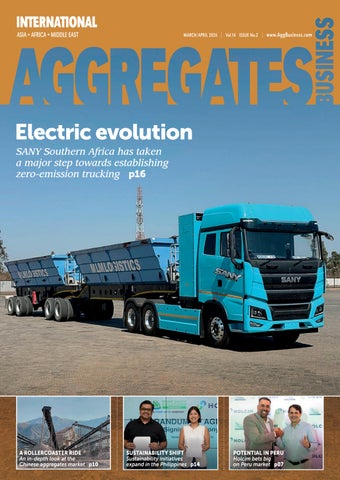
SANY Southern Africa has invested in zero-emission trucking.
Best-practice tips for maintaining conveyor systems.

Holcim has made several major investments to establish itself in the Peruvian market.
An in-depth look at the trends and key drivers in the Chinese aggregates sector.


A tour of Caterpillar’s manufacturing facility in Durham.
A wrap-up from the final 2025 GAIN meeting.
Indeco’s equipment excels in the Italian quarrying market.
Astec and Telestack have major ambitions in the quarrying sector in 2026.
Analysis of the rise of recycled materials.
Steve Nendick shares his insights into the potential of renewable fuels.


An in-depth tour of Powerscreen’s global headquarters and advanced manufacturing facility.
The latest products from hauling equipment manufacturers for the quarrying sector.
The latest innovations from around the world in loading machinery for quarry operations.
New equipment debuted by crushing and screening manufacturers.


achieve real-time feedback and early warning of equipment operating status.”
Efforts to establish the complex and evolving African region as a major player in sustainable development are ramping up, exempli ed by SANY Southern Africa’s recent establishment of a commercial vehicle division with a special focus on electric vehicles (EVs).
We report in this issue on how the quarrying, construction and mining equipment manufacturer plans for its entry into the EV truck sector to serve, not just South Africa, but the southern Africa region in general.
SANY Group’s South Africa sales and marketing director for EV and hydrogen trucks Avinash Singh told Aggregates Business International that several South African customers are forging ahead with the adoption of new technologies such as electric vehicles to meet their sustainability agendas.
In this issue, we also report on how Holcim Philippines has nalised a number of innovative deals in recent months to place sustainable practices at the heart of its operations. The building materials and cement company has signed a 20-year power purchase agreement with Peak Energy to install ‘behind-the-meter’ solar power systems that will enable it to reduce carbon emissions from its operations by nearly 28,500 tonnes per year.
Holcim has also been building its presence in the Latin America construction materials market, speci cally Peru, where it acquired Comacsa and Mixercon in 2024 in a major deal for the local sector.
Holcim Peru chief executive of cer Norberto Ledea has said Peru is an attractive market for construction materials with longterm growth prospects, driven primarily by sustained economic growth and increasing demand for higher quality housing, both new and renovated, as well as infrastructure, mining and industrialisation. LM liam.mcloughlin@primeglobalpublishing. com
Peru has emerged as a market of interest for Holcim after the company made several moves to strengthen its presence in the country’s construction materials sector.

When Holcim outlined its NextGen Growth Strategy 2030, there were two clear statements of intent. The major multinational producer was all in on sustainability, but it also had an eye on growth.
Growth is always an interesting concept in business, especially for a company as big as Holcim. The company already occupies a prominent place in Europe and several other markets, including the Philippines, Australia, and New Zealand. Further to that, Holcim spun off its US business last year, which has now become Amrize in its own right. With a presence in more than 60 countries and a portfolio that stretches from cement to ready-mix concrete to aggregates and beyond, Holcim is one of the biggest construction materials companies globally.
So where exactly was Holcim looking for its potential growth?
The answer to that question became increasingly clear throughout 2025: Peru, and, more broadly, Latin America.
Holcim made its initial mark on the Peruvian construction materials sector in 2024 when it acquired Comacsa SA and Mixercon in a deal worth $US100 million.
The company has long had a presence in the broader Latin American region with operations throughout Argentina, Colombia, Costa Rica and Ecuador, among others.
The double acquisition in 2024 marked Holcim’s entry into Peru and strengthened its operations in Latin America.
Holcim Peru chief executive of cer Norberto Ledea said there were several key drivers behind the company’s interest in the Peruvian market.
“Peru is an attractive market for construction materials with long-term growth prospects, driven primarily by sustained economic growth and increasing demand for higher quality housing, both new and renovated, as well as infrastructure, mining, and industrialisation,” he said.
Established more than 75 years ago, Comacsa specialises in industrial minerals and Portland white cement with a customer base that includes the Peruvian market as well as other international ones, serving various applications. Mixercon was formed in 2001 as a supplier of cement and ready-mix concrete.
The agreement with Holcim allowed both companies to continue to maintain their existing brands and workforces of more than 650 combined. It also led to the creation of Holcim Peru, which both Mixercon and Comacsa report to, headed up by Ledea.
Holcim’s head of Latin America Oliver Osswald said the positives of establishing a presence in Peru extended into community bene ts.
“This operation allows us to commit to the economic and social development of Peru, creating more jobs and opportunities for local communities, and supporting projects that improve infrastructure and quality of life,” he said. “The acquisition of Comacsa and Mixercon will allow us to generate synergies and develop export markets, thus consolidating our position as a benchmark in the construction sector.”
Innovative and sustainable
Shortly after its initial acquisitions in the Peruvian market, Holcim
Holcim has made several acquisitions in Peru over the past two years
Image: Louis/stock.adobe.com

sees Peru as a key market for its business.
underlined its commitment by launching new product offerings.
This included ve different products in a new grey cement line ranging from one to prevent moisture and sulphate damage to one designed for mortar and general construction applications in Peru.
Alongside this, Holcim Peru debuted a line of specialist concrete products including high-strength and rapid-setting ones through to anti-washout options for local customers and businesses.
“Holcim is a brand that represents progress, innovation, and a commitment to the future,” Holcim Peru marketing manager Antonella Latorre said.
“Our offering in Peru aims to support customers with high-value solutions that enable them to build more ef ciently, safely, and sustainably.”
After entering the country midway through 2024, Holcim has nalised a series of deals as to rmly establish itself in Peru.
In March 2025, it was con rmed that Holcim had struck a deal for 100 per cent of Compañía Minera Luren (CML) and its subsidiaries, which became its third acquisition in the country.
“This new stage marks an important milestone for Compañía Minera Luren. Becoming part of the Holcim group will allow it to take the next big step in its development, enhancing its operational capabilities, driving innovation, and reaf rming its commitment to the construction industry, as well as the mining and industrial sectors in Peru,” CML general manager Alejandro Garland said in 2025.


CML made its name by selling lime and silica-lime bricks in the local market, as well as lime and mortar used in construction, mining, and industrial applications.
Holcim was bullish on the potential of CML to its growing operational network with an estimation that it could contribute 25 per cent of Holcim’s revenue in Peru by the end of 2025 on the back of annual revenues exceeding $US40 million.
As one of the country's major lime producers and with strong demand for its products among residential construction developers, CML and its assets, including the 24/7 quality control laboratory, were seen as a strong addition to Holcim.
“This acquisition allows us to further consolidate our presence in the country and reinforce our commitment to sustainable and innovative construction solutions. We are excited to integrate the strong client portfolio of Compañía Minera Luren and its subsidiaries,” Ledea said.
Far from done, Holcim closed out 2025 with another addition in Peru, taking a majority stake in Cementos Pacasmayo.
At the time of writing, the deal is subject to customary conditions and regulatory approval but it is expected that the deal will close in the rst half of 2026. It is quite a statement of intent from Holcim with a transaction value of approximately $US1.5 billion for a 50.01 per cent stake but the bene ts could be extensive.
Cementos Pacasmayo has three cement plants that have a combined annual capacity of 5 million tonnes and an additional 28 ready-mix and precast concrete plants. It operates 300 retail stores which would strength Holcim’s existing presence in that segment in Latin America. Holcim operates the Disensa franchise network that specialises in construction materials solutions.
Holcim chief executive of cer Miljan Gutovic said the deal would support a growth-driven business in Peru.
“This is an opportunity to continue Cementos Pacasmayo’s exceptional legacy, built on its strong performance culture, its deep commitment to its people and its wellregarded brand in Peru,” he said.
“The company is highly cash generative with a complementary portfolio in building materials as well as building solutions.
“I look forward to welcoming Pacasmayo's 2000 employees to Holcim and to accelerating growth together.”
On the back of its recent acquisitions, Holcim has, in a matter of months, developed a strong foothold in Peru as part of its broader ambitions for the Latin American market.
With the entry of a major multinational into a market that was previously the domain of local companies, many onlookers in the global construction materials sector will be watching to see how Holcim’s plan pays off.
Undeniably, Holcim has bet big on the potential of Peru. AB


Combining the resources of our respected editorial team with the knowledge and insights of some of the best and brightest minds in the sector, Mining keeps you up-to-date with the latest news, discussions, innovation and projects in the Australian mining sector.
The Chinese aggregates sector has witnessed some key changes in the past couple of years.


China's aggregate demand experienced negative growth for four consecutive years from 2021 to 2024. The market has experienced a rollercoaster ride, shifting from a shortage to its current surplus.
According to the Sand and Gravel Aggregate Network of China, in the rst half of 2025, national demand reached 6.1 billion tonnes, down 4.1 per cent year-on-year. From a regional perspective, the total demand in seven major regions, led by the Pan-Yangtze River Delta cluster, amounted to 4.4 billion tonnes, accounting for 72 per cent of the total.
The provinces with the highest demand were Guangdong, Jiangsu, and Anhui, all exceeding 400 million tonnes.
Tianjin, Beijing, and Qinghai had the lowest demand, all below 40 million tonnes.
Demand is differentiated among provinces, with provinces like Hebei and Tibet experiencing counter-cyclical growth driven by national strategic projects, but demand in most provinces is declining to varying degrees.
This weak demand is due to dual pressures: a continued sluggish real estate market and a slowdown in the expansion of infrastructure construction.
It is worth noting that the large-scale sand and gravel projects with an annual output of tens of millions of tonnes, approved in the hotspots of the Yangtze River and Pearl River basins in 2019-2023, entered
production in 2025, further exacerbating regional overcapacity pressures and leading to increasingly erce competition between the two regions.
However, demand for high-end aggregates has grown against the trend, becoming a key focus for leading companies. High-end aggregates offer superior physical and chemical properties. Their application is increasingly widespread in prefabricated buildings and high-grade concrete.
Particularly, high-end aggregates demand surges in projects such as the renovation of older residential communities, rural infrastructure upgrades, and smart city development. For instance, the use of specialty materials like permeable concrete aggregate and low-alkali-reactive aggregate in sponge cities is increasing year by year.
In the rst half of 2025, 398 new mining rights were sold, down 21.2 per cent yearon-year. Regional disparities were evident, with Xinjiang leading the way with 129 transactions and a 35.8 per cent year-onyear increase. Western provinces such as Gansu (28 transactions, +27.3 per cent) and Sichuan (26 transactions, +23.8 per cent) also maintained growth.
Provinces such as Henan (400 per cent), Tibet (350 per cent), and Jiangsu (200 per cent) experienced explosive growth from a low base.
In terms of mineral types, the lithologic distribution of newly transacted sand and gravel mining rights nationwide exhibited a diverse landscape.
Sandstone dominated with 184 transactions (46.2 per cent), followed by limestone with 105 (26.4 per cent).
In the same period, total reserves of sand and gravel mining rights nationwide reached 7.6 billion tonnes. Average reserves fell from 26.3 million tonnes to 19.3 million tonnes.
Hebei (959.9 million tonnes), Sichuan (918.8 million tonnes), and Xinjiang (690.8 million tonnes) ranked the top three, becoming signi cant contributors to new reserves. Henan's total reserves soared from 35 million tonnes to 479 million tonnes, a more than 12-fold increase, indicating a concentrated investment of large-scale mining rights.
In January-June 2025, the total annual output of sand and gravel mining rights nationwide reached 579.7 million tonnes, down 31.1 per cent year-on-year. Xinjiang led the way with an annual output of 125.3 million tonnes, a 23.5 per cent increase from 2024.
Data shows that the proportion of mines with a designed annual output of 1-2 million tonnes increased signi cantly by 6.2 per cent to 25.4 per cent, while those in the 3-5
million tonnes range also increased by 1.8 per cent. Meanwhile, the proportion of small and micro-sized mines with an annual output of less than 1 million tonnes decreased by 3.9 per cent to 53.3 per cent.
Overall, mining rights in the sand and gravel industry are shifting from fragmentation to centralisation, with small and super-large mining rights gradually declining and medium-sized mining rights gaining favour. From January 2024 to June 2025, the average unit price of sand and gravel nationwide was under downward pressure. As of June 2025, the national prices of crushed stone, manufactured sand, and natural sand were 87 yuan/tonne ($US12/ tonne), 101 yuan/tonne, and 108 yuan/ tonne, respectively, representing cumulative decreases of 9.4 per cent (nine yuan/tonne), nine per cent (10 yuan/tonne), and 6.9 per cent (eight yuan/tonne) compared to January 2024.
Following the aggregates industry downward trend, the supply of aggregates equipment has shifted from being in short supply to being in excess supply, and the survival pressure on enterprises has been increasing since 2024. The industry development has approached a new cycle. In other words, the aggregate equipment manufacturing is entering a period of upgrading, with the localisation rate of intelligent crushers, highef ciency screening equipment, and other equipment increasing to 70 per cent.
China is an important quarrying and aggregates market.
“The front line is the strategy, forging new heights of intelligent manufacturing with 'data + craftsmanship'. Experience lies in the hands of the workers. Data must be combined with their wisdom to further enhance our 99.6 per cent yield rate,” SBM Group chief executive of cer Libo Fang said.
“We must deepen modular design, promote the standardisation of assembly processes, and at the same time, integrate [Internet of Things] technology to achieve real-time feedback and early warning of equipment operating status.”
Fang said mobile stations are the core carriers of future distributed sand and gravel aggregate production. They must strengthen 'module quick change' and 'remote operation and maintenance' capabilities to meet customers' full-scenario needs, from urban construction waste disposal to remote mining.
Chinese OEMs have been leading mobile station export sales globally. Henan is a hub of OEMs. Let’s look at the pro les and success of some key players.
• Henan ZGM Industrial Technology (ZGM) ZGM has a 100,000 square meter production base and over 50 sets of advanced machining production lathes. They continue to increase research and development (R&D) investment to introduce more products tailored to the needs of the local market. About ve per cent of sales revenue goes for R&D. Currently, ZGM employees over 30 senior production managers, and advanced skill workers take up 35 per cent.
Leveraging decades of technological accumulation, ZGM’s business network now
spans more than 120 countries globally. ZGM recently entered the markets of Papua New Guinea, Kyrgystan, Vanuatu, and Suriname.
Their LSX series spiral sand washing machine can clean and separate powder and soil in sand and stone, with its novel sealing structure, reliable transmission device, and ensure the effect of cleaning and dehydration. It has two kinds of single rotation and double rotation. The equipment is characterised by large capacity, small power consumption, high cleanliness, less sand loss during sand washing, and no screen mesh.
The CFTC headquarters is in Zhengzhou, covering an area of about 30,000 square meters. It has modern standard workshops, intelligent and information-based manufacturing equipment, as well as a global sale centre and after-sales service network system. During the past years, the company provided professional services for more than 1000 clients worldwide.
The marketing network of CFTC has now covered more than 80 countries in Asia, Africa, Europe, America and Oceania. The company has overseas of ces and warehouses in many countries. Agents have also been developed in Egypt, Pakistan, Vietnam and other countries.
CFTC's technical R&D personnel account for 26 per cent of the total number of employees. They constantly improve and optimise every detail of product development, design, and production, enhancing the company's innovation capabilities. Manufacturers like CFTC design mobile crushers with integrated dust suppression systems, noise-reduction housings, and hybrid/electric drives to lower energy costs.


• Henan Hongxing Mining Machinery Hongxing Machinery is a well-known company in the domestic mining machinery industry. They have exported products to over 160 countries, having 200,000 users. It has been named as "National Green and Environmentally Friendly Preferred Brand for Mining Machinery". Their products are certi ed by ISO9001, CE, and GOST international quality systems.
Hongxing Machinery's core products include the VSI-A7 series sand making machine, the HVI series sand making machine, and the tower-type dry sand making equipment series.
This equipment incorporates advanced technologies from similar products at home and abroad.
Its HVI impact sand making machine uses an optimised impact angle design for the crushing chamber, which reduces wear and tear of vulnerable parts and decreases the production equipment cost. The equipment has a processing capacity of 70-585 tonnes per hour (tph) and a motor power of up to 2×315kW.
Moreover, the company further optimised its arti cial intelligence control system in 2025, enabling remote monitoring, automatic adjustment, and fault warning. Its mining crusher consumes 50 per cent less energy than traditional equipment.
• Other OEMs
Henan Baichy Machinery Equipment has demonstrated its professional equipment, technology and good service to global customers. They offer a range of equipment with capacities varying from 30 to 500tph at different price points. As a general estimate, a 50–80tph crushing plant costs between $85,000–$110,000, while a 100–150tph crushing plant is approximately priced between $110,000–$140,000.
Vipeak Mining Machinery is the earliest crushing/grinding equipment manufacturer in China to pass ISO9001 international quality system certi cation, EU CE certi cation and Russian ghost certi cation. The company’s export reached over 100 countries. Vipeak seized the spotlight by launching a series of new types of impact crusher, VSI crusher, cone crusher and gyratory crusher.
Zhengzhou Vanguard Machinery Technology is a professional high-end OEM integrating R&D, production, and sales. Its business scope covers sand and gravel aggregates, industrial grinding, mobile crushing plant, and EPC general contract projects. The company enjoys worldwide sales of 30,000 sets of equipment, having over 150 regional distributors.
These companies’ secret to global export was their permanent presence at related global industry expos. They attend everywhere from Southeast Asia to South America, from Russia to Nigeria.
For instance, Luoyang Longzhong Heavy Machinery attended plenty of international expos per year: Warsaw Construction Expo; Mining Indonesia; Mining and Metals Central Asia, Kazakhstan; MBAB OneBuild 2025, Malaysia; International Exhibition for Construction and Building Materials in Saudi Arabia.
Furthermore, infrastructure projects in countries along the Belt and Road Initiative of

China are providing new markets for Chinese OEMs to expand overseas.
• Shifts in building material producers

Leading Chinese companies are building a closed-loop industry chain encompassing “cement-aggregates-concrete-building components” by acquiring stakes in downstream ready-mixed concrete and prefabricated construction companies. For example, CNBM is collaborating with Minben Group on an aggregates project, while Anhui Conch Cement has acquired a stake in China West Construction Group.
Both companies are leveraging resources to reduce costs and enhance pricing power. This synergy not only enhances risk resilience but also drives the industry toward a shift from price competition to value competition.
Another case is that Zhiyuan Supply Chain Company and Xionglai Building Materials Company held a joint unveiling ceremony for their sand and gravel processing business last June. Zhang Xiangmin, Chairman of Zhiyuan Supply Chain, noted: To ensure stable product quality and improve supply chain ef ciency, entrusting Xionglai Building Materials to process construction sand and gravel is an important step in Zhiyuan Supply Chain's supply chain upgrade.
Meanwhile, companies with technological advantages dominate the high-end market. For instance, recycled aggregates made from construction waste are 30 per cent cheaper than natural sand and gravel and meet green building certi cation standards, leading to strong demand in regions with strict environmental regulations, such as the Yangtze River Delta and the Pearl River Delta.
Some companies have already implemented solid waste conversion technologies to convert tailings into highquality aggregates, reducing environmental impact while increasing product value.
For example, Anhui Conch Cement has reduced its per-tonne aggregate cost by 15 per cent through the co-processing of industrial solid waste.
China’s special scal funds and tax incentives will prioritise support for companies developing technologies such as tailings utilisation and low-carbon processes.
For example, Guizhou Province plans to establish a 1 billion yuan ($140.2 million) green building materials development fund to speci cally boost technical upgrades and M&A among aggregates companies.
Also, the Science and Technology Innovation Board (STAR Market) and green bonds will provide nancing channels for technology-based aggregates companies.
“The Chinese government supports the cement industry through various policies. Financial incentives and tax reliefs apply to the cement production derived from industrial and urban waste,” Munkhiin Bayan Gal company chief executive of cer Wang Mao said.
“Smart systems adoption and new technology applications also receive state support. These measures in uence to reduce the total costs of cement production signi cantly.”
R&D is an inseparable part of innovation for technology and equipment, especially in the quarrying and aggregates sector.
Chinese companies started paying special attention to research projects. Zhejiang Jiaotong Mining Company has launched 48 research projects focusing on the application of high-quality machine-made sand, mud cake recycling, production process research, and green mine construction.
Relying on technology, with the help of the Sand and Gravel Aggregate Research Institute of the Transportation Resources Group, they established a quality management department as the company's main department for product quality control and technological innovation.
Technological innovation is the key to success in the future. The sand and gravel industry must continuously promote innovation to achieve highquality development.
Amidst the economic downturn, sand and gravel companies must rst change their growth model, shifting from extensive growth based on low-cost advantages to innovationdriven growth.
Second, they must adjust their operational strategies based on the national economic development stage and trends, as well as regional market demand. AB
Holcim Philippines is embedding sustainable practices across its operations following a series of innovative deals.
Sustainable practices are helping shape the next era of Holcim Philippines and position it for a bright future ahead.
The company is set to play a leading role in the installation of one of the “largest behind-the-meter solar installations” in the Philippines after signing a power purchase agreement with Peak Energy.
The 20-year agreement will see Peak Energy manage the design, construction, long-term operation, and maintenance of the solar installation project, while Holcim will purchase electricity for the duration of the deal. The systems will be installed at Holcim’s cement manufacturing plants in Bacnotan, La Union, and Norzagaray, Bulacan. According to the two companies, the solar power systems will enable Holcim Philippines to
reduce carbon emissions from its operations by nearly 28,500 tonnes per year.
Peak Energy chief executive of cer Gavin Adda said the agreement was a major milestone in the Philippines.
“Combined, this project is the largest behind-the-meter industrial solar deployment in the country to date,” he said.
“Holcim’s leadership in advancing this type of solution sends a clear signal: clean power is now a strategic asset for industry leaders who wish to get long-term visibility, price stability and cost savings from their energy procurement strategies.
“We’re proud to enable that shift by delivering technically robust, commercially sound systems that can support both decarbonisation and long-term operational resilience.”
Holcim Philippines senior vice president and head of supply chain Saeed Ola Ande said the project would support the company’s aim to provide sustainable building solutions in the Philippines’ construction materials market.
“This partnership with Peak Energy strengthens our shift toward cleaner and more resilient operations,” he said.
“By integrating solar power into our La Union and Bulacan plants, we are reducing our carbon footprint while supporting our net zero ambition and sustainable manufacturing in the Philippines.”
The La Union and Bulacan cement manufacturing plants are central to Holcim Philippines’ sustainable shift.

The plants are a key part of Holcim Philippines’ operational network alongside its other cement manufacturing sites in Misamis Oriental and Davao, and its aggregates and dry mix business. Its plants have several certi cations that verify its sustainable operations, including ISO 14001:2015 (Environmental Management System), ISO 9001:2015 (Quality Management System) and OHSAS 45001:2018 (Occupational Health and Safety Management System).
In 2024, Holcim Philippines announced it would invest in a series of initiatives to expand sustainability practices across its plants. These investments, worth $US35 million, covered the Bulacan and La Union sites, as well as Davao.
Also, in 2024, Sinoma CBMIPH Construction con rmed an agreement to work with Holcim Philippines on a $US6.5 million upgrade to its La Union plant, enabling greater use of alternative fuels and raw materials. Further to that, the company also announced its intention to invest between $US8.7m and $US17.5m in renewable energy and electri cation of its vehicle eet.
Holcim Philippines head of strategy Samuel Manlosa Jr said at the time that the investments helped adapt the plants to the sector's modern expectations.
Manlosa has been integral to the development of several of Holcim Philippines’ facilities since he was appointed plant manager for Davao in 2020, and he is credited with developing systems that led to “ef ciency gains” in the company's manufacturing operations. Since then, he has overseen sustainability and Geocycle operations and now serves as Holcim Philippines’ head of strategy.
“Our cement plants, even as sophisticated and technologically advanced as they are, were constructed 20 years ago when norms were different, so we had to make changes in the process to make sure that the plants were able to accept more,” he said in 2024.
In 2025, Holcim Philippines took this sustainable focus a step further by signing an agreement with Prime Infra-led Prime Waste Solutions (PWS) over alternative fuels.
The terms of the memorandum of agreement will see PWS supply Holcim’s La Union and Bulacan facilities with refuse-derived fuel (RDF). RDF is created from plastic waste through co-processing technology that produces alternative fuel and raw materials for cement manufacturing, enabling cement manufacturers to reduce their reliance on traditional fuels.
“What makes us excited to work with Prime Infra is that we know that we’re working with a company that values the same things that we do: leading the waste management sector, and more importantly, a strong commitment to growing with quality and ef ciency,” Manlosa said.
PWS maintains a waste facility in Porac with a daily capacity of around 5000 tonnes.
The facility includes vibrating sieves, baler systems, and magnetic separators,
Holcim Philippines is part of the Holcim Group.

which enable the waste recovery. Its other facility in Cebu provides shredded plastics as an RDF source. Prime Infra Market Sector Lead for Waste Cara Peralta said it was encouraging to see Holcim Philippines support sustainable practices.
“It is rare to nd like-minded organisations such as Holcim willing to partner with us and make investments in sustainable practices like RDF consumption,” she said.
“We are excited to start this partnership, especially at a time when effective waste management and environmentally sustainable business practices are urgently needed.”
Sustainability has been a prominent topic of discussion in the construction materials sector for many years, and increasingly, sustainable practices are shaping the industry's present and future. As Adda said, following the announcement of Peak Energy’s deal with Holcim earlier this year, these breakthroughs will have a major impact in the Philippines.
“This project represents a breakthrough not just for Peak Energy, but for the renewable energy and sustainable construction sectors in the Philippines,” he said. AB
SANY Southern Africa has taken a major step towards zero-emission trucking by establishing its commercial vehicle division amid Africa’s quest to become a significant player in sustainable development.
Having rst set up shop in South Africa back in 2006, SANY Southern Africa has traditionally focused on the yellow metal equipment sector, establishing itself as one of the formidable construction and mining equipment suppliers not only in South Africa but also across the southern African region.
In its quest to provide practical solutions that speak directly to the needs of an evolving African market, the company has established a commercial vehicle division with a focus on electric vehicles (EVs).

This comes at a time when businesses in Africa, particularly those in the quarrying and mining sectors, stand at a signi cant moment in their journey towards sustainability – a journey that is as complex as the continent itself.
While Africa sits on a treasure trove of minerals, including critical ones vital to the global transition to a low-carbon economy, the environmental impact of these sectors cast a grim shadow over the economic promise of the industry. While their inherent environmental impact raises concerns about sustainability, it is not entirely true that these
sectors and sustainability cannot coexist. With the advent of new technologies such as electromobility, these operations can adopt sustainable practices to minimise their environmental footprint and contribute to a more sustainable future.
SANY South Africa Business Unit sales and marketing director for EVs and hydrogen trucks Avinash Singh told Aggregates Business International the decision to enter the EV truck market enables many sectors of the African economy, to meet their environmental, social and governance (ESG) goals and ensure long-term sustainability.


Singh said over the years, SANY has “paid its school fees” in the development and rollout of EVs in China and the global market at large. In fact, the company is one of the pioneers in the electric truck sector in China.
SANY is recognised for its massive investments in research and development (R&D) and manufacturing capabilities, anchored by the SANY Intelligent Heavy-duty Truck Industrial Park, a large-scale industrial park dedicated to the production of heavyduty trucks.
Said to be the most automated heavy truck factory in the world, the facility is designed to produce 300,000 units per year.
Fully equipped with 5G communications, the information ef ciency is said to be ten times higher than that of traditional factories, allowing SANY to roll a truck off the production line every four minutes.
Set up in 2022, the smart factory represents a signi cant investment of RMB 22 billion (approximately $US 3.1 billion).
“SANY is one of the leading manufacturers of EV heavy-duty trucks globally,” Singh said.
“With over 35,000 units sold to date, we have de nitely ‘paid our school fees’ in electromobility, running a large population of trucks in real-life EV applications in varying conditions all over the world.
“Given the advanced nature of the technology, we felt it was the right time to bring EV trucks to the South African market.”
Why South Africa? According to Singh, despite the absence of legislation to support the move to low-carbon trucking solutions, several South African customers are forging ahead with the adoption of new technologies such as electric vehicles to meet their sustainability agendas. However, the obstacle has been the astronomical cost associated with switching to EVs. Having been involved with EVs for the past ve years himself, Singh said solutions to date have proven to be pricey, with some coming at four to ve times the capital cost of conventional offerings.
“Given the advanced, intelligent manufacturing methods at our facilities in China, the progressive state of our technology, the massive numbers we are putting into the market, we have the economies of scale to bring a costcompetitive solution to the market, and we believe this is a game changer,” he said.
While there are still application and infrastructure limitations to enable the effective mass-rollout of EV trucks in the local market, Singh said there are low-hanging fruits in short- to medium-haul environments, particularly in what he called a “return-to-base” scenario, a charging strategy where EVs are charged at a central depot or location, typically at the end of each workday, rather than relying on public charging infrastructure or on en-route charging.
The SANY 8x4 EV dump truck will change the face of mining and quarrying hauling.

Since March 2025, SANY Southern Africa has successfully been running the rst fully electric SANY EV490 6x4 truck tractor in a short- to medium-haul application.
With an 80-tonne gross combination mass (GCM), the vehicle is designed for semi-off-road conditions such as mining and side-tipping applications.
Singh said SANY not only debuted its rst EV truck, but also brought about the rst battery swapping system in the country.
Battery swapping allows for rapid battery replacement in under ve minutes, which minimises downtime compared to traditional charging. This is ideally suited for uptime sensitive environments.
“While various other original equipment manufacturers [OEMs] are chasing the Megawatt Charging System, a highpower charging standard for heavy-duty electric vehicles, which enables charging at signi cantly higher power levels, it is important to note that our electric infrastructure in Africa is not typically able to supply that type of power,” he said.
“We therefore believe that battery swapping is the ideal technology for the successful rollout of EV trucks in Africa. With our technology, one can swap the depleted battery for a fully charged one in less than ve minutes.
“This is ideal for customers running 24/7 operations, especially in quarry environments.”
Following its homologation, the rst SANY EV490 6x4 truck tractor in South Africa has proven its mettle in several super link side-tipping applications. Several highly reputable premium side-tipper operators in South Africa have typically reported around a 70 per cent reduction in energy costs, translating into a saving of over ZAR1 million per year, per truck, compared with a similar diesel-powered truck. Singh said the saving could be even more, especially in a scenario where the customer could switch from grid electricity to renewable energy.
Equipped with a 350kWh battery, the truck is achieving a 200km range at 56t GCM, which is ideal for the short- to medium-haul application in which it is deployed.
Singh said a longer range could still be achieved by adding more batteries. However, more batteries in electric trucks reduce payload capacity because batteries are heavy, and there is a legal limit to how much a truck can weigh. Adding more batteries increases the truck’s overall weight, leaving less room for payload within the weight limit.
Apart from electric vehicles, SANY is globally recognised as one of the leading OEMs in the hydrogen truck space.
Its rst hydrogen-powered heavy-duty truck rolled off the production line in 2021, and since then, the company has established itself as a global leader in that market.
One of the challenges related to hydrogen as a fuel source is the cost of transporting hydrogen to refuelling stations. Singh said SANY has solved that by building a complete hydrogen energy ecosystem that includes production, storage and refuelling. Equipped with that complete hydrogen ecosystem, the company is currently in discussions with local customers and has already earmarked the introduction of hydrogen-powered trucks in South Africa in the near future.
Singh said that both electric and hydrogen trucks will have a place in the future of the market, but their speci c roles will depend on various factors, including use case, infrastructure and cost. EVs are well-suited for shorter routes and urban delivery, while hydrogen vehicles may be better for longhaul, heavy-duty applications where longer ranges and faster refuelling are needed.
“While EVs are currently leading the transition to zero-emission trucks, hydrogen vehicles are also gaining traction, especially in speci c niche markets. The development of a robust hydrogen infrastructure – including production, storage and refuelling stations – is crucial for the widespread adoption of hydrogen-powered vehicles,” he said.
“The total cost of ownership for both solutions will be a key factor in their market successes. While EVs may have lower operating costs, hydrogen solutions may offer advantages in speci c applications and as the cost of hydrogen production decreases.” AB


Aggregates


Contact:


Without flow aids, accumulation of material is common throughout cement manufacturing, from quarry to load-out of the finished product.


Martin Engineering global air cannon product manager
Brad Pronschinske shares his insights into best practices for preventing clogging in silos and hoppers using flow aids.
Despite the enduring desire to keep materials owing throughout the process, there are always parts of a cement plant where materials must be held, stored, and funnelled into the next stage of production. Even well-designed systems can succumb to the problem of materials clinging to the inside walls of silos, bins, and hoppers.
Once coarse material starts to stick, the build-up is generally fast and dense. This slows the ow of material, causes spillages and secondary blockages, and eventually results in unscheduled downtime.
The temptation to nd a quick way to remove the clog- without the proper risk assessment, safe access, tools or training- can create unnecessary risks. This is where ow aids come in. Flow aids are devices speci cally engineered and installed to promote material ow, clear buildups, and prevent clogging, avoiding costly downtime and reducing risk.
The rst step to selecting the right ow aid is understanding how, where, when and why clogs are happening in a particular vessel.
The next step is designing a system with the right ow aids that removes any worker involvement in clearing the blockages.
Characteristics of clogging
Silos are typically designed to store a certain volume of material, while hoppers generally exist to consolidate and then direct material ow.
In all cases, understanding the function and maximum load of a vessel is important, as is an appreciation of the properties of the materials passing through, including considerations such as potential moisture content and temperature, plus the effect of atmospheric conditions.
Wide variations in the size and shape of particles also affect the ow characteristics. Failure to consider these and other factors can lead to suboptimal designs that increase the likelihood of build-ups and clogging.
If a hopper is not designed to carry the right material load at full capacity, then a sudden surge of material or a clog can lead to potential dangers. And even if a hopper or silo is engineered properly, repeated abrasion from loading over the years can cause the vessel walls to wear thin, which decreases their capacity to contain the weight.
This can also potentially affect the hopper or silo’s structural integrity, which can increase the risk of a serious event.
There are numerous reference guides that explain vessel loading in order for the right design to be determined, such as the American Concrete Institute’s (ACI) structural standards, which describe differing loads in storage vessels:
• Dead load: The total weight of the structure, including attached components and equipment supported by the structure.
• Live load: Forces exerted from the stored material, including high and low pressures
caused by ow, plus anything independent of the structure such as snow, positive and negative air pressure, wind or seismic load, and any forces from materials stored against the external wall.
• Thermal load: Caused by temperature differences between the inside and outside faces of the wall.
• Settling load: Forces from uneven settling of the structure.
So the weight, size and type of material, load velocity, plus direction and distribution, structural design of the vessel, as well as factors like weather, can all play a part in clogging and overloading. And the moment the clogged material is discharged, the force of the surge can also overwhelm the structure, gate, skip or conveyor onto which it is owing, so understanding the weight of the material in the clog itself is important too.
Hopper geometries and discharge points
Discharge points come in varying shapes, depending on the vessel and the material ow characteristics [Fig 1]. Cement plant manufacturers carefully choose discharge point shapes based on a series of load and ow factors. Spouts that are narrow, such as those found on conical or pyramidal shapes, direct ow in a vertical column either into a chute or a speci c loading area. Slotted spouts, like those found on the wedge or transition shapes, typically distribute material in a narrowly de ned line for loading onto

conveyors or into containers. The shape of a vessel should match that of the discharge point or it will be prone to clogging.
The slope angles in discharge point geometries can also contribute to clogging, depending on material characteristics, the speci cations of the application or the placement.
Discharge points can feature gates or grates that stop or help to separate the material. Gates, for example, halt material ow for incremental lling of rail cars or a truck body. Grates can be used to slow or direct the ow of material when loading onto a conveyor. Either way, operators often nd that these devices can exacerbate clogging by stopping or slowing material at the structural choke point of the vessel.
Once a clog has been detected, there are several unsafe practices that, at the time, may seem like a quick and harmless solution, but frequently cause injuries and are even known to cause fatalities.
One unsafe but common method is beating the vessel walls with mallets or other heavy objects to loosen adhered material. Besides the health and safety risks, over time, the more the walls are pounded, the worse the situation becomes, as the bumps and ridges left in the wall from the hammer strikes will form ledges that provide a place for additional material accumulations to start.
Another hazardous yet popular practice is poking or lancing underneath the clog at the discharge point. This can result in a sudden surge of falling material, burying or crushing the worker(s) below. Physical lancing from above is also common, often with makeshift platforms that allow access but provide little protection should a worker slip and fall into the vessel.
Air lancing the clog from the mouth of the vessel at the top can be an effective option, but only when guardrails are tted or a safe access platform is used. Of course, the reach of the lance and the pressurised air stream must match the size of the vessel and the clog. And again, unless a harness is worn, workers could still fall in trying to get the lance down to the clog, even if guardrails are present.
Perhaps the most prevalent cause of worker injuries is entry into the vessel.
Along with potentially sinking into the material, especially in the centre, the silo or hopper contents could be ‘bridging’ and suddenly release. If a worker enters the vessel and stands on the fragile bridge or on a buildup to the side, a sudden discharge could pull the worker into the cavity, causing serious injury or engulfment.
These unsafe situations and behaviours can be avoided by introducing ow aids to the vessel to mitigate clogs, promote material ow and reduce downtime.
As the term implies, ow aids are components or systems installed to promote the ow of materials through a silo, bin, hopper or chute, whilst controlling buildups, dust and spillage.
Flow aids come in a variety of forms, including rotary and linear vibrators, highand low-pressure air cannons and aeration devices, as well as low-friction linings and optimal chute designs, to encourage the most ef cient ow of bulk materials.
These solutions can be combined in any number of ways to complement one another in an integrated system to improve overall productivity. Flow aid devices can be used for virtually any bulk material or environment, including hazardous duty and extreme temperatures.
When employing ow aids, it’s critical that the hopper or silo structure is sound and the ow aid device(s) are properly sized and mounted, because their operation can exert additional stresses on the structure.
A well-designed and maintained vessel will not be damaged by the addition of correctly sized and mounted ow aids.
It’s also important that any ow aid device is used only when discharge gates are open, and material can ow as intended. By far the best practice is to use ow aids as a preventive solution to be controlled by timers or sensors to avoid material buildup, rather than waiting until material accumulates and begins to restrict the ow. Using ow aid devices in a preventive manner not only reduces the chance of clogging but also enhances safety and can even save energy.
The age-old solution for breaking loose blockages and removing accumulations from chutes and storage vessels was to pound the outside of the walls.
A better solution is the use of “engineered vibration”, which supplies energy precisely where needed to reduce friction and break up potential accumulations to keep material moving to the discharge opening, without damaging the chute or vessel.
The technology is often found on conveyor loading and discharge chutes but can be effectively applied to other processes
One of the main advantages of flow aids is that plant operators gain a level of control over material flow that is not possible any other way.

and storage vessels, including silos, bins, hoppers, screens, rail cars, feeders, cyclones and heat exchangers.
Productivity with a blast
Another highly effective solution for eliminating material accumulation in chutes and vessels is the low-pressure air cannon, pioneered and patented by Martin Engineering in the 1970s. It uses a cement plant’s compressed air system to deliver a powerful and carefully timed blast to dislodge build-ups. Air cannons can be mounted on metal, concrete, or even wooden surfaces, as long as the surfaces are structurally sound.
The basic components include an air tank, a fast-acting valve with a trigger mechanism, and a nozzle that distributes the air in the desired pattern to clear the accumulation most effectively. The sudden blast of air released by the valve on an air cannon is directed through a specially designed nozzle, which is strategically positioned in the chute, tower, duct, cyclone or other location.
Often installed in an array of several air cannons and precisely sequenced for maximum effect, the devices can be timed to best suit individual process conditions or material characteristics. The air blasts help break down material accumulations before they become problematic, allowing materials to resume normal ow.
To customise the air cannon installation to the service environment, speci c air-blast characteristics can be achieved by adjusting the operating pressure, tank volume, valve design, and nozzle shape.
In the past, when material accumulation problems became a recurring issue in hardto-access areas like the pre-heater system, processors would have to either limp along until the next scheduled shutdown or, more likely, endure expensive unplanned downtime to lance the clogged buildups. That used to cost businesses hundreds of thousands of dollars per day in lost production.
A series of air cannons can be programmed to deliver preciselytimed discharges for maximum benefit.


Nowadays, such is the importance of keeping material owing that vessels of all kinds now feature mountings so that devices such as air cannons and vibrators can be tted safely with relative ease.

Given the demands and complexities of cement production, material clogs in silos, hoppers and other vessels should be banished with engineered solutions such as vibration, air cannons and other ow aids. The key to success lies in selecting the appropriate ow aid technology based on material properties, vessel design and operating conditions.
Moreover, the proactive and preventive use of these solutions, rather than reactive measures, has been shown to help maintain optimal performance and can even extend the lifespan of storage and transfer equipment. As cement plants continue to prioritise ef ciency and worker safety, investing in well-designed ow aid systems is a necessity. By embracing such innovations, producers can achieve smoother operations, maximise throughput, and create a safer working environment, ensuring that materials move through the process without unnecessary interruptions. AB


A loaded Cat 735 truck transporting material on a quarry site.


After Caterpillar’s fourth-quarter announcement in 2025 on the launch of four next-generation articulated trucks for global customers, the manufacturer gave the full lowdown on the new models, including how they are designed, manufactured and assembled.


Michael Miller is enjoying watching Cat 735 and Cat 730 nextgeneration articulated trucks working with a Cat 350 excavator during a trade media trip to the off-highway machine manufacturer’s demonstration and testing quarry, just off the busy A1 highway in County Durham.
Miller, a strategy manager for Cat Technology, hails from nearby Peterlee, which is home to Caterpillar’s nine-building articulated truck manufacturing and assembly facility, the only one of its kind globally. Miller has worked at Caterpillar for 25 years, after four years as an engineering and parts-purchasing contractor.
He is also the second generation of his family to work at Caterpillar Peterlee, following his father, who worked there for 20 years as a shop oor welder and fabricator. Multi-generational employment and long-service milestones are common at the Peterlee facility, with several employees sharing the same dedication to the company.
“It’s great to see the steel coming in one end and nished trucks coming out the other. It’s also great to see the trucks here working in the quarry,” Miller said.
“My role is to give customers the technology they need to extract information from their machines, enabling them to get the most out of them. They want to know how their eet is being utilised, answering questions like ‘what are the cycle times?’ and ‘is this machine being overloaded?’. There could also be leading safety indicators that technology can help identify.
“Perhaps an alarm on a machine is being repeatedly triggered, and you want to determine when and where it occurs on-site. We can also help customers with their servicing and maintenance task planning.
“We are always working to advance Caterpillar machine technology on our products. That’s been the case with ‘Operator Coaching’ for the next-generation articulated trucks, which is already available for the latest Cat excavators.”
After talking to Miller, Aggregates Business was taken around a section of the demonstration and testing quarry in a next-generation Cat 735 by Scott Thomas, a Caterpillar product application specialist for articulated trucks, who was demonstrating many of the new features and bene ts available in next-generation Cat articulated trucks. The machines were launched in the fourth quarter of 2025 and are scheduled to enter full production in rst quarter of 2026.
“We’re very blessed to have this just a 25-minute drive from the [Peterlee] facility. We have an excavator out here loading the truck, and we can do everything the truck would be expected to do on a jobsite. It’s unique to have such a site so close to a manufacturing hub. It helps so much,” Thomas said.
In addition to its four new next-generation articulated trucks, Caterpillar also produces three larger-platform models: the Cat 740, with a 40-tonne payload and a Cat C15 engine; the Cat 740EJ (ejector body),

with a 42-tonne payload and a Cat C18 engine; and the Cat 745, with a 45.2-tonne payload and a Cat C18 engine.
Earlier in the day at Caterpillar’s vast 1500-employee Peterlee articulated truck facility, Caterpillar global product application specialist Sherrie Williams, Caterpillar director of product value stream for articulated trucks Adam Freeman, and Thomas, had given presentations on the next-generation Cat articulated truck range and the Caterpillar Peterlee site and its linked demonstration and testing quarry.
“Any Caterpillar articulated truck you see anywhere in the world was built right here,” Freeman said.
As Thomas said, Caterpillar’s 725 (24-tonne payload), 730 (28 tonne), 730 EJ (27.1 tonne), and 735 (32 tonne) models feature a ‘smarter’ articulated truck design, with a range of automatic features integrated into the trucks. The upgraded interior puts control at your ngertips, with all functions accessible through a sleek touchscreen or a smooth, responsive keypad. The touchscreen is easy to navigate using the integrated jog dial for added convenience.
New push-to-start with operator ID stores up to 50 operator IDs to quickly get to work and safeguard against unauthorised use.
The new Cat C13 engine powers the latest trucks with ratings from 257–316 kilowatts (kW), depending on the model.
Designed to meet global emission standards – including US EPA Tier 4 Final, EU Stage V, Japan 2014, and Korea Stage V – the C13 features a compact, lightweight design that requires no exhaust gas recirculation.

The machine is available in con gurations suitable for all regions worldwide, ensuring reliable performance across a wide range of applications.
Williams said there were several improvements of the next-generation Cat articulated trucks compared to the current range: 725 (14 per cent more productivity, 10 per cent more fuel ef cient); 730 (12 per cent less fuel burn, 16 per cent more fuel ef cient); 735 (10 per cent less fuel burn, 11 per cent more fuel ef cient).
Freeman said most of those gains are attributable to improvements in engine and drivetrain ef ciency and to technological advances that enhance operator performance.
With no operator input required, the advanced automatic traction control on the Cat next-generation articulated trucks prevents wheel slippage in poor underfoot conditions, providing maximum traction and productivity. The new engine overspeed control works seamlessly with Automatic Retarder Control (ARC) to manage braking and automatically adjust engine speed –enhancing truck handling, improving steering
response, and building con dence for newer operators in challenging conditions. Machine speed limiting supports safe operation by allowing the operator to set ground speed in service mode, ideal for uneven terrain, high-traf c areas, or sites with strict speed regulations. Additionally, the integrated body height limiter promotes safety by helping ensure the machine operates within a jobsite’s height restrictions.
Williams said the Cat 725, 730, and 735 models’ redesigned dump bodies offer easier loading than previous designs and help to maximise payload. The redesigned body features a rerouted exhaust heat system that helps minimise material carryback, improving load ef ciency and reducing cleanup time.
Improved payload technology enables operators to view real-time load weights on the integrated display, thanks to the system’s updated software and sensors.
External payload indicator lights alert the loading operator when the rated payload is approached and when the target payload is reached. Thomas said that Caterpillar’s innovative Dynamic Rollover Protection feature supports rollover prevention and works in parallel with the eld-proven Stability Assist feature, which prevents hoisting on uneven terrain.

Con gurable to material and jobsite conditions, this new feature monitors conditions to detect when the truck is experiencing high lateral acceleration, provides a visual and audible alarm, reduces fuel and then nally the machine will cut off fuel supply to the engine and apply the service brakes automatically if no corrections are made manually by the operator.
It reduces the risk of machine rollover during high-speed cornering, helping minimise downtime and safety repairs. Additionally, Stability Assist software reports information via VisionLink to increase awareness of when an event has occurred.
“For me, of all the features we’re introducing with our next-generation articulated trucks, Dynamic Rollover Protection is the most exciting and provides the most value in terms of safety,” Freeman said.
“It lives up to the level of safety we want to provide to our customers and also highlights the level of systems integration we have. The fact that engine, transmission, and driveline controls are all designed and built by Caterpillar gives us the ability to better control potentially dangerous situations by incorporating features like Stability Assist with Dynamic Rollover Protection and Automatic Retarding and Traction Control, to name but a few.”
Thomas said that Auto Wait Brake (AWB), another next-generation truck feature, reduces operator fatigue by automatically applying the service brakes when the shift lever is in any position other than park and the ground speed reaches 0 kilometres per hour. The service brakes apply within one second of the truck stopping, and after eight seconds, the transmission shifts to neutral with AWB engaged. Simply using the throttle re-engages the transmission and releases the service brakes. This new feature eliminates the need to shift to park for short-duration stops and saves fuel when shifting to neutral. This feature also works with the truck’s Hill Assist by applying the service brakes to prevent rollback.
Thomas said a new dump body height limit feature for next-generation Cat 725, 730 and 735 models allows the bed raise height to be set to meet jobsite conditions.
The operator can quickly increase the height limit by raising the bed to the desired height and holding the keypad button. Alternatively, it can be set through the display service mode to meet site-wide limits. This feature helps prevent the dump body from contacting overhead objects and increases cycle time by limiting full-body travel.
The Cat 730 EJ is an ejector model.
This means trucks can be emptied without raising the body, helping maintain machine stability. This unique design allows load dispersal on inclines, side slopes, and in very soft underfoot conditions, such as those found on land ll sites. By virtually eliminating material that can stick to the body, the truck can operate in areas with low overhead clearance, such as around overhead lines or in tunnelling and underground operations.
Thomas said with faster cycle times, the versatile 730 EJ can eject and spread material on the go, reducing the need for additional spreading and dozing equipment.
Safety is a key advantage of the ejector body models, as the truck body’s hydraulics push the material onto the ground as the operator passes. This is ideally suited to lighter materials that can be left in the truck body during body tipping.
Providing front- and rear-proximity detection, all next-generation articulated trucks offer an optional object detection and multiview camera via a separate secondary monitor. Thomas said the system’s radar sensors, mounted fore and aft, provide visual and audible alerts when objects are within the truck’s travel path.
Four discrete camera views, con gurable to the operator’s preference, are mounted at the front, rear, and sides to enhance the operator’s view around the truck.
Williams demonstrates how the onboard, optional interactive training tool, Operator Coaching, measures and reports on individual operator behaviours that affect ef ciency, safety, and machine health. Operator Coaching identi es opportunities to improve operating behaviour for both inexperienced and experienced operators by monitoring 14 activities. Tips are available on a summary page on the main touchscreen display, while animated video tutorials provide operator instructions. For eet managers, the GPS feature includes maps that show where tips are triggered during the work cycle. Among the 14 coaching tips are: Hoisting without articulation; Hoisting with transmission in neutral; Hoisting on level ground; Reducing cornering speed; Using a lower gear when retarding; Reducing speed in rough conditions; Approaching grade in lower gear.
Freeman said that the story of articulated truck manufacturing in Peterlee dates back to 1972, when David John Brown (DJB) began developing articulated truck concepts to improve traction, otation, and manoeuvrability on tough job sites.
“He did it using Caterpillar truck engines, transmissions, and axles, with the trucks branded DJB. In 1973, DJB started manufacturing trucks at this facility [in Peterlee]. We celebrated 50 years of [articulated truck] production here a couple of years ago,” he said.
In 1985, Caterpillar and DJB entered a formal business partnership, creating Artix Limited (Artix). The launch of Caterpillarbranded articulated trucks soon followed. Caterpillar bought the Peterlee site from the Brown family in 1996, with the rst machine built under Caterpillar ownership being a D400, 36-tonne truck.
Over the years, the lineup expanded to include multiple three-axle models, with innovations such as the 740 EJ for ef cient unloading. Continuous design improvements in power, capacity, and operator comfort mean the factory is well on its way to achieving a key build milestone of 70,000 trucks in the rst half of 2026.


“Our articulated truck range continues to evolve towards offering the best cost per tonne of material moved for our customers,” Freeman said.
Stuart Plant, senior quality manager and a second-generation Caterpillar professional with nearly four decades of experience, and Caterpillar Peterlee director of manufacturing operations Jason Maw lead the tour.
Plant’s journey from apprentice to senior leadership re ects the factory’s commitment to nurturing talent and passing on deep technical knowledge. His team oversees more than 100 quality checks across two assembly lines, ensuring that every truck meets Caterpillar’s rigorous standards before leaving Peterlee. Three thousand tonnes of steel are cut and processed each month, producing 75,000 articulated truck parts. A third of the factory's employees are welders/ fabricators, and the site also houses 20 robotic welding machines. More than 150 miles of sheet metal are welded each month.
After walking through the factory’s large front- and rear-frame assembly section, the tour reaches the paint plant. Dump truck bodies are robotically spray-painted, in part, Plant said, to protect staff health and safety and ensure consistency. Components are manually spray-painted. The assembly line uses between 12,000 and 15,000 litres of paint per month. More than 100 production aspects are analysed on the two assembly lines. Sub-assembly of certain components is performed in other on-site buildings and delivered to the assembly line.
“Our assembly line engineers work in pairs, and we try to keep those pairs together so that they form a partnership over many years. It takes around three months to become fully certi ed to work as an assembly line operator,” Maw said.
Each fully-assembled articulated truck is driven 12 laps, around nine kilometres, around the Caterpillar Peterlee test track before undergoing further static tests.
After a thorough wash, the articulated truck undergoes a comprehensive pre-delivery inspection before being booked for dispatch to its purchasing customer.
There is a well-staffed research and development centre on the Peterlee factory site, staffed by Caterpillar engineering talent from around the world.
Caterpillar Peterlee has an active apprentice recruitment programme dating back to DJB’s ownership of the site.
More than 50 apprentices are currently part of the programme, which combines practical work at Peterlee with university-based learning over a three to four-year period.
Plant joined the site through the apprenticeship scheme 39 years ago, working his way up the seniority ladder to a role on the senior management team.
“Workers like Stuart who have had a successful career at the company are a symbol of deep expertise and commitment - understanding every step of the process and the level of detail required to produce a world-class product,” Maw said.
“Our dedicated operatives are always striving for excellence in our processes, understanding the importance of what we produce for our customers.”
Those nal thoughts are fully echoed throughout the visit, including by Caterpillar’s Michael Miller.
It is safe to say his father would approve of them, too.
“End-to-end quality and attention to detail are at the heart of the factory’s work,” Plant said. AB
The eighth GAIN Meeting brought together aggregates associations from around the world to discuss key industry issues.
The need for even greater industry collaboration, widespread dif culties in obtaining site operating permits, including access to essential virgin aggregates, the increasing role of technology in modern global aggregate production, and rising sustainability-focused demand for lowercarbon and recycled aggregates were among the key topics highlighted and discussed at the eighth GAIN Meeting in Córdoba, Spain.
Comprising a voluntary network of national aggregate associations, with a mission to share industry best practices and promote a more sustainable sector globally, GAIN (Global Aggregates Information Network) has 20 members spread across all six continents, representing 75 per cent of global aggregates production.
Key outtakes from the meeting:
The key role of aggregates associations in championing local industry needs – and, indeed, in forming or revitalising a national association where needed.
Economic conditions vary widely, from the prosperity of the United Arab Emirates and Singapore to the signi cant challenges faced by Argentina and South Africa. In all cases, national associations can play a crucial role in convincing governments of the bene ts of promoting the aggregates sector, which can lead to a ve-fold increase in downstream construction, ultimately bene ting society by delivering housing, social buildings, and infrastructure.
Everywhere except China, access to resources is a fundamental common need that authorities must understand, as well as the essential role of these raw materials in societal well-being. This is particularly important in recognising aggregates as
either an essential raw material or a critical raw material, as is the case in New Zealand. A gradual decline in production tonnages is observed in most GAIN member countries, with the global total decreasing from 44 billion tonnes in 2019 to an estimated 38.6 billion tonnes in 2025. This decline appears to be due to geopolitical factors and a negative economic outlook.
In developing regions, informal industry production can comprise up to 30-40 per cent of the total output (maybe 15-20 per cent globally), which the responsible industry, represented by GAIN, is actively addressing. The European-led initiatives focus on decarbonising aggregates production and increasing energy ef ciency at all stages of the process. The parallel initiatives in water usage minimisation and in fostering restoration, reclamation and biodiversity, where the industry is playing an extremely positive role. The rapid evolution and modernisation of the industry in China, with world-class plant and machinery design, are rapidly embracing arti cial intelligence (AI) in automation and autonomous operation.
The parallel, highly innovative projects (such as DigiEcoQuarry, ROTATE, and SCIMIN) currently underway in Europe are bringing tangible bene ts to the application of AI/digitisation.
At a global level, while there is a commitment to safety performance, there is unfortunately still a high incidence of fatalities, indicating a need for refocus.
There is an ongoing focus on further reducing employee health risks; however, a need for regulatory pragmatism is evident in some new legislative proposals that may overreach. There are labour shortages across the industry globally, which can be addressed through campaigns to improve work-life
balance, as well as more training and career development initiatives, allowing GAIN members to develop common approaches.
Imagining the future opens the mind towards rapid industry evolution that lies ahead. GAIN has now come of age and can con dently move forward, successfully sharing best practices and proudly promoting them on the global stage.
NSSGA represents over 90 per cent of crushed stone and 70 per cent of sand and gravel (S&G) production in the US, sourced from 9000 quarries. The rst half of 2025 aggregate production in the United States decreased by 4.9 per cent, with an estimated decline of around 5.5 per cent expected in the second half of 2025, primarily due to weakness in the residential and commercial construction markets. The high infrastructure spending expected under the Big Beautiful Bill Act has not yet kicked in. There are also various permitting and regulatory challenges.
APAC continues to coordinate several provincial associations across Canada, effectively serving as a ‘Canadian GAIN’. Production has dropped by ve per cent in 2025, despite big housing demands, though usage averages over 10 tonnes per capita (t/c). Ontario represents 40 per cent of the national market. The biggest challenges are access to resources, environmental constraints and labour shortages.
In Europe, aggregate production trends vary by country, partly due to the ongoing war in Ukraine.

Additionally, the industry faces signi cant challenges: permitting procedures remain slow and complex, and access to local resources is becoming increasingly constrained. Regulatory and societal expectations regarding environmental and social performance continue to rise. Aggregates Europe continues to advocate strongly at the European Union and national levels.
While in ation is now only two per cent per month, the construction economy has stalled, with the use of aggregates reduced to only 0.7t/c. The Córdoba region is faring better than in Buenos Aires. It is hoped that the midterm election result will stimulate growth.
ANEPAC represents approximately 80 per cent of the market, which is around 680 million tonnes, or just over 3t/c. The year 2025 is expected to be slightly down, but with anticipation of restored growth in 2026, driven by major infrastructure projects.
The Brazilian aggregates sector is facing regulatory challenges, land-use issues (with urban development encroaching on quarries), and rising costs. SMEs, which predominate in the industry, are particularly hard-hit by these challenges. ANEPAC continues to lobby strongly on behalf of the industry.
While the GDP per capita (GDP p/c) continues to rise in Colombia, construction is down by some 22 per cent compared to 2019, due to economic uncertainty and a political refocus on other sectors. Accordingly, predictions of aggregate production to 2030 vary widely from the current 105 million tonnes to (optimistically) to 125 million tonnes in 2030, then 2.5t/c. While there are some major infrastructural projects, such as the Bogotá metro, very signi cant challenges remain in the lack of access to resources, due to high biodiversity, complex permitting procedures, delivery logistics (most supplies are by road), and above all, informal extraction (addressed by the ‘Buy Formal, Build Legally’ campaign). ASOGRAVAS is addressing these issues.
Costa Rica, like Colombia, is biodiversityrich, meaning that most aggregates tend to come from river extraction. Permitting restrictions and urban development are also making extraction increasingly dif cult, as well as urban encroachment, thereby resulting in longer transport distances. Current aggregate usage is 2.5t/c, which is expected to increase with the need for infrastructural development.
CAMIPA is the Mining Chamber of Panamá and was welcomed for the rst time in this GAIN meeting. Panamá has a relatively high GDP/c, encouraging strong infrastructural development.
The event in Córdoba, Spain, consisted of two meeting days, divided into eight modules that were packed with presentations and informal discussions.

The of cial aggregate production gures, however, do not appear to align with cement production statistics.
Like in Colombia and Costa Rica, there have been signi cant changes in weather patterns attributed to climate change. CAMIPA is dedicated to responsible extraction, particularly in tropical forest areas.
While Chile is over 4000km long and only 200km wide, 49 per cent of aggregate production is concentrated in the Santiago and Valparaiso regions, predominantly owned by cement and concrete producers. High interest rates have deterred housing construction, and the economy heavily relies on the mining industry's output; current aggregate usage is only 1.9t/c.
South Africa continues to suffer from economic turbulence, indicating a further decline in production in 2025 (though the of cial gures probably signi cantly underestimate total production).
ASPASA works very actively towards achieving a better regulatory framework more appropriate to the SMEs in the aggregates sector.
The construction industry in the UAE is powering ahead with $875 billion of infrastructure projects currently underway, including the development of new islands off Abu Dhabi. Stevin Rock operates north of Dubai in Ras Al Khaimah, with its largest quarry supplying 80 million tonnes/year, much of which is exported.
China has experienced a rapid transition to modern technology over the last 10-15 years; however, major infrastructural development has slowed, resulting in a reduction in annual aggregate demand from 20 billion tonnes pre-COVID to 14.5 billion tonnes in 2025. Unlike other regions, obtaining new permits in China is relatively easy, although it comes with strict environmental conditions attached.
New quarries are now typically 5 million tonnes/year capacity, with most products transported by river to the major cities.
Some 30 per cent of aggregate products in China still come from river extraction. The 15th 5-year programme is being developed, which gives helpful certainty in the industry outlook.
INDIA
India is the second-largest aggregates market globally, with the fastest growth at six per cent per annum, estimated to reach 6.4 billion tonnes by 2025, just over four tonnes per capita. The market is characterised by major infrastructural investment across the country, yet the aggregates industry remains highly fragmented.
MALAYSIA
The MQA is the best-organised association in SE Asia (apart from China), with widespread engagement with government authorities, employee training and education, local and international cooperation, good public relations, and strong community and social interaction. Construction moves forward steadily on major infrastructural projects, with consumption at 5t/c.
SINGAPORE
All aggregates are imported as Singapore no longer has any indigenous sources (beyond recycled materials). AAS connections with these countries may help attract new GAIN members in Southeast Asia (e.g., Indonesia, Vietnam, and Thailand). The economies of the ASEAN region remain very strong.
AUSTRALIA
The current outlook is positive, with an annual aggregate demand of 135 million tonnes (8t/c). However, increasing challenges of access to resources, especially around Sydney, are leading to aggregate transport distances exceeding 240km.
The country’s manufactured sand and recycled aggregates are growing.
NEW ZEALAND
Demand is at, yet good at 9t/c, driven by the need for infrastructural development and climate/weather adaptation.
A signi cant positive was being included on the critical materials list, which can facilitate the delivery of permits at a national level. AB
Indeco makes durable and reliable equipment.


The HP 7000 from Indeco has been a valuable addition to Donato Coricciati Srl’s operations in Salento, Italy.
In quarrying, there’s no doubt that dolomitic limestone poses a tough challenge. Its hardness and abrasiveness can test equipment and demonstrate just how tough it truly is.
Donato Coricciati Srl, based in Martano, Salento, has made its reputation by extracting dolomitic limestone from its reserves since 1974, with operations supported by a eet of equipment that excels in this application.
When it comes to rockbreakers, Donato Coricciati Srl has been a longtime Indeco customer since the early 1980s, thanks to Indeco’s high-quality performance and durability. Company founder Salvatore Coricciati was involved in testing Indeco’s rst hydraulic hammer models, including the HB 27. The partnership has gone from strength to strength ever since, with Donato Coricciati investing in multiple Indeco
hydraulic hammers ranging from the HP 1500 model to the HP 4000 and HP 5000 models.
The strength of the partnership was underscored by Donato Coricciati’s decision to invest in an HP 7000 hydraulic hammer from Indeco for daily operations.
The Italian-based operation has equipped the HP 7000 hydraulic hammer to a Volvo CE 480 excavator, which works in conjunction with a Volvo wheeled loader and an Astra dumper.
Average production across the veday workweek reaches 700—800m3 of aggregates, used to support concrete and bitumen applications, as well as railway ballast and construction work.
All the material is certi ed and classi ed in accordance with current standards.
“After evaluating several alternatives, Donato Coricciati Srl reaf rmed its preference
for the Indeco brand, valuing not only the quality of its products, but also the reliability and customer focus of its prompt, professional support service,” Indeco said.
Tips and tricks
A hydraulic hammer can be a valuable addition to any quarrying and aggregates operation, especially for handling tough materials.
As with all quarrying equipment, a hydraulic hammer is a strategic investment for a quarry, but nding the right one goes beyond compatibility with machinery.
Businesses need to consider material type, production output, durability and ef ciency. Indeco outlines key considerations for operators when evaluating its hydraulic hammer models.
Fuel savings
One key advantage is Indeco’s hammers’ Fuel-Saving system, which can save up to 20 per cent on fuel compared to similar hammers in its class.
This ef ciency is achieved through a streamlined hydraulic system that operates at very low pressures, reducing revolutions per minute and improving overall ef ciency. As a result, operating costs decrease, and the machine becomes more environmentally friendly. Indeco hydraulic excavator hammers feature a system that automatically adjusts Indeco’s equipment can withstand harsh applications.
the hammer’s power and frequency according to the hardness of the material. This reduces energy waste and enhances productivity.
The Hardox steel construction on moving parts reduces wear and extends hammer life. The Anti Blank Firing system protects against blank ring, preventing damage to the hammer and excavator boom.
Indeco offers a wide range of hydraulic hammers, from small- to large-scale, heavy-duty models that are suited to different applications.
Small hammers
Designed to be paired with a 0.5–14tonne excavator, Indeco’s small hammer models are used in road construction, light demolition work, building recycling, and foundry maintenance.
These models are easy to manoeuvre, with a compact yet powerful design suited to con ned spaces and residential areas.
Medium hammers
The medium-scale models (6.5–32 tonnes) of Indeco hydraulic hammers are versatile additions to many job sites.
These models are de ned by their powerto-weight ratio and a streamlined design.
These hammers have been used in various applications, including building demolition, ground breaking, secondary breaking in quarrying, ditch excavation, and industrial maintenance.
These models have even been used underwater when combined with a specialised kit.
Large hammers
Indeco’s large hydraulic hammer models (21–140 tonnes) combine power and output, enabling them to work in challenging applications.
These hammers have been used in primary breaking applications in the quarrying sector, excavation works in construction, railways and road tunnels, as well as large-scale industrial demolition works. AB
• Weight of the excavator
• Oil flow rate
• Hydraulic pressure
• Intended use
Refer to the technical data and consult Indeco experts to make a safe, informed choice. With the right combination, your excavator becomes a powerful, e cient, and cost-e ective demolition tool.

Astec and Telestack are ready to meet regional and global demands in the quarrying and aggregates sector with a big year on the cards.
Astec managing director for Europe Damian Power is a straight-talking, highly experienced executive in the off-highway equipment world.
Power has witnessed global product demand rise and fall over several decades and has played a hands-on role in the technical evolution of machines to meet customers’ increasingly bespoke application needs.
Power told Aggregates Business that while 2025 was a challenging one for off-highway original equipment manufacturers (OEMs), he is optimistic about market opportunities in 2026. These opportunities include some of Astec’s latest machines which were produced at the its Omagh facility in Doogary, and showcased at the ConExpo/Con-Agg 2026 event in Las Vegas. There will also be another exhibition at Hillhead, the UK’s largest quarrying, construction, and recycling equipment show, taking place 23-25 June 2026.
“Everything we will have at Hillhead this time around we’ll be able to take an order from UK and European market customers,” Power said.
“We’ll have a story to tell on the tracked mobile equipment we’re launching at Hillhead, and we’ll also be there talking about our modular crushing and screening offering, and our washing offering. We are keen to do more in that sector.”
Power said Astec is not new to delivering wash plant solutions for quarrying, construction and other industry customers.
“We have a strong US market presence in wash plants, and we want to enter the European market, promoting our rich, strong heritage in America,” he said.
“We also have the European launch of a new model from our Peterson product line [horizontal grinders, disc and drum chippers] at the IFAT show in Munich in May, so 2026 will be an extremely busy year in terms of new product launches for the European market.”
Astec has been remarkably busy in recent years. The 44,000ft² expansion of the Astec Omagh facility in 2023 brought its total footprint to 100,000ft².
A comprehensive range of new Astec mobile tracked crushing and screening plants is being introduced to the quarry and aggregates market throughout 2026 and 2027, with more to come in 2028.
The new model lineup is the result of a signi cant research and development program involving machine design and engineering teams based in the US, Northern Ireland, and South Africa, leveraging Astec’s strong engineering legacy.
“We are going to have a comprehensive range of tracked nishing screens, scalping screens, tracked jaw- and horizontal shaft impactor crushers, horizontal screens and four or ve new washing products,” Power said.
“All of those new machines will be made here [Astec Omagh]. We already have customer orders for units and expect to build momentum through 2026.
“In addition, we are taking two of the tracked jaws and a cone crusher from our existing portfolio and certifying them for the European market. They are not on the list of new products. These are popular and proven models in the US and other regions worldwide. We’ve tested them in the UK in a controlled environment, and they have performed really well. We believe we can gain market traction with these, as they are high-performing and robust units.
“We’re entering the European market and know there’s a lot of very serious competitors out there who have been in the market for a long time. We have high con dence in the performance of our new products, given our legacy and the


proven nature of the screens and crushing chambers at the heart of the machine. All new products have been designed to meet the latest [European] standard, in addition to [Conformité Européenne standard].
“We are excited about the range we are bringing to the market. We believe we have some products that are going to stimulate a bit of interest, including our proven multi-frequency screen and our new varifrequency technology.”
Astec launched its vari-frequency technology in the fourth quarter of 2025. This innovative feature is now integrated across its horizontal screen range - a nextgeneration design engineered to elevate screening performance. Built to reduce material binding and maximise uptime, the new patented system offers producers a smarter, more dependable way to keep operations running ef ciently and effectively. The eight-foot model will be among the standout Astec products featured at ConExpo/Con-Agg 2026.
“We will also be making a bit of noise about the multi- and vari-frequency technology at Hillhead,” Power said.
“It is a patented technology, and there’s a great story to tell about how it works.”
As part of the company’s extensive ‘From Rock to Road’ exhibition lineup showcased last year at World of Asphalt and AGG1, the Astec A50 jaw crusher offers several safety and maintenance bene ts.
A patented cheek-plate design joins the upper and lower cheek plates, allowing them to be easily released as a single piece from the crushing chamber and replaced. The jaw chamber is offered with a fully hydraulic toggle setup, perfect for recycling applications, or a new patented mechanical toggle, well-suited to crushing rock. Both are directly interchangeable. The A50’s new frame features a bolted-and-keyed design, incorporating an anti-vibration mount and a new bolt-on jaw feed, making it a more exible product that can be easily integrated into an existing material processing site footprint. This jaw chamber will also be offered on one of the new tracked jaw plants being developed for international markets, which will be built in Omagh.

Astec has a presence in several key quarrying and aggregates markets.
Power said Astec’s global research and development (R&D) program has been key to several crusher-chamber and material- ow enhancements found on the new product lines. The team includes a couple of Europebased PhD researchers who work within the Astec Digital Group.
“We are continuing to build the team out here in Northern Ireland, and we are con dent with our manufacturing footprint that we’ve got what we need for the next 36 months, at least,” he said.
“We’ve done a lot of prep work in 2025, and 2026 is de nitely going to be a moving year for us, with a lot of products coming through.”
Equally, Telestack had a busy 2025. Among Telestack’s recent European market installations is an integrated three-unit mobile system comprising an HF Hopper Feeder, a TL18 Link Conveyor, and a TB Shiploader, supplied to Bristol Port, a major player in the UK’s maritime infrastructure market. The setup is enhancing Bristol Port’s quayside operations for loading aggregates and nes into coastal vessels.
The port aims to increase vessel turnaround speed, lower operational costs, and minimise reliance on wheeled loaders.
Achieving average loading rates of 800 tonnes per hour (tph) consistently while handling peaks of 1000tph, the Bristol Port system incorporates extensive dustsuppression measures. This includes an overband magnet to remove tramp metal, dust covers on all conveyors, a spray bar, and a rubber sock chute to ensure clean loading.
The reduction in mobile plant traf c on the quayside also contributes to a safer and more organised working environment.
The inherent mobility of each unit enables Bristol Port to adapt its setup for different materials or berth con gurations.
“We’re still leading the market for mobile conveyors, pushing the boundaries with the continued support and investment from Astec

in Europe. At the next Hillhead, with Astec products there, too, we’ll be part of an even bigger showcase,” Donnelly said.
“We continue to expand and innovate to keep our dealers engaged and to remain a leader in our market. We have a 27-foot-long hopper feeder coming out, among other new products.”
Donnelly said another innovative solution, unveiled by Telestack in the latter half of 2025, is the TCL2031 tracked mobile conveyor, which is one of the largest-capacity conveyors of its kind on the global market.
Designed to meet the demands of highcapacity material handling with unmatched versatility and strength, the TCL2031 is a heavy-duty tracked stacking and linked conveyor engineered to transform highthroughput material handling on mobile sites.
The TCL2031 has been developed following the success of many installations of the existing TCL1031 tracked-mounted stacker, which handles applications up to 1000tph and 0–300mm primary jaw-crusher operations.
The new TCL2031 is designed for higher-capacity applications, ranging from 1500 to 2500tph.
Donnelly said Telestack is also seeing its conveyor solutions being deployed in the offshore energy sector.
The company has supplied two mobile shiploading systems to DEME, a marine engineering and offshore energy group, as part of the Coastal Virginia Offshore Wind (CVOW) project.

As the largest offshore wind project in the US, CVOW represents a pivotal step toward clean energy and carbon emissions reduction, with Telestack’s innovative shiploading equipment playing a vital role in its success. CVOW, developed by Dominion Energy, is designed to deliver 2.6 gigawatts of renewable energy – enough to power approximately 660,000 homes at peak output.
The project involves constructing 176 wind turbines, three offshore substations, and undersea cables, along with onshore infrastructure to deliver renewable energy to the grid.
Telestack’s two mobile shiploading systems have seamlessly integrated into the project's material handling, ensuring ef cient loading of large-grade armour rock into exible fall pipe vessels.
Telestack has supplied two AP 1500 D3 wheel-mounted apron steel feeders and two TB 52 radial telescopic shiploaders to load rock material onto DEME’s specialised rock installation vessels at a high loading rate.
“As well as the recent project with DEME, we are working in Europe with Dutch and Belgian companies in this area of the market, including Van Oord, Boskalis, and Jan De Nul Group. When you add DEME, they are very much the big four [for offshore energy],” Donnelly said.
“Large global [offshore wind] projects are happening with all those companies.
“There are also offshore wind installations planned off the west coast of Ireland, and companies need to transport armour rock from ports to those sites to lay their foundations.” AB


Recycled materials represent a growing area of interest in the quarrying and aggregates sector and could be a cornerstone of a more sustainable future.
In recent years, the global aggregates sector has undergone a steady shift toward the use of recycled and secondary materials. For producers in the quarrying and construction materials industries, this change presents both opportunities and complexities.
As sustainability goals become increasingly stringent and infrastructure investments surge worldwide, understanding how to balance virgin and recycled supply has become a critical competitive factor.
The landscape
Aggregates – sand, gravel and crushed stone – remain the foundation of the world’s construction supply chain. Yet the structure of this market is evolving as recycled materials gain a stronger foothold.
According to the United States Geological Survey (USGS), recycled asphalt and concrete are being increasingly substituted for virgin aggregates in infrastructure projects across the US. Globally, the recycled concreteaggregate market was reported to be $US4.7 billion in 2024 and is projected to surpass $US12 billion by 2034, re ecting a compound annual growth rate of nearly 10 per cent.
In Europe, this shift is even more pronounced. The Mineral Products Association (MPA) reported that the United Kingdom produced 74.3 million tonnes of recycled and secondary aggregates in 2023,

representing 31 per cent of the domestic market. Such results highlight the maturity of recycling practices in established markets and point to the growing potential for other regions to adopt similar models.
For producers, this trend brings both opportunity and urgency. As virgin resource extraction faces increasing cost, regulatory oversight and community scrutiny, the availability of recycled feedstock presents a means to meet sustainability targets without compromising output.
Aggregates producers who diversify early stand to gain from emerging demand in low-carbon infrastructure and circulareconomy construction, reshaping the very economics of quarrying and materials supply.
The rise of recycled aggregates is underpinned by converging pressures across multiple domains — economic, regulatory and technological. The following scenarios illustrate why recycled aggregates are attracting more investment worldwide.
Prime aggregate deposits are becoming increasingly dif cult and expensive to access, prompting producers to explore alternatives such as construction and demolition (C&D) waste and quarry byproducts. These materials, once viewed as waste, are now valuable feedstocks in sustainable construction.
Circular-economy policies are reshaping construction waste management.
The United States Environmental Protection Agency underscores that recycling C&D materials reduces land ll use and offsets the environmental impact of virgin extraction.
Clients in both public and private sectors are demanding lower-carbon materials.
Recycled aggregates align seamlessly with this agenda, offering quanti able sustainability bene ts that support greenbuilding certi cations and eligibility for infrastructure funding.
Recycling technologies now make aggregates from concrete and asphalt more reliable, yet under nine per cent of materials are reused, while raw extraction drives water stress, biodiversity loss and global emissions. Expanding recycling capacity helps producers stay competitive and align with circular economy goals.
The adoption of recycled aggregates varies signi cantly across global markets, in uenced by diverse regulatory pressures, infrastructure priorities and access to technology.
In North America, growth has been steady as recycled asphalt and concrete gain traction in state and federal infrastructure projects.
The United States Infrastructure Investment and Jobs Act has provided fresh momentum for integrating sustainable materials, while producers in Canada are investing in regional recycling hubs to reduce transportation emissions and dependence on raw materials.
Europe continues to lead the transition, with the UK and several Western European countries operating well-established circular economy frameworks that prioritise the recovery of construction and demolition waste.
The MPA reported that recycled and secondary aggregates already account for nearly one-third of the UK’s total supply, indicating how policy alignment and technological readiness can accelerate market transformation.
In contrast, Asia-Paci c markets are in earlier stages of adoption while rapidly building capacity. Countries such as Japan and South Korea have implemented strict construction waste recycling mandates, while emerging economies like India and Indonesia are experimenting with public-private partnerships to scale up the production of recycled aggregates.
Meanwhile, developing regions in Africa and Latin America represent the next frontier for the use of recycled aggregates.
Although formal recycling systems are still limited, rising infrastructure investment and the abundance of construction and demolition waste create a strong foundation for localised recycling initiatives.
By combining community-level collection systems with small-scale processing, producers in these regions can lower material costs and reduce the environmental footprint of new construction.
The global picture reveals a sector in transition. Mature markets are re ning circular models, and emerging economies are beginning to integrate recycled aggregates into mainstream construction.
The pace of adoption may differ, but the direction is clear — recycled materials are steadily moving from an environmental preference to an operational necessity across the world’s aggregates industry.
Strategic pathways
For producers adapting to this changing landscape, several strategies can help align business performance with circulareconomy goals:
•Diversifying material portfolios: Integrating recycled aggregates into a business’s core offerings reduces exposure to volatility in virgin-resource markets and positions producers to serve sustainability-driven markets.
•Investing in processing infrastructure: High-quality recycled aggregates require modern sorting, crushing and washing facilities to ensure optimal condition.
•Maintaining stringent quality control: Concerns about the durability of recycled aggregate can be addressed through robust testing and certi cation processes, ensuring compliance with both engineering and environmental standards.
•Optimising supply-chain logistics: Urban recycling facilities located near demolition hubs can reduce haul distances, emissions and costs. Collaborating with wastemanagement partners enhances ef ciency and feedstock consistency.
•Monitoring regulation and incentives: Policy measures, such as land ll diversion targets, recycled-content mandates and green procurement requirements, will continue to shape market dynamics.
•Building a sustainability-focused brand: Transparent sustainability reporting and life-cycle assessments can strengthen brand reputation and secure long-term partnerships with environmentally focused clients.
Even as recycled materials gain traction, aggregate producers must carefully manage several operational challenges to ensure reliable performance and pro tability.
One of the most critical issues is maintaining feedstock consistency. Construction and demolition waste can vary signi cantly in composition and quality, requiring strict input controls and strong relationships with suppliers to produce uniform aggregates.
Balancing economic considerations is another challenge. While recycling reduces dependence on virgin extraction, the processing, sorting, and quality-control steps can be capital-intensive. Achieving economies of scale through partnerships or regional collaboration helps keep operations cost-effective.
At the same time, the economics of recycling are becoming increasingly attractive. With aggregate purchase and disposal costs now averaging $US30 per tonne — and up to $US50 in some cases — on-site crushing and recycling can deliver signi cant cost savings. Portable crushers capable of processing just a few thousand tonnes of material can already pay for themselves, underscoring how localised recycling can enhance pro tability while advancing sustainability goals.
Regulatory and technical compliance also play a major role. In many regions, infrastructure projects still specify virgin aggregates by default. Producers can address this by engaging with regulators and engineers to update the acceptance criteria based on veri ed performance data from recycled aggregates. Environmental management adds another layer of responsibility, as issues such as potential leachate or pH imbalance from reclaimed concrete must be controlled through environmental monitoring and treatment processes. As more companies enter the recycled-aggregate segment, competition is intensifying. Producers will need to differentiate themselves through consistent quality, transparent sustainability reporting and proven technical reliability.
Recycled materials is a growing segment of the quarrying sector
Those who manage these operational challenges effectively will be best positioned in the evolving global aggregates market.
Action framework for the transition
Producers should adopt a structured approach that is market ready and operationally capable.
•Conduct market and regulatory scans: Assess local and regional regulations, construction codes, and sustainability targets in uencing demand.
•Audit feedstock availability: Map available C&D waste streams, quarry by-products and industrial residues to determine viable sources.
•Upgrade or retro t facilities: Evaluate plant capabilities for handling recycled feedstock and plan investments in modern processing technology.
•Develop and test product lines: Implement rigorous testing and quality control systems to ensure consistent performance across recycled aggregate grades.
•Forge supply-chain partnerships: Collaborate with demolition rms, waste haulers and municipalities to secure a reliable material pipeline.
•Engage customers and stakeholders: Educate clients about the structural reliability and sustainability bene ts of recycled aggregates through transparent communication and data-sharing.
•Track nancial performance: Monitor production costs, yields and margins to re ne operations and guide investment.
Forward thinking
The rise of recycled aggregates marks a signi cant shift in the global materials supply.
The coming decade will be de ned by how effectively producers integrate circular practices into their core operations.
The most successful producers will be those that view recycled aggregates not as a compliance measure but as a core growth strategy within an increasingly circular global marketplace. AB

Steve Nendick investigates the future of hydrogen combustion engines within the engine manufacturing sector.
Hydrogen combustion engines are seen as a green alternative to traditional diesel power as the industry looks to reduce carbon emissions and address climate change. The remote nature of quarries and higher duty cycles of the machinery on-site positions green hydrogen-powered equipment as a viable solution.
We have been using gas combustion in cylinders for over two hundred years to generate power, with the rst hydrogenpowered combustion engine developed by François Isaac de Rivaz in 1806. The rst commercially successful internal combustion engine (ICE) was created by Étienne Lenoir around 1860, and the rst modern internal combustion engine, known as the Otto engine, was created in 1876 by Nicolaus Otto. The rst functional diesel engine, called the Motor 250/400, was designed by Rudolf Diesel and built by Maschinenfabrik Augsburg in Germany.
So, over two hundred years of development and accumulated expertise, alongside advances in design, component technology and electronic controls, have


resulted in extremely capable modern internal combustion engines (ICE). While there are challenges using hydrogen as a fuel, there should be no doubt that modern hydrogen combustion engines (H2ICE) can deliver a very good zero-carbon option for industrial applications. They t where current diesel engines t and deliver equivalent power and torque, making them suitable for quarrying, where high-power output is critical to operations. H2ICEs have equivalent durability and reliability and follow the traditional service and repair practices. Being adapted from existing engine technology should make them a simpler and more affordable option when moving on from diesel.
Hydrogen combustion engines are gaseous-fuel spark-ignited and differ from diesel combustion, which is liquid-fuel compression-ignited, but share many commonalities with natural gas combustion. As with all combustion engines, cycle ef ciency is poor, as a considerable amount of the energy is lost. It is less than diesel (45 per cent ef ciency) and more closely aligned to natural gas (40 per cent ef ciency).


Hydrogen has a wider ammability range (4–75 per cent), and higher ame speed compared to other fuels, making controlling combustion more challenging.
This can lead to issues like pre-ignition and knocking if not effectively managed.
Engine components must be designed to withstand higher combustion temperatures to maintain the engine’s durability and lifespan.
Hydrogen is so much lighter than equivalent fuels such as natural gas, and you need approximately three times the volume of hydrogen to get the same amount of energy. To get the same productivity out of hydrogen-powered machines, there is a need to increase the pressure of the fuel supply or increase the volumetric ow of hydrogen.
While hydrogen combustion engines produce next to no carbon dioxide emissions, they are not entirely emission-free. The combustion process is hotter than that of equivalent fuels, producing oxides of nitrogen (NOx) emissions. Advanced aftertreatment systems, such as selective catalytic reduction (SCR), are required to minimise NOx emissions. These are equivalent to what is seen with today’s advanced diesel engines.


Hydrogen production
For the H2ICE to be truly green, the hydrogen used must also be “green” and created using sustainable resources such as solar or wind power. Currently, there are many forms of hydrogen production, with most being produced through natural gas reforming. Known as “grey” hydrogen, the production process emits a substantial amount of carbon dioxide, taking away any of the bene ts gained from using hydrogen as a fuel.
Using electrolysis to split water into hydrogen and oxygen will produce hydrogen, and electricity needs to be produced carbon-free from renewable energy, such as wind, solar or hydro, to be truly green and sustainable. The high cost and energy requirements associated with electrolysis are a current barrier to adoption. Also, there is an extremely limited supply of green hydrogen production capability. With most focused on power generation and manufacturing. This limits availability for other industries such as quarrying and construction.
Hydrogen storage and distribution
Storing hydrogen poses its own set of challenges. Being the smallest and lightest molecule, it substantially increases the potential for leakage. Imagine footballs being red into a football goal; the net will catch all of the balls. Replace the footballs with tennis balls red into the same net, and you can visualise the challenge. As hydrogen has no smell or colour, quarry sites will need to install equipment to detect potential leaks.
This requires the hydrogen to be stored at extremely high pressures, up to seven hundred bar, or at extremely low temperatures as a liquid. Both of these would require advanced and costly storage solutions. The safe and ef cient storage and transport of hydrogen is still underdeveloped, which adds to the complexity and cost of using hydrogen as a fuel on a quarry site.
Packaging hydrogen fuel on a machine also creates challenges for the equipment manufacturers. Hydrogen’s low energy density means that substantially larger tanks are needed to ensure the equivalent productivity as diesel power or require more regular refuelling. The high-pressure tanks are also heavier than equivalent diesel tanks. These changes will impact the machine’s stability and manoeuvrability. The rugged environments of quarries and construction sites mean that heavy vibrations, shocks, and potential impact from debris increase the risk of leaks. These challenges would point to a signi cant redesign of the machine frame and balance.
The current fuel distribution infrastructure is predominantly designed for liquid fuels like gasoline and diesel. Transitioning to hydrogen would require a complete overhaul of any site’s infrastructure to accommodate the unique properties of hydrogen. This would include hydrogen refuelling stations and managing safety standards to prevent leaks and explosions. The cost and logistics of developing this infrastructure are substantial and present a major hurdle to the widespread
There is increasing interest in hydrogen as a potential fuel source.

JCB has showcased its advancements in H2ICE. Its fully operational four-cylinder hydrogen combustion engine has been developed over three years with an investment of £100 million. More than 130 evaluation engines have been produced to power backhoe-loaders, telescopic handlers, and generator sets. JCB has overcome some governmental concerns around H2ICE, securing approvals from 11 European licensing authorities to enable commercial deployment across various industries.
Yanmar has unveiled two hydrogen engine concepts based on its 3.8-litre 4TN101 diesel platform, with a power output of up to 70kilowatts (kW)/94horsepower (hp).
These demonstrate the feasibility of adapting existing engine platforms to use hydrogen fuel. Also presented was a hydrogen-powered generator based on its 0.4-litre YDG5500 engine.
Liebherr has introduced its first large wheel loader (L566H) powered by a hydrogen combustion engine. It operates on green hydrogen produced from renewable energy, ensuring zero emissions. The prototype will take part in a two-year trial at STRABAG’s Gratkorn quarry in Austria, aiming to reduce CO₂ emissions by up to 100 tonnes annually. Although the release doesn’t confirm, this is probably powered by Liebherr’s H9X4 compact nine litre four-cylinder hydrogen engine.
Perkins is promoting its “Project Coeus,” a collaborative initiative with Loughborough University and Equipmake, to focus on hydrogen engines. This initiative is supported by UK Government funding of £11.14M from the Advanced
adoption of hydrogen combustion engines for quarrying and construction.
Hydrogen costs
The current cost of producing and maintaining hydrogen combustion engines is higher than that of traditional diesel engines. This is due to the high cost of hydrogen production, storage, and distribution, as well as the specialised materials and components required for the engines. It will take time for these costs to come down and enable them to compete economically with conventional engines and other alternative fuel technologies such as battery electric. The adoption of hydrogen combustion engines is less limited by the performance of the product but more by the economics of the fuel.
Propulsion Centre UK (APC). Coeus will develop a seven-litre Perkins 1200 Series industrial power unit with hybrid-electric components and advanced controls to enable operation on hydrogen. The three-and-a-half-year project is underway at Perkins’ global engineering headquarters in Peterborough, UK. Equipmake are developing the epowertrain technology with Loughborough University, assisting with advanced engine analytics and emissions controls.
Caterpillar have presented a hydrogen engine testing exhibit, emphasising its ongoing research into hydrogen-fueled engines. The company is developing a transient-capable hydrogen-hybrid system based on the new C13D engine platform, aiming to match the performance characteristics of traditional diesel engines in o -highway applications.
Denyo has unveiled two mobile power solutions: a hydrogen fuel cell generator and a 100 per cent hydrogen engine generator. These products cater to the growing demand for clean, portable energy sources in construction and remote operations. Based on their 45kVA diesel generator, power comes from Kubota’s 3.8 litre 85kW (114hp) hydrogen engine. Cummins continues to showcase its HELM fuel-agnostic 15-litre engine platform, capable of operating on hydrogen and clean diesel. This next-generation heavy-duty X15 engine is a clean-sheet design that reflects Cummins’ strategy to provide flexible, low-emission power solutions adaptable to a number of fuels. This 15-litre hydrogen engine has directinjection with lean-burn combustion and will be available with ratings from 298-395kW (400-530 hp) and a peak torque of 2600Nm.
Hydrogen adoption
Even though off-highway emissions regulations have been around for over 25 years, CO2 emissions have never been included. The key focus has been on particulate (PM) and oxides of nitrogen (NOx) emissions for air quality and smog improvements. It is understood that CO2 limits could be included in the potential European Stage VI regulations, but these are not expected until at least 2030. So, given the additional running costs, major capital infrastructure investment, and staff training required, it will likely take further government regulations and grants for companies to adopt H2ICE as a major power source. AB


Powerscreen robotics engineer Dylan Scho eld spoke with Aggregates Business with pride during an October 2025 tour of the brand’s modern manufacturing facility.
He was impressed with the capabilities of the advanced ABB robotic welders operating within the site’s Robotic Welding Centre of Excellence, especially the twin-head robotic welder.
“We have achieved weld-time reductions of at least 70 per cent compared with manual welding, and the systems provide a signi cantly broader range of welding capabilities,” he said.
“The units operate along a dedicated track and have been in service for approximately a year.

“Their introduction has allowed our manual welders to concentrate on pre-tacking and component assembly, while the robots undertake the longer, more continuous welds.
“For each assembly processed by the robot, around 90 per cent of the welds are completed robotically, reducing total weld time from roughly 12 hours manually to just over 1.5 hours. The robots are capable of operating continuously, day and night, to maximise productivity. Alongside these systems, we also utilise a universal robot for smaller components. We are steadily expanding the range of products suitable for robotic welding to ensure full utilisation, although that remains an ongoing process.”
Scho eld said the robotic welders were durable and easy to use.
“With appropriate maintenance, some companies have operated the same robotic welders for more than two decades. In terms of programming, we receive periodic software updates, only one so far, as the systems are relatively new,” he said.
“While training is required to programme the equipment, the interface is highly user-friendly. It is genuinely impressive to see the capabilities of these robotic welders. The weld quality is consistently high.
“This technology is not intended to replace manual welders; rather, it alleviates much of the long, repetitive work they previously had to undertake.”
The integration of robotic welding and automation systems to enhance manufacturing ef ciency and precision is part of a broader transformation of Powerscreen’s new global headquarters. The site, located on Dungannon’s Coalisland Road, now also includes an 8500-square-foot of ce space and a range of energy-saving enhancements to reduce carbon emissions.
Powerscreen’s new global headquarters is the latest in a series of strategic investments by Terex to modernise its operations and bring its facilities into the digital age.
Additionally, implementing job tracking and digital shop- oor information systems has streamlined work ow management.
At the same time, data capture technologies leverage valuable insights to support continuous improvement and material management systems, optimising inventory levels and reducing waste.
While robotics continues to transform welding operations, the human element remains at the heart of the Powerscreen brand. Few embody this more clearly than James McLaughlin, the site’s team trainer and a long-serving member, whose warmth and knowledge are immediately evident.
“I joined Powerscreen in 1979 straight from school. I began as a tter and welder and worked on the shop oor until 2016, when I moved into the training role. Over the years, I’ve witnessed steady, incremental change as the business has evolved,” he said.

“The most signi cant shift came when Terex acquired Powerscreen in 1999.
“Terex brought global technical expertise and introduced stability to our working patterns. Before that, we might work three days a week in winter and six or seven days a week in summer.
“By the 2000s, we were consistently working ve or six-day workweeks yearround. Terex also introduced a much more advanced safety culture – they were far ahead of us in that regard.”
McLaughlin begins the tour in a large, multi-wall area lined with message boards, several of which focus on workforce safety. Safety, in fact, emerges as a recurring theme throughout the visit.
“Above all else, it’s essential that everyone goes home safely every day. Safety isn’t just a noticeboard slogan; it’s part of our identity and how we operate,” he said.
After pausing at a world map marking Terex’s global manufacturing and parts facilities, McLaughlin goes to the sheet steel cutting shop, where recent investment has strengthened its capabilities.
“We process a substantial volume of sheet steel here in Dungannon, and when demand peaks, our Ballymoney site supports us,” he said.
“We use advanced plasma cutters for speed and consistency, while Ballymoney operates laser cutters for high precision components. Logistics are critical to maintaining ef ciency, so planning is everything.
“In addition to the cutting technology, we’ve added a new drill saw line for section steel, bringing even more capability in-house. It’s a signi cant investment and re ects Terex’s ongoing commitment to innovation and growth within Powerscreen, something I’m proud to see after so many years with the brand.”
As the tour continues, McLaughlin stops beside a striking photograph of the Mark I screen, the rst machine produced by Ulster Plant in March 1966. The business adopted the Powerscreen International name in 1970.
Powerscreen offers a broad portfolio of mobile crushers, including jaw, impact, and cone crushers, and screeners,

including horizontal, vibrating grizzly, trommel, and conveyor units. Designed for quarrying, demolition, recycling, and mining, the machines feature tracked mobility, high throughput, and, increasingly, hybrid and electric power options across models, including the Premiertrak jaw crushers, Trakpactor impact crushers, Maxtrak cone crushers, Chieftain screeners, and Warrior scalpers.
McLaughlin said there had been a shift toward alternative power systems.
“Transitioning to hybrid-powered machines has required some adjustment within the manufacturing facilities,” he said. “At the moment, demand for hybrid power is outpacing fully electric plants.”
Past the parts sub-assembly line, McLaughlin goes into two large halls equipped with conveyor systems for the tting-out of crushers and screeners.
“We operate a four-stage build process, and maintaining lean practices is essential. Each hall has a dedicated manufacturing engineer overseeing operations. At the end of each build, there should be nothing left in the parts trolley. If there is, the engineer is noti ed, and corrective action is taken,” he said.
In the screen box installation hall, McLaughlin told Aggregates Business about a long-standing tradition.
Powerscreen utilises the latest production processes at its manufacturing facility in Dungannon.
At Powerscreen’s global HQ, the bench that greets visitors was designed and manufactured in memory of esteemed colleague Pat Mallon, the friendly voice who went the extra mile for customers and dealers worldwide.
“Every screen box carries the name of the person who built it. That signature represents pride and ownership. A screen box that isn’t perfectly balanced can cause vibration that affects throughput, so precision is critical,” he said.
“Many of our team members have spent years perfecting this craft. When you see your name on that nished product, it re ects your skill, your commitment, and the level of quality customers expect from Powerscreen.”
Quality is not just something Powerscreen talks about, it’s visible everywhere in its manufacturing facility.
“The goal is simple: don’t accept, don’t make, and don’t pass on a defect. If everyone does that, we deliver machines that meet the highest standards. It’s about pride in what we do and making sure the customer gets the best,” he said.
As Powerscreen marks its 60th anniversary, one thing is clear: its manufacturing facility is built on continuous investment and innovation.
Every process and enhancement re ects a commitment to excellence and safety, ensuring Powerscreen remains at the forefront of mobile crushing and screening worldwide. AB


Hauling equipment manufacturers have made major moves to consolidate their operations and expand in key areas.
By any de nition, the Austrian Alps are a tough operating environment. The gradients can reach 40 per cent, and the winter conditions are brutal, but it is also the backdrop for one of the more ambitious renewable energy projects of recent years: the Kühtai 2 power plant.
The power plant is no small undertaking. The project includes a new reservoir with a rock ll dam, a tributary tunnel with six water catchments, and a modern storage power plant. The scale of the job required durable and reliable machinery which could handle the conditions, day after day, which is why, in April 2025, Volvo A45 haulers were added to the existing eet of Volvo haulers ranging from the A25 to A60 at the renewable energy project. Immediately, ve of the new generation A45s from Volvo Construction Equipment (Volvo CE) were put into operation, and very quickly, drew rave reviews from operators.
“In the steep terrain, the Volvo machines are top-notch. They come up the steep mountains,” Swietelsky articulated hauler operator Maik Jacobi said.
“The comfort in this dumper is quite good. Riding the 45mm body is simply ne because it has air suspension.”
The A45s have been put to work in a wide range of roles, including transporting ller materials from the quarry up towards the rock ll dam. This task sees the A45s forced to navigate challenging terrain with more than 2100 metres of elevation as gradients reach around 35–45 per cent. The repetitive nature combined with the undulating environment makes this a tough task but one that the A45s have handled with ease.
It is also where key design features on the Volvo machines have played a signi cant role in ensuring safe operation.
The A45’s cabin, with wide windows and a relatively short hood, provides clear visibility for operators, while the modern LED headlights illuminate the operating path. In a challenging environment, including navigating around other equipment in tight spaces and changing weather conditions, operators can carry out their tasks with precision.
The Kühtai 2 power plant is designed as a gateway to a more sustainable future.
The realisation of this ambition is being powered by Volvo CE’s machinery load after load in extreme conditions with skilled

operators and a trusted service partner in Ascendum Baumaschinen Austria.
Ascendum Baumaschinen Austria has supported the project with on-the-ground service for the entire Volvo eet. This has included preventive maintenance and the provision of spare parts for the Volvo eet to maximise uptime.
“The Ascendum technicians who are working in Kühtai are excellent. They do their job at the highest level,” Jacobi said.
Volvo CE has further strengthened its capabilities after completing the acquisition of Swecon from Lantmännen.
The European Commission gave regulatory approval in January 2026, which provided the green light to Volvo CE to nalise its deal for the Swecon and expand its construction machinery capabilities.

The deal includes the full extent of Swecon’s business: products and services, Entrack, rental operations, aftermarket services, of ces, workshop facilities and its 1400 employees.
Swecon had a presence in Sweden, Germany, Estonia, Latvia and Lithuania.
Head of Volvo CE Melker Jernberg said the deal would strengthen Volvo CE in key markets with improved retail operations.
“We are excited to [be] welcoming all employees from Swecon to Volvo and we believe that together, we will be stronger and better equipped to continue to enhance the support to our customers in their transition towards more sustainable and productive solutions,” he said.
Following Volvo CE’s announcement of the acquisition of Swecon from Lantmännen, Tomas Kuta was con rmed as the new head of Swecon, with Tomas Börjesson retiring.
“By joining forces, Swecon combines its market expertise with Volvo CE’s innovation power, while customers continue to receive the same trusted support, services, and points of contact – now strengthened to help them succeed today and tomorrow,” Börjesson said.
Caterpillar has unveiled the latest addition to its hauling line-up in the new Cat 707 widebody truck.
The new model features a fully integrated Cat powertrain, including a Cat C13 engine, a Cat automatic transmission, a proprietary Cat axle and a maximum 66-tonne payload. The new 707 wide-body truck offers parts commonality with other Cat machines, including a common C13 engine, CX31RT transmission and cab.
“We have engineered our new wide-body truck with a unique philosophy. It’s built to be rebuilt, offering consistent mechanical availability and longevity through a second lifecycle, which can help lower operating costs,” Caterpillar global product specialist Angel Gonzalez said.

“With its foundation of reliable operation and a cost-effective rebuild option, the new 707 wide-body has been engineered, manufactured and eld-tested using the latest technologies to ensure the truck is ready for work. This is the rst Cat wide-body truck model in a new product family that broadens the Cat hauling systems portfolio.”
Reman on the mind
The growth in demand for remanufacturing options has been underlined following Komatsu North America’s decision to signi cantly expand its capabilities via its latest acquisition.
The company has acquired SRC of Lexington, a North American business that specialises in distributing remanufactured components to operations in the construction and mining sectors.
According to Komatsu North America, its remanufacturing business has seen signi cant growth in recent years, with a fourfold increase in transaction volume from 2010–24.
Komatsu’s international remanufacturing network has grown to encompass around 45 locations across 16 countries.
“North America is one of Komatsu’s most important markets for both construction and mining equipment,” Komatsu North America vice president for parts and infrastructure Danny Murtagh said.
“This acquisition allows us to deepen our reman capabilities closer to customers, improve responsiveness, and support dealers and end users with high-quality, cost-effective solutions throughout the equipment lifecycle.”
SRC Holdings president Tim Stack said his company was looking forward to its new chapter as part of Komatsu.
“This agreement re ects a shared commitment to remanufacturing excellence, technical expertise, and long-term support for customers,” he said.
“Just as important, it re ects our responsibility to do what is right for our people. Becoming part of Komatsu allows the Lexington team to build on over three decades of remanufacturing strength, while providing the investment, long-term support and opportunity needed to carry that legacy forward into its next chapter.” AB

Bodarwé has been a longstanding Liebherr customer.


Quarry and aggregates operations are turning to powerful loading machinery and equipment to elevate their performance.
The Bodarwé company has been based in eastern Belgium for nine decades, with its family roots shaping its past and present.
Over the years, things have shifted in quarrying and earthmoving, but Bodarwé has stood as a testament to the value of longstanding partnerships and a values-driven approach to business.
“Respect for our employees is at the centre of everything we do. It is the guarantee of high-quality work in a healthy and familiar environment,” Bodarwé company director Stéphane Bodarwé said.
“The pleasure of working together is of central importance.”
Bodarwé has transformed remarkably since Jean Bodarwé founded the company in 1937. It has more than 250 employees, eight subsidiaries and activities in road construction, earthworks, quarrying and civil engineering.
Supporting its works across these important sectors is a range of key partners that support Bodarwé’s operations with machinery, spare parts and customer service.
Bodarwé purchased its rst Liebherr machine in 1989. Ever since, the company has been a regular Liebherr customer for its earthmoving machines which deliver high levels of performance and fuel ef ciency.
Ever since Bodarwé invested in its rst R 900 crawler excavator, a steady stream of Liebherr equipment has joined its eet.
Underlining the extent of its partnership, Bodarwé’s R 984 crawler excavator, which it purchased for its quarry in Waimes, Belgium, was only replaced in 2019 with a R 9100 mining excavator after several thousand hours of operation.

“Liebherr is a supplier with a broad and comprehensive product range that ts in perfectly with our various elds of activity. The machines are high-quality and reliable. In addition, our drivers agree that they are easy and intuitive to operate and offer a high level of working comfort,” Bodarwé company director and fourth-generation representative Jean Bodarwé said.
The overall eet across all of Bodarwé’s operations is around 400 machines and vehicles, including 28 Liebherr machines: 14 wheeled excavators, eight crawler excavators and six wheeled loaders.
As the company’s activities range from quarrying and earthworks to road construction and more, any addition to its eet must be versatile and capable of high output.
With so many machines and projects underway, maintenance is also important.
“The easy maintenance and monitoring of Liebherr machines is also an important factor that enables us to ensure the success of our teams on the construction sites,” Bodarwé machine manager Roger Bungart said.
A key differentiator of Liebherr machinery is the power-split travel drive, which comes as standard on all XPower wheeled loaders.
It combines the bene ts of a hydrostatic and a mechanical drive into one machine, delivering impressive performance while reducing fuel consumption.
“Robust machines are essential for our various activities, but we also attach particular importance to the machines' low fuel consumption. In this respect, the L 566 XPower and L 580 XPower wheel

Liebherr machinery supports Bodarwé’s quarrying operations.
loaders con rm our decision every day. The partnership with [Liebherr’s of cial sales partner in Belgium] SOMTP is also of crucial importance,” Jean Bodarwé said.
“Together with Liebherr, we always nd suitable solutions.”
Komatsu has strengthened its dealer network in France with the original equipment manufacturer con rming that BIA Group will become one of its newest distributors.
Under the terms of the deal, BIA Group will be the of cial distributor in the territories that were previously covered by BPM Construction. The announcement follows con rmation that BIA Group would acquire BPM Construction.
Komatsu Europe con rmed it would undertake a structured transition that would see existing teams, operational structures, and on-the-ground operations remain in place.
“This evolution marks a new step in the deployment of our European strategy. By entrusting BIA with the distribution of our products in the territory currently covered by BPM Construction, we are bringing together the experience of two strong and complementary partners,” Komatsu Europe chief executive of cer and managing director Tadashi Maeda said.
“Our priority is to provide our customers with even higher-performing support, both commercially and in after-sales service.
“We warmly thank BPM Construction for many years of collaboration and development, and we are con dent that BIA will continue this momentum by delivering signi cant added value to the French market.”
Komatsu Europe has also made a strategic change to its distributor network in Germany, which will see Schlüter take on an expanded role in the region. Schlüter has taken over the territory that was previously covered by Ritter & Schwald (R&S) as part of a transition that will see the latter become an authorised dealer operating under Schlüter.
This means Schlüter will manage all sales, service, and support activities in the former R&S region, while R&S will operate as a dealer partner under Schlüter.
“We are con dent that this evolution will enhance our proximity to customers and optimise our support capabilities across the region,” Maeda said.
“Schlüter’s leadership in the German market and R&S’ long-standing relationships will together reinforce Komatsu’s service excellence.”
Caterpillar has of cially launched its new Cat 6015 hydraulic mining shovel with several design tweaks to help customers achieve a lower cost-per-tonne in their operations.
The mining shovel has a new pilot pump system with variable hydraulic oil ow, a triple-roller slew bearing, and a new standard bucket linkage autolube system, compared to previous models.
“We’ve given the new 6015 class-leading tool carrying capacity and heavy-duty undercarriage protection to deliver reliable and productive operation in the most demanding conditions,” Caterpillar product value stream manager Ryan Mitchell said.
“With its 14.6-tonne bucket payload, the shovel provides proven pass match ef ciency with Cat 773, 775 and 777 haul trucks operating in the 55- to 90-tonne-class range.”
The new-generation pilot pump con guration can deliver variable, on-demand hydraulic oil ow in response to control lever movements. This means that when simultaneous movements occur, the ow rate increases; when the joysticks return to neutral, the oil ow decreases, lowering the system’s heat generation and reducing component wear. According to Caterpillar, this system can improve fuel ef ciency by 5.5 per cent.
The 6015’s updated standard bucket linkage autolube system eliminates the need for manual lubrication. To ensure smooth operation and enhanced durability, the new
1. The Cat 6015 hydraulic mining shovel can be used in quarrying applications.
2. Caterpillar has launched the Cat 6015 hydraulic mining shovel.
slew bearing features a triple-roller design. Additionally, the larger grease tank capacity extends service intervals to 500 hours.
A new Cat PPPC hydraulic system improves operator ef ciency by adjusting hydraulic ow with joystick movement, ensuring smooth, predictable operation.
The 6015’s four-pump system dedicates three pumps to implement and travel, and one to swing. Pressure and ow compensation deliver only the necessary ow, and automatic ow proportioning ensures precise multifunctional operation.
The new shovel links to Cat MineStar Solutions via Product Link Elite, using cellular or satellite, with MineStar Health offering improved condition monitoring and reporting for eet operations. The Cat Electronic Technician platform helps technicians diagnose, maintain engines, and monitor the pilot pump system pressure.
Mitchell said the Cat 6015 hydraulic mining shovel was very versatile.
“It delivers exible and productive loading ef ciency across a full spectrum of applications, including mining, quarry and aggregate, heavy construction, and industrial,” he said. AB


• Access unparalleled industry insights, news and trends.
• Explore exclusive interviews, business profiles, newsworthy innovation, and the latest on regulation.
• Australian Mining provides all information in one reputable source.


Versatile crushing and screening equipment is increasingly in demand as operators seek to achieve high production levels from their machines.
When it comes to operations, there is little Matt/MPX does not cover.
The Brazilian-based company operates quarries and asphalt plants but also has a line of business in civil engineering and road infrastructure with a broad range of clients including the public and private sectors.
With such a wide scope of activities, Matt/MPX has come to appreciate versatile solutions that suit its mobile operations, including the Kleemann plant it recently invested in. With a jaw crusher, cone crusher and screen plant, Matt/MPX has partnered the plant with its Ciber mobile asphalt mixing plant for a one-two punch that offers incredible exibility to its operations.
The MOBICAT MC 110 EVO2 jaw crusher handles primary crushing while the MOBICONE MCO 90 EVO2 mobile cone crusher provides shaping capabilities in the secondary crushing stage before the MOBISCREEN MSC 953 EVO mobile screening plant ensures the necessary classi cations are achieved in the processing stage.
“We have already had excellent results with the Ciber asphalt mixing plant. That’s why we also wanted to invest in a material
processing plant that is easy to transport and offers us greater exibility,” Matt/MPX co-founder Douglas Matt said.
“Working with Ciber over the past few years has clearly shown that it pays off when the machines can be moved around the quarry, the plant and the job sites and then positioned exactly where they are needed.
“This simpli es our logistics considerably, saving us countless lorry journeys and huge costs.”
The success of the mobile machinery has led Matt/MPX to re-think what is possible for job site logistics across many of its projects.
The Brazilian out t sees the Kleemann plant as being complementary to its quarrying operations, with the capacity to support its asphalt plants and regional jobs.
The company’s quarry can be found in Passo Fundo, where basalt is extracted. The most popular materials are gravel in various sizes and macadam.
The Kleemann plant has already earned plenty of fans among the quarry workers for its production and low fuel consumption.
The MOBICAT MC 110 EVO2 consumes 12 litres an hour, the MOBICONE MCO 90 EVO2 a maximum of 25 litres, and the MOBISCREEN MSC 953 EVO consumes around nine litres per hour.
“I must admit, I was sceptical when the new plant train was delivered. It’s an entirely different technology from what we’re used to with our stationary plants,” Passo Fundo quarry manager Jean Cleber Dall’Alba said.
“The production output of the new machines is very impressive. We produce over 2000 tonnes of material per day in an eight-hour operation – and the plant is only running at 70 per cent of its potential capacity.
“These are very affordable fuel costs, which makes production extremely ef cient.”
A key part of the transition to the Kleemann plant has been the control system. The intuitive spective connect platform lets operators see key machine data from anywhere on site, making it easy to manage operations and make informed decisions.
“As I said, I was apprehensive about the new technology. But my concerns were completely unfounded. The operation is extremely clear and intuitive,” Dall’Alba said.
“I am impressed by the plants’ robust design and good accessibility.
“Everything is so straightforward. No complicated settings or ground mountings are required. Just simple levelling –and off you go.
“I introduced some of the guys here to the handling of the plant. They picked it up very quickly. In fact, they virtually fell in love with the machine.”
But potentially none of this would have happened if not for Matt/MPX’s decision to


invest in another piece of equipment from a fellow Wirtgen brand, the mobile asphalt plant known as the Ciber iNova 1500.
Matt said the asphalt plant’s production levels gave the company con dence that equipment from the Wirtgen Group – which includes Kleemann and Ciber – was the real deal.
“With the Ciber iNOVA 1500, we produce 75 to 150 tonnes of asphalt per hour. The plant can be transported on just two transport vehicles, making it signi cantly more compact and easier to move than conventional plants. This is ideal for use on changing job sites,” he said.
“We have always been impressed by the exibility, ef ciency and ease of operation of the Ciber plant.
“It is a real step forward for us that we now also have all these advantages in material processing with the new plant train from Kleemann.”
The success of its recent purchases has all but ensured that Matt/MPX will be repeat customers of Kleemann in the future.
“When it comes to new purchases in the future, we will de nitely continue to operate within the Wirtgen Group universe,” Matt said.
Metso has con rmed changes to its distribution network in Europe and North America, which will strengthen its services and support for customers in key areas.
1. MATT/MPX operates a Ciber asphalt plant.
2. Metso and Mellott have enjoyed a successful partnership in the US.
3. Metso has expanded its partnership with Fischer-Jung.


Astec is expanding its range of crushing solutions.
Fischer-Jung has been assigned a new territory in Germany, which will support customers in the north and east of the country. The company has been a long-time distributor for Metso, with more than three decades of association with the crushing and screening manufacturer.
“Expanding into Northern Germany is a logical step in the development of our long-standing partnership with Metso, and it strengthens our distribution presence in the German market,” Fischer-Jung chief executive of cer Thorsten Plew said.
Fischer-Jung will be responsible for delivering local access to Metso’s products, including wear and spare parts, as well as aftersales support, in its assigned territories.
“In today’s demanding operating environment, customers need more than high-quality machines, they need a partner who understands their challenges,” Metso director of capital sales (EMEA north) Adam Benn said.
“At Metso, we truly believe that our strong partnership with Fischer-Jung, and their technical knowledge, eld experience, and commitment to maximise uptime and productivity will continue to be a key differentiator in the success of our customers.”
Metso has also expanded its presence in the North American market, where the original equipment manufacturer announced an expanded agreement with Mellott.
Under the new deal, Mellott will be the authorised Metso distributor for Florida and its existing territories in the southeastern US.
It will continue to support Metso’s crushing and screening equipment, spare and wear parts, and services offerings to quarrying and aggregates producers and contractors.
• Keyed and bolted frame: Eliminates high-stress welded joints for long-term durability
• Solid side plates: Removes weak points and cutouts in the mainframe’s side plates
• Cast swing jaw and angled wear plate: Prevents material bridging and strengthens high-stress zones
• Longer liners with improved nip angle: Maximises material grip and crushing e ciency, and reduces wear
• Interchangeable fixed and swing liners: Extends the life of wear parts
• Patented interchangeable toggle assemblies: Hydraulic and mechanical options eliminate heavy wedges and side plate cutouts
• High inertia flywheels: Heavy-duty flywheels for reduced horsepower requirements
• Engineered isolation mounts: Rubber mounts isolate crushing forces, reduce stress on chassis frames and mounting structures
“We are thrilled about this expanded partnership with Metso, as it enables us to deliver even greater value to our loyal Florida customer base that has trusted us for over 30 years,” Mellott president Nick Ecker said.
Metso vice president for distribution management (Americas) Steve Cianci said the agreement further strengthens Metso’s ability to deliver high-quality solutions and customer outcomes.
“Mellott has a strong track record in customer satisfaction as a Metso distributor, and they have been recognised with Metso’s distributor awards for their sales and service performance and capabilities,” he said.
“It is essential that we work with distributor partners who are willing to invest alongside us to ensure the best possible customer experience.
“Mellott has demonstrated a clear ability to scale its business with Metso through disciplined investment, operational excellence, and a strong focus on customers.”
Additional crushing
Astec has expanded its extensive range of crushing solutions with the A50 jaw crusher, which is the rst model in a new series of jaw crushers. Astec said the new A50, the rst of its A-series line, was the “beginning of a new era” for the manufacturer,
with several product launches as the full line-up is introduced over the coming months and years.
“The A50 jaw crusher is a true representation of what we can achieve through our OneASTEC NPD strategy,” said Astec vice president of product management Stephen Whyte.
“By bringing together the best engineering expertise and proven designs from across our legacy brands, we’ve created a machine that represents both our legacy and establishes a new benchmark in future jaw crusher design.
“The A50 sets a new standard in crushing performance and is the start of an exciting new chapter in crushing technology.”
The A50 builds on Astec’s long history in crushing equipment, which includes developing the Pioneer, Telsmith, and Osborn jaw crushers. According to Astec, the new series includes features that balance highlevel production with enhanced safety.
“Astec has created a crusher that delivers the durability, ef ciency, and performance producers demand today while laying the foundation for the future of the A-Series line,” the company said in its release
“With the launch of the A50, Astec honours its legacy while delivering safer, easier operation and maintenance, helping customers lower their cost per tonne.” AB


The quarrying and aggregates sector is set to enjoy some of its biggest trade shows throughout 2026.

MAY 6–9
SaMoTer 2026

Organiser: Veronafiere Telephone: +39 045 11176091
JUNE 23–25

Hillhead 2026
Organiser: The QMJ Group
Tel: +44 (0)115 945 4367
JULY 1–2
PNG Expo
Organiser: Prime Creative Media
Tel: +61 03 9690 8766
SEPTEMBER 2-5
SteinExpo 2026
Organiser: GEOPLAN GMBH
Tel: +49 7229 606-30


artin's Modular Transfer Point Kits — with several easy-to-install loading, settling, and stilling zone configurations — combined with our ApronSeal™ dual-seal skirting, skirtboard liners, and belt support cradles effectively arrest problematic dust and spillage. When transfer locations are properly engineered for maximum containment, operations run cleaner, safer, and more efficiently.


OCTOBER 6–8
IQA National Conference
Organiser: Institute of Quarrying Australia
Tel: +61 (02) 9484 0577


PNG Mining is a high-quality, multi-platform publication focused on the mining industry in Papua New Guinea and surrounding region.
The magazine shines a spotlight on some of the most important sectors in Papua New Guinea. From copper to gold and silver to oil and gas, it covers the length and breadth of the country’s resources sector.


Effi cient when & where you need it – the MOBIREX MR 100 NEO mobile impact crusher! With its compact dimensions and low transport weight, this machine is amazingly fl exible, fast and versatile. The MR 100 NEO sets an all-new benchmark in the compact class – with highlight features such as automatic crusher gap adjustment or Lock & Turn Quick Access for tool-free, safe crusher opening in 30 seconds. Choose between two drive versions: the electric E-DRIVE or direct D-DRIVE. The MOBIREX MR 100 NEO: ready, set, crush!


www.wirtgen-group.com/mr-100i-neo-kleemann
