A warm welcome to this issue from Dr Liz Stafford.
06. A round-up of the latest music education sector news.
10 YEARS OF SINGING IN PARTNERSHIP
National Youth Choir and Inspire Music celebrate. 14. ASSESSMENT
IN THE PRIMARY CLASSROOM
LESSON IS A MUSIC LESSON
Andrew Davies explores cross-curricular music.
Professor Martin Fautley discusses the key issues. 29. 20. EVERY
BEING AN EFFECTIVE SUBJECT LEADER
Dr Liz Stafford offers her advice.
A round-up of some of the latest resources and publications. 35. REVIEWS
R O M T H E E D I T O R
Welcome to our Summer 2026 issue! Here you’ll find features on assessment, cross curricular learning, subject leadership and partnership working, reviews of new resources and publications, and more!
We’re always on the lookout for interesting articles and news pieces so if you have something to share for our next issue please do get in touch - the deadline is 30th September for our Autumn issue.
If you value the magazine and would like to support us, there are a couple of things you can do to help. If you have a product or service that you sell to primary schools, please consider advertising with us. Or, if you would like to make a small donation to our running costs you can do so by clicking on the 'Buy me a coffee' button below.
As ever, we are really grateful for your support to help us continue to produce a magazine that is free to read for teachers all around the world.
Music Education Solutions® has announced a brand new network for Lead Schools in England.
This network will support schools who have been appointed by their Music Hub as a lead school for music, giving them the opportunity to come together and support and inspire each other.
The network kicks off with an in-person day in Birmingham on 2 October 2026, where each school will be able to present the work they have been doing, and learn about the work of other lead schools across the country. nd
The day will also feature a national update from Dr Liz Stafford, and the chance to discuss how the network should develop, taking school budgets and time considerations into account.
It is hoped that as many lead schools as possible will be able to join this first event, to help shape the network’s future.
To find out more and book your place visit this link
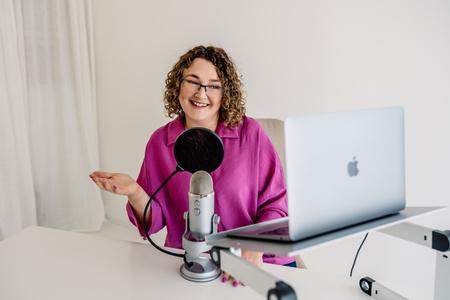
Primary Music in Conversation seeks podcast guests for Season 5.
If you are a school that has something to say about music, then the Primary Music in Conversation podcast wants to hear from you!
They are now seeking guests for Season 5, with recording scheduled to start in October.
The podcast champions the work of primary music subject leaders, giving them a platform to share the work that they do and inspire other schools with their journeys. It shines a light on what is happening with music in primary schools across the world, sharing both challenges and successes
Just like the previous season, each episode will feature a different music subject leader sharing their experience, with the resulting interviews released on all major podcasting apps and as a video podcast on YouTube.
If you would like to be considered as a guest for Season 4, please contact for more information.
YouTube under 16s ban causes concern for music teachers.
Following the UK government’s recent announcement that they are to ban social media for all under 16s from Spring 2027, music teachers have been sharing their concerns around what this means for the use of YouTube to support practice, rehearsal, and homework tasks outside of the classroom.
Currently it is possible to watch YouTube videos without creating an account, but if age verification becomes mandatory for YouTube use, teachers worry how they will support their pupils to access backing tracks, performance examples, listening extracts, and other useful teaching resources in their own time.
Teachers’ reliance on YouTube as an educational tool has been caused in part by successive and sustained governmental underfunding of schools. If this is to be taken away, significant investment will be needed to replace these free resources, which schools are unlikely to have budget to fund, and the government is even more unlikely to cover the cost of.
UK government launches new scheme Every Child Can.
The UK government has unveiled a new scheme, Every Child Can, designed to give all children access to enrichment activities across the arts, sports, civic activity, nature, and life skills This will sit alongside a new enrichment framework, with schools set to be held accountable for their enrichment offer by Ofsted from September.
Whilst the intention behind the scheme has been broadly welcomed as a concept by the education sector, the Arts and Minds Campaign have been quick to point out that the associated funding package is the equivalent to less than £16 per pupil
It is hard to see how such a small amount of funding will deliver the government’s ambition that “ every child, regardless of where they grow up or which school they attend, will benefit from enriching activities that build the skills, confidence and relationships they need for life and work,” or deliver their promise to halve the participation gap
10 years of singing in partnership
National Youth Choir and Inspire Music celebrate singing in Nottinghamshire
National Youth Choir and Inspire Music, the Nottinghamshire Music Hub, celebrate 10 years of fruitful partnership in 2026
Over this time the partnership has enabled over 6000 young people across the region to experience the lifechanging joy of singing together.
The opportunities to sing have included massed performances at the Royal Concert Hall in Nottingham, workshops in schools and in 2024 a National Youth Choir SING! region was launched in Nottinghamshire, offering a chance for keen singers aged 9 -13 to take their singing further over a series of weekend workshop days.
Since then, 169 young singers have taken part in the workshops, and 21 of those have auditioned to join National Youth Choir These young people wouldn’t have auditioned for the choir if it weren’t for SING! in Nottinghamshire, and the hope is that many more will follow in their footsteps as the pathway continues.
Inspire Music is part of Inspire, an organisation delivering culture, learning and libraries on behalf of Nottinghamshire County Council. 2026 also marks Inspire's tenth year, celebrating a decade of supporting people of all ages to read, learn, create and connect. National Youth Choir host SING! workshops at cultural venues
across the county, including the wonderful library in Mansfield town centre, thanks to the in-kind support from the partnership.
“This has been a decade of remarkable achievement, made possible through this partnership, support and belief in what Inspire can deliver for Nottinghamshire’s communities.”
Peter Gaw, Inspire
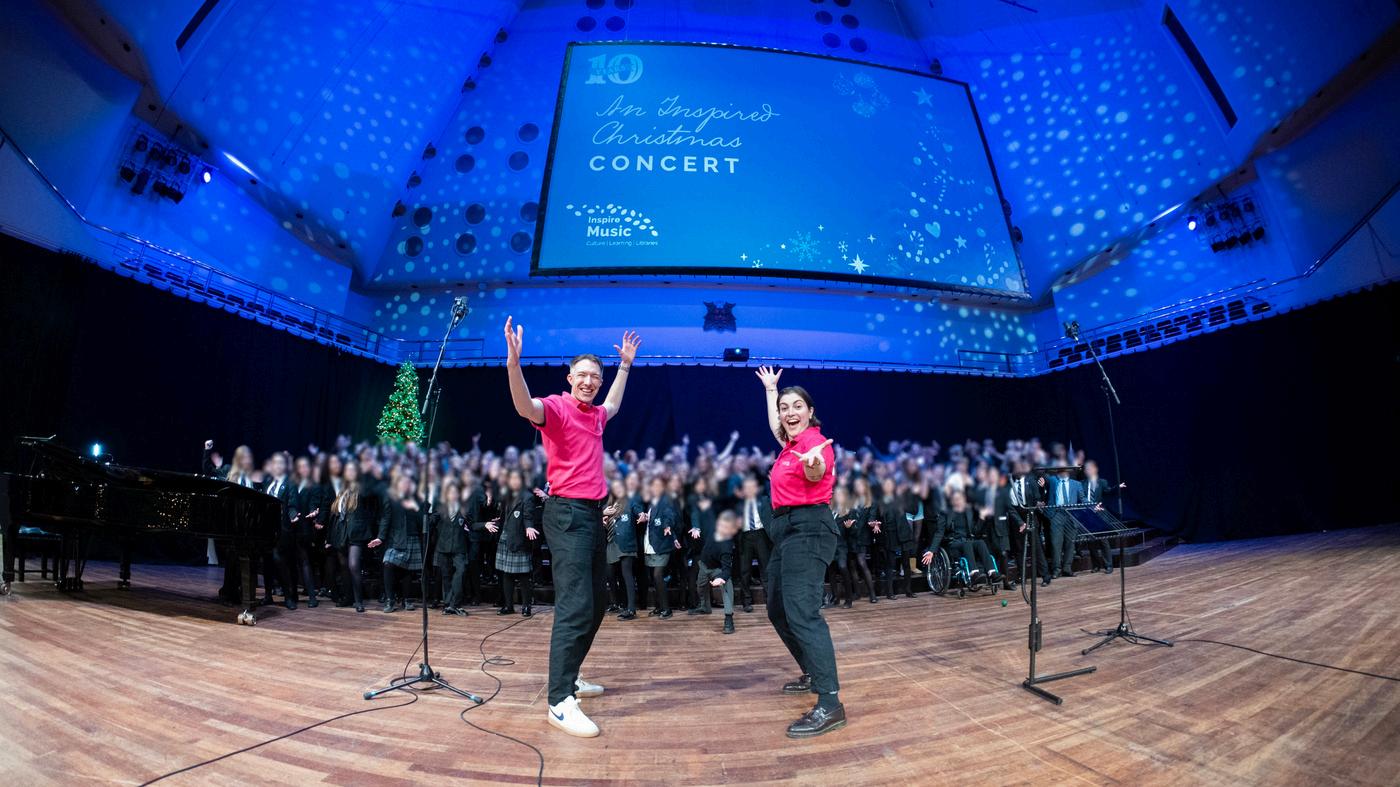
Back in 2016, the collaboration between Inspire Music and National Youth Choir began on the largest stage in the region, the Royal Concert Hall Nottingham. The partnership has always focused on providing incredible performance opportunities to young people. Over time the scope of the projects has evolved, moving away from two large-scale events a year, towards the annual An Inspired Christmas Concert and more focused activity in schools and workshops.
In an era when shifts in funding and staffing have often meant that long term, sustained projects are hard to achieve, the partnership has found a shared sense of purpose and values
“Partnership and collaboration sit at the heart of everything we do at Inspire, and our 10-year journey with the National Youth Choir and the Royal Concert Hall Nottingham is a powerful example of what can be achieved when organisations grow together.
What began as a gentle testing of the a cappella waters has evolved into a fullblown confidence in part singing, musicianship and expressive
performance Year by year, we have watched our young people discover new abilities, take creative risks, and find their voices both musically and personally.
This shared commitment to nurturing potential has shaped not only the sound we create, but the culture of courage and joy that surrounds it. We are deeply grateful to everyone who makes this work possible.”
Lucy Reid, Inspire
An Inspired Christmas Concert, the annual performance event at the Royal Concert Hall Nottingham, has continued to feature young people from secondary schools across Nottinghamshire performing together as a massed choir with expert vocal leaders from National Youth Choir. For this event, young singers come together from schools across the region to learn brand-new music and meet other young people who love to sing In the evening, they share these new pieces, as well as performances with their own school choirs, with an audience of schools and families.
The National Youth Choir and Inspire Music partnership has developed over the years. Over this time, National Youth Choir have visited and delivered singing workshops in many of the secondary schools across Nottinghamshire.
Thank you to all our kind supporters and partners for making this work possible We are also very grateful to all those supporters who wish to remain anonymous.
Assessment in the Primary Classroom
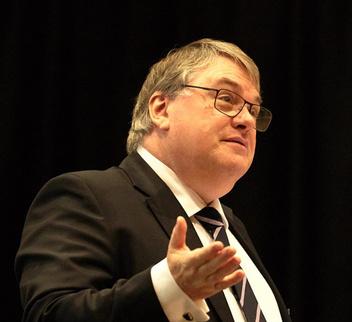
Professor Martin Fautley discusses the key issues facing primary teachers
Assessment is an issue which occupies a lot of our thinking, and involves a number of different aspects, as well as a variety of priorities, depending on what we are doing it for. In this article I want to try and unpick some of these matters, and invite readers to think about what your own practice involves, what you do, and why you do it.
To begin with, teachers often ask “what should I be assessing?”; although this is a good question, it may be more appropriate to think about who the assessment is for. After all, an assessment which is designed to be
helpful to the children and young people involved in learning something musical may be of very different nature to assessment for accountability, when the SLT want to see your grades to see how your class – or indeed you – are doing when compared with others. This also takes us into the well-known formative – summative assessment area.
There has been a lot of debate, discussion, and, in some cases diktats regarding what formative assessment is This is an area which traditionally music teachers have been good at!
Since time immemorial, music teachers have worked with learners proffering suggestions as to what do, and generally acting in a helpful fashion to the learners. After all, just think of Bach and all those children of his! I’m reasonably sure that what he did not do was give them a percentage mark, or have a “verbal feedback given” stamp to deface their books with, or invite them to use “the purple pen of progress ” to say what they thought they could do better next time. Nor, as a secondary colleague was sadly recounting recently, did Bach ask all his pupils to begin their music with a tenminute silent starter! All of these have been imposed on music teachers by well-intentioned SLT, who have got their ideas from core subjects in many cases, and applied them willy-nilly to everything on the curriculum!
But what should we doing with regard to assessment in music? Well, in many cases we will want to know a number of things, including both quantities and qualities of learning. This has a number of implications, and so let us try to unpick some of these now (and it can only be some of these, as assessment is far too big a topic to deal with in one article!)
One of the obvious but often overlooked issues is that assessment starts with curriculum. This means that what you teach should then determine what is assessed, and, indeed will be being assessed as you go along anyway. As Swanwick observed “to teach is to assess ” , and using formative assessment in the way outlined above, this is what you will be doing. Unfortunately in some
cases, and, dare I say it, often in secondary schools (sorry!), well-meaning but misinformed SLTs have required their music teachers to do things like writing down formative assessment comments, or getting the learners to do this writing, or having a ‘verbal feedback given’ stamp to put on pupil work. For music, work is normally audible but can also be intangible though, in the sense that a composition might exist primarily in sound, and singing might involve no writing things down at all. In these cases where to use the ‘verbal feedback given’ stamp can be problematic
But to return to curriculum, one of the decisions that many primary school teachers have to make is that of teaching an agreed school curriculum Sometimes this can be bought-in, and take the form of a commercial scheme, in other cases it can be devised and produced by the local music hub or MAT, or it may have been created by the school music coordinator in consultation with the rest of the staff. Whatever it is, it will have programmes of study and schemes of work that will determine what is to be taught and learned.
Whatever the curriculum is, and however it has been devised, a common feature will often be learning outcomes for the children and young people. Written well, a good learning outcome can become its own assessment criterion statement, whether for formative or summative purposes Often linked to this, and one we see in classrooms up and down the land, is the notion of what a good one looks like, or
WAGOLL In music though, particularly when working with potentially unconfident primary generalist teachers, it can be useful to change this to what a good one sounds like, WAGOSL. This is especially the case in music, where as a society we are well-used to children’s art work, say of a picture of a dog, looking like an oval with a stick in each corner. This is all well and good, but the musical and aural equivalent of these oval-and-stick images is much less wellknown or understood, and so WAGOSL will be helpful in these cases, both for teachers and children and young people alike, as well as their parents
Summative assessment in the primary school is, fortunately, seldom what is referred to as ‘high-stakes’ assessment. This is reserved for the SATs, and music sits outside this framework. But where summative assessment is needed, then we need to return to the two words used earlier – qualities and quantities. In other words, how good something is, and how much learning of it has taken place.
Qualities of learning can be more readily apparent in some aspects of music than others, so, for instance, a non-specialist may well be able to adjudge performing qualitatively, whereas for composing this is much harder to do This is especially the case when we consider composing as a verb – the doing of creating music – rather than the resultant noun of composition that arises from the process, which will, in many cases, just be judged by the performance anyway! And this also separates out learning, and qualities of learning, from the doing that arises from the learning.
Quantities of learning in music education can be judged in many cases by how much a child can demonstrate they can do, and this is learning evidenced in achievement. This again is a complex area, and one of the features of summative assessment is that a grade, mark, or level needs to be awarded as a result. One common way of doing this is to use the wellestablished four-point scale of: Emerging – Establishing – Embedding –Exceeding.
Using this scale means that grades can be awarded for various aspects of musical attainment, and using the notion of learning outcomes described above, a criterion statement, written well, can provide the wording that is used for this assessment scale
It is useful to bear in mind that the important goal of music education is musical understanding, and so whatever it is that we teach, learn, and do, we should be thinking about this. How well little Darren plays the glockenspiel, or tabla, or whatever, is an incidental pathway to musical understanding; we can have a lot of different ‘doings’ but we need to be thinking about how this leads towards understanding. A good scheme of work, whether commercial or home-made, will exemplify this, and will be explicit about what the expected understandings are.
Whatever types and forms of assessment are used, however, one thing we are all rightly concerned with is progression. Hopefully gone are the days of musical schemes of work which say things like “this can be done in any
order”, as we want to be thinking about progression in learning, doing, and attainment. If, for example, we are singing a lot, are we simply singing more songs, and the thing that progresses in breadth of repertoire – in other words quantity – or are we also thinking about what gets better with the breadth of repertoire – in other words quality?
Musical progression does not have a linearity about it in the same ways some other curriculum subjects might. Neither does it have a logical linearity about progression of complexity; the interrelated dimensions of music outlined in the National Curriculum are not hierarchical, tempo is not more important than pitch, for example. Neither in most pieces of music do the interrelated dimensions exist in isolation, this is, after all, why they are interrelated! So, progression needs to be considered across a number of axes simultaneously What is getting better, and why and how, and then the really thorny matter of how do you measure it – but that’s a whole other story!
At this point it would not be unreasonable for you to ask, “So Martin, you ’ ve raised all these problems, but what have you actually done about it?” Fair point! Well, aside from the academic research I’ve published, I’d like to think that there are some things I’ve done that are helpful to teachers.
For example, I mentioned composing briefly, and for some years now I have been working with Nancy Evans of Birmingham Contemporary Music Group (BCMG) on a project called
Listen Imagine Compose, and we have published a toolkit aimed at primary teachers to help with the teaching and learning of composing (info below) It’s available as a free PDF download from the BCMG website
Then for primary school assessment, along with Dr Alison Daubney I’ve written a framework for curriculum and assessment in primary music, published by the ISM trust, and again available as a free PDF from their website.
Next academic year, I will also be delivering a brand new certificate programme for Music Education Solutions, the Classroom Music Assessment Certificate You can join me for a series of twilight webinars starting on 1 October where we delve into both the theory and practice of assessment in more detail. You can find out more about this CPD programme on the Music Education Solutions website st
Assessment in music education is a really complex matter, and in this short article I have just scratched the surface of it, but I’ve tried to give a flavour of the issues without – I hope – causing too much stress and angst! There is more available in terms of published materials for those interested in this area, and, of course, the pages of this Primary Music Magazine always contain lots of helpful ideas. Whatever it is that you do, let’s always try and keep music learning musical though, as that is the reason the subject is taught and learned in schools anyway.
Happy Assessing!
Now booking for Academic Year 2026/27
Are you teaching curriculum music to KS1, KS2 or KS3 classes and looking for help and support with assessment? Led by internationally-recognised music education assessment expert Professor Martin Fautley, the Classroom Music Assessment Certificate is a blended learning programme of live Zoom seminars and online learning materials to work through independently
On this course you will consider both the theory and practice of assessment, relating this to your own individual teaching context You will critically evaluate how assessment functions in your own context, learning how to develop and improve your assessment practices for the benefit of your pupils
Click here to book
Course Leader: Professor Martin Fautley
After many years as a classroom music teacher, Martin Fautley undertook doctoral study investigating teaching, learning, and assessment of classroom music making. He is author of ten books, and over 60 journal articles and chapters. Martin is the recipient of the ISM Distinguished Musician Award and the Music and Drama Education Lifetime Achievement Award.
Price £150
Every lesson is a music lesson!
Andrew Davies explores the use of music across the primary curriculum
When I set up my current primary school Music Room four years ago, above the windows I emblazoned the slogan: ‘Music is life: that’s why our hearts have beats’ Yes, it’s just a catchphrase and as a few Year 6 children eye-rolled at me, yes, it’s rather a cheesy play on words… but perhaps it’s not quite so superficial a statement as it first appears As we travel through the annual exam season where SATs, MTCs Phonics Checks and 11+ exams dominate the entire primary curriculum, you may well have heard - or even been advised - that music-making must wait until core subjects have been secured: indeed, even my own slogan on the wall
gets brutally covered every year as my Music Room becomes an additional SATs exam space for the week. But are English, Maths and Science genuinely so far removed from Music that anything vaguely resembling a melody or a beat has to be kept at arms length when it really matters? And must the music in classrooms cease, even if there’s no space in the crowded curriculum for dedicated music lessons themselves? I’m going to argue that music needn’t be banished when the Literacy, Numeracy, Phonics or Times Tables start - and indeed it shouldn’t - because, just perhaps, music might be the greatest pedagogy for any primary
subject in the history of teaching And if you ’ ve got just a few spare minutes to read on, I’d love to explain how.
If you ’ re a primary music practitioner, I doubt you will need convincing of the intrinsic value of musical pedagogy, but just in case you have a leadership team pressurised by school league tables, competitive parents and an impending Ofsted inspection, here’s some convincing research to quote. The number of academics and theorists who have cited the value of music as an educational tool is endless. According to Plato, one of the greatest ancient thinkers, ‘music is a more potent instrument than any other for education, because rhythm and harmony find their way into the inward places of the soul.’ The legendary German philosopher Friedrich Nietzsche argued that ‘without music, life would be a mistake’. The world-famous Danish storyteller Hans Christian Andersen declared that ‘music speaks where words fail’; nobel prizewinning physicist Albert Einstein advocated musical patterns as the means to ‘unlock learning’, while Aristotle, another celebrated Ancient Greek philosopher and polymath, claimed music develops children’s empathy, honesty and eloquence. And before you get hit with the almost inevitable ‘long-dead white men ’ response to this list of advocates for musical pedagogy, 21st Century research worldwide across all societies continues to point a finger of endorsement in their direction.
Observations and experiments consistently indicate children are ‘wired from birth’ to distinguish pitch changes,
dissonance and repetitive pulse Their crying, cooing and musical babbling instinctively exhibit melody and rhythm. Their positive engagement with lullabies at home naturally develops into childowned singing games in the school playground. These can display, even if subconsciously, complex compound rhythms and melodically wide tessitura. Children recognise singing’s power for emotional expression, entertaining an audience, communication of stories, opportunity to physically respond to stimuli, validation of religious beliefs and social integration. Singing games can build empathetic cultural understanding, integrate pupils speaking English as an additional language and build healthier, happier school communities. Furthermore, ethnomusicological research reveals non-Western cultures make daily singing integral to community and education: they learn cross-curricularly through the texts of songs, effectively singing to learn
Even the Department for Education, the instigators of statutory assessment themselves, write: ‘Music… is a vital part of a rich and rounded education It plays a key role in brain development and helps to develop language, motor skills, emotional intelligence and collaboration skills.’ (National Plan for Musical Education, 2022) So music isn’t just a recreational hobby to fill a break from learning: in fact, it’s an innate tool that our brains utilise in order to facilitate learning - and therefore it’s a pedagogy that surely belongs right at the heart of primary education - even primary education in statutory exam season.
Whilst researching for my undergraduate dissertation on this precise topic some years ago, I wrote some simple catchy melodies and rhythms linked to classroom learning in Year 1 on the Jurassic Period and asked the class teachers if I could introduce them into my lessons. One of them was rather unimpressed: ‘He’s going to sing you a song, ’ she announced to the class, raising an eyebrow in disapproval But not only did the children excitedly look forward to singing them each day, I discovered they were actually singing the songs to themselves whilst working; marching around the school humming them; using the songs to help them remember the rather complicated names of dinosaurs and even improvising and developing them in call and response into their own arrangements completely independently in the playground. That ear worm song stuck in your head needn’t just be an ear worm - it could be lyricised using facts or figures you want to recall, and you might never forget them again. My doubting colleague had to change her mind.
So here we go: allow me to suggest lots of practical ways you might be able to use music as a pedagogy to transform your entire curriculum.
Music as a Tool for Engagement and Motivation
At the very least. music is engaging and motivating compared to spoken pedagogies: we all include an element of rhythm and rhyme into our callbacks and routines to grab the class’s attention, from the simple “one-two-
three, eyes-on-me ” to the more exotic morning greeting ‘What can I say?: But hey, you ’ re welcome’… but why stop there? You could select West End song lyrics to analyse word classes in English: where is the subordinating conjunction in ‘When I grow up’? You could incorporate song titles into Maths word problems: Once I was 7 years old: now I’m 14. How much older am I? Even if there is no inherent educational value in the song chosen, choosing it will still get the children interested in what you ’ re presenting: one of my schools sing a chorus of ‘Golden’ before awarding the ‘Class of the Week’ trophy in assembly and the room is so electric with anticipation that nobody minds if their class hasn’t won when the announcement is made - the journey was worth the ride regardless of the destination. In Faith Schools, I have set class prayers to music, and as long as the melody is both respectful and catchy, the buy-in and ownership from the children is far greater than repeating a dirge sotto voce each night with pupils staring out the door, their minds far away thinking of home. When I explained to my Year 3s that in opera, everything is sung and nothing is spoken, they insisted upon an ‘Opera Day’, where I - and they - had to sing everything rather than say it. They’re in Year 6 now and, slightly extraordinarily, this is what they still remember and talk about more than any other lesson we ever did. And of course, schools’ widespread use of pop songs as brain breaks is another example of music for motivation and re-engagement
Music as a Tool for Recall and Memory
“Okay,” I hear your school leader say: “music makes learning fun.” However, our wonderful subject can go so much further than this Primary education, despite its considerable 21 Century progression from copying by rote, remains flooded with information children need to commit to memory for swift recall From weekly spellings and spelling rules - culminating in the Year 6 SATs spelling assessment - to ubiquitous times tables assessed in the Year 4 MTC - our young learners need to memorise, memorise, memorise, as st politicians would doubtless say. And it can’t escape our notice that the one thing our children almost invariably seem to have memorised before they walk in the school gate each morning is the lyrics of their favourite pop songs. This therefore is a vehicle that has to be hijacked. Although copyright law does not permit publishing or performing others’ work with altered words, in the UK, the Copyright, Designs and Patents Act 1988 (CDPA) contains a specific exception for educational use provided the activity is for instructional purposes and is carried out by teachers and pupils in a school. Katy Perry’s ‘Roar’ is often rewritten to learn a historical timeline and The Backstreet Boys’ ‘I Want it That Way’ has been converted by Science teachers to help pupils learn the parts of plant cells. Finding out the latest songs your pupils are keen on and rewording a chorus or two to suit could really help them with memory and recall of vocabulary, spelling or times tables: at Year 5 or 6, they could even have a go at writing their own lyrics, achieving a musically creative task whilst
simultaneously memorising their core curriculum!
Of course, there are also many original songs and raps written specifically for educational recall: one of the most popular resources on the entire BBC learning platform are their Super Movers videos for times table recitation, accompanied by choreography videos to match; for younger years, video resource creators like Jack Hartmann and Hopscotch have been generating material for many years which is freely available online, with everything from counting to 100 to the legendary ‘Seven Continents Song’ and ‘Said is Dead’, helping pupils learn more advanced verbs to accompany direct speech Indeed, there is enough existing material in this area alone for a lunchtime SATs revision club that would probably draw more willing participants than any more traditional revision booster ever would. The great thing is that music can really be used in this area to reinforce any learning you wish: I have ingrained school values by writing songs about them which school leaders use in their own assemblies as a learning behaviour tool, as well as in Singing Assemblies for vocal technique and musicality. I’m currently writing a song for a Deaf Awareness assembly to help mainstream pupils at my current school support children in our specialist hearing provision. It’s worth adding that a catchy ear worm can also persuade children to practise memorising facts with much greater frequency: in my experience, children will gladly march to school belting out their spellings or sing along to a song on Google Classroom, but their less inspiring paper list of
of spellings will invariably get left unwanted in their school bag once they walk in their front door unless an enthusiastic parent compels them to look at it.
Music as a Tool for Conceptual Understanding
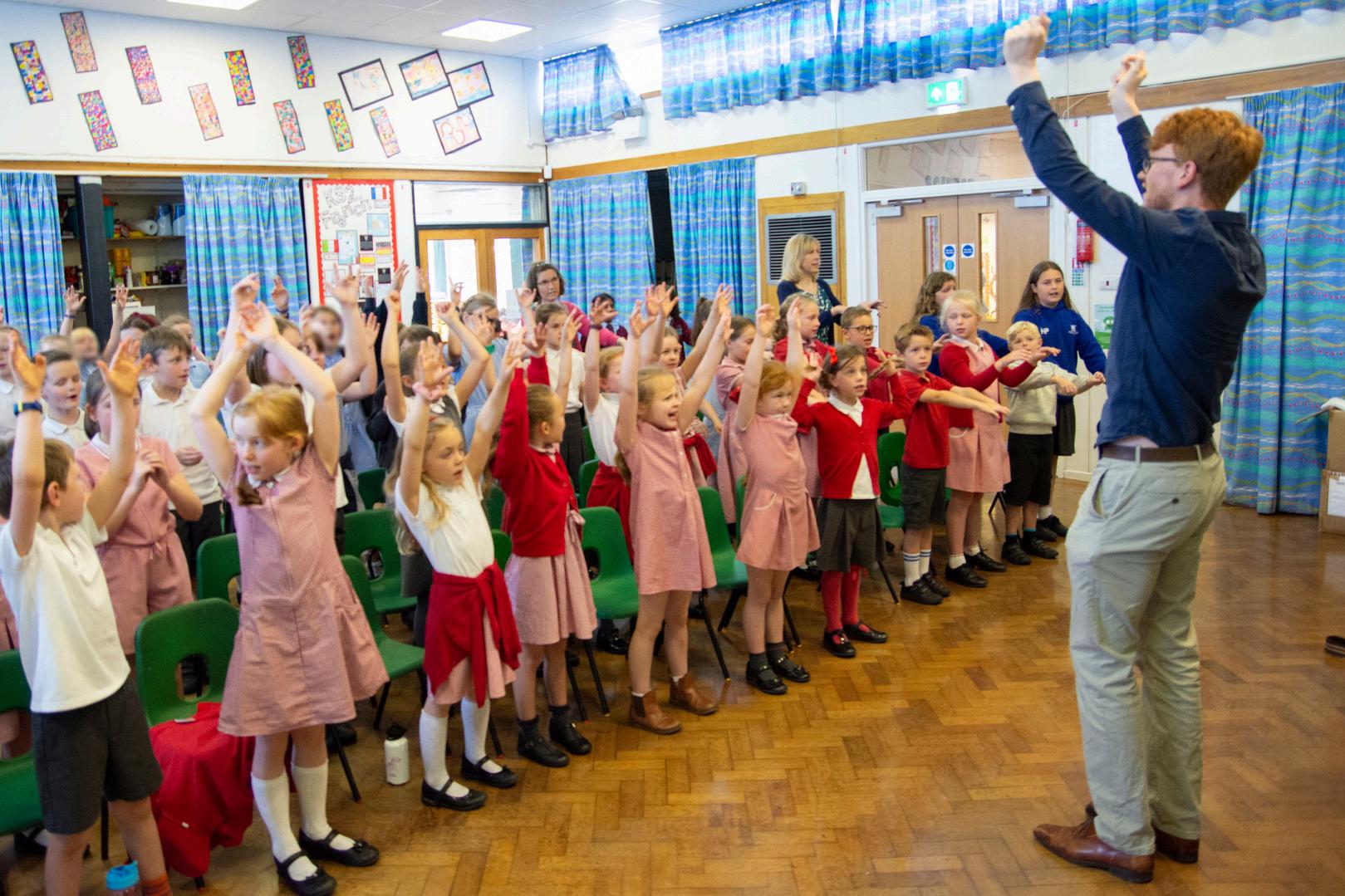
Music as a pedagogy doesn’t stop at memory recall either Adding a very visual choreography can enable songs to play a role in conceptual understanding too Whilst teacher training, I recall reading whole research papers on the ‘Atom Song’ where pupils sang and danced the movement of electrons around protons and neutrons whilst the process of evaporation, condensation, precipitation and run-off in the water cycle is just begging to performed as a catchy song with appropriate dance moves. Perhaps the most obvious conceptual parallel with music is mathematics: the two subjects both routinely require obsessive counting whilst working and really aren’t the poles apart between creativity and logic that some would claim If you want your young mathematicians to stop talking about ‘adding a zero ’ or ‘moving’ the decimal point, print out some big numbers for children to hold, draw the decimal point on the wall and just write your lyrics to fit the place value, moving your human numbers to the right or left between columns in time with the beat. Fractions of discrete sets of objects is another area just crying out for groups of children to perform musically, with a fraction of the pupils dancing a move whilst the rest do not: vary the fraction and vary the number of children doing the move to
match One thing’s for sure - the children will certainly be able to remember, articulate and mentally visualise what they’ve done afterwards. I remember training to teach in a Year 6 English lesson where pupils used popular song lyrics to understand inference: whether you love or hate Taylor Swift, her lyrics are full of implied meaning, and singing them aloud works wonders for your reading fluency, emphasis and prosody too! Turning conceptual understanding into a musical performance isn’t just a very kinaesthetic way of reinforcing knowledge and comprehension: it’s a great leveller for children with SEND or EAL who find sitting still or staring at pages of text challenging, let alone writing it out themselves in an exercise book Increasingly, in the Covid-legacy and screen-flooded world where our children are growing up, we need to seek equitable pedagogies that don’t leave the disadvantaged, disillusioned or disenfranchised behind With sign languages such as BSL and Makaton, ear defenders and sensory protective devices, and adaptive levels of participation in terms of harmony, solo and ostinato parts, music really can include everyone - something I, as a music practitioner in a school with provisions for the deaf and children with ASD, can verify first-hand. Musical pedagogies are currently also exponentially expanding in PSHE and PE: circle time offers the potential of song circle time, whilst dance is now a widely accepted element of the Physical Education curriculum Although singing and movement are understandably the main focus of all this musical teaching, primarily due to their inclusive nature
and the lack of need for any specialist equipment or prior knowledge, instruments most certainly could also be used. Drumming and wider percussion in particular lends itself very easily to accompany rhythmic chanting and pupils with skills in other instruments could certainly make use of them if the resources were easily accessible.
Performing as a Focus to Learn
More than any other subject in the curriculum, Music has at its heart an intrinsic need for performance to others, and this too can be harnessed to further embed learning. Rarely, if ever, have I observed a Maths or English lesson where pupils get up on stage and perform to an audience, yet the educational benefit of doing so is surely screaming out at us. Learning spellings, maths strategies, science concepts or historical timelines takes on a whole new significance when it is the script for a performance being given to an important audience on a specific date, rather than just a homework ‘ my teacher said we must learn’ or an online game ‘ my teacher said we must play.’ Performing introduces a purpose and, provided it is done in the right, nurturing way, a comfortable level of pressure and persuasion for learning lines, practising choreography and singing parts It’s more than simply doing it ‘because we have to’something that rarely gets children away from their Katseye songs or Spongebob movies. It’s a motivation to succeed and an end goal to aim for: a SMART strategy indeed for any summative assessment grid - and if it incorporates their Katseye songs or
Spongebob moves in the process, they may not even consider it as homework at all. So don’t make your class assembly a boring affair where children just read out a few lines about ‘what we learned’ Choose some key concepts and turn them into songs with moves: not only will children be inspired and your parent audience be entertained and impressed - they will all retain the knowledge and skills for far longer and own it independently in their own time too. And if you can’t get permission to regularly perform in the school hall because it’s being used for endless PE or you don’t fancy the pressure of a live audience, why not grab an iPad and record an in-class performance to share on your online Google Classroom, Tapestry or similar platform? This could be done with any primary age group: if something goes wrong you can always restart or edit together the recordings, and you can still set a specific date when you can perform it, so the end goal remains unambiguous and focussed.
What if I’m not a Music Specialist?
This may be all very well, you may be saying, but what if you ’ re not a songwriter, don’t play an instrument or just don’t have the time to create and record songs for pedagogical purposes when there are so many other jobs to do. If you ’ re lucky to have a specialist music teacher in your school, I strongly suspect they would love to get involved and probably organise script, song lyrics, tracks and possibly even the choreography for you. I certainly would: it beats being banished to the PPA room during assessment weeks or being
told your subject isn’t important enough to deserve curriculum time! One of my headteachers even asked me several years ago to set up a spreadsheet on the school system with song requests from year groups on particular topics, using familiar, specific engaging melodies and rhythms taken from popular songs and re-lyricised for learning particular concepts in the classroom ‘Can I have a song for ?’ is a much more welcome request from a class teacher than ‘Can we not come to singing assembly this week as we have to finish off some other work?’ If the song in Singing Assembly is embedding their learning, you can bet whatever the classroom pressures, they’ll be there.
Even if you don’t have a specialist to help, it really isn’t a time-consuming task requiring extensive instrumental talent. Children love rap, so melody can be dispensed with if necessary, and using an online drumbeat to chant the words to will comfortably do the job The words need not have many multiple verses - one or two simple sections repeated several times are much more effective - and if musical pedagogy still really isn’t your cup of tea, Year 5 or 6 children would certainly be able to design some of their own if given an official responsibility in school to do so. Whilst the advent of AI and its impact on both educational music and the music business is a subject for a completely separate article and questionable in terms of its creative ethics, you may potentially find it cuts out some donkey work too - especially with writing rhyming lyrics or raps.
For Music Leads, I hope all the above might take on a new significance. No, we don’t teach all these other subjects ourselves but our potential impact upon them is clear. It is universally frustrating that we can’t have more curriculum time for music in primary schools, but using music as a pedagogical tool means that actually, perhaps we can.
I would argue that the opportunity to place music as a central pedagogy in the primary curriculum is there for us all - we only have to use our imaginations, take a deep breath and seize it. Whether in Reception or Year 6, as long as the musical style appeals to them already, the children themselves will definitely find the journey hugely rewarding and worthwhile - and if they do, there’s every chance they’ll make academic progress and you might find it worthwhile too! So get the music out there and share it around the entire primary curriculum, because, as my wall continues to announce to every new cohort of children who walk in through the door towards it, music really is life, and for as long as our hearts are still beating, there are rhythms and melodies to discover everywhere
We’relaunchingWindstars-afun scheme that introduces Year 1 and 2 pupilstomusicusingTootsandDoods.
Perfect for musicians who love making learningfunfromtheverystart!
Being an effective subject leader
Dr Liz Stafford offers her advice to those put in charge of music in their schools!
Music subject leadership is one of the most rewarding roles in primary education. It offers an opportunity to shape not only what children learn, but how they develop a relationship with music throughout their school lives and beyond. Yet for most teachers, subject leadership arrives on top of an already busy workload, often without specialist training or significant leadership experience.
The good news is that effective music subject leadership is not about being the most accomplished musician in the school. It is about having a clear vision, understanding what high-quality music education looks like, and supporting colleagues to deliver it successfully
Understanding the Role
The responsibilities of a music subject leader vary between schools, but they typically include overseeing curriculum planning, supporting teaching and assessment, writing and implementing a Music Development Plan, and managing extra-curricular music opportunities While the role can feel extensive, it helps to think of it in two parts: preparing for leadership and delivering leadership. Before leading others, subject leaders need to develop their own understanding of music education. Once that foundation is in place, you can focus on strategic development, curriculum implementation and supporting colleagues
One of the most important steps you can take as a new music subject leader is investing in your own professional knowledge This begins with developing musical understanding. Subject leaders do not need to be virtuoso performers, but you do need a secure grasp of the knowledge and skills pupils are expected to learn This includes the core musical activities of singing, playing, composing, improvising and listening. It also means understanding theoretical concepts such as notation, the interrelated dimensions of music and key aspects of music history.
Equally important is familiarity with the statutory and advisory documents that shape music education in the country in which you teach. These documents provide the framework within which schools develop their curriculum and make strategic decisions. In England these would be the EYFS Framework, the National Curriculum for Music, and Ofsted’s most recent music research review and subject report. Together, these documents help subject leaders understand national expectations while informing curriculum design and school improvement priorities.
Alongside musical and policy knowledge sits pedagogy Understanding how children learn music is essential if leaders are to evaluate provision effectively and support colleagues with confidence. Research and best practice consistently highlight several important principles. Highquality music teaching places musicmaking and musical communication at
the centre of learning. It prioritises sound before symbol, ensuring that children experience music practically before engaging with notation It integrates listening, performing, composing and improvising rather than treating them as separate activities. It draws on a diverse range of musical styles and traditions and provides opportunities for children to use both their voices and instruments.
Building Your Support Network
No subject leader should work in isolation. In England, one of the most valuable sources of support is your local Music Hub. Hubs can offer curriculum guidance, CPD opportunities, progression routes for pupils and access to specialist expertise.
Many teachers also benefit from support within academy trusts, local clusters and professional associations. Conferences, magazines, journals and networking events provide opportunities to share ideas and stay informed about developments in music education.
Increasingly, social media communities have become important spaces for collaboration While online discussions should always be approached critically, they can provide practical solutions, encouragement and a sense of connection with colleagues facing similar challenges If you haven’t already joined the Primary Music Subject Leaders Facebook Group, consider this a big nudge to do so!
Creating a Strategic Vision
Effective leadership begins with vision. Schools should consider a fundamental question: what is music for in our school? The answer will be different in every context. For some schools, music may play a central role in community engagement. For others, it may be a vehicle for creativity, self-expression or cultural understanding Whatever the focus, leaders need a clear articulation of why music matters within their setting.
The next question concerns impact What should pupils know, understand and be able to do by the time they leave the school? Once intent and impact are clear, leaders can consider implementation How will curriculum design, teaching approaches, resources and enrichment opportunities help pupils achieve those outcomes?
These reflections should ultimately inform the school's Music Development Plan, creating a practical roadmap for improvement.
Developing a Curriculum
Curriculum decisions are among the most significant responsibilities of a music subject leader. Whether using a published scheme, designing materials internally or combining multiple approaches, the curriculum should be progressive and carefully sequenced. It should develop both musical skills and confidence over time, ensuring that all children can succeed.
compliant with National Curriculum requirements and aligned with established principles of effective music pedagogy. It should also reflect the realities of the school context. This final point is often overlooked The best curriculum is not necessarily the most ambitious on paper. It is the curriculum that can be delivered effectively by the staff available. Subject leaders must balance aspiration with practicality, ensuring that teachers feel capable and supported rather than overwhelmed.
Supporting Colleagues
Perhaps the most important aspect of music leadership is supporting others. Many primary teachers lack confidence in music, often because of limited training or previous experiences Effective subject leaders recognise this and focus on building confidence as well as competence.
The first step is listening Find out how staff feel about teaching music. What do they enjoy? What concerns them? Where do they feel they need support? From there, you can tailor professional development accordingly
A strong curriculum should be fully
Support may take many forms: INSET sessions and staff meetings, demonstration lessons, team teaching opportunities, curated reading and research recommendations, or external support from Music Hubs, scheme providers, or other training organisations. Importantly, support should be ongoing rather than a one-off event. Confidence grows through regular opportunities to observe, practise and reflect.
Leading Beyond the Curriculum
Music leadership extends beyond classroom lessons. Extra-curricular provision can play a significant role in enriching pupils' musical experiences Choirs, ensembles, instrumental lessons and performance opportunities all contribute to a vibrant musical culture within a school.
However, subject leaders should think strategically about these activities. Every initiative requires time, staffing and resources, so it is worth considering the return on investment Which activities have the greatest impact on pupils? Which opportunities align most closely with the school's vision for music? The most successful programmes are not necessarily the largest They are the ones that provide meaningful, authentic musical experiences for children.
Effective music subject leadership is ultimately about creating the conditions in which high-quality music education can flourish. That means developing expertise, understanding the national landscape, supporting colleagues, shaping a coherent curriculum and providing enriching opportunities beyond the classroom. Most importantly, it means having a clear vision for what music can achieve in your school and working systematically to make that vision a reality.
Now booking for Academic Year 2026/27
This course is designed for teachers who have been or aspire to be given subject responsibility for music in their schools, and is suitable for both specialist and nonspecialist music subject leaders. There are three half-day training sessions across one term, with additional online learning materials to complete inbetween
Session 1: Leading Music in your school
Session 2: Planning and Assessing Music in your school
Session 3: Delivering Music in your school
REVIEW
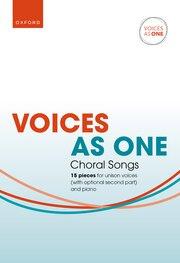
Voices as One: Choral Songs (OUP)
This new anthology of 15 choral pieces has some particularly useful features for primary schools.
All of the songs can be sung in unison or with an optional second part that can be used either as a harmony or as an alternative unison melody, allowing lots of flexibility to suit the confidence level of your singers There is also the opportunity to experiment with adding percussion to songs which will be particularly useful for fidgety, or disengaged, singers!
The title page includes the core and optional ranges for each song so you can see which ones will suit your singers at a glance. This page too reveals a good level of diversity amongst the composers chosen, alongside some familiar favourite names!
The main drawback to this anthology is that it is only going to work for you if you have a pianist and are a music reader, as additional resources such as backing tracks are not provided.
The anthology is available here priced at £16.75
REVIEW
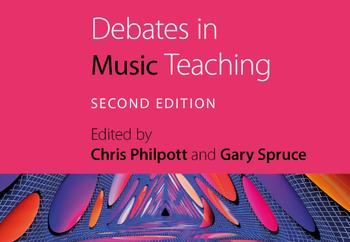
Debates in Music Teaching 2 Edition (Routledge) nd
The second edition of this publication edited by Chris Philpott and Gary Spruce published in 2025 contains a wealth of important scholarship from some of the UK’s foremost music education theorists
Whilst often drawing more on secondary school examples, the book will be no less interesting and useful to primary teachers wanting to develop their theoretical and conceptual knowledge of music education.
Split into four broad themes, the chapters within encourage readers to think deeply about key concepts such as curriculum, progression, musical development, assessment, and pedagogy. Each chapter ends with a set of reflective questions to help the reader relate what they have learned to their own practice.
If you ’ re looking for an academic read that will stimulate and challenge your thinking, then this publication is a great choice! It is available here priced at £31.99.