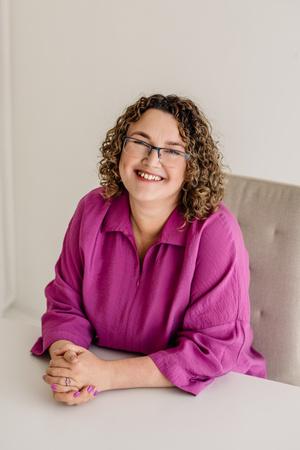
A warm welcome to this issue from Dr Liz Stafford.
06. A round-up of the latest music education sector news.
Helen Byard explores how music can bring stories to life. 14.
I DREAM OF ENGLAND
THE MUSIC
Rebecca Barnett explores why Aurora Orchestra is reimagining classroom music
Dr Liz Stafford shares her hopes and dreams for the new National Curriculum. 30. 20. BEHIND
SPRING INTO ACTION
Seasonal ideas for your music classroom Inspiration for International Women’s Day
R O M T H E E D I T O R
Welcome to our Spring 2026 issue! Here you’ll find features on musical storytelling, the new National Curriculum for Music, ideas for Spring-themed music lessons and more!
We’re always on the lookout for interesting articles and news pieces so if you have something to share for our next issue please do get in touch - the deadline is 31 May for our Summer issue. st
If you value the magazine and would like to support us, there are a couple of things you can do to help. If you have a product or service that you sell to primary schools, please consider advertising with us. Or, if you would like to make a small donation to our running costs you can do so by clicking on the 'Buy me a coffee' button below.
As ever, we are really grateful for your support to help us continue to produce a magazine that is free to read for teachers all around the world.
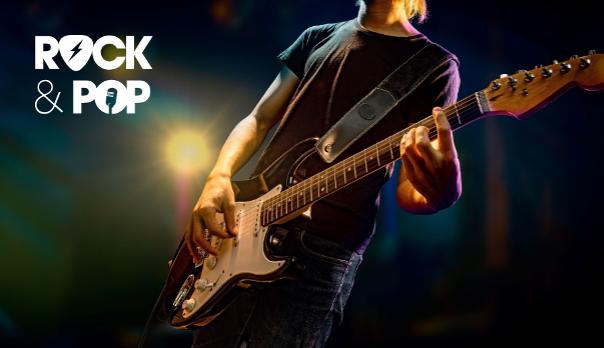
Trinity College London launches new Rock & Pop diplomas
With 53% global market share in regulated contemporary music qualifications, Trinity continues to lead the world in Rock and Pop music assessment, combining artistic authenticity, global credibility, and professional relevance.
The new Rock & Pop Diplomas offer musicians an exciting opportunity to gain professional, globally recognised qualifications that celebrate creativity, individuality, and real-world performance skills.
Developed by music industry experts, these diplomas have been designed with performance at their heart and our unique set list parameters allow musicians to showcase the skills needed at a professional level, while playing the music that speaks to them. These diplomas assess practical and relevant abilities that today’s musicians need to succeed in a constantly evolving landscape
Available at three levels - ATCL, LTCL and FTCL - and mapped to higher education standards, the Rock & Pop Diplomas are designed to be flexible, accessible and digital. Musicians can design their own setlist, perform the music that inspires them, and record their submission from home, in the studio, or live on stage
Ideal for aspiring professionals, teachers, and experienced performers, the Trinity Rock & Pop Diplomas offer the recognition and credibility that open doors to higher education and professional opportunities worldwide
This launch marks another important milestone in Trinity’s long-standing mission to transform lives through the power of performance and communication, helping musicians everywhere express who they are and reach their full potential through music.
BBC launches Get Singing
The BBC has introduced a major new programme called BBC Get Singing, designed to support and inspire young people aged 11–14 to sing together more often. This initiative responds to a common challenge in music education: many children enjoy singing in primary school, but group singing declines as they move into early secondary years Get singing offers a free suite of resources on the BBC Bitesize platform for teachers and vocal leaders. These include song arrangements with scores and backing tracks, video tutorials and warm ups, and written guidance to help classes and choirs learn and enjoy songs together.
At launch, new arrangements performed by the BBC Singers are ready to use, and more will be added throughout the year. Over the next three years, the BBC plans to grow the programme with live performances, workshops, and specialist training for teachers and singing leaders
The programme is intended not just to strengthen singing skills but also to build confidence, teamwork, and wellbeing in young learners By offering accessible, engaging materials, it aims to make group singing appealing and meaningful as pupils progress through their school years.
Call for Podcast Guests
Multi-award-nominated Primary Music in Conversation is now seeking guests for Season 4!
Following an incredibly successful first year which found them shortlisted for both a Teach Primary Award and a Music and Drama Education Award, the Primary Music in Conversation podcast is now seeking guests for Season 4, with recording scheduled to start mid April
The podcast champions the work of primary music subject leaders, giving them a platform to share the work that they do and inspire other schools with their journeys. It shines a light on what is happening with music in primary schools across the world, sharing both challenges and successes.
Just like the previous season, each episode will feature a different music subject leader sharing their experience, with the resulting interviews released on all major podcasting apps and as a video podcast on YouTube.
If you would like to be considered as a guest for Season 4, please contact Music Education Solutions for more information.
Catch up with all previous seasons here
Music and Storytelling
Helen Byard explores how sounds bring stories to life
Children love stories They love telling stories and love listening to stories. It is such a wonderful feeling reading to a class realizing every child is captivated. This can be a lovely shared moment where all pupils are included, imagination is growing and the feeling of belonging is evident. And what better way to bring stories to life than to add sound effects. Adding music to stories encourages children to explore how different musical instruments, rhythms, and melodies can express emotions, create imaginary worlds, and bring tales from various cultures to life. By adapting activities and encouraging every child to contribute their own sound or rhythm, all pupils can experience the joy of collaborating to create a unique musical story together.
How
to get started
Invite students to choose a favourite story and create background music using classroom instruments to match the mood of different scenes. In addition to the words, the musical elements themselves such as melody, harmony, rhythm, and dynamics can evoke imagery and set the mood for the unfolding narrative.
Ask children to represent characters with specific musical patterns or rhythms and perform these as the story unfolds Peter and the Wolf by Prokofiev is a well-used example. Each time a character appears or acts, their instrument and theme are heard, helping listeners follow the story even without words, making the narrative engaging and accessible to all ages
Encourage group storytelling by having children take turns adding a line to a story accompanied by a chosen sound or instrument. ‘Helicopter Stories’ is an educational approach, especially popular in early years, where children dictate and act out the words of a story. This particularly encourages participation, creativity and imagination. Adding a pile of percussion instruments to choose from enhances the experience.
Explore stories from various cultures, pairing traditional tales with music that reflects each culture’s unique sounds Music provides a unique way to tell stories, that can transcend language and cultural barriers.
You don’t need instruments use body percussion and vocals to create sound effects. Use clapping or stomping to highlight suspenseful or exciting moments in a story.
Choosing to listen to any music by John Williams, Hans Zimmer or Danny Elfman will clearly explain how a composer enhances storytelling using music. Try watching a clip of an age-appropriate film, for example ‘Jurassic Park’ on mute. Then unmute the music to demonstrate just how much emotion and excitement is added to the storyline with the sound
Storytelling using Graphic Notation
The story of the Three Little Pigs is just one example to combine a narrative with creative music-making. Graphic notation is a visual method for
representing sounds and musical ideas, using symbols, pictures, or shapes instead of traditional musical notes. This approach is especially engaging for children, as it allows them to express musical ideas even if they cannot read standard notation.
For short stories like the Three Little Pigs, children listen or read the story, then work together to create their own soundtrack. Each scene or character can be represented by a different symbol or drawing for example, a zig-zag line for the wolf blowing down a house, a cluster of dots for the pigs running, or a wavy line for the wind. Pupils decide which classroom instruments, body percussion, or vocal sounds match each symbol. As the story unfolds, they perform the sounds in sequence, following the graphic score they have created.
This method helps children listen carefully to the story, think about how sound can reflect mood, action, or character, and collaborate to compose and perform their own musical version of the tale and is a partially effective method for recall It also supports creativity, teamwork, and an understanding of how music can enhance storytelling.
Poetry and Percussion
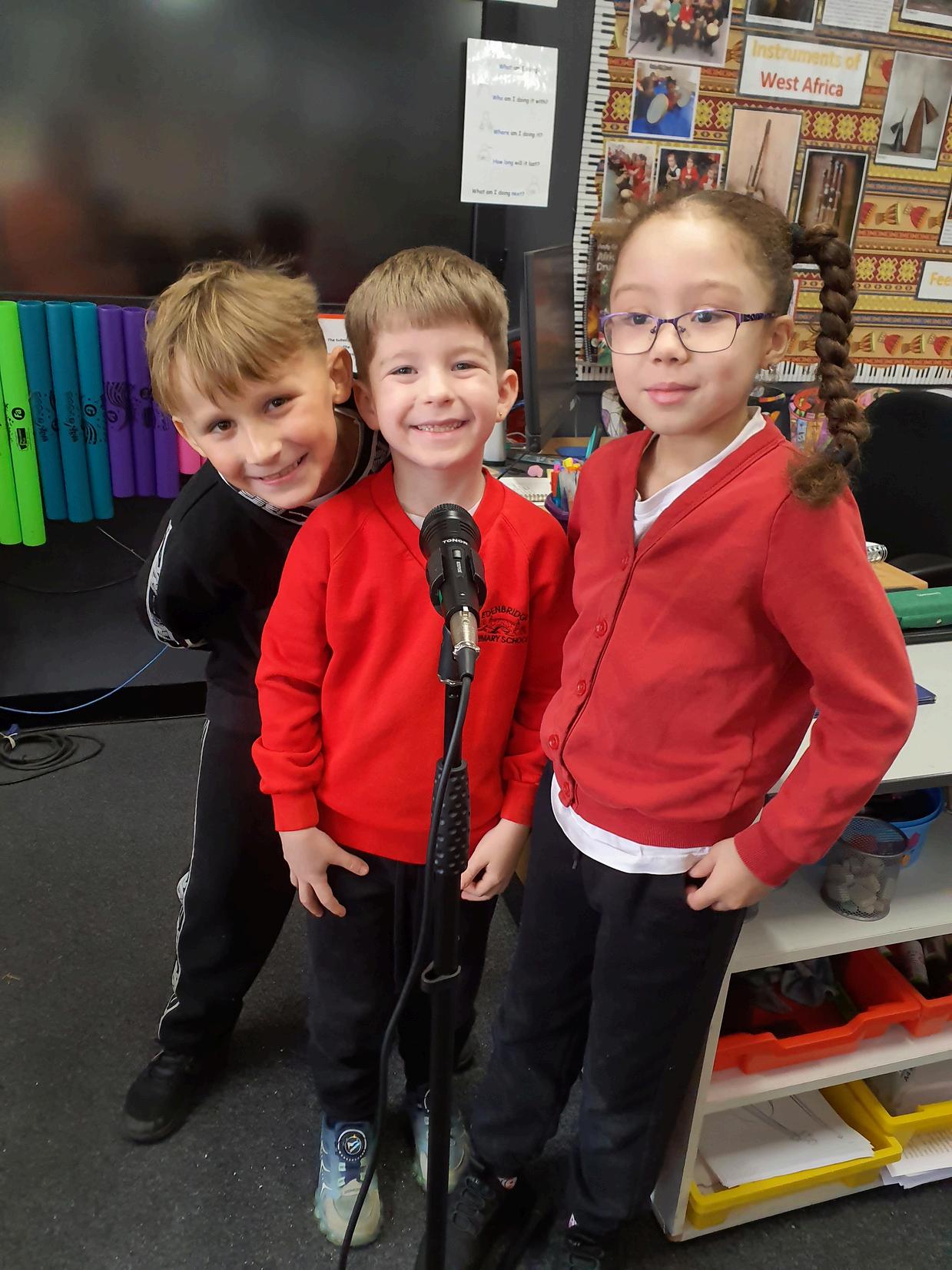
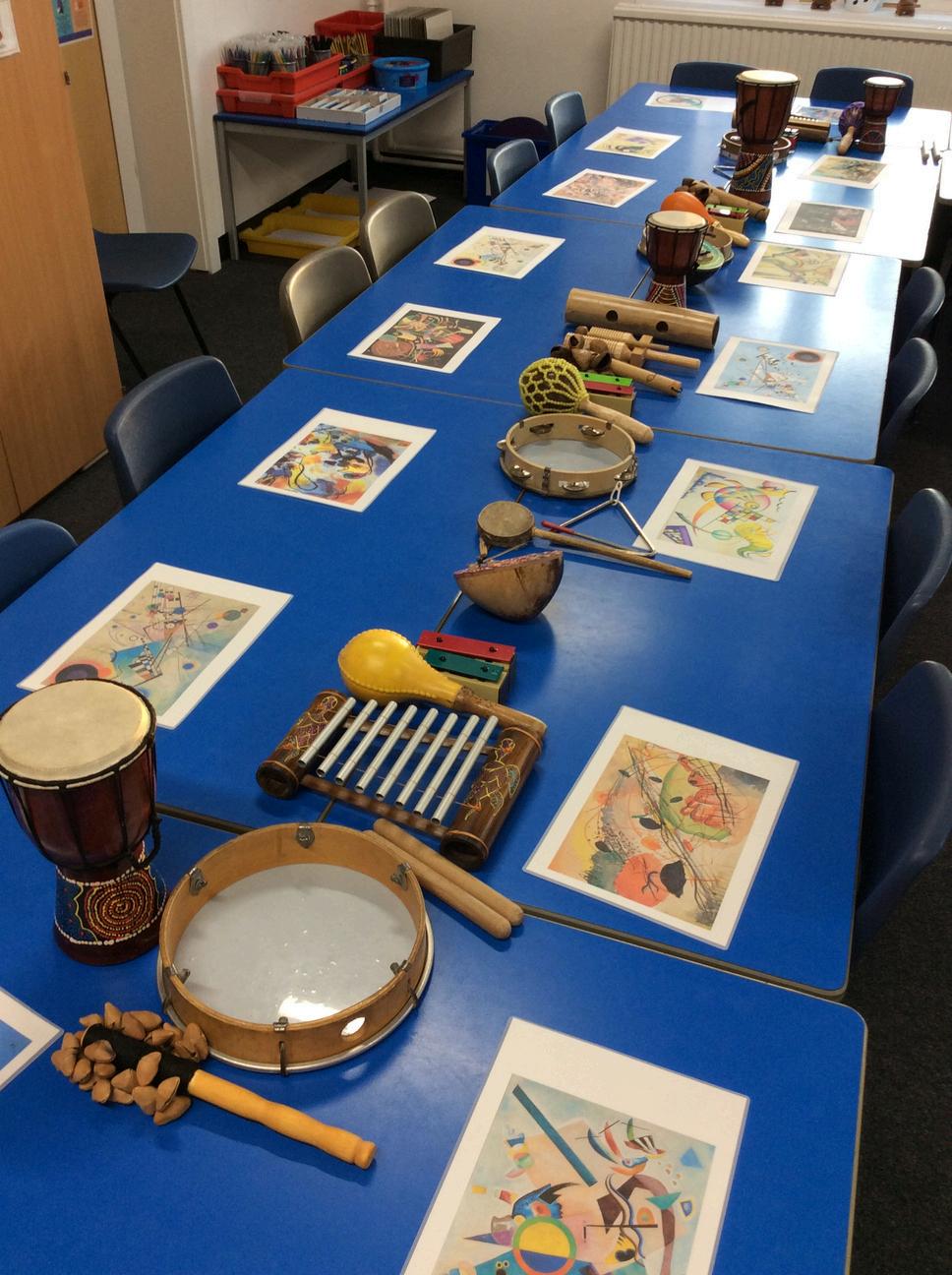
This week, the pupils at Edenbridge Primary School enjoyed a fantastic composing workshop from Claire Lambert, founder of Kidenza In this session the children matched different sounds, using percussion instruments, to the poem ‘The Day Daddy Fell into the
Pond’ by Alfred Noyes All the children were fully engaged in creating a successful collaborative performance. Instruments were either purposefully given to certain pupils or they got to choose which instruments to play This enabled small groups to support each other and work together as part of a bigger piece. Listening was a key skill. The children were able to retell the complete poem confidently as each line was linked to sounds performed in a certain order.
Music plays a significant role in the development of memory in children Engaging with music, whether through singing, listening, or playing instruments, has been shown to enhance various aspects of cognitive function, including memory retention and recall. Rhythmic patterns and melodies can help children remember information more easily, as they often attach words and concepts to tunes, making learning both enjoyable and effective.
Whether through using instruments, body percussion or vocal sound effects music can transform stories from simple words into immersive, memorable experiences for all ages.
I dream of England
Dr Liz Stafford outlines her vision for the refreshed National Curriculum for Music
Following the appointment of the drafting team, as conversations about a new national curriculum for music in England gather pace, there is a need to pause, reflect and ask an important question: what do we want music education in primary schools to be for children, and what do we need it to be for teachers?
For too long, curriculum reform in music has risked becoming an exercise in compliance with a political agenda rather than a meaningful exploration of musical learning. Under the stewardship of a different government, we have an opportunity to shift away from narrow definitions of musical success and towards a curriculum that is creative at its core, culturally inclusive in its outlook, and genuinely deliverable by the non-specialist teachers who teach the majority of primary music lessons.
Whether this will happen is anyone ’ s guess, but given that many of the drafters, across all subjects, were involved in the previous government’s problematic Model Curriculum project, the signs are not overly hopeful! We are perhaps in for ‘ more of the same ’ unless lessons have truly been learned by all parties from the unpopularity and low take-up that characterised this previous initiative. However, we don’t need to sit and wait to find out! We can make our voices heard now about what we hope to see from this new curriculum, and at Music Education Solutions we’ll be touring the country doing just that at this year ’ s Curriculum Music Conferences, gathering the views of real teachers, working in real schools But for now, here are my own hopes and dreams for our new national curriculum.
My first and strongest hope is that creativity sits at the centre of any new national curriculum for music. Music is, fundamentally, a creative art form. Yet in many primary classrooms, pupils’ musical experiences are still dominated by learning to reproduce the music of others: singing songs, playing precomposed pieces, and following instructions accurately.
While these activities absolutely have value, they should not be the sum total of a child’s musical education. Children deserve regular, meaningful opportunities to create their own music, to explore sound, make choices, experiment, and express ideas musically. Indeed this entitlement is enshrined in the very wording of our current KS1 curriculum with its directive to ‘experiment with, create, select and combine sound.’ Composition and improvisation should not be treated as optional extras or advanced skills reserved for older pupils They are powerful ways for children to understand how music works from the inside out.
A curriculum that truly values creativity recognises that musical understanding is built through doing. When pupils compose, they engage with pitch, rhythm, structure, texture and timbre in authentic ways They learn that music is something they can shape, not just something they perform correctly. If we want music to remain relevant and meaningful to children’s lives, creativity must be front and centre
My second hope is that a new curriculum moves decisively away from positioning Western staff notation as
the most important or defining component of musical learning. Notation has a place in music education, but it is not music itself, nor is it the primary way that many musicians, cultures or communities engage with music.
Across the world, music is learned and transmitted through oral traditions, technology, and a wide variety of written notations. Even within contemporary musical practice in England, many musicians work primarily through recordings, chord charts, graphic representations, digital interfaces or collaborative rehearsal processes. To centre staff notation as the pinnacle of musical understanding risks sending a narrow and exclusionary message about what counts as “real” music.
In primary education, this focus can be particularly problematic. When notation is foregrounded too early or treated as essential, it can become a barrier to engagement rather than a support for learning. Pupils may come to believe that music is about decoding symbols rather than making sound, and teachers may feel pressure to teach a system they themselves are not confident using. A more inclusive curriculum would acknowledge multiple ways of representing, remembering and communicating music. This might include graphic scores, invented notation, verbal descriptions, digital sequencing, or learning by ear. Such approaches not only reflect a wider range of musical cultures but also support creativity and accessibility
Importantly, moving away from an overreliance on staff notation does not mean lowering standards. It means broadening our understanding of musical knowledge and recognising that deep musical thinking can happen without five lines and four spaces. A national curriculum should reflect the musical world children actually inhabit, not just the traditions that have historically dominated formal education
My third hope is perhaps the most pragmatic, but no less important: that the new national curriculum genuinely takes into account the reality that most primary music is taught by non-specialist teachers.
The vast majority of primary teachers are not trained musicians They are skilled professionals with deep expertise in pedagogy, child development and curriculum delivery, but they cannot reasonably be expected to have advanced musical training A curriculum that assumes specialist knowledge, or that requires significant additional training and support, risks being undeliverable in many schools. Too often, music curricula are written with an idealised teacher in mind: confident, musically fluent, wellresourced and well-supported. The reality in many schools is very different. Time is limited, budgets are stretched, and access to high-quality professional development is uneven. If a curriculum cannot be delivered confidently by a generalist teacher, it is unlikely to have meaningful impact
This does not mean that teachers should not be supported to develop their musical confidence, they absolutely should. But the curriculum itself must be realistic. It should be clear, flexible and focused on musical learning rather than technical expertise. It should prioritise musical outcomes over musical terminology, and provide space for teachers to facilitate learning alongside their pupils rather than feeling they must always be the expert in the room. A deliverable curriculum empowers teachers rather than intimidating them. It builds on what teachers already do well: creating inclusive classrooms, encouraging exploration, and responding to pupils’ ideas. When teachers feel confident, pupils benefit; but when teachers feel overwhelmed, music is often the first subject to be squeezed out.
The development of a new national curriculum for music is a significant moment. It is a chance to reset expectations, challenge inherited assumptions, and design something that truly serves children and teachers alike My hope is for a curriculum that places creativity at its core, values musical diversity and multiple ways of knowing, and recognises the realities of primary teaching If we get this right, music education can be joyful, meaningful and sustainable; not just in policy documents, but in classrooms across England.
Music matters. It should be taught well, taught inclusively, and taught in ways that allow every child to see themselves as a musician. This curriculum reform offers the opportunity to make that vision a reality, and I hope that somehow, somewhere, someone is listening.
Price £150
Behind the music
Rebecca Barnett explores why a world-class orchestra is reimagining
curriculum music.
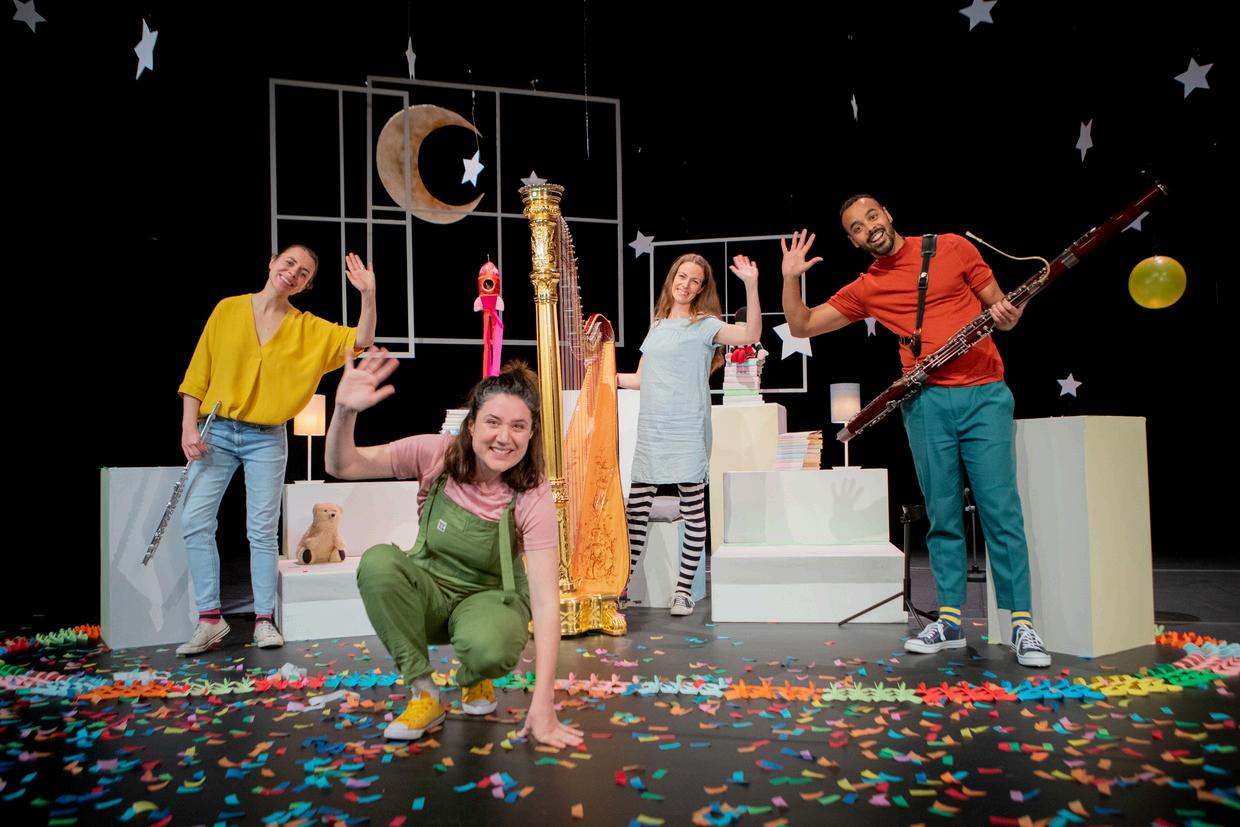
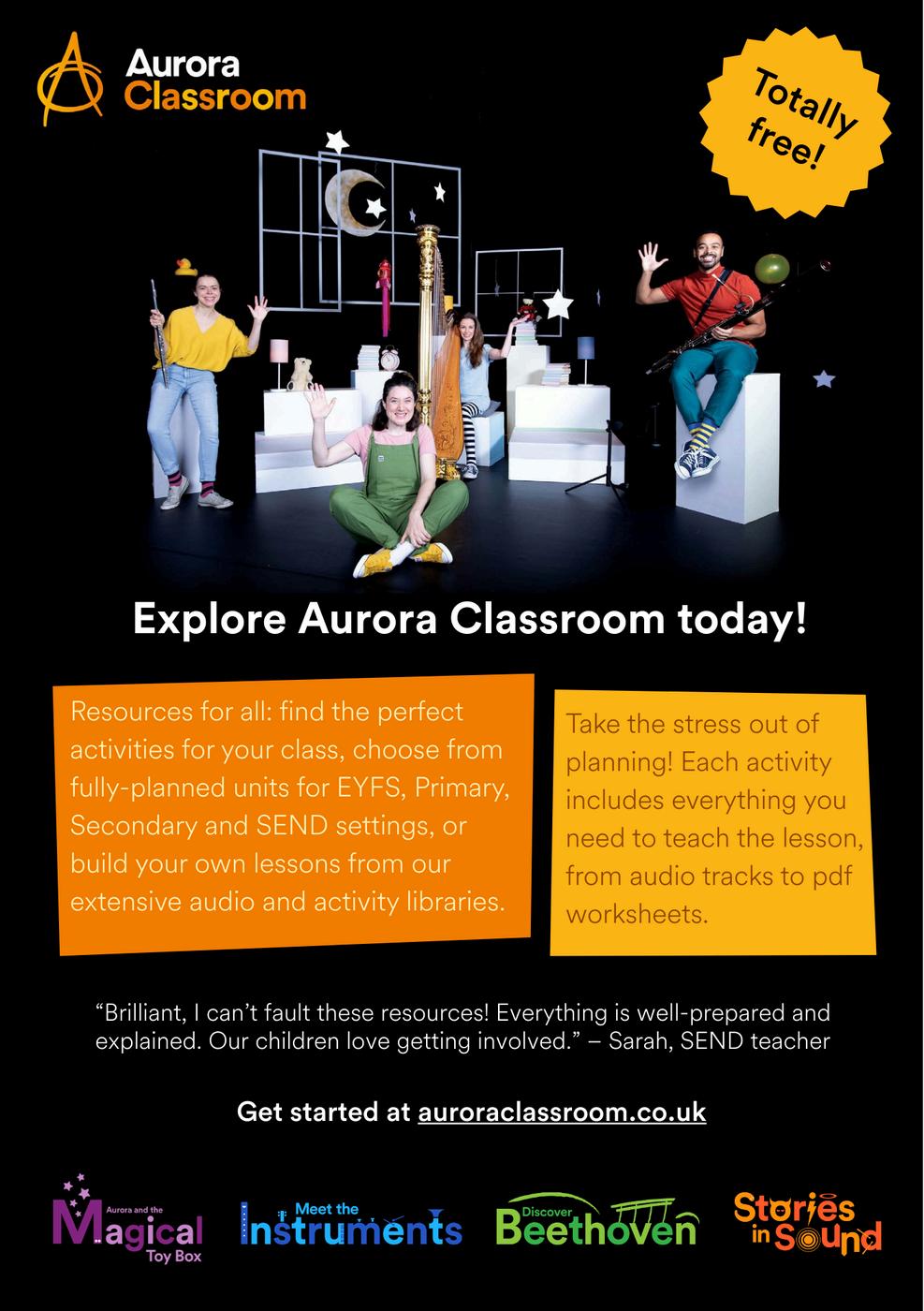
The Aurora Classroom journey began fifteen years ago in the concert hall with Aurora Orchestra’s award-winning storytelling concert series, Far, Far Away –joyful musical experiences that invite young children to step into the world of a particular composer and take part in a magical story Then, in 2020 when all live musical activity was put on hold, Aurora’s Creative Director, Jane Mitchell, could embark on a project that had been in her mind for some time.
“I had been thinking for a long time about how we could share our ideas about presenting music for young people more deeply and with a wider audience By 2020 our Far Far Away series had become very popular and I was struck that teachers attending our CPD sessions kept asking how they could take more of our shows back to their classrooms, which confirmed my belief that we shouldn’t keep hold of all the tools ourselves. I wanted to find a way to essentially hand over all our performances, ideas and methods and then, during the pandemic, I found myself with the time to give this serious strategic thought and start an experiment ” – Jane Mitchell on the inception of Aurora Classroom
Here began the development of the very first Aurora Classroom unit, based on our Tchaikovsky show ‘Aurora and the Magical Toy Box’, which you can watch in full as part of the unit. What started as a five-week unit soon exploded into a fully-planned ten-week unit for EYFS, KS1 and SEND settings which launched in September 2022, but it had become clear that we couldn’t stop there During the creation of the first unit the Aurora team had consulted with various teachers and music education experts, but it had become clear to them that a very deep collaboration with teachers was needed that would change the organisational structure of the orchestra, and it was at this point that I joined the team. Stepping out of the classroom after fifteen years as a Head of Music, I was able to bring a new perspective to the Aurora creative team as we started planning our second unit, Meet the Instruments. We were also incredibly fortunate to be joined by two wonderful primary music specialists, Sarah Lloyd and Helen Mead. Together with Jane we planned a truly epic unit which had discrete units of work for each year group across EYFS-KS1, plus adapted activities for SEND settings designed in collaboration with Patxi del Amo, a SEND-specialist consultant. In hindsight, we were probably at the limits of our ambition with this unit, creating over 350 individual activities, 800 audio tracks and 200 films, but we are incredibly proud of the resulting programme, which introduces key musical concepts and terminology at this early stage of their music learning journey in a fun and engaging way for young children.
The staff love it! So actually, it's engaging the children, but it's also got greater engagement from teachers who want to teach music ( ) Because we use Aurora, it will mean that a lot of generalists will be able to pick it up –Teacher response to evaluation, April 2025
We knew we had to turn to KS2 next, leading to the creation of units Discover Beethoven and Stories in Sound, launched in 2024 and 2025 respectively. These units, again informed by Sarah and Helen’s vast primary experience, are each accompanied by a short animated film, films of Aurora Orchestra playing on stage and fun songs written specifically for this age range by children’s poet Kate Wakeling and composer Iain Farrington, complementing the hundreds of activities which introduce the interrelated dimensions of music, playing classroom instruments, and composing music. As we ’ ve created more units it has been really exciting building a team which includes teachers, film-makers, writers and designers as well as musicians, and the resulting conversations have felt incredibly creative and joyful
“Collaboration has been at the heart of this work: I’ve had the privilege of working closely with fantastic musicians from Aurora Orchestra, experienced music teachers, and other creative professionals Together we ’ ve built material that feels alive, accessible, and inspiring for primary school children.” –Jim Hinson, filmmaker and photographer
At the heart of all of our work, whether on stage or online, is a simple belief that exceptional music should be for everyone. So what do members of the Aurora Classroom team remember from their school days and what do they have to say about their experiences of producing the resources?
What’s your favourite memory from primary school?
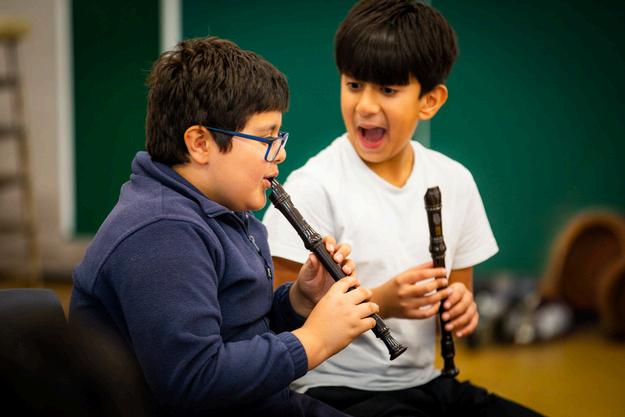
Jane Mitchell (Creative Director, Aurora Orchestra): “We had this amazing headteacher who organised a Year 3 recorder group to accompany all of the assemblies (!) and when I got to Year 3, I finally made it to the group. This meant I got to sit in the special orchestra position and we each had these music stands that were made out of wood and had a place to put your music and recorder. I don’t think I’ve ever been happier than the first time I got to sit behind that music stand!”
Linton Stephens (bassoonist in The Magical Toy Box and presenter of Discover Beethoven): “Oooh that’s a long time ago now. I had a best friend who used to make me belly laugh every single day Needless to say we were never allowed to sit together.”
Jessie Maryon-Davies (Aurora Orchestra’s Workshop Leader in Residence and presenter of The Magical Toy Box): “It’s hard to pick just one favourite memory! I got to be the Littlest Angel in a nativity play entitled The Littlest Angel, that was a big day! And in Year 5 I accompanied the recorder group performing Nessun Dorma (brilliantly epic for a recorder group) because the music teacher was sick. Huge! I went on to train as a piano accompanist so I can't help but think this was a formative moment, I felt so proud to be trusted.”
Jim Hinson (film maker and photographer): “I loved being part of the gymnastics club and I was desperate to learn how to perform spins and flips –breakdancing at the time was incredibly popular! I also remember learning to play the cello, which felt like the start of a whole new world opening up. And there was the day we dissected a cow ’ s eye in science – we all thought we were incredibly grown up and scientific! It’s funny how those moments stay with you, but they’re a big part of why I look back on primary school with such fondness.”
Kate Wakeling (Aurora Orchestra’s Writer in Residence): “My favourite memory from primary school was taking part in a Year 5 class shadow puppetry production of ‘A Christmas Carol’. It was a small village primary in Yorkshire, but
in my memory this show stands as every bit as lavish and complete and exciting as anything you’d find at the National Theatre and I’m not sure I’ve ever recovered from the delight of being part of it Thank you, Mr Gibson ”
What has been your input into the creative process of Aurora Classroom?
Helen Mead and Sarah Lloyd (Learning Resources Producers, Aurora Orchestra): “We worked with Jane and Rebecca to shape the EYFS and Primary pathways for three of the four primary units: Meet the Instruments, Discover Beethoven, and Stories in Sound.”
Patxi del Amo (Head of Expressive Arts and SEND consultant): “I helped design the structure and the content of the SEND curricula, which include the option to build your own units using strands of learning informed by the engagement model, for The Magical Toy Box, Meet the Instruments, and Discover Beethoven.”
Jim: “My main contribution to the creative process of Aurora Classroom has been through producing and shaping the hundreds of films that form a core part of the resource. The journey
has been incredibly rewarding Seeing how the films support teachers and how children respond how they learn, participate, and grow through the material has been one of the most meaningful outcomes of my career so far.”
Rebecca Barnett (Learning Director, Aurora Orchestra): “As well as helping to design the primary and SEND units, I am responsible for bringing the resources to life on our website (which means I’m also responsible for any typos!). I continue to keep my secondary-hat on whilst writing resources for KS3-5, and I also work with our partners to bring Aurora to more young people around the country, whether in their classroom or in regional concert halls ”
How do you think music can transform a child’s life?
Jane: I think music is such a profoundly important part of being human. It provides people with a way of communicating, a way of sharing and connecting and endless ways to express feelings In a world in which young people’s relationships with technology are evolving frighteningly fast, these elements of human expression and interaction feel vitally important to me. I firmly believe that a school that values and invests in music will be a happy one.
Linton: I’ll use myself as an example here I had a passionate music teacher who saw my love of music and very early on did everything she could to make sure I was involved. I wouldn’t be doing
anything in my life now if it wasn’t for her nurturing that early love.”
Patxi: “Music lifts lives out of the ordinary and helps us make sense of ourselves as creative, connected and grounded humans.”
Rebecca: “Music is almost uniquely placed in providing a safe-space for children and young people to be themselves, to find ‘their people’ and forge lifelong friendships outside of their own year group or even school. Where some people might write off a KS1 recorder group or choir as unimportant to later life, I have seen first-hand how these experiences can be transformational for a child and might completely change their life’s path.”
What’s your favourite Aurora Classroom activity?
Sarah: “I love 'Six Legs Good' from Meet the Instruments – it links to our topic of minibeasts and my children really love singing the song. ”
Helen: “I really enjoy using the Island Quest composition activity from Meet the Instruments with Key Stage 1 – the children get to be so creative and imaginative. “
Jane: “I’m particularly fond of Oh Beethoven! from our KS2 unit, Discover Beethoven. I think it fits the Aurora spirit perfectly – it combines humour with great respect for Beethoven and is so brilliantly written by Kate Wakeling and Iain Farrington Hearing children sing their hearts out about Beethoven’s messy handwriting and quoting his best known tunes makes me very proud!”
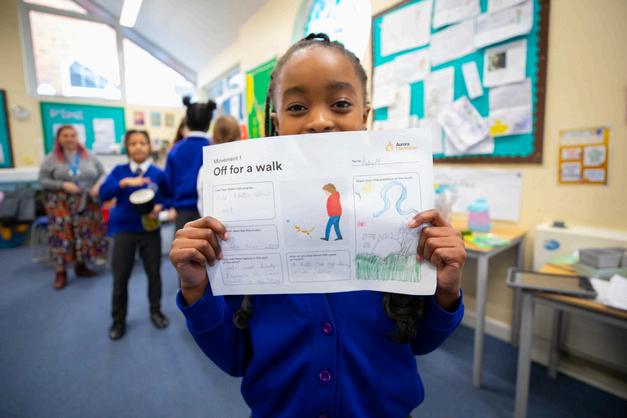
Kate: “I love how the ‘Listen and draw’ activities wake up the senses and invite each individual to move gently and sort of privately to the music as they draw, but in the communal setting of the classroom I also love how these activities celebrate the value of spontaneous creation without any fuss about the end result. There's no right or wrong here; rather, the activity encourages children to really listen and then enjoy the process of responding instinctively to make something new, just for its own sake. My hunch is that we could all do with a bit more of this sort of thing ”
I hope this quick peek behind the scenes at Aurora Classroom has given you an interesting insight into Aurora Classroom and why, as an orchestra, we believe so firmly in supporting music education in schools We are passionate about transforming children’s experiences of orchestral music in the classroom, but we also keenly feel the trepidation felt by many teachers who don’t feel adequately equipped to teach music: the subject-specific terminology (sometimes in another language), the risk of mispronouncing composers ’ names, a desire to not sing in front of others, and not being able to read notation to name just a few. Just as on stage Aurora Orchestra is known for reimagining what an orchestra can be, we want to support teachers to reimagine what their music lessons can look like.
“When I first saw the website, I was like, oh my... why do teachers not know [about this resource]? Why is this not in every mainstream school? This is the quality stuff that's needed.” – Teacher response to evaluation, April 2025.
Designed for generalists and music specialists alike, Aurora Classroom has evolved into an invaluable resource to have as part of your toolkit, with
hundreds of activities to support you to deliver fun and engaging music lessons, with the option to follow fully-planned units of work or build your own units from our extensive libraries. What’s more, you can access all of our resources completely free of charge! By removing any subscription cost we hope that every teacher can explore ways to bring Aurora into their classroom, whether they be looking for support in delivering the subject for the first time, new ideas to freshen up an existing unit, or materials to put on a performance Take a look at a shortened version of our Island Quest composition activity below to get a flavour of what we can offer, or head over to Aurora Classroom to see our full creative learning platform (for free!).
“Music can create big stand-out 'look at me ' moments on stage where young people can feel proud and seen and heard. It can massively boost selfesteem and confidence But also music can be a mindful, solo space where we can regulate and find inner calm.” –Jessie Maryon-Davies, Aurora Orchestra’s Workshop Leader in Residence
Set up your free account now at auroraclassroom.co.uk
Spring into Action
Watch your class blossom as musicians with these seasonal activities
Soundscapes: Spring has sprung
Start with a discussion: What do we hear in spring? Children might suggest birds, rain, wind, insects, lambs, or even lawnmowers In small groups, ask pupils to create a short “spring soundscape” using their voices, body percussion, and/or classroom percussion. Give clear musical boundaries such as the number of sounds, layers or sections, and the interrelated dimensions of music you would like included. Make sure that they give consideration to how the piece will start and end! You can introduce simple musical vocabulary naturally loud/quiet, fast/slow, high/low, and assess pupils on the creativity of their composition, not on how polished the performance sounds.
Rhythm and Patterns: Rain, rain go away
Spring rain is perfect for rhythm work. Begin by clapping or tapping rainfall patterns together: fingertaps for light rain, quiet claps for steady rain, thigh pats for heavy rain, and stamps for thunderstorms Older pupils can layer these rhythms to create texture, while younger children can copy and respond. Extend this into composition by using simple graphic notation dots, lines, or symbols to represent different rain sounds.
Musical Movement: From seed to flower
This is brilliant for younger pupils and classes that need to move. Play a piece of gentle instrumental music (or use a drum) and guide children through a movement sequence: curl up small like a seed, then slowly stretch as if growing, finally sway like a flower in the breeze. Change the music to explore contrasts: fast/slow, smooth/jumpy, loud/quiet This helps children feel music physically, which is just as important as naming musical elements. You can also ask pupils to suggest how the music should change to match each stage, giving them ownership of the learning.
Listening Lessons: Spring in Music
Choose one contrasting piece of spring-inspired music—Vivaldi’s Spring from The Four Seasons works well, but so do film soundtracks or nature-inspired pieces. Guide listening with simple questions What instruments can you hear? How does the music make you feel? What part sounds like spring? Why? Children can respond through drawing, movement, or short written reflections There are no wrong answers here, listening is about personal response.
20 female composers to listen
to on International Women’s
Day
1.Clara Schumann (1819–1896)
2.Fanny Mendelssohn (1805–1847)
3.Amy Beach (1867–1944)
4.Louise Farrenc (1804–1875)
5.Ethel Smyth (1858–1944)
6.Lili Boulanger (1893–1918)
7.Ruth Crawford Seeger (1901–1953)
8.Germaine Tailleferre (1892–1983)
9.Joan Tower (b. 1938)
10.Florence Price (1887–1953)
11.Hildur Guðnadóttir (b. 1982)
12.Laura Karpman (b. 1959)
13.Yoko Shimomura (b. 1967)
14.Helen Grime (b. 1981)
15.Rachel Portman (b. 1960)
16.Mary Lou Williams (1910–1981)
17.Nina Simone (1933–2003)
18.Carla Bley (1936-2023)
19.Unsuk Chin (b. 1961)
20.Tania León (b. 1943)
Looking to take the next step in your career?
Searching for a qualification you can do while working?
Need professional recognition for the job you already do?
Want to get better at teaching music?
These are just some of the reasons that teachers like YOU study for the Level 4 Certificate for Music Educators with Music Education Solutions®
Join our flexible course at the oldest and largest Trinity CME centre in the world to complete this prestigious qualification via online learning.