Painting. System. Memory.
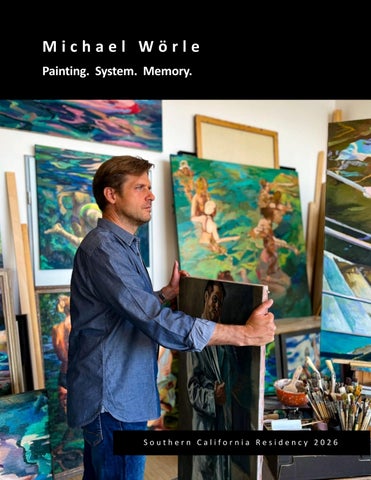
Painting. System. Memory.
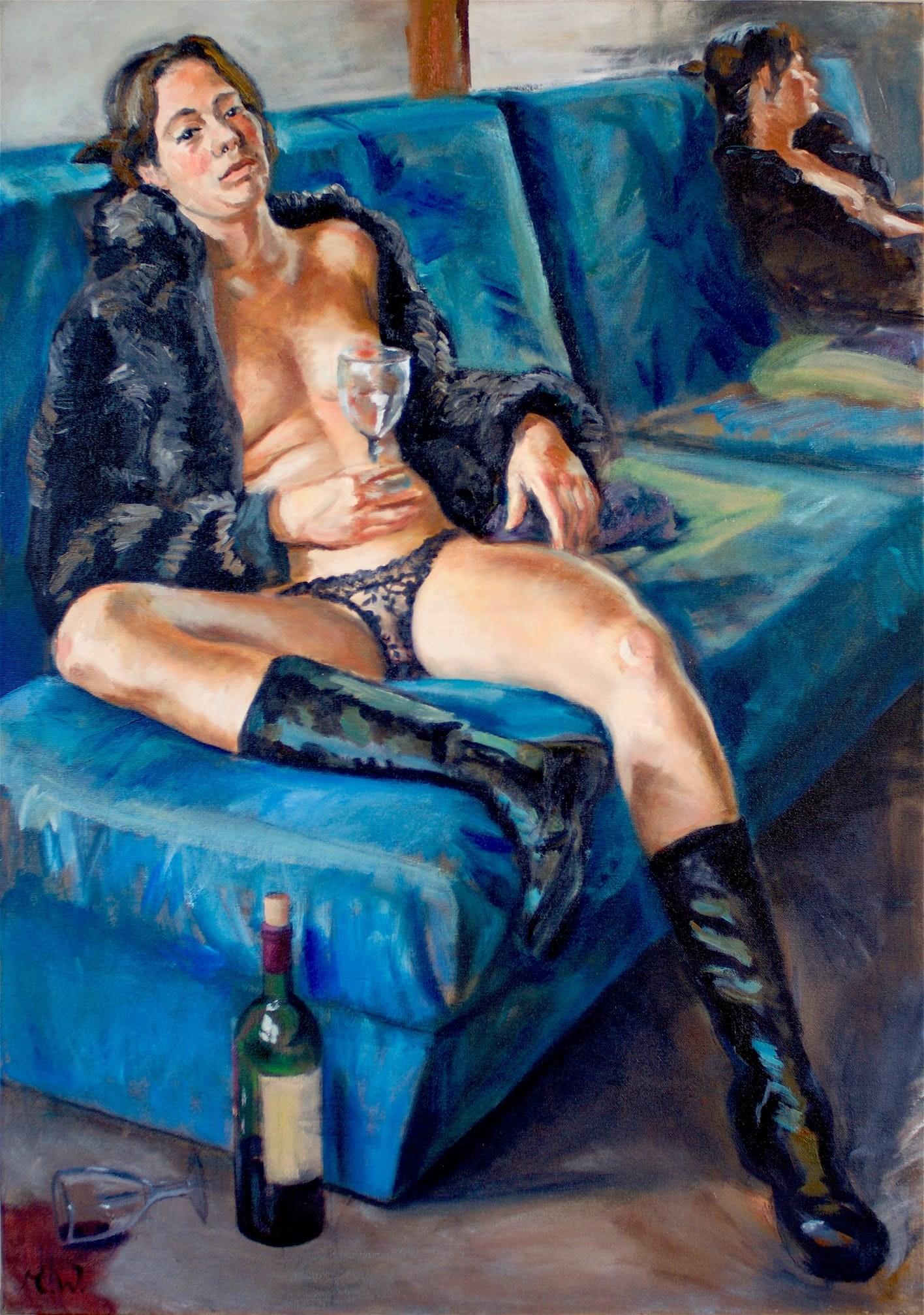
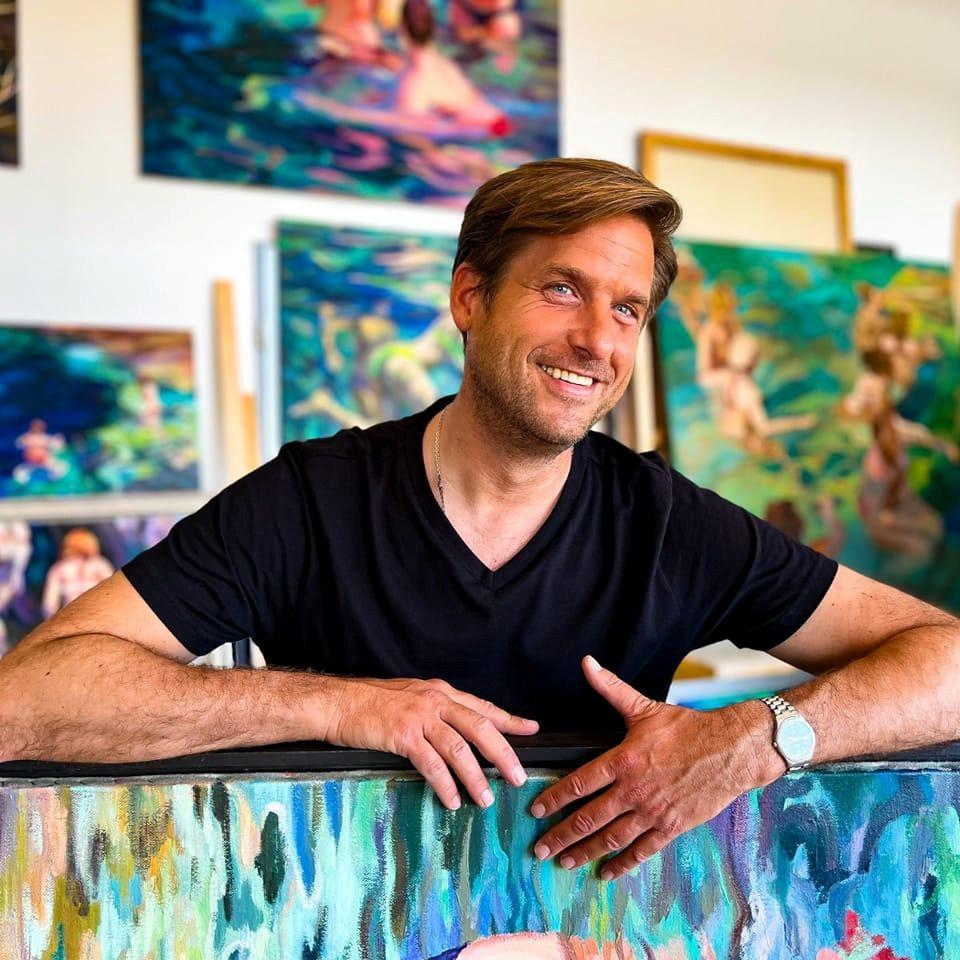
is a European painter whose work explores sujets and landscape not as depictions, but as a structured memory fields. His paintings operate at the intersection of abstraction, architecture, and cultural geography, where color functions not emotionally but structurally, carrying order, rhythm, and spatial intelligence.
Rather than producing isolated works, Woerle develops coherent bodies of work governed by internal rules format, palette, serial logic allowing each painting to stand alone while remaining legible as part of a larger system. This methodology positions the work equally within contemporary painting discourse and within architectural, curatorial, and institutional contexts.
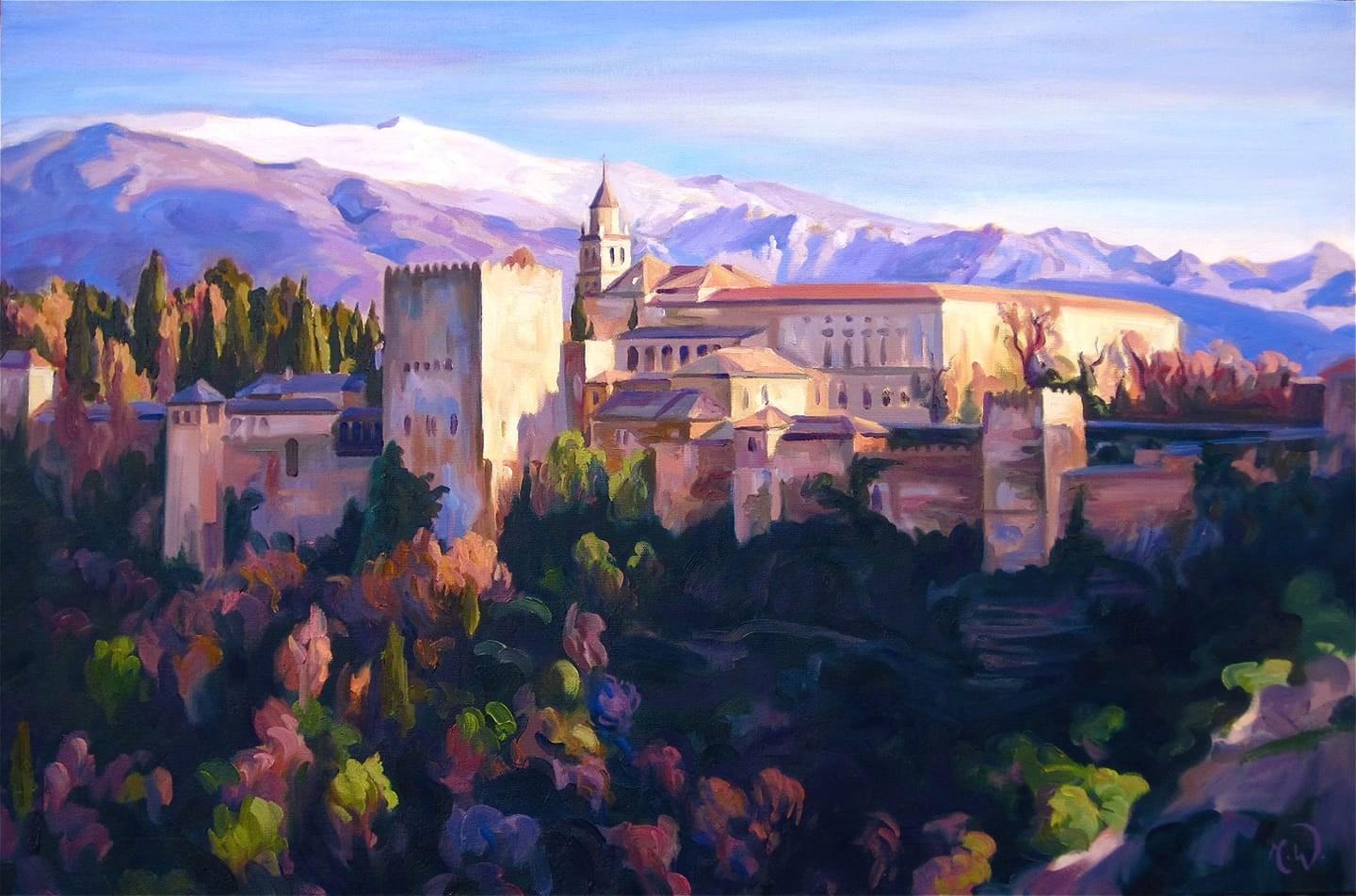
Historically rooted in European cultural landscapes — Italy, the Alpine region, and Central Europe Woerle’s practice is now expanding toward the American Southwest, beginning with a residency in Palm Springs in late 2026. There, new keystone works will emerge that respond to desert light, modernist architecture, and the spatial openness of the region, forming the foundation of a distinct U.S. work group.
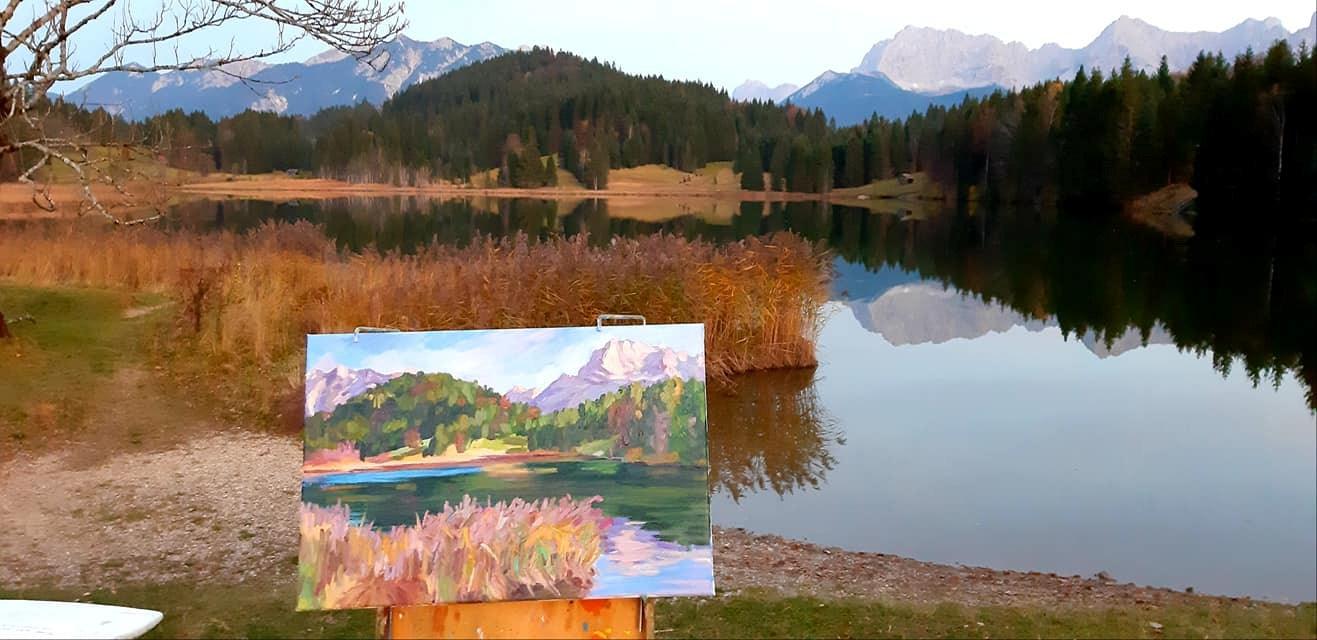
Woerle’s long engagement with the European Alps has shaped a precise understanding of how mountains function pictorially as structural masses, atmospheric regulators, and spatial anchors. This translates directly into new explorations of the San Bernardino and San Jacinto mountain ranges, reconfiguring altitude, desert light, and distance under new conditions.
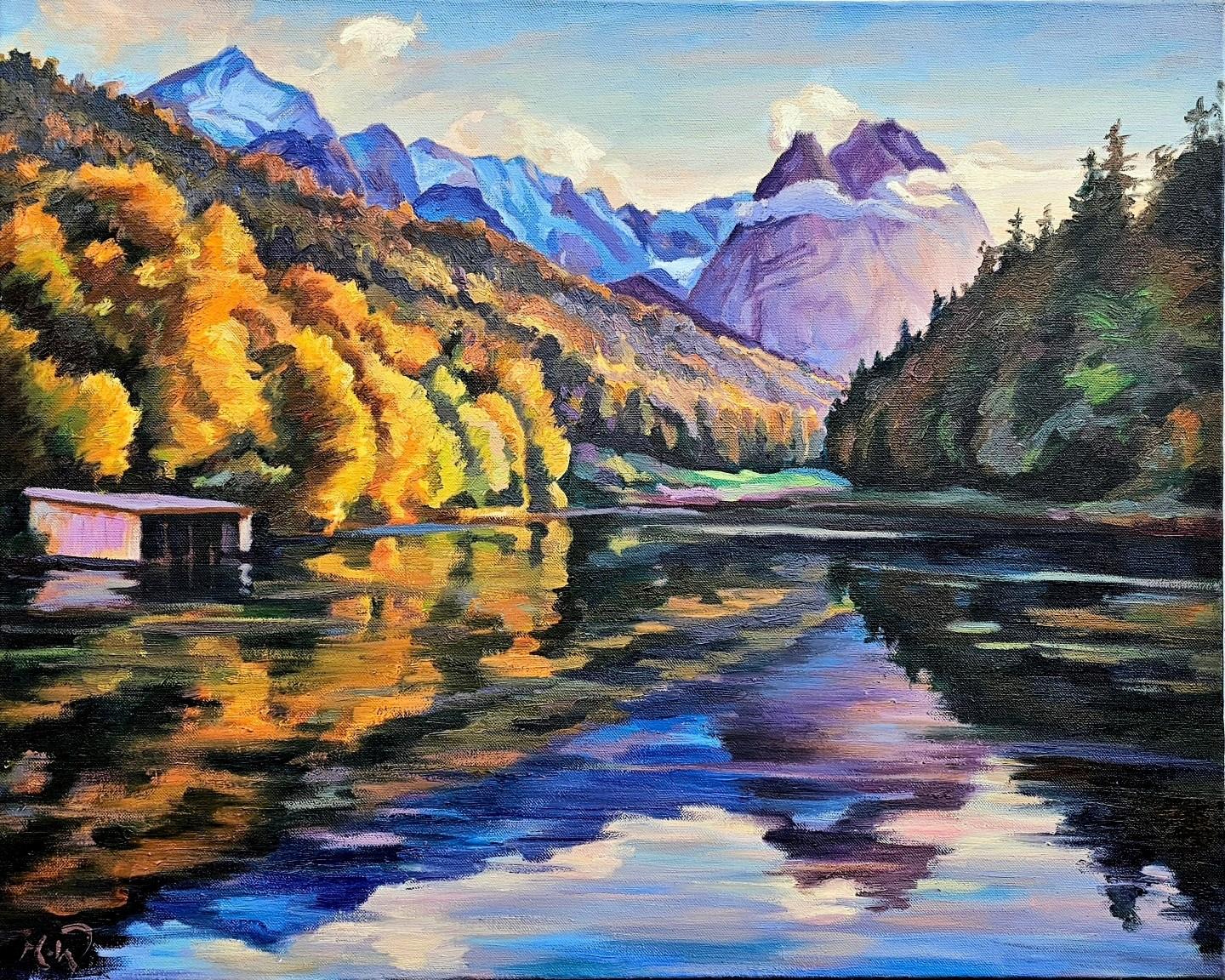
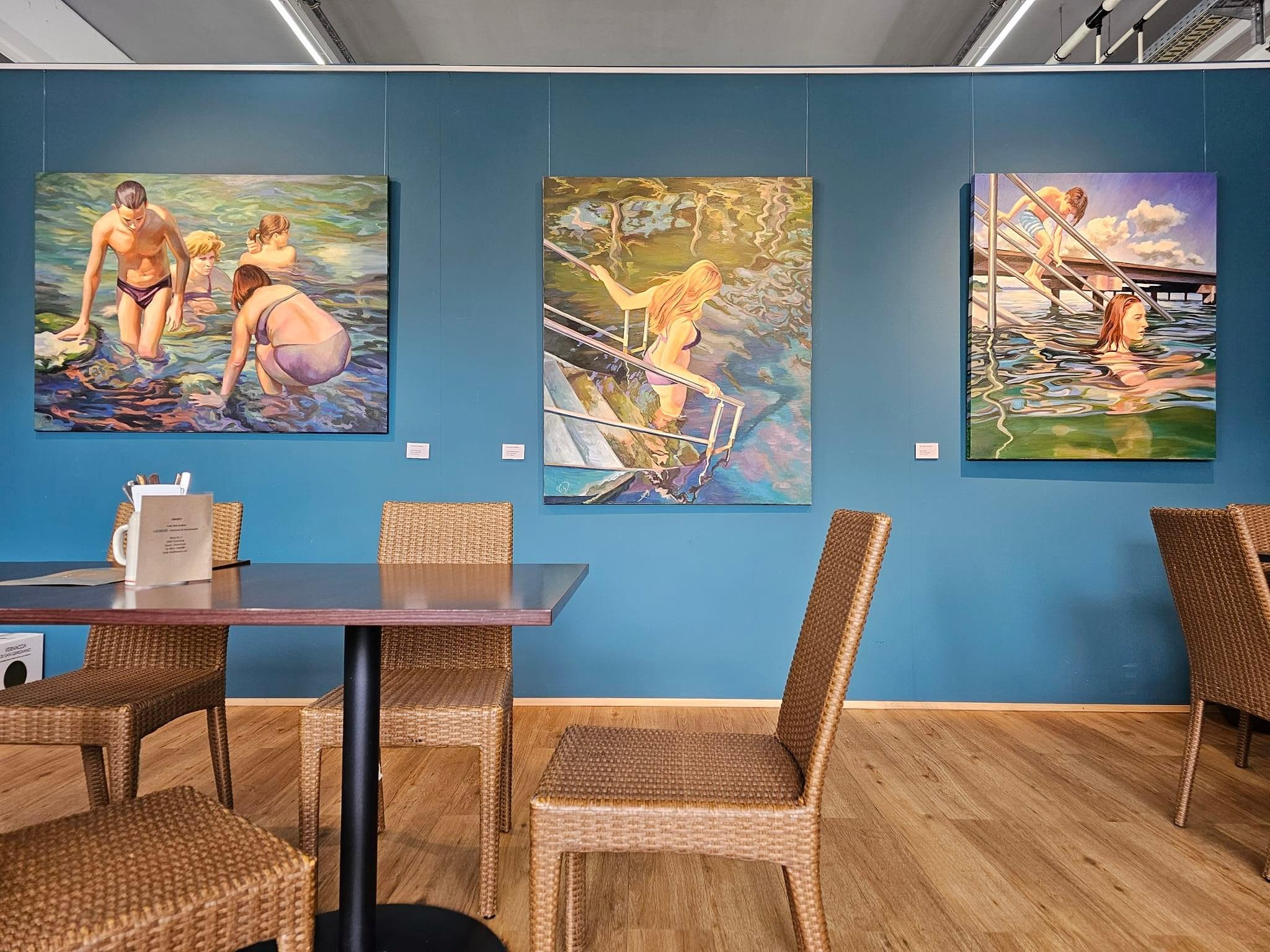
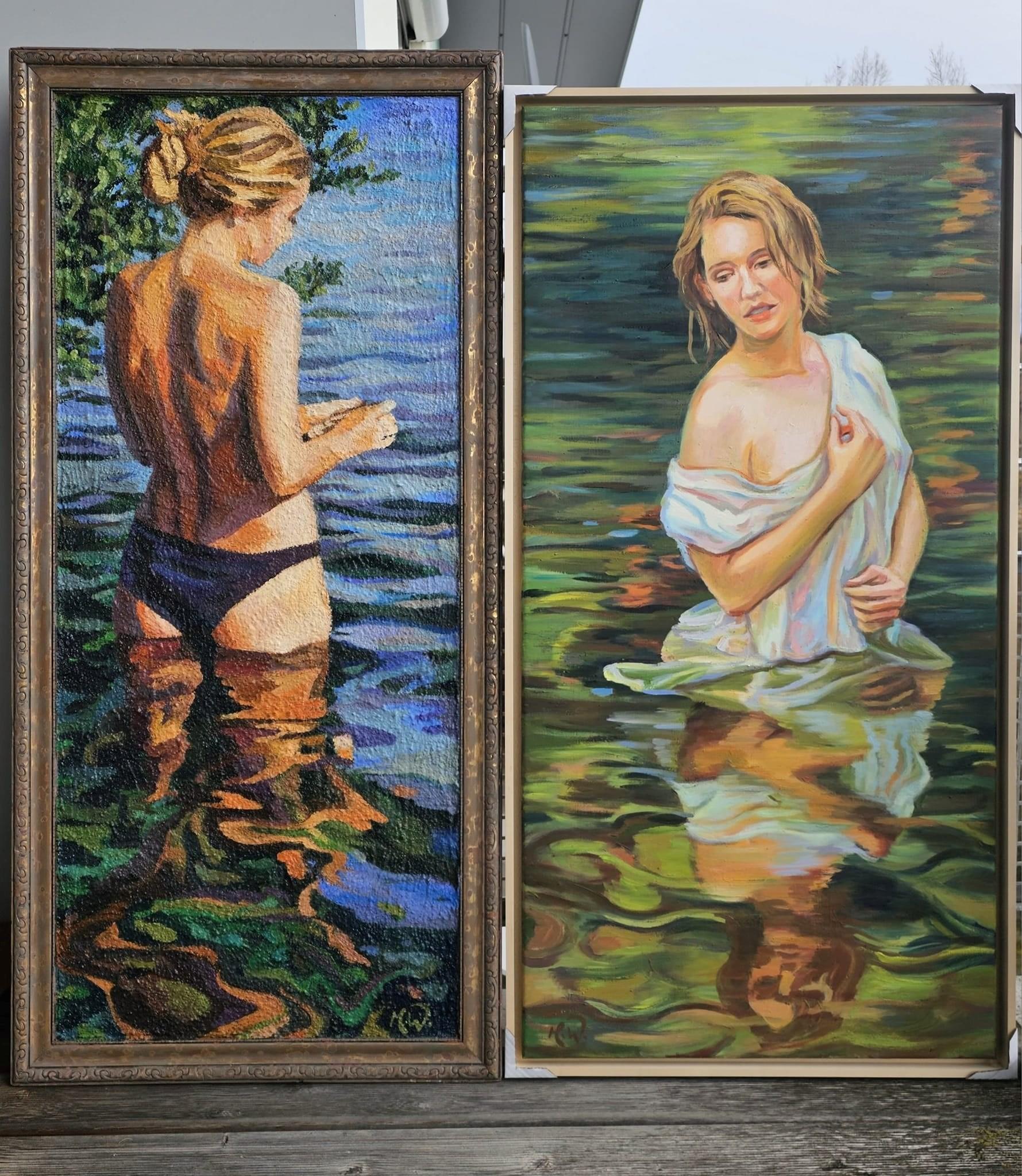
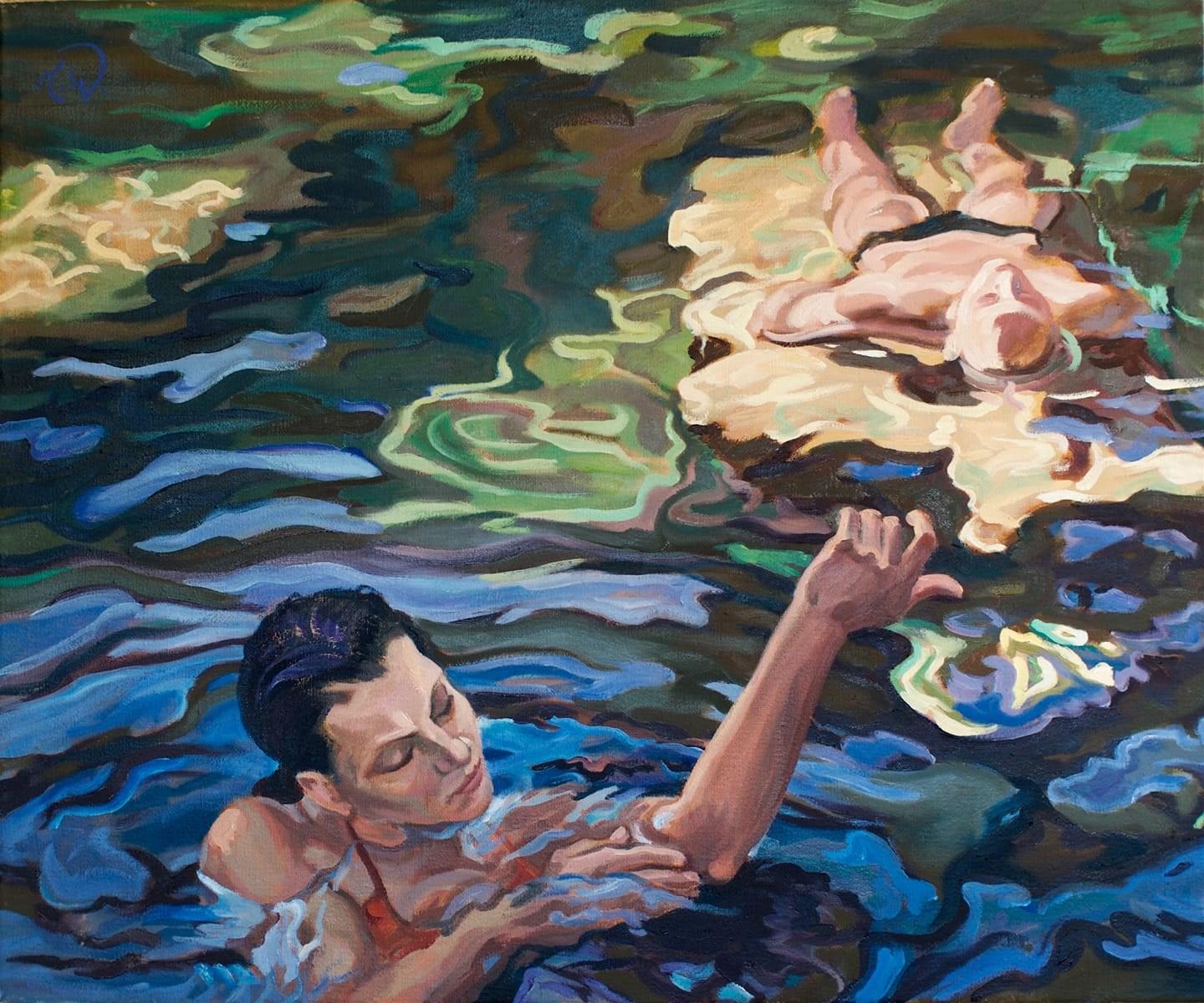
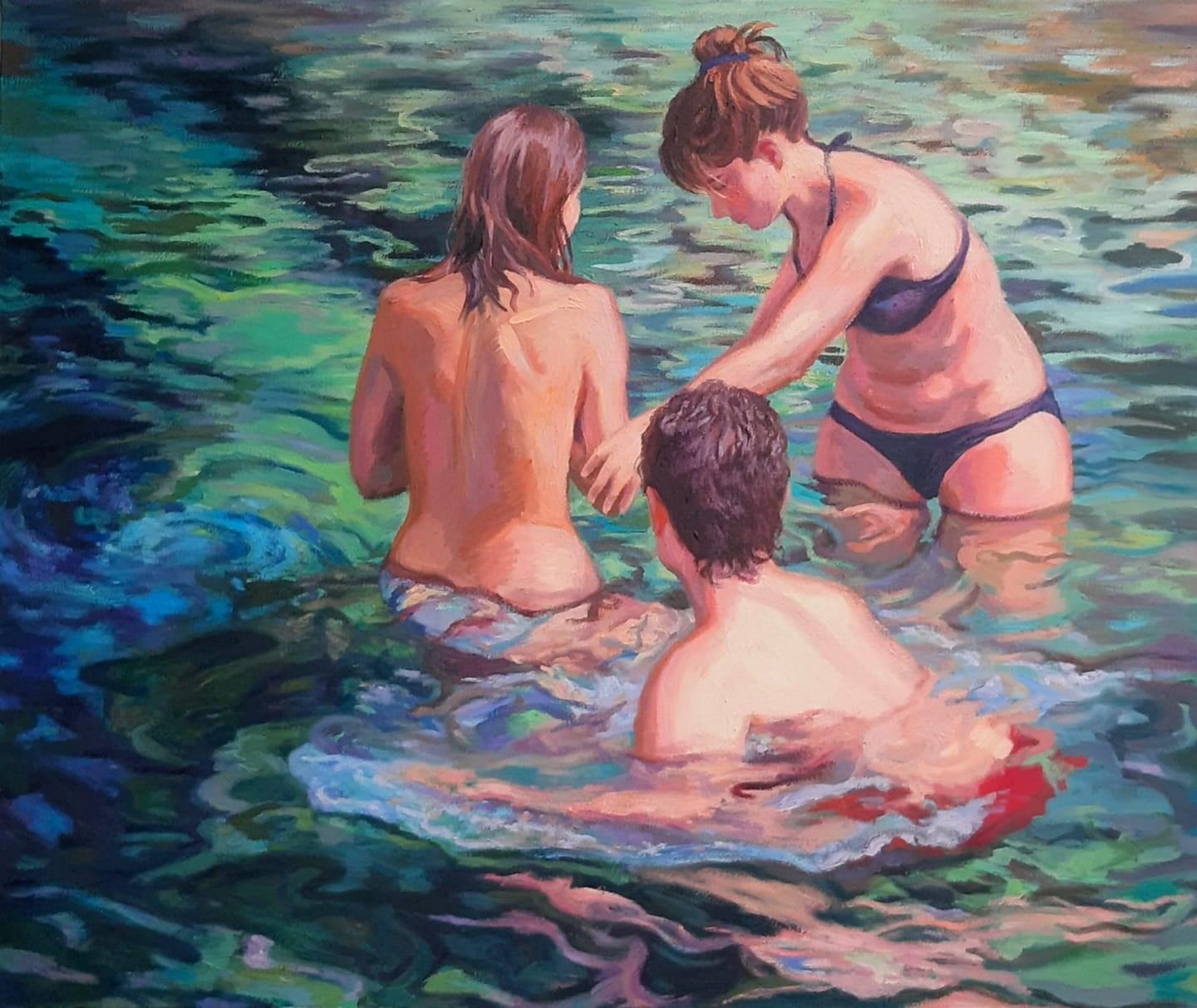
Equally central to this expansion is Woerle’s engagement with Palm Springs’ midcentury modern legacy: Poolside imagery, planar walls, reflected light, and architectural shadows appear not as lifestyle references, but as formal devices. Pools become horizontal mirrors, architecture becomes compositional structure, and color operates as spatial order rather than expression. This resonates naturally with Southern California’s relationship to modernist architecture and light.
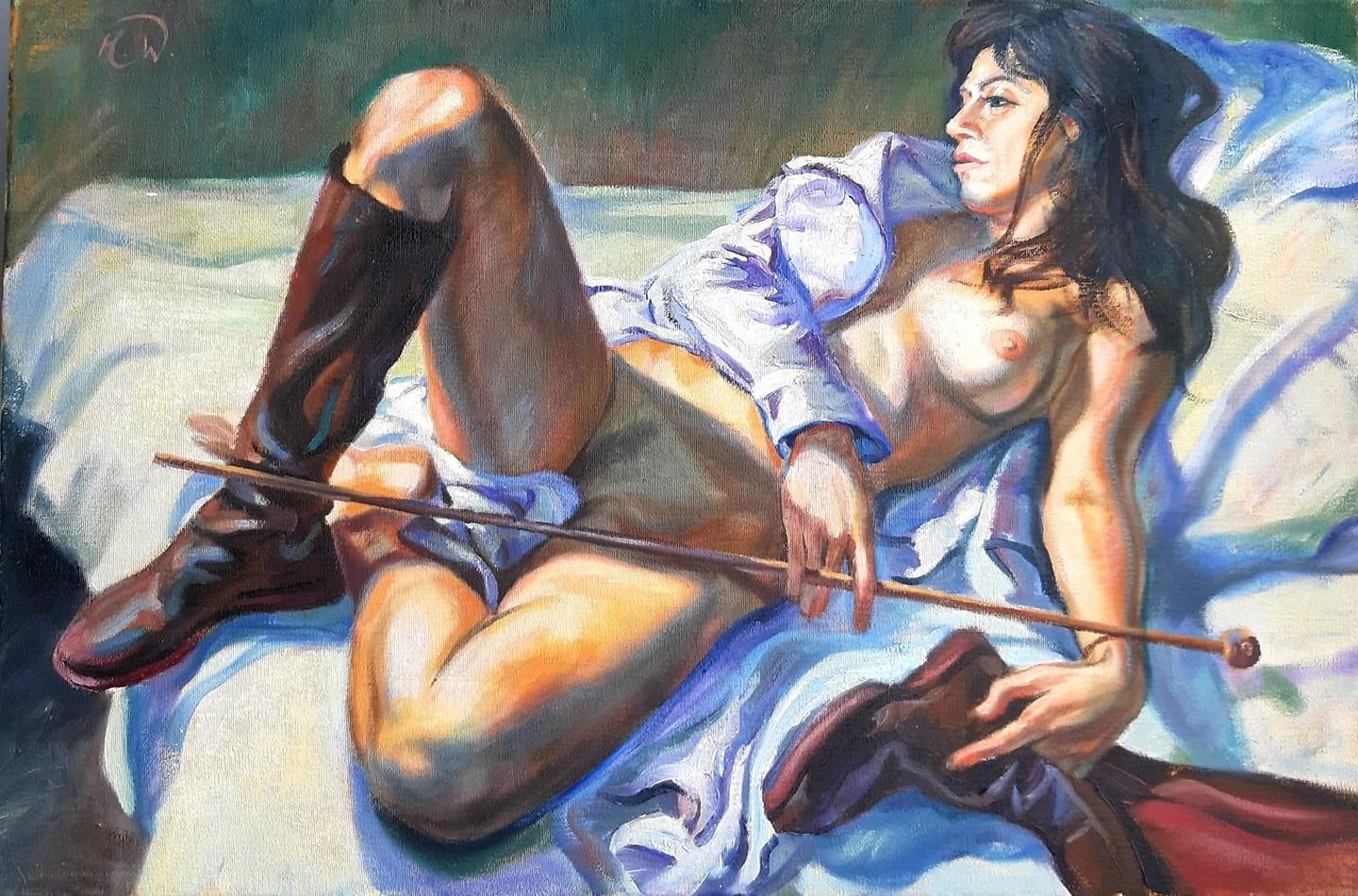
At its core, Woerle’s practice remains grounded in the heritage of European representational painting. Even in its most reduced form, the work retains horizon, depth, and orientation, allowing abstraction to remain intelligible and anchored. This lineage positions the paintings comfortably within contemporary discourse while maintaining historical continuity valued by collectors and institutions alike.
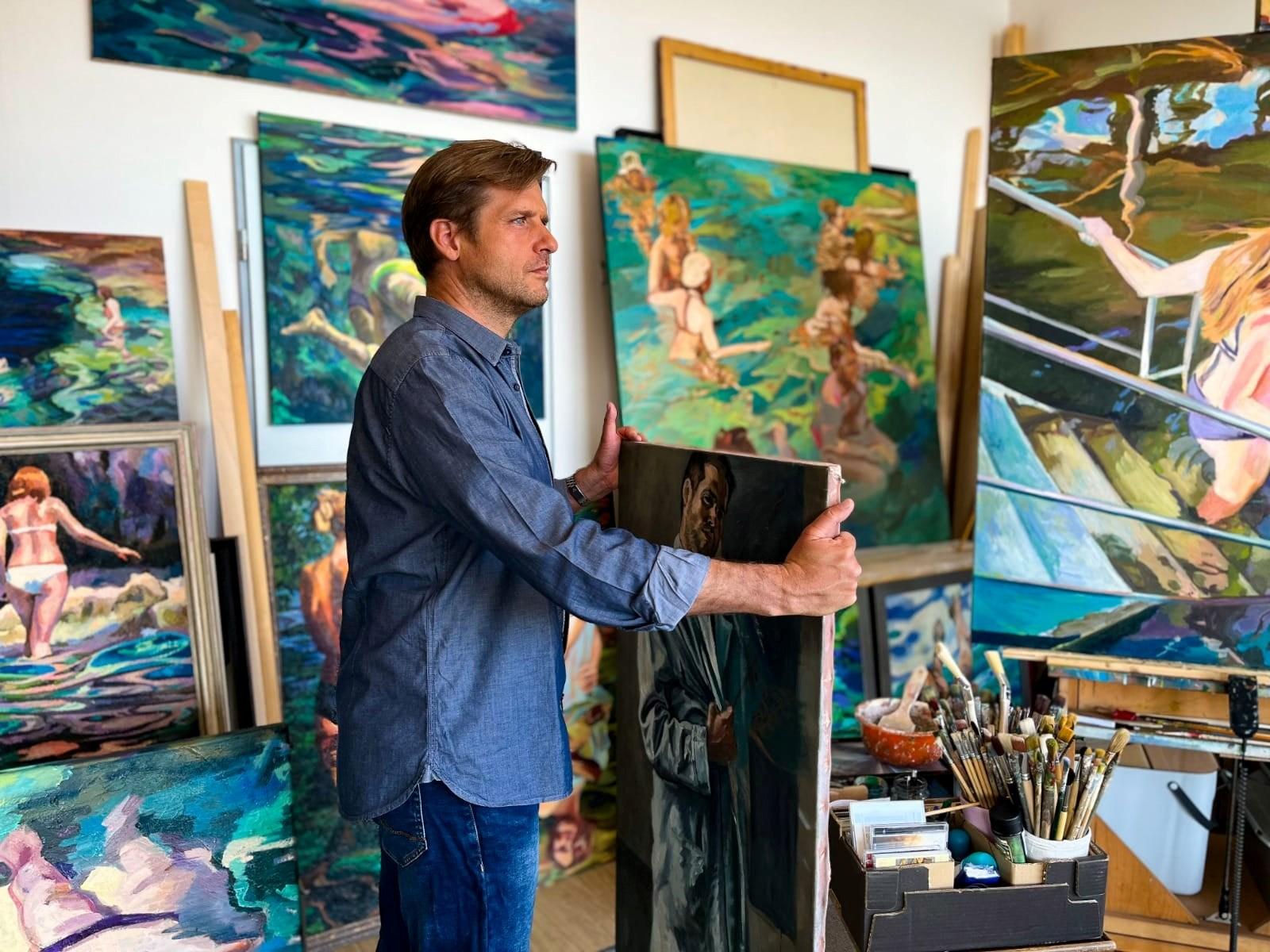
Woerle works in coherent bodies of work, not isolated gestures. His practice follows a tiered structure from large-scale keystone paintings to systematic series and smaller studies — enabling gallery programming and collector access without compromising conceptual rigor.
For Southern California galleries, Michael Woerle o ers a rare combination: European discipline, architectural compatibility, and regional sensitivity, articulated through a calm, authoritative painterly language.