There was a time when the weekend show was where everything began.
Before the mega circuits and destination events, there were local arenas—dusty warm-up pens, familiar faces, and classes that meant everything to the people in them. Those shows are where so many of us learned. Where we made mistakes. Where our passion took root. Where we discovered not just how to compete, but how to belong.
I grew up at those shows—first in Wisconsin, then across the Midwest. We didn’t measure a weekend by payouts or prestige. We measured it by progress—the first moment it all came together, the first small win, the first circuit championship. It was never just about winning. It was about showing up, weekend after weekend, because you loved it.
Those shows built this industry. In many ways, they still do.But today, they are disappearing.
As we explore in this month’s feature, “Holding the Line,” costs have risen while participation has shifted. Margins are tighter. Risks are greater. And the definition of success has quietly changed—from growth to survival. These events remain the industry’s stepping stones, yet increasingly they are sustained by a small group of people giving their time, energy, and resources with little in return— holding on because they believe these shows still matter. And they do.
They matter to the kid walking into the pen for the first time. They matter to the amateur balancing a career, a family, and a love for horses. They matter to the young horse that needs a place to learn before being asked to perform on a bigger stage. And they matter to the future of this industry.
At Premier Sires, we believe those shows are worth protecting.
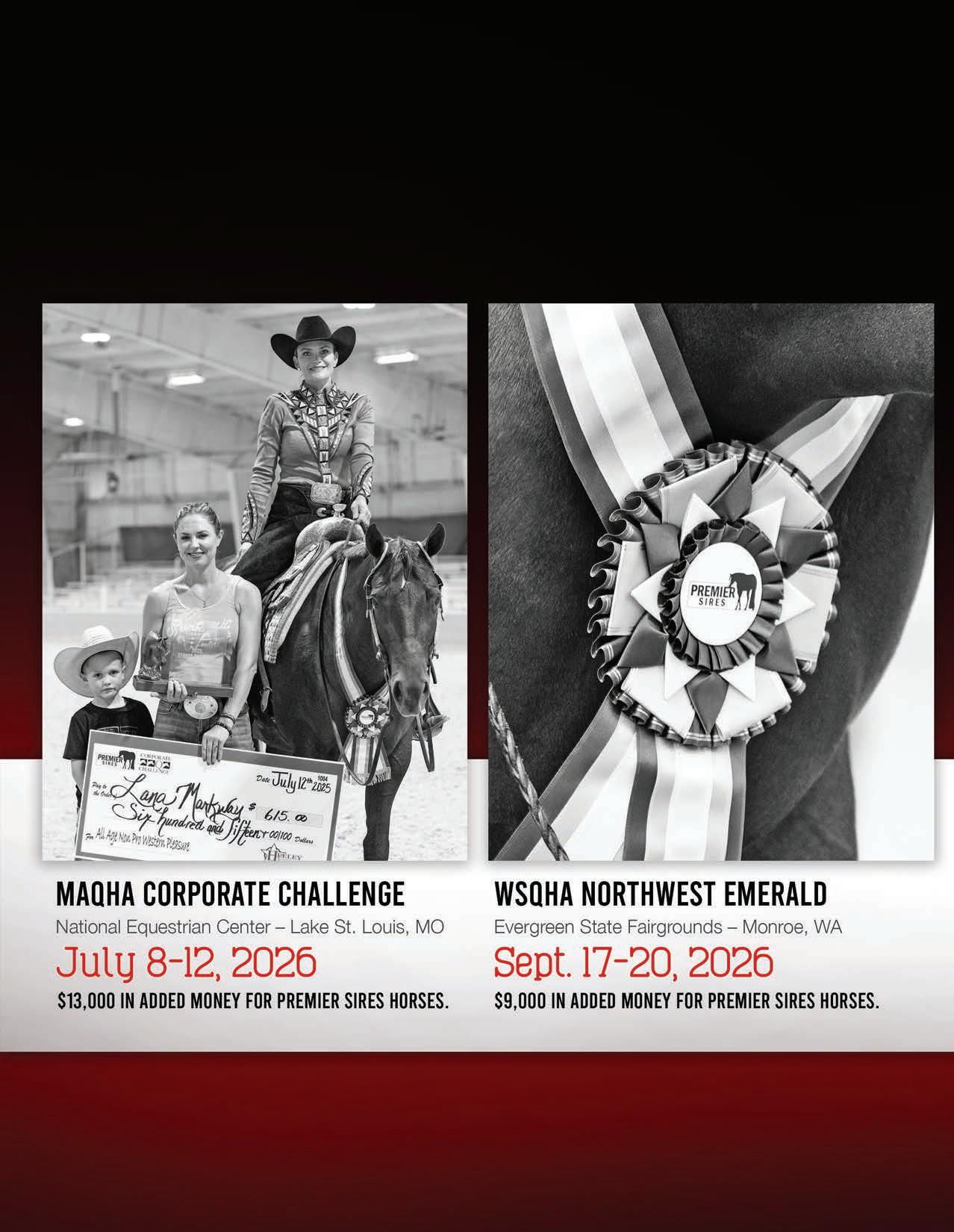
Through our Matching Funds program, we partner with state and regional events to increase payouts—matching their contributions dollar for dollar. So far this year, $34,000 in added money has been committed, helping offset the challenges these shows face, creating opportunities for exhibitors, and investing back into the foundation where it all begins.
But more than that, it reflects something I believe deeply: that the health of this industry is not defined solely by its largest stages, but by the strength of its foundation.And that foundation has always been the weekend show.
If we want to protect the future of this industry, we have to invest where it begins. We have to recognize the effort behind the scenes, support the people doing the work, and choose—intentionally—to show up.
Because for many of us, myself included, those weekends were never just the beginning of something.
They were everything.
With sincerity,
Claire Binkowski Founder, Premier Sires



Written by Elizabeth Arnold
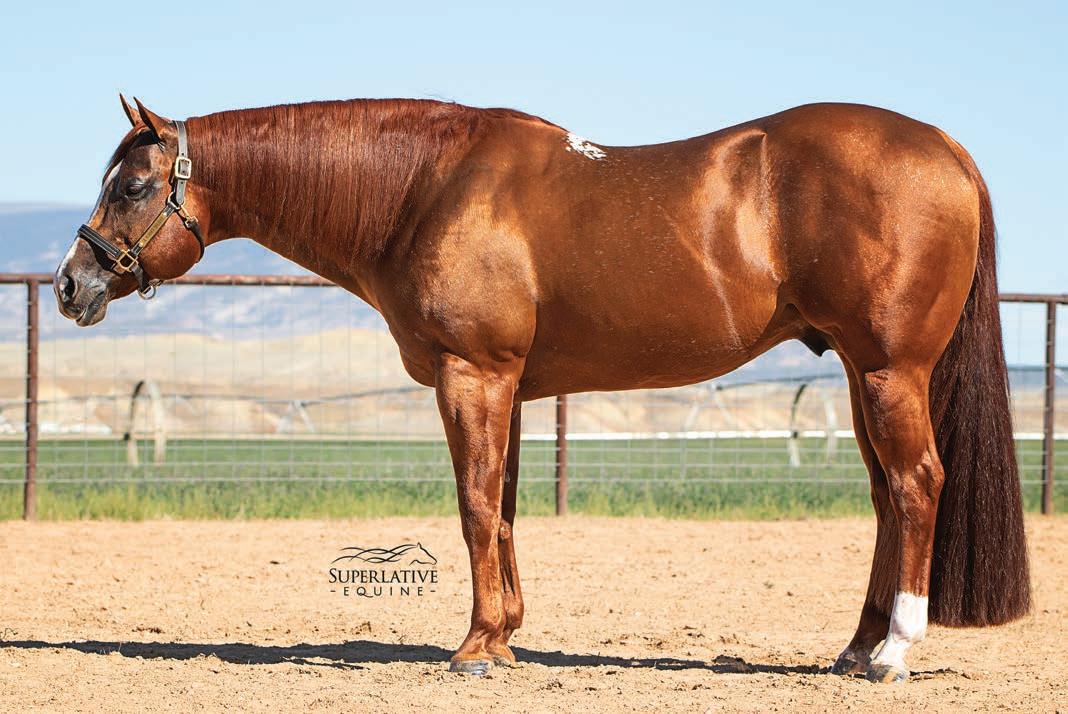
In the horse business, timing is everything.
Sometimes it’s the right cross. Sometimes it’s the right trainer. And sometimes, it’s a second chance.
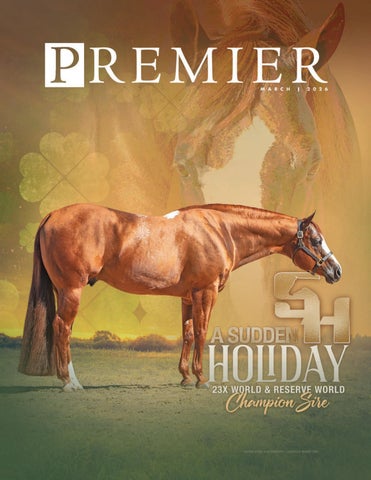
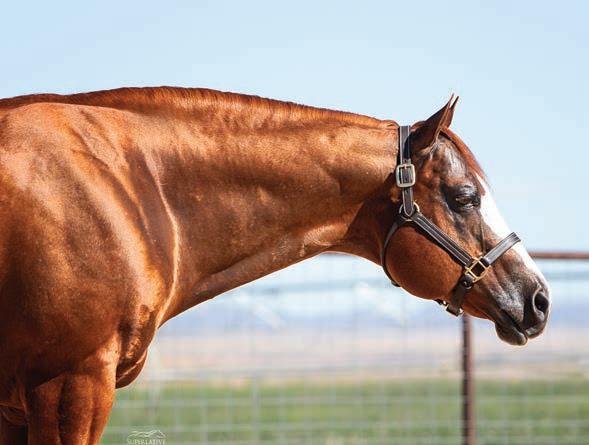
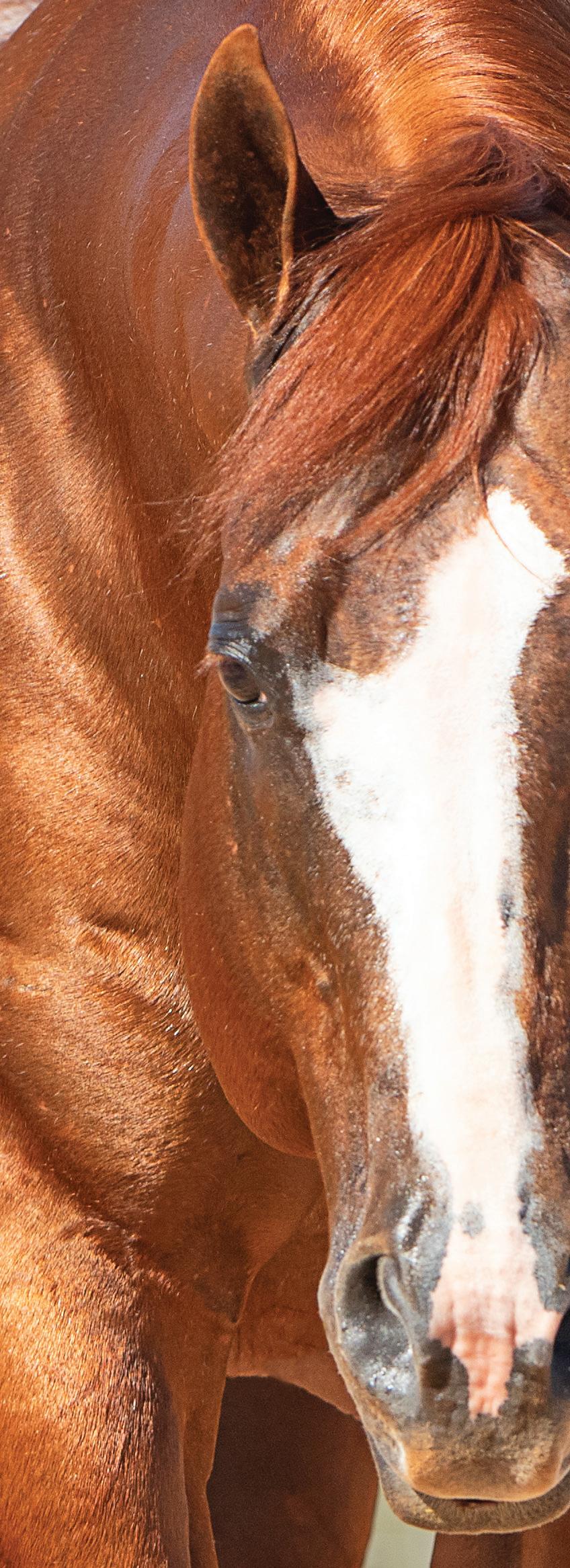
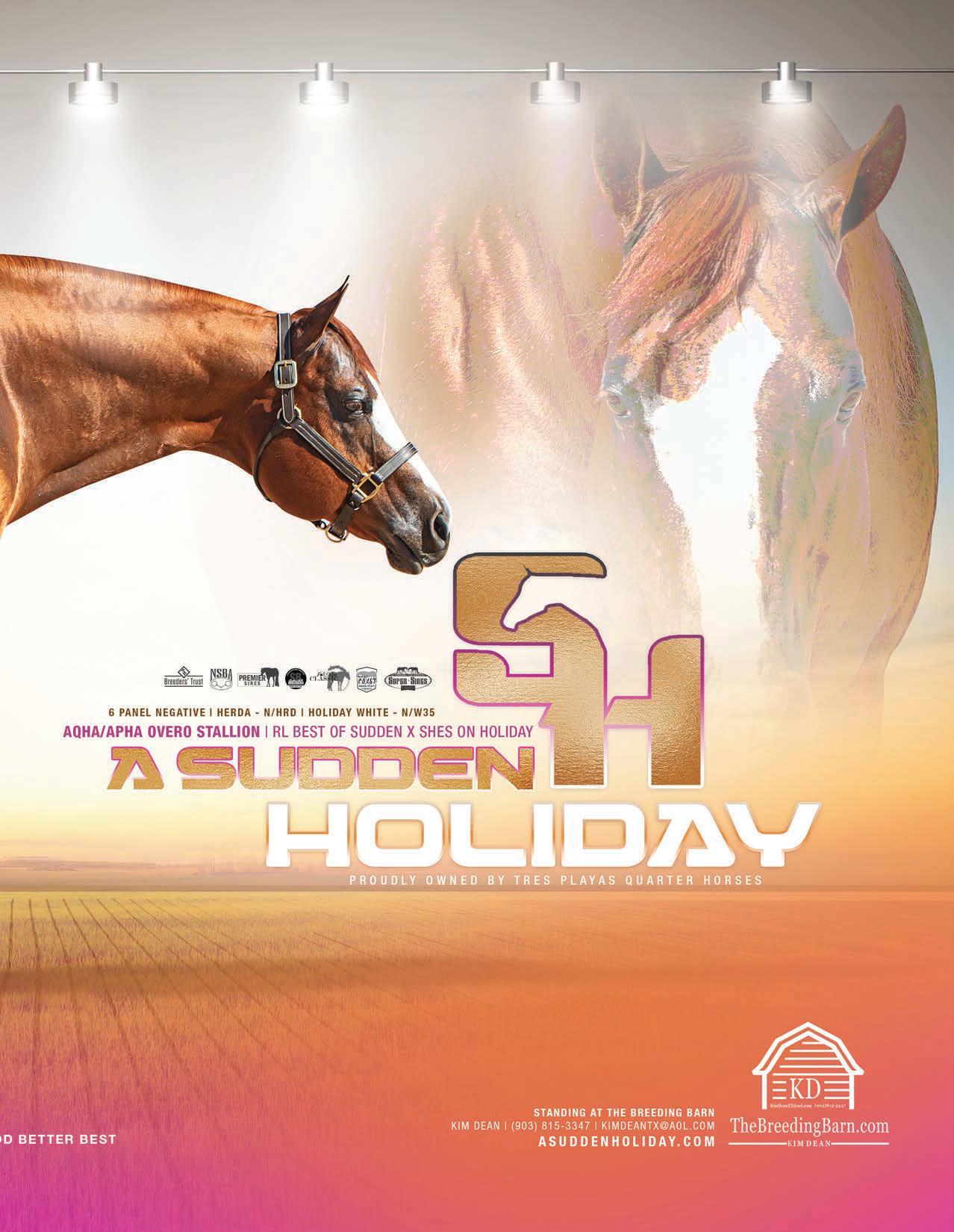
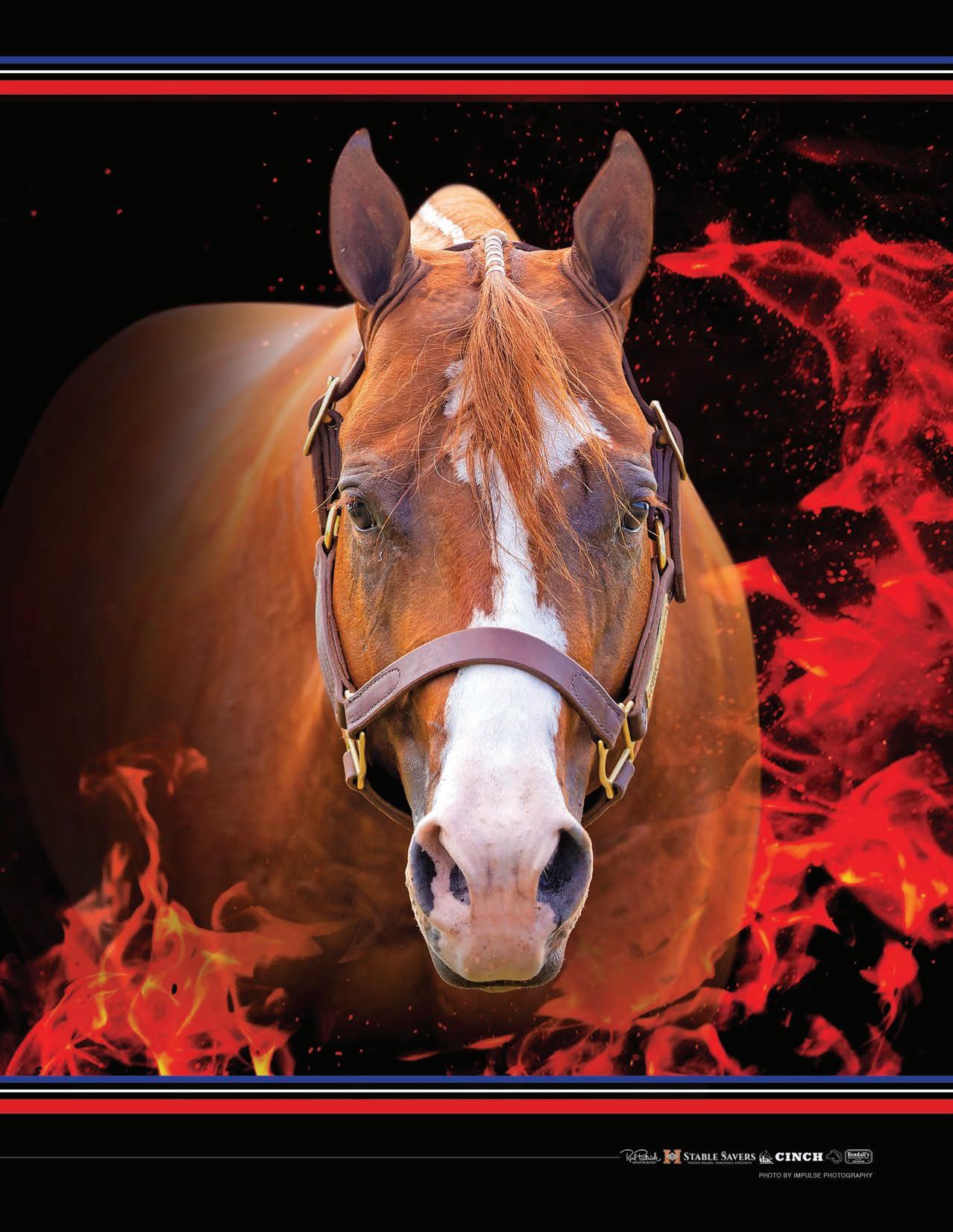
For Mallory Moore, that second chance arrived in the form of a sorrel overo stallion she once owned, once lost, and never forgot: A Sudden Holiday.
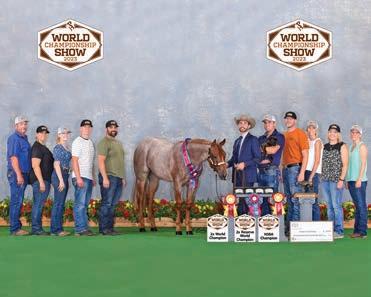
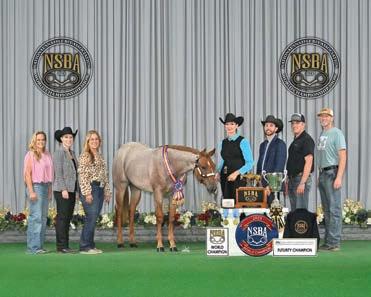
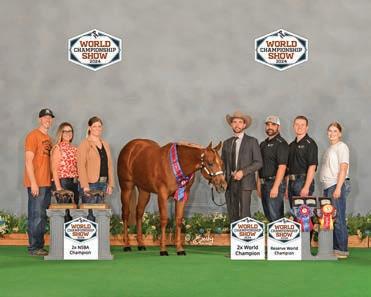
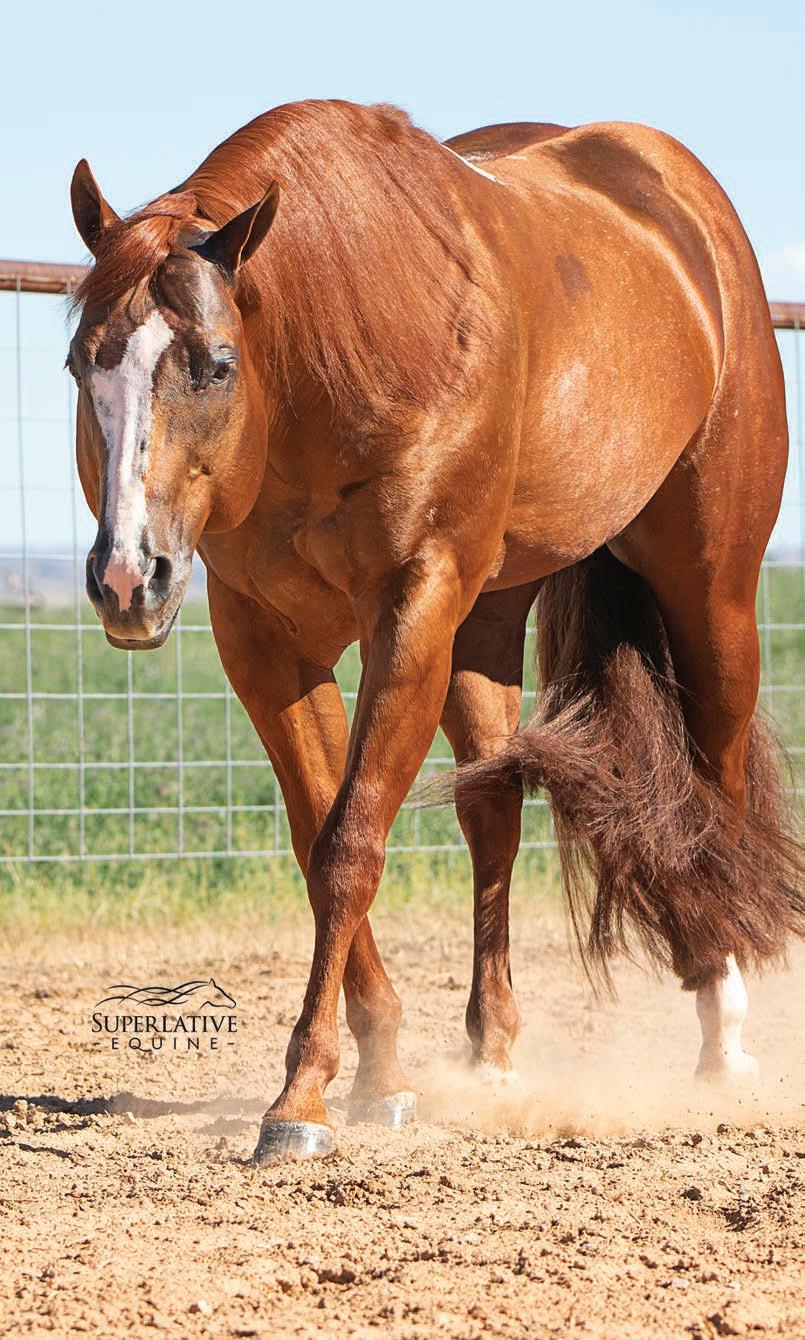
Today, “Hank” is a multiple World and Reserve World Champion sire across the APHA, PtHA and NSBA competition. His record speaks for itself. But the story behind it—marked by dispersal, rediscovery, scientific breakthrough, and an unlikely return— is what truly defines him.
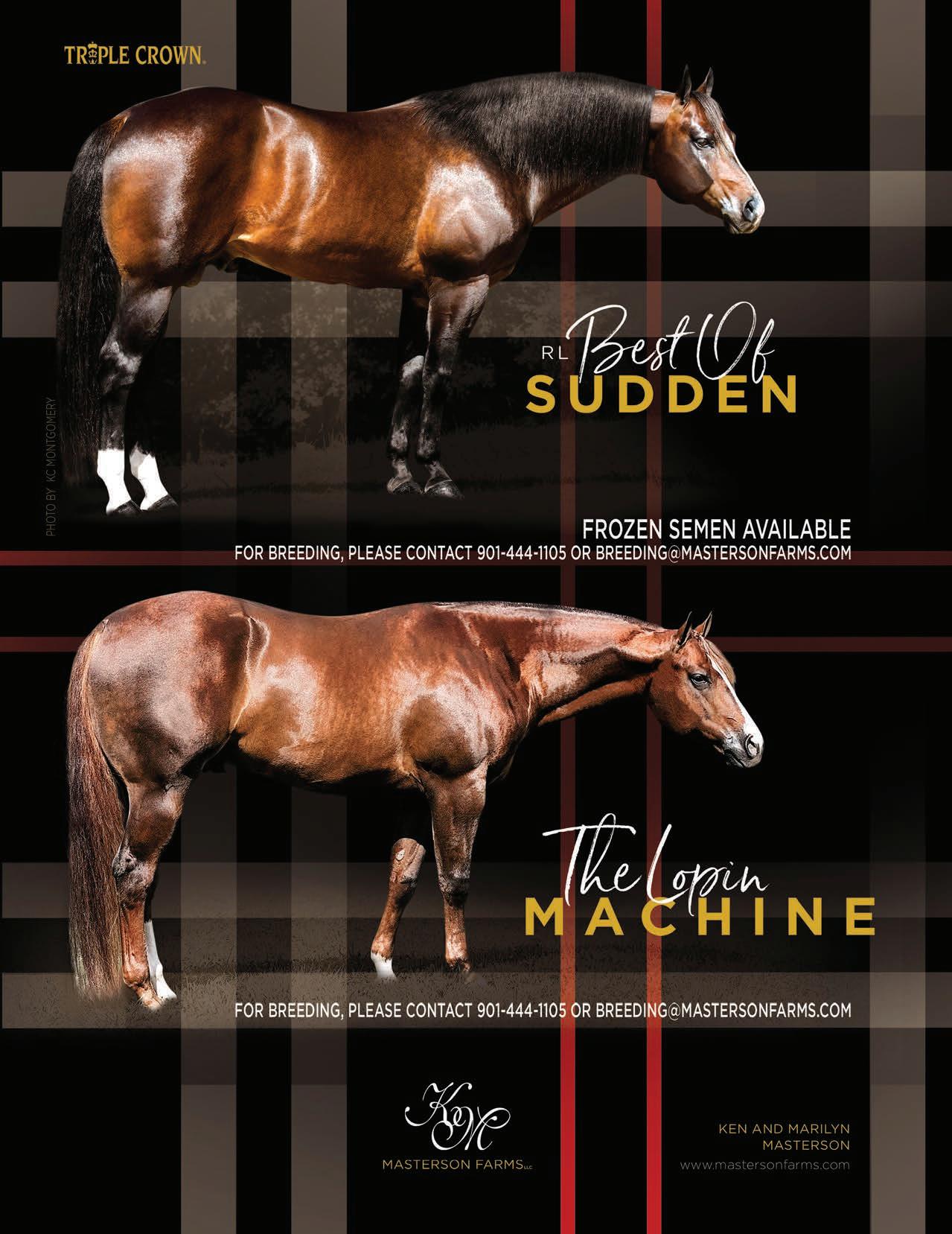
Mallory’s family purchased Hank as a yearling in 2013 from Stanley and Susan Scott. Sired by RL Best Of Sudden and out of Shes On Holiday, he represented a pedigree she deeply respected—rooted in what she calls “old-school pleasure power.”
‘That dam line mattered to me,” Mallory recalls. “Those
were substantial horses—strong-backed, balanced, capable of carrying themselves in a way that defined an era before everything became so specialized.”
Even as a youngster, Hank stood out: square and level, strong over his topline, with an undeniable presence. He wasn’t just attractive—he was built for longevity.
But as often happens in life and business, circumstances shifted. Family changes led to the liquidation of horses, and Hank left their program.
“I lost track of him,” she says.
Years passed.
After changing hands several times, Hank eventually landed in Utah, where Paint breeders Branson Buckalew and Tyler Whitlock encountered him. Branson remembered the stallion and was immediately intrigued.
“I liked his build, the way he moved, and his unique markings,”
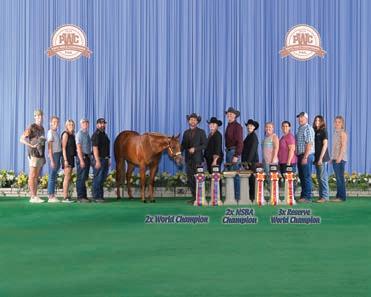
Branson says. “He was double registered, had a strong dam line, and was a two-time World Champion in Performance Halter. He checked a lot of boxes.” There was one hesitation. In the Paint industry at the time, color genetics carried weight—and Hank did not appear to carry a recognized color marker.
“If you didn’t have a color marker, it limited your options,” Branson explains. But something about Hank’s distinctive white markings—particularly across his withers—suggested there was more to the story. Trusting that instinct, Branson sent hair samples to Etalon Diagnostics.
Months later, confirmation arrived: researchers had identified a previously unclassified white-pattern gene. After peer review and validation, the American Paint Horse Association officially recognized it as W35—now widely known as “Holiday White.”
What began as curiosity became a scientific milestone.
During three years of ownership, Branson and Tyler focused on building Hank’s reputation the traditional way—through results.
What stood out most wasn’t just the color potential. It was consistency.
“No matter the mare, they’re built alike. They move alike. He stamps them,” Branson says.
Uniform toplines. Balanced frames. Substantial bone. Attractive heads. Even, reliable movement in both directions. His foals demonstrated the kind of predictability breeders value most.
“He may have gotten a late start and bounced around early,” Branson reflects, “but his foals are proving themselves in the longe line and performance arenas. I believe he’s a great sire with big things ahead.”
To date, his offspring have earned more than twenty World and Reserve World Championship titles across multiple associations. And they are only just beginning their under-saddle careers.
While Hank was gaining ground in Utah, Mallory was building something entirely different.
After a career in corporate finance selling investment products across eastern Pennsylvania, she stepped away from wholesale distribution to found Gateway Financial Advisors of Texas. Entrepreneurship offered autonomy— and perspective.

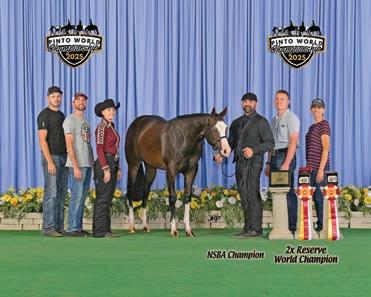
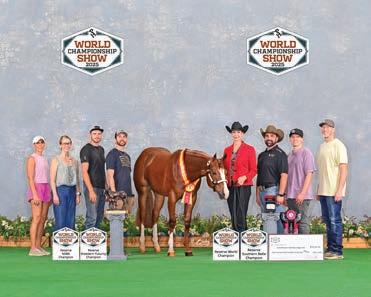
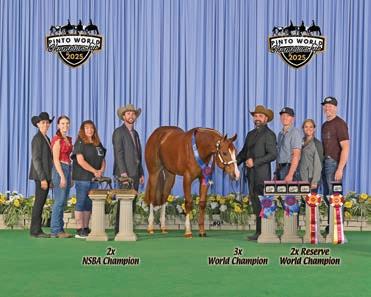
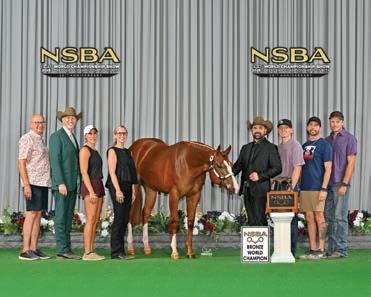
Horses, however, never left her life. She and her mother maintained their breeding LLC, producing a small number of foals each year and consigning to the NSBA sale. The program was smaller, but the passion remained.
The, at the APHA World Championship Show, she saw Hank’s banner.
Through mutual connections—including Anthony Leier—she reached out to Branson. If there was ever an opportunity to sell or partner, she wanted the conversation.
The timing aligned.
Branson was navigating transitions of his own. His father was retiring. He and Tyler were purchasing the family business. The breeding program required restructuring.
“She caught us at the right time,” Branson says. “We weren’t looking to sell. I thought we’d own him forever. But it felt right.”
In October 2025, Mallory drove to Utah and brought Hank home to Texas.
“If someone was going to continue what we started,” Branson says, “she was the right person.”
Today, Hank stands at Brightstone Ranch in Marietta, Oklahoma, under the management of Kim Dean and stallion manager Keith Fister. The program is professional and progressive—an intentional next chapter.
Mallory’s vision is straightforward.
“The disciplines have become highly specialized,” she says. “But I want to produce horses that are trainable, sound-minded, and physically durable.”
She sees Hank as a bridge stallion—capable of siring pleasure futurity prospects, hunter under saddle horses, western riding competitors, and true all-around performers.
“His foals are free in their shoulders, level over their toplines, and balanced on both leads. They hold the ground without rushing. They’re kind and willing.”
She has also embraced the longe line division as an accessible entry point for hands-on competitors.
“Not everyone has the budget for the most expensive breedings,” she says. “I want to remain affordable. I want to support breeders at every level.”
As Hank’s oldest offspring begin their under-saddle careers, Mallory is eager to expand his into the AQHA market, targeting crosses on Machine Made daughters, Goodbar-line mares, and balanced hunt seat pedigrees.
The goal isn’t hype.
It’s longevity.
What makes A Sudden Holiday’s story resonate isn’t only his success. It’s the arc.
Purchased with belief. Lost through circumstance. Rediscovered through instinct. Validated by science. Proven through progeny. And ultimately returned to the person who first saw his potential.
“He’s the one that got away,” Mallory says.
Until he didn’t
Now, with renewed ownership, a thoughtfully structured breeding program, and a growing generation of consistent, competitive offspring, A Sudden Holiday stands not only as a stallion with a decorated past—but as one poised for an even greater future.
In an industry built on timing, sometimes the right horse doesn’t just come once.
Sometimes, he comes back exactly when you’re ready.








Written by Claire Binkowski
Often the first in the barn and the last to leave, assistant trainers are the steady heartbeat of the horse industry. They carry the weight of long hours, quiet sacrifices, and an unwavering commitment to the horses and programs they help shape. More than a supporting role, they are the future, carrying on tradition while redefining what excellence looks like for the next generation. This series focuses on the assistant trainers who keep the industry moving forward. Because while the spotlight may not always find them, their dedication doesn’t just support the sport—it shapes what it becomes.
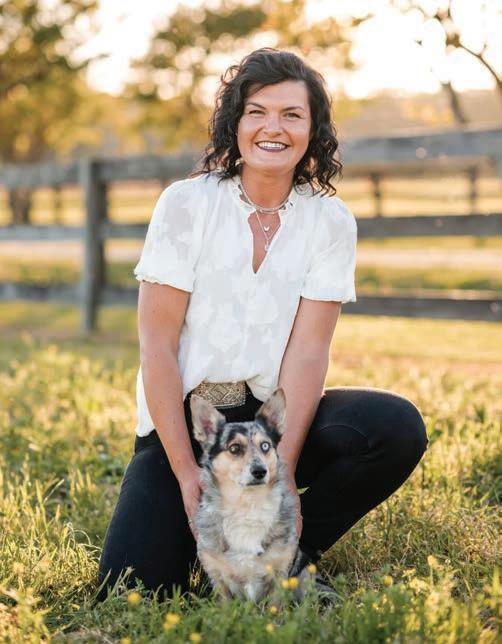
Alexandra Polakova’s life with horses began long before she could put words to it. There are photographs of her perched on horseback before she ever learned to walk—tiny proof of a future that, in many ways, was already unfolding.
She was born and raised in Horice, a small town in the Czech Republic, where her parents owned a horse farm. “Horses were just part of everyday life,” Alexandra says. Her parents were pioneers in their country, importing the first American Quarter Horses and American Paint Horses to the Czech Republic in the mid-1990s. They went on to found the Czech Paint Horse Club and organize the country’s first Czech Paint Horse show judged by American officials. The barn wasn’t simply the backdrop of Alexandra’s childhood—it was the foundation of it.
By the time she was old enough for school, horses were woven seamlessly into Alexandra’s daily routine. “I was always taught to fit riding into my day,” she explains. “I’d come home from school, do my homework, and then run to the barn. That was, in my eyes, the dream life.” Summers were spent almost entirely on horseback, riding in the lessons and camps her mother taught. Horse shows soon followed, along with a growing sense that this demanding path wasn’t just a choice—it was inevitable.
At fourteen, Alexandra began helping her mother teach the lessons and summer camps she had once participated in. She also started assisting with young horses, learning how to start them from the ground up.
“I think I always wanted to train horses and help people become better riders, like my mom did,” she admits. “Even though my teen-age self would never admit that out loud back then.”
Determined to keep horses at the center of her world, Alexandra pursued a degree in agriculture so they could remain part of her everyday life—not only at home, but in the classroom as well. Looking back, she can see
how clearly the road was laid, even if she didn’t fully recognize it at the time.
As she grew older, her perspective—and her ambition— expanded. Watching videos of the World Championship shows proved to be a turning point. “I realized our horse shows looked nothing like the world shows,” she says. “The horses didn’t move the same. The clothes didn’t look the same. It was a real wake-up call.”
Coming from a country where the show horse industry lagged behind American standards, Alexandra knew where she needed to go. “I was raised with the mindset that American Quarter Horses and American Paint Horses come from America—so the best are in America,” she explains. “If you want to be the best at something, you go where it came from.” For her, learning to train horses at the highest level meant crossing an ocean.
After graduation, Alexandra searched for a position as an
assistant trainer in the United States, hoping to advance her skills before returning home to start her own program. Finding work, however, was far from easy, complicated further by visa challenges. Then, nearly six months after she had posted a message online, Allan and Julie Schmidt of Dare To Dream Performance Horses in Wilson, North Carolina came across it and reached out. “I honestly can’t believe they found my message—it was really old,” she says with a laugh. “But thankfully, they did.”
A phone call followed, and two weeks later, Alexandra was on a plane to the United States. “It was kind of a dream come true,” she says simply.
That was February 2017. Nearly a decade later, she is still working alongside Allan and Julie—now an integral part of the Dare To Dream program. “They always tell me that I’m part of the Dare To Dream brand,” Alexandra says. “Every time they say that, it brings tears. I can’t believe how lucky I am to be here and be part of their team.”
Over the years, the lessons she’s learned extend far beyond riding and training. However, there is one that stands out above the rest: don’t bring barn problems home with you. “Learn to separate your job and your free time,” she says. Early on, she carried every bad ride and every worry with her, losing sleep and peace of mind. “You have to leave it at the barn. Sometimes the best thing you can do is start the next day with a clean slate.”
Family remains her anchor, even across an ocean. Her parents and brother visit when they can, and she returns home each year around Christmas—a gift made possible by the Schmidt’s. When she struggled with the decision of whether to stay in the United States or return home for good, it was her grandfather’s words that guided her. “He told me, ‘You will always have a home here, so go and see if somewhere else can be called home too.’” She still thinks of him and those words when she reflects on how far she’s come.
Horses themselves have been her greatest teachers. “No other job will humble you daily like horses do,” Alexandra says. Among the many that shaped her, she still remembers her mother’s first Quarter Horse mare, Ayers Two Jet Sue, who gave her confidence in the beginning, and the mare her parents gave her when she turned seventeen—the one she trained, showed, and earned her first European title with. More recently, she points to FiireFly, a filly she helped prepare for the longe line in 2024, marking another chapter in her evolution as a horsewoman.
The job, though deeply fulfilling, is not without its challenges. Long hours and the realities of horse shows test even the most dedicated professionals. “Sometimes the hardest part is explaining to owners that horses have their own minds,” she says. “They’re not machines you can program.”
Still, the rewards outweigh everything else. “Nothing beats the feeling of someone coming out of the show pen with a huge smile or happy tears,” Alexandra says. “Knowing you helped them achieve that—no matter how big or small your contribution was—that’s literally the best feeling in the world.”
When asked about her proudest accomplishments, she laughs. “Besides moving across the world to a country I didn’t know, to work for people I’d never met, when I was barely twenty?” Building a life and career in the United States tops the list,
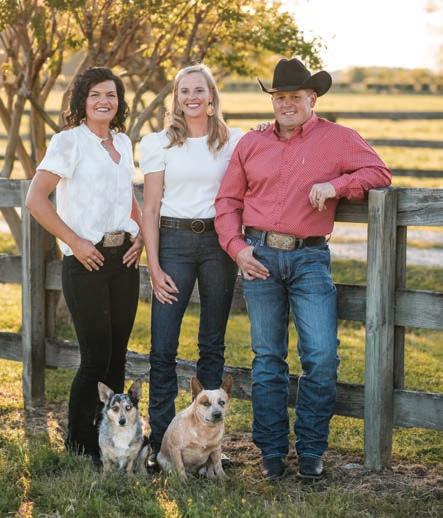
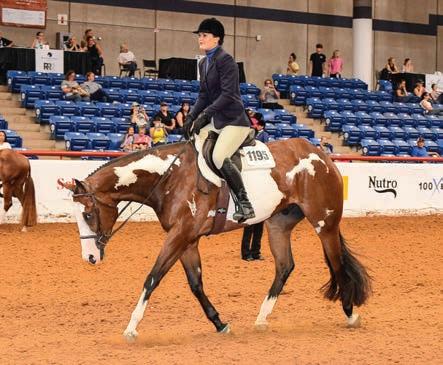
along with every successful show result she’s been part of along the way.
Looking ahead, her goals are simple. “To see all the horses and people I have the opportunity to help become the best they possibly can,” she says. “What more could I wish for?”
For those who dream of becoming horse trainers, Alexandra offers honesty above all else. “It’s hard work,” she says. “You have to go through every second of it.” There will be sleepless nights, long shows, exhaustion, and moments when quitting seems easier. “Just push through,” she insists. “One day it will all be worth it— you just never know if that day will be tomorrow, or the next.”
It’s a philosophy she lives by—echoing the words she hears every day at Dare To Dream: Work harder. Be better.



Written by Claire Binkowski
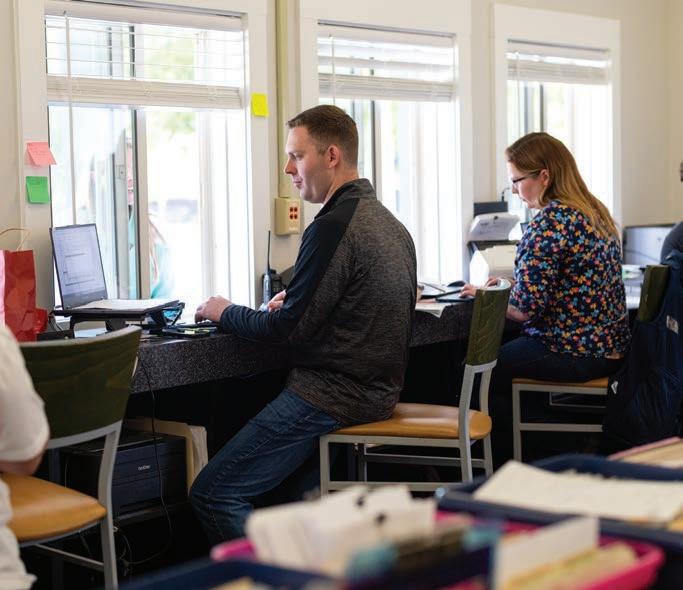
On a Friday evening in New England, the show office lights remain on long after most have gone home, paperwork still being processed with the quiet hope that a few more entries will come in by morning.
Across the country in Washington, just hours before trailers begin to arrive, a small but dedicated team unloads boxes of awards—each one chosen with care, meant to make the weekend feel worth the trip.
In Missouri, volunteers sit around a table, studying spreadsheets line by line, deciding which classes they can afford to offer—and which they can’t.
These are the parts of weekend horse shows most people never see.
For generations, these shows have been where it all begins—where a rider learns to navigate a crowded warm-up pen, where a young horse finds its rhythm, and where someone hears their name called over the loudspeaker for the first time. Increasingly, they are also where show managers confront a harder question:
How much time, money, and heart can you invest in something that may only break even—if you’re lucky?
For Marge Tanner, Lisa Gardner, and Margaux Tucker, that question is no longer theoretical. It sits beneath every decision they make. Though they operate in different regions, their experiences point to the same reality—one shaped by rising costs, shifting participation, and a steady effort to hold together something the industry depends on more than it often realizes.
For Marge, who has been involved with the Massachusetts Quarter Horse Association since 2008 and part of its show management team since 2013, the shift was gradual.
For years, the Massachusetts Quarter Horse Spring Show had momentum. After relocating to West Springfield, it drew exhibitors from across New England, New York, and Canada. The barns were full. The classes were competitive. It was a fixture on the regional calendar.
Until it wasn’t.
“After several very successful years, participation from local and regional exhibitors began to decline,” she says. “When The Madness moved from March to May, the dates overlapped with our show. That certainly didn’t help.”
But the change didn’t come from one cause. It came from many—small shifts that, over time, compounded. What changed most was predictability. Weekend shows once relied on a core group of regional barns that returned year after year. As exhibitors became more selective—or shifted toward
larger circuits—that foundation began to erode.
Once entries start to slip, the ripple effect is immediate. Smaller classes mean less incentive to haul. Fewer trainers commit. Competition thins. And rebuilding becomes harder with each passing season.
In Missouri, Margaux has seen the same pattern. The Heart of America Horse Association shows, held in Carthage, Missouri, have operated— under slightly different names—for more than twenty years at the same location. Margaux has been involved in planning and production for the past year and a half, stepping into an established program now navigating familiar pressures.
“Our show has seen a consistent decline in entries over the last three years,” she says. “Both less horses and less exhibitors.”
Those who do come are loyal, often showing multiple horses or entering several classes. But that commitment can only carry a show so far. When the overall pool shrinks, the effects show up everywhere—fewer stalls filled, fewer memberships renewed, fewer opportunities to bring new exhibitors into the fold.
On the West Coast, Lisa brings more than two decades of experience to the conversation. As a show manager for over twenty years, she helps oversee several events each year for the Washington State Quarter Horse Association, including the No Silver No Sequins, the Trophy Circuit, the Fiesta and Regional One Scholarship Show, and the Northwest Emerald— all held in Monroe, Washington.
Even with that depth of experience, maintaining numbers has required adaptation.
“While we have been lucky to hold our numbers, it is due to the added ranch, WRHA, and all-breed classes we offer to bring in new exhibitors,” she says.
But even with those additions, broader changes within the industry have reshaped how affiliates connect with their members. Shifts in qualification requirements, in particular, have altered long-standing participation patterns.
“Once AQHA took the stricter state qualifying process away, our affiliate had to work harder to engage our local members,” Lisa explains. “Changing the way exhibitors could go the Level 1 shows without state qualifying was probably the most detrimental change for our area. So we had to start looking at other ways to encourage participation.”
Across regions, the message is clear: the traditional weekend show can no longer rely on the model that once sustained it.
If one shift that has reshaped participation, it is how—and where— people choose to show.
“Exhibitors appear to be more selective in choosing what shows they attend,” Marge says. “Many are prioritizing larger circuits and destination events that offer greater perceived value.”
Exhibitors aren’t necessarily showing less. They are consolidating— investing their time and money into fewer, longer events that promise more opportunity in one place.
“From a trainer perspective, the bigger shows are often more costeffective and operationally efficient,” Marge explains. “Offering extended
stays, fewer move-ins and move-outs, and the ability to show multiple horses over several days.”
For trainers, hauling once and staying for a week reduces both time and expense. For exhibitors—especially non-pros balancing work, family, and the realities of cost—the same logic applies.
“Trainers and exhibitors like the destination shows,” Lisa says. “Money and time off work all come into play.”
A longer show becomes more than competition—it becomes an experience.
“People are saving their money for worthwhile destination shows,” Margaux says.
That word—worthwhile—now shapes nearly every decision. Exhibitors aren’t just asking whether they can go; they’re asking whether it’s worth it. And weekend shows are no longer simply competing with each other. They are competing with a different model altogether.
“Everything I read, exhibitors are saying they want smaller, less expensive shows,” Marge says. “But participation often depends on trainer involvement and trainers are choosing the big shows.”
When trainers commit, exhibitors follow. When they don’t, even strong shows struggle to build momentum.
While participation has become less predictable, expenses have not.
Facilities must be booked months in advance. Judges contracted. Awards ordered. Staff secured. Those costs don’t change—whether classes are full or not.
“The biggest fixed costs include the facility rental, judges’ fees, show staff, and awards,” Marge says, echoed by both Lisa and Margaux.
Layered on top are insurance, office supplies, association fees, and a long list of operational details—expenses that add up quickly and must be committed to long before entries are known.
That is where the risk lies.
A strong turnout can offset those costs. A weaker one can leave a show in the red, with little ability to adjust once the weekend begins. So show managers adjust what they can.
Marge has shortened her show from five days with six judges to three days with fewer judges and scaled-back awards—an effort to control costs without losing appeal.
Margaux has taken a similar approach, leaning more heavily on sponsorship.
“We stopped offering year-end awards and only do show all-around awards now,” she says. “It saves money, but we also lose participation and memberships because of it.”
That balance—cutting costs without cutting value—is one of the hardest parts of producing a show. The very elements that draw exhibitors in—awards, incentives, and overall experience—are also the first to shrink when budgets tighten.
In Washington, Lisa has focused on efficiency.
“Our biggest change was overlapping some show days to streamline our schedule,” she says.
But efficiency comes with trade-offs. Tighter schedules can add pressure—especially for trainers managing multiple horses—and can change the overall rhythm of a weekend. Some decisions are harder still.
“Letting team members go due to travel and hotel costs is one of the
hardest decisions I’ve had to make,” Lisa says.
Behind every show is a team—often the same people year after year. Reducing that team is never just financial; it’s personal.
And even with those adjustments, the margin for error continues to shrink.
At the same time, exhibitors have more options than ever before. On the surface, that should be a positive. In practice, it has spread participation thinner across a crowded calendar.
“I do feel like our region is oversaturated,” Marge says. “Options can be a good thing, but too many shows can actually be detrimental.”
The issue isn’t a lack of interest—it’s dilution. When the same pool of exhibitors is divided across more shows, classes get smaller and competition thins.
“They can go wherever makes the most sense for them,” she says. “But when that same pool is spread across numerous shows, it hurts entries.”
In Missouri, Margaux sees it clearly.
“We have eleven to twelve AQHA show weekends,” she says. “And on most of those weekends we are competing with larger shows within easy driving distance.”
Those bigger events pull exhibitors away, and the impact lingers. Smaller classes mean less incentive to attend—and the cycle repeats.
In Washington, Lisa points to another layer: timing.
“The biggest issue is the constant change of dates,” she says. “Trainers aren’t going to go to a show the weekend before or after a long haul. Scheduling is no longer just about avoiding direct conflicts—it’s about positioning.”
Consistency, once a strength of weekend shows, has become harder to maintain. And without it planning—and loyalty—become more difficult. The result is familiar: smaller classes, tighter margins, and increasing pressure on every show to stand out.
The Weight You Don’t See
Beyond logistics and finances lies another challenge—one that is less visible, but just as significant.
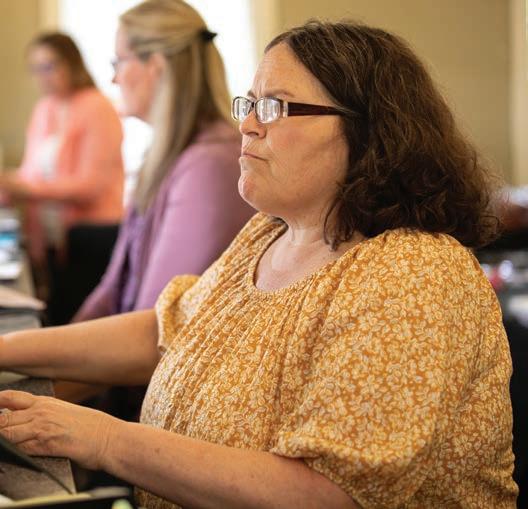
Running a weekend show is months of preparation layered with uncertainty: judges hired, sponsorships secured, awards sourced, schedules built and rebuilt. For many smaller shows, most of that work falls to a small group of volunteers balancing full-time jobs, families, and their own involvement in the industry. Finding help has become harder, and the same handful of people often carry the load.
“One of the most difficult aspects of running a show is maintaining morale,” Marge says. “When participation declines, it becomes emotionally challenging.”
Because the investment isn’t just financial—it’s personal. The people behind these shows take pride in the turnout and the experience
they’re creating. When entries fall short, it can feel like more than a disappointing weekend. It can feel like something they’ve worked to build—and protect—is slipping.
And the workload doesn’t shrink with smaller numbers. If anything, it intensifies. Fewer entries often mean more outreach, more promotion, more schedule adjustments, more fundraising, and more difficult choices about what to cut.
“What people see is one weekend,” Marge says. “What they don’t see are the months of planning behind it.”
“It takes lots of man hours months before an event,” Margaux adds. “And much of the time, no one gets paid for it.”
And still, they press on.
“I think we are at that point,” Margaux says, when asked whether a show can become too small to continue. “But we have some die-hard board members that won’t let it go.”
That persistence is what keeps many of these shows alive— but it also underscores how close some are to the edge. Because stepping away doesn’t just mean ending an event.
It means losing a piece of a community.
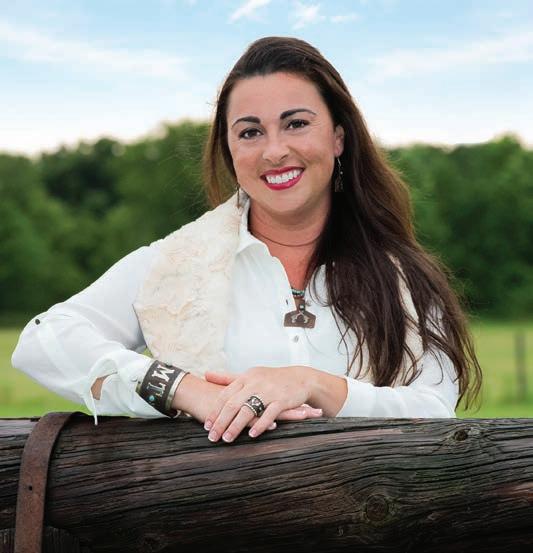
For Lisa, the impact is measured over time—not only in the horsemen it helps develop, but in the community it supports. “I have watched several generations of horsemen grow and be successful because of our community,” she says. “Our shows also bring thousands of dollars into local restaurants and feed stores over the course of a year.”
For Marge, that purpose is what carries her forward.
“I continue to put the shows on because they matter,” she says. “To the horse-crazy kid who would give anything to step
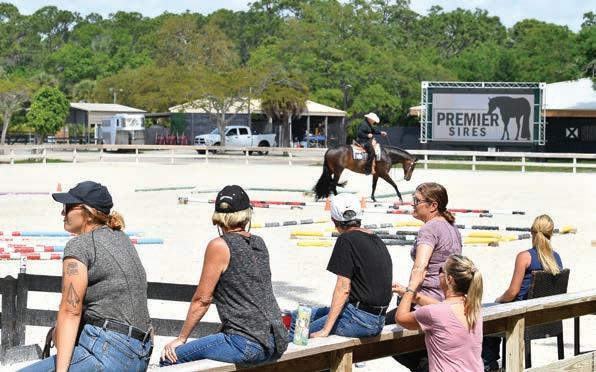
into the ring—and to the community.”
Margaux puts it simply.
“I guess we are all just too stubborn to quit.”
And in many ways, that stubbornness—rooted in pride, responsibility, and belief—is what continues to hold the line.
The Foundation of the Industry
For all their challenges, weekend shows remain essential.
They are where skills take shape, experience is earned, and new participants find their footing.
“They are often the entry point into the industry,” Marge says. “A smaller, supportive environment is invaluable.”
“Everyone needs a place to start and be competitive,” Lisa adds. “Costs are much less to attend a one- or two-day local show.”
“It’s exposure,” Margaux says. “Teaching new exhibitors how to horse show.” Yet even as their importance remains clear, the value of these smaller shows is not always widely recognized.
“Some exhibitors do recognize the value of smaller shows, but many do not,” Marge says. “Those who primarily attend major shows often fail to appreciate the challenges faced by smaller events. Seeing the larger shows thrive, they may not understand why smaller shows are struggling or being cancelled.”
That disconnect makes survival even harder—and without these shows, fewer people find their way into the industry.
“We will lose the entry-level group that we are already struggling to bring in,” Lisa says.
“We have already lost major stepping stones from 4-H up to breed shows,” Margaux adds.
“If weekend shows were to disappear,” Marge says, “the industry would lose a critical foundation for developing both horses and riders.”
Redefining Success
Success no longer looks the way it once did.
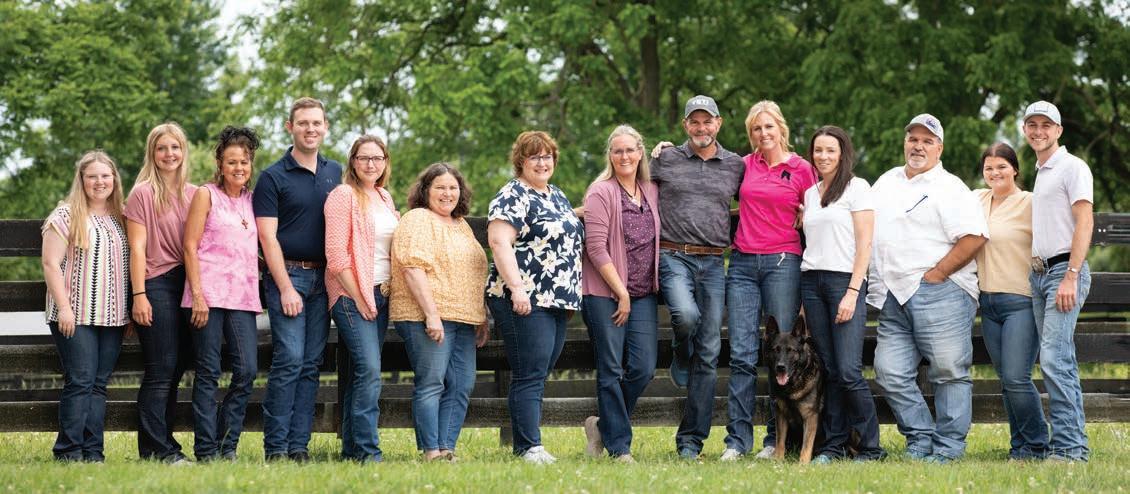
There was a time when growth defined a strong show—more entries, more stalls, more judges, more days on the schedule. Today, the benchmark is far simpler, and far more fragile: survival.
“A decade ago, the focus was on profitability,” Marge says. “Today, the primary goal is simply to break even.”
That shift—from growth to sustainability—has changed the way show managers approach nearly every decision. The margin for error is thin, and even small fluctuations can determine the outcome. Weather, fuel prices, competing show dates—even factors outside the industry—can influence turnout in ways that are difficult to predict and impossible to control.
“You can do everything right and still not have the numbers you need,” Marge says.
“We’re just hoping to break even,” Margaux adds. “Our all-around shows lose money, but our VRH show helps keep them going.”
That kind of balancing—offsetting losses in one area with gains in another—has become increasingly common. Shows are diversifying and recalibrating, often relying on one segment to support the whole.
On the West Coast, Lisa defines success more simply.
“Everyone having a good time and making it to and from a show with no issues,” she says.
It’s a straightforward standard, but one grounded in reality. When time is limited and costs are high, experience carries weight. A show that runs smoothly, feels welcoming, and delivers a positive experience can matter as much as the size of the classes.
Because today, survival is tied to perception as much as participation—whether exhibitors feel their time, money, and effort were well spent, and whether the experience is strong enough to bring them back.
“Success today is about sustainability,” Marge says. “It’s about putting on a quality event and being able to come back next year.”
Ask what the future holds, and the answers range from cautious optimism to real concern. But one thing is clear: the current model is under pressure—and without meaningful change, it may not hold.
“At the industry level, the biggest question is how AQHA can help smaller affiliate shows survive,” Marge says.
“Our national associations need to understand and support our local shows,” Lisa adds. “This change needs to be immediate.”
Margaux points to the reality at ground level. “There needs to be more consideration for what it costs to put on a show.”
Weekend shows occupy a different space—one built on accessibility. But accessibility only matters if participation is strong enough to sustain it. Even the most committed groups are beginning to ask how long they can keep going.
And yet, the need for these shows has not diminished.
They are where riders begin, where confidence is built, where horses learn, and where families find their way into the industry.
Without them, the pathway narrows. The industry becomes smaller, less accessible, and more concentrated—losing not just numbers, but its foundation.
The question is not whether weekend shows matter.
It is whether the industry will recognize their value in time to support them.
For now, they continue—held together by people who believe in what they provide, even when the margins are thin and the outcome uncertain. They keep making the calls. Finding the sponsors. Adjusting the schedules. Showing up.
Not because it’s easy.
But because it matters.


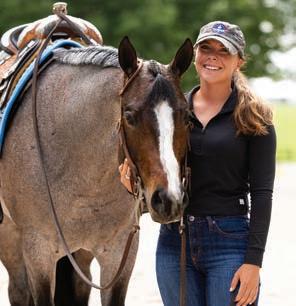
Before they step into the pen, many exhibitors have a quiet ritual—something small, personal, and maybe just a little superstitious that helps steady their nerves and set the tone for a great ride. In the spirit of St. Patrick’s Day, we asked exhibitors to share the good luck charms and rituals they rely on when they show.

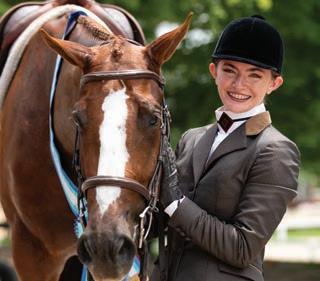
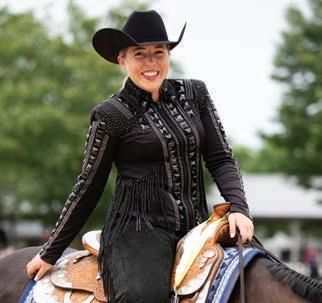
Sydney Sargent – All of my show jackets have names. When I bought my showmanship “supersuit” from Angela Fox—who had already had plenty of luck with it—she told me the jacket’s name was “Kate,” because the design was inspired by a dress worn by the Princess Kate. I feel like a million bucks every time I put it on, and I definitely consider it lucky. I also have a black trail jacket named “Black Betty,” and I always listen to Ram Jam’s Black Betty before I show. You’ll also always find me wearing blue. Whether it’s in trail, ranch riding, or anywhere in between, I make sure there’s blue somewhere—either in my shirt or on my pad. It’s always been my favorite color, and I firmly believe that winners wear blue.
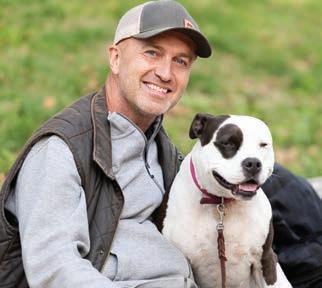
Scott Neitzel – My good luck charm is Tulsa—the stray I rescued from NSBA back in 2020. She’s been my sidekick ever since. As for a show-day superstition: if my yearling comes a little “undone” in the pre-class warm-up, they almost always go in and show great and place well. It never fails… but it definitely makes me more nervous walking into the class!
Deanna Willis – I’m not really superstitious, but I do have a necklace my stepmom gave me with my grandmother’s initials on it. I like to wear it under my show outfit.
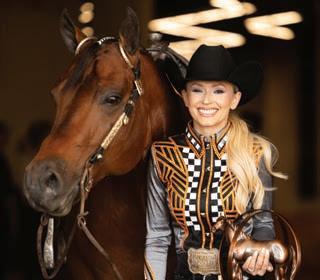
Lauren Deeds – My good luck charm is my mom, especially at the major shows. Every time she’s there, she gives me a fist bump right before I go in and says, “You’ve got this. Do your thing.”
Allison Erkman – It’s not exactly a good luck charm, but before a big class—usually in the stall while getting ready to head up, or even on the walk to the arena—I will give my horse a little pep talk. And if I do well in a certain pair of socks, I will keep wearing that same pair for the rest of the show (washed, of course!).

Beau Norleen – I always tell my horse what the day is going to look like—I give him the rundown of everything going on show-wise. I ask him to give me all he has that day, and I promise to do the same. Keeping him happy and comfortable is huge for me, whether that’s the spa, massage, chiropractor, or just a quiet walk to find a patch of grass and decompress. I’m always the one who gets him dressed for show time. I put my own numbers on with the same pins all weekend—pins facing down. And getting him dressed early is important to me. About thirty minutes before show time so we can get in the zone—that’s my happy place.
Nancy Ditty – My safety pins always have to face up, so the luck stays in. And I always try to wear my lucky Alabama socks on show day.
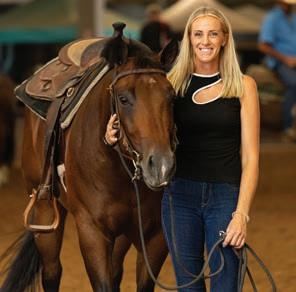
Mallory Menard – I don’t have a good luck charm, but on the day I show, I have to be the one to lunge the horse I’m competing on. There’s something about feeling their energy myself that puts my mind at ease. And if they go in a little too fresh, I know I have no one to blame but myself.
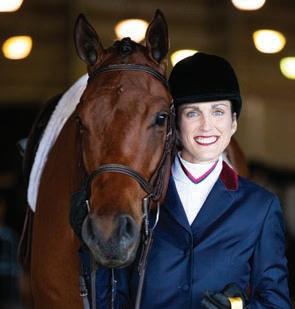
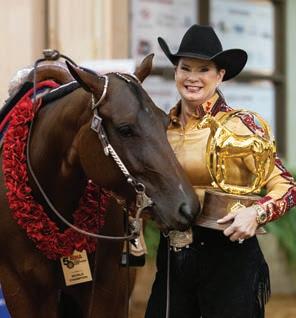
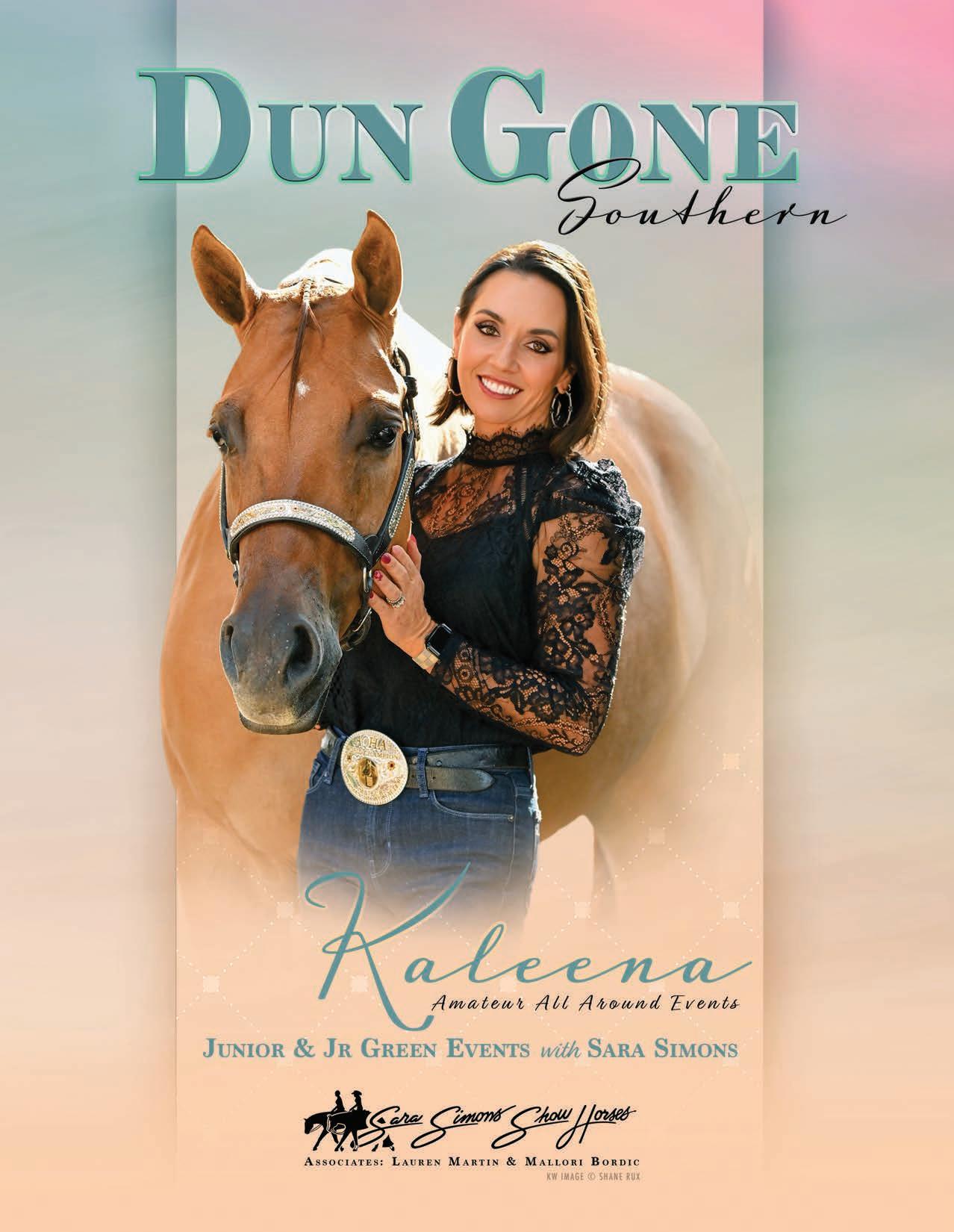
Kaleena Weakly – My good luck charms are my tan hat in showmanship and my show halter. My husband recently got a new show halter, and people kept asking why I didn’t upgrade mine too, but my halter holds way too many good memories. It’s been on so many incredible horses and part of so many special moments. I’ll never replace it.
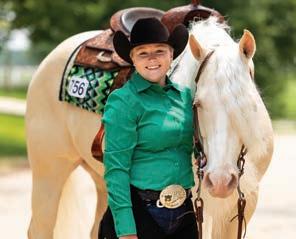
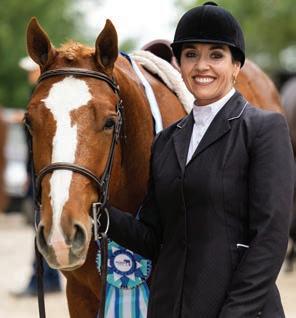
Kylee Wiseman – When I showed by horse RR Magical Moonlite, I always wore the same pair of red tie-dye Nike socks for good luck. Now that he’s retired, I carry a piece of him with me by wearing a ring made with his hair when I show my new horses. And I still compete in the same black Shorty’s hat that I first got during my 13 & Under years.
Taylor Searles – I always wear my 2015 AQHYA Reserve World Champion buckle when I show. I’ve won World Champion buckles—and even prettier ones—but I’ve never switched it out. It wasn’t my first AQHA buckle, but I earned it with Al Be Sweet On You, and it represents one of the proudest moments of my career. It would take something truly special to replace it. Until then, I’ll just keep it polished. I don’t really think of it as a superstition anymore, but I still prefer to put my horse’s tail in and band the forelock myself. It’s my quiet time before I walk into the pen, and I’ve come to really value those moments.





Written by Claire Binkowski
Behind every great horse is a breeder whose dedication began long before the first step into the show pen. Breeders are the backbone of the industry—thoughtfully pairing bloodlines, nurturing young horses, and investing years of patience, knowledge, and heart into each life they help bring into the world. Their work is fueled by passion and built on vision, responsibility, and an unwavering belief in what the next generation can become. They are the stewards of quality and integrity that sustain the industry at every level. This series shines a light on the small breeders whose work lays the foundation for it all. Their influence is woven into every stride, every partnership, and every success.
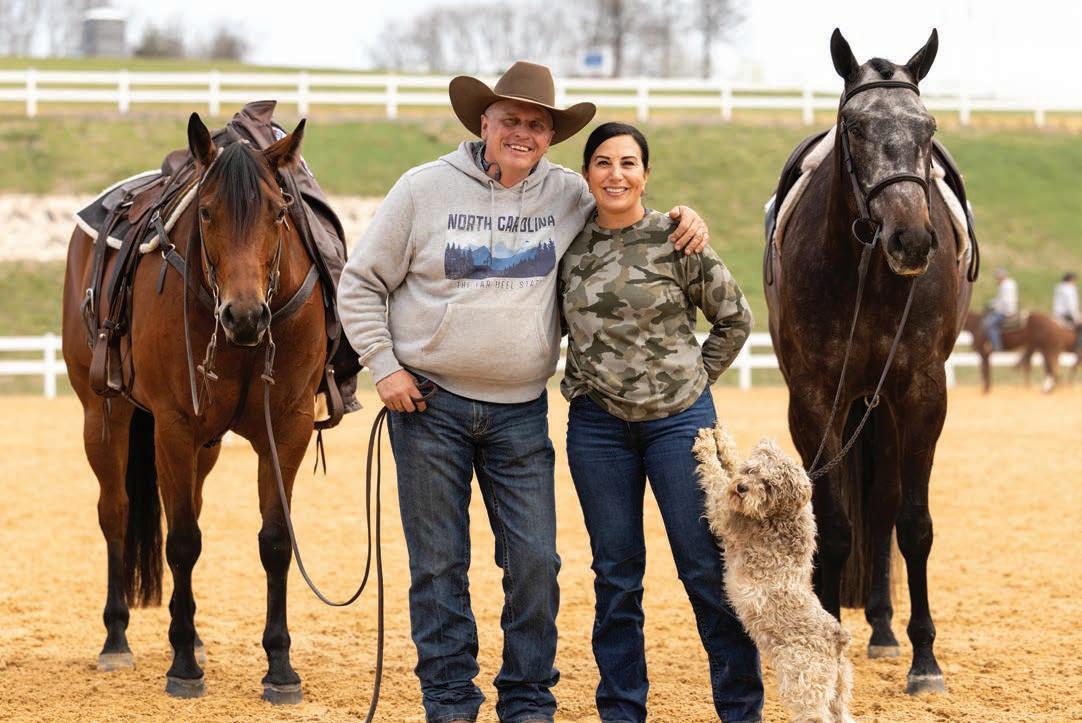
On a quiet road aptly named Prospect Place in eastern North Carolina, Paul and Tami Thurston are doing exactly what they hoped they would all those years ago—raising prospects, nurturing potential, and letting horses tell them who they’re meant to be.
Their operation, Thurston Quarter Horses, may carry a straightforward name, but the story behind it is anything but ordinary. “While that is not very original,” Paul laughs, “we did name our road Prospect Place because we knew we were going to raise foals and prospects, and we always had young ones around.” It’s a small detail, but one that perfectly captures the Thurstons’ practical, horse-first approach—intentional, grounded, and built around the long game.
Paul’s path into the horse industry wasn’t exactly predictable. He was accepted into Purdue University for engineering, with a future that looked neatly mapped out, until a chance encounter at the Indiana State Fair changed everything. “I met Mike Lancaster from Findlay College’s equine program,” Paul recalls. “After visiting campus, my dad encouraged me to give the horse program a try. That decision changed my life.”
Not only did it set him on a lifelong career with horses, but it also planted seeds of a vision that would guide him for decades. While attending Findlay, Paul sat in a lecture encouraging students to create a vision board. In 1989, he wrote down ten goals, among them were owning a horse property, winning the All American Quarter Horse Congress, training and producing a superior western pleasure horse, and raising an AQHA Champion or World Champion. At the time, the goals felt impossibly far away. “The only one I haven’t achieved yet,” he says, “is raising, training and showing a Congress Champion myself. I guess that’s where the breeding dream really began.”
Findlay also introduced him to his future wife. Tami’s story, by contrast, feels almost inevitable. “One of my first words was ‘horse,’” she says. “It was truly love at first sight.” Her childhood obsession eventually convinced her parents to move somewhere they could own horses, and a surprise horse for her thirteenth birthday sealed the deal. “It’s been all horses ever since.”
She left a vocal performance major to attend Findlay’s equestrian program where, during a freshman demo, she spotted Paul. “I told my friend, ‘That’s the man I’m going to marry someday,’” she laughs. “And the rest is history—so be careful what you say!”
Paul’s introduction to breeding came early, when his family bought their first Quarter Horse mare in 1981 and welcomed a foal four years later. Though the experience stayed with him, college, assistant training jobs, and the realities of young adulthood put breeding on pause. In 2000, however, when the couple purchased their farm—formerly a breeding operation with four stallions—the foundation for Thurston Quarter Horses was firmly in place.
At fifty acres, the property was more than they needed for training alone— and, as Paul laughs, “far more
mowing than we could keep up with.” Breeding began partly as a way to create an additional income stream, but more importantly, it allowed them to offer solutions for clients whose horses weren’t suited to their goals. “We could sell them something we created,” Paul explains, “without baggage or problems.” The approach strengthened their business and helped customers succeed.
While raising and training their own horses was ideal, the Thurstons also recognized the importance of placing horses with other capable trainers to broaden exposure. With Tami working at Martin Community College and wanting to be home with their son, there came a time when they weren’t travelling to as many futurities or major shows. Strategic partnerships and sales ensured their horses had opportunities to shine—and proved they could succeed under a variety of programs.
Today, the Thurstons maintain a deliberately small broodmare band, with eight mares currently in foal and plans to flush embryos from older mares. “With about 25 acres of pasture, our ideal number is eight to ten mares,” Paul explains. “It keeps the operation manageable and lets us focus on quality.”
That focus has paid off. Over the years, their foals have achieved remarkable success—Congress champions, AQHA and NSBA World Show champions, honor roll horses, elite hunter under saddle performers, jumpers, and even a standout threeday eventer. Still, Paul and Tami hesitate to single out one horse as the embodiment of their program. “It’s like choosing a favorite child,” Paul says. “We can’t.”
For them, success isn’t defined solely by the biggest wins. While breeding foals capable of competing at the highest levels is always the goal, they speak just as proudly about the horses who quietly go to work every day. “We’re equally proud of the solid, usable horses that may never make the big time,” he adds, “but that people are using day in and day out.”
That mindset shapes every decision they make in the breeding barn. If there’s a true throughline, it’s adaptability. “Don’t put a square peg in a round hole,” Paul says. “If

you breed for western and they get big, do the hunt seat with it. Let the horse tell you what it wants to be.”
That same flexibility carries into how they select mares and stallions. They aren’t loyal to specific bloodlines, understanding that thoughtful pairings matter far more than what happens to be trending. “Sometimes the ‘unfashionable’ pairing produces the best results,” Tami says. “People get caught up in what’s hot and forget basic structure and usefulness.”
Their criteria are simple and consistent. “I look for confirmation, durability, and pretty,” Paul adds bluntly. “If it costs the same to feed a pretty one as it does an ugly one, I’ll take the pretty one.” For Tami, rhythm reigns supreme. “If they have great rhythm,” she says, “they will almost always train up.”
Their broodmare band is a direct reflection of that philosophy. “Our impact comes less from a single horse and more from our mares,” Paul explains. “They’re not all world champions, but they’re good, solid mares we believed we could improve through selective breeding. We want to produce horses better than their parents.”
That commitment to improving the next generation comes with a clear understanding of just how challenging the process can be. Breeding, the Thurstons will tell you—as anyone in the industry knows—is not for the faint of
heart. “It can be heartbreaking even when you do everything right,” Paul says. Over the years, they’ve weathered its lowest moments: foals that don’t survive, mares that won’t catch, and sudden, devastating injuries. “It can feel like a financial black hole,” he says, then adds with a laugh, “I think we might just now be back to breaking even from the very beginning.”
Those hard-earned lessons have sharpened their perspective. “The journey has shaped us into patient, resilient horsemen,” Paul says. “We understand both the highs and the heartbreaks of producing quality horses.” Experience has also made them cautious about unsoundness and wary of stallions with massive earnings but short show careers. “Durability matters,” he says. “I want horses that will last more than a season or two.”
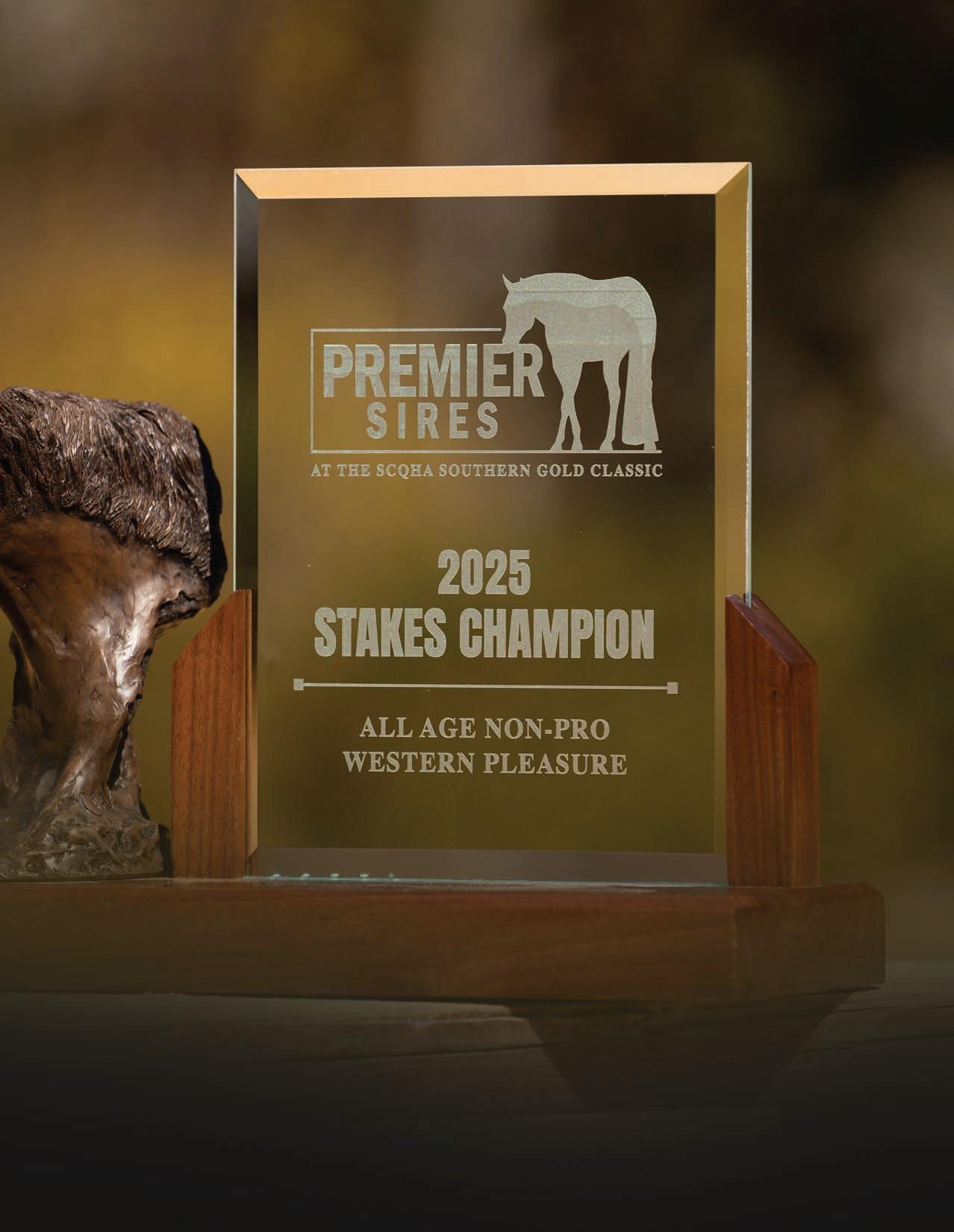
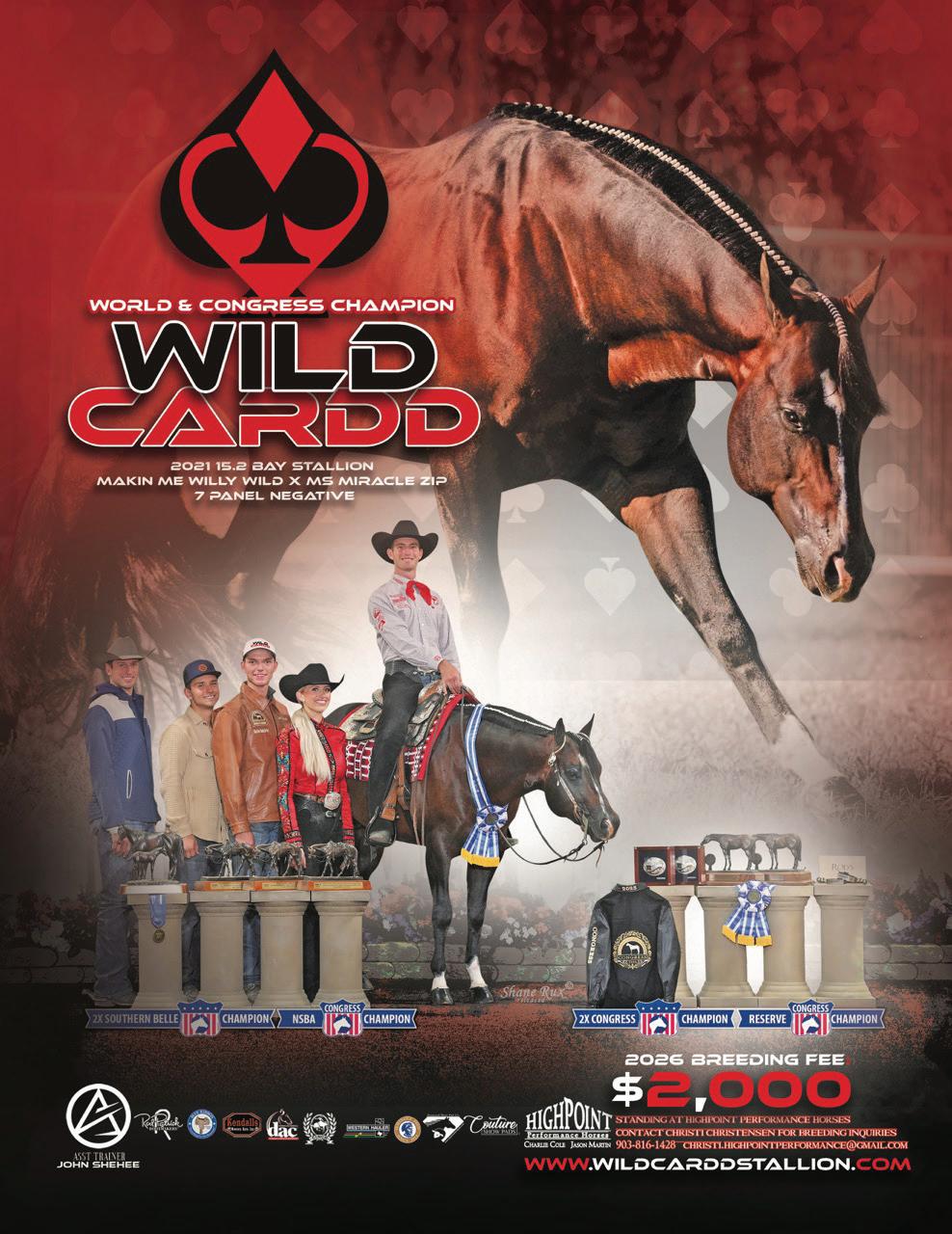
Over time, that approach has quietly translated into significant success. Being named the Top Western Pleasure Breeder at the 2025 All American Quarter Horse Congress stands as a career highlight, alongside the success of horses such as Gone Commando, a three-tine Congress Champion and NSBA World and Reserve World Champion, Wild Cardd, an AQHA World Show Level One Western Pleasure Champion and Congress Champion, and Thursty Thursday, the 2025 AQHA World Show Two-Year-Old Intermediate Open Western Pleasure Champion and a multiple Congress Champion.
Other notable horses bred by Paul and Tami include Not So Bad, Mama Im Coming Home, Hey Kool Aid, Shot Of Potential, Top Shot, Invited By Willie Nelson, For Your Protection, Old Fashioned, Dressed For Party, and Mary Poppins.
“Standing in that backdrop photo with owners who only dreamed of winning something big,” Paul says, “that never gets old.”
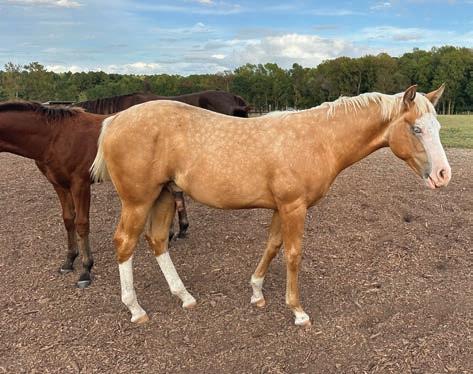
For Tami, fulfillment often comes in quieter moments. “It’s looking out the window while I’m doing dishes or running around the farm,” she says, “watching the babies and mamas graze and play. The anticipation of what they might become—that never goes away.” Paul’s satisfaction is simpler. “Creating a sound, usable horse that will last,” he says.
Years in the industry have given Paul and Tami a long view of how breeding—and the show world itself—has evolved. “Show numbers have declined steadily, especially at the local level,” Paul notes. “That’s forced breeders to be more specific and thoughtful.” For the Thurstons, the response has been intentional restraint. “We’ve tried to increase our quality, keep small numbers and hope that each one hits and becomes a really good horse.”
One of their biggest concerns is shrinking bloodline diversity. “It’s become harder and harder not to breed similar bloodlines top and bottom,” Paul says, pointing to the widespread use of shipped semen and embryo transfer. “We used to have strong state breeders’ futurities and local programs, and our horses were sturdier and heartier. The diversity is shrinking, and it worries me.”
The digital age has reshaped the industry just as dramatically. Paul remembers when learning show results meant waiting days for a phone call. “People had to fly somewhere to look at horses and stand tethered to a landline to hear results,” he recalls. Today, information— and marketing—moves instantly. “Social media can be an amazing tool, but it can also distort reality. A perfectly curated video can make a horse look better than it does in the pen or in real life.”
While they’ve watched fellow breeders and trainers thrive in the new landscape—and readily acknowledge the power of online reach—the Thurstons remain deliberately old school. “We don’t have the time or staff to post constantly,” Paul says. “We focus on doing the job right and letting the horses speak for themselves.”
Beyond breeding, the Thurstons continue to train and show, balancing the demands of the industry with family life. Their twelve-yearold son, Carter, keeps them busy with school activities and sports, grounding them outside the show pen. “We try to remember there’s more to life than horses,” Tami says, “and to keep God at the center of everything we do.”
Looking ahead, their goals remain refreshingly consistent. “We’re going to keep doing what we do,” Paul says. “Raising sound, versatile horses with a purpose.” With an eye on the growing ranch riding division and a steadfast belief in adaptability, Thurston Quarter Horses continues to prove that success isn’t defined solely by wins—though they have plenty—but by longevity, honesty, and letting each prospect find its place.
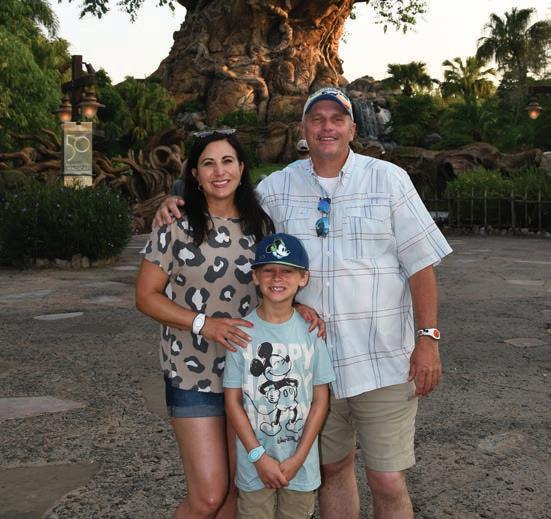
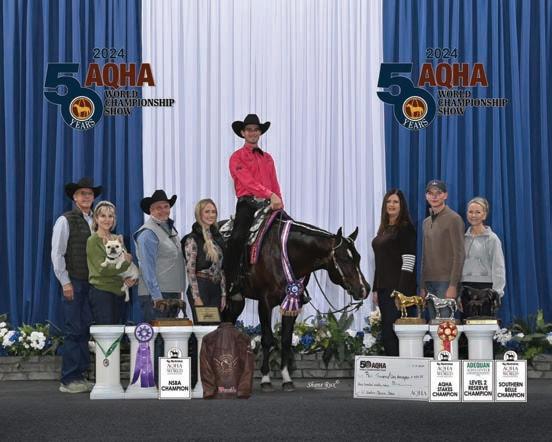
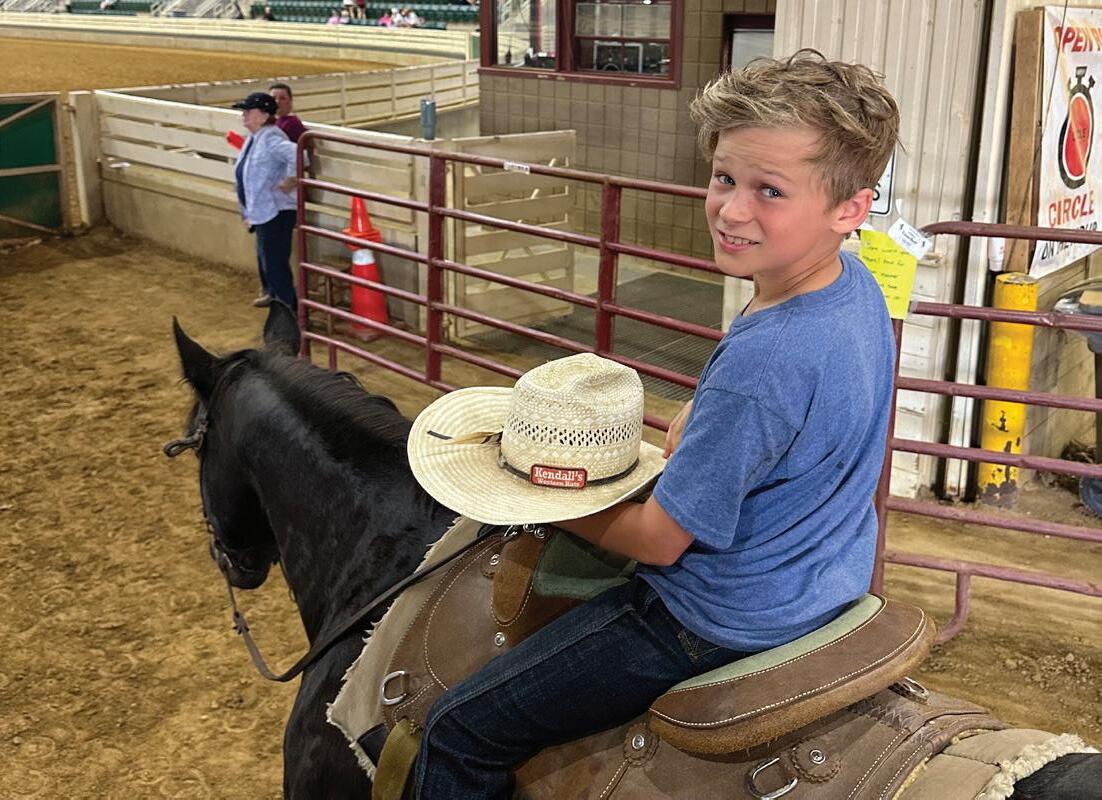




Vendors are an integral part of the horse show experience. Over the years, The Premier has been fortunate to welcome an exceptional group of vendors, many of whom return year after year, supporting our exhibitors and elevating the event. This series highlights the people behind the brands and services who play a vital role in our community.
Written by Claire Binkowski
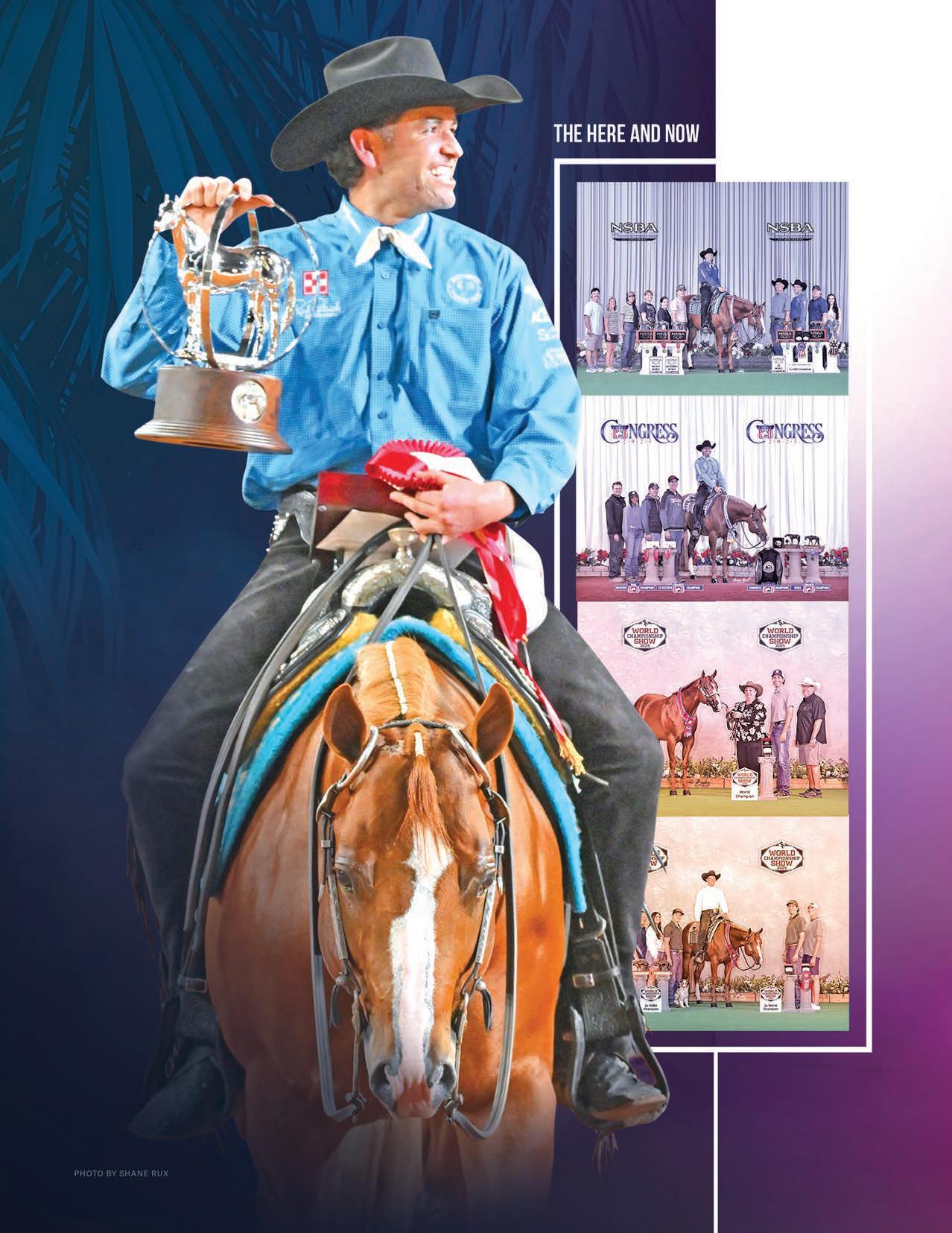
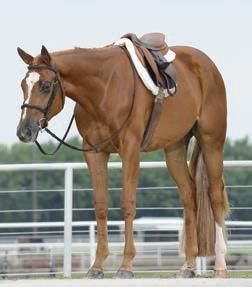
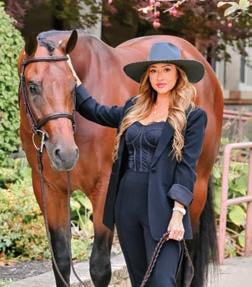
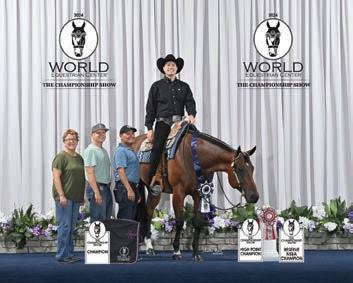
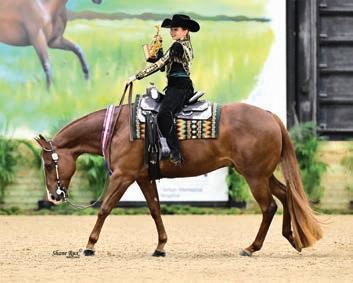
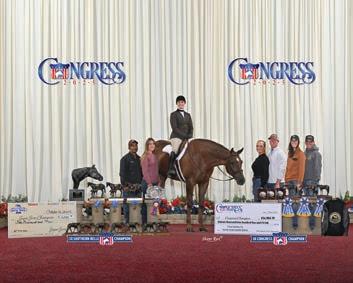
Long after the final class is called, the photographs are what remain. They hang on walls, rest on desks, and live in frames as reminders of days that mattered— big wins, hard-earned goals, and moments when effort finally paid off. What most people see is a beautiful image. What they don’t always see are the dozens of small, deliberate decisions within it: the angle of the shot, the precise placement of a foot, the way the light falls across a rider’s face, the alert expression in an ear.
Those details are where Shane and Julie Rux leave their mark.
At Shane Rux Photography, nothing is left to chance. Each image is shaped by experience, guided by instinct, and grounded in a deep understanding of what it took for horse and exhibitor to arrive at that moment in the first place. Because to them, a photograph is more than a record of a class. It is proof that the journey to get there was worth it.
Shane’s path into the horse world began behind the lens. In 1992, while serving as a police officer in Wisconsin, he was introduced to the industry by Harold Campton. What began as curiosity quickly grew into commitment. He trained under some of the most respected names in horse show photography— Larry Williams, Don Suggart, Jeff Kirkbride, and KC Montgomery—learning not just how to take a photo, but how to construct one. Foot placement. Angles. Balance. The technical decisions that make a conformation or rail image appear effortless, though it is anything but.
Before long, balancing patrol shifts with show schedules became unsustainable. Shane chose his camera over the squad car—and never looked back.
Julie came to equine photography from the opposite direction. A former horse trainer and now an APHA judge, she understands the exhibitor’s side of the industry intimately—the months of preparation, the pressure, and the emotional investment behind every trip to the show pen. Together, she and Shane
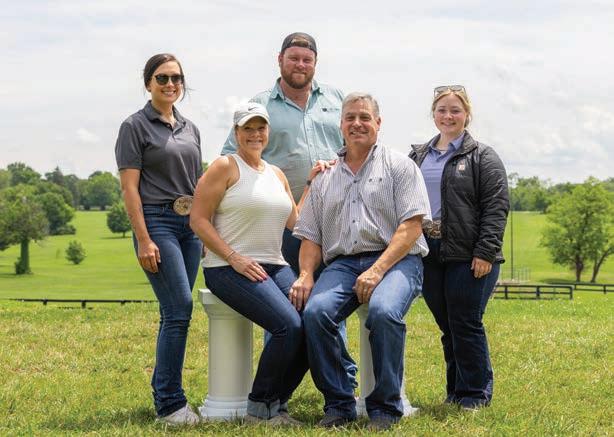
complement one another seamlessly, blending technical precision with a deep, emphatic understanding of the people and horses they photograph.
That blend of skill and understanding shapes the way they serve their customers. Their goal is clear: 100 percent excellence in customer service. In practice, that means 24-hour digital turnaround times, meticulous edits when a tail needs refining or an ear needs fixing, and a keen awareness that for many exhibitors, this photo will become a priceless reminder of a moment they worked so hard to achieve.
At their booth, service often looks less like a transaction and more like a lifeline. A safety pin when a number falls off. A bottle of water on a long, hot day. A warm meal from Julie’s crockpot for a trainer who hasn’t left the saddle since sunrise. They know what it takes to get to the ring because they’ve lived it.
Fall is their crucible: the All American Quarter Horse Congress and the AQHA World Championship Show—back-to-back pressure cookers where emotions run high and the schedule never slows. They meet it with preparation: careful staffing, defined roles, a deliberate focus on morale, and steady leadership that sets the tone for their entire team. From the first class to the final one, they move through the chaos with quiet consistency, making the long days feel manageable for everyone around them.
Even outside that demanding stretch, the calendar rarely slows. To manage overlapping dates—from Kentucky to Las Vegas—they have built a system as mobile as their lives. A storage unit in Las Vegas houses their West Coast equipment, and it is not unusual to see them pull into the
South Point Equestrian Center in a rented U-Haul, unloading gear with the efficiency of a pit crew.
Their team is family in more than name. Julie’s son, Jared, grew up in the barn and now serves as their “equine expression technician”—the critical eye who helps set a horse before the shutter clicks. Michael Morgan, once a family friend learning under Shane’s guidance, is now a successful photographer in her own right and an integral part of their crew.
Like any life built around horse shows, much of theirs is lived on the road. Birthdays are sometimes missed. Holidays are postponed and celebrated when the schedule allows. Yet along the way, they’ve built a horse show family that steps in where time and distance fall short.
That same community rallied around them when life took an unexpected turn. In February 2023, Julie was diagnosed with Triple Negative Breast Cancer—what she calmly refers to as a “speed bump,” not a roadblock. During weekly chemotherapy treatments, she worked remotely while their team handled the travel. The shows went on. The photos were delivered. And the outpouring of support from the horse community—trainers, exhibitors, and fellow photographers—was overwhelming. It was a reminder that the industry they serve is also the one that sustains them.
The hard season and busy years, they’ve learned, are balanced by the familiar routines that follow.
Shane’s personal motto is simple: work hard, play hard. For

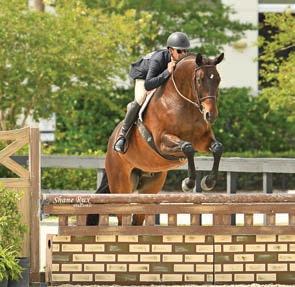
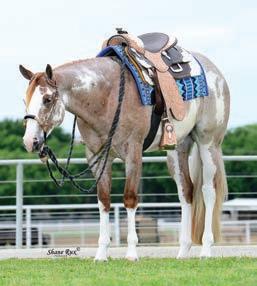
thirty-four years, immediately following the AQHA World Show, he has headed north to Wisconsin for a hunting trip with his father, brothers, and uncle—a ritual as steady as the show calendar itself. At the same time, Julie returns home, decorates for the holidays, ensures every order is shipped, and settles into the quiet rhythm that only comes after a year spent living out of suitcases.
Winters at home in Florida are their reset—an exhale before the road calls them back to do it all again.
In the end, what Shane and Julie provide is far more than photography. It is proof of the moments exhibitors worked all year to earn—a business built not only on skill, but on care. They know what it takes to get to the ring, and they know how to honor it when the moment arrives. And so, they remain present, camera ready, preserving the memories that endure long after the show is over.