Why Do Some Bathroom Floors Crack
Only a Few Months After Installation?
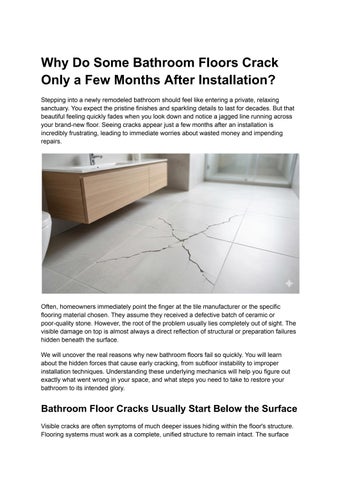
Stepping into a newly remodeled bathroom should feel like entering a private, relaxing sanctuary. You expect the pristine finishes and sparkling details to last for decades. But that beautiful feeling quickly fades when you look down and notice a jagged line running across your brand-new floor Seeing cracks appear just a few months after an installation is incredibly frustrating, leading to immediate worries about wasted money and impending repairs.
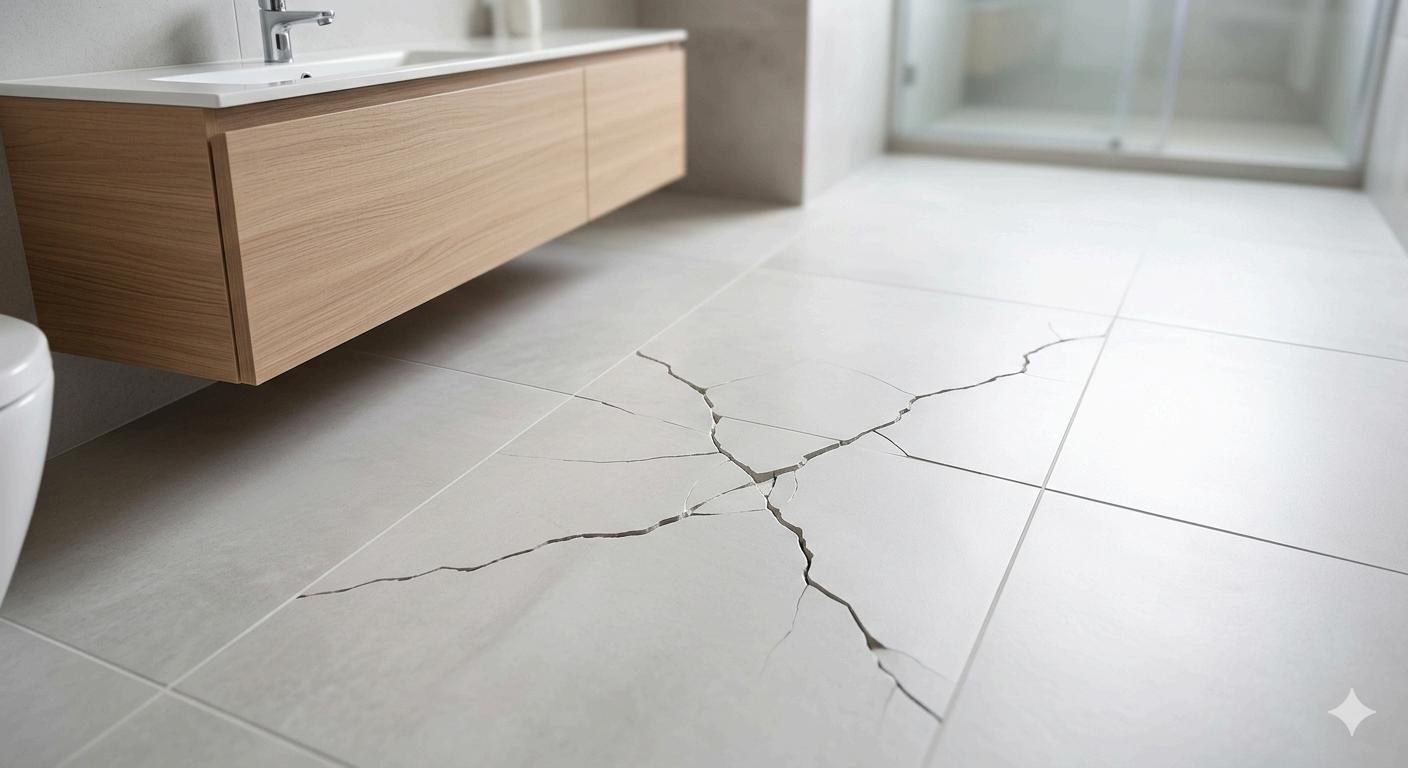
Often, homeowners immediately point the finger at the tile manufacturer or the specific flooring material chosen. They assume they received a defective batch of ceramic or poor-quality stone However, the root of the problem usually lies completely out of sight The visible damage on top is almost always a direct reflection of structural or preparation failures hidden beneath the surface
We will uncover the real reasons why new bathroom floors fail so quickly You will learn about the hidden forces that cause early cracking, from subfloor instability to improper installation techniques. Understanding these underlying mechanics will help you figure out exactly what went wrong in your space, and what steps you need to take to restore your bathroom to its intended glory
Bathroom Floor Cracks Usually Start Below the Surface
Visible cracks are often symptoms of much deeper issues hiding within the floor's structure. Flooring systems must work as a complete, unified structure to remain intact The surface
tile, the mortar, the backer board, and the wooden joists must all act together to distribute weight evenly.
When movement occurs underneath the finished layer, that stress transfers directly to the rigid materials above Ceramic, porcelain, and natural stone have very little flexibility If the support system bends or shifts, the tile has no choice but to break. Understanding the difference between a minor cosmetic crack and a severe structural problem requires looking past the surface to evaluate the stability of the subfloor supporting the entire room
An Uneven or Weak Subfloor Is One of the Most Common Causes
Flexing between floor joists or problems caused by damaged plywood mean the foundation simply cannot support the heavy materials above. Removing old flooring layers and securing a perfectly flat, stable foundation is non-negotiable When this step is skipped, you will soon find cracks appearing along grout lines, or you might notice an individual tile cracking under pressure simply because someone stepped on a weak spot.
Moisture Problems Can Weaken Flooring Systems Faster Than Expected
Bathrooms experience constant humidity exposure and frequent splashes Water is incredibly persistent and will find its way through any available opening Improper waterproofing during installation allows water intrusion beneath the tile, which begins to rot the wooden subfloor and degrade the thinset mortar holding everything together.
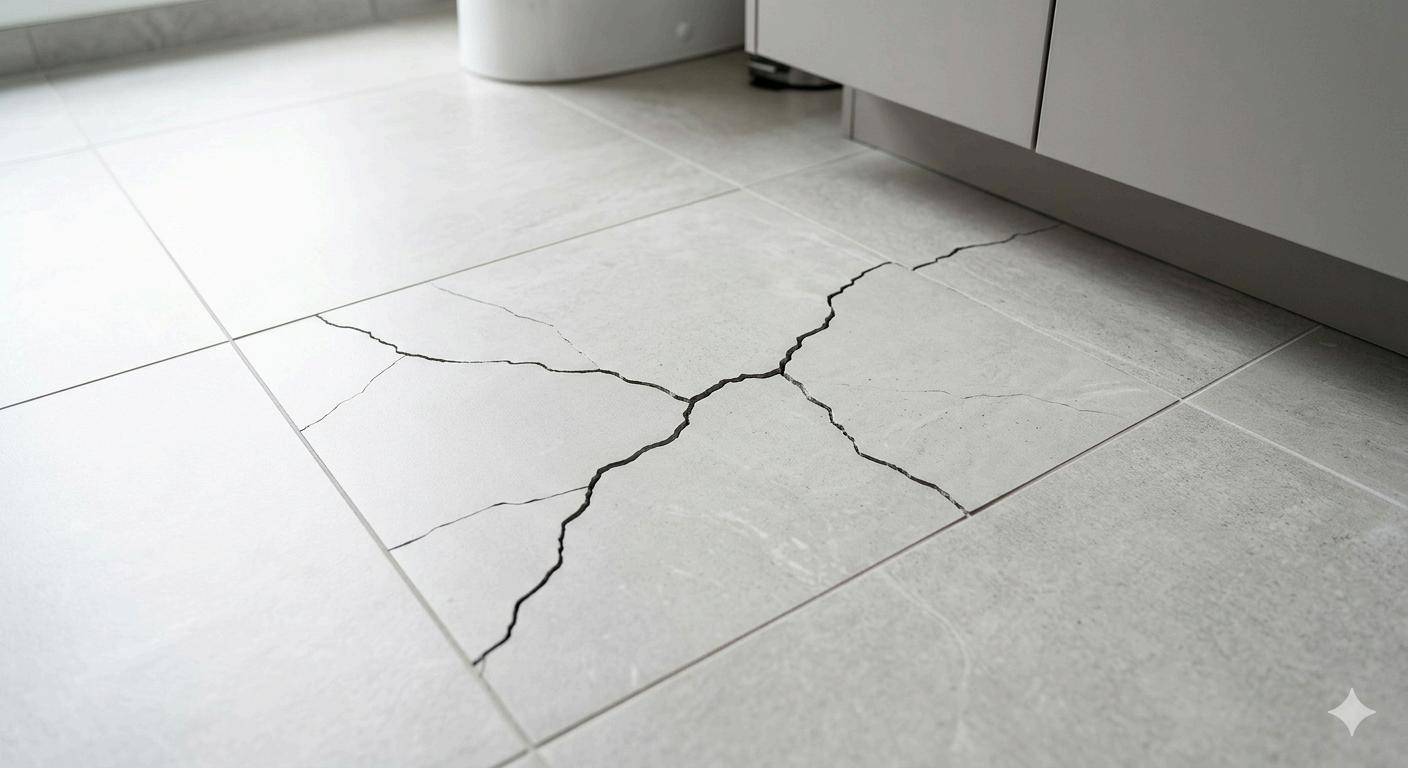
Many bathroom flooring problems begin when moisture reaches areas beneath the finished surface and slowly weakens the supporting materials. Hidden leaks affecting floor stability
are particularly common around shower areas and toilet seals Plumbing leaks and poor ventilation contribute to long-term moisture damage risks, ultimately causing the subfloor to swell and the tiles above to snap.
Incorrect Tile Installation Can Lead to Early Cracking
Homeowners often search for answers after noticing cracks soon after a remodel is completed, only to discover that the installation technique was flawed. Applying improper mortar or failing to achieve sufficient adhesive coverage leaves hollow air pockets beneath the tiles
When you step on a tile with an air pocket underneath it, the unsupported material simply caves in Furthermore, incorrect spacing techniques and a general failure to follow manufacturer recommendations can put undue stress on the edges of the flooring A beautiful tile cannot compensate for a sloppy mortar bed.
Structural Movement Can Transfer Stress Into the Floor
Houses breathe and move constantly Natural home settling, along with the expansion and contraction of building materials, causes floor joist movement throughout the year Seasonal humidity changes cause wood to swell in the summer and shrink in the winter.
Older home structural shifts are especially notorious for causing bathroom floors to experience repeated stress. If your house is slowly settling into its foundation, the rigid tiles on the second floor will feel the strain This type of movement typically results in cracks forming in recurring locations, even after you attempt a localized repair
Expansion Gaps Are Often Overlooked During Installation
All building materials naturally expand and contract with temperature and humidity fluctuations. The purpose of expansion joints is to give the tile room to grow without pushing against the framing of the house
What happens when tile is installed too tightly against a wall? Pressure buildup occurs over time. The floor physically runs out of room to expand, causing the tiles to buckle or snap. Common installation oversights, like omitting a flexible silicone joint around the perimeter of the room, lead directly to cracking near walls and tiles pushing against fixed surfaces
Heavy Fixtures Can Create Unexpected Stress on Flooring
Homeowners rarely realize heavy fixtures can contribute to flooring stress if the installation isn't properly planned Bathrooms hold some of the heaviest items in a house Massive
freestanding bathtubs, double vanities, large shower systems, and thick stone countertops apply intense, concentrated weight onto the floor joists.
If the structural framing was not reinforced to handle this massive weight distribution, the floor will sag under the pressure Even a tiny dip in the floor joists beneath a heavy cast-iron tub is enough to shatter the surrounding ceramic tiles.
Grout Cracks and Tile Cracks Are Not Always the Same Problem
It is helpful to understand the difference between grout failure and tile failure Grout is slightly more brittle than tile, and minor cosmetic cracking in the grout lines does not always spell disaster Sometimes, grout cracks simply because it was mixed with too much water during the installation process.
However, there are specific signs homeowners should watch for to determine when cracks indicate deeper movement. Loose tiles, hollow sounds under the flooring when you tap them, and repeated crack repairs that keep failing are major red flags In these scenarios, a professional inspection is necessary to diagnose the structural issues hiding below
Why Rushing a Bathroom Remodel Can Lead to Flooring Problems
Tight project timelines heavily contribute to early floor failures When contractors or DIYers do not allow inadequate curing time for leveling compounds and thinset mortar, the materials do not reach their necessary strength Skipped preparation steps and improper drying conditions leave moisture trapped beneath the surface
Bathroom floors that fail shortly after installation are often linked to preparation or installation issues rather than the flooring material itself When undertaking Home Remodeling Wilmington DE, prioritizing a solid foundation prevents major headaches down the road Installation shortcuts always reveal themselves eventually, usually in the form of a cracked floor just a few months later
How Homeowners Can Help Prevent Future Floor Cracking
The best defense against a cracked floor is proactive planning Proper waterproofing membranes and thorough subfloor inspections must happen before a single piece of flooring is laid down. Addressing structural concerns before flooring installation guarantees long-term durability benefits
Hiring experienced remodeling professionals ensures quality installation methods are strictly followed. Alternatively, you might want to look into flexible flooring options. For instance, reading up on Why LVP Flooring Is the Top Choice for Home Remodeling in
Philadelphia County PA can show you how luxury vinyl plank gracefully handles the minor subfloor shifts that would otherwise shatter porcelain.