PRIMER X TOOLKIT A









Consumers are choosing their own media ecosystems, leaving brands to find new ways to be believed in an era of fractured influence.

swallowed by a pervasive digital landscape governed by opaque, proprietary algorithms.”


FOR BRANDS AND ADVERTISERS, THE QUESTION IS NO LONGER MERELY HOW TO BE SEEN, BUT HOW TO BE BELIEVED IN A WORLD WHERE INFLUENCE IS INCREASINGLY DIFFUSE, AND TRUST IS HARDER TO EARN THAN EVER BEFORE.



In October 2024, Praytell partnered with YouGov to survey 1,300 U.S. consumers and probe the shifting dynamics of Americans’ relationship with traditional versus emerging media. What surfaced was a nuanced portrait of how Americans perceive, trust, and engage with their media landscape, offering fresh insights for brands navigating this increasingly fragmented environment.

For years, studies have chronicled the erosion of trust in mainstream media. In 2000, 55% of Americans believed in the reliability of major outlets to deliver factual reporting. By 2024, that number had plummeted to a stark 31%.* Unsurprisingly, political affiliation plays a key role in this decline: Republicans are twice as likely as Democrats to view mainstream media with skepticism.
Yet the Praytell x YouGov Earned Media Study revealed an unexpected twist. When asked which source informs purchasing decisions, more people chose emerging media than traditional media.
*Source: Gallup: Americans' Trust in Media, Oct 2024

Source: Praytell-YouGov Media Trust Survey, October 2024 Emerging Media Edges Traditional for Purchase Decisions




Source: Praytell-YouGov Media Trust Survey, October 2024
Significant interaction with emerging media platforms
Emerging media impacts opinions in politics and personal interests

Older rural respondents report the highest proportion of daily use of emerging media, surpassing even Gen Z.
Both groups value the interactive and niche content reflecting a preference for platforms that align with their worldviews. In fact, over 60% of respondents in each group cited cultural alignment and authenticity as reasons for trusting emerging media.
Gen Z favors emerging media for its cultural relevance and focus on underrepresented voices and lifestyle topics often overlooked by traditional outlets.
Gen Z also shows higher engagement, trust, and likelihood of sharing emerging media content than the survey average, demonstrating its resonance with younger audiences.
Among rural, religious conservatives, trust in emerging media is driven by its alignment with deeply held values and authenticity.
Respondents in these demographics report high daily usage of emerging media and a strong reliance on its ability to provide culturally relevant content.


Influencers thrive in lifestyle and wellness topics due to their relatability and authenticity. The survey revealed that younger audiences gave emerging media a higher trust score than traditional. This highlights how emerging media, like influencers, content resonates as personal and relatable though it lacks traditional authority.

OPPORTUNITY



Key Advantages of Emerging Over Traditional Media

BRAND OPPORTUNITY
For brands, the interactive nature of emerging media creates unique opportunities to build relationships with audiences. The ability to gather feedback, engage in real-time conversations and align with niche communities make emerging media a valuable channel for building strong relationships with your audience.

BRAND OPPORTUNITY
Brands targeting younger or conservative demographics should leverage emerging media to build trust and drive conversions around products and purchase journeys.



BRAND OPPORTUNITY

Brands need to go beyond demographic segmentation to understand the interplay of values, media consumption habits, and political leanings and build interactivity into their narratives to more deeply engage audiences.
Emerging media has fundamentally reshaped the way audiences engage, what they trust, and how they consume content. For brands, this evolution demands more than just adapting to new platforms—it calls for a deeper understanding of the audience, a willingness to move beyond assumptions, and a strategic embrace of independent creators and the diverse ecosystems they inhabit.
In this fragmented landscape, where authenticity and relatability reign, brands must navigate a more intricate and nuanced terrain in order to tap into the full potential of today’s media.




As credibility shifts from institutions to individuals, the rules of engagement for brands and audiences are being rewritten.

CHAPTER THREE
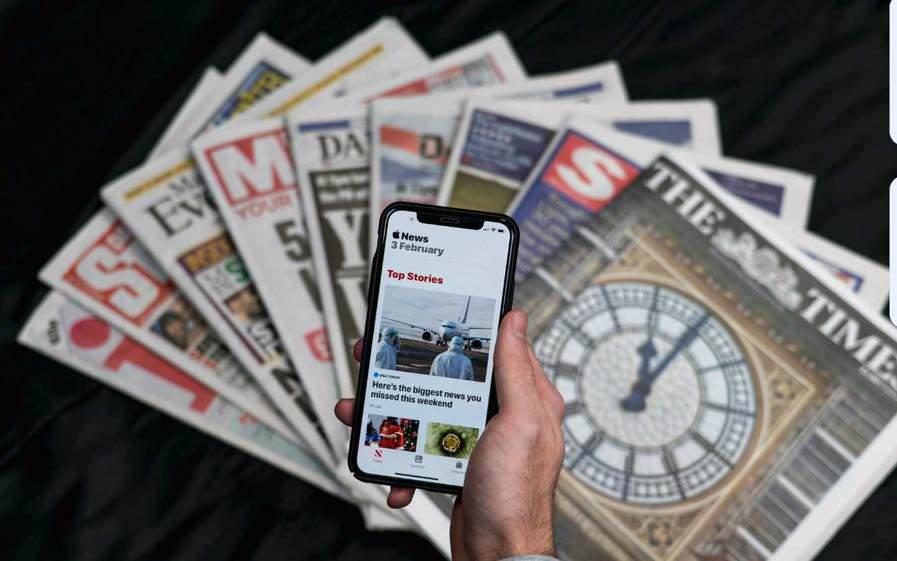
of Americans* now get their news from social media platforms. 54%
*Source: Pew Research Center


In addition to the cultural disconnect between U.S. consumers and traditional mainstream media outlets, the erosion of the broadcast business model has reshaped the news media landscape.
This new landscape has been described as a "barbell." One weight represents large media companies with healthy subscription revenues and cash flows reinvested into quality content with broad appeal.
The other weight represents emerging media—the independent creators, niche publishers, and studios distributing content directly to highly engaged audiences without substantial capital.
The thin bar in the middle symbolizes the shrinking mid-sized media companies that lack the agility of independent creators and the diversified revenue streams of large corporations.
However, we propose a more actionable framework to understand the current media ecosystem: The Innovation Curve.
Traditionally used to describe how new technologies and ideas spread through cultures, the Innovation Curve segments media adopters into five categories: Innovators,
This framework illustrates that brands need to engage with the entire spectrum of the Media Innovation Curve to achieve both relevance and scale.
Focusing solely on the Innovators and Early


A pertinent example is the rise of MrBeast's Feastables chocolate brand.
Leveraging his YouTube platform with over 100 million subscribers, MrBeast (Jimmy Donaldson) launched Feastables in 2022. By directly engaging with his massive audience, he disrupted the traditional confectionery market without the hefty marketing budgets typically required.
Hershey's, a legacy brand relying on conventional media strategies, witnessed a noticeable market impact. In fact, Hershey Co.'s stock faced pressures partly due to the unexpected competition from this new entrant.

HERSHEY’S STOCK DROPPED WHEN MRBEAST LAUNCHED COMPETITOR
FEASTABLES CAUSED HERSHEY’S
More recently, Alex Cooper—host of Call Her Daddy—introduced Unwell Hydration, using her devoted fan base to quickly gain traction in the crowded beverage space. Her launch highlights the power of creator-driven brands, with her built-in fan base eager to support and try the product. While it’s too early to tell how her brand will impact more established ones, the immediate enthusiasm speaks volumes.
The feastables scenario underscores the imperative for brands to build or expand their communications playbook to capitalize on the potential for growth found in emerging media at the early stages of the media innovation curve.
Failing to do so means potentially missing out on emerging trends, conversations, and consumer shifts that could redefine market landscapes overnight.

We are witnessing a once-in-a-century seismic shift—an eclipse of traditional media gatekeepers and a reordering of how information is communicated and consumed. Authentic voices are rising as mainstream monopolies wane, flipping the power dynamics of the media landscape.
For brands and PR professionals, this upheaval isn’t merely a challenge; it’s an ultimatum. To cling to the old models is to risk irrelevance.
The Innovation Curve is more than a helpful framework to understand the evolving media ecosystem; it's a survival guide for navigating this new world.
Embracing both emerging media innovators and traditional legacy media is imperative. Early adopters on podcasts, social media, and independent platforms aren't fringe—they're catalysts propelling ideas into mainstream consciousness. Ignoring them dismisses the forces that can make or break a brand's future.
The question isn't whether the media landscape will continue to change—it's whether brands can adapt swiftly enough to remain relevant.




For decades, traditional media stood as a kind of societal lighthouse—steadfast, central, and authoritative. Its power derived largely from institutional trust, a bedrock that, according to our survey data, is now crumbling with disquieting speed.
In its place, emerging media platforms have risen, their allure rooted not in grandeur but in the intimacy and authenticity they promise—a currency more potent than ever in this fractured age.The structural changes in the media landscape demand a new communications playbook that can live up to this moment of transformation.
For marketers and communications professionals, there’s only one option: don’t be passive in the face of the new media ecosystem. Understand its effects so we can shape it, rather than being shaped by it.
You are the media now. They are the past.


We expect AI to continue to drive structural changes in the information landscape. Audiences will fragment further, as they will only have more options for content, which will pose challenges to legacy publishers and benefit emerging media on the whole. Elon Musk’s recitation of “you are the media now” is a good indication that emerging media is showing no signs of slowing down as a cultural force.
In response to these challenges, traditional media will have to evolve both in form and function in order to regain trust and win attention. Notably, this is already happening in many areas—from legacy media outlets innovating their formats to more generally acknowledging the work to be done to regain trust. As Axios co-founder and CEO Jim VandeHei recently said in response to Musk’s view of the media, “This is a war to restore faith in our work. And we’re losing—decisively.”
Media as a trusted institution is a relatively new idea and it must evolve and innovate in order to retain a critical role of gatekeeper to factual, reliable information an informed public relies on. This is a war to restore faith in our work. And we’re losing—decisively.


Historically, communications professionals have been banging the drum of quality over quantity—for good reason. Moving the needle takes storytelling chops, assets that pop, the right outlet, the right journalist, the right moment, etc. Nothing felt better than when that Forbes feature or People piece hit—the impressions felt real, and the influence genuine.
Today, those hits are few and far between. When they do come, they’re celebrated for their SEO impact more than the watercooler conversations they inspire. Tomorrow, the value of a killer feature story will be that it is included in an answer by multiple Gen AI LLMs. So, in today’s fragmented media environment, brands must balance quality with quantity, ensuring consistent visibility across platforms without sacrificing authenticity.
why this matters








YouTube has become a dominant platform for long-form, highengagement content. Consumers now watch millions of hours of YouTube on their TVs, with podcasts and entertainment shows leading the way. Instead of solely focusing on traditional TV segments like Good Morning America, PR teams should target YouTube shows like Hot Ones or Chicken Shop Date, which combine entertainment with highly engaged, niche audiences.
Podcasting has evolved from a niche medium into a mainstream platform dominated by video content, particularly on YouTube. For Gen Z, podcasts have become a preferred way to engage with long-form ideas. For all generations, podcasts represent an intimate connection. Brands can partner with influential podcasters, sponsor episodes, or create their own branded podcasts to reach this highly engaged audience.

To thrive on platforms like TikTok and Instagram, PR content must be optimized for social sharing. Stories need compelling visuals, short-form video components, and trend-driven hooks. Without these, even the most well-crafted traditional PR pieces risk being overlooked.


While emerging media dominates engagement, traditional media retains its importance—particularly when combined with SEO GEO. Why the strikethrough? SEO and keywords aren’t going away, but competitive advantage is more likely to be found in “SEO for the AI era”—GEO, Generative Engine Optimization. Like SEO, GEO rewards positive coverage in large, relevant news and media websites. It puts even more emphasis than SEO does on information rich sites, such as community-moderated platforms like Wikipedia, Reddit, and Quora and database-style sites like Yelp, Crunchbase, and IMDB. It also likes detailed, text-based content that is summarized at the top and bottom of the page.

especially for reputation-building. Meanwhile, emerging media offers authenticity, relatability, and direct audience engagement. By combining the strengths of both, brands can maximize their impact.
Collaborate With Newsfluencers”


The line between journalist and content creator is increasingly blurred. Platforms like Substack and LinkedIn are home to influential writers who act as both storytellers and curators. Brands can forge relationships with these individuals, leveraging their platforms for impactful, authentic coverage.

The current media landscape favors a high volume of content that keeps brands top of mind. While traditional PR campaigns might focus on a few high-impact pieces, today’s strategies require a steady drumbeat of diverse, platform-specific content. Collaborations with creators, reactive campaigns, and real-time engagement are critical to staying relevant.

Emerging media is collapsing the traditional sales funnel. Consumers are moving from awareness to action faster than ever, often within a single platform. PR strategies should integrate elements of sales enablement, ensuring that storytelling not only inspires but also drives conversions.
Align with creators and platforms that THE OPPORTUNITY FOR BRANDS

Increase touch points across diverse media ecosystems to stay top of mind.
Respond quickly to cultural shifts and emerging trends, using data to inform




The communications landscape is undergoing a seismic transformation. For brands, this is both a challenge and an opportunity. By embracing innovation, authenticity, and integration, they can not only survive but thrive in this new media era. The playbook outlined here is a starting point, but success will ultimately depend on a willingness to experiment, adapt, and engage with audiences in genuine, meaningful ways.