Spring/Summer 2026 Edition







Spring/Summer 2026 Edition
Northeastern Colorado Stock Show helps youth prepare for county fairs 4
Researcher has spent career helping farmers make most of water resources ........................8
Morgan County Cattlemen’s banquet celebrates students, agriculture 12
Perkins Canal project to divert South Platte River water enters public comment phase 16
Northeastern ag faculty bring wide range of expertise to the classroom 22
Busy time for Peetz FFA .................................26
Sterling FFA chapter staying active with competitions and outings 28
Project uses AI to turn soil data into actionable insights for farmers 30
Firefighters’ experience, equipment upgrades improve local responses to wildfire 32
Fleming FBLA hosts petting zoo at nursing home 35
Data centers present difficult decisions on eastern plains 37 Caliche celebrates FFA Week 40
Salute to Agriculture is a special supplement published by The Fort Morgan Times and Journal-Advocate. Our Staff
Sara Waite, publisher and editor
Callie Jones, Journal-Advocate assistant editor
Robin Northrup, Fort Morgan Times staff writer
By Callie Jones cjones
@prairiemountainmedia.com
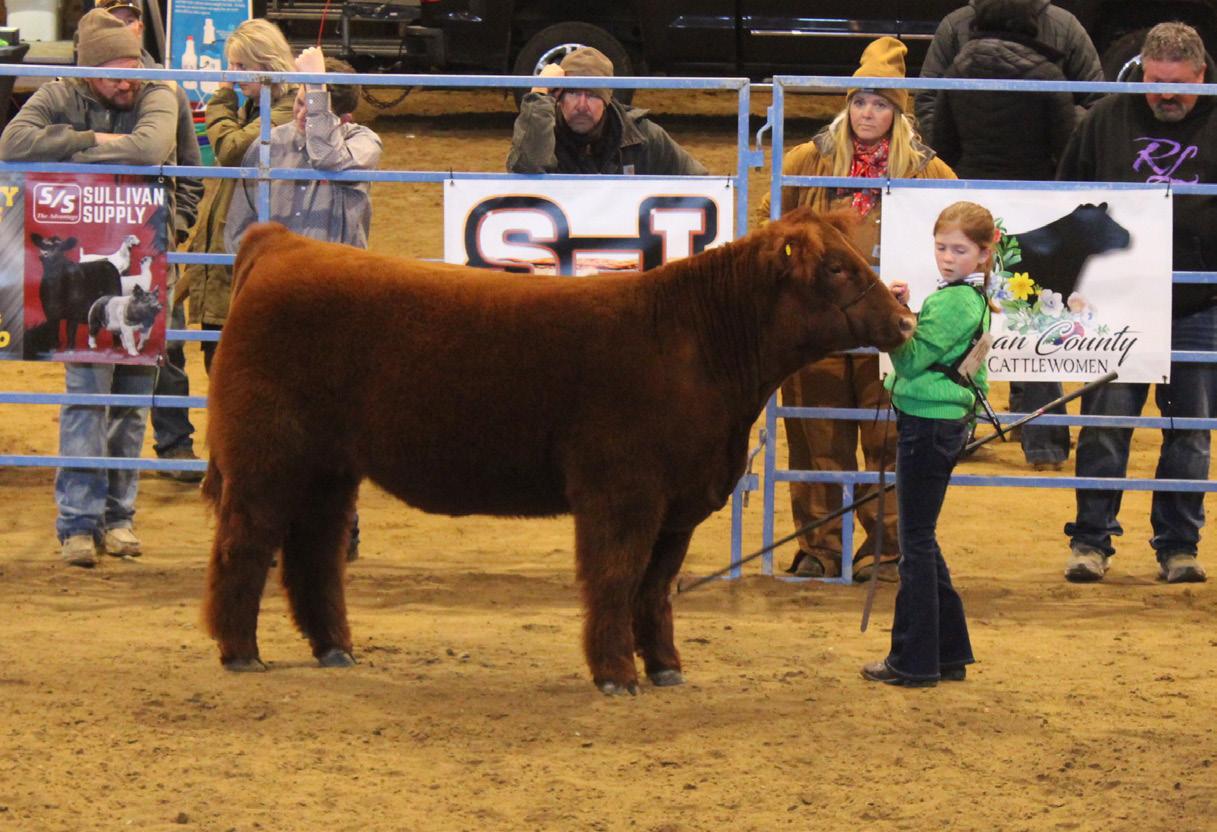
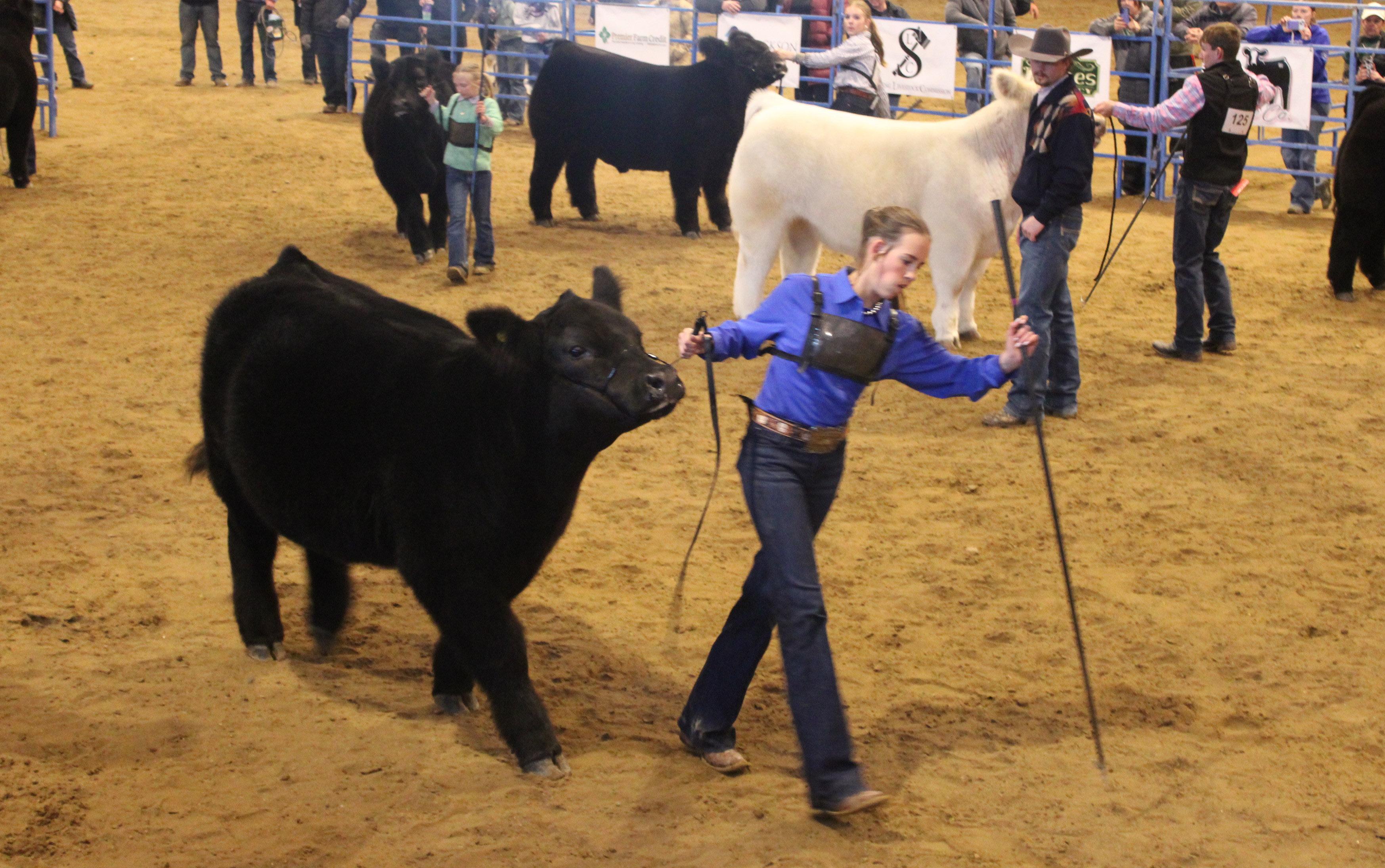
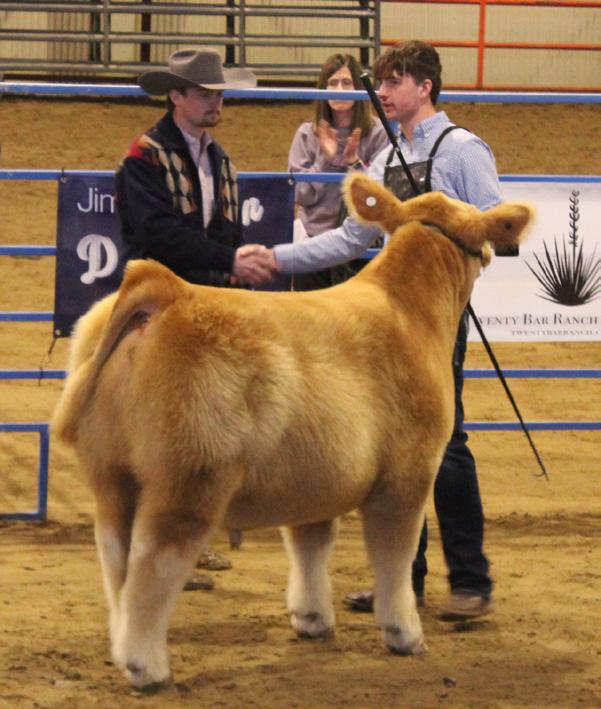
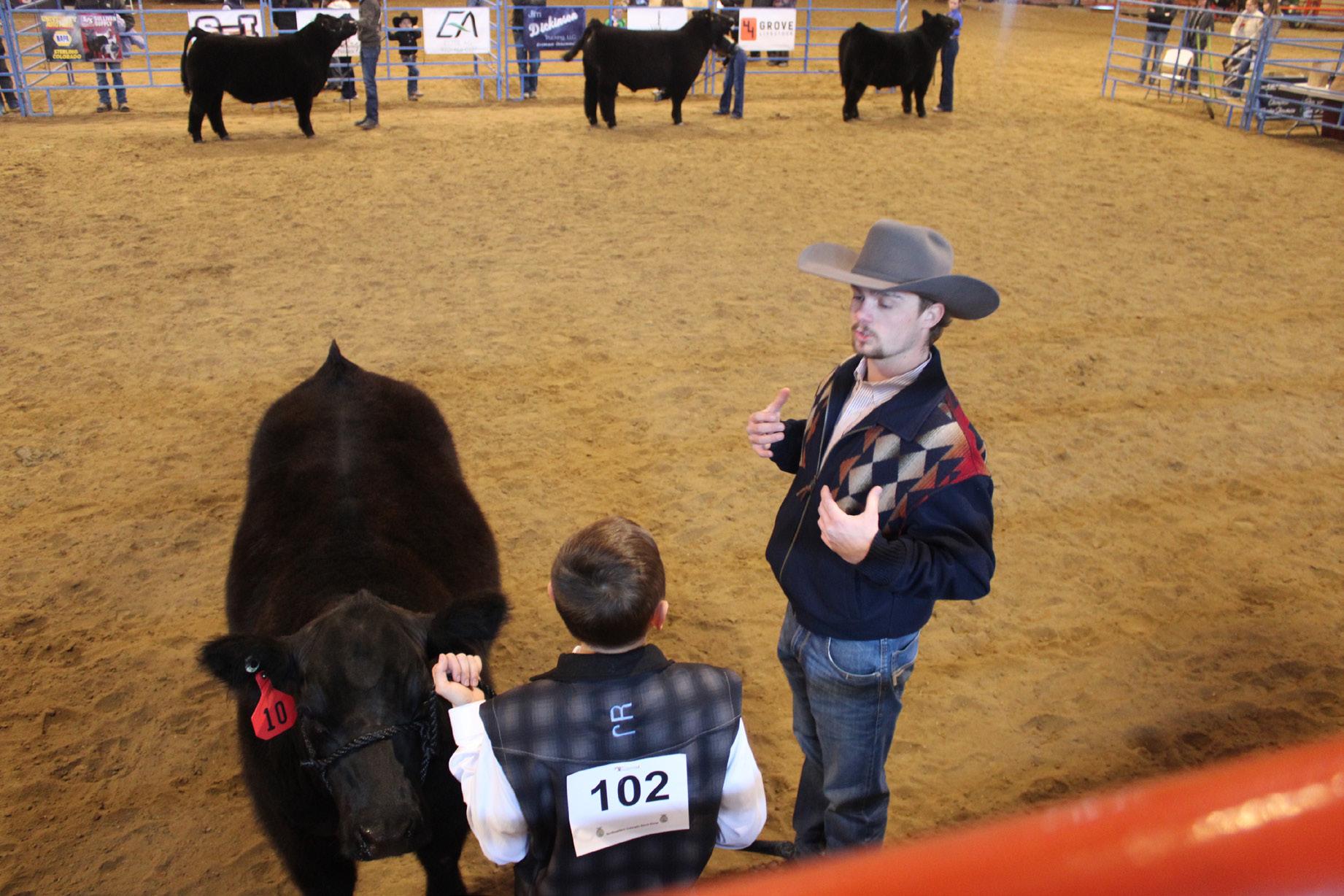
Tenly Becker and Sutton Hill took the top awards, Grand Champion Market Animal and Grand Champion Breeding Heifer, at the Northeastern Colorado Stock Show on Saturday, March 7
Hosted by the Sterling FFA chapter and held at the Logan County Fairgrounds, the purpose of the show is to help FFA and 4-H members prepare for upcoming county fairs and other big shows. It also serves as a great fundraiser for the chapter.
Serving as the judge for the day was Blake Fabrizius, a northern Colorado native who co-owns Fabrizius Land & Cattle, marketing registered Simmental and SimAngus bulls to producers and a few heifers to junior members. He is a Northeastern Junior College alum and most recently graduated with his Bachelor’s in Animal Science at the University of Wyoming, competing on the livestock judging teams at both. He is currently pursuing his Master’s Degree from the University of Wyoming, focusing on bovine nutrition and reproductive
physiology.
“An excellent set of cattle top to bottom, heifers to steers. I’ve been thrilled with the quality here today, whether that be the cattle or the kids, as well as attendees watching. I just think an all-around awesome show,” Fabrizius said at the conclusion of the show.
The day started with what the judge called “a phenomenal” breeding heifer show featuring seven classes. While it was a close contest, in the end, Hill’s Charolais Cross Heifer was named Grand Champion, Adley Blach’s Angus Cross Heifer was Reserve Cham-
pion and Ela Rogers’ Continental Heifer took third place
While judging, Fabrizius paid close attention to foot shape, the size of the animal, body shape, skeletal quality, rib shape, power, etc. He spent lots of time meeting with individual competitors to offer them a few tips and let them know what he liked about their animal before selecting his top winners.
The breeding heifer show was followed by showmanship contests Again, it was a close competition but taking the top awards were Ela Rogers, senior Grand Cham-
FROM PAGE 4
pion; Rylee Codner, senior Reserve Champion; Caug Robinson, third place senior; Tenly Becker, intermediate Grand Champion; Diem Schuppe, intermediate Reserve Champion; Trotter Thomas, third place intermediate; Maesa Becker, junior Grand Champion; Lacey Tharp, junior Reserve Champion; and Karlee Raile, third place junior.
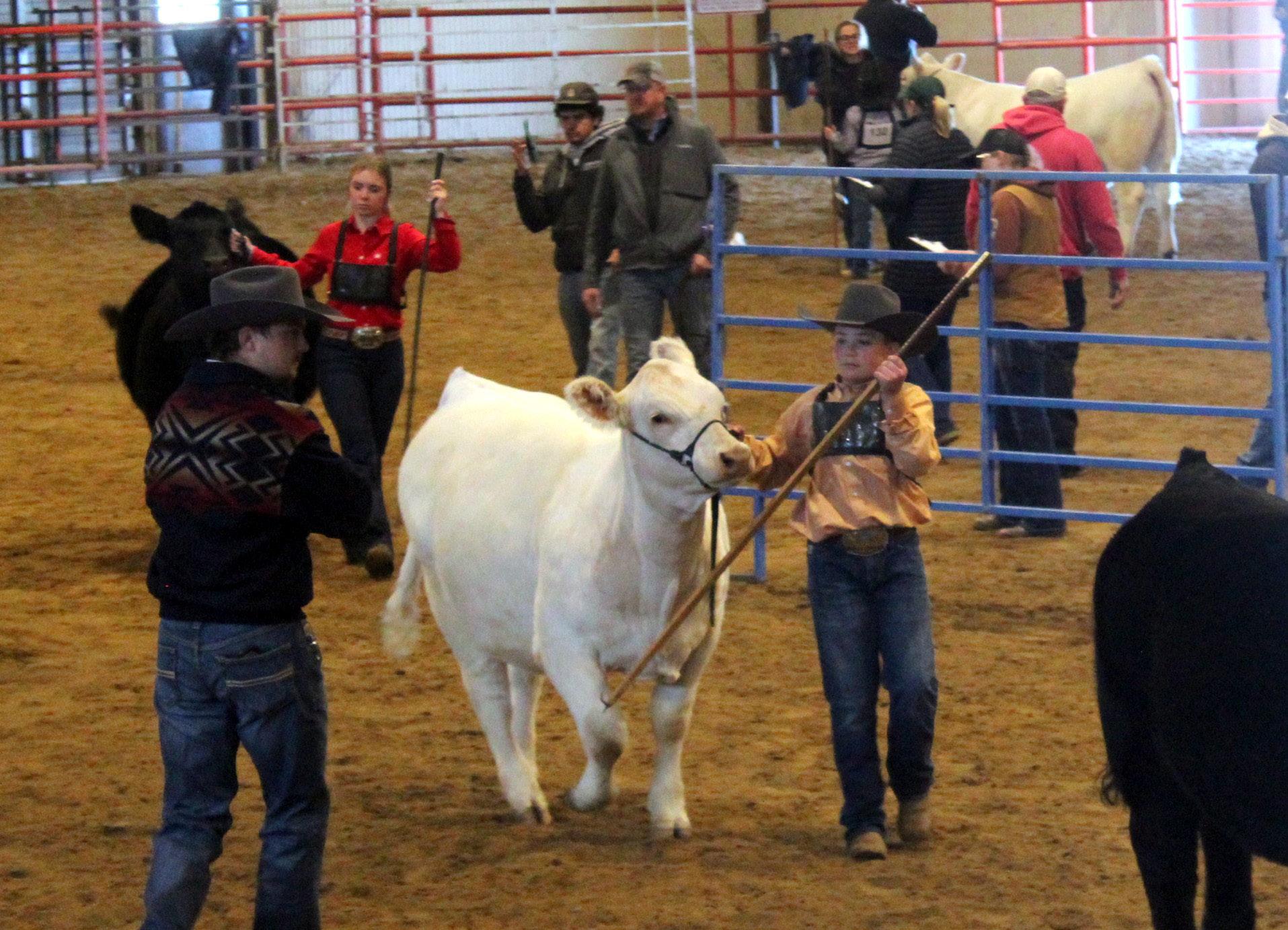
For these contests Fabrizius looked for things like ring presence, walking into the ring like you own it; eye contact; how the exhibitors hold their stick and where their hand is placed on the halter; if the exhibitor is calm, cool and collected; if the exhibitor sets their animals correctly; and just a captivating presence that sets an exhibitor up for success from the start
He complemented each division of showmen and again spoke with each exhibitor individually to give them some tips for improving.
After a pee-wee cattle show, the competition wrapped up with the market heifer and steer show, which featured 13 classes
While judging, Fabrizius paid close attention to each animal’s skeleton, finish, maturity pattern, structural width, etc. After a close examination of each animal, he named Becker’s 1,080-pound steer as Grand Champion, Conner Stromberger’s 1,052-pound steer as Reserve Champion and Cauy Robinson’s 928-pound steer as third place.

Joel Schneekloth received Four States Irrigation Council Headgate Award in January
By Jeff Rice
Special Contributor
Sometimes a person who makes a real difference doesn’t even know it until much later
Just ask Joel Schneekloth. Schneekloth is the Extension Specialist at Colorado State University’s Colorado Water Center.
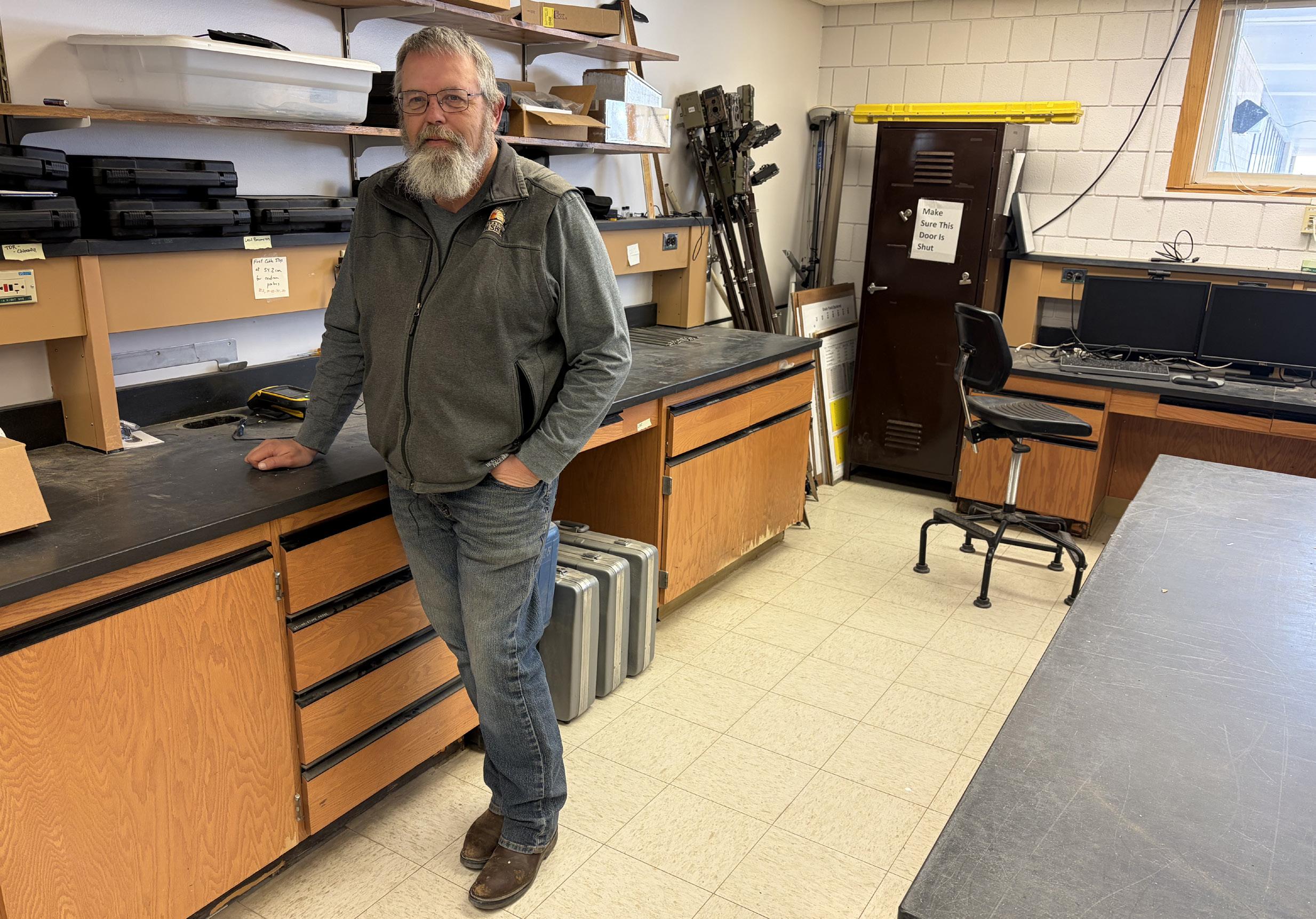
The center is housed in the CSU engineering building on the university campus in Fort Collins, but Schneekloth has worked from the offices and laboratory at the Central Great Plains Research Station east of Akron for 25 years.
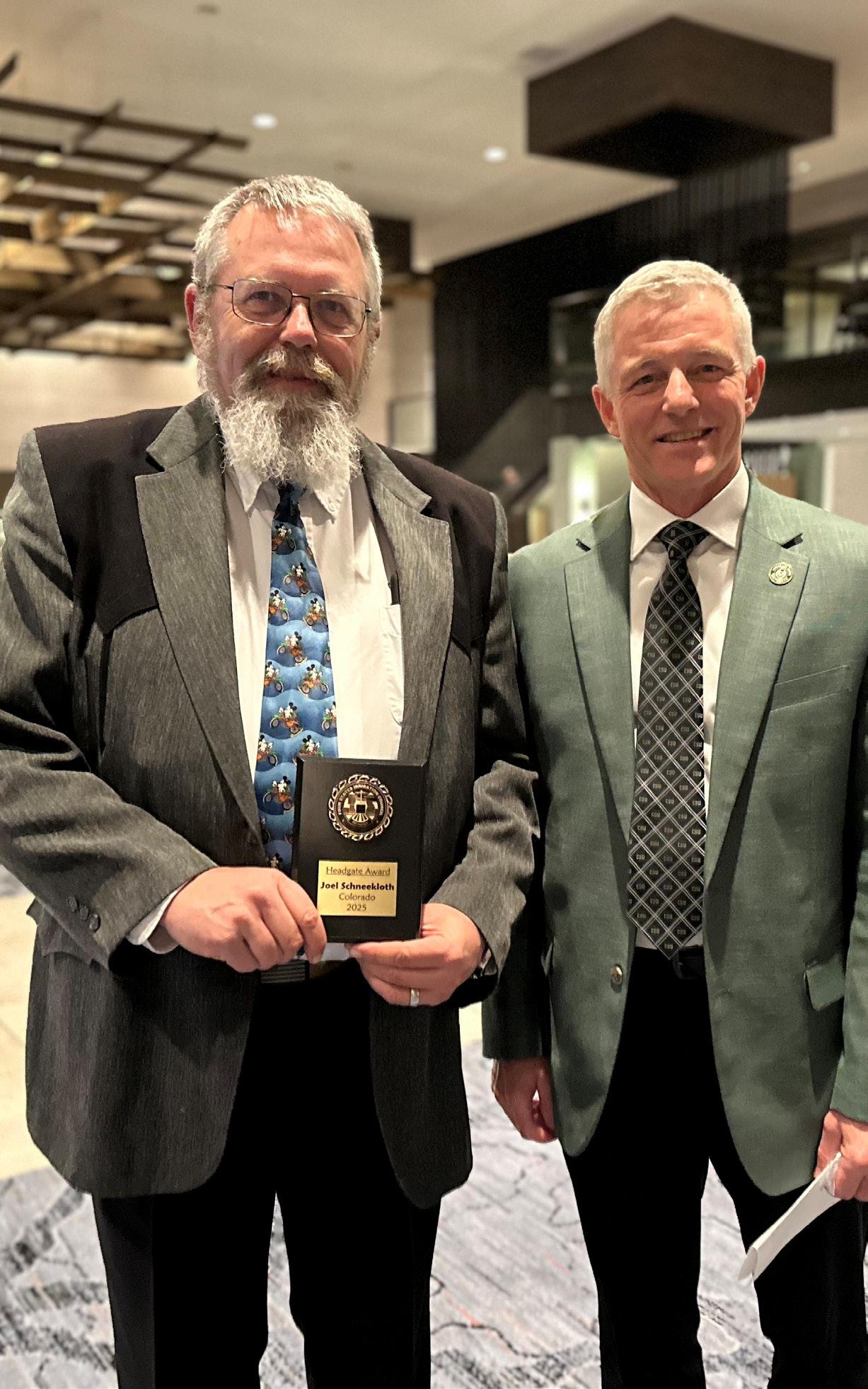
In January, Four States Irrigation Council gave Schneekloth one of its annual Headgate Awards for
his work in minimizing water usage while maximizing crop yields.
Established in 1952, FSIC represents irrigators in Colorado, Kansas, Nebraska and Wyoming. Other recipients at the January annual meeting were Dan Reynolds from Kansas, Bernie Gloss and Rick Preston from Nebraska and Joan McGraw from Wyoming
To understand the significance of Schneekloth’s award, one has to know that only three other CSU staffers have received it. One of
those was Charles Lory, who served as president of CSU from 1909 until 1940 and whose name is now attached to the CSU student center
Another is Ralph Parshall, a CSU professor who invented the Parshall Flume, now the most widely-used device for accurately measuring streamflow It was Parshall’s data on return flows in 1922 that helped shape negotiations for the South Platte River Compact of 1923
To be considered a peer among

FROM PAGE 8
those men, Schneekloth said, is humbling
“(I) look at that and go, ‘I don’t belong here,’” he said. “As I told people at the ceremony, to me, this is a team award. I would be nowhere around here like this if it wasn’t for my mentors, my cohorts, faculty members I’ve worked with over the years Because without their help, there’s no way I could have managed to what we’ve done. I mean, it’s a good feeling to be considered, but it’s humbling. Do I really belong here? Have I had that big of an impact?”
To appreciate Schneekloth’s contribution to irrigated farming, one has to know exactly what he has done for the past quarter of a century While he’s not involved in any water delivery system, he works extensively in helping farmers make the most of the water once it gets to the field.
“How to manage it, drought implications, low water,” Schneekloth explained. “I know a number of years ago, during a drought, we did a big series of meetings about drought management, looking at, (the fact that) we may not have water next year to fully irrigate. You know, how do we manage short supplies?”
A key to water management, Schneekloth said, is knowing what moisture is already in the ground.
“Better irrigation management means (that) you know what’s in the soil, what’s available in the soil,” he said. “You know your capacity, you know your crop water needs, so you can manage those better (by) making adjustments.”
He’s endured his share of naysayers over the years, but enjoyed vindication when his graduate work at the University of Nebraska caused a change in the way some Nebraska farmers were irrigating.
Before moving to CSU in 2000, Schneekloth worked for 11 years for NU, first earning his Master’s Degree and then following up with research on cropping systems with limited water in southwestern Nebraska
“We did that with a practice we call late initiation,” he said. “We held off irrigating until we got close to the reproductive growth stage, like silking or tasseling.
Ogallala Aquifer supplies most of the irrigation water His attention also has been drawn to the South Platte Basin, where declining snowfalls and rapid urban growth have put increasing pressure on a water supply once considered bountiful
While most of his work now focuses on working with diminishing precipitation in Colorado, as a scientist Schneekloth is reluctant to say the climate change he’s seen during his career is a “new normal.”
“I wouldn’t say necessarily new normal, because 25 years in the whole scheme of things, of climate, is not even a blink of the eye,” he said
“We think we’re going into something drier, and then all of the sudden we get a wet year like last year was really wet here. We really didn’t have to irrigate much here and we were getting 240- to 250-bushel corn with three inches of irrigation water for the whole growing season.”
That doesn’t mean Schneekloth is necessarily optimistic about our climate’s future. If precipitation does continue to decline, he said, aquifer levels and snowpack will never catch up.
“The weather is the weather. It’s what you’re going to live with,” he said.
“But if we keep having reduced rainfall or reduced precipitation throughout the year and the growing season, it’s going to take more water either out of the aquifer or from reservoirs or snowpack to meet those needs. And if we have declining water supplies, especially in the mountains, you can’t replace them. So there’s just going to have to be a better job of managing our water.”
“Then we gave it everything it needed for that six- to seven-week period. And what we always found was we generally came up within 95 percent of maximum yield, or even better.”
One of the farmers involved in that research later became an executive for a seed company and came up with the idea of giving away soil moisture probes with their seed sales. When Schneekloth met the farmer-turned-exec years later, he learned that it was his research that convinced that farm operator to change the way they irrigated. And it wasn’t just one farm.
“It changed an area, a whole region,” Schneekloth said. “It changed a worldview of a group of people. And those people we worked with over the years became advocates of what we were talking about.”
A McCook, Nebraska, area farmer told Schneekloth that changing the irrigation practices on his 3,500 acres of irrigated corn saved him roughly $85,000 a year in pumping costs
In Colorado, most of Schneekloth’s work has been finding ways to cope with a steadily declining water source, especially in the Republican River Basin, where the
As rewarding as his work is, Schneekloth is looking forward to stepping away. He’ll retire at the end of April and plans to travel with his wife Krystal. They have friends literally across the country and around the world they want to visit, including some exchange students they hosted years ago.
He’ll continue to be involved with water management, however.
“I still want to be somewhat involved around here with water,” he said
“We started a project in the South Platte on the South Platte Salinity Task Force and I still want to be involved with that And there are some other little projects I want to finish up, so I’ll still be around.”

By Robin Northrup
The Fort Morgan Times
The Morgan County Cattlemen’s Association welcomed more than 300 guests to the 86th Annual Banquet on Feb 14 at the Morgan County Fairgrounds.
The event was attended by producers, families, and supporters to celebrate the group’s history and
their work in the community.
The association began in 1867, when local ranchers organized to stop cattle rustling and horse stealing, recover strays, and strengthen the livestock business.
By 1937, the group had formal bylaws and referred to itself as the Cattlemen’s Association of Morgan and Associated Counties. In 1939, dues were $5, or $10 for herds over
350 cows.
Brush earned the nickname “cowtown” during that era, as cattle were shipped in, loaded onto railcars, and sent to Chicago and New York.
The Cattlemen’s Association continues to support agriculture, raise funds for scholarships, and help educate the public about the livestock industry. The annual banquet
is one of its main events, bringing together members and recognizing local youth.
One highlight of the evening was the recognition of longtime Extension agent Marlin Eisenach, who was inducted into the Colorado Agriculture Hall of Fame on Feb. 26. He is the first Extension agent to receive the honor Association








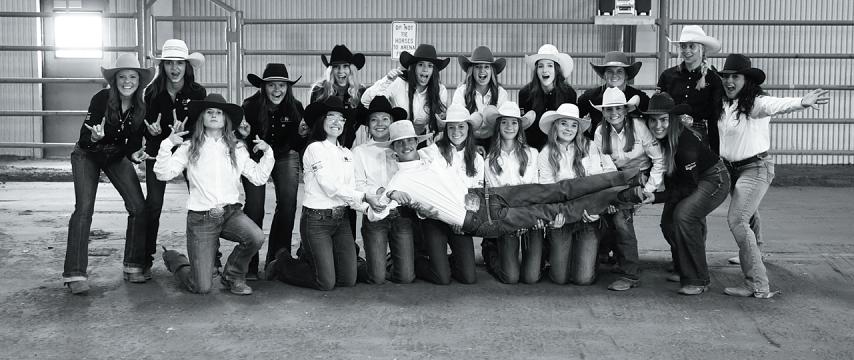
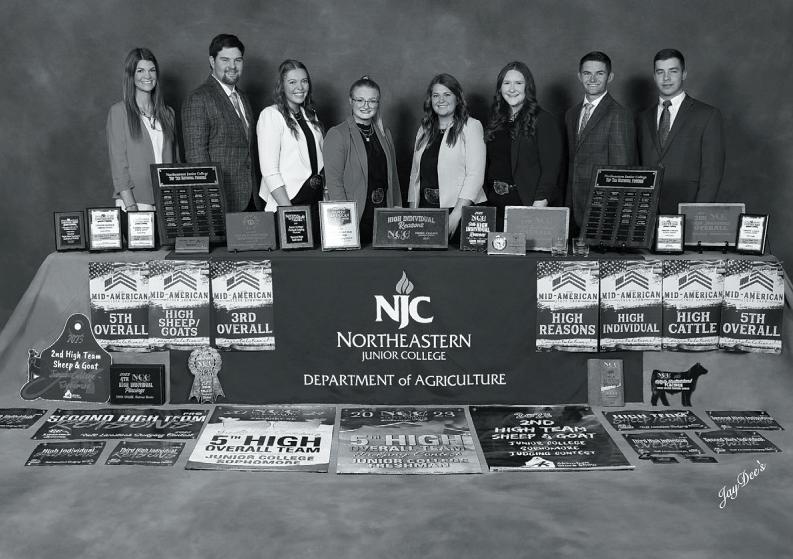
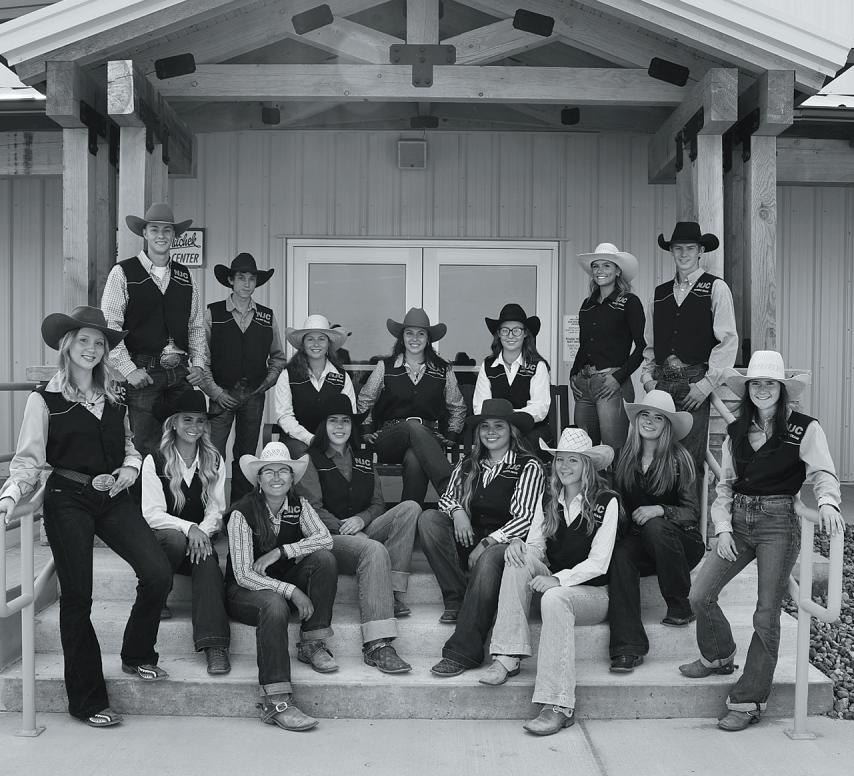
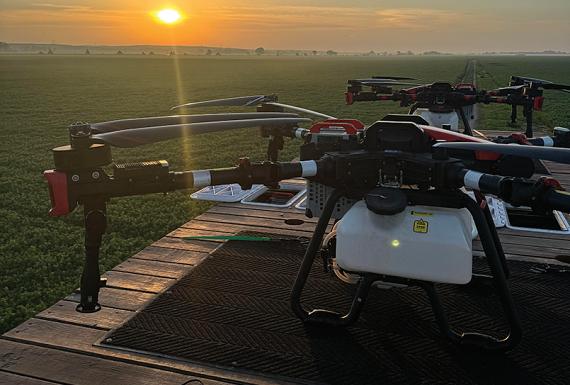
The Agricultur eDepartment at Nort heastern provides unpar alleled opportunities in agricultur al education,business management, productionagr icultur e, soilscience, and animal science. Our nationally acclaimed Rodeo,R anchHor se Versatility, and Liv estock JudgingTeams ex emplify our commitment to excellence. Through strategic community partner ships, we deliv er immer sive, hands-on experiences designed to equip studentswit ht he skills and knowledge necessaryfor success in theagr iculturalindustry.












FROM PAGE 12
President Ryan Downing said that nearly anyone who has shown livestock in Morgan County, at the Colorado State Fair, or at the National Western Stock Show knows Eisenach, and many credit him as a mentor. Eisenach thanked the association and spoke about the nearly 38 years with the group.
Eisenach presented the 2025— 2026 scholarship recipients and shared the program’s history. About 35 years ago, the late Stan Salisbury and Ryan Christensen approached him about starting a scholarship fund through Morgan County Extension and the County Council. The first awards were $250 per year for up to four years. The program has grown steadily, and last year the association awarded 21 scholarships totaling nearly $25,000. Eisenach said that the association now supports both four-year degrees and trade and technical programs, to support the wide range of career paths students pursue.
The 2025—2026 scholarship recipients included:
Northeastern Junior College
Americo Lorenzini, Precision Agriculture
Eli Kalous, Agricultural Business
Timothy Trusty, Equine Management
University of Wyoming
Garret Kalous, Agricultural Business
Fort Hays State University
Zoey Sneed, Animal Science
West Texas A&M University
Delaney Draegert, Agricultural Media
Jacy Dreier, Agricultural Business
Montana Goodman, Agricultural Business
Braelynn Rule, Production Agriculture
San Diego State University
Rylee Givens, Registered Nursing
Laramie County Community College
Ceri Dixon, Agricultural Production
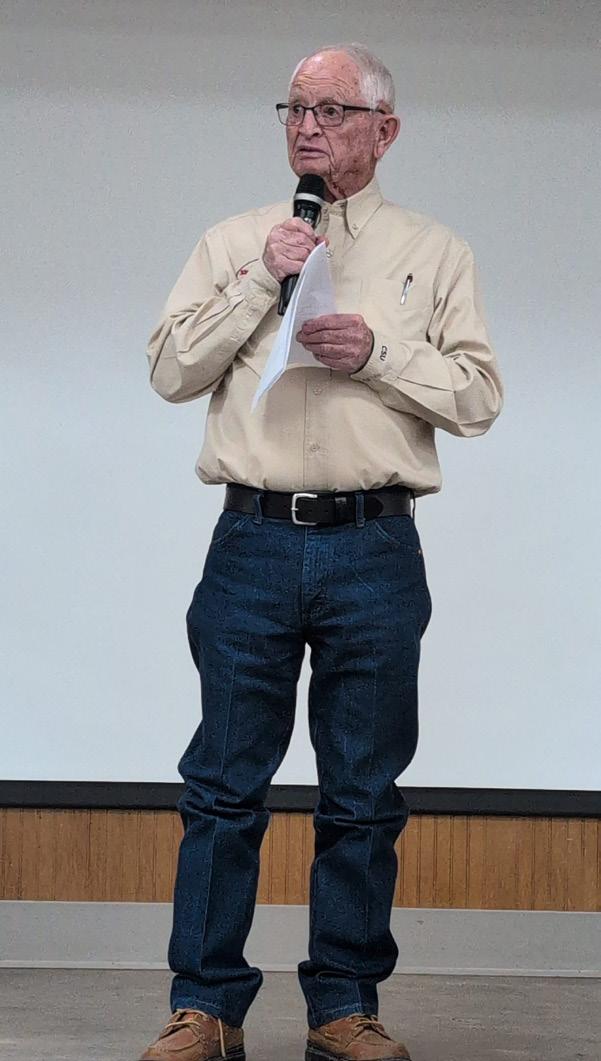
At the Cattlemen’s Association 86th Annual Banquet, it was announced that Marlin Eisenach was inducted into the Colorado Agriculture Hall of Fame on February 26. He is the first Extension agent to receive the honor
Kade Babkiewich, Automotive Repair Technology
Alan Carrazco, Physical Therapy
University of Missouri
Addison Mayer, Animal Sciences
Designing Beauty Academy
Kyra Keating, Cosmetology
Morgan Community College
Jonathan Meyer, Welding
Colorado Northwestern Community College
Riley Hunt, Nursing
Mid-Plains Community College
Kodi Holdren, Business
Chadron State College
Kaitlyn Bell, Elementary Education
Ambassador Baptist College
Brody Smith, Youth Ministry
Each year, the association also donates up to two breeding heif-
ROBIN NORTHRUP — MORGAN COUNTY TIMES
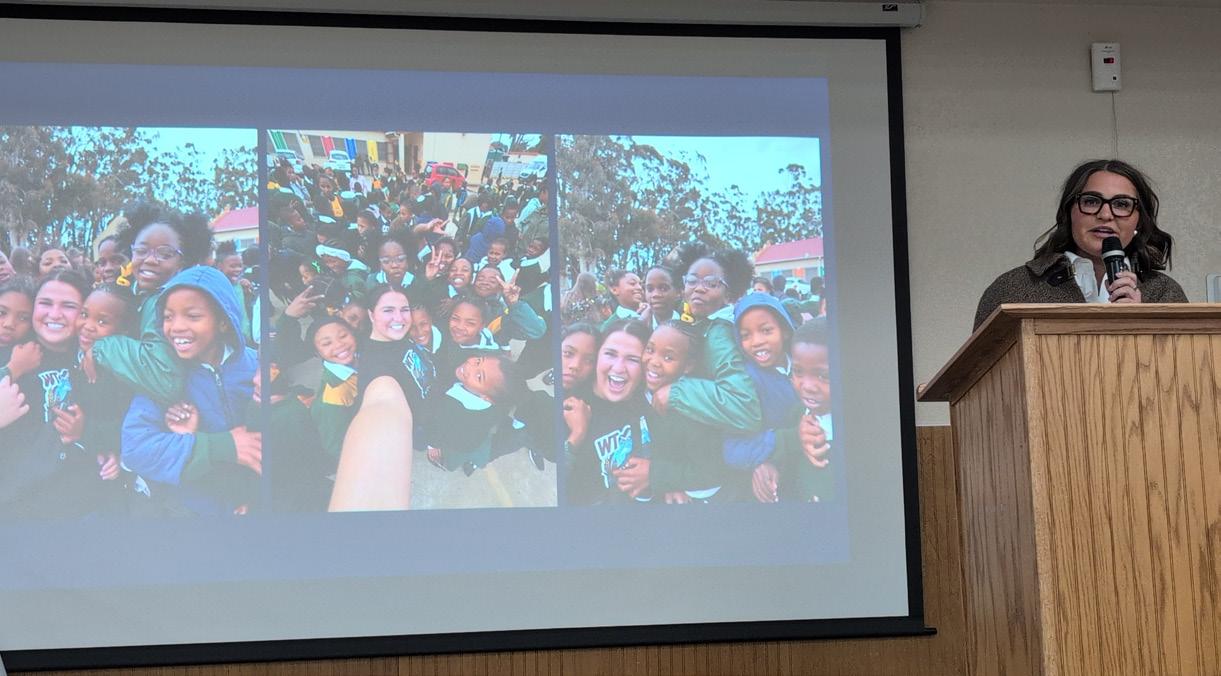
At the Cattlemen’s Association 86th Annual Banquet on Feb. 14at the Morgan County Fairgrounds, Delaney Draegert shared a presentation about her summer study opportunity in Sough Africa through West Texas A&M University, which the Cattlemen’s Association helped support.
FROM PAGE 14
ers to help young producers begin building their own herds This year’s recipients were Cade Ramirez and Axle Lorenzini The heifers were raised by Brian Downing, who was recognized for his support of the program
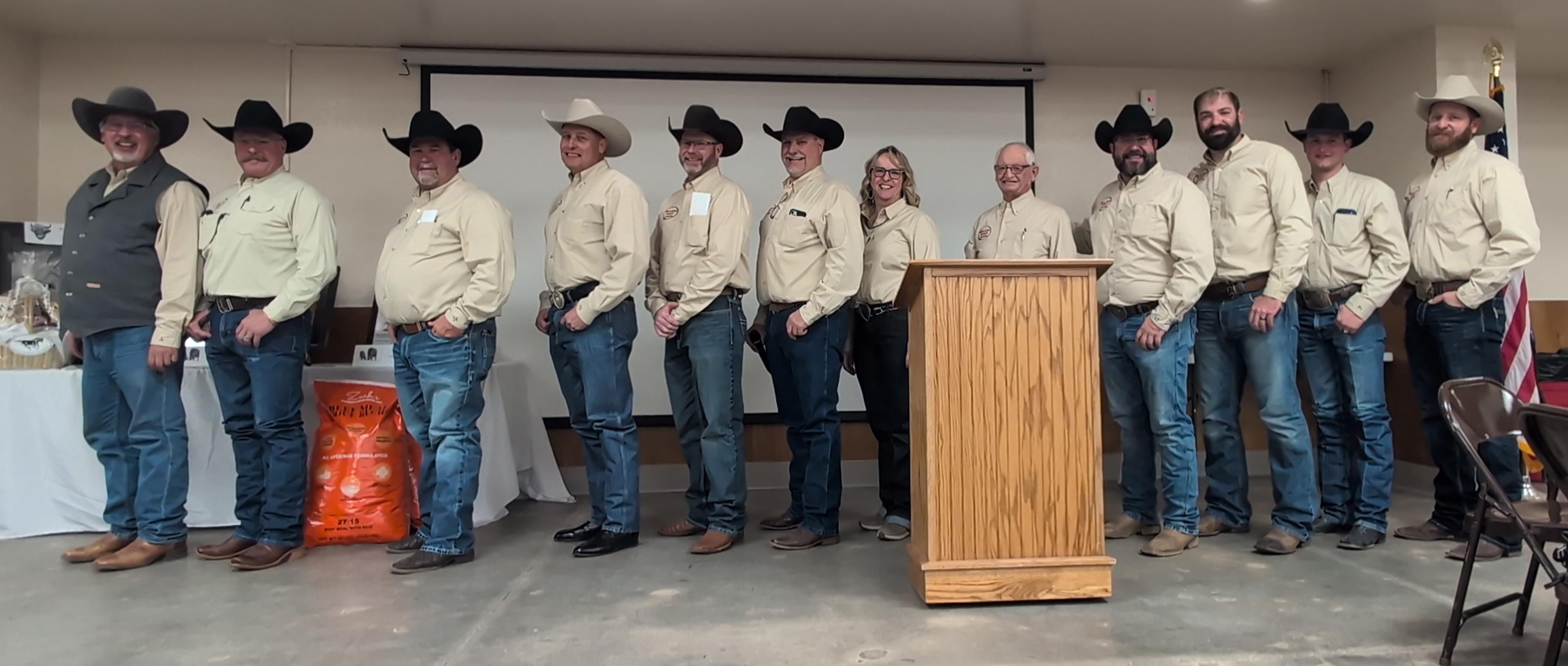
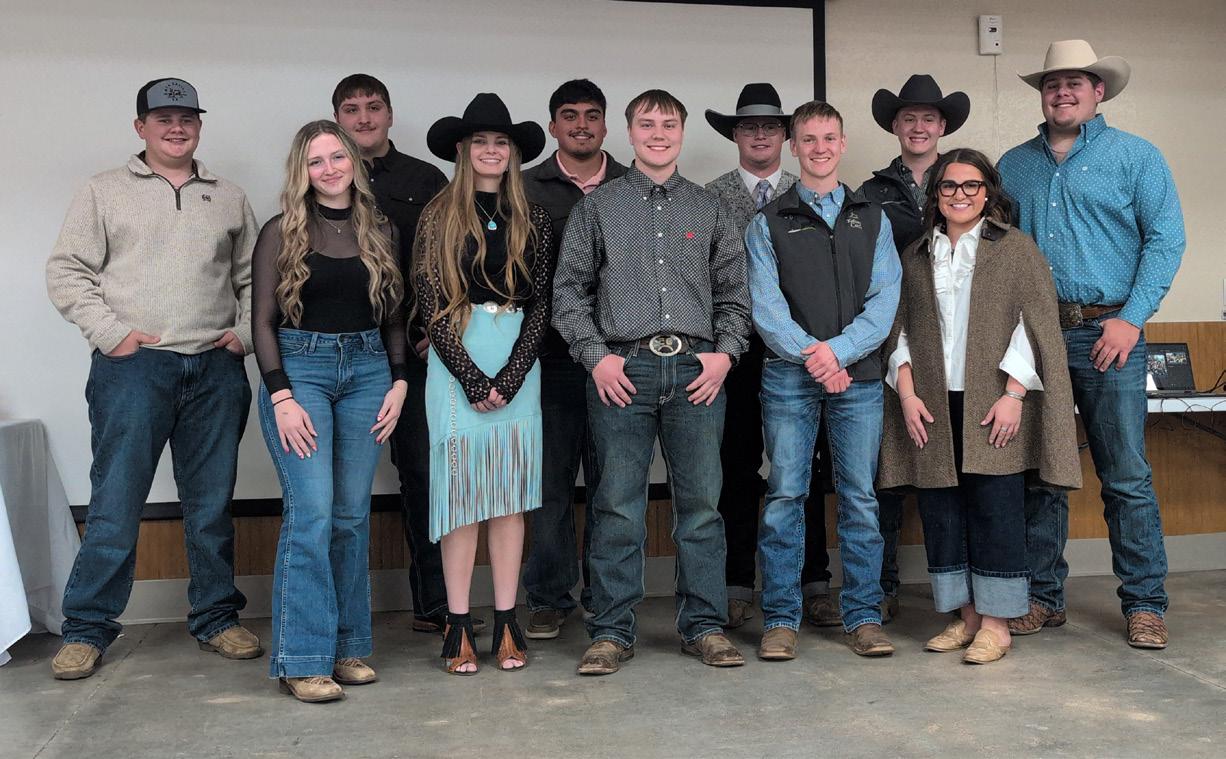
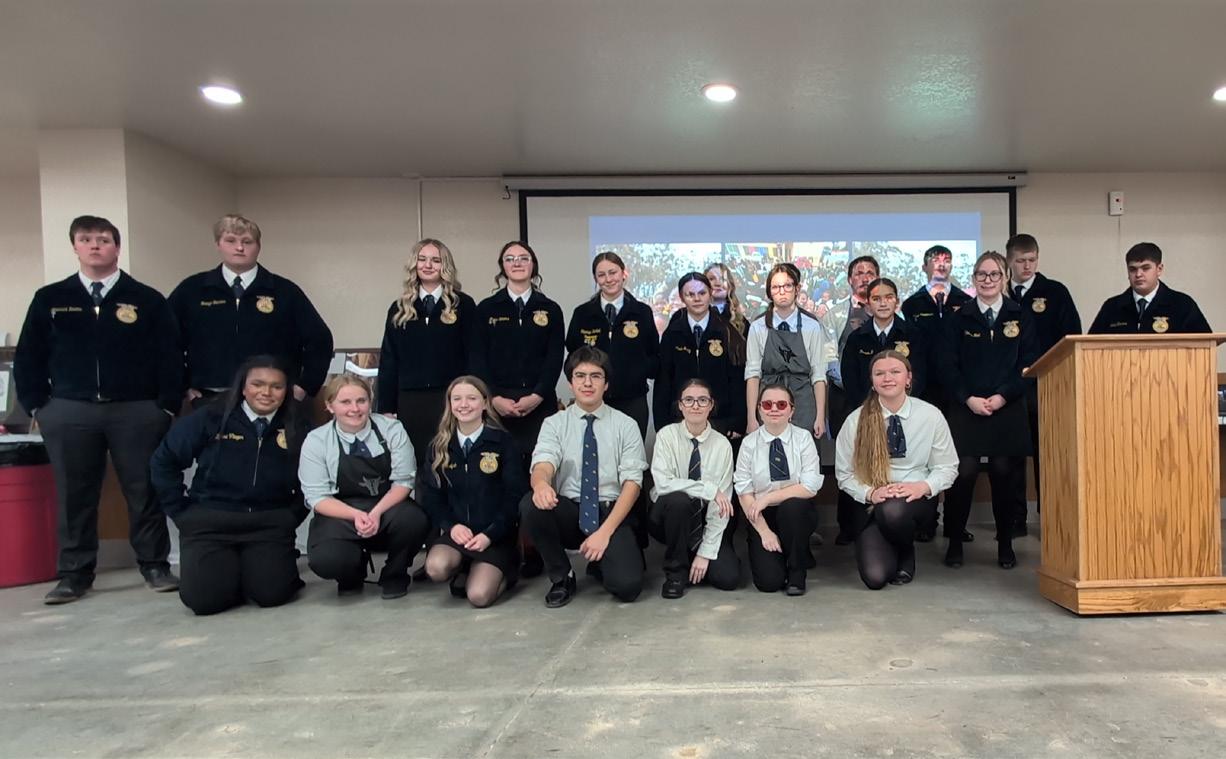
FFA members from every chapter in Morgan County were invited to the stage along with their advisors for recognition and a group photo
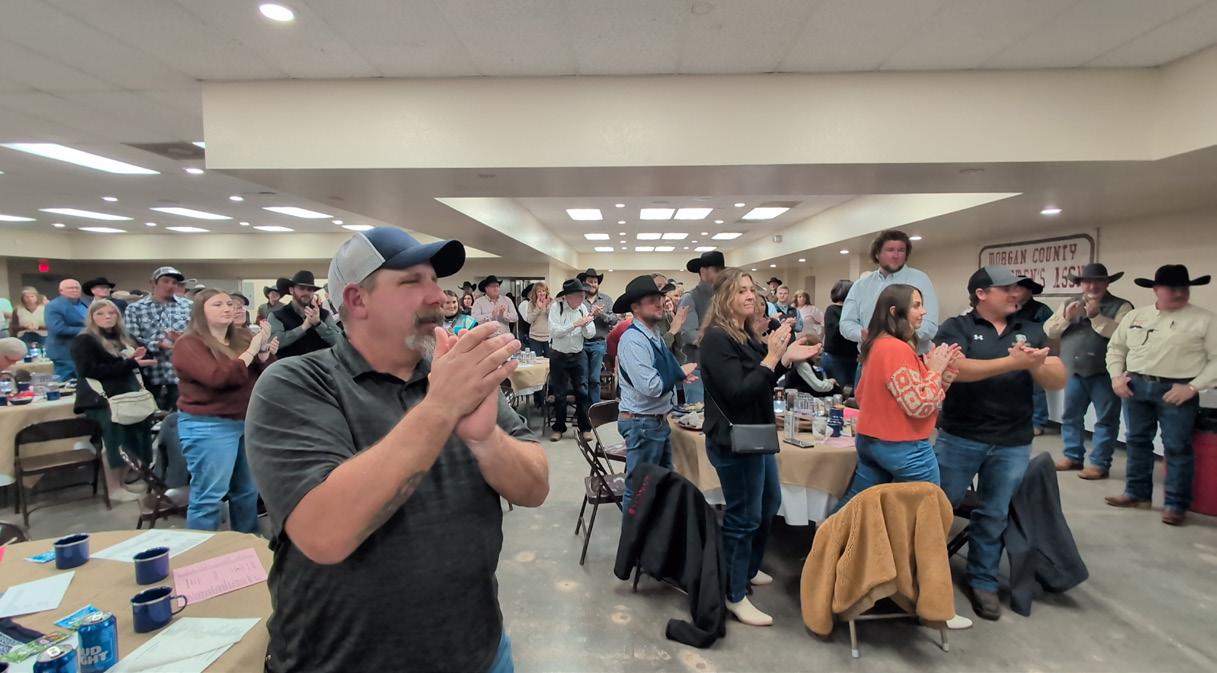
A moment of silence was held in memory of Greg Ditter, a longtime FFA supporter and mentor who passed away this past year. Former FFA members in the audience were asked to stand, showing the long tradition of community involvement with local alumni.
Downing spoke about the as-
sociation’s continued support for agricultural education, including funding bus transportation for every third grade student in Morgan County to attend the National Western Stock Show. He told about visiting elementary classrooms years ago and realizing how many students did not know where their food came from.
The Cattlemans Association has helped grow that effort. Every third grade class receives a presentation on the importance of agriculture in Morgan County and across Colorado.
Later in the evening, Delaney Draegert shared a presentation about her summer study opportunity in South Africa through West Texas A&M University, which the Cattlemen’s Association helped support.
A live and silent auction was held, with auctioneer Chuck Miller of AMA Auctions in Brush
many
ovations







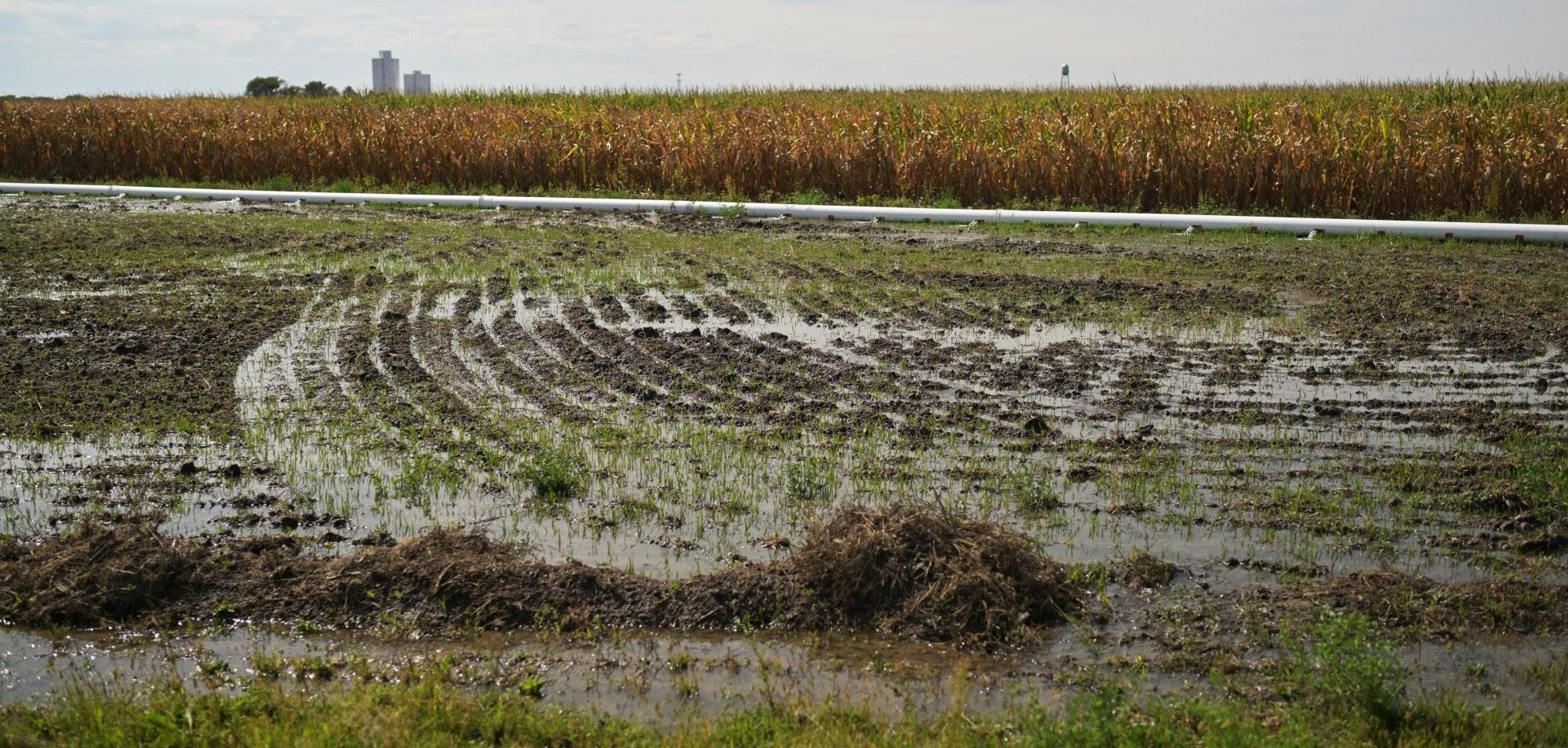
Ovid on Sept. 8, 2025.
By Jeff Rice
For the Journal-Advocate
The Perkins Canal project has entered the official public comment phase, with statements from interested parties being taken until April 6
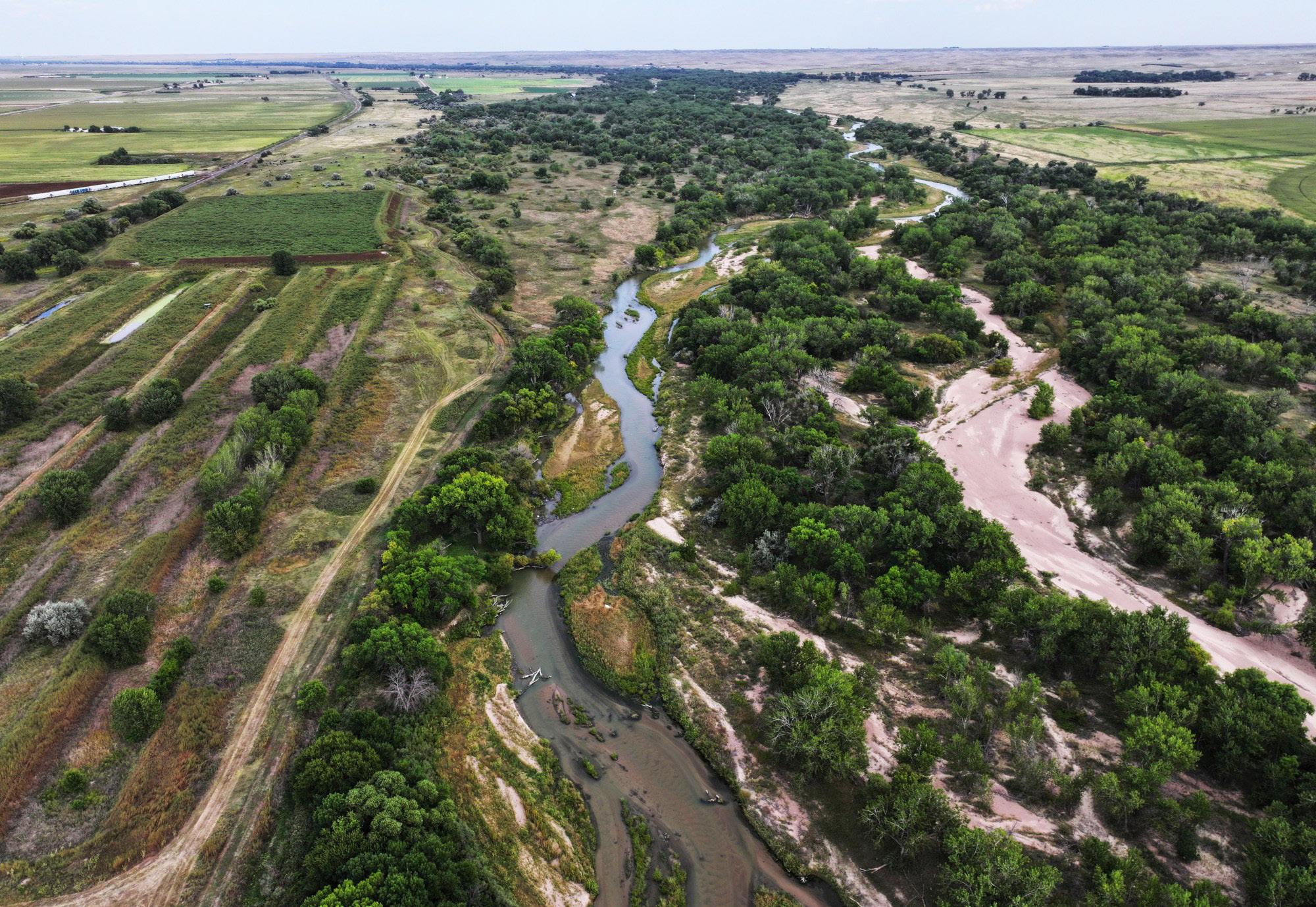
That project would divert water from the South Platte River near Ovid, Colorado, to a storage site somewhere in Nebraska. The South Platte River Compact, ratified by both states and Congress in 1923, authorizes Nebraska to build the canal, along with the right to use the power of eminent domain to acquire land on which to build it.
Officials from the U.S Army Corps of Engineers were in Julesburg recently to talk about the federal government’s process for taking public comment and analyzing it for the necessary Environmental Impact Statement. Aaron Eilers, project manager for the US-
ACE’s Omaha District, and Kiel Downing from the District’s Colorado Branch, conducted most of the meeting. Nearly 100 persons attended the briefing, held in the Sedgwick County Community center March 10.
Eilers emphasized that the Corps of Engineers neither supports nor opposes the projects it analyzes.
“It is important to understand that the Corps of Engineers is not a proponent or an opponent of this project,” he said “The regulatory branch does not act in that role. What we do specifically is we protect the nation’s aquatic resources and navigation capacity while allowing reasonable development through fair and balanced decisions. So we do permit adverse effects.”
The Corps protects the nation’s water resources, Eilers said, by mandate of the Clean Water Act.
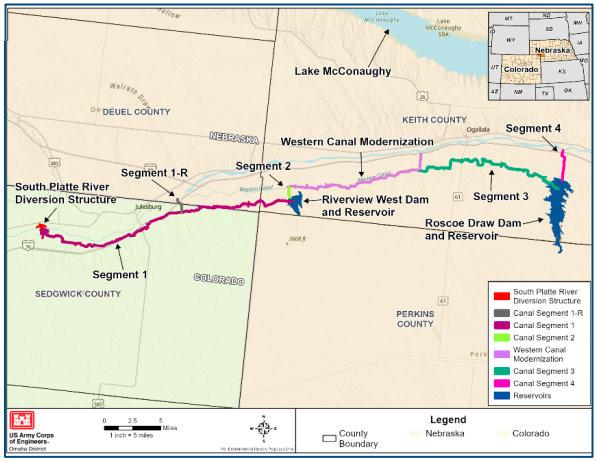
A map from the U.S. Army Corps of Engineers shows the proposed route for the Perkins County Canal



count public interest factors that would affect the lives of people living in the watershed.
That law was originally enacted as the Federal Water Pollution Control Act in 1948 and was significantly reorganized and expanded in 1972, when it became commonly known as the Clean Water Act. The Corps’ role, Eilers said, is to assess a project’s environmental impact and, if acceptable, issue what is known as a 404 permit.
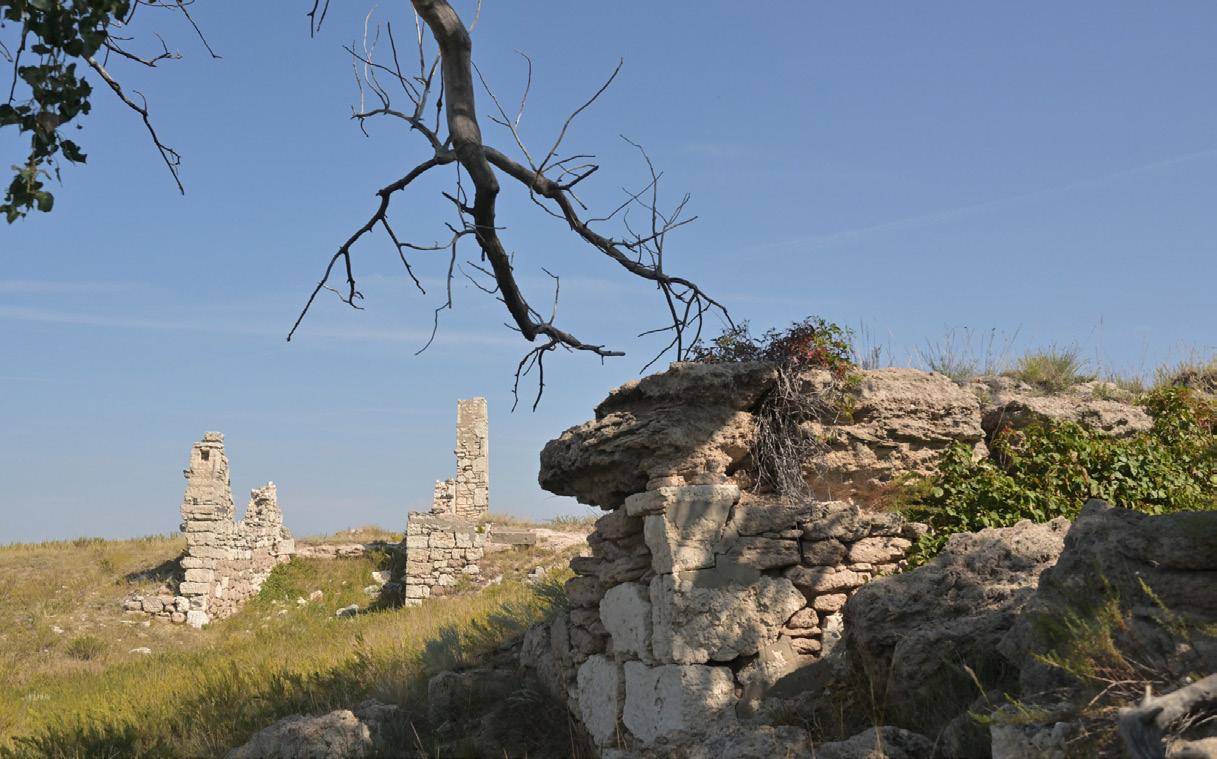
Eilers listed 21 types of impact projects could have, including economic, aesthetic, historic and flood plain impacts. He said the Corps’ focus on the Perkins Canal project will be the discharge of dredged or fill material into the South Platte River, primarily the placement of the diversion structure in the river. In addition to the diversion, the canal alignment, the outfalls and the two reservoirs that are proposed as part of the project add about 125 acres of impacts to aquatic resources in some capacity.
The Corps also will evaluate what are considered secondary or indirect impacts.
“There’s an effect on the river both upstream and downstream associated with that (diversion) that would not otherwise have happened without the (project,” Eilers said “So we also evaluate that. We also evaluate few delivery effects, so the effect on the entire watershed essentially.”
In addition, the Environmental Impact Statement will take into ac-
“What impacts might there be to historic properties, what impacts might be to endangered species, what the impacts might be as they relate to water quality in the river. And we have to do that in both states And so that’s a fairly comprehensive analysis,” Eilers said.
Those are factors USACE doesn’t necessarily have much information on, he said, and that is why public comment is so important. Anyone who has ideas about those kinds of impacts is urged to submit comments before April 6
“If there’s anything that you think is a concern in particular and the more specific the better, we’re asking that this is the time for you to provide us with that information,” he said.
“It is a lot of information we’re asking for and it can be difficult to process some of that. But I assure you, every single comment that is provided in any format that you choose to provide, it will get reviewed, will get assessed, will get shared with the applicant.”
Water officials in Colorado already have said the greatest impact would be along the lower reaches of the South Platte, especially in Logan and Sedgwick counties. That’s a big concern to the Lower South Platte Water Conservancy District, which covers the river from the Morgan-Washington County Line to the Nebraska State Line Joe Frank, manager of the LSPWCD,
FROM PAGE 16 RIVER » PAGE 19
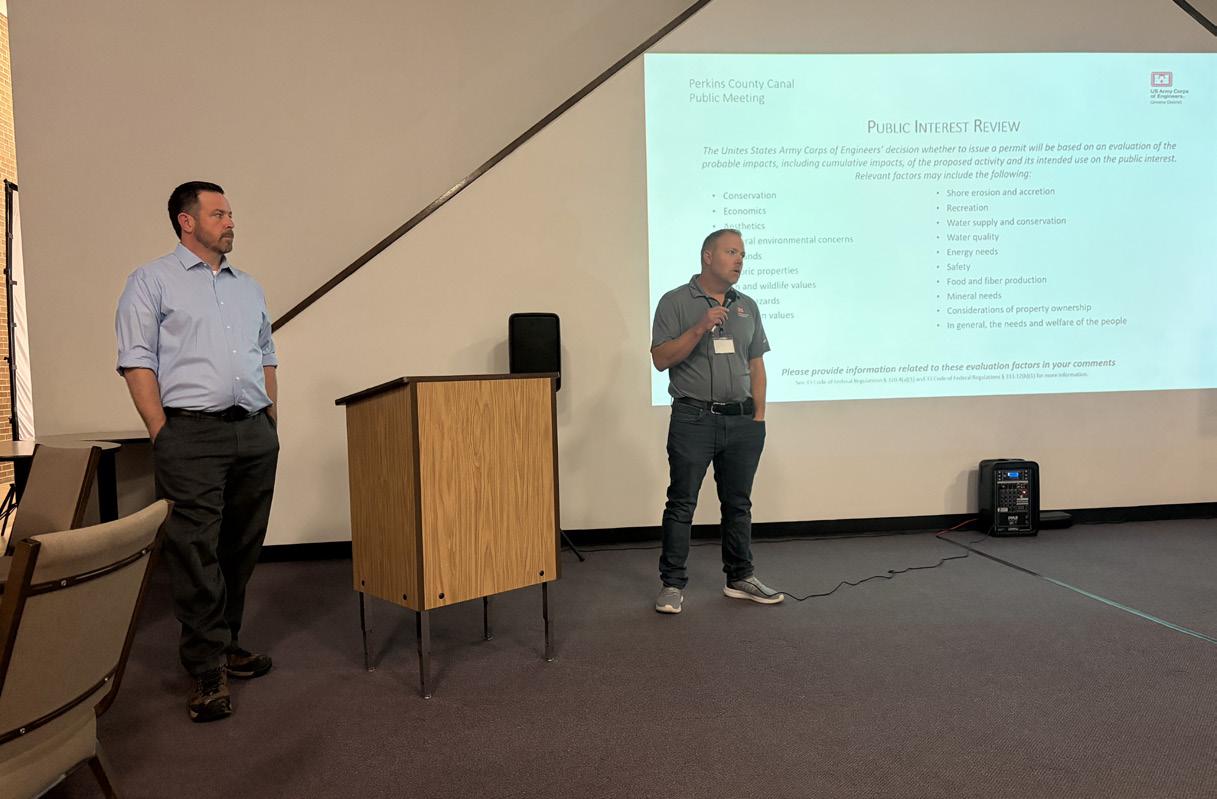
Eilers, left, and Kiel Downey of the U.S. Army Corps of Engineers Omaha District explain the Corps’ “404permitting” process during a meeting in Julesburg recently.
FROM PAGE 18
said the district will be submitting comments but probably will wait until toward the end of the public comment period to make sure all of the possible impacts are included.
“There’s a large list of economic impacts to both Sedgwick and Logan County, as well as part of Washington County,” Frank said. “But in addition, there’s direct impact to the area basically east of Ovid from the canal itself. It will impact some of our projects that we used for our well augmentation down in this area. It’s going to im-
pact the Haven project. It’s going to impact the South Reservation Ditch. It’s going to impact the Little Ditch. So you have direct surface and groundwater impacts just from the canal itself.”
Eilers said it will take about a year to produce a preliminary impact statement, which will be followed by another round of public comment, and then another year for a final statement.
Anyone wanting to comment can contact the Corps by email at PCC.EIS@usace.army.mil; by phone at 720-922-3851; or by visiting the website, https://www. now.usace.army.mil/Missions/ Regulatory-program/Colorado/ EIS-Perkins-County-Canal.



112 E. 30th St. Greeley, CO 80631 970-392-1000
846 SE Frontage Rd. Fort Collins, CO 80524 970-233-1000
700 N 9th Ave Brighton, CO 80603 303-800-2277
5199 48th Ave. Denver, CO 80216 303-321-2261
2225 River Road Grand Junction, CO 81505 970-233-0000
206 S College Dr Cheyenne, WY 82007
307-634-9000
3416 Mid Way Rd. Casper, WY 82601 307-462-4300
2000 Foothill Blvd. Rock Springs, WY 82901 307-215-0000
1054 Rundell Gering, NE 69341 308-233-8000
190 Brayton Rd Alliance, NE 69301 308-646-2222
1414 N. Eliseo Felix Jr. Way Avondale, AZ 85323 623-220-1000
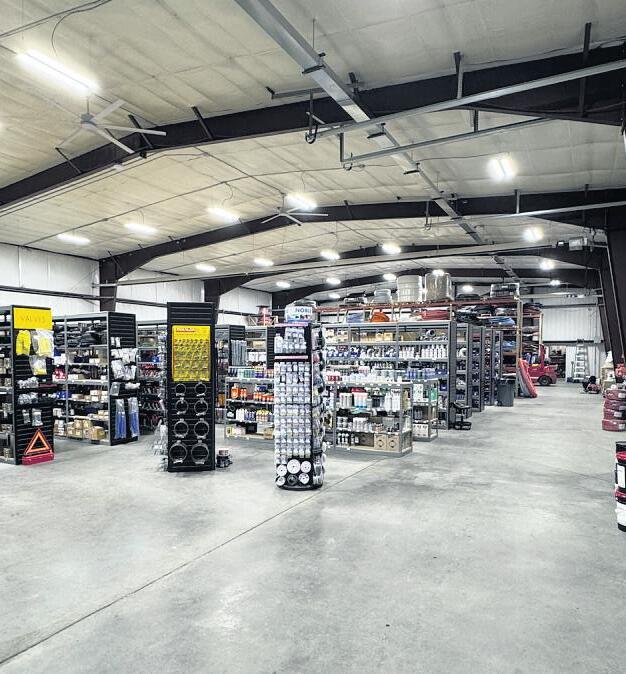
Aequipment building P






inventory – upwards of 200,000 itemsto help keep manufacturers operating,
hydraulic and industrial hose, fittings, valves, bearings and seals, sprockets, chain, conveyor belting, electric motors, g e a
, P T O ( P
O
) , transportation, and safety supplies Our goal is to have inventory at a level our competitors lack. Special orders are no problem, but ultimately, we strive to have product on the shelf to satisfy customers’ requirements on-the-spot! We welcome the public as well as catering to original e q u
( O E M
) . Industries served include construction, a g
,
mining and forestry among others
PT Hose and Bearing offers ‘WhileYou-Wait’ assembly of hydraulic and industrial hoses All hose assemblies are custom in configuration to match each individual application, from tractors to trucks, excavators to loaders It’s a convenience we are happy to provide! We have a unique ability when it comes to helping customers in their time of need
PT Hose and Bearing is tailored to all phases of the agricultural cycle, from planting to harvest, helping with big and small farming operations as well as dairies, feeders and food-processing facilities We focus on top-notch service and ample availability to keep hardworking men and women going yearround We’re here to help you maintain
the equipment you need to keep your operations running smoothly and consistently!
P T H o s e a n d B e a r i n g
unrivaled expertise, unmatched inventory and unparalleled customer service We operate 24-7 with prompt and attentive after-hours service
Just phone our main store number Someone always answers…ready to help! Our responsiveness s e r v
productivity!
PT Hose and Bearing is local and family owned We’re not a big corporation We use that to our advantage. We stock and staff our stores to provide optimal value to our customers while supporting the communities where we live and work! We appreciate your patronage and look forward to seeing you soon in one of our ELEVEN locations and growing! We continue to expandv our footprint to cover the region look for new stores opening soon!



traditional farming and precision ag technologies,” Bartlett said Prior to working at the GPS company he taught at NJC for seven years and returned in the fall of 2025 to head the Ag Department.

By Callie Jones cjones @prairiemountainmedia.com
Students at Northeastern Junior College who are preparing for a career in the agriculture industry are fortunate enough to be guided by some top-notch individuals who bring a diverse range of expertise
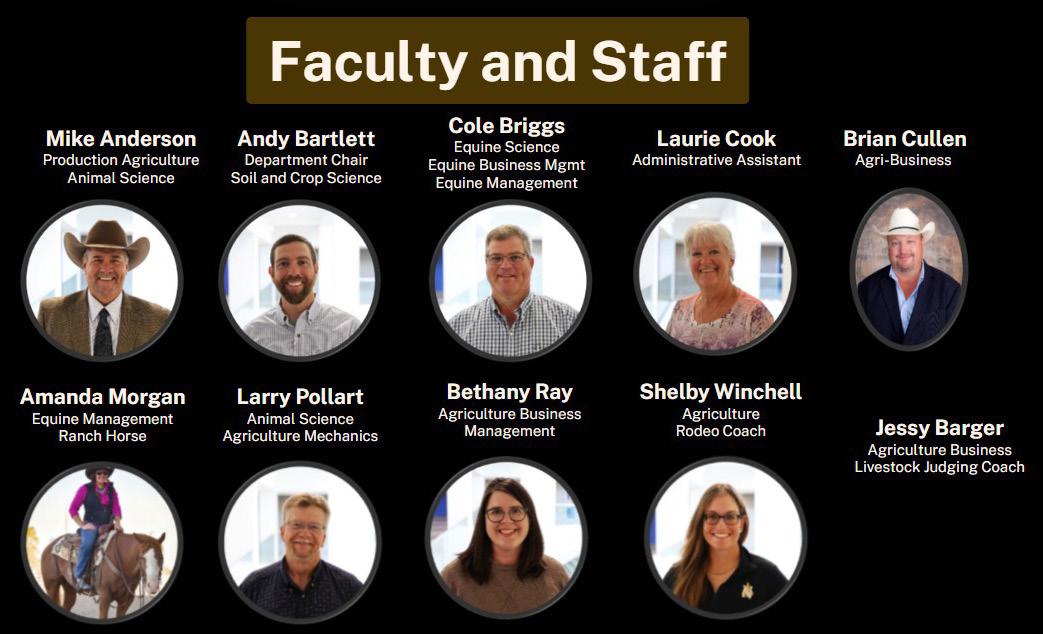
Heading up the department is Andy Bartlett He grew up on his family’s farm in Merino, where he still lives and farms today. After high school, he attended NJC and later Colorado State University, earning a degree in Soil and Crop Science In addition to helping operate his family farm, he’s worked in in-field agricultural research and spent several years with a large GPS-based agriculture technology company
“Those roles gave me valuable hands-on experience across both
“When I was a student, I quickly realized NJC was a special place The faculty genuinely cared about each student’s success — both in the classroom and beyond. That hasn’t changed. To this day, it’s the people who make NJC such a meaningful and inspiring place to be,” Bartlett said.
In addition to heading the department, he is currently teaching Precision Ag Operations and Precision Planting Technology
“While I really enjoy agronomy courses, I’m putting a strong focus on our precision agriculture offerings as we continue developing this new academic pathway It’s exciting to help students build skills that are shaping the future of the industry,” Bartlett said.
He says the best part of his job is the people.
“Our students are motivated,
PAGE 22
hardworking, and passionate about making a difference in agriculture. And the faculty and staff consistently put students first. That commitment and community are what make my work so rewarding,” Bartlett said.
The retired chair of the department, Mike Anderson, still spends his time at NJC serving as the production ag program coordinator and teaching animal science and education courses. He has worked for NJC since 1991 and has an associate of arts degree from NJC, a Bachelor of Science degree from CSU and a master’s in education from CSU. Among his course offerings are animal science, bovine reproduction, beef cattle management, animal health and global population and food issues.
“Mr. Anderson’s passion and dedication to agriculture and his students is truly second to none These qualities are both evident in his commitment to student success, deep agriculture knowledge and his invaluable industry experience. He knows exactly how to push each student to be their best and reach their fullest potential,” Associate Student Government officers said when presenting him with the Joel E. Mack Award during NJC’s 2025 commencement ceremony.
Larry Pollart teaches animal science and agriculture mechanics and is co-sponsor of the NJC Aggies Club. He grew up on a small family farm near Holly, Colorado, where his family raised irrigated and dryland crops, commercial cattle, a few hogs and horses, and kids (he has 12 brothers and sisters).
Pollart has been around all phases of production agriculture all of his life. He was raised on a farm and ranch, has worked on a custom harvest crew, owned cows and horses, is a certified pesticide sprayer and works for Logan County in the summer spraying weeds. He also still helps his landlord on his farm and ranch from time to time.
A student at NJC in the mid-80s, he graduated with a degree in Vocational Agriculture Education, and then completed his Bachelor’s at CSU. Before coming to NJC as an instructor, he taught high school
agriculture for 10 years, then spent two at Casper College in their ag department and as an assistant livestock judging coach. When the position of livestock judging coach at NJC opened in 2000, he applied and has been there ever since.
“It is a great place to work, with amazing faculty and staff, great administration, and top notch students,” Pollart said.
He currently spends time teaching some animal science classes, and some ag mechanic classes Feeds and Feeding, Production Cattle Feeding, Welding, Basic Ag Skills, and Farm Carpentry are the courses he is currently teaching.
“Seeing the ‘light bulb come on’ when a student finally fully understands a concept is something that every teacher loves. The other part that I enjoy is seeing former students succeed, and the relationship that I make with the students,” Pollart said about what his favorite part of the job is.
Jessy Barger is an animal science instructor and livestock judging coach. She is originally from western Montana, where she grew up on a commercial cow-calf operation raising mostly Angus cattle. Barger was heavily involved in sports, rodeo, hunting, 4-H, and FFA growing up.
“I always knew I wanted a career in agriculture so I could stay connected to my roots and the lifestyle I was raised in,” she said.
Most of her ag experience comes from growing up on the ranch. From as early as she can remember, she was riding in the tractor with her dad. Whether it was putting up hay, fixing fence, or helping during calving season, she was always involved.
“Ranch life really is the best way to grow up — it instilled a strong work ethic in me from a young age. I also loved horses growing up and still do. After school you could usually find me on horseback, moving cows or just messing around with my siblings. We definitely didn’t spend much time on screens!”
Barger said.
She came to NJC for the opportunity to coach the livestock judging team. Barger judged in college and completely fell in love with it.
“Through judging, we get to travel across the country, see different livestock operations, and compete in great contests,” Barger said.
» PAGE 24




“Since coming to NJC, I’ve really enjoyed the atmosphere. Everyone I’ve met has been top-notch great people all working toward the same goal of creating the best possible learning experience for students.”
She is currently teaching Animal Science, Ag Economics, Live Animal Carcass Evaluation, and Livestock Judging.
“All of these courses provide real-world value for students who are planning to work in the agriculture industry I’ve really enjoyed sharing my knowledge and appreciation for agriculture with my students,” Barger said.
What she enjoys most about the job is working with people.
“NJC has not only great faculty and staff, but also wonderful students who truly want to learn. I really enjoy building relationships with students and colleagues and
helping students grow during their time here,” Barger said.
Shelby Winchell is the head rodeo coach, stall facility coordinator and teaches several courses. Her background in education is tied to her passion for helping others. She is from Scottsbluff, Nebraska, where she grew up on a farm and ranch, which provided her with the foundational characteristics of hard work and dedication. She rodeoed growing up and found a clear passion for teaching by doing rodeo event specific clinics throughout high school and college
Winchell was a double major and rodeoed for Eastern Wyoming College and Chadron State College, which gave her a clear understanding of what it is like to be a student-athlete.
“This experience allows me to connect not only with my rodeo athletes but also with the busy lives of our agriculture students,” she said.
Growing up, she had a strong in-
fl
uence of livestock management and agriculture business through her parents’ family-owned business.
Winchell, who was named one of COWGIRL Magazine’s COWGIRL 30 under 30 for 2021, was the women’s rodeo coach for Sheridan College when her “dream job” of teaching at the postsecondary level while sharing her passion for the timed events of rodeo became available at Northeastern.
“NJC took a chance on me, and I moved here only knowing one person. NJC welcomed me into their community and made the transition very easy,” she said.
Winchell teaches a variety of classes including an equine health course, online science and education courses, hybrid courses that concurrent enrollment students take, and an event planning course.
Asked what she enjoys most about her job, she said it’s “sharing knowledge with students that are life skills. The courses I teach, and the rodeo coaching, go deeper than
content/skill. NJC is known for producing students who are ready for the real world, and I am proud to be a part of that process.”
Amanda Morgan is the versatility ranch horse judging coach and teaches equine management. An Army brat, she was born in Germany and lived in Hawaii for some time before her family returned to Colorado to live in Kiowa. She studied equine science and ag business at NJC and CSU and put those skills to use at a farm in Crook, with her husband and children.
She worked at NJC for 11 years as an equine instructor and coached the versatility ranch horse team for five years as an administrative, professional technical employee before finally becoming faculty in 2021 Morgan is also co-coordinator of the Logan County Fair Royalty Program
Other instructors in the department include Cole Briggs, the equine management coordinator and instructor; Brian Cullen, an
FROM PAGE 24
agri-business instructor and program coordinator; and Bethany Ray, the (adult) ag business management instructor and program coordinator.
Rounding out the department is Laurie Cook, administrative assistant. Born and raised in Fort Collins when it was a “town,” she grew into agriculture as a way of life after getting married and moving to the country in La Salle. She and her husband relocated to the family farm in Atwood when their children were small and they grew up well rooted in ag, with farming, 4-H and FFA — with all the livestock projects.
“It’s the best way to raise kids with good work ethics and knowledge of life,” she said.
Fourteen years ago, the NJC Ag Department had an opening for the administrative assistant and the rest is history.
“I have enjoyed all the responsibilities the job requires and more. Our group in the Ag Department works well together and supports the stu-
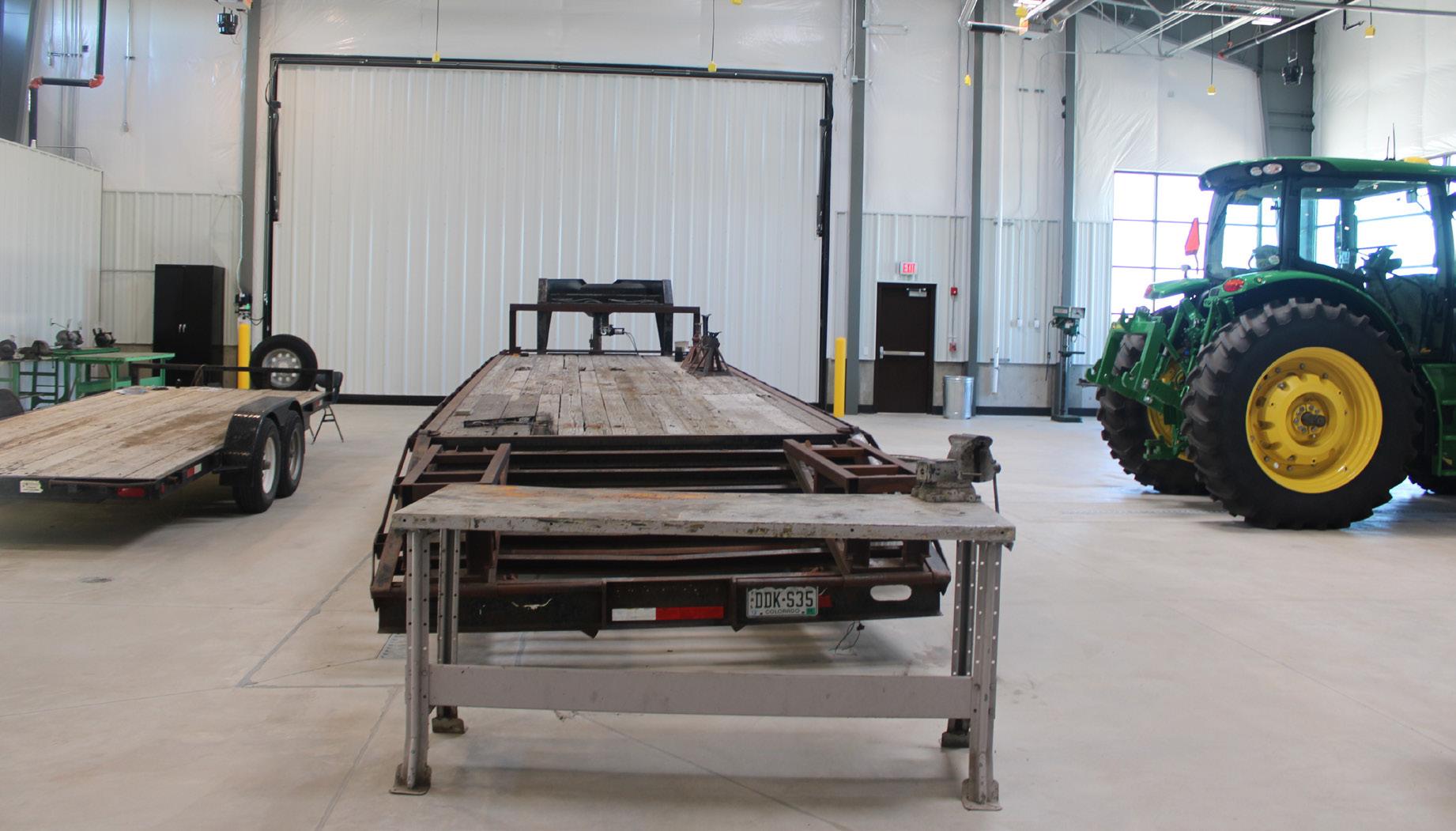
The new precision agriculture shop that is part of Northeastern
Campus
dents and their goals,” Cook said.
One of her favorite parts of the job is that no two days are alike — that, and the students.
“There is a wide variety of stu-
dents from many different areas and backgrounds, and it is fun to get to know them and hear their stories.
“We also have many functions and activities that keep us hopping as well,” Cook said.

If you are interested in enrolling in one of NJC’s ag programs, visit www.njc.edu/interest/agriculture.
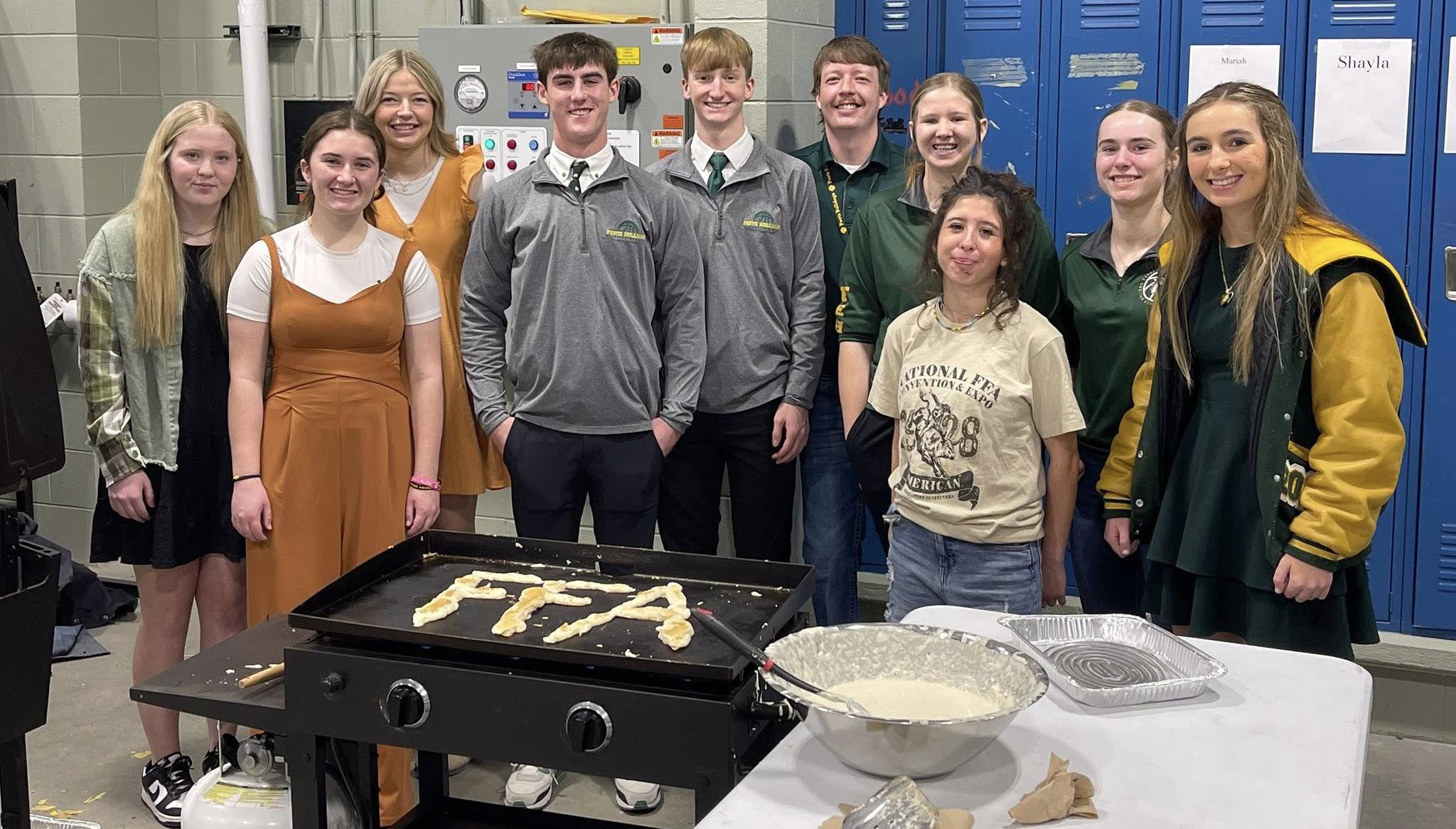
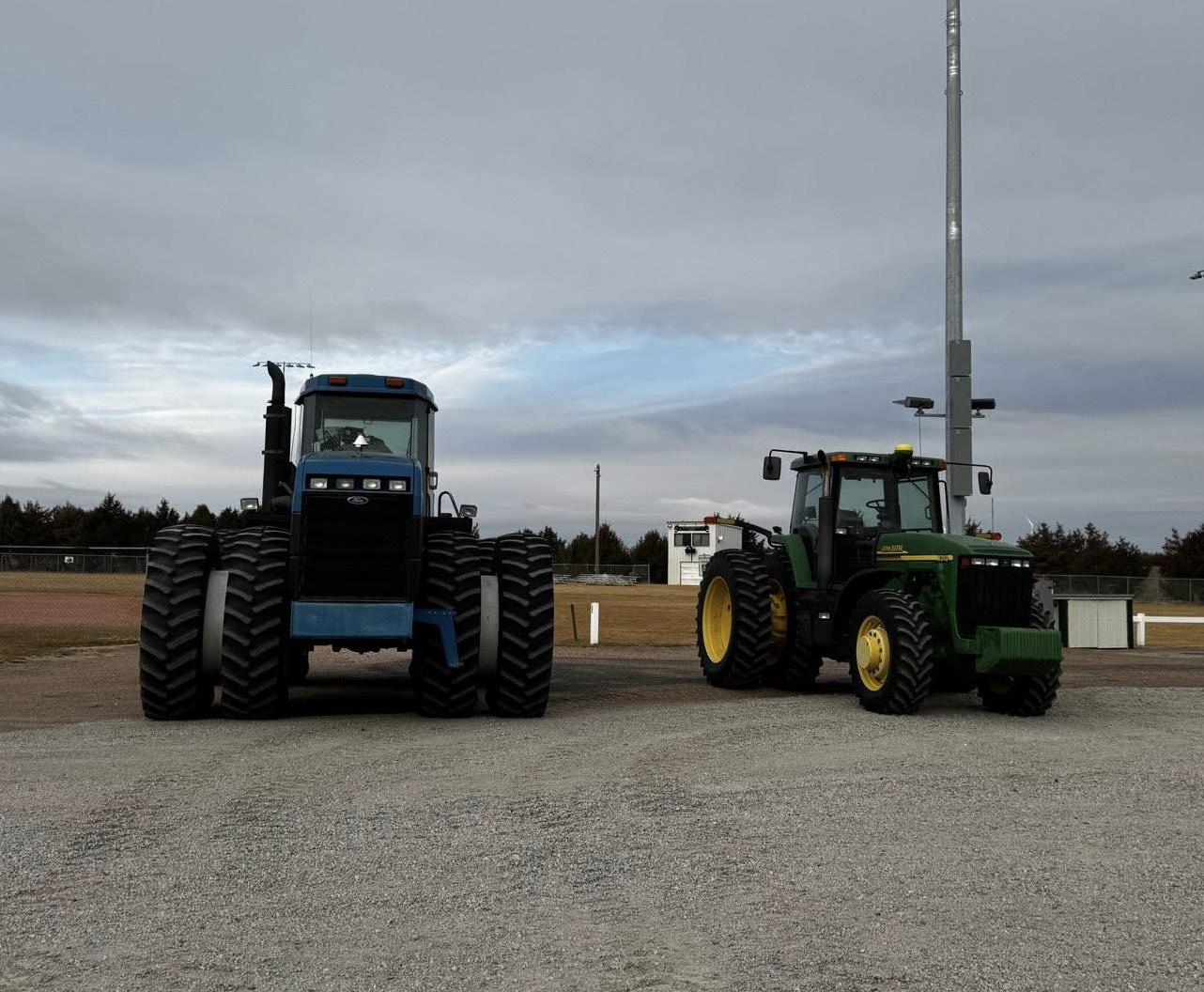
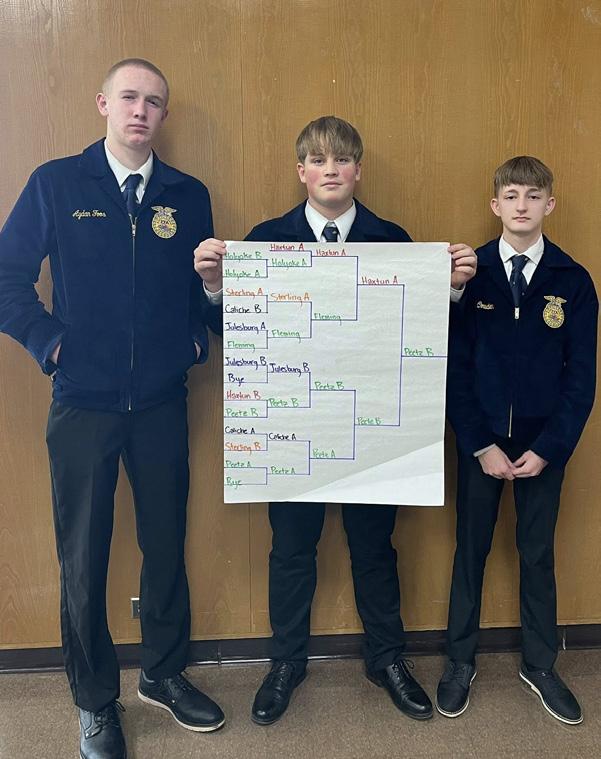
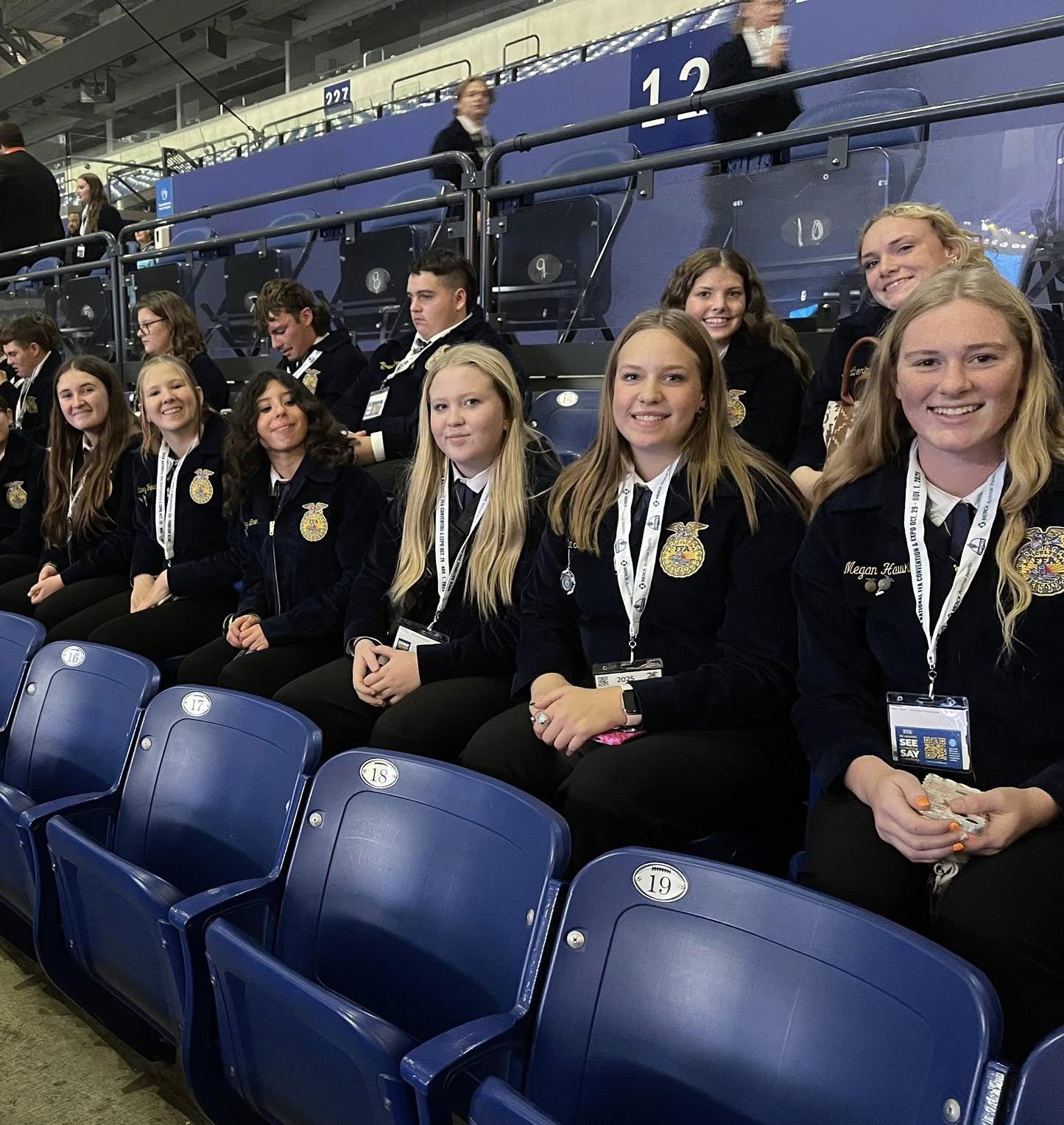
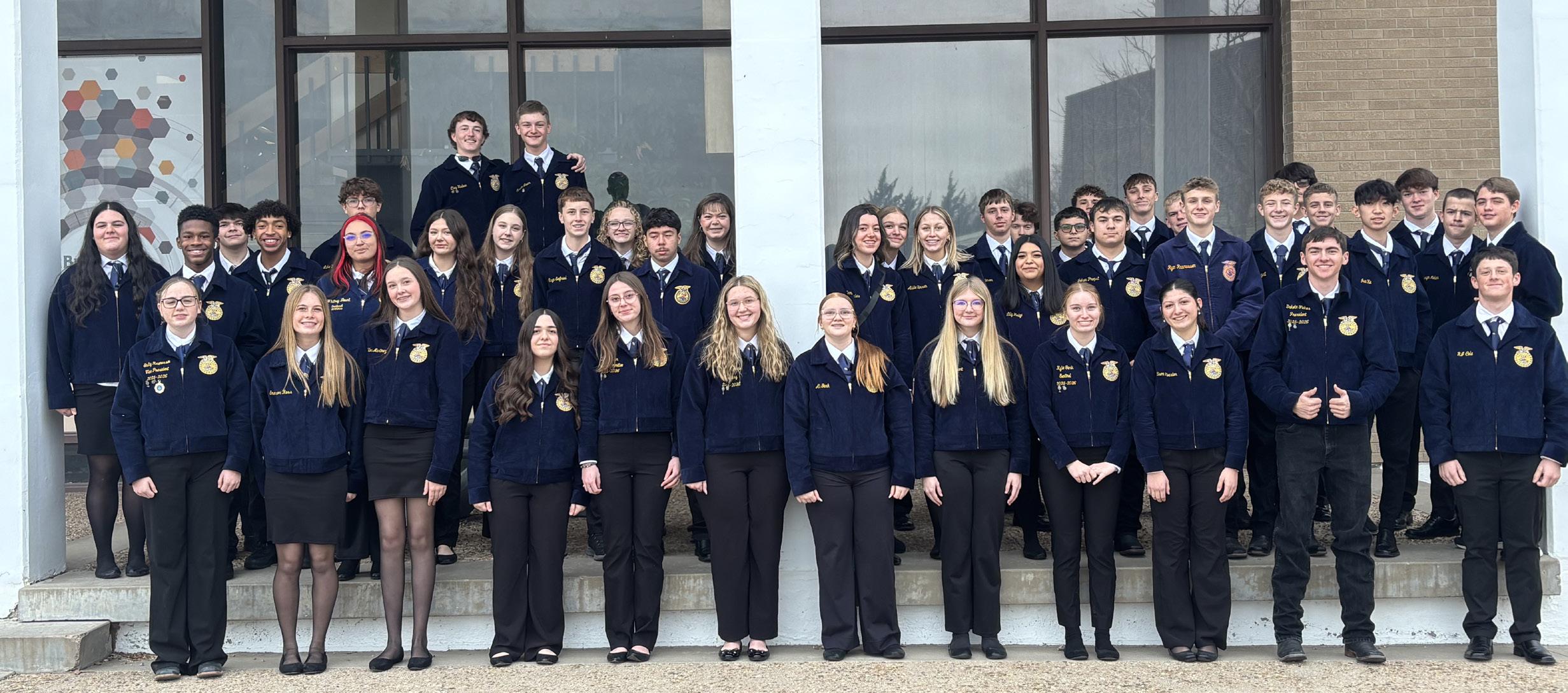
Members of the Peetz High School chapter have had plenty to keep them busy over the last few months attending the National FFA Convention, competing in district Leadership Development Events contests and celebrating FFA Week with an Ag in the Classroom event for kindergarten through fifth graders, a special breakfast, Anything But a Car Day and more.
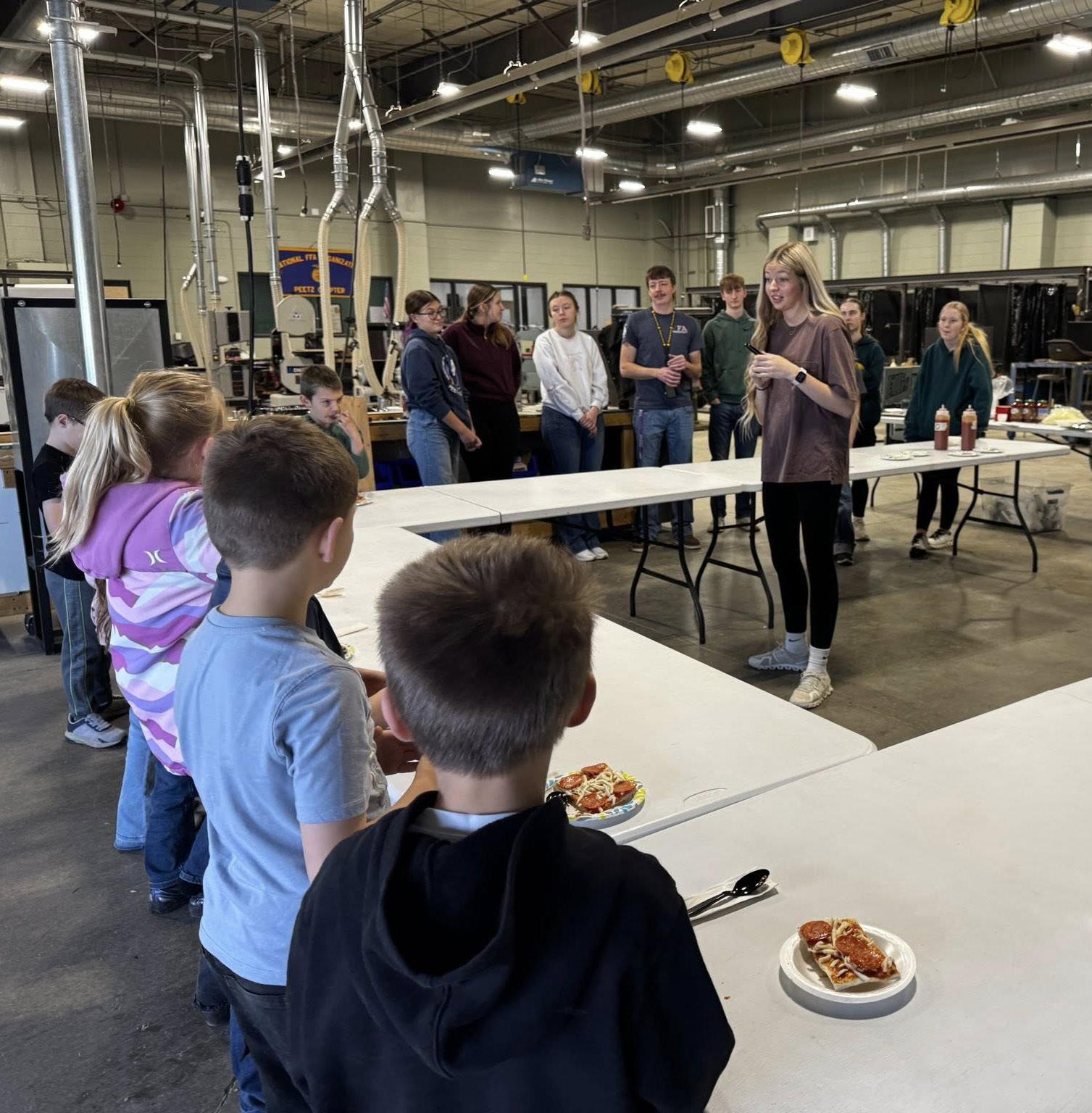
Peetz High School FFA hosted an Ag in the Classroom event with a Food Groups Pizza activity for kindergarten through fifth graders as part of their FFA Week celebrations.

By Callie Jones cjones
@prairiemountainmedia.com
The Sterling High School FFA chapter has been keeping busy over the last few months.
In December, members attended the District Leadership Conference held at Northeastern Junior College. In addition to participating in workshops and tours of ag businesses, two members competed in district officer interviews and one was selected to serve on the officer team as an executive committee member.
The following month, several members traveled to Denver for the National Western Stock Show, where they attended a rodeo and just had a fun day. The chapter was also proud to celebrate Sterling FFA alum Tyla Thomas, who exhibited the Grand Champion Jr. Limousin female at this year’s show.
Also in January, the chapter’s monthly meeting featured special
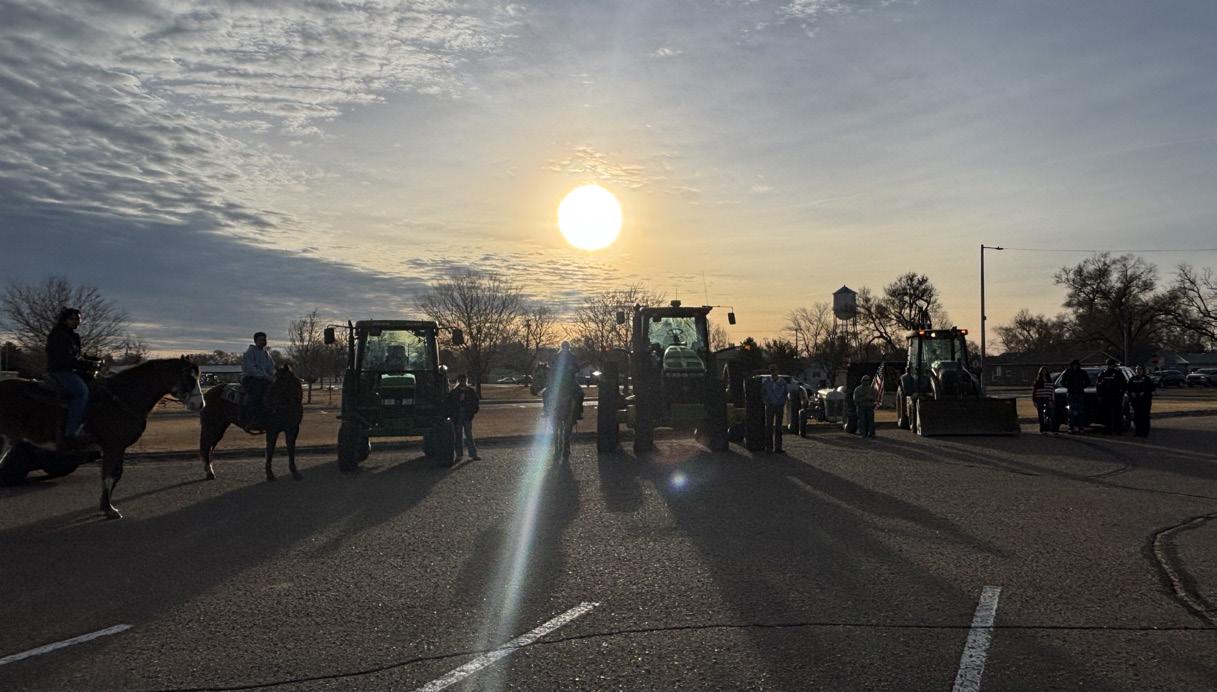
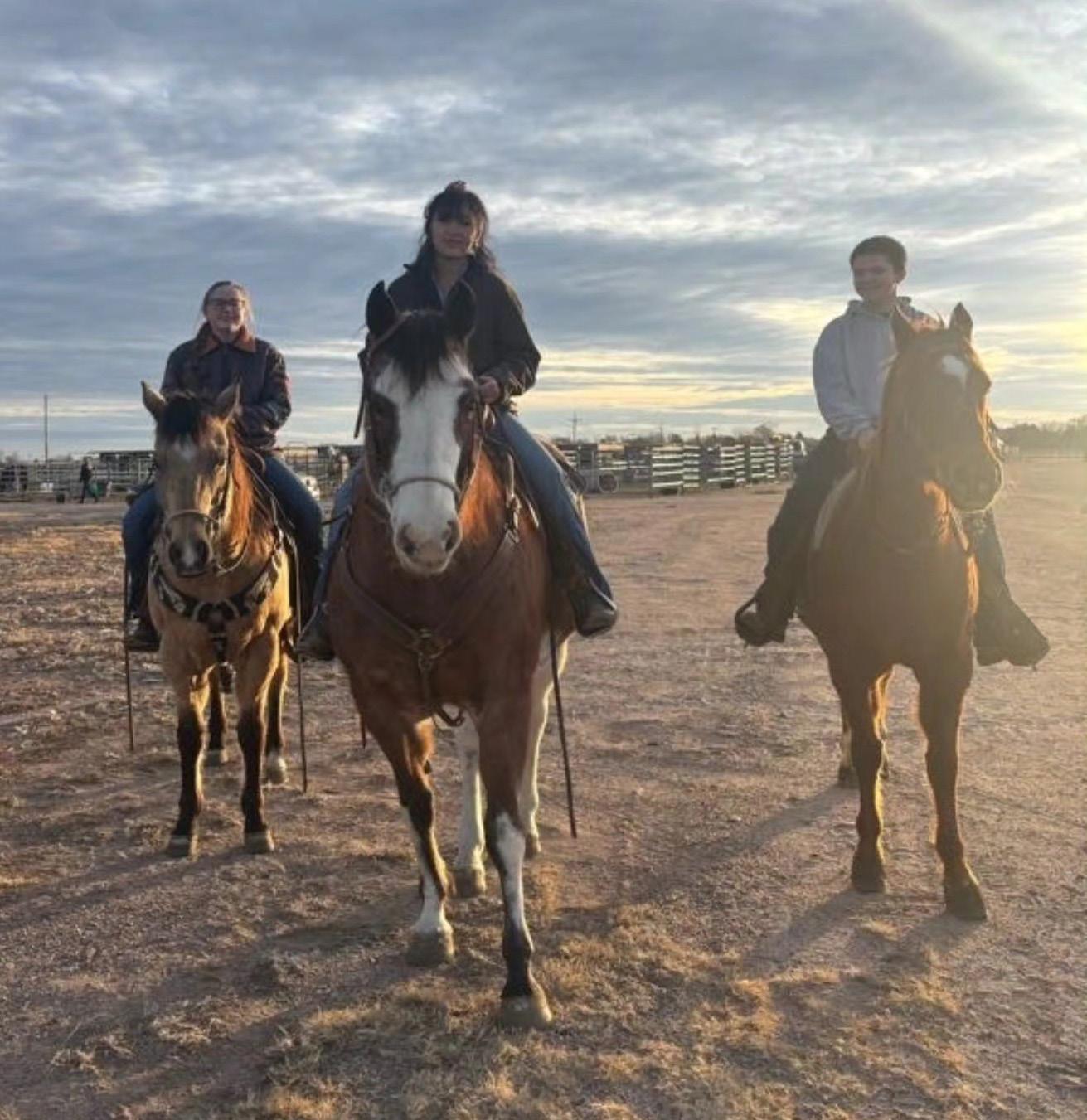
Sterling High School FFA members are pictured atop horses and next to their tractors for Ride Your Horse/Drive Your Tractor to School Day in celebration of FFA Week.
guest speaker Jared Sonennberg, who shared a presentation on mental health.
In February, FFA members competed in District XVI Leadership
Development Events contests including employment skills, extemporaneous speaking, FFA creed speaking, prepared public speaking and quiz bowl. Sterling’s Reem
Al Tameemi was the district champion in employment skills and will go on to compete at state.
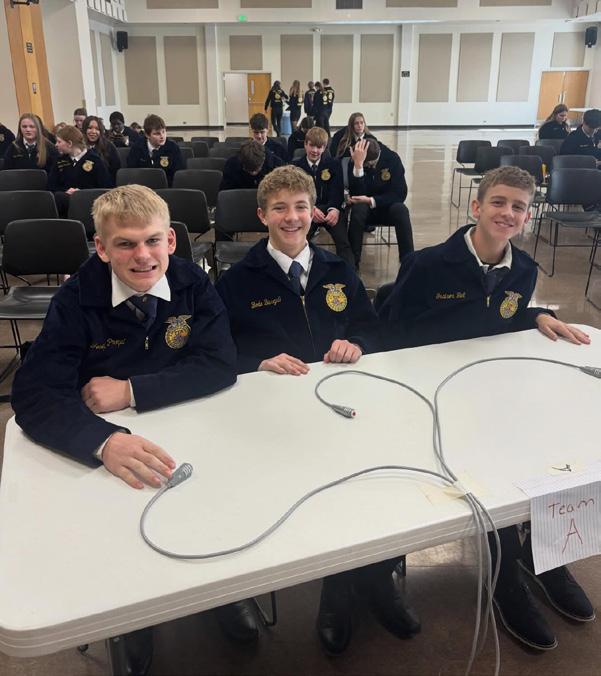
Bode Basgall was one of six chapter members who competed on two quiz bowl teams. His group made it to the third round of the contest.
“It was really just a great time,” he said, explaining that only freshmen can compete in quiz bowl. “It was really an honor to be able to compete amongst some of the brightest minds in our chapter. It was really rewarding being there.”
In late February, the Sterling chapter celebrated FFA Week with different events throughout the week. Tuesday was Ride a Horse/ Drive a Tractor to School Day, on Wednesday the chapter served breakfast to SHS staff, on Thursday a couple of members visited Sterling Middle School to try to recruit students to join when they enter high school and there was also a special lunch and Friday was the
FROM PAGE 28
annual FFA lock-in with games in the gym from 7 to 10 p.m
“It was really fun. It’s just like bonding time for our chapter,” chapter vice president Shelby Rasmussen said about the lock-in.
Coming up, the chapter will be holding its annual Oyster Fry and Member Auction on Thursday, April 9, in Wally Post Gym Dinner will be served from 5 to 6:30 p.m. and the auction will immediately follow Pre-paid tickets are $15 for adults and $10 for seniors and kids 10 and under and tickets at the door are $20 for adults and $12 for seniors and kids under 10.
Sterling FFA hopes to see another large turnout this year.
As a senior, Rasmussen has been involved in the chapter for four years now.
“One of the greatest things I have learned being in this chapter for those years is speaking. I was one of those people that couldn’t talk in front of big crowds or anything and through FFA I’ve gained a lot
of confidence and can now come up with speeches on the spot,” she said, noting that has helped in all areas of her life, from classes at NJC to high school speaking and presentations and things like job interviews
As a freshman, Basgall’s FFA journey is only just beginning but it has already made an impact.
“By far the most important thing that I have learned is all the valuable leadership skills,” he said
Earlier this school year, Basgall was able to attend the FFA National Convention in Indianapolis, where over 70,000 FFA members meet for a week of fun, leadership and team building exercises.
“It was really a great experience because it gets you out of your comfort zone because sometimes they’ll just separate you into random groups and someone has to take charge, you have to learn how to make friends easily I think that’s just so valuable, especially in this day and age, where sometimes it’s hard to know who you can trust. But, with FFA I’ve learned that the faster you can make friends the more you can trust people,” he said.



COLORADO STATE UNIVERSITY
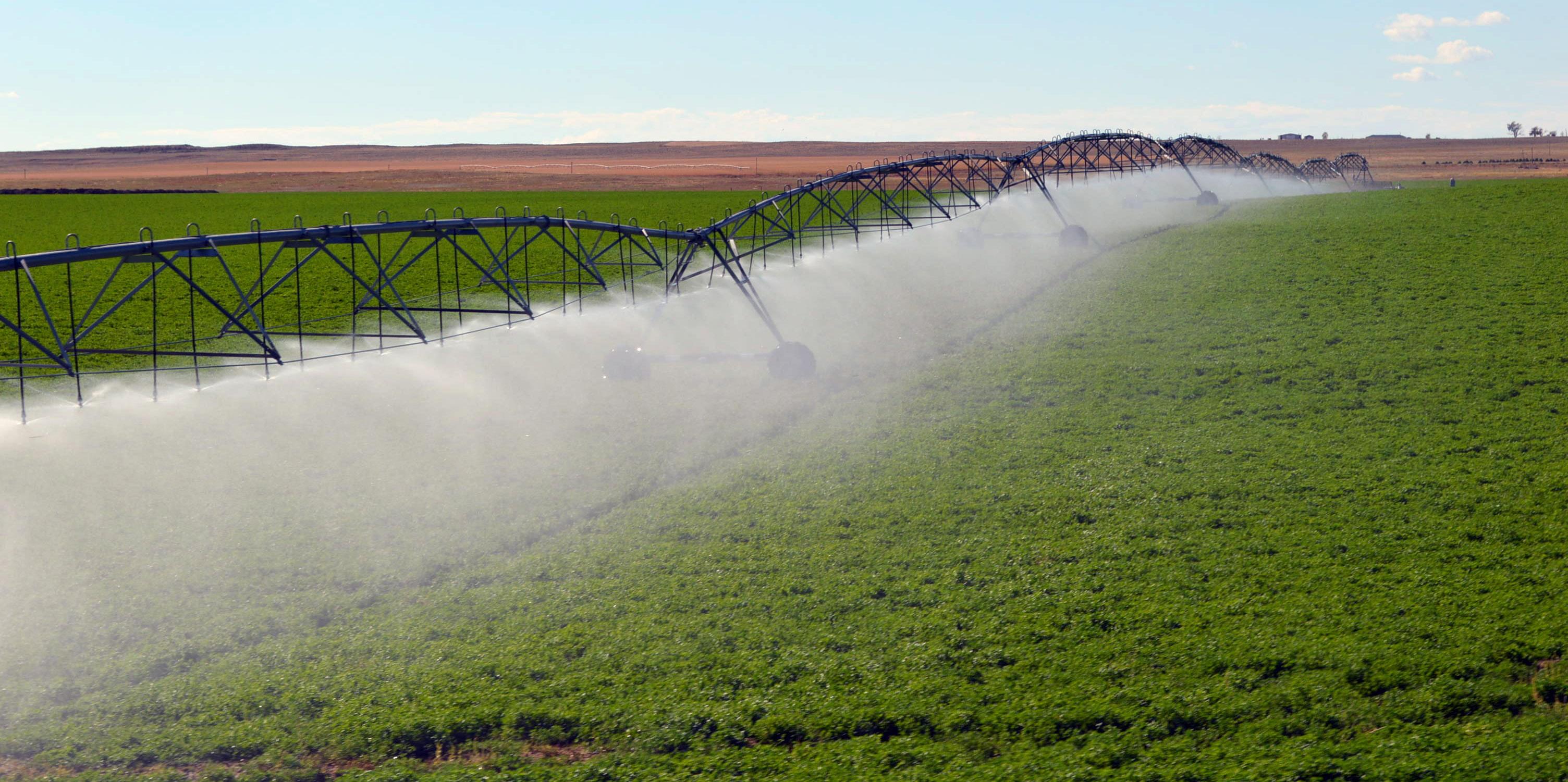

By Josh Rhoten Colorado State University
An interdisciplinary research team at Colorado State University is using artificial intelligence to help farmers better understand soil health by turning varied agricultural data into practical, decision-ready insights that are easy to access
Healthy soil is key to farming success, supporting water retention, root growth and nutrient cycling. However, tracking conditions and understanding how management choices affect them over time remains difficult — especially amid challenges such as drought, increasing weather variability and maximizing crop yields.
The newly funded TerraScope project at CSU addresses that gap. In it, the team plans to use AI to
combine on-the-ground measurements and remote sensing data; paired with advanced simulations, this will reveal patterns and relationships farmers can act on that would otherwise be invisible when viewed in isolation.
The $1 million project is funded by the U.S. Department of Agriculture. The CSU team includes computer scientists from the College of Natural Sciences as well as soil and outreach experts from the College of Agricultural Sciences. The researchers hope to connect key data points on a unified platform that is useful, responsive and built on feedback from agricultural producers on their needs for soil management.
A key aspect of the project is organizing data that comes from a variety of sources. Professor Shrideep
FROM PAGE 30
Pallickara said a challenge will be aligning formats, resolutions and even terminology from different settings as they relate to aspects such as soil moisture.
“The data we will be using to train these AI-informed models is both diverse and voluminous,” he said. “That makes it a challenge to work with, but by combining information from traditional observations or on-the-ground records provided directly by farmers with data collected remotely by satellites, we hope to address gaps in understanding.”
Megan Machmuller is a research scientist at CSU and co-director of university’s Integrated Rocky Mountain-region Innovation Center for Healthy Soils. She said the project includes a strong outreach element and that the team is dedicated to including feedback from agricultural producers in their work
“Too often, tools like this are created without considering usability


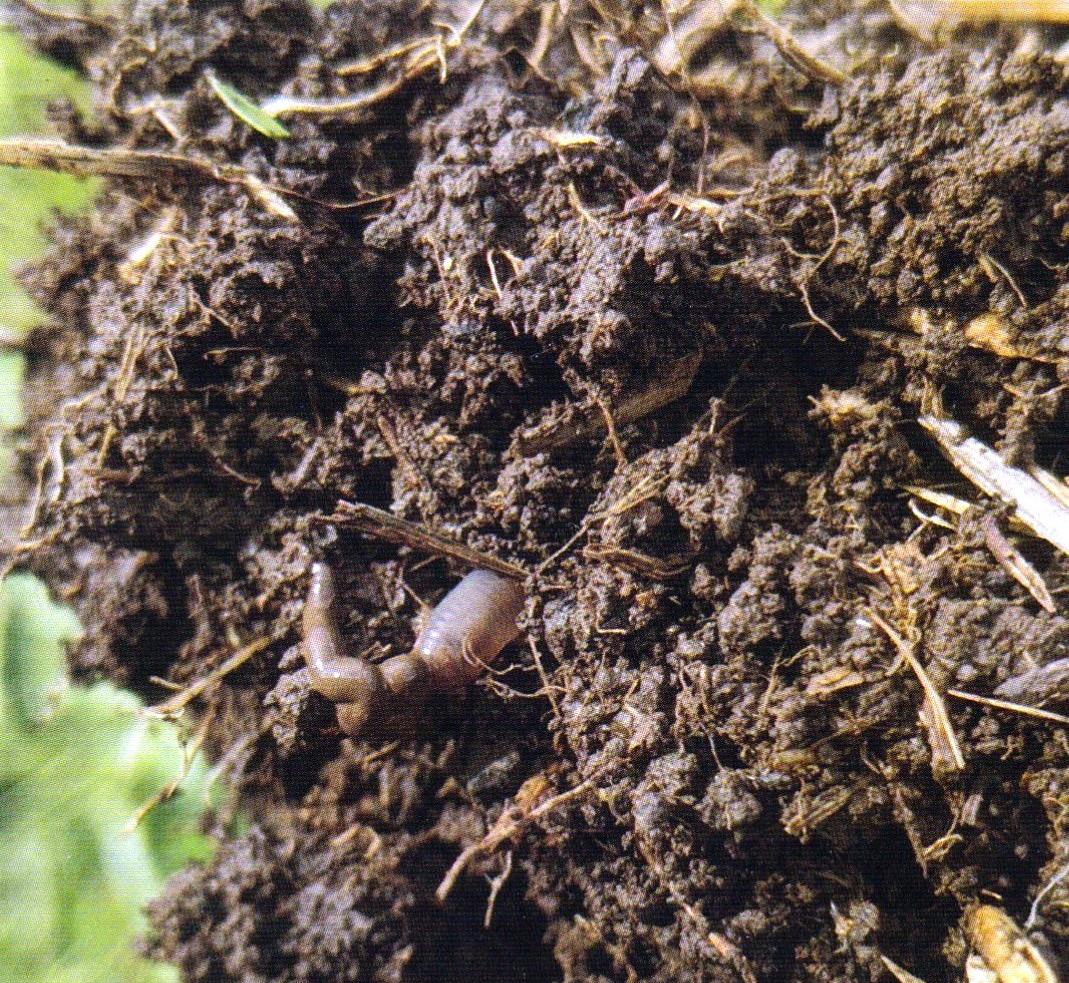
Healthy soil with good aggregate is home to many living organisms.
or the reality of what producers need. TerraScope will be crafted in collaboration with the agricul-



tural community, and that guarantees it will be practical, reliable and attuned to the real-world chal-
lenges faced by producers in Colorado and beyond,” she said.
Machmuller added that this work embodies a fundamental tenet of the university’s land-grant mission to advance science that directly benefits and serves people
“Colorado’s diverse agricultural landscape, climate, soils and topography provide an ideal environment for the launch and refinement of this platform,” she said “The rich legacy of soil research here also provides a robust foundation for advancement, including comprehensive datasets and ecosystem models that will be instrumental in this project This work will strengthen decision-making capacity across the state and enhance the long-term resilience of agricultural systems.”
The CSU team also includes professors Eugene Kelly and Keith Paustian from the Department of Soil and Crop Sciences, Sangmi Pallickara from Computer Science, and Jay Breidt from Statistics James Hale, the research director of community food systems and social sustainability in the Department of Sociology, is also part of the project.




Prevention and being prepared important for rural families
By Jeff Rice
For the Journal-Advocate
When a truck accident near Peetz, Colorado, ignited a prairie fire in late February, firefighters used lessons learned nearly a decade earlier to knock the flames down in an afternoon
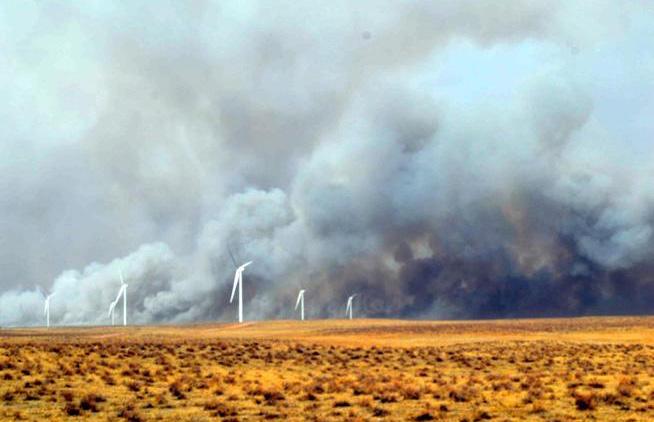
The wildfire scorched nearly 4,000 acres of grassland in northern Logan County, and firefighters had to deal with winds that sometimes gusted up to 60 miles per hour. Add extremely dry conditions that had turned the prairie into a tinderbox, and the situation was reminiscent of the 2017 wildfire that burned for three days, devastated more than 30,000 acres, destroyed four homes and killed 200 head of cattle.
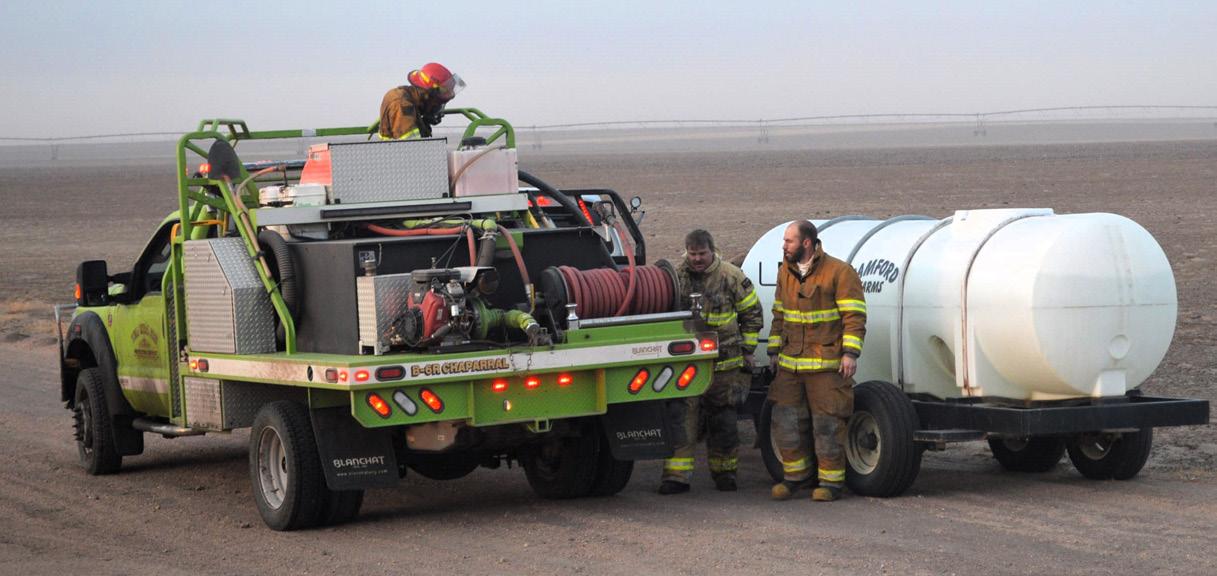
This time, however, firefighters were ahead of the curve. New tactics, better equipment and the presence of state-owned resources made a world of difference. Sterling Fire Chief Lavon Ritter, who was overall commander of the situation, had 50 pieces of firefighting equipment and more than 100 volunteer and full-time people at his disposal.
“We were very progressive in
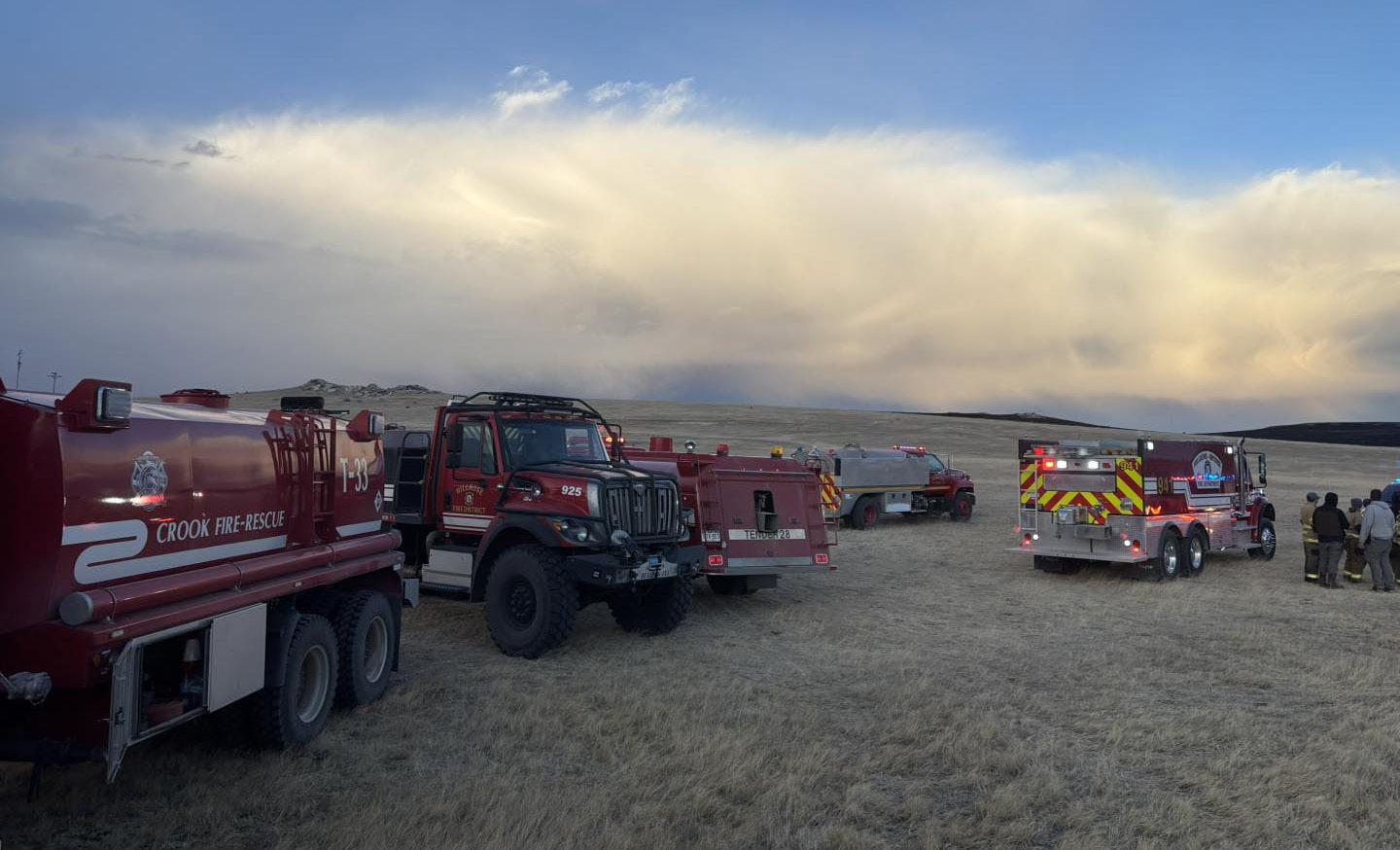
Multiple agencies responded to a 3,500to 4,000acre
25, 2026.
how we allocated our resources,” Ritter said. “I broke the fire down into four sectors, each with its own commander. That way I only had to coordinate four people instead of 100.”
Those resources included personnel and equipment from the
Colorado Division of Fire Prevention and Control’s Fire Station 141 in Sterling, Ritter said a battalion chief and the state training officer happened to be on hand and lent their expertise to the effort as well.
One key to a successful operation is a series of mutual aid agree-
ments among fire departments in northeast Colorado. Ritter said most of those agreements are written, though the verbal ones are just as valuable. Mutual aid means all of the individual fire departments are ready to deploy at a moment’s

FROM PAGE 32
notice. Departments as far away as Holyoke, Akron and New Raymer in Colorado and Sidney, Nebraska, participate.
The agreements are patterned after the Mutual-Aid Box Alarm System or MABAS, developed in 1968 by the Chicago Fire Department. According to Fire Engineering Magazine, MABAS is “based on the Chicago box alarm cards that preassign the engines, trucks, squads, ambulances, and chiefs (and any other specialized equipment) to respond on a given level of alarm.”
Chicago Fire still uses the same basic structure today, and it has been adopted by fire departments across the country.
With MABAS, firefighting equipment, command, and expertise at the independent rural fire protection districts across northeast Colorado are able to act as one large department if needed, putting resources where they are most needed when they are needed.
— mostly farmers — who provide two resources crucial to successful wildfire containment. The first is implements to cut fire breaks ahead of the blaze After the 2017 fire, Logan County’s Office of Emergency Management compiled a list of area farmers willing to help cut fire breaks. While the list is valuable, Ritter said, it’s not been used yet.
“They just show up,” he said “They see smoke, and they head for it.”
Ritter said he didn’t have an accurate count of how many tractor-disc combinations were used, but estimated somewhere between 15 and 20.
The county’s various fire departments have been upgrading their equipment over the past decade. Each firehouse can roll out as many as three SCATs (which stands for self-contained attack truck) along with tenders — the huge tank trucks that supply water to the smaller vehicles — rescue vehicles and struc-
ture fire pumpers. Merino Fire Department is especially proud of its two giant SCATs, which are modified military surplus trucks. The trucks have a greater ground clearance than most SCATs and still sport their military paint schemes Another important aspect of the operation is the civilian volunteers
The other resource farmers provide is water trucks While the firefighters are able to coordinate refilling the giant tenders that supply water to the pumpers, it can still leave gaps in coverage. Ritter said nearly 20 civilian water trucks shuttled water out to the active fire line to supplement the tenders. In the past, farmers and ranchers and even ag-oriented businesses have pitched in with vehicles to move livestock, feed for displaced



animals and fuel for the firefighting vehicles.
With ongoing drought and warming temperatures across the state continuing to elevate wildfire risk for many Coloradans, state and federal agencies that manage wildfires and forests are urging residents to join in efforts to reduce that risk That means residents should take steps to mitigate fire dangers around their homes, farms and ranches, be ready to respond quickly should a fire threaten one’s home
Mike Morgan, Director of the Colorado Division of Fire Prevention and Control, said there will continue to be significant fire potential over the eastern portions of Colorado.
“Wildfire season is a thing of the past — it is a year-round battle,” Morgan said. “We are calling on those that live, work and play in Colorado to help reduce the impact of wildfires by being vigilant, respect-
porches to a storage area.
• Cover any exposed eave or attic vents with 1/8-inch metal mesh screening.
Ensure home address signs are clearly visible from the street or road
ing fire restrictions when they are in place and doing your part to protect your property from wildfire.”
Here on the High Plains, wildfire mitigation basically means keeping things mowed short around the house and outbuildings — about 30 feet is a minimum but 100 feet is optimum. Keep tumbleweeds and trash out of windbreaks, and use best safety practices and common sense when burning ditches
Other things that can be done


include:
• Rake and remove pine needles and dry leaves 5 feet from the home, as well as under decks, porches, sheds and play structures.
• Remove leaves and needles from roofs and gutters
• Sweep porches and decks clear of any burnable plant material.
• Move firewood piles at least 30 feet from the house, preferably uphill
• Transfer items under decks or
Rural families also should pack a “go bag” they can grab and run with when evacuation becomes necessary. The bag should include food and water for several days, toiletries and first-aid kit, important records (shot records, including COVID inoculation records, passports, etc.) a week’s worth of daily medications, phone chargers, flashlight and batteries and cash Most experts also include either a laptop (with charger) with all of your important files loaded on the hard drive or, at the very least, an external hard drive, with your desktop computer copied to it, that can be dropped into the go bag at the last minute.
Ritter said a full briefing on the February fire will be conducted later, as there are always lessons to be learned, and it’s a sure bet some of that information will be needed again and again.



WITH AGE
By Special to Journal-Advocate
Over the past several months, the Fleming High School community service project team of Siena Donnelson, Ciana Lousberg, and Emoree Lousberg has been spreading joy and meaningful connection through their initiative, Engage With Age, at Devonshire Nursing Home in Sterling, Colo.
Since October, the team has visited the nursing home every other week, continuing their efforts through March. While the three leaders attend each visit, additional
FBLA chapter members contribute by preparing activities and materials at school beforehand. Each month, the team carefully plans themed events centered around holidays and seasonal celebrations to create engaging and memorable experiences for the residents.
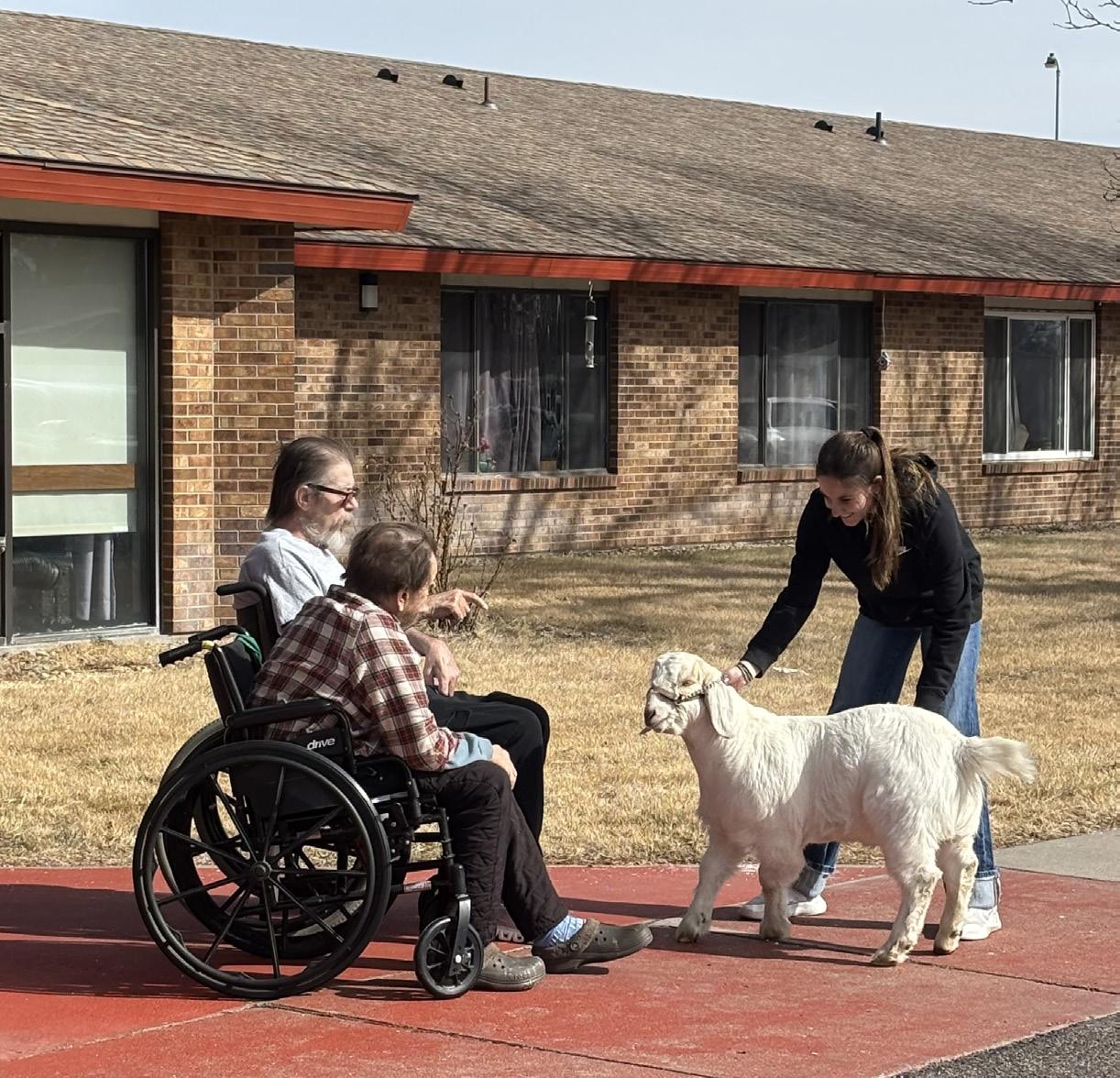
On Monday, Feb. 23, the team brought one of their most exciting ideas to life, a petting zoo experience for the residents. Siena Donnelson, who shows animals, was able to bring her own horse, Highland cow, goat, and even her pet cat. Emoree and Ciana Lousberg

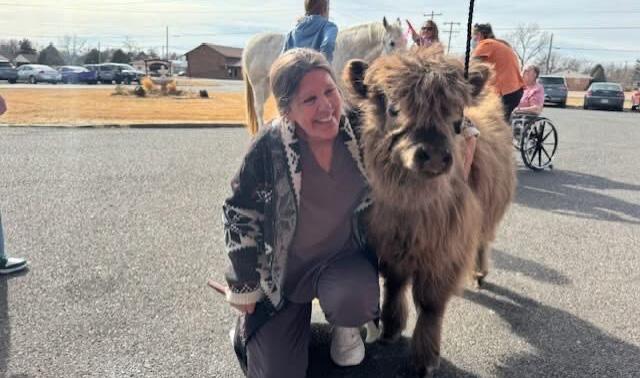
FROM PAGE 35
contributed by bringing their dog, Jorgie the Corgi.
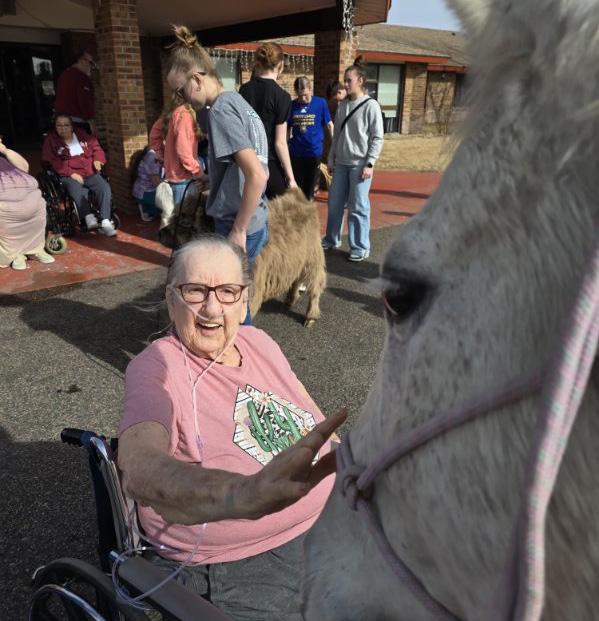
With sunny skies and perfect temperatures, residents were able to safely enjoy the outdoors while interacting with the animals. The girls and the FBLA chapter thought-

fully guided the animals around to ensure each resident had the opportunity to pet, see, and connect with them up close.
Everyone loved the animals and wanted to take pictures while enjoying the amazing moment. The petting zoo not only created excitement but also formed connections, nostalgia, and pure joy, truly embodying the mission of Engage With Age.


What
is balance between preserving agriculture, forging ahead with green energy, data centers
By Allen Best Guest Commentary
In Sterling, the meeting chamber for the Logan County commissioners on a Tuesday morning in January consisted of 50 chairs plus a table for staff and the three commissioners on the dais. Those chairs were filled and a few people stood. Amidst this crowded meeting room was an elephant, a humongous data center. It has not been formally proposed but was the reason why the Logan County commissioners adopted a six-month moratorium last October on data centers, utility-scale solar, and battery installations while they create regulations governing them.
Representatives of NextEra Energy, a proponent of the still-unofficial project, testified. So did local ranchers and assorted others After hearing a dozen speakers, the commissioners tabled further regulations until Feb 17 as they try to get their financial house in order before formally entertaining proposals The regulations, with some changes, were formally adopted at the Feb. 17 meeting
The commissioners have a chicken-and-egg problem. In adding a giant new tax base, they expect to provide improved roads and address other needs. A constitutional amendment approved by Colorado voters in 1992 called TABOR (Taxpayer Bill of Rights) caps the annual growth in revenue of state and local governments at 5.5%. The commissioners wonder whether they can work around that cap by assessing fees.
Beyond that financial problem, Logan County clearly has qualms about adding seas of solar panels amid its oceans of winter wheat and sprawling pastures of grazing lands, much of it in native sod Logan County currently has very little solar. The developer may be
looking at acquiring 4,000 acres, with much of the land to be used for solar. That figure comes from reporting by the Sterling Journal-Advocate last October, soon after NextEra broached the idea of the data center with the commissioners. Since then, NextEra has formally become reticent about talking about their project in precise terms If still amorphous, the idea has huge ambitions.
Commissioner Jim Yahn told the Sterling City Council at their Feb 10 meeting that the project that has been discussed would include a 500-acre building, with a 3,500acre solar field. It would require an estimated 2 gigawatts of electricity daily — a figure he said is about a third of the daily demand for New York City.
Sterling and Logan County, unlike Fort Collins and other communities 100 miles to the west along the Front Range, have changed relatively little in the last 50 to 75 years. A data center and the accompanying energy components would add a major tax base and at least some jobs. But at least some local residents question the tradeoff
Gary Sheffler, who lives northwest of Sterling, between the site of the possible data center and Pawnee Buttes, urged the county commissioners to be wary of breaking up native prairie sod
“All new wealth comes from the land,” he said “Logan County has some of the richest grasslands in the world. Our blue-grama grass and buffalo grass was developed over millions of years.”
Sheffler, 85, recalled another farmer/rancher from the area who returned from World War I and plowed the soil. The farming lasted for several years but never worked out, so he planted it back into grass before World War II. It took more than 50 years before the blue grama


grass came back on that ground.
Buying his own property in 1977, said Sheffler, he put a portion into a federal program called CREPS that allowed it to be taken out of plowed production It took until 2025, he said, for the grasses to return the way he thought they should.
“My point is, when you take this natural resource out of production, you can never replace it.”
Mike Brownell, chair of the county commissioners, responded that he and he believed his fellow commissioners felt the same way. “I think we understand that that grass is very important
However, the land where this possible project would go has been broken out, and it’s currently farm ground. So (the data center and solar panels) wouldn’t be placed on native pasture that I’m aware of in this particular case.”
Regulations governing batteries do not seem to be a major issue.
Greg Brophy, a former state leg-

islator who now has a non-profit called The Western Way, urged the commissioners to adopt the regulations.
“The technology is evolving so rapidly with these batteries that they’re really becoming critically important, and it’s important that we have them located as close as possible to the renewable generation facilities that we have springing up and creating economic opportunism for farmers and ranchers and communities all over eastern Colorado,” said Brophy, who has a farm between Holyoke and Wray.
“I don’t think we can do a 100% renewable energy grid, even with a lot of batteries, but we can certainly do more,” he said.
Brophy added that the batteries have become “very, very safe.” That was a nod to concerns that batteries have, in the past, been responsible for wildfires.
NextEra Energy had a few concerns about the proposed battery regulations. Sound is one issue NextEra wants to see the sound levels permitted for agricultural land applied to batteries as opposed to sound levels for residential areas.

Residential, for example would be 50 decibels during the night and 55 during the day, commercial a little louder, and industrial a little louder yet, 75 decibels at night and 80 during the day.
The Colorado Department of Transportation says a conversational speech at five feet registers at 55 to 65 decibels, freeway traffic at 50 feet 70 to 80 decibels, and a heavy truck or motorcycle at 25 feet, 85 to 95 decibels.
Hearing what NextEra had to say about this and other elements of the proposed battery regulations, Brownell allowed that some rules and regulations may need to consider the context. “This is the first part of the process, getting the rules in place The next part of the process, once an application comes in, is much more involved. Conditions can be imposed during the special-use permit process that would be specific to individual projects.”
Regulations governing data centers brought in the question of where the electricity will come from Rural Logan County is served by Highline Electric Association.
Highline, in turn, gets nearly all of its electricity from Tri-State Generation and Transmission Association.
Tri-State is keen to meet demand of data centers and has applied to the Federal Energy Regulatory Commission for a large-load tariff. Tri-State also reports to the Colorado Public Utilities Commission for its electric resource planning. It all gets very complicated. And then there is the added wrinkle of whether the data center developer would bring its own resource to the table. Solar would obviously fall under that heading.
So would a gas plant, if that were to occur. Brownell said that “in visiting with the folks that are interested, it is definitely, at least at this point, part of their plan.”
Jonathan Nelson, who ranches on land north of and adjacent to the elephant-sized property in question, brought up the question of natural gas and whether regulations would be necessary.
Brownell said that natural gas generation would be subject to regulation by the Colorado Depart-







ment of Public Health and Environment.
Nelson — a distant relative of this writer, as we both descend from a family that homesteaded in the immediate vicinity in 1887 — said he had not known of the project until just a couple weeks before
“It is literally next to mine and my family’s personal property.” He said two weeks was “not nearly enough time to think through the benefits as well as the difficulties” of the data center and associated energy generation and storage would bring. He called it a “massive change that this mega-industrial development brings.”
Nelson called NextEra “secretive.” NextEra Energy’s Leo Gorgens responded that he was developing 15 different projects, three in Colorado, two in Wyoming, and they involve hundreds of landowners. “Until the project becomes real and you can submit a (proposal), we don’t want to waste anyone’s time.”
NextEra had approached the county commissioners on Sept 26 about potential benefits. The commissioners subsequently adopted a moratorium
“So we haven’t been able to move forward with any of the adjacent landowners or (talk) about how this might benefit the community at large,” said Gorgens
Solar zoning may be the thorniest issue. The proposed regulations — which also passed at the Feb 17 meeting over the objections of Brownell, who felt those limits impinged too much on private property rights — would allow solar on only one-eighth of a parcel of land. Gorgens said that 2,000 acres of solar — apparently what his company expects to need — would require 16,000 acres of land.
Yahn, who lives relatively proximate to the not-yet-proposed data center, said that he, too, was concerned about the loss of agriculturally productive land. “Do we want large solar facilities everywhere in our county, or could we live with some maybe smaller footprints,” he asked in talking about the tradeoffs.
NextEra said that it takes about
seven acres of solar panels for one megawatt of generation capacity. As such, company representatives suggested solar capacity of up to five megawatts of capacity would be deserving of exemptions.
The third commissioner, Jim Santomaso, told NextEra that “you have adamant opposition to major solar panels on one parcel of land.”
“Our main job here is not to guarantee that you’re going to have a successful project or money-making project. We want you to, but our main goal is these people sitting here (who) depend on us to protect their heritage. The aesthetic values of whatever 3,000 continuous acres of solar panels next to your place would not be, I am assuming, acceptable to you either.”
Still another twist is the possible role of State Land Board property. Much of the State Land Board property is leased for agriculture production, although that is not necessarily the primary mission of the agency.
The state agency is driven primarily to produce revenue, which goes mostly to schools
Saying he was about to get “political,” Brownell indicated dissat-
isfaction with the state’s current policy, which he suggested favors green energy development over agriculture on State Land Board property “I’m vehemently opposed to that,” he said. He noted the dependence of land ranchers on State Land Board property.
Unclear is exactly how this mention of State Land Board parcels fits into the story of Logan County and potential solar and other development
After the meeting, as we left the courthouse, I had a conversation with two people who live in areas proximate to the data center. They talked about loss of land to agriculture, but one also said, as she held up her phone: “Of course, we need data centers.”
And Logan County would like more tax base, but not with substantial impacts to agriculture.
Journal-Advocate Publisher Sara Waite and Assistant Editor Callie Jones contributed to this article.
Allen Best publishes a journal called Big Pivots. It covers water and energy transitions. Find it at https://bigpivots.com.

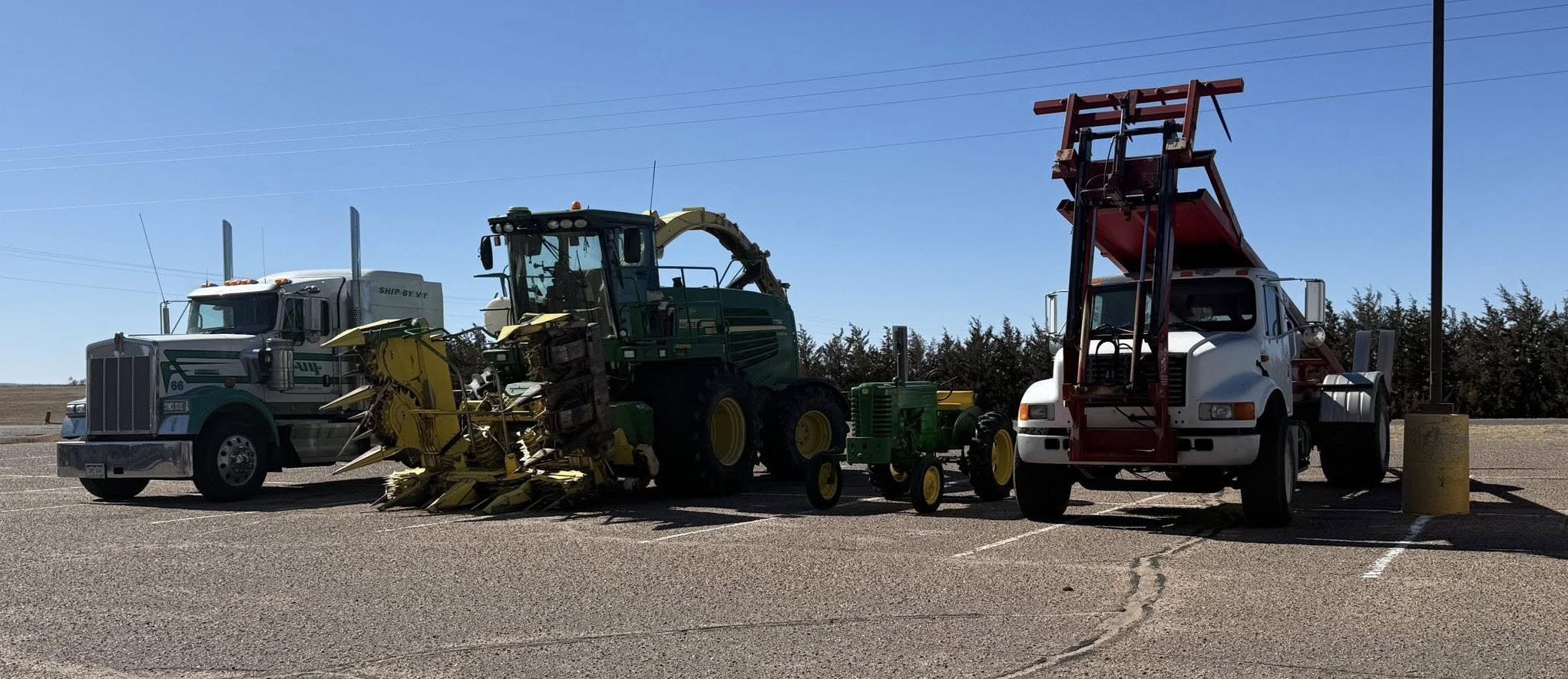
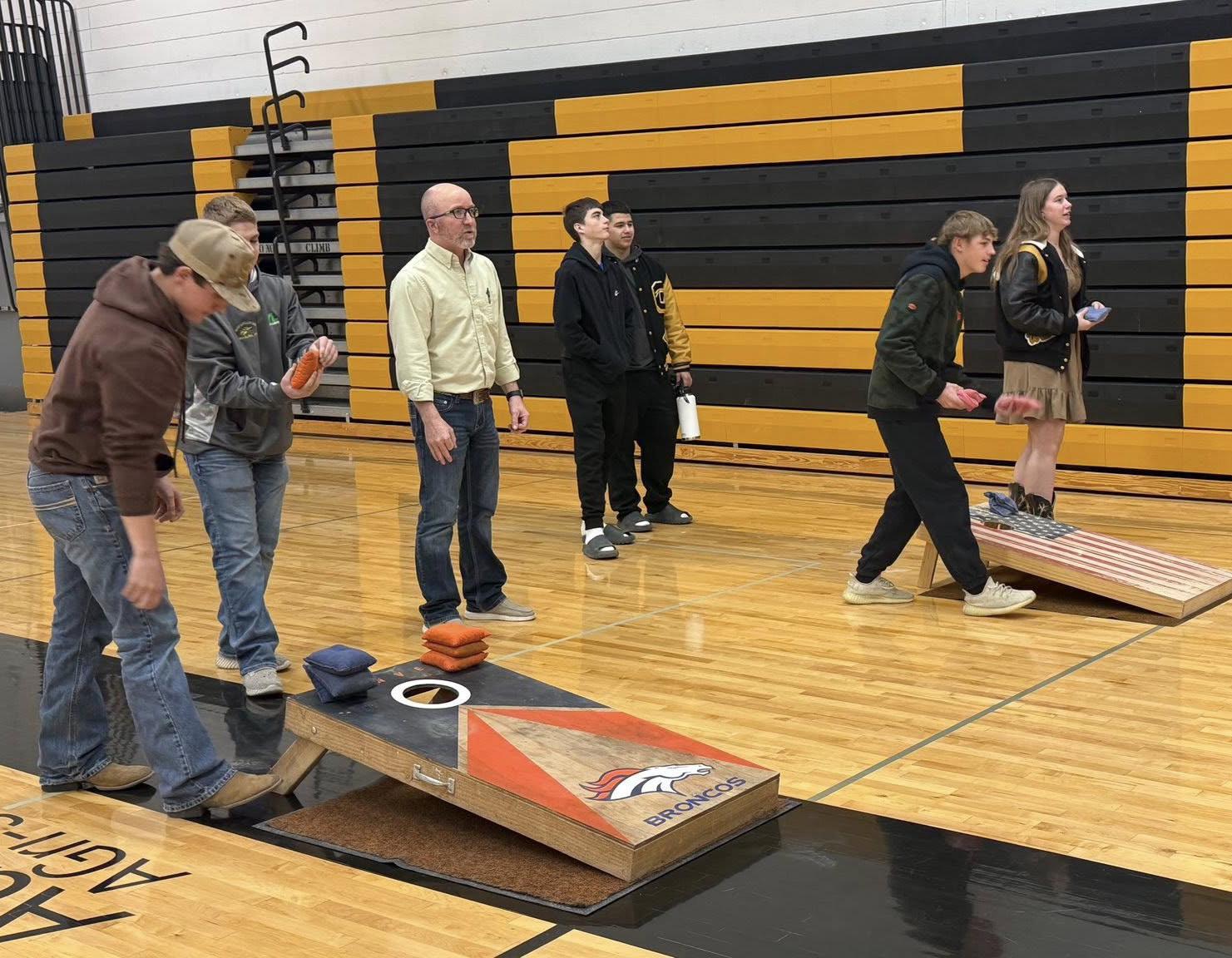
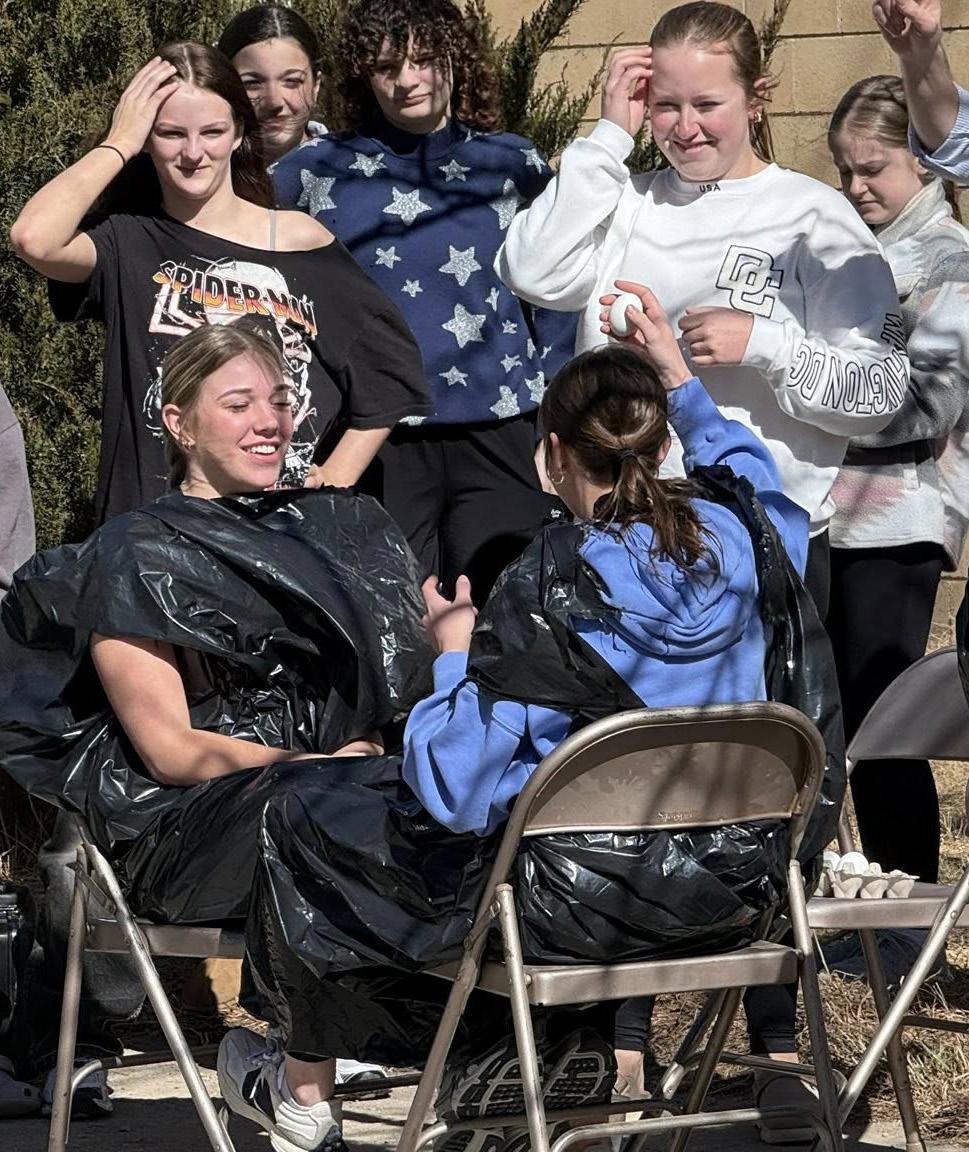
The Caliche High School FFA chapter celebrated FFA Week with many activities including Drive Your Tractor/Truck to School Day, an egg roulette challenge, a cornhole tournament and more.