HIV and pregnancy is an area where medicine has made enormous progress. With modern treatment, an HIV-positive woman can have a healthy pregnancy, protect her own health, and have a very low risk of passing HIV to her baby. Egg freezing is possible, but there are extra medical, logistical, and access challenges. This is general information and not medical advice for a specific person. Decisions about fertility preservation and pregnancy planning are best made with an HIV specialist, a reproductive endocrinologist, and an OB-GYN working together.
HIV and Pregnancy: What Has Changed When HIV is well-treated, pregnancy does not have to accelerate HIV disease. The key factors are: 1. Viral suppression before and during pregnancy. People taking antiretroviral therapy who maintain an undetectable viral load have effectively no risk of
sexually transmitting HIV to a partner [U=U], and a very low risk of perinatal transmission. In high-resource settings like Canada, with consistent treatment and care, the risk of transmission to the baby can be under 1%. 2. Planning makes a difference. A preconception visit usually includes: •
Checking viral load, CD4 count, kidney and liver function
•
Reviewing antiretroviral medications for pregnancy compatibility
•
Screening for other infections, nutritional needs, and mental health support
•
Discussing partner's HIV status and options for conception
3. Management during pregnancy. Most people stay on effective ART throughout pregnancy. Prenatal care includes regular viral load monitoring. If the viral load is undetectable near delivery, a vaginal delivery is usually possible. A C-section is generally reserved for obstetric reasons or if the viral load is high near term. 4. Infant care. Babies born to HIV-positive parents typically receive preventive antiretroviral medication for a short period after birth and are tested multiple times. Breastfeeding guidance varies by country. In Canada, the U.S. and many other highresource countries, formula feeding has historically been recommended to eliminate any postnatal transmission risk, but guidelines are evolving to support informed, shared decision-making when a parent has sustained undetectable viral load and wants to breastfeed. This is a discussion to have early with the care team.
Freezing Eggs When HIV-Positive: Why It Can Be More Difficult Egg freezing, or oocyte cryopreservation, involves hormone stimulation to produce multiple eggs, retrieval, and then freezing for future use. The biology is the same for HIV-positive and HIV-negative women, but several practical barriers remain:
1. Finding a clinic that will provide care Most fertility labs now use universal precautions for all samples, but not all clinics have protocols for handling HIV-positive gametes. Some clinics still decline to treat HIVpositive patients because of lab policy, staff training gaps, or concerns about crosscontamination in storage.
You may need to seek a center with specific experience in fertility care for people living with HIV. Those centers typically require: •
Recent undetectable viral load and stable ART
•
Recent infectious disease screening [hepatitis B, hepatitis C, syphilis and others]
•
Clearance from an infectious disease physician
2. Laboratory and storage requirements To avoid any theoretical risk to other samples, many labs store eggs, sperm, or embryos from people with HIV in separate, dedicated tanks with specialized labeling, often in vapor-phase nitrogen rather than liquid-phase. This separation: •
Is a safety measure, not because frozen eggs transmit HIV to others through the air, but to meet laboratory standards
•
Can add cost and limit where samples can be stored long-term
•
Can require transfer to another long-term storage facility if the original clinic does not offer separate storage
3. Medical considerations •
Medication interactions: Some fertility drugs and antiretrovirals are both processed by the liver and kidneys. The reproductive team will need to review the current ART regimen for potential interactions and side effects. Do not stop or change HIV medication for fertility treatment without medical guidance.
•
Ovarian reserve and overall health: Some studies have suggested a slightly earlier decline in ovarian reserve in women living with HIV, particularly with lower CD4 counts or prior AIDS-defining illnesses, but this is not universal. Antral follicle count and AMH testing can help estimate reserve.
•
Response to stimulation: Acute illness, uncontrolled HIV, or co-infections can affect response to stimulation and anesthesia risk for retrieval. Clinics usually want HIV to be clinically stable.
•
Co-existing conditions: Higher rates of other conditions that can affect fertility may be screened for.
4. Legal, ethical, and cost barriers •
Cost: Egg freezing is expensive even without HIV - often several thousand dollars per cycle plus annual storage fees. Separate storage for infectious disease-positive samples can carry an additional fee. Insurance rarely covers it for elective preservation.
•
Disclosure and paperwork: Clinics require informed consent about what will happen to eggs if not used, and about disclosure obligations to a future gestational carrier or partner.
•
Stigma and counseling: Some patients report feeling judged or having to educate providers. Good programs include counseling about future use of the eggs, including the need for ongoing viral suppression, use of donor sperm or partner sperm, IVF with ICSI, and plans for pregnancy when the time comes.
5. Using the frozen eggs later When frozen eggs are thawed, fertilized, and transferred as embryos, the same principles for preventing perinatal transmission apply - sustained undetectable viral load, prenatal care, and a plan for the baby's postnatal care. The egg itself does not carry HIV inside it; transmission risk is related to exposure to blood and vaginal fluids during pregnancy and delivery, which is why ART adherence remains central.
What Helps Improve Access and Outcomes 1. Start early with a team. A collaborative team - primary care, HIV specialist, reproductive endocrinology, and maternal-fetal medicine - can coordinate labs and paperwork and write clearance letters that fertility clinics require. 2. Bring recent labs. Viral load, CD4, renal function, and STI screening from the last few months are often required. 3. Ask specific questions of a fertility clinic: Do you treat patients with HIV? Do you store oocytes in separate tanks? What are your requirements for viral suppression? Where would long-term storage be? What are total fees? 4. Consider fertility preservation timing. Egg freezing is most effective at younger ages. Ovarian reserve declines with age regardless of HIV status, so earlier counseling is helpful if future pregnancy is desired. For many women living with HIV today, biological parenthood - whether now or later with frozen eggs - is a realistic and safe option when treatment is consistent and care is coordinated. If you or someone you are supporting is considering this path, a good next step is to book a preconception or fertility preservation consult at an HIV-informed
reproductive center in your area, who can review personal health history and local storage options.
Dr. Julio Montaner has spent decades in the fight against HIV but says he feels years of progress slipping away. "I am very worried about what's coming our way," said Montaner, executive director and physician-in-chief at the B.C. Centre for Excellence in HIV/AIDS in Vancouver, the largest HIV/AIDS research and treatment facility in Canada. He says new cases of the virus are popping up in British Columbia every week — a reality reflected in health data from across the country, sparking calls from advocates and health experts for Canada to address the growing issue. New modelling data from the Public Health Agency of Canada shows there was a 22.8 per cent increase in new HIV infections between 2022 and 2024. In 2024, an estimated 2,517 new infections occurred compared with the 2,050 infections recorded two years earlier. In 2019, B.C. declared an end to the HIV epidemic after new AIDS cases had declined by 90 per cent and new infections were at a record low. But since then, Montaner says infection numbers have been moving in the other direction. In May, Manitoba's public health minister declared HIV a public health emergency after HIV rates rose sharply, becoming 3.5 times higher than the national rate. Earlier this year, Saskatchewan reported infection rates just under Manitoba's, making theirs the second-highest rates in Canada. "What we're seeing is a resurgence of HIV, both new infections and AIDS, which was until two or three years ago, persistently declining — because the strategy was working," Montaner said.
Canada below key HIV targets Montaner's research into highly active antiretroviral therapy in the mid '90s helped prove HIV infection could be effectively managed by using a combination of drugs. The world renowned physician and professor went on to be the lead architect behind the strategy "treatment as prevention," introduced in 2006 at the International AIDS Conference in Toronto. The approach was adopted by the United Nations in 2014 in an effort to end the AIDS pandemic by 2030. A majority of UN member states, including Canada, endorsed and committed to the strategy in 2016, and reaffirmed those commitments this past June. The strategy asks countries to aim for three targets: 95 per cent of people with HIV to be diagnosed, 95 per cent to be on treatment and 95 per cent to have a suppressed viral load.
But Canada has so far only reached one of the three goals.
"The most important number, at the end of the day, is the number of people that are virologically suppressed because you don't get sick, your disease doesn't progress, you lead a normal life — and you don't transmit HIV," Montaner said. Other countries have succeeded. A new report from UNAIDS, the UN body that leads the global effort against the spread of AIDS, says 11 countries — seven of which are in eastern and southern Africa — have reached the threshold required to eliminate AIDS as a public health threat. Globally, new HIV infections and deaths from the disease are at the lowest levels in 30 years, the report says.
Join our campaign: https://www.facebook.com/groups/1471719986427887
Family Portrait A long-term survivor, his husband and his brother build a home for the ages. Original Article: https://www.poz.com/article/family-portrait • By Mark S. King
My brother, Dick, is having a hard time preparing the chicken, despite my hovering and constant instructions. I think he’s a little afraid of it. I’m encouraging him to get under the skin with my pasty concoction of garlic and butter, really slide his fingers under there, but the process is giving him the creeps.
“More butter!” I command, but he’s already recoiling from the chicken, his greasy hands bowed in a state of surrender. “You’re impossible,” I pronounce. “Allow me.” I step forward and take a handful of the paste and start stuffing it under the skin myself.
“This is what you’re writing about?” my husband, Michael, asks incredulously. “About the three of us living together and roasting a chicken?” He’s watching our kitchen prep from a
safe distance. “Are you sure you want to write about us? Don’t people already think we’re in a throuple?”
My brother and I squeal, “Ew!” in nearly perfect harmony.
“It’s about family,” I say, finally. “The one you have and the one you make. And how you have to help each other out when you get old.”
Michael and I reflexively glance in my older brother’s direction. He glares back at us. Dick is 78 years old, which can sometimes feel like a generation ahead of me. I’m 65, and Michael, at 62, is the youngest in our household.
“I mean, all of us are getting old,” I say. Now, Michael is the one glaring at me. I can’t win. Talking about age is a losing proposition in a house filled with three gay men who are careful to crop our bellies from photos and utilize every possible filter on our phone cameras.
And yes, my brother is also gay, and his name is Dick King. I know what you’re thinking, and, trust me, he’s heard them all.
Michael has started chopping vegetables for a salad. “And we’re actually going to be…on the cover of POZ magazine?” Michael asks. My husband isn’t comfortable with a lot of attention, which makes him a completely alien creature. My brother and I are theater kids to our core.
We could find a spotlight in the produce aisle of the supermarket and use the banana bin as a stage.
“That’s my understanding,” I say.
“And I qualify for all of this?” Dick asks, as if we haven’t had this conversation already. He just likes hearing it again.
“Yes, Dick, you’re going to be on the cover of the magazine too, in all your glory,” I reply. Dick lifts one shoulder coyly and bats his eyes like a blossoming ingenue.
All of us qualify, as my brother put it. HIV became part of our lives a long time ago, even if it crept into our personal histories in very different ways. I was diagnosed as HIV positive in Los Angeles in 1985 and haven’t shut up about it since, devoting my life to writing and speaking out as a person with HIV. When you survive this long, trauma comes with the territory, but I have been otherwise fortunate and fairly healthy along the way. The biggest downside to living with HIV for the past 41 years is what it says about my age and how quickly life rushes along.
Dick lived in Los Angeles during that time and was thrust into the HIV scene as well but from the vantage point of someone watching his life partner become sick and die over the course of a few agonizing years.
Left to right: Mark S. King; his brother, Dick; and his husband, Michael Mitchell
Dick and his partner, Emil, were once my role models of what gay life, and love, could look like. They had it all, it seemed. And then came the plague and Emil’s diagnosis and the exhaustion and love and heartbreak that come with caring for a partner who is slipping away.
Some images remain in your mind’s eye forever, flashing by when you settle into bed and close your eyes. For Dick, one of them is asking the man he deeply loved not to drink the glass of Scotch too quickly, the one laced with Seconal from a secret stash, the one Emil wanted when he was ready to leave this life on his own terms.
“Wait,” Dick said to his frail lover that night so many years ago. “I want to tell you I love you again before, before—just wait. Please wait.”
Dick has remained HIV negative, but I dare anyone to claim my brother doesn’t know what it’s like to live with HIV. Those are fighting words. I am watching Michael garnish his salad with cherry tomatoes. He really knows how to make a gorgeous salad. He also knows I am going to tell you about his HIV diagnosis, as private as he is. But Michael understands that hearing what happened to him could help someone, even if the story still hurts.
Michael played by the rules his whole life. He was devoted to the boyfriend he met in college, and they practiced monogamy throughout their relationship, during the worst of the AIDS crisis in the 1980s and ’90s. After they split, Michael remained diligent about safer sex. Every time.
And then one night in 2004, after decades of successfully avoiding HIV, the roommate of a friend attacked Michael. The sexual assault was so violent that Michael ended up in the emergency room. For hours, he lay in shock on a gurney in the hospital hallway because the staff did not know what to do with a gay man who claimed he had been raped. They did not offer Michael post-exposure prophylaxis to prevent HIV transmission. Within two months, Michael tested positive.
It took years for my husband to work through the repercussions of the attack. He tells me he is fine. I believe him, even if I have learned never to physically hold him too tightly. I love him very much, and I am so, so careful.
Yes, HIV lives in this home too. Our past pain and our present joy cement us together into a dark, colorful collage.
Michael and I opened our home to my brother a year ago. He needed someplace to retire affordably, and we had an extra room and a welcome mat for him. It has been a gift for all of us.
We’ve also carried each other, sometimes literally. Last year, Michael had spinal surgery that laid him up for weeks, and then, Dick had a knee replacement. For months, I was the designated “guy who picks things up off the floor.” You would be surprised how many things end up down there. I finally got one of those long grabber doohickeys, but they only used it to point to things they wanted me to pick up. I didn’t mind too much. Our love for one another stretches pretty far, and it hasn’t snapped yet.
The walker Michael used to get around after surgery barely made it into our storage room before we pulled it out again when Dick had his knee replaced. Then back into storage it went, sitting next to a pair of crutches in what has become our private medical supply stockroom. Whenever I’m searching in there for some damn thing, I could swear the walker actually perks up expectantly, as if hoping to be of service. Not now, walker. Maybe later. Probably later.
Dick is setting the table. It’s a chore he’s more comfortable with, like loading the dishwasher or walking down to the mailbox. We’re all still finding our lane around here.
“Mark, can you hear me?” Michael is asking. “How many are we tonight?”
“I hear you; I hear you,” I respond. I just don’t pay attention, I think to myself. Even if I am putting off getting the hearing aid the doctor has recommended. “There will be seven of us.”
“OK,” Michael says. “Maybe stop writing the POZ magazine article in your head and get the chicken in the oven?”
Dick is placing paper napkins on the table settings, the kind that make you feel fancy. Usually, it’s a folded paper towel, but tonight is Sunday dinner, and family is coming. They are our chosen family, friends we have known for decades.
Leigh will bring those rolls we all like. Charles will bring ice cream. Lynne will bring me the soda I love, and Jimmy will bring flowers for the table.
You hear a lot about chosen family, but the truth is, it takes work. You have to badger people to get them to commit to getting together regularly, even when you’re feeding them. But our family is worth the work. They are a crucial lifeline.
We need family more than we might realize. Isolation is a constant threat as you age. Older people living with HIV have fought HIV stigma all our lives, but now, we’re adding ageism
and the loss of social networks to the mix. Researchers tell us that a chosen family—anyone you pull into your orbit for love and comfort—provides support that can lower stress, counteract loneliness and serve as protection from discrimination.
The thing with chosen family is that you need to keep choosing, keep building your own support system and keep offering support to others. It means asking yourself an important question: Whose life do I need to step into a little more closely? Who might need me and doesn’t know how to say it?
Everyone has lives, and even in retirement those can get busy. You have to pierce their daily schedule, make time for them, keep calling, keep inviting.
AIDS wiped out a generation of gay men. We need to rely upon those who remain as well as broaden that circle to include younger friends and family who might be better equipped to step in when we need them.
Dick has begun putting out the dinner plates featuring a 1960s pattern that Michael has collected. They always make the table look so inviting.
Earlier today, the dining table was piled with prescription bottles. Our monthly pillbox organization fell on the same day for the three of us. We looked like we were in the middle of a game of poker, with little mountains of plastic bottles as our strange winnings.
I remember a time, back before successful HIV medications, when someone organizing their collection of pills meant they were probably going to die. That’s what all those bottles meant to me. I was usually right.
Now, organizing all our pills means we are going to live. It’s profound, really, the psychological shift in how I view my medication. The entire history of HIV treatment can be summed up in the nonchalant way we drop pills into little plastic boxes and snap the covers shut.
It’s not all over, of course. Not yet. We’re still volunteer guinea pigs, as people living with HIV have always been. Now, we’re being closely watched to see how our bodies handle the aging process. I imagine I’ll be watched until the very end. If that helps the next generation live a longer, happier life or leads to a cure I won’t live to see, then that is OK with me.
Nothing, and no one, lasts forever, and that is an unspoken truth in this household. This home we have built together is very likely our last stop. It’s a practical fact of life more than a morbid assessment. So we remind one another to use the handrail on the stairs and to take our meds, and we make sure there is a secure rubber mat in the tub.
Dick is finishing the table, and Michael’s salad looks terrific. I think everything is almost ready.
I just need to straighten up the house a little bit more. Family is coming.
Mark S. King is the author of My Fabulous Disease: Chronicles of a Gay Survivor and a GLAAD Award–winning writer.
EDITOR’S NOTE: It was brought to my attention that a good way to fight stigma and show sex positivity is to share and remember some of the adult actors/sex workers as well as celebrities we lost to AIDS. Facebook page: https://www.facebook.com/theaidsmemorial Corwin Hawkins (1965 - 1994) was an actor who died due to AIDS-related pneumonia in Dallas, Texas. He was 29 years old. At the time of his passing, Corwin’s family reportedly did not publicly discuss the speciKics of his battle with HIV/AIDS. A native of Houston, Texas, Corwin was discovered by Keenan Ivory Wayans and is best remembered for playing the role of Wayman in the 1994 Kilm, "A Low Down Dirty Shame.” Corwin’s role as Wayman is considered a "gay breakout character" for its unapologetic and loud portrayal of a Black gay man, which was rare for 1994 cinema. Also known as "Amazing Grace", Corwin did impersonations of Grace Jones, Mariah Carey, Whitney Houston and Diana Ross. He was one of the few professional female impersonators to perform stand-up on HBO's Def Comedy Jam and BET's ComicView. Corwin’s illness began to impact his career just as he was reaching mainstream success. His death occurred nearly four months before the theatrical release of “A Low Down Dirty Shame”, which was subsequently dedicated to his memory.
Due to Corwin’s failing health, he was forced to withdraw from a planned role in the 1996 Kilm “Don't Be a Menace to South Central While Drinking Your Juice in the Hood.” #whatisrememberedlives
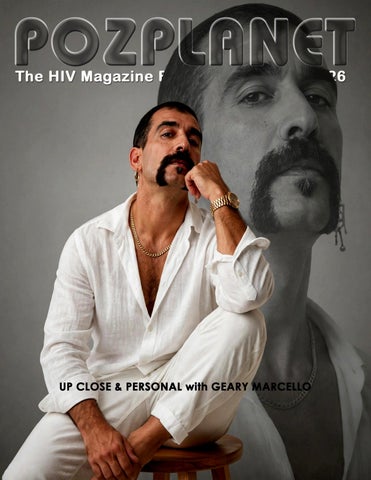
The one thing I love about social media is that you can chat with and even get to know people from around the world. Now...I wouldn't say that you should believe everything you see or read on the internet but if you connect with someone who doesn't live where you are, it can grow into a friendship. This is the case with Geary Marcello. I don't remember if he sent me a friend request or vice versa. All I know is that he is a very sweet guy and since I used to live in New York City, his profile reminds me of my younger days of carrying on in the streets of The Big Apple. We chat here and there, but I decided that I wanted to actually get to know more about this HIV icon. JE: Well, hello Geary....how are you today? GM: Aside from the sweltering heat, I'm just ducky! JE: So, I know we chat occasionally, but I have never asked and personal questions of you. Do you mind if I ask about your background and where you are from? And throughout our conversation feel free to ask me any questions about myself that you'd like to know (if you'd like, of course). GM: Jade, I'm an open book. You can ask me anything. I was born in Santa Monica, California. I was abandoned at birth in the hospital. I honestly can’t tell you much more than that. I never met or have even seen my mother. I vaguely have foggy memories of my father and older brother. I don’t ever recall any other family outside of them. My brother and I were separated as babies. I'm 60 and back then there was no social services or foster care system for children. I grew up as a "ward of the courts" until I was 15. I filed for emancipation upon passing my GED. JE: Now...if you have followed this column, you know that we tend to ask a few personal questions about your HIV journey. Could you tell us about when you were diagnosed and what it was like at the time? GM: I'm grateful as I was patient zero in 1992 and AZT was the only thing on the open market. So, you died of AZT or AIDS. There were other drugs in study that were not ready for release and didn’t know how I would react but I was offered 3TC (the best drug in studies at the time) and as drugs got better, I was offered "upgrades". I didn't convert until 1994. I was beaten, drugged and raped by a group of five men. I was a weekend barback/bartender in Los Angeles. As you know, we make our money being flirtatious cock teases. A couple of guys from earlier were in a van parked outside the bar waiting for me. I was unaware there were three more guys in the back of the van. I was caught off guard. They rushed me, beat me unconscious and put me in the back of the van. They took turns raping me . Later I was found alongside the freeway between Los Angelos and San Deigo. I was airlifted to Cedars-Sinai. Three of the five men had full blown AIDS.
JE: Were you always out about your status or did you gradually decide to share? GM: Because of the way I grew up, I lived my life by my rules on my terms. I was and still am a free spirit. I never hid my sexuality, even before the rape I was liberal and open about who or what I was. I was as flamboyant then as I am now. JE: When I was younger, I tried all types of looks and hairstyles. I was even a hair model back in Tampa, Florida (where I am from originally). Could you tell us about your look? Where does your style come from? GM: LOL, do you need to ask...My two iconic heart throbs were Glenn Hughes from the Village People (I loved Filipe also) and Freddie Mercury. I love looking like raw, seductive sex as Eartha Kitt used to say. I have been living in the world of fashion and entertainment since fourteen as I started being groomed to be a protégé. JE: I have been married now for sixteen years as of last April. Are you single? Is there a significant other? Are you dating? GM: Yes, I’m very single by choice. I’m very damaged since childhood and subconsciously I have been blind to it.
I grew up with being physically beaten… sexually, mentally and emotionally abused. And it was often by older men and boys in the foster care system into adulthood. I was introduced to Meth during COVID. The guys I hooked up with put it in the lube. I knew nothing of drugs up until that point. Six years into it, I shut down on NYC, myself and drugs moving to LA and checked myself into rehab. That’s when I had an awakening about me and the relationships I get myself into. This chapter is about me for me. Loving myself, healing, learning to be strong for myself and so forth. JE: I was talking to my friend, Jesse Volt a few days ago, and she was telling me about the social and political problems happening in New York right now. With all the cuts to
healthcare in the U.S. has it been difficult to get your meds? Have the cuts effected your health? GM: I’m so very grateful as I have not had problems while in NYC. My medical team is very proactive if there is a glitch. I also read up constantly about the political agenda. In San Francisco and Sacramento, I couldn’t get my meds. So I went off completely. I couldn’t build up a resistance. That’s why I returned back to NYC after rehab last year. It was very stressful and traumatic to say the least.
I know we discussed your journey while making the transition to Canada. When I lived in Amsterdam and Dusseldorf, I had no problems getting my meds or medical treatment back in the 90s.
MORE NOTES: This interview was spread out among several phone conversations. We had hoped to hear more about Geary’s years in the fashion world and working with designers as well as his time as a Cher impersonator in Las Vegas. He spoke about the lost of friends over the years and survivor’s guilt. He also shared that through all of the adversity he has somehow remained positive in attitude. Even while explaining about being displaced and homeless he still joked and said “you gotta laugh”. I, myself, have been homeless but only for a about ten days. It was a scary time for me. I don’t know if I could have lasted or survived some of the situations that Geary had shared.
JE: The world right now can be really frustrating and confusing when it comes to healthcare. The pharmaceutical companies are campaigning like AIDS is over...just take a pill. Meanwhile, infections are on the rise because of the complacency of our youth and misinformation being shared on the internet. With all that is going on, what advice would you give to someone who has been just diagnosed? GM: Don't listen to everything you see, read or hear on TV or commercial advertising. YOU NEED TO ADVOCATE FOR YOURSELF! Educate yourself. Read up, talk to your doctor, ask questions, take some classes, talk to friends about it...the more you know the longer you’ll live. Love yourself…love your life.
On June 29, 2026, the HIV & AIDS Legal Clinic Ontario (HALCO) started a legal challenge against the Canadian Armed Forces (CAF), in the Ontario Superior Court of Justice, along with the coapplicant J.B., under the federal Charter of Rights and Freedoms (Charter) section 15 equality protection. The CAF has an explicit policy to disqualify all persons living with HIV from being selected for aircrew training in the Royal Canadian Air Force under AMA Directive 100-01. Further, the CAF deems persons with HIV as being unable to meet the Common Enrolment Medical Standards (CEMS) and thereby bars applicants with HIV from being admitted to the Regular Force, the Primary Reserve, and other branches of the armed forces. J.B. served as an active-duty member in the Regular Force for 13 years from 2007 to 2020. In 2012, J.B. was diagnosed with HIV and continued to serve in the CAF for a further 8 years with the CAF’s full knowledge of his diagnosis, including a 9-month deployment in an active combat zone in Mali. In 2024, when J.B. attempted to rejoin the CAF in a reservist role, the CAF denied his application explicitly
based
on
his
HIV
status,
despite
his
exemplary
prior
service.
According to the Auditor General of Canada’s 2025 report “Recruiting for Canada’s Military,” as of June 30, 2024, 13% of occupations in the Canadian Armed Forces were at risk of not reaching authorized staffing levels. While applicant numbers increased every year between 2022 and 2025, only 1 in 13 were successfully recruited and CAF failed to make their recruitment goals with a shortfall of nearly 5000 recruits. Some of those rejections were because of HIV even where the person was fit, healthy and capable. While members diagnosed with HIV continue to serve successfully in the CAF, individuals already living with HIV face these direct or indirect barriers to entry. We have also heard from clients that they withdrew their applications after
being told by CAF staff involved in recruitment that HIV would be a barrier to enrollment. Because of HIV stigma, it can be terrifying for someone to disclose that they are living with HIV, and the CAF should not ask individuals to disclose their HIV positive status only to reject them on that basis. We know that applicants and members living with HIV are capable, medically fit, and
deployable,
as
JB
was
in
his
time
of
service.
HALCO and J.B. assert that CAF’s refusal to enroll people living with HIV is premised on outdated stereotypes about HIV treatment and health outcomes and violate section 15(1) of the Charter which guarantees that every individual is equal before and under the law and has the right to the equal protection and equal benefit of the law without discrimination. By failing to recognize the science surrounding treatment advancements which not only render HIV untransmissible but has made living with the virus a healthy life, the CAF discriminates against applicants living with HIV. The CAF should stand up to HIV stigma and see people living with HIV as the healthy, fit, skilled, and dedicated individuals that they are. The CAF can begin to address their recruitment and professional staffing shortages by modernizing their approach to HIV and medical fitness, as they have with other conditions such as asthma, ADHD, anxiety, and allergies which can also be well controlled on treatment. People living with HIV are skilled in all professions and some, like JB, are eager to serve their country in the CAF. They are willing and able and should not be refused. It’s time for the CAF to remove HIV as a barrier to recruitment, and
we
have
asked
the
Court
to
order
the
CAF
to
do
so.
You can read media coverage of our constitutional challenge against the CAF here:
Toronto
Star,
Friday
August
14,
2026:
https://www.thestar.com/news/canada/veteran-launches-constitutional-challenge-to-canadianmilitarys-ban-on-recruits-with-hiv/article_ae178ba5-7677-433f-a5fc-cb06485b1054.html
Press
CTV,
Reader: https://torontostarreplica.pressreader.com/article/281500758079508
Friday
August
14,
2026:
https://www.ctvnews.ca/politics/article/a-veteran-is-challenging-canadas-military-ban-on-recruits-with-hiv/
Listen to the mix here: https://www.mixcloud.com/djrelentlessny/ear-candy-september-2026 Download your free video of this mix here: https://mega.nz/file/hvVAnCoI#Y1WhkMpa0w1FXl--utxUDpG0GllOWcFiIL_NPi9oe5Y
Subscribe to DJ Relentless’ Mixcloud page: https://www.mixcloud.com/djrelentlessny Follow DJ Relentless’ HearThis page: https://hearthis.at/djrelentlesstoronto It seems like the summer flew by and now it’s time for school to begin again. While others were enjoying fun in the sun I have been working on many projects for this fall season. I will be returning to a rotating residency at a local bar here in Toronto and producing some new tracks. So, I’m feeling optimistic about a change is coming. I’ve got twenty-one tracks to talk about, and we should probably get started. Opening up our mix this month is the very out and unapologetic Durand Bernarr with his latest single “Overqualified”. I should say he is quickly becoming one of my favourite artists because I hear and feel his lyrics. To me, he is the lovechild of Little Richard and Donnie Hathaway…great vocals, lyrically expressive and just a raw talent. And I still believe that we as Gay Black Men owe a huge debt to Little Richard. It is always the hardest for the first one breaking down barriers so that others can walk through it with their heads
held high. But I digressed…”Overqualified” is a smart essay on dating and selecting a partner. I give it an “A+”! I was watching a repeat of Jimmy Kimmel and the musical guest was Elmiene. The song he did was “Reclusive”. It struck a chord with me. I am a very social person because of my work as a DJ and a performer, but I like my quiet time and not being in the spotlight. Really smooth R&B…so I had to include it in this month’s mix.
As we are approaching Labor Day Weekend, it is always nice to have some familiar sounds in your production. In the case of “Looking Lovely” by Shaggy featuring Robin Thicke, that familiar sound is “Lovely Day” by Bill Withers done with a Reggae flair. This is a nice track but it brings up a question for me. When is Robin Thicke gonna release another album? Reports say he is to replace Randy Jackson (who was not looking so healthy with all that foundation) on “Name That Tune”. I want him back in the studio to give us another “Lost Without You”. Most of August was down time for me. I celebrated my 59th birthday and spent a lot of time watching television. And since most shows were in re-runs I was forced to watch Jimmy Fallon…the worst ass kisser on TV. But he had a Colombian recording artist on that I had never heard of- Feid. I didn’t understand a word of what he sang but he was givin’ Baby Bad
Bunny vibes. And we all know how I feel about Bad Bunny! So, I had to investigate who Feid is. And this is why he appears twice in this month’s mix. First up is “Trankaito”. Again…not any knowledge of what the song is about but I like the beat and the energy. Would I play this track? Definitely if it was needed for my floor.
I don’t think our fifth selection is a new single, but I liked the video and decided that “Romeo” by Anitta was a track that I would play for my floor. I’ve loved her since “Make It Hot” with Major Lazer but now that I know that she is bisexual I definitely will be including her music in my support for our LGBT artists. Our sixth track is the PeteDown 90s Remix of “Hate That I Made You Love Me” by Ariana Grande…not a new track either but it was the only one available to work with this set. Her latest video ”Petal” does not have any remixes that I know of, but it has cause many to fear that she is anorexic. I mean you can see her rib cage. There were warning signs during promotions for WICKED. I say this is the same problem that President Plump has…a group of people around who are “Yes Men” (or women) that are not there in the person’s best interest but there to profit. Anyone who cares would step in and say you need help. In the case with Plump, it’s Steve Bannon and Stephen Miller pulling the strings to get their agenda done. He’s so much of an idiot and a narcissist that he thinks he’s running the world. Ariana’s announcement to take some time o] is a glimmer of hope for her future.
Another red flag is her doing this “Hate That I Made You Love Me” song to address her fans’ concern about her appearance and health. I think it is always a mistake to talk down to your fans. It doesn’t matter how talented you are. In this Pop Culture moment, you can be cancelled and very easily replaced. There’s always some other person waiting to step into the spotlight. And our next selection is one that I chose because I wanted to read the artist. ”FIX UR FACE” by mgk featuring Fred Durst is just awful! Months ago, I wrote about the bending of the knee to this administration. Several “White Hip Hop” artists decided to suddenly go Country. Meanwhile Beyonce was being blacklisted from Country Radio for her Country album, these assholes were pickin’ and a grinnin’ up the charts. Machine Gun Kelly (aka mgk) along with Post Malone suddenly were as white as they could be. I hated that! I believe this is why Beyonce had to win Country Album of The Year at the Grammys. She deserved some respect for pointing out that Country Music comes from Black Music Artists. “Cowboy” was slang for black ranch-hands. So, listening to mgk dig up Fred Durst to yell and act angry with a Rock guitar ri] just is as tired as both of them! Now some will probably say that Drake should sit down some where after droppin’ three albums earlier this year, but now that I am a full-fledged passport and ID card carryin’
Canadian, I gotta support my fellow Cannuck. And the Chango Blend of “2 Hard 4 Radio” is kinda brilliant. So, for our ninth track I wanted to be inclusive and spin an Afro Beat selection. I chose “Laho II” by Shallipopi & Burna Boy. Okay…like Reggae it seems that there is a particular rhythm or sound that is the base of the genre and it doesn’t seem to change. I like Afro House because it can change but most of the tracks below 120 BPM all start sounding the same – unless it’s an Afro Beat remix of another genre. For this track, I didn’t really understand the lyrics and the song just droned on. I’m sure for those who love Afro Beat, this is da shit…but for me this would not be my first choice. Someone would have to request this in order for me to play it. Fortunately for me most of my gigs are about the House & Club vibe.
I kinda feel like anyone who has followed this EAR CANDY mix and article knows that I try my hardest to be inclusive and always support my LGBT artists. I really try to walk the walk on this one. I done get to or always love every LGBT artist that I come by, but I do work the ones I support in my sets, my Monday afternoon radio shows on Sandcastle Radio and my video mixshows on HearThis. So, it’s only natural that I switched gears and programmed “Feel Good” by Jason Mraz for our tenth selection. In this time of uncertainty in North America right now because of The Orange Menace in The White House, many are feeling hopeless. So, I am glad that there are
artists out there who are trying to send some positivity into the ether. We need it! I’m actually considering doing a mixed series to remind folks that we have to have hope and remember that “Life Is Beautiful” even when there are tough times. Then I switched gears again and programmed “Sorry Papi” by Topic x Becky G. I liked this one because it’s a fun summer track. Again…no idea what Becky is singing about but I think I get the gist of it when she says “Sorry Papi”. Don’t think he’s getting laid. She just wants to dance and have a good time. For our twelfth track, Feid makes his second appearance in our mix with the Los Pardres Remix of “Luna” featuring Ali Jacob. Um...I have to confess my choosing this one was purely about how fine Feid looked in those shorts in the video. Damn, papi! Up next is “Godzila” by J Balvin featuring Ovy On The Drums & W Sound. I’m beginning to get the feeling that Mr. Balvin is in love with the 90s when it comes to Club Music. And to tell ya the truth…I ain’t mad at him! The 90s was a great decade for Dance Music. His latest track uses “I Like To Move It” by Reel 2 Real as it’s base. Fun and is a nice reboot of a big hit! Right before her birthday, Madonna dropped the Afterhours Mix of “Love Sensation” featuring Kylie Minogue. I have to hand it to her. She’s been making the right moves to stay relevant but according to the Billboard charts she is falling o]. It’s a completely di]erent world since her start. The internet is a treacherous landscape to walk for popularity and things that worked thirty years ago are just a drop in the bucket today. I applaud Madonna for still doing her thang at 68. I hope that I am still chuggin’ along at that age. And even though my birthday is the day after hers, I don’t feel the need to be a superstar. I just wanna play my music and write my column. Another August birthday is August 9th for Whitney Houston. I can’t remember if I got this through my pool around that time or not but The Scene Kings vs The Cube Guys Mix of “I Wanna Dance With Somebody” is a really hot new take on this Pop Classic! Our sixteenth selection is a good example of “something for everyone” as our Country selection by Kane Brown. The Anthem Kingz Country Smasher Edit of “Woman” is a good Pop Country track. And with our seventeenth track we are gonna play word association. The Franco Lippi Extended Mix of “Wo, Man” by Peggy Gou featuring Ayra Starr. I have to be honest. I have heard the name Peggy Gou but really never investigated any of her music. This is the first song that I have heard and I like it. Up next is “AND WON’T” by T.I. featuring Summer Walker. As Blaine & Antoine would say
on “In Living Color”…”HATED IT”. I am just not a fan of T.I. in any capacity. After finding out he checked his daughter’s hymen each year to make sure she had not had sex I stopped listening to his music. What a fucking asshole! Teach your kids about sex and responsibilities and you won’t have that worry.
I guess since Afrika Bambaataa died back in April, I guess it’s a tribute for French Montana & Max B to use “Planet Rock” for their latest single, “Go Ladies”. I don’t like it as much as “Since U Left Me” but it’s cute and would be great out in Central Park for the skaters. I miss spinning out there. Sending out a special thank you to Hector Alemany for playing my mixes out there and getting me the gig. Our twentieth Track is the Betamax Disco Mix of The Chemical Brothers classic, “Free Yourself”. I cannot wait use this video in a set about robots. Great graphics and a great remix. Mr. Torres in Seattle is a genius when it comes to video editing and remixing! And our final selection was something I discovered while scrolling through Instagram. The video was so unique, and the track called “CONFUSED” was so catchy that I had to investigate what it was and where it came from. Apparently, it’s a French artist called OneLight whose music is on BandCamp. I’ve checked out several other singles and he is described as being somewhere between Electronic, R&B and Hip Hop. I can hear the Electronic genre but I guess Paris has a di]erent meaning for R&B and Hip Hop. Don’t forget to get your free download of the video mix in the links at the beginning of the article. And follow me on Mixcloud and watch my video mixshows on HearThis.
On August 25th 2026 the world lost the one and only beacon of light “The Queen of Country Music. Dolly Parton is often called one of the most generous celebrities in America, and she is — but her philanthropy is rooted in East Tennessee, not Hollywood.
1. Literacy: Dolly Parton's Imagination Library This is her flagship. Started in 1995 through the Dollywood Foundation in honor of her father, who never learned to read or write. How it works: The program mails one free, age-appropriate book per month to children from birth until they start kindergarten, no matter the family's income. It runs through 2,700+ local partners. Scale: •
As of February 2025, over 270 million free books gifted, with more than 3.2 million books mailed in that month alone.
•
By June 2023 it had already crossed 200 million.
She says she only accepts attention for her philanthropy because it helps bring more attention to the Imagination Library.
2. The Dollywood Foundation Created in April 1988. Its original mission was scholarships for Sevier County high school seniors and encouraging her fan club to help children. Today it houses the Imagination Library and other local programs.
3. Disaster relief: My People Fund After the 2016 wildfires that ravaged the Great Smoky Mountains near her hometown and displaced 2,000 people, Parton launched the My People Fund. •
Promised $1,000 per month for 6 months to families whose homes were uninhabitable or destroyed.
•
Held the nationally televised Smoky Mountains Rise telethon to raise the money.
•
Ultimately cut checks to 921 families weekly and raised more than $9 million, with reports of over $12M total in later years. Her quote at the time: "I have always believed that charity begins at home."
4. Health care and medical research •
Vanderbilt University Medical Center: In April 2020 she donated $1 million to COVID19 vaccine research, credited in the journal as the "Dolly Parton COVID-19 Research Fund" — people started calling the Moderna vaccine "Dolly's vaccine".
•
In June 2022 she gave another $1 million to pediatric infectious disease research at Vanderbilt.
•
Earlier: $1 million to Monroe Carell Jr. Children’s Hospital at Vanderbilt in 2017, and more recently lending her name to what is now Dolly Parton Children's Hospital in East Tennessee to advance pediatric care.
She also funds efforts to buy musical instruments, uniforms, flags and supplies for marginalized high school students, and college scholarships for local students. 5. Recognition Because of this breadth, she was named a 2022 Carnegie Medal of Philanthropy recipient. The committee called her a "tremendous example" of giving back, and Parton herself said: "I just give from my heart". If you want to support or learn more, the Imagination Library is the best entry point — you can enroll a child, sponsor a county, or donate directly at imaginationlibrary.com. Did she ever do anything for HIV/AIDS? Aug 25, 2026 Did Dolly do anything for HIV/AIDS? Yes — especially early on when a lot of country artists stayed quiet. 1994: Red Hot + Country Her most specific, documented contribution was contributing the tune "You Gotta Be My Baby" to the benefit album Red Hot + Country, produced by the Red Hot Organization. The
album raised money for HIV/AIDS awareness and relief at the height of the epidemic. She also did a live acoustic album that same year — 1994 is listed in timelines as the year she contributed that song to the AIDS benefit album. Beyond that one track, HIV/AIDS charities have been a consistent part of the portfolio listed for her: •
Her philanthropy through the Dollywood Foundation is described as extending "far beyond her Imagination Library, including... charities related to cancer and HIV/AIDS"
•
Profiles of her charitable work note she "has also dedicated money, time and support toward" HIV/AIDS charities and that she has "given to and raised money for wildlife and HIV/Aids charities" over several decades
She has also been described as a significant contributor to charities focused on LGBTQ advocacy and HIV/AIDS research and support through the Dollywood Foundation, including donating proceeds from concerts, though she doesn't publicize dollar amounts for those the way she does for Imagination Library or Vanderbilt. So it's not the $1M-style headline gifts like her COVID work, but it was early, public, and at a time — 1994 — when country music support for AIDS causes was rare and carried real stigma.
The same day of Dolly’s death, the world lost Tim Curry. For many like myself, his role in “The Rocky Horror Picture Show” shaped many lives. Of course, he will be remembered for his roles in flms like “Clue” and Stephen King’s “IT”. But for me (The Editor), the role of Frank N. Furter opened my eyes to a sexual freedom for my future at the age of fifteen.
Dolly was a LGBT supporter long before many Country music artists. And since her death, a tabloid story from the 80s about her Transgendered chauffeur has resurfaced. Apparently, Dolly kept this driver til her dying day. And like Dolly, Tim Curry had been consistently supportive and proud of the LGBT embrace of his work, especially The Rocky Horror Picture Show. He didn't speak about the community in political terms, but about what the film meant for people exploring sexuality and gender at a time when there was almost no representation. On the film's 50th anniversary, in interviews in 2025: "...means a lot because I think the message of the film — Don't dream it, be it — is very important. One of the things that the movie does, I think, is give anyone permission to
behave as badly as they really want, in whatever way and with whom. And I'm proud of that." "The motto 'Don't dream it, be it' is not necessarily limited to your sexuality. I think it applies to whatever you dream of being, and that's a good thing. If it gives people permission to behave in a sexual way that they secretly want to, that's a good thing, as long as it doesn't hurt them."
In that same 50th anniversary discussion, he and co-star Nell Campbell talked about why the midnight screenings became important — Campbell said the most moving aspect was that "it's helped so many people accept their sexuality. And they find these communities within the shadow casts." Curry expanded on that to say it opened up possibilities for everyone. That view goes back decades. Even in 2005 he described Rocky Horror as "a guaranteed weekend party to which you can go with or without a date and probably find one if you don't have one," referring to the rowdy, inclusive audience participation. Because he kept his private romantic life strictly private, he has been claimed more as a queer icon for Frank-N-Furter than as an activist, but he has never distanced himself from that status — in recent public appearances, including the Academy Museum screening for the 50th, he said having LGBTQ audiences embrace Rocky Horror "means a lot."
In short: he saw Rocky Horror as a safe space where cross-dressing, bisexuality, homosexuality, heterosexuality and transsexuality could be celebrated — "Don't dream it, be it" — and said he was proud that the LGBT community took that message and built a lasting community around it. In my role as Jade Elektra in my stage shows for years, I have been paying homage to Tim Curry and Kevin Aviance’s bid to do the role on Broadway. Thank Mr. Curry for all the closet doors you helped take down.