HIV risk and prevention among cisgender men who have sex with transgender women or transfeminine nonbinary people
Question
• What is the current evidence (2015–present) related to risk and prevention of HIV infection among cisgender men who have sex with transgender women* or transfeminine nonbinary people?
* The terms transgender women use to describe themselves may differ from those used in the research literature. Community-used terms include transgender woman, woman, transsexual, and transfemme. In this review, the term “transgender woman” is used as an inclusive umbrella term to reflect a range of transfeminine identities and lived experiences, while acknowledging the diversity and fluidity of language within communities.
Key Take-Home Messages
• Estimates of HIV prevalence among cisgender men who have sex with transgender women vary widely: a meta-analysis of six studies (367 total study participants) estimated an HIV self-reported prevalence of around 30% among cisgender men who have sex with transgender women, with nearly half of them reporting condomless anal intercourse with transgender women, suggesting substantial transmission risk within and across sexual networks (1–3). At the same time, other studies suggest a lower HIV prevalence of around 5% among cisgender men who partner with transgender women (131 total study participants) (4).
• Cisgender men who have sex with transgender women often also have sexual partnerships with cisgender men, cisgender women, or both, in addition to transgender
Rapid Response: Evidence into Action
The OHTN Rapid Response Service offers quick access to research evidence to help inform decision making, service delivery, and advocacy. In response to a question, the Rapid Response Team reviews the scientific and grey literature, consults with experts if required, and prepares a review summarizing the current evidence and its implications for policy and practice.
While the information in this Rapid Response is considered to be correct at the date of publication, changes in circumstances after the time of publication may impact the accuracy of the information. There are no representations or warranties regarding errors, omissions, completeness, or accuracy of the information provided. This Rapid Response may be reproduced without permission for non-commercial purposes only and provided that appropriate credit is given to the Ontario HIV Treatment Network (OHTN).
Suggested Citation
Rapid Response Service. HIV risk and prevention among cisgender men who have sex with transgender women or transfeminine nonbinary people. Toronto, ON: The Ontario HIV Treatment Network; February 2026.
Prepared by Ryan LaPenna
Program Leads / Editors
David Gogolishvili
Contact rapidresponse@ohtn.on.ca
For more information visit www.ohtn.on.ca/rapid-response-service
The Ontario HIV Treatment Network 1300 Yonge Street, Suite 600 Toronto ON M4T 1X3 www.ohtn.on.ca
women, which positions this group as a potential “bridge” for HIV transmission between different population groups due to overlapping partnerships rather than individual behaviour alone (1–4).
• Phylogenetic analyses show that HIV genetic sequences of cisgender men who have sex with transgender women cluster more often with those of transgender women than with those of men who have sex with men, suggesting distinct HIV transmission dynamics (3, 5, 6).
• Literature describes complex and intersecting factors that influence HIV risk for cisgender men who have sex with transgender women, which include: sexual risk behaviours (e.g. condomless sex), structural vulnerabilities (2), mental and behavioural health (e.g. depression and substance use), stigma (including social and relationship stigma), as well as sexual identity-related pressures, and relationship dynamics (1, 3, 7–10).
• A 2023 study of five surveillance data sources in Washington State (U.S.) found that cisgender men who have sex with transgender women were significantly less likely to use PrEP but more likely to have an HIV test in the past year (4).
• Cisgender men who have sex with transgender women may encounter persistent barriers related to PrEP and HIV testing uptake—such as medical mistrust, low perceived efficacy, and negative attitudes toward HIV self-testing—leading to underutilization of HIV prevention strategies (4, 11).
• Couples-focused HIV prevention interventions, such as Couples HIV Intervention Program (CHIP) (12) and “It Takes Two” (13, 14) have shown promising reductions in condomless sex and relationship stigma, yet such programs remain uncommon and are rarely integrated into public health practice (3).
• Overall, cisgender men who have sex with transgender women are not clearly categorized using conventional HIV risk and surveillance categories (3). Future research would benefit from using an intersectionality lens and a syndemics-based framework to examine available evidence on interacting structural, social, behavioural and physical health characteristics affecting HIV risk and outcomes for cisgender men who have sex with transgender partners (3).
• This review did not identify any studies that examined HIV treatment and care among cisgender men who have sex with transgender women, or studies that specifically focused on cisgender men who have sex with transfeminine nonbinary sexual partners.
References
1. Restar AJ, Surace A, Ogunbajo A, Edeza A, Kahler C. The HIV-related risk factors of the cisgender male sexual partners of transgender women (MSTW) in the United States: A systematic review of the literature. AIDS Education and Prevention. 2019;31(5):463–78.
2. Wilson EC, Suprasert B, Trujillo D, Sicro S, Hernandez CJ, Turner CM, et al. Structural disadvantage and HIV risk—Comparing risk factors between trans women’s partnerships with cis men and trans women sexual partners. BMC Public Health. 2025:25:2813.
3. Poteat T, Malik M, Wirtz AL, Cooney EE, Reisner S. Understanding HIV risk and vulnerability among cisgender men with transgender partners. The Lancet HIV. 2020;7(3):e201–e8.
4. Tordoff DM, Minalga B, Perry NL, Gross B, Khosropour CM, Glick SN, et al. Heterogeneity in HIV/sexually transmitted infection prevalence and prevention among the partners of transgender and nonbinary people. Sexually Transmitted Diseases. 2023;50(5):280–7.
5. Truong HM, O’Keefe KJ, Pipkin S, Liegler T, Scheer S, Wilson E, et al. How are transgender women acquiring HIV? Insights from phylogenetic transmission clusters in San Francisco. AIDS. 2019;33(13):2073–9.
The Issue and Why it’s Important
In Ontario, transgender women and gay, bisexual, and other men who have sex with men are disproportionately affected by HIV (15). Various studies estimate HIV prevalence among transgender women between 7.5% in Canada (16) and 14.1% in the U.S. (17). In the U.S., HIV prevalence is especially high among Black transgender women, estimated at 44.2% (17). These data suggest that sexual partners of transgender women also face an elevated HIV risk (11, 18). However, cisgender men who have sex with transgender women are understudied in HIV research (3, 11), not represented in HIV epidemiological surveillance data due to aggregation within broader categories such as men who have sex with men (15), and face distinct barriers to accessing HIV prevention services despite evidence suggesting that they may be at an elevated risk for HIV transmission (2, 11).
Cisgender men who have sex with transgender women often fall between or outside existing categories (such as men who have sex with men) in public health research and HIV surveillance data (15, 19). This may be due to the use and limitation of the term “men who have sex with men” which historically has been used as a behavioural category in HIV surveillance, meant to group people by sexual behavioural practices and not by gender identity or sexual orientation (19, 20). In addition, cisgender men who have sex with transgender women may be included or excluded from the category of “men who have sex with men” depending on whether “men” is defined by sex assigned at birth or by current gender identity (19).
Some epidemiological studies focused on cisgender men who have sex with men include men with transgender female partners in their eligibility criteria, but during subsequent data analysis, no distinction is made between cisgender men who have sex with transgender women and cisgender men who have sex with cisgender men (1, 2123).
In the Ontario HIV surveillance reporting, “gay, bisexual, and other men who have sex with men” includes cisgender and transgender men who report sex with men, but it does not explicitly mention stratification into smaller subgroups, like cisgender men who have sex with transgender women (15). By grouping cisgender men who have sex with transgender women with other sexual identities (e.g. under a broader category such as men who have sex with men), researchers, public health officials, and other interest-holders may unintentionally mask the unique HIV-related disparities in an already stigmatized and marginalized population (1).
Thus, there is a need to better understand HIV prevalence, prevention behaviours, and access to HIV-related health care services, in order to make targeted, equitable, and evidence-informed decisions for cisgender men who have sex with transgender women. This review summarizes various aspects of HIV-related evidence pertaining
6. Ragonnet-Cronin M, Hu YW, Morris SR, Sheng Z, Poortinga K, Wertheim JO. HIV transmission networks among transgender women in Los Angeles County, CA, USA: A phylogenetic analysis of surveillance data. The Lancet HIV. 2019;6(3):e164–e72.
7. Skeen SJ, Starks TJ, Jimenez RH, Rendina HJ, Cain D. Heterosexual cisgender men partnered with transgender women exhibit higher HIV/ STI sexual risk than their gay, bisexual, and queer counterparts: Findings from a U.S.-based convenience sample recruited online. AIDS and Behavior. 2021;25(10):3279–91.
8. Gamarel KE, Sevelius JM, Reisner SL, Richardson RL, Darbes LA, Nemoto T, et al. Relationship stigma and HIV risk behavior among cisgender men partnered with transgender women: The moderating role of sexual identity. Archives of Sexual Behavior. 2020;49(1):175–84.
9. Scott D. Stress and coping amongst cisgender male partners of transgender women. Culture, Health and Sexuality. 2022;24(2):196–209.
10. Gamarel KE, Reisner SL, Darbes LA, Hoff CC, Chakravarty D, Nemoto T, et al. Dyadic dynamics of HIV risk among transgender women and their primary male sexual partners: The role of sexual agreement types and motivations. AIDS Care. 2016;28(1):104–11.
11. Poteat T, Cooney E, Malik M, Restar A, Dangerfield DT, 2nd, White J. HIV prevention among cisgender men who have sex with transgender women. AIDS and Behavior. 2021;25(8):2325–35.
to cisgender men who have sex with transgender women or transfeminine nonbinary people. The main population in the discussed studies consists of either cisgender men who have sex with transgender women or transgender women with cisgender male sexual partners.
What We Found
Cisgender men who have sex with transgender women have been described as possibly the “least studied and most poorly understood among populations at risk for HIV worldwide” (5). This rapid review identified two review articles (1, 3). In addition, several primary studies explored various aspects of HIV transmission among cisgender men who have sex with transgender women (5, 6, 24), including factors influencing HIV risk (2, 7, 8, 25), prevention behaviours (4, 9–11), and prevention interventions (3, 13, 14). However, we did not find any studies that examined HIV care among cisgender men who have sex with transgender women, or studies that specifically focused on cisgender men with transfeminine nonbinary sexual partners. Although the initial scope of this review included transfeminine nonbinary sexual partners of cisgender men, there was a lack of related evidence in the literature.
HIV-related review articles on cisgender men who have sex with transgender women
A 2019 systematic review and meta-analysis by Restar et al. examined HIV infection and transmission risk factors among cisgender men who have sex with transgender women in the U.S. and included six studies, all conducted in California (1). HIV transmission risk factors, such as condom use, number of sexual partners, sexual positions, and substance use, varied widely among cisgender men who have sex with transgender women (1). The meta-analysis resulted in an estimated HIV self-reported prevalence of 30.6% among cisgender men who have sex with transgender women (95% confidence interval [CI]: 18.1%–43.0%) (1). None of the studies stratified HIV status by race/ethnicity or other demographic factors which limits interpretation of racialized and equity-related disparities (1). The estimated prevalence for self-reported condomless anal intercourse with a transgender woman was 46.1% (95% CI: 31.6%–60.6%) (1).
It should be noted that the above estimate of HIV prevalence among cisgender men who have sex with transgender women (30.6%) is extraordinarily high and may be attributable to the fact that these data were collected decades ago (between 1991 and 2014) (1). A more recent study (2023) using data from six cross-sectional surveys in Washington State estimated HIV prevalence among cisgender men who have sex with transgender women to be around 5%, however the analysis was based on a small sample size (n=131) (4).
12. Operario D, Gamarel KE, Iwamoto M, Suzuki S, Suico S, Darbes L, et al. Couplesfocused prevention program to reduce HIV risk among transgender women and their primary male partners: Feasibility and promise of the couples HIV intervention program. AIDS and Behavior. 2017;21(8):2452–63.
13. Gamarel KE, Operario D, Stein ES, Pollack LM, Neilands TB, McCree B, et al. Randomized controlled trial of a couples-based HIV intervention for transgender women and their partners: Findings from the “It Takes Two” project. AIDS and Behavior. 2025:1–13.
14. Gamarel KE, Stein ES, Correll-King WM, McCree B, Johnson J, Pollack LM, et al. A cautionary tale: Digital clinical trial implementation of a couples-based HIV prevention study among transgender women and their partners in the United States. AIDS and Behavior. 2025;29(1):37–44.
15. Ontario HIV Epidemiology and Surveillance Initiative (OHESI). HIV diagnoses in Ontario, 2022. 2024. Available from: https:// www.ohesi.ca/wp-content/ uploads/2021/12/HIVdiagnoses-in-Ontario_2022_ FINAL-1-1.pdf Accessed August 7, 2025.
16. Lacombe-Duncan A, Persad Y, Shokoohi M, Underhill A, Cote P, Wheatley M, et al. HIV prevalence among a retrospective clinical cohort of transgender women in Canada: Results of the Montreal-Toronto Trans study, collected 2018–2019. International Journal of STD and AIDS. 2023;34(14):1062–71.
The data from the Restar et al. review show that cisgender men who have sex with transgender women reported engaging in sexual behaviours with a variety of partners, including cisgender men, cisgender women, or both, in addition to sex with transgender women (1). The proportion of cisgender men who have sex with transgender women reporting exclusive sex with transgender women ranged widely, from 2% to 50% across the six included studies (1). Authors also note that discrimination was reported due to relationships with their transgender female partners (1). Importantly, the authors acknowledge that due to a small number of eligible studies included in the review and the methods of sampling (i.e. non-random sampling), inferences about the overall population of cisgender men who have sex with transgender women is difficult to draw (1). Despite these limitations, the review highlights an important implication that cisgender men who have sex with transgender women may serve as a bridge population for HIV risk transmission for their transgender women and cisgender women partners (1).
A second review article, published in The Lancet HIV by Poteat et al. (2020), utilized the lens of intersectionality, accompanied by a syndemics-based framework, to evaluate research on HIV risk and vulnerability among cisgender men and their transgender partners (3). The authors emphasize the importance of using an intersectionality and syndemics-based framework to understand HIV risk and vulnerability among cisgender men and their transgender partners because it captures how overlapping social identities and structural inequities shape vulnerability (3). This approach highlights how interconnected forms of stigma, mental health challenges, and sexual risk behaviours collectively drive HIV risk in this marginalized population (3).
HIV vulnerability among cisgender men who have sex with transgender women is shaped by the complexities of sexuality and gender, where the role of gender expression (rather than genital anatomy) in attraction underscores the limits of conventional sexual orientation (3). This shows that the way public health research groups people may not reflect how communities see themselves, and using sexual orientation as a requirement in research can make it harder to recruit participants or may lead to biased results (3). Yet, public health research has historically conflated transgender women with men who have sex with men, thereby also categorizing cisgender men who have sex with transgender women as men who have sex with men (3, 26).
17. Becasen JS, Denard CL, Mullins MM, Higa DH, Sipe TA. Estimating the prevalence of HIV and sexual behaviors among the US transgender population: A systematic review and meta-analysis, 2006–2017. American Journal of Public Health. 2019;109(1):e1–e8.
18. Nemoto T, Bödeker B, Iwamoto M, Sakata M. Practices of receptive and insertive anal sex among transgender women in relation to partner types, sociocultural factors, and background variables. AIDS Care. 2014;26(4):434–40.
19. U.S. Centers for Disease Control and Prevention. Sexually transmitted infections treatment guidelines, 2021. Men who have sex with men (MSM). 2022. Available from: https://www.cdc.gov/std/ treatment-guidelines/msm. htm Accessed August 7, 2025.
20. Young RM, Meyer IH. The trouble with “MSM” and “WSW”: Erasure of the sexual-minority person in public health discourse. American Journal of Public Health. 2005;95(7):1144–9.
21. Biello KB, Mayer KH, Scott H, Valente PK, Hill-Rorie J, Buchbinder S, et al. The effects of MyChoices and LYNX mobile apps on HIV testing and pre-exposure prophylaxis use by young US sexual minority men: Results from a national randomized controlled trial. JMIR Public Health and Surveillance. 2025;11:e63428.
Primary studies of HIV transmission, risk, and prevention among cisgender men who have sex with transgender women
HIV transmission dynamics of transgender women and their sexual partners
Studies focused on HIV acquisition and transmission dynamics among transgender women have shed light on the HIV risk among cisgender men who have sex with transgender women (5, 6, 24). For example, when transgender women enrolled in the 2019/2020 National HIV Behavioral Surveillance study in San Francisco were asked an open-ended question about how they were infected with HIV, the most common (43.0%) response was “sex with a straight cisgender man partner when the respondent identified as a trans[gender] woman” (24). This reflects self-described identity rather than behaviour-based categorization. In an effort to better understand HIV transmission networks, other studies have utilized molecular epidemiological tools to characterize genetically linked partners of transgender women (5, 6). A phylogenetic study looking at how transgender women acquire HIV in San Francisco found that transmission patterns of transgender women may stand apart from the “men who have sex with men” epidemic, as transgender women clustered (i.e. their HIV strains were genetically similar) with cisgender men who have sex with transgender women and cisgender women (5). Similarly, another study from Los Angeles County used genetic sequencing to examine HIV transmission patterns among transgender women (6). It found that transgender women were more likely than expected to cluster with other transgender women (odds ratio [OR]=4.65, p<0.001) and cisgender men (OR=1.53, p<0.011), suggesting that high-risk activities and partners are shared between these groups (6). Furthermore, HIV infections among transgender women were more likely than expected to be linked to cisgender men who did not have sexual encounters with men (i.e. cisgender men who have sex with transgender women) and less likely than expected to be linked to men who have sex with men (OR=0.75, p<0.001) (6). Together, these findings reveal that there are nuanced transmission possibilities that cannot be reduced to the “traditional” HIV transmission categories (24). Thus, aggregating transgender women into the category of men who have sex with men may obscure understanding of how they acquire HIV and to whom they may transmit infection (5, 6).
Factors influencing HIV risk and prevention behaviours among transgender women and their cisgender male partners (i.e. cisgender men who have sex with transgender women)
A growing body of research highlights the complex and intersecting factors that shape HIV risk (2, 7, 8, 25) and prevention behaviours (4, 9-11) among transgender women and their cisgender male partners.
22. Hightow-Weidman LB, Rainer C, Schader L, Rosso MT, Benkeser D, Cottrell M, et al. Prepared, Protected, EmPowered (P3): Primary results of a randomized controlled trial using a social networking, gamification, and coaching app to promote preexposure prophylaxis (PrEP) adherence for sexual and gender minority (SGM) youth living in the United States. AIDS and Behavior. 2025;29(2):652–63.
23. Shrader CH, Duncan DT, Knox J, Chen YT, Driver R, Russell JS, et al. A network science approach to sex-polydrug use among Black sexually minoritized men and transgender women: The N2 cohort study. Prevention Science. 2024;25(4):638–49.
24. Wilson EC, Hernandez CJ, Arayasirikul S, Scheer S, Trujillo D, Sicro S, et al. In their own words: How trans women acquired HIV infection. AIDS and Behavior. 2022;26(6):2091–8.
25. Hassan A, Wertheim JO, Blumenthal JS, Ellorin E, Dube MP, Corado K, et al. Characteristics of a cohort of high-risk men who have sex with men on pre-exposure prophylaxis reporting transgender sexual partners. Medicine. 2019;98(50):e18232.
26. Poteat T, German D, Flynn C. The conflation of gender and sex: Gaps and opportunities in HIV data among transgender women and MSM. Global Public Health. 2016;11(7-8):835–48.
Sexual behaviours and structural vulnerabilities
A 2024 survey-based study in California examined differences in HIV risk and protective behaviours among 156 transgender women with a total of 336 sexual partners (2). Researchers compared transgender women who had cisgender male partners to those with non-cisgender partners (2). Findings showed that transgender women with cisgender male partners reported higher rates of sex exchange, receptive or insertive condomless sex, substance use during condomless sex, and HIV infection (2). Shared experiences of structural vulnerability—such as unstable housing and incarceration—were common among transgender women and their cisgender male partners, underscoring intersecting risk factors (2). Similarly, a 2019 study in southern California analyzed data from a cohort of 392 cisgender men who have sex with men enrolled in a randomized clinical trial on HIV pre-exposure prophylaxis (PrEP) adherence to describe characteristics of men reporting transgender sexual partners (25). Fourteen participants (4%) reported having transgender partners (25). Men who reported transgender partners were more likely to be Black, have a diagnosis of chlamydia, report sexualized drug use, or receive items in exchange for sex—factors commonly associated with higher HIV risk (25). However, due to the small number of respondents reporting transgender partners, the study could not distinguish between those partnered with transgender men and transgender women (25). Although this study did not specifically examine cisgender men who have sex with transgender women, its findings align with that of other research suggesting that cisgender men who have sex with transgender partners may share overlapping vulnerabilities with other highrisk populations, highlighting a need for inclusive HIV prevention strategies (2, 25).
Sexual identity and stigma
In addition to structural vulnerabilities, understanding the nuanced relationship dynamics (7) and the role of stigma is crucial for addressing HIV risk factors among transgender women and their male cisgender partners (8). A 2021 multi-region U.S. study analyzed secondary screening data from 710 cisgender men in primary relationships with transgender women to examine differences in relationship dynamics, sexual risk behaviours, and risk reduction strategies (7). Over half of participants (61%) identified as bisexual, and this group was among the most likely to report recent condomless anal sex with a casual male partner—behaviour that increases the connectivity of their sexual network (7). Heterosexual men, who made up 14% of the sample, were more likely to report engaging in transactional sex, have shorter and non-monogamous relationships (e.g. extra-dyadic sex: sex outside of a main relationship), show lower awareness of HIV status, and report lower PrEP uptake (7), likely reflecting differential stigma, access to services, and social support. In contrast, “queer/gender non-conforming” men (7%) had the highest rates of routine HIV testing and PrEP access, while gay men
27. Operario D, Smith CD, Arnold E, Kegeles S. Sexual risk and substance use behaviors among African American men who have sex with men and women. AIDS and Behavior. 2011;15(3):576–83.
28. Reisner SL, Menino D, Leung K, Gamarel KE. “Unspoken agreements”: Perceived acceptability of Couples HIV Testing and Counseling (CHTC) among cisgender men with transgender women partners. AIDS and Behavior. 2019;23(2):366–74.
29. Ontario HIV Epidemiology and Surveillance Initiative (OHESI). HIV diagnoses in Ontario, 2023. 2025. Available from: https:// www.ohesi.ca/wpcontent/uploads/2021/12/ HIV_diagnoses_in_ Ontario_2023_11-4-2025.pdf Accessed January 20, 2026.
(18%) were the oldest group and most likely to be living with HIV and in committed relationships (7). The study highlights the complex, identity-related drivers of HIV risk among cisgender men who have sex with transgender women, particularly the elevated risk among heterosexual men, shaped by stigma and social norms surrounding gender and sexuality (7). In particular, the ways these men navigate tensions between their trans-inclusive partnering (e.g. relationship stigma associated with partnering with a transgender woman) and heteronormative pressures (7). In connection to the exploration of sexual identity and HIV risk, a related study examined how relationship stigma (i.e. the anticipation of negative treatment based on having a relationship with a marginalized group) specifically impacts these behaviours among cisgender men who have sex with transgender women (8). A U.S.-based survey conducted in 2020 examined 185 cisgender men in primary partnerships with transgender women to assess the impact of relationship stigma on HIV risk behaviours, with attention to differences by sexual identity (8). Researchers found that gayidentified men reported experiencing higher levels of relationship stigma from the general public compared to heterosexual men (8). In multivariable statistical analyses, greater public stigma was linked to increased odds of engaging in sexualized drug use and receiving an STI diagnosis within the past 30 days (8). These associations were statistically significant for gay men but not for heterosexual men (8). The findings underscore the importance of considering both sexual identity and sexual behaviour in HIV prevention strategies, rather than treating cisgender men who have sex with transgender women as a uniform group (8).
HIV prevention gaps among cisgender men who have sex with transgender women
There are persistent barriers to HIV prevention among cisgender men who have sex with transgender women, including low uptake of PrEP and challenges with other preventative strategies (4, 11). A 2023 study from Washington State analyzed data across five cross-sectional HIV surveillance sources collected between 2017 and 2021 to describe characteristics of recent sexual partners of transgender people (4). The total sample included 12,084 participants, 7,540 of whom were cisgender men (4). Among the 1,349
individuals who reported having any transgender partners in the past year, 131 were cisgender men with transgender women partners, and only six of these men reported being exclusively partnered with transgender women (4). Other men who have sex with transgender women reported additional sexual partners, including cisgender men (n=91, 69.5%), cisgender women (n=96, 73.3%), transgender men (n=34, 26%), and nonbinary/ genderqueer people (n=44, 33.6%) (4). Statistical analyses showed that cisgender men with transgender women partners were significantly less likely to use PrEP (adjusted prevalence ratio [aPR]=0.34, 95% CI: 0.22–0.53), but more likely to have had an HIV test in the past year (aPR=1.69, 95% CI: 1.17–2.42) compared to other cisgender men in the sample, highlighting a gap in biomedical prevention uptake among this group (4). In light of these population-level findings, a 2021 qualitative study provided in-depth insight into the personal experiences, attitudes and HIV prevention perspective of 19 cisgender men who have sex with transgender women (10 straight, 8 bisexual, and 1 with no label) in two urban U.S. settings (Baltimore and Atlanta) (11). Participants reported various HIV risk reduction strategies such as condom use, HIV testing, and communication about HIV status with partners, though condom use was inconsistent and often disliked (11). While most had heard of PrEP, none were using it, citing medical distrust, and attitudes toward HIV self-testing were largely negative due to fear, distrust, and low self-efficacy (11). However, some participants mentioned privacy and convenience as benefits for HIV self-testing (11). Notably, most participants were referred to the study by their transgender women partners, highlighting their role in partner engagement with HIV-related services (11).
Relationship dynamics
Emerging research highlights how relationship dynamics between cisgender men and their transgender female partners influence HIV risk and prevention opportunities (9, 10). A 2022 study conducted in-depth interviews with 19 cisgender male partners of transgender women in Atlanta and Baltimore to better understand the role of stress and coping among cisgender men who have sex with transgender women (9). Selfreported sexual orientation from participants
included straight, bisexual, and gay (9). Interviews identified stressful, marginalizing reactions from family and friends concerning their relationship with transgender women (9). Notably, from an HIV prevention planning perspective, the researchers found that some partners of transgender women expressed ties to the LGBTQ community and spaces, which could provide an opportunity for future targeted HIV prevention efforts (9). Another study (San Francisco area) looked at how relationship dynamics, like trust and intimacy, influenced condomless sex among 191 transgender women and their cisgender male partners (10). Among this sample, many couples (45%) disagreed about whether their relationship was monogamous or open (10). In addition, findings revealed that male partners’ involvement in condomless sex with outside partners (extradyadic HIV risk) was shaped by both their own and their partner’s reasons for forming sexual agreements (10). Moreover, male partners who engaged in extra-dyadic HIV risk were over three times (adjusted odds ratio [aOR]=3.55, 95% CI: 1.10–9.55) more likely to also engage in condomless sex with their serodiscordant primary partners (intra-dyadic risk), emphasizing the importance of including cisgender male partners of transgender women in targeted HIV prevention efforts (10). Findings from both studies suggest that relationship dynamics can inform tailored joint HIV prevention programs that engage both cisgender men who have sex with transgender women and their transgender women partner as interconnected care units (9, 10).
Interventions focused on cisgender men who have sex with transgender women
Overall, there is a lack of studies that explore or test interventions for cisgender men with transgender sexual partners, including cisgender men who have sex with transgender women (3), underscoring an urgent need for targeted intervention research. In this review, we identified only a few such studies:
A couples-based HIV prevention intervention program (called “Couples HIV Intervention Program” or CHIP), enrolled 56 transgender women and their cisgender male partners (112 participants, 56 couples) living in the San Francisco Bay Area (12, 27). In this randomized controlled
trial, the intervention group (27 couples) received a mixture of three counselling sessions, two couples-focused sessions, and an individualfocused session on HIV prevention concerns, while the control group (29 couples) received a one-time couple-based session on general HIV prevention information (12). At 3-month follow up, participants in the intervention group reported a 50% reduction in odds of having condomless sex with primary partners (OR=0.5, 95% CI: 0.3–1.0), a 70% reduction in odds of engaging in sex with a casual partner (OR=0.3, 95% CI: 0.1–1.0), and a decrease in the number of casual partners (B=-1.45, standard error [SE]=0.4), compared with the control group (12). This research provides support for efficacy and feasibility of a couplesfocused HIV intervention for transgender women and their primary partners (12).
Building upon CHIP, the “It Takes Two” couplesbased HIV prevention program for transgender women and their partners (including cisgender men) showed promising results in addressing relationship stigma and involving partners in HIV prevention efforts (13, 14). A randomized controlled trial conducted between 2019 and 2022 by Gamarel et al. (2025) among 52 couples (104 individuals) found that, although the intervention group (26 couples receiving four 1-hour counselling sessions) did not significantly impact HIV vulnerability compared to the control group (26 couples receiving educational videos), the intervention was associated with reductions in relationship stigma among partners of transgender women at 3, 6, and 12 months postintervention (13). A secondary analysis of these data revealed disparities between in-person (40% of couples) and digital (60% of couples) participants: in-person participants were more likely to be Black, have cisgender male partners, report higher unemployment and incarceration histories, and experience greater relationship stigma, and lower relationship quality (14). For the “It Takes Two” trial, study operations transitioned to digital formats during the COVID-19 pandemic, and eligibility criteria were expanded to include transgender women and their partners living anywhere in California rather than being restricted to the San Francisco Bay Area (13). To ensure equity in reaching communities disproportionately impacted by HIV, the authors recommend researchers incorporate hybrid
or in-person options to overcome structural vulnerability barriers (14).
A 2018 study conducted in the New York City and Boston areas examined the perceived acceptability of couples’ HIV testing and counselling (CHTC) intervention for transgender women-male couples (dyads) from the perspective of cisgender men who partner with transgender women (3, 28). In this mixed-method study, 19 cisgender men were surveyed to collect data on the acceptability of CHTC as well as on perceived barriers and facilitators to seeking this service for transgender women-male couples (28). Acceptability of CHTC was high (89.5%), but complex and contingent on several factors including relationship dynamics (e.g. commitment and monogamy), HIV-risk perception, understanding of sexual agreements, and personal relationships versus other transgender woman-male relationships (28). These findings have implications for culturally adapting and implementing CHTC in real-world settings for cisgender men-transgender women couples and individual HIV testing needs for cisgender men who have sex with transgender women (28).
Factors That May Impact Local Applicability
Most research evidence identified in the literature comes from specific U.S. urban contexts, which may not reflect the health care systems, cultural dynamics, or social and structural determinants present in other regions, including Ontario or Canada. Overall, HIV-related research focusing on cisgender men who have sex with transgender women was scant, and most studies used nonrandom or convenience sampling, potentially increasing risk of bias and limiting generalizability. This makes it difficult to draw conclusions about the broader population of cisgender men who have sex with transgender women.
The small sample sizes in the intervention studies (e.g., 56 couples for CHIP; 52 couples for “It Takes Two”) suggest the findings should be viewed as preliminary and the results should be interpreted
with caution.
In Ontario, HIV-related data on transgender people has not been collected in a consistent manner over time (29). For this reason, transgender people are not included in any of the HIV diagnosis counts or rates when stratified by sex (29). Thus, there is a lack of data on transgender women and their sexual partners (including cisgender men who have sex with transgender women). As data collection becomes more consistent with capturing transgender identity, future Ontario HIV epidemiological reports may incorporate this information (29).
What We Did
We searched Medline (including Ovid MEDLINE and Epub Ahead of Print, In-Process, In-DataReview & Other Non-Indexed Citations) using the term HIV in titles or abstracts AND (text terms transsexual* or transgender* or “trans gender*” or transpeople* or transwom#n or nonbinary or “two spirit*” or Transvestite or gender nonconforming or genderqueer or trans wom#n or chaser*or trans adj3 [people or individual or individuals or person or persons or sexual* or man or men or male or female or youth* or woman or women or population* or gender* or sex worker* or adult* or patient* or participant* or masc* or femme* or feminine*] or MeSH term exp Transgender Persons/). Searches were conducted on May 22, 2025 and results limited to articles published in English since 2015. Reference lists of identified articles were also searched. The searches yielded 1,824 references from which 29 were included.

https://glreview.org/article/making-sense- of-the-transright/?fbclid=IwY2xjawQDnvpleHRuA2FlbQIxMABicmlkETJmS2U1bEo5WnR4T2VCQnZBc3J 0YwZhcHBfaWQQMjIyMDM5MTc4ODIwMDg5MgABHkNvxDAZ1Eq8RzUJRr0JAnCU4qUlTtxGAFzYNi0amedkGCaDH8CnyCi8qEk_aem_3MDh3Iaj9ku36o99oX80GQ
POZPLANET EDITOR’S NOTE: After learning that the recent mass shooter in Rhode Island was a transgender neo -Nazi, I, like many were trying to make sense of what had happened and how this could happen. Then I saw a post by author, Eli Erlick that had a link to their article on The Trans Right that will be part of their forthcoming University of Chicago Press book on the topic in the Gay & Lesbian Review-Worldwide. The book’s release date has not been announced but will be soon. Find Eli on social media and subscribe.
Making Sense of the Trans Right
TRANSGENDER PEOPLE are typically associated with left-wing politics, but a vocal few have become breakout celebrities among the political right. Buck Angel, one of these new faces of right-wing gender discourse, has acquired increasing attention for his incendiary advocacy against other trans people. Angel gained fame as a pornography star and left-wing activist. He is perhaps the last person one would expect to align himself with white supremacists and Trump-supporting Republicans. His vocal calls to ban transgender youth healthcare, criminalize trans women for using women’s rooms, deport undocumented migrants, jail student protesters, and end diversity initiatives may be shocking in the context of his trans identity. Nevertheless, Angel’s narrative charts an increasingly common path into far-right circles.
I interviewed more than 110 transgender people with far-right views for my forthcoming book, Belonging Through Exclusion: Understanding the Transgender Far Right, which examines the motivations behind their beliefs and what actions could prevent others from joining them. I attempted to avoid writing about celebrities, but Angel stood out. While I worked on the book, Angel released a fifteen-minute-long video claiming I was a pedophilic child groomer and calling for my arrest because I had suggested that people with access to hormone therapy share their medications with those in states where trans healthcare is banned. “We got to start really pushing back on these people,” he told his audience. “They are not healthy for our community. They are not healthy for our youth.”

There is limited information on the demographics of transgender members of right-wing groups, but there are a few notable trends. The more than 110 subjects I interviewed for Belonging Through Exclusion were overwhelmingly white and older than the average trans
population. A majority were trans women, and only two were nonbinary. They were less religious than the general population and more evenly distributed throughout the U.S. than expected. As for the general political beliefs of the lgbtq+ community, there is similarly insufficient data. The 2015 U.S. Transgender Survey conducted by the National Center for Transgender Equality found that only two percent of trans people were Republicans. By 2022, a large Washington Post / Kaiser Family Foundation poll found the number had risen to ten percent, suggesting that Angel is part of an ongoing trend.
How did the trans community get here? An atmosphere of dissatisfaction looms over the transgender public as liberal politicians continuously fail to improve their situations. Many trans people feel abandoned by and alienated from mainstream liberal politics. Both U.K. Prime Minister Kier Starmer of the center-left Labour Party and U.S. Democratic presidential nominee Kamala Harris avoided the word “transgender” on the campaign trail despite ongoing conservative anti-trans rhetoric and legislative attacks.
Instead of turning to the left, as most trans people do, those like Angel viewed right-wing groups as the only alternative. They are part of what political theorists Daniel HoSang and Joseph E. Lowndes call the “multicultural far-right,” a growing cohort of minoritized people selectively incorporated into a nationalist framework. Right-wing leaders are aware of the West’s demographic changes and know they must adapt to survive. Part of their plan is deporting “undesirables” and making Western nations less hospitable. Another is building a more diverse coalition that incorporates disaffected members of marginalized groups traditionally associated with liberalism.
Angel doesn’t represent all right-wing trans people, but his ideological transformation is in line with common tendencies in transgender far-right politicization. We may better understand the basic trajectory of the transgender right by following Angel’s self-reported experiences of exclusion, identification, and belonging,
Exclusion
Angel’s political journey took decades. Typically, the first step on this path is a feeling of social exclusion, such as shunning or shaming from those on the left. Most right-wing trans people were not born into a far-right milieu but were deeply influenced by the harsh policing they experienced in left-wing spaces. As Angel puts it: “People go where their voice is being heard.”
As countless restorative justice and abolitionist thinkers have argued, ostracizing dissenters from political communities simply pushes them into new spaces where they can continue their harmful behaviors.
Angel’s contentious relationship with the trans community, particularly trans women, goes back many years. He infamously outed Matrix director Lana Wachowski as transgender in a 2006 Rolling Stone interview after his girlfriend left him for her. In 2013, Angel launched a surgery fundraising website that The Advocate described as a “pyramid scheme.” The most prominent critics of the website, including author Emi Koyama and journalist Parker Molloy, were trans women. He went on to several other industries, including cannabis and sex oils. His reputation never recovered.
In the late 2010s, like many members of the transgender right, Angel began to justify his gender identity using biology. He believes gender dysphoria distress over the disparity between one’s internal sense of gender and sex is a rare disease that legitimizes his identity, while other trans people who don’t experience dysphoria or require medical interventions are not truly transgender. This is called “transmedicalism” and is generally received negatively within the trans community. The belief in transmedicalism typically excludes nonbinary people and trans youth, who are not deemed worthy or deserving of healthcare or self-identification.
Angel’s tone drastically changed after influential trans woman, video essayist, and cultural critic Natalie Wynn (known by her online handle Contrapoints) briefly featured him as a voice actor in a 2019 video on the philosophy of Western æsthetics. Angel’s association with transmedicalism led to immediate, overwhelming public shaming, shunning, and disavowal. The video marked one of Angel’s last collaborations with a left-wing creator. Wynn did not defend Angel and instead denounced his beliefs. “Some people have taken my association with [Angel] as evidence that I am secretly a transmedicalist. … I want to let you all know, first of all, that I am not a transmedicalist, I have never been a transmedicalist, and I will never be a transmedicalist,” said Wynn, mocking the confessional McCarthyite tactics used within the trans community to root out perceived traitors.
Angel felt the community unfairly rejected his opinions during the controversy. “Some people within the nonbinary communities react in anger to anything they feel is a threat,” he complained to Newsweek. “They do not have dialogue; they use scare tactics; they create a mob mentality. In some ways very fascist in thought. They do not like it if you have a different opinion and will try to shut the conversation down.” These feelings of exclusion only intensified as he lashed out against the trans women who refused to defend him.
Misogyny can be a powerful tool of mobilization. Angel’s conflict with trans women appears to be a central motivation for his right-wing beliefs. Some right-wing ideologues fixate on Jews, some on migrants, others on trans women (among countless other categories). There must be an out-group for the in-group to exist. Most public attacks against trans people are specifically aimed at trans women, who are easy and “fashionable” targets. Trans activist-author Julia Serano named this phenomenon “transmisogyny.” In interviews, right-wing trans men and women alike reiterated these ideas, often repeating the conspiracy theory that a secret cabal of trans women controls the transgender movement. Angel adopted transmisogynist rhetoric to comprehend, justify, and mediate his exclusion from trans spaces.
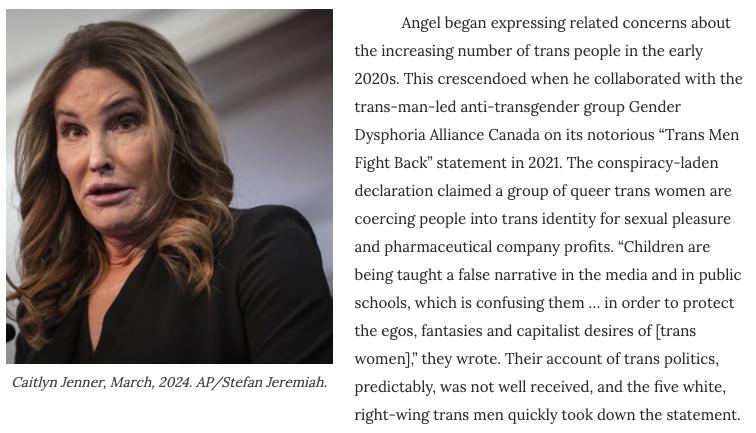
In a period of a few years, Angel went from being an influential progressive to one of the world’s most vocal right-wing transgender celebrities. His rhetoric supports the political right’s “divide-and-conquer” strategy through the application of respectability politics, misogyny, and
exclusion. In return, he has received funding, gained social influence, and even become an “Outspoken Ambassador” for the Log Cabin Republicans. These key events provide ample grounding to understand why he began to align himself with right-wing ideals, but this was only the first part of his political transformation.
Identification
Angel did not collaborate with right-wing groups until after the Natalie Wynn video controversy, which led to the most significant turn in his public persona. He soon began working with conservative media figures such as Andrew Sullivan, though not identifying himself with the right explicitly. At the same time, his self-descriptions changed to match his newfound community. Generally speaking, identification is not only a political process for most trans people on the right, but also a transformation in how one describes and actualizes their gender identity.
Angel’s views are wide-ranging and not always aligned with the right, often placing him in a more liberal position than the company he keeps. His positions form a scatterplot of ideologies, ranging from endorsing mass deportations to advocating cannabis legalization. Over time, Angel has identified as a Democrat, liberal, libertarian, Trump supporter, and Republican, but none of these labels neatly describes his ideology.
Most far-right transgender people I interviewed did not identify with the far-right itself, no matter how fascistic their viewpoints. A few (correctly) identified as neo-Nazis, alt-right, or white nationalists. But the majority, including those with overtly white supremacist views, believed they were moderate. Angel went even further: “I’m just an actual old-school liberal at heart,” he explained in 2022. Interestingly, he often repeats the mantra “the right has become the center,” which embodies his political self-perception. After feeling excluded from the left, members of the multicultural far right often justify their beliefs by claiming that the right is the new moderate.
Trans identification with right-wing politics often comes with a shift in describing one’s own gender identity. Angel, like many other far-right trans people, identifies as transsexual, not transgender. Thus he differentiates himself from leftists and “fake” (his word) trans people, by which he means those who identify as trans for political purposes or do not have gender
dysphoria or a desire to transition medically. “Now we have trans with no gender dysphoria, no need for mental health care, self ID, affirmation therapy. … That says to me on some level, some form of indoctrination,” he explained to Fox News in 2022. Angel’s amorphous self-descriptors helped to rationalize his transition to the right-wing commentators on Fox. His selfdescriptions meant he could align himself with the group most likely to harm him, protecting himself at the expense of others.
Angel’s identities mapped directly onto his descent into right-wing politics. In 2010, he identified simply as a man. “For me, I am a man and that’s what I’m trying to say to the world my genitals do not define me,” he told The Guardian. Until the late 2010s, he typically identified as a trans man, titling his best-known “docu-porn” series Sexing the Transman XXX (released from 2010 to 2015). He then shifted his rhetoric, telling Andrew Sullivan in 2021: “We are not men. We are trans men. We are not women. We are trans women.” By 2023, he had redefined himself again: “I am not a man, I am a transsexual man. … My biology never changed.” This appeared to package his narrative in accordance with the recent right-wing slogan “human beings can’t change sex.” In 2024, his self-description mutated into “a biological female who was diagnosed with dysphoria.” His self-identification neatly aligns with the unraveling of transgender rights in the U.S.
Angel’s transformation in identity may seem odd, but gender identity, like politics, is never fixed. Trans people are just as capable of falling into right-wing ideas of gender as anyone else, and Angel’s approach to creating a new community was successful. He found a new space of belonging on the right.
Belonging
Today, Angel continues his crusade against transgender healthcare, protections, and wellbeing. His provocative content has led to international press, new business ventures, and paid speaking engagements. Angel reports that his alliances with far-right celebrities have cemented his feelings of belonging, even as his new comrades want to end his healthcare, gender recognition, and representation in the media.
Angel expressed cautious delight upon Trump’s 2024 election. “You all deserve this shit coming down on you!” he told left-wing activists while celebrating the win. After Inauguration Day, he commended the various anti-trans executive orders as “sanity” and “common sense.”
His videos circulated among right-wing pundits to justify their disdain for trans people. Angel is a useful figurehead for the political right’s gender debates. His identity shields the right from criticism. Angel becomes their “trans friend” (also see: “gay friend” and “Black friend”). This status provides his collaborators with cover from accusations of anti-trans prejudice.
Angel’s brand now centers on banning transgender care for young people and trans women. He follows the right-wing “big pharma” conspiracy theory alleging that doctors are forcing children to become trans against their will. This seems in stark contrast to his belief that trans identity is solely a medical problem. However, he does not seem aware of the contradiction. “The only thing I care about is the kids! The adults can cut their arms and legs off and be beach balls; I don’t really care,” he explained in an interview. He considers minors transitioning “an abuse of something that saved my life.” It should go without saying that these conspiracy theories are just that. Detransition is extremely rare, and there is no evidence that “big pharma” is pushing gender-affirming medicine on trans people.
This leads to the fundamental question: Is it all a grift? Are members of the transgender right only espousing these beliefs to gain money and influence? Are they merely provocateurs? Of course, we cannot know their deepest motivations, but the effect is the same either way.
In Belonging Through Exclusion, I explore dozens of activist, psychological, and scholarly approaches to shifting beliefs from the far right to the left, which I call “transpoliticization.”
This method is based on a holistic set of strategies that examine why people join the far right and how this information can be used to change their beliefs. Against conventional advice that far-right politics should be met with moderate solutions, activists like Verónica Gago and Kai Cheng Thom offer thoughtful methods for working directly with the political right toward common leftist causes. They demonstrate that there are ways to prevent right-wing ideologies from emerging in our communities by bringing them in rather than pushing them out.
Angel’s political transformation is exemplary, not exceptional. Almost every trans person I interviewed had feelings of isolation, rejection, and dehumanization. One neo-Nazi recalled: “What does a white nationalist who happens to be a post-operative trans woman and lives deep stealth, really look like? It’s definitely not a monster under the bed, that’s for sure.” Her words haunt me. Like Angel, she grew up with left-wing politics. Her everyday racism resulted in her exclusion from the queer and trans community, which led her to the neo-Nazi movement.
Leftists dehumanized her as a “monster” until she felt she had nowhere to turn but the far right.
Once there, her peers intensified her beliefs until she became an outspoken white supremacist. It’s not necessary, or appropriate, to allow people with such beliefs to go unchallenged, but the tendency to exclude these figures can foster a right-wing culture of self-victimizing beliefs.
Perhaps it is impossible to transpoliticize individuals like Buck Angel. However, knowing how to work with such people may prevent the next far-right transgender celebrity from attacking our movement, our well-being, and our humanity.

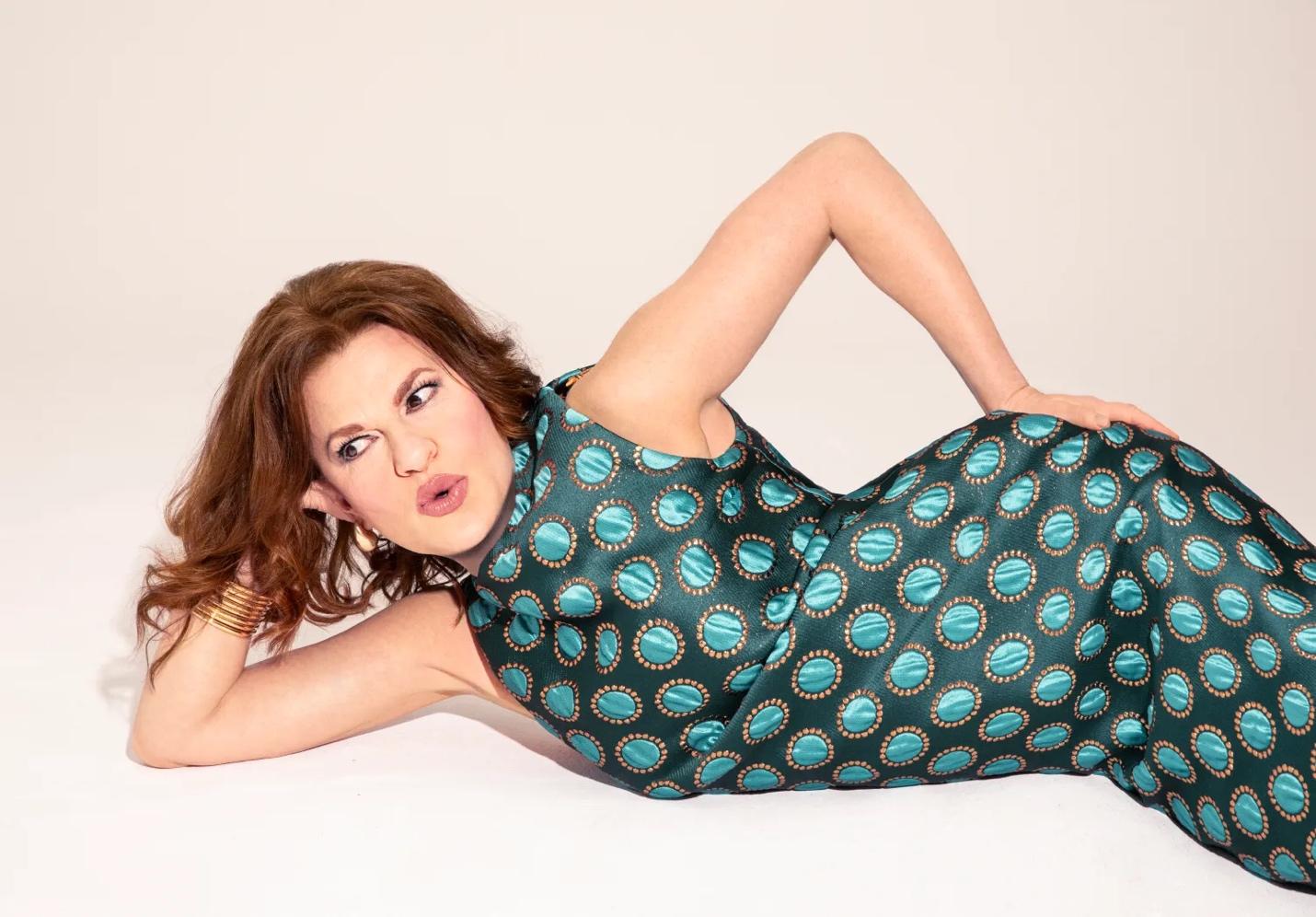
Sandra Bernhard: A Fierce Voice in the Fight Against HIV/AIDS
Sandra Bernhard, a trailblazing comedian, actress, and singer, has long used her platform to advocate for critical social issues, with her dedication to HIV/AIDS awareness and support standing out as a consistent and powerful commitment. Bernhard's activism, deeply rooted in her experiences living through the AIDS crisis in New York City during the 1980s and 90s, has been both personal and public, influencing a new generation through her work, notably her role as Nurse Judy in the acclaimed series Pose.
Here’s a closer look at Sandra Bernhard's significant contributions to HIV/AIDS advocacy:
• Portraying the Reality of the Crisis in Pose: Bernhard's recurring role as Nurse Judy Kubrak in Pose brought the raw, painful, and often overlooked realities of the HIV/AIDS epidemic to mainstream television. Her character, an
HIV activist and member of ACT UP, served as a crucial link between characters living with HIV/AIDS and the wider movement for treatment and awareness. Through Nurse Judy, Bernhard helped educate viewers on the struggles for acce ss to medication and the fight against stigma faced by marginalized communities during the crisis.
• Channelling Activism Through Art: Bernhard has consistently channeled her activism into her artistic endeavors. She believes that as an entertainer, she can "talk about things, and step right to the edge, and then bring people there". This approach allowed her to powerfully convey the gravity of the AIDS crisis and galvanize discussions without resorting to lecturing.
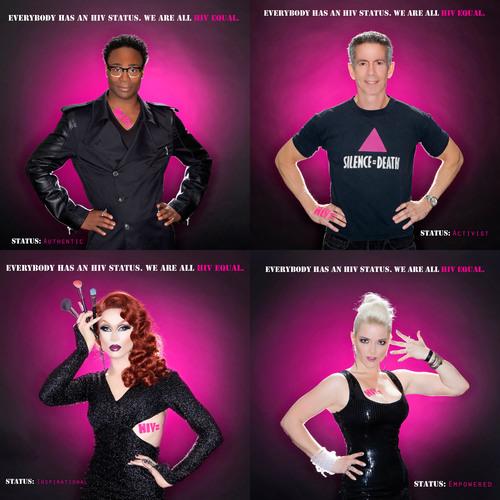
• Remembering the Lost: Bernhard frequently uses her social media platforms, especially on occasions like World AIDS Day, to remember those lost to the epid emic and to condemn the historical neglect of the crisis. She shares powerful messages, often featuring the iconic "SILENCE=DEATH" slogan, to remind her audience that the fight is far from over and that awareness and remembrance are vital.
• Witnessing the Crisis Firsthand: Having lived in New York City through the peak of the HIV/AIDS crisis, Bernhard witnessed the devastating impact on the LGBTQ+ community She recalls the trauma and the immense loss, emphasizing the resilience and "life force" of those affected. This personal connection fuels her continued dedication to ensuring that the history and lessons of the crisis are not forgotten *
Sandra Bernhard's unwavering commitment to HIV/AIDS advocacy, both on and off screen, continues to be an inspiring example of how art and celebrity can be leveraged to drive social change and keep crucial conversations alive
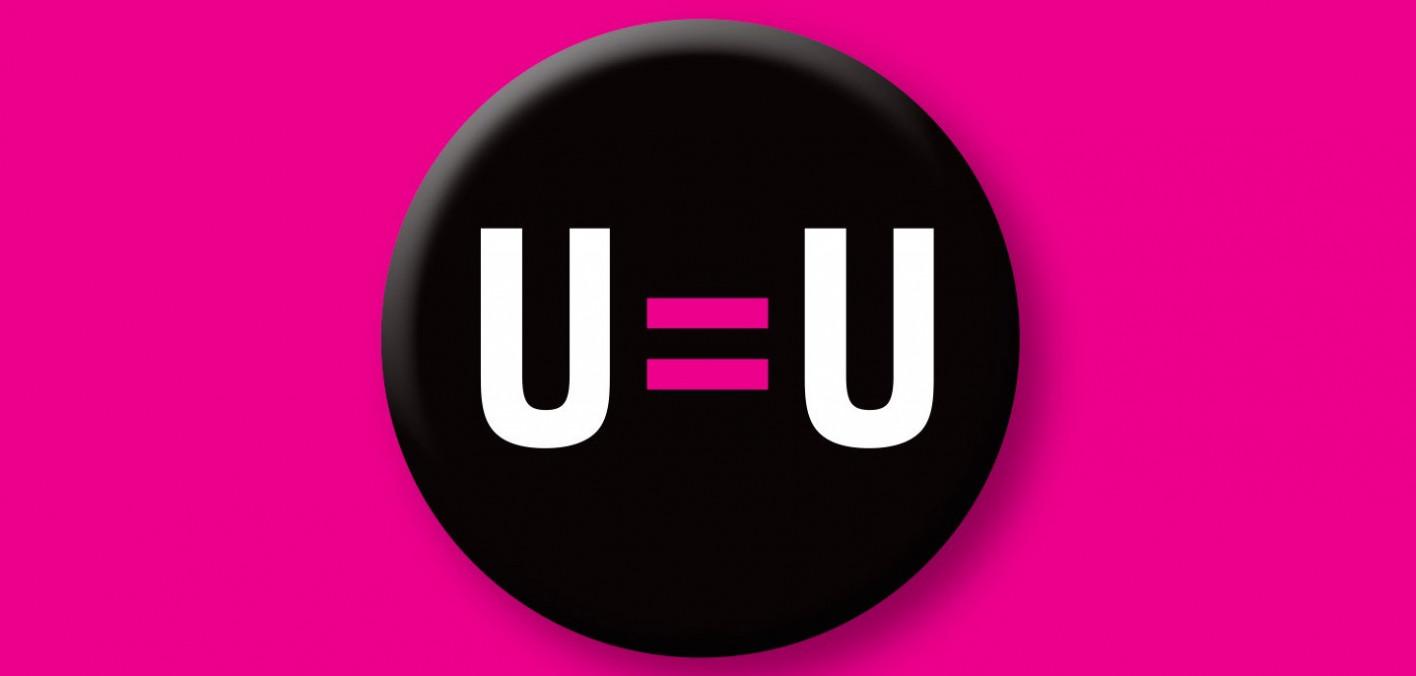
“This needs to be in all of your conversations with friends and family as often as you can insert it. Learn it and learn it well. Then teach it to others.” ~ Jade Elektra
EDITOR’S NOTE: It was brought to my attention that a good way to fight stigma and show sex positivity is to share and remember some of the adult actors/sex workers as well as celebrities we lost to AIDS.
Facebook page: https://www.facebook.com/theaidsmemorial
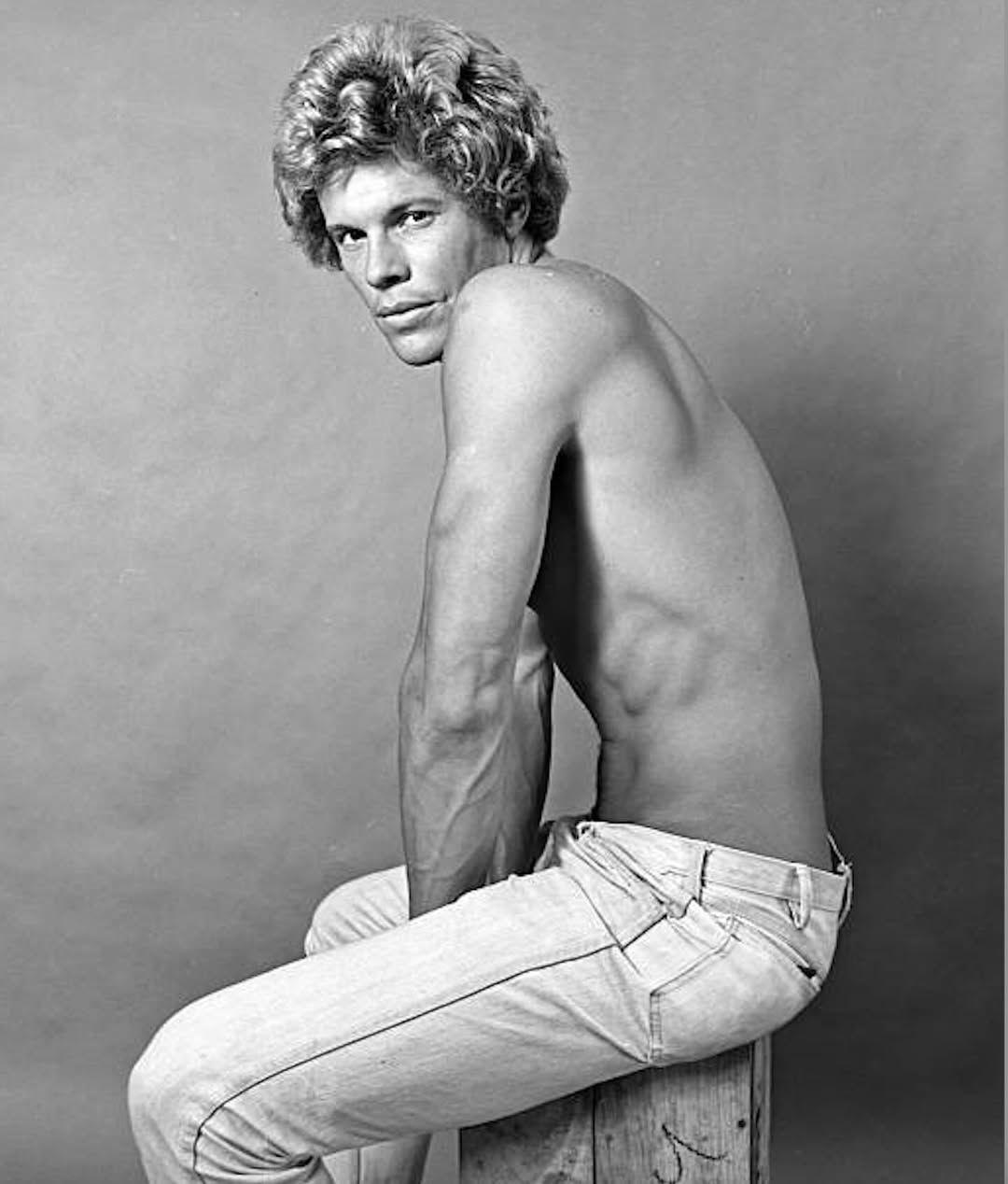
It’s one of those bitter ironies that seems to follow so many of our stories. For Robert La Tourneaux, everything changed with "Cowboy." When The Boys in the Band hit in 1968, he was the beautiful, dim-witted hustler everyone remembered the living, breathing fantasy of a dumb, gorgeous stud delivered to a birthday party as a gift. He was the eye candy, and for a moment, he was famous. But that fame was a gilded cage. Hollywood, in its infinite wisdom, couldn't see past the character. They just kept offering him more versions of the same hustler, the same piece of meat. He was typecast before he even had a chance to show them what else he could be, and the doors that had briefly opened began to slam shut.
When the acting work dried up, the story took a dark, predictable turn. The man who played a hustler on stage became
one in real life. It’s a path some of us have seen, or walked, or watched a friend disappear down. It wasn't a choice made from a place of power, but one of necessity a way to survive when the legitimate avenues closed off. He struggled with poverty, with the slow fade from a recognizable face to just another guy trying to get by in a city that chews up and spits out beautiful boys every day.
Then came the plague. When HIV/AIDS began its relentless march through our community, Robert was in its path. His later years were defined by the same fight so many of our brothers faced: the terrifying illness, the stigma that was often as brutal as the disease itself, and the desperate scramble for care and dignity in a system that seemed to not care if we lived or died. He didn't go quietly, though. He made noise. He got into legal battles over his medical treatment, fighting not just for his own life but, in a way, for all of us who were being failed. And in a move that sent shockwaves through certain circles, he named names. He talked to the press, and he pointed a finger at some of the famous, closeted men he'd been with, including Christopher Walken.
Some called it bitterness. Some called it a betrayal. But you have to wonder, when you’ve been left with so little, when you’re facing the end and you feel the world has taken everything from you, what do you have left but your story? What’s the point of protecting the secrets of men who were safe and respected while you were sick and struggling? It was a messy, complicated, and deeply human act.
So Robert’s story isn't just a footnote. It’s a quintessentially gay story of a certain era. It’s about the price of early visibility, the
cruelty of an industry that uses us up, the brutal economics that force difficult choices, and the raw, unvarnished truth of a man facing his own extinction with nothing left to lose.
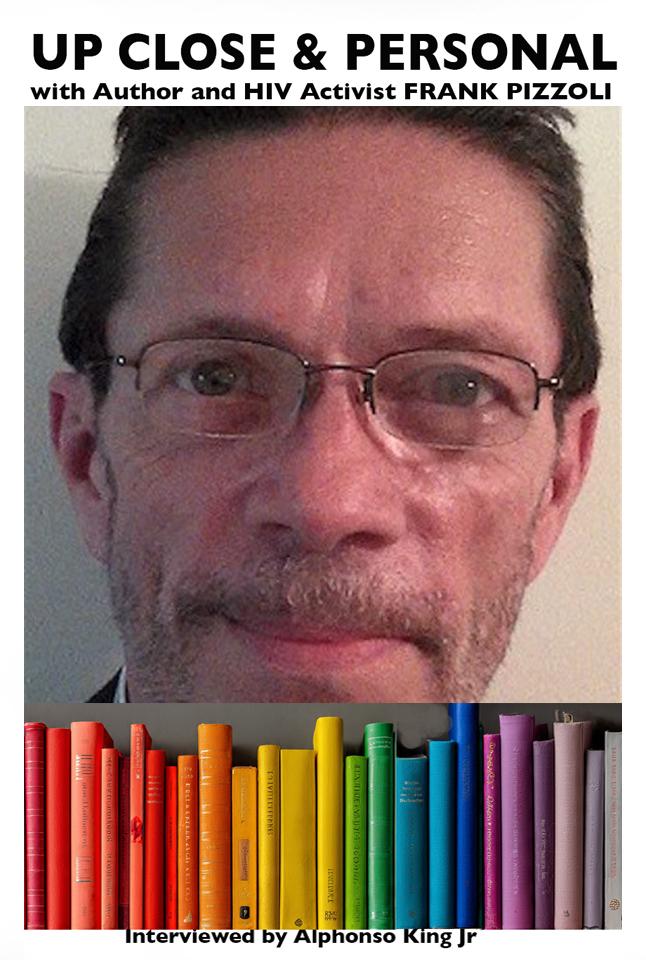
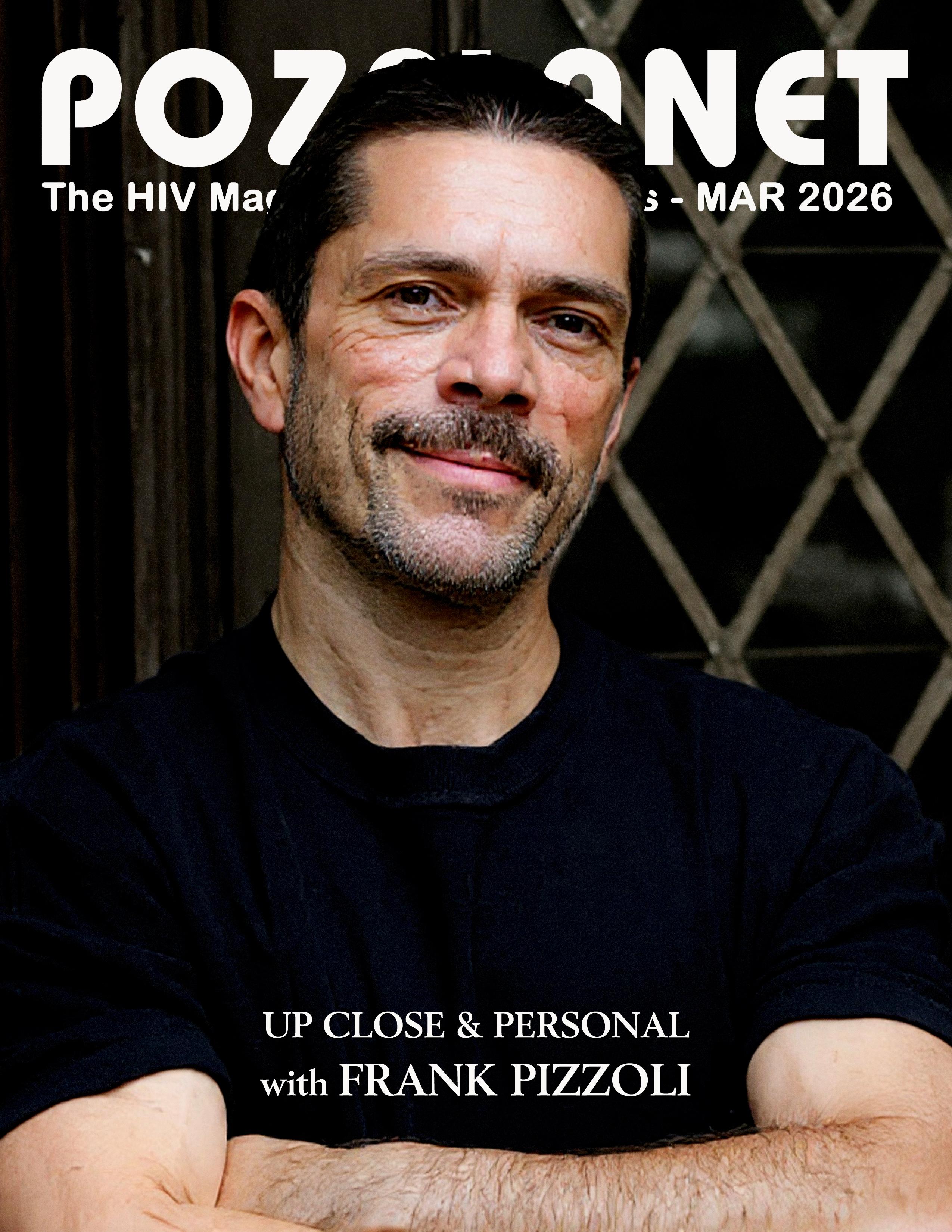
So, I am often approached on our POZPLANET Facebook page about story ideas. I got a message asking if we did book reviews. I explained that unfortunately we do not have anyone to do those articles. As the publisher and editor doing the best I can to get this glorified newsletter that masquerades as a magazine, I barely have time to juggle my DJ gigs and community work. So, I suggested that this person send in a press release about his new book. Then it occurred to me that we have only interviewed two HIV+ writer. I wrote him back and asked if we could feature him in this column. Thankfully, he said yes. And now it is my pleasure to introduce our readers to Mr. Frank Pizzoli.
AKJ: After chatting with you that day, I was so glad that you agreed to do this interview. I wanted to find out more about you as a person as well as your new book. How are you today?
FP: I’m in book promotion mode. My new book Passionate Outlier: Gay Writers and Allies on Their Work Rebel [Satori Press] has been a real joy. It was released one year ago last month, and the excitement continues for me. The book has been reviewed from coast to coast and has been the subject of several podcasts. OUT in Jersey selected the Passionate Outlier as 1 of 10 Best Books for 2025. Interest from the media and readers continues so I'm looking forward to a very healthy year with the book.
AKJ: Well, would you mind sharing a little background information on yourself? Where were you born? Where did you grow up?
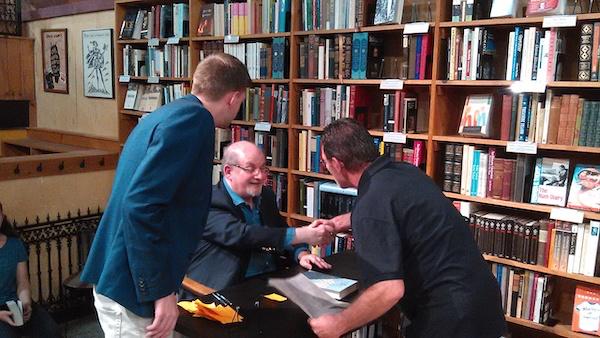
Frank Pizzoli (far right) greets Salman Rushdie (at table), who was interviewed for “Passionate Outlier.” | Photo courtesy of Pizzoli
FP: I grew up in the heart of Pennsylvania's Anthracite Coal Region. My patch consisted of two streets, two alleys and a row of coal breakers. That was the whole show. And I could not be more grateful for having had the opportunity to go up then and there. Born in 1951, I lived through what were some of the best years in that region’s economy. I was lucky to have been born into a family with means and political connections. My father's family and our extended family was often involved in local elections, decision making, and planning policies. All the things a little town has to do in order to survive.
AKJ: Like yourself, I started early in publications. At the age of eleven I went to my local newspaper, The Tampa Tribune, and asked for a job. My point when talking to the City Editor was that they had no articles for kids. That led me to actually writing for the paper and working there until I was seventeen.
So, we have established the early years, but I always ask about the person's diagnosis and what it was like when they found out that they were HIV+. What was that experience like for you?
FP: We both started very early with our publishing experiences. Me at age 10, you at age 11. We certainly hit the ground running! And thinking about how I found out about my HIV, I am reminded of a story that I published in Chelsea Station Magazine. A former boyfriend, Bill, who had migrated to New York City returns to Harrisburg, Pa., to tell me that he has AIDS. “You probably do too,” he said quietly acknowledging we had been sexually active with each other after his departure.
Around the time I found out about my HIV exposure, I realized that awareness of the disease in the Keystone State’s capital city of Harrisburg was slim. As I mentioned, I'd been sexually active with Bill, and in NYC all on my own. So, who knows the real origin of my infection. What I did know was that the local gay gang was going to need some help. Although a capital city, living there was, and still is in many ways, like living in a time warp.
AKJ: When I found out, my creativity seemed to be doubled. I had a million ideas of what I wanted to. Did your storytelling increase or suffer from the news?
FP: Looking back, I realize after finding out I was HIV positive I began a period of overdrive. Naturally, I was wondering how much time I had left. Would there be anyone to take care of me? What would I do regarding telling my family and friends? What about employers and health care coverage? All the fears and challenges so many others also faced. If that doesn’t make you question yourself, then check your pulse.
I went for years before presenting with any HIV symptoms. I couldn't understand why I was not experiencing what I had seen all around me. Eventually, we called that survivor’s guilt. I mean people's health literally changed overnight. In a year or two they were gone.
I realize now based on all the research I'd read in order to publish the many articles I’ve written for virtually every major HIV trade magazine that developing symptoms could take some time. And that like any exposure to a disease, each of us is different.
I’d spent two almost two years on chemotherapy to fight what my doctor described as “the worst case of Kaposi’s sarcoma” she had ever seen. About the time I ended my chemotherapy, the wonder drug Crixivan came out. Eventually, researchers began to understand that HIV needed to be treated with a triple combination of antiviral medications in order for the virus to be tamped down. Today we are lucky, if you have access to medical care, you can find yourself undetectable and therefore not able to infect other people. But I stress that circumstance is contingent upon access to care. Not everyone has access to care worldwide or even in here in the United States.
AKJ: When looking into your history I see that you have been an LGBT activist for years. How did you start your activism and at what point in your life did it become important?
FP: My activism started during my freshman year in college, 1969. The Vietnam War was raging. I had a student deferment that later evolved into a draft number. So the privilege I had of being a white college student no longer protected me from possibly getting shot in some steaming jungle. My campus activity blossomed into being named news editor of our campus newspaper. Luckily, since then I have written for literally dozens upon dozens of media outlets about all kind of topics – gay and non-gay, politics, business, profiles, the works! The interviews and reviews in Passionate Outlier were each published separately from 2007 to 2019.
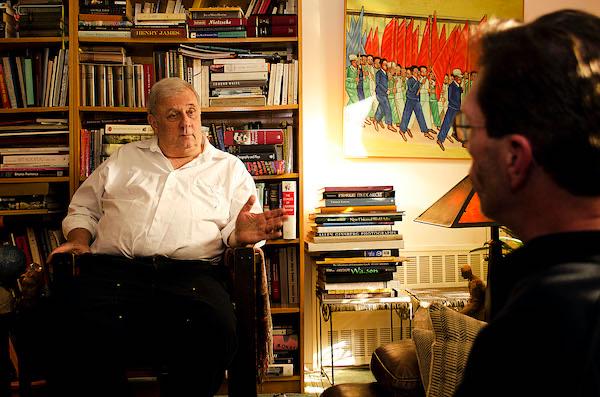
Edmund White, interviewed by Frank Pizzoli at White’s Chelsea digs. | Photo courtesy of Pizzoli
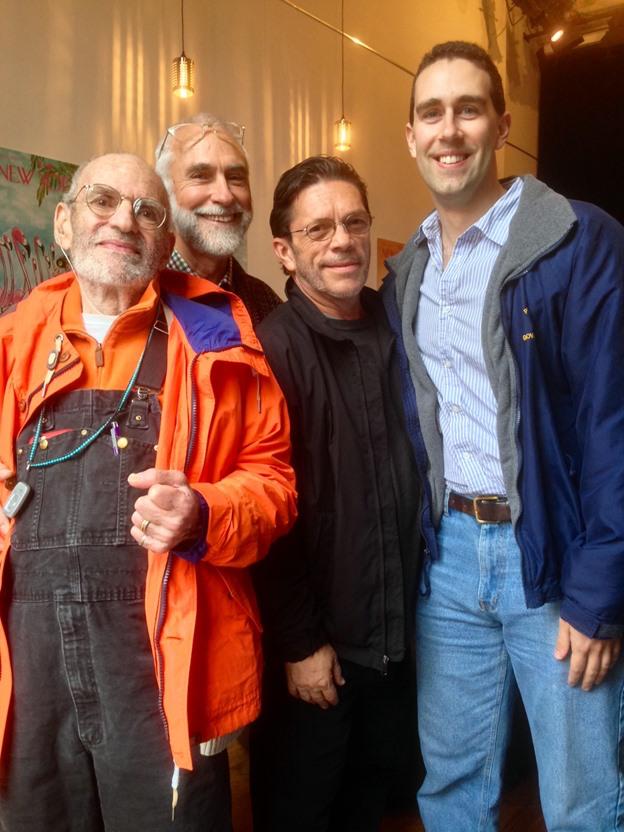
from left: Kramer, his husband David Webster, Central Voice founder Frank Pizzoli, and Alan Kennedy-Shaffer, former Voice columnist at a New Yorker magazine presentation in 2015
AKJ: Given all that is going on in the U.S. right now, what do you think the LGBTQ2+ Community should do at this moment and time?
FP: With all that is swirling around the queer community these days, it is a legitimate question to ask What should we do as a movement? My recent series of articles in lgtbcommunitynews.com that begin with The State of Queer Politics: What is to be Done? covers a lot of territory and organizations.
AKJ: I love that your new book is about our writers and allies. Where is your book available? And do you do speaking engagements?
FP: Passionate Outlier: Gay Writers and Allies on Their Work is available from [Rebel Satori Press] and from a large number of booksellers. I have been happily involved with book signings, podcasts, zoom, interviews and profiles all designed to, of course, sell copies of the book.
AKJ: Before I let you go...what advice would you give a newly diagnosed HIV+ person?
FP: I'm 74 years old and I've lived a long life despite the odds. I've also taken my health very seriously, as I always have, and followed all the medical advice that I have been given over literally decades about a disease that seemed early on to change year to year. In the early years, I said out loud into a mirror “I’m not done yet.” Glad I did.
AKJ: I really appreciate you taking the time to talk with me today. And anytime you have any new projects, POZPLANET will gladly run any press releases. Is there anything else you'd like to share or promote before you go?
FP: I do have some new projects underway. I’ve been asked to consider writing a memoir and that is a work in progress.
I'm also doing lots of work with LGBTQ community centers. Movement activists are fond of saying we all stand on the shoulders of those who came before us. I like to assemble different age groups for meaningful discussions about how each generation contributes to the good of the order and how all queer generations must acknowledge that we’re all in this together. As an example, I recently spoke at a fundraiser for a community center that raised money to support a writing scholarship. We raised twice the projected amount. Unity works. Division divides.
What are they saying about Frank Pizzoli ‘s book?
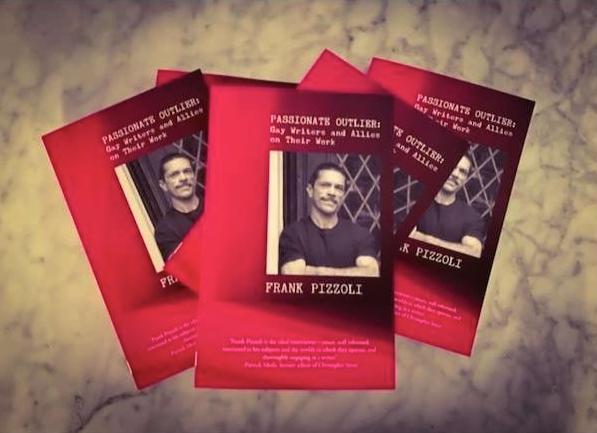
Book Summary - Passionate Outlier: Gay Writers and Allies on Their Work
Passionate Outlier: Gay Writers and Allies on Their Work by Frank Pizzoli continues to make a media splash one year after its official release by Rebel Satori Press.
Midnight in the Garden of Good and Evil author John Berendt said reading the book was "A pleasure." Christopher Bram wrote the Afterword. OUT in Jersey selected the book as 1 of 10 Best Books for 2025.
The book has been reviewed nationwide by San Francisco Bay Area Reporter, LA Blade, Chicago's Windy City Times, Boston Spirit Magazine, Washington Blade, DC; The Village Voice, NYC; Chelsea Community News, NYC, Baltimore Gay News, Erie Gay News, PA; Q Burgh, Pittsburgh; The Burg, Harrisburg; Queerty.com
“I’m praising a new collection of interviews and published pieces, Passionate Outlier: Gay Writers and Allies on Their Work, by intrepid queer-rights reporter, HIV expert, and prevention advocate Frank Pizzoli. It’s a welcome mirror to a narrow but courageous writing world…”, wrote Jeff Weinstein, The Village Voice.
The book consists of 20 interviews and reviews including Edmund White, Felice Picano, Andrew Holleran [separately and together as the then three surviving members of The Violet Quill], Christopher Bram, Salman Rushdie, Martin Duberman, Sean Strub, John Rechy, Gore Vidal's official biographer Jay Parini, Lesbian Avenger co-founder Anne Christine d'Adesky, Susan Quinn on First Lady Eleanor Roosevelt's love affair with reporter Lorena Hickok, others.
“The interviews in this vital collection offer a thoughtful exploration into the creative minds and unique journeys of the LGBTQ writers who not only documented LGBTQ culture but shaped it,” said William Johnson, Director of Outreach and Engagement at PEN America and former editor of Lambda Literary Review.
Deb Miller, NYC Writer-Editor, DC Theater Arts, said Pizzoli’s work “traces post-Modern queer history in America from pre-Stonewall to the present, through the pioneering people, events, issues, and attitudes that made history. In his signature style, the wellcurated collection is a must read – extensive, incisive, engaging and vital.”
PODCASTS with author -
Ivory Tower Boiler Room - Queer Literature in the Era of Anti-intellectualism
https://www.audacy.com/podcast/ivory-tower-boiler-room-231be/episodes/queerliterature-in-the-era-of-anti-intellectualism-with-frank-pizzoli-19726
Queer Words Podcast -
https://queerwordsorg.wordpress.com/2025/10/21/frank-pizzoli/
Wrote Podcast -
https://www.youtube.com/watch?v=5K8tlpUDDH8
TriVersity -
https://podscan.fm/podcasts/triversity-talk-live/episodes/from-question-of-the-day-toworld-class-interviewer-and-author-and-lgbtq-activist-frank-pizzoli
In 2010, Pizzoli was named a Living Legend as part of Pennsylvania’s capital city Harrisburg’s sesquicentennial celebrations. He has been published in LA Weekly, Raw Story, Lambda Literary Review, Brooklyn Rail, abc.com, Huffington Post, White Crane Review, Instinct, POZ, HIV Plus, AlterNet.com, PA Capital-Star, Body Positive, New York Blade News, and Washington Blade, among many others. His work is included in the anthologies Conversations with Edmund White (University of Kentucky Press), and Smashing Cathedrals (ITNA Press). He is the founding publisher and editor of central Pennsylvania’s LGBTQ newspaper The Central Voice, which in 2018
won second place honors from PA News Media Association for Newspaper of the Year for weekly publications. He is founder of the Pennsylvania-based nonprofit agency Positive Opportunities, Inc., a Points of Light Foundation award winner, that provided employment counseling and training for HIV-positive individuals from 1997 to 2017. His HIV work is cited in Queering the Countryside: New Frontiers in Rural Queer Studies (NYU Press) and chronicled in Out in Central Pennsylvania: The History of an LGBTQ Community (Penn State University Press, May 2020). In 2020, he was selected for the Legacy Award from Alder Health Services. His work is tracked by MuckRack.
~ Frank Pizzoli / Freelance Journalist
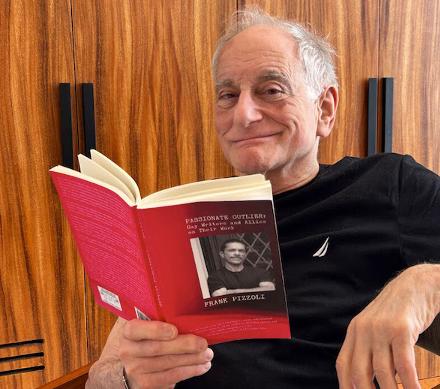
“Midnight in the Garden of Good and Evil” author John Berendt said reading “Passionate Outlier” was “a pleasure.” | Photo courtesy of Pizzoli
What’s Happening Elsewhere In The World?
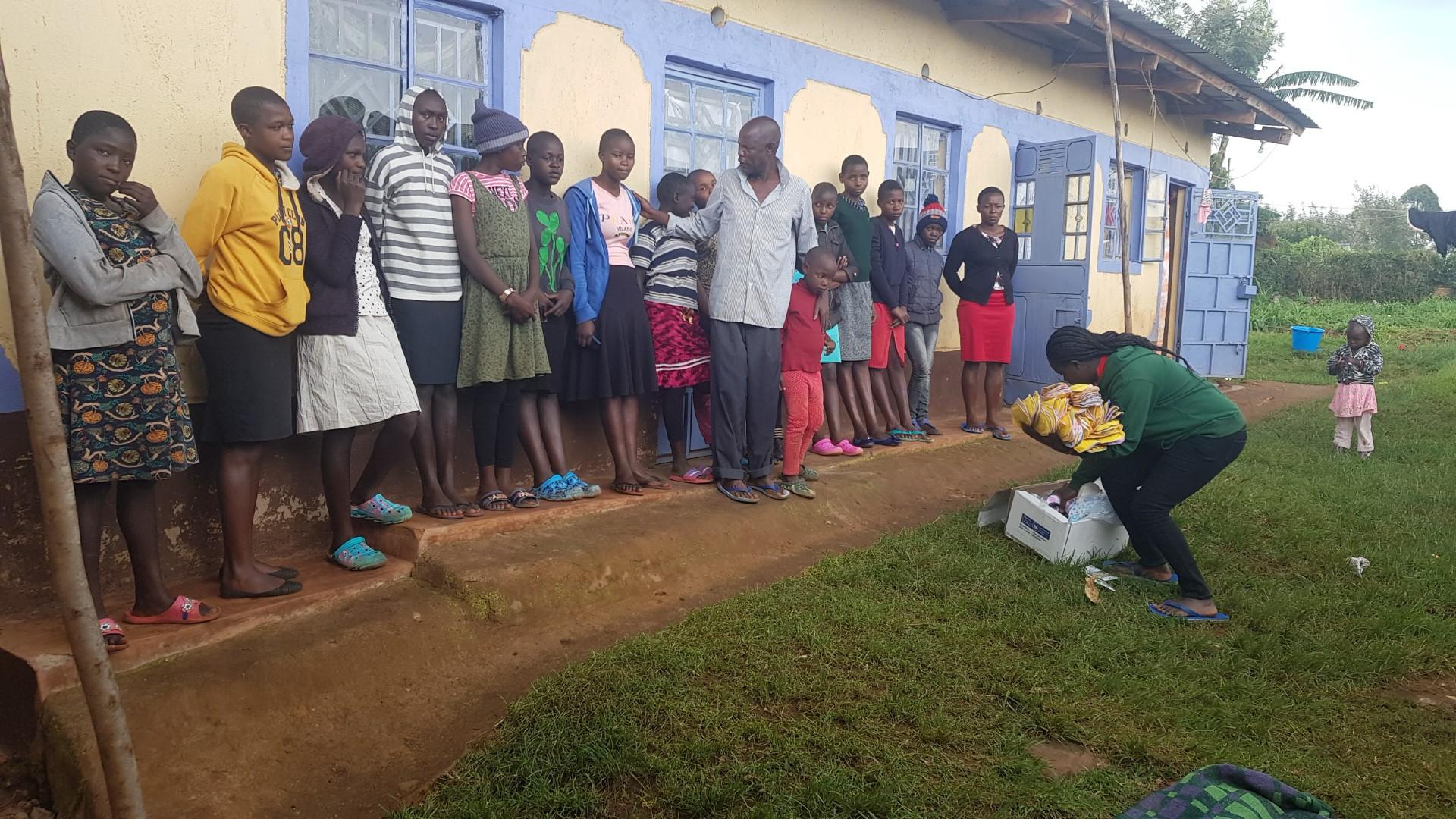
As the main editor of POZPLANET Magazine I often get messages asking for help. And while I'd like to help as many people as I can I have to explain that I am a poor immigrant to Canada living on public assistance. My husband and I live on a very modest amount of government welfare since being HIV+ is considered a disability in this country. But what I can do is shine a light on what is needed by featuring their charity in the magazine.
So, today I am interviewing Francis Otieno about his work at the Hope Adongo School for children living with HIV.
JE: Hello Francis thank you for taking time out of your schedule to talk with us about your work in Kenya.How are you doing today?
FO: I am fine thank you.
JE: So, I' am curious about you do at the school?
FO; I do daily activities. Hope Adongo School limited Is a project of Nyaramba Future Interventions. We do support orphans and vulnerable girls affected by HIV to access education by mobilising for them sanitary pads, toiletries, underwear, school uniforms, school fees, food and body lotion. We believe that education is the only tool that can guarantee them their future.
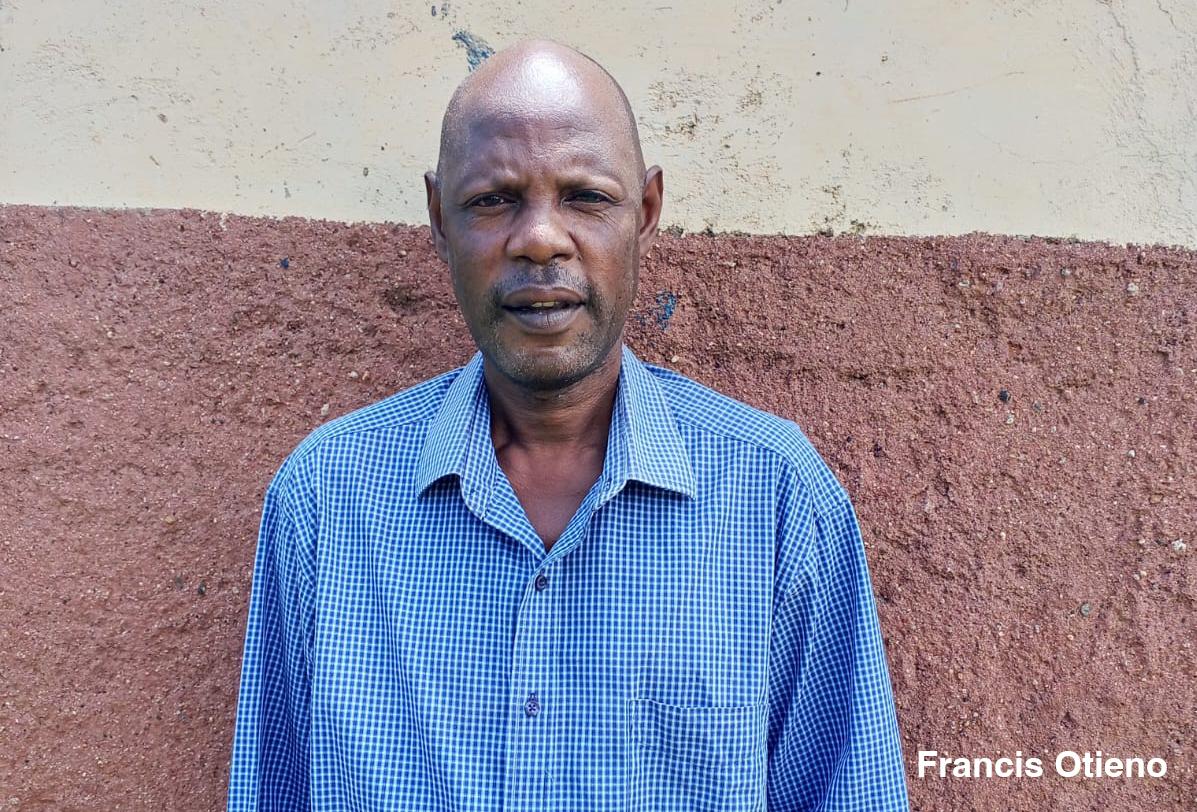
JE; How long have you worked at the school ?
FO : I have worked in HIV field ever since I was diagnosed with HIV in 2001. However, the Hope Adongo School was a project of Nyaramba Future Interventions that has been in existence since 2017.
JE: And what is that is needed to help the school?
FO: What is needed to help the school? Apart from the items I had mentioned earlier. We need support to be self-reliant. We have already acquired one acre of land that we would like to grow our own food We have a vision of increasing the acrage as well as acquiring a tractor that we can use to grow our own crops and lease the land to the community at a fee in order to sustain the project.
JE: And of course, I always advise everyone to check out the site and look up the charity before sending any money. Is there a site where our readers look at the work that is being done? It is always important to do your own research before donating any money to a charity.
FO: One can donate via our website www.hopeadongo.co.ke PayPal adongof@gmail.com
POZPLANET wishes Francis and the school all the best and hope this mention helps.
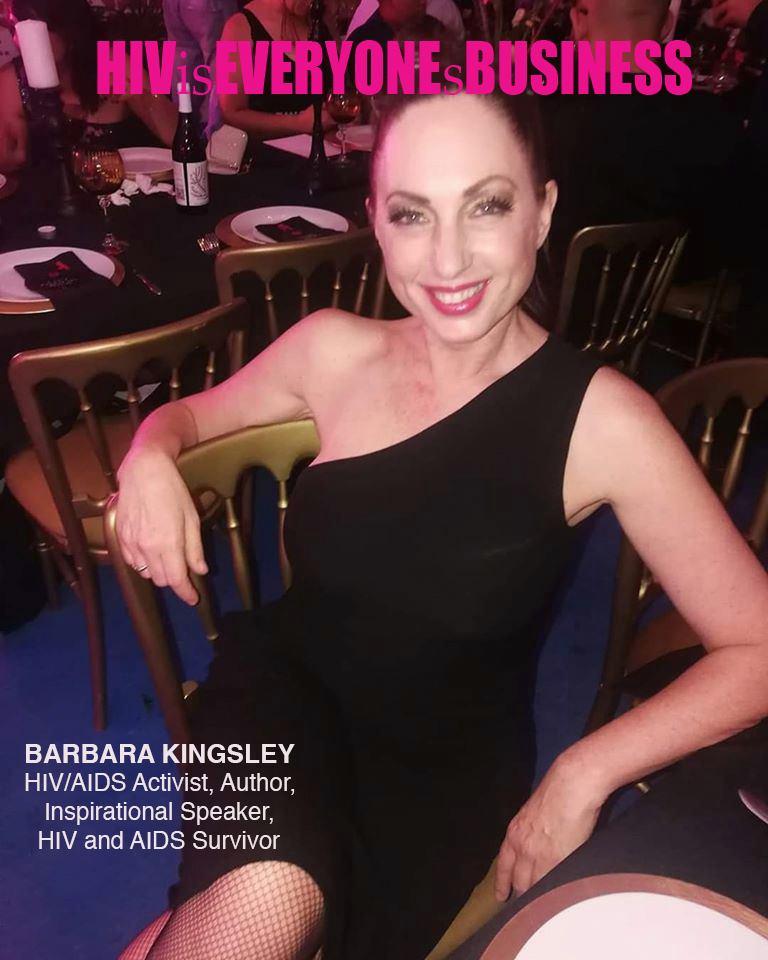
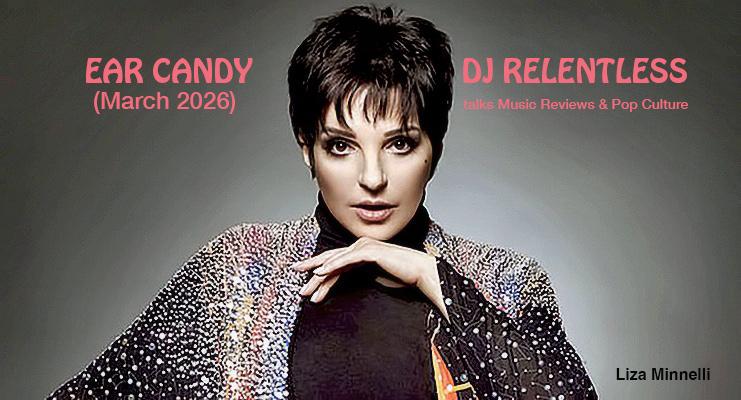
Listen to the mix here: https://www.mixcloud.com/djrelentlessny/ear-candy-march-2026
Download your free video of this mix here: https://mega.nz/file/huFBybrJ#2Iaaty93Vrk-YHIo8DyDBo166VtE2A3ZJWS0Zz_5RaU
Subscribe to DJ Relentless’ Mixcloud page: https://www.mixcloud.com/djrelentlessny Follow DJ Relentless’ HearThis page: https://hearthis.at/djrelentlesstoronto
Time seems to be flying by. It’s already the third month and while we get closer to the mid-terms approaching while truths are being distorted right before our eyes we seem to be going backwards while speeding forward. I just hope we all stay woke long enough to see the reality of putting people without experience in our highest office is always a bad idea. It was a bad idea to put an actor in the White House back in the 80s and it is an even worst idea to put a grifter there. Hopefully EVERYONE is watching and ready to speak up and out against the injustices in the world.
Every month I offer an escape from the troubles of the world with an hour of music to refuel and replenish our souls and minds to prepare for the next day. I hope that the twenty selections I have chosen this month will do just that. This month we celebrate the legendary Liza Minnelli, Whitney Houston & George Michael. We’ll revisit some Retro tracks from the 80s & 90s. There will be a nod to the passing of James Van Der Beek and to Bad Bunny’s Superbowl Halftime Show plus all the new songs and remixes that I think you should know about.
Let’s get started, shall we?
Our first track is a debut from a new artist that I cannot find any information on someone called Splilata but his song “The Cuntiest” is brilliant. It sounds like a throwback to a
jazzy Frank Sinatra style but the lyrics would be perfect for a Bitch Track for the Ballroom scene.
I believe Paul Russell has had a couple of singles since “Lil Boo Thang” which sample the 70s R&B hit, “Best Of My Love” by The Emotions. I couldn’t tell you what those were. Obviously, they didn’t become big hits. So, I guess Paul decided to return to the same formula that did give him a big hit…sample a classic R&B track. “High Maintenance” samples Luther Vandross’ “Never Too Much”. Like “Lil Boo Thang” it’s catchy and TikTok short. Hopefully there will be remixes that will extend it for DJs.
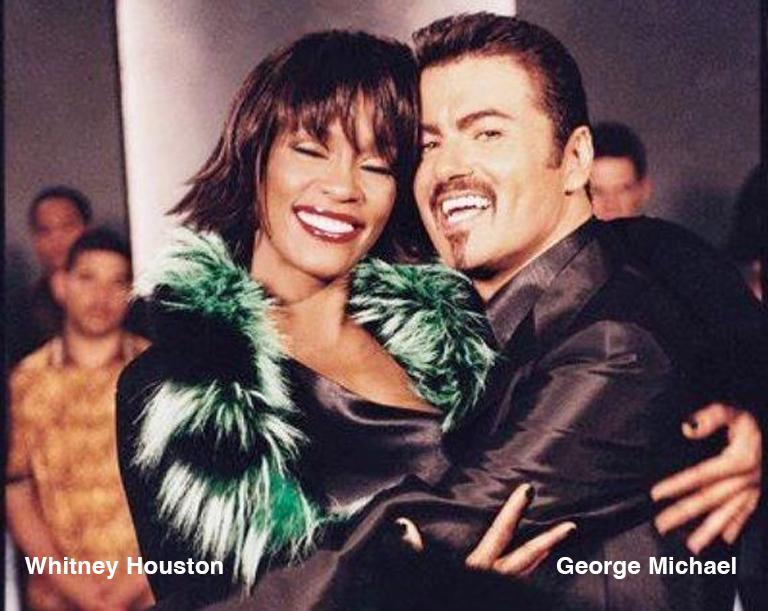
The fourteenth anniversary of Whitney Houston’s death was on February 11th. I assume that is the reason that there were some new remixes of a couple of her songs. In our third spot is the DJ Felix Disco House Remix of “If I Told You That” featuring George Michael. I always wished that someone had made a Club version for the dance floor. Well, I finally got my wish.
I am always glad to hear a mashup that takes a song out of its genre and makes it more accessible for DJ use. And our fourth selection is a mashup of “Fever” by Vybz Kartel
and 50 Cent’s “In Da Club”. This I will definitely play.
And since we’re doing mashups, let’s also include the one of “Chanel” by Tyla and “Sexyback” by Justin Timberlake. I’ve heard actual remixes of Tyla’s new single but none of them really grabbed me but this mashup is cute.
Often, I get hired for venues that haven’t been doing so good with the hopes of helping their business do better. This was the case recently when I accepted a Saturday gig at The Well on Queen Street West here in Toronto. I started in January, but the venue closed in the middle of February. They had been beating a dead horse for a couple of years. So, I wasn’t surprised. But while I was working there I met a young aspiring bartender who was also a recording artist called SEHO I go out of my way to support our LGBT artists (if they’re good). And his latest single, “So High” is really good. I had to have him make an extended version because it was TikTok short. I really hope we get away from that trend. It’s annoying for DJs. I’m not sure why he chose to have a friend lip sync in his music video but hopefully in the future he’ll realize that it is very important to represent yourself on all your media when getting your name out there.
Now, I promises some Retro hits revisited and our next remixed mashup is between ABBA’s “Gimme Gimme Gimme” and Shania Twain’s “Man I Feel Like A Woman”. Scooter’s Wordplay Segue is a clever way of bringing both tracks back for today’s audiences.
And since we’re doing all these mashups and remixes, our eighth selection is an interesting rework of Daft Punk’s “One More Time” and Pitbull & NeYo’s “Give Me Everything Tonight”. It’s interesting because the Pitbull vocal is song by someone else. There are not only producers stealing and rebranding vocals and songs but there’s also these remixers who get someone else to do the vocals so they don’t have to give the proper credit. In this rebranding the track is called “Let’s Do It Tonight” and the artist is listed as Deja Vue
So, a while back, my friend and artist JAYMZ sent me his single “Like A Pro”. I liked it but it wasn’t something I would program in one of my dance floor sets. So, I gave it a makeover with a Relentlessly Touched Vocal by rearranging a dub of another House track. It worked and he even liked it as well. But it could never be released because I didn’t have the rights to the music.
When I saw Durand Bemarr’s acceptance speech at this year’s Grammys, I was so happy for him. He had worked so hard and is unapologetically an out gay man. So, to see him and his parents standing on that stage was a huge moment. I was so moved that I immediately started looking through his catalogue to see what I could remix for my use. I came across a duet with James Bambu called “Antidote”. When listening to the lyrics I realized that the same track I used for “Like A Pro” would work perfectly.
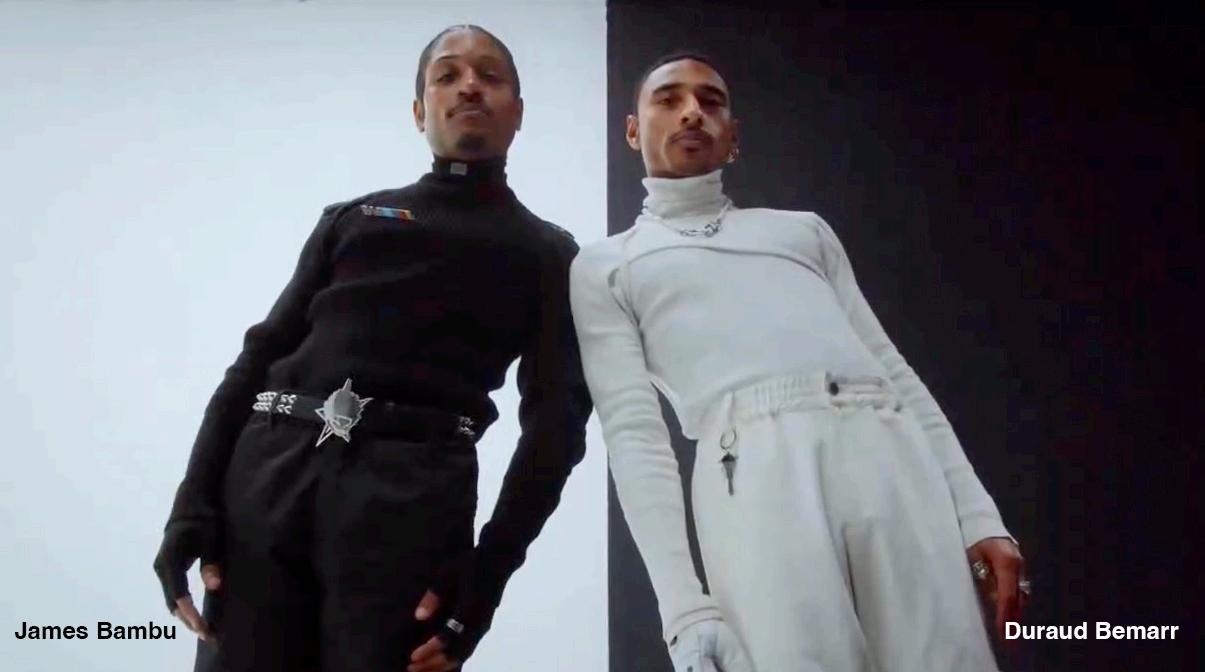
I added our tenth track because it cost me some DJ gigs because of how the title is spelled. I had been added to the roster of DJs for The El Mocambo here in Toronto. The manager booked me for a teen’s birthday party and sent a long list of songs that were definitely to be played for the event. I downloaded all of them. There’s nothing worst than being dictated a playlist as a DJ, but I knew that this was my “in” for bigger gigs. The party comes for this 16 years old girl. Things are going great. I’m playing all of her hits. She comes up and asks for “Fe!N” (pronounced “Fein”) but because of the spelling I couldn’t find it to play. And she and her friends didn’t say the artist’s name. So, it looked like I didn’t have her favourite song. The manager stopped booking me after that. So, when I saw this new Thode & Butter Remix it reminded me of this lovely experience (that was sarcasm) and the last time I saw that manager and he glared at me when I asked about why I hadn’t heard from him for any bookings lately.
Back in the 90s, Canadian artist Snow burst onto the scene with a huge Pop Reggae hit called “Informer”. I remember seeing the video for the first time and immediately having a crush on this white boy who was spittin’ lyrics like a rasta. He never really followed up that smash. So, I was really surprised to get the new Anthem Kingz House Bootleg in my videopool. I’m definitely gonna play this!
I don’t know anyone who did not watch this year’s Superbowl Halftime Show with Bad Bunny. It was so interesting watching the racists implode because he did all of his songs in Spanish. It was inspiring to see him represent his people and do them proud in that moment. For an unrecognized territory Puerto Rico signed bright that day. And one of the songs he performed was “DTMF”. I have to be honest…I was convinced that it
stood for “Donald Trump Mutha Fucker”. But it actually stands for “DeBÍ TiRAR MáS FOToS” which translates to “I Should Have Taken More Photos”. I, oh so wanted it to be my interpretation. That would have been brilliant! So, I had to include the new DJs from Mars Bootleg. They have completely stripped the Latin element in the production, but I know it will help him be played in arena clubs. I don’t love this mix, but I understand why it was made.
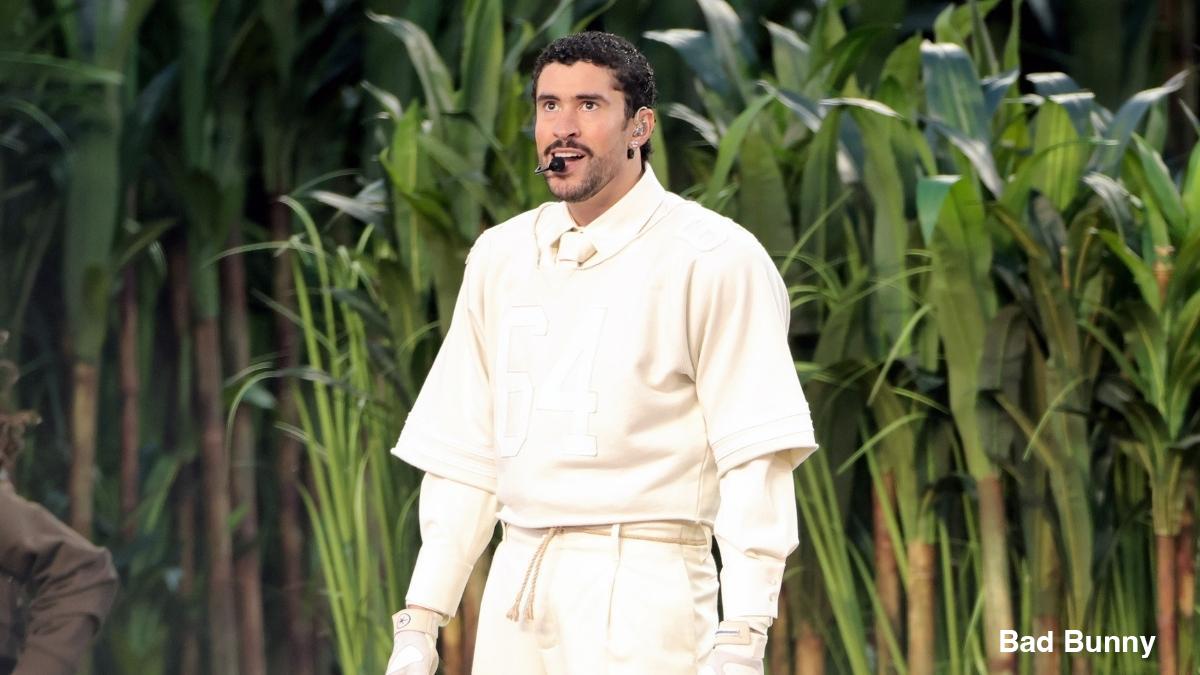
I promised some Retro hits from the 90s and I’m about to deliver again…the Jackers Revenge Remix of “Bittersweet Symphony” by The Verve is absolutely brilliant!
Our fourteenth selection is a great example of what it means to be a working DJ. By now anyone who follows this column knows that I am not a fan of Taylor Swift. I’ve said it before and I’ll say it again…she would not be a Popstar if Kanye had not interrupted her acceptance speech at the 2009 VMAs. But Beyonce holds some of the blame also. She allowed Taylor to finish her speech instead of giving her own later that evening. I believe that she would have stayed in the Country Lane and we would have never been invested at all.
But being a good DJ means playing music that you don’t care for. I have been holding a residency at The Black Eagle here in Toronto since last September. One of the barbacks is named Mike and he works my shift. I have learned over my 45 years of DJing that a happy staff makes a good shift. So, I always try to throw songs in for the staff each time I work. Mike is a huge Swiftie. So, I have been finding what remixes I can live with and the Scene Kings Remix of “Opalite” is one that I can use.
When I saw the Chalant & Donny Graves Remix of “Blow” by Kesha appear in one of my video pools, I had no idea that James Van Der Beek had died that day. I just thought “This is an odd track to suddenly dig up.” And I have to be honest…I never watched “Dawson’s Creek”. I didn’t even realize that the porn parody of “Dawson’s 50 Load Weekend” was named after this beloved TV character. But once I looked at the video later that evening after finding out the news, it all made sense. Kesha was just fluff for me at the height of her popularity. I could take her or leave her. So, “Blow” wasn’t really on my radar either. But listening to the original and listening to this new remix made me come to the conclusion that this is a nice tribute to James. It will be the way many will remember him instead of his frail body at the end.
Our sixteenth selection is the Emani Remix of the 80s classic “Fame” by Irene Cara. I have a really old bad copy of the original music video, and the sound quality sounds like something playing on a film projector. This new remix is amazing! Not only will I be able to play it for my Sunday Video Tea Dance but I can also program it for a current audience. Maybe for my weekly radio show on Sandcastle Radio
And speaking of fame…March 12th will be Liza Minnelli’s 80th birthday. My first memory of Liza was being angry that she won the Oscar over Diana Ross for her role as Billie Holiday in “Lady Sings The Blues”. I had never seen “Cabaret” and knew nothing about Nazi Germany at my young age. All I knew was that my mom had the soundtrack for of “Lady Sings The Blues” and I used to sneak and listen to it when she wasn’t at home. As I grown older, I have learned to appreciate longevity in a career. So, I respect Liza enough to include her new single “Kids, Wait Til You Hear This”.
And speaking of legendary divas, Whiteny Houston makes her second appearance in our EAR CANDY mix in our eighteenth spot with Calum Scott. It is a really clever duet created by Dirty Disco of both of their versions of “I Wanna Dance With Somebody”. It almost, in some spots, sounds like they recorded the song together. Love this!
Noah Olivier Smith, known professionally as Yeat, is an American rapper, singersongwriter, and record producer. He is known for his experimental sound most notably the rage sound, unique word choice, and unconventional fashion sense featuring a mix of designer brands and balaclavas Yeat comes in our nineteenth selection with the Whethan Remix of his latest single, “Breathe”. This is one of those 3 AM tracks to drop to keep a vibe going.
And to close out mix, I chose the Heated Quinten Circle Mix of “Greedy” by Tate McRae. Yeah, Yeah I know this is not her latest single. It’s my opinion that Tate is Canada’s 2023 version of Britney Spears. The reason they resurrected this song was because the video is a hockey theme and they wanted to incorporate scenes from “Heated Rivalry” for this version of the video.. And I have to say…it works well.