



Special to the Post
The City of Oakland is now reviewing a comprehensive set of disparity remediation recommendations and a long-term investment strategy presented to City Administrator Jestin Johnson and Mayor Barbara Lee.
The proposal represents the next phase in an ongoing effort to address disparities in public contracting and strengthen economic opportunity for Oakland residents and businesses.
Following a series of collaborative meetings between City leadership and community stakeholders, the focus has shifted from identifying challenges to determining how the City will move forward. The coalition’s recommendations emphasize implementation, accountability, and sustained investment designed to produce measurable results over time.
At the core of the proposal is a 10-year investment strategy of $10–$12 million annually to advance contractor development, strengthen workforce pipelines, and modernize the City’s contracting infrastructure. This includes implementing updated systems and software that will expand access to opportunities, standardize processes, and establish real-time accountability across all departments.
These improvements will enable coordinated opportunity creation citywide, while allowing the City to track every project from prime contractors to subcontractor participation, with transparency and consistency. The proposed funding level is calibrated to the scale of disparities documented over decades and reflects the need for a comprehensive, coordinated strategy rather than fragmented, one-off initiatives.
Over the past two decades, an estimated $1.5 billion in contracting opportunities bypassed minority- and women-owned businesses, highlighting a persistent gap between available firms and actual participation. Addressing this gap requires more than incremental
change, it requires infrastructure, coordination, and sustained investment.
The proposal presented to City leadership focuses on strengthening the conditions that allow local businesses to compete and grow.
Rather than relying solely on participation goals, the strategy emphasizes building long-term capacity through coordinated programs, improved transparency, and stronger alignment between workforce development and contracting opportunities.
A key element of the proposed approach includes the development of a centralized business and workforce hub. This concept is designed to create a coordinated space where contractors, workforce partners, and residents can access training, technical assistance, and employment opportunities. By bringing services together, the hub aims to improve accessibility and strengthen collaboration across programs.
The proposal also highlights the importance of change management across City departments. Implementing disparity remediation will require coordination, updated processes, and alignment among departments responsible for procurement and contracting. This transition is expected to take time, but the proposed framework includes early milestones and implementation phases to guide progress.
The recommendations align closely with Lee’s priorities, particularly in areas related to economic development, small business growth, workforce opportunity, and equitable investment. By connecting disparity remediation efforts to broader economic goals, the proposal positions the initiative as both an equity strategy and an economic development strategy.
The disparity study, which was authored by dr. Eleanor Mason Ramsey, was presented to the community by councilmember Carroll Fife, provides the foundation for this effort. Once disparities are documented, there is a recognized

By Post Staff
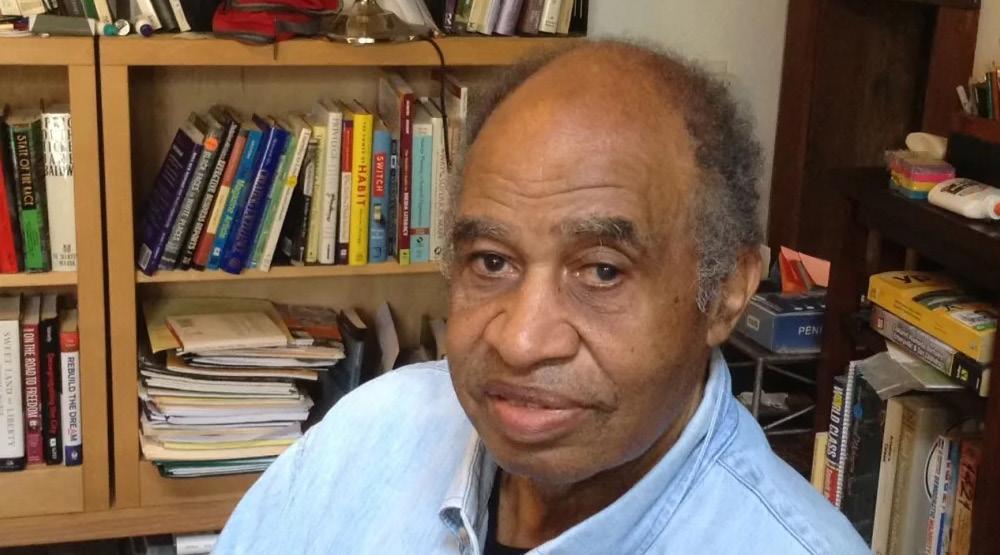
Carl Cokine Anthony, Berkeley resident, architect, regional planner, author, and leader in the environmental justice movement, died on April 4 at 87.
Over the course of his career, Anthony played a major role, both nationally and locally, in defining racial equity in connection with the environmental movement, as well
as taking part in grassroots efforts for environmental justice.
He was the founding director of the Urban Habitat Program, focusing on environmental justice, dealing with issues of race and class structure.
He also co-founded and served as co-director of Breakthrough Communities, building multiracial
By Carla Thomas
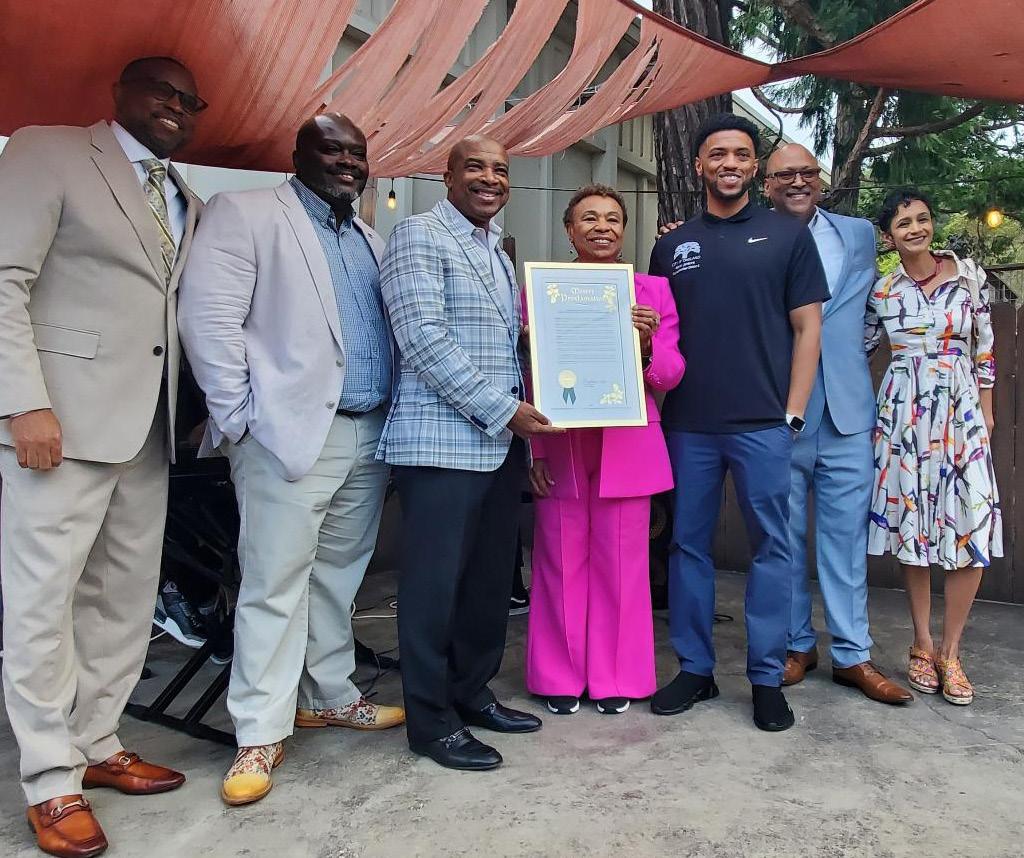
When Oakland Mayor Barbara Lee announced that she would proclaim Thursday, April 9, as “100 Black Men of the Bay Area Day,” the organization’s board chairman and owner of D. Monaghan’s On The Hill, Danny Lee Williams knew he wanted to share with his
By Oakland Post Staff
Kelly McGrath didn’t know when she jumped into the pool for the first time, that one Swim A Mile would turn into 24 years of dedication.
It was 2002, her masters swim team was training at Mills College, and a large banner caught her eye. She knew she could swim a mile. A neighbor even sweetened the deal with an extra $20 if she beat her old college time.
community the celebration of the organization dedicated to mentoring youth since its chapter founding in 1988..
Standing at the podium on the patio of his restaurant in the Oakland Hills, he welcomed about 150 members of the organization and the broader community celebrate.
She did. And she never stopped coming back.
Organized by the Women’s Cancer Resource Center, the event brings people together each spring to raise funds for free cancer services for women, caregivers, and their families in Alameda and Contra Costa counties. Every participant commits to fundraising before completing a mile in the way that works best for them— swimming, walking in the shal-
The Oakland City Council unanimously approved a comprehensive legislative package to combat illegal dumping, marking a major milestone in the City’s coordinated, citywide response to one of Oaklanders’ most persistent concerns, Mayor Barbara Lee’s office announced. The legislative package strengthens enforcement, deploys new technology, and advances statewide accountability measures. The effort is led by Lee in partnership with City Council members, City departments, community organizations, and regional leaders.
Lee said, “Oakland is also building momentum at the state level, where Senator Arreguín’s
low end, or moving on land.
This year marks McGrath’s 24th consecutive year participating in the Swim A
By Joe W. Bowers Jr. California Black Media
Nearly 6 in 10 Californians
delayed or skipped medical care in the past year because of cost, and 4 in 10 reported their conditions worsened as a result — trends that disproportionately affect communities already facing disparities, including Black Californians.
Black Californians have the shortest life expectancy in the state — about 74.6 years compared to more than 80 years statewide — and they face higher rates of maternal mortality, chronic disease and preventable hospitalizations.
Those realities are compounded by rising healthcare costs and new federal policy changes that state leaders say could reverse years of progress.
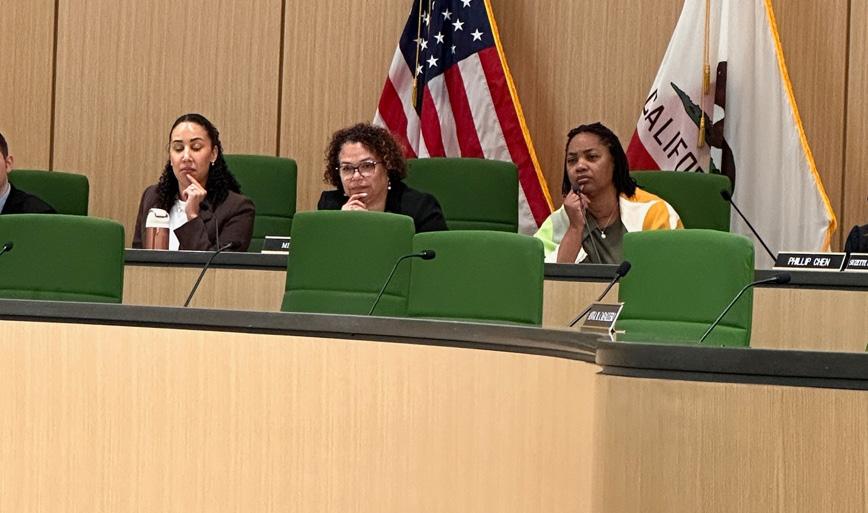
Against that backdrop, for the first time in California history, two Black women are leading the Legislature’s top health policy bodies — positions that will shape how the state responds to those challenges.
Mia Bonta (D-Alameda), who represents the 18th Assembly District, chairs the Assembly Health Committee. Dr. Akilah Weber Pierson (D-San Diego), a board-certified obstetrician/ gynecologist representing the 39th Senate District, chairs the Senate Health Committee. Both are members of the California Legislative Black Caucus (CLBC), and Weber Pierson serves as the caucus chair.
Their leadership comes at a moment when policy decisions made in Sacramento and Washington, D.C., are expected to affect access to care for millions of Californians. Both lawmakers say their roles give them an opportunity — and responsibility — to address longstanding inequities affecting Black communities.
“I’ve had to endure instances as a Black woman with healthcare providers questioning my need for different drugs, for questioning whether or not I had the right diagnosis,” she said.

By Bo Tefu
California Black Media
California lawmakers are weighing new limits on artificial intelligence in health care, as concerns grow over whether technology is beginning to override doctors’ judgment in patient care.
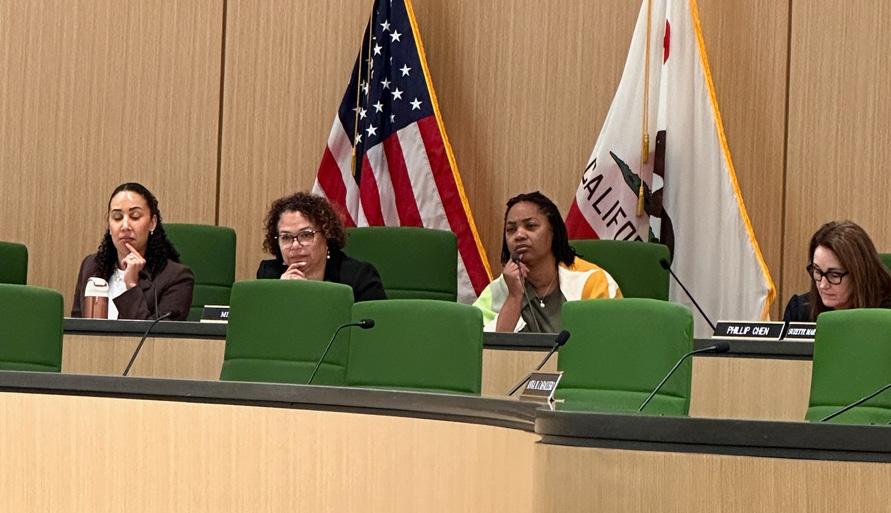
At a legislative hearing held April 7 and led by Assemblymember Mia Bonta (D-Alameda), chair of the Assembly Health Committee, lawmakers advanced Assembly Bill 2575. The bill, introduced by Assemblymember Liz Ortega (D-San Leandro), would require safeguards to ensure AI tools support, rather than replace, clinical decision-making.
The proposal comes as AI is rapidly being integrated into hospitals and clinics. AB 2575 would require health facilities to provide written disclosures about how AI tools function, including their risks and intended use. It also makes clear that health care workers can override AI recommendations, when necessary, based on their professional judgment.

“In health care, artificial intelligence should only support clinical judgment, not replace it,” said Ortega to lawmakers.
The bill would also prohibit employers from retaliating against workers who override or rely on AI systems in good faith. In addition, it would block developers and health care providers from avoiding liability by blaming workers who fail to override flawed AI outputs.
Supporters say the measure addresses real-world risks tied to AI errors and bias. Cathy Kennedy, president of the California Nurses Association, said many workers are required to use AI tools without understanding how they work. “When employers expect nurses to rely on this technology that we cannot meaningfully evaluate, object to, or override, then it puts our patients’ safety at risk,” she said.
Labor advocates argue the bill is part of a broader push to ensure human expertise remains central in the workplace. They say
By Bo Tefu California Black Media
California is investing $37.2 million to expand apprenticeship and workforce training programs, aiming to support more than 60,000 residents and strengthen pathways into high-demand careers.
On April 9, Gov. Gavin Newsom announced the funding through the California Apprenticeship Council Training Fund and the California Workforce Development Board’s High Road Training Partnerships. The initiative is designed to help Californians gain job skills while addressing workforce shortages across key industries.
According to Newsom’s office, the investment highlights the state’s broader effort to connect education, training, and employment.
“Through these programs, we’re strengthening training opportunities for Californians to earn, learn, and build a future without taking on debt,” Newsom said in a statement.
About half of the funding, $18.6 million, will support 160 state-registered apprenticeship programs serving more than 55,000 workers, primarily in construction and skilled trades such as electrical work, plumbing, and HVAC. State officials say these jobs often provide stable careers with median wages above $70,000 per year.
The remaining $18.6 million will fund workforce training through High Road Training Partnerships, which will train at least 4,600 workers in industries including health care,














































Black Californians Falling Behind as Leaders ...
Continued from page 4
Bass, in a prerecorded message, and Assemblymember Isaac Bryan (D-Ladera Heights), CLBC vice chair, connected the purpose of the conference to public policy.
Bass called it “one of the most important convenings of Black leadership in California.” In his remarks Bryan emphasized the need to move from data to outcomes, connecting the research to legislative priorities.
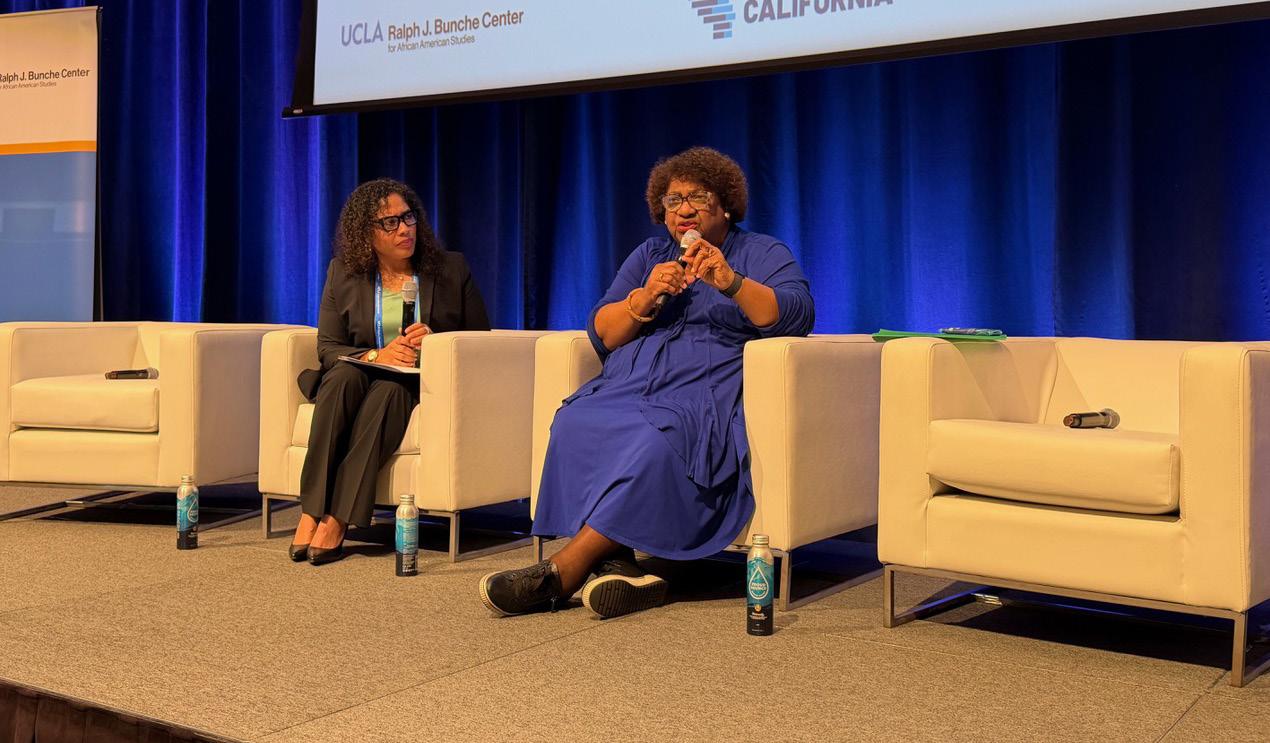
In a fireside chat with Dr. Lorrie Frasure, director of the Bunche Center, Secretary of State Shirley N. Weber tied political power directly to participation and warned that forces outside California continue to shape local access and influence.
“If you don’t vote, you are allowing someone else to determine your future,” Weber said, urging attendees to use their “juice.”
The panel on, “Affordability & Stability: Building Thriving Black Communities,” focused on the widening gap between wages and the cost of living.
Panelists included Kevin Harbour, chief executive officer of BizFed Institute; William McGee, California deputy superintendent of public instruction; Sen. Laura Richardson (D-Inglewood); and moderator Dr. Jasmine Hill, assistant professor at UCLA.
The closing panel, “Culture as Power: Art, Voice, and the Fight for Black Futures,” shifted the focus from conditions to power — who defines the narrative and who benefits from it.
The panel featured Bryan, Assemblymember Sade Elhawary (D-Los Angeles), Rock and Roll
Hall of Famer, activist & author Chuck D and moderator Dr. Gaye Theresa Johnson, professor at UC Santa Barbara.
“Real change comes from the people who have been most impacted,” Bryan said.
Chuck D tied culture directly to political struggle. “A federal administration… is actively trying to erase our culture,” he said.
He also warned against mistaking digital activity for movement building, saying, “Social media is not our space for movement and change.”
...
Continued from page 2
AI should enhance care, not dictate it.
But business and medical groups pushed back, warning the bill could slow innovation and add new burdens. Alexis Rodriguez, speaking in opposition at the hearing on behalf of the California Chamber of Commerce, said the proposal could limit tools already improving care.
“AI is already helping clinicians detect sepsis sooner, im-
prove the accuracy of cancer screenings, assist with screening patients’ medication orders, and more,” said Rodriguez. Physician groups also raised concerns about the impact on workloads and legal risk. George Soares, representing the California Medical Association, said the bill may create unintended consequences. “This bill is overly broad and risks creating unintended consequences that could ultimately harm the very patients it seeks to protect.” said Soares.
Health Policy as Disparities Persist ... Continued from page 2
“At the baseline of it all, I believe that healthcare is a human right… and our healthcare system… has a lot of inequities,” she added.
Weber Pierson, drawing on her experience as a physician, said her focus is on translating policy into better patient outcomes.
“We’ve put a lot of good laws in place. The next step is making sure those laws are actually improving outcomes for patients.”
Both lawmakers pointed to legislation they are advancing to address disparities in access and care.
Bonta highlighted measures like Assembly Bill (AB) 2368, which would codify CalAIM programs — a Medi-Cal initiative that connects patients to services

like housing, food and other social supports — shown to improve outcomes in Black communities. She also pointed to AB 3161, a bill that would require hospitals to collect and report patient safety data by race, income and other demographic factors.
Weber Pierson pointed to proposals including Senate Bill (SB) 987, which would create a state fund to help offset federal Medicaid cuts, and SB 503, which addresses bias in artificial intelligence used in healthcare.
Bonta said a key step is ensuring that those laws are backed by clear data and oversight.
“You can’t fix what you can’t measure,” Bonta said.
Maternal health remains one of the most significant disparities affecting Black Californians.
“We know where the disparities are,” Weber Pierson said. “The question is how we make sure every patient is receiving the same standard of care.”
A March joint hearing demonstrated how the Assembly and Senate health committees are working in coordination as they prepare for budget and policy decisions.
“Even though we are in two separate houses, we are all dealing with the same issues and repercussions of what is happening at the federal level,” Weber Pierson said.

... Continued from page 2
manufacturing, and technology. Several organizations received major awards, including $3.5 million each for the Miguel Contreras Foundation to expand health care career pathways, the San Bernardino Community College District to grow regional workforce programs, and The Empowerment Center to expand mental health training in disasteraffected communities.
California Labor Secretary Stewart Knox said the effort brings together education and industry to create clearer career pathways.
“Apprenticeships and workforce training are most effective when education, industry, and workforce systems work together,” Knox said.
State officials say the funding also supports broader economic goals, including growth in clean energy, cybersecurity, and health care. The investment is part of a long-term strategy to expand access to good-paying jobs while preparing workers for California’s evolving economy.
R&B, Soul, Funk, Rap, Jazz, Blues, Local stuff, DJ promos etc. No collection too big or small. Call/ Text: 800) 916-0378 VgVinyl@gmail. com
NOTICE: Seeking next of kin for Daniel Williams Jr., deceased, regarding copyright and music related personal business matters. Please contact Pastor Derrick Mann at 510 938 0144 or IAmPastorDerrick@gmail. com.

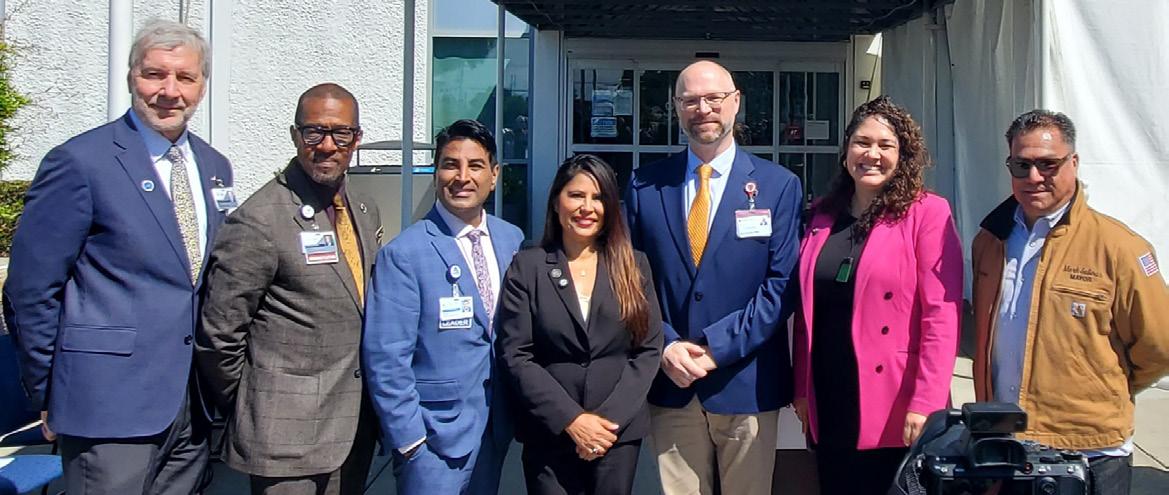
Stanford Health Care Collaborates with Alameda Health System Affiliate ...
Continued from page 1
institutions in a shared mission to deliver high-quality, patient-centered care closer to home. Through this collaboration, AHS and Stanford Health Care will expand rehabilitative and behavioral health services, increase use of St. Rose’s operating rooms for advanced procedures, and enhance inpatient medical-surgical units managed by Stanford Health Care physicians.
The partnership will also support the AHS/St. Rose Foundation to advance local health programs that directly benefit East Bay residents.
Alameda County Supervisor Elisa Márquez praised the collaboration’s impact on local stability.
“This hospital was on the brink of closing, and saving it became my top priority,” Márquez said. “With continued collaboration, we’ll not only strengthen St. Rose but restore vital services like labor and delivery so babies can be born in Hayward again.
“When Stanford Health Care in Santa Clara stepped up, it was a pivotal moment,” she said. “Keeping St. Rose open protects the entire regional health care ecosystem.”
James Jackson, chief executive officer of Alameda Health System, highlighted how the effort builds on recent progress at St. Rose.
“In just two years, AHS has made St. Rose financially stable and thriving,” Jackson said. “We want to make sure patients no longer need to drive miles down the highway to get care.
“Our mission; caring, healing, teaching, and serving all, remains at the heart of this collaboration.
While HR1 presents real challenges for health care funding nationwide, it also offers an opportunity to reimagine how we deliver care. I’m confident that, through innovation and partnership, we’ll emerge stronger than before.”
For Rick Shumway, executive vice president and chief operating officer of Stanford Health Care, the alignment between the two organizations is crucial.
“This partnership reflects exactly who we are and who we aspire to be,” he said. “Working alongside AHS and St. Rose allows us to better understand community needs and respond meaningfully. Partnerships like this will carry us forward. We’re stronger together.”
AHS Chief Operating Officer Mark Fratzke echoed the same sentiment.
“I’m excited that the communities of Hayward and S. Alameda have access to care like this, he said. “Never underestimate the power of collaborations and partnerships.”
For nearly six decades, St. Rose Hospital has served Alameda County as a community-based safety-net hospital. One of Hayward’s largest employers, it provides more than 800 jobs and 300 skilled physicians and is designated by Alameda County as a ST-Elevation Myocardial Infarction STEMI Receiving Center for heart attack care.
Swimmer Turns Personal Loss Into Power ...
Continued from page 1
“Everyone is touched by cancer. Knowing my fundraising and the donations of others is helping people during a time of need just feels great,” she says. “WCRC does so much to help people retain their dignity, encourage their learning, and simply support folks – this is wonderful.”
When she is not swimming for a cause, you will find McGrath in the water anyway. She trains year-
round with Manatee Aquatic Masters in addition to swimming for fitness, for fun, and for the community the team has built around her.
This year, McGrath plans to return for the 31st annual Swim A Mile | Move A Mile for Women with Cancer, happening May 9 –10 at Northeastern University in Oakland (formerly Mills College). To learn more or register, visit wcrc.org/swim.
100 Black Men of the Bay Area Day ...
Continued from page 1
“This is a special day, and we are in the midst of our Economic Empowerment week,” he said. Williams also welcomed four vendors to sell their gifts and accessories during the event free of charge.
“Today, the 100th day of the year, I proclaim 100 Black Men Day,” said Mayor Barbara Lee standing with newly appointed Oakland Port Commissioner Derek Mohammad, a 100 Black Men member. “Whereas the 100 Black Men of the Bay Area has demonstrated decades of unwavering commitment to uplifting youth and strengthening families and advancing opportunity and access in Oakland and the greater Bay Area with their signature programs...the chapter has impacted thousands of young people and contributed thousands of hours of community service...”
Lee shared how as a single parent of two boys, she was grateful to have the organization’s support in mentoring her sons.
“Today, my adult son is a member in Illinois, and I thank the organization for supporting so many Black boys.”
The idea for the proclamation originated with Oakland City Councilmember Kevin Jenkins, who praised the organization for its leadership and contributions to Oakland and the greater Bay Area.
“This work that we do would not be possible without partnerships with organizations like the 100 Black Men,” said Jenkins. “We’re saving lives, restoring communities, and giving people hope and opportunities.”
The mayor also thanked the organization for volunteering during Oakland Cleanup days.
Councilmember Janani Ramachandran added that while many complain about problems in the city, “the 100” put in the work.
“It’s hard to be in the community and do the work, but that is exactly what the 100 Black Men does,” she said.
The organization’s economic chair and associate director of Diversity Equity and Inclusion at the University of California Berkeley’s Business School, Marco T. Lindsey, shared his enthusiasm for change.
“Today is the culmination of our work and something special is happening in our organization and our city,” he said. “We have a special opportunity to show up for our community now in ways that we haven’t had in the past. We have a mayor that supports us and it’s important that each and every one of us do our part. We all need our fingerprints on whatever we want to see in our city.”
Lindsey also expressed that if underserved youth and their parents had access to the resources needed for success, “Our youth wouldn’t be breaking windows and joining gangs if they had a pathway to earn $75k to $100k a year.”
City Reviews Disparity Remediation Plan ...
Continued from page 1
basis for implementing targeted remedies. This creates not only an opportunity to address disparities, but also an expectation that meaningful steps will follow.
As Mario Wagner, president of NAMC NorCal(National Association of Minority Contractors) stated:
“The path forward is clear. We have alignment, we have a plan, and we have the tools to execute. What matters now is matching that commitment with real investment and follow-through so Oakland businesses and residents can fully participate in the opportunities being created.”
If the City moves forward with implementation, the anticipated impact extends beyond contracting. Increased participation from local businesses could support job creation, strengthen small businesses, and help stabilize the local economy. Greater access to opportunities may also support workforce development and help create pathways for Oakland residents to participate in the City’s economic growth.
Long-term investment in contractor capacity and workforce pipelines could also improve competition, increase innovation, and strengthen the City’s vendor pool. Over time, these outcomes may contribute to a more resilient local economy and greater recirculation of public dollars within Oakland communities.
Cathy Adams Ditrector of the
Oakland African American Chamber of Commerce who patiently spearheaded a series of meetings and working sessions with the city’s department heads, added:
“This is about making sure Oakland’s economic future is inclusive and sustainable. When local businesses are positioned to succeed, the entire community benefits—from job creation to longterm economic stability.”
Jonathan Jones a Board member of the Oakland Private Industry Council which recruits and trains residents, especially the formerly incarcerated population, said “the coalition led by Cathy Adams could also directly help enforce prompt payment policy for non-profit organizations as well as small minorityowned businesses.”
If the City chooses not to move forward with remediation, the existing patterns identified in the disparity study may persist. Limited participation by local businesses could continue, and the economic benefits of public investment may remain unevenly distributed. This could slow progress toward broader economic goals and limit opportunities for Oakland residents and businesses.
The City is currently reviewing the proposal and determining how to proceed.
leadership for sustainable communities in California and the nation..
His book, “The Earth, The City, and the Hidden Narrative of Race,” was published in 2017, linking his personal experiences to the history of urban planning, racial equity, and environmental and social justice.”
An educator and mentor, he had a reputation as a visionary leader who inspired generations to understand the interconnections between the exploitation of poor people and people of color and the environmental damage of the planet, according to the obituary released by his family.
Anthony was widely known as someone who was generous with his time, whether he was speaking with students in kindergarten classrooms or in major universities.
Born on Feb. 8, 1939, in Philadelphia, his parents were Mildred Anthony (née Cokine) and Lewis Anthony. His father, who worked as a house painter and paper hanger, read and wrote Latin and Greek, Anthony had an older brother, Lewis Edward Anthony.
He attended B.B. Comegys Elementary School, Tilden Middle School, Dobbins Vocational High School and Temple University High School. After graduation, he was admitted to Columbia University in New York City, working as a night janitor while taking daytime classes.
In 1962, he was active in the Northern Student Movement for civil rights, co-founding a tutoring project, the Harlem Education Project.
He was the only African American student when he enrolled in Columbia University Graduate School of Architecture, Planning, and Preservation, graduating with a Bachelor of Arts in Architecture in 1969.
He held a position as assistant professor of architecture at the UC Berkeley College of Environmental Design from 1971 to 1979, and later co-created a business in Oakland, Anthony, Fleming & Assoc.
In 1988, Anthony was appointed to the board of Earth Island Institute by its founder, David Brower.
While there, he co-founded, with Karl Linn, the Urban Habitat Pro-
gram, working to develop multicultural leadership in environmental justice movements.
With Luke Cole, he produced “Race, Poverty and the Environment,” a quarterly magazine that became an important national voice discussing environmental justice.
He was a fellow at Harvard University’s John F. Kennedy School of Government in 1996. From 2001 to 2008, he helped lead national conversations on the environment and equity as director of the Ford Foundation’s Sustainable Metropolitan Communities Initiative in New York City.
Returning to California, he cofounded Breakthrough Communities in Oakland, which expanded environmentally equitable programs he had funded while working at the Ford Foundation.
Anthony also served on many boards and commissions, including the Berkeley Planning Commission; the Presidio Council; and the East Bay Conversion and Reinvestment Commission, which led the transformation of decommissioned military bases for community benefits; as well as the board of the San Francisco Planning and Research Commission and the Gamaliel Foundation.
He was appointed to the U.S. Environmental Protection Agency’s National Environmental Justice Advisory Council and to the President’s Council on Sustainable Development. He also served on the board of directors of Berkeley’s Chavez Park Conservancy and participated in the Alameda County Brotherhood of Elders.
Anthony is survived by his son, Khalil Doak-Anthony; his son’s mother, Jean Doak; grandson, Makai Sloane-Anthony, and his mother, Stacia Sloane; sister-inlaw, Gwendolyn Anthony; niece, Robin Anthony Kouyaté, and her husband, Ousmane Kouyaté, and their children, Jasmine Kouyaté and N’Faly Kouyaté; cousins, A. Paula Campbell and her husband Kebere Kiross, and Leslie Silver.
Anthony was predeceased by his brother, Lewis.
Notice of a memorial celebration will be announced soon on the website, urbanhabitat.org
“This is Oakland,” said Mayor Lee. “This is what we’re about. It’s about new ideas, thinking outside the box and being who we are. It’s about bringing joy. This is our holiday.”
The 100 Black Men were hosts of an Economic Empowerment Forum at McClymonds High School on April 11 educating students on entrepreneurship and financial literacy. On Sat., April 18, they will hold their fifth annual Career Expo at Contra Costa College 2600 Mission Bell Drive (G225) in San Pablo from 8 a.m. to 3 p.m. The 100 Black Men chapter of the Bay Area was established in 1988, one of the earliest in the nation.
For more information visit 100blackmenba.org


illegal dumping bill, SB 1218, has advanced out of committee—an important step toward establishing stronger, statewide consequences for repeat offenders.”
The public is invited to attend a meeting Monday, April 20 at Acts Full Gospel Church at 1034 66th Ave. Doors open at 6 p.m. and the program begins promptly at 6:30 p.m. The meeting follows one on Jan. 12 at the church where demands for accountability by city government were voiced.
Continued from page 1 Continued from page 1
The legislative package builds on Oakland’s “Keep The Town Clean” initiative and reinforces the City’s commitment to delivering cleaner streets, safer neighborhoods, and long-term solutions for every community.
Lee touts the legislative package as a holistic, equity-centered strategy to address illegal dumping at every level:
Strengthening Illegal Dumping
Enforcement Ordinance
Increases penalties and adds new violations
Expands enforcement tools, including addressing unlicensed vehicles
Requires an equity-focused root cause analysis and longterm solutions
Aerbits Pilot Program
Resolution
Launches aerial technology to proactively detect illegal dumping
Improves response times, tracking, and accountability
Incorporates privacy protections recommended by the Privacy Advisory Commission
Advancing Statewide
Accountability: SB 1218
In addition to local action, Oakland is supporting SB 1218, the city-sponsored legislation authored by Senator Arreguín, which successfully passed out of its first policy committee with unanimous bipartisan support. The bill
• Requires individuals to resolve illegal dumping fines before renewing vehicle registration
• Establishes stronger, statewide accountability for repeat offenders
• Helps prevent bad actors from continuing illegal dumping across city boundaries
“This unanimous vote makes clear that Oakland is taking decisive, coordinated action to stop illegal dumping at every level,” said Lee. “We are strengthening enforcement, deploying new technology, expanding education and public awareness to prevent dump-
ing before it starts, and advancing regional and statewide solutions— including Senator Arreguín’s SB 1218 to hold repeat offenders accountable.
“Just as importantly, we are also leading with equity and tackling the root causes that have disproportionately impacted our most affected neighborhoods. Together, this comprehensive strategy moves us closer to the cleaner, safer Oakland our residents deserve,” Lee said.
“Illegal dumping has been a persistent quality-of-life issue in Oakland, especially in neighborhoods that have been historically underserved,” said City Council President Kevin Jenkins. “This comprehensive package reflects what our residents have been asking for –stronger enforcement, smarter tools, and real accountability for those who continue to harm our communities. By aligning our efforts locally, we are sending a clear message: Oakland is united in protecting our neighborhoods and delivering cleaner, safer streets for everyone.”
“I am extremely proud to see our legislation strengthening illegal dumping enforcement pass city council” said District 1 City Councilmember Zac Unger. “Enforcement is crucial, but just as important is educating the public about the harm illegal dumping does and the consequences you will face for doing it. Thank you to the Oakland Public Works Department for hosting this event at their yard and taking the time to educate the public about illegal dumping.”
“Illegal dumping has disproportionately impacted certain neighborhoods for far too long. With these pieces of legislation, Oakland is taking a significant step forward in how we tackle this issue,” said Public Works Director Liam Garland. “We’re combining stronger enforcement, innovative tools and regional accountability to address illegal dumping at every level while improving how quickly we deliver services on the ground.”
“I am honored that City of Oakland leadership approved moving forward together with this innovative Aerbits technology to help remedy illegal dumping,” said Brian Johnson of Aerbits. “There is currently a gap in the dumping data, and incomplete information hinders the ability to clean efficiently and equitably. This Resolution supports the hard-working Public Works crews to bring about a cleaner Oakland.”
Oakland Mayor Barbara Lee’s office is the source of this report.