
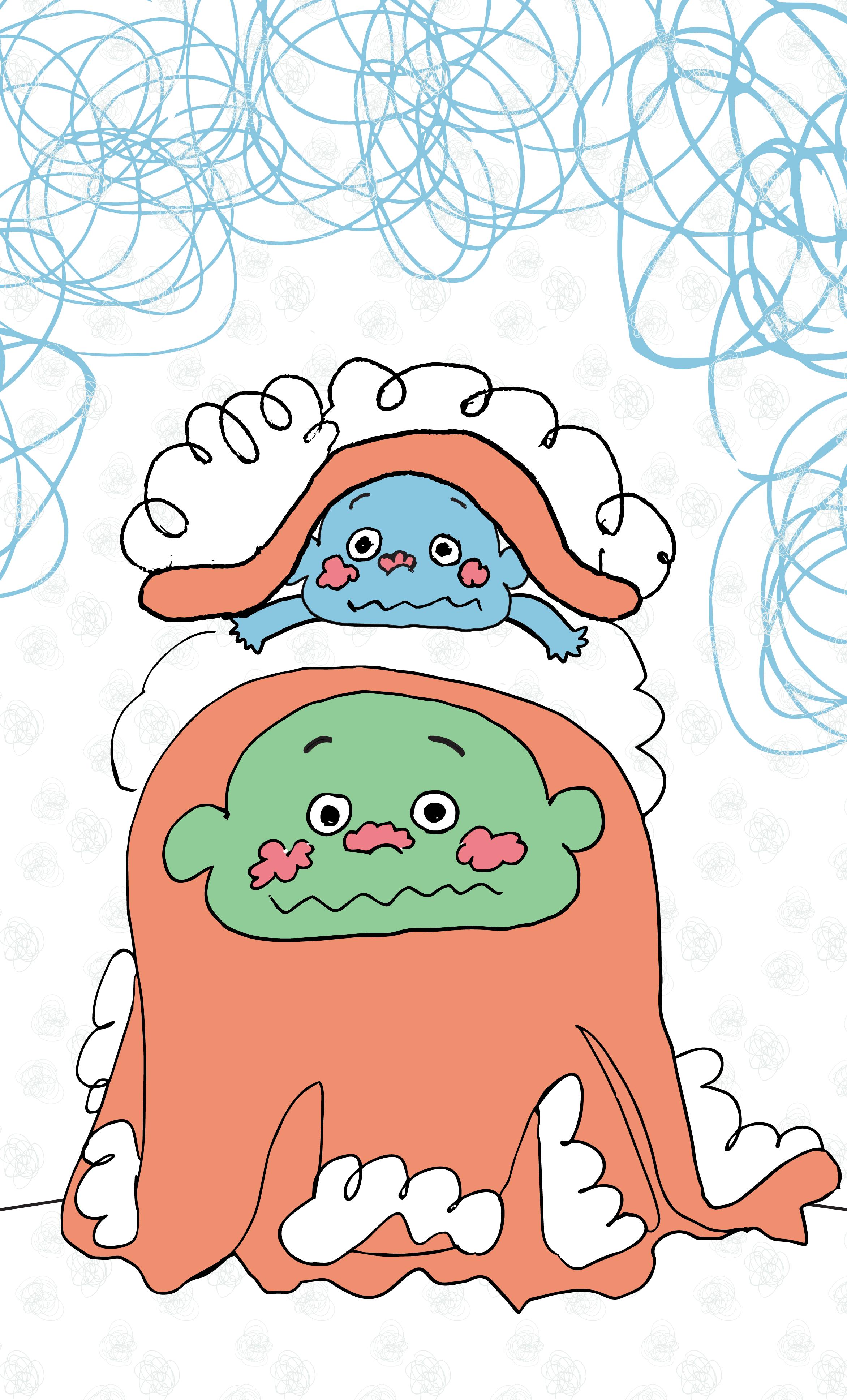
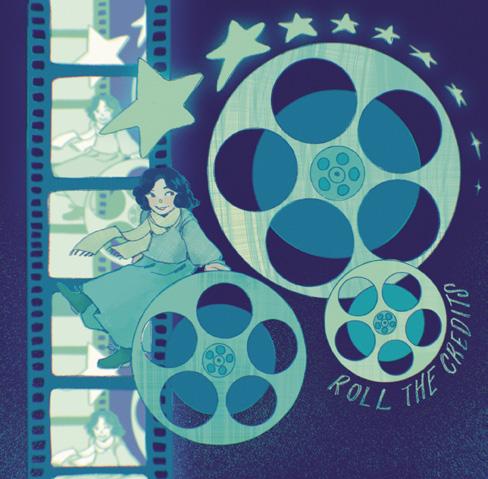
Cover by Sheryl Lee


“I
“I
Dear Readers,
With the snow starting to melt and my trek to North Campus becoming routine once again, I’ve had more time to think about my life, as I tell myself not to look down at my phone and instead pay attention to my surroundings. As I try to dislodge the song lyrics that have inevitably taken hold in my head, I rewrite mental to-do lists—remembering tasks meant to be completed during snow-week—as I try to fit everything in one place, in one month.
And despite the hectic pace (writing cover letters and reading about memory, only to forget what I just read, and making the time to make lunch), I have been feeling a strange sense of calm. I know what the next few weeks will be like. I know how to endure a March. I know what I need to do, or at least the steps I’ve laid for myself to follow. We’ll see what actually happens.
This week has also been full of reflection for the writers at post-. In Feature, Katya writes of EDM and immortality, raising questions of time and intensity. In Narrative, AnnaLise
contemplates her relationship with her brother and its growth over time…and nosebleeds. In A&C, Ellie shares some of her favorite parts of Chinese New Year, foods, traditions, and memories, while Sofie considers how being at Brown has encouraged her to think critically and engage with diverse viewpoints. Lifestyle continues the theme of retrospection: Indigo writes of her roommate and the importance of their “day debriefs,” and Yana explores her relationship with running and finding connection. And finally, ace your next audition with Tseyang’s crossword or use your own experiences this semester to win Jessica’s bingo!
March is bringing a lot of change, of fast-moving pieces to hold together. As we move forward (and inch towards spring break), let’s also remember to savor this time. It’s finally warm enough to be outside—maybe it’s time to take that hour on the Main Green and appreciate the strangers, the friends, and the occasionally harried professor walking past.
Now without the oversized jacket,
Lifestyle Managing Editor
“no one really listens to disco, not even the listener”
by Katya Michkovskaia
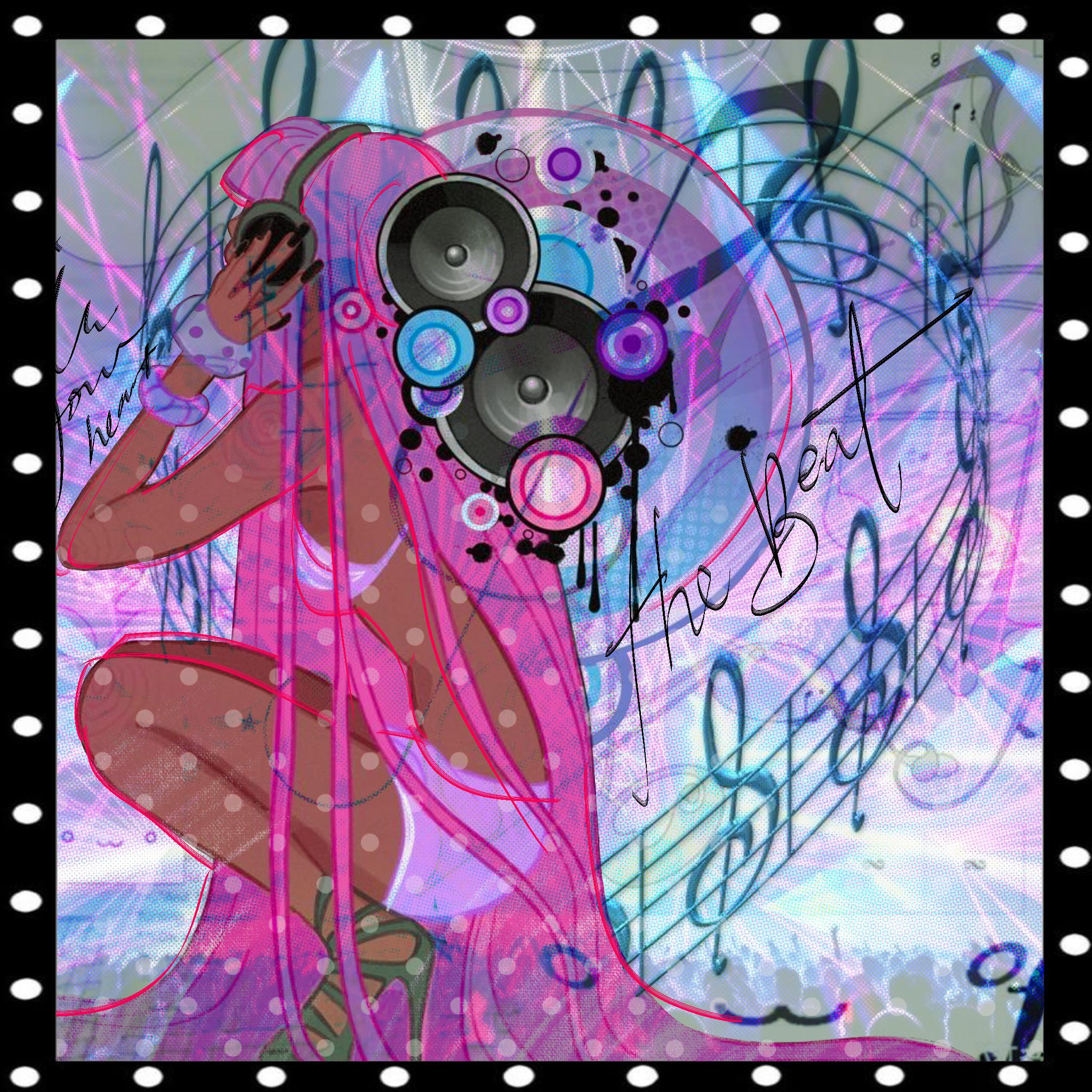
Illustrated by Angelina So (Instagram: @ANG_I_I_)
Carrie Bradshaw in Sex and the City once said that when she was broke, she would buy Vogue instead of dinner because it fed her more. I’ve been there too. Late at night and not a single crumb in my room, not even a shabby, mushy apple, the only viable option was to get my dopamine from a more spiritual source—music. Once electroclash started pulsating in my headphones, the sound intoxicated me with relief. It seemed palpable and dense, wrapping around my temples, the synthetic noise infiltrating
me. Ultraprocessed and high-bpm, it felt relaxing and enveloping. It morphed my anxiety into a trance-like state, and every blood vessel in my body gravitated towards my headphones, just like the ocean tides tend to the moon.
I’m lucky to be neighbours with someone who shares my fascination with Electronic Dance Music, or EDM. On the outskirts of campus, in Perkins Hall, you can always hear enticing noises leaking from under the door—they belong to Johan
Sorensen, a composer, producer, DJ, and sophomore concentrating in Math, Music, and Computer Science.
I asked Johan what he is working on right now.
J.S.: “I guess I'm experimenting with dimension and dimensionality. In my maths and computer science classes, we talk a lot about structures and surfaces; I want to find more ways of representing things— movements, lines, and shapes—with rhythm and sound.”
We talked about how EDM reimagines overstimulation. It possesses a unique ability to mimic the human consciousness— overflowing with divergent thoughts, viscous and unpredictable. “Electronic music is this hyper-genre,” says Johan. “With the internet, we have access to so much information, and we are constantly consuming such crazy shit, you know what I mean? And EDM is such a wonderful representation of that sonically. You hear all these weird and cool things, and you think— oh well, I've never heard that before. And then it just goes by. And then you don't think about it anymore.”
We seek solace in the collision of machine-generated sound; our world is changing so rapidly that we can no longer find solutions by simply indulging in nostalgia for varnished wooden surfaces and folk fests. No matter how tender the acoustic guitar sounds, it fails to capture the pressure of competitive internships in alluring skyscrapers, spiderwebs of to-do lists, and phones vibrating from “breaking news” notifications. EDM allows us to fight fire with fire—instead of escaping from overstimulation, we escape in it.
The membrane of a human cell can be modelled by a circuit—the way ions are let in and out is similar to the work of resistors and wires in a battery. Maybe this is how EDM jumpstarts our bodies; it gives us an intense electric jolt, making the little batteries light up and lose their minds. The interplay of clicking, snapping, creaking, squealing, and ringing—“all these little things scratching at your ears, all these small guys”—offers a rich palette for every imaginary tastebud in our music perception.
But in an all-you-can-eat buffet, you can physically still only eat so much. I asked Johan if EDM is a manifestation of gluttony or a long-awaited ideal dosage for satiety. “I don’t know if we’ve always been craving it, but now we are. Nowadays, as people are trying to do the next thing, create their next sound, be new and original, oftentimes it just ends up being about getting louder, and harsher, and crazier. The first DJ goes on, he plays, he has a good time. The second guy, he's got to top that, so he increases the volume a little bit, and then the next guy after that pushes it up a little bit more. And then it just goes on.”

The exponential trajectory of EDM’s distribution and intensification is related to the context of its production. “A lot of the time, the relative benchmark isn't a Beethoven symphony; it's what the guy from two months ago was doing. And then when you keep only looking back by those short intervals, [EDM consumption] becomes passive.” Mirroring the decrease in our attention spans, EDM establishes a desperate competition for our time. “It’s definitely challenging,” Johan noticed, “to get your point across in as little time as possible.” Even if our participation is brief and unfocused, it suffices; at least we are under the exposure, choosing the sonic flow over silence.
EDM makes me think about immortality, and not simply because dancing to it benefits your cardiovascular system and provides an outlet for escapism. Electronic music cannot die, just as it was never born; it’s a floating, borderline product of various music-making techniques, social practices, and distribution models. In his essay “Disco as an Operating System,” Tan Lin, an American author and filmmaker, claims that disco is the sound of data entering and leaving a system, and “not an explosion of sound onto the dance floor but an implosion of pre-programmed dance moves into a head.” How did EDM manage to become a supreme collision of the humane and soulless, the anthropogenic and artificial, the spontaneous and calculated?
Tan Lin goes on to position EDM as the genre-less sound of the post-medium era. He says, “Asking what disco is is no less difficult than asking, ‘What is music?’”
The diverse nature of EDM, which includes media formats from house and trip-hop to techno and electro-funk, reflects that disco was genre-less enough to “be absorbed into culture as a whole.” Now that we have DJ sets, there is no limit on reproduction; a melody can be sampled, mashed up, and remixed infinitely many times, and it’s no longer the chicken or the egg—it’s a whole research facility with genetically engineered species and a cloning apparatus. Moreover, who even are DJs in this worldview—thieves or architects, craftsmen or charlatans, derivatives or integrators?
J.S.: “The salesmen.”
Electronic music makes us feel immortal because none of its synthetic components are subject to aging. As Tan Lin wrote, “No one really listens to disco, not even the listener; it is passively absorbed by a brain connected to a dancing body”—and if no one interacts with it, not even by listening, then what damage could ever be done to it? Our bodies can’t digest EDM, resist its influence, just like they can’t filter out microplastics. It's impossible to break electronic music down into components, not only because there are so many, but also because it’s simply the sound of input and output of a data system: elusive and non-nutritious. Like a waxy plastic apple, EDM is forever fresh, and as long as we have turntables and loudspeakers, so are we: sweaty, genre-less, non-biodegradable, angry, short-circuited, rogue.
However, if we keep building up the intensity, will there be a point at which all of our receptors for pleasure, loudness, and neuroticism are saturated? EDM is developing in a trajectory that resembles a famous math problem, sometimes called “the unbearable quickness of doubling.”
Many years ago, the ruler of India wanted to reward a wise man who invented chess. The man humbly asked them to place a rice grain on the first square on the checkerboard, then double the number of grains on the second one, and keep doing so until all 64 squares were filled. Square 5 had 16 rice grains, square 10–512…on square 64, there were nine quintillion. The only difference is that EDM is not limited by the size of the checkerboard; music has become so easy to produce that every minute, hundreds of songs are released on hundreds of platforms. When it’s impossible to go any louder, will we reach a plateau, or will it be a supernova explosion?
J.S.: “Maybe the end will just be noise. That would be funny. I guess it will keep going until a point where it converges to noise. Imagine—in twenty years, people are listening to harsh noise all the time, because it’s the only thing more stimulating than what we have now.”
And maybe after that, it will just be silence.
But then, of what use will our wired headphones be?
by AnnaLise Sandrich Illustrated by Emily Chao
At some point during the first year I lived in the Bay Area, I got a nosebleed so bad my dad let me skip school. I was ten years old, and the blood wouldn’t stop flowing. We could get it to slow down, but never, it seemed, to cease permanently. At first, I was happy for the opportunity to stay home—I had not been adjusting to the move well—but as time wore on, my head began to pound, my throat stinging from the saltiness that would not abate. The blood dripped not just through my nostrils, but down the back of my throat, where it would clot, and I would spit it out in large chunks. The bathroom sink was stained pink, and the trashcan was overflowing with red tissues.
Once, the cabinet would have been stocked with all sorts of nasal sprays, saline solutions, and hydrating gels. I became used to smearing sticky ointments on Q-tips and sticking them up my nose, swabbing, oftentimes in vain. By the time I reached sixth grade the following year, all of our bedrooms had humidifiers. This family was no stranger to nosebleeds, and it was a rare occurrence for us to be ill-prepared.
One such occasion had been the first day of school earlier that year.
Of everyone in the family, I had been the only one unhappy with the move, unable to shake the notion that swapping palm trees for redwoods would spell my ruin. I’d been relatively outgoing in Los Angeles, amongst the same kids I had known since kindergarten in a grade of 40 people at a small private school. Socially content, certainly. But then, it’s easy to be outgoing in a contained space filled with
people you have known since you were five. Up here, I was quiet. Overnight, I experienced a nearly 180-degree personality change.
The shyness had stemmed from an anxious spiral I’d had surrounding my weight. I had determined at some point in the last few years that I was too large, and that because of this largeness, no one at my new school—or anywhere else for that matter—would want to be friends with me. This, of course, did not apply to the other kids at my old school, because, as fifth-grade me saw it, they had met me as a cute kindergartener, and my transition to an unlovable, awkward, ugly preteen had been too gradual for them to take notice. They liked me for my personality, which they had gotten to know before I’d developed a hideous exterior. It was not the most logical train of thought, but then, at age ten, my primary basis for logic probably came out of the daydreams inspired by the middle-grade fantasy books I liked to read.
Regardless of how I arrived at the nonsensical point that I did, by the time I showed up in Northern California, I was convinced my chubbiness was the equivalent of predetermined social doom. And in a way, perhaps it was. Insecurity fueled a shyness that propped up walls. On the first day of school, I found the only empty table I saw in my assigned homeroom classroom and sat there with the reasoning that if I sat next to someone already sitting down, they might be mad at me for sitting next to them, but if I was the first to sit down at a table, they couldn’t be. Wearing my favorite shirt, a tealgreen-to-royalblue gradient sequined blouse, had not done the
wonders for my confidence my mother and I had hoped it would. It took about a year for me to feel fully socially integrated.
The day did not end much better than it had begun. I had been tasked with taking the bus home from school for the very first time. Sitting in my seat, excited for the day to be
over, my nose started to bleed. I searched my backpack for the travel tissues I usually carried with me, but there were none. I sat there, powerless, as blood rushed all over me, all over my favorite shirt, all over the bus. I would have had the same luck, it felt, stopping the Pacific Ocean from washing over a sandcastle in Santa Monica, rolling it back into the sea, grain by grain. Sometimes in life, I learned, you sit there, and you wait. And you think of metaphors, and you think of how much you miss school in Santa Monica.
When we arrived at the first stop, the bus driver walked up to me and told me I had to get off—one of the kids on the bus had a blood phobia. I was a walking biohazard, so I had to leave.
The one fortunate coincidence of the day— it did just so happen to be my stop.
But I don’t think the bus driver knew that. And as I greeted my mom, absolutely covered in blood, blue sequins stained red, I took comfort in the fact that, at least that day, no one could call me overdramatic about what an absolute shitshow it had been. As time wore on, I became known as the hypersensitive one of the family, easily upset by unkind words from my younger brothers. But that day, if I said I had returned from battle defeated, at least I looked the part.
***
My brother Oliver got a nosebleed during the first AP test he ever took. It was European History. The proctor said that if he wanted to, he could stop and retake it at a later time. He chose to push through. He felt ready. He didn’t want to delay anything. He got a cauterized nose and a 5. I
was surprised by neither.
My mom likes to point out how different Oliver and I are. He has always excelled academically, and while I floundered anxiously about trying to raise my grades, perfect scores in math seemed to come easily to him. In high school, he was athletic, a member of the cross country team, and a recreational lifter, while I stayed adamantly away from any sports. If I’m being honest, I hated him straight out of the womb. I vaguely remember trying to be nice to him as a two-year-old and making him cry. I don’t know if we ever really got past that.
In high school, Oliver was never the nicest to me either. I didn’t appreciate his comments about my weight or my social awkwardness, but back then, was I all that nice to him either? He was diagnosed with an eye tracking problem in third grade, and while he’d done the therapy for it, he never developed a love of words the way I did. I helped him out with a lot of essays in middle school, and he developed a reputation in the family as a subpar reader and writer. Can I really hold a younger version of him
accountable for picking apart the way my body looked in high school, when the younger version of me made fun of him for his reading difficulties?
Maybe children are just ruthless.
In my freshman year of college, I was deputized to read and edit his college applications, as expected. I was shocked at how well-written they were. More than that, I was surprised at their thoughtfulness.
I knew Oliver was smart. I didn’t know he was kind.
In high school, Oliver volunteered as a youth member of our county’s search and rescue program— the team that looks for missing people and, often, is tasked with bringing in the bodies. It is one of the only search and rescue departments in the country that includes minors. He’d phrased the decision to join to us as solely a sell to college admissions teams. I don’t buy it. You don’t write the kinds of
words he did without caring, at least a little. In one of his essays, he discussed the experience of searching for an elderly woman who had gotten lost in the Marin Headlands, comforting a woman whose son had been found after a suicide, and finding a lost little kid. Humidifier blaring in my dorm, several thousand miles from home, I was confronted with the dual possibilities that my brother was a) adept at storytelling and b) a good person.
Oliver and I have remained different since his matriculation to Dartmouth. He rarely responds to my texts or picks up my calls. When we do talk,
it’s mostly about his anxiety about finance recruiting. He seems to be going through a phase in which he pretends he does not feel empathy. He talks poorly about his girlfriend, to the extent that one of my former friends cited my complacency in his treatment of her as a reason for our falling out. I found it difficult to be around him after some of the insensitive comments he made about the December 13 shooting.
And yet he was also the one who comforted me after my first breakup, inviting me to go on a drive with him and providing the best reassurance I got that day as the winding roads in our hometown blurred through the car window. Apparently, he begged my parents to put money in my Roth IRA, which they point to as a sure sign of love—even if he’ll never say it out loud. Perhaps that’s why the rest of my family members emphasize that it’s a performative callousness, that he doesn’t actually think the things he says. I compare the words he wrote about himself years ago, and the way he talked about those words, and I know that they’re right, and I find it hard to care.
Oliver is brilliant, but nothing is good enough for him. I think he looks down on me because
he is so much closer to traditional metrics of success—particularly financial ones— than I am. He
has said, on numerous occasions, that I am too sensitive. I parry by looking down on him because I’m not sure if he’ll ever be happy. He was convinced that he wouldn’t get into Dartmouth until he got in, upon which he instantaneously became convinced that they would rescind his offer of admission. When it became clear that he would undoubtedly be attending in the fall, he bemoaned that Dartmouth wasn’t prestigious enough anyway. He labored over IB applications, complaining daily to my mother that he was destined for unemployment. He’d been excited about one particular bank right up until they offered him a job, upon which, predictably, his belief that the internship offer was a great one disappeared.
His attitude toward himself leaks into the people around him. Last year, he’d mocked my inability to secure a summer internship right up until I got one, upon which he started lamenting all the reasons why working in New York was a terrible idea. I snapped at him that he was never satisfied—not with me, and not with himself. To me, it was exactly the same as what high school had been—he’d made fun of me for being fat, then he’d made fun of me for all my attempts to lose weight. To him, this was a faulty comparison. Despite these differences, he’s my brother through and through. For a while, silver nitrate solved at least one of Oliver’s problems. They returned, however, in dramatic fashion, on the day of his high school graduation. I squinted from my seat in the audience, trying to see if I could make out my brother in the crowd, let alone the trickle of blood that he’d texted the family group chat was coming down his face.
He got lucky that our school’s robes were also
red. At least he matched.
Sitting in the audience, watching my brother occupy a place I had once stood years prior, I was filled with a sense of distorted dèjà vu. Oliver and I had such different high school experiences. We were destined for such different futures. And yet every time his nose bleeds, it’s a reminder that he’s always family.
***
I caught the flu on the way back from a long weekend trip to Chicago. It was the sickest I had been in years. Shaking with fever and coughing beneath my mask on the Uber ride back to campus, I recognized that familiar briny taste in my mouth before I felt the dripping from my nose and knew that my problems had been compounded. I asked my friend Lily, sitting in the backseat, for a napkin or a tissue, and then took a photo of me, weary and puffy-eyed, holding my bloody hand up to my face, and sent it to my brother.
curse these genetics bro
He didn’t respond, but then, did I expect him to?
Lily and I said goodbye to our friend Kate and hauled our suitcases to Sears. She lives right across the hall from me, so she was able to witness me, immediately upon entering my room, double over in an involuntary coughing fit so bad that the napkin fell out of my nose.
Blood spattered onto the floor like one of the Pollocks we had seen in the Chicago Art Institute a few days prior.
“Shit!”
I left the suitcase at the door, still unable to stop coughing, scrambling through my room in disarray, trying to find where I had left the paper towels, exhausted and unable to rest just yet, shaking with another wave of fever chills.
“Just go stop the blood in the bathroom,” Rose told me, “and I’ll clean up the rest.”
And when I got back from the bathroom, still quite ill but at least a little cleaner, the blood on my floor had been replaced with an arsenal of NyQuil, there were cough drops on my desk, and a freshly brewed cup of non-caffeinated tea in my friend’s outstretched hand.
All this to say—I hope my brother’s got people taking care of him too.
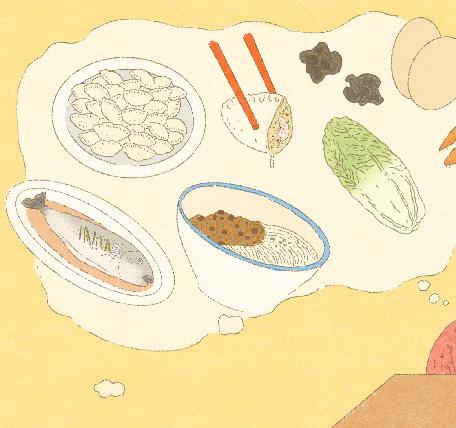
some of my favorite ways to celebrate the new year and some of my favorite memories! These are all based on what I have experienced over the years growing up and feature a selection of the best parts of Chinese New Year.
除夕夜 New Year’s Eve
This is the most festive and exciting night of the week of New Year’s celebrations! Before I went to college, we would go back to my grandparents’ house in Tianjin every year, and they would cook so much delicious food. Here are some of my favorites:
Dumplings: Dumplings are an absolute must. Because dumplings are shaped as traditional gold ingots, dumplings signify good wealth and good fortune. My grandpa would first make two fillings, a meat one and a vegetable one. Normally in the meat one, he would add pork, chives, cabbage, sometimes shrimp, etc. The vegetable one is my personal favorite, but it’s also much more complicated. It includes chives, fungus, cabbage, vermicelli, egg, shrimp, carrots, and more. After making both fillings, the next step is to roll out the dough (that should have been prepared already) into a long, snake-like shape, then use a knife to cut it into small pieces. My specialty is rolling out the dough to make the dumpling
wrappers—I’m so fast and so good at making perfectly circular ones! Once you have wrappers, you use chopsticks to put filling onto a wrapper, then close it up by pinching it closed with your fingers and tightening the edges! The last step is to boil the dumplings. Once the water is boiling, place them in and wait around ten minutes. The trick isn’t necessarily in the timing, but waiting two or three cycles of the dumplings rising to the surface (add water once it rises to let it sink back down). Then, your dumplings are ready to eat! We used vinegar and sometimes flavored garlic as a dipping sauce.
Steamed fish: The mechanics of making steamed fish are much more complicated, and I normally leave that to my grandpa, but eating fish is a part of the folklore of “年年有余,” where the last character 余 sounds like 鱼 (yú), meaning fish. It represents hopes that you’ll be prosperous, successful, and satisfied in the new year.
Apples: We tend to eat apples when the clock strikes midnight. It references the idiom “平平安安” (píng píng ān ān), meaning safety. Apple in Chinese is 苹果 (píng guǒ), thus acting as a homophone and symbolizing safety,
security, and good luck.
While all this food is circulating around the table, we start watching the Chinese New Year Spring Festival Gala (春晚), broadcast at 8 p.m. It is an annual show that everyone around the country watches, featuring various performances including skits, songs, dances, magic, martial arts, and more. Outside, fireworks light up the night sky. Looking out the balcony from the twenty-third floor of my grandparents’ apartment building, you can see an endless number of fireworks dancing in the sky from different corners of the distance. The louder the fireworks are, or the larger the quantity, the more festive and hopeful people are for the new year.
初一New Year’s Day
The saying goes: 初一饺子初二面,初三合 子往家转
This is a saying that is most popular in the northern regions of China that translates to: On New Year’s day, you eat dumplings, on the second day, you eat noodles, and on the third day, you eat 合子 (glorified dumplings where you use two wrappers instead of one). Eating dumplings on this day signifies wealth, good fortune, and family unity. In the evening, we
by Ellie Kang
Illustrated by cora zeng
play mahjong or potentially cards if there are more people.
初二 Second Day
On this day, it is customary to eat noodles. Because noodles are long and orderly, the saying is that eating them symbolizes longevity, peace, and success.
Da lu noodles 打卤面: This noodle dish is special for its sauce. It is extremely complicated, but so delicious. The sauce includes tomato, egg, sausage, chives, fungus, scallop, tofu skin, water chestnuts, and more. After boiling the noodles (we tend to get hand-pulled noodles), pour on some sauce and eat! You can also boil some spinach or add some fresh cucumbers for extra nutrients as well.
Zha jiang noodles 炸酱面: This Beijing dish is another option for noodles; it includes a fried sauce made from sweet bean paste, soybean paste, and light soy sauce. The main flavor comes from the pork meat that you fry. Then, add all these other condiments in order to complete the sauce.
初三 Third Day
Finally, on the third day, we eat 合子, or glorified dumplings. The fillings remain the same, but instead of wrapping the filling in one dumpling wrapper, you wrap it within two
wrappers so it appears like a box or flat circle. It is typically fried rather than boiled, and you have to continuously move the pan while frying so it doesn’t stick. Because of the box and full shape and the constant moving of the dumpling on the pan, it symbolizes changing destinies, the arrival of prosperity, and a complete family.
Since coming to college, I am grateful to have my international Chinese community to celebrate all these traditions with, even when away from home. They remind me of these beautiful times growing up and empower me as we remember our collective traditions and cultures together. But, just as these traditions and celebrations during Chinese New Year spark deep themes of cultural pride, it feels awkward and uncomfortable when foreigners start commodifying and popularizing our culture to fit in the digital mainstream.
On this note, I’d like to briefly comment on the whole “in a very Chinese time in my life” trend that’s been taking over the internet over the past couple of months. While I do appreciate that everyone is celebrating our culture, it still feels odd to see all these reels and comments on all things Chinese. I sometimes can’t tell whether it is appreciation or appropriation. As someone who went through the COVID-19 pandemic in China, back then, I would always
look at influencers or people on foreign media and be so envious of their different experiences. To them, COVID ended in 2021, with life springing back to normal near the end of 2021. To us in China, it ended in 2023. My important high school exams were cancelled, grades were completely based on a “portfolio of evidence,” parents and teachers argued, and people were getting Ds and Es arbitrarily. I always look back on my high school times and sigh at how fast it just passed. How come things were so different five or six years ago? What happened in the media that now gives foreigners in the digital mainstream these ideas to suddenly be in love with Chinese culture? To me, the phrasing of “a Chinese time in my life” just feels wrong. Am I allowed to just take off and put on a different identity?
Regardless of what the media creates or popularizes about my culture, I will always stay true to my heritage and be proud to represent it. Chinese New Year is a time when this connection always feels the strongest, and also when I am the most homesick! Ultimately, it’s about spending time with friends and family and savoring good food while welcoming the new year! I hope everyone who celebrates had a wonderful Chinese New Year!
Driving through my neighborhood on the outskirts of Evans, Georgia in 2022, it was impossible to ignore the fact that the Republican primary for the upcoming gubernatorial election was fast approaching. Competing yard signs littered the streets and, for once, the political landscape of my deeply conservative suburb appeared divided. Everyone, of course, knew of the incumbent candidate, gun-toting Republican Brian Kemp, who had openly defied President Trump’s request that he overturn Georgia’s 2020 election results in his favor. Trump had retaliated by endorsing loyalist and former Senator David Perdue in a bid to unseat Kemp in the Republican primary. Everywhere you looked, it was Kemp. Perdue. Kemp. Perdue. Perdue. Perdue. Perdue. Unsurprisingly, a sizable population of my pro-Trump hometown was rallying to endorse Perdue. Yet, increasingly, another name was littered among the signs: Kandiss Taylor. Who was Kandiss Taylor? Confused, I decided to look her up.
Kandiss Taylor, it turned out, was a white Christian nationalist running in the Republican primary under the slogan: “Jesus, Guns and Babies.” Such was the political climate of my hometown that members of our community would actively campaign for an ideologically outrageous, reactionary, and theocratic candidate. I began to notice her signs boldly placed everywhere on my morning drives to high school, my dismay slowly building all the while.
Accordingly, at my high school, to be conservative was to be cool. To be liberal was to be a snowflake and any other derogatory, feminizing label you can think of. Owing to my mother’s own staunch, largely left-ofcenter political views, as well as my growing understanding of my own identity, I found myself constantly at ideological odds with both the adults and other kids surrounding me. Growing up, anger was perhaps the number one emotion I felt toward other students in middle and high school, though I seldom spoke up about it, resigned to the fact that my quiet, solo voice would be of little power against the strong, unified chorus that was usually around me. The few times I did express my viewpoints in opposition to a peer, this inkling proved to be right, and I would slink away from the interaction (which largely consisted of hurling partisan buzzwords at each other) not only angrier, but embarrassed. Political arguments in general, I concluded, were pointless.
When I got into Brown, my friends told my English teacher. She turned to me and said, “Isn’t that a liberal school?” I feigned ignorance. “I don’t know,” I responded. “Have you visited?” she pressed. “Yes.” I nodded. “Did it feel liberal?” she retorted. Exasperated, and also trying not to laugh at the ridiculous question, I told her I did not know what “liberal” felt like.
In truth, I did not apply to Brown because it was “liberal.” In fact, I was not even aware of Brown’s reputation as a particularly notable left-wing school until I arrived here. I figured that my teacher’s references were based on impressions of the Ivy League or New England as a whole.
Today, four years later and on the cusp of receiving my bachelor’s degree in political science, one might be shocked to hear my conclusion that my time at Brown, if anything,
has made me more open to engaging with diverse and opposing political viewpoints. How can this be so? Haven’t I been living in the leftist echo chamber of College Hill, Providence, Rhode Island, for four years and counting?
To be clear, I would consider myself quite left on the political spectrum, and yes, the Brown community is mostly (but not entirely) a leftist echo chamber. Yet the culprit of my newfound “openness” is not really the Brown community or student body, but rather Brown’s humanities curriculum. I don’t even think the experiences that have led me to this epiphany are necessarily unique to Brown, and I feel confident that I could have reached a similar conclusion had I attended another school with strong humanities programs.
If you talk to anyone, especially a consumer of conservative media, my thesis would appear absurd. Elite schools are institutes of liberal indoctrination, so they say. Ivy Leagues, Brown chief among them all, are the calculated perpetrators of the woke agenda. Conservative students on campus are persecuted or remain silent, lest the leftist mob chase them down with pitchforks. For a Brown student to graduate and feel happy to engage in respectful conversations with the politically un-likeminded runs contrary to these claims.
Graciously, the Brown curriculum constantly engaged me in the practice of critical thinking, but more importantly, it taught me
by Sofie
how to assess and craft sound arguments. Crucially, Brown taught me that this exercise is one driven by intellectual curiosity, rather than emotion and information regurgitation. No longer are my internal political musings and arguments just a repetition of a TikTok take I
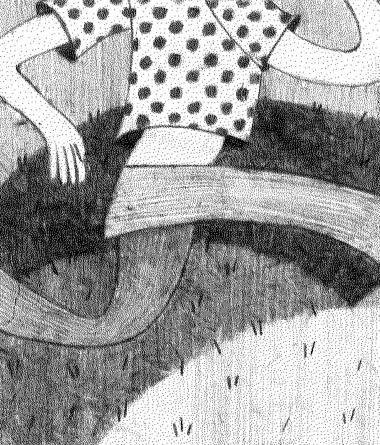
taught me to productively engage in discourse
Zeruto
Ariana R. Jimenez
saw, for example, without fully understanding its meaning and basis; now, I am practiced in developing my own original arguments by reasoning through and testing my contentions against their logical counterclaims. Altogether, my classes in political science, English,
philosophy, public health, history, and several other humanities departments have instilled these abilities in me.
Funnily enough, I realized this newfound change in my cognition at a bar in Atlanta with another friend from Brown over winter break. We had spent the entire day together, just us, so I joked that we should try to make a friend as we entered the bar. As we looked around, no one there seemed open to chatting with strangers. Then, really joking, I told my friend we should dial random numbers and try to make new friends that way. Ever one to commit to the bit, my friend pulled out his phone and actually started doing it.
“Hi! We’re dialing random numbers, and we were wondering if you would want to be our friend.” My friend prompted each phone call with frankness, while I tried to silence my laughter in the background at the ridiculousness of what we were doing. We called three numbers, and on the fourth call, a man picked up and, to our shock, answered our question with a cheeky “sure.”
We turned and stared at each other in silence, mouths agape, unsure where to go from there. After a moment, we began sharing some very general details about our lives (stranger danger) and asked him about his. He told us he was working from home and, clearly amused by us, put us on speaker so we could also chat with his wife.

You would think I’m making this up when I say that we ended up talking to this couple for two hours about everything under the sun. They were from California—around Los Angeles— and we learned all about their hobbies, how they met, what they did for work, and more. We told them we were in college, and when we said we were studying international affairs and political science, respectively, the wife asked us what we thought about Charlie Kirk. Oh boy. I answered honestly and told them that I had been fiercely opposed to his politics while he was alive, as I viewed them to be predominantly supported by hatred and prejudice. The wife told me she agreed with me, but that her husband was more sympathetic to him. I asked the husband why, and slowly, we began to debate wedge political issues, moving from Kirk to gun control. Generally, the husband leaned more conservative on these issues, and I would ask him why he thought what he thought, and he did the same for me. We talked about how our backgrounds had informed our views, and we challenged each other’s arguments with counterarguments. While the debate was heated at times, it was in no way disrespectful, and I actually found it fun. The husband did too; when we were saying our goodbyes, he told me to call him anytime to debate more politics and that he had enjoyed it.
Today, productive arguments like these feel like a lost art. Yet, their notable absence from our conversations with each other should come as no surprise, given that most of us engage with political echo chambers of our own algorithmic design on a daily basis, or with the editorialized news outlets of our choice. By design, these systems work to override any inclination we might have to debate based on our own rationalizations and reconciliations of our moral and political principles. But what is the solution? Our technology and news media outlets, at least for the foreseeable future, do not appear likely to change much on this front. While that is, of course, a huge question that cannot have just one answer, my education at Brown has shown me that one piece of that puzzle is higher education, especially strong humanities programs. I write this article to challenge the ongoing narrative that higher education, particularly elite higher education, invariably indoctrinates and creates closeminded young adults. For me, someone who went from living in a far-right community to a far-left community, the singular experience I can point to that encouraged me to engage critically, thoughtfully, and open-mindedly in political discourse with those of different opinions from me was college. By political discourse, I mean strictly thoughtful political arguments on either side of the aisle—not prejudices or hatred that are driven solely by emotion.
At the end of the day, admittedly, my political stances from high school have not changed much. Yet, that discovery has only been reached through careful excavation of each of my opinions’ meaning and basis throughout my time learning to write and argue at Brown. Brown and its peer programs of higher education are invaluable in upholding the freethinking discourse necessary to our democracy and essential in combating the forces behind the rise of polarization.
It was the spring of 2022. I was a secondsemester senior at a small arts high school in San Francisco. Life was good. I knew where I was going to college—all I had to do was pass my classes, and before I knew it, I’d be in Providence. It still felt surreal, no matter how many times I said it. It had been just that fall that I started to hold my breath every time I drove through a tunnel, wishing to get into a good college. A school like Brown had been only a dream back then.
Sometime that spring, I received an email from my soon-to-be undergraduate institution saying that I had to fill out a form about my living habits to be paired with a roommate. As an only child, the thought of living with another person my age was daunting. What if she touched my stuff? What if she chewed too loudly? What if she hated my music taste?
Inaction wasn’t an option, so I opened the form and immediately began lying. Rather than filling it out truthfully, I answered as the Indigo I wished I was and hoped to become upon arrival at Brown. Of course I got up early! (I hate waking up early.) Of course I was asleep by midnight! (Being in bed before one is a rarity for me despite my attempts to become a morning person.) Of course I was neat! (I seldom have a single inch of free desk space due to completely avoidable clutter.)
There was one question, though, that made me hesitate: “How close do you want to be with your roommate?” I remember the three options: stranger, acquaintance, and best friend. Deep down, the third option was my dream: The only child yearned for the sister she’d never had. But my eighteen-year-old self reasoned that anyone who chose the best friend option was probably weird and clingy, so I carefully selected “acquaintance” and moved on with my life.
When I received my roommate assignment a few months later, I immediately went to Instagram to find her, only to discover that she had messaged me first. DMing her revealed very little—she was studying environmental science, or maybe anthropology, and was from a suburb outside of New York that I had never heard of. She was bringing a mirror; I was bringing an espresso machine. I had signed up for the 11 a.m. move-in slot; she’d be arriving at 1 p.m. Such logistics were the substance of our early conversations—I won’t bore you with more details.
When we finally met, it was relatively anticlimactic. She seemed just as normal as she had been via DM. If you had told me during that first week that she would become one of my closest friends at Brown, I wouldn’t have been shocked, but I wouldn’t have expected it either.
At the time, she and I were part of a second-floor Keeney friend group. During O-Week and the first few weeks of the semester, upperclassmen constantly told us that our friend group wouldn’t last. Who actually stays
for s, with everything i have
by Indigo Mudbhary
Illustrated by Tarini Malhotra
friends with their orientation friend group? Well, you’re looking at her (or, rather, reading her creative nonfiction). Three years later, the original O-Week crew is sharing a house in Fox Point. Every single one of us is a completely different person than we were in James-Mead, mostly for the better.
However, the relationship I have with S is different from my other apartment building mates. I first understood that what we have is distinct when I referred to her as a “friend” during one of those freshman-year parties that seemed so important to us then, and found that the word felt strange in my mouth. I corrected myself and said “roommate” instead. I liked the word—it implied the intimacy that comes with seeing someone snooze through five alarms, or call their mom, or get ready for a date. To this day, even though we live in separate bedrooms on opposite sides of our apartment, I still call her my roommate, despite no longer living in the same room.
I knew that we would be close after the first time we intentionally hung out together. No one else from our friend group was there, and it wasn’t a casual chat after we’d both just gotten back from our afternoon classes. No, this was an official S and Indigo Hang. I remember the exact moment I realized we’d be friends for life, as silly as it was. We were both trying to find a YouTube video to watch, and my recommended page had a thumbnail of a turtle eating a strawberry. Immediately, we both saw it and said in unison, “That one.”
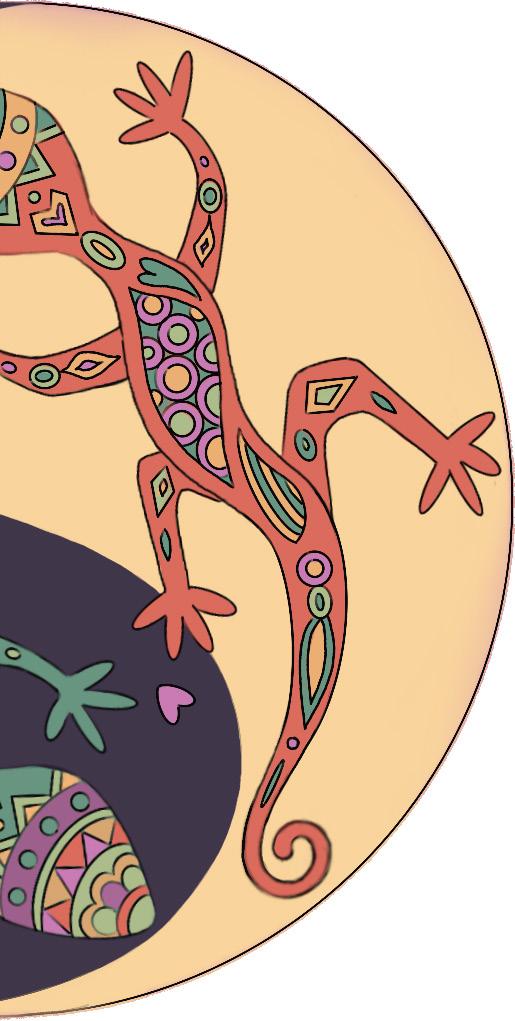
We made many memories that year. We bought a small patch of astroturf and put it outside our front door, surrounding it with a mini white fence and calling it our front lawn until ResLife told us to clean up the fire hazard. We tried to make slime with shampoo. We adopted a gecko from Petco who we named Fish. We saw weird movies at Providence Place. She gave me colds. I gave her colds. It was perfect.
When it came time to pick sophomore housing, we applied for a double together. We got lucky and were able to almost perfectly recreate the second floor of James-Mead, except in Wayland. That year, S and I bought a denim bean bag and named it the Jean Jag. We continued raising our gecko together. A houseplant joined our family.
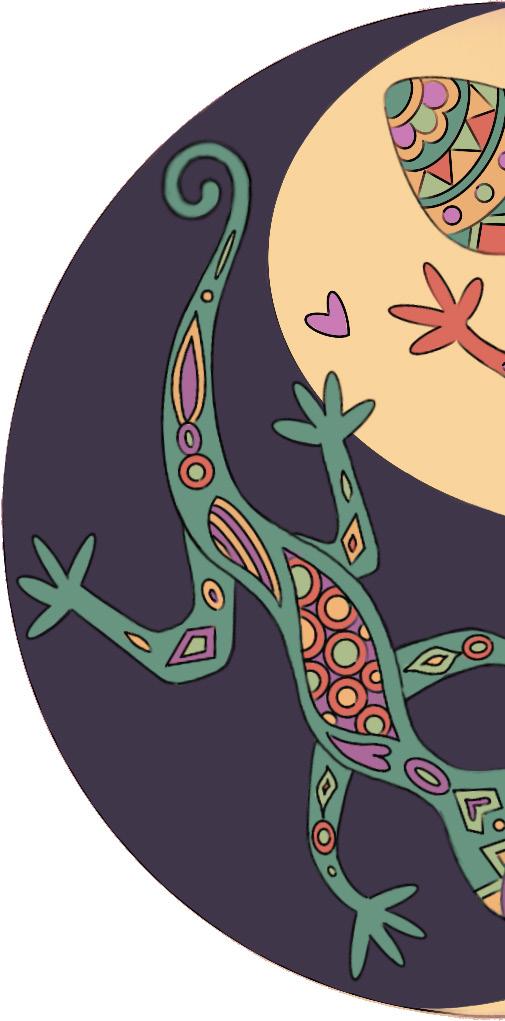
That summer, after two years of living together, we graduated from a double and moved into a summer sublet in Providence. She was staying to work in her lab, while I had received a humanities fellowship to basically just read. Our gecko came with us, though the seniors
doing Day Debrief. That is, whenever one of us got home, we would find the other and explain each and every thing that had happened to us that day. I don’t know when or why we started doing it, but once we started, we couldn’t stop. I had to know about her day in excruciating detail, and vice versa. What did she eat for lunch? What building was her appointment in? Which café had she gone to on a whim? Whenever anything interesting happened to me that summer, I would immediately think about how I was going to describe it to her‚ the
details I’d emphasize, the points I’d try to make.
Day Debrief became such a crucial part of our relationship that it is legitimately baffling to imagine who we would be without it. We took Day Debrief with us into our junior year, into a downright palatial Minden double. We pushed our beds against the same wall to be closer to one another. We continued raising Fish to be a nice young man. We Day Debriefed every day, no matter how busy we were.
Until that week in the spring of our junior year, when we stopped talking because of a conflict. It was a complex situation in which neither one of us was in the wrong, and we both wanted to forgive each other. At one
friend group hangouts out of respect for her right to see them amidst our falling-out.
“But I just miss you,” she said and started crying. I left our room, also crying. I remember seeing people walking on Thayer and wanting to stop them and tell them what was happening. How could they just act like everything was normal when S and I weren’t speaking?
At that time, we had no idea how long the conflict would last. We both cried to our third suitemate. We both cried by ourselves. We both wrote and deleted texts to the other. It was a complex disagreement in which neither person wanted to hurt the other but had—deeply. Eventually, through tough conversations, we limped toward forgiveness.
After that week, I never took Day Debrief for granted again. That spring, we had a friendship vow renewal in the backyard of the Classics building, inviting all our friends, but telling no one about the torturous week that had prompted it. Only our long-suffering suitemate knew why we had invited our friend group to a fake wedding for seemingly no reason. Some things are better left in Minden.
The summer flew by, and now it’s senior year. For the first time in our college careers, we have our own rooms. Regardless, Day Debrief continues—usually in her room, occasionally in mine.
Day Debrief is everything to me: It’s the light at the end of the tunnel during a tough day, a guaranteed second opinion on a problem I'm having, a listening ear when I want to rave about a muffin I ate or a flower I saw or literally anything at all. When I stay late at the Rock and miss Day Debrief, it takes me longer to fall asleep. Like I said, roommate, not friend.
Once, in Minden, S and I were watching Twin Peaks, and we accidentally hit the same pose. We were on our sides, facing one another, our arms curled to our chests in the exact same way. We called the pose “the Gemini.” Months later, on spring break, we were sharing a bed and we both woke up in the middle of the night only to find that we were in the same Gemini position. We went back to sleep. Like I said, roommate, not friend.
During my freshman year, I spent three months dating a man simply because he had a septum and long hair, even though he made me deeply unhappy. (In “Goodbye to All That,” Joan Didion writes, “Was anyone ever so young? I am here to tell you that someone was.”) Most people around me were so excited that I wasn’t single that they didn’t see how dissatisfied I was, leading me to stay in the relationship for longer than I should have because the social
validation felt so good. It was S—only S—who said anything. While we were doing homework together one afternoon, she said, completely unprompted, “You have a sadness about you, indi.mud.” (She often calls me by my Instagram handle.) I had known implicitly that things needed to end, but S’s comments were the final push I needed to break up with him. While others expressed sadness that I was single again, S reacted positively, as if she could see the weight lifted from my chest. Like I said, roommate, not friend.
Once, when S and I were talking in front of our friend, she suddenly started laughing at us. “What is it?” I asked, genuinely curious.
“It’s like you guys have a secret language or something,” she said. Like I said, roommate, not friend.
As I get ready to graduate in a few months, a big part of me feels ready to leave. I’ve been lucky at Brown—I discovered what I am passionate about and pursued it. I built beautiful mentoring relationships with my professors and other capital-a Adults. I fell in love here and am still in love with that person two and a half years later.
But I also feel ready to go. This is the same school where my classmates were arrested, where I was raped, and where two students died senselessly last fall. The campus holds all those memories for me, and my body feels ready to live somewhere else for a while.
When people ask me if I’m going to miss Brown, I answer with an emphatic no. I always make the disclaimer that I’ll miss certain people, but that I’ve seen what I needed to see, and that I’m ready to go. If you’ve ever asked me that and I’ve said that to you, allow me to apologize for lying through my teeth. I’ll never be ready to not do Day Debrief. I’ll never be ready to not live in the same town as my Gemini. I’ll never be ready to say goodbye to S, but we’ll have to. Inevitably, there will be a last day and a last Day Debrief. I wonder if they’ll fall on the same day.
We’ll cry, we’ll hug, and we’ll part ways. And the next day, we’ll wake up, and we’ll live our lives, wondering how we’ll describe things to the other person when we get home, only to remember that Day Debrief was something we used to do in college, and we’re not in college anymore. It will be the kind of complicated, interesting thing that would be perfect to discuss with S during Day Debrief.
Twenty years from now, I can see us clearly. We’ll be sitting at a café—by then, a latté will be $10. I can see one of us saying to the other, “Do you remember Day Debrief?”
And the other will say something about how we were so young and had so much time back then. Much will have changed—I wonder what we’ll look like, if S will have had the kids she wanted, and if I will have written the books I wanted to write. But I do know what won’t be different: We’ll still be the Gemini, and I’ll still call her my roommate.
on running, restricting, and returning by
Yana Giannoutsos
by Anna Nichamoff
Illustrated
“Shorten your stride.” The phrase rings in my ears. There’s a metallic taste in my mouth. I swear I can feel each indent of the track on my heels as they pound. Thump. Huff. Thump. A rhythm I know all too well. My arms loosen from fatigue. I rein them in the second they fall out of line. Long-distance running isn’t supposed to feel like flying. It’s supposed to feel like grounding.
My lungs and slow-twitch muscle fibers in the legs must remain perfectly calibrated for the maximized stamina and energy conservation required to last two miles at threshold speed. There is an art to the training program: You must hone a hyperawareness of the earth beneath your feet and register the distance between each strike against the ground. Every stride is painstakingly manufactured; every lap a tally; every breath controlled…
Long-distance running is fiercely individual. You don’t run in a V-formation,
ensuring every team member keeps up. You fight for a spot at the front of the pack. And if you fall out of line, the only thing you have to answer to is the lonely wind mocking your unkept promise: Win. Long-distance running is not a team sport.
Neither is restriction.
I used to have a knack for doing what was “good” for me. I’d bypass sugar at birthday parties and wake up before my daily 6:15 alarm for extra training: three miles before the sun came up. I’d write past the page limit just to prove something; I skipped Junior Prom for the SAT. My schedule was optimized for maximum efficiency, on and off the track. If my body were a temple, then I would be its most devout worshipper and its most unforgiving keeper. No softness. No indulgence. No falling out of line. No staying in one place for too long. I was constantly on the run.
“You do not have to be good. You do not have to walk on your knees For a hundred miles through the desert, repenting.”
Elite runners will venture into desert-like conditions or even mountain peaks to strain the body toward its limit and raise VO2 max. If you can run at ninety percent oxygen saturation, sea level begins to feel merciful. This type of training can get you from good to great, because endurance running rewards these quiet punishments against the body.
Nature, on the other hand, does not.
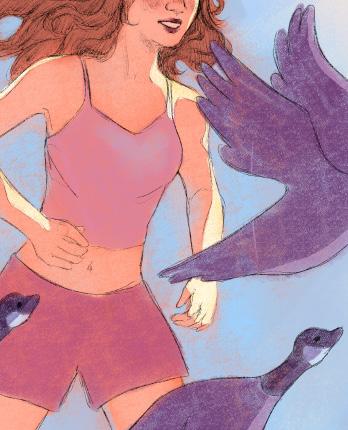
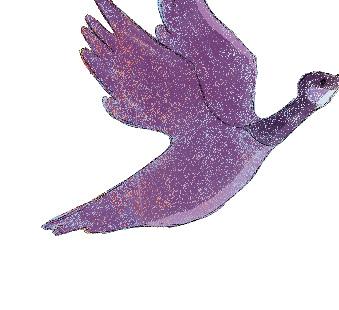
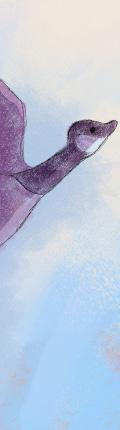
Geese can migrate four to six hundred miles in a single day. But they don’t do it alone, and they don’t do it without breaks. They are known for their signature V-formation—a group flight technique capable of cutting individual energy expenditure by seventy percent. Aerodynamics place the burden primarily on the front bird, who is replaced periodically to prevent exhaustion. The journey can take several weeks, but the slow pacing turns the effort into ease. They work with the wind to stay afloat, instead of cursing its resistance. The wind is part of the team.
One day, my body betrayed me. I let my alarm ring out at 6:15 and, in silent rebellion, hit snooze. There’d be no time for a run that day. I don’t exactly know why I made that decision. Perhaps it was my impending shin splints, or the five college rejections I’d received the week before, or the inevitable burnout from my performance of the girl who always did Maybe it was all of those things. I expected guilt to flood in when I woke up with the sun. Yet, I didn’t feel a thing—only the subtle euphoria of lungs filled with air and eyes well rested; the quiet admittance of a streak broken and a choice made. Free will. My day’s hiatus stretched into months…
“You only have to let the soft animal of your body love what it loves.”
What if the animal inside of you isn’t soft? What if it hisses and charges? What if it takes the wrong course? What if it’s not the best?
Maybe that’s the point.
Geese are awkward little creatures: necks too long for their bodies, protruding beaks, and gazes that make them appear perpetually confused. Their chests jut out in false bravado— an attempt to seem macho—but their stumpy, webbed feet give them away. They’re feisty, too, with a hiss loud enough to frighten even the
keenest outdoorsperson, and a fierce instinct to protect their young at all costs without a shred of remorse. Careful, or they will charge. Don’t worry, though, it’s all a posture.
Geese are also strictly communal. They are among the few monogamous species in the animal kingdom, selecting partners around age two or three and remaining with them throughout their lifespan as if they made the vow, “until death do us part.” When landbound, they walk in a gaggle, and during flights, they travel in a skein. They mourn lost family members and stay with the injured until they recuperate and the skein can take flight again.
Homo sapiens are the mammal most finely tuned for endurance running. We do not flee when the seasons harden; we remain. We stay through the winter. We strike fire against the cold. We don’t leave. We run together to lighten the weight each of us carries.
Homo sapiens aren’t a perfect species. We can be absolutely vicious, vile, and cruel. We can cheat, lie, and hiss. But we also cry. We hurt and get hurt. We sweat. We sleep. Adult humans stay with their young, nurturing them into adulthood. We rely on each other to survive. We don’t migrate for the winter. We stay home, together, in these little units we call families, or with strangers we’ve brought in because of something we call love.
“Tell me about despair, yours, and I will tell you mine.
Meanwhile the world goes on.
Meanwhile the sun and the clear pebbles of the rain are moving across the landscapes, over the prairies and the deep trees, the mountains and the rivers.
Meanwhile the wild geese, high in the clean blue air, are heading home again.
Whoever you are, no matter how lonely, the world offers itself to your imagination, calls to you like the wild geese, harsh and exciting— over and over announcing your place in the family of things.”
We are not an airbound species. Yet, we find ways to fly.
It had been months since my last run. I’d moved past that era in my life, sworn off the early mornings and the aching quadriceps and the insatiable hunger. I was trying, desperately, to let slowness satisfy and to avoid mourning the what-ifs of the running career I’d willingly abandoned. A part of me missed the feeling of crossing the threshold of my house after a long run, face flushed and shoes adorned with a muddy film. There’s no feeling quite like heading home.
My first run back was with you. We raced through the streets of New York City in the middle of the night, way past my bedtime. It was probably reckless—the kind of dumb, beautiful decision you make when you’re young and feel invincible, like the world’s tailwind is propelling you forward. I ran just behind you, slightly off your shoulder. You cut the wind without even trying. My stride lengthened. My feet barely touched the pavement. For the first time in a long time, running didn’t feel like something to endure. It felt like flying. I wasn’t running to win. Splits and records and stride lengths didn’t even cross my mind. I was running to stay.
Can a person be a home?
what’s on your spring bingo card?
by Jessica Lee
Illustrated by Ellie Lin
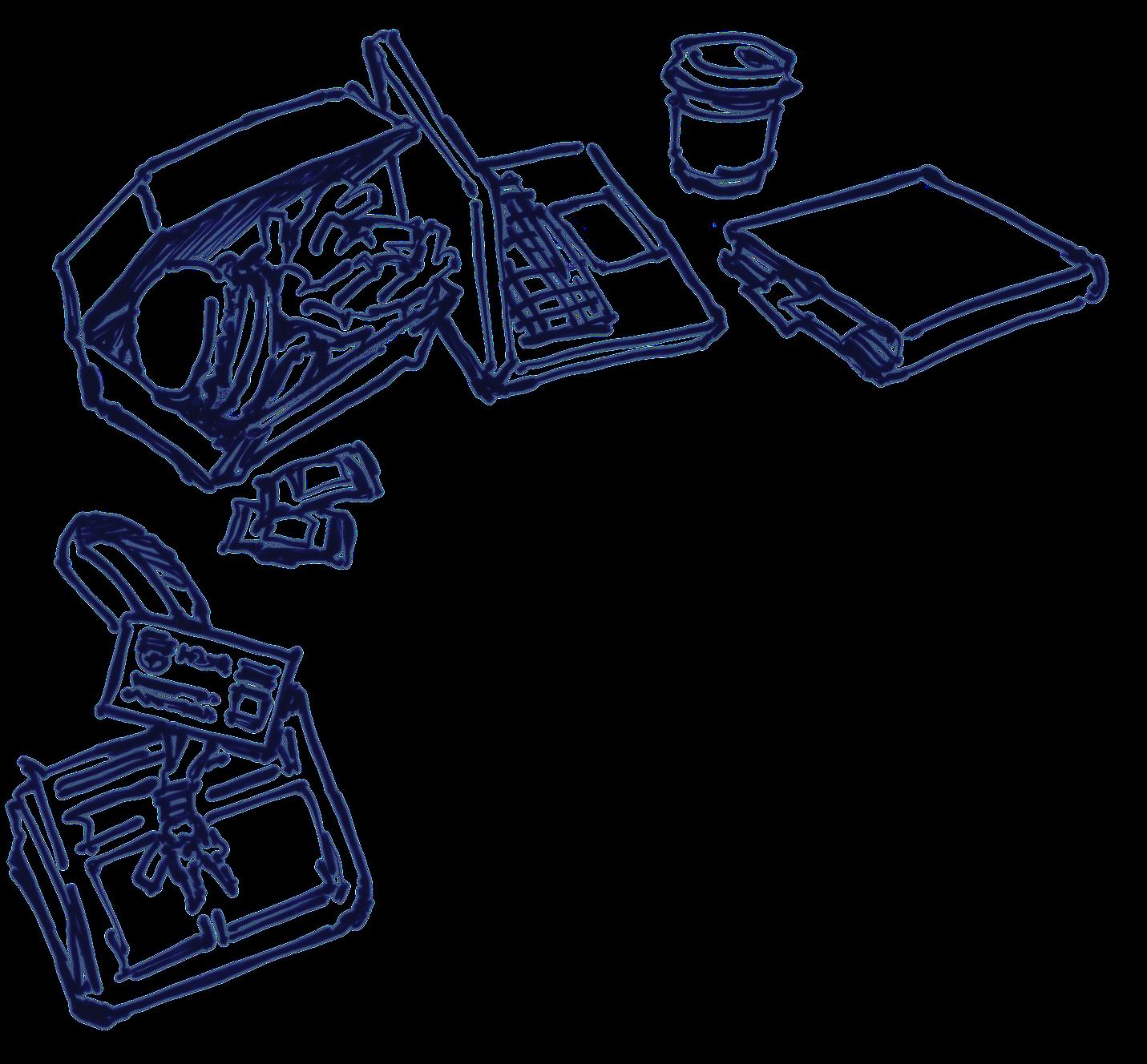
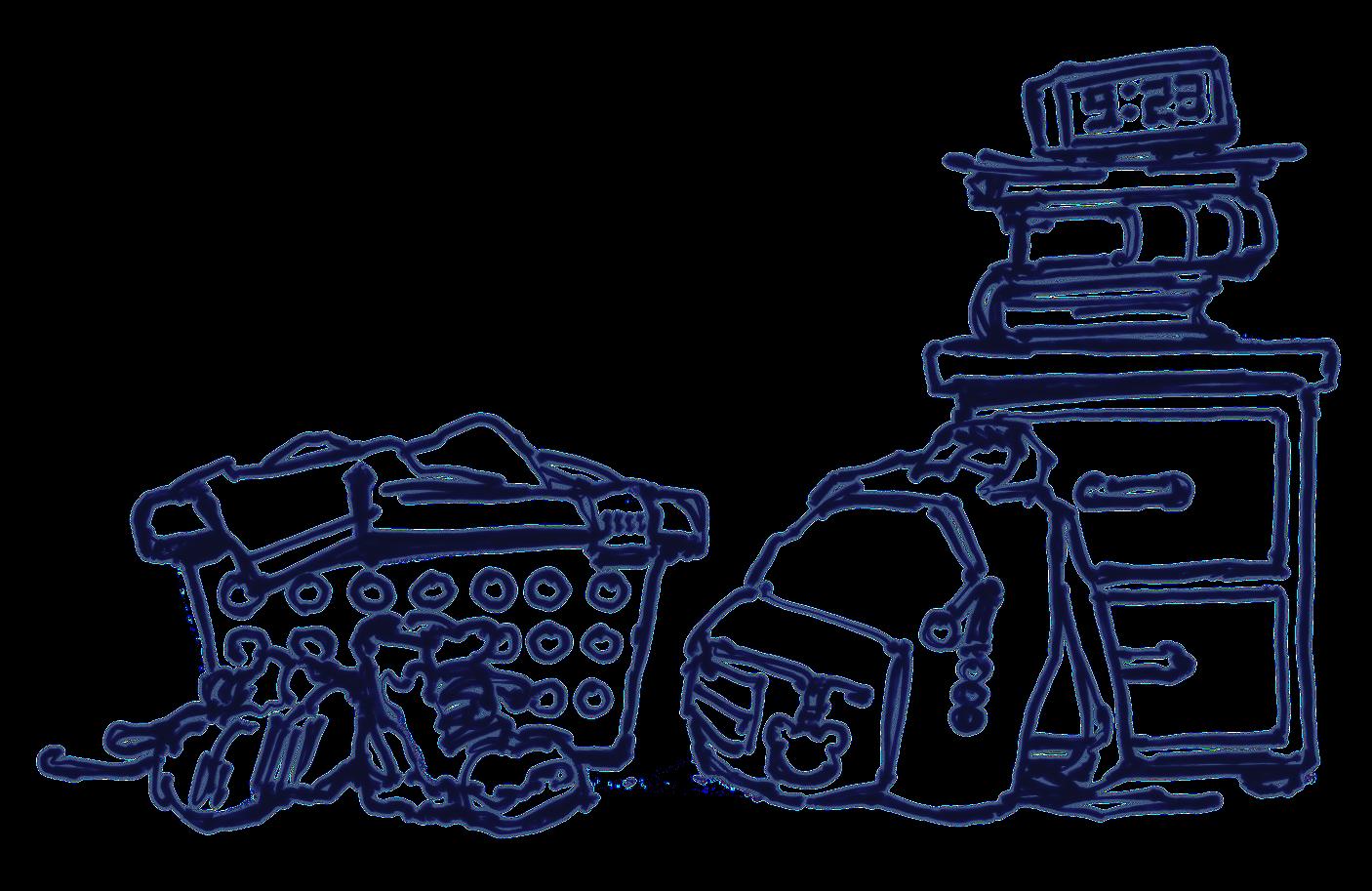
Midterm season is officially in full swing…take a study break and see how many of these experiences you have had so far this semester!
got caught in the lunchtime rush at the Ratty
attended a varsity game
updated your LinkedIn
watched someone shopping on Amazon during a lecture
locked in at the SciLi
slipped on a patch of ice
posted on Sidechat ran into your campus opp
had a coffee chat
crashed out over an exam
saw one of your professors in the wild FREE SPACE
took an excursion off of College Hill lost your keys or student ID
tried to do laundry, but all the machines were full had a latenight Jo’s run
stopped for a chat with one of the lovely Dining Services workers
stepped on the Pembroke seal
begged for (and successfully received) an override code
read the newest issue of post-! went to a protest
overslept and missed your morning class
felt nostalgic while passing a high school tour group
watched an a cappella performance
released your inhibitions and felt the rain on your skin

post- mini crossword by
Tseyang Dolma Arow
“There's truly one thing in the world that frustrates me more than the current state of American politics: Roblox's viral multiplayer dress-up simulator, DresstoImpress. Whether during a particularly monotonous period of lecture or a restful moment of Mock Trial practice, I find myself consistently returning to the Roblox app to torture myself once again with a round of this infuriating game. ”
— Ann Gray Golpira, “battle of the pre-teens”

“Emails make a relationship feel tangible. It’s time I dedicated to that person. It isn’t just a text that I sent while I was making breakfast. It’s an hour of picking the right things to say, the right poem to send, the right place to split paragraphs.”
— Eleanor Dushin, “i’m trying to tell you”
EDITOR-IN-CHIEF
FEATURE
Section
ARTS & CULTURE Managing
Section
Section
LIFESTYLE
Section
POST-POURRI
Managing
Section
COPY
Copy
LAYOUT
SOCIAL