














This month marks the 56th annual Earth Day. A day to demonstrate support for environmental protection. But with the state of the world and our leadership, maybe we should skip it all together and not pretend we are giant hypocrites.
It’s easy to, as the kids say, virtue signal or aura farm when times are good. We can buy electric cars and our leaders can toss money around to study and fund various environmental initiatives. But when times get tough, it’s the first thing to go.
For instance, when Prime Minister Mark Carney was looking for cuts, it didn’t take him long to find green initiatives, such as active transportation like bike lanes and bike trails, putting millions of dollars in funding in jeopardy. Why not? It’s not like encouraging people to drive less would have other benefits like lower costs, better health and less pollution. Ahem.
And why not just start funding more fossil fuel pipelines and keep us on a steady petroleum diet while the rest of the world invests in sustainable and renewable energy. What could possibly go wrong, Mr. Carney?
We can still change course.
Solar PV is the fastest growing energy source in the world. Solar is now more affordable than fossil fuels, especially the very expensive fossil fuels from Alberta’s oil sands. Wind energy is the second fastest growing energy source.
Not that Canadians would know it by the actions of our collective governments, one building pipelines, one cancelling wind energy projects, as Premier Doug Ford has done.
So should we celebrate Earth Day? Yes. We need to be optimistic, but we also need real and lasting change, and leaders who understand what the future will bring. And we need it right now.

NAME: Dan Shulman
BORN: Toronto, 1967
COLLEGE: Western University, Actuarial Science
BIG BREAK: Voice of the Western Mustangs
FAMILY BUSINESS: Son Ben, the radio play-by-play announcer for the Blue Jays
Who do you think will be the most impactful free agent signing?
I think Okamoto is going to be very important, and I think he’s going to hit. But if I had to pick one guy, I’d pick Dylan Cease. He got the biggest contract of the group, and he’s an incredibly durable guy. He takes the ball and makes his starts every year. They’re looking for 32 (game) starts and a lot of innings from him. As important as I think Okamoto will be, having another guy alongside Kevin Gausman who you can count on pitching every fifth day is huge.
What stands out most about the 2026 Blue Jays heading into opening day?
I think there’s a real determination to take it one step further than they did last year. They all realize how good of a season they had, but they also know they came up just short. I think they’re really determined to get back to that point and take one more step.
How significant is that pitching depth over the course of a long season?
ence. He has definitely opened some eyes.
What will be the biggest challenge for the Jays in repeating in the AL East? The division — just the competition.
Is the team really as tight-knit as it appeared during last year’s playoff run?
I know people wonder about that, but I’ve never seen a group like last year’s. From George Springer and Vladimir Guerrero Jr. down to Miles Straw and Tyler Heineman, they all got along. They valued each other, respected each other and enjoyed being around each other. I get to see them on the road, on the plane, on the bus — when there are no cameras around — and it’s all real.
“THEY ALL REALIZE HOW GOOD OF A SEASON THEY HAD, BUT THEY ALSO KNOW THEY CAME UP JUST SHORT.”
Oh, it’s enormous. I believe they used 37 pitchers last year, which sounds insane, but all teams do that. You need so many arms. Their pitching depth, in my mind, is much better than it was at the beginning of last season.
Do you see a young player who could impact the team, similar to what Addison Barger did last season?
That’s a good question. They have a fairly set roster at this point. I don’t think he’s going to be on the team at the beginning of the year, but I think Josh Kasevich has been very, very impressive this spring. It might take an injury for him to get a spot, but stuff happens. He can play second, short and third. He’s hitting the ball harder, showing more power, and he carries himself like a guy with several years of Major League experi-
Ernie Clement really broke out during the playoff run. Was that his peak or is there more there? October was probably his best — 30 hits in 18 games is kind of crazy. But I do think there’s a little more there. He’s still learning about himself as a player. He played banged up last year — hit by pitches, foul balls off his shins — but he just kept going.
Is there a moment from last year’s playoff run that stands out to you as a broadcaster?
George Springer’s home run in Game 7 of the ALCS [American League Championship Series] was enormous. Without that, there’s no World Series.
And Vladimir Guerrero Jr.’s grand slam in Game 2 of the Division Series against the Yankees really signified that the team belonged — that the stage wasn’t too big, even against a team with that much playoff experience. Nothing gets the crowd going like Vladdy in a big moment.

Where to get (Marty) supreme at ping-pong this spring
SPIN
A 12,000-square-foot social club with 12 Olympic-style tables, perfect for groups or parties. The venue emphasizes a social vibe, while keeping play organized, and pairs games with tasty snacks and drinks for a full night out.
Par-tee Pong
This retro-themed bar in the Entertainment District features All You Can Pong on weekends, craft cocktails, pizza and private event options. Its playful energy makes it ideal for friends looking to channel their inner Marty Supreme late into the night.
True North Table Tennis
Scarborough’s dedicated training facility offers top tier coaching, elite equipment and tailored programs for beginners through competitive players. Drop-in classes make it easy to sharpen your skills or get serious about the sport.

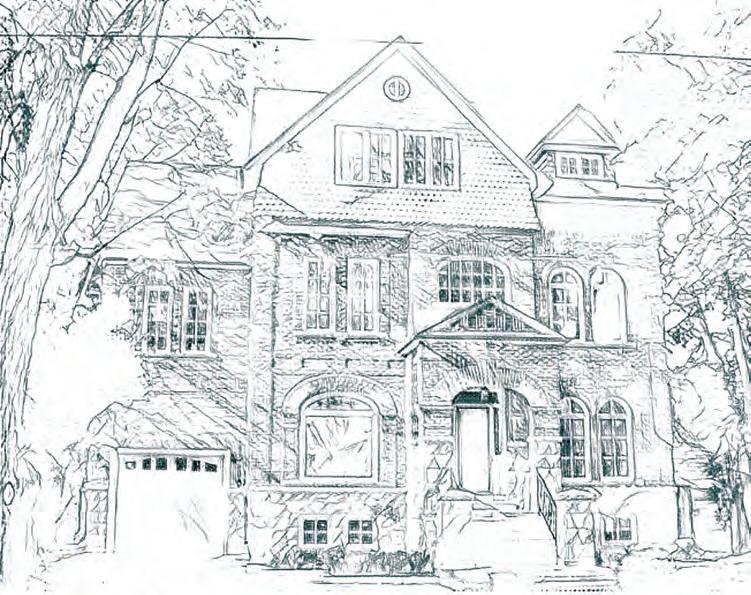
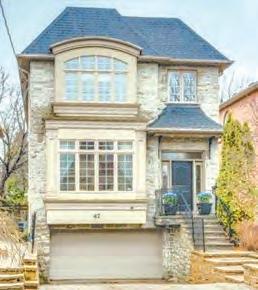
Your Classic Toronto Dream Home Re-imagined in Pickering, for sale by owner.
Have the life you want! Spacious rooms for entertaining. Accommodate guests readily. Gather your family. Celebrate your achievements.
One-of-a-kind, built 2004. Architectural gem throughout. Stately, gracious, and welcoming.
6,149 sq ft above grade. High ceilings, 8-ft doors, 6-9 bedrooms, 5 bathrooms. Three storeys, fireplaces and balconies. Two sunroom sanctuaries. Sound-proofed. Dual furnace and AC. Central vac. Generac® auxiliary power. Pull-thru garage with 13-ft ceiling. Five surface parking spaces. Unfinished open basement.
Tranquil setting for family life. Quiet cul-de-sac. Clean air, lake breezes. Overlook Rouge Park. Lake Ontario views. Near Petticoat Creek Park. Steps from waterfront trails and Rouge Beach. Walk to TTC, GO Transit.
Asking $3,400,000 Buyer broker protected For additional details, call 647-218-0459











What is making news and who is making us snooze in the headlines this month
Mayor Ford 2.0?
Toronto’s mayoral election looked like a wash after John Tory bowed out. Now, with another Ford, Michael, back in the game, things could change.
Davies is Down!
The injury to Canadian soccer star Alphonso Davies just months away from the World Cup is bad for the home team. Very bad.
Island of Schemes
Toronto’s wannabe mayor Doug Ford surprised, well, everyone by, ahem, floating the idea of a new island to house a new convention centre. Just ‘cause.
$80 mil Condo
There has been nothing but bad news for condos in Toronto, so an $80 million penthouse in Yorkville is an entirely new vibe.
Party Snipers?
Trending in 2026, police snipers were actually on rooftops watching university kids having a street party? Not feeling it.

On March 24, I’ll complete my 90th ride around the sun. I’m often asked to what I owe for my longevity. I usually joke, “I chose my parents carefully.” As a geneticist, I know the genetic lottery plays a part.
I once interviewed a Toronto doctor who continued to treat patients after he turned 100. I asked what he owed his longevity to. “Porridge,” he replied. “I eat it every day.” He was serious, but his belief was anecdotal and proved nothing.
The scientifically documented key to a
healthy long life is exercise. Studies show it reduces the risk of a wide array of conditions associated with old age, from diabetes, obesity and cancer to Alzheimer’s, stroke and heart disease.
At 35, I met my life partner, Tara, who’s still with me after 53 years. She was 12 years younger than me. A year after our marriage, I was flying from San Francisco to Toronto with a flight change at Chicago’s massive O’Hare International Airport. I landed at one end of the terminal. Air Canada was at the other end. With half an hour to make my connection, I grabbed my bag and began to sprint. Halfway to the concourse, I was doubled over, gasping and exhausted. I missed my flight.
It was an epiphany. I decided to enroll in a faculty exercise class. At first, I mainly jogged, and was discouraged by how out of shape I was. But I stuck with it and, over weeks, my body responded.
For years, I was into running. After decades of working out, I actually got down to my high school weight, although gravity, stretched skin and old age have reshaped me. Today, elders are the fastest growing group in society. They should be recognized and valued for what they’ve experienced and witnessed. And governments should subsidize fitness programs and centres to help elders move their bodies.
Maple Leafs
Golfing
The Toronto Maple Leafs are polishing up their collective golf clubs while missing the NHL playoffs for the first time in years. Not surprisingly, nobody cares.
Anyone who has been a Leafs fan for more than five minutes understands the basic math of accountability. When a team underperforms year after year, there are only a few places to look. Either the general manager built the wrong team, or the coach can’t get the team to perform. Sometimes it’s both. And eventually, someone has to go.
Which brings me, reluctantly, to the state of policing in Toronto. Every day, you scan the news — online, in print — and the stories read like a losing season: allegations of corruption inside the police service at levels we have not seen in years, consulates and synagogues struck by gunfire, brazen 905 and midtown home invasions. There is a sense that criminals are operating with a level of confidence that should concern everyone who lives here.
And the most troubling part is that it increasingly feels as though
there is no clear plan to stop it.
What makes this even harder to understand is that it’s not as though the city isn’t spending the money. The Toronto Police Service payroll now operates with a budget north of $1 billion. And officers with five years of service can earn upwards of $150,000 with overtime.
In hockey terms, the mayor is the general manager and the police chief is the coach. When a team with this kind of payroll keeps losing, leadership has to take responsibility.
If the mayor isn’t prepared to make the changes necessary now, then the fans of this city — the voters — will have their say at the ballot box in the fall. Because this is not the Toronto that we love.


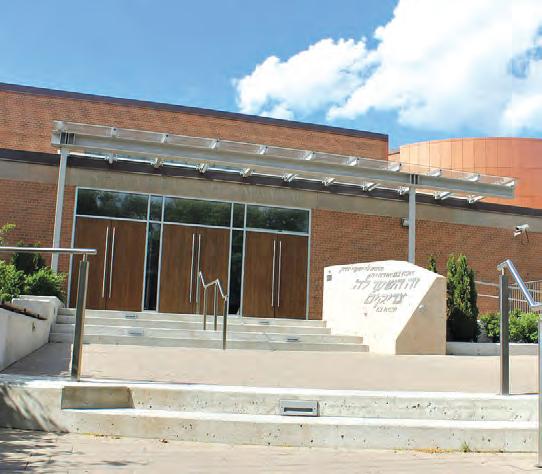







Police in Thornhill and Toronto are investigating a string of gunfire incidents, including shots fired at a synagogue in Toronto and a commercial property in Thornhill, as concerns grow about possible links to broader geopolitical tensions.
The Toronto Police Service says one of the most serious incidents occurred just after midnight on March 7, when multiple shots were fired at the front doors of Shaarei Shomayim Synagogue on Glencairn Avenue near Bathurst Street.
days earlier, York Regional Police responded to gunfire at a business in a commercial plaza near Yonge Street and Steeles Avenue West in Thornhill.
Police say multiple rounds were fired at the business — reported to be an Iranian-owned establishment — shortly after 3 a.m. on March 1. The business was closed at the time.





Investigators allege suspect(s) discharged several rounds and then fled. The building was unoccupied at the time, and no injuries were reported. The case is being handled by the force’s Integrated Gun and Gang Task Force, which is seeking surveillance and dashcam footage from the surrounding area.
Investigators in York Region say they are aware of concerns within the community that the shooting could be connected to ongoing tensions in the Middle East. Although no motive has been confirmed, police say they are working with intelligence partners and examining the possibility of politically motivated or transnational elements.





Temple Emanu-El Synagogue in North York was also targeted a week earlier.
“We are going to be relentless and leave no stone unturned,” Toronto police Chief Myron Demkiw said, at a press conference.
And, in the same week, York Regional Police reported shots fired at the BAYT Synagogue in Thornhill. In a separate incident
“In light of overnight escalation in the Middle East conflict and the impact these events may have on people here at home, York Regional Police will support our community through increased outreach, visibility and police patrols across York Region,” reads a statement.
Gunfire was also reported outside the U.S. Consulate General in Toronto on March 10, prompting an ongoing investigation.
No injuries were reported in any of the incidents.
—Ron Johnson

A long-running development fight at Queen Street West and Dovercourt Road has ended with a major win for the developer. In a Jan. 30 ruling, the Ontario Land Tribunal approved Queen Street Post Inc.’s revised proposal for 1117 Queen St. W., clearing the way for a tower above the former Postal Station C building and overturning the City of Toronto’s earlier refusal of the project.
There’s been a ton of controversy surrounding this project as Postal Station C is a heritagedesignated former Canada Post office that sits beside Lisgar Park, just west of the Drake Hotel.
The two-storey beaux arts building was completed well over a century ago, in 1903, and is recognized by the city as a local landmark in West Queen West. The property has long been valued for both its architecture and its role in the streetscape, which likely explains why this proposal drew so much attention from planners and neighbours in the first place.
Three different revised applications were submitted to the city as it moved through the approvals process. The original application was submitted in late 2023, proposing a 29-storey mixed-use building with 272
residential units and community space. In February 2025, the developer revised the project to 28 storeys. A further revision filed in May 2025 reduced the height again, this time to 27 storeys.
The original proposal called for partially retaining the old post office at the base of the tower, while also altering or demolishing some protected heritage features. That plan would have kept the north, east and west elevations and some por-
“The city legal team found no grounds for a review or an appeal.”
tions of the south wall and removed a large section of the south elevation, demolishing the two brick chimneys and stripping out the interior building fabric.
But this approach was a major reason city staff opposed the development. In its 2024 refusal report, staff said the proposal hadn’t shown that a tall building could be accommodated on the site in a way that fit the existing context or properly conserved

the cultural heritage value of Postal Station C.
The tribunal, however, came to the opposite conclusion in the January ruling. Adjudicator Eric Crowe found the revised proposal represented “good land use planning” and was “in the public interest.”
“The current proposal appropriately conserves the cultural heritage value of the Subject Site, and complies with municipal heritage policy and recognized professional standards and best practices in the field of heritage conservation in Canada,” Crowe stated.
Transit also seemed to be a major reason for overturning the city's refusal. Crowe noted the site is about 200 metres from the planned King-Liberty GO station, and broader provincial policy encourages more density near major transit infrastructure.
Ironically, this transit argument is also where much of the backlash for this project comes from.
For now, the ruling appears to be the end of the road for the city’s challenge. City councillor Alejandra Bravo said she was disappointed by the outcome, but the city’s legal team found no grounds for a review or an appeal to divisional court.
—Nisean Lorde














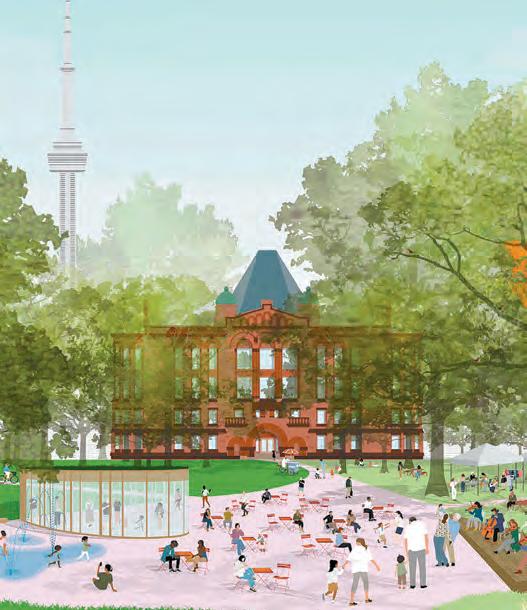
One of downtown Toronto’s most historic green spaces is one step closer to a major overhaul. A new city staff proposal asks Toronto City Council to authorize the city to accept up to $50 million from the Weston Foundation for Queen’s Park North, while also setting up a new longterm partnership with the University of Toronto and the foundation to help shape how the park is built and maintained.
According to the report on the planned revitalization, the project shouldn’t require additional city capital funding.
“There are no current financial implications resulting from the adoption of the recommendations contained in this report.
The Weston Foundation is committed to providing up to $50 million to advance capital improvements as part of the revitalization of the park, including funding for public engagement, design services and capital costs
for park enhancements,” the report states.
It adds that the foundation will provide an additional $43 million over 20 years (about $2.15 million a year) to U of T for maintenance and operations.
If council signs off, the proposal would go far beyond a onetime construction donation; it
“The park opened in 1860 and sits on land the city leases from U of T.”
would also reshape how the park could be run in the future.
The report outlines a proposed tri-party agreement between the city, the university and the foundation for about 20 years after the park reopens. If nothing else, the governance piece matters because Queen’s Park North is the
city’s oldest municipal park, making it a historically and culturally important public space.
The park opened in 1860 and sits on land the city leases from U of T under a 999-year agreement dating way back to 1859. Because the current lease restricts new buildings, it would have to be amended if the revitalization moves ahead with renovations.
As for what this revamp could actually look like, Torontonians could possibly expect enhanced tree care, a tree walk, understory planting, improved entrances, more seating, an upgraded running track, flexible infrastructure for small events, a commemorative garden and even a food and washroom building.
These proposals are part of the draft concept, so they’re not set in stone, but public engagement will run through early April to gather more input before the design is finalized.
—Nisean Lorde

AtAmica, life is anything but ordinary. Indulge in premium amenities and inspired cuisine crafted by Red Seal chefs.
Explore passions new and old through enriching programs
living that inspires — every day, in every way.
Visit an Amica near you to discover the difference for yourself with a complimentary lunch and residence tour.

A condo project in North York is getting a major rethink and a lot taller.
Instead of focusing heavily on small suites, the latest plan for Yonge City Square, at 4050 Yonge St., has shifted toward larger homes that could better work for families and other larger households.
The biggest change involves the unit mix.
According to developer the Gupta Group’s February 2026 submission, the total number of homes would drop from 704 to 500, but a much larger share of them would be bigger units: 250 two-bedrooms, 63 three-bedrooms, 169 one-bedrooms and just 18 studios. This means that about 63 per cent of the homes would be two- or three-bedroom units instead of smaller suites!
In a Feb. 25, 2026 cover letter filed with the City of Toronto, Yonge City Square Inc. said it had identified stronger demand in the area for larger end-user homes and had combined many of the previously planned bachelor and one-bedroom suites into more functional two- and three-bedroom layouts.
“To accommodate these larger unit configurations, localized increases in height have been introduced, driven by ar-
chitectural design considerations, structural and mechanical coordination requirements, and mandatory code compliance measures necessary to support the revised layouts,” the cover letter states.
The Gupta Group added that the amendment would also increase the building heights slightly, modestly raise the podium height and increase parking from 387 spaces to 458.
“If approved, the changes could signal a broader shift.”
The letter also states that there would be no other substantial changes to the approved gross floor area, general building layout or landscaping.
City statistics show that about 94 per cent of all new residential units in Toronto are in mid-rise and tall buildings, so the city has been trying to make condo living work better for families that need more space, even creating guidelines to help new mid-rise and tall buildings better accommodate larger households.
In a 2020 staff report, Toronto said that from 2002 to 2018,
two-bedroom condos made up 32 per cent of the city’s registered condo units, whereas three-bedrooms accounted for just four per cent.
The same guidelines recommend that new buildings aim for at least 25 per cent large units overall, including 15 per cent two-bedrooms and 10 per cent three-bedrooms.
So, on paper at least, the revised 4050 Yonge St. plan would land well above that benchmark.
The site, which has direct access to York Mills station, has been under construction since December 2024, though the amendment still has to go through the city’s approval process.
If approved, the changes could signal a broader shift in how developers approach new projects
In transit-rich parts of the city, where demand is increasingly coming from buyers looking to stay longer, rather than investors seeking smaller, more affordable units, the move also aligns with ongoing policy discussions at city hall about how to retain families within Toronto’s urban core, particularly in areas with strong access to schools, parks and transit infrastructure.
—Nisean Lorde












Bellis, a Japanese- and Italianinspired dining bar, recently opened at the base of Toronto’s newest boutique hotel. Opening in the Annex in conjunction with Nomas Hotel, the new spot, featuring green and red accents and cosy velvet chairs, is operating as both a café and a cocktail and snack bar. You can visit at 561 Bloor St. W.
The Matcha Tokyo is bringing a splash of green to the Ossington strip. The famous Japanese organic matcha brand has put up signage at 139 Ossington Ave., a space formerly home to Saigon Snacks and, previously, bubble tea chain Gong Cha. On top of its signature matcha lattes, the brand has drawn lines for its bright green matcha soft serve.
Delysées Luxury Desserts is leaving Yorkville. The French dessert spot, which boasted a high-end tea bar and upscale
croissant-centric brunch experience exclusive to the neighbourhood, announced its closure in March. The corner spot on 161 Yorkville Ave. has seen quite a bit of turnover over the years. It was previously home to Sorelle & Co. and Moscow Tea Room.
Pvolve, the workout method
Jennifer Aniston swears by, is bringing an exclusive pop-up to Toronto for one day only this month! Pvolve Toronto Pop-up: The Move + Recover Experience is coming to the Oval in Yorkville, at 55 Avenue Rd., on April 11, and it will feature a signature sculpt class and a recovery zone that includes reset treatments and food and beverages from local Toronto vendors.
Roda Bar is Thornhill’s go-to spot for all-day, high-energy pub vibes. Open from noon until late, it serves crowd-pleasing comfort eats like chicken wings
and chicken fingers, juicy burgers and plenty of shareable starters, perfect alongside a wide selection of cocktails and wine. You can check it out at 7359 Yonge St.
Chez Wa, a trendy pop-up wine bar and supper club, has found a permanent home in Little Italy. After taking over cafés for wine pairing events that highlight Asian chefs, the bottle shop by day, wine bar by night will open at 617 College St. with an open kitchen and vibe that feels like a group dinner party.
Heal is bringing an elevated smoothie bar to the Annex! The café known for its grab-and-go menu, featuring açai bowls and superfood smoothies, announced a new location on Bloor West, launching soon — and just in time for the warm weather to hit Toronto.












Last month the highest percentage of break-ins were from




Our guide brings together some of the city’s finest camps and programs. It’s our hope that the guide will help your children achieve their dreams, make new friends and gain an appreciation of nature.


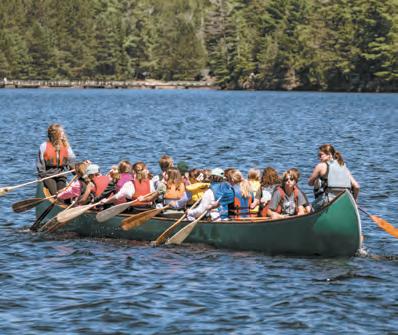
In Algonquin Provincial Park, where mist lifts off still lakes and loons echo through the pines, summer moves to a quieter, more meaningful rhythm. For over a century, The Taylor Statten Camps have welcomed children into a screen-free world rooted in connection, tradition, and the natural environment. Set on Canoe Lake, each day blends adventure with carepaddling, swimming, sailing, tennis, horseback riding, and high ropes. All building confidence, independence, and resilience. Canoe trips are the heart of camp life, traveling through Algonquin, Kipawa, Quetico, Killarney and beyond. From a first overnight to extended adventures, campers grow at their own pace, developing leadership and a lasting respect for the wilderness. Just as meaningful are the moments in between: laughter under star-filled skies, the thrill of clear northern water, and the pride of returning to docks of cheering friends. Timeless by design, it’s where character, community, and connection take root.



The North York Aquatic Club (NYAC) is a hub for swimmers of all ages, blending dedication, discipline, and fun. From pre-competitive swimmers to competitive, high performance, and Masters athletes, NYAC nurtures talent while fostering a love for the sport. Coaches emphasize technique, endurance, teamwork, and sportsmanship – skills that extend beyond the pool. Local competitions showcase swimmers’ progress, reflecting the commitment of athletes and their families. Beyond building elite swimmers, NYAC provides a supportive environment where children, teens, and adults gain confidence, resilience, and a sense of achievement. Through outreach events and clinics, NYAC engages, educates, and supports swimmers of all ages and abilities in their growth both in and out of the pool. For anyone ready to dive in, NYAC offers the perfect balance of challenge, growth, and enjoyment in the water.
Rugged Adventures in the Wild (RAW) offers a premier one-week wilderness immersion that redefines summer camp through authentic, grit-based experiences. Born from the vision that childhood’s most impactful moments occur in nature, RAW provides an exceptional environment where kids aged 9–13 trade digital screens for canvas bell tents and campfire cooking. By simplifying the program to focus on core outdoor skills like canoeing, archery, and campcraft, we amplify personal growth and resilience. Organized in small group settings, campers don't just visit the wild; they actively build their own compound, fostering a profound sense of stewardship and teamwork. At an all-inclusive rate of only $995, RAW delivers incredible value by combining high-level outdoor education with deep social connection. In our technology-free setting, children develop lasting identity and emotional well-being through responsible risk-taking.


CAMP TYPE: Summer Day Camp AGE RANGE: 6+
TOTAL ENROLMENT: Varies per program
CAMPER/STAFF RATIO: 25:1
SESSION LENGTH: Summer and year-round SESSION COST: Varies per program

CAMP DIRECTOR: Billy Toro
CONTACT: www.nyacswimming.ca 416-283-8894 • info@nyacswimming.ca
CAMP TYPE: Overnight AGE











The RAW program provides a specialized overnight camp environment designed specifically for kids aged 9–13. The "reimagined" program removes the overwhelm of modern life and technology and allows kids to reconnect with nature and forge deep, focused friendships.

By mastering the "Big 5" outdoor activities our campers build genuine self-reliance and a sense of tangible achievement.









Summer Academy at BSS is an exciting opportunity to get ahead, catch up or discover a new passion. We welcome students of all genders from independent and public schools to participate. Credit Courses are a condensed, in-person program that offers motivated students the opportunity to earn an OSSD credit in less than four weeks through a fastpaced reach-ahead curriculum. Academic Skills sharpen essential skills in math, French and writing. Through STEMGirls, engage in projects that develop skills in design thinking, construction, coding and more using a variety of hands-on tools in our fully equipped Design Technology Lab. Voices of Leadership is presented in partnership with Porter’s Center for Global Leadership. Students participate in interactive programming to explore values and beliefs, identify strengths, and learn tools to solve the issues facing local schools, communities and the world.
Imagine your child arrives at camp and is presented with over 30 amazing activities they can choose from every single day. Imagine them in full control of their own adventure, visiting our famous program board each evening to decide exactly how they’ll spend tomorrow—whether that’s mastering wakeboarding, exploring fine arts, or navigating our high-ropes course. Imagine them spending their days completely free from technology, fully immersed in a social, safe, and dynamic camp where real-world connections replace digital screens. At Camp Can-Aqua, we’ve spent decades perfecting this "camper-centered" world on 160 acres of private lakefront property, designed specifically to foster independence and resilience. From the excitement of the Can-Aqua Games to the quiet pride of a finished woodworking project, every moment is built to inspire joy and confidence. Give your child the gift of a life-changing summer where they aren't just a participant, but the architect of their own experience.



CAMP TYPE: Overnight

CAMP
CONTACT: www.canaqua.ca 613 339-2969 • info@canaqua.ca



Participate in our challenging credit courses or one-week programs that build skills in math, French, writing, STEM & leadership.

















19TH ANNUAL REAL ESTATE ROUNDTABLE

















Welcome to the 19th Annual Real Estate Roundtable, brought to you by Post City Magazines, Streets of Toronto, and the David Feldman Centre for Real Estate and Urban Economics at the Rotman School of Management.
Steve Paikin, host of The Paikin Podcast, and Post City managing editor Julia Mastroianni were this year’s moderators. Special thank you to our sponsor for the 8th straight year, The REMAX Collection. What follows is, as always, an unscripted and unrehearsed discussion involving nine of the country's leading real estate experts.
POST: Now, as we do each year, we will kick things off with an overview on the economy from the country's top real estate economist, Benjamin Tal.
macroeconomic perspective in Canada. In other parts of the world, of course, it will be. But for us here, especially the housing market, not an event.
Now for Trump, the narrative is the following: time is not on his side. On Nov. 3, they are going to face the voters in the midterm elections. What do you have to show for it? The unemployment rate is rising. Inflation is still elevated. You still have to mortgage your house to buy a cucumber or something. And people will say, his base will say, "Mr. Trump, I don't remember voting for that."
China wants to play hardball, forget about selling treasury. Just stop shipments of antibiotics to the U.S., and Trump would be on his knees.


7th YEAR ON PANEL : First of all, we must start, unfortunately, with the war in the Middle East. And the question is, of course, not what will happen tomorrow because nobody knows. Next week, nobody knows, including Trump and Netanyahu and the Iranians. But the question is, is it going to impact the real estate market in Toronto six months from now? Is it going to be a big event? And I think the surprise will be that three months from now, it will be a non-event from a
And then you have resistance from China. That’s very important. I believe that in a long lasting trade dispute between China and the U.S., China will have the upper hand. Why? Because China is not blinking. We have a situation in which their tolerance to pain is much higher than the still democratic U.S. And again, people will say, “Mr. Trump, we did not vote for that.” Listen to this: Ninety per cent of antibiotic consumption in the U.S. is coming from where? China. If
You see, when it comes to Trump, and this is very important, we have to realize one thing: there is no GPS. There is no strategy. There are notions. And the notion is that the U.S. does not need anybody. Everybody needs the U.S. Absolutely wrong. Take aluminum. Twothirds of aluminum consumption in the U.S. is imported. Most of it is coming from where? Canada, because we have cheap hydro coming from Quebec. Without us, it cannot function. Same goes for Mexico, China. There are notions, and they are wrong, and he's paying the price. Ninety-three per cent of the cost of tariffs is paid by Americans. Once again: “Mr. Trump, we did not vote for that.”
And then you have the immigration story. We all know the story. ICE, terrible. There are 11 million undocumented migrants in the U.S. He wants to get rid of all of them. I say good luck. Because can
you imagine what would happen to the U.S. economy if you remove 11 million people from the labour force, many of whom are doing something that nobody wants to do? Really? That will slow down the economy.
So we have a situation in which he is slowing down the ability of the economy to grow because the labour market is not growing. The labour market is not expanding. The potential growth of the economy, the speed limit of the economy is slowing down. You can say that Trump is the Ozempic of the U.S. economy. He's basically shrinking the economy. Therefore, we have a situation in which the Fed in the U.S. will be cutting interest rates twice this year in June and July. Interest rates will be lower. The economy is going to be OK, not because of Trump, but despite Trump.
Seventy per cent of the increase in GDP growth in the U.S. is due to AI investment. That's important, and that's moving in the right direction. Now in
Canada, the Bank of Canada will not be cutting. They’re done. They are not raising, they are not cutting. 2026 will be boring when it comes to interest rates.
Last year I told you this was never, never, never about inflation. It was always about the cost of bringing inflation down to two per cent. Inflation now is down to two per cent. And if you measure it correctly, it's actually below two per cent because Statistics Canada is telling us that rent is still up by five per cent. Give me a break. The rent is negative. So, if you measure it correctly, inflation is below two per cent. The Bank of Canada has the green light to cut. They will not, but they will keep interest rates relatively low.
Now, the housing market: it’s in a recession. Especially the high end of the market, namely the condo market. Highrise is in a recession. And that will be the case for a while. It will take another two years for the micro units to reach equilibrium. But we are building zip now. We are building nothing. Therefore, two or three years from now, prices will have to go up, and that's why we spend a lot of time with the government. I meet with the government very often. And I can tell you that for the first time we are talking about a situation in which they are willing to do something.
But things are moving in the right direction. We are talking about the possibility, the real possibility, that the province will eliminate the GST on new houses totally for up to $1 million. And the federal government will do the same. We're talking about the significant progress in cutting development charges to developers. This will cut the cost of delivery because the way to describe the housing market now is that it’s still too expensive to buy and not expensive enough to build. And we have to fix it because it's broken.
So, to sum up, the way I see the situation now is that the fog will clear. Trump will compromise. But the point that I'm making here is the following. He will have to compromise. He will have to re-sign the United States-Mexico-Canada agreement. And I see 2026 as a transition year between something bad and something better.
POST: Jennifer, currently, there is a glut of condos, but virtually no new projects are being launched. Many people are saying this will eventually result in a shortage. Is this true in your view, or something developers tell each other in order to sleep at night?

ways.
JENNIFER KEESMAAT
So we're going to have this product where we don't know what to do with it. What do we do with towers full of unsellable product that no one wants? Even if we have a shortage of supply, people are going to still say, "I'm not putting my family in a 400- or a 450-square-foot two-bedroom, two-bathroom. I cannot raise a family there."


15th YEAR ON PANEL : Well, I think Benjamin just hinted at it that when you have nothing being built, and if you have any kind of growth, whether that's natural growth or through immigration, at a certain point, you're going to have a shortage in supply. The question is when does that shortage in supply start to happen?
And Benjamin hinted at one of the really big significant issues that has broken the system and, in part, it's actually government fees. So we went through this incredibly hot moment where everything you touched turned to gold in the real estate market, and governments, including municipalities, said, "Hold on a minute, we want to be a part of this." It was like a gold rush. And so, there are all kinds of different ways that governments started tapping into the returns.
And of course, there was a moment then when that worked. It actually worked brilliantly. It was a very smart way for municipalities to avoid raising taxes because, instead, they could just kind of hide all of the costs associated with new infrastructure in the home-building market. And no one was worse for wear.
The challenge is today where we have a situation where it costs more to build than you can actually sell something for. It grinds everything to a halt. So we're in this really interesting moment where the government has been incredibly interventionist over the course of the past several decades, constantly adding on more costs and more costs. We have a broken system. And part of how we unbreak it and how we get back to a viable system is that the government needs to retract a lot of those
They're starting to do it. There's been promises that haven't yet been met. We heard from King Charles in his speech from the throne. The king told us that development charges were going to be cut in half. I think that was six months ago. It hasn't happened yet. And this is one of the challenges. When the government sends out that kind of a signal to the industry, what developer is going to be the last developer to pay interest charges? No one's going to. It means the industry grinds to a complete halt. The government now needs to follow up on that promise as a way of shaking loose the way that the building industry is stuck.
BRIAN GLUCKSTEIN

10th YEAR ON PANEL: Well, when we talk about inventory, in a few years we're going to have this lack of inventory. We also have product that is unsellable. So not only are we building and finishing buildings that most people will not even be able to close on — probably half won't even close on the buildings — we have product that is unsellable.
POST: What makes it unsellable?
BRIAN: Well, no one wants to invest in a 350-square-foot one-bedroom for $500,000 or $600,000. First of all, you can't rent it for enough money. And no one wants to invest. They're looking at that and saying, "Do I want to spend 20 years paying off $500,000 or $600,000 living in a 350- or 400-square-foot micro unit?” So then they turn to renting and say, "I'll rent, I'll invest in something else, maybe in equities, maybe in real estate, maybe in a cottage.”
5th YEAR ON PANEL : By no means are condos my specialty. I'm a renovation guy, but I'll weigh in. I think that we may be looking at the death of the micro unit, and 400 square feet is maybe even generous for some of these units. Some of these units are 250 square feet, 300 square feet. They're absolutely tiny. I think that they were never built for people to live in. They were built for investors because they work on a spreadsheet, because you can rent out the smallest amount of square footage for the maximum amount of dollars per square foot. You get a really good yield. And so, it works on a spreadsheet. But when interest rates go up, and when condo fees go up, and when the appreciation of these condo units starts to slow down, all of a sudden it's not such a good product anymore, and investors start to pull out. Future investors don't want a part of that product. So now the only people who are going to buy it are the people who are actually going to live in it. Who are the people I care about? Real Canadians. And they ask different questions. They don't ask about the yield or the return. They ask, "Can I fit a couch in here? Can I have my partner come in here? Is there a space for my winter jacket, or do I have to put my winter coat on my bed like a bedspread?" Because there's no space. It’s an entirely different question. "Can I live here for five years? Can I save? Is it cheap enough that I can save money while I'm in here so that in five years I can get to the next rung on the real estate ladder?"
If we don't understand what we're building, and we let the spreadsheet dictate it, then we can want a Lamborghini all we want. The spreadsheet tells us what we're going to build. We're going to build a lawnmower.

2nd YEAR ON PANEL : The question is, going back to Benjamin, is a reduction in government charges enough to actually kick-start the market? Because I actually don't think it will be. So, if you
look at land right now, you could essentially buy any parcel of land in the city fully zoned, you're off peak pricing from 2022, 60 per cent to 70 per cent. But that was really 12 per cent of your total development costs. So let's say your equivalent’s down four per cent or five per cent. Hard costs are down 15 per cent. Maybe that trends closer to 20 per cent. But that was only two-thirds of your total development costs. Right? So at 30 per cent of your total development costs is government fees and levies. But if you have what we're hearing is a 40 per cent discount on development costs or waiver on development costs, it's not enough. Now, HST on for-sale housing could be a bit of a game changer. For rental, it's not right. Net effective rents are down 21 per cent right now peak to trough from 2022. Right? So it's not enough to kick-start the market.
BENJAMIN: That’s absolutely right. The communication with the government, and we communicate with the government a lot, is that anything less than 100 per cent development cost cut will not do.
SALIMA RAWJI

2nd YEAR ON PANEL : I just want to come back to the conversation around the product that's out there. Is it the supply that people don't want to live in? I want to decouple what I believe are some myths on the current supply. I think we've been building studios since we've been building apartment buildings. So the idea that we don't build studios because people don't want to live in them, I think, is a myth. I think it comes down to affordability. I think if you actually study the facts, you'll see that there is a group of people who prefer to live in that unit because they want to be in a certain location, or they want to be somewhere busy and central.
MICHAEL KALLES
riving to Canada arrive from one country. Fifty-one per cent. And this country is Canada.
How can you come to Canada from Canada? Because you were already here. You've been on permanent residence and you convert to permanent residence. On that Canadian experience, on average, they make 25 per cent more than immigrants arriving directly from India or Mexico. Therefore, the new immigrants, they are not so new. The newcomers are not so new. They have Canadian experience. They make more money. They can afford those micro units. That's one source of demand that is coming.
The second source is even more important: the fastest growing segment of the housing market in Canada is doubling up.
“I bought my first home just after I won a Grey Cup in 2010. I retired from the CFL. And like most CFL players, I realized I was still broke. And so, the house that I purchased wasn't that expensive. It was a small two-bedroom detached home that was for $275,000.”
—SEBASTIAN CLOVIS
“I also bought my first home in 2010 in downtown Toronto for $450,000.”
—SALIMA RAWJI

14th YEAR ON PANEL : I think the thing that hasn't been discussed is that the cure-all that served the condo industry for so long was capital appreciation. So an investor didn't mind having to make up the shortfall in rent to pay their taxes, maintenance, insurance, because they knew if they bought it for $600,000
“THE FASTEST GROWING SEGMENT OF THE HOUSING MARKET IN CANADA IS DOUBLING UP." —BENJAMIN TAL
Absolutely not. So we have to be clear: if you want to deal with this situation seriously, be serious. Don't play games.
BARRY COHEN

15th YEAR ON PANEL : We have to recognize that construction is the pillar of the Canadian economy, and condos play a big part of it, and new home construction as well. So I think that the quick cure is to hope that the foreign buyer ban doesn't get extended in January, or modify it now, because I think that the argument of the city was that foreign buyers are driving up the prices of homes. And it's not the case. I mean, it was a small fraction, but not really. You need that foreign buyer investor to even come in and say, "Look, I'll fund the builders because they want to sell a block." And then you've got 12 new rental units. I mean, that's important, too, to get the economy going. But I think we've got to get back to construction.
today, it's going to be worth $900,000 in six years. That's gone. So the people who were buying for $600,000 at the peak of '21 and '22, now those units are underwater. Now they're worth less than what they bought them for. And that's the big thing. And I want to echo what Barry said about the foreign buyers ban. We're the only country in the G7 with a foreign buyer ban, and we're four years into it with no end in sight. So I think that's something that has to be addressed.
BENJAMIN: A few quick points. One is that, if you look at the condo market and the declining prices, the smaller the unit, the most significant the decline is. If you look at larger units, it's actually not falling. So it's really the micro ones. That's one thing. Now, I would say that actually I totally agree that some people want to live in the micro units. And more of them will be living in the micro. Why? For two reasons. There are two sources of demand for those micro units that people are not thinking about. One is immigration. Fifty-one per cent of new immigrants ar-
We have a situation in which two, three, four families are living in one unit because they cannot afford it. Now, prices are going down. The micro unit price will continue to go down. At one point, one young immigrant living with four other families will say, "You know what, I can afford this micro unit." So all of a sudden you have this decoupling. We have [economist] Henry Lotin, one of the most respected experts on demographics, and he will back this up. We have a situation in which a new demand is emerging. So new immigrants that are not so new and doubling up, decoupling will actually be a new demand to the condo market. And therefore, although prices will go down, there is a reason to believe that it will actually clear faster than perceived.
JENNIFER: So I just want to link together two ideas, something Sebastian said and Salima said, which is that, when we look at what's being called the glut of condos on the market today and that we have a pricing problem, it's not that no one wants to live in these condos. No one wants to live in them for the price they're being offered. I could fill every one of them, probably, just with my 20-something daughter's friends who would all love to own a condo. They just can't own it at the price it's being offered. We know that condos traditionally in Toronto have been an entry point into the market. But you've got a whole generation right now that is feeling uncertain about their jobs, uncertain about global politics, and taking on a mortgage — even if the price was right — feels maybe riskier than it ever has in the past.
“My first house was purchased at $58,000 at Bathurst and Steeles when there really was no development north of Bathurst and Steeles. And it was also my first lawsuit because when I arrived to do the PDI [pre-delivery inspection], it was just a hole in the ground and the builder hadn't started it. So my official purchase was one year later on Charles Street in Thornhill for $138,000.”
—BARRY COHEN
“The very first property that I purchased on my own was a 475-square-foot bachelor apartment condo in Little Portugal on Sudbury for...any guesses? It was $180,000. That would be in 2008.”
—ODEEN ECCLESTON WILTSHIRE
“The first home I bought was a townhouse at Yonge and York Mills in 1998 for $450,000.”
—MICHAEL KALLES
“I bought the house in 1998, I believe, for $300,000, around Eglinton. And it's a bit more expensive now.”
—BENJAMIN TAL
“My first house I bought 25 years ago in Roncesvalles for $370,000. It was actually divided into two parts, so we rented part of it and had a little mortgage helper. We sold it a few years later for $600,000.”
—JENNIFER KEESMAAT
“My first house was $419,000. My second house, I paid $600,000. And it just sold a year ago for $7,400,000. And prices in the area haven’t changed since I left. That's where things have gone.”
—BRIAN GLUCKSTEIN
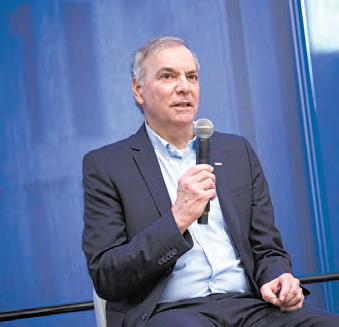
“I think that we have a situation in which a government is telling us that everything is good. If you look at the official numbers coming from CMHC, it's about 240,000 housing starts, a strong number. But it's not, because, when they measure housing starts, they start measuring it when it reaches grade level, not when you start digging. So, basically, housing starts is something that started actually a year and a half ago. It takes about 18 months until they actually measure it.
So my prediction is that housing starts will go down because we’ll start measuring it correctly, that's one thing. We estimate that housing starts are actually 50 per cent lower in Toronto than the official numbers. So it's much weaker than perceived. I think that the price of micro condos will continue to go down this year. I think that low-rise will stabilize and go up, so the gap will widen.”
“I think the for sale market's gonna be very quiet, unfortunately, for at least one more year. I think the rental market is going to continue to see a lot of downward pressure. There's just too much supply coming out on the market. However, I do think if you are an opportunistic developer, which we are, we think it is a generational opportunity to put shovels in the ground. And so we are actively gonna be doing that.
We're also gonna be actively pivoting our business into seniors and students. We've made a big call on students. We bought four sites in four great university cities within a two-hour drive of Toronto. And then we're also making a very big call on seniors.”
ADRIAN: The reality is the entire funding model needs to change, your selling-off plan, right. What owner-occupier is buying four years in advance? The whole product is geared to investors. So unless the entire financial system completely changes how this product actually gets funded and sold, it's not going to happen. So that’s going to take some time.
JENNIFER: I think we're on the cusp of that. I think it's happening right now. The whole system's getting upended right now.
BENJAMIN: I totally agree. We are not there yet, and we have to move toward this direction. What is the future of the condo space? What is the future? You cannot go through such a shock — and we are going through a shock — without change. What would be the change? First of all, all the Mickey Mouse developers are not there anymore. Only the big ones are there. That's one thing and that's a good thing.
Second, the focus would be more on end users as opposed to investors. End users are families. Families want large units. So the new supply would be larger units. Also, they cannot wait five years, absolutely. Therefore, the pre-sale model is dead, in my opinion. In the future, you would have to see banks taking much more market risk, developers putting down more deposits, larger deposits, and space would be different. This is going to be a very different market emerging from this shock. It would take a while, but we are there. And banks will have to take more market risk, the way it is in many other countries.
POST: Odeen, right now in Toronto, there are a lot of people who are frozen in the market — for example, the couple who bought a small condo a few years ago, lost some value, but their family is growing and they need to upsize. What advice or strategies do you have for people who feel stuck?
ODEEN ECCLESTON WILTSHIRE

dotes of people suffering really tremendous losses, even on some of our own development projects. I've seen unprecedented numbers of people who just simply can't close because they were relying on their condo selling or their home selling. And it's been a disaster.
But when it comes to families, I think, instead of looking from an investor standpoint, my advice to them would be to look at it as more of a long-term decision, a long-term mindset in terms of, "Will this move improve my family's quality of life?" And if so, then my advice would be to sort of methodically and with less risk, of course, do take that leap of faith and try to move up. But with a more long-term, 5- to 10-year mindset as opposed to, say, quick blips.
MICHAEL: Well, look, yes, frankly. But our business is not … we've been in business for 69 years. It's not to guide people in the wrong direction. I really feel that you have to take advantage of the market that you're in. I’ve said this every year for the last 14 years. No one has bought real estate and held it for seven years in the last 60 and lost money. So, now, you have to have me here till 2031 to see if I'm right. But I actually believe that Toronto has the right fundamentals. And I think now is a great opportunity.


MICHAEL: Well, I ask everyone to take their mind back to 2022, the first quarter, high watermark before interest rates started going up. Prices are down 25 per cent. If someone approached you four years ago and said, “You can take this real estate and buy it at a 25 per cent discount,” everyone would have jumped.

5th YEAR ON PANEL : What I've been seeing a lot of over the past couple of years, and rightfully so, is something that I call move-up paralysis, which is rooted really in analysis paralysis, where people are so focused on the numbers. And again, rightfully so, because over the past couple of years, we've seen this family, and we all have friends, relatives, anec-
There's an expression that one of the agents in our office brought up. No one in Toronto wants to buy real estate unless there's a lineup. Now is the time to be a pioneer. If you're bullish about Toronto, and as they say, the best time to buy a home is when you need it.
POST: Now, Michael, I would never ask this question, but there might be some in this audience who would ask, “Is that a little bit selfinterested for you to put that forward as an idea?”
BRIAN: But you've also got the problem that if you own a condo in Toronto, and maybe you've owned it for a couple of years, and you want to move to a single-family house or your first house or a larger condo, who would put an offer on anything, not knowing if you can sell the product you have? So, if, say, there's a great price on a house, and it's $1 million, $2 million and my condo was $600,000, and I'm supposed to close on this date, you may not be able to close for a year or two. I don't know how many condos sold in the last month: 50? Less? Imagine less than 50 condos in Toronto sold in a month. Think about that. Not less than 50 in one building, less than 50 in the GTA. Who the heck is going to put an offer on anything when they've got that concern that, "How am I going to get rid of this?" If they rely on that as their equity to move up?
MICHAEL: I just want to say, I think that we get caught up in painting the entire market with a single brush stroke. We're talking about investor suites and a condominium and combining that with single-family detached homes. I can tell
you, I read the same articles. I know condominiums are 90 per cent lower than the 10-year average in terms of sales in January. However, we have to focus our attention. Condominiums make up one part of the market. We're not talking about semis, detached, townhouses. You look at last week in Leslieville, there were 29 offers on a property. It was bid up $300,000. There's a property in the Casa Loma area, $13 million, three offers. Sold in 24 hours. So let's not get caught up in only talking about one part of the market. We have to talk about every element of it.
POST: Sebastian, we’re in a tough economy right now. You recently told us skilled trades are still hard to get, materials are expensive. Given these conditions, what renovations are still worth doing?
Another client is newly retired and dealing with mobility and immune system challenges. She initially thought a condo would be the right move to eliminate stairs, but she reconsidered after reviewing the costs and speaking with her doctor. We are transforming her main floor into a fully accessible living space by removing thresholds, adding ramps and grab bars, and making it function like a single-level condo. At the same time, we are converting the upper floors and basement into separate units, creating two rental incomes that will help support her in retirement.
the best right now — and which ones aren’t.

SEBASTIAN: The mindset around renovations is definitely changing. For a long time people renovated with resale in mind. That’s not true of the current environment. Moving is expensive, borrowing is harder, and people are much more cautious about taking on big financial risks. So what we are seeing is a move toward renovations that improve daily life rather than just resale value.
And one of the big shifts we are seeing in renovations right now is generational. Many of the highly skilled craftspeople who built their careers over the last 30 or 40 years are reaching retirement, and fewer young workers have come up behind them to take over those roles. At the same time, the industry went through a long period where margins were squeezed. Homeowners often felt they could push contractors to underbid, which made the trades less attractive as a career and discouraged people from staying in the business long term.
That pressure has also driven a lot of specialization. Many builders who once operated as full service general contractors
“I’VE SAID THIS EVERY YEAR FOR THE LAST 14 YEARS. NO ONE HAS BOUGHT REAL ESTATE AND HELD IT FOR SEVEN YEARS IN THE LAST 60 AND LOST MONEY." —MICHAEL KALLES
In that sense, I do think we are entering a bit of a new era. It’s less about chasing trends and more about solving real problems.
For example, a client of mine is a single woman approaching retirement from her career as a real estate agent who planned to downsize into a condo for the amenities and maintenance. Her thought was that the money she made from her home sale would support her through old age but after doing her math, including changing property values, transfer taxes, condo fees, she realized it didn’t make as much financial sense as she once thought. Instead, she’s decided to stay in her home, hire out snow removal, home and garden maintenance, and join a local club to access the same social and lifestyle benefits she was seeking. She keeps her equity, stays in the neighbourhood she loves, and now we are renovating her home to better suit this next phase of her life.
BARRY COHEN: Well, I find that the neighbourhoods that are well established and amenity rich, it's not a pattern. They've been longstanding, year-after-year appreciation. I mean, go down to the Beaches. I don't even know if they've had a correction. If you look at something like High Park, Parkdale, 84 per cent of the homes that sold were in multiple offers. Beaches, 76 per cent. Leslieville, 84 per cent. Bloor West village, 58 per cent. Davisville, 56 per cent. I work in a market, a high-end market. My office works in every value. We have multiple offers all the time, but it's not the traditional way of offers, with a deadline of next Tuesday at 4 p.m. It's now when you get one, you go back to the people who have been there, and you find all of a sudden there's a second offer. So, like Michael said, it's not just about condos. But I almost think we're putting kerosene on the fire by calling out the neighbourhoods that aren’t doing as well. And I think it's wrong because, if you look at some of the other areas that have been deflated, I think they're the best chance of growth in the future when things do turn around. Maybe there'll be an adjustment on HST, and maybe there'll be a halt on foreign buyers. And those things will bounce back.
POST: What are you seeing, Odeen?

ODEEN ECCLESTON WILTSHIRE
“I think that qualified buyers are out there, but a lot of them are on pause. But I think that this is going to be a year of really kind of healing from a lot of the mental trauma of the past couple of years, of really sort of crushing losses. As Michael mentioned, when people see a long lineup around the corner, that's when they want to buy, right. So I think the momentum will build once we see more buyer confidence. So I think that's going to happen in Q1 and Q2. And I actually can see the condo market improving a little earlier than most of the predictions this year; I predict confidence in that market will increase more in Q3 and Q4. And then I also see an influx of tiny homes.”
BRIAN GLUCKSTEIN
are choosing to focus on one thing they do extremely well rather than managing entire projects. As a result, the traditional general contractor class has been thinning out. This creates a bit of a Catch-22 in the current market. Because renovation demand has cooled, it can look like there is a surplus of builders and homeowners with the means to renovate are sometimes able to secure very high-quality crews. But underneath that momentary slowdown, the deeper pool of experienced builders and project managers is shrinking. That is likely part of the reason we are seeing more attention and funding directed toward skilled trades training programs.
POST: This is the perfect opportunity to segue into our next section, which is going to be about the detached segment of the market, semi-detached, attached homes. We want to know what neighbourhoods are holding up
ODEEN: Similar to Barry, I'm seeing that the communities in the GTA that have excellent school districts, very community-rich, and that have a lack of new land where you can't build too many new houses, like the Beaches, like Leaside, have been completely resilient. We have a small community in a part of Pickering that's highly coveted. And we had 12 offers on an offer presentation night a couple weeks ago. And then we listed a house really not too far from there. And it's been zero showings. So it really does speak to location, location, location. And as Barry said, these are neighbourhoods that have always sort of had great reputations.
BENJAMIN: If you look at the low-rise segment of the market, it has been very resilient. Remember what environment we are operating in. Ontario is basically in a semi-recession. If you look at the third quarter GDP, it was OK. It was 2.5 per
“I think the condo market has continued to slide price-wise. And I think that, when you start to get a culture of people who say, "I just wanna rent," they're not going to want to rent condos because it's not secure. Secure rentals are purpose-built rentals that you can plan your life around and not worry about your landlord selling it because he's underwater. So because people are moving out of condos to purpose-built rentals, you're going to see the prices continue to go down. I think the prices of single-family homes will continue to be strong because the inventory is going to get smaller. You're looking at people who are saying, "I am not moving up, the cost is too much. I don't want a 40-year mortgage at 35 or 40 years old. I'm going to renovate what I have.” I think you're going to see people staying where they are at all levels, the $1.5 million house, the $2.5 million, the $5 million house. They're going to stay where they are, and that's going to put more pressure on single-family houses because we're not going to have the supply.”
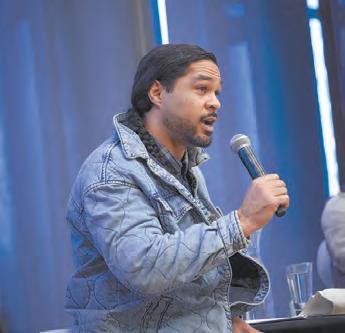
“I think renovation will stay steady as people are not necessarily downsizing anymore. People are thinking about staying in their homes and being multi-generational. I think that, as prices come down in the rental market and the changes with Bill C60, where they have protected landlords just a little bit more, a lot of the mom-and-pop investors who have income properties will bring those properties online and create a bit more of a robust rental market. And I think that, with the prices of condos being so expensive to build right now, there will also be a lot of renovations happening to start building more residential income properties. I know we can build up to four units inside of a house now, plus garden suites. You can kind of have five units on one residential property now. So maybe people and investors will stop looking at building condos and highrises because they are so expensive and start looking to residential communities and converting some of the properties that are in there.”
“Well, there's a great saying in real estate: there's three reasons why real estate sells: price, price and price. And if you look at deliveries, there's 35,000 deliveries of condos in the next 18 months. Go into the future — by 2028 there will be 10,000 and by 2029, 5,000. So I think the inventory has to clear, but what I'm shocked about is that it hasn't. People haven't come in and bought groups of units from across Canada. The reason why is the price isn't low enough. I was thinking about a condo that I heard about in Vancouver. I think they came to the market around $1,150 a foot. And they said, "Oh, these units will never sell. They'll never sell." They came out at $700 a foot on a Friday and sold 200 units by Monday. So price will sell it. It's a matter of will these developers hold on to these unsold suites?”
cent in Canada. But what is GDP? GDP is consumer, which was flat; investment, which was flat; export, which was negative; and import went down. So the only reason why actually GDP went up is because the imports went down because it comes with a minus.
Remember in Grade 5, when they told you, if there's minus before something and it goes down, the rest goes up. So the only reason why GDP in Canada is going up is because something fell, and the fourth quarter was negative. So the fact that the market is doing so OK, not great, but OK, in this environment is extremely, extremely important.
One more thing: Jennifer discussed the difficulties that people are facing. We are in the midst of the largest mortgage payment cliff in Canadian history. A lot of people took mortgages in 2021, and now they are renewing them in 2026. Interest rates are much higher, prices are lower, so they cannot refinance. We estimate that five per cent of the mortgage market, five per cent, which is a lot, will see more than 40 per cent increase in payment. That's significant.
However, it doesn't mean that they are going to default because, if you look at the trajectory of defaults, they're actually going up, and then there's a level of why. Because banks call you, say, "Let's have a coffee." And they actually move your amortization from 20 years to 40 years, and prevent the pain. So this is not [the] 2008 [mortgage crisis] by any stretch of imagination.
POST: A decade ago, the average age of the first-time home buyer in Ontario was about 34. And just to put things into perspective, now it's 40. That's a huge factor, obviously, in the market. How do we make it so that people can afford to buy sooner?


take for someone to save for a home? They have to save for 10 years in Toronto to afford a down payment. And so, that's a nice link to the age 30, but then when you look across the country, and you look at places where they are not as expensive, so cities like Edmonton or Winnipeg or even places like Montreal, the average age of first-time homeowners is actually in their 30s. And you look at how long do they have to save to earn to be able to buy a home there? And it's in the two- to four-year pocket.
SALIMA: It's not that I disagree with anything you've said, Jennifer, and I think you know that about me in terms of wanting to build complete communities and great cities. But is it not about choice? I think the topic that we're talking about right now is that people don't actually have a choice. If they wanted to buy a home, they literally don't have the ability to do that until they're 40. Does that sound right as a society that we live in?
JENNIFER: I completely agree. I also think someone who sits down with their banker and learns that the only way they can keep their house and not go underwater is to take on a mortgage till they're 80 has been sold a false choice. Because if that's where you end up, then you've got an even bigger problem on your hands.
SALIMA: I think we need a little bit more context on the numbers, right? In 1981, 50 per cent of people aged 30 owned a home. And we had interest rates of what, 20 per cent? And eight per cent of those people lived with their parents. And now we have the average age is 40, and 30 per cent of people aged 30 live with their parents. So, I think there's a pretty clear affordability line in Toronto. I think what's interesting on this topic, though, is to think about the national picture.
One of the things that we were looking at on this question was how long does it
JENNIFER: I'd like to just connect that comment to a comment that Benjamin made about how we won't see this cliff because the banks will have a coffee, and the banks are extremely happy to extend your mortgage from 20 years to 40 years. It's a lot more fee for the banks. And it raises a really interesting question. And maybe I'm segueing too soon to our next discussion, but it raises an interesting question around what home ownership is and why we sort of glorify home ownership when, in reality, there's a whole series of really substantive risks that come with home ownership in a moment like this. And if the only way that you can not go into a crisis in home ownership is to take on a 40-year mortgage and — hold on a minute, you were 40 years old, we just learned, when you got that mortgage — so now you've got a mortgage till you're 80. Who's getting ahead here? This seems to me like crazy talk. This is not a good way to run a housing system. It raises a really interesting question about rental housing. If we can prioritize building great family rental housing, it actually would add a really substantive, more affordable option into our housing market.
SALIMA: And guess what, the size of their mortgage compared to 30 years ago — we all just heard what everyone paid for their homes, right? — the size of their mortgage is so much greater. So they're doing that instead of their kids' education or whatever other things that they have to do in their life.
BENJAMIN: We have to remember that we're talking about the margin of the margin. We're talking about four to five per cent of homeowners. And that's something that we have to deal with. And that's important. And it's not a macro story. It's a micro story, but it's an important story. But I think that we have to look beyond that. And I think that we have to realize that things have changed dramatically when it comes to the rental market. I totally agree,
and I've been saying it in this forum before. I want to create a situation in which you are 35 years old, you are married, you have two kids, and you are renting. Nothing is wrong with you. The way it is everywhere. And we have to establish this. And that's why I think that purpose-built rental is the solution to the affordability crisis or one of the solutions to the affordability crisis.
MICHAEL: I just wanted to say one quick thing. I think it's important to recognize when the banks — and I’m not siding with the banks of Canada — but when the banks extend a mortgage, you have to think about what's on the other side of that. What happens if they don't? If you got a mortgage at 1.89 per cent in 2021, it's 2026, and now it's four per cent or more. What happens? The government doesn't want to take everyone's keys to their homes, right? That’s not a very good political strategy. What do they say is the number one rule of politics? Don't lose. So it's giving people the ability to stay in their homes.
people that are owning a home, maybe this is not a popular comment, who should never own a home. That's just way too high. And I think Barry made the comment around it being more expensive to rent than own. Actually, it's the opposite.
Even if you look at 2022 numbers, where rents were at its all-time high, and you look at an inverse ratio on shelter costs — when you actually own a home, service a mortgage, all your renting costs — it's actually 25 per cent cheaper to rent than it was to buy that same home. So we actually are precisely making the opposite call. We actually think we're going to see a generational move into the rental market. And this is a big, contrarian call, but we think it's precisely the time to actually invest in development of new, purposeful rental.
BARRY: But when you do your numbers, are you looking at the equity that they've built over a decade? Because on a yearto-year, yeah, OK, renting is cheaper, but when you look at how much equity you’re
“LESS THAN 50 CONDOS IN TORONTO SOLD IN A MONTH. THINK ABOUT THAT. NOT LESS THAN 50 IN ONE BUILDING, LESS THAN 50 IN THE GTA." —BRIAN GLUCKSTEIN
that is well and excessive. Wage growth, if you look at any priced income, it's not sustainable. If you compare it to any other G7 country, it's not sustainable. So we actually think the opposite. We're obviously making a big call on rental housing. We're making a big call on young families. We're making a big call on downsizers, larger, more liberal suites. Fifty-five to 60 per cent of our suites that we're building are two- and three-bedroom units. We do think that's the way of the future, and we very much want to double down on amenities, on social programming, on schools. That's what's gonna create a vibrant community.

JENNIFER: How many people think the future is going to be the same as the past? I think you've heard from everyone on this panel that, when we bought our first homes, it worked out OK. The odds of that happening for my children, I think, are zero. I think there's zero chance that they're going to see the kind of appreciation that I saw over the course of my adult lifetime, just like I didn't really see the kind of appreciation that my parents saw over the course of their lifetime.
BARRY COHEN
BARRY: Right. And what's wrong with that? The U.S. has 35-year mortgages. I know it sounds daunting, a 40-year mortgage, but your home is going up. As long as the payments are less than what it costs to rent and you're getting capital appreciation, you are getting ahead in life.
POST: I want to take us back to a conversation that Jennifer just touched on, which is this idea of potentially the emergence of the permanent renter. As Benjamin said, this obviously exists in many other cities in the world. Do we think that this can happen in Toronto?
building — my wealth is largely because of the houses I own.
ADRIAN: You're right. So what is the longterm cost of capital return that you're getting when you buy a single-family home, and is that something that's sustainable? I would say the proverb of trees growing to the sky — of constant upward price growth — is not sustainable. So when you're running a double-digit, year-overyear increase in home price appreciation, we're all saying it's not sustainable.
BARRY: Never is.
So we know the future is going to be very different from the past. And I think that opens us up and should present to us a way of thinking about housing in a very different way. Because if we assume that people will always generate equity out of their housing, if we assume that's going to be true, then you should always be a buyer. If that's not true, then we have to ask, well, if we have high-quality rental housing, like Adrian is talking about, in great neighbourhoods, and it is affordable or luxury housing, that can become a very stable way to live in the city and in other parts of the country.
“At the risk of maybe being singled out next year, I think that there will be overall probably about a four per cent or five per cent loss in the average price. But based on our conversation, there are segments of the market that do well and segments that don't, and neighbourhoods that do well and neighbourhoods that don't. So good luck trying to figure those out. I don't think that it's going to be significant, but I think it's going to be a struggle year. And I think many developers in the city, like Jennifer, just got hit with the wall probably 18 months ago. So there's been a huge adjustment to that. But I think, behind the scenes, when I talk to these developers, the first thing they said out of the gate was, "Yeah, it's a three-year dig out." It's probably a five- or six-year dig out of the condos. And then we'll have no supply, and the condos will go through the roof, and the cycle continues.”
SALIMA RAWJI
ADRIAN: I think it's going to be forced to happen in Toronto. I spent seven years in Europe. When I came back, I was still amazed at the negative stigma around renting. When you look at home ownership rates in Ontario seven years ago, it was 71.5 per cent. To me, that's crazy. That should never, ever, ever happen. There are a lot of
ADRIAN: To rely on that when you’re making a judgment call between renting versus owning, it’s just wrong.
BARRY: We've only been talking about a couple of years of double-digit increases. I mean, largely it's been four per cent to eight per cent.
ADRIAN: I think it's eight per cent or nine per cent, which is a big number, right? So
MICHAEL: Just to bring this home. I would say that our firm has processed more lease listings in the last four years than we have in the 25 years before. We have never had more listings for lease. But I think going back to what Jennifer said, it sounds like the rental people are saying, "Rent's the way to go," and the real estate agents just want to sell more houses. But I think, as a community, we’re going to need to be balanced. We're going to need rentals, and we're going to need home ownership. We shouldn't be wiping each one out and saying, "What's wrong?"out and saying,
“I'd need to put on the record that I said we would be building student housing last year, and we are delivering 842 beds in September. But I think I want to focus on what we are doing at York University Development Corp in the next year, given this really difficult market, and the 200 acres of land that we have to build community on. And I think for us, it's about how do we reimagine the land, which would have been highrise product, which would have been condo product or rental product, and what are we gonna do? So my prediction will be that we will see housing typology that we have not seen in a while come back to the forefront, which I think is really healthy for our market as well.“

JENNIFER KEESMAAT
“I think the condo market is going to be very tricky, not just for this upcoming year, for quite a few years, until we figure out what that new model is. So, you're not going to see a lot of condo starts. On the overall housing starts side, I think you're going to continue to see players, those Mickey Mouse developers, kind of vanishing. A lot of them went under, a lot of folks have gone under in the past two years. I think you're going to still continue to see a lot of distress in the home-building industry as it is just too difficult to figure out how to get the capital, how to work with the construction costs. We thought 2025 was the crisis year. First indications of 2026 is that it's even more of a struggle to figure out how to make the math work on getting new homes built.”
BRAD LAMB, 18 YEARS ON PANEL
President, Brad J. Lamb Realty and Lamb Development Corp.
The years 2026/2027 will see zero new condo starts and a handful of rental starts. Rentals are highly subsidized by the government and require 15 to 25 per cent real equity. Condos require 10 per cent equity because we use 15 per cent insured deposits for our equity capital stack [sources of capital and ownership in real estate projects]. The purpose-built rental economy is tiny compared to the condo economy, as purpose-built rental is very hard to make work from an investment basis. Essentially, we continue to see a collapse in supply the longer this continues. Ultimately, Toronto will return to unaffordable housing prices as that is an economic reality in every single tier-one city. The market collapse will run its course and leave us all in a worse supply position than imaginable.”
SALIMA: I think we can't leave this part of the conversation without acknowledging why there is a mindset issue in Toronto around renting. When the stock for renters has been this shadow market, where there hasn't been professional management, where there isn't security of tenure, where someone can say, "I want to sell my unit tomorrow," then all of a sudden they have to go find a new place to rent. As we bring more purpose rental into our market, I believe Adrian's bet is right. I believe Jennifer's conviction is right. But I also think we have to acknowledge: where are people coming from? What is their current state? And how will they move through to that journey?
mised because there were no jobs. This gap between what they were able to do and what they ended up doing as a first job lasted not one year, not two years, but 20 years. That's one of the reasons why income did not keep up for many years. And it's happening now again. So I see a lot of young people here, and I see a lot of worried parents here. And I will say, one, don't compromise. And if you compromise, continue looking because the gap will stay with you if you don't do that.
POST: We're gonna jump into our audience's questions. First question from the floor: How do we make sure that cuts to development charges and the HST get passed down to buyers rather than being captured by developers or landowners?
variable. And right now, you can get a forgiveness of development charges and still not have a viable project. So to be talking about passing that so-called savings on, that so-called savings could be eaten up by rising construction costs as a result of a war in the Middle East.
BENJAMIN: One thing that we have to think about, because I think Jennifer is absolutely right, clearly
JENNIFER: Well, this is a question that's on point because there was a movement about a year ago. There were a bunch of developers who came together as a consortium who were
WE'RE GOING TO NEED RENTALS, AND WE'RE GOING TO NEED HOME OWNERSHIP. WE SHOULDN'T BE WIPING EACH ONE OUT AND SAYING, "WHAT'S WRONG?" —MICHAEL KALLES
rent is the way to go — in the future, rent will not be discriminated against. Right now, the thing that we are discriminating against is within the tax system. I think that it's not even. And I think that the more rental projects we have, the more rent is part of the story, you will see the government treating rent in a very different way. Namely, tenants will be able to write off some of their rent, which I think would be the right thing to do to encourage this tendency.
Also, we were talking about people getting older and not being able to get into the market. One factor that I look at is youth unemployment. Youth unemployment in Canada now is 15 per cent. It's higher in Ontario. Now, the last time it was so high was in the 1990s. And in the 1990s, we followed people that graduated from colleges, universities, high schools. We followed them, and their skill level was up here, and the job that they got in the '90s was down here. They compro-
arguing with the government, "If you reduce development charges, we will ensure that we do exactly that, that we pass that on to the buyer." And I was asked to sign this, and I had a lot of arguments with a lot of people because it's actually kind of an absurdity. Because there are so many different costs and so many variables in a development project from the time that you first structure your pro forma to the time that you actually bring that product to market, that there's absolutely no way that you can track that.
One of the things that's happening right now is that most projects, they don’t pencil at all. They’re not viable at all — it's why there are zero condo starts. So the development charges are compromising, among other things. It's not only the development charges, the stickiness of construction costs is still a bit of an issue. There's a whole variety of different issues. It's impossible to actually trace that straight line because the market's way too
So it's pretty much impossible to draw that straight line, and I think it's disingenuous to do that. I think the government right now needs to be looking at those high costs: approximately 25 per cent of the cost of a new condo over the past five years has been government charges, 25 per cent. That's money that's just flowing through the developer, going straight onto the consumer. We've got to get rid of those costs just to bring us back up to viability. We don't actually have a viable model right now for building condos in the city. We don't actually have a model. That's why none are being built. And that's why I also think we're on the cusp of a huge reset around how we finance housing development in condos. How we did it in the past, it doesn't work today. It's likely not going to work in the future. Maybe if there's a huge influx of foreign investors into the market, but as we know, that creates other wonky problems with the type of units that we built. We need a new model right now. We're staring into the void. We don't have a model for building that product type. And maybe there's no pressure right now because there's a so-called glut on the market, but we don't have the new model yet. But there is going to need to be a fundamentally new model for financing market housing in our big urban cities in the future. We don't have it yet. Maybe you know what it is, but I don't know what it is.
POST: We have a second audience question and this one's for Ben. As we move forward in a fairly balanced market or even a buyer's market, is it time to do away with the foreign buyer ban and replace it with just the tax on foreign buyers if needed?
BENJAMIN: Yes, absolutely. I think that we need to do that at least for a short period of time. We cannot close the country. We have to open the country. Closed countries don't win.
We realize that many people in our city don’t have basic shelter and a roof over their heads. With that in mind, Post City, Streets of Toronto and the Rotman School have made donations on behalf of our panellists, our readers and our sponsor — The REMAX Collection — to Sistering, an organization supporting unhoused women and trans people in Toronto, and to Red Door Shelter, which provides sanctuary for families.

Steve Paikin moderated this year’s roundtable with Post City’s managing editor Julia Mastroianni and has turned the roundtable into a podcast available to you at no charge.






BIO
Dr. Lewandowski is a graduate of New York University (NYU) College of Dentistry. He has worked as an instructor at the NYU Faculty of Dentistry, University of Toronto Faculty of Dentistry as well as in a hospital based dental clinic. Dr. Mostyn obtained her dental degree from The Faculty of Dentistry at James Cook University, Australia. Dr. Haley Frydrych received her dental degree from U of T.

• Do you wear dentures? Many people over the age of 65 use some form of removable denture. While the majority of dentures fit well, some always move, lift and cause discomfort. This may lead to difficulty chewing and lack of confidence in social interactions. There is a strong link between overall good health and proper oral care.
• Dental implants can help. Implants can restore comfort and confidence, helping people love their dentures again. A dental implant has two parts: a metal root that is secured to the jaw bone and an abutment which securely anchors your denture in place, preventing movement. Versatile implants can replace a single tooth or a bridge, eliminate the need for a removable partial denture or even secure complete full-mouth dentures. Implants have a proven track record for long-term success. When using implants to replace a single tooth, neighbouring teeth do not need to be used as anchors, making it a conservative choice in many cases. Dental implants do not require any special care. Age is not a factor in the success of dental implants. Most people
Dr. Edwin Lewandowski and Associates 1200 Centre St., Suite 101 Thornhill, ON
Separation can feel overwhelming. Many people worry about their children, their finances, and the possibility of a long court battle. These concerns are common. Many assume divorce inevitably leads to conflict, years in court, and enormous legal costs. But it does not have to happen that way.
We have all seen firsthand how destructive divorce litigation can become for couples and their children. What begins as a disagreement can quickly escalate into years of conflict, high legal costs, and lasting strain on a family. An experienced divorce coach will focus on helping couples navigate divorce with clarity and in ways that minimize harm.
The way couples choose to divorce often matters more than the divorce itself. Most people are not looking for a fight. They simply want a thoughtful way to move forward.
Divorce coaching helps couples approach separation with greater clarity and less conflict. Through a structured process, clients gain a
CONTACT
in good health are excellent candidates.
• Do you have broken or missing teeth? One Visit Porcelain Crowns may be right for you. A full or partial crown is used to replace or strengthen a broken tooth. When a tooth is filled multiple times throughout a patient's life, the critical tooth structure may be lost. Many of these teeth break and require restoring. Options usually include very large fillings or crowns. Fillings fit inside the tooth and require original tooth structure to hold it all together. If part or all of the original tooth has been lost, then a full coverage crown may be a better option. With digital technology, we can make a direct 3D image of the broken tooth from the patient, design the new tooth (crown) on the computer chairside and have the new tooth made in the office. These crowns are beautiful, strong and functional and permanent. Often done in one visit. Amazing technology!

better understanding of the legal, emotional, psychological, and financial realities of divorce so they can make informed decisions. Knowledge creates clarity. For parents, helping them focus on the needs of their children during and after divorce is key. While judges care deeply about children’s well-being, no judge can know a child the way their parents do. An initial conversation can simply be a place to think things through. If you are considering separation and would like to learn more about this approach, confidential consultations are available. Many people who reach out are simply exploring their options. You do not have to be certain about separation to have a conversation.

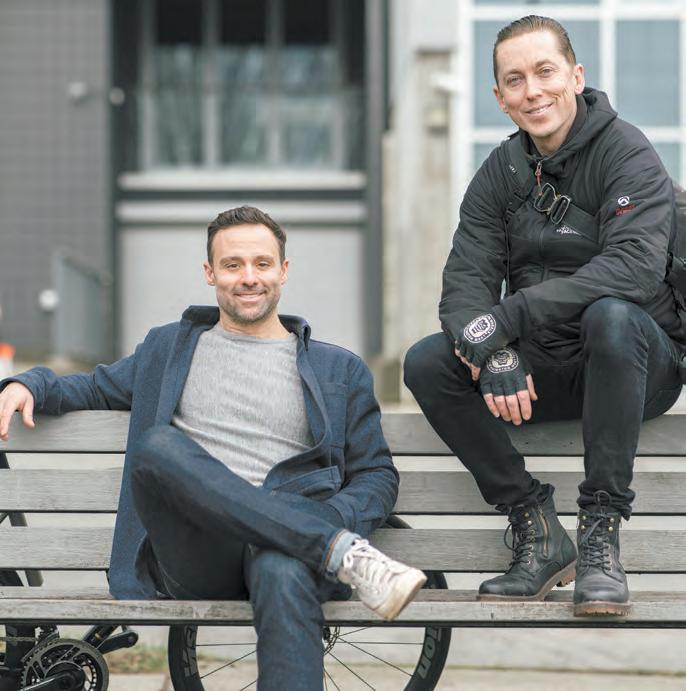
We love cycling! We do it for exercise, we commute to work, we pick up the kiddos at school and grab groceries on our bikes. Riding a bike is an incredible way to explore Toronto, while doing your part to fight climate change. That said, in our busy city it is not without some risk.
Collisions with motorists happen more regularly than we would like. In our experience this is often due to distracted and dangerous driving, as well as impatience of those behind the wheel. The results can be quite serious for people on bikes. We see concussions, broken bones, and even psychological trauma regularly.
Our hope is that it never happens to you, but it is always best to be prepared. Who knows, maybe you’ll be able to help someone as a witness to a collision. In either case, here are critical post-collision steps to take:
1) Get off the road and to safety if your injuries permit.
2) Contact authorities at the scene by dialing 911 or asking a bystander to do so.
3) Take pictures of the driver’s license plate, property damage, bike lane blockages, etc.
4) Seek medical attention even if you think you’re just a little banged up.
If you’ve been struck by a motor vehicle and injured, no matter who’s at fault you have access to Accident Benefits through auto insurance for lost wages, physiotherapy and associated medical costs. You may even be able to seek additional compensation through a lawsuit to provide for longer term recovery needs.
Of course, always contact a lawyer who can advise you of your rights. Be sure it is one who specializes in cycling law!
Ride bikes, have fun, be prepared and be safe. See you out there.






























The Boys — the gritty, gory show that asks the question, “How would power and corruption affect superheroes in the real world?” — is coming to an end. Ahead of the season five premiere on April 8, we caught up with Toronto superhero Nathan Mitchell, who plays the now not-somysterious Black Noir.
What can we expect from Black Noir in this final season?
New Noir has been with The Seven for some time, and he knows what to expect, and he knows what’s expected of him. So I think the challenge and the question for him this season is how much does he embrace his role, and how much does he still try to find fulfillment?
You play a superhero whose face we never see and, until recently, whose voice we never hear. How did you approach that acting challenge?

played by Mitchell], I had been doing prep work for this character before, so playing him and transitioning it into this speaking part came really easily.
scene we were filming in season five and my character references an event that happened in the world — and at the same time a very similar event happened that day in the real world. The writers wrote that a year, a year and a half ago, and the fact that on the day we’re filming, a parallel event was occurring — that just blows my mind.
You star in The Boys and Ginny and Geor, both of which are largely Canadian shows with major international reach. What has that been like?
I just embraced the fact that there are so many ways to tell stories. I would take the scenes my character was in, I would give him lines, and then I would figure out how to express those sentiments through my body. When this new opportunity came to reveal my face and speak [Black Noir is killed off in season three and a
The political satire on The Boys has sadly become even more accurate. How do you approach that as an actor?
Our writers are so intelligent. I sometimes wonder if they’re psychic! There was actually a
Move over, High Park — enjoy a bloom with a view at Ontario’s must-see cherry blossom spots when the trees turn pink in April

It is so cool to be able to work on a show with so much Canadian talent, and it’s something you only dream of as an actor coming up in the city. We talk about the Canadian star system, and I think a real piece of it is a numbers game. In the U.S., the population of just California is equivalent to the population of Canada. So they have so much more of an audience domestically that can be a revenue stream. We have the talent, but I think it's really about the system and the structure and how the industry can change its strategy to open up access to markets — and in doing so, bringing more revenue, which then brings in the possibility for higher-quality productions.
—Julia Mastroianni


Indulge in more than just cherry blossoms — while sakura trees bloom here, they’re mixed among over 1,700 species of plants, including strikingly pink crabapple trees and mesmerizing magnolia trees. Spot cherry blossoms along Prince of Wales Drive at the edge of the garden and then take a peaceful stroll along the nearby Rideau Canal. Arboretum, Ottawa



Queenston Heights Park
Seeking a cherry blossom experience without all the hustle and bustle? Make your way to this historic park, where the blossoms meet the edge of the escarpment. Perched above the Niagara River, the sakura trees open out to sweeping views, where soft pink petals contrast against deep blue waters. 14184 Niagara River Pkwy., Niagara-on-the-Lake

Just outside Toronto is a cinematic floral experience. Home to one of the most impressive collections of cherry blossom trees in the province, there are three sakura hot spots here: the Arboretum, the Rock Garden and the Laking Garden. Spot clusters of the pink blooms between winding stone paths, sculptures and terraces. 680 Plains Rd. W., Burlington





















































Here are the 10 best shows to check out this month, including Florence + The Machine, Demi Lovato and a new Second City revue
By Ron Johnson
1
Indie-pop powerhouse Florence + The Machine brings the Everybody Scream Tour to Scotiabank Arena on April 16. With multiple Grammy nominations, and hits such as “Dog Days Are Over” and “Shake It Out,” she takes the stage for a night of epic anthems and theatrical spectacle.
2
The wildly irreverent hit musical
The Book of Mormon returns to Toronto April 7–26 with its outrageous story of two mismatched missionaries sent halfway around the world. Catch the nine-time Tony Award–winning comedy at the Princess of Wales Theatre for a sharp, laugh-out-loud night of Broadway satire.
7
6 RAYE
Pop powerhouse Demi Lovato brings the It’s Not That Deep Tour to Toronto in support of her new album on April 20, with special guest Adéla. Expect a night of raw emotion, bold performances and Lovato’s signature blend of pop hits and soulful ballads at Scotiabank Arena.
U.K. pop sensation Raye hits the city on April 13, performing hits such as “Escapism,” “Love of Your Life” and tracks from her acclaimed 2024 album My 21st Century Blues Known for her genre-blending and infectious sound, Raye takes the stage at Coca-Cola Coliseum.

3
Comedian Irene Tu brings her razor-sharp wit and acclaimed standup to town for a two-night run at Comedy Bar Danforth, April 24–25. With her #1 iTunes debut album, We’re Done Now, and Netflix spotlight credits, Tu delivers a smart, fearless and hilarious performance.
Crow’s Theatre presents the world premiere of Mary, Mary, Mary, Mary, running April 7–May 3. Written by playwright Erin Shields and directed by Ellen McDougall, this reimagining gives voice to four women named Mary, blending scripture, rebellion and contemporary wit. 8


4
British pop provocateur Lily Allen brings her latest project to the stage with Lily Allen Performs West End Girl, a show featuring the acclaimed new album performed live from start to finish. Catch the British singer-songwriter April 7–8 at the venerable Massey Hall for two nights of sass and storytelling.
9
Baroque specialists Opera Atelier present a new staging of Pelléas et Mélisande on April 15, 16, 18 and 19, blending gorgeous orchestration with avant-garde flourishes. Featuring a stellar cast including Measha Brueggergosman, the production unfolds at Koerner Hall.







5



Comedy institution the Second City has launched its 91st Mainstage Revue, World’s Gone Wild. Expect a whirlwind of sketch, improv and musical comedy from a new ensemble, featuring Gillian Bartolucci, Tim Blair, Monica Garrido Huerta, Antony Hall, Chelsea Larkin and Gavin Pounds.
Beloved local band Great Lake Swimmers returns to Toronto to play Queen West’s the Great Hall on April 10 in support of their new album, Caught Light Led by founder and gifted songwriter Tony Dekker, Caught Light is the band’s ninth album.





















GO BRITISH IN BURBERRY
These one-of-a-kind vintage coats are being held exclusively for Post City readers until April 6; contact the shop to buy!











PLUM POWER

MADE IN CANADA MOMENT






























BUILT FOR TRANSITIONAL WEATHER



April showers have arrived, but who says rainwear has to be boring? We pulled from the past to find the best vintage trench coats, available right now in Toronto, and Jeanne Beker helped us pair them with the coolest water-resistant boots to give your rainy day look a modern update.
A. BURBERRY COAT, Black Diamond Vintage, $300, 1446 Dundas St. W.
+ TALL RED BOOT, Browns, $220, 1 Bass Pro Mills Dr.
B. '80S BLUE TRENCH, Mama Loves You Vintage, $65, 541 Queen St. W.
+ WATER-RESISTANT PLATFORM BOOT, Gravity Pope, $290, 1010 Queen St. W.
C. EARTHY GREEN TRENCH, Pic Vintage, $98, 1338 Dundas St. W.
+ WATERPROOF SUEDE CHELSEA, Pajar, $220, ca.pajar.com
D. '80S YSL COAT, Cat's Meow, $1,695, 180 Avenue Rd.
+ TALL WHITE BOOT, Matt & Nat, SALE $112, mattandnat.com
E. SNAKESKIN JACKET, 217 Vintage, $178, 559 Queen St. W.
+ SQUARE TOE BOOTIE, La Canadienne, $299.99, 138 Cumberland St.
F. PLUM COAT, Siberia Vintage, $89, 955 Bloor St. W.
+ LEOPARD PRINT BOOT, Sporting Life, SALE $99.98, 3401 Dufferin St.
G. '90s LONDON FOG COAT, Tell Them It's Vintage, $168, 1449 Dundas St. W.
+ VANCOUVER RAIN BOOT, Canada Goose, $595, 220 Yonge St.
H. CLASSIC TRENCH WITH REMOVABLE LINER, Chosen Vintage, $78, 1599 Dundas St. W.
+ HEELED LUG SOLE, Heel Boy, $250, 773 Queen St. W.
Dear Sangita: My boyfriend refuses to recycle. This might be a deal-breaker. He insists that it makes no difference and has a big conspiracy about how everything goes in the same chute anyways. I know that’s true sometimes, but not all of the time, and I think being someone who won’t take two seconds to properly recycle reflects very poorly on him. What does this mean about who he is as a person? What else is he careless about? — Reduce, reuse, relationship regret
Dear RRRR: It really does depend what country you’re in. Many countries don’t recycle at all, and Toronto tries, but we don’t always do a great job of it. So it’s not really a conspiracy;

your boyfriend is telling some truth. This seems to be something that is so important to you, but not so important to him. I don’t know if it’s fair to judge him on something that matters only to you. For example, some people really like to work out, but their partner does not, but you love them for other things. There’s a reason why you’ve met this person and there’s a reason why you’re dat-
ing. You’re pushing your narrative about what you think is right onto someone else, and a lesson we all have to learn in relationships is that you’re never going to change a person unless they want to change. I think you can definitely meet each other halfway on this: maybe he can commit to recycling the metal cans, because we know those will for sure be recycled in Canada. You definitely don’t need
to break up with him. Maybe you can both teach each other a little bit about your own perspectives on recycling and find a middle ground!
My partner and I decided to make loose friends with our new neighbours. Now they're obsessed with us! We invited them over for a coffee, when they first moved into the neighbourhood, just wanting to be friendly. They invited us back. But now they’re literally knocking on our door multiple times a week, inviting us for everything from going to the theatre to having a full sit down dinner with them or game night! How do we distance ourselves? — Neighbourly nuisance
Dear Neighbourly: This is a tough one. They're your neighbours, and they're going to be there for a while, so you have to
handle this very delicately. I don’t think you can be totally honest in this situation, and since they’re not close friends, it’s OK to tell a little bit of a lie from time to time. Let them know you’re not available every time they ask, and eventually they’ll get the message. You can also invite them over to your place so you feel like you have a bit more control over timing and scheduling — but invite them for a time a month out from now. Maybe with the promise that they’ll be seeing you in a few weeks, those invites will become a little less frequent. Ultimately, take this as a compliment: you made such a great impression and you’re so incredible that they want to make real friends with you!
Have a relationship or life question for Sangita? Send it to advice@postcity.com.
CITY X DIAMOND & DIAMOND
Tips from Darryl Singer at Diamond & Diamond Lawyers
DARRYL SINGER
Darryl Singer leads Diamond & Diamond's Commercial and Civil Litigation Practice Group, bringing nearly 25 years of trial experience across personal injury, business disputes, employment law, and professional negligence matters.

E-scooters are popping up all over Toronto, on sidewalks, in bike lanes, weaving through the downtown core. They're fun, they're convenient, and they come with a whole set of legal questions that most riders and pedestrians haven't thought about yet. And with warmer weather bringing ,even more scooters onto city streets, it's worth understanding where you stand if something goes wrong.
Here's the thing most people don't realize: the City of Toronto has officially opted out of Ontario's provincial e-scooter pilot project. That means while you can walk into a store and purchase an e-scooter, riding one on any public road, sidewalk, bike lane, or park trail in the city is actually illegal.
So what happens when a rider on an e-scooter hits a pedestrian on a sidewalk? Because they weren't supposed to be riding there in the first
place, the rider starts off in a tough legal position. A court is going to take that illegal operation seriously when figuring out who was at fault. It's one of the first things that will come up in any personal injury claim, and it puts the rider at a real disadvantage right out of the gate.
Darryl Singer, Lawyer and Partner at Diamond & Diamond, shares, "these micro-mobility options are growing fast, and the legal landscape is trying to keep up." Unlike a typical car accident, an e-scooter incident can involve a mix of municipal bylaws, provincial regulations, and private insurance. Sorting out who's responsible takes some digging, and the answer isn't always obvious.
The Rider: If they were speeding on a crowded sidewalk or ignoring traffic signals, they can be held liable for injuries caused to pedestrians.
The City: Poor road maintenance or lack of clear signage about where e-scooters are permitted can bring municipal liability into question.
The Rental Company: Mechanical failures or lack of proper maintenance on rental units can shift the focus to the companies providing the service.
In many cases, liability doesn't fall squarely on just one party. "We're seeing situations where multiple factors contribute to an accident, and that means multiple parties could share responsibility," says Singer. That's what makes these cases particularly tricky to navigate without legal guidance.
"It can be difficult, especially right after an accident, to understand your rights without feeling overwhelmed," says Darryl Singer. Because e-scooters often fall into a grey area when it comes to insurance, victims can find themselves
fighting for coverage that isn't as clearly defined as a standard auto policy. Many people don't realize that their own home or auto insurance may or may not cover an escooter related injury, which only adds to the confusion.
The bottom line is that e-scooter laws and insurance rules in Toronto are a patchwork right now. If you've been injured, a pedestrian accident lawyer can help you understand how strong your claim is and fight to get you compensation for medical bills, lost wages, and pain and suffering.
If you or a loved one has been involved in an e-scooter incident, contact Diamond & Diamond at 1800-567-HURT for a free, no-obligation consultation.


Everyone’s favourite VJ Rick Campanelli (a.k.a.“Rick the Temp”) went from MuchMusic to many of the country’s biggest entertainment shows. He was a reporter on ET Canada for 12 years, a radio host on 102.1, Z103.5 and now CHFI. And in 2025, viewers of Breakfast Television were delighted to hear he’d be joining the team. On Sept. 1, he’ll be revealing all in a memoir, Tempted For now, we’ve gotten the scoop on his love story with his wife, Angie Smith-Campanelli.
How they met
Angie and I met for the very first time at a MuchMusic taping down in Florida in the late ’90s/early 2000s. She was down there for spring break with her Western University friends, and I was hosting the spring break show Sand Job. It was a very brief encounter, but we really got to know each other years later when we worked together on ET Canada.
The first date
Dinner and a show in Stratford at their stage festival. I wish we could remember what show it was!
The relationship
We were always so glued into
the other; it’s like nothing else mattered around us. We were definitely in a zone and so focused on each other. We would be really silly together. Angie would always dare me to try her “made up concoctions” of condiments that were on our table before dinner arrived. And I never said no!
One memorable moment was our date down to HTO Park. She took a box of Salteen crackers and put them down the back of my pants — very uncomfortable! We were always being silly back then.
The proposal
My proposal didn’t go as planned — it was a full-day mission in Peru, Machu Picchu to be exact. The plan was to find a “loose rock” amongst the ruins and say to Angie, “Look what I found!” And it would be the diamond engagement ring. But I never found the perfect moment to pop the question. I eventually asked Angie on the train back to Cusco from Machu Picchu over a glass of wine. It was a very romantic setting after a fancy dinner on the train.
The wedding and honeymoon
We exchanged our vows/got married on Jan. 19, 2013, at Sas-
safraz in Toronto and stayed over at Hazelton Hotel in Yorkville before departing early the next morning for Turks and Caicos for our honeymoon.
The kids
Angie and I have two boys: Jack, 13, and Harrison, 10. We also have two ragdoll cats, Figgy and Sophia.
The secret to success
I think our secret is to support each other in the things we both want to do and accomplish in life. We are there for each other, no matter how small or big it is.
Balancing careers and a relationship
This is the key to life: work/career is important for both of us, but we never put anything above family. We are fortunate to be thriving in both worlds! But we always make time for quality family time.
The future together
We will look back and be very pleased with how we raised our boys and proud of the wonderful men they have become. We will continue to travel the world and explore different countries and cultures and just be there for each other.















Northern Stone Design Inc., a family run landscaping company, gears itself every season to making landscape dreams a reality for hundreds of GTA customers. The staff at Northern Stone Design Inc. have a combined trade experience of over 50 years, specializing in stone




and softscape for any residential or commercial property. If quality of workmanship and customer satisfaction are your top priorities, look no further than Northern Stone Design Inc. Northern Stone Design Inc. gives at home estimates and consultation
and looks forward to a great 2026 season with its GTA customers.










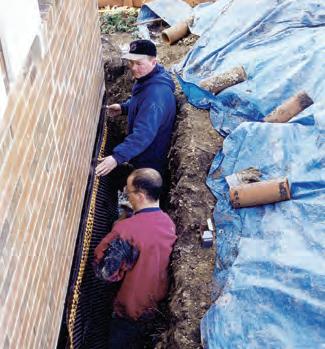










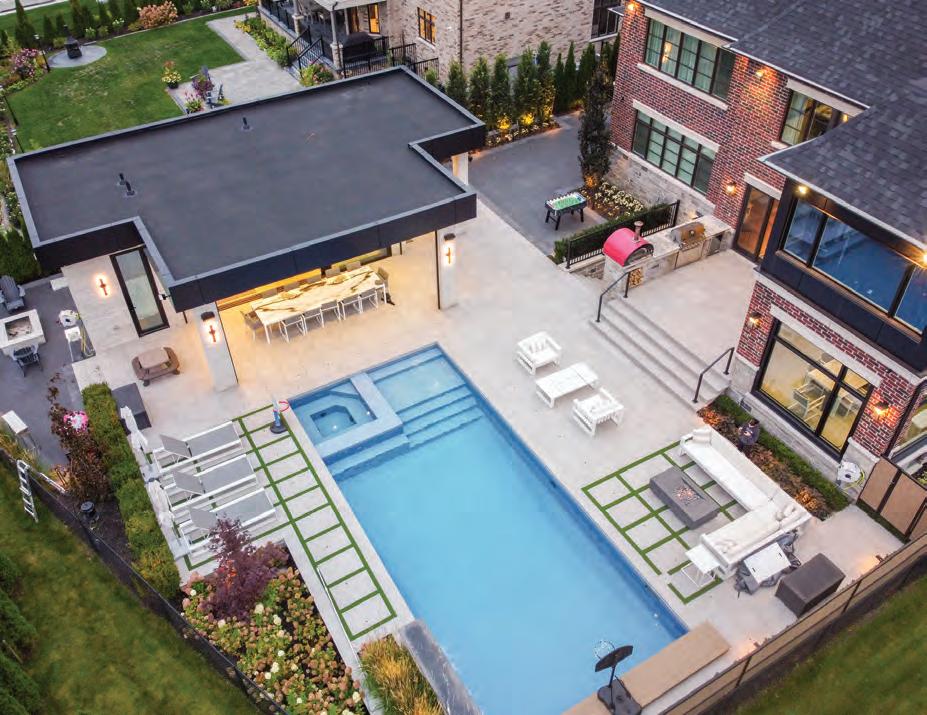
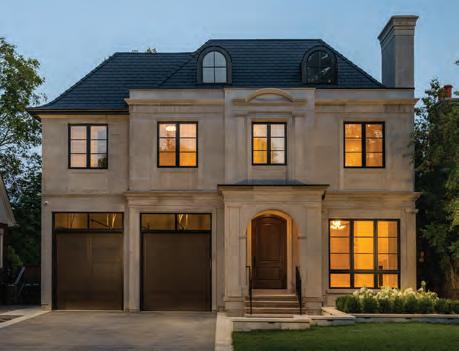




Occhiolino means "wink" in Italian, and founders Nick Manzone and Luke Donato are giving Toronto plenty of reasons to do just that. Their chic eatery has made fresh-made pasta a citywide obsession. We spoke with Nick about the technical precision and restraint behind their menu, plus Luke shares how a chance call landed him in Drake’s inner circle.
How did the Drake collaboration come about?
Luke: During the pandemic, Drake’s Vegasbased chef was stuck in Canada, so his team contacted [restaurateur] Janet Zuccarini, who called me for a two-week stint. I stayed for two years [in Las Vegas].
What is the biggest difference between the Italian food scenes in New York and Toronto?
Toronto’s Italian food tends to stay tied to tradition, with many distinctly regional dishes recreated authentically. New York Italian leans into Italian-American staples — comforting, nostalgic and often more indulgent.
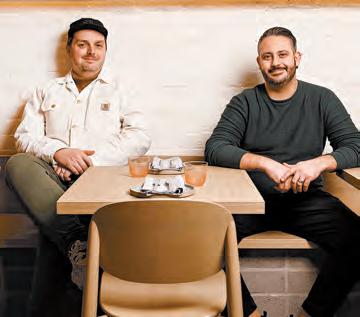
Why open a pastificio (fresh pasta workshop)?
After 13 years wholesaling pasta, I wanted a more personal, creative project where I could connect with people. A pastificio lets me combine that experience with my goal of serving fresh, high-quality pasta in a meaningful way.
Favourite pasta noodle?
I would say spaghetti. It’s versatile — it pairs well
with light sauces as well as richer sauces. It was also the pasta that pushed me to really dive into pasta making.
What’s a food memory that’s stuck with you?
I remember having lunch with my nonno, watching him pour wine with ginger ale. At 19, I tried it myself and have since called it “Italian ice tea.” It’s not a traditional drink, but it means a lot to me.
What is one food take that you and Luke actually disagree on?
I wouldn’t say we disagree on the food, but there are moments when Luke’s French training naturally shows. Italian cuisine is rooted in restraint, letting a few great ingredients speak, while French cooking embraces a “more is more” philosophy with richer layers and technique.
Are you team al dente or team soft?
Definitely al dente, contrasting textures are very important to me in food. On top of that, it's easier for us to digest!
—Erica Commisso
Skip the overpriced appetizers and bring the city’s best takeout to these three legendary watering holes
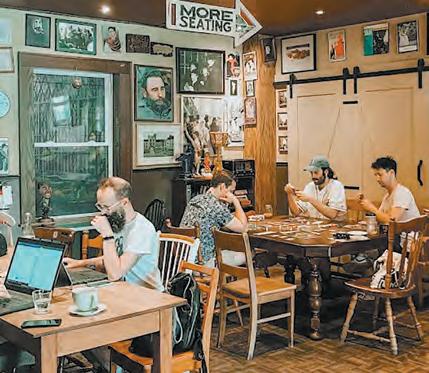
A Danforth institution with one of the city’s best tap lists, The Only Cafe encourages you to bring your own feast since they only serve drinks and snacks. Among the east end eats, grab world-class gyros from Messini or small plates from the Wood Owl and take a seat on the Only’s sprawling, eclectic back patio. 966 Danforth Ave.

Bangarang is a high-energy Little Italy spot known for its cornhole lanes and strong cocktail game. Bangarang focuses on drinks but doesn’t mind if you bring your own food. With College Street right outside, grab a massive pie from Danny’s Pizza Tavern or Bitondo’s Pizzeria and dig in between rounds of cornhole. 552 College St.
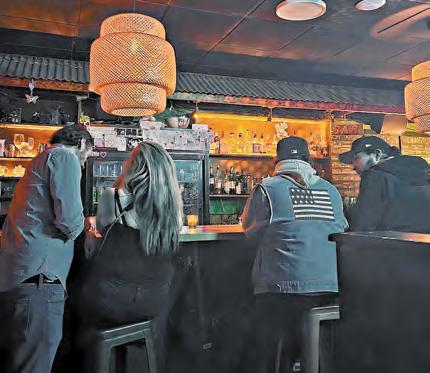
Indie Vibes
In Kensington Market, Handlebar is a stalwart that’s part cosy indie bar, part intimate live music venue, and it very much feels like the neighbourhood’s living room. Handlebar welcomes your market finds with open arms: grab Baja-style tacos from Seven Lives or a burger from Ozzy’s and sip a pint inside while you enjoy your feast. 159 Augusta Ave.











































Chef Anthony Rose runs Fat Pasha; Nuit Regular leads the new Tha Phae Tavern.

This month, resident tasting chefs Nuit Regular and Anthony Rose set out on an epic poultry crawl through Toronto’s OG Portuguese haunts. Their mission? Tackling mountains of piri piri chicken, pillowy rice and perfectly crisp potatoes to find spring’s best chicken.
WINNER LORD OF THE WINGS
Martins Churrasqueira & Grill House, 605 Rogers Rd., $26.50 “This is the one,” Anthony declared. “Perfectly cooked, the sauce balanced.” Nuit agreed saying the thighs were flavourful, and the rice and potatoes elevated the dish.
FOWL PLAY
NUIT’S RUNNER-UP THIGH HIGHS
ANTHONY’S RUNNER-UP GAME OF BONES


Churrasco Villa, 254 Eglinton Ave. E., $22
“The skin’s crispy, but inside it’s a little dry,” Nuit said. Anthony liked the smoky flavour and thought the chicken was nicely spiced, but the sides didn’t win him over.


Churrasqueira Costa Verde, 3737 Woodbridge $21.99
Nuit loved the balanced flavours of the chicken: “Moist and tangy, especially on the thigh.” Anthony loved the sides: “The rice is puffy and coated just right, and potatoes are solid.”
PECKING ORDER

St. Matthews BBQ Chicken, Anthony found the bit “underseasoned dry,” adding that the sauce was underwhelming. Nuit agreed it was on the weaker side, though both noted the skin had a nice crisp.
Casa Portuguesa, 180 Bentworth Ave., $24.50
Anthony praised the chicken, calling it “juicy and wellroasted,” and thought the garlic and spice really came through. Nuit loved the sides: “Potatoes have great skin-on texture; rice is delicious and seasoned well.”
CHICKEN RUN



Churrasco of St. Clair, 679 St Nuit felt that while the chicken was moist in it lacked enough spice, and Anthony agreed though he was a big of the sides: “The rice lush, and the potatoes are really crisp and tender.”


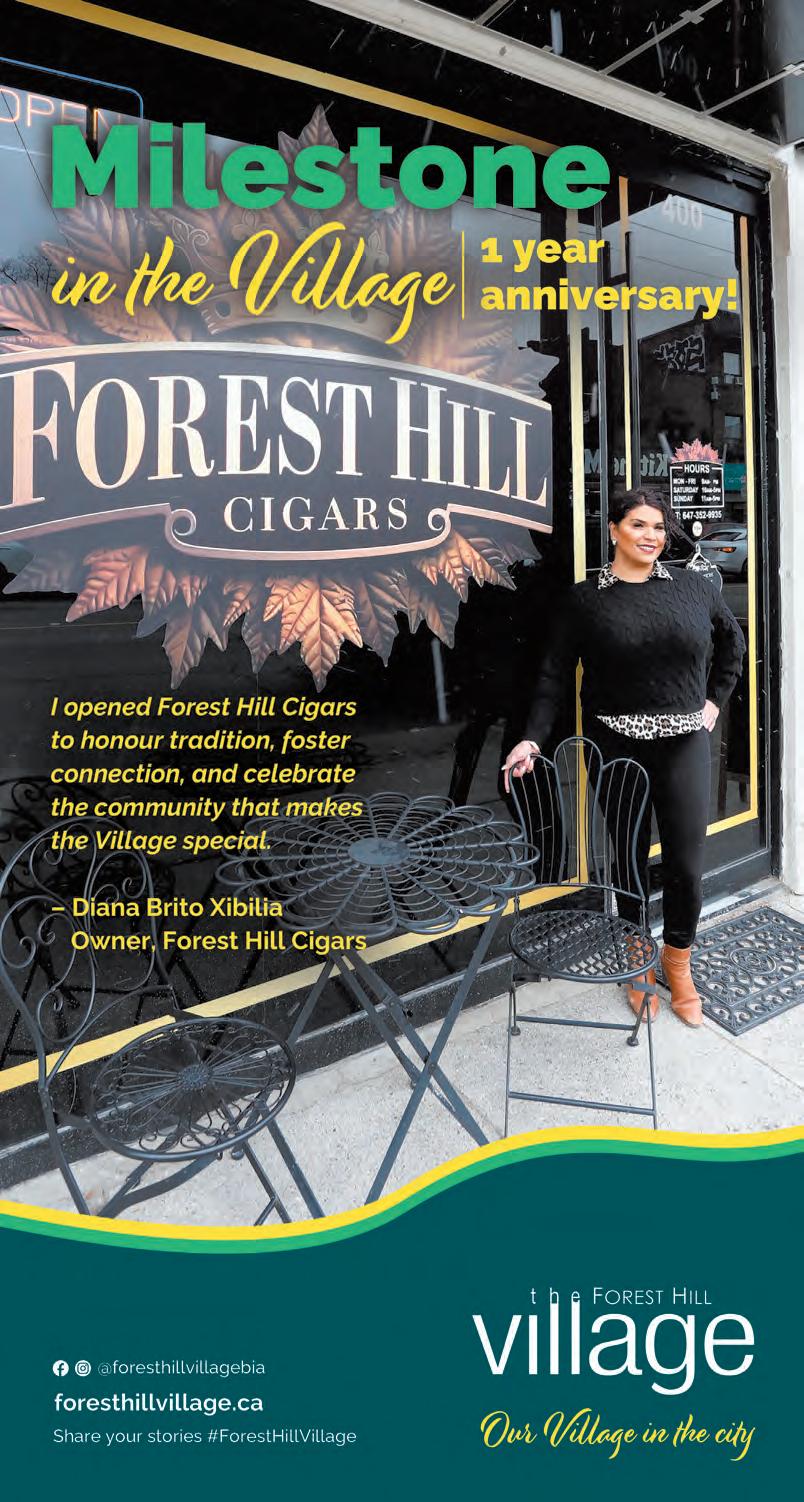


Toronto food influencer Rick Silver (@dicksworld) knows his way around a deli counter. He’s narrowed down the absolute best Jewish spots for all the must-have classics. Here’s his take on the institutions actually worth the hype.
1. Centre Street Deli
This spot is a Toronto institution — well, maybe a Thornhill institution. They have a downtown outpost, but if you want the full experience, you need to go to Thornhill. Get the smoked meat, coleslaw and those incredible fresh-cut fries. And if the meat doesn’t melt in your mouth? I’ll give you your money back. 1136 Centre St., Thornhill
The Rating: 9.6/10
Last Bite: The takeout counter is elite.
2. Pancer’s Original Deli
This deli is as traditional as it gets: corned beef, pastrami, smoked meat, chicken noodle soup, knishes and chopped liver — all better than your mother made. These recipes have been handed down through generations since 1957. A celebrity favourite over the years, it’s drawn the likes of John Candy and, if you’re lucky, you might even spot Geddy Lee from Rush.
3856 Bathurst St., North York
The Rating: 8.8/10
Last Bite: Where else but Bathurst? Exactly — nowhere.
3. Linny’s Luncheonette
More takeout sandwich shop than traditional deli, this spot has established itself on the Ossington strip. Adjacent to THE Linny’s, it offers a significantly more affordable way to enjoy Linny’s masterful meats. Not to mention a two-bite version of their epic chocolate babka, which might just be the best in town. 174 Ossington Ave.
The Rating: 9.3/10
Last Bite: You should still try the steak house.
4. SumiLicious
More than a few people urged me to try SumiLicious. So I made the trek out to the intersection of Scarborough and Markham. Given the owner put in decades working at Montreal's uber famous Schwartz's Deli, my expectations were high. Sadly, the sandwich fell short of melting in my mouth. But it can happen with smoked meat, and everything is worth a second chance.
5631 Steeles Ave. E.
The Rating: 7.6/10
Last Bite: Perfect if you’re looking for halal.


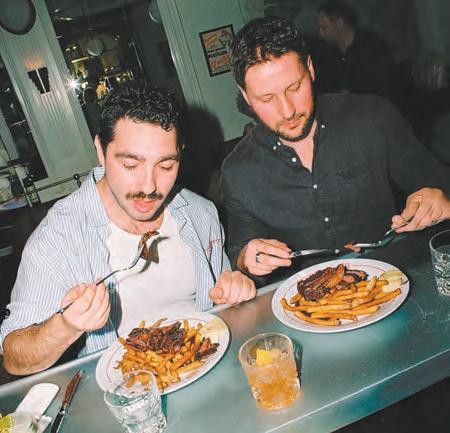
Bloor Street West just got a major hit of Parisian adrenaline. Brasserie Côte, the highly anticipated sister restaurant to the Ossington strip’s legendary Côte de Bœuf, is officially open in the Annex. Taking over the historic former By the Way Café space at Bloor and Brunswick — a local fixture for over 40 years — the new spot is a massive evolution for the brand.
Founded as a joint venture between Teo Paul (the mastermind behind Union, Hearts and Le Tambour) and partner Eamon O’Dea, the original Côte de Bœuf earned a cult following for its tiny, butcher-shop-turned-bistro charm. But while the Ossing-
ton location is famous for its cramped, “elbow-to-elbow” intimacy, Brasserie Côte offers something the original never could: space.
The interior is a love letter to 1920s Paris, featuring signature zinc countertops, a vintage chandelier and stunning arched mirrors. Rich burgundy banquettes and a wainscotted bar anchor the room, and huge street-facing windows flood the space with light. Best of all is the sprawling outdoor terrace — perfect for a midday espresso or a glass of Bordeaux — which brings a muchneeded “patio culture” back to the Annex.
The menu at Brasserie Côte, of course, puts the spotlight on the steak dishes that Côte de Bœuf is known for, but it has also expanded to include breakfast and lunch dishes. There’s also, in true French fashion, a wine and cocktail program that is nothing short of magnifique. Les classiques include the steak tartare “au couteau,” mackerel confit, escargots en coquille gratine and steak frites with red wine shallot sauce. Reservations cannot be made in advance, adding to the authentic European experience.
Brasserie Côte is located at 400 Bloor St. W.
Erica Commisso
North York tends toward the grandiose when it comes to Persian dining. Denj does not. Tucked into a quiet, understated Willowdale corner, the bistro ditches velvet and chandeliers for clean lines, letting the kitchen take centre stage.
The name itself — Denj — translates to a "cosy, secluded and peaceful spot," a vibe that Avesta, the lead behind the project, has clearly embraced. With a hospitality background spanning both Canada and Iran, he’s created a space that feels like a warm and inviting neighbourhood spot, the kind of softly lit room that works as well for a casual dinner as it does for a low-key date night.
The menu sticks to a tight, thoughtful lineup of Persian classics. Start with the eggplant balls crispy outside, soft and savoury inside, finished with tangy kashk. The marinated olives are a
must, too, tossed in a pomegranate-walnut mix that is sweet, salty and crunchy all at once. For something lighter, the tomato tartar arrives herbheavy and fresh, a welcoming contrast to the richer dishes.
The standout is the Denj Kebab, a take on the pan-seared patties from northwestern Iran. It comes tucked under soft flatbread that soaks up the meat-and-tomato sauce perfectly. It’s generous and satisfying — but don’t expect it in a rush.
The bar is where Avesta’s other idea takes shape in what he calls "The Art of Alchemy." Drawing on his heritage, he crafts house-made botanical elixirs and blends them with local spirits to create modern cocktails that echo the flavours of a Persian spice market.
Denj is located at 4852 Yonge St., North York.
—Jennifer Schembri











Where the one-of-a-kind Cold Tea bar left a hole on Queen West, a new dual concept spot has arrived. Café Gigi by day and the Dirty Laundry by night are now open at 1186 Queen St. W., bringing European-inspired coffee, Tex-Mex vibes and a reason to get out on the town.
“Both concepts aim to bring affordability back to going out,” says partner Aldo Pescatore. “We want a place people can visit multiple times a week, for a drink, dinner or a full night out.”
La Carnita connection — there are no tacos on the menu. Expect enchiladas, nachos and a strong focus on gluten-free options. Drinks are affordable, with fast cocktails inspired by high-volume bars in the U.S. and London, letting guests dance with a drink in hand.




With a background in operations for iconic local venues like La Carnita and Sweet Jesus, Pescatore has partnered with Robin Goodfellow of Bar Raval and PrettyUgly fame. Together, they each bring 20 years of industry experience to the new project.
The owners say Café Gigi and the Dirty Laundry nod to iconic spots like San Francisco’s Trick Dog and Toronto’s Sneaky Dee’s, and the Dirty Laundry’s name also pays homage to California’s famed French Laundry.
Dirty Laundry’s name nods to the French Laundry, California’s famed fine-dining institution.
“The Dirty Landry is basically what if a dive bar had the same philosophy as a fine-dining restaurant,” says Goodfellow.
Just like his other venues, Goodfellow’s Café Gigi named for his daughter — blurs the lines. In the expansive space with a summer patio, guests can sip coffee, grab a breakfast pastry or enjoy a spritz with lunch. In the evening, the Dirty Laundry takes over with Tex-Mex bites, cocktails and weekend music.
Don’t be fooled by Pescatore’s
“A dry negroni doesn’t need to be 20 bucks because our bartenders are well-trained. I think we can make it fast and sell it for 13 bucks and pack the place and give people a reason to come out again.”
Though the Dirty Laundry will be a one-of-a-kind venue like the one that filled the space before, Pescatore and Goodfellow say the goal is to make a brand of Café Gigi and introduce more locations to Toronto and beyond. Megan Gallant






a quiet nook in Thornhill, chef Dima Skorobogatov is showing that a suburban bistro to be just a convenient stop — it can somewhere you go out of your way for. Bistro skips the usual flashy, big-budget approach. Instead, it feels personal — the chef who spent a full year getting to know neighbourhood before ever turning on the ovens.
“To me, food is memory. It is family tables, lively celebrations, cherished recipes and flavours that stay with you long after the meal is over,” says Skorobogatov, who runs his kitchen with a kind of bythe-book discipline, leaning on the precise techniques of classic European cooking.
will feel right at home with the handmade varenyky and beef pelmeni. They’re kept simple, just butter and a sharp, tangy sour cream, which lets the flavours speak for themselves.
Where Dimych really shows its character is in the “zakuson” tradition — a platter of salty, punchy starters meant to kick off a long, social meal. The Village Board brings out things like cured pork fat (salo), house-made sausage and boiled veal tongue, along with house pickles and marinated tomatoes.
Skorobogatov is known for his impromptu performances, adding a playful twist to the experience.
The open kitchen isn’t there for show. It simply lets diners see how carefully everything is done. You can watch dishes like the Dimych Tabaka — a Georgian-style chicken pressed under heavy weight so the garlic marinade soaks all the way in, leaving the skin thin, crisp and flavourful — comes together.
The menu mostly sticks to eastern European cooking, but it’s not rigid — there are a few detours into northern Italian and French dishes too. Although the $41 tabaka is the main draw, anyone who grew up with Russian, Ukrainian or Belarusian food
Although the kitchen does the heavy lifting, the front-of-house has quickly built a reputation for being warm and welcoming. Note how staff guides guests through a menu that feels just as much about community as it does about the food.
The meal usually wraps up with something from the extensive dessert menu, where the Chef’s Napoleon is already getting a lot of local love. It’s a tall stack of puff pastry and cream that manages to be rich without feeling overly sweet, unlike the usual bakery versions. For something more homey, there’s Mom’s Syrniki — pan-fried cottage cheese pancakes served with jam.
Dimych Bistro is located at 8707 Dufferin St., Thornhill. Jennifer Schembri











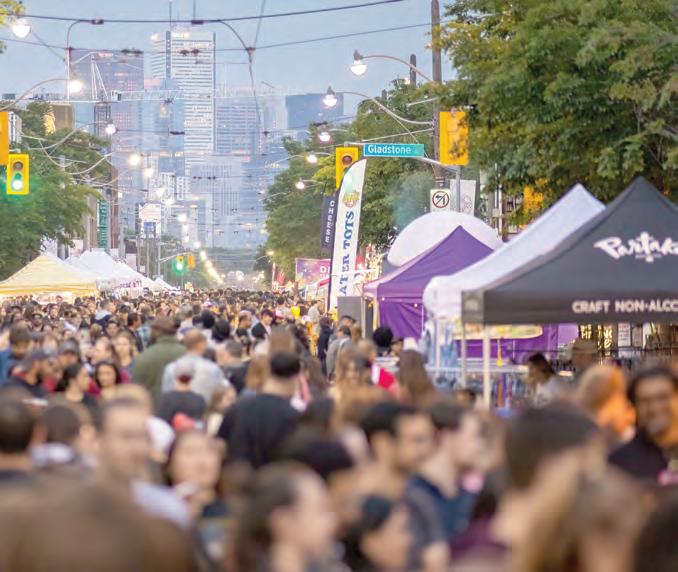






































































































































You’ve
reached the end of the April 2026 issue. Before you go...
If you can survive a winter on the TTC, you can survive a roast from Chris Rock. Here’s how the world’s best comics find the fun in our expensive, chaotic, beautiful city.



I went to Toronto — it’s clean, it’s nice… it’s like America with good parenting.
Chris Rock

Dating in Toronto is just two people trying to gure out who has the better rent situation.

Toronto is great — clean, friendly, safe… it’s like a place your mom wants you to move to.
Amy Schumer

I went to Toronto in winter — people live there like it’s normal. That’s not normal.

Debra DiGiovanni
Toronto is the only city where people apologize when you bump into them — and when they bump into you.
John Mulaney

Everyone in Toronto is ‘doing well’ and is also one rent increase away from moving back in with their parents.
Katherine Ryan

Toronto’s so diverse, you can travel the world just by missing a few subway stops.
Russell Peters

Toronto feels like New York, but someone turned the volume down.
Jerry Seinfeld


Gabriel Iglesias (Fluffy)

Toronto is so safe, I didn’t even know what danger was until I moved to the U.S. I thought jaywalking was a felony.
Howie Mandel

I’m from Canada, so I’m polite… but Toronto trafc will test your faith in humanity.
Jim Carrey

Toronto is like New York, but without the yelling… which means if someone does yell, it’s a big deal.
Mike Myers

Toronto is so polite you can have a full emotional breakdown and people will just quietly give you space… like it’s respectful, but also help?
Mae Martin

People in Toronto are so polite, even their road rage is like, ‘Excuse me, what are you doing?!’ Sebastian Maniscalco

proven performance makes the difference!
To maintain a consistent multi-million dollar production for over 40 years requires not only exceptional expertise and diligence but also the fine art of negotiation and the utmost discretion. If you’re contemplating selling your home now or in the near future, I would be delighted to meet with you in the strictest confidence to offer a comprehensive market evaluation of your property.




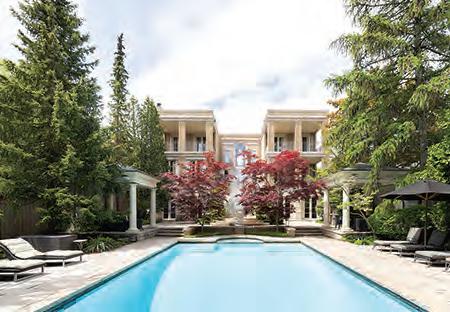
$12,800,000





$8,680,000

$6,500,000

Captivating Forest Hill home. Wealth of wall-to-wall & flr-to-clng wndws, mahogany & limestone flrs. French drs opening to Juliette balconies & covered terraces. LL entertainment room, gym & spa. Elise Kalles** Sarah Collins* 416-509-9020




7 BEAUMONT ROAD

Rare opp to restore historic Rosedale res on coveted private St. Ravine-adjacent & wooded, w/classic proportions & period details, grand principal rms, close to schools, transit, downtown. Elise Kalles** Ext. 291


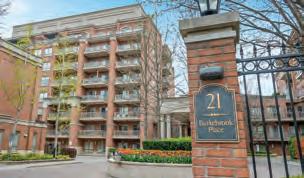
7 RIDGEWOOD ROAD






Classic Forest Hill res set on a rare 61' x 252.5' ravine lot. This 4+2 BR home features designer interiors, 10’ clngs, luxury fins, fin’d attic & LL w/nanny suite, gym, sauna, elevator. Exceptional! Elise Kalles** Corinne Kalles* Jake Goodbaum*











$4,699,000
90 OAKLANDS PARK COURT




Burlington Waterfront. Rare op to own newly reno’d, contemporary open concept home. Sunrm w-o to lush gdn, hot tub & infinity pool o’looking bay. One of the few props permitted for owning a dock. Elise Kalles** Ext. 291 Jen Tripp* 416-697-552




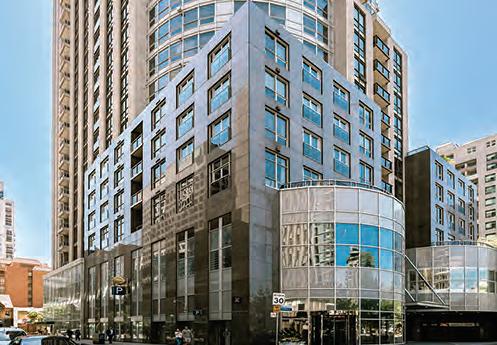



$7,350,000
10 BELLAIR STREET, #2604






Experience an unparalleled lifestyle in this prestigious Yorkville res—nearly 4,000 sf of bespoke luxury w/soaring clngs, balconies, 3 ens BRs, valet, lavish amens, health club, ID pool, 2 prkg w/ EV. Elise Kalles** Ext. 291 Corinne Kalles* Ext. 555



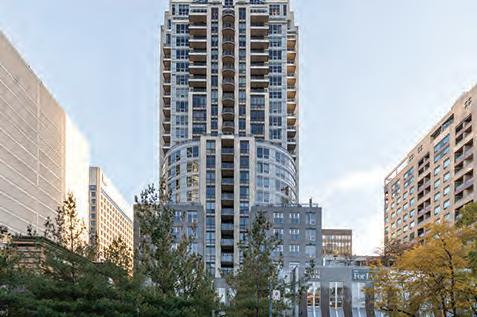



$4,850,000
10 BELLAIR ST #1205
Prestigious Yorkville location. 3,182 sf. 2+1 BRs, fam rm. 3-pkg spaces, one w /universal EV charger. 500 sf terrace w/multiple access. Walk to 1st class restos, upscale shopping boutiques, TTC. Elise Kalles** Ext. 291 Corinne Kalles* Ext. 555
A name you can trust since 1957



has sprung on a The Eglinton Wayy! a on W The Eglint Waay y is easier
than ever to access through the A Avvenue and Chaplin a LRRT T stattions!




















As the weather warms up, take a stroll through our beautiful neighbourhood torefreshyourcloset grabdrinks










SHOPLOCAL ith to refresh your closet, grab drinks on a patio, enjoy our stunning art sculptures, get your nails and hair done, and more! Kickstart the season with a fresh new look, delicious eats, and memorable experiences.
SHOP LOC THE EGLIN CAL with A ON W T WAAY Y