
2025 to 2030 Communication and Port Stephens
Engagement Strategy
Our vision is to actively communicate and engage in a way that tells our stories, listens to our community, informs our future and improves the wellbeing of those that live, work and visit in Port Stephens.
GUUDJI YIIGU
(GOO-JEE IK-KOO)
We welcome you to Port Stephens – part of the Worimi Aboriginal Nation. Port Stephens Council acknowledges the Worimi people as traditional owners and custodians of the lands and waterways on which we all live, learn, work and play.
We value and respect the Worimi people and the legacy 60,000 years of Aboriginal Nation traditions and culture brings with it. As part of Council’s culture of acceptance, we walk alongside the Worimi people on a journey of listening and learning.
Together we will strive to make this a better place for all peoples. As guardians of these lands, we ask that you tread lightly to help preserve the biodiversity and respect those who came before as well as those who will follow.
Artwork by Regan Lilley.

A message from the Mayor
Communication is key.
Clear and honest communication is the cornerstone of our commitment to our community. We strive to be an open and transparent organisation where communications and engagement is at the centre of what we do. Our Communication and Engagement Strategy 2025 to 2030 is our commitment to keeping you informed and involved. Since its original adoption in 2022, this strategy has provided the framework for active engagement and conversations to encourage all voices of our diverse community to have their say.
The recent review of this strategy, following the we’ve come in a short time, and identify areas for further improvement to build a community that is more engaged and informed.
Our Communication and Engagement Advisory Group (CEAG), established in 2023, has been instrumental in providing valuable insights and guidance. The value of the CEAG can’t be overstated. By involving the community in the early stages of our planning, we’ll deliver better outcomes across our community.
The 2025 to 2030 strategy continues to build on this success and create more opportunities for our community to be involved in decisions that impact their everyday. My fellow Councillors and I encourage you to connect with your Council, explore what’s happening in your community and share your input into decisions to shape the future of this incredible place we call home.
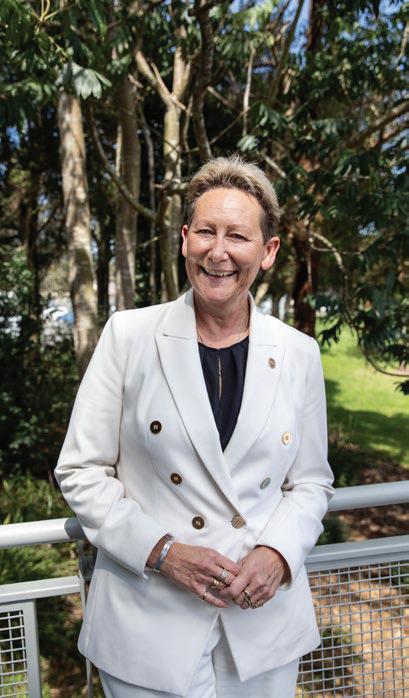
Leah Anderson Mayor of Port Stephens
Strategy context

Over the past few years, a fundamental shift has occurred in the approach to public sector communication and engagement. Our residents have increased expectation around access to information and a greater desire to engage in planning for their place.
wellbeing of our community. By listening to our community and providing genuine opportunities for engagement, we’ll create a greater sense of community ownership and ultimately, improve the delivery of Council services that are aligned to community needs.
To achieve this, we’ll deliver a genuinely integrated and inclusive approach to our engagement and communication. By bringing together our communication and engagement approach, we’ve already created a shift in thinking. Through this strategy, we’ll continue to evolve this approach and build a culture that celebrates our stories and informs the future of Port Stephens.
Communications is how we connect with our stakeholders. It is sharing the right message at the right time to inform our community.
NSW Government, All-Of-Government Communications Framework
Community engagement of working across organisations, stakeholders and communities to shape the decisions or actions of the members of the community, stakeholders or organisation in relation to a problem, opportunity or outcome.
NSW Government, All-Of-Government Communications Framework
The Port Stephens Communication and Engagement Strategy 2025 to 2030 has been developed to
The strategy responds to the legislative requirements of:
• NSW Government Integrated Planning and Reporting Framework including the Community Strategic Plan
• Local Government Act (1993) and
• Environmental Planning and Assessment Act (1979)
The strategy also responds to the key priorities of the elected Councillors.
Community Participation Plan
Attached to this strategy is our Community Participation Plan (CPP) which is an easy to use guide for the community to provide input into planning decisions when Council is the consent authority.
Who we are

Our community
More than 78,000 people call Port Stephens home and this is expected to grow by over 20,000 by 2040.
78,906^ people family 2 person families most common at 54.5%
Median age is 47 years
NSW median age is 39 years
6.5% of our population
Aboriginal & Torres Strait Islanders
93%* have internet access from a dwelling (2022)
75 to 79
Largest age range increase at 40.9%
60 to 69 Most common age range
7.2% of people have a severe disability 86.6%
Australian population own a smartphone*
38.7%
finished year 12
33.0%
finished year 10 or above
Source: ABS 2021
^ Estimated Residential Population 2023
* Australia Communications and Media Authority 2022
That require assistance with core activities
26,307 not in workforce
16,790 work full time
11,384 work part time
What we’ve heard
Longer periods to digest and respond to documents including Council agendas.
Community member
Opportunities to Have Your Say are numerous but there is little opportunity to find out the result of the engagement or what other people think.
Community member
Our engagement
Between 2021 and October 2022, we’ve undertaken a phased approach to listening to the community about how we deliver communication and engagement.
2187 responses
Community Satisfaction Survey 2021
97 participants
Community Strategic Plan Review
6 community groups
Stakeholder Group meetings
9 attendees and 8 groups represented
Community Focus Group attendees
40 responses
9 submissions
Online surveys completed Received via email and post
• Improve sharing of information and transparency
• Involve the community in engagement design
• Be clear about where and why Council is seeking feedback
• Use simple and easy to understand language
• Make sure there are multiple points where information can be accessed
• Make engagement opportunities easy and accessible
• Reach a wider demographic
• Have a more consistent approach to communication and engagement across projects and programs
1 focus group
3 attendees and 6 community groups represented
• Use community groups as an interface between Council and community
• Have longer periods of time to allow for considered contributions
• Have ongoing community conversations rather than project by project engagement
• Listen when feedback is received
• Close the loop, connecting feedback with decisions
• Improve measuring and reporting to help build trust in Council
Reviewing the 2022 to 2024 strategy
Under the Integrated Planning and Report Guidelines we’re required to review our Communication and Engagement Strategy, following the Local Government election to make sure it aligns with the 4 year term of Council.
A key action of the 2022 to 2024 strategy was to establish the Communication and Engagement Advisory Group (CEAG). Formed in August 2023 the CEAG has been instrumental in providing feedback on the way we communicate and engage with our community in 2023 and 2024. This feedback has been invaluable in informing the current review.
Key feedback from the group during this time has been:
Advocate for social justice principles by reaching a diverse demographic.
Promote more targeted communication
Use community social media
Use plain English in all our communications.
To build on the feedback form the CEAG the revised draft Communication and Engagement Strategy was placed on public exhibition.
• Improve wording, choice of language and keep to plain English
• Ensure all reporting objectives include a time element for better accountability
• Include both technology and traditional community methods to reach older demographics
• Improve and make clearer engagement opportunities in the process of planning proposals
• Improve equity and access of the document considering a ‘listen’ option on the website
Our strategy

As the closest level of government connected to the community, we have a key role in communicating and engaging with our local residents.
number of services to our community. We’re also the link between our community and other levels of government, advocating our community’s priorities.
Over the past few years, we’ve worked hard to engage with and inform our community. However, we know from feedback that we can do better. We’ve listened and are committed to working closely with our community to act on this feedback, responding to their needs and priorities.
Our purpose and vision
Our purpose
To create a framework for the delivery of transparent and timely communications and meaningful community engagement that builds trust and community participation in decision making for our place.
Our vision
We actively communicate and engage in a way that shares our stories, listens to our community, informs our future, and improves the wellbeing of those that live, work and visit in Port Stephens.
Social Justice Principles
These principles are the driving force to address barriers to communication and engagement experienced in our community. The social justice principles are the heart of our Strategy’s principles and key objectives.
Equity
Communication and engagement should include stakeholders including hard to reach groups who may have barriers to participation.
Access
All people should have fair access to communication and engagement opportunities.
Participation
All people should have the opportunity to
Rights
Communication and engagement opportunities ensure positive participation of linguistic, cultual and religious diverse communities.
Communication and Engagement Principles
1
2
3
4
5
We deliver relevant, timely and easy to understand information
We’re honest and transparent
We’re inclusive and encourage a diversity of voices to be heard
We listen, value and respect community input and feedback
We embrace innovation and encourage new ideas
International Association of Public Participation
The Engagement Institute, formerly known as the International Association for Public Participation (IAP2) developed an international framework for community engagement that is considered a best practice approach worldwide.
Levels of communication and engagement
(least impact on decision)
Our goal (Council’s)
Our role (Council’s)
To provide the public with balanced and objective information to assist them in understanding the problems, alternatives, opportunities and/or solutions.
We’ll keep you informed.
To obtain public feedback on analysis, alternatives and/ or decisions.
We’ll keep you informed, listen to and acknowledge concerns and provide feedback on how public the decision.
To work directly with the public throughout the process to ensure that public concerns and aspirations are consistently understood and considered.
We’ll work with you to ensure that your concerns and aspirations are in the alternatives developed and provide feedback on how public the decision.
To partner with the public in each aspect of the decision including the development of alternatives and of the preferred solution.
We’ll look to you for direct advice and innovation in formulating solutions and incorporate your advice and recommendations into decisions to the maximum extent possible.
(most impact on decision)
decision-making and/or developed budgets in the hands of the public.
We’ll implement what you decide.
Your role (Community’s) Keep in touch. Follow Council on social media. Subscribe to regular newsletters and updates.
Contribute ideas and feedback. Respond to surveys. Make public submissions.
Actively participate in the workshops and engagement sessions. Share ideas concerns and aspirations.
Work together to develop solutions. Join committees. Make decisions and work with Council to implement them. © IAP2 International Federation 2018. All rights reserved. 20181112_ v1
Our stakeholders
We all have a role to play in shaping our places and there’s roles for both Council and the community in initiating, leading, particpating in, and delivering engagement activities. It’s vital that we identify and understand our stakeholders that are impacted by, or have an interest in a decision.
The media
The Council
Non-government agencies
Advisory committees
Residents and ratepayers
Local business and workers
Our community
Government agencies
Community groups and organisations
Visitors to the area
Interest groups
Demographic groups
Methods of communication and engagement
We use a range of methods to communicate and engage with our community. We typically use a combination of methods to share information to ensure the greatest reach. Below are some of our common methods used across the IAP2 spectrum. For more information refer to page 15.
Communications
Advertisements / public notices
Council events
E-newsletters
Emails and letters
Flyers, brochures, factsheets, posters, signs
Local Newspaper article
Media releases
On hold messages
Rates notice and inserts
Radio announcements
Social media
Webinars
Community Engagement
Advisory committees
Council meetings
Council website
Focus group and workshops
Information and interactions with
Drop-in / pop-up sessions
Public exhibition / submission
Surveys / questionnaires / polls
Inform Consult Involve Collaborate Empower
Strategic priority 1
Community engagement
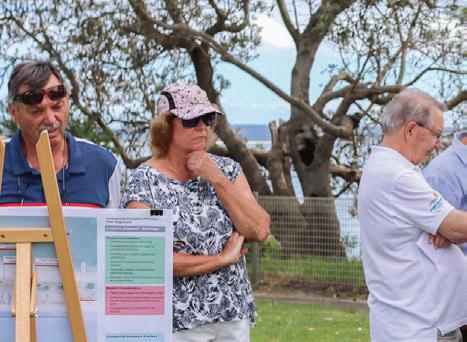
We will plan and deliver meaningful community engagement that enables community participation and builds trust in Council decision making.
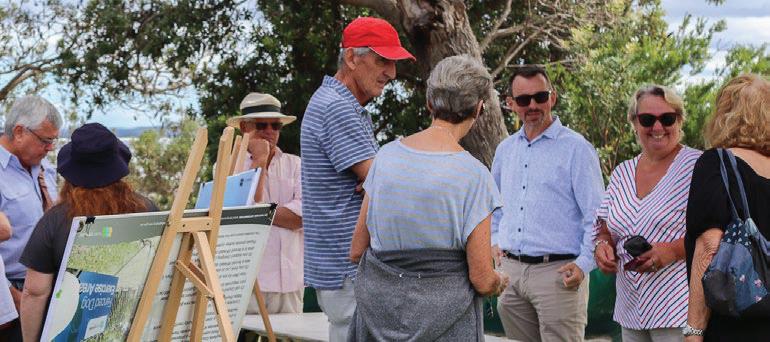
Key objectives Communication and Engagement Principles*
Continue to embed the principles of the International Association Public Participation (IAP2) into the organisational culture
Collaborate with the Communications and Engagement Advisory Group to provide timely input on how to engage with our community on major projects
Increase opportunities for the community to engage informally with Councillors and Executive
Design engagement opportunities that enable time for considered thought and contribution
Ensure engagement opportunities consider place, diversity and accessibility
Expand on the use of technology to increase participation and increase the diversity of voice and opinion in engagement activities
Build on the use of social media as a tool for engagement and feedback
Report internally and externally on engagement outcomes, connecting community engagement and decision making at the end of each engagement program
Improve stakeholder information management to ensure equitable representation across the community
Deliver Council’s Community Participation Plan (Environmental Planning and Assessment Act 1979)
Strategic priority 2
Community communication

We will deliver timely, creative and transparent internal and external communication that connect our stories, our people and our place.

Key objectives
Design communication that’s easy to understand and accessible to all
Continue to use our public website (portstephens.nsw.gov.au) as the core communication channel and invest in its growth and improvement
to encourage conversations and increase awareness of Council services
Council business
Build Council’s identity and brand through consistent visual communication
Use digital marketing to enhance awareness of Council projects and services
Create targeted, engaging and audience focused communications using data
Regularly benchmark and review internal and external communications
Support elected members by keeping them informed so they can share information and increase awareness of Council activities and services through community networks
Measure, evaluate and report on all communication activities at campaign completion
Strategic priority 3
Media and public relations

We will build trust and reputation through proactive, consistent and trustworthy information that responds to issues and community priorities.

Key objectives
Build and maintain strong relationships with media to facilitate informed reporting
Promote Port Stephens with positive and proactive media
Work across the organisation to identify newsworthy stories
Respond promptly to media enquiries to meet news deadlines
Develop annual Community Advocacy Priorities and implement campaigns to drive awareness of local issues and key priorities
Build relationships with stakeholders by celebrating key achievements together
Foster opportunities for elected representatives or Executive to speak at corporate, community and networking events
Coordinate Council’s emergency management communications
Continue to improve media record and information management
Monitor, evaluate and report on all media and public relations activity
Measures of success
Measures of success
Continuous improvement is an integral part of improving our communication and engagement process. We’ll monitor and report on our communication and engagement activities for objectives of this Strategy. are reported and evaluated through the following processes:
• Upon completion of the communication campaigns or engagement programs.
• As part of Council’s quarterly, 6 monthly and annual reporting.
Some key considerations in our reporting include:
• engagement addressed?
• Did we reach people impacted by the project or people that are representative of our demograhic?
• Were the intended outcomes of the engagement process achieved?
• How well did we provide feedback to participants on the results of their contribution?
Our annual targets
Community Satisfaction Survey
49%+ of our community feel they can provide input into decision making
53%+ of our community
Port Stephens Liveability Score of 66+
595,000 website visits
Increase Have Your Say members by 2.5%
Participation demographics accurately represent our community
Increase social media followers by 2.5%
Maintain above an average of 4.2% interaction rate on Facebook
Increase the engagement rate on Instagram by 14%
Increase e-newsletter subscribers by 2.5%
30% of projects have an engagement level of ‘involve’ or above
Attachment 1 Community Participation Plan
1
2
3
4
5
6
It is a statutory requirement for Councils in NSW to prepare a Community Participation Plan (CPP) that is an easy-to-use guide for the community to provide input into planning decisions when Council is the consent authority.
Under Section 2.23 of the Environmental Planning and Assessment Act (EP&A Act) 1979, we are required to:
7
8
Inform the community about planning matters
Encourage meaningful opportunities for community participation in planning.
Ensure planning information is in plain English, easily accessible and in a form that facilitates community participation.
Creates opportunities for early community participation as early as possible enabling community views to be genuinely considered.
Ensures community participation is inclusive.
proposed major development are engaged when an application for planning approval is made.
Provides transparency in planning decisions, showing how community views have been considered.
Delivers community participation that is of the proposed development.
How are we meeting the EP&A Act requirements
Early meaningful engagement with the Port Stephens community in developing state and local government strategies.
local government strategies via:
• Direct letter to adjoining land owners.
• Print advertising, e-Newsletters and the Council’s website for the broader community.
Proponent led Social Impact Assessments are required if triggered by the development type.
Public access to Council meeting agendas, meetings and minutes on Council’s website and in person.
Reports to Council outline each submission and Council’s response to each.
outcome and how their feedback was considered.
Standards of practice set for public exhibition periods.*
Communication and Engagement Strategy Strategic Priority 1 Community engagement key objectives (page 19):
• Design engagement opportunities that enable time for considered thought and contribution.
• Ensure engagement opportunities consider place, diversity and accessibility.
Communications and Engagement Strategy Strategic Priority 2 Community communications key objectives (page 21):
• Design communications that’s easy to understand and accessible to all.
• Continue to use our public website as the core community channel.
• Create targeted, engaging and audience focused communication using data.
accordance with the planning legislation, the period between 20 December and 10 January (inclusive) is excluded from the calculation of the period of public exhibition.
Plans or applications can’t be made or determined until after the minimum period of public exhibition.
Community participation
Community participation is important under the Community Participation Plan.
Opportunities for community input into the Planning Proposal Process and Development Application process align with the level of communications and engagement outlined on page 12 of the Communication and Engagement Strategy.
Levels of communication and engagement
(least impact on decision)
Planning proposal process
In this section, each step of the Planning Proposal and Development Application processes is explained, along with how and at what level the community can get involved.
Non-mandatory requirements
State and local government strategies
State and local government strategies
The Planning Proposal and Development Application process is preceded by the development of key state and local government strategies. These strategies guide planning proposal decisions. These can include the Hunter Regional Plan 2041, the Port Stephens Local Housing Strategy, Local Supply Plan, Local Environment Plan and the Development Control Plan
Community input into the development of plans and strategies
Public
of draft plan or strategy

Local Housing Strategy (LHS) addendum request
of Planning, Housing and Infrastructure (DPHI), DPHI may require a proponent to request Council and DPHI to consider an ‘addendum’ to the strategy. Addendum requests will be placed on public exhibition for 28 days following lodgment and prior to any assessment by Council. Early feedback will be provided to the proponent, encouraging community participation. The proponent will be required to provide a communication and engagement report outlining the communication and engagement undertaken as part of the pre-lodgement band how feedback has been considered. A Social Impact Assessment may also be required and if required will be prepared in consultation with the Department of Planning, Housing and Infrastructure, depending on the proposed impacts of the development.
community including:
• Print advertisement in local newspaper.
•
• Item in Council’s e-newsletter where appropriate.
Written submissions by community
Public access and Council decision
An addendum or amendment to a state or local government planning strategy can be made, and community members are invited to provide feedback on a proposed change during a public exhibition.
Planning Proposal Process
1. Scoping Proposal
During this step, careful research is done to plan the proposal. This may include basic background the feasibility of the ideas.
Early feedback will be provided to the proponent, encouraging community participation. The proponent will be required to provide a communication and engagement report outlining the communication and engagement undertaken as part of the pre-lodgement band how feedback has been considered. A Social Impact Assessment may also be required and if required will be prepared in consultation with the Department of Planning, Housing and Infrastructure, depending on the proposed impacts of the development.
Early input from government and key agencies
2. Planning Proposal
community including:
• Print advertisement in local newspaper.
•
• Item in Council’s e-newsletter where appropriate.
Inform
3. Gateway determination
Public access and Council decision
Preparation and lodgment of the planning proposal by the proponent and initial assessment by Council. Inform Consult Inform
determine whether the planning proposal should proceed to the next stage Gateway determination will set the statutory public exhibition period.
4. Post Gateway
The proponent undertakes additional studies, and engagement with key authorities and government agencies if required.
Additional input from government and key agencies
Inform
5. Public exhibition
At this stage, input from the community and government agencies is welcomed to review the planning
community including:
• Print advertisement in local newspaper.
•
• Item in Council’s e-newsletter where appropriate.
Inform
Optional public hearing
Consult
Inform
Written submissions by community or government agencies
Consult
6. Assessment
Review and evaluate submissions and address any concerns. Council determines whether the Local Environment Plan (LEP) should be changed in accordance with the Planning Proposal.
Public access and Council decision
Consult Inform
7. Finalisation
If the Planning Proposal is supported, amendments are made to the Local Environment Plan (LEP).
Inform
Development Applications
1. Lodgment of Development Application
The application is lodged on the NSW Planning Portal, checked for completeness and allocated to a
• Print advertisement in local newspaper
• Item in the Development Application E-Newsletter (subscription only)
• DA Tracker on Council’s website
Inform
2. Assessment of Development Application
these are outlined in Table 2 and 3.
Tables 2 and 3.
Inform
Written submissions by community or government agencies
Consult
3. Determination of Development Application
Development Application.
Where Council makes the determination of a DA, these applications go through the Council meeting approved process.
If determined by Council:
Inform
Public access and Council decision
Inform
Consult
If determined by the Planning Panel:
Public meeting where 10 or more unique submissions are received
Inform Consult
After decision
Once a decision is made the development can proceed or not
a submission
Inform
We distribute a weekly Development Application E-Newsletter that provides information on all Development Applications lodged with Council the week prior. Visit pscouncil.info/DAe-newsletter to sign up.
Have your say
Making a submission
• A submission to Council is a formal way to show whether you are in support or opposition
the decision-making process. Submissions are made during a public exhibition period. A submission must be:
• Received on or before the last day of the nominated timeframe for the public exhibition
• Made in writing (through the mail, email or hand delivered to Council)
• Contain the name and address or email) of the person making the submission
• Include the application number for reference (for development applications) or the name of the exhibited planning matter
• Include a statement of objections or support and reasons
Speaking in public access
Public Access provides a way for community members to speak directly to the Mayor and Councillors about local or Council issues. The Mayor and Councillors may ask the speaker questions to gain further by 12 midday on Monday prior to the Tuesday Council meeting. The Public Access Application Form can be found on our website at pscouncil.info/council-meetings
Community participation requirements
Under the EP&A Act, the following minimum community participation requirements apply to local planning functions:
Table 1
Mandatory timeframes
Minimum community participation requirement
Draft community participation plans28 days
Draft local strategic planning statements28 days
Planning proposals for local environmental plans subject to a gateway determination Determination
Draft development control plans28 days
Draft contributions plans28 days
Development Application for designated development28 days
Environmental Impact Statement obtained under Division 5.1
(An Environmental Impact Statement prepared for certain development such as 28 days
Re-exhibition of any amended application or matter referred to above
Exhibition timeframes are measured in calendar days and include weekends.
Development applications
The period (if any) determined by the person or body responsible for publicly exhibiting the application or matter.
Table 2 – Community Participation Categories (Refer to Table 3 for details)
Exhibition types
TypeRequirements
A on the amenity of adjoining land owners.
B on adjoining land owners are considered minor in nature.
C
website. Development Application (DA) information published on DA Tracker. Additional advertisements may be placed in newspapers and/or through such other mechanisms as may be appropriate to ensure that the public is reasonably aware of the proposal. Council may also at its discretion decide not to
Modification applications
The need or otherwise to notify an application to modify a development consent will be undertaken in accordance with the requirements of the Act and Regulations or at the discretion of Council in
Table 3 – exhibition periods
Development category
Residential Accommodation
Dwelling – single storey
Secondary dwelling
Rural workers dwelling
Residential ancillary (for example sheds, pools)
Residential accommodation – all other types
Rural
Agriculture
Farm buildings
Forestry
Animal boarding or training establishment
Extractive industries/open cut mines
Home business/occupation
Entertainment facilities
Function centres
Sex services premises/home occupation (sex services)
Restricted premises
Community and entertainment facilities
Places of public worship
Recreation facility (major)
Education establishment
Health services facility
Other uses relating to community infrastructure
Industrial development
General industry
Industrial retail outlets
Industrial training facilities
Exhibition types C – Advertised
Development category Exhibition types
Industrial development
Light industry
Storage premises
Heavy industrial storage establishment
Warehouse and distribution centres
Freight transport facilities
Heavy industry
Rural industry
Subdivision
Strata subdivision
10 or more Torrens or community title lots
Tourist and visitor accommodation
Caravan parks and camping grounds*
Tourist and visitor accommodation - all types
Eco-tourist facility
Miscellaneous
Boatshed
Electricity generating works
Environmental facilities/environmental protection works
Moorings/mooring pens
Signage
Air transport facility
Airstrip
Helipad
Cemetery/crematorium/mortuaries
Correction centre
Marina
Passenger transport facilities
Port facilities
Sewerage system
Waste or resource management facility
Water supply system
application or a planning proposal. This notice must be given at least 30 days before the operator lodges the development application or proposal. This change has come from an amendment to the Residential (Land Lease) Communities Amendment Act.
council@portstephens.nsw.gov.au | 02 4988 0255 | portstephens.nsw.gov.au