COMPETITION RACING
by Bruce Herrmann
Reprinted from PORSCHE GEDANKEN SEPTEMBER 1981:
All Porsche dealerships are the same, right? Plenty of new 924’s, a couple of 924 Turbos, several 911 SCs, and maybe a 928 or two. Some of them even have selected used cars on the showroom floor.
Well, there’s a dealer in Hermosa Beach who has all of that and more: his used cars are Porsche racing cars and they are part of one of the largest (some say the largest) collection of Porsche racing history on wheels in the world.
Vasek Polak is the dealership and the man, and his knowledge of Porsche cars and racing is every bit as extensive as his collection of cars. A visit to the Porsche dealership (he also owns a BMW dealership - - yep, you guessed it, racing BMWs are there too) is a real treat to any Porsche lover whether racing raises your pulse or not.
The actual cars on display at any given time may vary, but you could expect to see at least three 917s, an RSR Turbo, a 935, and maybe even the Porsche-Interscope Indy car.
I made my yearly pilgrimage to Mr. Polak’s little corner of heaven not long ago, and as I walked down the row of cars I tried not to think of how good any one of them would look in my garage, but rather I tried to imagine what great stories each car could tell if they could do more than breathe fire and show their exhaust pipes to the competition.
My curiosity got the best of me and I decided I would have to go to the source of knowledge in these matters, Mr. Polak himself.
Now, this is not an easy thing to do. A man who runs two car dealerships and is involved in racing as much as he is, is very difficult to track down. But my persistence finally paid off and we had a very enjoyable chat about the cars and history sitting there on his showroom floor. His memory of details is excellent (Marlena Terrio, the office manager, provided help with the little details no one should have to remember).
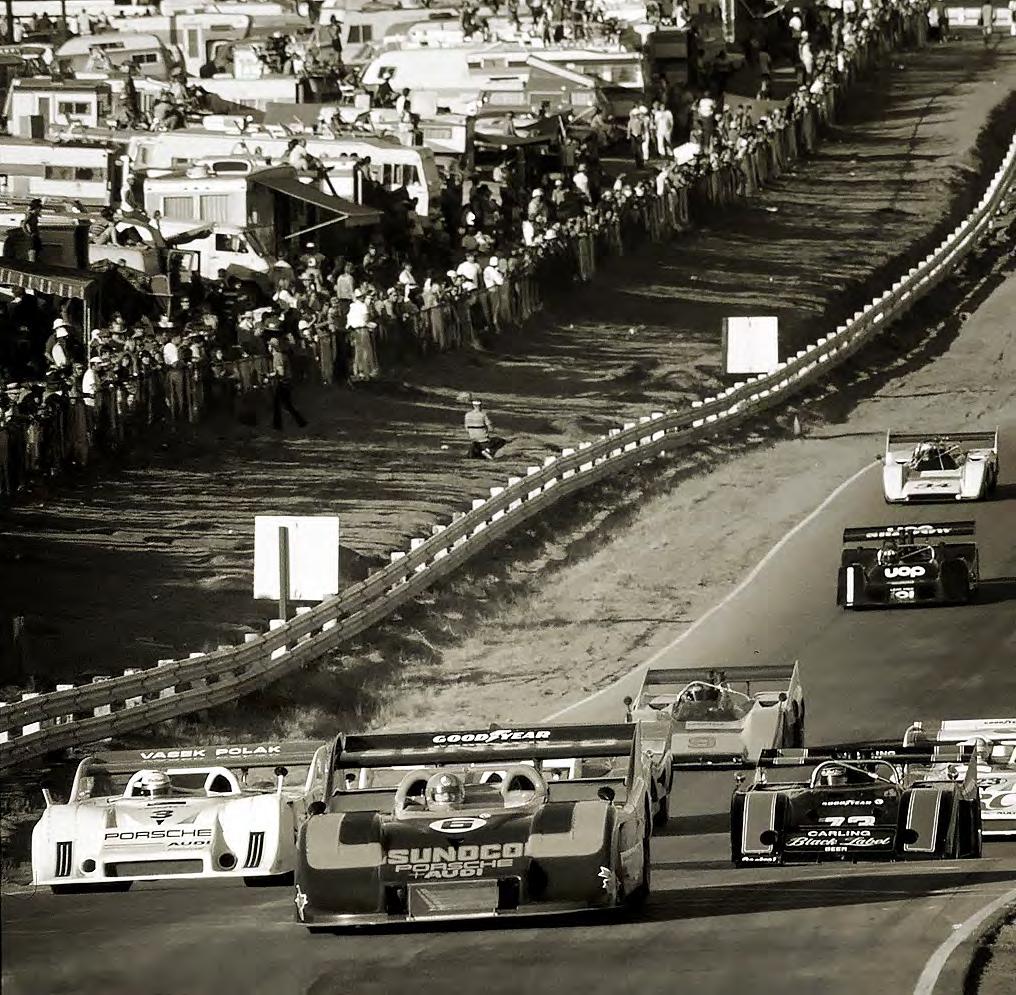
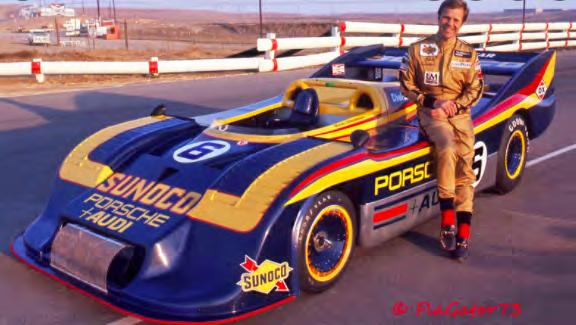
The first 917 you will see is the 917/10.018, one of the last ever produced. It was purchased as a new car from the factory by Mr. Polak at the end of 1972 and campaigned in the 1973 series by Jody Scheckter. However, if you were driving a Porsche in the 1973 CanAm series, your hame had better be Mark Donahue or all you might expect would be the twin turbo chargers of the 917-30 as it blew by you.
Later in the season, Vasek Polak obtaied the identical 5.4 litre turbocharged engine that Donahue’s 917-30 had, but it took more than 1100 horsepower to beat the Penske team and Polak’s 917-10 was a familiar second and third place finisher. Still, the performance of the 91710 is impressive: 0 to 60 mph in 2.1 seconds (try that on a freeway on-ramp); 0 to 100 mph in 3.9 seconds; 0 to 200 mph in 13.4 seconds! In 1972, 917-W’s finished 1st and 3rd in the CanAm series and in 1973 they finished 2nd, 3rd, and 4th.
The 917 parked next to it is 917.023, a menacing looking coupe showing the familiar colors of its sponsor, Martini and Rossi, decorating its fiberglass shell. If you were lucky enough to be at the 24 hours of LeMans in 1971 you might have seen this car. And if you were around when they waved the checkered flag, this car would have been the first to see it. It was driven by VonLennep and Marko and covered a record-breaking 3.315 miles at an average speed of 138 mph. It is a mark which drivers still try to beat today.
These figures were good enough to assure that the 917 would not be back as the Europeans banned cars over 3 litres from races like LeMans. If you close your eyes, it is not hard to imagine 917.023 doing over 220 mph down the Mulsanne straight...at night...in the rain.
Mark Donahue alongside his 917-30
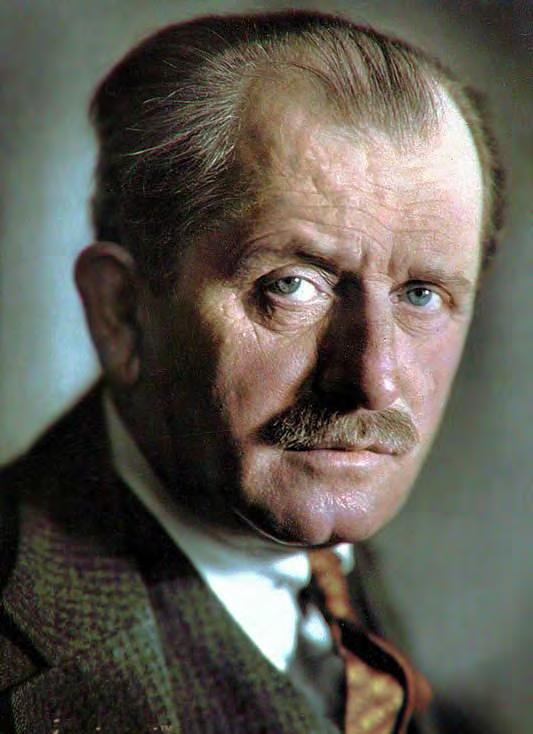
Ferdinand Porsche
Reprinted from a PORSCHE Press Release, 1981:
It was a half-century ago that Austrian-born Ferdinand Porsche founded the company which today bears his name--a marque synonomous with high performance vehicles that have become legends in their own time.
The birth of the Porsche firm began during the 1930 bankruptcy of the Austrian bank which was the chief financial backer of Steyr, the auto maker where Ferdinand Porsche worked as a design director.
In December, 1930, Dr. Porsche, accompanied by 12 of his closest associates, moved to Stuttgart, a city where he had once worked as Technical Director of Daimler-Benz. His company was then entered in the trade register on April 25, 1931, as the “Dr. Ing. h.c.F. Porsche GmbH. Design and Consultation on engines and vehicles.
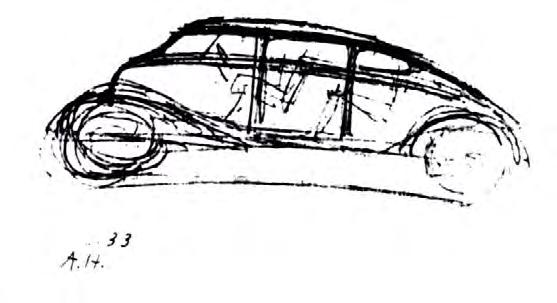
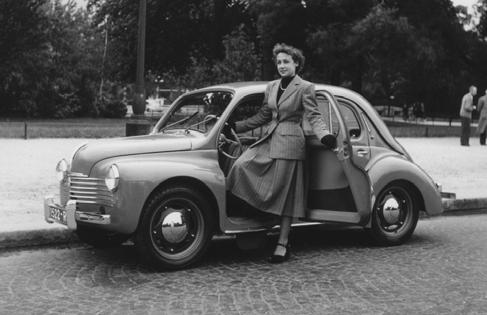
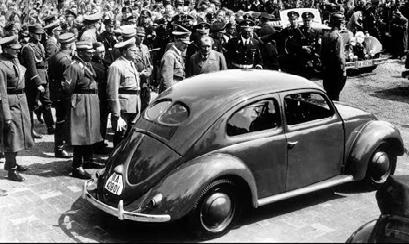
While these were tough times for engineers, the Porsche team was asked to develop a small car for Zundapp, the motorcycle and automotive firm. Although this car never went beyond the prototype stage, a similar assignment from NSU in 1933 led to a vehicle that resembled the now-legendary VW Beetle.
At about the same time, Porsche conceived a racing car with his staff. This independently designed vehicle was later taken over by Auto Union as the 16 cylinder, rear-engined racer which claimed victories on virtually every race track in Europe between 1934 and 1937--and established numerous records with Stuck and Rosemeyer driving.
In 1932, Dr. Porsche developed a new spring element commonly used by automobile builders today--the torsion bar. Two years later, he designed the Vw Beetle and the first two VW prototypes were on the road by the end of 1935.
Increased demand for auto designs led Porsche to move his design studio from central Stuttgart to the suburb of Zuffenhausen where a small factory was constructed.
During World War II, Ferdinand Porsche developed several technically advanced tanks and tractor units. Following the war, Porsche drove to Baden Baden at the request of the French to negotiate the construction of a “people’s car.” It was during his second visit that he was arrested, along with his son Ferry and sonin-law Anton Piech. He was moved to Paris as a prisoner of the French and later to Dijon. When he was released in 1947, his health was broken.
Under official pressure, the Porsche plant had been relocated in Gmund, Austria, during the fall of 1944 to be safe from bombing. Ferry Porsche gathered together old colleagues there again in 1946, following his own release from internment. Although there were no development contracts, there was plent of work, such as repairing cars as well as non-automotive work including mower components, ski bindings, and barracks hardware.
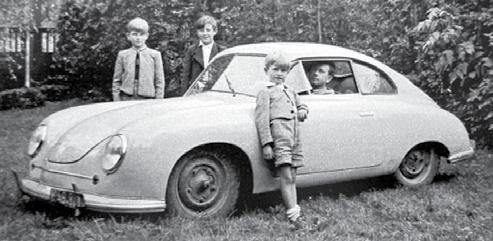
Ferry Porsche and his chief designer, Karl Rabe, also worked on their pet project--a sports car--in the Gmund barracks. That became the famous Porsche 356, based on the vw Beetle
That same year a contract was negotiated for Porsche to build the most modern formula race car in the world--the famous four-wheel-drive Cisitalia. Because of a change in formula this car was never raced, but the money paid for its development facilitated the release of Dr. Porsche from imprisonment.
In June, 1948, the first Porsche 356 with aluminum body was completed at Gmund and by March, 1951, -the year of Ferdinand Porsche’s death--the last of a total of 47 cars were build before Porsche moved back home to Stuttgart- Zuffenhausen. The first sports car success designed by Porsche and also carrying the Porsche name had already been posted by July of 1948.
Ferry Porsche recalls, “Thanks to its compact design, low weight, and short wheelbase, performance surpassed even our own expectations.” He ads, “It climbed mountains like a chamois and touched 80 mph easily giving 40hp at 4000 rpm.
In the fall of 1948, Ferry Porsche negotiated a contract with Heinz Nordhoff, chairman of the board of the VW factory, which assured VW almost exclusive access to Porsche development work and also provided Porsche with importers in the VW network, as well as delivery of parts to Porsche.
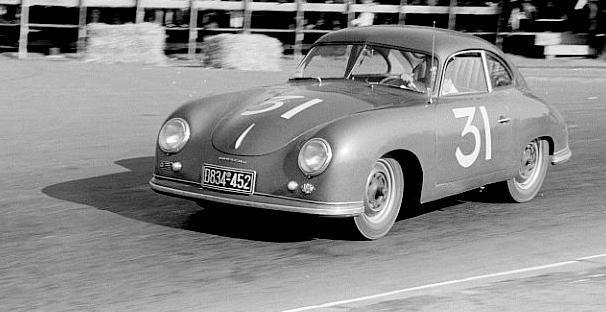
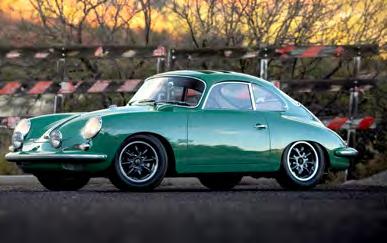
In Stuttgart, production of the 356 began in earnest. Original plans called for 500 to be built, but 78,000 was the final count.
In 1955, the first Porsche with new high performance engine went into production-the 1.5 liter 356 Carrera. It had proven itself over several years of racing. Its engine was developed by Dr. Ernst Fuhrmann who later became chairman of Porsche.
In 1964, the successor to the 356 was born. The air-cooled enqined 911 has sold 190,000 units, makin it the most successful rear-engined sports car of all time and it is expected to stay in production for years to come.
In 1972, increased in-house demands for development contracts led to the acquisition of the test track facilities at Weissach. That was also the year that Porsche KG was changed into a jointstock company with a board of directors and the new Porsche AG firm came into existence.
Despite the success of the 911, Porsche expanded its technical expertise to meet changing worldwide demands for environmental and safety requirements. Alternative Porsche models would also have a water-cooled engine in front. A new concept led to the development of the transaxle as now used with a light metal engine in front while drive axle combined with the gearbox is found in the rear of the vehicle. Porsche developed two new sports cars with this design--the 924 and the 928.
“As always, says Ferry Porsche, “ our competition entries in racing and rallying aided technology for our production cars. The endless winners’ lists in Porsche racing include seven World Championship for Makes, six European Rally Championships, and many national and international hill climb titles.
Five victories at LeMans, 11 in the legendary Targa Florio, three in Monte Carlo Rally, a Formula 1 victory in the French Grand Prix as well as successes in the CanAm series all documented the versatility of Porsche competition.
Today, Porsche, with nearly 5000 employees is the smallest German automobile builder, but the largest sports car specialist in the world, thanks to continuous reasearch and development work.
In the future, Porsche aims to offer sports cars that can satisfy the desire for perfection in technology, quality, performance and longevity*.
“We want to offer exciting products and services which will satisfy Porsche customers while considering protection of the overall environment to the greatest possible degree,” said Peter Schutz, new Chairman of the Board at Porsche. He sees the prerequisite for this in “offering the entire Porsche team secure opportunities for achieving all which is possible for them, professionally and personally, in a positive working climate.
*...and did they ever!
991.2 VS 991.1 ...a Model Upgrade or a Transformation?
Martin Schacht
The goal of this article is to point out any substantial technical differences comparing two late model Porsche cars, the 991.1, and 991.2., both Carrera and Carrera S models. The 991.1 was available from 2012 to 2016, and the 991.2 car, announced in 2016 with its model run phased out by the 992 in 2019. What we see in the 991.2 in contrast to the 991.1, are the results of design evolution precipitated by technical advances, environmental needs and more stringent emissions standards. Porsche is responding to market demands, for increased performance accompanied by fewer emissions and better gas mileage.
Has this evolutionary transformation resulted in a significant track performance advantage of the 991.2 Carrera and Carrera S over the 991.1 cars?
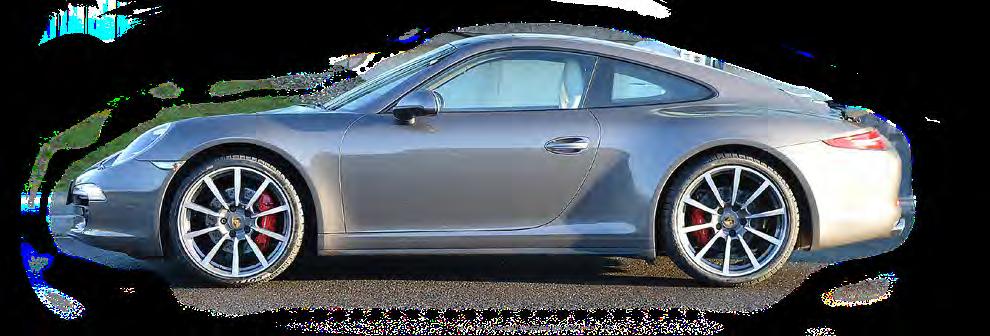
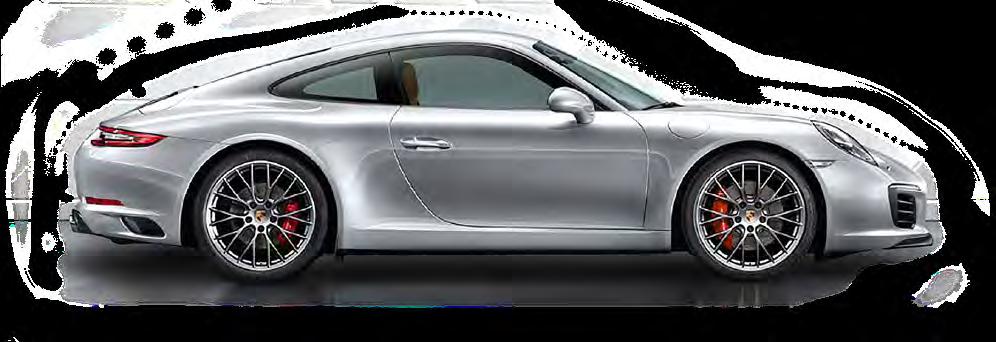
Considering body work, both the 991.1 and 991.2 car, on the surface, appear to be close “cousins” viewed from afar as well as close up too. However, under close scrutiny, it can be seen that nearly all body panels on the 991.2 differ from the 991.1, with the two (2) models sharing only roof and door panels. There probably is no significant performance gain from changes in the styling and aerodynamics.
Mechanical Specifics of the engines are quite different though: The 991.1 cars were delivered with naturally aspirated, port injected motors, the Carrera with 3.4 liters and 350 HP, the Carrera S sported a 3.8 liter motor producing 400 HP.
The 991.2 engine, although downsized to 3.0 liters, gained two (2) turbochargers and accompanying intercoolers, providing up to 13.1 psi of boost for the Carrera and up to 16.0 psi for the Carrera S. This results in 370 HP for the Carrera and 420 HP for the Carrera S, 20 more HP than their 991.1 Carrera and 991.1 Carrera S counterparts. There is no denying that the 991.2 engine technology is clearly superior to the 991.1, providing significantly more “bang for the buck” out of its 3.0 twin turbo liter motor.
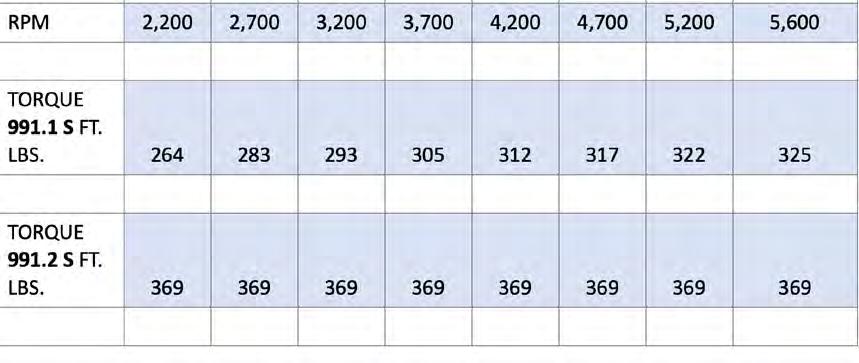
Twenty horsepower increase aside, a not so subtle difference in torque exists between the 991.1 and 991.2 engines. Looking at the chart below showing the engine torque curves of the 991.1 and 991.2 Carrera S, note the 991.2 S shows not only a 44 lb-ft increase in total torque, but a 39% increase of 105 lb-ft of torque available at 2200 RPM. And similar torque increases are available across the RPM range due to the flat torque characteristic of the 991.2 engine. A similar relationship exists between the 991.1 and 991.2 non-S Carrera engines. An increase in low rpm torque is a key to better corner exit acceleration on the track.
Above data courtesy https://www.automobile-catalog.com
• 991.1 Carrera S, 400 HP, 325 Ft. Lbs. of torque @ 5,600 RPM, noting at anything less than 5,600 RPM, torque on the 991.1 is proportionately less, in contrast,
• On the 991.2 Carrera S, we see 420 HP, 369 Ft. Lbs. of torque @ 1,700 - 5,000 RPM, a distinctly broad range, and noting that consistent peak torque comes on so much sooner. Advantage 991.2
Getting past the respective 991.1 and 991.2 torque specifics and power plants, the next item on the agenda, a comparison of vehicle weights, recalling that lighter is always better. Like Lotus designer Colin Chapman said, power makes one faster on the straights; less weight makes one faster everywhere.
Firstly. Let’s examine if there is a weight to H.P. advantage for the 991.1 Carrera S over the 991.1 Carrera? Why start with this seemingly out of sequence contrast, comparing a Carrera S model to a Carrera? See in the paragraph below for the “method to my madness.” For weight reference sources, I relied on data from PCNA and PAG:
• Owning a 991.1 Carrera S, and competing with 991.2 cars, in DE and Time Trial, was my impetus to compare the 991.1 Carrera S to the 991.2 Carrera. The 991.1 Carrera S weighs in at 3,224 Lbs./400 HP = Wt./Hp. Ratio of 8.06 to the 991.2 Carrera, average weight of 3,190/370 HP = Wt./ Hp. ratio of 8.62: Advantage to my 991.1 Carrera S, a seemingly negligible “triumph” considering the other 991.2 improvements delineated below, exclusive to the 991.2.
• Now let’s compare like to like, Carrera “S” models, the 400 HP 991.1 Carrera S to the 420 HP 991.2 Carrera S lighter by 49 Lbs. at 3,175 Lbs. Now consider the incremental 20 HP of the 991.2 over the 991.1. This results in a Wt./HP. ratio of 7.56, and as common knowledge, the lower the Wt./HP. ratio, the better the performance. My 991.1 at 3,224 Lbs. and 400 HP, has a weight to H.P. ratio of 8.06, resulting in a quantifiable performance advantage for the 991.2 Carrera S over the 991.1 Carrera S. To achieve a similar Wt./Hp. Ratio as its 991.2 Carrera S counterpart, the 991.1 Carrera S would have to lose 200 Lbs., not an option: Advantage 991.2 Carrera S.
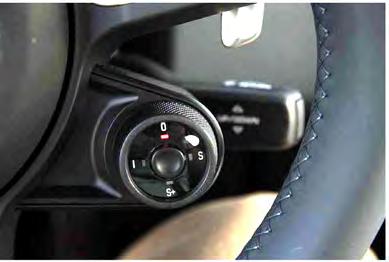
Another technical differentiator, and advantage the 991.2 Carrera and Carrera S enjoys over the 991.1, assuming both models are optioned with the Sport Chrono package, the 991.2 incorporates a feature, the Mode switch, exclusive to 991.2. PAG states, “What’s new is the mode switch on the steering wheel, derived from the 918 Spyder to make you feel closer to the racetrack. Without your hand leaving the steering wheel, you can choose any of four settings: Normal, SPORT, SPORT PLUS and Individual. Now you can adapt the vehicle even more to the way you want to drive.”
A very descriptive write up for these 991.2 features may be found in the June 16, 2016 www.flaxsixes.com, article by Bradley Brownell, the source for the pics of the various Modes:
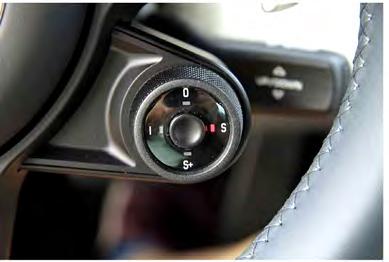
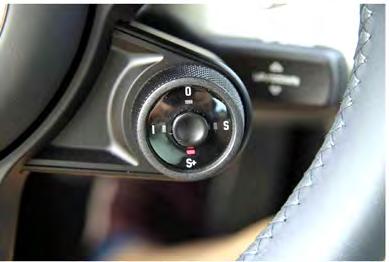
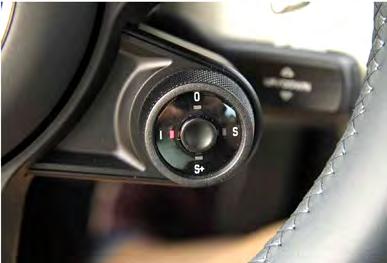
With access to Sport Chrono redesigned on the 991.2, Porsche created an ingenious approach enabling the driver to select the various modes of Sport Chrono effortlessly, on the fly, utilizing the dial selector seen above, integrated into the steering wheel. This is in contrast to the 991.1 approach where drivers select their specific driving mode utilizing rectangular buttons arranged on the transmission hump, just aft of the selector for PDK, or the shifter for 7 speed manual transmission. In addition to the traditional Normal, Sport and Sport + modes, for the 991.2, Porsche provides an Individual Mode where the various parameters may be customized to meet a driver’s needs, see details below.
• Normal Mode: For around town driving, a softer more comfortable ride, Sport Exhaust if so equipped reverts to the quietest exhaust valving, throttle response is dialed down, shift points are earlier and auto start/stop is retained. Normal is the ideal mode to keep the neighbors chill.
Ordinary Mode
Sport + Mode
Sport Mode
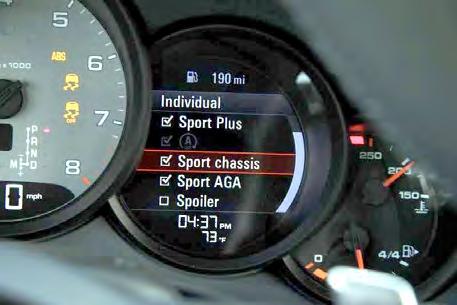
Individual Mode
• Sport Mode: Described as an intermediate mode, between Normal and Sport+ the chassis is stiffened, throttle response becomes snappier, shift points are raised, the dynamic engine mounts are stiffened up and Sport Exhaust activated with the PDK’s auto downshifting distinctly engaged. Bradley Brownell’s says, “This mode is for when you want to get a little more lively with your driving experience, but haven’t quite made it to your favorite road.” For most, me included, the snaps and pops heard on deceleration, are “music to one’s ears.”
• Sport + Mode: Described as the optimal mode for the track and aggressive and sporty street driving. Porsche Active Suspension Management (PASM) stiffens the chassis, throttle response is more aggressive taking the driver to Red Line unless driver interrupts the process choosing to shift the 7 speed manual transmission and/or PDK, automatic, PDK shifts becomes snappier with automatic downshifting becoming more prominent on deceleration, dynamic engine mounts become more aggressive, to the point of transitioning to solid at the extreme, eliminating any possibility for engine case torque to be transmitted to the chassis, and Sport Exhaust remains activated.
• Individual Mode: Exclusive to the 991.2, in this mode, the driver accesses their personalized settings such as preprogrammed shift points, throttle response, chassis PASM settings, and Sport Exhaust can be either in the On or Off mode. Interesting to note, the driver can opt for spoiler deployment, or bypass it
And now the “piece de résistance”, and in my opinion a most remarkable feature, introduced with 991.2 cars optioned with the Sport Chrono Package, the Porsche Sport Response Button (PSRB). From PAG, “Pressing the button in the centre of the mode switch (As seen below: Italics mine.) primes the engine and transmission for the fastest possible unleashing of power. In other words, maximum responsiveness – for a period of approximately 20 seconds. A timer graphic in the instrument cluster tells you how long is left. “ This feature Individual Mode Display
is simply mind boggling…just imagine a car so equipped at the exit of any turn regardless of the specific track. There is the possibility that some of this verbiage could well be advertising hype.
Porsche of Fremont, CA provides this pic below. The Sport Chrono Mode switch is seen at the “4:30 o’clock” location. (See Blue Arrow)
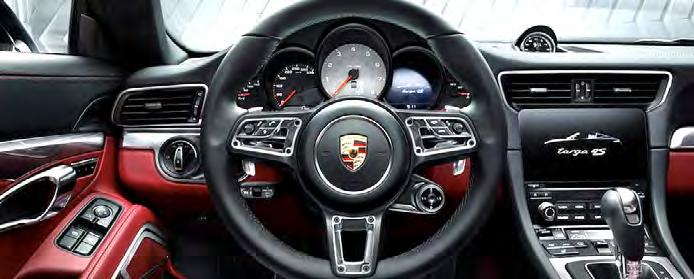
As we see in www.flatsixes.com, “The little button in the middle of the mode switch is the Porsche Sport Response Button (PSRB), and it makes you a driving God for 20 seconds. All it takes is a little press of the button. Porsche has revealed how it works: When you press the PSRB button, the drivetrain is set up for maximum acceleration for a time period of up to 20 seconds. The PDK gearbox will automatically select the right gear for accelerating, and the turbochargers are allowed to overboost. Porsche makes no claims on horsepower or torque increases during the overboost period, but the car certainly feels faster in the ‘seat-of-thepants’ sense. We had a chance to test the button out when passing slower traffic, and it works wonders. Kick down a few gears, boost the power, and you’re instantly past what was formerly a rolling roadblock.” Clearly, advantage to 991.2.
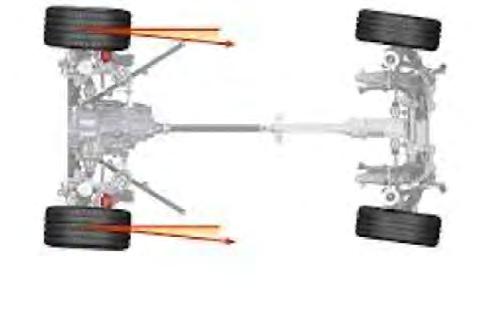
991.2’s Porsche Dynamic Chassis Control (PDCC) option is technically superior to that available on the 991.1, when it has been packaged with (Optional) rear axle steering. This feature was unavailable from PAG during the 991.1 model run. From www.total911. com, a pic of rear axle steering. From PAG, “PDCC with rear axle steering can steer through corners faster and in a more relaxed manner which is why PDCC with rear axle steering sets standards for driving performance…”
SUMMARY:
• The 991.2 models have greater, and consistent torque, across a broad range, 1,700 RPM to 5,000 RPM, compared to 991.1 peak torque seen only at 5,600 RPM, as well as 20 incremental HP,
• The 991.2 cars are lighter compared to the 991.1, always a good thing,
• The 991.2, optioned with Sport Chrono, features the Porsche Sport Response Button (PSRB) providing short bursts, up to 20 seconds of turbo over-boost, who wouldn’t want to experience this?
• The 991.2 PDCC ‘s optional rear axle steering may enable a better exit out of the corners and on to the straights, very interesting option.
Would I love to enjoy these 991.2 features, sure, in a perfect world, of course, who wouldn’t, but I am not willing nor inclined to put out the money to upgrade to the 991.2 car. In essence, I’d have to sell my car, which has always been a marginal and generally unpleasant process for me, and pony up an additional $20,000, or more, to enjoy the above features unique to the 991.2.
Reality check, the 991.2 Carrera and Carrera S cars are relatively new Porsche cars, and as a result, have not suffered much in the way of depreciation. If one decides they must have the technical features and benefits and enjoy the performance possibilities of a 2017 – 2019 991.2, Carrera or Carrera S, compared to its 991.1 model equivalents, be prepared to pay substantially more for the 991.2. According to KBB.com, using the Carrera S as an example, with both 991.1 and 991.2 cars having 37,000 miles, a clean Carfax, in top condition, expect to pay approximately $15,000 to $20,000, or more, for 991.2 Carrera or Carrera S compared to the 991.1 Carrera or Carrera S model. In my case, I am blessed to have, the 2013 991.1 Carrera S, and am learning to drive it within my limitations, self-imposed and otherwise. It’s an incredible car, just a little bit analog, as I am.
Considering the data above, it is undeniable that the 991.1 and the 991.2, both Carrera and Carrera S models, differ substantially and are superior to their 991.1 predecessors, some have gone so far to say they have very little in common, other than door panels and a roof. One could wonder if Porsche Marketing could go back in time, would they come up with a distinct and different 900 series three (3) digit moniker for the 991.2. When two separate car models, 991.1 VS 991.2, share so little in common, why not differentiate them with a unique numerical brand? We’ll never know.
911 Design is a full-service repair and restoration facility located east of Los Angeles in the city of Montclair.
In addition to offering standard service, repair and restoration for all Porsche® models, we are known for and specialize in custom fabrication, design and performance upgrades.
All of our services are vertically integrated which means we keep all repair, fabrication and auto-body in-house.