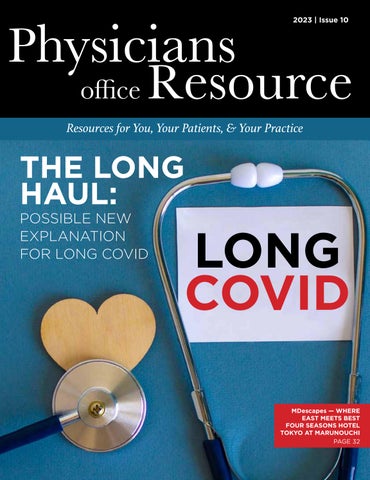
Physicians office Resource 2023 2023| |Issue Issue10 9
Resources for You, Your Patients, & Your Practice
THE LONG HAUL: POSSIBLE NEW EXPLANATION FOR LONG COVID
LONG COVID MDescapes — WHERE EAST MEETS BEST FOUR SEASONS HOTEL TOKYO AT MARUNOUCHI PAGE 32
3200
PUBLISHED BY Medical Education Resources, LLC PUBLISHER Aaron R. Medaris amedaris@physiciansofficeresource.com
CEO Andrew C. Nimmo acnimmo@physiciansofficeresource.com
PRESIDENT John D. Pasquale jpasquale@pharmaconnect.com
Getting the most from this guide
BUSINESS MANAGER Marci J. Hills mhills@physiciansofficeresource.com
TRAVEL EDITOR Brandi L. Brower EDITORIAL BOARD Michael Paquin, FHIMSS Barry Craig, MLT (NCA), CLC STAFF WRITER Dylan J. Chadwick
There are two simple ways to request
CREATIVE DIRECTOR PRODUCTION MANAGER Jessica Elmer
information about the products and services
Copyright ©2023
found in Physicians Office Resource. 1. Go to www.PhysiciansOfficeResource.com and enter the four-digit reference number found next to the product or service into the search field, then request additional information, schedule a demo, or speak with a sales agent all with just a simple click of a button. 2. Find the Business Reply Card in this issue, circle the desired reference numbers, complete the form, and drop into any USPS mailbox. A representative will contact you as quickly as possible to answer your questions.
www.PhysiciansOfficeResource.com
To continue your free subscription of Physicians Office Resource magazine, please fill out the Business Reply Card (BRC) located within this magazine and drop in any United States Post Office mailbox. If you are a manufacturer of medical products or provide services to medical professionals and would like to advertise your products or services to the nation’s top physicians doing in-office testing, call 801-380-6094 or visit: POR.io for more information.
2023 · ISSUE 10 | 3
TABLE OF CONTENTS
THE LONG HAUL:
POSSIBLE NEW EXPLANATION FOR LONG COVID
LONG COVID
Long COVID, also known as post-acute sequelae of SARSCoV-2 infection (PASC), is a term used to describe a range of symptoms that persist for weeks, months, or years after the acute phase of a COVID- 19 infection. Though Long COVID occurs more often in people who had severe cases, people who had a mild or asymptomatic case can also experience a variety of symptoms long after their initial infection has resolved. In this article, we will explore the various and wide-reaching symptoms of Long COVID, assessing and testing patients exhibiting symptoms, and the latest scientific findings of Long COVID. — PAGE 6
10
32
SCRUBMONEY: PAGING ALL RESIDENTS: WHO’S LOOKING OUT FOR YOUR FINANCIAL WELLNESS?
MDescapes — WHERE EAST MEETS BEST FOUR SEASONS HOTEL TOKYO AT MARUNOUCHI PART TWO OF A THREE PART SERIES
The grind. Residents know about it. Long days requiring intense mental focus. Physically demanding. Exhilarating and enjoyable, yet exhausting and overwhelming at times. Loving what we do—but not loving what it does to us on some of those days.
The sun has not set on my adventures in this intriguing country; it has just begun. The sun is still high in the sky as my Shinkansen train slows to a stop at the famous Tokyo Station. The prominent red brick edifice, constructed in 1914, is the busiest in Japan...
4 | PHYSICIANS OFFICE RESOURCE
TO X I C O LO G Y S C R E E N I N G
SIMPLIFIED. Comprehensive toxicology menu now with 14 CLIA1 categorized moderate complexity assays.
3201
IMMTOX™ 270
BENCHTOP ANALYZER
Toxicology screening solutions for physician offices, pain management, treatment centers and laboratories testing 200+ patient samples/mo.
Scan this QR code to view the ImmTox™ 270 product video
MODERATE COMPLEXIT Y ASSAYS – FDA 510(K) CLEARED 6-acetylmorphine (6-AM Heroin metabolite)
EDDP (Methadone metabolite)
Amphetamine
Fentanyl*
Barbiturates
Methamphetamine
Benzodiazepines
Opiates
Benzoylecgonine (Cocaine metabolite)
Oxycodone
Buprenorphine
Phencyclidine (PCP)
Cannabinoids (THC)
Tramadol
CONTACT ABBOTT CLINICAL LAB SOLUTIONS
855-425-9428 | CLS_SALES@ABBOTT.COM 1. Clinical Laboratory Improvement Amendments (CLIA) / * SEFRIA Fentanyl
© 2022 Abbott. All rights reserved. All trademarks referenced are trademarks of either the Abbott group of companies or their respective owners. Any photos displayed are for illustrative purposes only. COL-09575 v3 12/22
FEATURE
THE LONG HAUL:
POSSIBLE NEW EXPLANATION FOR LONG COVID BY AARON MEDARIS, PHYSICIANS OFFICE RESOURCE
LONG COVID
Yes, we’re still talking about COVID. We wish we didn’t have to, but the fact is, COVID is here to stay and it’s something we’re going to have to deal with. Luckily for us, the past 3.5 years have been filled with technological advancements that help us better test, prevent, and treat this cruel illness; allowing many people who contract COVID-19 to recover in a matter of days or weeks. However, there are some people who have been infected that experience long-term effects from their infection, known as Long COVID. Long COVID, also known as post-acute sequelae 6 | PHYSICIANS OFFICE RESOURCE
of SARS-CoV-2 infection (PASC), is a term used to describe a range of symptoms that persist for weeks, months, or years after the acute phase of a COVID-19 infection. Though Long COVID occurs more often in people who had severe cases, people who had a mild or asymptomatic case can also experience a variety of symptoms long after their initial infection has resolved. In this article, we will explore the various and wide-reaching symptoms of Long COVID, assessing and testing patients exhibiting symptoms, and the latest scientific findings of Long COVID.
Symptoms of Long COVID As of today, there are no diagnostic tests that determine if a patient’s symptoms or conditions are due to Long COVID. Symptoms and conditions can be wide and far reaching and, in some cases, they can even go away and then come back. Common symptoms associated with Long COVID can include: • Fatigue: Persistent and often debilitating tiredness or weakness. • Shortness of Breath: Difficulty breathing or breathlessness, even during mild physical activity. • Cognitive Issues: Often referred to as “brain fog,” which can involve difficulties with concentration, memory, and mental clarity. • Muscle and Joint Pain: Widespread or localized muscle and joint aches or discomfort. • Chest Pain: Discomfort or pain in the chest, which may be associated with breathing difficulties. • Headaches: Frequent or severe headaches. • Loss of Taste or Smell: Anosmia (loss of smell) or ageusia (loss of taste). • Sleep Disturbances: Problems with sleep, including insomnia or excessive fatigue. • Heart Palpitations: Irregular or rapid heartbeats. • Gastrointestinal Symptoms: Digestive problems, such as diarrhea or abdominal pain. • Skin Rashes: Skin issues or unexplained rashes. • Dizziness: Feeling lightheaded, dizzy, or experiencing vertigo.
• Mood Changes: Emotional and psychological symptoms, such as depression, anxiety, or mood swings. • Fever: Occasional or persistent low-grade fevers. • Post-Exertional Malaise: Severe fatigue or worsening of symptoms after physical or mental exertion. It’s important to note that the duration and severity of these symptoms can also vary widely. Some people experience mild, manageable symptoms, while others may have more severe and debilitating symptoms that last for months. Additionally, new symptoms may emerge over time, making long COVID a complex and challenging condition to manage. Assessing and caring for those with Long COVID Many Long COVID conditions can be diagnosed clinically based on history and findings on physical examination. Others might require directed diagnostic testing, however it is important as a healthcare provider, to help the patient understand that such clinical assessments might be uninformative. Because Long COVID conditions involve multiple organ systems, a thorough physical exam should be considered. In addition to blood pressure, heart rate, respiratory rate, pulse oximetry, body temperature, and body mass index, healthcare providers should evaluate ambulatory pulse-oximetry for patients with respiratory symptoms, fatigue, or malaise. For patients experiencing postural symptoms such as dizziness, fatigue, or cognitive impairment, Orthostatic vital signs should be evaluated. Utilizing laboratory tests can be informative, but again it’s important for the patient to understand that there is no “one” test that will determine if they are experiencing Long COVID. However, because Long COVID affects multiple organ systems, laboratory tests may be able to help you as a provider better un-
Basic Laboratory Tests to Consider with Long COVID patients include: CATEGORY
LABORATORY TESTS
Rheumatological Conditions
Antinuclear antibody, rheumatoid factor, creatine phosphokinase, anti-cardiolipin, anti-cyclic citrullinated peptide
Coagulation Disorders
D-dimer, fibrinogen
Myocardial Injury
Troponin
Differentiate symptoms of cardiac vs. pulmonary origin
B-type natriuretic peptide
Specialized Diagnostic Laboratory Tests to Consider with Long COVID patients include: CATEGORY
LABORATORY TESTS
Blood count, electrolytes, and renal function
CBC with possible iron studies, basic metabolic panel, urinalysis
Liver Function
Liver function tests or CMP
Inflammatory Markers
C-reactive protein, erythrocyte sedimentation rate, ferritin
Thyroid Function
TSH and free T4
Vitamin Deficiencies
Vitamin D, vitamin B12 2023 · ISSUE 10 | 7
derstand how Long COVID may be affecting your patient.
FEATURE
Other assessment tools can be utilized for evaluation of patients with Long COVID conditions. Testing should be adjusted to fit the patients symptoms and presentation. Those assessments can include the following: Functional status or quality of life Patient Reported Outcomes Measurement Information System Post COVID Functional Status Scale EuroQol-5D Respiratory Conditions Modified Meical Research Council Dyspnea Scale Neurologic Conditions Montreal Cognitive Assessment Mini Mental Status Examination Compass32 Neurobehavioral Symptom Inventory Psychiatric Conditions Generalized Anxiety Disorder-7 Patient Health Questionnaire-9 PTSD Symptom Scale Latest Findings on Long COVID In a recent study published in the journal Cell, scientists from the University of Pennsylvania discovered that serotonin levels were lower in people with symptoms of Long COVID. These researchers are suggesting that lingering effects of the COVID-19 virus reduce the amount serotonin the body produces. In this study, researchers analyzed the blood of 58 patients dealing with Long COVID symptoms between 3 and 22 months since infection of the virus. That blood was then compared to 30 people who experienced no Long COVID symptoms in addition to 60 patients in the early stages of a COVID-19 infection. One finding that stood out to Maayan Levy, a lead author on the study and professor at Perelman School of Medicine, was that levels of serotonin and other metabolites were altered right after a COVID-19 infection, something that also happens immediately after other viral infections. However, in patients with Long COVID, serotonin was the only significant molecule that did not recover to pre-infection levels. The researchers also analyzed stool samples from some of the Long COVID subjects and found that they contained remaining viral particles. Utilizing this knowledge, researchers turned to miniature models of the human gut, knowing that this is where more serotonin is produced, and were able to identify a pathway that could underlie some cases for Long COVID. The thought behind this pathway is that viral remnants prompt the immune system 8 | PHYSICIANS OFFICE RESOURCE
to produce interferons. These interferons cause inflammation which inhibits the body’s ability to absorb tryptophan (amino acid that helps produce serotonin). This can trigger blood clots after a COVID-19 infection and could impair the body’s ability to circulate serotonin. With lower levels of serotonin within the body, the vagus nerve is disrupted and therefore the parasympathetic nervous system is also disrupted. Scientists also proposed that patients exhibiting symptoms of Long COVID due to lower levels of serotonin could also be an explanation of why they experience problems with short-term memory, as serotonin plays an important role with memory. Though this study shows promise, researchers understand that this study needs to be enlarged to be more definitive in its results. An expansion of this study will most likely focus on the three biomarkers presented in this study: the presence of viral COVID remnants in stool, low serotonin, and high levels of interferons. “All these different hypotheses might be connected through the serotonin pathway,” said Christoph Thaiss, lead author of the study. “Second of all, even if not everybody experiences difficulties in the serotonin pathway, at least a subset might respond to therapies that activate this pathway,” he went on to say. Dr. Levy and Dr. Thaiss, both researchers in this study said they would begin clinical trails to test the effectiveness of fluoxetine (Prozac) which is a selective serotonin reuptake inhibitor to see if they can restore some of the vagal signals to improve memory and cognition. Time will tell what the results of the clinical trials will be. Until then, it’s important as a healthcare professional to listen with compassion and support your patients that struggle with Long COVID. Assess, diagnose, and provide them with the resources that can help them through this difficult time. REFERENCES: Long COVID or Post-COVID Conditions https://www.cdc.gov/coronavirus/2019-ncov/long-term-effects/index.html Caring for People with Long COVID https://www.cdc.gov/coronavirus/2019-ncov/long-term-effects/ care-post-covid.html Post-COVID Conditions: Information for Healthcare Providers https://www.cdc.gov/coronavirus/2019-ncov/hcp/clinical-care/ post-covid-conditions.html Viral Persistence and Serotonin Reduction Can Cause Long COVID Symptoms, Penn Medicine Research Finds https://www.pennmedicine.org/news/news-releases/2023/ october/penn-study-finds-serotoninreduction-causes-long-covid-symptoms Scientists Offer a New Explanation for Long Covid https://www.nytimes.com/2023/10/16/health/long-covid-serotonin.html
Physicians Office Resource Invites You to
GO ELECTRONIC! Sign up for our monthly eNewsLetter and get Physicians Office Resource delivered to your Inbox!
Physicians office Resource 2022 | Issue 8
Resources for You, Your Patients, & Your Practice
Point-of-care testing: A WINNING STRATEGY IN THE BATTLE AGAINST DIABETES PAGE 6
Luxurious Getaways and Special Offers Exclusively for Physicians PAGE 14
+
COULD YOUR PERSONAL FINANCES BENEFIT FROM EARLY INTERVENTION AND TREATMENT? | PAGE 36
Sign up at PhysiciansOfficeResource.com/home/contact/
FEATURE
PAGING ALL
RESIDENTS: WHO’S LOOKING OUT FOR YOUR FINANCIAL WELLNESS? If your wallet needs live-saving measures, now is a great time to avert a crisis. BY ANDY HARMS
The grind. Residents know about it. Long days requiring intense mental focus. Physically demanding. Exhilarating and enjoyable, yet exhausting and overwhelming at times. Loving what we do—but not loving what it does to us on some of those days. We’re a diverse set of people yet bound together by purpose. We can thrive in ever-changing, always-evolving patient care environments and on-call opportunities. Just as well, many of us excel best with a more structured day, one with meticulous order and greater command over outcomes. Our personal identities and varied interests were a large part of how we chose our specialty. Regardless, as residents we’ve all been trained to think on our feet, orient and analyze quickly, decide with assurance, and act toward a favorable outcome. In speaking with residents over the years about personal financial situations, I see an incredible ability for young physicians to manage—if not juggle! —their money matters despite weighty, disorderly, and persistent challenges. Wouldn’t it be nice if there was an easier way to prepare and plan financially, to bring order from chaos? The good news: there IS a better way. The bad news is you likely were
NOT trained in finances the same way you trained for medical practice. The Journal of the American College of Surgeons published a study in 2018 titled “Clinically Competent and Fiscally at Risk: Impact of Debt and Financial Parameters on the Surgical Resident.” One hundred five resident trainees were surveyed on topics of personal finance, and the majority (79%) of respondents felt strongly that inclusion of additional financial training in residency education is a critical need. The authors conclude: In a climate of increasingly delayed financial gratification, surgical trainees are on critically unstable financial footing. There is a major gap in current surgical education that requires reassessment for the long-term financial health of residents. In digging deeper for perspective on resident finances, I spoke with the researcher and author of this study with the longest tenure in medicine, Dr. Bruce Harms, MD, MBA, FACS. “My generation of doctors, I believe, assumed that we could out-grow, with time, any financial mistakes and miscalculations we made in residency and early on in our careers. I think that is an incorrect assumption nowadays. For younger docs, in this era, the mistakes made from a financial standpoint may be extremely costly in the long run.” When asked to point out the biggest differences from 2023 · ISSUE 10 | 11
FEATURE
then (Dr. Harms began residency in 1978) to now, he pointed out “certainly educational debt is the biggest difference I see, but also the cost of living. Housing, transportation, health care and childcare command a significantly greater part of a budget as compared to when I received my start in medicine.” If you’re in a residency program that addresses your financial literacy and financial preparation needs well, count your blessings. That’s certainly not common throughout organized medicine in the United States. Similarly, if you’re employed in a residency program that offers a retirement plan with matching employer contributions, count yourself fortunate. So where can we turn for assistance to avoid making costly financial mistakes and confidently face the challenges of personal finance during residency, given it may be unlikely to come through our employers or GME programs? One of my favorite recommendations for residents hoping for better command over their personal finances is to pick up, digest, and implement suggestions from a book titled MD in the Black: A Personal Finance Primer for Medical Residents. (Please note: I have no ties to the authors or sponsors of this book) It’s informative, practical, and concise. For all those in the TL;DR camp, it’s only a hundred pages. I recognize your time is limited—among the barriers to better financial literacy—but reading this book is certainly worth making a priority. Editor-in-Chief Eric Shappell, MD, MHPE, and physician educators from around the United States created a great resource, specifically designed for residents. The book focuses on five topics: 1) Educational debt, 2) Long-term disability insurance, 3) Life insurance, 4) Investing, and 5) Financial advisors Likely you have questions in all these areas. The authors point out “they are each related to a significant financial decision that the majority of residents will encounter during training.” We won’t breakdown each major category here, of course, but I would like to highlight two takeaways that every reader of this article at the residency level should consider: First, on the topic of educational debt: Have you asked yourself “What is Public Service Loan Forgiveness?” and “Should I Pursue PSLF?” This is the first decision you should make, and various sources can help you better understand how to approach this process of determination. Once a determination is made regarding PSLF, a debt repayment strategy can be mapped out further. As important as long-term disability insurance, life insurance, and investing are to the needs of a resident, a personal and in-depth commentary on each is beyond the scope and space of this article. However, they are a good 12 | PHYSICIANS OFFICE RESOURCE
lead-in to the second point we’d like to highlight here from Dr. Shappell’s book, considering the question “Should I Hire a Financial Advisor in Residency?” Most residents should be able to get along just fine with only a few hours dedicated to researching the basic financial decisions of residency (1) choosing a loan repayment plan, (2) choosing which insurance products to purchase and when, and (3) what to do with any extra income (typically a decision of whether to make extra payments on loans vs. invest). If you don’t feel comfortable making these decisions on your own and aren’t interested in learning more about them yourself, choosing to hire a financial advisor may be the way to go. This also may be a good idea if you have unusually complex financial circumstances. (Shappell 84) Whether during residency or as an attending, the likely outcome in any event is a search for an experienced and trusted financial advisor. What credentials do you seek, what questions do you ask? MD in the Black notes residents looking to start at the ground-level in forming a financial plan will do well to consider an advisor with a Certified Financial Planner (CFP), Chartered Financial Consultant (ChFC) or Certified Public Accountant/ Personal Financial Specialist (CPA/PFS) designation. Additionally, I suggest aiming to find a Fee-Only advising arrangement, particularly for planning services. This model minimizes conflicts and ensures that your financial planner acts as a fiduciary. Fee-Only planners are compensated directly by their clients for advice, plan implementation and for the ongoing management of assets. Fee-only financial advisors may be paid hourly, as a retainer, as a percentage of assets under management, or as a flat fee, depending upon the planner you choose. As residents, we understand the importance of preventative health care and the consequences of delayed treatment. This understanding, applied to our personal finances, will not only stave off a trip to the financial ED (i.e., more borrowing, lower net worth, less financial freedom), but enable us to enjoy the peace of mind and sense of confidence that comes with financial health. Our goal should be to confine the chaotic moments and stressors related to medicine to the hospital and away from our pocketbooks. We invite you to check out the resources mentioned above and reach out for help at any time to gain better financial understanding, set financial goals, and establish a path to financial wellness. Residency may be the best time to reach out, while the time is still on your side. — Andy Harms is co-founder of ScrubMoney, a free app now available for download, providing financial literacy and relevant personal financial content. ScrubMoney aims to empower early-career physicians to achieve financial wellness and enable stakeholders in healthcare to better develop financially confident doctors within their organizations.
Persooal foaoue eduuatioon tailored to you.
Get our mobile app for free.
@scrubmoneyorg scrubmoney.org
3202
PRODUCT FOCUS
CHEMISTRY ANALYZERS RX IMOLA From HORIBA Medical The RX imola is a cost-effective system that delivers consistent high-quality results. Capable of handling the workload of a medium to high throughout laboratory and a combined throughput of 560 tests per hour, the RX imola provides rapid, comprehensive testing on a small footprint analyzer when it matters most, with direct HbA1c testing capabilities.
3203
View Brochures, Videos & More at POR.io Enter Number 3203 in the Search Area
TOXICOLOGY SCREENING SIMPLIFIED ABBOTT’S IMMTOX 270 BENCHTOP ANALYZER NOW WITH 14 ASSAYS CLIA CATEGORIZED AS MODERATE COMPLEXITY
3204
From Abbott The ImmTox270 benchtop analyzer offers comprehensive toxicology screening solutions for physician offices, treatment centers and independent laboratories. Broad test menu with over 20 assays to choose from including 14 that are now available as moderately complex. With complete laboratory solutions from consultation to licensure, and compliance the Abbott Clinical Laboratory Solutions team has you covered.
View Brochures, Videos & More at POR.io Enter Number 3204 in the Search Area
DC-LINEATE CALIBRATION/ LINEARITY MATERIAL 3205
From SEKISUI Diagnostics The DC-Lineate is a unique, trilevel calibration/linearity material that is used in conjunction with assays for the quantitative determination of UIBC levels in clinical samples. The material is conveniently packaged in a 2 x 5 mL configuration for each of the three levels and is traceable back to the National Institute of Standards and Technology (NIST). It can be used on a broad range of clinical chemistry analyzers and has a shelf life up to 14-days after reconstitution.
View Brochures, Videos & More at POR.io Enter Number 3205 in the Search Area
14 | PHYSICIANS OFFICE RESOURCE
3206
3208
3207 3209
3210
3211
3212
3213
PRODUCT FOCUS
COVID-19 TESTING WHY COMPROMISE? FAST AND RELIABLE RESULTS ARE NOW DELIVERED AT THE POINT OF CARE.
3214
From LumiraDx
Introducing the next generation in point-of-care diagnostics. With a growing menu of tests, LumiraDx uses a simple process that allows for more time with your patients by using microfluidic technology that delivers results in minutes. Learn more about rapid COVID-19 diagnostic solutions for your physician office at LumiraDx.com.
View Brochures, Videos & More at POR.io Enter Number 3214 in the Search Area
OSOM® COVID-19 ANTIGEN RAPID TEST
3215
From Sekisui
The OSOM® COVID-19 Antigen Rapid Test is a lateral flow immunoassay that detects the SARS-CoV-2 nucleocapsid protein with a nasal swab in only 15 minutes at the pointof-care. The test is intended to be used by healthcare professionals or operators on patients suspected of COVID-19 within the first 7 days of symptom onset. The clinical performance compares favorably against polymerase chain reaction methodology, with a positive percent agreement of 95.1% and a negative percent agreement of 97%.
View Brochures, Videos & More at POR.io Enter Number 3215 in the Search Area
3216
SOFIA® 2 FLUORESCENT IMMUNOASSAY ANALYZER AND RAPID DIAGNOSTIC TEST KITS From Quidel
Sofia® 2 Fluorescent Immunoassay Analyzer and Rapid Diagnostic Test Kits Sofia 2 takes rapid testing to a new level. Proven lateral-flow technology and advanced fluorescent chemistry are all integrated into this small benchtop analyzer which can be used in any point-of-care setting. Sofia 2 kits are easy to use and adaptable to any healthcare setting. Excellent performance, objectivity, quality control, LIS capabilities, and an expanding test menu make Sofia 2 the perfect solution for the physician’s office laboratory.
View Brochures, Videos & More at POR.io Enter Number 3216 in the Search Area 16 | PHYSICIANS OFFICE RESOURCE
3217
FLU AND RESPIRATORY PRODUCT FOCUS
3218
BIOFIRE SPOTFIRE From bioMerieux bioMérieux knows that an evolving world deserves evolved diagnostics. Our latest innovation, the BIOFIRE® SPOTFIRE® Respiratory Solution, is the first FDA-cleared and CLIA-waived COVID-19 testing solution. The BIOFIRE® SPOTFIRE® System is an easy-to-use system that runs the BIOFIRE® SPOTFIRE® Respiratory (R) Panel. Benefits of the SPOTFIRE Respiratory Solution include: 15 respiratory targets on 1 PCR test with results in about 15 minutes; minimal benchtop space with vertical scalability up to four modules; easy to use with an intuitive user interface.
View Brochures, Videos & More at POR.io Enter Number 3218 in the Search Area
ACUCY INFLUENZA A&B TEST From Sekisui Diagnostics The Acucy™ Influenza A&B Test is for the rapid, qualitative detection of influenza A and B viral nucleoprotein antigens from both nasal and nasopharyngeal swabs. Utilizing the Acucy™ Reader in either the point-of-care or laboratory setting, workflow flexibility is achieved with both Read Now and Walk Away features. The combination provides clinicians with standardized and definitive result interpretation.
3219
View Brochures, Videos & More at POR.io Enter Number 3219 in the Search Area
OSOM ULTRA PLUS FLU A&B TEST From Sekisui Diagnostics 3220
Stronger Clinical Performance Takes Lateral Flow Testing To The Next Level. Providing superior rapid results at the point-of-care. Fast, easy, cost effective so you can test and treat in one visit. • High Performance- Equivalent or exceeding the performance of reader devices, without the need for an instrument • Results in 10 minutes • OSOM® Custom Care- Exceptional Support/Training by licensed medical technologists and experienced healthcare professionals • Made in the USA
View Brochures, Videos & More at POR.io Enter Number 3220 in the Search Area
18 | PHYSICIANS OFFICE RESOURCE
POC-22-NAM-3308
Meet the Quadruple Aim in Diabetes Care with In-office HbA1c and uACR Better outcomes. Lower costs. Better patient experience. Better clinician experience.
Comprehensive diabetes-management solutions at the point-of-care Gain key insights into your patient’s current status and drive guideline recommended test adherence: DCA Vantage® Analyzer CLIA-waived HbA1c • Rapid assessment for glycemic control CLINITEK Status® Connect System CLIA-waived analyzer for routine urinalysis • Rapid kidney health assessment: CLINITEK® Microalbumin 2 Strip Albumin-to-creatinine ratio (ACR) Total U.S. Population with Diabetes
54% Increase
3221
3222
The Prevalence of Diabetes Among U.S. Adults is on the Rise1 Help your patients reverse the trend
54,913,000 43,271,000 35,644,000
11.1%
2015
15.3% 13.0%
2020
Customize your patient consultations to enhance physician-patient partnership toward improved outcomes. siemens-healthineers.us/chronicdisease
2030 Projected
1. Rowley, William R et al. “Diabetes 2030: Insights from Yesterday, Today, and Future Trends.” Population health management vol. 20,1 (2017): 6-12. doi:10.1089/pop.2015.0181.
INDICATION Olumiant is a Janus kinase (JAK) inhibitor indicated for the treatment of adult patients with severe alopecia areata. Limitations of Use: Not recommended for use in combination with other JAK inhibitors, biologic immunomodulators, cyclosporine or other potent immunosuppressants. SELECT IMPORTANT SAFETY INFORMATION: WARNING RELATED TO SERIOUS INFECTIONS, MORTALITY, MALIGNANCY, MAJOR ADVERSE CARDIOVASCULAR EVENTS, AND THROMBOSIS SERIOUS INFECTIONS: Olumiant-treated patients are at increased risk of serious bacterial, fungal, viral and opportunistic infections leading to hospitalization or death, including tuberculosis (TB). Interrupt treatment with Olumiant if a serious infection occurs until the infection is controlled. Olumiant should not be given to patients with active tuberculosis. Test for latent TB before and during therapy, except for COVID-19; treat latent TB prior to use. Monitor all patients for active TB during treatment, even patients with initial negative, latent TB test.
MALIGNANCIES: Malignancies have also occurred in patients treated with Olumiant. Higher rate of lymphomas and lung cancers was observed with another JAK inhibitor vs. TNF blockers in RA patients.
MORTALITY: Higher rate of all-cause mortality, including sudden cardiovascular death was observed with another Janus kinase (JAK) inhibitor vs. tumor necrosis factor (TNF) blockers in rheumatoid arthritis (RA) patients.
THROMBOSIS: Thrombosis has occurred in patients treated with Olumiant. Increased incidence of pulmonary embolism, venous and arterial thrombosis was observed with another JAK inhibitor vs. TNF blockers.
MAJOR ADVERSE CARDIOVASCULAR EVENTS (MACE): Higher rate of MACE (defined as cardiovascular death, myocardial infarction, and stroke) was observed with another JAK inhibitor vs. TNF blockers in RA patients.
For adults with severe alopecia areata (AA)
Olumiant can help patients regrow their hair resulting in meaningful scalp coverage at week 361-4* BRAVE-AA1: Percentage of Patients Who Achieved a SALT Score of ≤20 Over Time, NRI† 100
PERCENTAGE
50 40
35%‡
27%‡
30
19%‡
22%‡
20 10 0
11%‡
7%
0
4
8
12
4%
5%
16
24
5% 36
WEEK Placebo (N=189)
Olumiant 2 mg/day (N=184)
Olumiant 4 mg/day (N=281)
BRAVE-AA2: Percentage of Patients Who Achieved a SALT Score of ≤20 Over Time, NRI† Week 16
Week 24
Week 36
Placebo
1%
1%
3%
Olumiant 2 mg/day
8%
11%
17%‡
Olumiant 4 mg/day
18%
28%‡
32%‡
(N=156)
(N=156) (N=234)
BRAVE-AA1 and BRAVE-AA2 clinical trial design1,2 Olumiant was studied in two randomized, double-blind, placebo-controlled clinical trials in adults with a SALT score of ≥50 and a current AA episode lasting >6 months and <8 years in duration. BRAVE-AA1 was a phase 2/3 trial that enrolled 654 patients in the phase 3 portion. BRAVE-AA2 was a phase 3 trial that enrolled 546 patients. Patients were randomized 2:2:3 to placebo, Olumiant 2 mg, or Olumiant 4 mg once daily. The primary endpoint was the proportion of patients achieving a SALT score of ≤20 at week 36.
The recommended dosage is 2 mg/day. Increase to 4 mg/day if response is not adequate. For patients with nearly complete or complete scalp hair loss, with or without substantial eyelash or eyebrow hair loss, consider 4 mg/day. Decrease to 2 mg/day once patients achieve an adequate response with 4 mg/day. *Primary endpoint was the proportion of patients achieving a SALT score of ≤20 at week 36. † Data collected after permanent study drug discontinuation or data collected at remote visits due to the COVID-19 pandemic were excluded. ‡ p≤0.05 vs placebo. NRI=nonresponder imputation; SALT=Severity of Alopecia Tool.
‡
p≤0.05 vs placebo.
Olumiant is the FIRST FDA-APPROVED systemic treatment for adults with severe AA Explore the results at Olumiant.com/HCP/AA
Please see the following pages for Important Safety Information, including Boxed Warning about Serious Infections, Mortality, Malignancy, Major Adverse Cardiovascular Events, and Thrombosis, and Brief Summary of Prescribing Information.
IMPORTANT SAFETY INFORMATION WARNING: SERIOUS INFECTIONS, MORTALITY, MALIGNANCY, MAJOR ADVERSE CARDIOVASCULAR EVENTS, AND THROMBOSIS SERIOUS INFECTIONS Patients treated with Olumiant are at risk for developing serious infections that may lead to hospitalization or death. Most patients with rheumatoid arthritis (RA) who developed these infections were taking concomitant immunosuppressants such as methotrexate or corticosteroids. If a serious infection develops, interrupt Olumiant until the infection is controlled. Reported infections include: • Active tuberculosis (TB), which may present with pulmonary or extrapulmonary disease. Olumiant should not be given to patients with active tuberculosis. Test patients, except those with COVID-19, for latent TB before initiating Olumiant and during therapy. If positive, start treatment for latent infection prior to Olumiant use. • Invasive fungal infections, including candidiasis and pneumocystosis. Patients with invasive fungal infections may present with disseminated, rather than localized, disease. • Bacterial, viral, and other infections due to opportunistic pathogens. Carefully consider the risks and benefits of Olumiant prior to initiating therapy in patients with chronic or recurrent infection. Closely monitor patients for the development of signs and symptoms of infection during and after treatment with Olumiant including the possible development of TB in patients who tested negative for latent TB infection prior to initiating therapy. The most common serious infections reported with Olumiant included pneumonia, herpes zoster, and urinary tract infection. Among opportunistic infections, tuberculosis, multidermatomal herpes zoster, esophageal candidiasis, pneumocystosis, acute histoplasmosis, cryptococcosis, cytomegalovirus, and BK virus were reported with Olumiant. Some patients have presented with disseminated rather than localized disease, and were often taking concomitant immunosuppressants such as methotrexate or corticosteroids. Avoid use of Olumiant in patients with an active, serious infection, including localized infections. Consider the risks and benefits of treatment prior to initiating Olumiant in patients: with chronic or recurrent infection; who have been exposed to TB; with a history of a serious or an opportunistic infection; who have resided or traveled in areas of endemic tuberculosis or endemic mycoses; or with underlying conditions that may predispose them to infection. Consider anti-TB therapy prior to initiation of Olumiant in patients with a history of latent or active TB in whom an adequate course of treatment cannot be confirmed, and for patients with a negative test for latent TB but who have risk factors for TB infection.
Viral reactivation, including cases of herpes virus reactivation (e.g., herpes zoster), were reported in clinical studies with Olumiant. If a patient develops herpes zoster, interrupt Olumiant treatment until the episode resolves. The impact of Olumiant on chronic viral hepatitis reactivation is unknown. Screen for viral hepatitis in accordance with clinical guidelines before initiating Olumiant. MORTALITY In a large, randomized, postmarketing safety study in RA patients 50 years of age and older with at least one cardiovascular risk factor comparing another Janus kinase (JAK) inhibitor to tumor necrosis factor (TNF) blockers, a higher rate of all-cause mortality, including sudden cardiovascular death, was observed with the JAK inhibitor. Consider the benefits and risks for the individual patient prior to initiating or continuing therapy with Olumiant. MALIGNANCIES Lymphoma and other malignancies have been observed in patients treated with Olumiant. In RA patients treated with another JAK inhibitor, a higher rate of malignancies (excluding non-melanoma skin cancer [NMSC]) was observed when compared with TNF blockers. Patients who are current or past smokers are at additional increased risk. A higher rate of lymphomas was observed in patients treated with the JAK inhibitor compared to those treated with TNF blockers. A higher rate of lung cancers and an additional increased risk of overall malignancies were observed in current or past smokers treated with the JAK inhibitor compared to those treated with TNF blockers. Consider the benefits and risks for the individual patient prior to initiating or continuing therapy with Olumiant, particularly in patients with a known malignancy (other than successfully treated NMSC), patients who develop a malignancy, and patients who are current or past smokers. NMSCs have been reported in patients treated with Olumiant. Periodic skin examination is recommended for patients who are at increased risk for skin cancer. MAJOR ADVERSE CARDIOVASCULAR EVENTS In RA patients 50 years of age and older with at least one cardiovascular risk factor treated with another JAK inhibitor, a higher rate of major adverse cardiovascular events (MACE) (defined as cardiovascular death, myocardial infarction [MI], and stroke) was observed when compared with TNF blockers. Patients who are current or past smokers are at additional increased risk. Discontinue Olumiant in patients that have experienced a myocardial infarction or stroke. Consider the benefits and risks for the individual patient prior to initiating or continuing therapy with Olumiant, particularly in patients who are current or past smokers and patients with other cardiovascular risk factors. Inform patients about the symptoms of serious cardiovascular events and the steps to take if they occur.
THROMBOSIS Thrombosis, including deep venous thrombosis (DVT) and pulmonary embolism (PE), has been observed at an increased incidence in patients treated with Olumiant compared to placebo. In addition, there were cases of arterial thrombosis. Many of these adverse events were serious and some resulted in death. In RA patients 50 years of age and older with at least one cardiovascular risk factor treated with another JAK inhibitor, a higher rate of thrombosis was observed when compared with TNF blockers. Avoid Olumiant in patients at risk. Discontinue Olumiant and promptly evaluate patients with symptoms of thrombosis. HYPERSENSITIVITY Reactions such as angioedema, urticaria, and rash that may reflect drug hypersensitivity have been observed in patients receiving Olumiant, including serious reactions. If a serious hypersensitivity reaction occurs, promptly discontinue Olumiant while evaluating the potential causes of the reaction. GASTROINTESTINAL PERFORATIONS Gastrointestinal perforations have been reported in Olumiant clinical studies. Monitor Olumiant-treated patients who may be at increased risk for gastrointestinal perforation (e.g., patients with a history of diverticulitis). Promptly evaluate patients who present with new onset abdominal symptoms for early identification of gastrointestinal perforation. LABORATORY ABNORMALITIES Neutropenia – Olumiant treatment was associated with an increased incidence of neutropenia (absolute neutrophil count [ANC] <1000 cells/mm3) compared to placebo. Evaluate at baseline and thereafter according to routine patient management. In patients with RA or alopecia areata (AA), avoid initiation or interrupt Olumiant treatment in patients with an ANC <1000 cells/mm3. Lymphopenia – Absolute lymphocyte count (ALC) <500 cells/mm3 were reported in Olumiant clinical trials. Lymphocyte counts less than the lower limit of normal were associated with infection in patients treated with Olumiant, but not placebo. Evaluate at baseline and thereafter according to routine patient management. In patients with RA or AA, avoid initiation or interrupt Olumiant treatment in patients with an ALC <500 cells/mm3. Anemia – Decreases in hemoglobin levels to <8 g/dL were reported in Olumiant clinical trials. Evaluate at baseline and thereafter according to routine patient management. In patients with RA or AA, avoid initiation or interrupt Olumiant treatment in patients with hemoglobin <8 g/dL. Liver Enzyme Elevations – Olumiant treatment was associated with increased incidence of liver enzyme elevation compared to placebo. Increases of alanine transaminase (ALT) ≥5x upper limit of normal (ULN) and increases of aspartate transaminase (AST) ≥10x ULN were observed in patients in Olumiant clinical trials. Evaluate at baseline and thereafter according to routine patient management. Promptly investigate the cause of liver enzyme
elevation to identify potential cases of drug-induced liver injury. If increases in ALT or AST are observed and drug-induced liver injury is suspected, interrupt Olumiant until this diagnosis is excluded. Lipid Elevations – Treatment with Olumiant was associated with increases in lipid parameters, including total cholesterol, low-density lipoprotein cholesterol, and high-density lipoprotein cholesterol. Assess lipid parameters approximately 12 weeks following Olumiant initiation in patients with RA or AA. Manage patients according to clinical guidelines for the management of hyperlipidemia. VACCINATIONS Avoid use of live vaccines with Olumiant. Update immunizations in patients with RA or AA prior to initiating Olumiant therapy in agreement with current immunization guidelines. ADVERSE REACTIONS In RA trials, the most common adverse reactions (≥1%) reported with Olumiant were: upper respiratory tract infections, nausea, herpes simplex, and herpes zoster. In AA trials, the most common adverse reactions (≥1%) reported with Olumiant were: upper respiratory tract infections, headache, acne, hyperlipidemia, creatine phosphokinase increase, urinary tract infection, liver enzyme elevations, folliculitis, fatigue, lower respiratory tract infections, nausea, genital Candida infections, anemia, neutropenia, abdominal pain, herpes zoster, and weight increase. PREGNANCY AND LACTATION Based on animal studies, Olumiant may cause fetal harm when administered during pregnancy. Advise pregnant women and women of reproductive potential of the potential risk to a fetus. Consider pregnancy planning and prevention for women of reproductive potential. Advise women not to breastfeed during treatment with Olumiant and for 4 days after the last dose. HEPATIC AND RENAL IMPAIRMENT Olumiant is not recommended in patients with RA or AA and severe hepatic impairment or severe renal impairment (estimated glomerular filtration rate [eGFR] <30 mL/min/1.73m2). Please see following pages for Brief Summary of Prescribing Information, including Boxed Warning about Serious Infections, Mortality, Malignancy, Major Adverse Cardiovascular Events, and Thrombosis. BA HCP ISI RA-AA 13JUN2022 References: 1. Olumiant. Prescribing Information. Lilly USA, LLC. 2. King B, Ohyama M, Kwon O, et al. Two phase 3 trials of baricitinib for alopecia areata. N Engl J Med. 2022;386(18):1687-1699. 3. King B, Ohyama M, Kwon O, et al. Two phase 3 trials of baricitinib for alopecia areata. N Engl J Med. 2022;386(suppl 1):1-77. 4. Data on file. Lilly USA, LLC. DOF-BA-US-0075. Olumiant® is a registered trademark owned or licensed by Eli Lilly and Company, its subsidiaries or affiliates. PP-BA-US-1702 06/2022 ©Lilly USA, LLC 2022. All rights reserved.
OLUMIANT® (baricitinib) TABLETS BRIEF SUMMARY OF PRESCRIBING INFORMATION Consult the package insert for complete prescribing information. INDICATIONS AND USAGE Rheumatoid Arthritis: Olumiant is indicated for the treatment of adult patients with moderately to severely active rheumatoid arthritis who have had an inadequate response to one or more tumor necrosis factor (TNF) blockers. Limitations of Use: Not recommended for use in combination with other Janus kinase (JAK) inhibitors, biologic disease-modifying antirheumatic drugs (DMARDs), or with potent immunosuppressants such as azathioprine and cyclosporine. Coronavirus Disease 2019 (COVID-19): Olumiant is indicated for the treatment of COVID-19 in hospitalized adults requiring supplemental oxygen, non-invasive or invasive mechanical ventilation, or extracorporeal membrane oxygenation (ECMO). Alopecia Areata: Olumiant is indicated for the treatment of adult patients with severe alopecia areata. Limitations of Use: Not recommended for use in combination with other JAK inhibitors, biologic immunomodulators, cyclosporine or other potent immunosuppressants. WARNING: SERIOUS INFECTIONS, MORTALITY, MALIGNANCY, MAJOR ADVERSE CARDIOVASCULAR EVENTS (MACE), and THROMBOSIS SERIOUS INFECTIONS Patients treated with Olumiant are at risk for developing serious infections that may lead to hospitalization or death. Most patients with rheumatoid arthritis (RA) who developed these infections were taking concomitant immunosuppressants such as methotrexate or corticosteroids. If a serious infection develops, interrupt Olumiant until the infection is controlled. Reported infections include: • Active tuberculosis, which may present with pulmonary or extrapulmonary disease. Olumiant should not be given to patients with active tuberculosis. Patients, except those with COVID-19, should be tested for latent tuberculosis before initiating Olumiant and during therapy. If positive, start treatment for latent infection prior to Olumiant use. • Invasive fungal infections, including candidiasis and pneumocystosis. Patients with invasive fungal infections may present with disseminated, rather than localized, disease. • Bacterial, viral, and other infections due to opportunistic pathogens. The risks and benefits of treatment with Olumiant should be carefully considered prior to initiating therapy in patients with chronic or recurrent infection. Patients should be closely monitored for the development of signs and symptoms of infection during and after treatment with Olumiant including the possible development of tuberculosis in patients who tested negative for latent tuberculosis infection prior to initiating therapy. MORTALITY In a large, randomized, postmarketing safety study in RA patients 50 years of age and older with at least one cardiovascular risk factor comparing another JAK inhibitor to tumor necrosis factor (TNF) blockers, a higher rate of allcause mortality, including sudden cardiovascular death, was observed with the JAK inhibitor. MALIGNANCIES Lymphoma and other malignancies have been observed in patients treated with Olumiant. In RA patients treated with another JAK inhibitor, a higher rate of malignancies (excluding non-melanoma skin cancer [NMSC]) was observed when compared with TNF blockers. Patients who are current or past smokers are at additional increased risk. MAJOR ADVERSE CARDIOVASCULAR EVENTS In RA patients 50 years of age and older with at least one cardiovascular risk factor treated with another JAK inhibitor, a higher rate of major adverse cardiovascular events (MACE) (defined as cardiovascular death, myocardial infarction, and stroke) was observed when compared with TNF blockers. Patients who are current or past smokers are at additional increased risk. Discontinue Olumiant in patients that have experienced a myocardial infarction or stroke.
WARNINGS AND PRECAUTIONS Serious Infections—Serious and sometimes fatal infections due to bacterial, mycobacterial, invasive fungal, viral, or other opportunistic pathogens have been reported in patients with rheumatoid arthritis receiving Olumiant. The most common serious infections reported with Olumiant included pneumonia, herpes zoster, and urinary tract infection. Among opportunistic infections, tuberculosis, multidermatomal herpes zoster, esophageal candidiasis, pneumocystosis, acute histoplasmosis, cryptococcosis, cytomegalovirus, and BK virus were reported with Olumiant. Some patients have presented with disseminated rather than localized disease, and were often taking concomitant immunosuppressants such as methotrexate or corticosteroids. Avoid use of Olumiant in patients with an active, serious infection, including localized infections. Consider the risks and benefits of treatment prior to initiating Olumiant in patients: • with chronic or recurrent infection • who have been exposed to tuberculosis • with a history of a serious or an opportunistic infection • who have resided or traveled in areas of endemic tuberculosis or endemic mycoses; or • with underlying conditions that may predispose them to infection. In patients with rheumatoid arthritis or alopecia areata, closely monitor for the development of signs and symptoms of infection during and after treatment with Olumiant. Interrupt Olumiant in patients with rheumatoid arthritis or alopecia areata, if the patient develops a serious infection, an opportunistic infection, or sepsis. A patient who develops a new infection during treatment with Olumiant should undergo prompt and complete diagnostic testing appropriate for an immunocompromised patient; appropriate antimicrobial therapy should be initiated, the patient should be closely monitored, and Olumiant should be interrupted if the patient is not responding to therapy. Do not resume Olumiant until the infection is controlled. In patients with COVID-19, monitor for signs and symptoms of new infections during and after treatment with Olumiant. There is limited information regarding the use of Olumiant in patients with COVID-19 and concomitant active serious infections. The risks and benefits of treatment with Olumiant in COVID-19 patients with other concurrent infections should be considered. Tuberculosis—Evaluate patients for active infection prior to administration of Olumiant. Olumiant should not be given to patients with active tuberculosis (TB). Test patients with rheumatoid arthritis or alopecia areata for latent tuberculosis. Patients with rheumatoid arthritis or alopecia areata and latent TB should be treated with standard antimycobacterial therapy before initiating Olumiant. Consider anti-TB therapy prior to initiation of Olumiant in patients with a history of latent or active TB in whom an adequate course of treatment cannot be confirmed, and for patients with a negative test for latent TB but who have risk factors for TB infection. Consultation with a physician with expertise in the treatment of TB is recommended to aid in the decision about whether initiating anti-TB therapy is appropriate for an individual patient. During Olumiant use, monitor patients for the development of signs and symptoms of TB, including patients who tested negative for latent TB infection prior to initiating therapy. Viral Reactivation—Viral reactivation, including cases of herpes virus reactivation (e.g., herpes zoster), were reported in clinical studies with Olumiant. If a patient develops herpes zoster, interrupt Olumiant treatment until the episode resolves. The impact of Olumiant on chronic viral hepatitis reactivation is unknown. Patients with evidence of active hepatitis B or C infection were excluded from clinical trials. In clinical trials in patients with rheumatoid arthritis or alopecia areata, patients who were positive for hepatitis C antibody but negative for hepatitis C virus RNA were permitted to enroll. Patients with positive hepatitis B surface antibody and hepatitis B core antibody, without hepatitis B surface antigen, were permitted to enroll; such patients should be monitored for expression of hepatitis B virus (HBV) DNA. Should HBV DNA be detected, consult with a hepatologist. Perform screening for viral hepatitis in accordance with clinical guidelines before starting therapy with Olumiant. Mortality—In a large, randomized, postmarketing safety study of another JAK inhibitor in RA patients 50 years of age and older with at least one cardiovascular risk factor, a higher rate of all-cause mortality, including sudden cardiovascular death, was observed in patients treated with the JAK inhibitor compared with TNF blockers. Consider the benefits and risks for the individual patient prior to initiating or continuing therapy with Olumiant.
THROMBOSIS Thrombosis, including deep venous thrombosis and pulmonary embolism, has been observed at an increased incidence in patients treated with Olumiant compared to placebo. In addition, there were cases of arterial thrombosis. Many of these adverse events were serious and some resulted in death. In RA patients 50 years of age and older with at least one cardiovascular risk factor treated with another JAK inhibitor, a higher rate of thrombosis was observed when compared with TNF blockers. Avoid Olumiant in patients at risk. Patients with symptoms of thrombosis should discontinue Olumiant and be promptly evaluated.
Malignancy and Lymphoproliferative Disorders— Malignancies were observed in clinical studies of Olumiant. In a large, randomized, postmarketing safety study of another JAK inhibitor in RA patients, a higher rate of malignancies (excluding non-melanoma skin cancer [NMSC]) was observed in patients treated with the JAK inhibitor compared to those treated with TNF blockers. A higher rate of lymphomas was observed in patients treated with the JAK inhibitor compared to those treated with TNF blockers. A higher rate of lung cancers was observed in current or past smokers treated with the JAK inhibitor compared to those treated with TNF blockers. In this study, current or past smokers had an additional increased risk of overall malignancies. Consider the benefits and risks for the individual patient prior to initiating or continuing therapy with Olumiant, particularly in patients with a known malignancy (other than successfully treated NMSC), patients who develop a malignancy, and patients who are current or past smokers.
OLUMIANT® (baricitinib)
OLUMIANT® (baricitinib)
BA HCP BS 13JUN2022
BA HCP BS 13JUN2022
Non-melanoma skin cancers—NMSCs have been reported in patients treated with Olumiant. Periodic skin examination is recommended for patients who are at increased risk for skin cancer. Major Adverse Cardiovascular Events—In a large, randomized, postmarketing safety study of another JAK inhibitor in RA patients 50 years of age and older with at least one cardiovascular risk factor, a higher rate of major adverse cardiovascular events (MACE) defined as cardiovascular death, non-fatal myocardial infarction (MI), and non-fatal stroke was observed with the JAK inhibitor compared to those treated with TNF blockers. Patients who are current or past smokers are at additional increased risk. Consider the benefits and risks for the individual patient prior to initiating or continuing therapy with Olumiant, particularly in patients who are current or past smokers and patients with other cardiovascular risk factors. Patients should be informed about the symptoms of serious cardiovascular events and the steps to take if they occur. Discontinue Olumiant in patients that have experienced a myocardial infarction or stroke. Thrombosis—Thrombosis, including deep venous thrombosis (DVT) and pulmonary embolism (PE), has been observed at an increased incidence in patients treated with Olumiant compared to placebo. In addition, arterial thrombosis events in the extremities have been reported in clinical studies with Olumiant. Many of these adverse events were serious and some resulted in death. There was no clear relationship between platelet count elevations and thrombotic events. In a large, randomized, postmarketing safety study of another JAK inhibitor in RA patients 50 years of age and older with at least one cardiovascular risk factor, higher rates of overall thrombosis, DVT, and PE were observed compared to those treated with TNF blockers. If clinical features of DVT/PE or arterial thrombosis occur, patients should discontinue Olumiant and be evaluated promptly and treated appropriately. Avoid Olumiant in patients that may be at increased risk of thrombosis.
Lipid Elevations—Treatment with Olumiant was associated with increases in lipid parameters, including total cholesterol, low-density lipoprotein (LDL) cholesterol, and highdensity lipoprotein (HDL) cholesterol. Assessment of lipid parameters should be performed approximately 12 weeks following Olumiant initiation in patients with rheumatoid arthritis or alopecia areata. Manage patients according to clinical guidelines for the management of hyperlipidemia. Vaccinations—Avoid use of live vaccines with Olumiant. Update immunizations in patients with rheumatoid arthritis or alopecia areata prior to initiating Olumiant therapy in agreement with current immunization guidelines. ADVERSE REACTIONS The following clinically significant adverse reactions are described elsewhere in the labeling (see Warnings and Precautions): Serious Infections; Mortality; Malignancy and Lymphoproliferative Disorders; Major Adverse Cardiovascular Events; Thrombosis; Hypersensitivity; Gastrointestinal Perforations; Laboratory Abnormalities.
Laboratory Abnormalities Neutropenia—Treatment with Olumiant was associated with an increased incidence of neutropenia (absolute neutrophil count [ANC] less than 1000 cells/mm3) compared to placebo. In patients with rheumatoid arthritis or alopecia areata, avoid initiation or interrupt Olumiant treatment in patients with an ANC less than 1000 cells/mm3. In patients with COVID-19, there is limited information regarding use of Olumiant in patients with ANC less than 1000 cells/mm3. Avoid initiation or interrupt Olumiant treatment in patients with COVID-19 and an ANC less than 500 cells/mm3. Evaluate at baseline and thereafter according to routine patient management. Adjust dosing based on ANC. Lymphopenia—Absolute lymphocyte count (ALC) less than 500 cells/mm3 were reported in Olumiant clinical trials. Lymphocyte counts less than the lower limit of normal were associated with infection in patients treated with Olumiant, but not placebo. In patients with rheumatoid arthritis or alopecia areata, avoid initiation or interrupt Olumiant treatment in patients with an ALC less than 500 cells/mm3. In patients with COVID-19, there is limited information regarding use of Olumiant in patients with ALC less than 200 cells/mm3. Avoid initiation or interrupt Olumiant treatment in patients with COVID-19 and an ALC less than 200 cells/mm3. Evaluate at baseline and thereafter according to routine patient management. Adjust dosing based on ALC. Anemia—Decreases in hemoglobin levels to less than 8 g/dL were reported in Olumiant clinical trials. In patients with rheumatoid arthritis or alopecia areata, avoid initiation or interrupt Olumiant treatment in patients with hemoglobin less than 8 g/dL. Evaluate at baseline and thereafter according to routine patient management. Adjust dosing based on hemoglobin levels. In patients with COVID-19, there is limited information regarding use of Olumiant in patients with hemoglobin less than 8 g/dL. Liver Enzyme Elevations—Treatment with Olumiant was associated with increased incidence of liver enzyme elevation compared to placebo. Increases of ALT ≥5 times upper limit of normal (ULN) and increases of AST ≥10 times ULN were observed in patients in Olumiant clinical trials. Evaluate at baseline and thereafter according to routine patient management. Prompt investigation of the cause of liver enzyme elevation is recommended to identify potential cases of drug-induced liver injury. If increases in ALT or AST are observed and drug-induced liver injury is suspected, interrupt Olumiant until this diagnosis is excluded.
Clinical Trials Experience—Because clinical studies are conducted under widely varying conditions, adverse reaction rates observed in the clinical studies of a drug cannot be directly compared to rates in the clinical studies of another drug and may not predict the rates observed in a broader patient population in clinical practice. Adverse Reactions in Patients with Rheumatoid Arthritis—The safety of Olumiant was evaluated in six randomized, double-blind, placebo-controlled studies (three Phase 2, three Phase 3) and a long-term extension study in patients with moderately to severely active RA. Patients were randomized to placebo (1070 patients), Olumiant 2 mg (479 patients), or baricitinib 4 mg (997 patients). Patients could be switched to baricitinib 4 mg from placebo or Olumiant 2 mg from as early as Week 12 depending on the study design. All patients initially randomized to placebo were switched to baricitinib 4 mg by Week 24. During the 16-week treatment period, adverse events leading to discontinuation of treatment were reported by 35 patients (11.4 per 100 patient-years) treated with placebo, 17 patients (12.1 per 100 patient-years) with Olumiant 2 mg, and 40 patients (13.4 per 100 patient-years) treated with baricitinib 4 mg. During 0 to 52-week exposure, adverse events leading to discontinuation of treatment were reported by 31 patients (9.2 per 100 patient-years) with Olumiant 2 mg, and 92 patients (10.2 per 100 patient-years) treated with baricitinib 4 mg. Overall Infections—During the 16-week treatment period, infections were reported by 253 patients (82.1 per 100 patient-years) treated with placebo, 139 patients (99.1 per 100 patient-years) treated with Olumiant 2 mg, and 298 patients (100.1 per 100 patientyears) treated with baricitinib 4 mg. During 0 to 52-week exposure, infections were reported by 200 patients (59.6 per 100 patients-years) treated with Olumiant 2 mg, and 500 patients (55.3 per 100 patientyears) treated with baricitinib 4 mg. In the 0 to 52-week exposure population, the most commonly reported infections with Olumiant were viral upper respiratory tract infection, upper respiratory tract infection, urinary tract infection, and bronchitis. Serious Infections—During the 16-week treatment period, serious infections were reported in 13 patients (4.2 per 100 patient-years) treated with placebo, 5 patients (3.6 per 100 patient-years) treated with Olumiant 2 mg, and 11 patients (3.7 per 100 patient-years) treated with baricitinib 4 mg. During 0 to 52-week exposure, serious infections were reported in 14 patients (4.2 per 100 patient-years) treated with Olumiant 2 mg and 32 patients (3.5 per 100 patient-years) treated with baricitinib 4 mg. In the 0 to 52 week exposure population, the most commonly reported serious infections with Olumiant were pneumonia, herpes zoster, and urinary tract infection. Tuberculosis—During the 16-week treatment period, no events of tuberculosis were reported. During 0 to 52-week exposure, events of tuberculosis were reported in 0 patients treated with Olumiant 2 mg and 1 patient (0.1 per 100 patient-years) treated with baricitinib 4 mg. Cases of disseminated tuberculosis were also reported. Opportunistic Infections (excluding tuberculosis)—During the 16-week treatment period, opportunistic infections were reported in 2 patients (0.6 per 100 patient-years) treated with placebo, 0 patients treated with Olumiant 2 mg and 2 patients (0.7 per 100 patient-years) treated with baricitinib 4 mg. During 0 to 52-week exposure, opportunistic infections were reported in 1 patient (0.3 per 100 patient-years) treated with Olumiant 2 mg and 5 patients (0.6 per 100 patient-years) treated with baricitinib 4 mg. Malignancies—During the 16-week treatment period, malignancies excluding nonmelanoma skin cancers (NMSC) were reported in 0 patients treated with placebo, 1 patient (0.7 per 100 patient-years) treated with Olumiant 2 mg, and 1 patient (0.3 per 100 patientyears) treated with baricitinib 4 mg. During the 0 to 52-week treatment period, malignancies excluding NMSC were reported in 2 patients (0.6 per 100 patient-years) treated with Olumiant 2 mg and 6 patients (0.7 per 100 patient-years) treated with baricitinib 4 mg.
OLUMIANT® (baricitinib)
OLUMIANT® (baricitinib)
Hypersensitivity—Reactions such as angioedema, urticaria, and rash that may reflect drug hypersensitivity have been observed in patients receiving Olumiant, including serious reactions. If a serious hypersensitivity reaction occurs, promptly discontinue Olumiant while evaluating the potential causes of the reaction. Gastrointestinal Perforations—Gastrointestinal perforations have been reported in clinical studies with Olumiant. Monitor Olumiant-treated patients who may be at increased risk for gastrointestinal perforation (e.g., patients with a history of diverticulitis). Evaluate promptly patients presenting with new onset abdominal symptoms for early identification of gastrointestinal perforation.
BA HCP BS 13JUN2022
BA HCP BS 13JUN2022
Thrombosis Venous Thrombosis—During the 16-week treatment period, venous thromboses (deep vein thrombosis or pulmonary embolism) were reported in 0 patients treated with placebo, 0 patients treated with Olumiant 2 mg, and 5 patients (1.7 per 100 patient-years) treated with baricitinib 4 mg. During the 0 to 52-week treatment period, venous thromboses were reported in 2 patients (0.6 per 100 patient-years) treated with Olumiant 2 mg and 7 patients (0.8 per 100 patient-years) treated with baricitinib 4 mg. Arterial Thrombosis—During the 16-week treatment period, arterial thromboses were reported in 1 patient treated with placebo (0.3 per 100 patient-years), 2 patients (1.4 per 100 patient-years) treated with Olumiant 2 mg, and 2 patients (0.7 per 100 patient-years) treated with baricitinib 4 mg. During the 0 to 52-week treatment period, arterial thromboses were reported in 3 patients (0.9 per 100 patient-years) treated with Olumiant 2 mg and 3 patients (0.3 per 100 patient-years) treated with baricitinib 4 mg. Laboratory Abnormalities Neutropenia—During the 16-week treatment period, neutrophil counts below 1000 cells/ mm3 occurred in 0% of patients treated with placebo, 0.6% of patients treated with Olumiant 2 mg, and 0.3% of patients treated with baricitinib 4 mg. There were no neutrophil counts below 500 cells/mm3 observed in any treatment group. Platelet Elevations—During the 16-week treatment period, increases in platelet counts above 600,000 cells/mm3 occurred in 1.1% of patients treated with placebo, 1.1% of patients treated with Olumiant 2 mg, and 2.0% of patients treated with baricitinib 4 mg. Mean platelet count increased by 3000 cells/mm3 at 16 weeks in patients treated with placebo, by 15,000 cells/mm3 at 16 weeks in patients treated with Olumiant 2 mg and by 23,000 cells/mm3 in patients treated with baricitinib 4 mg. Liver Enzyme Elevations—Events of increases in liver enzymes ≥3 times the ULN were observed in patients treated with Olumiant. • During the 16-week treatment period, ALT elevations ≥3 times the ULN occurred in 1.0% of patients treated with placebo, 1.7% of patients treated with Olumiant 2 mg, and 1.4% of patients treated with baricitinib 4 mg. • During the 16-week treatment period, AST elevations ≥3 times the ULN occurred in 0.8% of patients treated with placebo, 1.3% of patients treated with Olumiant 2 mg, and 0.8% of patients treated with baricitinib 4 mg. • In a phase 3 study of DMARD naive patients, during the 24-week treatment period, ALT and AST elevations ≥3 times the ULN occurred in 1.9% and 0% of patients treated with methotrexate monotherapy, 1.9% and 1.3% of patients treated with baricitinib 4 mg monotherapy, and 4.7% and 1.9% of patients treated with baricitinib 4 mg plus methotrexate. Lipid Elevations—In controlled clinical trials, Olumiant treatment was associated with doserelated increases in lipid parameters, including total cholesterol, triglycerides, LDL cholesterol, and HDL cholesterol. Elevations were observed at 12 weeks and remained stable thereafter. During the 12-week treatment period, changes in lipid parameters are summarized below: • Mean LDL cholesterol increased by 8 mg/dL in patients treated with Olumiant 2 mg and by 14 mg/dL in patients treated with baricitinib 4 mg. • Mean HDL cholesterol increased by 7 mg/dL in patients treated with Olumiant 2 mg and by 9 mg/dL in patients treated with baricitinib 4 mg. • The mean LDL/HDL ratio remained stable. • Mean triglycerides increased by 7 mg/dL in patients treated with Olumiant 2 mg and by 15 mg/dL in patients treated with baricitinib 4mg. Creatine Phosphokinase (CPK)—Olumiant treatment was associated with increases in CPK within one week of starting Olumiant and plateauing after 8 to 12 weeks. At 16 weeks, the mean change in CPK for Olumiant 2 mg and baricitinib 4 mg was 37 IU/L and 52 IU/L, respectively. Creatinine—In controlled clinical trials, dose-related increases in serum creatinine were observed with Olumiant treatment. At 52 weeks, the mean increase in serum creatinine was less than 0.1 mg/dL with baricitinib 4 mg. The clinical significance of the observed serum creatinine increases is unknown. Other Adverse Reactions—Other adverse reactions are summarized in the following table. Adverse Reactions Occurring in Greater Than or Equal to 1% of Olumiant 2 mg and Baricitinib 4 mg Treated Patients in Placebo-Controlled Trials for Rheumatoid Arthritis Weeks 0-16
Upper respiratory tract infectionsa Nausea Herpes simplexb Herpes zoster
Placebo n=1070 (%) 11.7 1.6 0.7 0.4
Olumiant 2 mg Baricitinib 4 mg n=997 n=479 (%) (%) 16.3 14.7 2.7 2.8 0.8 1.8 1.0 1.4
Additional adverse drug reactions occurring in fewer than 1% of patients: acne. Adverse Reactions in Patients with COVID-19—The safety of Olumiant was evaluated in two randomized, double-blind, placebo-controlled clinical trials of hospitalized adults with COVID-19 for up to 29 days, in which 1307 patients received at least one dose of Olumiant 4 mg once daily, and 1310 patients received placebo, for up to 14 days or until hospital discharge, whichever occurred first. In these studies, prophylaxis for venous thromboembolic event (VTEs) was recommended or required for all patients unless a major contraindication was noted. Overall, the safety profile observed in patients with COVID-19 treated with Olumiant was consistent with the safety profile in patients with rheumatoid arthritis. Overall Infections—During the first 29 days of the randomized clinical trials, infections were reported in 194 patients (14.8%) treated with Olumiant 4 mg and by 219 patients (16.7%) treated with placebo. The most commonly reported infection with Olumiant was pneumonia (3.1%). Serious Infections—During the first 29 days of the randomized clinical trials, serious infections were reported in 98 patients (7.5%) treated with Olumiant 4 mg and 120 patients (9.2%) treated with placebo. The most commonly reported serious infections with Olumiant were COVID-19 pneumonia (2.1%) and septic shock (2.1%). Opportunistic Infections—During the first 29 days of the randomized clinical trials, opportunistic infections were reported in 12 patients (0.9%) treated with Olumiant 4 mg and 14 patients (1.1%) treated with placebo. Tuberculosis was reported in 1 patient (0.1%) treated with Olumiant 4 mg and 0 patients treated with placebo. Venous Thrombosis Events—During the first 29 days of the randomized clinical trials, pulmonary embolism was reported in 20 patients (1.5%) treated with Olumiant 4 mg and 11 patients (0.8%) treated with placebo. Deep vein thrombosis was reported in 20 patients (1.5%) treated with Olumiant 4 mg and 18 patients (1.4%) treated with placebo. Adverse drug reactions in greater than or equal to 1% of patients in trials for COVID-19 are summarized in the following table. Adverse Reactions That Occurred in Greater Than or Equal to 1% of Patients Treated with Olumiant 4 mg During the First 29 Days in Placebo-Controlled Trials for COVID-19
ALT ≥3 x ULNa AST ≥3 x ULNa Thrombocytosis >600,000 cells/mm3a Creatine phosphokinase (CPK) >5 x ULNa, b Neutropenia <1000 cells/mm3a Deep vein thrombosis Pulmonary embolism Urinary tract infection
As assessed by measured values within the clinical trial database. Frequencies are based on shifts from pre-treatment to post-treatment (with number at risk as the denominator), except for ALT and AST for which frequencies are based on observed elevation during treatment. b Creatine phosphokinase frequencies presented in the table were available for a single trial (COVID II) in patients with COVID-19 and do not represent integrated data. Adverse Reactions in Patients with Alopecia Areata—The safety of Olumiant was evaluated in two placebo-controlled studies in patients with severe alopecia areata (one phase 2/3 study, and one phase 3 study). Patients were randomized to placebo (371 patients), Olumiant 2 mg (365 patients), or Olumiant 4 mg (540 patients). Of these, a total of 845 patients were treated with Olumiant for at least 1 year. The following table summarizes adverse reactions that occurred at a frequency of at least 1% in patients treated with Olumiant 2 mg once daily or Olumiant 4 mg once daily and more frequently than in patients treated with placebo during the 36-week placebo-controlled period of the alopecia areata clinical trials. Adverse Reactions That Occurred in ≥1% of Patients Treated with Olumiant 2 mg or Olumiant 4 mg in Alopecia Areata Trials Weeks 0-36 Placebo Olumiant 2 mg Olumiant 4 mg n=365 n=540 n=371 (%)a (%)a (%)a
Includes acute sinusitis, acute tonsillitis, chronic tonsillitis, epiglottitis, laryngitis, nasopharyngitis, oropharyngeal pain, pharyngitis, pharyngotonsillitis, rhinitis, sinobronchitis, sinusitis, tonsillitis, tracheitis, and upper respiratory tract infection. b Includes eczema herpeticum, genital herpes, herpes simplex, ophthalmic herpes simplex, and oral herpes. OLUMIANT® (baricitinib)
OLUMIANT® (baricitinib)
BA HCP BS 13JUN2022
Olumiant 4 mg N=1307 n (%) 230 (18.1) 149 (11.8) 59 (7.9) 36 (4.5) 26 (2.2) 20 (1.5) 20 (1.5) 19 (1.5)
a
Upper respiratory tract infections (URTI)b Headache Acnec Hyperlipidemiad Blood creatine phosphokinase increased Urinary tract infections (UTI)e
a
Placebo N=1310 n (%) 201(16.0) 117 (9.4) 34 (4.6) 38 (4.7) 22 (1.8) 18 (1.4) 11 (0.8) 13 (1.0)
19.9 5.4 2.2 3.0 1.3 2.2
18.4 5.5 5.8 3.6 0.8 3.8
21.3 6.6 5.9 5.9 4.3 3.7 BA HCP BS 13JUN2022
Adverse Reactions That Occurred in ≥1% of Patients Treated with Olumiant 2 mg or Olumiant 4 mg in Alopecia Areata Trials (Cont.)
Liver enzyme elevationsf Folliculitisg Fatigue Lower respiratory tract infections (LRTI)h Nausea Genital Candida infectionsi Anemia Neutropeniaj Abdominal paink Herpes zoster Weight increased
Weeks 0-36 Placebo Olumiant 2 mg Olumiant 4 mg n=365 n=540 n=371 (%)a (%)a (%)a 2.4 1.1 3.0 0.8 1.4 2.2 1.1 0.8 2.2 0.8 2.2 2.0 1.6 2.7 2.0 0.3 2.2 1.3 0.3 0.3 1.3 0.8 0.3 1.3 2.2 3.8 0.9 0.5 1.4 0.9 0.3 1.6 0.9
a
%-study size adjusted percentages. URTI includes: acute sinusitis, influenza, laryngitis, nasopharyngitis, oropharyngeal pain, pharyngitis, pharyngotonsillitis, rhinitis, sinusitis, tonsillitis, upper respiratory tract infection, viral upper respiratory tract infection, viral sinusitis, viral pharyngitis, respiratory tract infection viral, rhinovirus infection and adenoiditis c Acne includes: acne and dermatitis acneiform. d Hyperlipidemia includes: hyperlipidaemia, hypercholesterolaemia, hypertriglyceridaemia, dyslipidaemia, lipids increased, low density lipoprotein increased, blood cholesterol increased, and blood triglycerides increased. e UTI includes: cystitis, urinary tract infection, white blood cells urine positive, urinary tract infection bacterial, and pyelonephritis. f Liver enzyme elevations includes: transaminases increased, aspartate aminotransferase increased, alanine aminotransferase increased, hepatic enzyme increased, gammaglutamyl transferase increased, and hepatic function abnormal. g Folliculitis was most commonly localized in the scalp region associated with hair regrowth. h LRTI includes: bronchitis, bronchiolitis, lower respiratory tract infection, pneumonia, COVID-19 pneumonia, and respiratory tract infection. i Genital Candida infections includes: vulvovaginal candidiasis, vulvovaginal mycotic infection, and genital infection fungal. j Neutropenia includes: neutropenia and neutrophil count decreased. k Abdominal pain includes: abdominal pain, abdominal pain lower, abdominal pain upper, and abdominal discomfort. b
In patients treated with any dose of baricitinib, adverse reactions that occurred in fewer than 1% of patients include arterial thrombosis, B cell lymphoma, lymphopenia, and fungal skin infections. Additional adverse reactions observed after Week 52: venous thromboembolic events (VTE), including deep venous thrombosis (DVT) and pulmonary embolism (PE), and malignancy including non-melanoma skin cancer. Overall, the adverse reactions observed in patients with alopecia areata treated with Olumiant were consistent with the adverse reactions in patients with rheumatoid arthritis. Postmarketing Experience—The following adverse reactions have been identified during post-approval use of Olumiant. Because these reactions are reported voluntarily from a population of uncertain size, it is not always possible to reliably estimate their frequency or establish a causal relationship to drug exposure. Immune System Disorders: Drug hypersensitivity (events such as rash, urticaria, and angioedema have been observed). DRUG INTERACTIONS Strong OAT3 Inhibitors—Baricitinib exposure is increased when Olumiant is coadministered with strong Organic Anion Transporter 3 (OAT3) inhibitors (such as probenecid), hence the dosage of baricitinib should be reduced by half the recommended dose. Other JAK Inhibitors or Biologic DMARDs—Olumiant has not been studied in combination with other JAK inhibitors or with biologic DMARDs. USE IN SPECIFIC POPULATIONS Pregnancy Risk Summary—Based on the findings from animal reproduction studies, Olumiant may cause fetal harm during pregnancy. Available data from clinical trials and postmarketing case reports with Olumiant exposure in pregnancy are insufficient to inform a drugassociated risk for major birth defects, miscarriage, or other adverse maternal or fetal outcomes. There are no human data on chronic baricitinib exposure throughout pregnancy. There are risks to the mother and the fetus associated with rheumatoid arthritis in pregnancy. Consider the risks and benefits with chronic use of Olumiant during pregnancy. OLUMIANT® (baricitinib)
BA HCP BS 13JUN2022
In animal embryo-fetal development studies, oral baricitinib administration to pregnant rats and rabbits at exposures equal to and greater than approximately 11 and 46 times the maximum recommended human dose (MRHD) of 4 mg/day, respectively, resulted in reduced fetal body weights, increased embryolethality (rabbits only), and dose-related increases in skeletal malformations. No developmental toxicity was observed in pregnant rats and rabbits treated with oral baricitinib during organogenesis at approximately 2 and 7 times the exposure at the MRHD, respectively. In a pre- and post-natal development study in pregnant female rats, oral baricitinib administration at exposures approximately 24 times the MRHD resulted in reduction in pup viability (increased incidence of stillborn pups and early neonatal deaths), decreased fetal birth weight, reduced fetal body weight gain, decreased cytotoxic T cells on post-natal day (PND) 35 with evidence of recovery by PND 65, and developmental delays that might be attributable to decreased body weight gain. No developmental toxicity was observed at an exposure approximately 5 times the exposure at the MRHD. The background risks of major birth defects and miscarriage for the indicated population(s) are unknown. All pregnancies have a background risk of birth defect, loss, or other adverse outcomes. In the U.S. general population, the estimated background risk of major birth defects and miscarriage in clinically recognized pregnancies is 2-4% and 15-20%, respectively. Report pregnancies to Eli Lilly and Company at 1-800-LillyRx (1-800-545-5979). Clinical Considerations—Disease-Associated Maternal and/or Embryo/Fetal Risk: Published data suggest that increased disease activity is associated with the risk of developing adverse pregnancy outcomes in women with rheumatoid arthritis. Adverse pregnancy outcomes include preterm delivery (before 37 weeks of gestation), low birth weight (less than 2500 g) infants, and small for gestational age at birth. Data—Animal Data: In an embryofetal development study in pregnant rats, dosed orally during the period of organogenesis from gestation days 6 to 17, baricitinib was teratogenic (skeletal malformations that consisted of bent limb bones and rib anomalies) at exposures equal to or greater than approximately 11 times the MRHD (on an AUC basis at maternal oral doses of 10 mg/kg/day and higher). No developmental toxicity was observed in rats at an exposure approximately 2 times the MRHD (on an AUC basis at a maternal oral dose of 2 mg/kg/day). In an embryofetal development study in pregnant rabbits, dosed orally during the period of organogenesis from gestation days 7 to 20, embryolethality, decreased fetal body weights, and skeletal malformations (rib anomalies) were observed in the presence of maternal toxicity at an exposure approximately 46 times the MRHD (on an AUC basis at a maternal oral dose of 30 mg/kg/day). Embryolethality consisted of increased post-implantation loss that was due to elevated incidences of both early and late resorptions. No developmental toxicity was observed in rabbits at an exposure approximately 7 times the MRHD (on an AUC basis at a maternal oral dose of 10 mg/kg/day). In a pre- and post-natal development study in pregnant female rats dosed orally from gestation day 6 through lactation day 20, adverse findings observed in pups included decreased survival from birth to post-natal day 4 (due to increased stillbirths and early neonatal deaths), decreased birth weight, decreased body weight gain during the preweaning phase, increased incidence of malrotated forelimbs during the pre-weaning phase, and decreased cytotoxic T cells on PND 35 with recovery by PND 65 at exposures approximately 24 times the MRHD (on an AUC basis at a maternal oral dose of 25 mg/kg/ day). Developmental delays (that may be secondary to decreased body weight gain) were observed in males and females at exposures approximately 24 times the MRHD (on an AUC basis at a maternal oral dose of 25 mg/kg/day). These findings included decreased forelimb and hindlimb grip strengths, and delayed mean age of sexual maturity. No developmental toxicity was observed in rats at an exposure approximately 5 times the MRHD (on an AUC basis at a maternal oral dose of 5 mg/kg/day). Lactation Risk Summary—No information is available on the presence of Olumiant in human milk, the effects of the drug on the breastfed infant, or the effects of the drug on milk production. Baricitinib is present in the milk of lactating rats. Because of the potential for serious adverse reactions in nursing infants advise women not to breastfeed during treatment with Olumiant and for 4 days after the last dose (approximately 5 to 6 half-lives). Data—A single oral dose of 25 mg/kg radiolabeled baricitinib was administered to lactating female Sprague-Dawley rats on post-partum day 13. Drug exposure was approximately 45-fold greater in milk than in plasma based on AUC0-t values. Females and Males of Reproductive Potential Contraception—Based on animal studies, Olumiant may cause fetal harm when administered during pregnancy. Consider pregnancy planning and prevention for females of reproductive potential. Pediatric Use—The safety and effectiveness of Olumiant in pediatric patients have not been established. Geriatric Use—Of the 3100 patients treated in the rheumatoid arthritis clinical trials, a total of 537 patients were 65 years of age and older, including 71 patients 75 years of age and older. Of the 2558 patients treated in the COVID-19 clinical trials, a total of 791 were 65 years of age and older, including 295 patients 75 years and older. No overall differences in safety or effectiveness were observed between these subjects and younger subjects, OLUMIANT® (baricitinib)
BA HCP BS 13JUN2022
and other reported clinical experience has not identified differences in responses between the elderly and younger patients, but greater sensitivity of some older individuals cannot be ruled out. Of the 1200 patients in the alopecia areata trials, a total of 29 patients were 65 years of age or older. The number of patients aged 65 years and older was not sufficient to determine whether they respond differently from younger patients. Olumiant is known to be substantially excreted by the kidney, and the risk of adverse reactions to this drug may be greater in patients with impaired renal function. Because geriatric patients are more likely to have decreased renal function, care should be taken in dose selection, and it may be useful to monitor renal function. Hepatic Impairment—No dose adjustment is necessary in patients with mild or moderate hepatic impairment. The use of Olumiant has not been studied in patients with rheumatoid arthritis or alopecia areata and severe hepatic impairment and is therefore not recommended. Olumiant has not been studied in patients with COVID-19 and severe hepatic impairment. Olumiant should only be used in patients with COVID-19 and severe hepatic impairment if the potential benefit outweighs the potential risk. Renal Impairment—Renal function was found to significantly affect baricitinib exposure. Rheumatoid Arthritis and Alopecia Areata—The recommended dosage of Olumiant in patients with moderate renal impairment (estimated glomerular filtration rate [GFR] between 30 and <60 mL/min/1.73 m2) should be reduced by half the recommended dose. Olumiant is not recommended for use in patients with rheumatoid arthritis or alopecia areata and severe renal impairment (estimated GFR of less than 30 mL/min/1.73 m2). COVID-19—The recommended dosage of Olumiant in patients with moderate renal impairment (estimated GFR between 30 and <60 mL/min/1.73 m2) or severe renal impairment (estimated GFR between 15 and <30 mL/min/1.73 m2) is 2 mg once daily and 1 mg once daily, respectively. Olumiant is not recommended for use in patients who are on dialysis, have endstage renal disease (ESRD), or with estimated GFR of <15 mL/min/1.73 m2. OVERDOSAGE Single doses up to 40 mg and multiple doses of up to 20 mg daily for 10 days have been administered in clinical trials without dose-limiting toxicity. Pharmacokinetic data of a single dose of 40 mg in healthy volunteers indicate that more than 90% of the administered dose is expected to be eliminated within 24 hours. In case of an overdose, it is recommended that the patient should be monitored for signs and symptoms of adverse reactions. Patients who develop adverse reactions should receive appropriate treatment. Additional information can be found at www.Olumiant.com
Marketed by: Lilly USA, LLC, Indianapolis, IN 46285, USA Copyright © 2018, 2022, Eli Lilly and Company. All rights reserved. BA HCP BS 13JUN2022 PP-BA-US-1877 OLUMIANT® (baricitinib)
BA HCP BS 13JUN2022
Olumiant, BA HCP BS 13JUN2022_1877 - 7 x 10
PRINTER VERSION 5 OF 5
3223
3224
PRODUCT FOCUS
PERIPHERAL ARTERIAL DISEASE QUANTAFLO PAD From Semler Scientific 3225
QuantaFlo PAD is an FDA-cleared, non-invasive diagnostic technology that detects early flow volume changes in the upper and lower extremities. This method is more sensitive and can detect PAD even in asymptomatic patients, which is an important capability of the test. Unlike cuff-based ABI testing methods, QuantaFlo is not affected by arterial calcification, which can sometimes lead to inaccurate results in traditional tests.
View Brochures, Videos & More at POR.io Enter Number 3225 in the Search Area
QUANTAFLO® HD From Semler Scientific The QuantaFlo® HD application assists in the early detection of Heart Dysfunction (HD). As published in the Journal of Preventive Medicine, QuantaFlo HD showed a statistically significant correlation with cardiac echocardiography, which is a gold standard for diagnosing heart failure.1 The test is highly sensitive, able to detect even asymptomatic HD, and can be performed in the outpatient clinic or the home setting in approximately 5 mins. Results are available immediately and graded as either positive or negative for HD allowing for improved patient selection for echocardiography. 1. Howell, S. C., & Master, R. C. (2023). Clinical Evaluation of Volume Plethysmography as an Aid for Diagnosis of Heart Failure in the Primary Care Setting. Journal of Preventive Medicine, 8(2). https://doi.org/https://preventive-medicine.imedpub.com/clinical-evaluation-of-volume-
3226
plethysmography-as-an-aid-for-diagnosis-of-heart-failure-in-the-primary-care-setting.pdf
View Brochures, Videos & More at POR.io Enter Number 3226 in the Search Area
SYNDROMIC TESTING BIOFIRE® FILMARRAY® TORCH From bioMérieux 3227
The BIOFIRE® FILMARRAY® TORCH is a fully integrated, random, and continuous-access system designed to meet your laboratory’s syndromic infectious disease testing needs. The benchtop footprint of the BIOFIRE TORCH saves precious lab space, and its scalability meets high throughput demands. BIOFIRE® FILMARRAY® Link Software automatically uploads patient results. Fully compatible with all BIOFIRE® FILMARRAY® Panels intended for use in CLIA-moderate settings, the BIOFIRE TORCH helps you maximize efficiency and productivity.
View Brochures, Videos & More at POR.io Enter Number 3227 in the Search Area
30 | PHYSICIANS OFFICE RESOURCE
RIGHT SIZE. RIGHT PERFORMANCE. THE RIGHT FIT FOR YOUR LABORATORY.
VO
LOW
ME LU
TO
M ID
VO
ME LU
LO W
3229
3228
CELL-DYN EMERALD 22 A suite of harmonized hematology solutions to meet the needs of your laboratory Support diverse test volumes
o
Technological sophistication for routine and specialized testing
o
Commutable results
CELL-DYN EMERALD 22 AL
O
LU ME
CELL-DYN EMERALD
o
3230
D MI
V
3232
CELL-DYN RUBY
CORELABORATORY.ABBOTT/HEMATOLOGY © 2022 Abbott. All rights reserved. All trademarks referenced are trademarks of either the Abbott group of companies or their respective owners. Any photos displayed are for illustrative purposes only. CELL-DYN Ruby and CELL-DYN Emerald 22 AL are Class I laser products. For in vitro diagnostic use only. ADD-142016-GBL-EN 10/22
A
T H R E E
P A R T
S E R I E S
FOUR SEASONS HOTEL TOKYO AT MARUNOUCHI BY BRANDI BROWER
32 | PHYSICIANS OFFICE RESOURCE
The name for Japan derives from the Japanese word Nihon, which means “sun origin” or “land of the rising sun,” reflecting its position in eastern Asia. The sun has not set on my adventures in this intriguing country; it has just begun. The sun is still high in the sky as my Shinkansen train slows to a stop at the famous Tokyo Station. The prominent red brick edifice, constructed in 1914, is the busiest in Japan, with over 4,000 trains arriving and departing, ushering 1.1 million people using the station daily. Japanese proverb: Koketsu ni irazunba koji-o ezu Translation: If you do not enter the tiger’s cave, you will not catch its cub. Meaning: Nothing ventured, nothing gained. The train station’s size, the language barrier, and the immensity of the famous city itself (data determined that Tokyo has a total land area greater and is more populated than New York City.) I feel intimidated as I make my way out to the street in the heart of the Marunouchi business district with its towering skyscrapers; this is my proverbial tiger’s cave. But I’m determined to brave this new world and catch the cub. In the Japanese culture, proverbs play an essential role, passed down through generations, touching upon almost every aspect of life. It’s not just about knowing the words and their meanings; it serves as a window into the ethics and beliefs of what people value most. As I navigate my experiences in this fascinating country, I will lean into some of these proverbs and the bits of wisdom they offer. Marunouchi District is the center of the business district of Tokyo, situated between the Imperial Palace and Tokyo Station. Marunouchi means “inside the circle,” which refers to its location within the palace’s outer moat. Nestled discreetly inside the heart of this bustling enterprise arena, Four Seasons Hotel Tokyo at Marunouchi. A five-minute walk, passing Memory Lane or Yakitori Alley, where white-collar “salarymen” drop down from their high-rise towers for the small stalled eateries selling grilled meats and cold beer after work. It’s a vibe with the chug, chug, clang, clang of the trains approaching/departing, the smell of yummy yakotori meat cooking, and later at night, the glow from the lanterns hanging outside the small establishments. Hidden off the busy main thoroughfare is the entrance to the Hotel. The doorman introduced me to the staff inside, who checked me in at the lovely but unassuming ground floor lobby, with high ceilings and attractive wood treatments on the walls, and showed me to the elevator. The Hotel is on the lower floors of a 32-story glass tower, an intimate boutique hotel with just 57 rooms. This hidden gem is the perfect home base to tour all that Tokyo offers. Because of the small number of accommodations, it feels like you have the whole place to yourself, and the superior staff is there at your beck and call. Be prepared to say this phrase often: “Arigato gozaimasu.” (Thank you very much.) I’m taken to my deluxe, premier room, a spacious space with clean contemporary style decor, lacquered doors and furniture, a sitting area and desk,
and a soft leather-covered headboard that reaches to the top of the wall, stretching out over the bed like a canopy, an attractive add. Signature Four Seasons beds with lux linens, bathroom features a large walk-in shower and separate soaking tub. A great focal point of the corner room is the floor-to-ceiling windows on two sides overlooking the courtyard below, neighboring glass towers above, and the trains weaving around the bend. With the proximity to Tokyo station, I thought the numerous trains would be a noisy nuisance (thanks to the triple-glazed windows, there was minimal sound). Still, I found the energy of it to be a fascinating distraction, mesmerized by the intricate dance of precision transportation running seamlessly. When it’s time to shut out the glimmering lights of the cityscape, I touch the button by my bedside, and the window treatments and blackout blinds are magically drawn as I drift off to sleep. I wake up late and hurry to the restaurant, craving avocado toast. Realizing I missed the breakfast cut-off, I walk back toward the elevator. A team member stopped me and said he’d be happy to seat me and have the kitchen prepare me some breakfast bites, a small but memorable gesture. The Four Seasons brand is known for its exceptional attention to detail and treatment of guests. But there’s an additional factor at play here in Japan. The mindset of the Japanese people when it comes to hospitality. A deep-rooted culture derives from the sado tea ceremony called omotenashi, meaning to look after guests 2023 · ISSUE 10 | 33
wholeheartedly. That self-assured service within the walls of the Hotel is a microcosm of the country itself. Omotenashi is more than an attitude that the customer is always right; it is the understanding that every action is essential, even the smallest gesture if it ensures a great guest experience. An example of omotenashi is when I ventured out of the Hotel to the famous “dish district.” Even the mundane transaction of collecting currency or credit cards and placing the money on a small brass tray seems like a ritual of dignity, as the funds are gathered with grace and humility for the service rendered. It was a shop on Kappabashi Street, where the owner carefully wrapped my Tetsubin cast iron teapot in white tissue paper and placed it in a box as if it would be my most prized possession. How the shop owner’s hand movements flow, the daily decorum of beauty, the way they find loveliness in the lowliest things - it impressed me to transform every day into moments of discovery and a desire to find beauty everywhere. Four Seasons Hotel Tokyo at Marunouchi has bragging rights as host to one of Asia’s top awarding-winning restaurants. Dine over dynamic French cuisine at the two-Michelin-starred culinary hot spot, SÉZANNE. The accolades for 2023 include Best Restaurant in Japan, #2 on Asia’s 50 Best Restaurants, and #37 on The World’s 50 Best Restaurants lists. With a relaxed luxury ambiance and a windowed show kitchen, guests can engage and enjoy watching Executive Chef Daniel Calvert curate plated precision and mouthwatering magic. What is the key to such success? “Consistency is the key, says Calvert, “Anyone can do something great once. Success lies in 34 | PHYSICIANS OFFICE RESOURCE
doing the same things over and over again, striving for excellence on every plate.” For any time of day fare, MAISON MARUNOUCHI is a Parisian-style restaurant with Western and Japanese breakfast, French bistro classics, and all-time favorites for lunch and dinner. Signature dishes to note: Merguez sausage, Tabbouleh with mint yogurt or whole roasted organic chicken, Ratatouille, and Soft Polenta. Not to be missed, Afternoon Tea at MAISON MARUNOUCHI. One of the highlights of my stay, thanks to the Pâtisserie perfection of Swiss transplant Executive Pastry Chef Patrick Thibaud. With 17 years of experience in haute pastry, Chef Thibaud’s approach is centered around “the architecture of taste” − keeping the palate engaged with multiple flavors and textures that marry memorably with each bite. He finds the entire process of bringing a new idea to life deeply satisfying- during my visit, his inspiration was the flowers from his native Switzerland. While seated on the rounded white upholstered couch, the first segment of the two-hour service began as the starter was presented onto the light gray leather table top. The tea and beverages were fine, but the guests reserved seats for the Instagram-worthy savory and sweet edible art display. I observed the few patrons at intimate tables around me, dressed to impress, enjoying each delectable bite only after taking several photos of each petite pastry: Lavender and Apricot Macaron, Orange Flower Financier, Violet and Raspberry Cheesecake, Chamomile and Lemon Honey Choux to name a few. I admit to taking pictures of the colorful creations before slowly savoring their sweetness. From sweetness to secluded quiet, I make my way on foot to the Imperial Palace grounds, home to the Emperor of Japan. Surrounded by thick walls, wide moats, and meticulously kept
gardens, it’s an oasis of green in the center of a cement jungle. In the city, you can feel the vibrancy of the people, but once you’re on the Imperial Palace grounds, you can absorb the natural beauty and the quiet calm. Japanese Proverb: Kachou Fuugetsu Translation: Flower, Bird, Wind, Moon Meaning: Learn about yourself through experiencing the beauties of nature. The proverb refers to seeing the beauty in each season surrounding you and understanding that those things, and each of us, are beautiful at different times of the year and in different ways. “Flower, Bird, Wind, Moon” means the bright moon we see in Winter is no less beautiful than the moon in Summer; the wind we feel in Spring is different than the breeze through the trees in Autumn. We find ourselves and our happiness in nature -if we are open to it. Being in Japan, I have adopted the culture’s deep appreciation for the miraculous changes in the seasons and how everything in nature, the good and the bad, is perfect and must be respected. A spa day is always a good day—first, in-room breakfast service. Next, get the blood flowing in the fully equipped fitness center, then let the relaxation begin. With full use of the spa facilities before my treatment, I spend time in the ofuro bath and steam room in preparation for being pampered. My selected self splurge, the latest in rejuvenating facial treatments - Dermadrop TDA. I’m confident in the results of German technology combined with the meticulous skill of onsite practitioner Ms. Takahashi. A non-invasive micro-dermabrasion with supercharged ingredients to suit my needs, she suggests the Mitocell cartridge for my fine lines and wrinkles. I put my trust in the expert and the happy results: When FaceTiming my husband that evening, he took notice, said I was “glowing,” and asked what I had done that day. A spa day is always a good day. Japan’s culture respects nature, and that sentiment is echoed in their kindness and respect for their fellow man. Japanese Proverb: Uogokoroarebamizugokoroari Translation: If a fish is kind to water, the water will be kind to fish. Meaning: If someone shows kindness, their kindness will be returned- an excellent reminder to show respect to others. There is very little crime in the country compared to other places worldwide. Japan has one of the lowest homicide and robbery rates; walking in Tokyo any time of day or night, I felt completely safe. One would guess a contributing factor to low crime is pure respect for one another. Not only is it a safe country, but it is spotless. A metropolis the size of Tokyo, and there is no trash in sight. During my entire visit to the country, I did not spy a can or bottle on the sidewalk or a stray piece of paper blowing in the wind. I learned, for example, that if someone eats/drinks something from a vending machine, there are no trash cans on the streets because taking the trash with them to their homes is customary. Again, respect for their surroundings and kindness toward one another- a goal worth striving for.
To highlight the kindness of this country, I’ll offer a tender experience. My contact at the Four Seasons Hotel Tokyo at Marunouchi is Ms. Otake. On my last day at the Hotel, she met up with me and asked if I had slept well the night before. My eyes welled up as I overshared how my mother had recently passed, and I couldn’t sleep because I was missing her. As my tears crossed the barrier of my eyes and streamed down my face, Ms. Otake felt compassion for me and relayed her recent loss of her grandfather. She explained that Buddhist people try not to cry for their lost loved ones in fear their tears will rain upon them. Instead, we must try to be happy and smile so that the sun will continue to shine on them - a comforting thought. The concept of “omoiyari” is of high value to the Japanese people. There is no equivalent word in the English language for it. Omoi means thought. Yari is derived from yaru, which means give or send. So omoiyari means to give your thoughts to others. Much like sympathy or empathy, this concept helps people understand the joys and pain others feel so everyone can live harmoniously. Ms. Otake felt compassion for my loss, but as I prepared to leave the unique urban property, she handed me a bag from the gift shop and said it was something to hold onto whenever I missed my mother. Inside the Four Seasons tote, a teddy bear dressed in a kimono. It was a considerate and kind offering that touched my heart. As I entered the taxi and waved goodbye to the genuine, smiling faces of the Four Seasons associates, a rush of gratitude washed over me. Japanese proverb: sumeba miyako Translation: If you live (there), it’s the capital or the best place to be. Meaning: Wherever you live, you come to love it. It becomes the most essential place in the world- home is where you make it. I can see why people are drawn to this country, why so many love to visit again and again, and why so many others call this extraordinary place, the land of the rising sun, “home.” 2023 · ISSUE 10 | 35
WOMEN'S HEALTH PRODUCT FOCUS
OSOM® BVBLUE® 3232
From Sekisui Diagnostics The OSOM® BVBLUE® detects elevated vaginal fluid sialidase activity, an enzyme produced by bacterial pathogens associated with bacterial vaginosis including Gardnerella, Bacteroides, Prevotella and Mobiluncus. OSOM® BVBLUE® is more sensitive than Amsel criteria providing physicians with a more accurate diagnosis to treat and minimize serious health consequences such as early spontaneous preterm births and miscarriage.
View Brochures, Videos & More at POR.io Enter Number 3232 in the Search Area
OSOM® TRICHOMONAS RAPID TEST From Sekisui Diagnostics The OSOM® Trichomonas Rapid Test is intended for the qualitative detection of Trichomonas vaginalis antigens from vaginal swabs or from the saline solution. The OSOM® Trichomonas Rapid Test is a CLIA-waived rapid test available today. OSOM® Trichomonas is more sensitive than wet mount due to the assay being able to detect viable and non-viable organisms which offers significant benefits to the patient and clinician alike.
View Brochures, Videos & More at POR.io Enter Number 3233 in the Search Area
3234
3233
ULTRA HCG COMBO TEST From Sekisui Diagnostics The OSOM® Ultra hCG Combo test is a simple immunoassay for the qualitative detection of human chorionic gonadotropin (hCG) in serum or urine for the early confirmation of pregnancy. Internal studies have confirmed that the OSOM® Ultra hCG Combo test does not have a false negative result from hCG variants providing physicians with a higher level of confidence.
View Brochures, Videos & More at POR.io Enter Number 3234 in the Search Area
36 | PHYSICIANS OFFICE RESOURCE
L U X URY T R AV E L D E S T I N AT I ONS | S P EC I AL OF F ERS | REV IEWS
— P H YSI CIAN SO FFI CERESOURC E.COM/ MDESCAPES/ IN STAGRAM @ MDESCAPES
38 | PHYSICIANS OFFICE RESOURCE
Our goal is to
REWARD YOU
MDe s c a p es feat u res exclus ive luxury travel d is co unts and o ffe r s ! Our g oa l i s to reward yo u, the healthcare p ro fessional, a n d h e l p p rov i d e t h e re st, ad venture, and memo ires that a ccom p a ny a luxury vacatio n.
FOUR SEASONS NEVIS FOUR SEASONS PUNTA MITA FOUR SEASONS NEW ORLEANS FOUR SEASONS SANTA FE CARTON HOUSE SANDESTIN GOLF AND BEACH RESORT AND MORE
— F IND YO U R ES CA PE AT Phys icians Of ficeRe sou rce.com / M D e scape s
Resilience + Passion
We make diagnostics that
matter
We recognize your passion for providing accurate results which help diagnose and drive treatment decisions. We also know you are resilient and must navigate through some difficult and chaotic days while providing the best possible service to physicians, patients, and your organization. At SEKISUI Diagnostics, we are committed to providing high-quality, U.S.-made respiratory health rapid tests that are accurate and easy to use, allowing you to get the answers fast. Like you, we understand there is a patient behind every answer—and that’s what matters most. To learn more about our Flu Test promotions, visit osomtests.com or call 800-332-1042
OSOM® MONO TEST
3235
OSOM® ULTRAPLUS FLU A&B TEST
OSOM® ULTRA STREP A TEST
3236
3237
© 2022 SEKISUI Diagnostics, LLC. All rights reserved. OSOM® is a registered trademark of SEKISUI Diagnostics, LLC. Because every result matters™ is a trademark of SEKISUI Diagnostics, LLC.