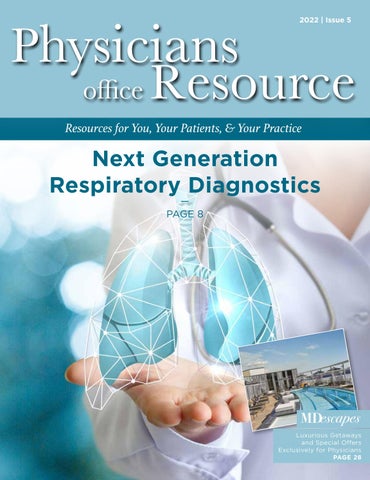
Physicians office Resource 2022 | Issue 5
Resources for You, Your Patients, & Your Practice
Next Generation Respiratory Diagnostics — PAGE 8
Luxurious Getaways and Special Offers Exclusively for Physicians PAGE 28
Choice without compromise. Soa 2 delivers automated, objective, and accurate results across a growing menu of assays from respiratory infectious diseases to Lyme disease and GI infections. With its unique “Advance Result Technology” (ART), Soa 2 can provide results in as few as 3 minutes, helping you get through increasingly heavier workloads.
With Soa 2, you no longer have to choose between accuracy and speed.
1500
For more information, contact Quidel Inside Sales at 858.431.5814.
*Flu + SARS Antigen | *SARS Antigen | Inuenza A+B RSV | Strep A+ | Lyme | Campylobacter
*THESE TESTS ARE AVAILABLE FOR SALE IN THE USA UNDER EMERGENCY USE AUTHORIZATION. These tests have not been FDA cleared or approved, but have been authorized by the FDA under an Emergency Use Authorization (EUA) for use by authorized laboratories for the detection of proteins from SARS-CoV-2, not for any other viruses or pathogens. These assays are only authorized for the duration of the declaration that circumstances exist justifying the authorization of emergency use of in vitro diagnostics for detection and/or diagnosis of COVID-19 under Section 564(b)(1) of the Federal Food, Drug and Cosmetic Act, 21 U.S.C. § 360bbb-3(b)(1), unless authorization is terminated or revoked sooner. AD10102100EN00 (03/22)
PUBLISHED BY Medical Education Resources, LLC PUBLISHER Aaron R. Medaris amedaris@physiciansofficeresource.com
CEO Andrew C. Nimmo acnimmo@physiciansofficeresource.com
PRESIDENT John D. Pasquale jpasquale@pharmaconnect.com
Getting the most from this guide
BUSINESS MANAGER Marci J. Hills mhills@physiciansofficeresource.com
TRAVEL EDITOR Brandi L. Brower EDITORIAL BOARD Michael Paquin, FHIMSS Barry Craig, MLT (NCA), CLC STAFF WRITER Dylan J. Chadwick
There are two simple ways to request
CREATIVE DIRECTOR PRODUCTION MANAGER Jessica Elmer
information about the products and services
Copyright ©2022
found in Physicians Office Resource. 1. Go to www.PhysiciansOfficeResource.com and enter the four-digit reference number found next to the product or service into the search field, then request additional information, schedule a demo, or speak with a sales agent all with just a simple click of a button. 2. Find the Business Reply Card in this issue, circle the desired reference numbers, complete the form, and drop into any USPS mailbox. A representative will contact you as quickly as possible to answer your questions.
www.PhysiciansOfficeResource.com
To continue your free subscription of Physicians Office Resource magazine, please fill out the Business Reply Card (BRC) located within this magazine and drop in any United States Post Office mailbox. If you are a manufacturer of medical products or provide services to medical professionals and would like to advertise your products or services to the nation’s top physicians doing in-office testing, call 801-380-6094 or visit: POR.io for more information.
2022 · ISSUE 5 | 3
TABLE OF CONTENTS
Point of Care Testing for Emerging Respiratory Diseases The human toll of COVID-19 has demonstrated the necessity – and difficulty – of quickly identifying emerging respiratory diseases. Lab-based diagnostic tests have played an important role during the pandemic. But from the viewpoint of quality of care and clinical management, timely infection control, and the ability to act upon results, the future will likely belong to portable, CLIA-waived rapid diagnostic tests. Learn more on page 8
Luxurious Getaways and Special Offers Exclusively for Physicians PAGE 28 4 | PHYSICIANS OFFICE RESOURCE
28
36
LET THE GOOD TIMES ROLL: THE FOUR SEASONS NEW ORLEANS
THANK YOU, HEALTHCARE WORKERS
— All I can say is I am still speechless over my magnificent stay at this wonderland which was just named in April one of the best hotels in the world by Travel and Leisure.
— My wife and I welcomed a daughter, our first child, and received wonderful care from Georgetown University Hospital... We are so thankful and so overjoyed. Our appreciation for healthcare workers remains at an all-time high.
S-COM-ART-02381_R1_Full Page Ad_7.75x10.75_Print.pdf
1
08/04/2022
14:44
Not all Antigen Tests are Created Equal The LumiraDx SARS-CoV-2 Ag test utilizes next-generation microfluidic technology, bringing lab-comparable performance to the point of care.
• 97.6% positive agreement to RT-PCR • Results in minutes • Authorized for use within 12 days of symptom onset and for asymptomatic screening • Low-waste consumable • CLIA Waived*
1501
Scan to learn more. lumiradx.com
*The LumiraDx SARS-CoV-2 Ag test is authorized for use at the Point of Care (POC), i.e., in patient care settings operating under a CLIA Certificate of Waiver, Certificate of Compliance, or Certificate of Accreditation. LumiraDx SARS-CoV-2 Ag test has not been cleared or approved by FDA. The LumiraDx SARS-CoV-2 Ag test has been authorized by FDA under an EUA only for the detection of SARS-CoV-2 nucleocapsid protein. The test has not been authorized for use to detect any other viruses or pathogens. The test is authorized in the United States for the duration of the declaration that circumstances exist justifying the authorization of emergency use of in vitro diagnostic tests for detection and/or diagnosis of COVID-19 under Section 564(b)(1) of the Act, 21 U.S.C. § 360bbb-3(b)(1), unless the authorization is terminated or revoked sooner. S-COM-ART-02381 R1 2022/04
CHEMISTRY ANALYZERS EASY, INTEGRATED WITH-PATIENT TESTING I-STAT SYSTEM
PRODUCT FOCUS
Easy, Integrated With-Patient Testing From Abbott Point of Care i-STAT System from Point of Care at Abbott
The handheld i-STAT System offers a broad menu of diagnostic tests at the patient’s side in just minutes. With just a few drops of blood, The handheld i-STAT offers broad menu of for diagnostic tests at the the i-STAT SystemSystem delivers real time,alab-accurate results a wide chemistries, blood gas,drops coagulation, cardiac patient’srange sideofintests, justincluding minutes. With just a few of blood, the i-STAT more. Minimize delays and wasted time with on-side System markers, deliversand real time, lab-accurate results for a wide range of tests, tests. Easy, intuitive operation.
including chemistries, blood gas, coagulation, cardiac markers, and more. For intended usewasted and complete information, visit pointofMinimize delays and timeproduct with on-site tests. Easy, intuitive operation. 1502
care.abbott.
For intended use anddiagnostic completeuse product information, visit pointofcare.abbott. For in vitro only. This material is intended for a U.S.
For in vitro diagnostic only. This material is intendedofforAbbott. a U.S. audience only. audienceuse only. i-STAT is a trademark Physician Office Rei-STAT is a trademark of Abbott. Physician Office Resource Product08/20 Description – US 3064.REV1 08/20 source i-STAT Product Description — US i-STAT 3064.REV1
View Brochures, Videos & More at POR.io Enter Number 1502 in the Search Area
FULL COMPLEMENT OF CLIA-WAIVED BLOOD CHEMISTRY TESTS PICCOLO XPRESS® CHEMISTRY ANALYZER
Full Complement of Piccolo Xpress® Che
From Abbott Point of Care
The Piccolo Xpress C lab-accurate results fo tests, including metab 1503with just 100 microlite results during a patien efficiency, and suppor every test helps ensu
The Piccolo Xpress Chemistry Analyzer provides physician offices with lab-accurate results for a broad range of CLIAwaived general chemistry tests, including metabolic panels, lipids, live, and kidney function, and more with just 100 microliters of blood. Easy to use, the PIccolo Xpress provides results during a patient’s visit, accelerating treatment decisions, increasing efficiency, and supporting patient satisfaction. Automated quality control on every test helps ensure accuracy.
For in vitro diagnostic use only. T Piccolo Xpress is a registered tra Physician Office Resource Picco
View Brochures, Videos & More at POR.io Enter Number 1503 in the Search Area
1504
ENVOY500+ DELIVERING PROVEN RESULTS IN CLINICAL CHEMISTRY From EliTech The fully automated Envoy500+ is designed to deliver the performance of a large floor model analyzer but provides the cost efficiency of a benchtop analyzer (TPH approx. 490). It enables accurate treatment decisions sooner. Envoy500+ delivers savings the laboratory requires with the following features positive sample and reagent identification, clot detection, liquid level sensing, dry ISE module, reusable glass cuvettes, and many more.
View Brochures, Videos & More at POR.io Enter Number 1504 in the Search Area
6 | PHYSICIANS OFFICE RESOURCE
The Adview 2 is still the only truly modular diagnostic station that grows with your needs. Start with blood pressure and choose temperature or pulse oximetry option at the time of purchase.
Bionet CardioTouch 3000: $1,495.00 Schiller FT-1: $2,961.00 Burdick ELI 280: $4,294.00 Welch Allyn CP150 w/ Interp: $3,645.00
1505
1507
1508
1506
1509
1512
1511
1510
Coaxial Ophth, Fiber Optic Oto, Speucla Dispenser, Aneroid BP, Wall Transformer and Wall Board without Thermometer: $1,121.00 with Thermometer: $1,474.00 1514
1513
1516
1517
1515
FEATURE 8 | PHYSICIANS OFFICE RESOURCE
Emerging Respiratory Diseases
FEATURE
POINT-OF-CARE TESTING FOR
Per the Forum of International Respiratory Societies report, five respiratory diseases are among the most common causes of severe illness and death worldwide BY SEKISUI DIAGNOSTICS
The human toll of COVID-19 has demonstrated the necessity – and difficulty – of quickly identifying emerging respiratory diseases. Lab-based diagnostic tests have played an important role during the pandemic. But from the viewpoint of quality of care and clinical management, timely infection control, and the ability to act upon results, the future will likely belong to portable, CLIA-waived rapid diagnostic tests. Point-of-care tests (POCTs) are performed at the site of sample collection (e.g., bedside, physician’s office or emergency department) and provide results usually in less than two hours and in some cases, within 10 minutes. They require little hands-on time and no laboratory training, as most critical steps are automated in a single device.
Perhaps most important, they promptly identify the causative pathogen and help the healthcare professional choose the appropriate treatment or make the right decisions in outbreak situations, such as hospitalization or quarantine. “CLIA-waived” tests refer to those that the U.S. Food and Drug Administration has determined to be simple and that present “an insignificant risk of erroneous result.” (A list of tests granted waived status under CLIA may be found here.) Physician office labs wishing to perform CLIA-waived tests must first apply for a CLIA Certificate of Waiver, and then ensure that those performing tests follow the manufacturers’ instructions. Diagnostic challenges of respiratory disease For some time, point-of-care tests have allowed health-
2022 · ISSUE 5 | 9
FEATURE
The human toll of COVID-19 has demonstrated the necessity – and difficulty – of quickly identifying emerging respiratory diseases. Lab-based diagnostic tests have played an important role during the pandemic.
care professionals to identify whether an infectiousagent is viral or bacterial. That’s important, because antibiotics are only needed for treating certain infections caused by bacteria. Respiratory tract infections are a significant contributor to the global burden of respiratory tract illnesses. Per the Forum of International Respiratory Societies report, five respiratory diseases are among the most common causes of severe illness and death worldwide: • Chronic obstructive pulmonary disease (COPD) around 65 million people suffer from moderate to severe COPD, from which 3 million die each year, making it the third leading cause of death. • Acute lower respiratory tract infections are considered the top three causes of death and disability among both children and adults. It is estimated that annually 4 million deaths of children under 5 years are caused by acute lower respiratory tract infections. Respiratory tract infections caused by influenza kill between 250,000 and 500,000 people and cost between $71 and $167 billion annually. • Tuberculosis – 10.4 million people developed tuberculosis (TB) in 2015, from which 1.4 million died. • Lung cancer kills 1.6 million people each year • Asthma – Around 334 million people suffer from asthma and affects 14% of children globally. Several pathogens, including viruses and bacteria, can cause respiratory tract infections. As clinical presentations often overlap, identification of the underlying pathogen based solely on clinical criteria is challenging. While some respiratory viruses -- such as influenza A virus (IAV) or human respiratory syncytial virus (RSV) -- are well-known and circulate worldwide, previously unknown or rare infectious diseases are spreading rapidly. They include human bocavirus (HBoV), human coronaviruses (HCoV-HKU1, -NL63), human metapneumovirus (HMPV), rhinovirus type C (RV-C), and human polyomaviruses (KIPyV, WUPyV), as well as SARS coronavirus (SARS-CoV), MERS coronavirus (MERS-CoV), novel strains of influenza virus A and B, and, most recently, SARS coronavirus 2 (SARS-CoV-2). Patients who develop such infectious diseases are also at risk of progressing to
10 | PHYSICIANS OFFICE RESOURCE
pneumonia which can cause even further complications. Early detection is key and leads to faster recovery. Next generation New and innovative diagnostic techniques, ranging from biosensors to novel portable and current lab-based nucleic acid amplification methods, offer a look at next-generation POCTs. While prototypes for some methods already exist, others are still experimental. A key criterion for the evaluation of future POCTs will be their ability to identify the origin of the patient’s symptoms, and to distinguish relevant pathogen(s) from bystander pathogens. Questions need to be answered about the correct timing of diagnostic testing regarding a patient’s course of illness. The sensitivity and predictive value of a diagnostic test depend on: • Specimen quality and virus load (which is usually higher in children and early in the course of illness). • Duration of viral shedding (that is, release of the pathogen into the environment). • Patient’s immune status. • The epidemiology of viruses in the respective season or region. Advances in diagnostic capabilities may change the way we identify, document, and communicate respiratory viral infections. In the future, patients will increasingly demand to know the responsible pathogen and their clinical prognosis. As researchers develop pathogen-specific antiviral therapies and vaccines, new diagnostic algorithms will be needed to ensure the highest quality of care while containing costs. The more accurate the diagnosis, the faster patients are on the road to recovery. With worldwide manufacturing facilities and an international sales and distribution network, Sekisui Diagnostics is a solid partner for healthcare professionals and distributors around the world. Among its offerings are a line of CLIA-waived point-of-care tests to help identify influenza virus A and B, including Acucy® Influenza A&B, OSOM® Ultra Flu A&B Test and OSOM Ultra Plus Flu A&B Test.
COVID-19 TESTING
1518
From LumiraDx
Introducing the next generation in point-of-care diagnostics. With a growing menu of tests, LumiraDx uses a simple process that allows for more time with your patients by using microfluidic technology that delivers results in minutes. Learn more about rapid COVID-19 diagnostic solutions for your physician office at LumiraDx.com.
View Brochures, Videos & More at POR.io Enter Number 1518 in the Search Area
BIOFIRE® RESPIRATORY 2.1-EZ (RP2.1-EZ)1 PANEL (EUA)1 From BioFire SARS-CoV-2 is everyone’s top suspect, but many other respiratory bugs can cause similar, overlapping symptoms. In your clinic, you can test for 19 common respiratory pathogens, including SARS- CoV-2, with the BioFire RP2.1-EZ Panel (EUA)1—now available under an FDA Emergency Use Authorization. Syndromic testing means all it takes is one test and just 45 minutes to round up SARS-CoV-2—and all the other usual respiratory suspects. 1. This test is not FDA cleared or approved. This test has been authorized by FDA under an EUA for use by authorized laboratories.
View Brochures, Videos & More at POR.io Enter Number 1519 in the Search Area
1519
SOFIA® 2 FLUORESCENT IMMUNOASSAY ANALYZER AND RAPID DIAGNOSTIC TEST KITS 1520
From Quidel
Sofia® 2 Fluorescent Immunoassay Analyzer and Rapid Diagnostic Test Kits Sofia 2 takes rapid testing to a new level. Proven lateral-flow technology and advanced fluorescent chemistry are all integrated into this small benchtop analyzer which can be used in any point-of-care setting. Sofia 2 kits are easy to use and adaptable to any healthcare setting. Excellent performance, objectivity, quality control, LIS capabilities, and an expanding test menu make Sofia 2 the perfect solution for the physician’s office laboratory.
View Brochures, Videos & More at POR.io Enter Number 1520 in the Search Area
2022 · ISSUE 5 | 11
PRODUCT FOCUS
WHY COMPROMISE? FAST AND RELIABLE RESULTS ARE NOW DELIVERED AT THE POINT OF CARE.
PRODUCT FOCUS
DIABETES
1521
COMPREHENSIVE IN-OFFICE DIABETES TESTING WITH THE DCA VANTAGE® AND CLINITEK STATUS®+ ANALYZERS From Siemens Siemens Healthineers DCA Vantage® and CLINITEK Status® family of analyzers provide hemoglobin A1c (HbA1c) and albuminto-creatinine ratio (ACR) testing at the point of care. Meet quality measures for A1c control and kidney disease check in minutes with CLIA-waived HbA1c testing and ACR1 ratio. Improve patient experience and overall outcome by providing actionable results in minutes. 1. Moderately complex on the DCA Vantage Analyzer. CLIA-waived on the CLINITEK Status+ Analyzer.
View Brochures, Videos & More at POR.io Enter Number 1521 in the Search Area
LAB-ACCURATE RESULTS FOR ACR AND HBA1C
1522
From Abbott With its compact size and panel of tests, the Afinion 2 system is ideal for point-of-care testing in physician offices, clinics, community health centers and hospital out-patient clinics. From just a small urine or fingerstick whole blood sample, lab-accurate results for ACR and HbA1c are made available during the consultation.
View Brochures, Videos & More at POR.io Enter Number 1522 in the Search Area
ACCURATE, ACTIONABLE RESULTS FROM THE LEADER IN POINT-OFCARE LIPID TESTING From Abbott The CLIA-waived Alere Cholestech LDX™ Analyzer is engineered for confidence, providing accurate, actionable, and readily accessible results that have set the standard in point-of-care lipid profile, cholesterol, and glucose testing. Results are easy to obtain. Fingerstick sampling and a small sample size (40μL) makes results less painful and time consuming.
1523
12 | PHYSICIANS OFFICE RESOURCE
View Brochures, Videos & More at POR.io Enter Number 1523 in the Search Area
Round up SARS-CoV-2 and 18 other pathogens. The new BioFire Respiratory 2.1-EZ (RP2.1-EZ) Panel (EUA) covers SARS-CoV-2 detection and so much more. ®
1
Right now, SARS-CoV-2 is everyone’s top suspect, but many other respiratory bugs can cause similar, overlapping symptoms. Testing for just SARS-CoV-2 or influenza could mean running the risk of missing the real culprit, leading to missed infections, or even coinfections. Additionally, many rapid diagnostic tests sacrifice accuracy for speed, with sensitivities oftentimes ranging from 50–70%.2 Now you can test for 18 common respiratory pathogens in your clinic, including SARS-CoV-2 in patients suspected of a COVID-19 infection with syndromic testing from the BioFire RP2.1-EZ Panel— now available under an FDA Emergency Use Authorization (EUA).1,3 Syndromic testing means all it takes is one test and about 45 minutes to round up SARS-CoV-2—and all the other usual respiratory suspects. What's your frontline solution for respiratory season and beyond?
1524 BioFire RP2.1-EZ Panel (EUA) Overall 97.1% sensitivity and 99.3% specificity (prospective specimens)4 SARS-CoV-2 98.0% sensitivity and 100% specificity (archived specimens)5 SARS-CoV-2 100% PPA and 100% NPA (contrived specimens)6
1. This test has not been FDA cleared or approved. This test has been authorized by FDA under an EUA for use by authorized laboratories. This test has been authorized only for the detection and differentiation of nucleic acid of SARS-CoV-2 from multiple respiratory viral and bacterial organisms. This test is only authorized for the duration of the declaration that circumstances exist justifying the authorization of emergency use of invitro diagnostics for detection and/or diagnosis of COVID-19 under Section 564(b)(1) of the Federal Food, Drug, and Cosmetic Act, 21 U.S.C. § 360bbb-3(b)(1), unless the authorization is terminated or revoked sooner. 2. http://www.cdc.gov/flu/professionals/diagnosis/rapidlab.htm 3. For use with the CLIA-waived BioFire® FilmArray® 2.0 EZ configuration. 4. Based on the prospective portion of the clinical study for the BioFire® FilmArray® Respiratory 2 (RP2) Panel. 5. Based on the archived specimen study in the BioFire Respiratory 2.1 (RP2.1) Panel EUA submission 6. Based on the contrived specimen study in the BioFire Respiratory 2.1 (RP2.1) Panel EUA submission.
BFR0001-0517-02
To learn more, visit biofiredx.com
™
(idecabtagene vicleucel)
SUSPENSION FOR IV INFUSION
For patients with R/R MULTIPLE MYELOMA
CHALLENGE EXPECTATIONS R/R=relapsed/refractory.
INDICATION ABECMA® (idecabtagene vicleucel) is a B-cell maturation antigen (BCMA)-directed genetically modified autologous T cell immunotherapy indicated for the treatment of adult patients with relapsed or refractory multiple myeloma after four or more prior lines of therapy, including an immunomodulatory agent, a proteasome inhibitor, and an anti-CD38 monoclonal antibody.
IMPORTANT SAFETY INFORMATION WARNING: CYTOKINE RELEASE SYNDROME, NEUROLOGIC TOXICITIES, HLH/MAS, AND PROLONGED CYTOPENIA • Cytokine Release Syndrome (CRS), including fatal or life-threatening reactions, occurred in patients following treatment with ABECMA. Do not administer ABECMA to patients with active infection or inflammatory disorders. Treat severe or life-threatening CRS with tocilizumab or tocilizumab and corticosteroids. • Neurologic Toxicities, which may be severe or life-threatening, occurred following treatment with ABECMA, including concurrently with CRS, after CRS resolution, or in the absence of CRS. Monitor for neurologic events after treatment with ABECMA. Provide supportive care and/or corticosteroids as needed. • Hemophagocytic Lymphohistiocytosis/Macrophage Activation Syndrome (HLH/MAS) including fatal and life-threatening reactions, occurred in patients following treatment with ABECMA. HLH/MAS can occur with CRS or neurologic toxicities. • Prolonged Cytopenia with bleeding and infection, including fatal outcomes following stem cell transplantation for hematopoietic recovery, occurred following treatment with ABECMA. • ABECMA is available only through a restricted program under a Risk Evaluation and Mitigation Strategy (REMS) called the ABECMA REMS. Warnings and Precautions: Cytokine Release Syndrome (CRS): CRS, including fatal or life-threatening reactions, occurred following treatment with ABECMA in 85% (108/127) of patients. Grade 3 or higher CRS occurred in 9% (12/127) of patients, with Grade 5 CRS reported in one (0.8%) patient. The median time to onset of CRS, any grade, was 1 day (range: 1 - 23 days) and the median duration of CRS was 7 days (range: 1 - 63 days). The most common manifestations included pyrexia, hypotension, tachycardia, chills, hypoxia, fatigue, and headache. Please see additional Important Safety Information on the following pages and Brief Summary of full Prescribing Information, including Boxed WARNINGS.
Rapid, Deep, and Durable Responses After a One-time Infusion1-3* A majority of patients responded to ABECMA, with more than half achieving ≥VGPR1,3,4 Median TTR: 1 month (range: 0.5-2.9 months) (n=72)
Median DoR†: 11.3 months (95% CI, 10.3-15.3) (n=72)
ORR†
72%
(95% CI, 63.2-80.8) (n=72)
≥VGPR
54%
(95% CI, 44.2-63.8) (n=54)
sCR‡
29%
(95% CI, 20.1-37.9) (n=29)
300-460 x 106 CAR-positive T cells (N=100)
ORR at primary analysis (median follow-up of 13.2 months, range 0.2-21.0): 72% ORR (95% CI, 62-81) (n=72)
Survival at 24-month follow-up analysis3 mPFS
mPFS with sCR
mOS
11.1
22.6
24.0
(95% CI, 6.08-12.22)
(95% CI, 14.39-NE) (n=29)
(95% CI, 18.96-NE)
MONTHS
MONTHS
MONTHS
300-460 x 106 CAR-positive T cells (N=100)
OS was a secondary endpoint of KarMMa and was not statistically tested in the setting of a single-arm trial. 2 OS data are not in the USPI and should be interpreted with caution in a single-arm trial. The statistical significance of OS is not known. Median follow-up of 19.9 months (range 0.2-31.5): 50 events and 50 deaths occurred prior to data cutoff December 2020.
The largest pivotal study and longest follow-up of a CAR T cell therapy in MM1,2,5,6 KarMMa was an open-label, single-arm, multicenter trial that evaluated the efficacy and safety of ABECMA in adult patients with RRMM who had received at least 3 prior antimyeloma therapies, including an IMiD® agent, a PI, and an anti-CD38 monoclonal antibody.The primary endpoint was ORR (PR or better as assessed by an IRC based on the IMWG Uniform Response Criteria for Multiple Myeloma). Select secondary endpoints included CR, DoR, MRD, OS, PFS,TTR, and safety. Of the 135 patients who underwent leukapheresis, 100 (74%) received ABECMA in the dose range of 300 to 460 x 106 CAR-positive T cells. ABECMA is an autologous product; the manufactured dose for individual patients may vary. The study consisted of pretreatment (leukapheresis, and bridging therapy§ [if needed]); treatment (LDC and ABECMA infusion); and post-treatment|| monitoring.The LDC consisted of cyclophosphamide (300 mg/m2 IV infusion daily for 3 days) and fludarabine (30 mg/m2 IV infusion daily for 3 days) starting 5 days prior to the target infusion date of ABECMA. CAR=chimeric antigen receptor; CR=complete response; DoR=duration of response; IMWG=International Myeloma Working Group; IRC=Independent Response committee; IV=intravenous; LDC=lymphodepleting chemotherapy; MM=multiple myeloma; mOS=median overall survival; mPFS=median progression-free survival; MRD=minimal residual disease; ORR=overall response rate; OS=overall survival; PFS=progression-free survival; PI=proteasome inhibitor; PR=partial response; RRMM=relapsed/refractory multiple myeloma; sCR=stringent complete response; TTR=time to response; VGPR=very good partial response. *Efficacy data based on long-term follow-up analysis (median time from ABECMA infusion to data cutoff 27.3 months [range: 24.1 to 33.1]; N=100). Data were generally consistent with the primary analysis. † Response is defined as achieving ≥PR. Of the 100 patients in the efficacy-evaluable population, 25 (25%) achieved a VGPR (95% CI, 16.5-33.5) and 18 (18%) achieved a PR (95% CI, 10.5-25.5).7 ‡ All complete responses were sCRs. § Bridging therapy with alkylating agents, corticosteroids, immunomodulatory agents, proteasome inhibitors, and/or anti-CD38 monoclonal antibodies to which patients were previously exposed was permitted for disease control between apheresis and until 14 days before the start of LDC. || Per the study protocol, patients were monitored at the treatment center for 14 days after ABECMA infusion for potential cytokine release syndrome, hemophagocytic lymphohistiocytosis/ macrophage activation syndrome, and neurotoxicity.
IMPORTANT SAFETY INFORMATION (cont’d) Cytokine Release Syndrome (CRS) (cont’d): Grade 3 or higher events that may be associated with CRS include hypotension, hypoxia, hyperbilirubinemia, hypofibrinogenemia, acute respiratory distress syndrome (ARDS), atrial fibrillation, hepatocellular injury, metabolic acidosis, pulmonary edema, multiple organ dysfunction syndrome, and HLH/MAS. Identify CRS based on clinical presentation. Evaluate for and treat other causes of fever, hypoxia, and hypotension. CRS has been reported to be associated with findings of HLH/MAS, and the physiology of the syndromes may overlap. In patients with progressive symptoms of CRS or refractory CRS despite treatment, evaluate for evidence of HLH/MAS. Fifty four percent (68/127) of patients received tocilizumab (single dose: 35%; more than 1 dose: 18%). Overall, 15% (19/127) of patients received at least 1 dose of corticosteroids for treatment of CRS. All patients that received corticosteroids for CRS received tocilizumab. Ensure that a minimum of 2 doses of tocilizumab are available prior to infusion of ABECMA. Monitor patients at least daily for 7 days following ABECMA infusion at the REMS-certified healthcare facility for signs or symptoms of CRS and monitor patients for signs or symptoms of CRS for at least 4 weeks after ABECMA infusion. At the first sign of CRS, institute treatment with supportive care, tocilizumab and/or corticosteroids as indicated. Counsel patients to seek immediate medical attention should signs or symptoms of CRS occur at any time.
CRS and NT Were Generally Predictable: Most Were Low Grade, With Early Onset and Resolution 1,4* 150-450 x 106 CAR-positive T cells (N=127)
CRS rates†
NT rates
• Any grade: 85% (n=108)
• Any grade NT: 28% (n=36)
• Grade ≥3: 9% (n=12)
• Grade 3: 4% (n=5)
• Grade 5: 0.8% (n=1)
• There were no grade 4 or 5 NT events in KarMMa
• Median time to onset was 1 day (range: 1-23 days) • Median duration was 7 days (range: 1-63 days) CRS, including fatal or lifethreatening reactions, occurred following treatment with ABECMA.
In KarMMA, all NT events were ICANS events and no grade 3 or higher Parkinsonian, neurosensory, or motor symptoms were observed.1,2‡ • Median time to onset was 2 days (range: 1-42 days) • Median duration was 5 days (range: 1-61 days) in 33 of 36 patients who had resolved NT§ Neurologic toxicities, which may be severe or life-threatening, occurred following treatment with ABECMA, including concurrently with CRS (n=34), with onset during CRS (n=29), before CRS (n=3), after CRS resolution (n=2), or in the absence of CRS.
CRS=cytokine release syndrome; ICANS=immune effector cell-associated neurotoxicity syndrome; NT=neurologic toxicity. *Data at primary analysis. Safety profile remained consistent with longer follow-up and no new safety signals were observed. † Lee criterial for grading CRS (Lee et al, 2014). ‡ ICANS is a pathologic process involving the central nervous system after immune therapy that activates or engages endogenous or infused T cells and/or other immune effector cells. Signs and symptoms may include aphasia, altered level of consciousness, impairment of cognitive skills, motor weakness, seizures, and cerebral edema and may be progressive.8 § For patients who experienced NT, including 3 patients with ongoing NT, the median duration of CAR T cell-associated NT was 6 days (range: 1 to 578 days).
IMPORTANT SAFETY INFORMATION (cont’d) Neurologic Toxicities: Neurologic toxicities, which may be severe or life-threatening, occurred following treatment with ABECMA in 28% (36/127) of patients receiving ABECMA, including Grade 3 in 4% (5/127) of patients. One patient had ongoing Grade 2 neurotoxicity at the time of death. Two patients had ongoing Grade 1 tremor at the time of data cutoff. The median time to onset of neurotoxicity was 2 days (range: 1 - 42 days). CAR T cell-associated neurotoxicity resolved in 92% (33/36) of patients with a median time to resolution of 5 days (range: 1 - 61 days). The median duration of neurotoxicity was 6 days (range: 1 - 578) in all patients including 3 patients with ongoing neurotoxicity. Thirty-four patients with neurotoxicity had CRS with onset in 3 patients before, 29 patients during, and 2 patients after CRS. The most frequently reported manifestations of CAR T cell-associated neurotoxicity include encephalopathy, tremor, aphasia, and delirium. Grade 4 neurotoxicity and cerebral edema in 1 patient, Grade 3 myelitis, and Grade 3 parkinsonism have been reported with ABECMA in another study in multiple myeloma. Monitor patients at least daily for 7 days following ABECMA infusion at the REMS-certified healthcare facility for signs or symptoms of neurologic toxicities and monitor patients for signs or symptoms of neurologic toxicities for at least 4 weeks after ABECMA infusion and treat promptly. Rule out other causes of neurologic symptoms. Neurologic toxicity should be managed with supportive care and/or corticosteroids as needed. Counsel patients to seek immediate medical attention should signs or symptoms occur at any time. Hemophagocytic Lymphohistiocytosis (HLH)/Macrophage Activation Syndrome (MAS): HLH/MAS occurred in 4% (5/127) of patients receiving ABECMA. One patient developed fatal multi-organ HLH/MAS with CRS and another patient developed fatal bronchopulmonary aspergillosis with contributory HLH/MAS. Three cases of Grade 2 HLH/MAS resolved. All events of HLH/MAS had onset within 10 days of receiving ABECMA with a median onset of 7 days (range: 4 - 9 days) and occurred in the setting of ongoing or worsening CRS. Two patients with HLH/MAS had overlapping neurotoxicity. The manifestations of HLH/MAS include hypotension, hypoxia, multiple organ dysfunction, renal dysfunction, and cytopenia. HLH/MAS is a potentially life-threatening condition with a high mortality rate if not recognized early and treated. Treatment of HLH/MAS should be administered per institutional guidelines. ABECMA REMS: Due to the risk of CRS and neurologic toxicities, ABECMA is available only through a restricted program under a Risk Evaluation and Mitigation Strategy (REMS) called the ABECMA REMS. Further information is available at www.AbecmaREMS.com or 1-888-423-5436. Hypersensitivity Reactions: Allergic reactions may occur with the infusion of ABECMA. Serious hypersensitivity reactions, including anaphylaxis, may be due to dimethyl sulfoxide (DMSO) in ABECMA. Infections: ABECMA should not be administered to patients with active infections or inflammatory disorders. Severe, life-threatening, or fatal infections occurred in patients after ABECMA infusion. Infections (all grades) occurred in 70% of patients. Grade 3 or 4 infections occurred in 23% of patients. Overall, 4 patients had Grade 5 infections (3%); 2 patients (1.6%) had Grade 5 events of pneumonia, 1 patient (0.8%) had Grade 5 bronchopulmonary aspergillosis, and 1 patient (0.8%) had cytomegalovirus (CMV) pneumonia associated with Pneumocystis jirovecii. Monitor patients for signs and symptoms of infection before and after ABECMA infusion and treat appropriately. Administer prophylactic, pre-emptive, and/or therapeutic antimicrobials according to standard institutional guidelines. Febrile neutropenia was observed in 16% (20/127) of patients after ABECMA infusion and may be concurrent with CRS. In the event of febrile neutropenia, evaluate for infection and manage with broad-spectrum antibiotics, fluids, and other supportive care. Viral Reactivation: CMV infection resulting in pneumonia and death has occurred following ABECMA administration. Monitor and treat for CMV reactivation in accordance with clinical guidelines. Hepatitis B virus (HBV) reactivation, in some cases resulting in fulminant hepatitis, hepatic failure, and death, can occur in patients treated with drugs directed against plasma cells. Perform screening for CMV, HBV, hepatitis C virus (HCV), and human immunodeficiency virus (HIV) in accordance with clinical guidelines before collection of cells for manufacturing. Prolonged Cytopenias: In the clinical study, 41% of patients (52/127) experienced prolonged Grade 3 or 4 neutropenia and 49% (62/127) experienced prolonged Grade 3 or 4 thrombocytopenia that had not resolved by Month 1 following ABECMA infusion. In 83% (43/52) of patients who recovered from Grade 3 or 4 neutropenia after Month 1, the median time to recovery from ABECMA infusion was 1.9 months. In 65% (40/62) of patients who recovered from Grade 3 or 4 thrombocytopenia, the median time to recovery was 2.1 months. 16 | PHYSICIANS OFFICE RESOURCE
ABECMA® Safety Profile After a One-time Infusion 1*
™
(idecabtagene vicleucel)
SUSPENSION FOR IV INFUSION
150-450 x 106 CAR-positive T cells (N=127)
HLH/MAS
Most common adverse reactions
• Any grade: 4% (n=5)
• The most common nonlaboratory adverse reactions (incidence ≥20%) included CRS, infections— pathogen unspecified, fatigue, musculoskeletal pain, hypogammaglobulinemia, diarrhea, upper respiratory tract infection, nausea, viral infections, encephalopathy, edema, pyrexia, cough, headache, and decreased appetite
• One grade 5 HLH/MAS was observed. In another patient with fatal bronchopulmonary aspergillosis, HLH/MAS was contributory to the fatal outcome
Prolonged cytopeniasll • Prolonged neutropenia rates: 41% grade ≥3 (n=52) • Prolonged thrombocytopenia rates: 49% grade ≥3 (n=62) • 2 of 3 patients who underwent hematopoietic reconstitution due to prolonged cytopenia died
• Serious adverse reactions occurred in 67% of patients. The most common nonlaboratory (≥5%) serious adverse reactions included CRS (18%), general physical health deterioration (10%), pneumonia (12%), infections— pathogen unspecified (19%), viral infections (9%), sepsis (7%), and febrile neutropenia (6%). Fatal adverse reactions occurred in 6% • The most common (≥10%) grade 3 or 4 nonlaboratory adverse reactions were febrile neutropenia (16%) and infections—pathogen unspecified (15%)
ABECMA is the first CAR T cell therapy in RRMM, with the longest real-world experience1
Visit AbecmaHCP.com to learn more.
HLH/MAS=hemophagocytic lymphohistiocytosis/macrophage activation syndrome. Not resolved by month 1 following ABECMA infusion.
ll
IMPORTANT SAFETY INFORMATION (cont’d) Prolonged Cytopenias (cont’d): Three patients underwent stem cell therapy for hematopoietic reconstitution due to prolonged cytopenia. Two of the three patients died from complications of prolonged cytopenia. Monitor blood counts prior to and after ABECMA infusion. Manage cytopenia with myeloid growth factor and blood product transfusion support. Hypogammaglobulinemia: Hypogammaglobulinemia was reported as an adverse event in 21% (27/127) of patients; laboratory IgG levels fell below 500 mg/dl after infusion in 25% (32/127) of patients treated with ABECMA. Monitor immunoglobulin levels after treatment with ABECMA and administer IVIG for IgG <400 mg/dl. Manage appropriately per local institutional guidelines, including infection precautions and antibiotic or antiviral prophylaxis. The safety of immunization with live viral vaccines during or after ABECMA treatment has not been studied. Vaccination with live virus vaccines is not recommended for at least 6 weeks prior to the start of lymphodepleting chemotherapy, during ABECMA treatment, and until immune recovery following treatment with ABECMA. Secondary Malignancies: Patients treated with ABECMA may develop secondary malignancies. Monitor life-long for secondary malignancies. If a secondary malignancy occurs, contact Bristol Myers Squibb at 1-888-805-4555 to obtain instructions on patient samples to collect for testing of secondary malignancy of T cell origin. Effects on Ability to Drive and Operate Machinery: Due to the potential for neurologic events, patients receiving ABECMA are at risk for altered or decreased consciousness or coordination in the 8 weeks following ABECMA infusion. Advise patients to refrain from driving and engaging in hazardous occupations or activities, such as operating heavy or potentially dangerous machinery, during this initial period. Adverse Reactions: The most common nonlaboratory adverse reactions include CRS, infections – pathogen unspecified, fatigue, musculoskeletal pain, hypogammaglobulinemia, diarrhea, upper respiratory tract infection, nausea, viral infections, encephalopathy, edema, pyrexia, cough, headache, and decreased appetite. References: 1. ABECMA [package insert]. Summit, NJ: Bristol-Myers Squibb Company; 2021. 2. Munshi NC, Anderson LD Jr, Shah N, et al. Idecabtagene vicleucel in relapsed and refractory multiple myeloma. [Protocol BB2121-MM-001]. N Engl J Med. 2021;384(8):1-1012. 3. Data on file. BMS-REF-IDC-0002. Princeton, NJ: Bristol-Myers Squibb Company; 2021. 4. Data on file. IDEC 009. Princeton, NJ: Bristol-Myers Squibb Company; 2021. 5. A study of JNJ-68284528, a chimeric antigen receptor T Cell (CAR-T) therapy directed against B-cell maturation antigen (BCMA) in participants with relapsed or refractory multiple myeloma (CARTITUDE-1). ClinicalTrials.gov identifier: NCT03548207. Updated December 31, 2020. Accessed July 7, 2021. https://clinicaltrials.gov/ct2/show/NCT03548207. 6. Efficacy and safety study of bb2121 in subjects with relapsed and refractory multiple myeloma (KarMMa). ClinicalTrials.gov identifier: NCT03361748. Updated June 16, 2020. Accessed July 7, 2021. https://clinicaltrials.gov/ct2/show/NCT03361748. 7. Data on file. BMS-REF-IDC-0018. Princeton, NJ: Bristol-Myers Squibb Company; 2021. 8. Lee DW, Santomasso BD, Locke FL, et al. ASTCT consensus grading for cytokine release syndrome and neurologic toxicity associated with immune effector cells. Biol Blood Marrow Transplant. 2018; 25(4):625-638.
© 2021 Bristol-Myers Squibb Company. All rights reserved. ABECMA and the related logo are trademarks of Celgene Corporation, a Bristol-Myers Squibb Company. 08/21 US-IDE-20-0098
2022 · ISSUE 5 | 17
ABECMA® (idecabtagene vicleucel), suspension for
Table 1: CRS Grading and Management Guidance (Continued)
Brief Summary of Prescribing Information. For complete prescribing information consult official package insert.
Grade 3 Symptoms require and respond to aggressive intervention. Fever, oxygen requirement greater than or equal to 40% FiO2, or hypotension requiring high-dose or multiple vasopressors, or Grade 3 organ toxicity or Grade 4 transaminitis.
Per Grade 2
Grade 4 Life-threatening symptoms. Requirements for ventilator support, continuous venovenous hemodialysis (CVVHD), or Grade 4 organ toxicity (excluding transaminitis).
Per Grade 2
intravenous infusion
CRS Grade a
WARNING: CYTOKINE RELEASE SYNDROME, NEUROLOGIC TOXICITIES, HLH/MAS, AND PROLONGED CYTOPENIA • Cytokine Release Syndrome (CRS), including fatal or life-threatening reactions, occurred in patients following treatment with ABECMA. Do not administer ABECMA to patients with active infection or inflammatory disorders. Treat severe or life-threatening CRS with tocilizumab or tocilizumab and corticosteroids [see Dosage and Administration, Warnings and Precautions, and Adverse Reactions]. • Neurologic toxicities, which may be severe or life-threatening, occurred following treatment with ABECMA, including concurrently with CRS, after CRS resolution, or in the absence of CRS. Monitor for neurologic events after treatment with ABECMA. Provide supportive care and/or corticosteroids as needed [see Dosage and Administration and Warnings and Precautions]. • Hemophagocytic Lymphohistiocytosis/Macrophage Activation Syndrome (HLH/MAS) including fatal and life-threatening reactions, occurred in patients following treatment with ABECMA. HLH/MAS can occur with CRS or neurologic toxicities [see Warnings and Precautions]. • Prolonged Cytopenia with bleeding and infection, including fatal outcomes following stem cell transplantation for hematopoietic recovery, occurred following treatment with ABECMA [see Warnings and Precautions]. • ABECMA is available only through a restricted program under a Risk Evaluation and Mitigation Strategy (REMS) called the ABECMA REMS [see Warnings and Precautions]. INDICATIONS AND USAGE ABECMA is a B-cell maturation antigen (BCMA)-directed genetically modified autologous T cell immunotherapy indicated for the treatment of adult patients with relapsed or refractory multiple myeloma after four or more prior lines of therapy, including an immunomodulatory agent, a proteasome inhibitor, and an anti-CD38 monoclonal antibody. DOSAGE AND ADMINISTRATION Management of Severe Adverse Reactions Cytokine Release Syndrome (CRS) Identify CRS based on clinical presentation [see Warnings and Precautions]. Evaluate for and treat other causes of fever, hypoxia, hypotension. If CRS is suspected, manage according to the recommendations in Table 1. Patients who experience CRS should be closely monitored for cardiac and organ functioning until resolution of symptoms. Consider antiseizure prophylaxis with levetiracetam in patients who experience CRS. Patients who experience Grade 2 or higher CRS (e.g., hypotension not responsive to fluids, or hypoxia requiring supplemental oxygenation) should be monitored with continuous cardiac telemetry and pulse oximetry.
Tocilizumabc
If concurrent neurologic toxicity is suspected during CRS, administer: • Corticosteroids according to the more aggressive intervention based on the CRS and neurologic toxicity grades in Tables 1 and 2 • Tocilizumab according to the CRS grade in Table 1 • Antiseizure medication according to the neurologic toxicity in Table 2 Table 1:
Grade 1 Symptoms require symptomatic treatment only (e.g., fever, nausea, fatigue, headache, myalgia, malaise).
Grade 2 Symptoms require and respond to moderate intervention. Oxygen requirement less than 40% FiO2 or hypotension responsive to fluids, or low dose of one vasopressor, or Grade 2 organ toxicity.
Tocilizumabc If onset 72 hours or more after infusion, treat symptomatically. If onset less than 72 hours after infusion, consider tocilizumab 8 mg/kg IV over 1 hour (not to exceed 800 mg). Administer tocilizumab 8 mg/kg IV over 1 hour (not to exceed 800 mg). Repeat tocilizumab every 8 hours as needed if not responsive to intravenous fluids or increasing supplemental oxygen. Limit to a maximum of 3 doses in a 24-hour period; maximum total of 4 doses.
Administer dexamethasone 20 mg IV every 6 hours.
After 2 doses of tocilizumab, consider alternative anti-cytokine agents. Do not exceed 3 doses of tocilizumab in 24 hours, or 4 doses in total. If no improvement within 24 hours, consider methylprednisolone (1-2 g, repeat every 24 hours if needed; taper as clinically indicated) or other anti-T cell therapies.
7 days.
Neurologic Toxicity Monitor patients for signs and symptoms of neurologic toxicities (Table 2). Rule out other causes of neurologic signs or symptoms. Provide intensive care supportive therapy for severe or life-threatening neurologic toxicities. If neurologic toxicity is suspected, manage according to the recommendations in Table 2. If concurrent CRS is suspected during the neurologic toxicity event, administer: • Corticosteroids according to the more aggressive intervention based on the CRS and neurologic toxicity grades in Tables 1 and 2 • Tocilizumab according to CRS grade in Table 1 • Antiseizure medication according to neurologic toxicity in Table 2 Table 2:
Neurologic Toxicity Grading and Management Guidance
Neurologic Toxicity Gradea
Corticosteroids and Antiseizure Medications
Grade 1
Start non-sedating, antiseizure medicines (e.g., levetiracetam) for seizure prophylaxis. If 72 hours or more after infusion, observe patient. If less than 72 hours after infusion, consider dexamethasone 10 mg IV every 12 to 24 hours for 2 to 3 days.
Grade 2
Start non-sedating, antiseizure medicines (e.g., levetiracetam) for seizure prophylaxis. Start dexamethasone 10 mg IV every 12 hours for 2-3 days, or longer for persistent symptoms. Consider taper for a total steroid exposure of greater than 3 days. Corticosteroids are not recommended for isolated Grade 2 headaches. If no improvement after 24 hours or worsening of neurologic toxicity, increase the dose and/or frequency of dexamethasone up to a maximum of 20 mg IV every 6 hours.
Grade 3
Start non-sedating, antiseizure medicines (e.g., levetiracetam) for seizure prophylaxis. Start dexamethasone 10 to 20 mg IV every 6 to 12 hours. Corticosteroids are not recommended for isolated Grade 3 headaches. If no improvement after 24 hours or worsening of neurologic toxicity, escalate to methylprednisolone (2 mg/kg loading dose, followed by 2 mg/kg divided into 4 times a day; taper within 7 days). If cerebral edema is suspected, consider hyperventilation and hyperosmolar therapy. Give high-dose methylprednisolone (1-2 g, repeat every 24 hours if needed; taper as clinically indicated) and cyclophosphamide 1.5 g/m2.
Grade 4
Start non-sedating, antiseizure medicines (e.g., levetiracetam) for seizure prophylaxis. Start dexamethasone 20 mg IV every 6 hours. If no improvement after 24 hours or worsening of neurologic toxicity, escalate to high-dose methylprednisolone (1-2 g, repeated every 24 hours if needed; taper as clinically indicated). If cerebral edema is suspected, consider hyperventilation and hyperosmolar therapy. Give high-dose methylprednisolone (1-2 g, repeat every 24 hours if needed; taper as clinically indicated), and cyclophosphamide 1.5 g/m2.
Corticosteroidsb
Consider dexamethasone 10 mg IV every 24 hours.
Consider dexamethasone 10 mg IV every 12-24 hours.
If no improvement within 24 hours or rapid progression, repeat tocilizumab and escalate dose and frequency of dexamethasone (20 mg IV every 6 to 12 hours). If no improvement within 24 hours or continued rapid progression, switch to methylprednisolone 2 mg/kg followed by 2 mg/kg divided 4 times per day. After 2 doses of tocilizumab, consider alternative anti-cytokine agents. Do not exceed 3 doses of tocilizumab in 24 hours, or 4 doses in total.
c Refer to tocilizumab Prescribing Information for details.
CRS Grading and Management Guidance
CRS Grade a
Administer dexamethasone 10 mg IV every 12 hours.
a Lee criteria for grading CRS (Lee et al., 2014). b If corticosteroids are initiated, continue corticosteroids for at least 3 doses, and taper over a maximum of
For severe or life-threatening CRS, consider intensive care unit level monitoring and supportive therapy. For CRS refractory to first line interventions such as tocilizumab or tocilizumab and corticosteroids, consider alternate treatment options (i.e., higher corticosteroid dose, alternative anti-cytokine agents, anti-T cell therapies). Refractory CRS is characterized by fevers, end-organ toxicity (e.g., hypoxia, hypotension) not improving within 12 hours of first line interventions or development of hemophagocytic lymphohistiocytosis/ macrophage activation syndrome (HLH/MAS).
Corticosteroidsb
a NCI CTCAE criteria for grading neurologic toxicities version 4.03.
If no improvement within 24 hours or rapid progression, repeat tocilizumab and escalate dose and frequency of dexamethasone (20 mg IV every 6 to 12 hours). If no improvement within 24 hours or continued rapid progression, switch to methylprednisolone 2 mg/kg followed by 2 mg/kg divided 4 times per day. After 2 doses of tocilizumab, consider alternative anti-cytokine agents. Do not exceed 3 doses of tocilizumab in 24 hours, or 4 doses in total. (Continued)
CONTRAINDICATIONS None. WARNINGS AND PRECAUTIONS Cytokine Release Syndrome (CRS) CRS, including fatal or life-threatening reactions, occurred following treatment with ABECMA (idecabtagene vicleucel). CRS occurred in 85% (108/127) of patients receiving ABECMA. Grade 3 or higher CRS (Lee grading system1) occurred in 9% (12/127) of patients, with Grade 5 CRS reported in one (0.8%) patient. The median time-to-onset of CRS, any grade, was 1 day (range: 1 to 23 days), and the median duration of CRS was
7 days (range: 1 to 63 days) in all patients, including the patient who died. The most common manifestations of CRS included pyrexia (98%), hypotension (41%), tachycardia (35%), chills (31%), hypoxia (20%), fatigue (12%), and headache (10%). Grade 3 or higher events that may be associated with CRS include hypotension, hypoxia, hyperbilirubinemia, hypofibrinogenemia, ARDS, atrial fibrillation, hepatocellular injury, metabolic acidosis, pulmonary edema, multiple organ dysfunction syndrome and hemophagocytic lymphohistiocytosis/ macrophage activation syndrome (HLH/MAS) [see Adverse Reactions]. Identify CRS based on clinical presentation. Evaluate for and treat other causes of fever, hypoxia, and hypotension. CRS has been reported to be associated with findings of HLH/MAS, and the physiology of the syndromes may overlap. HLH/MAS is a potentially life-threatening condition. In patients with progressive symptoms of CRS or refractory CRS despite treatment, evaluate for evidence of HLH/MAS. Please see Hemophagocytic Lymphohistiocytosis/Macrophage Activation Syndrome. Overall rate of CRS was 79%, and rate of Grade 2 CRS was 23% in patients treated in the 300 x 106 CAR-positive T cells dose cohort (dose ranging from 277 to 339 x 106 CAR-positive T cells). For patients treated in the 450 x 106 CAR-positive T cells dose cohort (dose range 447 to 518 x 106 CAR-positive T cells), the overall rate of CRS was 96%, and rate of Grade 2 CRS was 40%. Rate of Grade 3 or higher CRS was similar across the dose range. The median duration of CRS for the 450 x 106 CAR-positive T cells dose cohort was 7 days (range 1 to 63 days), and was 6 days (range 2 to 28 days) for the 300 x 106 CAR-positive T cells dose cohort. In the 450 x 106 CAR-positive T cells dose cohort, 68% (36/53) of patients received tocilizumab and 23% (12/53) received at least 1 dose of corticosteroids for treatment of CRS. This was higher than the tocilizumab use of 44% (31/70) and corticosteroid use of 10% (7/70) at the 300 x 106 CAR-positive T cells dose cohort. Sixty-eight of 127 (54%) patients received tocilizumab; 35% (45/127) received a single dose, while 18% (23/127) received more than 1 dose of tocilizumab. Overall, across the dose levels, 15% (19/127) of patients received at least 1 dose of corticosteroids for treatment of CRS. All patients that received corticosteroids for CRS also received tocilizumab. Ensure that a minimum of 2 doses of tocilizumab are available prior to infusion of ABECMA (idecabtagene vicleucel). Monitor patients at least daily for 7 days following ABECMA infusion at the REMS-certified healthcare facility for signs and symptoms of CRS. Monitor patients for signs or symptoms of CRS for at least 4 weeks after infusion. At the first sign of CRS, institute treatment with supportive care, tocilizumab and/or corticosteroids as indicated [see Dosage and Administration]. Counsel patients to seek immediate medical attention should signs or symptoms of CRS occur at any time [see Patient Counseling Information]. Neurologic Toxicities Neurologic toxicities, which may be severe or life-threatening, occurred following treatment with ABECMA, including concurrently with CRS, after CRS resolution, or in the absence of CRS. CAR T cell-associated neurotoxicity, occurred in 28% (36/127) of patients receiving ABECMA, including Grade 3 in 4% (5/127) of patients. One patient had ongoing Grade 2 neurotoxicity at the time of death. Two patients had ongoing Grade 1 tremor at the time of data cutoff. The median time to onset of neurotoxicity was 2 days (range: 1 to 42 days). CAR T cell-associated neurotoxicity resolved in 33 of 36 (92%). For patients who experienced neurotoxicity including three patients with ongoing neurotoxicity, the median duration of CAR T cell-associated neurotoxicity was 6 days (range: 1 to 578 days). Neurotoxicity resolved in 33 patients and median time to resolution was 5 days (range 1 to 61 days). Thirty-four patients with neurotoxicity had CRS. The onset of neurotoxicity during CRS was observed in 29 patients, before the onset of CRS in three patients, and after the CRS event in two patients. The rate of Grade 3 neurotoxicity was 8% in 450 x 106 CAR-positive T cells dose cohort and 1.4% in the 300 x 106 CAR-positive T cells dose cohort. The most frequent (greater than or equal to 5%) manifestations of CAR T cell-associated neurotoxicity include encephalopathy (20%), tremor (9%), aphasia (7%), and delirium (6%). Grade 4 neurotoxicity and cerebral edema have been associated with ABECMA in a patient in another study in multiple myeloma. Grade 3 myelitis and Grade 3 parkinsonism have occurred after treatment with ABECMA in another study in multiple myeloma. Monitor patients at least daily for 7 days following ABECMA infusion at the REMS-certified healthcare facility for signs and symptoms of neurologic toxicities. Rule out other causes of neurologic symptoms. Monitor patients for signs or symptoms of neurologic toxicities for at least 4 weeks after infusion and treat promptly. Neurologic toxicity should be managed with supportive care and/or corticosteroids as needed [see Dosage and Administration]. Counsel patients to seek immediate medical attention should signs or symptoms of neurologic toxicity occur at any time [see Patient Counseling Information]. Hemophagocytic Lymphohistiocytosis (HLH)/Macrophage activation syndrome (MAS) HLH/MAS occurred in 4% (5/127) of patients receiving ABECMA. One patient treated in the 300 x106 CAR-positive T cells dose cohort developed fatal multi-organ HLH/MAS with CRS. In another patient with fatal bronchopulmonary aspergillosis, HLH/MAS was contributory to the fatal outcome. Three cases of Grade 2 HLH/MAS resolved. The rate of HLH/MAS was 8% in the 450 x106 CAR-positive T cells dose cohort and 1% in the 300 x106 CAR-positive T cells dose cohort. All events of HLH/MAS had onset within 10 days of receiving ABECMA, with a median onset of 7 days (range: 4 to 9 days) and occurred in the setting of ongoing or worsening CRS. Two patients with HLH/MAS had overlapping neurotoxicity. The manifestations of HLH/MAS include hypotension, hypoxia, multiple organ dysfunction, renal dysfunction and cytopenia. HLH/MAS is a potentially life-threatening condition with a high mortality rate if not recognized early and treated. Treatment of HLH/MAS should be administered per institutional standards. ABECMA REMS Because of the risk of CRS and neurologic toxicities, ABECMA is available only through a restricted program under a Risk Evaluation and Mitigation Strategy (REMS) called the ABECMA REMS [see Boxed Warning and Warnings and Precautions]. The required components of the ABECMA REMS are: • Healthcare facilities that dispense and administer ABECMA must be enrolled and comply with the REMS requirements. • Certified healthcare facilities must have on-site, immediate access to tocilizumab. • Ensure that a minimum of 2 doses of tocilizumab are available for each patient for infusion within 2 hours after ABECMA infusion, if needed for treatment of CRS. • Certified healthcare facilities must ensure that healthcare providers who prescribe, dispense, or administer ABECMA are trained on the management of CRS and neurologic toxicities. • Further information is available at www.AbecmaREMS.com or contact Bristol-Myers Squibb at 1-888-423-5436.
Hypersensitivity Reactions Allergic reactions may occur with the infusion of ABECMA (idecabtagene vicleucel). Serious hypersensitivity reactions, including anaphylaxis, may be due to dimethyl sulfoxide (DMSO) in ABECMA. Infections ABECMA should not be administered to patients with active infections or inflammatory disorders. Severe, life-threatening, or fatal infections occurred in patients after ABECMA infusion. Infections (all grades) occurred in 70% of patients. Grade 3 or 4 infections occurred in 23% of patients. Grade 3 or 4 infections with an unspecified pathogen occurred in 15%, viral infections in 9%, bacterial infections in 3.9%, and fungal infections in 0.8% of patients. Overall, four patients had Grade 5 infections (3%); two patients (1.6%) had Grade 5 events of pneumonia, 1 patient (0.8%) had Grade 5 bronchopulmonary aspergillosis, and 1 patient (0.8%) had cytomegalovirus (CMV) pneumonia associated with Pneumocystis jirovecii. Monitor patients for signs and symptoms of infection before and after ABECMA infusion and treat appropriately. Administer prophylactic, pre-emptive, and/or therapeutic antimicrobials according to standard institutional guidelines. Febrile neutropenia (was observed in 16% (20/127) of patients after ABECMA infusion and may be concurrent with CRS. In the event of febrile neutropenia, evaluate for infection and manage with broad-spectrum antibiotics, fluids, and other supportive care as medically indicated. Viral Reactivation Cytomegalovirus (CMV) infection resulting in pneumonia and death has occurred following ABECMA administration. Monitor and treat for CMV reactivation in accordance with clinical guidelines. Hepatitis B virus (HBV) reactivation, in some cases resulting in fulminant hepatitis, hepatic failure, and death, can occur in patients treated with drugs directed against plasma cells. Perform screening for CMV, HBV, hepatitis C virus (HCV), and human immunodeficiency virus (HIV) in accordance with clinical guidelines before collection of cells for manufacturing. Consider antiviral therapy to prevent viral reactivation per local institutional guidelines/clinical practice. Prolonged Cytopenias Patients may exhibit prolonged cytopenias following lymphodepleting chemotherapy and ABECMA infusion. In the KarMMa study, 41% of patients (52/127) experienced prolonged Grade 3 or 4 neutropenia and 49% (62/127) experienced prolonged Grade 3 or 4 thrombocytopenia that had not resolved by Month 1 following ABECMA infusion. Rate of prolonged neutropenia was 49% in the 450 x 106 CAR-positive T cells dose cohort and 34% in the 300 x 106 CAR-positive T cells dose cohort. In 83% (43/52) of patients who recovered from Grade 3 or 4 neutropenia after Month 1, the median time to recovery from ABECMA infusion was 1.9 months. In 65% (40/62) of patients who recovered from Grade 3 or 4 thrombocytopenia, the median time to recovery was 2.1 months. Median time to cytopenia recovery was similar across the 300 and 450 x 106 CAR-positive T cells dose cohort. Three patients underwent stem cell therapy (2 patients with autologous and 1 with allogeneic cells) for hematopoietic reconstitution due to prolonged cytopenia. Two of the three patients died from complications of prolonged cytopenia, which occurred in the setting of ongoing or prior severe CRS or HLH/MAS. Cause of death included lower gastrointestinal bleeding in the setting of prolonged thrombocytopenia in one patient and bronchopulmonary aspergillosis in the setting of prolonged neutropenia in another patient. The third patient recovered from neutropenia after autologous stem cell therapy. Monitor blood counts prior to and after ABECMA infusion. Manage cytopenia with myeloid growth factor and blood product transfusion support according to local institutional guidelines. Hypogammaglobulinemia Plasma cell aplasia and hypogammaglobulinemia can occur in patients receiving treatment with ABECMA. Hypogammaglobulinemia was reported as an adverse event in 21% (27/127) of patients; laboratory IgG levels fell below 500 mg/dL after infusion in 25% (32/127) of patients treated with ABECMA. Hypogammaglobulinemia either as an adverse reaction or laboratory IgG level below 500 mg/dL after infusion occurred in 41% (52/127) of patients treated with ABECMA. Sixty-one percent of patients received intravenous immunoglobulin (IVIG) post-ABECMA for serum IgG <400 mg/dL. Monitor immunoglobulin levels after treatment with ABECMA and administer IVIG for IgG <400 mg/dL. Manage per local institutional guidelines, including infection precautions and antibiotic or antiviral prophylaxis. Use of Live Vaccines The safety of immunization with live viral vaccines during or following ABECMA treatment has not been studied. Vaccination with live virus vaccines is not recommended for at least 6 weeks prior to the start of lymphodepleting chemotherapy, during ABECMA treatment, and until immune recovery following treatment with ABECMA. Secondary Malignancies Patients treated with ABECMA may develop secondary malignancies. Monitor life-long for secondary malignancies. In the event that a secondary malignancy occurs, contact Bristol-Myers Squibb at 1-888-805-4555 for reporting and to obtain instructions on collection of patient samples for testing of secondary malignancy of T cell origin. Effects on Ability to Drive and Use Machines Due to the potential for neurologic events, including altered mental status or seizures, patients receiving ABECMA are at risk for altered or decreased consciousness or coordination in the 8 weeks following ABECMA infusion. Advise patients to refrain from driving and engaging in hazardous occupations or activities, such as operating heavy or potentially dangerous machinery, during this initial period. ADVERSE REACTIONS The following adverse reactions are described elsewhere in the labeling: • Cytokine Release Syndrome [see Warnings and Precautions] • Neurologic Toxicities [see Warnings and Precautions] • Hemophagocytic Lymphohistiocytosis (HLH)/Macrophage Activation Syndrome (MAS) [see Warnings and Precautions] • Hypersensitivity Reactions [see Warnings and Precautions] • Infections [see Warnings and Precautions] • Prolonged Cytopenias [see Warnings and Precautions] • Hypogammaglobulinemia [see Warnings and Precautions] Clinical Trials Experience Because clinical trials are conducted under widely varying conditions, adverse reaction rates observed in the clinical trials of a drug cannot be directly compared to rates in the clinical trials of another drug and may not reflect the rates observed in clinical practice. The safety data described in this section reflect the exposure to ABECMA in the KarMMa study, in which 127 patients with relapsed/refractory multiple myeloma received ABECMA across a dose range of 150 to 518 x 106 CAR-positive T cells [see Clinical Studies (14) in full Prescribing Information]. Patients with a history
of CNS disease (such as seizure or cerebrovascular ischemia) or requiring ongoing treatment with chronic immunosuppression were excluded. The median duration of follow-up was 11.4 months. The median age of the study population was 61 years (range: 33 to 78 years); 35% were 65 years or older, and 60% were men. The Eastern Cooperative Oncology Group (ECOG) performance status at baseline was 0 in 45%, 1 in 53%, and 2 in 2% of patients. Seven percent of the patients treated with ABECMA (idecabtagene vicleucel) had creatinine clearance <45 ml/min. For details about the study population, see Clinical Studies (14) in full Prescribing Information. The most common (greater than or equal to 10%) Grade 3 or 4 nonlaboratory adverse reactions were febrile neutropenia (16%) and infections – pathogen unspecified (15%). The most common nonlaboratory adverse reactions (incidence greater than or equal to 20%) included CRS, infections – pathogen unspecified, fatigue, musculoskeletal pain, hypogammaglobulinemia, diarrhea, upper respiratory tract infection, nausea, viral infections, encephalopathy, edema, pyrexia, cough, headache, and decreased appetite. Serious adverse reactions occurred in 67% of patients. The most common nonlaboratory (greater than or equal to 5%) serious adverse reactions included CRS (18%), general physical health deterioration (10%), pneumonia (12%), infections-pathogen unspecified (19%), viral infections (9%), sepsis (7%), and febrile neutropenia (6%). Fatal adverse reactions occurred in 6%. Table 3 summarizes the adverse reactions that occurred in at least 10% of patients treated with ABECMA. Table 4 describes the most common Grade 3 or 4 laboratory abnormalities. Table 3:
Adverse Reactions Observed in at Least 10% of Patients Treated with ABECMA in the KarMMa Study Target Dose of ABECMA (CAR-Positive T Cells) Any Grade
Grade 3 or Higher
[150 to 450 x 106] (N=127) %
[150 to 450 x 106] (N=127) %
System Organ Class Preferred Term Blood and lymphatic system disorders Febrile neutropenia 16 Cardiac disorders Tachycardiaa 19 Gastrointestinal disorders Diarrhea 35 Nausea 29 Constipation 16 Vomiting 15 Oral painb 12 General disorders and administration site conditions Fatiguec 45 Pyrexia 25 General physical health deterioration 11 Edemad 25 Chills 11 Immune system disorders Cytokine release syndrome 85 Hypogammaglobulinemiae 41 Infections and infestationsf Infections – Pathogen unspecified 51 Viral Infections 27 Bacterial Infections 15 Pneumonia g 17 Upper respiratory tract infectionh 34 Investigations Weight decreased 13 Metabolism and nutrition disorders Decreased appetitei 22 Musculoskeletal and connective tissue disorders Musculoskeletal painj 45 Motor dysfunctionk 11 Nervous system disorders Encephalopathyl 26 Headachem 23 Dizzinessn 17 Neuropathy peripheralo 17 Tremorp 10 Psychiatric disorders Insomniaq 13 Anxietyr 12 Renal and urinary disorders Renal failures s 10 Respiratory, thoracic and mediastinal disorders Cought 23 Dyspneau 13 Skin and subcutaneous tissue disorder Rashv 14 Xerosisw 11
16 0 1.6 0 0 0 0 3.1 1.6 10 0 0 9 0.8
Table 3: Adverse Reactions Observed in at Least 10% of Patients Treated with ABECMA (Continued) (idecabtagene vicleucel) in the KarMMa Study Target Dose of ABECMA (CAR-Positive T Cells)
System Organ Class Preferred Term Vascular disorders Hypotensionx Hypertension
Any Grade
Grade 3 or Higher
[150 to 450 x 106] (N=127) %
[150 to 450 x 106] (N=127) %
17 11
0 3.1
CAR = chimeric antigen receptor.
a Tachycardia includes sinus tachycardia, tachycardia. b Oral pain includes oral pain, oropharyngeal pain, toothache. c Fatigue includes asthenia, fatigue, malaise. d Edema includes edema, face edema, fluid overload, fluid retention, generalized edema, peripheral edema,
peripheral swelling, scrotal swelling, swelling.
e Hypogammaglobulinemia includes patients with adverse events (21%) of blood immunoglobulin G
decreased, hypogammaglobulinemia, hypoglobulinemia; and/or patients with laboratory IgG levels below 500 mg/dL following ABECMA infusion (25%). Infections and infestations System Organ Class Adverse Events are grouped by pathogen type and selected clinical syndromes. g Pneumonia includes bronchopulmonary aspergillosis, lung infection, pneumonia, pneumonia aspiration, pneumonia cytomegaloviral, pneumonia pneumococcal, pneumonia pseudomonal. Pneumonias may also be included under pathogen categories. h Upper respiratory tract infection includes laryngitis, nasopharyngitis, pharyngeal erythema, pharyngitis, respiratory tract congestion, respiratory tract infection, rhinitis, rhinovirus infection, sinusitis, upper respiratory tract infection, upper respiratory tract infection bacterial. Upper respiratory tract infections may also be included under pathogen categories. i Decreased appetite includes decreased appetite, hypophagia. j Musculoskeletal pain includes arthralgia, back pain, bone pain, musculoskeletal chest pain, musculoskeletal discomfort, musculoskeletal pain, musculoskeletal stiffness, myalgia, neck pain, spinal pain. k Motor dysfunction includes dysphonia, eyelid ptosis, hypotonia, motor dysfunction, muscle spasms, muscular weakness, restless legs syndrome. l Encephalopathy includes amnesia, bradyphrenia, cognitive disorder, confusional state, depressed level of consciousness, disturbance in attention, dyscalculia, dysgraphia, encephalopathy, lethargy, memory impairment, mental status changes, metabolic encephalopathy, somnolence, toxic encephalopathy. mHeadache includes headache, head discomfort, sinus headache. n Dizziness includes dizziness, presyncope, syncope, vertigo. o Neuropathy peripheral includes carpal tunnel syndrome, hypoesthesia, hypoesthesia oral, neuralgia, neuropathy peripheral, paresthesia, peripheral sensorimotor neuropathy, peripheral sensory neuropathy, sciatica. p Tremor includes asterixis, tremor. q Insomnia includes insomnia, sleep deficit, sleep disorder. r Anxiety includes anxiety, feeling jittery, nervousness. s Renal failure includes acute kidney injury, blood creatinine increased, chronic kidney disease, renal failure, renal impairment. t Cough includes cough, productive cough, upper-airway cough syndrome. u Dyspnea includes acute respiratory failure, dyspnea, dyspnea exertional, respiratory failure. v Rash includes acne, dermatitis, dermatitis bullous, erythema, rash, rash macular, rash papular, urticaria. w Xerosis includes dry eye, dry mouth, dry skin, lip dry, xerosis. x Hypotension includes hypotension, orthostatic hypotension. f
Other clinically important adverse reactions that occurred in less than 10% of patients treated with ABECMA include the following: • Blood and lymphatic system disorders: coagulopathya (9%) • Cardiac disorders: atrial fibrillation (4.7%), cardiomyopathyb (1.6%) • Gastrointestinal disorders: gastrointestinal hemorrhagec (3.1%) • Immune system disorders: hemophagocytic lymphohistiocytosis (3.1%) • Infections and infestations: fungal infections (8%), sepsisd (9%) • Nervous system disorders: aphasiae (7%), ataxiaf (3.1%), paresisg (2.4%), seizure (1.6%) • Psychiatric disorders: deliriumh (6%) • Respiratory, thoracic, and mediastinal disorders: hypoxia (2.4%), pulmonary edema (2.4%) • Vascular disorders: thrombosisi (3.1%) a Coagulopathy includes activated partial thromboplastin time prolonged, anticoagulation drug level above therapeutic, disseminated intravascular coagulation, international normalized ratio increased. b Cardiomyopathy includes stress cardiomyopathy, ventricular hypertrophy. c Gastrointestinal hemorrhage includes gastrointestinal hemorrhage, hemorrhoidal hemorrhage, melena. d Sepsis includes bacteremia, enterococcal bacteremia, Escherichia bacteremia, sepsis, septic shock, Serratia bacteremia, streptococcal bacteremia. e Aphasia includes aphasia, dysarthria. f Ataxia includes ataxia, gait disturbance, Romberg test positive. g Paresis includes cranial nerve disorder, hemiparesis. h Delirium includes delirium, disorientation, hallucination. i Thrombosis includes deep vein thrombosis, jugular vein thrombosis, portal vein thrombosis, pulmonary embolism.
15 9 3.9 9 1.6 1.6 0.8 3.1 0 6 0 0.8 0.8 0 0 0.8
Laboratory Abnormalities Table 4 presents the most common Grade 3 or 4 laboratory abnormalities, based on laboratory data, occurring in at least 10% of patients.
2.4 0 2.4 0.8 0 (Continued)
Table 4:
Grade 3 or 4 a Laboratory Abnormalities Worsening from Baseline in at Least 10% of Patients Treated with ABECMA (idecabtagene vicleucel) in the KarMMa Study
Laboratory Abnormality
Dose=[150 to 450 x 106 CAR-Positive T cells] (N=127) % Grade 3 or 4 (%)
Neutropenia
96
Leukopenia
96
Lymphopenia
92
Thrombocytopenia
63
Anemia
63
Hypophosphatemia
45
Hyponatremia
10
aPTT Increased (seconds)
10
a NCI CTCAE=Common Terminology Criteria for Adverse Events version 4.03.
aPTT=activated partial thromboplastin time; CAR=chimeric antigen receptor; CTCAE=Common Terminology Criteria for Adverse Events; NCI=National Cancer Institute. Laboratory tests were graded according to NCI CTCAE Version 4.03. Laboratory abnormalities are sorted by decreasing frequency in the 150 to 450 x 106 column.
Other clinically important Grade 3 or 4 laboratory abnormalities (based on laboratory data) that occurred in less than 10% of patients treated with ABECMA include the following: alanine aminotransferase increased, aspartate aminotransferase increased, hypoalbuminemia, alkaline phosphatase increased, hyperglycemia, hypokalemia, bilirubin increased, hypofibrinogenemia, and hypocalcemia. Immunogenicity ABECMA has the potential to induce anti-product antibodies. In clinical studies, humoral immunogenicity of ABECMA was measured by determination of anti-CAR antibody in serum pre- and post-administration. In the KarMMa study, 3% of patients (4/127) tested positive for pre-infusion anti-CAR antibodies and treatmentinduced anti-CAR antibodies were detected in 47% (60/127) of the patients. There is no evidence that the presence of pre-existing or post-infusion anti-CAR antibodies impact the cellular expansion, safety, or effectiveness of ABECMA. DRUG INTERACTIONS Drug/Laboratory Test Interactions HIV and the lentivirus used to make ABECMA have limited, short spans of identical genetic material (RNA). Therefore, some commercial HIV nucleic acid tests may yield false-positive results in patients who have received ABECMA. USE IN SPECIFIC POPULATIONS Pregnancy Risk Summary There are no available data with ABECMA use in pregnant women. No animal reproductive and developmental toxicity studies have been conducted with ABECMA to assess whether it can cause fetal harm when administered to a pregnant woman. It is not known if ABECMA has the potential to be transferred to the fetus. Based on the mechanism of action, if the transduced cells cross the placenta, they may cause fetal toxicity, including plasma cell aplasia or hypogammaglobulinemia. Therefore, ABECMA is not recommended for women who are pregnant, and pregnancy after ABECMA infusion should be discussed with the treating physician. Assess immunoglobulin levels in newborns of mothers treated with ABECMA. The estimated background risk of major birth defects and miscarriage for the indicated population is unknown. The estimated background risk in the U.S. general population of major birth defects is 2% to 4% and of miscarriage is 15% to 20% of clinically recognized pregnancies. Lactation Risk Summary There is no information regarding the presence of ABECMA in human milk, the effect on the breastfed infant, and the effects on milk production. The developmental and health benefits of breastfeeding should be considered along with the mother’s clinical need for ABECMA and any potential adverse effects on the breastfed infant from ABECMA or from the underlying maternal condition. Females and Males of Reproductive Potential Pregnancy Testing Pregnancy status of sexually-active females with reproductive potential should be verified via pregnancy testing prior to starting treatment with ABECMA.
Contraception See the prescribing information for fludarabine and cyclophosphamide for information on the need for effective contraception in patients who receive the lymphodepleting chemotherapy. There are insufficient exposure data to provide a recommendation concerning duration of contraception following treatment with ABECMA (idecabtagene vicleucel). Infertility There are no data on the effect of ABECMA on fertility. Pediatric Use The safety and efficacy of ABECMA in patients under 18 years of age have not been established. Geriatric Use In the clinical trial of ABECMA, 45 (35%) of the 127 patients in the KarMMa study were 65 years of age or older and 4/127 (3%) patients were 75 years of age or older. All five cases of Grade 3 neurotoxicity occurred in patients ≥65 years of age (66 to 74 years). No clinically important differences in effectiveness of ABECMA were observed between these patients and patients younger than 65 years of age. PATIENT COUNSELING INFORMATION Advise the patient to read the FDA-approved patient labeling (Medication Guide). Ensure that patients understand the risk of manufacturing failure (1.5%, [2/135 in the clinical study]). In case of a manufacturing failure, a second manufacturing of ABECMA may be attempted. In addition, while the patient awaits the product, additional anticancer treatment (not the lymphodepletion) may be necessary and may increase the risk of adverse events during the pre-infusion period, which could delay or prevent the administration of ABECMA. Advise patients to seek immediate attention for any of the following: • Cytokine Release Syndrome (CRS): Signs or symptoms associated with CRS, including fever, hypotension, tachycardia, chills, hypoxia, headache, and fatigue [see Dosage and Administration, Warnings and Precautions, and Adverse Reactions]. • Neurologic Toxicities: Signs or symptoms associated with neurologic events, including encephalopathy, confusion, seizures, tremor, aphasia, delirium, and somnolence [see Dosage and Administration, Warnings and Precautions, and Adverse Reactions]. • Infections: Signs or symptoms associated with infection [see Warnings and Precautions and Adverse Reactions]. • Prolonged Cytopenias: Signs or symptoms associated with bone marrow suppression, including neutropenia, anemia, thrombocytopenia, or febrile neutropenia [see Warnings and Precautions and Adverse Reactions]. Advise patients for the need to: • Contact Bristol-Myers Squibb at 1-888-805-4555 if they are diagnosed with a secondary malignancy [see Warnings and Precautions]. • Have periodic monitoring of blood counts before and after ABECMA infusion [see Warnings and Precautions]. • Refrain from driving or operating heavy or potentially dangerous machines until at least 8 weeks after ABECMA administration [see Warnings and Precautions]. REFERENCES 1. Lee DW, Gardner R, Porter DL, et al. Current concepts in the diagnosis and management of cytokine release syndrome. Blood 2014; 124(2): 188-95. Errata in Blood: 2015;126(8):1048. and 2016;128(11):1533. 2. Kumar S, Paiva B, Anderson KC, et al. International Myeloma Working Group consensus criteria for response and minimal residual disease assessment in multiple myeloma. Lancet Oncol 2016; 17(8): e328-46.
Manufactured by: Celgene Corporation, a Bristol-Myers Squibb Company 556 Morris Avenue Summit, NJ 07901 U.S License No. 2252 Marketed by: Celgene Corporation, a Bristol-Myers Squibb Company (Summit, NJ 07901), and bluebird bio, Inc. (Cambridge, MA 02142) ABECMA® is a registered trademark of Celgene Corporation, a Bristol-Myers Squibb Company. © 2021 Celgene Corporation, a Bristol-Myers Squibb Company. All Rights Reserved. ABEPI.001/MG.001 2012-US-2100007 03/2021
PRODUCT FOCUS
FLU AND RESPIRATORY WHY COMPROMISE? FAST AND RELIABLE RESULTS ARE NOW DELIVERED AT THE POINT OF CARE.
1525
From LumiraDx
Introducing the next generation in point-of-care diagnostics. With a growing menu of tests, LumiraDx uses a simple process that allows for more time with your patients by using microfluidic technology that delivers results in minutes. Learn more about rapid COVID-19 diagnostic solutions for your physician office at LumiraDx.com.
View Brochures, Videos & More at POR.io Enter Number 1525 in the Search Area
BIOFIRE® FILMARRAY® TORCH From BioFire
The BioFire® FilmArray® Torch is a fully integrated, random, and continuous access system designed to meet your laboratory’s syndromic infectious disease testing needs. The BioFire Torch offers a radically reduced benchtop footprint, saving precious space in the lab, and its scalability meets high throughput demands. BioFire® FilmArray® Link Software automatically uploads patient results. Fully compatible with all CLIA Moderate BioFire® FilmArray® Panels, the BioFire Torch helps you maximize efficiency and productivity.
1526
View Brochures, Videos & More at POR.io Enter Number 1526 in the Search Area
ACUCY INFLUENZA A&B TEST From Sekisui Diagnostics 1527
The Acucy™ Influenza A&B Test is for the rapid, qualitative detection of influenza A and B viral nucleoprotein antigens from both nasal and nasopharyngeal swabs. Utilizing the Acucy™ Reader in either the point-of-care or laboratory setting, workflow flexibility is achieved with both Read Now and Walk Away features. The combination provides clinicians with standardized and definitive result interpretation.
View Brochures, Videos & More at POR.io Enter Number 1527 in the Search Area
22 | PHYSICIANS OFFICE RESOURCE
Solid & Glass Door Refrigerators From 1 to 15 Cu.ft.
Refrigerators & Freezers From 23 to 49 Cu.ft. Refrigeration designed and purpose-built for pharmacy, medication, and vaccination applications to support meeting CDC/VFC vaccine storage guidelines
+/-1ºC variation derived from the maximum deviation of an NTC sensor in a 1 oz. vial located nearest the champer geometric center during a 24 hour test period
1528
Advanced Temperature Control & Durable Performance
• Intelligent microprocessor digital temperature controller • Adjustable operating control range from +2 to +8ºC • Digital display of the min/max temperature in Celsius or Fahrenheit • Password protected control parameters beyond setpoitn • Optimized forced air cooling for excellent stability & uniformity with rapid recovery • Open door and high/low temperature alarms • Factory installed lock conveniently located towards the top of each unit • ����������������������������������������������������������������������
Pharma-Vac Refrigerators Accucold ARS1PV ARG1PV ARS3PV ARG3PV ARS6PV ARG6PV ARS8PV ARG8PV ARS12PV ARG12PV ARS15PV ARG15PV
Capacity 1 cu.ft. 1 cu.ft. 3 cu.ft. 3 cu.ft. 6 cu.ft. 6 cu.ft. 8 cu.ft. 8 cu.ft. 12 cu.ft. 12 cu.ft. 15 cu.ft. 15 cu.ft.
Height 21.5” 21.5” 33.75” 33.75” 32.5” 32.5” 50” 50” 61.75” 61.75” 72” 72”
Width 17.5” 17.5” 18.5” 18.5” 23.5” 23.5” 23.38” 23.38” 23.38” 23.38” 23.5” 23.5”
Depth 19.5” 20” 19” 19.5” 24.5” 25” 24.5” 25” 24.5” 25” 24.5” 25”
Door White Glass White Glass White Glass White Glass White Glass White Glass
790*, 936.00 949.00 1,059.50 1,072.50 1,180.40 1,193.40 1,497.60 1,510.60 2,002.00 2,015.00 2,294.50 2,307.50
Height 83.75 83.75 83.75 83.75
Width 27.5 27.5 55.25 55.25
Depth 31 31 31 31
Door (1) Stainless (1) Glass (2) Stainless (2) Glass
790*, 2,762.50 3,113.50 4,413.50 4,771.00
Height 83.75 83.75
Width 27.5 55.25
Depth 31 31
Door (1) Stainless (2) Stainless
790*, 3,178.50 5,063.50
Pharma-Lab Refrigerators Accucold ARS23ML ARG23ML ARS49ML ARG49ML
Capacity 23 cu.ft. 23 cu.ft. 49 cu.ft. 49 cu.ft.
Pharma-Lab Freezers Accucold AFS23ML AFS49ML
Capacity 23 cu.ft. 49 cu.ft.
Choosing the Right Sized Unit Below are a few handy steps for determining the ideal Accucold refrigerator size for your clinic:
1
Estimate the maximum number of doses of publicly-provided vaccine and privately purchased vaccine that will be in your refrigerator.
Refrigerator: Public Vaccine
Add the number of doses on hand (current inventory) from your last order form. ________________
2
Match your maximum doses with the minimum cubic feet needed to safely store your vaccine
Max. Doses
Minimum Cubic Ft.
2,000+ doses
may need more than one refrigerator
1000-2000
40 cu.ft 36 cu.ft 21-23 cu.ft
Private Vaccine
+ ________________
900-1000 801-900
Total doses
= ________________
701-800
17-19.5 cu.ft
Multiply (max inventory) Maximum doses
x 1.25 = ________________
400-700
11-16.7 cu.ft
100-399
4.9-6.1 cu.ft
FLU AND RESPIRATORY PRODUCT FOCUS
OSOM ULTRA PLUS FLU A&B TEST From Sekisui Diagnostics 1529
Stronger Clinical Performance Takes Lateral Flow Testing To The Next Level. Providing superior rapid results at the point-of-care. Fast, easy, cost effective so you can test and treat in one visit. • High Performance- Equivalent or exceeding the performance of reader devices, without the need for an instrument • Results in 10 minutes • OSOM® Custom Care- Exceptional Support/Training by licensed medical technologists and experienced healthcare professionals • Made in the USA
View Brochures, Videos & More at POR.io Enter Number 1529 in the Search Area
SOFIA® 2 FLUORESCENT IMMUNOASSAY ANALYZER AND RAPID DIAGNOSTIC TEST KITS
1530
From Quidel
Sofia® 2 Fluorescent Immunoassay Analyzer and Rapid Diagnostic Test Kits Sofia 2 takes rapid testing to a new level. Proven lateral-flow technology and advanced fluorescent chemistry are all integrated into this small benchtop analyzer which can be used in any point-of-care setting. Sofia 2 kits are easy to use and adaptable to any healthcare setting. Excellent performance, objectivity, quality control, LIS capabilities, and an expanding test menu make Sofia 2 the perfect solution for the physician’s office laboratory.
View Brochures, Videos & More at POR.io Enter Number 1530 in the Search Area
STREP TESTS 1531
OSOM® ULTRA STREP A TEST From Sekisui Diagnostics
The OSOM® Ultra Strep A test is a color immunochromatographic assay intended for the qualitative detection of Group A Streptococcus antigen directly from throat swab specimens. Shown to be not statistically different than single swab culture. Sensitivity 95.7% and 100% Specificity. Includes two additional test sticks for External QC. CLIA Waived..
View Brochures, Videos & More at POR.io Enter Number 1531 in the Search Area
24 | PHYSICIANS OFFICE RESOURCE
TO X I C O LO G Y S C R E E N I N G
SIMPLIFIED
1532
Comprehensive toxicology menu now with 14 CLIA1 categorized moderately complex assays.
IMMTOX™ 270 BENCHTOP ANALYZER Toxicology screening solutions for physician offices, treatment centers and laboratories. n
25 assay menu
n
Up to 270 tests per hour
n
Compact footprint
n
Quality products, service and reliability
COMPLETE LABORATORY SOLUTIONS From consultation, to licensure and compliance, the Abbott Clinical Lab Solutions team has you covered.
CONTACT ABBOTT CLINICAL LAB SOLUTIONS. CALL 888-831-6850 | EMAIL: CLS_SALES@ABBOTT.COM 1. Clinical Laboratory Improvement Amendments (CLIA) © 2020 Abbott. All rights reserved. All trademarks referenced are trademarks of either the Abbott group of companies or their respective owners. Any photos displayed are for illustrative purposes only. MKT52247 REV1 08/20
PRODUCT FOCUS
STREP TESTS
1533
SOFIA® 2 FLUORESCENT IMMUNOASSAY ANALYZER AND RAPID DIAGNOSTIC TEST KITS From Quidel
Sofia® 2 Fluorescent Immunoassay Analyzer and Rapid Diagnostic Test Kits Sofia 2 takes rapid testing to a new level. Proven lateral-flow technology and advanced fluorescent chemistry are all integrated into this small benchtop analyzer which can be used in any point-of-care setting. Sofia 2 kits are easy to use and adaptable to any healthcare setting. Excellent performance, objectivity, quality control, LIS capabilities, and an expanding test menu make Sofia 2 the perfect solution for the physician’s office laboratory.
View Brochures, Videos & More at POR.io Enter Number 1533 in the Search Area
TOXICOLOGY TOXICOLOGY SCREENING SIMPLIFIED ABBOTT’S IMMTOX 270 BENCHTOP ANALYZER NOW WITH 14 ASSAYS CLIA CATEGORIZED AS MODERATE COMPLEXITY From Abbott
The ImmTox270 benchtop analyzer offers comprehensive toxicology screening solutions for physician offices, treatment centers and independent laboratories. Broad test menu with over 20 assays to choose from including 14 that are now available as moderately complex. With complete laboratory solutions from consultation to licensure, and compliance the Abbott Clinical Laboratory Solutions team has you covered.
1534
View Brochures, Videos & More at POR.io Enter Number 1534 in the Search Area
1535
TOXICOLOGY URINE DRUG SCREENING REAGENTS From Abbott Prescription drug misuse and illicit drug abuse is a growing public health challenge in this country. Building a test profile that covers highly misused drugs has never been so vital. With over 20 relevant assays to choose from Abbott’s suite of Immunalysis reagents allows you to easily screen for relevant substances. Our complete line of assays, calibrators, and controls enables you to implement an efficient drug screening program in office.
View Brochures, Videos & More at POR.io Enter Number 1535 in the Search Area
26 | PHYSICIANS OFFICE RESOURCE
1536
1537
1538
GOOD TIMES ROLL LET THE
THE FOUR SEASONS NEW ORLEANS BY JEN HELMLE
28 | PHYSICIANS OFFICE RESOURCE
OMG. I’M PRETTY SURE YOU SHOULDN’T BEGIN AN ARTICLE IN THIS FASHION BUT I CANNOT THINK OF A MORE APPROPRIATE WAY TO DESCRIBE THE HISTORIC AND NEWLY OPENED FOUR SEASONS NEW ORLEANS. Not having been to NOLA in 15 years I had no idea what to expect from the city or hotel. All I can say is I am still speechless over my magnificent stay at this wonderland which was just named in April one of the best hotels in the world by Travel and Leisure. Located 20 minutes from Louis Armstrong Airport, this historic hotel sits at the end of Canal Street on the Mississippi River in what was once the World Trade Center. It is located on the historic Riverwalk and walkable to the Convention Center. It is just a few steps from the French Quarter where fun can be found 24 hours a day, the Warehouse District with its beautiful art galleries and amazing restaurants and the Central Business District. There is direct access from the hotel to the historic streetcar line. The building, which has been on the National Register of Historic Places since 2014, was built in 1967 by architect Edward Durell Stone, who also designed Radio City Music Hall, the Museum of Modern Arts and the Kennedy Center for Performing Arts. Not too shabby a start I would say. But the building sat vacant for years and was I quote “an eye sore” on the river until Four Seasons took over and began a three-year renovation on the 34-story tower that now is the finest example of luxury in the Cresent City. Here is what to expect when you check in and trust me you will be glad you made the reservation. You can’t even get to the front doors of the hotel without being greeted and helped by the most dapper looking doormen I have seen in a long-time, wearing smiles and exuding the official (at least by my assessment) mindset of graciousness and let’s get the fun going attitudes it seems everyone has here. When you make it through those doors be prepared to drop that jaw because this lobby is so gorgeous, sophisticated and stunning there are not enough adjectives to describe it. Most of the features are original and have been restored to bring back the opulence of definitely another era. The artwork and decor have been specifically curated for the hotel. No detail has been overlooked. The Chandelier Bar is the focal point of this amaz-
ing lobby and its 15,000 crystals strung on clear string is truly a vision to behold. It has bar seating, food and beverage service daily featuring classic New Orleans cocktails like the Sazerac and French 75. Just to be sure I tried the French 75 so I can happily report back it was delicious. My job is hard work but I am committed to it. The bar has light fare such as local crab claws in mustard vinaigrette and caviar which go perfectly with one of the many champagnes available to add to the festive atmosphere of this hub of the hotel. Also on the lobby level is one of the 2 main restaurants Miss River by acclaimed chef Alon Shaya. More on that to come. There are also many lounging areas and an outdoor patio if you prefer a more intimate place to gather or relax. Speaking of relaxing, if you can make it to one of the guest accommodations you are going to be happy you arrived. The FS NOLA has 280 guest rooms with either a city or river view. There are 61 suites all with varying square footage and amenities. There are also 92 private residences that you can purchase and design and build to your liking. I stayed in one of the city view rooms and it was perfect. The bathrooms are huge and offer high-end toiletries, a huge soaking tub with a view, marble floors, double vanities and shower. The closets are equipped with robes, drawers, umbrellas, irons, ironing boards, shoe shine accessories and laundry bags. I’m going to get really excited for a second about a cloth laundry bag that doesn’t rip when you try to shove all your dirty clothes back in your suitcase. Sounds like a small thing to care about but I have 3 kids and they create a lot of dirty laundry. The main part of the room offers a fully stocked mini bar with wine and cocktail glasses and again my favorite Topo Chico water from the FS Santa Fe and snacks. There is an espresso machine, espresso cups, coffee accessories as well as several tea options. You will not go thirsty. There is a working desk so perfectly blended into the room that if (God forbid) you had to work you wouldn’t feel like you were working at all. Floor to ceiling windows with 2022 · ISSUE 5 | 29
remote control shades cover every wall. There is a King size bed with the best bed sheets and comforter I have slept in in a long time. All the beds at the hotel have custom inlaid headboards of plastered magnolia flowers that are artwork. They also have thought of all the things travelers need like charging stations, individual reading lights, slippers and ear plugs (thank you because I don’t snore ever but my husband does!) There is a small sectional sofa to sit and relax on or watch tv. These rooms are serene, modern, elegant and emphasize again the attention to detail of luxury for every guest there. If you can make it out of bed there is so much to do at the hotel you could easily be busy just exploring all the FS NOLA has at your fingertips. There is an observation deck found on the 34th floor of the hotel run by VUE Orleans that offers unobstructed views of the city. It is the only part of the hotel not run by the Four Seasons but if you are a guest, they offer you complimentary tickets to take in the city in the most elevated way. On the fifth floor is the other bustling area of activity beyond the lobby. Not original to the hotel but you would never know it is the annex that consists of the other main restaurant Chemin a la Mer by the legendary chef Donald Link, the fitness center, spa and pool. The 24-hour fitness center designed by Harley Pasternak is the biggest I have ever seen at a hotel. With its own lounge area serving protein bars, Gatorades, infused waters and a sofa and chairs that you may not make it to the actual gym. The gym offers Peloton bikes, the newest cardio, stationary weight equipment as well as TRX, free weights and 30 | PHYSICIANS OFFICE RESOURCE
literally everything a fitness focused workout may need. The pool is a 75-foot crescent shaped beauty with 4 private cabanas, outdoor loungers, a Moet champagne bike, greenery and beautiful views of the Mississippi right over the railing. It is the largest hotel pool in the city. There is a separate whirlpool, underwater speakers and lighting were beyond cool. There is a pool bar serving food and frose (yes, I had to try that for you too) thanks to Kaylie who makes the term service with a smile seem like it was dedicated to her. That girl is going places I just know it. Now that you have sweated and swam you will definitely need to relax so off to the spa you must go. The 8-room state of the art spa had opened 4 days prior to my visit. You would have thought it was up and running for a long time everything was so seamless and organized. Upon checking in to the beautiful white oak and walled entry you are immediately whisked to the locker room for your beyond cozy robe and to prepare for pampering. There are steam rooms and a jacuzzi available to use in the locker rooms. Make your way to the several waiting areas with infused water and amazing seasoned chickpeas (another thing I had to sample). The spa has traditional and signature offerings for treatments such as massages, the triple lift facial and the southern gentleman which focuses on areas men carry tension and uses whiskey infused oil. The products used are of the highest quality and are mostly French and we know how well the French age. I had a mix of a Swedish massage and deep tissue which was amazing. I also had a cold facial which I had never even heard of given to me by Julie, the face whisperer
Not having been to NOLA in 15 years I had no idea what to expect from the city or hotel. All I can say is I am still speechless over my magnificent stay at this wonderland which was just named in April one of the best hotels in the world by Travel and Leisure.
who not only left me a much-improved version of 49 but gave me so much skin advice I wish my facial was another hour so I could have talked to her more. After your treatment(s) you are taken to the post relaxation room with semi private lounging sofas and a private outdoor balcony with sofa and chairs overlooking the river. They have champagne, juices, waters, teas and snacks available to enjoy while you hold onto your blissful feeling. I cannot say enough how wonderful this spa was and the high level of knowledge and care from the staff. Once again, I feel like I saved my love of eating for one of the last things. I know New Orleans is a world-renowned destination for foodies of all levels. Besides 24-hour room service and the Chandelier Bar, the hotel brought its best A+ game with their two signature restaurants Miss River and Chemin a la Mer. I don’t even know where to begin, these restaurants are so fantastic. I guess at the ground up. Miss River, located in the lobby level is an emporium of fun and festivities. It is open for lunch and dinner daily and brunch on the weekends. They also have live music several nights. It was packed on the Monday night I was there and everyone seemed to be reveling in the celebratory atmosphere of this restaurant which as it is stated is a “love letter to Louisiana” by chef Alon Shaya. Miss River offers its own bar separate from the lobby’s Chandelier Bar and has tons of seating for customers looking for a menu highlighting local ingredients and beautifully executed flavors of New Orleans. There is caviar service as well as seafood towers filled with the bounty of the waters of Louisiana. Did I mention champagne parings to accompany it? I know I expressed my love of tequila in Santa Fe but my love of bubbles is just as deep and the display of champagne in the glass walled fridges was a dream. The service is top notch and our server Christine was a friendly and knowledgeable expert on all the things Miss River had to offer. There are so many things that were exquisite that I was lucky enough to indulge in. To name a few must tries I think were spectacular the crab maison salad, crawfish strudel, blue crab au gratin, vegetable green curry with shrimp, claypot dirty rice, Redfish courtbouliion and Emily’s famous red beans and rice (spectacular). The whole and I think now legendary buttermilk fried chicken is a sight to see as is the salt-crusted gulf red snapper. These come to the table whole and are taken to the food station in the middle of the restaurant where diners can see them carved by expertly trained hands and brought
back to their tables where they are eagerly awaited. And I cannot talk about dining there without speaking of the baked Alaska. It is literally a piece of art delivered with peaks of meringue and flourless chocolate cake and café au lait ice cream bathed in chocolate sauce. It could have fed 8 people. I gave it my best shot. Now we need to move upstairs. I was told that Miss River is the slightly more rambunctious younger sibling to Chemin a la Mer, Donald Link’s fifth floor beauty who is the more restrained older sibling. But don’t discount this as an insult. With amazing views everywhere of the Mississippi River, Chemin a la Mer is a refined and still contagiously fun restaurant serving breakfast, lunch and dinner. They also have music several nights a week. There is outdoor dining overlooking the river, a huge green marble bar spanning both sides of the restaurant, another champagne (sigh) and wine wall and gorgeous woodwork everywhere. There are tables, cozy booths and ambience abounds palm trees, stunning lighting and the most beautiful décor. This restaurant is elegant and sophisticated and so comfortable. The menu is a perfect blend of simple French sophistication and Louisiana cuisine. Seafood and steak rule here. The most famous entrée I think would be their cote de boeuf for two. There is a grand oyster bar where you can experience the oysters of your dreams. Emily the sommelier can match your wine to any of the outrageously good food offerings. Some of the best offerings I was lucky enough to sample were crawfish and asparagus remoulade, fresh oysters on the half shell, baked 2022 · ISSUE 5 | 31
Upon checking in to the beautiful white oak and walled entry you are immediately whisked to the locker room for your beyond cozy robe and to prepare for pampering.
feta (out of this world), the simple french salad, ribeye cooked to perfection and pan seared jumbo shrimp on cauliflower rice au gratin. Do not think you are losing weight when you come here! You won’t care because dining here is truly an experience you will dream about coming back to. Apparently when I wrote on FS Santa Fe, I missed the memo about a word limit to my articles and I was over by almost over 1300 hundred words. Oops. Well, I am over now and I still have a few more observations I would like to share. Vicki Bristol Director of Public Relations was the hostess with the mostess. She took time out of her busy day to meet with me and talk about New Orleans (she is a native) and what makes the Four Seasons New Orleans so special for this city. Thank you, Vicki. Like
32 | PHYSICIANS OFFICE RESOURCE
Santa Fe every employee I had the pleasure of spending time with were all passionate about the work they do, the guests they serve and the company they work for. Everyone said as much as the Four Seasons cares about their guests they care just as much for their employees. If everything so far doesn’t have you making a reservation then that should. Whether you are coming for a convention, Jazz Fest, Mardi Gras, French Quarter Fest, a foodie tour, sporting event or just to unwind and take in this gem city of the South run don’t walk to stay here. As the card holder for your room key states “Laissez Les Bon Temps Rouler.” Let the good times roll! To which you should respond “Oui, cher.” Yeah you right. Now go roll.
Cannabis for chronic pain… shouldn’t be a pain
1539
Introducing NEW CANNACEUTICA— a lab-tested, broad spectrum cannabis capsule • Conducting one of the largest trials of cannabis in chronic pain in conjunction with the University of California, Irvine • Specifically formulated by a team of PhD scientists • Rigorous testing ensures batch-to-batch consistency • Every bottle comes with an Easy Dose Chart, so patients can slowly and safely self-titrate to the dose that works for them
Now available at Liberty dispensaries in Maryland These statements have not been evaluated by the Food and Drug Administration. This product is not intended to diagnose, treat, cure, or prevent any disease.
Scan to learn more on ConnectRx
WOMEN’S HEALTH OSOM® BVBLUE® 1540
From Sekisui Diagnostics The OSOM® BVBLUE® detects elevated vaginal fluid sialidase activity, an enzyme produced by bacterial pathogens associated with bacterial vaginosis including Gardnerella, Bacteroides, Prevotella and Mobiluncus. OSOM® BVBLUE® is more sensitive than Amsel criteria providing physicians with a more accurate diagnosis to treat and minimize serious health consequences such as early spontaneous preterm births and miscarriage.
View Brochures, Videos & More at POR.io Enter Number 1540 in the Search Area
OSOM® TRICHOMONAS RAPID TEST From Sekisui Diagnostics The OSOM® Trichomonas Rapid Test is intended for the qualitative detection of Trichomonas vaginalis antigens from vaginal swabs or from the saline solution. The OSOM® Trichomonas Rapid Test is the only CLIA-waived rapid test available today. OSOM® Trichomonas is more sensitive than wet mount due to the assay being able to detect viable and non-viable organisms which offers significant benefits to the patient and clinician alike.
View Brochures, Videos & More at POR.io Enter Number 1541 in the Search Area
1542
1541
ULTRA HCG COMBO TEST From Sekisui Diagnostics The OSOM® Ultra hCG Combo test is a simple immunoassay for the qualitative detection of human chorionic gonadotropin (hCG) in serum or urine for the early confirmation of pregnancy. Internal studies have confirmed that the OSOM® Ultra hCG Combo test does not have a false negative result from hCG variants providing physicians with a higher level of confidence.
View Brochures, Videos & More at POR.io Enter Number 1542 in the Search Area
34 | PHYSICIANS OFFICE RESOURCE
Resilience + Passion
We make diagnostics that
matter
We recognize your passion for providing the best care to your patients and helping them lead a long and healthy life, but we also know you must navigate through daily challenges in your practice which requires resilience. At SEKISUI Diagnostics we are committed to providing high quality, US-made women’s health rapid tests which are accurate and easy-to-use so you can get the answers fast and your patients back to doing what they love. Like you, we understand there is a patient behind every answer—and that’s what matters most. For more information, call 888-616-0537, or visit us at osomtests.com 1543 OSOM® TRICHOMONAS RAPID TEST
OSOM® BVBLUE® TEST
1544
© 2022 SEKISUI Diagnostics, LLC. All rights reserved. OSOM® is a registered trademark of SEKISUI Diagnostics, LLC. Because every result matters™ is a trademark of SEKISUI Diagnostics, LLC. BVBLUE® is a registered trademark of Gryphus Diagnostics, LLC.
FEATURE
Thank You, Healthcare Workers BY ANDREW HARMS
36 | PHYSICIANS OFFICE RESOURCE
Since our last monthly article, I spent more time in hospital rooms and hallways interacting with healthcare workers than I had any time prior — for great and happy reasons. My wife and I welcomed a daughter, our first child, and received wonderful care from Georgetown University Hospital, a teaching hospital nestled into one of the oldest neighborhoods in Washington, D.C. We are so thankful and so overjoyed. Our appreciation for healthcare workers remains at an all-time high. Sentiments of thanks are timelessly applicable to healthcare workers yet much less noticeable than during the early days of the pandemic era. My travels throughout the U.S. anecdotally confirm that declining visibility of signs of appreciation are not isolated to my local surroundings. Just two years ago, the signs were evident everywhere you looked. “Thank You, Healthcare Workers” Murals and billboards adorning buildings, posters on public transportation vehicles, signage in front yards and prints on personal apparel — the loud and communal response of appreciation toward healthcare teams serving on the frontlines of pandemic care were voluminous across the United States. Rightly and deservedly so. I suppose one could argue that the draw-down in visible support is an indication we’ve collectively made it through the most difficult times — that frontline workers succeeded and continue to succeed in their efforts. A good thing. On the other hand, dwindling public reminders of the determined and consistent efforts to care for communities during pandemic peaks may signal a somber retracement to a state of underappreciation for healthcare workers. Let’s hope that’s not the case. We know the effort to care for patients, families and communities by the U.S. healthcare team is never ending if not ever-increasing. To friends, family and colleagues in healthcare, the busy hospital hallway scenes probably appear normal and familiar. To a patient or visitor to a hospital, the scenes may seem surreal (especially after two years of laying low and spending more time near home). Patients with all ailments experiencing medical conditions of all varieties, people of great diversity in age and background, coming together in a mix reminiscent of
Union Station or a busy airport terminal. All descending on the hospital seeking care and comfort from healthcare providers. In the month since my daughter’s birth, our family of three made visits to the hospital for two-day, two-week, and monthout newborn appointments, as well as one visit to a specialist and some follow-ups for mother. In this context, I’ve been thinking and speaking to providers through the lens of a new (sometimes overwhelmed) father and yet also as co-founder of ScrubMoney. Each month, ScrubMoney’s articles appearing in Physicians Office Resource direct our readers to topics related to physician personal finance — in most cases, topics with ubiquitous applicability to healthcare workers of all specializations. We hope these short articles may offer readers some helpful perspective, perhaps a takeaway or two if not a call to action and change in behavior. We’ve written previously on subjects pertaining to perspectives and outlook toward one’s own finances (i.e. finding happiness), the unique circumstances of physician personal finances, and tips on budgeting. We hope you’ll continue to look forward to our commentary each month going forward. We know physicians and medical professionals are up to the challenge of combating and navigating the personal financial space with the same resolve we witnessed in the response to the pandemic and as we see every single day in the hallways of hospitals. We know this because the appreciation that medical professionals have for one another is not an ebbing or perhaps fleeting sentiment. Today as ever, medical professionals are pulling together and tackling the most difficult challenges to improve all types of situations. It’s a type of determination unique to this group, appreciated and respected among this group. Medical professionals are a smart, detail-oriented, solu2022 · ISSUE 5 | 37
WE HOPE A BETTER UNDERSTANDING OF PERSONAL FINANCIAL MATTERS AND AN IMPROVEMENT IN LITERACY WILL INSPIRE PHYSICIANS TO TAKE CONTROL OF FEATURE
ONE’S OWN PERSONAL FINANCIAL PATHWAY.
tion-based membership body capable of overcoming the most difficult problems. So why is it that personal financial matters so often create stumbling blocks, frustrations and a source of burnout? There appears good research and plenty written about the need for better understanding of personal finances in the world of healthcare providers. Yet when walking the halls of a hospital, a provider may wonder “who’s got time for this?” or “I wish I had a better understanding of personal finance,” or worse yet, “where is all my money going?” We understand. In forming ScrubMoney, in appreciation for healthcare workers, we brought together physicians at all stages of their careers to better support healthcare professionals with their personal financial journeys. So where should a physician uncertain about personal financial matters begin? We suggest starting with a basic educational experience, one that addresses the most important personal financial matters. We recognize learning is an ongoing process and encourage each reader to learn the basics of personal finance through building blocks that are appropriate to each person’s situation. To best enable healthcare professionals to improve their personal financial health, ScrubMoney is busy developing and delivering a free mobile app to provide an individualized, interactive and on-demand personal finance education. Our curriculum spans from the essentials to more actionable elements of personal finance. We favor a quality curriculum accessible for medical professionals who are always on the go. We hope a better understanding of personal financial matters and an improvement in literacy will inspire physicians to take control of one’s own personal financial pathway. Creating a plan to overcome educational debts, designing a clear method to save and invest over time — these are the fruits of a person empowered with a goal of financial well-
38 | PHYSICIANS OFFICE RESOURCE
ness. We know healthcare professionals are well-suited to achieve this goal. Time management, focus, determination, study and preparation are traits ingrained in the fabric of healthcare workers. We encourage all to make actionable plans and follow smart to-do lists, reducing the mental load of debt repayment and financial planning in order to stay on track over time. We know at some point a physician or healthcare professional may certainly need financial assistance from a qualified and trusted expert in a specialized financial field. Financial resources and qualified professionals supportive of physician financial wellness are available. Very often, though, these much-needed outlets are inaccessible due to providers’ training and attending schedules that may approach near-burnout levels. Whereas ScrubMoney is physician-built and physician-focused, we aim to provide support in finding the most suitable and trustworthy service providers. We encourage medical professionals to connect with resources that may already be available to them through their affiliated schools, employers and institutional relationships. While public displays of support for healthcare workers may have weathered and waned from their highs, we know appreciation and support within the healthcare fields will always remain strong. Together we will strive to empower medical school students, residents, attendings and institutions to tackle the persistent challenge of how-to better address managing rising educational debts, insufficient time for personal financial education and seek creative solutions to enable access to needed financial help. We believe a great way to say “Thank You” to yourselves as healthcare workers is to afford yourself a bright financial future through timely education and trusted resources. We’re excited to find stakeholders in medicine that are eager to solve these challenges as well. You – our healthcare team – are very much deserving of financial wellness.
Hlutgu gb’tlkgsugu gl ongbougsfgl o’g n ossiusg’ lutgw’ utgl o’g filinsleg elinguttigl ou’tg dtfisutelg ssssing out
1545
Our basic personal fnance curriculum can telp ioctors pocaet about $1M oner tte course of tteir careers ttat ouli otter ise temmorage to aris interest payments ani non-fiuciary fnancial ainisement. Brust up on tte basics of ptysician personal fnance. isualiie your fnancial future. Ani io it ittout anyone selling your personal informaton or trying to connince you to maae a stupii innestment.
Apple
Aniroii
Get our mobile app for free. @scrubmoneyorg scrubmoney.org
POC-22-NAM-3308
Meet the Quadruple Aim in Diabetes Care with In-office HbA1c and uACR Better outcomes. Lower costs. Better patient experience. Better clinician experience.
Comprehensive diabetes-management solutions at the point-of-care Gain key insights into your patient’s current status and drive guideline recommended test adherence: DCA Vantage® Analyzer CLIA-waived HbA1c • Rapid assessment for glycemic control CLINITEK Status® Connect System CLIA-waived analyzer for routine urinalysis • Rapid kidney health assessment: CLINITEK® Microalbumin 2 Strip Albumin-to-creatinine ratio (ACR) Total U.S. Population with Diabetes
54% Increase
1546
1547
The Prevalence of Diabetes Among U.S. Adults is on the Rise1 Help your patients reverse the trend
54,913,000 43,271,000 35,644,000
11.1%
2015
15.3% 13.0%
2020
Customize your patient consultations to enhance physician-patient partnership toward improved outcomes. siemens-healthineers.us/chronicdisease
2030 Projected
1. Rowley, William R et al. “Diabetes 2030: Insights from Yesterday, Today, and Future Trends.” Population health management vol. 20,1 (2017): 6-12. doi:10.1089/pop.2015.0181.