Physicians office Resource 2020 | Issue 8
™
Resources for You, Your Patients, & Your Practice
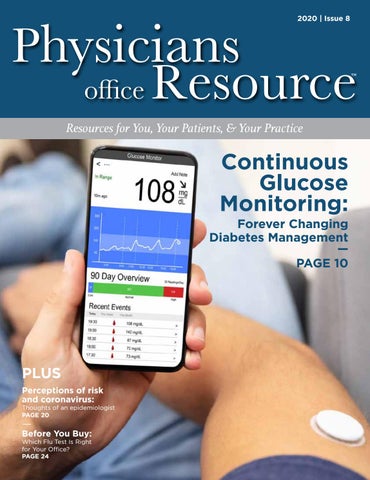
Continuous Glucose Monitoring:
Forever Changing Diabetes Management — PAGE 10
PLUS Perceptions of risk and coronavirus:
Thoughts of an epidemiologist PAGE 20
—
Before You Buy:
Which Flu Test Is Right for Your Office? PAGE 24
PUBLISHED BY Medical Education Resources, LLC PUBLISHER Aaron R. Medaris amedaris@physiciansofficeresource.com
CEO Andrew C. Nimmo acnimmo@physiciansofficeresource.com
PRESIDENT John D. Pasquale jpasquale@pharmaconnect.com
Getting the most from this guide
BUSINESS MANAGER Marci J. Hills mhills@physiciansofficeresource.com
TRAVEL EDITOR Brandi L. Brower EDITORIAL BOARD Michael Paquin, FHIMSS Barry Craig, MLT (NCA), CLC STAFF WRITER Dylan J. Chadwick
There are two simple ways to request
CREATIVE DIRECTOR PRODUCTION MANAGER Jessica Peterson
information about the products and services
Copyright ©2020
found in Physicians Office Resource. 1. Go to www.PhysiciansOfficeResource.com and enter the four-digit reference number found next to the product or service into the search field, then request additional information, schedule a demo, or speak with a sales agent all with just a simple click of a button. 2. Find the Business Reply Card in this issue, circle the desired reference numbers, complete the form, and drop into any USPS mailbox. A representative will contact you as quickly as possible to answer your questions.
www.PhysiciansOfficeResource.com
2 | PHYSICIANS OFFICE RESOURCE
To continue your free subscription of Physicians Office Resource magazine, please fill out the Business Reply Card (BRC) located within this magazine and drop in any United States Post Office mailbox. If you are a manufacturer of medical products or provide services to medical professionals and would like to advertise your products or services to the nation’s top physicians doing in-office testing, call 801-380-6094 or visit: POR.io for more information.
Nail it with one swab. Syndromic respiratory infection testing now CLIA-waived. The BioFire® FilmArray® Respiratory EZ (RP EZ) Panel uses a molecular syndromic approach to accurately detect and identify a wide range of respiratory pathogens—not just Flu A and B. As a healthcare provider, this means your patients can receive the right treatment the first time, potentially leading to higher patient satisfaction and lower costs. And as the name implies, it’s easy and can be performed right in your office or clinic.1 1 test. 14 respiratory pathogens. All in about an hour.
8300
biofiredx.com
CLIA
The BioFire RP EZ Panel VIRUSES Adenovirus Coronavirus Human Metapneumovirus Human Rhinovirus/Enterovirus Influenza A Influenza A/H1 1
Influenza A/H1-2009 Influenza A/H3 Influenza B Parainfluenza Virus Respiratory Syncytial Virus
WAIVED
BACTERIA Bordetella pertussis Chlamydophila pneumoniae Mycoplasma pneumoniae
CLIA Certificate of Waiver required to perform testing.
BFDX-MKT-0234-02
For more information contact +1 801-736-6354 ext. 1947
TABLE OF CONTENTS
10 CONTINUOUS GLUCOSE MONITORING: Forever Changing Diabetes Management
Many in the diabetes world consider the discovery of insulin the most significant milestone in diabetes history. While it’s hard to argue with this point of view, the development of continuous glucose monitoring (CGM) systems also belongs in this same category. CGM has the potential to forever change the management of diabetes, providing patients and their physicians with a pathway to better patient outcomes.
20
PERCEPTIONS OF RISK AND CORONAVIRUS: Thoughts of an epidemiologist
As a physician epidemiologist and former public health official, I find myself confused by people’s perceptions of risk related to coronavirus, particularly as we struggle to reopen our economy amidst a surge of cases. I’ll meet an older adult with diabetes who could care less about distancing or masks, but then a healthy person in their 30’s too afraid to walk outside.
4 | PHYSICIANS OFFICE RESOURCE
24
BEFORE YOU BUY: Which Flu Test Is Right for Your Office?
Each year, despite forewarnings, the United States and European countries are sometimes caught off guard with a “Perfect Storm” of challenges for the influenza season. Physician offices should be stocking up on flu tests and other supplies in preparation for this year’s flu season. What do they need to know before they choose a flu test?
TO X I C O LO G Y S C R E E N I N G
SIMPLIFIED Comprehensive toxicology menu now with 14 CLIA1 categorized moderately complex assays.
IMMTOX 270 BENCHTOP ANALYZER ™
Toxicology screening solutions for physician offices, treatment centers and laboratories. n
25 assay menu
n
Up to 270 tests per hour
n
Compact footprint
n
Quality products, service and reliability
8301
COMPLETE LABORATORY SOLUTIONS From consultation, to licensure and compliance, the Abbott Clinical Lab Solutions team has you covered.
CONTACT ABBOTT CLINICAL LAB SOLUTIONS. CALL 888-831-6850 | EMAIL: CLS_SALES@ABBOTT.COM 1. Clinical Laboratory Improvement Amendments (CLIA) © 2020 Abbott. All rights reserved. All trademarks referenced are trademarks of either the Abbott group of companies or their respective owners. Any photos displayed are for illustrative purposes only. MKT52247 REV1 08/20
Toxicology Screening Simplified Abbott’s ImmTox 270 Benchtop Analyzer Now with 14 assays CLIA Categorized as Moderate Complexity
PRODUCT FOCUS
8302
From Abbott The ImmTox270 benchtop analyzer offers comprehensive toxicology screening solutions for physician offices, treatment centers and independent laboratories. Broad test menu with over 20 assays to choose from including 14 that are now available as moderately complex. With complete laboratory solutions from consultation to licensure, and compliance the Abbott Clinical Laboratory Solutions team has you covered.
View Brochures, Videos & More at POR.io Enter Number 8302 in the Search Area
COMPLETE HOME BLOOD PRESSURE MONITORING PLATFORM From BPCorrect Designed by primary care doctors, BPCorrect is a complete home blood pressure monitoring platform consisting of a patient app and clinician portal. While many apps help patients track and display their BP, BPCorrect is the only app that guides patients through a scientific approach to accurately measure BP in the safety and privacy of their homes. BPCorrect works with affordable, validated BP monitors from well-known manufacturers. The web-based clinician portal, available in fall 2020, securely receives patients’ readings, summarizes these for providers and clinical staff members, and facilitates billing for remote monitoring. Please visit www.bpcorrect.com for more info.
8303
View Brochures, Videos & More at POR.io Enter Number 8303 in the Search Area
FDA EMERGENCY USE AUTHORIZED COVID-19 TEST KITS From Carolina Liquid Chemistries 8304
Carolina Liquid Chemistries now offers FDA Emergency Use Authorized lateral flow Assure COVID-19 IgG/IgM Rapid Test Device for detection of IgM and IgG antibodies to SARS-CoV-2 in 15 minutes in blood, serum, or plasma. It includes external positive and negative controls and targets N and Spike proteins, which increases sensitivity & specificity of the test. CLC also offers swabs and FDA-cleared viral transport media (VTM). For use in moderate and high complexity labs; not FDA cleared; only for emergency use under Section 564(b)(1) of the Act, 21 U.S.C. § 360bbb-3(b)(1), unless authorization is terminated or revoked. Refer to carolinachemistries.com for instructions for use, fact sheets, FDA EUA letters, and clinical performance studies. —
View Brochures, Videos & More at POR.io Enter Number 8304 in the Search Area 6 | PHYSICIANS OFFICE RESOURCE
Stronger Clinical Performance Takes Lateral Flow Testing To The Next Level
®
Providing superior rapid results at the point-of-care. Fast, easy, cost effective so you can test and treat in one visit. High Performance Equivalent to or exceeding the performance of reader devices, without the need for an instrument
SENSITIVITY
SPECIFICITY
Results in 10 minutes OSOM® Custom Care Exceptional Support/Training by licensed medical technologists and experienced healthcare professionals Made in the USA Award-winning supply chain capabilities For more information call 888-616-0537, Option 2, or visit us at www.osomtests.com.
MADE IN THE USA
© 2020 Sekisui Diagnostics, LLC. All rights reserved. OSOM® is a registered trademark of Sekisui Diagnostics, LLC. Because every result matters™ is a trademark of Sekisui Diagnostics, LLC.
8305
OSOM ULTRA PLUS FLU A&B TEST From Sekisui
PRODUCT FOCUS
8306
Stronger Clinical Performance Takes Lateral Flow Testing To The Next Level. Providing superior rapid results at the point-of-care. Fast, easy, cost effective so you can test and treat in one visit. • High Performance- Equivalent or exceeding the performance of reader devices, without the need for an instrument • Results in 10 minutes • OSOM® Custom Care- Exceptional Support/Training by licensed medical technologists and experienced healthcare professionals • Made in the USA —
View Brochures, Videos & More at POR.io Enter Number 8306 in the Search Area
TOXICOLOGY URINE DRUG SCREENING REAGENTS From Abbott Prescription drug misuse and illicit drug abuse is a growing public health challenge in this country. Building a test profile that covers highly misused drugs has never been so vital. With over 20 relevant assays to choose from Abbott’s suite of Immunalysis reagents allows you to easily screen for relevant substances. Our complete line of assays, calibrators, and controls enables you to implement an efficient drug screening program in office.
8307
—
View Brochures, Videos & More at POR.io Enter Number 8307 in the Search Area
MICROS ES 60 HEMATOLOGY ANALYZER WITH 3-PART DIFFERENTIAL From HORIBA Medical
8308
Simple to use and easy to maintain with a zero maintenance concept, the Micros ES 60 is a small tabletop hematology analyzer with an integrated data management system. The analyzer provides a CBC with 3-part differential result in less than 60 seconds using only 10 µL of sample. Connect to the LiteDM Patient Data Management System for an affordable way to consolidate patient results to one report. —
View Brochures, Videos & More at POR.io Enter Number 8308 in the Search Area
8 | PHYSICIANS OFFICE RESOURCE
We measure healing by the foot Proven to heal more diabetic foot ulcers (DFUs) in conjunction with good ulcer care*1 REGRANEX (becaplermin) gel achieved a 43% greater incidence of complete wound closure when compared to placebo gel **1 (p=0.007) Discover how early intervention with the only FDA-approved platelet-derived growth factor (PDGF) therapy for DFUs can help your patients at REGRANEX.com or call 800-876-1261.
* Compared to placebo gel; in conjunction with good ulcer care. ** Multi-center, double-blind, parallel-group placebo-controlled trial of 382 patients with type 1 or type 2 diabetes. p=0.007. IMPORTANT SAFETY INFORMATION: Indications: REGRANEX (becaplermin) gel 0.01% (“REGRANEX”) is indicated for the treatment of lower extremity diabetic neuropathic ulcers that extend into the subcutaneous tissue or beyond and have an adequate blood supply, when used as an adjunct to, and not a substitute for, good ulcer care practices including initial sharp debridement, pressure relief and infection control. Contraindications: REGRANEX is contraindicated in patients with known neoplasm(s) at the site(s) of application. Warnings and Precautions: Malignancies distant from the site of application have occurred in REGRANEX users in a clinical study and in postmarketing use. REGRANEX contains becaplermin, a recombinant human platelet-derived growth factor, which promotes cellular proliferation and angiogenesis. The efficacy of REGRANEX has not been established for the treatment of pressure ulcers and venous stasis ulcers and has not been evaluated for the treatment of diabetic neuropathic ulcers that do not extend through the dermis into subcutaneous tissue or ischemic diabetic ulcers. The effects of becaplermin on exposed joints, tendons, ligaments, and bone have not been established in humans. REGRANEX is a non-sterile, low bioburden preserved product. Therefore, it should not be used in wounds that close by primary intention. Adverse Reactions: In clinical trials, erythematous rashes occurred in 2% of subjects treated with REGRANEX (and good ulcer care) or placebo (and good ulcer care). In a retrospective follow-up study, eight of 291 subjects (2.7%) from the REGRANEX group, and two of 200 subjects (1%) from the placebo group were diagnosed with cancers during the follow-up period. An increased rate of death from systemic malignancies in patients dispensed three or more tubes of REGRANEX, observed in one of three retrospective postmarketing studies. Other adverse reactions that have been reported include a burning sensation, and erythema at the site of application. The risk information provided herein is not comprehensive. To see the complete prescribing information, please see the FDA-approved product labeling. You are encouraged to report negative side effects of prescription drugs to the FDA. Visit MedWatch or call 1-800-FDA-1088. Reference: 1. Wieman TJ, Smiell JM, Su Y. Efficacy and safety of a topical gel formulation of recombinant human platelet-derived growth factor-BB (becaplermin) in patients with chronic neuropathic diabetic ulcers. A phase III randomized placebo-controlled double-blind study. Diabetes Care. 1998;21:822-827.
Advanced Wound Management Smith & Nephew, Inc. Fort Worth, TX 76109 USA
www.smith-nephew.com www.regranex.com
Customer Care Center T 800 876-1261 F 727 392-6914
◊ Trademark of Smith+Nephew © 2020 Smith+Nephew
RGEE7-24968-0520
FEATURE 10 | PHYSICIANS OFFICE RESOURCE
PART ONE OF A THREE PART SERIES ON CONTINUOUS GLUCOSE MONITORING —
CONTINUOUS GLUCOSE MONITORING: Forever Changing Diabetes Management BY DAVID KLIFF – THE DIABETIC INVESTOR
Many in the diabetes world consider the discovery of insulin the most significant milestone in diabetes history. While it’s hard to argue with this point of view, the development of continuous glucose monitoring (CGM) systems also belongs in this same category. CGM has the potential to forever change the management of diabetes, providing patients and their physicians with a pathway to better patient outcomes. It’s not an overstatement to say that CGM could be the one tool that changes this ominous diabetes statistic that unfortunately has not changed in decades: more than 2/3 of patients with diabetes are NOT achieving good control. Today, patients with diabetes have a plethora of options when it comes to the treatment of their diabetes. Thanks to the internet and now smartphones, they have instant access to information. There are thousands of websites and apps which can help the patient better manage their diabetes. Yet even with all this advanced technology and newer and better drugs, that one glaring statistic remains a constant reminder that we have yet to crack the toughest nut of all: getting the majority of patients with diabetes under good control. In this series we will first review CGM, explaining what it is, provide an overview of the current FDA approved systems, and explain how transformative this technology can be. We’ll
examine how to incorporate CGM into your practice and look to the future and how this one piece of technology will forever change, for the better, the relationship between the patient with diabetes and their physician. Before we jump into the deep end of the CGM, first, a brief history of glucose monitoring—a technology which, when first introduced back in the late 60s and early 70s, was complex to use while providing uneven results. It took 10 years or so before glucose meters became more patient friendly while providing more accurate results. At the time, these meters introduced several notable advancements, notably faster test results (5 seconds for some systems), even greater accuracy, alternate site testing, and connectivity so that data could be shared. However, with each corresponding improvement in this technology, one indisputable fact remained: the majority of patients with diabetes were not monitoring their glucose as frequently as they should, or worse, not monitoring at all. Pundits attributed this to the fact that glucose monitoring was “painful” as the patient had to prick their finger to gather a blood sample. While we would never contend that finger pricks were an enjoyable experience, “pain” was not the real reason patients did not monitor their glucose regularly.
2020, ISSUE 8 | 11
FEATURE
“... this technology is still valuable for a patient on orals alone or orals plus insulin.” The real reason was that patients did not value the information provided, plus there was no action step executed based on these results. It should surprise no one that insulin pump patients were the most frequent testers, monitoring their glucose on average eight times per day, multiple daily injection (MDI) patients were next at four times per day, and so on. Insulin-using patients not only valued this information, but needed it so they could properly dose their insulin. Yet even with frequent testers, these point to point systems had another major limitation: they provided an incomplete picture of what was really going on. Simply put, when it comes to diabetes management, some data is better than no data, but more data is better. (And yes, we will cover how CGM systems have evolved to combine all this data with analytics.) HbA1c is widely considered the gold standard for measuring control; however, this gold standard also provides an incomplete picture of the patient. Simply put, CGM fills in the blanks while providing a more comprehensive overview of the patient. This is the true value of CGM for both the patient and the physician as it allows a three-dimensional look. Think of it this way: CGM allows the patient and physician to see what’s really going on. It can be seen whether the therapy regimen is working. It can be seen what happens after meals. It can be seen what happens while the patient is sleeping or exercising. CGM provides bright light where only darkness or limited light existed before. CGM also has the additional benefit in that it’s more patient friendly, making glucose monitoring simple. Currently there are two systems which do not require any calibrations with a conventional glucose monitor. So, the days of a patient pricking their finger are gone forever; the “pain” factor has been eliminated. All four of the currently FDA-approved systems come with connectivity therefore eliminating the need to log readings. It also allows a patient to easily share this data with their physician. Even better, CGM sensor life has improved over the years, with sensors being worn for 10 or more days. One of the hidden benefits of CGM is it eliminates the need for the patient to carry around any testing supplies. No lancets, no test strips, nothing. This may seem like a small benefit until you talk with a patient using CGM. When it comes to diabetes management the patient has enough to worry about already and the less “stuff ” they have to have with them, the better.
12 | PHYSICIANS OFFICE RESOURCE
In summary, CGM not only provides a better, clearer picture of what’s happening, it’s also more patient friendly. This is why we believe that in the not so distant future, CGM will replace conventional glucose monitoring as the standard for glucose measurement. CGM systems are widely reimbursed improving patient access to this technology. The data provided by CGM is extraordinarily accurate, so much so that insulin-using patients can now dose their insulin based on data provided by their CGM without also using a conventional monitor. Sensor insertion has become quick and relatively painfree. And thanks to connectivity, all the heavy lifting of the analytics is also done for the patient. As we know, data by itself is just a set of meaningless numbers, but data combined with analytics leads to knowledge. Armed with this knowledge, the patient and physician can take action, action which hopefully will lead to the ultimate goal of better outcomes. Yet what really makes CGM the most transformative technology ever invented for patients with diabetes is that it helps ALL patients no matter how they manage their diabetes. This is perhaps one the most misunderstood aspects of this revolutionary technology: it’s not just for insulin-using patients, it’s for all patients. Yes, there are some very obvious benefits for insulin-using patients. However, this technology is still valuable for a patient on orals alone or orals plus insulin. The difference is how each subset of patients will use and interact with their CGM. While intensively-managed insulin using patients will use CGM 24/7/365, less intensively-managed patients may only use CGM once or twice a month. With less intensively-managed patients, CGM is first used as a discovery tool to find out what’s going on. Next, it’s used as a validation tool: we discovered what’s going put a plan in place to handle what’s going on, validate what we did, and make sure it’s working. Finally, it will be used as a maintenance tool, to make sure the plan is working and that no adjustments need to be made. The bottom line here is that CGM provides real evidence and a clear view. The patient and physician can now SEE what’s going on, with no more guessing and no more relying on just HbA1c alone to make decisions. Ultimately, this is why we see CGM as the most transformative technology ever invented for patients with diabetes and their physicians. CGM brings light where only darkness existed before.
From HORIBA Medical Is it viral or bacterial? A CBC with 3-part differential can provide the clues to help distinguish between viral and bacterial infections before you decide to treat. The Micros 60 Hematology analyzer provides a CBC with 3-part Diff result in less than 60 seconds using only 10 µL of sample. Connect to the LiteDM Patient Data Management System for an affordable way to consolidate patient results to one report.
View Brochures, Videos & More at POR.io Enter Number 8309 in the Search Area
MINÍÍMIZE THE HASSLE OF ESR TESTING IN YOUR LAB
PRODUCT FOCUS
8309
MICROS HEMATOLOGY ANALYZER WITH 3-PART DIFFERENTIAL PLUS THE LITEDM
8310
From ALCOR Scientific miniiSED™ is the newest of the iSED® family of ESR analyzers from ALCOR Scientific. The miniiSED™ measurement of ESR is accurate and unaffected by variables associated with traditional methodologies, such as hematocrit. This single position, fully automated ESR analyzer works directly from primary EDTA tubes, requires 100 μL of sample, has an internal barcode reader, and produces results in 15 seconds! miniiSED™ is the ideal solution to ESR testing for small laboratories, POL’s, and emergency clinics. Proudly manufactured in the USA.
View Brochures, Videos & More at POR.io Enter Number 8310 in the Search Area
8311
PENTRA 60 C+ HEMATOLOGY ANALYZER WITH 5-PART DIFFERENTIAL From HORIBA Medical Now you can have the same results hospitals and reference labs provide in a small, benchtop analyzer. The Pentra 60 C+ hematology analyzer provides a CBC with 5-part differential result using proprietary technology that ensures an accurate count and differential on the first run. Reduce repeats and reflex to the microscope with Pentra hematology technology.
View Brochures, Videos & More at POR.io Enter Number 8311 in the Search Area
2020, ISSUE 8 | 13
PRODUCT FOCUS
RX IMOLA From HORIBA Medical 8312
The RX imola is a cost-effective system that delivers consistent high-quality results. Capable of handling the workload of a medium to high throughout laboratory and a combined throughput of 560 tests per hour, the RX imola provides rapid, comprehensive testing on a small footprint analyzer when it matters most, with direct HbA1c testing capabilities.
View Brochures, Videos & More at POR.io Enter Number 8312 in the Search Area
RX DAYTONA+ From Randox Laboratories The RX daytona+ is a fully automated, benchtop, clinical chemistry analyzer capable of performing high quality testing, with a combined throughput of 450 tests per hour, for accurate results you can trust. The most versatile analyzer in its class, the RX daytona+ combines robust hardware and intuitive software with the world leading RX series test menu for unrivaled performance, with direct HbA1c testing capabilities.
View Brochures, Videos & More at POR.io Enter Number 8313 in the Search Area
8314
8313
DRUGS OF ABUSE TESTING AND ROUTINE CHEMISTRY PANELS ON A SINGLE ANALYZER From Carolina Liquid Chemistries Carolina Liquid Chemistries Corp. announces the successful launch of Medica Corporation’s high-speed benchtop analyzer, the EasyRAŽ. The updated analyzer now operates at a photometric rate of up to 240 tests per hour or up to 480 tests per hour with ISE. The EasyRA urine drug screening and general chemistry reagents are CLIA categorized as moderately complex. This all-in-one system allows clinical laboratories to screen for drugs of abuse in urine while also allowing healthcare providers to assess routine chemistry panels on a single analyzer.
View Brochures, Videos & More at POR.io Enter Number 8314 in the Search Area
14 | PHYSICIANS OFFICE RESOURCE
NEW
TURN SMALL PLACES INTO SMART SPACES With reduced budgets, shrinking laboratory space and staffing challenges, many laboratories need a solution that lets them work smarter with less. The CELL-DYN Emerald 22 AL is a full performance, automated, optical 5-part differential analyzer that delivers smarter results for small to mid-size clinical laboratories with: • Compact design maximizes valuable laboratory space • Ease of use and walkaway functionality optimizes staff time • Smart open tube sample device ensures user safety
8315
41 cm
Visit www.corelaboratory.abbott/hematology to learn how the new CELL-DYN Emerald 22 AL can help your laboratory operate more efficiently. 50 cm
C HOOS E TRAN SF OR MATIO N
TM
Achieve measurably better healthcare performance.
CELL-DYN Emerald 22 AL is a Class 1 laser. For in vitro diagnostic only. Refer to the Operator’s Manual for operational precautions, limitations, and hazards. CELL-DYN Emerald and CHOOSE TRANSFORMATION are trademarks of Abbott Laboratories in various jurisdictions. CAUTION: United States Federal law restricts this device to sale and distribution by or on the order of a physician, or to a clinical laboratory. © 2019 Abbott Laboratories. ADD-00064842.
The long-acting anti-CGRP injection with the option of dosing only 4 times a year1* To learn more, visit AJOVYhcp.com *”Long-acting” was defined as efficacy measured over a 12-week period following a 225 mg x 3 (675 mg) SQ dose.1
CGRP: calcitonin gene-related peptide; SQ: subcutaneous.
INDICATION
AJOVY is indicated for the preventive treatment of migraine in adults.
IMPORTANT SAFETY INFORMATION
Contraindications: AJOVY is contraindicated in patients with serious hypersensitivity to fremanezumab-vfrm or to any of the excipients. Hypersensitivity Reactions: Hypersensitivity reactions, including rash, pruritus, drug hypersensitivity, and urticaria were reported with AJOVY in clinical trials. Most reactions were mild to moderate, but some led to discontinuation or required corticosteroid treatment. Most reactions were reported from within hours to one month after administration. If a hypersensitivity reaction occurs, consider discontinuing AJOVY and institute appropriate therapy. Adverse Reactions: The most common adverse reactions (≥5% and greater than placebo) were injection site reactions. Please see the Brief Summary of the Prescribing Information on the adjacent page. Reference: 1. AJOVY® (fremanezumab-vfrm) injection Current Prescribing Information. North Wales, PA: Teva Pharmaceuticals USA, Inc. © 2020 Teva Pharmaceuticals USA, Inc. FRE-42502 March 2020
BRIEF SUMMARY OF PRESCRIBING INFORMATION FOR AJOVY® (fremanezumab-vfrm) injection, for subcutaneous use SEE PACKAGE INSERT FOR FULL PRESCRIBING INFORMATION 1 INDICATIONS AND USAGE AJOVY is indicated for the preventive treatment of migraine in adults. 2 DOSAGE AND ADMINISTRATION 2.1 Recommended Dosage Two subcutaneous dosing options of AJOVY are available to administer the recommended dosage: • 225 mg monthly, or • 675 mg every 3 months (quarterly), which is administered as three consecutive subcutaneous injections of 225 mg each. When switching dosage options, administer the first dose of the new regimen on the next scheduled date of administration. If a dose of AJOVY is missed, administer as soon as possible. Thereafter, AJOVY can be scheduled from the date of the last dose. Important Administration Instructions 2.2 AJOVY is for subcutaneous use only. AJOVY may be administered by healthcare professionals, patients, and/or caregivers. Prior to use, provide proper training to patients and/or caregivers on the preparation and administration of AJOVY prefilled syringe, including aseptic technique [see Instructions for Use in full Prescribing Information]: • Remove AJOVY from the refrigerator. Prior to use, allow AJOVY to sit at room temperature for 30 minutes protected from direct sunlight. Do not warm by using a heat source such as hot water or a microwave. Do not use AJOVY if it has been at room temperature for 24 hours or longer. • Follow aseptic injection technique every time AJOVY is administered. • Inspect AJOVY for particles or discoloration prior to administration. Do not use if the solution is cloudy, discolored, or contains particles. • Administer AJOVY by subcutaneous injection into areas of the abdomen, thigh, or upper arm that are not tender, bruised, red, or indurated. For multiple injections, you may use the same body site, but not the exact location of the previous injection. • Do not co-administer AJOVY with other injectable drugs at the same injection site. 4 CONTRAINDICATIONS AJOVY is contraindicated in patients with serious hypersensitivity to fremanezumabvfrm or to any of the excipients [see Warnings and Precautions (5.1)]. 5 WARNINGS AND PRECAUTIONS 5.1 Hypersensitivity Reactions Hypersensitivity reactions, including rash, pruritus, drug hypersensitivity, and urticaria, were reported with AJOVY in clinical trials. Most reactions were mild to moderate, but some led to discontinuation or required corticosteroid treatment. Most reactions were reported from within hours to one month after administration. If a hypersensitivity reaction occurs, consider discontinuing AJOVY, and institute appropriate therapy. 6 ADVERSE REACTIONS The following clinically significant adverse reactions are discussed in greater detail in other sections of the labeling: • Hypersensitivity Reactions [see Warnings and Precautions (5.1)] 6.1 Clinical Trials Experience Because clinical trials are conducted under widely varying conditions, adverse reaction rates observed in the clinical trials of a drug cannot be directly compared to rates in the clinical trials of another drug, and may not reflect the rates observed in clinical practice. The safety of AJOVY was evaluated in 2512 patients with migraine who received at least 1 dose of AJOVY, representing 1279 patient-years of exposure. Of these, 1730 patients were exposed to AJOVY 225 mg monthly or AJOVY 675 mg quarterly for at least 6 months, 775 patients for at least 12 months, and 138 patients for at least 15 months. In placebo-controlled clinical trials (Studies 1 and 2), 662 patients received AJOVY 225 mg monthly for 12 weeks (with or without a loading dose of 675 mg), and 663 patients received AJOVY 675 mg quarterly for 12 weeks. In the controlled trials, 87% of patients were female, 80% were White, and the mean age was 41 years. The most common adverse reactions in the clinical trials for the preventive treatment of migraine (incidence at least 5% and greater than placebo) were injection site reactions. The adverse reactions that most commonly led to discontinuations were injection site reactions (1%). Table 1 summarizes adverse reactions reported in the 3-month placebo-controlled studies (Study 1 and Study 2), and the 1-month follow-up period after those studies. Table 1: Adverse Reactions Occurring with an Incidence of At Least 2% for Either Dosing Regimen of AJOVY and At Least 2% Greater Than Placebo in Studies 1 and 2 Placebo AJOVY AJOVY Monthly 225 mg Monthly 675 mg Quarterly (n=668) (n=667) (n=290) % % % Injection site reactionsa 43 45 38 a Injection site reactions include multiple related adverse event terms, such as injection site pain, induration, and erythema. Adverse Reaction
AJOVY® (fremanezumab-vfrm) injection 6.2 Immunogenicity As with all therapeutic proteins, there is a potential for immunogenicity. The detection of antibody formation is highly dependent on sensitivity and specificity of the assay. Additionally, the observed incidence of antibody (including neutralizing antibody) positivity in an assay may be influenced by several factors, including assay methodology, sample handling, timing of sample collection, concomitant medications, and underlying disease. For these reasons, comparison of the incidence of antibodies to fremanezumab-vfrm in the studies described below with the incidence of antibodies in other studies to other products may be misleading. Clinical immunogenicity of AJOVY was monitored by analyzing anti-drug antibodies (ADA) and neutralizing antibodies in drug-treated patients. The data reflect the percentage of patients whose test results were positive for antibodies to AJOVY in specific assays. In 3-month placebo-controlled studies, treatment-emergent ADA responses were observed in 6 out of 1701 (0.4%) AJOVY-treated patients. One of the 6 patients developed anti-AJOVY neutralizing antibodies at Day 84. In the ongoing long-term open-label study, ADA were detected in 1.6% of patients (30 out of 1888). Out of 30 ADA-positive patients, 17 had a neutralizing activity in their post-dose samples. Although these data do not demonstrate an impact of antifremanezumab-vfrm antibody development on the efficacy or safety of AJOVY in these patients, the available data are too limited to make definitive conclusions. 8 USE IN SPECIFIC POPULATIONS 8.1 Pregnancy Risk Summary There are no adequate data on the developmental risk associated with the use of AJOVY in pregnant women. AJOVY has a long half-life. This should be taken into consideration for women who are pregnant or plan to become pregnant while using AJOVY. Administration of fremanezumab-vfrm to rats and rabbits during the period of organogenesis or to rats throughout pregnancy and lactation at doses resulting in plasma levels greater than those expected clinically did not result in adverse effects on development [see Animal Data]. In the U.S. general population, the estimated background risk of major birth defects and miscarriage in clinically recognized pregnancies is 2-4% and 15-20%, respectively. The estimated rate of major birth defects (2.2-2.9%) and miscarriage (17%) among deliveries to women with migraine are similar to rates reported in women without migraine. Clinical Considerations Disease-Associated Maternal and/or Embryo/Fetal Risk Published data have suggested that women with migraine may be at increased risk of preeclampsia and gestational hypertension during pregnancy. Data Animal Data When fremanezumab-vfrm (0, 50, 100, or 200 mg/kg) was administered to male and female rats by weekly subcutaneous injection prior to and during mating and continuing in females throughout organogenesis, no adverse embryofetal effects were observed. The highest dose tested was associated with plasma exposures (AUC) approximately 2 times that in humans at a dose of 675 mg. Administration of fremanezumab-vfrm (0, 10, 50, or 100 mg/kg) weekly by subcutaneous injection to pregnant rabbits throughout the period of organogenesis produced no adverse effects on embryofetal development. The highest dose tested was associated with plasma AUC approximately 3 times that in humans (675 mg). Administration of fremanezumab-vfrm (0, 50, 100, or 200 mg/kg) weekly by subcutaneous injection to female rats throughout pregnancy and lactation resulted in no adverse effects on pre- and postnatal development. The highest dose tested was associated with plasma AUC approximately 2 times that in humans (675 mg). 8.2 Lactation Risk Summary There are no data on the presence of fremanezumab-vfrm in human milk, the effects on the breastfed infant, or the effects on milk production. The developmental and health benefits of breastfeeding should be considered along with the mother’s clinical need for AJOVY and any potential adverse effects on the breastfed infant from AJOVY or from the underlying maternal condition. 8.4 Pediatric Use Safety and effectiveness in pediatric patients have not been established. 8.5 Geriatric Use Clinical studies of AJOVY did not include sufficient numbers of subjects aged 65 and over to determine whether they respond differently from younger subjects. Manufactured by: Teva Pharmaceuticals USA, Inc. North Wales, PA 19454 US License No. 2016 ©2020 Teva Pharmaceuticals USA, Inc. This Brief Summary is based on the full Prescribing Information for AJOVY AJO-004.
FRE-42210
February 2020
PENTRA C400 CHEMISTRY ANALYZER
PRODUCT FOCUS
8316
From HORIBA Medical One benchtop, not a whole lab! No water system, drain or special electrical connected required to operate the Pentra C400 chemistry analyzer. Now you can have the power of a floor model analyzer on the benchtop! The Pentra C400 chemistry system processes up to 420 tests/hr including ISEs and offers routine metabolic assays, TDMs, DAUs and Adulterants, HbA1c and Vitamin D tests. With 40 open channels, you can add much more for a complete menu to meet your practice needs.
View Brochures, Videos & More at POR.io Enter Number 8316 in the Search Area
FULLY AUTOMATED QUANTITIVE IMMUNOASSAY ANALYZER From Sekisui Diagnostics
8317
The FastPack® IP System is a fully automated quantitative immunoassay analyzer designed for use in the Physician Office laboratory. Utilizing sophisticated chemiluminescence technology, the FastPack® IP System provides the capability to produce complex immunoassay results in 12 minutes or less with a push of a button. Menu includes Vitamin D, Testosterone, TSH, Free T4 PSA and hCG.
View Brochures, Videos & More at POR.io Enter Number 8317 in the Search Area
PAD TESTING SYSTEMS IDEAL FOR PRIMARY CARE TO VASCULAR SPECIALISTS From Newman Medical 8318
Your patients Trust You to find their PAD • You have many high risk patients, including anyone over 65 or diabetics or smokers • Even if they are unaware of their PAD, 25% will have a heart attack or stroke within 5 years if not managed • Patients often mistake symptoms of PAD for arthritis. simpleABI Cuff-Link systems are easy to learn and use • Push button remote, automatic calculations/waveforms • PC based – reports are easy to save and share Excellent Value and Reimbursements • One test per week pays off system in less than one year • Medicare reimbursements range from $80 to $220 depending on location and test
View Brochures, Videos & More at POR.io Enter Number 8318 in the Search Area 18 | PHYSICIANS OFFICE RESOURCE
The Adview 2 is still the only truly modular diagnostic station that grows with your needs. Start with blood pressure and choose temperature or pulse oximetry option at the time of purchase.
Bionet CardioCare 2000: $1,255.00 Schiller AT-2 Plus: $2,626.00* 8319 *add Spirometry: $649.00 Burdick ELI 250c: $3,422.00 Welch Allyn CP150 w/ Interp: $3,258.00
8320
8321 8322
8323
8324 8324
8325
Coaxial Ophth, Fiber Optic Oto, Speucla Dispenser, Aneroid BP, Wall Transformer and Wall Board without Thermometer: $979.00 8326 with Thermometer: $1,416.00
8327
8329
8330
8328
FEATURE
PERCEPTIONS OF RISK AND CORONAVIRUS: Thoughts of an epidemiologist BY TISTA S. GHOSH, MD, MPH
As a physician epidemiologist and former public health official, I find myself confused by people’s perceptions of risk related to coronavirus, particularly as we struggle to reopen our economy amidst a surge of cases. I’ll meet an older adult with diabetes who could care less about distancing or masks, but then a healthy person in their 30’s too afraid to walk outside. I’ll encounter a mother who is too terrified to eat outside in a restaurant but who has no fear going indoors to a nail salon or to send her kids to an overnight camp (where they live in close quarters with children from everywhere). Or I’ll chat with a college student who vapes and occasionally smokes who thinks he’s invincible as he heads mask-less to a party (even as we learn more about increased coronavirus risk for people who vape or smoke). Perceptions of risk (or lack thereof) are all over the place in the U.S. This may be a result of the lack of a consistent public health voice and the mixed messages that we’ve witnessed throughout this pandemic. Or it may be a result of heightened emotions, whether extreme anger or fear, which can skew perceptions of risk. Or maybe it’s just that people have a hard time understanding and managing risk. It’s why some people are too afraid to get on an airplane, but feel just fine driving 10 miles over the speed limit on a highway in the rain. And now, as COVID-19 cases surge, this ability to judge and mitigate risk 20 | PHYSICIANS OFFICE RESOURCE
takes on increasing importance. People’s perceptions of risk influence their behavior – and those behaviors directly impact both viral spread and our ability to successfully reopen our economy. COVID-19 risk levels for people depend on a lot of factors: who they are, where they are, and what they are doing. And it can be hard for the average patient to differentiate what’s scientifically accurate versus a sensational headline. I work with employees of numerous large companies, many of whom are considered essential workers, who are constantly weighing risk for themselves and their families. The analogy I’ve found most useful for them is the following: When thinking about coronavirus risk, imagine that you are considering driving a car. Clearly, this is not a zero-risk activity. People die of car crashes all the time (it’s a leading cause of death in the U.S.). So what goes into your decision to drive the car? Certainly, you might consider the type of car (is it in top shape or is it falling apart?), the weather conditions (a sunny day versus a snowstorm), the distance you might need to travel, your own experience as a driver (are you a teenager who just got a license or a 90-year old with eyesight and hearing loss?) and behaviors that might affect your driving (did you just have a few alcoholic beverages?). Your decision to drive will likely
vary depending on the answer to those questions, as will your level of risk. And factors that might mitigate your risk (is the car equipped with airbags and seatbelts?) might affect your decision-making as well. So when it comes to the coronavirus, walk patients through a similar thought process: First, ask them to establish personal risk: Are they older? Do they have underlying conditions that can put you at risk for more severe illness (diabetes, obesity, etc.? ) Do they smoke or vape? Are they part of a racial or ethnic group that has had more severe outcomes? Then ask them to consider factors related to other people or the community: Do they live with or often interact with someone who might be at high risk? Is there a lot of virus circulating in their community? Are there a lot of COVID-related hospitalizations or an increase in influenza-like illness (ILI) in their area? Finally, consider the activity they will be engaging in, along with risk-mitigating factors: Will it be outdoors or indoors? Will they and others be wearing masks? Will they maintain six or more feet of distance? Will they be sharing drinks or other
personal items? How important is this activity to them, their family, and their mental health? Is it worth the level of risk? I try to remind my own patients: The only way to bring your risk to zero is to never leave your house or interact with anyone. Most of us will be taking calculated risks, whether it is going to the grocery store, getting a haircut, stopping at a gas station, or going for a run outside. And reopening successfully will depend on all of us judging risk more successfully. Bottom line: Outdoors is safer than indoors; masks are better than no masks. Avoid being close to people (especially face-to-face) for very long, particularly in an indoor setting. And take into account both your personal level of risk and the risk of those around you. — Tista Ghosh, MD, MPH is a CDC-trained epidemiologist and the former Chief Medical Officer of the state of Colorado. She was appointed to the United States Community Preventive Services Task Force but the CDC director from 2017-2019 and has served in the United States Public Health Service. She is currently the lead epidemiologist and senior Medical Director at Grand Rounds, and acts as a virtual Chief Medical Officer to numerous companies in on COVID-related return to work strategies.
2020, ISSUE 8 | 21
PRODUCT FOCUS
COST-EFFECTIVE AI MEDICAL SCRIBE 8331
From Phraze Are you frustrated with spending more time writing notes than seeing patients? Has the EHR become a “screen between” you and your patients? Are you interested in having a medical scribe, but find that the cost is prohibitive? Phraze’s is a cost-effective AI Medical Scribe software that analyzes the conversation between you and your patient. It then automatically produces a clinical note that is as beautiful as it is intelligent: saving you time and improving your connection to patients.
—
View Brochures, Videos & Mores at POR.io Enter Number 8331 in the Search Area
ACCURATE, ACTIONABLE RESULTS FROM THE LEADER IN POINT-OF-CARE LIPID TESTING From Abbott The CLIA-waived Alere Cholestech LDX™ Analyzer is engineered for confidence, providing accurate, actionable, and readily accessible results that have set the standard in point-of-care lipid profile, cholesterol, and glucose testing. Results are easy to obtain. Fingerstick sampling and a small sample size (40μL) makes results less painful and time consuming.
View Brochures, Videos & More at POR.io Enter Number 8332 in the Search Area
8332
BIOFIRE® FILMARRAY® TORCH From BioFire 8333
The BioFire® FilmArray® Torch is a fully integrated, random, and continuous access system designed to meet your laboratory’s syndromic infectious disease testing needs. The BioFire Torch offers a radically reduced benchtop footprint, saving precious space in the lab, and its scalability meets high throughput demands. BioFire® FilmArray® Link Software automatically uploads patient results. Fully compatible with all CLIA Moderate BioFire® FilmArray® Panels, the BioFire Torch helps you maximize efficiency and productivity.
View Brochures, Videos & More at POR.io Enter Number 8333 in the Search Area
22 | PHYSICIANS OFFICE RESOURCE
7948 8334
8335
8336
8337
FEATURE
BEFORE YOU BUY: Which Flu Test Is Right for Your Office?
Each year, despite forewarnings, the United States and European countries are sometimes caught off guard with a “Perfect Storm” of challenges for the influenza season. Physician offices should be stocking up on flu tests and other supplies in preparation for this year’s flu season. What do they need to know before they choose a flu test? Planning Ahead So much of flu season is a guessing game, especially when trying to plan for it. The World Health Organization (WHO), the Center for Disease Control (CDC), and the Food and Drug Administration (FDA) weigh in with their recommendation to which strains should be included in the upcoming flu vaccine well before the season gets started. Their prediction on what strains should be included will dictate how effective the vaccine will be. How severe the flu season is difficult to predict ahead of time, and the key indicators used by the WHO, CDC, and others can only be obtained after flu season begins! So, what can clinicians and distributors do to prepare? First, conducting a business assessment of what the clinicians experienced last year and looking at historical data can help dictate a plan to ensure they procure enough product. Second, weigh the pros and cons of the tests they are currently using and tests they might be considering. Clinicians should consider the following: • Performance—Is test sensitivity and specificity the most critical? • Volume—How many tests does your facility perform during an average flu season?
24 | PHYSICIANS OFFICE RESOURCE
• Ease of Use – how simple is the test to perform? • CLIA Complexity – Does the facility require Waived Complexity (These simple and accurate tests are exempt from CLIA health and safety standards) or Moderate Complexity (These tests are more complex and have requirements for quality control, quality assurance, and more) Tests. • Results reporting—Is it important for your facility to have an instrument-based result or visual read result, or is either one acceptable? • Sample type—Does the test need to allow for multiple sample types (nasal, nasopharyngeal, aspirate/wash, and/or viral transport media (VTM))? • Connectivity—Is it important for the testing device to be able to transmit the results electronically? • Cost of the test • The time to result • Does the test require confirmation testing for negative results? What’s Out There? There are several types of flu tests available on the market. • Rapid molecular tests detect the genetic material of the virus and typically produce results in 30 minutes or less. These are considered to be more accurate than other methods.
• Rapid lateral flow immunochemical tests can be either read visually or by an instrument and are intended to detect the presence (or absence) of a target antigen in 15 minutes or less. Depending on what characteristics (from above) are important to the clinician will help determine what type of test is a good fit for the facility. The manufacturer and distribution representative would be able to help guide the clinician to a product that is just right for them. It should be noted that no flu test provides 100% accuracy. Results depend on the type of test used, the strain of virus and the integrity of the sample. It is very important when bringing on any test to review any limitations of the test, such as strain detection, any patient age limitations and performance data, along with sample collection and handling best practices and make sure that all staff is trained to provide the best in class testing. The Importance of Testing Due to the known performance issues surrounding the rapid tests, some physicians may argue that it’s not necessary to administer a flu test in order to diagnose and treat. Testing does not usually change how a patient will be treated for a flu diagnosis, so why bother? It turns out there are several reasons. • Empirical treatment has a disadvantage in that many more patients are receiving treatment than actually have the flu giving rise to a possible antiviral shortage and possibly delaying the right treatment for another health issue. • Testing patients provides valuable information to the clinician that can enable them to rule out other illnesses, helps determine a more direct therapy plan, and reduces the risk of unnecessary antiviral or antibiotics therapy, while increasing the chances that the patient will receive anti-viral therapy early when it is most effective.
The CLIA-Waived Silaris® Influenza A&B Test is a molecular point-of-care test utilizing polymerase chain reaction (PCR) technology providing accurate results for early diagnosis and proper management of influenza. The CLIA-Waived OSOMâ Ultra Plus Flu A & B Test is rapid lateral flow qualitative test with performance equivalent to or exceeding reader devices, without the need for an instrument.
The CLIA-Waived Acucy™ Influenza A&B Test, used on the Acucy™ System, provides clinicians flexibility in workflow and accurate, standardized results for improved patient care. It uti• Testing will also help determine whether an outbreak of flu is lizes a traditional rapid lateral flow test paired with a reader. occur ring. Since the implementation of rapid molecular tests and the drive by the FDA reclassification to have better RIDTs The 5 “Ps” into the market clinicians can have the opportunity to utilize In the end, it comes down to the 5 “Ps” – Proper Preparation a highly accurate test to be more confident in the results to Prevents Poor Performance! Don’t be afraid to keep stock of flu drive direct therapy. tests all year round. Understand new options—with the fear of changing strains, new technologies are more important than How Sekisui Diagnostics Can Help ever. Just remember, you have choices! Sekisui Diagnostics offers three flu tests, using three different techLearn more about your options at www.flutesting.com. nologies, to help clinicians master the art of influenza testing.
2020, ISSUE 8 | 25
NOW APPROVED!
Phexxi™ is a non-hormonal contraceptive option that regulates her vaginal pH to prevent pregnancy1
AVAILABLE BY PRESCRIPTION
IMPORTANT SAFETY INFORMATION WARNINGS AND PRECAUTIONS Few cases (0.36%) of adverse reactions of cystitis, pyelonephritis and other upper urinary tract infection (UTI) have been reported in Phexxi™ clinical studies. Of these, one case of pyelonephritis was considered serious and required hospitalization. Avoid use of Phexxi™ in females of reproductive potential with history of recurrent urinary tract infection or urinary tract abnormalities. ADVERSE REACTIONS Most common adverse reactions were vulvovaginal burning sensation, vulvovaginal pruritus, vulvovaginal mycotic infection, urinary tract infection, vulvovaginal discomfort, bacterial vaginosis, vaginal discharge, genital discomfort, dysuria, and vulvovaginal pain. Patients should be counseled on the following: • To contact and consult with their healthcare provider for severe or prolonged genital irritation or experiencing urinary tract symptoms. • To discontinue Phexxi™ if they develop a local hypersensitivity reaction. • That Phexxi™ does not protect against HIV infection or other sexually transmitted infections.
pHinally! There’s Phexxi™ Birth control designed to meet her contraceptive needs
• NON-HORMONAL • IN THE MOMENT • WORKS IMMEDIATELY
AVAILABLE IN PHARMACIES SOON! Phexxi™ will be available for prescription in the United States in September. For updates on the availability of Phexxi™, and for more information, visit HCP-Phexxi.com/AvailableSoon
To report SUSPECTED ADVERSE REACTIONS, contact Evofem at toll-free phone 1-833-EVFMBIO or you may contact FDA at 1-800-FDA-1088 or www.fda.gov/medwatch. INDICATIONS AND USAGE Phexxi™ is indicated for the prevention of pregnancy in females of reproductive potential for use as an on-demand method of contraception. LIMITATIONS OF USE Phexxi™ is not effective for the prevention of pregnancy when administered after intercourse. Please see full Prescribing Information for Phexxi™ at HCP-Phexxi.com. Please see Brief Summary on the following page. REFERENCE: 1. Phexxi™ [Prescribing Information]. Evofem Biosciences, Inc: San Diego, CA; May 2020.
Trademarks are owned by Evofem Biosciences. © 2020 Evofem Biosciences. EVFM-US-000288 • August 2020 • Produced in USA.
Among subjects who used PHEXXI in Studies 1 and 2, 1.6% discontinued from the clinical trials due to an adverse reaction. The most common adverse reactions leading to study discontinuation were vulvovaginal burning sensation (0.7%); and vulvovaginal pruritus and vulvovaginal discomfort (0.1% each).
BRIEF SUMMARY: Consult the Package Insert for complete Prescribing Information INDICATIONS AND USAGE PHEXXITM is indicated for the prevention of pregnancy in females of reproductive potential for use as an on-demand method of contraception. LIMITATIONS OF USE PHEXXI is not effective for the prevention of pregnancy when administered after intercourse. WARNINGS AND PRECAUTIONS Cystitis and Pyelonephritis Among 2804 subjects who received PHEXXI in Studies 1 and 2, 0.36% (n=10) reported adverse reactions of cystitis, pyelonephritis, or other upper urinary tract infection (UTI). Of these, one case of pyelonephritis was considered serious and required hospitalization. Avoid use of PHEXXI in females of reproductive potential with a history of recurrent urinary tract infection or urinary tract abnormalities. ADVERSE REACTIONS Clinical Trials Experience Because clinical trials are conducted under widely varying conditions, adverse reaction rates observed in the clinical trials of a drug cannot be directly compared to rates in the clinical trials of another drug and may not reflect the rates observed in practice. The safety of PHEXXI (pre-filled applicator with 5-gram dose) has been evaluated in two clinical trials (Study 1 and Study 2) in 2804 subjects (over 19,000 cycles of exposure). The racial/ethnic distribution was 66% White, 27% Black or African American, 2% Asian, 1% American Indian or Alaska Native, 0.3% Native Hawaiian or Pacific Islander, and 5% other; 32% of the study population was Hispanic. Study 1 included a one-year extension phase where 342 U.S. subjects were exposed to PHEXXI for 13 cycles. Hypersensitivity Reaction: Of the 2804 PHEXXI-treated subjects in Studies 1 and 2, one subject reported a suspected drug hypersensitivity. Avoid PHEXXI use in females of reproductive potential with suspected hypersensitivity to the ingredients in PHEXXI. The most common adverse reactions (≥10%) in the U.S. population in Studies 1 and 2 (n = 2480) were: vulvovaginal burning sensation (18.0%) and vulvovaginal pruritus (14.5%). The majority of these adverse reactions were mild and few led to discontinuation. Table 1 summarizes the most common adverse reactions (≥ 2%) reported by subjects using PHEXXI in the U.S. Table 1. Adverse Reactions that Occurred in ≥ 2% of Subjects Who Used PHEXXI to Prevent Pregnancy (Studies 1 and 2 – U.S. population only)
Adverse Reaction Vulvovaginal Burning Sensation Vulvovaginal Pruritus Vulvovaginal Mycotic Infection* Urinary Tract Infection†,‡ Vulvovaginal Discomfort Bacterial Vaginosis Vaginal Discharge Genital Discomfort Dysuria Vulvovaginal pain
PHEXXI (N=2480) (%) 18.0 14.5 9.1 9.0 9.0 8.4 5.5 4.1 3.1 2.1
*Includes preferred terms (PT) vulvovaginal mycotic infection and vulvovaginal candidiasis. † Includes PTs urinary tract infection, streptococcal urinary tract infection, Escherichia urinary tract infection, and urinary tract infection bacterial. ‡ Does not include PTs cystitis, kidney infection, and pyelonephritis [see Warnings and Precautions (5.1) of PHEXXI Full Prescribing Information].
Adverse Reactions in Male Partners: Among male partners of subjects who used PHEXXI for contraception in Study 2, 9.8% (131 of 1330) reported symptoms of local discomfort (burning, itching, pain, and “other”). Of these local discomfort symptoms, 74.7% were mild, 21.4% were moderate, and 3.9% were severe. Two subjects discontinued participation in the study due to male partner symptoms. USE IN SPECIFIC POPULATIONS Pregnancy Risk Summary There is no use for PHEXXI in pregnancy; therefore, discontinue PHEXXI during pregnancy. There are no data with the use of PHEXXI in pregnant women or animals. In the U.S. general population, the estimated background risk of major birth defects and miscarriage in clinically recognized pregnancies is 2 to 4 percent and 15 to 20 percent, respectively. Lactation Risk Summary There are no data on the presence of lactic acid, citric acid, and potassium bitartrate or their metabolites in human milk, the effects on the breastfed infant, or the effects on milk production. Pediatric Use The safety and effectiveness of PHEXXI have been established in females of reproductive potential. Efficacy is expected to be the same for post-menarchal females under the age of 17 as for users 17 years and older. The use of PHEXXI before menarche is not indicated. PATIENT COUNSELING INFORMATION See FDA-approved patient labeling. Advise the patient to read the Patient Information and FDA-approved patient labeling (Instructions for Use). Advise the patient: • To intravaginally administer the contents of one pre-filled single-dose applicator of PHEXXI before each episode of vaginal intercourse and to administer an additional dose if intercourse does not occur within one hour of administration [see Dosage and Administration (2.1) of PHEXXI Full Prescribing Information]. • To consult their healthcare provider for severe or prolonged genital irritation [see Adverse Reactions (6.1) of PHEXXI Full Prescribing Information]. • To discontinue PHEXXI if they develop a local hypersensitivity reaction [see Adverse Reactions (6.1) of PHEXXI Full Prescribing Information]. • To contact their health care provider if experiencing urinary tract symptoms [see Warnings and Precautions (5.1) of PHEXXI Full Prescribing Information]. • That PHEXXI does not protect against HIV infection and other sexually transmitted infections.
Manufactured for Evofem, Inc., a wholly owned subsidiary of Evofem Biosciences, Inc., 12400 High Bluff Drive, Suite 600, San Diego, CA 92130 Trademarks are owned by Evofem Biosciences. © 2020 Evofem Biosciences. U.S. Patent 6,706,276 REFDOC-000554 To report SUSPECTED ADVERSE REACTIONS, contact Evofem at toll-free phone 1-833-EVFMBIO or you may contact FDA at 1-800-FDA-1088 or www.fda.gov/medwatch.
THE BREWER BASIC EXAM TABLE From Brewer Full featured, entry-level exam table design. The Brewer Basic Exam Table features a pneumatic cylinder, seamless upholstery, and the largest storage capacity available. We invite you to compare features, price, warranty and you will find the Brewer Basic Exam Table is clearly the best entry level exam table available.
View Brochures, Videos & More at POR.io Enter Number 8338 in the Search Area
PRODUCT FOCUS
8338
SELF-CONTAINED DIAGNOSTIC WORKSTATION From Vitalograph Vitalograph introduces the Compact Expert diagnostic workstation. The device is a full touch-screen based medical workstation, which comes equipped with Vitalograph’s flagship Pneumotrac spirometer. This accurate, robust and linear Fleisch pneumotach produces over 50 spirometry parameters, automatically stores all test data, calibration data and clinical audit trail data in a secure network capable SQL Server database. An intuitive user interface enhances the routine workflow in most practices, allowing quick patient throughput. Beyond spirometry, it is a desktop testing station for ECG, Pulse Oximetry, Weight , COPD assessment, and Blood Pressure measurements.
8339
View Brochures, Videos & More at POR.io Enter Number 8339 in the Search Area
8340
FIRST EVER CLIA WAIVED HEMATOLOGY ANALYZER From Sysmex Faster test results, clinical decisions and greater practice efficiency are coming to physicians’ offices with the first CLIA-waived CBC analyzer. Hematology diagnostics leader Sysmex is bringing more lab testing to the point of care. One of the most common blood tests can be conducted reliably and accurately on-site, in as few as three minutes. The device’s ease of use and innovative technology means in-house staff can operate it in just a few easy steps, without lengthy certification and training. The new Sysmex XW-100 will improve health care efficiency and patient care.
View Brochures, Videos & Mores at POR.io Enter Number 8340 in the Search Area 2020, ISSUE 8 | 29
LAB-ACCURATE RESULTS FOR ACR AND HBA1C
PRODUCT FOCUS
8341
From Abbott With its compact size and panel of tests, the Afinion 2 system is ideal for point-of-care testing in physician offices, clinics, community health centers and hospital out-patient clinics. From just a small urine or fingerstick whole blood sample, lab-accurate results for ACR and HbA1c are made available during the consultation.
View Brochures, Videos & More at POR.io Enter Number 8341 in the Search Area
MEMORY LOSS BIOMARKERS TO AID IN DIAGNOSIS IN PRIMARY CARE PRACTICES From Evoke Neuroscience
8342
The eVox® System is an FDA 510(k) cleared medical device to aid primary and specialty care physicians in diagnosis of memory loss and other cognitive disorders. eVox® measures memory loss biomarkers that may aid in detecting memory loss sooner, identifying the root cause of memory loss, and performing a differential diagnosis. eVox® procedures are performed in-office and are reimbursable by Medicare and commercial payers.
View Brochures, Videos & More at POR.io Enter Number 8342 in the Search Area
TURN SMALL PLACES INTO SMART SPACES 8343
From Abbott With reduced budgets, shrinking laboratory space and staffing challenges, many laboratories need a solution that lets them work smarter with less. The CELL-DYN Emerald 22 AL is a full performance, automated optical 5-part differential analyzer that delivers smarter results for small to midsize clinical laboratories. • Compact Design • Walkaway Functionality • Ease Of Use • Smart Safety Features
View Brochures, Videos & More at POR.io Enter Number 8343 in the Search Area
30 | PHYSICIANS OFFICE RESOURCE
8344
8345
8346
8347
Exam Tables
8348
8349
8351
8350
Pediatric Tables
8352
8353
8354
8355
Power Tables
8356
8357
8358
8359
Cabinets and Stools
8360
8361
8362
8363
CONSIDER ZILRETTA TODAY AND TOMORROW BECAUSE OA KNEE PAIN CAN’T BE POSTPONED Now is a good time to consider ZILRETTA for your patients with OA knee pain, especially for those who may have had to postpone elective surgeries.
Request a dedicated sales representative at ZilrettaPro.com
INDICATION AND IMPORTANT SAFETY INFORMATION Indication
reversible hypothalamic-pituitary-adrenal axis suppression, with potential for adrenal insufficiency after withdrawal of treatment, which may persist for months. In situations of stress during that period, institute corticosteroid replacement therapy. • Cardiovascular and Renal Effects: Corticosteroids can cause blood pressure elevation, salt and water retention, and increased potassium excretion. Monitor patients with congestive heart Contraindication failure, hypertension, and renal insufficiency for edema, weight ZILRETTA is contraindicated in patients who are hypersensitive gain, and electrolyte imbalance. Dietary salt restriction and to triamcinolone acetonide, corticosteroids, or any components of potassium supplementation may be needed. the product. • Increased Intraocular Pressure: Corticosteroid use may be Warnings and Precautions associated with increased intraocular pressure. Monitor patients • Intra-articular Use Only: ZILRETTA has not been evaluated and with elevated intraocular pressure for potential treatment should not be administered by epidural, intrathecal, intravenous, adjustment. intraocular, intramuscular, intradermal, or subcutaneous routes. • Gastrointestinal Perforation: Corticosteroid administration may Serious events have been reported with epidural and intrathecal increase risk of gastrointestinal perforation in patients with administration of corticosteroids and none are approved for this certain GI disorders and fresh intestinal anastomoses. Avoid use. ZILRETTA should not be considered safe for epidural or corticosteroids in these patients. intrathecal administration. • Alterations in Bone Density: Corticosteroids decrease bone • Hypersensitivity Reactions: Rare instances of anaphylaxis, formation and increase bone resorption. Special consideration including serious cases, have occurred in patients with should be given to patients with or at increased risk of hypersensitivity to corticosteroids. osteoporosis prior to treatment. • Joint Infection and Damage: A marked increase in pain • Behavior and Mood Disturbances: Corticosteroids may accompanied by local swelling, restriction of joint motion, fever, cause adverse psychiatric reactions. Prior to treatment, and malaise are suggestive of septic arthritis. Examine joint fluid special consideration should be given to patients with to exclude a septic process. If diagnosis is confirmed, institute previous or current emotional instability or psychiatric appropriate antimicrobial therapy. Avoid injecting corticosteroids illness. Advise patients to immediately report any behavior into a previously infected or unstable joint. Intra-articular or mood disturbances. administration may result in damage to joint tissues. • Increased Risk of Infections: Infection with any pathogen in any Adverse Reactions The most commonly reported adverse reactions (incidence ≥1%) location of the body may be associated with corticosteroid use. in clinical studies included sinusitis, cough, and contusions. Corticosteroids may increase the susceptibility to new infection and decrease resistance and the ability to localize infection. Please see Brief Summary of full Prescribing Information on the following page. • Alterations in Endocrine Function: Corticosteroids can produce ZILRETTA® (triamcinolone acetonide extended-release injectable suspension) is indicated as an intra-articular injection for the management of osteoarthritis pain of the knee. Limitation of Use: The efficacy and safety of repeat administration of ZILRETTA have not been demonstrated.
July 2020. Z-01227
ZILRETTA® (triamcinolone acetonide extended-release injectable suspension) for intra-articular use BRIEF SUMMARY OF PRESCRIBING INFORMATION: See package insert for full Prescribing Information. 1. INDICATIONS AND USAGE ZILRETTA is indicated as an intra-articular (IA) injection for the management of osteoarthritis (OA) pain of the knee. Limitation of Use: The efficacy and safety of repeat administration of ZILRETTA have not been demonstrated. 4. CONTRAINDICATION ZILRETTA is contraindicated in patients who are hypersensitive to triamcinolone acetonide (TA), corticosteroids (CSs), or any components of the product. 5. WARNINGS AND PRECAUTIONS 5.1 Warnings and Precautions Specific for ZILRETTA ZILRETTA has not been evaluated and should not be administered by the following routes: epidural, intrathecal, intravenous, intraocular, intramuscular, intradermal, or subcutaneous. 5.2 Serious Neurologic Adverse Reactions With Epidural and Intrathecal Administration Serious neurologic events, some resulting in death, have been reported with epidural injection of CSs. Specific events reported include, but are not limited to, spinal cord infarction, paraplegia, quadriplegia, cortical blindness, and stroke. These serious neurologic events have been reported with and without use of fluoroscopy. Reports of serious medical events have been associated with the intrathecal route of CS administration. The safety and effectiveness of epidural and intrathecal administration of CSs have not been established, and CSs are not approved for this use. In particular, the formulation of ZILRETTA should not be considered safe to use for epidural or intrathecal administration. 5.3 Hypersensitivity Reactions Rare instances of anaphylaxis have occurred in patients with hypersensitivity to CSs. Cases of serious anaphylaxis, including death, have been reported in individuals receiving TA injection, regardless of the route of administration. Institute appropriate care if an anaphylactic reaction occurs. 5.4 Joint Infection and Damage IA injection of a CS may be complicated by joint infection. A marked increase in pain accompanied by local swelling, further restriction of joint motion, fever, and malaise are suggestive of septic arthritis. If this complication occurs and a diagnosis of septic arthritis is confirmed, institute appropriate antimicrobial therapy. Avoid injection of a CS into an infected site. Local injection of a CS into a previously infected joint is not usually recommended. Examine any joint fluid present to exclude a septic process. CS injection into unstable joints is generally not recommended. IA injection may result in damage to joint tissues. 5.5 Increased Risk of Infections Intra-articularly injected CSs are systemically absorbed. Patients who are on CSs are more susceptible to infections than healthy individuals. There may be decreased resistance and inability to localize infection when CSs are used. Infection with any pathogen (viral, bacterial, fungal, protozoan, or helminthic) in any location of the body may be associated with the use of CSs alone or in combination with other immunosuppressive agents. These infections may be mild to severe. With increasing doses of CSs, the rate of occurrence of infectious complications increases. CSs may also mask some signs of current infection. Advise patients to inform their health care provider (HCP) if they develop fever or other signs or symptoms of infection. Advise patients who have not been vaccinated to avoid exposure to chicken pox or measles. Instruct patients to contact their HCP immediately if they are exposed. 5.6 Alterations in Endocrine Function CSs can produce reversible hypothalamic-pituitary-adrenal axis suppression, with potential for adrenal insufficiency after withdrawal of treatment, which may persist for months. In situations of stress during that period (as in trauma, surgery, or illness), institute CS replacement therapy. Metabolic clearance of CSs is decreased in hypothyroid patients and increased in hyperthyroid patients. 5.7 Cardiovascular Effects CSs can cause elevations of blood pressure, salt and water retention, and increased excretion of potassium. These effects are less likely to occur with synthetic derivatives. Monitor patients with congestive heart failure (CHF) or hypertension for signs of edema, weight gain, and imbalance in serum electrolytes. Dietary salt restriction and potassium supplementation may be necessary. 5.8 Renal Effects CSs can cause salt and water retention, and increased excretion of potassium. These effects are less likely to occur with synthetic derivatives. All CSs increase calcium excretion. Monitor patients with renal insufficiency for signs of edema, weight gain, and imbalance in serum electrolytes. Dietary salt restriction and potassium supplementation may be necessary. 5.9 Increased Intraocular Pressure CS use may be associated with development or exacerbation of increased intraocular pressure. Monitor
patients with elevated intraocular pressure for potential treatment adjustment. 5.10 Gastrointestinal (GI) Perforation CS administration is associated with increased risk of GI perforation in patients with certain GI disorders such as active or latent peptic ulcers, diverticulosis, diverticulitis, ulcerative colitis, and in patients with fresh intestinal anastomoses. Avoid CSs in these patients because signs of peritoneal irritation following GI perforation may be minimal or absent. 5.11 Alterations in Bone Density CSs decrease bone formation and increase bone resorption through their effect on calcium regulation and inhibition of osteoblast function. Special consideration should be given to patients with or at increased risk of osteoporosis (eg, postmenopausal women) before initiating CS therapy. 5.12 Behavioral and Mood Disturbances CS use may be associated with new or aggravated adverse psychiatric reactions ranging from euphoria, insomnia, mood swings, and personality changes to severe depression and frank psychotic manifestations. Special consideration should be given to patients with previous or current emotional instability or psychiatric illness before initiating CS therapy. Advise patients and/or caregivers to immediately report any new or worsening behavior or mood disturbances to their HCP. 6. ADVERSE REACTIONS 6.1 Clinical Trials Experience Because clinical studies are conducted under widely varying conditions, adverse reaction rates observed in clinical trials of a drug cannot be directly compared to rates in clinical studies of another drug and may not reflect rates observed in practice. The data below reflect exposure to a single 32mg IA injection of ZILRETTA in clinical studies in patients with moderate to severe pain due to knee OA. Clinical studies included randomized, double-blind, parallel-group, placebo- and/ or active-controlled, and pharmacokinetic/pharmacodynamic studies with follow-up ranging from 6–24 weeks. 424 patients received ZILRETTA; 262 received placebo. The most commonly reported treatment-emergent adverse reactions (incidence ≥1% with ZILRETTA) in the ZILRETTA vs placebo arms were sinusitis, cough, and contusions (2% vs 1% each) and in the injected knee were joint swelling (3% vs 2%) and contusions (2% vs 1%). Overall, the incidence and nature of adverse reactions were similar to those observed with placebo. The safety of repeat administration of ZILRETTA was evaluated in a multicenter, open-label, single-arm study in patients with OA knee pain. 179 patients received a repeat injection on or after Week 12 (median 16.6 weeks) and were followed for 52 weeks from initial injection. As assessed by adverse event rates for the periods of baseline to second dose and second dose to the comparable period after the second dose, there were higher rates of reported mild to moderate arthralgia after the second dose (16%) than after the first dose (6%). Data from this study are insufficient to fully characterize the safety of repeat administration of ZILRETTA. 6.2 Post-marketing Experience The following adverse reactions (alphabetical by body system) have been identified during post-approval use of ZILRETTA. Because these reactions are reported voluntarily from a population of uncertain size, it is not always possible to reliably estimate their frequency or establish a causal relationship to drug exposure. Endocrine: Increased blood glucose (in diabetic patients). General and administration site conditions: Pain, including injection-site pain or discomfort, and leg pain. Immune system: Hypersensitivity reactions including pruritis, rash, angioedema, anaphylaxis. Infections and Infestations: Septic arthritis. Musculoskeletal: Arthralgia, joint swelling or effusion, muscle spasms. Nervous system: Headache. Reproductive system: Postmenopausal vaginal bleeding (similar to a menstrual period). Skin and Subcutaneous Tissue: Pruritis. 6.3 Corticosteroid Adverse Reactions The following adverse reactions (alphabetical by body system) are from voluntary reports or clinical studies of CSs. Because some of these reactions are reported voluntarily from a population of uncertain size, it is not always possible to reliably estimate their frequency or establish a causal relationship to drug exposure. Anaphylactic reactions: Anaphylaxis including death, angioedema. Cardiovascular: Bradycardia, cardiac arrest, cardiac arrhythmias, cardiac enlargement, circulatory collapse, CHF, hypertension, fat embolism, hypertrophic cardiomyopathy in premature infants, myocardial rupture following recent myocardial infarction, pulmonary edema, syncope, tachycardia, thromboembolism, thrombophlebitis, vasculitis. Dermatologic: Acne, allergic dermatitis, cutaneous and subcutaneous atrophy, dry scaly skin, ecchymoses and petechiae, edema, erythema, hyperpigmentation, hypopigmentation, impaired wound healing, increased sweating, lupus erythematosus-like lesions, purpura, rash, sterile abscess, striae, suppressed reactions to skin tests, thin fragile skin, thinning scalp hair, urticaria. Endocrine: Decreased carbohydrate and glucose tolerance, development of Cushingoid state, glycosuria, hirsutism, hypertrichosis, increased requirements for insulin or oral hypoglycemic agents in diabetes, manifestations of latent diabetes mellitus, menstrual irregularities, secondary adrenocortical and pituitary unresponsiveness (particularly in times of stress as in trauma, surgery, or continued on next page
illness), suppression of growth in pediatric patients. Fluid and electrolyte disturbances: Congestive heart failure (CHF) in susceptible patients, fluid retention, sodium retention. Gastrointestinal (GI): Abdominal distention, bowel/bladder dysfunction (after intrathecal administration), elevation in serum liver enzyme levels (usually reversible upon discontinuation), hepatomegaly, increased appetite, nausea, pancreatitis, peptic ulcer with possible perforation and hemorrhage, perforation of the small and large intestine (particularly in patients with inflammatory bowel disease), ulcerative esophagitis. Metabolic: Negative nitrogen balance due to protein catabolism. Musculoskeletal: Aseptic necrosis of femoral and humeral heads, calcinosis (following intra-articular [IA] or intralesional use), Charcot-like arthropathy, loss of muscle mass, muscle weakness, osteoporosis, pathologic fracture of long bones, post-injection flare (following IA use), steroid myopathy, tendon rupture, vertebral compression fractures. Neurologic/Psychiatric: Convulsions, depression, emotional instability, euphoria, headache, increased intracranial pressure with papilledema (pseudotumor cerebri) usually following discontinuation of treatment, insomnia, mood swings, neuritis, neuropathy, paresthesia, personality changes, psychiatric disorders, vertigo. After intrathecal administration—arachnoiditis, meningitis, paraparesis/paraplegia, sensory disturbances. After epidural administration—spinal cord infarction, paraplegia, quadriplegia, cortical blindness, stroke (including brainstem). Ophthalmic: Exophthalmos, glaucoma, increased intraocular pressure, posterior subcapsular cataracts, rare instances of blindness associated with periocular injections. Other: Abnormal fat deposits, decreased resistance to infection, hiccups, increased or decreased motility and number of spermatozoa, malaise, moon face, weight gain. 7. DRUG INTERACTIONS No drug–drug interaction studies have been conducted with ZILRETTA® (triamcinolone acetonide extended-release injectable suspension). Drug interactions associated with systemic corticosteroids (CSs) include the following. Aminoglutethimide: Aminoglutethimide may lead to a loss of CS-induced adrenal suppression. Amphotericin B injection and potassium-depleting agents: When CSs are administered concomitantly with potassium-depleting agents (ie, amphotericin B, diuretics), observe patients closely for development of hypokalemia. There have been cases reported in which concomitant use of amphotericin B and hydrocortisone was followed by cardiac enlargement and CHF. Antibiotics: Macrolide antibiotics have been reported to cause a significant decrease in CS clearance. Anticholinesterases: Concomitant use of anticholinesterase agents and CSs may produce severe weakness in patients with myasthenia gravis. If possible, withdraw anticholinesterase agents at least 24 hours before initiating CS therapy. Anticoagulants, oral: Co-administration of CSs and warfarin usually results in inhibition of response to warfarin, though there have been some conflicting reports. Therefore, monitor coagulation indices frequently to maintain desired anticoagulant effect. Antidiabetics: Because CSs may increase blood glucose concentrations, dosage adjustments of antidiabetic agents may be required. Antitubercular drugs: Serum concentrations of isoniazid may be decreased. CYP3A4 inducers (eg, barbiturates, phenytoin, carbamazepine, and rifampin): Drugs that induce hepatic microsomal drug-metabolizing enzyme activity may enhance metabolism of CSs and require that the CS dosage be increased. CYP3A4 inhibitors (eg, ketoconazole): Ketoconazole, a strong CYP3A4 inhibitor, has been reported to decrease the metabolism of certain CSs by up to 60%, leading to an increased risk of CS side effects. Cholestyramine: Cholestyramine may increase the clearance of CSs. Cyclosporine: Increased activity of cyclosporine and CSs may occur when used concurrently. Convulsions have been reported with this concurrent use. Digitalis glycosides: Patients on digitalis glycosides may be at increased risk of arrhythmias due to hypokalemia. Estrogens, including oral contraceptives: Estrogens may decrease the hepatic metabolism of certain CSs, thereby increasing their effect. Nonsteroidal anti-inflammatory drugs (NSAIDs): Concomitant use of aspirin (or other NSAIDs) and CSs increases the risk of GI side effects. Aspirin should be used cautiously in conjunction with CSs in hypoprothrombinemia. Clearance of salicylates may be increased with concurrent use of CSs. Skin tests: CSs may suppress reactions to allergy-related skin tests. Vaccines: Patients on prolonged CS therapy may exhibit a diminished response to toxoids and live or inactivated vaccines due to inhibition of antibody response. CSs may also potentiate the replication of some organisms contained in live attenuated vaccines. If possible, defer routine administration of vaccines or toxoids until CS therapy is discontinued.
8. USE IN SPECIFIC POPULATIONS 8.1 Pregnancy Risk Summary: There are no data regarding use of ZILRETTA in pregnant women to inform a drug-associated risk of adverse developmental outcomes. Published studies on the association between CSs and fetal outcomes have reported inconsistent findings and have important methodological limitations. The majority of published literature with CS exposure during pregnancy includes oral, topical, and inhaled dosage formulations; therefore, the applicability of these findings to a single IA injection of triamcinolone acetonide (TA) is limited. In animal reproductive studies from the published literature, pregnant mice, rats, rabbits, or primates administered TA during the period of organogenesis at doses that produced exposures less than the maximum recommended human dose (MRHD) caused resorptions, decreased fetal body weight, craniofacial, and/ or other abnormalities such as omphalocele. The estimated background risk of major birth defects and miscarriage for the indicated population is unknown. All pregnancies have a background risk of birth defect, loss, or other adverse outcomes. In the US general population, the estimated risk of major birth defects and miscarriage in clinically recognized pregnancies is 2–4% and 15–20%, respectively. 8.2 Lactation Risk Summary: There are no available data on presence of TA in human or animal milk, effects on the breastfed infant, or effects on milk production. However, CSs have been detected in human milk and may suppress milk production. It is not known whether IA administration of ZILRETTA could result in sufficient systemic absorption to produce detectable quantities in human milk. The developmental and health benefits of breastfeeding should be considered along with the mother’s clinical need for ZILRETTA and any potential adverse effects on the breastfed infant from ZILRETTA. 8.3 Females and Males of Reproductive Potential CSs may result in menstrual pattern irregularities such as deviations in timing and duration of menses and an increased or decreased loss of blood. 8.4 Pediatric Use The safety and effectiveness of ZILRETTA in pediatric patients have not been established. The adverse effects of CSs in pediatric patients are similar to those in adults. Carefully observe pediatric patients, including weight, height, linear growth, blood pressure, intraocular pressure, and clinical evaluation for the presence of infection, psychosocial disturbances, thromboembolism, peptic ulcers, cataracts, and osteoporosis. Weigh potential growth effects of treatment against clinical benefits obtained and availability of treatment alternatives. 8.5 Geriatric Use Of the total number of patients administered 32mg ZILRETTA in clinical studies (N=424), 143 patients were ≥65 years old. No overall differences in safety or effectiveness were observed between elderly and younger subjects, and other reported clinical experience with TA has not identified differences in responses between elderly and younger patients. However, greater sensitivity of some older individuals cannot be ruled out. 13. NONCLINICAL TOXICOLOGY 13.2 Animal Toxicology and/or Pharmacology Single and repeat administrations (1 injection every 3 months for a total of 3 injections) of ZILRETTA in non-arthritic knee joints of healthy dogs have been studied at ~1.9xMRHD of 32mg (based on estimated drug concentrations within the knee joints). ZILRETTA microspheres were degraded by approximately 4- and 6-months post dosing in single and repeat dose studies, respectively. Single administration resulted in slightly increased incidence, severity (minimal to slight), and/or duration of microscopic changes (infiltration of macrophages, lymphocytes, plasma cells, and fibrosis) and decreased Safranin O staining (decreased proteoglycan content in knee cartilage) vs administration of an equivalent dose of immediate-release (IR) TA. These responses were mostly reversed after 6 to 9 months post injection. Repeat administration resulted in an increase in incidence, severity (minimal to slight), and duration of microscopic changes (infiltration of macrophages, lymphocytes, plasma cells, neutrophils; fibrosis; neovascularization; granulation tissue; and debris) and decreased Safranin O staining (decreased proteoglycan content in knee cartilage) vs the equivalent dose of IR TA. These local responses were still reversing at 6 months post the last injection. No effect on the animals according to observations related to gait/ walking, pain/discomfort in injected knee, local swelling, local redness, or local tenderness were noted. The clinical relevance of these findings in the arthritic knee is unknown. The Brief Summary is based on the ZILRETTA Prescribing Information Part Number: 60-009-04, Version 4, 01/2020 Manufactured for Flexion Therapeutics, Inc., 10 Mall Rd., Suite 301, Burlington, MA 01803 For more information, go to ZILRETTA.com or call 1-844-FLEXION (353-9466).
© 2020 Flexion Therapeutics, Inc. All rights reserved. ZILRETTA and Flexion are registered trademarks of Flexion Therapeutics, Inc. v4 January 2020. Z-00029v2
SILARIS™ INFLUENZA A&B TEST From Sekisui Diagnostics
Accurate √ Molecular Results √ State-of-the art microfluidic cassette technology √ PCR test using proprietary OscAR™ Technology Affordable √ Single Test Diagnosis √ Controls in every kit √ Molecular reimbursement (CPT Code 87502)
8364
Simple √ Easy to Use √ Compact portable dock with no calibration required √ Room temperature storage
PRODUCT FOCUS
A molecular test utilizing polymerase chain reaction (PCR) technology providing accurate results for early diagnosis and proper management of influenza.
View Brochures, Videos & Mores at POR.io Enter Number 8364 in the Search Area
LASER LIPO NON-INVASIVE INSTANT INCH LOSS RESULTS
8365
From Laser Lipo Ltd The FDA Approved, Strawberry Laser Lipo is a ground-breaking treatment offering non-invasive, instant inch loss results to the Abdomen, Hips, Thighs, Arms, Back Fat, Buttocks, Male Chest and Knees, without any pain or downtime. The clinically proven, noninvasive laser treatment penetrates the skin to selectively target the fat cells underneath, leaving blood vessels, nerves and other tissue undisturbed. Only $24,750 and 0% in-house no credit check financing.
View Brochures, Videos & More at POR.io Enter Number 8365 in the Search Area
PORTABLE, SINGLE CLICK OPERATION SPIROMETER From MicroDirect 8366
The MicroDirect SpiroUSB many features include single click operation of all main functions, full ATS/ERS test quality checks, real time Flow/Volume and Volume/ Time traces, a choice of child incentive displays, choice of predicted values, estimated lung age, pre/post bronchodilator comparisons and can be used on multiple PC’s with dongle software protection key. The child incentive display and ATS quality checks ensure maximal results every time. Use with a laptop for true portability.
View Brochures, Videos & More at POR.io Enter Number 8366 in the Search Area
2020, ISSUE 8 | 35
ACUCY INFLUENZA A&B TEST PRODUCT FOCUS
From Sekisui Diagnostics The Acucy™ Influenza A&B Test is for the rapid, qualitative detection of influenza A and B viral nucleoprotein antigens from both nasal and nasopharyngeal swabs. Utilizing the Acucy™ Reader in either the point-of-care or laboratory setting, workflow flexibility is achieved with both Read Now and Walk Away features. The combination provides clinicians with standardized and definitive result interpretation.
8367
View Brochures, Videos & More at POR.io Enter Number 8367 in the Search Area
CLIA-WAIVED BIOFIRE® FILMARRAY® RESPIRATORY PANEL (RP) EZ From BioFire
8368
The BioFire RP EZ accurately detects and identifies 14 viral and bacterial pathogens—not just Flu A and Flu B—so you can provide your patients with the right treatment, the first time. The test is easy and can be performed right in your office or clinic, with results in about an hour. The BioFire RP EZ is designed to run on a single computer/instrument configuration (EZ Configuration) of the BioFire® FilmArray® 2.0 System.
—
View Brochures, Videos & More at POR.io Enter Number 8368 in the Search Area
RELIABLE DETECTION OF STREP A, FLU A, FLU B AND RSV From Cepheid Cepheid’s GeneXpert Xpress® brings standardized molecular testing to any healthcare setting. Employing the highly accurate and easy to use lab in a cartridge technology in every GeneXpert system, the GeneXpert Xpress® is a true on-demand walkaway testing system that provides accurate and reliable detection of Strep A, Flu A, Flu B and RSV. Two or four-module configurations save valuable bench space and reduce the need for multiple testing platforms.
8369
36 | PHYSICIANS OFFICE RESOURCE
View Brochures, Videos & More at POR.io Enter Number 8369 in the Search Area
8370
™
MINIIMIZE THE HASSLE OF ESR TESTING IN YOUR LAB The miniiSED™ requires just 100µL of sample to provide fast, accurate, and reliable ESR results in just 15 seconds!
HISTOFREEZER® PORTABLE CRYOSURGICAL SYSTEM PRODUCT FOCUS
From OraSure - Histofreezer Histofreezer® Portable Cryosurgical System offers medical professionals an easy and effective method to treat nine different types of skin lesions, including common, plantar and genital warts and other common benign skin lesions. Medical professionals in primary care, internal medicine, podiatry, ob/gyn and dermatology areas of care have either added Histofreezer® to their practice offering or replaced more invasive and less tolerated procedures with Histofreezer®.
8371
View Brochures, Videos & Mores at POR.io Enter Number 8371 in the Search Area
RX DAYTONA+ From Randox Laboratories The RX daytona+ is a fully automated, benchtop, clinical chemistry analyzer capable of performing high quality testing, with a combined throughput of 450 tests per hour, for accurate results you can trust. The most versatile analyzer in its class, the RX daytona+ combines robust hardware and intuitive software with the world leading RX series test menu for unrivaled performance, with direct HbA1c testing capabilities.
View Brochures, Videos & More at POR.io Enter Number 8372 in the Search Area
8372
ACUCY INFLUENZA A&B TEST From Sekisui Diagnostics 8373
The Acucy™ Influenza A&B Test is for the rapid, qualitative detection of influenza A and B viral nucleoprotein antigens from both nasal and nasopharyngeal swabs. Utilizing the Acucy™ Reader in either the point-of-care or laboratory setting, workflow flexibility is achieved with both Read Now and Walk Away features. The combination provides clinicians with standardized and definitive result interpretation.
View Brochures, Videos & More at POR.io Enter Number 8373 in the Search Area
38 | PHYSICIANS OFFICE RESOURCE
ADVANCING BIOCHEMISTRY TESTING WITH RANDOX THIRD PARTY REAGENTS 8374
Extensive range of reagents covering over 100 disease markers with 115 reagents, including Adiponectin, Cystatin C and sdLDL Cholesterol
Excellent quality and stability producing accurate and precise results whilst reducing the risk of errors and lowering costs
A wide range of kit sizes including Easy Read and Easy Fit options, helping to improve efficiency and cost savings for your laboratory
Automated applications with specialty assays for 195 of the most common clinical chemistry analyzers
Superior methodologies with excellent correlation against gold standard methods, our reagents come in a wide range of formats and methods for any laboratory size
Contact us for more information. +13047282890 | TOLL FREE 866 472 6369 www.randox.com | reagents@randox.com Product availability may vary from country to country. Some products may be for Research use Only. For more information on product application and availability, please contact your local Randox Representative
POINT OF CARE
E
E
N
U
B
L
M
8375
EHENS PR I M
VE
CO
TRANSFORM PATIENT SATISFACTION AND PRACTICE EFFICIENCY.
AVA I L A
®
CLIA Waived Tests: CMP, BMP, Lipid Panel, Lipid Panel Plus, General Chemistry, Kidney Check, Renal Panel, MetLyte 8 and Electrolytes
8376
Fast—Results in minutes, accelerating patient care decisions. Accurate—Lab-accurate results for a wide range of tests.* Versatile—Comprehensive CLIA-waived menu available. Simple—Intuitive function to improve operational efficiency. Convenient—Have test results during office visit, increasing patient satisfaction.
To learn more, contact your Abbott Point of Care representative at 888-893-0335, your distribution representative, or visit www.pointofcare.abbott *2016 Proficiency Testing Results, American Proficiency Institute, www.api-pt.com [Piccolo Xpress]. See cartridge information at www.pointofcare.abbott [i-STAT]. i-STAT Part No: 04J60-20 Waived Kit, 04J48-50 Moderately Complex Kit, 06F20-20 Waived Analyzer, 04P75-03 Moderately Complex Analyzer Piccolo Xpress Part No: 07P05-50 Piccolo Xpress with 3YR Serv, 07P05-51 Piccolo Xpress with 5YR Serv ©Abbott Point of Care Inc. 400 College Road East, Princeton, NJ 08540 www.pointofcare.abbott For in vitro diagnostic use only. This material is intended for a U.S. audience only. i-STAT is a trademark of Abbott. 3032.REV1 07/20 POR Ad - Abbott POC i-Stat/Piccolo Piccolo Xpress is a registered trademark of Abaxis, Inc. and distributed by Abbott Point of Care. Abaxis 888-3355 Rev A