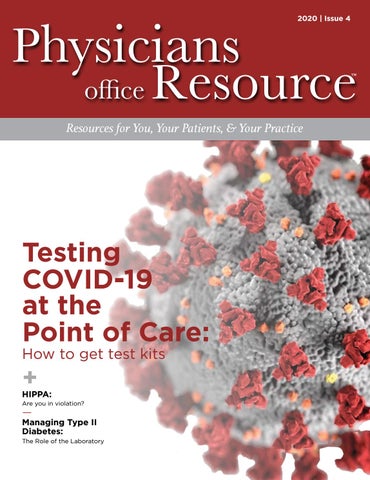
Physicians office Resource 2020 | Issue 4
™
Resources for You, Your Patients, & Your Practice
Testing COVID-19 at the Point of Care: How to get test kits
+
HIPPA: Are you in violation?
—
Managing Type II Diabetes: The Role of the Laboratory
PUBLISHED BY Medical Education Resources, LLC PUBLISHER Aaron R. Medaris amedaris@physiciansofficeresource.com
CEO Andrew C. Nimmo acnimmo@physiciansofficeresource.com
PRESIDENT John D. Pasquale jpasquale@pharmaconnect.com
Getting the most from this guide
BUSINESS MANAGER Marci J. Hills mhills@physiciansofficeresource.com
TRAVEL EDITOR Brandi L. Brower EDITORIAL BOARD Michael Paquin, FHIMSS Barry Craig, MLT (NCA), CLC STAFF WRITER Dylan J. Chadwick
There are two simple ways to request
CREATIVE DIRECTOR PRODUCTION MANAGER Jessica Peterson
information about the products and services
Copyright ©2020
found in Physicians Office Resource. 1. Go to www.PhysiciansOfficeResource.com and enter the four-digit reference number found next to the product or service into the search field, then request additional information, schedule a demo, or speak with a sales agent all with just a simple click of a button. 2. Find the Business Reply Card in this issue, circle the desired reference numbers, complete the form, and drop into any USPS mailbox. A representative will contact you as quickly as possible to answer your questions.
www.PhysiciansOfficeResource.com
2 | PHYSICIANS OFFICE RESOURCE
To continue your free subscription of Physicians Office Resource magazine, please fill out the Business Reply Card (BRC) located within this magazine and drop in any United States Post Office mailbox. If you are a manufacturer of medical products or provide services to medical professionals and would like to advertise your products or services to the nation’s top physicians doing in-office testing, call 801-380-6094 or visit: POR.io for more information.
NEW
TURN SMALL PLACES INTO SMART SPACES With reduced budgets, shrinking laboratory space and staffing challenges, many laboratories need a solution that lets them work smarter with less. The CELL-DYN Emerald 22 AL is a full performance, automated, optical 5-part differential analyzer that delivers smarter results for small to mid-size clinical laboratories with: • Compact design maximizes valuable laboratory space • Ease of use and walkaway functionality optimizes staff time • Smart open tube sample device ensures user safety
7900
41 cm
Visit www.corelaboratory.abbott/hematology to learn how the new CELL-DYN Emerald 22 AL can help your laboratory operate more efficiently. 50 cm
C HOOS E TRAN SF OR MATIO N
TM
Achieve measurably better healthcare performance.
CELL-DYN Emerald 22 AL is a Class 1 laser. For in vitro diagnostic only. Refer to the Operator’s Manual for operational precautions, limitations, and hazards. CELL-DYN Emerald and CHOOSE TRANSFORMATION are trademarks of Abbott Laboratories in various jurisdictions. CAUTION: United States Federal law restricts this device to sale and distribution by or on the order of a physician, or to a clinical laboratory. © 2019 Abbott Laboratories. ADD-00064842.
TABLE OF CONTENTS
8 COVID-19 Point of Care Tests COVID-19 testing has moved to the point of care. Learn how to get your test kits and what test options are best for your practice on pages 8 and 9.
14
HIPAA: Are you in violation?
HIPAA (Health Information Portability Accountability Act of 1996) is the privacy care act involving electronic transfer of records so that the identity of a patient remains unknown. It includes any electronic, written or oral transfer of information. When I was a kid, there was no such thing. As a grown-up medical professional, you are surrounded constantly by HIPAA. Charts are placed on doors, so the names are hidden, instead of names initials are used when referring to patients in clinical conferences, doors are shut while rounding in the hallways when the attending begins his usual discussions with residents and medical students. It is an excellent way of protecting patient ID. It can impede or delay more fruitful activities.
4 | PHYSICIANS OFFICE RESOURCE
20
Managing Type II Diabetes: The Role of the Laboratory
Diabetes is a worldwide epidemic. Its prevalence continues to rise globally at an average rate of 8.7 percent, and it currently affects 382 million of the world’s population. Significant increases in populations diagnosed with diabetes have been reported by many nations as their lifestyle and dietary norms evolve with globalization. The National Diabetes Statistical Report (2014) reported that in the United States alone, diabetes affects 29.1 million people, 8.1 million of whom are as-of-yet undiagnosed and untreated.  While people with diabetes make up 9.3 percent of the entire U.S. population, the Centers for Disease Control and Prevention (CDC) estimates that 86 million more people have some level of pre-diabetes.
Sniff
Streppy
Don’t be left out in the cold! OSOM® Ultra Flu and OSOM® Strep A Tests accurately diagnose in minutes allowing you to provide immediate treatment so patients are on the road to recovery.
7902
Ask us about diagnosing flu and strep throat using the OSOM® tests or visit us www.osomtests.com. Answers for Healthcare. Awesome...yes, OSOM®. 7901
For professional use by physicians and labs only.
Call 888-616-0537, Option 2, to learn more!
MADE IN THE USA
© 2020 Sekisui Diagnostics, LLC. All rights reserved. OSOM® is a registered U.S. trademark of Sekisui Diagnostics, LLC. Because every result matters™ is a trademark of Sekisui Diagnostics, LLC.
PRODUCT FOCUS
PENTRA XLR HEMATOLOGY ANALYZER WITH 5-PART DIFFERENTIAL
7903
From HORIBA Medical The Pentra XLR hematology analyzer with autoloader provides a CBC with 5-part Diff result using proprietary technology that ensures an accurate count and differential on the first run. The Pentra XLR also provides a complete menu of Retic parameters for treating oncology and anemia patients. The autoloader processes 80 samples an hour and provides random continuous access for mediumto high-volume clinics and rural or community hospitals.
View Brochures, Videos & More at POR.io Enter Number 7903 in the Search Area
MICROS HEMATOLOGY ANALYZER WITH 3-PART DIFFERENTIAL PLUS THE LITEDM
7904
From HORIBA Medical Is it viral or bacterial? A CBC with 3-part differential can provide the clues to help distinguish between viral and bacterial infections before you decide to treat. The Micros 60 Hematology analyzer provides a CBC with 3-part Diff result in less than 60 seconds using only 10 µL of sample. Connect to the LiteDM Patient Data Management System for an affordable way to consolidate patient results to one report.
View Brochures, Videos & More at POR.io Enter Number 7904 in the Search Area
7905
DRUGS OF ABUSE TESTING AND ROUTINE CHEMISTRY PANELS ON A SINGLE ANALYZER From Carolina Liquid Chemistries Carolina Liquid Chemistries Corp. announces the successful launch of Medica Corporation’s high-speed benchtop analyzer, the EasyRA®. The updated analyzer now operates at a photometric rate of up to 240 tests per hour or up to 480 tests per hour with ISE. The EasyRA urine drug screening and general chemistry reagents are CLIA categorized as moderately complex. This all-in-one system allows clinical laboratories to screen for drugs of abuse in urine while also allowing healthcare providers to assess routine chemistry panels on a single analyzer.
View Brochures, Videos & More at POR.io Enter Number 7905 in the Search Area
Learn more at www.AZEDRA.com
AZEDRAŽ is a registered trademark of Progenics Pharmaceuticals, Inc. Trademarks, registered or otherwise, are the property of their respective owner. Š 2019 Progenics Pharmaceuticals, Inc. PM-US-AZ-0140
FEATURE
COVID-19 TESTING AT THE POINT OF CARE BY AARON MEDARIS, PUBLISHER, PHYSICIANS OFFICE RESOURCE
COVID-19 needs no introduction. This virus, which is 1/1000th the size of a grain of sand, has singlehandedly bought countries, people and businesses to a complete stop. It fills our news feeds, our thoughts, and dictates our actions. We know that humans are resilient and that we will come out on top, but COVID-19 has brought change and heartbreak along the way. During this time of emergency, we express our sincerest praise to all of you who are constantly putting yourselves in harm’s way to serve and heal another. Up to this point, much of the screening for COVID-19 has taken place in hospitals and larger laboratories, but with the emergency situation that we have found ourselves in, COVID-19 testing has reached physician offices and urgent care centers. With this development questions from our community of POLs have come forth such as: • Are these FDA approved products? • What tests are available to a POL and how do they work? • How can a POL get access to COVID-19 rapid tests? We will address these main questions throughout the remainder of this article. Are these tests FDA approved? The first thing to be aware of is that these new rapid point of care tests are NOT FDA cleared or approved. However, these rapid tests have been authorized by the FDA under Emergency Use Authorization (EUA) for the detection of COVID-19. According to the FDA, “The EUA authority allows FDA to help strengthen the nation’s public health protections against CBRN threats by facilitating the availability and use of MCMs needed during public health emergencies.” Given our current situation and the inability for these tests to make it completely through the FDA’s approval process, manufacturers can create and validate their own COVID-19 tests based off of guidelines laid out by the FDA under the EUA. With that said, it is essential for purchasers of COVID-19 rapid tests to make sure they are obtaining them from a valid and reputable company. There have already been reports of false and ineffective COVID-19 rapid tests hitting the market. To help you access quality tests, we will mention a few companies who you can approach about COVID-19 rapid tests at the end of this article.
8 | PHYSICIANS OFFICE RESOURCE
What testing methods are available for COVID-19 at the point of care? IgG/IgM Rapid Screen Antibody Test Cassette There are several rapid testing methods for physician offices and urgent care centers. Probably the most available option is an IgG/IgM rapid screen antibody test cassette. IgG/IgM rapid test cassettes are a lateral flow chromatographic immunoassay for the qualitative detection of IgG and IgM antibodies in COVID-19 in human whole blood, serum or plasma specimen. Tests will most likely come with a cassette, a buffer, and a dropper. Test protocol is quite simple: • Collect the specimen • Use the provided dropper apply the specimen to the appropriate well on the cassette. • Immediately after, add the buffer to the buffer well. • Results should appear in about 10 to 15 minutes. These cassettes are quick and convenient, but please remember to purchase your tests from a reputable source. Some companies have taken advantage of the FDA’s EUA and not fully developed or tested their tests. Molecular Point-of-Care Tests Molecular point of care tests for the detection of COVID-19 will need diagnostic device or dock to run the test on. However, many POLs and urgent care centers may already have these molecular devices in place as they are used to run rapid flu, RSV and strep tests. If your facility doesn’t have one of these devices yet, you can reach out to companies such as Abbott and Sekisui Diagnostics to help you get set up. Here’s how these molecular devices work: • A sample is added to the device. • Chemical solutions splits open the virus releasing genetic material for the device to read. • Even if a small amount of COVID-19 is found in the sample, the molecular device is able to replicate the small section of the virus’ genetic material making it detectable. • These molecular tests provide results anywhere from 5 to 30 minutes.
How to access rapid COVID-19 Tests We’ve all heard the news about how COVID-19 tests are in short supply, and that may be an understatement. However, companies have been ramping up their efforts to supply testing kits. Abbott for example has ramped up their manufacturing efforts and plans on delivering 50,000 of their molecular tests per day. Other companies are following suit, and many have even made this test extremely affordable during this time of crisis. Here are reputable companies you can contact about obtaining rapid COVID-19 tests: Carolina Liquid Chemistries, offers the “AllTestTM” 2019-nCoV IgG/
IgM Rapid Screen Antibody Test Cassette. They can be reached at CarolinaChemistries.com or by calling 877-722-8910 Abbott, offers the new Abbott ID NOW COVID-10 test which runs on Abbott’s ID NOWTM molecular platform. For inquiries in to this test and device please visit abbott.com We hope that this brief article has helped bring some clarity to the questions which we have heard from you. If you have further questions please feel free to reach me directly at amedaris@physiciansofficeresource.com. I may not have all the answers for you, but hopefully I can point you in the right direction. Thank you again for your courage and service during this pandemic.
2020, ISSUE 4 | 9
The long-acting anti-CGRP injection with the option of dosing only 4 times a year1* To learn more, visit AJOVYhcp.com *”Long-acting” was defined as efficacy measured over a 12-week period following a 225 mg x 3 (675 mg) SQ dose.1
CGRP: calcitonin gene-related peptide; SQ: subcutaneous.
INDICATION
AJOVY is indicated for the preventive treatment of migraine in adults.
IMPORTANT SAFETY INFORMATION
Contraindications: AJOVY is contraindicated in patients with serious hypersensitivity to fremanezumab-vfrm or to any of the excipients. Hypersensitivity Reactions: Hypersensitivity reactions, including rash, pruritus, drug hypersensitivity, and urticaria were reported with AJOVY in clinical trials. Most reactions were mild to moderate, but some led to discontinuation or required corticosteroid treatment. Most reactions were reported from within hours to one month after administration. If a hypersensitivity reaction occurs, consider discontinuing AJOVY and institute appropriate therapy. Adverse Reactions: The most common adverse reactions (≥5% and greater than placebo) were injection site reactions. Please see the Brief Summary of the Prescribing Information on the adjacent page. Reference: 1. AJOVY® (fremanezumab-vfrm) injection Current Prescribing Information. North Wales, PA: Teva Pharmaceuticals USA, Inc. © 2020 Teva Pharmaceuticals USA, Inc. FRE-42502 March 2020
BRIEF SUMMARY OF PRESCRIBING INFORMATION FOR AJOVY® (fremanezumab-vfrm) injection, for subcutaneous use SEE PACKAGE INSERT FOR FULL PRESCRIBING INFORMATION 1 INDICATIONS AND USAGE AJOVY is indicated for the preventive treatment of migraine in adults. 2 DOSAGE AND ADMINISTRATION 2.1 Recommended Dosage Two subcutaneous dosing options of AJOVY are available to administer the recommended dosage: • 225 mg monthly, or • 675 mg every 3 months (quarterly), which is administered as three consecutive subcutaneous injections of 225 mg each. When switching dosage options, administer the first dose of the new regimen on the next scheduled date of administration. If a dose of AJOVY is missed, administer as soon as possible. Thereafter, AJOVY can be scheduled from the date of the last dose. Important Administration Instructions 2.2 AJOVY is for subcutaneous use only. AJOVY may be administered by healthcare professionals, patients, and/or caregivers. Prior to use, provide proper training to patients and/or caregivers on the preparation and administration of AJOVY prefilled syringe, including aseptic technique [see Instructions for Use in full Prescribing Information]: • Remove AJOVY from the refrigerator. Prior to use, allow AJOVY to sit at room temperature for 30 minutes protected from direct sunlight. Do not warm by using a heat source such as hot water or a microwave. Do not use AJOVY if it has been at room temperature for 24 hours or longer. • Follow aseptic injection technique every time AJOVY is administered. • Inspect AJOVY for particles or discoloration prior to administration. Do not use if the solution is cloudy, discolored, or contains particles. • Administer AJOVY by subcutaneous injection into areas of the abdomen, thigh, or upper arm that are not tender, bruised, red, or indurated. For multiple injections, you may use the same body site, but not the exact location of the previous injection. • Do not co-administer AJOVY with other injectable drugs at the same injection site. 4 CONTRAINDICATIONS AJOVY is contraindicated in patients with serious hypersensitivity to fremanezumabvfrm or to any of the excipients [see Warnings and Precautions (5.1)]. 5 WARNINGS AND PRECAUTIONS 5.1 Hypersensitivity Reactions Hypersensitivity reactions, including rash, pruritus, drug hypersensitivity, and urticaria, were reported with AJOVY in clinical trials. Most reactions were mild to moderate, but some led to discontinuation or required corticosteroid treatment. Most reactions were reported from within hours to one month after administration. If a hypersensitivity reaction occurs, consider discontinuing AJOVY, and institute appropriate therapy. 6 ADVERSE REACTIONS The following clinically significant adverse reactions are discussed in greater detail in other sections of the labeling: • Hypersensitivity Reactions [see Warnings and Precautions (5.1)] 6.1 Clinical Trials Experience Because clinical trials are conducted under widely varying conditions, adverse reaction rates observed in the clinical trials of a drug cannot be directly compared to rates in the clinical trials of another drug, and may not reflect the rates observed in clinical practice. The safety of AJOVY was evaluated in 2512 patients with migraine who received at least 1 dose of AJOVY, representing 1279 patient-years of exposure. Of these, 1730 patients were exposed to AJOVY 225 mg monthly or AJOVY 675 mg quarterly for at least 6 months, 775 patients for at least 12 months, and 138 patients for at least 15 months. In placebo-controlled clinical trials (Studies 1 and 2), 662 patients received AJOVY 225 mg monthly for 12 weeks (with or without a loading dose of 675 mg), and 663 patients received AJOVY 675 mg quarterly for 12 weeks. In the controlled trials, 87% of patients were female, 80% were White, and the mean age was 41 years. The most common adverse reactions in the clinical trials for the preventive treatment of migraine (incidence at least 5% and greater than placebo) were injection site reactions. The adverse reactions that most commonly led to discontinuations were injection site reactions (1%). Table 1 summarizes adverse reactions reported in the 3-month placebo-controlled studies (Study 1 and Study 2), and the 1-month follow-up period after those studies. Table 1: Adverse Reactions Occurring with an Incidence of At Least 2% for Either Dosing Regimen of AJOVY and At Least 2% Greater Than Placebo in Studies 1 and 2 Placebo AJOVY AJOVY Monthly 225 mg Monthly 675 mg Quarterly (n=668) (n=667) (n=290) % % % Injection site reactionsa 43 45 38 a Injection site reactions include multiple related adverse event terms, such as injection site pain, induration, and erythema. Adverse Reaction
AJOVY® (fremanezumab-vfrm) injection 6.2 Immunogenicity As with all therapeutic proteins, there is a potential for immunogenicity. The detection of antibody formation is highly dependent on sensitivity and specificity of the assay. Additionally, the observed incidence of antibody (including neutralizing antibody) positivity in an assay may be influenced by several factors, including assay methodology, sample handling, timing of sample collection, concomitant medications, and underlying disease. For these reasons, comparison of the incidence of antibodies to fremanezumab-vfrm in the studies described below with the incidence of antibodies in other studies to other products may be misleading. Clinical immunogenicity of AJOVY was monitored by analyzing anti-drug antibodies (ADA) and neutralizing antibodies in drug-treated patients. The data reflect the percentage of patients whose test results were positive for antibodies to AJOVY in specific assays. In 3-month placebo-controlled studies, treatment-emergent ADA responses were observed in 6 out of 1701 (0.4%) AJOVY-treated patients. One of the 6 patients developed anti-AJOVY neutralizing antibodies at Day 84. In the ongoing long-term open-label study, ADA were detected in 1.6% of patients (30 out of 1888). Out of 30 ADA-positive patients, 17 had a neutralizing activity in their post-dose samples. Although these data do not demonstrate an impact of antifremanezumab-vfrm antibody development on the efficacy or safety of AJOVY in these patients, the available data are too limited to make definitive conclusions. 8 USE IN SPECIFIC POPULATIONS 8.1 Pregnancy Risk Summary There are no adequate data on the developmental risk associated with the use of AJOVY in pregnant women. AJOVY has a long half-life. This should be taken into consideration for women who are pregnant or plan to become pregnant while using AJOVY. Administration of fremanezumab-vfrm to rats and rabbits during the period of organogenesis or to rats throughout pregnancy and lactation at doses resulting in plasma levels greater than those expected clinically did not result in adverse effects on development [see Animal Data]. In the U.S. general population, the estimated background risk of major birth defects and miscarriage in clinically recognized pregnancies is 2-4% and 15-20%, respectively. The estimated rate of major birth defects (2.2-2.9%) and miscarriage (17%) among deliveries to women with migraine are similar to rates reported in women without migraine. Clinical Considerations Disease-Associated Maternal and/or Embryo/Fetal Risk Published data have suggested that women with migraine may be at increased risk of preeclampsia and gestational hypertension during pregnancy. Data Animal Data When fremanezumab-vfrm (0, 50, 100, or 200 mg/kg) was administered to male and female rats by weekly subcutaneous injection prior to and during mating and continuing in females throughout organogenesis, no adverse embryofetal effects were observed. The highest dose tested was associated with plasma exposures (AUC) approximately 2 times that in humans at a dose of 675 mg. Administration of fremanezumab-vfrm (0, 10, 50, or 100 mg/kg) weekly by subcutaneous injection to pregnant rabbits throughout the period of organogenesis produced no adverse effects on embryofetal development. The highest dose tested was associated with plasma AUC approximately 3 times that in humans (675 mg). Administration of fremanezumab-vfrm (0, 50, 100, or 200 mg/kg) weekly by subcutaneous injection to female rats throughout pregnancy and lactation resulted in no adverse effects on pre- and postnatal development. The highest dose tested was associated with plasma AUC approximately 2 times that in humans (675 mg). 8.2 Lactation Risk Summary There are no data on the presence of fremanezumab-vfrm in human milk, the effects on the breastfed infant, or the effects on milk production. The developmental and health benefits of breastfeeding should be considered along with the mother’s clinical need for AJOVY and any potential adverse effects on the breastfed infant from AJOVY or from the underlying maternal condition. 8.4 Pediatric Use Safety and effectiveness in pediatric patients have not been established. 8.5 Geriatric Use Clinical studies of AJOVY did not include sufficient numbers of subjects aged 65 and over to determine whether they respond differently from younger subjects. Manufactured by: Teva Pharmaceuticals USA, Inc. North Wales, PA 19454 US License No. 2016 ©2020 Teva Pharmaceuticals USA, Inc. This Brief Summary is based on the full Prescribing Information for AJOVY AJO-004.
FRE-42210
February 2020
PRODUCT FOCUS
PENTRA 60 C+ HEMATOLOGY ANALYZER WITH 5-PART DIFFERENTIAL
7906
From HORIBA Medical Now you can have the same results hospitals and reference labs provide in a small, benchtop analyzer. The Pentra 60 C+ hematology analyzer provides a CBC with 5-part differential result using proprietary technology that ensures an accurate count and differential on the first run. Reduce repeats and reflex to the microscope with Pentra hematology technology.
View Brochures, Videos & More at POR.io Enter Number 7906 in the Search Area
MINÍÍMIZE THE HASSLE OF ESR TESTING IN YOUR LAB
7907
From ALCOR Scientific miniiSED™ is the newest of the iSED® family of ESR analyzers from ALCOR Scientific. The miniiSED™ measurement of ESR is accurate and unaffected by variables associated with traditional methodologies, such as hematocrit. This single position, fully automated ESR analyzer works directly from primary EDTA tubes, requires 100 μL of sample, has an internal barcode reader, and produces results in 15 seconds! miniiSED™ is the ideal solution to ESR testing for small laboratories, POL’s, and emergency clinics. Proudly manufactured in the USA.
View Brochures, Videos & More at POR.io Enter Number 7907 in the Search Area
MICROS ES 60 HEMATOLOGY ANALYZER WITH 3-PART DIFFERENTIAL From HORIBA Medical
7908
Simple to use and easy to maintain with a zero maintenance concept, the Micros ES 60 is a small tabletop hematology analyzer with an integrated data management system. The analyzer provides a CBC with 3-part differential result in less than 60 seconds using only 10 µL of sample. Connect to the LiteDM Patient Data Management System for an affordable way to consolidate patient results to one report. —
View Brochures, Videos & More at POR.io Enter Number 7908 in the Search Area
12 | PHYSICIANS OFFICE RESOURCE
7909
7911
Bionet CardioCare 2000: $1,255.00 Schiller AT-2 Plus: $2,275.00* *add Spirometry: $1,000.00 Burdick ELI 250c: $3,422.00 Welch Allyn CP150 w/ Interp: $3,258.00
The Adview 2 is still the only truly modular diagnostic station that grows with your needs. Start with blood pressure and choose temperature or pulse oximetry option at the time of 7910 purchase.
7912
7914
7913
7915
Coaxial Ophth, Fiber Optic Oto, Speucla Dispenser, Aneroid BP, Wall Transformer and Wall Board without Thermometer: $979.00 with Thermometer: $1,416.00 7917
7919
7920
7916
7918
FEATURE
HIPAA: ARE YOU IN VIOLATION? BY VIRGINIA THORNLEY, MD HIPAA (Health Information Portability Accountability Act of 1996) is the privacy care act involving electronic transfer of records so that the identity of a patient remains unknown. It includes any electronic, written or oral transfer of information. When I was a kid, there was no such thing. As a grown-up medical professional, you are surrounded constantly by HIPAA. Charts are placed on doors, so the names are hidden, instead of names initials are used when referring to patients in clinical conferences, doors are shut while rounding in the hallways when the attending begins his usual discussions with residents and medical students. It is an excellent way of protecting patient ID. It can impede or delay more fruitful activities. It can also be a bit murky so when in doubt sometimes it is better to remain mum. If the good intentions behind the act don’t convince you perhaps the penalties will. Penalties are hefty and can be up to $25,000 for a violation, maximal at $50,000 or 1 year of imprisonment depending on the severity of the offense. Sometimes when you are rounding, and there is only a curtain that serves as a partition between two patients how does one get around it? Does it violate HIPAA when discussing someone’s care when you 14 | PHYSICIANS OFFICE RESOURCE
are clearly within earshot of someone else? Technically speaking, yes it does. Do authorities turn a blind eye? Of course, they do. Unless a quarter of a million health care facilities remodel their patient rooms, you can’t get around not speaking about someone’s case in earshot of other people. Most rounds occur in the morning outside of visiting hours. But sometimes you have to round in the afternoon, and by then you are greeted by a room filled with people. So, in this case, HIPAA seems more of a formality but something you try to do even when it is impossible in this set-up. At least, giving the illusion of protecting privacy by drawing the flimsy curtain even though everyone inside the room can hear you appear sufficient. HIPAA violation: technically yes, but authorities turn a blind eye because you have to do your job and there’s no way around it so in reality no. They say so long as patient identifiers are left out you act in accordance with HIPAA. One morning as a fresh brand new attending trying to get my job done and living the urban life I inadvertently had to get some information while riding on the bus. It was very noisy I tried my best not to mention names but couldn’t hear clearly so asked my colleague to repeat some statements. As luck would have it, I was
“Even if it means displeasing colleagues for a few days, protect your patients’ privacy and protect your unblemished name.” sitting across from someone who worked in a hospital. She corrected me that I was violating HIPAA. I wracked my brains trying to recall my conversation, did I mention any names? Although names are identifiers, if you are discussing information or even writing about a previous case in a novel, if someone is still identifiable that is a violation of HIPAA. I swore to myself never again will I allow myself to be put in that position again. HIPAA violation: yes, because someone might still be able to identify that person hearing the information. Going down an elevator, physicians are always reminded not to discuss care even without patient identifiers. A few years after this incident above, a colleague started to ask questions about a common case we shared in the elevator. Alarm bells were ringing in my head recalling a past incident of HIPAA mainly my bus event. The hardest lessons sting so you never forget. So, I tried to courteously avert the discussion because of HIPAA. He countered that he did not mention any names none too pleased. But if the information is presented in such a way one can identify a patient, this is in violation of HIPAA. I wasn’t about to go down that rabbit hole again. So, I acted in accordance with HIPAA and waited until we both got off. My colleague eventually got over it, and we were collegially nodding at each other in the hallways again after a few weeks. HIPAA violation: yes. Some
say no but in reality, it’s yes because someone can still be identifiable through the information. Even if it means displeasing colleagues for a few days, protect your patients’ privacy and protect your unblemished name. Many physicians write on the side as an outlet including novels and health blogs. Usually one draws on one’s work life experience to describe characters in a book or relay an interesting tale. However, even without mentioning names one must keep in mind if a patient can identify themselves in what you write about this may be a violation of HIPAA. HIPAA violation: potentially yes if someone can identify it is them and prove it. So, technically yes but proving it would be difficult. Best bet is to change as many demographics as possible and even details, so the person is completely unrecognizable. Most people working in the health care field are well-intentioned, but even if you are unknowing of all the nuances of HIPAA, it might be better to stay mum or ensure you keep discussions private in a room with a closed door. Virginia Thornley, M.D. is a Neurologist and Epileptologist in private practice who blogs at Neurologybuzz.com 2020, ISSUE 4 | 15
For adult patients with type 2 diabetes, treated with diet and exercise
Choose Ozempic® as your first injectable— the only once-weekly GLP-1 RA with superior results vs Trulicity ®1,2
SUPERIOR GLYCEMIC CONTROL
SUPERIOR WEIGHT REDUCTION Ozempic® is not indicated for weight loss.
CV SAFETY as evaluated in a 2-year CVOT.2 Ozempic® is not indicated for reduction in major adverse CV events (MACE). SUSTAIN 6: A 2-year, randomized, multinational, double-blind, placebo-controlled, parallel-group CV safety trial that was designed to assess noninferiority of Ozempic® vs standard of care by excluding the preapproval noninferiority margin of 1.8. A total of 3297 adult patients with type 2 diabetes and high risk of CV events were randomized based on evidence of CV disease, insulin treatment, and renal impairment to once-weekly Ozempic® 0.5 mg (n=826), Ozempic® 1 mg (n=822), or placebo (n=1649) in addition to standard of care treatments such as oral antidiabetic treatments, insulin, antihypertensives, diuretics, lipid-lowering therapies, and antithrombotic medication at investigator discretion. The primary composite endpoint was the time from randomization to first occurrence of a MACE, defined as CV death, nonfatal myocardial infarction, or nonfatal stroke.3
Indication and Limitations of Use
Ozempic® (semaglutide) injection 0.5 mg or 1 mg is indicated as an adjunct to diet and exercise to improve glycemic control in adults with type 2 diabetes mellitus. • Ozempic® is not recommended as a first-line therapy for patients who have inadequate glycemic control on diet and exercise because of the uncertain relevance of rodent C-cell tumor findings to humans. • Ozempic® has not been studied in patients with a history of pancreatitis. Consider other antidiabetic therapies in patients with a history of pancreatitis. • Ozempic® is not a substitute for insulin. Ozempic® is not indicated for use in patients with type 1 diabetes mellitus or for the treatment of patients with diabetic ketoacidosis.
Important Safety Information WARNING: RISK OF THYROID C-CELL TUMORS • In rodents, semaglutide causes dose-dependent and treatment-durationdependent thyroid C-cell tumors at clinically relevant exposures. It is unknown whether Ozempic® causes thyroid C-cell tumors, including medullary thyroid carcinoma (MTC), in humans as human relevance of semaglutide-induced rodent thyroid C-cell tumors has not been determined. • Ozempic® is contraindicated in patients with a personal or family history of MTC and in patients with Multiple Endocrine Neoplasia syndrome type 2 (MEN 2). Counsel patients regarding the potential risk for MTC with the use of Ozempic® and inform them of symptoms of thyroid tumors (e.g. a mass in the neck, dysphagia, dyspnea, persistent hoarseness). Routine monitoring of serum calcitonin or using thyroid ultrasound is of uncertain value for early detection of MTC in patients treated with Ozempic®.
Contraindications • Ozempic® is contraindicated in patients with a personal or family history of MTC or in patients with MEN 2, and in patients with known hypersensitivity to semaglutide or to any of the product components. Warnings and Precautions • Risk of Thyroid C-Cell Tumors: Patients should be referred to an endocrinologist for further evaluation if serum calcitonin is measured and found to be elevated or thyroid nodules are noted on physical examination or neck imaging. • Pancreatitis: Acute and chronic pancreatitis have been reported in clinical studies. Observe patients carefully for signs and symptoms of pancreatitis (persistent severe abdominal pain, sometimes radiating to the back with or without vomiting). If pancreatitis is suspected, discontinue Ozempic ® promptly, and if pancreatitis is confirmed, do not restart. • Diabetic Retinopathy Complications: In a 2-year trial involving patients with type 2 diabetes and high cardiovascular risk, more events of diabetic retinopathy complications occurred in patients treated with Ozempic® (3.0%) compared to placebo (1.8%). The absolute risk increase for diabetic retinopathy complications was larger among patients with a history of diabetic retinopathy at baseline than among patients without a known history of diabetic retinopathy. Rapid improvement in glucose control has been associated with a temporary worsening of diabetic retinopathy. The effect of long-term glycemic control with semaglutide on diabetic retinopathy complications has not been studied. Patients with a history of diabetic retinopathy should be monitored for progression of diabetic retinopathy.
Ozempic ® is a registered trademark of Novo Nordisk A/S. Novo Nordisk is a registered trademark of Novo Nordisk A/S. All other trademarks, registered or unregistered, are the property of their respective owners. © 2019 Novo Nordisk Printed in the U.S.A. US19OZM00110 March 2019
In a 40-week trial, in patients on metformin, for each dose comparison
Ozempic® outperformed Trulicity® in reducing A1C1
Secondary endpoint
Ozempic® demonstrated superior body weight reduction vs Trulicity®1 Ozempic® is not indicated for weight loss.
SUSTAIN 7: A 40-week, multinational, multicenter, randomized, open-label, four-armed, pair-wise, active-controlled, parallel-group trial to compare the efficacy and safety of Ozempic® vs dulaglutide. A total of 1201 adult patients with type 2 diabetes inadequately controlled on metformin were randomized to receive Ozempic® 0.5 mg (n=301), Ozempic® 1 mg (n=300), dulaglutide 0.75 mg (n=299), or dulaglutide 1.5 mg (n=299) once weekly. The primary endpoint was mean change in A1C from baseline at Week 40. Secondary endpoints included mean change in body weight at Week 40 and proportion of patients achieving A1C <7% at Week 40. Results based on a sensitivity analysis of retrieved dropout population.1
Learn more about Ozempic® and the CVOT at OzempicPro.com. • Never Share an Ozempic® Pen Between Patients: Ozempic® pens must never be shared between patients, even if the needle is changed. Pen-sharing poses a risk for transmission of blood-borne pathogens. • Hypoglycemia: The risk of hypoglycemia is increased when Ozempic® is used in combination with insulin secretagogues (e.g., sulfonylureas) or insulin. • Acute Kidney Injury: There have been postmarketing reports of acute kidney injury and worsening of chronic renal failure, which may sometimes require hemodialysis, in patients treated with GLP-1 receptor agonists. Some of these events have been reported in patients without known underlying renal disease. A majority of the reported events occurred in patients who had experienced nausea, vomiting, diarrhea, or dehydration. Monitor renal function when initiating or escalating doses of Ozempic® in patients reporting severe adverse gastrointestinal reactions. • Hypersensitivity: Serious hypersensitivity reactions (e.g., anaphylaxis, angioedema) have been reported with GLP-1 receptor agonists. If hypersensitivity reactions occur, discontinue use of Ozempic®; treat promptly per standard of care, and monitor until signs and symptoms resolve. Use caution in a patient with a history of angioedema or anaphylaxis with another GLP-1 receptor agonist. • Macrovascular Outcomes: There have been no clinical studies establishing conclusive evidence of macrovascular risk reduction with Ozempic®. Adverse Reactions • The most common adverse reactions, reported in ≥5% of patients treated with Ozempic® are nausea, vomiting, diarrhea, abdominal pain, and constipation.
Drug Interactions • The risk of hypoglycemia may be lowered by a reduction in the dose of the secretagogue or insulin. • Ozempic® causes a delay of gastric emptying and has the potential to impact the absorption of concomitantly administered oral medications, so caution should be exercised. Use in Specific Populations • There are limited data with semaglutide use in pregnant women to inform a drug-associated risk for adverse developmental outcomes. Discontinue Ozempic® in women at least 2 months before a planned pregnancy due to the long washout period for semaglutide.
Please see Brief Summary of Prescribing Information on following pages. GLP-1 RA=glucagon-like peptide-1 receptor agonist; CV=cardiovascular; CVOT=cardiovascular outcomes trial; ETD=estimated treatment difference; CI=confidence interval.
References: 1. Pratley RE, Aroda VR, Lingvay I, et al. Semaglutide versus dulaglutide once weekly in patients with type 2 diabetes (SUSTAIN 7): a randomised, open-label, phase 3b trial. Lancet Diabetes Endocrinol. 2018;6(4):275-286. 2. Ozempic [package insert]. Plainsboro, NJ: Novo Nordisk Inc; 2017. 3. Marso SP, Bain SC, Consoli A, et al. Semaglutide and cardiovascular outcomes in patients with type 2 diabetes. N Engl J Med. 2016;375(19):1834-1844.
OZEMPIC ® (semaglutide) injection Rx Only BRIEF SUMMARY: Please consult package insert for full prescribing information. WARNING: RISK OF THYROID C-CELL TUMORS: In rodents, semaglutide causes dose-dependent and treatment-duration-dependent thyroid C-cell tumors at clinically relevant exposures. It is unknown whether OZEMPIC ® causes thyroid C-cell tumors, including medullary thyroid carcinoma (MTC), in humans as human relevance of semaglutideinduced rodent thyroid C-cell tumors has not been determined [see Warnings and Precautions]. OZEMPIC® is contraindicated in patients with a personal or family history of MTC or in patients with Multiple Endocrine Neoplasia syndrome type 2 (MEN 2) [see Contraindications]. Counsel patients regarding the potential risk for MTC with the use of OZEMPIC ® and inform them of symptoms of thyroid tumors (e.g. a mass in the neck, dysphagia, dyspnea, persistent hoarseness). Routine monitoring of serum calcitonin or using thyroid ultrasound is of uncertain value for early detection of MTC in patients treated with OZEMPIC ® [see Contraindications and Warnings and Precautions]. INDICATIONS AND USAGE: OZEMPIC® is indicated as an adjunct to diet and exercise to improve glycemic control in adults with type 2 diabetes mellitus. Limitations of Use: OZEMPIC® is not recommended as a first-line therapy for patients who have inadequate glycemic control on diet and exercise because of the uncertain relevance of rodent C-cell tumor findings to humans [see Warnings and Precautions]. OZEMPIC® has not been studied in patients with a history of pancreatitis. Consider other antidiabetic therapies in patients with a history of pancreatitis [see Warnings and Precautions]. OZEMPIC® is not a substitute for insulin. OZEMPIC® is not indicated for use in patients with type 1 diabetes mellitus or for the treatment of patients with diabetic ketoacidosis, as it would not be effective in these settings. CONTRAINDICATIONS: OZEMPIC® is contraindicated in patients with: A personal or family history of medullary thyroid carcinoma (MTC) or in patients with Multiple Endocrine Neoplasia syndrome type 2 (MEN 2) [see Warnings and Precautions]; Known hypersensitivity to semaglutide or to any of the product components [see Warnings and Precautions]. WARNINGS AND PRECAUTIONS: Risk of Thyroid C-Cell Tumors: In mice and rats, semaglutide caused a dose-dependent and treatment-duration-dependent increase in the incidence of thyroid C-cell tumors (adenomas and carcinomas) after lifetime exposure at clinically relevant plasma exposures. It is unknown whether OZEMPIC® causes thyroid C-cell tumors, including medullary thyroid carcinoma (MTC), in humans as human relevance of semaglutide-induced rodent thyroid C-cell tumors has not been determined. Cases of MTC in patients treated with liraglutide, another GLP-1 receptor agonist, have been reported in the postmarketing period; the data in these reports are insufficient to establish or exclude a causal relationship between MTC and GLP-1 receptor agonist use in humans. OZEMPIC® is contraindicated in patients with a personal or family history of MTC or in patients with MEN 2. Counsel patients regarding the potential risk for MTC with the use of OZEMPIC® and inform them of symptoms of thyroid tumors (e.g. a mass in the neck, dysphagia, dyspnea, persistent hoarseness). Routine monitoring of serum calcitonin or using thyroid ultrasound is of uncertain value for early detection of MTC in patients treated with OZEMPIC®. Such monitoring may increase the risk of unnecessary procedures, due to the low test specificity for serum calcitonin and a high background incidence of thyroid disease. Significantly elevated serum calcitonin value may indicate MTC and patients with MTC usually have calcitonin values >50 ng/L. If serum calcitonin is measured and found to be elevated, the patient should be further evaluated. Patients with thyroid nodules noted on physical examination or neck imaging should also be further evaluated. Pancreatitis: In glycemic control trials, acute pancreatitis was confirmed by adjudication in 7 OZEMPIC®-treated patients (0.3 cases per 100 patient years) versus 3 in comparator-treated patients (0.2 cases per 100 patient years). One case of chronic pancreatitis was confirmed in an OZEMPIC®treated patient. In a 2-year trial, acute pancreatitis was confirmed by adjudication in 8 OZEMPIC®-treated patients (0.27 cases per 100 patient years) and 10 placebo-treated patients (0.33 cases per 100 patient years), both on a background of standard of care. After initiation of OZEMPIC®, observe patients carefully for signs and symptoms of pancreatitis (including persistent severe abdominal pain, sometimes radiating to the back and which may or may not be accompanied by vomiting). If pancreatitis is suspected, OZEMPIC® should be discontinued and appropriate management initiated; if confirmed, OZEMPIC® should not be restarted. Diabetic Retinopathy Complications: In a 2-year trial involving patients with type 2 diabetes and high cardiovascular risk, more events of diabetic retinopathy complications occurred in patients treated with OZEMPIC® (3.0%) compared to placebo (1.8%). The absolute risk increase for diabetic retinopathy complications was larger among patients with a history of diabetic retinopathy at baseline (OZEMPIC® 8.2%, placebo 5.2%) than among patients without a known history of diabetic retinopathy (OZEMPIC ® 0.7%, placebo 0.4%). Rapid improvement in glucose control has been associated with a temporary worsening of diabetic retinopathy. The effect of long-term glycemic control with semaglutide on diabetic retinopathy complications has not been studied. Patients with a history of diabetic retinopathy should be monitored for progression of diabetic retinopathy. Never Share an OZEMPIC® Pen Between Patients: OZEMPIC® pens must never be shared between patients, even if the needle is changed. Pensharing poses a risk for transmission of blood-borne pathogens. Hypoglycemia with Concomitant Use of Insulin Secretagogues or Insulin: The risk of hypoglycemia is increased when OZEMPIC® is used in combination with insulin
secretagogues (e.g., sulfonylureas) or insulin. Patients may require a lower dose of the secretagogue or insulin to reduce the risk of hypoglycemia in this setting [see Adverse Reactions, Drug Interactions]. Acute Kidney Injury: There have been postmarketing reports of acute kidney injury and worsening of chronic renal failure, which may sometimes require hemodialysis, in patients treated with GLP-1 receptor agonists. Some of these events have been reported in patients without known underlying renal disease. A majority of the reported events occurred in patients who had experienced nausea, vomiting, diarrhea, or dehydration. Monitor renal function when initiating or escalating doses of OZEMPIC® in patients reporting severe adverse gastrointestinal reactions. Hypersensitivity: Serious hypersensitivity reactions (e.g., anaphylaxis, angioedema) have been reported with GLP-1 receptor agonists. If hypersensitivity reactions occur, discontinue use of OZEMPIC®; treat promptly per standard of care, and monitor until signs and symptoms resolve. Do not use in patients with a previous hypersensitivity to OZEMPIC® [see Contraindications]. Anaphylaxis and angioedema have been reported with other GLP-1 receptor agonists. Use caution in a patient with a history of angioedema or anaphylaxis with another GLP-1 receptor agonist because it is unknown whether such patients will be predisposed to anaphylaxis with OZEMPIC®. Macrovascular Outcomes: There have been no clinical studies establishing conclusive evidence of macrovascular risk reduction with OZEMPIC®. ADVERSE REACTIONS: The following serious adverse reactions are described below or elsewhere in the prescribing information: Risk of Thyroid C-cell Tumors [see Warnings and Precautions]; Pancreatitis [see Warnings and Precautions]; Diabetic Retinopathy Complications [see Warnings and Precautions]; Hypoglycemia with Concomitant Use of Insulin Secretagogues or Insulin [see Warnings and Precautions]; Acute Kidney Injury [see Warnings and Precautions]; Hypersensitivity [see Warnings and Precautions]. Clinical Trials Experience: Because clinical trials are conducted under widely varying conditions, adverse reaction rates observed in the clinical trials of a drug cannot be directly compared to rates in the clinical trials of another drug and may not reflect the rates observed in practice. Pool of Placebo-Controlled Trials: The data in Table 1 are derived from 2 placebo-controlled trials (1 monotherapy trial and 1 trial in combination with basal insulin) in patients with type 2 diabetes. These data reflect exposure of 521 patients to OZEMPIC® and a mean duration of exposure to OZEMPIC® of 32.9 weeks. Across the treatment arms, the mean age of patients was 56 years, 3.4% were 75 years or older and 55% were male. In these trials 71% were White, 7% were Black or African American, and 19% were Asian; 21% identified as Hispanic or Latino ethnicity. At baseline, patients had type 2 diabetes for an average of 8.8 years and had a mean HbA1c of 8.2%. At baseline, 8.9% of the population reported retinopathy. Baseline estimated renal function was normal (eGFR ≥90 mL/ min/1.73m2) in 57.2%, mildly impaired (eGFR 60 to 90 mL/min/1.73m2) in 35.9% and moderately impaired (eGFR 30 to 60 mL/min/1.73m2) in 6.9% of patients. Pool of Placebo- and Active-Controlled Trials: The occurrence of adverse reactions was also evaluated in a larger pool of patients with type 2 diabetes participating in 7 placebo- and active-controlled glycemic control trials including two trials in Japanese patients evaluating the use of OZEMPIC® as monotherapy and add-on therapy to oral medications or insulin. In this pool, a total of 3150 patients with type 2 diabetes were treated with OZEMPIC® for a mean duration of 44.9 weeks. Across the treatment arms, the mean age of patients was 57 years, 3.2% were 75 years or older and 57% were male. In these trials, 60% were White, 6% were Black or African American, and 31% were Asian; 16% identified as Hispanic or Latino ethnicity. At baseline, patients had type 2 diabetes for an average of 8.2 years and had a mean HbA1c of 8.2%. At baseline, 7.8% of the population reported retinopathy. Baseline estimated renal function was normal (eGFR ≥90 mL/min/1.73m2) in 63.1%, mildly impaired (eGFR 60 to 90 mL/ min/1.73m2) in 34.3%, and moderately impaired (eGFR 30 to 60 mL/min/1.73m2) in 2.5% of the patients. Common Adverse Reactions: Table 1 shows common adverse reactions, excluding hypoglycemia, associated with the use of OZEMPIC® in the pool of placebo-controlled trials. These adverse reactions occurred more commonly on OZEMPIC® than on placebo, and occurred in at least 5% of patients treated with OZEMPIC®. Table 1. Adverse Reactions in Placebo-Controlled Trials Reported in ≥5% of OZEMPIC ®-Treated Patients with Type 2 Diabetes Mellitus Placebo OZEMPIC® 0.5 mg OZEMPIC® 1 mg Adverse Reaction (N=262) % (N=260) % (N=261) % Nausea 6.1 15.8 20.3 Vomiting 2.3 5.0 9.2 Diarrhea 1.9 8.5 8.8 Abdominal pain 4.6 7.3 5.7 Constipation 1.5 5.0 3.1 In the pool of placebo- and active-controlled trials and in the 2-year cardiovascular outcomes trial, the types and frequency of common adverse reactions, excluding hypoglycemia, were similar to those listed in Table 1. Gastrointestinal Adverse Reactions: In the pool of placebo-controlled trials, gastrointestinal adverse reactions occurred more frequently among patients receiving OZEMPIC® than placebo (placebo 15.3%, OZEMPIC® 0.5 mg 32.7%, OZEMPIC® 1 mg 36.4%). The majority of reports of nausea, vomiting, and/or diarrhea occurred during dose escalation. More patients receiving OZEMPIC® 0.5 mg (3.1%) and OZEMPIC® 1 mg (3.8%) discontinued treatment due to gastrointestinal adverse reactions than patients receiving placebo (0.4%). In addition to the reactions in Table 1, the following gastrointestinal adverse reactions with a frequency of <5% were associated with OZEMPIC® (frequencies listed, respectively, as: placebo; 0.5 mg; 1 mg): dyspepsia (1.9%, 3.5%, 2.7%), eructation (0%, 2.7%, 1.1%), flatulence (0.8%, 0.4%, 1.5%), gastroesophageal reflux disease (0%, 1.9%, 1.5%), and gastritis (0.8%, 0.8%, 0.4%). Other Adverse Reactions: Hypoglycemia: Table 2 summarizes the incidence of events related to
hypoglycemia by various definitions in the placebo-controlled trials. Table 2. Hypoglycemia Adverse Reactions in Placebo-Controlled Trials In Patients with Type 2 Diabetes Mellitus OZEMPIC® OZEMPIC® Placebo 0.5 mg 1 mg Monotherapy (30 weeks) N=129 N=127 N=130 0% 0% 0% Severe† Documented symptomatic (≤70 mg/dL glucose 0% 1.6% 3.8% threshold) Severe† or Blood Glucose Confirmed Symptomatic 1.6% 0% 0% (≤56 mg/dL glucose threshold) Add-on to Basal Insulin with or without Metformin (30 weeks) N=132 N=132 N=131 0% 0% 1.5% Severe† Documented symptomatic (≤70 mg/dL glucose 15.2% 16.7% 29.8% threshold) Severe† or Blood Glucose Confirmed Symptomatic 5.3% 8.3% 10.7% (≤56 mg/dL glucose threshold) †
“Severe” hypoglycemia adverse reactions are episodes requiring the assistance of another person.
Hypoglycemia was more frequent when OZEMPIC® was used in combination with a sulfonylurea [see Warnings and Precautions]. Severe hypoglycemia occurred in 0.8% and 1.2% of patients when OZEMPIC® 0.5 mg and 1 mg, respectively, was co-administered with a sulfonylurea. Documented symptomatic hypoglycemia occurred in 17.3% and 24.4% of patients when OZEMPIC® 0.5 mg and 1 mg, respectively, was co-administered with a sulfonylurea. Severe or blood glucose confirmed symptomatic hypoglycemia occurred in 6.5% and 10.4% of patients when OZEMPIC® 0.5 mg and 1 mg, respectively, was co-administered with a sulfonylurea. Injection Site Reactions: In placebo-controlled trials, injection site reactions (e.g., injection-site discomfort, erythema) were reported in 0.2% of OZEMPIC®-treated patients. Increases in Amylase and Lipase: In placebo-controlled trials, patients exposed to OZEMPIC® had a mean increase from baseline in amylase of 13% and lipase of 22%. These changes were not observed in placebo-treated patients. Cholelithiasis: In placebo-controlled trials, cholelithiasis was reported in 1.5% and 0.4% of patients-treated with OZEMPIC® 0.5 mg and 1 mg, respectively. Cholelithiasis was not reported in placebo-treated patients. Increases in Heart Rate: In placebo-controlled trials, OZEMPIC® 0.5 mg and 1 mg resulted in a mean increase in heart rate of 2 to 3 beats per minute. There was a mean decrease in heart rate of 0.3 beats per minute in placebo-treated patients. Fatigue, Dysgeusia and Dizziness: Other adverse reactions with a frequency of >0.4% were associated with OZEMPIC® include fatigue, dysgeusia and dizziness. Immunogenicity: Consistent with the potentially immunogenic properties of protein and peptide pharmaceuticals, patients treated with OZEMPIC® may develop anti-semaglutide antibodies. The detection of antibody formation is highly dependent on the sensitivity and specificity of the assay. Additionally, the observed incidence of antibody (including neutralizing antibody) positivity in an assay may be influenced by several factors including assay methodology, sample handling, timing of sample collection, concomitant medications, and underlying disease. For these reasons, the incidence of antibodies to semaglutide in the studies described below cannot be directly compared with the incidence of antibodies in other studies or to other products. Across the placebo- and activecontrolled glycemic control trials, 32 (1.0%) OZEMPIC®-treated patients developed anti-drug antibodies (ADAs) to the active ingredient in OZEMPIC® (i.e., semaglutide). Of the 32 semaglutide-treated patients that developed semaglutide ADAs, 19 patients (0.6% of the overall population) developed antibodies cross-reacting with native GLP-1. The in vitro neutralizing activity of the antibodies is uncertain at this time. DRUG INTERACTIONS: Concomitant Use with an Insulin Secretagogue (e.g., Sulfonylurea) or with Insulin: The risk of hypoglycemia is increased when OZEMPIC® is used in combination with insulin secretagogues (e.g., sulfonylureas) or insulin. The risk of hypoglycemia may be lowered by a reduction in the dose of sulfonylurea (or other concomitantly administered insulin secretagogues) or insulin [see Warnings and Precautions]. Oral Medications: OZEMPIC® causes a delay of gastric emptying, and thereby has the potential to impact the absorption of concomitantly administered oral medications. In clinical pharmacology trials, semaglutide did not affect the absorption of orally administered medications to any clinically relevant degree. Nonetheless, caution should be exercised when oral medications are concomitantly administered with OZEMPIC®. USE IN SPECIFIC POPULATIONS: Pregnancy: Risk Summary: There are limited data with semaglutide use in pregnant women to inform a drug-associated risk for adverse developmental outcomes. There are clinical considerations regarding the risks of poorly controlled diabetes in pregnancy (see Clinical Considerations). Based on animal reproduction studies, there may be potential risks to the fetus from exposure to semaglutide during pregnancy. OZEMPIC® should be used during pregnancy only if the potential benefit justifies the potential risk to the fetus. In pregnant rats administered semaglutide during organogenesis, embryofetal mortality, structural abnormalities and alterations to growth occurred at maternal exposures below the maximum recommended human dose (MRHD) based on AUC. In rabbits and cynomolgus monkeys administered semaglutide during organogenesis, early pregnancy losses and structural abnormalities were observed at below the MRHD (rabbit) and ≥5-fold the MRHD (monkey). These findings coincided with a
marked maternal body weight loss in both animal species (see Data). The estimated background risk of major birth defects is 6–10% in women with pre-gestational diabetes with an HbA1c >7 and has been reported to be as high as 20–25% in women with a HbA1c >10. In the U.S. general population, the estimated background risk of major birth defects and miscarriage in clinically recognized pregnancies is 2-4% and 15-20%, respectively. Clinical Considerations: Disease associated maternal and fetal risk: Poorly controlled diabetes during pregnancy increases the maternal risk for diabetic ketoacidosis, pre-eclampsia, spontaneous abortions, preterm delivery, stillbirth and delivery complications. Poorly controlled diabetes increases the fetal risk for major birth defects, stillbirth, and macrosomia related morbidity. Data: Animal Data: In a combined fertility and embryofetal development study in rats, subcutaneous doses of 0.01, 0.03 and 0.09 mg/kg/day (0.1-, 0.4-, and 1.1-fold the MRHD) were administered to males for 4 weeks prior to and throughout mating and to females for 2 weeks prior to mating, and throughout organogenesis to Gestation Day 17. In parental animals, pharmacologically mediated reductions in body weight gain and food consumption were observed at all dose levels. In the offspring, reduced growth and fetuses with visceral (heart blood vessels) and skeletal (cranial bones, vertebra, ribs) abnormalities were observed at the human exposure. In an embryofetal development study in pregnant rabbits, subcutaneous doses of 0.0010, 0.0025 or 0.0075 mg/kg/ day (0.03-, 0.3-, and 2.3-fold the MRHD) were administered throughout organogenesis from Gestation Day 6 to 19. Pharmacologically mediated reductions in maternal body weight gain and food consumption were observed at all dose levels. Early pregnancy losses and increased incidences of minor visceral (kidney, liver) and skeletal (sternebra) fetal abnormalities were observed at ≥0.0025 mg/kg/day, at clinically relevant exposures. In an embryofetal development study in pregnant cynomolgus monkeys, subcutaneous doses of 0.015, 0.075, and 0.15 mg/kg twice weekly (1.0-, 5.2-, and 14.9-fold the MRHD) were administered throughout organogenesis, from Gestation Day 16 to 50. Pharmacologically mediated, marked initial maternal body weight loss and reductions in body weight gain and food consumption coincided with the occurrence of sporadic abnormalities (vertebra, sternebra, ribs) at ≥0.075 mg/kg twice weekly (≥5X human exposure). In a pre- and postnatal development study in pregnant cynomolgus monkeys, subcutaneous doses of 0.015, 0.075, and 0.15 mg/ kg twice weekly (0.7-, 3.3-, and 7.2-fold the MRHD) were administered from Gestation Day 16 to 140. Pharmacologically mediated marked initial maternal body weight loss and reductions in body weight gain and food consumption coincided with an increase in early pregnancy losses and led to delivery of slightly smaller offspring at ≥0.075 mg/kg twice weekly (≥3X human exposure). Lactation: Risk Summary: There are no data on the presence of semaglutide in human milk, the effects on the breastfed infant, or the effects on milk production. Semaglutide was present in the milk of lactating rats, however, due to species-specific differences in lactation physiology, the clinical relevance of these data are not clear (see Data). The developmental and health benefits of breastfeeding should be considered along with the mother’s clinical need for OZEMPIC® and any potential adverse effects on the breastfed infant from OZEMPIC® or from the underlying maternal condition. Data: In lactating rats, semaglutide was detected in milk at levels 3-12 fold lower than in maternal plasma. Females and Males of Reproductive Potential: Discontinue OZEMPIC® in women at least 2 months before a planned pregnancy due to the long washout period for semaglutide [see Use in Specific Populations]. Pediatric Use: Safety and efficacy of OZEMPIC® have not been established in pediatric patients (younger than 18 years). Geriatric Use: In the pool of placebo- and active-controlled glycemic control trials, 744 (23.6%) OZEMPIC®-treated patients were 65 years of age and over and 102 OZEMPIC®-treated patients (3.2%) patients were 75 years of age and over. In SUSTAIN 6, the cardiovascular outcome trial, 788 (48.0%) OZEMPIC®-treated patients were 65 years of age and over and 157 OZEMPIC®-treated patients (9.6%) patients were 75 years of age and over. No overall differences in safety or efficacy were detected between these patients and younger patients, but greater sensitivity of some older individuals cannot be ruled out. Renal Impairment: No dose adjustment of OZEMPIC® is recommended for patients with renal impairment. In subjects with renal impairment including end-stage renal disease (ESRD), no clinically relevant change in semaglutide pharmacokinetics (PK) was observed. Hepatic Impairment: No dose adjustment of OZEMPIC® is recommended for patients with hepatic impairment. In a study in subjects with different degrees of hepatic impairment, no clinically relevant change in semaglutide pharmacokinetics (PK) was observed. OVERDOSAGE: In the event of overdose, appropriate supportive treatment should be initiated according to the patient’s clinical signs and symptoms. A prolonged period of observation and treatment for these symptoms may be necessary, taking into account the long half-life of OZEMPIC® of approximately 1 week. More detailed information is available upon request. For information about OZEMPIC® contact: Novo Nordisk Inc., 800 Scudders Mill Road, Plainsboro, NJ 08536, 1-888-693-6742 Date of Issue: December 2017 Version: 1 Manufactured by: Novo Nordisk A/S, DK-2880 Bagsvaerd, Denmark OZEMPIC® and NovoFine® are registered trademarks of Novo Nordisk A/S. PATENT INFORMATION: http://novonordisk-us.com/patients/products/product-patents.html © 2017 Novo Nordisk USA17SEM04247 12/2017
FEATURE
MANAGING TYPE II DIABETES: THE ROLE OF THE LABORATORY BY IRWIN Z. ROTHENBERG, MBA, MS, CLS(ASCP), TECHNICAL WRITER /QUALITY ADVISOR, COLA RESOURCES, INC. Introduction Diabetes is a worldwide epidemic. Its prevalence continues to rise globally at an average rate of 8.7 percent, and it currently affects 382 million of the world’s population. Significant increases in populations diagnosed with diabetes have been reported by many nations as their lifestyle and dietary norms evolve with globalization. The National Diabetes Statistical Report (2014) reported that in the United States alone, diabetes affects 29.1 million people, 8.1 million of whom are as-of-yet undiagnosed and untreated. While people with diabetes make up 9.3 percent of the entire U.S. population, the Centers for Disease Control and Prevention (CDC) estimates that 86 million more people have some level of pre-diabetes, meaning they have blood glucose or hemoglobin A1c levels that are elevated but not yet to the point of diagnosed diabetes. Not everyone with pre-diabetes will develop diabetes; however, an estimated 15 to 30 percent will develop non-insulin dependent or type 2 diabetes within 5 years. Type 2 diabetes, which used to be called adult-onset diabetes, can affect individuals of all ages, but onset is most often seen in middle-aged and older individuals. The risk for developing disease increases among individuals who are overweight and inactive. Type 2 diabetes usually begins with insulin resistance, when the body needs more insulin to help glucose enter cells. Initially, the beta cells of the pancreas will produce more insulin to manage the added demand. But eventually the pancreas is no longer able to produce sufficient insulin when blood sugar levels increase, such as after meals. At this point, type 2 diabetes has ensued. Treatment for type 2 diabetes includes use of diabetes medications, dietary changes, and increased physical activity, along with the monitoring and control of blood pressure and lipid levels. An alarming trend across the U.S. is the increasing incidence of type 2 diabetes among individuals < 20 years of age. The Role of the Laboratory 20 | PHYSICIANS OFFICE RESOURCE
In today’s preventive care environment, healthcare providers understand that staying ahead of the progression of the disease and associated comorbidities; minimizing the financial implications of disease progression; and improving patient outcomes and quality of life are dependent on the proactive screening for and management of at-risk patients. Laboratory and point-of-care testing (POCT), therefore, play a critical role and bring significant value in the screening, monitoring, and management of diabetes. Through the power of diagnostic testing, a patient’s chronic condition can be kept in balance and not allowed to escalate to a critical state that lessens quality of life and may require hospitalization and more expensive intervention. Defining diabetes has shifted to the laboratory, as symptoms alone (excessive thirst, frequent urination) are often not adequate for evaluating the presence or the progression of the disease. Laboratory Test Methodologies Predominantly, two testing methods are used to diagnose and monitor diabetes: fasting plasma glucose (FPG) and hemoglobin A1c (HbA1c) testing. Both testing methods have their strengths and weaknesses, and proper understanding of the pros and cons of each enables appropriate application of the right test at the right time for better overall diabetes patient management. Fasting Plasma Glucose FPG testing measures short-term glucose metabolism, indicating blood glucose levels at a given time. To get an accurate baseline glucose measurement, patients are required to fast at least eight hours prior to the test. Factors that can affect test results include acute illness, stress, and exercise, as well as patients who have not complied with fasting requirements. An FPG of less than 100 mg/dL is considered normal, while a reading above 126 mg/dL puts a patient in the range for diagnosis of diabetes (Table 1).
Random (non-fasting) Plasma Glucose While not ideal for diabetes diagnosis and management, there is also a place for random (non-fasting) glucose testing in giving physicians and patients quick results regarding the current blood glucose state. It is most appropriate in managing acute episodes (acute hyperglycemia or hypoglycemia). Normal result: 70-125 mg/dl.
Table 1. HbA1c, Fasting Plasma Glucose, and 2 hour Post-prandial glucose level test ranges and Interpretations.
The Two- Hour Postprandial Oral Glucose Challenge Another option is where the blood glucose is measured two hours after a measured dose of glucose is administered orally. The glucose levels are another determinant of potential or existent diabetes. Hemoglobin A1c Introduced in the late 1970s, HbA1c testing offers a measurement of longer-term glucose metabolism. As hemoglobin circulates through the body, glucose in the serum reacts with an amino acid group on hemoglobin in proportion to the amount of glucose in the circulation. This glycated hemoglobin, measured as a percentage of total hemoglobin, thus serves as an indicator of how much glucose is in the blood. A test result >6.5 percent HbA1c indicates diabetes.
Despite its widespread acceptance and use, HbA1c is not a replacement for FPG testing in managing diabetes. FPG is a measure of short-term glucose levels, while HbA1c is a measure of average longterm glucose levels. Thus, neither is a replacement for the other. Understanding each test, and their potential interferences, ensures proper use and interpretation, which results in more effective patient care. 2020, ISSUE 4 | 21
FEATURE
HbA1c testing considerations While there are some factors that interfere with FPG testing, interference related to HbA1c testing is more complex. Hemoglobin variants and analytical variables can interfere with HbA1c measurements, as well as the interpretation of results, leading to serious implications for both patients and the clinicians caring for them. Hemoglobin variables Hemoglobinopathies are genetic variants that affect the structure of a patient’s hemoglobin, which, in turn, can impact an HbA1c test. There are hundreds of types and subtypes of hemoglobinopathies; most of them do not seem to have any physiological consequences nor an effect on HbA1c testing. Others are clinically significant. These include HbS (sickle cell), HbC, HbD, HbE and HbF (elevated fetal hemoglobin). Hemoglobin variants can cause some HbA1c tests to give false high or low results, leading to treatment that is inadequate or too aggressive. Laboratory personnel should work with physicians to understand patients’ underlying conditions and inform them that results must be interpreted with these factors in mind. For example, offering a report that includes a statement that warns that anemia and thalassemia may affect interpretation, may assist busy physicians in identifying patients who need more careful consideration. Additionally, lab personnel should be familiar with the patient populations served by their laboratory and the potential genetic variants that may be prevalent in those populations. Analytic Variables Analytical variables relate to factors that interfere with the testing process itself. A test is only as accurate as the sample at the time it was assayed. Some errors are introduced during the handling of the sample, so it is vital for personnel to ensure samples are managed in a way that yields accurate results. An area of particular consideration is sample pre-treatment. Testing frequency The American Diabetes Association (ADA), the Endocrine Society, and the World Health Organization (WHO) have all endorsed the use of HbA1c for diabetes screening, diagnosis, and management. Recommendations for testing frequency are dependent upon a patient’s condition, compliance level, and risk factors. Point of Care Testing Enhances the Management of Type 2 Diabetes The physician’s ability to perform key assays such as HbA1c and fasting plasma glucose in-office is important to establish an effective consultative relationship with diabetic patients and to be able to consider timely therapy modifications to enhance well-being and quality of life. The harmonization and standardization of cost-effective end-to-end solutions across reference labs, hospitals, clinics, and physician offices ensure consistent, accurate, and reliable results regardless of where testing takes place. Point-ofcare (POC) testing can maintain control and visibility from a central location to facilitate high-quality results and enhanced patient outcomes. Conclusion Diabetes and its complications have become a growing concern
22 | PHYSICIANS OFFICE RESOURCE
for patients, physicians, laboratory personnel, and society as a whole. The diagnosis, screening, monitoring, and treatment of diabetes has been shaped and transformed by the delivery of clinical data through integration of remote near patient testing with larger centralized medical facilities, utilizing advances in data transmission, automation, and test methodologies. Laboratory professionals are often called upon to take a more active role in helping clinicians understand tests and interpret results; therefore, proper understanding of the strengths and weaknesses of today’s testing methods is imperative for proper disease diagnosis, monitoring and management. Advances in laboratory testing capabilities have led many physicians to rely more heavily on the assistance of laboratory professionals in the clinical interpretation of test results. As future advancements in testing fill the gaps left by today’s technology, clinicians will continue to gain a better view of a patient’s condition, leading to more effective treatment and improved health outcomes. Irwin Z. Rothenberg is a Technical Writer/Quality Advisor for COLA’s Educational subsidiary, COLA Resources, Inc. (CRI), a leader in online continuing education for physicians, laboratory personnel, and allied health professionals. CRI offers continuing education through online courses, informational products in both electronic and hard copy form, webinars on cutting-edge technology and regulatory issues, and CRI on-site Symposia for Clinical Laboratories, providing live educational sessions and interactive workshops with leading industry organizations. For more information, visit their website at www.criedu.org or call 1-800-981-9883.
Endnotes 1. R. Molinaro. and C. Dauscher. Management of Diabetes: the Future is Now. MLO. January 21, 2016. https://www.mlo-online.com/management-of-diabetes-the-future-is-now 2. R. Molinaro. and C. Dauscher. Management of Diabetes: the Future is Now. MLO. January 21, 2016. https://www.mlo-online.com/management-of-diabetes-the-future-is-now 3. L. Romero. Diabetes: The Current State of Affairs from a Population Management View. MLO Online. Continuing Education. July 20, 2016. https:// www.mlo-online.com/diabetes-the-current-state-of-affairs-from-a-population-management-view 4. J. Zakowski. Understanding Diabetes Testing: Where are we, and where are we going? MLO Online Continuing Education. March 21, 2017. https:// www.mlo-online.com/understanding-diabetes-testing-going? 5. Important Tests for Type 2 Diabetes. Health. February 29, 2016. http:// www.health.com/health/condition-article/0,,20188106,00.html 6. J. Zakowski. Understanding Diabetes Testing: Where are we, and where are we going? MLO Online Continuing Education. March 21, 2017. https:// www.mlo-online.com/understanding-diabetes-testing-going? 7. J. Zakowski. Understanding Diabetes Testing: Where are we, and where are we going? MLO Online Continuing Education. March 21, 2017. https:// www.mlo-online.com/understanding-diabetes-testing-going? 8. Molinaro. and C. Dauscher. Management of Diabetes: the Future is Now. MLO. January 21, 2016. https://www.mlo-online.com/management-of-diabetes-the-future-is-now 9. J. Zakowski. Understanding Diabetes Testing: Where are we, and where are we going? MLO Online Continuing Education. March 21, 2017. https:// www.mlo-online.com/understanding-diabetes-testing-going? 10. R. Molinaro. and C. Dauscher. Management of Diabetes: the Future is Now. MLO. January 21, 2016. https://www.mlo-online.com/management-of-diabetes-the-future-is-now
7922
7921
7923
7924
Exam Tables
7925
7926
7927
7928
Pediatric Tables 7929
7931
7930
7932
Power Tables
7933
7934
7935
7936
Cabinets and Stools
7937
7938
7939
7940
T:7.75” S:6.75”
A breakthrough for patients with advanced CSCC1 LIBTAYO®, a programmed death receptor-1 (PD-1) inhibitor, is the first and only FDA-approved therapy indicated for the treatment of patients with metastatic cutaneous squamous cell carcinoma (CSCC) or locally advanced CSCC who are not candidates for curative surgery or curative radiation1
47.2% ORR
43.5% PR (partial response)
61% of responders (31 of 51) reached a duration of response (DoR) of ≥6 months1,2,a,c Median DoR not reached (range: 1-15.2+ months)1-3,a,c At time of data cutoff; based on a combined analysis of Studies 1423 and 1540, which were single-arm, open-label, multicenter, nonrandomized, multicohort studies. Median duration of follow-up was 8.9 months.1 See additional study design details below. b Only includes patients with complete healing of prior cutaneous involvement; locally advanced CSCC patients in Study 1540 required biopsy to confirm CR.1 c Group 2 patients (locally advanced CSCC; cemiplimab-rwlc 3 mg/kg every 2 weeks) who started treatment less than 9 months prior to the data cutoff date and all Group 3 patients (metastatic CSCC; cemiplimab-rwlc 350 mg every 3 weeks) from Study 1540 are excluded from the efficacy analysis set.2 a
3.7% CR
(complete response)b
(objective response rate)a ORR: 51 of 108 patients; 95% confidence interval, 37.5%, 57.1%.1,2
• Study 1423 was an open-label, multicenter, nonrandomized, multicohort study that included a total of 26 patients with metastatic CSCC or locally advanced CSCC who were not candidates for curative surgery or curative radiation. Patients received LIBTAYO 3 mg/kg intravenously every 2 weeks for up to 48 weeks. Treatment continued until progression of disease, unacceptable toxicity, or completion of planned treatment.1
• Study 1540—EMPOWER-CSCC 1—was a global, pivotal, open-label, nonrandomized, multicohort study that included a total of 137 patients with metastatic CSCC or locally advanced CSCC who were not candidates for curative surgery or curative radiation.1,2,4 Patients received LIBTAYO 3 mg/kg intravenously every 2 weeks for up to 96 weeks or 350 mg LIBTAYO every 3 weeks for up to 54 weeks.1,3 Treatment continued until progression of disease, unacceptable toxicity, or completion of planned treatment.1
• The major efficacy outcome measures were confirmed ORR, as assessed by independent central review (ICR), and ICR-assessed DoR.1 • Studies 1423 and 1540 excluded patients with autoimmune disease that required systemic therapy with immunosuppressant agents within 5 years; a history of solid organ transplant; prior treatment with PD-1/programmed death ligand 1 (PD-L1) blocking antibodies or other immune checkpoint inhibitor therapy; infection with HIV, hepatitis B, or hepatitis C; or Eastern Cooperative Oncology Group Performance Status ≥2.1 • The recommended dose of LIBTAYO is 350 mg administered as an intravenous infusion over 30 minutes every 3 weeks until disease progression or unacceptable toxicity.1
Important Safety Information Warnings and Precautions Severe and Fatal Immune-Mediated Adverse Reactions Immune-mediated adverse reactions, which may be severe or fatal, can occur in any organ system or tissue and usually occur during treatment; however, they can also occur after discontinuation. Early identification and management are essential to ensuring safe use of PD-1–blocking antibodies. Monitor for symptoms and signs of immune-mediated adverse reactions. Evaluate clinical chemistries, including liver tests and thyroid function tests, at baseline and periodically during treatment. Institute medical management promptly to include specialty consultation as appropriate. In general, withhold LIBTAYO for Grade 3 or 4 and certain Grade 2 immune-mediated adverse reactions. Permanently discontinue LIBTAYO for Grade 4 and certain Grade 3 immune-mediated adverse reactions. For Grade 3 or 4 and certain Grade 2 immune-mediated adverse reactions, administer corticosteroids (1 to 2 mg/kg/day prednisone or equivalent) or other appropriate therapy until improvement to Grade 1 or less followed by a corticosteroid taper over 1 month. Consider administration of other systemic immunosuppressants in patients whose immunemediated adverse reaction is not controlled with corticosteroids. Institute hormone replacement therapy for endocrinopathies as warranted. Immune-mediated pneumonitis: Immune-mediated pneumonitis occurred in 2.4% of 534 patients receiving LIBTAYO, including Grade 5 (0.2%), Grade 3 (0.7%), and Grade 2 (1.3%). Pneumonitis led to permanent discontinuation of LIBTAYO in 1.3% of patients. Systemic corticosteroids were required in all patients with pneumonitis, including 85% who received prednisone ≥40 mg/day or equivalent. Pneumonitis resolved in 62% of patients. Withhold LIBTAYO for Grade 2, and permanently discontinue for Grade 3 or 4. Resume in patients with complete or partial resolution (Grade 0 to 1) after corticosteroid taper.
Immune-mediated colitis: Immune-mediated colitis occurred in 0.9% of 534 patients receiving LIBTAYO, including Grade 3 (0.4%) and Grade 2 (0.6%). Colitis led to permanent discontinuation of LIBTAYO in 0.2% of patients. Systemic corticosteroids were required in all patients with colitis, including 60% who received prednisone ≥40 mg/day or equivalent. Colitis resolved in 80% of patients. Withhold LIBTAYO for Grade 2 or 3, and permanently discontinue for Grade 4. Resume in patients with complete or partial resolution (Grade 0 to 1) after corticosteroid taper. Immune-mediated hepatitis: Immune-mediated hepatitis occurred in 2.1% of 534 patients receiving LIBTAYO, including Grade 5 (0.2%), Grade 4 (0.2%), and Grade 3 (1.7%). Hepatitis led to permanent discontinuation of LIBTAYO in 0.9% of patients. Systemic corticosteroids were required in all patients with hepatitis, including 91% who received prednisone ≥40 mg/day or equivalent. Hepatitis resolved in 64% of patients. Withhold LIBTAYO if AST or ALT increases to more than 3 and up to 10 times the upper limit of normal (ULN) or if total bilirubin increases up to 3 times the ULN. Permanently discontinue LIBTAYO if AST or ALT increases to more than 10 times the ULN or total bilirubin increases to more than 3 times the ULN. Resume in patients with complete or partial resolution (Grade 0 to 1) after corticosteroid taper. Immune-mediated endocrinopathies: Withhold LIBTAYO if clinically necessary for Grade 2, 3, or 4.
• Adrenal insufficiency: Adrenal insufficiency occurred in 0.4% of 534 patients receiving LIBTAYO, including Grade 3 (0.2%) and Grade 2 (0.2%) • Hypophysitis: Hypophysitis, which can result in hypopituitarism, occurred in 0.2% of 534 patients receiving LIBTAYO, which consisted of 1 patient with Grade 3 hypophysitis • Hypothyroidism: Hypothyroidism occurred in 6% of 534 patients receiving LIBTAYO, including Grade 3 (0.2%) and Grade 2 (5.6%); no patients discontinued hormone replacement therapy
Please see additional Important Safety Information and Brief Summary of full Prescribing Information on the following pages.
LIBTAYO demonstrated meaningful tumor reduction in clinical trial patients1,2 Partial responses* These are examples from the 47.2% of patients (43.5% PR,† 3.7% CR‡) who had an objective response (defined as PRs + CRs) in clinical trials. Individual patient responses may vary.
Locally advanced CSCC Not a candidate for curative surgery or curative radiation
Metastatic CSCC
History • 70-year-old male • Auricular lesions§
History • 66-year-old male
Screening
Outcomes • Best overall response: PR per WHO Criteria by independent central review • Best percent change in target lesion(s): −91.9 After 8 weeks After 32 weeks
• Clavicular lesions
Screening
Outcomes • Best overall response: PR per RECIST 1.1 by independent central review • Best percent change in target lesion(s): −71.1 After 8 weeks
* Results as of data cutoff. Group 2 patients (laCSCC; cemiplimab-rwlc 3 mg/kg Q2W) who started treatment less than 9 months prior to the data cutoff date and all Group 3 patients (mCSCC; cemiplimab-rwlc 350 mg Q3W) from Study 1540 are excluded from the efficacy analysis set.2 † Partial response is defined as a decrease of 30% or greater in the sum of the diameters of target lesions, taking as reference the baseline sum of diameters, per RECIST 1.1. Partial response of externally visible disease is defined as a decrease of 50% or greater in the sum of products of perpendicular longest dimensions of target lesions, per WHO Criteria. Responses had to be maintained for at least 4 weeks.2 ‡ Complete response is defined as disappearance of all target lesions for at least 4 weeks. Only includes patients with complete healing of prior cutaneous involvement; locally advanced CSCC patients in Study 1540 required biopsy to confirm CR.1,2 § This patient also had cranial lesions that were included in the calculation of best percent change in target lesion(s). Those images are not included here.2 laCSCC, locally advanced cutaneous squamous cell carcinoma; mCSCC, metastatic cutaneous squamous cell carcinoma; Q2W, every 2 weeks; Q3W, every 3 weeks; RECIST, Response Evaluation Criteria in Solid Tumors; WHO, World Health Organization.
After 48 weeks
See more patient profiles at LIBTAYOhcp.com.
Important Safety Information Warnings and Precautions Severe and Fatal Immune-Mediated Adverse Reactions
B:11.5”
T:10.5”
S:9.75”
Immune-mediated endocrinopathies (continued): • Hyperthyroidism: Hyperthyroidism occurred in 1.5% of 534 patients receiving LIBTAYO, including Grade 3 (0.2%) and Grade 2 (0.4%); hyperthyroidism resolved in 38% of patients • Type 1 diabetes mellitus: Type 1 diabetes mellitus, which can present with diabetic ketoacidosis, occurred in 0.7% of 534 patients, including Grade 4 (0.4%) and Grade 3 (0.4%); type 1 diabetes mellitus led to permanent discontinuation of LIBTAYO in 0.2% of patients Immune-mediated nephritis with renal dysfunction: Immune-mediated nephritis occurred in 0.6% of 534 patients receiving LIBTAYO, including Grade 3 (0.4%) and Grade 2 (0.2%). Nephritis led to permanent discontinuation of LIBTAYO in 0.2% of patients. Systemic corticosteroids were required in all patients with nephritis, including 67% who received prednisone ≥40 mg/day or equivalent. Nephritis resolved in all patients. Withhold LIBTAYO for Grade 3, and permanently discontinue for Grade 4. Resume in patients with complete or partial resolution (Grade 0 to 1) after corticosteroid taper. Immune-mediated dermatologic adverse reactions: Immune-mediated dermatologic reactions, including erythema multiforme and pemphigoid, occurred in 1.7% of 534 patients receiving LIBTAYO, including Grade 3 (1.1%) and Grade 2 (0.6%). In addition, SJS and TEN have been observed with LIBTAYO and with other products in this class. Systemic corticosteroids were required in all patients with dermatologic reactions, including 89% who received prednisone ≥40 mg/day or equivalent. Dermatologic reactions resolved in 33% of patients. Approximately 22% of patients had recurrence of dermatologic reactions after re-initiation of LIBTAYO. Withhold LIBTAYO for Grade 3, and permanently discontinue for Grade 4. Resume in patients with complete or partial resolution (Grade 0 to 1) after corticosteroid taper. Other immune-mediated adverse reactions: The following clinically significant immune-mediated adverse reactions occurred at an incidence of <1% in 534 patients who received LIBTAYO or were reported with the use of other PD-1–blocking and PD-L1–blocking antibodies. Severe or fatal cases have been reported for some of these adverse reactions. Withhold LIBTAYO for Grade 3, and permanently discontinue for Grade 4. Resume in patients with complete or partial resolution (Grade 0 to 1) after corticosteroid taper. • Neurological: Meningitis, encephalitis, myelitis and demyelination, myasthenic syndrome/ myasthenia gravis, Guillain-Barré syndrome, nerve paresis, and autoimmune neuropathy • Cardiovascular: Myocarditis, pericarditis, and vasculitides • Ocular: Uveitis, iritis, and other ocular inflammatory toxicities. Some cases can be associated with retinal detachment. Various Grades of visual impairment to include blindness can occur. If uveitis occurs in combination with other immune-mediated adverse reactions, consider a Vogt-Koyanagi-Harada–like syndrome, as this may require treatment with systemic corticosteroids to reduce the risk of permanent vision loss • Gastrointestinal: Pancreatitis to include increases in serum amylase and lipase levels, gastritis, and duodenitis • Musculoskeletal and connective tissue: Myositis, rhabdomyolysis, and associated sequelae, including renal failure, arthritis, and polymyalgia rheumatica • Hematological and immunological: Hemolytic anemia, aplastic anemia, hemophagocytic lymphohistiocytosis, systemic inflammatory response syndrome, histiocytic necrotizing lymphadenitis (Kikuchi lymphadenitis), sarcoidosis, immune thrombocytopenic purpura, and solid organ transplant rejection
Infusion-related reactions Severe infusion-related reactions (Grade 3) occurred in 0.2% of patients receiving LIBTAYO. Monitor patients for signs and symptoms of infusion-related reactions. Interrupt or slow the rate of infusion for Grade 1 or 2, and permanently discontinue for Grade 3 or 4.
Embryo-fetal toxicity LIBTAYO can cause fetal harm when administered to a pregnant woman due to an increased risk of immune-mediated rejection of the developing fetus resulting in fetal death. Advise women of the potential risk to a fetus. Advise females of reproductive potential to use effective contraception during treatment with LIBTAYO and for at least 4 months after the last dose.
Adverse reactions • Serious adverse reactions occurred in 28% of patients. Serious adverse reactions that occurred in ≥2% of patients were cellulitis, sepsis, pneumonia, pneumonitis, and urinary tract infection. The most common Grade 3-4 adverse reactions (≥2%) were cellulitis, sepsis, hypertension, pneumonia, musculoskeletal pain, skin infection, urinary tract infection, and fatigue • LIBTAYO was permanently discontinued due to adverse reactions in 5% of patients; adverse reactions resulting in permanent discontinuation were pneumonitis, autoimmune myocarditis, hepatitis, aseptic meningitis, complex regional pain syndrome, cough, and muscular weakness • The most common adverse reactions (incidence ≥20%) were fatigue, rash, and diarrhea
Use in specific populations • Lactation: Because of the potential for serious adverse reactions in breastfed children, advise women not to breastfeed during treatment and for at least 4 months after the last dose of LIBTAYO • Females and males of reproductive potential: Verify pregnancy status in females of reproductive potential prior to initiating LIBTAYO
Please see Brief Summary of full Prescribing Information on the following page. References: 1. LIBTAYO (cemiplimab-rwlc) injection full U.S. prescribing information. Regeneron Pharmaceuticals, Inc., and sanofi-aventis U.S. LLC. 2. Data on file. Regeneron Pharmaceuticals Inc. 3. Migden MR et al. N Engl J Med. 2018;379(4):341-351. 4. Study of REGN2810 in patients with advanced cutaneous squamous cell carcinoma. Clinicaltrials.gov. https://clinicaltrials.gov/ct2/show/study/NCT02760498. Published May 3, 2016. Updated January 14, 2019. Accessed June 10, 2019.
To learn more about LIBTAYO, speak with your sales representative or visit LIBTAYOhcp.com.
© 2019 Regeneron Pharmaceuticals, Inc., and sanofi-aventis U.S. LLC. All rights reserved. US -LIB-1564 07/19
LIBTAYO® (cemiplimab-rwlc) injection, for intravenous use Brief Summary of Prescribing Information 1 INDICATIONS AND USAGE LIBTAYO is indicated for the treatment of patients with metastatic cutaneous squamous cell carcinoma (CSCC) or locally advanced CSCC who are not candidates for curative surgery or curative radiation.
3 weeks (n=23) as an intravenous infusion until disease progression, unacceptable toxicity, or completion of planned treatment. The median duration of exposure was 20 weeks (3 days to 1.4 years). The safety population characteristics were: median age of 71 years (38 to 96 years), 85% male, 96% white, and ECOG performance score (PS) of 0 (44%) or 1 (56%). The most common adverse reactions reported in at least 20% of patients were fatigue, rash and diarrhea. The most common Grade 3-4 adverse reactions (≥2%) were cellulitis, sepsis, hypertension, pneumonia, musculoskeletal pain, skin infection, urinary tract infection and fatigue. LIBTAYO was permanently discontinued due to adverse reactions in 5% of patients; adverse reactions resulting in permanent discontinuation were pneumonitis, autoimmune myocarditis, hepatitis, aseptic meningitis, complex regional pain syndrome, cough, and muscular weakness. Serious adverse reactions occurred in 28% of patients. Serious adverse reactions that occurred in at least 2% of patients were cellulitis, sepsis, pneumonia, pneumonitis and urinary tract infection. Table 1 summarizes the adverse reactions that occurred in ≥10% of patients and Table 2 summarizes Grade 3 and 4 laboratory abnormalities worsening from baseline in ≥1% of patients receiving LIBTAYO. Table 1: Adverse Reactions in ≥10% of Patients with Advanced CSCC Receiving LIBTAYO in Study 1423 and Study 1540
None.
5 WARNINGS AND PRECAUTIONS 5.1 Severe and Fatal Immune-Mediated Adverse Reactions LIBTAYO is a monoclonal antibody that belongs to a class of drugs that binds to the programmed death receptor-1 (PD-1), blocking the PD-1/PD-L1 pathway, thereby removing inhibition of the immune response with the potential for breaking of peripheral tolerance and induction of immune-mediated adverse reactions. Important immune-mediated adverse reactions listed under Warnings and Precautions may not be inclusive of all possible immune-mediated reactions. Immune-mediated adverse reactions, which may be severe or fatal, can occur in any organ system or tissue. While immune-mediated adverse reactions usually manifest during treatment with PD-1/PD-L1 blocking antibodies, immune-mediated adverse reactions can also manifest after discontinuation of PD-1/PD-L1 blocking antibodies. Early identification and management are essential to ensure safe use of PD-1/PD-L1 blocking antibodies. Monitor for symptoms and signs of immune-mediated adverse reactions. Evaluate clinical chemistries, including liver tests and thyroid function tests, at baseline and periodically during treatment. Institute medical management promptly to include specialty consultation as appropriate. In general, withhold LIBTAYO for Grade 3 or 4 and certain Grade 2 immune-mediated adverse reactions. Permanently discontinue LIBTAYO for Grade 4 and certain Grade 3 immune-mediated adverse reactions [see Dosage and Administration (2.2)]. For Grade 3 or 4 and certain Grade 2 immune-mediated adverse reactions, administer corticosteroids (1 to 2 mg/kg/day prednisone or equivalent) or other appropriate therapy until improvement to Grade 1 or less followed by a corticosteroid taper over one month [see Dosage and Administration (2.2)]. Consider administration of other systemic immunosuppressants in patients whose immune-mediated adverse reaction is not controlled with corticosteroids. Institute hormone replacement therapy for endocrinopathies as warranted. Immune-Mediated Pneumonitis Immune-mediated pneumonitis occurred in 2.4% of 534 patients receiving LIBTAYO, including Grade 5 (0.2%), Grade 3 (0.7%) and Grade 2 (1.3%) [see Adverse Reactions (6.1)]. Pneumonitis led to permanent discontinuation of LIBTAYO in 1.3% of patients. Systemic corticosteroids were required in all patients with pneumonitis, including 85% who received prednisone ≥40 mg per day or equivalent. Pneumonitis resolved in 62% of patients. Immune-Mediated Colitis Immune-mediated colitis occurred in 0.9% of 534 patients receiving LIBTAYO, including Grade 3 (0.4%) and Grade 2 (0.6%) [see Adverse Reactions (6.1)]. Colitis led to permanent discontinuation of LIBTAYO in 0.2% of patients. Systemic corticosteroids were required in all patients with colitis, including 60% who received prednisone ≥40 mg per day or equivalent. Colitis resolved in 80% of patients. Immune-Mediated Hepatitis Immune-mediated hepatitis occurred in 2.1% of 534 patients receiving LIBTAYO, including Grade 5 (0.2%), Grade 4 (0.2%), and Grade 3 (1.7%) [see Adverse Reactions (6.1)]. Hepatitis led to permanent discontinuation of LIBTAYO in 0.9% of patients. Systemic corticosteroids were required in all patients with hepatitis, including 91% who received prednisone ≥40 mg per day or equivalent. Hepatitis resolved in 64% of patients. Immune-Mediated Endocrinopathies Adrenal Insufficiency Adrenal insufficiency occurred in 0.4% of 534 patients receiving LIBTAYO, including Grade 3 (0.2%), and Grade 2 (0.2%) [see Adverse Reactions (6.1)]. Hypophysitis Hypophysitis, which can result in hypopituitarism, occurred in 0.2% of 534 patients receiving LIBTAYO, which consisted of one patient with Grade 3 hypophysitis. Hypothyroidism Hypothyroidism occurred in 6% of 534 patients receiving LIBTAYO, including Grade 3 (0.2%) and Grade 2 (5.6%). No patients discontinued hormone replacement therapy. Hyperthyroidism Hyperthyroidism occurred in 1.5% of 534 patients receiving LIBTAYO, including Grade 3 (0.2%) and Grade 2 (0.4%). Hyperthyroidism resolved in 38% of patients. Type 1 Diabetes Mellitus Type 1 diabetes mellitus, which can present with diabetic ketoacidosis, occurred in 0.7% of 534 patients, including Grade 4 (0.4%) and Grade 3 (0.4%). Type 1 diabetes mellitus led to permanent discontinuation of LIBTAYO in 0.2% of patients. Immune-Mediated Nephritis with Renal Dysfunction Immune-mediated nephritis occurred in 0.6% of 534 patients receiving LIBTAYO, including Grade 3 (0.4%) and Grade 2 (0.2%) [see Adverse Reactions (6.1)]. Nephritis led to permanent discontinuation of LIBTAYO in 0.2% of patients. Systemic corticosteroids were required in all patients with nephritis, including 67% who received prednisone ≥40 mg per day or equivalent. Nephritis resolved in all patients. Immune-Mediated Dermatologic Adverse Reactions Immune-mediated dermatologic reactions, including erythema multiforme and pemphigoid, occurred in 1.7% of 534 patients receiving LIBTAYO, including Grade 3 (1.1%) and Grade 2 (0.6%) [see Adverse Reactions (6.1)]. In addition, SJS and TEN have been observed with LIBTAYO and with other products in this class. Systemic corticosteroids were required in all patients with dermatologic reactions, including 89% who received prednisone ≥40 mg per day or equivalent. Dermatologic reactions resolved in 33% of patients. Approximately 22% of patients had recurrence of dermatologic reactions after re-initiation of LIBTAYO. Other Immune-Mediated Adverse Reactions The following clinically significant immune-mediated adverse reactions occurred at an incidence of <1% in 534 patients who received LIBTAYO [see Adverse Reactions (6.1)] or were reported with the use of other PD-1/PD-L1 blocking antibodies. Severe or fatal cases have been reported for some of these adverse reactions. Neurological: Meningitis, encephalitis, myelitis and demyelination, myasthenic syndrome / myasthenia gravis, Guillain-Barre syndrome, nerve paresis, autoimmune neuropathy Cardiovascular: Myocarditis, pericarditis, vasculitides Ocular: Uveitis, iritis, and other ocular inflammatory toxicities. Some cases can be associated with retinal detachment. Various grades of visual impairment to include blindness can occur. If uveitis occurs in combination with other immune-mediated adverse reactions, consider a Vogt-Koyanagi-Harada like syndrome, as this may require treatment with systemic corticosteroids to reduce the risk of permanent vision loss. Gastrointestinal: Pancreatitis to include increases in serum amylase and lipase levels, gastritis, duodenitis Musculoskeletal and Connective Tissue: Myositis, rhabdomyolysis and associated sequelae including renal failure, arthritis, polymyalgia rheumatica Hematological and Immunological: Hemolytic anemia, aplastic anemia, hemophagocytic lymphohistiocytosis, systemic inflammatory response syndrome, histiocytic necrotizing lymphadenitis (Kikuchi lymphadenitis), sarcoidosis, immune thrombocytopenic purpura, solid organ transplant rejection 5.2 Infusion-Related Reactions Severe infusion-related reactions (Grade 3) occurred in 0.2% of patients receiving LIBTAYO [see Adverse Reactions (6.1)]. Monitor patients for signs and symptoms of infusion-related reactions. Interrupt or slow the rate of infusion or permanently discontinue LIBTAYO based on severity of reaction [see Dosage and Administration (2.2)]. 5.3 Embryo-Fetal Toxicity Based on its mechanism of action, LIBTAYO can cause fetal harm when administered to a pregnant woman. Animal studies have demonstrated that inhibition of the PD-1/PD-L1 pathway can lead to increased risk of immune-mediated rejection of the developing fetus resulting in fetal death. Advise women of the potential risk to a fetus. Advise females of reproductive potential to use effective contraception during treatment with LIBTAYO and for at least 4 months after the last dose [see Use in Specific Populations (8.1, 8.3)].
6 ADVERSE REACTIONS The following serious adverse reactions are described elsewhere in the labeling. • Severe and Fatal Immune-Mediated Adverse Reactions [see Warnings and Precautions (5.1)] • Infusion-Related Reactions [see Warnings and Precautions (5.2)] 6.1 Clinical Trials Experience Because clinical trials are conducted under widely varying conditions, adverse reaction rates observed in the clinical trials of a drug cannot be directly compared to rates in the clinical trials of another drug and may not reflect the rates observed in practice. The data described in WARNINGS AND PRECAUTIONS reflect exposure to LIBTAYO in 534 patients in two open-label, single-arm, multicohort studies (Study 1423 and Study 1540), including 98 patients with metastatic (nodal or distant) CSCC, 65 patients with locally advanced CSCC, and 371 patients with other advanced solid tumors. LIBTAYO as a single agent or in combination with chemotherapy or radiation was administered intravenously at doses of 1 mg/kg every 2 weeks (n=27), 3 mg/kg every 2 weeks (n=446), 3 mg/kg every 3 weeks (n=12), 10 mg/kg every 2 weeks (n=6), 200 mg every 2 weeks (n=20) or 350 mg every 3 weeks (n=23). Among the 534 patients, 38% were exposed for ≥6 months and 16% were exposed for ≥12 months. The data described below reflect exposure to LIBTAYO in 163 patients with advanced CSCC (metastatic or locally advanced disease) in Study 1423 and Study 1540. Patients received LIBTAYO 1 mg/kg every 2 weeks (n=1), 3 mg/kg every 2 weeks (n=139) or 350 mg every
LIBTAYO N=163
Adverse Reactions
4 CONTRAINDICATIONS
Skin and Subcutaneous Tissue Rash* Pruritus† Gastrointestinal Diarrhea‡ Nausea Constipation General and Administration Site Fatigue§ Musculoskeletal and Connective Tissue Musculoskeletal pain# Metabolism and Nutrition Decreased appetite
All Grades %
Grade 3-4 %
25 15
1.2 0
22 19 12
0.6 0 0.6
29
2
17
3
10
0
* Rash is a composite term that includes rash maculopapular, rash, dermatitis, rash generalized, dermatitis bullous, drug eruption, erythema, rash erythematous, rash macular, rash pruritic, and skin reaction. † Pruritus is a composite term that includes pruritus and pruritus allergic. ‡ Diarrhea is a composite term that includes diarrhea and colitis. § Fatigue is a composite term that includes fatigue and asthenia. # Musculoskeletal pain is a composite term that includes: musculoskeletal pain, back pain, myalgia, neck pain, pain in extremity. Table 2: Grade 3 or 4 Laboratory Abnormalities Worsening from Baseline in ≥1% of Patients with Advanced CSCC Receiving LIBTAYO in Study 1423 and Study 1540 Laboratory Abnormality Chemistry Increased aspartate aminotransferase Increased INR Hypoalbuminemia Hematology Lymphopenia Anemia Electrolytes Hypophosphatemia Hyponatremia Hypercalcemia
Grade 3-4 (%)† 3 2 1 7 2 4 3 1
Percentages are based on the number of patients with at least 1 post-baseline value available for that parameter. 6.2 Immunogenicity As with all therapeutic proteins, there is a potential for immunogenicity. The detection of antibody formation is highly dependent on the sensitivity and specificity of the assay. Additionally, the observed incidence of antibody (including neutralizing antibody) positivity in an assay may be influenced by several factors including assay methodology, sample handling, timing of sample collection, concomitant medications, and underlying disease. For these reasons, comparison of the incidence of antibodies to cemiplimab-rwlc in the studies described below with the incidence of antibodies in other studies or to other products may be misleading. Anti-drug antibodies (ADA) were tested in 398 of 534 patients who received LIBTAYO and the incidence of cemiplimab-rwlc treatmentemergent ADAs was 1.3% using an electrochemiluminescent (ECL) bridging immunoassay; 0.3% were persistent ADA responses. In the patients who developed anti-cemiplimab-rwlc antibodies, there was no evidence of an altered pharmacokinetic profile of cemiplimab-rwlc. †
8 USE IN SPECIFIC POPULATIONS 8.1 Pregnancy Risk Summary Based on its mechanism of action, LIBTAYO can cause fetal harm when administered to a pregnant woman. There are no available data on the use of LIBTAYO in pregnant women. Animal studies have demonstrated that inhibition of the PD-1/PD-L1 pathway can lead to increased risk of immune-mediated rejection of the developing fetus resulting in fetal death (see Data). Human IgG4 immunoglobulins (IgG4) are known to cross the placenta; therefore, LIBTAYO has the potential to be transmitted from the mother to the developing fetus. Advise women of the potential risk to a fetus. In the U.S. general population, the estimated background risk of major birth defects and miscarriage in clinically recognized pregnancies is 2% to 4% and 15% to 20%, respectively. Data Animal Data Animal reproduction studies have not been conducted with LIBTAYO to evaluate its effect on reproduction and fetal development. A central function of the PD-1/PD-L1 pathway is to preserve pregnancy by maintaining maternal immune tolerance to the fetus. In murine models of pregnancy, blockade of PD-L1 signaling has been shown to disrupt tolerance to the fetus and to result in an increase in fetal loss; therefore, potential risks of administering LIBTAYO during pregnancy include increased rates of abortion or stillbirth. As reported in the literature, there were no malformations related to the blockade of PD-1/PD-L1 signaling in the offspring of these animals; however, immune-mediated disorders occurred in PD-1 and PD-L1 knockout mice. Based on its mechanism of action, fetal exposure to cemiplimab-rwlc may increase the risk of developing immune-mediated disorders or altering the normal immune response. 8.2 Lactation Risk Summary There is no information regarding the presence of cemiplimab-rwlc in human milk, or its effects on the breastfed child or on milk production. Because of the potential for serious adverse reactions in breastfed children, advise women not to breastfeed during treatment and for at least 4 months after the last dose of LIBTAYO. 8.3 Females and Males of Reproductive Potential Pregnancy Testing Verify pregnancy status in females of reproductive potential prior to initiating LIBTAYO [see Use in Specific Populations (8.1)]. Contraception LIBTAYO can cause fetal harm when administered to a pregnant woman [see Use in Specific Populations (8.1)]. Females Advise females of reproductive potential to use effective contraception during treatment with LIBTAYO and for at least 4 months after the last dose. 8.4 Pediatric Use The safety and effectiveness of LIBTAYO have not been established in pediatric patients. 8.5 Geriatric Use Of the 163 patients with metastatic and locally advanced CSCC who received LIBTAYO in clinical studies, 72% were 65 years or older and 37% were 75 years or older. No overall differences in safety or effectiveness were observed between these subjects and younger subjects.
© 2019 Regeneron Pharmaceuticals, Inc., and sanofi-aventis U.S. LLC. All rights reserved. US-LIB-1510 04/19
From Jant Pharmacal Test papers give instant, easy-to-read results, with clear, bright matches at 0.5 intervals from pH 4.5 to 7.5. Color charts are lab-tested for precision accuracy. Made in the U.S.A. with stateof-the-art materials. An FDA-listed medical test product, used in hospitals and doctor’s offices around the world. Economical – approximately 100 tests/roll. Widely used in hospitals and doctors’ offices to detect the presence of amniotic fluid in vaginal secretions during late-term pregnancy, a sign of premature amniotic sac rupture.
7941
View Brochures, Videos & Mores at POR.io Enter Number 7079 in the Search Area
THE BREWER CENTURY SERIES STOOL
7942
From Brewer Has a pneumatic height adjustment, 16” wide, 4” thick poly-foam seat cushion, and five-leg 23” brushed aluminum accent base. Optional adjustable 18” chrome footing. Optional adjustable contoured backrest with black plastic shroud.
View Brochures, Videos & More at POR.io Enter Number 7266 in the Search Area
TURN SMALL PLACES INTO SMART SPACES 7943
From Abbott With reduced budgets, shrinking laboratory space and staffing challenges, many laboratories need a solution that lets them work smarter with less. The CELL-DYN Emerald 22 AL is a full performance, automated optical 5-part differential analyzer that delivers smarter results for small to midsize clinical laboratories. • Compact Design • Walkaway Functionality • Ease Of Use • Smart Safety Features
View Brochures, Videos & More at POR.io Enter Number 7287 in the Search Area
PRODUCT FOCUS
ACCUTEST PH® PHENAPHTHAZINE PAPER
PRODUCT FOCUS
CLIA-WAIVED COMPREHENSIVE METABOLIC PANEL From Abbott Point of Care The Piccolo Xpress™ point-of-care chemistry analyzer delivers comprehensive CLIA waived diagnostics to Physician Offices. In 3 easy steps, the Piccolo provides lab-accurate results in minutes from a menu of 29 general chemistry tests, including lipids, liver, kidney, metabolic and other specialty functions. By using only 100 microliters of whole blood, serum or plasma - physicians can make confident treatment decisions faster, thereby increasing the efficiency, throughput and capacity of their practice, while also increasing revenue and ensuring patient satisfaction.
View Brochures, Videos & More at POR.io Enter Number 7293 in the Search Area
7944
RX DAYTONA+ From Randox Laboratories The RX daytona+ is a fully automated, benchtop, clinical chemistry analyzer capable of performing high quality testing, with a combined throughput of 450 tests per hour, for accurate results you can trust. The most versatile analyzer in its class, the RX daytona+ combines robust hardware and intuitive software with the world leading RX series test menu for unrivaled performance, with direct HbA1c testing capabilities.
View Brochures, Videos & More at POR.io Enter Number 7639 in the Search Area
7946
7945
IDEAL SYSTEM FOR LOW-TO-MODERATE VOLUME LABORATORIES From Sekisui Diagnostics The SK™500 chemistry instrument and SEKURE Reagents offer an ideal system for low-to-moderate volume laboratories seeking exceptional throughput with minimal use of space and water. The SK500 is a compact and efficient instrument with a full menu of reagents specifically designed for and packaged for the system
View Brochures, Videos & More at POR.io Enter Number 7237 in the Search Area
28 | PHYSICIANS OFFICE RESOURCE
7948 6986
6985 7947
#5316
Call 888-522-9939 or Visit medpod.por.io for More Information
PENTRA C400 CHEMISTRY ANALYZER
PRODUCT FOCUS
7949
From HORIBA Medical One benchtop, not a whole lab! No water system, drain or special electrical connected required to operate the Pentra C400 chemistry analyzer. Now you can have the power of a floor model analyzer on the benchtop! The Pentra C400 chemistry system processes up to 420 tests/hr including ISEs and offers routine metabolic assays, TDMs, DAUs and Adulterants, HbA1c and Vitamin D tests. With 40 open channels, you can add much more for a complete menu to meet your practice needs.
View Brochures, Videos & More at POR.io Enter Number 7949 in the Search Area
PORTABLE AESTHETIC LASER From Aerolase
A highly versatile Medical Aesthetic Laser to add substantial new cash revenues to your practice. Your patients are seeking aesthetic and medical laser treatments from a quality medical care provider such as you. Aerolase - a company with deep expertise in compact laser technology - has developed a breakthrough in the form of a versatile, safe and gentle laser for a wide range of treatments. It is also a compact, affordable laser.
7950
View Brochures, Videos & More at POR.io Enter Number 7950 in the Search Area
RX IMOLA From HORIBA Medical 7951
The RX imola is a cost-effective system that delivers consistent high-quality results. Capable of handling the workload of a medium to high throughout laboratory and a combined throughput of 560 tests per hour, the RX imola provides rapid, comprehensive testing on a small footprint analyzer when it matters most, with direct HbA1c testing capabilities.
View Brochures, Videos & More at POR.io Enter Number 7951 in the Search Area
30 | PHYSICIANS OFFICE RESOURCE
7952
From Brewer Step up to power table performance for less with Brewer’s Flex™ Access Exam Table. Industry-leading 700-lb. patient weight capacity, unique safety features and unmatched ergonomic patient access maximize your clinical efficiency and ROI. A streamlined footprint and optional upgrades like safety grab bars, stirrups, and pass-through work surface provide ultimate flexibility for your practice.
View Brochures, Videos & More at POR.io Enter Number 7952 in the Search Area
THE BREWER BASIC EXAM TABLE From Brewer
7953
Full featured, entry-level exam table design. The Brewer Basic Exam Table features a pneumatic cylinder, seamless upholstery, and the largest storage capacity available. We invite you to compare features, price, warranty and you will find the Brewer Basic Exam Table is clearly the best entry level exam table available.
View Brochures, Videos & More at POR.io Enter Number 7953 in the Search Area
HISTOFREEZER® PORTABLE CRYOSURGICAL SYSTEM From OraSure - Histofreezer Histofreezer® Portable Cryosurgical System offers medical professionals an easy and effective method to treat nine different types of skin lesions, including common, plantar and genital warts and other common benign skin lesions. Medical professionals in primary care, internal medicine, podiatry, ob/gyn and dermatology areas of care have either added Histofreezer® to their practice offering or replaced more invasive and less tolerated procedures with Histofreezer®.
7954
View Brochures, Videos & Mores at POR.io Enter Number 7954 in the Search Area
2020, ISSUE 4 | 31
PRODUCT FOCUS
BREWER’S FLEX™ ACCESS EXAM TABLE
PAD TESTING SYSTEMS IDEAL FOR PRIMARY CARE TO VASCULAR SPECIALISTS PRODUCT FOCUS
From Newman Medical Your patients Trust You to find their PAD • You have many high risk patients, including anyone over 65 or diabetics or smokers • Even if they are unaware of their PAD, 25% will have a heart attack or stroke within 5 years if not managed • Patients often mistake symptoms of PAD for arthritis. simpleABI Cuff-Link systems are easy to learn and use • Push button remote, automatic calculations/waveforms • PC based – reports are easy to save and share Excellent Value and Reimbursements • One test per week pays off system in less than one year • Medicare reimbursements range from $80 to $220 depending on location and test
7955
View Brochures, Videos & More at POR.io Enter Number 7955 in the Search Area
COST-EFFECTIVE AI MEDICAL SCRIBE From Phraze
7956
Are you frustrated with spending more time writing notes than seeing patients? Has the EHR become a “screen between” you and your patients? Are you interested in having a medical scribe, but find that the cost is prohibitive? Phraze’s is a cost-effective AI Medical Scribe software that analyzes the conversation between you and your patient. It then automatically produces a clinical note that is as beautiful as it is intelligent: saving you time and improving your connection to patients.
—
View Brochures, Videos & Mores at POR.io Enter Number 7956 in the Search Area
BIOFIRE® FILMARRAY® TORCH From BioFire 7957
The BioFire® FilmArray® Torch is a fully integrated, random, and continuous access system designed to meet your laboratory’s syndromic infectious disease testing needs. The BioFire Torch offers a radically reduced benchtop footprint, saving precious space in the lab, and its scalability meets high throughput demands. BioFire® FilmArray® Link Software automatically uploads patient results. Fully compatible with all CLIA Moderate BioFire® FilmArray® Panels, the BioFire Torch helps you maximize efficiency and productivity.
View Brochures, Videos & More at POR.io Enter Number 7957 in the Search Area
32 | PHYSICIANS OFFICE RESOURCE
EasyRA® Chemistry Analyzer General Chemistries and Urine Drug Screens on a Single Analyzer
7958
It’s an easy choice. The EasyRA® benchtop analyzer features: • Moderate complexity
• Intuitive user interface
• Extensive test menu
• Stat results in less than 8 minutes
• Urine drug screens • General chemistry tests
• Does not require a water system
• Up to 300 tests per hour (480 with integrated ISE)
• Easy to learn, operate and maintain
CALL 877-722-8910 FOR A QUOTE contactsales@carolinachemistries.com
www.carolinachemistries.com
Instrument pricing includes installation, training, validation assistance and one-year warranty. The EasyRA® is well suited for a variety of clinical laboratories located in: Physician offices • Urgent Care centers • Satellite facilities • Pain Management clinics
PRODUCT FOCUS
LAB-ACCURATE RESULTS FOR ACR AND HBA1C
7959
From Abbott With its compact size and panel of tests, the Afinion 2 system is ideal for point-of-care testing in physician offices, clinics, community health centers and hospital out-patient clinics. From just a small urine or fingerstick whole blood sample, lab-accurate results for ACR and HbA1c are made available during the consultation.
View Brochures, Videos & More at POR.io Enter Number 7959 in the Search Area
DEFINING MOBILE TELEDIAGNOSTICS From MedPod With the ability to deploy into a medical office in less than 2 minutes, MobileDoc is the ultimate portable practice. Revolutionary in its compact and mobile design, MobileDoc integrates best-inclass professional medical-grade devices with state-of-the-art HD video and EHR connectivity. Physicians can provide care remotely that is on par or better than a face-to-face visit, including conducting basic exams, checking vitals, and performing specialty testing—shattering the boundaries of traditional care.
7960
View Brochures, Videos & More at POR.io Enter Number 7960 in the Search Area
OPTIMIZE PRODUCTIVITY AND EXPAND YOUR PRACTICE From MedPod
7961
The Medpod Medical Cart optimizes productivity and load balancing by enabling access to remote physicians during high volume periods or to reach low-density populations. Medpod’s proprietary software integrates with a wide range of professional medical devices and gives the remote provider control of the devices to conduct an examination that is on par with a faceto-face visit. Patient images, audio and data can be captured, annotated, tagged and uploaded in real-time or stored and forwarded into the EHR by either remote or local provider.
View Brochures, Videos & More at POR.io Enter Number 7961 in the Search Area
34 | PHYSICIANS OFFICE RESOURCE
ADVANCING BIOCHEMISTRY TESTING WITH RANDOX THIRD PARTY REAGENTS 7974
Extensive range of reagents covering over 100 disease markers with 115 reagents, including Adiponectin, Cystatin C and sdLDL Cholesterol
Excellent quality and stability producing accurate and precise results whilst reducing the risk of errors and lowering costs
A wide range of kit sizes including Easy Read and Easy Fit options, helping to improve efficiency and cost savings for your laboratory
Automated applications with specialty assays for 195 of the most common clinical chemistry analyzers
Superior methodologies with excellent correlation against gold standard methods, our reagents come in a wide range of formats and methods for any laboratory size
Contact us for more information. +13047282890 | TOLL FREE 866 472 6369 www.randox.com | reagents@randox.com Product availability may vary from country to country. Some products may be for Research use Only. For more information on product application and availability, please contact your local Randox Representative
PRODUCT FOCUS
ACCURATE, ACTIONABLE RESULTS FROM THE LEADER IN POINT-OFCARE LIPID TESTING From Abbott The CLIA-waived Alere Cholestech LDX™ Analyzer is engineered for confidence, providing accurate, actionable, and readily accessible results that have set the standard in point-of-care lipid profile, cholesterol, and glucose testing. Results are easy to obtain. Fingerstick sampling and a small sample size (40μL) makes results less painful and time consuming.
7962
View Brochures, Videos & More at POR.io Enter Number 7962 in the Search Area
SINGLE, INTEGRATED POINT OF CARE TESTING SOLUTION From Abbott Point of Care The fully automated i-STAT System offers a broad menu of tests for diagnostic and treatment indicators related to disease state management and clinical practice guidelines. Using just 2 or 3 drops of blood, the system provides time-sensitive tests at the patient’s side in just minutes.
7963
View Brochures, Videos & More at POR.io Enter Number 7963 in the Search Area
MEMORY LOSS BIOMARKERS TO AID IN DIAGNOSIS IN PRIMARY CARE PRACTICES From Evoke Neuroscience 7964
The eVox® System is an FDA 510(k) cleared medical device to aid primary and specialty care physicians in diagnosis of memory loss and other cognitive disorders. eVox® measures memory loss biomarkers that may aid in detecting memory loss sooner, identifying the root cause of memory loss, and performing a differential diagnosis. eVox® procedures are performed in-office and are reimbursable by Medicare and commercial payers.
View Brochures, Videos & More at POR.io Enter Number 7964 in the Search Area
36 | PHYSICIANS OFFICE RESOURCE
It's flu season. Which test are you using?
Simplify workflow, results and patient management. The CLIA-Waived BD Veritor™ Plus System for Rapid Detection of Flu A+B simplifies workflow and provides clear and quick results for appropriate patient management within the same visit. • One button functionality, easy to use and implement • Unambiguous digital flu result in under 11 minutes* • Demonstrated performance compared to molecular tests1 • Low cost of ownership
Simply the right POC test for influenza, Group A Strep and RSV.†
7965
Request a demo today at go.bd.com/VeritorPOR *Results after 10-minute incubation period for Flu A+B and RSV; after 5-minute incubation period for Group A Strep † RSV- Respiratory Syncytial Virus References: 1. BD Veritor System for Rapid Detection of Flu A+B, CLIA-waived kit package insert, 8087667 (14) 2018-06. BD Veritor System for Rapid Detection of Flu A+B, laboratory kit package insert, 8087666 (11) 2017-10.
BD, 7 Loveton Circle, Sparks, MD 21152-0999 USA Tel: 1.888.211.6980 1.800.638.8663
© 2018 BD. BD, the BD Logo and all other trademarks are property of Becton, Dickinson and Company.
40
www.PhysiciansOfficeResource.com
FIRST EVER CLIA WAIVED HEMATOLOGY ANALYZER PRODUCT FOCUS
From Sysmex Faster test results, clinical decisions and greater practice efficiency are coming to physicians’ offices with the first CLIA-waived CBC analyzer. Hematology diagnostics leader Sysmex is bringing more lab testing to the point of care. One of the most common blood tests can be conducted reliably and accurately on-site, in as few as three minutes. The device’s ease of use and innovative technology means in-house staff can operate it in just a few easy steps, without lengthy certification and training. The new Sysmex XW-100 will improve health care efficiency and patient care.
View Brochures, Videos & Mores at POR.io Enter Number 7966 in the Search Area
7966
SELF-CONTAINED DIAGNOSTIC WORKSTATION From Vitalograph Vitalograph introduces the Compact Expert diagnostic workstation. The device is a full touch-screen based medical workstation, which comes equipped with Vitalograph’s flagship Pneumotrac spirometer. This accurate, robust and linear Fleisch pneumotach produces over 50 spirometry parameters, automatically stores all test data, calibration data and clinical audit trail data in a secure network capable SQL Server database. An intuitive user interface enhances the routine workflow in most practices, allowing quick patient throughput. Beyond spirometry, it is a desktop testing station for ECG, Pulse Oximetry, Weight , COPD assessment, and Blood Pressure measurements.
7967
View Brochures, Videos & More at POR.io Enter Number 7967 in the Search Area
7968
FULLY AUTOMATED QUANTITIVE IMMUNOASSAY ANALYZER From Sekisui Diagnostics The FastPack® IP System is a fully automated quantitative immunoassay analyzer designed for use in the Physician Office laboratory. Utilizing sophisticated chemiluminescence technology, the FastPack® IP System provides the capability to produce complex immunoassay results in 12 minutes or less with a push of a button. Menu includes Vitamin D, Testosterone, TSH, Free T4 PSA and hCG.
View Brochures, Videos & More at POR.io Enter Number 7968 in the Search Area
38 | PHYSICIANS OFFICE RESOURCE
7969
7970
7971
7972
Nail it with one swab. Syndromic respiratory infection testing now CLIA-waived The BioFire® FilmArray® Respiratory Panel (RP) EZ uses a molecular syndromic approach to accurately detect and identify a wide range of pathogens—not just Flu A and B. As a healthcare provider, this means your patients can receive the right treatment the first time, potentially leading to higher patient satisfaction and lower costs. And as the name implies, it’s easy and can be performed right in your office or clinic.1 1 test. 14 respiratory pathogens. All in about an hour.
7973
biofiredx.com
CLIA
BioFire RP EZ Pathogens Viruses Adenovirus Coronavirus Human Metapneumovirus Human Rhinovirus/Enterovirus Influenza A
1
Influenza A/H1 Influenza A/H1-2009 Influenza A/H3 Influenza B Parainfluenza Virus Respiratory Syncytial Virus
WAIVED
Bacteria Bordetella pertussis Chlamydophila pneumoniae Mycoplasma pneumoniae
CLIA Certificate of Waiver required to perform testing.
For more information contact +1 801-736-6354 ext. 1947
BFDX-MKT-0234