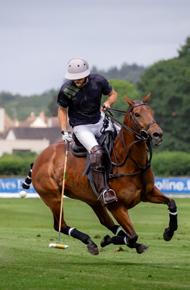
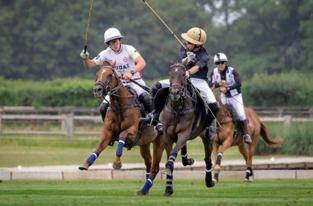
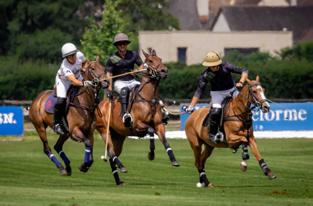
LUDIQUE, COLLECTIF, ADDICTIF… DÉCOUVREZ UN SPORT QUI N’EST PAS JUSTE UN JEU.
L’ÉDITO
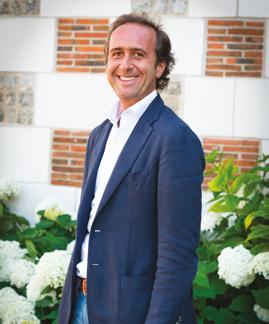
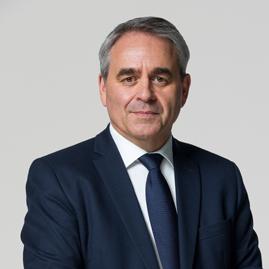
DE JEAN-EDOUARD MAZERY
Président de la Fédération Française de Polo
President of the Fédération Française de Polo
2026 : Un grand cru pour la France
Le 30 mai dernier, à Rome, l’équipe de France d’Arena Polo a une nouvelle fois démontré que la détermination et le talent français peuvent rivaliser avec les meilleures nations. Après le titre mondial décroché à Buenos Aires en 2023, ce second sacre européen constitue une immense fierté collective.
Je tiens à saluer l’engagement exemplaire de nos joueurs ainsi que le travail remarquable de Matthieu Delfosse, notre Directeur Technique National.
2026: A Vintage Year for France
On 30 May, in Rome, the French Arena Polo national team once again demonstrated that French determination and talent can compete with the very best nations. Following the world title won in Buenos Aires in 2023, this second European title is a source of immense collective pride. I wish to pay tribute to the exemplary commitment of our players and to the remarkable work of Matthieu Delfosse, our National Technical Director.
Ces succès ne doivent rien au hasard. Ils sont le fruit d’une exigence quotidienne, d’une ambition partagée et d’une conviction profonde : celle que le polo français a toute sa place au plus haut niveau international. Cette dynamique sportive ouvre aujourd’hui une nouvelle phase, marquée par des échéances majeures.
Dans le prolongement de ces réussites, l’été qui s’ouvre s’annonce intense. Dès le 12 juin, la Polo Nations Cup Barnes réunira six nations issues de trois continents pour trois semaines de compétition d’exception. Avec cinq équipes françaises engagées face aux meilleures sélections internationales, cet événement offrira une visibilité inédite à notre discipline et à notre savoir-faire.
Dans le même temps, le polo féminin poursuit son remarquable essor. La récente tournée de notre équipe nationale en Océanie, ponctuée de matchs en Nouvelle-Zélande et en Australie, en est une illustration forte. L’Oniriq Ladies Polo Nations Cup, qui réunira huit équipes issues de cinq nations, confirme notre engagement : faire du développement du polo féminin une priorité stratégique et un moteur de croissance pour notre sport.
Cette montée en puissance collective nous mène naturellement vers un nouveau temps fort. À l’automne, un rendez-vous décisif attend nos joueurs avec les qualifications pour les Championnats du Monde FIP, organisées à Chantilly du 23 au 27 septembre. Face à des nations de référence comme l’Angleterre, l’Italie ou la Suisse, l’équipe de France aura une nouvelle occasion de démontrer sa légitimité parmi l’élite mondiale. Pour accompagner cette ambition sportive, il est essentiel de disposer d’infrastructures à la hauteur de nos objectifs. C’est dans cet esprit que l’inauguration de l’Arena fédérale Santa Cruz marque une étape majeure dans l’histoire du polo français. Avec ses dimensions de 160 mètres sur 60, cette infrastructure d’excellence, conçue et réalisée grâce à la mobilisation de l’Institut de France, du Fonds Éperon, de la Communauté de Communes de l’Aire Cantilienne et de nos généreux donateurs, incarne concrètement notre ambition.
Elle vient donner un ancrage durable à la dynamique sportive que nous construisons. Ce site d’exception accueillera les phases de qualification européennes ainsi que les finales des Championnats du Monde d’Arena Polo FIP en 2027, une première en France. C’est une reconnaissance forte de notre capacité à organiser des événements d’envergure internationale et à structurer durablement notre discipline. Cette reconnaissance nous engage collectivement pour la suite.
Les échéances sportives et humaines qui nous attendent, exigent de chacun d’entre nous engagement, excellence et générosité. Ce sont les valeurs qui nous animent au quotidien, sur le terrain comme en dehors.
Au-delà des résultats, c’est une vision que nous partageons : celle d’un polo français ambitieux, ouvert et fédérateur. Un polo porté par l’esprit d’équipe, le dépassement de soi et la passion. C’est précisément cette cohérence entre performance, développement et structuration qui fait aujourd’hui notre force.
À l’heure de préparer ces rendez-vous majeurs, je sais pouvoir compter sur l’ensemble de notre communauté, joueurs, entraîneurs, partenaires et supporters pour poursuivre cette dynamique.
Le polo français a aujourd’hui toutes les cartes en main pour s’imposer durablement sur la scène mondiale. Et c’est ensemble, unis et déterminés, que nous écrirons les prochaines pages de cette ambition.
L’avenir commence maintenant, et il s’écrit avec vous.
These successes owe nothing to chance. They are the fruit of daily discipline, shared ambition and a deep conviction: that French polo has its rightful place at the highest international level. This sporting momentum now opens a new phase, marked by major milestones. Building on these achievements, the summer ahead promises to be intense.
From 12 June, the Barnes Polo Nations Cup will bring together six nations from three continents for three weeks of exceptional competition. With five French teams facing the best international sides, this event will give our sport and our expertise unprecedented visibility. At the same time, women’s polo continues its remarkable rise. The recent tour of our national team in Oceania, which included matches in New Zealand and Australia, is a striking illustration of this. The OniriQ Ladies Polo Nations Cup, which will bring together eight teams from five nations, confirms our commitment: to make the development of women’s polo a strategic priority and a driver of growth for our sport. This collective momentum naturally leads us towards another landmark moment.
In the autumn, a decisive appointment awaits our players with the FIP World Championship qualifiers, to be held at Chantilly from 23 to 27 September. Facing leading nations such as England, Italy and Switzerland, the French team will have another opportunity to demonstrate its standing among the world elite. To support this sporting ambition, it is essential to have infrastructure equal to our objectives.
It is in this spirit that the inauguration of the Arena Fédérale Santa Cruz marks a major milestone in the history of French polo. Measuring 160 metres by 60, this world-class facility, designed and built thanks to the combined effort of the Institut de France, the Fonds Éperon, the Communauté de Communes de l’Aire Cantilienne and our generous donors , gives concrete expression to our ambition.
It provides a lasting foundation for the sporting momentum we are building. This exceptional venue will host the European qualification rounds and the finals of the FIP Arena Polo World Championships in 2027, a first for France. This is a powerful recognition of our ability to organise events of international stature and to give our sport an enduring structural base. That recognition places a collective responsibility on all of us for what comes next.
The sporting and human challenges ahead demand commitment, excellence and generosity from each of us. These are the values that drive us every day, on the field and beyond.
Beyond results, it is a vision we share: a French polo that is ambitious, open and inclusive. A polo carried by the spirit of teamwork, selfsurpassing and passion. It is precisely this coherence between performance, development and structure that makes us strong today.
As we prepare for these major milestones, I know I can count on our entire community, players, coaches, partners and supporters, to sustain this momentum.
French polo today holds all the cards to establish itself durably on the world stage. And it is together, united and determined, that we will write the next chapters of this ambition.
The future begins now, and it is written with you.
L’ÉDITO
D’ARNAUD DE CHÊNEVARIN
Président du Polo Club du Domaine de Chantilly
President of the Polo Club du Domaine de Chantilly
Il y a trente ans, peu de personnes imaginaient ce que deviendrait le Polo Club du Domaine de Chantilly. Peu de personnes... sauf peut-être Patrick Guerrand-Hermès. Avec sa vision du polo, son enthousiasme communicatif et cette capacité rare à considérer que rien n’était impossible, il voyait déjà bien plus loin que les deux terrains inaugurés le jour du Prix de Diane Hermès 1996 à la Ferme d’Apremont.
Je me plais à imaginer cette belle journée du dimanche 9 juin 1996. Nous n’avions alors que deux terrains, fraîchement aménagés au cœur de la Ferme d’Apremont. Le sol était un peu dur ; le système d’arrosage n’était pas encore aussi performant qu’aujourd’hui. Quelques jeunes cavaliers anglais à poney partageaient l’affiche avec un match France-Argentine opposant Stéphane et Lionel Macaire, Bertrand Couturier et Jérôme Anier à Fati Reynot, Mono Gassibayle, Diego Braun et son père. Les invités du Prix de Diane, les hommes en habit et les élégantes en coiffure, nous avaient rejoints après les courses. Mickey et Dingo étaient là. L’Équipage des Trois Forêts aussi, avec son imposante meute de Français Tricolores. Puis, le soir, tout le monde s’était retrouvé autour d’un asado.
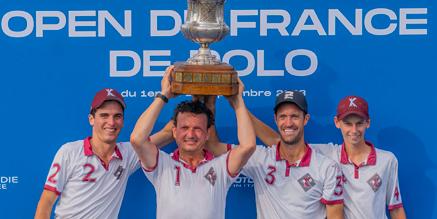
Ce jour-là, nous inaugurions un club sans imaginer qu’il accueillerait quelques années plus tard des Championnats d’Europe, un Championnat du monde, des éditions d’anthologie de l’Open de France, des rencontres internationales de très haut niveau et plusieurs générations de joueurs venus du monde entier, dont près d’une quarantaine de vainqueurs ou finalistes de l’Open d’Argentine, la plus prestigieuse compétition de la planète.
Trente ans plus tard, les deux terrains sont devenus un domaine unique en Europe : neuf canchas en herbe et deux arenas. Les chevaux sont toujours plus nombreux. Les compétitions aussi. Mais l’esprit reste le même. Celui qui a également donné naissance, quelques années plus tard, à La Palmeraie au Maroc, autre aventure polo imaginée par Patrick Guerrand-Hermès au bord de l’Atlantique. Car au fond, le Polo Club du Domaine de Chantilly ne s’est jamais construit autour de ses infrastructures ou de ses tournois. Il s’est construit avant tout autour des rencontres. Entre professionnels et amateurs. Entre générations. Entre Français, Argentins, Anglais, Brésiliens, Suisses, Pakistanais, Américains et bien d’autres encore venus des cinq continents. Entre ceux qui ont écrit son histoire et ceux qui l’écrivent aujourd’hui. C’est précisément ce que nous souhaitons célébrer cette année.
Bien sûr, il y aura les finales de la Polo Nations Cup Barnes, de l’OniriQ Ladies Polo Nations Cup et le Tournoi des Légendes. Bien sûr, il y aura également en septembre les finales des Open de France Barnes. Et surtout, nous retrouverons tout au long de cette année exceptionnelle des joueurs, des patrons, des amis et des familles qui ont façonné ces trente années. Mais cet anniversaire est avant tout l’occasion de remercier tous ceux qui ont contribué, d’une manière ou d’une autre, à faire de Chantilly ce qu’il est devenu.
Un lieu de polo, bien sûr. Un haut lieu même. La cathédrale française du polo ? Oui, osons le dire.
Mais surtout un lieu de vie.
Un lieu où continue de s’exprimer cet art de vivre si cher à Patrick Guerrand-Hermès.
Thirty years ago, few people could have imagined what the Polo Club du Domaine de Chantilly would become. Few people... except perhaps Patrick Guerrand-Hermès. With his vision of polo, his infectious enthusiasm and that rare ability to believe that nothing was impossible, he could already see far beyond the two fields inaugurated on the day of the 1996 Prix de Diane Hermès at the Ferme d’Apremont.
I like to picture that beautiful Sunday, 9 June 1996, in the presence of Marcos Uranga, founding president of the Federation of International Polo, and Jean-Luc Chartier, then president of the Union des Polos de France. We had just two fields at the time, freshly laid out at the heart of the Ferme d’Apremont. The ground was a little firm; the irrigation system was not yet as efficient as it is today. A few young English pony riders shared the bill with a France–Argentina match pitting Stéphane and Lionel Macaire, Bertrand Couturier and Jérôme Anier against Fati Reynot, Mono Gassibayle, Diego Braun and his father. The guests of the Prix de Diane — the men in morning dress and the elegantly dressed women in their hats — had joined us after the races. Mickey and Goofy were there. Yves Bienaimé, in a tandem act, was there too, as was the Équipage des Trois Forêts, with its impressive pack of Français Tricolores hounds led by Claude d’Allières. Then, that evening, everyone gathered around an asado.
That day, we were inaugurating a club with no idea that, a few years later, it would host European Championships, a World Championship, landmark editions of the French Open, international matches of the very highest level, and several generations of players from around the world — including nearly forty winners or finalists of the Argentine Open, the most prestigious competition in polo.
Thirty years on, those two fields have grown into a site unique in Europe: nine grass canchas and two arenas. The horses are ever more numerous. So are the competitions. But the spirit remains the same. The same spirit that, a few years later, also gave rise to La Palmeraie in Morocco — another polo venture imagined by Patrick Guerrand-Hermès on the Atlantic coast.
Because at its heart, the Polo Club du Domaine de Chantilly was never built around its facilities or its tournaments. It was built, above all, around encounters. Between professionals and amateurs. Between generations. Between French, Argentines, English, Brazilians, Swiss, Pakistanis, Americans and many others who came from all five continents. Between those who wrote its history and those who are writing it today. That is precisely what we wish to celebrate this year.
There will, of course, be the finals of the Barnes Polo Nations Cup, the OniriQ Ladies Polo Nations Cup and the Tournoi des Légendes. There will also, of course, be the finals of the Barnes and OniriQ French Opens in September. And above all, throughout this exceptional year, we will be reunited with the players, patrons, friends and families who have shaped these thirty years.
But this anniversary is, first and foremost, an opportunity to thank all those who have contributed, in one way or another, to making the Polo Club du Domaine de Chantilly what it has become.
A polo venue, certainly. A great one, even. The French cathedral of polo? Yes — let us dare say it.
But above all, a place to live. A place where the art de vivre so dear to Patrick GuerrandHermès continues to find expression.
L’ÉDITO
DE XAVIER BERTRAND
Président de la Région Hauts-de-France
President of the Région Hauts-de-France
Du 12 au 27 juin 2026, le Polo Club du Domaine de Chantilly accueille la 5ᵉ édition de la Polo Nations Cup. Quinze jours de compétition, dix nations et régions attendues, un plateau qui s’étoffe chaque année : en seulement quatre éditions, ce rendez-vous est devenu l’un des temps forts du calendrier européen, et notre région a la chance de l’accueillir.
From 12 to 27 June 2026, the Polo Club at the Domaine de Chantilly will host the 5th edition of the Polo Nations Cup. Fifteen days of competition, with ten nations and regions expected to take part, and a field that grows stronger every year: in just four editions, this event has become one of the highlights of the European calendar, and our region is fortunate to be hosting it.
En Hauts-de-France, le sport, la culture et le patrimoine équestre sont des priorités. Parce qu’ils rassemblent, parce qu’ils font rayonner notre territoire, parce qu’ils créent de l’activité et de la fierté partagée, la Région soutient pleinement les grands rendez-vous qui font vivre notre identité. La Polo Nations Cup en est l’illustration : un événement de niveau international, ouvert gratuitement au public, qui place Chantilly et les Hauts-de-France sur la carte mondiale d’une discipline d’exception.
En dix ans d’existence, notre Région a fait du sport et de l’excellence équestre des piliers de son attractivité. Berceau historique du cheval en France, terre de courses, d’élevage et de grandes compétitions, les Hauts-de-France comptent parmi les territoires les plus reconnus en Europe pour leur savoir-faire équestre. Soutien aux clubs, accompagnement des manifestations, valorisation de la filière, ouverture au plus grand nombre : la politique régionale s’est construite avec une exigence celle de faire vivre cette tradition tout en l’ouvrant aux jeunes, aux amateurs et aux nouveaux publics.
Cette édition prend une saveur toute particulière. Le Polo Club du Domaine de Chantilly fête en effet ses 30 ans, trois décennies pendant lesquelles le club a su faire cohabiter le très haut niveau et la transmission, les cracks internationaux et les amateurs du week-end. Une mention spéciale, enfin, à l’équipe féminine des Hauts-de-France, qui défendra son titre lors de l’OniriQ Ladies Polo Nations Cup à partir du 22 juin : un beau symbole d’un polo féminin qui s’affirme et qui grandit, ici plus qu’ailleurs.
Merci aux organisateurs, aux joueurs, aux équipes et aux bénévoles pour leur engagement. Belle Polo Nations Cup à tous !
In Hauts-de-France, sport, culture and equestrian heritage are priorities. Because they bring people together, because they put our region on the map, and because they generate activity and a shared sense of pride, the Region fully supports the major events that bring our identity to life. The Polo Nations Cup is a perfect example: an internationallevel event, open to the public free of charge, which puts Chantilly and the Hauts-de-France on the global map for this exceptional sport.
Over the past ten years, our Region has made sport and equestrian excellence cornerstones of its appeal. As the historic cradle of the horse in France, a land of racing, breeding and major competitions, the Hauts-de-France is among the most renowned regions in Europe for its equestrian expertise. Support for clubs, assistance with events, promotion of the sector, and accessibility to as many people as possible: regional policy has been shaped by a single imperative-to keep this tradition alive whilst opening it up to young people, amateurs and new audiences.
This year’s event has a special flavour. The Polo Club du Domaine de Chantilly is celebrating its 30th anniversary – three decades during which the club has successfully brought together top-level competition and the passing on of the sport, international stars and weekend amateurs. Finally, a special mention goes to the Hauts-de-France women’s team, who will be defending their title at the OniriQ Ladies Polo Nations Cup from 22 June: a fine symbol of women’s polo asserting itself and growing, here more than anywhere else.
Thank you to the organisers, players, teams and volunteers for their commitment. We wish everyone a wonderful Polo Nations Cup!
Président de la Communauté de Communes de l’Aire Cantilienne President of the Communauté de Communes de l’Aire Cantilienne
Préserver une identité, faire rayonner un territoire.
Preserving an identity, promoting a region.
C’est avec beaucoup de plaisir que je m’adresse à vous pour la première fois, en tant que Président de la Communauté de Communes de l’Aire Cantilienne, à l’occasion de cette nouvelle édition de la Polo Nations Cup.
Au cœur d’un territoire reconnu dans le monde entier pour son excellence équestre, cet événement illustre parfaitement ce qui fait la force de l’Aire Cantilienne : une identité forte, un patrimoine vivant et une capacité à conjuguer tradition et ouverture sur le monde.
La filière cheval est bien plus qu’un secteur d’activité. Elle participe à l’histoire, à l’économie et à l’attractivité de notre territoire. Du sport de haut niveau aux métiers qui l’accompagnent, elle contribue chaque jour à faire rayonner notre région bien au-delà de ses frontières.
Préserver cette identité, la valoriser et accompagner ceux qui la font vivre constituent des priorités de notre action. La Polo Nations Cup en est une magnifique illustration. Chaque année, elle rassemble des joueurs, des passionnés et des visiteurs venus de nombreux pays dans un esprit d’excellence, de partage et de convivialité.
Je vous souhaite à toutes et à tous une très belle édition 2026 de la Polo Nations Cup et un excellent séjour au cœur de l’Aire Cantilienne.
It is with great pleasure that I welcome you for the first time, as President of the Aire Cantilienne Community of Communes, on the occasion of this year’s Polo Nations Cup. Set in the heart of a region renowned worldwide for its equestrian excellence, this event perfectly illustrates what makes the Aire Cantilienne so special: a strong identity, a living heritage and an ability to combine tradition with an openness to the world.
The equestrian sector is much more than just an industry. It plays a part in the history, economy and appeal of our region. From top-level sport to the professions that support it, it helps to promote our region far beyond its borders every single day.
Preserving this identity, promoting it and supporting those who bring it to life are priorities for us. The Polo Nations Cup is a magnificent illustration of this. Every year, it brings together players, enthusiasts and visitors from many countries in a spirit of excellence, sharing and conviviality.
I wish you all a wonderful 2026 edition of the Polo Nations Cup and an excellent stay in the heart of the Aire Cantilienne.
B.A-BA DU POLO
Premières petites choses à savoir pour bien suivre un match de polo Il n’est pas toujours évident de rester concentré face à un spectacle sportif qui se tient sur un immense terrain couvrant plus de quatre fois la surface d’un terrain de foot : deux-cent-soixante-quinze mètres par cent-quarante-cinq, soit quatre hectares ! Les choses deviennent plus claires si l’on comprend qu’il s’agit, pour les quatre joueurs de chaque équipe, de marquer le plus de buts possible (appelés goals en polo où, côté règlement, tout est anglicisé). Des principes qui peuvent tenir en quatre mots ou presque : changements, arbitres, ligne et pénalités.
Arbitres : Les arbitres sont deux sur le terrain et à cheval. En cas de litige, un troisième homme, le «referee», suit le match assis une chaise haute depuis le bord du terrain et tranche entre les deux «umpires» en cas de désaccord.
Changement : Dans un souci d‘équité (qualité du terrain, position du soleil), à chaque goal marqué, les équipes changent de côté.
Understanding a polo game: what you need to know
It may not be easy to stay focused on a sports competition held on a huge field covering more than four times the surface of a soccer field: two hundred and seventy-five meters by one hundred and forty-five, that is to say four hectares! Assuming that one understands that the four players of each team must score as many goals as possible (also called goals in French because as far as rules are concerned the wording is mostly in English), the game becomes more obvious once one gets to know some of the basics. These principles can be summed up in four words: changes, referees, line and penalties.
Change: For the sake of fairness (quality of the field, position of the sun), at each goal scored, the teams change sides.
Umpires : The two referees on the field are called umpires, they are both on horseback. In case of a disagreement, a third man, called the referee, who follows the game from a high chair at the edge of the field will decide between the two umpires.
La ligne : Quelle est la raison la plus courante des interventions des arbitres ? La violation de la sacro-sainte « ligne »… «¡La línea!» entendrez-vous souvent crier (c’est un euphémisme) par les Argentins. Cruciale et prise de tête, cette fameuse ligne. C’est la règle de base du polo, fondée sur la sécurité. Quand un joueur frappe la balle, la ligne imaginaire qu’il a créée entre lui et la balle lui appartient. Interdiction formelle pour l’adversaire de couper cette ligne sous peine de sanction. Le couloir créé par cette ligne entre les deux joueurs est impénétrable. S’en suit donc une pénalité…
The line: What is the most common reason for referee intervention? The violation of the sacrosanct «line»... «¡La línea!» you will often hear Argentines shout (this is a euphemism). This famous line is as crucial as it is contentious. It is the basic rule of polo, based on safety. When a player hits the ball, the imaginary line he has created between him and the ball belongs to him. It is strictly forbidden for the opponent to cross this line or he will be subject to sanctions. he corridor created by this line between the two players is impenetrable. A penalty follows...
Les pénalités :
Les pénalités, selon l’emplacement et la gravité des fautes commises, se tirent à 60, 40, 30 yards ou même « sur place », même à 10 cm des goals, si la faute a été commise entre les 30 yards et la ligne des goals. Un corner (lorsque le défenseur sort volontairement la balle derrière la ligne des goals) se tire comme une pénalité, à 60 yards en face de l’endroit où est sortie la balle. Lors d’une pénalité ou d’une remise en jeu, le premier adversaire doit se tenir à au moins 30 yards du joueur tirant cette pénalité ou cette remise en jeu.
Le chukker :
Le chukker correspond à une période d’un match (sept minutes plus trente secondes pour qu’un arrêt de jeu mette fin à la période). Un match de polo compte au minimum quatre chukkers et au maximum huit (cinq pour l’Open de France Barnes & la Polo Nations Cup Barnes). Les Argentins parlent de chukka et en France, on peut se contenter du mot période.
Penalties:
Penalties, depending on the spot and severity of the fouls committed, are taken at 60, 40, 30 yards or «on the spot» - even if only 10 cm from the goals - if the foul was committed between the 30 yards and the goal line. A corner kick (when the defender voluntarily takes the ball out behind the goal line) is taken as a penalty, 60 yards in front of where the ball went out. On a penalty or drop ball, the first opponent must be at least 30 yards from the player taking the penalty or drop ball.
Chukker:
The chukker refers to a playing period of a match (seven minutes plus thirty seconds to allow for a playing action to finish). A polo game has a minimum of four chukkers and a maximum of eight (five for the Open de France & Polo Nations Cup). The Argentinians speak of chukka, the French may call it a period.
COMPRENDRE UN MATCH AVEC
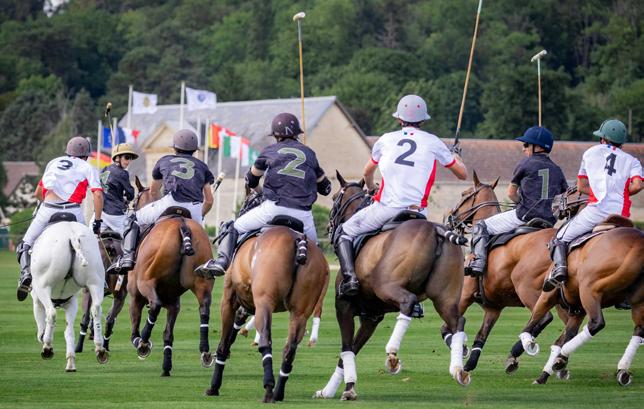
LE N° DES JOUEURS
UNDERSTANDING THE PLAYERS’ NUMBERS
N°1
Le numéro 1 est l’attaquant, le cavalier qui joue « en pointe » lorsque l’équipe est en phase offensive, c’est-à-dire qu’elle se dirige vers les goals adverses. Dans les matchs européens, où sont mélangés amateurs et professionnels, c’est en général l’amateur qui est ainsi envoyé au devant pour récupérer les longues balles que le pro est plus apte à envoyer.
The number 1 is the attacker, the rider who plays at the forefront when the team is in an offensive phase, i.e. heading towards the opponent’s goals. In European matches, where amateurs and professionals play together, it is usually the amateur who is sent to the front to recover the long balls that the pro is more able to shoot.
N°2
Le numéro 2 soutient cet attaquant et relaie les balles envoyées par le n°3, ou 4. C’est un rôle confié en général à l’un des deux joueurs le plus fort de l’équipe en matchs pro-am. The number 2 supports this attacker and passes on the balls sent by the number 3 or 4. This role is usually given to one of the two strongest players of the team in pro-am matches.
N°3
Le numéro 3 est le pilier de l’équipe, c’est par lui que passe tout le jeu et notamment son rôle est de monter la balle et de la passer à ses attaquants, en général par de longs coups, mais également en dribblant. Dans les équipes pro-am, c’est habituellement le joueur au handicap le plus élevé.
The number 3 is the pillar of the team, all the game gœs through him. His role is to get hold of the ball and to pass it to his attackers, generally by hitting long shots, but also by dribbling. In pro-am teams, this is usually the player with the highest handicap.
N°4
Le numéro 4 est l’ultime rempart de l’équipe quand celle-ci est attaquée. C’est le «back», en général un joueur solide, rapide qui monte des chevaux de la même trempe, n’ayant pas peur des contacts. C’est lui qui arrête le premier attaquant, en général, le n°1 adverse. De même, le n°3 marquera le n°2 et inversement (1-4, 2-3, 3-2, 4-1). Mais parfois la situation de jeu fait que ces rôles peuvent être échangés le temps d’une action, l’essentiel étant que chaque joueur ne lâche jamais un adversaire.
The number 4 is the team’s last line of defense when it is attacked. Called the «back», this player is usually strong and fast who rides horses of the same type and is not afraid of contact. He is the one who stops the first attacker, usually the opposing n°1. In the same way, the n°3 will mark the n°2 and vice versa (1-4, 2-3, 3-2, 4-1). But sometimes the situation of the game provokes a redistribution of these roles at least for the time of a particular action, most importantly each player has to stay with an opponent player, to «stay with his man».
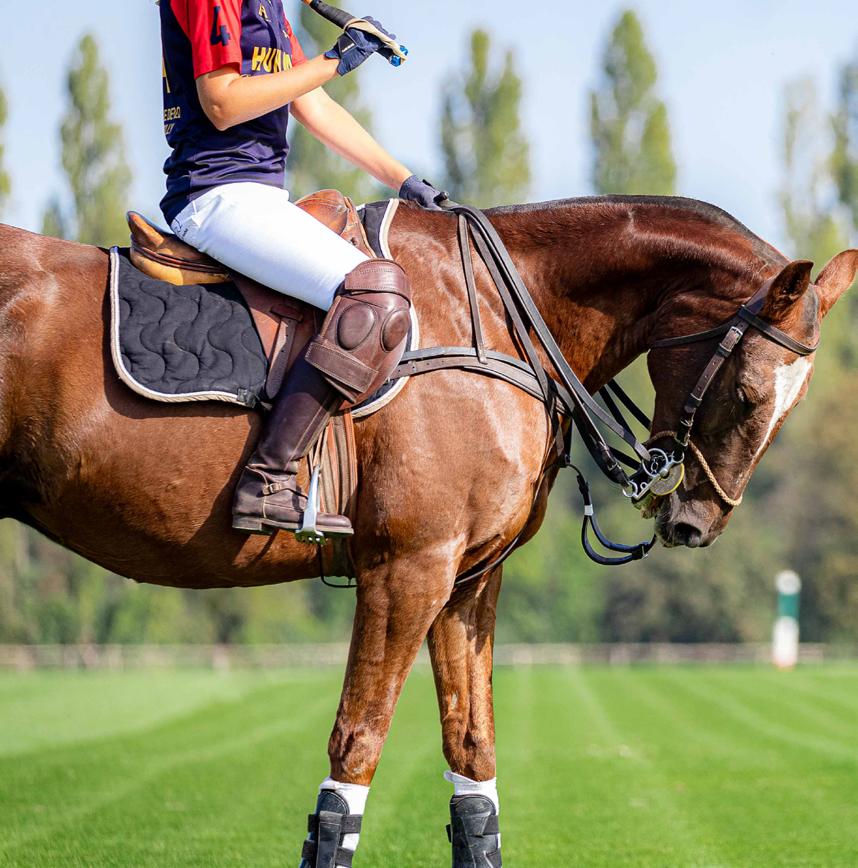
Non, le cheval de polo n’est pas un bagual, un cheval sauvage, attrapé par hasard au lasso au milieu de la pampa et lancé après quelques brèves séances de dressage sur un terrain. Il est le fruit d’un concept réfléchi et de sélections rigoureuses entreprises il y a plus d’un siècle.
No, the polo horse is not a «bagual», a wild horse, caught by chance with a lasso in the middle of the pampas and thrown after a few brief training sessions on a field. It is the result of a thoughtful concept and rigorous selections undertaken over a century ago.
Ce n’est pas un hasard si les chevaux argentins sont les plus recherchés et les plus diffusés à travers la planète car c’est parmi eux que l’on trouve le meilleur concentré des qualités requises pour ce sport : une tête bien faite, une maniabilité et une souplesse sans blocage, une bouche facile, répondant rapidement à la moindre sollicitation et une pointe de vitesse avoisinant celle des hippodromes.
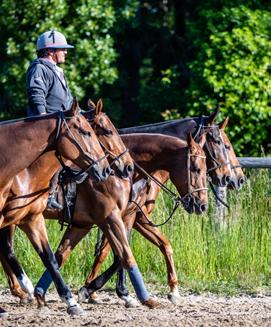
Ce caractère en or leur vient de leurs ancêtres criollos, chevaux de service des estancias descendants des chevaux ibériques importés par les conquistadors, judicieusement croisés aux pur-sang. Il leur vient également d’une éducation sans anthropomorphisme, en groupe : une particularité entretenue par les spécificités du polo. Un joueur ayant besoin d’un minimum de quatre chevaux, voire six à huit pour le niveau de l’Open de France Barnes, ceux-ci seront entraînés en lot, entraînés en groupe, du moins pour la condition. D’où ces belles images de petiseros sortant à cheval avec, de chaque côté, deux à quatre chevaux attachés ensemble par le licol. Cette méthode collective présente l’avantage que les chevaux vivent le plus souvent entre eux, en société de chevaux et restent des chevaux. Les plus capricieux sont souvent les plus bichonnés ! Un cheval de polo retourne à sa vie de cheval de troupeau après avoir effectué son travail, il n’en est que moins compliqué.
It is not at random that Argentine polo horses are the most sought after and most widely spread throughout the world. They do have a high concentration of all the qualities required for this sport: mental strength, maneuverability and suppleness, an easy mouth, quickness of response to the slightest request and a speed that approaches that of racehorses
This golden character comes from their criollo ancestors, service horses of the estancias, descendants of the Iberian horses imported by the conquistadors, judiciously crossed with the thoroughbred. It also comes from an education without anthropomorphism, an education always done in group: a particularity maintained by the specificities of polo. A player needs a minimum of four horses, even six to eight for the Open de France Barnes level. These horses will be trained in groups or strings (lote in Castilian) at least when they do their endurance work on the track. Hence these beautiful images of petiseros going out on horseback with, on each side, two to four horses tied together by the halter. This collective method has the advantage that the horses live mostly among themselves, in a horse society and thus remain horses. The most temperamental are often the most pampered! A polo horse returns to its life as a herd horse after having done its work which makes it even less complicated.
La majorité des chevaux de polo sont des juments. Selon les grands joueurs, c’est parce qu’elles apprennent plus vite que les mâles, tout en gardant leur influx. Un étalon a, lui-aussi, cet influx, mais reste plus délicat à gérer parmi toutes ces juments. Quant au hongre, il perd un peu de ce tempérament, cette « niaque » nécessaire pour arriver sur la balle devant les autres !
The majority of polo horses are mares. According to the great players, this is because they learn faster than the males while keeping their impulse. A stallion also has this power, but is more difficult to manage among all these mares. As for the gelding, he loses a little of this temperament, this drive necessary to arrive on the ball quicker than the others!
Le cheval de polo argentin est donc reconnu pour être le meilleur du monde. Toutefois les élevages anglais, uruguayens et australiens font également bonne figure. À un niveau moindre (tout le monde n’a pas besoin d’un crack pour jouer du high-goal), il est sans doute possible de s’épargner le prix d’un billet d’avion Argentine-Europe en recherchant judicieusement des pur-sang de réforme ou même en prospectant du côté du horse-ball où sont cultivées et recherchées chez les chevaux des qualités similaires au polo. Il faut trois années d’éducation avant qu’un cheval puisse être capable de jouer. Un « parcours scolaire » qui commence avec le domador, (qui « débourre » le cheval, c’est-à-dire, le monte pour la première fois et lui inculque les bases : maniabilité, arrêts, départs…), puis par le piloto, (qui lui fera faire ses premiers practices tout en poursuivant son dressage) avant d’entrer en matchs officiels avec le joueur.
Lors d’une rencontre du niveau de l’Open de France, un cheval joue entre deux et trois minutes d’affilée, jamais plus. Au-delà d’une interruption officielle en milieu de période, au cours d’une période, le joueur profite d’un court arrêt de jeu pour aller rapidement changer de cheval, parfois, en passant de l’un à l’autre sans mettre pied à terre. Ainsi, jamais un cheval ne sera « mis dans le rouge » car ces athlètes sont préservés. D’ailleurs, entre deux saisons, les chevaux profitent de grandes vacances, quatre à six mois au pré et bien sûr, en troupeau.
The Argentinean polo horse is therefore recognized as the best in the world. However, the English, Uruguayan and Australian breeders also do well. At a lower level (not everyone needs a crack horse to play high-goal), it is probably possible to save the price of an Argentine-European plane ticket by judiciously searching for thoroughbreds or even prospecting in horse-ball where horses with similar qualities to polo are sought after. It takes three years of training before a horse is able to play.
A «schooling journey» that starts with the domador, (who «breaks in» the horse, i.e. rides it for the first time and teaches it the basics: handling, stops, starts...), then by the piloto, (who will make it do its first practices while continuing its training) before entering official games with the player.
In an Open de France level match, a horse plays between two and three minutes at a time, never more. During a chukker, the player takes advantage of a short break in play to quickly change horses, sometimes moving from one to the other without setting foot on the ground. This way, no horse is ever pushed beyond its limits, preserving these athletes is of utter importance. Moreover, between two seasons, the horses enjoy a long vacation, four to six months in the pasture and of course, in the herd.
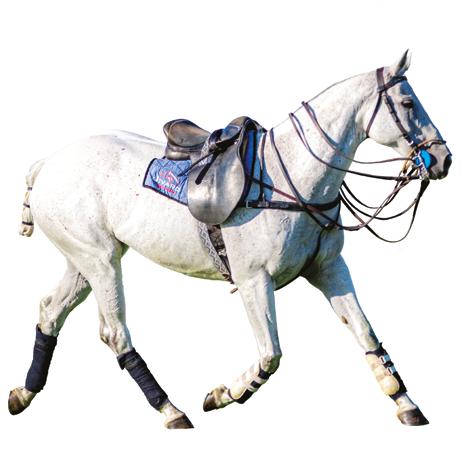
CROUP
:
Powerful croup of quarter-horses that allows instant starts and very fast turning.
Croupe puissante des quarter-horses qui permet d'effectuer des démarrages instantanés, et de tourner très vite.
SIZE
:
Between 1m52 and 1m60 at withers (the ideal size, according to the AACCP being 1m56).
Entre 1m52 et 1m60 au garrot (la taille idéale, selon l'Asociación Argentina de Criadores de Caballos de Polo étant de 1m56).
MANE
:
Shaved so that the manes do not get tangled in the rider's hands or mallet.
Rasée afin que les crins ne s'emmêlent pas dans les mains ou le maillet du cavalier.
CHARACTER
:
Courageous, calm, responsive, sensitive and attentive.
Courageux, calmes, réactifs, sensibles et attentifs
Tressée au moment du match pour empêcher les prises de maillet.
TAIL:
Braided at the time of the match to prevent the mallet from catching.
Ils passent de 0 à 50km/h en quelques secondes !
SPEED:
They go from 0 to 50km/h in a few seconds!
Pur-sang ou pur-sang sur souches anciennes de criollos argentins (stud-book du Cheval de polo argentin).
BREED:
Thoroughbred or thoroughbred on old strains of Argentine criollos (studbook of the Argentine polo horse).
PALERMO À CHANTILLY
WHEN PALERMO COMES TO CHANTILLY
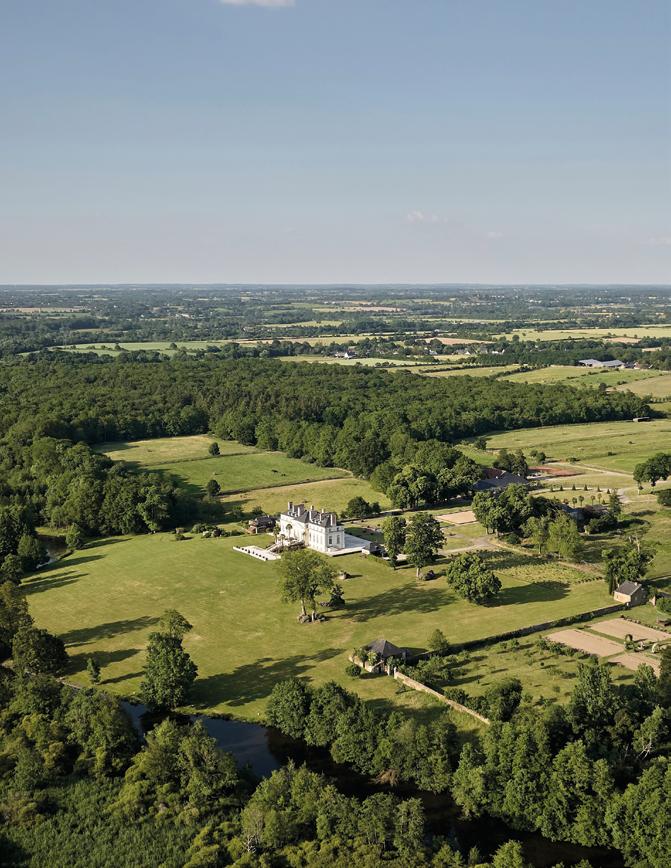
Homme de cheval, homme de voyage pour qui le monde n’était qu’un village, en créant le Polo Club du Domaine de Chantilly il y a trente ans, Patrick Guerrand-Hermès - qui ne savait voir les choses qu’en grand - poursuivait plusieurs visions. Parmi elles : faire venir le monde du polo à la ferme d’Apremont qui, à l’époque, n’était encore qu’une vaste exploitation agricole, principalement céréalière, s’étendant sur 200 hectares. Trois décennies plus tard, le Polo Club de Chantilly est devenu l’un des plus grands clubs de la planète, avec neuf terrains en herbe, où se donnent rendez-vous les plus grands joueurs du monde, notamment en septembre, à l’occasion de l’Open de France.
A horseman and a traveller for whom the world was but a village, Patrick Guerrand-Hermès – a man who never thought small – had several visions when he founded the Polo Club du Domaine de Chantilly thirty years ago. Among them was the ambition to bring the world of polo to the Ferme d’Apremont, which at the time was still a vast, predominantly cerealproducing agricultural estate spanning 200 hectares. Three decades later, the Polo Club de Chantilly has become one of the largest polo clubs in the world, with nine grass fields welcoming the world’s finest players, particularly each September for the Open de France.
Après avoir découvert le polo lors de son service militaire au Maroc, Patrick Guerrand-Hermès, contaminé par ce virus, sillonna le monde pour assouvir sa passion. « J’ai tellement d’images inoubliables, nous confiaitil il y a quelques années. J’en garderai trois : la première fois que j’ai joué au milieu des derricks à Dallas avec des cow-boys en chaps et Stetson; se retrouver à jouer parmi les nomades en tenue traditionnelle dans les montagnes de Mongolie ; et avoir pu évoluer sur des terrains magnifiques, dans un jardin tropical en Jamaïque. Côté rencontres, c’est celle, assez récente, où j’ai eu l’occasion de jouer avec le grand Adolfo Cambiaso, qui vous envoie des balles à un endroit immanquable. Je n’ai jamais vu quelqu’un dominer un sport comme il le fait dans le polo. »
PGH a joué aux côtés d’autres très grands joueurs, remportant notamment, à 74 ans, la Coupe d’Or de Deauville avec Gonzalito Pieres. Ces grands joueurs qu’il a toujours admirés et qu’il s’est efforcé de faire venir dans « son » club de Chantilly.
Après avoir donné naissance au Polo Club du Domaine de Chantilly en 1996, Patrick Guerrand-Hermès a immédiatement souhaité lui conférer une dimension internationale, pour l’inscrire sur la carte des grands centres mondiaux. Après l’organisation d’un premier Championnat d’Europe dès 1999, le club franchit un cap en lançant l’Open de France en 2001 sous l’égide de la Fédération française de polo. En 2004, Chantilly est l’hôte du Championnat du monde FIP remporté par le Brésil.
After discovering polo during his military service in Morocco, Patrick Guerrand-Hermès caught the virus and travelled the world to indulge his passion. “I have so many unforgettable memories,” he told us a few years ago. “I’ll keep three: the first time I played among the oil derricks in Dallas with cowboys wearing chaps and Stetsons; playing among nomads in traditional dress in Mongolia’s mountains; and competing on magnificent grounds in a tropical garden in Jamaica. As for encounters, the most recent one that stands out was playing with the great Adolfo Cambiaso, who sends the ball exactly where it cannot be stopped (I‘m not sure about this translation; here PGH means that Cambiaso sent the ball to the exact spot where the player was standing and waiting for it). I’ve never seen anyone dominate a sport the way he dominates polo.”
PGH played alongside many of the game’s greats, notably when he won the Deauville Gold Cup at the age of 74 with Gonzalito Pieres. These were the players he always admired and whom he worked tirelessly to attract to “his” club at Chantilly.
From the outset, Guerrand-Hermès wanted Chantilly to have an international dimension, placing it firmly on the map of the world’s leading polo centres. After hosting its first European Championship in 1999, the club took a decisive step forward by launching the Open de France in 2001 under the umbrella of the French Polo Federation. In 2004, Chantilly hosted the FIP World Championship, won by Brazil.
Dès la deuxième édition de l’Open de France, un jeune Argentin de 21 ans se fait remarquer en permettant à l’association Grassfield-Talandracas de remporter le deuxième Open de France. Son nom ? Juan Martín Nero, qui soulèvera ensuite à douze reprises le Graal du polo : la prestigieuse et immense Coupe de l’Open d’Argentine (Campeonato Argentino Abierto de Polo), qui est au polo ce que Kitzbühel est au ski ou Wimbledon au tennis. Depuis, treize autres vainqueurs de cet Abierto, six autres finalistes et une vingtaine d’autres participants à ce tournoi de référence - dont des vainqueurs de la Copa Cámara - ont foulé les terrains cantiliens.
En attendant de se rapprocher de ce très haut niveau, Chantilly accueille en 2002 et 2003 la prestigieuse équipe Indios Chapaleufú II pour deux matchs exhibition. À cette époque, entre 1996 et 2004, Ruso, Pepe et Nachi Heguy, ainsi que Milo Fernández Araujo, remportaient l’Abierto à quatre reprises.
D’abord programmé en juin, l’Open de France passe en septembre en 2006 et s’établit à 16 goals, un niveau suffisant pour attirer de grands noms. C’est l’époque des duels entre Castel et In The Wings , qui permettent de voir évoluer des joueurs comme Matías McDonough (finaliste à Palermo) et Pancho Bensadón (demi-finaliste et vainqueur de la Cámara).
By the second edition of the Open de France, a 21-year-old Argentine had already made his mark, helping Grassfield-Talandracas capture the title. His name? Juan Martín Nero, who would go on to lift polo’s ultimate prize twelve times: the prestigious and imposing Argentine Open trophy (Campeonato Argentino Abierto de Polo), polo’s equivalent of Kitzbühel in alpine skiing or Wimbledon in tennis. Since then, thirteen other Argentine Open winners, six other finalists and around twenty additional participants in the world’s most prestigious tournament, including Copa Cámara winners, have played at Chantilly.
In the early years, as Chantilly aimed to move closer to that elite level, it welcomed the legendary Indios Chapaleufú II in 2002 and 2003 for two exhibition matches. Between 1996 and 2004, Ruso, Pepe and Nachi Heguy, together with Milo Fernández Araujo, won the Argentine Open four times.
Originally held in June, the Open de France moved to September in 2006 and was set at 16 goals, a level high enough to attract top players. It was the era of the duels between Castel and In The Wings, which brought players such as Matías McDonough (Argentine Open finalist) and Pancho Bensadón (semi-finalist and Copa Cámara winner).
«PALERMISTES» AYANT REMPORTÉ L’OPEN DE FRANCE
Juan Martín Nero (2002 – Talandracas – Grassfield)
Matias McDonough (2003 - Castel)
Lucas Monteverde (2005 – In The Wings)
Juan Gris Zavaleta (2005 - In The Wings)
Facundo Sola (2011 - Murus Sanctus)
Alfredo Cappella (2011 - Murus Sanctus et 2024 en remplaçant Fran ElizaldeLa Fija Sandbox)
Facundo Llorente (2013 - Tom Tailor et 2021 - La Magdeleine)
Martin Aguerre (2015 et 2016 - La Victoire-Marquard Media)
Toly Ulloa (2019 – Cibao La Pampa)
Barto Castagnola (2020 - Lions Panarea)
Tommy Beresford (2020 - Lions Panarea)
Tito Guiñazú (2021 - La Magdeleine)
Jeta Castagnola (2022 - Talandracas)
Juan Martín Zubia (2022 - Talandracas)
Nico Pieres (2023 - Kazak)
Fran Elizalde (2024 - La Fija Sandbox)
Rufino Bensadon (2022 - Talandracas et 2024 - La Fija Sandbox)
Pelón Stirling (2025 - Octogone)
Avec In The Wings et grâce à son patron, André Fabre, le public découvre Facundo Pieres, alors âgé de 14 ans, futur handicap 10 cinq ans plus tard. En 2005, l’équipe du célèbre entraîneur de pur-sang décroche l’Open de France avec Lucas Monteverde, qui remportera l’Abierto à quatre reprises entre 2005 et 2009.
D’autres finalistes et demi-finalistes de Palermo sont passés par Chantilly : Polito Pieres (un titre et deux finales) avec l’équipe autrichienne Power Horse, Pablo McDonough (treize Abierto et quatre autres finales), Facundo Sola (deux finales), Sapo Caset (deux finales), Fran Elizalde (une finale avec La Dolfina) , Ale Muzzio (une finale avec La Dolfina )…
L’année 2020 marque un nouveau tournant dans l’histoire de l’Open de France, avec des équipes encore plus compétitives : notamment la formation britannique Lions Panarea et la française Talandracas , qui alignent les frères Castagnola : Jeta côté tricolore, Barto pour les Anglais. Après un match d’anthologie en phase préliminaire, où 29 goals sont inscrits, dont 17 par les deux frères, Barto permet aux Lions Panarea de décrocher le 20ᵉ Open de France.
L’année suivante, Jeta revient seul conquérir le titre avec Talandracas . Trois mois plus tard, les deux frères triomphent pour la première fois à Palermo, puis soulèveront cette coupe à trois reprises, série toujours en cours.
With In The Wings and thanks to his patron, renowned Thoroughbred trainer André Fabre, the public discovered a 14-year-old Facundo Pieres, who reached the 10-goal handicap five years later. In 2005, Fabre’s team captured the Open de France with Lucas Monteverde, who later won the Argentine Open four times between 2005 and 2009.
Other Argentine Open finalists and semi-finalists who have competed at Chantilly include Polito Pieres (one title and two finals at Palermo) with Austria’s Power Horse, Pablo McDonough (thirteen titles and four additional finals), Facundo Sola (two finals), Sapo Caset (two finals), Fran Elizalde (one final with La Dolfina), and Ale Muzzio (one final with La Dolfina).
The year 2020 marked another turning point in the history of the Open de France, with even more competitive line-ups, notably Britain’s Lions Panarea and France’s Talandracas, both fielding the Castagnola brothers: Jeta for the French side and Barto for the British team.
After a thrilling preliminary-round match that produced 29 goals, including 17 scored by the two brothers, Barto led Lions Panarea to victory in the 20th Open de France. Two years later, Jeta returned without his brother to claim the title with Talandracas. Three months later, the brothers triumphed at Palermo for the first time and have since lifted the trophy three more times: a streak that is still ongoing.
En 2023, un troisième Pieres découvre les terrains de la ferme d’Apremont. Nico Pieres devient le premier joueur à se présenter à Chantilly avec le titre de l’Abierto déjà en poche, au sein de l’équipe française Kazak , aux côtés d’Antonio Heguy, fils de Pepe et finaliste à Palermo en décembre dernier. Ensemble, ils s’offrent ce 23ᵉ Open de France. Enfin, avec ses dix titres argentins remportés avec La Dolfina , l’Uruguayen Pelón Stirling marque à son tour l’Open français de son empreinte en 2025 en s’imposant avec Octogone
À cette liste prestigieuse s’ajoutent d’autres « Palermistes » passés par Chantilly : Tito Guiñazú, Alfredo Capella, Juan Martín Zubia, Jero del Carril, Facundo Llorente, Beltrán Laulhé, Lorenzo Chavanne, Cubi Toccalino, Guillermo Terrera, Diego Cavanagh, Bauti Bayugar, Benjamín et Tomás Panelo, Juan-Gris et Clemente Zavaleta, Toly Ulloa, Matías Torres Zavaleta, Gonzalo Ferrari, Rufino Bensadón, Martín Aguerre (vainqueur de la Camara), Tommy Beresford (GBR) et Luke Tomlinson (GBR), tous handicap 8 ou 9 à un moment de leur carrière – et futurs 10 pour certains.
Un tableau d’honneur exceptionnel auquel il ne manque qu’un seul nom : Adolfo Cambiaso. À quand ?
In 2023, a third Pieres made his debut at Apremont. Nico Pieres became the first player to arrive in Chantilly, already an Argentine Open winner, representing the French team Kazak alongside Antonio Heguy, Pepe’s son and an Argentine Open finalist last December. Together, they secured the 23rd Open de France. Finally, with ten Argentine Open titles won with La Dolfina, Uruguay’s Pelón Stirling also left his mark on the French Open, claiming victory with Octogone.
To this prestigious roll of honour must be added other “Palermists” who have competed at Chantilly: Tito Guiñazú, Alfredo Capella, Juan Martín Zubia, Jero del Carril, Facundo Llorente, Juan-Gris Zavaleta, Beltrán Laulhé, Lorenzo Chavanne, Kubi Toccalino, Guillermo Terrera, Diego Cavanagh, Bauti Bayugar, Benjamín and Tomás Panelo, Juan-Gris and Clemente Zavaleta, Toly Ulloa, Matías Torres Zavaleta, Gonzalo Ferrari, Rufino Bensadón, Martín Aguerre (Copa Cámara winner), Tommy Beresford (GBR) and Luke Tomlinson (GBR), all rated at 8 or 9 goals.
An extraordinary honour roll — missing only one name: Adolfo Cambiaso. When will that day come?
CHANTILLY FRANCE 12-22 JUIN 2026
POLO NATIONS CUP BARNES : UNE COUPE DU MONDE DES RÉGIONS
De Córdoba à Islamabad, de la Champagne à la Toscane, la Polo Nations Cup Barnes réunit pour sa quatrième édition les grands territoires du polo mondial dans l’écrin du Domaine de Chantilly. Moins une compétition entre nations qu’une rencontre entre communautés qui partagent, depuis des générations, la même passion pour le plus ancien des sports d’équipe.
Dix équipes masculines et huit équipes féminines s’affrontent cette année dans le cadre des célébrations du 30e anniversaire du club, fondé en 1996 par Patrick Guerrand-Hermès.
Tenant du titre, France Occitanie retrouve exactement la même formation qu’en 2025. Face à eux, l’Argentine Córdoba, finaliste l’an passé, emmenée par Matias Torres Zavaleta, et France Normandie, portée par Juan Guerrero et Tomas Alberdi. Pakistan Islamabad, Italie Toscana et Switzerland Geneva, PACA, Bourgogne et Champagne complètent un plateau de haut niveau. Chez les dames, les Hauts-de-France défendent leur titre face à huit équipes, dont une formation néerlandaise entièrement composée de joueuses du club et exclusivement amateure - symbole de l’esprit de transmission qui anime le Polo Club du Domaine de Chantilly depuis trente ans.
Les deux finales se disputeront le samedi 27 juin, une première pour le tournoi, et un choix qui dit quelque chose de l’ambition de cette édition anniversaire.
From Córdoba to Islamabad, from Champagne to Tuscany, the Barnes Polo Nations Cup brings together for its fourth edition the great polo territories of the world within the grounds of the Domaine de Chantilly. Less a competition between nations than a gathering of communities who have shared, across generations, the same passion for the oldest team sport in the world.
Ten men’s teams and eight women’s teams compete this year as part of the celebrations marking the club’s 30th anniversary, founded in 1996 by Patrick Guerrand-Hermès.
Defending champions France Occitanie return with exactly the same line-up as in 2025. They will face Argentina Córdoba - last year’s finalists, led by Matias Torres Zavaleta - and France Normandie, driven by Juan Guerrero and Tomas Alberdi. Pakistan Islamabad, Italy Toscana, Switzerland Geneva, PACA, Bourgogne and Champagne complete a high-calibre field. In the women’s competition, Hauts-de-France defend their title against eight teams, including a Dutch side made up entirely of players from the club and exclusively amateur — a fitting symbol of the spirit of transmission that has driven the Polo Club du Domaine de Chantilly for thirty years.
Both finals will be played on Saturday 27 June - a first for the tournament, and a choice that speaks to the ambition of this anniversary edition.
ÉQUIPES GROUP A
ÉQUIPES GROUP B
Pololine TV
Tous les matchs disponibles en replay. Demi-finales et finales diffusées en direct.
ChukkerApp
Scores en temps réel, statistiques pour tous les tournois de Chantilly.
@polodechantilly
Photos, vidéos et coulisses du tournoi au quotidien sur Instagram.
Rempl. Franz SPURGIN (2T)
CHANTILLY FRANCE
28 JUIN 2026
ÉQUIPES
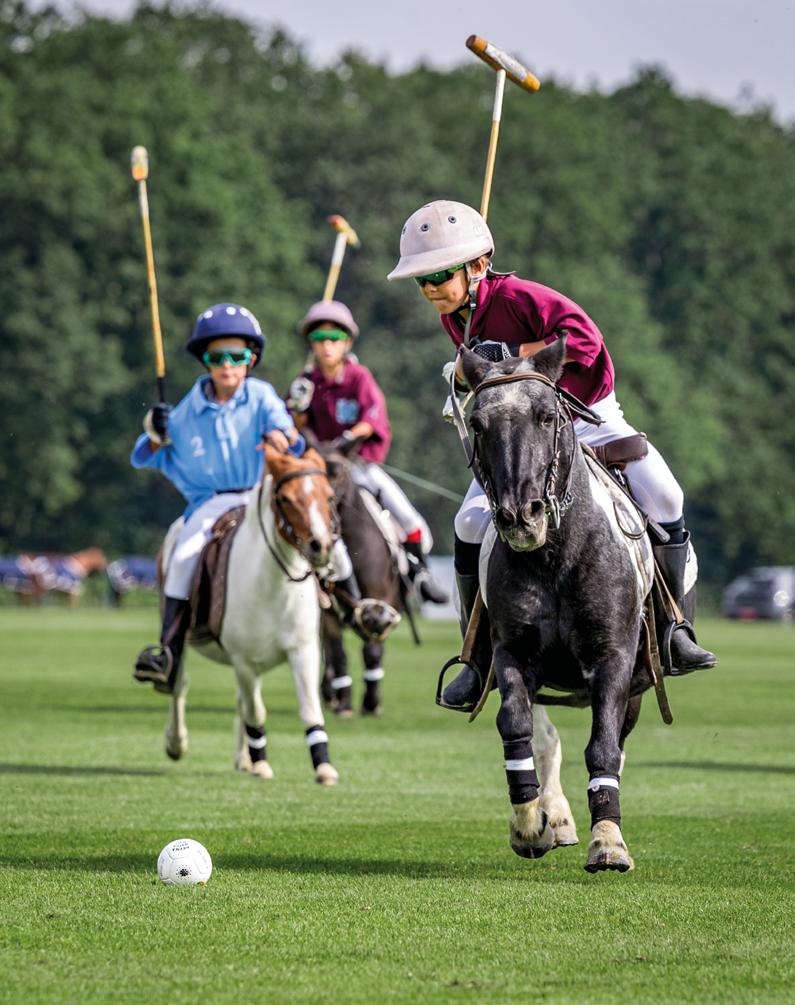
Roulez jeunesse avec la troisième édition de la Mini Polo Nations Cup, dédié aux jeunes joueurs de 13 ans et moins, qui promet déjà une journée de compétition palpitante, de passion et de partage. Rendez-vous les 28 juin 2026 pour célébrer ensemble l’avenir du polo !
Roll on youth with the third edition of the Mini Polo Nations Cup, dedicated to young players aged 13 and under, which already promises of thrilling competition, passion, and camaraderie. Join us on June 28, 2026, to celebrate the future of polo together!
HAUTS DE FRANCE
Hadrien VILAIN
Raphael VILAIN
Perceval de KERDANIEL
Victoria ARIAUX VILLEGAS
ARGENTINA 1
Andrés AMBROSETTI
Lexie AMBROSETTI
Carla BEHAR TELLIER
Frésia GAZTAMBIDE
BELGIUM
William DE PONDT
Chloé OLLIER
Léonora JAROCH
Matilde BRAGOLI
ARGENTINA 2
Justo RUIZ GUIÑAZU
Antonia RUIZ GUIÑAZU
Felipe GOTI
TBA
Avec AllVisory(1), agrégez vos comptes sur une seule et unique plateforme pour profiter d’une vue à 360 de votre patrimoine et de recommandations personnalisées(2) par nos experts AllVisory.
Pour en savoir plus, scannez ce QR code.
(1) AllVisory est un applicatif en ligne accessible depuis l’espace sécurisé Crédit agricole en Ligne (CAEL). Son accès est soumis à l’accord de la Caisse Régionale Brie Picardie. L’utilisation du Service AllVisory est soumise au barème tarifaire en vigueur (hors coûts facturés par les opérateurs téléphoniques ou de connexion Internet). (2)Servicesoumisàlasouscriptiond’uncontratenGestiond’Allocationd’Actifs.Renseignez‑vousauprèsdevotreconseiller. CAISSEREGIONALEDECREDITAGRICOLEMUTUELBRIEPICARDIE Sociétécoopérativeàcapitalvariable,agrééeentantqu’établissement de crédit, dont le siège social est 500 rue Saint‑Fuscien 80095 AMIENS CEDEX 3 ‑ 487 625 436 RCS AMIENS. Société de courtage d’assurances immatriculée au Registre des Intermédiaires en Assurances sous le n° 07 022 607. Titulaire de la carte professionnelle TransactionsurImmeublesetfondsdecommerceetGestionImmobilièrenuméroCPI80012021000000016délivréeparlaCCId’Amiens, bénéficiant de Garantie financière et Assurance Responsabilité Civile Professionnelle délivrées par CAMCA 53 rue de la Boétie 75008 PARIS 05/2025 Créditphoto:GettyImages.
CHANTILLY FRANCE
COUPE PGH 2026
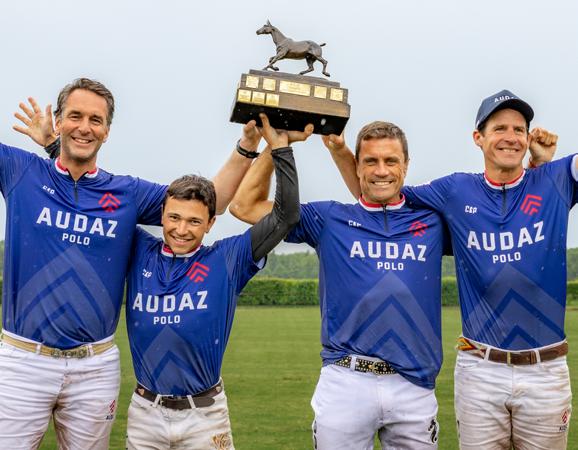
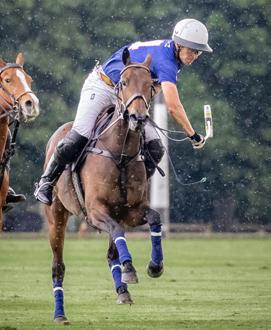
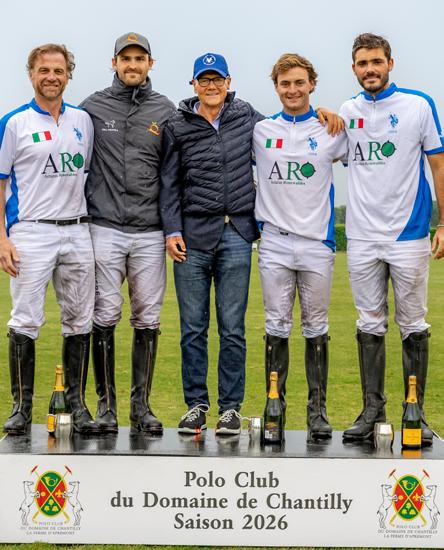
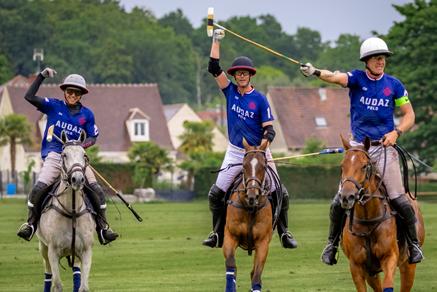
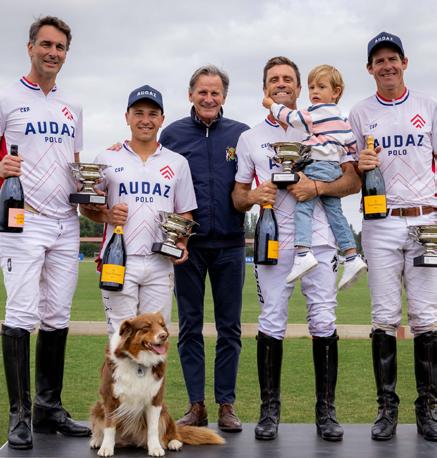
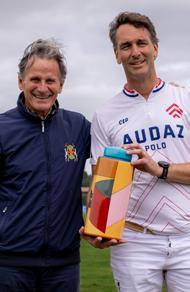
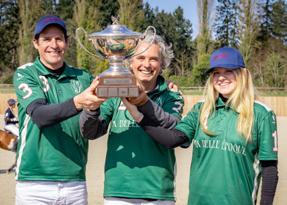
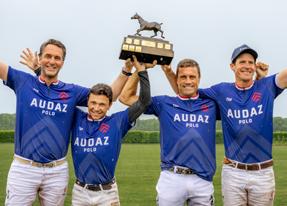
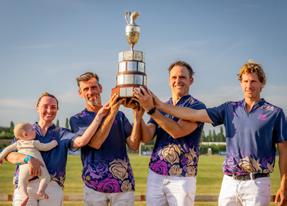
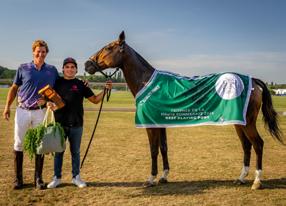
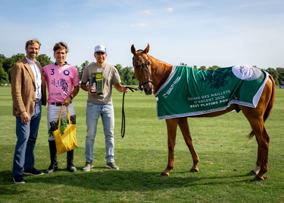
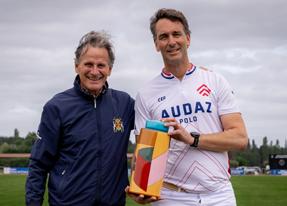
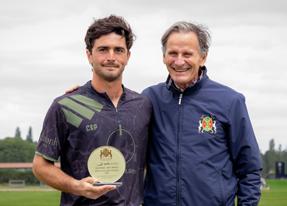
Cette première finale de 12 goals de la saison a offert ce que le polo sait produire de mieux : de l’intensité, du rythme, des actions spectaculaires et des chevaux parfaitement préparés sur l’excellent terrain n°1 de la Ferme d’Apremont. Mais cette première grande finale de la saison 2026 au Polo Club du Domaine de Chantilly racontait aussi autre chose.
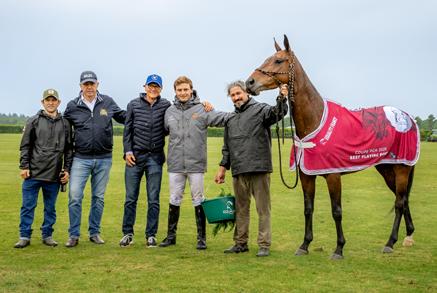
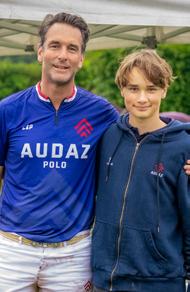
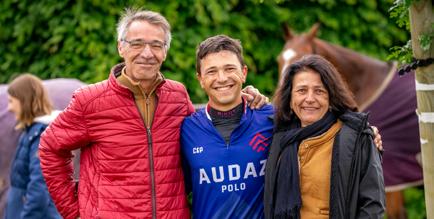
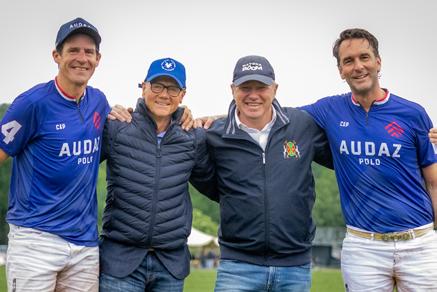
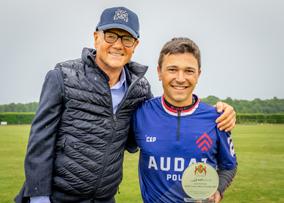
Cette Coupe PGH, disputée en hommage au fondateur du club, Patrick Guerrand-Hermès, disparu en août 2024 lors d’une promenade à cheval sur ses terres d’Apremont, se jouait cette fois sous les yeux de son fils Olaf. Et le destin a voulu qu’elle soit remportée par Audaz, l’équipe menée par Brieuc Rigaux, l’un de ces joueurs que Patrick Guerrand-Hermès avait repérés très tôt, puis accompagnés et soutenus dans leur ascension au plus haut niveau du polo français.
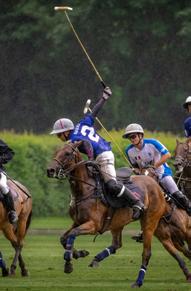
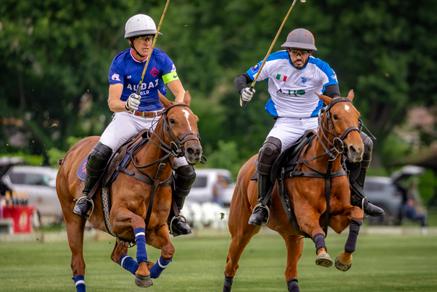
Sur le terrain, la finale a tenu toutes ses promesses. Un vrai match de 12 goals, engagé et spectaculaire, où les deux équipes se sont rendu coup pour coup. À la fin du troisième chukker, le score était encore parfaitement équilibré (5-5), même si Audaz semblait peu à peu prendre l’ascendant et mieux contrôler le tempo de la rencontre.
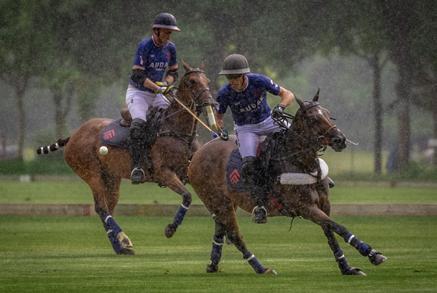
Puis la pluie est arrivée.
Une de ces averses capables de changer totalement la physionomie d’une finale. Et de fait, Audaz a semblé passer à la vitesse supérieure.
The first 12-goal final of the season delivered everything polo does best: intensity, rhythm, spectacular plays and beautifully prepared horses on the superb No.1 field of the Ferme d’Apremont. But this first major final of the 2026 season at the Polo Club du Domaine de Chantilly was also about something more.
This PGH Cup, played in tribute to the club’s founder Patrick Guerrand-Hermès, who passed away in August 2024 during a horseback ride on his beloved Apremont grounds, took place this time in the presence of his son Olaf. And somehow, fate decided that the trophy would be won by Audaz, the team led by Brieuc Rigaux, one of the players Patrick Guerrand-Hermès had spotted at a very young age before mentoring and supporting him on his rise through the highest levels of French polo.
On the field, the final fully lived up to expectations. A true 12-goal battle, intense and spectacular, with both teams trading blows throughout the game. At the end of the third chukker, the score was still perfectly tied at 5-5, although Audaz gradually seemed to gain the upper hand and control the tempo of the match a little better.
Then came the rain…
One of those sudden downpours capable of completely changing the complexion of a final. And indeed, Audaz suddenly appeared to shift into another gear.
« Pas tout à fait, rectifie Brieuc Rigaux. En réalité, nous avions plutôt bien commencé. Nous menions avant qu’ils ne reviennent. Je pense qu’on les a un peu pris à froid au départ. Après, honnêtement, cette pluie correspondait assez bien au tempérament de notre équipe. Il y a énormément de motivation, une super ambiance entre nous, tout le monde joue avec le couteau entre les dents… Alors la pluie, nous ne l’avons même pas sentie. »
“Not entirely,” smiled Brieuc Rigaux. “Actually, we had started pretty well. We were leading before they came back into the game. I think we caught them a little cold at the beginning. But honestly, those conditions suited the spirit of our team quite well. There’s huge motivation, a fantastic atmosphere between us, and everyone plays with the knife between their teeth… So the rain, we barely even noticed it.”
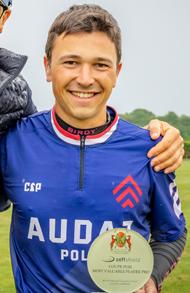
Depuis quelques années déjà, le n°3 de cette équipe, Jota Chavanne, évolue à Chantilly au sein de différentes équipes, mais jamais avec Brieuc Rigaux. Pour cette saison 2026, ce dernier a convaincu l’Argentin de rejoindre la formation de son capitaine Nicolas Constant. Ces deux-là se sont bien trouvés ! Dans cette équipe, le quatrième homme mérite lui aussi d’être mis en lumière. Positionné en n°2, le jeune Côme Dubois a largement dépassé le simple rôle d’équipier modèle, multipliant les actions décisives. À commencer par ce back ouvert, expédié entre les poteaux avec beaucoup de sang-froid, sur une reprise d’une improbable balle de Brieuc Rigaux. Une action qui n’est pas étrangère au fait qu’il a été nommé MVP, meilleur homme du match.
Pour Olaf Guerrand-Hermès, cette finale possédait forcément une résonance particulière : « Oui, c’est très émouvant pour moi. Brieuc jouait déjà avec mon père il y a pratiquement trente ans. Alors le voir aujourd’hui gagner ce trophée PGH, trente ans plus tard… cela a forcément une signification très spéciale. Je suis très heureux pour lui. Et très heureux qu’il ait gagné ici aujourd’hui. »
Malgré ce temps presque “à l’anglaise”, la pluie n’aura rien gâché. Bien au contraire. Elle aura même permis de mesurer une nouvelle fois l’excellente tenue des terrains de Chantilly avant que cette belle journée de polo ne se termine dans une atmosphère chaleureuse entre bulles, empanadas et longues discussions au bord du terrain.
For several years now, team number 3 Jota Chavanne has been playing in Chantilly with various teams, but never alongside Brieuc Rigaux. For the 2026 season, Rigaux convinced the Argentine to join the lineup captained by Nicolas Constant. Those two clearly found each other. Within the team, the fourth man also deserves special mention. Playing at number 2, young Côme Dubois did far more than simply fulfil his role, multiplying decisive plays throughout the final. Starting with that superb open backhand sent coolly through the posts after connecting with a pass from Brieuc Rigaux. A play that certainly contributed to Dubois being named MVP of the final.
For Olaf Guerrand-Hermès, the final naturally carried a very special meaning. “Yes, it’s extremely emotional for me. Brieuc was already playing with my father almost thirty years ago when they won the French Championship together. So seeing him win this PGH trophy today, thirty years later… obviously has a very special meaning for me. I’m very happy for him. And very happy that he won here today.”
Despite the almost “English-style” weather, the rain spoiled nothing. Quite the opposite, in fact. It once again highlighted the remarkable quality of Chantilly’s grounds before this beautiful day of polo ended in a warm atmosphere filled with champagne bubbles, empanadas and long conversations by the side of the field.
STATISTIQUES
Audaz : Nicolas Constant 0, Côme Dubois 2 (3 goals), Jota Chavanne 5 (1 goal) et Brieuc Rigaux 5 (5 goals, dont 3 pénalités).
BPP : Irenita Sonora (Libano x Power Pimpinela), jument de 12 ans jouée et appartenant à Tomas Delfino.
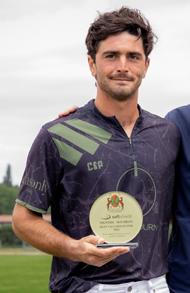
MVP by Softshield : Côme Dubois
CHANTILLY
ETERNAL J, ALIAS PACA, FRAPPE
FORT AVANT LA POLO NATIONS
CUP BARNES
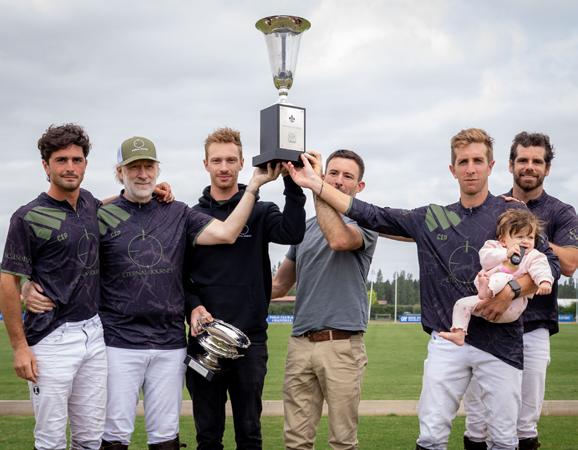
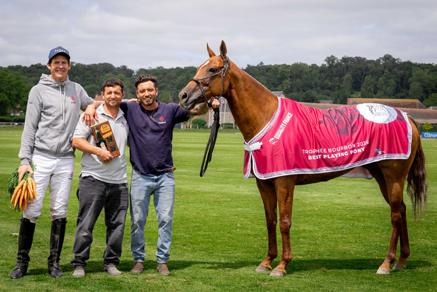
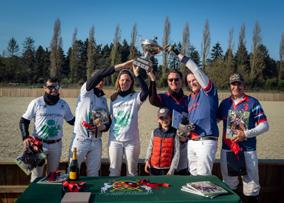
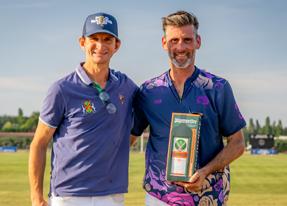
À quelques jours de la Polo Nations Cup Barnes, le Trophée Bourbon a livré un premier enseignement : il faudra compter avec Eternal J. Vainqueur de la toute première édition de la Polo Nations Cup en 2023 sous les couleurs de France-PACA, le quatuor tricolore emmené par Jean-Claude Le Grand a frappé un grand coup en remportant le deuxième tournoi de 12 goals de la saison.
Opposée à Audaz, équipe invaincue depuis le début du printemps et victorieuse de la Coupe PGH, la formation de Julien Reynes et Louis Jarrige s’est imposée au terme d’une finale particulièrement disputée.
Menant longtemps au score grâce notamment à un Louis Jarrige étincelant, auteur de cinq goals et nommé meilleur joueur de la finale, Eternal J a résisté jusqu’au bout au retour des favoris. La différence s’est jouée sur le demi-goal accordé au coup d’envoi en raison du handicap d’équipe inférieur d’Eternal J sur le papier.
Au-delà du résultat sportif, cette victoire raconte plusieurs histoires. Celle du Trophée Bourbon d’abord, créé en 2018 à l’initiative de Patrick Guerrand-Hermès pour célébrer l’empreinte de la Maison de Bourbon dans l’Oise. Le premier trophée avait d’ailleurs été remis par le prince Charles-Emmanuel de Bourbon-Parme.
With the Polo Nations Cup Barnes just days away, the Trophée Bourbon has delivered its first lesson: Eternal J — and therefore France-PACA — will be a force to reckon with. Winners of the very first PNC edition in 2023 under the France-PACA colours, the French quartet led by Jean-Claude Le Grand struck a decisive blow by claiming the second 18-goal tournament of the season.
Up against Audaz — unbeaten since the start of spring and victors of the Coupe PGH — the team of Julien Reynes and Louis Jarrige prevailed in a closely fought final.
Leading for much of the match — thanks in no small part to a brilliant Louis Jarrige, who scored five goals and was named Most Valuable Player (MVP) of the final — Eternal J held on until the end as the favourites mounted a strong comeback. The difference came down to the half-goal advantage awarded at the throw-in, reflecting Eternal J’s lower team handicap on paper.
Beyond the sporting result, this victory tells several stories. First, the story of the Trophée Bourbon itself, created in 2018 at the initiative of Patrick Guerrand-Hermès to celebrate the legacy of the House of Bourbon in the Oise. The inaugural trophy was presented by Prince Charles-Emmanuel de Bourbon-Parme.
STATISTIQUES
Eternal J : Jean-Claude
Le Grand 0, Lucas Nottin remplacé par Juan Cruz Araya 3 (2 goals), Louis Jarrige 4 (5 goals, dont 3 pénalités) et Julien Reynes 4 (1 goal).
Audaz : Nicolas Constant 0, Côme Dubois 2, Jota Chavanne 5 (1 goal) et Brieuc Rigaux 5 (6 goals, dont 5 pénalités.). 1 Penalty 1
Progression Eternal J :
½-1 / 3½-2 / 6½-2 / 7½-6 / 8½-8
BPP : Alberta Biscotti, (Serpico x Bruja), jument de 15 ans jouée et appartenant à Brieuc Rigaux.
MVP amateur by Drimmer : Nicolas Constant
MVP by Softshield : Louis Jarrige
Mais ce succès illustre aussi la réussite d’un projet patiemment construit par Jean-Claude Le Grand autour de joueurs français de premier plan. Fidèle à cette philosophie depuis de nombreuses années, le patron d’Eternal J récolte aujourd’hui les fruits d’un travail mené aux côtés de Julien Reynes et Louis Jarrige, rejoints avec succès par l’Argentin Juan Cruz Araya à la suite de la blessure de Lucas Nottin.
« Cela fait quasiment quinze ans que je joue avec Jean-Claude, j’ai pratiquement commencé à ses côtés », confie Julien Reynes. « C’est l’aboutissement d’un projet qu’il a toujours voulu mettre en place : faire confiance aux joueurs français. Gagner ainsi, c’est sa manière d’aider le polo français et, j’en suis le premier bénéficiaire. »
Le capitaine d’Eternal J tient également à saluer le club qui accueille cette aventure sportive : « Pour moi, c’est aujourd’hui l’un des plus grands clubs français. Pouvoir y jouer toute l’année, participer à plusieurs tournois simultanément et toujours bénéficier du soutien du club, c’est quelque chose de précieux. J’espère sincèrement qu’il fêtera encore trente années supplémentaires. »
À quelques jours de la Polo Nations Cup Barnes, une chose est sûre : après sa victoire dans le Trophée Bourbon, Eternal J / PACA ne pourra plus avancer masquée : « On va repartir avec la même stratégie : arriver avec un capital de confiance, mais pas trop non plus », sourit Julien Reynes. « Soulever cette coupe une deuxième fois serait forcément quelque chose de spécial. »
Le message est passé.
But this success also reflects the achievement of a project patiently built by Jean-Claude Le Grand around some of France’s leading players. True to this philosophy for many years, the Eternal J patron is now reaping the rewards of work carried out alongside Julien Reynes and Louis Jarrige, successfully reinforced by Argentine Juan Cruz Araya following Lucas Nottin’s injury.
«I’ve been playing with Jean-Claude for almost fifteen years — I practically started alongside him,» says Julien Reynes. «This is the culmination of a project he always wanted to build: trusting French players. Winning this way is his way of supporting French polo, and I’m the first to benefit from it.»
The Eternal J captain also pays tribute to the club that has hosted this sporting adventure: «For me, this is now one of the greatest clubs in France. Being able to play here all year round, competing in several tournaments simultaneously and always having the club’s support — that means a great deal. I genuinely hope it goes on to celebrate another thirty years.»
With the Barnes Polo Nations Cup just around the corner, one thing is certain: after their victory in the Trophée Bourbon, Eternal J / France-PACA can no longer fly under the radar. «We’ll go back to the same approach: arriving with confidence, but not too much,» smiles Julien Reynes. «Lifting this cup a second time would be something special.»
Message received.
ARECO, WHERE ARGENTINA COMES TOGETHER
ARECO, QUAND L’ARGENTINE SE RETROUVE
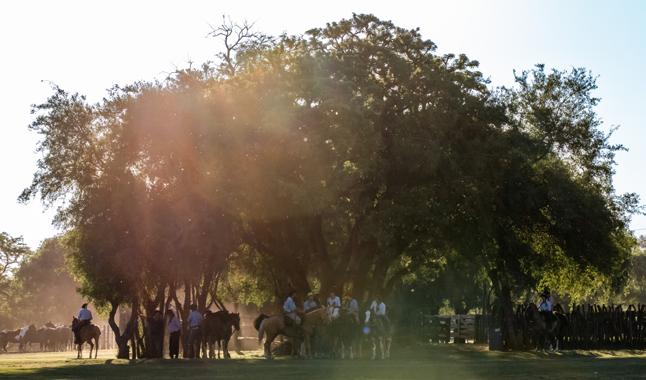
À un peu plus de 100 kilomètres de Buenos Aires, en poursuivant l’Acceso Norte et passant par Pilar - une route que tous les joueurs de polo connaissent par cœur - l’asphalte lisse finit par se dégrader, les nids de poules se multiplient, et l’environnement change. On quitte le polo pour entrer dans un autre univers. Quelques kilomètres plus loin, San Antonio de Areco apparaît.
Just over 100 kilometres from Buenos Aires, as you follow the Acceso Norte past Pilar - a road every polo aficionado knows by heart - the smooth asphalt begins to break up, potholes appear, and the landscape shifts. You leave the world of polo and enter something else entirely. A few kilometres later, San Antonio de Areco comes into view.
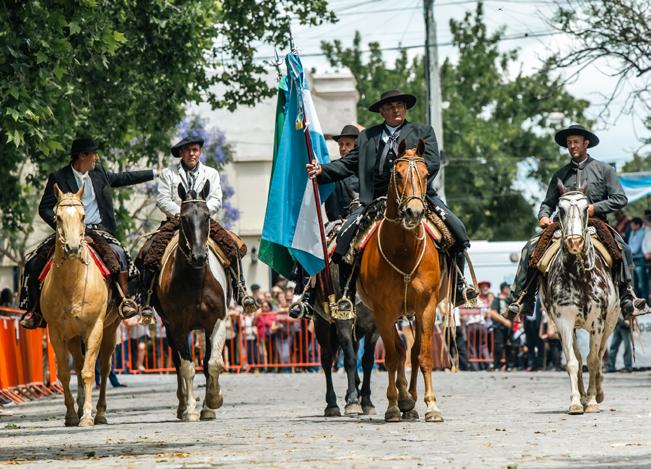
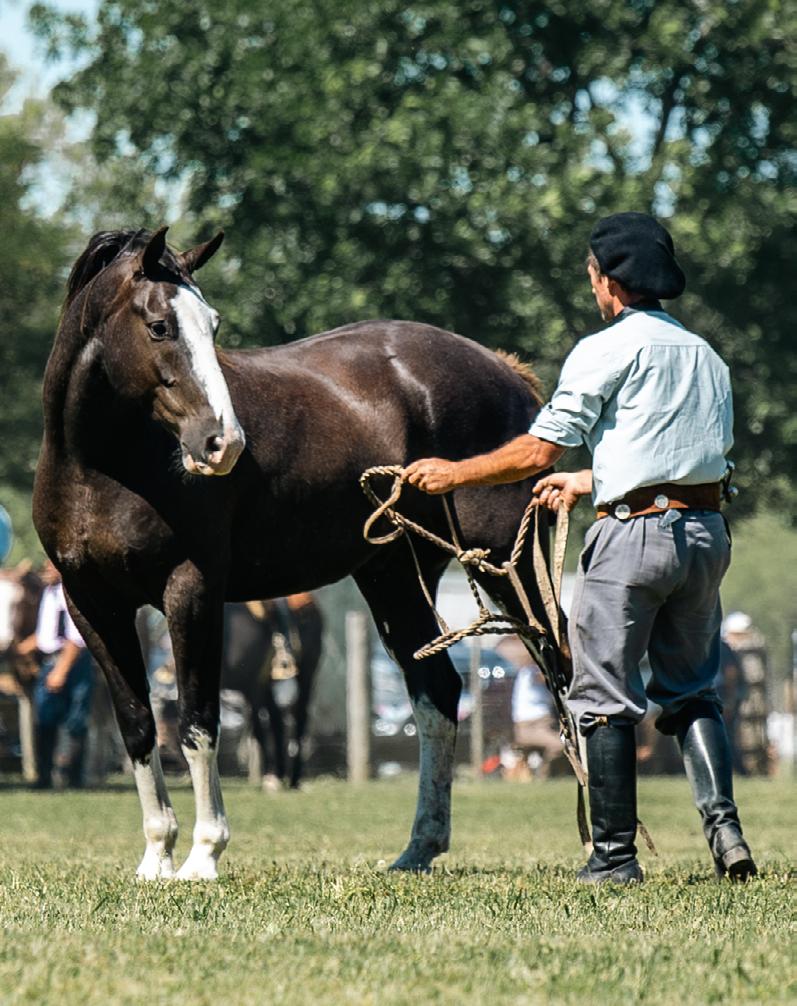
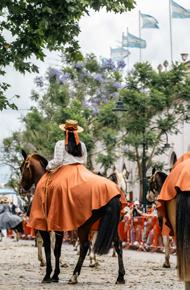
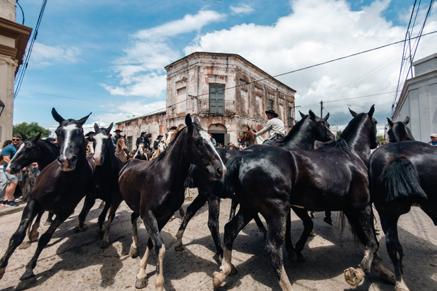
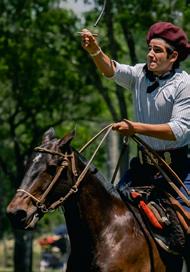
Le reste de l’année, le village vit à son rythme. On y croise encore des gauchos à cheval, qui attachent leur monture à un palenque avant d’entrer dans un bar ou de s’asseoir sur un pas de porte pour partager un maté. Quelques restaurants sans prétention, mais tellement chaleureux, des boutiques d’artisanat, du cuir, de l’argenterie - spécialité locale - et cette impression rare d’un monde qui n’a pas complètement changé.
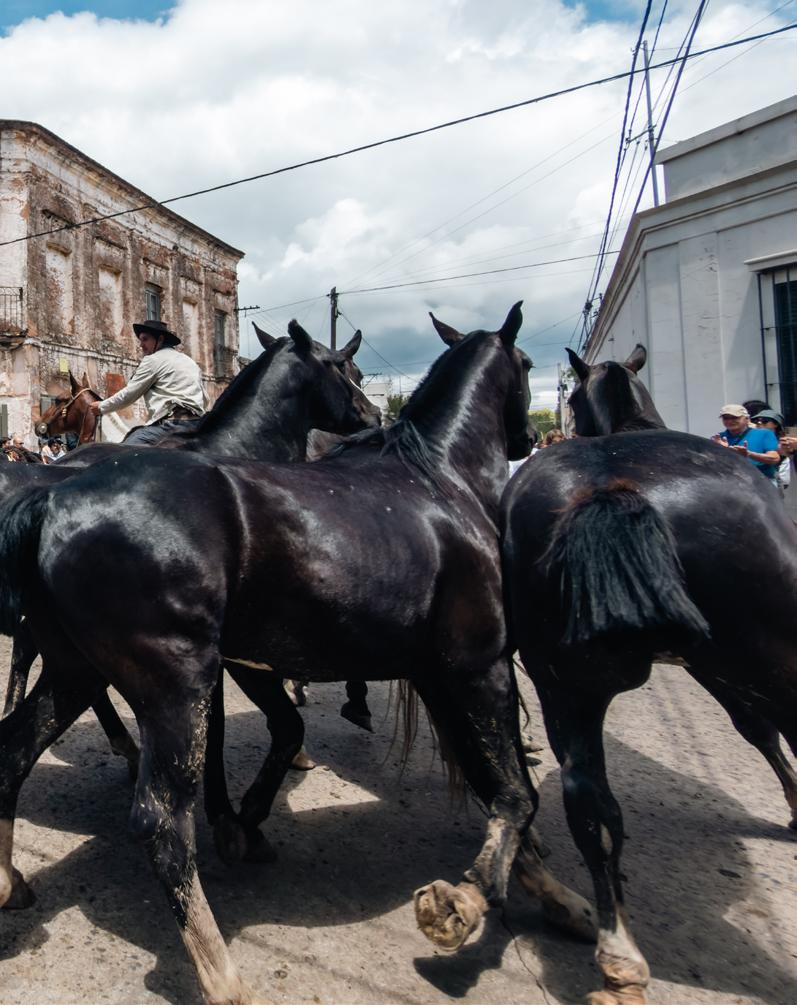
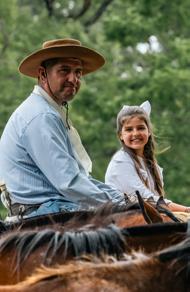
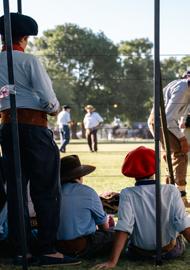
Puis, vers la mi-novembre, tout bascule. À l’occasion de la Fiesta de la Tradición, Areco se transforme. Des centaines de gauchos convergent vers le village, venus de toute l’Argentine. Les rues se remplissent, les chevaux partout, les pick-up, les familles, les enfants. Le calme disparaît, remplacé par une agitation joyeuse. On ne visite plus Areco, on y vient en pélerinage.
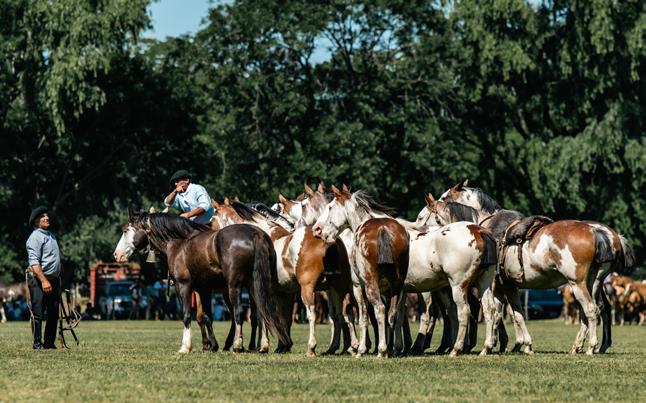
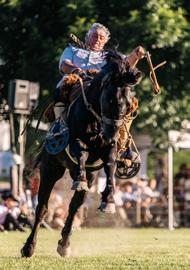
Au Parque Criollo, les épreuves s’enchaînent tout le week-end. Tropillas, jineteadas, sortijas. Rien de folklorique au sens touristique du terme. Ici, on ne joue pas à être gaucho. On l’est. Les chevaux sont regardés, jugés, admirés. Les cavaliers aussi. Les familles suivent, commentent, encouragent.
For most of the year, the town moves at its own pace. Gauchos still ride through the streets, tying their horses to a palenque before stepping into a bar or sitting on a doorstep to share a maté. There are a few unpretentious restaurants, warm and welcoming, small craft shops, leather goods, and silverwork - an artiistic local specialty - and that rare feeling of a place that has not entirely changed.
Then, in mid-November, everything shifts.For the Fiesta de la Tradición, Areco transforms. Hundreds of gauchos arrive from across Argentina. The streets fill with horses, pick-ups, families, children. The quiet disappears, replaced by a restless, almost joyful energy. You do not visit Areco anymore. You come here like on a pilgrimage.
At the Parque Criollo, events follow one another throughout the weekend. Tropillas, jineteadas, sortijas. Nothing staged for tourists. Here, no one pretends to be a gaucho. They simply are. Horses are watched, judged, admired. Riders too. Families gather, comment, support.
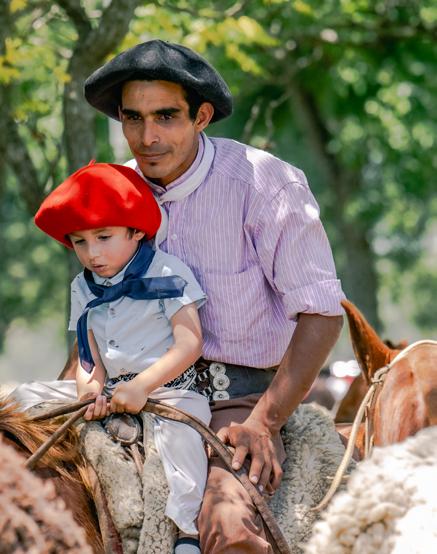
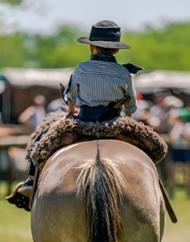
Mais ce qui marque vraiment n’est pas là. Ce sont les scènes autour. Un enfant déjà à cheval, trop petit pour son criollo mais déjà en place. Un autre qui observe, en silence. Un père qui ajuste une sangle, un geste précis, répété mille fois. Ici, la transmission ne se raconte pas. Elle se voit. Le grand défilé traverse ensuite la ville. Des centaines de cavaliers, parfois plus, avancent lentement dans les rues. Les tenues varient selon les régions, les détails changent, mais l’ensemble reste d’une cohérence saisissante. Rien n’est improvisé. Rien n’est figé non plus.
Le cheval n’est pas un décor. Il est au centre de tout.
Le soir, les peñas prennent le relais. Musique, guitare, voix, discussions. Les payadas surgissent, improvisées, parfois brillantes. On mange, on boit, on reste. Les enfants veillent aves les grands. Ils sont là, au milieu des adultes, comme ils l’ont été toute la journée.
À Areco, on ne célèbre pas une tradition. On la vit. Et c’est sans doute ce qui frappe le plus. Rien n’est reconstitué. Rien n’est joué pour plaire. La Fiesta de la Tradición ne montre pas un passé. Elle prolonge un présent.
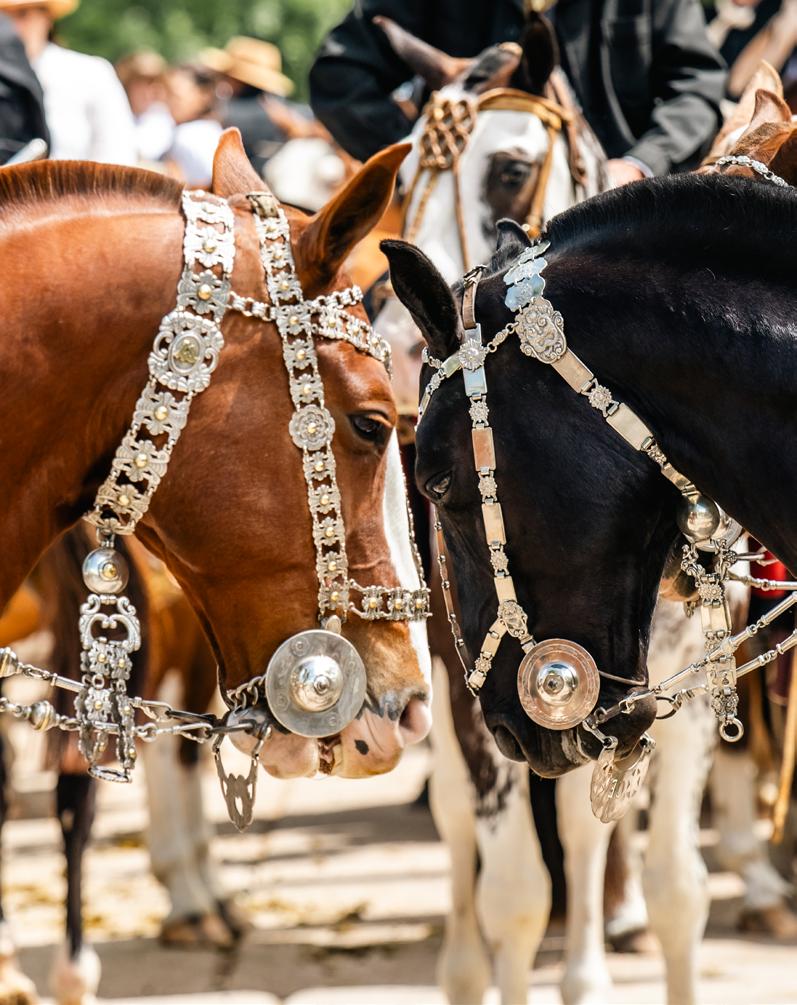
But what stays with you is not only the competitions. It is what happens around them. A child already on horseback, barely fitting the size of his criollo, yet perfectly at ease. Another one watching in silence. A father adjusting a strap, a precise gesture repeated countless times. Here, transmission is not explained. It is visible. The parade then moves slowly through the town. Hundreds of riders, sometimes more, advance through the streets. The outfits differ from one region to another, each detail telling its own story, yet the whole remains remarkably coherent. Nothing is improvised. Nothing is frozen either. And then there is the detail that catches the eye. The silver on bridles, breastplates, bits, entire pieces of tack, the work of the silversmith is everywhere. More than mere decoration, it is part of the tradition itself. but part of the tradition itself. Handcrafted pieces, engraved, assembled, polished, passed down. In Areco, silver is not an accessory. It is a language. A way of showing pride, identity, belonging.
The horse is not a backdrop. It is at the centre of everything.
At night, the peñas take over. Music, guitars, voices, conversations. Payadas emerge, improvised, sometimes brilliant. People eat, drink, stay. Children remain with the adults, just as they have all day.
In Areco, tradition is not performed. It is lived. And that is what strikes most. Nothing is reconstructed. Nothing is arranged to please. The Fiesta de la Tradición does not show a past. It extends a present.
GLOSSAIRE DU GAUCHO
GAUCHO GLOSSARY
Tropillas : Groupes de chevaux appartenant à un même propriétaire, conduits et présentés ensemble, souvent identifiables par leurs marques distinctives et leur discipline commune.
Groups of horses belonging to a single owner, driven and presented together, often identified by their shared markings and discipline.
Jineteada : Concours d’équitation traditionnel, similaire au rodéo, où un cavalier doit rester en selle sur un cheval à peine débourré pendant une durée déterminée.
A traditional riding contest, similar to rodeo, where a rider must stay mounted on a barely broken horse for a set period of time.
Peña : Rassemblement informel autour de la musique folklorique, de la nourriture et de la conversation, où les gens se réunissent pour partager et faire la fête.
An informal gathering built around folk music, food and conversation, where people come together to share and celebrate.
Sortija : Jeu d’adresse à cheval consistant à attraper un petit anneau au galop à l’aide d’une tige.
A game of skill on horseback involving catching a small ring at a gallop using a pole.
Payada : Échange improvisé, chanté ou parlé, entre artistes, accompagné à la guitare, où les vers sont créés sur le vif, racontant souvent des histoires de la vie des gauchos.
An improvised, sung or spoken exchange between performers, accompanied by guitar, where verses are created on the spot, often telling stories of gaucho life.
Criollo : Le cheval traditionnel du gaucho, descendant des chevaux espagnols amenés par les conquistadors. Robuste, instinctif et résistant, il constitue le fondement historique du cheval de polo actuel, désormais de plus en plus influencé par les lignées de pur-sang.
The traditional horse of the gaucho, descended from the Spanish horses brought by the conquistadors. Hardy, instinctive and resilient, it forms the historical foundation of today’s polo horse, now increasingly influenced by Thoroughbred bloodlines.
Palenque : Poteau ou rail en bois où les gauchos attachent leurs chevaux, que l’on trouve souvent à l’extérieur des bars ou des maisons dans les villes rurales. Par extension, le terme est également utilisé au polo pour décrire la zone où les chevaux sont attachés le long du terrain. A wooden hitching post or rail where gauchos tie their horses, often found outside bars or houses in rural towns. By extension, the term is also used in polo to describe the area where horses are tied along the field.
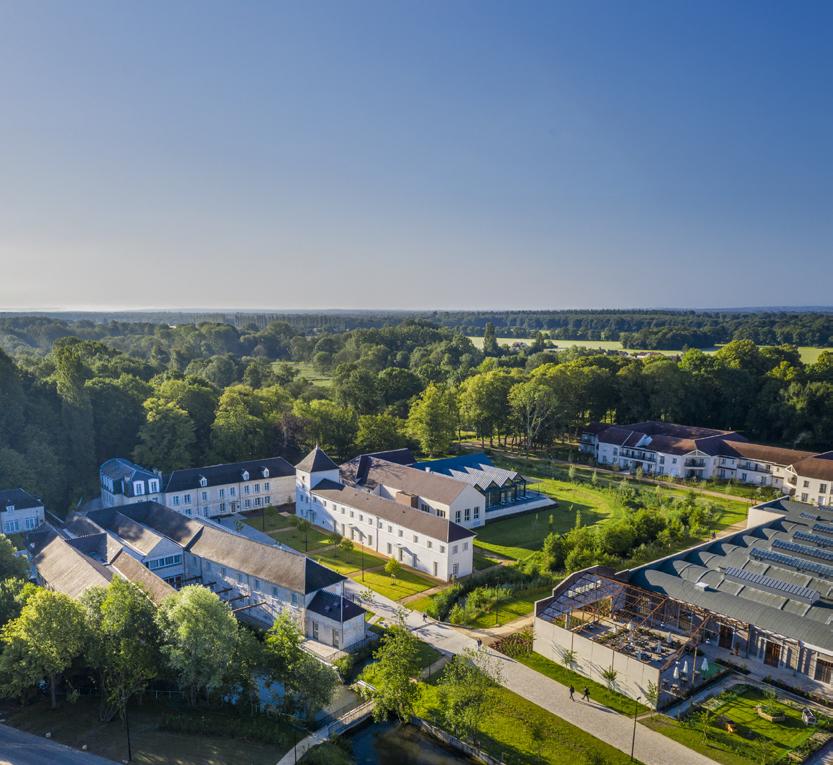
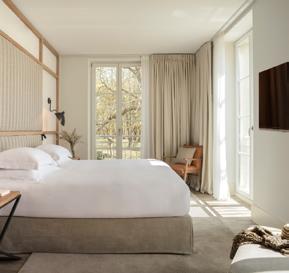
Hôtel 4* au coeur d’un écrin de verdure, à 45 min de Paris
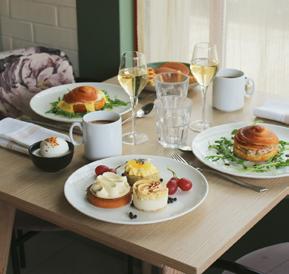
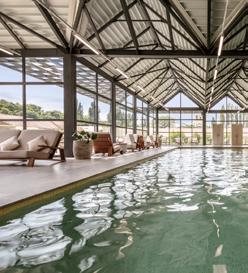
Restaurants - Bar - Spa Sothys - Espaces événementiels
GRANDPAVILLONCHANTILLY
L’école de polo du Polo Club du Domaine de Chantilly est l’une des meilleures portes d’entrée en France pour pratiquer ce sport fascinant. Partie intégrante de la Ferme d’Apremont, elle forme depuis plus de vingt ans des cavaliers de tous âges et de tous niveaux, encadrés par des entraîneurs diplômés et des joueurs professionnels.
APPRENDRE LE POLO À CHANTILLY
LEARNING POLO IN CHANTILLY
Pour essayer le polo et ensuite se lancer, le « pack découverte » est idéal : deux heures partagées entre théorie et pratique, avec prêt du matériel, pour apprendre ses premiers coups de maillet au pas, au trot ou au galop. Les cours collectifs, limités à six élèves, favorisent la progression dans une ambiance conviviale. Très vite, les débutants participent à leurs premiers chukkers, puis passent les « maillets » de Bronze, d’Argent et d’Or, qui jalonnent l’accès à la compétition.
L’école transmet aussi une culture d’homme ou de femme de cheval : connaissance et bien-être du cheval, équitation fine, règles du jeu et valeurs comme le fair-play et le respect de tous. Les examens peuvent être validés dans tout club agréé par la Fédération Française de Polo. Avec un Maillet d’Or, on obtient son premier handicap et l’on peut jouer en tournoi, tout en continuant à progresser.
Une équipe d’enseignants hautement compétents Six entraîneurs DEJEPS composent l’équipe d’enseignants hautement compétents : Sébastien Philippot, Julien Reynes, Brieuc Rigaux, Jérôme Anier, Benoît Perrier et Pascal Jamet. Chacun apporte son expertise, du polo poney à la préparation au haut niveau. L’école dispose aussi d’une Arena écoresponsable, inaugurée au début de cet saison : 160 m par 70, la plus grande de France, pour pratiquer sur sable toute l’année et accueillir des tournois, notamment ceux de l’école, mais également l’Arena Polo Tour et d’autres compétitions en partenariat avec des clubs FFE ainsi que les stages.
À Chantilly, le polo se partage : enfants, adultes, débutants ou confirmés trouvent ici un lieu où apprendre, progresser et vivre la passion du jeu à cheval.
The Polo School of the Polo Club du Domaine de Chantilly is one of the finest gateways in France to discover this unique sport. Based at the Ferme d’Apremont, it has been welcoming players of all ages and levels for over twenty years, under the guidance of qualified coaches and professional players.
Polo, the oldest team sport in the world, blends horsemanship, skill and teamwork. Two teams compete on horseback to send a small ball through the opponent’s goal using a mallet. The rules may seem simple, but the game’s depth lies in its strategy, the partnership with the horse and the fluidity of collective play. For newcomers, the “Discovery Pack” offers the perfect first step: two hours of theory and practice, with equipment provided, to learn the basics at walk, trot or canter. Small group lessons encourage progress in a friendly atmosphere, and beginners are soon playing their first chukkers. From there, they advance through the bronze, silver and gold mallets, which mark the path to competition. The school also teaches the fundamentals of good horsemanship: caring for the horse, refined riding, knowledge of the rules and values such as respect and fair play. A Golden Mallet earns a first handicap and opens the door to tournaments, while training continues for higher goal competitions.
A skilled coaching team
Six State-Certified coaches make up the skilled coaching team: Sébastien Philippot, Julien Reynes, Brieuc Rigaux, Jérôme Anier, Benoît Perrier, Pascal Jamet and Stéphane Macaire, each bringing expertise ranging from pony polo to high-level preparation. The school also features France’s largest eco-friendly arena, inaugurated this summer, for year-round sand polo, tournaments and training camps.
In Chantilly, polo is for everyone – children, adults, beginners or experienced players – a place to learn, progress and share the passion for the game on horseback.
PALMARÈS 2026
Arena Polo Tour - Hdc : La Juliennais
Brieuc Rigaux, Raphaël Le Masne de Chermont et Victoria Normann.
Arena Polo Tour - Open : Équatoria & Los Vikingos
Coupe de France Féminine : Red Bull Girls
Victoria Thil, Roxane Valat et Fernanda Valiente.
Coupe de France Arena : Polo de Chantilly Agathe Mobian, Matilde Bragoli et Ilan Bossard.
Championnat de France Arena : Santa Cruz Diego Belaid, Chloé Sebban et Gaëtan Gosset.
Challenge PHP : Pura Vida Thijs Povel, Melanie Paully-Gesse, Emilie Rochon et Carole Muir.
LES PODIUMS
Coupe d’Aumale - 4/6 goals : Bauti
Coupe des Roses : El Ombú
Chloé Ollier, Antonela Puig, Catalina Puig et Romane Jamet.
Coupe d’Aumale - 0/2 goals : HRM
Edouard Vilain, Jules Legoudin, Roxane Valat et Hadrien Vilain.
Coupe des Mousquetaires : MHR
Alexis de Russe, Jules Legoubin, Paloma Lauro et Joeffrey Ruckert.
Paloma Lauro, Yoko Qiu, Côme Dubois et Brieuc Rigaux.
Les Classiques de Chantilly : Garde Royale Sidi Mohamed Elmhamdi, Moulay El Hanafi, Soyhair Lechgar et Aziz Outaleb.
Trophée du Bois Lieutenant : Mustang Ciro Urturi, Françoise Okala, Lucie Venot et Sylvestre Fanelli.
PALMARÈS 2026
Trophée d’Apremont : FC Mag Voltex
Houcine Koujane, Said Ait Ouaraz, Paloma Lauro et Stanislas Clavel.
Ladies Polo Cup : Berta Polo
Victoria Thil, Justine Caux, Pupi Sirvent et Fernanda Valiente.
Trophée d’Apremont : FC Mag Voltex
Houcine Koujane, Said Ait Ouaraz, Paloma Lauro et Stanislas Clavel.
Trophée de l’Aire Cantilienne : Surazo
Benjamin Peureux, Marie-Jeanne Kappweiller, Thijs Povel et Dorian Bulteau.
Coupe Berta Polo : Las Floreales
Valentin Hue, Maike Hoelthy, Jacinto Peralta et Gaston Beguerie.
Coupe PGH : Audaz
Nicolas Constant, Come Dubois, Jota Chavanne et Brieuc Rigaux.
LES PODIUMS
Scandinavian Cup : Majoa Paris Opaline
Chloé Ollier, Antonela Puig, Catalina Puig et Romane Jamet.
Trophée Bourbon : Eternal J Louis Jarrige, Jean-Claude Le Grand, Lucas Nottin et Julien Reynes.
Coupe des Ecuyères : Berta Polo Vanessa Soria, Charlotte Garaud, Pupi Sirvent et Matilde Bragoli.
Coupe des Maillets d’Argent : Casa al Riyadh
Edouard Vilain, Jules Legoudin, Roxane Valat et Hadrien Vilain.
Nam’s Cup : Hecla Elena, Lucie et Pearl Venot et Jérôme Anier.
Trophée de la Haute Pommeraye : Las Floreales Maike Hoelthy, Gaëtan Gosset, Victor Decrion et Gaston Beguerie.
PALMARÈS 2026
Arena Polo Tour : Pony Q5
Hongre de 13 ans joué et appartenant à Brieuc Rigaux issu de la Cría d’Agustin Merlos.
Coupe d’Aumale : Chimango
Open Demente x Gallareta, hongre de 8 ans, joué et appartenant à Jules Legoubin.
Coupe d’Aumale : Triunfo Emperador
Lavinia Naipe x Mía, hongre de 11 ans, joué par Brieuc Rigaux et appartenant à Nicolas Constant.
Trophée du Bois Lieutenant : JM Bratislava jument de 10 ans joué par Ciro Urturi, appartenant à Juan Jauretche.
Coupe PGH : Irenita Sonora Machitos Líbano x Power Pimpinela, jument de 12 ans jouée et appartenant à Tomas Delfino .
Coupe Berta Polo : Noruego joué et appartenant à Julien Reynes.
LES MEILLEURS CHEVAUX DES FINALES - BPP
Trophée Bourbon : Alberta Biscotti Serpico x Bruja, jument de 15ans jouée et appartenant à Brieuc Rigaux.
Trophée de la Haute Pommeraye : Dolfina Forever Small. Dolfi E01 Cura-Clon1 x Dolfina D05 Small Pearson- CLON 5, jouée et appartenant à Gaston Beguerie.
Coupe des Maillets d’Argent : Embrujo Fakir Machitos Líbano x Fanny, hongre de 10 ans joué par Ramiro Zavaleta.
PALMARÈS 2026
Arena Polo Tour - MVP amateur
Raphaël Le Masne de Chermont
Coupe de France Féminine - MVP amateur Victoria Thil
Coupe de France - MVP amateur Tobias Ollier.
Coupe PGH - MVP by Softshield Come Dubois
Coupe Berta Polo - MVP Gaston Beguerie
Coupe des Maillets d’Argent - MVP by Drimmer Louis Jarrige
LES MEILLEURS JOUEURS DES FINALES - MVP
Trophée Bourbon - MVP by Drimmer Nicolas Constant
Trophée Bourbon - MVP by Softshield Louis Jarrige
Trophée de la Haute Pommeraye - MVP
Gaëtan Gosset
Le Polo Club du Domaine de Chantilly tient à remercier...
La Fédération Française de Polo, l'ensemble des institutions, nos partenaires, R&B PRESSE et tout spécialement à Sophie Pailloncy, Pascal et Adèle Renauldon qui se sont impliqués dans la création de ce programme.
... Et aussi ceux sans qui ce tournoi ne serait pas ce qu'il est :
Philippe Perrier, notre directeur général
Benoît Perrier et son équipe, à l'organisation et aux évènements
Justine Jacquemot, à la communication et aux photos
Adrien Le Gallo et Philippe Perrier au Capitanat des Jeux
Valerie Mobian et toute son équipe du Restaurant
« L'Estancia »
Marie Agnès, à la coordination et l'administratif
Emmanuel, à la comptabilité
Sébastien, notre premier garçon d'écurie
Olivier et son équipe pour les terrains
Igor et tous ses petits Hommes Verts
Thomas à l'approvisionnement et distribution des fourrages et aliments
Toute l’équipe vétérinaire de la clinique des Aigles
Naima et Hakim Rezkallah, nos médecins urgentistes
The Domaine de Chantilly Polo Club would like to thank:
The Fédération Française de Polo, all the institutions, our partners, R&B PRESSE and especially Sophie Pailloncy, Pascal and Adèle Renauldon, who were involved in the creation of this program.
Director of publication: Polo Club du Domaine de Chantilly
Translations: Sophie Pailloncy - s.pailloncy@rbpresse.com
Photos: Justine Jacquemot, R&B Presse / Adèle et Pascal Renauldon, Naïade Plante, DR BARNES
Printer: DB Print
Art direction: Madeline Peirsman
CHANTILLY - Face à l’hippodrome et près du château
Au sein d’un jardin clos de plus de 2 000 m², hôtel particulier d’exception d’environ 700 m² sans vis-à-vis. Réceptions élégantes, 7 chambres, bureaux et vaste potentiel d’aménagement. DPE : C/C.
4 500 000 €
CHANTILLY - À seulement 35
minutes de Paris
Cette élégante maison de maître offre de beaux espaces de réception, 5 chambres et un jardin paysagé, à proximité de la gare et de la forêt. Piscine intérieure chauffée, salle de sport, studio indépendant et dépendances. DPE : D/D.
1 850 000 €
CHANTILLY - À quelques pas du château
Cette demeure du XIII e siècle, entièrement rénovée, offre des prestations haut de gamme, de beaux volumes et 4 suites. Jardin paysagé, terrasses, piscine chauffée et dépendance complètent cette propriété en pierre de taille. DPE : C/D.
2 500 000 €
Aux portes de Paris et à 20 minutes de Chantilly
Cette propriété de 10 hectares comprend une élégante demeure bourgeoise du XIXe siècle et une ancienne ferme du XVII e siècle réhabilitée. Parc paysagé aux arbres centenaires, piscine avec pool house, court de tennis et vues dégagées. DPE : NC.