

Victim Journal Police








MALIBU 5 Star Ancap, Bluetooth, Cruisel, 2.4L Engine Rear Park Assist, Reverse Camera, Alloys, Smartphone App Integration Colour Touch Screen, Push Button Start.
features Contents
10 Victim
Detective Rod Hannam had kept a “dark, destructive secret” for decades but asked the Police Journal to reveal it for the sake of other victims.


reGuLars
An adventurous life
She undertook a bold experiment with bodybuilding in 2006, but Brett Williams discovered that Shelley Joy had dared to be different – and defiant – right from childhood.

Brett Williams editor (08) 8212 3055

Dr Rod Pearce Health Writer
Publisher: Police Association of South Australia (08) 8212 3055
Advertising: Police Association of South Australia (08) 8212 3055

Jim Barnett Motoring Reviewer
Design: Sam k leidon 0417 839
Printing: finsbury green (08) 8234 8000
t he Police Journal is published by the Police Association of South Australia, 27 carrington St, Adelaide, SA 5000, (AB n 73 802 822 770). contents of the Police Journal are subject to copyright. Reproduction in whole or in part without written permission of the Police Association of South Australia is prohibited. o pinions expressed are not necessarily those of the editor. t he Police Association accepts no responsibility for statements made by advertisers. editorial contributions should be sent to the editor ( brettwilliams@pj.asn.au).

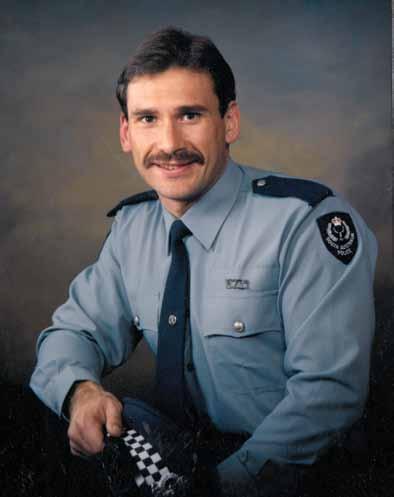
COVER: Detective Brevet Sgt Rod Hannam
Photography by Steve Mccawley
Police Association of South Australia

committee

PR eSiDent 0417 876 732



Sec R etARy 0417 817 075


DeLeGates
METRO NORTh BRANCh
elizabeth glenn Pink
Henley Beach Matthew k luzek
Holden Hill ....................... nigel Savage
gawler David Savage
golden grove Simon nappa
Parks Sonia giacomelli
Salisbury taryn trevelion
northern Prosecution .... t im Pfeiffer
COuNTRy NORTh BRANCh
Port Lincoln .................... Lloyd Parker (chair)
ceduna Anthony taylor
coober Pedy................... Jeff Page
kadina Ric Schild
nuriootpa Michael casey
Peterborough Andrew Dredge
Port Augusta Peter Hore
Port Pirie gavin Mildrum
Whyalla Wayne Davison
CRiME COMMAND BRANCh
Elizabeth......................... Kym Wilson (chair)
Major crime campbell Hill
Adelaide Dac t homas
forensic Services Adam gates
fraud Rhett Vormelker
Holden Hill ....................... narelle Smith
intelligence Support....... kevin Hunt
Port Adelaide Robert Beattie
South coast Jason tank
Sturt Brad Scott
METRO SOuTh BRANCh
Sturt ................................. Michael Quinton (chair)
Adelaide k im Williams
netley Mark Williams
norwood Ralph Rogerson
South coast Peter clifton
South coast.................... Russell Stone
Southern traffic .............. Peter tellam
Southern Prosecution Andrew Heffernan
Samantha Strange
Mark carroll
tom Scheffler
Daryl Mundy
Julian Snowden David Reynolds
trevor Milne DePU ty PR eSiDent
Michael kent
Jim tappin
Mitch Manning


organizer
iNDuSTRiAL
grievance officer

COuNTRy SOuTh BRANCh
Bernadette Zimmermann

FiNANCE
Wendy kellett
Mount Gambier ............. Andy McClean (chair)
Adelaide Hills Joe McDonald
Berri John gardner
Millicent nick Patterson
Murray Bridge kym cocks
naracoorte grant Baker
Renmark Dan Schatto
OPERATiONS SuPPORT BRANCh
Dog Ops Bryan Whitehorn (chair)
Police Academy francis toner
AcB george Blocki
Police Band neil conaghty

POLiCE JOuRNAL
editor
Brett Williams

MEDiA AND COMMuNiCATiONS

Matthew karger RECEPTiON
ExECuTiVE SECRETARiES
Anne Hehner, Jan Welsby, Sarah Stephens
comcen Athalie edman
HR David Wardrop
Mounted kelly-Anne taylor-Wilson
StAR operations ............ Allan Dalgleish
traffic David kuchenmeister
transit Michael tomney
WOMENS BRANCh
Jodie Cole (chair) (no delegates)
ATSi BRANCh
Shane Bloomfield (chair) (no delegates)
OFFiCERS BRANCh Alex Zimmermann

Shelley furbow
coHSWAc ..................... Bernadette Zimmermann
Superannuation
Bernadette Zimmermann
David Reynolds
Housing tom Scheffler
leave Bank ...................... tom Scheffler
legacy
Allan cannon
ContaCt Details
Level
chris Walkley
nicholas Damiani
Allan cannon
Vice-PR eSiDent
PresiDeNt
Mark Carroll
SA policing awaits the major parties’ guarantees
ThE
Police Association has sought critical commitments from Premier Jay Weatherill and Liberal leader Steven Marshall in light of the looming March state election.
Detailed letters, one to each party leader, leave no room for any misunderstanding of the pertinent issues on which the association seeks clear statements of intention.
POLiCE STAFFiNG
from both parties, the association seeks a guarantee on the Australian labor Party (SA branch) promise of extra police.
in 2013, the party committed to the recruitment of over 50 police officers above attrition in the 201314 financial year, and 134 officers above attrition between the financial years 2014-15 and 2017-18.
t hese increases can only come about through appropriate funding, so the association has also requested that the new government follow through with its commitment of an additional $35 million to meet these recruitment targets.
the association also strongly supports targeting the 18- to 20-year-old age group in respect of police recruitment. We believe such recruits would not only complement life-experienced police, but also serve as the backbone of the police force of the future.
t herefore, we have requested that both parties make a commitment to implement the scheduled youth and culturally Diverse Recruitment Program.
...a guarantee of anything less than up-to-the-minute technology will not suffice.
ENTERPRiSE BARGAiNiNG
t he association seeks a commitment from both parties that, if elected, they will maintain the enterprise bargaining framework which has served the industrial relations scene for the last 20 years. Additionally, the association has sought an assurance that, as a minimum, association members’ salaries be maintained at the midpoint of police salaries in Australia.
SuPERANNuATiON
t he association seeks a guarantee from both parties to reverse the decision by the current government not to maintain the extra 1 per cent superannuation employer contribution.
When police officers were forced out of their definedbenefits lump-sum scheme, the government guaranteed that they would never receive less than their previous scheme would have paid them. So, as the superannuation guarantee rate increases to 12 per cent of salary, the guarantee formula must be varied.
t he association also recognizes the need to reflect the additional ordinary-time earnings from the shiftwork allowances of individual police officers throughout their careers.
t he current 10 per cent loading in the Police Superannuation Act 1990 does not reflect this. t herefore, the association seeks a commitment from both parties to increase the loading to 20 per cent.
PRiVATiZATiON OF POLiCE SERViCES
i have seen first-hand how privatization of police services has taken hold in the U k non-sworn community support officers, dressed up to look like police, have taken precedence for no other reason than cost-saving. t he undeniable result is the delivery of second-rate law enforcement outcomes. Australian police forces must never go down this dangerous path, which the Queensland government of campbell newman looks likely to embrace.
the association is wholly opposed to the implementation of community support officers, volunteers and privatized police services.
We therefore request that both major parties state their unequivocal opposition to these practices.
iNVESTMENT iN iNFORMATiON TEChNOLOGy
n o one with an understanding of police work would argue that police should not be equipped with the best available technology. i have made abundantly clear the association’s concerns about the technical limitations of SAP ol’s so-called “legacy applications”.
Many of the computer systems that underpin SAP ol’s policing efforts are more than 20 years old. t hey are technically limited, lack integration and waste time.
SAP ol has invested in a “commercial off-the-shelf” software package for the management of operational police records, but the association seeks a guarantee from the party leaders that all SAPol legacy applications will be replaced.
And a guarantee of anything less than up-to-the-minute technology will not suffice.
Whoever forms the next state government must take a lead role in seeking federal government investment in computer systems and databases that make states borderless when it comes to the fight against crime.
t he next generation of it systems needs to be able to interface with national databases so that, Australiawide, police will have access to the same real-time data – which might well save a life.
WhEN ThE PARTiES RESPOND
t he association will upload to PASAweb (pasa.asn.au) any responses it receives from either party. in its letters, the association has made a necessarily blunt statement of its position on these election issues. t his in no way diminishes our acknowledgement of both parties’ significant interest in and support of police.
Renowned behavioural scientist to speak directly to police
Many of us regard police work as society’s toughest job. it comes with pressure, danger and a range of health implications which can prove mentally and emotionally overwhelming. few understand this better than US behavioural scientist and former police officer Dr kevin gilmartin.
Dr gilmartin, who holds a doctorate degree in clinical psychology, specializes in issues related to law enforcement. With 20 years’ police experience under his belt, he currently provides his services to the law enforcement community as a consultant.
We are particularly fortunate to be in a position to reap the benefits of his expertise. o n the evening of Monday, March 24, Dr g ilmartin will give a presentation at the c onvention centre about surviving the personal impact of police work.
the Healthy, Wealthy & Wise initiative – established jointly by Police Health, Police credit Union and the Police Association – has brought about this rare and critically important appearance by the renowned scientist.
Dr g ilmartin will discuss strategies designed to prevent affected police officers from isolating themselves emotionally from family, friends and colleagues. He will also offer his professional advice on how to avoid burnout.
Dr gilmartin’s list of credentials is impressive. Among other things, he is a veteran of the US Marine c orps, a former vice-president of the Society of Police and criminal Psychology and a consultant to US and canadian law-enforcement agencies.
He has also written the book emotional Survival for law enforcement
Admission to this special event is free but tickets must be obtained from the Police Association via gilmartin@pasa.asn.au
Read more about the event on page 17, which follows our compelling cover story, Victim, or go to PASAweb (pasa.asn.au).
i encourage all association members to attend this invaluable presentation along with their families.


Victim
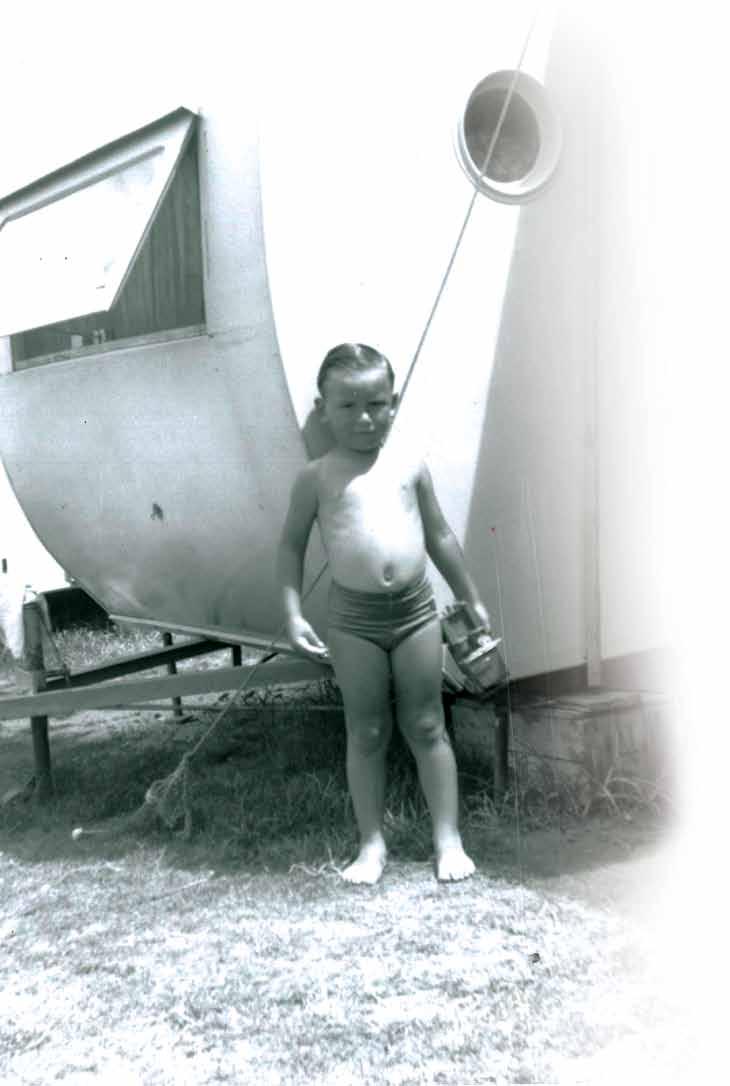
Rod Hannam earned plenty of public condemnation for a wrong he committed eight years ago. But, back then, not a soul knew of the childhood horror that led to his moment of poor judgement.

By Brett Williams
ThE TALK had turned to the subject of
coping mechanisms, those of child sex-abuse victims. And the more detail the tA fe lecturer went into, the more Detective Brevet Sgt Rod Hannam squirmed in his classroom chair. He sweated, became nauseous and could feel his heart thumping as he struggled to stay composed.
His overwhelming distress played out in the first few days of a two-and-a-half-week child-abuse investigation course in Adelaide in 2006. the lecturer outlined coping mechanisms as behaviours such as binge-eating and -drinking, distrust, hypervigilance, risk-taking and sabotage of relationships.
Hannam, then 50, found himself ticking each one of them off in his head. t hat was the reason for his anguished reaction: he recognized them instantly because he had practised them all himself –for 45 years.
t he strongly built, invincible-looking son and brother had never told a soul that, from the age of five, he had suffered unspeakable brutality at the hands of a sexual predator. And he would continue to keep his dark, destructive secret both throughout and after the course.
At f ort l args, where he stayed as a course attendee, he would endure not only sleeplessness but also nightmares. in them, he saw the face of his abuser and “other weird, violent stuff that made no sense” to him.
t he course wound up with an exam on a friday. Hannam sat for it and passed but was still reeling from the content of the previous two-and-a-half weeks’ topics.
After the exam, he had no recollection of what it contained. He realized that “everything was just autopilot” for the whole of the last week of the course, which he never wanted to attend.
“i certainly wasn’t looking forward to it,” he says, “and i didn’t expect it to have anywhere near the effect that it had. i thought of it as something i was required to do as a country ciB member, and that i’d just get it done and out of the way.”
i n a mental state nowhere near conducive to wise decision-making, Hannam went out to a city pub with his classmates that friday. t he plan was to celebrate the end of the course with lunch and a few drinks but, for Hannam, it led to one of the worst mistakes of his life.
Top right: Hannam as a four-year-old at home in his pool
After more than a few drinks, he left the pub around 6pm, got into the unmarked police car he had driven to Adelaide and set out for naracoorte, his home base.
“i drank because i just wanted to shut everything out,” he says. “And, by that stage, i was physically and mentally exhausted, and all logic had completely ‘left the building.’ ”
About 90kms to the south-east of Adelaide, just out of tailem Bend, Hannam fell asleep at the wheel. t he police car spun out before it ended up at the edge of the road. it had somehow stayed upright and hit nothing – no marker posts, animals or, worse, other cars.
e xhausted, and still stressed from the child-abuse investigation course, Hannam was now not capable of rational thinking. He continued on toward naracoorte but a police patrol stopped him about 20km short of the town, after he had driven around 300km. e mbarrassed and humiliated, Hannam figured that he was sure to lose his job. And just the thought of that outcome was emotionally crushing to him.
“it wasn’t just the financial aspect of it,” he explains. “it was that i was going to lose something that i felt in my own mind i was pretty good at, and loved doing.”
He quickly understood – and felt ashamed – that he had embarrassed not just his n aracoorte colleagues but, “to some degree, everybody within the job”.
And much more shame was to come. there was his suspension from work, a court appearance on a drink-driving charge, the loss of his driver’s licence, a demotion, and a transfer to Mount gambier police station.
Hannam would also have to live with coverage of his wrongdoing on the front pages of city and country newspapers, and in the electronic media. And he would not be able to walk the streets of naracoorte or shop in a supermarket without copping stares of disapproval.
But his world seemed to collapse even before the fallout from his transgression. t he next day after committing it, his wife wound up unwell and in hospital. t hen, after another two days, his father suffered a stroke.
“What happened with the course and the drink-driving was one thing, but it just seemed to snowball and get worse and worse,” Hannam remembers. “it was as if the whole world was just folding in on top of me. My head was ready to explode.”
After his wife, Bec, got home from the hospital, she pleaded with Hannam to explain why he had committed what seemed an insane act of irresponsibility. He knew that, now, he would have to reveal the secret of the sexual abuse he had suffered 45 years earlier.
Hannam had come close to telling Bec before but feared that, if he did, he would shatter her image of him as her protector. She had often told him how safe he made her feel.
“She was just saying: ‘Why? Why, did you have to do this?’ ” he remembers. “ t hat’s when i felt like i had to tell her. i had to try to explain why i had done what i ’d done, and why we were in the situation we were now in.”

“i don’t know that, as a child, you process it in your mind. you try to shut it out.”
So, for the first time in his troubled life, Hannam told his harrowing story. it started on the callington farm he grew up on with his parents and younger brother and sister. Until they were born in 1960, when Hannam was five, he led a happy, carefree life.
He loved the constant company of his beloved Border collie, Peter. And his parents often left him and his dog to find their own entertainment on the somewhat isolated farm.
But a twisted sex-abuser was about to bring pure evil into the life of the innocent Hannam. He (the abuser) was not only a regular visitor to the farm but also a relative.
Hannam knew Darius (not his real name) to be a bully and to treat animals with extreme cruelty. He had seen him smash kittens’ heads against rocks.
Darius, a pre-teen, committed his first terrifying sexual assault against five-year-old Hannam in a sheep yard. the unsuspecting Hannam parents were in no position to protect their son. Mother was busy looking after her newborn twins and father was out working on the farm.
So their son’s abuser found it easy to isolate his victim, in whose brain that first brutal assault has remained seared. “i just knew it was wrong,” Hannam says. “i don’t know that, as a child, you process it in your mind. i think that’s the problem: you try to shut it out.”
And he would have to shut out about 50 more sexual assaults over the next four years, as Darius continued to prey on him in the sheep yards and farm sheds.
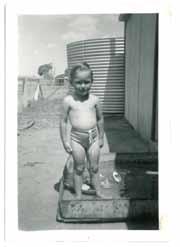
Hannam at the age of one
“He used to physically belt me as well. i remember various occasions when that would happen.”
o n a few occasions, he attacked when the Hannams visited Darius and his family at their home. t here, however, it was far more difficult for him to isolate his defenceless, fear-struck quarry.
each time he did strike, he added physical assault to the sexual abuse. He restrained Hannam and often punched him to the body but left no telling marks.
Hannam chose not to detail exactly how Darius sexually abused him. But he told the Police Journal that the first of the vile incidents went on for an agonizing “couple of minutes”. t hat stretched out to periods as long as a quarter-hour over the ensuing months and years.
Many times, as he endured the abuse, Hannam pleaded with Darius to stop. But, from Darius, his cries for mercy brought nothing but stony silence.
Sometimes, in utter desperation, the little Hannam tried to fight back physically against the bigger, stronger Darius – “and got belted for it”. And his inability to save himself filled him with anger.
“Anger at myself,” he says, “because i couldn’t do anything about it.”
Although Hannam kept silent about the abuse for the next 45 years, he did at least threaten to tell his parents. But that prompted Darius to respond with threats of his own.
“you’ll get into as much trouble as i will,” he assured his frightened victim. “ you’ll get taken away from your parents.”
Another threat, the one Hannam found the most chilling, still brings tears to the eyes of the now 58-year-old. it came after he had turned seven and spoken again of telling his parents.
With Peter – the dog that Hannam loved so dearly – on the scene, Darius had extra scope for cruelty. He pulled a knife out of his pocket and exclaimed: “if you tell anybody i’ll cut your dog’s throat!” “t hat terrified me,” Hannam says in a quavering voice.
Without telling his mother – or anyone else – of
the abuse, Hannam tried hard to avoid all contact with Darius.
“i remember saying to Mum a couple of times that i didn’t want him to come over to our place, or that i didn’t want to go there, to his place,” he recalls. “But i could never come up with a justifiable reason for it.”
So, without a single suspicion or doubt about the interaction between the two boys, mother simply told her son to go and play with Darius. And she could never have known that, with that instruction, she was delivering her boy into the grip of a despicable sex-abuser.
Hannam became mindful of making sure that his young siblings were never alone with Darius. And, in quiet moments, particularly as he lay in bed at night, he thought endlessly about telling someone of his secret horror.
“ two things really stuck in my mind,” he says. “one was that threat to my dog. t he other was him saying that, if i told, i’d get into as much trouble as he would and end up taken away from my parents.
“As a five- or six-year-old, that’s the stuff that you believe. And he’d ingrained that into me so well.”
By the age of eight, Hannam had found comfort in binge-eating and become seriously overweight. that gave Darius cause to bully him at school, where he called him names such as fat pig and mummy’s boy.
“He used to physically belt me as well,” Hannam says. “i remember various occasions when that would happen at school. He practised humiliation. t hat was his public face.”
in 1964, after a change to his living arrangements, Darius left the school and stopped visiting the farm. He never got the chance to attack Hannam again. the abhorrent sexual and physical abuse of the previous four years was over.
But Hannam, then nine, could not know that for certain. “i remember just hoping that that was the end of it,” he says.
for another six years, he would live in fear of more sexual assaults; and recovering from the psychological trauma he had suffered was simply not going to happen.
After he turned 10, Hannam became interested in sport and, with the positive influence of his headmaster, took up footy and tennis. But, in the classroom, he had become disruptive, a class clown making “smart-arse comments”.
At home, he fought ferociously with his mother, arguing with her about issues as minor as closing a cupboard door. And nothing improved for him when he started high school. Still binge-eating and overweight, he suffered bullying by older kids.
t hey called him names and even threw punches at him. t hat sparked anger in him and, on the odd occasion, he tried to retaliate physically. “But,” he says, “simply because of the size and the age difference, i usually ended up even worse off.”
Bravely, he continued to front up for school but became intensely anti-authority and continued to disrupt classes, as he had in primary school. teachers frequently kicked him out of the classroom but seemed not to look deeper into the reasons for his behaviour.
i n their defence, however, it was never part of their training in the 1960s and early ’70s to identify the signs of a sexually abused child. So, through no fault of their own, they were no help to Hannam.
And, as much as he tried to block out from his mind the abuse he had suffered, it always resided in his consciousness. “As they say about depression,” he says, “it’s a black dog that never leaves your side. it’s always there. i think that’s why i behaved as i did.
“ t he real issue – and i ’ve worked through this with my psychologist – is trust. f rom my early teenage years, i just had those huge arguments with mum. i would just go off.
“in part, it was anger that was probably directed at her because, somewhere in my mind, i had a feeling that she should have protected me from (Darius).”
As a 15-year-old in 1970, Hannam underwent a growth spurt, became obsessive about his sports, and managed to stop binge-eating. But, at the same time, he turned to alcohol – beer and spirits – and became a binge-drinker.
“Sometimes i’d drink at the local pub,” he recalls. “But, a lot of the time, my mates and i – country boys –would just buy stuff, jump in the car, drive somewhere and sit around and drink.
“But there was that trust issue. i didn’t want to get involved with someone…”
“in a country town back in those days, it wasn’t unusual for 15- or 16-year-olds to have a few beers. My parents knew i was drinking but i managed to keep the extent of it from them.”
Although he had played the class clown at school, Hannam scored high enough grades for entry to Adelaide teachers c ollege in 1974. But, as he undertook his study there, in physical education, he continued binge-drinking.
He also worked out obsessively in the gym, turning his body into a strong, imposing mass of muscularity. And, to equip himself with more than just self-defence skills, he took a rare opportunity to learn little-known streetfighting techniques from a former SAS soldier.
to live in Adelaide and attend college, Hannam received only “a pittance” in government support and some financial help from his parents. for extra cash, he took up work as a pub bouncer in 1976.
t he then 21-year-old ended up in some of the most volatile entertainment venues of the day: the Buckingham Arms, Bridgeway, largs Pier and old lion hotels. Already a binge-drinker, he was now immersed in the bouncer lifestyle.
t hat meant three or four fights per night and frequent casual sex. t his, for Hannam, was a means of assuring himself that he had some worth.
“But there was that trust issue,” he says. “i didn’t want to get involved with someone to a point where i had to place trust in her. With some, i wanted to trust them and give myself to them, but i would sabotage the relationship because i didn’t want to get hurt.”
And at no time did Hannam ease up on the booze. “it’s crazy the amount i used to drink,” he confesses. “if i went out for a party i’d take two bottles of brandy. “i ’d drink one within a couple of hours and that would never be enough. i had drinking sessions that lasted for 24 hours-plus.”
Research suggests that child sex-abuse victims do indeed suffer long-term consequences, such as those Hannam has endured. Darwin-based forensic psychologist kerry Williams speaks of
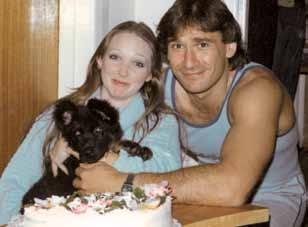
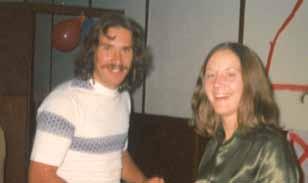
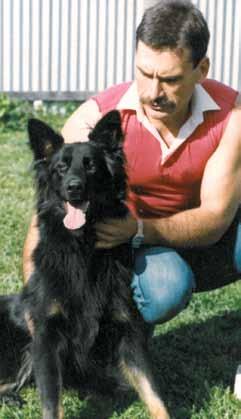
Clockwise from top left: At age 26 with his then girlfriend and dog Mariah; at age 27 just after his graduation; his 21st birthday with then girlfriend
long-lasting effects on brain development, psychological and social functioning, self-esteem, mental health, personality, sleep, and risk-taking, such as substance use.
“childhood sexual abuse can represent a form of chronic trauma,” she says, “as it’s often characterized by a pervasive threat and often chronic in nature.
“And it’s been suggested that one of the long term impacts on the nervous system’s response to stress might result in heightened sensitivity to stress in later life.”
Hannam never perceived a link between his behaviours and the sexual abuse he had suffered. He had managed to have, but in each case sabotaged, a few short-term relationships.
Afterward, he asked himself why he had played saboteur but “never came up with an answer”. “i was just thinking: ‘Well, that’s just me,’ ” he says. i n 1977, Hannam graduated from college. Back then, however, qualified P e teachers outnumbered available jobs, so he had to begin his teaching career with contract work in 1978. He taught mainly physical education but also biology and geography, and enjoyed the job.
But, at night, he continued to live the life of the heavydrinking, sex-addicted pub bouncer. At times, he paid a price for it, too. one night, a pub patron stabbed him in
the back with a screwdriver. it struck a rib, and only that prevented any more damage than blood loss. i n 1980, Hannam gave up not his role as a bouncer but as a teacher and took a day job managing a suburban gym. t here, he met several police officers, as he had through footy and in other circles. And they all struck him as “good guys”.
So, after a falling-out with the gym management in 1982, Hannam quit and wound up at the recruiting desk in the old Angas St police headquarters. t here, the 27-year-old applied to join SAP ol and, soon after, got the job and started recruit training at fort largs.
He loved police work from the start, serving as a suburban patrol officer and, later, with South command Response.
But nothing about the job changed his practices of binge-drinking, casual sex and sabotage of relationships. if anything, the way he practised those coping mechanisms became more intense.
t he four years of sex abuse had remained a continuing torment in his mind, but Hannam had become adept at masking it. He somehow managed to stay composed even when workplace conversations among cops turned to “rock spiders” (paedophiles) and their crimes.
So that he drew no attention to himself with silence, he actually joined in the conversations.
“i ’d be aware of my own physical reaction to that sort of stuff,” he remembers. “My heart rate would be elevated and i ’d start sweating. But you become very skilled in hiding it (your pain). you have your public face.”
Although Hannam never chose the path of many child sex-abuse victims – suicide – he “certainly won’t say that i never thought about it”. But his risky behaviours of binge-eating and -drinking threatened his life anyway, as did a couple of car accidents he was lucky to survive.
He was not the driver but knew the driving was life-threatening, and that he should never have been a passenger. “i ’m extremely lucky to still be here,” he says.
i n 1999, 44-year-old Hannam met his then future wife, Bec, a flinders University student from country Victoria studying anthropology. Her impact on him was powerful enough to turn him away from binge-drinking.
And, still, today, Hannam cannot explain why he found her so different from every other woman whose interest in him he had rejected. t he two married in 2000, aged 45 and 31.
i n 2004, they set up a small c roydon Park shop, which Bec ran chiefly to sell flowers but also coffee and pastries. Just eight weeks after opening the newly outfitted place, a female customer of a nearby methadone-dispensing pharmacy burst in looking to do a stick-up.
She terrorized Bec, chasing her around the shop and threatening to kill her. t he attack left Bec traumatized and feeling almost constantly unsafe. too afraid to go into a range of public places, she was never able to continue running the shop. She and Hannam had to sell it at a loss as Bec tried to recover.
in 2005, Hannam – who by then had four years’ experience as a detective – transferred to naracoorte ciB. Bec liked the location, which she found similar to the country town she came from in Victoria.
But Hannam soon felt the pressure of on-call detective work out of a one-person ci B post. “ you’re on call 24-7 covering from Bordertown to Penola,” he says.
“And, if the guy at Millicent was on leave or a weekend off, you were basically covering from Bordertown to Robe. it was just physically very demanding.”
Hannam struggled to stand up to the rigours of the job and the still haunting memory of 50-odd sex attacks on him. As an escape, he turned to the pokies.
“it’s one of those things you can’t explain to people, or to yourself,” he says. “you just want to be able to shut everything out. you know after you’ve lost money that it’s just complicating your life even more, but you go back to it. it’s something that just gets to you.”
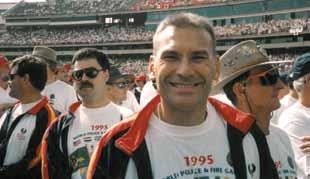
Left: With his dog, Mariah, in the early 1980s Right: on the oval at the Mcg for the opening ceremony of the Police and fire games in 1995
“…i feel he’s interfered with my life more than enough. i don’t want to think about him anymore than i absolutely have to.”
t hen came the child-abuse investigation course and, for Hannam, the disaster that followed it in 2006. Bec, who demanded to know why he drank and drove, responded angrily after he opened up to her one afternoon with his horrific story of abuse.
She was upset that he had kept it from her throughout all their time together. But her anger soon turned to sympathy and the two spent hours talking, shedding tears and comforting one another.
Says Hannam: “ t hat’s when i got to the point where i started to worry about my mental state. i went to see a g P at n aracoorte, and he was very understanding.”
t he g P diagnosed Hannam as suffering from depression and post-traumatic stress disorder. He referred him to a psychologist and prescribed anti-depressant medication for him.
With a drink-driving charge and the prospect of losing his job confronting him, Hannam went to the Police Association for help. the union’s then assistant secretary (and now president), Mark carroll, took on his case.
“Rod was deeply concerned,” he recalls. “i ’d always known him as a strong, fit, capable person, so to see him as the troubled, emotional human being in my office was quite a shock. And i was horrified by what had happened to him as a child.
“So, as an organization, we made sure that SAPol decision-makers understood the depth of emotions that had been stirred up in Rod throughout that sex-abuse investigation course.
“it was important that they understood the impact on Rod’s mental state and its link to the decision he took to drive that night.”
Hannam might have come out of the internal discipline process with a demotion and transfer but he was grateful not to have wound up sacked. t hat good fortune, however, was not enough to relieve his depression and P tSD, both of which continued to plague him.
i n 2007, Hannam got his licence back and returned to the front line, but as a Mount gambier patrol officer rather than a detective. Still depressed, he continued to play the pokies – and lose “lots of money”. But Hannam hid this ruinous vice masterfully. in early 2008, he and Bec returned to Adelaide, where he joined the crime gangs task force. After he woke one morning about a month later, he
could not “take a decent breath”. Bec rushed him to flinders Medical c entre, where he underwent tests over the next few days.
He was suffering from a congenital condition known as bicuspid aortic valve disease and had to undergo open-heart surgery. Surgeons had to insert an artificial replacement valve, leaving Hannam to undertake a long, slow recovery.
After another month, he returned to work on light duties but, at home, his marriage was falling apart. eventually, Bec stood up to announce that she needed time to herself and intended to move out of their home.
While her decision did not surprise Hannam, it did hurt him, and he tried to dissuade her from leaving. She, however, stuck to her decision and left. t he next year, Bec returned to Victoria, and, in 2010, the couple divorced.
today, Hannam blames the split on the pressures police work brought to bear, his pokies addiction, and his failure to tell Bec of the sex abuse he had suffered. He also suspects that failed attempts the couple made to conceive through iV f played a part.
in 2011, Hannam transferred from crime gangs to Port Adelaide ciB, where he continues working today. But even more emotional pain struck him in 2012, when his 52-year-old brother died of the genetic disease spinal muscular atrophy.
n ow, he continues to undergo regular psychological counselling and feels as if his “head’s in a much better place than it was”.
“i have to accept that i ’ve got this burden (the memory of the abuse) and that i have to put up with it,” he says. “every time i hear a news story about sexual abuse, it’s just there. But it’s there every day.”
even as he prepared some notes for his interview with the Police Journal, Hannam struggled. “My heart rate elevated and i was sweating like hell,” he says. “i had to go for a walk for about 15 minutes afterwards.
“it isn’t something that ever goes away, but i still feel i’ve come a long, long way.”
Mark c arroll gives Hannam credit for not only seeking help but also fronting up to the consequences of his actions.
“it would have taken a lot for Rod to come back to work after all that’d happened to him,” carroll says. “i just admire the gutsy way he fought his demons. t hat’s something we can all learn from.”
Difficult for many to understand is why Hannam, as a young adult, continued to keep his horror a secret from his parents. it was, in part, because he was intensely grateful to them for supporting him. t hey were never wealthy people so, to buy him a car as encouragement to finish high school, his mother worked part-time. And, later, his parents gave him that financial support to live in Adelaide and attend college.
Hannam had also seen his parents work hard at caring for his sick brother, and the guilt his mother felt about the genetic aspect of the illness. “i just couldn’t possibly have loaded her with anymore guilt,” he says.
After the abuse, Hannam saw Darius a few times each year at gatherings of the extended family. He last saw him at a funeral in 2012, when each looked the other in the eye but exchanged no words.
t he sight of Darius sparked not rage but certainly anger in Hannam who, as always, kept his composure. “i have no desire to seek retribution or anything like that,” he says.
“i’ve come to a point where i feel he’s interfered with my life more than enough. i don’t want to think about him anymore than i absolutely have to.”
Actor Michael c Hall, who plays Dexter Morgan in the t V drama Dexter, once delivered some lines which struck Hannam as describing precisely how he feels about Darius.
of the man who killed his mother, Dexter says: “i feel like he stole my life. i ’m not the person i ’m supposed to be. it’s like i’m hollow.
“i hide in plain sight, unable to reach out to people close to me, afraid i’ll hurt them. this is what he made me become.”
Hannam never believed charges against Darius would succeed. He formed that view in 2003, when he spent a short but excruciating time with Port Adelaide child and family investigation Unit. t here, he dealt with several historical cases involving children.
“Dealing with that stuff just brought it back,” he says. “ t hankfully i was only there for a couple of months.”
Hannam asked the Police Association to tell his story through the Police Journal in the hope that it would help other abuse victims and P tSD sufferers. Several police officers have told him of their own painful experiences of a range of traumas, including sex abuse.
“ i t’s far more widespread than people are prepared to admit,” he says. “ i ’m putting my story out there to explain that there is always help available. And people will be amazed by the support that’s out there from pretty much everybody.
“if i get one person to seek help before they do something that either threatens their career, or worse, i ’ll be happy. i don’t want anybody to have to go through what i’ve gone through.” PJ

EmotionAl SUrvivAl for l Aw EnforcEmEnt
A presentation by renowned US behavioural and management consultant
A former Arizona police officer, Dr Gilmartin shares his professional expertise to help other police avoid burnout and survive the personal impact of their job.
But he also discusses strategies designed to prevent affected officers from isolating themselves emotionally from family, friends and colleagues.
Ultimately, Dr Gilmartin addresses all the short- and long-term effects police work has on officers’ personal and professional lives.
And his credentials are compelling:
• A former police officer of 20 years’ service (Tucson, Arizona).
• A consultant to US and Canadian law-enforcement agencies.
• The holder of adjunct faculty positions with the University of Massachusetts Police Leadership Institute and the Law Enforcement Management Institute of Texas at Sam Houston State University.
• Guest instructor at the FBI Academy in Quantico, Virginia.
• Faculty member of the FBI Law Enforcement Executive Development Institute.
• Former vice-president of the Society of Police and Criminal Psychology.
• Holder of a doctoral degree in clinical psychology from the University of Arizona.
• Author of the book Emotional Survival for Law Enforcement.
• A veteran of the US Marine Corps.




Dr Kevin Gilmartin, PhD
BroUght to yoU By

aN aDVe Nturous Life
By Brett Williams
ShEwas the stunning 27-year-old blonde whose breathtaking figure almost scored her a top-three placing in a physique contest in 2006. t hen a married Mounted o ps constable, Shelley Joy had subjected herself to five months of slavish gym workouts, weighed meals and gruelling cardio-training.
She lifted weights for 90 minutes five times a week, and ran, cycled or worked out on a stepper twice per day. Unwilling to stray one iota from her routine, she cut herself off socially and even wound up cold-shouldered by some of her then-friends.
Still, as a first-time entrant in the Sport Model division of the international natural Bodybuilding Association state physique titles, she stayed focussed. in her waking hours and her sleep, she thought and dreamt about nothing but sculpting her body into a masterpiece.
And, on the day of the october contest, her 165cm frame did indeed look like a chiselled artwork. She had reduced her weight from 63kg to 56kg and her body fat to just 11 per cent. Her muscles lay highly defined beneath her spraytanned, glitter-covered skin.
But, after three rounds of posing under “boiling hot” stage lights, the judges rated Joy fourth out of seven competitors. Had they awarded her just three more points she would have outscored the third placegetter.
Her strong will and lust to one adventure after way before her shot at (…and so close to a top-three
A disappointed Joy, and a number of observers, thought the judges had ranked her too lowly. “i was upset,” she concedes, “because i didn’t feel it was fair. in competitions, and in life, i don’t mind not winning as long as you’ve done your best and your work is scored fairly. “it upsets me when there’s favouritism, or when a competition is set up so that one particular person is going to win no matter what.”
Despite the perceived injustice of her placing, Joy remains “glad” that she competed and “happy” with the contest-ready condition into which she sculpted her body.
“What it gave me,” she explains, “was more determination and belief in myself – the belief that i can set a goal and achieve it.
“it was a challenge, and not one that the majority takes on. i like being in the minority. i like to be a bit different and stand out.
“And once i start something, especially if it’s hard or challenging, i love to finish it for my own peace of mind. i t wasn’t that i looked at a magazine and thought: ‘i want to be a bodybuilder.’ ”
Shelley Joy on stage during the Natural Bodybuilding Association state physique titles in 2006
turous
for challenges have led Shelley Joy another. And they started a bodybuilding title seven years ago. finish, Police Journal, December 2006)
When the challenge was over, Joy never set foot in a gym again until late last year, seven years after she had competed. She had had enough of the grind of intense daily workouts and, in any case, fell pregnant with her first child three months later.
Her body soon became less sculptured and, naturally, she went down a few rungs on the scale of fitness. But Joy took care never to let herself “get badly out of shape”.
“When i was training and at 11 per cent body fat,” she says, “i wasn’t even happy with it because all i kept seeing was that i needed to keep improving. i was actually more at peace with myself when i was just eating well and doing a bit of home exercise.
“it was sad to see that really toned body go. But i was probably just as happy with myself once i wasn’t in the gym six or seven days a week. i f i could have that body without going to the gym it’d be lovely.”
Ultimately, Joy has no regrets about her time in bodybuilding but believes that she pursued it for the wrong reasons. t he return the adventurous 34-year-old mother-of-two made to the gym last year was to take up cross f it training, which she now relishes.
“i’m doing it for the right reasons now,” she explains. “i ’m doing it for my own enjoyment. i ’m not doing it to compete and to try to be better than someone else. to me, standing up on stage doing that isn’t the right reason.”
in her last days as a police officer

TODAy, Joy reflects on her attempt at bodybuilding glory as another of her many adventures. She has embraced adventure since her childhood.
As a 16-year-old home-schooler, she took over the running of her parents’ Waitpinga dairy farm.
And, as a 20-year-old, she went to Japan to train racehorses under kazuo fujisawa, one of his nation’s most awarded trainers.
“i loved doing things that had an element of the unknown or were scary,” she says. “if anyone thought something wasn’t such a good idea, or could be a bit scary, i would want to do it.”
Another character trait to emerge early in Joy was rebellion. She was just 15 when she refused to continue going to Sunday church services. Also in defiance of her parents, she set out to attend high school and no longer submit to her mother’s home-schooling.
When the day came to begin term two, Joy packed her lunch, caught the school bus outside the farm gate and headed off to the local high school. t here, she met the principal, collected enrolment forms and joined all the other year 10s.
But her parents never got to see any paperwork: Joy signed it herself and pretended the signatures were those of her mother and clergyman father. t hat left her to settle in and work through the three remaining school terms – with her parents’ grudging acceptance.
“t hey knew they wouldn’t be able to stop me,” she remembers. “i was a fairly strong-willed, independent child so, had they said ‘no’, they probably would’ve found me leaving home.”
And home was the dairy farm she lived on with, at first, her parents and older brother and sister. the family grew by another four over a five-year period which did not begin until Joy was 10; and all seven children underwent home-schooling.
Joy and her siblings were the sixth generation to grow up on the farm. She took total control of it at such a young age because her father had stepped down as boss and her older brother had chosen not to replace him.
to be the new boss, Joy had to leave formal schooling behind at the end of year 10. And, for her, taking on responsibility for the family farm came not out of desire but rather a sense of obligation.
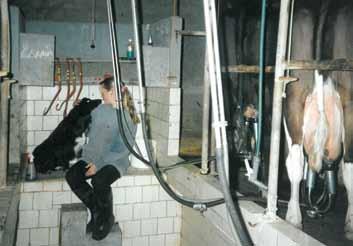
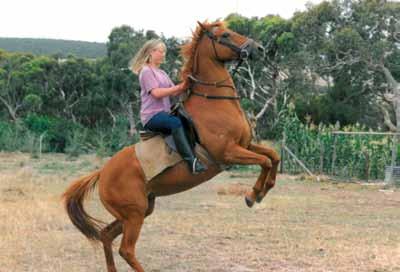
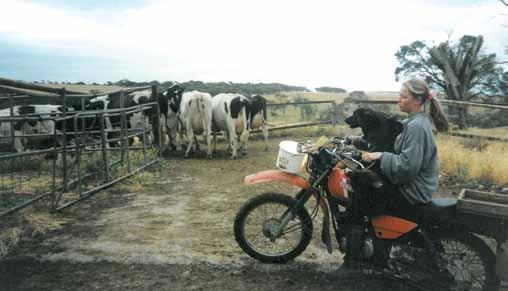
Already adept at driving tractors, fixing equipment such as pumps, and extracting cows from creeks they had fallen into, Joy ran the farm with aplomb. She also helped take care of her four younger siblings and felt “very much like an adult”.
“i absolutely loved being out on the farm,” she recalls. “it was that feeling of freedom. i just loved being outside. i think it (running the farm) made me feel needed and that i had a role in life.”
But, after two years, the 80-cow farm had lost its capacity to compete with bigger players in the dairy industry and had to shut down. to support herself, Joy worked at a local bakery, a Victor Harbor pub and on the horse-drawn tram to granite island.
She also worked as a shedhand during the shearing season but used all her earnings to live in Byron Bay each winter and surf Queensland beaches.
of course, Joy had grown up with horses on the family farm and become a competent horsewoman. So, naturally, she grasped her opportunity to head off to Japan to work for acclaimed horse-trainer kazuo fujisawa in 1999.
His operation was a serious concern: 70 riders and more than 200 horses. “it was one of those opportunities that i just saw as freedom, adventure and fun,” Joy says.
“And it was (in Japan) that i found my independence, just being away on my own and being able to do what i wanted, when i wanted. i felt alive.”
Du R i NG her time away, Joy had taken delight in her absence from an obsessed boyfriend. So it was deeply frustrating to her to find that he was still on the scene after she returned to Australia in 2000. And circumstances soon thrust her into a violent confrontation with him.
Spoiling for a fight, he charged toward her in a local pub. Before he could land a punch, however, Joy decked him with one of her own and ran. He later smashed down the front door of her home but police responded and arrested him.
Sadly, Joy wound up in some other bad company in that first year back from Japan and her fun, adventurous life descended into an intensely dark period. She keeps much of the detail of that time to herself but concedes that she lost all her vivacity and enthusiasm for life.
to drag herself out of this abyss, she had to – and did – draw on her last vestiges of grit and character. o ne morning, she literally looked herself in the mirror and asked: “What are you doing with your life?”
She summoned the courage to pack up, leave her bad-influence friends, and head to Adelaide for a new life. “i never looked back from that moment forward,” she says. “i wanted to change.”
“My hair was pulled out, my epaulettes and shirt buttons ripped off, and i was bleeding from the face.”

i n Adelaide, a friend suggested that Joy consider a police career. She liked the idea because she had always wanted to be a police officer. Still, she just could not imagine that she would ever get through the entry process of any police force.
eventually, however, she applied to join not only SAP ol but also the Western Australia Police. to her surprise, SAPol accepted her. And, on the same day she got that good news, the WA Police called her with an invitation to go to Perth to progress her other application.
“SAP ol got in a bit earlier,” she says, “otherwise i was going there (to WA).”
She graduated just hours after news broke of the September 11 terrorist attack on the US in 2001. it likely seemed a bad omen to recruits about to start their careers. But Joy went on to survive stints on the front line in Hindley St, Port lincoln, Maitland and Port Augusta.
“c ountry policing was my highlight,” she says. “you have to think on your feet and have very good operational safety because you don’t have the back-up you have in the metro area. you also follow jobs right through to the end.”
o ne job Joy handled in Port l incoln left her bleeding, unconscious and in danger of brain-swelling. She had tried to stop a detained 17-year-old who had bolted down a hospital corridor in an attempt to escape.
t he youth punched her repeatedly in the head and face as a nurse screamed for help. Joy was so adrenaline-charged that she did not feel the blows. She kept up her struggle to overpower the youth, whom she eventually pulled to the ground and cuffed.
After the incident, she told her sergeant she felt fine. She did not even think she had copped any punches. t he sergeant told her to have a look in the mirror.
“My hair was pulled out, my epaulettes and shirt buttons ripped off, and i was bleeding from the face,” she says. “Also, the bruises on my forehead were starting to show up.
“t he nurse told the sergeant i got punched to the face about 10 times, and that each time my head was flying backwards.”
later, at a local doctor’s surgery, Joy lapsed into unconsciousness before an ambulance rushed her back to hospital. Scans cleared her of brain damage but, for the following week, her family had to live with and monitor her.
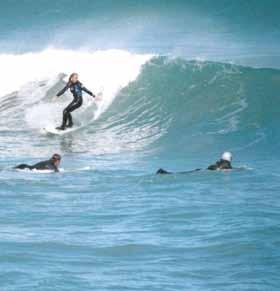
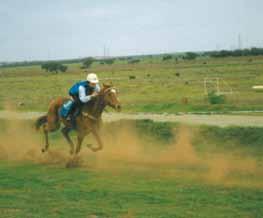
From far top left: Joy as a 15-year-old in the milking shed with family dog teddy; as a 14-year-old on her horse, Bronze; rounding up cows for milking in 1994; and surfing at Middleton Beach in 1998, This page, top: racing at goolwa in 1997; above: Bronze rears up on command from Joy as the sun rises
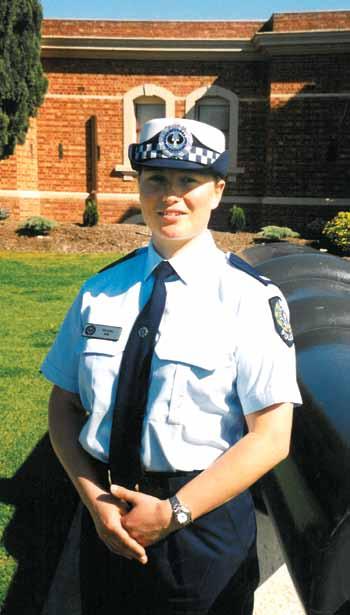
“… i’ll always have a soft spot for policing, because everything you do in life moulds you. Policing shaped me into the person i am today.” on
graduation day at fort l args
D
ESP iTE
her experience with horses, Joy had never intended to become a mounted officer but transferred to Mounted o ps in 2006. She valued the history and reputation of the unit and loved her six years there.
i n that time, however, she had to confront a deeply personal hardship. in 2011, after five years of marriage, Joy split with her police-officer husband. t he couple’s two children, i mogen and l edger, were then aged just three and one.
Mercifully, the split came – and remains – without bitterness, but husband and wife did have to endure rumours of affairs and other wrongdoing, of which neither was guilty.
More hardship struck Joy after she did serious injuries to her back in two separate accidents. t he first was a fall she had on a staircase with her daughter in her arms. She ended up in extreme pain from a hairline fracture in her lower spine.
After the damage had gone undetected by X-ray, Joy went back to work at Mounted ops.
t hen came the second accident, about three months later. Playing with her children, as they all enjoyed a holiday, Joy slid way too fast off the end of a slippery dip. She landed on and broke her coccyx.
t he two painful injuries ended her days with Mounted ops in 2012. She transferred out to police headquarters, where she worked at State crime Prevention Branch and community Relations Section.
“that’s where i realized that my policing had come to an end,” she says, “because i never ever wanted to be in an office. i wanted to be out on the road.”
Rostering, which Joy found inflexible, became another reason for her to resign. it did not afford her enough time with her children, whose custody she was – and continues – sharing with their father.
And she was determined not to stay in the job, become embittered and simply whinge about her situation. So, just a few weeks ago, Joy resigned from SAPol
“i t was really hard to make that decision,” she says. “i feel like, in some ways, i lost some friendships because, when you’re working with police, there’s that camaraderie. t here’s that closeness and that bond that you can’t explain to anyone who’s not in the job.
“But i left knowing that i’d enjoyed my time, that i ’d given something to SAPol and the community. it was my time to just move on to something else, but i ’ll always be grateful that i had the opportunity to be in policing.” now, Joy intends to work full-time running an online personal development business (lifeisabundantnow.com) she set up with her chiropractor partner, c linton Mc c auley. i ts purpose is to assist clients with any kind of life endeavour.
Joy has a long-term goal to move into property investment, but another of her aims is philanthropic. She intends to design and fund a two-day course for teenagers to learn about issues ranging from self-esteem to money-handling.
A return to police work might seem unlikely for Joy, but is it impossible?
“i do feel it’s remote,” she says. “But i’ll always have a soft spot for policing, because everything you do in life moulds you. Policing shaped me into the person i am today.” PJ

The Police club

Police Club membership
Use yoUr Card and save
Police Association members who show their Police Club membership card receive special bar prices and 10% off food
Special venue hire discounts also apply
if you don’t have a membership card or want to know more, phone the club on 8212 2924 or visit www.policeclub.com.au

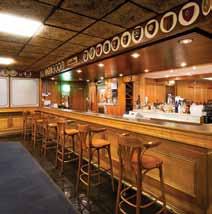
Book your next function at the club using your Police Club membership card and save:
• Group lunches and dinners
• Training days
• Conferences and meetings
• Cocktail functions
• Work lunches
• Weddings
• Birthdays
• Reunions
• Wakes
• External catering
Pre-order facilities available

o pen monday to friday for lunch and friday nights
Police Club… no other like it, and yours for more than 50 years
CARD
Dedicated to human rights
We write to outline the life of former SAPol detective Mick Hourigan, who died suddenly on December 2, 2013.
Mick, who held a teaching degree, graduated from fort largs with course 128 in April 1980 and served with Adelaide and Port Adelaide patrols, Vice Squad and Adelaide ciB. He was later seconded to the national Police Research Unit.
from the outset, Mick demonstrated his unique ability to track down crooks. As an investigator, he was highly dedicated and respected. Mick duxed his ciB course and became a recipient of the prestigious k Pe Harvey Shield.
After honing his considerable investigative talent, Mick obtained a law degree from Adelaide University and, after leaving SAPol in 1993, became a prosecutor with the South Australian DPP. in 1998, Mick joined the United nations and was posted to Rwanda as part of the Un international criminal tribunal for Rwanda to investigate the genocide of over 900,000 people. t hey were mostly tutsis and moderate Hutus who were slaughtered by members of the Rwandan Patriotic front.
Mick led a team of 20 skilled investigators who, after a two-year investigation, uncovered high levels of corruption and a conspiracy between members of the Rwandan government and leaders of the RPf leading up to the genocide.
Despite presenting evidence to the chief prosecutor of the tribunal, a U n oversight committee and a french investigative judge whose government recommended indictments, the U n did not implement a prosecution.
As a result, many of the major offenders responsible for the genocide remain free today.
After his Rwandan experience, Mick dedicated his professional interests to concentrating on corporate and governmental responsibilities in connection with human-rights issues.
His endeavours in this regard included working in Washington and Atlanta in an attempt to establish an inquiry into the U n failures in Rwanda as well as instigating class actions in US courts on behalf of the survivors of some of the Rwandan families killed during the genocide.
Grateful to Police Association
it is with sincere gratitude that we acknowledge the Police Association’s contribution of $45,000 to novita children’s Services, being the proceeds from the recent lottery.
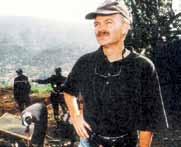
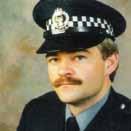
in 2003 and 2004 Mick made two trips to Baghdad on behalf of families and human-rights organizations in order to investigate the treatment of prisoners in Abu ghraib Prison.
t hese were dangerous missions during which he was taken into iraq across the Jordanian border and sheltered by iraqi civilians.
During these trips, Mick was smuggled into the prison itself to conduct interviews and gather evidence of the brutalities that had taken place. e vidence from these trips has been presented to courts in the US.
in 2006, Mick was commissioned to investigate people-smuggling and slavery in Romania. t his involved yet another dangerous trip to Bucharest to investigate human-rights abuses and the activities of organized criminals in europe.
Mick returned to Adelaide in late 2006 to be close to his daughter, georgia, and family. He returned to private practice but maintained his international interests and connections. Up until the time of his death he was using those connections to build business relationships and generate legal work in the areas of defence and energy contracts.
Mick was modest about his many skills and achievements and would always go out of his way to assist others. He never forgot his police roots and made himself available to speak of his experiences on several occasions at various courses and seminars.
Mick’s tenacity, influence and altruistic acts inspired many appreciative people throughout the world.
He often borrowed a line from nelson Mandela: “What counts in life is not the mere fact that we have lived. it is what difference we have made to the lives of others that will determine the significance of the life we lead.”
Pat McManus cgtf Brenton Eyre StAR
c ongratulations on another successful lottery, and thank you very much to the association for again selecting novita as its beneficiary for 2013.
the association’s ongoing generosity over the past few years, through its annual lottery as well as the Melbourne cup luncheon, is very much appreciated.
o ver the course of our community partnership to date, $130,000 has been raised through the association lottery for n ovita, which is an outstanding result.
From left: Mick Hourigan in Rwanda; and as a young police officer
Should the role of cell sergeant be a stand-alone position filled on merit?
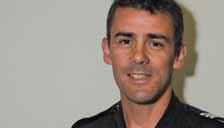

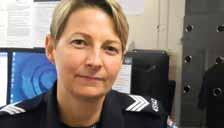
Sergeant Jason Phillips
christies Beach police station
SAPol has changed custody management quite considerably over recent years due to coronial recommendations, and it has become a complex role with a high level of responsibility.
Bail authorities are expected to have a good knowledge of the detailed custody management general order, any local policies, as well as the new Shield system.
t his is a heavily scrutinized and audited role and one area of general-duties policing where staff are more likely to make mistakes through lack of knowledge of the general order.
t his role is not only regularly audited but also investigated if a prisoner suffers self-harm or, worse, death.
custody management should only be carried out by a designated sergeant. i would like to see SAP ol introduce a corporate custody management course including learning and testing of the general order.
Sergeant Leigh Winton
christies Beach police station
t he role of oc of a cell complex is one that carries a great amount of responsibility and accountability, both of which have increased in recent years.
legislation and procedures commonly dealt with, such as the Bail Act and general orders, can be complex, and with the introduction of Shield, these highlight the unique role of the oc cells.
t hese are excellent reasons to make the oc of the cells a stand-alone Pi D. However, the ability for a patrol sergeant to easily rotate with a cell sergeant is also beneficial.
Sergeant Karen Mowday
elizabeth police station
no. At elizabeth, the role of cell sergeant being within the general-duties supervisor PiD works well.
t his allows for movement between cell-sergeant and patrol-sergeant duties without the need for PD162s to be submitted. t his flexibility creates a more dynamic and experienced supervisor on both sides.
At e lizabeth, all new general-duties sergeants begin in the cells or office and relieve when patrol sergeants are absent.
Personal preference of roles is considered by management and, as such, those who wish to remain in the cells do so and those who wish to move out to patrols do so when vacancies permit.
i thank association members for their support of novita. We value the time and commitment of the association and its staff in helping novita raise funds.
With the association’s commitment to our organization, we can continue to provide child development, rehabilitation and disability services to more than 2,000 children and young people throughout South Australia.
yours sincerely
on behalf of novita’s children and their families, thank you once again to the association for truly fulfilling the role of a novita community partner, and helping us to develop kids’ potential every day.
Glenn Rappensberg chief e xecutive novita children’s Services
From top: Sergeant Jason Phillips, Sergeant leigh Winton and Sergeant karen Mowday.

iNDustriaL
Nick Damiani
Setting the record straight on flexible rostering
FLE xiBLE
rostering has remained clearly on the Police Association radar for several years. A recent post on the SAP ol Questions for coP intranet site, however, seemed to paint an incorrect picture of the history of negotiations.
A Police Association member, echoing the concerns of some of his colleagues, recently wrote to the site, requesting a change in the rostering of seven successive night shifts.
t he member was concerned about fatigue management and the associated health risks of onerous rosters.
c ommissioner g ary Burns’ response to the member was:
Rosterscurrentlyworkedacrosstheorganisation are in compliance with the parameters of Police
officers Award. extended hours rostering would require an award variation and agreement with PASA. During the enterprise Bargaining process in 2001 and 2007, SAPol considered the introduction of extended hours rostering. the concept was met with some resistance and not pursued. experiences interstate regarding extended hours show less flexibility and reduced service levels. However, i am happy for rosters to be considered which improve employee satisfactionbutdonotdiminishservicetothepublic.
t hese comments prompted some members to contact the association. t hey wrongly believed that the association and not SAP ol had put the brakes on flexible rostering negotiations.
A check of the facts, documented in a long trail of correspondence, proves the exact opposite to be the case.
they wrongly believed that the association and not SAPol had put the brakes on flexible rostering negotiations.
t he history of negotiations dates back to the 2001 draft enterprise agreement, in which the association created its own extensive flexible rostering arrangement for consultation with SAPol
t his draft enterprise agreement proposed that each SAPol workplace roster personnel to meet its identified service delivery requirements. t his meant that individual areas might be rostered differently within broad flexible rostering guidelines.
t he proposal also suggested that rosters might be changed to meet organizational and employee considerations within appropriate guidelines and workplace consultation.
t he draft listed 47 extensive protocols designed for the expansion of the flexible rostering concept. But few of these protocols made the final agreement.
Section 17.1 of the final 2001 enterprise agreement, however, did stipulate:
SAPol and PASA agree to work together to conduct a trial in the expansion of the flexible rostering concept to enable ordinary hours of work to vary from the current eight hours per day to a range between 6-10 hours. the intention is to permit flexible shift lengths other than the current eight hours to match staff availability to service delivery requirements. the details of the trial will be developed in consultation with the parties.
After this, in n ovember 2002, the then acting commissioner wrote to the association proposing to “progress this matter and establish a project team to develop appropriate trial criteria and oversight a flexible rostering trial.”
t he letter then outlined SAP ol’s eight key “rostering trial principles,” which were at odds with many of the association’s original protocols.
t he letter concluded:
current flexible rostering guidelines contained in attachments two and three of the eA 2001 provide varying degrees of rostering flexibility, however this proposed rostering trial is intended to significantly enhance rostering flexibility and provide management with appropriate rostering capability.
t he letter also highlighted that:
from both parties – as to all the elements of the proposed changes – for any trial to proceed.
t he advice was such that, if the proposed elements of a trial were likely to be, or may be, inferior to current terms and conditions of employment, agreement by both parties was to be paramount.
t he intention of the employer to consult only and, then, proceed with its plans, irrespective of the association’s position, was concerning.
it was clear that SAPol’s stated intention had no regard for the impact on any affected employee.
Whilst all reasonable attempts will be made to consider individual employee needs in a work balance sense, this rostering trial is contingent upon management determining the hours and patterns of work and will not be constrained by expectations of employee agreement.
t his draconian response from SAP ol was at odds with the association’s legal advice, which made it clear that an agreement was required
it was clear that SAPol’s stated intention had no regard for the impact on any affected employee. Such an approach might well have breached the Sex Discrimination Act which prohibits discrimination on the basis of family responsibilities. in a written reply, the association indicated that SAPol’s rostering trial principles were not agreed on, and that the expansion of the flexible rostering concept as provided in e A 2001 in no way permitted the parties to breach or reduce conditions of employment. consequently, the association was not prepared to enter into discussions while SAPol adhered to those rostering principles.
SAPol’s subsequent letter of response was to shape the future of flexible rostering. it read: it is SAPol’s intention to adhere to the rostering principles and in the event that you are unable

“As history shows, SAPol was not prepared to budge and the final agreement did not reflect any of these proposals.”
to agree, then the status quo with respect to rostering and hours of work will continue and there will be no rostering trial during the life of this enterprise agreement.
Police Association president Mark c arroll, reflecting on these past negotiations, said it was important for members to know the facts surrounding the history of flexible rostering.
“Back when we wrote the 2001 draft agreement, we enlisted the services of an independent consultant to help us wade through the issues of flexible rostering,” he explained.
“We also proposed that personnel from the c entre for Sleep Research manage and train specific SAPol members in relation to shift work and rostering practices.
“And we organized for shift-workers to be provided with literature that would assist them in their duties.
“As history shows, SAPol was not prepared to budge and the final agreement did not reflect any of these proposals.”
However, Mr carroll said the association was ready and waiting to tackle the issue once again.
“All of these issues will again form part of our discussions with SAPol in the upcoming round of enterprise bargaining,” he said.
Part of the Police Association team
Grievance officer Matt Karger came to the Police Association last year with a wealth of union experience. A born problem-solver, he’s right at home taking on association members’ issues – and he does it with infectious enthusiasm. if you have a grievance, you can expect the best in representation, support and information from Matt.


HeaLtH
Dr Rod Pearce
Danger in food additives?
Allergies and other conditions are reported to be associated with adverse reactions to them
A FOOD
additive is any substance intentionally added to food but is not itself normally consumed as a food or used as an ingredient. Additives are distinguishable from processing aids and vitamins and minerals added to food for nutritional purposes.
f ood additives are controversial and highly regulated owing to cancers and toxic effects associated with them. Boric acid was widely used as a food preservative from the 1870s to the 1920s but banned after World War i owing to its toxicity. in 1938, the US insisted that no cancer-producing substances (carcinogens) were to be used as food additives. But saccharin, the only remaining legal artificial sweetener at the time, was found to cause cancer in rats and is still used today.
With the advent of processed food, a massive explosion in the chemical “adulteration” of food has come about in the past 30 years.
Most food additives are considered safe. But allergies, asthma, migraines and hyperactivity in children have all been reported as associated with adverse reactions to additives.
Since 1987, Australia has had an approved system of labelling. each additive has to be named or numbered. in Australia, the numbers are:
• 100-182 – colours.
• 200-297 – preservatives.
• 300-385 – acidity regulators, anti-oxidants, mineral salts.
• 400-495 – vegetable gums, thickeners, emulsifiers, stabilizers, gelling agents.
• 500-586 – mineral salts, anti-caking agents.
• 620-641 – flavour enhancers (including 621 – MSg).
• 900-1521 – thickeners, vegetable gums, humectants, artificial sweeteners.
f lavours, natural or artificial, are not regulated and therefore do not have any numeric identification.
food additives can be divided into several groups, although some overlap exists between them.
food acids are added to make flavours “sharper” and act as preservatives and antioxidants. Vinegar is used this way with pickled onions.
Acidity regulators, such as bicarbonate, are used to change or otherwise control the acidity and alkalinity of foods.
Anticaking agents keep powders such as milk powder from caking or sticking.
emulsifiers allow water and oils to remain mixed together in an emulsion for mayonnaise or ice cream, or can allow greater consistency throughout the food or drink such as homogenized milk.
flavours are additives that give food a particular taste or smell, and might be derived from natural ingredients, such as juniper, or created artificially. f lavour enhancers enhance a food’s existing flavours. t hey might be artificial or extracted from natural sources. enhancers such as glutamates (621-625) are found in many foods, including packet soups, flavoured noodles, sauces and savoury snacks.
With the advent of processed food, a massive explosion in the chemical “adulteration” of food has come about in the past 30 years.
Antifoaming agents reduce or prevent foaming in foods. Silicone oil is sometimes added to cooking oil to prevent foaming in deep-frying.
Antioxidants act as preservatives by inhibiting the effects of oxygen in food. t hey also slow down the ageing process of the food.
Vitamin c can be used as an antioxidant and comes in different forms – 300, 301, 302, 303 and 304.
Bulking agents such as starch are additives that increase the bulk of a food without affecting its taste.
food colouring is added to food to replace colours lost during preparation or make food look more attractive. colouring, such as tartrazine (102), might cause hyperactivity (ADHD). Sometimes, natural ingredients (ferrous gluconate, iron) can be used to preserve a food’s existing colour.
People sensitive to monosodium glutamate (MSg – 621) might have short-term reactions such as headaches, flushing and numbness when they eat foods containing large amounts of MSg. Some asthmatics might also be susceptible. for most people, MSg and other glutamates are harmless. flour treatment agents (such as cysteine – 920, 921) are added to flour to improve its colour or its use in baking.
g lazing agents provide a shiny appearance or protective coating to foods.
Humectants prevent foods from drying out. tracer gas allows for package integrity-testing to prevent foods from being exposed to atmosphere (vacuumpacking and nitrogen-flushing). t his increases shelf life with less exposure to oxygen.
Preservatives prevent or inhibit spoilage of food from bacteria and other microorganisms.
continued page 37

motoriNG
Jim Barnett
Car of the year
With a driver-fatigue detection system capable of monitoring driver behaviour
ThE
seventh-generation VW golf has won a string of awards, including carsguide’s car of the year 2013. Priced between $21,490 and $34,490, the new six-model range (excluding gti) comes with a choice of two turbo petrol engines, one diesel engine and manual or DSg transmissions.
t he 103 t S i Highline proved on test to be a slick performer.
DESiGN
g olf is bigger inside than its smart-looking, compact hatch design suggests, with ample room for four adults.
A 60/40 rear seat, which features an arm rest that opens to accommodate long, narrow items, delivers cargo flexibility.
front seats come with plenty of side bolstering, the dash layout has a sporty theme and drivers will love the thick, leather-bound, flat-bottom steering wheel with reach and rake adjustments.
central is a 5.8-inch colour touch-screen audio system which features Bluetooth, SD card and USB connectivity. An electric park brake frees up console space.
g olf saves on fuel through reduced weight and, when idling, an engine stop/start system. All models have a fully galvanized body with a 12-year corrosion warranty.
VALuE FOR MONE y
While $31,990 might seem a high price for a small hatch like 103 tSi, it is a real driver’s car – and well equipped. Standard items include:
• Seventeen-inch alloys.
• low-profile tyres.
• Dual-zone climate-control air conditioning.

• Alcantara and cloth trim.
• 5.8-inch touch screen with sat-nav and an extremely clear colour reversing camera.
• front and rear parking sensors.
• Rain-sensing wipers.
• Auto headlights.
• Static cornering lights.
• trip computer.
• cruise control with speed limiter.
SAFET y
All golf models feature a driver-fatigue detection system capable of monitoring driver behaviour and providing audible warnings.
During a collision, the airbag sensors trigger automatic braking which reduces the kinetic energy when the driver fails to apply the brakes. other safety features include:
• Seven airbags.
• Daytime running lights.
• traction and stability control systems.
• Antilock brakes.
A driver assistance package, which includes adaptive cruise control, automatic emergency braking and parking assistance, is a worthwhile $1,300 option.
ON ThE ROAD
g olf is a fantastic car to drive. i t delivers smooth, quiet operation with the power and agility to keep most drivers happy. t he engine produces a perfect blend of power and economy and the DSg transmission is a dream to use.
STATS
A superb 1.4-litre four-cylinder turbo-charged direct-injection petrol engine powers 103 t S i Highline and is coupled with an equally good sevenspeed DSg automatic transmission.
t his engine has been tweaked to provide 13kW more power (103kW) and 50 n m more torque (250 nm) than does the same engine in the entry 90tSi.
Acceleration is brisk: 0-100km/h in 8.4 seconds. combined fuel economy of 5.2 litres/100km is just 0.3 litres/100km behind the diesel. this model has the lowest emissions in the golf range: 121g/km (co2).
VERDiCT
n ew golf is a worthy award-winner. it is wellequipped and great to drive. its build quality appears good and it offers enough choice to suit all budgets.
While $31,990 might seem a high price for a small hatch like 103tSi, it is a real driver’s car…

Trax worthy of the SUV market
And, based on three of its attributes, it will end up in plenty of homes
ThE korean-built Holden trax is the newest player in the growing compact SUV category.
DESiGN
Although built on the Barina small-car platform, trax looks much larger owing to its tall, chunky body. And a prominent grill, alloy wheels, athletic stance and rear tailgate lip spoiler add to its external appeal.
t he position of the wheels – closer than normal to the outer corners of the body – provides a larger-than-expected cabin with sufficient space to seat four adults in comfort.
A 60/40 rear seat enhances the already generous rear cargo space. trax has plenty of storage compartments, including four in the dashboard, and huge front-door pockets but it lacks a lidded centre console bin.
t he dash layout is smart and features an analogue tachometer and large digital speed readout.
VALuE FOR MONE y
entry lS five-speed manual is priced from $23,490 with the optional six-speed manual-mode auto adding $2,200. Standard items include:
• Auto headlights and daytime running lights.
• l eather steering wheel with cruise-control and audio buttons.
• Sixteen-inch alloy wheels and air conditioning.

• My link seven-inch colour touch-screen infotainment system with embedded apps, including Pandora, Stitcher Smart Radio and Bringgo navigation.
• USB, iPod and Bluetooth connectivity.
• A handy 240V socket in the console (to charge laptops and the like while driving).
• Hill Start Assist and Descent control systems. the auto-only lt Z sells for $27,990 and also comes with:
• leather-look Sportec seat material.
• Heated front seats.
• trip computer.
• fog lights.
• Storage tray under the front passenger seat.
• eighteen-inch alloy wheels.
SAFET y
trax has won a five-star A ncAP safety rating thanks to:
• Six airbags.
• Reversing camera.
• Rear parking sensors.
• ABS, stability and traction-control systems.
• A collapsible pedal assembly.
• t he use of high-strength steel.
ON ThE ROAD
With the good visibility and comfortable driving position it provides, trax is easy to drive. its 1.8-litre petrol engine delivers smooth power with quiet operation, except in the higher rev range where engine noise is evident.
Power is adequate for city, suburban and highway work.
t he auto transmission has good shift qualities but also a tendency to “hunt” a little on steep hills. Suspension, steering and brakes all work well but the brake pedal seems a little firm and requires additional pressure.
STATS
t he DoHc 1.8-litre engine produces 103kW of power and 175nm of torque. combined fuel economy is around the class average with 7.0 litres/100km for the manual and 7.6 litres/100km for the auto. Braked towing capacity is 1,200kg.
VERDiCT
trax is a worthy new entrant to this busy market. it is not the class leader and its rear drum brakes are seriously outdated. it will, however, find a number of homes owing to its price, equipment and funky looks.
p olic E A SS oci Ation of So U th AUS tr A li A
GoinG overseas?
Your coveraGe maY be affected
the group life insurance cover provided by the police Association covers members 24 hours a day, seven days a week, regardless of the cause of death while members remain in Australia.
The insurer may specify certain geographical exclusions and restrictions on the coverage due to increased risk.
If members travel to areas of the world considered to be at increased risk, an increased insurance premium may apply or coverage may cease entirely.
Members who intend to go overseas for six months or longer, or who are travelling to or via a war zone are advised to contact the association beforehand to confirm whether or not coverage will be affected.
Got somethinG to saY?
Got a comment about a story you’ve read? d o you have strong views on a police issue?
Is there someone you want to acknowledge? Know of an upcoming social or sports event? Whatever the subject, put it in a letter to the editor.
Regular mail Police Journal, PO Box 6032, Halifax St, Adelaide SA 5000
Email editor@pasa.asn.au
Fax (08) 8212 2002
internal dispatch Police Journal 168
WorkinG part-time?
Are you currently working part-time? Are you commencing or ceasing part-time work?
If your hours change, it is important that you advise the Police Association. Your subscriptions may be affected. Please phone (08) 8112 7988 or e-mail membership@pasa.asn.au to advise of a change in hours.
chanGe of address
the police Association of south Australia needs your change- of-address details.
If you have moved, in either the recent or distant past, please let the association know your new address. Its office does not receive notification of changed addresses by any other means. The association will need your new address, full name, ID number, telephone numbers (home, work and/or mobile). Members can e-mail these details to the association on pasa@pasa.asn.au or send them by letter through dispatch (168).
Group Life insurance beneficiarY nomination forms
owing to a supreme Court decision, the police Association no longer uses the GLi beneficiary forms. Existing forms held at the association have been destroyed.
Now, in the case of the death of a member, the GLI benefit (currently $300,000) will be paid to his or her estate.
Accordingly, the association’s strong advice is that you ensure that your estate is well-administered. This is best achieved by having a valid will.
Tindall Gask Bentley Lawyers provides a free legal advice service to Police Association members and their families, and retired members. To make an appointment to receive free preliminary legal advice covering all areas of law, particularly families and wills, members should contact the Police Association (08 8212 3055).

An investor’s game
Costa Anastasiou Chief Executive Officer, Police Credit Union
The Australian economy is showing signs of incremental improvement
hOuSiNG is a medium- to long-term investment which has provided financial security for many Australian families over many generations. Property in South Australia remains reasonably affordable, compared with other states.
t hat affordability, combined with the low interest rates, and demand from buyers and renters alike, makes property investment a currently attractive proposition.
As with any major financial decision, it’s wise to do your research, not only of the current financial market but also your own financial situation and future goals.
GLOBAL MARKET uPDATE
While political activity in the US and e urope continued to make the headlines during the last half of 2013, we witnessed continued improvements from international investment markets, albeit at varied levels across the different regions.
g lobal markets have gained some renewed traction in more recent times, displaying improved stability and cautious optimism. A less volatile e urope led by a strengthening g ermany and a US economy bolstered by the federal Reserve’s quantitative easing programme appear to have stimulated confidence back into the investment and mortgage markets.
european sovereign debt issues are being better managed and severe austerity measures appear to be achieving the necessary fiscal containment. Developing Asian markets, led by c hina, have shown continuing resilience and stability with solid growth prospects, underpinned by large scale urbanization and a rising middle class.
AuSTRALiAN MARKET uPDATE
t he Australian economy is showing signs of incremental improvement. Business confidence has improved after the c oalition election victory in September 2013. c onsumer sentiment has also improved significantly, owing largely to the Reserve Bank of Australia cutting the cash rate to 2.5 per cent.
the South Australian property market has shown resilience amid the uncertainty which has plagued other investment markets.
t his is likely to have a sustained impact on consumer sentiment. As a number of mining projects move into production phase, net exports are likely to remain a positive contributor to g DP growth, provided the slowing growth in china does not cause substantial spot commodity price weakness.
SOuTh AuSTRALiAN hOuSiNG MARKET uPDATE
i n 2014, interest rates are expected to stay relatively low and continue to assist growth in the property market. c ontinued steady improvement in activity is expected in most markets. Also expected is a more positive year ahead, provided no left-field global issues emerge.
When compared with other capital cities, such as Sydney, Adelaide posted modest growth throughout 2013. t he median house price in Adelaide increased by about 2 per cent by the end of 2013, and this marks the first annual increase since 2010.
While many buyers have been priced out of markets across the country, Adelaide remains an achievable entry point for investors. With the median price only 3.4 per cent below previous peak levels in the region, Adelaide boasts a stable price cycle.
t he South Australian property market has shown resilience amid the uncertainty which has plagued other investment markets. furthermore, 2014 looks to have more growth in store with predictions of a rise in prices between 0 per cent and 3 per cent in the coming year.
t he Real e state i nstitute of Australia says the latest housing finance figures released by the Australian Bureau of Statistics show overall confidence in the housing market. t he figures show growth in the number of investment housing commitments in response to interest rate cuts and the more positive housing outlook for much of the country.
t he economic climate at the end of 2013 had Adelaide buyers and renters out seeking properties according to their affordability with outer metropolitan suburbs attracting the most interest.
Some suburbs performed exceptionally well in 2013 with the largest growth occurring in gulfview Heights, findon and Alberton, where median house prices increased by 40.27 per cent, 34.17 per cent and 29.55 per cent respectively.
With a range of suburbs which are not only holding value well but exceeding expectations, it shows that well priced, quality housing will always be in demand, which is great news for investors.
continued page 37


Free Legal Service for Police Association Members, Their Families & Retired Members.
Leading Adelaide law firm, Tindall Gask Bentley is the preferred legal service provider of the Police Association, offering 30 minutes of free initial advice and a 10% fee discount
To arrange a preliminary in-person or phone appointment contact PASA on (08) 8212 3055.


Have you or a family member been injured in a car accident?
Tindall Gask Bentley acts in more motor vehicle accident claims that any other law firm in SA. Gary Allison & Richard Yates can provide free preliminary legal advice on your entitlements to compensation. They can also help with Workers Compensation, public liability & medical negligence claims.
Family Law
Matrimonial, De Facto & Same Sex Relationships
• Children’s Issues
• Child Support matters
• Property Settlements
• “Pre Nuptial” style Agreements
Appointments with Wendy Barry (Accredited Family Law Specialist) & Dina Paspaliaris.
Commercial Law
• General business advice
• Real estate & property advice
• Business transactions
• Commercial disputes & dispute resolution
Appointments with Giles Kahl & Michael Arras.
Wills & Estates
• Wills & Testamentary Trusts
• Enduring Powers of Attorney
• Enduring Guardians
• Advice to executors of deceased estates
• Obtaining Grants of Probate
• Estate disputes
Appointments with Michael Arras & Rosemary Caruso.



Find time for enduring power of attorney
Lawyer Bethanie Castell and Consultant Rosemary Caruso Tindall Gask Bentley Lawyers
if you procrastinate on this one you are taking a risk
iTiS human nature to procrastinate, and life is busy. no one likes to dwell on grim details and discuss the “what-ifs” of incapacity or death. Save those discussions for another day, when the kids are older, or even when the kids are born – just not now.
But just because we put something off doesn’t mean we should. nor does it mean we will ever get around to it. or even be able to.
case in point? An enduring power of attorney.
Wh AT i S AN END u R i NG POWER OF ATTORNE y?
it is a document that allows any adult person of sound mind to appoint another to step into his or her shoes to make, if need be, his or her financial and legal decisions.
if you are reading this, chances are you can prepare an enduring power of attorney. if, however, you suffer an injury or illness that causes you to become legally incapacitated, you will no longer have the requisite legal mental ability to prepare such a powerful document.
i f you procrastinate in preparing an enduring power of attorney, you are taking a risk. A risk that you might become legally incapacitated or unable for whatever reason (be it distance or availability) before making such a document.
t hey will need to fill out a lengthy application and obtain your financial details to provide to the g uardianship Board before attending a hearing at which a panel determines who, if any of them, would be suitable to be your attorney (which now becomes known as an “administrator”). if no one is deemed suitable, the Public trustee will be appointed. And the powers your administrator are given are often restricted and require him or her to report to the Public trustee on a recurrent basis. it is not as simple as your next of kin stepping in and taking over your financial and legal decisions, unless you appoint him or her in an enduring power of attorney.
Why
yO u NEED AN END u R i NG POWER OF ATTORNE y
it is not as simple as your next of kin stepping in and taking over your financial and legal decisions, unless you appoint him or her in an enduring power of attorney.
i f you don’t have an enduring power of attorney but need one, yet are legally incapacitated, interested family members or friends will need to do the hard work for you.
to deal with assets such as property, bank accounts, shares and motor vehicles there is paperwork you have to understand and sign. if you don’t understand or can’t sign, your attorney can do it for you. And whatever your attorney does will be deemed as lawful as if you did it yourself. y ou can give your attorney broad power –the power to do almost anything that you yourself could do (subject to making a will and a handful of other acts). or you can specifically dictate what powers you want him or her to have, for example, to only make legal and financial decisions regarding a specific bank account. t he document can also be used at various times.
taking some hard-earned leave? Planning a holiday? you can allow your attorney to act for you while you’re travelling overseas.
or, if you are injured in the line of duty and need to spend time in hospital, your attorney can deal with those legal and financial decisions while you focus on your recovery.
Alternatively, you can allow your attorney to act only for you if and when you become legally incapacitated.
Procrastination is risky. And so is life. We needn’t tell you about the risks that police officers face every day. But there are some risks that can be avoided and dealt with now.
An enduring power of attorney is a document you might never need, but it is certainly better to have one that is never used, than to not have one and need it.
Preparing an enduring power of attorney can save you, your family and friends a lot of hassle later. So sort your affairs out now, while you can.
t indall gask Bentley l awyers provides free initial advice through a legal advisory service to Police Association members and their families, and retired members. to make an appointment, members should contact the association (8212 3055). enduring powers of attorney are free when you do a will with tgB.
Mammoth Book of Prison Breaks
Author Paul Simpson
Publisher constable & Robinson
RRP $12.99
t his exhaustively researched collection of extraordinary prison breaks separates myth from truth. it includes the true stories behind movies such as catch Me if you can, about the life of frank Abagnale Jr, and Papillon, based on Henri charrière’s memoir, in which he claimed to have escaped from Devil’s island. other escapes include:
• Bud Day, said to be the only US serviceman ever to have escaped to South Vietnam.
• t he six prisoners who escaped from death row in Mecklenberg correctional centre.
• the 40 irish Republican Army members who, in 1983, broke out of the highest security prison in Western europe.
• Pascal Payet, the french armed robber who escaped not once but twice from french prisons with the help of a helicopter.
• the little-known first helicopter escape from a US jail, masterminded by conman Dale Remling.



The Gods of Guilt
Author Michael connelly
Publisher Allen & Unwin
RRP $32.99
“call me ASAP – 187”
When Mickey Haller gets the text with the c alifornia penal code for murder, it immediately gets his attention. Murder cases have the highest stakes and the biggest paydays.
And Haller learns that the victim was his own former client, a prostitute he thought he had rescued and put on the straight and narrow path, so he knows he is on the hook for this one.
He soon finds out that she was back in l A and back in the life. far from saving her, Mickey might have been the one who put her in danger.
Haunted by the ghosts of this past, Haller must work tirelessly and bring all his skill to bear on a case that could mean his ultimate redemption or proof of his ultimate guilt.
Silent Kill
Author Peter corris
Publisher Allen & Unwin RRP $29.99
When charismatic populist Rory o’Hara embarks on a campaign of social and political renewal, c liff Hardy signs on as his bodyguard and it’s a far-from-easy job: o ’Hara has enemies. A murder and a kidnapping cause the campaign to fall apart.
Hired to investigate the murder, Hardy uncovers hidden agendas among o ’Hara’s staff as well as powerful political and commercial forces at work.
His investigation takes him from the pubs and brothels of Sydney to the heart of power in canberra and the outskirts of Darwin. t here, he teams up with a resourceful indigenous private detective and forms an uneasy alliance with the beautiful Penelope Marinos, formerly o’Hara’s PA.
A rogue intelligence agent becomes his target and Hardy stumbles upon a terrible secret that draws them into a violent – and disturbing – confrontation.
Saints of the Shadow Bible
Author ian Rankin
Publisher orion RRP $32.99
Rebus is back on the force, albeit with a demotion and a chip on his shoulder. A 30-year-old case is being reopened, and Rebus’s team from back then is suspected of foul play.
With Malcolm f ox as the investigating officer, is the past and present about to collide in a shocking and murderous fashion? And does Rebus have anything to hide?
His colleagues back then called themselves “the Saints”, and swore a bond on something called “the Shadow Bible”.
But times have changed and the crimes of the past might not stay hidden much longer, especially with a referendum on Scottish independence around the corner.
Who are the saints and who are the sinners? And can one ever become the other?

The October List
Author Jeffery Deaver
Publisher Hodder
RRP $32.99
gabrielle is sitting in an apartment in Manhattan, watching the clock. Her daughter has been kidnapped, she’s shot and killed a man, she is trying to evade the police and negotiate with the kidnapper, a stone-cold killer.
He wants the october list, and he wants money. t he doorbell rings…
t hat is the end of g abrielle’s story, and the first chapter of this extraordinary novel by the world’s best thriller-writer, Jeffery Deaver.
t he next chapter is the scene which came before, and what follows is what happened before that. Deaver’s breathtakingly clever new thriller will keep you gripped to the final page –where you find out the beginning.
In the Morning I’ll Be Gone
Author Adrian Mc k inty
Publisher Allen & Unwin
RRP $29.99
Sean Duffy’s got nothing. And when you’ve got nothing to lose, you have everything to gain. So when Mi 5 come knocking, Sean knows exactly what they want, and what he’ll want in return, but he hasn’t got the first idea how to get it.
o f course, he’s heard about the spectacular escape of iRA man Dermot Mc c ann from Her Majesty’s Maze Prison. And, with chilling certainty, he knew their paths would cross.
But finding Dermot leads Sean to an old locked-room mystery and into the kind of danger in which you can lose as easily as win.
f rom old betrayals and ancient history to 1984’s most infamous crime, Sean tries not to fall behind in the race to annihilation. can he outrun the most skilled terrorist the iRA ever created? And will the past catch up with him first?
Win a booK! for your chance to win one of these books, send your name, location, phone number and despatch code, along with the book of your choice to competitions@pj.asn.au
continued from page 29
Stabilizers, thickeners and gelling agents, such as agar or pectin (sometimes added to jams) give food a firmer texture.
Sweeteners, besides sugar, are usually added to keep the calories low and are the basis for most diabetic foods. t hickeners are substances which increase viscosity without substantially modifying other properties.
Reliable information comes from official government websites. if you think you are reacting to a food, tracking down the problem is difficult. keep a diary and go back over the previous 48 hours to look at which food might have caused the problem. no evidence indicates that all additives should be taken out of food. Specific food-additive problems might be fixed in line with the advice of the American Academy of Pediatrics: “… to try a diet free from the offending food is a reasonable intervention.”
continued from page 33
c ouple this with a range of investment loan options from Police credit Union and we could help you get your property portfolio underway. our fully featured investment loans are designed with the astute investor in mind and come with these Better Banking promises:
• Same-day approval.
• to always meet your settlement times.
• to provide free property research and reports.
WE CAN hELP yOu GET STARTED
We can provide you with loan pre-approval and free property research to help you compare past property sales and research suburbs or properties you are looking to invest in.
Police credit Union Platinum Advantage members also get free and exclusive access to our private banking team. your private banker can help you manage your financial situations including refinancing your loan, consolidating debt, assisting you with budgeting and setting you up with an investor loan. your Private Banker can arrange everything. to find out more about our investment loans, or the benefits of being a Platinum Advantage member, call us on 0421 243 741
terms, conditions, fees, charges and lending criteria apply. full details available on application. A fS l /Australian credit licence 238991.



Spies of Warsaw
SRP $19.95 1 disc
Running time 177 mins
Starring David tennant and Janet Montgomery, Spies of Warsaw is a thrilling Dick c lement and i an l a f renais adaptation of Alan f urst’s celebrated novel.
Warsaw, 1937. With the n azi war machine ready to roll, the city is teeming with german, Russian and Western spies. in dark corners and shadowy streets, nations not yet officially at war engage in a bitter battle of intrigue, betrayal and abduction.
c olonel Jean- francois Mercier, a decorated war hero, is the military attaché to the f rench embassy in Warsaw.
Playing the role of charming ambassador, Mercier finds himself becoming infatuated with Anna, a Parisian lawyer for the l eague of nations, but he also has a secret role – as a daring spy determined to discover germany’s plan for invasion.
The Urn Returns
RRP $29.95 3 discs
Running time 600 mins
After four long years, the urn is back in Australia’s hands – and where it belongs. g one are the frustration, disappointment and despair of losing the coveted Ashes for three straight series.
Australia’s pride has been restored following an emphatic victory over england, the team strongly favoured to hold onto cricket’s most prized trophy. it took just 14 days of cricket for the Aussies to attain their unassailable three-nil Ashes lead.
Highlights include:
• the game-saving centuries scored by Warner and Smith.
• Mitchell Johnson’s enthralling 7/40 wickets in an innings.
• george Bailey’s blistering 28 runs in one over, a world-record-equalling achievement.
• Watson’s mesmerizing quick-fire 100.
• t he relentless pressure poured on by the Aussies that shattered the confidence of the english team.

The Guilty
SRP $19.95 1 disc
Running time 138 mins
lives are torn apart and relationships fractured forever when a young child goes missing in this tense and emotional three-part drama.
Moving between two timelines, theguiltyfollows the story of Detective Maggie Brand ( tamsin g reig) as she investigates the disappearance of five-year-old callum Reid after a neighbourhood party.
callum was never found and the case has never been solved. t hen, five years after he disappeared, a child's body is discovered, buried only yards from callum's own front door, and the nightmare begins all over again.
Driven by her obsession to discover what happened to c allum, Maggie leaves no stone unturned and, in the process, risks her own happy family life.
The Family
SRP $39.95 1 disc
Running time 112 mins
i n the dark action comedy the family, a Mafia boss and his family are relocated to a sleepy town in f rance under the witness protection programme after snitching on the mob.
Despite the best efforts of Agent Stansfield ( tommy lee Jones) to keep them in line, fred Blake (Robert De niro), his wife, Maggie (Michelle Pfeiffer), and their children, Belle (Dianna Agron) and Warren (John D’leo), can’t help resorting to old habits by handling their problems the “family” way.
chaos ensues as their former Mafia cronies try to track them down and scores are settled in the unlikeliest of settings, in this subversively funny film by luc Besson.
Win a DVD! for your chance to win one of these DVDs, send your name, location, phone number and despatch code, along with your choice of DVD, to competitions@pj.asn.au
ciNema




Pawn Shop Chronicles
SRP $39.95 1 disc
Running time 112 mins
in this shop, these people might be pawning far more than they bargained for in three twisted tales all connected by items from a Southern small-town pawn shop.
A man searching for his kidnapped wife, a couple of white-supremacist meth heads, and a sad-sack e lvis impersonator, plus more desperate characters come to life in the actionpacked and hilarious story written by Adam Minarovich and from Wayne kramer, the director of the cooler and Running Scared
All is Lost
Season commences february 20
Deep into a solo voyage in the indian o cean, an unnamed man (Robert Redford) wakes to find his 39-foot yacht taking on water after a collision with a shipping container left floating on the high seas.
With his navigation equipment and radio disabled, the man sails unknowingly into the path of a violent storm. Despite his success in patching the breached hull, his mariner’s intuition and a strength that belies his age, the man barely survives the tempest.
Using only a sextant and nautical maps to chart his progress, he is forced to rely on ocean currents to carry him into a shipping lane in hopes of hailing a passing vessel.
But with the sun unrelenting, sharks circling and his meagre supplies dwindling, the ever-resourceful sailor soon finds himself staring his mortality in the face.
Dallas Buyers Club
Season commences february 13
t his is the real-life story of texas electrician Ron Woodroof and his battle with the medical establishment and pharmaceutical companies after being diagnosed as H i V-positive in 1986.
He began smuggling alternative drugs into the US to help himself and other A iDS patients.
His actions put him on a collision course with the US food and Drug Administration, which was bent on keeping the drugs out of the country.
The Monuments Men
Season commences March 13
Based on the true story of the greatest treasure hunt in history, theMonuments Men focuses on an unlikely World War ii platoon, tasked by fDR with going into germany to rescue artistic masterpieces from n azi thieves and returning them to their rightful owners. it would be an impossible mission: with the art trapped behind enemy lines, and with the german army under orders to destroy everything as the Reich fell, how could these guys –seven museum directors, curators, and art historians, all more familiar with Michelangelo than the M-1 – possibly hope to succeed?
Dallas Buyers club stars Matthew Mc c onaughey, Jennifer g arner and Jared leto. for their roles in the film, Mcconaughey won the golden g lobe award for Best Actor in a Motion Picture, as did leto for Best Supporting Actor. Win a moV ie pass! for your chance to win an inseason pass to one of these films, courtesy of Palace Nova Eastend Cinemas, send your name, location, phone number and despatch code, along with your choice of film, to competitions@pj.asn.au
But the Monuments Men, as they were called, found themselves in a race against time to avoid the destruction of 1,000 years of culture. t hey would risk their lives to protect and defend mankind’s greatest achievements.

MEMBERSHIP INCLUDES
* Invitations to two Winestate magazine tastings each year (valued at $100)
* 12-month subscription to Winestate magazine (valued at $60)
* Minimum of three tasting events at the Police Club each year
* Free glass of house wine with every meal purchased at the Police Club
* Entry to annual wine raffle
* Discounts on quality wine
To join
visit www.pasa.asn.au and click on the Police Wine Club banner or call the Police Association on (08) 8212 3055
2010 Giant Squid Ink Shiraz
McLaren Vale, SA
RRP $150 www.mclarenvaleiiiassociates.com.au
t he giant Squid ink Shiraz is Mc laren Vale iii Associates’ super-premium wine. After sampling some Squid i nk barrels, there were a few so superior that a decision was made to isolate them to make a super-premium Reserve Shiraz.
c omplex nose of ripe berries and plum with touches of spice, cedar and vanilla. Rich, concentrated and long with flavours of fully ripe Shiraz complemented by oak notes of cedar and vanilla from maturation.
the giant Squid ink will grip you until the end. Awarded two international trophies in Vienna in 2012 for Best Shiraz and Best Red Wine of the year, this wine has continually proven itself, also picking up another six gold medals.
t hese included grand gold at lyon i nternational Wine Show, bluegold at Sydney i nternational Wine Show, gold at n ew Zealand i nternational Wine Show, gold at c hina Wine & Spirits Show, gold at AW c Vienna i nternational Wine challenge, and gold at the Australian Small Vigneron Awards.


2012 Squid Ink Shiraz
McLaren Vale, SA
RRP $55 www.mclarenvaleiiiassociates.com.au
the Squid ink Shiraz is Mclaren Vale iii Associates’ signature wine. Produced from aged vines, it consistently scores well into the 90-plus points range when judged by James Halliday (Australian Wine companion).
t he Shiraz vines produce an outstanding wine of magnificent intensity. t he grapes from these vines are almost black, hence the name Squid ink.
A complex nose of ripe berry and spice notes with some cedar-like oak lift. Rich complex flavours of ripe berry and spice flow onto the palate with a concentrated mouth feel indicative of a great vintage.
oak complexity adds to the wine’s flavour and the finish shows a firm but balanced tannin structure. it has already picked up two gold medals in 2013 – gold at new Zealand international Wine Show and blue-gold at Sydney international Wine Show.
NV Sparkling Squid Ink Shiraz
McLaren Vale, SA
RRP $55 www.mclarenvaleiiiassociates.com.au
t he Sparkling Squid ink Shiraz is a very intense sparkling, typical of the Mc laren Vale Shiraz but uniquely Australian.
c omplex nose with highlights of ripe berries and spice with hints of vanilla and chocolate. Rich concentrated flavours of berry and spice. full round texture with integrated oak notes and a clean tannin finish.
t his sparkling Shiraz is produced as a non-vintage to keep consistency in the wine.









The Last Shift



JACKiE ANNETT
ANDREW BARTLETT
iAN FiShER (1)
RiCK y GRiMES
TERRy hALL (2)
MiChAEL hEATh (3)
MEREDiTh huxLE y (4)
ShELLE y JOy (5)
BRiAN KiMBER (6)
PETER KiTTO (7)
TREVOR LOVEGROVE
LiZ MCGREGOR (8)
TRiCiA MALiNG (9)
REG P OLLARD (10)
DON RiChARDSON
RON SAVA (11)
PETER ViNCENT (12)
CAROL yOuNG
ChiEF iNSP TREVOR LOVEGROVE
Sturt CiB
36 years’ service
Last day: 12.01.14
Comments…
“i thank the association for its commitment to improving the working conditions of all members and the ongoing work and support it provides to members in such a wide range of circumstances. it is to be commended.
“i thank all those i have worked with over the last 36 years. oh, what a journey! t he good times outweigh the tough times 100 times over. i loved it.
“ t he police family is unique and should be treasured by all within it. t he professionalism, dedication and comradeship are unmatched in any other workforce and are things we should all be proud of and continue to foster.
“i wish all well in the future as i move into a new role with the Department of education and child Development.”
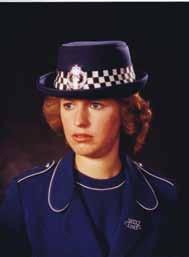
Sergeant Meredith Huxley
Port Adelaide
35 years’ service
Last day: 04.01.14
Comments…
“i have had the opportunity to work with many amazing, committed, professional people throughout my career but, without doubt, my fondest memories will always be of my time as team three patrol sergeant, Port Adelaide.
“ e ach and every one of you has my gratitude and respect for your constant loyalty, enthusiasm, professionalism, humour, wit and courage.
“for many years, i had the privilege and honour of working alongside Sergeant Michael Butler. t hanks Mick.”
STES
36 years’ service
Last day: 13.01.14
Comments…
“ i have had many good times with my traffic colleagues and will treasure the fond memories of those times. Unfortunately, in 2006, i had a motorcycle accident on duty and, after several surgeries on my knee, my riding career of 29 years in SAPol has come to an end.
“t hanks to all my work colleagues for their friendship and support during this time. i look forward to maintaining a friendship with many of you in the future.”
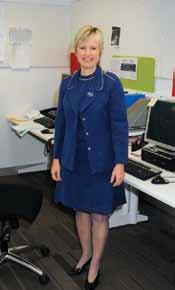
SNR CONST RON SAVA
Left: Huxley in 1979, above: with colleague Mick Butler at the scene of a storm in 2011, right: wearing her 1979 graduation uniform in 2012



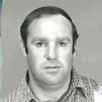
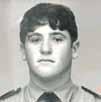



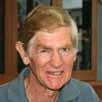
SERGEANT RiCK y GRiMES
Limestone Coast LSA
22 years’ service
Last day: 13.01.14
Comments…
“i thank the association executive, staff and delegates who i have had the pleasure of knowing and working with. i will miss the banter and good cheer.
“Second, and no less important, i express my gratitude and best wishes to the association members who i have had the privilege to work with throughout my career. i thank each of you for your guidance, support, camaraderie and laughs along the way.”
DETECTiVE SNR SGT BRiAN KiMBER
EMR
40 years’ service
Last day: 27.11.13
Comments…
“i thank the Police Association for its ongoing commitment to improving the working conditions of all its members.
“i also thank all members i have had the pleasure of working with over 40 years, mainly in the ciB.”
SNR
SGT PETER ViNCENT
Personnel Section
42 years’ service
Last day: 28.01.14
Comments…
“i have witnessed first-hand the efforts of many employees of SAPol , both sworn and non-sworn, and i compliment them on their commitment, professionalism and dedication to the police service of this state.
“i also thank all present and past association office-holders for their hard work, commitment and achievements in obtaining the pay and working conditions that have been achieved for all members.”
CONSTABLE DON RiChARDSON
Gawler Police Station
5 years’ service
Last day: 08.01.14
Comments…
“ i thank all at g awler police station, especially all those who served on team six.
“My resignation has been a hard decision to make but, as they say, family comes first.
“Special thanks to Snr Sgt Brenton ‘ l ou’ c ostello for being the best boss i ’ve worked under.”
SNR CONST CAROL yOuNG
Minlaton Police Station
23 years’ service
Last day: 15.01.14
Comments…
“ t hank you to all members i have had the pleasure of working with over the past 23 years, particularly those in the country stations on the yorke Peninsula.
“i have thoroughly enjoyed my career as a police officer and would recommend it to anyone.
“ i thank the Police Association for its ongoing commitment to improving the pay and working conditions for all SAPol members.”
SNR SGT 1C ANDREW BARTLETT
Elizabeth Traffic
43 years’ service
Last day: 19.02.14
Comments…
“ i thank the Police Association for its tireless efforts continually striving to improve pay and conditions.
“ to all those (past and present) i have had the privilege of working with, i am grateful and will reflect on my 43 years of service with great fondness and lasting memories.”
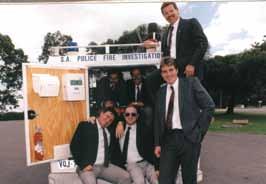
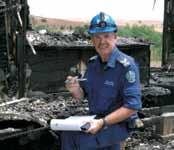
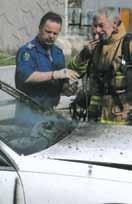
talking to a cfS firefighter who had just extinguished a car fire at echunga
Brevet Sgt Ian Fisher
Forensic Response Section
40 years’ service
Last day: 31.01.14
Comments…
“i thank the association for its work in wages and employment conditions over my career and the support it offers all of its members.
“ to those i have had the pleasure to work with, especially those of the forensic Services Branch, i thank you for your support, friendship, humour and banter which i will miss the most.”
Clockwise from top: original members of the fire investigation Section (clockwise from top left) colin carger, greg l ane, ian fisher, Paul Bahr, John lewis and Vin conley; fisher at the scene of a eudunda house fire;
The Last Shift

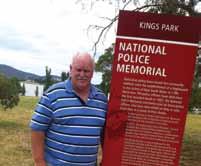
Sergeant Peter Kitto
holden hill LSA Operations
43 years’ service
Last day: 24.01.14
Comments…
“ i thank all those members i have worked with over the past 43 years and i will miss the camaraderie and friendships.
“ i especially thank the Police Association for its continuous dedication and pursuit of conditions and wages
throughout the years. t he members have benefited greatly over the years and are appreciative of that dedication in this area.
“As previous delegate at the Holden Hill l SA, i have enjoyed the regular involvement with members in attempting to resolve iiS matters and pay issues.
“t hanks to Morry Bailes and his team at tg B for their ongoing support to members of the Police Association. t hey play a very important and supportive role in assisting members.”
SNR CONST JACKiE ANNETT
Mount Gambier
13 years’ service
Last day: 27.10.13
Comments…
“My husband gained employment in Western Australia and i have commenced employment with WA Police.
“ i thank all those in the l imestone c oast l SA, particularly those from Mt gambier and Millicent. i shared most of the laughs and the tears with them.
“We are enjoying the change and certainly don’t miss the cold. Be kind and look after one another. i wish you well.”
SNR CONST 1C TERRy hALL
Telecom interception
10 years’ service
Last day: 25.01.14
Comments…
“i thank all members i have worked with and those who have helped me along the way. i wish you all the best for the future.
“ t hank you also to the Police Association for your support.”
Brevet Sgt Michael Heath
Forensic Response Section
26 years’ service
Last day: 18.08.13
Comments…
“i thank the Police Association for its hard work in supporting members through the years.
“ t hrough the years i have been impressed by the dedication, commitment and efforts in all aspects of policing but especially those involving investigators – detectives and those in the forensic Services Branch.
“i thank those i have worked with, often in the comfort of the office but sometimes out in those messy, smelly scenes that required our attention.
“My time will now be spent bringing up my two young sons and supporting my wife, karen, through whom i will still have contact with those in fRS and elsewhere.”

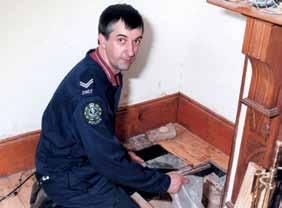
Clockwise from top: c entral crime Scene staff in the mid-1990s: (back row) Mick t homas, Paul Burnside, Michael Wright, Stuart Smith, Peter “Jock” Mc kenzie, Mark goold, Michael Heath, gordon Drage, (front row) Warren lines, kent norris, Di Reynolds, carolyn Walton, ted Van Dijk, Paul Sheldon; Heath at fort l args for the presentation of the t hai DV i medal; digging for bones under floorboards
From left: k itto with the Pepsi girls who were promoting a new drink at Holden Hill police station in 2012; at the national Police Memorial in 2012
SNR CONST 1C REG POLLARD
Sturt LSA Property Section
42 years’ service
Last day: 31.01.14
Comments…
“i thank the Police Association for its personal assistance and ongoing support for wages and conditions.
“i wish the many friends i have made all the best for the future and i look forward to the next phase of life with my amazing family.”
SNR COMMuNiT y CONST TRiCiA MALiNG
Crime Prevention Section, WALSA
19 years’ service
Last day: 31.01.14
Comments…
“i extend my gratitude to the association for the wonderful contribution it has made to enrich the working lives of all SAPol members. i thank all those delegates and staff who have been the guiding light in protecting the interests and rights of all members.
“My first operational partner back in 1995 was Sergeant Mitch Manning, a current association committee member. Mitch is a man of integrity, strength and humility.
“i was fortunate enough to have Mitch as my senior partner and his guidance, professionalism, courage, foresight and interpersonal skills are all attributes that he possessed.
“i have enjoyed my time in SAPol but it is time to change course and take on new challenges.”
SNR CONST ShELLE y JOy Community Relations Section
13 years’ service
Last day: 27.12.13
Comments…
“i had always said that the day i became negative towards the job, or was not enjoying it like a fresh copper, i would resign and move on from SAPol
“i am grateful for my time in SAPol , the people that i made close bonds with and those of you who had a sense of humour and enjoyed a practical joke or two.
“And thanks to the team two Hindley St boys from 2001. t hanks for the character-building moments and shaping me into the copper i was.
“ t hank you as well for the support from the Police Association over my years; and thank you for the great Police Journals with the stories that remind us of the great work our colleagues do daily in this job.”

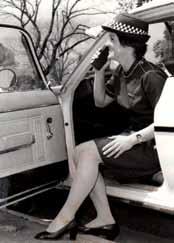
Sergeant Liz McGregor


after a gaming squad raid in the early 1980s; leaving flinders St police headquarters for a run in 1996; on an investigation with fellow Holden Hill ci B detective Vic Butvila in the mid-1980s; posing for a telecom and Motorola publicity shot in 1980
Training and Officer Development
35 years’ service
Last day: 22.01.14
Comments…
“i commenced with adult course 127 on January 4, 1979. l ater that year, SAPol's first female cadets commenced training. it is fabulous that SAPol now has so many female members across the organization, and to have them at ranks that include senior executive level.
“Being one of few women had certain advantages. As a 21-year-old on mixed patrols in Adelaide’s region B, i loved the glamorous uniform complete with court shoes.
“Just two years in and a female member was required in the g aming Squad, so i joined A1 division’s closeknit team. My gender meant i could regularly assist the ciB with serious crime involving women. i enjoyed this work and it cemented my decision at the time to pursue a ciB career. My health was to set
me on an entirely different path.
“in 1989, having attained designation the previous year and finally in a position in which i was not the most junior member, i suddenly faced total renal failure. Dialysis limited me to a day shift position while i awaited a transplant.
“My short ci B career had come to an abrupt halt and SAP ol offered me a position in Recruiting Section. After a very busy eight months of work and laughter, i commenced instructing cadets at the academy.
“i thank the Police Association for the professional way in which it advocates for its members, and for ensuring that each enterprise agreement brings the best conditions and salary advances possible. it was a privilege to represent members during the years i spent on the committee of management.
“ to everyone i have laughed with over 35 years in the police, thanks for your part in making it a great job full of great people.”
for the full version of the last Shift, go to PASAweb at www.pasa.asn.au
Clockwise from top: Mc gregor (second from right) with (from left) Di Ranger, Julie lorenzetto, frankie Anderson, kathy Bambury, Meredith Huxley, Sonia Bahonis and kathy Rasch; Mcgregor at coober Pedy with Peter Mazurek and Peter Mildren
Course 3/2013 Graduates' Dinner
Fenwick Function Centre Saturday, January 18
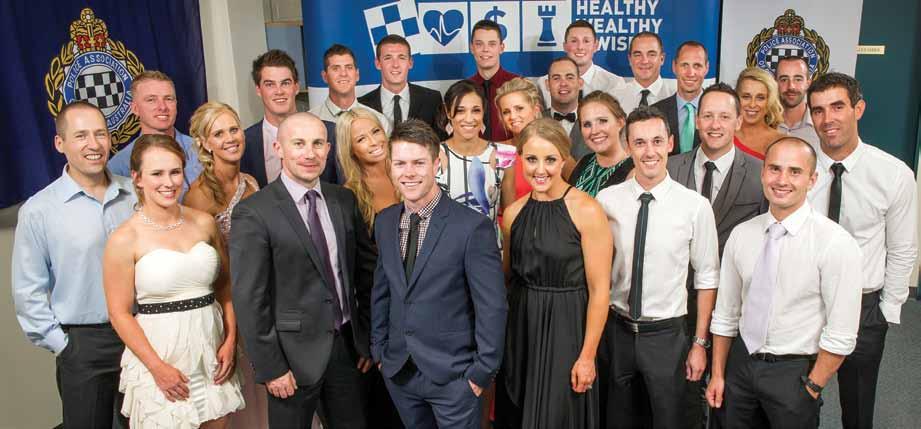
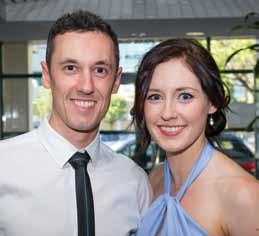

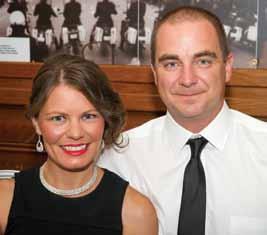
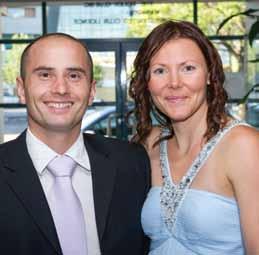







Graduation: Course 3/2013




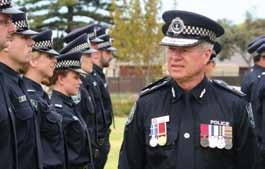
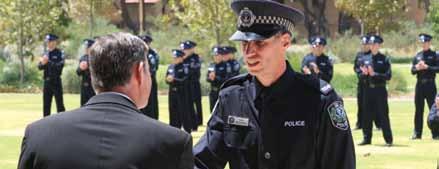

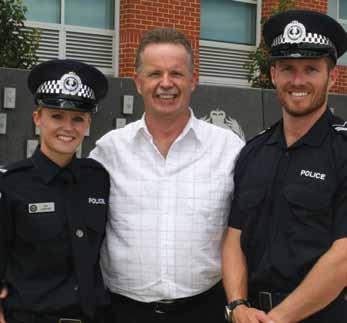
holly Morgan
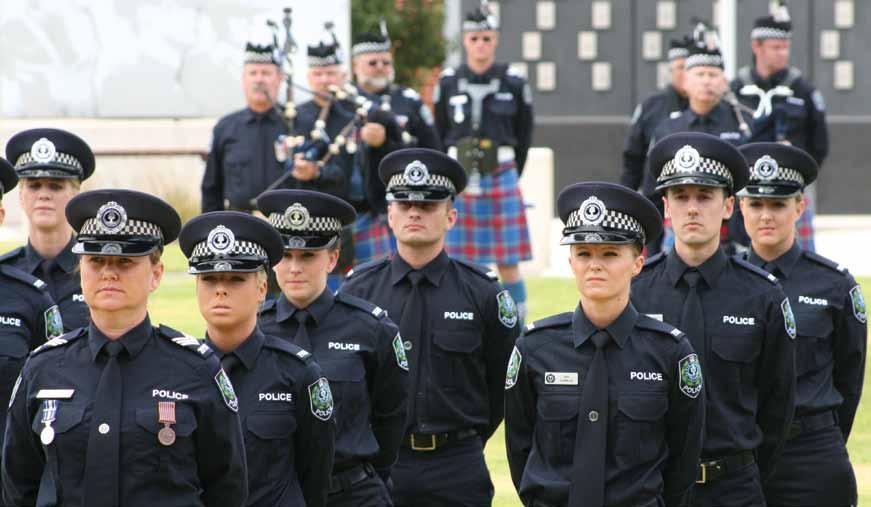



1 Harriette Bew
2 commissioner gary Burns inspects the course
3 gavin Hancock receives the Walter Wissell Award for academic achievement from Police Association president Mark carroll
4 Alice griffin
5 Harriette Bew congratulates a coursemate
6 Samantha Jarrad congratulates a coursemate
7 Julie Matthews
8 Samantha Jarrad with father and brother ian and Ben fisher
9 graduates toss their caps up after dismissal
10 natasha Altamura
11 graduates march off the parade ground
Members of the graduating course during the parade

Playback
STORy thunderbird cop iSSuE february, 2001 POSiTiON front cover
She was a full-time police officer and Thunderbirds player who had just played in a losing grand final against the Melbourne Phoenix. Peta told the Police Journal about the pain of the loss and the challenge of combining a police career (as a recruit) with elite-level sport.
“it was terrible,” she said of the defeat. “everyone was just distraught. there were tears because we had a good grip on the game in the third quarter. We pretty much lost the game ourselves. they (Phoenix) didn’t win it as such – we lost it...”
peta sChol Z Senior Constable Eastern Adelaide intel
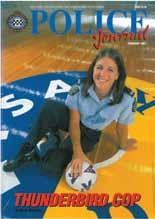
of her dual roles, Brett Williams wrote: “in a typical week, she fronted up for three netball practice sessions, as well as separate training with weights and extra running. Some weeks brought … coaching clinics, interstate travel for away games and media work. She had to spend some weekends at fort largs catching up with what she had missed.”
“After the story came out, i went to the Manchester Commonwealth Games and won a gold medal. then i played for another six years for the thunderbirds before i retired from the sport. But i was lured back to play for the Waikato Bay of Plenty Magic in new Zealand for two seasons, 2010 and 2011.
“After those two seasons, that was it. i had three knee operations in that time, after having no injuries in my entire netball career. that kind of rocked me a bit; and i was getting older so i kind of called it quits at the end of that 2011 season. now i just play for fun with a group of women. We call ourselves BooM, which stands for Bunch of old Moles.
“i’m now in my third year coaching a school team and i love it. But i’m not sure if coaching is for me: i’ve only done it for two years, so i’m still learning a lot. it’s quite a challenging thing to go from playing – which i was so passionate about – to being on the other side, coaching. i’m still trying to come to grips with that.
“i did nearly three years at Eastern Adelaide patrols and then went to bicycle patrols for a year, and that was good fun. then i went to Recruiting and i was there for a couple of years before i went to events Project team. now i’m at eastern Adelaide intelligence, where i’ve spent the last two-and-a-half years.
“We’re now involved in property development. We built a house at Aldinga Beach and sold it, and now we’ve got a place at Warradale that we’re going to bulldoze and replace with a couple of properties.”
“i got married and now have two daughters, aged eight-and-a-half and seven. My husband and i met in high school and we went out for a few years and then had a nine-year break. We met up again in 2002 and got married six months later. To read the story Thunderbird Cop, go to PASAweb at pasa.asn.au





All police – from the newest recruits to the most seasoned officers – know they’re part of the police family, the most important support mechanism they could ever have.
Police Health, Police Credit Union and the Police Association are its cornerstone.
These three long-standing serviceproviders jointly run the Healthy, Wealthy & Wise initiative to bring special benefits to all police and their families.
The very next one is the outstanding presentation by US behavioural sciences and management consultant Dr Kevin Gilmartin at the Adelaide Convention Centre on March 24 (see page 17).
And already renowned for its success is the Graduates’ Dinner, which the Healthy, Wealthy & Wise initiative has funded and staged since 2012 (see Police Scene, pages 46-47).
This is your expert service-providers –Police Health, Police Credit Union and the Police Association –bringing you more benefits than ever.


polic E ASS oci Ation of S o U th AUS tr A li A
POLICE AS S OCIATION OFSOUTH AUSTRALIA
A joint initiative of