




It was torture





























































































































It was torture
The damage that two parents did their own child left even seasoned police asking: “Who could do that to a little boy?”
So many more cops wanted to hear renowned behavioural scientist Dr Kevin Gilmartin – after his March presentation – that he came back to Adelaide.



22 Police Association annual conference
Neither the premier nor the Opposition leader was left in any doubt about where the association stood on the Police Disciplinary Tribunal.
30 Police Association president to call the shots nationally
His peers have just voted him into the highest police union office in Australia, and Mark Carroll intends to “confront the (federal) issues head-on”. 31 Police Journal’s international awards tally rises to 4
Australia’s leading police magazine has just added European gold and silver to the silver and bronze it won in the US last July.

Brett williams Editor (08) 8212 3055

Dr rod Pearce Health Writer
Publisher: Police Association of South Australia (08) 8212 3055
advertising: Police Association of South Australia (08) 8212 3055

Jim Barnett Motoring Reviewer
Design: Sam Kleidon 0417 839 300
Printing: finsbury Green (08) 8234 8000
The Police Journal is published by the Police Association of South Australia, 27 Carrington St, Adelaide, SA 5000, (ABN 73 802 822 770). Contents of the Police Journal are subject to copyright. Reproduction in whole or in part without written permission of the Police Association of South Australia is prohibited. Opinions expressed are not necessarily those of the editor. The Police Association accepts no responsibility for statements made by advertisers. Editorial contributions should be sent to the editor ( brettwilliams@pj.asn.au).



PRESiDENT 0417 876 732

SECRETARy 0417 817 075


Metro North BraNCh
Elizabeth Glenn Pink
Holden Hill Nigel Savage




Henley Beach Matthew Kluzek
Gawler David Savage
Golden Grove Simon Nappa
Parks ................................ Sonia Giacomelli
Port Adelaide Rebecca Burns
Salisbury Taryn Trevelion
Northern Prosecution .... Tim Pfeiffer
CouNtry North BraNCh
Port Lincoln .................... Lloyd Parker (chair)
Ceduna Anthony Taylor
Coober Pedy Jeff Page
Kadina .............................. Ric Schild
Nuriootpa ........................ Michael Casey
Peterborough Nathan Paskett
Port Augusta Peter Hore
Port Pirie
Gavin Mildrum
Whyalla Michael Ball
CrIMe CoMMaND BraNCh
e lizabeth......................... Kym wilson (chair)
Major Crime Campbell Hill
Adelaide Dac Thomas
DOCiB Dwayne illies
forensic Services ........... Adam Gates
fraud ................................ Jamie Dolan
Holden Hill Narelle Smith
intelligence Support....... Kevin Hunt
Port Adelaide Robert Beattie
South Coast Jason Tank
Sturt Brad Scott
Metro south BraNCh
sturt Michael Quinton (chair)
Adelaide Melissa Eason
Netley .............................. Mark Williams
Norwood Ralph Rogerson
South Coast Peter Clifton
South Coast Russell Stone
Southern Traffic Peter Tellam
Southern Prosecution Andrew Heffernan

ViCE-PRESiDENT


Organizer
INDustrIaL
Bernadette Zimmermann

Wendy Kellett
CouNtry south BraNCh
Mount Gambier ............. andy McClean (chair)
Adelaide Hills Joe McDonald
Berri John Gardner
Millicent Nick Patterson
Murray Bridge Kym Cocks
Naracoorte Grant Baker
Renmark Dan Schatto
oPeratIoNs suPPort BraNCh
Dog ops Bryan whitehorn (chair)
Police Academy francis Toner
ACB George Blocki
Police Band Neil Conaghty
Grievance Officer
Matthew Karger

PoLICe JourNaL Editor
Brett Williams

CoMMuNICatIoNs

Anne Hehner, Jan Welsby, Sarah Stephens
Comcen Brenton Kirk
firearms ........................... leonie Turner
HR David Wardrop
Mounted Kelly-Anne Taylor-Wilson
STAR Operations ............ Wayne Spencer
Traffic David Kuchenmeister
Transit Michael Tomney
woMeNs BraNCh (no delegates)
atsI BraNCh
shane Bloomfield (chair) (no delegates)
oFFICers BraNCh alex Zimmermann

Shelley furbow
COHSWAC ......................... Bernadette Zimmermann
Housing Bernadette Zimmermann
leave Bank Bernadette Zimmermann
legacy Allan Cannon
Police Dependants fund ... Tom Scheffler
Superannuation Bernadette Zimmermann
David Reynolds
Level 2, 27 Carrington st, adelaide sa 5000 P: (08) 8212 3055 (all hours) F: (08) 8212 2002 Membership enquiries: (08) 8112 7988
Mark Carroll
utterthe words “organizational review” and you are likely to strike fear into the hearts of employees just about anywhere.
And if you are prepared to risk the spread of that fear from the employees to the public, just use those words in respect of policing.
The proposed SAPOl review of local service areas has been at the forefront of police discussion for most of this year.
But the Police Association is yet to see any substantial documentation which outlines the changes SAPO l plans to undertake.
My message this year has remained consistent and is on the public record. The association will not finalize the negotiation of a new enterprise agreement until it has seen, in writing, the intended operational outcomes of the SAPOl organizational review.
The association is not opposed to the general concept of a review. We have met the SAPOl project team and demonstrated our understanding of the importance of continually examining police methods and staffing numbers.
We understand this is how improvements are made in police service delivery, staff workloads and morale.
But we have also made clear to SAPOl that front-line police need as much support as possible to continue protecting and serving the community.
Given that patrol officers constitute the cornerstone of response policing, it is vital that their numbers are not just adequate on a given shift but maintained on all shifts.
We have raised these issues directly with the SAPO l project
team and we expect that any review of the lSAs will take these matters into consideration.
i am certain the general public would expect any organizational review of policing to fix resourcing problems, not exacerbate them.
The association will not support a review that does not intend to make police more efficient, more productive, and better able to serve the community.
legislation to reform workers’ compensation in South Australia passed the SA Parliament last October, with the government claiming that levies for the business sector would fall by $180 million annually.
What the government didn’t tell us was that this act will significantly short-change police.
Under the act, weekly payments to an individual seriously injured at work cease at 104 weeks from the date of the injury.
i explained in October ( Return to work bill, Police Journal) how this – and other concerning parameters of the act – could disadvantage police injured in the line of duty.
And, in what would surely concern the general community, it could also lead to hesitant police responses to critical situations.
Society assumes that a police officer will pursue that critical role with little regard for his or her personal safety.
...the Police Association is yet to see any substantial documentation...
How can police continue to perform this role so fearlessly knowing that, in the case of an injury, the system could leave them on the scrapheap?
The association cannot accept this outcome. We will continue to lobby the government for police-specific amendments to legislation.
The state government appears to have heeded the concerns of our police prosecutors regarding their role in connection with the Office of the Director of Public Prosecutions. l ast month, the government opened dialogue with us about a possible review of prosecution practices. Members can read more on the background of this issue in Association acts to reform system for police prosecutors (page 34).
A member of the public recently brought a matter to my attention, and it demonstrates the importance of this issue.
in a disturbing case of mistaken identity earlier this year, three men randomly attacked an innocent 17-year-old youth, shoved him into their car, put a blanket over his head and threatened to kill him.
The youth endured several horrific minutes not knowing whether he would live or die.
l uckily, a close-by resident witnessed the attack and called for help. The police caught the three men and charged them with kidnapping.
However, the view of the ODPP was that the offenders had not detained the victim for long enough to warrant the charges.
The ODPP took this action despite the fact that no specific legislation outlined length of detention as a pre-requisite for kidnapping charges.
When this matter became public, DPP Adam Kimber SC reviewed the file and the original kidnapping and threaten-life charges were reinstated.
in the last financial year alone, the ODPP returned over 300 other cases to police to prosecute in the lower courts.
Police prosecutors are telling us that many of the files sent back by the ODPP warrant more serious charges which should be heard in the District and Supreme courts. i ndeed, the Police Association knows of several occasions when the ODPP has handed back highly complex prosecution matters for police to prosecute in the Magistrates courts.
Police prosecutors are at the front-line of our criminal justice system. They have a co-dependent relationship with the ODPP and neither works properly without the other.
One thing is abundantly clear to the association and its members: there is a disconnection between the legislative intent of the role of the ODPP and the practical application of prosecution policy.
The association awaits confirmation that the state government will undertake a review of prosecution practice.
Our cover story, it was torture, is one of the most powerful we have ever presented. Not since the awardwinning feature Uncovering the children’s horror ( Police Journal, August 2011) have we told such a shocking story of child neglect.
This is the case of a four-year-old Gilles Plains boy who police found and rescued from what they described as the worst living conditions they had ever seen.
Starving and near death, the boy had been virtually imprisoned in a room for 12 days and weighed just 8.3kg.
His rescue and the subsequent investigation of neglect by his parents took a toll on all the police involved.
We rightly talk a lot about the physical dangers police confront on the job, but this case illustrates the non-physical hazards.
i don’t expect any officer will ever be able to erase from his or her mind the image of that poor suffering boy. Memories of him, and squalor in which he suffered, will be with them forever. it’s another burden that we expect police to bear.
i commend every one of our members involved in this case, the Holden Hill patrols, C i B, family Violence, Operations and Crime Scene.
Police always say that crimes against children are the ones they hate dealing with the most. This story explains why.
Most outside the police community think of the festive season as the time for a well-earned break with the family and friends –away from work.
Hundreds of Police Association members will miss out on that opportunity – and probably not for the first time.
As usual, they will sacrifice precious time with their families and friends and front up to protect others – people they don’t even know.
The community expectation is that police will continue to serve as normal, that they will deal with outof-control revellers, irresponsible road-users, and alcohol-fuelled violence while others relax and enjoy time with their loved ones.
The police who meet that expectation for the rest of us deserve unconditional community support. i urge the public to deliver that support in abundance.
i also wish all association members and their families, and Police Journal readers, a safe, enjoyable Christmas and a prosperous new year.



It reminded police and hospital staff of the shocking house of horrors case of 2008. But different this time was that one child, who almost died, suffered the entire atrocity alone – and imprisoned.





By Brett williams




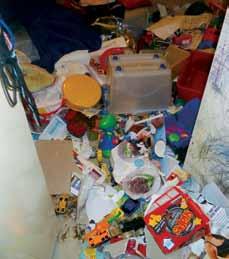
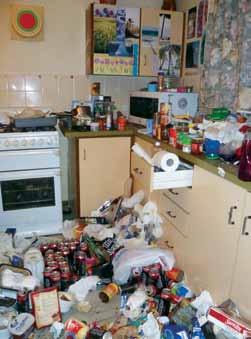
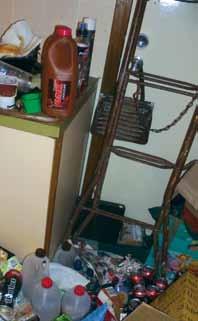
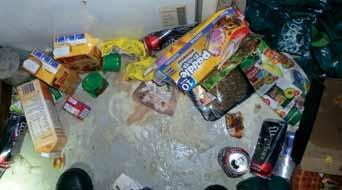
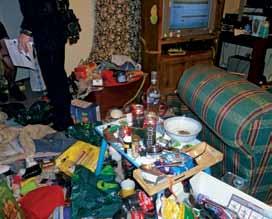
Gilles Plains home looked like, and actually smelt worse than, a putrid rubbish dump. Maggot-infested meat, cigarette butts, packaging, and food and drink cans covered almost all of its floor space. Among other trash were used sanitary pads and soiled nappies, which rose to almost knee height.
Constable Julie Castle and Sergeant Daniel Guzej had just had to trudge their way through it – right from the front door to a dark, eerie passageway. it was almost 4 o’clock on a cold October morning last year, and they rightly suspected a child might be at serious risk.
And, now, by the light of a police torch, and with urgency more justified than even they could ever know, the pair stood ready to force open a bedroom door.
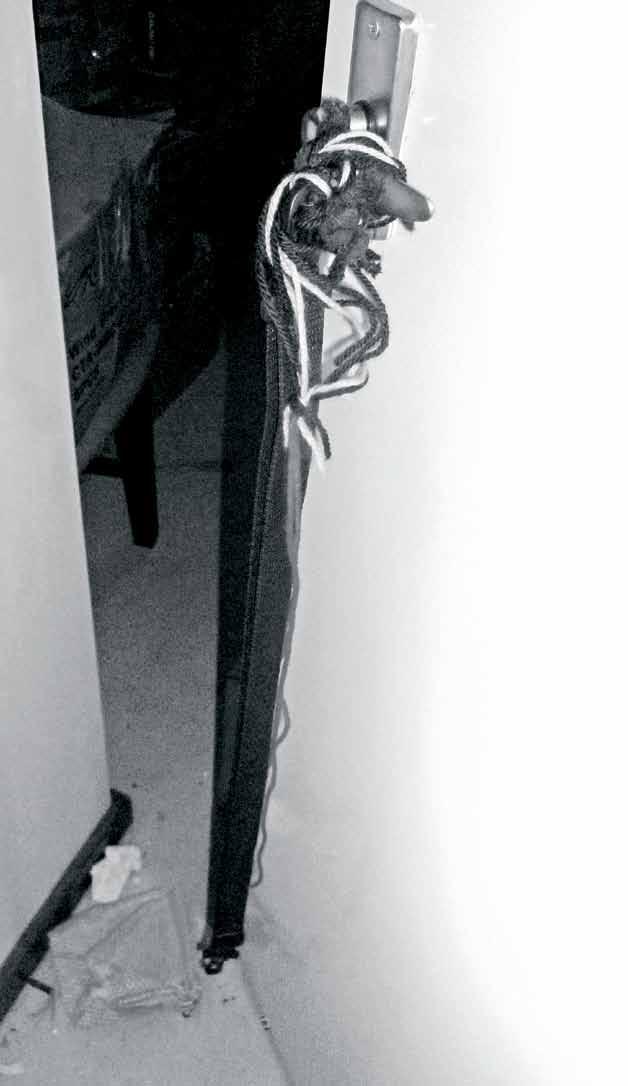
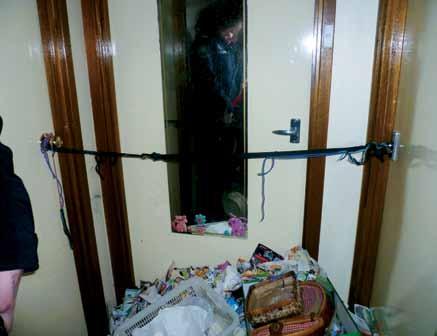
Holding it tightly shut by its round handle was a length of knotted cords and shoelaces tied to another door handle across the passageway. A worried Castle had, a few moments earlier, tried but failed to unknot the crude fastening.
What she had not seen in the dark, but could now see in the light beaming from Guzej’s torch, were two hooks keeping it in place. She quickly unhitched them, and the bedroom door sprang slightly ajar.
Although struck by bright light which filled this narrow opening to the room, the two Holden Hill cops moved swiftly.
Against some unknown resistance, Castle pushed the door but it opened only slightly wider. Guzej then gave it a solid shove, forcing it open to around 45 degrees.
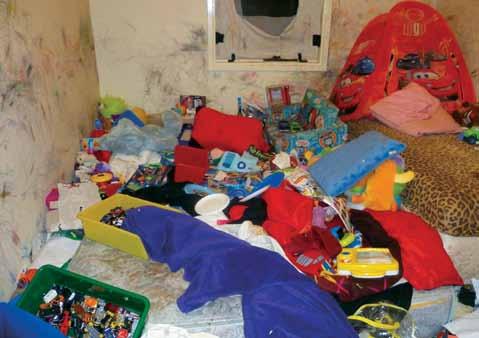
This broader opening exposed a trash-covered floor and child-like scribbling all over the walls. Among piles of junk were human faeces and dirty, broken toys; and pushed into a corner of the freezing-cold room was a soiled bed and child’s play tent.
On the floor, beneath mounds of hard and soft toys, packaging and plastic plates was a filthy doublebed mattress.
Cloth taped over the only window cut off any view of the outside world and kept anything of nature from penetrating the room.
Castle stepped half a pace forward, peered around behind the door and, to Guzej, exclaimed: “you’ve got to see this!”
Guzej shoved the door farther open, to about 60 degrees, and then beheld a vision he could simply not believe. Both he and Castle stood momentarily bewildered.
Sitting naked and silently on the floor before them was the pale, ghost-like figure of a severely malnourished little boy. Each one of his tiny, fleshless bones was distinguishable to the naked eye through his “almost see-through” skin.
To Guzej, he looked like the tortured child victim of a Nazi concentration camp. i t would later emerge that Eddie (not his real name) was four – and weighed just 8.3kg.
Grimy and shivering, the blonde-haired child looked at Castle and Guzej through his sunken blue eyes. And, in his outstretched, twig-like arms he held an empty plastic plate toward them and muttered: “Nom, nom.”
“if he was lying down i would have thought he was dead – and had been dead for a little while.”
The shocked police officers – each a parent of young children – knew the starving, near-death boy was pleading for food.
for a moment, Guzej just could not comprehend the sight of “this skeletal kid (who was) not moving”. Wisely, however, he had gone into the room armed with a camera and, by instinct alone, snapped a photo of him.
“And then,” he says, “i bent down and stroked his hair, just to make sure he was real.”
This frighteningly unreal look of the boy had struck Castle with equal impact. She and Guzej had 27 years’ police experience between them, but neither had ever seen a child so physically ravaged.
“He looked like something out of a movie,” Castle says. “it took me maybe a second to realize what the hell was going on. He didn’t have any clothes on, nothing at all, and he was just so skinny and really white.
“if he was lying down i would have thought he was dead – and had been dead for a little while.
“it was just horrendous. it was something you’d expect to see in a Third World country, but this was a kid starving, wanting food, not five minutes from a police station.”
And by the faeces Castle had seen on the floor of the room in which she found him, she figured Eddie had suffered diarrhoea.
“All i wanted to do was get him out of there,” Castle says. “That was probably the only thing i thought of at the time. i don’t reckon he would have survived the next night.”
“it was something you’d expect to see in a Third World country, but this was a kid starving, wanting food, not five minutes from a police station.”
The officers tried to lift him to his feet but he trembled and had not even the strength to stand. Castle hurriedly removed her patrol jacket and thrust it tightly around him. Then she picked the boy up, cradled him in her arms and carried him out of the room.
Guzej saw no reaction from him. “He would have gone with anyone, anywhere,” the father-oftwo insists. “He looked like he was dead inside. i felt as though he was almost looking past me, or through me.”
Guzej called for an ambulance as Castle paused momentarily in the passageway before trudging back through the stinking, trash-filled house with Eddie. She passed by his mother, folland (not her real name), at the front door, and his father, Garrison (not his real name), outside.
“And not one of them said anything about the fact that i was carrying their child out,” Castle remembers. “They didn’t seem concerned at all.
“When we were leaving the house, (Eddie) saw his mum and said: ‘Mum, give strawberry milk.’ That was the first time i heard him talk.”
Castle headed straight for a patrol car and, on the way, passed by Senior Constable Jarrod Davey, who had arrived at the house before her. She struggled to find the words to explain to him the horror she and Guzej had just uncovered.
Says Davey: “i remember just turning around and i could see Julie holding him in her arms with her jacket. you could tell it was a child (she was carrying) but he just didn’t look real.
“His legs and arms were about the thickness of my thumb and, in the few seconds that Julie passed me, i thought: ‘What the f--k's going on?’
“He was just empty. The look in his eyes was just empty. four years old and he had no idea what was going on. He wasn’t calling out, wasn’t crying… There was just no emotion.”
Castle got into Guzej’s patrol car and sat Eddie on her lap. She and Guzej had decided to take him back to Holden Hill police station. Desperate to warm him up, she kept her jacket and arms wrapped tightly around him and turned on the car heater.
“i had to sort of let go of him a bit because i was crushing him,” the mother-of-two says, “just holding him so tight. He was so cold.”
Davey, now concerned for not only the boy but also his colleague, approached the patrol car. “i could just tell by the look on Julie’s face that something was very wrong,” he says. “i could see she was stressed, and said: ‘What’s going on?’
“She had (Eddie) in the back of the car and he was just sitting there looking with this blank, no-one’s-home look on his face.”
Castle and Guzej drove Eddie back to Holden Hill Police Complex to get him immediate care from ambulance officers. in the station, Castle tried to fit the boy with a nappy but even the carpeted floor proved too hard a surface on which to lay him.
“i couldn’t even get his legs or hips to bend to lay him down,” she says, “and, when i tried, he would just cry in pain. it was obviously painful for him on a hard surface because there was no (flesh) cushioning between his bones and whatever surface he was touching.”
Guzej had rushed out to get Eddie some food which he brought back to the station, along with a blanket from his own car. Castle rewrapped the boy in her jacket and the blanket and gave him bottled water which, in his desperation, he tried to guzzle.
By then, ambulance officers had arrived with advice not to overfeed Eddie in his emaciated condition. So Guzej gave him only small amounts of the food he had bought and a few sips of apple juice, as Castle continued to hold him.
Desperate to accept the food, Eddie stretched out his fragile arms, just as he had back in the squalid room from which the officers rescued him. And Castle heard him pleadingly mutter some more words, such as yogurt, strawberry and milk.
But, more than foodstuffs, Eddie needed hospital treatment. Castle got into the ambulance and kept the ailing boy held in her arms all the way to the Women’s and Children’s Hospital.
Even there, she never let go of him until she handed him over to shocked hospital staff. “you could see on the nurses’ faces that they were quite horrified,” she says.
“One of the nurses tried to bath him in a plastic bath. We grabbed some towels and put them on the bottom of the bath to make it softer.
“He was whimpering as she tried to wash him: the dirt was so engrained into his skin. She was trying to get it off without hurting him but he was in a lot of pain.”
The nurses were able to cleanse Eddie of at least the physical grime of his virtual imprisonment. Then came the staggering revelation of his bodyweight: 8.3kg. it struck Castle that that was the weight of her two-year-old daughter.
“She was less than half his (Eddie’s) age,” she says, “so you then just do the calculations. it was pretty disturbing.”
Guzej – who had gone back to the Gilles Plains house to shoot video footage and take more photos – soon joined Castle and Eddie at the hospital. f or another 30 minutes, the two deeply caring cops stayed close to the youngster they had taken to their hearts.
After that, however, they had to get back to the station, and Guzej concedes that he and Castle “had trouble leaving him (Eddie)” behind.


of them knew then that concern for Eddie had surfaced as far back as 2009. That was when the Child Abuse Report line received the first of three notifications about him as a high-risk infant. Church organizations and government agencies had looked some way into his circumstances but not far enough to spare the boy the horror of imprisonment and starvation.
And, if not for a call Eddie’s frantic mother had made to police earlier that morning, Castle and Guzej would never even have known of the tragic little victim.
Screaming down the phone line, a hysterical folland, 23, alleged that Garrison had assaulted her, left their Gilles Plains home, and was now trying to get back inside. Davey and his partner responded, arriving on the scene around seven minutes later, at 3:40am.
They immediately spotted Garrison, 27, in his driveway, seemingly alcohol- and/or drug-affected and yelling as he walked out toward the street. Davey stopped and spoke to him while his partner approached the front door of the house to find folland.
She appeared but, in her hysteria, collapsed to the floor wailing, just before Guzej and then Castle and her partner arrived. Castle went to the door to help investigate the assault allegation and found folland lying in a small – and the only – piece of floor space clear of rubbish.
The dishevelled, 38kg blonde continued to wail and seemed just as alcohol- and/or drug-affected as the equally frowzy, 39kg Garrison. Her story was that he had stood on her head after she yelled out for help during an argument with him.
Castle, straining to understand this emotional account of events, cast her eyes over the piled-up rubbish covering the entire floor around folland. She found it an image as overpowering as the stench of rotting food and faeces she could smell from the front door.
“Every piece of rubbish that you can imagine was in that house,” Castle says. “it was like she (f olland) couldn’t see how bad it was, and she said: ‘Oh, we’ve been meaning to take the rubbish bags out.’
“But it wasn’t just a few bags of rubbish at the door. This whole house was a complete rubbish tip. There was stuff everywhere.”
Castle rightly queried folland about the nature of her relationship with Garrison and, ultimately, came to the question of children. folland, perhaps by accident, answered honestly, revealing that she and Garrison were parents to a son.
She added quickly, and repeatedly, that Eddie was “really skinny”. And, naturally, that comment set off “alarm bells” in Castle, who asked where she could find this mystery child.
folland said he was asleep in a bedroom, and she

seemed uneasy about Castle checking on him. But the determined copper refused to relent and walked off across the rubbish-filled living room, through the kitchen and into the dark passageway.
On her way along there, toward the two boundtogether doors, she shone her torch into the toilet and saw used sanitary pads piled as high as the toilet seat. i n the main bedroom were soiled nappies, also piled high, around a dresser.
After she found but could not unknot the cords between the door handles, she headed back to her patrol car to find a cutter. Back outside, she told Guzej of her information about a child and that she had found two passageway doors bound by cords.
Guzej had himself just found out about Eddie from a friend of folland. He (the friend) had just turned up, saying that folland had called him a short time earlier.
Castle grabbed a cutter and insisted that Guzej go back into the house with her. “i felt quite sick at this stage,” she remembers. “i had a gut feeling that this was not going to be good. That sixth sense starts kicking in, and you know something is really not right.”
Castle led the way back inside where Guzej, who had grabbed a camera, got his first confronting look at the squalor. “The stench was unreal,” he says. “Wingfield dump doesn’t smell as bad (as this place did) because it’s airy. This place was contained and putrid.
“There were plastic bags with (soiled) nappies and rotting food thrown in various places. The laundry had bags in it and other rubbish everywhere. in the bathroom there were bags of rubbish thrown in the bath and shower.
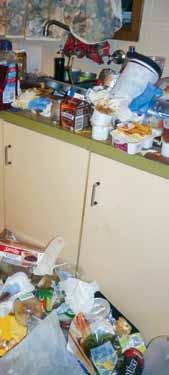
“i n the kitchen there was no surface that didn’t have something on it. Around the sink, things were stacked a foot high. To open the fridge you had to force all the rubbish away from the door.
“When i took photos, i was standing in a big pool of spilt custard and a packet of black, rotting mince with things wriggling in it. There was mould and things growing out of cans.”
But the rotting food, sanitary waste and choking stench never deterred Castle and Guzej, who forged ahead with their search for Eddie.
Back outside, Davey arrested Garrison for the assault f olland had alleged he committed against her earlier in the morning.
And, soon after that, all five cops headed back to Holden Hill police station – Castle with Eddie in her arms and Davey and his partner with their prisoner.
in a cellblock interview room, Davey began to question Garrison, not about the neglect of Eddie but the allegation of domestic violence. The talkative Garrison, unfazed by his arrest, denied the assault claim.
“He agreed they’d had an argument but said she was physical first, that he was defending himself,” Davey says. “He said he might have pushed her, that he wanted to get her away because she was being aggressive.”
Questions about Eddie and his near-death condition were to come later, in an interview by Holden Hill detectives. So Davey stayed on the topic of the assault, but some horrific details about the suffering child still emerged.
“That kid’s been in that room for 12 f--king days, man,” Garrison revealed. “We fed him under the door.”
And the only food Eddie got to nourish his deteriorating body with was yogurt and custard, shoved under that door on plastic and paper plates. Worse still was that, for those 12 days, the two parents never gave Eddie water – or anything else – to drink.
Davey asked Garrison how the boy was getting fluid while cruelly confined to the room. “from the food, man,” was his staggering answer. And equally galling was his response to a question about how Eddie had gone about toileting.


“As the photos of the house and the squalid living conditions were shown around, it was clear that this was a case like no other.”
“He isn’t toilet-trained yet,” Garrison said. “He’s still in nappies. He’s probably taken his nappy off.” f inally, Davey asked Garrison if, during the 12 days, he ever went into the room to check on Eddie. “Ah, nah,” he said casually.
“That interview will stick with me,” Davey says. “it’s the realization that he (Eddie) went for 12 days and no one had spoken to him. That’s just torture for a four-year-old child.
“And another point of torture was that the light was on in his room the entire time, with the window blacked out. So he would have had no idea if it was night or day. That’s torture in itself on the human body.”
To every observer, the inhumane treatment of the boy was incomprehensible, as was the reason Garrison gave for it. He conceded that it was not that Eddie had misbehaved but rather “our stupid parenting”.
Says Davey: “He just had no appreciation of the circumstances, why we were there (doing the interview), or the fact that we’d found (Eddie).”
By the end of the 77-minute interview, Garrison had revealed himself to be a chronic dope-smoker who had already had a daughter taken away from him.
And more about his and folland’s treatment of Eddie was still to emerge in a separate interview with Holden Hill detectives a few hours later.
Meanwhile, Acting Detective Sgt Amanda lewis came on duty at 7am and saw the confronting photos of Eddie and his dump-like room. She showed them to her supervisor, Acting Detective Snr Sgt Ash Grant, who took overall charge of the unfolding investigation.
Drawn in to ply their skills were Holden Hill Ci B, family Violence, and Operations members. Grant briefed them all, and his superiors, on the circumstances in which the patrol officers had found and rescued Eddie.
“As the photos of the house and the squalid living conditions were shown around, it was clear that this was a case like no other,” Grant says.
“All members of the team were seasoned police officers, used to responding to and witnessing traumatic scenes. (But) the severity of the squalor and the images of an emaciated, defenceless boy took an obvious toll.
“The team was clearly shocked, but equally determined to do what they could to bring those responsible to justice.
“it was imperative to secure, preserve and process the house as a crime scene in order to have any chance of a successful prosecution (of the parents).”
Grant moved quickly to assign the members of his team to a range of critical tasks. Detective Snr Const first Class Sarah Odell and Snr Const first Class Rob Cowood got the job of interviewing Garrison about his despicable neglect of Eddie.
Of course, the two investigators had seen the photos of the boy, and the appalling conditions in which Castle and Guzej had found him.
Says Odell: “it was just unbelievable. The pictures were of a boy in a room which was just filth, stuff everywhere; and he was just skin and bone. He was hunched over and you could see the ribs protruding. it was pretty confronting.
“it was (also) heartbreaking. My heart went out (to him). i just went: ‘Oh, my God! Who could do that to a little boy?’ ”
And Odell was about to become even more horrified, indeed angered, listening to a nonchalant Garrison account for his and folland’s atrocious actions.
The conversation got under way just after 10:30am and would last for one hour, 40 minutes.
Among the infuriating answers Garrison gave was one to a question Cowood asked him about tying Eddie’s bedroom door shut.
“Oh, it’s so when we’re actually asleep and stuff he doesn’t wander out of his room,” Garrison said. “We haven’t been able to fathom what normal people do when it comes to how you stop your kid from running around when you’re asleep.”
“i remember thinking: ‘Are you serious?! your kid’s almost starved to death but you don’t understand why we’re here speaking to you.’”
asOdell and Cowood absorbed one staggering account of Eddie’s plight, other investigators went about pursuing another.
They were Detective Brevet Sgt Candace Masella and Senior Constable f irst Class Nick f redella from Holden Hill family Violence. They, along with Grant and lewis, had gone back to the scene of the previous days’ horror and caught up with folland.
Garrison admitted that, during the life-threatening 12-day isolation Eddie suffered, neither he nor folland ever once opened that bedroom door.
And then came the reason he never checked on Eddie or ever allowed him out of the room for bathing, fresh air or a parent’s embrace.
He put it down to “general distraction”, such as television, and a “lack of motivation”. “We record all our TV,” he said. “We don’t watch any live TV, so it’s like we’ll sit there and watch all our (recorded) TV … and another six hours has gone.”
And, of course, there was also the endless dopesmoking. Garrison never listed it as a distraction but spoke about it openly.
“it’s constant, man,” he said. “Since i was 10 years old, i smoke from the moment i wake up (to) the moment i go to sleep. i ‘cone’ before i lay down; i’ll have a cone as soon as i sit up.”
Garrison explained that, out of their fortnightly Centrelink payments of $1,200, he and folland spent $440 on marijuana and smoked around four grams of it every day.
He claimed not to be a regular drinker but admitted that, along with folland, he had recently taken to bingeing on vodka.
Perhaps it was all this substance abuse that led to the bizarre method Garrison said folland used to check on her son’s welfare. With a CD, positioned either under or, according to Garrison, “next to the door”, she looked at his reflection.
Cowood asked Garrison why she did not simply open the door and enter the room to check on him.
“She probably can’t answer it, just like i can’t,” he said. “That’s one of those weird things, man.”
Just as weird was the method Garrison said he used to heat Eddie’s freezingcold room. He pointed a fan-heater at the locked bedroom door from the passageway outside.
Other admissions he made correlated with what he had said in the previous interview about feeding Eddie nothing but sachets of yogurt and custard.
“(With a) spoon under the door with a plate,” he said. “Put the plate down, the sachet on it – like empty the sachet on it – have a spoon … slide it under the door.”
And, as for the mountains of stinking garbage inside the house, Garrison claimed that he and folland had simply “missed the odd rubbish days”. “Basically, we’ve just fallen behind (with the) rubbish,” he said. “And then, like, each day seems to pass really quickly.”
Odell found his manner extremely frustrating. “Because,” she says, “he didn’t really seem bothered or to understand why we were speaking to him about it (Eddie’s confinement). He just didn’t think anything was wrong.
“He did say: ‘ i think you’re making a bigger deal about this than what it actually is.’ i remember thinking: ‘Are you serious?! your kid’s almost starved to death but you don’t understand why we’re here speaking to you.’
“i was just flabbergasted that he could say that. How can you treat a child so badly and think it’s okay? And how can you not have any concept of what you’ve done, or the impact you’ve had on this child’s life? it was just mind-blowing.”
Masella and fredella arrested the failed mother for criminal neglect and headed back to Holden Hill police station to interview her. The conversation began a few minutes after midday and would last almost two hours.
f olland conceded that, owing to the vodka binge and dope-smoking she had undertaken with Garrison, she remembered little, if anything, of the previous seven days. Still, fredella asked her if, during that time, she or Garrison ever let Eddie out of his locked room.
“i don’t know,” she said, as she started to cry. “i can’t tell you. i don’t remember.”
One thing she did claim to remember was sliding plates of yogurt under Eddie’s bedroom door. So fredella asked her if, when she did that, she ever heard Eddie say anything.
“He said: ‘ yogurt,’ ” she claimed.
“How did he seem to you at that stage?” fredella asked.
“He seemed like i should’ve been getting him out of his room,” folland recalled. “like i shouldn’t keep him in there. i should’ve just grabbed him and ran (sic).”
implied in her remark was that she should have ended her relationship with Garrison. Her comments about him throughout the interview painted a picture of a domineering type who put no time into Eddie and wanted the boy kept in his room.
“Absolutely everything (Garrison) wants goes,” she claimed.
And it was that regime which folland blamed for her failings as a mother. She confessed that she had attended to Garrison’s needs and interests before those of her son.
“i didn’t associate with my child like i should have,” she said. “instead, i was too busy having sex with (Garrison). i was too busy wrapped up around his … issues, trying to make him happy … and i ’ve neglected (Eddie).”
According to f olland, she had begun her relationship with Garrison in Victoria when she was a teenager and soon fell pregnant to him.
She said she came to Adelaide with him in 2008 and later moved into the Gilles Plains house. Her mother’s suicide had prompted their move from Victoria.
folland conceded that the unsanitary mess inside the house had existed for “a long time” but had “exploded” in the previous two to three months.
She vehemently denied that Eddie’s imprisonment had gone on for 12 days but exclaimed “i’ve harmed my son!”
“i can see the weight (of) him,” she said. “i can see he is a twig. i know this.”
And, later in the interview, she remarked: “i won’t get him back. He is better off with everyone else –i have just seen that.
“But i want my little boy. i love him to bits. But he can’t be with me, clearly. i ’m clearly not a good person to be around.
“i feel so bad having him in there; and i knew it was wrong. i didn’t want him to have to be in there, and i kept telling (Garrison): ‘He shouldn’t be in there.’ ”
And folland gave the same reason Garrison had given for locking Eddie away: to keep the child from wandering the house when his parents were asleep.
As fredella and Masella were undertaking the interview, Grant and lewis were back at the Gilles Plains house. With them were Operations senior sergeant Andrew McCracken and Crime Scene officers Sgt Bernie Williamson and Brevet Sgt Pip McGowan.
They found the house not only “confronting” but also “a massive hazard”. “The unsanitary conditions, atrocious smell, confined space, rotting garbage, fire hazards, and insects and vermin made any search of the premises high risk.” Grant says.
“(Eddie’s) room was covered in faeces, had lice and other insects throughout, and had no heating. And no children’s clothing was found throughout the house.”
Grant and l ewis, both experienced Drug investigation Branch detectives, could see only one safe way to conduct a search. That was to employ exactly the same methods they had used to dismantle clandestine drug labs.
So police gathered for an urgent case management meeting, at which a plan came together to conduct a “fully resourced” search of the house the next day.
Detective Snr Sgt first Class Danny Smalbil and Detective Brevet Sgt Kerstin “Kaz” Wojciechowski attended the meeting and gave advice. They had investigated the Parafield Gardens House of Horrors case in 2008.
By the time planning for the search got under way, Castle and Davey had “come down” from the high emotion of the shift and left for home. But Castle, overwhelmed by “negativity”, felt that she first had to “do something positive”.
So she drove straight to a Target store and went about buying Eddie “a heap” of items, such as pyjamas, singlets, sippy cups and an Elmo pillow pet.
“i was just grabbing everything,” she recalls. “i felt i just had to do something.”
After Castle returned to work that evening to begin her next night shift, she headed off to the Women’s and Children’s Hospital with Guzej. He, too, had bought Eddie some items; and both officers hoped to see how the boy had survived his first day out of lockdown.
No surprise was that doctors had assessed him as clinically dehydrated and malnourished. His sunken eyes, raised heart rate and dry skin were all indicators of his dehydration, which was in the order of 10 per cent.
forensic paediatrician Dr Terry Donald indicated that, had that figure risen to 15 per cent – which was likely after just two more days without fluids – Eddie might well have died.
Sadly, the two concerned cops never got to see Eddie in person, but hospital staff invited them to join a debriefing with the nurses who had cared for him.
“They were just gutted,” Castle remembers. “They were in tears. i then had an appreciation of how much (Eddie’s plight) had affected them. They were making comments like: ‘This is the worst thing i ’ve ever seen!’
“We did speak to one of the ladies who had been involved with the House of Horrors case (2008) and she put it on par with that.”


“… this was the worst case of child abuse and conditions of living they had ever seen.”
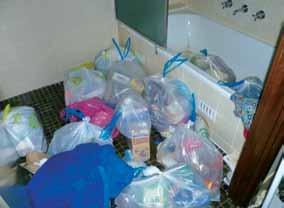
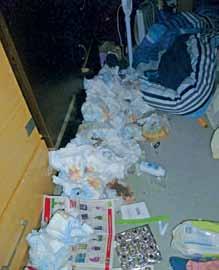
thenext day, Holden Hill CiB and Operations members took on the task of searching the Gilles Plains house. State Emergency Service officers, whose help McCracken had enlisted, provided shelters, equipment and an evidence triage area.
Holden Hill sergeant Eddie Matias and an Operations team (3) cancelled off-duty commitments just to dedicate themselves to the search for evidence.
Also supporting the effort were contractors who, with a bobcat, helped police remove several truckloads of the long-rotting rubbish.
in the nauseating environment, Detective Sgt Narelle Smith, Rob Cowood, Senior Constable Sarsha Zacher and the Operations team uncovered critical evidence. And, after the search was over, the police had spent an entire shift in protective suits and breathing gear.
Grant speaks of a consensus that emerged among the police, even the most seasoned, who had stood up to the task. “it was that this was the worst case of child abuse and conditions of living they had ever seen,” he says.
But the investigation had to go on, and did for the next 12 months. With it came evidence of not only the crimes against Eddie but also the impact his plight had on others.
The ambulance officers who checked him over at the police station and took him to hospital were one example. When they came to give police their statements, both broke down in tears.
And Eddie touched the hearts of many Holden Hill police officers, who sought to visit him in hospital and donate clothes and toys for him.
Neighbours police spoke to had little to impart about Eddie, because they had either not seen him for months or had never seen him at all. Some had considered the Gilles Plains house abandoned. Says Grant: “it was as if the child did not even exist.”
Garrison and f olland would ultimately face justice but it would take 12 months. He pleaded guilty in the District Court last April to a charge of aggravated endangering life.
folland, on the other hand, started out protesting her innocence and chose to go to trial. But she later reconsidered that choice and wisely changed her mind.
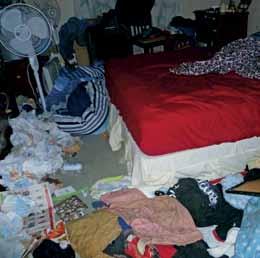
She fronted the District Court in October to answer the charge of aggravated endangering life. Sobbing, and with Garrison sitting in front of her in the dock, she finally uttered the word guilty.
Judge Paul Cuthbertson frequently looked directly at the pair as prosecutor lucy Boord read a victim impact statement authored by Eddie’s now foster parents. it detailed the serious physical and psychological suffering Eddie had endured – and continued to endure.
There was the delayed development of his motor, speech, language and social skills; and, because of decay, the removal of all but eight of his teeth. And to all of those eight saved teeth, a dentist had had to fit caps.
The court also heard that Eddie could not bear to be behind closed doors, whimpered in his sleep, and had taken to stashing food in his pockets.
Barrister Tim Heffernan told the court that folland had herself suffered abuse as a child and smoked cannabis from the age of 10. He also described her as totally unprepared for and incapable of performing the role of a mother.
Garrison and f olland – who have remained in custody since their 2013 arrests – now await their sentences, which Judge Cuthbertson will hand down this month. long stretches in jail, however, will not be the outcome that most satisfies Julie Castle.
Her great hope is never to see Eddie returned to his parents, or folland produce another child. “i would be more satisfied with that,” she says, “than anything a judge would be able to hand down.”
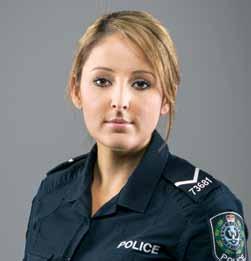
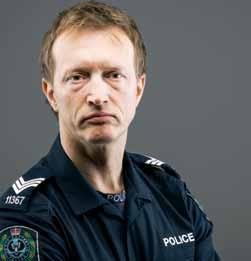

officers Julie Castle and Daniel Guzej know they have no chance of ever erasing images of starving four-yearold Eddie from their minds. They accept that that vision of him, as little more than a skeleton with outstretched arms begging for food, is with them for life.
Both still think of him, often. And, in their conversations about him with the Police Journal, each struggled with emotion and even shed some tears.
The memory that most causes Castle to “lose it”, emotionally, is the one of opening the bedroom door to find Eddie holding out that plate. His plight made her inwardly “furious” at the scene.
“And then,” she says, “off duty over that next weekend, it was quite hard. i thought about it a lot. Every time i tucked my kids into bed and they were warm, i always thought about him (Eddie).”
Guzej had thought of his own two children as he beheld the tragic sight of Eddie, and that truly “brought it home” to him. “it kept me awake for a few nights,” he says. “it was just constantly on my mind.”
But in some ways even tougher for Guzej was the debriefing that he and Castle undertook with nurses at the Women’s and Children’s Hospital. “i was crying with unknown people in the room,” he says.
Jarrod Davey found himself thinking about Eddie “all the time”. He could not help but compare the boy with his own son, a six-month-old who was bigger than Eddie. “i had a bit of trouble getting to sleep and my mind kept going (over it),” he says. “it was a job like no other.
“Every time i drive past that street where the house is, i think about that job. Something always reminds me of it.”
Nick fredella had worked in the child-abuse field for more than two years and investigated cases such as the death of Chloe Valentine. He rates the harm done to Eddie as “the worst case of neglect that i’ve seen”.
“i still have a somewhat emotive reaction when i look at the photo (of Eddie),” he says. “i ’m not surprised at all that it’s affected people quite adversely.
“i t’s one of those cases very much like the Valentine case: it will always be there. it’ll have an ongoing part of my consciousness. There’s no doubt about that.”
Some emotional relief came for Castle and Guzej when they managed to score a visit with Eddie at his foster parents’ home late last year.
Only two months had passed since these compassionate cops had rescued him, but he had made an extraordinary outward transformation after five weeks in hospital.
Says Guzej: “i ’d been told that he’d gained a fair bit of weight, so i was really looking forward to seeing a much better-looking kid. When i saw him, it was like: ‘Oh, my God! is that him?’ it was just a lot of relief.”
Castle thought Eddie was another child of the foster parents. “He looked completely different,” she says, “and, until i looked into his eyes, i didn’t know it was him. He was now chunky (in the body) and really happy; and the family was just beautiful.” for Guzej, it was important to try to replace the disturbing mental picture he had of Eddie in his mind.
“i had to have a better image of him,” he says. “We saw that he had started gaining weight and was happy with his foster family, and that they were making good ground.
“He was a totally different kid, and that’s the image i wanted of him, not the one in squalor.” PJ
By Nick Damiani



wor LD-renowned us psychologist and former cop Dr Kevin Gilmartin (left) wowed another 700-strong audience of Police association members at the adelaide Convention Centre last month.
After the stunning success of his visit last March ( Police Journal, April 2014), Dr Gilmartin returned to deliver another presentation of his Emotional Survival for law Enforcement
The Police Association, in conjunction with Police Health and the Police Credit Union, supplied each audience member with a customized planning calendar as part of the Healthy, Wealthy and Wise initiative.
Keeping an active calendar of pre-planned events is one of Dr Gilmartin’s most vital tips for the emotional health of police officers.
“Do not wait until you get off work to decide what you’re going to do after work,” Dr Gilmartin told the audience.
Police Association president Mark Carroll said the association was fortunate to have Dr Gilmartin in town for the second time this year.
“The feedback we’ve had from members about his presentation has been overwhelming,” Mr Carroll said.
“To have two full houses at both the March and November presentations – over 1,400 members in total – speaks volumes.
“And, most important, Dr Gilmartin provides actionable advice. Members can actually leave his presentation and put the tips into practice to improve their emotional wellbeing or, indeed, as a preventive measure.”
Association members can order Dr Gilmartin’s book, Emotional Survival for law Enforcement: A Guide for Officers and their families, via PASAweb (pasa.asn.au). PJ


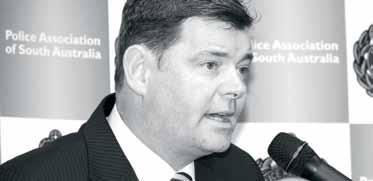
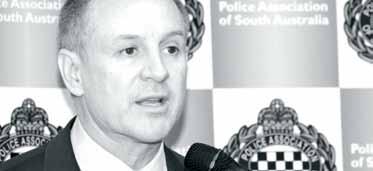
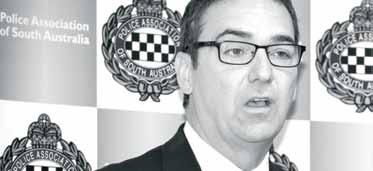

Premier Jay Weatherill and Opposition leader Steven Marshall made a range of commitments to Police Association delegates as the media watched on. In response, association president Mark Carroll expressed his disapproval of government action on other issues. Nick Damiani reports.

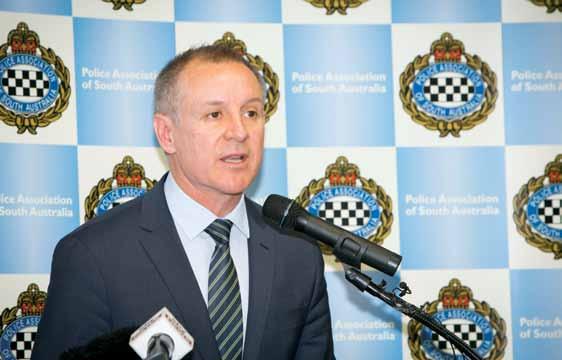
sMartPhoNes IN, reD taPe out, says PreMIer
red tape and the use of smartphones are two improvements police can count on, according to Premier Jay Weatherill (above).
Mr Weatherill made the key announcements as he opened the 2014 Police Association annual conference in October.
He conceded that, while certain police-related processes had been implemented in good faith, some were now imposing too much of a burden on police.
“We want our officers to spend more time policing and less time at their desks filling out paperwork,” he said.
“So i ’m pleased to announce today that we’ll be commissioning a review to identify and remove any unnecessary red tape that imposes a burden on SAPOl.”
Mr Weatherill also announced that patrol officers will be issued with their own personal smartphone devices with specialized policing capabilities.
“f ront-line police will now have real-time direct access to information from SAPO l’s systems,” he explained.
“Currently, police rely on radio communications to have certain information that’s not accessible from their vehicle-based mobile data terminals.”
Mr Weatherill told the conference that the government wanted to help police to develop partnerships with local community members and government agencies to address the problem of local crime.
“We’ve committed an intensive new intervention for young offenders to address the cycle of crime from the start,” he said.
“Addressing recidivism will mean even less work for (police).”
Mr Weatherill also said more resources were on the way.
“you’ve asked for more resources, and we’ve listened,” he assured delegates.
“The (last) budget i handed down as treasurer delivered $34.9 million over four years to ensure that SAPOl is able to meet the government’s commitment to recruit an additional 300 police officers.
“This commitment will be honoured even if it takes longer than originally anticipated.”
Mr Weatherill paid tribute to the skill and dedication of SAPO l , crediting it with making Adelaide the safest capital city in the country.
“Over the past decade, SA has become safer, in no small measure (owing) to your work,” he said.
“Crime has reduced by 40 per cent and, of the 30 largest cities in Australia, Adelaide is the safest city.
“That’s an extraordinary achievement.”
He also remarked that the Police Association played an “indispensable role” in representing the interests of its members.
“SA police need a strong and considered voice now more than ever,” he said.
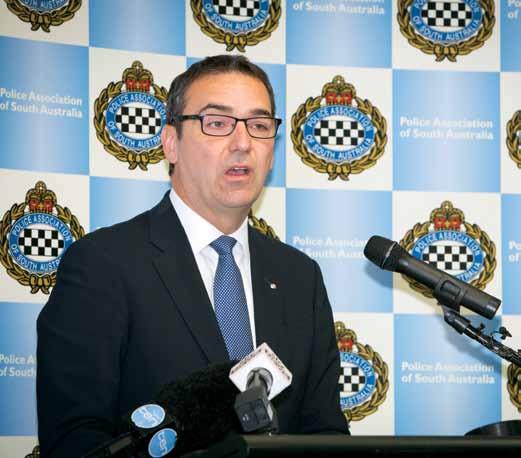
leader Steven Marshall (left) repeated his call for an annual parliamentary repeal day to reduce redundant police-related legislation.
“i ’m told the volume of (police-related) legislation has tripled in the past 20 years,” he said.
“l ast year, i raised the prospect of an (annual) legislative repeal day, and we continue to advocate for its merits.
“it would be dedicated to abolishing redundant and archaic legislation.”
Mr Marshall supported the premier’s announcement of a red-tape reduction initiative, describing it as “absolutely crucial”.
He also told delegates the government’s mandatory blood-testing legislation would receive bi-partisan support.
“Every year, in excess of 250 (police) are bitten, (bled on) or spat on in the course of their duties,” he said.
“This bill will enable blood-testing of offenders to take place immediately so that officers will have peace of mind.”
The Opposition leader welcomed the recent implementation of Tasers for carriage on police officers’ accoutrement belts but expressed disappointment that the trial of body-worn video had taken so long.
“Body-worn cameras have been trialled in SA since 2009,” he said.
“i am calling on the government to make these devices available (now) to all officers across SA.”
Mr Marshall said his party would staunchly oppose the government’s move to abolish the Police Disciplinary Tribunal.
He attacked the move and said the Civil and Administrative Appeals Tribunal was not the place for police disciplinary matters.
“i don’t believe it is appropriate for police discipline matters to be dealt with alongside rental disputes, housing appeals, guardianship and other such matters,” he argued.
“The liberal Party will be opposing any attempt by the government to absorb the PDT into the SACAT.”
Mr Marshall said hard work, dedication and selflessness had made SAPOl the “envy of the nation”.
He also acknowledged the contribution of the Police Association.
“The Police Association of SA has an excellent reputation and a proud history of working well with all sides of politics,” he said.
editor’s note: The state government decided in late October to retain the Police Disciplinary Tribunal pending further consultation with all involved parties. The Police Association intends to continue to lobby for its permanent retention.

Andrew Goldsmith (above) addressed the conference for the second consecutive year – this time to discuss the impacts of bail enforcement.
His presentation, titled is Bail Broken?, sparked robust debate among the audience of association delegates.
The flinders University academic was a popular speaker at the 2013 conference with his thoughtprovoking presentation Police and Social Media
This year, he discussed whether police bail was becoming a risk-management or early-intervention tool which penalizes potentially innocent people or leads them to incur extra charges.
“The overwhelming number of bail agreements have several conditions, which are potential tripwires for young offenders,” he argued.
“There is a sense that people on bail are constantly on guard and constantly looking over their shoulder.”
Professor Goldsmith highlighted research which showed some offenders actually preferred custody to bail, especially when there is inconsistent or selective enforcement of bail conditions.
“That’s not the way it’s supposed to be,” he argued.
“Some people on bail become antagonized by the experience.
“And some bail conditions are totally impractical. We have to make sure they don’t aggravate the difficulties these people are facing.
“i t can be provocative or inflammatory, especially for young people.
“Some people have the mentality that if they are going to breach such conditions they may as well go for broke.”
Professor Goldsmith also discussed management expectations of police which could lead to over-enforcement of bail conditions.
“Especially when bail conditions become part of KPis,” he said.
Of course, some of Professor Goldsmith’s premises drew disagreement from delegates.
Many argued that individuals who repeatedly breached their bail conditions were their own worst enemies, and that most individuals do not start out with an excessive number of bail conditions.
But Professor Goldsmith maintained that questions should be asked about the enforcement of certain bail conditions.
“That’s where the research comes in,” he said.
“The aim is to deal with people in a way that makes them less likely to reoffend.”
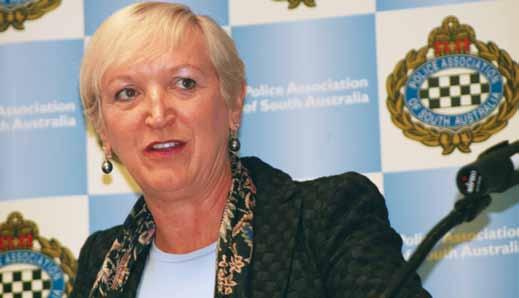
are yet to fully capitalize on the strengths of Generation y, according to award-winning author and corporate motivator Avril Henry (above).
Ms Henry proved to be one of most popular and entertaining speakers of the conference as she delivered her presentation Social Trends to the conference.
Ms Henry entertained delegates as she discussed the differences between the four prominent generations – Veterans, Baby Boomers, Gen y and Gen Z.
She also spoke of the review her organization had done of the association’s five-year strategic plan.
“We were really impressed by the Police Association’s five-year strategy,” she told the conference.
“i can’t tell you how many organizations don’t even have a strategy.
“A lot have a hope plan – but hope is not an action plan.”
But, according to Ms Henry, good culture and leadership always outweigh strategy.
And it’s Gen ys who are leading the charge in this department.
“Generation y’s expectations of leaders are driving a lot of cultural change in organizations,” she explained.
Ms Henry argued that many organizations are yet to capitalize on the inherent qualities of Gen y.
“Gen ys are the best team players and the most collaborative,” she said.
“Smart organizations – like Google for instance – leverage that advantage to the hilt.”
But Ms Henry said 70 per cent of the workplace still has a negative view of Gen y.
“The (perception) is they have an entitlement mentality, are restless and lack loyalty,” she said.
Ms Henry argued that this was a common misconception, and that Gen ys are loyal to people rather than organizations.
“Gen y is loyal to good managers and their team,” she asserted.
“And i say: ‘Why would you want to be loyal to workplaces that shaft people and make people redundant?’
“Baby Boomers did plenty of jobs they hated
in organizations they didn’t like. But we did it because, as a generation, we have been driven by financial security and job security.
“Gen ys (on the other hand) are chiefly looking for the opportunity to make a difference.
“They want to be connected to a purpose and want a sense of belonging.”
Ms Henry told delegates that a much higher percentage of the workforce – including many Gen ys – now have a post-secondary high-school education.
“The implications of a more highly educated workforce are that they have higher expectations of their leaders and the workforce, and they challenge the status quo,” she said.
“They ask questions like: ‘Why do we do things this way?’
“Gen Z, who were born between 1996 and 2011, will be the first generation where 90 per cent will finish high school.
“Most veterans – who were born prior to 1946 –were fortunate if they finished high school.”
Other major points Ms Henry addressed included: • Compulsory superannuation: “Compulsory super has made the Australian economy one of the most envied in the world. Gen X and y will be able to take care of themselves in retirement.”
• Damning statistics on Baby Boomers’ superannuation funds: “for Boomers, the average superannuation balance is $85,000 for men and $42,000 for women.”
• Declining numbers of workers replacing retirees: “for every 10 leaving, there are only eight replacing them, and that number is declining.”
• Gen X is the “sceptical” generation: “They’re the sandwiched generation, sandwiched between Baby Boomers who won’t get out of their way, and Gen ys who are yapping at their heels. They come along to conferences like this and think: ‘i hope at least one speaker knows what they’re talking about!’ ”
• Boomer parents gave Gen y their entitlement mentality: “We told them the world is your oyster. And, if you can’t reach the oyster, don’t worry: mummy or daddy will get it for you. We sold them a lie, and then we didn’t give them the resilience to deal with it when it didn’t work their way.”
• Gen ys call Boomers the two-face generation because of the difference between their work personality and their home personality: “Gen ys, unlike the Baby Boomers, bring the whole person to work.”
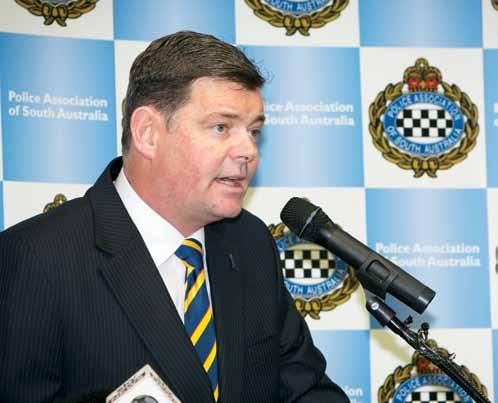
Return to Work bill will disadvantage police and lead to hesitant responses to critical situations, Police Association president Mark Carroll (right) told the conference.
During his opening address, Mr Carroll also expressed the association’s disapproval of the government’s proposed abolition of the Police Disciplinary Tribunal and closures of the Holden Hill and Port Adelaide magistrates courts.
Mr Carroll said police could find themselves left out in the cold if they were to suffer injuries at work.
“Under the new legislation, the payments will cease two years after the original injury," he said.
"We just don’t think that’s fair and reasonable for our members who have to put themselves in harm’s way to protect the community.”
Mr Carroll also said the government’s move to replace the Police Disciplinary Tribunal with an all-encompassing civil administrative tribunal was “grossly inappropriate.”
“The PDT is a specialist tribunal essential to the functioning of the Police Act and the Police (Complaints and Disciplinary Proceedings) Act,” he said.
“PDT presiding officers usually serve for many years and become familiar with all aspects of the police profession and general orders.
“Unlike other public employees, police are compelled to answer questions their employer asks in the disciplinary process.”
Mr Carroll also said the upcoming closure of the Holden Hill and Port Adelaide magistrates courts was another retrograde step which will ultimately result in the short-changing of police and the public.
He also indicated that the current SAPO l organizational restructure would form part of upcoming enterprise bargaining negotiations.
“Our delegates will undertake debate on whether there is a need to suspend negotiations until we are fully apprised of the proposed changes,” he warned.
editor’s note: The state government decided in late October to retain the Police Disciplinary Tribunal pending further consultation with all involved parties. The Police Association intends to continue to lobby for its permanent retention.
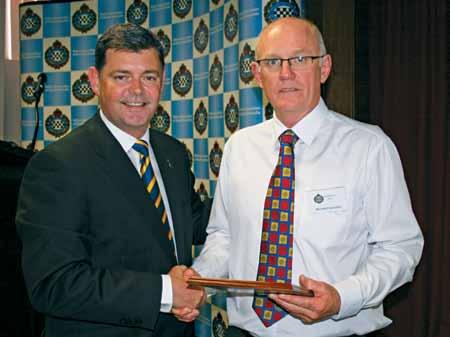
sturtpolice station’s interview rooms were on the mind of Sergeant Michael Quinton – and for good reason.
Police Association president Mark Carroll presented the Sturt Crime Prevention sergeant with the 2014 Step-Up trophy for a report which ultimately brought about the reconfiguration of the rooms.
Sgt Quinton was concerned the police interviewers’ seats were farthest from the rooms’ door, while suspects seemingly had pole position near the only exit doors.
if a suspect were to become aggressive and require restraint, back-up police officers could not gain easy access to the rooms.
Now, the rooms have been reconfigured to enable interviewing officers to sit adjacent to the exit doors, with all supporting equipment behind them.
The Quinton report also resulted in other lSA managers taking note of the configuration of their interview rooms, and identifying similar issues in the best interests of members.
The association – in concert with its delegates – decided in 2011 to launch the Step-Up safety campaign.
it encourages members to exercise their right to a safe workplace, and to submit hazard incident reports whenever they identify dangers. PJ




7.
8.

He has occupied that role since 2008, when he won a contested election after the retirement of Peter Alexander.
Mr Carroll had served the union for 16 years in the roles of delegate, committee member, organizer and assistant secretary.
australian again holds the nation’s highest police union office, after his peers unanimously elected him Police Federation of australia president in Darwin last month.
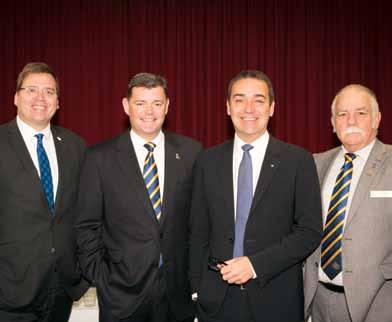
Police Association of South Australia president Mark Carroll (left) will follow in the footsteps of his local predecessor, Peter Alexander, who led the PfA for 10 years to 2007.
Mr Carroll, 48, is just the fourth president to head up the PfA since it won the right to federal registration in the High Court of Australia in 1995.
He thanked his fellow state and territory police union presidents for their confidence in him and pledged to give the job his “absolute best efforts”.
“it’s an extraordinary privilege to lead this great, respected organization which, on federal issues, is the voice of almost 60,000 police across Australia,” he said.
“i was able to gain invaluable experience by not only working with Peter Alexander for almost two decades but also absorbing the expertise of other former presidents.
“Right now we face particularly testing times in police industrial relations on the national scene. With my fellow board members, i intend to confront the issues head-on.”
The election of Mr Carroll, who replaces outgoing president Vince Kelly, came as part of the P fA’s annual federal council meeting in Darwin.
Mr Kelly stepped down from the role after seven years in office.
Mr Carroll takes on the presidency as the national body opposes such issues as direct entry to Australian police forces at superintendent rank and outsourcing police functions to private industry.
At the same time, the PfA is pushing issues such as the professional registration of police and a system of collaborative purchasing by the nation’s police forces.
Although Mr Carroll will oversee the operations of the P fA’s Canberra office, he will remain in Adelaide and continue to serve as president of the Police Association of SA.
His police career began when he joined SAPOl as an 18-year-old in 1985. After graduating with Course 12, he served in both metropolitan and country posts. in the city, he worked Hindley St, the Adelaide Crime Enquiry Unit, the Vice and Gaming Task force and Adelaide CiB.
Mr Carroll had followed a family tradition of police service which began with his great-grandfather, and carried on through his uncle and now late father. His sister, now an organizer with the Police Association, also joined the police force ahead of him.
“you’d certainly say that i come from a family with policing in its blood,” he said. “But i also have a very strong belief in the need to protect the rights, interests and conditions of police as employees.
“i know very well how hard and how dangerous the job can be; and i’ve been around long enough to have seen those times when police suffered plenty of industrial injustice. i ’m passionate about fighting that any time it arises.”
Headquartered close to Parliament House in Canberra, the PfA began operating as a federally registered trade union in 1998. it had won the right to registration after defeating challenges by three state governments and several police commissioners in the High Court.
Now, sworn police officers belong to the P fA by virtue of their state, territory and federal police union memberships.
Mr Carroll had occupied the PfA vice-presidency since 2010. He will now serve as president for 12 months before he faces re-election at next year’s PfA federal council meeting in Tasmania.
“i look forward to the challenges of the job and the support i know i ’ll have from our CEO, Mark Burgess, and his staff,” he said.
“We enjoy good relations with key players in Canberra and we have a very good record of achievement at the federal level. My aim is not just to maintain those achievements but to build on them.”
Police Association of NSW president Scott Weber and Queensland Police Union president ian levers were both elected as PfA vice-presidents. Police Association Victoria president John l aird was elected treasurer. PJ
By Nick Damiani









the Police Journal has again triumphed on the world stage, winning gold and silver at the International Creative Media awards in Germany last month. i n the Front Page category, judges awarded the journal gold for a series of its most striking covers.
One featured an image of Sturt senior constable first class Jon fuller, who was to compete in the Boston Marathon (BoundforBoston, December 2013).
Other covers featured Port Adelaide detective brevet sergeant Rod Hannam ( Victim, f ebruary 2014) and Holden Hill probationary constable Scott Tampalini ( The Gallant Recruit, June 2014).
The journal scored its silver award in the Cover and Cover story category for Victim, which told the story of sex abuse Detective Brevet Sgt Hannam had suffered as a child.
Having won silver and bronze at the Trade, Association and Business Publications international awards in the US in July, the journal’s tally of international awards for 2014 rose to four.
Police Journal editor Brett Williams got word of the iCMA results while attending another awards event in Sydney. “it came as such a surprise,” he said. “i’d forgotten that the result was due.
“i got back to my hotel room after the Publishers Australia Excellence Awards, checked my e-mails, and there was the message from Germany. We had won gold and silver.
“i could hardly believe that the great run of awards and recognition the journal had already won this year was continuing.
“Our graphic designer Sam Kleidon and photographer Steve McCawley have made a huge contribution to this success, as have our Police Association members.
“They put their trust and confidence in us to tell their stories in a way that reveals the reality of their work and its personal impact on them. And, for that, i couldn’t be more grateful.”
Working in Düsseldorf, a panel of 10 judges from Germany, Austria, Denmark and Switzerland had to assess the entries of 364 publications from 17 countries.
The European countries included Germany, Switzerland, Austria, Denmark, f inland, Belgium, Portugal, Slovakia and Hungary.
Other entries were from Singapore, india, Australia, New Zealand, Canada, the United States and Russia.
Police Association president Mark Carroll spoke of the journal’s success in Europe as highly significant
for both the magazine and the association.
“These i CMA awards not only serve as international recognition for Brett, Sam and Steve, but also underscore the world-class quality of the Police Journal,” he said.
“Our committee of management decided a number of years ago that it wanted to make the journal the best publication of its type in the nation.
“These awards prove that Brett and his team have achieved that. And we look forward to presenting more of our members’ stories.”
The journal had last won i CMA recognition in 2013 when it received the Award of Excellence in the Cover and Cover story category for forced to shoot ( february).
l ast month’s i CMA gold and silver came just after Brett Williams had won outstanding recognition at the Publishers Australia Excellence Awards for the fourth successive year.
At a gala dinner at Doltone House on Darling island Wharf, Brett was announced runner-up Journalist of the year (business). And that high placing keeps him ranked among the top business magazine journalists in Australia.
Brett was also a finalist in the single article of the year category for his cover story Victim PJ
Can be sent by: regular mail Police Journal, PO Box 6032, Halifax St, Adelaide SA 5000 e mail editor@pasa.asn.au Fax (08) 8212 2002 Internal dispatch Police Journal 168
i write to inform Police Association members of the contribution their colleagues make to the fork & Cork Mount Gambier food and Wine festival. Police attend the annual event and, in a non-threatening, educative way, operate breathalysers.
And, as organizers, we position placards around the venue to indicate the measurement of a standard drink.
The festival is unlike any other because it not only incorporates food and wine plus boutique beers, ciders
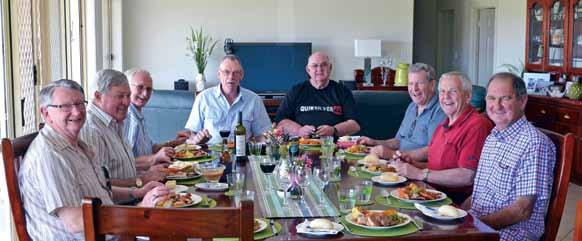
Members of f and G troops held a successful reunion luncheon at Echunga in mid-October. it was the second of two reunions and drew a number of the troops’ wellknown members, most of whom had attained high rank in SAPOl.
Although some who attended suffer minor medical issues, most enjoy good health.
One member is in the process of writing a manuscript about his experiences as a police officer and shared some of his anecdotes.
Those who attended all had very good recollections about long past events but less perfect memories about what happened just a week earlier.
Most, for example, could clearly remember their
and other produce from the greater Mt Gambier region, but also wraps all that up in an educational programme which is a world first itself.
The 2015 event will be held in Garden Square incorporating Main Corner (corner of Commercial Street East and Bay Road, Mt Gambier) on february 28. More details are available at www.forkandcork.com.au.
Kind regards Les wright
first months as junior constables stationed at Thebarton police barracks.
i nsp Jack Cawley and his horse, Normandy, were names that came to mind. Cawley used to ride that horse when inspecting all of the junior constable courses at least once a week.
He would stand behind a junior constable, whose beret he would tilt with his sword, and then say: “Am i hurting you, son?”
The JC’s answer would be: “No, sir,” to which Cawley would reply: “Well, i should be: i’m standing on your hair. Get a haircut this afternoon.”
Noel Vears Sergeant (ret)
i thank the Police Association most sincerely for its ongoing support of Novita Children’s Services.
i ts hosting of the Police Club Melbourne Cup luncheon is genuinely appreciated by Novita.
The efforts of the Police Club team and the quality of the catering were outstanding and resulted in another very enjoyable and successful event.
We are delighted that, for 2014, the event raised over $7,000 to assist Novita in providing vital therapy and support to more than 2,000 kids and young people throughout South Australia and beyond.
We greatly value our relationship with the Police Association and look forward to its future.
yours sincerely
Glenn rappensberg Chief Executive Novita Children’s
Services

Eastern Adelaide Criminal Justice
i believe that an independent review of prosecution practice in SA does have merit, particularly if the outcome provides clarity around the functions for police prosecution and the ODPP – especially regarding what each area is required to handle.
The reality is that the complexity of matters expected to be handled by police prosecution in the Magistrates Court has increased, placing extra pressure on police prosecutors.
As a result, i think there is a case for the ODPP to play a broader role in prosecutions if adequate funding were to be provided.
An independent review could give consideration to these factors. it could also identify opportunities for improving efficiency which, in turn, will hopefully provide improved service delivery and, more important, better outcomes for victims.
Western Adelaide Tactical
As a detective of 14 years, and police officer of 24 years, i’ve dealt with both the ODPP and police prosecutors, both of whom have a difficult job.
As an investigating officer and/or supervisor i have, on a number of occasions, been on the receiving end of decisions by the ODPP when they downgrade serious matters.
i haven’t always agreed with those decisions but i’ve found the best way to resolve these disputes was by maintaining a good open communication with the ODPP prosecutors.
The current system works when there is good communication between the ODPP and police and both have a sound understanding of where the other is coming from. i f there is a communication breakdown, the system fails.
i believe the ODPP is severely under-resourced. Any review should target that issue.
Eastern Adelaide Criminal Justice
The opportunity for an independent review should always be welcomed in any organization.
The review should be comprehensive and examine the structure, roles, functions, processes and procedures from the very start of the charging process.
i’d like to see a review include the demarcation of those matters prosecuted by the Director of Public Prosecutions and those prosecuted by police prosecutions.
in addition, a review should consider legislative change that will allow police to bail arrested persons to return to the police station pending further enquiries and prior to any charges being laid.
Ultimately, i ’d hope any review would make recommendations as to how we can become more efficient, effective and improve our service delivery.



Nick Damiani
It Is high time for a review of South Australia’s prosecution practices, according to police officers at the coalface of the court system.
SA’s 140-strong band of police prosecutors and the Police Association say there is a disconnection between the legislative role of the Office of the Director of Public Prosecutions and the practical application of prosecution policy.
Senior print journalist Nigel Hunt highlighted the issue under the title Criminals ‘walk’ as police and DPP row ( The Advertiser, October 25, 2014).
“Some offenders are escaping conviction and others are facing lesser charges with reduced penalties because of flawed prosecution practices within the DPP’s office, police prosecutors claim,” Mr Hunt wrote.
“Attorney-General John Rau has been drawn into the dispute and has already held discussions with both (the DPP) Mr Kimber – who has rejected the police criticisms – and (Deputy Commissioner) Grant Stevens, who is backing the prosecutors over some issues in conflict.
“The core of the dispute involves the downgrading of serious charges to lesser charges by the DPP that ensures they are returned to SAPOl to be prosecuted by police.”
The issue reached fever pitch last September, when the association held a meeting of police prosecutors in its fenwick function Centre.
The members present at the meeting unanimously carried a motion for the association to call on the government to undertake a review of prosecution practice in SA.
The meeting covered a range of serious issues connected with:
• The Summary Procedure Act (section 5).
• The return of files from the DPP to SAPOl.
• Country committals and circuit matters.
• The youth Court.
• Jurisdictional creep.
• Pre-charge advice from the DPP.
“Our police prosecutors tell us that not only does this happen too often, it is overwhelming them in relation to their workload.”
• The right of appearance for police prosecutors.
Subsequent to the meeting – and not for the first time – the association raised the issue with Attorney-General John Rau.
“The point of raising the issues with you is not to criticize the DPP and his office’s practices,” association president Mark Carroll wrote in a letter to Mr Rau.
“it is to identify them as practical difficulties which require change to practice and protocol by way of directions and guidelines or legislative reform.”
Mr Carroll reiterated these points in a live, in-studio interview with morning radio host leon Byner in late October. He told 5aa listeners of the high number of complex files the DPP had returned – and continues to return – to police prosecutors.
“Sometimes, serious charges are withdrawn and lesser ones are applied,” Mr Carroll said in the interview.
“f or example, a robbery with violence could be reduced to two lesser charges of assault and theft. When that occurs, police have to prosecute the matter in the Magistrates Court as opposed to the ODPP dealing with the higher charge (in the District or Supreme courts).”
Mr Carroll also said the association knew of several other occasions when the ODPP had handed back complex prosecution matters for police to prosecute in the Magistrates Court.
“Our police prosecutors tell us that not only does this happen too often, it is overwhelming them in relation to their workload,” he said.
On the Byner programme a day later, DPP Adam Kimber said there was a legitimate discussion to have about the extent of the role of the ODPP.
“… there will be occasions when police prosecutors – who don’t have the legal training that my staff have – will find some of the prosecutions that are their responsibility very challenging,” he conceded.
“There is a case for a … discussion about whether this office should play a wider role in the prosecution of some of those more serious offences.”
Mr Carroll told the Police Journal the association remained committed to these discussions with both the DPP and the attorney-general.
“i t is also critically important that the right charges are laid against offenders – it is an important component in the delivery of justice.
“The community wants to be assured that people who commit serious crimes are being dealt with appropriately.”
The procedure for complaints about police misconduct is too slow and convoluted, according to independent Commissioner Against Corruption Bruce lander.
“it is also critically important that the right charges are laid against offenders – it is an important component in the delivery of justice.”
“And i think we’re starting to make some inroads,” he said.
“it appears both the government and the attorneygeneral have taken note of the prosecutors’ motion, and the association will continue its discussion with all involved parties.
“These concerns are shared by both the association and SAPOl. We all want the best outcome for police prosecutors, the ODPP and, indeed, victims of crime.
The Police Association attended a parliamentary committee on the matter in late October, when Mr lander said the process for dealing with complaints was overly complex and in need of reform.
Mr l ander is currently undertaking a review of the procedures surrounding complaints about police conduct and complaints to the police ombudsman.
Association president Mark Carroll said he wanted to make sure police received a “fair go” in complaints proceedings.
“We want to ensure that run-of-the-mill complaints against police are not necessarily considered by the iCAC to be some form of corruption,” he said.
“it’s important for officers who have had malicious complaints made against them that those complaints are heard and sorted out promptly.”
The association intends to prepare a submission for the iCAC’s review.
The state Opposition will urge the SA government to introduce body-worn video cameras for SA police.
in a letter to the Police Association last October, l iberal leader Steven Marshall also reiterated his promise to the union’s 2014 annual conference: that his party would continue to oppose any move by the government to abolish the Police Disciplinary Tribunal.
Mr Marshall spoke of the association as having an “excellent reputation and a proud history of working well with both sides of politics in South Australia...”


HeaLtH
Dr Rod Pearce
and processed sugars seem to have a way of tricking us into consuming more of them
suGar is the basic ingredient used to supply energy to the human body. But consume too much of it and the body will store the sugar it cannot use. Some of it will be discarded immediately in urine, but the body is trained to use the sugar if it can, so the pancreas releases insulin to process it.
There are plenty of arguments about the merits of processed sugar as opposed to natural sugars. Processed sugar is refined so that it has a regular texture and flavour. White sugar, a product sold all over the world, is a classic example.
i t is widely used in baking and sweetening because it behaves in a predictable manner and is easy to control.
An alternative that the body will recognize is unprocessed sugar, or sugar alternatives such as agave, honey, and stevia. Artificial sweeteners, such as saccharin, acesulfame, aspartame, neotame and sucralose, trick the mouth into thinking it has tasted sugar.
While they have been shown not to cause cancer, we think the body looks for sugar in different ways and, in the end, we can be left hungry and therefore overeat.
The real trap of processed sugars is probably the amount that can be added to food. Because more can be added, it is easier to eat more. in the end, the amount rather than the type you eat is the bigger challenge for your body.
Hypoglycaemia is a low bloodglucose level. it is also known as a hypo, insulin reaction or low blood glucose.
Hypoglycaemia can occur in people with diabetes using insulin and certain diabetes medications. it usually occurs when the blood glucose level falls below 4mmol/l.
low sugars rarely occur because the body is geared to “never” let this happen.
it is rare in any other condition and the brain is not affected until levels are lower than 3mmol/l, but it has different effects in different people.
While there is no disagreement as to the normal range of blood sugar, debate continues as to what degree of hypoglycaemia warrants medical evaluation or treatment, or can cause harm.
The term hypo, which exists in popular culture, describes a common condition characterized by shakiness and altered mood and thinking, but without measured low glucose or risk of severe harm.
in the end, the amount rather than the type you eat is the bigger challenge for your body.
Hypoglycaemia is treated by changing eating patterns. That is, eating regular balanced meals with reasonable portions and avoiding excessive sugar. A real hypoglycaemic effect can cause permanent brain damage.
you have true hypoglycaemia and need to seek treatment if you:
The body is paranoid about keeping sugar (glucose) levels at a circulating level to allow the heart and brain to function. Sugar is tightly controlled in a healthy body to between 4 and 6mmol/l (millimoles/litre).
• Have symptoms known to be caused by hypoglycaemia.
• Can measure low glucose at the time the symptoms occur.
• Can show there is a reversal of the symptoms
by restoring the glucose to normal. There are a number of theories about fluctuating sugars in the blood. One is that the body cannot regulate the intake of sugar and, when you have not eaten for a while, the body cannot release glucose quickly enough. you then feel unwell.
Measuring blood glucose in healthy people will show normal blood sugars and this is tested with a glucose tolerance test, done during pregnancy and for diagnosing diabetes.
High sugars show a likelihood of diabetes but the brain will not be unhappy with these higher sugars. low sugars rarely occur because the body is geared to “never” let this happen.
Obesity is associated with early death from heart disease and strokes plus arthritis, restricted mobility and other illnesses.
increased sugar intake seems to be the biggest contributor to this. The processed sugars seem to be the way that we can trick our bodies into eating more sugar than we need without feeling hungry.
fat and salt also make food attractive, adding to the danger of tricking our bodies into eating too much.
Advances in cutting down deaths from heart disease by operations, drugs and early intervention are being lost by the increased occurrence of heart disease at an earlier age from obesity.
The simple but not-easy-to-implement solution is less food. Successful diets help the body learn when it has had enough by eating foods that actually make you feel full and satisfied.
We also need to learn that the feeling of hunger is not a dangerous situation because humans can go for more than three weeks without food.

Jim Barnett
sedate and refined on one hand but able to set pulses racing on the other
sawe LL as boasting a number of improvements, the fourth-generation Subaru WRX is cheaper and retains its bang-for-bucks leadership.
While many two-door coupes lack rear seat and boot space, WRX is a roomy four-door sedan with good comfort levels up front and in the back. its boot is decent, too, with luggage capacity of 460 litres.
Moving the A-pillar 200mm forward and a slightly wider body provide more interior space and better visibility. Other interior improvements are a new dash layout, softer materials, a soft-feel D-shaped steering wheel and better ergonomics.
All models have a new nosecone, front and rear lED lights, shark-fin antenna and four exhausts. The trademark bonnet scoop remains but only the quicker STi still has the rear wing.


The new paddle-shifter CVT auto is no slouch, instantly putting power to the ground with quick acceleration.
At $38,990, WRX manual is $1,000 cheaper than the superseded model and cheaper than the original WRX introduced 20 years ago.
Standard items include:
• Six-speaker audio with Bluetooth streaming.
• Aux and USB inputs.
• Climate-control air conditioning.
• Alarm.
• 4.3-inch colour display.
• Self-levelling lED headlights with pop-up washers. Premium manual costs $43,990 and comes with:
• leather trim.
• Smart entry with push-button-start.
• Electric sunroof.
• High-powered audio system.
A new linetronic CVT transmission with paddle shifters adds $2,000 to either model.
The more powerful STi (available in manual only) comes with a vast array of mechanical improvements including Brembo brakes.
Entry STi costs $49,990 and Premium $54,990, reductions of at least $10,000 over previous versions.
All WRX models score a five-star (ANCAP) safety rating with inclusions such as seven airbags, reversing camera and the security of their proven AWD system.
The 2.0-litre Boxer engine in WRX produces an impressive 197kW (5,600rpm) and 350Nm (2,4005,200rpm). Zero-100km/h comes about in 6.0 seconds and claimed fuel economy is between 8.6 (CVT) and 9.2 litres/100km (manual).
STi comes with a bigger 2.5-litre engine which produces 221kW (6,000rpm) and 407Nm (4,000rpm). Zero-100 takes 4.9 seconds and combined fuel economy is 10.4 litres/100km.
WRX really has two personalities. Driven sedately it’s economical with reasonably refined drive characteristics. Pushing the foot down brings power with a rush and, when combined with the car’s grip, sets the pulse racing.
The new paddle-shifter CVT auto is no slouch, instantly putting power to the ground with quick acceleration.
STi is totally different. i ts additional power, stiffer suspension, heavier gearbox and firmer steering make for a less refined car which needs to be treated with some authority. Otherwise it can bite.
WRX is an exhilarating performer and delivers value, safety and flexibility.

so, in some circumstances, it could cost nothing to run
Most hybrid cars use internal combustion engines in tandem with electric motors to power the wheels. The new Mitsubishi Outlander PHEV (Plug-in Hybrid Electric Vehicle) is different.
PHEV can be charged from a 15-amp power socket using the supplied charger. A full recharge, which costs around $3.60 and takes five hours, enables the car to be driven up to 52km without the aid of the petrol motor.
The recharge cost could be reduced or even negated when charging at premises with a solar system.
On longer trips, when the battery is depleted, the car automatically switches from EV mode (electric only) to Series mode (petrol motor increases power to the drive battery) or Parallel mode (petrol motor assists to power the wheels).
Drivers can also manually select which mode best suits driving requirements.
With a 45-litre fuel tank and powerful petrol engine, the car’s range is extended to several hundred kilometres.

Regenerative braking generates power back into the battery every time the brakes are applied and paddle shifters provide drivers with six regenerative braking modes.
Outlander PHEV costs around $5,600 more than a similarly equipped seven-seat diesel Outlander. Both entry PHEV ($47,490) and upmarket Aspire ($52,490) have five seats and an advanced AWD system.
Standard features include:
• Eighteen-inch alloy wheels.
• lED tail lights.
• Satellite navigation with seven-inch colour screen.
• Smart-key entry and start.
• Dual-zone climate control.
• Dusk-sensing HiD headlights.
PHEV Aspire also has:
• leather seats.
• front seat heaters.
• Electric sunroof.
• Power tailgate.
• Wi- fi EV remote system, which allows owners to monitor and operate many of the car’s functions from smartphones and tablets.
like other Outlander models, PHEV scores a five-star (ANCAP) safety rating. Seven airbags, reversing camera, rear parking sensors and Hill-start assist all feature.
An alert system provides an audible warning to pedestrians when the car is travelling slowly in EV mode. Aspire also comes with adaptive cruise control and a forward-collision warning system.
Mitsubishi claims combined fuel economy of 1.9 litres/100km with CO2 emissions a low 44g/km. These figures can vary markedly depending how the car is used.
in a test drive over several days in the suburbs and hills it used half a tank of fuel (around 22 litres) and received three full recharges to travel 450km.
its petrol engine produces 87kW while its two electric motors each produce 60kW.
Braked towing capacity is a useful 1,500kg; and a five-year 100,000km warranty covers the battery.
PHEV differs from the standard Outlander mainly by virtue of its silent operation in EV mode. Roomy and comfortable, the car has ample power in any of its three driving modes. it rides and handles well and provides a comfortable environment for five people.
PHEV is a serious SUV which delivers great flexibility. f or a short-haul commuter it would be extremely cheap to run with the advantage of longer range and some off-road ability when needed.















Paul Modra Executive Manager – Member Value and Distribution, Police Credit Union
Fundraising initiative Canoe for Kids recently proved a huge success on the river Murray
they took to the water with the determination of a team of A fl footy players running onto the field for a must-win game.
These were eight gutsy Police Credit Union staff members who set out in canoes to paddle 42km along the River Murray in October – all for hospitalized kids.
And their charitable works, in this inaugural Canoe for Kids initiative, were to pay off by raising more than $5,000 for the Blue l ight Police link programme.
Joined by Sergeant Mark Orford and retired sergeant Kevin Beinke, the paddlers launched their journey from Purnong and headed for the finish line at Mannum.
Although most were novice canoeists, they had completed training with Canoe South Australia at West l akes. Trainer i an Heard gave them the benefit of his expertise and even helped out over the two-day event.
Canoe for Kids creator and Police Credit Union personal banker Glenn l ewis, an experienced paddler, took delight in the efforts of his colleagues.
“for all those who participated, it gave a great feeling of enjoyment and accomplishment,” he said. “forty-two kilometres is a very decent paddle for people who haven’t had much experience.”
The Police l ink programme, established in 1998, operates in hospitals and aims to strengthen relationships between police and youth.
Police from a range of fields visit children from toddler age to 17 to deliver invaluable community safety messages, among which are:
• Cycle safety.
• internet awareness.
• Personal safety as well as safety in public places.
• Drug and alcohol awareness.
• Bullying.
Donations from fundraising events such as Canoe for Kids support the Police link programme, which began at the Women’s and Children’s Hospital. in 2009, it expanded to the flinders Medical Centre.
Police Credit Union continues to sponsor and support the programme, particularly through Mr lewis who goes on monthly visits, attends special events and serves on the Police link committee.
He conceived the idea for Canoe for Kids while visiting hospital wards, where he came to appreciate the value of the Police link programme.
“i wanted to create a fundraiser that was unique to Police Credit Union,” he said. “i decided to involve my love for canoeing and the outdoors.
“Originally, i was going to try to paddle on my own. i thought by doing that i wouldn’t need to worry about co-ordinating and accommodating others.
“i soon learned, however, that a great number of Police Credit Union staff were eager to raise funds and do the paddle with me. it turned the event into something really special.”
“i soon learned, however, that a great number of Police Credit Union staff were eager to raise funds and do the paddle with me. it turned the event into something really special.
“An early goal of mine was to use Police Credit Union’s annual $1,000 sponsorship of the Police link programme to cover the
canoeing costs instead, in the hope that we would double the original donation.
“i was thrilled when the Police Credit Union team exceeded expectations and raised over $5,000.”
Those Police Credit Union staff members who paddled the River Murray with Mr lewis were lauren Paladini, lee Simmons, Nathan fisher, Rabiah Salah, Jess lavender, Samantha lemon and Alun firth.
Each paddler had to raise a minimum of $350 to participate in the event. And Police Credit Union staff helped out with other fundraising events, which included:
• Police station barbeques.
• Bake sales.
• A fl grand final day barbeque.
• Casual day fundraiser.
• Auction music performance on radio.
• lucky squares competition.
Among others who supported the Canoe for Kids event was Police Credit Union director and police sergeant Peter Schar, who wrote a risk-management assessment.
River Murray property owners Karen Tamm and Darryl Millikan provided a campsite facility for the canoeists, as did paddler and sponsor Mark Beatton.
Tom Jaworski and Darius Jones acted as support crew and Sergeant Rick O’Dea drove the paddlers to the Purnong launch site by Blue light bus.
Police Credit Union will stage the next Canoe for Kids event in October 2015, with the aim of making it even bigger and better.
To find out more, or to support the Canoe for Kids initiative, contact Glenn lewis by e-mail (glewis@policecu.com.au).




Free Legal Service for Police Association Members, Their Families & Retired Members.
Leading Adelaide law firm, Tindall Gask Bentley is the preferred legal service provider of the Police Association, offering 30 minutes of free initial advice and a 10% fee discount
To arrange a preliminary in-person or phone appointment contact PASA on (08) 8212 3055.


Have you or a family member been injured in a car accident?
Tindall Gask Bentley acts in more motor vehicle accident claims that any other law firm in SA. Gary Allison & Richard Yates can provide free preliminary legal advice on your entitlements to compensation. They can also help with Workers Compensation, public liability & medical negligence claims.
Matrimonial, De Facto & Same Sex Relationships
• Children’s Issues
• Child Support matters
• Property Settlements
• “Pre Nuptial” style Agreements
Appointments with Wendy Barry (Accredited Family Law Specialist) & Dina Paspaliaris.
• General business advice
• Real estate & property advice
• Business transactions
• Commercial disputes & dispute resolution
Appointments with Giles Kahl & Michael Arras.
Wills & Estates
• Wills & Testamentary Trusts
• Enduring Powers of Attorney
• Enduring Guardians
• Advice to executors of deceased estates
• Obtaining Grants of Probate
• Estate disputes
Appointments with Michael Arras & Rosemary Caruso.


Sarah Mitchell Lawyer, Tindall Gask Bentley Lawyers
and one of the most important bits of advice you’ll get is: “Don’t mess with the will”
out you have been appointed the executor of a will can be daunting. i t means someone, often a family member or close friend, has put you in charge of his or her affairs after death.
That person has deemed you to be best suited to carry out his or her wishes as expressed in his or her will. An honour and a significant responsibility.
i n carrying out the role of an executor, there are some things to keep at the forefront of your mind, what you might call tips and traps.
Often, and especially initially, trying to work out exactly what needs to be done can be overwhelming. An experienced wills-and-estate lawyer can provide you with advice tailored to your particular circumstances, and set you on the right track.
you might decide to engage a lawyer to help you prepare the necessary grant of probate or letters of administration documentation, which can be tricky given the technicalities of the law in this area.
your lawyer can also help you generally with the administration of the estate if you don’t have the time or inclination to perform the work yourself –work which can be time-consuming and often complicated.
Having the support and guidance of a lawyer when dealing with beneficiaries can also provide peace of mind.
w hate V er you D o, DoN ’t tou Ch, C ha NG e or a Lter the or IGIN aL aPPearaNCe oF the wILL
When the will gets sent to the court to be checked over and proven as the last original will of the testator (the person who made the will), the court is on high alert for anything that might suggest the will is not the last original will of the testator or has been tampered with in any way.
Therefore, don’t mess with the will. Don’t undo the staples then staple the will back together. This is crucial. if the court suspects the will has been tampered with, this will need to be investigated and explained through the provision of affidavits etc. As a result, more time is needed to finalize the estate and more costs are incurred.
By keeping beneficiaries informed you do your best to avoid complaints and general angst. Regular communication is the key.
MaKe sure aDeQuate INsuraNCe Is IN PLaCe aND KePt uP to Date, aND Beware “uNoCCuPIeD CL auses” if the assets in the estate include real property, make sure there is adequate house and contents insurance in place.
if the court suspects the will has been tampered with, this will need to be investigated and explained through the provision of affidavits etc.
Check the policy to make sure that it provides adequate cover for your situation. f or example, is there an “unoccupied clause” in the policy? if the property is left vacant for a certain period, will there be implications for insurance coverage? i f you don’t have a copy of the policy that applies, contact the insurance provider and request a copy so you can check the policy terms. finally, make an appointment to see a lawyer.
Keep the will in your possession and control where possible so you can ensure third parties (such as banks) don’t have the opportunity to remove staples. if you have a lawyer helping you, the original will is probably safely stored away until it is needed to be sent to the court.
Having the support and guidance of a lawyer when dealing with beneficiaries can also provide peace of mind.
Make sure the beneficiaries are kept up to date. Set up a regular diary date to contact each beneficiary.

author ian Rankin
Publisher Hachette Australia rrP $29.99
Di Rebus is brilliant, irascible and endlessly frustrating to both his friends and his long-suffering bosses. He has made the dark places of Edinburgh his comfort and his home for more than two decades. f rom his beginnings as a young detective constable in Dead and Buried right up to his dramatic but, as it turns out, not quite final retirement in The Very last Drop, we see one of the most compelling, brilliant and mesmeric characters of modern times in his every guise and very much in his element.
The Beat Goes On combines muchloved classics with previously unpublished gems from other media, and includes two brand new stories written specifically for this collection.

author Val McDermid
Publisher Profile Books rrP $32.99
The dead talk. To the right listener, they tell us all about themselves: where they came from, how they lived, how they died – and who killed them. forensic scientists can use a corpse, the scene of a crime or a single hair to unlock the secrets of the past and allow justice to be done.
Val McDermid draws on interviews with top-level professionals to delve into the questions and mysteries that surround this fascinating science.
How is evidence collected from a brutal crime scene? What happens at an autopsy? What techniques, from blood spatter and DNA analysis to entomology, do such experts use? How far can we trust forensic evidence?
McDermid will lay bare the secrets of forensics from Jack the Ripper to the cutting-edge science of the modern day.


author Sandra Brown
Publisher Hachette Australia rrP $29.99
Paediatrician and marathon runner Emory Charbonneau disappears on a mountain road in North Carolina. By the time her husband, Jeff, reports her missing, the trail has grown cold. fog and ice paralyse the search for her.
While police suspect Jeff of “instant divorce”, Charbonneau finds herself the captive of a man whose violent past is so dark that he won’t even tell her his name. She’s determined to escape him.
Unexpectedly, however, the two have a dangerous encounter with people who adhere to a code of justice all their own. At the centre of the dispute is a desperate young woman whom Charbonneau can’t turn her back on.
As the fBi closes in on her captor, Emory begins to wonder if the man with no name is, in fact, her rescuer.


author Tana french
Publisher Hachette Australia rrP $29.99
The photo shows a boy who was murdered a year ago. The caption says: “i know who killed him.”
Detective Stephen Moran hasn’t seen Holly Mackey since she was a nine-year-old witness to the events of faithful Place. Now she’s sixteen and she’s shown up outside his squad room with a postcard and a story. Even in her exclusive boarding school, bad things happen and people have secrets.
The previous year, Christopher Harper, from the neighbouring boys’ school, was found murdered on the grounds. And, today, in the Secret Place, Holly found the card.
Moran will have to find a way into the mysterious world that Holly and her three closest friends inhabit and disentangle the truth from their knot of secrets. But the truth might be something he doesn’t want to hear.

author John Gordon Sinclair
Publisher faber & faber rrP $29.99
Kaltrina Dervishi is a prostitute on the run from Serbian gang leader fisnik Abazi. The police want her to give evidence against him. Abazi wants her dead. Only her lawyer, Keira lynch, can keep that from happening.
What lynch doesn’t realize is that this is a case with global repercussions and it’s not long before the CiA comes calling. if Dervishi talks and Abazi is imprisoned, certain information will come to light – information that men will go to any lengths to keep buried.
What they don’t realize, though, is that lynch isn’t your typical Glasgow lawyer. When she was eight years old she killed a man and, as they’re about to find out, she’s at her most dangerous when threatened.


author Jonathan & Jesse Kellerman
Publisher Hachette Australia rrP $29.99
A burned-out l A detective, a woman of mystery who is far more than she seems, a grotesque ancient monster bent on a mission of retribution. When these three collide, a new standard of suspense is born.
The legend of the Golem of Prague has endured through the ages, a creature fashioned by a sixteenth-century rabbi to protect his congregation, now lying dormant in the garret of a synagogue. But the Golem is dormant no longer.
And for Detective Jacob lev, the mystery of how he spent last night pales in comparison to the one he’s about to be called upon to solve.
Win a booK! for your chance to win one of these books, send your name, location, phone number and despatch code, along with the book of your choice to competitions@pj.asn.au


season commences December 26
Starring Russell Crowe (Gladiator, A Beautiful Mind) and Olga Kurylenko (Oblivion, Quantum of Solace), The Water Diviner is an epic adventure set four years after the devastating battle of Gallipoli in Turkey during World War i.
Australian farmer Connor (Russell Crowe) travels to istanbul to discover the fate of his sons, reported missing in action.
He forges a relationship with the beautiful Turkish woman (Kurylenko) who owns the hotel in which he stays. Holding on to hope, and with the help of a Turkish officer, Connor embarks on a journey across the country to find the truth about the fate of his sons.
Directed by Crowe, The Water Diviner is an extraordinary tale of love, faith and heroism.
season commences January 1
i n The imitation Game, Benedict Cumberbatch stars as Alan Turing, the genius British mathematician, logician, cryptologist and computer scientist who led the charge to crack the German Enigma Code that helped the Allies win WWii
Turing went on to assist with the development of computers at the University of Manchester after the war, but was prosecuted by the UK government in 1952 for homosexual acts which the country deemed illegal.
Directed by Morten Tyldum, The imitation Game also stars Keira Knightley, Matthew Goode, Mark Strong, Rory Kinnear, Allen leech and Charles Dance.
Continued page 47


rrP $39.95 3 discs
When a young boy is found dead on an idyllic beach, a major police investigation gets underway in the small California seaside town where the tragedy occurred.
Soon deemed a homicide, the case sparks a media frenzy, which throws the boy’s family into further turmoil and upends the lives of all the town’s residents.
Welcome to Gracepoint, a new 10-episode event series based on Broadchurch, the UK’s critically acclaimed crime drama.
Gracepoint is an expansion of the original series, introducing new characters, identifying new suspects and threading new storylines through the gripping narrative.


rrP $29.95 1 disc
i ncludes one episode from seven different locations:
• Rick Stein’s india: Through the indian sub-continent in his quest to find the perfect curry.
• Rick Stein’s Spain: A journey laced with history through the hidden parts of Spain.
• Taste of italianOpera: A look at the role food played in the creation of italian opera.
• Mediterranean Escapes: Good food that stays in the memory for a long time.
• Tastes The Blues: A mouth-watering celebration of the music and food of the American South.
• french Odyssey: Seafood recipes from the home of gastronomy.
• German Bite: He has always known he was of German descent but knows little of his German family. One thing he is sure of is he wouldn’t have the business he has today without them.


rrP $19.95 1 disc
This includes six classic BBC Christmas specials: The Vicar... Hyacinth Bucket... Blackadder and Baldrik... Tom and Barbara... Richard and Audrey... Compo and foggy.
All your favourite BBC comedy legends have been gathered together, gift wrapped and tied with a bow in this superbly entertaining collection of comedy greats.
These are the landmark series that define an era and built the BBC’s reputation as the home of comedy masterpieces. f eaturing some of the most memorable and hilarious episodes.


rrP $29.95 2 discs
in celebration of the 2015 iCC World Cup in Australia and New Zealand, researchers have scoured the archives for Australia's greatest victories on home soil against member nations.
World Beaters features a great ODi match between Australia and each of the main cricket countries – England, india, Sri lanka, New Zealand, Pakistan, South Africa, West indies, Zimbabwe and Bangladesh.
Win a Dv D! for your chance to win one of these DVDs, send your name, location, phone number and despatch code, along with your choice of DVD, to competitions@pj.asn.au




rrP $29.95 1 disc
f rom the acclaimed writer of the hit series Broadchurch comes a compelling two-part series chronicling the true story of the infamous 1963 train robbery that stunned Britain.
Bruce Reynolds ( l uke Evans: TheHobbit:TheDesolationofSmaug) leads a team of mid-level criminals and a corrupt solicitor to pull off a major theft that baffles and frustrates the police but thrills the general public.
This is the story of how one group of criminals became the most wanted men in Britain. They got lucky, and that bit of luck would destroy their lives forever.
season commences february 5
inherent Vice is the seventh feature from Paul Thomas Anderson and the first-ever film adaptation of a Thomas Pynchon novel.
Private eye Doc Sportello’s ex-old lady suddenly shows up out of nowhere with a story about her current billionaire land developer boyfriend.
She just happens to be in love with him but there’s a plot by his wife and her boyfriend to kidnap that billionaire and throw him in a looney bin.
it’s the tail end of the psychedelic 1960s and paranoia is running the day, and Doc knows that “love” is another of those words going around, like “trip” or “groovy”.
inherent Vice features surfers, hustlers, dopers and rockers, a murderous loan shark, lAPD detectives, a tenor sax player working undercover, and a mysterious entity known as the Golden fang.
season commences January 15
Academy Award-winner Angelina Jolie directs and produces Unbroken, an epic drama that follows the incredible life of Olympian and war hero l ouis “ l ouie” Zamperini (Jack O’Connell).
Zamperini, along with two other crewmen, survived in a raft for 47 days after a near-fatal plane crash in WW ii only to be caught by the Japanese navy and sent to a prisoner-of-war camp.
Unbroken stars Domhnall Gleeson, Jai Courtney, Garrett Hedlund, Alex Russell, f inn Wittrock and luke Treadaway.
season commences January 15
Birdman or The Unexpected Virtue of ignorance is a black comedy that tells the story of an actor (Michael Keaton) – famous for portraying an iconic superhero – as he struggles to mount a Broadway play. in the days leading up to opening night, he battles his ego and attempts to recover his family, his career, and himself.
Birdman stars Zach Galifianakis, Ed Norton, Andrea Riseborough, Amy Ryan, Emma Stone and Naomi Watts.
Win a movie pass! for your chance to win an in-season pass to one of these films, courtesy of Palace Nova eastend Cinemas, send your name, location, phone number and despatch code, along with your choice of film, to competitions@pj.asn.au


*
*
*







adelaide hills, sa www.k1.com.au
rrP $28
Planted in the ancient soils of the K1 vineyard, Gruner Veltliner has found a new home in the cool southern Adelaide Hills. There it produces exceptional white wines that capture both the old-world essence of Austria and the modern vibrancy and clarity of Australia.
The 2013 vintage had low yields and excellent quality grapes. The K1 by Geoff Hardy Gruner Veltliner showed seductively light, crisp characters with aromas of orange blossom, pear, white flowers and banana with the pear aromas following through on the refined palate.
The palate also displays beautiful mineral notes and great acidity.
Known for its lingering finish, this wine works really well with pea and mint arancini topped with shaved Grana Padano.

rrP $25

The Middle Hill Shiraz is sourced from the “middle hill” of the K1 vineyard, a picturesque sandstone ridge producing elegant, spicy, cool climate-style Shiraz.
The nose shows beautiful ripe plum, stewed rhubarb and apple pie with hints of black pepper, coffee and chocolate.
The palate starts off with white pepper followed by blackberry and mulberry aromas.
This wine is medium-bodied with a silky mouth feel and well integrated tannins.
The Middle Hill Shiraz is an easy-drinking, food-friendly, well-balanced wine. Try it with dishes such as caramelized pork belly with sticky rice and Asian greens.
Although drinking really well at the moment, this wine will age beautifully for up to six years.
rrP $35
Open canopies and low yields at the Kuitpo vineyard ensure that grapes are matured to optimum ripeness. The 2012 vintage was low yielding, which resulted in excellent fruit quality and great concentration.
This wine is bright crimson in colour and offers lifted aromas of musk, blueberry and mint with added herbaceous notes.
The aromas follow through on the palate accompanied by intense blackcurrant and cherry tobacco notes with toast and vanillin influences from 20 months’ maturation in predominantly french oak.
The wine is elegant and lean with powerful tannins and a lengthy finish.
This classic cool-climate Cabernet is a complex and polished wine which can be cellared for up to 15 years, allowing the tannins to soften.






























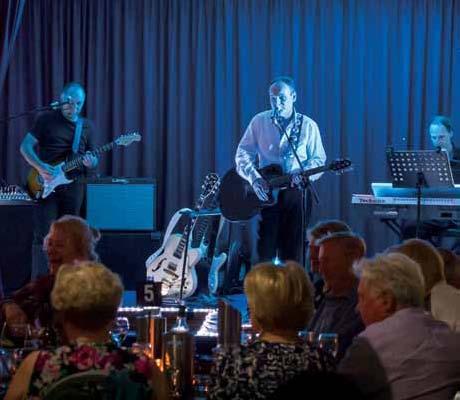
Singer Dave Freeman rocked the Police Club’s Fenwick Function Centre last month with two sold-out Neil Diamond tribute shows.
Belting out classics such as Sweet Caroline, Solitary Man and Love on the Rocks, Freeman and his band also presented a colourful tribute to Diamond’s extraordinary career, from his humble beginnings to his charttopping musical achievements.
As Freeman performed hit after hit for the packed-out room, his audience appreciated just how easy it would be to mistake his voice for that of the real Diamond.
And, as the legendary tracks kept coming, the crowd enjoyed a stunning three-course meal and full bar service provided by ever-efficient Police Club staff.
MANGO, RASPBERRY PAVLOVA WITH COCONUT CRUMBLE
Recipe by Police Club Chef Leon Wijesinghe
Ingredients
PAVLOVA
4 egg whites
200g castor sugar
1 tsp vanilla essence
1 tsp corn flour
3 mangos – medium, thinly sliced
500ml raspberry coulis
1 litre whipped cream
Method
COCONUT CRUMBLE
½ cup coconut flakes
100g diced chilled butter
115g plain four
30g castor sugar
• Preheat the oven – slow (110 – 130 degrees).
• Place greaseproof paper on a 25cm x 30cm baking tray.
• Beat the egg whites in a small bowl with an electric mixer until soft peaks form, gradually sprinkle in the sugar, beating until dissolved between additions.
• Fold in the vanilla, cornflour.
• Spread the mixture into the prepared baking tray, and bake in the slow oven for about 20 - 30 minutes until completely dry.
• Do not allow to colour, remove from oven and allow to cool.
• Spread the whipped cream over the cooled meringue, top with sliced mango and drizzle with raspberry coulis and coconut crumble.
• Roll the meringue firmly from the long side using the baking paper to guide the meringue as it rolls.
• Serve sliced and drizzle with mango slice, coconut crumble and raspberry coulis.
COCONUT CRUMBLE
• Combine flour and castor sugar in a bowl, use fingertips to rub the butter into the flour mixture until the mixture resembles coarse breadcrumbs, then stir in the coconut flakes.
• Spread the mixture over a baking tray and bake until golden brown, then let the mixture cool.
Serves 4


Open Monday to Friday for lunch and Friday nights
Available for private functions, conferences, boardroom lunches, cocktail parties, training facilities and more
Competitive food and beverage packages – use your Police Club membership card and save even more.




BruCe Cree D (1)
MICK harPer (2)
Barry FLetCher (3)
KathLee N Forth
JohN LaPworth
aNNette MasoN (4)
terry MCCorMaCK (5)
toNy VowLes
KeIth whee Ler
sturt CIB
40 years’ service
Last Day: 23.07.14
Comments…
“i thank the Police Association for all its hard work over the years to benefit members. After 40 years of service i have seen a lot of benefits created by the association.”
sNr sGt 1C MICK harPer Prosecution services Branch
39 years’ service
Last Day: 17.09.14
Comments…
“i thank the Police Association for all its efforts over the years improving working conditions and welfare for all SAPOl members.
“i thank everyone i had the pleasure to work with during my time in SAPO l, particularly all of the members who passed through Prosecution Services Branch over the past 31 years.
“i leave with great memories and the greatest of respect for the job and those who work within it.”
Bre Vet sGt aNNette MasoN security Intelligence section
28 years’ service
Last Day: 24.09.14
Comments…
“i thank the association for its efforts and achievements for all members.
“i have had the pleasure of working with some truly inspirational people, including some bosses who are natural leaders and managers of people. if you want the best from your people give them the best leaders with genuine people skills.
“The police humour is unique and i will miss it. The swear jar can probably be reduced in size now.”
serGeaNt JohN L aPworth state traffic e nforcement
38 years’ service
Last Day: 02.10.14
Comments…
“i thank the Police Association for its efforts over the years and wish all members the best.
“it’s been a bumpy ride at times but i’d do it all again.”
sNr sGt 1C BruCe Cree D
traffic Intelligence section
37 years’ service
Last Day: 03.10.14
Comments…
“SAPO l has been the best career i could ever have hoped for as a very young 16-year-old who applied to join in 1976.
“The wide and varied job opportunities, the long-lasting friendships and the pride i have always had when asked what i did for a job and replied: ‘i am a police officer.’
“i thank the Police Association for all the hard work it does and may the latest EB be your best-ever result.”
sNr sGt Barry FLetCher
Legislative review unit
50 years’ service
Last Day: 22.11.14
Comments…
“it has always been comforting to know that the member services and facilities of the association were readily available.
“i wish all members of the association the very best for the future.”
sNr CoNst 1C toNy Vowe Ls Berri Crime Prevention
39 years’ service
Last Day: 15.11.14
Comments…
“i commend the association for its endeavours over the years in obtaining a fair and equitable workplace and remuneration for the members.
“i trust that the members continue to support the association and reap the rewards as we have in the past.
“i thank each and every member i have had the pleasure of working with over the years. Thank you for your support, friendships and, most of all, for keeping me safe to go home to my family each and every night.”
serGeaNt KeIth whee Ler sturt Drug action team
38 years’ service
Last Day: 03.12.14
Comments…
“i thank the association for its work in securing good pay and working conditions for the members and especially the support it provides in times of need.
“i especially thank the people at Sturt who have provided me with support over the past two very difficult years.”
CoNstaBLe K athLee N Forth east adelaide traffic section
28 years’ service
Last Day: 07.12.14
Comments…
“i thank the Police Association for all of its good work over the last seven years i have worked for SAPOl.
“i am moving on to the green fields of Tasmania with my family but will greatly miss all of the people i have worked with through my career. The camaraderie and support i have received has been outstanding.”



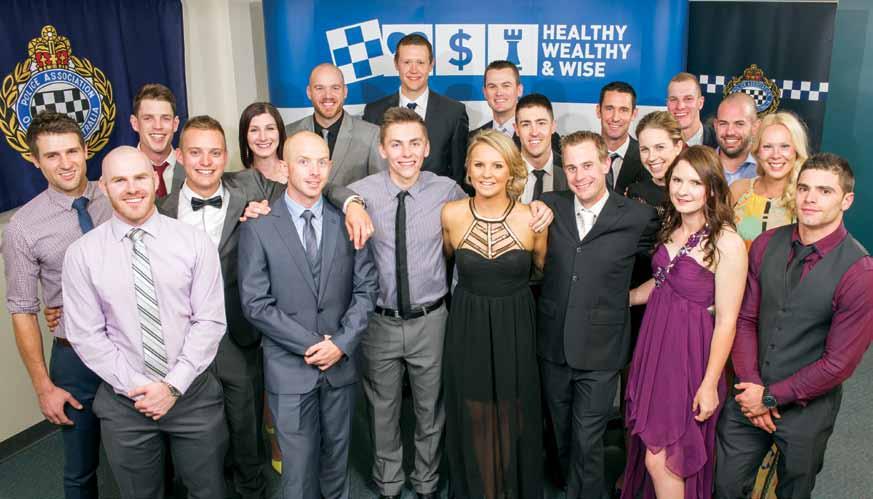




8.
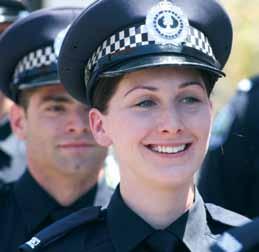
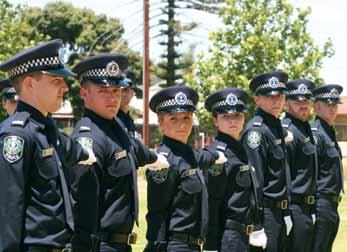
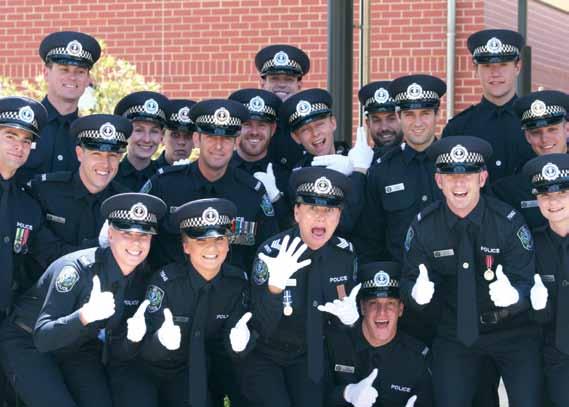
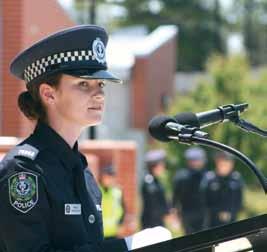
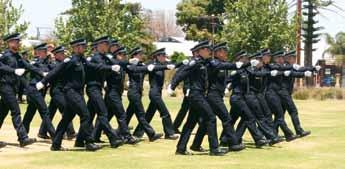
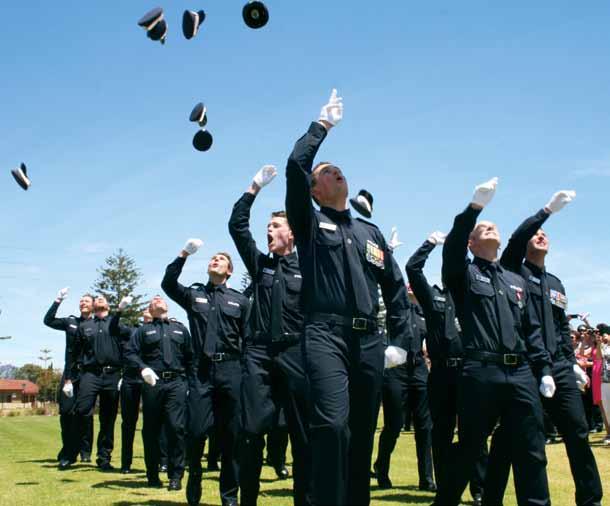
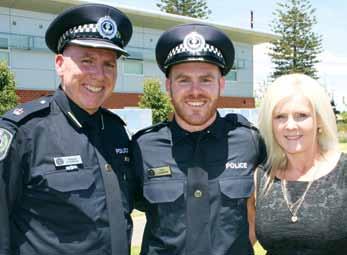
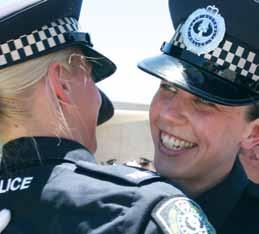
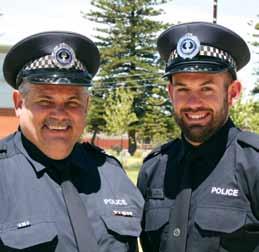
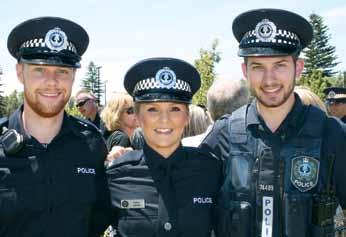
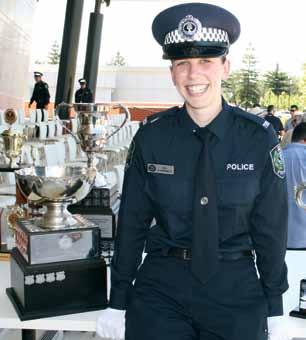
1. Cara Ettridge
2. Graduates line up on the parade ground
3. Hayley Milligan delivers a speech on behalf of the course
4. Graduates march on to the parade ground
5. Tim Wallwork
6. Scott lambert with parents Richard and Joanne
7. Chris Moreton and father Anthony
8. Police Association Academic Award winner Bec Campbell
9. Bec Campbell and Emma Basher congratulate one another
10. laura Adam with Jacob Nuttman and Jarryd Simister
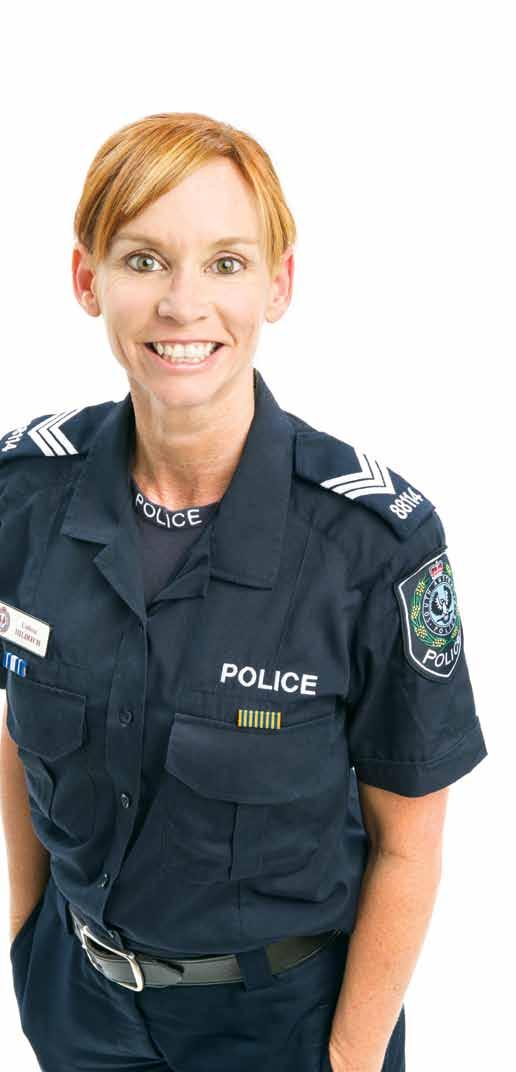
story Search for the cop Samaritan Issue November 2000 PosItIoN front cover
She was the police officer who, as a baby, had survived a car crash in which her 20-year-old mother had died. Her objective was to discover the identity of a mystery speedie who responded to the crash, visited her for several weeks afterward, and then disappeared from her life.
“Something must have touched him in some way because he wouldn’t have done it (otherwise),” she told the Police Journal “Most of us, as coppers, do our job and then leave. He did exactly the opposite and i don’t know why.”
Colleen hilDitCh sergeant Police academy
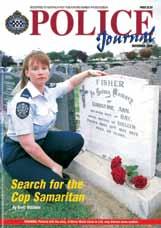
Of her quest to find the speedie, Brett Williams wrote: “Hilditch has never known the compassionate cop’s identity but is now desperate to find him. To her, he is the only one with comfort-giving answers to her many lingering questions.”
“The response to the story was just amazing. in fact, i was actually working with someone, John Govett, who was another responder to the crash. He remembered me as a baby sitting on the road at the scene, and we now have a bond. finding this out was emotional for me and i think it was for him as well. He’s a lovely man.
“i initially hoped to get my story out through a letter i wrote to the editor of the Police Journal. But Brett Williams contacted me and said: ‘There’s a story here,’ and he wanted to interview me. i was a bit reluctant at first but then said: ‘yes.’ And i’m happy i did because i found out that John (Govett) had been there at the crash.
“John didn’t remember who the motorcycle officer was but i managed to find out all the details of the accident, including the names of the responders. The officer’s name was there and i looked it up but he wasn’t in the job anymore. i felt satisfied with that and, by then, i’d moved on.
“My dad was always reluctant to talk about the crash but that changed a bit after the story came out. He lived, and still lives, interstate and i sent him a copy of the journal. There was still that reluctance there but we had a fairly lengthy and open conversation about what happened, probably for the first time.
“i was at Port Adelaide when the story came out and i was there for about 10 years doing different things – enquiries, crime-scene work and victim contact officer. i got promoted to senior constable and then sergeant and went to work at the academy about 12 months ago, and i love it. i’ve sort of found the job i’d been searching for.
“in 2007, i found a couple of lumps in my breast. i had my lymph nodes out on both sides and they found a rare virus in my system. After the surgery i was quite sick for a few years and, after a million tests, i was diagnosed with chronic fatigue syndrome. Now i focus on nutrition and eating well and i live a semi-normal life again.”
to read the story search for the cop samaritan, go to Pasaweb at pasa.asn.au



The Romeo family loves to support local food producers. We hope Romeo’s Family Fresh will inspire you to enjoy fresh food and fun with your family.








When we think of Christmas and the New Year, most of us think of a fresh feast surrounded by our family and loved ones. At Romeo’s we are a family that prides ourselves on supplying you with the freshest local ingredients to celebrate these occasions in style. Whether you want fresh baked rolls, ocean fresh seafood, succulent grain fed meat or our daily market fresh produce, we look forward to serving you soon.


All police – from the newest recruits to the most seasoned officers – know they’re part of the police family, the most important support mechanism they could ever have.
Police Health, Police Credit Union and the Police Association are its cornerstone.
These three long-standing service-providers jointly run the Healthy, Wealthy & Wise initiative to bring special benefits to all police and their families.
HW&W delivered the outstanding presentations by US behavioural sciences and management consultant Dr Kevin Gilmartin at the Adelaide Convention Centre in March (see Police Journal, April 2014, page 18) and November (see page 21).
And already renowned for its success is the Graduates’ Dinner, which the Healthy, Wealthy & Wise initiative has funded and staged since 2012 (see Police Scene, pages 54-55).
This is your expert service-providers – Police Health, Police Credit Union and the Police Association – bringing you more benefits than ever.