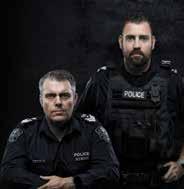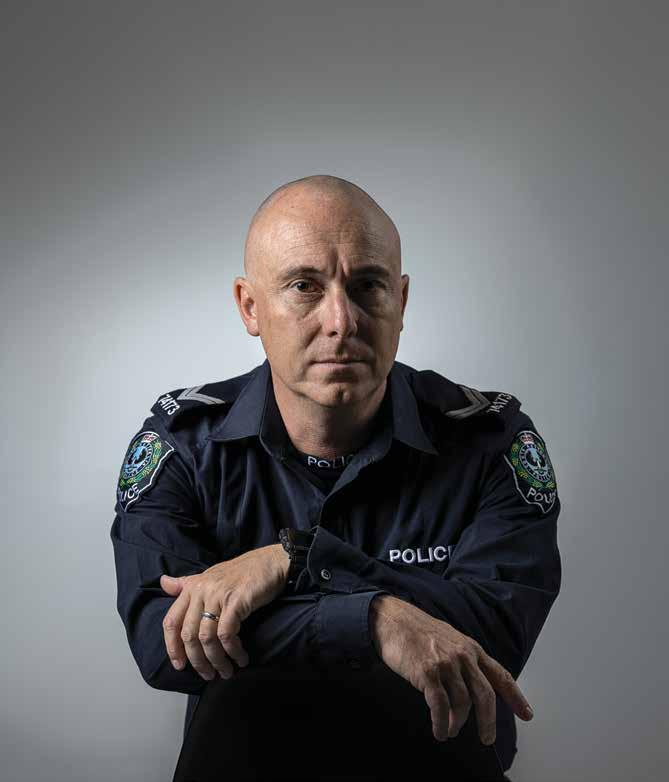
“I was just about to move forward to handcuff him as he was (ranting) … And then it was a straight arm, without really looking at me, he just went bang.”
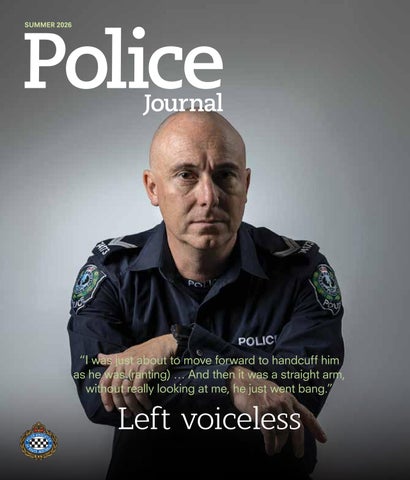
“I was just about to move forward to handcuff him as he was (ranting) … And then it was a straight arm, without really looking at me, he just went bang.”

Throughout the 2024-2025 financial year, Police Health Limited continued to meet the growing health needs of its members and paid just over $245 million in health benefits to its members.
The three most expensive hospital episodes were:
• Digestive system episode and treatment, $235,777 benefit.
• Brain and nervous system episode and treatment, $124,228 benefit.
• Chemotherapy, radiotherapy and immunotherapy for cancer, $115,620 benefit.
It’s a strong reminder of the benefits of private health cover—peace of mind, faster access to treatment compared to the public system, and the reassurance that when you do need to claim, your cover helps reduce the financial burden.
This is especially relevant for police and emergency-service workers, whose demanding roles and added workplace pressures can increase the risk of chronic mental and physical health challenges.
Hospital cover continues to support
Within Police Health Limited, the most common hospital procedures and treatments in the 2024-2025 financial year were (see table below):
or
Despite growing to 100,000 members across Police Health and Emergency Services Health, there were only minor changes to the most common hospital procedures and treatments:
• Heart and vascular system and joint replacements swapped places.
• Digestive system and gastrointestinal endoscopy also swapped places.
It's not a surprise that hospital psychiatric services remained the fifth most common hospital procedure or treatment.
Recent research by The University of Western Australia, which surveyed 14,868 Australian ambulance, fire and rescue, police, and state emergency-service employees, found these groups face extra risks.
It found that, of emergency services personnel overall:
• 30% had low well-being.
• 21% had high and 9% had very high psychological distress.
• 10% had probable PTSD.
If you or someone you know needs support, these mental health services can help:
• Lifeline: 13 11 14.
• Beyond Blue: 1 300 22 4636.
• Kid Helpline: 1 800 55 1800.
Extras health insurance delivers
The most common extras benefits used across Police Health Limited appear to resemble the most commonly known extras.
category (eg dental, optical etc)
This order is a repeat of the 20232024 financial year and reiterates the extra stresses that police and emergency services face.
That includes National Library of Medicine (US) that found shift work, a commonplace in police and emergency services, can lead to changes in saliva pH.
This then creates an acidic environment in the mouth that promotes harmful bacteria, and might cause dental cavities.
In addition, there’s growing evidence that police and emergency services workers face extra strain on their eyes.
One example is Natural Hazards Research Australia's survey of 337 firefighters across NSW, Victoria and South Australia.
They found that 90% experienced eye irritation during work and 70% continued to experience symptoms afterwards. For more information or to join Police Health, call 1 800 603 603

It’s likely clear to our readers that we pretty often report on serious assaults on police, and the consequences of those assaults A couple of our most recent stories covered the attack on Senior Constable Anthea Beck and the shooting of Sergeant Michael Hutchinson.
Now, we tell the story of Senior Constable Mark Dempsey who suffered an extremely rare but potentially life-threatening injury after a single punch. In our interview with him, he outlined the attack, explained how doctors discovered the injury, and detailed the decision-making as to the charge
Immediate family members do sometimes end up working together in policing Not so common, however, is it for siblings to work as closely together as Gavin and Trevor Hood do in the motorcycle section But they assured us that, between them, there’s not a hint of brotherly conflict
If Sergeant Paul Blenkiron was ever going to suffer a medical condition, he never would have thought it would be a stroke He was only in his mid-40s and otherwise in good health And when the stroke hit, the only indications something was wrong were vertigo and blurred vision.
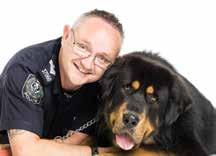
Sergeant Peter Crouch has long been synonymous with the Dog Operations Unit. No surprise after serving 30 of his 40 years in policing as a dog handler. He has several times shared his stories with us and now reflects on his career as he brings it to a close Police Association assistant secretary Steve Whetton exposes ongoing SAPOL failures in connection with the response extended-hours roster
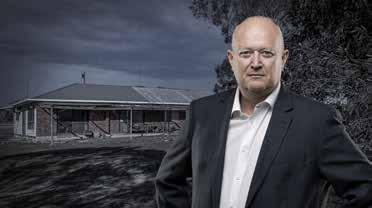
Dr Rod Pearce urges caution when deciding on a tattoo or body piercing; lawyer Hanna Rogers looks at the introduction of Hannah’s Law which criminalized coercive control in Queensland; Jim Barnett road-tests the Mitsubishi Triton and new Honda Civic Police Association president Wade Burns argues that, with the DPM now a proven failure, its architects cannot be the ones to design its replacement
Brett Williams
brettwilliams@pj asn au
Publisher: Police Association of South Australia Level 2, 27 Carrington St, Adelaide SA 5000 T (08) 8212 3055
Editor: Brett Williams (08) 8212 3055 Design: Sam Kleidon 0417 839 300
Advertising: Police Association of South Australia (08) 8212 3055
Printing: Finsbury Green (08) 8234 8000
The Police Journal is published by the Police Association of South Australia, 27 Carrington St, Adelaide, SA 5000, (ABN 73 802 822 770). Contents of the Police Journal are subject to copyright. Reproduction in whole or in part without written permission of the Police Association of South Australia is prohibited. Opinions expressed are not necessarily those of the editor. The Police Association accepts no responsibility for statements made by advertisers. Editorial contributions should be sent to the editor (brettwilliams@pj.asn.au).
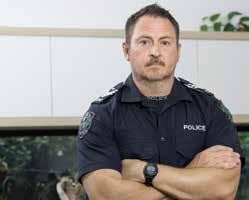
COVER: Senior Constable Mark Dempsey. Photography by Steve McCawley.
Only by presenting himself to hospital after a serious assault did Senior Constable Mark Dempsey avoid the possibility of a fatal outcome
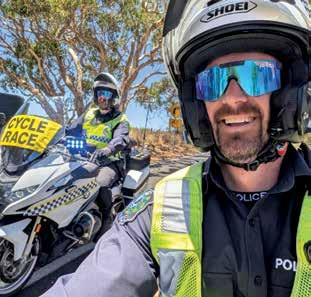
Working together was always the goal but neither of the Hood brothers was prepared to transfer to just any section to make it happen
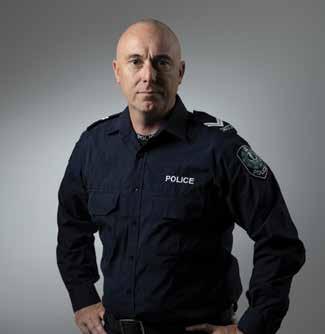
First it was the shock of the news that he had had a stroke and then came the most frustrating journey back to his normal life
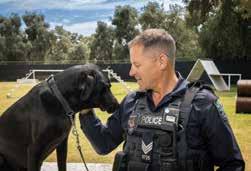
As a police dog handler, Sergeant Peter Crouch was “very lucky”, had “a great time”, and found his work “so fulfilling”


EXECUTIVE ASSISTANTS
Level 2, 27 Carrington St, Adelaide SA 5000
www.pasa.asn.au
P: (08) 8212 3055 (all hours)
E: pasa@pasa.asn.au
Membership enquiries: (08) 8112 7988



MEDIA AND COMMUNICATIONS


POLICE A S S OCIATION OFSOUTH AUSTRALIA
REPRESENTATIVES
Superannuation
Leave Bank
Country housing
Commissioner’s Office Health Safety & Welfare Advisory Committee
Legacy
Sexual Orientation, Gender Identity & Intersex members
DELEGATES & WORKPLACE REPRESENTATIVES
Metro North Branch
Elizabeth
Gawler
Golden Grove
Henley Beach
Holden Hill
Northern Prosecution
Northern Traffic
Parks
Port Adelaide
Port Adelaide Investigation
Salisbury
Country North Branch
Ceduna
Coober Pedy
Kadina
Peterborough
Port Augusta
Port Lincoln
Whyalla
Crime Command Branch
Adelaide Investigation
Elizabeth Investigation
SOCIB
Forensic Services
Intel Support
Major Crime
Major Crime
South Coast Investigation
Metro South Branch
Adelaide
Christies Beach/Aldinga
Haydn Evans
Rob Mowday
Darren Quirk
Alan Pagac
Adam Knoll
Tim Pfeiffer
Neil Hastie
Edward Matias
Paul Blenkiron
Andrew Winterfield
Philip Proctor
Samuel Priest
James Cochrane
Gavin Moore
Nathan Paskett
Jake Whenan
Ian Baker
Paul Velthuizen
Robert Clark
Joel Manson
David Furniss
David Bowman
Shaun Blundell
Phil Buttfield
Robert Martin
Jason Tank
Stuart Mee
Gary Craggs
Wade Burns and Michael Kent
Andrew Heffernan
Andrew Heffernan
Steven Whetton
Julian Snowden
Nadia Goslino and Andrew Heffernan
Metro South Branch cont.
Hindley Street
Netley
Michael Montgomery
Robert Brelsford
Southern Prosecution Sallie McArdell
Southern Traffic
Sturt
Country South Branch
Adelaide Hills
Berri
Millicent
Mount Gambier
Murray Bridge
Renmark
South Coast
Operations Support Branch
Academy
Academy
ACB
Band
ComCen
ComCen
Dog Ops
Firearms
Human Resources
Mounted Ops
PSSB
STAR Operations
State Ops Support Branch
Traffic Services
Youth & Street Gangs Taskforce
James Evans
Richard Hoar
Jason Blucher
Tamara Day
Tanya Payne
Owen Wales
Thomas Jonker
James Bentley
Peter Tellam
Melanie Smith
Peter Koulianos
Tony Boots
Adam Buckley
Glenys Moriarty
Mark Dearman
Levi Struthers
Brett Carpenter
Eugene Wasilenia
Sonia Wellings
Mark Staples
Craig Murphy
Duncan Gerrie
Joshua O’Dwyer
Ian Kilpatrick
Officers Branch Constantinos Kyriacou
Craig Terlikowski



Wade Burns PRESIDENT

Iknow that many people are tired of hearing about the infamous District Policing Model
Front-line police are tired of living it Communities are tired of seeing the consequences of it. And the public, quite reasonably, is tired of watching what appears to be an endless cycle of reviews, restructures and assurances that never quite translate into safer streets or sustainable policing
To that frustration, I could not be more sympathetic
But DPM fatigue shouldn’t be mistaken for resolution The DPM represents a decade-long failure that has now been formally confirmed by an independent review
Just as troubling as the model itself is the deeply cynical way Police Commissioner Grant Stevens and his deputy Linda Williams have handled the review findings.
The independent review, run by advisory firm BDO, has concluded what police officers have known all along: the DPM is a failed policing model and totally unfit for purpose
That should have been a moment for honesty, humility and accountability But that isn’t what police officers or the SA public received
The commissioner quietly released the review findings during the busy festive season, choosing not to respond to media enquiries in the process — an apparent effort to evade any and all scrutiny of this disaster
This sort of stage-managed PR tactic has become a SAPOL trademark. The review launch itself was announced immediately before the Easter long weekend last year — another attempt to bury bad news when attention was elsewhere.
For an organization which claims to be
Indeed, our members are asking: why would the commissioner and deputy commissioner, who produced the DPM and dismissed years of warnings about it, now be tasked with designing the new model?
committed to courage and integrity, these were odd choices
For an organization hoping to minimize attention on an embarrassing outcome, they made perfect sense
The findings themselves were damning The authors determined, among other things, that the DPM “has struggled to adapt quickly enough to changing demand patterns”, that it “resulted in an unintended lack of team integration”, and that the expectation it would create more time for proactive, preventative policing “ has not been realised”
Predictably, every fundamental premise of the DPM fell apart under the slightest bit of outside scrutiny
Yet even after that report landed, there was no immediate public reckoning No acceptance that a catastrophic, ongoing strategic error had been made. No acknowledgement of the toll this model has taken on member morale, well-being, safety and retention.
Instead, a month later, the commissioner undertook an exclusive, solo interview with The Advertiser, outlining his own views on the review
What readers didn’t miss in that article was the apparent lack of accountability taken by the commissioner, something that was abundantly clear in the paper’s own comments section
It’s fair to say the reaction was savage, and rightly so.
For a decade, the commissioner championed the DPM, defended its rationale, explained away its failures and ignored repeated warnings from those actually doing the work
These warnings famously included an emphatic and unanimous vote of no confidence in 2022 from association delegates who represent every single work area of SAPOL
Yet, not long before the review was initiated, the commissioner asserted, inexplicably, that front-line members “indicated support for the DPM” — a nonsense statement that confirmed how out of touch he was with his own workforce.
Readers had their say in The Advertiser
Absolutely about time! Police have been doing jobs for other government departments for years. I left in 2023, 35 years into my career, after a decade of total frustration with the management of SAPOL. If the commissioner had acknowledged the failure of the DPM earlier, hundreds of police would still be in SAPOL.
He's known the DPM was not working for years. He was told it wouldn't work before he implemented it. Giving police mobile phones just makes them work more without a break. Going to a station to do a report gave you a breather. Time to grab a coffee and something to eat at a desk whilst you did the paperwork before you were sent back out to another job. And doing reports on a mobile phone? Really? I'd like to see him do his daily paperwork on a tiny little Samsung S25...
Policing is not a business. Centralisation does not work, bring back local police stations, with local police, who know their community.
The DPM has strained frontline capability and eroded morale. Officers have been vocal about these issues for years, and the escalating resignation rate is the measurable outcome of those concerns going unaddressed. Accountability for this situation cannot be shifted onto recruitment challenges, generational change, or external labour market competition. Those factors might contribute, but they do not explain why so many experienced members are choosing to leave policing specifically because of internal structural decisions. SAPOL cannot meaningfully address the current workforce crisis without first acknowledging the role that executive decision making played in creating it.
Frontline police have been telling SAPOL management for years that the district policing model was a failure. Fell on deaf ears until an enquiry tells them the same thing. Listen to those who know what they are talking about.
From memory, he was told the DPM wasn't fit for purpose BEFORE it began. He was told this............. in 2014 !!!!
The damage is already done. This is the Grant Stevens’ legacy. SAPOL will take a significant period of time to recover from the DPM debacle. Maybe never. The exodus of officers is continuing, low morale, the lack of quality in the new recruits and the stubbornness of not listening to the people that matter…the frontline. Thank you Mr Commissioner.
The Commissioner paid heaps to run a shambles.
This is all come to a head on the commissioners watch. Too long in the job it’s time to hand the reins over.
Nothing constructive will happen. The people that conduct these reviews and make recommendations are usually the same people that destroyed the joint in the first place. No doubt, the current COP will receive another contract extension and will be showered with plaudits and awards along with a cushy government advisory job paying $800K a year if and when he decides to pull the pin, yet he has overseen the worst and most destructive period that SAPOL has ever experienced.
Wade Burns PRESIDENT
Readers had their say in The Advertiser
WA abandoned this model years ago (in 2017), because it did not work. Stevens implemented it anyway at around the same time, and FINALLY is now moving away from it. This is indicative of his attitude in the past, leading to the decline of SAPOL. The public seems to have a high opinion of the Commissioner, his SAPOL officers, not so much, because of decisions like he made back then, and refusing to budge until now.
Its time for a fresh mind fresh ideas fresh leadership at the top. We all have a use by date. Grant, its actually time to go.
So he has failed the whole department - Why is he still in charge?
COP knew the DPM would not work. Knew that the funding wasn't in place for the so called super hubs he spoke about at the intimate little lunches he had with selected members. Poor planning if you do not have the funds do not push forward when it is known that it will fail.
Oh so embarrassing after years of nothing to see hear blah blah from the COP now apparently change is well under way. Given the talent pool in senior management perhaps that’s where the clean out should begin!!
In many industries you would lose your job for such a stuff up
In truth, the review was only commissioned once mounting resignations and collapsing morale made denial politically and operationally untenable over the past 18 months
And when the review findings were handed down, the commissioner appeared to double down, writing to members: “The principles underpinning the DPM remain sound and align with SAPOL 2030. ”
What the commissioner fails to understand is that members don’t experience policing as a set of abstract corporate “principles”
They experience it as unsafe workloads, understaffed shifts, mounting backlogs and relentless pressure from the pointy end of leadership failing to have their back They feel the human toll of a job that demands precise, split-second judgement calls in dangerous real-world situations.
The two-team culture of the DPM has created friction, inefficiency and duplication It has fractured accountability and undermined local ownership of crime Centralizing key functions has stripped districts of visibility and responsibility
The result over the past decade has been record resignations, investigations that keep piling up and members stretched to their physical and mental limits.
Luckily, the review has already forced some tangible future changes The separation between response teams and district policing teams will not continue The absurd decision to lump the CBD into Eastern District is finally being dismantled in favour of a dedicated CBD service area Long-overdue face-to-face leadership development and greater recognition of specialist investigative roles are back on the table
After a decade wasted on failed experimentation, it’s almost as though SAPOL appears destined to circle back to a version of the old local service area model
Against this backdrop, it’s more than reasonable to ask whether leadership focus is where it should be
I don’t have a problem with senior leaders sitting on boards or taking on external roles, as the commissioner has chosen to do with the Adelaide Football Club. In normal circumstances, that would barely raise an eyebrow. But when you’ve overseen a decade of structural failure and left a demoralized workforce carrying the consequences, people are entitled to question whether your attention is truly where it needs to be
That concern is sharpened further by recent executive decisions The quiet creation of a brand new, highly paid commissioner’s personal advisor role has raised questions among members, particularly given certain workgroups in SAPOL are crying out for improved rosters, shift allowances and working conditions that would cost a fraction of that investment. Ultimately, the SA public is entitled to ask why the government would entrust the same people who implemented and relentlessly defended a failing model to oversee its replacement
Indeed, our members are asking: why would the commissioner and deputy commissioner, who produced the DPM and dismissed years of warnings about it, now be tasked with designing the new model?
This chronic absence of accountability only pours fuel on a fire that burns inside so many members
And every instance of deflection, spin or self-preservation from the top sends a clear message to the workforce below: that their morale, well-being and experience remain secondary to reputations and careers
That loss of trust is corrosive, and it’s driving good people out the door
Explore fleet pricing available today.

Discover the Hyundai EV range, including the all-new ELEXIO, INSTER, KONA Electric, IONIQ 5, IONIQ 6 and IONIQ 9. Each model combines cutting-edge technology, distinctive design and an engaging electric driving experience.
Hyundai Australia thanks the South Australian Police for their continued support of the community. In appreciation, National Fleet Pricing is now available across the Hyundai EV range (excluding N Models).
Contact your local Hyundai Dealer today.

Explore Hyundai EV Range
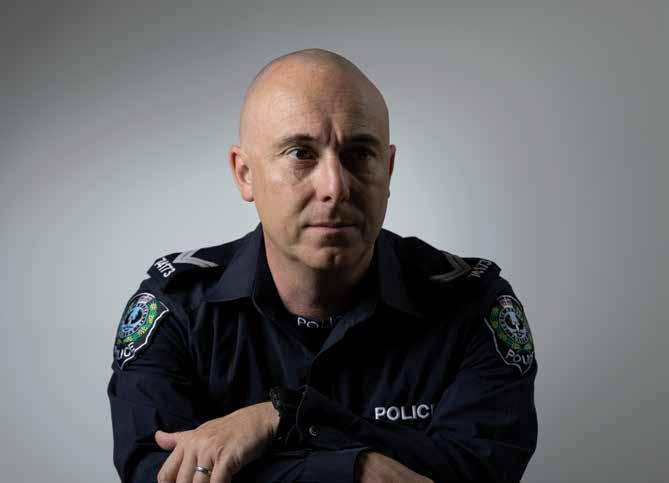

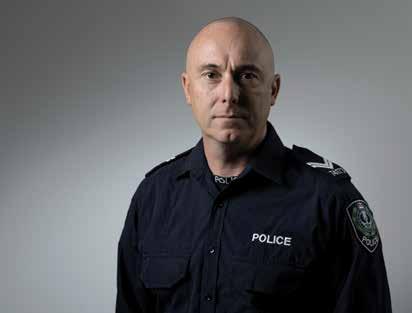
IT WAS A POWERFUL STRAIGHT-ARM PUNCH DIRECTLY TO THE THROAT. When it struck Senior Constable Mark Dempsey, he stumbled backward into the front exterior wall of a Hallett Cove house That was where, just moments earlier, he and Senior Constable Clohe Lamont had tried earnestly to reason with meth-affected attacker Aaron McCauley
Dempsey, then 42, knew instantly that he had suffered a serious injury. It was obvious from the eight-out-of-10 intensity of the pain, his struggle to breathe, and the rapid swelling of his throat. But he would not know until hours later the extent of the internal damage done to him
In the human body is only one “floating” bone U-shaped, situated in the throat, and known as the hyoid bone, it connects with the larynx (voice box) McCauley, with the impact of the punch he threw with his left fist, had broken Dempsey’s hyoid
Dempsey had rated the chance of McCauley turning violent as 50-50 Indeed, he considered him more likely to try to flee than fight. He was at least half right. McCauley did flee on foot immediately after his assault on Dempsey.
Despite his shock, pain and laboured breathing, Dempsey regained his composure and, with Lamont, took off after McCauley His first concern was not for his physical wellbeing but rather the need, and his duty, not to “let him get away”
“As soon as I started to run, I could feel that I was having trouble breathing,” he says “And it wasn't just because I was running
“We ran for about 800 metres and almost came around in a circle We ended up almost back where we’d started on the same street By then we’d gained on him, and he gave up ”
Dempsey and Lamont arrested McCauley and backup they had called for just before the chase was on the scene within only a minute or two
Of course, the foot chase and preceding assault would never have happened had McCauley not turned up at his parents’ home that August night in 2023. Drugged up and out of control, he had smashed a window and had his parents fearful enough to call the police.
For Dempsey and Lamont, it was the start of a night shift Police communications had sent them details of the incident, their first for the shift, and it sounded like “a very routine job”
The pair got to the scene around 11:30pm when it seemed that McCauley had gone His parents, however, were not certain that he had, so Dempsey and Lamont searched around the perimeter of the house and in the garden and garage.
They found no one, but the parents in any case did not want to pursue any police action against their son . After around 20 minutes, however, as Dempsey and Lamont were making their exit through the garage, McCauley appeared
“We actually walked back through the garage out to the front,” Dempsey explains “That's where we saw him and, as soon as we did, we could see that he was on drugs It was obvious He was twitching and just seemed very erratic, not listening to what we were saying
BY BRETT WILLIAMS
Mark Dempsey had taken some big hits in policing but nothing like the one that left him unable to speak.
“And his focus was really on getting back inside the house, which was the exact thing we didn’t want. So, we were just trying to be nice, saying: ‘We’ll take you somewhere We can take you to a friend’s house, a hotel ’ But, to everything we said, he just put up resistance ”
The two officers persisted until McCauley became agitated and began to direct personal abuse at Lamont
“In fact, he actually turned toward her,” Dempsey says, “and it was really obvious that he didn't want anything to do with me.
“So, we got to the point where we were probably going to arrest him for his behaviour because (it) was disorderly.
“I was just about to move forward to handcuff him as he was (ranting) at Clohe And then it was a straight arm, without really looking at me, he just went bang
“It was straight into the neck I probably would have been about a metre away from him when he actually hit me ”
“These eight or nine people came in at once. It was really overwhelming, and I was like:
‘It's definitely bad news if all these people are here.’ ”
ith McCauley arrested, and in their custody, Dempsey and Lamont headed for the Christies Beach cells. The charge would be cause harm to a prescribed emergency worker (section 20AA, CLCA), which brings, at the maximum, 15 years’ imprisonment
McCauley, who had quietened down, had little to say on either the drive from Hallet Cove or in the cells For Dempsey, on the other hand, speaking had become painful
“I could just hear my voice, and I could hear that it was croaky,” he recalls “It was hurting, and I could feel the swelling I'd never had an injury like that before and it just felt odd. So, I just knew something wasn't right.
“I said to Clohe: ‘Something doesn't feel right here ’ So, we left him (McCauley) there, and then Clohe dropped me straight off at Flinders (Medical Centre) ”
At the time of that drop-off, around two hours had passed since the assault And it would take more time and rigmarole yet before Dempsey would know exactly what damage McCauley had inflicted on him
Indeed, it took another two hours before hospital staff got to attend to him and, in the process, moved him from ward to ward. And, after even more hours passed, Dempsey ended up in the surgical ward around 6am. Once there, he feared the worst
But there would be no diagnosis until after specialist ENT doctors had examined
him and ordered scans and X-rays . For Dempsey, that meant the whole day in hospital, right up until 6pm. And then, not one or two but rather a complete team of doctors, including interns, approached him in the surgical ward
“These eight or nine people came in at once,” he says “It was really overwhelming, and I was like: ‘It's definitely bad news if all these people are here ’ ”
So overwhelmed was Dempsey that he listened but never really heard the first minute of the ensuing conversation
“They went through the injury and told me that my voice box had broken,” he says, “and immediately I thought: ‘Oh, that sounds bad!’ ”
What Dempsey came to understand was that he now had a bone chip in his throat It had come completely adrift from his hyoid bone The injury is extremely rare and usually results from trauma such as strangulation and, of course, direct hits to the throat
But there would be no surgery for Dempsey The doctors preferred a waitand-see approach and a reassessment of the hyoid after six weeks. The hope was that, in that time, the bone would heal on its own.
And, for those six weeks, Dempsey would be off work and have to stick to doctors’ orders not to speak – and still endure pain So, discharged from hospital, he headed home to try to heal
“It (the pain) dropped to six or seven out of 10,” he says, “but it was still very painful They gave me some anti-inflammatories to get the swelling down and painkillers that I took for four weeks
“The swelling took probably four or five weeks to go down. My throat had tightened up as well and I was having to use like a puffer to just get a bit of air into my lungs.
“I couldn't do any exercise either I just basically had to sit on the couch for six weeks, so it was boring as well ”
Dempsey did his best to comply with the no-speak instruction He often communicated with his wife by text, even if she was in the same room with him But, on most days, he could not help but inadvertently utter a few words – and feel the accompanying pain
After his six weeks of silence and initial recovery, he underwent that reassessment of his injury. And the news was not all bad: he did not need surgery but still had to limit his speaking
he time was then right for him to return to work but only on light duties and in a non-contact role. He worked in planning for a month, followed by two months as a brief quality control officer And, on the medical front, he underwent monthly assessments of his injury
His time off work and then on light duties amounted to four-and-a-half months Not until then was Dempsey fit to return to the front line He made it there just before Christmas 2023 but not without first thinking about an alternative career
“I did think about quitting,” he says. “For the first time in my career, I actually got a résumé together and started looking on Seek . That was mainly to do with the injury I thought: ‘I don't need this in my life anymore ’ ”
But Dempsey stuck with his police career and expected to see justice done for what he had suffered McCauley, after his arrest, had remained in police custody overnight and fronted court in the morning, which gave him bail
The business of prosecuting him was set to take place around 10 weeks after the attack. What then came into question was the charge. Talk emerged of downgrading it from cause harm to assault a prescribed emergency worker.
The difference in the maximum terms of imprisonment for the two offences was 10 years: five for the assault and 15 for cause harm
When word of the intention to downgrade reached Dempsey, it angered not only him but also others with whom he shared the news
Foremost in their thinking was a line in the treating doctor’s report. It indicated that, had Dempsey not gone to hospital, his injury might well have proved fatal. This was a point raised with Prosecution Services Branch management
Ultimately, the decision was to go with the charge of cause harm to a prescribed emergency worker, to which McCauley ended up pleading guilty Dempsey went to court for the sentencing and to read out his victim impact statement
“I just thought it would be a good way to close it,” he says “He (McCauley) was on the video screen just laughing the whole time. It annoyed me because it just showed that he wasn’t taking it seriously.
“The magistrate was obviously bound by sentencing guidelines and gave him two years, and time off for his early plea ”
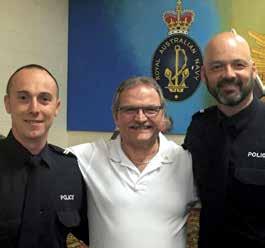
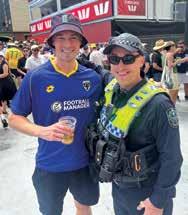
“… when I’ve been talking all day and I just have to say: ‘Sorry, my throat’s really hurting.’ Obviously, I can’t say that when I’m at work, so I just go through the pain of a sore throat when I’m talking.”
empsey now lives with the loss of 4 per cent of his voice capacity and seemingly permanent throat problems And, for that, he concedes that he has a hatred of McCauley
“In our job, we need to talk a lot,” he says. “So, at the end of the day, if I've spoken a bit more than usual, I have a sore throat . Where the average person might have a sore throat two or three times a year, mine's probably four times a week
“Sometimes I just say to my wife: ‘I can’t really talk for now ’ It’s usually in the evenings when I’ve been talking all day and I just have to say: ‘Sorry, my throat’s really hurting ’
“Obviously, I can’t say that when I’m at work, so I just go through the pain of a sore throat when I’m talking. ”
Also now lost to Dempsey, or at least diminished, is the role he had, and loved, as a soccer coach.
“I'd been coaching and playing for 40 years,” he says, “but I had to give that up because obviously I couldn't shout I've gone back to it this year, but only as an assistant ”
Now, with thoughts of resigning behind him, he carries on with his work life but concedes that the incident did change him
“In my first few months back, I was very conscious (of my safety),” he says, “but I suppose you gain your confidence back . I’m definitely a lot more wary now, and I probably won’t be the same as I was before ” PJ
BY BRETT WILLIAMS
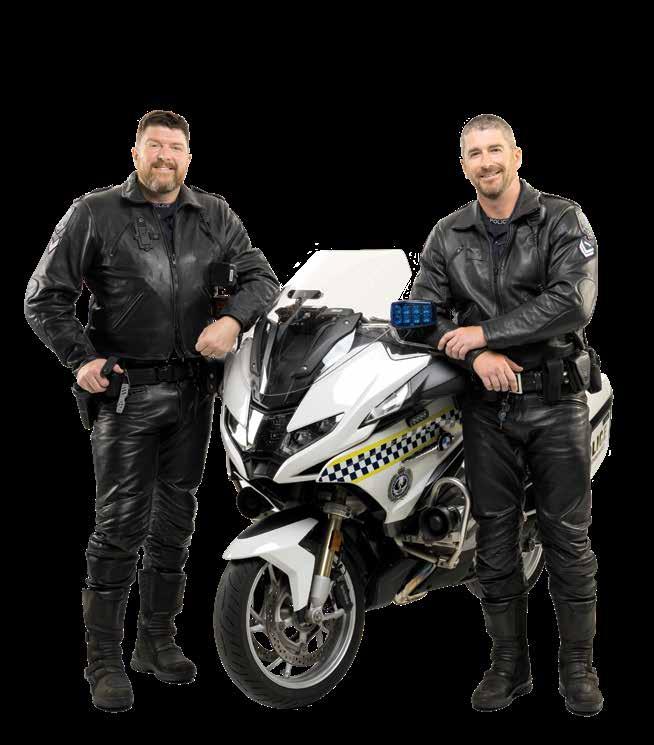
The Hood brothers might just have proved how closely family members can work together in policing.
It seemed so unlikely Two police siblings end up working not just in the same section together but also on the same team Brothers Trevor and Gavin Hood even turned up for their first shift as motorcycle cops with the State Traffic Enforcement Unit on the same day.
Before that August day, in 2022, their career paths through policing had never once aligned
Trevor had started his police life on the metro front line (Elizabeth, Salisbury, Holden Hill, Adelaide) before a complete switch of roles to Mounted Operations in 2012
Gavin, on the other hand, had taken on country policing in 2001, and stuck with it for 13 years He headed back to Adelaide in 2014 and wound up as a ComCen operator until 2019. While the brothers had always hoped to work together one day, neither expected it would ever happen. Gavin had even tried to make his way
into Mounted Ops but concedes that he “just can’t ride horses”
And neither Trevor nor Gavin was ever prepared to transfer to a section for which he had no passion just to work with his brother So, after 20-odd years each in the job, it struck them as more impossible than ever that they would score the same permanent posting.
“It was something we'd always wanted to do,” Trevor says “We just didn't know how (or if) it was going to happen
“To end up in a specialist unit together was something that we hadn't really considered, or thought was possible
“And then the timings of it just worked out that it just happened at the same time. We joined the same team at the same unit on the same day. ”
Of course, to qualify as “speedies” and don the blue leather garb, the brothers first had to pass the exacting
four-week motorcycle course on the heavy BMWs Trevor, then 38, made it through on his first attempt in 2021 while Gavin, at age 44, succeeded on his second attempt in 2022
“It's so important to be a difficult sort of course,” Gavin says, “because there can be so much danger involved if you don't get the right training. ”
It was one thing for the brothers to pass the speedies course and get themselves earmarked for the same team But management had to consider the issue of two family members working so closely together What had to be clear was the nature of the brothers’ relationship
If they were not close and even prone to “butt heads”, the same-team scenario was unlikely to work . But as their brotherly bond was strong – and still is – no one saw any problem with them joining the Holden Hill-based motorcycle section as teammates
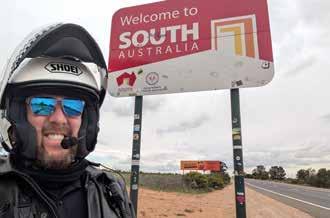
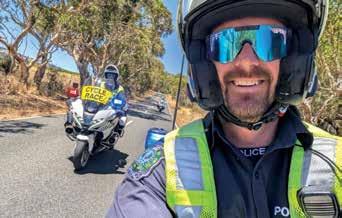
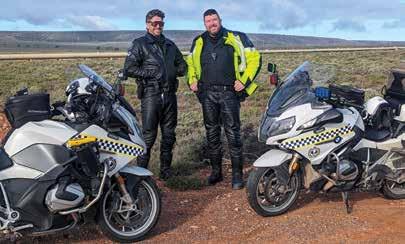
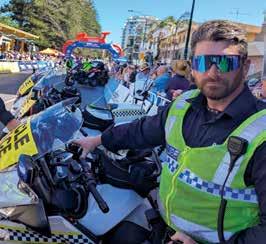
“We've always been a close family,” Trevor says. “Consider ourselves good mates. So, the prospect of working together was exciting for us. But management wasn’t to know what sort of family dynamic we had We were a bit of an unknown ”
Both brothers understood fully the reason for enquiring into that family dynamic Questions about it gave them no offence
Indeed, within the Hood family was another pair of brothers, civilians Steven and Kevin And, for all four, motorcycles were always a passion
“Speedies was always a goal of mine from very early on in my career,” Trevor says. “I was always planning to get there at some stage. And I guess the day I joined was a culmination of all
“ … the prospect of working together was exciting for us. But management wasn’t to know what sort of family dynamic we had. We were a bit of an unknown.”
my (police) experiences to get me to that point ”
Between leaving their previous posts, Mounted Ops and ComCen, and joining the motorcycle section, both brothers served with Road Policing Section. Trevor racked up six months and Gavin three years during which he too made life as a speedie his objective
A
s married men with children, however, the brothers were not surprised to find their wives less than thrilled about the move to the motorcycle section. It was the vulnerability: no seatbelt, no airbags, none of the protection of an enclosed vehicle
With even less reason to be excited was the Hood boys’ mother, Sheila She loved Mounted Ops and its horses, and so was disappointed to see her son leave the section Trevor himself felt some emotion in leaving behind his days on horseback
But the real worry for Sheila was that she had already lost one of her four sons – and that loss was to a motorcycle crash. Steven, 36, died after his motorcycle struck a car at Fullarton Road and The Parade, Norwood, in 2020
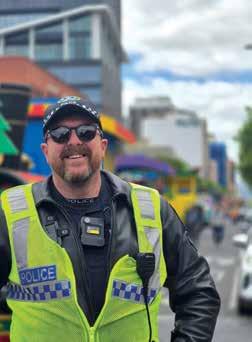
So, for Sheila, the idea of two of her other sons riding motorbikes for a living horrified her
“But Mum has been good,” Gavin explains “She sees how much we love it (on the bikes) She likes seeing us together She feels we’re safer when we’re together, that we look after each other and are supportive of each other. That gives her a lot of comfort. ”
Still, for the Hood family, the loss of their son and brother is no distant memory
“I ride almost every day through the intersection where he crashed,” Trevor says “It just happens to be the way I get to Holden Hill So, it's always on my mind It's always on our minds ”
From their own experience of loss, the brothers understand just how deeply fatal crashes impact on others
“We saw the effect it had on our family,” Gavin says. “So, we understand other families when we go to crashes. We understand that trauma. I think that gives us a bit of a personal touch to our policing ”
“We saw the effect it had on our family. So, we understand other families when we go to crashes. We understand that trauma. I think that gives us a bit of a personal touch to our policing.”
Of course, the care the brothers have taken on the roads has kept their bodies and machines intact – most of the time Not every shift has been incident-free Gavin speaks of having had “two big stacks”, one as recently as November 2025
He had just finished duty at the Adelaide Rally and, on his way home, was approaching Ashton on an 80km/h stretch of Lobethal Road. As he went about negotiating a hairpin bend, he wound up in a head-on crash with a car allegedly travelling on the wrong side of the road
Gavin, who is certain his training helped him survive, emerged with a broken shoulder which is still healing Only around 18 months earlier he had suffered an injury in the other “big stack” in the state’s south-east in cold, wet conditions
Waste which had spilled out of a cattle truck had created a film over a section of the highway. It was just where Gavin came through “on a sweeper” (bend).
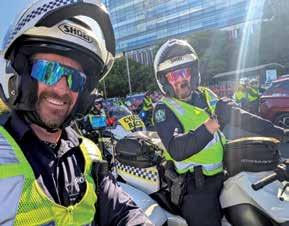
1. Gavin at the SA-Victorian border in the Riverland.
2. Trevor riding just ahead of Gavin during the TDU at the back of Humbug Scrub.
3. The brothers on duty just outside Port Augusta.
4. Trevor at the TDU at Glenelg.
5. Gavin working the Christmas Pageant in 2025.
“And then the back of my bike slid to a stop,” he explains, “just like a lowslide crash But I stayed on the bike ”
Unaware that he had displaced three of his ribs, Gavin picked up the BMW and, in the rain, rode it another 100kms to Mount Gambier Once there, he met up with Trevor who took him to hospital where the damage to his ribs came to light
Speedies frequently get out of town and hit country roads across the state. It is when they perform that role and others, like working on a line testing drivers, that Gavin and Trevor get to work side by side
“We cover a bit of everything,” Trevor says “We do a bit of traffic tasking, drug-driver testing, and highway policing We do a lot of events, too That means we have to be skilled in all facets of traffic policing and event management, so there's a lot going on ”
Among those events is the Tour Down Under The brothers Hood have already worked three TDUs between them. It is an event at which speedies “really shine”, according to Gavin.
“It’s about being quite dynamic, quick and reactive,” he says “You couldn’t get a car into those places (on the tour), whereas you can pull your bike over, the peloton belts past, and then you catch up again ”
Trevor remembers the instructions he got ahead of his first TDU
“The only rules they gave me were: ‘Don’t be late,’ and ‘Don’t mess up,’ ” he recalls “With the TDU, there’s zero margin for error. It’s internationally televised and highly publicized and the bikes draw a lot of attention. You have to be on your game. It’s high pressure. ”
As the Hoods look to the future, each sees himself as a speedie for the rest of his days in policing Gavin, who figures he has 10-odd years to retirement, speaks of having found his “policing niche” and his speedie colleagues as “fantastic to work with”
And Trevor has no desire to try his hand at any other branch of policing
“This was what I wanted to do,” he says, “and I'm here now and loving it. We’re more passionate about this part of our careers than any other.” PJ
BY BRETT WILLIAMS
Paul Blenkiron had no reason to think he was a candidate for the stroke he suffered – and survived.
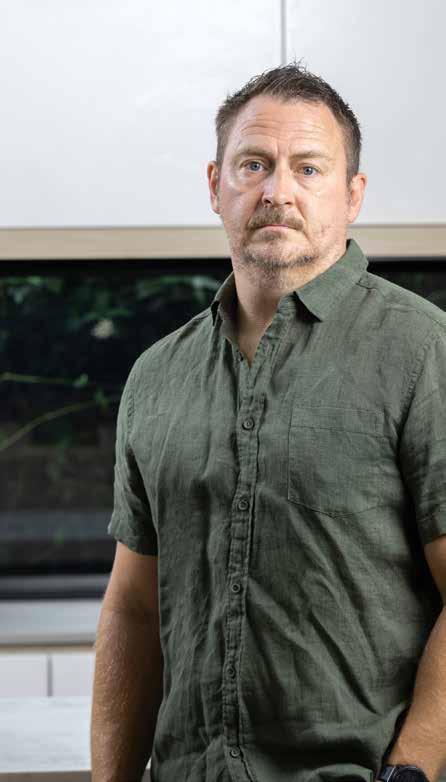
An inexplicable bout of vertigo struck him without warning Sergeant Paul Blenkiron just could not fathom what was happening to him In his kitchen at home, his surroundings took on the haziness of a movie scene as it fades into a flashback sequence
Were his condition to worsen and cause his collapse, he would leave vulnerable his two children under five and, at the time, in his care. His concern was not to alarm them by the sight of their father suffering some kind of medical episode So, he splashed his face with water and stepped outside
For the next 20-odd minutes on that August day in 2024, Blenkiron walked around his backyard confused as he tried to “capture my thoughts”
“We've got a massive gum tree in our backyard and kookaburras,” he says. “I remember sitting out there, looking at the gum tree, seeing the kookaburras, and just trying to figure out what was going on.
“My eyes were taking a while to adjust and come back into what I call proper focus Even though I could see, it just didn't feel like I was living in the moment ”
After he had paced around the yard, Blenkiron went back inside and again splashed his face with water He washed out his right eye thinking he must have had something in it, but that was not the case. Indeed, a definitive diagnosis of his suffering was still a long way away.
The whole episode had him not panicked but certainly baffled and
in a confused state of mind Still, his thought processes were at least clear enough for him to understand that he needed to call someone for help
He rang his partner, Amy, who was about to “step onto the hockey field” but panicked and insisted on rushing back home Blenkiron, however, had already called her parents to ask that they drive him to hospital.
“So,” he says, “my father-in-law, Alan, was there within 15 minutes, loaded us all up into the car and dropped me at the (Royal Adelaide) hospital ”
Up to that point, Blenkiron was not thinking anything sinister had struck him In his family history was a tumour which had claimed the life of his mother, but Blenkiron himself, then 44, had never suffered any ill health
His only issue was slightly high blood pressure which his GP had discovered a few months earlier That led to a consultation with a cardiologist and some tests. But, given the all-clear, as he was, Blenkiron had no reason to suspect anything like a heart attack .
Once at the hospital, he explained his symptoms and underwent a series of eye tests, which showed no damage or impairment to his vision That left him to go back home without any answers, but he was to return to the RAH Department of Ophthalmology two days later
When he fronted for the appointment, the department ran CT scans – which proved negative – and confirmed the no-damage diagnosis. But the advice to Blenkiron was to return for a follow-up consultation in a month and, in the meantime, not drive
Two days later, however, he consulted his GP, as his eyesight still seemed impaired The GP recommended an MRI and got Blenkiron booked in for one to take place the next morning And then came the weekend before a Monday follow-up appointment with the GP
“And that was when he informed me I’d had a stroke,” Blenkiron recalls.
“I think I was just in shock . I probably didn’t know how to take it because I wasn’t expecting that.
“I wouldn’t say I was nonchalant, but I was like: ‘Okay, I’ve had a stroke What happens now? How do I get through this? What do I have to do?’ ”
After a month had past, Blenkiron went back to the RAH ophthalmology department for his follow-up appointment He underwent testing of his vision, received the okay to drive, and wound up with a referral to the hospital’s Neurology and Stroke Service.
But getting an appointment locked in became a long, frustrating process. Only with the help of a friend with some influence, and not until almost nine weeks after his stroke, did Blenkiron get to see a neurologist
Once connected with the service, he underwent a series of tests involving ultrasounds, heart scans and other technology
“There were more (tests) than I could count,” he says “It was to establish that I had no clots floating through my main arteries in my neck, nothing coming out of my heart. And (it showed that) everything was working the way it should ”

THROUGH the next two months, Blenkiron undertook phone consultations with the Neurology and Stroke Service, which found him neurologically intact
He continued to undergo monthly eye tests over the six months to February 2025 And while he understood his sight to be improving with each test, the medical instruction became and remained: “Do not drive. ”
Blenkiron grew more and more frustrated and eventually sought justification for the yet-tobe-formalized driving ban.
“I spoke with a senior ophthalmologist,” he says “She basically said to me: ‘You'll never drive again You'll never be operational again Your eyesight hasn't improved,’ even though my tests were saying otherwise She said that, potentially, I needed to look for a new career
“So, I left that meeting thinking: ‘Great! I'm a cop with over 20 years’ front-line experience and now I may never do my job again. Where do I go? What do I do?’ ”
Blenkiron engaged another ophthalmologist who found his eyesight in order and referred him to an occupational therapist for a formal driving assessment But before that therapist appointment, scheduled for a few weeks hence, he received a notice of licence suspension from Service SA
And his predicament became even worse when Service SA refused to grant him a temporary licence just to undertake the driving assessment
Life was already difficult enough for Port Adelaide-based Blenkiron, who had returned to work only two weeks after his stroke As he could not drive and had to be on restricted duties, Western District management found a position for him in the cells
And his Port Adelaide response team gave him exceptional support, particularly Brevet Sergeant Cara Raven and Senior Constable Nicole Baker.
“They picked me up and drove me to work every single day,” Blenkiron says “They deviated from their homes just to get me to work every single day for 12 months ”
At home, however, he struggled with “little things” he could not overcome so easily There was the drive he could not take to the supermarket for grocery shopping. The school drop-off and pick-up were also off the table.
“I felt inadequate,” he says. “I just couldn't do simple daily tasks. I know a lot of other people manage without licences, but I'd never not had a licence since the day I was 16 And I'd never not been independent, and now I was reliant on people ” Blenkiron came to feel that he could no longer impose on Raven and Baker So, he got negotiations going about a move to the City Watch House, to which he lived much closer
“I felt inadequate. I just couldn't do simple daily tasks. And I'd never not been independent, and now I was reliant on people.”
“Craig Terlikowski was the acting chief inspector at West at the time,” he recalls. “He organized it with Eastern management. So, I did a swap with another member who was on restricted duties after surgery We did a 20-week swap ”
At a six-month follow-up appointment with his ophthalmologist, Blenkiron passed an eye test to a commercial standard Even the PMO deemed him fit for operational duty
But his attempts to get a response from Service SA about the return of his licence drew only silence, as it had for months.
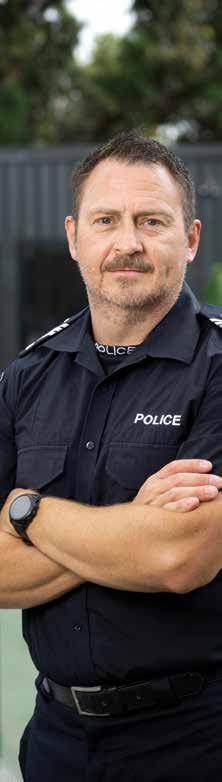
“… my license had been reinstated with no conditions, restrictions, or further testing. But it took seven months of fighting, and sheer and utter hell, to get that to happen.”
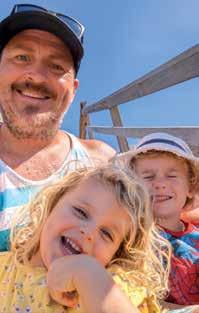
FEELING well out of options, Blenkiron got his local MP involved, and that proved an effective strategy
On a day shift in the watch house the next week, he got a text message from the MP It read: “Your licence is being reinstated. ”
A detective in the watch house at the time noticed Blenkiron with a sudden, beaming smile across his face. It prompted him to ask: “Are you all right?” Blenkiron responded: “I’ve never been better ”
“About four o'clock that day,” he recalls, “I got an e-mail from the Department of Transport saying they'd liaised with (ophthalmologist) Celia Chen
“And, as a result, my license had been reinstated with no conditions, restrictions, or further testing. But it took seven months of fighting, and sheer and utter hell, to get that to happen. ”
So, the ordeal of his stroke and its aftermath are now behind him Blenkiron has left his position in the watch house and returned to Port Adelaide, where he is fully operational Outside of work, he contributes to medical research. Several months ago, he responded to a request from the Adelaide University Stroke Research Program to take part in a three-year study
As a participant, he had to have an ILR (implantable loop recorder) inserted in his chest The purpose of a loop is to monitor heart rhythm and diagnose strokes and other medical episodes
Blenkiron understands the possibility of a second stroke, which makes him conscious of diet, exercise, and sufficient rest
“I’m trying to be more active,” he says. “But, from a medical perspective, they're not now expecting me to have a higher risk than anyone else.” PJ
BY BRETT WILLIAMS
Sergeant Peter Crouch had served as a police dog handler for 30 years and loved it but walked away in 2024. Now, he is about to step out of police life all together.
The now late dog handler John Dennett stepped into a Fort Largs classroom with his dog to talk to a new recruit course. At a desk in that room back in 1985 was fresh-faced cadet Peter Crouch. Sitting there transfixed for 40 minutes, he never shifted his gaze from police dog Argus.
But it was not just the German shepherd and his magnetism which kept Crouch spellbound It was also the passion and excitement with which Dennett spoke about his work The dog-andhandler partners could not have made a more powerful impression on 19-year-old Crouch
Indeed, the impression was so strong that, right there and then, Crouch made the first major decision of his police career Whatever it took, he was going to find his way into the Dog Operations Unit and be a handler. And Dennett, whom he remembers as an “absolute legend”, was his example.
After he graduated and eventually made it to Dog Ops, around six years later, Crouch wound
up with Dennett as his sergeant Now, on the verge of retirement after 30 years’ service as a handler, he is free of regrets and would relive his career “in a heartbeat”.
“I absolutely loved every second of it,” he says. “I was very lucky being in Dog Ops for so long. I look back on my career and just go: ‘What a great time it was ’
“It was so fulfilling You walked away from a job some days with your hair up in a mess, uniform ripped, thinking: ‘What the hell just happened?’
“And you reflect and go: ‘If that wasn't for my dog, we wouldn't have caught that crook,’ or ‘We wouldn't have found those drugs,’ or ‘We wouldn't have found that money ’ ”
All the triumphs Crouch had with his dogs were, and still are, among his most satisfying moments as a handler. But his time as a Dog Ops training and operations sergeant brought him equal satisfaction
“You'd see the dogs and the dog handlers and the teams that you trained getting these wins,” he recalls “And that would just give you a fantastic feeling of achievement, because you knew there was an ongoing impact you were having on the job. ”
Crouch has opened his world up to the Police Journal several times over the last 30-odd years. The first was in 1997 after he had taken on Labrador drug dog Zenna as his partner She was one of the first two drug dogs to join the Dog Ops stable
In various Police Journal interviews, Crouch told the stories of the work he undertook with not only Zenna but also his other dogs
Between Zenna and his last partner, black Lab Chester, a passive alert detection dog, Crouch partnered with five other dogs. After Zenna came German shepherds Max and Maverick, passive alert detection dog Delta, German shepherd Sultan and white Lab drug dog Shari
Crouch related encounters like the time he and Sultan caught five suspects who had tried to flee with goods they stole from a sports club
“Sultan’s efforts brought about the arrest of five offenders and the recovery of more than $8,000 worth of property,” Crouch explained in 2013.
“Without him, I would have been in all sorts of trouble (against five) that night. ”
Crouch also outlined the time he and Sultan searched for a missing three-year-old boy in freezing-cold weather in the southern suburbs He explained that it was like looking for “a needle in a haystack”
But Sultan led Crouch around to the back of an empty house, where he found the boy hypothermic and semi-conscious
“Sultan just went straight up to him, stopped, and started licking his face,” Crouch recalled. “He just knew that that was the response that was required ”
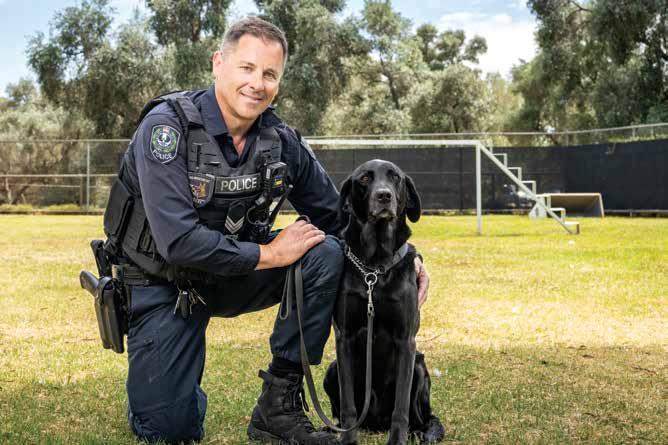
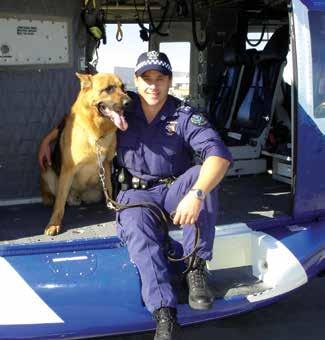
“And you reflect and go: ‘If that wasn't for my dog, we wouldn't have caught that crook,’ or ‘We wouldn't have found those drugs,’ or ‘We wouldn't have found that money.’ ”
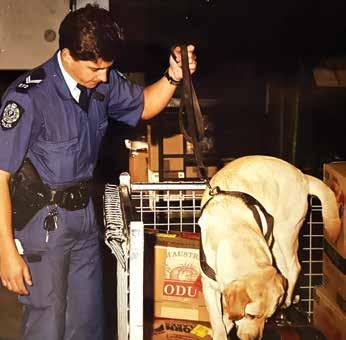
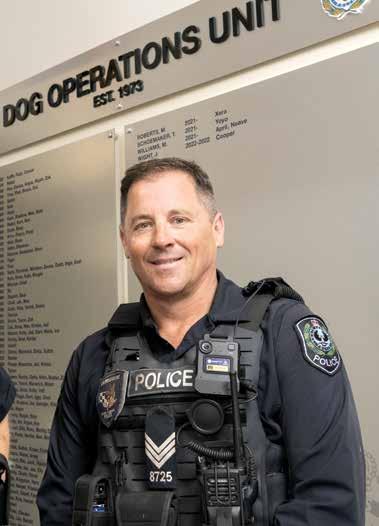
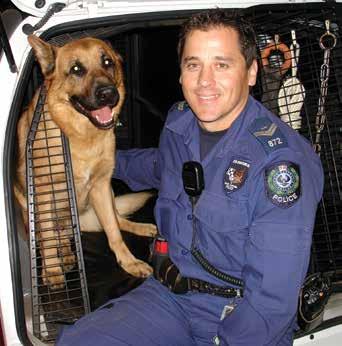
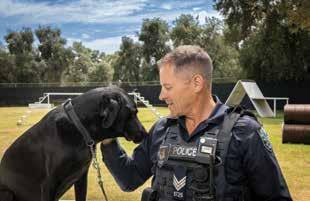
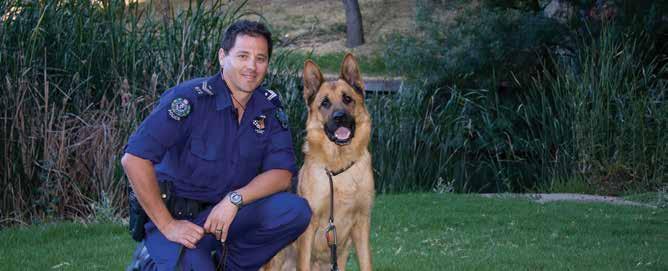

4. Crouch at the Dog Operations Unit at Thebarton police barracks.
5. With Sultan in 2005. 6. With Chester at barracks.
7. Crouch and Sultan on the banks of the River Torrens.
Earlier, in 1997, Crouch had spoken just as proudly about Zenna Along with her fellow drug dog, Vashti, she had located $1 12 million worth of drugs in the 1996-97 financial year
One close observer of the way Crouch went about his work was long-serving fellow dog handler Brevet Sergeant Bryan Whitehorn.
“He was passionate about what he did,” Whitehorn says. “He had a love of the work we do and, most important, a care for other cops we helped out in the field
“Crouchie had a real affinity with country cops, too He would jump at every opportunity to get out in the bush and work his dogs, side by side with country cops ”
No one ever struggled to see why Crouch loved life as a handler The pleasure he found in all the encounters and victories was obvious So too were the bonds, both professional and emotional, he enjoyed with each of his dogs.
But that love of the creatures set him up for certain misery whenever a dog aged, retired and, finally, came to his or her end The heartrending stories of loss he shared with the Police Journal reduced some readers to tears
He explained, for example, how in 2005 he found Zenna seriously unwell one day and took her to a vet She had remained a member of the Crouch family since her retirement three years earlier.
With a series of X-rays, the vet found that Zenna was suffering from a large growth in her abdomen. An operation was unlikely to help so Crouch had few options but to let her go to a peaceful death
He spent a final 20 minutes with her in a separate room and simply talked to her about all that they had done together And then came the end
“They put the needle in,” he said of the painful memory, “and the last thing I said was: ‘Goodbye, old friend. You’ve been wonderful’. Then she took three breaths, and that was it. She just died.
“I spent half an hour just lying with her on the ground I couldn’t tear myself away ”
Crouch had to endure the same emotional gut-punch when it came to the end for Sultan The loyal 10-year-old dog was retired and living with the Crouch family when he fell ill Again, it was an abdominal issue, and surgery was unlikely to save him
Crouch made the same agonizing decision he had made for Zenna: to let Sultan go peacefully. Nothing was to happen, however, until he and his son, Wil, shared some precious last moments with their beloved mate. Then came the vet, ready to bring about the end for Sultan, as Crouch held his head And, as Sultan drifted off, Crouch whispered in his ear: “Where’s the crooks, mate? Where’s the crooks? Good boy ” They were the words Sultan had always loved to hear
“It really hits you hard,” Crouch says, “I still reflect on it (the deaths) now and still become emotional because they were such a big part of my life.
“You spend more time with these dogs than you do with your family. You're at work with them; you're at home with them; they come on holidays with you ”
“He was passionate about what he did. He had a love of the work we do and, most important, a care for other cops we helped out in the field.”
After black Lab Chester retired in 2024, Crouch thought it best not to start up with a new dog given his retirement was close He transferred to the police academy in May 2024 and took on a role working with UK recruits
But he left the workplace in December to take leave until his retirement takes effect in March when he turns 60 So, his police life is over already but that fact has not quite “sunk in yet”
“I was waiting for that moment to drop when it was the last time I’d ever do something,” he says. “A couple of days before I retired, I got out of a police car for the last time. I walked away and went: ‘That's the last time I'm going to drive a police car ’
“And I actually went back and worked out that I'd driven over 5 million kilometres in police cars
“While I've eaten, slept and breathed the job for 40-odd years, I haven't taken the job or myself too seriously So, I don't think I'm going to have that major issue of adjusting to life as a non-police officer I’m extremely excited for what comes next. ”
Part of what does come next for Crouch is a move into business. With accreditation as a driving instructor, he has set up and is already running his own driver training school But he plans to spend the other parts of his retirement caravanning and taking overseas trips with wife Kelli Police Association president Wade Burns has hopes of a great retirement for Crouch but laments the loss of his expertise In his time as a STAR Group member, he saw how effectively Crouch operated in the field
“You couldn’t fault his skill and ability as a dog handler,” Burns says. “And to think that he’s delivered that to Dog Ops, and the community, for 30 years. It’s outstanding. ”
Crouch likewise expresses his high regard for the Police Association which, in his judgement, “does a cracking job”
“The association has gone to bat for me many times,” he says “And I'm going into retirement very healthy – in every way A lot of that is due to what Mark (Carroll) and Wade and everyone else has done for us with wages and other things ”
Crouch hopes that if he leaves behind an impression, it is simply that of “a decent bloke and a good cop”.
“I hope I’ve been (both those),” he says. “As a Dog Ops member, I think I’ve had some great wins over the years, and I’m very proud of that ” PJ
E-mail your letter to the editor to editor@pasa asn au
I couldn’t help but identify with the story regarding country prosecution workloads and staffing (Country prosecution on the brink , Police Journal, spring 2025)
I re-enlisted in SAPOL in August 1999, after a 12-year absence in the private sector – specifically as I had wanted to give prosecution a go. So, I worked at Holden Hill patrols for eight months, completed the CJS course run by Allan McDonald and started at Holden Hill CJS shortly after At a suburban CJS, there was always sufficient staff During my seven years there, I relieved as OC Port Augusta CJS, which was understaffed, as well as Ceduna They were eye-opening experiences
I was asked by management at Adelaide Prosecution Service to apply for either Barossa or Riverland (Berri) CJS. I chose Berri and was appointed there (September 2007). Staff? One sergeant, two senior constables and a non-sworn FTE .
Within two weeks of commencing at Berri, one SC took a promotion to
Ceduna CJS, the other took WC leave as a result of a pending enquiry regarding behaviour Down to staff of sergeant and FTE clerical So, we all know how that ends, yes?
Sergeant burnt out trying to keep the CJS role afloat, with constant demands from court, magistrate, and Riverland officers and OC . Start at 5am, finish 9-11pm, and work solidly on weekends without compensation. Meanwhile, pleading to Adelaide management about staffing levels
Eventually, I started booking some of my extra time to TOIL When Commissioner Gary Burns came up to do the quarterly performance review and noted that “one officer has over 200 hours TOIL banked”, the LSA OC identified me as that person, saying: “Sergeant Devlin hasn’t been able to get staff to assist ” Commissioner says: “That’s your job, superintendent, not his. ” I then took six weeks TOIL and two weeks AL and flew up to North Queensland to spend some quality time with my wife Of course, a local
Got something to say?
I support all those who, in prosecution sections, are weighed down by the workload. It’s time SAPOL reviewed every CJS for staffing and resolved the current crisis before one of the staff does self-harm.
SC took over management of Riverland CJS, and handled it well, but you only come back onto the same “shit show” as before.
Next thing you’re contemplating self-harm, you can’t sleep or relax, so I eventually called Police Welfare. The advice? “Go up to your office, lock it from the outside and go home Don’t return till the staffing has been settled ” Me: “I can’t do that!”
And, so, it goes on I support all those who, in prosecution sections, are weighed down by the workload It’s time SAPOL reviewed every CJS for staffing and resolved the current crisis before one of the staff does self-harm.
Will Devlin SAPOL/QPS Retired
Got a comment about a story you’ve read? Do you have strong views on a police issue?
Is there someone you want to acknowledge? Know of an upcoming social or sports event? Whatever the subject, put it in a letter to the editor
Regular mail Police Journal, PO Box 6032, Halifax St, Adelaide SA 5000
Email editor@pasa asn au Internal dispatch Police Journal 168
I’ve had a lot of life experiences since I was a member of Course 2/83 at Fort Largs. I thought it was time to show my appreciation for the privilege of serving South Australia and my first police tactical group, STAR Force, back in 1987 With that foundation I went on to serve in Queensland Police Special Emergency Response Team (SERT) and the AFP Tactical Response Team until 2021
I’d like to give something back I’ve accrued experiences in both scientific and practical knowledge to help currently serving officers in weapon-related critical incidents.
To better understand human performance under critical-incident stress, I completed a BSc (psychology) followed by a master of learning and development which put me on a research path using tactical operators conducting high-stress simulated events
For my master’s in philosophy, I conducted three studies using officers from Victoria Police Critical Incident Response Team, the Royal Solomon Islands Police Response Team and my own team, the AFP Tactical Response Team
My focus was on understanding police officers’ memories of simulated critical incidents in a training program. From my original thesis, experienced Bond University collaborators and I published a paper, A comparison of recall methods for high-stress critical incidents in a training program
Additionally, in 2024, research was funded under the National Intelligence Post-Doc Grant (NIPG) with academics from University New South Wales and me acting as the AFP liaison
Data was collected from AFP officers undergoing operational safety validations while participating in an active armed-offender scenario In this study, we used eye-tracking devices, tested memory recall and took physiological measures of arousal. A paper is currently under construction.
I hope this work will stir interest in the operational safety world and among patrol officers and criticalincident investigators.
In parallel with the academic studies, a practical use-of-force program was developed in the mid-1990s in consultation with former operator Senior Constable Bob Kane of the Victoria Police Special Operations Group
This program was named Stimulus Response Training and was developed to improve the realism of training but also to better a tactical officers’ abilities to see threat and respond appropriately Over time the program underwent considerable refinement and, since 1997, it has been the staple training of SERT operators and selection course candidates.
This use-of-force program was renamed Threat Assessment Dynamics (TAD) and, from 2022, was taught to all in-service AFP officers and recruits Additionally, full-time AFP operational safety instructors undergo the TAD facilitator program
I designed the Threat Assessment Dynamics Instructor Program for AFP instructors, and it has been operating for two years In late 2025 the TAD instructor program was made available to all interested police through the Bond University website
I hope this work will stir interest in the operational safety world and among patrol officers and critical-incident investigators.
Warm regards Mick Roscoe
Michael Roscoe@afp gov au

The
Police Federation of Australia’s National Police Bravery Awards are now open.
This award has been developed for police and nominations are sought from officers across the country. While police work is inherently dangerous… some actions stand out. Do you know someone who has performed an exceptional act in exceptional circumstances?
1. The nominee must be a sworn police officer from an Australian police jurisdiction.
2. Nominees must have undertaken an outstanding act of courage or bravery, by selflessly putting themselves in harms way to protect others, going well beyond the call of duty.
3. Where feasible, the incident should have occurred in the past twelve months, however exceptions could include if the matter is subjudice or if other unavoidable delays have occurred.
The online nomination form is available at awards.pfa.org.au and close on 30 June 2026.
The National Police Bravery Awards will be presented in Canberra on Wednesday 28 October 2026.
The commissioner of police and the chief executive of the Attorney General’s Department signed the Police Association Memorandum of Administrative Arrangement (MoAA) on December 23, 2024
As per schedule 2 of the arrangement, the parties agreed to the industrial implementation, at the earliest opportunity, of the response extendedhours roster within the life of the arrangement, which took effect from the first full pay period on or after January 1, 2025.
According to the schedule:
“Response Extended Hours Roster (REHR) to be implemented within 24-7 regional general duties, dog operations unit (general handlers) and other applicable workgroups ”
The ongoing failure to roll out the extended-hours roster has caused –and continues to cause – regional communities and other applicable workgroups to suffer. The association has continued to stress this point to government and SAPOL .
SAPOL makes claims of barriers to the implementation of the roster In a trial at Mount Barker and associated areas, the barrier is alleged to be staffing issues The association considers this claim to be invalid
Owing to the ongoing delay, the association formally called on the government to instruct SAPOL to implement the 23 per cent allowance and associated conditions for all eligible regional 24-7 general-duties members, in line with schedule 2 of the MoAA . This proposal does not require any additional full-time equivalent (FTE) staffing and can be implemented
independently of the REHR structural changes
It simply involves transitioning officers from shift penalties to the 23 per cent loading and applicable EA conditions, as already occurs for metropolitan 24-7 general-duties (response) members
Premier Peter Malinauskas announced this decision to implement the allowance at the Police Association annual conference (October 21, 2025).
The SAPOL extended-hours roster project board makes the ongoing argument that actual numbers on shift in regional areas prevent the implementation of the roster Examples the board offers are Port Pirie and Mount Barker
SAPOL concerns focus on custody management when offenders are refused bail Custody areas are only staffed when an offender is in custody, and that staffing comes from the existing front-line response team on duty.
It is ironic that SAPOL nominated Port Pirie as an example given that it is subject to stage two of the Grievance and Dispute Avoidance Procedure (clause 7 of SAPOL EA 2021) This is because of severe understaffing owing to absences and lack of incentives
SAPOL is putting the cart before the horse – and not for the first time – given that its argument is that it is unable to implement the extended-hours roster owing to actual staffing
Members will not apply to fill vacant positions in regional areas when they can remain in metropolitan areas and receive the benefits of a roster that supports their health and well-being
Steve Whetton Assistant Secretary Police Association

Where the SAPOL argument falls down is that regional managers have the ability to manage their staff as the extended-hours roster has inbuilt flexibility. Managers can also seek changes in part-time and flexible work agreements to achieve this outcome.
Regional members should not be subject to archaic rosters which, as SAPOL has conceded, do damage to members’ health, safety and welfare and, by extension, the community through lack of service delivery.
Voluntary return to shift (VRS) is an example in which members return to duty on their days off to assist SAPOL with staffing
The association wrote to SAPOL (October 27, 2025) in respect of the use of VRS at the Communications Centre over the past three months Its response (November 12, 2025) indicated that VRS was used for 32 shifts in July, 32 in August and 37 in September.
Also in the response, it indicated that: “VRS shifts continue to be utilized and offered to employees as a strategy to meet demand. The allocation of VRS shifts is managed by Emergency and Major Event Section to ensure compliance with relevant industrial provision and fatigue management principles There is no requirement for members to volunteer for VRS shifts and they are well received by those employees who do so ”
It appears VRS is an accepted process to fill vacancies in ComCen but not regional custody management so as to implement the REHR.
SAPOL must address the disparity between metropolitan and regional police stations Regional members should not be subject to archaic rosters which, as SAPOL has conceded, do damage to members’ health, safety and welfare and, by extension, the community through lack of service delivery
SAPOL’s primary concerns are around custody management VRS is therefore an option to fill any gaps in staffing and so enable the implementation of the REHR and meet community expectations.

Dr Rod Pearce

The largest organ of the human body is its skin, which is one of the most important defenders against infection And that defence is crucial when it comes to tattoos and body piercing No one should put himself or herself at risk
The risk exists because bacteria (staphylococcus aureus, streptococcus and pseudomonas species) live on the skin So, when applying a tattoo, those bacteria are likely to be pushed through the skin and possibly cause infection.
If they get under the skin and cause redness, heat, swelling, pus or fever they will delay the healing. It is uncommon but a local infection can escalate to cellulitis, an abscess and, possibly, afflict the whole body with systemic infection which can be life-threatening
A body piercing can also cause problems because it might traverse cartilage or mucosal surfaces Owing to a higher bacterial load and bigger blood supply in places like the lip, tongue and nose, there is an additional risk because of the different bacteria, as well as the potential for swallowing or inhaling displaced jewellery.
There is also the potential for allergies or local reactions Tattoo pigments can trigger an allergic response ranging from mild irritation to severe dermatitis or permanent scarring Red dyes which, historically, contain mercury sulphide or azo pigments, remain the most common cause of allergy
Piercing metals such as nickel, chromium or cobalt can provide contact allergies leading to chronic itchiness, rashes or swelling. They might also cause irritation from sweat-related flareups around tattoos, or pierced skin when undertaking activity in the heat or wearing body armour or protective clothing
In a modern professional studio, one should expect single-use needles, disposable cartridges, sterilized tools and individually packaged inks.
In cases of physical confrontation, rapid movement or environmental hazards, piercings can also be torn This can be associated with bleeding, scarring or surgical repair
Tattoos are less vulnerable to trauma, but new tattoos create fragile areas on the skin which are prone to damage and might be painful And, again, the result might be a life-threatening infection
In the case of an MRI, tattoo pigment – which has metal oxides – might actually heat up and destroy an MRI image.
And, before an x-ray or operation, a patient might be asked to remove jewellery because it could complicate investigations, treatment or management
Blood-borne infection was once a major problem, particularly insofar as hepatitis B and C and HIV These viruses are now rare and less likely to be transmitted through tattooing or piercing Still, a tattoo or piercing should be done in a regulated environment.
Concern might exist as to sterilized equipment, the possibility of contaminated inks, or the offer of a cheap tattoo or piercing at home Be careful
In a modern professional studio, one should expect single-use needles, disposable cartridges, sterilized tools and individually packaged inks
Short-term effects of tattooing are redness, swelling, tenderness, minor bleeding, formation of scabs and itchiness during healing That is the time of greatest risk of contamination and lifelong complications. Always take care soon after a tattoo or a piercing. Long-term effects of the tattoo can be seen once healed
Tattooing is generally safe but there is the possibility of pigment migration, fading or keloid formation, which results in a thick callous where the tattoo or piercing occurred Chronic allergies, while uncommon, can be a reaction to the pigment
A tattoo can, but rarely does, interfere with sweat glands and other lymph nodes And, for someone prone to skin cancers, a tattoo can cover moles and dark pigments, and that might delay the diagnosis of a serious cancer.
Tattoos and piercings are not always easily reversible. It is important to go about the removal process carefully Laser treatment, which might require six to 12 sessions, works well on certain colours However, there is no guarantee of success and red, green and yellow pigment might not remove easily
The removal of piercings is usually more straightforward but scar tissue, or permanent remnants from the piercing, might cause callous formation or scarring.
One should keep tattoos moist and protected from the sun and schedule regular skin checks if the tattoos are covering large areas of the body


Model and price Mitsubishi Triton GLX+ 4x4 double-cab pick-up utility, $53,290 (manufacturer’s list price, check for driveaway specials)
Drivetrain 2 .4-litre Bi-turbo four-cylinder diesel, 150kW @3,500rpm and 470Nm @ 1,500 – 2,750 rpm, six-speed auto with manual mode.
Off Road
Part-time 4x4 system with two-speed transfer case offering RWD, 4WD High range and 4WD Low range, rear diff lock .
Weights Kerb mass 2,105kg, GVM 3,200kg, GCM 6250kg, max payload 1,095kg, braked towing 3,500kg
Fuel Diesel, 75-litre tank, 7 7-litres per 100km (combined test), AdBlue 17-litre tank
Safety Five-star ANCAP, eight airbags, comprehensive suite of crash-avoidance and driver-assistance technologies, driver attention monitor
Warranty servicing 10-year/200,000km warranty (providing all scheduled services carried out on time at Mitsubishi dealer), 10-year capped-price servicing
The all-new Mitsubishi Triton has proved a credible player in the very competitive 4x4 dual-cab pick-up space First released in 2024, it’s not the most powerful but neither is it the most expensive
Major changes over the previous model bring an increase in wheelbase (up 130mm), making it slightly longer overall. It’s also 50mm wider, resulting in more interior space and a bigger ute tub
Triton also gets more power with a new 2 4-litre Bi-turbo four-cylinder diesel engine mated to an updated six-speed automatic transmission with manual mode A trade-off with the new engine is the introduction of AdBlue
With local engineering input, all Tritons bound for Australia and New Zealand feature a specific suspension tune designed for our conditions. In addition, Triton now sports electric
power steering which improves steering feel
GLX+ sits one rung above entry GLX in the 4x4 dual-cab line-up and, while it’s got vinyl flooring, it’s no povo pack Standard features include a nine-inch touchscreen with satellite navigation, USB A and C ports front and rear, auto climate control, Android Auto, wireless Apple CarPlay and DAB audio. It also gets side steps, 17-inch alloys, seveninch LCD driver display and tyrepressure monitor
Inside, GLX+ offers a pleasant, usable and hard-wearing interior There’s plenty of storage and seats are trimmed in sturdy black cloth with contrasting silver stitching Overall seat comfort is good even in the back
GLX+ driver’s seat gets a manual height-adjuster and electric lumbar support Reach- and rake-adjustable steering also feature, as do front and rear parking sensors and a split camera screen with bird’s-eye and rear tow-ball views But don’t expect push-button-start: you will have to use the key fob to unlock and start this model
Like most four-cylinder diesels, the new engine is a little noisy at idle but smoother than some . Underway, it offers smooth and effortless acceleration, even on long hills, and there’s no engine noise when cruising While many have introduced transmissions with more ratios, this upgraded six-speed auto box goes about its business with a minimum of fuss
Unlike premium models, GLX+ misses out on Mitsubishi’s Super Select II 4x4 system, hence there’s no ability to run in 4WD on the bitumen Its part-time system offers RWD (for on road), 4High and 4Low (for off road) and there’s a rear diff-lock for more difficult terrain.
As a small-to-medium four-door hatch with sporty coupé styling, engaging drive characteristics and good economy, the new Honda Civic comes with plenty of appeal
The latest Civic revamp has brought an end to the entry petrol-only model in favour of two hybrid variants: e:HEV L and e:HEV LX at $49,900 and $55,900 respectively. And forget about trying to bargain with the dealer: these are fixed driveaway prices
Enhanced exterior styling includes a revised grille and bumper and new 18inch alloys shod with low-profile tyres
Entry e:HEV L scores LED lights (front and back) cloth and leather seats, dual-zone climate control with rear vents, heated front seats, heated steering wheel, 12-speaker Bose audio system, wireless Apple CarPlay and wired Android Auto, keyless entry and push-button start LX adds a wireless phone charger, leather seats, power-adjustable front seats, powered sunroof and ambient lighting.
Civic boasts comfy seats with plenty of space for four adults. The dash layout is uncluttered with minimal switchgear and unique joystick-operated air vents
Compared to some, its nine-inch infotainment screen might be considered small, but it’s clear and easy to use
When compared to some hybrid offerings, Civic is one of the more efficient and engaging to drive Its 2 0-litre petrol engine is coupled to a CVT transmission and two electric motors, one acting as a generator and the other powering the wheels
Depending on battery status and power demand, much of the time Civic is powered purely by its electric motor, its petrol engine seamlessly springing to life as required. Driven sedately, its extremely quiet, just like any EV.
Civic boasts additional tech with Honda Connect and embedded Google Maps, Google Play and voice-activated Google Assistant Improved safety includes a more comprehensive suite of crash-avoidance and driver-assistance technologies and improved camera software.
Civic hybrid features a low sportsoriented driving position with good visibility. Its small sports steering wheel has paddle shifters – great to use in Sports mode.
Punch the throttle and its 315Nm of torque provides spirited acceleration with effortless power for highway overtaking and long hills While it provides a firm ride, it’s never uncomfortable and remains composed in tight corners
Drivers can select from Econ, Normal and Sports driving modes Sports mode sharpens throttle response, firms the steering feel, and provides a unique throaty engine note . There’s also Individual drive mode where drivers can select personal parameters.

Drivetrain 2 .0-litre petrol-electric HEV driving front wheels through electric CVT Transmission, 135kW/315Nm.
Fuel 40-litre tank, 91-RON unleaded, 4 2 litres/100km (combined test)
Safety Five-star ANCAP rating, 11 airbags, multi-angle reverse camera, three x child-restraint anchorage points plus two x ISOFIX, comprehensive suite of driver-assistance and crash-avoidance technologies
Cargo Between 409 and 1,187litres, 60/40 split-fold rear seats, tyre repair kit
Warranty/service Five-year unlimited kilometre warranty, five-year premium roadside assistance, $199 per service (first five).

Australian designed, engineered and tested, new Ranger Super Duty blitzes its opposition. On paper its specs outgun every one-tonne ute on the market and leaves even bigger American pick-ups in its wake.
Super Duty’s class-leading, load-carrying and towing capabilities will appeal to industries like mining, forestry, primary production, firefighting and tradies. But those towing big caravans, boats, horse floats and hard-core four-wheel drivers will also appreciate its capabilities.
Super Duty is currently available in one wellequipped spec-grade in Single, Crew and Double Cab-Chassis configurations. There’s a long list of factory approved tray and pack options including numerous Farm, Work and Adventure packs. In mid-2026, Ford will release Ranger Super Duty Pick-Up (with a ute tub) and an even better equipped XLT variant in either Cab-Chassis or Pick-Up.
While its chassis shares the same dimensions as a standard Ranger, Super Duty’s chassis is much thicker and has been heavily reinforced Further strength and load carrying capacity comes with the addition of bigger axles, eight-bolt wheel hubs fitted with heavy-duty steel wheels, bigger brakes, a larger rear differential, stronger drive shafts and a completely new suspension setup.
Super Duty is powered by Ford’s 3 0-litre V6 turbo diesel, calibrated to meet strict EU6 2 emissions standards Improved cooling better manages temperatures under heavy load and during sustained off-roading Owners can delay the automatic diesel particulate regeneration allowing them to manually initiate the cleaning cycle at a more convenient time
The slick V6 diesel outputs 154kW @ 3,250rpm and 600Nm of torque @ 1,750rpm . It’s mated to a recalibrated 10-speed automatic transmission with manual mode and Full-time 4WD.
Those who have driven Super Duty, including motoring journalists, agree it provides better-than-expected ride and handling characteristics Its heavy-duty suspension and wider track provide a surprisingly supple ride on any surface and excellent stability on rough corrugated surfaces While not the fastest out of the blocks its high-torque engine and smooth 10 speed auto provide effortless power for long hills, heavy towing and serious off-road work
Super Duty has excellent off-road credentials. Its heavy-duty suspension and 33-inch General Grabber A/T LT tyres provide up to 299mm ground clearance Every major component underneath, including its large 130-litre fuel tank, is shielded by thick steel bash plates A sealed snorkel with water separator provides up to 850mm wading depth and hefty tow hooks feature front and rear
A toughened transfer case with larger gears provides high and low range From an off-road menu screen, on the 12-inch central display, drivers can select front and rear diff locks, various off-road camera views, hill-descent control, trail control (a low-speed cruisecontrol with 0. 5km/h increments) and Trail Turn Control where the inside rear wheel is braked providing a sharper cornering response Drivers can also select between various drive modes including Slippery, Mud/ Ruts, Sand and Rock Crawl
All Super Duty variants can tow more and have a higher payload than any standard one tone ute and a bigger payload than many American pick-ups. Braked towing capacity is 4,500kg, GVM (gross vehicle mass) is 4,500kg and GCM (gross combined mass) is 8,000kg All models feature a heavy-duty tow bar, integrated brake controller and Tow Mode
Onboard scales assist drivers to estimate their payload, Smart-Hitch assists in estimating ball weight and Pro-Trailer Backup Assist enable simple trailer reversing at the touch of a button
With minimum kerb weights of between 2,518 and 2,675kgs (model dependent), Super Duty offers payloads of up to 1,982kg with front gross axle rating of 1,900kg and rear axle rating of 2,800kg.








Police Credit Union achieved a strong and balanced performance across all strategic measures in 2025 These results are testament to the strength and resilience of our organization, which remains in excellent financial and operational health
In recognition of our superior products and service, we were named Australia’s Best Credit Union for the third year in a row in the 2025 Mozo Experts Choice Awards, along with many other notable awards across the period.
Community initiatives and partnerships
Since 2006, we have contributed over $7 93 million to community initiatives
In just this past year alone, we invested $634,200 in sustainable strategic community investments, including the renewal of several successful sponsorships and the execution of important community initiatives.
Last year we once again supported our volunteer firefighters and emergency services volunteers through our sponsorships of the CFS Foundation and the SA SES Volunteers’ Association (SASESVA) Our relationship managers and branch managers across the state delivered Nespresso coffee machines to several CFS brigades and SASES units to say “thank you” for their amazing service
We also continued our sponsorship of Adelaide Footy League, and last year sponsored the inaugural 2025 Goal of the Year Award, where the winning club, the Old Ignatians Football Club, received $1,000 in cash plus $500 worth of Breakthrough Mental Health First Aid Training
Throughout the year, we celebrated and thanked our healthcare professionals through many activations at different sites and an ongoing partnership with the Women’s and Children’s Health Network (WCHN)
Last year, for the first time, we were excited to take part in the SALA Festival Our branches were transformed into mini exhibitions, showcasing some incredible artwork created by talented young artists from our recent Kids’ Art Competition. The winning artworks feature in our 2026 Calendar. Visit your local Police Credit Union branch to grab a copy.
Having started for police officers more than 55 years ago, our commitment to our core bond is unwavering We are very proud to have our longstanding partnerships with the Police Association, SA Police Legacy and Police Historical Society.
We also show our appreciation for the tireless work of police officers through many initiatives throughout the year. The Healthy, Wealthy & Wise programme, a joint venture between Police Credit Union, the Police Association and Police Health, is an important way that we engage and give back to police officers in the state Notably, we organized free coffee and chocolates for several police stations to celebrate the launch of the new Family Support Resources Page for police officers and their loved ones on the Police Association website. Last year we said “thank you” and checked in with police officers through sweet treat deliveries to stations on St Valentine’s Day and R U OK? Day
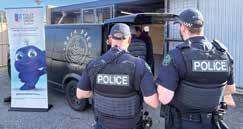

In just this past year alone, we invested $634,200 in sustainable strategic community investments …
Supporting the environment
Police Credit Union is proud to do its part to protect the environment. We recently expanded our renewable energy infrastructure at our head office through the installation of solar and battery systems We also partnered with local SA family-run business Jeffries Composting Services to recycle our organic waste into compost, further supporting our sustainability goals
Our award-winning Solar Eco Loan and carbon-offset car loan empowers members to actively reduce their own carbon footprint, reinforcing our shared commitment to environmental responsibility.

Leading Adelaide law firm, Tindall Gask Bentley is the preferred legal services provider of the Police Association, offering 30 minutes of free initial advice and a 10% fee discount*
* Conditions apply
CRIMINAL & DISCIPLINARY
• All criminal matters
• Intervention orders
• Commissioner’s Inquiries

To arrange a preliminary in-person or phone appointment contact PASA on (08) 8212 3055

• Intervention orders
• Internal investigations (misconduct/ discipline)
• Internal investigations (misconduct/ discipline)
• Coronial Inquiries (deaths in custody)
• Coronial Inquiries (deaths in custody)
• Work injury compensation
• Work injury compensation
• Motor vehicle accident injury compensation
• Motor vehicle accident injury compensation
FAMILY & DIVORCE
FAMILY & DIVORCE
• Significant Incident Investigations
• Significant Incident Investigations
• ICAC (corruption) investigations
• ICAC (corruption) investigations
• Reviews of workplace decisions (suspension, admin orders, working restrictions)
• Reviews of workplace decisions (suspension, admin orders, working restrictions)


• Public liability
• Public liability
• Income Protection and Superannuation (TPD) claims
• Income Protection and Superannuation (TPD) claims
Matrimonial, De Facto and Same-Sex Relationships
Matrimonial, De Facto and Same-Sex Relationships
• Property settlements
• Child Support matters


• Property settlements
• Children’s issues
• Children’s issues
WILLS & ESTATES
• Wills & Testamentary Trusts
• Wills & Testamentary Trusts
• Enduring Powers of Attorney
• Child Support matters
• Pre-nuptial style agreements
• Pre-nuptial style agreements


• Advice to executors of deceased estates
• Advice to executors of deceased estates
• Advance Care Directives
• Enduring Powers of Attorney
• Advance Care Directives
BUSINESS & PROPERTY
BUSINESS & PROPERTY
• General business advice
• General business advice
• Real estate & property advice
• Obtaining Grants of Probate


• Estate disputes
• Obtaining Grants of Probate
• Estate disputes
• Business transactions
• Business transactions
• Commercial disputes
• Conveyancing
• Real estate & property advice
• Conveyancing
• Commercial disputes


Adelaide | Reynella | Salisbury | Gawler | Mt Barker
Semaphore | Murray Bridge | Port Lincoln | Mannum | Whyalla Perth (WA) | Darwin (NT) | Brisbane (QLD) | Canberra (ACT)
Adelaide | Reynella | Salisbury | Gawler | Mt Barker Semaphore | Murray Bridge | Port Lincoln | Mannum | Whyalla Perth (WA) | Darwin (NT) | Brisbane (QLD) | Canberra (ACT)
tgb.com.au | (08) 8212 1077
tgb.com.au | (08) 8212 1077

Hanna Rogers Associate
Tindall Gask Bentley Lawyers

Hannah Clarke and her three children died at the hands of their estranged husband and father, Rowan Baxter, in Queensland in February 2020 He had doused all four with petrol and set them alight in their car Hannah was 31 Aaliyah, Laianah and Trey were ages six, four and three
It became a murder-suicide after Baxter stabbed himself to death with a knife.
Following a coronial inquest into the four deaths, Deputy State Coroner Jane Bentley described the behaviour Baxter displayed throughout his marriage to Hannah
She was isolated from her friends and family, her clothing choices controlled, and her movements allegedly monitored The coroner found that, owing to Baxter’s pattern of domination, Hannah was almost entirely robbed of her autonomy during the marriage.
The perception of many in the community, however, was that Hannah and Baxter had a happy, picture-perfect relationship
The case highlighted the urgent need to recognize non-physical abuse before it escalates Ultimately, it led to the introduction of “Hannah’s Law” in Queensland, which criminalized coercive control in that state
The criminalization of coercive control was repeatedly reflected upon in a report of more than 600 pages, which resulted from the South Australian Royal Commission into Domestic, Family and Sexual Violence . The report contained 136 recommendations
The criminalization of coercive control will pose new challenges at an operational level. It will require police to look far beyond physical harm to recognize behaviours of concern that can escalate into tragedy. Such behaviours are not always prima facie unlawful. They can be subtle, underhanded and well concealed.
Common themes to emerge were that of ensuring greater support for victim-survivors, creating a cohesive and effective system – through, for example, establishing advisory committees and information sharing services – and promoting prevention and early intervention through targeted campaigning
Many of the recommendations will, if implemented, bring about significant changes to the way domestic violence offences are dealt with at an operational level.
The South Australian parliament has recently introduced an offence of coercive control It is a major indictable offence which carries a maximum penalty of seven years’ imprisonment
The offence has not yet taken effect It will likely be delayed until the government consults with key stakeholders – including familyviolence support services, the Courts Administration Authority, SAPOL and the Director of Public Prosecutions. When the offence commences, prosecutors who charge an alleged perpetrator with coercive control will need to prove beyond reasonable doubt that:
• The person engaged in a course of conduct
• The conduct either in fact has, or a reasonable person would consider is likely to have, a controlling impact on the other person
• The person was, or is, in a relationship with the other person.
• A reasonable person would consider the conduct likely to cause physical or psychological harm (temporary or permanent)
The legislation does not define “course of conduct" However, parliamentary debates on the amendments suggest that conduct will need to occur on multiple occasions with continuity, rather than isolated incidents
Police officers will, as they investigate allegations of coercive control, need to look beyond physical injuries and consider patterns of behaviour that indicate control and restriction. Key indicators will include:
• Evidence of repeated behaviours that limit the victim’s freedom of movement or action
• Signs that the victim is being isolated from social, political, cultural, or economic activities
• Restrictions placed on the victim’s ability to make choices about their own body or access essential services
• Any indications that the victim’s access to justice or support systems is being deliberately obstructed.
• Consistent reports or disclosures from the victim or witnesses about controlling or manipulative conduct. The criminalization of coercive control will pose new challenges at an operational level It will require police to look far beyond physical harm to recognize behaviours of concern that can escalate into tragedy Such behaviours are not always prima facie unlawful They can be subtle, underhanded and well concealed
The introduction of the offence is an important acknowledgement that issues of domestic violence are varied, nuanced and complex . It also sends an important message to victims: we see you; we believe you and we will act
Stephen King Hachette Australia
The Buckeye City Police Department receives a disturbing letter from a person threatening to “kill 13 innocents and one guilty” in “an act of atonement for the needless death of an innocent man”.
Detective Izzy Jaynes has no idea what to think. Are 14 citizens about to be slaughtered in an unhinged act of retribution?
As the investigation unfolds, Jaynes realizes that the letter writer is deadly serious, and she turns to her friend Holly Gibney for help
Meanwhile, controversial and outspoken women’s rights activist Kate McKay is embarking on a multi-state lecture tour, drawing packed venues of both fans and detractors Someone who vehemently opposes Kate’s message of female empowerment is targeting her and disrupting her events
At first, no one is hurt, but the stalker is growing bolder, and Gibney is hired to be Kate’s bodyguard — a challenging task with a headstrong employer and a determined adversary driven by wrath and his belief in his own righteousness.
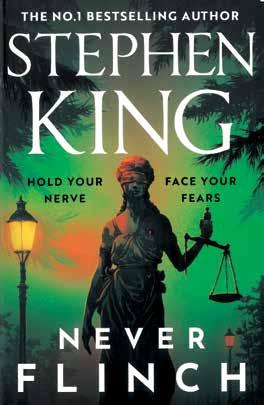
For your chance to win a book, send your name, phone number, work location and despatch number, along with your choice of book to giveaways@pj.asn.au
Tony Park Pan Macmillan Australia
From Australia's master of adventure, a heart-stopping chase across South Africa to find Napoleon's priceless lost sword
Three bodies are found scattered across South Africa Detective Sannie van Rensburg and former soldier Adam Kruger are each on the trail of a murder mystery – from the shores of the Indian Ocean to a farm invasion in KwaZulu-Natal.
More than a century earlier, in the aftermath of the blood-soaked battles of the Anglo-Zulu War, police officer Peter Gregory is investigating the third body And he's on a secret mission: to find the lost sword of the great Emperor Napoleon Bonaparte But he's not the only one who wants it
These three investigations are on a dangerous collision course – because people will kill for a symbol of power
Candida Baker Fairplay Publishing

Jake Lynch & Annabel McGoldrick
Next Chapter
When Oxford journalist-turned-therapist
Janna Rose is called to identify the body of her old flame, Daniel, she has a feeling that something doesn't add up.
Daniel's death came right after he led an eco-protest against a controversial development. As police drag their feet, Rose investigates the killing herself Following a trail of cryptic clues from their last conversation, she uncovers a conspiracy, which reaches all the way into her consulting room
Digging deeper, Rose realizes that she and her dear ones are in peril With lives at stake, she must risk everything to outwit her ruthless adversary and expose the truth
Mind Over Murder is the first instalment in the Janna Rose Mysteries series by Jake Lynch and Annabel McGoldrick, blending sharp wit, layered characters, and page-turning suspense.
In 1874, the acclaimed photographer Eadweard Muybridge — famed for capturing the first motion image of a galloping horse — shot and killed his wife’s lover, Major Harry Larkyns In what became known as the trial of the century, Muybridge was acquitted on the grounds of justifiable homicide His much younger wife, Flora, died less than a year later, leaving behind a son, Florado — whose paternity was in question
Candida Baker weaves fact and fiction into a moving, multilayered novel that explores the emotional legacy of this infamous Victorian scandal.
Narrated by Rosa Maria de Martinez — Florado’s imagined daughter — the story unfolds as Rosa embarks on a lifelong search to piece together her hidden family history Her journey takes her from Mexico to the United States, and finally to Australia’s Snowy Mountains Told as a letter to a younger friend, Light and Shadow is a meditation on love, loss, betrayal and resilience

Dr Stephen Fenton Greenleaf Book Group
Every one to two minutes in the US and Europe alone, someone dies of a heart attack of which they had no prior knowledge or symptoms. With a heart attack occurring every eight minutes in Australia, preventive cardiologist Dr Stephen Fenton knows the inadequacies of current medical practice and presents an accessible, practical and medically grounded framework to combat this widespread health issue
The 5CH Lifestyle is a simple and effective dietary and holistic lifestyle approach for a healthier and happier life, reducing LDL cholesterol by 30-50 per cent without medication.

December 26
Melissa Browne Allen & Unwin
What if money felt less overwhelming and more like freedom? What if being wealthy was simply about having choices — to live where you want, work how you want, and support what matters most?
From former accountant and financial advisor Melissa Browne comes an unapologetic guide for women to build wealth on their own terms
No jargon No shame No cookie-cutter plans Just smart strategies, real stories, and a powerful mindset shift that empowers women to start creating a future they can feel proud of, rebuilding financial confidence through personalized, realistic financial planning

Doug (Jack Black) and Griff (Paul Rudd) have been best friends since they were kids, and have always dreamed of remaking their all-time favourite movie: the cinematic “classic” Anaconda
When a midlife crisis pushes them finally to go for it, they head deep into the Amazon to start filming. But things get real when an actual giant anaconda appears, turning their comically chaotic movie set into a deadly situation
The movie they’re dying to make might just get them killed


December 18
Jake and Neytiri’s family grapples with grief after Neteyam’s death, encountering a new, aggressive Na’vi tribe, the Ash People, who are led by the fiery Varang, as the conflict on Pandora escalates and a new moral focus emerges
Silent Night, Deadly Night
December 11
A chilling holiday nightmare returns as Silent Night, Deadly Night unleashes a new wave of terror just in time for Christmas
When a quiet mountain town becomes the hunting ground of a masked killer with a twisted sense of festive justice, a young woman must confront the buried secrets of her own past to survive the season. Prepare for a wickedly atmospheric blend of slasher suspense, dark humour, and snow-covered mayhem – a holiday horror classic reimagined for a new generation
For your chance to win an in-season movie pass (courtesy of Wallis Cinemas), send your name, phone number, work location and despatch number, along with your choice of movie to giveaways@pj.asn.au

January 15
The iconic saga evolves in 28 Years Later: The Bone Temple, plunging audiences into a ravaged world where humanity’s final embers flicker in the shadows of a terrifying new threat
As a hardened survivor leads a desperate expedition into the ruins of an abandoned research compound known only as The Bone Temple, they uncover a mutated strain of the Rage virus unlike anything seen before Taut, intense, and hauntingly epic, this next chapter delivers heart-pounding action and a gripping new mythology for one of the most influential horror franchises ever made.


315 minutes, $34 95
Cozy crime-drama series The Madame Blanc Mysteries returns for a fourth season Join Sally Lindsay and the cast as they return to the picturesque village of Sainte Victoire, where fresh romances bloom and new crimes are to be solved
Sally Lindsay returns to the village as antiques dealer and crime solver Jean White Having declared their feelings for one another at the end of series three, Jean and her sidekick Dom are in a blossoming, secret romance.
When a puppeteer is found murdered at the Christmas market, Jean is brought in to help officer Caron with his investigation. With more crimes to solve and a visit from an old friend, will Jean and Dom be able to sustain their relationship?
Series
374 minutes, $34 95
Harriet “Harry” Wild (Jane Seymour) is a retired literature professor with a knack for solving mysteries
From an international assassination attempt to a literary-inspired murder, Harry and Fergus (Rohan Nedd) find themselves improving on the police clear-up rate as they tackle their most elusive and dangerous cases yet

For your chance to win a DVD, send your name, phone number, work location and despatch number, along with your choice of DVD to giveaways@pj.asn.au





SkyCity Southwest Suite November 1, 2025
1. Zach Portlock and Chelsea Watson.
2. Richelle Kemp and Georgia Koop.
3. Jimmy Crouch and Claudia Dichiera.
4. Scott Mcrostie, Sergio Perez Abarzua and Scott Bates.
5. Charlie Price and Alfie Nayler.
6. Samantha and Scott Mcrostie.
SkyCity Southwest Suite December 12, 2025
1. Charlotte Higgins, Grace Hurley and Brooke Kennett.
2. Georgia Painter and Corey White.
3. Gemma Dixon and Gerald Jones.
4. Kaleb Harper-Hasich and Dayna Ballestrin.
5. Emma-Kate Peberdy and Simon Peberdy.
6. Ismaili Rohula, Byron Golavanov and Joel Anastasi.
7. Nikita Gilbert, Laura Russell and Sophie Cooper.
8. Liam King-Burwell and Kara Buchanan.









1.
2.
3.
4. Amelia Scarazza and Balian Frederick.
5. Jack Shephard, Mackenzie Nield and Peter McFarlane.
6. Tanya Lowe and Kristie Glover.
7. Erica Williamson and Leesa Brown.



For the full version of The Last Shift, go to PASAweb at www.pasa.asn.au
Graeme Alexander
Heather Coombes
Mick Fidock
Paul Simmonds
Paul Simpson-Smith

Mick Fidock
Nuriootpa
25 years’ service Last Day: 18 11 25
Comments…
“I have loved the last 25 years, having been stationed at Port Augusta, Jamestown, Riverton, Nuriootpa, Gawler, Hamley Bridge and Kapunda.
“I have chosen to spend my entire career at country postings A decision that has served me well
“I am proud to have spent 10 years as officer-in-charge of the Hamley Bridge police station, making me the longest-serving member at that station since it opened in 1878
“However, it is my time to leave now and follow other passions
“To everyone I have worked with: thank you. The camaraderie in policing is what gets us all through. ”

Detective Brevet Sergeant
Paul Simmonds
Mount Barker CIB
44 years’ service Last Day: 16 01 26
Comments…
“Thank you for the support and work the Police Association has provided over my 43 years’ service.
“I joined the SA Police in April 1982 and graduated from the police academy as a member of the final two-year cadet course, Course 80
“I spent most of my career as a detective working in metropolitan CIB offices and various specialized areas in the Crime Service
“I was privileged to work with some amazing and very dedicated police officers in what is a very difficult profession
“I wish all members and staff the very best for the future. ”
The group life insurance cover provided by the Police Association covers members 24 hours a day, seven days a week, regardless of the cause of death while members remain in Australia.
The insurer may specify certain geographical exclusions and restrictions on the coverage due to increased risk
If members travel to areas of the world considered to be at increased risk, an increased insurance premium may apply or coverage may cease entirely
Members who intend to go overseas for six months or longer, or who are travelling to or via a war zone are advised to contact the association beforehand to confirm whether or not coverage will be affected
Graeme Alexander
Call Centre
38 years’ service Last Day: 27 01 26
Comments…
“After around 38 years with the South Australia Police and the Police Association, I am retiring due to permanent disability
“I thank both President Wade Burns and the association for the work on behalf of the members over that journey and, in particular, specific support and assistance in the final years of my career ”
Band of the South Australia Police
24 years’ service Last Day: 31 .12 . 25
Comments…
“Although many of the people who I have approached in the past to help provide better conditions for the band are long gone, it is the work that the Police Association will continue to undertake for all members which is vitally important for morale and member retention.
“I have sought support from the association on several occasions and felt well listened to and achieved positive outcomes
“I will watch with interest how future negotiations with government unfold and wish the association staff health and well-being into the future. ”
EMR
42 years’ service Last Day: 09 01 26
Comments…
“I have worked over a third of my years in regional SA, nine years in prosecution and many years in training at all levels.
“I have served South Australia for all but five months of my adult life I have met and worked with amazing people across the organization My family has benefited hugely from my work in a secure, service-oriented workplace
“I thank my course mates from Course 2/84 for their service, company and support I thank every person who has supported, encouraged and worked alongside me.
I commend those who remain –you do an amazing job, in the most difficult of circumstances and conditions
“My most memorable times occurred during the two periods of service in Far North LSA in its various guises over the years.
“The only thing I would change if I had my time over again is to increase the time spent in the regions – outside metro – purely and simply for the lifestyle, people and opportunities ”
Owing to a Supreme Court decision, the Police Association no longer uses the GLI beneficiary forms Existing forms held at the association have been destroyed
Now, in the case of the death of a member, the GLI benefit (currently $300,000) will be paid to his or her estate
Accordingly, the association’s strong advice is that you ensure that your estate is well-administered This is best achieved by having a valid will.
Tindall Gask Bentley Lawyers provides a free legal advice service to Police Association members and their families, and retired members To make an appointment to receive free preliminary legal advice covering all areas of law, particularly families and wills, members should contact the Police Association (08 8212 3055).
From page 41
Achieving results across key metrics
We’re proud to share that Police Credit Union achieved another excellent year of performance. Our unwavering support to members achieved a 92 . 5% member satisfaction result and a strong member trust score of 94% Police Credit Union recorded a group profit after tax of $7 58 million for the financial period which contributed to a 7 8% increase in members’ total equity to $126 2 million
As a mutual customer-owned organization, we put our members first by reinvesting 100% of profits back into the business to continue to provide superior products and services.
As we look ahead to 2026 and beyond, we remain committed to delivering award-winning loans and exclusive benefits to police officers through our Platinum membership.
As a police officer, you are entitled to exclusive benefits as a Platinum member, including select discounts on loans and $0 loan package fees – a further saving of up to $420* Contact your Platinum police relationship manager, Glenn Lewis, today on 0421 243 741 or email him at platinum@policecu.com.au. You can also find out more about Platinum membership at policecu.com.au/ platinum. To view our annual report, visit policecu.com.au.
Police Credit Union Ltd (PCU) ABN 30 087 651 205 AFSL/Australian Credit Licence 238991. Terms, conditions, fees, charges, lending and membership criteria apply. Full details upon request. All information is correct and current as at 25/11/2025. PCU reserves the right to withdraw or amend product features at any time. *Excludes Business Banking &/or Commercial Loans and loans to a Trust or SelfManaged Super Fund and special offers. Award source: 2025 Mozo Experts Choice Awards –mozo.com.au.