“He was reefing it so hard that he was lifting Steve by his accoutrement belt. I instinctively put my two hands straight over the top of Steve’s firearm.”
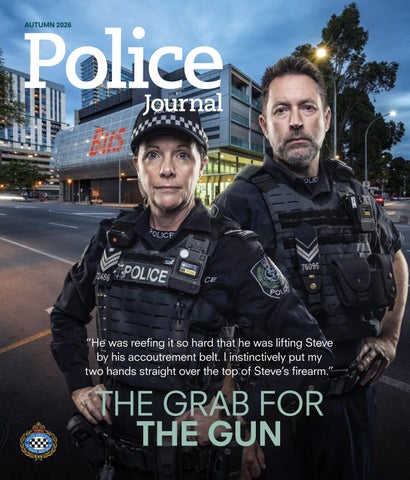
“He was reefing it so hard that he was lifting Steve by his accoutrement belt. I instinctively put my two hands straight over the top of Steve’s firearm.”
In an independent survey, Police Health came out on top against 19 of the biggest health funds across Australia, including Bupa, Medibank and HCF.*
Discover the difference of a health fund made just for you

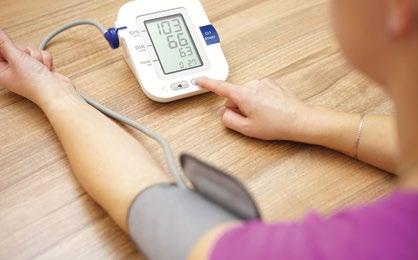
Six million Australians have hypertension (high blood pressure) – an alarming figure that has doubled in the age range of 35 – 44 compared to a decade ago, according to the Australian Bureau of Statistics (ABS).
It jumps again, dramatically, between ages 45 – 54, and peaks at 75 years.
While the risk of high blood pressure is known to increase as you age, it affects all age groups.
Furthermore, a recent ABS study revealed 73.7% of all adults measured with high blood pressure didn’t realize they had high blood pressure because of a lack of symptoms.
That’s why early monitoring and intervention, as early as from age 35, is the key to prevention and management.
High blood pressure is a condition in which the force of blood against artery walls is consistently too high.
This makes the heart work harder, causes damage to vessels over time, and increases the risk of heart attack, stroke and kidney disease.
It’s often called the “silent killer” because it usually has no symptoms.
For shift workers, such as police officers, studies have shown an increased risk of cardiovascular and sleep disorders.
This is due to circadian rhythm dysfunction and poor nutritional choices. Police are also exposed to traumatic events, which increase the likelihood of alcoholism, obesity, depression, and insomnia – all of which are linked to heart troubles.
There are ways to lower blood pressure
Smoking, being overweight, a sedentary lifestyle and consuming a diet high in fat and salt (and low in protein and fibre) can increase the likelihood of high blood pressure.
Stress is also a major cause of high blood pressure.
While there is blood pressure medication available, the best shield against high blood pressure is maintaining a healthy lifestyle.
Other tips include: • Lose unnecessary weight.
• Cut back on alcohol and avoid smoking.
• Exercise more to keep arteries flexible and reduce activity in the sympathetic nervous system.
• Manage stress to reduce the release of hormones that spike blood pressure.
• Consider if you need help from a medical specialist.
• Organize regular check-ins with your GP who can do blood pressure tests and if required recommend a blood pressure monitor at home.
Cover like no other
Police Health understands the unique health needs of the police community, because we’ve been looking after them for more than 90 years.
To get Police Health's cover, call us on 1 800 603 603.

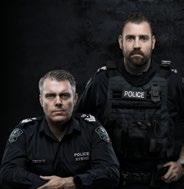
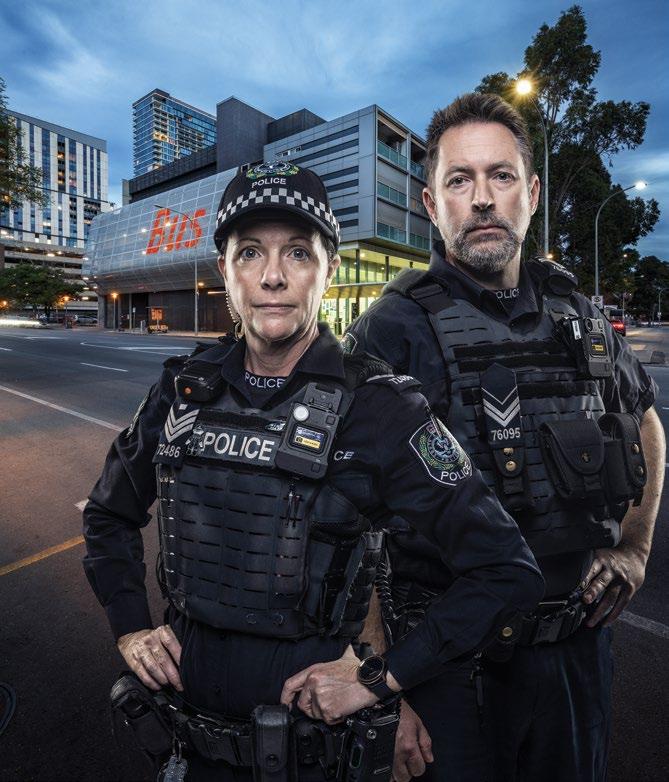
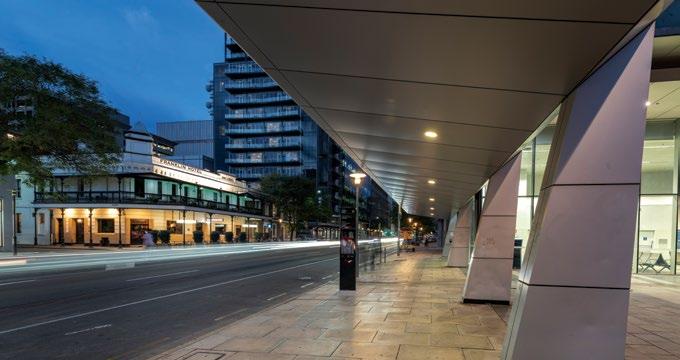
The assaults on police keep coming, and many of them are way more than just a shove to the chest One of the most dangerous in the last 18 months took place on a tourist bus outside the Franklin Street bus depot. Two association members, each working solo, copped serious injuries.
They tell us how the incident played out, why it was just the two of them dealing with it, and about the impact they suffered, both physically and mentally And, along with the association, they both want jail time for their now-convicted attacker
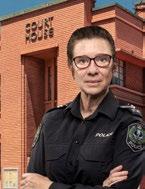
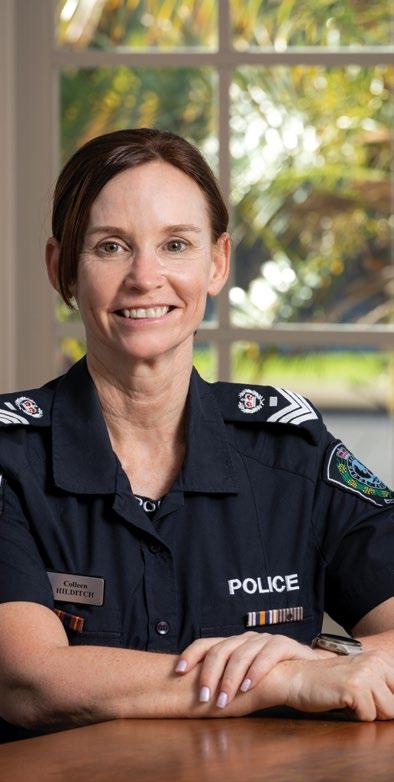
Senior Sergeant 1C Colleen Hilditch could barely believe that she was to receive the Australian Police Medal, as announced on Australia Day this year It was much less a surprise to her family and colleagues though They knew her as both a survivor and a long-time contributor
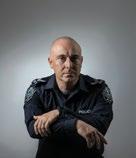
Senior Constable 1C Meegan Brougham long ago concluded that SA policing had gone – and was going further – into decline under its current leadership She had first-hand experience with which to back up her claim and was happy to share her observations just before she resigned.
For many Police Association members who have become the adoptive parents of greyhounds, the results have been all positive. Three adopters in particular are enjoying the company of their new family members so much that they’re already thinking about further adoptions
Senior Industrial Officer Steve Whetton outlines the raw deal some members get from SAPOL after they’re summonsed to give evidence in the Coroners Court
Dr Rod Pearce explains the proper use of defibrillators; Jim Barnett road-tests the Hyundai Inster and the Leapmotor C10 electric SUV
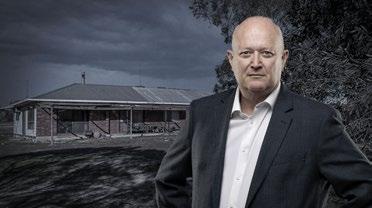
Police Association president Wade Burns outlines the success which came from association action on damage-only crashes and their associated reporting requirements
Brett Williams
brettwilliams@pj asn au
Publisher: Police Association of South Australia Level 2, 27 Carrington St, Adelaide SA 5000 T (08) 8212 3055 Editor: Brett Williams (08) 8212 3055 Design: Sam Kleidon 0417 839 300
Advertising: Police Association of South Australia (08) 8212 3055
Printing: Finsbury Green (08) 8234 8000
The Police Journal is published by the Police Association of South Australia, 27 Carrington St, Adelaide, SA 5000, (ABN 73 802 822 770). Contents of the Police Journal are subject to copyright. Reproduction in whole or in part without written permission of the Police Association of South Australia is prohibited. Opinions expressed are not necessarily those of the editor. The Police Association accepts no responsibility for statements made by advertisers. Editorial contributions should be sent to the editor (brettwilliams@pj.asn.au).
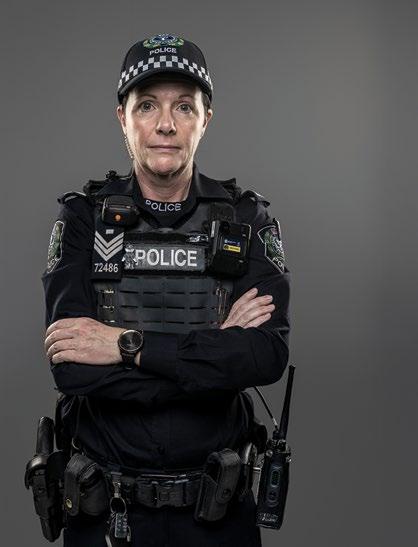
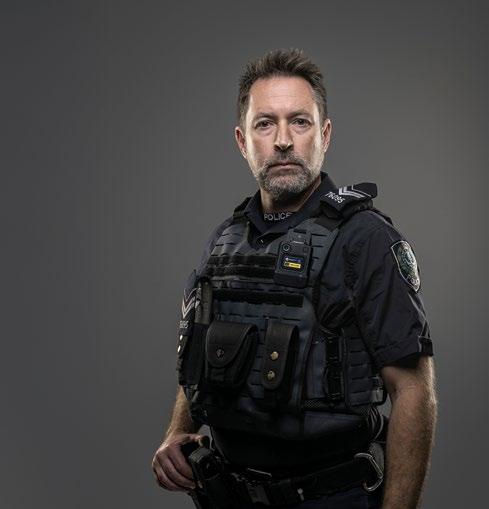
COVER: Sergeant 1C Yvette Maslen and Brevet Sergeant Steve Nicholls. Photography by Steve McCawley.
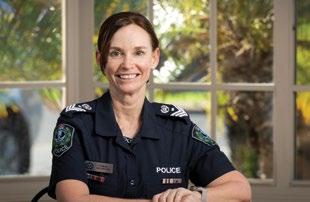
Two cops wound up in hospital after they tried to contain a violent offender in one of the worst environments to get physical
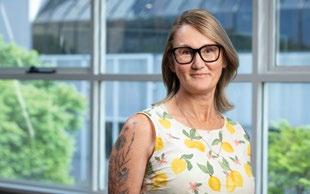
Details of her police career came to light when she received the APM, but Colleen Hilditch had more to her past than just policing
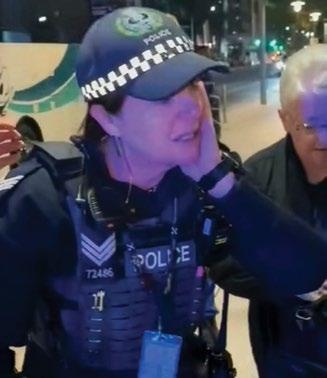
Meegan Brougham has become another, in a long line of both serving and departing police officers, to call out failings in SAPOL executive management
Greyhounds are proving great company for many Police Association members since the union struck a deal with Greyhounds as Pets
ADMINISTRATION ASSISTANT

EXECUTIVE ASSISTANTS FINANCE
Kellett Finance Officer
Level 2, 27 Carrington St, Adelaide SA 5000
www.pasa.asn.au
P: (08) 8212 3055 (all hours)
E: pasa@pasa.asn.au
Membership enquiries: (08) 8112 7988




REPRESENTATIVES
Superannuation
Leave Bank
Country housing
Wade Burns and Michael Kent
Andrew Heffernan
Andrew Heffernan
Commissioner’s Office Health Safety & Welfare Advisory Committee Steven Whetton
Legacy Julian Snowden
Sexual Orientation, Gender Identity & Intersex members
Nadia Goslino and Andrew Heffernan
DELEGATES & WORKPLACE REPRESENTATIVES
Metro North Branch
Elizabeth Haydn Evans
Gawler
Golden Grove
Henley Beach
Holden Hill
Northern Prosecution
Northern Traffic
Parks
Port Adelaide
Port Adelaide Investigation
Salisbury
Country North Branch
Ceduna
Coober Pedy
Kadina
Peterborough
Port Augusta
Port Lincoln
Whyalla
Crime Command Branch
Adelaide Investigation
Elizabeth Investigation
SOCIB
Forensic Services
Intel Support
Major Crime
Major Crime
Serious Fraud
South Coast Investigation
Rob Mowday
Darren Quirk
Alan Pagac
Adam Knoll
Tim Pfeiffer
Neil Hastie
Edward Matias
Paul Blenkiron
Andrew Winterfield
Philip Proctor
Samuel Priest
James Cochrane
Gavin Moore
Nathan Paskett
Jake Whenan
Ian Baker
Paul Velthuizen
Robert Clark
Joel Manson
David Furniss
David Bowman
Shaun Blundell
Phil Buttfield
Robert Martin
Daryl Mundy
Jason Tank
Metro South Branch
Adelaide
Stuart Mee
Christies Beach/Aldinga Jodie Ashenden
Hindley Street
Netley
Southern Prosecution
Southern Traffic
Sturt
Country South Branch
Adelaide Hills
Berri
Millicent
Mount Gambier
Murray Bridge
Renmark
South Coast
Operations Support Branch
Academy
Academy
ACB
Band
ComCen
ComCen
Dog Ops
Firearms
Mounted Ops
PSSB
STAR Operations
State Ops Support Branch
Traffic Services
Michael Montgomery
Robert Brelsford
Sallie McArdell
James Evans
Richard Hoar
Jason Blucher
Tamara Day
Matthew Jennings
Owen Wales
Thomas Jonker
James Bentley
Peter Tellam
Melanie Smith
Peter Koulianos
Tony Boots
Adam Buckley
Glenys Moriarty
Mark Dearman
Levi Struthers
Brett Carpenter
Sonia Wellings
Mark Staples
Craig Murphy
Duncan Gerrie
Joshua O’Dwyer
Youth & Street Gangs Taskforce Ian Kilpatrick
Officers Branch
Constantinos Kyriacou
Craig Terlikowski



Wade Burns PRESIDENT
One of the most immediate and practical wins arising from Police Association action this election cycle was the state government’s agreement to implement our proposed changes to damage-only crash reporting
For decades, South Australia has operated under a requirement that any crash involving more than $3,000 in property damage must be reported to police
That threshold was set around 30 years ago and has not kept pace with the cost of modern vehicles or repairs
In today’s environment, even minor damage can easily exceed that figure, which means motorists are compelled to attend a police station in person to file a report.
The result has been a system that consumes an extraordinary amount of police time for little operational benefit
This is a clear example of policy aligning with operational reality. It is a reform conceived by our members, based on front-line experience and now accepted by government.

Around 600 in-person crash reports are made to police stations each week Even the most straightforward of these takes at least 15 minutes, equating to more than 150 police hours every week spent on matters that, in most cases, do not require investigation.
These are collisions where details have already been exchanged, in which there are no injuries, and where police do not undertake any follow-up investigative work
Yet, the outdated requirement of in-person reporting diverts resources away from core policing duties — responding to incidents, investigating crime and supporting victims.
It also places an unnecessary burden on the public . Motorists are often required to wait extended periods at police stations simply to comply with a legal requirement that serves little practical purpose For those in regional areas, the inconvenience is even greater
The reform put forward by the Police Association — removing the monetary threshold and expanding online reporting — addresses this directly
We expect it to reduce in-person reporting requirements by up to 90 per cent, freeing up significant police time and reducing red tape for the community
This is a clear example of policy aligning with operational reality It is a reform conceived by our members, based on front-line experience and now accepted by government
Government commitments — and the work still ahead
Beyond this reform, our pre-election correspondence to Premier Peter Malinauskas set out several priority issues for police, based on operational reality and member experience
Our message to the state government is clear: addressing morale and rebuilding member trust in SAPOL’s executive leadership team must be treated as a core operational priority. It cannot be deferred or treated as secondary to more visible reforms.
With the state election now concluded, it’s appropriate to assess what’s been offered, what’s been deferred, and also what’s been left largely unaddressed.
On enterprise bargaining, the government has reaffirmed its intention to finalize a new deal
But the last piece of the puzzle is still outstanding: a full, formal enterprise agreement, put to a vote of members The framework of that agreement is now well advanced, and members will hear more about it in the coming months
In response to concerns about SAPOL’s self-insured workers compensation model, the government has committed to a broader review of the Return-toWork scheme in which the association will be invited to provide feedback .
Members have consistently described a system that is adversarial, slow and lacking accountability — one that too often makes recovery harder, not easier While such a review will provide a pathway, we’ll be making the government aware that anything less than a specific focus on SAPOL’s processes risks not addressing the core issues.
On capability and equipment, the premier’s response has highlighted significant investment — new pistols, upgraded vests, digital reporting systems, infrastructure upgrades and a planned drone capability These are welcome developments
There is also an internal SAPOL review underway into operational safety equipment, particularly for regional members That includes access to long-arms, protective gear and specialist training
Front-line officers, particularly in regional areas, are dealing with increasingly complex and high-risk situations, and delays in addressing this issue puts their safety at risk
The same applies to the absence of individual first aid kits (IFAKs) for general-duties officers These are basic, life-saving tools, and their absence is difficult to justify in a modern police environment.
In terms of legislative protections, the premier has announced new offences, initiated by the association, relating to stalking and harassment of police and their families, together with an ongoing review of bail laws
The two additional measures we’ve put forward — removing suspended sentences for serious offences against emergency workers and reversing the presumption of bail for those accused of assaulting police — have been absorbed into broader review processes, keeping them under consideration.
On mental health and support services, the government has acknowledged that an expanding police workforce must be matched by increased psychosocial support That is a necessary recognition Further discussions on this issue will ensue, with the government highlighting that any expansion is dependent on future budget decisions Meanwhile, demand is already outstripping capacity. SAPOL’s Employee Assistance Section and Early Access Program are under-resourced relative to the size and complexity of modern policing
The response on firearms legislation follows a similar line The government has emphasized the strength of existing laws and committed to consultation on any future changes With the pace of technological change in firearms design and modification, the need for legislative review remains
It is, however, on the final issue raised by the association that the response is most telling — not for what is said, but for what isn’t.
Wade Burns PRESIDENT
Declining morale within SAPOL is a real issue, along with a growing lack of trust in the executive leadership team, and the direct impact this is having on retention, capability and service delivery.
These concerns are backed by multiple independently run member surveys, as well as findings from the Select Committee on Support and Mental Health Services for Police , which identified a clear link between fatigue, morale and staffing outcomes
All the available data points to a SAPOL workforce that is increasingly disengaged
And yet, the issue is largely absent from the government’s response. There is no clear acknowledgment of the scale of the concern, no commitment to review leadership structures and no plan to rebuild trust between leadership and the workforce
Such an omission matters, because strong police forces are built on morale When it declines and experienced officers leave, capability goes with them
That loss cannot simply be replaced through recruitment
Our counterparts in jurisdictions like Victoria have already seen the disastrous consequences of ignoring this issue. The warning signs in SA are already loud and clear.
Our message to the state government is clear: addressing morale and rebuilding member trust in SAPOL’s executive leadership team must be treated as a core operational priority It cannot be deferred or treated as secondary to more visible reforms
Operational members continue to raise issues relating to fatigue, workload, safety, training and the loss of experience across the organization. Those concerns can’t be ignored simply because a headline number has been reached.
Without it, the effectiveness of everything else is diminished
None of this is to dismiss the progress that has been made. The government has invested substantially in policing, engaged in very constructive industrial discussions, and committed to reforms and extra police numbers in the last budget which will deliver real benefits
Recent public commentary around SAPOL returning to “full establishment” has also prompted considerable discussion among members
While this investment into policing should be welcomed, members know that headline staffing figures alone do not tell the full story. What matters is not simply the number of positions on paper, but the operational reality behind those figures — the experience levels of members, the distribution of resources across metropolitan and regional areas, the ability of workgroups to safely manage demand, and whether experienced officers are actually being retained in the job
The government and SAPOL understandably focus heavily on recruitment But recruitment alone is not the measure of a healthy police force.
Retaining experienced police officers for longer must become a central priority That requires more than public announcements and establishment figures It requires meaningful recognition of the unique pressures, risks and responsibilities associated with modern policing, together with pay and conditions that reflect those realities
There is also an important distinction between quantity and capability
Recruiting to funded establishment is one thing. Ensuring the right people remain in policing long-term is another. Operational members continue to raise issues relating to fatigue, workload, safety, training and the loss of experience across the organization Those concerns can’t be ignored simply because a headline number has been reached
Ultimately, the enterprise agreement is where the government can demonstrate that its investment in policing extends beyond announcements and infrastructure and genuinely reaches the people who make SAPOL function every day. What remains is ensuring those commitments translate into outcomes that are felt on the ground — in stations, in patrol cars and in the daily working lives of members
Explore fleet pricing available today.

KONA Electric. INSTER. ALL-NEW ELEXIO.


Discover the Hyundai EV range, including the all-new ELEXIO, INSTER, KONA Electric, IONIQ 5, IONIQ 6 and IONIQ 9. Each model combines cutting-edge technology, distinctive design and an engaging electric driving experience.
Hyundai Australia thanks the South Australian Police for their continued support of the community. In appreciation, National Fleet Pricing is now available across the Hyundai EV range (excluding N Models).
Contact your local Hyundai Dealer today.

Explore Hyundai EV Range

BY BRETT WILLIAMS
It was difficult enough for two solo police officers to try to contain a violent attacker on a packed tourist bus. But it all got much worse when that attacker went for one cop’s pistol.

THE FORCE OF THE FIRST WILD SWING
had, for several seconds, left Sergeant 1C Yvette Maslen bordering on semi-consciousness. She certainly felt as if she had blacked out momentarily on the tourist bus she had just boarded And it seemed a miracle that vicious, out-of-control offender Simon Nelson had not broken her jaw
The left fist he threw at Maslen had catapulted her from the centre aisle of the bus across the full width of two passenger seats Her head slammed into an adjacent window But, determined as always, she opened her eyes, regained her composure, and got back on her feet.
In her few seconds without full consciousness, Nelson had turned his attack on solo Hindley Street brevet sergeant Steve Nicholls He (Nicholls) had boarded the parked bus just minutes before Maslen and was the only other police officer on the scene
Maslen knew that, despite the punishing blow she had just taken, she had to get back in the fight She had a colleague struggling with a violent offender and a busload of fearstruck elderly passengers who just could not fathom what was happening
It was a tough job for Maslen and Nicholls to take on so close to the end of a tiring, frenetic night shift. But the responsibility fell to the two solo cops because, on that Saturday morning back in October 2024,
no other patrols had been available to respond.
“I remember us being light on for staff,” Maslen recalls “It was a normal Friday night going into Saturday where everyone was super busy There were no (free) patrols And you can’t just pluck people out of thin air
“Everyone was either at the cells (with arrests) or at the hospital My (Norwood) guys were at the cells too; and, as a sergeant, I did a lot of jobs that night to help due to the (short) staffing ”
Nicholls had found Nelson sitting in a third-row aisle seat looking “very much out of place” with a frightened 70-something woman in the seat next him.
Nelson was silent and without a hint of expression on his face as Nicholls, calm and disarming, tried to engage with him
“I was getting absolutely nowhere,” Nicholls recalls “I remember just a blank expression, and, like, there was nobody home There was nothing there Just not engaging in any way, shape or form
“He was obviously not right I thought he must be under the influence of something, but there was nothing obvious
“So, there was just that thought process, which was: ‘Okay, we're going to have to get this guy off the bus.’ And that's when I called for someone else to come and give me a hand ”
Norwood-based Maslen first became aware that an incident was brewing at the Franklin Street bus depot just after 5am She heard police communications call for a patrol to attend the facility to deal with a man refusing to exit a coach parked on the street
He had boarded the Port Augustabound vehicle without a ticket, and it was the driver who had called police seeking their help to remove him
Maslen, aware that Nicholls had taken the job, informed the Communications Centre that she too would respond.
So, heading south-east, as she was on Glen Osmond Road, she changed course and headed for Franklin Street Although prepared for anything, her expectation was simply that of a non-violent drunk or a homeless person who “just wanted to go somewhere”
But whether that was the case or not, she was just not willing to leave Nicholls to undertake the job alone
“Because,” she says, “sometimes, to remove someone off a bus, it can be quite difficult if you've got to drag them off.
“Steve got there as I hit Greenhill and Hutt, and he came up on air and said: ‘Yeah, this isn’t going to be easy.’ I said: ‘I’m literally not even one minute away ’
“I knew straight away that he’d thought to himself: ‘I’m not going to be able to do this by myself ’ So, he waited (that one minute) for me ”
“… she’s a trusted face and someone I knew I could rely on in any situation. But, at the same time, it was a bit disappointing that I didn’t have any other patrols free to come, but that’s not unusual.”
when Maslen pulled up at the depot around 5:45am She stepped out of her patrol car, donned her bodyworn video, and approached the bus At its front door, shaking his head, was the driver whom she spoke with only momentarily
After that, Maslen climbed aboard the bus on which she could see its 26 passengers waiting to embark on a trip to the Flinders Ranges.
And, sitting in that third-row aisle seat next to the frightened woman was Nelson, with Nicholls standing slightly behind him
It was some relief to Nicholls to see Maslen turn up on the scene and board the bus
“I’ve known ‘Maz’ a long time,” he says “She was my first supervisor when I graduated so, for me, she’s a trusted face and someone I knew I could rely on in any situation
“But, at the same time, it was a bit disappointing that I didn’t have any other patrols free to come, but that’s not unusual. ”
From the front of the bus, Maslen began to step cautiously toward that third row, where Nicholls was trying patiently to cajole Nelson into leaving “Come on, mate,” she heard him say But, from Nelson, came nothing but “a blank stare”
As Maslen had approached, two worried passengers sitting in the seats in front of Nelson asked her if they could get off the bus. She gave them the go-ahead and they left.
After carefully stepping into position beside Nicholls, Maslen joined the effort to encourage Nelson to step off the bus Indeed, she sat on the arm of the seat directly across the aisle from him and began with friendly persuasion
“I was pretty close to him because the aisles on those buses are quite thin,” she explains “We didn’t have any room But I still tried to do the whole ‘sit down, get at his level, and try to converse with him.’ But, nothing. Zero. No response.
“He wasn’t going anywhere, and the poor little old lady sitting next to him was petrified I remember
looking at her and saying: ‘You’re going to be okay.’ ”
For several minutes, Maslen and Nicholls continued to appeal to Nelson to leave the bus under his own steam They kept up their calm, matey tone, hoping not to have to remove him by force and risk injury to the passengers, themselves, or Nelson himself
Their concern was for everyone involved Maslen could see the looks on the faces of the passengers turn from curiosity to fear. She knew that, in the circumstances, it was not safe for her and Nicholls to try to evacuate the bus of its elderly passengers
But there did finally come a point at which Nelson ended his silence after Maslen asked him what exactly he wanted With few words, he made clear the whole point of his presence on the bus: he wanted to get to Geelong
“That's all he kept saying,” Maslen recalls. “And we're like: ‘Well, this bus isn't going to Geelong, but we’ll find you a bus that will.’ ”
The exchange continued, with Nelson insisting that “this bus is going to take me I don’t care how I’m not getting off”
Despite his resistance, Maslen and Nicholls persevered with dialogue, repeating their offer to find Nelson a bus bound for Geelong Removing him by force was always going to be their last resort.
But several more minutes of talk, and assurances of the officers’ help, did not persuade Nelson to exit the bus peacefully
“You can just tell when there's going to be no negotiation,” Maslen says “He kept looking up at Steve He wouldn't really engage with me
“I thought to myself: ‘The minute we put our hands on him, I don't think this is going to be good ’
And Steve and I gave each other that look, as if to say: ‘This probably isn't going to go well.’ Didn't say anything, just gave each other a look . ”
“I remember hearing the thud against her face and I instantly thought: ‘She's out! That's going to knock her out cold, without a doubt.’ ”
MOMENTARILY whether she and Nicholls should “drag this out”, given the closeness of the start of day shift. If day-shift crews were not already aware of the incident they would soon find out from police communications and respond
“So, I’m thinking: ‘Do we wait?’ ” Maslen recalls “And the people on the bus started getting impatient, which I completely understood
“It just got to the point where I was like: ‘You know what? We have to do something. I’m not going to let this drag on anymore.’ I told comms our course of action: that it was going to have to be a case of forcibly removing him ”
Nicholls figured that, owing to the “very tight confines of the aisle and seats”, it would be hard to restrain Nelson if he chose to fight
In any case, Maslen knew it was now time for her and Nicholls to lay it on the line for Nelson “Okay, mate, this is how it is,” she told him “This bus isn't going to Geelong It's going to Port Augusta.
“Either way, you're going to be removed from the bus. We either do it where you walk off the bus, or you're going to be physically removed ”
Nicholls, too, made clear to Nelson that his time was up on the bus
“Look, mate, at this stage, you need to get off this bus,” he told him “You’re essentially trespassing, so we’re going to move you off the bus ” Nelson in response started clenching his fists The body language was obvious to Maslen, who thought: “This is not good. ” It was now for her and Nicholls to change the game from verbal to physical action
“I put my hands on both of his shoulders and gently started to raise him up (out of the seat),” Nicholls recalls. “I can’t remember whether he got up on his own or if I pulled him up, but he ended up in a standing position ”
And, from there, Nelson lashed out at Maslen with that devastating punch to her face
“That fist clocked me straight in my lower cheekbone under my eye,” she says “I remember falling back into the chair opposite him, where I was sitting, and hitting my head on the window. It was just so forceful. ”
And the impact of the blow came with a movie-like sound effect. Says Nicholls: “I remember hearing the thud against her face and I instantly thought: ‘She's out! That's going to knock her out cold, without a doubt ’ ”
Nicholls reacted immediately but found himself at a massive disadvantage because of the confined space He tried but could not “get a (controlling) hold” on Nelson and instead ended up grappling with him in the narrow aisle
And the danger intensified for Nicholls when he lost his earpiece and radio during the battle to restrain Nelson. When he realized he had no communication, and figured Maslen was likely unconscious, he thought: “F--k, I’m in trouble now!”
But Maslen emerged from the semi-conscious state in which that first punch had left her, and she could see Nicholls grappling with Nelson in the aisle She knew she had to act but also realized she needed an advantage to help Nicholls overpower him
So, she jumped up onto the seat Nelson had just risen from to attack her and then Nicholls
“I used that height to get over the top of them,” she says, “and to try to drag him (Nelson) off of Steve and push him away from us. ”
In his struggle to get Nelson on the floor and restrained, Nicholls had himself ended up there facedown and still under attack And, with the bulkiness of all his equipment and the narrow, constricting aisle, he simply could not get himself back up again
As the grappling went on, Maslen heard Nicholls yell out in excruciating pain She could see that Nelson was gouging at his eye
“I felt fingers just scratching the sides of my face,” Nicholls says. “And he got his fingernail into my left eye and started gouging at it.
“I couldn't do anything, so I was just closing my eyes shut and shaking my head And when he got his finger in my eyeball, I remember just screaming out because of the pain, but also out of frustration
“I was going: ‘I’m stuck here and I’m in a world of hurt ’ I had no idea where Maz was or what was happening ”
But Maslen was right there and “so angry” about the eye-gouging, which prompted her to go into “protect mode”.
“That's when I forgot that I'm only five feet nothing and 50 kilos,” she says. “I clenched my fist and I started punching him to the side of his face and shoulders and got a good few strikes in ”
“I felt fingers just scratching the sides of my face. And he got his fingernail into my left eye and started gouging at it.”
“I just grabbed it and there was no way I was going to let go. I was so adamant about withholding that firearm and protecting all those people on the bus.”
TURNED for the battling cops when passenger Steven Egel sought to help them. He would later tell reporters that he thought Nelson “was going to pull the officer’s eye out”.
Egel approached from the back of the bus He bravely grabbed hold of Nelson who shrugged him off, but the move gave Maslen and Nicholls a second or two to “regather”
Maslen knew that any use of her firearm was out of the question and that her OC spray would be problematic in such a confined space But, in that critical moment, neither officer had anything else to resort to, so Maslen did indeed deploy her OC spray.
“I sprayed him,” she says, “and it was so close that I remember the foam in his mouth But it (the spray) had no effect Zero And I remember everyone coughing on the bus and I felt terrible, but I had to use something I think I used a full can on him and it was right to his face
“But it didn’t really make much difference, and neither did my punches, but it did get him to focus in on me ”
Nelson, now distracted, released his grip on Nicholls but turned his attention straight back to Maslen. He threw another potentially lethal punch at her, and it hit Maslen exactly where his first blow had struck her
Again, she wound up flung backward, this time onto the seat she had just used for height advantage And she landed on the already frightened elderly woman who had earlier got stuck with Nelson sitting next to her Nicholls, with OC spray in his eyes and his left eye bleeding, could see none of this continuing attack on Maslen. So, he was not aware that she got up, steadied herself for the second time, and saw Nelson go for and grab his holstered pistol He heard her yell: “He’s going for your gun!”
“He was reefing it so hard that he was lifting Steve by his accoutrement belt,” Maslen says “I instinctively put my two hands straight over the top of Steve’s firearm.
“I just grabbed it and there was no way I was going to let go. And I didn’t. I was so adamant about withholding that firearm and protecting all those people on the bus ”
Nicholls, too, thrust his hand down onto his pistol, in line with his training He could feel that Nelson was “trying to yank it up out of the holster” and so did his best to “push it back down”
In the most dangerous moment of the whole incident, Nicholls and Maslen managed to break Nelson’s grip on the gun, but the fight continued.
As Nicholls managed to get himself upright, Nelson landed a series of punches on him as Maslen yelled: “Cover your head!”
“I was just trying to orientate myself with him and with Maz,” Nicholls says “But it was so hard to work out who was where It was just chaos ”
And, adding to the danger for the two officers was that the magazine from Nicholls’ pistol had, at some point, dislodged. Maslen spotted it on the seat she had stood on, grabbed it, and immediately concealed it in her trouser pocket. Calling for urgent back-up was now more critical than ever but near impossible to do while under such an unrelenting attack Still, Maslen somehow got access to her radio
“I can’t recall any of my transmissions,” she says “I can’t recall how I transmitted but people later said I did and that they (the transmissions) were clear They were to the point, and people could hear that we were in trouble. ”
Among the details Maslen spoke desperately into her radio was that, in his rage, Nelson was trying to seize Nicholls’ pistol
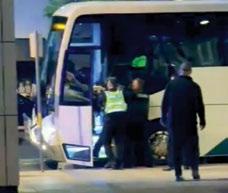
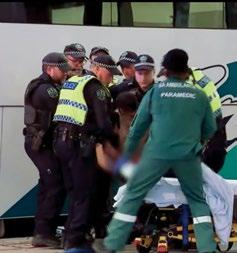
OF COURSE, BOTH OFFICERS WERE TOO ADRENALINECHARGED to appreciate the extent of their injuries or even know they had them. Nicholls a lacerated eyeball and Maslen a fractured cheekbone. Still, neither of them was about to hoist a white flag Each one’s focus remained on getting Nelson off the bus
Nicholls managed to break his entanglement with Nelson and move toward the front of the bus with Maslen just ahead of him Nelson followed, but that was part of the plan: get him to chase after the police, all the way off the bus
“Then,” Nicholls says, “we could pull TASERs; we could pull batons or do what we needed to do. We’d have space. But he didn’t (follow us out). He jumped in the driver’s seat and made moves to start the bus
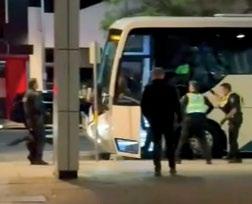
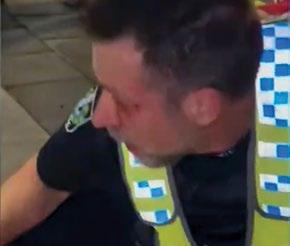
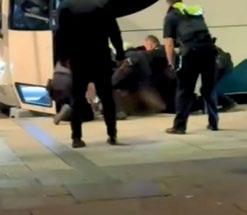
“It was the Dog Ops man coming in with his dog, Edge. So, I’ve gone: ‘Thank f--k for that,’ and jumped off the bus.”

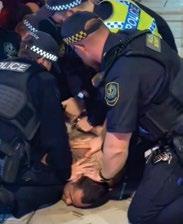
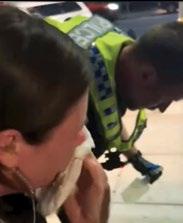
“I was still on the (doorway) stairs, so I pulled out my spray and gassed him from about a metre away, the entire can into his face. It had zero effect, of course.
“Then, out of the corner of my left eye, I saw another copper. It was the Dog Ops man (Brevet Sergeant Marc Roberts) coming in with his dog, Edge So, I’ve gone: ‘Thank f--k for that,’ and jumped off the bus ”
With his vision blurred, Nicholls watched Roberts and Edge launch into action against a still aggressive Nelson, who turned on dog and handler Edge momentarily got a grip on his leg, but Nelson fought back . He kicked and punched Edge and landed a punch on Roberts as well.
But time was up for Nelson: back-up patrols were now descending on the scene As soon as Nicholls saw them
arrive, he urged one of his colleagues to: “Just TASER him! TASER him now!” And that colleague did indeed head for the bus and give Nelson a blast of his TASER, but for no effect.
So, the back-up crews then used the weight of their numbers to overpower him They dragged Nelson out of the driver’s seat, off the bus, and onto the ground He continued to struggle but was soon in cuffs with his violent rampage brought to an end
“By that time, there were five or six bodies on this guy,” Nicholls says Maslen and Nicholls, both injured and struggling to see and breathe, were in no condition to take part in the arrest. They rightly left that to their colleagues and stood by on the footpath trying to steady themselves and comprehend what had happened. Nicholls had dropped to his knees
and could feel blood flowing out of his eye as he fought the effects of the OC spray With the scratch to his eye, the bleeding, and no visibility out of that left eye, he worried that he might never “see properly again”.
“Poor Steve was down and I went and checked on him straight away,” Maslen says “He was clearly affected and I was worried about his injury
“And then I just ran out of gas, so out of breath I was clutching my face, thinking: ‘There’s something not right ’ I could just feel the pain in my eye and in my cheekbone But that’s when the adrenaline had worn off, so now I was really starting to feel pain
“I was starting to feel the effects of the OC spray, which hadn’t affected me on the bus but was now horrendous. I was in agony. And, at that bloody stage, I thought I might have had a broken jaw ”
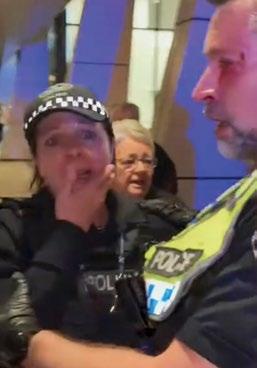
MASLEN AND NICHOLLS, BOTH WORRIED and unsure about their injuries, just wanted to get to hospital as quickly as possible Their colleagues drove them separately to the Royal Adelaide Hospital, where Maslen collapsed onto a bed and “kind of blacked out”
At the outset, she proved a somewhat difficult patient with endless questions about Nicholls and his whereabouts and condition. “Where’s Steve?” she repeatedly asked the hospital staff, who told her: “We’re here to look after you ”
The staff eventually wheeled Nicholls in next to Maslen who grasped his hand He told her he was fine and that she should now just let the hospital staff take care of her
And she certainly needed the care Her face was swollen; her eyes were stinging; and she was in shock and hyperventilating. She ultimately wound up on oxygen and later underwent an MRI scan, as did Nicholls.
His most concerning injury, apart from blackened eyes and swelling and
“For at least the first two or three months my sleep was really affected, just by running through it, over and over. That was tough for those few months. It just lingers.”
bruising, was a laceration to the white of his left eyeball The advice was that the laceration would heal quickly so Nicholls just had to leave nature to take its course After a few hours in hospital, he was able to head home
Maslen, on the other hand, remained in hospital beyond midday as she underwent “quite a few tests”
It emerged that she had suffered a concussion, but her key injury turned out to be a hairline fracture of her cheekbone.
Her husband, Paul, soon got word of what had happened after he woke to a phone call from a police security officer
“And it wasn’t until Paul got to the hospital that I pretty much lost it (emotionally),” Maslen says “At work, I’ve always put on that brave face, especially as a sergeant, and then I’ll just lose my shit afterwards ”
Early-morning TV news shows had, by 7am, carried reports of the attack right around the country. Vision of Maslen was clear in their footage, which her Queensland-based parents saw without any forewarning
“I hadn’t been able to tell them,” Maslen says “Mum and Dad had been ringing Paul; and I didn’t even realize cameras were there at the time ”
Maslen spent her first few days out of hospital recovering at home, where well-wishers soon swamped her with calls, visits, and flowers
But, by Wednesday, four days after the attack, she returned to work, complete with her fractured cheekbone, bruises and black eye. It did her good to get back together with her team members They were “like family” to her and, in the work environment with them, she felt “so protected”
For Nicholls, it was a case of going straight into previously scheduled annual leave which, given his injuries, was “not the greatest” holiday
The damage to their bodies healed quickly, but both Nicholls and Maslen felt the psychological impact of the attack for months. Maslen often saw the violence in her dreams and, “every now and again”, the incident still plays out in her mind when pain in her cheek re-emerges
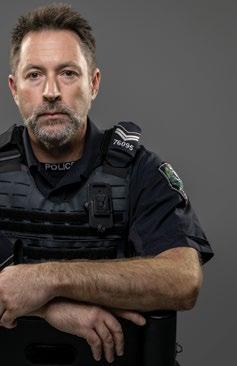
Nicholls also relived the attack in his mind Then 45 and a married father-of-two, he even wondered about remaining in front-line work or leaving it behind
“In my head, I was going: ‘Should have done this or I shouldn't have done that?’ and then getting all stressed and anxious,” he says
“For at least the first two or three months my sleep was really affected, just by running through it, over and over. That was tough for those few months It just lingers ”
And, once back at work, Nicholls found his heart rate “would just go through the roof” when he had to respond to jobs
“I’d hold it together and do the jobs properly,” he says, “but the stress response, going to any tasking, was pretty high for a fair while
“I’ve got that confidence back now I’ve had some foot chases and some wrestles (with offenders) and it's all gone fine. Your adrenaline takes over and you get the job done. ”
“Incidents are happening and they're happening more frequently. We're short-staffed and we're getting put in situations we maybe shouldn’t be.”
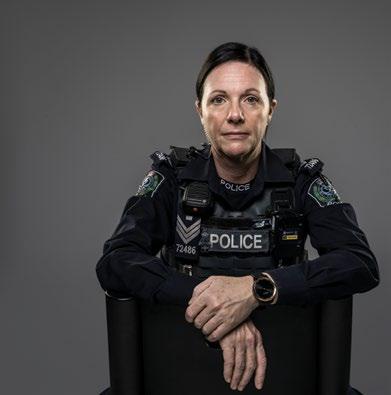
MASLEN, now 49, attributes the outcome of the incident to “a few contributing factors” One is the confined space in which she and Nicholls had to operate Another, which she calls “a big contributing factor”, is understaffing
“Incidents are happening,” she says, “and they're happening more frequently We're short-staffed and we're getting put in situations we maybe shouldn’t be. ”
Maslen hates what Nelson put her and Nicholls through on that bus, but neither officer has a personal hatred of the offender himself
Remanded in custody since his arrest, Nelson has pleaded guilty to four counts of cause harm to a prescribed emergency worker (section 20AA, CLCA) Maslen and Nicholls want to see him sentenced to a years-long stretch in jail
“I want it to send a message,” Maslen says, “and I want it to be a strong message in support of us and other police Then, if people think they can just assault police, they can forget it.” PJ
BY BRETT WILLIAMS
It looked to many as though Colleen Hilditch deserved the APM for more than just her contribution to policing.
Word was out that the name Senior Sergeant 1C Colleen Hilditch had come up in the Australia Day 2026 Honours List Many took delight in seeing the Australian Police Medal awarded to a police officer from among the rank and file. Congratulatory messages indicated as much as they flowed in from a range of sources after the announcement of the honour back in January
Hilditch had known for several months that she was to receive the honour The office of the GovernorGeneral had informed her by e-mail but she, at first, thought the message was a case of phishing After she gave it a more thorough read-through, however, she realized it was genuine – and then “could not believe it”
“It was completely overwhelming,” she says. “I had tears in my eyes to begin with, straight away. I think I was in shock, really. I never thought it would be me (receiving the APM), ever ”
Although Hilditch had given 32 years to policing, she had never considered herself either entitled or deserving Indeed, she felt sure she could think of “50 other people who should be getting this (honour) ahead of me”
But Hilditch finally “got to a point” at which she was able to just accept the reality of her standing as a recipient of the APM
Of course, to her two adult daughters, Rhianna and Britnee, it made perfect sense to confer the APM on their mother.
Says Hilditch: “I think it was Rhianna who said something like: ‘We always knew you were a superwoman And now you’re just being recognized for it ’ They were stoked The whole family was stoked Everyone was very proud ”
Hilditch found her partner, Tony, “super proud” of her too, while senators and members of parliament congratulated her by way of personal letters. A first for her in those letters was the sight of her name, as the addressee, followed by the postnominal APM
All the acknowledgement and euphoria soon got her reflecting on the police career she had begun as a 21-year-old in 1994 That beginning, with Course 63, was the time to which her thoughts stretched all the way back
“You remember all the things that you did throughout that time,” she says “That's kind of led to who I am and where I am now because it hasn't been just a limited-type career where I’ve just done this one thing. I’ve kind of done a lot of different things. ”
Like other graduates, she started out as a patrol officer In what was then Region B, she stood up to the demands of city police work before a later move to Henley Beach patrols Soon afterward came her first pregnancy, while still in the early stages of her career
Hilditch took maternity leave, gave birth to Rhianna, and returned to the front line just eight weeks later.
“Because,” she says, “I didn't want to lose those (operational) skills, and I wanted to take every opportunity I possibly could ”
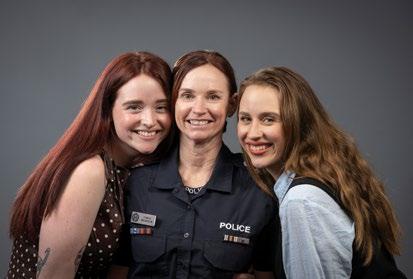
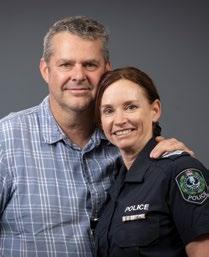
After only a short time back on patrols, Hilditch did indeed take her opportunities She moved into a role with Henley Beach Enquiries – which later became part of Port Adelaide Investigations – and took on the crime scene investigation course
From that came some relief work in CSI before her next role as a victim contact officer
And, later, with a promotion to senior constable, Hilditch worked as a youth community officer in the Western District for six years to 2009. Then came a move to police headquarters and a three-year stint as a crime prevention officer
“That's kind of led to who I am and where I am now because it hasn't been just a limitedtype career where I’ve just done this one thing. I’ve kind of done a lot of different things.”
Like every other cop before her, she had confronted, and still vividly recalls, some of the worst acts of inhumanity One was the rape and bashing of an 83-year-old woman, committed by the victim’s next-door neighbour
1. Hilditch and partner Tony.
2. With daughters Britnee (left) and Rhianna.
“That one stands out in my mind,” Hilditch says. “I'll never forget the injuries that that lady had suffered. The red, bruised eye. It was horrible. Those are the ones that stick out for me ”
There were the many death messages too, like the one she had to deliver to the parents of a teenaged boy in the early 2000s The boy had choked on his own vomit after drinking too much and falling into unconsciousness
“Mum was hysterical and dad wasn't far from it,” Hilditch recalls “So, yes, that's a lasting, horrible memory. It sticks with me probably because of my compassionate side. I don’t think I had children by then, but you just wonder how they (the parents) would feel and you put yourself in their shoes ”
Hilditch has never struggled to empathize with victims of loss, chiefly because she was herself such a victim Indeed, she shared the deeply personal story of her loss with the Police Journal back in 2000
She was just six months old when, in May 1973, she survived a Gillman car crash It was a collision on Eastern Parade and in one of the two cars involved was Hilditch and her parents Her 20-year-old mother, Christine Fisher, did not survive.
From what Hilditch understands, first responders to the crash scene found her on the road still in her car seat.
One of those responders was a motorcycle officer whose concern for baby Colleen quickly became apparent In the weeks after the crash, he regularly turned up at the Birkenhead home in which Hilditch and her 19-year-old father, Ray, continued to live It was there that her paternal grandmother, Joy Fisher, stepped up to take on the role of mother. And whenever the motorcycle officer called, asking to see, feed and nurse baby Colleen, she welcomed him into the home
“Something must have touched him in some way,” Hilditch told the Police Journal in 2000 “Most of us, as coppers, do our job and then leave; you try to put it out of your mind He did exactly the opposite, and I don’t know why ”
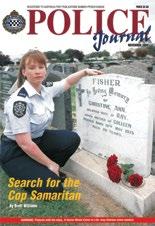
But his visits eventually stopped and the family never saw him again. Grandmother Fisher had known only his name which ultimately faded from her memory So, to this day, his identity remains unknown to Hilditch
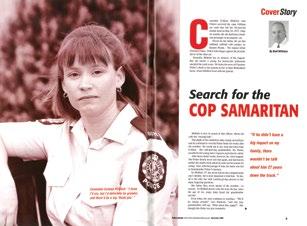
Her grandmother, whom she called “Mum”, had never hidden the truth from her She told her granddaughter how her mother had died and often spoke of the mysterious motorcycle officer. By the time Hilditch had grown to adulthood, it had become her mission to find him. She sought the help of the Police Journal which, in response, ran a fourpage cover story called Search for the cop Samaritan (November 2000)
The story drew responses, but none that came with a name or a clue strong enough to identify the officer It was understandable to the extent that the crash was then 27 years in the past And, if the unknown officer was a “young man” as described, he likely joined the police force in the 1960s. Still, not long after the story came out, someone contacted and supplied Hilditch with records of the crash.
“And there were names on there,” she says, “but I didn't pursue that any further I just left it Maybe by that time it was a case of: ‘I don't need to know anymore I've searched enough in terms of what I needed to know ’
“I had found out more … and then I was able to sort of move on. It’s probably only in the last five to 10 years that I’ve been able to move through those things, and the grieving.”
3. The Cop Samaritan story from 2000.
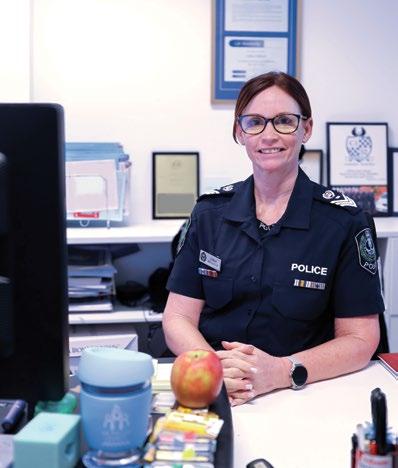
4. At her desk at the police academy.
“I had found out more about the crash scene and things like that, and then I was able to sort of move on It’s probably only in the last five to 10 years that I’ve been able to move through those things, and the grieving ”
Two years after the release of the story, Grandma Fisher died of cancer and so never got to meet the officer again. It was a painful time for Hilditch who had now lost her stand-in mother.
“That was very difficult,” she says, “because she was the only mother I had She passed away five days before my 30th birthday and watching her suffering was the hardest part There was almost a sense of relief once that finished but it was still very sad ”
3
I
t seems Hilditch has always had one challenge or another to overcome. Ill health was the reason for her move from Port Adelaide Crime Prevention Section to police HQ
In 2010, it emerged that she was suffering from chronic fatigue syndrome And a specialist told her she was never likely to work fulltime again
Unwilling to accept that assessment, she fought back with her trademark determination.
“There was no way I was having that,” she says. “I was deemed nonoperational at that time and that was difficult because, in different roles, I'd been operational my whole career, 16 or 17 years
“So, to say (to me): ‘You can't be operational anymore,’ was almost like a grieving process I thought: ‘There's no way I'm not working and no way I'm not going back to full-time ’ ”
Hilditch did indeed return to full-time work but concedes that “it was a hard road back”.
In 2013, she landed at the police academy and has remained there ever since. She began as a sergeant trainer and undertook roles in mentoring, training and development
A stretch with Learning and Development Services expanded her knowledge and she ultimately won a promotion to senior sergeant But, acting as mentor to recruits, as she did for around five years, was the job she relished most
“Second to that,” she says, “would be my role as the youth and community officer at Western. Again, it was mentoring and guiding young people in the youth justice system. So, hopefully, I had an impact I’ve actively pursued roles that I’ve know I would enjoy and could put 110 per cent into ”
And, for Hilditch to score a nomination for the APM, she must
indeed have delivered that 110 per cent effort The purpose of the honour is, after all, to recognize the distinguished service of members of Australian police forces.
Hilditch concedes that she did “a bit of digging” to find out who nominated her but had no luck She has no plans to dig any further because the way she sees it now is that “just to be thought of is enough”
At an investiture later this year, she will receive the medal and the
accompanying certificate. What she will not have to witness that special moment is the mother and grandmother she lost 53 and 24 years ago respectively
“It absolutely would have been nice,” she says, “but I know my dad and all the other family members are extremely proud of me ” PJ
“So, hopefully, I had an impact. I’ve actively pursued roles that I’ve know I would enjoy and could put 110 per cent into.”
BY BRETT WILLIAMS
Meegan
Brougham
is fearless in the expression of her views on the state of SA policing. And what she has to say echoes what many other serving and former police officers have said before her.
HER RESPONSE WAS WHOLEHEARTED AGREEMENT WITH THE WORDS OF HER COLLEAGUES. Senior Constable 1C Meegan Brougham endorsed each stinging criticism she had read of SAPOL executive-level management before her March resignation
Knowingly or not, she had joined the unofficial ranks of the outspoken, who had contributed their forthright critiques to the Police Journal in recent years
There was the Police Association member who considered the executive leadership team guilty of dereliction of duty (autumn issue 2025) And, in that same autumn issue, a senior manager insisted that the ELT no longer understood the pressures on, or daily issues affecting, front-line members.
Then came a member’s claim that SAPOL was “doing f--k all” when it came to the staffing crisis in country prosecution (spring
issue 2025) Also in that spring issue, a former member labelled as “absolute rubbish” SAPOL assurances of its care for member health and well-being.
And yet another member thought that Commissioner Grant Stevens had let members down “big time” over the controversial move of Mounted Ops to Gepps Cross (spring issue 2023)
Clear to Brougham, 57, was that her colleagues’ statements came with refreshing but also disturbing accuracy And it seemed likely that she would know, given her experience of 20 years at the coalface in a range of fields
She spoke with the Police Journal a week out from her resignation. In that conversation, she made particular reference to comments which now-retired superintendent Guy Buckley contributed to the The Last Shift. Indeed, she recited some
of his words from that autumn issue (2025)
“Unlike the members, the ELT seems to be exempt from facing any consequences for the fall of SA policing,” Buckley had written and Brougham read aloud.
“And that's the thing,” she says. “The fall back on members who (commit) an indiscretion or make a mistake, even if it’s well-intentioned, the effect on them is profound
“And yet the DPM can come and go with no explanation, no accountability Not even an apology (for what it’s put members through) Maybe that would be asking too much?”
At the mention of woke corporatism, which Buckley listed as one of many SAPOL failings and obsessions, Brougham simply shook her head.
She also referred to his point about ELT members never facing up to “hard questions from a tough, well-researched interviewer”
“… it's just demoralizing as a dispatcher because you think: ‘What am I going to give that one patrol out of the 30 jobs that I've got sitting on my screen?’ ”
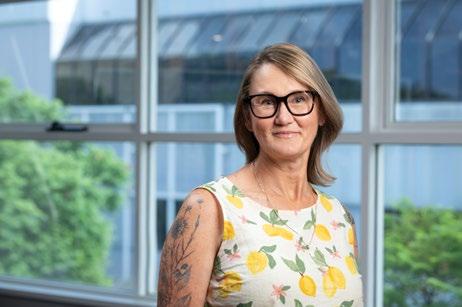
She had initially shared her observations of a mismanaged police force in a strongly worded Last Shift letter to the Police Association in February
And the one question Buckley put to readers was: “… to whom are they (ELT members) answerable” when they get things wrong?
Brougham goes further, and asks: “Who’s telling the ELT that they’re doing a good job? I don’t know who they’re listening to ”
She suspects that, toward the rank and file, the ELT attitude is: “This is all corporate and executive and you all don’t understand, all you underlings ”
“But we do understand,” she says, “because we're living it We've got kids who are sick; we've got parents who are getting old We're trying to keep ourselves well mentally so that we can care for ourselves physically, and we're being treated like robots. ”
Brougham queries how, amid all the harms his failed DPM caused,
Commissioner Grant Stevens scored a five-year contract extension in 2023
Her observation was that the Stevensled ELT either minimized or dismissed concerns which members had long raised about the DPM.
“He’s not heard what his members have had to say,” she says “The group message is just falling on deaf ears He’s probably sick of hearing about it (the DPM) but at least give us an answer What was his logic? How was it going to get better?”
Brougham also questions the need for Stevens to appoint a highly paid advisor, and the board position he accepted with the Adelaide Football Club.
She wrote of “increasing pressure” on patrols which, from her Communications Group vantage point, she could clearly see were “consistently operating at or beyond capacity”
“You sit in Western dispatch,” she explains, “and the sergeant comes up and says: ‘Oh, I've got one car.’ And it's just demoralizing as a dispatcher because you think: ‘Well, I might as well not be here What am I going to give that one patrol out of the 30 jobs that I've got sitting on my screen?’
“And for that patrol, they get a mental-health job or a DV (job), and you can wipe the rest of the shift off It’s not safe for patrols It’s terrible And, I guess, vicariously, we wear it because we can hear that they’re shitted off and weary ”
Brougham even recalls an incident last year when, after a member called 801, she struggled to come up with a patrol close enough to respond urgently. It was a failing she attributes to the Stevens-inspired DPM
“You hear that day after day after day, and you can hear in their voices that they don't want to do it anymore. And it gets to the point where their morale just dies.”
“Before, we might have had three or four patrols (to dispatch jobs to),” she says “Then, all of a sudden (under the DPM), it was down to one, one and a half The problem is the ELT is so far from patrols because it’s ground level But that’s the bread and butter of policing. ”
Brougham speaks of people as the greatest resource in policing. So, what she cannot fathom is why SAPOL would “deplete the very resource needed to serve the community”
“In what world would that ever work?” she asks “Ultimately, it's the person who’s waiting for a patrol who has no idea what's happening in SAPOL They're the ones who have had their houses broken into and they're still waiting 24 hours later to see someone ”
Of course, Brougham has never had to look further than her own workplace to see the impact of chronic understaffing. She and her ComCen teammates have had to cope with shortfalls as high, on some occasions, as 50 per cent
And extremely frustrating to her was the loss of badly needed ComCen staff to projects She highlights colleagues like Brevet Sergeant Bek Hayter and Senior Constable 1C Chris Hoffman
“They've been a real loss for us on a project that now is getting extended for who knows (how long). And Bek Hayter is just a whirlwind. She's incredible. She'll do the job of four people, but she gets dumped on because she's capable ”
As her last day in policing approached, Brougham described the job as segregated and broken, which she blamed on executive management and its DPM
If any similarity exists between her last and earliest days in the job, it is that both came with dread and a sense of hopelessness.
When she signed on to begin her recruit training in 2006, she was a 37-year-old wife and mother-of-three. But, by the time she came to graduate from the police academy, her marriage was over and she was without her children
Although she graduated, she had come close to leaving the job at the five-month point of her training She now reflects on that part of her history as “an absolute train wreck”
As a school-leaver, Brougham had had hopes of a career as a police officer but wound up with work experience in a recording studio. Later, with “an excellent reference” from the studio, she scored a job with Channel 9, first as a videotape operator and, then, a director’s assistant
“I was the first female employed in the old videotape section at (the age of) 16 and nine months,” she says, “in an obviously male-dominated field So that sort of started my career in television ”
Brougham eventually moved on to ply her craft with rival networks: first the ABC and, later, Channel 7. And she stuck with the television industry for 20 years, until she came to think: “I’ve done all I wanted to, seen all I wanted to ”
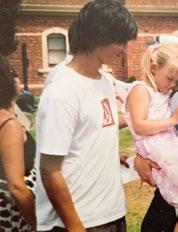
She could see that the police career she had hoped for as a child was still an option and so grasped it with both hands. Her first post after graduating was Holden Hill patrols before she branched out into other fields, like family violence and crime prevention
Later came roles with Media and Public Engagement Section and Critical Infrastructure and Security
Preparedness Unit But at her last post, ComCen, was where the broken state of SA policing became more obvious to her than ever
And in the cops themselves was where Brougham saw the symptoms of operating in a work environment unfit for any employees. Strained personal relationships, the loss of resilience and declining health were all evident to her
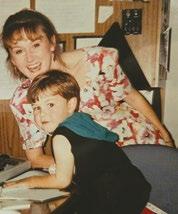
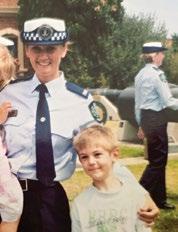
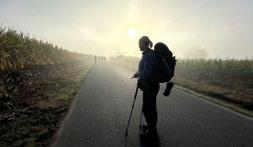
Colleagues, who were aware of her pending resignation, told her of their own wishes to leave the job behind.
Says Brougham: “There's not one person I've spoken to who didn’t say “Oh, f--k, I'd love to leave. Would love to ’ Like, there's not one person (who didn’t say that)
“You hear that day after day after day, and you can hear in their voices that they don't want to do it anymore And it gets to the point where their morale just dies ”
Another crisis Brougham points to is the loss of experienced police officers, particularly those who quit owing to the denial of career breaks.
She knows of one member who sought a break to work for British Aerospace Systems SAPOL refused her request She quit
“They denied her,” Brougham says, “based on (the assumption) that the experience she would gain would not assist the organization (SAPOL) in any way.
“But, hang on, maybe she’d bring back an idea or two And, if she didn’t, well, so be it ”
Still, as she finally left the job, for the sake of her well-being, she did go with some positives on which to reflect One was the camaraderie she found in the Holden Hill Family Violence Investigation Section
Another was the acknowledgement she received, not from high-level management but rather the familyviolence victims she served
“Even a letter from a victim to say: ‘You did a good job,’ that's enough to keep you going for the next 30 victims,” she says
1. Brougham on a school visit.
2. With the children on graduation day.
3. On the Camino de Santiago, Spain in 2025.
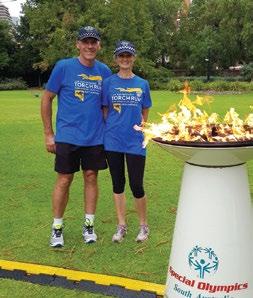
4. With partner Inspector Dave Paparella (ret) during the Special Olympics torch run.
Brougham is now able to take her experience into a new job She knows that others have found the style of executive management in other fields far superior to that of SAPOL
Former country police prosecutor Sonya Shillabeer, who quit SAPOL last year, is one of those others. She quit and moved on to a new career with a federal government agency.
“(At the agency) I can't believe the way they treat us,” she told the Police Journal (spring 2025) “People are looked after and cared about
“I was sick for a couple of days and got three messages One was my manager to ask how I was People are just valued It’s how people should be treated
“So I'm just so grateful that I've left SAPOL . It was just absolutely appalling. ” Brougham has indeed decided to remain in the workforce and is about to take on a role in biosecurity.
The greatest concern with which she left SAPOL was for the “dedicated colleagues” who remain in the job, whether reluctantly or not
Her warning was that, without “genuine structural change”, SAPOL “risks losing not only its people but the trust, capability, and continuity upon which effective policing depends” PJ
See Meegan Brougham’s Last Shift letter on page 55.
BY BRETT WILLIAMS
While some might wonder whether a racetrack greyhound could ever make a good family pet, some Police Association members now know the answer.
He is their dream dog. Their white and tan greyhound, Moe, does not dig, bark, demand attention, or run amok He has no aggression, is a calming presence, and relieves his human parents of their stress
Senior Constable Gemma Scott and Brevet Sergeant Kyle Hurcombe insist that four-year-old Moe is the “easiest dog we’ve ever had” And their two children, both under five, are likely his biggest fans They adore him
So, adopting Moe through the Greyhounds as Pets (GAP) adoption programme – run by Greyhound Racing SA – has worked out perfectly for the whole family.
“He brings a huge amount of comfort,” Gemma says “He's really unflappable, just a really laid-back dog It's just so nice to have him there and excited when you come home and just have his company
“At home, I often just sit on the carpet with him while he’s on his bed and I just pat him It’s such a relaxing thing to do, a really nice sensory experience I think every workplace should have a greyhound. ”
And, of course, the pleasure of Moe extends to the children, whose parents make sure they do not “overcrowd him”
“He's really good,” Kyle says “He puts up with them and loves running around the backyard where they play with him They'll spray him with the hose and all sorts, and he's fine with it He is really good with them ”
And nothing about Moe, particularly his ease with children, ever came as a surprise. Gemma and Kyle had studied his profile, and those of three or four other dogs, on the GAP website. And they knew greyhounds to be “sleepy creatures” without the need for loads of exercise
Plus, Moe came with experience of living indoors after suffering an injury in 2024 His Mount Gambier-based trainer had taken him in to manage his recovery And, as the trainer had a young daughter, Moe was able to show that ease he had with children
So, with all that Moe offered as a pet and companion, he stood out to Gemma and Kyle.
They became foster parents to him in April 2025 and took almost no time to warm to the lean ex-racer. In fact, four months later, they reached for an application form to adopt him
By then, they had decided that Moe was indeed the perfect fit for them, and Greyhound Racing SA agreed The organization assessed Gemma, Kyle and their children as a suitable adoptive family
Gemma and Kyle had grown up with dogs but, before the adoption, knew “not a lot” about greyhounds Their first interaction with the breed came after they had wound up a camping trip and stopped off at a Minlaton shop
“The shop lady had a greyhound in the shop with her, and it would come up and greet customers as they came in,” Gemma recalls.
“This greyhound came up to us as we came in and she was beautiful She was so affectionate and very calm She just sort of leaned her whole body on our legs and we got talking to the lady about her ”
That experience stayed with the two dog-lovers and was a strong influence in their decision to adopt Moe They had lost their last dogs, a German shepherd cross and a German shorthaired pointer, to old age and illness respectively in 2024.
“We’ve both always had dogs,” Gemma says, “always lived in a house with dogs Our kids are now four and two-and-a-half and it was really important for us that they grow up with dogs as well Home doesn’t feel the same without a dog ”
The only issue the parents had to consider was that injury Moe had suffered on the track It was a broken back leg, and it left him with no future as a racer. Fortunate to avoid euthanasia, he underwent surgery which pieced his broken leg together with plates and screws.
“We had it checked again through GAP,” Kyle says “They sorted everything and we just monitored it to make sure it wasn’t going to be a long-term issue Not that I think that would’ve mattered anyway because we warmed to him so quickly ”
But the injury did leave Moe with an unusual kind of limp
“When he walks,” Gemma says, “every sort of fourth or fifth step, he will do like a little hop, skip and a jump on that leg. But we've been assured that he's not in pain. It's just purely because his leg is so full of metal and screws ”

2
“He brings a huge amount of comfort. He's really unflappable, just a really laid-back dog. It's just so nice to have him there and excited when you come home and just have his company.”
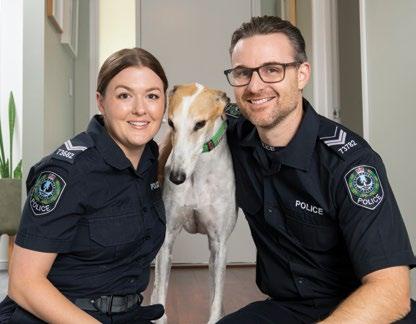
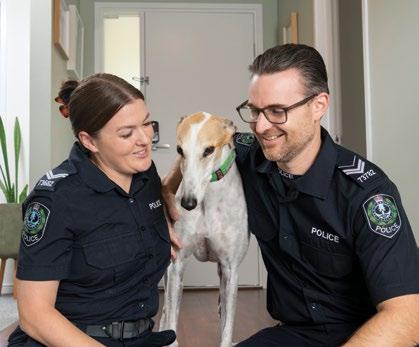
1. Gemma and Kyle at home with Moe.
2. Chloe (age two) patting Moe and playing with the hose in the backyard last December.
In the process of adopting Moe, Gemma and Kyle had the advantage of a GAP initiative known as Greyhounds as Mates Launched in 2023, it provides exclusive benefits to members of the Police Association and the United Firefighters Union.
Any greyhound which members of either union adopt comes fully vaccinated, microchipped, vet-checked and desexed The dog will also have had any necessary dental work done
The $200 adoption fee does not apply and, for six months, Greyhounds as Mates covers veterinary work to the value of $3,500 It also supplies a takehome provision pack (bedding, toys and leads)
“We haven't paid for anything,” Gemma says. “Moe was free to adopt and came with a bag full of treats, toys, doggy shampoo and a jacket. They do get cold in winter and need to wear a jacket

“Get on the website. Have a look at the dogs that are up for adoption because they’re such loving creatures who deserve good homes.”
“And, then, when we had concerns about his existing injury, they (GAP) covered the bills associated with us taking him to the vet It feels like the deal of a lifetime, really ”
GAP manager Steven Weinert has seen the Mates initiative as a “wonderful partnership” with the Police Association and hopes to see it develop further.
“We want to expand the initiative,” he says, “and ensure that it is well known across the Police Association membership. ”
Both Gemma and Kyle proclaim their “100 per cent” support for Greyhounds as Mates, which they recommend to their colleagues
“Get on the website,” Gemma says “Have a look at the dogs that are up for adoption because they’re such loving creatures who deserve good homes And you can set your parameters depending on your needs. ”
Kyle assures his workmates that greyhounds, because of their laid-back nature, do not need “heaps of outdoor space”
“They're not running around bowling things over,” he says “They don't have that physicality, even though they’re big They're not really comparable to other bigger dogs
“I think if we had the room to be able to fit two of them in the back of the car, we’d already have two ” And doubling up is a positive according to GAP manager Steven Weinert.
“We love to place dogs with previously adopted GAP dogs,” he says. “It works very well for the existing greyhound as well as the new greyhound as they love company ”
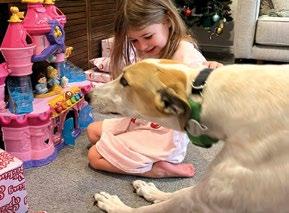
3. Moe’s first night in his new home. 4. Thea (age four) and Moe opening Christmas presents last year.
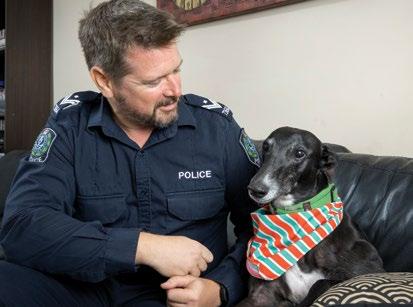
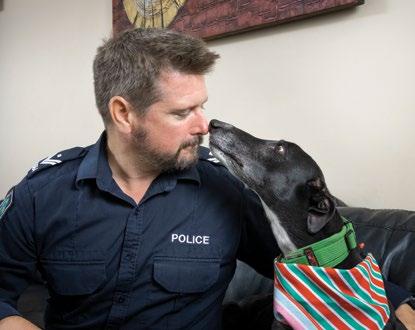
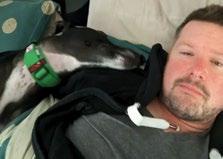
5. Cuddles at home on the couch with Dan. 6. Enjoying some time out in the yard. 7. One of those days when Dan woke to find Cuddles lying next to him.
Senior Constable 1C Dan Oliver had a plan to head over to Angle Park for a come-and-meet event back in 2024 It was just to have a look at the greyhounds on offer for adoption and get a feel for the breed He never expected to be driving home with a new addition to the family
But on board with him and his wife and two daughters, as they drove away that day, was black female greyhound Cuddles. The girls had immediately fallen in love with her and the adoption had gone ahead that same day So, there sat Cuddles on the back seat of the car with the promise of a new home
Dan did not have the broadest knowledge of greyhounds knew of a few others, including some friends, who had them as pets
“And I knew that they were quite energetic but also quite lazy,” he says. “Massive couch potatoes. So that was one of the things that kind of attracted me. We could do some exercises and then she'd be like: ‘Now it's nap time ’ ”
And that is pretty much what Cuddles has contributed to life in the Oliver household Although never a racing dog, she performs zoomies from one end of the house to the other And, after that, she plonks herself down for some serious rest and comfort
“These (greyhounds) are like trackand-field athletes,” Dan says. “They go really, really fast and then they don't do anything else in between. And yet everyone kind of expects them to be just constant energy, go, go, go ” GAP had, of course, assessed
Cuddles as suitable to live with children, as well as other dogs
That suited the Oliver family which had lost a kelpie cross to cancer 12 months earlier but still had a pug-cairn terrier cross
So, for a time, Cuddles had a dog companion but it, too, died just recently
But her humans, with whom she lives indoors, are company enough for her. And when Dan is at home, she sticks by his side “the entire time”. From the moment he gets home, she follows him everywhere
He even wakes sometimes to find her lying on top of him when his shifts have allowed him to sleep a little later in the mornings
“She just sneaks up there,” he says, “and she’s not a small dog ”
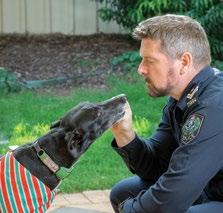
Out of the house, she has a favourite park, where Dan spends “a good 10 minutes” standing by while Cuddles “sniffs everything”.
On the menu for her back at home is dry food for her two daily meals along with sardines at breakfast and mince in the evening
“She eats about the same as an average dog for her size,” Dan says “She eats for how big she is, but I wouldn't say I've noticed any kind of financial hardship from having to feed a dog that size ”
And, of course, food has the same power of attraction for Cuddles as it does for any other dog. Her height makes her an effective “counter surfer”, as the Olivers discovered. They deal with that in the kitchen by simply placing their food out of her reach
“It's really nice to have the dog in your life and contribute to it for as long as you can. You don't get the greyhounds as puppies, so you lose quite a few years with them. (But) even with all that, I'd still get (another) one.”
The adoption experience has proved positive for the Oliver family, and Dan expects that he and his wife would “probably get another greyhound” after Cuddles
“It's really nice to have the dog in your life and contribute to it for as long as you can,” he says “You don't get the greyhounds as puppies, so you lose quite a few years with them. (But) even with all that, I'd still get (another) one. ”
And Dan values the ease of the adoption process under the Greyhounds as Mates initiative
“It definitely made the decision about getting the dog much easier,” he says “I bring it up every now and then (at work) when we start talking about dogs I say: ‘Greyhounds are awesome,’ when someone’s talking about getting a dog ” PJ Visit

The
Police Federation of Australia’s National Police Bravery Awards are now open.
This award has been developed for police and nominations are sought from officers across the country. While police work is inherently dangerous… some actions stand out. Do you know someone who has performed an exceptional act in exceptional circumstances?
1. The nominee must be a sworn police officer from an Australian police jurisdiction.
2. Nominees must have undertaken an outstanding act of courage or bravery, by selflessly putting themselves in harms way to protect others, going well beyond the call of duty.
3. Where feasible, the incident should have occurred in the past twelve months, however exceptions could include if the matter is subjudice or if other unavoidable delays have occurred.
The online nomination form is available at awards.pfa.org.au and close on 30 June 2026.
The National Police Bravery Awards will be presented in Canberra on Wednesday 28 October 2026.
Legislative protection exists for South Australian police acting in the course of their duties, discharging a power or performing a function
It is impossible to understate the importance of section 65 of the Police Act 1998 Members carry the burden of critical decision-making including use-of-force options: firearm, TASER, baton, defensive spray and empty-hand tactics
No legal protection extends to officers who take the law into their own hands and act beyond their authority.
Without the protection of section 65, any person could complain about, and take legal action against, an individual police officer over the manner of his or her arrest And frivolous and vexatious claims take years to resolve
In other Australian states in which immunity does not exist, police officers end up mired in civil claims, which cause them and their families overwhelming stress and anxiety
This naturally impacts on efforts to attract and retain police officers.
Of great concern to the Police Association is the denial of representation by SAPOL when members are summonsed to attend coronial inquests
Members received summonses to attend three recent coronial inquests – two into police suicides and one into a “fail to stop” – and were rightly concerned with written advice from the Coroners Court
It read: “If you deem it necessary, please make arrangements to obtain legal advice and/or instruct a solicitor well before the inquest. ”
In such cases, members immediately contact the association which clarifies whether, via SAPOL, the Office of General Counsel (OGC) is to provide representation,
The association view is that, while some officers receive SAPOL representation at no cost, funding should be provided to all staff at no cost, as happens in other states.
Steve Whetton Assistant Secretary Police Association

“You have to complete a PD89 before leave balance information can be provided ”
as per section 65, or they need the association to arrange representation
It is the responsibility of the OGC to advise members as to whether it intends, or does not intend, to represent them
This advice often comes late in the leadup to an inquest
In one recent case, it was immediately before a member was to give evidence that the OGC informed him that it would not be representing him.
This type of late notice reduces the ability of a member and the association to attain legal representation and causes significant distress.
Other issues follow when multiple members who require representation are to receive none from SAPOL The same law firm might not be able to represent all of them so there is difficulty in engaging individual representation at short notice The legal costs, too, are extensive
The association view is that, while some officers receive SAPOL representation at no cost, funding should be provided to all staff at no cost, as happens in other states.
Can’t leave without frustration
As previously indicated in these pages, and in correspondence with SAPOL (2022 and 2024), the employer refuses to provide members with accurate leave hours to prevent historical overpayments after separation/retirement
Correspondence with SAPOL (April 27, 2026) has again highlighted the unsatisfactory situation in which the demand is made of members planning their retirement to contact Shared Services When they do, the response is:
The flaw in this demand is that the PD89 requires a proposed separation date. But members cannot reasonably determine this date without first knowing their accrued leave entitlements and how much leave they are able to take prior to separation The issue is significant given that SAPOL timesheet records do not provide accurate information
SAPOL has previously provided advice that annual leave is credited on July 1 each year and is a combination of the leave a member has accrued from his or her previous service anniversary to June 30 and leave credited in advance that is yet to be accrued from July 1 to the member’s next service anniversary. Matters become more complicated dependent on when, in the relevant financial year, a member joined the academy 30 to 40 years previously
When members retire, they are entitled only to leave which has accrued up to separation, including police and long-service leave If they take more than that, it becomes an overpayment
The SAPOL separations general order indicates that:
“SAPOL has developed an exit management strategy which brings together an exit management workflow process that collectively forms a robust approach to exiting the organisation in a mature and respectful manner for employees ”
Many members find the process frustrating, even disrespectful, particularly when they cannot access basic information necessary to plan their retirement responsibly
The association holds to its view: that SAPOL, in conjunction with People, Culture and Wellbeing branch, establish a clear and practical process to enable members to plan their retirement accurately and avoid potential overpayments
For more exclusive offers and discounts, visit the Police Association Members Buying Guide at pasa.asn.au or join the Members Buying Guide Facebook group and get the drop on new offers and special deals.

when you join FREE as a Travluxe Pass Port member. Or upgrade to a VIP membership (discounted till end of July) to access savings of up to 50% off * .

*See pasa.asn.au for terms and conditions. Discount applies to normal pricing.
Dr Rod Pearce

Police officers are often first on scene — before paramedics; before firies; before anyone else In those critical early minutes, the difference between life and death might rest not on advanced hospital care, but on an automated external defibrillator (AED)
Sudden cardiac arrest (SCA) is one of the leading causes of death in Australia, and it can strike without warning. And SCA is not the same as a heart attack .
A heart attack is a circulation problem. A blocked artery prevents blood from reaching part of the heart muscle and usually causes pain (angina) and prevents effective muscle pumping A heart-attack victim is often conscious and breathing
Sudden cardiac arrest is an electrical problem The heart’s electrical system malfunctions, causing it to stop pumping effectively. And the chance of survival decreases by around seven to 10 per cent for every minute defibrillation is delayed. Without immediate intervention — CPR and defibrillation — death follows within minutes
A defibrillator delivers a controlled electrical shock to the heart And, contrary to popular belief, the shock does not “restart” the heart Instead, it stops chaotic electrical activity, allowing the heart’s natural pacemaker to re-establish an organized rhythm
The fibrillation (chaotic flapping) can be stopped with an electrical shock (“de-fibrillator”) to allow the pacemaker to reset the proper heartbeat . The “automated” part tells if there’s electrical activity or nothing
… the chance of survival decreases by around seven to 10 per cent for every minute defibrillation is delayed.
If the heart rhythm is shockable, the defibrillator will advise a shock If the rhythm is not shockable (such as a flatline), the device will not deliver a shock and instead instruct the rescuer to continue CPR
Modern defibrillators are designed for use by non-medical personnel . They analyse the heart rhythm automatically and provide clear voice instructions. They will not allow a shock to be delivered unless it is medically appropriate.
The adhesive electrode pads are applied to bare skin — one on the upper right chest, one on the lower left side of the chest These pads both monitor heart rhythm and deliver the shock
The defibrillator assesses whether a “shockable” rhythm is present It instructs the rescuer to stand clear and press the shock button (or automatically delivers the shock in some models).
It is important after the shock to continue CPR for two minutes before checking again to see if another shock is needed By keeping the oxygen circulating, the heart is in a better position to recover from the shock and start pumping normally
Early CPR keeps oxygenated blood circulating to the brain Early defibrillation restores an organized heart rhythm Together, they form the cornerstone of survival
Defibrillation within three to five minutes of collapse can produce survival rates as high as 50–70 per cent. After 10 minutes without defibrillation, survival becomes extremely unlikely. Suspect cardiac arrest if a person is
unconscious, not breathing normally or not responding to voice or touch
In custody environments, sudden collapse must be treated seriously and assessed immediately If in doubt, treat as cardiac arrest
It is important not to get shocked yourself so ensure neither you nor anyone else is touching the person before shock delivery. After the shock, resume CPR immediately unless the device advises otherwise. Remember that unique situations exist in custody settings and, if there is a wet surface or metal around, you might be at risk of electrocution
Good Samaritan protections exist in all Australian states and territories to protect individuals who provide emergency assistance in good faith Police officers acting within training and policy are protected when using a defibrillator appropriately.
Myth: you can hurt someone by using a defibrillator
Reality: the device will not deliver a shock unless required
Myth: you must be medically qualified Reality: defibrillators are designed for lay responders
Myth: if someone has a pacemaker, you cannot use it. Reality: avoid placing pads directly over a visible pacemaker bulge — otherwise proceed as normal


Hyundai Inster $39,000 (Standard Range) to $42,500 (Extended Range). Inster
Cross $45,000 (Extended Range only)
Powertrain and range
Standard Range model 71kW/147Nm, 42kWh battery, 327km range, Extended Range models 84kW/147Nm, 49kWh battery, 360km range
All FWD with single reduction gear
Charging
AC 16 amp between four hours and four hours 35 minutes, 120kW DC charger 10%-80% in 30 minutes .
Performance
0-100km/h 11.7 seconds (Standard Range), 10 6 seconds (Extended Range)
Safety
Seven airbags, driver-attention warning, blind-spot collision assist, forwardcollision assist with junction turning, speed-limit assist, lane-keep assist, rear-cross-traffic-collision avoidance, rear-occupant alert, reversing camera
Inster, the smallest and cheapest Hyundai electric vehicle, is a compact yet stylish solution tailored for urban driving. Ideal for city dwellers who want sustainability without sacrificing practicality, this little SUV comes in two trim levels with Standard and Extended Range variants
From a design standpoint, Inster retains a quirky charm with its boxy silhouette, giving it a modern yet retro appeal
Rounded LED daytime running lights and pixel-inspired detailing on the front and rear lights add a high-tech aesthetic
Despite its compact footprint, Inster is surprisingly spacious inside thanks to its cleverly designed cabin. There’s comfortable seating for four adults: Inster’s flat floor and tall roofline provide stacks of head and leg room in both the front and rear
Rear 50-50 split-fold seats, which slide and recline, provide cargo flexibility The relatively small cargo space (280 litres) increases to 351 litres when rear seats are slid forward This increases to a substantial space measuring 1,350mm x 960mm when folded flat. There’s also a deep storage well under the floor.
With its focus on functionality, Hyundai has equipped Inster with practical features like USB and USB-C charging ports, 12-volt and 250-volt sockets, a wireless phone charger and a host of advanced driver-assistance and safety systems
The modern dash layout features a central 10 25-inch touchscreen infotainment system with satellite navigation, DAB+ radio, Apple CarPlay and Android Auto
When it comes to performance, Inster delivers a smooth, responsive driving
experience typical of EVs It shines in urban environments where agility and ease of manoeuvring are key
The electric motor provides instant torque (147Nm) making it quick off the line in city traffic Inster’s small size and light steering make parking and navigating narrow streets effortless.
But this is not just a city car. Inster takes highway cruising and long hills in its stride without raising a sweat. Ride and handling are very good and the cabin is generally quiet
A smart 10 25-inch digital instrument display keeps drivers informed and access to four drive modes (Eco, Normal, Sport and Snow) is via a steering-wheelmounted button Paddle shifters provide varying levels of regenerative braking and iPedal (the ability to drive and brake using only the accelerator pedal)
Overall Hyundai Inster offers a compelling mix of design, functionality, and driving ease. It’s a well-thought-out EV for modern city life.

New Chinese electric carmaker Leapmotor released its first vehicle in various world markets (including Australia) in late 2024 . It’s C10 electric SUV hit the ground running with sharp pricing, a decent warranty and an established dealer network thanks to backing from car giant Stellantis
Designers clearly started with a clean slate and came up with a modern, medium-sized, five-seat SUV It appears well built with an interior that feels luxurious C10’s uncluttered dash has concealed air vents and, except for steering wheel buttons and stalk controls, there’s no other switchgear
Two models, Style and Design, each feature a massive 14 . 6-inch highdefinition centre touchscreen with some popular embedded apps including Android phone mirroring but there’s no Apple CarPlay Both variants offer a high level of standard equipment and there’s Wi-Fi and 4G systems enabling Over-the-Air updates and the ability to remotely run some car functions from a smart phone
Electrically adjustable front seats, which are heated and ventilated in Design, offer good comfort and excellent visibility. Rear 60-40 seats are also comfortable – enormous leg room but no slide and recline functionality. Rear cargo space is generous with 581 litres rising to 1,410 litres with rear seats folded
C10 scores a five-star ANCAP rating with its seven airbags and a comprehensive suite of driver-assistance and crashavoidance technologies
No key here: unlock with a card-swipe over the driver’s side external mirror, then swipe over the phone charger, select drive with the stalk control and you’re away Drivers score a decent driving position, small comfortable steering wheel with buttons for some car functions and a 10 25-inch instrument display Frustrating, however, are numerous everyday adjustments such as air conditioning, drive modes and even the exterior mirrors which require scrolling through centre screen menus.
On the road C10 Design delivers a quality driving experience. While not the quickest electric car out there, its reardrive electric motor offers spirited acceleration, with plenty of power and torque for any situation It exhibits less tyre and wind noise than others in this space and offers good ride and handling characteristics
Drivers will appreciate its very clear reversing/360-degree camera view that provides a distance counter when just over one metre away from a fixed object.
Using the screen, drivers can also select four different drive modes, including Sport and Custom, three levels of regenerative braking and a one-pedal mode
Model and price
Leapmotor C10 electric SUV, Style $45,888, Design $49,888 (plus OPRC)
Drivetrain and power
69 9kWh battery driving rear electric motor producing 160kW (power) and 320Nm (torque).
Range/charging
Driving range up to 420km (based on WLTP cycle), at maximum DC charging rate of 84kW, 30-80% in 30 minutes or just over six hours at 6 6kW Standard equipment
Both models feature dual-zone climate control, panoramic fixed sunroof, wireless charging, 12-speaker DAB+ audio system, powered front seats and dashcam recorder. (Design variant adds silicone leather seats, heated steering wheel, heated and ventilated front seats, powered tailgate, multi-colour ambient lighting and 20-inch alloy wheels )
Warranty
Seven-year/160,000km
warranty on vehicle, eight-year/160,000km battery warranty


Persistent shortage in listings, strong buyer demand and interstate migration has led to Adelaide’s property market emerging as one of the most competitive housing sectors in Australia House and unit prices rose significantly in 2025, ranking our city as the fourth most expensive city in Australia.
According to the PropTrack Home Price Index December 2025, Adelaide was the best performing capital city Home prices increased by 0 8 per cent from December 2024 to a median value of $908,000, an increase of $101,600 Adelaide homes are now on average $50,000 more expensive than in Melbourne
$489,000 is the median price for a regional SA home and $680,000 is the median price for a unit.
With house prices expected to reach historical heights, PropTrack predicts national growth to slow to around 5 per cent by the end of 2026 compared to the 8 5 per cent increase in 2025
Low house supply and affordability constraints will likely see buyers broaden their search to outer-metro and regional locations Competition for homes under the $1 million price point will remain high. Adelaide will continue to appeal to property investors owing to demand, and a 3 6 per cent rental yield reached in 2025
Adelaide homes are now on average $50,000 more expensive than in Melbourne.
What does this mean for current and aspiring homeowners?
High home prices can mean you might have significant home equity Estimate your home equity by subtracting the amount owed on your mortgage from your property’s current market value. This equity could be used to renovate or upgrade your home. To calculate your property’s market value, visit policecu.com.au/free-propertyreport for a free property report
This is the time to check your rate and ensure it’s competitive Refinancing to Police Credit Union is easy, we’ll do the hard work for you Platinum members could save thousands of dollars with a low rate, zero monthly or annual fees, and $0 in package fees*
Many first home buyers are considering more affordable suburbs further out of Adelaide city, as well as pivoting to units, apartments and townhouses If you’re ready to purchase, arrange pre-approval so you’re able to act quickly when you find your dream property
Police Credit Union offers loans to first home buyers with as little as a 5 per cent deposit and 40-year terms to assist with reducing regular repayments
In good news for investors, rent will continue to stay high in 2026. If you’re in the market for an investment property, research the popular areas to rent and consider buying a property that you could hold onto for a while
Bank on Police Credit Union to help
Whether you’re entering the property market, refinancing or looking to invest – Police Credit Union can help. Platinum members pay $0 in package fees, receive discounts off selected interest rates and have access to their very own relationship manager, Glenn Lewis. Glenn is available to meet you personally or chat on the phone, call 0421 243 741 or email platinum@policecu.com.au. Visit policecu.com.au/platinum to find out more
Police Credit Union Ltd (PCU) ABN 30 087 651 205 AFSL/Australian Credit Licence 238991. Terms and Conditions, fees, charges, lending and membership criteria apply. Full details upon request. Information correct as at 03/02/2026 and subject to change. *Excludes Business Banking &/or Commercial Loans and loans to a Trust or Self-Managed Super Fund. Please consider your circumstances before deciding if the product or advice is right for you. PCU reserves the right to withdraw offers or amend product features at any time. Property reports are guides provided by CoreLogic Asia Pacific Pty Ltd ABN 67 087 759 171, please refer https://www.policecu.com.au/free-property-report/.
Whether you’re buying your first home, selling an investment, or upgrading the family residence, conveyancing can be more complex than it seems. Avoid costly mistakes. One missed detail in the contract or a poorly handled Form 1 can have serious financial consequences.
☑ Trusted by police and first responders for over 50 years
☑ Expert property & conveyancing lawyers - not just document processors
☑ Clear advice, no legal jargon
☑ Offices across SA & interstate
TGB offers a free initial 30 minute appointment about your residential contract and/or Form 1 and a 10% fee discount for PASA members, their families and retired members.
Scan the code to send us an email and one of our team members will be in touch soon!


Leading Australian law firm Tindall Gask Bentley is the preferred legal services provider of PASA.


Buying or selling property is one of the biggest financial decisions you’ll make. But in a fast-moving market, especially when you’re balancing shift work and family life, it’s easy to rush. Here are three common (and costly) mistakes we see.
1. Signing before the Contract is reviewed
A standard contract isn’t always “standard”. We regularly see clauses that:
• limit buyer protections
• weaken finance conditions
• create unclear settlement obligations. Once you sign, you’re legally bound. Always have the contract reviewed before signingnot after.
2. Finance isn’t properly protected
Pre-approval isn’t unconditional approval. If your finance clause isn’t correctly drafted, you could risk losing your deposit if funding falls through. A properly structured clause with realistic timeframes really matters.
3. Verbal agreements aren’t enforceable
If repairs, inclusions or timing arrangements aren’t written into the contract, they may not be enforceable. Property disputes often arise from assumptions. Put everything in writing.
Conveyancing is risk management.
It’s not just paperwork. It’s about protecting your deposit, your settlement and your biggest investment. Before you sign, get advice.
Kate Alice Marshall Pan Macmillan Australia
There is a girl in a basement. The door has stopped opening. The light is gone.
Nearly out of food and water, she makes one last attempt to escape. But if the door opens at last, will it mean salvation, or only the beginning of her fight to survive?
Audrey is a search-and-rescue expert who never stopped looking for her best friend, Janie, who disappeared when they were teenagers Janie used to love the local legend of a forest witch who saves girls from bad men, but Audrey knows now that for every one saved, there's always another one lost
When she stumbles upon evidence in the forest that a teenage runaway might have actually been kidnapped from land belonging to the town's most prominent family, she must dig through decades of secrets to reveal the biggest one of all: what happened to the girls before?

For your chance to win a book, send your name, phone number, work location and despatch number, along with your choice of book to giveaways@pj.asn.au
Mercedes Mercier Penguin Random House
At a secluded beachfront mansion on Kangaroo Island, three wealthy couples gather for a weekend of partying and luxury indulgence But beneath the glitter and excess, deep rivalries and explosive secrets fester between the old friends
When they wake to a shocking murder scene, they are gripped first by fear, then by suspicion. With ferry services suspended owing to a storm, the survivors and the killer remain trapped on the island together
Thrust into the biggest case of her fledgling career, rookie police officer Emily Quinn quickly discovers that the locals are mistrustful of outsiders
When her dangerous ex-boyfriend tracks her down, Quinn’s past and present collide in spectacular fashion, threatening not only her new life, but the investigation of the most gruesome crime in the island’s history.

Sailor, Soldier, Vicar, Farmer Dr Daniel Reynaud Signs Publishing
The first 45 years of Walter Dexter’s life read like adventure fiction . A merchant mariner wins decorations for bravery as a horseman in the army, then returns to sea to win awards for civilian bravery
Fiona Lowe HaperCollins Publishers Australia
A body on the beach An inheritance A family pulled apart
CC Cilento's best memories are of spending every summer holiday running wild in and out of the Friend family beach house with her cousins, James, Ollie, Felix and Lily.
It's the next best thing to having brothers and sisters They've continued the summer tradition into adulthood, getting together at the shack with its absolute beach frontage
But now a bombshell has dropped: the four Friend siblings have officially inherited the property – along with an unexpected fifth share to CC What starts out as the perfect gift, and a way of keeping the family connected forever, quickly devolves into an emotional power struggle
Soon, CC can't tell friend from foe. When a body is found on the shack's beach, has this family dispute turned deadly?
Then he quits it all to become a mere clergyman and wins more medals for bravery as an Anzac chaplain in another war
His disastrous failure as a farmer came next before living the rest of his life in the shadows Dexter’s life was stranger than fiction.
Walter Dexter, DSO, MC, DCM, remains the most distinguished and highly decorated Australian military chaplain of all time Of all the chaplains of the AIF, he gave the longest front-line service, from the earliest appointments in 1914 until demobilization in 1920
The soldiers held him in the highest regard for the work he did for their spiritual, material and emotional welfare

Sam Elliott Pan Macmillan Australia
A town engulfed in flames. The dying coastal town of Broughlet is being torn apart by wildfires, and the locals suspect arson.
A cult devoted to fire. The sinister People’s Cleansing Light is suspected of setting the blazes
A missing child Amid the choking black smog, Constable Dahlia Turner discovers a horrifying crime: her best friends have been murdered and their son abducted Finding him will mean confronting the violent past she’s spent years trying to outrun
But as danger closes in around her, can Dahlia uncover the truth before it burns away forever?

April 23
Deborah Lawrie HaperCollins Publishers Australia
They told her women couldn't fly commercial airliners. They told her women weren't welcome in the cockpit. They told her women couldn't work and have a family.
She told them she'd see them in court.
In an era when flight attendants were dismissed as “trolley dollies” and smoking on aeroplanes was practically mandatory, Deborah Lawrie broke barriers to become Australia's first female pilot for a major commercial airline
In this candid memoir, she explains her journey from being a young girl who, in 1950s Australia, was determined to fly to taking Ansett Airlines to court in a landmark High Court battle – and winning
Now inducted into the Australian Aviation Hall of Fame, Deborah Lawrie is the world's longest flying female airline pilot.
The story of "King of Pop" Michael Jackson Following his rise from a young star in the Jackson 5 to a global icon, Michael explores both the extraordinary ambition that drove his success and the personal challenges behind the spotlight.
Blending moments from his private life with recreations of his most iconic performances, Michael offers an intimate look at the man behind the music
Directed by Antoine Fuqua, known for Training Day, Michael stars Jaafar Jackson in his feature film debut, alongside Nia Long, Miles Teller and Colman Domingo

Disclosure Day
June 11
When undeniable proof emerges that we are not alone, the truth can no longer be contained A Kansas City meteorologist finds herself at the centre of a moment that will redefine life on Earth, as governments, media, and ordinary people confront the profound implications of first contact

Disclosure Day, directed by Steven Spielberg, stars Emily Blunt, Josh O'Connor, Colin Firth, Eve Hewson and Colman Domingo
The Odyssey
July 16
Christopher Nolan’s latest epic brings Homer’s Odyssey to life
The story follows Odysseus, the king of Ithaca, as he navigates perilous seas, encounters mythical creatures, and struggles to return home to his wife, Penelope, while his son Telemachus and the gods play their part in his journey.

The Odyssey stars Matt Damon (Odysseus), Anne Hathaway (Penelope), and Tom Holland (Telemachus), with Robert Pattinson, Lupita Nyong'o, Zendaya, and Charlize Theron in key roles
For your chance to win an in-season movie pass (courtesy of Wallis Entertainment), send your name, phone number, work location and despatch number, along with your choice of movie to giveaways@pj.asn.au

April 30
Nearly two decades after The Devil Wears Prada defined a generation, audiences return to the high-stakes world of fashion publishing
Set against a rapidly evolving media landscape, the film follows Andy Sachs as she returns to Runway, now carving out her place as a senior editor
At the same time, the formidable Miranda Priestly faces new challenges as the publication’s relevance is tested in a digital-first world
Their paths once again intersect with Emily Charlton, now a powerful figure in the luxury fashion space. Her success might hold the key to Runway’s future.
Meryl Streep, Anne Hathaway, Emily Blunt and Stanley Tucci reprise their iconic roles

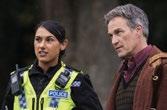

274 minutes, $34 95
Art-loving detective inspector Mick Palmer (Stephen Moyer, True Blood) singlehandedly runs the Heritage Crime Unit, investigating murders and thefts in the shadowy world of art, antiquities and priceless artefacts
When straight-talking young detective constable Shazia Malik (Nina Singh, Virdee) helps him solve the brutal killing of an art historian, he offers her a job
Together, the new partners investigate a Viking hoard smuggled from a prehistoric grave, dark family secrets at a Cornish recording studio, a sabotaged wine-tasting and the death of a millionaire obsessed with the sinking of the Titanic
While Malik adapts to life away from her overprotective family, Palmer navigates a budding romance with museum curator Rosa (Sarah Alexander, Coupling) and the shocking reappearance of his long-gone father, a notorious art forger (Larry Lamb, Gavin & Stacey). Solving crime is an art.

Series 1
239 minutes, $34 95
Divorce lawyer Fiona Fox receives a message from her estranged father and embarks on a journey to Ireland She uncovers family truths and her father's dark past and realizes her life's abandonment story was a protective lie
Question everything Trust no one
For your chance to win a DVD, send your name, phone number, work location and despatch number, along with your choice of DVD to giveaways@pj.asn.au
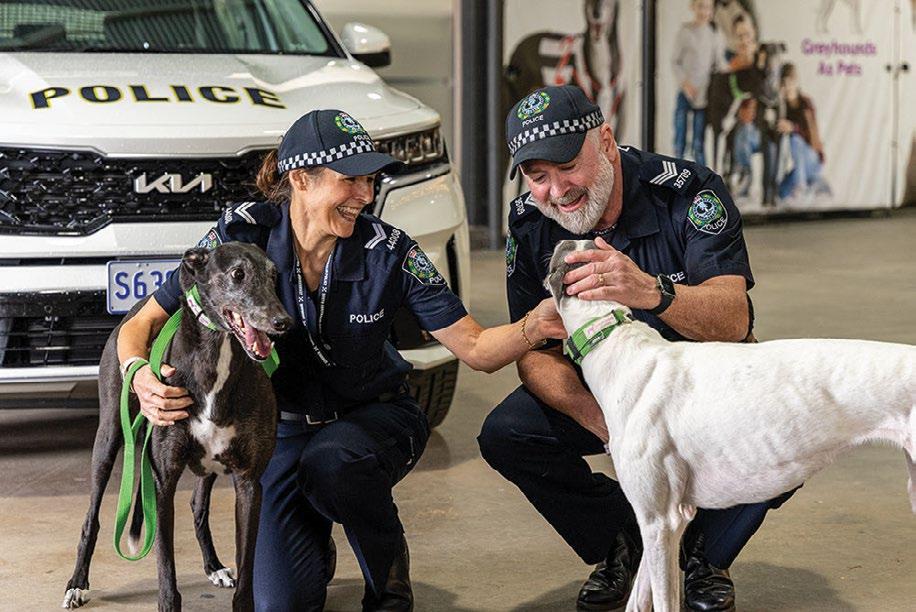
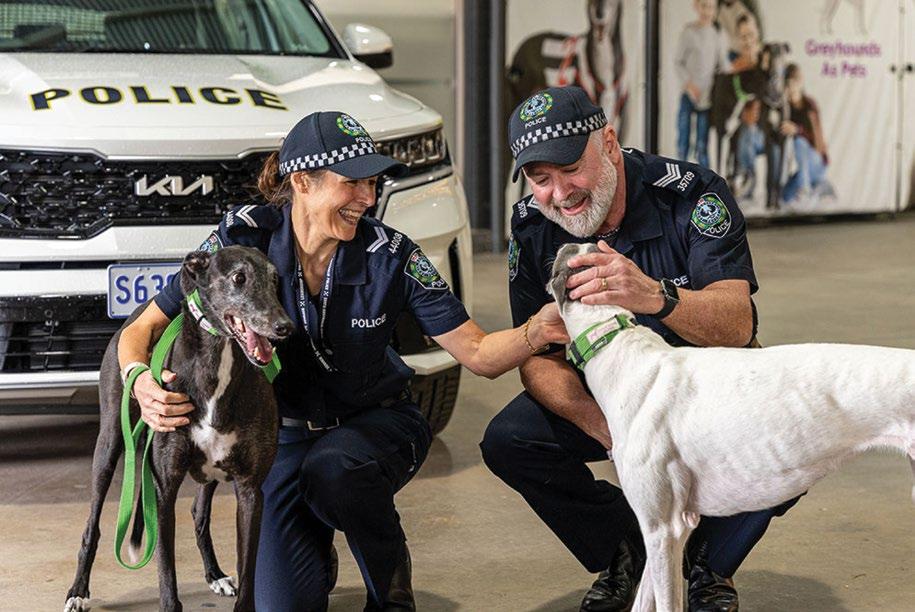



1. Faith Barnett, Delta Wardle and Chelsea Serafini.
2. Carlos Mendoza and Maddy Hoff.
3. Jaylen Whyte, Harlan McElroy and James Field.
4. Olivia Burgess and Peter Paech.
5. Megan Grimes and Joel Ryan.
6. Riley Brown and Jack McDonough-Stephens.
7. Leigh Ward and Clancy Jayne Ward.
8. Matthew Rowe and Ben Donkersley.








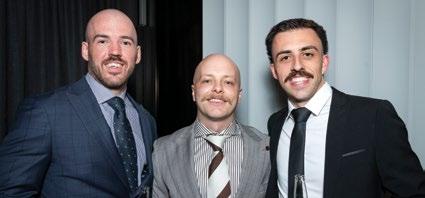

1. Matthew Walton, Nathan Petersen and Connor Cloak.
2. Cody Hoffricher and Ashlea Wellington.
3. James Candelaria and Elissa Catilo.
4. Janice Maseng and Megan Dini.
5. Aiden Hancock, Jack Wisneske and Griffin Evans.
6. Hudson Bennett and Emily Tweed.
7. Brooke Watson and Radharani Solomon.


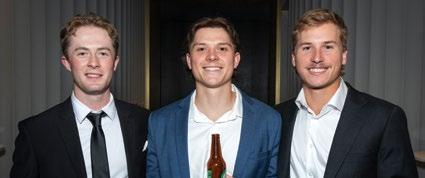


For the full version of The Last Shift, go to PASAweb at www.pasa.asn.au
Neil Anderson
Jessica Arnold
Meegan Brougham
Brett Harrison
Norman Hoy
Kevin Lawton
Mark Shaw
Graham Tomkins
Darren Watkins
Mounted Operations
42 years’ service Last Day: 02 .07. 25
Comments…
“Joining SAPOL as a member of Course 3/84, I have always felt honoured to serve the community of South Australia
“Throughout my career, I have been thankful for the enduring support of the Police Association of South Australia
“Policing provided me with the opportunity to work across many areas, including general policing in both metropolitan districts and country postings in the Riverland, as well as CIB and Special Tasks and Rescue Force for 23 years
“Working within a tactical policing section brought a unique sense of purpose and adrenaline, with each operation demanding absolute focus, discipline and trust in people beside you to resolve critical incidents It was deeply rewarding to be part of such a highly skilled and motivated group for most of my career, and I’m grateful for the camaraderie.
“I finished the final decade of my career at Mounted Operations Unit
where patrolling on horseback added a special dimension to policing.
“The most exhilarating part wasn’t just the ride, it was the partnership. You and the horse operate as one unit, which makes mounted policing a truly unique and fulfilling role
“Like any long career in policing, there were challenges along the way, but the support of colleagues and family can never be underestimated
“I leave the job feeling very satisfied and grateful, carrying with me many proud and happy memories of a career spent serving the community. ”
Jessica Arnold
Eastern District CIB
19 years’ service Last Day: 31 12 25
Comments…
“I joined SAPOL as part of Course 6/2007 and, at the time, believed it would be the last job I would ever have
“In December 2023, I was fortunate to be granted two years’ special leave without pay, which provided the opportunity to explore a new pathway within investigations in the insurance industry
“This has allowed me to continue working in a field I enjoy, while also achieving a more balanced lifestyle, with greater flexibility and weekends off
“The decision to leave (SAPOL) was easier than I had anticipated, however, it was not made lightly
“I sincerely thank the Police Association for its ongoing support and advocacy throughout my career. The work it undertakes for members does not go unnoticed and has been an important part of my journey ”
Senior Constable 1C Meegan Brougham
Communications Centre
20 years’ service Last Day: 05.03. 26
Comments…
“I have served across a diverse range of roles over nearly two decades My operational experience includes HHLSA patrols, the Family Violence Investigation Section, and the Crime Prevention Section
“I later worked within Media and Public Engagement Section, Critical Infrastructure and Security Preparedness Unit, and concluded my career within the Communications Branch. These roles provided me with a broad and, at times, confronting perspective of policing in South Australia.
“I have witnessed first-hand the volume and complexity of calls for assistance — many arising from genuine crises, despair, and emergency
“Over time, the cumulative exposure to public distress, frustration, and anger towards police began to take its toll, particularly when combined with the increasing pressure placed on front-line patrols which are consistently operating at or beyond capacity.
“During my time in Communications, it became increasingly apparent that the
demand placed on the organization far exceeds available resources
“Dispatching, once a role grounded in urgency and purpose, became overshadowed by the reality that there were simply too many jobs and not enough patrols to respond.
“This imbalance has been known for many years Practitioners raised concerns about the viability of the operating model long before it reached its current state, yet those concerns were often minimized or dismissed
“I have also observed a growing disparity in workload distribution across the organization, where highperforming members are relied upon heavily while others are permitted to disengage without consequence. This culture is unsustainable and contributes directly to burnout, low morale, and the quiet departure of experienced personnel
“Policing today is markedly more complex than it was when I joined The role increasingly impacts on mental health, physical well-being, family life, and long-term personal resilience These pressures are not abstract — they are visible in strained relationships, declining health, and the attrition of skilled members who can no longer absorb the cost of service.
“If SAPOL is to remain viable into the future, meaningful reform is required This includes courageous leadership, genuine engagement with those doing the work, significantly improved conditions, and remuneration that reflects both the difficulty and the personal cost of the role
“Recruitment alone will not solve the problem if retention continues to fail.
“I leave SAPOL with respect for the many dedicated colleagues I have worked alongside and concern for those who remain
“My decision to resign has not been made lightly, but it is the right one for my well-being and future
“It is my hope that this resignation, and others like it, are not viewed simply as departures, but as signals, that experienced members are reaching the limits of what can reasonably be asked of them, and that without genuine structural change, the organization risks losing not only its people, but the trust, capability, and continuity upon which effective policing depends
“Thank you for the support provided by the association during my career ”
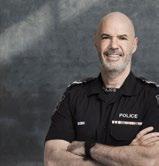
Brevet Sergeant
Brett Harrison
Southern District Intelligence Unit 29 years’ service Last Day: 20 05 26
Comments…
“I thank you for all your support and hard work (of the association) during my time with SAPOL and wish you all the best for the future ”
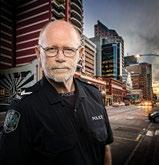
Senior Constable Noman Hoy Road Policing North 21 years’ service Last Day: 20.03. 26
Comments…
“It has been over 20 years of working the beat and I must say it has been eventful Having reached the ripe old age of 70, and my wife having some health issues that came as a shock to me, I was unable to continue working
“I was given a wonderful opportunity, serving as a police officer for the South Australian people, and it was a privilege
“I commend the association for all the tireless work that is done to ensure that those on the front line are protected and well cared for. The association's support is appreciated, and I thank all those working at the association
“My biggest shout-out goes to all SAPOL members past and present
“The job is not just any job It is a calling There is something that is innate in all those who take up the duty and, although it is one of the toughest jobs going, it is also one of the most rewarding and I ask all to never forget that.
“All the friends I have made, I thank you. ”

Eastern District CIB
40 years’ service Last Day: 02 03 26
Comments…
“I have been fortunate to have experienced a number of roles within my career which have included uniform policing/general patrols, the old Northern Command Response Division and Operation Mantle secondments, which were an absolute highlight, while the last 25 years was spent working within the CIB environment
“Working at Holden Hill CIB, Operation Counteract and Operation Mandrake, Protective Security Investigation and Serious Fraud Investigation were all enjoyable
“Many highlights throughout my career included a peace-keeping role with the AFP (International Deployment Group) working and living in the Solomon Islands, longterm secondment with the AFP/SAPOL Joint Counter Terrorism Team and a brief stint with ICAC .
“The latter part of my career involved a seven-year stretch at Northern District CIB which, as many would know, was and is a fastpaced and challenging workplace I worked with many fantastic and hardworking people who, both uniform and plain clothes, deserve all the accolades they get
“The majority of my ND managers were polite and respectful. However, there were certainly times when this was severely challenged and that was a shame.
“I was lucky to have spent the final years of my career working and living in Sydney with the AFP/Office of the Special Investigator which was truly an experience.
“Having returned from the OSI, I held the position as volume crime manager at Eastern District CIB. A fantastic place to work with a great crew and a positive and responsive management team
“It is time to sign off only three months shy of 40 years, having started my police career with Course 140 I can honestly say I have enjoyed every challenging minute, although some more than others ”

Neil
Communications Group
39 years’ service Last Day: 24 03 26
Comments…
“I thank the Police Association for the tireless support to members.
“From a young and naive lad in 1987, and after being operational for 20 years followed by 18 years behind a desk, it is now time to move on and enjoy what retired life has to offer
“I will always look back on my front-line times at Darlington, Port Pirie, Port Augusta, Millicent, Balaklava, Brinkworth and Port Wakefield as good times I have made many long-lasting friendships, both in and out of the job
“My last 18 years at Communications Group, a very under-rated area of SAPOL, also holds good memories for me.
“I leave with one message: don’t focus on the bad stuff, there will always be plenty of it but there is always something positive there as well if you look for it. ”

Inspector Kevin Lawton
State Intelligence
40 years’ service Last Day: 02 02 26
Comments…
“I leave SAPOL with many fond memories. The sworn and unsworn staff are a wonderful group of people and have made the journey eventful and enjoyable To each of you: thank you for the support and comradeship
“Some of my most enjoyable times were as a patrol officer at Elizabeth in the late ’80s through to 2000 (broken by a three-year stint at Prosecution) and as a vixen at Port, Henley and Parks, then as the mitre at Parks
“The sergeants and senior sergeants are the most important and influential cohort of all the ranks in my view.
“Mentors of significance include Bettsy, Kempy and in my transition to officer rank, Fio, Dono, Les, Hoffy, Howard Davies, Graeme Barton and Gary Burns Each provided support and encouragement for which I am grateful
“Thank you to my wife, Gabby, daughters Natasha and Nicola, extended family and friends for their support in my journey
“Back in 1985, I commenced on an annual cadet salary of $12,683 (20-year-old) and upon graduation earned $17,250, plus penalties.
“The recruiting slogan at the time was Your Career for the 80s, (I still have the pamphlet) then A Challenging Career, Achieve More and now You Belong in Blue. I probably missed a couple, but it’s about attracting the right people.
“The late ’90s through to late 2000s brought the introduction of enterprise bargaining and the Police Association, under the stewardship of Peter Alexander and Mark Carroll, negotiated some historic pay rises without trading away conditions All members should be thankful for these achievements
“To those left behind, support each other, keep that looking-aftereach-other culture strong. It’s not SAPOL or the uniform that keeps South Australia safe, it’s the people employed by the organization and those wearing the uniform that make it happen Policing is about people
“I wish Wade, the executive and the delegates well moving forward in preserving the wages, conditions and protections they afford police when in need ”

Graham Tomkins
Public Protection Branch
41 years’ service Last Day: 01 03 26
Comments…
“I remember the anticipation and excitement, driving down from Port Pirie and arriving at the gates of Fort Largs on the first day of August 1985. It seems like it was yesterday. Some 40 years later, I leave with absolutely no
regrets I loved every minute, even if I can remember a call to attend Tara Hall sent shivers down the spine
“I was lucky enough to be allocated to course 4/85. Made some lifelong friends and ended up with a best mate for life. Colin ‘Kirky’ Kirkwood gets a mention, mainly for addressing my square-gating during marching drills
“From parades in the basement of 1 Angas Street, prior to walking the beats of Hindley Street, to finally the Joint Anti Child Exploitation Team, a most dedicated group of investigators
“I am honoured to have worked with so many great individuals and even better teams We had fun and achieved great results.
“I leave SAPOL very proud of my career. I hope that I earned the respect of those I worked for and that those I worked with enjoyed my loyalty and recognized that I gave my absolute best
“Thank you to the Police Association for the efforts that turned a modestly paid occupation into a well-paid career
“To all of you who I have had the absolute pleasure to work with, to those who have retired, a couple who have passed, I leave with fond memories, and a much better person for the experiences we shared. ”
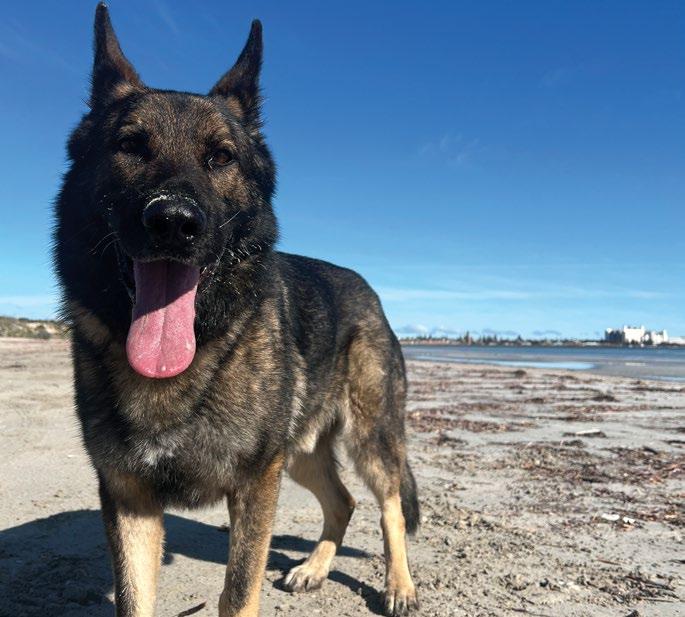
Retired Police Dogs SA is dedicated to supporting the welfare of retired SAPOL police dogs. Due to the nature of their work and high rate of pre-existing injuries, retired police dogs are ineligible for pet insurance. With some facing significant medical expenses after retirement, their families often struggle to bear the cost. Your support helps ease that financial burden and ensure these loyal animals receive the best possible care. DONATE NOW