

North Star Leadership Magazine
Thank you to everyone who took the time to suggest a name for our Leadership Magazine. We had some really thoughtful and innovative suggestions and it was hard to pick a winner. Our Ops Board were also given a list of the names (without who suggested them) and we are pleased to announce that the winning entry was……. “The North Star”. Congratulations to Gemma Calvey from Marketing, £25 credit will be added to your exchange account.
This entry was picked because The North Star is a powerful symbol of guidance, clarity and direction, values that sit at the heart of strong leadership. It closely reflects the meaning behind Polaris, the North Star itself, which has long been used to navigate, stay focused and guide others through uncertainty. The name captures our shared purpose as leaders: providing steady direction, staying true to our values, and helping others find their way.
Well done Gemma C
88% of people said it would be helpful for Polaris to host a day of Leadership Training, choosing a small number of training topics to be delivered face to face.
100% of leaders wanted a regular communication covering internal and external development opportunities.
Planning is underway for the first-ever Polaris Leadership Festival in 2026— online event with workshops, webinars, discussions and training.
The first planning meeting is arranged in March 2026 – watch this space!
A variety of content was suggested by respondents including more bespoke training delivered by subject matter experts leading to accreditation where possible.
This pilot magazine of our leadership magazine is part of that response, with quarterly editions to follow from January 2026.
We were slightly delayed in getting the first quarter –we will aim to ensure this is quarterly from now on
A large number of respondents also spoke about wanting wider development opportunities beyond formal training, including secondments, coaching and mentoring.
We’re working with internal and external experts to develop new modules and explore accreditation routes where possible.
We are currently undertaking a refresh of e-learning courses including introducing several, new bitesize courses that only take between 20-30 minutesperfect to fit into a busy schedule .
Microaggressions and Unconscious Bias training is now available on Learnative as part of this work – more will follow.
We’re actively building this into future projects and into regular magazine features.
New course available May 14th 10.00-11.30. See below for more details.
This is continuing, we hope to consider this more as the year progresses.
Ruchi Chawla, has a change of job role as a Senior Quality Intelligence Lead with effect from February 2026 and is reporting directly to Nicola Thomas, Managing Director, Director of Quality and Learning.
As part of her new role Ruchi will be working with the Information and Performance team, colleagues from different services across the Polaris community, and different stakeholders to support with reporting requirements and be able to draw insight and intelligence to inform each area of the quality and learning strategy and agenda.
She will continue with her strategic role as PRICE Lead for the Polaris community and will be looking at the possibilities of transition to an internal behaviour support model with the L&D team. Ruchi continues as Fostering lead to support fostering services with regards to service reviews and inspection support activities. She is involved with School Governor role
for Polaris Schools and also supports with Quality visits to Residential Care homes.
Emily Harrison has joined us as an L&D Trainer to support the education agenda. Emily has a Primary Education degree and extensive experience in teaching, childcare leadership, and customer-facing roles. She is experienced in designing and delivering engaging learning experiences, mentoring colleagues, and managing teams to achieve goals.
Last year, Gareth Leckey moved on from the community, and we’re delighted to welcome his replacement, Aislinn Cooper, who joins us from 1st May. Aislinn is currently an inspector at Ofsted and will take up the role of Senior QA Lead for Residential, bringing with her extensive experience of inspecting regulated services. As well as Residential, she has extensive experience of fostering and Voluntary Adoption Agencies so we are really excited to welcome her to our community.
Tanya Fuller
Service: Education
Team: Redstone Hall School
Job Title: Head Teacher
Derek Fance
Service: Education Team: Head office
Job Title: Executive Head Teacher
Karen Murdoch
Service: Fostering Team: Orange Grove Southern Counties
Job Title: Registered Manager
Neil Hewitt
Service: Education Team: Elmy Hall School
Job Title: Head Teacher
Karen Bell
Service: Education Team: North Lakes
Kirby Moor School
Job Title: Head Teacher
Alex Burtan
Service: Residential Team: Headway
Job Title: Registered Manager
Victoria Palmer
Service: Education Team: Sutherland Hall School
Job Title: Head Teacher
Lisa Joy
Service: Residential Team: Dove
Job Title: Registered Manager
Kirstie Robinson
Service: Residential Team: Dove
Job Title: Dual Registered Manager
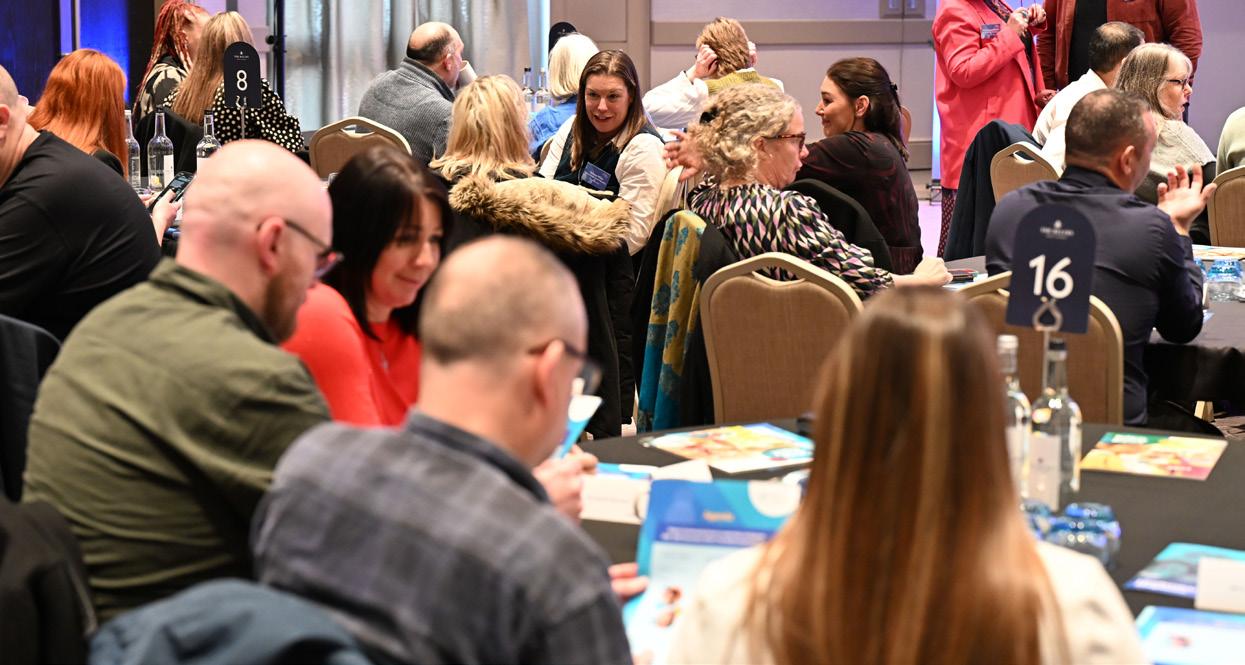
Goal setting for leaders –Thursday 14th May 10:00- 11:30 online.
The session aims to teach principles of effective goal setting and the SMART framework, alongside others. Taking a more academic approach and allowing time for reflection and discussion, this session includes:
Participants will engage in group discussions, exercises, and feedback to reinforce learning.
The agenda includes goal types, effective targets, pitfalls, and embedding goals into practice. Slides with links will be sent out following the course to all attendees. Click here to book your place on Learnative
Wider learning and inspiration –curated external opportunities such as free or low-cost training, conferences, useful articles, podcasts, and videos.
www.open.edu/openlearnwww.oxfordhomestudy.com www.alison.com
www.reed.co.uk/courses/free/management
The Leadership Programme is entering its fifth year, and interest continues to be strong. For the January 2026 cohort, we received 31 applications for just 16 places — a real testament to the value of the programme and the positive feedback shared by those who have previously taken part.
We know how disappointing it can be not to secure a place, and we work hard to ensure selections are fair and equitable. We’d encourage colleagues to keep applying when the timing aligns with their diaries and they’re able to commit fully to the programme. To support this, all dates for 2026 have now been scheduled in advance, making it easier to plan ahead…..
Friday 15th May @ 12:00 via Teams
Tuesday 26th May
Wednesday 27th May
Thursday 28th May
Thursday 11th June
Friday 12th June
Tuesday 21st July - AM
Tuesday 21st July - PM
Wednesday 22nd July - AM
Introduction to the Programme
All Things Leadership
HR for Managers
HR for Managers
Advanced Safeguarding
Regulation, Legislation and Monitoring of your service
Change Management
Commercial Context
Public Speaking, round up and reflection
To apply for the May-July Leadership Development Programme, click here before 29th April.
Please note that submitting an application does not guarantee a place. Successful applicants will receive a confirmation with their programme dates. If you are not offered a place this time, you’re welcome to reapply in the next admissions window.
Date
Friday 25th September @ 12:00 via Teams
Tuesday 29th September
Wednesday 30th September
Tuesday 27th October
Wednesday 28th October
Thursday 29th October
Tuesday 24th November - AM
Tuesday 24th November - PM
Wednesday 25th November - AM
Module
Introduction to the Programme
All Things Leadership
Advanced Safeguarding
Regulation, Legislation and Monitoring of your service
HR for Managers
HR for Managers
Change Management
Commercial Context
Public Speaking, round up and reflection
Applications for the September-November dates will open later in the year.
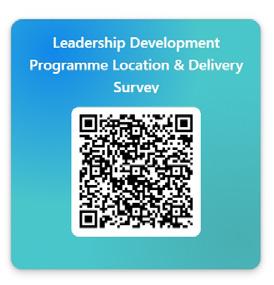
At present, all sessions are scheduled to take place in Bromsgrove, however we’re open to delivering the programme in other locations where there is sufficient demand. If you’d like us to consider running the programme elsewhere, please complete our short survey to let us know wither by clicking on the link or scanning the QR code.
Leadership Development Programme
Location & Delivery Survey – Fill in form
What our colleagues have said about their experience on the programme…
“There were many reasons why I would recommend this, however understanding ourselves as leaders was a great place to start, considering others learning styles and DISC profiles was really interesting. Gaining greater feedback from Polaris as a community rather than the individual agencies was helpful, I have already reached out to others who may be able to support some young people”
“The whole course was fantastic. I felt I took away key learning from every session and came away with ideas for how we can improve our service - some of which have already been implemented. It was, on the whole, well delivered with engaging and interesting content. I am already recommending it to my other colleagues on the local management team. I am excited to hear that this is just the start of the management pathway and look forward to the next step when it is ready”


In today’s volatile and fast-changing organisational landscape, leaders are increasingly required to set direction without the comfort of certainty. The ability to establish meaningful goals when the path ahead is ambiguous has become a defining leadership capability rather than a situational skill. In this thought-provoking podcast episode from Harvard Business Review, experts explore how leaders can balance clarity with flexibility, helping teams stay focused, motivated, and aligned even when strategy is still evolving.
Rather than relying on traditional goal-setting models built for stable environments, the discussion challenges leaders to rethink how purpose, experimentation, and psychological safety shape performance. The conversation offers practical insights for leaders navigating complexity — from reframing uncertainty as a space for innovation to building shared ownership of evolving priorities.
For leaders striving to maintain momentum amid ambiguity, this episode provides both reassurance and actionable strategies, highlighting that effective direction-setting is less about predicting the future and more about enabling teams to move forward with confidence.

For leaders who prefer evidence over intuition, the science of goal setting offers powerful insights into how motivation, focus, and performance actually work. In an episode of the Huberman Lab podcast, neuroscientist Andrew Huberman explores the biological and psychological mechanisms that shape how humans set, pursue, and achieve goals.
Drawing on research from neuroscience, behavioural science, and performance psychology, the discussion moves beyond traditional productivity advice to explain how brain chemistry, attention systems, and reward pathways influence sustained progress. For leaders interested in optimising both their own effectiveness and that of their teams, the episode translates complex science into practical strategies — from structuring goals to harnessing motivation cycles and building resilient habits.
At a time when leadership increasingly intersects with wellbeing, performance science, and human sustainability, this evidence-based perspective offers a compelling reminder: effective goal achievement is not just a matter of discipline, but of understanding how people are biologically wired to succeed.
Click Here
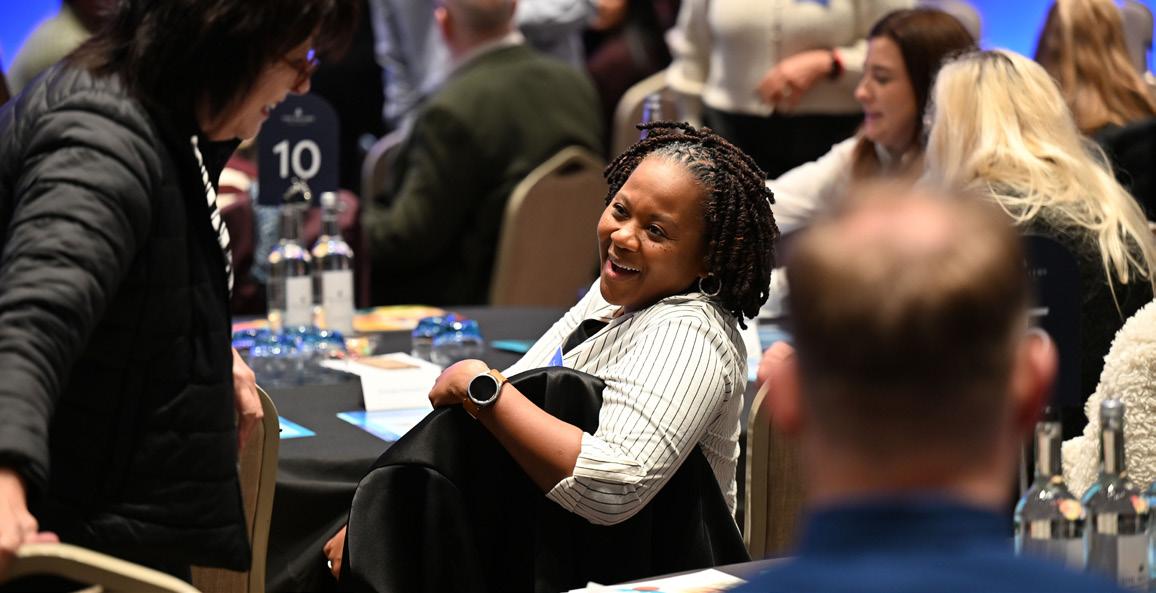
Some quick, high-impact resources to help bring strategy and vision to life through clear goal-setting.

Short read (MIT Sloan): From Vision to Reality: How OKRs Are Reshaping Team Goals
This practical article explores how organisations are using OKRs to connect long-term direction to day-to-day priorities—and how teams are evolving the approach. It’s a useful companion piece to the TED Talk, especially if you’re looking for a more “how-to” perspective.
• Try this: choose one priority for the next 90 days; write 1 objective and 3–4 measurable key results; agree how you’ll review progress (e.g., fortnightly).
From Vision to Reality: How OKRs Are Reshaping Team Goals in 2024

Video (TED Talk): Why the secret to success is setting the right goals | John Doerr
In this TED Talk, John Doerr (who introduced OKRs to Google) explains why goals only work when they are specific, measurable, and tied to meaningful outcomes—not activity. It’s a great watch if you’re translating big vision into what teams will actually deliver.
• Listen for: the difference between a goal and a measurable result; examples of strong OKRs; how the right goals create focus and momentum.
Why the secret to success is setting the right goals | John Doerr | TED (https://www. youtube.com/watch?v=dIkSiXVd1ws)
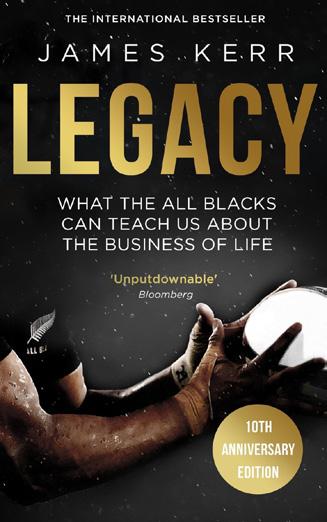
Legacy is less a manual on setting goals and more a meditation on what truly sustains high performance. Drawing on the culture and practices of the All Blacks, James Kerr explores how purpose, values, and daily habits shape not only outcomes but the people and organisations behind them. For leaders, it’s a reminder that strategy is not just about what you want to achieve—but who you are becoming in the process.
Available to purchase from here
Legacy: What the All Blacks Can Teach Us about the Business of Life: Amazon.co.uk: Kerr, James: 9781472103536: Books

A work sheet to help you plan and set SMART targets dgh-smart-goals-worksheet-2048x1448.jpg (2048×1448)
Information of how to have an effective coaching conversation with staff members How to Hold a Coaching Conversation (Tips & Templates)


by Ellen Copperthwaite, Head of Learning & Development
Researching for the new module on Goal setting for Leaders has made me reflect on the fact that, for me, effective goals are not simply about outcomes, but about growth, motivation, and alignment. The session highlights that goal setting is a critical leadership capability, providing clarity, direction, and accountability while connecting individual effort to organisational purpose. When goals are meaningful and clearly defined, they act as a powerful driver of performance and engagement.
One of the most impactful insights is the emphasis on how goals are set. Locke and Latham’s goalsetting theory (discussed in the session) demonstrates that specific and challenging goals lead to higher performance, particularly when individuals are committed and receive regular feedback. This resonated with my own experience; goals that are vague or imposed rarely inspire sustained effort, whereas cocreated goals support ownership and motivation.
The SMART framework offers a practical structure to translate ambition into action. By ensuring goals are specific, measurable, achievable, relevant, and timebound, leaders move beyond intention to execution. I was particularly struck by how SMART goals support accountability while still allowing flexibility through review and reflection.
Equally important is the exploration of intrinsic motivation through Self Determination Theory. The focus on autonomy, competence, and relatedness reinforces the idea that leaders must balance challenge with support if stretching goals are to inspire rather than overwhelm. Stretch goals, when carefully designed and supported, can encourage innovation and personal development, but without trust and resources they risk disengagement.
Overall, this reflection has deepened my understanding that effective goal setting is not a oneoff activity, but an ongoing leadership practice. When goals are embedded into daily routines, reviewed regularly, and aligned with values, they become a catalyst for both performance and meaningful development. And sufficient time must be set aside for these practices to work.