www.amberwarsaw.pl
www.warsawamber.pl


Jazdów
Lennona
You've been everywhere, you've seen everything, but... youhaven't experienced this yet!
e One & Only culinary & drunk & history experience!





www.amberwarsaw.pl
www.warsawamber.pl
Jazdów
Lennona
You've been everywhere, you've seen everything, but... youhaven't experienced this yet!
e One & Only culinary & drunk & history experience!
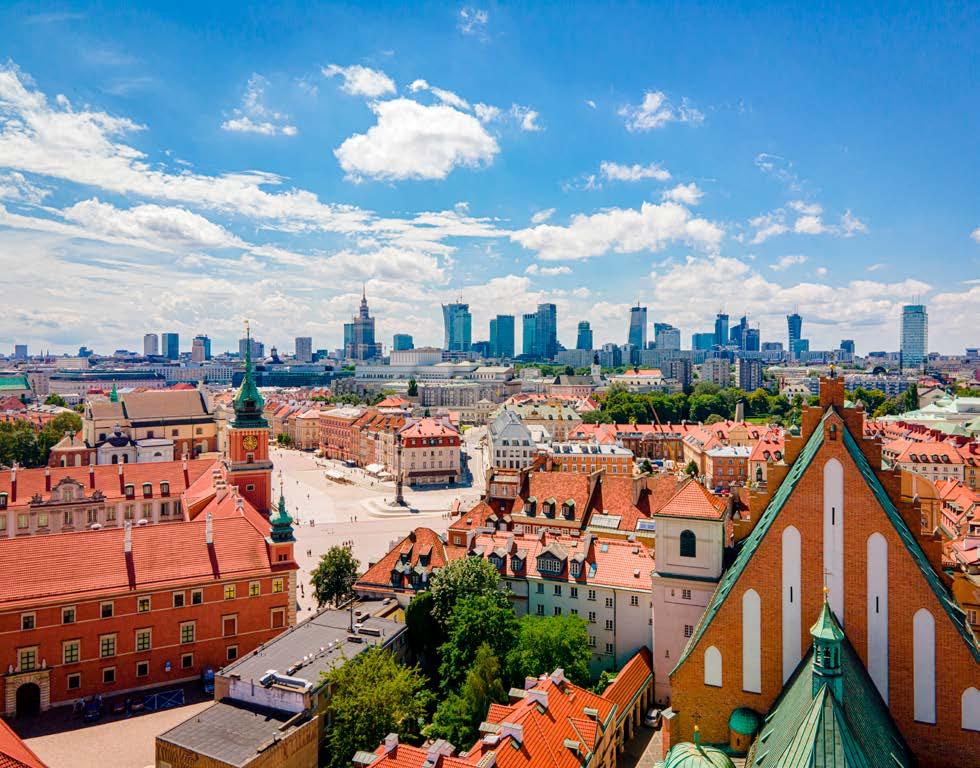
A bustling metropolis at any time of year, there’s plenty to do in Warsaw.
Located on the Vistula River at the very crossroads of Central Europe, Warsaw is the 7th most populous city in the European Union (1.8 million people) and a major cultural, political and economic hub.
The city has had a troubled history ever since King Sigismund III Vasa moved his royal court from Kraków, making Warsaw the new Polish capital in 1569. Pillaged by the Swedes in the 17th century, and occupied by Russia for most of the 19th century, Poland was off the map for 123 years before returning in the aftermath of WWI. The interwar period signalled a golden age for Warsaw, as the city developed on par with other great European capitals.
WWII brought new suffering, however. Occupied by Nazi Germany, Warsaw saw its cultural monuments defiled or stolen, and its Jewish population of 350,000 systematically exterminated. With liberation in sight, the Polish population rose up against their German occupiers in August 1944, only for Soviet forces to look on as the Nazis brutally crushed the Uprising and destroyed the city in reprisal. When the fires were extinguished, 150,000 more civilians were dead and German occupation had merely been traded for Soviet oppression, as Poland was pinned under Moscow’s influence for the next four decades, during which Warsaw was rebuilt in communist fashion, earning a reputation as a charmless city of concrete.
But that was then, this is now. A compelling blend of East and West, past and future, today’s Warsaw is a modern metropolis of complex character and rich rewards for those who get to know it. Gone are the gloomy images of yesteryear as the city restlessly evolves, buzzing with energy and optimism. Whether you’re here to explore trendsetting urban culture or UNESCO treasures, world-class dining or luxury boutiques, you’ll hardly be disappointed by all the modern capital has to offer. Enjoy Warsaw!
Warsaw In Your Pocket is designed to provide you with all of the ideas, tools and information you need to explore the city on your own, stay offline as much as possible, and really connect with the city you’re visiting.
Over here at IYP we still believe that the best way to understand the space you’re in is with a map, and the most immersive way to explore it is on foot. As such, our Sightseeing chapter is organised into geographic areas of interest with detailed district maps to help you navigate them. Selfguided district tours include descriptions of all the most important sites, plus local tips on where to eat and drink in each area. There are also intriguing ‘Crossroads’ moments that allow you to be lured towards alternative adventures, either on foot or via public transport.
Throughout the guide, page references are liberally used to lead you to related info on a topic elsewhere in the guide, while QR codes will take you to our website when we feel there’s more to know than can be expressed in print. Each venue listing includes a map coordinate (E-8, for example) that correlates to the city map on p.2-3. If there’s a specific venue you’re searching for, use the Venue Index in the back of the guide to quickly find it, or simply follow our informed suggestions.
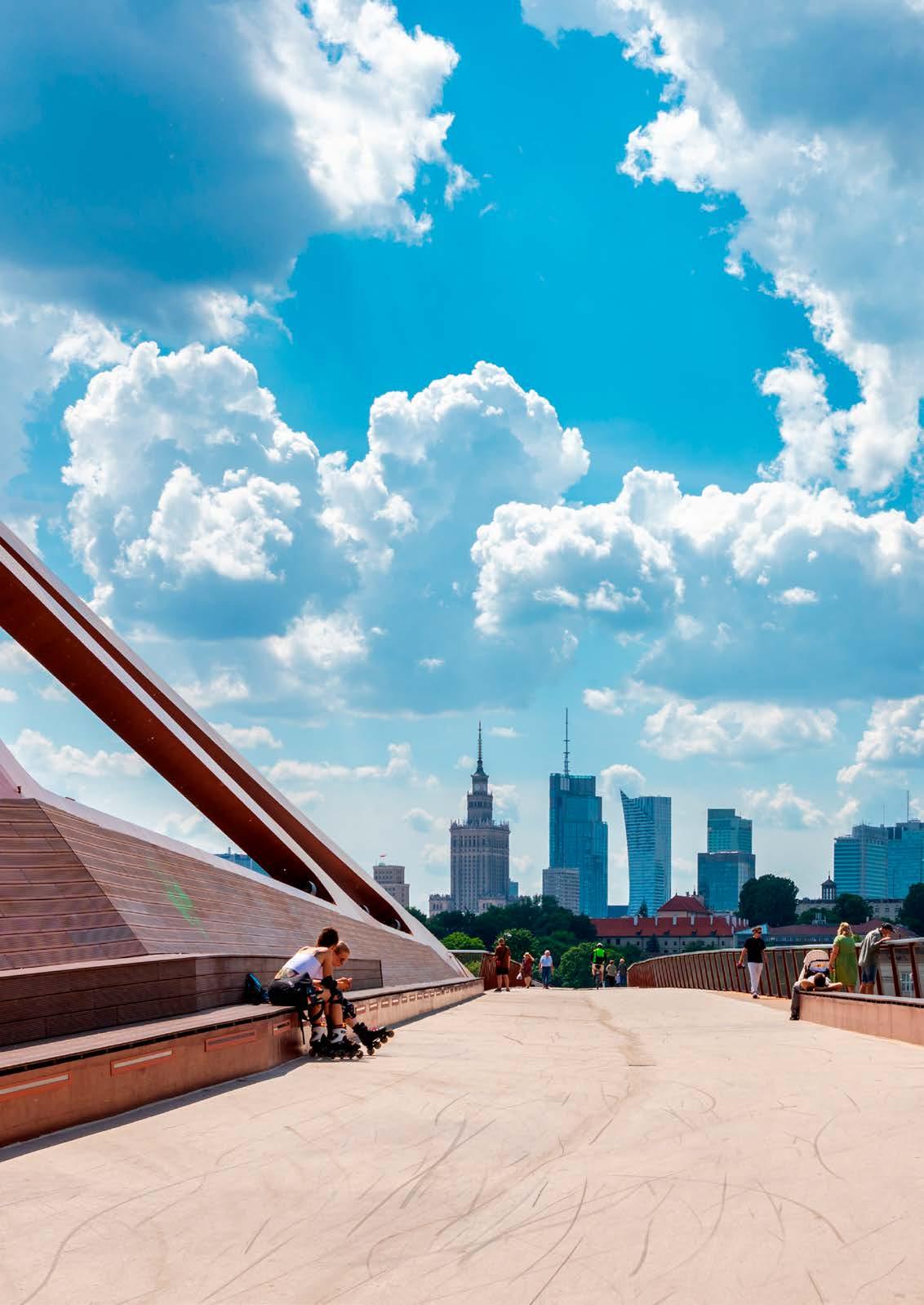
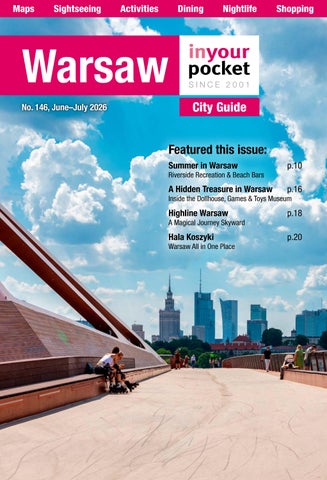
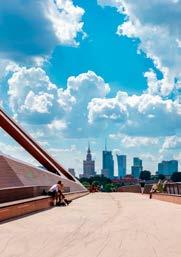
The Magdalena Abakanowicz Footbridge, the longest pedestrian bridge in Poland, stretches across the Vistula River with incredible views of both banks. Photo: iStock.
IYP City Guides Sp. z o.o. Sp.k. ul. Karmelicka 46/51, 31-128 Kraków iyp.com.pl poland@inyourpocket.com
Circulation
12,000 copies published every 2 months
Of course, space in our print guide is a finite resource, but if you don’t find what you’re searching for here, we’re confident you’ll find it on our website. Visit warsaw.inyourpocket.com for more info about the capital, and poland.inyourpocket.com to see just how much of the country we cover.
Here is some extra content we wish we had room for in print this issue:
It's one thing to take in the city by foot, tram, or bike and marvel at all the sights. But in order to really understand the capital, you'll need the full history. Lucklily, we've got you covered with a beginner's guide to Warsaw!
This city is simply a joy in the summer, bursting with greenery, pocket parks, winding little paths and more. And what better way to see it than by bike?
Ahhh summer! It's finally here and these are the clearest signs: from fresh strawberries to sunbathers on the river, to ice cream galore, kiełbasa and more. Welcome to the best time of year.
Editor: Anna Merriman
Sales Consultant: Jarek Śliwiński (+48) 606 749 643
Marketing: Monika Boguszewska-Stopka (+48) 728 879 494
Research: Natalia Rodacka, Stanislaw Hołubowski
Layout & Maps: Tomáš Haman
Copyright Notice
All content copyright IYP City Guides Sp. z o.o Sp.k. and its partners, unless otherwise stated. No part of this publication may be reproduced without written consent from the publisher. The brand name In Your Pocket is used under licence from UAB In Your Pocket.

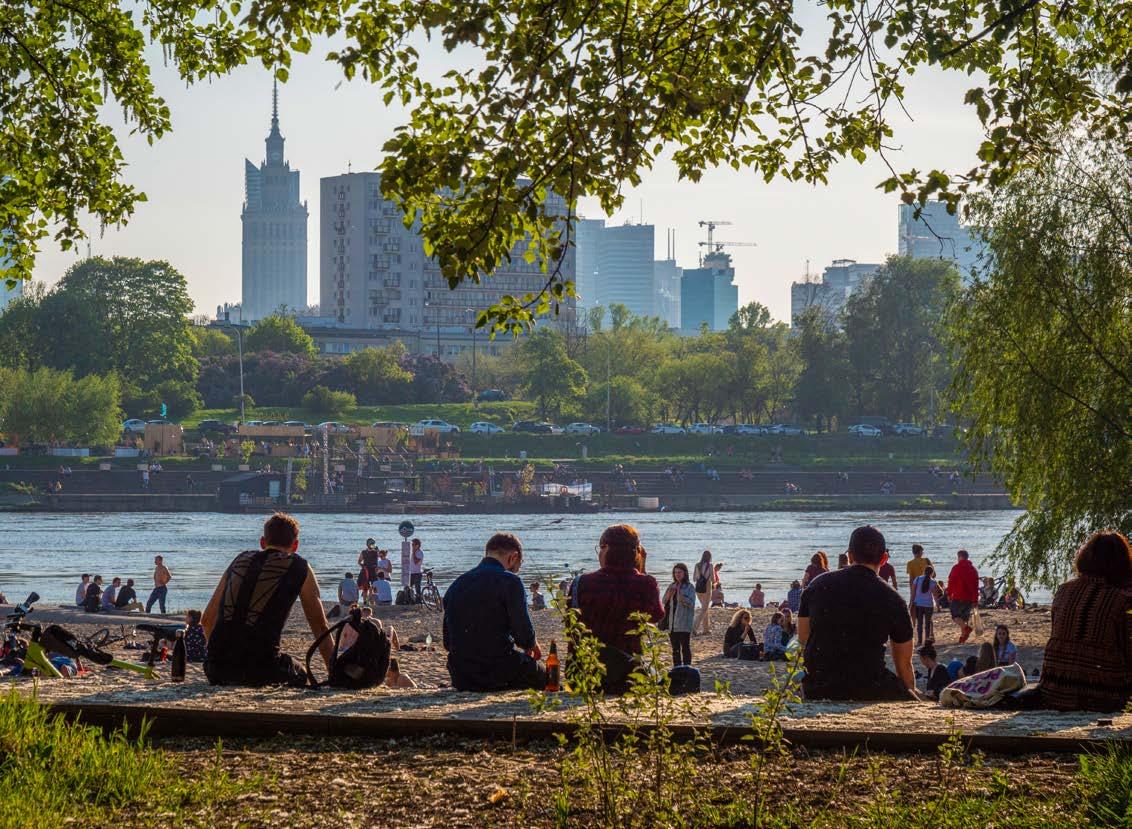
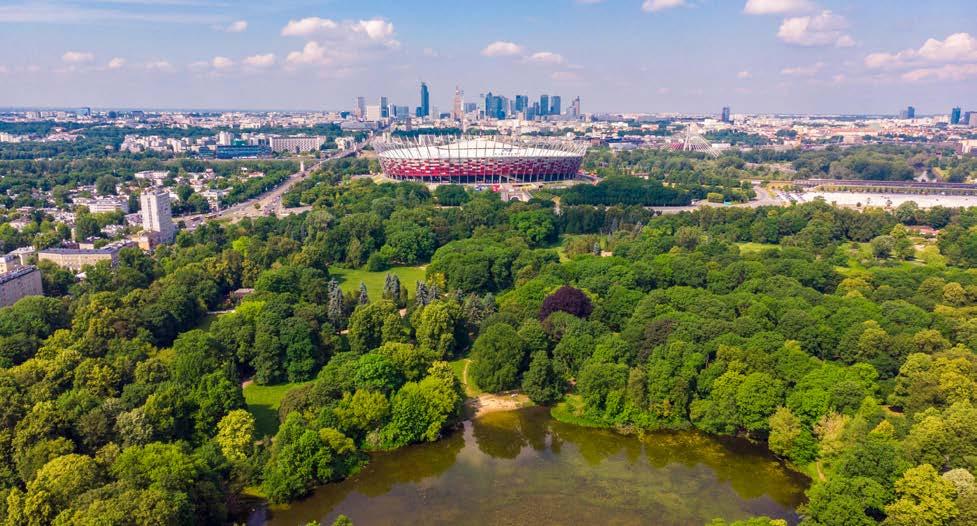
When the weather’s warm in Warsaw, the entire city gravitates towards the water. That means the Vistula River - the long banks of which comprise the city’s unofficial ‘19th district’ and provide a bounty of places to relax and explore, including sandy beaches, green forests, sports clubs, cycling paths, and dozens of restaurants, bars and nightclubs.
Perhaps the most characteristic thing about Warsaw’s riverside is the striking dichotomy between its left and right banks. While the left bank is more sanitised, developed and urbane, the right bank has been left largely untouched and resembles a wooded nature preserve. The best way to explore the full breadth of Warsaw’s waterfront is by getting on a bicycle (see p.27) and using the city’s many lovely riverside cycling paths and bridges. You can also take advantage of the city’s free ferry service, which provides a more scenic way to get across the river. Both sides have plenty to offer in terms of relaxation, exercise and entertainment, and here we list the highlights. Whether you’re looking for an escape from the noise and crowds of the capital, or the most happening party in town - you’ll find it on the riverside!
The main gateway to the river for most Varsovians is the M2 Metro stop ‘Centrum Nauki Kopernik,’ which deposits you right on the water (I-6). When people (this guide included) refer to Bulwary Wiślane (The Vistula Boulevards) - it’s typically this stretch of the left bank on either side of the Świętokrzyski Bridge between the Śląsko-Dąbrowksi Bridge (to the north, G-4) and Poniatowski Bridge (to the south, J-7) that they’re referring to. Certainly the busiest and most developed section of the river, there are many attractions that make this area essential for taking a stroll, not least of which are all the other people about.
Alcohol: When it comes to drinking in public, the river is your friend. You can consume your own alcohol on the banks, or buy some from one of the many bars lining the western side.
Swimming: Although the temptation is ever present, we don’t recommend getting in the water. It is neither safe, nor sanitary. If you want to actually get wet, you can definitely dip your toes.
Fires & Grills: Most beaches in Warsaw have designated grill areas, so if you want to build a fire, go for it, just keep it contained to the designated places, please.
Head north from the Metro, along the riverbank to see the Warsaw Mermaid sculptures, the Copernicus Science Centre, and the University Rooftop Gardens - all of which you can read about in more detail in our Powiśle section on p.56. The areas between all of these cultural sites are filled with parks, gardens and public spaces that are a pleasure to spend time in. There are plenty of benches and stairs to relax on, and of course numerous cafes, bars, restaurants, ice cream stands, food trucks and river barges where you can find great food and refreshments.The Copernicus Science Centre has a rooftop garden (p.58), and frequently organises outdoor workshops and activities for kids, as well as a free summer cinema.
In the evening check out the barges that line this stretch of river (on both sides of Świętokrzyski Bridge), where you’ll find live DJs, food and
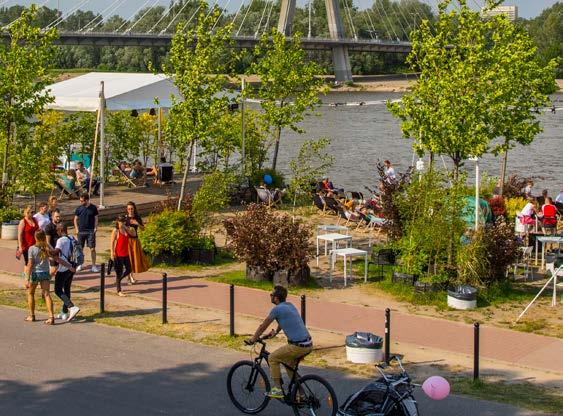
Biking, walking, drinking and eating – all along the Vistula Boulevards.
On the Town | Summer in Warsaw
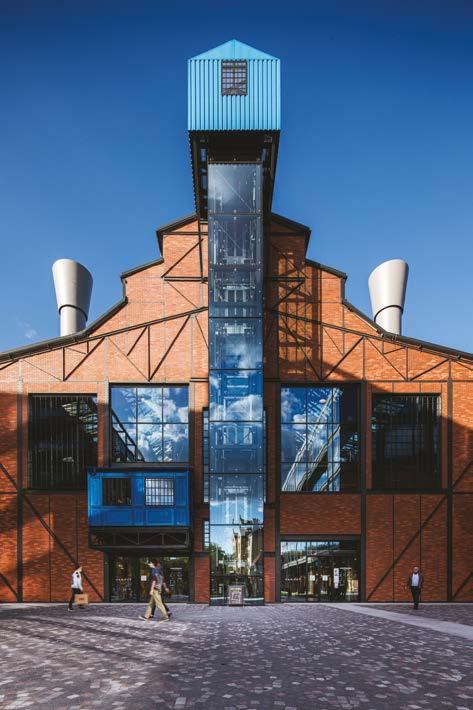
drink, and people partying late into the night (sometimes really late). All right on the river. One of the best is BarKa, a popular barge that hosts gigs and guest DJs and is regularly mobbed with partiers, creating an entire scene in its extended orbit on that part of the riverbank (I-6).
About 2km south of Copernicus Science Centre you’ll find this small left-bank beach near Śmigłego-Rydza Park. This area feels like a mini summer festival, with drinks and food nearby. One key venue is Cud nad Wisłą which has live music, food, drink, and tons of young, hop people enjoying the summer air. By day, chill out on the sand, have a grill, hit up the food trucks, rent a kayak or catch the ferry over to Saska Kępa (see our ferry box). Also, see some other boat rental options in this area (including motorized boats that will have you bouncing along the waves, wind in your hair. The summer dream!). (K-8).
Just south of the beach at Płyta Desantu is the entrance to Port Czerniakowski, which provides a sheltering harbour and marina for private boats, and a cycling/pedestrian bridge that connects it to Czerniakowski Promontory (Cypel Czerniakowski) - a
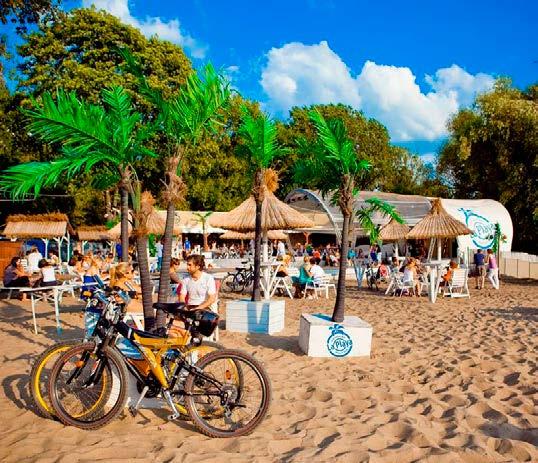
long headland that hosts the Miami Wars riverside hangout and the massive Monta Beach Volleyball Club further down. The former is perfect for a picnic or cycling pitstop, while the latter is a very professional facility with 10 proper courts, a cafe, restaurant and sauna. A little further south in this area you can also rent motorboats, paddleboards from SUP Academy, take a river cruise or catch the ferry to Saska Kępa beach. (K-8/9).
This small, wild beach is a good option if you just want to escape urbanity, though it can still be quite popular on hot days.
A popular beach with both football and volleyball courts, beach chairs and more in the summer. Infrastructure is limited to a few grill areas, swings and a playground, though there is a place to rent kayaks nearby.
When you're done, either grab the free ferry to the other side of the bank, or cross the road and meander through the charming little neighborhood of Saska Kępa for a bite, a drink and some good atmosphere. (K-8/9).
Warsaw’s largest and most popular beach, located right under the National Stadium, with free ferry service straight onto the sand from Powiśle. As such you’ll find quite a bit of infrastructure at this one, including food, bars, ice cream, badminton and volleyball courts, a playground, designated barbecue
areas, water equipment rental, and more. On the sandy portion to the north of the bridge, you'll find a lot of people having picnics, grilling and hanging out with friends, or wandering along the boardwalk. Also don't miss the cool little path through the trees to the north. If you follow it far enough, it will take you to the pedestrian bridge (p.59). The grassy section to the south of the bridge is full of grills and fire pits -- and absolutely packed during the summer. A good choice if you want to people-watch, sunbathe or DIY party with the locals after sunset. (J-7).
This sandy pitch across from the Old Town and metres from the zoo is more of a wild beach, but does have designated areas for grilling and wicker gazebos. Bring the kids after a trip to the zoo (p.68), or do some vigorous zumba at La Playa and come down to the water for a breather. The daytime views of the Old Town are great, but at night…just, wow. We recommend biking up here on a sunny day and bringing a picnic with you.
Nearby is a playground and also a ropes park with courses for kids and adults. For adults, nearby La Playa (G-3) features zumba classes and some smaller Sunday parites (20zł entry fee). Lots of fun, given their beach and great location -- plus, their distinctly Latin vibe. (G-3),
The City of Warsaw runs a free river ferry service from the left bank directly to beaches on the right bank. Ferries run on weekends and holidays only in June & Sept, and every day in July & August: Mon-Fri 12:30-19:15, Sat-Sun 09:00-20:00. These crossings are incredibly popular and limited space often means waiting in queues to board what would otherwise be a quick 5min trip. Still, it’s fun for the experience of being on the water. The routes (which can be seen on our map on p.2-3) are as follows, and you can easily take your bike on board:
• The ‘Wilga’ runs from the Vistula Boulevards in front of the Multimedia Fountain to Praga District Beach (G-3).
• The ‘Pliszka’ runs from Poniatowski Bridge to Poniatówka Beach in front of the National Stadium (J-7).
• The ‘Słonka’ runs from the floating pier at Czerniakowski Promontory to Saska Kępa Beach (K-8/9).



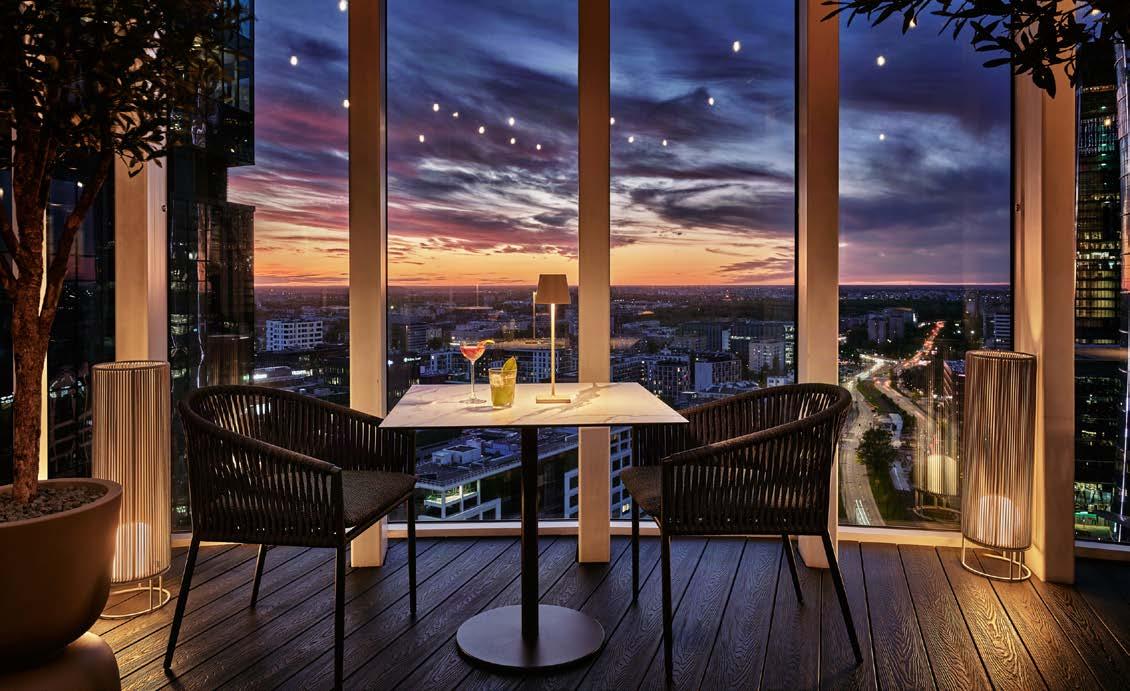
With an ultra-modern skyline and the nearby Old Town, not to mention the parks galore, Warsaw is truly something to behold. But where can you see it all at once? Well, from a rooftop of course! Preferably with a fancy cocktail in hand on a nice, warm summer night.
These rooftops are just one of the ways that Warsaw really shines -- thanks to all those glossy, towering skyscrapers that are absent in many other Polish cities.
And to really get the full experience, you’ll want to head to the city’s bustling financial district, Wola. The neighborhood, and surrounding areas, boast high skyscrapers that make up the gorgeous skyline. And many of them are topped with a bar (and some, a pool!).
To start, the views from The Roof Skybar (p.109) at the Crowne Plaza Hotel are truly incredible. From atop their (fittingly) excellent roof, you can get panoramic views of the city, which you can take in as you sip a fancy cocktail under the stars. There are also plenty of cultural events, live music and more -- this is the spot to be, truly.
Next, head to the HighLine Warsaw (p.37), with some staggering views of the city, and a panoramic elevator that really lets you experience gliding into the sky. From there, you can grab something at HighGarden Rooftop Lounge (p.111), which prepares some incredible drinks that you can sip as you sit among their greenery (a mix of garden and modern vibes) and gaze out over the city from floor-
to-ceiling windows. If you're in the mood for some incredible, fresh and authentic Lebanese food while you sip a craft cocktail, then Amar Beirut Rooftop Bar is where you should go (bonus, they have live music offerings in the summer!) (p.110)
Panorama Skybar on the 40th floor of the Presidential Hotel (Al. Jerozolimskie 65/79 ) is another must, with a variety of delicious cocktails and glimmering views of the city below.
And then of course there's Ether Bar at NYX Hotel Warsaw (ul. Chmielna 71). The open-air terrace has gorgeous city views, delectable cocktails and even sun beds so you can relax and immerse yourself in the city. Ok this final one is not in the Wola district, but it is a must-visit: Barcelo Hotel, which has BHeaven Sky Bar on the 5th floor (ul. Wybrzeze Kosciuszkowskie 43A). See a totally different perspective on the city, with views over the stadium, the river and the eastern bank. Plus, a pool on top, cocktails and an a la carte menu.
This is just a taste of some of Warsaw’s best rooftop venues, and we recommend picking a particularly warm and cloudless evening to enjoy a sip (and maybe a bite) from the sky.
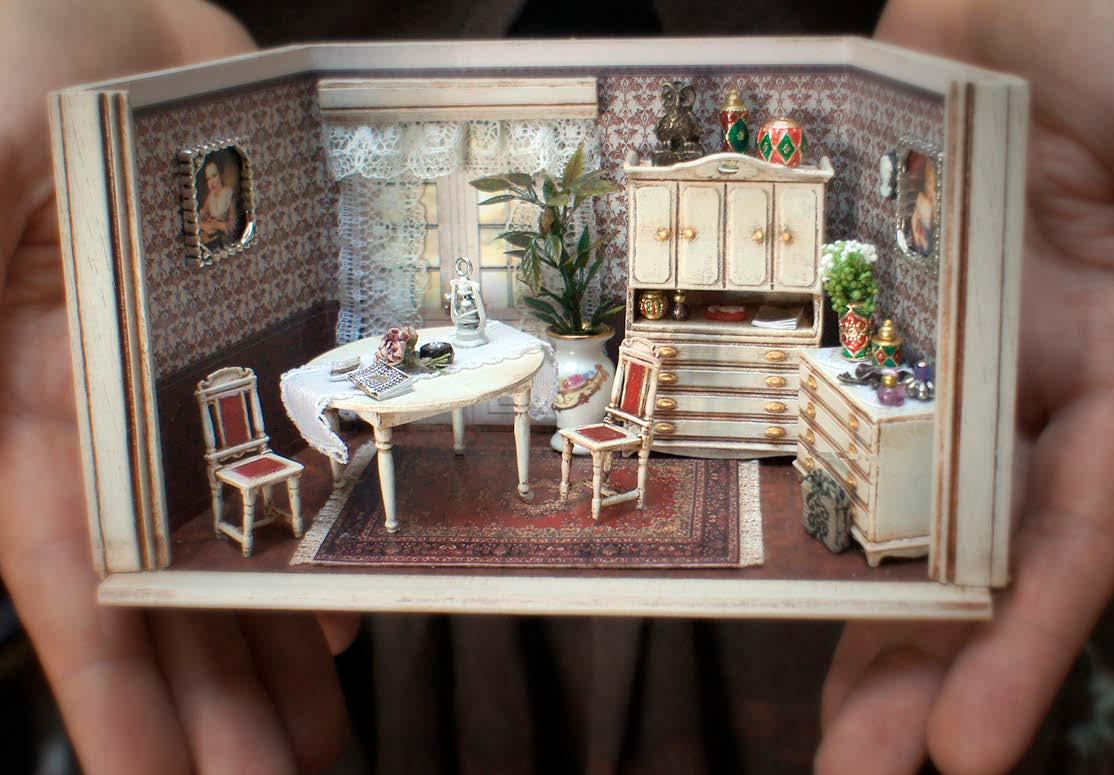
More than a curiosity for children, The Dollhouse, Games & Toys Museum in Warsaw is one of the city’s most unexpectedly absorbing museums for all ages — a place less about toys themselves and more about the miniature worlds they preserve.
Tucked away along ul. Podwale in Warsaw’s Old Town is a museum that many people walk into with entirely the wrong expectations. At first glance, the Dollhouse, Games and Toys Museum sounds like the sort of attraction aimed squarely at children or perhaps nostalgic collectors of antique dolls.
However, the moment you begin peering through tiny doorways and into carefully constructed interiors, it becomes clear that this is not simply a collection of dollhouses. It is a museum of everyday life, craftsmanship, memory and vanished realities, all condensed into rooms no bigger than a suitcase.
Kitchens, pharmacies, classrooms, workshops, salons and shops sit frozen behind glass, each packed with astonishingly meticulous details that reveal how people once lived, worked and organised their worlds. Some interiors are elegant and aristocratic, others modest and practical, but all of them carry the strange intimacy of stepping directly into someone else’s life.
The museum’s collection includes more than 150 historic dollhouses and miniature interiors, with some pieces dating back over two centuries. Far from being simple children’s playthings, many were handcrafted objects of remarkable complexity and artistry. Tiny wallpaper patterns, miniature cookware, impossibly small medicine bottles and carefully painted furnishings all reveal not only changing tastes and fashions, but entire social worlds preserved at miniature scale.
In some ways, the museum succeeds where larger historical exhibitions occasionally struggle. Rather than presenting history through grand events and distant figures, it approaches the past through domestic detail and human routine. That sense of intimacy is what makes the museum so
unexpectedly powerful. Looking into these miniature rooms can feel oddly voyeuristic, as though their inhabitants have only briefly stepped away. The longer you look, the stranger and more absorbing the details become. A half-set dining table, a miniature sewing kit, tiny schoolbooks or the cluttered shelves of a workshop begin to tell stories far beyond the scale of the objects themselves.
Elsewhere, the museum expands beyond dollhouses into collections of dolls, toys and games from around the world. More than 1,000 dolls representing different countries, traditions and styles form a surprisingly rich journey through global craftsmanship and cultural identity.
Meanwhile, the exhibition of twentieth-century Polish toys and games often produces the strongest emotional reactions of all. Adults rediscover fragments of their own childhoods, while younger visitors encounter the curious logic of pre-digital entertainment: board games with beautifully illustrated boxes, mechanical toys, educational kits and objects once treasured long before screens became permanent companions.
Importantly, the museum never feels cold or overly institutional. Its atmosphere is quiet, intimate and refreshingly unhurried, encouraging visitors to slow down rather than rush from display to display ticking
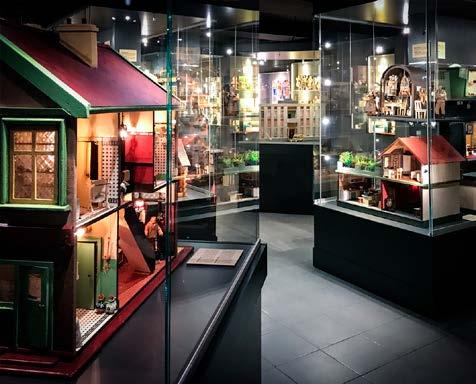
things off a sightseeing list. In a city packed with major historical museums and large-scale exhibitions, there is something deeply refreshing about a place built around smallness, detail and concentration. It offers a different kind of cultural experience: less overwhelming, more personal and surprisingly calming.
There is also a subtle sense of mystery running through the museum. Certain displays contain hidden narratives and playful secrets, including miniature crime scenes inspired by famous forensic models, interiors filled with concealed objects and spaces that invite visitors to invent stories of their own. Even the museum’s Chopin drawing room feels less like a static historical recreation and more like a stage awaiting invisible inhabitants. The effect is occasionally uncanny, though in the best possible sense. These miniature worlds feel alive precisely because they are so meticulously observed.
Perhaps the museum’s greatest achievement is that almost everyone finds something different inside it. Children are naturally drawn toward the tiny worlds and hidden details, but adults often become equally captivated — sometimes more so. Designers admire the craftsmanship, history enthusiasts study the changing domestic interiors, grandparents reconnect with memories and younger generations discover just how radically everyday life has changed within only a few decades.
Warsaw’s Dollhouse, Games and Toys Museum does not shout for attention in the way many modern attractions do. It does not rely on spectacle, noise or digital overload. Instead, it quietly rewards curiosity, patience and imagination. In an age increasingly dominated by speed and distraction, that may be precisely what makes it such a rare and memorable place.
QF‑4, ul. Podwale 15 (entrance in courtyard), MRatusz Arsenał, tel. (+48) 797 72 30 29, www. muzeumdomkow.pl. Open 09:00 19:00. Tickets 42/30zł; kids under 1m tall, free. U
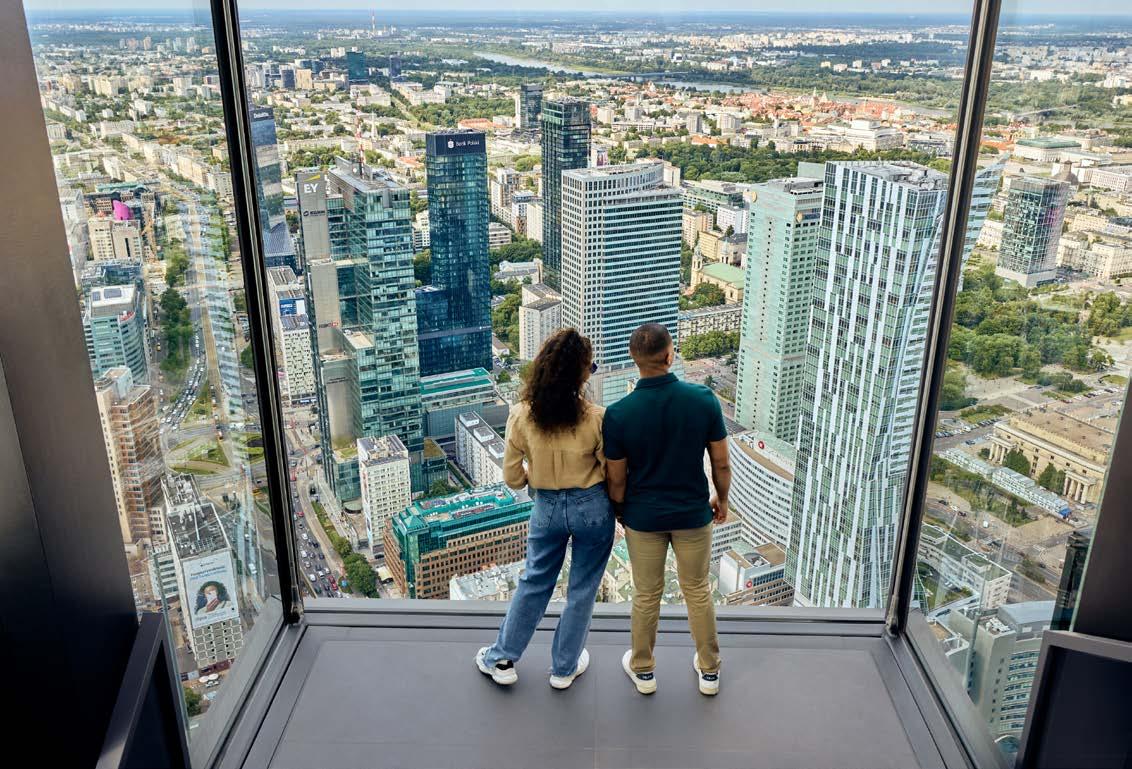
Bursting forth above the clouds, towering over the Polish capital in all its glistening, modern glory, is the Highline Warsaw.
Perched atop the iconic Varso Tower (the tallest skyscraper in the European Union at 310 meters) the Highline opened last year, offering the highest observation deck in a building anywhere in the EU at 230 meters. Wall-to-wall windows stretch from floor to ceiling and reveal a panoramic view of the city below, from the Palace of Culture to the gardens, bridges, water, and beloved little streets that make up Warsaw.
A visit here is one of those take-your-breath-away experiences. And that’s due to more than just the staggering views. Packed within the Highline is a panoramic elevator, a discovery zone where you can learn about the city, and even a magnificent cocktail bar.
It’s a journey, from the moment you step inside, to the soaring views you get as you rise skyward in the elevator, and finally to the top where you’re rewarded with the best lookout over the whole city.
Take that journey on the page before you do it in person…
Let’s start with the ascent. Your adventure begins at the base of Varso Tower when you’ll be introduced to the lovely experience you’re about to take. From there, you’ll enter a panoramic elevator (their elevators also happen to be some of the fastest in Warsaw at 8 metres per second). On the way, you’ll face out as you soar upwards. From the gritty streets of a major city, you’ll fly up among the skyscrapers, higher and higher into the sky, watching as the landscape of Warsaw unfurls in front of you. As you emerge from the density of near-ground-level buildings, passing tens of stories along the way, you’ll get a view of the leafy green treetops in the parks, and the long, thin blue strip of the Vistula River in the background. And that’s just the beginning.
After exiting the elevators, you pass through a cloudlit corridor before you enter another hallway where frescoes line the walls, illustrating key moments from the city’s history—its founding in 1339, the grandeur
of Warsaw before the devastation of World War II, and the rebirth of today’s modern metropolis. You then enter the Experience Room and view the Reveal Warsaw exhibition, which consists of three films: The Beginnings of Warsaw, Warsaw Before World War II, and Contemporary Warsaw. The idea behind the Highline is not simply to give a great trip skyward and beautiful views, but to really bestow a love of the city on visitors. See it in all its miraculousness during the elevator ride and the observation deck, but really fall in love with it –history, modernity and all – here. In this interactive exhibit on your way to the top, you’ll learn about the most important buildings, figures and places connected to the city. When you leave, you’ll have a much deeper understanding of – and appreciation for – everything that’s unique about Warsaw.
The journey is far from over at this point. After the interactive exhibition, you’ll ascend further, toward the 53rd floor where you’ll find a spectacular reward. This is the heart of the Highline Warsaw: its full, 360-degree panoramic observation deck. Though the Eiffel Tower in Paris is technically higher, Highline Warsaw claims its crown as the tallest observation deck in a skyscraper in the EU, and it’s a sight to behold.
Here, you can see the city in all its glory, all the places you’ve just traversed (or plan to), all the buildings that make up its ultra-modern skyline, and the redcapped roofs of the Old Town.
Trace the line of the Vistula, identify the major streets that stretch throughout the city, see the way Warsaw stretches out until it turns into forest nearly at the edge of your view.
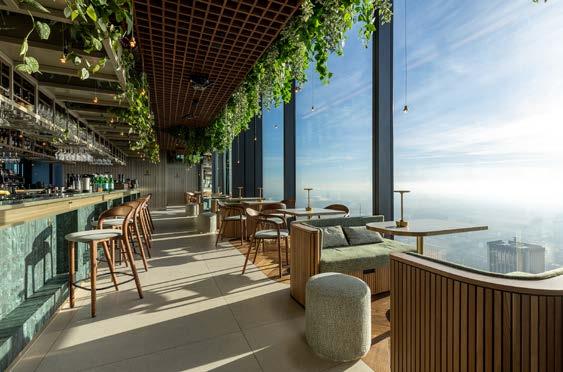
In the evening, as the sun starts to set and sit as an orange ball at the edge of the horizon, relax on one of the benches and take in the bright, disappearing light and the purple sky as it slowly shifts to dark blue night.
After such an eye-opening experience, a cocktail and a debrief is in order. And the best place to do that is Highline’s own HighGarden Rooftop Lounge. You’ll descend to the 49th floor where you arrive at the highest cocktail bar in the EU. There’s a lot to love about this space, but one of the best things is the atmosphere. It’s like a green retreat floating above the city. Here, vines and flowers transform the terrace into a living garden. Designers have crafted the aesthetic, blending nature with modern elegance.
Guests can sip signature cocktails inspired by local flavors, enjoy small bites, snacks, or desserts, and enjoy the scenery. The atmosphere changes with the hours—bright and serene by day, magical and vibrant by night.
And it’s the perfect place to reflect on what you’ve just experienced. Stay among the clouds a little longer to really appreciate all the beauty this city has to offer.
There’s one last attraction before you leave: on the 46th floor you’ll find a concept store with local products and crafts. From regional delicacies to a dedicated clothing line and creative gadgets, every item carries a piece of Warsaw’s spirit.
The group Magnicity is behind the Highline Warsaw project, and as such, it’s unsurprising that it’s such a massive success. Their portfolio includes great urban viewpoints such as Paris Montparnasse Observation Deck, Berliner Fernsehturm, Euromast Rotterdam, and 360 Chicago.
Sure, we might be a little biased, but we argue that the Highline Warsaw is one of their best. It’s more than an enriching experience that will actually instill a love of Warsaw within you - a deep appreciation for the history and the beauty that makes up Warsaw, and the perseverance it took for the city to rebuild post-WWII, to become the major metropolis before you today. This is Warsaw, the way it should be seen.
Highline Warsaw (VARSO Tower)
QE‑8, Varso Tower, ul. Chmielna 69, MRondo ONZ, www.highlinewarsaw.com. Open 9:00 22:00.
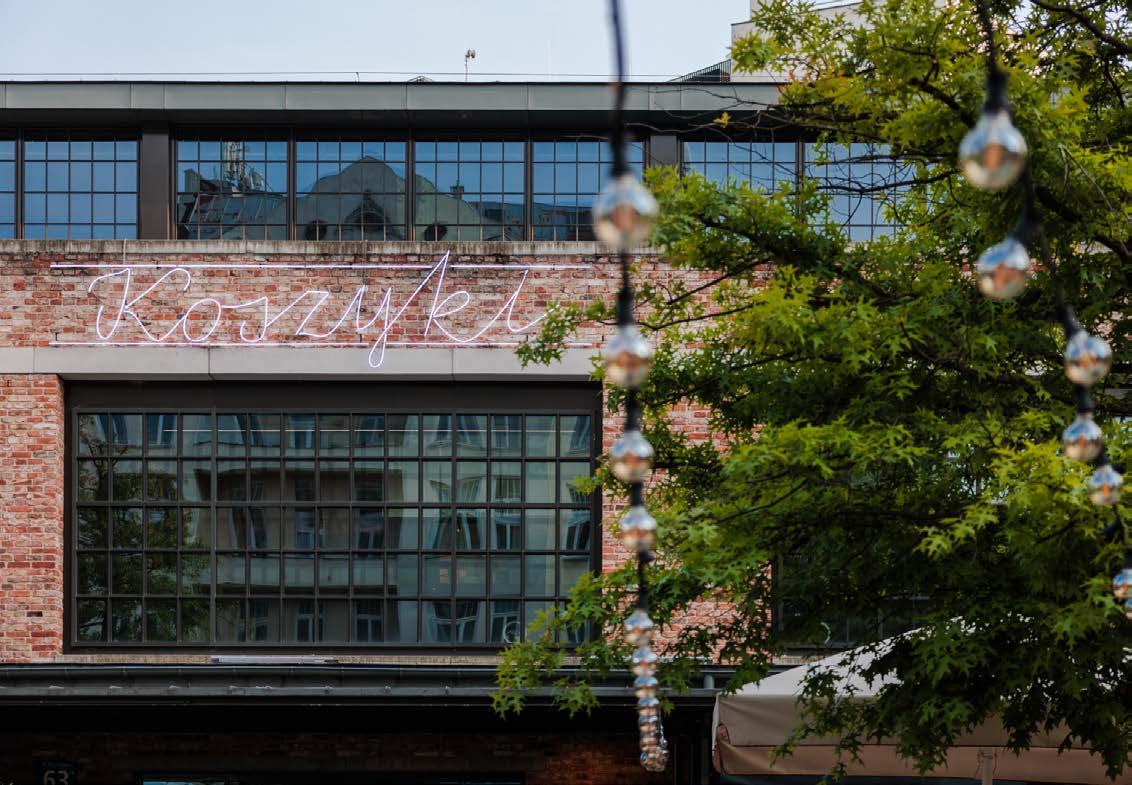
Warsaw, the sprawling, stunning Polish capital, is rife with food and drink, with culture and music, with good people and incredible atmosphere. And nestled right in the heart of the city is a place where you can see it all at once.
This is Hala Koszyki, the cultural, culinary heart of Warsaw. In many ways, it’s a microcosm of the city as a whole. A day spent within the Art Nouveau walls of this former market hall-turned-cultural hub, is like spending a day getting the best of what Warsaw has to offer. With around 3 million visitors every year, Hala Koszyki is a crucial stop. So let’s take a day tour of the beloved space.
Arrive at Hala Koszyki when the doors open at 8 a.m. and take a moment to marvel at the more than century-old space. Built in 1909, the stone-and-brick building, which features massive windows and a uniquely detailed facade, once served as a bustling marketplace. It was a place where locals would meet neighbors at grocery stalls while they shopped for vegetables and meats for the night’s dinner. It’s the place where the community of central Warsaw in the early 20th century grew and thrived.
Upon entering, you’ll feel the same thrum of the community heart today. Parents chat as they push strollers through the hall, friends meet over iced coffees and elegant matchas. Later in the morning, expect to see couples enjoying delicate bites of gelato, or elaborate weekend brunches topped with eggs and cheese.
We recommend heading straight to one of the breakfast spots, like Vincent, to grab a coffee and a flaky pastry (preferably one stuffed with gooey chocolate or sweet pistachio paste) as you take in the rest of the space.
It’s easy to be amazed at how far Hala Koszyki has come since its inception. The ‘new’ Hala Koszyki opened in 2016 after a giant 5-year restoration and revitalization project. The love of the original market hall is apparent in every last detail, right down to the cleaning and the reusing of original individual bricks, restoring original lattice metalwork and sculptural
details relating to products on sale in the original market.
Thanks to many of the modern design tweaks and incredible aesthetic details like the expertly curated background music, walking through the halls, perusing the stalls and climbing the catwalks of Hala Koszyki is a wholly unique experience. It feels both historic and uber-contemporary at the same time.
As the day goes on, don’t be surprised when the hall begins to fill up even more. Residents from the city center will arrive for their morning coffees, and workers from nearby glistening office buildings will stop to meet clients over a bite of pasta or a mug of tea.
There are coworking spaces located on the upper floors of Hala Koszyki too, meaning that the day-today life of average working Varsovians gets blended into your travels throughout the food hall and the shops here. It truly feels like a mini-city, one where –even as a visitor – you can live the day as a local.
Before lunchtime, head over to the little shops here to grab all manner of things. There’s a chic clothing shop, another where you can buy fancy loose leaf tea, and more. From boutiques to practical grocery options, there are plenty of places to enjoy. But eventually, your stomach will nag at you, and then you can head straight to the heart of Hala Koszyki: its food hall. Here, you can try all manner of incredible bites, from cheesy American burgers, to elegant pastas. At this time of day, you’ll see many locals gathering here for lunchtime and some light shopping – and it’s best to follow their lead!
After lunch, there’s still much more to do. One of Hala Koszyki’s best offerings is actually a happening entertainment space, called Arcade Bee. It opens at 2 p.m. (perfect for a post-meal shuffleboard session) and remains open until late at night. Beat the crowds by going earlier, or join the locals for some fun in the evening.
Here, you’ll find shuffleboards, an arcade zone with numerous machines, and a central bar when you’re ready for a nice cocktail.
This is yet another way that Hala Koszyki is a mini version of Warsaw as a whole. Warsaw is known to have a lot of arcades all over the city. But it’s only in Hala Koszyki where you can find that arcade right next to incredible culinary offerings and chic shops.
After you’ve gotten your fill of games, it might be time for a drink.
Of course you can stay at Arcade Bee, but there are many other options around Hala Koszyki as well, with the biggest being its central bar, Bar Koszyki. Hard to miss, the bar stretches out in the middle of the main hall, adorned with decor and details that feel straight out of the 1920s and ‘30s. It’s got a very speakeasy vibe and classic, expertly made cocktails to match. As the night stretches on, expect the stools here to fill up with patrons getting off from work, meeting with friends over an artisanal cocktail and some light bites. You should join them – grabbing a drink at the central bar and your final meal of the day at one of the many restaurant options (had pasta already? Try some hearty Polish food, or some sweet and spicy Mexican bites).
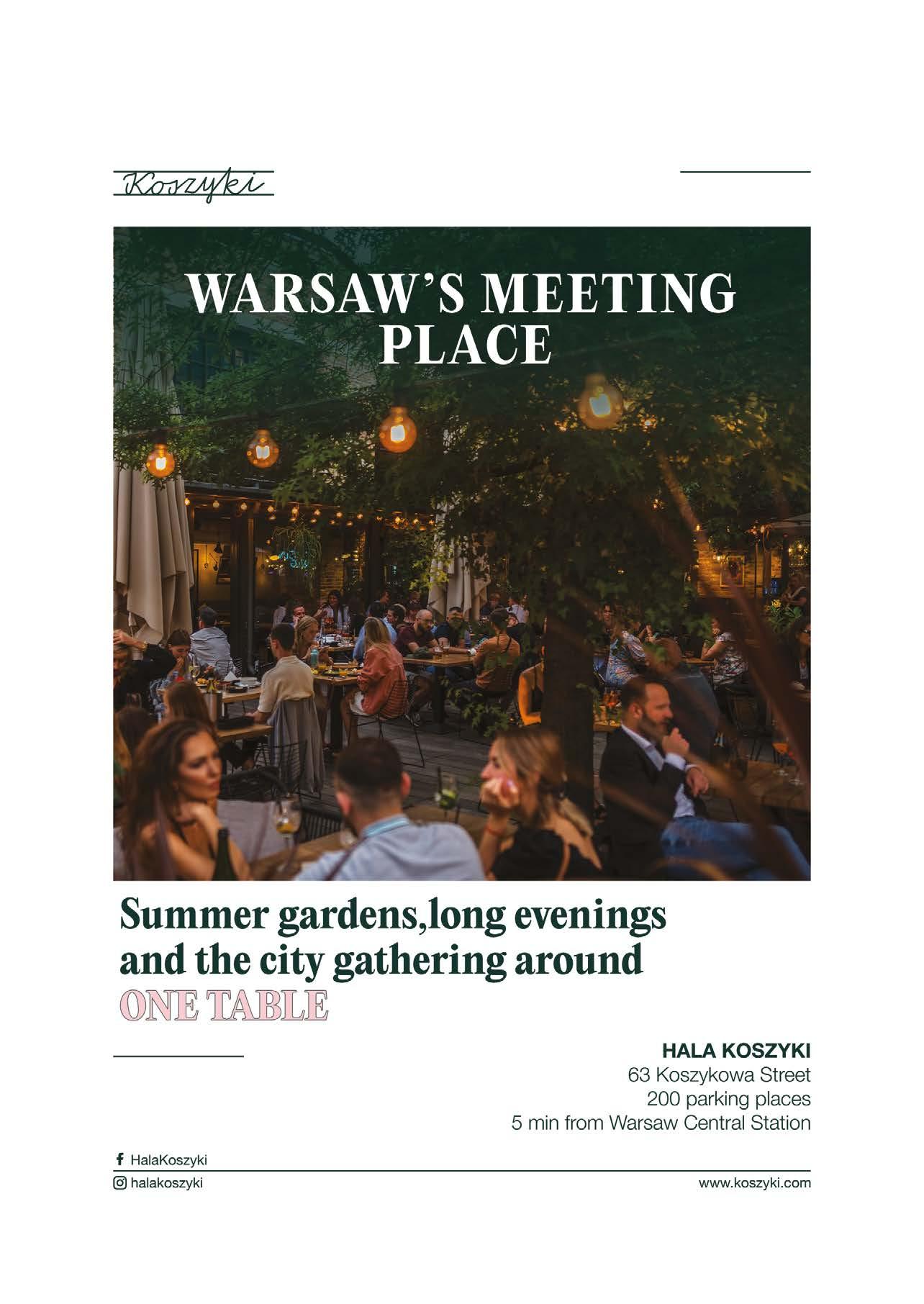
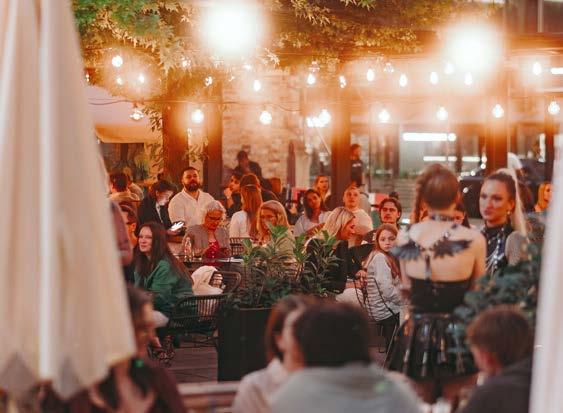
In the summer months, the clink of glasses and chatter of friends chatting spills out into the courtyard, and you should follow it. The summer courtyard is filled with greenery and stringlights, with people lounging at small tables, and (often) with the sounds of live music.
A cocktail in hand, the music of some live jazz filling your ears, and the stars and lights of the city above –What could be better?
Hala Koszyki
QF‑10, ul. Koszykowa 63, MPolitechnika, tel. (+48) 22 221 81 84, www.koszyki.com. Open 08:00 23:00; Wed Thu 8:00 24:00; Fri Sat 8:00 1:00. XTU6 Nights under the stringlights and stars at Hala Koszyki.
Polish food is famous for being simple, rich and very filling. Below we list the most well-known dishes you simply must try while in town, all of which you should be able to order from any Polish restaurant worth its salt. Smacznego!
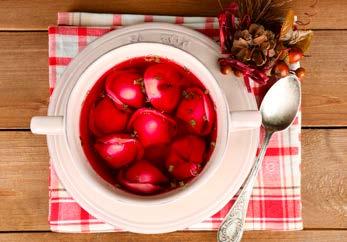
Barszcz
A nourishing beetroot soup, barszcz may be served with a croquette (‘barszcz z krokietem’), with miniature pierogi floating in it (‘barszcz z uszkami’), or simply as broth in a mug expressly for drinking. A recommended alternative to other beverages, we’d be surprised if you can find a bad cup of barszcz anywhere in Poland, so make sure you return home with barzszcz stains on at least one of your shirts.
Though there’s no standard recipe for this hearty stew, ingredients usually include fresh and pickled cabbage, sausage, onion, mushrooms, garlic, peppercorns, bay leaves, caraway and whatever else is on hand. In fact, metaphorically bigos translates to ‘big mess,’ ‘mish-mash’ or ‘confusion’ in Polish. A Polish restaurant or prospective bride can be fairly measured on the strength of their bigos, so put it to the test.
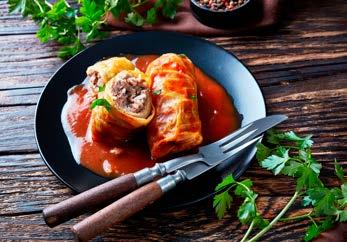
Golonka

Translating to ‘little pigeons,’ this favourite dish is like a ‘cabbage enchilada'. Consisting of boiled cabbage leaves filled with rice, onion and typically beef, gołąbki are rolled up and baked or steamed, then served with tomato or mushroom sauce. Polish legend claims that King Kazimierz IV fed his army gołąbki before the Battle of Grunwald, and their unlikely victory attributed to the fortifying meal ever since.
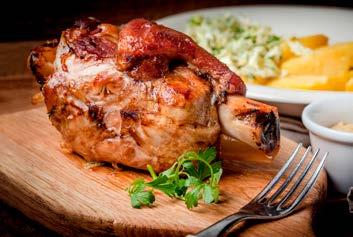
This is ‘pork knuckle’ or ‘ham hock,’ as in the part of a pig’s leg between the knee and ankle. Boiled, braised or roasted, this is the closest the Poles come to barbecue, and is a delicacy. The meat should slip right off the bone, be served with horseradish, and washed down with beer. Generally sold by weight, you might end up with more than you bargained for, but it’s certainly an Instagram opportunity. Go caveman.
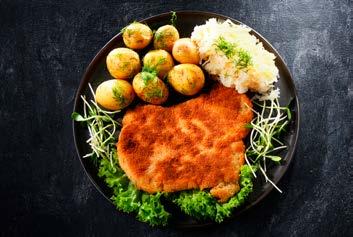
Typically served with mashed potatoes and pickled cabbage, this is probably the most popular meal in Poland. Essentially a breaded and fried pork chop, ‘kotlet schabowy’ is quite similar to Viennese schnitzel, and a solid bet for a cheap, filling, risk-free meal. If you’re awoken on a weekend by the sound of profuse banging - that’s the sound of the meat being tenderised with a spiky mallet, so best mind your manners.
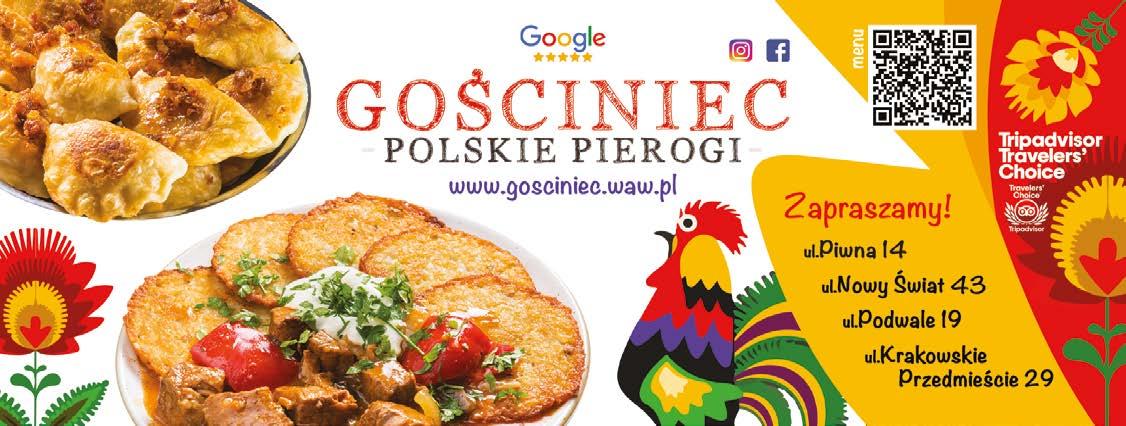
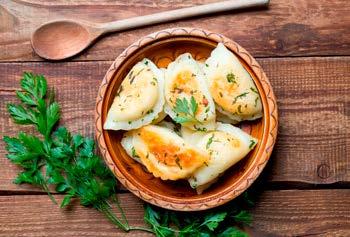
Poland’s most famous food, you can't leave PL until you’ve had them. These doughy, stuffed dumplings are typically steamed or pan-fried. Traditional fillings include potato, sweet cheese, minced meat, mushrooms and cabbage or seasonal fruits. If you nose around, you’ll find plenty of maverick fillings like chocolate, lentils or even chicken livers; the possibilities are limitless and served literally everywhere.
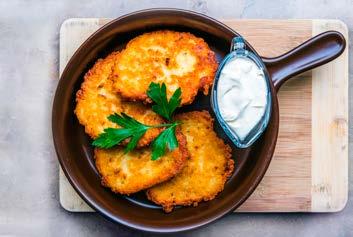
These greasy, fried potato pancakes are very similar to hashbrowns or Jewish latkes (if that means anything to you), and may be served in a variety of ways. Keep it simple with just sour cream (‘placki solo’), or turn it into a hefty meal by ordering them smothered in mushroom sauce or - our favourite - goulash (‘placki po węgiersku’). Highly caloric, they’re also a tried and true hangover cure.
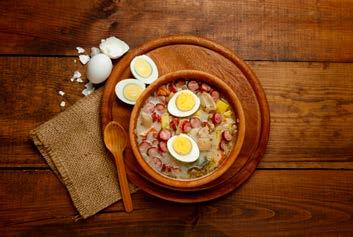
It doesn’t get any more Polish than żurek – a sour soup made from a thick stock of fermented rye flour. Typically chock full of potatoes, sausage and hard-boiled eggs, żurek is most often thickened with cream, and seasoned with marjoram, garlic, salt and pepper. The result is a tasty grayish gruel that any Polish peasant would be proud to polish off. If you’re lucky, you’ll even get it served in a bread bowl.
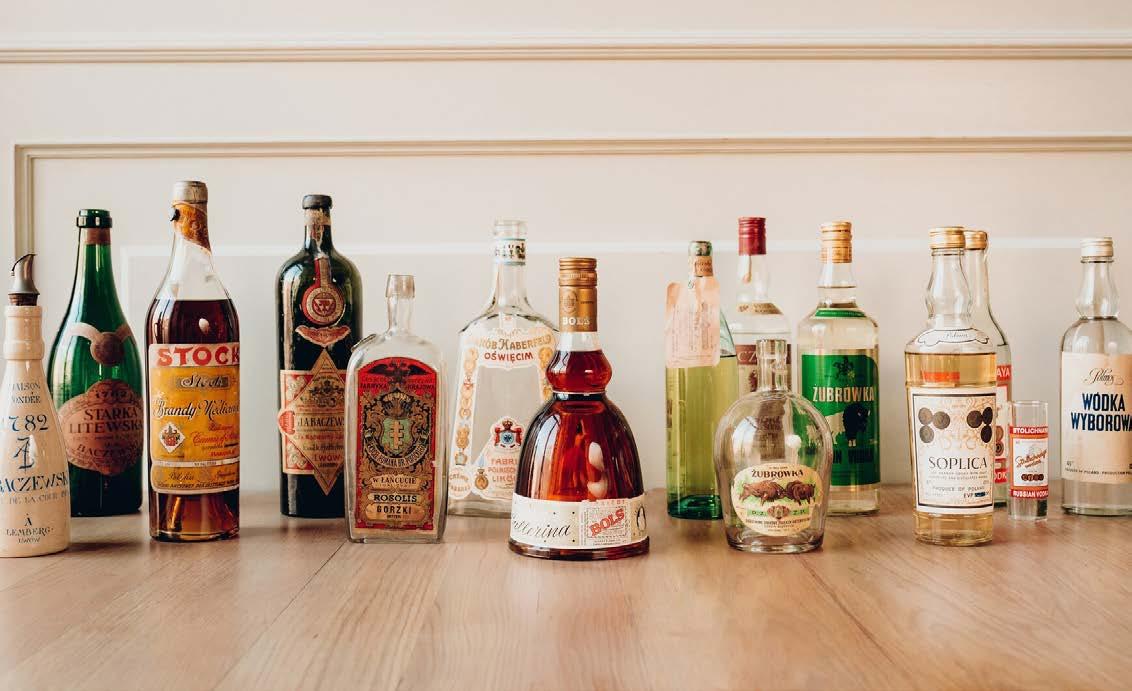
The Italians have wine, the Spaniards have wine. The French…. also wine. But what does Poland do best when it comes to alcohol? Vodka and beer.
These are the two most popular alcoholic beverages in Poland, and that means that brewers and distillers alike have spent a lot of time honing their crafts. Here’s a rundown of the history of these two popular drinks.
The name “vodka” (an anglicised version of the Polish “wódka” pronounced “v-ood-kah”) means quite literally “little water.” The origins of the drink date back to the 8th century, when distillation was discovered and the practice began to sweep across Europe. When it comes to vodka itself, the first written record of the drink came out in 1405 in Poland.
Originally, it was used as medicine: it helped treat wounds, numb pain, make perfume. But the consumption of vodka became more popular in the 15th and 16th centuries as it became industrialized across the country, with distilleries opening in Kraków, Gdańsk and Poznań (in fact, the popular Żubrówka vodka dates back to this century).
The popularization of vodka continued at a quick clip in Poland, hitting some bumps along the way
(production slowed during the wars at the beginning of the 20th century). Now, Poland is one of the top three producers of vodka in the world, and produced nearly 100 million liters in 2016 alone.
Poles are proud of their vodka and as a result, there are many traditions surrounding the drink. You may not run into all of them when you visit, but here’s a run-down just in case:
Na zdrowie – say this as you clink glasses and make sure to look your drinking partner in the eye or you’ll have years (some say 7, some say 5) of bad luck.
Christmas vodka – drinking a shot of vodka (sipping, not tossing it back) with some good pickled fish (Śledź) is a classic Christmas tradition. In fact, pickled fish and vodka commonly go together at any time of year.
Wedding shots – After the ceremony, the bride and groom will each get a shot of vodka and they’re supposed to down the shot, toss the glasses behind their backs, and break them. The broken glasses signify good luck in the marriage.
There are many good Polish vodkas but also some classics.
Żubrówka – this is a Polish vodka from the 16th century that is just a classic staple. One popular kind has a sprig of bison grass inside, which makes the drink a little bright and earthy.
Goldwasser – bet you didn’t know this was Polish! This is a classic from the Gdańsk area, and you’ll know it because it has gold flakes floating inside and a slightly cinnamon-y taste.
Chopin – This is just a good vodka. It’s not too sharp, well balanced and it goes great with everything.
Luksusowa – Finally, the people’s vodka. This is good and affordable. This is what people buy to drink with friends on an unassuming Friday night.
Where to get it:
The better question is where not to get vodka in Warsaw? The Polish Vodka Museum (p.68) and the Vodka Museum (p.82) will each take you on a tour through the history of vodka and give you a chance to try some! Klar (G-5) is known for their unique vodka flavors, which are constantly changing as they find new ways to infuse vodka with berries, herbs and spices! Pijalnia wodki i piwa is a chain with plenty of vodka types to sample and enjoy.
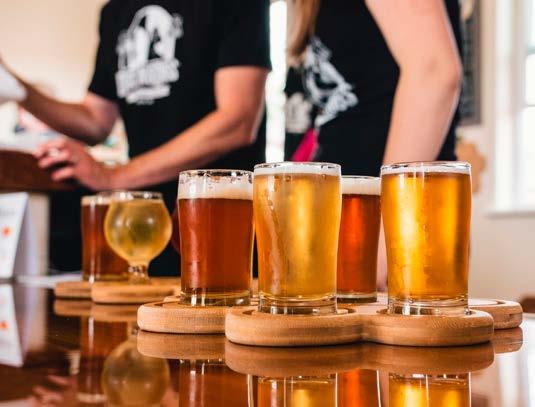
Poland also has a long history with beer that dates back to the middle ages. But it wasn’t until the 18th and 19th centuries that beer became mass produced on an industrial scale. The Tychy Brewery, which produces the extremely popular beer Tyskie, has been around since the 17th century.
The initial styles beloved by Poles were porters (dark beers) and then pale ales (much lighter beers) swiftly began to take over. Like vodka, beer production hit some bumps in the early 20th century but picked up again in the late century.
And that brings us to today – almost. While many of those lager-style beers have reigned in popularity for decades, the past 10 years have seen smaller breweries start getting in on the beer game. Many home brewing operations started making craft beer, and by making smaller batches than
industrial brewers, they were able to focus more on experimenting with non-traditional ingredients and techniques, leading to more interesting flavors.
Pinta – around since 2010, this brewery is one of the most popular craft breweries in all of Poland, and regularly makes hazy IPAs, sour beers, pale ales, pilsners – the works!
Funky Fluid – a Warsaw-based brewery, this is another type of craft beer that’s been gaining more and more popularity over the years for its bold flavors of hoppy, wild and sour beers (and more!)
Trzech Kumpli – brewing since the start of the craft beer craze in about 2014, this brewery makes a lot of dark beers (smoked porters, Irish stouts) as well as light lagers and pilsners.
Piwne Podziemie – one of the smaller craft breweries, but that means they can really focus on their flavorand they deliver! For the beer snobs who have tried every type, this is the beer to grab.
Well of course you can buy the large-scale, industrial beers (Tyskie, Lech, Żywiec) pretty much anywhere. But for craft beers, you have to know where to go. Pinta has a bar specializing in their beers on Chimelnia Street. Other bars like Jabeerwocky (G-8) and Kufle i Kapsle. will also offer great craft beers. Meanwhile beer halls like Browary Warszawskie (p.32) are very popular, too. Plus, don’t miss the beer festivals held in the spring and fall in Warsaw!
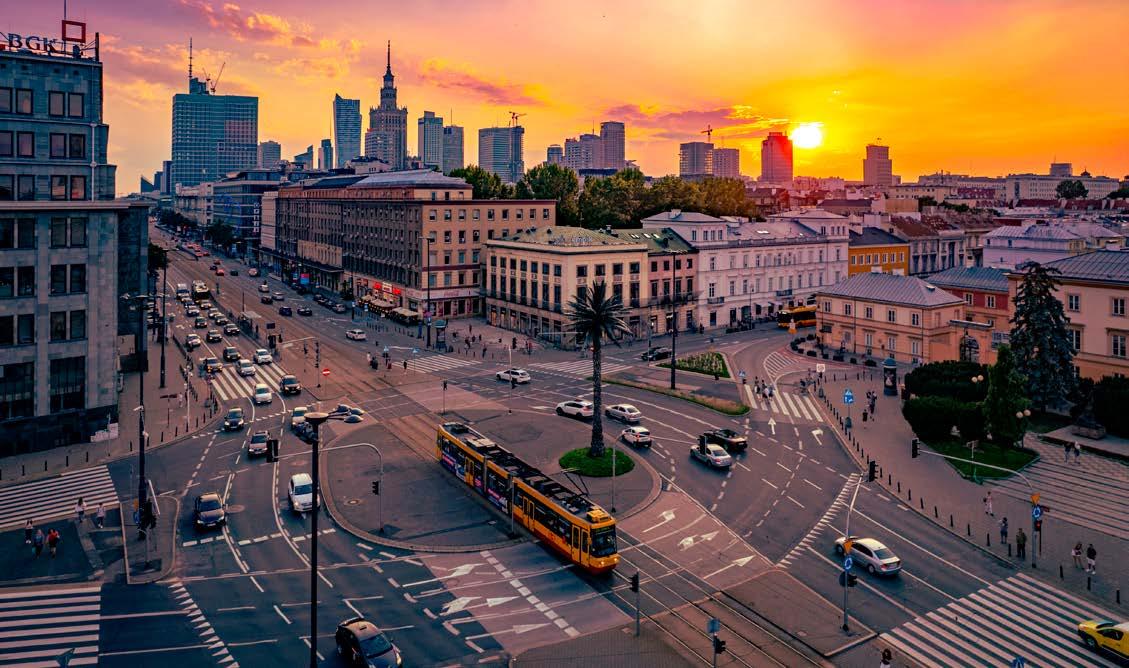
Travelling around Warsaw by bus, metro and tram is fast, efficient and affordable; driving a car through the centre, on the other hand, can be confusing and frustrating. As such, for visitors the city centre is best navigated by bike, scooter, public transport or taxi/ride share - all of which are explained here. For detailed info about Warsaw’s airports and train stations, visit our website.
Warsaw has an extensive bus and tram system, as well as a good metro system with the M1 line running north-south and M2 running east-west. Over 1,900 buses operate in and around the city, and run 05:00-23:00. After that night buses run on most routes twice every hour. All night buses display the letter N. ‘Fast buses’ (marked with red digits) skip the smaller stops.
Standardised tickets are valid for use on the metro, buses and trams, and can be bought from machines with instructions in English at all metro stations, and some bus and tram stops. Tickets can also be purchased from machines on the actual buses and trams, where you can pay by card, or using exact change only.
A standard single fare costs 4.40zł for 75min, or 3.40zł for a 20min ticket. If you’re travelling to the further reaches of Warsaw you’ll need a 7zł ticket
that covers both zones 1 and 2 (note that the airport is still in Zone 1). Tickets valid for 24 hours, 3 days and a special ‘weekend’ ticket might also be worth considering. Those over 70 ride for free, as do children up until the end of September of the year they turn 7, but you must have photo ID (those who ride free still need a ticket/’wejściówka’ to get through the gates of the metro - find wall dispensers next to the gates and hang on to the ticket for multiple rides). Everyone else pays full fare, unless you have an ISIC card which entitles you to a reduced fare (‘ulgowy’ ticket).
Once you’re through the electronic gates of the metro, you’re ready to ride. For buses and trams, however, there’s one extra step - validating your ticket immediately once you’re on board in the small ‘kasownik’ boxes on trams and buses. Plain clothes ticket inspectors stalk the lines, dishing out hefty fines for those without valid tickets. They often don’t look very official and you are within your rights to request identification.Qwww.ztm.waw.pl
Warsaw has cemented its big-city credentials with a fleet of 3,000+ bikes at over 300 stations. Veturilo is ridiculously easy: once you’ve registered online and paid the initial 10zł fee, you can visit any of the stations, select your ride, scan the bike’s QR code and you’re off! For standard bikes the first 20mins are free, and from there you pay 1zł for 21-60 minutes, 3zł for the second hour, 5zł for the third, and 7zł for each hour after that up to 12 hours; electric bikes are more expensive. When you’re done, pop your bike back into the stand at any of the stations.Qwww.veturilo. waw.pl. Available from March 1 to November 30.
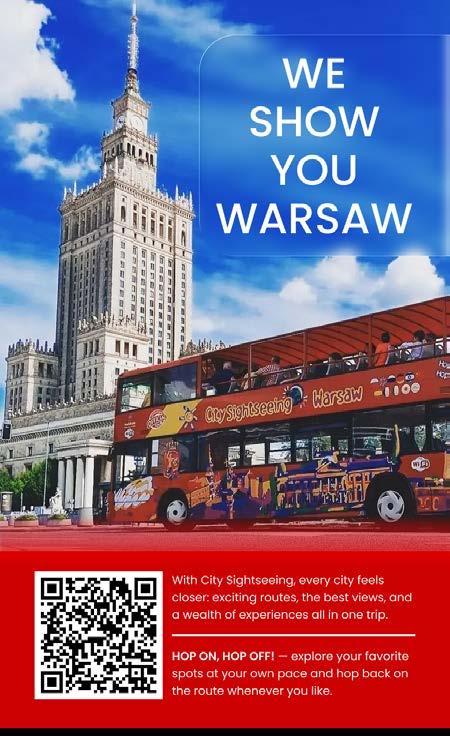
If Warsaw needed proof that it is a major tourist destination surely City Sightseeing is it. Hour-long tours on familiar red double-decker buses let you take in the major sights. Buy one ticket (you can use them for 24, 48 or 72 hours) and hop on/off the bus of your choice, either blue or red lines. Buses depart from ul. E.Plater, across from the Central Station and ul. Podwale near King Zygmunt's Column. Travel around the Old Town 'Stare Miasto', the National Museum, the Uprising Museum and plenty of other iconic Warsaw spots. Commentary available in various languages. See their site for more. Buses run all 7 days a week.Qtel. (+48) 793 79 57 33, www.city sightseeing.pl. Buses run10:00 18:00. Tickets 24hrs 150/120zł, 48hrs 180/150zł, 72hrs 200/170zł. Family and group tickets also available.
This is true luxury! A private car service, offering trips for individuals and groups. It doesn’t just stop at driving. VIP also offers services for conferences, congresses, business events, and special occassions. Not only that, but their cars are sleek and stylish, with models like Mercedes-Benz E-Class, BMW 7 Series, and more. They also hold private tours tailor made for individual riders - depending on interest and available time. You might just choose to zip around Warsaw in style, or you can venture outside of the city: tours go to Kraków, Gdańsk, Wrocław, Łódź, Lublin and others. They also help with booking restaurants and concert tickets, getting access to sporting events, and organizing personalized experiences for each guest. QAl. Jerozolimskie 65/79, tel. (+48) 793 70 60 60, www.vip service.pl/

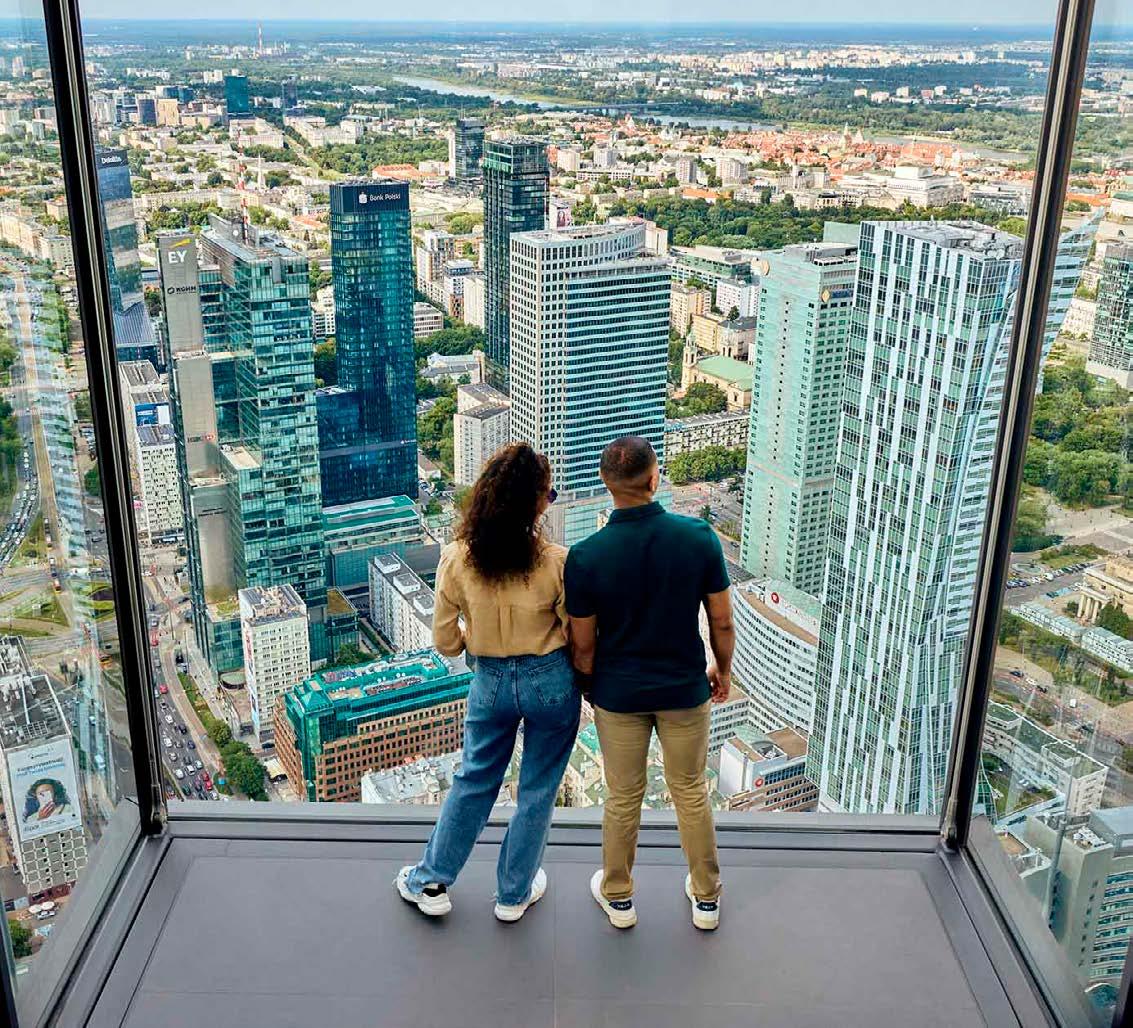
When it comes to Sightseeing, visitors should be sure to experience the dynamic synergy of Warsaw as a modern metropolis that still nurtures its cultural spirit and traditions. To this end, our guide details the capital’s most important districts, walking you through not only the antiquated Old Town (p.40), regal Royal Route (p.50) and the imperial beauty of Łazienki (p.60) and Wilanów (p.64), but also around the soaring, frenetic City Centre (p.30), happening Powiśle (p.56) and scruffy Praga (p.66). If your time is limited, however, here’s a cheat sheet of the city’s most unmissable sights.
More of a triangle than a square, and home to the Royal Castle, this popular plac is where modern Warsaw meets the Old Town.QSee p.41
A window into the ‘once-upon-a-time’ of Warsaw’s golden days, the Old Town is also symbolic of Warsaw’s rise from the ruins of WWII.QSee p.45.
One of the best visits in Warsaw, this museum will take you on a tour through Poland's national drink, including tons of history and even a tasting at the end!QSee p.68.
Full of incredible art and architecture this massive park and palace complex offers spectacular opportunities for sightseeing.QSee p.60
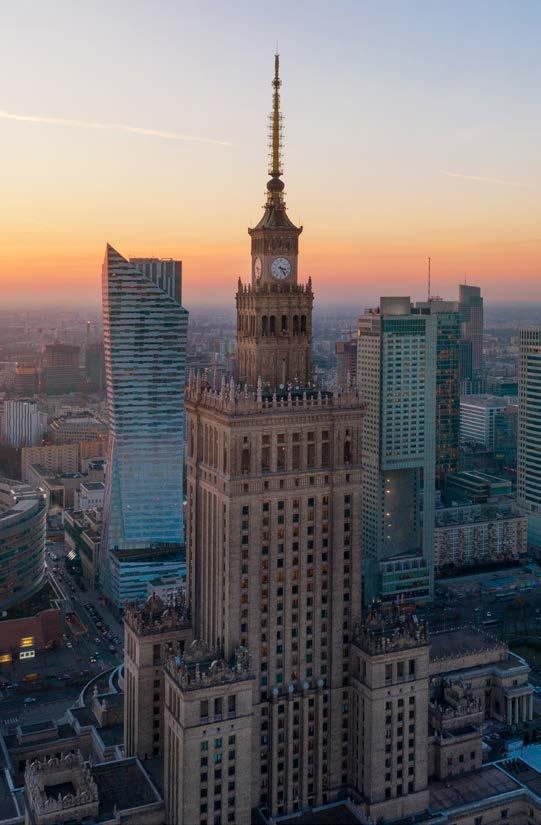
Originally commissioned by Stalin as a ‘gift from the Soviet people’, this 237-metre-high structure was Warsaw’s tallest building until 2021, and takes its inspiration from the capitalist worldnamely the Empire State Building. Working around the clock, it took over 5,000 workers - ferried in from the Soviet states and housed in a purpose-built village - just three years to finish the Palace in 1955 With 3,288 rooms inside, the Palace’s purpose was to serve as not just Communist Party headquarters but also as ‘The People’s Castle.’ Now an iconic part of Warsaw’s landscape, the Palace is celebrated by some, while for others it merely represents Russian hegemony.
At present the building hosts several theatres, a cinema, numerous bars, restaurants and cafes, and a tourist info office, as well as the National Museum of Technology and the Museum of Evolution Tours of the interiors are offered hourly in Polish between 10:00 and 15:00, and in English at 16:00. Book tickets online in advance, or skip the tour and head straight to the outdoor viewing terrace on the 30th floor (via elevator) for thrilling panoramic views; tickets available online.
QE‑8, Pl. Defilad 1, MCentrum, tel. (+48) 22 656 76 00, www.pkin.pl. Open 10:00 20:00. Viewing terrace open 10:00 20:00; terrace admission 30/25zł. U
The ‘Polish Versailles’ is just one of the many fitting monikers applied to this splendid late 17thcentury royal palace 10km to the south.QSee p.64
A stunning view of the entire city is seen here, at the top of the tallest building in the EUQSee p.37.
With tons of art from the 20th century and beyond, plus great exhibits on ancient Greece and rome, this is a must!QSee p.82
Telling the history of the 1944 Warsaw uprising against the Nazis in increadible detail, with stories from actual people, tons of interactive elements, and history upon history. This will leave an impact. QSee p.87
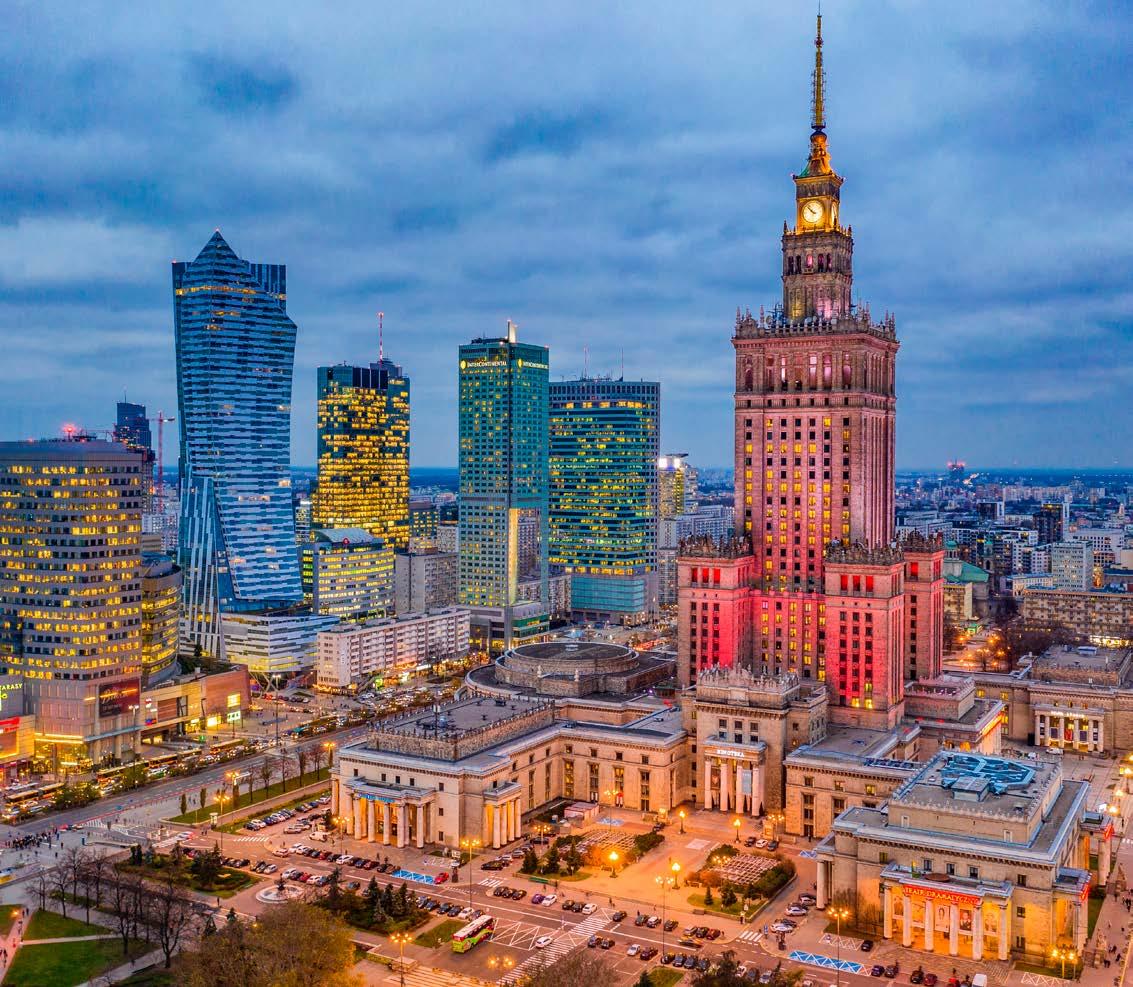
Known locally as ‘Śródmieście,’ Warsaw’s City Centre isn’t exactly a district (it comprises several, actually), but more of a catch-all term for the downtown area. Definitions vary, but generally, you know it when you’re in it - wide streets, monumental buildings, billboards, busy crosswalks and little to stand in the way of progress. It’s the modern, fast-paced, forwardlooking part of the city radiating out from the Palace of Culture & Science, and it’s here that you’ll find the majority of the city’s hotels, restaurants and bars, but also government buildings, skyscrapers and places of commerce - the dynamic heart of the contemporary capital.
In terms of tourism, it’s not exactly inviting, so why start here? Well, chances are you’re staying in the City Centre and probably there right now, so let’s get familiar with what’s around before running off to the Old Town (p.40). Despite not being particularly cosy or nostalgic, there are still many points of interest downtown, and nowhere more conveys the modern character of the Polish capital.
Anielewicza
Pawia
Pawia
Gliniana
Pawia
Dzielna
Smocza
Nowolipki
Chłodna Słupecka
Spi
Nowolipie
Ogrodowa
Grzybowska
Srebrna Dzielna
Platynowa
TarczyńskaDaleka
Nowolipki
Dantyszka Złota
Reja

Used over the centuries for military parades and national celebrations, this is Warsaw’s largest square. Named after legendary inter-war Polish leader, Józef Piłsudski; you’ll find a statue of the Marshal guarding his naming rights with a stern gaze nearby. During the era of partitions, the huge orthodox St. Nevsky Cathedral was built here (and later razed). It was here that in 1979, Polish Pope John Paul II gave an open-air holy mass to 500,000 people, instilling hope in the struggle against the repressive communist system. In 2018, two new monuments were added - both relating to the tragic and highly politicised Smoleńsk Air Disaster in which a plane carrying 96 members of a Polish government delegation crashed in the Russian forest in 2010; everyone on board perished, including President Lech Kaczyński, whose monument here gazes upon that of the other victims. At the western end you’ll find the Tomb of the Unknown Soldier under the broken colonnades of Saxon Palace - the grand structure this square stood in front of until its destruction during WWII. Here, the ashes of unidentified soldiers who died for the Polish cause are interred along with an eternal flame. You can watch the official changing of the guard every hour, on the hour.
QF‑6, MNowy Świat Uniwersytet.
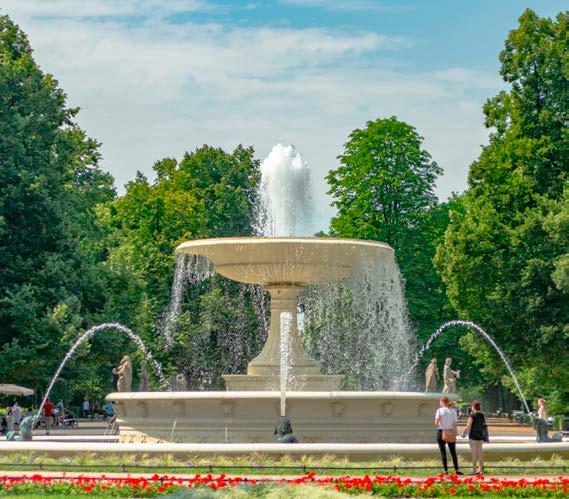
This historic 15.5ha park is the oldest in the city, and became one of the first public parks in the world when it opened to all in 1727. At that time it was a Baroque garden with the grandiose Saxon Palace. Despite the palace's demise during WWI, Saxon Garden still offers several points of interest, along with lots of benches, shade and a much-needed escape from the urban din of the capital. The centrepiece of the gardens is a large fountain created in 1855 by renowned Warsaw architect Henryk Marconi. The alleyways are lined with flowers, trees and neoclassical sculptures. In the northwestern part of the park, you’ll find the Romanesque Water Tower from 1825.QF‑6, Between ul. Marszałkowska and Plac Piłsudskiego, MŚwiętokrzyska.
Once one of Central Europe’s most famous brewing complexes, this 4.5ha area has been revitalised into a trendy urban culture and gastronomy district, densely packed with dozens of restaurants, cafes, bars, bakeries and shops. Mixing bold new architecture with restored historical buildings, post-industrial design with public green spaces, the heart of this ‘city within the city’ is Food Hall Browary - 14 food concepts at restaurant stalls in the former cellars. The historic Browar Warszawski (Warsaw Brewery) itself has also been revived and is once again producing craft beers for local hopheads, while other highlights include a sports bar part-owned by Robert Lewandowski (Nine’s). The food is delicious and so is the atmosphere.QC‑7, ul. Grzybowska 60, MRondo Daszyńskiego, www.browarywarszawskie.com.pl.

This former industrial site covering an area of 2ha near Rondo Daszyńskiego was once one of the largest enterprises in the Kingdom of Poland, with a long, complex history that dates back to the 1840s. The Norblin, Buch Brothers and T. Werner Factory (to give its full name) produced a wide range of metal, tin and silver-plated goods. In recent years, massive investment has turned the area into a lively modern urban centre of Now, find over 24,000m space. Visitors will find an impressive (p. 79 ) covering the site’s industrial history incredible food hall with international cuisine called Food Town (p. 107 cinema, an Event Hall with more than 600 square meters of event space, a fitness centre, shops, cafes and more. Young families will also find Smart Kids Planet (p. 88 center for young children! 51/53, M Rondo Daszyńskiego, (+48) 22 318 88 88, zgloszenia@fabrykanorblina.pl pl TE6
6 Plac Grzybowski




only full street that survived the Jewish Ghetto. It is here in the former heart of Jewish Warsaw (p.84) that the Singer Jewish Culture Festival takes place each year in late August/early September. The Nożyk Synagogue - the city’s only synagogue to survive the war and still in use today - can also be found close by at ul. Twarda 6.QE‑7, MŚwiętokrzyska.





Most people arrive to the Polish capital via the Warszawa Centralna train station, which, together with the Palace of Culture (p.29), basically comprises Warsaw City Centre’s ground zero. Plac Defilad is the vast, concrete sprawl around the Palace of Culture, but particularly the east side. As the name ‘Parade Square’ hints, this mostly empty plot was created by communist-era city planners in the 1950s, along with the Palace of Culture. Measuring 24ha, it was until recently the second largest public square in the EU, though no one would have mistaken it for a proper square.
For years it’s mostly been parking, but plenty of historical events have taken place here, from PRL propaganda parades, to massive rallies for Pope John Paul II, to Christmas markets, ice rinks and New Year’s Eve concerts. After a long construction period, the new, sleek Museum of Modern Art opened in October 2024, coinciding with the introduction of Plac Centralny (Central Sqaure) - essentially, the central part of Plac Defilad surrounding the museum is being turned into a greener, more pedestrianfriendly space under the new moniker. This is wellworth checking out because it really does feel like the heart of the city, and there's plenty of options for food, drink and planning your next move.QF‑8, Plac Defilad, MCentrum.


There is plenty of great shopping to be had in and around Warsaw, and Złote Tarasy, seated next to the central train station, is no exception with great stores like Sephora, Van Graaf and Zara. But many people actually admire the complex for its ultra modern architecture. It’s a good idea to check out the space, which has a 10,000m glass dome fitted with a special mechanism to both filter sunrays and stop snow from building up. The dome itself is reminiscent of waves, water, balloons -- basically any form without a straight edge. The 1.5 billion zł project was designed by a California-based firm. After it was completed in 2004, the design won the firm an award by a famous London-based architecture magazine.QE‑8, ul. Złota 59, MRondo ONZ, tel. (+48) 22 222 22 00, www.zlotetarasy.pl Open 09:00 22:00; Sun 09:00 21:00.
Designed by architect Zbigniew Karpiński and completed in 1969, this massive wall of buildings was hailed a work of Socialist Realism genius. But soon, the buildings (now among the oldest department store/retail complexes in Poland) fell into neglect, their reputation changing to that of an enormous eyesore covered in advertising in the early postcommunist era. However, eventually new life was breathed into the complex. Now, find shining glass frontages added to the department stores, and granite floored pedestrian walkways and modern tubular lighting added to the section behind the Jerozolimskie end. Although once entirely dodgy, Pasaż Wiecha - the long space behind the ‘Eastern Wall’ - is today lined with shops and restaurant gardens on both sides, making it an interesting area to explore. It also boasts benches, hammocks, beach chairs and other elements of urban design. Ironically, the centrepiece of the city’s big 1960s redevelopment plan is now a focal point in the ‘Nowe Centrum Warszawy’ plan, under which this area has become more green and user-friendly for residents. It’s all part of a larger plan to support a lively pedestrian corridor through the city centre from here to ul. Nowy Świat (p.55) via ul. Chmielna. QF‑7/8, Pasaż Stefana Wiecheckiego Wiecha, MCentrum.
This lovely public square opened in July 2022 at the intersection of Bracka, Krucza, Zgody, Szpitalna and Chmielna Streets - hence the name, ‘Five Corner Square.’ Although the new design still features a lot of concrete, 22 maple trees have been added to the space, as well as numerous benches with almost 40 sitting places. Most significantly, the entire area has been opened up and given over to pedestrians, which is a huge improvement over the urban tangle that previously prevailed here. Plac Pięciu Rog ów is basically the centrepiece of redevelopment works throughout this area which are transforming ul. Chmielna into a high street for pedestrians A great area for exploration: you’ll plenty of cafes, restaurants, bars and intriguing places for relaxing and refuelling. Q G‑7/8, M Centrum, www.plac5rogow.pl
A wonderful spectacle of socialist realist architecture, Constitution Square was constructed between 1950-52 to be an ‘expression of creative optimism and peaceful work within the socialist system.’ Its real purpose was to serve as a focal point for the frequent state parades, which would go from
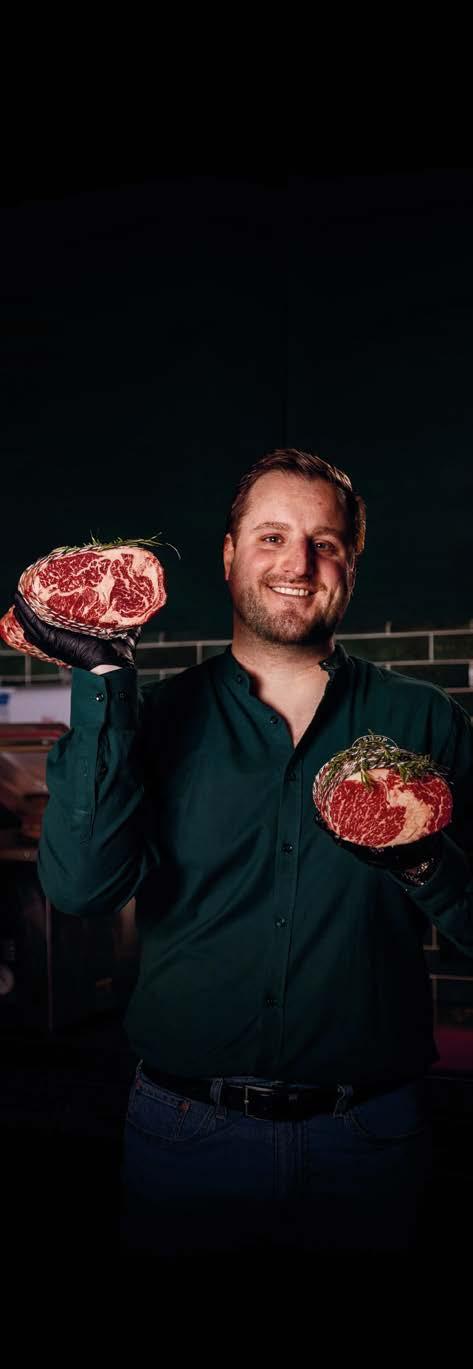
– awarded by the World Steak Challenge.



here down ul. Marszałkowska to Plac Defilad (Parade Square) in front of The Palace of Culture and Science. Quite an anomaly in the urban fabric of Warsaw, Constitution Square was the crowning glory of the Marszałkowska Housing District - the first housing district to be completed out of the complete devastation of WWII. It was quite an achievement and heralded as a big success at the time.
Dominated by three monumental street lamps looking like giant tridents, you’ll still see some socialist mosaics here and there, but things get even better along the tail end of ul. Marszałkowska, leading to Plac Zbawiciela, where socialist reliefs of workers line the street.QG‑10, Pl. Konstytucji, MPolitechnika.
12 Plac Zbawiciela
In the aftermath of WWII, this star-shaped roundabout became dominated by PRL-era buildings from the 1950s, but still harbours a couple of gems. The first is the conspicuous Church of the Holiest Saviour, from which the square takes its name (Saviour Square). Built in neo-Renaissance style in the 1920s, that it stands is a marvel, considering it was dynamited by the Nazis during WWII and then tagged for demolition by the communists. The other pre-war building here is the handsome
Jasieńczyk-Jabłoński tenement (Mokotowska 12), erected in 1910. Upon completion, it was not only one of the most modern, but also the tallest residential building in Warsaw (38 m). From 2012–2015, Julita Wójcik's "Rainbow" art installation notably soared over Plac Zbawiciela. A 9m high 26m wide rainbow made of plastic flowers, the piece proved too controversial for PL's anti-LGBT factions, who repeatedly lit it on fire until it was removed. However, there are talks about bringing it Politechnika.
The historic main building of what's known locally Politechnika Warszawska is an absolute wonder of neo-baroque architecture designed by Stefan at the turn of the 18/19th centuries. This stout, sturdy two-story building with its unique rounded corners survived WWII bombing and was quickly retouched after the war. Its magnificent facade features an array of architectural embellishments: sculptures, bas-reliefs, frescoes and sgraffito, to name a few. If you think the exterior is impressive, finagle your way inside to see the pentagonal cloister courtyard with its four stories of arcades, phenomenal staircase and beautiful stained-glass roof - one of the mostphotogenic places in Warsaw.The university itself was established in 1826 and is today one of the largest technology universities in Central Europe, with over 36,000 students per year..QF‑10, Plac Politechniki 1, MPolitechnika. Open 06:00 22:00.
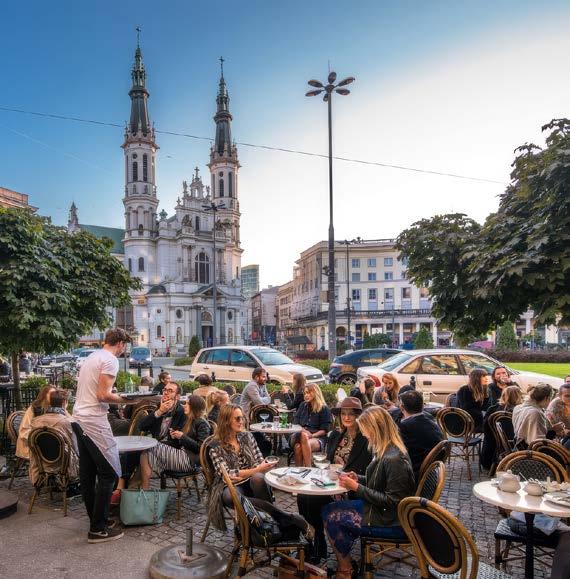
If you're wondering where all the students are, this might be the answer. This is one of Warsaw's handful of marvelous indoor market halls, with food, shopping, art and more! And this is definitely one to check out because it's photogenic, with a phenomenal ground-floor food hall everything from dim sum to gelato, burgers, fries and more!
There are plenty of boutique shops and a lot of great events held here. Plus, we can't say enough about the architecture. Built over 100 years ago in the Art Nouveau style, this stunning building originally served as a market hall. It was redeveloped in 2016 to pay homage to its original use (many of the original brick and latticework is still featured prominently here) but with a new, contemporary feel. This is urban revitalisation at its most impressive and photogenic. QF‑10, ul. Koszykowa 63, www.koszyki.com. Open 08:00 24:00; Fri, Sat 8:00 1:00.
Right in the heart of Warsaw sits the highest tower in the EU (seriously!), this place should be your final stop after sightseeing all day in order to take in from the sky the full scale of what you walked on the ground. It's located in the Varso tower, which consists of three buildings, with its main building being the tallest in the EU (and the 6th tallest in Europe) at 310 meters. It was completed in 2022, and surpassed the Palace of Culture and Science as the tallest building in Poland. It's in this building that you'll find which allows for 360-degree views of the city thanks to their observation deck on the 53rd floor. The tour to the top starts with a speedy panoramic elevator (yet more views!) through an immersive corridor among the clouds. There’s an exhibition about Warsaw and an Experience Room with three films from different eras of the city’s history. Before you go to the observation deck (or after), head over to the HighGarden Rooftop Lounge on the 49th floor, a lush cocktail bar with a terrace and garden. Right next door is the Event Bar, which is a great place for private events. Plus, there’s a boutique selling souveniers and local products on the 46th floor. All in all, a great experience for the end of your sightseeing adventures -- take in the highest building in the EU, and see everything you've seen from the ground, from the sky!QE‑8, Varso Tower, ul. Chmielna 69, MRondo ONZ, www.highlinewarsaw.com 10:00 22:00.



Sk y s c r a p e r s
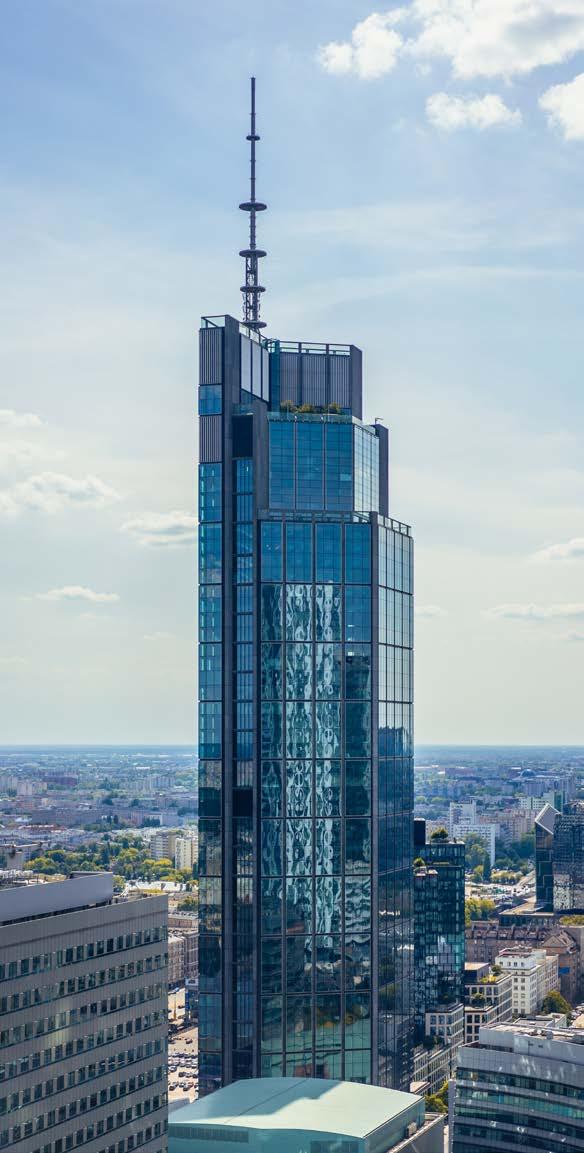
Warsaw has plainly stated its ambition to have more skyscrapers than any other city in Europe. The city currently has 33 buildings over 100m high, with more pending or approved for construction to potentially bring the total much higher in the coming years. Beloved by locals and symbolic of the city’s aspiration to be the most modern capital in Europe, here are some of the most notable towers in town.
Varso: This office complex is the tallest building in the EU at 310m (though the last 80m is a spire). At the top find the HighGarden Rooftop Lounge, with drinks and views of the city p.111QE 8.
Palace of Culture & Science: Buy a ticket, then head up to the 30th floor of Warsaw’s oldest and second tallest skyscraper (237m) for amazing panoramic views from an actual open-air terrace More on p.29 QE 9.
Warsaw UNIT: Warsaw’s 5th tallest tower (202m) was completed in 2021. Included is the wild new adrenaline attraction Skyfall Warsaw - a vertigo-inducing glass box that dangles outside the building (available to companies and special events)QC 8.
Złota 44: Designed by Daniel Libeskind, this luxury residential tower is one of Wawa’s most beautiful and distinctive skyscrapers, and its 7th tallest (192m).QE 8.
InterContinental Hotel: At 165m, Warsaw’s InterContinental Hotel is one of the tallest 5-star hotels in the world, and features the highest swimming pool in Europe at 150m. Open to non-guests, go have a swim in the clouds.QE 8.
Centrum LIM/Warsaw Presidential Hotel: The Panorama Sky Bar on the 40th floor of this veteran skyscraper (completed 1989) offers a liquid view to the city. Although the drinks are among Wawa’s most expensive, this is one of the city’s most accessible views.QE 9.
Warsaw - THE HUB: Completed in 2020, this complex consists of two 130m buildings and an 86m building. For great views, head up to the bar on the 21st floor - The Roof Sky Bar (p.109).QC 8.
Atlas Tower: 119m tall and completed way back in 1999, the locals think this one looks like a porta-loo, but the 27th floor features one of the best luxury roof clubs in the world, Level 27. The building is also home to the Invisible Exhibition (p.82). QE 9.
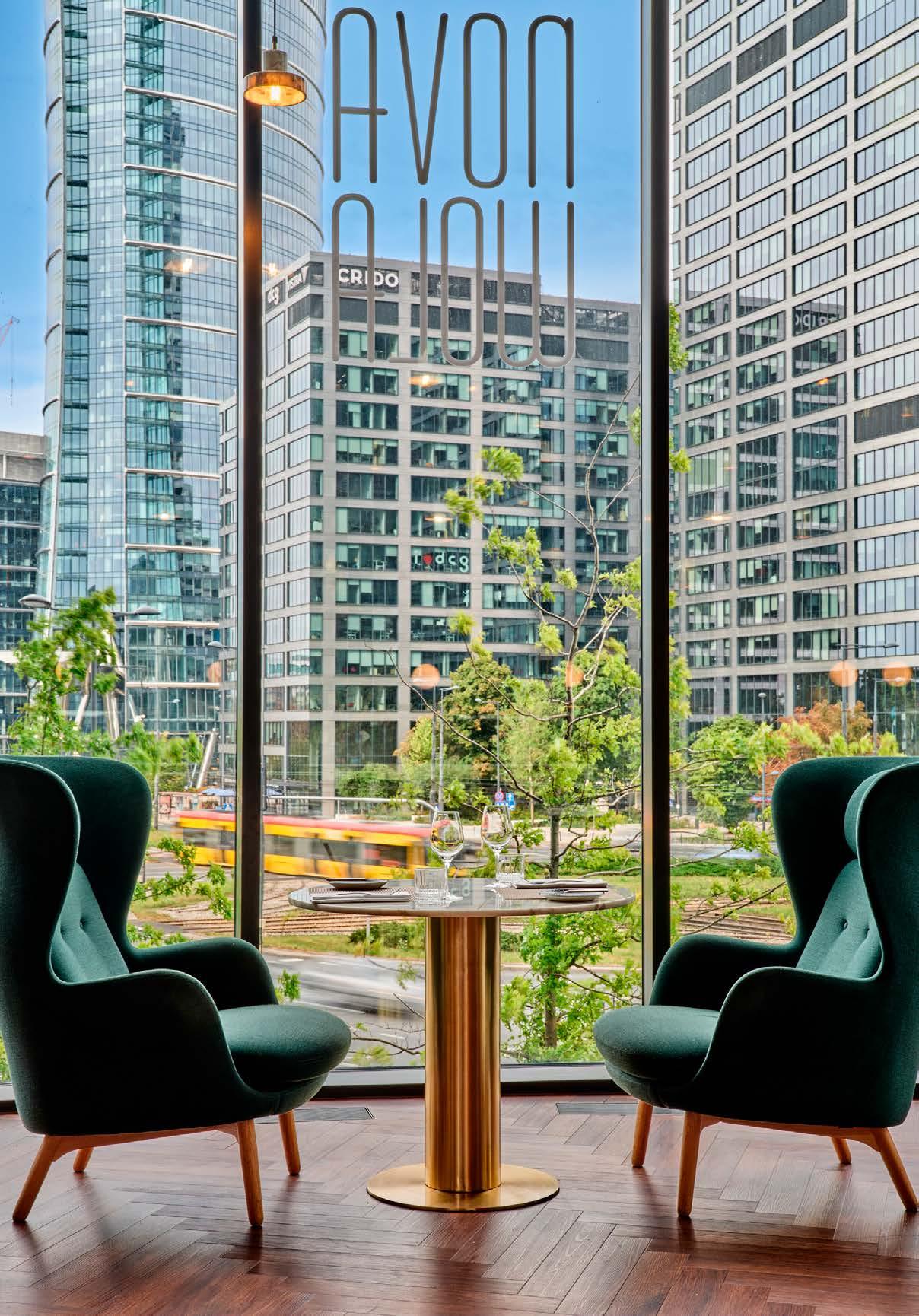
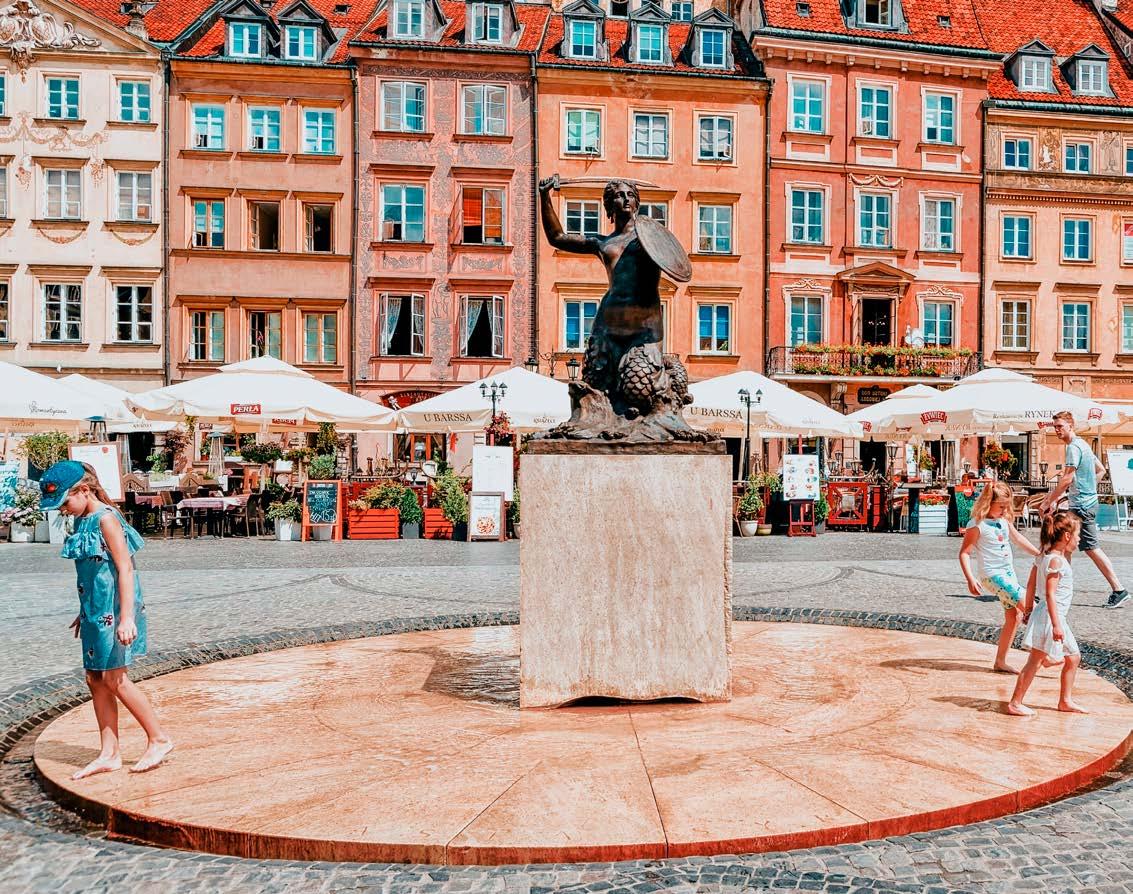
A labyrinth of winding cobblestone streets, ornate tenement facades and picturesque plazas, it’s easy to understand why the Old Town is Warsaw’s top tourist area. A window into the ‘once-upon-a-time’ when Warsaw was a pearl of European architecture, the Old Town was actually entirely rebuilt after WWII. Today it stands as a stunning testament of Varsovians’ great pride in their city, and its rise from the ruins. If you have only one day in Warsaw, you should spend part of it here.
In the devastating aftermath of the Warsaw Uprising (p.86), 85% of the city’s left bank lay in ruin, half of its population had perished, and the Old Town was a smouldering wasteland. To their credit the Capital Reconstruction Bureau immediately started rebuilding the historic centre using pre-war sketches, paintings and photographs. The first phase of reconstruction was completed in 1953, but works continued in the following decades, finally concluding with the opening of the Royal Castle (p.42) in 1984. Although what you see today is not strictly ‘original’ per say, its inclusion on the UNESCO World Heritage List speaks volumes of its authenticity and the effort required to recreate it.
Our Old Town Walking Tour leads you around the oldest part of the city, showing you its most important and interesting points, beginning and ending near Plac Zamkowy (Castle Square) - the traditional entrance to the district.
The prescribed route covers only about 1.5km. If you’re only interested in the exercise, it could take less than 30mins, but ‘if done correctly’ - that is, with a couple of short culture, food and coffee/beer breaks - we reckon it will take at most several hours to complete. Make sure you’ve got a full charge on your phone/camera, comfy shoes and off you go.
Most visits to the Old Town begin on Plac Zamkowy (Castle Square), the busy plaza where Warsaw’s medieval centre (to the north), meets the thoroughfare of its Royal Route (to the south), in the shadow of the Royal Castle. More of a triangle than a square, there isn’t a more popular meeting place in the city, with the steps of King Sigismund’s Column typically besieged by couples, schoolkids and skateboarders. A lot happens here, whether it’s political demonstrations, street performers, or the steady flow of locals and tourists out for a stroll. As for the famous column, it honours the man who in 1596 moved the Polish capital from Krak ów to Warsaw - King Sigismund III Vasa. 22 metres tall, it was erected in 1664 by his son, Władysław IV. Local legend asserts that Sigismund rattles his sabre whenever Warsaw is in trouble, an occurrence reported during the 1794 Kościuszko Uprising and again during WWII. With the Warsaw Uprising in full swing the column took a direct hit from a tank shell and came crashing down. Amazingly Sigismund survived and was returned to his perch in 1949.
Also note that there is a tourist info office located here at Plac Zamkowy 1/13 (open 10:00-18:00). so you'll be able to find all the information you need before you explore further.QF‑4, MRatusz Arsenał.
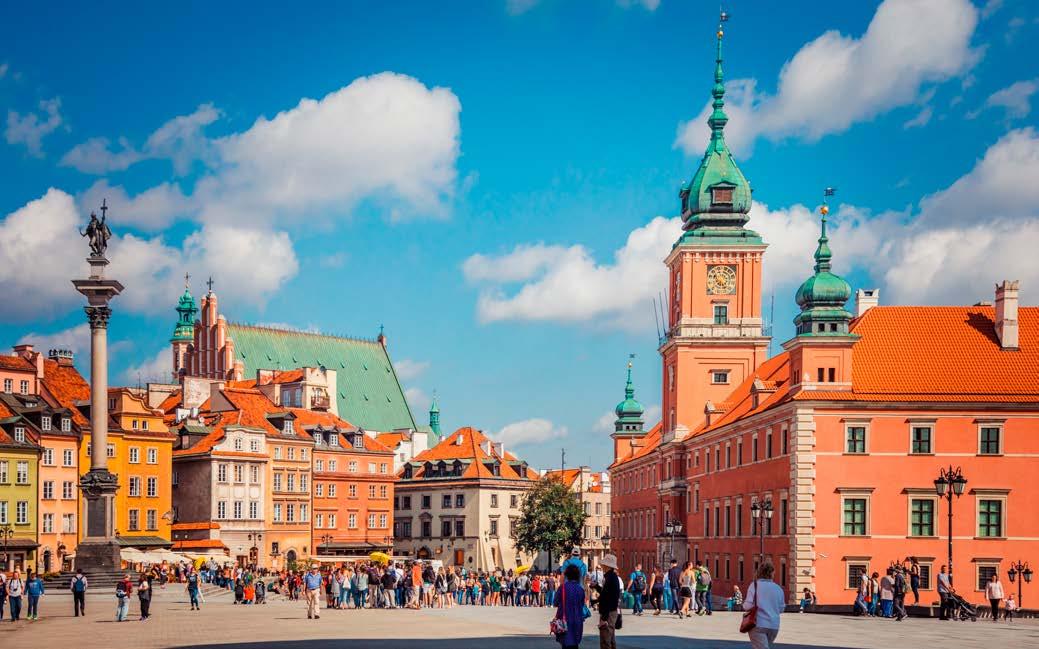
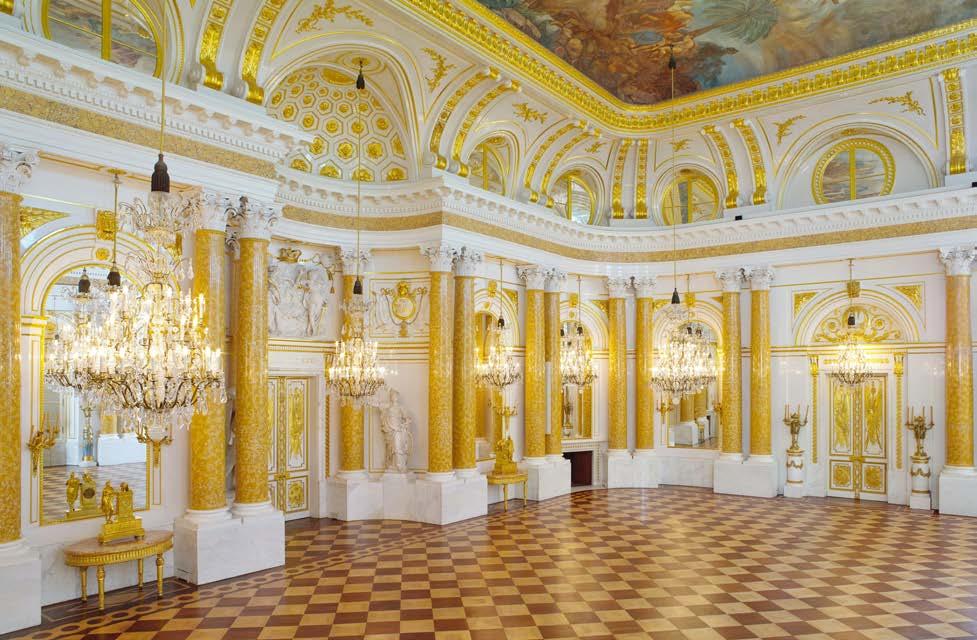
More a palace than a castle, this building is the pride of Warsaw, reconstructed from a pile of rubble at incredible cost between 1971 and 1984. Much of the furniture was donated by now deceased commie buddies such as the GDR and USSR, and much of the money for rebuilding came from generous donations from exiled Poles. Dating back to the 14th century, the castle has been the residence of Polish kings, then of the president and then the seat of parliament. The prescribed tour will take you through the Kings' apartments and chambers, heavily adorned with paintings of famous Polish moments. Maps on the wall reflect Poland's greatest days, when it stretched from the Baltic to the Black Sea.
Those who plonk down for admission (60zł/45zł) will have plenty to see, including the Kings’ apartments and chambers, the Houses of Parliament and the opulent Great Assembly Hall. Additional tickets are required for the Gallery of Masterpieces and the apartments of Prince Józef Poniatowski - aka the ‘Tin-Roofed Palace’ (open Tue-Sun only, 10:00-18:00; 30/20zł. Free Wed.) Luckily for families, children under 7 get in for free, while those 7-16 years old have to pay 1zł! Visiting time: 2hrs.QG‑4, Pl. Zamkowy 4, tel. (+48) 22 355 51 70, www.zamek krolewski.pl. Open 10:00 18:00; closed Mon. Admission 60/45zł. Kids & students with valid ID, 1zł for each exhibit; Wed free for all exhibits. U
The east wing of the Royal Castle’s main floor is now home to a permanent exhibition of various works of art that had formerly been spread throughout the property, including two works by Rembrandt: ‘The Girl in a Picture Frame’ and ‘The Scholar at the Lectern.’ Both paintings were part of a major donation of 37 works of art given by Countess Karolina Lanckorońska, a Polish resistance fighter and concentration camp survivor who, upon Poland’s return to independence in 1989, bequeathed her family’s art collection to the nation. The Castle has done an impressive job of staging the artworks, with muted walls and focused lighting keeping all the attention on the various portraits of 16th and 17th century royalty like Marie Antoinette and still life paintings of flower-filled bounties. There’s a room devoted to porcelain, tapestries and glassware from the era, plus changing temporary exhibits. The Castle’s free admission on Wednesdays have seen the gallery overrun with visitors, so serious art lovers will want to pay for the chance to wander at a less harried pace.
Average visiting time: 1hr.QG‑4, Pl. Zamkowy 4 (Royal Castle), MRatusz Arsenał, tel. (+48) 22 355 51 70, www.zamek krolewski.pl/strona/wizyta wnetrza i ekspozycja/1126 kolekcja sztuki zamku krolewskiego w warszawie. Open 10:00 18:00; closed Mon. Admission 60/45zł; kids and students under 17 with valid ID 1zł; Wed free. U
The neighbouring Branicki and Szaniawski Palaces are two stunning noble residences from the last century of the Polish-Lithuanian Commonwealth. The Szaniawski Palace at ul. Miodowa 8, named after the first noble family residents, was beginning of the 18th century, and was later the residence of the famed Ostrowski family. It was first reworked into its current classical style in 1812. Branicki Palace at number 6 came later in 1740, and aimed to capture the magic of architecture, in addition to having shaped layout with stunning façades and rooftop windows.
When Count Jan Klemens Branicki died in estate was inherited by his wife, Izabella Poniatowska, the sister of King Stanisław August Poniatowski and an influential figure of the Enlightenment era in Poland. The palace was a congregation point for many Enlightenment-era creatives of whom Izabella was a patron. Both palaces were destroyed in WWII and reconstructed using Renaissance-era paintings as a reference. These romantic buildings from ‘straight out of a painting’ were brought together in 2022, when the Marriott’s Autograph Collection opened their first Polish property here as the Verte. This exquisite 5-star accommodation option also features KUK Restaurant. (p.95).QF‑4, ul. Miodowa 6 8.
5 Jan Kiliński Monument
This huge monument honours Jan Kiliński, a Warsaw cobbler who became the unlikely hero of the 1794 Kościuszko Uprising. Despite being wounded twice, Kiliński and his troop of peasants captured the Russian Ambassador’s Warsaw residence - an action that ultimately led to his imprisonment in St. Petersburg.
Said to embody the Polish virtues of bravery and patriotism, his statue was erected in 1936 and originally located on Plac Krasińskich. In reprisal for an attack on the Copernicus Monument, Nazi troops hid Kiliński inside the vaults of the National Museum. Within days, boy scouts had daubed the museum with the graffiti ‘People of Warsaw! I am here, Jan Kiliński.’ After the war the cobbler was returned to his rightful place, before being relocated here in 1959. Kiliński’s comrade and superior Tadeusz Kościuszko himself once lived nearby at Szeroki Dunaj 5; this wide street was formerly home to Warsaw’s fish market, while the narrow street running at a 90-degree angle, Wąski Dunaj, was the town’s Jewish Quarter during the Middle Ages.QF‑4, ul. Podwale.
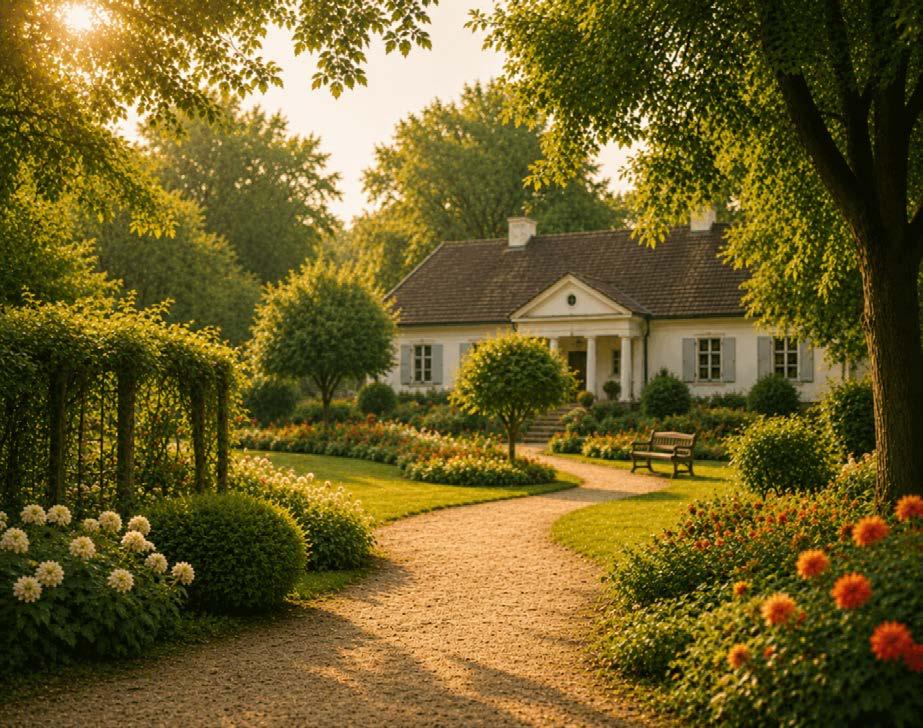
Frederic Chopin's Birthplace House and Park in Zelazowa Wola
Romantic, peaceful atmosphere with live Chopin music
800 PLN per person
Min. 2 people
Duration: 5-6 hours
Pickup: any location in Warsaw RESERVATION
Phone / WhatsApp:
+48 793 795 733
Scan to book:


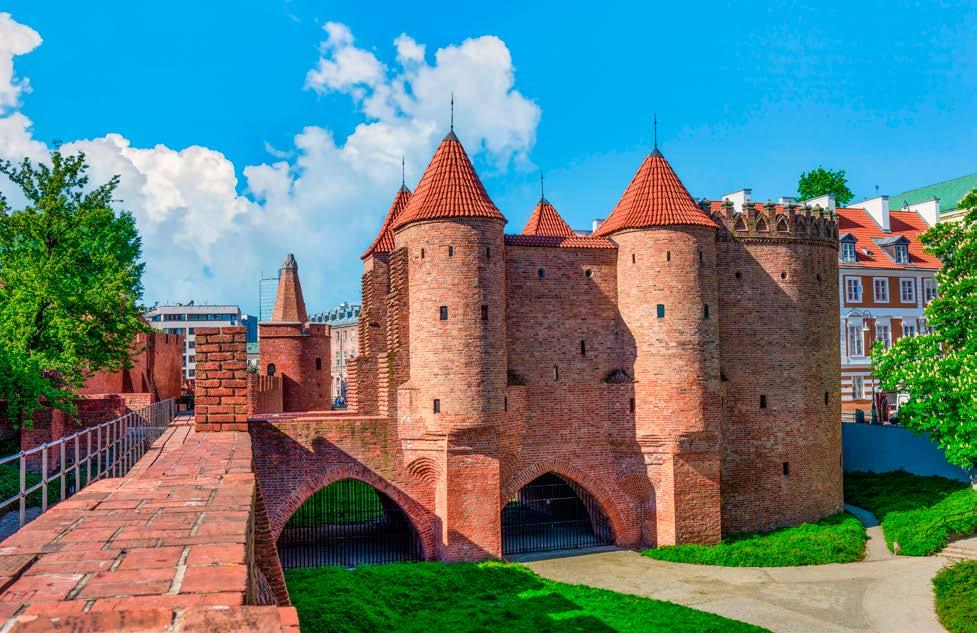
The first sections of Warsaw’s defensive walls date back to the late 13th century, and by the end of the 14th century they stretched 1,200 meters, enclosing an area of about 8.5ha, and included 8 towers and 4 city gates. The most famous of these now non-existent structures was the Kraków Gate on Plac Zamkowy, and the Marshall’s Tower. Already in the 15th century these defenses were deemed insufficient and a second, lower line of brick walls was built along today’s ul. Podwale at a distance of just 9-14m from the previous walls; a moat was dug in-between and the Barbican was built in 1548 as the final piece of the defenses. As Varsovians were already settling in numbers beyond the city walls, these fortifications quickly became obsolete and from the 17th century they were being demolished or incorporated into tenement buildings. Ironically it was the total destruction of the Old Town that allowed these walls to be rebuilt after WWII and today the space between the two historical brick ramparts forms a pedestrian promenade parallel to ul. Podwale known as ‘Międzymurzę.’ Along this pleasant route you'll find many historical plaques and monuments, but you won't see much of the Old Town centre, as the view is obscured by the high inner wall. Apart from all the interesting history, there are some incredible modern experiences to be had here. QF‑4, Międzymurzę Jana Zachwatowicza.
The communist authorities continually thwarted efforts to commemorate the Warsaw Uprising of 1944, though by the early 1980s cracks in their resolve were beginning to show, and this small-butpoignant monument made its debut in 1983. Designed by Jerzy Jarnuszkiewicz and funded by collections undertaken by scouts, the sculpture commemorates the children who had to grow up fast, serving as messengers and frontline troops during the Uprising. With its oversized helmet and rifle, the bronze figure was inspired by the story of 13-year-old corporal Antek, himself killed in action near this spot on August 8, 1944. For history buffs, this is the spot to go, hands (or arms) down.QF‑4, ul. Podwale.
Continue along the Old Town defensive walls to the Barbican, and on to the Old Town Square?
Or, duck out of the medieval walls and down ul. Kilińskiego, hanging a left on ul. Długa for a short <20min/1.5km walk to the POLIN Museum (D-4, p.85) via the imposing Warsaw Uprising Monument and lovely Krasiński Palace and Gardens (E-4)?
Crowning the set of the medieval defensive walls which once protected the northern entrance to the city, this fearsome rotund structure dates from 1548, built by architect Giovanni Battista Venetian on the site of an earlier gate. Despite its intended use, the Barbican was only ever used in one fighting action when on June 30, 1656, during the Swedish deluge, Polish troops attacked to retake the city. In the 18th century, the Barbican was partially demolished with the remains being incorporated into new apartment buildings.
It was during the interwar period that restoration work began to return the Barbican to its former glory, but alas, World War II put a hold to works, with it being completely destroyed. Along with the Old Town reconstruction, the fortified wall and Barbican were restored. Today, it serves as a bridge between the Old and New Town, and is also the hangout of choice for teenage drinkers, buskers and 'artists' selling their wares. Interested in more Barbican history? During the warmer months you can pop inside to see a small exhibition put together by the Museum of Warsaw. Admission inside the Barbican is 12/8zł on Wed and Sat (13:00-17:00). Even without venturing inside, you'll find a lot of great photo opportunities and general life happening here in those warm spring and summer months. Definitely worth a walk around. QF‑3/4
Measuring 90 by 73 metres, the Old Town Square is prewar Warsaw’s defining highlight, lined with richly decorated tenements - keep an eye out for the ‘House Under the Lion,’ with frescos by Zofia Stryjeńska (our Polish artistic crush - look up her work) at the southwest corner leading onto ul. Świetojańska. Today, the buildings around the Rynek host numerous cafes, restos, shops and museums. In the summer months, this is the place to sit outside with an aperol or a coffee and enjoy people watching. In the winter, this is the place to stroll and feed the pigeons while also admiring the mermaid statue in the middle of the square (not the main one.
Stay on target with a stroll through the Barbican towards the Old Town Square?
Or take a detour down charming pedestrian thoroughfare ul. Freta, past the Maria Skłodowska-Curie Museum, en route to the New Town Square (350m away)?
Guided tours in English every Sunday at 2pm
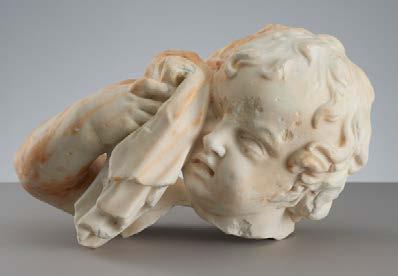
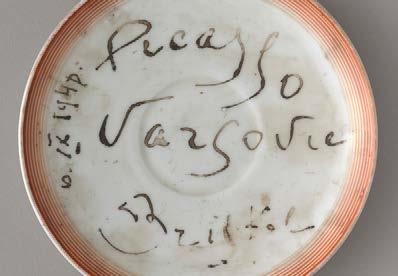
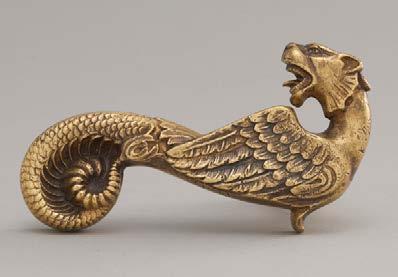
of Warsaw 42 Old Town Market Square www.muzeumwarszawy.pl/en
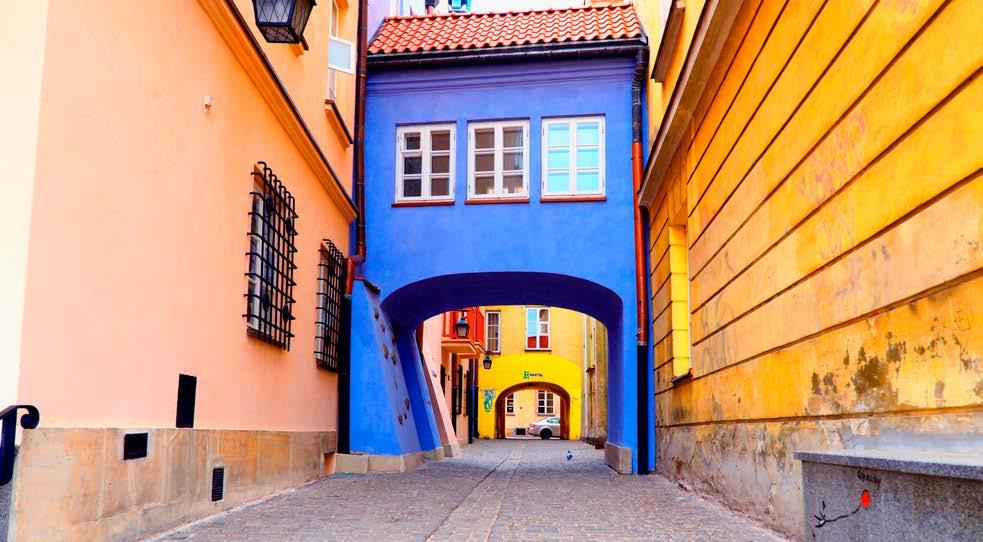
Warsaw’s Old Town is full of restaurants and bars, but, as this is literally the most touristy part of the city, the quality varies. When it’s time to take a break, here are a few places that are worth the money and worth seeking out.
U Fukiera: Adhering to tradition with extravagant flair, this famous restaurant on the Old Town Square offers an exceptional dining experience. And it's all in a beautiful, slightly eccentric environment! A dining experience like no other. Qp.105.
Gospoda pod Zygmuntem: This veteran Polish restaurant is as traditional as it gets, with potato pancakes, pierogi, kotlet, and so, so much more. Make sure to stop here for the authentic stuff.Qp.100.
Ciao Napoli: Authentic Neapolitan pizza (the best in town?), fresh seafood and a lovely space make this affordable franchise deservedly popular. Plus, there's outdoor seating for the warm spring and summer months! Qp.99.
KUK Restaurant: Located in the decidedly regal 18th-century Branicki-Szaniawski complex, this restaurant blends the tradition of Polish food with contemporary flair. Expect small, artistic plates bursting with flavor (and worthy of a photoshoot).Qp.95
That's on p.56). The Museum of Warsaw occupies the entire northern side of the square, Museum World of Illusion (p.88) can be found at number 21, and number 27 is home to Warsaw’s oldest restaurant, U Fukiera (p.105).
During the 15th century the square was home to Warsaw’s Town Hall, though this was pulled down in 1817 and never replaced. Today, it features Warsaw’s best-loved monument and the city’s defining symbol - Syrenka, aka the Warsaw Mermaid Cast in 1855, this busty vixen’s form graces every bus, tram and coat of arms you’ll find in the capital. All around a great spot to spend some time and really bask in the European old town vibes.QF‑4, Rynek Starego Miasta.
Inside 11 conjoined historical tenements on the Old Town Square, this revamped museum’s permanent exhibit, ‘The Things of Warsaw,’ presents the city’s cultural history via 7,000 objects displayed in 22 thematic rooms. Included are portraits, postcards, souvenirs, and other items with representations of the Polish capital.
Additionally, an exhibit Testimonies from the Warsaw Ghetto shines a light on the difficult history of the city's ghetto in the 1940s, told by people who experienced it. Finally, there’s a bookstore, cafe and fabulous viewpoint overlooking the Old Town Square. Well worth a visit! Visiting time: 2-3hrs.QF‑4, Rynek Starego Miasta 28 42, www.muzeumwarszawy. pl. Open 9:00 17:00; Thu 9:00 19:00; Sat, Sun 11:00 18:00; closed Mon. Admission 35/25zł; permanent exhibit only 25/18zł; temp. exhibit only 20/15zł; Thu free. U6
This focuses on the architectural history of the Old Town, and is the best introduction to the history of Warsaw's reconstruction. The permanent exhibition gives an in-depth look into Warsaw's Old town, before, during and after WWII, which decimated 90% of the neighborhood. Following the destruction of WWII, the Old Town was reconstructed in a pioneering way that combined modern techniques and conservation methods. The museum gives a clear reason for why the reconstruction of the Old Town led to its place on the UNESCO World Heritage List. Visiting time: 30-60mins.QF‑4, ul. Brzozowa 11/13, MRatusz Arsenał, tel. (+48) 22 635 34 02, www. ciz.muzeumwarszawy.pl/en/. Open Wed 9.00 17.00; Thu 9.00 18.00; Fri 9.00 17.00; Sat, Sun 11.00 17.00; closed Mon, Tue. Admission 15/10zł; Thu free. Free admission to permanent and temporary exhibitions is available to persons with disabilities (upon presentation of a disability card or certificate) and their accompanying carers. More information about accessibility: https://muzeumwarszawy.pl/lokalizacje/ centrum interpretacji zabytku/. U6
12 Gnojna Góra
Demonstrating how every word sounds exotic when you don’t know the language, Gnojna Góra may sound like another charming stop on your tour. And it is for the views over the Vistula River, but not for the name, which literally translates as Shit Hill (Dung Hill, if you wish to be more polite). For centuries, this was the dumping ground for all of the Old Town’s waste. As you can imagine, it grew over time and the distinctive shape can best be seen from the bottom. At one stage it was actually renowned for its healing properties - people with obscene amounts of money would come here to be buried up to their necks in rubbish in a supposed cure for syphilis (doesn’t work, it turns out). From here head back towards the centre via ul. Dawna, whose trademark blue archway is one of the most picturesque sights in the city, then swerve onto ul. Kanonia QG‑4, ul. Brzozowa.
Circling back to Plac Zamkowy you can either carry on down the Royal Route (turn the page), or circle round the back of the Royal Castle for a walk through the free gardens and down along the riverbank towards Powiśle (p.56).

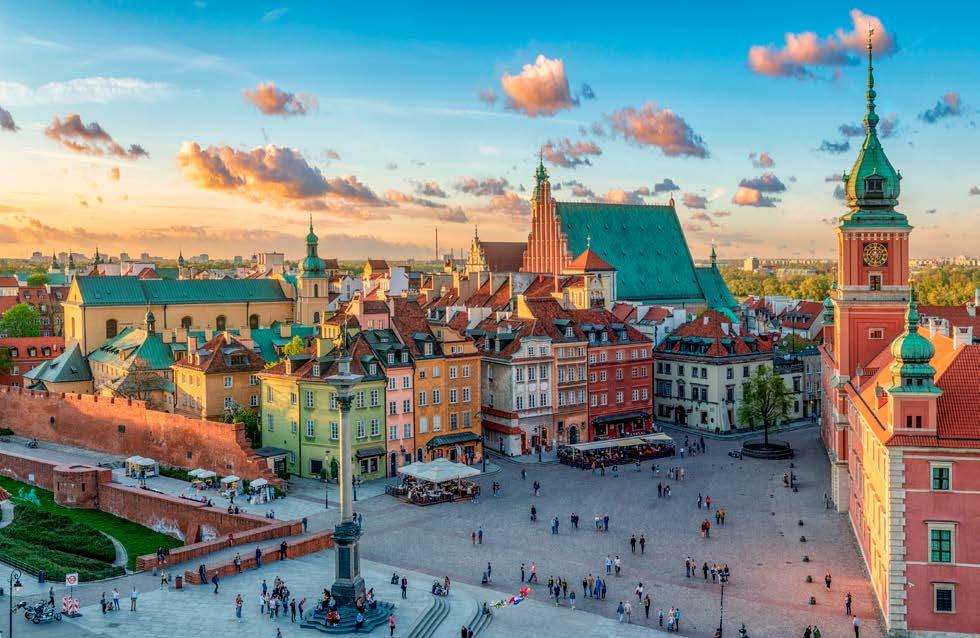
Once the site of the oldest cemetery in Warsaw, Kanonia Street takes the shape of a small square, at the centre of which is a cracked cathedral bell dating back to 1646. Cast by artisan Daniel Tym (who also made the statue of King Sigismund III atop the famed column), the bell never actually rang at St. John’s Cathedral next to it, but it has developed its own legend: touch the top of the bell while walking its circumference and your wish will come true Across from the bell is one of the world’s most narrow houses at number 20/22. Only 2m across, it was designed to evade property taxes, which in the 18th century (when it was built) were calculated based on the width of the facade facing the main street. Also note the covered walkway nearby, which
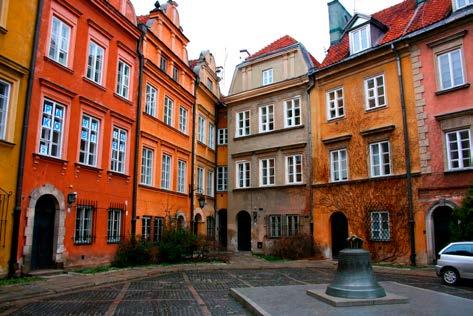
links the Cathedral to the Royal Castle and was built after a failed assassination attempt on Sigismund III. The attacker, who succeeded in striking the King twice with a pickaxe before being overpowered, was subsequently dealt with using the most medieval means imaginable: stretched by four horses, he was quartered with an axe; his body was then burned, and the ashes fired from a musket so as to disperse them in the air. This was all done in public, of course, at the city’s execution place, a few blocks away at the end of ul. Piekaska.QG‑4, ul. Kanonia.
Originally built in the 14th century, St John’s is steeped in history. The last king of Poland, Stanisław August Poniatowski, was crowned and buried here, and in 1791 he also declared the May 3rd Constitution inside the building. The bodies of Henryk Sienkiewicz (writer), Gabriel Narutowicz (Poland’s 1st president) and various Mazovian knights can be seen in the crypt (open Mon-Sat 10:00-17:00, Sun 15:00-17:00, closed during mass; admission 5/3zł). As with most major landmarks, it was left in a heap of ruins during the Warsaw Uprising, before being rebuilt in pseudo-gothic style. On the external wall by the main entrance are fragments of a Borgward IV - a remote-controlled demolition vehicle used by the German army.QF/G‑4, ul. Świętojańska 8, www.katedra.mkw.pl. Open 06:00 20:00; Sun 07:00 22:00.
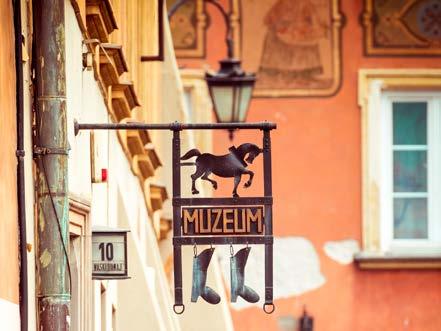
When it was rebuilt, Warsaw implemented a vision of its Old Town as a place of culture. Today it harbours a remarkable number of museums! You may already know the famous ones (Royal Castle, Museum of Warsaw) but there are many more gems tucked into the gorgeous little tenement homes and stone buildings around this neighborhood. So here we're highlighting some of the other impressive spaces:
Museum of Dollhouses Games and Toys: Over 150 detailed historical dollhouses, plus other minature settings, and old toys! The two permanent exhibits show handcrafted models, costumes and toys, while also demonstrating how tastes and fashions have changed over time. More on p.80 Qul. Podwale 15.
Museum World of Illusion: A nice reward for the kids, the exhibits will fool your eyes and meld your mind just a bit. Colors, lights and illusions! perfect for anyone who wants to learn the extent to which the mind can be easily tricked by the eye. More on p.88 QRynek Starego Miasta 21.
Museum of Gravity: See, feel, experience gravity in a whole new way! The engaging exhibits here will demostrate the basic principles of physics in a way that's both understandable and fun. Very hands-on and good for adults and kids alike. p.80 Qul. Świętojerska 5/7.
Old Town Heritage Interpretation Centre: This small branch of the Warsaw Museum focuses on the architectural history of the Old Town - its destruction during World War II, the rebuilding efforts thereafter, and circumstances of its eventual entry on the UNESCO World Heritage List. More p.47 Qul. Brzozowa 11/13.
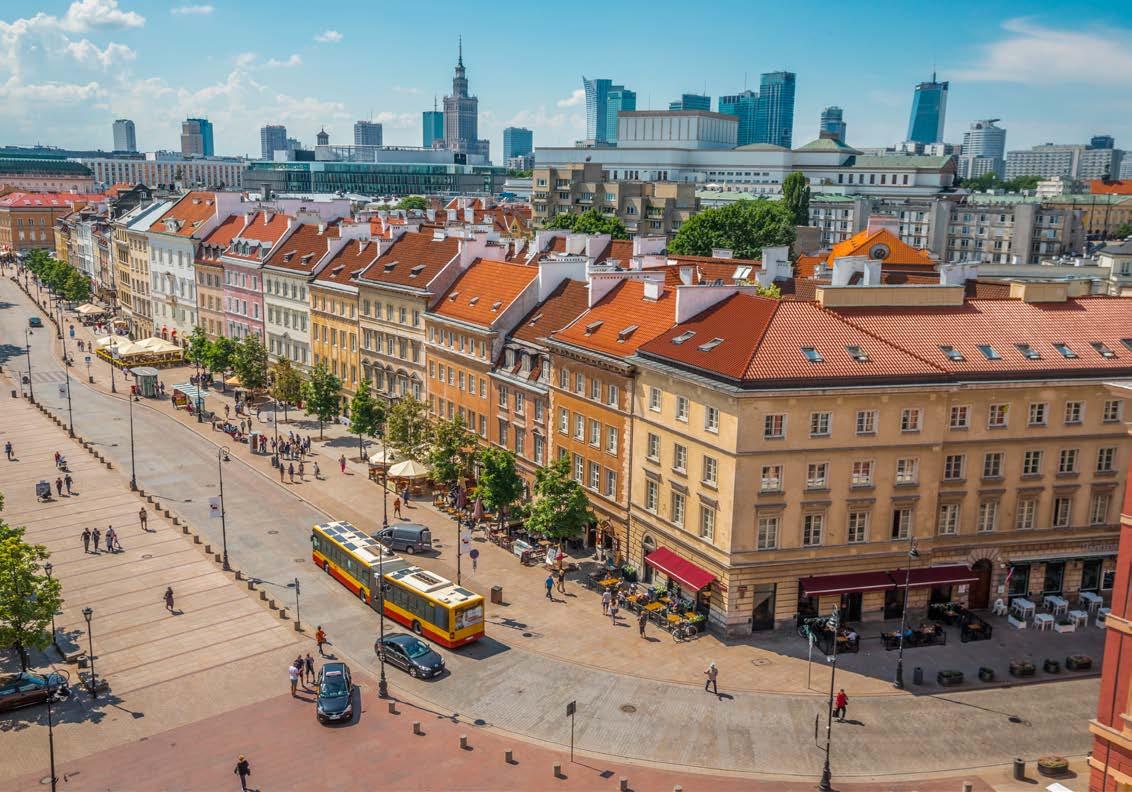
The Royal Route is lined with plenty of spots for outdoor dining in the spring.
Warsaw’s famed ‘Royal Route’ links the city’s three Royal residences, starting from the Royal Castle (p.42) on Plac Zamkowy, via Łazienki Park’s Palace on the Isle (p.62), en route to Wilanów Palace (p.64) in the district of the same name. Officially covering 11km in length, this main artery through the city takes in a great many of Warsaw’s historical buildings, parks and monuments along the way, making a trip down at least part of the ‘path of the kings’ - be it on foot, by bike, or motorised scooter - a fine opportunity to see the heart and soul of the capital.
In lieu of the full 11km traverse, this walking tour picks up at the end of the Old Town Walking Tour (p.40) on Plac Zamkowy and guides you gently down Warsaw’s two main high streets - ul. Krakowskie Przedmieście and ul. Nowy Świat - to the ironic/ iconic Palm Tree fittingly at the intersection of Al. Jerozolimskie (Jerusalem Street). An easy 2km/20mins on foot, along the way or very nearby you’ll find many wonderful restaurants, cafes, bars and shops, so use the rest of our guide to plan your pit stops. Once you've exhausted these options, continue on the Royal Route to Łazienki and Wilanów (while resting your feet) should you choose to, or veer off to the center of the city and see the Palace of Culture or grab a good bite to eat.
We'll start at the iconic column in front of the Royal Castle, which effectively begins the transition between Old Town and Royal Route. Built in honour of the man who moved the Polish capital from Kraków to Warsaw - King Sigismund III Vasa - this 22m column was erected back in 1664 by his son, Władysław IV. Local legend asserts that Sigismund rattles his sabre whenever Warsaw is in trouble, an occurrence first reported during the 1794 Kościuszko Uprising and again during WWII. With the Warsaw Uprising in full swing the column took a direct hit from a tank shell and came crashing down. Amazingly Sigismund survived, losing only his sword, and was returned to his new perch in 1949. The remains of the original column can be seen nearby beside the Royal Castle and has become a kind of meeting point for friends, tourists and everyone in between! QF‑4, Pl. Zamkowy
2 St. Anne’s Church & Tower
St. Anne’s survived the war with a few scratches and a bombed-out roof, but what the Nazis failed to destroy was very nearly demolished in 1949 when the careless construction of the nearby Trasa W-Z tunnel led to landslides and huge cracks in the floor of the church, which threatened to collapse; it took 400 people two weeks to stabilise the foundations. Interestingly, St. Anne’s also found disaster in the 17th century, when it survived the Swedish Deluge only to be the victim of arson two years later. The classical façade dates from 1788 and the interior holds even more classical and rococo details. The real reason to visit, however, are the splendid views from the tower - worth the 147-step climb (church open 7:00-19:00 weekdays; Sat 9:00-19:00; Sun 9:00-22:00. Tower hours below) 10/7zł. Call +48 22 374 94 84).QG‑4, ul. Krakowskie Przedmieście 68, MRatusz Arsenał, tel. (+48) 572 55 12 54, www.swanna.waw.pl. Tower open 10:00 21:00; Sat, Sun 11:00 22:00.
3 Adam Mickiewicz Monument
Patriot and poet Adam Mickiewicz (1798-1855) is Poland’s greatest literary hero. Known as the ‘Father of Polish Romanticism,’ his epic poems and dramas served as inspiration for insurrections against the imperial powers that had partitioned Poland out of existence in the late 18th century. Born to an upper class Polish family in what is today Belarus, Mickiewicz attended university in Vilnius, where he began publishing his poems and became involved in political activities against imperial Russia, which now occupied the former territory of the PolishLithuanian Commonwealth. These activities saw him exiled to Russia in 1824, but Mickiewicz was able to leverage connections he made in the salons of
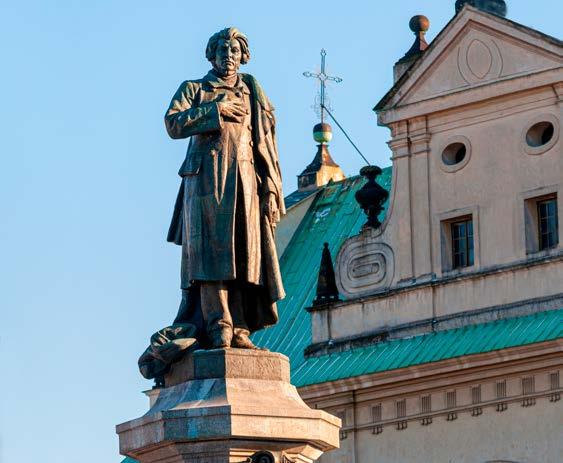
Moscow and St. Petersburg to escape to the west in 1830, eventually settling in Paris. A champion of freedom, he died during a cholera outbreak in Turkey, while recruiting a Polish legion to fight the Russians in the Crimea in 1855. His body today lies with those of the Polish kings in Kraków’s Wawel Cathedral. To learn more, visit the Adam Mickiewicz Museum of Literature on the Old Town Square (F-4).
This monument was first unveiled in 1898 on the 100th anniversary of Mickiewicz’s birth. Sculpted by Cyprian Godebski, the monument was destroyed by the Nazis, however, after WWII, Polish soldiers recovered Mickiewicz’s head and other demolished parts in Hamburg. Sculptor Jan Szczepkowski was able to produce a copy of the original sculpture, which was unveiled, along with its restored surroundings, in 1950. Q G‑5, ul. Krakowskie Przedmieście 21 23, M Nowy Świat Uniwersytet.
4 ul. Krakowskie
Krakowskie Przedmieście is easily one of Poland’s most prestigious and well-known streets - the price tag of the rents matches the prestige! The street stretches from the Royal Castle in the Old Town (p.40) until it blends into ul. Nowy Świat. It is along the length of this street, and beyond, that you will easily find our list of things to see along the way - it’s almost impossible to get lost! As you walk along the route, be sure to stop at any of the 14 Chopin Benches. Designed by Professor Jerzy Porębski, they feature a button, when pressed, unleash a 30 second torrent of Chopin. Each bench contains descriptions in EN/PL to the site’s relevance to the composer. This is a delightful walk down one of the prettiest parts of the city. QG‑4, MNowy Świat Uniwersytet.
Guarded by lions and stern-looking soldiers, of all the landmarks that line Krakowskie Przedmieście, none is more important than the Presidential Palace. Construction began in 1643 at the behest of Stanisław Koniecpolski, though was only completed after his death. It then passed into the hands of various aristocratic families, becoming famed for its banquets in the 18th century - the most extravagant of which marked the coronation of Stanisław II August Poniatowski in 1789; over 2 million PLN was spent entertaining the 4,000 guests.
Poniatowski proved to be one of the nation’s most controversial monarchs - and also its last. Among his successes was the Constitution of May 3, 1791 Signed on these very grounds, it was the
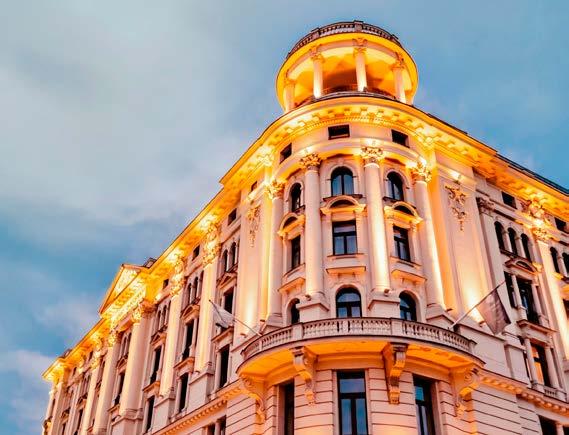
2nd such document in the world, after the US Constitution. The large monument in front of the Palace is of the king’s nephew, Józef Poniatowski A Polish general, he defended Warsaw during the Kościuszko Uprising and eventually died in the service of Napoleon.
After 1818 the Palace became the seat of the Viceroy of the Polish Kingdom, entertaining many a visiting Tsar before burning down in 1852. At the beginning of the 20th century an entire wing was demolished to make way for the Hotel Bristol. When Poland regained its independence in 1918, the Palace was commandeered to serve as home for the Prime Minister, and somehow it survived WWII. More momentous events came in 1955 when the Warsaw Pact - the Soviet Union’s answer to NATO - was ratified within its walls. Since 1994 it has served as the official home of the Polish president, which is why you’ll find streams of limos heading in and out. QG‑5, ul. Krakowskie Przedmieście 46/48, MNowy Świat Uniwersytet.
Carry on down the Royal Route? Or perhaps hang a right after the Hotel Europejski down ul. Tokarzewskiego-Karaszewicza towards Plac Piłsudskiego (p.32)? Choose the latter to see Warsaw’s largest square and escape the urban hub-bub via the lovely Saxon Garden, a stroll through which leads you into the City Centre and on a path to Hala Gwardii (E-6) and Hala Mirowska (D-6) - two massive indoor markets 15-20mins on foot from where you’re standing.
Two of the biggest, most famous landmarks on prestigious ul. Krakowskie Przedmieście are former palaces turned luxury hotels today. The first is Hotel Bristol at number 42/44. First built in 1900, a brass plaque outside boasts of its many famous guests: Picasso, Nixon and Dietrich, to name a few. In 1993 it was restored to its pre-war glory and the re-opening ceremony was such a big deal, it was attended by Ms. Margaret Thatcher. Refreshed repeatedly since, it is certainly among the very top hotels in the capital, boasting an interior by world-renowned designer Anita Rosato that blends secessionist and art deco glamour with modern luxury. If you can’t afford to spend the night, you can still drop in to the wonderfully old school Cafe Bristol - a perfect place for coffee or breakfast.
Across the street is the revamped Raffles Hotel Europejski. The first hotel to reopen after WWII, it entered Varsovian folklore in 1967 when a group of young upstarts calling themselves ‘the Rolling Stones’ stayed here, under the watchful eye of the authorities, and had themselves quite a time tipping back vodkas in the hotel bar. In 2018 the hotel was refurbed for the Raffles brand and today it is a stunning luxury space full of contemporary art and custom furnishings. If you want to have your proverbial socks knocked off, explore the building’s many first-rate dining and drinking venues, Though you might not be able to afford anything, you can still wander through Europejski Boutiques - the most exclusive shopping experience in the country.QG‑5, ul. Krakowskie Przedmieście 42/44, 13, MNowy Świat Uniwersytet.
The good city of Warsaw has devised one more way to bring Chopin to the people, and that’s by way of fifteen musical benches that have been placed at key sites connected with his life since 2019. Made of cast iron and polished black granite, these benches feature a button which, when pressed, unleash a thirty second torrent of Chopin. They also come equipped with a route map as well as brief explanations in Polish and English as to the site’s relevance to Chopin. Each one comes inscribed with a QR code – scan it and download the Chopin App to access audioguides, Chopin melodies, facts, figures and photographs. This is, at the very least, a fun little trick to show your friends as you sit down for a much-needed rest while exploring the Old Town and Royal Route!QG‑6, MNowy Świat Uniwersytet, www.biuro.chopin2010.pl
Cucina Mia (Sheraton Grand Warsaw): Elegant, traditional Italian dishes bursting with flavor from earthy truffles to Amalfi lemons and fresh Sicilian fish. Qp.99
Gościniec Polskie Pierogi: Immense portions of traditional Polish fare and charming service. What's not to like?.Qp.100.
Bar and Books Podwale: This classy, colonial bar is the height of sophistication. Dimly lit, classic cocktails.QF 4, ul. Wąski Dunaj 20
Kufle i Kapsle: A delightful, modern interior with some killer craft beers, and great conversation. A good spot to join with friends on a weekend (or weekday!) night.Qp.112.
Carry on further and you’re in Warsaw Universityland, the main campus of which lies beyond the grand gateway of number 26/28. Dating from the 17th century the main building, known as ‘Villa Regia,’ was remodelled and renovated several times before Warsaw Uni was established here in 1816. The university had a tough time under Russian rule; closed in retaliation for the 1830-31 Uprising the uni continued to operate underground, though by 1859 the Tsar calmed down enough to rubber stamp the creation of a School of Medicine. Today, with some 48,000 students on the roll call, the university stands out as the largest and
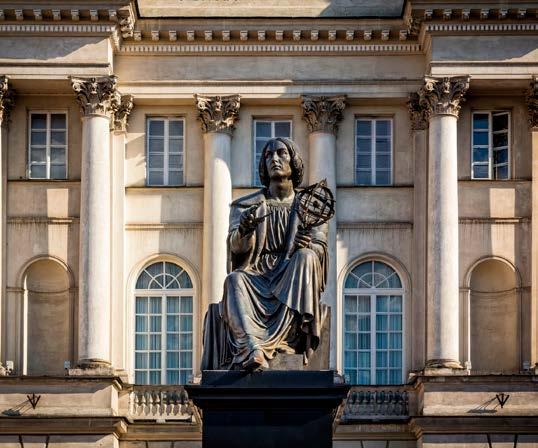
arguably best in Poland. Notable alumni include writer Witold Gombrowicz, award-winning travel writer Ryszard Kapuściński, the late president Lech Kaczyński and the poet Julian Tuwim. Q G‑6, Krakowskie Przedmieście 26/28, M Nowy Świat Uniwersytet, www.en.uw.edu.pl
No self-respecting Chopin fan (is that you?) can leave Warsaw without first visiting the final resting place of his heart. Smuggled out of Paris in a jar of booze by his sister (true story), Chopin’s heart was brought to the church in accordance with his final wishes in 1882 and is sealed in an urn behind a tablet bearing his likeness, specially carved by Leonardo Marconi.
Although Chopin’s ticker serves as the church’s key draw there are several other notable features and funereal remains to tempt you inside this astonishing Baroque creation. These include another urn with the remains of Nobel Prize-winning author Władysław Reymont, and tablets honouring various Polish icons including poet Juliusz Słowacki and WWII hero Władysław Sikorski. The organ, built in Salzburg in 1925, is also the largest in Warsaw.
Throughout a history that dates back to the 15th century, Holy Cross Church has played a role in Warsaw’s glories and calamities. It was here that the last Polish King forged the Order of the Knights of St Stanislaus, and it was directly outside in 1861 that Russian troops brutally suppressed a patriotic protest. It was this bloodbath that lit the touchpaper for the January Uprising of that year. Devastated during the Warsaw Uprising in 1944, the church was painstakingly rebuilt at the end of the war and is today a feast for the heart, eyes and soul. Masses start at 6:00 a.m. and run daily at designated times. Parish hours are below.QG‑6, ul. Krakowskie Przedmieście 3, MNowy Świat Uniwersytet, tel. (+48) 22 826 89 10, www.swkrzyz.pl. Open 10:00 11:30; 13:00 16:00; Sun 14:00 16:00.
The founder of modern astronomy. A sheltered academic, Copernicus made his observations alone, a century before the invention of the telescope. His book De Revolutionibus (1543) posited that the earth rotated on its axis once a day, travelled around the sun once a year, and that man’s place in the cosmos was peripheral. Though obvious today, this was an utterly radical idea at the time. Although those who propagated his ideas were burned at the stake and the Catholic church placed De Revolutionibus on its list of banned books (as late as 1835), there was no
turning back progress. The modern cosmological view - that our galaxy is one of billions in a vast universe - is this man’s legacy.
The statue itself was unveiled in 1830 and has seen its share of adventure. During WWII the Nazis placed a new plaque here insinuating that the great man was in fact - gasp! - a German. A boy scout named Alek Dawidowski ducked the guards and removed the plaque. Boiling with fury, the Nazis removed the monument, then dynamited a few others for good measure. The statue was recovered after the war, and Dawidowski entered Polish folklore for his bravery. QG‑6, ul. Krakowskie Przedmieście, MNowy Świat Uniwersytet.
The name of this street means “New World” and it is an apt description; just south of ul. Krakowskie Przedmieście, Nowy Świat has a similar look to the Old Town but instead of museums and history, you’ll find food, beer, live music and a street constantly bursting at the seams with life. Like much of the Old Town, Nowy Swiat was also razed during WWII, but was rebuilt almost immediately following in a neo-classical style, rather than its pre-war Art Nouveau style. Legend (and history) goes that this street was rebuilt based partly on paintings of its pre-war ancestor. Make sure to stop by Karmello for some chocolate nosh and coffee, or A.Blikle for great pastries. If it’s nightlife you’re after, there’s plenty of bars: Dom Whisky Cocktail Bar (open until 4 a.m. all week) will serve all the bright colored drinks you want; across the street, Kufle i Kapsle has a craft beer menu that will make even the snobbiest beer snob happy. We could go on, but there is a lot in the way of eating and drinking and fun. Finish your journey by taking in the towering palm tree 12 at the intersection between Nowy Świat and Al. Jerozolimskie, an art installation that’s a beloved little touch of the tropics in the middle of town. QH‑8.
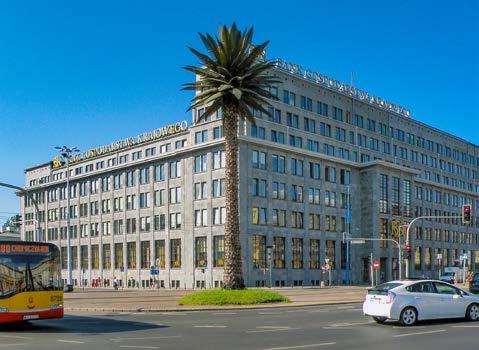
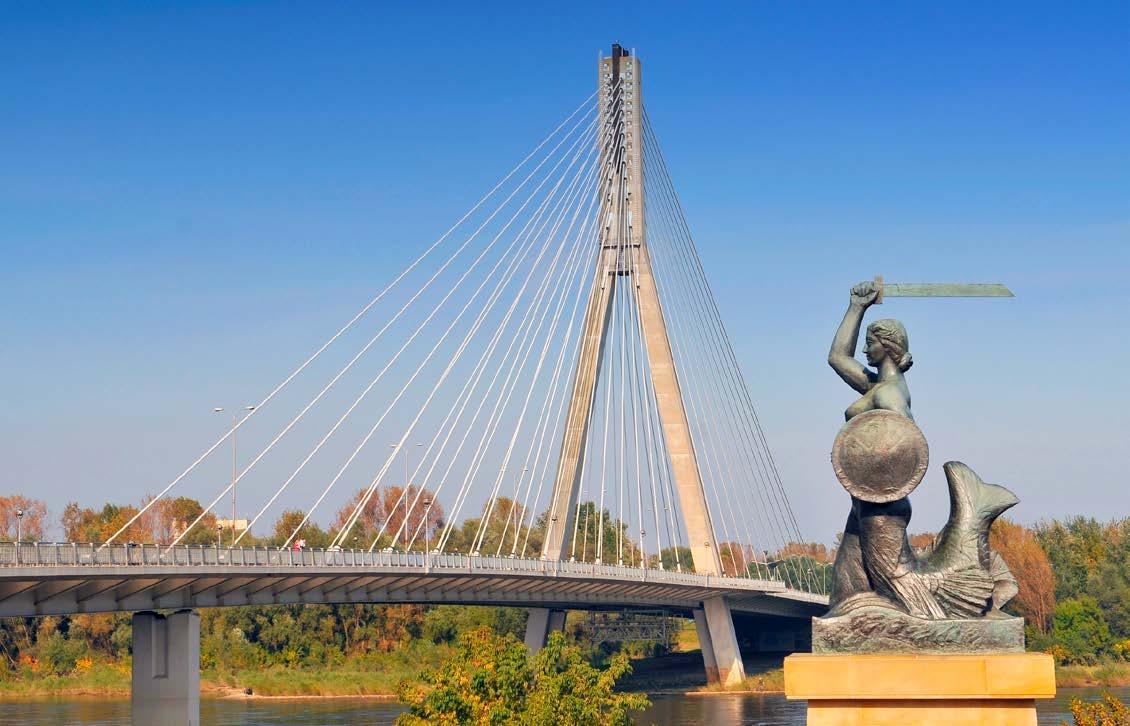
Once a mundane area of apartment blocks and industrial decay, over the past two decades Powiśle has transformed into one of Warsaw’s most intriguing and eclectic areas to explore.
Considering its plum location along the riverside, it’s hard to believe that this large neighbourhood was essentially a cultural dead zone until skyrocketing rent costs in the centre forced Warsaw to reconsider its potential. Now, Powiśle has become a hotspot for everything cool, young and happening in Warsaw, so much so that the city decided to open a gorgeous pedestrian bridge tying the Praga (p.66) area east of the river to Powiśle (you can access it via Ul. Karowa in Powiśle or Ul. Okrzei in Praga.) The history of Powiśle's growth is interesting: Warsaw University was the first to pitch a tent in the area, creating a draw since 2002, and the adjacent opening of the Copernicus Science Centre (p.58) in 2009 invited further cultural investments. Then the Metro (2015) helped make it into a popular place for public recreation. The redevelopment of the former Elektrownia Powiśle (p.57) power plant into a space for events, dining and shopping (2020) typifies the high-powered investment taking place here today. Still, Powiśle maintains an authentic local vibe thanks to its balance of both trendsetting gastro spots and boho dives (like the iconic rotund Warszawa Powiśle bar I-7). Roll yourself downhill towards the river from Warsaw’s Old Town or City Centre to discover what’s good in this hood!
Warsaw’s ‘Syrenka’ - the iconic freshwater warrior mermaid - has been representing the Polish capital since time immemorial. The monument here is the second-most famous statue of the city’s symbol (the first being on the Old Town Square, (p.45), though this one actually overlooks the river the mythical icon is alleged to have dwelled in.
At 2.75 metres tall, the the bronze monument was created by sculptor Ludwika Nitschowa and unveiled in June 1939, just months before the outbreak of WWII; remarkably it stood unscathed in this exact spot throughout the entire war while the rest of Warsaw's left bank was devastated.r. Q I‑6, Bulwar Bohdana Grzymały Siedleckiego (near Most Świętokrzyski), M Centrum Nauki Kopernik.
Warsaw has modernised and improved its left bank dramatically in the last decade. The Powiśle boulevards flanking the Świętokrzyski Bridge and leading north to the Old Town have seen the most development and are now a popular
thoroughfare for walking, running, cycling and skating, as well as bars, cafes and restaurants - particularly in the warmer months - plus parks and leisure spaces.
Now, with the warmer weather, this is the hip spot to be for families during the day and for the youth of the city at night (who love to hang out, drinking beers and sharing takeout food on the steps leading down to the river). In the summer, the barges that line the river open up as dinner or late-night club spots, and you'll see stalls selling food and drinks (mostly the latter). If you catch it on the right warm day, you can enjoy a plethora of great food and booze outside. You can also use this boulevard to move easily up the city from the centre to the Old Town -- and cross over into Praga by way of the new pedestrian and cycling footbridge (p.59). This is a perfect spot for photos and the epitome of the kind of pedestrian space that Warsaw is increasingly becoming famous for.QI‑6, Generała George’a Smitha Pattona, MCentrum Nauki Kopernik.
3 Elektrownia Powiśle
Once one of the largest electrical power plants in Europe, Elektrownia Powiśle powered the Polish capital from 1904 to 2001 before it was closed and left to crumble. Purchased by a developer in 2016, the historic industrial site was transformed into a multifunctional, mixed-use urban centre. Covering a massive 50,000m2, much of the site has been converted into offices, apartments and a hotel, but a remaining 15,000m2 in the former boiler and engine buildings comprises commercial space for retail, gastronomy and wellness.
Reopened in 2020, today Elektrownia offers four levels of shopping, and is a culinary hotspot with tons of restaurants bars and cafes across the complex (see their Food Hall on p.106). Additionally, there is a 1500m2 Beauty Hall offering hundreddts of
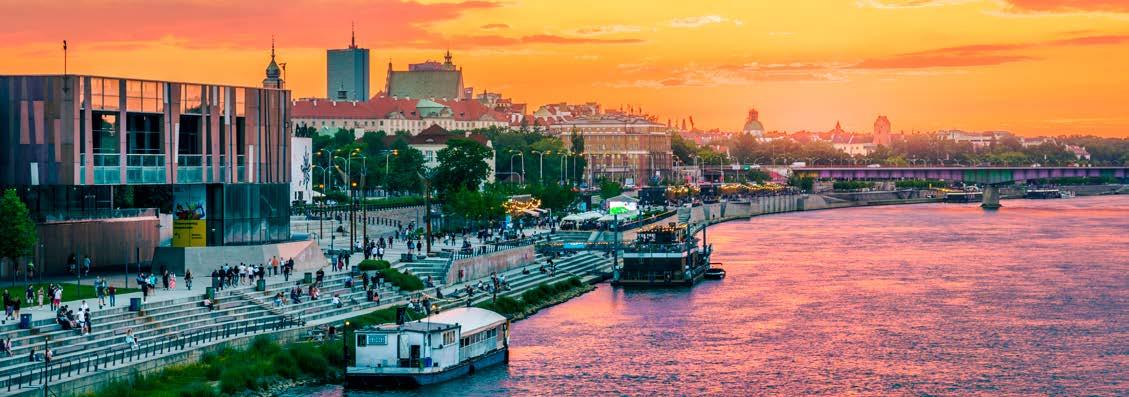
When it’s time for a rest or a feed, there are many worthy venues on and around ul. Solec - one of the main streets in the area, as well as numerous food trucks and barges moored up along the river. Also, Elektrownia Powiśle has an entire food hall inside, so your options are manifold. Here are a few other notable venues in the neighbourhood:
Food Hall Elektrownia Powiśle: Food from around the world! Find something for everyone at the stalls that offer Thai, Italian, American, Mexican and more types of cuisineQp.106.
Champs Sports Bar: The perfect place to watch the game, with a great beer offer and some tasty pub snacksQI-6, ul. Wybrzeze Kosciuszkowskie 43A.
Rozbrat 20: This Michelin-starred restaurant is the ideal date night spot with fresh flavors delivered in expert fashion, and tastes from Poland, France and England. This is food done very well, and meant to impress.Qp.105.
cosmetic treatments from multiple beauty concepts. Events are frequently hosted in the courtyards between the buildings, including a regular farmer’s market, yoga lessons and film screenings. There are plenty of reasons to check out one of Warsaw’s most exciting urban renewal projects in every season, but we particularly like the abilitiy to transition easily between indoor and outdoor activities here. QH/I‑6, ul. Dobra 42, MCentrum Nauki Kopernik, tel. (+48) 22 128 56 00, www.elektrowniapowisle.com. Open 11:00 21:00. Food Hall open 12:00 23:00, Fri 12:00 24:00, Sat 11:00 24:00, Sun 11:00 23:00. TU6K
4 Copernicus Science Centre
An example of EU funding being used in a genuinely visionary way, the CSC is the very best science centre in Europe , and one of Warsaw’s top tourist attractions. The fun starts as soon as you encounter the museum’s very own ‘Robothespian’an interactive humanoid robot - at the front doors. Once inside, not only will you learn an awful lot, but you’ll have a blast exploring the museum’s numerous thematic areas spread over two floors. As with any science centre, each area demonstrates a range of phenomenon by way of experiments, button pressing, quizzes and in some cases, physical exertion.
In addition to temporary exhibits and the all-ages ‘Experiment Zone,’ there are zones specially designed for the youngest visitors up to teens and adults. It’s easy to declare that the CSC is wellworth a few hours of your time and will impress you with its design and range of experiments. Factor in the main floor cafeteria, cafe, and the packed Science Store (potentially the best spot for children’s gifts in Warsaw), and it’s a one-stop day of fun. Visiting time: 3-4hrs.Q I‑6, ul. Wybrzeże Kościuszkowskie 20, M Centrum Nauki Kopernik, tel. (+48) 22 596 41 00, www.kopernik.org.pl. Centre
Open 08:00 18:00; Fri 08:00 20:00; Sat, Sun 09:00 19:00. Closed 1st Mon of every month. Roof Garden: Closed Nov April. Open May-Sept : 10:00 20:00; www.kopernik.org.pl/en/planetarium. Admission 48/34zł; holidays & weekends 50/36zł. U
A trip to outer space is made simple at the Planetarium of the Copernicus Science Centre , which is tucked behind the giant Copernicus Science Centre ) as its own distinct venue. Visitors can choose different 40-minute films (which require headsets for English and Russian) that are geared towards different age ranges and interests. Inside, the audience is immersed in the solar system thanks to a spherical screen that surrounds the 139 seats on all sides.
Four digital projectors display images of the starry sky (we’re talking 20 million points of light) and simulate space travel to bring planets and moons into view - the whole experience is visually stunning! Before each film, there is a 20min live show about the skies over Warsaw that change with the seasons.
School groups dominate the Planetarium’s seats during daytime hours, therefore, we can’t stress enough that booking in advance is highly recommended. You can enjoy the permanent exhibition “ Look: there’s the Earth! ” A not-tobe-missed attraction (2D movies cost 34/24zł).
A visit to the planetarium is a sensory experience, one which he wholly recommend you try out. Trust us, you won’t regret it. Science geek, over and out.
Q H‑5, ul. Wybrzeże Kościuszkowskie 20, M Centrum Nauki Kopernik, tel. (+48) 22 596 41 00, www.planetarium.kopernik.org.pl . Open 09:00 18:30; Thu 9:00 20:00; Fri 10:00 20:00; Sat 10.00 20.00; Sun 10:00 19:30; Mon 09:00 15:30. Closed the 1st Monday of every month. Admission 34/24zł. Special screenings 49zł. U
Traditionally speaking, rooftops are the preserve of chimney sweeps, superheroes and Santa, but visit the Warsaw University Library (BUW) building and that opinion will quickly change. Topping off the bizarre oxidised green building is a lovely two-level rooftop garden filled with bridges, streams and sculptures that covers an entire hectare; there’s even a fishpond and a stone fountain mixed in among the oak trees and Japanese spirea. Designed by Irena Bajerska and opened back in 2002, the garden affords panoramic views of lower left-bank Warsaw and across the river to Praga. A wonderful place to stop and rest in the heart of the city, take a picnic and sit amongst the groups of students taking time out from studying (ahem, napping). While you’re there, we also highly recommend visiting the BUW Gallery to see some fantastic Polish poster art (open 13:00-19:00, closed Mon. Admission free).QH‑5, ul. Dobra 56/66, MCentrum Nauki Kopernik, www.buw.uw.edu.pl.
Open 08:00 20:00. Library open Mon Sat 07:00 01:00. Rooftop Gardens accessible April 1 October 31 only. Admission free.
This long-awaited pedestrian footbridge opened in late March, connecting Praga on the east side of the river with Powiśle on the west. You can access it near Karowa Street in Powiśle (around Mariensztat below). The gorgeous bridge is the longest pedestrian bridge in Poland, and it's is meant for walkers and cyclers alike. In the warmer months, you'll likely find plenty of people meandering, some live music, some people selling ice cream and cotton candy. In the chillier months, make sure to bundle warmly as you cross the 502-metre structure, and enjoy some design features like viewing platforms and rest areas. The Polish name, Kładka na Wiśle, means "Footbridge on the Vistula River". If you want to connect from the Old Town to Centrum Praskie Koneser (p.67) this bridge is the way!QH‑5, Karowa 6.
From Powiśle it’s exceedingly easy to get to Praga (p.66) or the City Centre (p.30) through a lovely (albeit a little long) walk along the river toward the south. Alternatively, head north along the river to return to the Old Town (p.40) or check out New Town’s Multimedia Fountain (F-3), which is a popular attraction for young families; both are about 2km/20mins on foot.
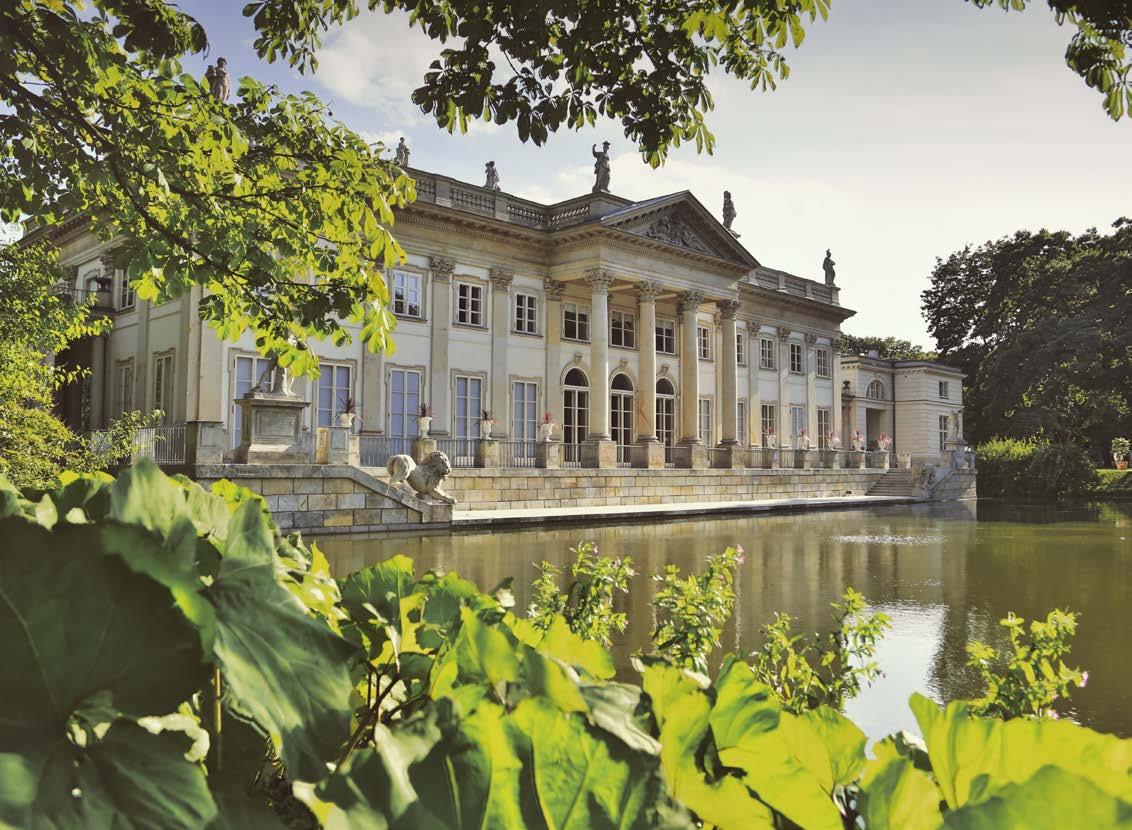
In summer, Łazienki Park’s Palace on the Isle is the ultimate spot for photos. Photo: Paweł Czarnecki.
This glorious 17th century park, spread over 74 hectares, is one of Warsaw’s unparalleled highlights, adored year-round by locals and visitors alike. Although it seems as if half of Warsaw spends its fall Sundays here, the park is so vast that it never feels crowded and offers an enchanting opportunity to escape the capital’s modern-day gloom and get lost in its nostalgic past. Don’t mistake Łazienki for a simple city park; it is also a museum complex full of wonderful art and architecture. Don’t miss it.
The full/proper name of today’s park is ‘Łazienki Królewskie,’ which means ‘Royal Baths’ and is derived from the park’s centrepiece, the Palace on the Isle
The palace was originally built in the 17th century as a private bathhouse for Stanisław Herakliusz Lubomirski, owner of the nearby Ujazdowski Castle and much of the surrounding land (and much of Poland, come to mention it). The bathhouse was bought by the last king of Poland, Stanisław August Poniatowski, in 1772 and converted into a private residence.
It was at this time that the grounds were formally laid out as a private garden. Perfect for romantic strolls, family picnics and cultural outings, today the park is packed with gorgeous sculptures and monuments, palatial architecture and priceless art, lovely landscapes of bridges and ponds, plus cafes, restaurants and more. The whole park is a must when visiting the city -- don't miss it!
While the park is free, the indoor exhibits require a ticket
Ticket 1: Includes just sites: the Palace on the Isle, the Old Orangery, Myslewski Palace, White House, Stables, Barracks: 70/35zł.
Ticket 2: Includes the Palace on the Isle, the Old Orangery, Myslewski Palace, White House: 60/30zł
Ticket 2: Includes just the Cantonal Barracks and the Kubicki Stables, 30/15zł.
For all exhibits, kids under 7 & students under 26 1zł for all three tickets. Buy tickets from cash desks or machines at the Museum of Hunting & Horsemanship.Q H‑12, M Politechnika, tel. (+48) 22 50 60 024, www.lazienki krolewskie.pl
Park open daily 06:00 21:00. Free admission for the park itself; Indoor exhibitions open through Sept, Tues Wed 10:00 17:00; Thu Fri 10:00 18:00; Sat 12:00 20:00; Sun 10:00 16:00. Closed Mon and holidays
The Belvedere Palace was the residence of Polish presidents from 1918 to 1995 and then again during the presidency of Bronisław Komorowski from 2010-2015 (Presidents Aleksander Kwaśniewski, Lech Kaczyński and current president Andrzej Duda opted to live in the Presidential Palace on ul. Krakowskie Przedmieście) Built in 1694 and thoroughly remodelled in 1818, the building is essentially offlimits to visitors, but an eyeful to behold. A wonder of Neo-Classical design, complete with tympanium and oversized Corinthian columns, the best views and photo ops are fetched from outside the park on Al. Ujazdowskie.QH‑12, ul. Belwederska 56.
Don’t miss this famous art nouveau sculpture of Warsaw’s favourite son, Fryderyk Chopin. Depicting the composer right here in Łazienki beneath a willow tree, the work by Wacław Szymankowski was erected in 1926. It was dynamited by the Germans on May 31, 1940. An original plaster-cast allowed the statue to be revived and this reconstruction was unveiled in 1958. Starting July 5, this spot is the heart of music in Warsaw, with free Sunday piano concerts held by the statue in the park. Bring a blanket and post up -- you'll find tons of people enjoying the live music with food and friends.QH‑12.
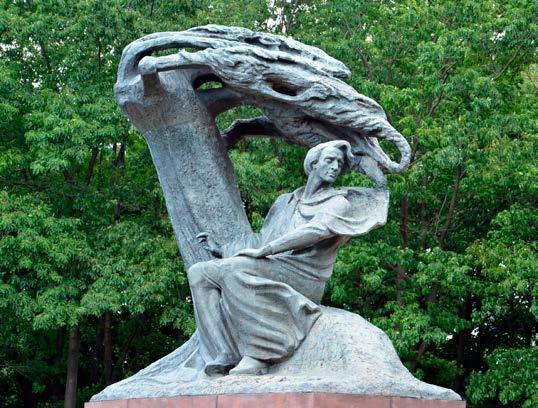
Any number of buses stop in front of the park’s three main entrances on ‘Al. Ujazdowskie’, including numbers 116 (from Old Town/Nowy Świat) and 180 (from Al. Jerozolimskie, bus stop ‘PKP Powiązki’); get off at the ‘Łazienki Królewskie’ bus stop. Accurate times and routes can be checked online at warsaw.jakdojade.pl
A good place to start a visit to Łazienki, the Old Orangery is one of two ticket offices and tourist info points in the park. Originally erected in 1785-88 to house exotic trees through the once-harsh Polish winter, the sunny structure also harbours King Stanisław August’s Royal Theatre - one of the few surviving 18th century court theatres in Europe. Constructed out of wood and covered in marblised polychromes, the ground floor is rather modest with simple benches on risers, while the upper level features nine boxes with eight female figures gripping candleholders in between. Interestingly, the space above the boxes has been painted to create the illusion of yet another level, complete with an 18th-century court audience. The theatre is still used today to host chamber concerts. The other important aspect of the Old Orangery is the Royal Sculpture Gallery. Stanisław August collected hundreds of marble and plaster copies of the most famous sculptures from antiquity. Now, 120 of the most important of these casts are uniquely displayed inside the Orangery. Visiting time: 30mins.QI‑11.
The Palace on the Island is Łazienki’s raison d’etre and therefore, a true must-visit when you're going to the park. Built as a Baroque bathhouse in 1683, the structure was converted into a Neoclassical residential palace in the late 1700s by King Stanisław August. Located on an island in the middle of a narrow lake, and connected by colonnaded bridges on each side, the façades are unified by giant Corinthian pilasters that link its two floors. Today, almost all of the palace can be visited, including the King’s private rooms. The main reception room, Solomon’s Hall, is decorated in the most extravagant of Baroque styles with a series of paintings depicting the History of Solomon. In 1793, King August converted the palace into the first modern public museum, displaying the most important paintings from his collection. Visiting time: 45-60mins.QI‑11.
Built in the 1770s and 80s, this elegant semi-circular palace was originally conceived as King Stanisław August's primary residence, though it gradually shifted to more diplomatic functions, hosting official state soirees and accommodating foreign ministers. Designed in Early Classicist style, the unique recessed entrance is decorated with mythological sculptures. After a thorough renovation, the building again appears very much as it would have in the late 18th century, and a walk through the interiors - replete with original murals, furniture and art - is worth the short amount of time it takes to see them. Visiting time: 30mins.QJ‑11.
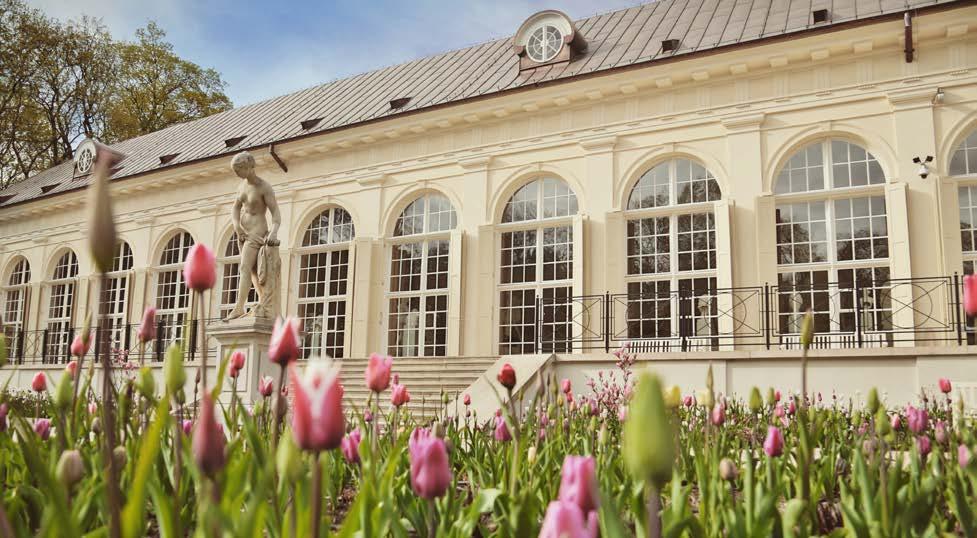
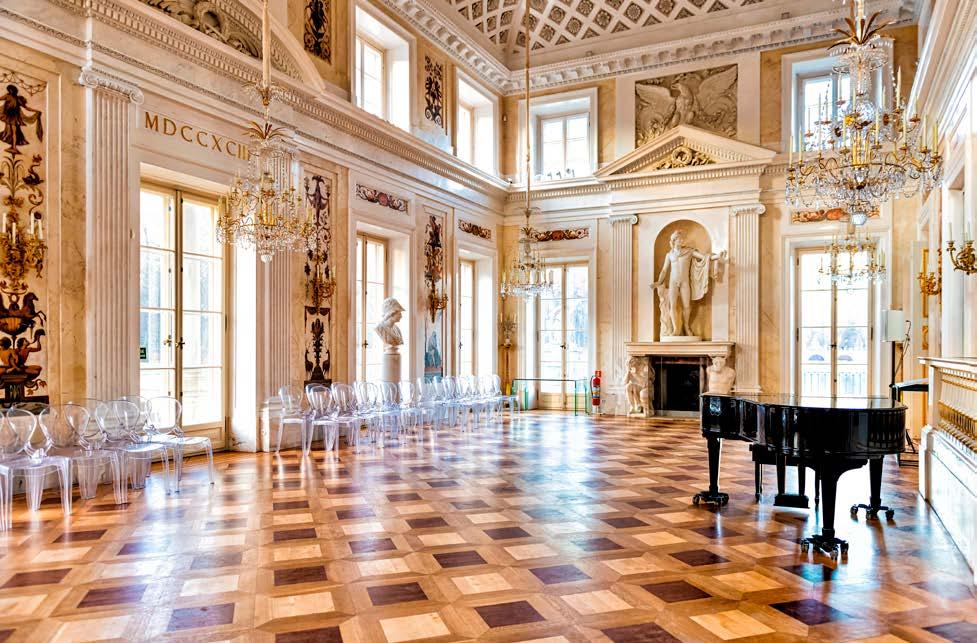
Part of the University of Warsaw, these separate gardens at Łazienki have several greenhouses stuffed with exotic, weird and wonderful species from all over the world, but what brings in the crowds are the stunning rose gardens just behind the main entrance. A riot of colour when in full bloom, the gardens are the preferred subject matter of art students, who set up their easels early and paint until the guards kick them out at sunset. Open from March onwards.QH‑11, Al. Ujazdowskie 4, MPolitechnika, tel. (+48) 22 553 05 11, www.ogrod.uw.edu.pl. From May to Aug: 10:00 20:00. Greenhouses open from Tuesday to Sunday. Admission 24/12zł (park and greenhouses), kids under 7 free.
Very much as advertised, this museum will appeal to avid hunters and horse lovers, though the latter may have some trouble with all the mounted trophies. If the trophies are too much, you can skip the former Cantonists’ Barracks - built in 1826–1828 and full of hunting arms and taxidermied animals - and head straight to the Kubicki Stables, built 1825–1826 and home to an exhibit of horse-drawn carriages, saddles, harnesses and riding accessories. Visiting time: 1hrQJ‑12, ul. Szwoleżerów 9. Admission 30/15zł; kids under 7 free; students under 26, 1zł. Fri free.
Recently reopened after 2 years of restoration, this delightful Theatre on the Isle hosts productions throughout the summer. It's got a distinctly old Grecian stage vibe, which makes taking in a show lots of fun (even if the plays are in Polish). Still, even if your Polish isn't dobrze yet, there are plenty of concerts throughout the summer. And it's wellworth stopping by to take in some music amid the greenery and recently restored Island.QJ‑12, MPolitechnika, tel. (+48) 504 24 37 83, www.lazienki krolewskie.pl. Open from 1 May to 30 September. Tue Wed: 10:00 17:00; Thu Fri: 10:00 18:00; Sat: 12:00 20:00 Sun: 10.00 16.00.
This small villa was built in 1774, and was the first building King Stanisław August had erected on the grounds. Originally meant to be his summer residence, evidence suggests that the King’s sisters actually took up lodging here more than he did. Escaping WWII unscathed, the villa largely retains its original layout, lushly painted decor and period furnishings, and boasts a unique two-level roof terrace. On the ground floor the Gallery of Prints displays selections from Ovid’s ‘Metamorphoses’part of the King’s personal collection of 4300 prints, from which only about half survive today. QI‑11, ul. Agrykoli 1, MPolitechnika, tel. (+48) 22 506 00 28, www.lazienki krolewskie.pl
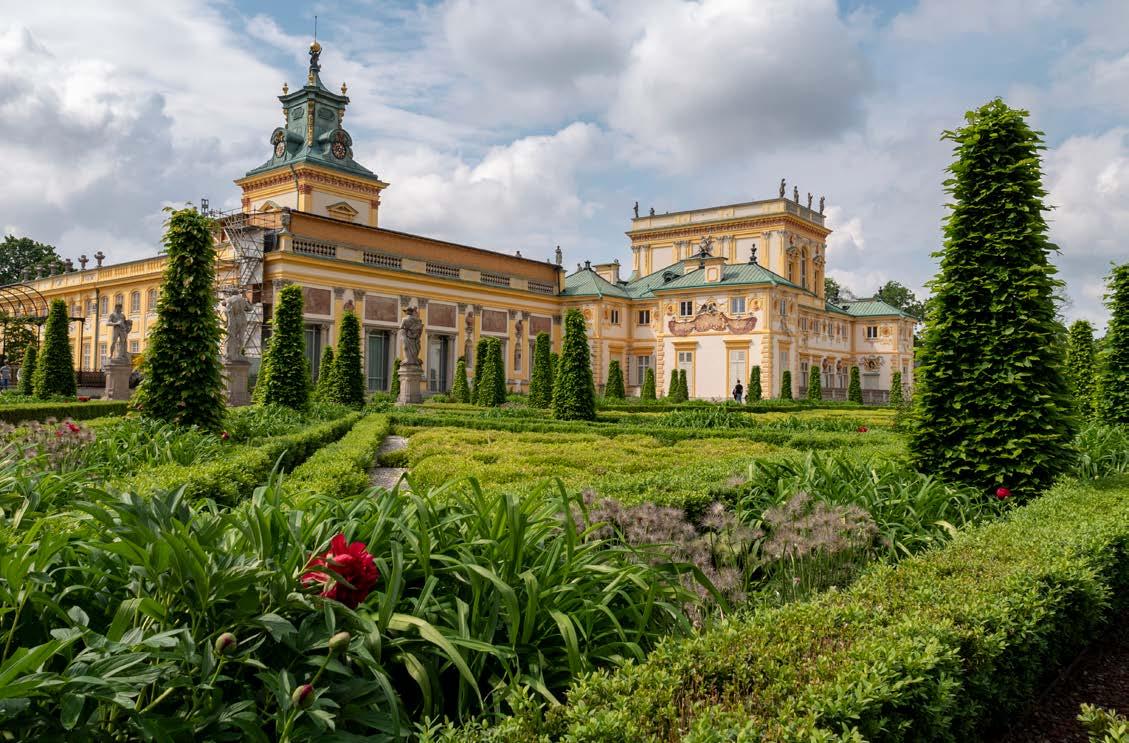
The ‘Polish Versailles’ is just one of the many fitting monikers applied to this splendid late 17th-century 45ha palace and garden complex 10km south of the centre.
Essential visiting for anyone wishing to understand the former grandeur of the Polish capital, Wilanów is more than just a palace. As one of the few existing remnants of the era when Poland was a vast kingdom stretching from the Baltic to the Black Sea, today it also represents the European splendour and sophistication that was lost and few today associate with Warsaw. The palace, park and surrounding ensemble of buildings also represent the height of Polish Baroque and are collectively one of Poland’s greatest cultural treasures. If the weather’s good and you’ve got time to spare, it’s easy to spend most of a day relaxing and taking in the sites here.
10km south of the centre, Wilanów is best reached by bus or taxi, though the latter costs 35-40zł and essentially takes the same amount of time: 25-35mins. All buses stop directly outside the palace gates at the ‘Wilanów’ stop. From Plac Zamkowy (F-4), Pl. Trzech Krzyży (H-8) or Łazienki Park (H-11) take buses 116 or 180. From Warszawa Centralna train station (E-8) take bus 519. For exact times and routes, check warsaw.jakdojade.pl
The 45 hectares that make up Wilanów Park developed over the centuries. The park’s present form dates from the extensive and mostly faithful renovations made during the 1950s. Comprising a two-level Baroque garden, a Neo-Renaissance rose garden, a classical English landscape park and the so-called English-Chinese landscape park, recent revitalisation works and archaeological digs discovered several arctefats, including ceramics dating from the 12th century. The park opens daily until September 9:00-21:00.QP‑2, ul. St. Kostki Potockiego 10/16, tel. (+48) 22 544 27 00, www. wilanow palac.pl. Park Admission 15/5zł, Thu free (0zł ticket is still required).
The first museum at Wilanów was opened in 1805 by the palace’s owner at the time, Stanisław Kostka Potocki. The current museum, which takes up a substantial portion of the palace’s interior, comes in two parts. The first is the upstairs Polish Portrait Gallery - comprising room after room of portraits of the rich and the powerful from the 16-19th century.
Next you’ll find yourself downstairs in the Wilanów Palace Residence, featuring residential rooms, suits of armour, Etruscan vases, magnificent frescoes and even a private chapel. Most impressive are the private apartments of King Jan III Sobieski and his wife, while the wings house the apartments of the subsequent owners of the palace. Visiting time: 2hrs.QP‑2, ul. St. Kostki Potockiego 10/16, tel. (+48) 22 544 27 00, www. wilanow palac.pl. Open 10:00 16:00. Last entrance 1hr before closing. Admission (includes park admission) 70/35zł, kids 7 16 1zł, kids under 7 free; Thu free. U
After an over 3-year absence from Warsaw’s museum scene, the Poster Museum is back! The beloved museum reopened this year displaying excellent new exhibits. Start with the Polish poster collection, with over 36,000 titles. The foreign poster collection is also incredible -- with an unrivaled collection of posters 25,000 posters from around the world. At almost 60,000 pieces, this is reportedly the largest poster collection in the world. The museum focuses on the artistic merits of the posters rather than their documentary value and regularly has events. QP‑2, ul. St. Kostki Potockiego 10/16, tel. (+48) 22 842 48 48, www.postermuseum.pl. Open 10.00 18.00; closed Mon. Admission 22/16zł.
An extraordinary piece of funerary art, befitting two of Poland’s most powerful, wealthy and influential families, this tomb in Wilanów Park was dedicated to Stanisław Kostka Potocki and his wife Aleksandra (nee Lubomirska) Potocka by their son Aleksander. The mausoleum is made entirely of sandstone. Consisting of a Neo-Gothic canopy with lions holding shields bearing the crests of the Potocki and Lubomirski families in each corner, on the sarcophagus itself are the figures of the deceased.QO‑2, Wilanów Park.
A church has stood on this site since the 1300s, when the wooden church of St. Leonard was built here, followed by a Gothic version in the 16th century that stood throughout Sobieski’s day. In 1772 the new brick Church of St. Anne was founded by Prince August Adam Czartoryski. In the surrounding gardens you will find terracotta shrines marking the Stations of the Cross, while the crypt houses the tombs of the Potocki family. The church suffered damage during both world wars and was used as an internment camp by the Nazis, who looted and damaged it. The bells dating from 1723 and 1777 survived thanks to the bravery of the local people who hid them.QO‑2, ul. St. Kostki Potockiego 18, tel. (+48) 22 842 18 01, www.parafiawilanow.pl. Open 07:00 19:00; Sun 9:00 21:00.
3
Not only is the lake is open, but during the warmer months, you can actually rent a boat to take out on the water! Seasonal gondolas complete with gondoliers, paddle boats, and kayaks are all on the water from May starting at 40/20zł to rent. Apart from the scenery, a trip here will reward you with a glimpse of Enrico Marconi’s strange, Gothic-inspired pump room, and an adventure to the island at the centre of the lake reveals a monument to the Polish soldier, Captain Ksawery Burski, who served in the army of the Duchy of Warsaw and gave his life at Wilanów fighting the Austrians at the Battle of Raszyn in 1809.QP‑3, ul. S.K. Potockiego 10/16. Open 10:00 21:00.
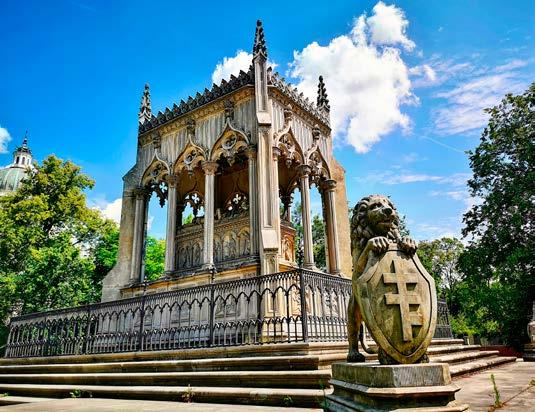
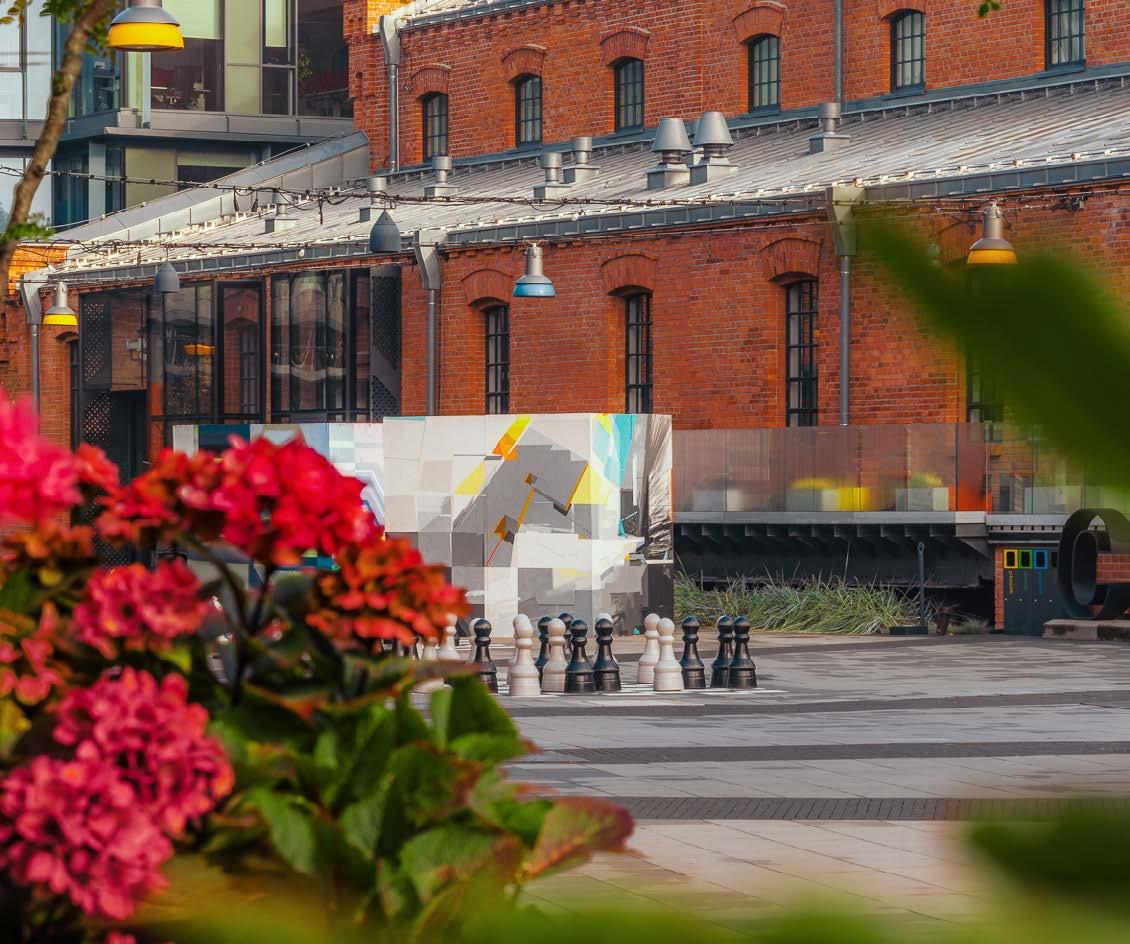
‘Gritty’ and ‘boho’ are just two of the terms tossed around to describe Praga, Warsaw’s east riverside district
Once disregarded due to its criminal underclass and imposing tower blocks, today an urban revival makes Praga worth visiting – especially for those looking to get off the tourist trail and see more of the city’s artsy side. The current standard-bearer for cool, folks here prefer their fun improvised and their bars dark. Filled with murals and hip hangouts, you can easily spend a day checking out the vibes of this alternative district across from the Old Town.
The easiest way to get to Praga is to take the M2 Metro to ‘Dworzec Wileński’ (eastbound to ‘Trocka’), and you’ll be in the heart of the district. From Warszawa Centralna the 160 bus will take you across the river to the ‘Park Praski’ stop. If you’re in the Old Town simply walk down the steps near the Royal Castle to Al. Solidarności and the ‘Stare Miasto’ stop, taking trams 4, 13, 20, 23 and 26 to ‘Park Praski.’
Located in the oldest surviving residential buildings on Warsaw’s right bank, this modern museum boasts interactive exhibits that tell the story of Praga: its people, history, industry, bazaars and more. The cellars include the Residents’ Stories Archive and two pre-war Jewish prayer rooms with original wall paintings, and there’s even an observation terrace. This is not one of the most well-known museums in Warsaw, but is certainly one of the most interesting. Well worth a visit. Visiting time: 1.5-2hrs.QJ‑3, ul. Targowa 50/52, MDworzec Wileński, tel. (+48) 22 518 34 30, www.muzeumpragi.pl. Open 09:00 17:00; Thu 11:00 20:00; Sat, Sun 10:00 18:00; closed Mon. Admission 20/15zł, permanent exhibit only 15/10zł, temporary exhibits 10/8zł; Thu free. U
Nowhere is Praga’s revival better illustrated and its artistic vibe more felt than on Ząbkowska. Originally lined with timber frame houses, a fire in 1868 led to their replacement with tall tenements, all but one surviving WWII. Post-war neglect hit the street so hard that wholesale demolition was seriously considered, but somehow it endured and today many of the buildings have been restored and filled with lively galleries and bars. You’ll know you’ve arrived at Praga’s high street when you discover the explosion of murals and street art near ul. Targowa. Plus, a great thrifting hub -- see the next page for more!QJ‑3, ul. Ząbkowska, MDworzec Wileński.
Locals will tell you that the best part of Praga isn’t the sightseeing, but the nightlife. The area’s main attraction is a vodka museum after all. You’ll find plenty of restaurants, cafes and bars in and around Centrum Praskie Koneser, along ul. Ząbkowska and ul. Okrzei. Here are some of the best hangouts in Praga:
3/4 Koneser Bar: Head straight to this bar hidden on the 3rd floor of the Polish Vodka Museum to try their delicious alcohol infusions and cocktails, and enjoy beautiful views.Qp.110
Setki Powodów: There are 100 reasons why you should swing by, but one of the main ones is its tantalising food menu (international cuisine) and a kicking live music roster!Qp.101
Yes! Butcher Shop & Bistro: This is meat done very well. Find cuts of all your favorites (ribeye, tomahawk and more) sourced from countries known for their beef. Also the option to dine in or take away. Qp.95.
This refurbished branch of the Museum of Warsaw boasts a collection of historical printing presses, fonts, bookbinding tools, and other paraphernalia for publishing books and pamphlets of all kinds. Keep an eye out for temporary exhibitions which put printing in its historical context - past exhibitions zoned in on invitations, picture book illustrations, and communist-era underground publishers.
Average visiting time: 30mins.QJ‑3, ul. Ząbkowska 23/25, MDworzec Wileński, tel. (+48) 22 620 60 42, www.muzeumdrukarstwa.muzeumwarszawy.pl/en/ Open 9:00 17:00; closed Mon. Admission 5/3zł. Thu free.
Once the Koneser Vodka Factory (1897-2007), this large industrial site lay mostly derelict before getting a major revamp in recent years and becoming Centrum Praskie Koneser. Interesting from an architecture and urban renewal standpoint, the complex includes the Polish Vodka Museum, the Museum of Fantastic Art, art galleries and dozens of restaurants, cafes, bars and shops! In the summer, this is the place to spend a day wandering outside, checking out the gorgeous architecture. QK‑2, Plac Konesera 2, MDworzec Wileński, www.koneser.eu TUE6
Praga is known for many things but locals know that one of its best attributes is its thrifting culture. The neighborhood is a hotbed of thrift stores, charity shops, and second-hand stores. Here’s our suggested starting route. Get off at the Kijowska tram stop, begin on the south end of Ul. Targowa and work your way north!
Jeila Ciucholand: With two stories and tons of men’s and women’s clothing, this is the perfect starting point. Find staple shirts, skirts, etc for around 10-20 Zł. Plus, some cool home items upstairs!QK-4, ul. Targowa 20B.
Z 2 Ręki: Though this mostly has women's clothes it's well worth it: items are chic, modern and totally discredit the stereotype of thrifted clothing as "frumpy." Plus, thrift store prices make this spot a mustQJ-4, Targowa 59.
Kopalnia: There’s more to visit on Targowa, but let’s jump off for a bit and go to Kopalnia - this store is clothing, but also furniture, books, art, ceramics and so much more. It’s a little more expensive but so well-curated and the items are so nice that a visit is a must (say hi to the owner’s pet turtle while you’re there!).QK-2, ul. Białostocka 9.
Set inside a former vodka factory, this multimedia museum is visited with a live tour guide or audio guide. The experience takes you from the origins of vodka to modern production, showing you plenty of paraphernalia and treating you to a tasting of this strong spirit. This is a must for anyone interested in the history of Poland's national drink (and for anyone who wants to try a sip). Entries are timed so book in advance. Visiting time: 1.5hrs.QK‑2, Pl. Konesera 1 (Centrum Praskie Koneser), MDworzec Wileński, tel. (+48) 22 419 31 50, www.muzeumpolskiejwodki.pl. Open 12:00 20:00; Fri, Sat 12:00 21:00; closed Mon. From 63zł. 6
One of the most desirable districts of Warsaw; with property prices staunchly high, the neighbourhood is home to the nouveau riche, the intelligentsia and much of the capital’s art community. Now in the shadow of the National Stadium, the sporting complex plays a major role in bringing visitors to the focal point of the area: ul. Francuska, which hosts trendy bars, cafes, restaurants and mix of boutique
and old-school shops - Saska Kępa is as close as Warsaw gets to the ‘Little Village’ areas of London or Paris or Greenwich Village in NYC. As such, it’s a great place to wander around, people watch, take in cafe culture on Francuska, or marvel at the architecture, including majestic 19th century manor houses, superb examples of 1920s and ‘30s modernism, and more. QL‑6/7/8, ul. Francuska, MDworzec Wileński.
Skaryszewski Park is one of the most beautiful in Warsaw - you’ll find a pleasant 55 hectare site filled with wide alleys originally designed for horsedrawn carriages, man-made hills, waterfalls, lakes and landscaped flowerbeds. Within its manicured grounds are several points of interest, including a monument commemorating Allied pilots who flew missions to supply insurgents fighting in the Warsaw Uprising. The memorial is located at the exact site where B24 bomber was shot down in 1944, killing all but one of the seven crew on board.QL‑5/6, Al. Zieleniecka, MStadion Narodowy.
8
Opened January, 2012, PGE Narodowy can hold 58,000 fans. The construction was built using hundreds of 45m pillars driven into the ground to stabilise the 25m of war rubble the stadium sits atop. History buffs will note the Socialist era ‘Relay’ statue at the entrance has been preserved in a nod to the site’s heritage – it was here that Stadion Dziesięciolecia (10th Anniversary Stadium) stood, built in the 1950s to mark the anniversary of the end of WWII. A great spot to watch a match or mega-concerts (Taylor Swift, Harry Styles and more perform here). Tours range 20-45zł Q K‑6, Al. Księcia J. Poniatowskiego 1, M Stadion Narodowy, tel. (+48) 22 295 95 95, rezerwacje@pgenarodowy.pl, www. pgenarodowy.pl
Opened in 1928, Warsaw Zoo covers an area of 40 hectares and attracts some 500,000 visitors each year. In total there are 13,000 animals here, across 500 species. It was bombed at the beginning of the conflict and by 1945 all the animals had either been killed, deported to the Third Reich, eaten by locals or escaped into the wild. Zoo director, Jan Żabiński, became something of a hero; wounded during the 1944 Warsaw Uprising, he helped save countless lives by sheltering Jewish orphans inside the grounds of the zoo.QH‑3, ul. Ratuszowa 1/3, MDworzec Wileński, tel. (+48) 22 619 40 41, www.zoo.waw.pl. Open 09:00 18:00; Sat, Sun 9:00 19:00. April Sept 45/35 zł; Oct March 35/30 zł.

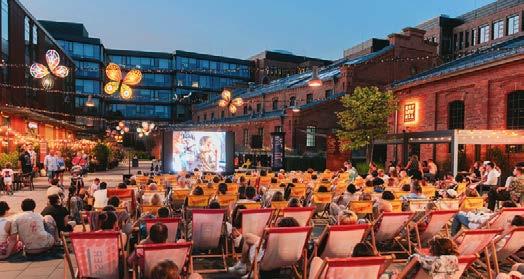
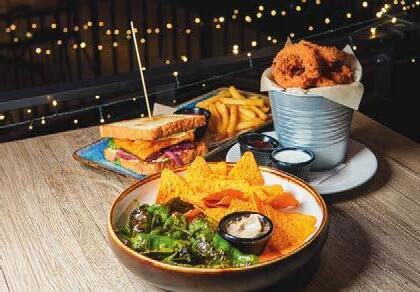
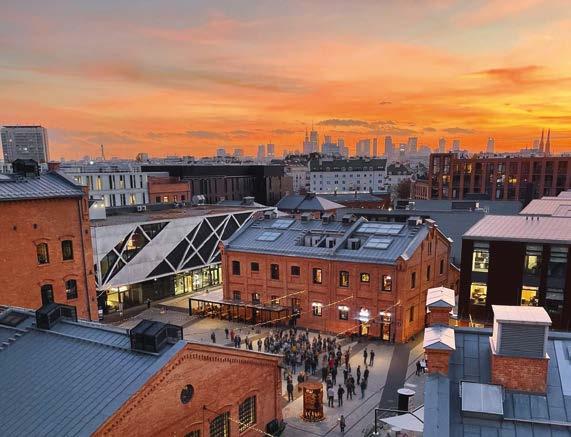
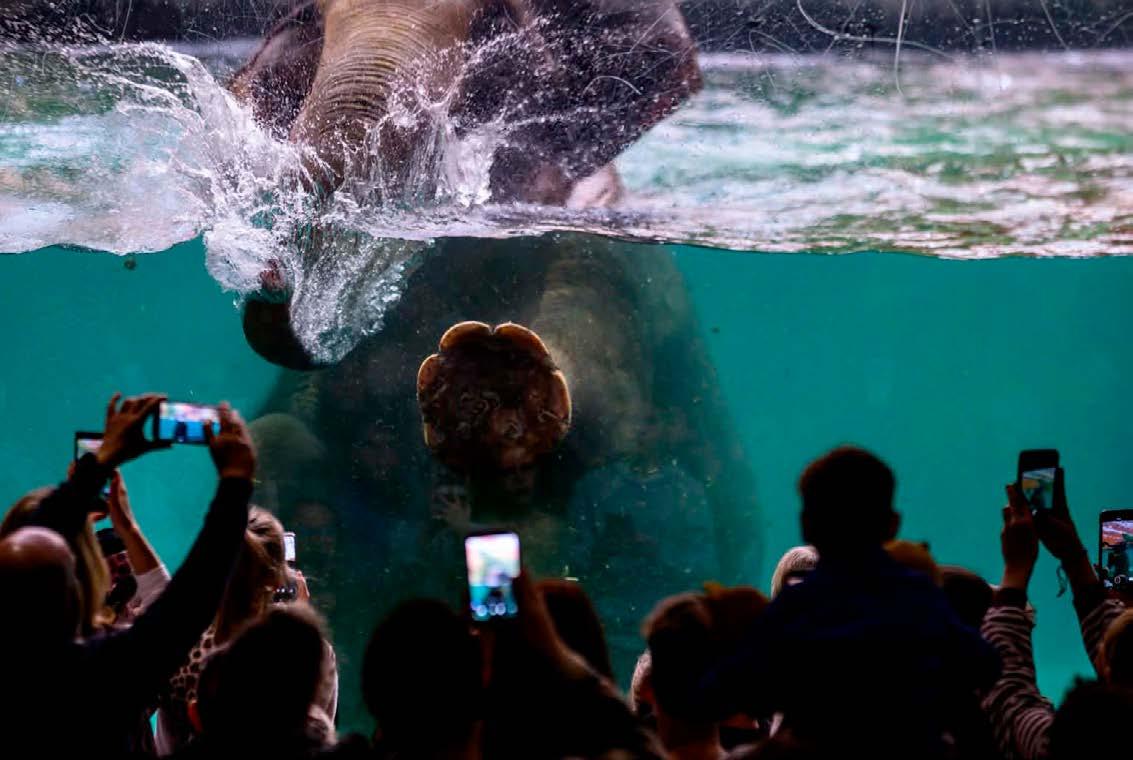
The Orientarium Zoo is a delight for kids and adults alike. Warsaw is jam-packed with things to do (see, well, all the previous pages in this guide). But sometimes you want a change of scenery. One amazing thing about Warsaw is its access to other areas — being the capital, it’s a kind of hub for travel to major Polish cities and towns. So when you have a day to spare, head on over to Warszawa Centralna and hop on a train! Here are our essential day trips.
First, we recommend going one hour west (by car) to Żelazowa Wola, where you'll find the birthplace of famed composer Fryderyk Chopin (p. 79 ). Whether you're a music lover or just a lover of 19th century vibes, this trip is a must. Amid the leafy neighborhood, you'll find the actual home Chopin was born and raised in, now a museum . The renovated museum celebrates the man, the myth, the legend himself, and also pays tribute to the museum's dramatic history.
Filled with early 19th century decor, keepsakes, instruments and paintings, many visitors attest to the haunting spirit of Chopin that lingers throughout. Outside, the impressively landscaped gardens feature four Chopin monuments and are perfect for a stroll as craftily hidden speakers serenade you with his music. About 50km west of Warsaw, Żelazowa Wola can be reached in two hours by bus or train, making the entire visit round-trip about 4hrs. Highly recommended for a beautiful slice of Polish history.
For those with young kids (or those who are simply kids at heart), another day trip near Warsaw is a must: Julinek Park
Just 30 minutes outside of the city center in Leszno, this park is a verifiable wonderland of fun and highspeed adventure. Ok, we hear you: you've been to plenty of amusement parks before. But not like this, we promise. Julinek Park is distinguished by its authentic circus heritage -- for years it was the heart of Polish circus culture. And today, they bring that same theme throughout the modern park.
Find over 60 outdoor attractions, including a rope park, an amusement park, inflatables, a water zone, circus shows and workshops, and the Circus Art Exhibition.
Not your typical amusement park, Julinek offers tons of attractions with that quirky nod to its circus history. Whether you're visiting for a few days or a month, this one spot that's worth checking out (especially with kids). Sure, you've been to amusement parks before. But this one really stands out with it
Next, we recommend a trip down to Kraków. First, we recommend going to Kraków. The charming medieval city is like something out of a storybook, with a gorgeous medieval market square that's lined with restaurants and cafes, a magical castle on a hill (and a fire-breathing dragon!), and architecture that will have you stopping every two seconds to take another picture. Plus, this was the only major city not bombed to rubble during WWII, so much of this architecture is original and old. Clearly, there's tons to see in Kraków but one of the best for a day trip, is the Wieliczka Salt Mine —and we really do mean a day trip. Set aside a whole day for this one. There are multiple tours through these incredible, cavernous mines, and along the way you can see mining tools, saline lakes, magestic chambers and more. This is a once-in-a-lifetime kind of experience. We recommend doing the easiest and most popular way to visit: via the traditional 'Tourist Route.' The Wieliczka Salt Mine Tourist Route takes you through 3.5km of the underground mine over the first 3 of its 9 levels, reaching a maximum depth of 135 metres below ground. The whole tour takes about 2 to 3 hours and you'll see a sailine lake, a chapel and more!
Finally, we highly recommend a visit to Łódź - just one hour away by train! This post-industrial city is booming, with a lovely main street (ul. Piotrkowska) that’s packed with bars, restaurants, and shops. The first part of your day-trip should always be wandering the streets, seeing the incredible architecture like Alexander Nevsky Church ( photo on p.72). In addition to just wandering the streets, we recommend a trip to Orientarium Zoo, a massive (and massively popular) zoo with tons of animals from Southeast Asia (35 land species and 180 acquatic species) across three levels. Here, you can see elephants, orangutans, sun bears, macaques, and more in the land section. In the water section, prepare to see sharks, rays, and a gharial crocodile named Kraken. The zoo features the spectacle of being able to watch animal feeding times. In fact, they offer more than 20 scheduled animal feeding presentations.
Another key spot in Łódź is Aquapark Fala — honestly the best waterpark/spa center in the entire country and one of the largest! With 19 water slides (including some incredibly steep ones) and pools for swimming, it's great for thrill-seekers and kids. in addition to standard pools, they have on with artifical


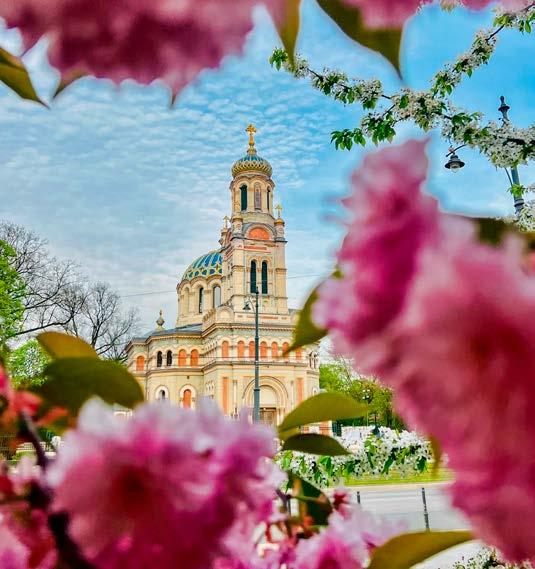
The Aleksander Nevsky Orthodox Church is just one of the architecturally beautiful buildings that makes Łódź such a popular sightseeing spot
waves, brine baths, recreational and sports pools, a jacuzzi, and a water playground!
But it's also great for relaxing. They also offer a Sauna Zone with Finnish and infrared saunas and steam rooms, as well as a tepidarium (a room that lets you relax on a heated bed in silence). For those with kids on a rainy day (or really any day), Hopa Lupa is the place to be. An ultimate family spot that consists of a massive amusement park with trampolines, arcades and more, all located right in Łódż, within shopping centre Nowa Sukcesja! Hopa Lupa's concept is, frankly, a kid's paradise. It's divided into several themed zones: Hopa Lupa Street, Hopa Lupa City, Trampolina Park, and Hopa Lupa Island. Among them you'll find arcades, slides, trampolines and zip lines, and a sensory zone.
And finally, for some indoor and high-speed fun, head over to Mandoria: City of Adventure for the day. Poland's largest all-indoor amusement park, styled as an old Renaissance trading city, this spot has over 30 attractions including roller coasters, themed carousels, pirate ships, mirror mazes, and more.
See the staff dressed in period costumes and enjoy themed bars and restaurants. Tons of fun for kids and adults alike.
While Warsaw tons to offer, if you're sticking around for a week or more, these day trips will give you guaranteed unforgettable experience.
There's so much to see around Warsaw but it can be difficult to access without a car. VIP Service is incredible in this regard (especially if you're looking to travel in style). It's a private car service, offering trips for individuals and groups (including businesses trips, special events and day trips).
VIP Service has been running since 2005, meaning they're well-established in Poland as they offer door-to-door car services. It doesn't just stop at driving. VIP also offers services for conferences, congresses, business events, and special occassions -- meaning they actually handle transport logistics for participants and organizers. They also hold private tours tailor made for individual riders -- depending on interest, available time, and more.
You might just choose to zip around Warsaw in style, or you can venture outside of the city: tours go to Kraków, Gdańsk, Wrocław, Łódź, Lublin and more, including rides to important historical sites like Auschwitz-Birkenau Memorial. You can either opt to have a driver who remains at your disposal all day, or choose alternative forms of transportation like train, plane and even private helicopter.QAl. Jerozolimskie 65/79, tel. (+48) 793 70 60 60, www.vip service.pl.
Take an organized tour to the birthplace of Poland's favorite composer: Fryderyk Chopin. Just 50km outside of Warsaw is the leafy green Żelazowa Wola, and it's an easy trip there with Hop-on Hop-off tours. Explore the charming manor house museum nestled within a stunning, tranquil botanical park. It's perfect for a day trip, especially if you don't have a car (these guys make it easy). More on the venue on p.70. Call or text via Whatsapp to book: +48 793 795 733.
These are the same minds behind the popular City Sightseeing tours that take visitors around Warsaw by bus to see all manner of sights, from the Royal Castle to the Rising Museum and more. You can hop off at any stop or relax on board listening to the audio guide as you see the each stop. Two routes and 30 stops! See more on p.27.
QE 8, Emilii Plater (west of Pałac Kultury), tel. (+48) 793 79 57 33, https://hoponhopoff.pl/buy tickets
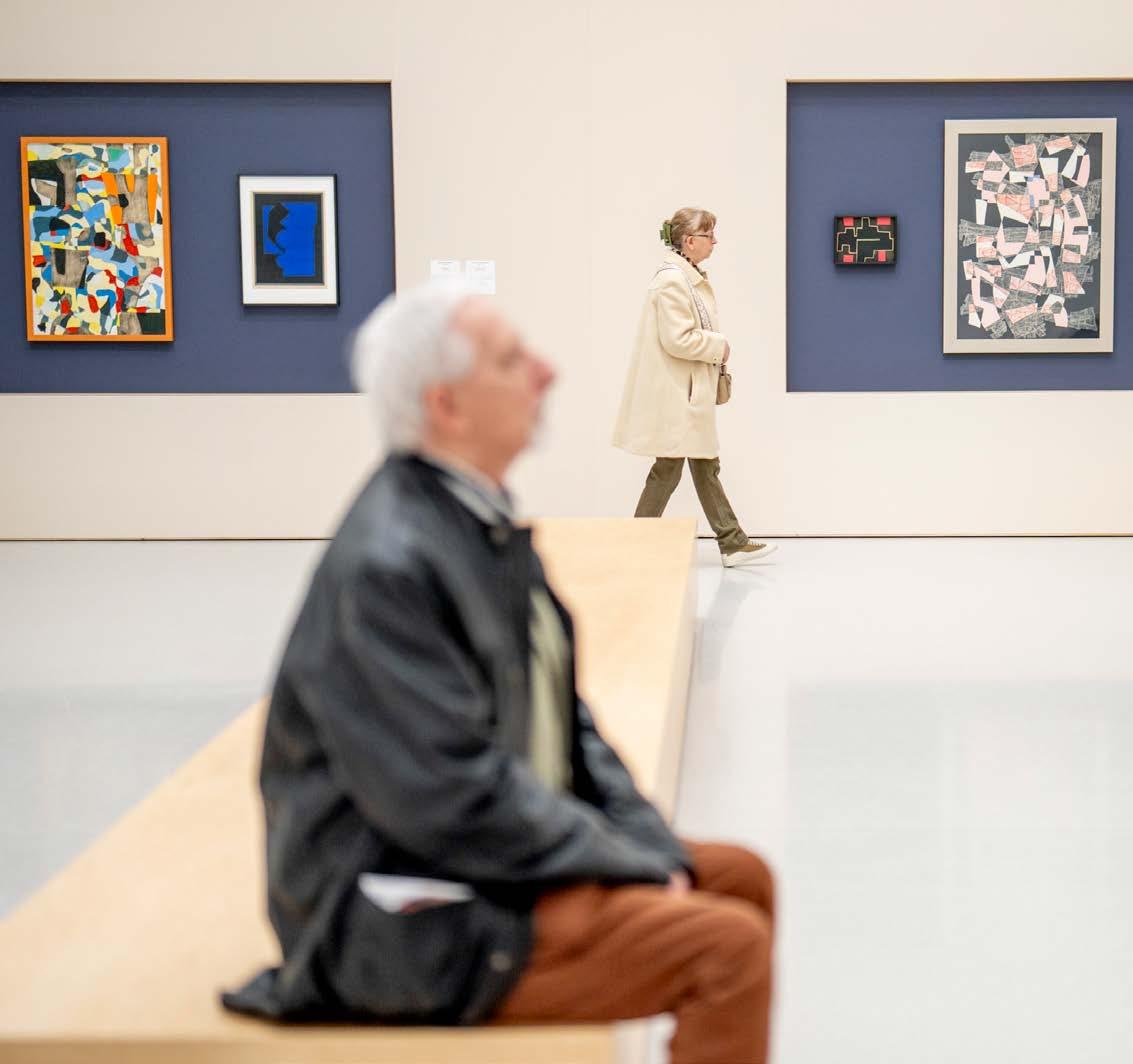
Warsaw’s combination of these three is what makes it so exciting. Whether you’re an art lover, amateur historian, or tracing your roots, Warsaw’s heady brew of imperial grandeur, prewar glamour, 20th century tragedy, socialist austerity and present-day dynamism makes it unique in Europe and offers much to the visitor. Use this chapter of the guide to discover the capital’s art spaces and current exhibitions, find out about museums ranging from niche to national, and learn about sites related to some of the most important events in Warsaw’s modern history.
Warsaw is the centre of Poland’s contemporary art scene and home to countless pieces of priceless art. While Kraków’s collections skew more historical, Warsaw boasts a great variety of exhibits showcasing younger artists as well as the nation’s masters. When it comes to art tourism, temporary exhibits are often as or more important than permanent collections, so check the current exhibitions on p.76.
Right in the centre of the city, this blocky, sleek white building is home to some truly incredible contemporary and modern art from Poland and around the world.QSee p. 80
An incredible museum with some of the best art in the country! Polish painters, international painters and even Ancient Greek and Egyptian Artefacts!QSee p.82.
A spectacle of light, color, and sound, this museum is a must-visit that uses modern technology to take visitors on a journey that awakens the senses. QSee p.79.
What about art in public spaces? Poland has a long, lauded tradition of graphic art, with Polish print advertising and poster design known internationally for their high artistic quality. With such a knack for graphics, it stands to reason that Poles would have a penchant for street art as well. And they do. In Warsaw both graffiti art and large-scale murals are a common sight, with the city and private businesses even inviting international artists to do installations. You’ll find a particularly high volume of murals on buildings in Praga, Wola and around the City Centre, where the urban landscape is changing most rapidly. Although it’s a dynamic situation, as many murals are installed on buildings that later become designated for demolition, at WIYP we keep a close eye on murals and urban art, marking major works on all of our maps; just look for the spray can icon Not only that, but we’ve meticulously put it all online with exact GPS coordinates, so that your smartphone can do the work of leading you directly to Warsaw’s alternative artistic visions.
The history of Warsaw is fantastically told in this revamped museum based in eleven historic tenement houses. An Old Town must-see for everyone.QSee p.46
One thousand years of Polish Jewish history is chronicled in this incredibly impressive, popular museum. One of the top spots in the city.QSee p.85.
With tons of dolls and toys from around the world and the last century, this museum delights and fascinates -- all with a healthy dose of nostalgia and whimsy.QSee p.80.
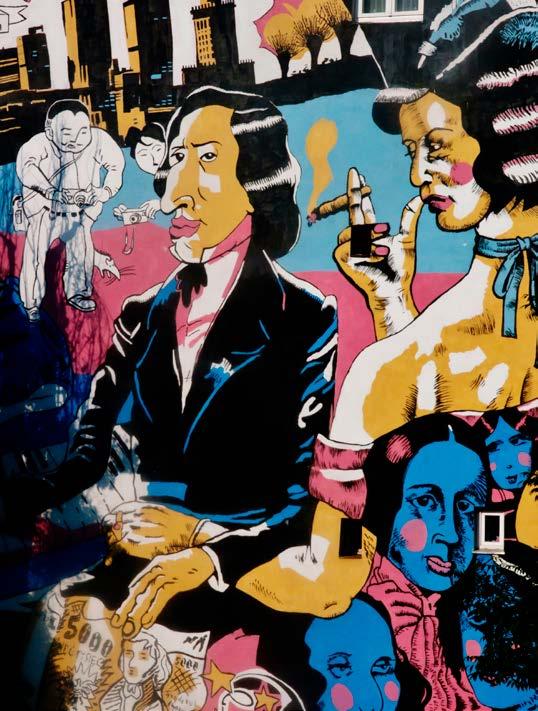
It’s not uncommon for some temporary exhibits to be major events, even overshadowing the permanent collections of local museums. Of the literal hundreds of art events across Warsaw, here are a few picks for the coming months. For more, as well as other events in the capital, head to our website.
13.02
14.06
Art Box Metaverse (the companion to Art Box Experience) is a 4D VR show in which you can view content and interact with the digital world and other people in real time. Now, Art Box Metaverse is hosting two shows, both of which are engaging and educational. One, “Gladiator, Legendary Arena” brings you into the Roman Empire and specifically, the Colosseum, where gladiator events were held. You can feel the whole atmosphere, explore the arena and get stories of legendary gladiators. The other, “Titanic -- Echoes of the Past”, immerses you in the story of the ill-fated Titanic ship, inspired both by the historic voyage and the famous 1997 movie. You’ll dive down in a modern vessel to explore the ship from the ocean depths.QD‑8, Art Box Metaverse, ul. Żelazna 51/53 (Fabryka Norblina), tel. (+48) 571 030 480. Weekdays 55/45 zł; Weekends 65/45 zł www. artboxmetaverse.com/en/
The highly popular melt museum has introduced a new permanent exhibit that highlights the connection between art and technology, specifically AI. The creators of the exhibition call it a “technoutopia meets cyberpunk vision of the future.”
The exhibit, Artificial Dreams takes visitors to unknown realms of the relationship between humans and artificial intelligence through an interactive, highly immersive experience that blends art, light, color, technology and sound to awaken your senses.
You’ll see gorgeous projections, stunning (and sometimes mind-bending) lighting effects, interactive installations and much more. Make sure to book your tickets in advance online because this one sells out fast! QG‑7, melt museum, Plac Powstańców 2A, MŚwiętokrzyska, tel. (+48) 534 12 55 56, 39 59zł, www.meltmuseum.com/en/exhibitions/
01.01 - 30.09 » Chopin—A Different Perspective
See beloved Polish composer Fryderyk Chopin from a totally new perspective! This special exhibition at the Dollhouse, Games and Toys Museum in Warsaw, displays award-winning art doll portraits created by contemporary artists from around the country. In each one, the artist was able to imagine Chopin in the way they wanted to, blending tradition with modern creativity. For viewers of the exhibit, that means you can see the composer through new artistic eyes, garnering not just an understanding of who Chopin was, but how he is remembered by contemporary artists. A must-see for culture lovers, it combines artistry, history, and innovation in an unforgettable experience.QF‑4, Museum of Dollhouses, Games & Toys, ul. Podwale 15 (entrance in courtyard), MRatusz Arsenał, tel. (+48) 797 72 30 29, Tickets included in price of museum. www. muzeumdomkow.pl/chopin.
13.02 - 14.06 » Leonardo versus Michelangelo at Art Box
“After 500 years, they meet again” says Art Box of their new immersive exhibit: Leonardo vs. Michelangelo, and it’s a fitting intro for a dramatic, art-packed exhibit. This “duel of the Renaissance giants”, which has seen great success during its exhibition in Barcelona, is held at the popular, immersive Art Box gallery. This show starts with a true story: an art duel in Florence between the two prolific masters as they created competing paintings. In this 360-degree exhibit, you get to relive the rivalry and participate in the story (and you decide the outcome). Over eight rooms and 800 m², visitors will be immersed in the world of 16th-century Florence, the studios of both artists, interactive installations, and a final choice between the two artists that’s yours to make. QD‑8, Art Box Experience, ul. Żelazna 51/53 (Fabryka Norblina), MRondo Daszyńskiego, tel. (+48) 571 03 04 80, Tickets range 40 75zł, www.artboxexperience.com.
10.09 - 05.07 » Olga Boznańska at the National Museum
Olga Boznańska was one of the most important painters in Poland in the 19th and 20th centuries and in this exhibit, the National Museum celebrates her life on the 160th anniversary of her birth. Born in Kraków, Boznańska studied ni Poland and Munich, before becoming a member of the prestigious Society of Polish Artists in the late 19th century. From her home in Paris, Boznańska honed an incredible, unique style that’s easy for any Polish art-lover to identify on sight. Her work went beyond Poland, garnering international acclaim as she focused on
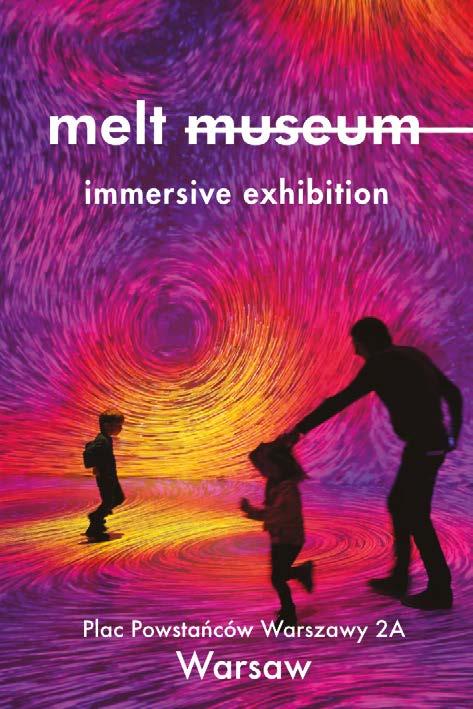
portraits and still lifes. Today, she is one of Poland’s most beloved artists, and her works are on display here at the National Museum, including some borrowed from Paris’s famed Musee d’Orsay. Worth a visit for art lovers, lovers of Poland, and anyone in between!QH‑8, Warsaw National Museum, Al. Jerozolimskie 3, MNowy Świat Uniwersytet, tel. (+48) 22 621 10 31, www.mnw.art.pl.
26.06 - 10.01 » You Are at the Heart of Change. Surrealism and Anti-Fascism
The idea of surrealism often evokes images of melted clocks, half-hidden faces, and a heavy dose of selfinterpretation. But the Museum of Modern Art wants to shine a light on the political side of the popular genre. The side that revolutionized art and fought for freedom. This exhibit dispells notions that surrealism is weird for the sake of being weird, or simply strange and magical, and instead focuses on the surrealists who used their works to combat fascism, for the sake of freedom and free art. Since the 1920s, surrealist art has been a way to resist opppressive political structures in Europe -- and you can see it all here. QF‑7/8, Museum of Modern Art in Warsaw, ul. Marszałkowska 103, MCentrum, tel. (+48) 22 596 40 10, www.artmuseum.pl
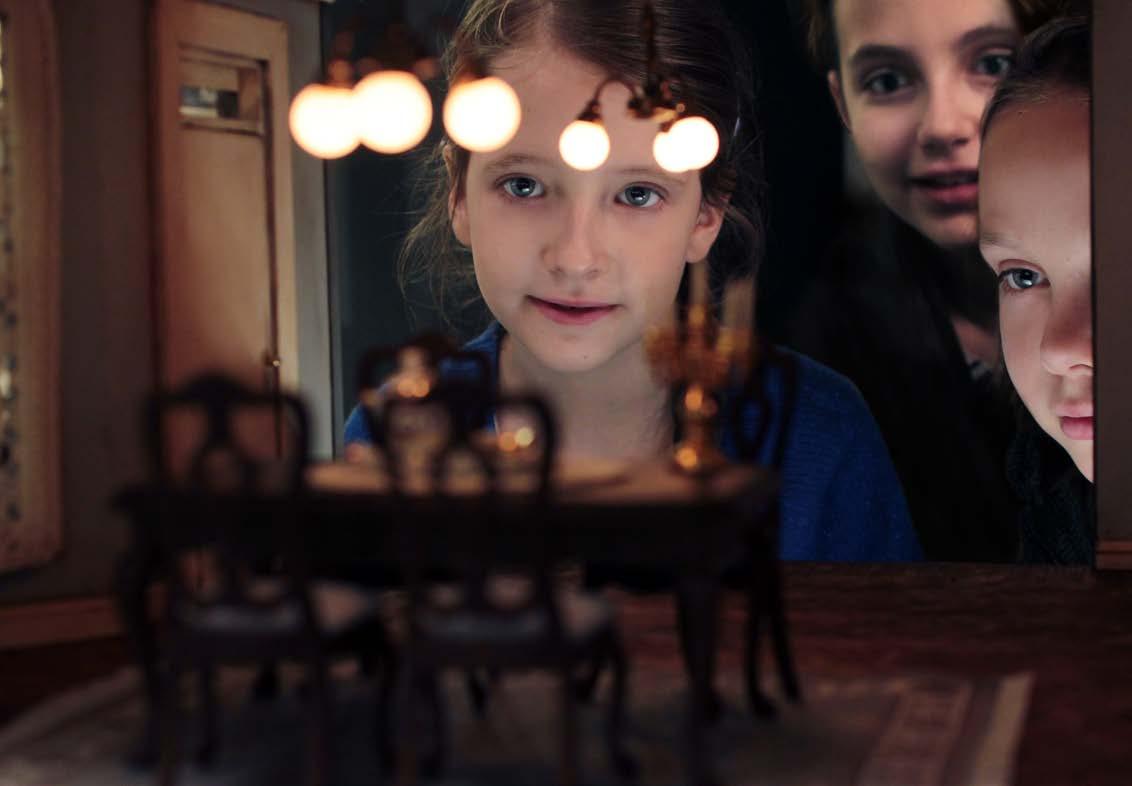
Warsaw boasts some superior museums, ranging from world-class attractions full of multimedia displays, to small institutions covering niche historical events. It’s more than we have space to cover here, but you’ll find them all listed and up-todate on our website. In this guide, some of the city’s most important museums are listed within the district tours of Sightseeing section, while the rest of the best are here. Descriptions focus on each museum’s permanent collection; for current temporary exhibits, see p.76
Using high-tech screens and playing with light and darkness, movement and stillness, the creative experts at Art Box present a number of highly immersive exhibitions through moving paintings and photographs projected across the walls, which visitors can marvel as they wander through the 800 sqm space. And the space isn’t just reserved for what the bright minds at Art Box can come up with -- it can be used for events, too! This can be big dinners, corporate meetings, retreats and much much more! Don't miss the nearby Artbox Metaverse, which uses VR technology to transport you to different worlds -- fully immersing you in sight, sound and more. QD‑8, ul. Żelazna 51/53 (Fabryka Norblina), MRondo Daszyńskiego, tel. (+48) 571 03 04 80, www.artboxexperience.com. Open 10:00 20:00; Fri 09:00 21:00; Sat, Sun 10:00 21:00. Weekdays 65/55zł; weekends 75/65zł.
Discover the secrets of chocolate production and delicacies through a thematic exhibition, interactive displays and workshops for adults and children alike. There are also classes that combine learning and fun for organized groups of children and teenagers. The main exhibition at the museum covers three levels and is divided into a few thematic spaces -- the Ghanaian Space, The Chocolatier’s space, the Confectioner’s space, And finally, the Designer’s Space. Get ready for a whole host of exciting opportunities, including a chance to taste liquid chocolate and roasted cocoa beans, the ability to start the chocolate-making machine and touch the exhibits, and also the chance to learn about the Wedel family, along with much much more. QL‑4, Al. Emila Wedla 5, MStadion Narodowy, www. fabrykaczekolady.pl. Open 10:00 20:00. 70/55zł.
The Fabryka Norblina Museum goes over the beginnings of Norblin Factory in the late 18th Century when the land was purchased by Franciszek Ryx who started with two villas and an English-style garden. Now, the space has grown to 10 historic buildings and 50 machines and devices located over 2 hectares—truly a tale of growth! The permanent exhibition at the Norblin Factory Museum is based on four basic tour routes: “Buildings and Architecture”, “Machines and Equipment”, “Products” and “People .” An additional path connecting the most important elements of the basic paths is ’The Norblin Factory in a Nutshell,” led by museum guides. Plan for around 1 to 1.5 hours! QC/D‑8, ul. Żelazna 51/53 (Fabryka Norblina), MRondo Daszyńskiego, tel. (+48) 728 59 48 13, www.muzeumfabrykinorblina.pl/. Open 9:00 17:00; Sat, Sun 10:00–16:00; closed Mon. With a guide 40/20 zł; online ticket 15 zł.
For Chopin completionists, or lovers of 19th century vibes, a trip out to the composer’s birthplace at the estate park of Żelazowa Wola can be a treat. The renovated museum celebrates the man, the myth, the legend himself, and also pays tribute to the museum’s dramatic history. Filled with early 19th century decor, keepsakes, instruments and paintings, many visitors attest to the haunting spirit of Chopin that lingers throughout. Outside, the impressively landscaped gardens feature four Chopin monuments and are perfect for a stroll as craftily hidden speakers serenade you with his music. 54km west of Warsaw, Żelazowa Wola can be reached in one hour by bus or train, making the entire visit round-trip about 4hrs. QŻelazowa Wola 15 (Sochaczew), tel. (+48) 46 863 33 00, www.muzeum.nifc.pl/pl. Open 10:00 20:00. May September Chopin recitals: Sat and Sun, 12:00 and 15:00. Admission 30/25zł for the museum, park and temporary exhibition, 20/12zł for the park and temporary exhibition. Mon free.
Melt museum offers a fully sensory experience involving lights, color, interactive exhibits, robot dogs, and so so so much more! The museum takes an audiovisual approach to creativity, using a blend of art and ultra-modern technology to offer vibrant imagery and sounds that are meant to awaken all of your senses. The museum hosts popular temporary exhibitions and asks that you book your tickets in advance online (it’s a very popular experience). Once you do, you’ll step inside a mind-bending world of light, color, touch and sound that really highlights



what technology can do and how it can affect our perception of our world. Melt is something you can explain a million times over but until you go there, you won’t really get just how beautiful, artistic and enlivening the experience can be. Visiting time: 4560mins. QG‑7, Plac Powstańców 2A, MŚwiętokrzyska, tel. (+48) 534 12 55 56, www.meltmuseum.com. Open 12:00 21:00; Sat, Sun 10:00–21:00. Prices are available after clicking on the selected exhibition. Please book your places online in advance.
While it may seem whimsical and exciting at times, this museum is not just for children. Showcasing over 150 highly-detailed historical dollhouses, plus various other minature settings, the museum has four permanent exhibitions on display at its headquarters at 15 Podwale Street; “In the World of Old Dolls’ Houses,” “Sacred Toys,” “Dolls of the World,” and “Games and Polish Toys of the 20th Century.” A checkroom and restroom are available on site, the main exhibition is adapted to be visited by wheelchair users. Visiting time: 45-60mins.QF‑4, ul. Podwale 15 (entrance in courtyard), MRatusz Arsenał, tel. (+48) 797 72 30 29, www.muzeumdomkow.pl. Open 09:00 19:00. Tickets 42/30zł; kids under 1m tall, free. U
This is a modern science engagement center that gives new meaning to the word “immersive”. The engaging exhibits here will demostrate the basic principles of physics in a way that’s both understandable and fun (and very hands-on). Visitors can conduct experiments on their own, discover the laws of science, and learn about the history of great discoveries — from Newton to Einstein. Attractions include interactive installations, physics experiments, a space zone, and exhibits demonstrating how gravitational forces work in practice. QF‑4, ul. Świętojerska 5/7 (Institute of Design), MDworzec Gdański, tel. (+48) 790 65 69 27, www.muzeumgrawitacji.pl/. Open 11:00 19:00; Sat 09:30 20:00; Sun 09:30 19:00. Mon Fri, 45/35 zł Weekend 47/37 zł.
If Warsaw’s communist history isn’t vivid enough for you on a walk around the capital, immerse yourself in PRL (Polish People’s Republic) vibes at this private museum. Showing what everyday life was like for locals during the years of Poland’s communist rule, the nostalgic exhibits include a recreation of a typical PRL-era apartment, plus plenty of photos, artefacts and relics that demonstrate the difficulty and absurdity of those times. Bittersweet for older Poles and eye-opening for foreigners. Visiting time: 1hr.QG‑10, ul. Piękna 28/34 (corner of Plac Konstytucji and ul. Piękna), MPolitechnika, tel. (+48) 511 04 48 08, www.mzprl.pl. Open 10:00 18:00; Fri 12:00 20:00. Admission 32/22zł. Audioguides free (after getting an app on https://mzprl.pl/audioguide free of charge/?lang=en ) in EN, FR, IT & ESP.
Within the sleek white walls of this center city building lies an international institution dedicated to contemporary art and culture from around the world. The Museum of Modern Art in Warsaw stretches across two floors with plenty of galleries displaying art from modern Polish and international artists: long, draping fibre works, installations that are political critiques, photographs, paints and more. All here, all worth spending hours in front of, contemplating. Along with the galleries, the museum boasts an incredible white staircase that looks like something out of an Escher piece. There are rooms with long windows that gaze out over the Warsaw skyline, along with a cinema, educational spaces, a bookstore and a bistro. Visiting time: 90min QF‑7/8, ul. Marszałkowska 103, MCentrum, tel. (+48) 22 596 40 10, www.artmuseum.pl/en. Open 12:00 20:00; closed Mon. 40/30zł.
This refurbished branch of the Museum of Warsaw boasts a collection of historical printing presses, fonts, bookbinding tools, and other paraphernalia for publishing books and pamphlets of all kinds. Keep an eye out for temporary exhibitions which put printing in its historical context - past exhibitions zoned in on invitations, picture book illustrations, and communist-era underground publishers.
Average visiting time: 30mins.QJ‑3, ul. Ząbkowska 23/25, MDworzec Wileński, tel. (+48) 22 620 60 42, www.muzeumdrukarstwa.muzeumwarszawy.pl/en/.
Open 9:00 17:00; closed Mon. Admission 5/3zł. Thu free.
In this reconstructed interior of an interwar pharmacy, find glass vials and beakers, wooden furnishings, period advertisements and vintage pharmaceutical equipment. learn Stories of medicines, poisons, and narcotics, as well as Japanese Kampo medicine, and learn about one of the world’s first female pharmacists – Antonina Leśniewska. A nice but wonderful space, the museum also offers workshops on the healing properties of plants, and gives visitors a chance to make their own scented waters from essential oils!
Visiting time: 45mins.QF‑4, ul. Piwna 31/33, MRatusz Arsenał, tel. (+48) 22 831 71 79, www.muzeumfarmacji. muzeumwarszawy.pl/. Open 10:00–18:00; closed Mon, Sun. Last admission is 30 minutes before closing. Admission 12/8zł. Thu free. U6
Polish Vodka Museum
Set inside a former vodka factory, this multimedia museum is visited with a live tour guide or audio guide. The experience takes you from the origins of vodka to modern production methods, showing you plenty of paraphernalia and treating you to a tasting of this strong spirit so deeply tied to Polish history. Entries are timed (PL and EN tours hourly) and it’s wise to look at all the tour options online and book in advance Visiting time: 1.5hrs.QK‑2, Pl. Konesera 1 (Centrum Praskie Koneser), MDworzec Wileński, tel. (+48) 22 419 31 50, www.muzeumpolskiejwodki. pl. Open 12:00 20:00; Fri, Sat 12:00 21:00; closed Mon. from 63zł. 6
Poster Museum
After an over 3-year absence from Warsaw’s museum scene, the Poster Museum is back! The beloved museum reopened this year displaying excellent new exhibits. Start with the Polish poster collection, with over 36,000 titles. “It is here that its tradition and achievements are subjected to

review and reinterpretation,” the museum says. The foreign poster collection is also incredible -- with an unrivaled collection of posters 25,000 posters from around the world. The museum, housed inside the Wilanów Palace’s former indoor riding area features two large halls full of wonderful posters. At almost 60,000 pieces, this is reportedly the largest poster collection in the world. The museum focuses on the artistic merits of the posters rather than their documentary value and regularly has events. QP‑2, ul. St. Kostki Potockiego 10/16, tel. (+48) 22 842 48 48, www.postermuseum.pl. Open 10.00 18.00; closed Mon. Admission 22/16zł.
A captivating journey through the more than 500year history of Poland’s cherished national drink. With the world’s largest collection of over 10,000 exhibits, visitors delve into vodka’s origins, production processes, design, and even the traditional etiquette in which vodka is served and consumed. Independently founded by the passionate owners of the renowned restaurant Elixir by Dom Wódki (p.103), the museum seeks to shift the perception of Polish vodka from mere party indulgence to a finely-sipped and respected spirit. Showcasing intriguing artifacts like a Napoleonic soldier’s vodkafilled canteen and 1920s/30s bottles that were sent to the U.S. during prohibition, the museum offers an
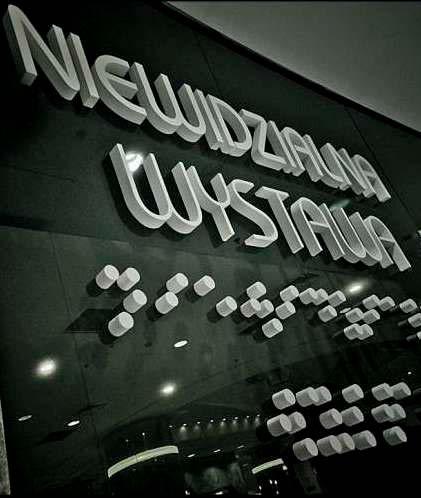
enlightening and enjoyable experience, and paying a little extra gets you in on a vodka tasting session. Prior reservation is essential for this not-to-be-missed attraction!QF‑5, ul. Wierzbowa 11 (entrance from ul. Canaletta), MRatusz Arsenał, tel. (+48) 888 60 08 05, www.muzeumwodki.pl. Open 13:00 19:00; Fri, Sat 13:00 20:00; closed Mon. Last entrance 60 minutes before closing. Admission 30zł (Museum tour without tasting+ audio guide). X
Warsaw National Museum
Located inside a huge and decidedly bizarre interwar building, this is Warsaw’s most comprehensive art museum, leading you from the ancient world through the middle ages up to the 19th century. Along the way you’ll see the some of the country’s most priceless works, including 15th century Dutch masters and Botticelli, plus Polish masters like Chełmoński, Matejko and Wyspiański. There’s also the Gallery of Polish Design and the Faras Gallery - the latter of which holds a rare exhibit of medieval Nubian art from the Nile River Valley, plus temporary exhibits. Visiting time: 3hrs.QH‑8, Al. Jerozolimskie 3, MNowy Świat Uniwersytet, tel. (+48) 22 621 10 31, mnw.art.pl . Open 10:00 18:00; Fri 10:00 20:00; closed Mon. Admission 30/15zł for permanent exhibits; kids and students up to 26; 1zł; Tue free. Friday: from 5 p.m., 50% discount on all tickets. U
A unique experience where seeing impaired guides lead you into their sightless world. On the tour you’ll understand the challenges blind people face daily as you try to write with a Braille typewriter, use kitchen gadgets designed for the sightless, and solve simple puzzles while blindfolded. Next, enter a series of pitch-black rooms that force you to rely on your other senses. You’ll feel the contours of a sculpture to discern what kind of art it is, listen for cars before crossing the street, and the guide will even serve you a drink in the completely dark bar (bring some cash). Truly a fascinating experience. To visit, book online in advance. Tours in English can be arranged, but you must first email them via info@niewidzialna.pl with ‘TOUR IN ENGLISH’ as the subject line. Visiting time: 1hr.
QC‑9, Al. Jerozolimskie 123A (Atlas Tower), MRondo Daszyńskiego, www.niewidzialna.pl.
Open 10:00 20:00. Admission 45/40zł; Sat, Sun 50/45zł. N
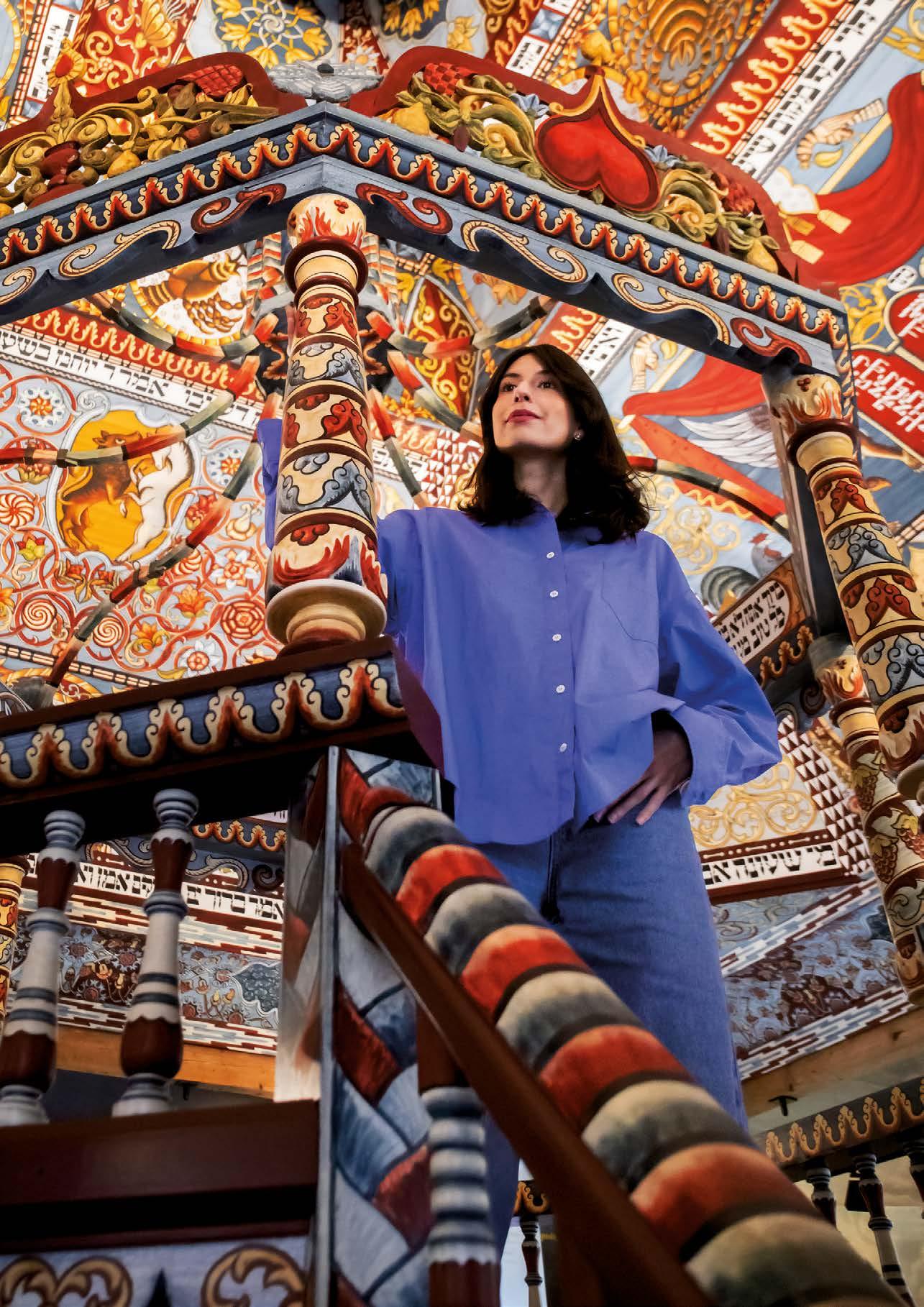

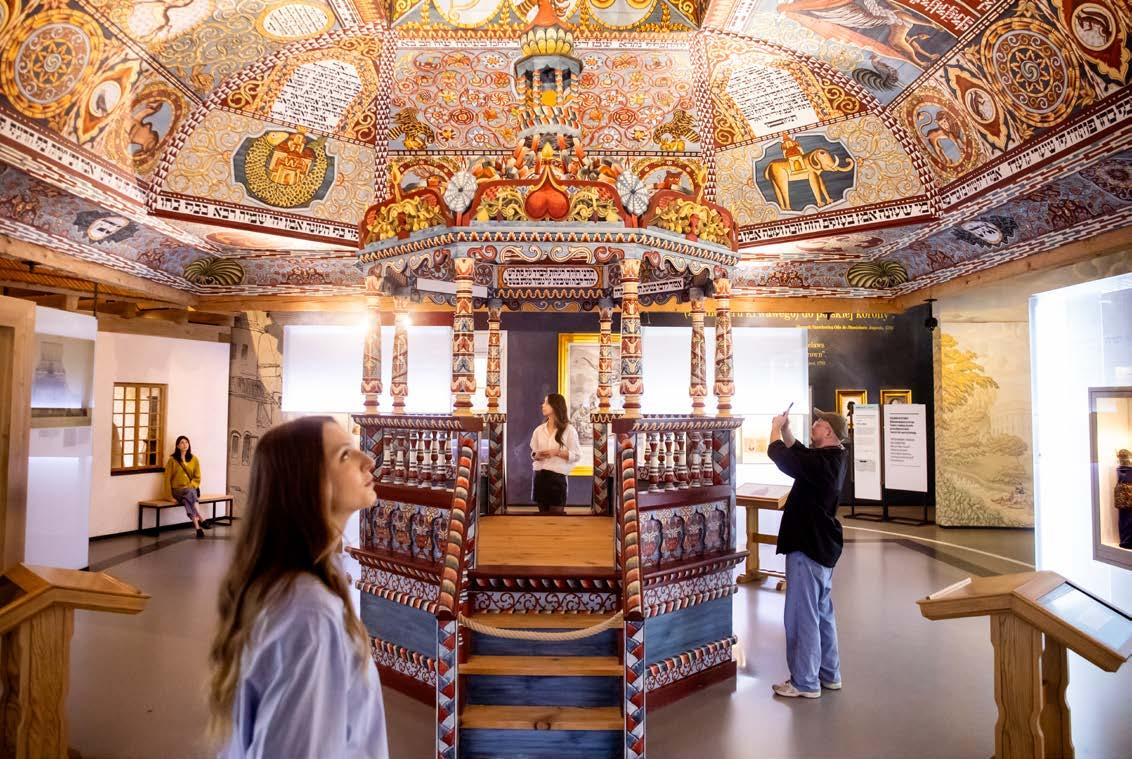
When Nazi Germany invaded Poland in September 1939, Warsaw’s thriving Jewish population numbered approximately 350,000 - only New York City could boast a larger community.
Although anti-Semitism was by no means rare, Poland had been seen as a relative safe haven, and it attracted Jewish settlers forced into flight by more discriminatory regimes elsewhere. By the inter-war years, the Jewish population had made significant contributions to the social, political and cultural fabric of Poland.
As we know, Nazi occupation meant the complete dehumanisation and systematic destruction of Poland’s Jews, who were first forced into ghettos, where they faced violence, starvation and disease, and then deported to Nazi death camps where they were executed. The Warsaw Ghetto was the largest of WWII and occupied much of the City Centre, as you can see by its outline on the maps in this guide. At its height it imprisoned 460,000 Jews in an area of 3.4km2. After more than 254,000 Varsovian Jews were sent to their deaths at Treblinka in the summer of 1942, those remaining began building bunkers and smuggling weapons into the Ghetto in preparation for what would be the war’s largest act of Jewish resistance. Beginning on April 19, 1943, Jewish fighting units engaged German troops in guerilla
warfare within the walls of the Ghetto in a final, doomed act of bravery, defiance and protest against the world’s silence and inaction. When the Warsaw Ghetto Uprising ended 27 days later with the German command’s symbolic detonation of the Great Synagogue, 13,000 Jews had been killed, almost half of them perishing from the fire and smoke as the Nazis burned the Ghetto to the ground, building by building. Of the remaining 50,000 Jews, almost all of them were captured and perished at the Majdanek or Treblinka Nazi death camps.
Following WWII, much of Warsaw’s surviving Jewish population chose to emigrate to the U.S., the British mandate of Palestine (taking an active part in the creation of Israel) and elsewhere. Today Warsaw’s Jewish community is estimated at only about 2,000, but the city’s Jewish heritage remains an essential part of its identity, honoured today by innumerable monuments, memorials, museums and events, foremost among them the POLIN Museum, presenting the history of Polish Jews, and the annual Singer’s Warsaw Festival For a full list of Jewish tourism sites in Warsaw, visit our website
Anielewicz Bunker
Only 350m from POLIN, this small mound and memorial marks the site of the large bunker from which the Warsaw Ghetto Uprising was lead by the Jewish Combat Organisation (ŻOB). Located beneath the tenement at the wartime address of ul. Miła 18 (today Miła 2), the bunker was discovered and surrounded by the Nazis on May 8, 1943, with about 300 people hiding inside. Given the chance to surrender, half of the occupants - mostly civilians - gave themselves up, but the ŻOB insurrectionists chose to stay and fight. When the Nazis used gas to force them out, many of the ŻOB fighters chose suicide. 120 fighters died, including ŻOB commander Mordechai Anielewicz and his girlfriend Mira Fuchrer; only about 15 survived (many of whom perished later). The bodies of the dead were never exhumed and covered over with rubble from the surrounding tenements to make this mound after the war. Today two monuments can be found on/near the memorial with inscriptions commemorating their sacrifice.
QD‑3, ul. Miła 2, MDworzec Gdański.
Jewish Historical Institute
This amazing historical building that stood next to Warsaw’s Great Synagogue houses the Oneg Shabbat Archive, also known as the Ringelblum Archive - a secretly kept collection of documents, reports, essays, letters and other materials recording exactly what life was like in the Warsaw Ghetto, by those who were experiencing it, as it happened. As the Ghetto came under siege in 1943, the vast archive was secretly buried in three containers in three separate locations. Sadly, only the first two have been recovered, but they represent such extraordinary witness testimony that they were inscribed on UNESCO’s Memory of the World List
In the permanent exhibit you will see the original documents of the archive, the authentic containers and more. If you don’t have the time for POLIN, this is a great alternative. There are also temporary exhibits and an excellent bookshop. Visiting time: 90mins.
QE‑5, ul. Tłomackie 3/5, MRatusz Arsenał, tel. (+48) 22 827 92 21, www.jhi.pl. Open 10:00 18:00; Fri 10:00 16:00; closed Sat. Last entrance 1h before closing. Admission 15/12zł. Mon free. Guided tour of permanent exhibit (Tue Fri): 40 zł per person.
A beautiful and poignant place to visit, this is Warsaw’s only active Jewish cemetery. Established in 1806 beyond the city trenches (‘okopy,’ where today’s Okopowa Street runs), the cemetery houses some 200,000 tombs and is the final resting place of many generations of Varsovian Jews, including Ludwik Zamenhof, inventor of the international language Esperanto.QB‑5, ul. Okopowa 49/51, tel. (+48) 22 838 26 22, www.cemetery.jewish.org.pl. Open 10:00 16:00; Thu, Fri 9:00 17:00; closed Sat. Admission 20zł. N
One of the best museums in Poland, POLIN explains a millennium of Polish Jewish history and relations through multimedia displays that earned the 2016 European Museum of the Year award. Located within the former Warsaw Ghetto, the modern building itself is a stunning structure of copper and glass. Inside, each gallery addresses a different era in the history of the Jewish people in PL. Learn about kings, inventors, thinkers and industrialists; about Jewish holidays, customs, religion and culture. While the Holocaust is described in detail, the permanent exhibit is primarily a celebration of 1,000 years of Jewish life in PL. It takes the better part of a day to explore. One combined ticket gets you into permanent and temporary exhibits. The museum is also home to a cafe and an excellent restaurant serving traditional Jewish cuisine (kosher dishes available). In the middle of a green public square, outside, visitors will also see several monuments, including a massive memorial the heroes of the Warsaw Ghetto. Plan ahead because the last entrance to the core exhibit is 2 hours before closing time. Visiting time: 3hrs.QD‑4, ul. Anielewicza 6, MRatusz Arsenał, tel. (+48) 22 471 03 01, www.polin.pl. Open 10:00 18:00; Sat 10:00 20:00; closed Tue. Admission with audio guide 45/35zł, Thu free. TU
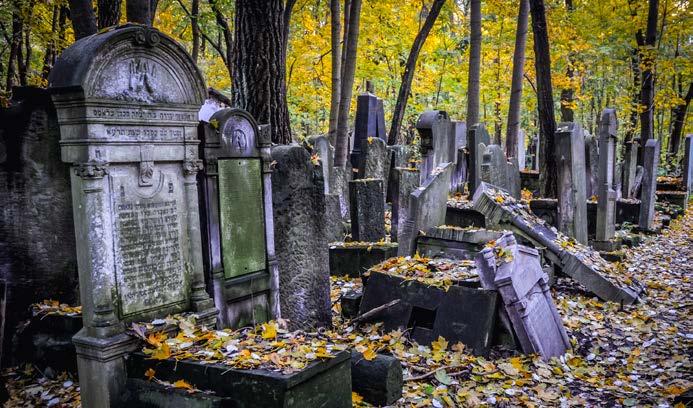
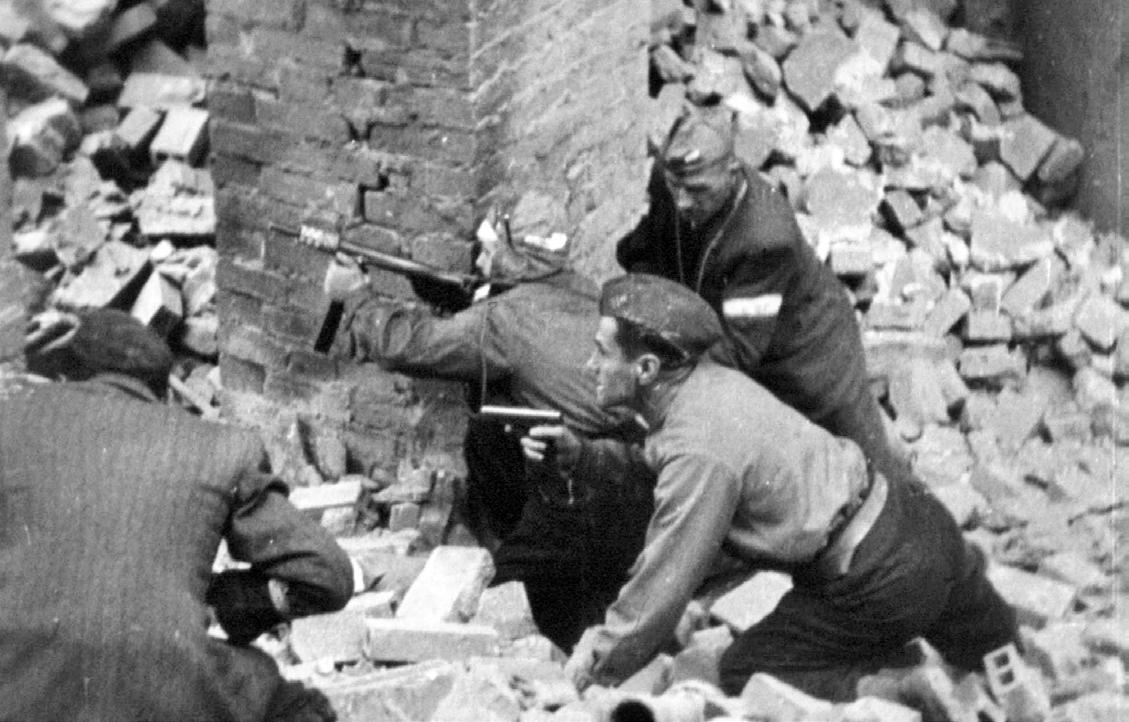
August 1, 1944 . Warsaw, subject to five years of fascist hegemony, rose up in rebellion in what would be the largest uprising in the German occupied territories.
With German morale in ribbons, a retreat from Warsaw in full swing, and the Red Army on the east bank of the Vistula, no time seemed better than the present. Following close contact with the Polish government-in-exile, and assurances of Allied aid, the Home Army (Poland’s wartime military movement a.k.a the ‘Armia Krajowa’ or AK) launched a military strike with the aim of liberating Warsaw and installing an independent government. What ensued was an epic 63-day struggle during which the Home Army faced the full wrath of Hitler’s forces.
On orders from General Tadeusz ‘Bor’ Komorowski, 17:00 signalled W-Hour (‘Wybuch’ standing for outbreak), the time when some 40,000 members of the Home Army would simultaneously attack key German positions. Warsaw at the time was held by a garrison of 15,000 Germans, though any numerical supremacy the Poles had was offset by a lack of weaponry. Nonetheless the Germans were caught off guard, and the Poles captured a string of strategic targets, including the Old Town, Prudential Tower and the post office. The first day cost the lives of 2,000 Poles, yet for the first time since occupation the Polish flag fluttered once more over the capital.
Within days German reinforcements poured in, and on August 5th and 6th Nazi troops rampaged through the western Wola district, massacring over 40,000 men, women and children in what would become one of the most savage episodes of the Uprising. It was to prove a mixed first week for the Poles. In liberated areas, cultural life thrived. Better still, the first allied airdrops hinted at the support of the west. As it turned out, this was just papering over the cracks. The Germans, under the command of Erich von dem Bach, replied with heavy artillery, aerial attacks, armoured trains and tanks.
Fantastically ill-equipped, the one thing on the insurgents' side was an almost suicidal fanaticism and belief. Casualties were almost 20 times as high as those inflicted on the Germans, yet the Poles carried on the fight with stoic self-assurance. Airdrops were vital if the uprising was to succeed, though hopes were scuppered with Stalin’s refusal to allow Allied planes landing rights in Soviet-held airports. Instead the RAF set up a new route running from the Italian town of Brindisi to Warsaw, though casualty rates proved high with over 16% of aircraft lost, and the drops often inaccurate. All hopes rested on the Russians.
After six weeks of inaction Red Army Marshal Rokossovsky finally gave the go-ahead for a Polish force under General Berling to cross the river. The operation was a debacle, with heavy casualties and no headway made. This single attempt at crossing the Wisla was enough; Warsaw was on its own. Already by this time the situation in Warsaw’s Old Town had become untenable, and a daring escape route was hatched through the sewers running under the city. The Germans were now free to focus on wiping out the remaining outposts of resistance, a task undertaken with glee. Abandoned by her allies the Poles were forced to capitulate, some 63 days after they had taken on the Reich.
Having deposited their weaponry, 11,668 Polish soldiers marched into German captivity. The battle had cost up to 200,000 civilian lives, while military casualties between Germans and Poles would add a further 40,000 to the figure. Remaining inhabitants were exiled (though around 2,000 are believed to have seen the liberation by hiding in the ruins), and the Germans set about obliterating what was left of the city. ‘No stone can remain standing,’ warned Himmler, and what happened next can only be described as the methodical and calculated murder of a city. Buildings of importance to Polish culture were dynamited by teams of engineers, while less historic areas were simply burned to the ground. Modern studies estimate the cost of damage at around $54bn. In human terms Poland lost much more. With the Uprising died a golden generation, the very foundation a new post-war Poland could build on.
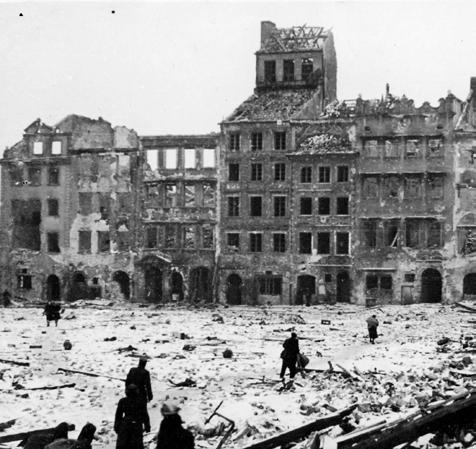
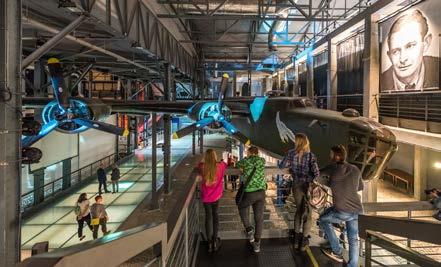
Opened in 2004, this remains one of Poland’s best museums. Packed with interactive, multimedia displays, period artefacts, photos, video footage and plenty of sounds effects, this museum is guaranteed to leave a mark on all visitors. Occupying a former tram power station, the 2,000m2 space is split over several levels, leading visitors through the chronological story of the 1944 Uprising - provided they don’t make any wrong turns; it’s a common mistake, and, as such, an audioguide (10zł) is handy. You can also get a guided tour in Polish (150zł) or in another language (250zł). Set aside several hours for the experience. Visitors start by learning about life under Nazi rule, with immersive displays including a clandestine radio station and covert printing press. The mezzanine level features a film detailing the first month of battle, including the opportunity to clamber through a mock sewer. There is also an exact replica of the B24 Allied planes used to make supply drops over the besieged city. The final sections are devoted to the creation of a Soviet puppet state, a hall of remembrance, and a particularly poignant display about the city’s destruction; take time to watch the black and white ‘before and after’ shots of important Warsaw landmarks being systematically obliterated by the Nazis.Near the exit check out the film City of Ruins, a silence-inducing 5min 3D aerial ‘film’ that uses old photos and new tech to recreate the desolation of ‘liberated’ Warsaw in March 1945. A viewing platform and ‘peace garden’ wrap up this experience. Book in advance. Visiting time: 3hrs.QB‑7, ul. Grzybowska 79, MRondo Daszyńskiego, tel. (+48) 22 539 79 05, www.1944.pl. Open 8:00 18:00; Sat, Sun 10:00 18:00; closed Tue, Thu. Admission 35/30zł (kids under 7 free), Mon free. Audioguides in 8 languages 13zł/person. U
Hey, it doesn’t all have to be exhausting museums and knee-lifts as you explore Poland’s largest city. Check out the local activities below if you’re looking for fun alternatives to traditional sightseeing, ready to try something new, or simply want some rest and relaxation.
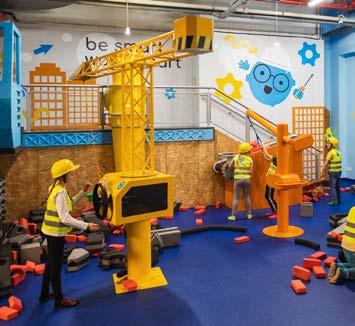
Smart Kids Planet is one of the best spots for kids and families in Poland! With 9 thematic zones and with over 50 engaging activities throughout, kids can play and learn as they do different tasks like building construction, shopping for food and fresh produce, learning about sports, and the magic of machinery and production lines, and much more! They'll develop cognitive function and cooperation skills all while having fun.QD‑8, ul. Żelazna 51/53, MRondo ONZ, tel. (+48) 727 77 08 80, www.smartkidsplanet.pl. Open 9:00 20:00; Sun 10:00 20:00. Tickets online 45 95zł.
Gravity getting you down? Get the bounce back in your step at this huge trampoline park that also features 3D virtual reality gaming by Hologate, a ropes course, obstacle course, basketball and volleyball courts and even a climbing wall with routes for all ages and abilities. Children ages 3-6 must be accompanied by adults; older kids can be let loose while their parents hang out at the well-stocked cafe.Qal. Bohaterów Września 12, tel. (+48) 726 13 06 66, www.stacjagrawitacja.pl. Open 10:00 22:00; Sat, Sun 10:00 21:00. Prices range, check web for details.
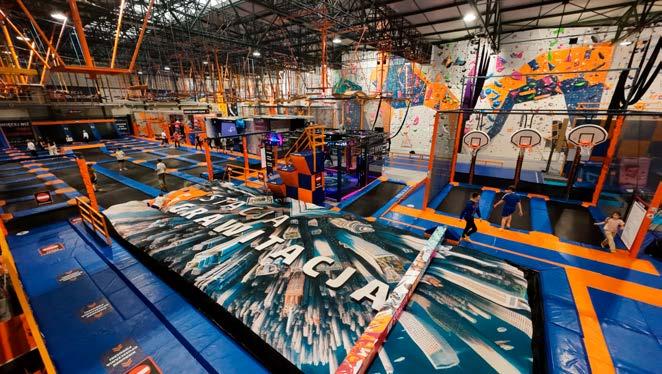
A strict break from the stuffiness of the Old Town, this fun, colourful museum is exciting and educational for all ages. Enter the Matrix, a mirror room, a vortex, the room of shadows, and an upsidedown room - each and every one out-of-this world! Pefect for groups and pairs -- go discover the extent to which the mind can be tricked by the eye (don't forget to whip out your phone for pics!).QF‑4, Rynek Starego Miasta 21, MRatusz Arsenał, tel. (+48) 501 80 80 06, www.swiatiluzji.pl. Open 09:00 20:00; Sat, Sun 10:00 21:00. Admission 42/32zł; 22zł for children 3 5.


Found inside Galeria Młociny, this modern entertainment centre is just 2 mins away from the final stop of the M1. Once you’re there, you have the choice of 18 bowling lanes, 9 billiards tables, 7 shuffleboard tables, and 4 dart boards, plus a kitchen that dishes out sandwiches, beer, snacks and more! Call in advance to reserve.Qul. Zgrupowania AK Kampinos 15 (Galeria Młociny, 2nd floor), MMłociny, tel. (+48) 600 80 05 56, www.mkbowling.pl/start warszawa. Open 12:00 22:00; Fri 12:00 24:00; Sat 10:00 24:00; Sun 10:00 22:00. Prices range, check web for details.
Atop the highest tower in the EU, this place should be your final stop after sightseeing. Get 360-degree views of the city from their observation deck on the 53rd floor. The tour to the top starts with a speedy panoramic elevator among the clouds. There’s an exhibition about Warsaw and an Experience Room with three films about the city’s history. Also head to the HighGarden Rooftop Lounge on the 49th floor for cocktails.QE‑8, Varso Tower, Chmielna 69, MRondo ONZ, tel. (48) 22 162 52 50, www.highlinewarsaw. com. Open 10:00 22:00. Prices range 45 70 zł.
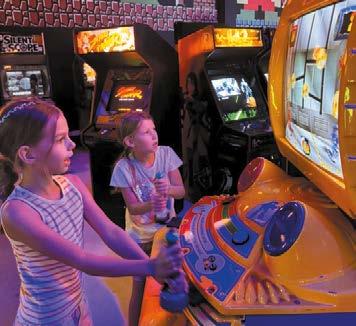
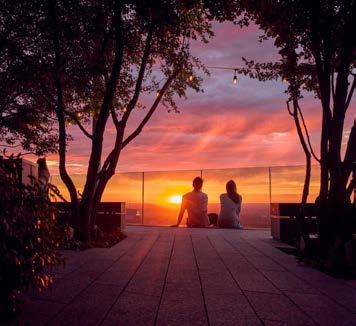
This is one for nostalgia and fun-lovers alike! This interactive museum of video games is like a time machine back to the 80s and 90s, with tons of classic video games available to everyone, 120 vintage arcade machines and even the history of arcade games and their revolution over the years. Find arcade classics like Pac Man, Mario, Donkey Kong and much much more. Perfect for kids and adults!QAl. Jerozolimskie 200, tel. (+48) 573 999 815, www.warsawarcademuseum.com. Open 14:00 21:00; Fri 14:00 22:00; Sat 11:00 22:00; Sun 11:00 20:00. 70/60zł/1h.
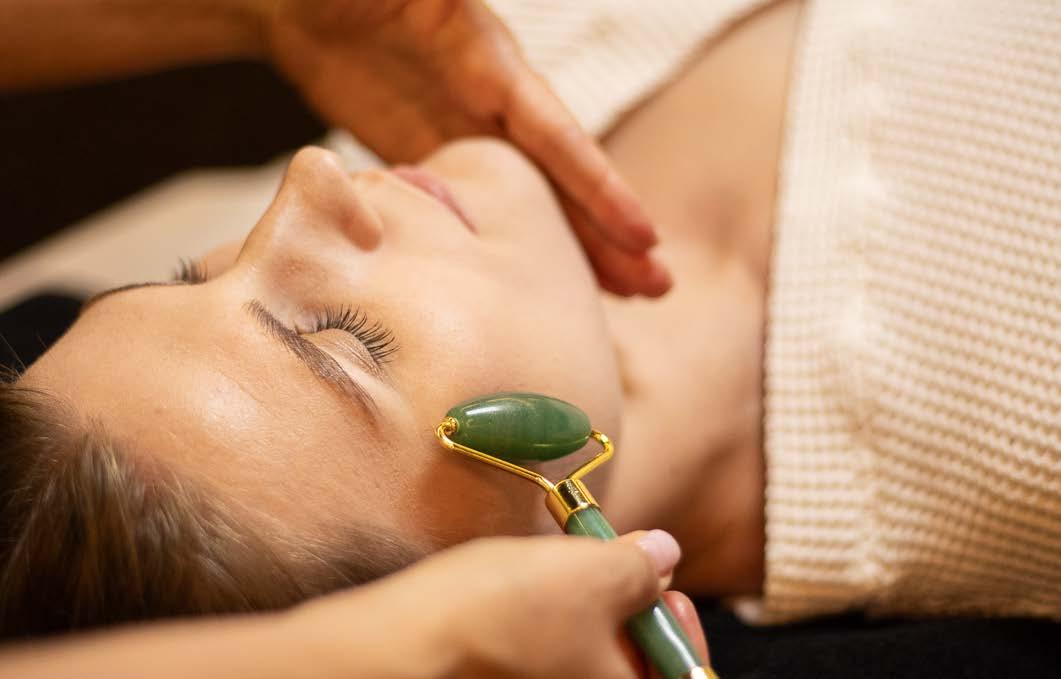
By this point, you’re well aware of how jam-packed Warsaw is. From little cafes to walking paths, to Old Town (p.40), various parks, and center city (p.30) sightseeing. But sometimes you just need to take a break from all the exploring and relax, and Warsaw is the place for that, too!
Elektrownia Powiśle’s Beauty Hall is an oasis of beauty and relaxation in the heart of Warsaw. The one-ofa-kind concept offers the comfort of holistic beauty on a larger scale. Take advantage of a wide range of face and body treatments in the Beauty Skin clinic, massages and holistic rituals in Balance & Beauty by Marta Bem, and barber and beauty services offered by experienced specialists at the Warsaw House of Lords salon.
It is an ideal destination for both a quick treatment during the day and a longer regeneration after work or on the weekend. Essentially, this is a place not only to get a beauty treatment and take care of your appearance, but also spend some time relaxing and rejuvinating, especially after a long day of shopping and dining around the popular entertainment and cultural complex.The Beauty Hall zone is found on level +2 in Elektrownia Powiśle.QH/I‑6, ul. Dobra 42 (Elektrownia Powiśle), MCentrum Nauki Kopernik, tel. (+48) 22 128 56 00, www.beautyhall.pl. Open 08:00 20:00; Sun 10:00 19:00.
What do you get when you combine a love of fine wines and beers, a passion for relaxation, and a beautiful spot for health and well-being? Of course the answer is the Beer and Wine Spa!
Here you can enjoy high-quality spa treatments like goat milk baths, massages and more, along with some of the tastiest beverages you can find in the city. In fact, the two are so intertwined, that you can even get facial treatments from the beer and grape cosmetics line which give your skin deep rejuvination. Or book a whole beer/wine spa package and sip a glass of bubbly while you enjoy top-notch spa treatments.
This is really a true symbol of comfort and relaxation, with the concept based on the idea that good feelings and good well-being go hand-in-hand. Plus, you can enjoy 20% off all treatments during a current promotion! Perfect for couples, singles, friend groups and more.QG 7, plac Powstańców Warszawy 2a, MŚwiętokrzyska, tel. (+48) 662 380 090, www.beerandwinespa.pl. Open 12:00 20:00.
This new showroom that opened up in December is one of only 5 Dr. Hauschka showrooms across the globe! And as such, it’s worth taking advantage of the great location. This international (and internationally renowned) skincare brand offers 100% natural products to plump, revive, mosturize and envigorate the skin. But it goes way beyond that in this showroom -- they’re creating a full-blown wellness experience, with makeup and lifestyle workshops, as well as a plan to offer massage treatments in the summer. Plus, the experience of shopping here is incredible in itself -- the place is bright and aromatic, with a deeply tranquil feel. Munch on some cookies or sip coffee or sparkling water as a skincare expert walks you through the best routine personalized for your unique skin. QZygmunta Krasińskiego 27, MPlac Wilsona, tel. (+48) 888 757 677, www.drhauschka.pl. Open 12:00 18:00; Sat 10:00 14:00. Closed Sun, Mon, Tue.
Thai Bali Spa continues a 2000-year-old tradition of massage therapy which aids in keeping the mind, body and soul healthy. Choose from traditional, oriental massages that use appropriate lighting, plus music, smell and touch to put you in a state of deep relaxation and tranquility. The skilled massage therapists - all of whom hail from Thailand or Bali - will have you feeling fresh and rejuvenated in no time. With over 30 different locations in Warsaw, you can also find Thai Bali Spa at ul. Grzybowska 3 (E-7) and many more locations on www.thaibalispa. pl QE‑6, ul. Grzybowska 3, MŚwiętokrzyska, tel. (+48) 663 28 00 09, www.thaibalispa.pl. Open 11:00 21:00.
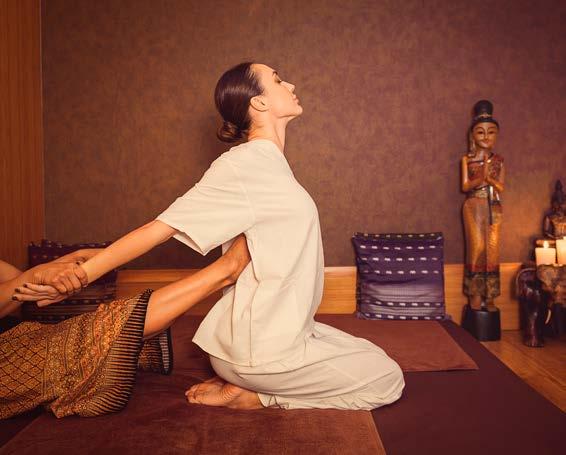
Thai Bali Spa will refresh, rejuvenate and rewaken you.
While Warsaw has plenty of wonders, not every cultural site is going to be engaging for young visitors. The first step to having a successful family vacation is probably to just accept that what you and your kids want to do are not going to be one and the same. That said, there’s common ground to be found in some of Warsaw’s most popular attractions.
Wandering the Old Town (p.40) or Łazienki (p.60) will likely please everyone, as will a walk along the Vistula Boulevards (p.56) - a great outing with plenty of diversions, most obvious of which is the stimulating and educational Copernicus Science Centre (p.58) and Multimedia Fountain Park further north. You’ll also find playgrounds along the river, and in the high season you can take a ferry to the wild side of Wisła and enjoy one of the city’s wild beaches
Although it may sound more like punishment, kids really respond to the interactive exhibits of the highly modern Warsaw Rising Museum (p.87), which features areas designed specifically for young visitors. Some of Warsaw’s more niche museums like the National Ethnographic Museum, Museum of Dollhouses and Photoplasticon are also good choices for families. Of course, Warsaw has plenty of action-packed indoor attractions, too so don’t miss the rainy day recommendations on the previous pages.
This museum is a kid's dream come true! One of the most popular chocolatiers in the country, Wedel, has a large exhibit that lets you discover the secrets of chocolate production and delicacies through a thematic exhibition, interactive displays and workshops for adults and children alike. There are also classes that combine learning and fun for organized groups of children and teenagers. There are three levels in the museum, which teach kids about how chocolate is made -- from picking the beans to storing them -- as well as the techniques for making chocolate. Think Willy Wonka's Chocolate Factory come to life!
And of course, what would a chocolate museum be without tastings? There's plenty of that, as well as a great opportunity for kids to design their own boxes for the popular Ptasie Mleczko Wedel chocolate confection!Qaleja Emila Wedla 5, MStadion Narodowy, www.fabrykaczekolady.pl. Open 10:00 20:00. 70/55zł.
A place that blends fun, learning and lots of exciting exhibits! This is a modern science engagement center that gives new meaning to the word “immersive”. The whole name of the game here is (unsurprisingly) gravity, and this museum encourages you to experience it in a whole new way. The engaging exhibits here will demostrate the basic principles of physics in a way that’s both understandable and fun (and very hands-on). Visitors can conduct experiments on their own, discover the laws of science, and learn about the history of great discoveries — from Newton to Einstein. Attractions include interactive installations, physics experiments, a space zone, and exhibits demonstrating how gravitational forces work in practice.QF‑4, ul. Świętojerska 5/7 (Institute of Design), MDworzec Gdański, tel. (+48) 790 65 69 27, www.muzeumgrawitacji.pl/. Open 11:00 19:00; Sat 09:30 20:00; Sun 09:30 19:00. Mon Fri 45/35 zł; Weekend 47/37 zł.
Head along to Fabryka Norblina (p.33) and you will find Smart Kids Planet - the first edutainment centre in Poland, that is, a recreational format that bridges the gap between playrooms and science centres. Divided into 9 thematic zones and with over 50 engaging activities throughout, young minds can journey through many different worlds - building construction, food and fresh produce, sports, the magic of machinery and production lines, and right out into the cosmos with their very own designs coming to life before their eyes! For children aged 0-10 QD‑8, ul. Żelazna 51/53 (Fabryka Norblina), MRondo ONZ, tel. (+48) 727 77 08 80, www. smartkidsplanet.pl. Open 09:00 20:00; Sun 10:00 20:00. Tickets online 45 95zł, at reception 49 99zł.
This is one for nostalgia and fun-lovers alike! This interactive museum of video games is like a time machine back to the 80s and 90s, with tons of classic video games available to everyone, 120 vintage arcade machines and even the history of arcade games and their evolution over the years. Find arcade classics like Pac Man, Mario, Donkey Kong and much much more. Perfect for a break from the regular tourist attractions, and great for a birthday party, corporate meeting or event, the Warsaw Arcade museum is a must-visit! QAl. Jerozolimskie 200, tel. (+48) 573 99 98 15, www.warsawarcademuseum.com. Open 14:00 21:00; Fri 14:00 22:00; Sat 11:00 22:00; Sun 11:00 20:00. 60/40zł/1h.
Nowhere is Warsaw’s vibrancy and diversity more apparent than in its progressive culinary scene. What follows are some of the most noteworthy dining establishments in the capital, divided into basic categories with the type of cuisine listed under the venue name; for more options visit our website. In terms of tipping, 10% is standard (easy math). Smacznego!
utensils Steak
Under the helm of experienced chef Michał Gniadek, this shop has three elegant locations in Żoliborz, Mokotów and Saska Kępa (and one in Poznan). The first thing that’s likely to catch your eye is the enormous counter displaying the best this shop has to offer. That’s various cuts of steak (sirloin, striploin, ribeye, tomahawk, T-bone, picanha, hanger, Denver, and flat iron), all from countries known for their beef. They also offer lamb, veal, pork, organic poultry and homemade meals. You can order online and have it shipped to any city in Poland! Or do takeaway. Almost every product can be sampled on-site. Yes Butcher! has won two prestigious awards at the World Steak Challenge gala: including World’s Best Grain-Fed Ribeye and a gold medal of excellence for its ribeye from a Polish Hereford Premium heifer.
QF‑14, al. Niepodległości 132/136, MPole Mokotowskie, tel. (+48) 798 03 98 69, www.yesbutcher.pl
Open 12:00 22:00. Shop: Monday Saturday: 10:00–22:00 Sunday: 10:00–20:00. €€€. US
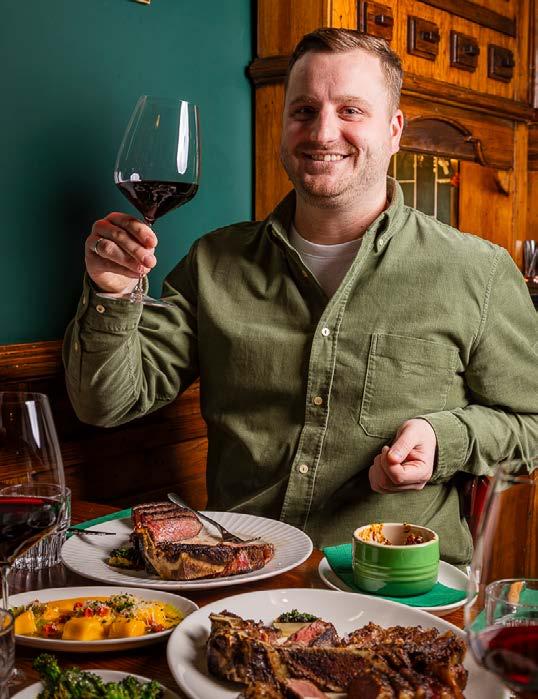
KUK Restaurant
utensils Polish
Indulge your taste buds with a range of wholesome ingredients and products, all sourced from trusted crops and seasonal delights! KUK is part of the 18th-century Branicki-Szaniawski complex (p.43), endowed by Hotel Verte. Here, Chef Dawid Bielecki draws inspiration from Polish cuisine, combining classic flavors with a modern approch and local ingredients. With extensive experience, Bielecki focuses his creativity on delicious seasonal dishes based on herbs and flavors close to the earth, and he sources many of the ingredients himself to create distinctive, contemporary dishes. It embraces Polish and Varsovian cuising, presenting it all in a light, fresh way that’s both contemporary and rooted in tradition. Their small plates are perfect for sharing among friends, and aim to embrace the idea of dining, sharing and talking together.
QF‑4, ul. Miodowa 6/8, MNowy Świat Uniwersytet, tel. (+48) 511 46 46 45, www.hotelverte.com/kuk. Open 13:00 22:00. Last order: 22:00. €€€€. XTUE6
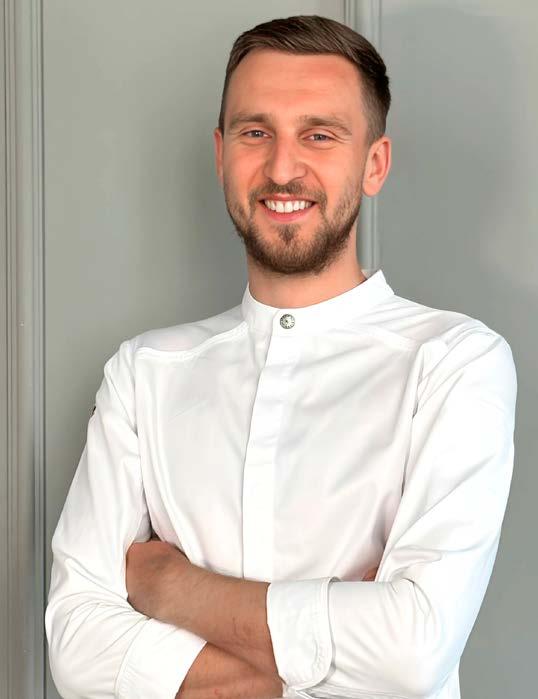
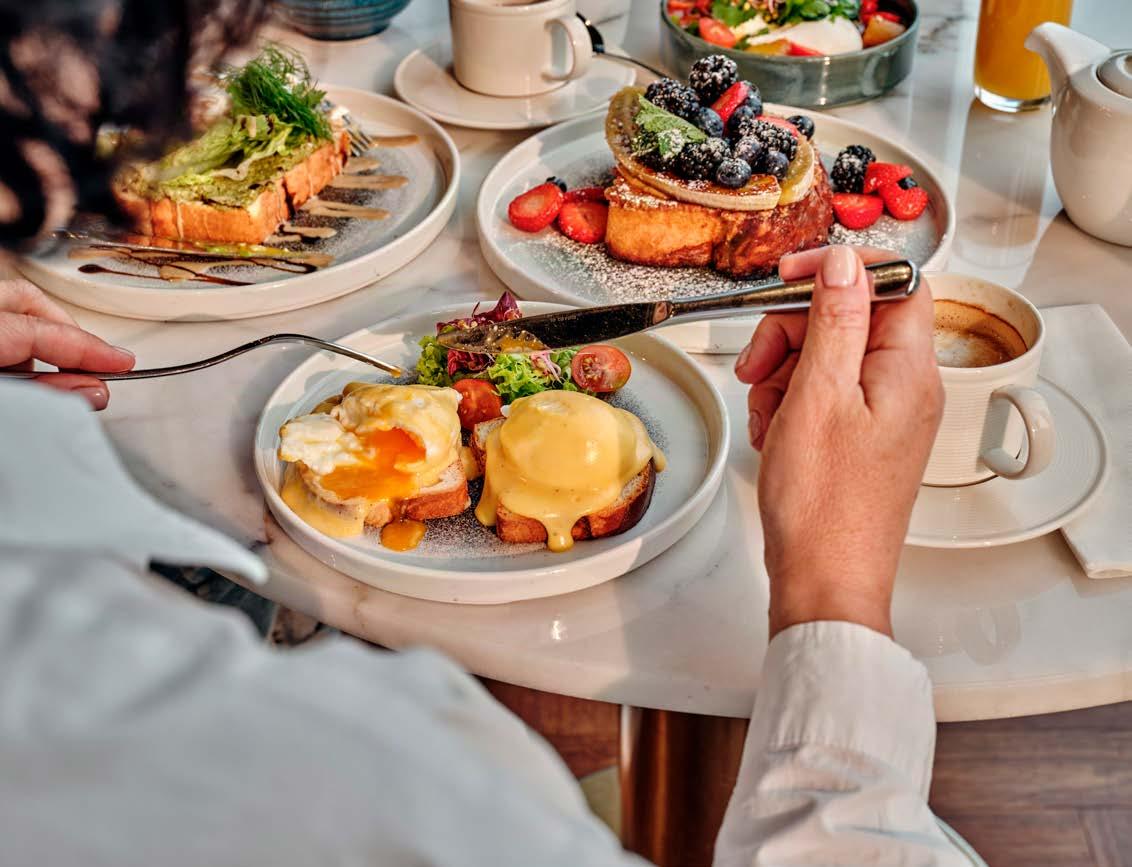
For some the direction of the day depends on the ability to eat a good breakfast, so we’ve highlighted some of our favourite places in Warsaw that specialise in śniadania (the Polish word for breakfast). Whether you’re an early bird or a late riser, get a good first feed in the places listed here!
Amar Beirut, an iconic Lebanese restaurant in the Norblin Factory, is the perfect place to start your day. Breakfast is served on the weekends (08:0012:00) , and features freshly baked manakish, labneh, variety of eggs, cheese, za’atar, and warm oven-fresh bread—paired with tea, fresh juices, or aromatic Lebanese coffee.Plus, guests can listen to live music, take part in the joyful celebrations of national Lebanese holidays, and smoke a hookah filled with high-quality tobacco.Amar Beirut is the embodiment of Lebanese hospitality, with engaging décor and wonderful live music. Stick around after breakfast for the main menu, including Lebanese breads, falafel, traditional tabbouleh salad, hummus, and more. QŻelazna 51/53, MRondo ONZ, tel. (+48) 799 600 700, www.amarbeirut.pl. Open 12:00 24:00; Fri 12:00 02:00; Sat, Sun 08:00 02:00*. Breakfast is served only on the weekends (08:00 12:00). BE6
Good food in a relaxed atmosphere. This place is simple, tasty and unpretentious with great pizza and pasta and a good wine selection. Ideal for a quick lunch or an evening with friends. Here you will find classic Italian cuisine, aromatic coffee and drinks inspired by sunny Italy. All in the heart of the city, creating an incredible metropolitan dining experience. The finest wines are found here, alongside cocktails and a seasonal business lunch from Mon-Fri (12:00-16:00) that includes two courses and a drink for just 34 zł. Plus, a TV in the middle of the space regularly shows matches and games. Also, if you're looking to host an event, reach out! They have a second room just for events.QF‑8, ul.
Marszałkowska 99A (Metropol Hotel), MCentrum, tel. (+48) 22 32 53 106, www.hotelmetropol.com.pl. Open 12:00 22:00. Breakfast: Monday to Friday 6:30 10:00 Weekends 6:30 11:00. TU
Nova Wola encourages a wholesome start to your day in Warsaw, with a fresh and organic breakfast selection as part of its impressive modern Polish menu offer (p.104). Served mainly for guests of the hotel, the breakfast will run you 110 zł. Whether you opt for the breakfast buffet or à la carte, you’ll find light and healthy options crafted from local and seasonal ingredients. The breakfast menu includes favorites like omelettes with customizable add-ins. A continental breakfast is available for 75zł. It comes with a selection of croissants, Danish pastries, and bread with organic jams. Plus, a platter of cold cuts, artisan cheeses, smoked fish and -- for drinks -- fresh squeezed juice, coffee and tea. The restaurant stands out by offering entire pots of coffee, ensuring you have ample caffeine to energize yourself for he day ahead.QC‑8, Rondo Daszyńskiego 2, MRondo
Daszyńskiego, tel. (+48) 22 377 38 01, www.novawola. com. Open 06:30 10:30; Sat, Sun 06:30 11:00. TU
Purr Purr
This all-day restaurant is also the ultimate cozy breakfast spot, thanks to a fluffy Cat Team and delectable food and drinks! Find a number of excellent, unique offerings here, like ruby matcha lattes that combine ruby chocolate with matcha and homemade cream cheese (or, for the purists, regular lattes and regular matcha). Warm teas like the beloved winter tea can also be found here, as can a number of excellent breakfast bites like fluffy Japanese pancakes and dango, a traditional Japanese sweet treat. Of course, don’t forget the biggest draw -- the furry kitties who will lounge and keep you company (and warm amid the cold outside)!.QD‑2, ul. Pokorna 2/U4, MDworzec Gdański, tel. (+48) 573 538 888. Open 11:00 21:00; Mon 12:00 20:00; Sat, Sun 10:00 21:00. €€. U6i
Stacja Caffe
Bounce your way on over to some tasty food as you enjoy one of Warsaw’s best activity parks! Located right in the oh-so-popular Stacja Grawitacja trampoline (and more) center is this charming cafe, which serves everything from mozzarella and pesto sandwiches, to egg breakfasts, gnocchi meals and an array of smoothies! It’s the perfect break after a fun day (and a workout!) jumping around the activity center, which includes a trampoline park, a climbing wall, a ropes course, and way more. Fuel up at the cafe and head back out for more fun!Qal. Bohaterów Września 12, tel. (+48) 726 13 06 66, www.stacjagrawitacja.pl/warszawa/bistro/ menu stacja caffe. Open 10:00 22:00; Sat, Sun 10:00 21:00. T6i
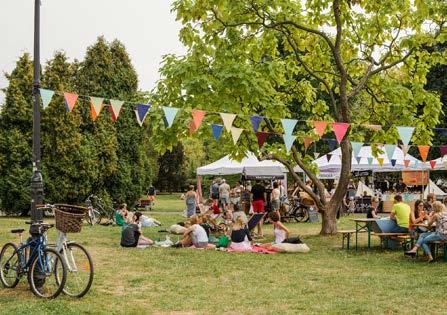
They say it’s the most important meal of the day, but in Warsaw it’s also a cultural experience. The Breakfast Market (Targ Śniadaniowy) offers foodies a range of delicious day starters from dozens of local food producers, farms, restaurants and catering companies. Taking place outdoors in neighbourhood parks, mingle with locals, explore new parts of town and get your grub on by creating a picnic spread from the fresh foods on sale here, or choose from an array of ready-to-eat meals from local producers as well. The Breakfast Market caters to families by organising events for kids and other attractions. Occurring on weekends until the end of September on Saturdays 09:0016:00 you’ll find the Breakfast Market near Plac Inwalidów in the leafy Żoliborz area; on Sundays from 10:00-17:00, the Market moves to the park area of Skwer AK Granat in Mokotów Qtel. (+48) 508 12 18 91, www.targsniadaniowy.pl. Open Sat 09:00 16:00; Sun 10:00 17:00.
One of our favourites, The Cool Cat is part Asianfusion bistro, part cocktail dive bar, all Varsovian awesome. If you need evidence that this laidback cult hangout has hipness to spare, they sells jars of their own vegan mayo and kimchi, plus kombucha for 25 zł. In terms of dining in, The Cool Cat specialises in ramen (of course) and serves an iconic bao donut dessert topped with matcha ice cream and caramel miso. They also have weekday lunch specials for only 38zł (12:00-16:00), exceptional coffee, and more. 2nd location at ul. Marszałkowska 8 (H-12).QI‑7, ul. Solec 38, MCentrum Nauki Kopernik, tel. (+48) 574 81 18 16. Open 10:00 21:00; Fri 10:00 22:00; Sat 09:30 22:00; Sun 09:30 21:00. T6
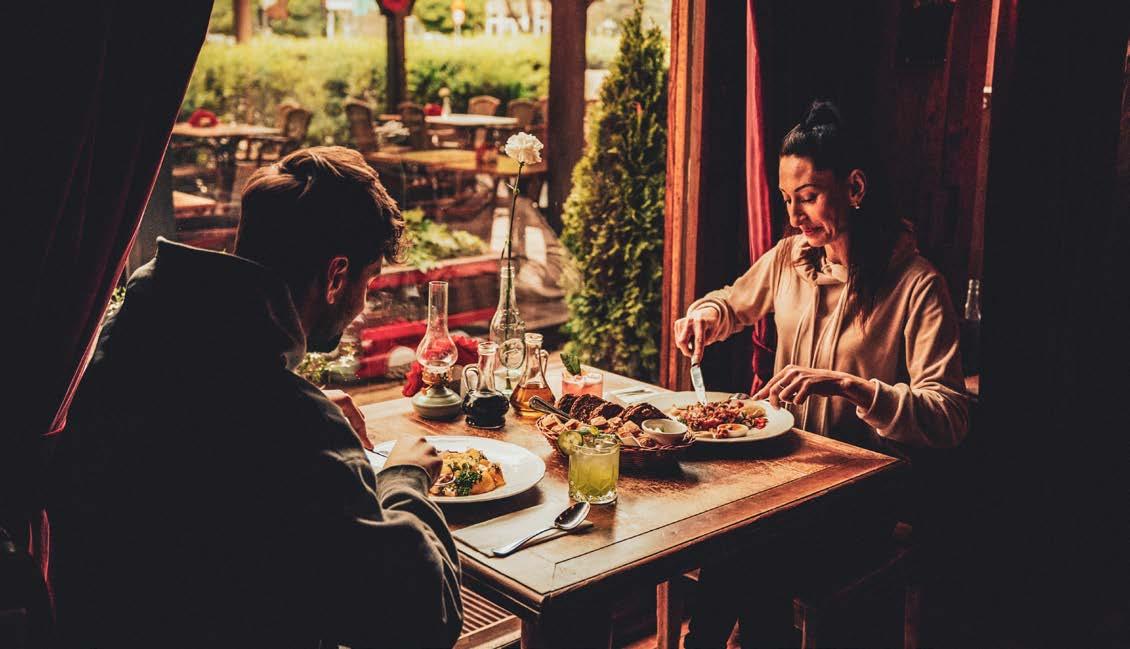
Sometimes you just need a casual and convenient place to relax, enjoy good food, vibes and hospitality. The following venues deliver in that regard. While our listed opening hours seem self-explanatory, be aware that some venues close their doors if business is slow, while others stay open after the kitchen has closed. In such cases, the hours we list are for the kitchen.
utensils Balkan
Head here for monstrous portions of the best Balkan food in town. Choose from all kinds of amazing Balkan food like juicy, well-seasoned meats, stuffed peppers with cheese, and roastbeef u rakija sljivovici (aka filled with plum rakija). Among the offerings is the legendary 20-centimeter Gurmanska Pljeskavica - a large, traditionally Balkan beef patty. And don’t just come here for the food - the experience itself is great, too! Especially because they have live music every evening, along with a colorful, magical outdoor garden. This is the spot to post up in the summer months.QF‑7, ul. Szkolna 2/4, MŚwiętokrzyska, tel. (+48) 22 828 10 60, www.banjaluka.pl. Open 13:00 00:00; Mon 13:00 23:00; Fri 13:00 01:00; Sat 12:00 01:00; Sun 12:00 22:00. €€€. TE6
utensils Category of Cuisine E Live music
utensils Steak
The quality of the cuts here is excellent (28 days wet-aged or 30 days dry-aged) and the fact that they use the finest local meats means the prices are surprisingly reasonable. Seafood and chicken wings struggle for a look-in as beef rules. In addition to a fine wine list, the slick bar has a brilliant selection of whiskies and bourbons, and there’s live music every Tuesday from 19:00. Plus, in addition to their regular summer garden, this year they have a second garden on ul. Nowogrodzka with a view of the Palace of Culture and Science. Don’t miss their new Sundays with the kids, where kids can participate in hands-on activities! QF‑9, ul. Nowogrodzka 47A, MCentrum, tel. (+48) 785 02 50 25, www.beefandpepper.pl. Open 12:00 24:00. €€€€. TUE6
C-1 Map Coordinate N Credit cards not accepted
M Metro o Year-round garden
T Child-friendly X Smoking room available
U Facilities for the disabled 6 Animal friendly
€ most mains under 35zł
€€ most mains 35–55zł
€€€ most mains 55–80zł
€€€€ most mains 80–120zł
€€€€€ most mains over 120zł
Ciao Napoli
utensils Italian
Located a short distance away from the Old Town Square (p.45), Ciao Napoli succeeds in bringing a little piece of Naples to the centre of Warsaw. Offering a selection of antipasti, salads, piadina, panuozzo and desserts, it’s the Neapolitan pizzas, with their fantastic thin and crispy dough, which really distinguish this small family-run franchise. The friendly atmosphere and cosiness of the restaurant also makes an impact, despite its popularity and the fact that its at the heart of one of the capital’s biggest tourist hotspots. That being said, you will leave satisfied, especially when you realise how reasonably priced the whole experience is! Their second location at ul. Piwna 40/42 (F-4) has weekday lunch specials from 12:00-16:00.QF‑4, ul. Wąski Dunaj 4/6/8, MRatusz Arsenał, tel. (+48) 508 69 43 52, www. ciaonapoli.pl. Open 12:00 22:00; Fri, Sat 12:00 23:00. €€. TB6
Cucina Mia
utensils Italian
Ciucina Mia is both a story and a celebration of Italian cuisine and culture, with excellent, traditional dishes. Taste a wide range of flavors like Amalfi lemons, Umbriaco cheese soaked in red wine, earthy black truffles, salty and savory ham, and fresh mussles and red prawns straight off a Sicilian fishing boat. In short, the food here is the real Italian deal. The restaurant has even reintroduced a 300-year-old recipe created in a small Italian town. Plus, the flavors are complemented by top-shelf wines and exquisite, rich desserts. QH‑9, ul. Prusa 2 (Sheraton Grand Warsaw), MCentrum, tel. (+48) 22 450 61 00, www. cucinamia.pl. Open 12:00 22:00. €€€. UBE
Czerwony Wieprz
utensils Polish
Deriving its name from a former meeting place for members of the early communist movement, legend has it that even Lenin paid this place a visit in 1909. The interior is based on the style favoured by the 1950’s -1960’s party elite, and the walls are bedecked with memorabilia of the era. The whole experience has a lovely, faded and nostalgic glam to it. Immensely popular with locals and tourists alike (including Bruce Willis, Lennox Lewis and the Real Madrid football squad), 2012 saw ‘The Hog’ voted one of the 25 best and most interesting restaurants in the world by the Spanish Trade Leaders’ Club. The restaurant closes at 23:00 daily, except for Sundays when it closes at 22:00.QC‑7, ul. Żelazna 68, MRondo ONZ, tel. (+48) 22 850 31 44, www.czerwonywieprz.pl Open 12:00 23:00; Sun 12:00 22:00. €€€. TUB

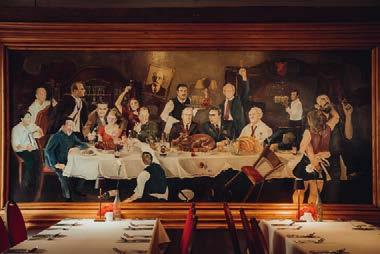
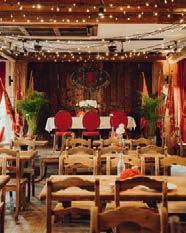
“Czerwony Wieprz” was recommended by The New York Times as the best Polish cuisine restaurant and included in a list of 10 reasons to visit Warsaw.

Czerwony Wieprz Restaurant
68 Żelazna Street, Warsaw Booking: +48 22 850 31 44
Daebak utensils Korean
The ultimate place for grab-and-go, authentic Korean food that really lives up to its name (Daebak means “wow” in Korean!) This spot, located near the University of Warsaw Library serves up authentic Korean bento boxes -- essentially a tradtional packed lunch, separated into different parts. Each box contains rice, 4 banchan (side dishes), one main course and fruit for dessert. Plus, you get to customize your own, with a choice of four main courses (1 vegetarian), sides and more!QH‑5, ul. Dobra 53, MCentrum Nauki Kopernik, tel. (+48) 880 87 58 88, www.instagram.com/daebak.wawa. Open 12:00 21:00. €€. B6
utensils Polish
You can’t visit the capital of Poland without trying some traditional Polish food, right? Gościniec has just that - hearty soups, plump dumplings, potato pancakes and various cutlets - all prepared ‘as they should be’ and at very reasonable prices. You can’t go wrong with pierogi, but we’d personally recommend the pork chops or cabbage rolls stuffed with meat (known locally as gołąbki: go-womp-ki). The drinks on offer are quite funky (cold/hot options), and it’s all served up by friendly staff wearing folk attire. It may feel very kitsch inside, but the food hits the mark and the portions are immense. Additional locations at ul. Nowy Świat 43 (G-7), and deep in the Old Town at ul. Podwale 19 and ul. Piwna 14 (F-4).QG‑5, ul. Krakowskie Przedmieście 29, MRatusz Arsenał, tel. (+48) 22 273 69 36, www.gosciniec.waw.pl. Open 11:00 22:00; Fri, Sat 11:00 23:30. €€. TB6
Gospoda
utensils Polish
With locations on Nowy Świat and another near the Old Town Square, this veteran Polish restaurant is as simple and traditional as it gets. A good option for tourists, families and anyone looking for their first foray into Polish cuisine, the modestly-priced, bilingual menu includes photos of almost every dish. There is a lot to choice, from classics like pierogi, potato pancakes with goulash and mushroom soup served in a bread bowl, to old school staples that have dropped off most modern menus like tripe soup and chicken livers with fried onions and baked apples. With a tidy, colourful interior and fast service, the experience is easy, accessible and satisfying. Also at ul.Świętojańska 15QG‑7, ul. Nowy Świat 41, MNowy Świat Uniwersytet, tel. (+48) 22 428 39 43, www.gospoda.waw.pl. Open 11:00 22:00; Fri, Sat 11:00 23:30. €€. TB6
utensils Polish
Walk off the street and into what feels like the side kitchen to a secret garden. Here, find outside seating, leafy surroundings that hang like a canopy over your head (summer and spring vibes abound!) Inside, the leafy theme continues - the venue’s acronym is Polish for ‘forest.’ Here you’ll find a very stunningly modern and hip take on Polish cuisine using seasonal ingredients, and great cocktails to match (being here in the evening is a must, because you can chill out with friends). The portions are just right, with very ingenious presentations of fusion foods. Especially in the summer, this is a great place to eat and relax with a drink amongst the trees. Plus, live music every Sunday from 17:00-20:00.QI‑7, ul. Solec 44, MCentrum Nauki Kopernik, tel. (+48) 514 76 07 67. Open 15:00 24:00; Sat 12:00 24:00; Sun 12:00 23:00; closed Mon. €€. TB6
metro bar & bistro utensils Italian
Good food in a relaxed atmosphere. This place is simple, tasty and unpretentious with great pizza and pasta and a good wine selection. Ideal for a quick lunch or an evening with friends. Here you will find classic Italian cuisine, aromatic coffee and drinks inspired by sunny Italy. All in the heart of the city. The finest wines are found here, alongside cocktails and a seasonal business lunch from Mon-Fri (12:0016:00) that includes two courses and a drink for just 34 zł. Plus, a TV in the middle of the space regularly shows matches and games. Also, if you’re looking to host an event, reach out! They have a second room just for events.QF‑8, ul. Marszałkowska 99A (Metropol Hotel), MCentrum, tel. (+48) 22 32 53 106, www. hotelmetropol.com.pl. Open 12:00 22:00. Breakfast: Monday to Friday 6:30 10:00 Weekends 6:30 11:00. €€.
utensils Mediterranean
An original take on Mediterranean cuisine, with a focus on simplicity that lets the high quality ingredients and expert preparation shine. Plus, the biggest Primitivo wine collection means you can experience the top-shelf wine (with roots in Croatia and Italy) as you enjoy your meal. The dishes themselves as well as many ingredients come from the Mediterranean basin and other ingredients are locally sourced. Chefs focus on 3-ingredient dishes that allow them to highlight the expert preparation and quality food. A lunch offer is particularly exciting here: appetizer with a main course is 45 zł from 12:00-16:00. The restaurant
design itself is also a huge attraction. With muted, earthy tones and wood, stone, ceramic and glass elements in the design, Primitivo is reminiscent not only of the earth and the natural world, but also of some of the most sought-after dining experiences around the globe (this one is for the foodies: the restaurant was modeled after famed Copenhagen restaurant NOMA).QD‑7, ul. Waliców 13, MRondo ONZ, tel. (+48) 606 44 44 62, www.primitivo.com. pl. Open 12:00 22:00; Thu, Fri, Sat 12:00 23:00. €€€. TUB6
Purr Purr
utensils Asian
Have you ever wanted to see adorable cats roaming around, taking naps and just being cute while you enjoy a mug of matcha or a bite of bibimbap at one of the coziest spots in the city? Well, then you’re in luck! This adorable cat cafe and restaurant is home to all of those things, but the real draw, of course, is cuteness! There are no reservations so make sure to get here early and grab a mug of tea or matcha (served in different flavors!), or a bite of onigiri as you sink into a comfy armchair and watch the cats roaming around. Feline-fanatics, this is your place! For the cat part, they ask that visitors be 12 and older, and remember that the Cat Team have a rest day on Monday! While they’re away, Purr Purr features an 8% discount on menu items to brighten your day QD‑2, ul. Pokorna 2/U4, MDworzec Gdański, tel. (+48) 573 53 88 88, www.instagram.com/purrpurr. wawa. Open 11:00 21:00; Mon 12:00 20:00; Sat, Sun 10:00 21:00. €€. U6i
Setki Powodów utensils International
A fantastic neighbor of Warsaw’s Polish Vodka Museum, Setki Powodów (Hundreds of Reasons) guarantees live music and an impressive food menu, with plenty of things to nosh on as you listen and enjoy a drink. Setki Powodów offers international cuisine in a comfy street-food style with amazing burgers, pastrami sandwiches and seafood (and a 30 zł lunch!).
Relax as you taste delectable dishes, listen to live music, and take in some great surroundings (this place is well-lit and beautiful with artistic neon lighting). Consume as you wish, and enjoy the smallbut-punchy live music stage in the corner. The name means “hundreds of reasons” but there are thousands of reasons to come here.QK‑2/3, Pl. Konesera 1 (Centrum Praskie Koneser), MDworzec Wileński, tel. (+48) 22 419 31 54, www.setkipowodow.pl. Open Tue, Wed, Thu 12:00 22:00; Fri, Sat 12:00 01:00; Sun 12:00 21:00; closed Mon. €€. UE
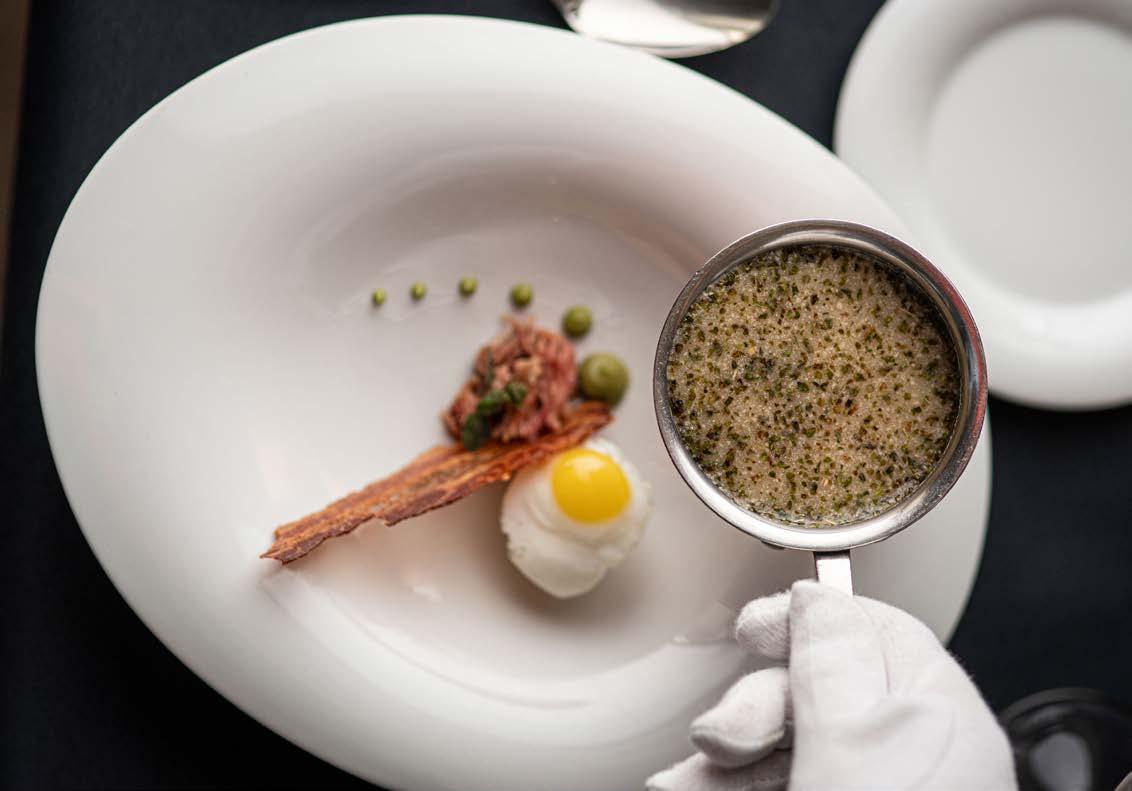
If you want to splash out on some of Warsaw's finest cuisine, we definitely have you covered - testing the food was our pleasure. Whether you're looking for the right venue to impress a potential client, romantic partner or celebrate any kind of special moment, the following pages will keep you right. Bear in mind that reservations are almost essential in any of these venues.
Amar Beirut
utensils Lebanese
This iconic Lebanese restaurant in the Norblin Factory, known for its authentic culinary offering is the embodiment of Lebanese hospitality, with engaging décor and wonderful live music. The restaurant’s menu kicks off with breakfast from 8:00 a.m. to noon every weekend with fresh bread, coffee and authentic Lebanese flavors. From noon to 4 p.m. enjoy an exquisite business lunch. At dinner, try all kinds of authentic Lebanese food, like falafel, juicy grilled meat and more. On Thursday through Saturday, the restaurant really comes alive, with live entertainment in the evenings and a captivating dance performance on Saturday nights that blends tradition, art and energy. And don't forget to check out the rooftop bar (p.110).QC‑8, Żelazna 51/53 (Fabryka Norblina), MRondo ONZ, tel. (+48) 799 60 07 00, www.amarbeirut.pl/. Open 12:00 24:00; Fri 12:00 02:00; Sat, Sun 08:00 02:00. €€€€. BE6i
utensils Polish
Located inside the ‘New Orangery’ in the middle of Łazienki Park, Belvedere is one of Warsaw’s most prestigious and romantic restaurants. Essentially a mid-19th century greenhouse, this spectacular venue features floor-to-ceiling windows and is filled with tropical plants, including an over 100-year-old palm tree. Elegant, intimate table settings are placed amongst the indoor foliage, as well as outside, where peacocks wander the grounds. The food lives up to the first-rate atmosphere, with a concise menu of fresh seafood, meats and seasonal dishes, and a brunch menu is served Sundays. Consistently listed in the Michelin guide for over a decade, a glance at the prices reveals this is decidedly a special occasion spot.QI‑12, ul. Agrykoli 1 (New Orangery in Łazienki Park, entrance from ul. Parkowa), MPolitechnika, tel. (+48) 606 10 20 02, www.belvedere.com.pl. Open 12:00 23:00; Sun 12:00 16:30. €€€€. TBE
Der Elefant
utensils International
Opened back in 1990, this long-running establishment is spread over various rooms and floors, with a choice of dining experiences. From the street you’ll find their diner-style seafood bar with plenty of fresh fish; alternatively, enter through the courtyard to find a mock shop inside which you’ll see the chefs racing to fill the rapid flow of orders. The concise but diverse menu offers a choice of hot and cold starters (including the recommended Hemingway’s Oyster), burgers, steaks, seafood and some salad and pasta options. They also have a Mon-Fri lunch offer of soup, entree and dessert for 43zł between 12:00 and 15:00. Another lunch option called fish market lunch for 37 zł is based on fish (naturally) and similarly includes soup, a main and dessert.QE‑5, Pl. Bankowy 1, MRatusz Arsenał, tel. (+48) 22 890 00 10, www.derelefant.pl. Open 12:00 00:00; Sun 12:00 23:00. €€€. TUE
utensils International
Top marks to the masterminds behind this classy establishment, which has been running for over a decade! And it’s no wonder they’ve been at it for so long. Their range of offerings creates the perfect evening experience. At their Vodka Atelier, you can try some 800 vodkas from around Poland and the globe; the range goes from PRL era classics to Polish ‘small batch’ distillers, designer vodkas, and flavoured vodkas. Also offered are six different types of Młody Ziemniak vodka (made from young potatoes) with varieties dating from 2017 (49zł) to 2022 (29zł). The label of each tells you about the vintage and what the weather and climate were like during its production. The restaurant itself features stunninglypresented contemporary takes on Polish classics with a unique food and vodka pairing system, which recommends specific vodkas to complement the ingredients and flavours of each dish!QF‑5, ul. Wierzbowa 9/11, MRatusz Arsenał, tel. (+48) 22 828 22 11, www.restauracjaelixir.pl. Open 12:00 23:00; Fri, Sat 12:00 24:00; Sun 12:00 22:00. €€€€. T
InAzia
utensils Asian
Expect elegant dishes bursting with color and adorned with fresh herbs and spices like lemongrass and coriander. Try crispy duck with plum sauce, grilled squid in a green curry, softshell crab with lemongrass, along with other fish, meat and vegetarian dishes. You also get an insight into the process thanks to their Omakase-style dinner. That means a special window that allows you to
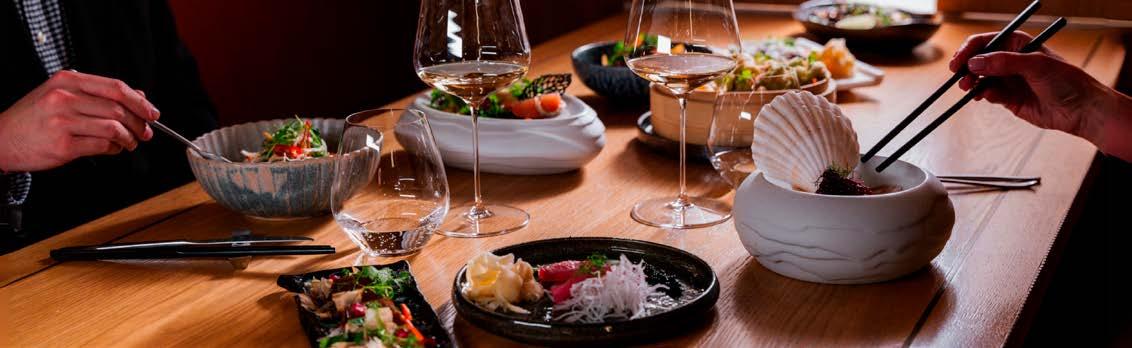
watch the kitchen in action and chat with the chefs, leading to a perfectly tailored menu. Sleek interiors abound, as do fantastic tasting menus. One of the top Asian restaurants you’ll find in the whole city. For 6 courses expect to pay 450 zł per person or for 9 courses, 550 zł per person (along with a 10% service charge).QH‑9, ul. Prusa 2 (Sheraton Grand Warsaw), MCentrum, tel. (+48) 730 30 71 50, www.restauracja inazia.pl. Open 17:00 23:00; closed Mon, Sun. €€€€. U Koneser Grill utensils International
A truly beautiful spot in the heart of Praskie Koneser, this restaurant is rife with good food, and good atmosphere. In fact, it was just awarded one of the Michelin Guide's rare Bib Gourmand recognitions for 2026. Working with smoke, aroma and topquality meats, the expert chefs at this grill use Polish seasoned oak and alder wood to cook up some delicious dishes. Here, you can taste a whole host of different cuts of steak, from rib eye to T-bone (and plenty more), along with non-steak dishes like pasta and delicious appetizers (a cool, refreshing gazpacho is perfect for the summer). All served in a gorgeous spot with low lighting, exposed brick, a fireplace, high ceilings and an all-around elegance at every turn.QK‑2, Ul. Ząbkowska 29, MDworzec Wileński, tel. (+48) 798 18 56 92, www.konesergrillwarszawa.pl. Open 12:00 22:00; Sun 12:00 20:00; closed Mon.
Nova Wola utensils Polish
Garnering the Grand Award (that is, 5 forks) from the prestigious gastronomic list of Poland 100 Best Restaurants, Nova Wola encapsulates the spirit of central-west Warsaw’s restlessly developing, trendsetting Wola district, and absolutely nails the concept of ‘premium casual’ dining. Residing within the luxury Crowne Plaza Hotel (part of the ‘WarsawThe HUB’ complex), complete with an industrial chic interior of polished concrete, dark woods, gold
furnishings, lots of glass and big city views, it is here that Nova Wola delivers a decidedly modern take on Polish cuisine.Under Executive Chef Paweł Suchenek’s direction, the menu emphasizes simple plates made with high-quality ingredients sourced from local Polish suppliers and foraged in the wild. Local culinary traditions with contemporary flair offer you a choice of rich soups, premium Polish seasoned beef steaks, fish, and amongst others, a special seasonal menu, with many of the entrees and even soups available in larger portions ideal for sharing. Na zdrowie! Read about Nova Wola’s breakfast on p.97 QC‑8, Rondo Daszyńskiego 2, MRondo Daszyńskiego, tel. (+48) 22 377 38 01, www.novawola.com. Open 12:30 22:30. Lunch 12:30 16:00; Dinner 17:00 22:30. Breakfast Mon Fri 6:30 10:30; Sat Sun 06:30 11:00. €€€.
utensils International
One of best restaurants in the city, Moonsfera’s head chef, and owner, is Jarosław Uściński, the President of the Polish Association of chefs and bakers, and he organizes various trainings and workshops here. So it’s safe to say he takes cuisine fairly seriously. The menu is filled with a mix of Polish/International dishes made with the chef’s own personal touch, both modern and elegant, and it shows as soon as you stare wide eyed at your plate as it’s placed in front of you. There’s a clear attention to detail here and fresh, seasonal ingredients -- each plate is more than just food, it’s like a piece of lovily crafted art. Try dishes like cream of roasted leek soup or Miso sour rye soup. Bite into a juicy beef tenderloin steak or a bone-in porkchop. Each dish is packed with flavor. A great place to eat and relax, but also somewhere you can also take part in cooking classes. We like that, making the experience inclusive. Here, here.QE‑2, ul. Bonifraterska 17, MDworzec Gdański, tel. (+48) 509 06 00 50, www.moonsfera.pl. Open 12:00 22:00; Fri, Sat 12:00 23:00; Sun 12:00 21:00. €€€. TUBES6
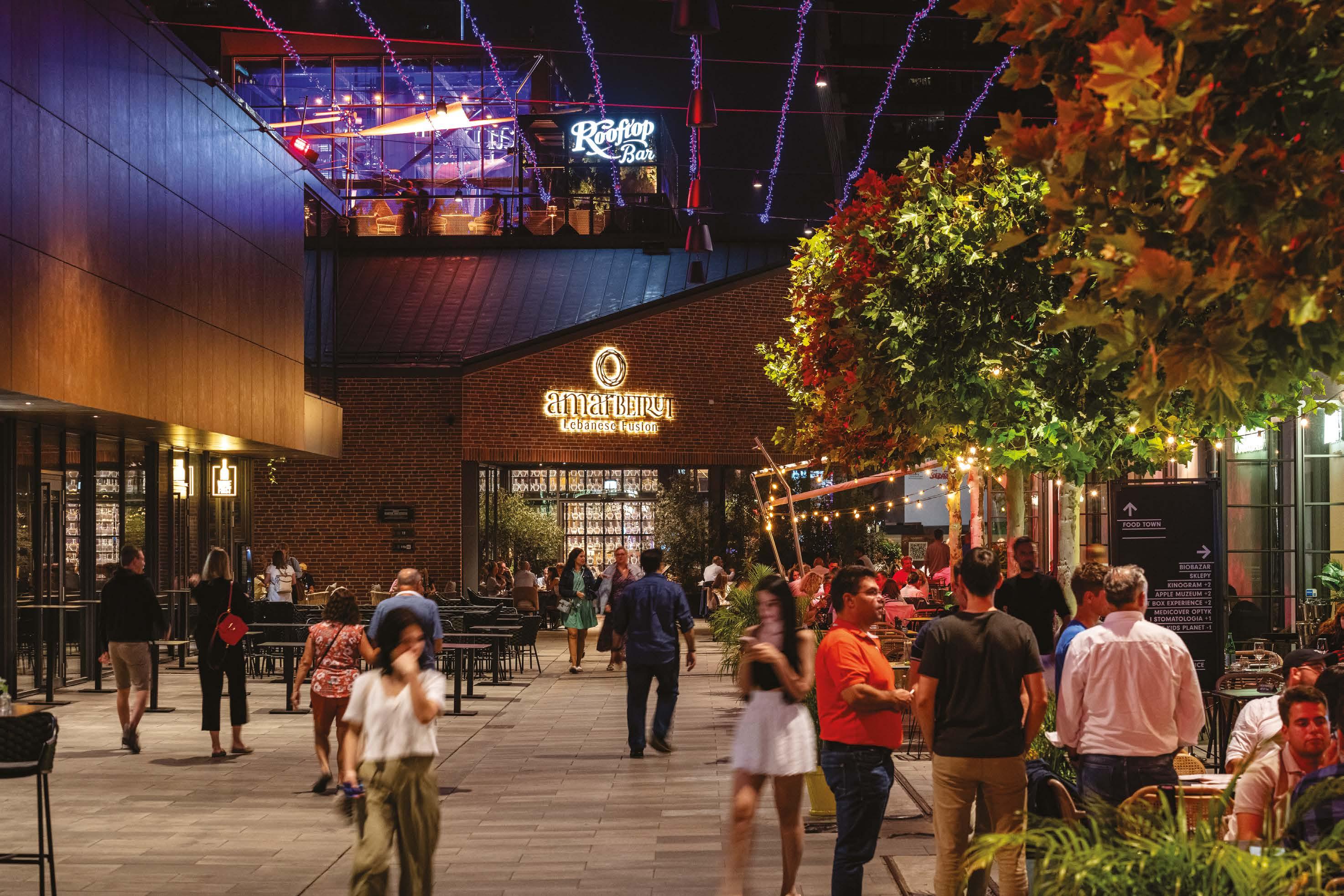
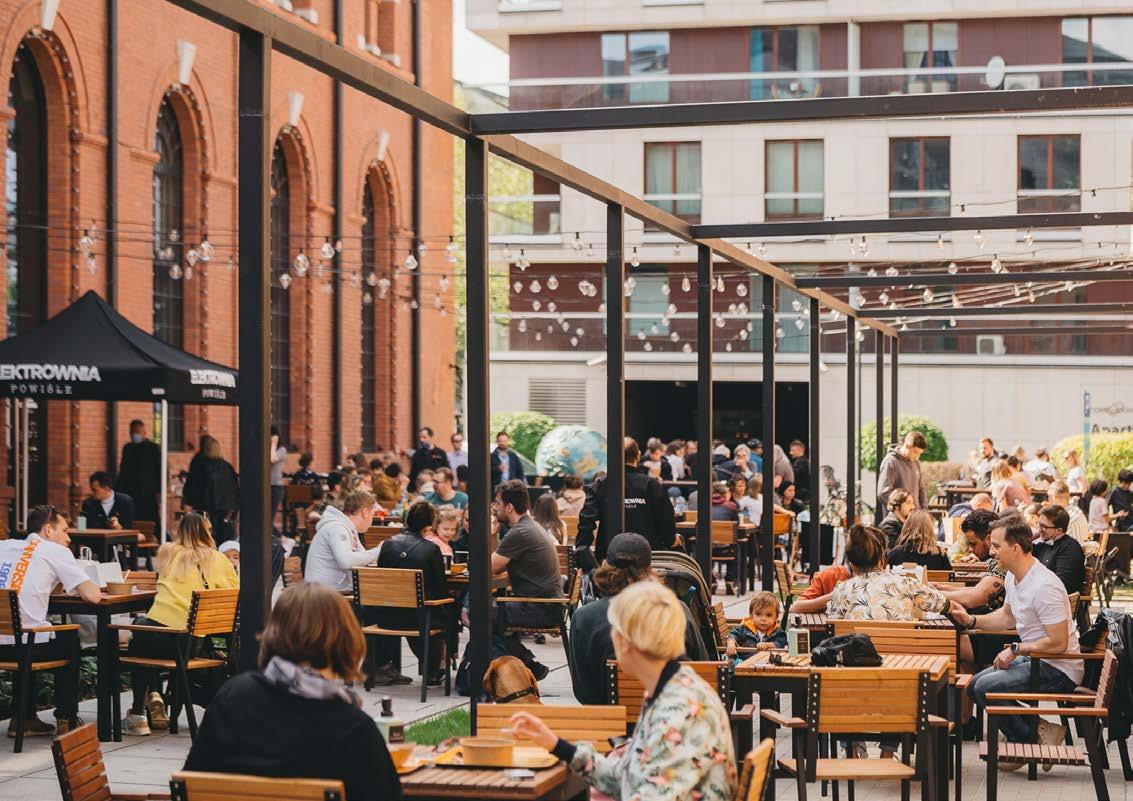
The popularity of street food and fast gastro concepts has led to an explosion of food markets and indoor dining halls in Warsaw, offering dozens of diverse eating options. Not only a place to slay your hunger, these modern food markets are also trendsetting urban social spaces, featuring bars and hosting events.
Going beyond an upscale urban shopping mall, Elektrownia also contains a whole host of gastro eateries, bars and event spaces. This central food court allows you to choose anything from fries, hot dogs, dim sum dumplings, kebabs, pizza, sushi, curries, Vietnamese, waffles and San Francisco street food. Additionally, there are several more restaurants in the office buildings opposite! You’re spoilt for choice, so let your mood and budget decide (not easy!). Once you’re done dining, check out their four bars, and also keep a regular eye on their events calendar so you don’t miss hip foodie happenings, creative worhshops and music evenings. Regularly winning top awards for best food halls in Europe and Poland, this spot is truly a must. QH‑6, ul. Dobra 42 (Elektrownia Powiśle), MCentrum Nauki Kopernik, tel. (+48) 22 128 56 00, www.elektrowniapowisle.com
Open 12:00 23:00; Fri 12:00 24:00; Sat 11:00 24:00; Sun 11:00 23:00. U6
Occupying a large, brick-walled space in the historic Brewery Cellars, this impressive food hall is arguably the social centre of the Browary Warszawskie district (p.32). With 14 different food concepts to choose from - ranging from Tuk Tuk's authentic Thai cuisine to Octo, which offer pasta, pizza, seafood and more. there are plenty of enticing options, including special lunch offers.
The focal points are the impressively long Central Bar - well-stocked with beer, fine wine, and cool cocktails courtesy of legendary local bartender Karim Bibars, and the small stage which hosts DJs, bands and a range of thematic events. Grab a seat at a communal table, a plate of good food, and get socialising. From food to great conversation, drinks and music, this spot has it all. QC‑7, ul. Haberbuscha i Schielego 2 (Browary Warszawskie), MRondo Daszyńskiego, www.foodhallbrowary.pl. Open 12:00 22:00; Fri, Sat, 12:00 02:00. 6T
Inspired by architectural and culinary trends from all over the world, FOOD TOWN in Fabryka Norblina is ideally situated across five picturesque historic halls, spanning a total area of 3,200 sqm. This unique place, characterised by its stunning period architecture, comes together with a soundtrack of live music and an incredible gastronomic offer that will rouse the palate of every guest that passes through.
Food Town is the largest food hall of its kind in Poland, with 24 gastrononomic concepts, taking you on a culinary journey through Europe, the Middle East, Asia and the Americas. Stepping aside from the wild gastronomic offer, you'll also discover tantalising alcoholic and non-alcoholic beverages served in five thematic bars. There's also a stunning ambiance with low lighting, indoor and outdoor options and plenty more. The fifth hall of Fabryka Norblina that coexists alongside Food Hall is dedicated to entertainment and cultural events, taking place across the week –live music, stand-ups and exhibitions. Everything is truly going on here, especially if you want to have a perfect night out!.QC/D‑8, ul. Żelazna 51/53, MRondo Daszyńskiego, www.foodtown.pl. Open Mon, Tue 09:00 22:00; Wed, Thu 09:00 23:00; Fri 09:00 01:00; Sat 10:00 01:00; Sun 10:00 22:00. Bars are open one hour longer. TU6
This historic Art Nouveau market hall originally opened in 1906, but was renovated, redeveloped into a modern mixed-use facility full of bars, restaurants, bookstores and designer boutiques, and reopened in 2016. Smashingly popular, drop in to the ground floor dining area to choose from dozens of diverse options, ranging from top-class independent bistros - like Warsaw Dream, BAJS, BRUT, Port Royal. Plus some great entertainment with the Arcade Bee concept at -1, which lets you play arcade games as you sip some bubbly (not a bad way to spend the afternoon).
One of THE places to be seen in the capital - easily accomplished thanks to the open floor plan - sometimes the place is so packed that mere availability and access dictate which places inside that you’re able to patronage. Even if you can’t find a table at any of the cool eateries and bars, we urge you to spend some time taking in this stunning market hall, which also features shops downstairs and space for cultural events upstairs. Don’t forget to look up, down and sideways as beautiful details abound!QF‑10, ul. Koszykowa 63, MPolitechnika, tel. (+48) 22 221 81 84, www.koszyki.com. Open 08:00 23:00; Wed Thu 8:00 24:00; Fri Sat 8:00 1:00. XTU6
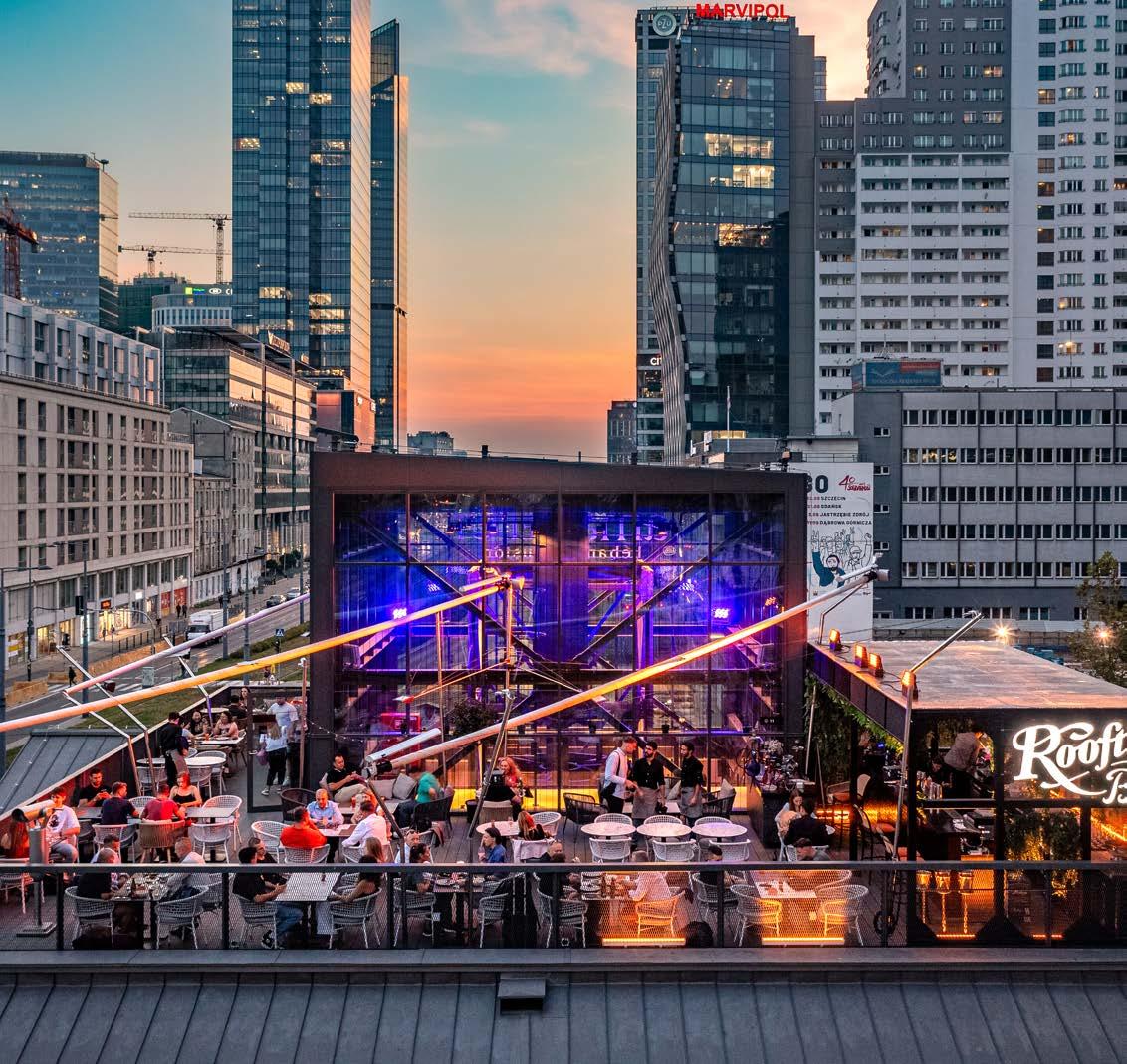
In Warsaw you’re never far from a great night out. If the weather’s warm, simply head to the river. Elsewhere skint students patronise the dive bars of The Pavilions (G-7, courtyards of ul. Nowy Świat 22/28); for a more mature alternative crowd seek out the artsy bars across the river in Praga (p.66); for a lark with the lads, hit the party strip on ul. Mazowiecka (F-6/7). In practice, bars will stay open well past their given hours if business is good, but also bolt the doors early if not. Visit our website to refine your search and see more reviews. Na zdrowie (cheers!)!
The historic building that houses the Piano Bar has been thoughtfully adapted to provide unforgettable musical experiences in every corner. Whether you immerse yourself in the atmosphere on the ground floor, enjoy the sounds on the first-floor mezzanine, walk up the staircase, relax in the garden or discover a secluded spot. Plus, the menu is serves as a great complement to the music. Signature cocktails, prepared by experienced bartenders, take mixology to a whole new level with top-tier ingredients and unique tastes. The wine list is, similarly excellent with a wide range of glasses from all over the world. When it comes to the food menu, you’ll find excellent dishes -- perfect for sharing in a group while you listen to music.
QD‑8, ul. Żelazna 51/53, MRondo ONZ, tel. +48 533 44 48 88, www.pianobar.com.pl.
Open 17:30 01:00; Thu 17:30 02:00; Fri 17:30 04:00; Sat 17:00 04:00; Sun 17:00 00:00. €€. BE
A truly sky-high experience, the stunning vistas of the city are perfectly complemented by the bar offer, which invites visitors to explore the exciting and diverse selection of cocktails, and unique concoctions that have been curated to reflect the extraordinary essence of Warsaw’s skyline and capture the spirit of the city in every sip. The Roof floor boasts stylish interiors that contribute to its wonderfully sophisticated atmosphere. The sights are further enhanced by a range of acoustic performances and intimate cultural events that are hosted here, creating an ambience that fosters both relaxation and engagement. Whether you are seeking a memorable night out, a place to enjoy live music, or a spot to savour enticing cocktails while taking in the breathtaking views, this is the one place in Warsaw you need to experience!
QC‑8, ul. Rondo Daszyńskiego 2 (Crowne Plaza Hotel), MRondo Daszyńskiego, tel. +48 881 97 41 44, www.theroofskybar.com. Open 18:00 24:00; Thu, Fri, Sat 18:00 01:00. €€€. UE
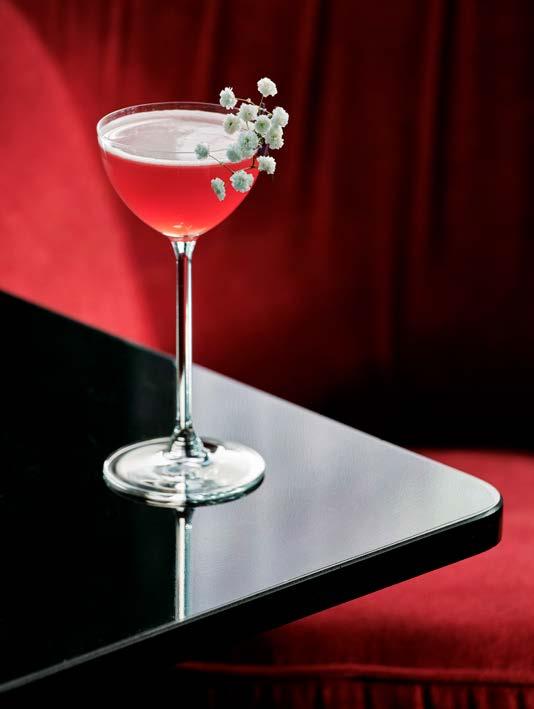
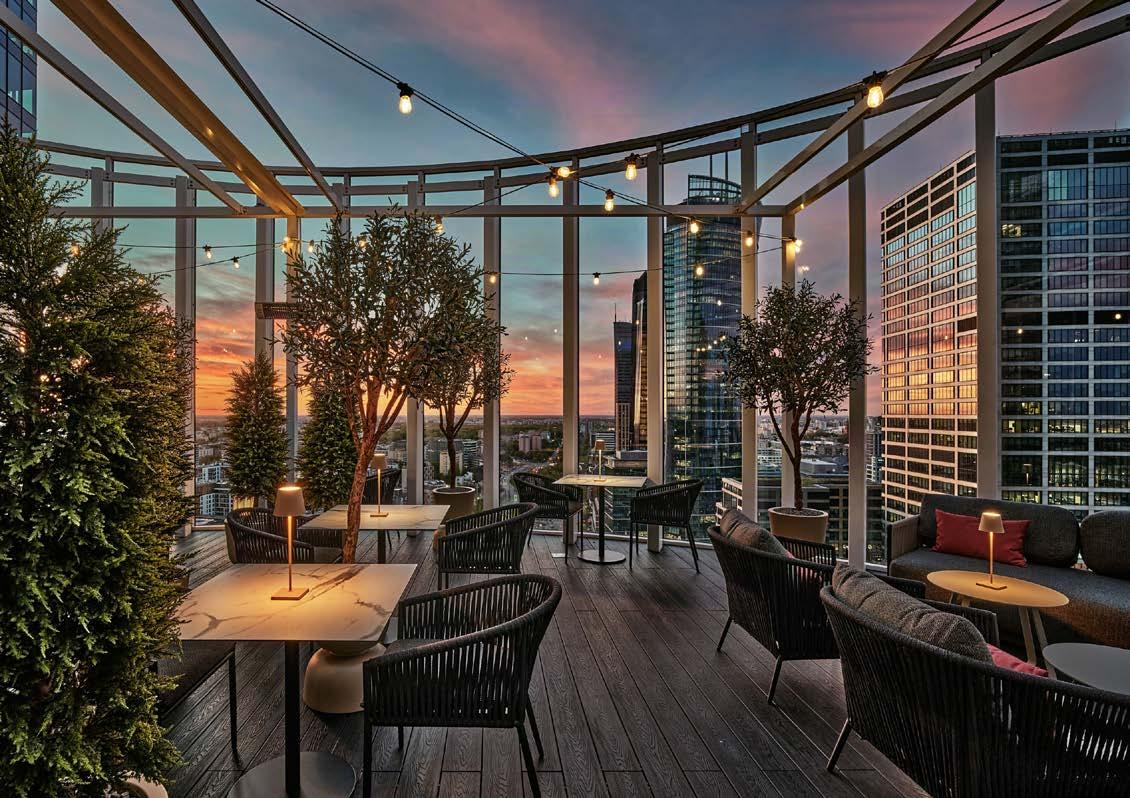
Stunning sights from the sky: The Roof Sky Bar is unmissable.
Cocktail Bar
If you’re eager to experience Polish vodka the right way (sip, don’t shoot!), go straight to the source. Located on the 3rd floor of the Polish Vodka Museum (p.81), this spectacular bar makes dozens of their own artisanal alcohol infusions - raspberry with rosemary, horseradish, or mango lassi are just a few of their surprising and constantly changing flavours. The current concept is based on the sense of touch and sight, fabrics, colours and texture. The lovely seasonal terrace offers great views of the heart of Praga and you can also try a premium whisky tasting from The Secret Speyside Collection. Na zdrowie!QK‑2/3, Pl. Konesera 1 (Centrum Praskie Koneser), MDworzec Wileński, tel. (+48) 22 419 31 52, www.koneserbar.pl. Open 16:00 23:00; Fri, Sat 15:00 01:00; Sun 15:00 22:00; closed Mon. Subject to change. €€. UB6
Rooftop Cocktail Bar
Unwind in the afternoon sun and see the switch from morning cocktails to evening drinks at Amar Beirut's delightful rooftop bar. Try some signature cocktails made by top-tier, award-winning bartenders. Or, try some excellent shisha with a variety of flavors. Of course, there’s plenty of live entertainment here too, and the sounds of the live music plus the taste of an excellent cocktail under the stars makes this really the ultimate spot to be during warm summer nights. If you’re hungry, don’t forget to check out their incredible food offering with dishes like hot, locally baked Lebanese breads, authentic falafel, traditional tabbouleh salad, hummus, grilled dishes and desserts that are an integral part of Lebanese culinary culture. QŻelazna 51/53, MRondo ONZ, tel. (+48) 799 60 07 00, www.amarbeirut.pl. Open 12:00 24:00; Fri 12:00 02:00; Sat, Sun 08:00 02:00. €€. BE
Credit cards not accepted
music C-1 Map Coordinate
Metro
‘Baila’ literally means dance in Spanish, and here it’s a literal call to action and command to live in the moment. Delivering on the promise of their name, they host live DJ sets Wednesday to Friday, while Saturday sees this place pack out with patrons eager to enjoy delicious Latin American dishes and premier eye-pleasing performances on their stage (starts at 20:30, reservations required), before going wild themselves during DJed afterparties. The lunch special on Tuesdays and Fridays (12:00-16:00) can nab you a starter, main, and dessert for just 45zł! To add some extra exotic flavour, Baila switches hats and brings out its arsenal of shishas after 18:00!QC‑7, ul. Grzybowska 60, MRondo ONZ, tel. (+48) 514 06 06 24, www. bailawarsaw.com. Open Mon, Tue 12:00–23:00; Wed, Thu, Fri 12:00–1:00; Sat 20:30–3:00; closed Sun. €€€€. E
BarKa
Club
Brainwave for the heatwave, Barka is basically a flat-topped barge, pimped up to look modern and cool. Once you’ve navigated the narrow gangways and the security blokes you’ll find a bar, concert and dance area. A whole series of gigs and guest DJs appear throughout the summer and the venue is regularly mobbed with partygoers. In fact it gets so busy that many visitors prefer to just make use of BarKa's connected spot (Plac Zabaw) on the riverbank area in front of the moored barge to chat and listen to the music. Together, Plac Zabaw and BarKa span over 2,000m2, with food outlets, bars and more.QI‑6, Skwer im. Tadeusza Kahla, MCentrum Nauki Kopernik. Open 17:00 00:00; Closing times depend on weather conditions. Open May Sept only. €€. BE
Rooftop Cocktail Bar
Located atop the highest building in the EU, and the tallest skyscraper in Poland, HighGarden Rooftop Lounge, is a bar with soul. The flavors of their cocktails are so excellent that it's hard to know what's better: those tastes or those sky-high views. The ambiance is top-notch: a green oasis of plants, and a real garden suspended in the clouds with direct access to an observation deck. Known for signature cocktails and wide range of mocktails along with a menu of great snacks inpsired by local flavors, HighGarden is truly elegant and considered “a nightlife spot with a soul.” There’s an entrance fee (but it includes the entire Highline Warsaw price and amenities. See p.37 for more).QE‑8, Varso Tower, Chmielna 69, MRondo ONZ, www.highlinewarsaw. com/. Open 9:00 00:00. €€. GUBE
Kufle i Kapsle
Cocktail Bar
The name ‘Kufle i Kapsle’ means ‘Beer Mugs and Bottlecaps’ and the interior is a perfect blend of European traditional bar design mingling with Polish features, such as the large tiled heater in the back room. 20 taps are on offer and the bottled beer selection has more variety than a Glaswegian glass recycling bin! An interesting selection of bar snacks are also available. In contrast to many other local bars, expect it to be packed and buzzing from around 17:00 (online reservations possible). 2nd location nearby at ul. Nowy Świat 27 (G-7).QG‑8, ul.
Nowogrodzka 25, MCentrum, www.kufleikapsle.pl Open 15:00 02:00; Sat, Sun 14:00 02:00. €€. B6
Club MOON has a very cool offering, with every Saturday - for a select number of 400 club members - major names in the DJ scene will play house music, deep house, afro house, melodic house, disco house, organic and tech house This is the spot to be with all kinds of well-known artists playing here, including HOT SINCE 82, Damian Lazarus, Catz ‘N Dogz, Claptone, Adam Ten, Carlita, Salome Le Chat, SAMM, Yulia Niko, Francis Mercier, Nick Morgan, Jimmy Jules, LP Giobbi, Krystal Klear and many more. Every Saturday night, starting at 11 p.m. -- seriously, don’t miss this place!QJ‑8, Wioślarska 6, MCentrum Nauki Kopernik, tel. (+48) 533 53 32 23, www. moonwarsaw.pl/. Open Sat from 23:00. events: https:// moonwarsaw.pl/kalendarz/ €€€.
Part cocktail bar, part music club, part delicious restaurant, MOXO is a unique concept right in the center of Warsaw at Fabryka Norblina. The kitchen is itameshi — a fusion of Japanese precision and Italian comfort. The menu blends sushi and Japanese techniques with Italian-inspired dishes, bold flavors and plates designed for sharing. At the bar, find contemporary cocktails with a creative edge, expertly crafted to the general atmosphere and vibe of the space. You’ll find that everything flows easily from dinner to a late night out on the town. With a large-scale LED screen, a cutting-edge sound system and amazing musical events in the large, industrial-style space, MOXO offers a night you won’t forget, especially when it turns into a unique music club every night after dinner.Qul. Żelazna 51/53 (Fabryka Norblina), MRondo ONZ, tel. (+48) 726 62 76 27, www.moxo.pl. Open 12:00 23:00; Fri 12:00 01:00; Sat 16:00–02:00; closed Sun. €€€. XUBE
Cocktail Bar
Making its presence known in the Polish capital’s urban jungle, the anomaly that is Pepper Events adds an exotic flair to the higher-class venues of Warsaw. The unique, sophisticated space includes both a euphoric club scene and a restaurant with an indulgent food menu. That’s all amplified with a stunning year-round garden and cocktail bar of the highest calibre, making it an ideal space for an intimate business meeting, a banquet, a product presentation, a large corporate event or even bachelor/bachelorette parties.QF‑9, ul. Nowogrodzka 47A, MCentrum, tel. (+48) 730 06 80 68, www. pepperevents.pl. Open 12:00 24:00. €€€. XBE6
If you’ve come to SEN (PL for ‘dream’) to enjoy the restaurant (19:00-22:00), we give you a humble nod for making a solid choice -- their modern menu created by chef Alon Than is a delight. And it pairs well with the original cocktails, which are some of the best in the city. Although not huge, the panoramic backdrop pairs up perfectly with the lounge vibe. There is a door selection, so dress to impress, and don’t be put off - the staff do their best to maintain the unique and positive character inside, which just adds to your enjoyment. The music’s great and the bar is well stocked, what’s not to enjoy?QJ‑7, ul. Wioślarska 6, MCentrum Nauki Kopernika, tel. (+48) 883 02 50 25, www.senwarsaw.pl. ; closed Mon, Tue, Wed, Thu, Sun. FRIDAY SATURDAY Dinner & cocktails: 19:00 22:00* Kitchen open until: 02:00 Live music: 21:00 23:00 Nightlife: 22:00 06:00. €€€. XE
The ROOTS has secured a very special place in the hearts of serious cocktail devotees. For starters, the bar is a shrine to the noble art of being a barman/ mixologist. There's a library of antiquarian books on the subject of bartending/cocktail mixing and you know you are dealing with some hardcore and very scholarly mixologists. ROOTS is so well-versed in the art of making cocktails, they have enough tricks for two great menus - one featuring classics of the trade and another which presents signature drinks based on seasonal regional flavours. Make sure you scrutinise both and ask for a recommendation at the bar. Food is also available in the form of a Polish fusion menu.QF‑5, ul. Wierzbowa 11, MRatusz Arsenał, tel. (+48) 660 33 39 83, www.theroots.pl. Open 17:00 24:00; Fri 17:00 02:00; Sat 14:00 02:00; closed Mon, Sun. €€. 6
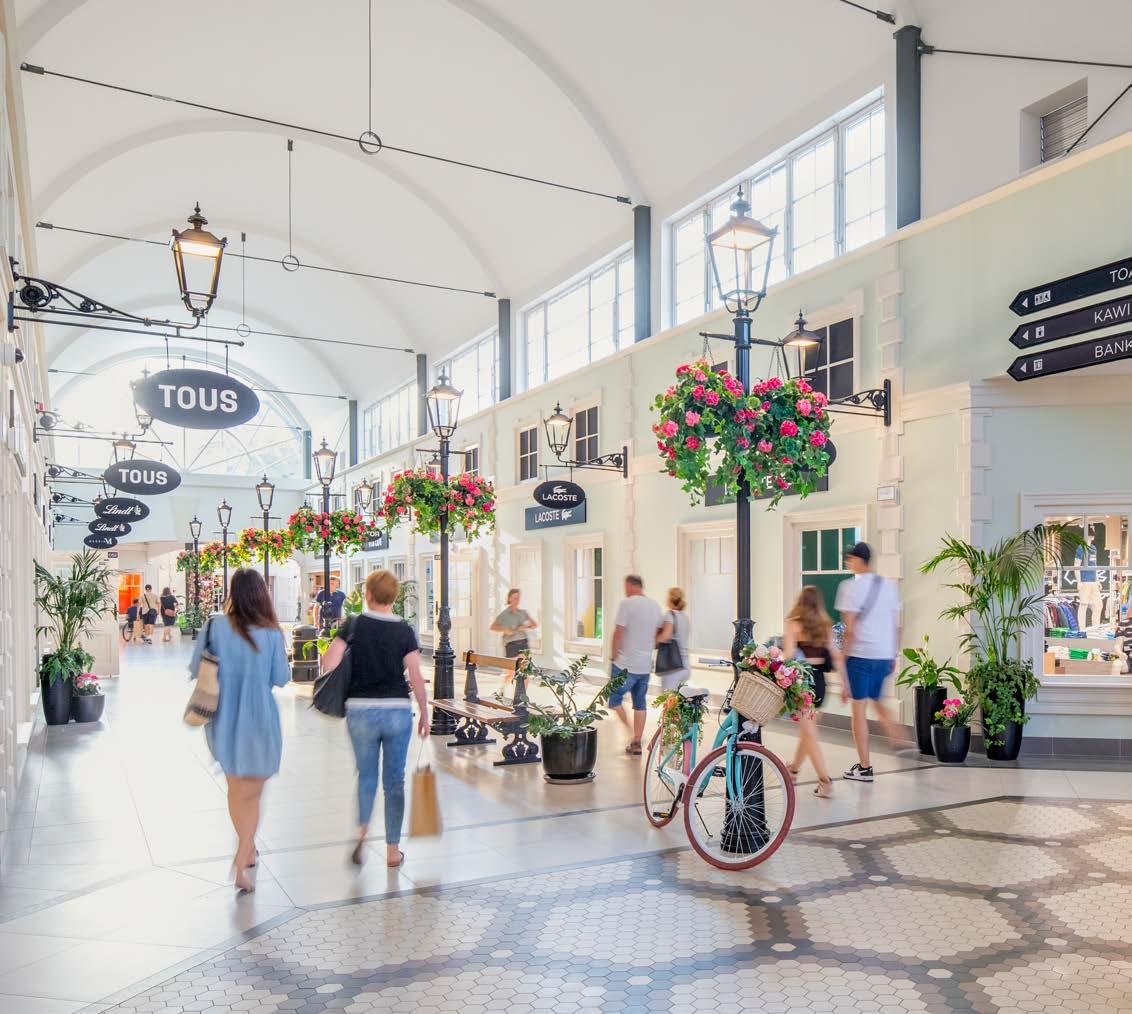
Warsaw offers a wide diversity of shopping experiences, from old school markets to luxury boutiques (primarily along ul. Nowy Świat and ul. Mokotowska: G-7, H-8/9) to some of Central Europe’s most modern shopping malls. For visitors, it’s an opportunity to shop exclusive designer brands, catch bargains on known commodities or find forgotten treasures. Happy hunting!
Amber Art Gallery - Silver Line
This gorgeous gallery specialises in luxury handcrafted jewellery of the amber variety, but crystal, silver and gold items can be purchased here too. This is the location of the largest and oldest amber dealer in the city, a family run business going back to 1988, proudly selling amber of Polish origincertified by the International Amber Association. Amber Art Gallery - Silver Line Even heads of State and royalty have been spotted procuring presents here, from Bill Clinton to Japanese princesses (whose thank you letters you can see inside)! Choose from pieces by Polish artisans and top designers, plus high quality jewellery made with other precious stones.QF‑4, Rynek Starego Miasta 9/11/13, MRatusz Arsenał, tel. (+48) 22 831 69 61, www.warsawamber.pl. Open 10:00 19:00; Sun 10:00 17:00.
Lilou
A phenomenally successful Polish jewellery chain where customers can select their own components to create a unique and personalised piece. The range continues to grow, with the original luxury charm bracelet still the biggest seller. Choose a bracelet type and any number of simple silver or gold plated charms in a variety of shapes, then have it hand-engraved with whatever or whoever means a lot to you. A ‘must-have’ item amongst local celebs and fashionistas. Also at ul. Francuska 27 (L-7), Westfield Arkadia (B/C-2), Westfield Mokotów, Sadyba Best Mall and Centrum Handlowe Janki.QH‑9, ul. Mokotowska 63, MCentrum, tel. (+48) 506 19 08 97, www.lilou.pl. Open 11:00 19:00; Sat 11:00 18:00; Sun 11:00 16:00*.
E-Manufaktura
It’s sometimes hard to find that perfect gift from Poland to take back home with you. We understand the problem, and it may be the case you get home, only to regret not having bought that sweet little tea cup you had your eye on. Now this is why we whole heartedly recommend E-Manufaktura, which is not only a shop in Warsaw, but also an online shop for you to look through an extensive catalogue in the comfort of your home. From egg cups, plates, bowls, and all other kitchenware you can think of, you’ll find it here! The famous hand-painted ceramics, Bolesławiec, make up the core of what’s on offer. It doesn’t get more Polish than this. A must-use service. QF‑3, ul. Freta 14, MRatusz Arsenał, tel. (+48) 22 636 06 84, www.e manufaktura.com. Open 10:00 18:00.
Find a huge range of products that are perfect to take home for friends and family -- and oh-so-Polish! Roam into the Warsaw Old Town to find these three delightful shops, which sell gifts made in Poland and recalling Polish history and tradition.
Find a huge range of products with colorful folk patterns, Polish ceramics and porcelain, even models of Polish cars, T-shirts with fashionable prints, and all kinds of gifts sporting various Warsaw symbols. Check out their second location on ul. Freta 26/28 and their third on ul. Freta 11.QF‑4, Piwna 17/19, MRatusz Arsenal. Open 10:00 20:00; Fri, Sat 10:00 22:00; Sun 10:00 21:00.
Of all Polish gifts, none are as visually exciting as Bolesławiec pottery. With a mix of cups, plates, bowls and other kitchenware with various colours and designs, you can’t go wrong to buy friends, family, or even yourself one of these classic but quirky items. What’s more, at this location, not only do you get the chance to buy something of your pleasing, but you can join in some workshops (offered Thu-Sat 16:00 or 18:00) to make and paint anything you want in the studio! QF‑8, Al. Jerozolimskie 49, MCentrum, tel. (+48) 690 80 01 84, www.pomaluj.art. Open 11:00 20:00; closed Sun.
This new showroom that opened up in December is one of only 5 Dr. Hauschka showrooms across the globe! This international (and internationally renowned) skincare brand offers 100% natural products to plump, revive, mosturize and envigorate the skin. But it goes way beyond that in this showroom -- they’re creating a full-blown wellness experience, with makeup and lifestyle workshops, as well as a plan to offer massage treatments in the summer. Plus, the experience of shopping here is incredible in itself -- the place is bright and aromatic, with a deeply tranquil feel. Munch on some cookies or sip coffee or sparkling water as a skincare expert walks you through the best routine personalized for your unique skin. Also -- there’s a great array of makeup offerings! For anyone even remotely interested in wellness and skincare, this stop is a must. Treat yourself to one of their 170 products, a free consultation and advice.Qul. Zygmunta Krasińskiego 27, MPlac Wilsona, tel. +48 888 75 76 77, www.drhauschka.pl/. Open 12:00 18:00; Sat 10:00 14:00; closed Sun, Mon, Tue.
Designer Outlet Warszawa
Set inside an impressive collection of buildings evoking the Baroque style of Warsaw’s Old Town, this is a premium outlet mall, with the interior that makes you feel like you’re walking through a fashion high street. Here you’ll find discounts ranging from 30-70% off on brands like BOSS, Calvin Klein, Coccinelle, GAP, Guess, Furla, KARL LAGERFELD, Lacoste, Liu Jo, Longines, Luisa Spagnoli, MaxMara, Marc O’Polo, Michael Kors, Pinko, Polo Ralph Lauren, Tommy Hilfiger, Tous, Twinset, Trussardi and Swarovski, through to lifestyle brands like adidas, Lee Cooper, New Balance, Kazar, Levi’s, Nike, Puma, Salewa, Timberland, 4F and many more.Qul. Puławska 42E (Piaseczno), MWilanowska, tel. (+48) 22 737 31 15, www.designeroutletwarszawa. pl. Open 10:00 22:00; Sun 10:00 21:00*.
Elektrownia Powiśle
When Elektrownia Powiśle (p.57) opened, we can only say we were impressed. The exterior doesn’t look all too big, but once inside you realise it’s much bigger than you’d ever expect! So what’s here? Imagine this as a multifunctional centre, including sooped up shops completely new to Poland (nay, in Central and Eastern Europe even!) such as Urban Outfitters, True Color, Weekday, COS, Elementy, Balagan, Galilu (to name a few), plenty more boutiques, beauty salons, a top floor event space, as well as their awesome gastro and nightlife offer.QH/I‑6, ul. Dobra 42, MCentrum Nauki Kopernik, tel. (+48) 22 128 56 00, www. elektrowniapowisle.com. Elektrownia open Mon Sun 11:00 21:00 Food Hall open Mon Thu 12:00 23:00, Fri 12:00 24:00, Sat 11:00 24:00, Sun 11:00 23:00.
Fabryka Norblina
Fabryka Norblina isn’t just for food and sightseeing (though those are excellent things to do at this space). It’s also a bustling hub of commerce! In fact, this open, vibrant area is just filled with boutiques, shops, fashion stores located all across its 26,000 square meter space. Located on levels -1 and 2, the shopping section includes concept stores that offer a whole host of designer clothes, a perfumery, BioBazar with tons of organic food and artisan goods, a flower store, travel agency, photobooth, tailor, tech store, designer boutique, wine store, jewelry stores.... the list goes on. The real question is what can’t you find here? And the answer? We’re not sure. This place seems to have everything! QC/D‑8, ul. Żelazna 51/53, MRondo Daszyńskiego, www.fabrykanorblina.pl/ en/shopping. Open 10:00–21:00; Sun 10:00–20:00*. *trading Sundays.
This massive outlet mall is closer than you think! Save up to 70% on premium name brands like Adidas, Nike, Ecco, Medicine, Guess, Under Armour, Pepe Jeans, Converse, Vans, Puma, Tefal, Tommy Hilfiger, Smyk, 4F, RTV Euro AGD and more. FACTORY Outlet Annopol The options here are nearly endless and you can find amazing premium wear for such a low price that it’s going to be hard to rationalize NOT buying everything. Plus, you can find food and cafe options here so it’s really a spendall-day or shop-till-you-drop kind of experience. To get there take Metro M2 from 'Świętokrzyska' to 'Bródno' and then change to tram no. 1, 3, 4 or 25 and get off at 'Toruńska' or 'Annopol'.Qul. Annopol 2 (Białołęka), tel. (+48) 22 441 90 00, www. annopol.factory.pl. Open 10:00 21:00; Sun 10:00 20:00*.
This outlet shopping mall southwest of the city centre is preoccupied with fashion, offering top brand names at -70% discounts over regular rack rates, all in a gorgeous, sun-drenched spot!
FACTORY Outlet Ursus Recognisable brands include Tommy Hilfiger, Marc’o Polo, BOSS, Nike, Adidas, Guess, Calvin Klein, New Balance, Calzedonia, Lindt, Haribo, Tefal, Ochnik, Wittchen, and many more. And, it needs repeating, these are all at a discount. So you can shop premium clothing, jewelry and more for way less than the normal price! One of the only such outlet centres in Europe, you can get there quickly by car via the S8 route or Nowolazurowa street. You can also reach it about 30mins by train or bus; check jakdojade.pl.QPl. Czerwca 1976r. 6 (Ursus), tel. (+48) 22 478 22 70, www.ursus.factory.pl. Open 10:00 21:00; Sun 10:00 20:00*.
In its effort to get people out of shopping malls and into churches, the Polish government has imposed regulations preventing most businesses from opening their doors on Sundays. Of course, there are exceptions, including 7 special Sundays when shops are open each year, and the rules don’t apply to restaurants, bars, cafes, pharmacies, gas stations, kiosks, bakeries, open-air markets, souvenir shops and anywhere the business owner is personally working behind the counter. When you see an asterisk* after the Sunday hours in our guide, that means the venue is closed on Sundays.
Upcoming shopping Sundays: June 28.

Print space is finite, but the internet is a vast, vacuous void we’ve devoted our lives to filling. If the venue you’re looking for isn’t listed here, you’ll likely find it amongst the hundreds of places in Warsaw listed on our website: warsaw.inyourpocket.com
3/4 Koneser Bar 110
Adam Mickiewicz Monument 51
Amar Beirut 96, 102
Amar Beirut Rooftop Bar 110
Amber Art Gallery - Silver Line 115
Anielewicz Bunker 85
Art Box Experience 78
Baila Show & Dining 111
Banjaluka 98
BarKa 111
Beauty Hall 90
Beef n’ Pepper 98
Beer&Wine SPA 90
Belvedere 102
Belvedere Palace 61
Botanical Garden 63
Branicki & Szaniawski Palaces 43
Breakfast Market 97
Bristol & Europejski Hotels 53
Browary Warszawskie 32
Centrum Praskie Koneser 67
Choose Your Adventure! 54
Chopin Benches 53
Chopin Monument 61
Ciao Napoli 99
City Sightseeing 27
Copernicus Science Centre 58
Cucina Mia 99
Czerwony Wieprz 99
Daebak 100
Der Elefant 103
Designer Outlet Warszawa 116
Dr. Hauschka Showroom 91, 115
Elektrownia Powiśle 57, 116
Elektrownia Powiśle Food Hall 106
Elixir by Dom Wódki 103
E-Manufaktura 115
E. Wedel Chocolate Factory Museum 92, 78
Fabryka Norblina 33, 116
Fabryka Norblina Museum 79
FACTORY Outlet Annopol 116
FACTORY Outlet Ursus 116
Food Hall Browary 106
FOOD TOWN - Fabryka Norblina 107
Fryderyk Chopin Birthplace & Park in Żelazowa Wola 79
Gallery of Masterpieces 42
Gnojna Góra 47
Gościniec Polskie Pierogi 100
Gospoda pod Zygmuntem 100
Hala Koszyki 21, 37, 107
HELLO! GIFT SHOP 115
HighGarden Rooftop Lounge 111
Highline Warsaw 89
Highline Warsaw (VARSO Tower) 19, 37
Holy Cross Church 54
InAzia 103
Invisible Exhibition 82
Jan Kiliński Monument 43
Jewish Historical Institute 85
King Sigismund's Column 50
Kładka na Wiśle (Footbridge) 59
Koneser Grill 104
Kufle i Kapsle 112
KUK Restaurant 95
LAS 100
Lilou 115 melt museum 79
metro bar & bistro 96, 100
MK Bowling Entertainment Center 89
MOON 112 Moonsfera 104 MOXO 112
Communism 80
Museum of Modern Art in Warsaw 80
Museum of Printing 67, 81
Museum of Warsaw, Main Branch 46
Museum World of Illusion 88
Myślewicki Palace 62
Nicolaus Copernicus Monument 54
Nova Wola 97, 104
Okopowa Street Jewish Cemetery 85
Old Orangery 62
Old Town Defensive Ramparts 44
Old Town Heritage Interpretation Centre 47
Old Town Square 45
Palace of Culture & Science 29
Palace on the Isle 62
Pasaż Wiecha 35
Pepper Events 112
PGE National Stadium 68
Pharmacy Museum 81
Piano Bar Warsaw 109
Plac Defilad 34
Plac Europejski & Warsaw Spire 33
Plac Grzybowski 33
Plac Konstytucji 35
Plac Pięciu Rogów & ul. Chmielna 35
Plac Piłsudskiego 32
Plac Zamkowy 41
Plac Zbawiciela 36
Planetarium of the Copernicus Science Centre 58
POLIN Museum 85
Polish Vodka Museum 68, 81
Pomaluj.art - Galeria Bolesławiec & Studio Ceramiki 115
Poster Museum 65, 81
Potocki Mausoleum 65
Powiśle Mermaid Statue 56
Praga Museum of Warsaw 67
Presidential Palace 52
PRIMITIVO Kuchnia i Wino 100
Purr Purr 97, 101
Royal Castle 42
Rozbrat 20 105
Stacja Grawitacja
the Baptist Cathedral
Cool Cat
Little Insurgent Monument
Roof SkyBar 109 The ROOTS Cocktail Bar & more 112 The University of Warsaw 54
Krakowskie Przedmieście
University of Technology
Zoo
Wilanów Lake & Island
Wilanów Palace Museum 64 Wilanów Park & Gardens 64
Yes Butcher! Shop & Bistro (Saska Kępa) 95
Złote Tarasy 34
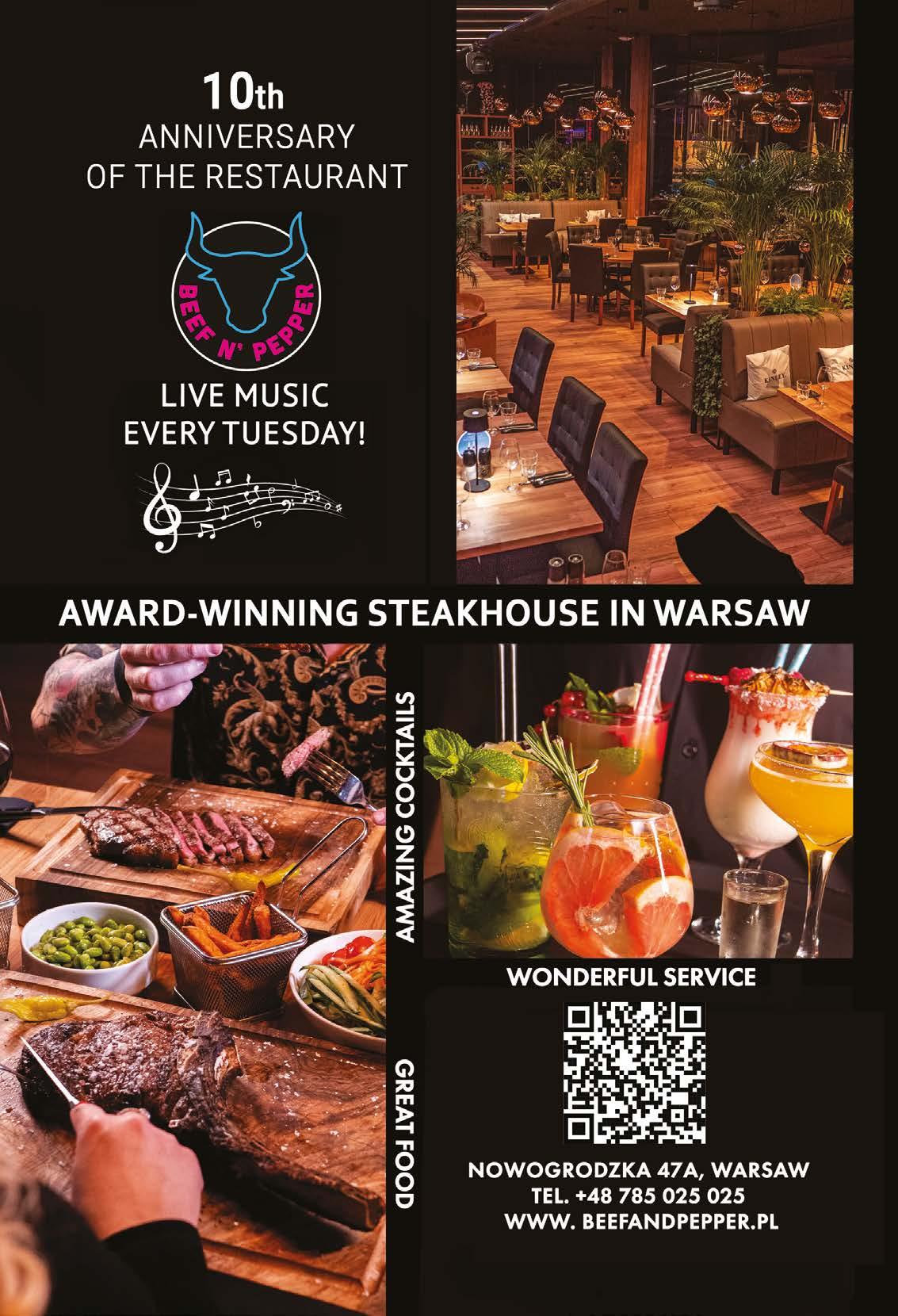
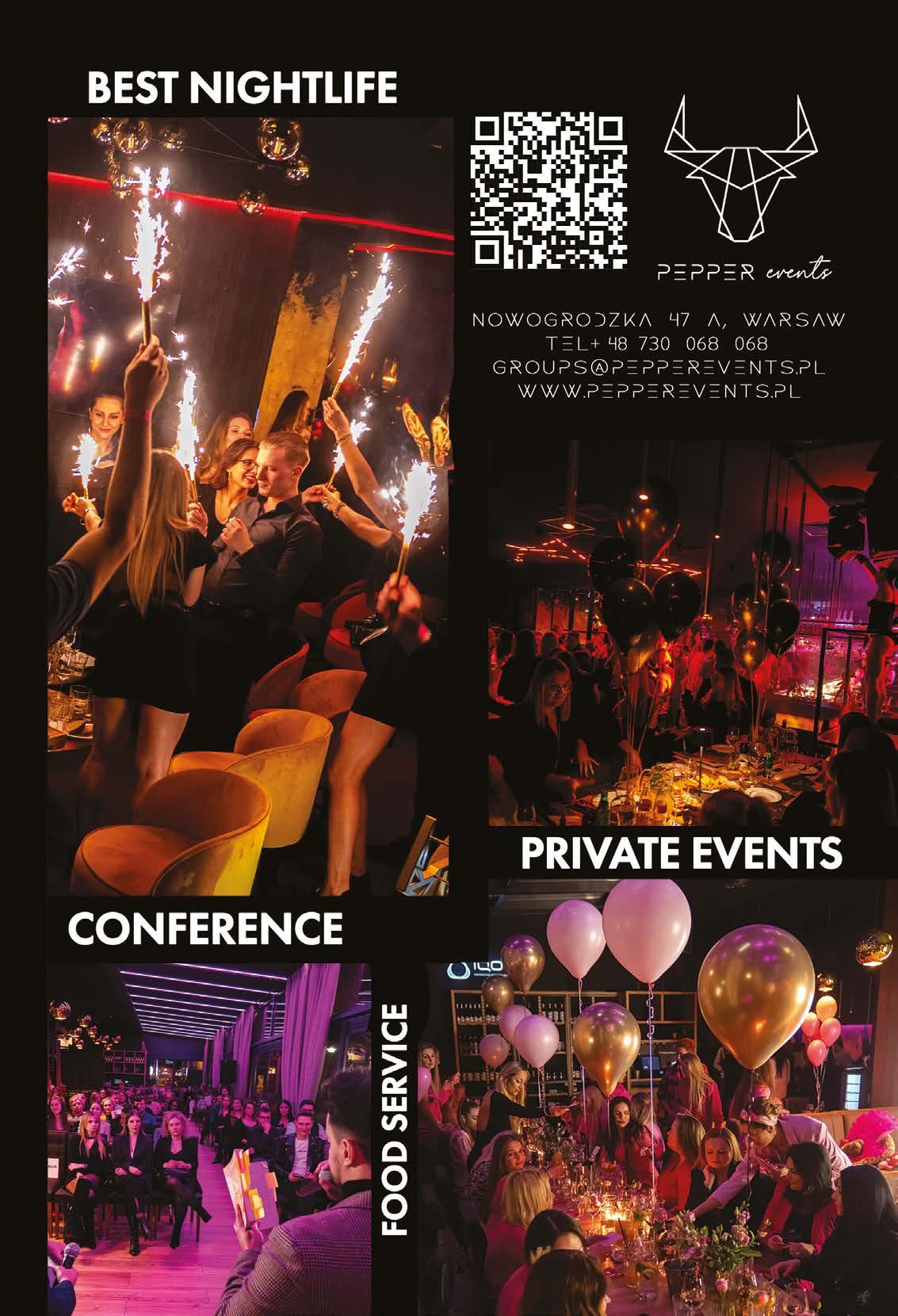
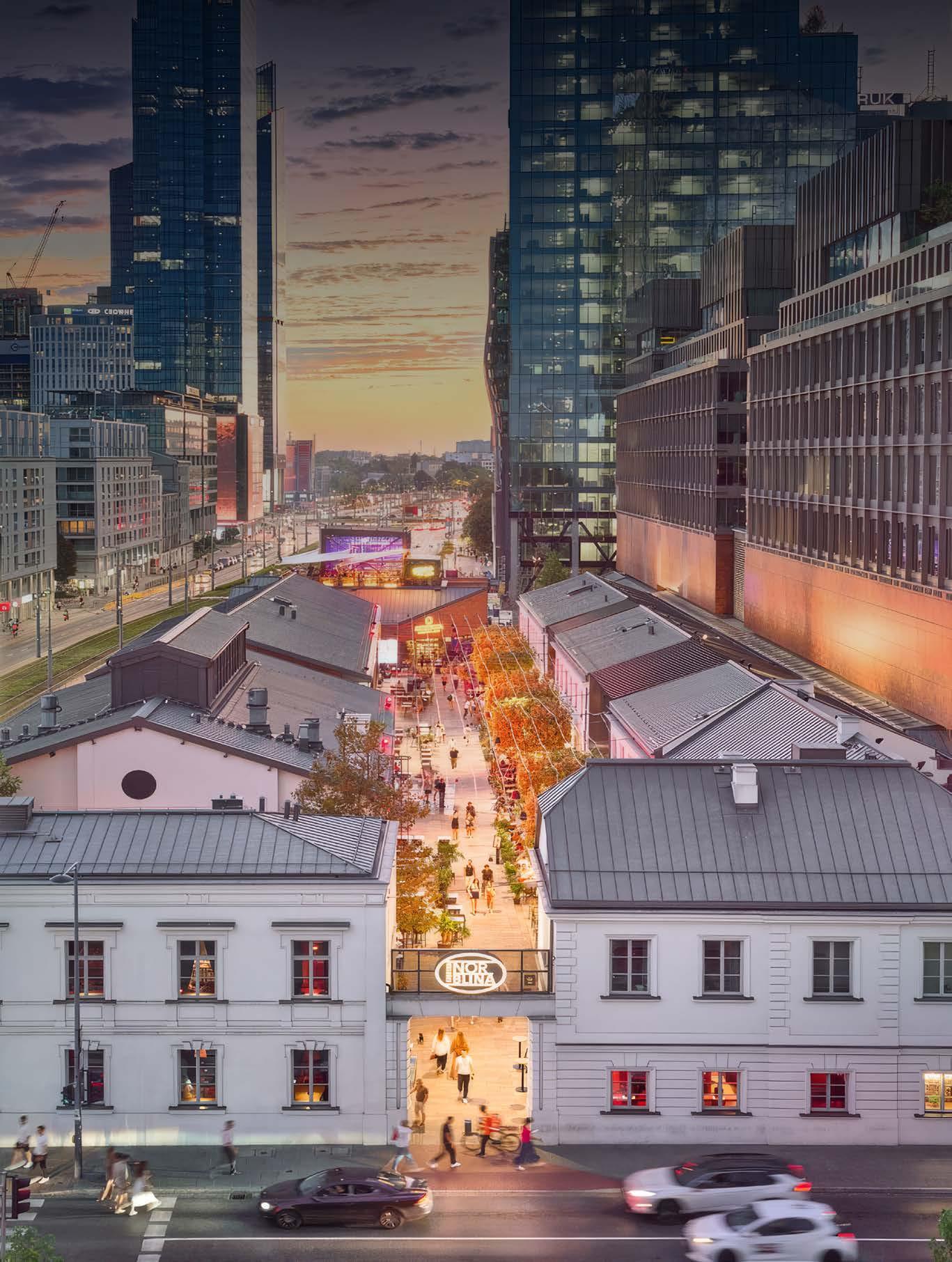
BEST ENTERTAINMENT IN WARSAW.
BEST ENTERTAINMENT IN WARSAW.
LIVE MUSIC, BARS & RESTAURANTS.
LIVE MUSIC, BARS & RESTAURANTS.
51/53 Żelazna Street, Warsaw
51/53 Żelazna Street, Warsaw