Olszyny Farmaceutów K r yniczna Lotnicza Miedziana
Tauron
From the Editor
Welcome, stranger, to our bi-annual argument for offline travel with a guidebook. As per custom, I’ll be your escort through one of Europe’s most marvellous ancient cities - a place where every street, square, and stone is a palimpsest of earlier permutations still faintly visible below the surface. Come in close, and let’s seek them out together.
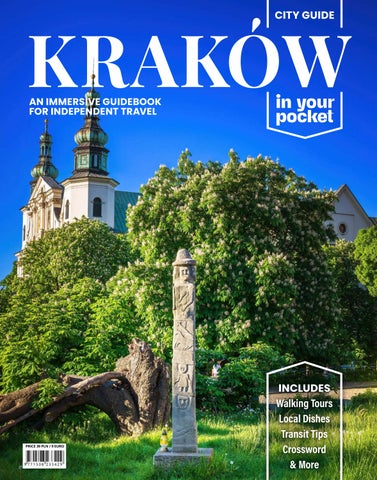
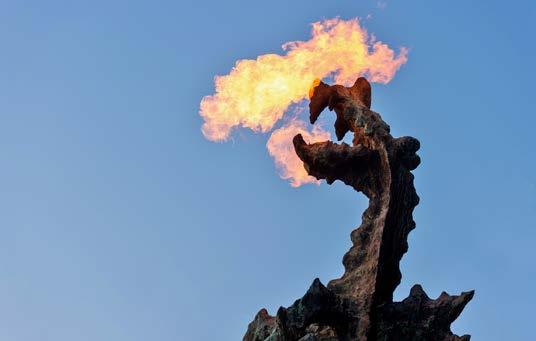
Kraków’s recorded history begins in the early medieval period, but its story stretches back into the murky loam of the unwritten past. This issue’s cover - depicting the ‘Zbruch Idol’ - hints at one of these deeper strata. A four-sided stone figure held by the Kraków Archaeological Museum, it dates to the 9th century and may depict a pre-Christian Slavic deity (Światowid? Perun?). Recovered from a riverbed in 1848, this replica standing near the end of Grodzka Street (J-7) represents a singular object that resists a single reading. Everything we think we know of it is built from layers of scholarly speculation and debate.
Cities are much the same way: deeply layered, partially obscured and built from centuries of human revision. The goal of a guidebook is to reveal the most relevant layers, connect them to the present, and draw attention to the details that give a place texture and resonance, so that understanding, appreciation and memory can form in the space between the page, the place, and the person moving through it. With Kraków In Your Pocket we hope to help you see more, linger longer, and leave with something meaningful.
Let us know how we’ve done.
A Pennsylvania native, Garrett fell in love with Kraków upon arrival and has been working to recreate that magic for IYP readers since 2008. He believes in good writing, local insight and that giving travellers the offline tools to explore destinations independently is the best way to create meaningful connections between people and places.
PUBLISHER
IYP City Guides Sp. z o.o. Sp.k. ul. Karmelicka 46/51
A replica of the mysterious 9th-century Zbruch Idol - the world’s only known preChristian Slavic monument - in front of St. Bernardine’s Church near Wawel (J-7).
COPYRIGHT NOTICE
All content copyright IYP City Guides Sp. z o.o Sp.k and its partners, unless otherwise stated. No part of this publication may be reproduced without express written consent from the publisher. The brand name 'In Your Pocket' is used under licence from UAB In Your Pocket.
How to Use this Guide
Kraków In Your Pocket is designed to provide you with all of the ideas, inspiration, tools and information you need to explore the city on your own, stay offline as much as possible, and truly connect with your surroundings.
Our guidebook primarily consists of two types of content: Essentials and Walking Tours
Essentials
Read these features for an overview of Kraków’s most essential sights, experiences, tastes and touchstones. Establish your priorities and plan your time.
Page references you to additional or related info located elsewhere in the guide.
QR Codes lead you to our website when there’s more worth knowing than fits in print.
Walking Tours
Follow these to find all of the most interesting and important sites, and learn what makes them worthy of inclusion. Be your own tour guide.
Map coordinates correlate to the grid on the Kraków map on the inside cover, so you can gauge distances and keep your bearings.
Editor’s Picks
As you go through the guide, keep an eye out for these icons next to venues that we personally recommend for the following visitor profiles:
ultimately control interests and impulses.
The Honeymooders
Romantic spots recommended for couples.
The Kinderguardian
Fun places designed for families and kids.
The Sophisticationer
Niche places for history buffs and culture hounds.
The Offbeatnik
Alternative, artsy or obscure places for urban adventurers.
Unpacking Kraków
The ancient seat of kings, artists and academics, Kraków comes steeped in legend, tradition and Old World charm. The pride of Poland, it’s also one of Europe’s great unspoilt cities, boasting one hell of a resume. Let’s get you acquainted.
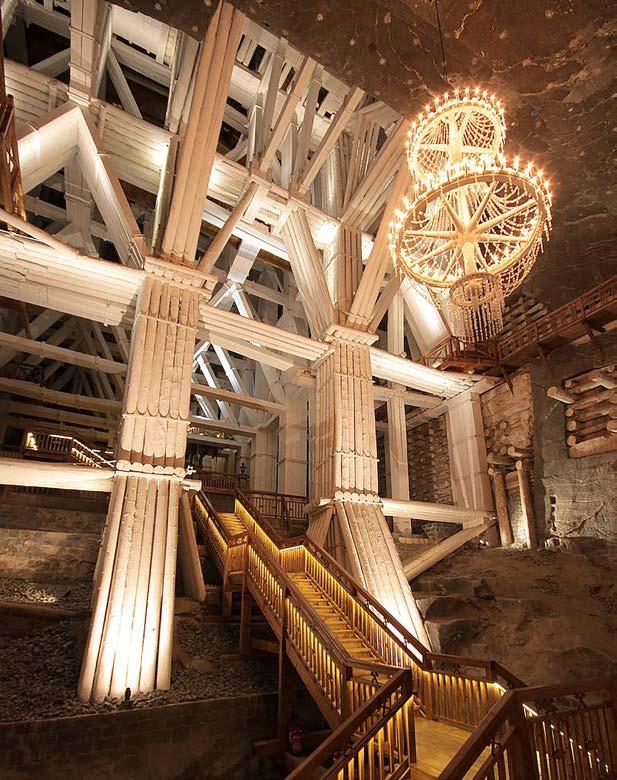
With a history that dates back to the 4th century, Poland’s most charming city has been charmed indeed, avoiding the destruction and debasement suffered by so many other Polish cities during WWII and the ensuing Soviet era. As a result, Kraków is one of Europe’s most beautiful architectural showpieces – a claim validated by the inclusion of its Old Town and Kazimierz districts on the firstever UNESCO World Heritage List in 1978, along with Wawel Castle (p.62), the nearby Wieliczka Salt Mine (p.111) and only ten other places in the world. In addition to the largest medieval market square on the continent and a fairy-tale castle overlooking the river, Kraków offers the most authentic picture
of pre-war Jewish culture in Europe and is home to one of its oldest universities. As such it boasts a large student population that enthusiastically propels its top ten global ranking for most bars per capita. In the past decade the city has earned accolades as a ‘European Capital of Gastronomy’ and UNESCO City of Literature, recognising both its culinary heritage and artistic soul. Steadily revitalised and diversified over the past twenty years, today Kraków is an increasingly modern metropolis in a compact, classic European package, that still honours its history, possesses a laid-back pace of life and maintains its magic aura. If you’re anything like us, you may linger awhile.
Welcome to the Neighbourhood!
Kazimierz
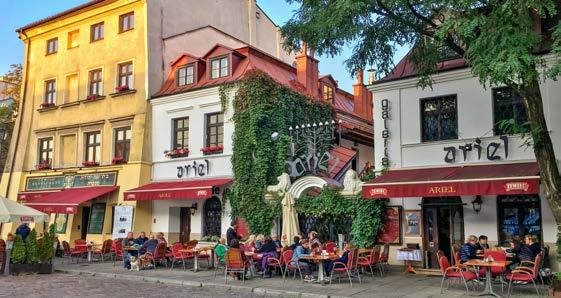
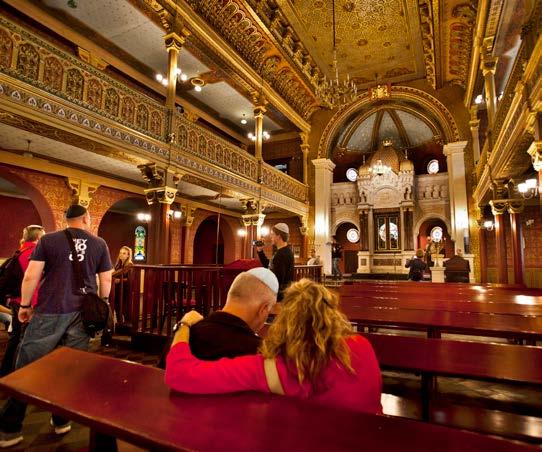
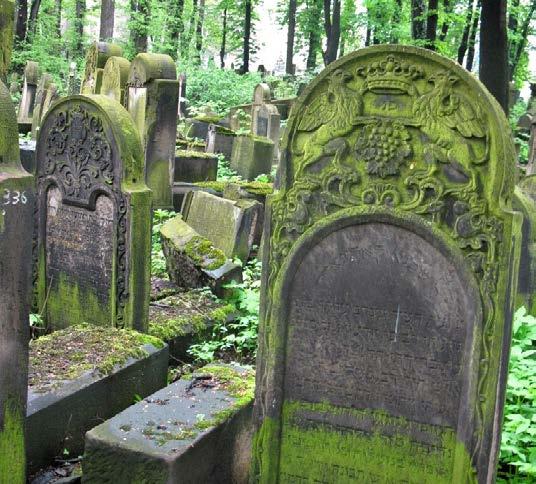
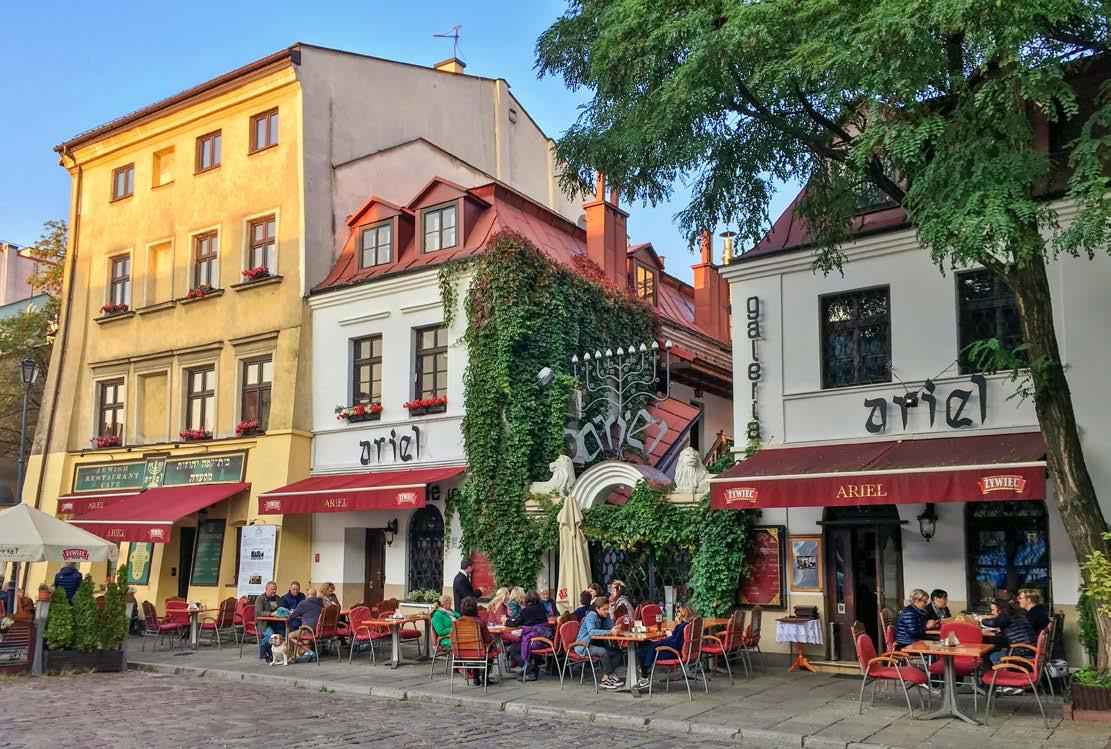
Once the cultural centre of Jewish life in Poland, today Kazimierz is Kraków’s most vibrant neighbourhood. Amidst the synagogues and heritage sites of the former Jewish district, you’ll find candlelit bars, street food stands, art galleries and a more bohemian vibe.
Turn to page 70.
To better understand Kraków's districts, see the map on the inside cover.
Old Town
Encircled by a beautiful belt of greenery, Kraków’s medieval Old Town is compact and highly walkable. Rich in regal architecture and bursting with energy, this historic area brings the belief in Poland’s great and glorious past to life.
Turn to page 42.
Nowa Huta
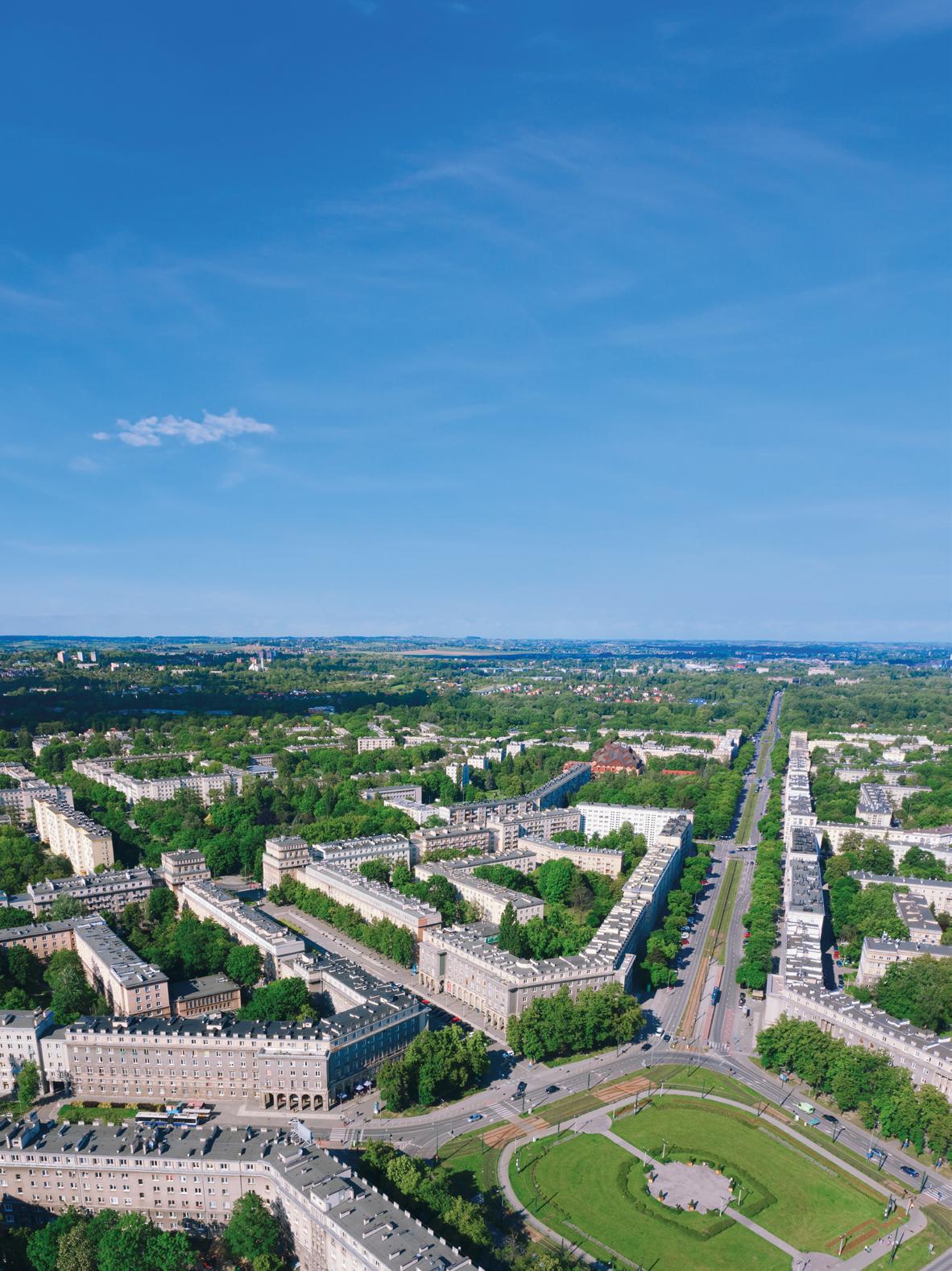
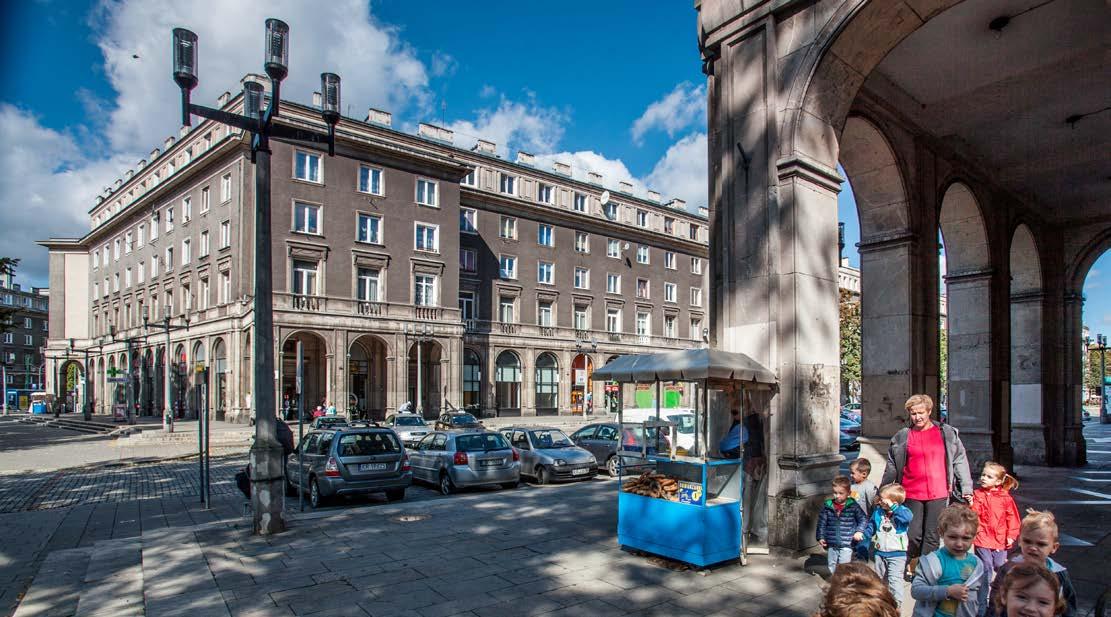
Travellers exhausted by European splendour can escape to Nowa Huta, a rare paean of socialist realist architecture. Designed to be the cultural and aesthetic antithesis of everything Kraków’s Old Town represents, the communist-era comforts of Nowa Huta are only a tram ride away.
Turn to page 104.
Podgórze
The Jewish heritage trail leads over the river to Podgórze, where the worst horrors of Nazi occupation took place. Once an independent city, today Podgórze may be the city’s most evocative district, and offers a chance to get off the beaten path.
Turn to page 86.
Summer Vibes
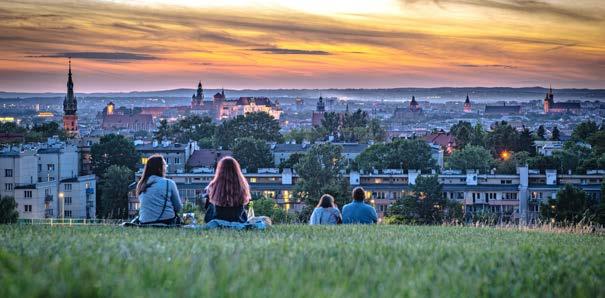
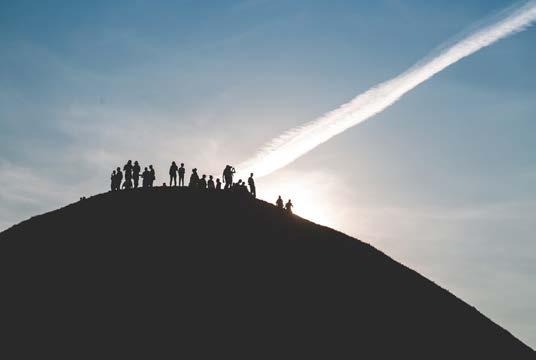
Kraków is loaded with lovely places to spend time outdoors, from iconic green spaces like the Planty (p.44) and Bednarski Park (p.97), to its mysterious earthwork Mounds (p.33, 100), to its romantic river boulevards. Here are more exciting places to explore in the high season, most just outside the centre and less visited by tourists.
Hang Out at Hotel Forum
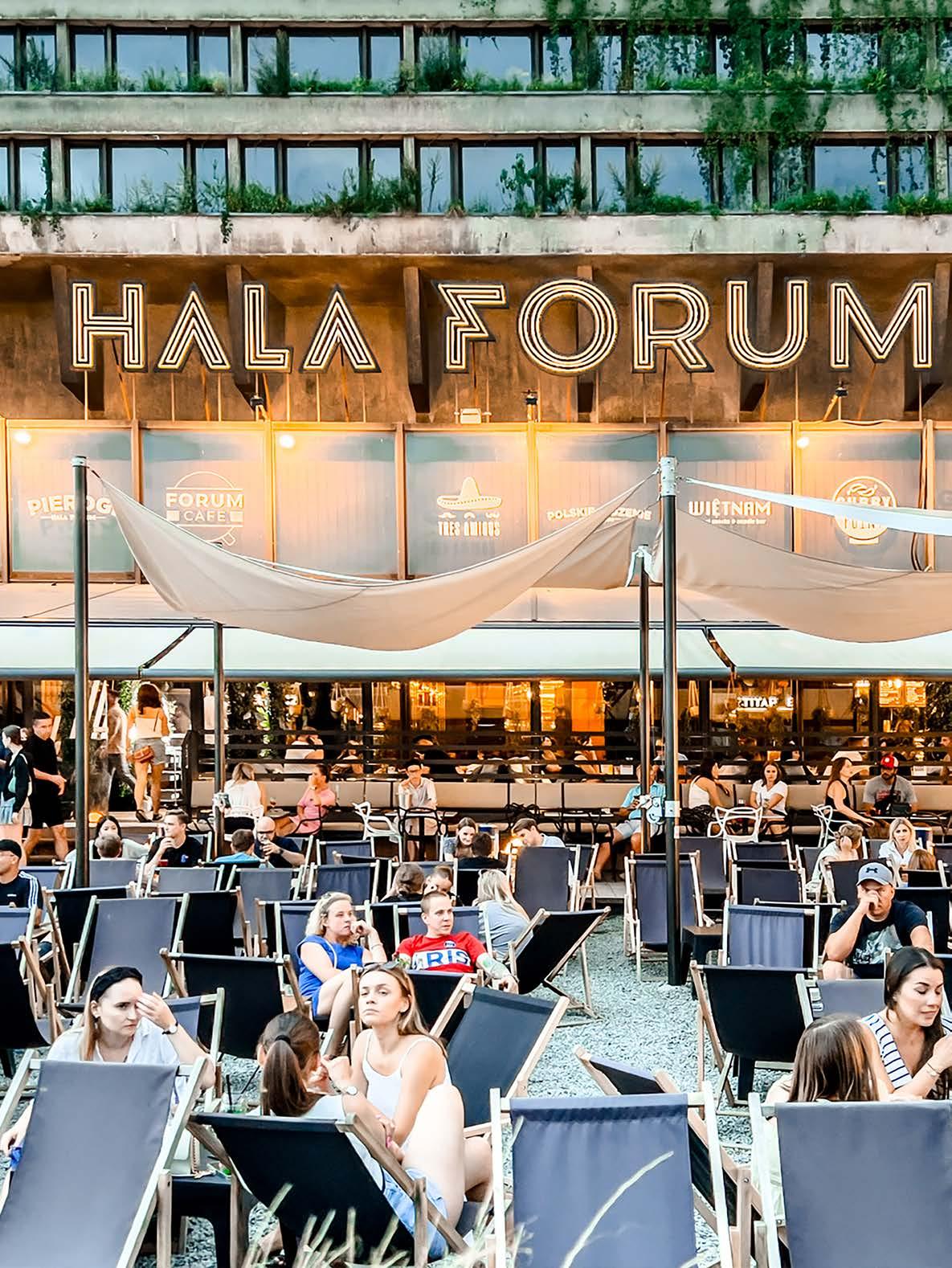
Unlike Warsaw, Kraków’s riverside attractions are primarily all concentrated in one spot around the Forum Hotel, for better or worse. Once a fourstar hotel representing the pinnacle of Soviet-era architecture and hospitality, the Forum was designed in 1978 and didn’t open until over a decade later. Despite modern amenities like air conditioning, auto-flushing toilets, tennis courts, a casino, sauna and swimming pool, the 7-storey hotel was closed in 2002 due to persistent basement flooding and low ceilings (only 2.2m) that don’t meet today’s industry standards. A brutalist eyesore protected by the registry of historic buildings, Forum has been going back to nature ever since, as evidenced by the trees and vines growing out of the guestroom balconies.
ocean of beach chairs, food trucks and mobile bars outside, it will take you some time just to explore it all and decide what to do (IYP's advice: beer, sunshine). Overall the vibe here is very chill and suitable for everyone from families to students.
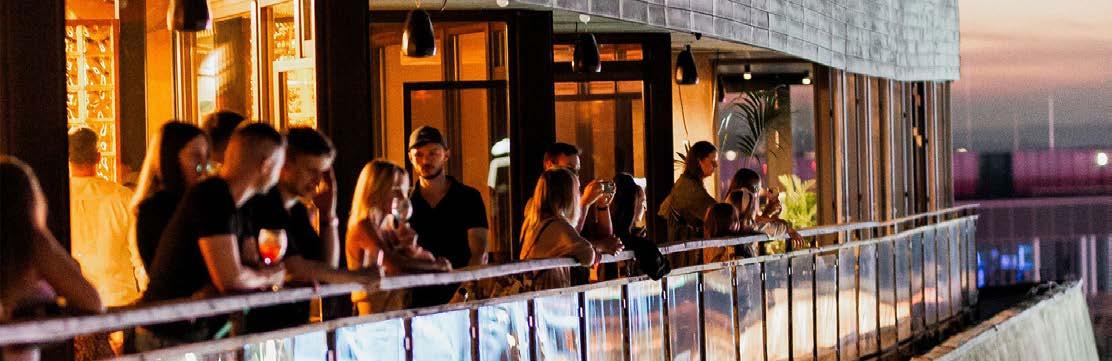
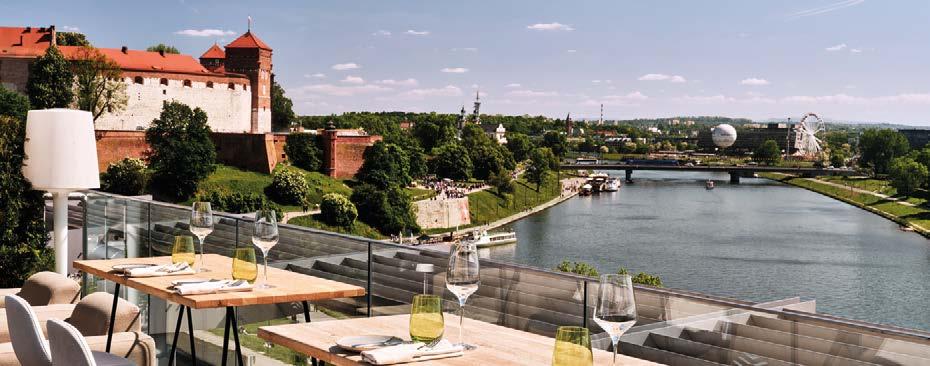
But that’s not all. On the hotel’s top floor, accessible via a separate entrance and an external elevator behind the main building, the former penthouse has been turned into Forum Panorama - an upscale Polish restaurant and cocktail bar featuring extraordinary views of the cityscape and a surprisingly relaxed vibe. Go early to get above the crowds, or make a reservation for a special evening in one of Kraków's most iconic settings.
Today, however, Forum has taken on a second life as Kraków’s biggest beer garden and riverside hangout. With multiple food sources and several bars inside and out, Forum’s main attraction is the endless sea of beach chairs where even large groups can gather in the sun and gaze at the lazy river, drinks in hand. The extensive ground floor is filled with businesses, many under the umbrella of Forum Fun & Food, which includes a food hall, two bars, a cafe, and lots of seating, plus an extensive entertainment centre including bowling, billiards, shuffleboard and over 60 arcade-style games. The former lobby area is today home to Forum Horyzonty, featuring an additional two restaurants, breakfast, cocktails and a stage for concerts and events. Needless to say, with over 3000 square metres of indoor space, plus an
The boulevard alongside Forum has become a magnet for even more attractions, including the Kraków Observation Balloon (a tethered hot-air-balloon offering views over the city), a Ferris wheel and a small fun park with fairground rides, while riverboat dining and floating apartments can be found on the water directly in front of it.
Finally, the latest attraction, of course, is the brandnew pedestrian footbridge leading right to Forum from Kazimierz, which authorities have promised will open by the end of August. Regardless, you can expect Forum to be mobbed all summer and there’s no reason you shouldn’t be among the hordes. Until the new bridge opens, your best bet for getting there is a riverside stroll or taxi.
I-10, ul. Marii Konopnickiej 28.
Forum Panorama.
2Hike & Swim at Zakrzówek
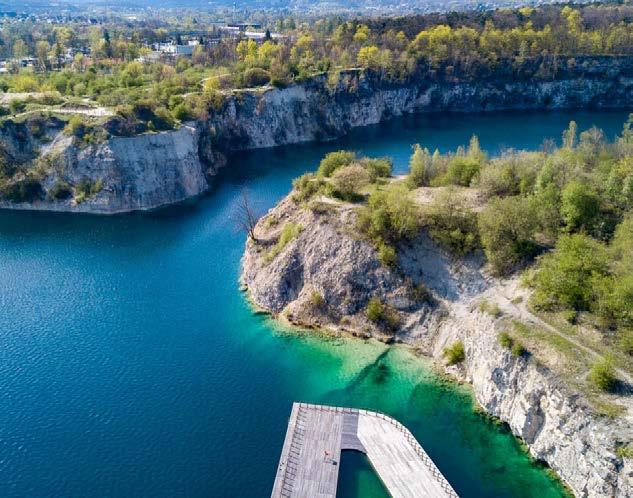
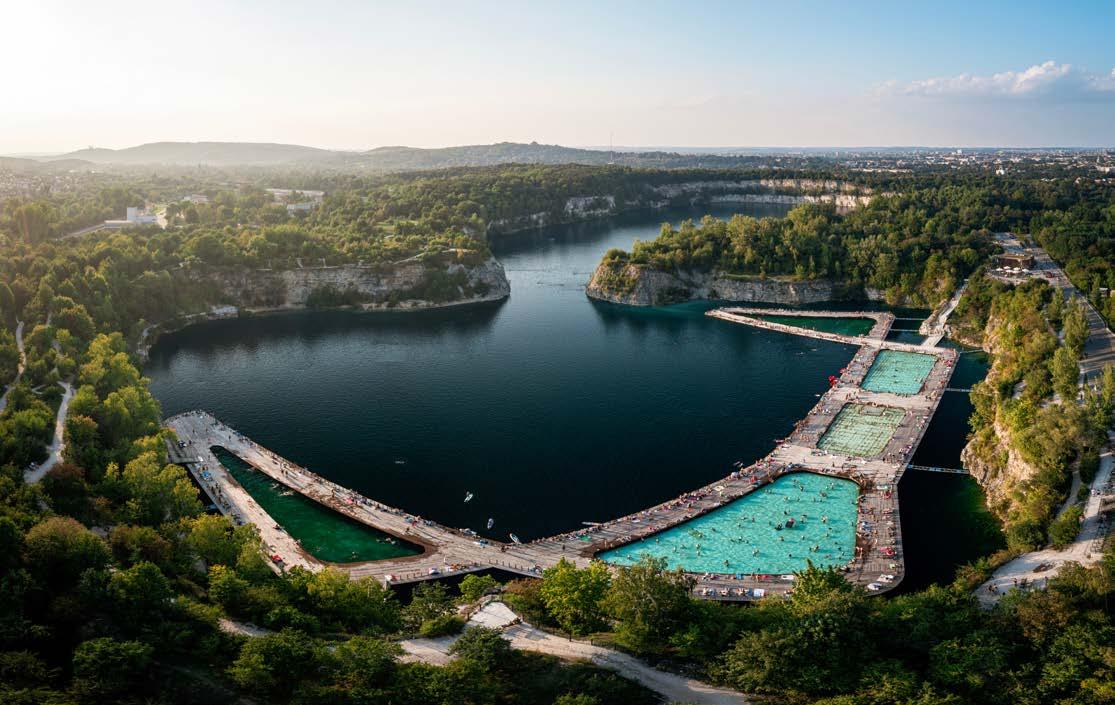
Formerly a limestone quarry, this fantastic reservoir just southwest of the city centre was created when the water table was accidentally pierced. A popular place for swimming, hiking and rock-climbing, Zakrzówek is known for its irresistible blue water and the gorgeous views from atop its limestone bluffs. Formerly a wild untamed space on the city’s periphery, in 2023 Zakrzówek was subject to major investment to improve its safety, accessibility and general infrastructure, the results of which have proven to be a runaway success.
Today a proper park and recreation area, Zakrzówek has much to offer visitors. Arguably the main attraction is in the southern part of the quarry, where five swimming pools of varying depth are set inside the beautiful reservoir itself, and cleverly connected by wide floating docks. Due to their popularity and a limit on entries, however, long lines form on weekends and most afternoons; we strongly advise you to avoid peak
times. Lifeguards are on duty from June 19 to Sept. 7 from 08:00-18:00; Mon 14:00-18:00. Nearby you’ll find toilets, changing rooms, a cafe and food trucks.
In the northern part of the quarry, a boat ramp leading down to a stony beach offers an alternative, at-your-own-risk swimming area (note that the water is very, very deep), and a shorteline cafe with great views.
The quarry rim, surrounding woods and park are also a wonderful place for a walk, grill or bonfire, full of benches and vistas for taking in the great views. Intrepid adventurers can search for ‘Twardowski’s Cave’ - the hideout of Kraków’s legendary alchemist/ occultist, as well as creepy bunkers carved into the cliffs. The closest tram stop is ‘Norymberska,’ which takes you to the pools on the south side of the quarry; to hike in from the north take the tram to ‘Kapelanka,’ or a bus to ‘Zielińskiego’ (requested stop). | D/E-12.
Hike along the rim or take a dip in beautiful Zakrzówek Quarry.
Festivals & Events
Kraków’s cultural calendar hits a higher gear in the warm season, with hundreds of events, big and small, happening all over the city. Check our website for a full rundown of what’s on.
Kraków Film Festival
May 31 - June 07
Over 250 films from all over the world will be screened at Kino Pod Baranami on the market square, Nowa Huta Cultural Centre (p.106), and for free on an outdoor screen near Wawel. Check it out.
Grand Dragon Weekend
June 06 - 07
One of Kraków’s most unique free events. Don’t miss the amazing dragon show - with music, lasers and fireworks - after dark on Saturday, with more beasts on the market square Sunday from 12:00.
Jewish Culture Festival
July 01 - 05
Jewish culture takes over Kazimierz with dozens of concerts, lectures, workshops and walks. ‘Jam sessions’ in Alchemia and the ‘Szalom na Szerokiej’ finale are highlights. Cheder Cafe serves as the festival centre (K-8, ul. Józefa 36).
ULICA Street Theatre Festival
July 03 - 05; 10 - 12
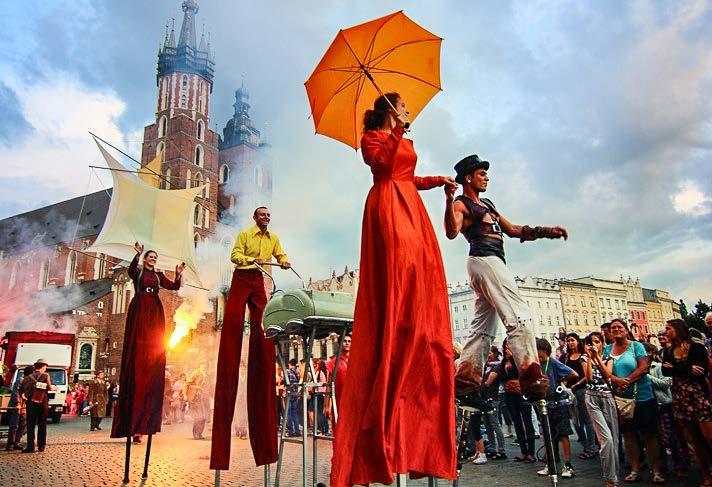
International theatre troupes fill the city’s public spaces with spectacular, amusing, unusual and free performances. A great time to be in Kraków.
Pierogi Festival
August 12 - 16
Stuff yourself silly at this open-air food market on Mały Rynek (J-5/6), where Kraków’s best dumpling dynasties compete for the crown of the city’s most delicious pierogi.
Beat the Heat at Bagry Lagoon
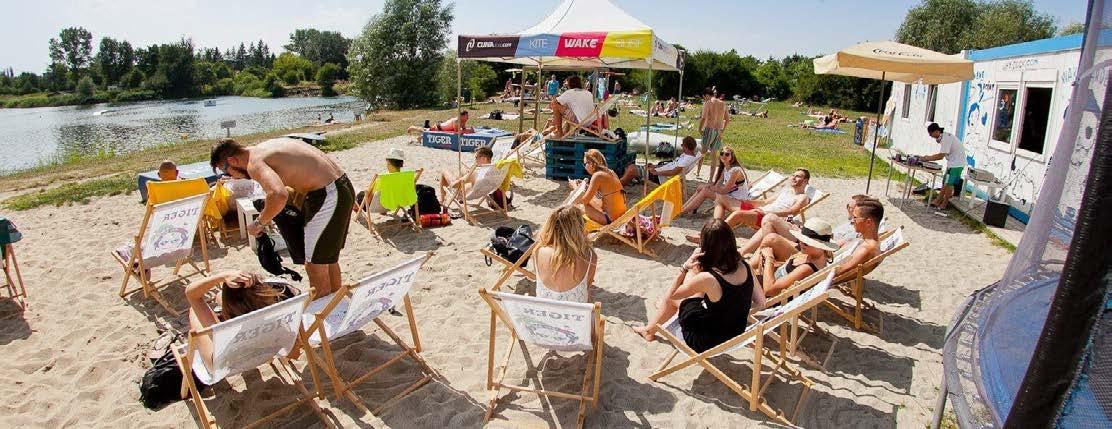
Located 5km southeast of the market square, this artificial reservoir is the most popular swimming, sunbathing, sailing, and water recreation destination within city limits. With 32 hectares of water surface, most of the action is concentrated on the northeast side (near ul. Kozia) where you’ll find the main beach and swimming area, surrounded by a shoreline park featuring playgrounds, barbecue grills, benches, hammocks, volleyball courts, a food truck park, toilets and changing stations. The regularly monitored water is clean, the area is free to enter, and lifeguards are on duty at the main beach in July and August.
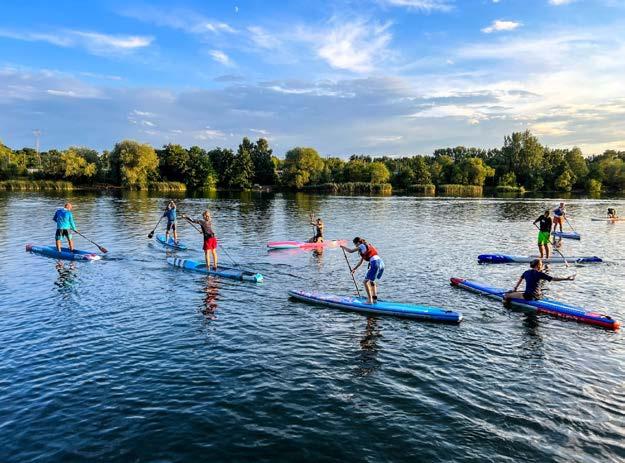
Bagry also harbours two marinas, two sailing schools and a graduation tower, which should give you a better idea of its size. Sailing, windsurfing, wakeboarding, kayaks, pedal boats and paddleboard (SUP) rental is available from June until the end of September. A second, smaller beach can also be found in the southeast corner near the Peron Bagry restaurant (ul. Bagrowa 9) - personally, our favourite place to hang out in the area.
Visit our website for more on swimming and beach life in Kraków.
Combining swimming, beach life, water sports and urban picnicking, Bagry is popular with locals of all ages, and has strong Polish vacation vibes. A great place to head to on a hot day, stay for the sunset views over the water as the crowds start to thin.
A bit difficult to get to, your best bet is a taxi, or bus 127 which goes straight there from ‘Podgórze SKA’ (N-11). You can also take tram 20 from the centre, getting off at 'Rzebika,' from which the lake is a 15min walk..
ul. Kozia 30.
Vacation mode activated.
The folks at Bagry know what’s SUP.
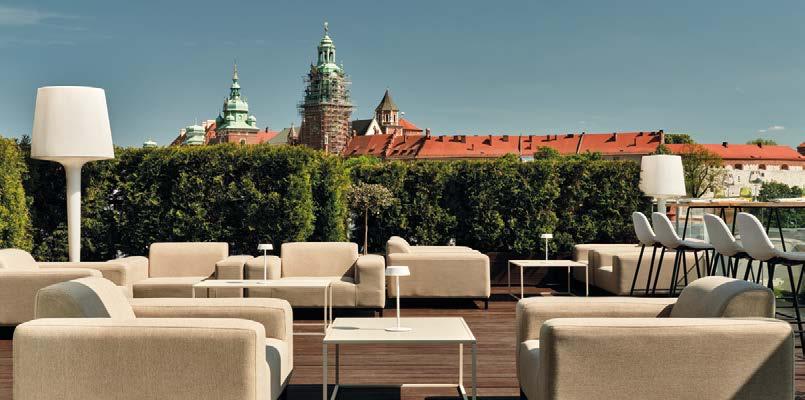
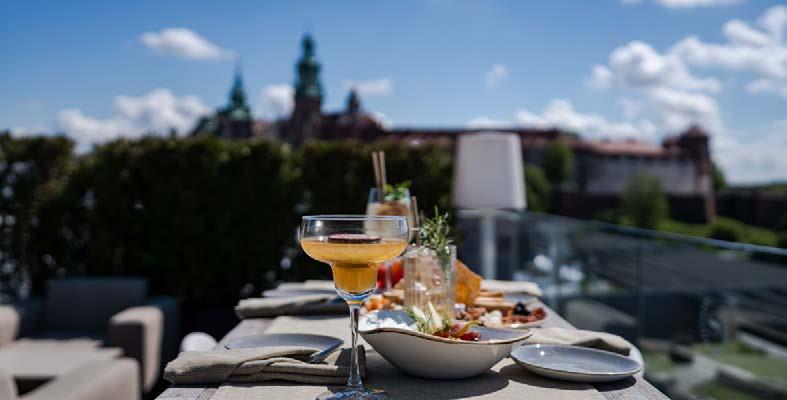
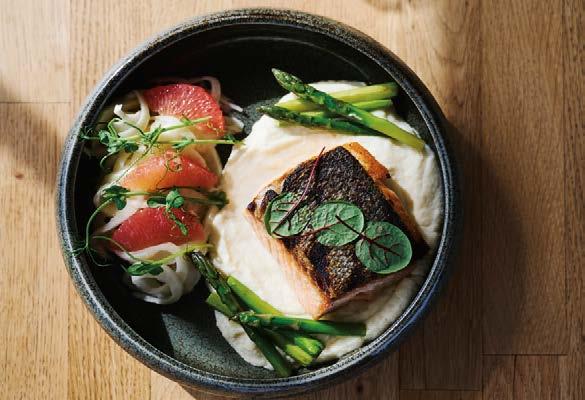
Sip on expertly crafted cocktails, explore a curated wine list, and enjoy delicious bites, all while taking in the stunning views of Krakow. The Rooftop Terrace at Sheraton Grand Krakow offers the perfect mix of elegance and laid-back charm.
Play in Polish Aviators Park
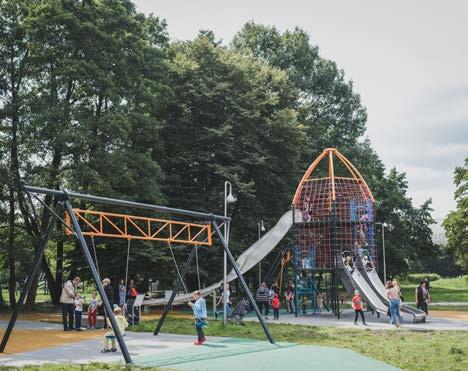
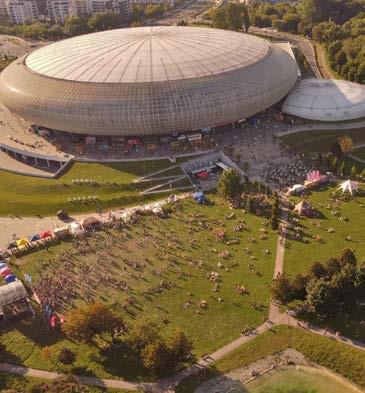
4.5km east of the market square, Park Lotników Polskich (Polish Aviators Park) is one of Kraków’s largest green spaces (43.6ha!), and easy to reach via public transport. The northern part of the park is a beautiful tree-filled place to escape the rush of the city, while also harbouring a skate park, pump track, large playground and more among the trees. To access this peaceful, picnic-perfect side of the park, take a tram to ‘Muzeum Lotnictwa Polskiego.’.
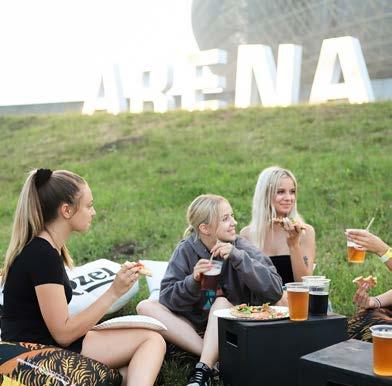
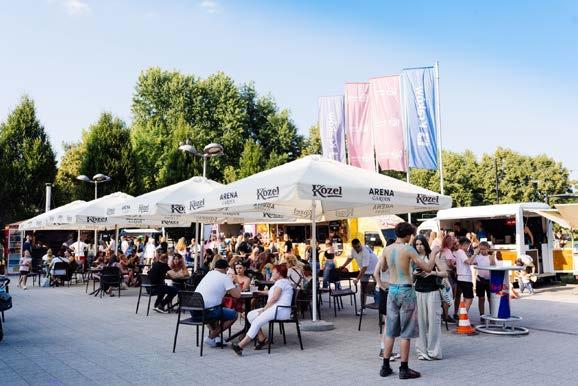
On the park’s south side, meanwhile, the area behind Tauron Arena turns into ‘Arena Garden’ - the city’s best food truck park - each summer. With upwards of 20 diverse food concepts and multiple bars, the grassy lawns here basically become a giant beer garden/gastronomy park full of deck chairs. The area also features ponds kids can splash around in, a playground and additional family attractions and events throughout the season (check FB).
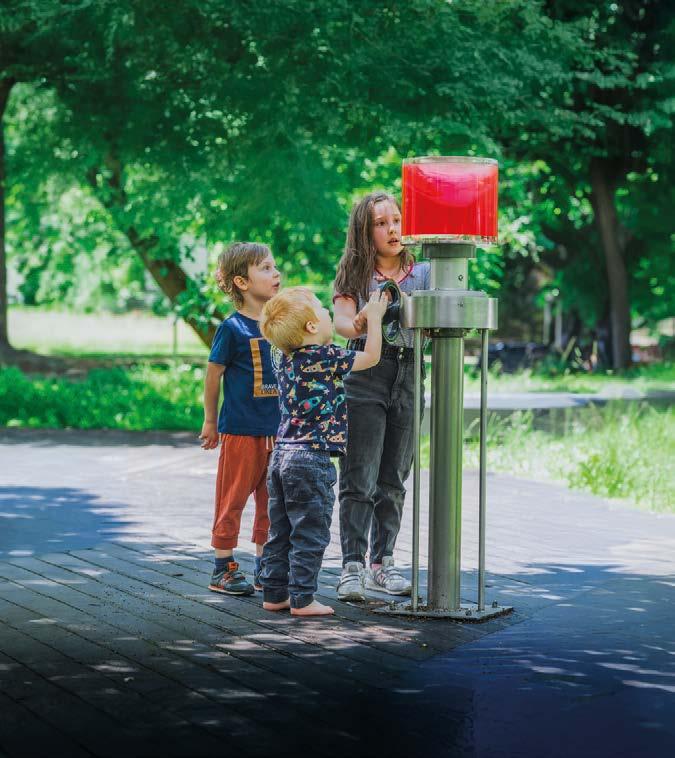
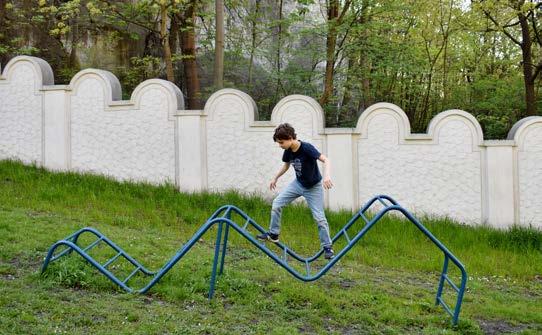
On top of all that, the Stanisław Lem Experimental Garden (Ogród Dowiadczeń) is only metres away. A 6ha ticketed attraction featuring over 100 interactive stations engaging kids with the laws of physics, including optical illusions, acoustics, gravity, magnetism, mechanics and more, it’s basically a giant outdoor educational playground and perfect for preschool to middle-school kids (and their parents). Visiting time: 90mins.
With so much on offer Park Lotników is a great place for family fun or hanging out with friends. Unseen from the road, there’s plenty of space for everyone, the setting is lovely, and the vibe is peak summer. To get to the attractions on the south side, take a tram to ‘Ogród Doświadczeń.’
ul. Stanisława Lema 7. Arena Garden open from midMay to Oct 31. Lem Garden open to Oct 11; admission 21/17/14zł, family ticket 60zł.
Edible Itineraries
When it comes to travel these days, gastronomy is just as important as sightseeing. Kraków’s food rep has been on the rise since the fall of communism, culminating in its ‘Capital of Gastronomic Culture’ award in 2019 (Europe's first!). See how many of the flavours that define Kraków’s unique culinary character you can sample while you’re here.
Essential Street Foods
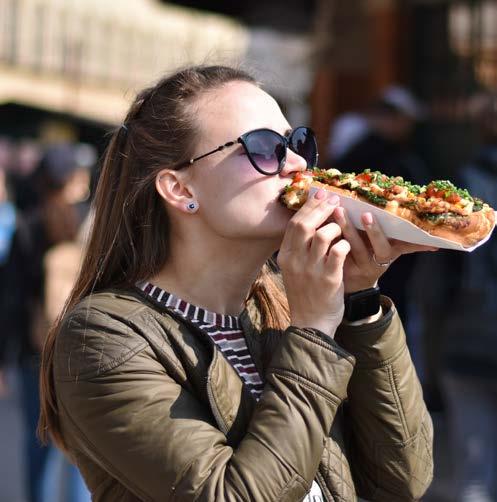
Although hardly sophisticated, nothing defines Kraków’s culinary profile more than its swiftly served snacks, some of which date back centuries. Today the city boasts over a dozen food halls and food truck parks, but please forego the kebabs, burgers and tacos until you’ve tried these local specialties.
1
Obwarzanki Krakowskie
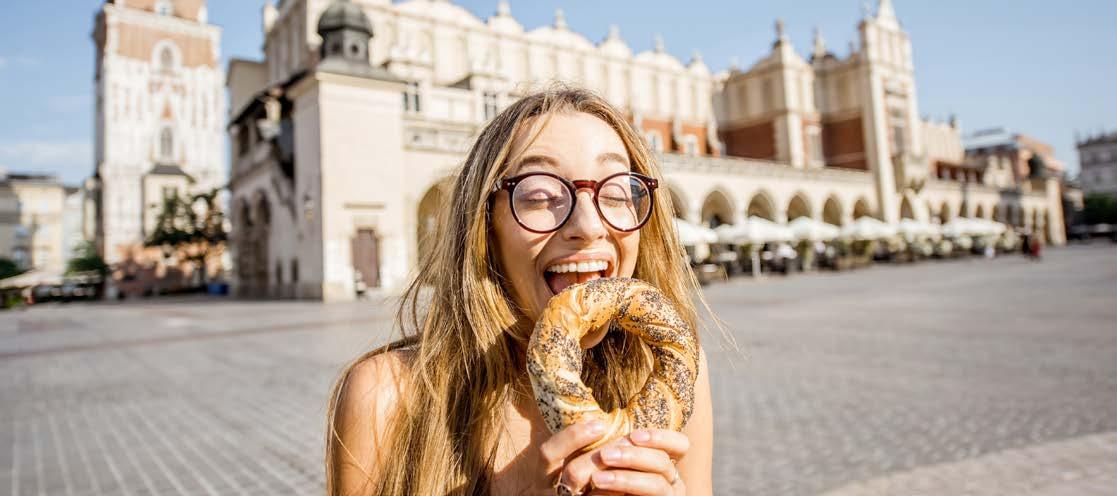
Any culinary journey through Kraków should start with an obwarzanek, the city’s oldest street food. These chewy dough rings - sold prominently at the airport, train station and street carts all over town - have been a daily sight for over 600 years and are a proud symbol of Kraków.
What’s so special about these ‘bagels’? Whoa, whoa, watch your language. Sure, like bagels, obwarzanki are parboiled, then baked and sprinkled with different toppings, but can you not see that obwarzanki are made of braided dough? The facts are: bagels and obwarzanki were both invented in Kraków, obwarzanki were first by over a century, and bagels wouldn’t exist without them. Created by Cracovian Jews as a kosher variation of the obwarzanek during a brief relaxation of laws regulating who could bake what in the 1600s, bagels emigrated beyond Poland, evolved and prospered, while obwarzanki have remained tightly controlled, becoming even more so
since they were given Protected Geographical Indication status under EU law in 2010. As it was in the beginning, only certified bakeries are allowed to use the name ‘obwarzanek krakowski’ today, and it’s worth noting that the traditional recipe uses animal fat. You’ll see just as many vendors selling uncertified ‘precle krakowskie’ (Kraków pretzels) and ‘bajgle krakowskie’ (Kraków bagels), which are just as good if you ask us, and potentially vegan-friendly.
Although the price of an obwarzanek has soared up to 4zł in some places (sacrilege!), they still make for a tasty, cheap and filling snack. Cracovian bakers allegedly make up to 200,000 obwarzanki a day in the summertime, so eat your fill before the pigeons get them. Or make your own at Kraków’s Obwarzanek Museum
: TRY IT HERE
Any bakery ('piekarnia') or street trolley. Obwarzanek Museum - J-4, ul. Paderewskiego 4 (Old Town), muzeumobwarzanka.com.
2 Zapiekanka from Plac Nowy
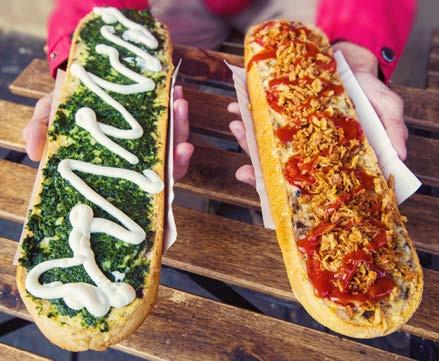
Essentially a baguette pizza, zapiekanki emerged during the communist era as the ultimate Polish fast food: quick, cheap, filling, and easy enough to make that anywhere with a wall socket and space for a toaster could become a zapiekanka stand. Order one at any train station in PL and you’ll receive what’s essentially half a large baguette covered with mushrooms and cheese, thrown in a toaster oven and squirted with ketchup. Underwhelming to say the least.
However, the vendors of the Plac Nowy roundhouse - Kraków’s drunk food headquarters in Kazimierz (p.74) - have taken this simple concept and gone gourmet with it, making an art out of the custom ‘Polish pizza.’ With endless add-ons (including salami, spinach, smoked cheese, pickles, pineapple, feta – you name it) and your choice of sauces, this street food staple has gone from ‘so gross it’s gross’ to ‘so gross it’s good.’ Because of their popularity you’ll witness ridiculous lines at the various windows around the roundhouse; in fact, local Poles will tell you certain windows are better than others. We will tell you that Poles just love standing in lines, and when it comes to toaster pizza, the best line is certainly the shortest line.
At 15-30zł (depending on toppings), a zapiekanka is a decent value and will sustain you through a night of heavy drinking as only copious amounts of bread can. If you aren’t completely smashed, split one with a friend by asking the vendor to cut it in half. After all, leaving town without having tried a Plac Nowy zapiekanka would be felonious, as would settling for one anywhere else in Kraków.
: TRY IT HERE
Plac Nowy - K-8 (Kazimierz), open from midafternoon until 02:00, depending on business.
3 Kiełbasa from the Blue Van
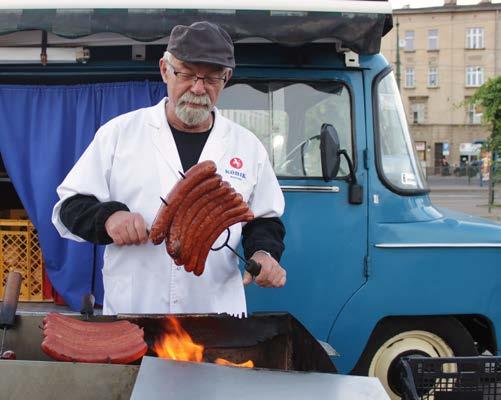
‘Kiełbasa’ is probably one of the most internationally understood words in the Polish language, and this legendary sidewalk stand is the local place to partake in a Polish sausage. For over thirty years these gents have been parking their iconic blue Nysa (a Soviet-era van) near Hala Targowa every evening (except Sundays) to grill kiełbasa for the hungry, often drunken masses. For 20zł you get a delicious grilled sausage, slightly stale roll, mustard and ketchup from the local Konik factory, and a true local experience. Essentially Kraków’s first food truck, don’t miss it if you’re in the neighbourhood.
: TRY IT HERE
Kiełbaski z Rożna Pod Halą Targową - K-6, ul. Grzegórzecka 3 (Kazimerz); open Mon- Sat 19:0003:00.
Times change, trends come and go, kiełbasa remains.
Make sure to eat one of these before a big night in the bars.
4
Maczanka Krakowska
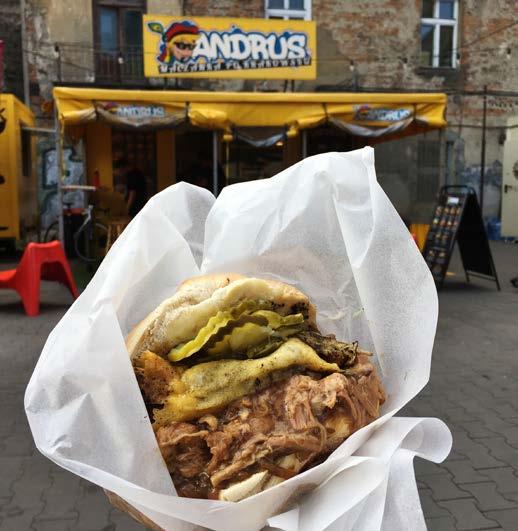
Also called 'maczanka po krakowsku,’ this is one of Kraków’s most unique, city-specific foods, though there is no strict tradition (or law) governing how it should be served. The dish traditionally consists of marinated pork neck, slowly baked and served in a thick caraway and onion sauce, with crusty bread and pickles. While its origins are a bit lost in the sauce, consensus claims that maczanka was most popular in the late-18th and 19th centuries, when it was the go-to meal of poor students and carriage drivers on-the-go. Traditionally served in a shallow bowl over bread, or with a roll for dipping in the sauce, in recent years maczanka has been winningly revived as a and pulled pork sandwiches charge is ‘Andrus Maczanka po Krakowsku,’ which serves maczanki as massive sandwiches dripping with different toppings and sauces. We are one hundred percent on-board with this obscene modern version, but you’ll also find maczanka on many local restaurant menus - some incorporating obwarzanki, and each the unique interpretation of the chef. If you get the chance, give it a try.
: TRY IT HERE
FIND US: Check out our menu
Mały Rynek 7 St. 31-041 Cracow mob. 603 301 308
Andrus Maczanka po Krakowsku J-6, ul. Sienna 11 (Old Town); K-9, ul. Św. Wawrzyńca 16 (Judah Food Market, Kazimierz).
Better than a burger: Andrus' mighty maczanka sandwich.
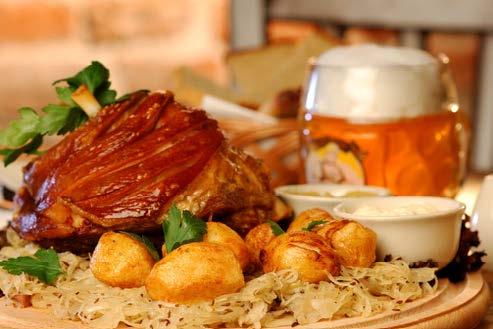
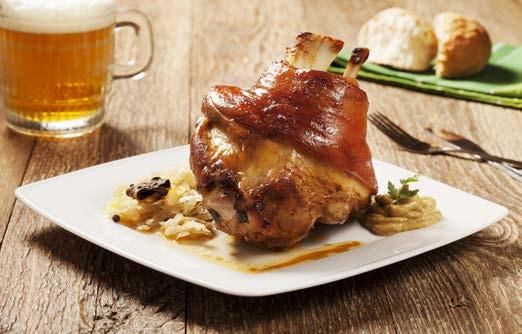
THE LARGEST PORK KNUCKLE IN TOWN
5 Grilled Oscypek with Cranberry Sauce
A tradition of the Podhale region just south of Kraków, oscypek is a smoked cheese made from salted sheep milk which is curdled, then rinsed repeatedly, squeezed, and pressed into wooden forms to give it its decorative shape. It has a smoky, salty flavour and chewy, teeth-squeaking texture.
6
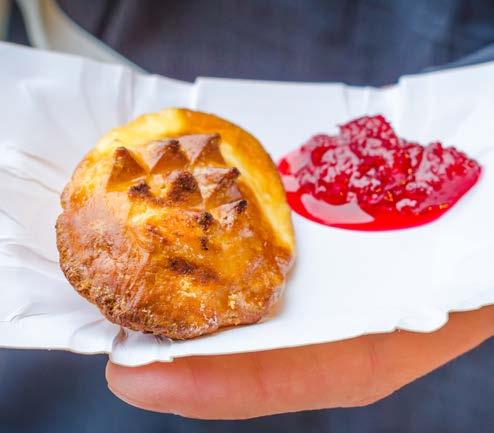
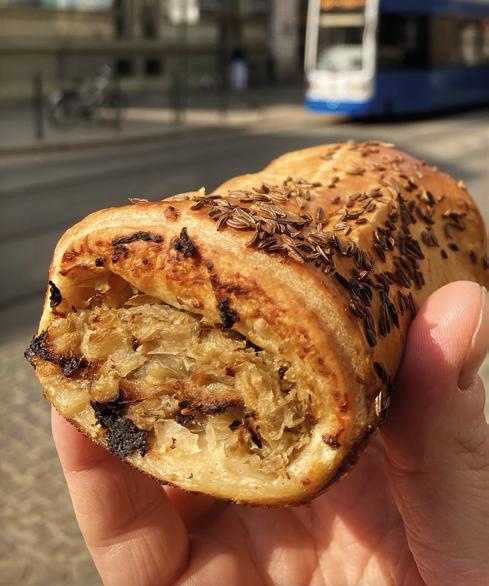
‘Kapuśniaczek’ Cabbage Pastry
Walk into almost any bakery or pastry shop and amongst the doughnuts, dinner rolls, bagels, cakes and other sweets you’ll find this most Polish and least appreciated little wonder: the cabbage pastry. Oh yes they did. They took flaky phyllo dough, filled it with sauteed sauerkraut, then topped it off with caraway seeds to create a savoury snack that’s surprisingly delish. Sure, those other cakes and pastries look way better, but you didn’t come all the way to Kraków to eat croissants (unless there's cabbage in them).
Similar to the obwarzanek , oscypek is protected under EU law from being made outside of the Polish Tatra Mountains, resulting in uncertified versions sold as ‘ser góralski' or ‘ser górski’ (highlander or mountain cheese). Typically sold in larger spindle-shaped blocks in the city's markets, oscypek is most delicious when smaller pieces (looking a bit like spiky rugby balls) are grilled and served warm with cranberry sauce. Most traditional Polish restaurants (p.25) offer it this way as an appetiser, or look for it as a snack during fairs on the Main Market Square or Mały Rynek.
: TRY IT HERE
Miód Malina - J-6, ul. Grodzka 40 (Old Town).
Morskie Oko - I-5, Plac Szczepański 8 (Old Town).
Smakołyki - H-5, ul. Straszewskiego 28 (Old Town).
Taste Poland - J-5, ul. Floriańska 19 (Old Town); J-7, ul. Grodzka 38 (Old Town).
Wesele - J-6, Rynek Główny 10 (Old Town).
Similar to ‘paszteciki wigilijne’ - a Christmas pastry served with barszcz (p.25), and not to be confused with the popular 'Kapuśniak' soup, these mini cabbage cakes are available year-round for about 2 Euro in most bakeries (‘piekarnia’).
: TRY IT HERE
Lajkonik bakeries - J-6, Plac Dominikański 2; I-5, ul. Szewska 8; J-4, ul. Basztowa 15; J-8, ul. Stradomska 5.
Buczek bakeries - H-6, ul. Tarłowska 23; J-8, ul. Stradomska 27; K-7, ul. Starowiślna 51 (Kazimierz); J-9, ul. Krakowska 39 (Kazimierz).
Real men choose cabbage.
Look for 'oscypek' or 'ser górski' (mountain cheese) at Kraków food fairs.
Traditional Polish Dishes
Street food is great, but sit-down dining is essential to the slow travel ethos. When it comes to traditional Polish food, everyone knows ‘pierogi’ (stuffed dumplings) and ‘kotlet schabowy’ (breaded pork cutlet). Here are some staples of the national diet that might not be as familiar. Smacznego (enjoy your meal)!
1 Barszcz
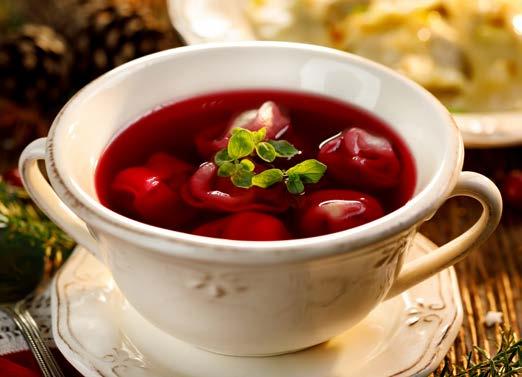
A nourishing beetroot soup, barszcz may be served with a croquette (‘z krokietem’), with mini pierogi floating in it (‘z uszkami’), or simply as broth in a mug expressly for drinking (‘solo’). A recommended alternative to other beverages, it’s difficult to find a bad cup of barszcz, so make sure you return home with bloody beet stains on at least one of your shirts.
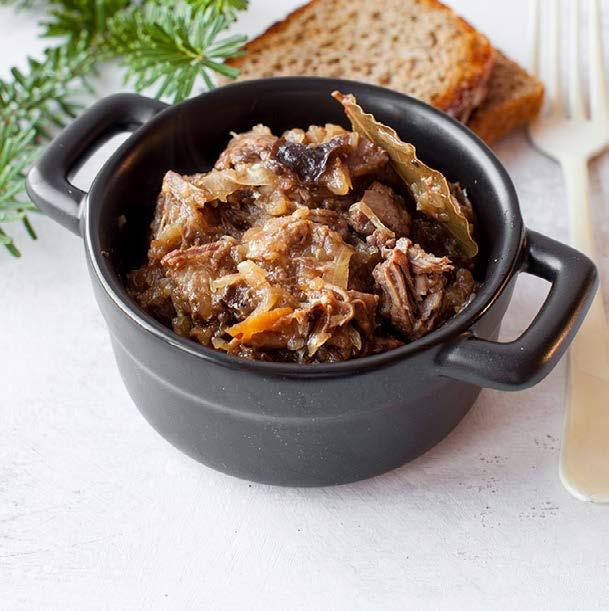
2 Bigos
Though there’s no standard recipe for this hearty stew, ingredients usually include fresh and pickled cabbage, pork, sausage, onion, mushrooms, plums, peppercorns, bay leaves, caraway and whatever else is on hand. In fact, metaphorically bigos translates to ‘big mess,’ ‘mish-mash’ or ‘confusion’ in Polish. A Polish restaurant or prospective bride can be fairly measured on the strength of their bigos, so put it to the test.
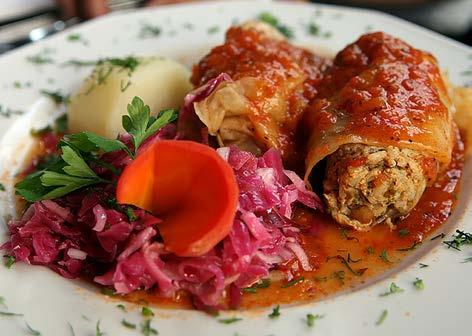
3 Gołąbki
Translating to ‘little pigeons’ for reasons perhaps best left unknown, this popular dish could be described as a ‘cabbage enchilada’. In lieu of a tortilla, the filling of rice, onion and typically minced pork (though vegetarian versions are also common), is rolled up inside large boiled cabbage leaves, then baked or steamed and topped with tomato or mushroom sauce. Better than it looks or sounds, in fact they’re the only pigeons we like.
4 Golonka
This is ‘pork knuckle’ or ‘ham hock,’ as in the part of a pig’s leg between the knee and ankle. Boiled, braised or roasted, this (and maczanka, p.21) is the closest the Poles come to barbecue, and is a delicacy. The meat should slip right off the bone, be served with horseradish, and washed down with beer. Generally sold by weight, you might end up with more than you bargained for, but it’s certainly an Instagram opportunity. Go caveman.
TRY IT HERE
While many of Kraków’s top Polish restaurants offer a more modern take on Polish cuisine, here are our favourite places that feature traditional Polish home cooking as we’ve always known it.
Gościnna Chata
I-5, ul. Sławkowska 10 (Old Town).
Wesele
J-6, Rynek Główny 10 (Old Town).
Morskie Oko
I-5, Pl. Szczepański 8 (Old Town).
Smakołyki
H-5, ul. Straszewskiego 28 (Old Town).
Starka
K-8, ul. Józefa 14 (Kazimierz).
Marchewka z Groszkiem
K-9, ul. Mostowa 2 (Kazimierz).
Kuchnia Polska 'Gąska'
L-10, ul. Limanowskiego 1 (Podgórze).
5 Placki Ziemniaczane
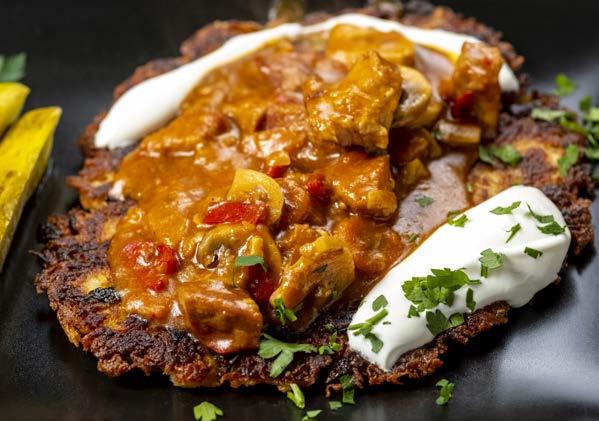
These savoury, fried potato pancakes are very similar to hashbrowns or Jewish latkes, and may be served in a variety of ways. Keep it simple with just sour cream (‘placki solo’), or turn it into a hefty meal by ordering them smothered in mushroom sauce or - our favourite - goulash (‘placki po węgiersku’). Highly caloric, they’re also a tried and true hangover cure.
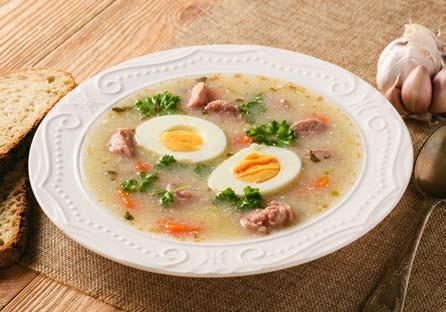
6 Żurek
It doesn’t get any more Polish than żurek – a sour soup made from a thick stock of fermented rye flour. Typically chock full of potatoes, sausage and hard-boiled eggs, żurek is often thickened with cream, and seasoned with marjoram, garlic, salt and pepper. The result is a tasty grayish gruel that any Polish peasant would be proud to polish off. If you’re lucky, you’ll even get it served in a bread bowl.
Drink Like a Local
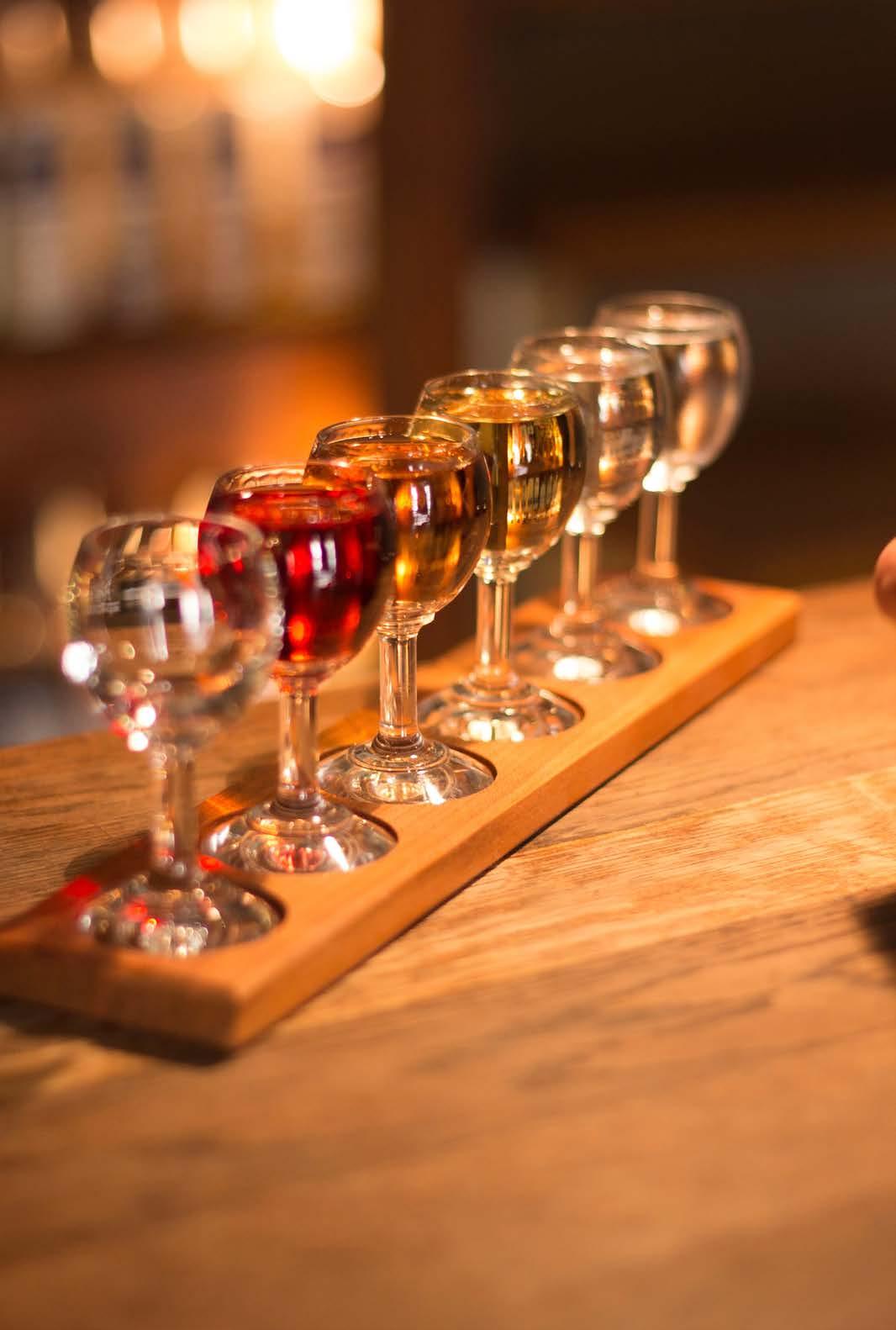
Poles have been producing vodka since the early Middle Ages, distilling their skill into some of the best brands in the world. What’s misunderstood, however, is that not only are there dozens of unique flavoured vodkas to choose from, but, as a nation, Poland actually imbibes more beer than vodka. Read on for our favourite Polish tipples and some tips on local craft beer. Na zdrowie!
A flight of flavoured vodkas from Wódka Cafe Bar.
1 Żołądkowa Gorzka
Due to its very name, which literally translates to ‘Stomach Bitter,’ this digestive liqueur gives even the most infirm of health an excuse to drink under the guise of its medicinal properties. Aged with herbs and spices, the original orange label Żołądkowa (there are many varieties) has an amber hue and sweet spiced taste. Incredibly palatable, order a double on ice and sip like a sophisticate.
2 Żubrówka
Known to many as ‘bison grass vodka,’ Żubrówka has been produced since the 16th century. Flavoured with a type of grass specific to Białowieża Forest (a blade of which appears in every bottle), this popular vodka is faint yellow, with a mild fragrance of mown hay and a subtle floral taste with traces of almond and vanilla. Drink it straight or combine it with apple juice for a refreshing concoction called a ‘tatanka.’
3 Krupnik
Popular in Poland and Lithuania, Krupnik is a sweet vodka made from honey and a multitude of herbs and spices, based on a recipe dating back to the 17th century. Buy a bottle for Mum – drinking vodka doesn’t get any easier than this. In winter, 'hot krupnik' (gorący krupnik) is a popular personal defroster with hot water, lemon and mulling spices added, or tip some out in your tea if you’re ever feeling under the weather.
:TRY IT HERE
While you can order the above vodkas in any bar, the following offer their own special varieties, or simply a huge selection.
Wódka Cafe Bar
D-3, ul. Mikołajska 5 (Old Town).
K-8, ul. Meiselsa 15 (Kazimierz).
Starka
K-8, ul. Józefa 14 (Kazimierz).
Wiśniewski
I-5, Plac Szczepański 2/1 (Old Town).
Craft Beer
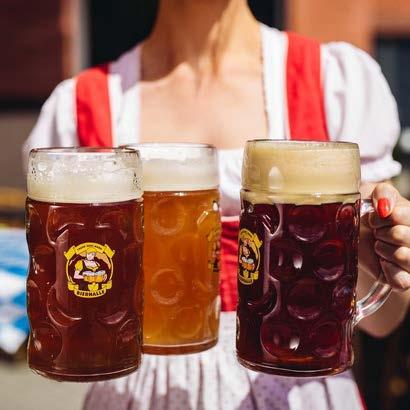
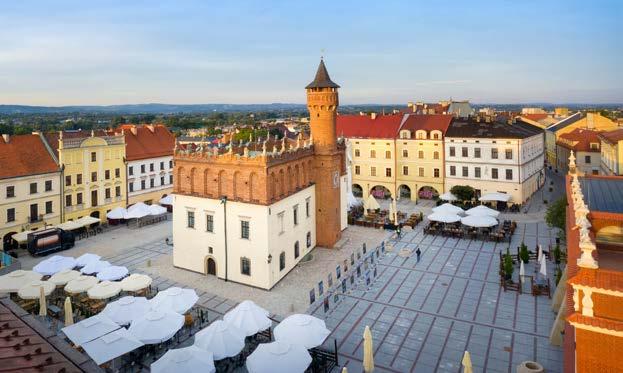
Despite a dramatic increase nationally, Kraków isn’t well-endowed when it comes to local breweries. That said, you can check out the Old Town's German-style Bierhalle (J-6, Mały Rynek 7), British-style T.E.A. Time (I-9, ul. Dietla 1) in Kazimierz, or the huge Kazimierz beer hall Stara Zajezdnia (K-9, ul. Św. Wawrzyńca 12) - all of which brew their beers on-site. Nearby Tarnów is also home to one of the country’s best breweries, Trzech Kumpli - look for their beers in bars and shops. To know exactly what’s on draught in each of Kraków’s multi-tap pubs, visit ontap.pl - proof that Poland’s beer culture is headier than ever.
TRY IT HERE
BroPub Craft Beer & Burgers
J-8, ul. Stradomska 11 (Old Town).
House of Beer
J-5, ul. Św. Krzyża 13 (Old Town).
Multi Qlti Tap Bar
I-5, ul. Szewska 21 (Old Town).
Viva la PINTA
J-5, ul. Floriańska 13 (Old Town).
Szklanki
K-8, ul. Jakuba 19 (Kazimierz).
Weźże Krafta
L-8, ul. Dajwór 16 (Kazimierz).
Multi Qlti Tap Bar
Museums & Art Spaces
There’s no better place to learn about Kraków’s history, culture and character than in its many museums. Ranging from obscure to obligatory, the city boasts upwards of 75 such cultural institutions. Clearly more than we can list here, what follows are those venues that we consider of most value to foreign visitors, divided into digestible groups. Note that some of Kraków’s most essential museums are included in the Walking Tours.
Kraków’s Most-Visited Museums
Are they the best? That’s debatable, but some do demand that you plan your visit and get tickets in advance.
1 Schindler’s Factory
The site of one of WW2’s most well-known stories thanks to the Spielberg film, Schindler’s List (spoiler: Nazi war profiteer has change of heart, eventually saving 1200 Jews), today this worldfamous factory is a world-class museum detailing daily life in Kraków during Nazi occupation. A recent policy change has made buying tickets in advance less of a necessity; get them online via bilety.mhk.pl, or at the museum ticket desk on the day of your visit. | See p.94.
2 Czartoryski Museum (MNK)
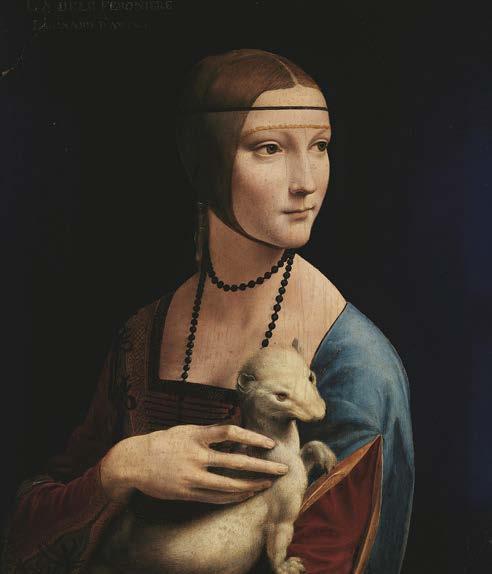
Recently modernised, the Czartoryski Museum is Poland’s oldest museum and one of the most valuable art collections in Europe. It includes a bit of everything: masterpieces by da Vinci and Rembrandt, trophies from the 1683 Battle of Vienna, Chopin’s death mask, Copernicus' remains, Shakespeare’s chair, ancient Egyptian artefacts, Far Eastern art, Polish historical memorabilia and more. Perhaps more meaningful for Polish audiences than foreigners, audioguides (10zł) are recommended for getting more out of the main exhibit. Very popular, all entrances are timed and tickets should be bought in advance via bilety.mnk.pl. Visiting time: 3hrs.
J-5, ul. Pijarska 15. Open 10:00-18:00; closed Mon. Admission 65/50zł, students 7-26 1zł, kids under 7 free, Tue free.
3 Collegium Maius
Also known as the Jagiellonian University Museum, see the 14thcentury interiors and historical treasures of Copernicus’ alma mater. Tickets are timed and available online 10 days in advance via bilety. uj.edu.pl. | See p.54.
4 Rynek Underground
This hi-tech museum takes you under the surface of the market square to explore medieval merchant stalls that predate today’s Cloth Hall, and experience the city’s history - from its first settlers up to today - over the course of 6,000m of multimedia exhibits. Essentially an archaeological site full of touch-screens and holograms, highlights include the automated puppet theatre, and the remains of an 11thcentury cemetery with ‘vampire prevention burials’ (seriously). Tickets are timed and should be bought in advance online (bilety. mhk.pl) or in Krzysztofory Palace (Rynek 35). The museum entrance is located in the Cloth Hall opposite St. Mary’s Basilica. Visiting time: 90mins.
I-5, Rynek Główny 1. Open 10:00-19:00; Tue 10:0014:00; Fri-Sun 10:00-20:00; closed 2nd Mon of each month. Admission 45/35zł; Tue free.
5 Krakow National Museum (MNK), Main Branch
The National Museum has 11 branches in Kraków, and this monolithic structure - built from 1935 to 1989 - is the landing spot for their most ambitious temporary exhibits; don’t be surprised if tickets for special exhibits are sold out on weekends, or there's a queue to get in. Permanent exhibits include the Gallery of Decorative Arts, Gallery of European Art and the fabulous Gallery of 20th & 21st Century Polish Art. The latter is worth a visit on its own, and will familiarise you with the most important Polish names in modern art. Visiting time: 3hrs.
G-6, Al. 3 Maja 1, bilety.mnk.pl. Open 10:00-18:00; closed Mon. Admission 45/35zł (permanent exhibits only), students 7-26 1zł, kids under 7 free; Tue free.
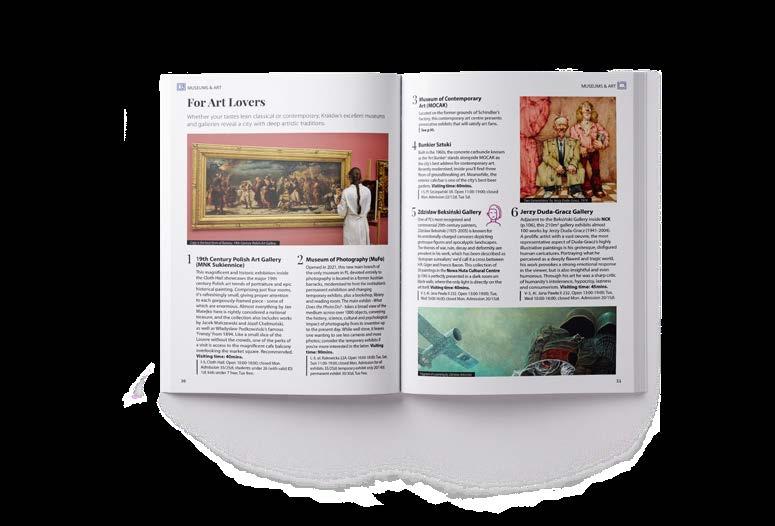
For Art Lovers
Whether your tastes lean classical or contemporary, Kraków’s excellent museums and galleries reveal a city with deep artistic traditions.
1 19th Century Polish Art Gallery (MNK Sukiennice)
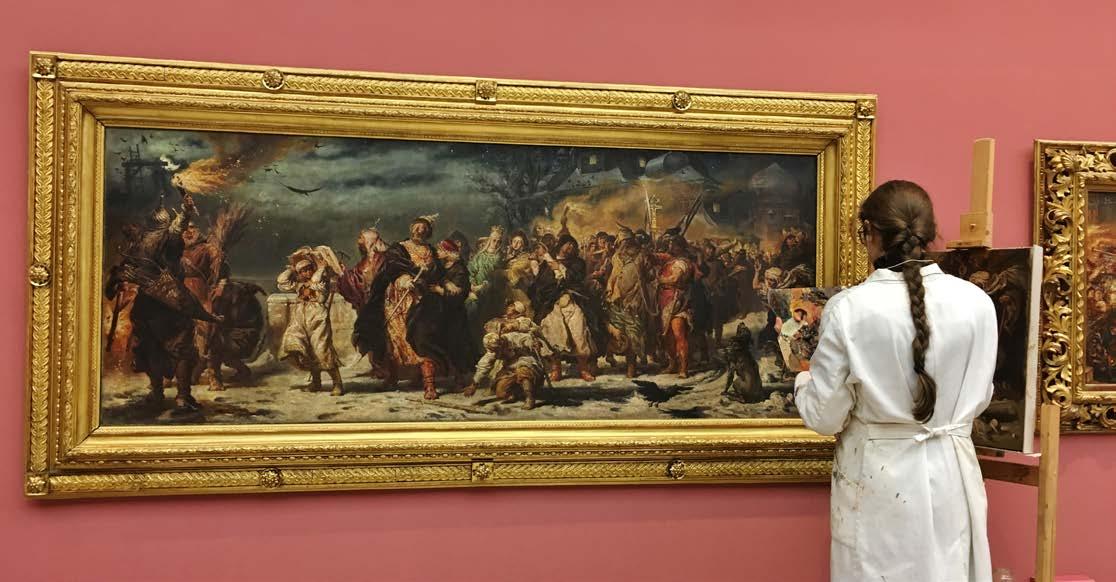
This magnificent and historic exhibition inside the Cloth Hall showcases the major 19th century Polish art trends of portraiture and epic historical painting. Comprising just four rooms, it's refreshingly small, giving proper attention to each gorgeously-framed piece - some of which are enormous. Almost everything by Jan Matejko here is rightly considered a national treasure, and the collection also includes works by Jacek Malczewski and Józef Chełmoński, as well as Władysław Podkowiński’s famous ‘Frenzy’ from 1894. Like a small slice of the Louvre without the crowds, one of the perks of a visit is access to the magnificent cafe balcony overlooking the market square. Recommended. Visiting time: 40mins.
I-5, Cloth Hall. Open 10:00-18:00; closed Mon. Admission 35/25zł, students 7-26 1zł, kids under 7 free; Tue free.
2 Museum of Photography (MuFo)
Opened in 2021, this new main branch of the only museum in PL devoted entirely to photography is located in a former Austrian barracks, modernised to host the institution’s permanent exhibition and changing temporary exhibits, plus a bookshop, library and reading room. The main exhibit - What Does the Photo Do? - takes a broad view of the medium across over 1000 objects, conveying the history, science, cultural and psychological impact of photography from its invention up to the present day. While well done, it leaves one wanting to see less cameras and more photos; consider the temporary exhibits if you’re more interested in the latter. Visiting time: 90mins.
L-3, ul. Rakowicka 22A. Open 10:00-18:00; Tue, Sat, Sun 11:00-19:00; closed Mon. Admission for all exhibits 35/25zł; temporary exhibit only 20/14zł; permanent exhibit 30/20zł, Tue free.
Copy is the best form of flattery; 19th Century Polish Art Gallery.
3 Museum of Contemporary Art (MOCAK)
Located on the former grounds of Schindler’s Factory, this contemporary art centre presents provocative exhibits that will satisfy art fans. | See p.95.
4 Bunkier Sztuki
Built in the 1960s, the concrete carbuncle known as the 'Art Bunker' stands alongside MOCAK as the city's best address for contemporary art. Recently modernised, inside you'll find three floors of groundbreaking art. Meanwhile, the exterior cafe/bar is one of the city’s best beer gardens. Visiting time: 60mins.
I-5, Pl. Szczepański 3A. Open 11:00-19:00; closed Mon. Admission 22/12zł, Tue 5zł.
5
Zdzisław Beksiński Gallery
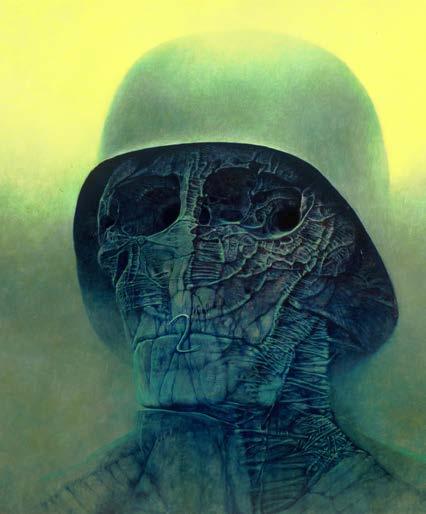
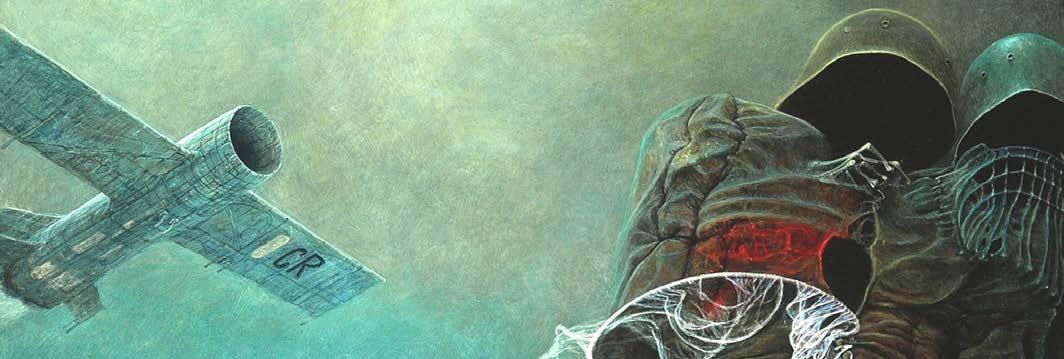
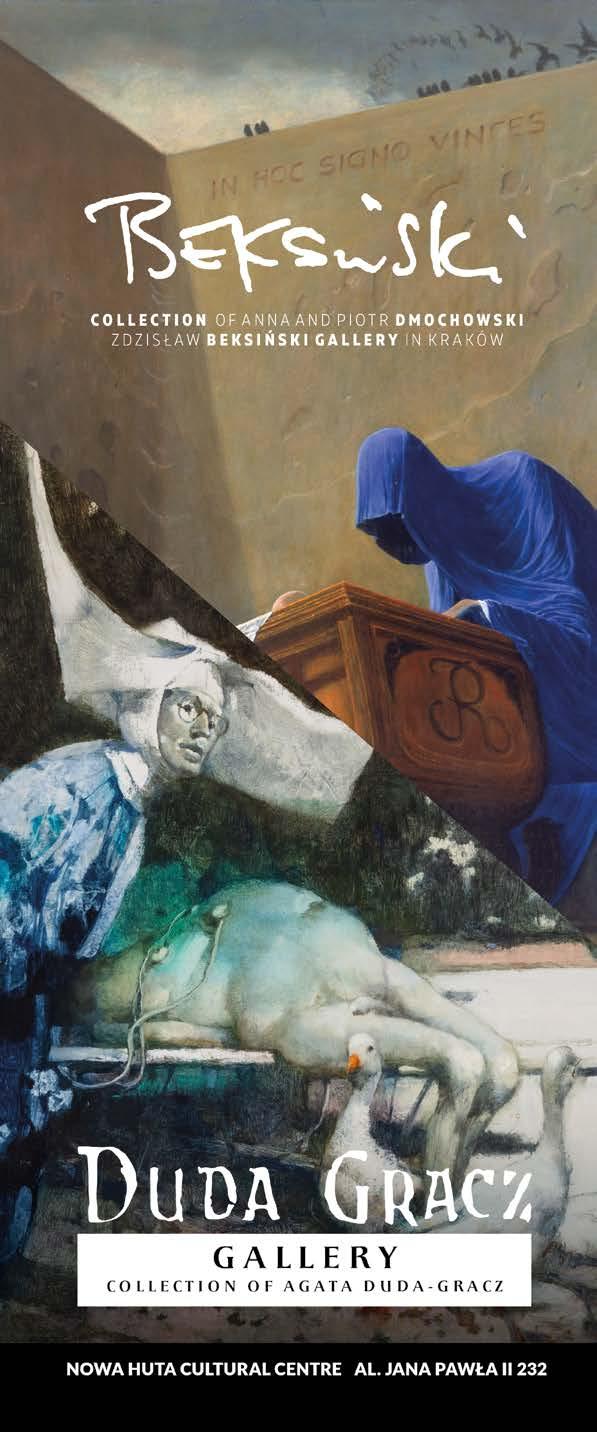
One of PL's most recognised and controversial 20th-century painters, Zdzisław Beksiński (1925-2005) is known for his emotionally-charged canvases depicting grotesque figures and apocalyptic landscapes. The themes of war, ruin, decay and deformity are prevalent in his work, which has been described as 'dystopian surrealism;' we'd call it a cross between H.R. Giger and Francis Bacon. This collection of 50 paintings in the Nowa Huta Cultural Centre (p.106) is perfectly presented in a dark room on black walls, where the only light is directly on the art itself. Visiting time: 40mins.
V-3, Al. Jana Pawła II 232. Open 13:00-19:00; Tue, Wed 10:00-16:00; closed Mon. Admission 20/15zł.
6 Jerzy Duda-Gracz Gallery
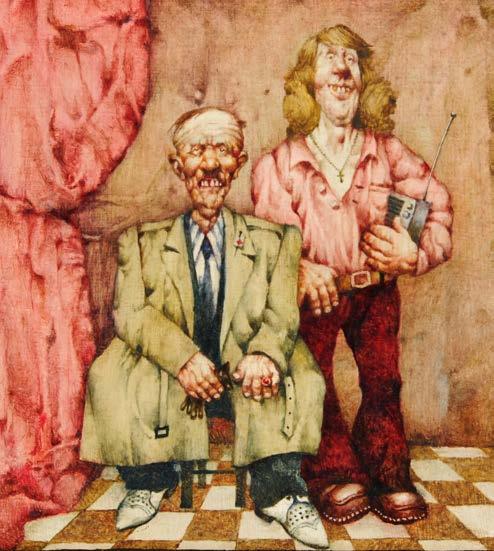
Adjacent to the Beksiński Gallery inside NCK (p.106), this 210m2 gallery exhibits almost 100 works by Jerzy Duda-Gracz (1941-2004). A prolific artist with a vast oeuvre, the most representative aspect of Duda-Gracz’s highly illustrative paintings is his grotesque, disfigured human caricatures. Portraying what he perceived as a deeply flawed and tragic world, his work provokes a strong emotional response in the viewer, but is also insightful and even humorous. Through his art he was a sharp critic of humanity’s intolerance, hypocrisy, laziness and consumerism. Visiting time: 45mins.
V-3, Al. Jana Pawła II 232. Open 13:00-19:00; Tue, Wed 10:00-16:00; closed Mon. Admission 20/15zł.
Fragment of a painting by Zdzisław Beksiński.
'Two Generations' by Jerzy Duda-Gracz, 1974.
Niche & Noteworthy
Although specific in scope, these museums are absolutely worth the price of admission for interested parties.
1 Krzysztofory Palace
This 17th-century Baroque palace on the market square houses the kid-friendly main branch of the Museum of Kraków (MK). The permanent exhibit tells the city’s story - past and present - through a lighthearted and interactive combination of history, magic and legend, intertwined with everyday life and the present day. Among the diverse and colourful exhibits you’ll see the iconic Lajkonik costume, the famous silver rooster of the Fowler Brotherhood, the sceptre of Kraków's mayor, and even brandish a medieval knight's sword (heavy!). Tickets for all Museum of Kraków branches are available here, and there's also a large museum shop. Visiting time: 90mins.
I-5, Rynek Główny 35. Open 10:00-18:00; closed Mon. Admission 31/26zł, Tue free (permanent exhibit)
2 Stained Glass Museum
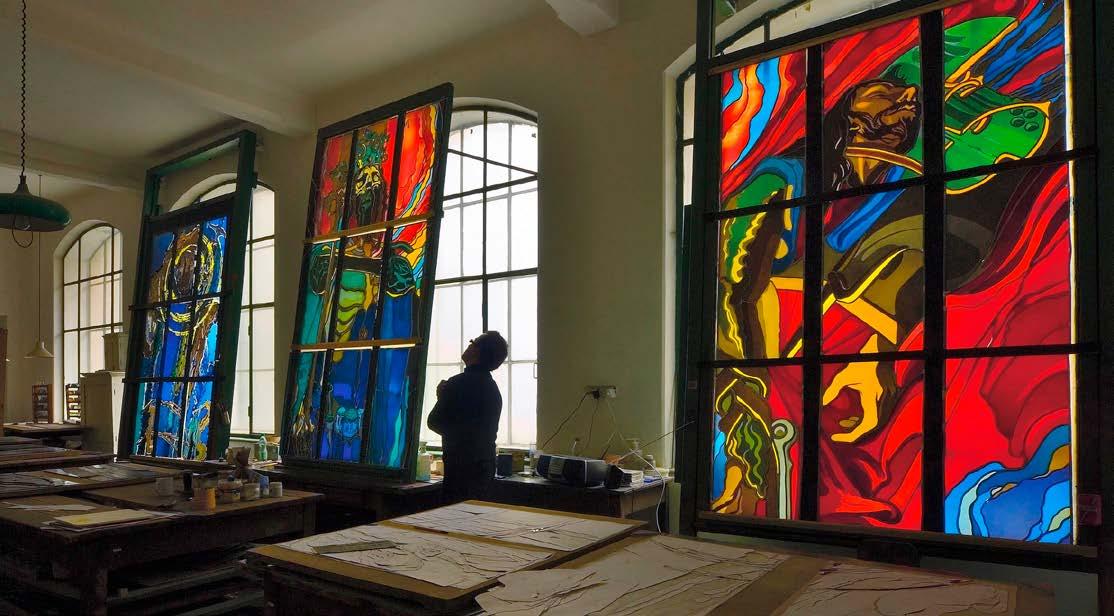
This historic building was specifically designed to house a stained glass studio and has operated as one since 1906. Artistic luminaries Stanisław Wyspiański and Józef Mehoffer created works here in the early-20th century, and the workshop retains much of its layout and atmosphere from those times. Today a ‘living museum,’ visiting is possible via guided tours, during which you’ll see artists at work, learn how stained glass is produced, and see some superb examples, including Wyspiański's famous 'Apollo' window and the previously unrealised 'Polonia.' Tours are offered in English at 12:00 and 15:00; purchase tickets on-site or online (muzeumwitrazu.pl). The museum also offers workshops, a cafe and gift shop. Visiting time: 45mins.
G-6, Al. Krasińskiego 23. Open 11:30-13:30, 14:3016:30; Sat 10:00-17:00; closed Sun, Mon. Guided tours 80zł; family ticket (2+2) 192zł.
Wyspiański's Wawel triptych in the workshop of the Stained Glass Museum before being installed in Wyspiański Pavilion (p.56).
3 Engineering & Technology Museum (MIT)
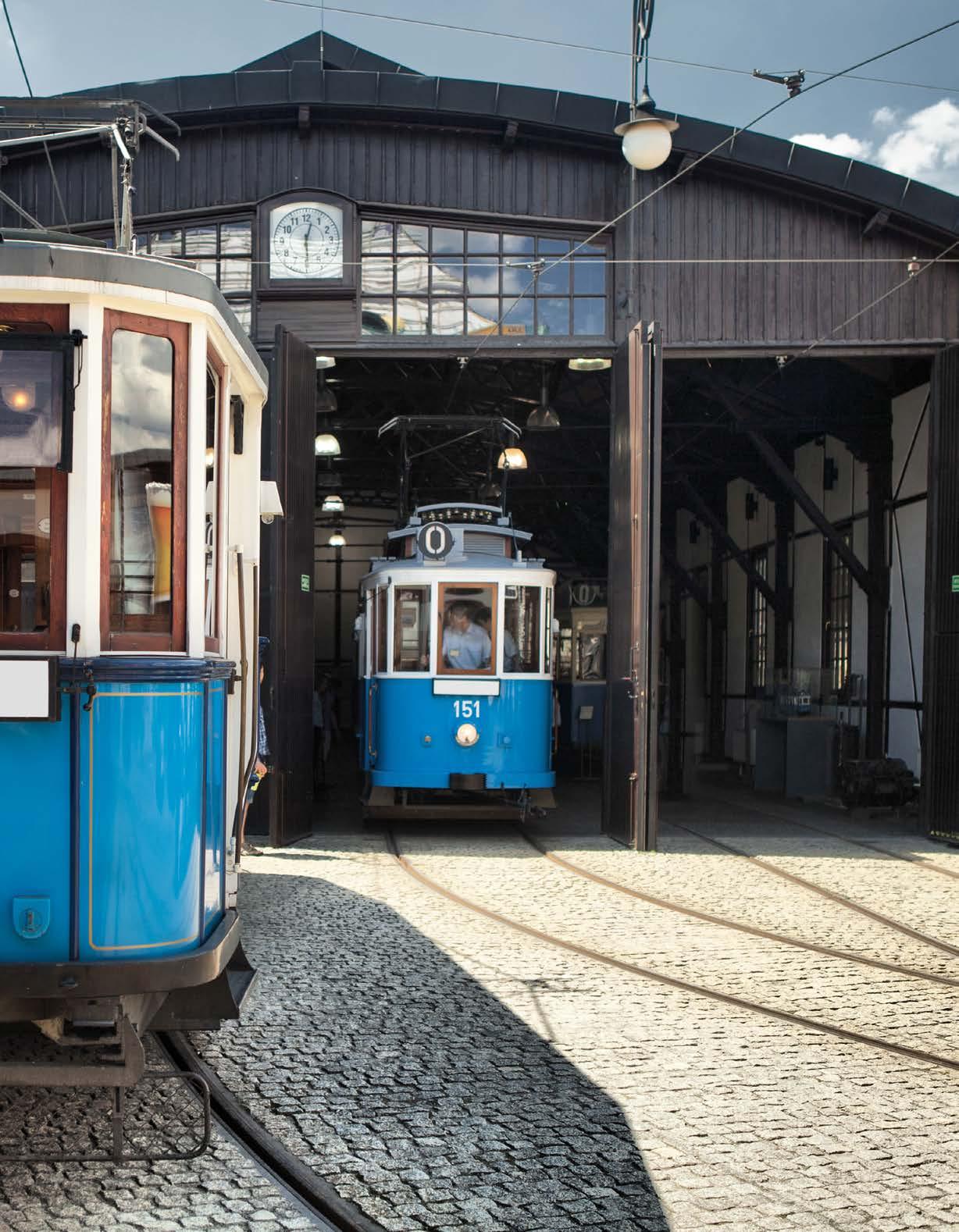
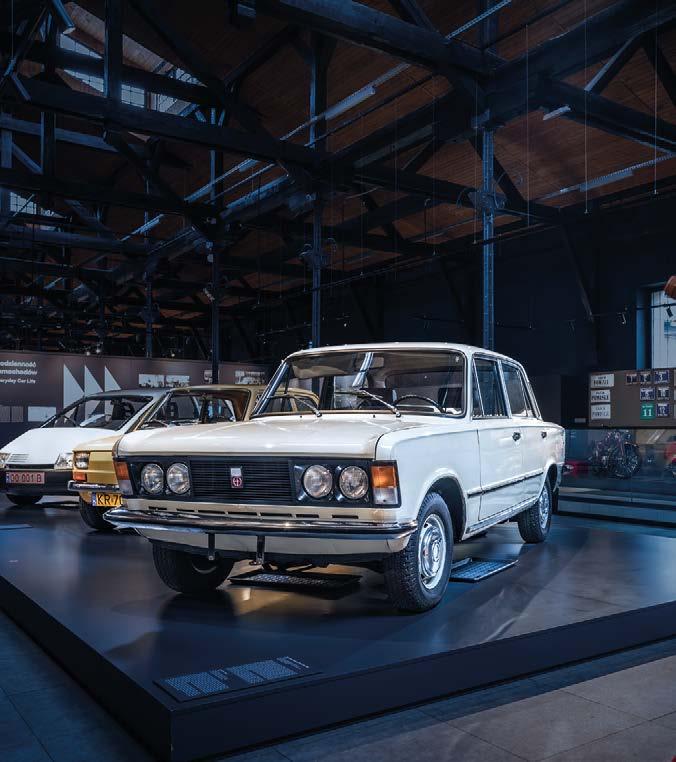
Located inside a late-19th-century tram depot, this interactive museum introduces visitors to urban engineering thought - the way it has transformed cities and impacted the lives of inhabitants - through an array of antiquated items ranging from 16th-century water pipes to Edison's phonograph to communist-era vehicle prototypes and early computers. There is also a hangar full of historical trams and trolleys you can board and explore, making this a fun diversion for kids and history buffs. Visiting time: 45mins.
K-9, ul. Św. Wawrzyńca 15. Open 10:00-18:00; closed Mon. Admission 35/28zł.
4
Józef Mehoffer House
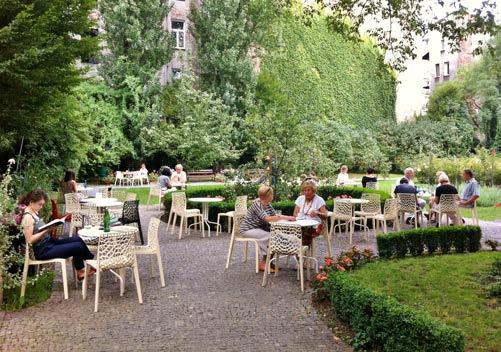
Józef Mehoffer (1869-1946) was a skilled stained-glass artist who collaborated with Stanisław Wyspiański on numerous Kraków church interiors, as well as his own projects across Galicia. His house was a meeting place for artists and is a delight to visit, filled with elegant Secessionist art, furnishings, sketches and stained glass pieces that attest to his important artistic legacy. You also won't find a more magical place to relax, read or grab a bite than Meho Cafe - one of Kraków's best-kept secrets, located in the beautiful garden behind the house (no ticket required). Visiting time: 45mins.
K-2, ul. Wita Stwosza 12. Open 10:00-16:00; Tue 10:00-18:00; closed Mon. Admission 18/14zł, students 7-26 1zł, kids under 7 free; Tue free.
Kościuszko Mound & Museum
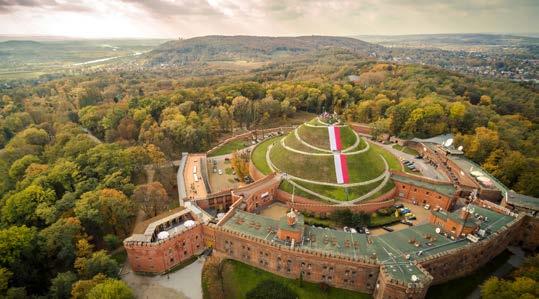
A unique site that combines nature, engineering and heritage, head here on a nice day to pay respects to one of history’s most virtuous individuals. Dedicating his life to the cause of freedom, Tadeusz Kościuszko (17461817) fought in the American Revolution, freed his serfs, led an insurrection against foreign rule in Poland, and was basically America’s first abolitionist. Beloved in his homeland, upon his passing he was buried with the kings and a tribute in the form of an earthwork mound like that of city founder King Krak (p.100) was proposed. For three years, people brought soil from all over PL to add to the selected site overlooking the centre of Kraków. Completed in 1823, today Kościuszko Mound stands 34m high, 326m above sea level, and offers views of the Tatra Mountains on a clear day.
In the 1850s the occupying Austrians built a massive brick fortress around the Mound, inside which is the new Kościuszko Museum - a slightly bombastic multimedia exhibit that traces its subject’s heroic arc from spurned youth to commander of the Kościuszko Insurrection in 1794. Exiting onto the roof of the fortress, the winding climb to the mound’s peak may be tiring, but the panoramic views are fantastic. 4km west of the Rynek, to get there take a tram to the ‘Salwator’ terminus (E-8) and enjoy a lovely 25min walk up ul. Św Bronisława; or catch bus 100 from the same spot. Visiting time: 60mins.
A-7, Al. Waszyngtona 1. Open 09:00-19:00; check online. Admission 34/26zł.
You don't need a ticket to visit the lovely Mehoffer garden.
Gifts & Souvenirs
It’s only natural to want to pick up a local souvenir, or find a nice gift that shows your friends and loved ones you were thinking about them while throwing back those pints. You may have noticed that Kraków has a giant souvenir gallery right in the middle of its market square, and while a stroll through the Cloth Hall (p.50) is a requisite experience, here are some alternatives worth considering.
Find more gift ideas and shops worth visiting
1 Local Spirits
Nothing says 'I've been to Poland’ like a suitcase of vodka. An easy souvenir, even if it’s not to your taste, Belvedere and Chopin are elite clear brands you can find in fancy gift sets, but flavoured vodkas like original Żubrówka (bison grass vodka) and Żołądkowa Gorzka (bitter stomach vodka, orange label) are certainly more unique, while also easy to find. Of course you’ll also find dozens of fruit flavours available in most alcohol shops; one recommended regional specialty is tarninówka, or sloe berry vodka, the fruit from which the nearby city of Tarnów takes its name. Miód pitny, or Polish mead, also bears mention for its medieval traditions and ‘Protected Designation of Origin’ (PDO) status; typically sold in ceramic bottles, in various strengths and sometimes flavoured with fruit, miód pitny (literally ‘drinkable honey’) also tastes great warmed up.
: BUY IT HERE
The duty-free shops at Kraków Airport have a dangerously large selection of export vodkas and spirits, including tarninówka and miód pitny (if you look hard). For local herbal and fruit liqueurs (nalewki), head to Szambelan (I-6, ul. Bracka 9) - a small shop where you can taste samples before making a selection.
2 Amber Jewellery
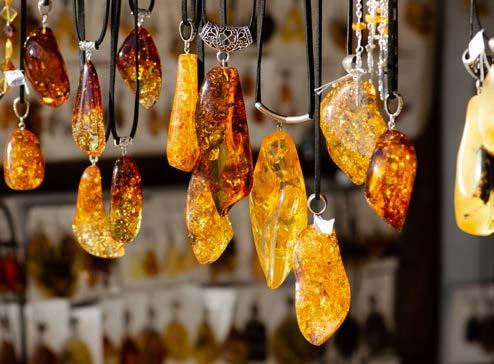
Honey alcohol isn’t the only golden nectar in town, there’s also plenty of amber. Though far from the Baltic Sea from which it hails, Kraków was a major stop on the Amber Road and you’ll find beautiful jewellery made from this fossilised resin all over the Old Town. Come back from PL without bringing baby some Baltic Gold and you’ve booked yourself a stint in the doghouse.
: BUY IT HERE
Browse the stalls of the Cloth Hall, where prices are surprisingly competitive; stroll down ul. Grodzka (I-6), where you’ll find numerous amber galleries; head to the Boruni Amber Gallery & Museum (J-5, ul. Św. Jana 2) for beautiful free exhibits and a top-notch shop.
3 Slippers (Pantofle)
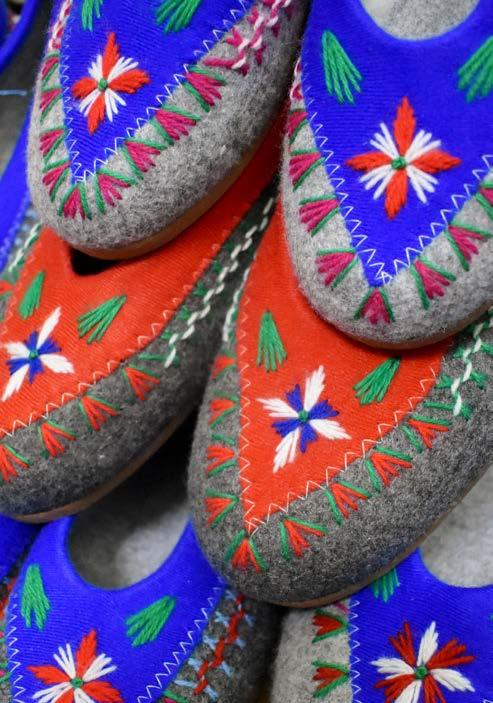
For first-timers in Poland (particularly our American friends with their ridiculous wall-towall carpeting), the idea of house slippers may seem a bit silly, but admit it - you love them. Wearing slippers around the home and having extra pairs for guests is simply part of Polish hospitality, and once you embrace it, why let go? Live here long enough and you’ll start travelling with your own pair, we promise. Women’s slippers, which are colourfully embroidered with folk motifs, are a particularly fashionable and very affordable gift from Poland.
: BUY IT HERE
Cloth Hall (I-5, Rynek Główny 1/3).
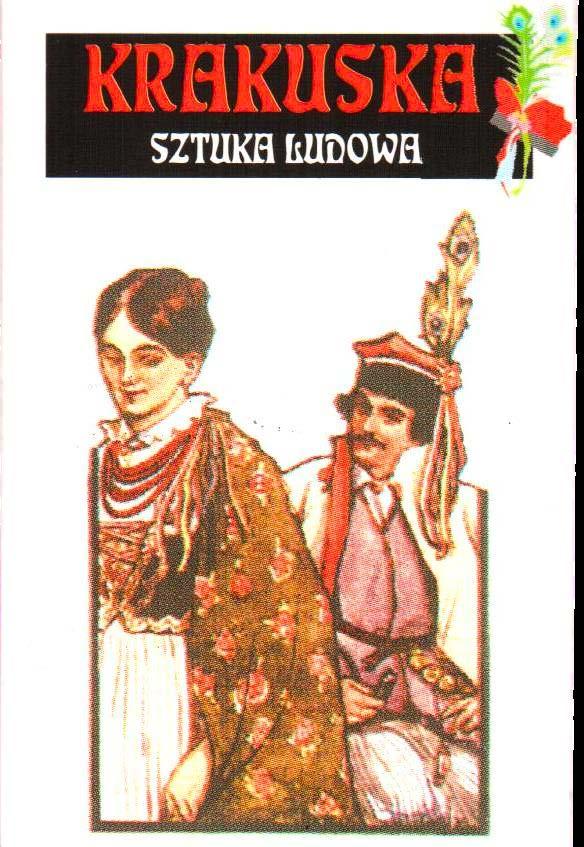
Krakuska Sztuka Ludowa (I-5, ul. Szewska 9).
4
Wooden Chess Sets
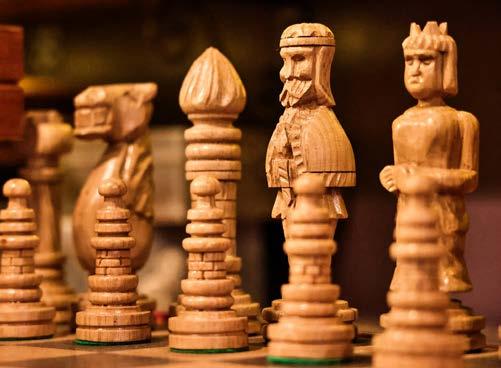
While you’re scanning the stalls of the Cloth Hall keep your eyes peeled for handsome hand-carved chess sets, which are very affordable and make a nice present. Of particular note are the hexagonal three-person sets - an interesting variant on the classic game which is particularly popular in Poland, and just as crazy (and fun!) as it sounds.
: BUY IT HERE
Moje Szachy (L-10, Św. Benedykta 3; Podgórze) - if you’re a chess fanatic, or just an ardent admirer of craftsmanship, seek out Łukasz Wiciarz’s woodshop, where the sculptor can be found hard at work creating pieces for the beautiful sets available here.
Made in Krakow - Przemek Czaja Gallery & Shop (J5, Pl. Mariacki 3) - 3-person chessboards available.
Hand-carved chesspieces from Moje Szachy. [Photo c/o Kraków dla Mieszkańców.]
5 Folk Pottery from Bolesławiec
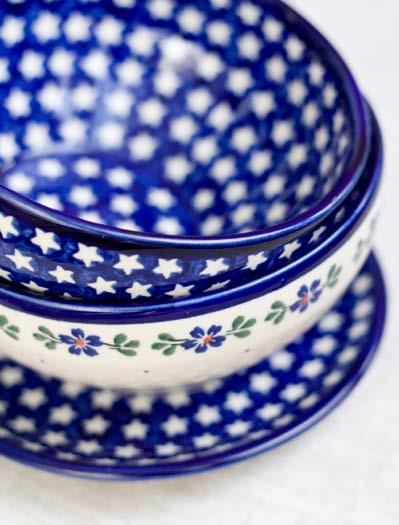
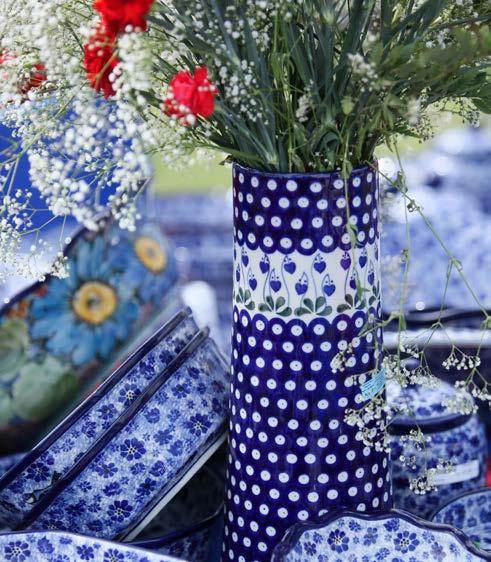
Hailing from a small village in western Poland, Bolesławiec folk pottery is one of Poland’s most popular exports, and Kraków is a great place to start a collection for yourself or anyone else you know with a kitchen. Beloved for its simple hand-painted folk patterns, Bolesławiec is Polish design at its best - iconic, functional, extremely durable and oh so Polish. As the portfolio of patterns has expanded over the years, there is now truly something that will appeal to everyone, but the most traditional, iconic, original patterns are those with blue and white dots. Their products extend from bowls, plates, teacups, butter dishes, sugar bowls, pie dishes and other kitchenware to Christmas decorations, candleholders and other bits of decor. Trust us, if you’ve got an aunt or mother-in-law for whom you never know what to buy, this is the answer. Take caution, however. Buying Bolesławiec can be habit-forming.
: BUY IT HERE
Niebieska Kropka (J-8, ul. Stradomska 15 & 16)the city’s best selection.
Sławkowska Street (I-5) - find several ceramics shops on this street just off the market square.
6 Graphic Art & Posters
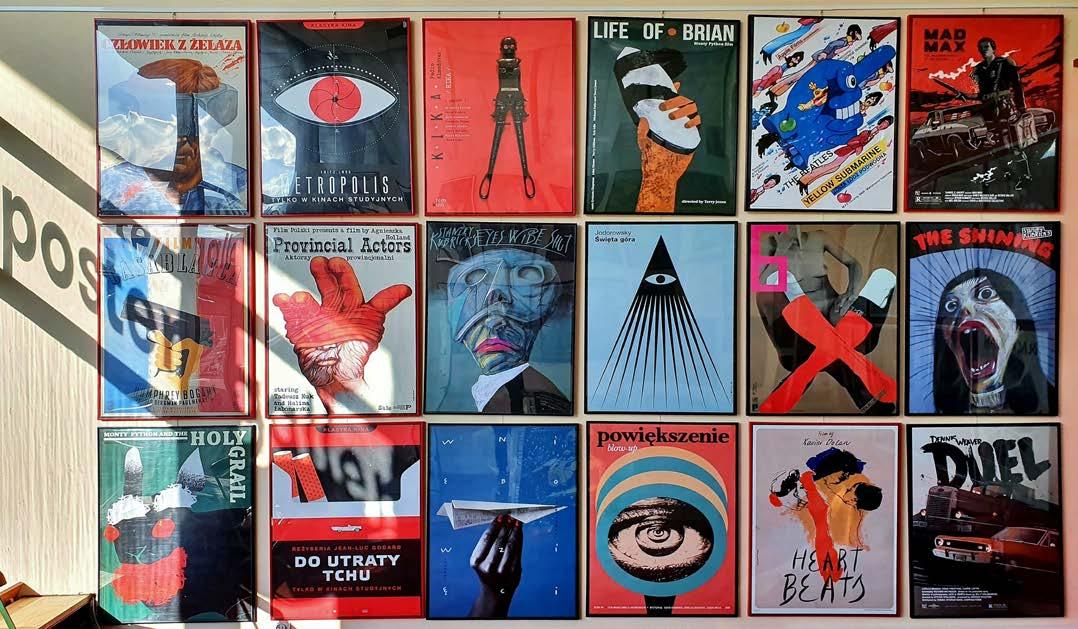
Poland has a rich tradition of graphic art, particularly poster art, which has developed as its own specific genre, with various schools and artists gaining national and even international renown as a result. In addition to posters for theatre productions, concerts, festivals and propaganda campaigns, during the PRL era Polish artists produced original posters for Hollywood blockbusters without having seen the films or knowing much about them. As a result, you can find unique, highly original Polish posters for some of your favourite films that will surprise and potentially delight you with their abstract representations.
: BUY IT HERE
Galeria Plakatu (J-6, ul. Stolarska 8-10); Dydo Poster Gallery (G-6, ul. Focha 1) - peruse limited edition prints and pick up awesome postcards at these family-owned poster galleries.
Made in Krakow (J-5, Pl. Mariacki 3) - beautiful prints and postcards by local photographer Przemek Czaja.
Discover the hipness of Polish poster art at Dydo Poster Gallery.
Polish Design
With traditional folk motifs being revived in fresh ways, and communist-era aesthetics finding new appreciation, Polish design is having its moment. Kraków has no shortage of artisans, so instead of ‘what to buy,’ here are some additional places worth supporting where you'll find unique, wonderful locallymade items. Follow the QR code to our website for more.
Blazko Jewellery
K-8, ul. Józefa 11 (Kazimierz).
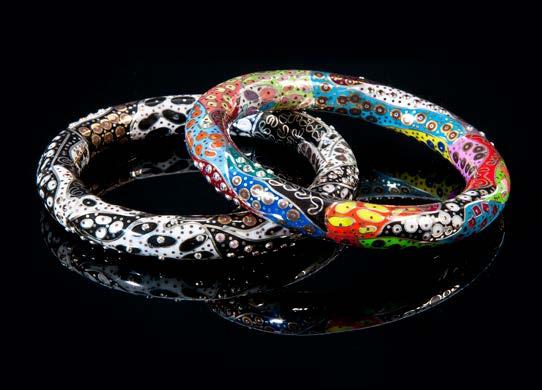
Gallery/workshop of Grzegorz Błażko - creator of highly unique silver jewellery.
Chorąży Caps & Hats
J-9, ul. Krakowska 35A (Kazimierz).
Stylish men’s hats, hand-made by a master; a disappearing craft.
Forum Designu
G-6, ul. Focha 1 (Hotel Cracovia).
Huge collective showroom for small Polish brands - decor, jewellery, apparel and more.
KOKOworld
K-7, ul. Starowiślna 19 (Old Town).
Krakow-based fair-trade fashion brand with a colourful urban-ethno aesthetic.
Rzeczy Same
KRAKUSKA SZTUKA LUDOWA
Souvenirs from Kraków
L-9, ul. Nadwiślańska 11 (Podgórze).
Curated selection of Polish aesthetics: decor, jewellery, textiles, ceramics, prints, more.
Blazko Jewellery.
Getting Around
Although we firmly believe the best way to get around Kraków is on foot, the city boasts a comprehensive and easy-to-use public transport system, as well as car share, e-scooters and more.
Slowing down and scared of the scrapyard? Make a new beginning among like-minded trams at the Kraków Engineering Museum (p.81): a continuing care community for trolleys on their twilight track.
Trams & Buses
While Krakow has no underground metro system it does have an integrated bus and tram system which runs from 05:00-23:00, with night trams and buses continuing less frequently after that. Check timetables, figure out how to get from point A to point B, and buy tickets via jakdojade.pl - an invaluable navigation site and transport app.
Transport tickets can be purchased from the handy ticket machines (also in English) at major stops, on-board trams and buses, or electronically via the Jakdojade mobile application (recommended). Note that some older ticket machines take coins only, so it may be wise to have some handy.
Tickets are the same for trams and buses, and are timed, allowing you to change between tram or bus lines within the allotted time. The cheapest fare is good for 15mins at a cost of 4/2zł. By our estimation, this is about the time it should take to go about 5-8 stops, and ideal for travel around the Old Town, Kazimierz and Podgórze. If you’re going outside the centre (Nowa Huta, for example), we recommend you purchase a 30min (6zł) or 60min (8zł) ticket. 90min, 24-hour, 48-hour, 72-hour, and unlimited weekend family passes are also options. Note that those over the age of 70 ride for free, as do kids until age 7. ISIC and student cards are valid for discounted tickets, but you must carry your ID and be under 26.
Most importantly, if you purchase your ticket via a ticket machine, you must stamp it immediately on boarding the tram or bus in the small machines on-board, even if you bought your ticket on-board. Inspectors regularly travel on the lines handing out very costly fines to those without valid or proper tickets. | jakdojade.pl
For more detailed information about getting to Kraków in the first place, visit our website.
Rideshare & Taxis
You’ll be happy to know that some of the rideshare apps likely already on your phone will work in Kraków, including Bolt , Free Now and Uber . In fact, rideshare services and taxis are basically indistinguishable at this point, with all drivers having the same permissions and most operating on multiple platforms. Nonetheless, if you want to make sure you’re getting an actual taxi, download the iCar app or call (+48) 12 653 55 55 .
Car Rental & Car Share
All most travellers need to rent a car in PL is 18 years of age, a credit card (not debit), and a valid foreign driver’s licence. Note, however, that those from countries that didn’t ratify the Vienna Convention on Road Traffic (United States, China, Australia...) cannot legally drive on their home licences; an International Driver’s Licence is required. Major car rental companies like Avis and Hertz can be found at the airport, as well as in the city centre.
Poland also has a very good car-share service available through the Traficar app, and now Bolt as well, with a large fleet of cars around Kraków. For short trips the cost is comparable to taking a taxi; the day rate option is a great alternative to traditional car rental, and you don’t pay for gas, insurance or parking. Just park the car in a legal space within their service zone when you’re finished. You can also finish your ride in other Polish cities where Traficar or Bolt operate. As such, this is a great option for day and weekend trips, or travelling on to your next destination at your own pace. Note that like any car rental, you will need a valid driver’s licence recognised in PL to register for the service. | traficar.pl
Bike Rental
While Kraków isn't exactly a great cycling city, the centre is very flat and authorities have been doing an admirable job of adding more bike paths and improving road surfaces. Having two wheels under you is not only a great way to get some exercise, but also a good way to explore more of the centre and reach attractions beyond it like Zakrzówek (E-12), Nowa Huta (p.104) and Kraków’s Mounds (p.33, 100).
Embarrassingly, Kraków does not have its own city bike share system at the moment, but there are several bike rental companies in the centre of town, most of which offer both regular and electricassisted bicycles, as well as bike tours and repair services.
Cruising Kraków
I-5, ul. Sławkowska 6A (Old Town).
Kraków Bike Tour
I/J-5, ul. Sławkowska 11 (Old Town). J-8, ul. Józefa 12 (Kazimierz).
My Cycle K-11, ul. Kalwaryjska 29 (Podgórze).
Electric Scooters
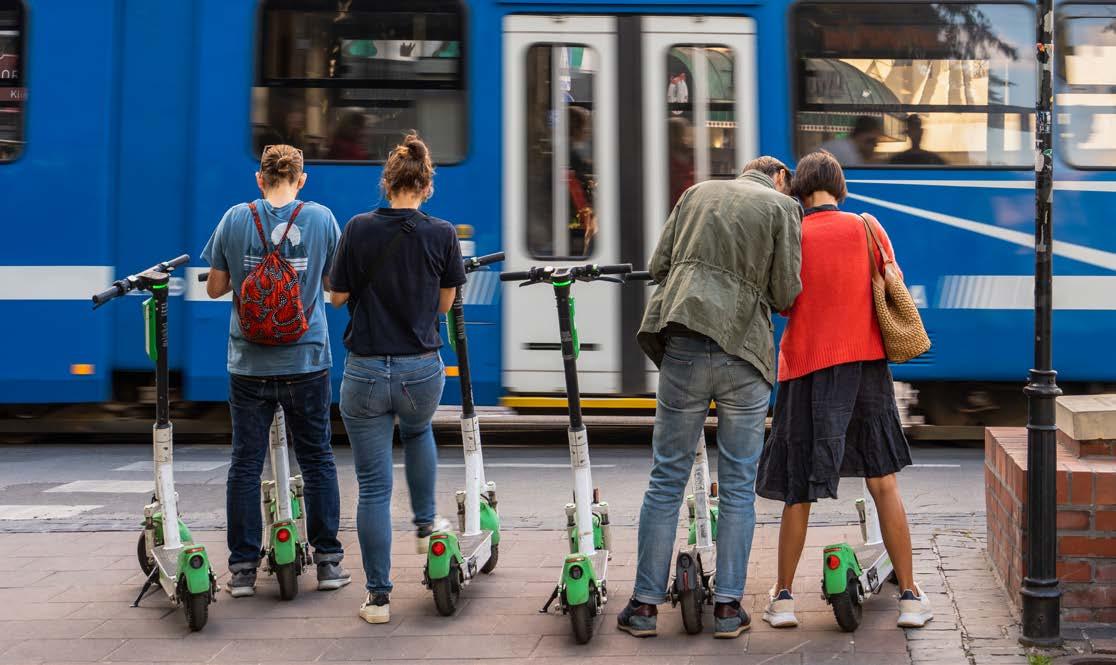
Although agitating to some locals, electric motorised scooters provide a relatively cheap, easy, efficient and environmentally-friendly way to get around the centre of Kraków. At the moment the most useful e-scooter apps are Bolt (car share also), Lime (also available through the Uber app) and Dott (formerly Tier); all have similar prices and restrictions.
Note that scooters are automatically slowed down and cannot be parked anywhere inside the Planty Park that rings the Market Square. Due to designated parking areas, your destination and where you are able to end your ride may not be the same, so check in the app before setting off.
Bike Tripping
For insight on some of the best bike trips beyond the centre of Kraków, including maps, distances and estimated times, visit our website.
Old Town
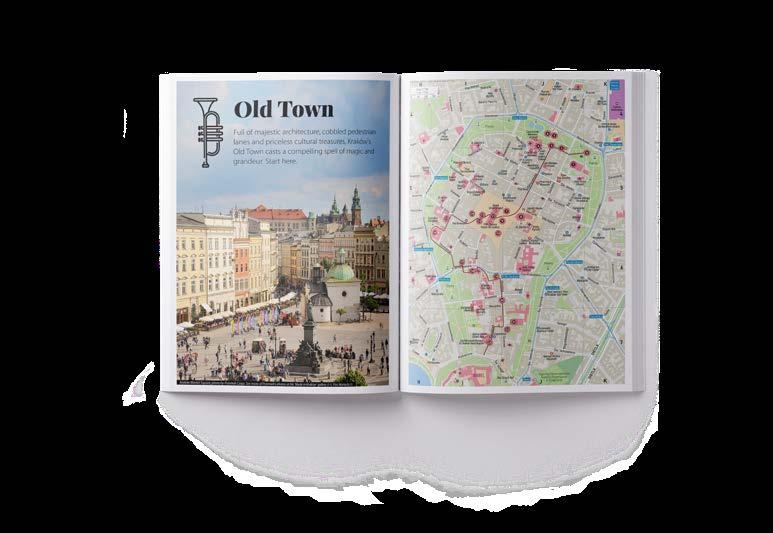
Full of majestic architecture, cobbled pedestrian lanes and priceless cultural treasures, Kraków's Old Town casts a compelling spell of magic and grandeur. Start here.
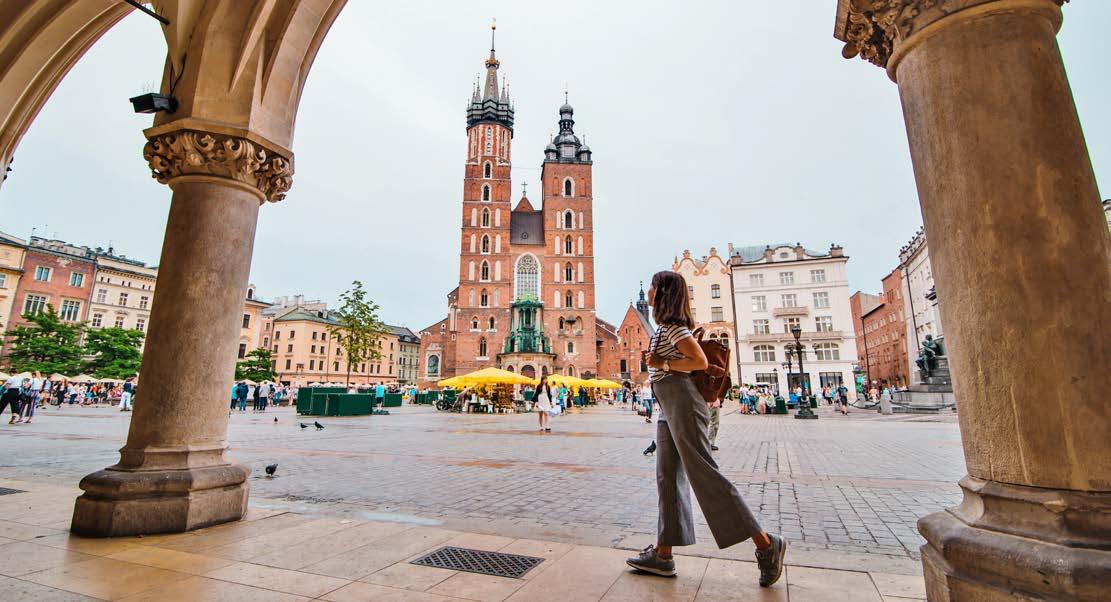
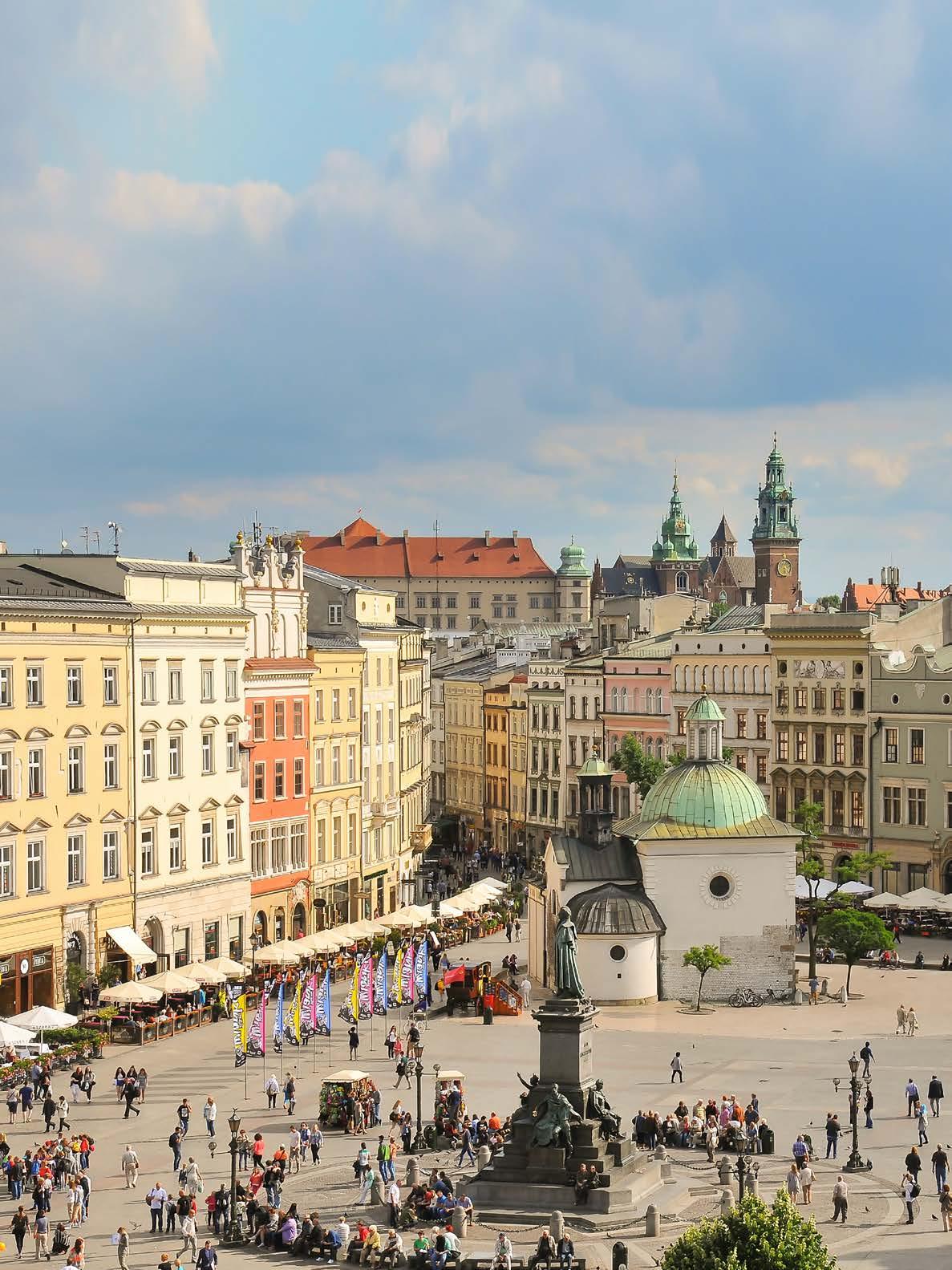
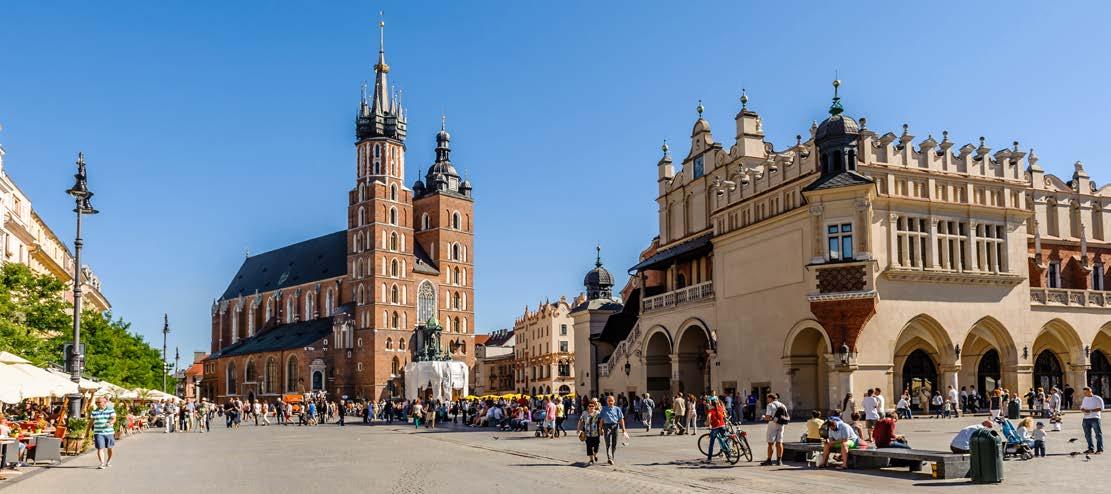
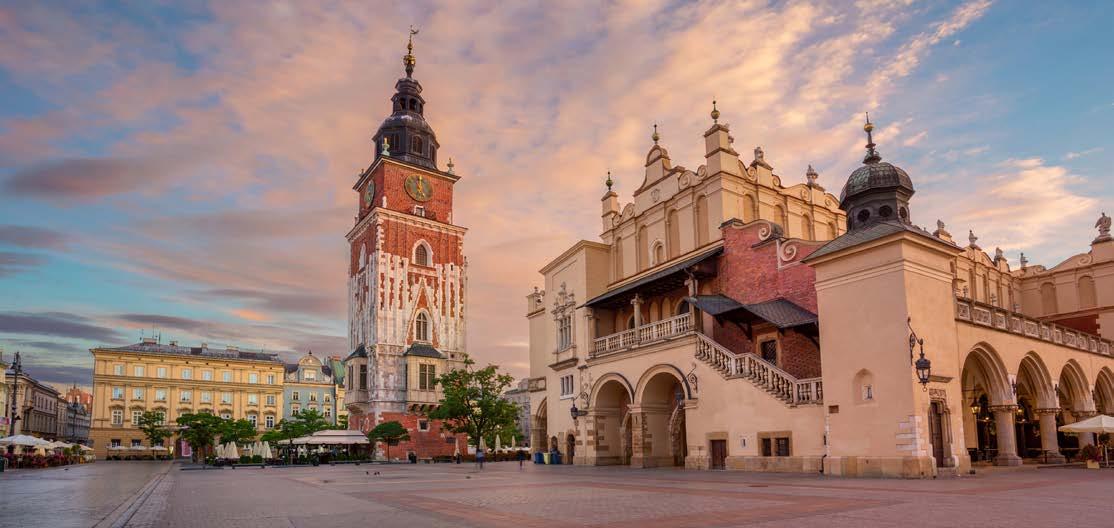
Kraków Market Square; photo by Przemek Czaja. See more of Przemek’s photos at his ‘Made in Kraków’ gallery (J-5, Plac Mariacki 3).
PlacBiskupi
Stefana Batorego Garbarska Biskupia
Krupnicza
Studencka Podwale
Walking Tour
This self-guided sightseeing route leads you from the main medieval entrance into the city from the north - Floriańska Gate (#3) - to Wawel Royal Castle in the south, via the Market Square (#7). Known as the ‘Royal Route,’ this was the coronation path of Poland’s king s and queens for 400 years, though our route deviates from the historical one to take in more of the most important and interesting sites. Covering only about 2km, if don e correctly - that is with a few culture, food and beverage breaks - it should take a few hours. Find recommendations for the latter on p.60, and visiting time estimates for major cultural sites at the end of their descriptions.
'Planty’ Park
Kraków’s Old Town gets its unique shape from its medieval defensive walls, which once extended north from Wawel Castle like two arms encircling the city. During Kraków’s ‘modernisation’ as a part of Austrian Galicia, these walls were razed (with the exception of the small section along Floriańska Gate (#3)) and the scummy moat surrounding them was filled in. While today it’s easy to lament the destruction of Kraków’s ancient city gates and towers, we can at least appreciate the green pedestrian parkway that replaced them. Known simply as ‘the Planty’ (Plants), this 3km teardrop-shaped park is today one of Kraków’s most charming and unique features, filled with old trees, flowers, benches and historic monuments. Strolling its circuit would take over 1hr, but watch it fly by in good company. A popular place for street musicians to perform, drunks to drink (note that drinking in public will win you a fine from the police) and couples to make out, if you haven’t smooched someone on a park bench in the Planty before leaving town, well then you haven’t finished your itinerary.
Słowacki Theatre
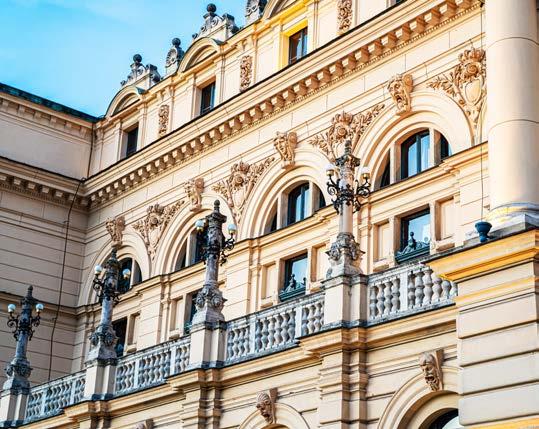
Today regarded today as an architectural masterpiece, the Słowacki Theatre initially ignited fierce criticism due to the demolition of the medieval Church of the Holy Ghost to make room for it. Completed in 1893, Jan Zawiejski modelled his Baroque design on the Paris Opera and the structure is distinguished for its elaborate facade decorated with allegorical figures. The foyer and marble staircase are supreme examples of Art Nouveau design, and the lavish stage curtain by Henryk Siemiradzki is worth seeing. Typically open during productions only (all of which include English subtitles), guided tours can be arranged by phone (tel. +48 12 424 45 25).
J-5, Pl. Św. Ducha 1.
City Defensive Walls
Pijarska Street leads you along the only surviving fragments of the city’s medieval defences. After the Tatar invasion of 1241, which destroyed most of the city (and was made forever famous by the St. Mary’s bugle call, p.49), Kraków began building a perimeter of fortified walls surrounded by a moat. Consisting of two 2.5m-thick walls - a lower outer wall, and a 7m high inner wall - with 10m high towers on top, the system eventually grew to include 47 towers and 8 city gates. By the 19th century these defences were obsolete, costly to maintain, and the moat had become a health hazard. Torn down in 1810, this section along ul. Pijarska (including the Barbican (#5) and City Arsenal (#4)) was saved thanks to the determination of Jagiellonian professor Feliks Radwański, who convincingly argued to the Senate that removing the walls would leave the city exposed to dangerous ‘northern winds’ which could wreak havoc if unleashed, particularly upon ladies’ dresses as they went in and out of St. Mary’s Basilica (#8).
Today the Haberdashers’ Tower (named after the guild responsible for manning it) gives entry to a small seasonal museum where you’ll learn more about Kraków’s dozens of lost towers. Mostly it gives you an opportunity to walk between the few that remain, the primary reward for which is great views from the balcony of Floriańska Gate (#3).
J-4/5, ul. Pijarska. Open April 1 - Oct 31 only, 10:00-18:00; closed Mon. Admission 20/15zł; includes entry to the Barbican.
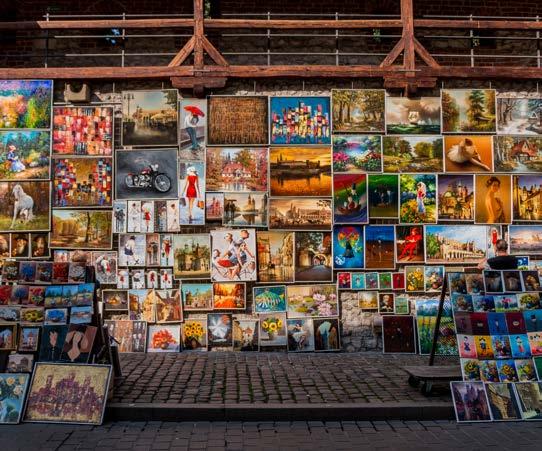
Art market along the medieval defensive walls.
Floriańska Gate
Erected in 1307, this Gothic gateway tower was the most important of the city’s eight medieval gates, as it was the Old Town entry point for royal processions on their way to Wawel. These processions actually started at St. Florian’s Church on Plac Matejki (J-4) and passed over a drawbridge into the Barbican, which was attached to Floriańska Gate via a long brick defensive bridge.
Standing 34.5m tall, including the Baroque ‘helmet’ added in the 17th century, Floriańska Gate features a stone eagle on the side facing the Barbican, and a 19th century bas-relief of Saint Florian facing Floriańska Street. In addition to an iron grate that was raised and lowered, there is an altar in the actual passageway, and a chapel hidden above in the tower itself (accessible via the Defensive Walls Museum (#2) in spring/summer). | J-4.
Czartoryski Princes Lane
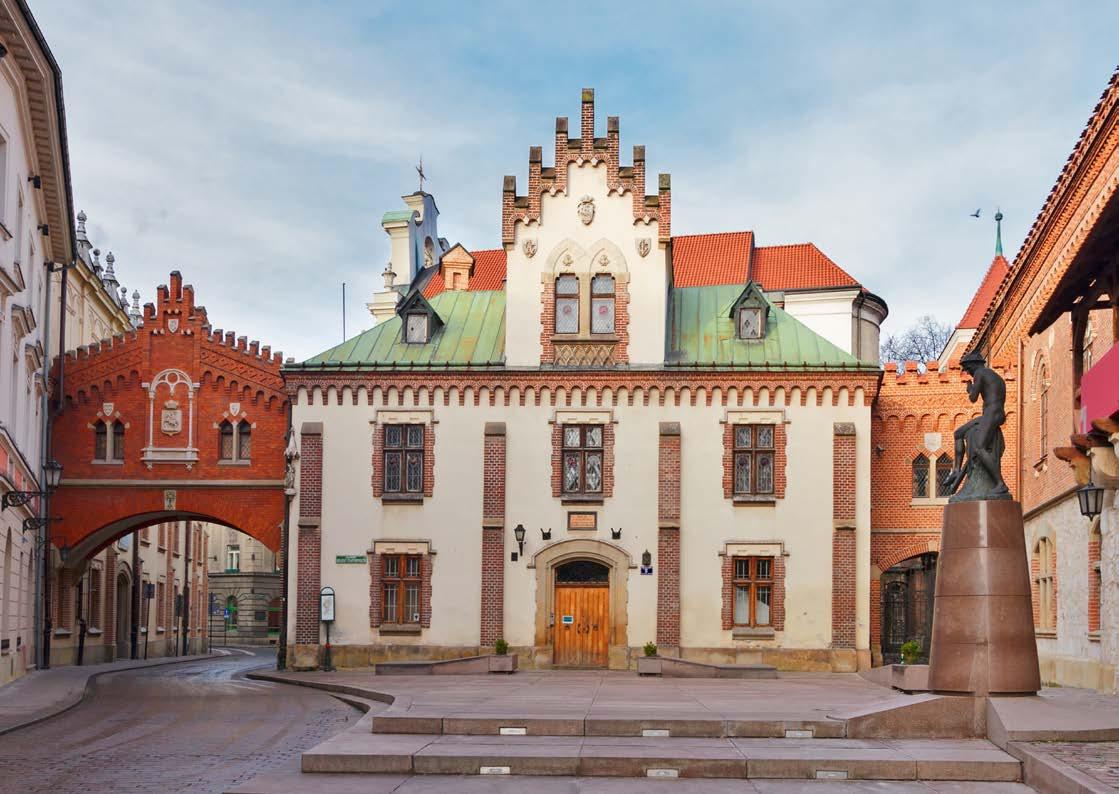
This small charming section of ul. Pijarska hosts a colourful outdoor art market every day, where local artists hang their works directly on the medieval walls between Floriańska Gate and the 14th-century Carpenters’ Tower. Further on, the square is dominated by buildings historically associated with the Czartoryski Museum, including the beautiful 'Klasztorek’ building (ul. Pijarska 6), the City Arsenal (Pijarska 8) - located between the Joiners’ Tower and Carpenters’ Tower, and the Czartoryski Palace (Pijarska 15) - today the primary home of Kraków’s most famous and historic museum collection (p.29). All three buildings were given their present Neo-Gothic style in the mid-19th century when the museum was moved to Kraków from Puławy and they were adapted to accommodate it; notice that all three are connected on the upper level by covered brick passageways.
The former Piarist Monastery buildings on Czartoryski Princes Lane.
In front of the Arsenal stands a sculpture by Danish-Icelandic artist Berthel Thordwaldsen (1770-1884). Labelled simply 'Mercury,’ the full title of the piece is actually 'Mercury Before the Assassination of Argus,’ making it a bit more than it appears. According to classical mythology, Argus was a giant with hundreds of eyes, assigned by the goddess Juno (Hera) to guard the nymph Io from the seduction of Juno's philandering husband, Jupiter (Zeus). Jupiter sent Mercury (Hermes) to kill Argus and rescue Io, which he does by first lulling the behemoth to sleep with his lute. Take a look at the sculpture now and you’ll see that Mercury has just accomplished this and is about to deliver the killing blow. | J-4.
Barbican
Passing through Floriańska Gate and standing between it and the mighty fortress known as the Barbican, you are actually inside what was once a fortified tunnel connecting the two; this space served as a final checkpoint before entering the city. The external entrance to the Barbican was actually on its northwest side, entered via a drawbridge over the moat.
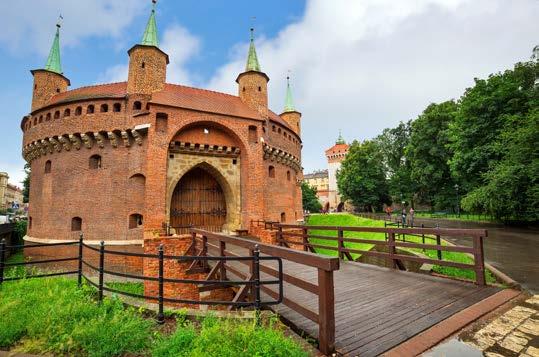
Built at the end of the 15th century, the Barbican was the showpiece of the city’s medieval defences. With 3m-thick walls, this masterpiece of medieval military engineering proved impenetrable during several sieges from the 16-18th centuries and is today one of the only surviving structures of its kind in Europe. Built in Gothic style, the structure is topped by seven turrets and includes 130 slots used by archers and riflemen.
From April to October the Barbican operates as an outdoor museum, where you can learn more about Kraków’s medieval defences, or just play an awesome game of tag. Visiting time: 30mins. | J-4. Open Apr 1 - Oct 31 only, 10:00-18:00; closed Mon. Admission 20/15zł; includes entry to the City Defensive Walls.
Jan Matejko Monument
Located just beside the Barbican, this monument pays homage to one of Poland’s greatest painters, and Kraków’s most beloved sons: Jan Matejko (1838-1893). Famous for his epic historical paintings - which have been reproduced enough to become imprinted in the national psyche - Matejko’s work can be seen throughout Kraków from the Czartoryski Museum (p.29), to the 19th Century Polish Art Gallery (p.30), to the polychromes inside St. Mary’s Basilica (p.48). Educated in Kraków and later principal of the Academy of Fine Arts, Matejko also trained an entire generation of great Polish painters, including Wyspiański, Mehoffer and Malczewski. This impressive monument is the work of Jan Tutaj, and located along what was Matejko’s daily walk from his home to his job at the Arts Academy (which today bears his name) on nearby Plac Matejki (also named in his honour). To learn more about Matejko, visit his home - today a museum at ul. Floriańska 41. | J-5.
Choose Your Adventure!
Follow Matejko’s route to the imposing Grunwald Monument on Plac Matejki? Then perhaps on to the daily Stary Kleparz food market on Rynek Kleparski?
Take a culture break in the Czartoryski Museum (p.29) to see a surprisingly small Da Vinci portrait or Chopin’s death mask?
No tickets for Czartoryski? That’s okay, check out an ancient apothecary, including an alchemy workshop in the basement, at the Pharmacy Museum (ul. Floriańska 25).
Too tired for a museum? Take a break in the historic Jama Michalika cafe (ul. Floriańska 45) - the famous clubhouse of Kraków’s Art Nouveau-era creatives.
Original entrance to the Barbican and Kraków's 'Royal Route.'
Main Market Square
Following the Royal Route down Floriańska - the city’s principal commercial street - deposits you directly onto Kraków’s main market square (‘Rynek Główny’) in front of St. Mary’s Basilica. Originally laid out in 1257, the grid-like urban plan of the Old Town and its central square have changed little in the centuries since. Measuring 200 metres squared (40,000 square metres), the Rynek ranks as the largest medieval square in Europe, and is surrounded by elegant townhouses, all with their own unique names and histories. Lined with cafes and restaurants, and filled with people, pigeons, performers and horse-drawn carriages, this is the city’s social gravitational point, and has always been a place of historic happenings, including
St. Mary’s Basilica
One of the most dazzling and important churches in the country, this brick beauty was rebuilt in its present Gothic form way back in 1320. The northern tower was raised to 80m high and made into a watchtower in the late 15th century. It is from here that the hejnał mariacki - the city’s famous bugle call - is played every hour on the hour; don’t miss it.
St. Mary’s breathtaking interiors are absolutely worth seeing. The magnificent wooden altar is considered a masterpiece of Gothic sculpture and was the principal work of Veit Stoss (Wit Stwosz) from 1477-1489; it depicts the Virgin Mary’s Quietus amongst the apostles. The colourful wall 8
festivals, fairs, concerts, parades, protests and even executions. It was here that homage to the King was sworn until 1596, here that Tadeusz Kościuszko inspired the locals to revolt against foreign rule in 1794, and here also that ‘Der Führer’ himself announced the square’s name change to ‘Adolf Hitler Platz’ in 1939. Fortunately the moniker didn’t last long and today the Rynek is again the biggest stage for Polish culture in the world. Absolutely packed with historical monuments and places of interest, make sure you take a stroll through the Cloth Hall (#11), hear the hourly bugle call played from St. Mary’s tower, and take a seat somewhere to soak up the atmosphere. | I-5.
decorations were designed by famed painter Jan Matejko, and carried out in the late 19th century by the master and his famous students Stanisław Wyspiański and Józef Mehoffer - who also did the church’s stained glass windows. Above it all the deep blue vaulted ceiling is covered in gold stars.
To enter, buy a ticket from the ticket office across from the tourist entrance on the side of the building. In spring/summer the bugle tower is also open, but a separate timed ticket is required (20/15zł); they sell out fast, so get there early if you want the chance. J-5. Open 11:30-18:00; Sun 14:00-18:00. Admission 20/10zł, kids under 8 free.
Kraków Bugle Call
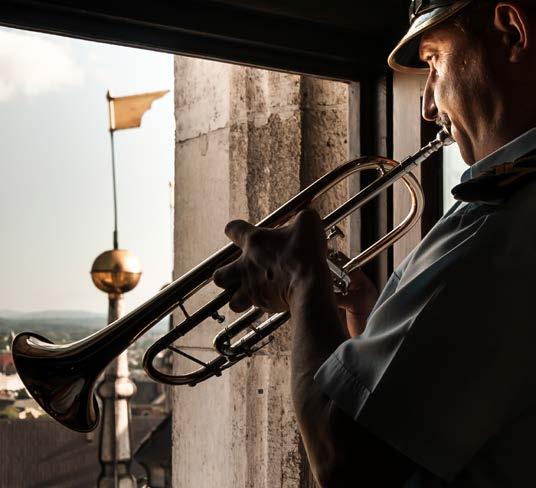
One of Kraków’s most celebrated traditions is the hejnał mariacki – a 40-second bugle call played every hour on the hour in each of the four cardinal directions by local firemen from the tower of St. Mary’s Basilica. First mentioned in 1392, Kraków’s hejnał (pronounced “heynow”) was likely played at dawn and dusk to signal the raising and lowering of the city gates, but bugle calls were also used to warn of fire, invasion and other dangers. In 1838 the tune began to be played at 12:00 noon, making Kraków the first Polish city where the exact time was given. Since 1927 the midday hejnał has been broadcast live on Polish radio, transforming the tune into a national symbol.
Listen carefully and you’ll notice that Kraków’s bugle call seems to end rather abruptly. Although it’s unclear when this started, legend goes that one morning a city guardsman saw an army of Tartar warriors just beyond the city walls and played the hejnał to call the slumbering city to arms. As he did, an arrow pierced his throat, thus ending the tune and his tenure as a guard. Was the city saved? Probably not (the Tartars sacked the city several times in its early history), but henceforth the unfinished note became a hejnał tradition in honour of the brave bugler who died before finishing the melody.
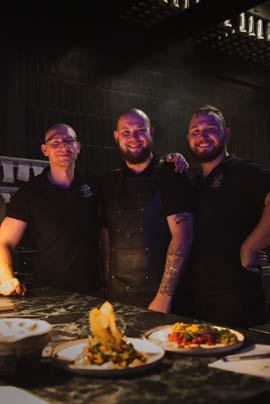
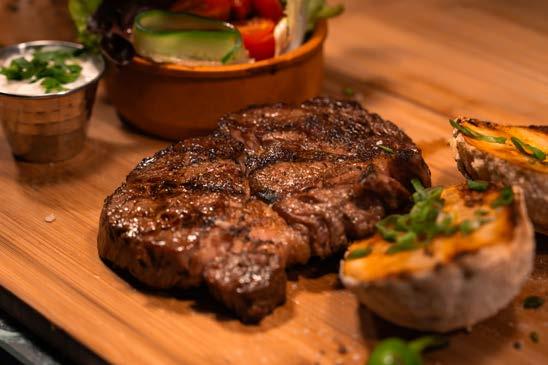
Butcher Grill is where everything begins with fire.
We serve exclusively Polish beef from our own farm. Carefully selected, expertly aged, and prepared over live fire on an authentic Argentinian grill.
No shortcuts. No compromises. Just the pure taste of meat.
Butcher Grill
Grodzka 5, Kraków +48 502 900 643
[Photo by Przemek Czaja; madeinkrakow.pl]
9
Adam Mickiewicz Monument
Proudly poised in the middle of the market square is Adam Mickiewicz (1798-1855), Poland’s greatest literary hero. Known as the ‘Father of Polish Romanticism,’ his epic poems and dramas served as inspiration for insurrections against the imperial powers that had partitioned Poland out of existence in the late 18th century.
Here he stands atop a large pedestal surrounded by symbolic representations of the Motherland, Science & Learning, Poetry, and Patriotism. Ironically, this work by Teodor Rygier lost the design competition, but the public demanded it be built. Originally unveiled in 1898 to celebrate the centenary of the great man’s birth, like so many other symbols of national pride, the monument was destroyed by the Germans during WWII, and this copy is from 1955. As for Mickiewicz (whose most famous work, Pan Tadeusz, begins with the words ‘Lithuania! My homeland!’), he never actually visited Kraków until 35 years after his death, when his body was laid to rest in the Royal Crypts of Wawel Cathedral (p.64). | I-5.
St. Adalbert’s Church
This mad mix of pre-Roman, Roman, Gothic, Renaissance and Baroque architecture is remarkable for being Kraków’s oldest church, and it’s still an active place of worship. The earliest parts of the building date to the 11th century, thus pre-dating the Rynek and explaining its seemingly random position within it. If it’s open, a look inside is interesting, not least because the floor sits some two metres below the surface of the main square. | I-6.
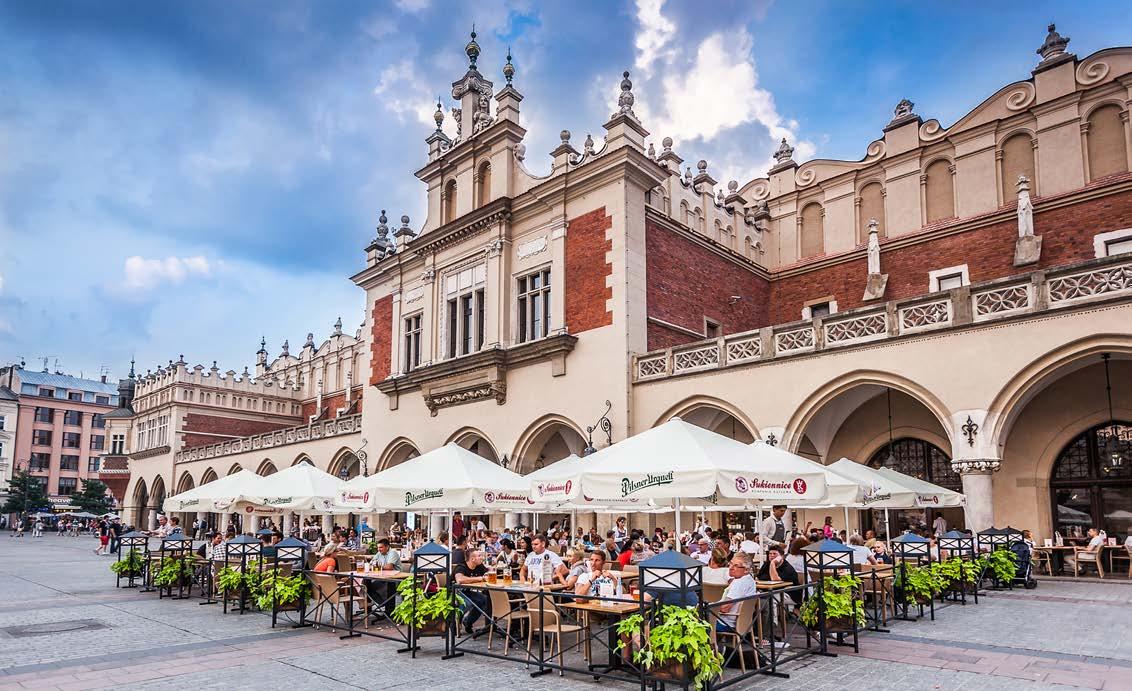
Cloth Hall
The iconic showpiece at the centre of the market square, Kraków’s Cloth Hall (Sukiennice) is essentially one of the world’s oldest shopping malls, and its historical development mirrors that of the city itself. Proof of a structure at this site dates back to the mid-13th century, but the construction of a purposebuilt trading hall in the mid-14th century vaulted it into a thriving east-west trade centre. After a fire in the mid16th century, the Cloth Hall was given a Renaissance makeover, replete with gargoyles, transforming it the most magnificent building in Kraków.
Does beer taste better if it's imbibed in the sun on Kraków's market square? Yes, yes it does. [Photo by W. Wandzel, wandzelphoto.com]
Though the name ‘Sukiennice’ literally refers to textiles, Kraków’s Cloth Hall saw an array of commodities bought and sold in its merchant stalls, including wax, spices, leather and silk, as well as lead and salt from the nearby Wieliczka mines (p.111). To this day it is still crammed with stalls selling amber, lace, leather and woodwork, plus plenty of tourist rubbish. Nevertheless, a stroll through its central thoroughfare is essential.
In addition to the trading stalls, the Cloth Hall harbours several other areas that are worth your time. In 1879, despite the country having been partitioned for nearly a century, the first Polish National Museum was established on the upper floor, making the Cloth Hall the focus of a huge upsurge of Polish patriotism. Known today as MNK Sukiennice (p.30), some of the museum’s massive historical paintings occupy entire walls and are well worth the short time it takes to see them. Enter through the museum to also access Cafe Szał, which occupies the fantastic first-floor terrace overlooking the market square and St. Mary’s.
The east side of the Cloth Hall is also the entry point for Rynek Underground (p.29), which takes you below the surface and back in time to trace the development of the market square; one of Kraków’s most popular museums, you may want to get your tickets a day in advance.
Lastly, the ground floor is home to the historic Noworolski Cafe, dating back to 1910. Take a look just to see the wonderful Art Nouveau interiors by Józef Mehoffer (p.33). Despite the incredible atmosphere, you may not want to linger - this is one of Kraków’s worst-rated restaurants. | I-5.
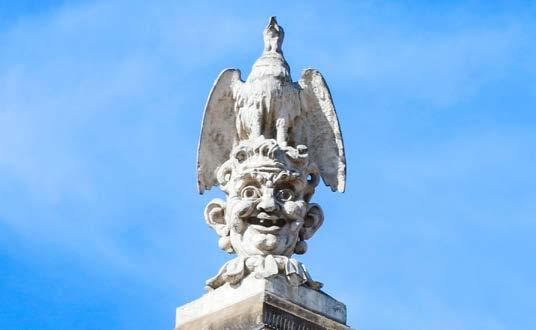
‘Put a bird on it!’ Cloth Hall mascaron.
Town Hall Tower
This 70-metre tower is the only remaining element of Kraków’s Town Hall complex. Dating back to the 14th century, numerous additions, fires and renovations had the buildings looking like a bit of a hodgepodge by the early 19th century and locals were actually calling for their removal. In 1817 the decision was taken to tear down a granary attached to the Town Hall, but during the demolition the Town Hall proper was damaged and apparently one thing led to another. To get an idea of what it once looked like, find the small replica on the west side of the tower. Now consider that between the Cloth Hall and St. Adalbert’s Church there was also a large building called the Great Scales, with a Small Scales building beside it, and you start to realise that Kraków’s Rynek was once much more cluttered. [Both those buildings were also torn down in the 19th century and you can see their foundations in the Rynek Underground Museum (p.29).]
Today the 14th-century Town Hall Tower stands as a prime example of Polish Gothic architecture, and few realise that it actually leans some 55cm. The interior museum doesn't offer much beyond some medieval costumes, old photos, info about its clock mechanism, semi-decent views and lots of stairs. Visiting time: 30mins.
I-5. Open March 1 - Oct 31 only, 10:00-18:00; Mon 11:0016:00. Admission 20/15zł; Mon free.
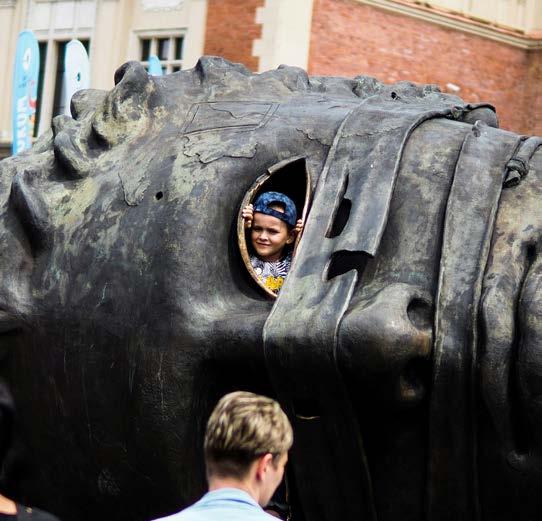
Eros Bendato
Beside the Town Hall Tower you’ll find one of Kraków’s most well-known landmarks and popular meeting places - a giant, toppled bust titled ‘Eros Bendato’ (Eros Bound). Inevitably serving as a backdrop for almost every tourist who visits Kraków (your turn!), the bronze body part is the work of Polish artist Igor Mitoraj (1944-2014). Fans of his work can find another large sculpture in the charming courtyard of Collegium Luridicum, across from the Church of Saints Peter & Paul (#21). | I-5.
12 13
Sunrise glow-up on the Town Hall Tower and Cloth Hall.
Mitoraj’s monument to empty-headedness.
Piotr Skrzynecki Monument
Before departing the market square, take note of one more monument opposite Eros - that of Piotr Skrzynecki (1930-1997). Always sharply dressed with fresh flowers in hand, Piotr is right at home as a loyal patron of Vis a Vis - one of the oldest bars on the market square. He’s also only a few doors down from Piwnica Pod Baranami, the legendary cabaret he founded in 1956. Skrzynecki was an essential component of the Cracovian art scene - acting, directing, writing, critiquing, organising unusual cultural events, throwing far-out birthday bashes and being an all-around eccentric. His legacy lives on, and you can get a taste of it by dropping into Pod Baranami for a drink (Rynek 27, into the courtyard and down the cellar stairs). | I-5.
Have
Choose Your Adventure!
If you’re not having a drink with Piotr, consider traversing busy Szewska Street to Krupnicza (H-5) - Kraków’s first ‘woonerf.’ Lined with trees and gastro points, it’s a good place to get off the tourist trail.
Take a detour to Plac Szczepański (I5) - an Art Nouveau plaza with some solid hangouts: check out Charlotte for coffee, Morskie Oko for Polish food, Betel for beers and Wiśniewski for vodka.
Follow the prescribed route to Copernicus’ alma mater (#15).
Delicious food, a wide selection of wines, stylish interior, family atmosphere and friendly service - these are the calling cards of PastaBar.
Join us for an authentic Italian experience full of the small, simple pleasures that bring fulfilment to life.
Pasta Bar
Kraków, ul. Sławkowska 13-15, tel.: 506-820-222
Kraków, ul. Estery 22, tel.: 573-778-337
a drink with Pete at Vis a Vis. [Photo by Zygmunt Put.]
Collegium Maius
On aptly named Jagiellońska Street you’ll find the oldest building of Jagiellonian University - the second-oldest university in Central Europe. Built as the uni’s main campus in the late 1300s, a century later it was redesigned in late-Gothic style around the picturesque arcaded courtyard we still admire today. While professors lived and worked upstairs, it was in the ground floor lecture halls in the 1490s that Nicolaus Copernicus developed the critical faculties (or just doodled in his notebook) that would later lead to him to revolutionise our understanding of the universe.
Today the courtyard is free to enter and the interiors can be visited as a museum. Try to time your visit to see the marvelous courtyard clock in action every two hours from 09:00-17:00, when wooden figures emerge and parade past to music from the 16th-century. The peaceful Professor’s Garden is also accessible via a beautiful painted passageway from May to mid-October.
As for the interiors, guided tours are available Tue-Fri 09:00-13:00; go to bilety.uj.edu.pl 10 days in advance to see times, languages and prices. Visiting without a guide is possible Mon & Wed 09:00-17:00; Tue, Thu & Fri 13:30-17:00 and Sat 10:00-16:00. Inside you’ll see grand lecture halls, fabulous interiors and ancient treasures, including the world’s oldest globe depicting the Americas.
I-5, ul. Jagiellońska 15. Courtyard open 10:00-18:00. Museum admission 17/10zł; Wed 13:30-17:00 free.
Collegium Novum
Built in 1873-1887 and opened for Jagiellonian University’s 500th anniversary, Collegium Novum (Latin: New College) was designed in Neo-Gothic style to match Collegium Maius (Main College). In addition to the gorgeous façade, the building contains a beautiful assembly hall (Aula) and several important paintings, including portraits of university founders/kings Kazimierz the Great and Władysław Jagiełło, and
Collegium Maius - built way back when the Sun still revolved around the Earth!
Jan Matejko’s Copernicus: Conversation with God. Unfortunately you need to be a student to see them as the building is not open to tourists. A statue of Copernicus stands nearby.
I-6, ul. Gołębia 24.
Bishop’s Palace & Papal Window
A pleasing stroll through the Planty will soon bring you to the Bishop’s Palace - sneakily the second largest palace in Kraków (after Wawel) and the residence of Kraków’s bishops since it was first built in the 14th century. Today the Palace is famous for having been the residence of Cardinal Karol Wojtyła from 1958 to 1978, before he became Pope John Paul II. During hometown visits as Pope he would often make appearances in the 'Papal Window’ to address the crowds below. A beautiful mosaic makes the particular window easy to identify, and during papal anniversaries you can be sure the area across the street will be festooned with flowers and candles. The palace itself is offlimits, but the courtyard is open to tourists where you’ll find the city’s first monument of the Polish Pope, erected in 1980.
I-6, ul. Franciszkańska 3. Courtyard open 09:00 until dusk.
Collegium Novum, built 500 years after Collegium Maius!
St. Francis Basilica
Although it doesn’t look like much from the outside, the interior of St. Francis Basilica is absolutely worth popping in for, even if you could care less about looking at another church (trust us). Dating back to the 13th century, this was actually Kraków’s first brick building. At the end of the 19th century, resident artistic genius Stanisław Wyspiański - founder of Poland’s Art Nouveau movement, and subject to his own museum (H-6, Pl. Sikorskiego 6) - was commissioned to renovate the main nave, and he did so with colourful floral patterns on the walls that deftly balance the organic and geometric. He also designed eight gorgeous stained glass windows, including the controversial, iconic and absolutely must-see centrepiece,' 'God the Father.’ A working church, mass is frequent, so please be respectful.
I-6, Pl. Wszystkich Świętych 5. Open 10:0016:00; Sun 13:15-16:00.
Wyspiański Pavilion
Following his work on St. Francis Basilica, Wyspiański was commissioned to design a triptych of windows for Wawel Cathedral (p.64). He chose to do portraits of three figures from Polish history: Henryk Pobożny (a 13th century ruler killed in battle with the Mongols), King Kazimierz the Great (14th century ruler remembered as one of PL’s ‘greatest’) and St.
Stanisław (11th century Bishop of Kraków and patron saint of PL). Martyrs Henryk (on the left when outside the building) and Stanisław (on the right) are shown at the moment of their deaths, while Kazimierz’s bare skull bears the royal crown - a vision based on what Wyspiański saw when present at the opening of the king’s casket 600 years after his death. Deemed too grotesque and controversial at the time, the project was shelved for some 100 years before Piotr Ostrowski of the Kraków Stained Glass Museum (p.32) created windows using Wyspiański’s original designs for the first time, and a building specifically for displaying them was erected here in 2007.
Curious for its facade of ceramic tiles which rotate to adjust the light, and for the fact that it is otherwise poorly suited for the display of stained glass (facepalm), this very slim building requires visitors to enter its narrow corridor to see the windows illuminated during the day, and you’ll crane your neck to get a look. Drop by in the evening for a much better view from the outside.
Inside is a small tourist info centre, and across from the back door of the Pavilion you have the Wielopolski Palace, built in the 16th century; if you’re wondering where the city’s administrative headquarters moved after the demolition of the Town Hall, this is the answer (not open to the public). I-6, Pl. Wszystkich Świętych 2. Open 09:00-20:00.
Wyspiański's 'God the Father' - possibly the world's most beautiful window.
Grodzka Street
Turning onto ul. Grodzka, you are now officially back on the ‘Royal Route.’ One of Kraków’s oldest, busiest and most commercial streets, here you’ll find plenty of distractions (try not to get run over by a horse-drawn carriage), including dozens of shops, amber galleries and restaurants. Keep an eye out for the ‘Bar Mleczny Pod Temidą’ (Grodzka 43) - one of Kraków’s oldest and most high-profile milk bars from the communist era. If you’re up for the kind of food tourism that would send the Michelin folks running, step inside. | I/J-6/7.
Church of Saints Peter & Paul
With large sculptures of the Twelve Apostles atop the church gate, six saints set in the facade itself, plus plenty of tourists, singers and street performers, there always seems to be a crowd in front of this early 17th century former Jesuit church. Not only is this the largest of Kraków’s
historical churches, it’s also the first Baroque building in present-day Poland. Lacking the decorative excess of later Baroque works, enter the grand but austere interior on a Thursday morning and you might catch a demonstration of the church’s 46.5m Foucault Pendulum - a device invented by French physicist Leon Foucault in 1851 which proves the earth’s rotation.
The church’s crypt holds the tomb of Jesuit priest Piotr Skarga, famous for his oratory skills and author of Lives of the Saints (1577) - the most popularly read Polish language book until the 1900s (no comment). [That’s Skarga’s stern countenance haunting the square opposite the church, seemingly ready to yell ‘get off my lawn!’ at any skateboarders.] Since 2010 the crypt of Sts. Peter & Paul Church has been the home of the National Pantheon of Poles distinguished in the arts, science and culture; most recently composer Krzysztof Penderecki and his wife were buried here. J-7, ul. Grodzka 52A. Open 08:00-17:00; Sun 13:30-18:00.
View of Wawel Castle from the end of Kanonicza Street.
St. Andrew’s Church
With Peter & Paul’s set back from the road, it’s actually St. Andrew’s that dominates views down ul. Grodzka. One of the best-preserved Romanesque buildings in Poland, St. Andrew’s is one of the oldest buildings in Kraków and also a rare example of a fortress church. Built between 1079 and 1098, it was known in those days as the ‘Lower Castle,’ with the Upper one on Wawel Hill. It was here that, as the rest of the city was burned and looted, most of Kraków's residents withstood the 1241 Mongol invasion - the same catastrophe that famously struck down the bugler mid-note (p.49), after which the city decided to build proper defensive walls (p.45). The Baroque steeples were added in 1639 and the interiors were given a much more ostentatious refurb than the Baroque church next door; if you get inside, check out the pulpit shaped like a ship on the seas. J-7, ul. Grodzka 54.
Kanonicza Street
Crossing St. Mary Magdalene Square - so named for the church that stood here from the 13th to early-19th century - we arrive on one of Kraków’s oldest and most picturesque streets, a cobbled lane lined with superb Renaissance and Baroque architecture. The 14th-century Bishop Ciołek Palace at no. 17 is today a museum of religious art, while no. 19 next door was once the residence of the future Pope John Paul II and today houses a museum devoted to him. At the end of the street was one of the city gates, and the last building on the right, no. 25, held the royal bathhouse in the 1300s. Later famed Polish chronicler Jan Długosz lived here, and in the 1870s the Wyspiański family also resided here.
It’s uncertain if we have Długosz to thank for this saucy tale from the bathhouse days, but let’s finish with a flourish. Apprehensive about her arranged marriage to Lithuanian Grand Duke Jagiełło - who was rumoured to have gigantic genitals - future Queen Jadwiga sent her servants to spy on the manhood of her husband-to-be. Whatever the report back, she seems to have approved and the couple got married, taking up residence at Wawel Royal Castle - at the foot of which you now stand. Congrats for making it this far, turn the page to find somewhere to relax, or dive right into the castle complex on p.62. | I-7.
“Pod Aniołami – Under the Angels” is an extraordinary place. With its historical 13th-century interiors and brilliant cuisine based on Polish culinary traditions it brings you closer to the medieval city. This place is famed for marinated meats grilled and smoked on hardwood from beech trees, and for other old Polish dishes.
Restauracja „Pod Aniołami” ul. Grodzka 35, 31-001 Kraków www.podaniolami.pl
Long famous for its dusky candlelight cafes and labyrinthine cellar clubs, Kraków has also become a showcase for the latest gastronomy trends, steadily gaining a reputation as a world-class dining destination. What follows are some favourite venues near the Walking Route. For full details and additional recommendations, visit our website.
MORNING
Camelot Lulu
J-5, ul. Św. Tomasza 13
Redolent of a pre-war opera house café, and great for coffee, bubbly, breakfast or lunch, this place captures the atmosphere all of Kraków should aspire to.
0125
Charlotte
I-5, Pl. Szczepański 2
Almost too hip for its own good, this Parisian-style bakery/bistro/ cafe is ideal for early risers, or those who enjoy a glass of wine after work.
01259
NapNap Cafe
H-6, ul. Zwierzyniecka 5
Open from 07:00, this small cafe has a diverse, delicious range of big-portioned breakfasts, plus exotic lattes, teas and juices, to make you glad you got up.
012
Ósma Rano
H-5, ul. Podwale 4
Simple but stylish, this hip eatery embraces the brunch lifestyle with fancy open-faced sandwiches, waffles and a wide range of drinks. Yum.
012
DINING
Bierhalle
J-6, Mały Rynek 74
This tourist-friendly franchise offers live sports streams, classic Polish fare and bar snacks, large beers brewed on site, and an Oktoberfest atmosphere.
289
Chimera
I-5, ul. Św. Anny 3
This gorgeous, foreign-friendly courtyard buffet offers fast, healthy eats, and may be the most pleasant budget dining option in town. Perfect for a pit stop.
02
Chleb & More
J-6, ul. Grodzka 28
Built on the bones of a synagogue, this bakery turned upscale Polish eatery boasts a stylish atrium and warm, winning design. Ideal for brunch or dinner with friends.
012
La Campana Trattoria
I-7, ul. Kanonicza 7
With great pasta risotto and a romantic atmosphere, La Campana also boasts one of the city’s best summer gardens.
659
Mr. Jerry Steakhouse
I-5, ul. Jagiellońska 5
Staking their name to big portions of Polish beef, try Mr. Jerry's 'legendary steakboards' - featuring a sizzling lava stone - for a unique shared dining experience.
285
Smakołyki
H-5, ul. Straszewskiego 28
A perfect lunch option near Collegium Maius: simple, tasty Polish staples served in a spacious dining area. Ideal for first-timers or fussy family members.
12
Pod Aniołami
I-6, ul. Grodzka 35
One of Kraków’s most royal dining experiences, enjoy real medieval dishes in candlelit 13th-century cellars filled with genuine historical artefacts.
65
DRINKING
Bunkier Cafe
I-5, Pl. Szczepański 3A
A huge parkside terrace attached to the city’s best art gallery, perfect for breakfast (from 09:30), coffee, light snacks, day drinking and sundowners.
01289
Hedwig's
J-8, ul. Stradomska 12-14
Seek out this upscale, inclusive cocktail bar inside a former chapel near Wawel for a special evening or simple nightcap.
5473
Klub Re
J-5/6, ul. Św. Krzyża 4
Essentially a dingy dive bar and indie concert venue with a lovely, leafy beer garden - this veteran venue is pure Kraków.
839
Ogród
H-6, ul. Piłsudskiego 4
Hidden behind a palace, this seasonal open-air hangout features food stalls, a bar, lawn chairs, live music, plenty of space and peak summer vibes.
2839
DANCING
Teatro Cubano
I-5, ul. Jagiellońska 10
Kraków’s Little Havana, this rhythmic club offers a diverse crowd, live music most nights and parties into the wee hours.
284739
Wawel
Looming above the river, Wawel’s glorious architectural ensemble is both a source and symbol of Polish pride. Comprising the Castle, Cathedral and a vast wealth of cultural treasures, a walk through this royal complex is obligatory.
Every self-respecting European city boasts a castle, but Kraków’s is particularly precious as it represents Poland’s status as a highly influential European state, both politically and culturally, during the medieval era, when its territory covered almost one million square kilometres. It was here that the Polish monarchs were crowned, ruled, lived and were laid to rest; 35 of them, in fact, from the 14th to 17th centuries. Each of these rulers added their own updates to the royal lodgings, resulting in the beguiling mix of Romanesque, Renaissance, Gothic and Baroque architecture still largely intact today.
Evidence suggests that this dramatic outcropping of limestone above the Wisła River was inhabited as far back as the 7th century, and was already a fortified castle when the first cathedral was built here in 1000 CE. From the 1319 coronation of Władysław the Short onwards, Kraków/Wawel’s power, wealth and
influence only grew, becoming a leading centre of humanism and the arts during the 1500s. A 1596 fire forced Sigismund III Vasa to relocate his royal court to Warsaw, a move that would become permanent, triggering Wawel’s steady decline as its political importance dwindled.
During the Partitions (1795-1918), the occupying Austrians adopted the castle for use as a military garrison and hospital, demolishing several buildings and adding others. Restoration works began after WWI when Poland regained independence, only for Nazi Governor General Hans Frank to famously make it his headquarters during WWII. Much like the city itself, Wawel’s splendour is arguably what saved it from destruction. Although looted repeatedly over the centuries, the holdings of the Royal Castle have grown through post-war acquisitions, donations and restitutions into one of the most important museum collections in the country.
Koletek Stradomska
Points of Interest
The castle complex is free to enter without a ticket and here we cover the main sites you can explore without prior planning. For ticketed exhibits see p.68.
Tadeusz Kościuszko Monument
Greeting visitors above the northern entrance to Wawel Castle is the slightly larger-than-life likeness of Tadeusz Kościuszko (1746-1817) on horseback, graciously doffing his cap to the crowds. If you aren’t familiar with the greatest Pole that ever lived (sorry JPII), and arguably one of the best humans history has ever produced, we strongly encourage you to stop your life and learn about him (scan the QR code!). A national hero of America and Poland (as well as Belarus and Lithuania), Kościuszko was a brilliant military engineer and tireless freedom fighter who joined the American Revolution, then led an Uprising against foreign rule in Poland. A champion of human rights, he sought to abolish serfdom in Europe and slavery in the US, dedicating his sizable US assets to the education and freedom of slaves in his will. Beloved in his homeland, a large mound was built in his honour overlooking Kraków (p.33) and his remains are buried alongside Poland’s kings in the Royal Crypts of Wawel Cathedral.
Pope John Paul II & The Cathedral Museum
Upon entering the northern gates you’ll see a life-sized statue of local-boy-made-good Saint John Paul II (1920-2005). One of eleventybazillion (rough estimate) such monuments around PL, this one stands outside the entrance to the Wawel Cathedral Museum, which JPII himself opened back in his days as Cardinal Karol Wojtyła. Included with entrance to the Cathedral itself, inside you’ll find a wealth of religious and secular items from the 13th century onwards related to the rich history of the site. Visiting time: 20mins.
Open 09:00-16:00 closed Sun.
3
Wawel Cathedral
Considered to be the most important building in Poland, Wawel Cathedral is stunning inside and absolutely packed with history. Don’t miss the massive bones hanging up outside the entrance, said to belong to the fearsome dragon who once lived beneath Wawel Hill (p.67). The first cathedral at this site was built of wood shortly after the founding of the Bishopric of Kraków in 1000CE. Twice destroyed by fire (dragon breath?), the third and current building was consecrated in 1364 and built on the orders of Władysław the Short - Poland’s first king to be crowned here in 1319. His tomb can be found inside, along with all of PL’s pre-16th century kings, but it is the grand tomb of St. Stanisław (1030-1079), former Bishop of Kraków, which takes centre stage. Wawel Cathedral boasts 18 chapels, all of them about as ostentatious as you’ll ever see, and we recommend paying extra for the audioguide so you can appreciate what you’re looking at as you follow the visiting route.
Also included is a trip up the 144 steps of the Cathedral’s bell tower to see Poland’s version of Philadelphia’s Liberty Bell - an enormous chime from 1520 that can be heard 30km away. Beginning with Sigismund I in 1548, Poland’s monarchs were buried in the Cathedral’s underground crypt, which is also open to visitors and includes the tombs of national heroes such as Kościuszko, Mickiewicz, Piłsudski and, most recently (and controversially) President Lech Kaczyński, who perished in a plane crash in 2010; save the Royal Crypts for last as the exit deposits you outside. Visiting time: 45mins.
Open 09:00-17:00; Sun 12:30-17:00.
Cathedral Tickets
Wawel Cathedral has its own ticket office directly opposite of the Cathedral entrance. Unlike tickets for Wawel’s other exhibits (p.68), Cathedral tickets are not timed and can be purchased in person right before your visit. The 26/18zł ticket includes access to Wawel Cathedral, the Royal Crypts, Sigismund Belltower, and the Cathedral Museum. Audioguides (recommended) are available in 11 languages for an additional 15/11zł.
Wawel Cathedral, coronation site and burial place of Poland's kings.
Arcaded Courtyard
One of the finest examples of Renaissance architecture in Poland, Wawel’s iconic courtyard is emblematic of Poland’s ‘Golden Age.’ With the arrival of the Italian Renaissance in the early 16th century, a new palace was commissioned by King Aleksander Jagiellończyk (reigned 1501-06) and his brother Sigismund I (r. 1506-48) to replace the existing Gothic residence at Wawel. Italian architects Francesco Fiorentino and Bartolommeo Berrecci oversaw much of the construction, which continued throughout Sigismund I’s entire reign. Today the central courtyard, which features open cloisters supported by slender columns allowing free movement between the royal apartments and state rooms that surround it, is considered an architectural masterpiece.
Open 07:00 to sunset. Admission free.
The Chakra Stone
One of Wawel’s most well-known legends is that of the chakra stone - a natural energy point or centre of consciousness found in every living being. According to some spiritual and yogic traditions, the human body harbours many chakras, but seven are considered to be the most important, and
these correspond with the seven sacred stones the Hindu deity Shiva threw across the globe as a gift to mankind. Those seven stones just so happened to land in some of the most important spiritual centres on earth, namely Rome, Mecca, Delhi, Delphi, Jerusalem, Velehrad (bad aim?) and – surprise! – Wawel Hill.
Legend claims the cosmic energy of the chakra is strongest in the Chapel of St. Gereon, an 11thcentury Romanesque church that was demolished in the 1500s. Today its traces can be seen with a 'Castle Underground' ticket (p.68), but chakra hunters concentrate their efforts in the northwest corner of Wawel’s Arcaded Courtyard, placing their hands and bodies against the wall to catch the good vibrations. Doing such won’t earn you any sympathy from the Wawel staff, who consider the legend a nuisance and have done all they can to downplay it, including roping off the wall, putting museum exhibits over it and having a guard posted to keep people’s hands off. Although some credit the chakra with protecting Kraków throughout its history, Wawel guides are instructed not to speak about the chakra stone, and the Catholic Church also dismisses the legend. If you want our take, we’ll just say that powerful forces are at work here indeed.
Like much of Kraków's great Renaissance architecture, Wawel's courtyard was designed by Italians.
The Wawel Dragon & Dragon's Den
Formed about 25 million years ago, the spectacular limestone formation of Wawel Hill is not the solid piece of rock it appears to be, but filled with eerie caves and crawl spaces. According to legend, the craggy chambers beneath Wawel were once home to ‘Smok Wawelski,’ or the Wawel Dragon - a nasty creature who enjoyed gorging himself on cows, sheep and maidens. Versions of the story vary, with the first dating back to the 13th century, but it generally follows that piles of brawny knights fell beneath the dragon’s fiery breath before brains took over the task and a clever hero (in some cases King Krak, his sons or a modest cobbler) tricked Smok into eating a sheep stuffed with sulphur, causing his demise.
Freed of their fearsome tenant, the caves under Wawel became a famous tavern and brothel during medieval times. Today they function as a seasonal tourist trap, luring families into their less-than-awe-inspiring confines, but kids love it. To enter the 'Dragon's Den,' buy a ticket from the machine outside the entrance.
The caves actually offer a convenient way to end your Wawel visit, as the short route through them deposits you outside the complex on the riverbank below, right in front of a bronze monument of the famous dragon. Since 1972 this strange eight-limbed interpretation of Smok has been entertaining crowds with intermittent blasts of fiery breath. To enjoy this parlour trick you just have to be patient and don't look down his throat.
Open 09:00-19:00; Sept & Oct 09:00-17:00; closed from Oct 31. Admission 15/10zł; kids up to 7 free.
Sure, hideous sculpture, but it blows fire!
Ticketed Exhibits & Tours
While the Wawel Hill complex is free to enter, interior exhibits have a timed ticket requirement, and their availability varies. Below we describe only some of the main exhibits; it is essential to go online to bilety.wawel.krakow.pl to see which are available and buy your tickets in advance. Tickets are made available online 60 days before the date of entry. You may still be able to buy tickets in person on the day of your visit if you’re at Wawel Visitor Centre when it opens at 08:30 (good luck).
Castle 1st floor
This ticket includes the private Royal Apartments - full of Renaissance furnishings, paintings and tapestries; the unique Porcelain Room; and ‘Wawel Recovered’ - an interactive exhibit about changes the castle underwent during occupation.
zł
Castle 2nd floor
The public State Roomswhere the royals held court and entertained - are Wawel’s most impressive interiors, full of priceless tapestries and Baroque furnishings. You'll also see Ottoman tents, trophies and historical objects won at the 1683 Battle of Vienna, plus gain access to the Royal Gardens
Crown Treasury
This worthwhile exhibit covers twelve rooms filled with precious artefacts from Poland’s past, including the crown jewels, coronation sword, royal heirlooms, insignia, court banners, parade arms, armour and exquisite works of gold and silver.
Armoury
A wealth of weaponry, military equipment and military art from the Middle Ages to the 18th century, including swanky crossbows, spiky pikes, gleaming swords, stout shields, decorative firearms, hussar wings, cannons and replicas of the banners captured at the Battle of Grunwald
Castle Underground
Includes ‘Lost Wawel,’ where you’ll see the restored remains of Kraków’s first church, the former royal kitchens and coach house, plus a collection of Renaissance stove tiles. Also the Lapidarium, full of stone sculptures and architectural details discovered during excavations.
Wawel
Town & Viewing Platform
This small exhibit reminds visitors, via small artefacts and remnants, that for centuries there was a small town on Wawel. Unlike other exhibits, last-minute tickets are easy to obtain, and the views from the open-air terrace are great (but stairs are involved).
Kazimierz
Before WWII, Kazimierz was the centre of Jewish life in Kraków. Today it offers a unique opportunity to commune with that culture, and is also known for its street food, candlelit cafes and bohemian atmosphere.
Mezuzah (and original mezuzah trace from the early 1800s) on the Kowea Itim Le-Tora Prayer House (p.79).
Św. Sebas t
Skałeczna Ko
Skawińska
Piekarska
Rollego Wietora Rybaki
Skałeczna
Węgłowa Augustiańska
Meiselsa Bożego Ciała Józefa
Trynitarska
Przy Moście Mostowa
Podgórska
Meiselsa Nowa Estery Warszauera Podbrzezie Bocheńska Gazowa Wąska Św . Wawrzyńca Kupa Izaaka Jakuba Brzozowa Szeroka Miodowa
Podgórska
The story of Kazimierz is largely the story of Kraków’s Jewish community, but not only.
Founded as an independent city in 1335 by its namesake, King Kazimierz the Great, Kazimierz occupied an island on the other side of a Wisła river tributary, and was given a similar layout, defences and the same municipal rights as Kraków. Several large churches were built, but the city began to flourish after 1495, when King Jan Olbracht expelled Kraków’s Jews - living peaceably alongside their Polish neighbours since the late 13th century - into Kazimierz, most of them resettling in the eastern part of the city, around Szeroka Street (#7 on the tour). The Jewish community then erected its own walls, creating a proper Jewish quarter, which occupied only 20% of Kazimierz, but included 50% of its residents; this area became the main spiritual and cultural centre of all Polish Jewry. In 1800 the occupying Austrians incorporated Kazimierz into Kraków,
PODGÓRZE
Piwna
removing barriers between the two cities, as well as those between its Polish and Jewish communities, which became more integrated than ever.
That, of course, came to a dramatic end during World War II. In 1941, the Nazis forced Kraków’s Jews into a ghetto in Podgórze, and gentiles living in Podgórze were relocated to Kazimierz. Almost all of Kraków’s 68,000-80,000 Jews perished in the liquidation of the ghetto or in Nazi death camps. The post-war communist authorities allowed Kazimierz to fall into neglect, but, despite this, the district earned UNESCO accolades in 1978. After the fall of communism, interest in the area was revived, largely by the 1993 film Schindler’s List. While Kazimierz’s Jewish heritage and historical sites make it a requirement for visitors, it’s the district’s nightlife that delivers its vitality today. Known for candlelit cafes, dive bars and street food, expect an artsy, nostalgic aura by day and restless energy after dark.
Wisła
Walking Tour
Just south of the Old Town, you’re officially in Kazimierz as soon as you cross ul. Dietla - once a swampy tributary of the Wisła River. This self-guided tour takes you to all of the area’s major points of interest, ending at Plac Wolnica, from which point you’re well-positioned to carry on across the river into Podgórze (p.86). The trail is about 1.5km , can be started anywhere, and completed in as little as 30mins if you refuse to take more than a passing interest in anything; for those that have the time to spend we reckon it will comfortably occupy several hours. To help you out, we’ve listed the approximate visiting times for various sites and you’ll find recommendations for where to rest and refuel on p.84.
1
Meiselsa Street & Schindler's Passage
We begin somewhat arbitrarily at Meiselsa Street, but if you’re coming by tram, or on foot from Wawel, this is a strong entry point to the heart of the district. The street is named after Dow Ber Meisels - Chief Rabbi of Kraków from 1832 to 1856, and then Chief Rabbi of Warsaw until his death in 1870. Deeply involved in politics, Meisels was a Polish patriot and nationalist who fought to abolish discriminatory laws against Jews, and supported Polish independence. In Kraków strong Catholic support allowed him to serve on the Senate and even represent the city in sessions of the Austrian Parliament in Vienna. In Warsaw his outspoken support of the Polish cause led to persecution by the Russian government and multiple periods of forced exile; his funeral in 1870 became a large Polish-Jewish demonstration against Russian rule.
At Meiselsa 18 we come to the first of 9 synagogues along our route - the Chewra Thilim Synagogue (1896); filled with original polychromes, today this former prayer house hosts the very hip restaurant/bar/club Hevre. Absolutely worth a visit.
Catty-corner is an inviting alleyway (Meiselsa 17) you might recognise from the film Schindler’s List, where it inaccurately served as a shooting location for scenes in the Kraków Ghetto (see p.90). Today
dubiously known as 'Schindler's Passage,' the alley includes open-air historical exhibits, several small shops and studios, and a few bars - most notably Wódka Cafe Bar, and Mleczarnia's summer beer garden. It also serves as a shortcut to Józefa Street (#11), where you'll find more charming galleries, boutiques and cafes. | J/K-8.
The iconic ‘Schindler’s Passage’ on Meiselsa Street.
Choose Your Adventure!
Carry on along the prescribed route towards the heart of the Jewish quarter and its main market (#3)?
Head south down Bożego Ciała (Corpus Christi) Street towards the gentile part of Kazimierz and its main market square (#17)?
Stroll through Schindler’s Passage to Józefa Street (#11) to explore its small galleries, boutiques and antique shops?
Do one of the most ‘Kazimierz’ things possible by having a swift beer in Mleczarnia’s beer garden?
Judaica Foundation
This Jewish prayer house was built in the 1880s and functioned up until WWII. In the late1980s it was saved from ruin and reopened as a Jewish cultural centre - one of the first buildings in the neighbourhood to be renovated. Today it offers a remarkably steady schedule of lectures, concerts, art exhibits, film screenings and other events related to Jewish life in Poland's past and present, plus a cafe on the ground floor. If the front doors are open, step inside. Visit judaica.pl for their full programme.
K-8, ul. Meiselsa 17.
The former Chewra Thilim Synagogue, now Hevre restobar.
“Hey. Yeah, we’re about to eat those weird toaster pizzas you told us about… Sober, why?”
Plac Nowy
Although a bit of an eyesore filled with food vendors, market stalls and rat-like pigeons, Plac Nowy (New Square) is the spiritual centre of contemporary Kazimierz. Incorporated into the Jewish quarter in the late 1600s, it didn’t begin assuming its current shape until the early 19th century, with its central landmark, the Okrąglak (rotunda), added as late as 1900. Referred to as ‘Plac Żydowski’ (Jewish Square) for generations, not only was this the primary marketplace of the Jewish quarter, but the rotunda served as a ritual slaughterhouse for poultry right up until Nazi occupation. Today, the Jatka 2.0 food hall occupies this space - stop in for coffee, or just to see the historical photos of the neighbourhood hanging from the ceiling. Around the hole-in-the-wall food hatches of the exterior you'll see hungry locals lining up to enjoy the best zapiekanki (p.20) in Poland. Essentially a French bread pizza with the toppings of your choice, visiting Kraków without eating a Plac Nowy zapiekanka would be like visiting Dublin without having a Guinness.
Daily open-air markets here sell anything from produce, antiques and secondhand clothes to vinyl records and used books. As trade dries up in the evening the area takes on a new guise: Kraków’s
premier pub crawl circuit. Full of shambolic charm, veteran boozers Singer and Alchemia put Plac Nowy on the nightlife map, and remain the square’s best bets for candlelit, pre-war mystique. Though the square's bar scene has certainly diversified since, it remains one of Kraków’s most interesting and exciting nightlife destinations. | K-8.
Tempel Synagogue
Built under Austro-Hungarian occupation in 1860-62, this is Kraków’s youngest and arguably most spectacular synagogue. Fashioned after the Leopoldstädter Tempel in Vienna (hence the name), the exterior is typical of the Moorish Revival style popular during that time, while the heavily gilded interior - featuring Polish folk motifs and stained glass - is worth the price of admission.
Used as a warehouse and stables by the Nazis, the synagogue survived WWII and even held regular services into the mid-1980s. Largely restored to its pre-war splendour back in 2000, today it occasionally host concerts and religious ceremonies, and inside info boards tell the fate of Kraków's Jews. Visiting time: 25mins.
K-8, ul. Miodowa 24. Open 10:00-16:00; Sat closed. Admission 15/10zł.
Jewish Community Centre
Established by the UK's King Charles III in 2008, the JCC is the headquarters of Kraków’s small but resurgent Jewish community, and organises a large number of events and programmes for both tourists and locals. A friendly first point of contact for anyone wanting to connect with modern Jewish life in Kraków, walk-ins are welcome.
K-8, ul. Miodowa 24. Open 10:00-20:00; Sun 12:00-17:00; closed Sat.
Kupa Synagogue
Set back from the street, the unfortunatelynamed Kupa synagogue was founded in 1643, using funds from the local autonomous Jewish government (mi-kupat ha-kahal). While that may explain the name, it sadly doesn’t change the fact that ‘kupa’ means' poop’ in Polish (hey, you learned a word!). Designed in Baroque style with a square prayer room, the richly decorated interior features paintings of Biblical scenes, holy places and zodiac symbols done by an unknown artist in the 1920s. During WWII it was looted and many architectural elements were destroyed, including the bimah; then after the war, in 1945, an angry Polish mob set it on fire. Restored in 2002, an informational pamphlet in English is available for visitors, and there is also a small photography exhibit in the upstairs women’s gallery. Visiting time: 25mins.
K-8, ul. Miodowa 27. Open 10:00-16:00; closed Sat. Admission 15/10zł.
Choose Your Adventure!
Continue down Miodowa Street and under the train tracks on a peaceful side quest to the evocative New Jewish Cemetery?
Follow Miodowa east to check out the latest art in the legal graffiti park under the train tracks?
Stay on the prescribed route to Szeroka Street (#7) - the former epicentre of Jewish culture in Poland?
New Jewish Cemetery
Established in 1800, this was the Jewish community’s primary burial grounds until 1930. Once an enormous 20ha, it has been reduced by wartime devastation, postwar neglect and modern development to only 4.5ha today. Sadly, many of the finest tombstones from this cemetery were sold during the war, or used as pavers by the Nazis. Today there are an estimated 10,000 tombstones inside, many of which lie in overgrown clusters. A beautifully peaceful and undeniably evocative place for a reflective walk, please cover your head upon entry. L-7, ul. Miodowa 55. Open 09:30-16:00; closed Sat. Admission free.
Inside Tempel Synagogue [Photo by G. Ziemianski, fotohuta.pl].
Szeroka Street
Make a right onto ul. Szeroka, perhaps Kazimierz’s most characteristic street, and you’ll walk down a narrow lane which has been staged to resemble a row of pre-war Jewish shop fronts (actually the ‘Dawno Temu Na Kazimierzu’ restaurant) before the street opens up into a wide square.
Kraków’s very own 'Broad Street’ might differ considerably from its NYC and Philly doppelnamers, but the moniker fits; the street originally served as the town square of a small 12th-century village known as Bawół, which was absorbed into Kazimierz in 1340. In the late 15th century Jews banished from Kraków began settling in this area, and Szeroka became the epicentre of Jewish culture in Poland. Today it is the epicentre of Jewish heritage tourism and, in addition to three surviving synagogues, other points of interest around the square include a monument of Jan Karski - ‘Righteous Among the Nations’ for
his early efforts to alert the Western Allies of the Holocaust - beside the Remah Synagogue (#8), a 16th-century Jewish bath house (mikvah) located in the basement of what is today the Klezmer Hois hotel and restaurant (ul. Szeroka 6), the birthplace of cosmetics queen Helena Rubinstein at ul. Szeroka 14, and a large stone memorial for the victims of the Holocaust.
In the evening, many of Szeroka's restaurants host klezmer concerts - most notably Klezmer Hois, Ariel, Awiw and Ester. Typically led by violin, clarinet and accordion, klezmer is a musical tradition of Eastern European Jews, and was popularised by travelling troupes in the 18th century. Ironically it was revived by Polish performers in the 1990s as a kind of Jewish-inspired world music, and has been part of Kraków’s heritage tourism ever since. Seeing a performance can make for a memorable evening, just know that the experience is curated for tourists, the food can be hit-or-miss, and a hefty cover charge is often added to the bill. | K-8.
7
Al fresco dining on Szeroka Street.
Remah Synagogue & Cemetery
Dating from the mid-16th century, this is Kraków’s smallest but most active synagogue, with Shabbat services every Friday. Built by his father, it became the synagogue of one of Poland’s greatest Jewish scholars, Rabbi Moses Isserles (1530-1572) - better known by the Hebrew acronym ‘Rema.’ A world-famous talmudist and posek, after his death and up until WWII, thousands of pilgrims would visit Isserles’ grave in the adjacent cemetery annually on the Jewish holiday of Lag BaOmer. In use until 1800, the cemetery fell into utter ruin during Nazi occupation with only a dozen tombstones surviving the war in their original state; among them was that of Rabbi Isserles, which many interpreted as proof of his miraculous power. After the war the cemetery was' tidied up’ with many of the intact tombstones being rearranged in straight rows, and fragments of those which could not be restored used to create a 'wailing wall.’ Today the cemetery and synagogue - whose modestly decorated interior features a reconstructed bimah and restored ceiling motifsare an important pilgrimage site for devout Jews from all over the world. Visiting time: 35mins.
K-8, ul. Szeroka 40. Open 10:00-16:00; closed Sat. Admission 15/10zł.
Popper Synagogue
Tucked behind a gated courtyard, nestled between the street’s Jewish restaurants, you’ll find Popper Synagogue - the least celebrated of Szeroka’s synagogues, though once the most splendid. It was built in 1620 by Wolf Popper, who became one of the richest men in Europe trading cloth and potassium nitrate (known then as saltpetre). Unfortunately his family squandered his riches after he died and the building fell into decline. None of its interiors survived WWII, in fact little is known of them. Converted into a cultural centre (Dom Kultury) during the communist era, the synagogue was only recently returned to the Jewish community and is now under the stewardship of Austeria - a publishing house and bookshop specialising in Judaica.
K-8, ul. Szeroka 16. Open 10:00-18:00; Fri, Sat 10:00-19:00.
Choose Your Adventure!
Expedite your tour by skipping over a few synagogues to Dajwór Street (#15)?
Take a crash course in Jewish culture inside Poland’s oldest synagogue (#14)?
Follow the route down the picturesque lane of ul. Lewkowa to the Izaak Synagogue (#10) and food truck park?
Wailing wall at Remah Cemetery.
Check out the Austeria bookshop inside Popper Synagogue.
Izaak Synagogue
Built in early Judaic-Baroque style, this Orthodox synagogue was a gift to the city from Izaak Jakubowicz, a wealthy banker to King Władysław IV Vasa. Opened in 1644, it was the most lavishly furnished of Kraków's synagogues and features a vaulted ceiling. In 1924 the double stairway leading to the women's gallery was added, as was the small adjacent building on the left side, which today houses the Megiddo Cafe - a worthwhile way station for breakfast, baked goods or coffee; interestingly, this space was originally a separate synagogue built by members of the Zionist-Orthodox 'Mizrachi' organisation.
Although all of the original interiors were obliterated by the Nazis during World War II, renovations have revealed fragments of the original wall scriptures. Closed when we went to press, Izaak is rumoured to re-open in May. Visiting time: 30mins. K-8, ul. Kupa 18. Open 10:00-18:00; closed Sat. Admission 15/10zł.
Józefa Street
Immediately across from its intersection with Kupa Street you'll see a large mural on ul. Józefa. Installed in 2015, the work features portraits of five historical figures connected to the area, namely (from left to right): Holy Roman Emperor Józef Hapsburg II (whom the street is named after), Helena Rubinstein (cosmetics entrepreneur, born in the district), Karol Knaus (local architect, artist and conservator), Esterka (the Jewish lover of King Kazimierz the Great), and finally King Kazimierz the Great himself (founder of Kazimierz).
One of the neighbourhood’s oldest streets, it was a country lane connecting the village of Bawół to Skałka (p.83) before Kazimierz was established. In 1533 the street became divided by the walls of the Jewish quarter, with a city gate installed at the intersection with ul. Jakuba, and the street’s name changed to ul. Żydowska (Jewish Street). The current name came into use in the 19th century, referring to Emperor Józef II, who famously stayed at Józefa 2 - then the Governor’s Palace - in 1773.
Sunbeams in front of the High Synagogue on Józefa Street.
Today the street is one of Kazimierz’s most characteristic, with the ground floors of the mostly unrenovated tenements occupied by cafes, bars and restaurants, but also colourful murals, small galleries and boutiques, particularly the western end. | K-8.
High Synagogue
Completed in 1563, this is Kraków’s thirdoldest synagogue. The design is unique for having its prayer room upstairs, and it’s widely speculated that this was to protect the congregation from unfriendly neighbours. Unfortunately it didn’t save the synagogue from arson during WWII, and today none of the original furnishings remain; unlike Kaz’s other synagogues, however, the Aron Kodesh (torah ark) has survived. The size of the high-ceilinged, white-washed room suggests that it was once magnificent, but currently it is closed to tourists.
K-8, ul. Józefa 38.
Kowea Itim Le-Tora Prayer House
Many traces of Kazimierz’s Jewish heritage are ‘hidden in plain sight,’ but easy to miss; that’s not the case with this former Orthodox prayer house. Most of what we know of the building is based off of its still-just-visible Hebrew inscription, which says something along the lines of 'Making Time for the Torah Society,’ and indicates that Talmud lessons were conducted here. The two Stars of David on either side of the inscription tell us that the organisation was founded in 1810 and that the building was renovated in 1912. The original mezuzah trace can be seen on the doorway here, and on many buildings in the district if you keep your eye out. Devastated during the war, today the building is strictly residential.
K-8, ul. Józefa 42.
For almost a decade the success and supremacy of Moo Moo has been evident in its 3 locations. Its Steak & Burger Club was the first to open in Krakow’s Old Town, Moo Moo Steak & Wine opened next in the Old Town as well, followed by it’s latest branch in the heart of the Jewish Quarter, Kazimierz. Regionally sourced Polish beef is always used, and the talented kitchen teams ensures the juicy, delicate and aromatic flavors that these restaurants have become known for. With an ambience that elevates and befits a good time, Moo Moo derives its true merit from outstanding flavors, a splendid selection of wines, and a great attitude. Well done!
MOO MOO 3 LOCATIONS IN KRAKOW
Moo Moo Steak & Burger Club Św. Krzyża 15
Moo Moo Steak & Wine Sienna 9
Moo Moo Steak & Wine Szeroka 3
Reassuring sign on Józefa Street.
14
Old Synagogue
Originally built in the 15th century, the Old Synagogue is the oldest surviving example of Jewish religious architecture in Poland, and one of Kraków’s most important historical monuments. Rebuilt with Renaissance and military elements in 1570, the Old Synagogue is a rare, surviving example of a fortress synagogue, meant to shelter and protect civilians during a siege. Looted by the Nazis and converted into a warehouse, today the building is a museum showcasing the history and traditions of Polish Judaism. The exhibits assume no great depth of knowledge on the viewer's part and are therefore a good primer for gentiles. There are also temporary exhibitions, and a bookshop. Visiting time: 45mins.
A fragment of Kazimierz’s original defensive walls runs along the east side of the synagogue, in front of which there was actually a moat from the 14th to early-19th century.
K-8, ul. Szeroka 24. Open 09:00-17:00; Mon 10:00-15:00. Admission 20/15zł, Mon free.
15
Galicia Jewish Museum
Easy to spot by the massive menorah mural its exterior wall, this museum keeps the memory of Jewish life in the region alive via its permanent exhibit of hundreds of photographs documenting Jewish heritage sites in former ‘Galicia’ - the name of the ethnically diverse province of the Austrian Habsburg Empire, which existed from 1772-1918 and extended from Kraków to Ternopil (present-day Ukraine). The images, taken over the past 30 years, and ranging from derelict synagogues to restored cemeteries, prove both haunting and hopeful and deserve to be seen. That said, much of the museum’s large space is dedicated to temporary exhibits and dramatic family histories. There’s also a special education area for kids, a bookstore and a kosher cafe, and they organise numerous events, trips and tours, making Galicia a sort of Jewish-related info centre. Ask away. Visiting time: 90mins.
L-8, ul. Dajwór 18. Open 10:00-18:00. Admission 35/25zł, kids under 7 free.
Is the Old Synagogue Kazimierz’s Barbican (p.47)?
Św. Wawrzyńca Street
Named after Saint Lawrence, this was one of Kraków’s most industrialised streets in the early 1900s. The entire south side of the block between ul. Dajwór and ul. Wąska houses historical buildings related to the Kraków power plant, which produced steam, electricity and heat for the city from 1905 to 1985; the most arresting of these is the red-brick machine hall from 1905 (no. 25). Across the street is the Judah Food Market, featuring a large mural by Israeli artist Pil Peled. On the opposite corner with ul. Wąska is the former Jewish school, today a public high school (no. 14).
If you follow the street’s tram tracks, you’ll notice that they suddenly run off the road into a hangar. This is Kazimierz’s late-19th-century tram depot, today full of historical trolleys and part of the Engineering & Technology Museum (p.33). The second half of this huge and historical transportation complex is actually across the street and today host to the sprawling Stara Zajezdnia brewery/restaurant/summer beer garden.
Heading on from the tram depot, the entire final two city blocks on the north/right side belong to Corpus Christi Church. One of the city’s largest holy sites, this massive brick beauty is a three-naver in Gothic style and dates back to the 14th century. According to legend, a robber who had stolen a holy relic repented on this spot, abandoning the reliquary. The priests in pursuit saw a strange light emanating from the ground and, discovering their sacred prize, founded a church here in recognition of the miracle. Huzzah! | K-9.
Museum of Engineering & Technology ul. św. Wawrzyńca 15, Kraków
Sensethe
city in the heart of Krakow
Experiment among nature
The Stanisław Lem Experimental Garden al. Pokoju 68, Kraków
MUZEUM INŻYNIERII I TECHNIKI – INSTYTUCJA KULTURY MIASTA KRAKOWA
Judah Food Market.
Plac Wolnica
Visiting today, you’d never realise that Plac Wolnica was once equal in size and stature to Kraków’s Market Square. When laid out as the town square of Kazimierz (Rynek Kazimierski) in 1335, this space measured 195m by 195m (only 5m shorter on each side than Rynek Główny), making it the second largest market square in Poland, if not Europe. Take a look at our map and imagine the Town Hall at the very centre with Corpus Christi Church in roughly the same position as St. Mary’s Basilica on Kraków’s market square, with ul. Mostowa in the role of ul. Grodzka, and you start to get an idea of its former boundaries, which changed (along with the name) after the two cities were incorporated in 1800.
Unlike Kraków’s, Kazimierz’s Town Hall has survived, despite burning down twice and losing its administrative function. Originally Gothic, it was rebuilt in its present neo-Renaissance style
in the late 19th century. A curious plaque on the building commemorates the arrival of the Jews to Poland in the Middle Ages, and since WWII the Town Hall has housed the Ethnographic Museum, offering charming insight into Polish folk culture and rural traditions (open 10:00-18:00, closed Mon; admission 20/15zł, Tue free).
Hardly the bustling market it once was, when hundreds of merchants gathered to sell everything from meat and textiles to amber and especially salt (as it lay directly on the route to Wieliczka), today the square does occasionally host food fairs, concerts and other cultural events. And though lacking the verve of Plac Nowy, there are an increasing number of restaurants and bars around its perimeter, as well as along ul. Mostowa - a walk down which leads you directly to the footbridge into Podgórze (p.86). | K-9
Kazimierz Town Hall (Ratusz Kazimierski).
‘Skałka’ Church & Monastery
This gorgeous riverside sanctuary is one of the oldest, most legendary and important religious sites in Poland. It was here that the Bishop of Kraków, Stanisław of Szczepanów, was beheaded on the order of King Bolesław II in 1079. Soon after, the king was exiled, the royal family fell under a curse and the Polish territory fractured. As a result, the cult of Stanisław grew and in 1253 he was canonised, becoming the patron saint of Poland.
Since 1472, Skałka has been home to a Pauline monastery, and in the 1700s the church received a Baroque refurb which endures to this day. The pool where St. Stanisław’s remains were thrown stands outside the church, adorned with a 17thcentury sculpture of the saint, and its waters are said to have healing properties. The church’s crypt (open 10:00-17:00; 5/3zł) is a national pantheon for distinguished Poles, and includes the remains of writer Czesław Miłosz, painters Stanisław Wyspiański and Jacek Malczewski, among others. In 2008, the ‘Three Millennia Altar’ was built in the church courtyard, featuring monuments of Saints Stanisław, John Paul II, Faustyna, Jadwiga, Adalbert and Jan Kanty, and Abbot Augustyn Kordecki. Guided tours are available; contact tel. 453 699 177. I-9. Open 07:00-20:00.
zones, over 50 9 engaging attractions
Get ready for a funpacked family day out!
This place takes children to a little planet of great explorers.
Anna Lewandowska, IG @annalewandowska
WARSAW, THE NORBLIN
KRAKOW, GALERIA KAZIMIERZ
KAZIMIERZ
Eat & Drink
A brilliant place to both start your day and end it, Kazimierz’s best venues blur the lines between cafe, bar and eatery. Known for food truck parks and late night street food, the neighbourhood also offers some of Kraków’s finest, most innovative dining. The district’s legendary dive bars, full of candlelight and antiques, emit a sepia glow, where enough alcohol might usher you into a bygone era.
MORNING
2 Okna Cafe
K-8, ul. Józefa 40
This charming cafe features sunny streetside tables and a lush hidden garden with an art gallery in between; perfect for breakfast or wine.
1259
Poranki
K-8, Plac Bawół 4
Open early, this tidy little cafe run by two sisters offers inventive sweet or savoury breakfast options, plus cakes and coffee, including Aeropress.
019
DINING
Bistro Bazaar
K-8, ul. Plac Nowy 6
This smart bistro, bakery and bar à vin offers simple dishes inspired by French cuisine, but grounded in local traditions and ingredients. What goes great with bread, butter and wine? Find out here.
1259
Bufet KRK
L-8, ul. Dajwór 8
Arguably the best in town, this buzzy bistro resurrects Polish classics alongside grilled meats and signature cocktails. Reserve days in advance.
654
Kolanko No. 6
K-8, ul. Józefa 17
Cult Kazimierz cafe known for its shaded garden, savoury crepes, affordable world cuisine and local beers. Many ingredients come sourced from their own goat farm.
1289
Moo Moo Steak & Wine
K-8, ul. Szeroka 3
This modern steak and burger house boasts a huge wine list and exudes a casual class, making it a popular choice for groups and daters.
25
Sąsiedzi
K-8, ul. Miodowa 25
Perfect for introducing yourself to Polish cuisine, this restaurant deftly balances elegance and homely comfort. Dine in the lovely garden if you can.
1259
Starka
K-8, ul. Józefa 14
Famed for its homemade vodkas and excellent Polish food, Starka’s classic interior of dark woodwork evokes an interwar-era pub. A great value.
259
Woosabi
K-9, ul. Św. Wawrzyńca 19
Located in the former electrical plant, this trendy post-industrial urban oasis serves up creative Asian dishes, signature cocktails and fresh jungle vibe.
247
Zalewajka
K-8, ul. Wąska 2
Classic Polish comfort food benefits from modern food industry trends at this excellent and deservedly popular restaurant in the heart of Kazimierz.
247
DRINKING
Alchemia
K-8, ul. Estery 5
Obligatory. This dim bohemian cafe/bar captures the sepia spirit of the neighbourhood, is open late and hosts hype concerts in the basement. Their brunch spot next door is also spot-on.
01839
Mash Room
K-9, Plac Wolnica 108
A hybrid dive, beer garden and dance club, this 'ruinbar' draws an alternative crowd with psych art, craft beer, cocktails and weekend DJs, but go for the garden.
8479
Sababa
K-8, ul. Szeroka 2
This covert upstairs cocktail lounge offers a seasonal menu of signature drinks served by sharpdressed barmen in a low-key, dive bar setting.
4
Szklanki
K-8, ul. Jakuba 19
With 28 taps pouring craft beer, ciders, spritzers and wine, this place appeals to all with a loungy vibe, lovely garden and roof terrace overlooking the Jewish cemetery.
28549
Weźże Krafta
L-8, ul. Dajwór 16
This large beer garden is the perfect flophouse for hopheads, dispensing delicious Polish craft beer and Neapolitan pizza next to the Jewish museum.
289
Wódka Cafe Bar
K-8, ul. Meiselsa 15
This small, classy shot bar in Schindler's Passage is a great place to explore the wonderful world of Polish vodkas. See how many you can sample before leaving town.
4
DANCING
Singer
K-8, ul. Izaaka 1
This dusky cafe lures creatures of the night to down shots of vodka and dance on tabletops after midnight. Legendary.
089
Slay
Space
K-9, Bulwar Kurlandzki
Get on-board this pink LGBTQ riverboat for great food and fun, inclusive events: drag, burlesque and wild weekend dance parties. You don't know till you try.
24739
Podgórze
Just across the river from Kazimierz, Podgórze possesses a more independent, community atmosphere. Rich in natural beauty, tragic history and evocative spaces, the neighbourhood offers opportunities for both reflection and escape.
Photo taken by a search-and-rescue team looking for tourists who followed our Krzemionki Route (p.96).
Zatorska Ludwinowska
Przedwiośnie
Krasickiego
Smolki
Kalwaryjska
Długosza W
Redemptorystów
Podgórze means ‘foothills,’ and the area’s river boulevards, wooded hills and limestone cliffs make it one of Krakow’s most exciting districts to explore. It’s this same sinister geography, however, which the Nazis viewed as ideal for a prison district, creating the Kraków Ghetto here in March 1941. Violently liquidated two years later, the majority of the Kraków’s Jewish residents died inside, while others perished in the nearby KL Płaszów concentration camp (p.99), or in the gas chambers of Auschwitz (p.111) and Bełżec. Traces of the Ghetto are still visible today, and this brief legacy, with its connections to Oskar Schindler, are still what people most associate with the district.
Podgórze’s history stretches back over 10,000 years, however, to the time of Kraków’s founder,
who legend claims is buried under Krakus Mound (p.100) - the city’s most ancient structure. Podgórze also has a proud tradition of independence. Granted city rights in 1784, Podgórze was only incorporated into Kraków in 1915, and showed its independent spirit when locals seized control of the suburb from the Austrian Army at the end of WWI - regarded as the first act of the newly reborn Polish state (see p.97). Skip to 2010, when the opening of both the Bernatek footbridge (p.88) and Schindler’s Factory Museum (p.94) seemed to lift a shroud off the area, and tourists are now a common sight. Despite steady development, Podgórze retains its atmosphere of anguish, mystery and independence today, rewarding those who take the time to explore it.
Kraków Zabłocie
Kraków Podgórze
Walking Tour(s)
One of Kraków’s largest districts, our tour begins at the footbridge leading into Podgórze’s historical centre, before diverging into two separate routes (see map on previous page).
The Former Ghetto & Zabłocie route (p.90) is thematically preoccupied with WWII, taking you on a 2km walk through the heart of the former Jewish Ghetto to once-industrial Zabłocie, culminating in a visit to Schindler’s Factory or the Museum of Contemporary Art. You might also consider doing this route in reverse.
The Krzemionki route (p.96) takes you up into the limestone bluffs that extend all the way to Krakus Mound. This is a more scenic and strenuous 2.7km walk that requires good footwear and culminates in sunset views from the top of the mound.
0
Bernatek Footbridge
With a twin walkway design by local architect Andrzej Getter, this 130m-long structure straddling the Wisła River exclusively accommodates pedestrians and cyclists and is beloved for its convenience and aesthetic appeal. The bridge has also played a key role in the revitalisation of the areas on both sides between Plac Wolnica and Rynek Podgórski, which is now perfect for a pub crawl or romantic stroll.
Along the breadth of the bridge itself hang ten acrobatic, gravity-defying sculptures by Polish artist Jerzy Kędziora, making it both an openair art gallery and legit tourist attraction. On the Podgórze side a small dragon sculpture has also been placed - currently one of over two dozen scattered about town thanks to a resident-led initiative (look for another near the east entrance to Bednarski Park (p.97)). | K-9.
Jerzy Kędziora's high-wire sculptures are like a mini circus troupe on Bernatek Footbridge.
Leo Square & Brodzińskiego Street
After crossing the bridge, to your left is a small green square waiting for its young trees to grow. Nothing special on its own, the square doesn’t even have a name, but we’re dubbing it 'Leo Square' after the man whose monument stands at the middle: Juliusz Leo. A moustache to be reckoned with, Leo spearheaded the expansion of Kraków during his stint as mayor from 1904 to 1918, including the incorporation of Podgórze into Kraków.
There are a few good places for taking a rest here, and if you round the corner of the orange building onto Brodzińskiego Street - a charming lane that runs along the elevated road - you’ll find even more cafes and eateries en route to Rynek Podgórski; a worthwhile detour, even if you intend to doubleback and follow our Former Ghetto walking route. | K-10.
Choose Your Adventure!
Follow the blue trail south down ul.
Brodzińskiego for a more off-the-beaten-path adventure through the hills of Krzemionki to Krakus Mound (#7)? Turn to p.96.
Follow the beige trail east down ul.
Józefińska for a more historical route through the former Jewish ghetto to Schindler’s Factory (#8)? Turn to p.90.
Skip the history and follow lively ul.
Nadwiślańska east along the river for restaurants and boutique shopping? You can then reconnect with the beige route at Plac Bohaterów Getta (#3, p.92).
During Leo’s term, Kraków expanded from only 7 to 47km²!
Former Ghetto & Zabłocie Route
Józefińska Street
One of the neighbourhood’s oldest streets, Jozefińska was marked out when Podgórze was granted city rights in 1784, and follows the old wagon route to Wieliczka; the ‘Lion Tavern’ at number 2 (on Leo Square) dates from this time.
One of the first things you’ll see heading down Józefińska is a large mural on the side of number 3 by Małgorzata Markiwewcz titled 'Five Transitions.' Replacing a much more popular mural that occupied this wall for 15 years, it has not exactly been embraced by locals. Nearby is an odd seesaw dedicated to Polish writer Witold Gombrowicz. Look, some art we’re simply not able or obliged to explain.
Józefińska was one of the main streets running through the Kraków Ghetto, which existed in this area from March 1941 to March 1943. Initially comprising a 20 hectares (50 acres) surrounded by a 3-metre high wall (remnants of which can be seen at #5 and #6, p.93), 3000 gentile residents were removed from the area and replaced with about 18,000 Jews who found themselves with an average living space of less than 2 metres per person.
There are several historical markers on the sides of buildings throughout Podgórze pertaining to the Kraków Ghetto, and you’ll find one on the side of the present-day music school at Józefińska 10/12 near the mural. [These historical plaques are all marked with a symbol on the map on p.87.] This building
housed the German Labour Office during the war, where work documents for all Jews over 14 were issued. These documents had to be renewed each month and were the key to avoiding deportation (and potentially death). 60% of Jews were employed by German businesses outside the ghetto like Oscar Schindler’s enamel factory; these businesses paid the Nazi authorities 4-5zł per worker, per day; the workers themselves received nothing.
Another historical marker can be found on the very next building (Józefińska 14), which housed a Jewish hospital moved to the ghetto from Kazimierz. The brutal murder of the hospital’s patients and staff during the liquidation of the ghetto was famously depicted in Spielberg’s film, Schindler's List. Crossing Węgierska Street and looking to the right, you can try to imagine an entrance gate to the ghetto standing at the end of the block, which was built here following a reduction in the ghetto’s size after mass deportations to Bełżec death camp in June 1942.
The next building on the block is the Podgórze Savings Bank, a beautiful example of Art Nouveau design from 1910 (Józefińska 18). As another historical plaque alludes, during WWII the Jewish Social Self-Help Organisation was housed here, and it was in these halls that the dreaded ‘selections’ were made, deciding which Jews would be transferred to death camps as the ghetto shrank in on itself. The next residential building on this
side (Józefińska 22) was one of several Jewish orphanages inside the ghetto, and the last to remain. Whereas the children of orphanages at Józefińska 31 and 41 were sent to death camps during prior deportations, the children and staff here were brutally murdered during the ghetto's final liquidation.
Arriving at Józefińska 24 we can mercifully change topics for a moment, thanks to a large-scale mural dedicated to Polish sci-fi master Stanisław Lem (1921-2006). The most translated Polish author in history, Lem wrote both intellectual and absurd sci-fi classics like Solaris and The Star Diaries. Born in Lwów, his family survived the war with false documents hiding their Jewish ancestry and were resettled in Kraków after the Polish border shifted west and Lwów became Ukrainian Lviv. It was here that he spent his entire literary career, and his legacy was no doubt a big contributor to Kraków becoming a UNESCO City of Literature. Today the mural’s prophetic quote - which is from Lem’s 1957 book Dialogues and loosely translates to "In the end, humans will be reduced to mindless servants of the iron geniuses and, perhaps, shall begin to worship them as divine...” - is more unsettling than ever as AI technology has gone from science fiction to everyday science. | L-10.
As you can tell from this short walk down just one street, almost every building in Podgórze has a horrible wartime history. Scan the code to learn more about this dark time in the district’s past.
"The End is nAI!" Lem mural at Józefińska 24.
Podgórze Savings Bank.
Plac Bohaterów Getta
Turning left onto ul. Targowa you’ll pass both a great bar/brunch spot (Targowa 2) and an excellent bakery (Massolit) en route to ‘Ghetto Heroes Square’. For over a century before its postwar name change, this was 'Plac Zgody' (literally 'Concord Square’) - a name which reflected its role as a place of trade and everyday exchange.
First plotted in 1836, the square has had a turbulent history, with turns as a marketplace, horse stable, taxi rank, bus terminal and parking lot. During the time of the Kraków Ghetto it was both residents’ greatest source of relief and the scene of their greatest horrors and humiliation. As the ghetto’s largest open space, Plac Zgody was a place for people to socialise, relax and escape the oppressive overcrowding of the tenements. It was also the site of families being torn apart, beatings and executions. All deportations out of the ghetto began here, with transports taking victims to Płaszów train station and on to death camps, or to the KL Płaszów concentration camp (p.99), created just 2km south of here.
Following the liquidation of the ghetto in March 1943, Plac Zgody was strewn with furniture, clothes, luggage and other belongings that victims were forced to abandon. This image would inspire the square's 2005 redesign. Laid out with 70 large metal chairs meant to symbolise absence, the entire square has essentially been turned into an odd, but iconic memorial to the victims of the Kraków Ghetto. A place for candles and reflection was created in the former German guardhouse at the north end of the square, however the gesture rings hollow considering the space is rarely used. | L-9/10
Eagle Pharmacy
When the Nazis created the Jewish ghetto in 1941, Tadeusz Pankiewicz discovered his pharmacy was located at the very heart of it. Deciding to stay, Pankiewicz and his staff were the only Poles allowed to live and work in the ghetto, and their pharmacy became an important resource for acquiring food, medicine and falsified documents, and a safehouse for avoiding deportations.
Pankiewicz (recognised today as ‘Righteous Among the Nations’) and his staff risked their lives in many clandestine operations while bearing witness to tragedy through the windows of the pharmacy as the ghetto and its 18,000 inhabitants were ultimately ‘liquidated.’ Today the building is a small museum, which heartrendingly describes life in the ghetto via first-hand testimonials and handson displays that create a very intimate visiting experience. If you don’t have the time or stamina for a visit to Schindler’s Factory (or Auschwitz for that matter), strongly consider this alternative.
Visiting time: 45mins.
L-10, Pl. Bohaterów Getta 18. Open 09:00-17:00; closed Mon, Tue. Admission 22/16zł; Wed free.
Choose Your Adventure!
Expedite your way to Schindler’s Factory (#8) by going down Kącik Street?
Take a detour down ul. Lwowska to see the remnants of the Ghetto Wall (#5)?
Either way you’ll have to cross the street. The crosswalk at the northern end of the square is almost directly where one of the main gates into the ghetto once stood, near the intersection with ul. Kącik.
Tadeusz Pankiewicz in his pharmacy, 1941.
Ghetto Wall Fragment
5 Ghetto Wall Fragment
The most conspicuous evidence of the ghetto today is this 12-metre stretch of the original ghetto wall. It is commonly said that the top of the ghetto wall was deliberately shaped to resemble Jewish tombstones. In 1983, a commemorative plaque was attached to this wall, which reads: “Here they lived, suffered and died at the hands of the German torturers. From here they began their final journey to the death camps.” As it happens, reading this plaque would have placed you outside of the ghetto. One of the four gates stood just metres from here at the intersection of Lwowska and Józefińska. M-10, ul. Lwowska 25-29.
250 metres away you’ll find another fragment of the ghetto wall on the east side of the high school. During WWII, this building was used by the Nazis used to store stolen Jewish property. Enter the small park alongside the school via the gate, which should be unlocked. Though less visited than the fragment on Lwowska, this section of the ghetto wall is longer and more striking due to its juxtaposition with the park's aging playground equipment. The vertical rock faces - remains of a medieval quarry here - are also very popular with local rock climbers.
M-11, ul. Limanowskiego 62.
Choose Your Adventure!
To stay on your trajectory to Zabłocie and Schindler’s Factory, double back the way you came. Turn to p.94.
If you’re fit you can charge up the steep hill at the back of the playground, make a right at the top of the hill, and connect to the blue route that leads to Krakus Mound. If it’s a nice day, we recommend this option. Turn to p.99.
Traverse the tunnel under the train tracks and you’ve entered Zabłocie, historically an industrial area that started as a salt port before booming with factories in the late 19th and early 20th century. Lipowa was one of the main roads connecting Zabłocie to Płaszów, a major transport hub. In addition to Schindler’s enamelware factory (Lipowa 4), this area bound by train tracks and the river had factories producing soap, toothpaste, iron goods, furniture, nets, boxes, vodka and even metal umbrella mechanisms - all of which opened in the fifty years before WWII. During the war, many of these factories were commandeered by the Nazis, adapted for the war effort, and staffed with unpaid Jewish workers who were shuttled in and out of the Kraków Ghetto (and later the KL Płaszów concentration camp, p.99) each day. Zabłocie was strongly connected with the Luftwaffe (German Air Force), which had storage warehouses here, and several factories producing aviation parts.
One of the first buildings you see upon exiting the tunnel is a soaring and neglected grey building on the left side behind the Orzo restaurant. This was part of the massive Telpod electronics manufacturer which took over many of Zabłocie’s factories, including the former Schindler complex, during the communist era and operated until 2002. The first building on the right side of the street (Lipowa 3) started as a match factory in 1922 before becoming the Kraków Glassworks; today it is a museum where visitors can see live glassblowing demonstrations.
After 1989, most of Zabłocie’s state-run factories closed or stagnated, and in the past twenty years many have been torn down and replaced by modern apartment complexes, making this one of Kraków’s most rapidly developing neighbourhoods. Skipping over artsy and underground straight to ‘bourgie’ and corporate, a walk around mostly reveals a treeless and poorly planned neighbourhood full of beauty parlours, boutiques, restaurants and office complexes. | M/N-9
Schindler’s Factory
In 2010, the Oskar Schindler Enamelled Goods Factory reopened to the public as a worldclass museum. The story of Oskar Schindler and his employees is one which has been well-known since Steven Spielberg’s film Schindler’s List (which was shot almost entirely in Kraków) brought it to audiences across the world in 1993, and while that story is covered in detail at this museum, it’s the city of Kraków that stars in the main role of its permanent exhibition titled, ‘Kraków During Nazi Occupation 1939-1945.’ Individual histories of Kraków’s wartime inhabitants guide visitors through the exhibit which covers the war of 1939, everyday life under occupation, the fate of the Jews, the city’s underground resistance and more, using vast archival documents, photos, radio and film recordings, period artefacts and dynamic multimedia installations. Other exhibits change regularly, while a separate section of the original factory is reserved for film screenings, lectures and other events. A must-visit, Schindler’s Factory is one of the most fascinating museums in the entire country and we recommend you reserve at least two hours if you want to see everything.
One of Kraków’s most popular museums, entries are timed, but tickets are generally available from the ticket desk for immediate entry; alternatively, buy them in advance online (www.bilety.mhk.pl). Visiting time: 160mins.
N-9, ul. Lipowa 4. Open 09:00-19:00; Mon 10:00-15:00; closed 1st Tue each month. Admission 60/45zł, Mon free. Last entry 90mins before close.
Historic images are displayed in 3D via this photoplasticon at Schindler's Factory; photo by Mariusz Czieszewski.
Museum of Contemporary Art (MOCAK)
Opened in 2011, MOCAK does not disappoint, capably holding its own with comparable international art institutions. Located within the former site of Schindler’s enamel factory (behind the museum), the building alone impresses with its avant-garde, minimalist styling and ultra-modern layout. Inside you'll see a large and fine collection of modern art highlighting both Polish and international artists, and there are always several provocative temporary exhibitions, plus a large cafe and bookshop. Despite the relatively late closing hour, art buffs should make sure they have plenty of time to enjoy all that MOCAK has to offer. Visiting time: 120mins.
N-9, ul. Lipowa 4. Open 11:00-19:00; closed Mon. Admission 30/15zł, Thu free for permanent exhibit.
Choose Your Adventure!
To find a place to eat and relax nearby, see our suggestions on p.102 (look for ‘Zabłocie’ in the address line).
To see the villa Oskar Schindler lived in while overseeing his factory - which has curiously been converted into modern office space - make a left at the end of Lipowa to Romanowicza 9 (N-9).
To check out the area’s only green space - Park Stacja Wisła (M/N-8) - head towards the river via ul. Przemysłowa.
To escape the area, catch a tram at the end of ul. Romanowicza (N-9), or head back to Plac Bohaterów Getta (point 3, M-9).
Lost in the Polish language terrorscape at MOCAK.
Krzemionki Route
A fine choice. Note that this route takes unpaved trails, and once you leave Rynek Podgórski you may not have another opportunity to buy food or drinks.
2
Rynek Podgórski
This handsome triangular plot was the main market 'square’ of the Free City of Podgórze, until 1915 when Podgórze was absorbed into Kraków. The marketplace was laid out in the 18th century at the foot of Lasota Hill, where roads leading to Kraków, Kalwaria, and Wieliczka intersected. The Rynek said goodbye to commerce in 1917 when a new tram line was added, its turning loop taking up most of the trading space (oh modernity). Though the loop was eventually moved, the markets never resumed, and today the quiet 'square' is mostly lined with residential buildings, save for the iconic St. Joseph’s Church dominating the south end, and two former Town Halls - the 'Under the White Eagle’ manor at no. 14 (early-19th century to 1854), and the stately building at no. 1 (18541915, now the Kraków City Council Department
of Architecture). It was beside the latter that the main gate into the Jewish Ghetto stood on ul. Limanowskiego during WWII (L-10).
The awe-inspiring Neo-Gothic St. Joseph’s Church - Podgórze’s primary house of worship - was built between 1905-09 to the design of Jan Sas-Zubrzycki. Dominated by an 80m clock tower, elaborate masonry dressing, gargoyles and sculptures of saints, St. Joseph’s slender, yet imposing brick facade rates among the most beautiful in Kraków. The interior is no less beautiful and the area behind the church has been turned into a small landscape park featuring benches and tables, a play area for young children, and the 1832 belfry - all that remains of the original temple. | K/L-10.
St. Joseph's Church on Rynek Podgórski.
Choose Your Adventure!
If you’re eager to get to off the pavements and onto the Mound (#7), make a left at the foot of the church steps onto ul. Rękawka, then cut up into the woods after no. 20 (see map on p.87).
To check out one of Poland’s biggest parks, make a right onto ul. Zamoyskiego.
Plac Niepodległości
A walk down Zamoyskiego soon brings you to the foot of the main stairs leading up to Bednarski Park, and to the top of the stairs leading down to Plac Niepodległości (Independence Square). The latter was the site of the first actions of the 1918 'Liberation of Kraków.’ While today the western side of the square is dominated by the Korona sports complex, in the early 20th century - when Poland was partitioned and Kraków was part of Austrian
Galicia - this was the site of an Austrian army barracks. In a revolt led by Antoni Stawarz (whose image you’ll find on a large mural at the foot of the park steps), it was here on October 31st, 1918, that Polish soldiers put on the national colours, ‘attacked’ the barracks and managed to take over command without a shot being fired. As such, Podgórze was the first place in Poland to regain its independence after 72 years of Austrian occupation. But Stawarz’s uprising didn’t stop there; he marched his men all the way to the main market square, liberating the entire city as more soldiers and civilians joined the ranks of the emancipating army. Though the rest of Poland would wait until November 11 to regain independence, Kraków claims its began on this aptly-named square 11 days earlier. Huzzah. Today the square is most notable for its farmers market every Wednesday and Saturday morning. | K-10.
Bednarski Park
Opened on the site of a former limestone quarry at the end of the 19th century, Bednarski gets our vote as Kraków's most beautiful park, thanks to its unique perch over Podgórze at 240m above sea level, picturesque cliffs, multitude of large trees and lush spaces to explore. Officially the park occupies about 8.5ha, but another 13.5ha of afforested area creates a continuous green space stretching all the way along the top of the Krzemionki cliffs from Rynek Podgórski (in the east) to the Mateczny Roundabout (in the west).
Reopened in 2023 after major restoration works, the park now features new benches, lamps, stairs and pathways, plus a modern playground, a gazebo overlooking Podgórze, bathrooms and a cafe. The area to the southwest around the TV Tower, on the other hand, remains untamed and is absolutely worth exploring if you want to disappear into the wilds.
As you exit the park via Parkowa Street you'll see a small dragon sculpture - one over two dozen new installations around Kraków paying homage to Kraków's Dragon legend (p.67). | K/L-11.
Modern playground in Park Bednarski.
Lasota Square
The park's eastern exit puts you on 'Plac Lasoty' - once home to Podgórze’s elite, as the impressive free-standing villas suggest. Towering over the corner is the iconic Villa ‘Mira,’ built in historicist style in 1896. Next door, the ‘Julia’ villa (1903) - with its decorative clocktower - was the home of park founder Wojciech Bednarski. Local hero Antoni Stawarz rented quarters in the third villa here (Plac Lasoty 3), from which he organised the bloodless 1918 ‘Liberation of Kraków’ (p.97).
Before the fancy estates, this was actually the site of a gallows where criminals were publicly executed. During the communist era it was renamed ‘Kostka-Napierski Square’ to remember the leader of a 1651 peasant uprising in the mountains to the south. Although the peasants succeeded in taking Czorsztyn Castle, they were forced to surrender 10 days later and the uprising’s leaders were brought to this exact site, where one was quartered, another beheaded, and KostkaNapierski was impaled. In 1991, the city quietly changed the name back to its Slavic roots as 'Lasota Square.' Moving right along…. | L-11.
Choose Your Adventure!
Turn left on Tatrańska Street (actually a staircase), and then right onto the footpath halfway down, to stay on the prescribed route and enjoy a short, scenic walk through the woods.
Stay on Stawarza Street for a paved shortcut to point 6.
Expedite your trip to Krakus Mound (#7) by bearing right down Dembowskiego Street.
St. Benedict’s Fort - future home of a branch of the Engineering & Technology Museum.
St. Benedict’s Church looking lonely as a lost sheep.
Lasota Hill
Although the entire limestone upland of Krzemionki (including Krakus Mound, which it was once directly connected to) is considered to be ‘Lasota Hill’ (Wzgórze Lasoty), we use the term to refer to this elevated meadow above Rękawka Street. It was here that one of the most powerful scenes from Schindler’s List was filmed, in which Schindler and his wife, while out riding horses, witness a Nazi round-up taking place in the Jewish Ghetto below. The scene serves as the emotional turning point for Schindler’s character as he focuses on the ‘girl in the red coat’ - the otherwise blackand-white film’s most powerful visual device.
Though in summer the trees are a bit too lush, in winter this spot does indeed offer views of Podgórze, Kazimierz and the Old Town from its ridge behind St. Benedict’s Church. In olden days Lasota Hill was a popular site for pagan worship, and this church - one of the city’s oldest and smallest - was built here in the 11th century specifically to put a frowny face on such practices.
The hill’s other major point of interest is St. Benedict’s Fort - the only surviving fortress of three that were built in Podgórze in the mid-19th century. An imposing 16-sided brick monolith, for decades it stood derelict, adding mystique to this forgotten spot. Currently works are underway to reopen it as a branch of the Engineering & Technology Museum (p.33). | M-11.
Choose Your Adventure!
Although it looks far away, Krakus Mound is only 20mins on foot from here and worth the walk. Note that a small shop just before the pedestrian overpass is the last chance to buy drinks or snacks (if it’s open). Turn the page and finish the job.
The footpath to the left behind St. Benedict's Fort leads you to the Old Podgórze Cemetery and a ridge above one of the surviving sections of the Ghetto Wall. Charge down the hill to see it up close and connect with the beige route on p.93.
KL Plaszów
While thousands of tourists use Kraków as a jumping-off point for Auschwitz (p.111), few realise that the city had a concentration camp in its own backyard. On a large tract of lonely, undeveloped land behind Krakus Mound lies the former site of ‘Konzentrationslager Plaszow bei Krakau’today a wild, uneven expanse of grass, weeds and stone.
If you think you aren’t familiar with its story, you probably are. It was here that many of the real-life events in the film Schindler’s List took place; as a result, camp commandant Amon Goeth (the film’s antagonist) is one of history’s most notorious Nazis. Built with Jewish slave labour, the Kraków Ghetto was swiftly liquidated upon the completion of this prison camp in March 1943. Covering over 80ha, some 150,000 prisoners passed through the camp in less than two years, and the number that perished is in the tens of thousands.
Today an open-air memorial park, a museum is currently being built adjacent to the site. For now, visitors will find some ruins, cemetery remnants, many memorials and numerous historical info boards along the pathways of what is a vast, peaceful and haunting park. You can get there on foot in about 10mins from the south side of Krakus Mound (p.110), or take a tram to ‘Cmentarz Podgórski,’ and access the site via ul. Jerozolimska.
The 'Monument of Torn-out Hearts' in Płaszów.
Krakus Mound
If you’ve made it this far, congratulations. The oldest structure in Kraków, Krakus Mound (Kopiec Krakusa) is one of two prehistoric monumental mounds in the city (the other being Wanda Mound in Nowa Huta, Z-3 on the map on p.105) and is also its highest point, providing wonderful panoramic views from its 16m summit. The site of centuries of pagan ritual, the mound retains an ancient, evocative atmosphere amplified by its immediate surroundings - the cliffs of Krzemionki, the rolling fields of Płaszów to the south, the grim Liban quarry and the Podgórze cemetery.
The result of great human effort and innovative engineering, Krakus Mound has long been a source of mystery. Connected with the legend of Kraków’s mythical founder, King ‘Krak’ or ‘Krakus,’ the mound is said to have been constructed in honour of his death when noblemen and peasants filled their sleeves with soil, bringing it to this site in order to create an artificial mountain that would rule over the rest of the landscape. The location hardly seems
In the interwar period, extensive archaeological studies were undertaken to date the mound and verify if Krak was indeed buried beneath it. Though no grave was found, 8th century artefacts were uncovered, and it was determined that a massive 300-year-old oak, likely cut down in the 11th century when St. Benedict’s Church was built, once stood atop the mound. There is general agreement today that the mound was created by a Slavonic colony sometime between the latter half of the 7th century and the early 10th century, though other hypotheses credit the structure to the Celts. It remains one of Poland’s greatest archaeological mysteries. 7
accidental. In addition to being an ideal vantage point over the surrounding valleys, when standing on the Krakus Mound at dawn on the summer solstice, the sun can be seen rising directly behind Wanda Mound, 10km away; conversely, standing on Wanda Mound at dusk, the sun sets in a straight line behind Krakus Mound. Indeed, sunset is a perfect time to be on either peak.
Sunset views of the city skyline from just below Krakus Mound.
Originally four smaller mounds surrounded the base of Krakus Mound, however these were levelled by the Austrians in the mid-19th century during the construction of the city’s first fortress, which surrounded the area with a wall embankment and a moat; ironically these fortifications were themselves levelled in 1954. Krakus Mound also inspired the modern creation of earthwork mounds honouring Kościuszko (1823, p.33) and Piłsudski (1937), which are also worth visiting if you have time. | M-12.
Choose Your Adventure!
Although a cold drink atop Krakus Mound is the perfect way to end an outing, more places of intrigue lie right on its doorstep.
Follow the path behind the Mound south to the corner of the cemetery for amazing views from the rim of Liban Quarry. Want to be in the quarry? Hike just a bit further and take the path descending to the right.
Follow the same path but stay along the rim trail and you’ll quickly come to the ruins of a 19th century Austrian gunpowder warehouse. Just 200m south you’ll enter the former territory of the KL Płaszów concentration camp (p.99), 10mins on foot from the Mound.
To quickly return to civilisation, take the path east from the Mound down to ul. Maryewskiego, turn right and follow the edge of the cemetery to Aleja Pod Kopcem, weaving your way down to ul. Wielicka where you can catch a tram back to the centre.
Liban Quarry
One of the most forgotten places in Kraków, the 18ha Liban Quarry is first and foremost a place of remembrance for the victims of the Nazi penal labour camp that operated here during WWII. Today a nature sanctuary, its towering cliffs, ponds and dense vegetation, combined with abandoned refinery equipment and creepy war relics, offer adventurous visitors some intriguing opportunities for exploration, photography and reflection.
Established in 1873 by the Jewish limestone company ‘Liban and Ehrenpreis,’ during Nazi occupation over 2000 Polish and Ukrainian men and women performed gruelling slave labour here. During the liquidation of the camp in July 1944, 146 prisoners somehow managed to escape; 21 others were executed and a memorial can be found at their mass grave along the edge of the quarry near ul. Za Torem (though our advice is to avoid that part of the complex). After the war, the quarry resumed operation, closing in 1986.
In 1993 Steven Spielberg used Liban as a stand-in for the nearby KL Płaszów concentration camp (p.99), where he was not permitted to film. 34 barracks and watchtowers were set-up here, and though most of the set was removed, some traces remain confusingly mixed with genuine artefacts, making it unclear just how uncomfortable you should feel as you walk amongst the rusty machinery and fence posts - some still strung with barbed wire (be careful!). Certainly, the most disturbing sight is the central pathway paved with Jewish headstones; we can assure you they are not genuine. An incredibly evocative, yet peaceful and beautiful site, enter the quarry at your own risk via a trail down from the south rim that follows along the eastern edge of the quarry. | M-12.
PODGÓRZE
Eat & Drink
You’ll find no shortage of cafes and restaurants in Podgórze, primarily located between the Piłsudski (K-10) and Kotlarski (N-8) bridges. Check the address line for ‘(Zabłocie)’ to find our recommendations within easy walking distance of Schindler’s Factory; the rest are all within minutes of Rynek Podgórski and Plac Bohaterów Getta. Visit Kraków IYP online for full descriptions, details and more options.
MORNING
Cawa Cafe & Wine
L-10, ul. Nadwiślańska 1/6
Ideal for coffee, brunch or wine, enjoy the casual vibe and exotic eats of this friendly cafe near Podgórze’s waterfront.
0159
Knitted Coffee
M-9, ul. Przemysłowa 4 (Zabłocie)
Perhaps not as cosy as the name suggests, this modern, minimal cafe is still ideal for a coffee and light, healthy breakfast before (or after) tackling Schindler's Factory.
019
Targowa 2
L-10, ul Targowa 2
Near Plac BG, this bar and bistro has it going on: chic interior, chill local vibe, craft beer and wine and outstanding vegetarian breakfasts.
012859
Zmączeni
L-9, ul. Nadwiślańska 11
The flagship cafe of Kraków's best artisanal bakery, Zmączeni is open early and serves amazing (and affordable!) all-day breakfast alongside delicious baked goods.
015
DINING
Emalia
N-9, ul. Romanowicza 5/9 (Zabłocie)
In addition to above-average Polish dishes, this casual eatery bakes its own bread and makes its own vodkas. Solid choice.
1259
Euskadi
K-10, ul. K. Brodzińskiego 4
Kraków's only Basque eatery, offering a range of exotic tapas and tiny entrees for sharing in an intimate, social setting. Excellent.
25
Kuchnia Polska ‘Gąska’
L-10, ul. Limanowskiego 1
Simple, seasonal Polish cooking in an elegant, but restrained country manor interior. Fill up on traditional fare, finish with flavoured vodka.
29
Hala Lipowa
N-9, ul. Lipowa 4D (Zabłocie)
Right near MOCAK, this indoor food hall offers 6 diverse food concepts, weekday lunch specials, craft beer, cocktails and frequent weekend events.
2849
Luktung
K-10, Rynek Podgórski 11
Order multiple small sharing dishes of exotic Southeast Asian cuisine, plus cocktails, for a lively, social and very different dining experience with friends.
24
Mazi
K-10, Rynek Podgórski 9
A casual, earthy interior, social atmosphere, and creative Mediterranean dishes designed for sharing combine for one of the area's best dining experiences.
259
Nostra Napoletana
M-8, Park Stacja Wisła (Zabłocie)
This authentic Italian pizzeria in Zabłocie's only park is a great place to relax, have a spritzer in the sun, or turn the kids loose without worrying what they'll eat.
12549
Orzo
N-9, ul. Lipowa 4A (Zabłocie)
With fusion-inflected eats, original cocktails, plenty of greenery and lots of space, Orzo checks all the boxes, shifting its vibe as the day progresses.
1249
Primo
K-10, ul. Brodzińskiego 4
Primo has a winning formula: casual interiors, lots of space, affordable prices and rich, inventive Italian-influenced food, including a great lunch offer.
2859
Salta House
L-10, ul. Nadwiślańska 5
Snazzy decor and top-notch service await at this unique restaurant that combines food sharing and wine pairing with juicy steaks and seafood.
25
DRINKING
Drukarnia
L-10, ul. Nadwiślańska 1
The first, and often last, port of call in Podgórze, this smart two-bar venue slings cocktails and tapas to a local crowd drawn to the sunny sidewalk seating.
128439
Krako Slow Wines
N-9, ul. Lipowa 6F (Zabłocie)
The perfect palate-cleanser after Schindler's Factory, sample natural wines, tapas or full entrees from Central Europe and the Caucasus in this warm bistro/bar.
259
NŪ
N-9, ul. Lipowa 6C (Zabłocie)
This warm, earthy oasis combines Mediterranean and MiddleEastern cuisine with exotic cocktails and afrohouse vibes to carry you far from Kraków.
247
Spoko
K-10, ul. Kalwaryjska 9/15
This large, laidback locals pub pours Polish craft beer, makes outrageously good sandwiches and boasts a spacious seasonal terrace. Spot on.
289
Nowa Huta
One of only two planned socialist realism cities ever built, Nowa Huta was conceived as a proletariat paradise to undermine Kraków’s intellectual elitism. With its monumental architecture and resistance to change, today this residential district gives visitors a glimpse back into the communist era.
SOLIDARNOŚCI
The plan to build Nowa Huta was hatched after WWII when Poland’s new Socialist government encountered resistance from mostly middle-class Kraków. To ‘correct the class imbalance’ authorities conceived of an adjacent industrial city that would be anchored by a massive steel mill, populated with 100,000 peasants, and become a beacon of Socialist pride and propaganda. Despite an impractical, purely ideological location that destroyed several ancient villages (take Wanda Mound (Z-3) - an 8th century earthwork - as evidence), work began at breakneck speed in 1947, with enthusiastic volunteers flocking in from across the country.
Architecture was a key tool of the state, and the sanctioned style of the time - Socialist Realism - dictated intimidating apartment blocks made from concrete. The urban plan accounted for the possibility of turning Nowa Huta into a fortress if it came under attack; underground bunkers could shelter the entire population, wide avenues would prevent the spread of fire, and the large number of trees would help absorb a potential nuclear blast.
Such threats would no doubt be a consequence of the new city’s strategic importance, primarily as the site of the ‘Lenin Steelworks,’ which opened in 1954, boasted the largest blast furnace in Europe, and employed 40,000 people, producing 7 million tonnes of steel per year at its peak. As monumental as residential Nowa Huta may seem, it pales in comparison to the 1000 hectare Steelworks complex, which includes multi-storey melting ladles and halls large enough to fit Krakow’s market square several times over.
Although erected in record time, the utopian dream of Nowa Huta was never fully realised. Due to a lack of funding (foreshadowing the economic hardships to come), key structures were never built, and many ornamental details were never added. However, what was completed is impressive, and stands in stark contrast to Kraków’s Old Town, as intended. Today Nowa Huta is Kraków’s most populated and most green district. If you’re curious about communist-era design, history or nostalgia, this is the place.
John the Baptist
Markiza neon
Encek Food Truck Park
Wanda Mound
Huta Wita Food Truck Park Plac Centralny Plac Centralny
Kopiec Wandy NŻ
Kopiec Wandy
Kombinat
Points of Interest
Nowa Huta offers austere architecture, outstanding art, urban recreation and historical paranoia, with plenty of everyday banality in between. Start your tour by taking a tram to Plac Centralny (about 20mins from the centre), then see where your interests take you.
Nowa Huta Cultural Centre (NCK)
An odd conglomeration of ugly buildings mainly from the 1970s and 80s (those chandeliers, though!), NCK is one of Kraków’s premier performance centres, hosting a huge repertoire of cultural events ranging from dance and theatre to art and film. In addition to temporary exhibits, two permanent galleries - both devoted to provocative 20th-century Polish painters preoccupied with the grotesque - should be of interest. While Zdzisław Beksiński’s canvases are drenched in surreal dystopian decay, the colours are almost luminous (20/15zł, p.31). Jerzy DudaGracz, meanwhile, skewers not the future, but the present with his cynical caricatures of man’s 1
physical and moral decay (20/15zł, p.31). If you like one, chances are you’ll like the other (joint ticket 25/20zł).
The building is also surrounded by artwork, with the west side ramp essentially a legal graffiti park leading to an open-air gallery on the large terrace at the back of the building overlooking Nowa Huta Meadows. It’s here you'll also find a bronze statue of the legendary Wawel Dragon (p.67), and a trendy restaurant serving cocktails, Neapolitan pizza and burgers. The front of the building, meanwhile, hosts a year-round food truck park, and there’s even a playground nearby.
V-3, Al. Jana Pawła II 232. Open 08:00-22:00. Galleries open 13:00-19:00; Tue, Wed 10:00-16:00; closed Mon.
Presumably the architects of Plac Centralny thought we’d all be 3.5 metres tall by 2026.
Plac Centralny & Aleja Róż
The epicentre of Nowa Huta’s urban plan, Plac Centralny’s (Central Square) superlative socialist realism design gives the district its unique character: grandiose, yet dull and alienating. The fact that it was never completed is just one of many layers of irony. Where a colonnaded theatre was to stand at the southern end, today is merely an empty field and small monument honouring Solidarity - the social and political movement that toppled the Sovietbacked regime. The Town Hall - resembling a mini version of Warsaw’s Palace of Culture & Science - was also never constructed on its central plot near today’s Park Ratuszowy (V-2). The pedestrian thoroughfare connecting these points therefore never developed, making Plac Centralny little more than a trumped-up traffic roundabout.
In terms of an actual plaza, the southern end of Aleja Róż (Roses Avenue) served this role, and it was there that from 1973 to 1989 an enormous monument of Vladimir Lenin stood in full stride. Dismantling it after the fall of communism was an important symbolic act, taken to almost comic extremes when Plac Centralny, which had been named after Joseph Stalin for a time, was officially re-designated ‘Ronald Reagan Central Square’ in 2004, as you’ll notice on street signs.
Despite the slight sense of farce, the square’s six-storey arcaded buildings harbour several curiosities for visitors. Don’t miss the 'Markiza’ neon sign in the southeast corner (marked on the district map); though the cake shop it advertised is long gone, the sign stands out as the area’s most nostalgic memento from the PRL (Polish People’s Republic) era.
Perhaps the most timeless shop in Nowa Huta is Cepelix (Os. Centrum B bl.1, see map). Specialising in traditional Polish folk art and design, this amazing gift shop is the only locale in the area to retain its original ‘50s interior decor, including long chandeliers and a coffered ceiling covered in hand-painted ceramic plates. Not what you would expect, and wholly authentic, it's not a stretch to say that the surrounding buildings would look a lot better today if they had also retained these details.
Nearby Aleja Róż was renovated in 2023, resulting in more greenery and the triumphant return of roses to 'Roses Avenue.' It's here you’ll find the Bar Centralny milk bar - one of the cheap Soviet-era worker cafeterias which still survive in this district. A few doors down, behold the outdated interiors of the famous Stylowa Restaurant; once the neighbourhood's most exclusive address, today you can drop in for soup and a vodka and imagine it’s the 1980s. Between those two throwbacks is Good Lood - Kraków’s best ice cream parlour, and a well-earned reward for trekking around Nowa Huta. | V-3.
Choose Your Adventure!
Continue your urban safari via a 15min walk to NH Underground (#3) and Reservoir (#4)?
Take a tram two stops down Al. Solidarności to the Steelworks gates (#5)?
Go back in time - for better and for worsein the Stylowa Restaurant (os. Centrum C3)?
Street art at Nowa Huta Cultural Centre.
Nowa Huta Underground: State of Emergency
Beneath Nowa Huta are over 250 bunkers - enough to shelter its every resident from an air raid or nuclear bomb. These were very real threats during the Cold War, and though their effectiveness in a nuclear event has always been dubious, these shelters gave locals a sense of security and authorities an effective tool in the propaganda war with the West. The 124 square metres of shelters here beneath Mechanical School No. 3 are open to the public, and the small exhibit in them explores the human instinct to hide from danger, while also showcasing some of the most interesting shelters in the world. To find it, enter the building from Al. Solidarności, then into the central courtyard; the discreet museum entrance is on the left side. Visiting time: 35mins.
X-2, Os. Szkolne 37. Open 10:00-17:00; closed Mon.
Admission 22/16zł; Tue free.
Nowa Huta Reservoir
A nice place to relax if you're having a communist-era overdose, this reservoir and the surrounding park are ideal for families, picnickers, and anyone looking for some sun or an outdoor activity. Food trucks , coffee, beer and ice cream are all on hand in summer, and around the perimeter you’ll also find an outdoor stage, pier, graduation tower , parkour course, sports courts, a playground and artificial beach , plus public pools and an entire fun park for kids. Kayaks and paddle boats can be rented here and if you’re really brave, you can even go swimming in the lake, or sign on for a 2hr float trip down the Dłubnia river, which flows from here to the Wisła (ask at the kayak rental on-site, but best if arranged in advance via nowahutatravel.pl).
For further adventure, find the trail behind the playground that leads within minutes to the rustic manor house of famous 19th-century painter Jan Matejko, and the 17th-century wooden church next door; both sites are seldom open, but make for an interesting glimpse at the village vibes Nowa Huta's colossal concrete corridors wiped out. | X-1.
Administrative Buildings of the Sendzimir Steelworks
While the monumental Plac Centralny is the face Nowa Huta turns to the public, its true architectural glory-piece is the twin palatial edifices flanking the main entrance gate of the former Lenin Steelworks. Built in 1952-55 and crowned with a Renaissance comb attic, these imposing monstrosities are the most exquisite example of socialist realism in Kraków. Although the rest of the massive complex today known as ‘ArcelorMittal Poland’ (which still employs about 3500, but doesn’t play the huge role it once did) is off-limits, these long abandoned administrative buildings can be toured with a guide. You’ll be amazed at the grandeur and well-preserved state of the interiors, which look as if the workers just left and might be back soon. The route takes you through the main lobby, offices and massive conference rooms - where you’ll see magnificent marble staircases, enormous chandeliers, coffered ceilings and ‘50s decor - before heading underground to a secret command post filled with nuclear fallout maps, emergency communication equipment, sleeping cots and more. Subterranean passages connect the two administration buildings, both of which you get to explore during the 90min tour (available in multiple languages; arrange in advance by phone or via online form). Recommended. To get there take a tram to the 'Kombinat’ stop. Visiting time: 90mins.
Not the food desert it once was, Nowa Huta now offers a few hip locales alongside PRLera artefacts. For more options and details, follow the link above.
Łancafe
V-3, Os. Centrum E 25
Escape from the concrete jungle, lean back with a drink in a beach chair and gaze out on the endless NH Meadows. Open 14:0019:00; Sat, Sun 12:00-20:00 only.
0859
Przestrzenie Nowohuckie & Gruba Buła
V-3, al. Jana Pawła II 232
This huge beer garden behind NCK is NH's hippest hangout at the moment, serving Neapolitan pizzas, epic burgers and spritzers by the carafe.
2849
Skarbnica Smaku
V-3, Os. Centrum C1
Serving traditional Polish comfort food, this casual restaurant combines social realist grandeur and nostalgia, without being stuck in the past.
29
Zgoda Cafe
V-2, Os. Zgody 7
On Aleja Róż, this friendly vegan cafe builds community through workshops and events, and amazing sandwiches, baked goods, coffee, matcha and more. 09
Kraków
Day Trips
If you’re here for a longer stay, consider venturing out to these nearby sites - all of which are easy to get to and well worth visiting.
As if there weren’t already enough to explore in Kraków, the surrounding Małopolska region is home to as many as 15 more UNESCO World Heritage Sites and 6 national parks. Visit our website for more details, ideas and inspiration.
1 Wieliczka Salt Mine
One of the most famous attractions in Poland, tourists have been exploring this well-preserved underground world for centuries. Although most leave thoroughly impressed, the turnstile nature of the operation deserves some critique. More than a historic industrial site, the mine’s chambers are filled with wondrous works of art carved from salt, including a stunning 22,000m3 chapel from the 17th century. A huge source of wealth dating back to the 13th century, the town of Wieliczka also has its charms; though visitors could spend the day here, most just do the Tourist Route and leave after 2.5hrs. Full details on our website.
Literally the next town over (15km away), trains and buses run regularly; journey 2545mins; malopolskiekoleje.pl.
2 Tarnów
Małopolska’s second city by size, Tarnów is actually dwarfed by Kraków and has serious small town charm along with a rich history. Possessing one of the most picturesque and well-preserved Old Towns in Poland, Tarnów is a showcase of medieval urban planning and Renaissance architecture. Quiet and romantic, the city is loaded with historical monuments, boasts several historic wooden churches, worthwhile museums and even hilltop castle ruins - enough to warrant spending the night (and its own In Your Pocket site: iyp.me/ tarnow). Pick up the free Tarnów IYP Mini-Guide from the tourist info office on the market square.
80km east of Kraków, you can get to Tarnów on the A4 highway in less than 1hr. Trains run often; journey 50-80mins.
3 Auschwitz-Birkenau
Each visitor to Kraków is confronted with the prospect of visiting the former Nazi death camp in Oświęcim: the most tragic site - and foremost symbol of - the Holocaust. Although there are local alternatives (Schindler’s Factory (p.94), Eagle Pharmacy (p.92), KL Płaszów (p.99)), none of them have the emotional impact and resonance of a trip to Auschwitz. We believe it’s an experience everyone should have, but at 75km away from Kraków, know that a visit takes up an entire day. For complete info on what to expect and how to plan your trip, go to our website.
Sign on with a Kraków tourist agency to have transport arranged; otherwise the fastest bus takes 1hr 20mins, fastest train 1hr 45mins.
4 Ojców National Park
Although it is Poland’s smallest national park at only 21.5km2, Ojców has much to offer, particularly for cyclists, rock climbers, hikers and history buffs. Characterised by thick woodlands, deep ravines, limestone cliffs and incredible standing stones, the picturesque landscape is also home to over 400 caves, some of which can be easily explored. The park also boasts two castles: Kazimierz Castle - today largely a ruin, and Pieskowa Skała - one of PL’s most glorious examples of Renaissance architecture. What's more, you can feast on fresh fish from the local trout farm after a hike or museum visit.
24km away, catch a bus from ‘Kraków Nowy Kleparz’ (I-2) to ‘Ojców Parking’ (35mins) or ‘Sułoszowa/Pieskowa Skała’ (40mins); e-podroznik. pl. Ojcow.pl also arranges tours and transport.
Kraków In Your Pocket
Test your reading comprehension with this classic periodical puzzler. Polish words are fair game, but Polish letters should be standardised, and spaces between words removed. Stuck on a word? Don’t get cross – follow the page references to fill the gaps in your grid, and happy puzzling!
Across
3. Free day for MNK, abbr. [p.29]
5. Stained glass savant. [p.56]
9. Mustachioed mayor. [p.89]
10. JPII, to his mother. [p.55]
11. 'Drinkable honey.' [p.35]
13. Misfired chakra? [p.66]
16. Steelworks namesake. [p.105]
18. Cabbage enchiladas. [p.25]
19. Kraków's Mad Hatter. [p.37]
22. Kraków's mythical founder. [p.100]
24. Serial shirt stainer. [p.25]
26. Polish 'kitchen sink' stew. [p.25]
27. Polish exclamation preceding alcohol. [p.26]
28. NH's left-out landmark. [p.106]
29. Jagiellonian's 'main' campus. [p.54]
Down
1. Emblem of famous pharmacy. [p.92]
2. Romantic rabble-rouser. [p.50]
3. Zabłocie electronics giant. [p.94]
4. Beheaded bishop. [p.83]
6. Medieval salary maker. [p.111]
7. Mercury's Greek moniker. [p.47]
8. Former site of kosher bird butchery. [p.74]
9. KL Płaszów's cinematic stand-in. [p.101]
11. Kraków Contemporary Art Museum, abbr. [p.95]
12. 13th-century invaders. [p.59]
14. 'Baltic gold.' [p.35]
15. Final destination for Kraków deportees. [p.91]