Ceglana Kominiarska hCboroger Mksraru a G o lpńaks a Żurawia W s lópan Sadowa
ZGIERSKA
Wrocławska aksbuzsaK asurP Ks. Brzóski aksrakeiP Urzędnicza Wksą a Sę dz i o ksw a
ZACHODNIA
Rybna Bazarowa Os iedlowa Ciesielska aksrecynS
Modra Gnieźnieńska ałaiB albórW aiwaP Piwna Żytnia W r z e śnieńska akswałcorW
Kołodziejska Wśezr n i e ń s k a Srebrna anloP Mackiewicza aksjaR
Gdańska
Piotrkowska
Gdańska
Przędzalniana
Wólczańska
Gdańska
From the Editor
Welcome to Łódź (or, if you want to Anglicise the spelling, “Welcome to Woodge”). As a longtime lover of good art (albeit creator of terrible art) and great grit, I regard Łódź as one of the best cities in Poland for all that it has to offer, from incredible (sometimes dark) history, to little hidden and not-so-hidden creative venues, to –quite frankly – its grit.
Gone is the sheer polish you might find in the more touristy sections of New York or London. Łódź is the real deal. An industrial city to its core, it’s rife with towering smokestacks, old factory buildings, and even palatial mansions for the former industrialists. Look a little deeper and you’ll find even more: murals that will stop you in your tracks (p.24), a rich film history (p.18), intricately designed buildings, and tonnes of leafy parks that do an excellent job of breaking up the brick and stone with lush green.
We’ve tried to pair some of the more popular venues in Łódź (the MS1 and MS2 museums, or the Manufaktura complex) with lesserknown spots in the city (hidden alleyways, small art galleries, and the like). Hopefully, reading the histories we’ve compiled, and wandering along the nitty gritty streets of this 700-year-old townturned-city, you’ll understand the full breadth of what makes Łódź authentic, artsy, and one of the best cities in Poland. Many photos are by the excellent photographer, Paweł Augustyniak. Find his work at pawelaugustyniak.pl.
An American by birth, Anna first landed in Warsaw in 2021, and immediately knew she never wanted to leave.
A former journalist in Philadelphia (which she considers Łódź’s US equivalent), she quickly found an affinity for Łódź and Warsaw, where she also edits an In Your Pocket travel guide. She now lives in Warsaw (but frequently visits Łódź) with a hefty cat she rescued from the forest named Krokiet (after a delicious and terribly unhealthy deep-fried Polish dish).
PUBLISHER
IYP City Guides Sp. z o.o. Sp.k. ul. Karmelicka 46/51
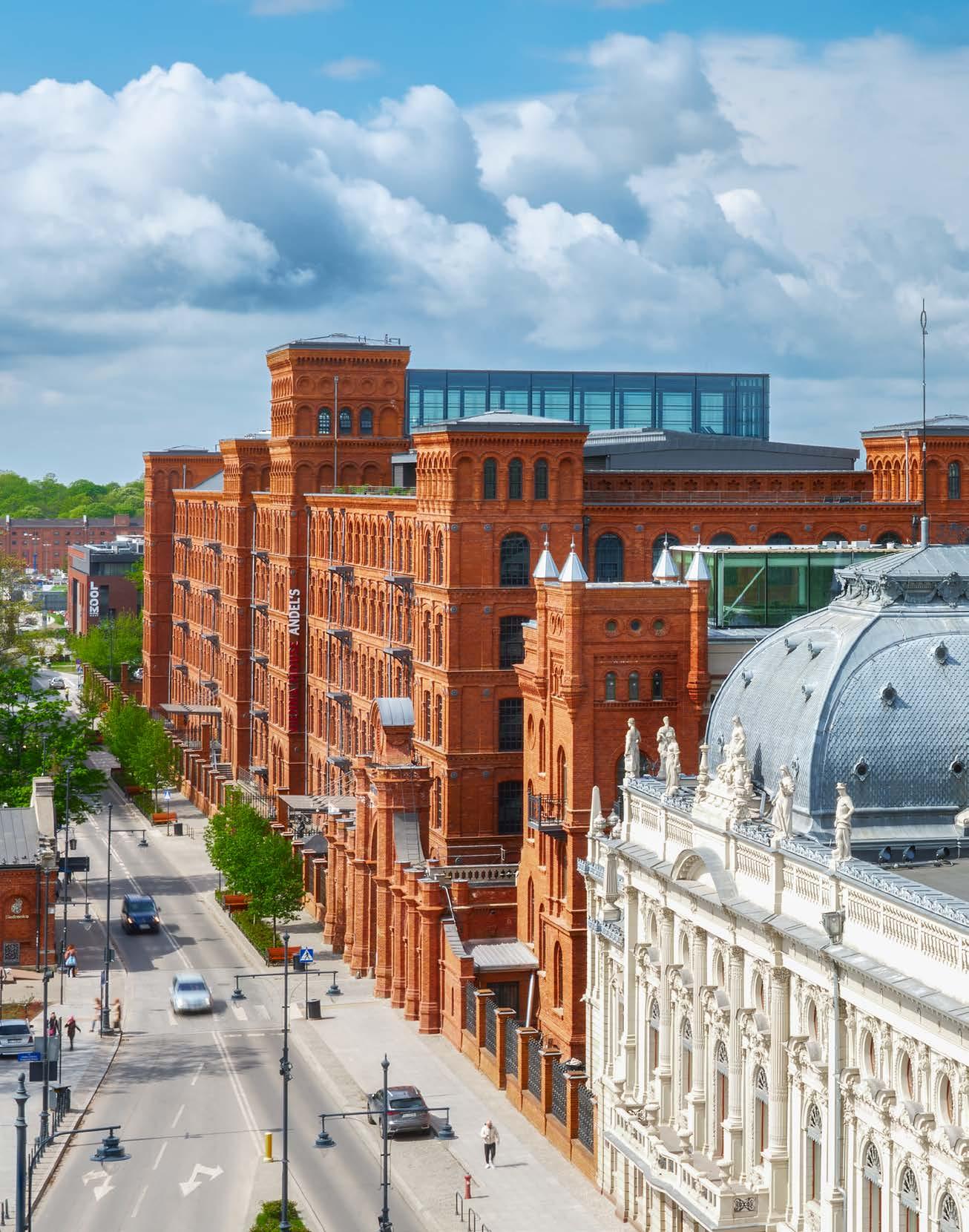
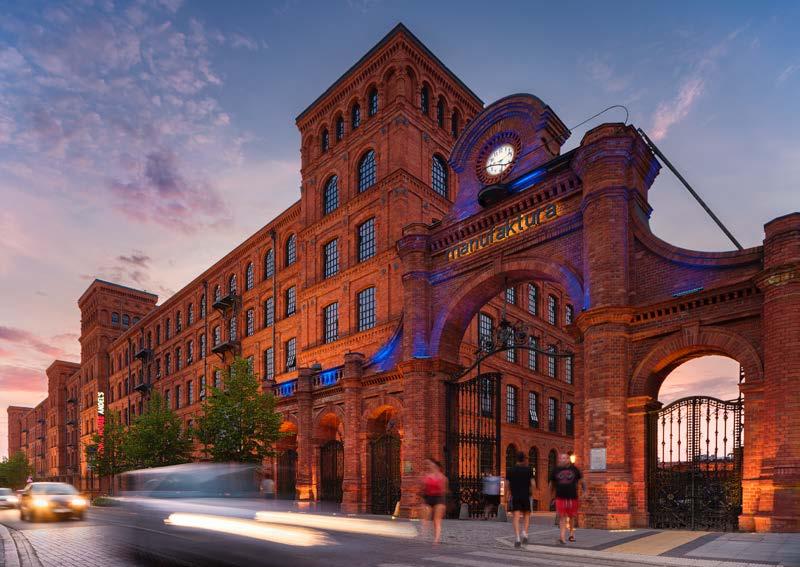
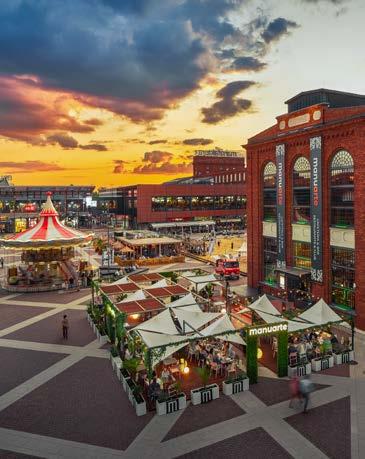
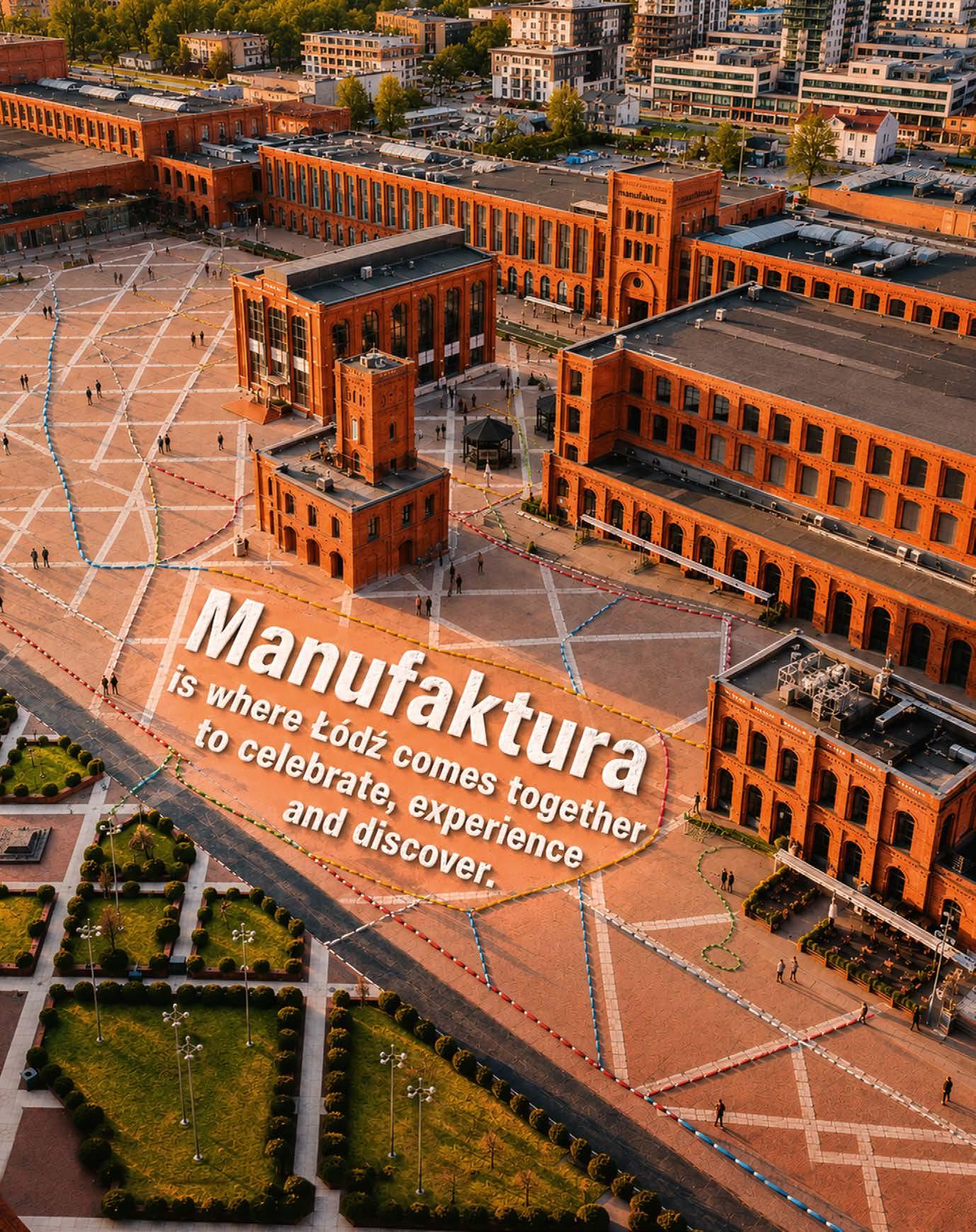
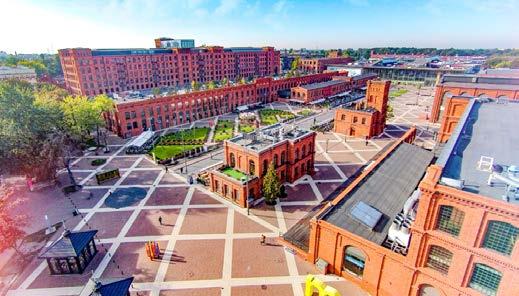
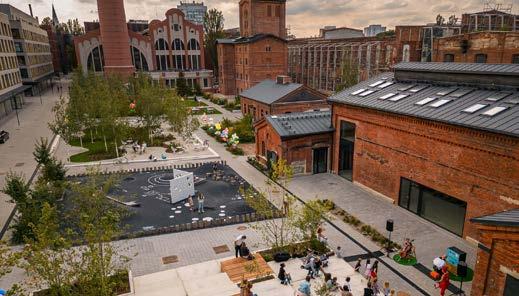
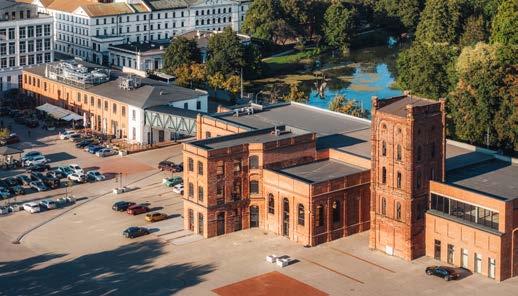
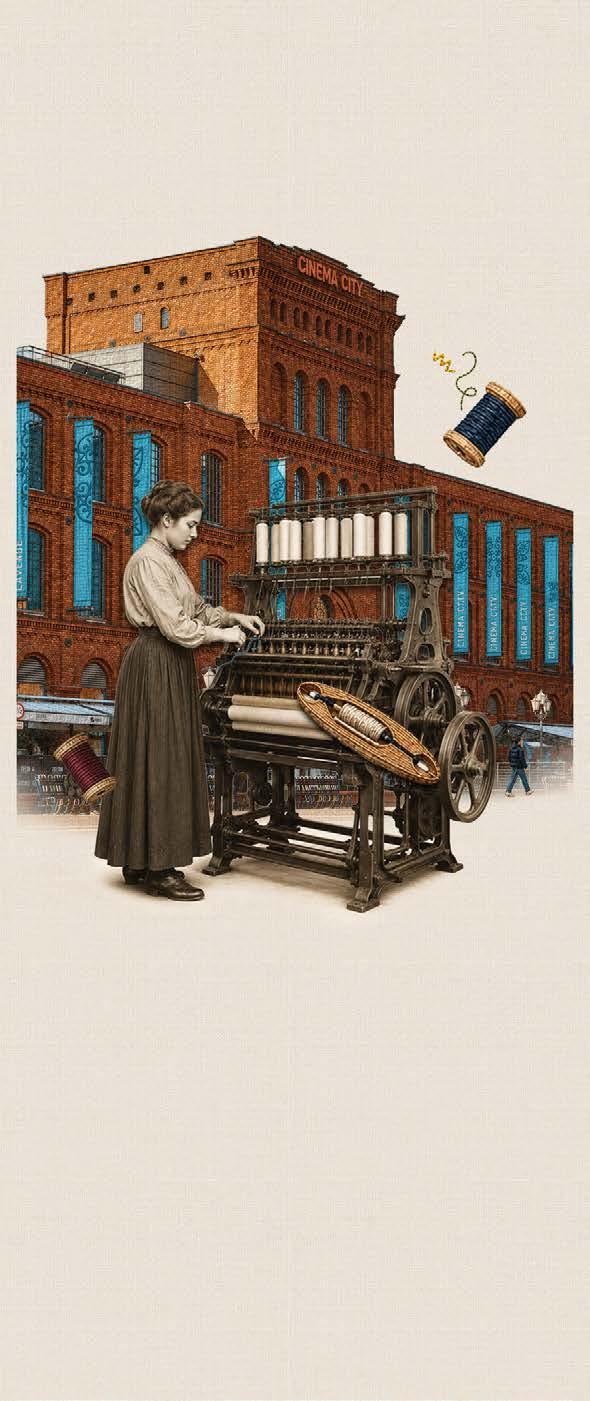
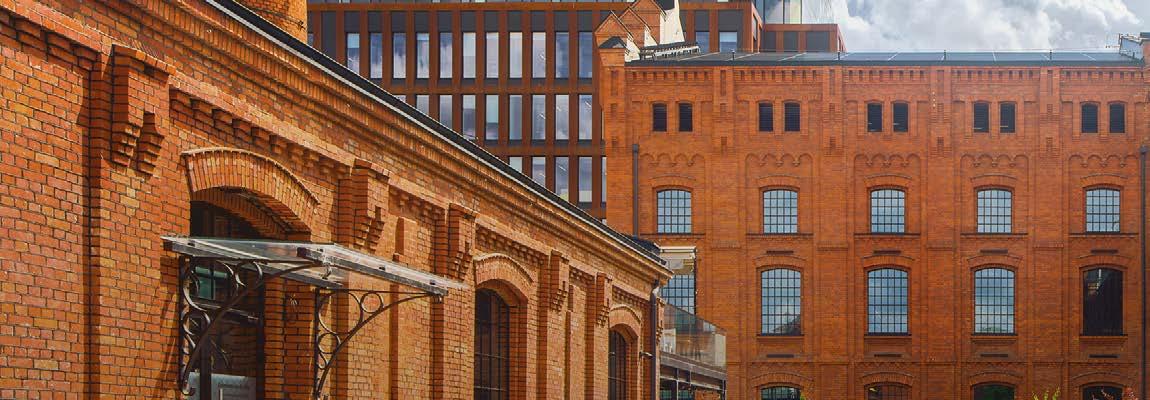
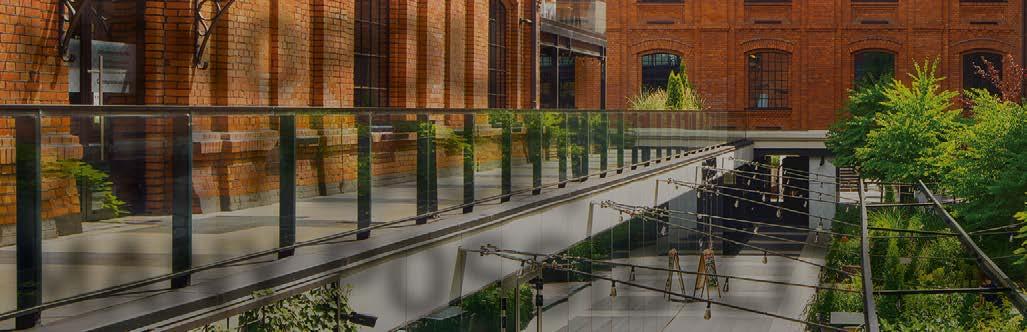
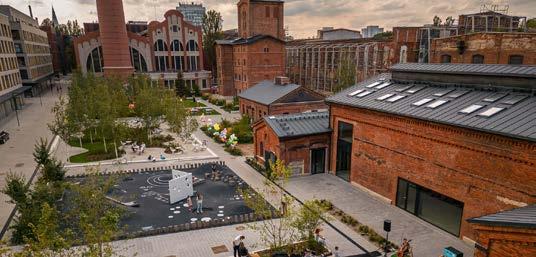
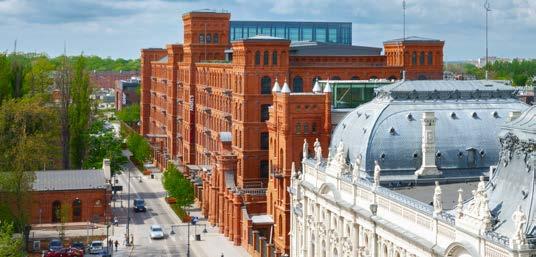
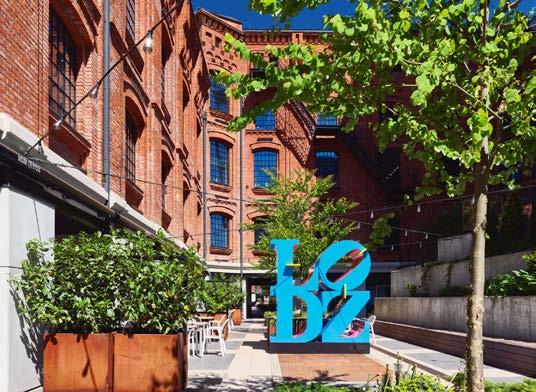
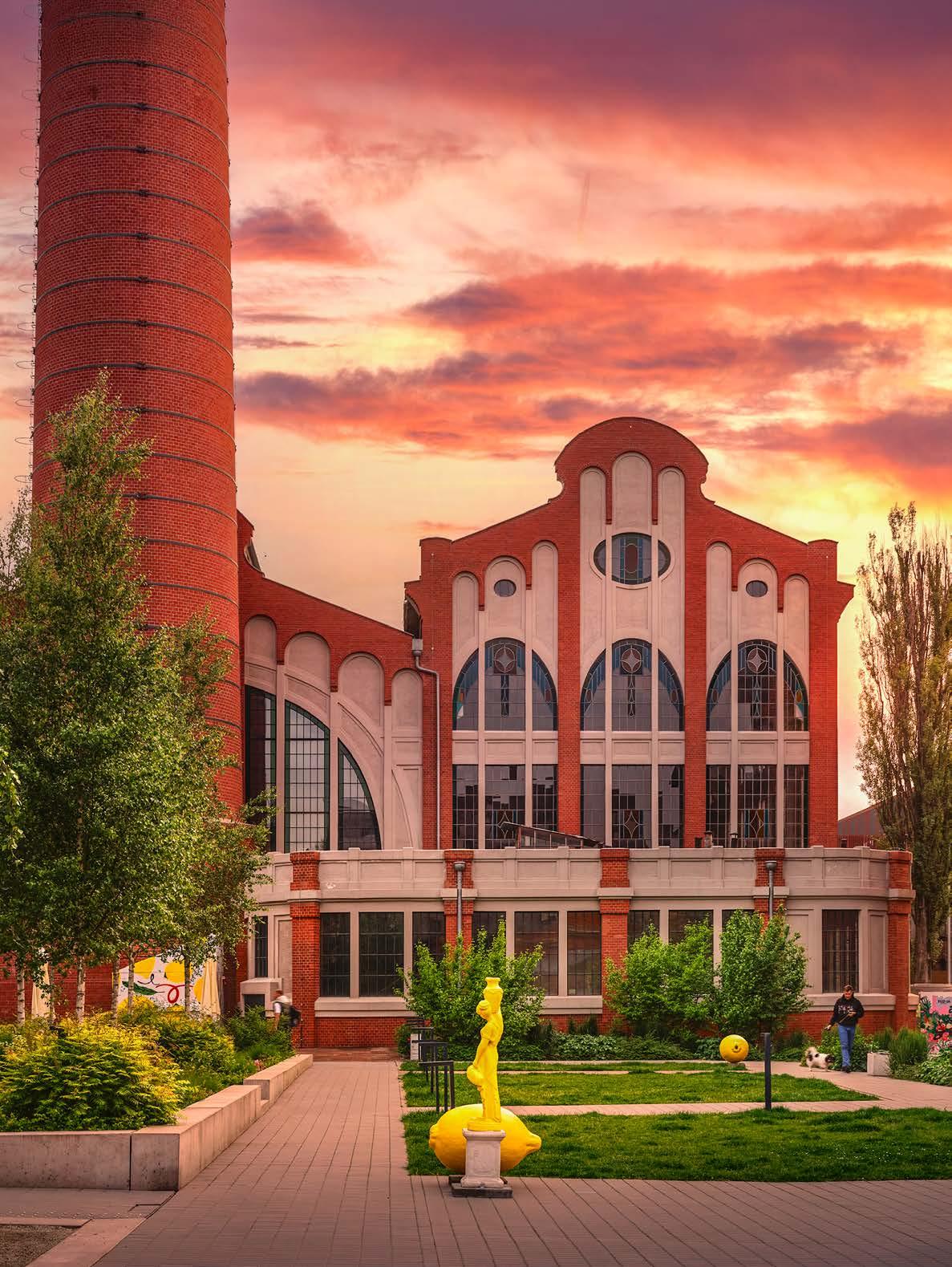
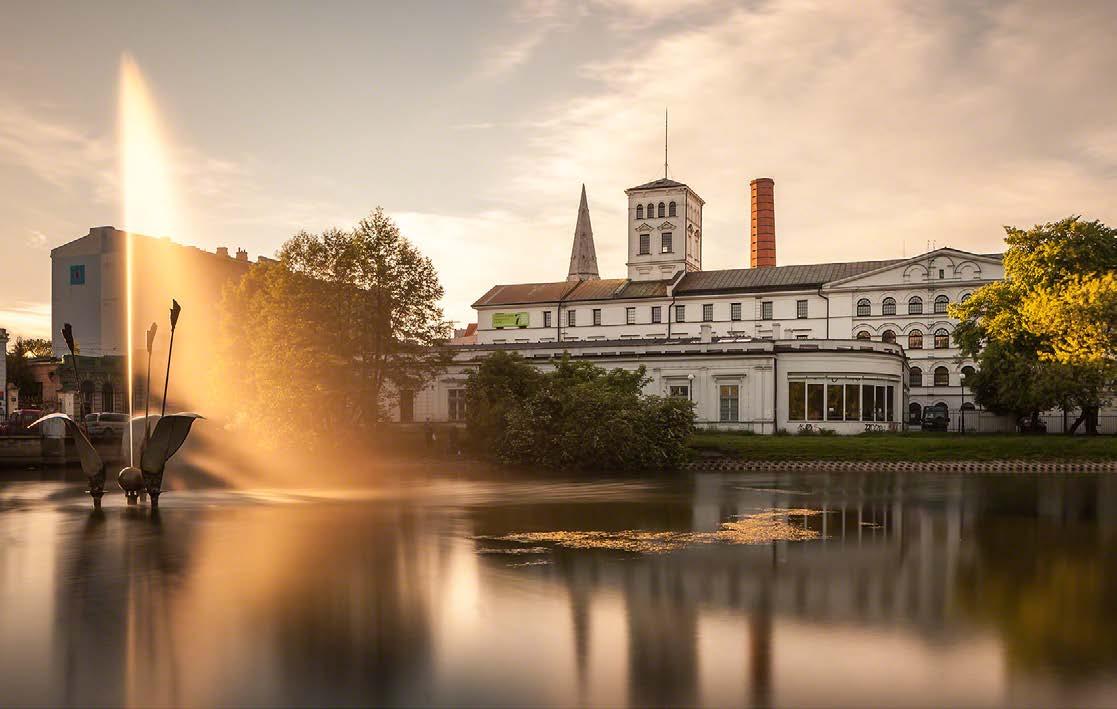
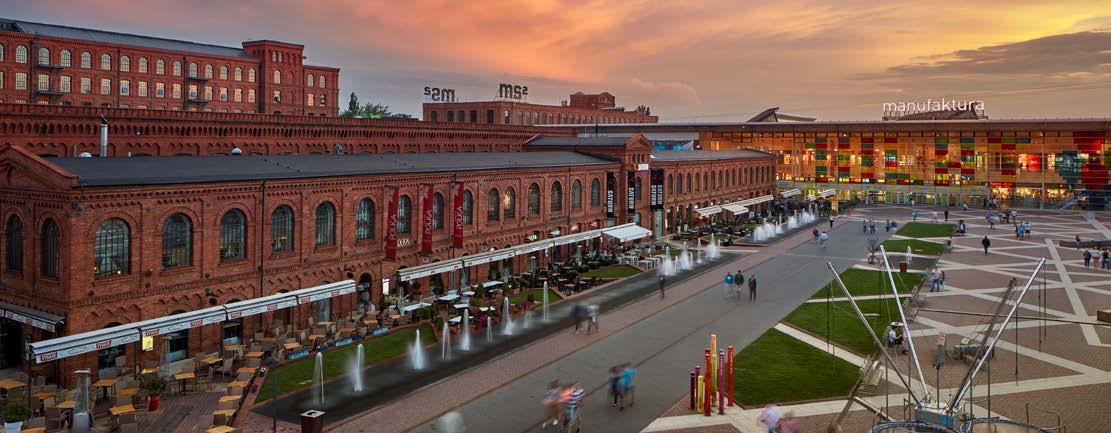
The Manufaktura complex encompasses the Łódź identity in many ways, with both industrial and palacial architecture, and hip, modern elements. Photo: P. Augustyniak.
COPYRIGHT NOTICE
All content copyright IYP City Guides Sp. z o.o Sp.k and its partners, unless otherwise stated. No part of this publication may be reproduced without express written consent from the publisher.
The brand name 'In Your Pocket' is used under licence from UAB In Your Pocket.
Welcome to 'Woodge'
Famously a former industrial city, Łódź saw a massive boom of textile factories in the 19th and 20th centuries that put the city on the map as one of the most important textile producers in Europe. During and after the fall of industry, Łódź became a hub of incredible film culture, art and cuisine. Despite a stressful period post-communism, the city worked hard to rebuild its identity and importance on the European stage. It’s now known for its unique brand of grungy physical beauty as well as some great art and top-tier dining options. Let’s get you acquainted.
Pronunciation Guide
For non-Polish speakers, one look at the word “Łódź”, with all those accents and strange characters, might be enough of a reason to not take a stab at a pronunciation. But give it a try: it’s easier than you might think!
Surely, you’ve heard the Anglicized version of the city’s name: Luh-oh-d-z. But that’s way off.
Let’s start with the “Ł”, which in Polish is pronounced “wuh”, similar to an English W.
Next one: the ó in Polish is pronounced like “oo” (try to remember that one, it gets used a lot).
And finally, the ź is a soft z … more like a “jjj” sound in English.
Okay, let’s put all that together: W-oo-d-jjj. Or, if you prefer, Woodge. It’s all Łódź to us!
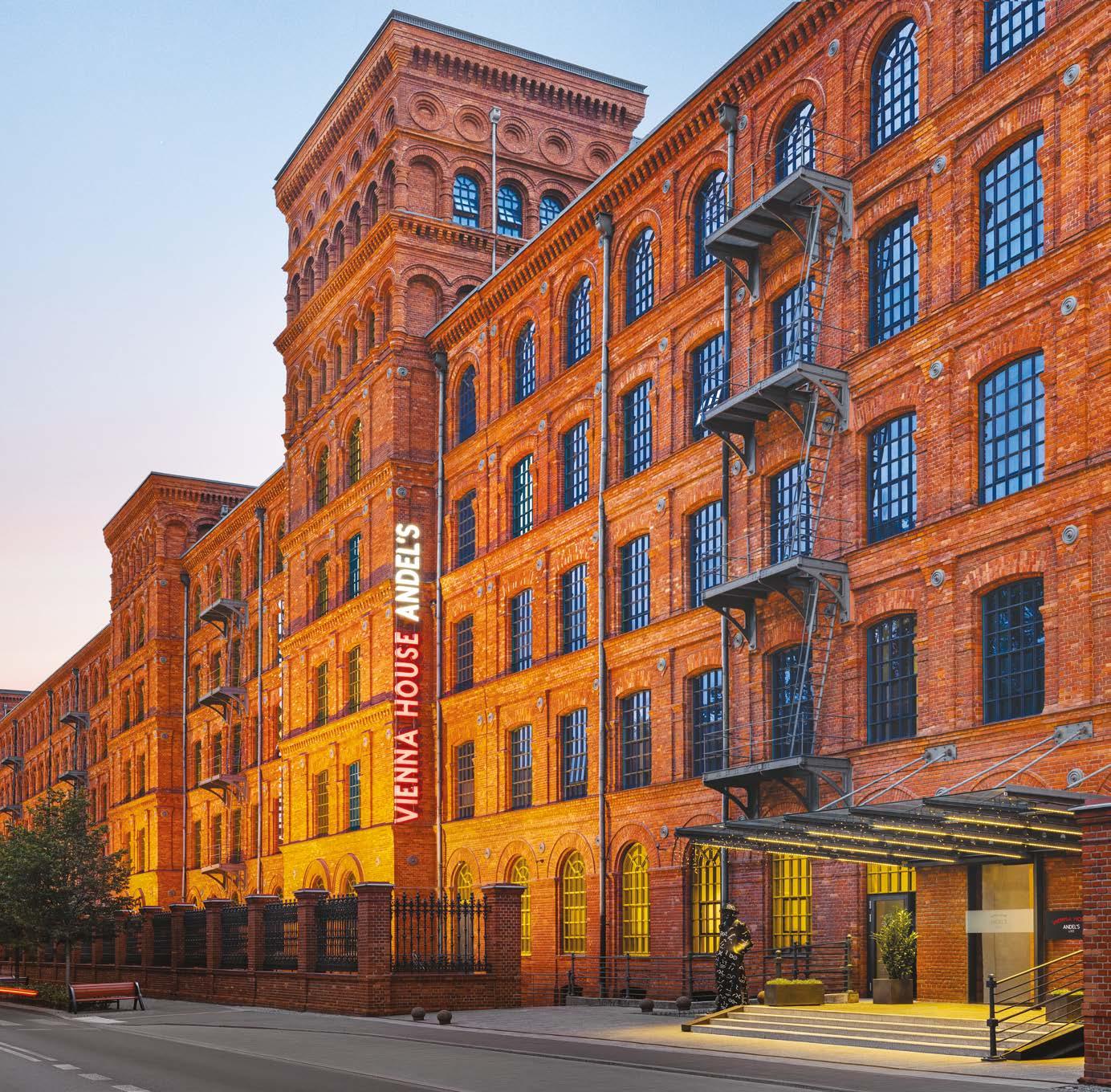
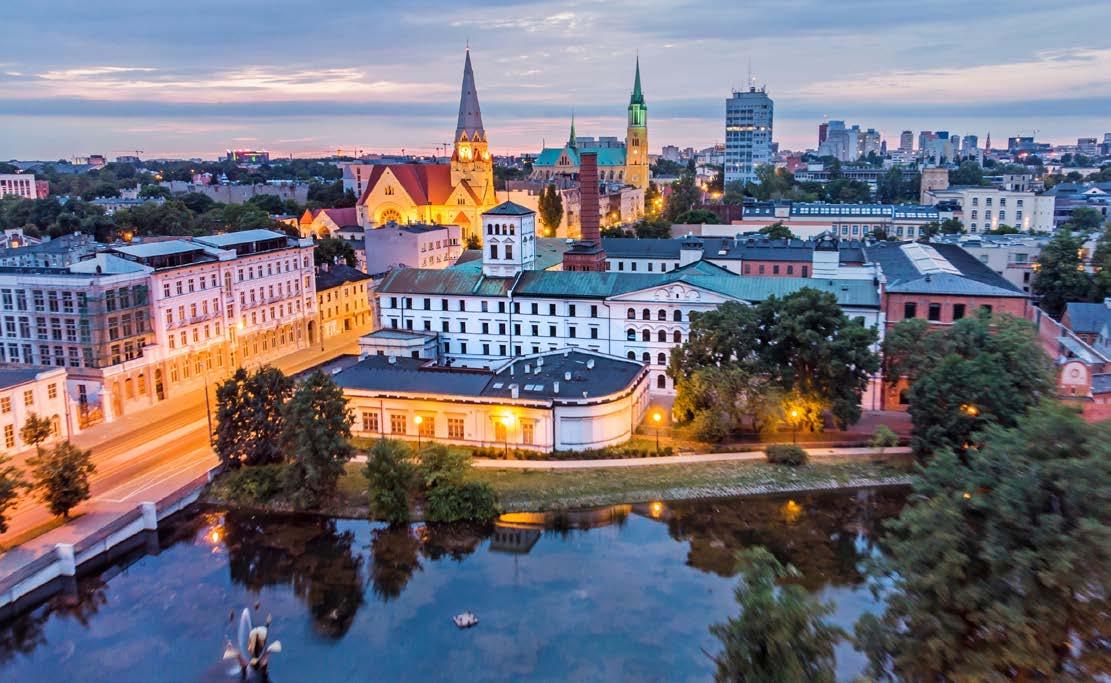
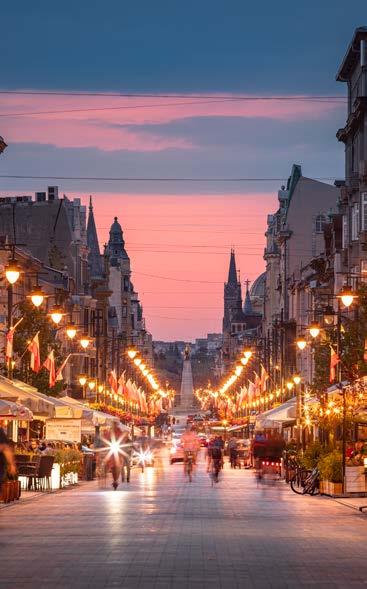
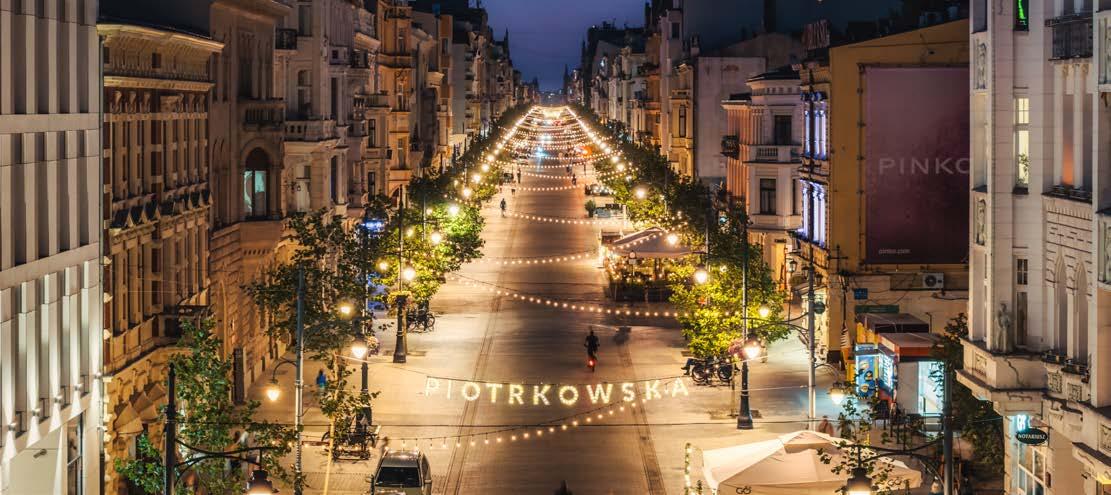
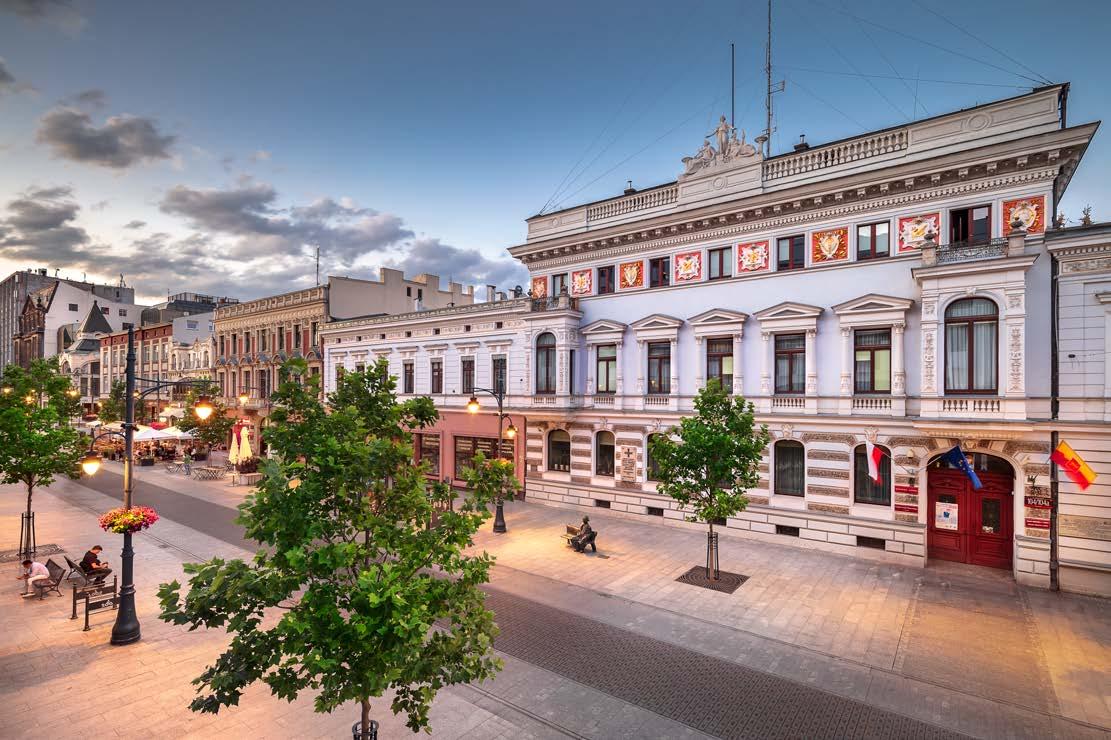
The city is stunning in the evening light.
Often, mentions of Łódź’s history are focused on the 1800s and 1900s, so it might surprise you to know that the city actually dates back to the 1300s, when the first records of “Łódź” were mentioned in historical documents. At the time, and for the next few centuries, it was really a small, agricultural town on a tiny river, until the 1400s when the king of Poland at the time designated it a city. But that was in legal status only; it was still very much a small town and remained that way for centuries.
However, in the early 1800s the government at the time decided that Łódź should be an industrial city, which led to numerous business tycoons moving to and opening up factories here, as well as workers coming from all over Europe and beyond. That industrial designation (p. 12 ) led Łódź to stretch beyond the bounds of the small town it once was, to a full-fledged city, incorporating other neighboring towns in the process.
At the time, Łódź was under Russian rule, until 1918 when the Second Polish Republic was established. But that lasted a mere 21 years until it (and the rest of Poland) was occupied and came under German rule in 1939.
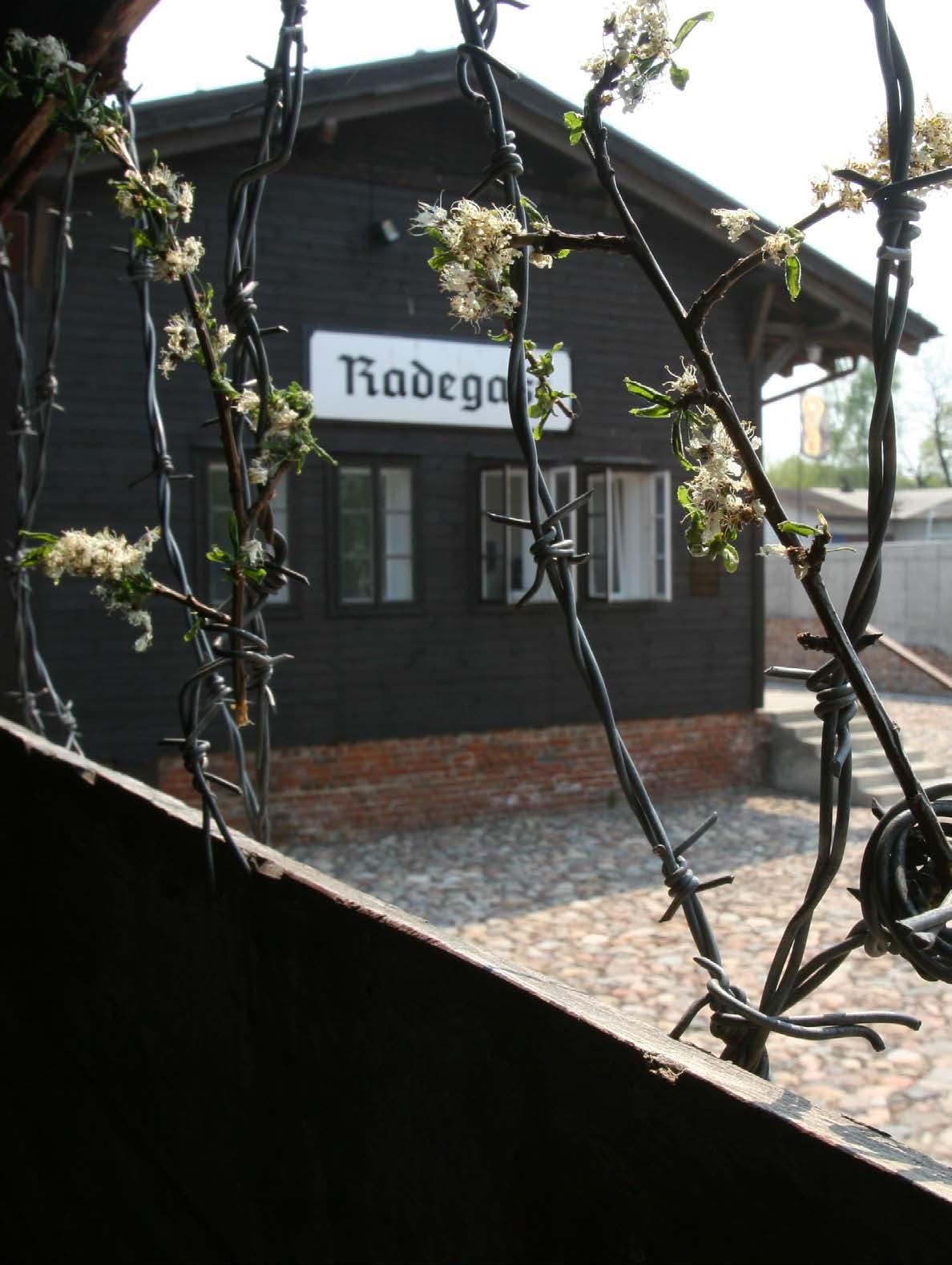
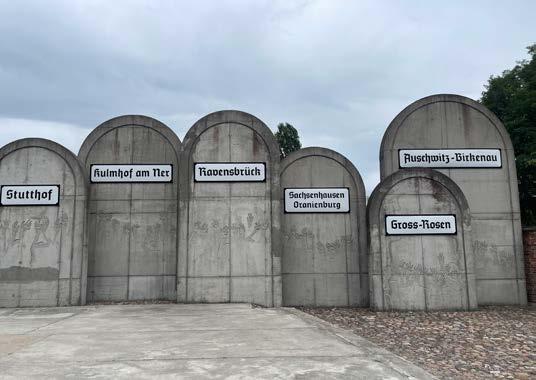
As for much of Poland, WWII was a difficult time for the residents in Łódź. The Nazis opened up the second-largest ghetto in Poland (after Warsaw, p.106) and took prisoners to and from nearby concentration camps by way of Radgast Station (p.107).
After Poland was liberated, Łódź found its footing again. It became a hub of film culture, with the opening of its renowned film school (p. 86 ) in 1948, which saw the likes of Roman Polański and other famous Polish filmmakers come through its doors.
Following the fall of communism in 1989, Łódź again had to rebuild, this time, cut off at the knees by the decline of industry. In the 21st century, the city worked hard to re-establish its identity, renovating and revitalising old factory buildings and bringing in more arts and culture institutions, as well as more world cuisine.
Today, the city is a mixture of the old and the new: former factory buildings now hold chic cafes, monuments pay testament to its revolutionaries and serve as a reminder of the horrors of the Holocaust, and the art found on nearly every street corner tells visitors what Łódź is today: a city full of character, culture, and promise.
The Legend of Łódź
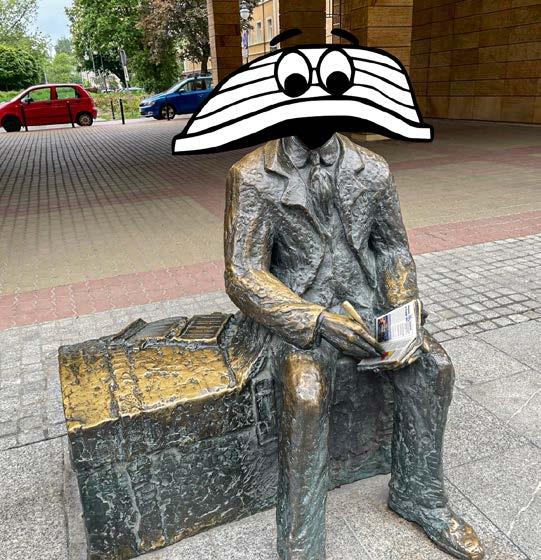
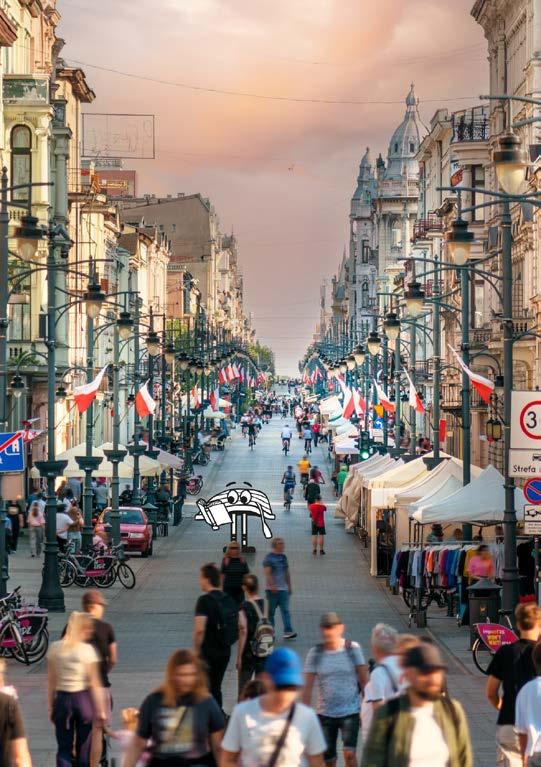
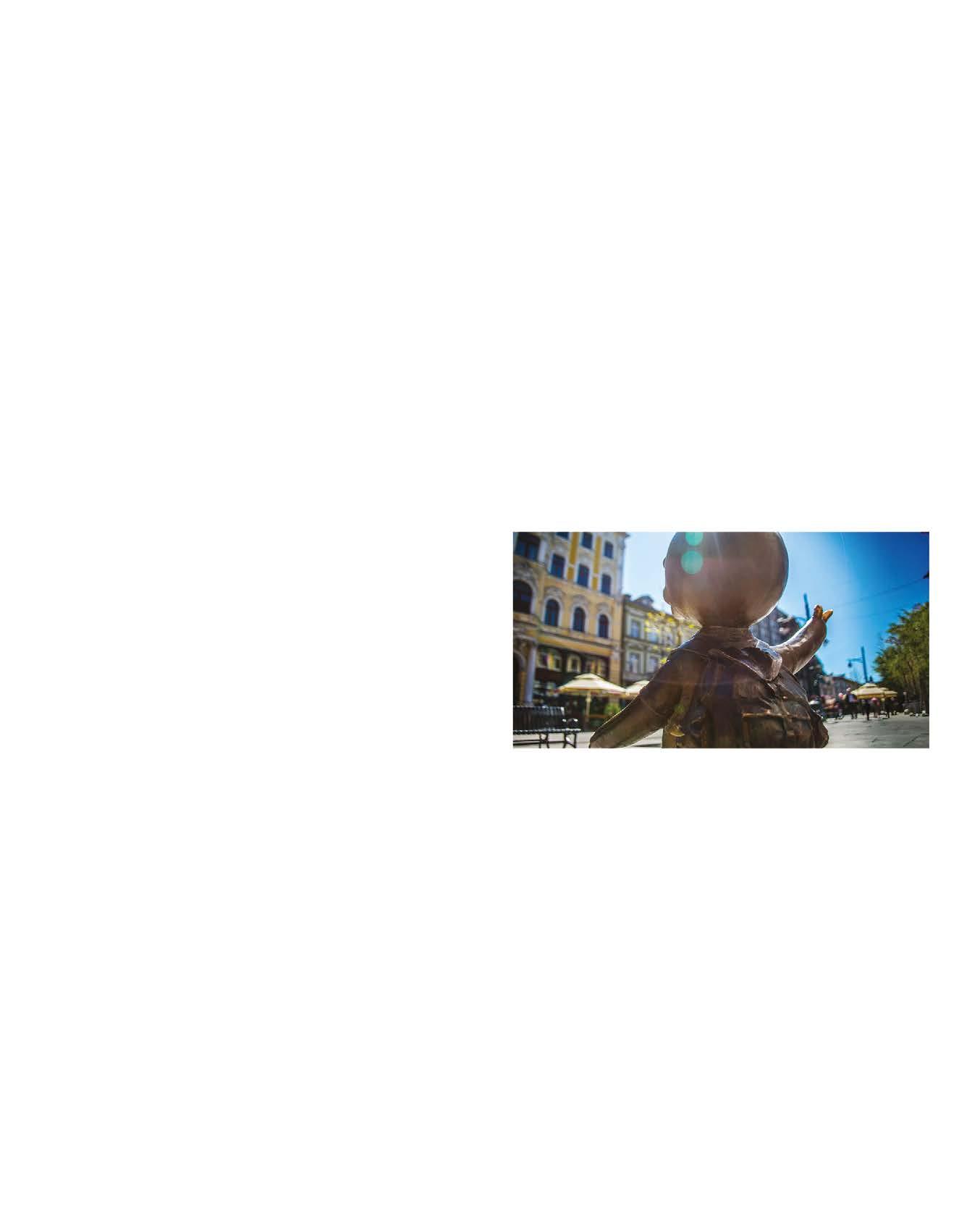
You may have noticed our little figure in the corner of the pages here. His name is Łódzik (woo-d-jeek) and he’s modeled after an upturned boat to pay tribute to the city’s name (Łódź means “boat” in Polish). It’s funny, since Łódź isn’t near any major port or river. But stretch your mind back to the 1300s. When Łódź first got its name, it was (and still is) on the little Łódka River.
The legend goes that the city came into existence thanks to an intrepid traveler named Janusz, who was taking his boat on the river through a forest. While he was setting up his camp one night, the rain started pouring down, so he flipped his boat over on the shore and took shelter underneath. Janusz stayed there and soon others joined him to make the first settlement in what would become Łódź. Who knows how much of that is true, but we choose to believe it!
How to Use this Guide
Łódź In Your Pocket is designed to provide you with all of the ideas, inspiration and information you need to explore the city on your own, stay offline as much as possible, and truly connect with your surroundings.
Our guidebook primarily consists of two types of content: Essentials and Walking Tours
Essentials
Read these features for an overview of Łódź’s most essential sights, experiences, tastes and touchstones. Establish your priorities and plan your time.
Page references you to additional or related info located elsewhere in the guide.
QR Codes lead you to our website when there’s more worth knowing than fits in print.
Walking Tours
Follow these to find all of Łódź’s most interesting and important places, and learn what makes them worthy of inclusion. Be your own tour guide.
Map coordinates correlate to the grid on walking tour maps, or the Greater Łódź map on the inside cover, so you can gauge distances and keep your bearings.
Editor’s Picks
ultimately control interests and impulses.
As you go through the guide, keep an eye out for these icons next to venues that we personally recommend for the following visitor profiles:
The Honeymooders
Romantic spots recommended for couples.
The Kinderguardian
Fun places for families and kids.
The Sophisticationer
Niche sites for history buffs and culture hounds.
The Offbeatnik
Alternative, artsy or obscure places for urban adventurers.
Where's Łódzik?
8 Essential Sights & Experiences
A rich blend of art, history, culture and entertainment, Łódź offers an array of rewarding places to go and things to do - enough to fill over 100 pages of a guidebook and still only scratch the surface, in fact. Over the next several chapters we’ll explore the essence of the city, and help you craft your own itinerary. For the TL;DR crowd, however, here’s a one-page cheat sheet of what makes Łódź wonderful.
1 Bike Down Piotrkowska
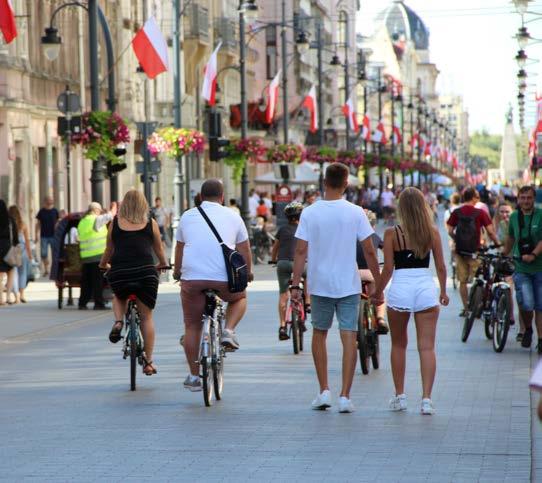
It’s hard to talk about Łódź without mentioning ul. Piotrkowska. This pedestrian street is lined with shops, restaurants and more – and it’s perfect for a leisurely bike ride. Rent a bike (p.51) and start your ride from the north end, south. | Page 59.
2 Wander Through Manufaktura
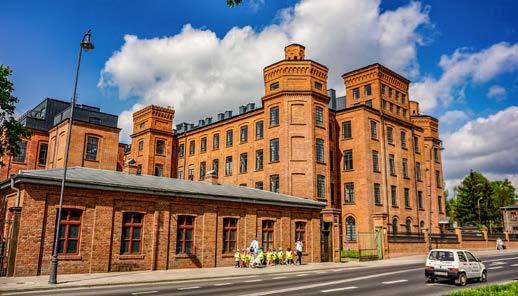
One of the city’s top attractions, this former industrial complex still has that old factory feel with its red brick buildings. But where there once were mills and looms, now there’s restaurants, bars, museums, shopping and more. Save a whole day for this. | Page 96.
3
Go on a Mural Walk
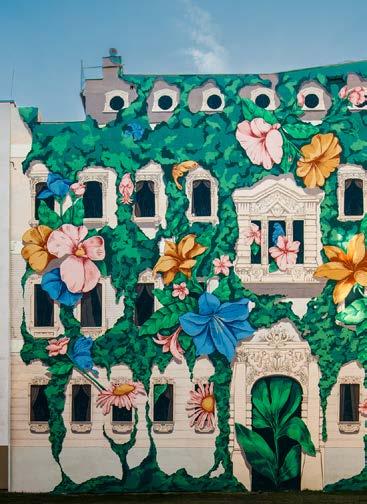
Łódź is a city of art, and specifically, murals. It seems like every turn you make, every little side street you walk down, it’s more than likely that you’ll run right into a larger-than life colorful mural splayed across a building. Luckily, we have a guide to some of the best. | Page 24.
4 Have a Drink & a Bite at OFF
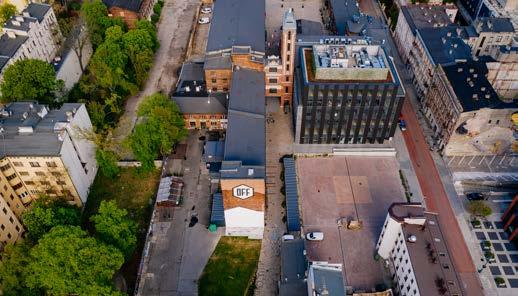
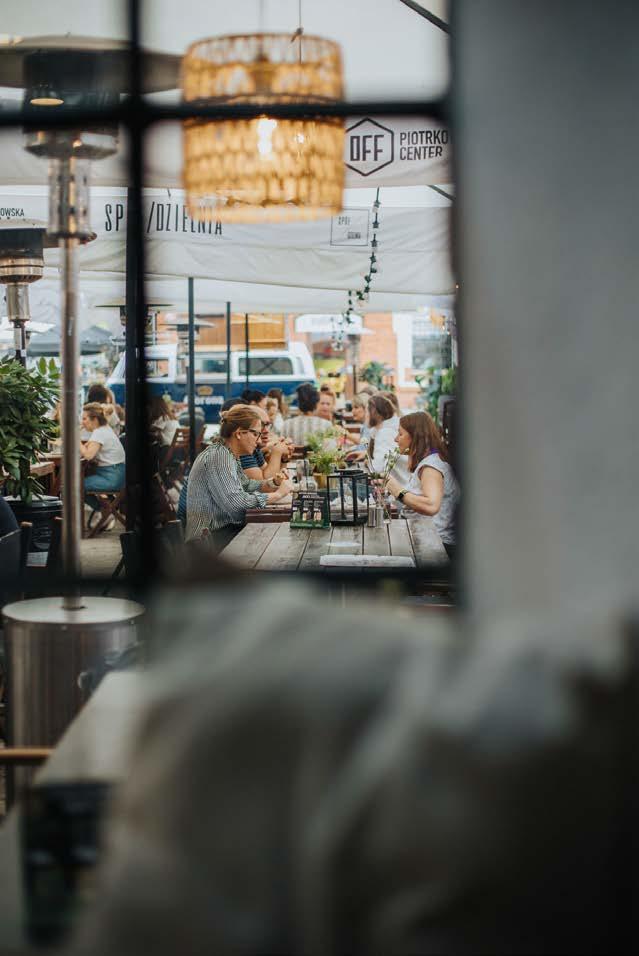
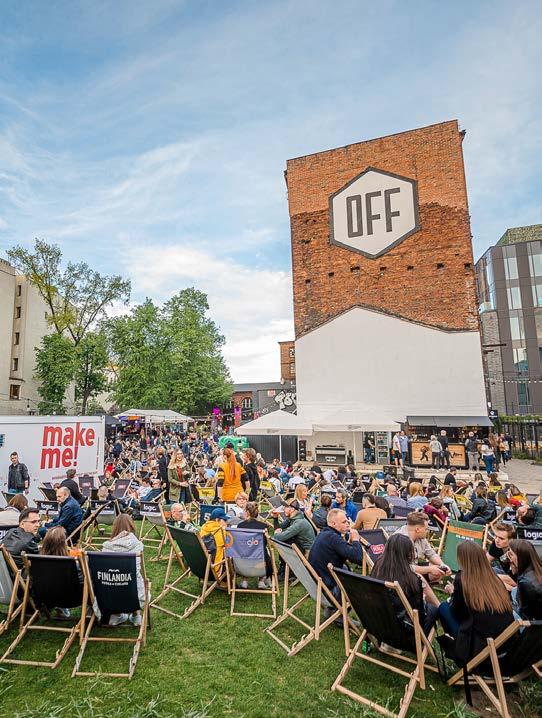
This is where locals and tourists, young and old, artists and business types, all meet. OFF Piotrkowska is the ultimate summer hangout, with a whole stretch of outdoor dining and drinking options, frequent live music, and a great boho-chic atmosphere (twinkly lights abound). | Page 77.
5 Get Hands-On at EC1
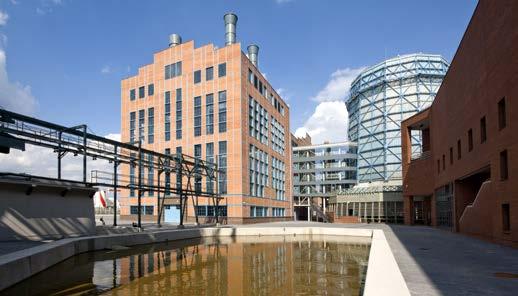
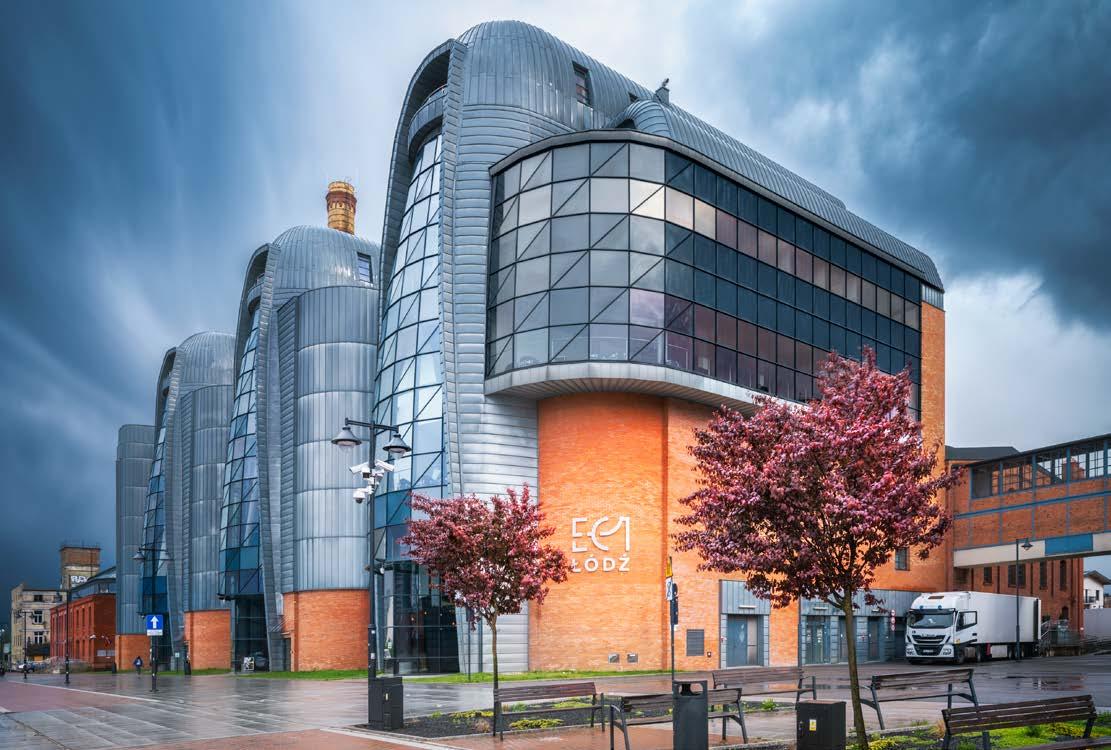
Once a massive power plant supplying energy to factories around the city, now, the large structure – part brick, part hyper modern architecture – is home to a science centre, planetarium and comic book centre, along with others. Worth a one- or two-day visit. | Page 71.
6 Peruse a Palace
Amid the old factory buildings that Łódź is so famous for, you’ll find tons of stately palaces that once housed the wealthy industrialists. The massive wealth disparity of the 19th and early 20th centuries might be hard to stomach, but those marble-clad interiors are pretty unforgettable. Worth checking some out, starting with Izrael Poznański’s. | Page 98.
7 Sip Some Zalewajka
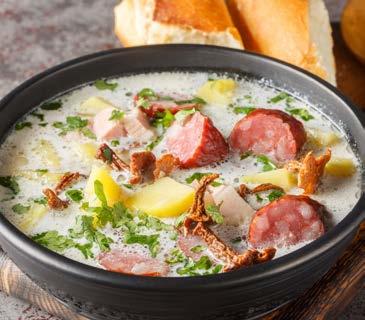
Sour, tangy, warming. Zalewajka is the food of Łódź. It’s a soup made of sourdough starter, potatoes (of course) and a dash of that former peasant food charm. Enjoy it all over the place, but we’ve given you some of our favorite spots. | Page 43.
8 Take in Jewish History
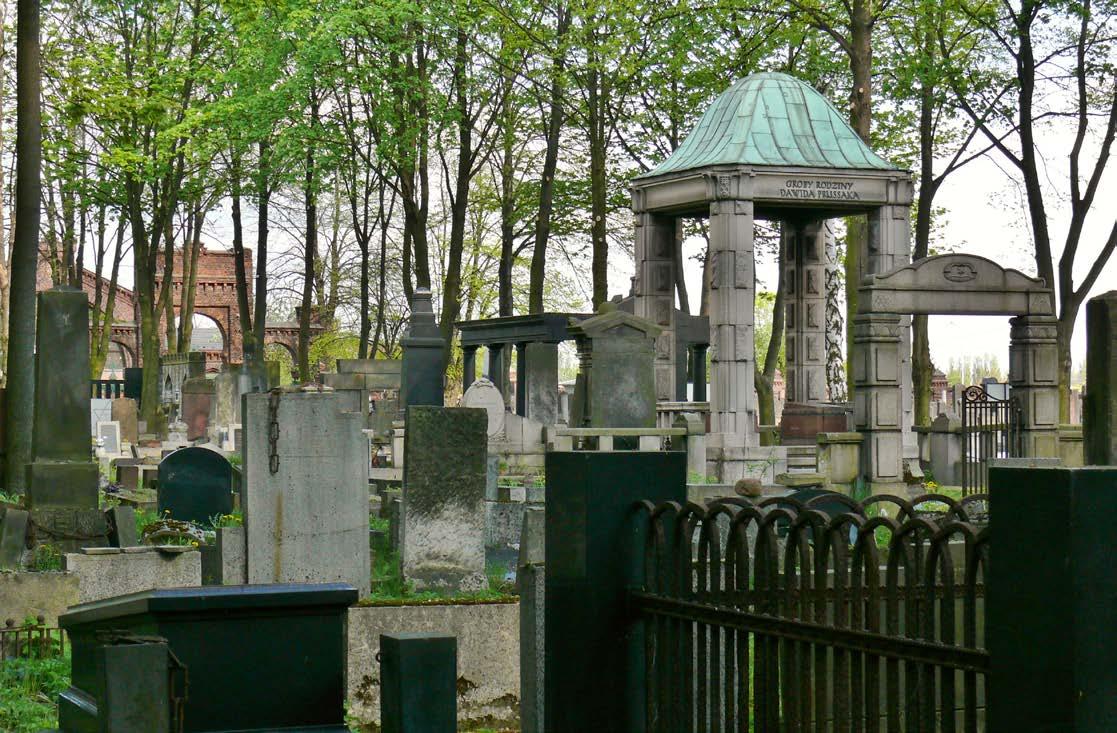
Łódź's Jewish heritage is palpable all over the city, but especially in Marysin Doły - part of the former Jewish Ghetto during WWII. Here you’ll find tonnes of incredible monuments that pay homage to the fraught, and yet resilient, history of Jews in Łódź. | Page 104.
City of Industry
The source of both splendour and shame, Łódź’s industrial past is at the heart of its identity. Its rapid 19th-century rise from marshy wasteland to booming textile hub is the key to understanding the city today.
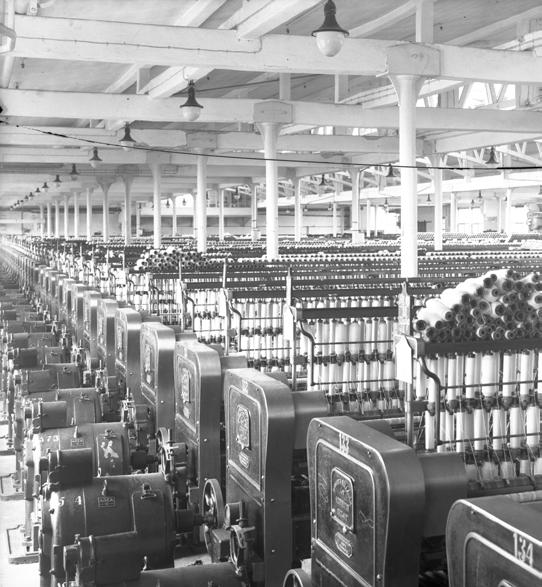
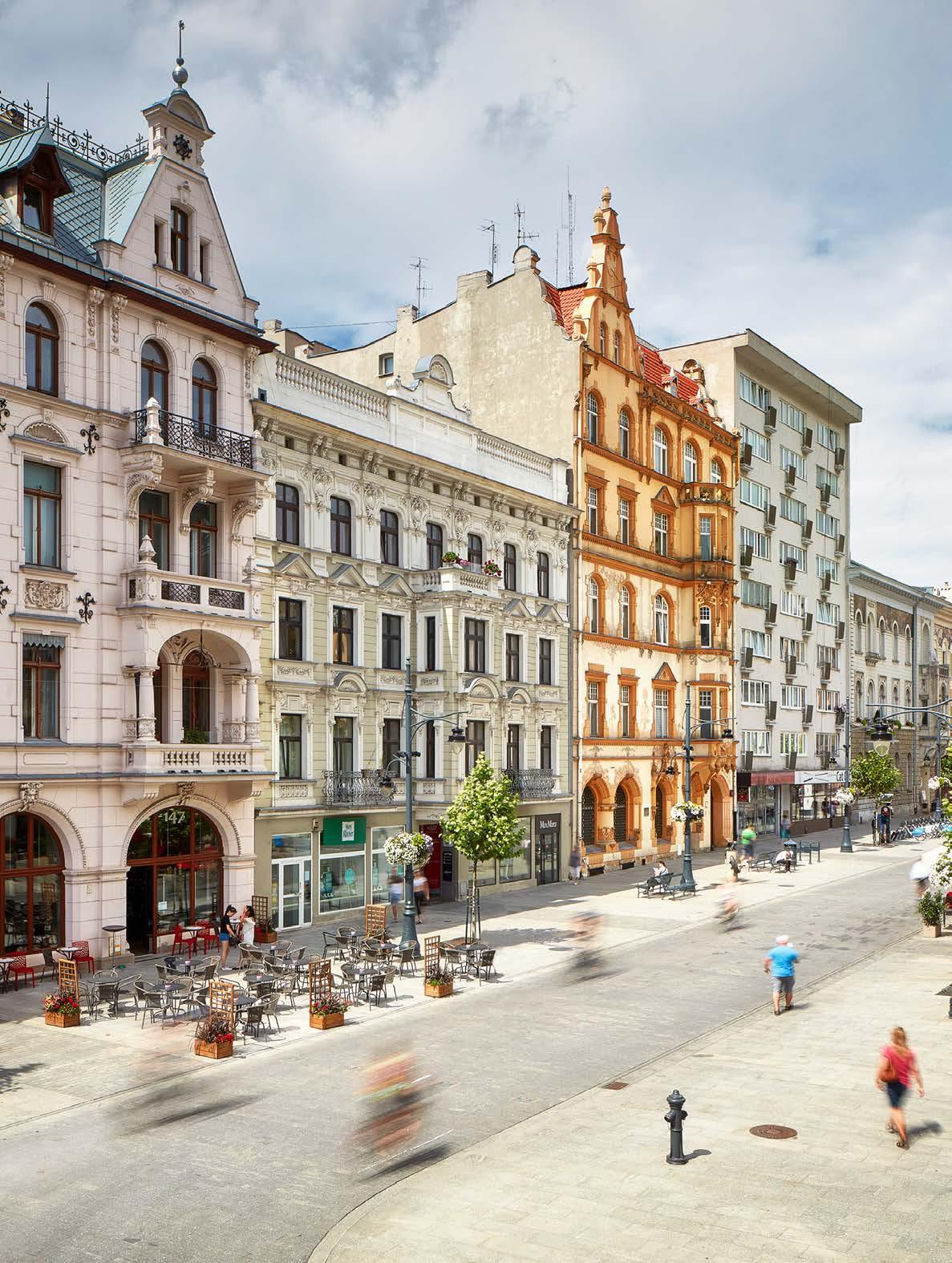
There are memories of Łódź ‘sindustrial past embedded throughout the city. Smokestacks rise in the background when you walk through the southern portion of the center (p.82). The Manufaktura complex (p.96) is rife with red-brick former factory buildings. And there are reminders of the wealth that came along with it, too: neoclassical palaces throughout the city that once housed all the wealthy industrialists and their kin. Though most factories and palaces have since been turned into museums, government buildings, and hip hangout spots, there’s no denying that industry is baked into the identity of Łódź.
How Industry Built Łódź
Industry came to Łódź around 200 years ago and quickly helped the city establish its identity as a factory town, and specifically the site of most textile production in the larger area. In fact, at one point, the city was the biggest textile producer in the Russian Empire (when Poland was partitioned and the centre of the country was ruled by Tsars).
But, like other classic industrial cities of the 19th and 20th centuries, it struggled with issues of wealth disparity -- marked by several workers rebellions in the 20th century.
Let's jump back to the early 19th century, when the city’s industrial identity really began to form. Then,
Łódź was simply a collection of smaller towns surrounded by farmland. In fact, many of the city's neighborhoods today were their own separate towns and what made up the city at the time was centered around Stary Rynek (the Old Town p.101). But in 1820, Łódź was designated as an area for industrial development and it quickly took off. The first cotton mill was opened in 1825 and in 1839 the first steam-powered factory in Poland and Russia was officially opened.
And with these factories came a new, booming city as industrialists looked south of the Old Town to build their empires. Government-funded settlements for craftsmen opened along what is now ul. Piotrkowska and a new city centre was
Another behemoth of industry was Karol Scheibler’s complex: Księży Młyn.
quickly formed in what is now called Plac Wolności (p.64). With the growth of industrial plants and Łódź-made fabrics being exported to Russia and China, the city's reputation started to grow, too.
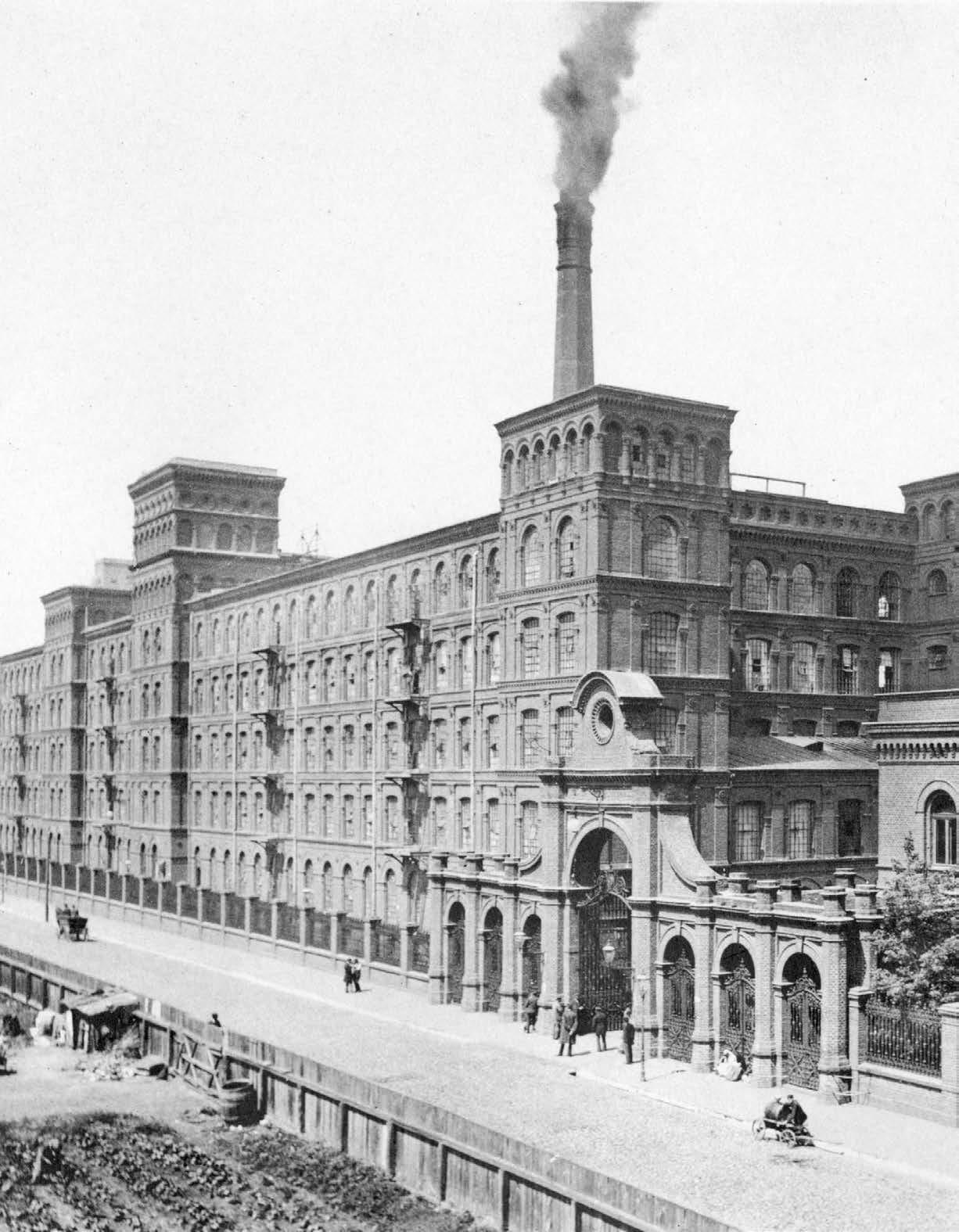
That led to more industrialists making Łódź home. One key figure is Izrael Poznański, a local business magnate who established 12 factories, power plants and other buildings in the city. He took over management of his family’s business in the 1850s, and bought up plots on Ogrodowa Street, which he used to build an industrial complex (now known as Manufaktura, p.96)
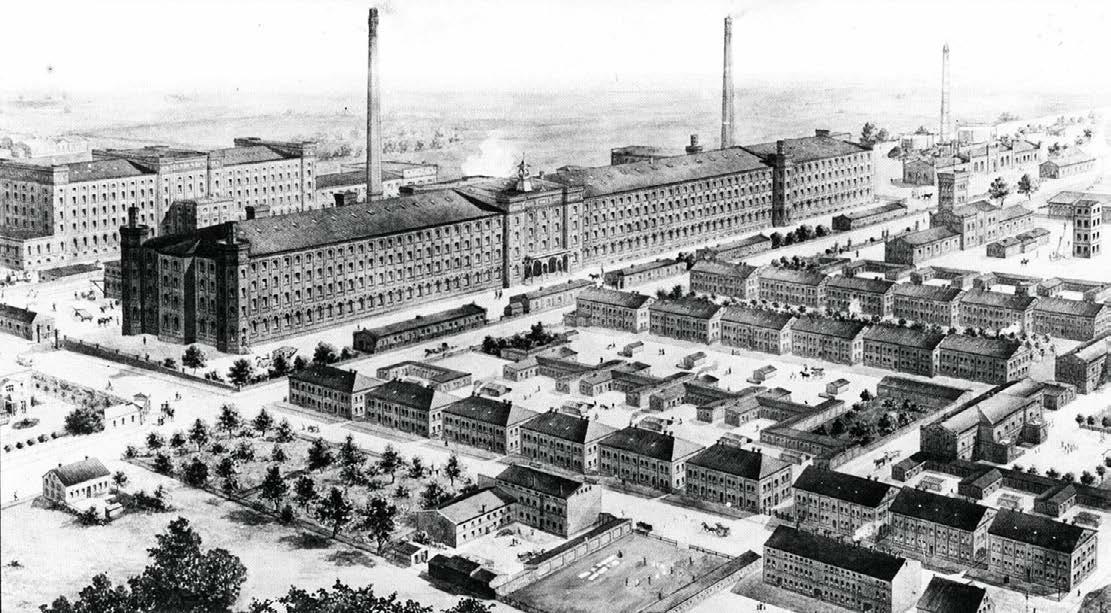
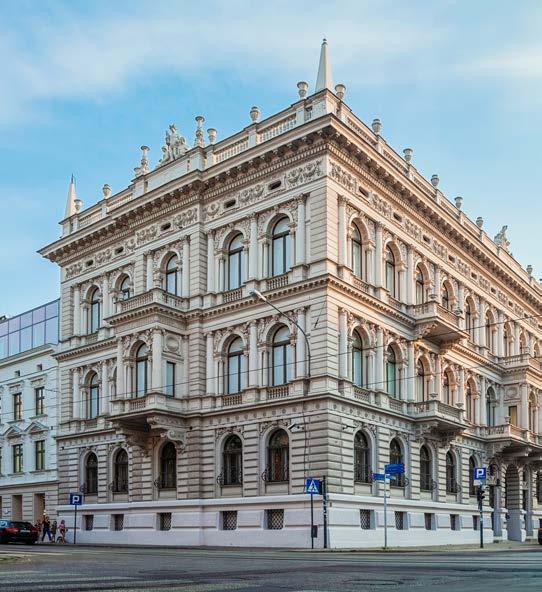
Another was German-born Karol Scheibler who became known as the "cotton king" when he built up several cotton factories. Most notably, Księży Młyn (p.83) which he purchased in the mid-1800s after a fire and transformed from a mill into a 500ha space with mills, spinning and weaving plants, and a gasworks. It became one of the largest industrial complexes in Europe around this time, employing 5,000 workers.
Other industrialists include Henryk Grohman, who ran a spinning mill near Księży Młyn around the turn of the 20th century (he, along with Scheibler and Poznański, is depicted in a statue
to the industrialists in the city centre, p.66). And Ludwik Geyer, who brought modern spinning and weaving techniques to his building, the White Factory in the 1830s. It's now home to the Museum of Textiles, p.89.
With all these industrialists having moved to Łódź and rapidly building their businesses, the latter part of the 19th century was the time that really saw industry take off in the city. And with that, came massive wealth disparity -- workers were doing, at times, 12-hour days for little pay, while the industrialists and their families continued building and expanding towering mansions for themselves around the city.
Thus, as industry grew, so did the number of workers’ rebellions. One of the most famous was the Łódź Rebellion in May 1892, during which workers demanded more fair conditions (including 8-hour work days and an increase in pay and political say). A strike on May 2 gave way to violence between strikers and the police, and workers attacked Ignacy Poznański, Izrael’s son. An intervention by the Tsarist army and police led to hundreds of deaths, injuries and arrests. In response to the protests, some employers proposed an increase in pay (like Scheibler) but others, like Poznański, refused to make changes.
By the end of the 19th century and into the early 20th, Łódź continued to grow, becoming one of the most densely populated industrial cities in the world: from the early 1800s to 1913, the population grew from 800 people to a staggering 300,000, largely due to the number of workers moving to the city.
Łódź struggled as a result of the two World Wars, but was able to retain its identity as a hub of industry. But with the fall of communism in 1989, industry collapsed, too, and the city fell into economic decline.
In the 21st century, it has been growing with new arts, culture and food venues. But, with evidence of its history on every street corner, from revitalized factory buildings to repurposed mansions, it's clear Łódź still holds tight to its industrial past.
Inside one of the city’s many former factories.
Post-Industrial Landmarks
Today, post-industrial redevelopment is making Łódź an exciting and dynamic destination again. Here are 7 must-visit sites where the past has been reshaped for contemporary urban life. Use the map coordinates to find each area on the map (inside cover), and follow the page numbers for more detail on our walking tours.
Manufaktura
(former Izrael Poznański industrial complex)
Founded by industrial magnate Izrael Poznański in the 19th century, this vast complex was once the heart of Łódź’s booming cotton industry. Today, Manufaktura is one of the city’s main cultural, shopping and leisure destinations, combining museums, restaurants, retail and public space within a large redeveloped complex where industrial heritage meets contemporary urban life. | H/I-8, p.96.
Księży Młyn
(former Karol Scheibler industrial complex)
Built for the workers of Karol Scheibler’s textile empire, Księży Młyn is a rare, largely intact 19th-century industrial settlement. Mills, villas and courtyards reveal the city’s social and industrial structure in detail. Now a lived-in residential neighbourhood with studios, small businesses and cultural activity, it offers an immersive experience of everyday life within Łódź’s historic industrial fabric. | O-15, p.83.
EC1 Łódź
(former Łódź power station)
Opened in the early 20th century to power the city’s factories, EC1 was a key element of Łódź’s industrial infrastructure. Today, the vast brick halls form a major science and culture centre with a planetarium, exhibitions and interactive installations, transforming industrial technology into an educational and family-friendly cultural experience in the heart of the city. | L/M-11, p.71.
OFF Piotrkowska
(former factory buildings on Piotrkowska Street)
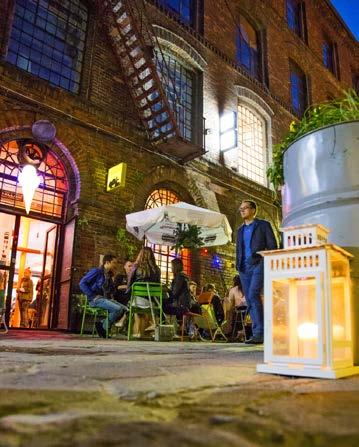
Once home to textile workshops, this cluster of raw brick buildings has been reclaimed by independent creatives and entrepreneurs. OFF Piotrkowska is now a lively courtyard of cafés, bars, studios and design spaces, preserving its industrial character while functioning as one of the city’s main nightlife and creative hubs, especially active in the evenings and weekends. | K-13, p.77.
Monopolis
(former Monopoly distillery complex)
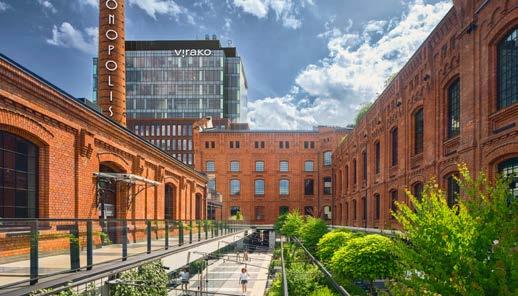
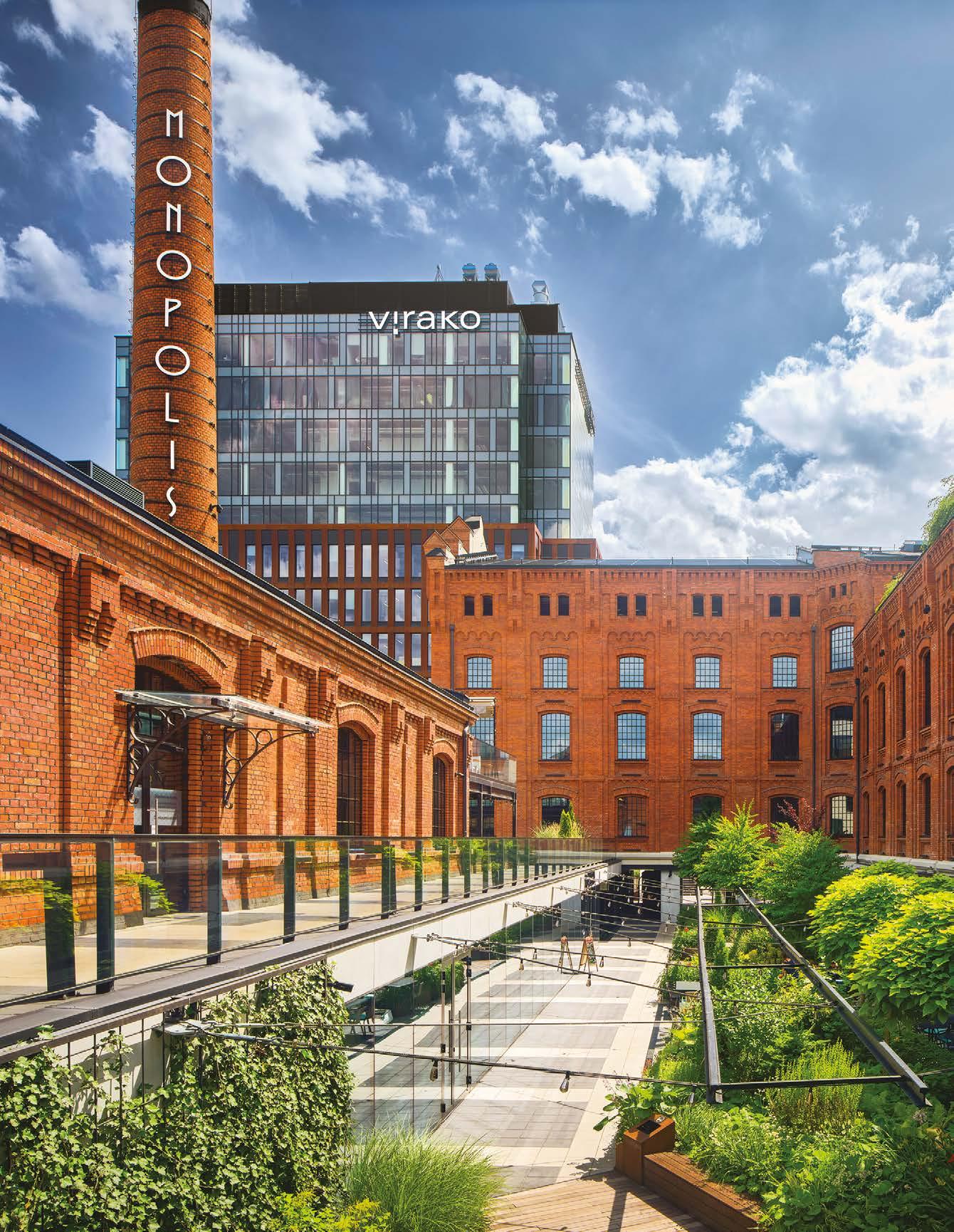
Built in the early 20th century as a vodka distillery operating within the Russian imperial spirits monopoly system, this complex formed part of Łódź’s wider industrial infrastructure. Today, Monopolis is a refined mixed-use development combining offices, dining and cultural venues within carefully restored industrial buildings, offering a curated environment for business, events and leisure. | O-12, p.79.
Fuzja Łódź
(former Karol Scheibler textile mill complex)
Developed around a former textile mill on the edge of Księży Młyn, Fuzja Łódź is one of the city’s major regeneration projects. Historic factory buildings have been transformed into a mixed-use district with housing, offices, cafés, restaurants and public spaces, creating a new residential and leisure quarter embedded within Łódź’s industrial heritage landscape. | L/M-16, p.87.
Geyer’s Gardens (Ogrody Geyera)
(former Ludwik Geyer industrial site)
A revitalised post-industrial complex on Piotrkowska Street, Geyer’s Gardens transforms former industrial grounds into a contemporary social and leisure destination. Restaurants, cafés, offices and event spaces are integrated within restored brick buildings and newly activated courtyards, making it a relaxed but active urban hub that reflects Łódź’s shift toward experience-led regeneration. | K-17, p.89.
City of Cinema
The city has cultivated its cinephile identity over the course of the 20th century as movie theatres, film schools and film centres found a home here, and as scores of impressive directors walked these streets. Today, you can’t talk about Łódź without talking about film.
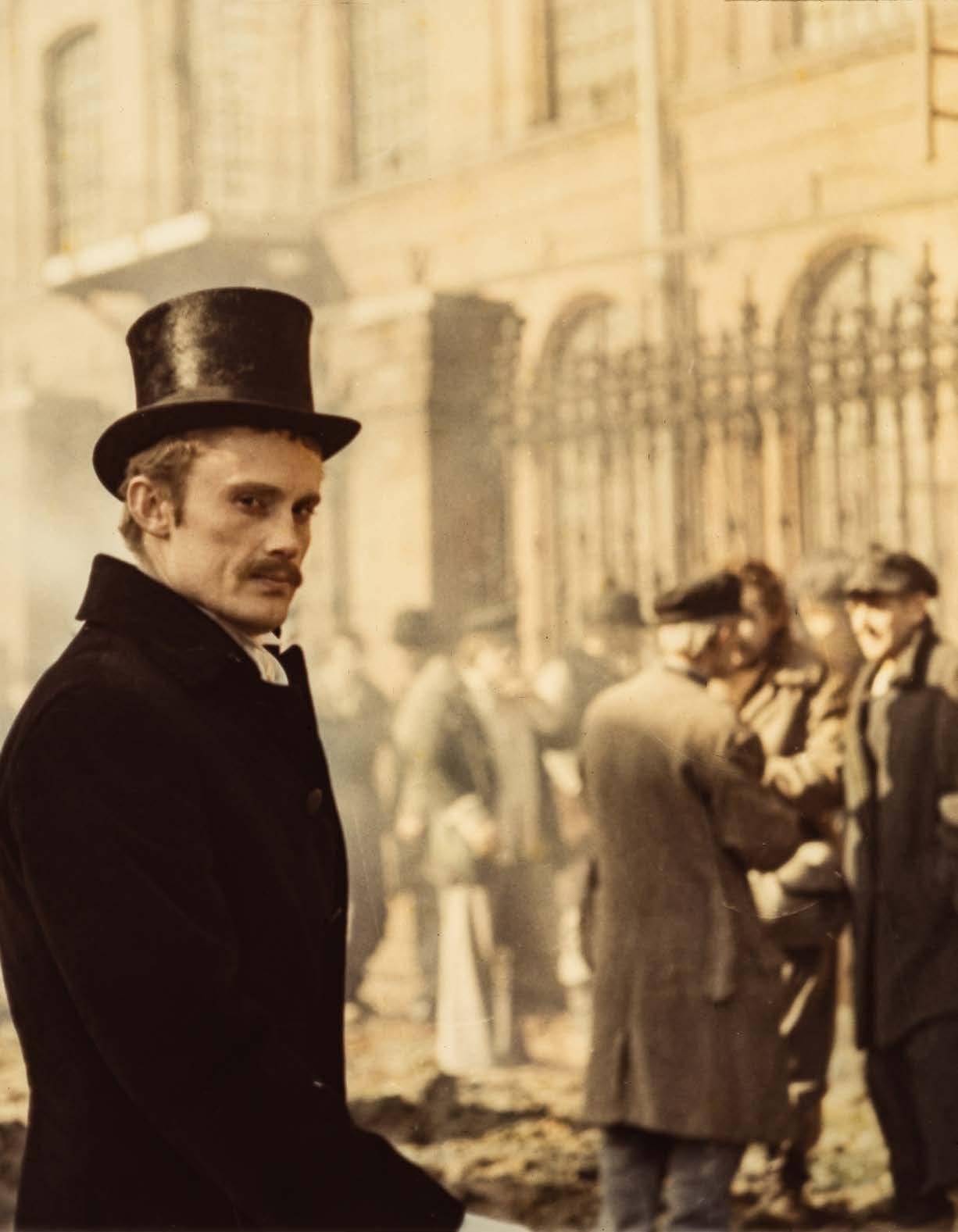
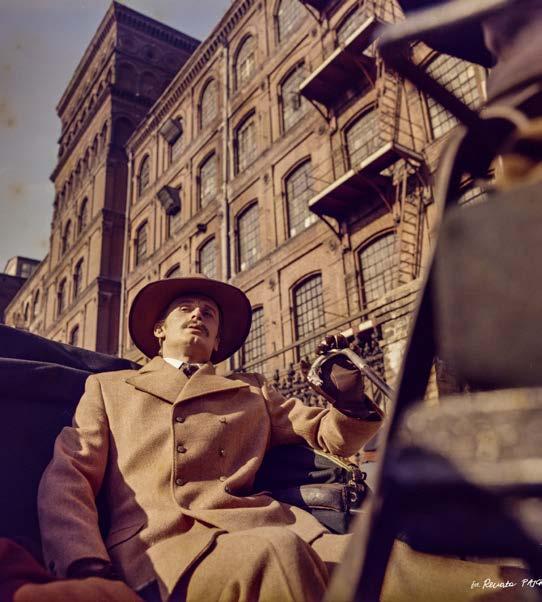
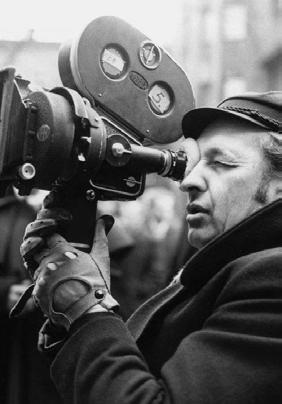
Daniel Ołbrychski in 'The Promised Land' (1975); photo c/o Filmoteka Narodowa – Instytut Audiowizualny / Archiwum Renaty Pajche.
In many ways, walking through Łódź feels like walking through a movie set, if that movie is artistic and gritty and even a little surreal. And that's no surprise: a major part of Łódź’s cultural cachet is due to its film history. Many directors have come through Łódź and found inspiration in the post-industrial landscape, the culture and the people here. It’s home to film cultural centres, a prominent cinema school, and is even the site for some memorable film locations (David Lynch’s Inland Empire was partly shot in Łódź). Ask any Pole where the centre of film is in Poland – nay, even in Europe – and they’re likely to tell you Łódź.
Why Film Lies at the Heart of Łódź
Much of the city's culture can be attributed to its long history of film. Not only cinemas – though the early cinemas in Poland were mostly here and spurred a lot of the passion for film – but film cultural centers, a prominent film school (p.86), film studios, and even the site for some memorable film locations, from The Promised Land in 1975 to Cold War in 2018.
But the concept of Łódź as a cinema city might be surprising for some people. After all, the capital Warsaw is just an hour to the northeast. But there's no question that Łódź is where the film buffs go.
Some have suggested that it’s because Łódź has always been a very working class city and thus, when the first cinematograph opened in the late 19th century, it became very popular among many Łódź
residents who weren’t frequently exposed to cultural attractions like the upper class. In short, cinema was a cultural attraction that was more accessible to a working-class population. Others have said that, since the capital Warsaw was destroyed in WWII around the time that film production was really taking off around the world (it was the Golden Age of Hollywood, after all), film production in Poland needed somewhere to develop. It made sense that Łódź, which already had multiple cinemas, was the natural place for film to grow as a medium.
It could be a combination of those reasons, or simply that the culture of film developed organically over the years, starting at the very end of the 19th century, with the first permanent cinematograph in Poland called the 'Theatre of Living Photographs,' which
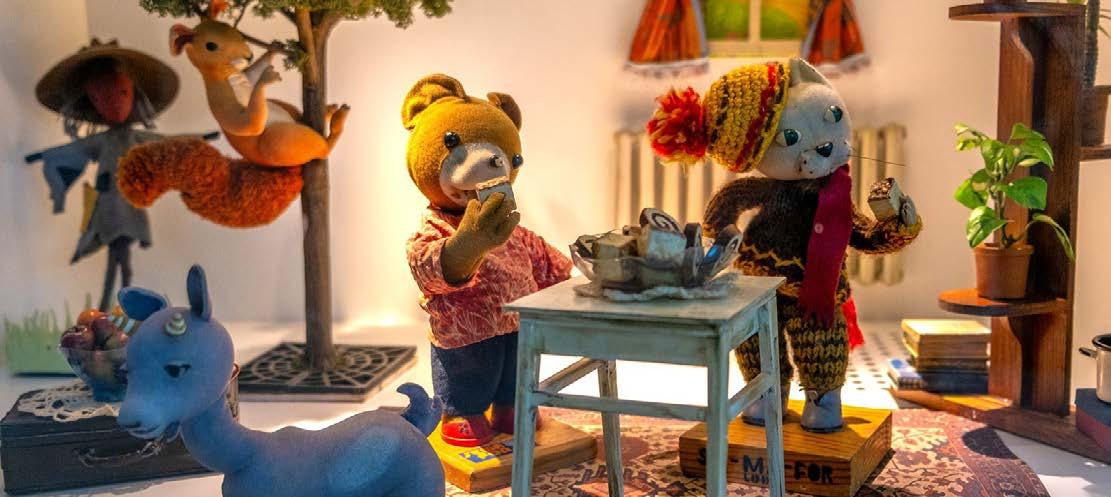
The Film Museum includes a Se-ma-for exhibition celebrating the Łódź studio behind beloved Polish children's animations like Miś Uszatek.
was opened by Polish entrepreneurs, the Krzemiński brothers. The installation became incredibly popular, leading to the first cinema – now the Odeon Theater – which opened in 1908, followed by the first open-air cinema in Helenów Park in 1913. Over the next 5 years, many more cinemas opened – a total of 11 by 1918.
Along with cinemas, other prominent film institutions opened as well over the course of the 20th century. In 1945, a massive film studio was opened here. Called Feature Film Studios, the spot remained the largest studio in the country for much of the latter half of the 20th century, and helped truly cement Łódź as a city of film in the minds of most Poles. Today, it's a concert venue called Wytwórnia on Łąkowa 29.
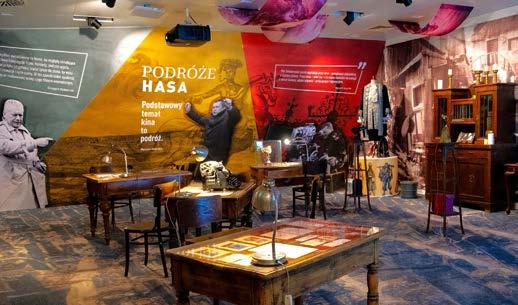
One of the most impactful additions to the film industry in Łódź was the opening of the National Film School in 1948. Over the years, the school has seen a number of incredible alumni come through its doors, starting with Krzysztof Kieślowski, who is
known for many movies, particularly his trilogy, Three Colours (Blue, White, Red). Possibly the most notable alumnus is Roman Polański, one of the most prolific (and controversial) directors of the modern era. He graduated from the school in 1959, and went on to create a number of notable films, including Rosemary’s Baby, The Pianist, and Chinatown
Film culture continued to grow in the city following –and spurred by the success of – the film school. In 1959 the first film studies center in Poland was created at the University of Łódź. This was followed by a film museum in the 80s and a film center in the 90s. In 2015, a creative cultural center was opened in EC1 (p.37) with a focus on film culture and history, initially backed by impactful American director David Lynch (a longtime lover of the city). In 2017, after more than a century of dedication to film, the city was inducted into the UNESCO Creative Cities Network as a UNESCO City of Film.
Now, Łódź is known as not only one of the top film culture locations in Poland, but within Europe as a whole.
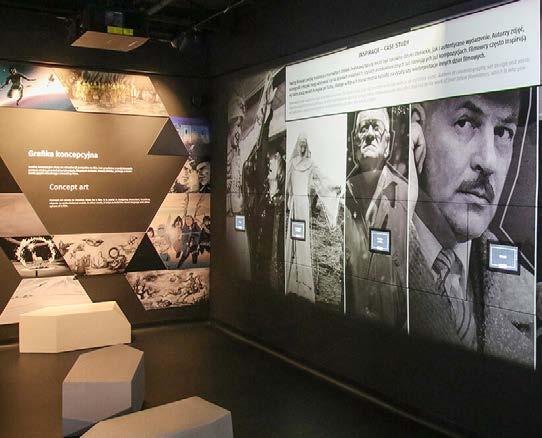
The Film Museum (p.85) in the south centre is a must for cinema enthusiasts.
The Promised Land (Ziemia
Obiecana)
Not a site, but a movie. This 1975 film is a must-watch for anyone interested in both Łódź’s industrial and film history. Directed by prominent Polish director (and graduate of the film school) Andrzej Wajda, Ziemia Obiecana tells the story of three friends trying to raise enough money to start a factory and capitalize on the growth of industry. As they realize their dream, they become more and more ruthless, both compromising their morals and exploiting workers in the process.
The film portrays the harsh realities of rapid industrialization and ends as a bleak critique of greed, showing how the pursuit of profit can corrupt people and society.
Well-worth a watch as an example of both the industrialization of the city, and the tension between the working and ruling (or industrializing) class in the 19th century. Start here before learning more about industry (and film) in Łódź.
Łódź’s cinematic heritage runs deep — from the nation’s premier film school to iconic institutions and tributes along Piotrkowska Street. This city, long dubbed Hollyłódź , has shaped Polish cinema and nurtured generations of filmmakers. These are the sites and stars that define its enduring film culture.
National Centre for Film Culture
Here it is: 120 years of Polish film history all in one place. Located in the revitalised EC1 power station, the National Centre for Film Culture is a modern hub for screenings, archives, workshops, and exhibitions. And the experience they offer is pretty cool: design your own film from story to budget to final production. In another space, you get a full Polish film museum experience, loaded with history. | M-11, p.37.
Film Museum in Łódź
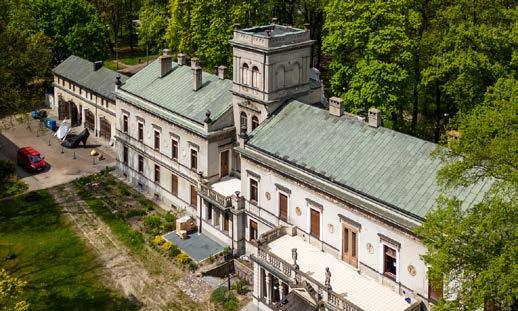
Housed in the historic Scheibler Palace, Poland’s main museum dedicated entirely to film (Polish or otherwise) charts the birth and growth of cinema in Łódź and beyond. Its extensive collection — from early projection technology to posters, archive footage, and animation artefacts — reveals how this industrial city became a capital of Polish film. | N-13, p.35.
Hollyłódź Walk of Fame
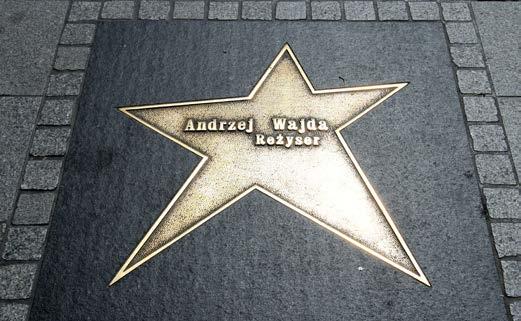
Stretching along Piotrkowska Street, this brass-star avenue honours the figures who shaped Polish screen art — actors, directors, cinematographers, and composers. Created in 1998, it celebrates more than 100 names including Polański and Wajda over several blocks. Walking along this strip gives you the feeling that you're walking alongside the footsteps of the city's film stars. | J-11, p.60
Roman Polański
(film director, 1933– )
One of Poland’s most internationally recognised directors, Roman Polański trained at the Łódź Film School before building a career in European and American cinema. His work spans psychological tension, dark humour and formal precision, linking his early Polish roots to a global filmmaking career shaped by cinematic craftsmanship.
What to watch:
The Pianist — Oscar-winning Holocaust drama. Rosemary’s Baby — genre-defining psychological horror. Chinatown — neo-noir classic of moral ambiguity.
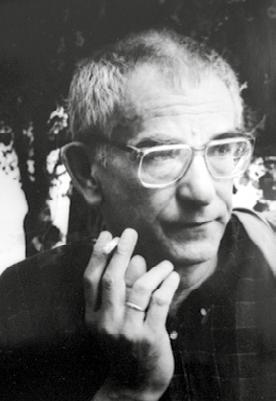
Krzysztof Kieślowski
(film director, 1941–1996)
A Łódź Film School alumnus, Kieślowski is known for deeply human, philosophical cinema exploring moral choice and chance. His work blends intimate storytelling with metaphysical reflection, establishing him as one of Europe’s most influential post-war auteurs.
What to watch:
Dekalog — 10 moral tales based on the Ten Commandments. Three Colours: Blue, White, Red — trilogy on liberty, equality and fraternity.
The Double Life of Véronique — lyrical story of identity.
Andrzej Wajda
(film director, 1926–2016)
A graduate of the Łódź Film School, Andrzej Wajda shaped Polish post-war cinema with films rooted in history, politics and national identity. His work brought Polish storytelling to international prominence, often reflecting collective memory, moral conflict and the legacy of war and industrial modernity.
What to watch:
Ashes and Diamonds — classic about post-war Poland. The Promised Land — industrial-era epic set in Łódź. Kanal — Warsaw Uprising drama of survival and collapse.
City of Street Art
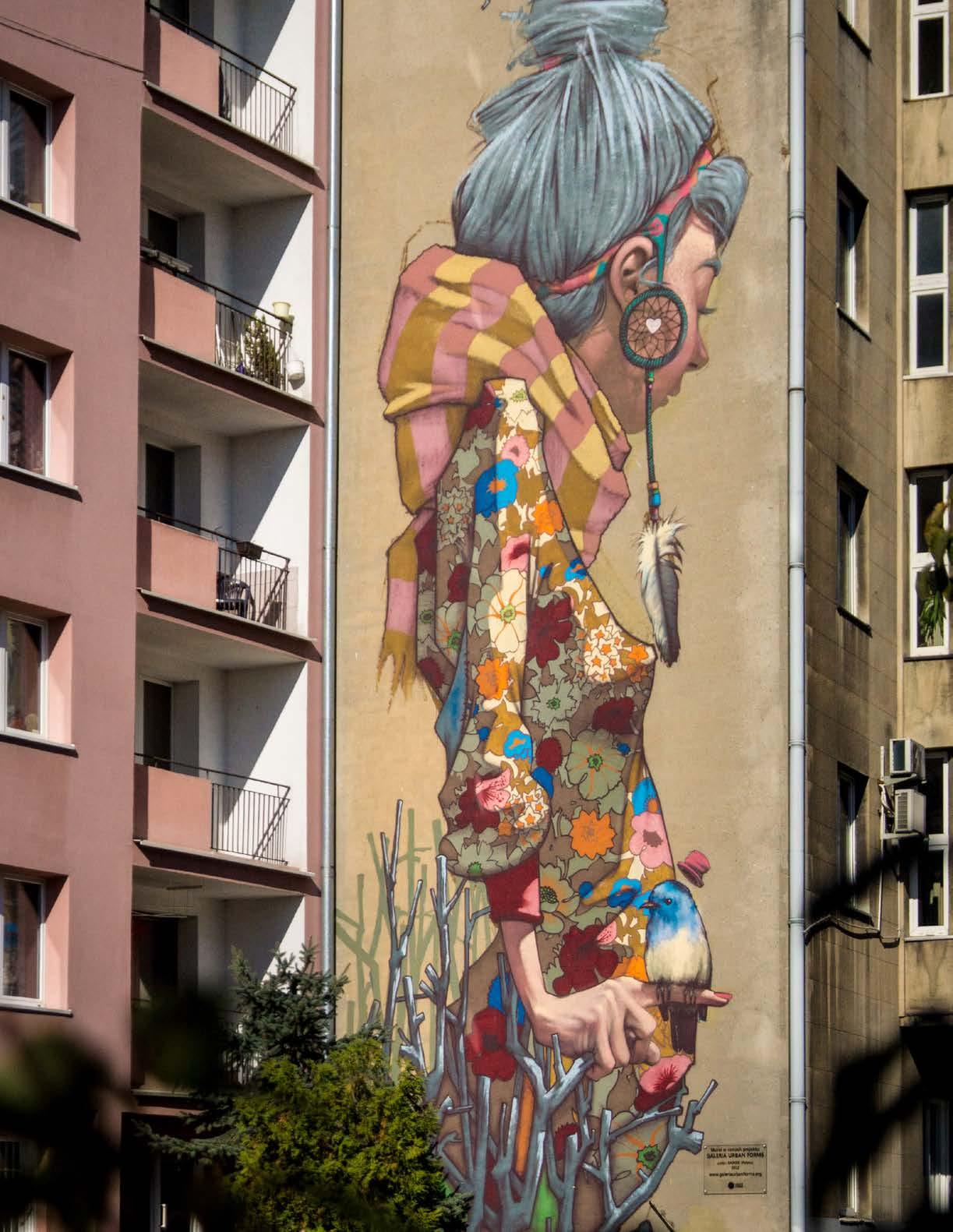
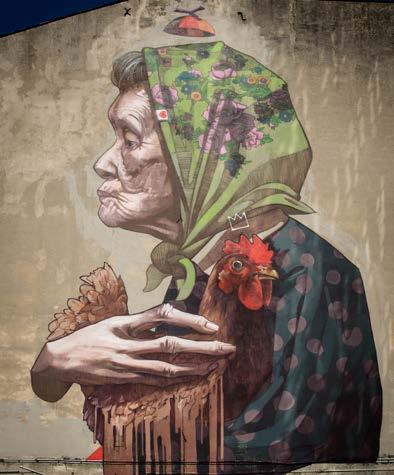
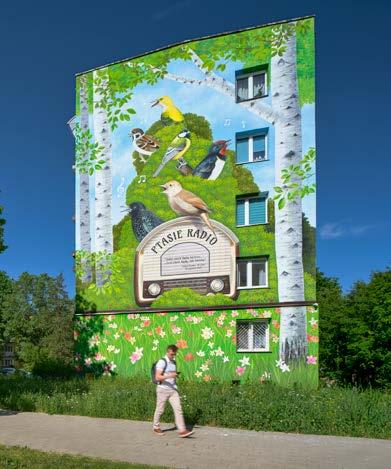
Over the past two decades, Łódź has established itself as a centre for large-scale murals and high-profile public art. This vast openair gallery has become one of the defining features of contemporary Łódź.
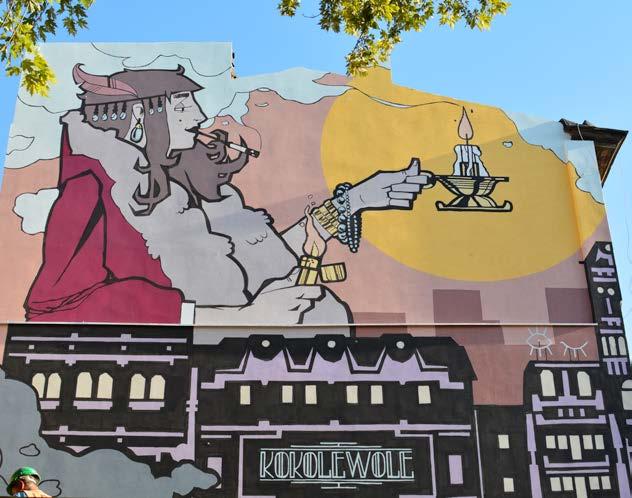
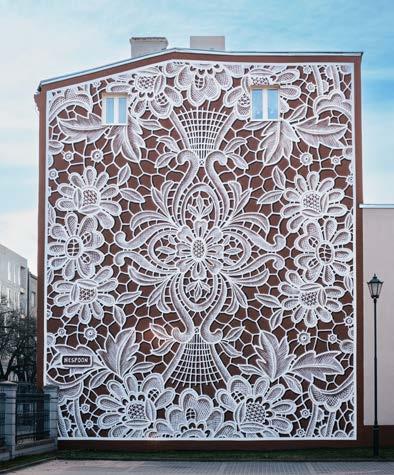
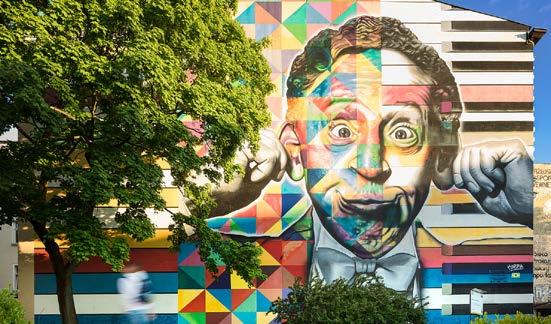
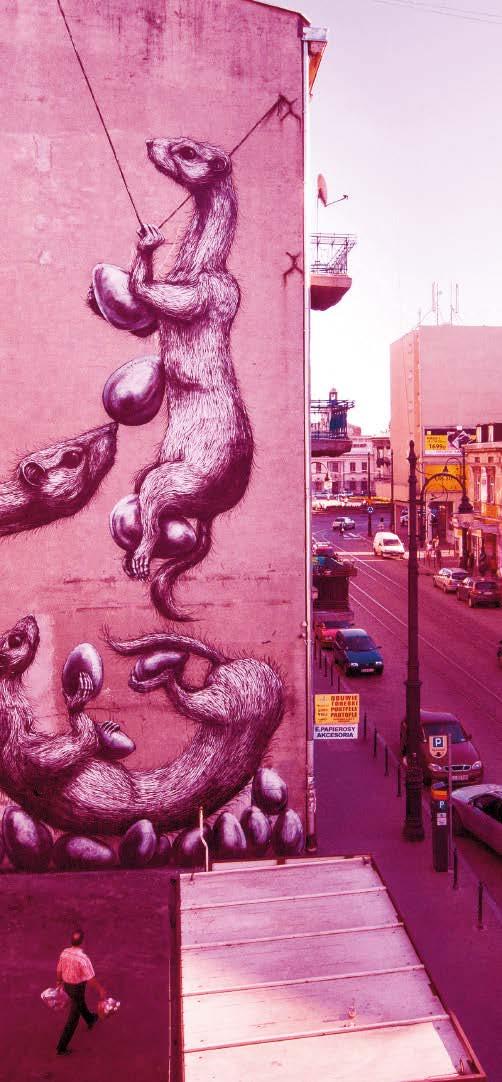
As you meander the mean streets of Łódź, you might turn a corner and encounter enormous weasels tumbling across a tenement wall (J-8, ul. Nowomiejska 8), or come face-to-face with pianist Artur Rubinstein, playfully sticking his giant tongue out at you (K-11, ul. Sienkiewicza 18). From monumental artworks splashed across entire facades, to smaller pieces peeking out from side streets, Łódź is simply covered in public art. With over 200 large-scale works (and counting!), the city has become a leading destination for street art in Central Europe.
Why Łódź Became the Mural Capital of Poland
The rise of mural culture here is no accident. Like many post-industrial cities, Łódź was left with vast blank walls and faded façades - an urban canvas waiting to be reimagined. As factories closed and the textile industry collapsed, murals became a powerful tool of revitalisation, injecting colour and creativity into neglected spaces and reshaping how residents and visitors experienced the city.
After 1989, the visual landscape shifted again. Commercial billboards now proliferated, as graffiti culture - influenced by hip-hop and Western street art - took root on factory walls and railway underpasses. At the same time, Łódź’s dramatic industrial architecture began attracting photographers, filmmakers and artists drawn to its atmosphere of neglect and possibility.
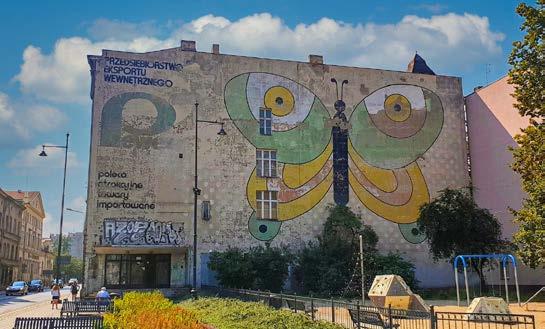
There is also strong historical precedent. During the communist era, hundreds of large-scale advertisements for state-run companies appeared on Łódź’s walls. Like today’s murals, they displayed bold colours and graphics, while, in contrast to most 21st-century advertising, showing restraint in marketing message. With no free market, these murals were more like ‘announcements’ than ‘advertisements’ and emphasised design over text. Only a handful survive today, including the Pewex mural (see p.26) and a subtle ad for Pierwsza silk textiles at Al. Politechnika 20 (J-18).
In 2009, the Urban Forms Foundation was founded to channel this energy into something more intentional. Working with local property owners and artists, the organisation began curating large-scale artworks as part of broader regeneration efforts. Today the group maintains more than 200 murals - a full list of which you can see on their website, urbanforms.org - while constantly initiating more, and also offering street art walking tours and workshops. Today muralsthough constantly shifting and changing - are a permanent part of Łódź’s visual identity.
J-18, Al. Politechniki 16.
ul. Szpitalna 7A.
J-17, ul. Wólczańska 217.
Must-See Murals & Street Art
Łódź’s murals and art installations comprise the largest urban gallery in Poland. With over 200 sites (and growing!) it's beyond our ability to track them all, but we’ve done our best. Follow the QR code for our full list, and look for the on all of our maps as you explore the city. Here are a few of our favourites.
1 Artur Rubinstein Mural
One of Łódź’s most colourful and iconic murals depicts one of the city’s most famous sons, Artur Rubinstein (1887-1982) - the local prodigy and world-famous concert pianist. Well-known for his humour and charisma, this goofy portrait - based on a photo - was created by Brazilian artist Kobra in 2014, and is but one of several tributes to Rubinstein across Łódź. | K-11, ul. Sienkiewicza 18.
3 ‘Dressing Couple’ Light Installation
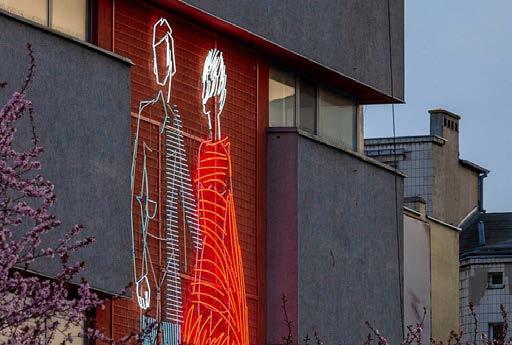
Like murals, neon signs were another way to brighten the city during the communist era. Unveiled in 1972 at the opening of the brutalist ‘Central’ Department Store (SDH ‘Central’), this iconic animated neon - measuring 5.2 x 6.2m - shows a man and woman ‘getting dressed’ in six phases. After disappearing in the 1990s, it was revived in LED form in 2022 and remains a lasting symbol of the city’s visual identity. | K-14, ul. Piotrkowska 165/169.
2
Pewex Butterfly Mural
Just metres away you’ll find a faded, crumbling mural advertising the Pewex stores that operated during the communist era. 'Pewex' (Przedsiębiorstwa Eksportu Wewnętrznego) sold imported Western goods - from jeans to LEGO - in exchange for US dollars, becoming symbols of rare luxury. Painted in 1987, this is one of the city’s last surviving PRL murals, referring back to an earlier chapter of Łódź’s public art tradition. | K-11, ul. Sienkiewicza 21.
5
‘Cisza’ Installation
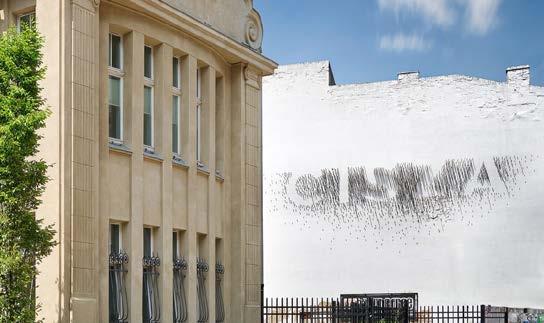
Demonstrating the wide range and variety of public art in Łódź, this alternative work by Wrocław artist Łukasz Berger was created in 2015 and depicts the word Cisza (‘Silence’) using half a tonne of nails. Evoking feelings of noise and quiet, chaos and tranquility, the nails are densely arranged in some areas, and more widely spaced in others - as if the word itself is fading away. Well worth checking out. | I-10, ul. Wólczańska 13.
7 Róża’s Passage Mosaics
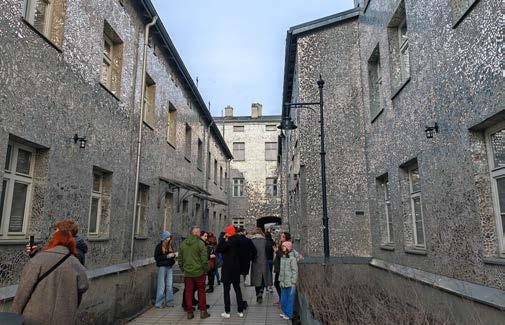
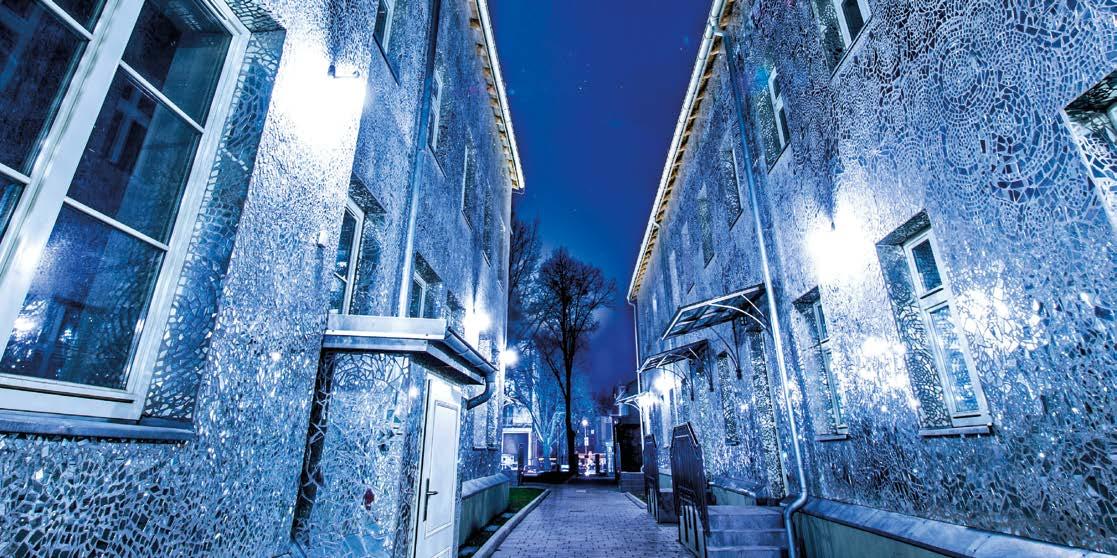
This once-drab alley linking Piotrkowska and Zachodnia streets has been transformed into a glittering public artwork by Polish artist Joanna Rajkowska. All surfaces of the narrow passage are covered in swirling mosaics made from thousands of mirror fragments, scattering light in shifting reflections. Named after the artist’s daughter, ‘Róża’s Passage’ dazzles the eye and turns a once-unremarkable lane into one of Łódź’s most striking urban installations. | J-9, ul. Piotrkowska 3.
4 Maria Skłodowska-Curie Mural
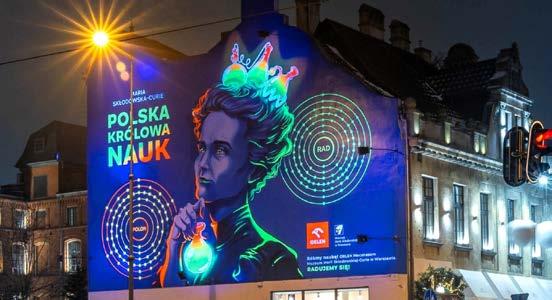
Not far from the ‘dressing couple,’ this unique mural celebrating the scientific achievements of Polish physicist and Nobel-Prize-winner Maria Skłodowska-Curie literally glows like neon. Made with bright fluorescent paints, the radiant mural is striking by day, but absolutely electric at night, when illuminated by black lights. Check it out after dark not far from Piotrkowska Centrum. | J-13, ul. Wólczańska 127.
6 Miś Uszatek Monument
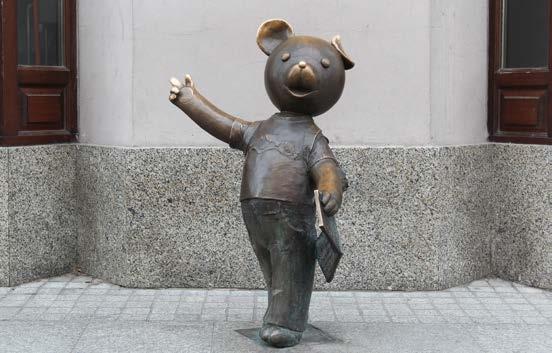
Generations of Polish children were put to bed by this calm, friendly, floppy-eared bear, who appeared in hundreds of stop-motion cartoons on Polish TV in the 1970s and 80s. One of ten sculptures around Łódź dedicated to characters from the Se-ma-for animation studio - the main producer of Polish cartoons for over 70 years, look for the symbol on our maps to find the others, and learn more about Łódź animation at the Film Museum (p.35).
| J-11, ul. Piotrkowska 87.
City of Play
In tandem with its postindustrial revival, Łódź boasts an impressive range of modern attractions designed for entertainment, recreation and family fun. Whether you’re travelling with kids, or simply need a break from Łódź’s stark urbanity, these sites provide an engrossing escape.
Enjoy Some ‘Edutainment’
Given Łódź’s history (along with its general look and vibe), it should be wholly unsurprising that one of its most popular entertainment attractions is located in…. a former 19th-century power plant!
Of course we’re referring to EC1 (p.71), conveniently located in a sprawling complex of repurposed buildings just south of Łódź Fabryczna train station.
In the same building you'll find the Planetarium inside a giant silver sphere. Part of the mission of the Planetarium is to accommodate school groups during the day, but in the afternoon it is open to the general public showing a mix of classic and cutting-edge astronomical shows. In the evenings they open the theatre up for artistic projects and experiments mixing breathtaking images with live music (check out Pink Floyd's The Wall Laser Show).
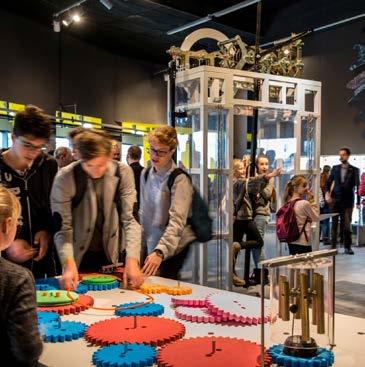
EC1 is jam-packed with educational entertainment centered on science, technology, space, comics and more.
Don’t let that brick and ultra-modern grey exterior deceive you. Within the walls of EC1 you’ll find a plethora of attractions and hands-on exhibits that give new meaning to the term “edutainment”.
Foremost among them is the Centre for Science & Technology (p.41), which takes you through the step-by-step process of how electricity is produced, from the coal arriving at the power station, right up until you switch on the kettle with the energy produced. This is a classic hands-on science centre for kids of all ages, making full use of the original industrial machinery and setting. Exhibits explain how turbines, generators and energy systems work through interactive displays and simple, engaging experiments.
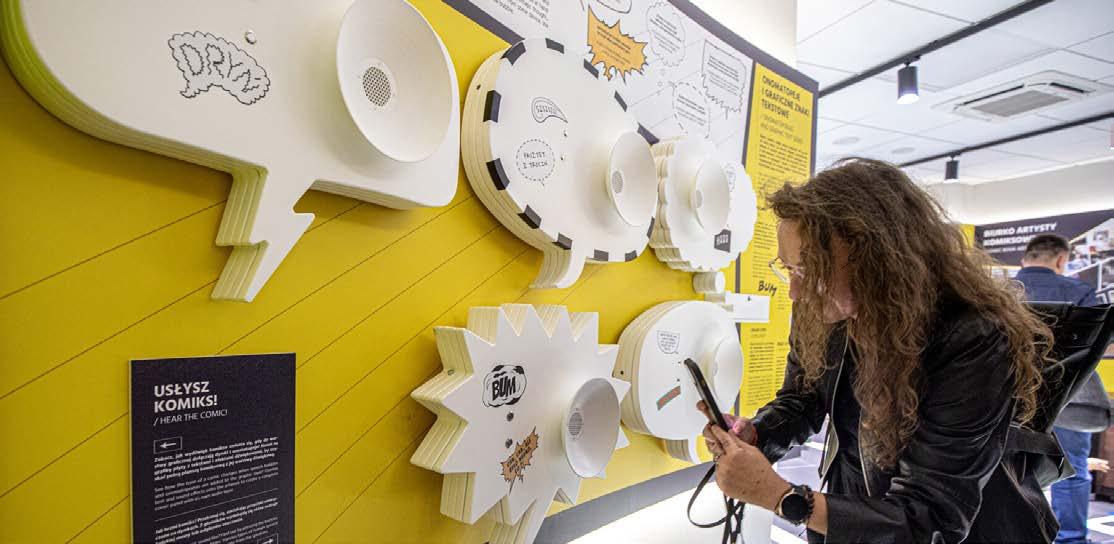
If you’ve still got time (or you want to split this into a two-day excursion), head over to the Centre for Comics & Interactive Narration (p.41). This one is a must for anyone who loves comics, gaming and everything in between. Split into four zones, the space lets you play games, read comics, get a deep look into the comic-making process and more.
Finally, for younger children, the Street of the Elements (Ulica Żywiołów) is one of EC1's highlights. Spread across three floors and 1,500m², this interactive science centre explores the five elemental worlds of water, earth, air, fire and life through hands-on experiments, puzzles, climbing, movement and multisensory play designed for children aged 3-10.
2 Have High-Speed Fun
Museums, cafes and strolling through town are all great options, but sometimes all you want is a little adrenaline rush – and of course, Łódź delivers.
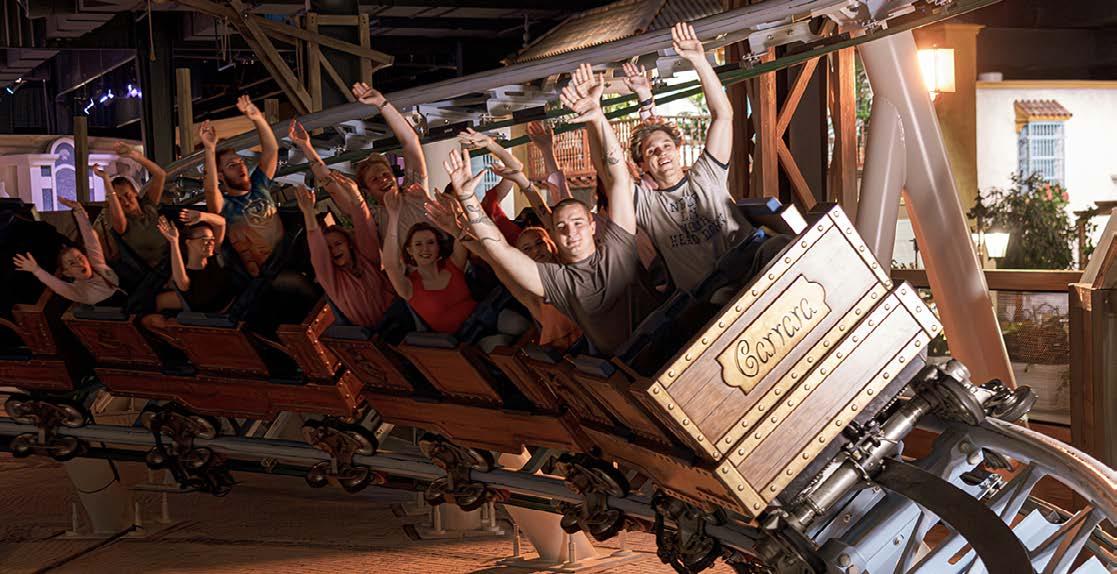
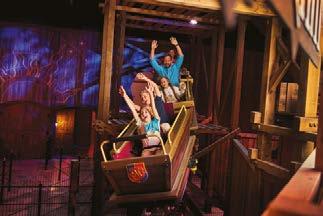
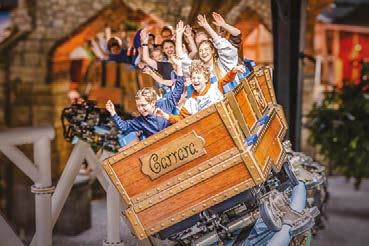
For amusement park-lovers, head right over to Mandoria: City of Adventure (ul. Miasto Mody 2, Rzgów) to the south. About 90 minutes away by public transport, this is a day-trip kind of thing, but it’s well worth it. Mandoria is the largest indoor theme park in Poland, styled as a Renaissance trading city (complete with staff in period costumes). Here you will find over 30 attractions, including 4 roller coasters. Also find themed carousels, a spinning wooden ship, a pirate boat, mirror maze… the list goes on.
If roller coasters aren’t your thing (or if you’re looking for a different kind of adrenaline rush), then Stacja Grawitacja (ul. Kolumny 27/29) is an excellent option. This modern trampoline park is outfitted with trampolines galore, an indoor ropes course, an obstacle course, an acrobatic and gymnastic zone, and even an interactive climbing wall with routes for all ages and abilities.
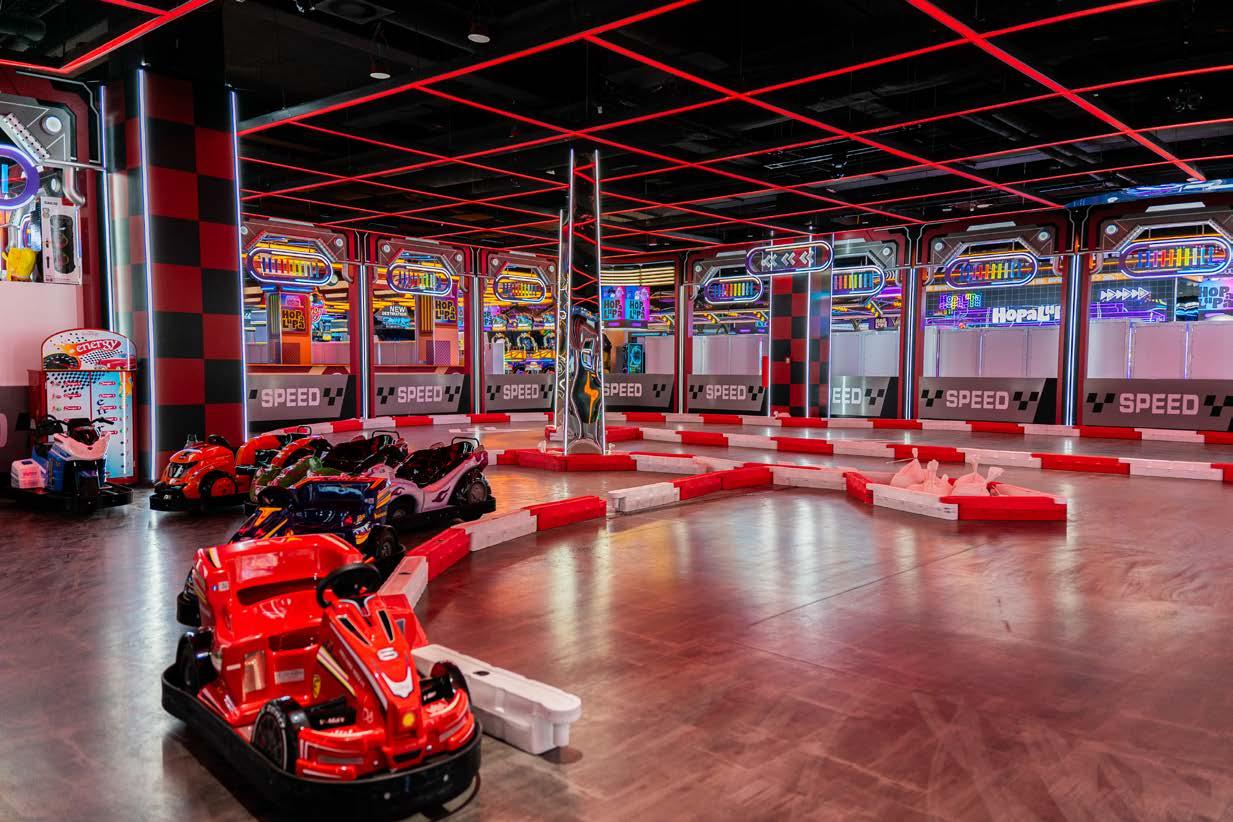
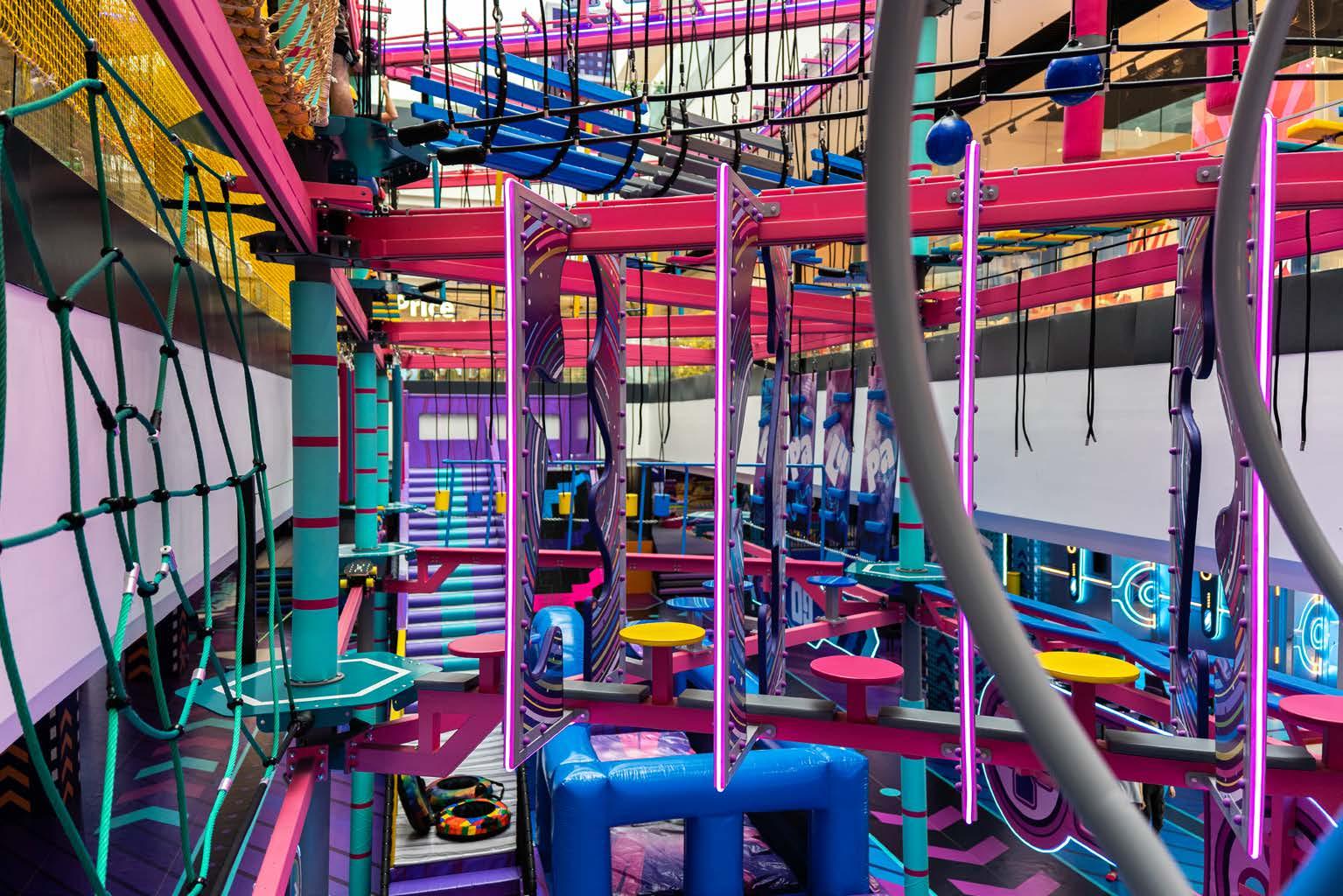
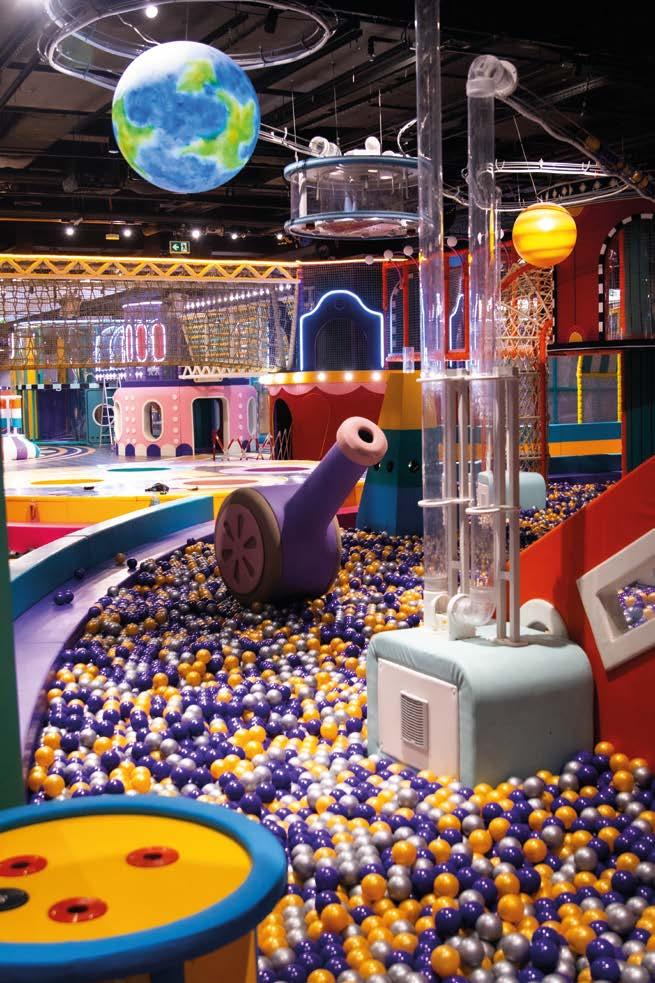
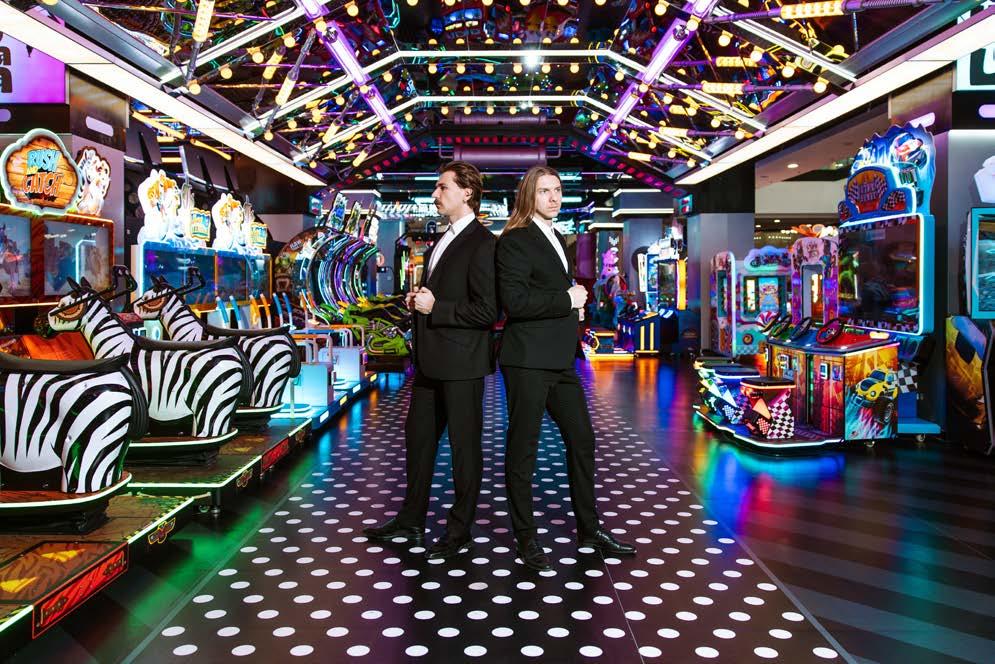
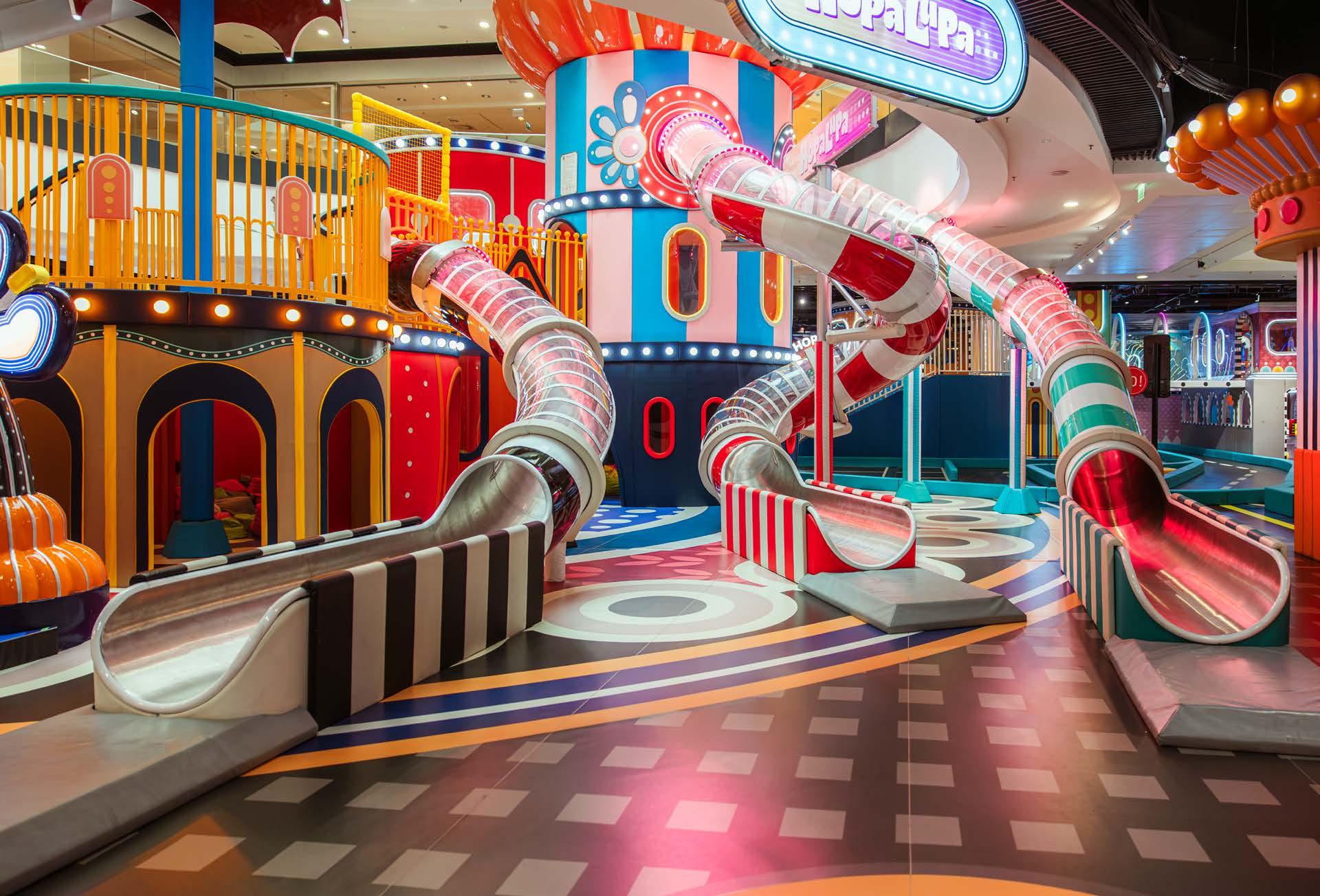
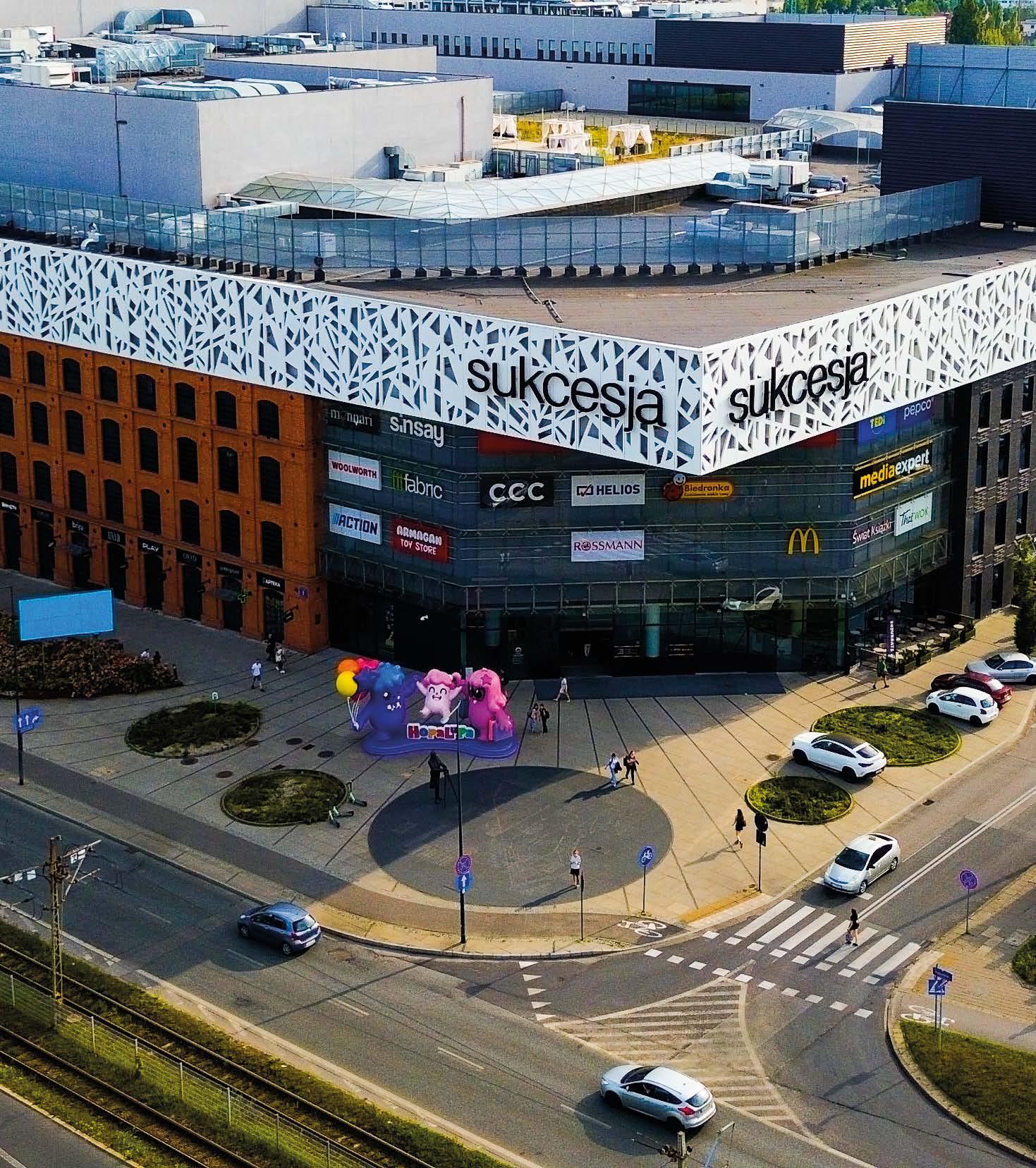
Another great visit is Hopa Lupa - a kid's paradise with trampolines, slides, mazes, arcade games and more. It's found in the shopping and entertainment centre Nowa Sukcesja (I-16, Al. Politechniki 1) and includes 4 zones: a trampoline zone, mini city zone, sensory island zone and an arcade zone. All in all a total blast!
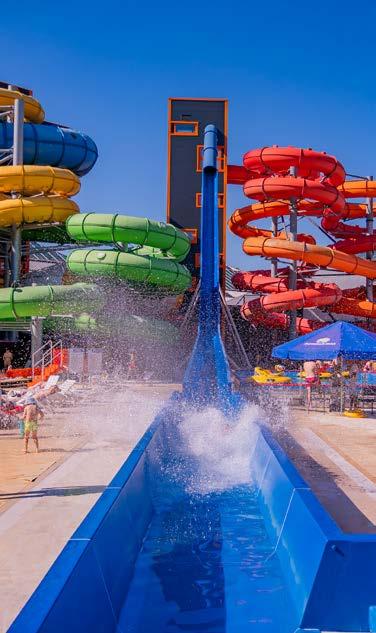
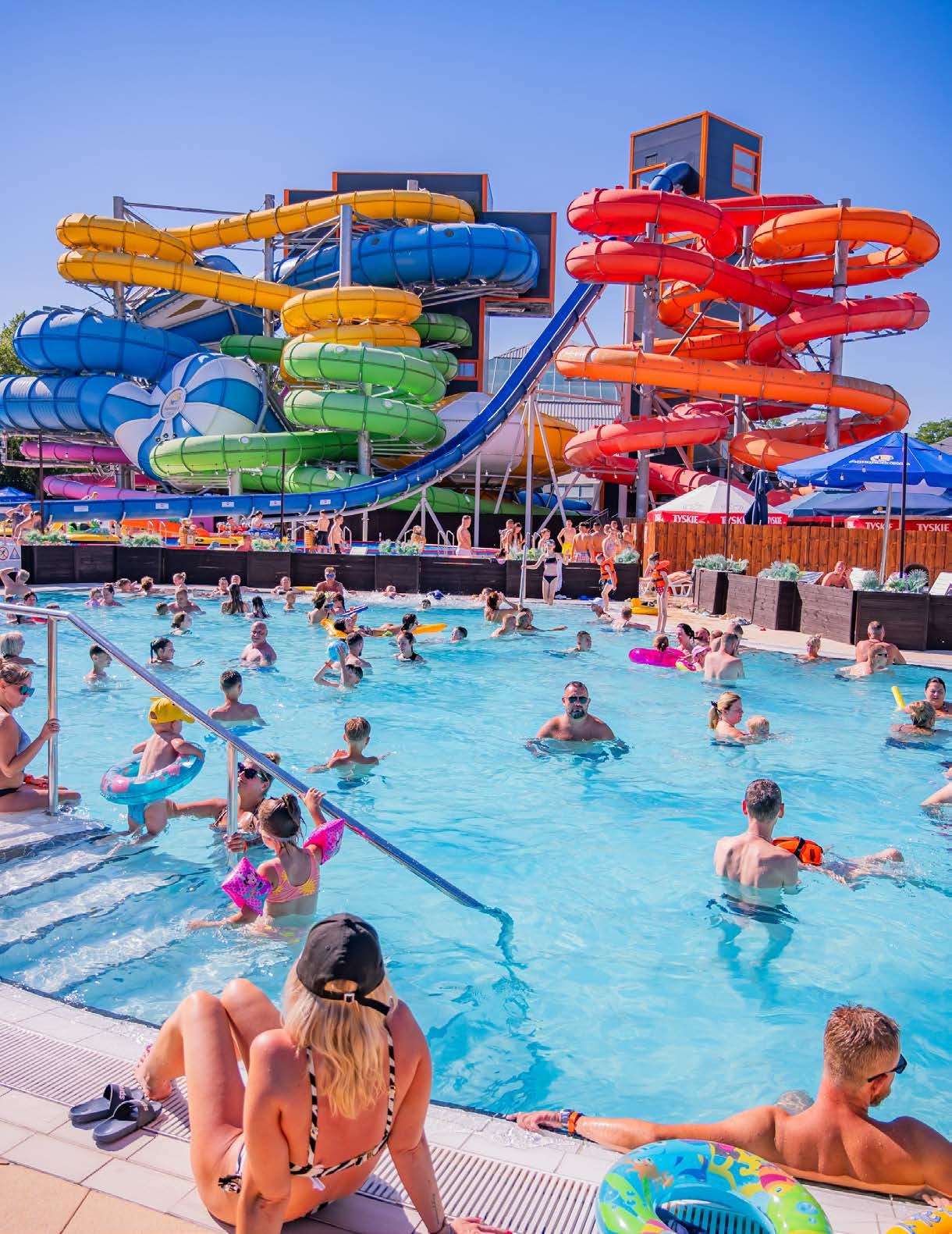
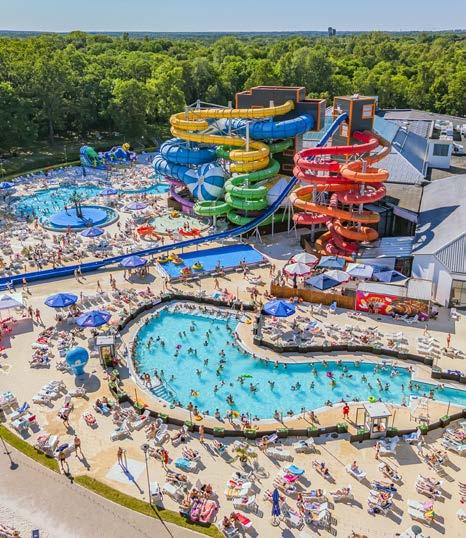
But of course it is summer, and if being outside is more what you’re looking for, then a trip to Aquapark Fala (Al. Unii Lubelskiej 4) is a must. One of the largest water parks in Poland, it's is located over 10 hectares and consists of both indoor and outdoor swimming pools (along with sandy beaches and a park!) and tons of amenities in the way of cold/hot/salt rooms, which are all wildly beneficial for your health.
For those who are more into relaxing rather than high-intensity, they also offer a Sauna Zone with Finnish and infrared saunas, steam rooms, a tepidarium and a salt graduation tower where you can reap the health benefits of iodine exposure.
Mandoria: City of Adventure is the ultimate high-energy amusement park, all indoors!
3 Roam in Zdrowie’s Gardens
Zdrowie, a neighborhood on the western edge of the city is arguably one of Łódź’s best hidden gems. We only say 'hidden gem' because, while locals are well-familiar with its sprawl of green space, visitors to the city, who tend to stick to the centre, often miss it. This is a big mistake.
The grassy expanse, which was all forest before it became a manor farm in the late 19th century, spans 2km across and 3km north-south, and is just full of green space. Most notable is Park na Zdrowiu, a historic 188-hectare park dating back to the early 1900s, which takes up most of what we would consider the Zdrowie neighbourhood. The park itself is rife with playgrounds, pedestrian paths, streams, an amphitheatre, sports fields, and flowerbeds. It's also home to some of the most popular spots on our list of 'play' spaces, including the water attraction Aquapark Fala (p.30).
Together with the surrounding area (including a lovely, quiet cemetery just to the north of the park) this section of the city is called the Zdrowie Forest and Recreation Complex. And it's worth at least a full day to enjoy the quiet beauty of time spent in nature.
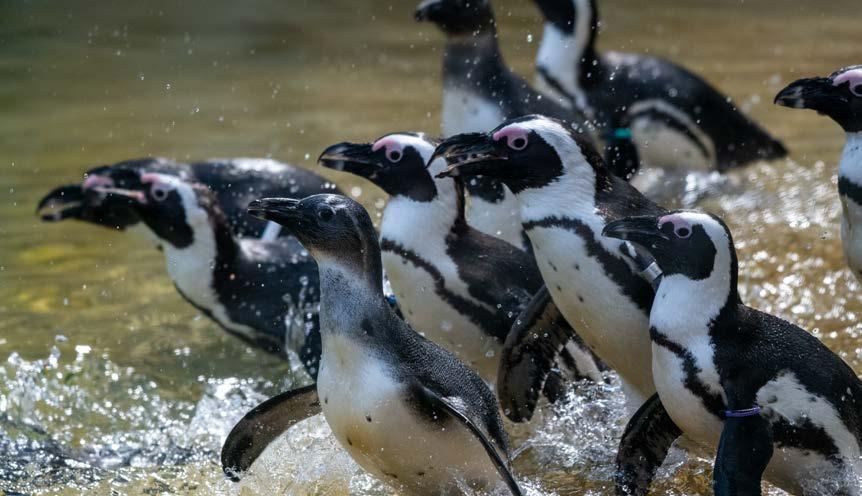
We recommend starting with one of its most popular attractions: the Orientarium Zoo (C-13) at ul. Konstantynowska 8/10. Established in 1938, the zoo is really something to behold, spanning an area of almost 10 football fields, with 3,350 animals (554 species), including giraffes, lions, tigers, reptiles and scores of other captivating critters. It also features the Orientarium, the most modern pavilion in Europe devoted to presenting the fauna and flora of Southeast Asia. The Orientarium itself is home to an impressive 35 species of land animals and 180 species of fish!
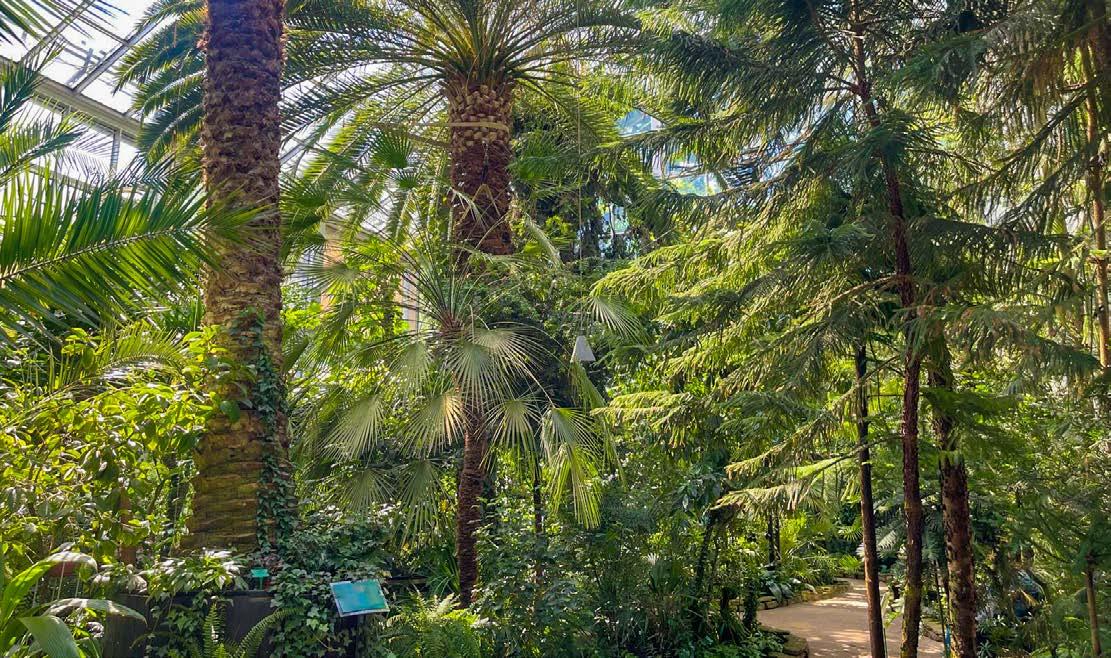
The perfect place for reflection and exploration: the Botanical Garden is a massive, green attraction in Zdrowie.
The zoo features a cool spectacle too: you can watch the animals being fed. More than 20 scheduled animal feeding presentations are here, including one of the most popular: the elephants’ bathing session.
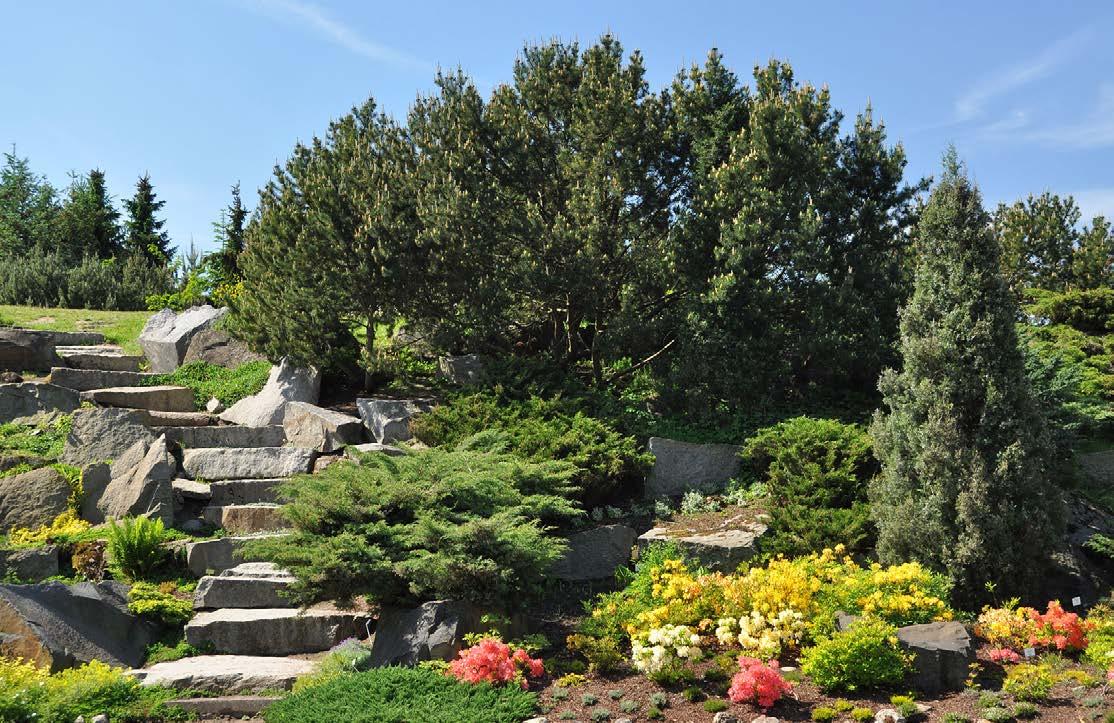
Next, head straight to the beautiful Botanical Garden (B-13) at ul. Krzemieniecka 36/38 for some quiet contemplation (and great exploring opportunities). Originally conceived in the 1930s, the Botanical Garden's building work didn’t begin until after WWII, but it has grown a lot in that time and now stretches over 75ha, making it one of the largest gardens in all of Poland. It's perfect for a stroll through nature, and has plenty of exciting elements for kids, too.
The space is broken into different areas, including a Japanese garden, alpine garden, arboretum, and more. Find over 3,400 species of ground plants and 2,000 types of greenhouse plants here, along with exhibits on medicinal
plants. There’s also a beautiful Palm House , with examples of warmer-weather flora and fauna.
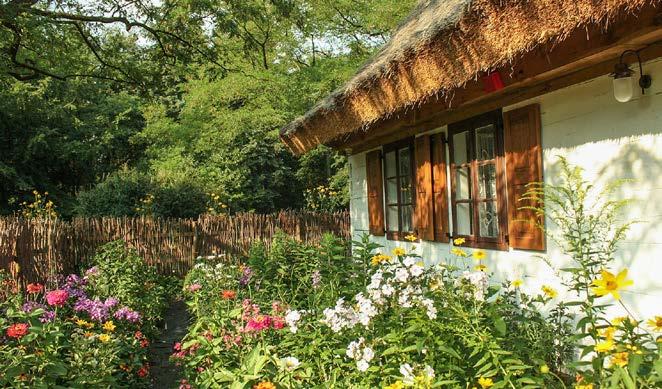
Here you can also see an open air museum featuring a rural farmstead and a cottage from the early 20th century and plenty of examples of Polish plants, fruits and herbs. The Botanical Garden also offers gardening advice, does guided tours for groups of school children and puts on botanical shows throughout the year (though the summer is when it really shines).
The final landmark of note in this area is the Atlas Arena (E-14, Al. Bandurskiego 7) - that funkylooking domed structure in the southern part of Zdrowie. Home to all kinds of events, from concerts (A$AP Rocky is playing in September) to sports (the Polish Handball Super Cup takes place here in August), it's worth checking online to see if there are any unmissable events on their schedule when you're in town.
Aquapark Fala.
Orientarium.
Botanical Garden.
Museums & Art Spaces
There’s no better place to learn about Łódź’s unique history, culture and character than its many museums. Too numerous to list here in full, what follows is a selection of venues - both obligatory and obscure - that we consider of most value to visitors, divided into digestible groups. Follow the page references for more info elsewhere in the guide.
History & Heritage
When it comes to the core identity of the city, these museums stand out.
In fact, you simply can’t tell the story of Łódź without them.
1 Museum of the City of Łódź
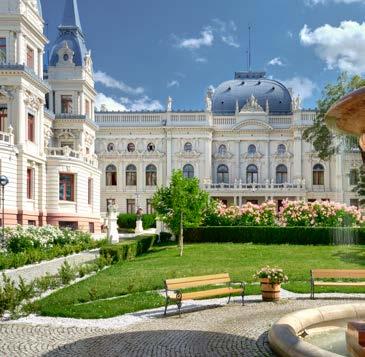
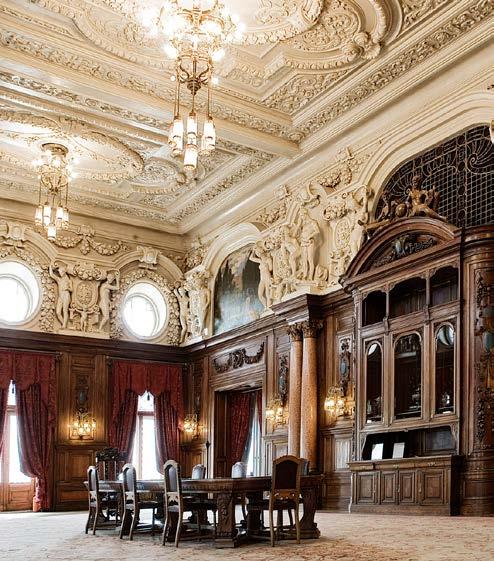
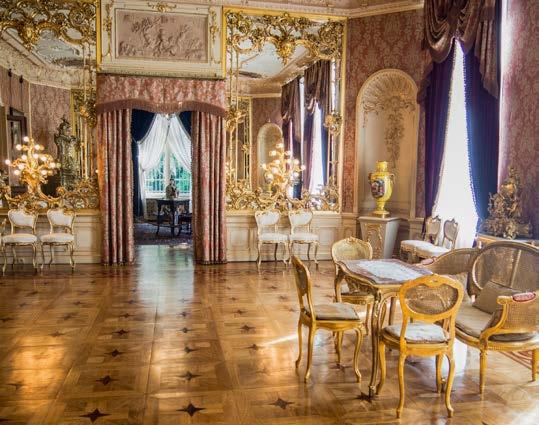
Inside the breathtaking Neo-Baroque former residence of Łódź manufacturer Izrael Kalmanowicz Poznański, this is a museum within a museum, dedicated to the relatively short life and times of Poland's second city from the end of the 19th century to the outbreak of WWII, and paints a full picture of the city’s industrial history. Jammed full of exhibits tracing the history, people, culture and ups and downs of the city, find recreations of daily life from kitchen interiors to sections of streets. Highly recommended. More on p.98.
2 Central Museum of Textiles
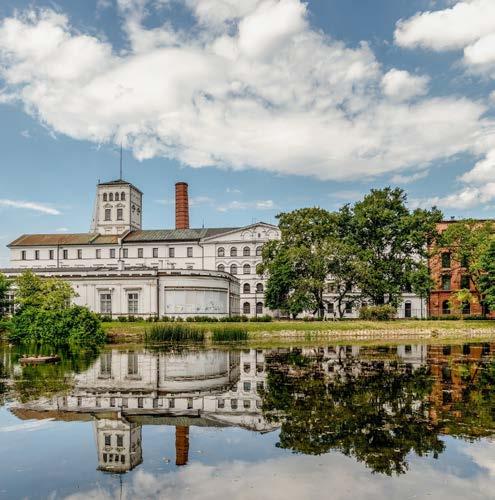
To understand exactly what Łódź is all about, a visit to the largest textile museum in Europe is a good place to start. The two floors of exhibition rooms containing a mind-boggling array of steam-driven looms, fabric-printing machines, contrasting recreations of how the workers and their factory-owning bosses lived and worked, original paintings of Łódź in its 19th-century heyday, lace, rugs, and other paraphernalia connected to the textile industry. The icing on the cake: the museum is housed inside Ludwig Geyer’s mammoth 19th-century White Factory (Biała Fabryka), an extraordinary building worthy of a journey in itself. See p.89.
3 Museum of the Factory
Occupying a 2-storey building next to the cinema, this spot is more than just a diversion from your day's shopping. From the moment you pay your admission fee it's a trip back in time. In this museum you can see what the cotton production process looked like and how the factory evolved over the years until its collapse and transformation into a modern
shopping, service and entertainment center. This small but perfectly formed museum offers a complete history of the Manufaktura complex, complete with 4 working looms, a steam engine model, various dioramas and even a tiny cinema showing black and white mini-documentaries of factory scenes. Details on p.100.
4
Film Museum in Łódź
Opened in 1986 inside Karol Scheibler’s 19thcentury palace, the Film Museum in Łódź offers visitors two unique attractions in one. The first: a well-presented history of Polish cinema and the second: information on Polish film greats who studied in the city before going on to other things. This is the only museum of its kind in Poland, and it represents a rewarding experience for fans of Polish cinema. The collection features over 70,000 items including over 20,000 film posters, art exhibits and projectors and camera equipment of every kind. See p.85.
5 Pharmacy Museum
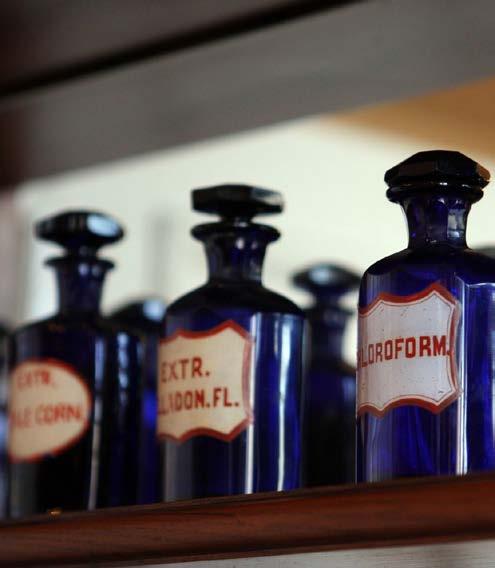
Built to resemble an 18th/19thcentury pharmacy, this place is far more interesting than it sounds, with furnishings from Vienna, and over 3,000 exhibits set behind the glass counters. On show are a variety of vials, mortars, pots and potions, with the overall effect guaranteed to bring out the Harry Potter in you. Here you can discover the history of ye olde herbal medicine, look at pharmacy manuals from the turn of the century, see examples of old medical containers and other tools. Visiting time: 40-45 mins. J-9, Pl. Wolności 2. Open 09:00-16:00; Tue 11:00-18:00; closed Sun, Mon. Admission 10/5zł. muzeumfarmacji.eu/pl.
6 Museum of Independence Traditions
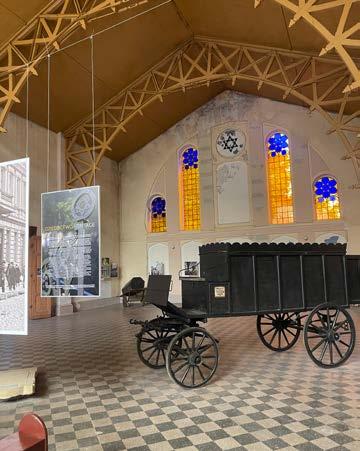
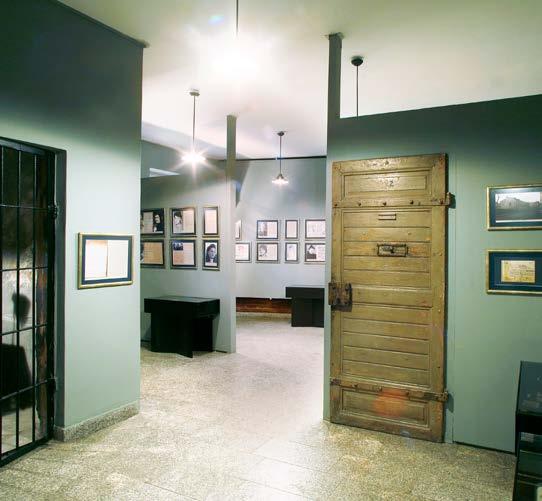
One of the most intriguing museums in the city, this spot tells the story of the full scope of Polish independence. Its current purpose is a fascinating deviation from the building’s original use: a prison to hold political dissidents and activists from independence movements like the Polish Socialist Party. Built in the 1880s, the building functioned as a prison throughout both wars and eventually held only women (including some important members of the Home Army). In 1959 it was transformed from a prison for independence activists, to a museum celebrating them— specifically left-wing, revolutionary movements— and was named the Museum of the History of the Revolutionary Movement. In 1990, after the fall of communism, it was renamed and given a slightly adapted purpose: to popularize historical knowledge of freedom and independence movements in Poland (with a focus on those around Łódź). Now, you’ll find documents, photographs and art that give a window into those movements in the late 19th and early-mid 20th century, alongside many exhibitions, panel discussions and more.
I-9, ul. Gdańska 13. Open 10:00-17:00; Sat, Sun 10:00-16:00; closed Mon. Admission 12zł; Wed free. www.muzeumtradycji.pl
7 Radogoszcz Prison Museum
A branch of the Museum of Independence Traditions, this former prison in the northern part of the city is now a museum commemorating the victims of WWII, and specifically those who died in Łódź and the surrounding areas. The tour takes visitors through a chronological history of wartime Poland beginning with the 1939 invasion and the subsequent battle for Łódź. Posters calling men to arms, gas masks and grenades, along with plenty of other artefacts pay tribute to those who gallantly resisted the Nazis.
The history of the building – also chronicled in this museum – is fascinating, too. Originally built in the 1930s as a factory the building it took on a darker identity when the Nazis turned it into a police prison in 1939. Over the course of German occupation, many people were taken from this prison and killed or sent to labor and concentration camps. In one final, horrific act of violence, as the Red Army was advancing toward Łódź in 1945, Nazis set the prison on fire and positioned a machine gun at the only exit, ensuring that almost all of the 1,500 occupants died – only 30 survived. A harrowing, but important, visit to understand the full scope of the horror that was inflicted on the residents of Łódź.
ul. Zgierska 147, Open 10:00-17:00; Sat, Sun 10:0016:00; closed Mon. Admission 12zł; Wed free. muzeumtradycji.pl
Dive into the history of cinema at The National Centre for Film Culture.
One of the best in the city for revolutionary history: The Museum of Independence Traditions.
8
Museum of Polish Children
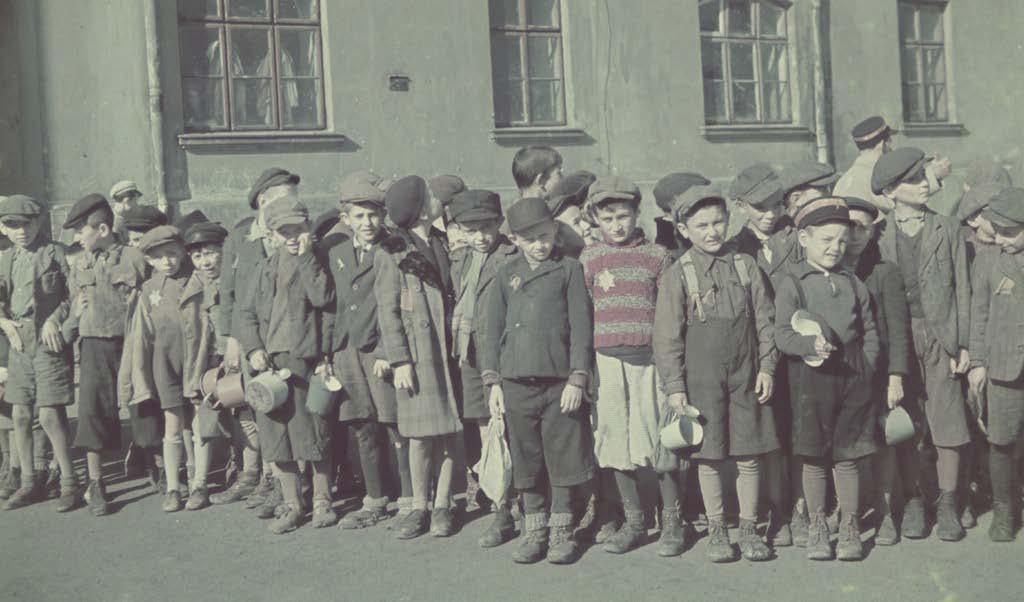
A difficult visit, but one of the most important you might make on a trip to Łódź. This museum, opened in 2021, goes over the history of children in Łódź during the Holocaust. Specifically, it tells the story of the concentration camp that Nazis used to hold children within the Łódź ghetto (p.110), and the camp’s branch near Zgierz several kilometres to the north. Often called “The Camp on Przemysłowa Street”, the main camp ran for three years from 1942 to 1945 and saw around 3,000 children come through its doors. It goes without saying that children were subjected to horrific abuse while they were interned out of the Nazis’ desire to separate them from German children. This museum holds exhibitions and educational talks on the difficulties that children went through in the camp as well as information on children’s rights.
K-11, ul. Piotrkowska 90. Open 10:00-16:00; closed Sun. Admission free. muzeumdziecipolskich.pl.
9
National Centre for Film Culture (EC1)
A must for film buffs the world around, this spot is a film education centre that disseminates knowledge about cinema, as well as the history of film and its future. It has two main exhibits: the first, 'Kino Polonia' - the largest exhibit on the Polish film industryincludes clips, stills, projections, posters and more, detailing 130 years of Polish cinema.
The second is the 'Matter of Cinema' exhibit, which includes a stunning array of artefacts, film clips and interactive tools, and is focused on the filmmaking process. In this super-fun interactive exhibit you'll learn about the stages of filmmaking, and can even take on the role of a producer, in which you’ll be led through the process by a virtual assistant, as you plan out a story, lock down a budget, choose actors and more.
M-11, ul. Targowa 1/3 (entrance from ul. Hasa).
Open 10:00-18:00; closed Mon. Admission 25/19zł; Sat, Sun 29/22zł. ec1lodz.pl.
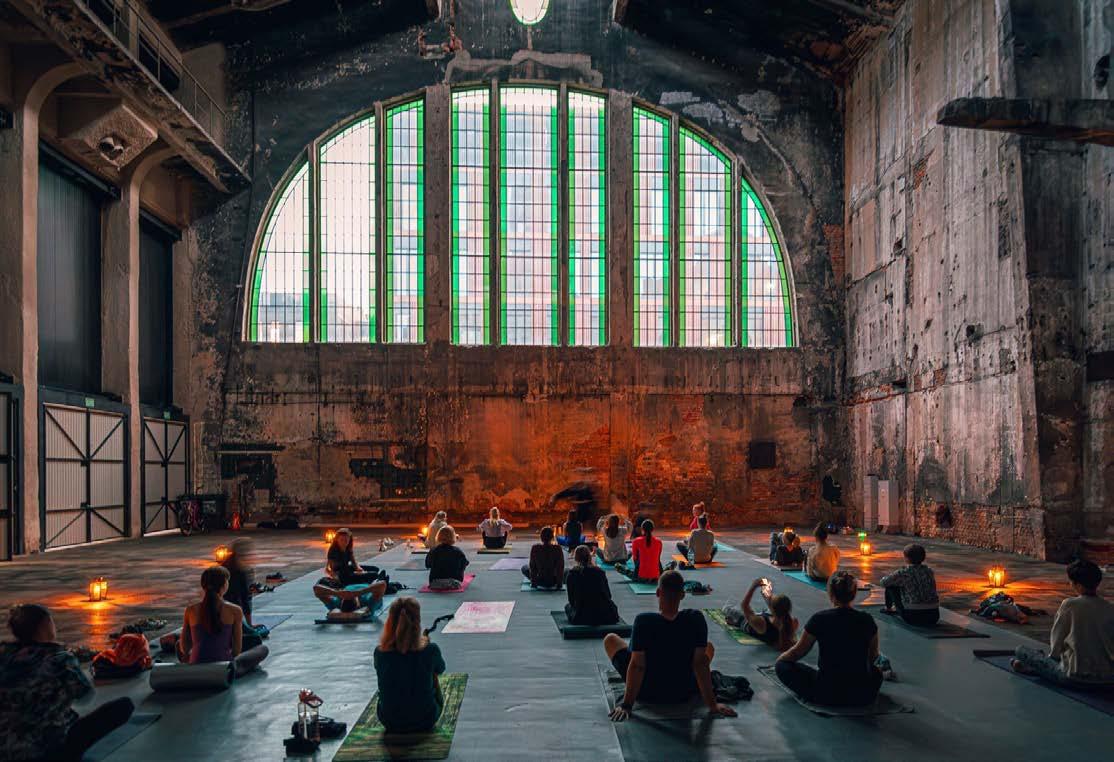
FEEL THE RHYTHM OF INDUSTRIAL
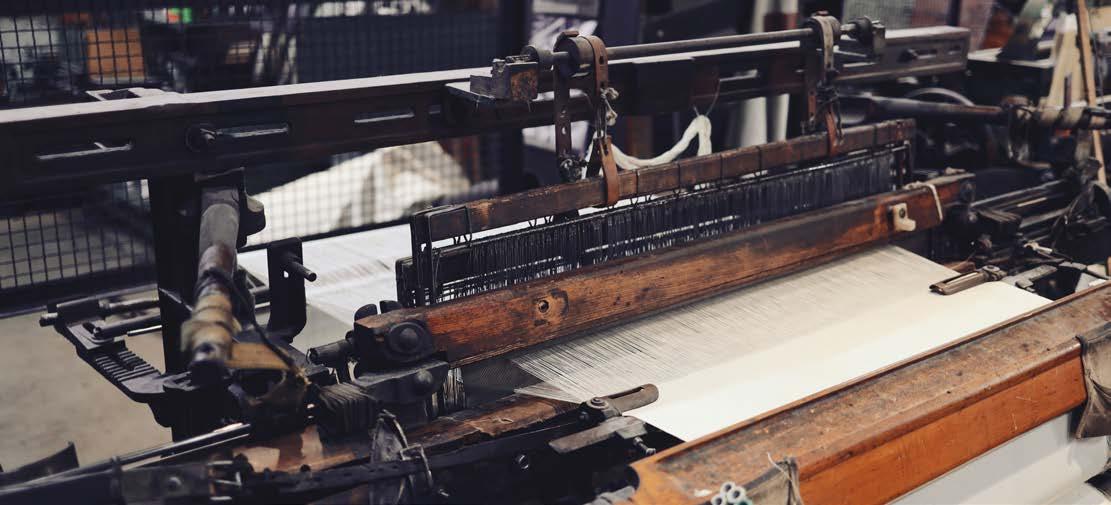
DISCOVER THE HISTORY OF ONE OF EUROPE’S GREATEST SEE AUTHENTIC FACTORY MACHINES BROUGHT BACK TO LIFE
JOIN GUIDED TOURS, WORKSHOPS AND CULTURAL EVENTS EXPERIENCE THE UNIQUE ATMOSPHERE OF THE HISTORIC
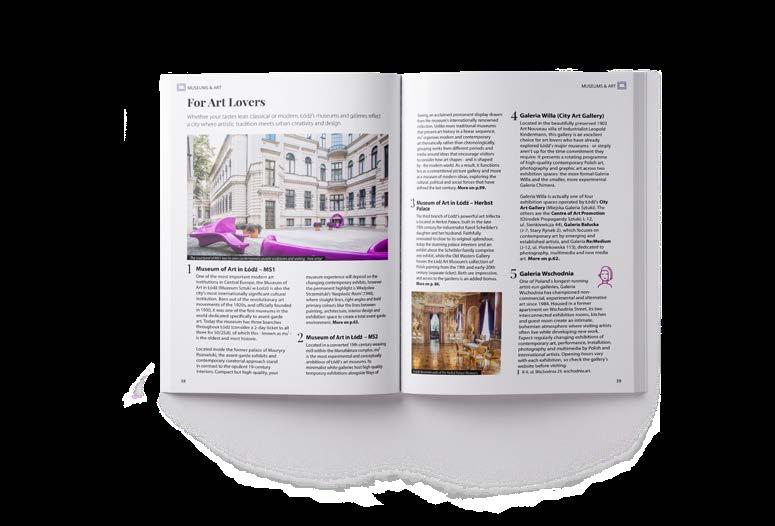
For Art Lovers
Whether your tastes lean classical or modern, Łódź’s museums and galleries reflect a city where artistic tradition meets urban creativity and design.
1 Museum of Art in Łódź – MS1
One of the most important modern art institutions in Central Europe, the Museum of Art in Łódź (Muzeum Sztuki w Łodzi) is also the city’s most internationally significant cultural institution. Born out of the revolutionary art movements of the 1920s, and officially founded in 1930, it was one of the first museums in the world dedicated specifically to avant-garde art. Today the museum has three branches throughout Łódź (consider a 2-day ticket to all three for 50/25zł), of which this - known as ms¹is the oldest and most historic.
Located inside the former palace of Maurycy Poznański, the avant-garde exhibits and contemporary curatorial approach stand in contrast to the opulent 19-century interiors. Compact but high-quality, your
2
museum experience will depend on the changing contemporary exhibits, however the permanent highlight is Władysław Strzemiński’s ‘Neoplastic Room’ (1948), where straight lines, right angles and bold primary colours blur the lines between painting, architecture, interior design and exhibition space to create a total avant-garde environment. More on p.63.
Museum of Art in Łódź – MS2
Located in a converted 19th-century weaving mill within the Manufaktura complex, ms² is the most experimental and conceptually ambitious of Łódź's art museums. Its minimalist white galleries host high-quality temporary exhibitions alongside Ways of
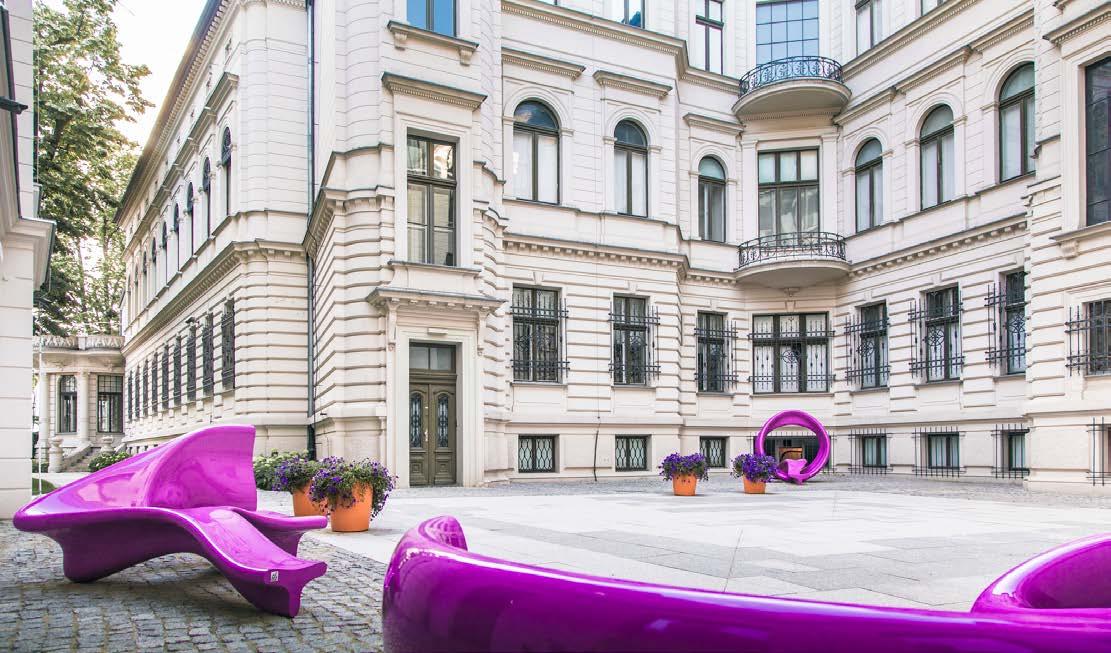
The courtyard of MS1 has its own contemporary purple sculptures and seating - how artsy!
Seeing, an acclaimed permanent display drawn from the museum's internationally renowned collection. Unlike more traditional museums that present art history in a linear sequence, ms² organises modern and contemporary art thematically rather than chronologically, grouping works from different periods and media around ideas that encourage visitors to consider how art shapes - and is shaped by - the modern world. As a result, it functions less as a conventional picture gallery and more as a museum of modern ideas, exploring the cultural, political and social forces that have defined the last century. More on p.99.
3
Museum of Art in Łódź – Herbst Palace
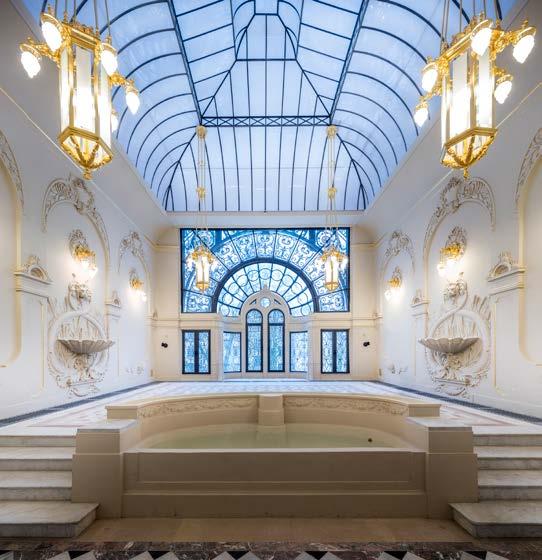
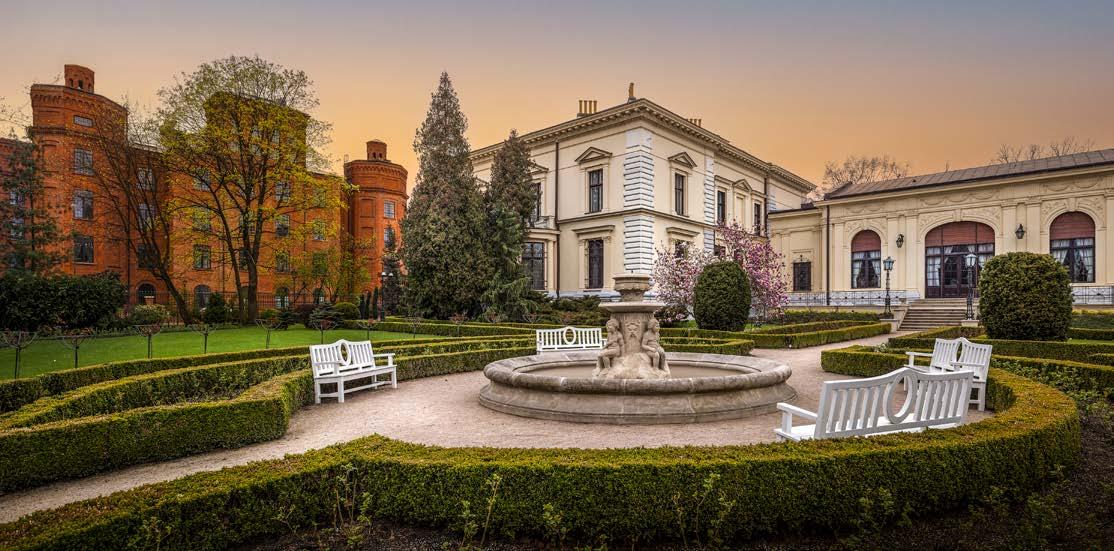
The third branch of Łódź’s powerful art trifecta is located in Herbst Palace, built in the late 19th century for industrialist Karol Scheibler’s daughter and her husband. Faithfully renovated to close to its original splendour, today the stunning palace interiors and an exhibit about the Scheibler family comprise one exhibit, while the Old Masters Gallery houses the Łódź Art Museum’s collection of Polish painting from the 19th and early-20th century (separate ticket). Both are impressive, and access to the gardens is an added bonus. More on p. 84.
4 Galeria Willa (City Art Gallery)
Located in the beautifully preserved 1903 Art Nouveau villa of industrialist Leopold Kindermann, this gallery is an excellent choice for art lovers who have already explored Łódź's major museums - or simply aren't up for the time commitment they require. It presents a rotating programme of high-quality contemporary Polish art, photography and graphic art across two exhibition spaces: the more formal Galeria Willa and the smaller, more experimental Galeria Chimera.
Galeria Willa is actually one of four exhibition spaces operated by Łódź's City Art Gallery (Miejska Galeria Sztuki). The others are the Centre of Art Promotion (Ośrodek Propagandy Sztuki; L-12, ul. Sienkiewicza 44), Galeria Bałucka (J-7, Stary Rynek 2), which focuses on contemporary art by emerging and established artists, and Galeria Re:Medium (J-12, ul. Piotrkowska 113), dedicated to photography, multimedia and new media art. More on p.62.
5 Galeria Wschodnia
One of Poland's longest-running artist-run galleries, Galeria Wschodnia has championed noncommercial, experimental and alternative art since 1984. Housed in a former apartment on Wschodnia Street, its two interconnected exhibition rooms, kitchen and guest room create an intimate, bohemian atmosphere where visiting artists often live while developing new work. Expect regularly changing exhibitions of contemporary art, performance, installation, photography and multimedia by Polish and international artists. Opening hours vary with each exhibition, so check the gallery's website before visiting.
K-9, ul. Wschodnia 29. wschodnia.art.
Inside the ornate walls of the Herbst Palace Museum.
Niche & Noteworthy
Although specific in scope, these museums are worth the price of admission for interested parties.
1
Dętka Canal Museum
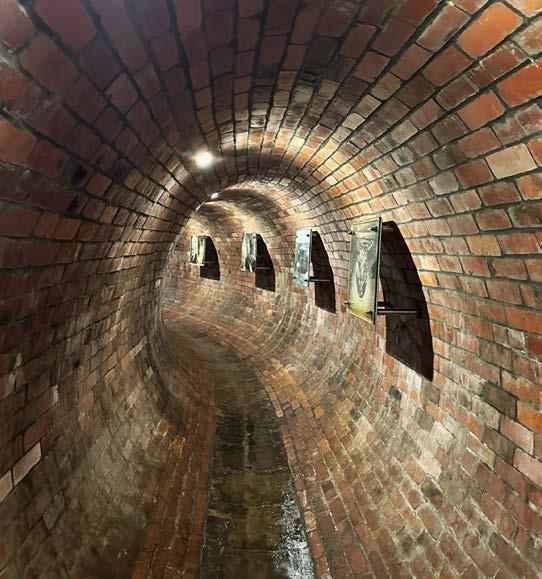
A visit you won’t forget anytime soon! This is industrial tourism at its best, allowing visitors to Łódź to penetrate the earth's core and visit the sewers that lie below. Designed by William Heerlein Lindley and put into action by Stefan Skrzywin, this red brick subterranean reservoir was originally opened in 1926, serving the original purpose to clean and purify the sewage produced by the natives. Running a length of 142 metres, and holding a capacity of 300,000 litres of water, it was finally shut down in the 1970s and allowed to gather rats and damp in equal measure. Reopened on May 28, 2008 the Dętka has now been fully restored, with your guided tour taking you past a catalogue of photographs and documents put together by Robert Kuśmirowski.
J-9, Pl. Wolności (near Kościuszko Monument);
Open 11:00-18:00; Wed, Thu 10:00-17:00; closed Mon, Tue. Admission 10/7zł; with guided tour 13/10zł; Wed free. muzeum-lodz.pl.
2 Museum of Public Transport
Ahhh, transport museums, there's something about them that brings back fond memories of childhood, for they, and indeed this one in Łódź, is a great place for kids (and of course, adults) to visit. Opened in 2006 by the local transport authority (MPK) and a club for local tram enthusiasts, the museum contains models of buses and trams, various paraphernalia, and of course, the highlights - real buses and trams, spanning the history of local transportation for well over 100 years! The museum location is centrally-located and open every day except Fridays, Sundays, and some Saturdays (open on the 2nd and 4th Saturdays of every month) - check online before planning your visit.
N-10, ul. Wierzbowa 51. Open 10:00-18:00; Sat 10:00-14:00; closed Fri, Sun. Admission 2.40/1.20zł.
3 Natural History Museum
A fun museum in the park, with all kinds of items, taxidermy animals and more – great for kids and nostalgic (in the way that it will bring you right back to your school field trip days). The museum, which is now overseen by the University of Łódź and sits in the beautiful Sienkiewicz Park, includes all kinds of specimens you won’t usually see in other natural history museums (including a lot of bugs – as much of the collection was left behind by a member of the Łódź Society of Entomologists! There are modern exhibits popularizing natural sciences, and over 100,000 artefacts. Come learn about the smallest insects to some pretty big mammals, evolution, and anything having to do with science here at this beloved little spot.
L-12, ul. Kilińskiego 101 (Sienkiewicz Park).
Open 10:00-17:00; Sat 10:00-16:00; Sun 10:00-15:00; closed Mon. Admission 20/10zł. muzeumprzyrodnicze.uni.lodz.pl.
Dętka Canal Museum.
4 Black World
Black World is a real-life journey into the world of darkness that lets you experience what it is like to be sight-impaired. In the specially arranged rooms resembling places we use every day, under the guidance of a blind guide, one can walk in the shoes of those that live in darkness. Experience everyday chores, appliances, rooms and places you visit and use every day but in complete darkness. An incredible experience for the senses, which will work as sharp as ever. And everyday utensils will gain a new meaning once you cannot see them.
J-8/9, Plac Wolności 5. Open 11:00-19:00; Sat 12:0020:00; closed Sun. Admission 45/40zł.
5 Centre for Comics & Interactive Narration (EC1)
This relatively new museum - opened in 2025 - is a must for all comics and graphic novel lovers! The massive centre is split into parts that include Gaming, Comics, Relaxation and Events, and no detail is left out. Among the sections, find three different gaming 'zones,' reproductions of digital graphics along with original boards, a Chillout Centre with comics to read, and tonnes of temporary exhibitions.
M-11, ul. Targowa 1/3 (entrance from ul. Tuwima). Open 10:00-18:00; closed Mon. Admission to permanent exhibition 27/21zł; Sat, Sun 34/26zł.
6 Centre for Science & Technology (EC1)
The whole space is divided into themed parts: 'Energy Processing,' where you’ll learn about energy and running a power plant; 'Development of Knowledge & Civilization,' where you’ll learn how civilisation is linked to humans discovering the laws around us; 'Microworld – Macroworld,' where you’ll learn about atoms; and 'Climate at a Turn,' where you’ll learn about climate change and its link to human activity.
L-11, ul. Targowa 1/3 (entrance from ul. Hasa). Open 10:00-18:00; closed Mon. Admission to permanent exhibition 27/21zł; Sat, Sun 34/26zł.
Flavours & Spirits
When it comes to culinary offerings, Łódź has come a long way in the last 10 to 20 years. Now there’s a plethora of incredible dishes from all over the world, and it’s quickly turning into a gastro-city. But there’s still a heavy Polish influence! Here, we’ve rounded up the best local and national bites.
Regional Tastes
Though it is rich in culinary offerings, when it comes to food that’s distinctly Łódź, there are really just two dishes and they differ greatly in origin and taste. Here they are, along with some of the best places to try them.
1 Zalewajka
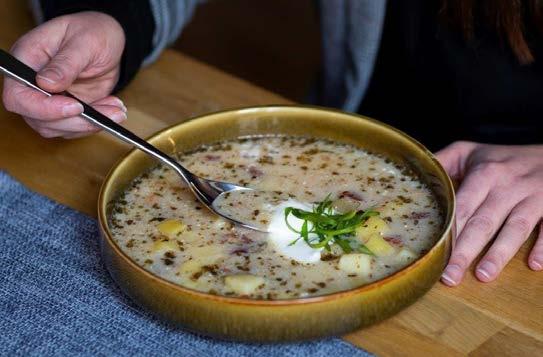
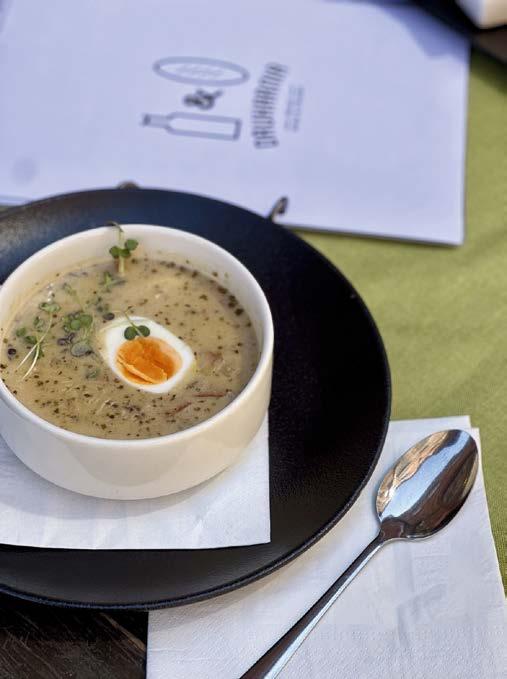
Hearkening back to the city’s working-class and peasant roots, this is a hearty soup that was first mentioned in Łódź and nearby Radomsko in the 19th century. A little sour and very filling (thanks to its bready, potato base), this soup is similar to the nationally known 'żurek' (p.44), but it’s likely to be a completely new taste for those who aren’t already accustomed to Polish flavours. Made with boiled potatoes, onions, sausage, and sourdough base (for that sour flavor), zalewajka is classically Łódź. In fact, it’s so popular that the city holds an event every year (usually in early March) called Proud of Zalewajka, which aims to honour the soup with local restaurants making “crazy” dishes inspired by zalewajka.
Where to find it: many places! We recommend checking out the city’s official Łódź Zalewajka Trail online for a full list. But our personal recommendations are Imber on Piotrkowska 43, which does an upscale version of the classic; Piwnica Łódźka on Henryka Sienkiewicza 67, which keeps it traditional and tasty (and the source of the above photo); and Ukryte Rzeki on Piotrkowska 295A, which brings a twist to zalewajka in the form of mushroom duxelles and egg croquette (worth a try!).
2 Żulik
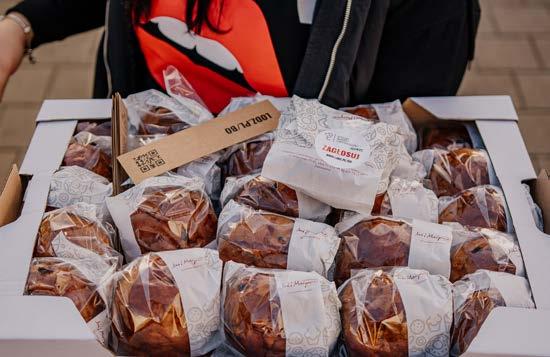
Given Łódź’s most classic dish being a sour potato-and-sausage soup, and coupling that with the understanding that a lot of Polish food involves potatoes and meat in some form, you’d be forgiven for thinking their second most classic dish is yet another bowl of starchy goodness. In fact, żulik couldn’t be more different. This local delicacy is a brown, sweet wheat bread that’s also called “Łódź Turkish Bread.” Ingredients can differ, but most commonly it includes coffee, raisins, and honey or molasses, which give it a rich, slightly sweet taste (and that cool dark brown color). It was created by Turkish baker Mehmet Erol, who operated bakeries around Poland for most of his life. It was around the 1960s that people think he first started baking the “Turkish bread” that would later be called żulik. The dish quickly took off and other bakeries around the city started getting in on the action.
Where to find it: Sadly, the original bakery is no longer around, but you have plenty of great alternatives. We recommend going to Podpora Bakery, on ul. Wojska Polskiego 7; Recipe Confectionery/Bakery on ul. Zarzewska 21; or Łódźka Drożdżówka on Piotrkowska 133.
National Dishes
We’d be remiss if we didn’t mention some of the traditional dishes most associated with Poland. Everyone knows ‘pierogi’ (stuffed dumplings) and ‘kotlet schabowy’ (breaded pork cutlet), so here are some staples of the national diet that may not be quite as familiar. Smacznego (enjoy your meal)!
1 Barszcz
A nourishing beetroot soup, barszcz may be served with a croquette (‘z krokietem’), with mini pierogi floating in it (‘z uszkami’), or simply as broth in a mug expressly for drinking (‘solo’).
2 Bigos
Though there’s no standard recipe for this hearty stew, ingredients usually include fresh and pickled cabbage, pork, sausage, onion, mushrooms, plums, garlic, peppercorns, bay leaves, caraway and whatever else is on hand.
3 Gołąbki
This popular dish could be described as a ‘cabbage enchilada'. In lieu of a tortilla, the filling of rice, onion and minced pork is rolled up inside large boiled cabbage leaves, then baked or steamed and topped with tomato or mushroom sauce.
4 Golonka
This is ‘pork knuckle’ or ‘ham hock,’ as in the part of a pig’s leg between the knee and ankle. Boiled, braised or roasted, this is the closest the Poles come to barbecue, and is a delicacy.
5 Placki Ziemniaczane
These savoury, fried potato pancakes are very similar to hashbrowns or Jewish latkes, and may be served in a variety of ways. Keep it simple with just sour cream (‘placki solo’), or turn it into a hefty meal by ordering them smothered in mushroom sauce.
6 Żurek
It doesn’t get any more Polish than żurek - a sour soup made from a thick stock of fermented rye flour. Typically chock-full of potatoes, sausage and hard-boiled eggs, żurek is most often thickened with cream, and seasoned with marjoram, garlic, salt and pepper.
TASTE THEM HERE
While many of Lodz’s most upmarket restaurants offer a creative, contemporary take on Polish cuisine, here are some favourites known for their regional specialties and more traditional Polish home-cooking.
Restauracja Piwnica Łódzka K-12, Henryka Sienkiewicza 67. Obiady Domowe w Teatrze Nowym J-10, ul. Zachodnia 93. Galicja I-8, ul. Ogrodowa 19A (Manufaktura).
Imber J-10, ul. Piotrkowska 43.
Gęsi Puch I-15, Al. Politechniki 2.
The beloved Golonka.
Must-try Tipples
Stereotyped as a nation of vodka drinkers, Poland claims to have invented the distilled beverage back in the Middle Ages. Today they produce some of the world’s best brands, but beyond the straight stuff lies a surprising variety of flavoured vodkas worth trying. What’s more - Poles now actaully drink more beer than vodka, boosted by a recent craft beer boom. Na zdrowie (cheers)!
1 Browar Księży Młyn
This is a must brewery when in Łódź and looking for both a historic/atmospheric spot, and a place where you can get some real, authentic Łódź beer. Located just around the corner from Księży Młyn, the historic spinning mill, this place has the same brick factory vibe. And the beer is distinctly Łódź: it's all brewed on-site, unpasteurised and unfiltered. Find a lot of light wheat beers, lagers, as well as a sour option, all with names that reference the spinning and weaving factory history. All very good and very drinkable. If you're looking for a beer experience after which you can say, "I've tasted true Łódź beer," then this is the spot. Enjoy! See p. 95.
2 Classic Polish Beers
Poland has a long history of piwo-love (piwo means beer) and there are some classic Polish beers that are a must-try when you visit. Find these anywhere: at your local Żabka, at a corner store, the grocery store, or literally any bar you enter. One of the big beers is Lech , which is crisp, lightly malty and super drinkable with a 5% ABV. Another is Tyskie which is also a light lager at around 5%, and just slightly sweet and slightly bitter. Żywiec is often considered the original Polish lager, and has been brewed since the mid-1800s. Very Polish. Those are the three big ones, but others include Żubr , Perła , and Okocim. If you're here for a few days, try them all!
3 Belvedere
One of the top vodka brands in the world comes from a town just 45 minutes outside Łódź called Żyrardów, and as such, we’re claiming it as a Łódź-area brand! Belvedere vodka is relatively new – it started production in 1993 – but it made a massive splash, and it’s now one of the most respected and exclusive vodkas in the world. No surprises there: it’s made with very specific ingredients, including varieties of Dankowskie rye from nearby farms, and distilled four times. It’s crisp, clean and doesn’t have a harsh aftertaste.
4 Nalewka
Poland is known for its nalewka, which is a kind of liqueur made from hard alcohol that’s been infused with fruits and herbs. It’s delicious and meant to be sipped in a shot (it might seem sweet at first, but there’s a kick). And a few places in Łódź are a must-try for the authentic flavor. One is Nalewki z Lwowa Łódź (K-13, ul. Roosevelta 10B), which is actually a Ukrainian company specialising in great nalewka – all homemade, with tonnes of different flavors that utilize fresh herbs and berries. Another is Biały Nalew (J-10, ul. Piotrkowska 44), which offers up berry and apple nalewki as well as ciders (and hot dogs!).
5 Wiśniówka
Speaking of nalewka…. cherry-flavoured Wiśniówka could be considered a close relative. It’s probably the most common flavoured vodka and it’s dangerously easy to drink. Popular with students, pensioners and tramps alike, a splash of grapefruit juice, or even a shot of Tabasco, can be added to cut the sweetness of this bright red monogamy cure. Typically a cheap shot thrown back in a dive bar, you’ll also find bars dedicated to the drink all over Poland (easily identified by the hoards of students sipping shots and chain smoking outside). Find it easily at two of those dedicated bars: Pijana Wiśna (K-13, ul. Piotrkowska 85), and Pijana Wiśna “Manufaktura” (I-8, ul. Drewnowska 58).
6 Żubrówka
Maybe not from the Łódź area, but if you’re visiting Poland for at least a night, this is one you should try. Known to many as ‘bison grass vodka,’ Żubrówka has been produced since the 16th century. Flavoured with a type of grass specific to Białowieża Forest (a blade of which appears in each bottle), this popular vodka is faint yellow, with a mild fragrance of mown hay and a subtle floral taste with traces of almond and vanilla. Drink it straight or combine it with apple juice for a refreshing concoction called a ‘tatanka.’ When it comes to finding a spot to drink it, you can try different bars in the area, but your best bet is to grab a bottle at a liquor store. (Bonus, it’s so different from other kinds of vodka, that it makes a great gift).
Getting Around
For a city as large as Łódź, you’ll need more than your feet to get around. Best explored on two wheels, but with an extensive public transport network - here’s all you need to know about navigating the city.
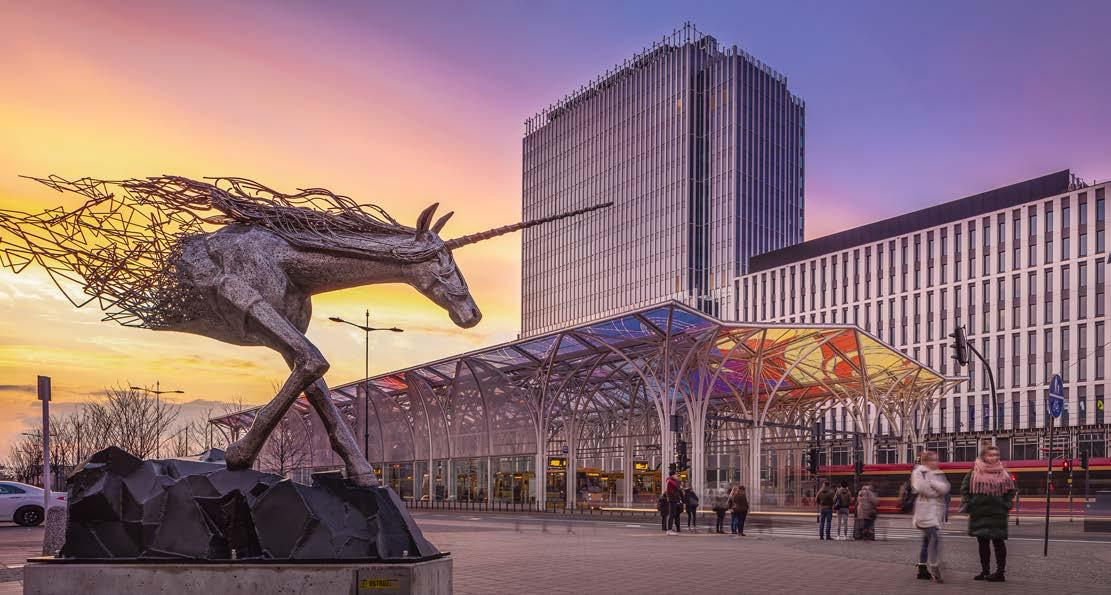
Colourful, artsy and just a little weird: the Unicorn Stable is right at home in Łódź. [Photo: P. Augustyniak]
From its very beginning, Łódź has been a bit ‘transport-challenged.’ Developed piecemeal by competing factories rather than centrally planned around a single hub, the city’s rail and tram networks are famously fragmented but gradually improving thanks to ongoing investment. Although construction seems constant, a few helpful tips and apps should have you on your way.
Trams & Buses
While most European cities expand out from a historic trade centre, with transit networks radiating out from that core, Łódź is unique. Although uneven, the city’s transit grid generally runs north-south and east-west, making it easy to navigate. A network of about 20 tram lines and over 100 bus lines runs frequently between 05:00 and 23:00 (with night buses less often after that), and tickets are the same for both.
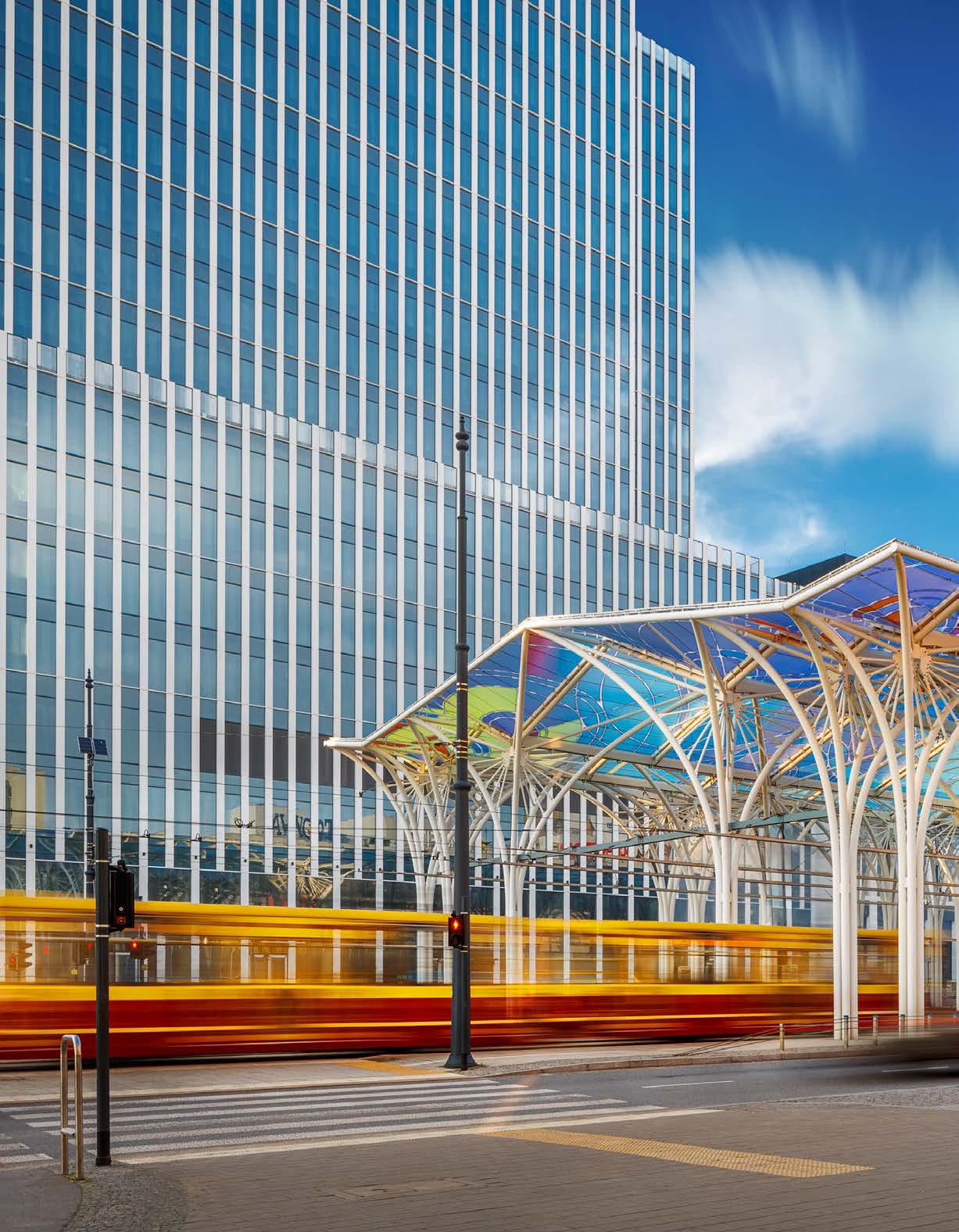
In the very centre of Łódź, at the corner of Piotrkowska and Piłsudskiego streets, is ‘Piotrkowska Centrum’ - the city’s main tram hub (J/K-13). Whimsically called the ‘Unicorn Stable’ due to its rainbow roofing, most trams pass through this station, making it a good reference/starting point if you’re not sure how to get somewhere. The true skeleton key to unlocking public transport in Łódź, however, is jakdojade.pl/lodz. This free English-language service (we recommend downloading the app) will tell you exactly how to get to your destination using live transit connections based on your location. It includes trams and buses, and will tell you what kind of ticket you need. If you enter your bank details you can also buy your ticket and validate it through the app, which is truly handy.
If you prefer a more offline approach, paper transport tickets can be purchased by card from machines onboard most trams and buses, as well as at some transit stops. A wide range of ticket options are available, but the most useful are the timed tickets for 20mins (4.40zł) or 40mins (5.60zł). The former should be enough to get you from one end of the centre to the other, but if you’re
For more detailed information about arriving in Łódź, visit our website.
going to Marysin Doły (p.104) or the Zoo (p.32), we suggest a 40min ticket. If you plan on moving around a lot and don’t want to worry about tickets, the 24hr ticket option (18zł) may be for you.
Note that if you have a paper ticket, you must immediately stamp it upon purchase/ after boarding in the small orange machines. Plainclothes inspectors regularly patrol the lines handing out costly fines for unvalidated tickets.
Lastly, those over 70 years old, and children under 4, ride for free (no ticket required!). ISIC and student cards are valid for discounted tickets, but in all cases you must carry ID. | jakdojade.pl
Vintage Transport
On weekends and holidays from June to August, Łódź runs special ‘tourist’ lines using vintage trams and buses from the communist and even prewar era. A nostalgic trip back in time, these moving museums generally connect key sites like Piotrkowska Street, Manufaktura and the Zoo. Look for tram line 0 and bus lines 100 and 101 on transit boards and in the Jakdojade app. Standard tickets are valid.
If vintage vehicles toot your horn, connect with the very active ‘Old Tram Enthusiasts Club’ (kmst.pl) and check out the city’s Museum of Public Transport (p.40). N-10, ul. Wierzbowa 51. Open 10:00-18:00; Sat 10:00-14:00. closed Fri, Sun.
Trains
There are quite a few train stations around the city, but just two main stations that you should be familiar with, as you’ll likely be leaving or entering the city this way.
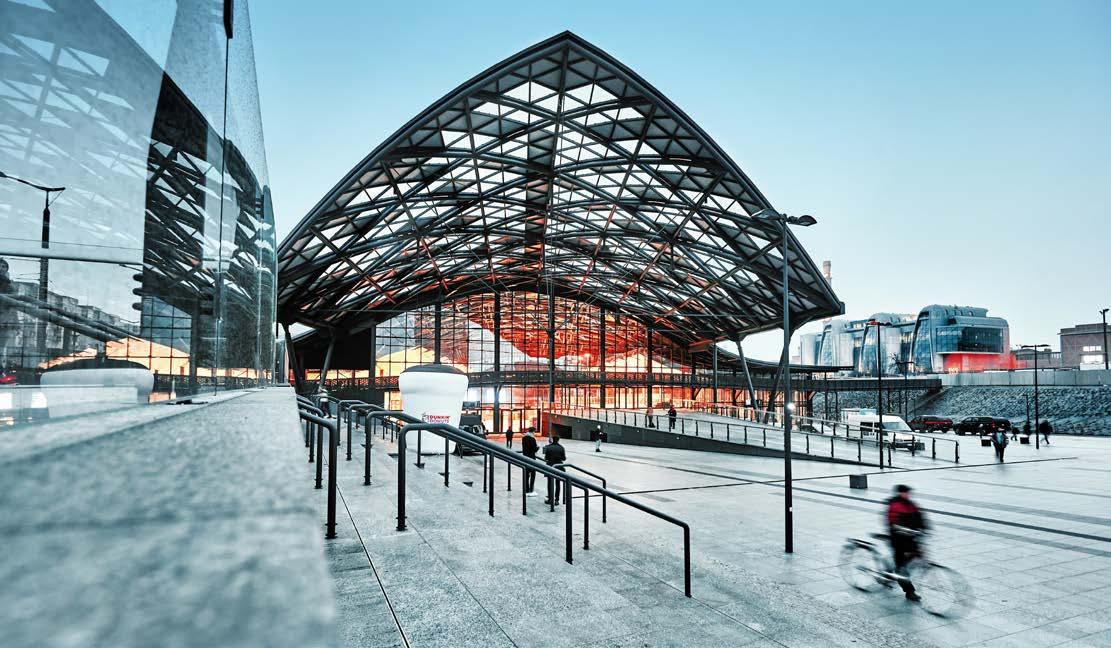
The first is Łódź Fabryczna on the east side of the city. A large, sloping modern building with a massive glass skylight, it’s hard to miss! And it’s the main station in Łódź, so you’ll likely get off here (in fact, two of our walking tours on p.56 and p.70 start here for your convenience).
Łódź Fabryczna has four platforms and connects to many main cities in Poland, including – and importantly – Warsaw and its two airports.
The second is Łódź Kaliska, which is located on the western side of the city, by the interstate and the Zdrowie (p.32) neighborhood. With five platforms and a lot of connections around Poland and internationally, this is a very useful transit hub (in fact, Kaliska has a direct train to Gdańsk, whereas Fabryczna does not). It also juts up against the Łódź bus station, where most long-distance buses depart.
Łódź Cross-City Tunnel
The city is constructing a tunnel between the two main stations which will also extend to the Łódź Żabieniec station in the northwest. The 7.5-kilometre tunnel is between 14 and 24 metres underground.
The project is expected to be finished by 2028 and it is causing some traffic disruptions. So, if you’re experiencing lane closures or diversions, that’s likely why!
When it's finally finished, it will have one main tunnel connecting Fabryczna with the Koziny neighborhood, where that main tunnel will split into four single-track tunnels. Two will go northwest to Żabieniec and two will go southwest to Kaliska. When it’s finished, you’ll be able to access three underground stations: one in Śródmieście, with access from ul. Piotrkowska, one in Polesie with access from Manufaktura, and one in Koziny.
The Łódź Fabryczna train station is the biggest transit hub in the city, with trains to Warsaw and beyond.
Rideshare & Taxis
With the tunnel construction causing chaos and inconsistency to tram routes, you may find that the easiest way to get across town is by taxi. You'll be happy to know that some of the rideshare apps likely already on your phone will work in Łódź, including Bolt, Free Now and Uber, and costs are negligible. Rideshare services and taxis are basically indistinguishable in Poland at this point, with drivers typically operating on multiple platforms at the same time. If you want to make sure you’re getting an actual taxi, or have a more nuanced transport request, contact Green Cab Taxi (www.green-cab.pl; (+48) 666 44 44).
Car Rental & Car Share
All most travellers need to rent a car in PL is to be 18 years old, have a credit card (not debit), and have a valid foreign driver’s licence. Note, however, that those from countries that did not ratify the Vienna Convention on Road Traffic (United States, China, Australia...) cannot legally drive on their home licences; an International Driver’s Licence is technically required. Major car rental companies can be found in the city centre. Specifically Avis is at the Łódź Double Tree Hotel on Łąkowa, 29. There's also Centrum Rent a Car and Express Car Rental which are both located in the Łódź Fabryczna Train Station.
Poland also has a very good car-share service, however: Traficar. Download Traficar’s mobile app, or access this service through the Bolt app (Bolt Drive), to see their fleet of cars parked around Łódź. Note that you won't be able to find their pick up or drop off spaces on Googlemaps -- the only way to identify where to get a Traficar car and where to park it when you're done is via their app or website.
For short trips the cost is comparable to taking a taxi; the day rate option is a great alternative to traditional car rental, and you never have to pay for gas or insurance. Just scan the car and go, then park in a legal space within their service zone when you’re finished. You can also end your rental in a different Polish city where Traficar operates. Note that, like any car rental, you need a valid driver’s licence recognised in PL. | traficar.pl
Bike Share
As we’ve said, and as you’ll immediately discover upon visiting, Łódź is a very popular city among bicyclists. As such, it’s got a pretty robust public bike system. All you have to do is get the NextBike App or go to lodzkirowerpubliczny.pl and create an account. You’ll need to enter your card details but honestly, the prices are pretty great: 0 for up to 20 minutes, 4 zł for an hour, 6 zł for a second hour, and 10zł for every hour after that.
As for trails, we recommend just biking all around the city, starting with pedestrian street ul. Piotrkowska for an easy, fun ride. The parks all over the city make for great biking opportunities, too. | lodzkirowerpubliczny.pl
Scan & Go Scooters
Although agitating to some, electric motorised scooters provide a relatively cheap, easy, efficient and environmentally-friendly way to get around the centre of Łódź. At the moment the most useful e-scooter apps to have on your smartphone are Bolt (car share also), Lime (also available through the Uber app) and Dott. All three have similar prices, services and restrictions, and are abundant around Łódź. Note that scooters are automatically slowed down in high volume areas (like Piotrkowska Street) and also have no-parking zones (like inside the Manufaktura complex); check the map in the app before ending your ride.
Bike culture is alive and well in Łódź!
MONOPOLIS ONE PLACE, MANY POSSIBILITIES
JEDNO MIEJSCE, WIELE MOŻLIWOŚCI
Walking Tours
A structured way to untangle Łódź’s vast urban jungle, our self-guided walking tours lead you to the city’s most important sites, while immersing you in its street-level details along the way. Move at your own pace and uncover the stories woven into the city's urban fabric.
If you take a look at the map of Greater Łódź on the inside cover, you’ll see that these walking tours cover the majority of the centre of Łódź, and could be neatly done north to south (or vice versa) with one tour leading seamlessly into the next. Be that as it may, we’ve opted to order them more based on accessibility and priority, beginning naturally at centrally located Łódź Fabryczna Train Station. Each tour begins with its own map, and will likely occupy the better part of a day with breaks for food and culture. Here’s a quick overview of each route.
Meander through the central part of the city, to find parks blended with urban forms. [Photo: P. Augustyniak]
City Centre North p.56
Covering the northern section of Piotrkowska Street between Fabryczna and Plac Wolności, this is an essential introduction to Łódź, including some of the city’s most walkable areas. Along the way you’ll see huge artworks, palatial architecture and plenty of street life.
City Centre Central p.70
This tour leaves from the train station and weaves south, through the heart of the city until it hits the main tram hub, lovingly referred to as the 'Unicorn Stable.' On your journey, you’ll pass through parks and by some incredible examples of late-19th/ early-20th century architecture, as well as some excellent examples of public space.
City Centre South p.82
Not to be mistaken for southern Łódź, this is instead the most southern section of the city centre, and it’s essentially a deep-dive into the city’s industrial history. Many factory buildings are found on this tour, broken up by some of the city’s best green spaces.
Manufaktura & Old Town p.96
Just to the north of the city centre, this tour will take you through the popular Manufaktura complex (full of museums, restaurants and historic buildings). It’s coupled with the neighboring Old Town Square and one of the city's most desirable green spaces.
Marysin Doły p.104
This tour starts on the northern end of the city and works its way down through much of the former Łódź Ghetto. The stops here are almost all focused on Jewish and WWII history in Łódź. Sombre, and full of important information and key historic sights.
City Centre North
Centred around Piotrkowska Street – one of the longest urban high streets in Europe – Łódź’s city centre rivals Warsaw for size, stretching 4km across the historic downtown grid and former factory quarters. Too much to cover in one tour, we’ve broken it into three and encourage you to start by working your way north from Łódź Fabryczna station.
redeveloped, Plac Wolności (p.64) is full of benches, water features and places for reflection. [Photo: P. Augustyniak]
2027) Łódź-Śródmieście (opening 2028)
Walking Tour
A representative mix of industrial landmarks, grand 19th-century architecture, cultural institutions and everyday urban life, this route shows you the heart of Łódź, warts and all. Winding through the north-central part of the city, the route is about 3km and can be done in as little as 40mins, though cultural layovers and rest stops are encouraged; turn to page 68 for our recommendations on the latter.
1 Łódź Fabryczna
This behemoth of a train station has seen a lot of changes over the last 150 years. Construction on the first railway line started here in 1865, linking Łódź with the Warsaw-Vienna railway. Initially meant to transport coal and raw materials only, the railway soon began transporting passengers as well, and a proper station was built in 1868.
In 2012, that existing station was demolished and work began on a new 2 billion złoty underground station. Reopened in 2016 - though not exactly completed - the new station covers 65,000m2 and has a distinctly brutalist feel, with massive slabs of sleek concrete and steel. Though below ground,
there's plenty of sunlight thanks to an intricate skylight design. Note that despite the scale of this facility, there are currently only four train platforms and a distinct lack of food and drink options inside; stock up on supplies before heading down.
Since 2022, there’s been ongoing work to dig a cross-city railway tunnel connecting Łódź Fabryczna and Łódź Kaliska station in the western part of the city. Not expected to open before 2028, the tunnel will make getting across town more efficient, but in the meantime it's causing headaches and eyesores. Read more on p.50. L-11, Pl. Sałacińskiego 1.
2
Moniuszko Park
Your first stop after exiting the train station should be this incredible, albeit small, park. ALthough it occupies only 2.3ha, it’s well-worth a walk through, especially for its very Łódźian symbolism. In true artsy Łódź fashion, the park is named after Polish composer, conductor and organist Stanisław Moniuszko, who wrote over 260 songs and many operas, operettas and ballets – all with a focus on (or nod to) Polish culture. His music blended elements of Polish folklore and East Slavic culture, and he's often referred to as the father of Polish opera. So it's fitting that he gets a park (and so close to the Grand Theatre on p.67, too!).
Though the park was established in 1875 as a public square for visitors fresh off the train at Łódź Fabryczna, it was renamed in honor of the prolific musician in the 1960s. Residents at the time, so enamored by Moniuszko, funded the construction of his bust, which was put in the centre of the park, flanked by flower beds.
Today the park is a lovely spot to wander through, especially in the warmer months. You’ll find flowerbeds, lots of trees, and – thanks to a 2020 revitalisation – new walking paths, benches and a playground. The perfect place to kill time before your train, or rest after a long day of travel. L-10, ul. Polskiej Organizacji Wojskowej.
3 Nevsky Cathedral
This striking cathedral is one of the city’s key sights, largely because it differs so sharply from Łódź's other churches (except for the Orthodox Church of St. Olga, which you can recognise by its gold onion dome to the north). Its octagonal plan and ornate domed roof give it a distinctly Russian rather than Polish look - and for good reason. Built between 1880 and 1884, the cathedral was financed by a committee of Łódź's wealthiest industrialists, including many names you'll find throughout this guide - Karol Schreiber, Julisz Heinzel, Edward Herbst, and Izrael Poznański. Although none of these magnates were Orthodox themselves, they saw building the RussianByzantine-style cathedral as a savvy business move that would help them gain further favour (and financing) from the Russian Tsars who controlled the Łódź area at the time.
Designed by renowned Łódź architect Hilary Majewski, Nevsky follows the Russian Orthodox style with a characteristic onion-domed tower, a lower central dome, and façades lined with decorative arcades. Inside are stained glass windows, bells, frescoes, and an impressive threerow oak iconostasis. Amazingly, the cathedral survived the First World War unscathed and even remained operational, despite the departure of most of the city's Russian Orthodox community.
A true work of beauty! This Russian Orthodox-style spot is the Nevsky Cathedral. [Photo: P. Augustyniak]
During WWII, the cathedral’s Orthodox clergy defied the Nazis by hiding - and thus saving - the cathedral's bells from being melted down, and issuing false baptism certificates to local Jews. The church has continued operations and retains its original exterior today. Though currently under renovation, stopping by and marveling at the structure of this unique space is a must on your travels through the city.
L-10, ul. Jana Kilińskiego 56.
4 Piotrkowska Street
Here you'll meet Łódź's most famous street for the first time, as the illuminated gateways on either side boldly proclaim. 4.2 kilometres in length, Piotrkowska initially connected two small towns within what is now the greater Łódź area, but in 1821, as officials were looking for a way to mark Łódź as a new factory town, they turned their attention to building up this street. Rajmund Rembieliński, president of the Mazovian Voivodeship Commission at the time was in charge of creating this new factory settlement which became known as New Town with Plac Wolnośći as the town centre and Piotrkowska as the town’s main street, along which new buildings would be constructed (read more about Łódź's industrial history on p.12). In the ensuing years, the area along this stretch burst forth with workshops and residences for major industrialists.
Today it's Europe's longest pedestrian street, lined with architectural landmarks and monuments that hint at its history, but also awash in boutique shops, charming cafes, restaurants and bars that attest to its role as the city's commercial high street and social hub. Here locals come to window-shop, wine and dine, stroll and be seen, as the laughter of sidewalk seating areas and the music of street performers fills the warm summer nights.
You could easily spent your entire visit exploring Piotrkowska, but it doesn't need to be done all at once. Likely your itinerary will bring you back to the street at various points, and breaking it into sections is a good approach. Grab a bicycle (p.51) if you want to cruise its entire length - walking from top to bottom would take 1 hour! | J-9 to K-18.
Choose Your Adventure!
This is the perfect spot to reassess. You can keep taking our tour, seeing the MS1 museum (p.38) and Plac Wolności (p.64).
Or you can head north up ul. Piotrkowska to Manufaktura (p.96) and all the dining and museum options that abound there.
Head south down the street and you’ll meet up with OFF Piotrkowska (p.77) and yet more eating and drinking.
Piotrkowska Street is rife with cafes, bars and incredible works of architecture. [Photo: Arkadiusz Leśniewski]
5 Walk of Fame & Grand Hotel
Borrowing the idea from the Hollywood Walk of Fame, Łódź created its own strip of sidewalk featuring over 65 star-shaped plaques honouring the best of Polish cinema (can a giant Hollywoodesque “Łódź” sign be far off?). The Walk of Fame, which is also called the 'Alley of Stars' (Aleja Gwiazd w Łódźi), was the brainchild of actor Jan Machulski who proposed the idea in 1996. It was later realised by artist Andrzej Pągowski and the first star was unveiled on May 28, 1998, with the honor going to actor and director Andrzej Seweryn, who has featured in a lot of Polish movies and won the Polish Academy Award in 2017. The stars on the east side contain the names of directors and cameramen, and the west side the names of actors. The alley includes stars for Roman Polański, Jerzy Kawalerowicz and Pola Negri.
Of course, a walk of fame needs a nearby hotel equal in splendour, and the Grand Hotel fits the bill. Running for over 120 years, this splendid hotel is rife with early 20th century details. In a nod to its impressive history, the hotel’s suites are named after famous Polish actors of years gone by. And it’s been the site of several film scenes, notably a scene from David Lynch’s Inland Empire, and the 2018 Polish hit and Best Foreign Picture nominee, Cold War. Plenty of notable Polish celebrities have stayed here over the past century-plus. Maybe this is Łódź’s version of New York’s Chelsea Hotel – with less grit, but the same amount of character. J-11, ul. Piotrkowska 65.
6 Gutenberg House
Before exiting Piotrkowska via Rubinstein Passage, it's worth a quick sidequest further south just to see one of Łódź's most impressive townhouses. The historic Gutenberg House features a beautiful eclectic facade with yellow walls and pink windows. Architecture-lovers will find it fascinating, as it combines all kinds of styles—neo-Gothic, neo-Renaissance, and Art Nouveau—across its five stories, with features like bay windows, gables, and relief images of figures who contributed to developing the art of printing.
The nod to printing is not random: the land was purchased by a prominent printer, who in 1896 determined to construct a building there with a design from architects including Franciszek Chełmiński - who also famously designed the Scheibler Palace (p.91) and the Kindermann Palace (p.76). It was the site of the city’s oldest newspaper until 1915 when the offices were closed by German authorities. Today, it’s home to a number of different offices, the cafe Brednia, and the city’s oldest bookstore, Świadowid. K-11, ul. Piotrkowska 86.
Pink, yellow and unique all over: The Gutenberg House.
The Grand Hotel lives up to its name.
7
Rubinstein Passage
A little oasis in the heart of the city, this pedestrian passage runs from Piotrkowska to the bustling main traffic street, Al. Kościuszki. There are benches, flowerbeds, a fountain, and a little statue. The passageway is named after Artur Rubinstein, a Polish pianist widely thought to be one of the greatest of all time. Born in Łódź in 1887, Rubinstein could easily be considered a child prodigy, with a fantastic command of the piano by the time he turned 4. His professional career took off during his teen years, and he toured the world earning rave reviews, eventually conquering America. With Europe on the brink of WWII, the Jewish Rubinstein became a US citizen, but never gave up his love of his homeland. A vocal advocate of Polish causes and a local legend forevermore, this is but one of several tributes to Rubinstein throughout Łódź, including a monument of the artist across the street, a large mural (p.26) and an extensive exhibit in the Museum of the City (p.98).
J-11, ul. Piotrkowska 75.
8 Kindermann's VIlla (Galeria Willa)
This small, ornate and historic villa dates back to 1903 and is regarded as one of the best examples of Art Nouveau architecture in all of Europe. It was made for Leopold Kindermann, an entrepreneur who was married to the daughter of a wealthy factory owner. Since 1975 it has been home to the main branch of Łódź's City Art Gallery (Miejska Galeria Sztuki w Łodzi), exhibiting contemporary Polish art, photography, graphics and sculpture (see p.39). The building itself is a major attraction, with gorgeous interiors that retain many of their historic original furnishings, including grand staircases, stained glass windows, brass chandeliers and intricate woodwork. Worth stepping inside to check out the current exhibits, access the villa via a decorative portico held up by the trunks of two apple trees. Visiting time: 60mins
J-11, ul. Wólczańska 31/33. Open 10:00-17:00; Thu, Fri, Sat 12:00-19:00; closed Mon. Admission 10/6zł; Thu free.
The Leopold Kindermann Villa is one of the best examples of Art Nouveau architecture in Europe. [Photo: P. Augustyniak]
9 Maurycy Poznański Palace (MS1)
Built in the late 19th century for Maurycy Poznański, the son of big-shot textile manufacturer Izrael Poznański. This Neo-Baroque palace, which was built by an architect for the family (yes, they were so well-off that they had their own architect), reflects the peak of the wealth and ambition of Łódź’s industrial elite. Designed as a lavish private residence within the city’s booming textile district, it later became one of the key cultural institutions of post-war Łódź.
The Museum of Art in Łódź acquired the building in 1948 and today it houses their 'MS1' branch (p.38). The richly decorated interiors and grand staircases serve as exhibition space for modern and contemporary art, including the celebrated ‘Neoplastic Room’ by Władysław Strzemiński. Embodying Łódź’s transition from industrial capital to cultural hub, the palace is as significant for its architecture as for its art collections. Step into the aristocratic entrance to see if the current exhibits, which change regularly, excite you. Visiting time: 75mins.
I-10, ul. Gdańska 43. Open 12:00-18:00; Tue, Wed 09:0016:00; Fri 12:00-20:00; closed Mon. Admission 20/10zł; Fri free.
The MS1 museum is located in a former residential palace.
10 Karol Poznański Palace
Constructed in 1904 for famed Łódź industrialist Izrael Poznański’s son, Karol, this NeoRenaissance palace contains opulent interiors, decorated stucco ceilings, marble fireplaces, gorgeous stained glass, and all kinds of beautiful wood furniture that the early 20th-century elite loved so much. No longer home to the city’s rich and famous, today it houses the Academy of Music in Łódź, which is great for visitors because it means you’re able to pop inside to see all the opulence, and even catch a live concert!
I-10, ul. Gdańska 32.
11 Pasaż Róży
This is one of those spaces that is classic Łódź – i.e. it shows up on all the pamphlets and image searches you’re likely to do of the city. And for good reason. It’s a unique art piece stretched across an entire – albeit, small –courtyard connecting two streets. The area once contained a rundown former hotel and later, residential flats. In 2014, the area took on a new life thanks to artist Joanna Rajkowska who decorated it with a mosaic of cut mirror pieces as part of the Four Cultures Festival. The design resembles roses and the name also refers to the artist’s daughter,
Rose, who was diagnosed with a rare form of eye cancer. Following chemotherapy, her daughter was able to regain her eyesight – a transformation that Rajkowska says is replicated in her work, describing the passage as going “from not seeing to seeing.” Now, it’s a must-visit spot, perfect for quiet reflection and some gorgeous photo-ops.
J-9, ul. Piotrkowska 3.
12 Plac Wolności
Meaning 'Freedom Square,' Plac Wolności stands at the heart of the planned New Town laid out in the 1820s. Until then, Łódź's main market square had been Stary Rynek (Old Market Square), but the authorities created a new urban centre immediately to the south as part of the town's planned expansion. Together with ul. Piotrkowska, the square formed the framework for the industrial city that would soon transform Łódź into one of Europe's leading textile centres.
Laid out in 1823 as an octagon, the square was originally named New Town Market Square (Nowy Rynek). A marketplace occupied its centre, while the Town Hall, church and school stood nearby. Horse-drawn trams, followed by electric trams,
Pasaż Róży is a testament to a mother’s love – and a beautiful example of public art.
arrived in the late 19th century, and tram lines still cross the square today.
Following Poland's return to independence in 1918, the square was renamed Plac Wolności (Freedom Square). A monument to Tadeusz Kościuszko—military engineer, national hero and veteran of both the Polish struggle for independence and the American Revolutionary War—was erected at its centre. Destroyed by the German occupiers during World War II, the monument was reconstructed in 1960.
A major redevelopment completed in 2024 transformed the square into a greener, more pedestrian-friendly public space. New trees, planting, benches and water features were added, while tram tracks were consolidated along the northern edge and the former traffic circle around the Kościuszko monument was removed, strengthening the connection with ul. Piotrkowska.
Today, Plac Wolności is a pleasant place to pause before exploring Piotrkowska Street, with cafés, restaurants and independent shops lining its edges. It also serves as a convenient starting point for walking or cycling along the city's best-known thoroughfare.
J-9.
The interior of the Karol Poznański palace is a study in opulence.
[Photo: P. Augustyniak]
Tourist Information
A helpful stop on your travels! It’s worth taking a few minutes to pop down south on ul. Piotrkowska to stop at the city’s Tourist Information Centre. Here you’ll find all kinds of great information about the city, as well as Łódź souvenirs that make for easy take-home gifts. Including fridge magnets, postcards and handmade items. Plus — and this is crucial in the summer months – you can fill up your water bottle here! Don’t miss their giant map of the city, which gives you a very comprehensive view of all the main sites and attractions.
J-10, Piotrkowska 28. Open 09:00-19:00; Sat, Sun 10:00-18:00.
Three Factory Owners Monument
Łódź is generally believed to be the creation of three visionary industrialists, celebrated here in a bronze statue dating back to 2002. The three men in question are the Jewish philanthropist and industrialist Israel Poznański (1833-1900),
Henryk Grohman (1862-1939) - industrialist and patron of the arts, and Karol Scheibler (18201881) - creator of the city’s extraordinary Księży Młyn (p.83) factory complex. These three had a massive impact on Łódź as we know it today, and their influence can be seen throughout the city, in places like Manufaktura (p.96) which used to be the central hub of Poznański's factory complex; Księży Młyn, which was Scheibler's brainchild; and Park Jana Kilińskiego, where you'll find Grohman's villa (though the park is currently closed and under construction).
This is nearly the end of the City Centre North tour, and with one more sight to see, we recommend making your way via the scenic route: down ul. Stephana Jaraczna and north through the Hilary Majewski Passage for a quick (but beautiful) detour before hooking a right and heading back down to Stephana Jaraczna.
Walk a block east and your next right will put you on ul. Grzegorza Piramowicza, a lovely little street with some great architecture. That will drop you on ul. Gabriela Narutowicza, and it’s just a quick jaunt eastward until you hit our next (and final) point in the tour: the Grand Theatre (whew!). J-10, ul. Piotrkowska 32.
Three Factory Owners Monument features Grohman, Scheibler and Poznański– three of the city’s top industrialists. [Photo: P. Augustyniak]
14 Grand Theatre (Teatr Wielki)
Located just north of the train station, this theatre lives up to its 'grand' name. With a neoclassical stone facade that includes 14 front-facing columns, the theatre looks out over a large plaza with a photo-worthy fountain. Construction began in 1949 and lasted a surprising 17 years, largely due to the marshy site which was less than ideal for supporting a monumental stone structure. This was the height of socialist realism and it shows in the look and feel of the whole space.
'Teatr Wielki' (as it's known locally) is the secondlargest opera house in Poland and one of the biggest on the whole continent, now seating over 1,000 patrons and containing an orchestra pit for 70 musicians. Inside, it’s got all the feel of a classic opera house: there are two levels and plenty of red seats that look out over a 26-metre-wide stage with modern lighting and sound for the ultimate opera experience.
But it’s the shows here that really draw people. Since 1968, the Grand Theatre has hosted the international Ballet Festival, called Łódź Ballet
Meetings, which takes place every two years and has seen every major ballet company in the world participate.
When they’re not hosting the festival, they’re putting on all kinds of other shows, from ballets to musicals and operettas, often highlighting the works of Polish composers. Even if you don't see a show, checking out the architecture here is a must. M-10, Pl. Dąbrowskiego, tel (+48) 42 633 77 77.
Choose Your Adventure!
No doubt, your feet are tired after all that walking! But you have some options:
Continue south from the Fabryczna train station to our City Centre Central tour (p.70).
Or take a rest. Grab a tram to Piotrkowska Centrum station (p.78) where you’ll meet the end of our City Centre South tour and all the dining options on ul. Piotrkowska (p.80).
Nearly 80 years old, this theatre is a classic example of an opera house (red seats inside and all). [Photo: P. Augustyniak]
CITY CENTRE NORTH
Eat & Drink
Incredible meals abound here, from fine dining to very authentic Polish food, as well as some of the best clubs in the city. What follows are our recommendations between Fabryczna station and Manufaktura.
MORNING
Wolność Neo Bistro
J-9, Plac Wolnośći 8
This spot specializes in healthy, seasonal options that are frankly, delicious. Quality, locally sourced ingredients found on a menu that changes with the seasons. Highly recommended!
0129
Placówka
J-9, ul. Pomorska 4
A hearty breakfast offer, from egg breakfasts done in many styles, to lunch offers like sandwiches and soups. Many of the dishes are themed after iconic Łódź locations!
012 DINING
Nieobstan
J-9, ul. Piotrkowska 17
Young, hip, fun and exciting, this cafe serves up some delectable vegan food, alongside great cocktails, live music and an artsy environment.
2947
Restauracja Malinowa
K-11, ul. Piotrkowska 72 (Grand Hotel)
Located inside the historic Grand Hotel, this Michelin-selected restaurant does modern Polish food in an elegant way. Juicy meat, rich cocktails, and a grand atmosphere.
624
Obiady Domowe w Teatrze Nowym
J-10, ul. Zachodnia 93
Regularly called a “hidden gem”, this spot offers up hypertraditional Polish food the way a babcia would serve it: homey and packed with flavor. Try all the Polish greats for great prices.
12
Imber
J-10, ul. Piotrkowska 43
Inspired by the Jewish cuisine and culture of Łódź and beyond, this popular restaurant serves up challah and pastrami alongside delectable pierogi and more.
29
Masala Trail
J-8, Plac Wolnośći 9
This Indian restaurant is a must, with fresh dishes and incredible tastes. The aromas will hit your nose the moment you enter the door, and the flavors will last long after you leave. Recommended!
29
DRINKING
Biały Nalew
J-10, ul. Piotrkowska 44
This is the place to try real nalewka! With a multitude of flavors, along with cider and some great oysters and hot dogs, this spot is full of charm.
486
Browar Warkot
K-11, ul. Narutowicza 7/9
A popular brewery that makes their own beer with a focus on natural ingredients. Authentic and tasty with a great atmosphere and snacks!
328
City Centre Central
This is the heart of Łódź, with museums, activities, nightlife, food and fun galore. The central part of the City Centre is where you’ll find many of the young and hip hanging out, as well as plenty of tourists, and it’s easy to spend days exploring this lively area.
Kościuszki - Struga
Kościuszki - Struga
Kościuszki - Zamenhofa
Łódź Fabryczna
Kilińskiego - Przystanek mBank
Fabryczna Piotrkowska
Kilińskiego - Nawrot
Fabryczna
Kilińskiego - Tuwima Węglowa - Lindleya
Kilińskiego - Piłsudskiego
Walking Tour
- Targowa
This 2.6km walking tour again takes Łódź Fabryczna as its natural starting point, but this time we're heading south through the centre en route to Piotrkowska Centrum - Łódź’s main tram hub, from which you can continue south on our last tour of the centre (p.82), or easily make a connection up to Manufaktura (p.96). Along the way, you’ll pass by a number of architectural marvels, and tonnes of dining and drink options (p.80).
1 EC1
This glistening grey-and-glass behemoth is probably the first thing you’ll see when you exit the Łódź Fabryczna train station – and you should heed your urge to go check it out! This is EC1 and it’s full of cultural activities: a film centre, a science and technology centre, even a comic book centre.
Originally, the building was the first municipal power plant in Łódź, built just two decades after electricity first made it to the city. At the time, Łódź was booming with industry, from small
manufacturers to massive operations like Izrael Poznański’s cotton and weaving complex (now Manufaktura, p.96), powered primarily by steam engines. When EC1 was built in 1907, factories were able to replace steam engine power with electricity.
Of course, as with almost everything in Poland at the time, World Wars 1 & 2 had a massive effect on EC1 and industrialisation as a whole. EC1 was bombed just days after the invasion of Poland in 1939. In their effort to destroy Łódź's industrial
capabilities, the Nazis then looted the plant, stealing wires and copper cables and causing a massive setback in energy production.
Although EC1 resumed generating electricity after World War II and remained a working power plant until 2000, work began in 2010 to transform the vast industrial complex into one of Poland's most ambitious cultural centres, blending science, cinema, comics and technology with beautifully restored industrial architecture.
Today visitors can explore the hands-on Centre for Science & Technology (p.41), the Street of Elements (Ulica Zywiołów) - more science aimed at younger kids (p.29), the National Centre for Film Culture (p.37), the Planetarium and the Centre of Comics & Interactive Narration (p.41). With something for all ages and interests, exploring the entire complex would take over a day, so set your priorities and return as desired. M-1, ul. Targowa 1/3.
2 Otto Gehlig’s House
For any architecture and/or history lovers out there, this one is worth checking out. This building was designed and constructed in 1883 by German architect Otto Gehlig…for himself. Who can blame him, though? The place is gorgeous: done in neo-mannerist style (which was rare for this area at the time), it has a series of low pavilions and rooftop terraces. Plus, it’s replete with decorative elements, including obelisks, ornate chimneys, stained glass windows, interior stucco work and more.
It makes sense, given Gehlig’s reputation: he was well-known as one of the main architects behind the residences and factories of the industrial elite, and was closely connected to the powerful Heinzel family, for whom he designed several properties in Łódź (see p.74). For his own home he got to play by his own rules, indulging his every whim. Unfortunately, the house started to fall into
EC1 is jam-packed with cultural activities, things to do, and even some comic books and stargazing. [Photo: P. Augustyniak]
disrepair in the 1990s, but two decades later, the city decided to revive it. The 2016 conservation project included replacing roof trusses and other exterior parts of the building, but it also led to a discovery: detailed paintings hidden beneath layers of plaster on the ceilings. A local conservation group was able to remove the plaster and restore the ceiling paintings. Though the building is privately owned now, passing by to marvel at the restored 19thcentury details is well worth it.
L-12, ul. Tuwima 17.
3 Sienkiewicz Park
Back in 1894 when this park was developed, Łódź was…not known for its parks. The few green spaces that did exist at that time were private, so alloting 5.2ha to a public leisure space was quite a big deal. Named after Henryk Sienkiewicz, the Nobel-winning author of the oft-translated Quo Vadis, the park is a combination of French and English styles. Over the 20th century a lot of unique elements were incorporated here, some of which remain and some which don’t: terracotta animal figurines, a sundial, a swan-shaped fountain (which was reconstructed in the late '90s), and exotic plants (banana trees and palms). Plus, two children’s playgrounds were added, along with a veranda that was turned into a municipal art gallery - today the Centre for Art Promotion (Ośrodek Propagandy Sztuki) - in the early 20th century.
The whole park is frankly, stunning. It includes some wild elements, with little winding dirt paths, along with more paved and pristine areas. The paths will take you under large, overhanging trees, past green spaces for play, and through a shady shrubby area to the north. It feels in many ways like the rest of the city disappears when you're here. A welcome oasis and respite in the middle of a major metropolitan area.
One noteworthy place to see in the park is the Natural History Museum of the University of Łódź (p.40). Dating back to 1930, the small-but-cool museum has all kinds of artefacts showing animal life from around the world, and making a whole new generation excited about natural sciences.
L-12, ul. Tuwima.
4 Schiller’s Passage
This is a classic example of just how far Łódź has come since its days of industry died. Once home to single-storey, wood and shingle houses that held both apartments and small workshops, what we know today as 'Schiller’s Passage' was never much to look at, and didn't improve after a mid-20th century grey concrete makeover (ugh).
In 2023 the city completely transformed the alleyway, installing new trees and greenery, flowerbeds, benches and pavements to create a pleasant public space to relax. Named after Leon Schiller - an Auschwitz survivor, theatre and film director, and scriptwriter who was a major figure in the world of Polish film (so much so that he was the President of the National Film School) - today the walkway is a delightful spot to stop and rest with a coffee and a book. In the summer, find concerts and other fun outdoor activities here; in the winter, Christmas lights galore!
K-12, ul. Piotrkowska 110.
5 Juliusz Heinzel Palace
Built in 1882 for textile magnate Juliusz Heinzel, this lavish Neo-Renaissance palace was designed by architect Hilary Majewski and master builder Otto Gehlig, both responsible for many of Łódź's finest 19th-century buildings. Heinzel made his fortune in textiles, founding a weaving business in 1864, and expanding it into the largest producer of woollen goods in the Kingdom of Poland. Known as the 'King of Wool,' he had a residence fit for a king, and it stood here directly beside the vast factory complex that fuelled his rise as one of Łódź’s wealthiest industrialists.
Today the palace houses Łódź City Hall and the Łódź Voivodeship Office, making it both an important historic landmark and a centre of civic life. It’s also here that the ceremonial city bugle call is played each day at 12:00 noon - a charming new tradition that's become a daily aspect of city life for locals.
K-12, ul. Piotrkowska 106.
Intricate and colorful, you’d hardly believe that the Juliusz Heinzel House is now the seat of Łódź city council [Photo: P. Augustyniak]
Łódź Bugle Call
Time your trip to this part of Piotrkowska just right and you may experience the Łódź bugle call (hejnał) - a modern civic tradition played daily at 12:00 noon from the bay window of the City Hall/Heinzel House. Adopted in 1998, the short melody is based on Stanisław Moniuszko’s famous song ‘Prząśniczka’ (Spinner), reflecting the city’s textile heritage. Unlike Kraków’s hourly medieval signal, Łódź’s contemporary version is played just once a day, but in both directions - north and south - and has become a familiar midday ritual for locals.
Choose Your Adventure!
Now that you're back on Piotrkowska, like the bugler himself, you've got two directions you can play to.
Head south to stay on the current City Centre Central walking tour towards OFF Piotrkowska (turn the page).
TRADITIONAL POLISH FOOD & BEER
THE LARGEST PORK KNUCKLE IN TOWN
✓ Own beer brewed since 2005
✓ Historic building from 1909
✓ Located on Piotrkowska Street
Scan QR to see our menu
Turn north and connect with our City Centre North tour at the Gutenberg House (p.62), just 250 metres away. FIND US:
Photo: Łacheta
6
Piotrkowska Street Courtyards
The grand façades along Piotrkowska Street only tell part of the story. Behind many of them lie hidden courtyards that reveal another side of Łódź – one of artists' studios, cafés, bars, murals and quirky installations. While some remain quiet residential spaces, others have been transformed into inviting public hangouts that reward the curious. Two of our favourites are at Piotrkowska 118, where oversized chandeliers create a magical atmosphere after dark, and Piotrkowska 120, whose seasonal canopy of colourful umbrellas, plus a mural paying homage to Łódź's starring role in 'The Promised Land' (p.21), make it one of the street's most photogenic corners. As you explore Piotrkowska, don't hesitate to peek through the gateways –you never know what hidden gems you might discover.
K-12, ul. Piotrkowska 118, 120.
7 Reymont Monument
This bronze monument is one of the best in Łódź (a big statement, considering the city is rife with monuments) because it honours one of Poland’s most heralded writers: Władysław Reymont. The author penned two famous Polish books that may be recognizable to non-Poles. One, called Chłopi (The Peasants) has been translated into 27 languages and won Reymont the 1924 Nobel Prize in Literature. It's been adapted into film several times - most recently in a massively popular 2023 film that used rotoscoping animation.
But Reymont's most Łódź-ian work is Ziemia Obiecana (The Promised Land). Set in Łódź during the height of industrialisation (and labour exploitation) in the late 19th century, the book tells the story of three friends trying to start their own factory. Reymont stayed in Łódź for a year while writing it, observing the growth of capitalism in the city and penning a social critique focused on the class struggles present around him. Read more about the movie adaption on p.21.
This monument depicts Reymont sitting on a travel trunk and taking notes in front of Kindermann Palace. It was unveiled in 2001 as part of a larger city project that started in 1999 to decorate the city with bronze sculptures of famous Łódź figures. The monument – which weighs a jaw-dropping 300 kg – is a popular tourist attraction, not least because you can sit right next to Reymont and snap a photo.
K-13, ul. Piotrkowska 133.
8 Kindermann Palace
This former tavern (dating back to 1842) became a tenement house in 1907 for Juliusz Kindermann, yet another of Łódź's many industrialists. Kindermann, who founded a cotton goods company in the late 19th century, was a prominent figure in the city: he served on the fire department, the board of a children's hospital, and the committee of the city's music society.
Today, the real draw of his former palace is the facade – it’s modeled on Renaissance architecture and it looks like something right out of an Italian
A stunning light installation in the courtyard of Piotrkowska 118. [Photo: P. Augustyniak]
village. There’s a mosaic frieze across the top depicting images related to industry and trade (how very Łódź), and little outcroppings and balconies give it a distinctive Italian flair. The residence has been rebuilt twice, with the ground floor divided into two storeys, and an elevator installed. Now, this architectural pearl is home to the Teacher’s Club, the Łódź branch of the Polish Academy of Sciences, a cafe and more. It's a great stop on your journey, especially after taking a picture with Reymont just outside.
K-13, ul. Piotrkowska 137/139.
9 OFF Piotrkowska
This is one of Łódź’s most popular and important postindustrial hangouts - part courtyard complex, part nightlife zone, and part laboratory for independent culture. Occupying about 1 hectare of interconnected post-industrial space just off of Piotrkowska, this compact but sprawling site began life as the Ramisch cotton mill complex, developed in the late 19th century and later employing over a thousand workers at its peak in the early 20th century. Damaged during both world wars, the site managed to stay in operation until 1990, after which it entered a period of fragmented commercial use typical of many postindustrial sites in the city.
Around 2011, property developer OPG began transforming the area into a mixed-use cultural and leisure quarter. In line with wider regeneration trends in Łódź at the time, the courtyards and factory buildings were gradually filled with restaurants, bars, cafés and creative businesses, helping to establish one of the city’s key postindustrial destinations.
Today known as OFF Piotrkowska, this isn’t a polished shopping centre like Manufaktura, but a deliberately raw, open-ended space of unfinished red brick. Instead of chains and franchises, here you’ll find independent businiesses only - ethnic eateries, craft beer and street food concepts, clubs and live music venues, design studios, creative agencies and random pop-up spaces. The atmosphere shifts throughout the day - quiet in
the afternoon, and one of the city’s main nightlife clusters after dark, especially on weekends. Grab some food and drink, catch an art exhibition, film screening or concert, and enjoy the alternative vibe.
K-13, ul. Piotrkowska 138/140.
10 Jarisch Palace
We have to (almost) end the tour on at least one more architectural beauty! This 1923 villa is a sight to behold and well-worth swinging by (especially for those interested in early 20thcentury design). Built for Austrian industrialist Florian Jarisch by his sons, Alfred and Bodo, this large white mansion has a number of excellent design elements, from a rotund front, to large curved windows. It's a very popular spot for photos and - no surprise here - it’s been used as a wedding venue for years. It’s easy to see why: in a city full of audacious mansions and palaces, this unique piece of architecture still stands out.
K-13, ul. Tadeusza Kościuszki Avenue 88.
Clinking glasses and tons of fun on OFF Piotrkowska.
A unicorn galloping off into the night to symbolize Łódź’s biggest transit hub says a lot about the city’s whimsy. [Photo: P. Augustyniak]
11 Piotrkowska Centrum & Unicorn Sculpture
This major transport hub at the intersection of Piotrkowska and Piłsudskiego essentially splits the city centre into two halves, and could conceivably be considered the geographical ‘heart of Łódź’ (congrats, you’ve made it…halfway?). It is also the easiest place in Łódź to both get to and depart from, so chances are you’ll visit more than once.
Although on maps it’s called 'Piotrkowska Centrum,' since 2015 - when it was renovated to its present design - it’s been known locally as the ‘Unicorn Stable,’ due to the long rainbow-coloured canopy stretching over its four tram platforms. What started as a semi-critical nickname was embraced by city authorities and now you’ll find unicorns depicted on maps around the station. In 2017 the city even proposed erecting an interactive unicorn-inspired monument here, inviting local artists to submit designs for an avantgarde sculpture. When residents pushed back on the designs, however, the project was canceled. Despite that, a year later the city commissioned a monument from Japanese artist Tomohira Inaba at a price of 400,000zł. The sculpture was transported by sea from Japan to Poland in 2018 and unveiled
in 2019. Now, it sits just metres from the station, depicting a unicorn galloping off into the sky, while the back half of its body appears to fade away into nothing. Apparently, the avant garde idea did have legs (albeit just two).
J/K-13, Al. Adama Mickiewicza.
Choose Your Adventure!
From Piotrkowska Centrum you can easily get almost anywhere (with transport help from jakdojade.pl).
Hop on a tram going east and get off at ‘Piłsudskiego Targowa’ to visit the Film Museum (p.85), or a few stops later at ‘Piłsudskiego - Śmigłego-Rydza’ to check out the Monopolis cultural and leisure complex.
Take a tram south and get off at ‘Piotrkowska-Czerwona’ to see the former White Factory textile complex (p.89).
Catch a tram heading north up Kościuszki and get off at ‘Zachodnia - Manufaktura’ to explore the Manufaktura cultural hub (p.96).
Monopolis
It may be tucked a little far afield from the centre of the city (if you consider a few minutes on a tram far) but Monopolis is in many ways, the epitome of post-industrial Łódź, and as such, it’s worth swinging by and spending some time. Originally, this was the third largest factory complex in Łódź (after Scheibler’s and Poznański’s).
The series of connected, neo-Gothic brick factory buildings were constructed in the late 19th century to serve as a vodka production factory. Except for a short stint when it was used as a Nazi warehouse during WWII, production continued through the 20th century before finally ceasing in 2007.
In 2013, some developers looked at giving the property new life with a project called “Monopolis.” Reconstruction took several years but was finally completed in 2020 with all kinds of perks: office spaces, a vodka production museum, a private theatre and community centre for families.
Plus, some of the city’s best restaurants are located here, serving up high-end Polish cuisine, authentic Italian and more. Stop by once and be prepared to return: they're all worth checking out.
O-12, ul. Kopcińskiego 60-62. Open 08:00-21:30; Fri 08:00-23:00; Sat 9:00-23:00; Sun 09:00-20:30.
CITY CENTRE CENTRAL
Eat & Drink
Central, aka the beating heart of Łódź – this is where you’ll find some of the best (and most varied) food in the city, incredible outdoor seating, and the crown jewel of the centre: OFF Piotrkowska.
MORNING
Colour Cafe
K-13, ul. Piotrkowska 132
A multitude of egg plates, crepes, tons of latte varieties and more. All with outdoor seating right on Piotrkowska. Extremely popular.
0129
Drukarnia Skład Wina & Chleba
K-13, ul. Roosevelta 10A
Stop by here for a delicious breakfast, complete with freshbaked bread and more made by an in-house pastry chef. Lunch and dinner here too!
0129
DINING
Ato Ramen
K-13, ul. Roosevelta 6
Ask anyone for the best ramen in the city and they’re likely to tell you this spot. If you can brave the lines, you’ll be rewarded with a bowl bursting with fresh ingredients and intense flavor.
29
Farina Bianco
K-13, Al. Piłsudskiego 14
One of the largest and most popular restaurants in Łódź, with an Italian and international menu (juicy steaks, pizza from a woodburning oven), extensive wine list and fancy cocktails.
2359
Len i Bawełna
K-13, ul. Piotrkowska 138/140
Another OFF Piotrkowska gem!
Here, post-industrial design meets a cosy Scandinavian style in this cool restaurant offering modern cuisine inspired by Polish and Mediterranean culinary traditions.
29
Rozłam
K-13, Al. Piłsudskiego 10
Truly a restaurant for everyone! Rozłam offers delectable meat dishes and a wide range of fish and seafood as well as flavorpacked vegetarian and vegan cuisine.
29
Tabu Sushi
K-13, Al. Piłsudskiego 14
Japanese cuisine breaks the rules with innovation and creativity. They draw on Thai and Korean influences to serve up some truly special dishes. Don't miss the sushi sets, ramen bowls, bao buns and more.
29
DRINKING
Take OFF
K-13, ul. Piotrkowska 138/140
In OFF Piotrkowska, this outdoor spot features a long bar in a repurposed pink shipping container. Grab a cocktail from an extensive menu and relax in their huge outdoor seating area!
4839
Bierhalle - Esplanada
K-12, ul. Piotrkowska 100
Sip delicious beer brewed on site in a traditional, historic tenement house! As you enjoy your drinks, try some top-notch traditional Polish food.
829
City Centre South
The city centre's southern half is home to more revitalised factories, stately palaces, lush parks and history-packed attractions, offering a deeper look at Łódź's industrial heritage beyond the crowds of northern Piotrkowska Street.
A revitalized power plant that’s now home to apartments, food and more, Fuzja (p.87) is classic Łódź. [Photo: P. Augustyniak]
Felsztyńskiego
omsk
Różyckiego
Walking Tour
This trail takes you on a 5.8km journey between the former factory complexes of Księży Młyn and the White Factory, with some stunning lush parks between. With no stops, it would take about 1.5 to 2 hours (but we say you should take your time).
Księży Młyn
Polish for 'the Priest’s Mill,' this is one of Lódź's most quintessential factory complexes. It was built in 1824 on the site of a mill settlement that belonged to the city’s parish priest (thus the name). Originally, it was the site of a large spinning mill until a fire in 1870 burned down the factory.
Enter Karol Scheibler, one of Łódź’s biggest industrialists He began developing a factory complex at the site, which included the largest cotton mill building in Łódź, along with housing for
workers, a school for their children, a fire station and more. It was a kind of 'city within a city' that all aimed to serve the industrial complex. At over 500ha, Scheibler’s enterprise became the largest textile company in the Kingdom of Poland. In 2012, the complex was revitalised thanks to city funds and an EU subsidy. Many buildings were renovated, with many turned into residential spaces, arts studios and galleries, offices, craft breweries and restaurants, and some small parks open to the public. | O-15, ul. Przędzalniana 72.
2
Herbst Palace
Along with creating massive factories and housing estates for their workers (who often laboured 12 hours a day), it seems 19th century industrialists also loved keeping an eye on things from glamorous palaces nearby. Herbst Palacebuilt in the 1870s for Karol Scheibler’s daughter and her husband, industrialist Edward Herbst - was one of these. The neo-Renaissance building near the workers’ housing estate at Księży Młyn was like a countryside villa, with a fountain, garden, ballroom and even stables up until WWII.
The building changed hands a few times after the Herbst family left in 1941, before finally being taken over by the Museum of Art in Łódź in 1976. Thoroughly renovated, today it showcases 19th and early-20th century Polish painting and palace interiors, as well as an exhibit about the history of the Herbst family. If you're not up for all the interiors, 5zł gets you a lovely stroll around the gardens, which include a fountain and trimmed hedges. It gives off a very 'Old English' vibe that will make you feel like you're on a movie set. Highly recommended. Visiting time: 90mins. O-15, ul. Przędzalniana 72. Open 11:00-17:00; Thu 12:0019:00; closed Mon. Admission 20/10zł; Old Masters Gallery 20/10zł; kids under 7 free; Fri free. Garden access only 5zł.
3 Park Zródliska I & II
These parks are the oldest in the city and were once a single plot called the 'Walking Garden,' which was constructed way back in 1840. At the time, the green space, being the only park in Łódź, had much more of a forest feel (think lots of trees and muddy grounds) but over the ensuing years it was landscaped with walking paths, benches and two gazebos. It was divided in 1850 when the western section (Zródliska II) was sold to Karol Scheibler and the eastern section (Zródliska I) was privately leased for a few years.
The 20th century saw the park lose its private nature and become a public space once again. Today both parks are a beloved city feature, with Park I being a bit more cultivated, and Park II a little more wild. In Park I (the eastern park) you’ll find the Palm House, a cafe for coffee or afternoon prosecco, ponds, lots of flowerbeds, sculptures, and public chess tables that are often occupied. In Park II (the western park) you’ll find great walking paths, a gazebo and the Film Museum – but few other connections to its industrial past (most of Scheibler’s buildings that once stood here were demolished). The second park is a little calmerand you're likely to see a lot of locals resting on benches and walking their dogs there.
N-13/14, Al. Marsz. Józefa Piłsudskiego 61.
Herbst Palace. Then: a home for Scheibler’s daughter. Today: home to one of the top art museums in the city. [Photo: P. Augustyniak]
4 Palm House
Tucked into the northeast corner of Park I is one of the most stunning exhibits (in our humble opinion) that the city has to offer. It's a botanical garden, with flora and fauna from all over the world (some over 150 years old), all packed in a glass space with winding paths, koi ponds, and tonnes of information plaques (though all in Polish, so get Google Translate ready). The first two rooms will wind you through something like a jungle, with palm trees and other plants creating a canopy over your head as they stretch up towards the ceiling, and a plethora of incredible flowers and smaller plants at eye-level. There are benches for resting and reflecting, and the narrow paths give the sense that you are wandering through a jungle. The third room will bring you into a small, arid desert, with fascinating cacti and sandy floors. Depending on how much you care for plants (hopefully quite a lot by the end), this is a place where you could easily spend an hour or more. Visiting time: 40mins. N/O-13, Al. Piłsudskiego 61 (Park Źródliska 1). Open 10:00-18:00; closed Mon. Oct to March open 09:0016:00; closed Mon. Admission 16/8zł; kids under 3 free.
5 Film Museum
Łódź is known for two things primarily: cinema and industry. And the two frequently overlap. Such is the case with the Łódź Film Museum, which has been located inside the Karol Scheibler Palace for the last 40 years. Constructed in the 19th century between the two Zródliska parks, it was home to the Scheibler family up to the mid-20th century. The Scheiblers were some of Łódź’s biggest industrialists (alongside the Poznańskis), and Karol Scheibler was often referred to as the 'King of Cotton' for his massively important textile factories. After changing hands a few times, in the 1980s it became home to the Film Museum (Muzeum Kinematografiii), which now has 50,000 exhibits and two permanent exhibitions. This is the spot for film buffs, with a massive collection of cameras and camcorders, magic lanterns, a photoplasticon, and all kinds of other elements. They also regularly host temporary exhibitions dedicated to the history of film. Visiting time: 2hrs. N-13, Pl. Zwycięstwa 1. Open 09:00-16:00; Sat, Sun 11:00-18:00; closed Mon, Tue. Admission 28/18zł; kids under 7 free.
Walking into the Palm House is like walking through a tropical forest.
6
National Film School
Founded in 1948 in postwar Łódź, the National Film School was one of the first major indications of Łódź’s growing prominence as a city of film. It was established alongside an acting school – both created in Łódź because the capital Warsaw (in the wake of WWII and its complete destruction) frankly didn’t have the conditions to support two universities and film production. Being the nearest major city, Łódź took up the charge, establishing the school in the former palace of industrialist Oskar Kon. In the first 10 years of its existence, the film school turned out a number of well-known directors, including Andrzej Wajda and Roman Polański. In 1958, the film school merged with the acting school and over the ensuing years became a kind of hotbed for intellectuals, garnering international acclaim. Today, the school still has a stellar reputation, giving students the opportunity to work with cutting-edge technology. They organize the Polish Film Online Database, a publishing department, a studio theatre, and a student film festival. Though they won't let you in to explore (it's a closed campus), it's worth a walk by and a photo for film buffs.
M-14, ul. Targowa 61/63.
7 Park Edward Abramowski
This park is the perfect example of a public space. The long pathways provide a green cutthrough from one part of the south to the other, and they feature playgrounds and great walking paths, where you'll undoubtedly pass by many locals on their morning or afternoon dog walks.
The park is named after Edward Abramowski (1868-1918) - a progressive 19th-century philosopher and activist who lived most of his life in Warsaw and wrote a lot of political theory that is now recognised as socialist philosophy. One of Poland's most famous anarchists, perhaps the wild nature of the park fits its namesake. Though the paths are paved and the space is nicely landscaped, there's a still a slight grungy, gritty feel to this park.
One of the best spots you'll find here is the salt graduation tower at the western end. Contained within a little gate (though easily accessible to anyone), the salt tower is a wooden structure filled with twigs and dripping with salt water. These are popular in spas because relaxing near a salt tower is supposed to provide some respiratory relief and help cleanse your airways. A good choice after a long walk!
L/M-15, ul. Kilińskiego 177/13.
The renowned Film School.
The Art Incubator in Fabryka Sztuki. [Photo: P. Augustyniak]
8 Art Factory (Fabryka Sztuki)
Neighbouring Fuzja is the 'Art Factory' - a smaller cultural complex that was established almost 20 years ago by the Łódź Art Centre, CHOREA Theatre Association, and the city. The space – which has won awards for its interior and preservation as a historical monument – consists of four former Scheibler factory buildings. They once served as warehouses to store fabrics, and even featured their own railroad.
The buildings fell into disrepair at the end of the 20th century, and caught the eye of local artists (what better inspiration than a former 19th century warehouse?). The revitalisation process began in 2006, with a plan to promote all things art in the space, including dance, film, theatre and more. That new life took off quickly. In 2008, they held the first Łódź Alternatywa festival with live music from local artists, and it’s been a popular yearly event ever since. The space is really happening during the summer, but you can find events all year round: theatre festivals, design festivals, openair concerts and much more. Check their website - fabrykasztuki.org - to see what's planned.
L-16, ul. Tymienieckiego 3.
9 Fuzja
Yet another example of Łódź’s changing scene amid post-industrialisation. Fuzja was once home to one of Scheibler’s projects – in this case, a complex that included an 1870s finishing plant, which would apply the final touches to his textiles, as well as a 1910 power plant. The latter continued to operate until 2003 when it was decommissioned.
But the whole space, a prime example of the Art Nouveau style, was too beautiful to waste! So in the last few years, the power plant has been revitalised, with developers keeping many of its original touches, but modernising others –bringing in apartments along with office and coworking spaces. Plus, there are amenities for the public, too, including restaurants and cafes, along with summer activities like food festivals.
Even if you’re not in the mood for food and shopping, a stroll through the old brick buildings is a must to really get a feel for what Łódź looked like at the height of industry.
L/M-16, ul. Milionowa 6A.
10 Park Reymonta
The Museum of Textiles and the City Culture Park sit right at the edge of this 6.3ha green treasure, which was founded in the mid-1800s, around the same time as the White Factory. It’s worth a stroll through, just to see the beauty of the park, which seems to work in tandem with the historical buildings surrounding it.
On a sunny day, the facade of the White Factory is reflected off the large pond at the centre of the park, and the walking paths and benches offer the most photogenic views of the old factory complex. In 2004, a lily-shaped fountain was added to the middle of the pond, designed by a local Łódź
sculptor, and it's now a popular site for photos and some quiet contemplation. Overall this is one of the best green beauties in the city and offers lots of chances for lounging in the sun, meandering along the paths, and playing with your kids.
K/L-17, ul. Piotrkowska 286.
Choose Your Adventure!
If you want to keep meandering, stay on the tour to the Museum of Textiles and the City Culture Park for some interesting history.
Alternatively, if you're growing weary you can take a shortcut by tram to see Scheibler’s Palace (p.91; one stop north by tram from the 'Czerwona stop on Piotrkowska) or Piotrkowska 217 (p.92; two stops north).
If you simply can't go on, abort here and take the tram home.
Fuzja is frequently a hub of creativity, communal gathering and great events.
CITY CENTRE SOUTH
11
Geyer’s Villa/Geyer’s Gardens
Another home created for industrialists, in this case, Geyer’s Villa was created for the son of Ludwik Geyer (of the White Factory) in the late 19th century. Today it’s a stately white building that houses the District Medical Chamber in Łódź. While the villa is worth walking by and photographing for its aesthetic purposes, the true attraction is the mixed-use complex across the street known as Geyer’s Gardens (Ogrody Geyera). Part of Ludwig Geyer’s textile empire, the industrial buildings here were once metal and textile production factories, all of which Geyer built up just across the street from his White Factory. Today, the post-industrial complex is home to all kinds of public and private activity, from office and residential buildings, to plenty of little bars and restaurants, some of which are very much date-night places (i.e. on the pricier side). It’s the kind of spot you want to swing by and visit to simply experience a little piece of Łódź history (and maybe grab a bite too).
K-17, ul. Piotrkowska 293/305.
12 Central Museum of Textiles/White Factory
Like so many museums in the city, this started back in the 1800s as a factory complex. Known as the White Factory under the helm of industrialist Ludwik Geyer, it was a large spinning and weaving mill situated within a complex of classical buildings covered in plaster (thus giving it the 'white' name). When it opened, the four-winged mill had nearly 8,000 spindles and almost 200 looms - making it a massive textile enterprise in the mid-1800s. Of course, like everything else, it changed hands as industry began to die in the 20th century, and in 1959, it was taken over by the Textile History Museum (later the Central Museum of Textiles). Today, the museum consists of the nearby Łódź City Culture Park along with the museum located inside the White Factory itself. The museum tells the history of textile production in Łódź, with permanent exhibits. More on p.35.
K-17, ul. Piotrkowska 282. Open 12:00-19:00; Wed, Sun 12:00-17:00; closed Mon, Tue. Admission 55/39zł; Wed free for permanent exhibitions.
Now, the ultimate museum on Łódź’s textile past, the White Factory was once an 1800s mill. [Photo: P. Augustyniak]
13
City Culture Park
An open-air museum that’s the brainchild of two Łódź designers, City Culture Park brings together several buildings from the last two centuries in Łódź to show visitors what the architecture and living conditions were like at the time. Among the buildings are a 200-year-old wooden church, a summer villa, four 100-year-old craftsmen’s houses and a 100-year-old two-storey house – all relocated from various parts of the city. You can see the living conditions of textile workers at the time, and in the church you can get an idea of what those old, wooden sacred buildings looked like. There’s a permanent exhibition here (Microhistories. Łódź & Its People) which gives an idea of what the industrial world of Łódź at the turn of the 19th and 20th centuries was like – from the workers’ perspectives. It’s a far cry from the stately palaces belonging to industrialists that are scattered all over the city. Well worth a visit, especially if you’ve seen enough of old English gardens, stables, and marble-clad mansions. K-17, ul. Piotrkowska 282 (entrance from ul. Milionowa).
Open 12:00-19:00; Wed, Sun 12:00-17:00; closed Mon, Tue. Admission 39/26zł.
14 Steinert Palace
It’s hard to miss this stately, German-style palace as you make your way back up Piotrkowska street. It was built in 1909 for the sons of yet another Łódź industrialist, Adolf Steinert, who ran a fabric factory. He gained a lot of recognition, and even brought two of his five sons on board to help run the business, eventually leaving the company (and its two fabric printing factories) to his five sons when he died. His family’s success is evident in this building, which was owned by two of his sons, Karol and Emil. The building was designed by a German architect in the German baroque style, meant to highlight the Steinert family’s heritage. It’s divided into two parts for two families, meaning that there are separate entrances and gates, but a uniform facade. There are little architectural design details throughout this space, from figures of a spinner (a nod to the family business) above the entrances, to lion figurines, rosettes and cupid heads. When walking by, it's fun to stare up at the impressive estate and see how many of those details you can find. Note that the above image is from the back of the palace.
K-16, ul. Piotrkowska 272.
A touch of German influence amongst all the Polish architecture! The Steinert Palace is a must-see. [Photo: P. Augustyniak]
15 Scheibler Palace
You might as well call this stretch of Piotrkowska the 'Palace Corridor' as it was a popular area for industrialists’ massive estates. This long, ornate neoclassical palace was constructed in 1844 for another manufacturer before Karol Scheibler took it over in 1880. In 1891, when it was rebuilt, the building took on a more modern look, though the neoclassical elements are still there. The facade is impressive, especially a tall pyramid roof, but the interior is where it really shined during its heyday. There were stained glass pieces and carved wood staircases throughout the space, some of which are still there today. Today, it houses offices for the Łódź University of Technology.
K-16, ul. Piotrkowska 266.
16 Robert Schweikert Palace
Rounding off the tour of palaces here is this stately mansion from 1913, which was once home to the son of Frederick Wilhelm Schweikert (you guessed it - another industrialist, who established a cotton factory on ul. Piotrkowska). Now, the small, neo-Baroque, palace sits behind gates with a pretty, lush courtyard in the front and an Italian-style garden in the back. It is yet another example of the opulence that came with life as an early 20th century industrialist. After WWII, this palace was home to the headquarters of the Polish Workers' Party, a Communist party (far cry from its industrialist-owner roots). Now, it houses the European Institute.
K-16, ul. Piotrkowska 262.
The City Culture park is a trip back in time. [Photo: P. Augustyniak]
17 Piotrkowska 217
Another former foundry complex, this space is now a hotspot for bars and restaurants, and worth a visit as the younger cousin to OFF Piotrkowska (p.77).
The former 19th-century textile and metal manufacturing complex, which takes up over 8,000 square meters of space, is now a hub of nightlife and artistic activity. There’s space for artists to rent, alongside great family-friendly restaurants and brewpubs serving up everything from Americanstyle pizza to East Asian bites, and, of course, plenty of great drinks. In the summer, this area frequently hosts events like arts exhibitions and street food festivals (featuring ice cream, beer, and more!). K-15, ul. Piotrkowska 217.
Choose Your Adventure!
After such a long journey, there are two great ideas for further rest and exploration.
Take a tram back north to OFF Piotrkowska (p.77) for a bite and a drink.
Or continue on the tram further, up to the Manufaktura complex (p.96) to explore food, museums, and cafes all in one area.
18 Prince Józef Poniatowski Park
Regularly called one of the best parks in Łódź, this lush space was created around 1904 and was partly the brainchild of garden architect Walerian Kronenberg, who created dozens of parks all over Poland, Belarus, and Ukraine. At 42ha it's one of Łódź's largest parks, but also its most prestigious, earning a spot on the register of historical monuments. Incorporating both classic English and French park elements, Poniatowski Park contains a number of interesting monuments, sightseeing spots and even a great club that really gets underway in the summer months called Klubokawiarnia (p.95).
Among the walking paths, and a beautiful little pond, you’ll also find a stunning old classical amphitheatre that still has regular events, as well as an illuminated fountain that's beautiful after dark. There are two military cemeteries in the middle of the park, bike runs in the northeast for adrenaline junkies to ride and jump over at high speed, and a little hedgemaze in the middle makes for a fun activity, especially for those with kids. All in all, a great spot to explore, relax and be outdoors after a long day of sightseeing factory buildings and stately mansions.
G/I-14/15, ul. Stefana Żeromskiego 119.
Piotrkowska 217 is the younger cousin of OFF Piotrkowska, with bars, great dining, and a hip atmosphere. [Photo: P. Augustyniak]
CITY CENTRE SOUTH
Eat & Drink
Though a little more spread out than the central area, there's certainly no shortage of cafes, restaurants and bars in City Centre South, starting with Monopolis (p.79) and stretching all the way back to the southern section of ul. Piotrkowska (plus one great nightlife venue that's a little farther afield east). These are all great spots to stop off on your travels. Check out our website for more details and great options.
MORNING
Cynamonowe Love Bistro & Cafe
K-17, ul. Piotrkowska 276A
One of the more elegant breakfast options you'll find! With pastries and gourmet waffles, as well as matcha and latte options that are almost too pretty to drink.
0129
Farina Bistro & Cafe
P-17, ul. Przybyszewskiego 92A
A short walk down from Księży Młyn, this whimsical cafe offers a range of hearty and healthy breakfast options and exceptional coffee.
20
Klubokawiarnia Owoce i Warzywa
K-15, ul. Piotrkowska 217
This cozy cafe (second location) offers tropical smoothies, a range of perfectly brewed coffees, bagels, hummus and more.
0129
T.25 Cafe
O-15, ul. Tymienieckiego 25A/15
A classic Italian trattoria, with fresh juices, delicious pastries, cornetto with salmon, and frittatas, along with lunch offerings.
0129
DINING
Gęsi Puch
I-15, Al. Politechniki 2
Truly elegant dining, this place packs a punch of flavor and delivers artful, well thought-out and modern Polish food in a stylish setting.
2
King Kong
K-15, ul. Piotrkowska 217 Coconut, lime, spice, shrimp: Great Thai food is all here in delicious, authentic dishes prepared by chefs highly experienced in Thai cooking. 289
Marco Italian Food and Street Art
L-17, ul. Piotrkowska 282
An atmospheric Italian bistro with seasonal dishes that are packed with flavor and quality ingredients.
29
Restauracja Ogień i Sól K-17, ul. Piotrkowska 295A (Ogrody Geyera)
This spot, mentioned in the Michelin Guide, bases its menu on meat dishes and sourcing the highest quality products with unique ingredients.
29
Risorante Mare e Monti
K-14, ul. Wigury 13
If you’re looking for hyperauthentic Italian food, you’ve come to the right spot.With excellent Neapolitan pizza, light tiramisu and creamy pasta.
2
Soplicowo
L-14, ul. Wigury 12A
Enjoy the ultimate Polish dining experience at this posh restaurant that serves up incredibly authentic, traditional Polish cuisine.
29
Ukryte Rzeki K-17, ul. Piotrkowska 295A (Ogrody Geyera)
Discover unique fusion and regional cuisines at this restaurant. Find a frequently changing menu and a great atmosphere.
23
DRINKING & DANCING
Browar Księży Młyn O-15, ul. Tymienieckiego 22/24 (Księży Młyn)
This brewery is a must-visit for their beer (brewed on-site, unpasturized and unfiltered), and the location itself (historic and atmospheric).
289
Indeks
J-15, ul. Stefanowskiego 17
Casual and fun spot with affordable drinks, a cozy atmosphere, and karaoke a few times a week.
843
Klub Bilardowy Targo K-13, ul. Brzeźna 3
A great little spot with billiard tables, beer and snacks. Great for a fun, casual night out with friends.
8
NieWinni
L-16, ul. Tymienieckiego 3
Top marks for the wine at this cozy spot. Grab a bite, a glass, and a chat. They offer delicious flatbreads and other tapas to nosh on, too.
5129
Willa Klubokawiarnia G-15, ul. Żeromskiego 117
A quick 20-min walk from the main drag, this club and pub in a southwestern park has a great leafy atmosphere and late-night parties.
8493
Manufaktura & Old Town
Once a 19th-century cotton mill under industrialist Izrael Poznański, Manufaktura is now a hub of shopping, art and food. But the original orange brick factory buildings leave no questions about what purpose this place used to serve. Nearby, the Old Town Square and parks are both a complement to the former factory complex, and a reminder of how much the city has changed in just a century.
Abutting the red brick walls of Manufaktura, the Izrael Poznański Palace is one of the key sights in the city. [Photo: P. Augustyniak]
Small but mighty – Manufaktura and the Old Town Square comprise a relatively compact neighborhood in Łódź, but easily one of its most crucial for visitors. Manufaktura started as a series of factories – all producing various textiles – that were constructed at the end of the 19th century.
Designed by Hilary Majewski, the mills were built in a red-brick industrial style, incorporating the occasional Art Nouveau flourish. They were the property of Izrael Poznański, a Jewish merchant who saw the need for high quality textiles on the eastern markets of Russia, Japan and China.
Poznański was the son of a wealthy industrialist who handed down his profitable textile business to Poznański in the mid 19th century. At just 19 years old, Poznański immediately began running the business and quickly found incredible success. In the 1870s, he began buying plots of land on Ogrodowa Street to build the industrial complex you see today. It started with a cotton mill with 200 mechanical looms, but Poznański kept expanding it with workshops, a hospital, dye and finishing shops, weaving mills and cotton warehouses.
After Poznański’s death in 1900, and two World Wars, the factory complex was nationalised in the new communist state and went through a few lives but was primarily used as a cotton factory. Following the fall of communism in 1989, factories suffered and much of what is today Manufaktura fell into disrepair that lasted a decade.
Only metres away from Manufaktura, the Old Town Square and neighboring park give you a further sense of what Łódź was like in the 1800s. Until the 20th century - when rapid industrialization forced city officials to look south for more spacethe Old Town Square was the literal heart of the city. Recently renovated, this area is also on the rebound, and combined with Manufaktura they are essential for understanding how 19th-century industrialisation and contemporary revitalisation have shaped the city. Łódź-Polesie (opening 2028)
In 2000, French developer Apsys bought the site and began transforming the crumbling mills into a mixed-use complex of shops, restaurants, museums, entertainment and public spaces. The opening of the site in 2006 was the culmination of more than five years of planning and construction. Today the original 19th-century red brick buildings remain the focal point of the complex, with over 90,000m2 of them restored and completely refitted - only the chimney stacks that once dominated the horizon are missing. Alongside the heritage buildings, new modern spaces have also been added to create one of Europe's most successful examples of post-industrial regeneration.
Zachodnia - Manufaktura
Zachodnia - Legionów
Points of Interest
Occupying 27 total hectares, Manufaktura buzzes with art, culture and entertainment. With so much on offer, have a look through this section to see what interests you, including our restaurant and bar recommendations on p.102. Once you’ve had your fill, consider a peaceful walk east to Park Staromiejski or west to the Old Cemetery (p.101); the distance between them is only 2km and it can all be easily done on foot.
1
Museum
of the City of Łódź
From the outside, this is quite the sight: a breathtaking Neo-Baroque palace that was once the residence of Łódź manufacturer Izrael Kalmanowicz Poznański. Poznański is responsible for developing the cotton mill that this palace is attached to, as well as furthering the growth of industrialisation in the city. Now, it’s a museum to that period, as well as to the opulence and wealth of those big industrialists. Jammed full of exhibits tracing the history, people, culture and ups and downs of the city, find recreations of daily life from kitchen interiors to sections of streets. There are many fine examples of silverware and porcelain too, and rooms dedicated to many of the city's former inhabitants, including Łódź's unofficial Rubinstein museum (the only one in the world), giving over several rooms to the legendary Jewish pianist. This is a great start as you’ll get a good, thorough, overview of that period of time. I-8, ul. Ogrodowa 15, Open 09:00-17:00; Fri, Sat, Sun 11:00-19:00; Closed Mon. Admission 30/24zł, Wed free.
2 Poznański Mill Gate
This ornate brick and iron gate is the original entrance to the Poznański cotton mill, and its gradeur gives an understanding of the impressiveness of the space beyond. Entering the Manufaktura complex through the Poznański Gate, where workers once filed through every day on their way to the mills, leads you directly to the complex's ground zero: the Rynek (main square). In summer, this place really comes into its element, with a phalanx of beer gardens, an artificial beach, open-air concerts and other events and attractions throughout the season.
Beyond Poznański Gate to the right is a building that housed the company directors (still with the original marble interior). To the left behind the entrance is the 170-metre main factory building, and the corner towers once contained water tanks and ventilation shafts. Continue exploring the grounds to discover much more....
I-8, ul. Ogrodowa 18.
Manufaktura takes post-industrial revitalisation to a whole new level. [Photo: P. Augustyniak]
3
MS2 Art Museum
On the western edge of the complex you'll find one of Manufaktura's main attractions, housed in a converted 19th-century weaving mill. As the city's premier museum of modern and contemporary art, ms² explores the cultural, political and social changes of the last century rather than presenting a conventional history of art. The ground-floor galleries host a rotating programme of temporary exhibitions, while the permanent exhibition, 'Ways of Seeing,' draws on the museum's internationally renowned collection to present works from different periods and media in thematic groupings that challenge visitors to think about how we perceive the world. The minimalist, post-industrial site boasts more than 400 works of contemporary art, which are regularly rearranged by visiting curators. There are also spaces set aside for workshops and educational activities, lectures and film screenings. Visiting time: 90mins.
I-8, ul. Ogrodowa 19. Open 12:00-18:00; Tue, Wed 9:00-16:00; Fri 12:00-20:00; closed Mon. Admission to permanent exhibits 20/10zł; students 26 and under 1zł; Fri free for all exhibits. Audioguides 5zł.
4 Manufaktura Shopping Centre
This is one part of the factory complex that looks different from the rest – it’s far more modern and covered in glass, which is a contrast (or maybe complement) to the orange brick found throughout the rest. The Manufaktura Shopping Centre is filled with lunar curves and a light, bright atmosphere that covers a massive 27 hectares. It’s well worth a stop, and split into four themes – industrial, cinema, design and textile – so as to make navigation easier.
Flagship stores include Leroy Merlin as well as a vast range of brand name clothing stores like Hugo Boss, H&M, Timberland and Zara. In total there are over 300 retail units, plus plenty of dining options in the food court. Don’t forego a visit to the Craftsman’s Alley between the Rynek and the mall; it’s here you’ll find all manner of stores including a cobbler, as well as privately run stores specialising in everything from metalwork to traditional rural-style souvenirs. All in all, a top-tier shopping experience, and an easy way to spend a few hours.
H/I-8, ul. Drewnowska 58. Open 10:00-22:00.
5 Museum of the Factory
Occupying a 2-storey building inside the historic 19th-century industrial complex founded by Izrael Poznański, Museum of the Factory (Muzeum Fabryki) is more than just a diversion from your day's shopping - it’s a full trip back in time. Here you can see what the cotton production process looked like and how the factory evolved over the years until its collapse and later transformation into a modern shopping, service and entertainment centre.
This small but well-executed museum offers a full history of the Manufaktura complex, complete with 4 working looms, a steam engine model, various dioramas and even a tiny cinema showing black and white documentaries (15mins, EN subs) of factory scenes. It’s packed full of peculiar facts, and a look at the boards reveals untold trivia. The photo montages offer a vivid trip through history, as well as moments of amusement; check the pictures of the factory’s sports teams and bands. When you're done, take the trip up to the year-round viewing terrace to get a birds-eye view of the factory. Visiting time: 60mins.
I-7, ul. Drewnowska 58, Open 10:00-18:00; closed Mon. Admission 16/12zł (20/15zł combined ticket to the museum and observation tower)
Choose Your Adventure!
Had enough of Manufaktura?
Head east to check out Lódź’s Old Town, namely Stary Rynek (Old Town Square) and Park Staromiejski (Old Town Park). If you’re loving Łódź’s green spaces you can continue east another 20mins through Park Helenów to connect to the end of the Marysin Doły walking tour (p.104).
Head 20mins west down Ogrodowa to check out the massive – and gorgeous – Old Cemetery.
6 Park Staromiejski
There’s plenty more to see in Manufaktura, but it’s also worth spending some of your day traveling outside of the complex to this lush park, which features water fixtures like in-ground fountains and a little pond. Until the end of the 19th century, the place where the park is located was a water reservoir (the so-called Pond on the Łódka River). When the reservoir was drained and the river was turned into a channel, the area was developed. In 1941, the German occupiers decided to demolish many of the buildings in order to outline the southern border of the Łódź ghetto.
Visiting the Museum of the Factory is like taking a trip back in time to the early days of industry.
After the war, officials turned it into a green space and today the park has a pond, sculptures, a sundial, a fountain, and chess tables on the western side. Colloquially called 'Herring Park' (Park Śledzia). the name probably comes from the fish market located in this place before World War II. J/K-8, ul. Nowomiejska.
7 Old Town Square
Just north of the park is the city’s historic Old Town Square (Stary Rynek) – though it doesn’t look like the Old Towns of other major Polish cities, with their cobblestones and ornate, decorated buildings. Still, it’s come a long way in the last century. There was a time when there was very little to see here: it was grey, barren and not especially old with most of the buildings going up in the finest Soviet-era style right after the war.
But no longer! The site was revitalized in 2024 with new shrubs and greenery, benches, tons of trees and even shopping shelters that can provide some shade and areas for merchants.
Before the war this was the heart of what was a thriving Jewish community, and in its heyday was home to a timber Town Hall and a small lake on the southern end. Houses of sturdier material were added in the 19th century, and in the 20th century the western front was occupied by market stalls designed by the eminent architect of the time, Marconi. In fact, it was deemed sufficiently upmarket enough for one of Izrael Poznański’s sons
to take up quarters there. When WWII broke out it formed the very southern edge of the ghetto, and a wooden bridge was added over ul. Nowomiejska to link the square with the western side of the ghetto.
Following the war the communists decided to get rid of the old buildings and demolished everything in sight. The architect in charge of the project was Ryszard Karlowicz, and he was under orders to follow the ideals of Socialist Realism – a severe artistic style pegged to strict guidelines from a Soviet masterplan.
He didn’t disappoint, coming up with a network of uniform looking streets with a simple classicist form that were designed to honour both patriotic and socialist ideals. The square was later topped off in 1964 with a statue of Polish communist politian and activist, Julian Marchlewski, though that was taken down in 1991. Instead, today you’ll find a memorial stone in its place, added in 1998 to mark the 575th anniversary of the first recorded mention of Łódź. J-7, Stary Rynek.
8 Old Cemetery
A vast necropolis founded in 1858 to serve those of Catholic, Evangelical and Orthodox faiths. It’s here you’ll find the tombs of Łódź’s most eminent citizens, including the tombs of industrialists such as Beiderman, Grohman, Geyer and Kindermann. The undisputed highlight is the Scheibler tomb, built in the form of a Neo-Gothic church, and commonly accepted as the most striking tomb in Poland. The sporadic disrepair adds to the atmosphere. Another must-see is the chapel of the Gojżewski family in the wall between the Orthodox and Catholic cemeteries (the husband was Orthodox, the wife was Catholic). Somehow, many of these graves, tombs and sculptures survived the two world wars and post-war turbulence, and you’ll still find them in their original form today.
G-8, ul. Ogrodowa 39, Open 08:00-20:00
Łódź has made so many improvements to its historic Old Town Square.
MANUFAKTURA & OLD TOWN
Eat & Drink
In addition to its reputation as a cultural hotspot, Manufaktura has also become something of a foodie haven. There’s a surprising amount of variety packed into this 27ha space, running the gamut of world cuisines.
MORNING
Naleśnikarnia PanKejk
I-8, ul. Ogrodowa 19
The place for all your pancake needs! This spot offers the ever-popular thin Polish pancakes (Naleśniki) along with fluffy American pancakes and potato pancakes. Tasty and funnot to be missed!
09
DINING
Bawełna
I-8, ul. Ogrodowa 19A/46
A 3-level refined minimalist space that serves mouth-watering Italian cuisine, with an incredible flair for seafood. But don’t miss their mouthwatering steaks and pizzas too.
0259
Delight Restaurant
I-8, ul. Ogrodowa 17
Tasty signature dishes inspired by the regional flavors and ingredients of Łódź—all to be enjoyed in a unique, shared, neo-industrial environment.
1249
Galicja
I-8, ul. Ogrodowa 19A
A modern take on the 'old Polish farmhouse' look - the interior design is wonderful and hospitable, and the traditional but innovative Polish food highlights Łódź specialties.
259
La Vende
I-8, ul. Drewnowska 58
A lovely, lavender-accented atmosphere, where European cuisine shines. La Vende serves up Mediterranean food (pastas and great meat), often with local flavors, making this a must.
25
Tłusta Oliwa
I-8, ul. Ogrodowa 19A
Newly opened in the spring, this hyper-authentic Italian spot has all its chefs trained under Neapolitan pizza standards. That means your pizza is made according to tradition, including authentic ingredients, and nonna’s methods.
2
Tawerna Pepe Verde
I-8, ul. Ogrodowa 19A
Think you can’t find stellar seafood in (nearly) landlocked Poland? Think again! This nautical-themed, 3-story restaurant serves up seafood (and more) so popular that it's been operating for over 20 years!
02
DRINKING & DANCING
SkyFLY Bar
I-8, ul. Ogrodowa 17
Truly the perfect warm weather spot. This beloved bar – open only in the summer months – gives you a gorgeous view of Łódź from atop a popular hotel.
259
Boho Beach Bar
I-8, ul. Drewnowska 58
Live music and regular DJs, fun cocktails, lounge areas, light snacks and a great outdoor summer vibe. This is the place to be in the warm weather.
259
Marysin Doły
Once the heart of Łódź’s Jewish community, Marysin Doły heritage sites and memorials tell the city’s harrowing wartime history. A mix of quiet parks, industrial remnants and edgy urbanity, visit this vast district to get off the beaten trail and confront the tragedy of WWII.
The Radegast Train Station tells the harrowing story of the holocaust in Łódź. Photo: A. Wach
INFLANCKA
Okopowa
Zbożowa
Koszykowa
Boya-Żeleńskiego
Polskiego - Sporna Wojska Polskiego - Głowackiego
WojskaPolskiego
Wojska Polskiego - Marynarska
The Former Jewish Ghetto
A small neighbourhood within the vast Bałuty district that comprises northern Łódź, Marysin Doły found itself within the Jewish Ghetto during WWII. Covering 4km², Łódź's ghetto was the largest in occupied Poland, making a walking tour of the entire area overwhleming. For a full idea of the size of the Łódź Ghetto, refer to the Insert Map.
Originally, the territory occupied by Marysin Doły was part of the agricultural village of Bałuty, documented as far back as the Middle Ages. As Łódź exploded into an industrial centre in the 19th century, and workers arrived from across the Russian Empire and beyond, Bałuty became a densely populated working class settlement just outside the city limits. In fact, throughout the 19th century Bałuty was often described as the 'largest village in Europe.' By the time it was officially incorporated into Łódź in 1924, Bałuty had become one of the most multicultural, densely populated and also poorest parts of Łódź. A large proportion of its residents were Jewish, and its numerous synagogues, religious schools, markets and Yiddish theatres made it the heart of Jewish Łódź.
That world was violently transformed in 1940, when the German occupiers sealed off part of Bałuty and created the Łódź Ghetto (Litzmannstadt Ghetto). More than 160,000 local Jews were forced into a small, impoverished area, and later joined by nearly 40,000 deportees from elsewhere in occupied
Europe. Enormously overpopulated and lacking sufficient housing, conditions in the Ghetto were incredibly difficult, with infectious diseases running rampant. While many prisoners were forced to work in factories inside the Ghetto, others left each day to clean streets and dismantle damaged buildings before returning at night. At the time of the Ghetto’s liquidation in 1944, only a fraction of its inhabitants had survived. All told, around 210,000 people passed through the Łódź Ghetto, making it the second-largest ghetto in German-occupied Europe (after the Warsaw Ghetto).
After the war this was one of the city's most neglected areas, and has been gradually recovering ever since. Today, Marysin Doły is a largely residential district with a distinctly local feel. Prewar tenements sit beside postwar apartment blocks, small shops serve longtime residents, and trams hum along wide, tree-lined streets. Authentic, and deeply lived-in, Marysin Doły offers visitors an unpolished look at the city, and the monuments and parks here give an honest, important look at the history of World War II and the Holocaust in Łódź.
Walking Tour
Although thematically focused on the Łódź Ghetto, our walking tour covers only the eastern side of the ghetto's former territory - today the residential neighbourhood of Marysin Doły. That said, it still covers almost 5km and takes 2+ hours on foot. As such, a bicycle is strongly recommended (see p.51). Ending not far from the end of our Manufaktura & Old Town tour (p.96), consider doing the route in reverse, or take a train to Łódź Marysin to proceed as outlined. Although you’re never far from a convenience store, this area isn’t known for its gastronomy; you’ll find a few recommendations on p.111, but packing some food isn’t a bad idea.
1 Radegast Station
This wood station may seem unassuming at first – but it has a dark history. The station dates back to 1941, just a year after the Łódź Ghetto was created. At its creation, it was the largest ghetto in Poland with over 160,000 prisoners, but there were other, smaller ghettos, erected in the region around the same time. In 1941, authorities decided to move prisoners from provincial ghettos either to the Chełmno extermination camp, or to the Łódź ghetto, which would be the main ghetto for the entire region. The ghetto included production plants where prisoners were forced to work, creating goods for the German economy.
The Radegast Station became a key fixture in this plan – trains carrying supplies like food and raw materials for factory work came through this station, along with prisoners from all around Western Europe who were confined to the ghetto. During the first two years of its operation, nearly 20,000 people were taken to the ghetto from other liquidated ghettos in Poland, and nearly 20,000 from the rest of German-occupied Europe.
In 1942, Nazis began using the tracks at Radegast Station to transport Jewish prisoners from the ghetto to extermination camps in Chełmo and Auschwitz-Birkenau. The deportations ramped up in the fall of that year with the “Great Deportation” in September, when Nazis aimed to turn the Łódź Ghetto into a slave labor camp and, in doing so,
sent 15,000 people who were unable to work –primarily children and the elderly – to the Chełmo extermination camp by way of the Radegast Station.
Nazis continued to use the station for two more years, finally transporting the last group of Jews and other prisoners in 1944 as they liquidated and destroyed the Ghetto. In total, around 145,000 prisoners were transported from the Ghetto to camps around Poland during Radegast’s operation.
In 1989, the city began a concerted effort to preserve the city’s cultural heritage, which included commemorating buildings and areas of Jewish heritage. A major project was preserving the Radegast Station and building nearby memorials. The station now includes a highly detailed model of the station from 1942,
Behind the station, find tombstones bearing names of concentration camps in Poland.
artefacts like transport lists and objects from the extermination camps, and a haunting memorial of large concrete matzevahs (traditional Jewish tombstones) behind the station. Information boards outside give a full, detailed account of the Łódź Ghetto and others nearby, and a cattle car parked permanently outside gives an idea of the conditions victims suffered under during transport.
Just next to the station, there’s the 140-metre Tunnel of the Deported, which displays names of cities and towns from which Jews were deported to the Łódź Ghetto. Walk down the tunnel to arrive at the final memorial: a brick room with a smokestack on top called the Column of Memory that’s meant to symbolize a crematorium chimney. The latter part of the memorial, designed by Czesław Bielecki and erected in 2004, bears the words “Thou shalt not kill” in Polish, Hebrew and English on the exterior.
N-2, Al. Pamięci Ofiar Litzmannstadt Ghetto 12. Open 10:00-16:00; Sat, Sun 10:00-17:00; closed Fri. Admission 12zł; Wed free.
2 Jewish Cemetery
A short walk down the road will land you at one of the most important sites in the city’s Jewish history: the Łódź Jewish Cemetery. It’s worth noting that this cemetery is walled-in and there’s only one entrance (for now: construction is ongoing on the second entrance to the south). Go down ul. Strykowska and turn onto a small street called ul. Zmienna, where you’ll find the entrance to this incredible cemetery (marked on the map by pin 2).
The first stop should be both the ticket office (tickets to the cemetery are just 15zł and wellworth it), and more importantly, the Jewish Funeral Home (Beit Tahara) in the same building. This building, which has a calm and spiritual feeling with deep blue glass windows and high ceilings, is where traditional Jewish burials are prepared. It also holds all kinds of important information on the history of the cemetery, as well as temporary exhibits.
The Jewish Cemetery, which is well-maintained in parts, and a little wild in others, is a crucial stop on this northern tour.
Once you leave the Funeral Home, venture through the detailed brick gate leading into the cemetery itself. Once the largest Jewish cemetery in Poland (and one of the largest in Europe), it opened in 1892 and spans 44ha of land with around 180,000 marked graves. Izrael Poznański donated the first 10.5ha of land to open the cemetery, and it was used quickly, due to a cholera epidemic the same year, which led to 700 victims buried here. Now, you can tour through the space, which has many maintained graves at the front-end, some with ornate markers and mausoleums. Many important Jewish people are buried here, and it continues to function as a Jewish burial site. As you go farther back into the cemetery, you’ll find more trees and wild overgrowth, along with older graves. All in all, a beautiful and harrowing experience.
O-3 ul. Bracka/ul. Zmienna. Open 09:00-17:00; Fri 09:0015:00; closed Sat. Admission 20/15zł; children under 7 free.
3 Mausoleum of Izrael & Elenora Poznanski
Near the front of the cemetery is this towering mausoleum that’s hard to miss as you roam the grounds. It was built in 1901 (years after his death) for Łódź’s arguably most famous industrialist, Izrael Poznański and his wife Elenora. In fact, Izrael himself approved the design, likely wanting something in death that would rival his iconic palaces in life, which you can see most prominently on the edge of Manufaktura (p.96). This mausoleum is made of granite and marble and constructed in a circle with columns and a dome roof with Poznański carved across the front.
Inside, two red marble sarcophagi hold Izrael and Elenora underneath a glass mosaic ceiling. There are biblical verses in Hebrew throughout the mausoleum and the inscriptions on both sarcophagi are in Polish, with birth and death dates from the Jewish calendar. As the largest Jewish tomb in the world (so large, in fact, that it’s nicknamed “Poznański’s last palace”) it’s a real sight to behold.
O-3.
4 Ghetto Field
As you wander through the cemetery, you’ll likely come out of the trees to this wide open field in the southern portion. It’s both a beautiful and haunting sight: hundreds of small plaques sitting in rows throughout the grass. This is where most of the people who died in the Łódź Ghetto are buried: an estimated 45,000 victims between 1940-1944.
It’s not necessarily a mass grave – each person was buried in their own grave – but it’s similar due to just how far this space spans and how many were buried here. Under this grassy field are buried thousands of bodies, and thanks to diligent recordkeeping, many of the graves can be identified today. However, the farther into the field you walk, the fewer markers you’ll find and more unmarked graves lie under the ground.
Although not everyone who died in the ghetto was buried here – some were buried in other parts of the cemetery – walking through this field is a harrowing experience, not unlike walking through the Gettysburg Battlefield in the US.
It truly tells you the scale of lives lost in Poland’s second biggest ghetto, the number of people who were buried and long forgotten, and the city's continuing work to honour their memories. O-3.
Most of the 45,000 victims of the ghetto are buried here in Ghetto Field.
5
Child Martyrs Monument
Also known as the 'Broken Heart Monument,' this is easily one of the most poignant and important memorials in the city. Unveiled in 1971, the monument comprises an 8-metre heart split in half, with an emaciated child standing in the middle of the break. A harrowing image, it certainly communicates the trauma inflicted upon children during the Holocaust. More than that, however, it serves as a grim reminder of the Nazi concentration camp for Polish children that existed near here between Sporna, Emilii Plater, Górnicza and Bracka streets (N-4). Opened in 1942, thousands of Polish children - many orphaned by the war - were interned at the camp under terrible conditions and forced into labor making clothes, shoes and knapsacks (learn more about the camp at the Museum of Polish Children, p.37).
It is a horrific piece of history, and one that demands remembering. In the 1960s, a group of local 7th-graders wrote to the veteran’s organisation proposing a monument to do just that: their letter inspired this monument. Though it’s a difficult visit, few public objects drive home the horrors of the Holocaust like this one. | M-4.
6 Park Szarych Szeregów
After World War II, much of the former Łódź Ghetto was not only neglected, but literally trashed. While some of the surrounding area remained densely built up, this part of Marysin Doły was largely open, and locals used it as a dumping ground for waste and rubble from reconstruction works.
Following a broader trend of turning damaged areas into public amenities across socialist-era Poland, city planners looked at the area as a potential recreation zone, and in the 1960s it was cleaned up and landscaped, erasing its wartime topography. The result was the 15-hectare park we enjoy today, full of trails, trees and meadows, plus a playground and numerous sports facilities - including an outdoor swimming pool - in the southern part. Originally named ‘Park Promienistych’ (Park of the Radiant Youth), it was renamed in 1994 to honour the wartime scouting resistance organisation Szare Szeregi (Grey Ranks), and its role in commemorating the Holocaust has gradually been developed. Today it includes several important monuments and is a key point on the ‘Memorial Trail to the Victims of Nazi Genocide’ linking such sites across northern Łódź. | M-4/5.
7 Roma Forge
This small building is one of the few surviving structures of the so-called 'Gypsy Camp' - a separate 'ghetto within the ghetto' created to hold Roma and Sinti deported here from Austria and Hungary during WWII. More than 5,000 people were confined here under horrific conditions between November 1941 and January 1942. When a typhus epidemic began killing them by the hundreds, those remaining were sent to the gas chambers in Chełmno.
Today the building is a small museum overseen by the Museum of Independence Traditions (p.36), and hosts an exhibition about the camp and the fates of the Roma prisoners held there. It is one of the only places in Europe dedicated specifically to the Romani genocide. Open by appointment only, email the museum at least three days in advance to arrange a visit: radegast@muzeumtradycji.pl.
L/M-6, ul. Wojska Polskiego 84; tel (+48) 42 620 05 77.
Full of parks and short on cafes, preparing a picnic might be the best way to refuel on this tour. That said, here are some vetted venues not too far from the route.
Nienażarty
O-5, ul. Wojska Polskiego 152
Tucked into a little residential area, this serves up some stellar Italian flavors: great pizza, light pasta and more. A hidden gem.
2
Ciągoty i Tęsknoty
O-5, ul. Wojska Polskiego 144A
Continuing the theme of hidden spots in residential areas, this offers an eclectic array of dishes: from pierogi to pasta to babaganoush. All in one cosy spot.
2
Gorąca Kiełbasiarnia
H-5, ul. Głowackiego 5/5A
A neighbourhood favorite, catering to the kinds of grizzled locals you’d expect to find in Bałuty. And they love it for good reason: quality Polish food, top-tier kiełbasa, and great local flair.
2
Podpora Bakery
L-6, Al. Wojska Polskiego 78
One of Łódź’s best bakeries. Though they mainly trade in artisanal loaves, you might be able to get some fresh-baked goodies - if the lines aren’t too long.
120
8 Survivors’ Park (Park Ocalałych)
Right on the edge of the former Łódź Ghetto, this park is one giant memorial. The park was the brainchild of Łódź Ghetto and Auschwitz survivor Halina Elczewska, who proposed a green space in Łódź where survivors could come plant trees of remembrance. It was opened in 2004, on the 60th anniversary of the liquidation of the Łódź Ghetto, and Elczewska herself got to plant the first tree. Since then, 418 Holocaust survivors who have come through Łódź have planted their own trees throughout the park – all of which are numbered and correspond to nearby plaques so you can see the survivor and their tree for yourself. Improvements and construction continued over the next five years, when various monuments were erected in the park and the Marek Edelman Dialogue Centre opened. Walking through the park is a fascinating experience: winding paths take you past important monuments, along the river, and up to the Mound of Remembrance.
M-6, ul. Wojska Polskiego 83.
9 Monument to the Righteous Among Nations
One of the most recognizable highlights of the northern section of the city is this austere, but moving, monument right at the entrance to the park. The monument underscores the connection between Jewish victims during the Holocaust, and Polish people who helped them. That’s evident from the second you walk up to the monument and see both the large statue of the White Eagle – Poland’s symbol – and the Star of David in tiles across the ground. The whole monument is meant to commemorate Poles who helped save Jewish lives during WWII. Those who did have been given the title “Righteous Among the Nations” and you can find their names etched into granite plaques that line the monument. You may also notice (though it’s much easier to see from the sky) that the walls of this monument form a Star of David, with the tip of the star being the Polish Eagle.
M-6, ul. Wojska Polskiego 83.
The Righteous Among Nations monument heralds the brave deeds of Poles who saved Jews during the Holocaust.
10
Łódka River
If the origin myth of Łódź (p.7) is to be believed, this small river is where the city began. And how fitting that it runs through one of its most important parks. As you turn away from the Monument to the Righteous Among Nations, you'll cross right over this 20km river, which flows from a culvert under Brzezińska street to a town to the west of Łódź. It's underground for much of this journey, but here you can actually see the small, but important, river. Next to it, you'll find the Żegota obelisk, which was unveiled on the 65th anniversary of the Łódź Ghetto liquidation, and commemorates the heroic efforts of Żegota - a Polish underground organization committed to rescuing Jews during the Holocaust. On the monument, find a short statement about the organization as well as names of those involved.
M-6, ul. Wojska Polskiego 83.
11 Marek Edelman Dialogue Centre
At the far end of Survivors' Park this sleek and modern building sits among the oasis of fields and sculptures. This is the Marek Edelman Dialogue Centre, an institution that aims to promote the multicultural heritage of the city, particularly Jewish culture. Constructed in 2010, it was named after Marek Edelman, a Polish politician and doctor who was one of the leaders of the Polish resistance against the Nazis. He participated in the Warsaw Ghetto Uprising and led fighters in the ghetto. After the war and his impressive efforts fighting in the resistance, Edelman settled in Łódź where he became a cardiologist. There’s a lot that this centre does, from educational publications to organising art projects and events, but primarily it aims to promote Jewish heritage in Łódź and Polish-Jewish relations through education. That means there are lots of temporary and permanent exhibitions here regarding the history of Jewish Łódź, as well as special events like the Łódź of Many Cultures Festival, an archive and a library. Access to the building and exhibitions is free, but you can also book guided group tours.
M-6, ul. Wojska Polskiego 83. Open 11:00-18:00; Sat, Sun 12:00-16:00. Admission free.
12 Mound of Remembrance
Poland loves a memorial mound, and Łódź is no exception. At the edge of Survivors' Park you’ll find this manmade earthwork mound, which also serves as a scenic lookout spot. Walk the curvy path to the very top where you’ll get a great view of the rest of the park – all its little hidden paths, water features and monuments.
One of the best aspects of this spot is the statue of Jan Karski sitting on a bench at the top. Karski was one of the preeminent figures in Poland’s resistance effort during the war. The Łódź native is often remembered as the 'Man who Tried to Stop the Holocaust' for his work with the Polish Underground. He’s known for many efforts, including smuggling out information about the conditions within the Warsaw Ghetto to officials in England, France and the US. He eventually moved to the US and published his report on the atrocities of German occupation in a bestselling 1944 novel. No wonder he gets his own memorial mound! N-6, ul. Wojska Polskiego 83.
Choose Your Adventure!
If you’ve got two wheels (or inexhaustible stamina), you can take the scenic path through Park Helenów and Park Staromiejska (p.100) all the way to Manufaktura (p.96)where dining options abound.
Alternatively, use jakdojade.pl to catch a tram or bus to Manufaktura, or back to the centre.
Jan Karski surveys the city from his spot atop the mound.
Print space is limited, but the internet is a vast, vacuous void we’ve devoted our days to filling. If the sightseeing venue you’re looking for isn’t listed here, you’ll likely find it on our website:
lodz.inyourpocket.com
Art Factory (Fabryka Sztuki) 87
Black World 41
Central Museum of Textiles 35, 89
Centre for Comics & Interactive
Narration (EC1) 41
Centre for Science & Tech (EC1) 41
Child Martyrs Monument 110
City Culture Park 90
Dętka Canal Museum 40
EC1 71
Film Museum in Łódź 35, 85
Fuzja 87
Galeria Wschodnia 39
Geyer’s Gardens 89
Ghetto Field 109
Grand Hotel 60
Grand Theatre (Teatr Wielki) 67
Gutenberg House 60
Herbst Palace 84
Jarisch Palace 77
Jewish Cemetery 108
Juliusz Heinzel Palace 74
Karol Poznański Palace 64
Kindermann Palace 76
Księży Młyn 83
Łódka River 113
Łódź Fabryczna 57
Manufaktura Shopping Centre 99
Marek Edelman Dialogue Centre 113
Maurycy Poznański Palace (MS1) 63
Mausoleum of Izrael & Elenora Poznanski 109
Moniuszko Park 58
Monopolis 79
Monument to the Righteous Among Nations 112 Mound of Remembrance 113
MS2 Art Museum 99
Museum of Art in Łódź – Herbst Palace 39
Museum of Art in Łódź – MS1 38
Museum of Art in Łódź – MS2 38 Museum of Independence Traditions 36
Museum of Polish Children 37 Museum of Public Transport 40
Museum of the City of Łódź 35, 98 Museum of the Factory 35, 100 National Centre for Film Culture (EC1) 37 National Film School 86
Natural History Museum 40 Nevsky Cathedral 58 OFF Piotrkowska 77
Square
Szarych Szeregów 110
Zrodliska I & II
Róży
Centrum 78
Piotrkowska Street 59
Piotrkowska Street Courtyards 76
Passage
Park
Palace
Survivors’ Park (Park Ocalałych) 112
Owners
(City Art Gallery)
Discover more than 30 attractions for all ages and thrill levels in a fully indoor Renaissance city, where magic truly comes to life. A FAMILY THEME PARK OPEN ALL YEAR ROUND!