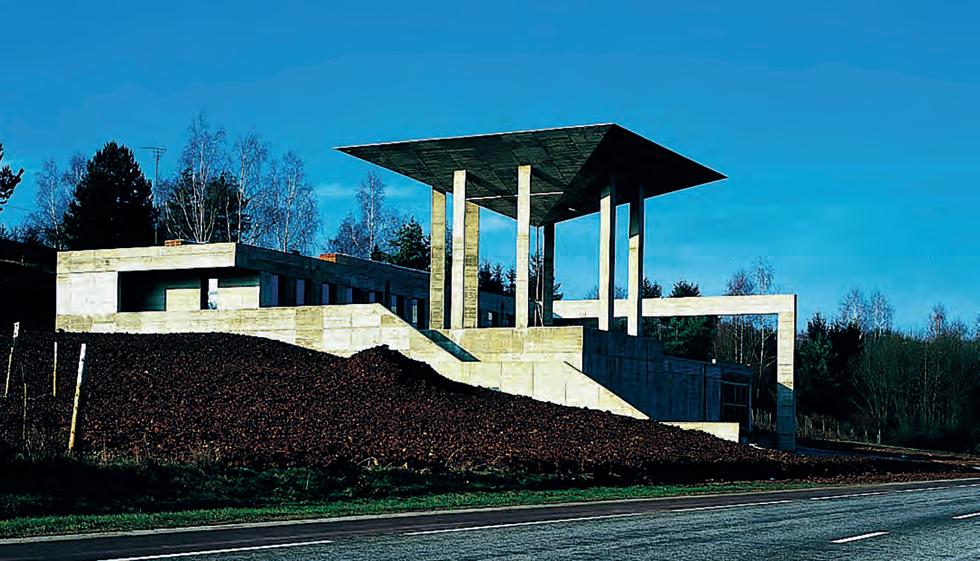
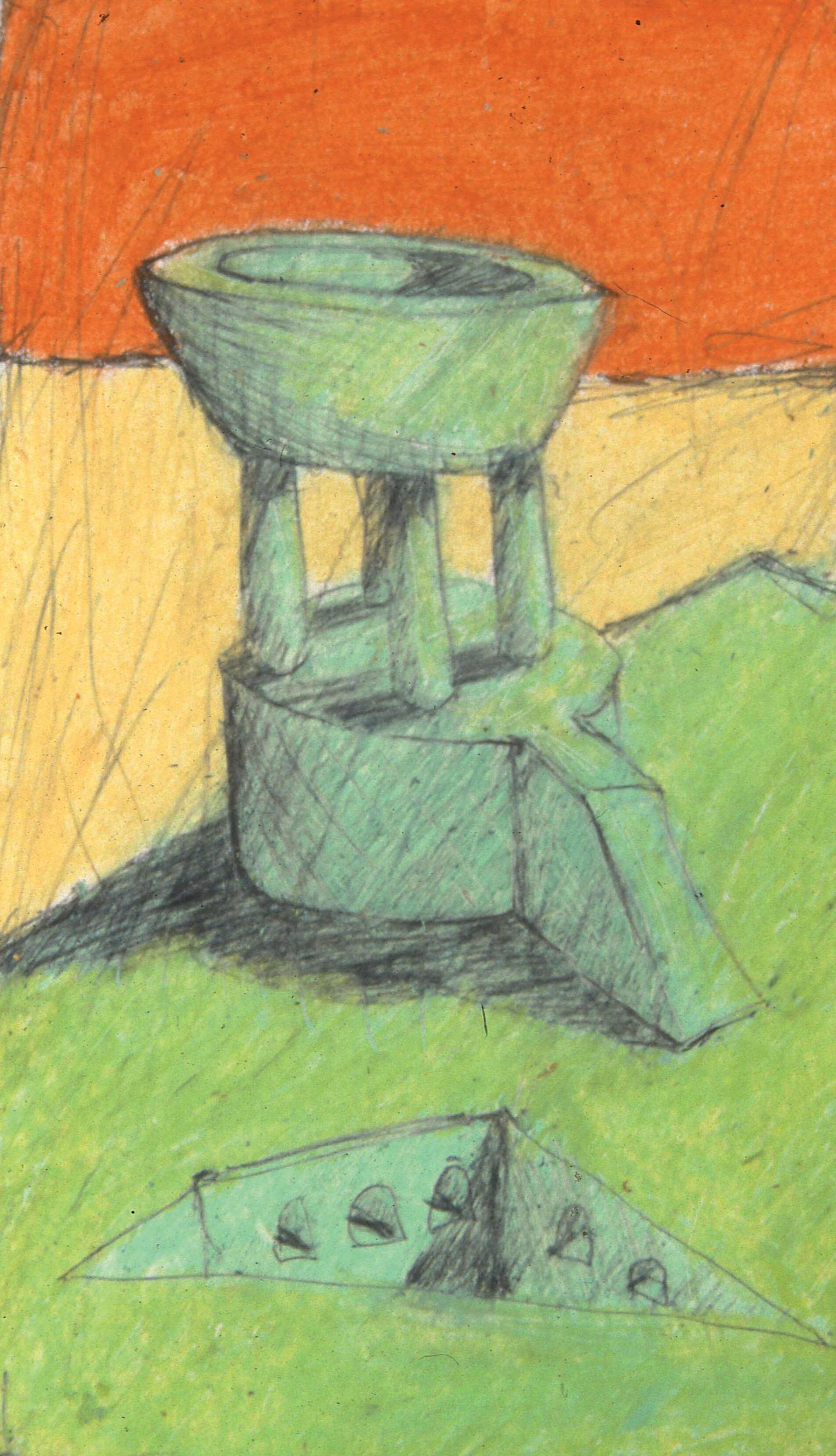
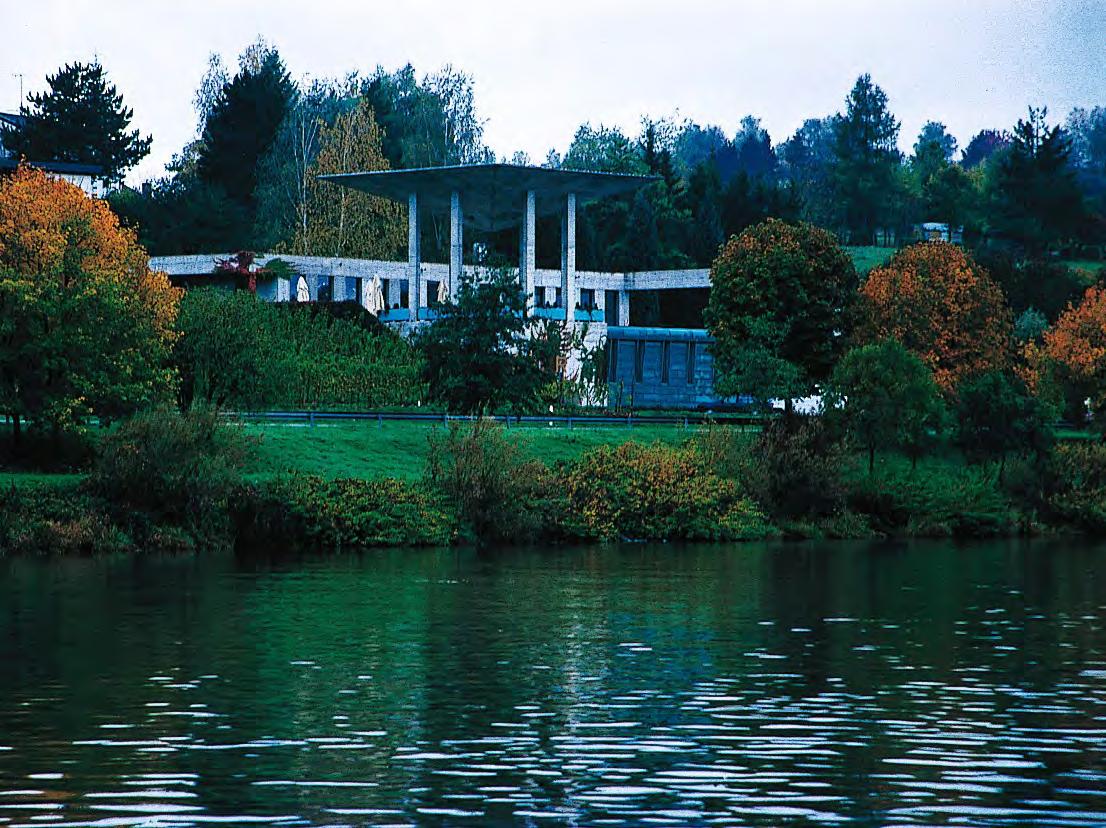
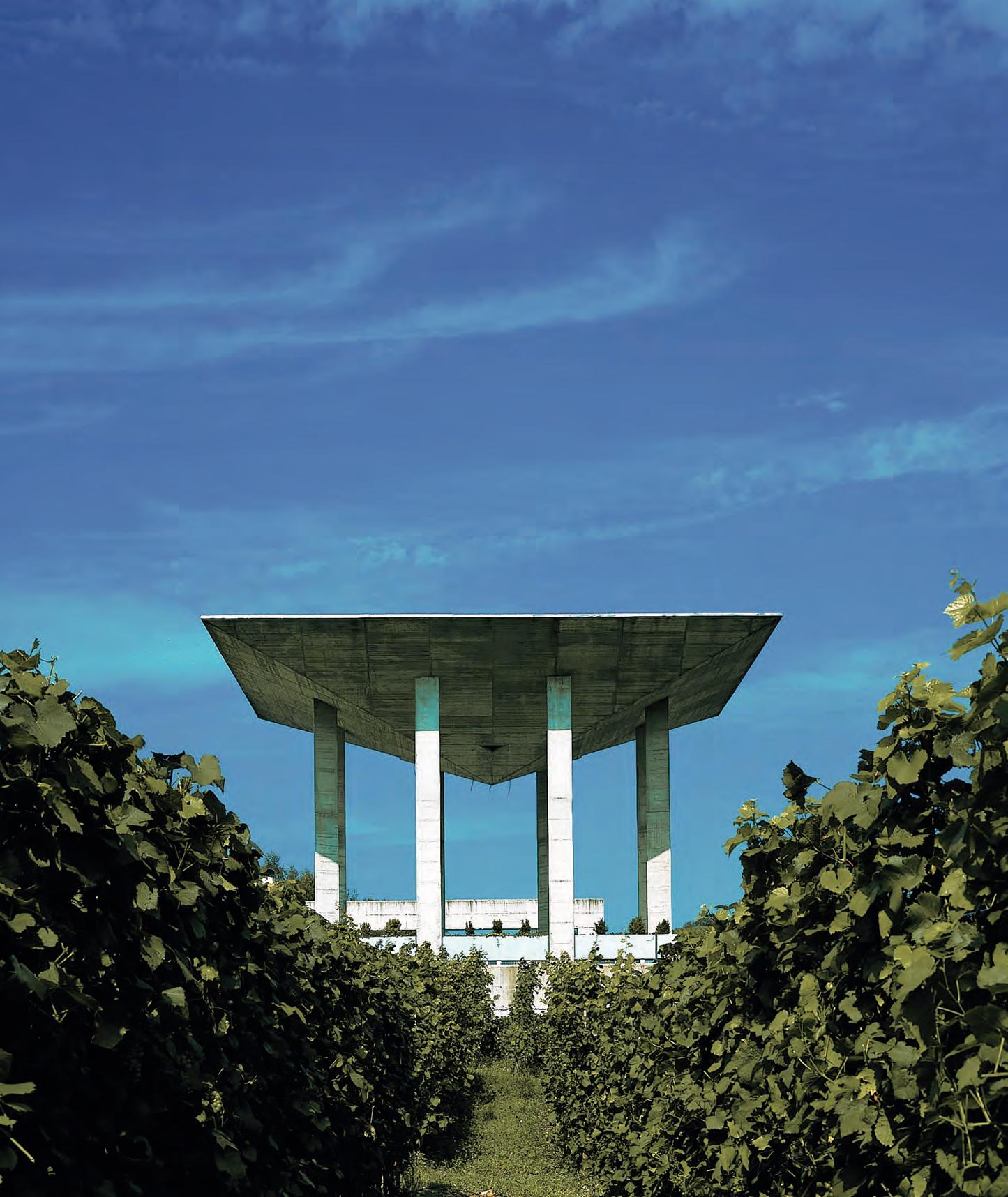
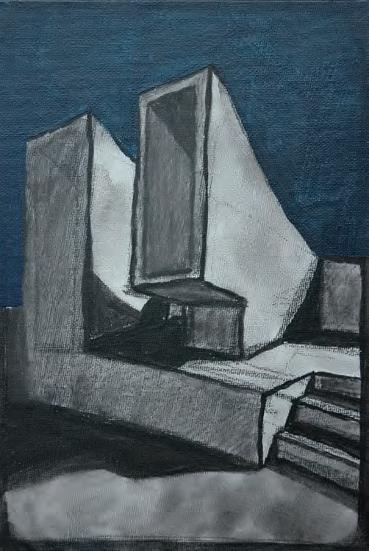
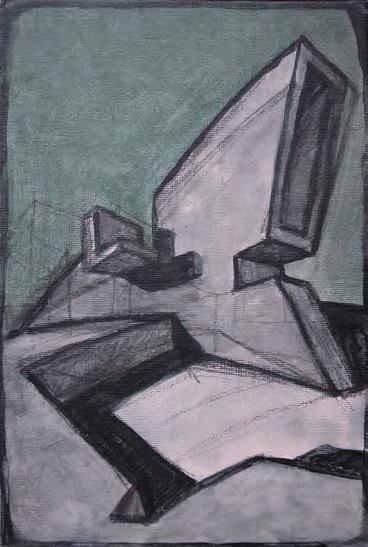
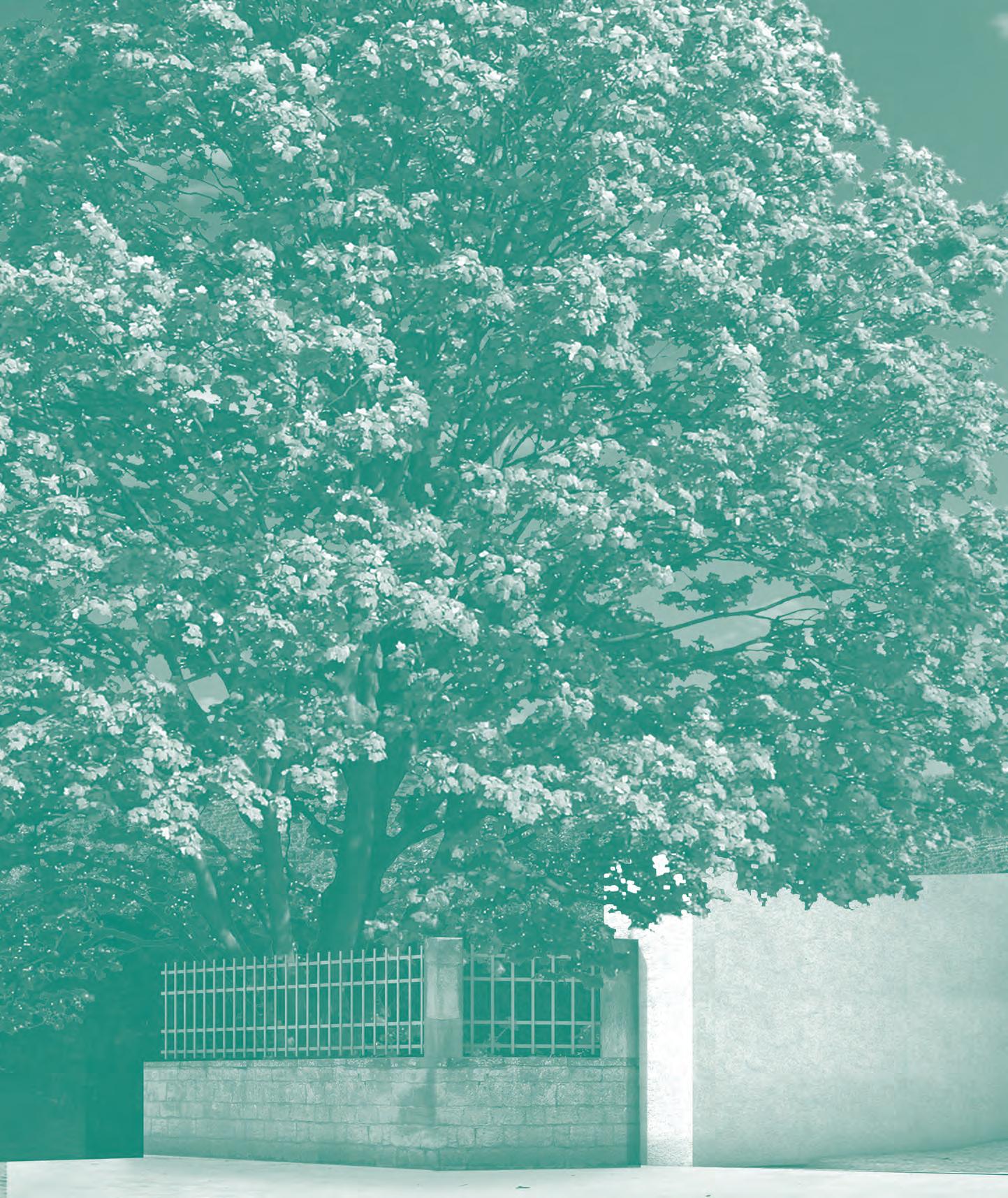
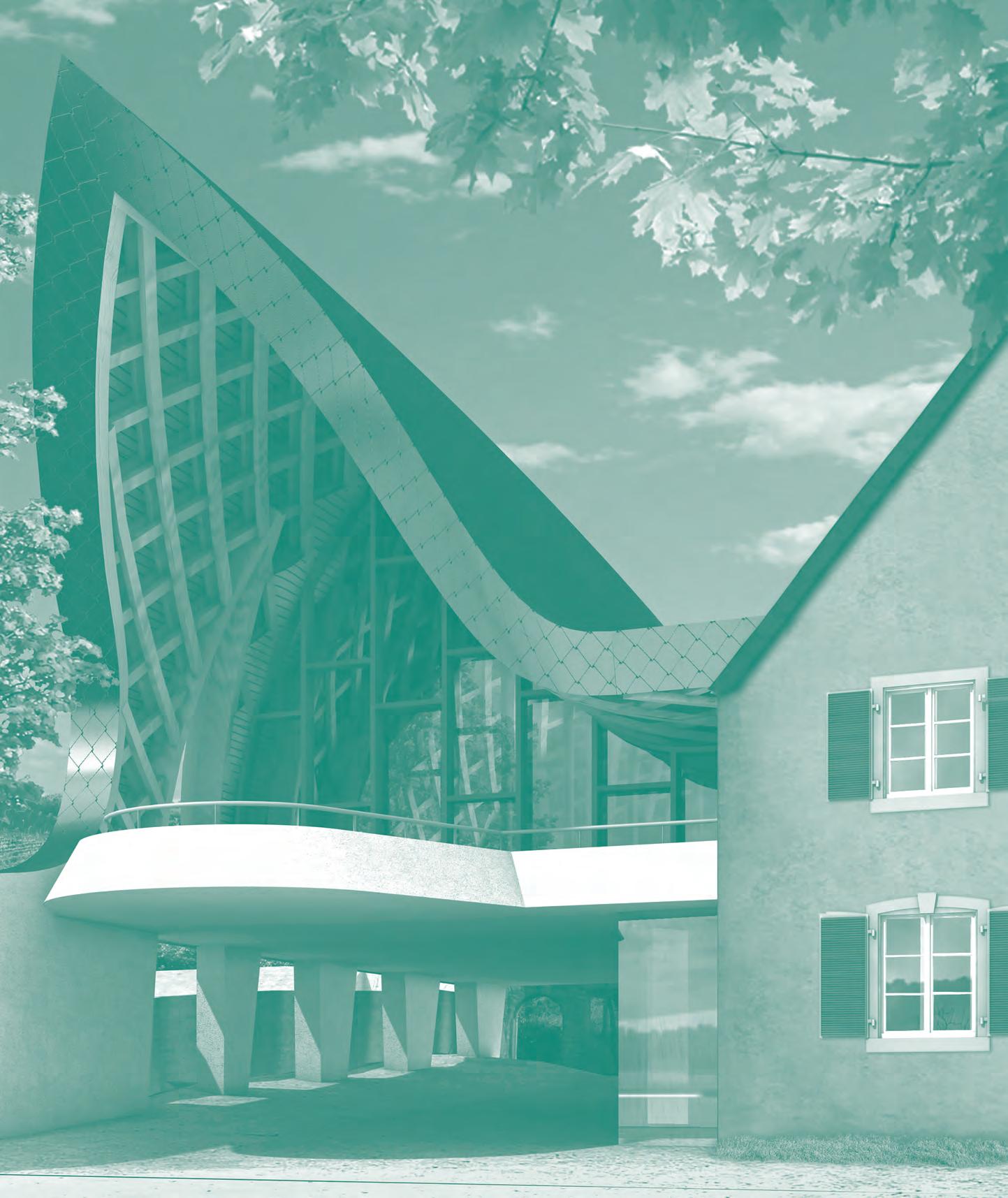
Turm der Träume und der Sehnsüchte for the Landesgartenschau 2004 2003–2004
Panoramic Observatory 2009
Luxembourg
Development of a hotel resort 2017–2019
Youth Hostel 2004–2006
Schapp community shed 2006–2007
Conversion of the Schapp into a water purification centre 2020–
Changing rooms and bar for the football pitch 1995–1999
Stands for the football pitch 2020 –
Outdoor facilities and swimming areas by the pond 2011–2012
Restaurant Le Chalet 2009–2010
Haff Remich Visitor Centre – Biodiversum Camille Gira 2004–2016
Remich Esplanade along the route du vin 2007
Conversion and extension of a Bus Station 2014–2019
Place de l’Europe and urban planning 2013–2015
Three Columns of Nations for the 25th anniversary of the Schengen Agreement 2010
Museum of Europe Information Centre 2003–2005
Restaurant Brasserie de Schengen 2010–2013
Pontonboot Tourist Officen 2012–2015
Swimming pool in Luxembourg-Bonnevoie, 1999
Conversion and extension of the Hotel St. Nicolas –Wellness & Spa 2005–2007
Swimming and Leisure Centre Les Thermes 2005–2008
Phoenix Restaurant 1981–1982
Gaalgebierg Pavilion 1987
Restaurant Le Bistrot Gourmand 2009–2010
Construction of the restaurant Le Bistrot Italien and apartments 2012–2013
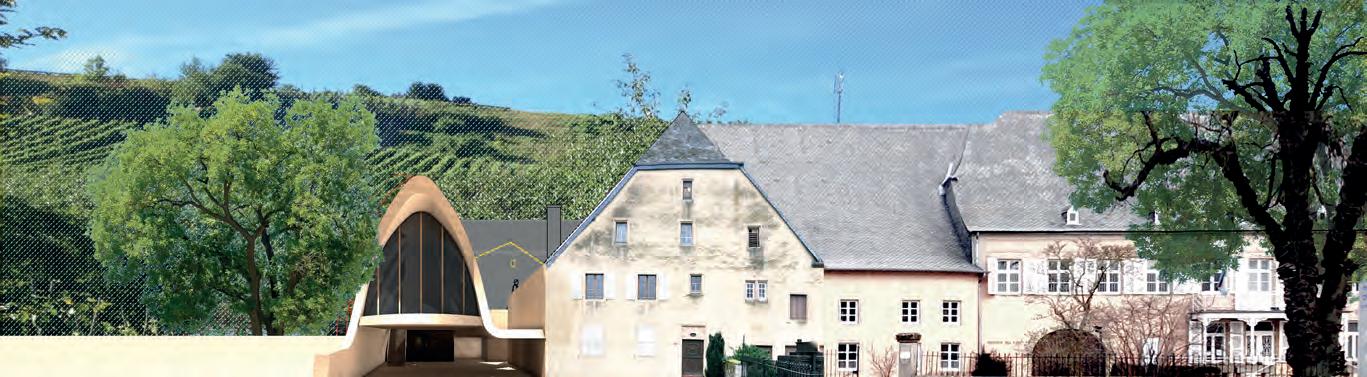
Cep d’Or wine estate on the Luxembourg Moselle 1994–1995
Ruppert Wine Estate 2004–2008
Conversion of the Zenner house
2010–2012
Mosellan Centre –Wine Museum 2005–
St. Mark’s Tower 1984
Mont St. Jean Panoramic Tower
1985–1986
Water tower 2013
China
Hepingcun Hotel and Administration 2018
Equestrian Sports Museum and viewing platform at Cangma Mountain 2019
Azerbaijan
Port – marina and esplanade on the Caspian Sea 2006–2009
Development of a project for two villas 2007– 2008
VINICULTURE
VINICULTURE
Nowadays, the Moselle region – where Remerschen lies, which is where our office is located – has great appeal for many tourists, with its picturesque landscapes and villages, as well as its orchard plantations that stretch as far as the eye can see in the open Moselle valley. As early as the fourth century, the Latin poet Ausone sang about the beauty of this place, at a time when the valley belonged to the Roman Empire. The region has had a wine-growing tradition since the Celts, Gauls and then the Romans, who cultivated vines here before the monasteries took over in the Middle Ages.
Winegrowing in Luxembourg runs along the Moselle valley, one of the northernmost regions in Europe for the cultivation of vines. It benefits from a microclimate that raises average temperatures by one or two degrees Celsius. Forty-two kilometres from Schengen to Wasserbillig, Luxembourg’s vineyards cover more than 1,235 hectares on the slopes of the Moselle, which also serve as a border between Luxembourg and Germany.
In the twentieth century, the vineyards diversified and developed following the foundation of the Wine Institute in Remich (1925) and the creation of the National Brand (1935). Since 2014, Luxembourg wines and sparkling wines have been marketed under the label ‘protected designation of origin – Luxembourg Moselle’. The grand-ducal winegrowers of the many estates cultivate their own style of winemaking, the most common grape varieties being rivaner, pinot gris, auxerrois, riesling, pinot blanc and pinot noir. Nowadays, the Moselle inhabitants, who like to gather in their pubs, are proud of the local production. They consider their annual wine festivals as sacrosanct and are full of zest for life.
As my family has its roots in the region, it was only natural that we were interested in projects related to the winemaking tradition, even though the construction or refurbishment of wine cellars is not an easy architectural exercise.
Few common denominators exist for these different projects, in particular because of the geographical location of the structure to be put in place –the nature of the soil, in particular, may be limestone in the north of the Moselle or clayey marl in the south.
FR
La région de la Moselle, dans laquelle se situe Remerschen, où se trouve notre bureau, séduit aujourd’hui de nombreux touristes par ses paysages et villages pittoresques, ainsi que ses plantations de vergers qui s’étendent à perte de vue dans la vallée ouverte de la Moselle. Le poète latin Ausone a déjà, au ive siècle, chanté la beauté de l’endroit, à une époque où cette vallée appartenait à l’Empire romain. La région connaît une tradition viticole depuis les Celtes, les Gaulois, puis les Romains, qui y cultivaient la vigne avant que les monastères ne s’en emparent au Moyen Âge.
La viticulture au Luxembourg longe la vallée de la Moselle, une des régions les plus septentrionales d’Europe pour la culture de la vigne. Elle bénéficie d’un microclimat qui rehausse les températures moyennes d’un ou deux degrés Celsius. Sur quarante-deux kilomètres, de Schengen à Wasserbillig, le vignoble luxembourgeois s’étend sur plus de mille deux cent trente-cinq hectares sur les coteaux de la Moselle, qui fait également office de frontière entre le Luxembourg et l’Allemagne.
Au xxe siècle, après la fondation de l’Institut viti-vinicole à Remich (1925) et la création de la Marque nationale (1935), les vignobles se diversifient et se développent. Depuis 2014, les vins et crémants luxembourgeois sont commercialisés sous le label « appellation d’origine protégée – Moselle luxembourgeoise ». Les vignerons grand-ducaux des nombreux domaines cultivent leur propre style de vinification, dont les cépages les plus répandus sont le rivaner, le pinot gris, l’auxerrois, le riesling, le pinot blanc et le pinot noir. De nos jours, les habitants de la Moselle, qui aiment se réunir dans leurs estaminets, sont fiers de la production locale, considèrent comme sacro-saintes leurs fêtes du vin annuelles et font preuve d’une grande joie de vivre.
Il était donc naturel, puisque ma famille prend ses racines dans la région, que nous nous intéressions aux projets de la tradition vigneronne, même si la construction ou le réaménagement de caves viticoles n’est pas un exercice architectural aisé.
Peu de dénominateurs communs existent pour ces différents projets, en particulier à cause de la situation géographique de la structure à mettre en place – la nature du sol, notamment, peut être calcaire dans le nord de la Moselle ou se présenter sous forme de marne argileuse au sud.
Cep d’Or wine estate on the Luxembourg Moselle
Domaine viticole Cep d’Or sur la Moselle luxembourgeoise
Location: Hettermillen (Luxembourg)
Client: Caves Moos-Vesque
Year: 1994–1995
7.2
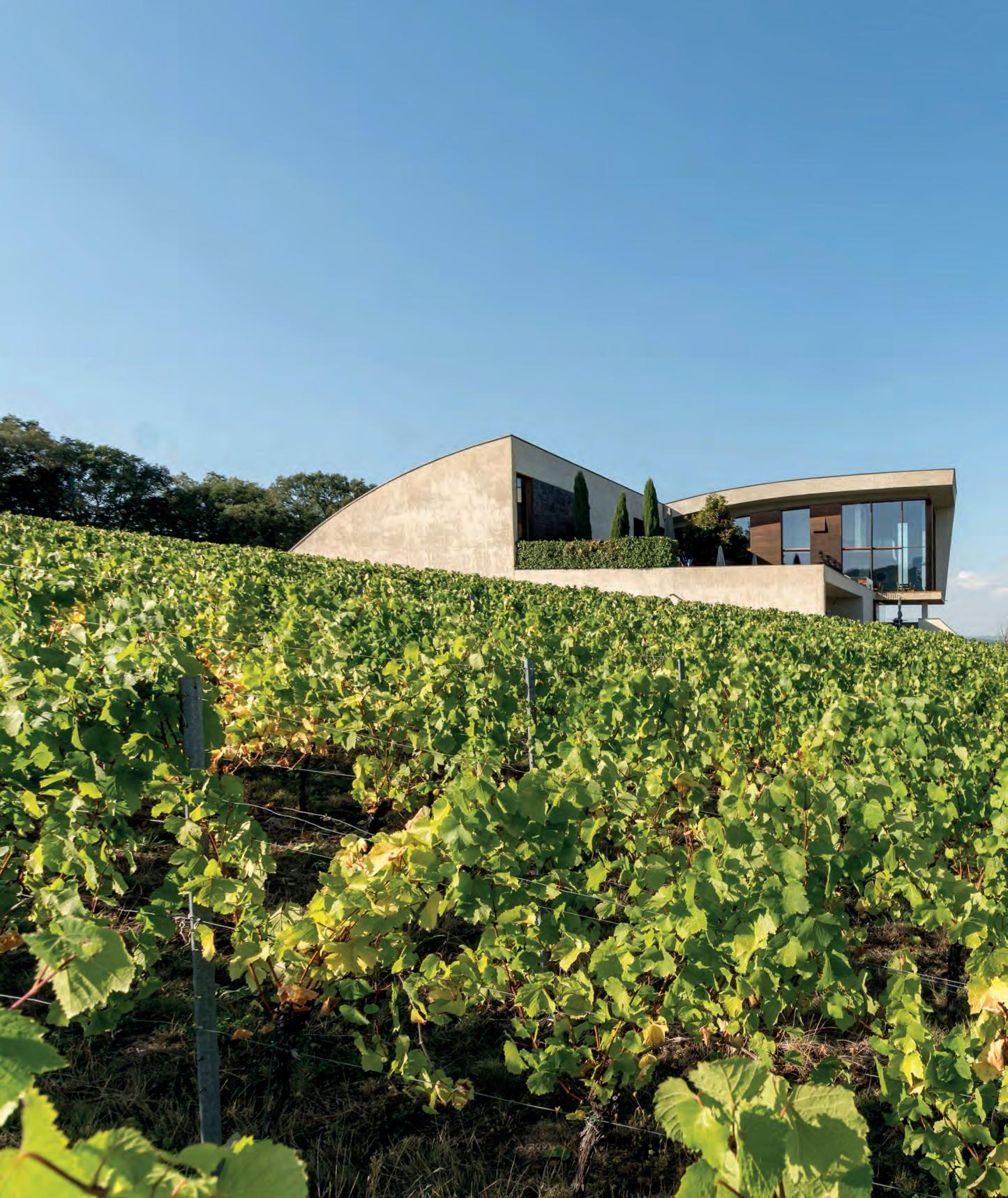
Ruppert Wine Estate
Domaine viticole Ruppert
Location: Schengen (Luxembourg)
Client: Henri Ruppert
Year: 2004–2008
cellar.
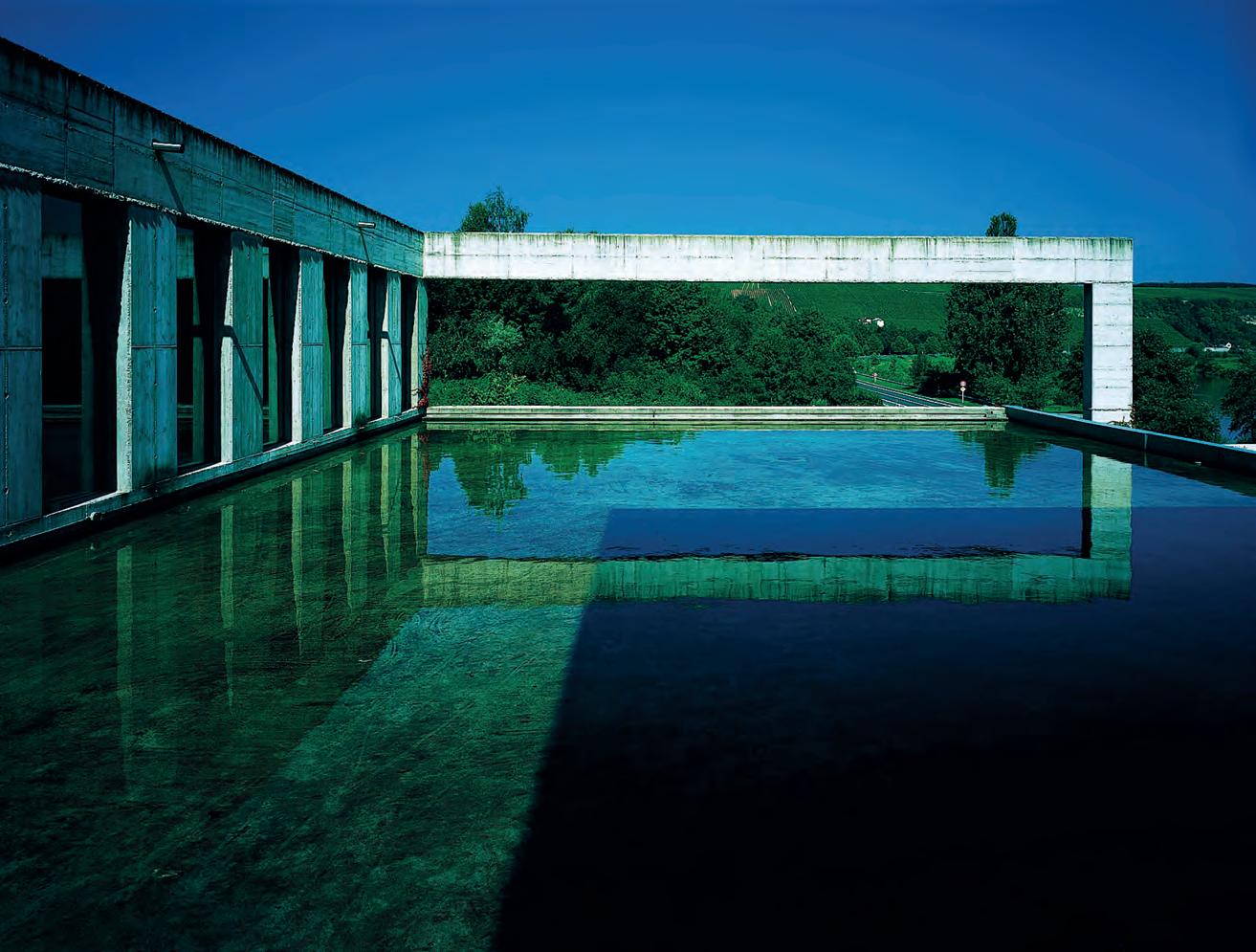
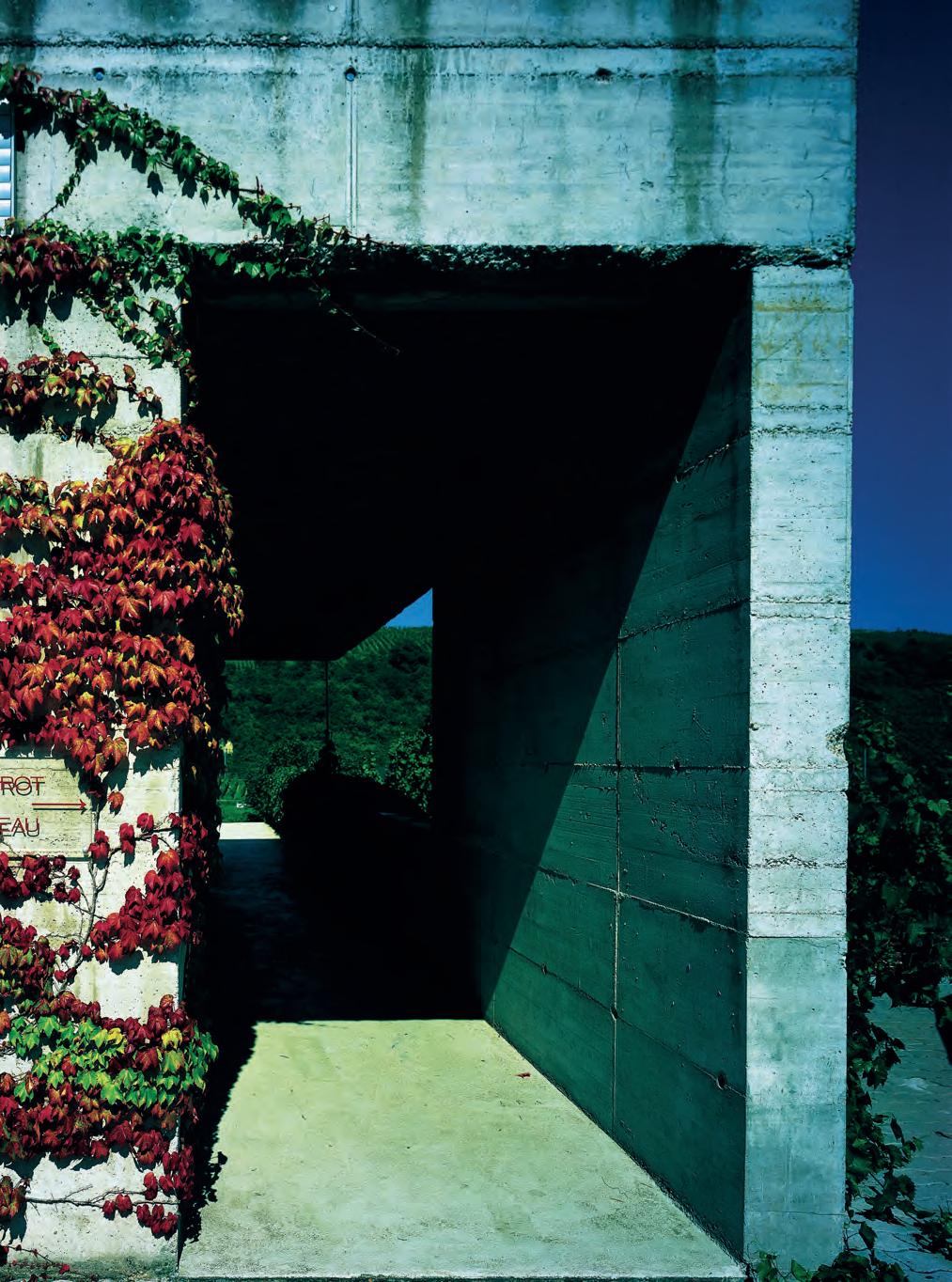
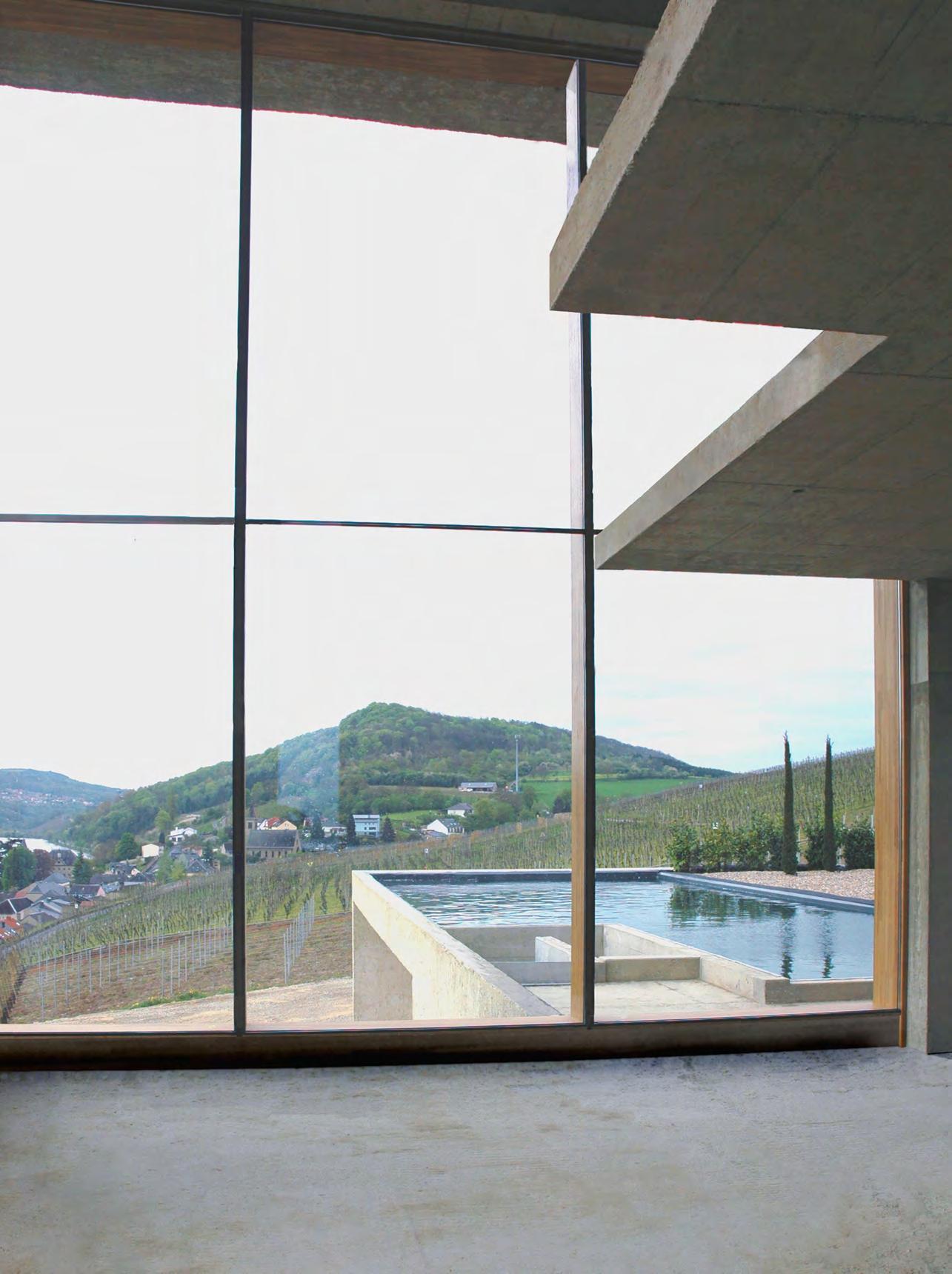
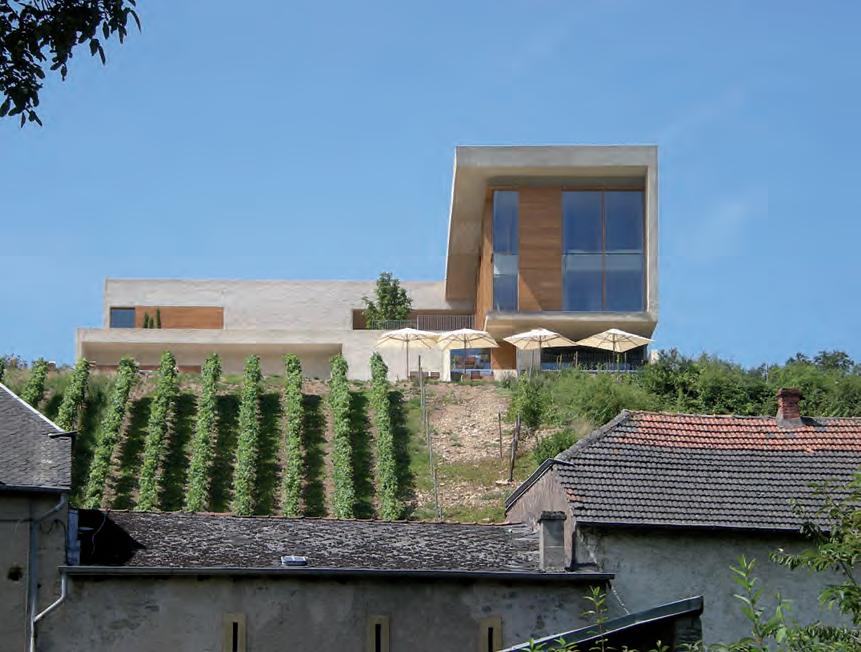
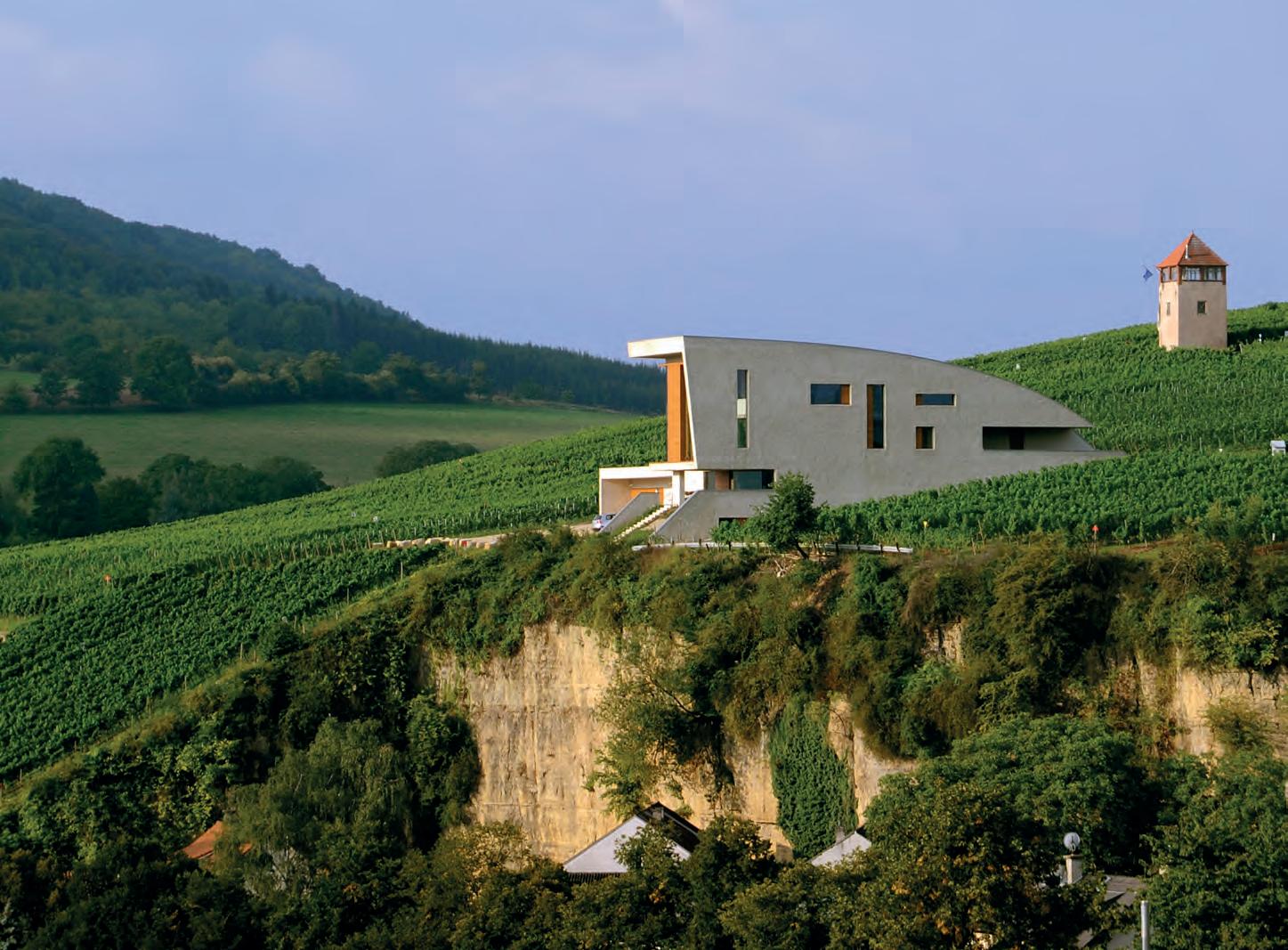
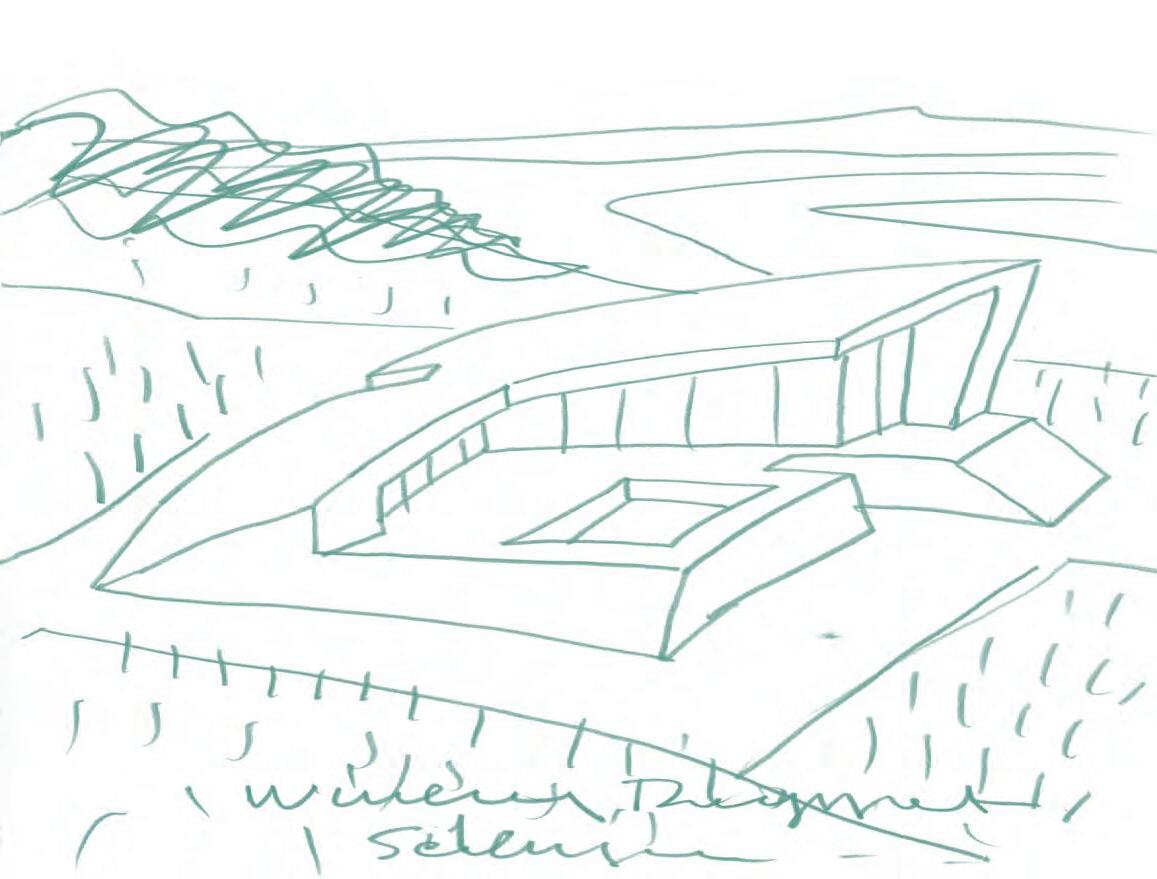
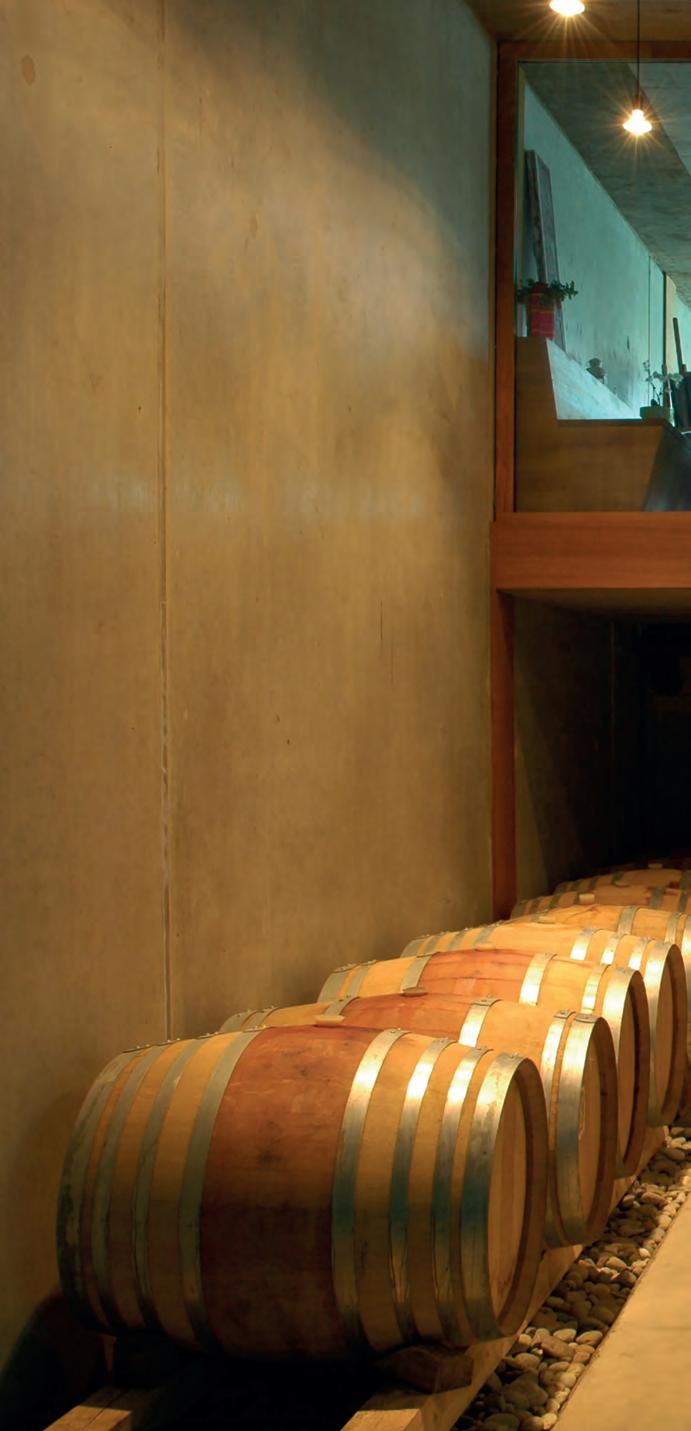
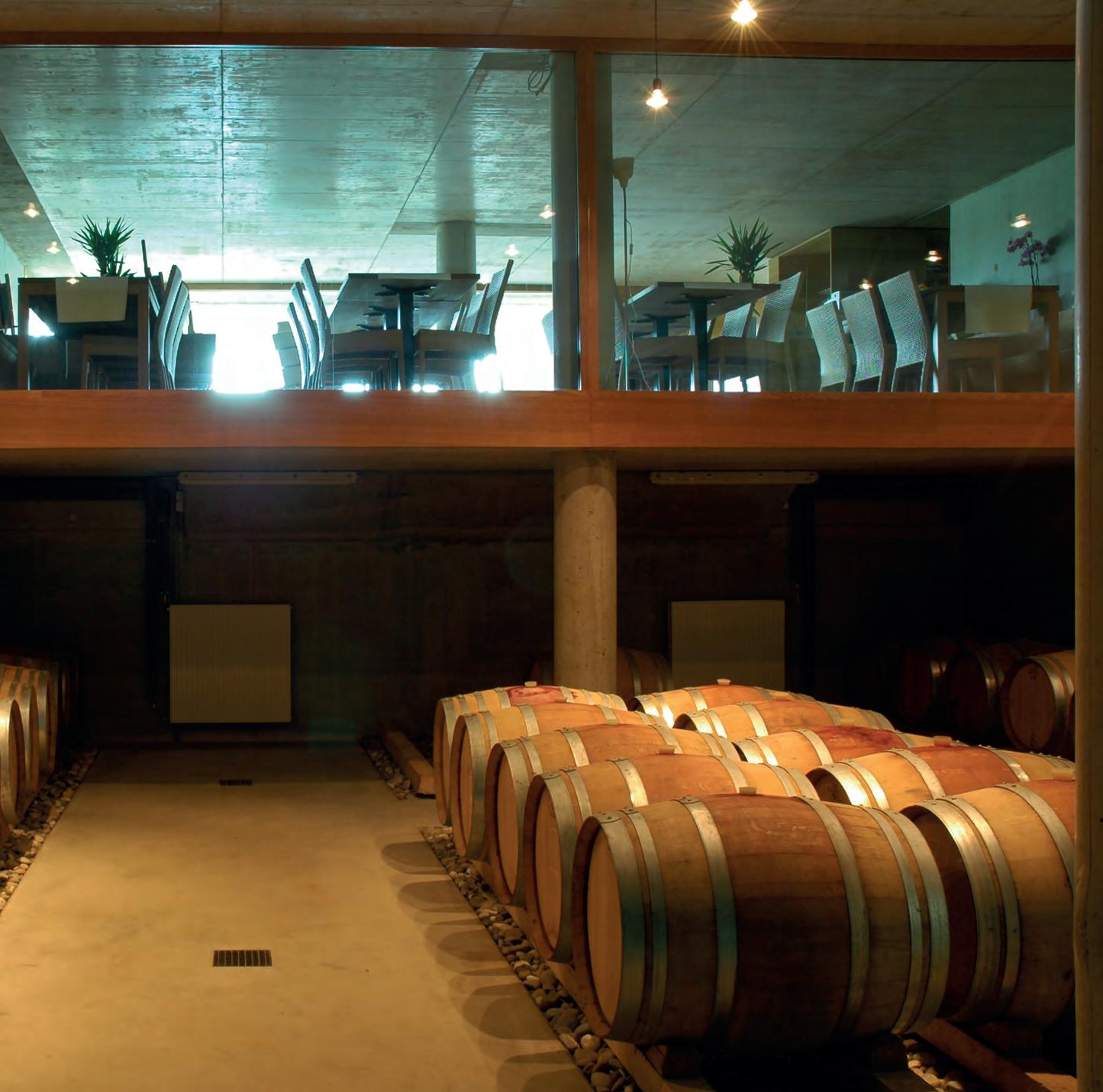
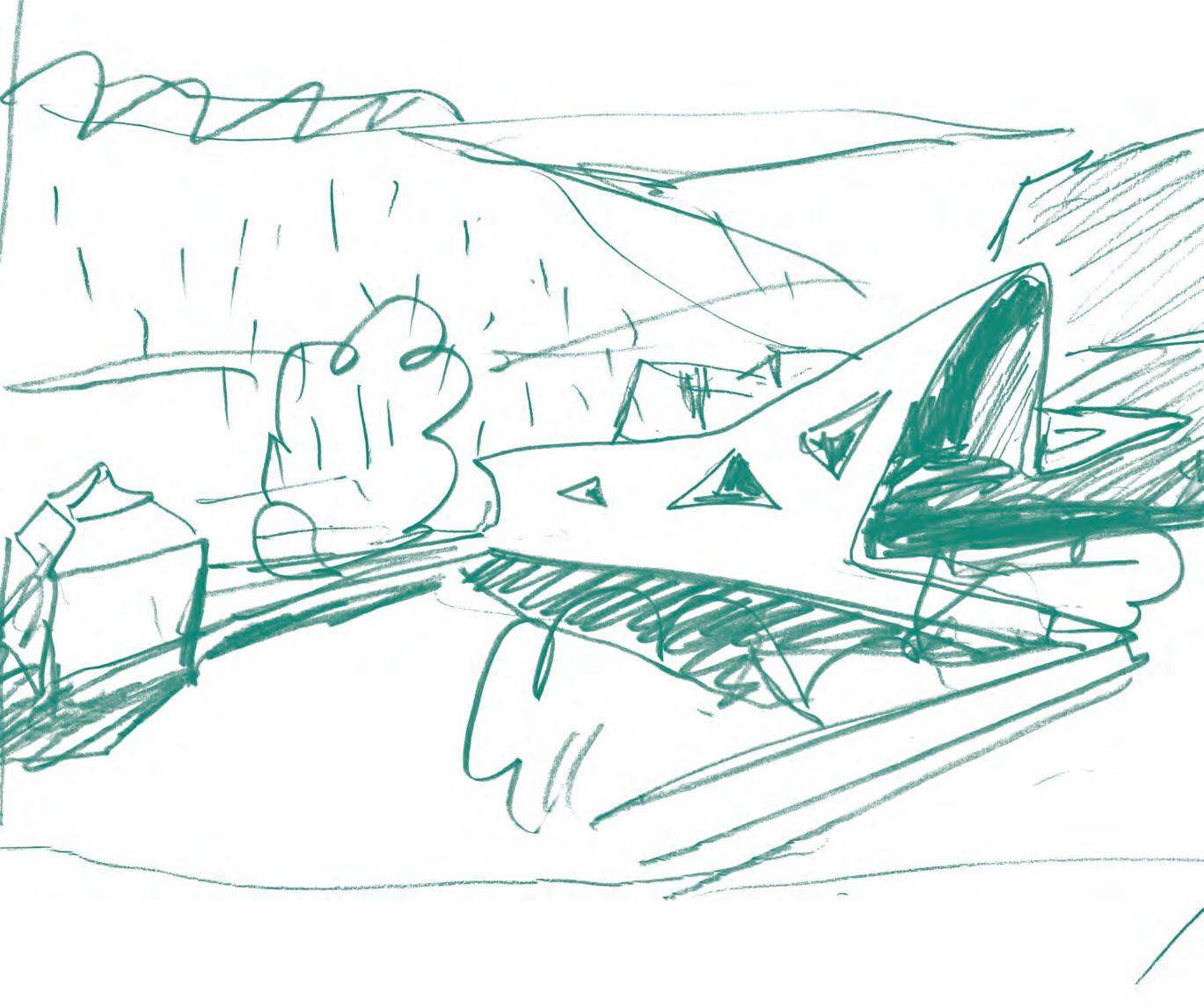
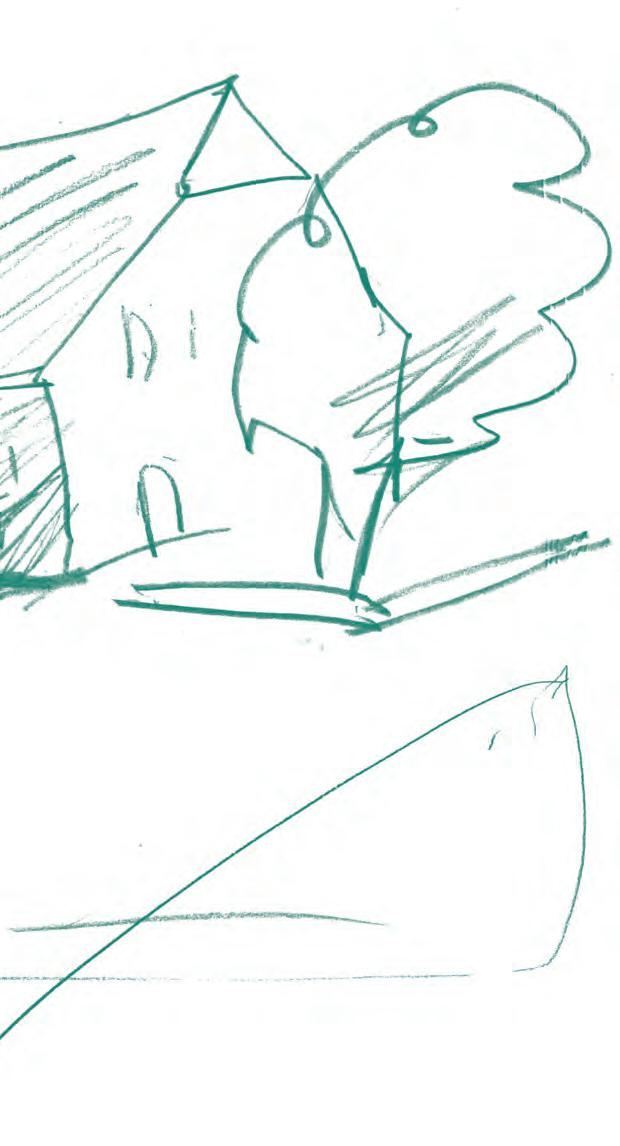
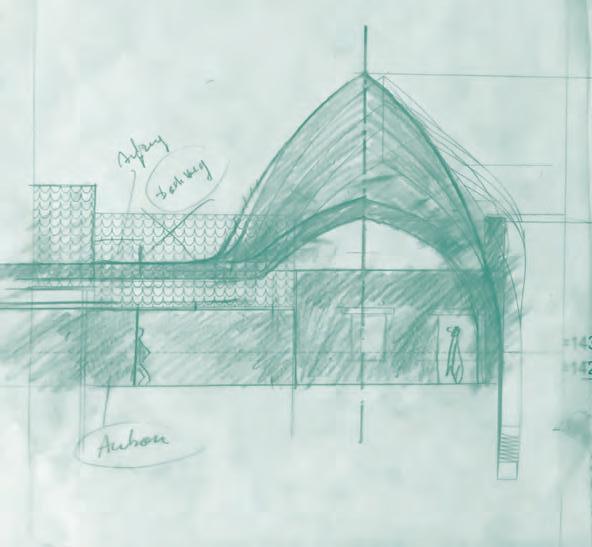
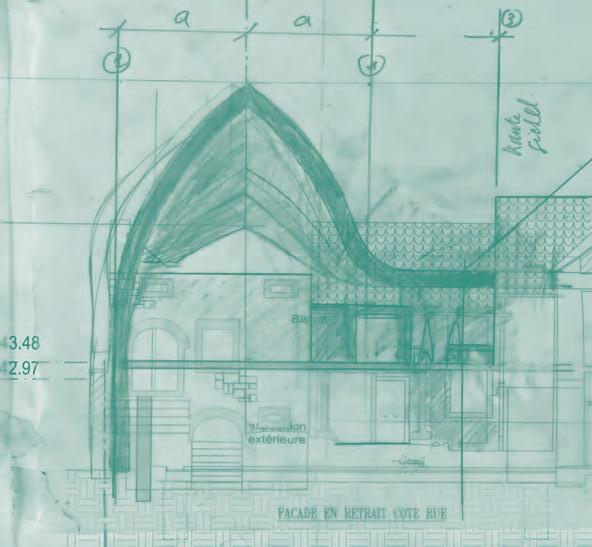
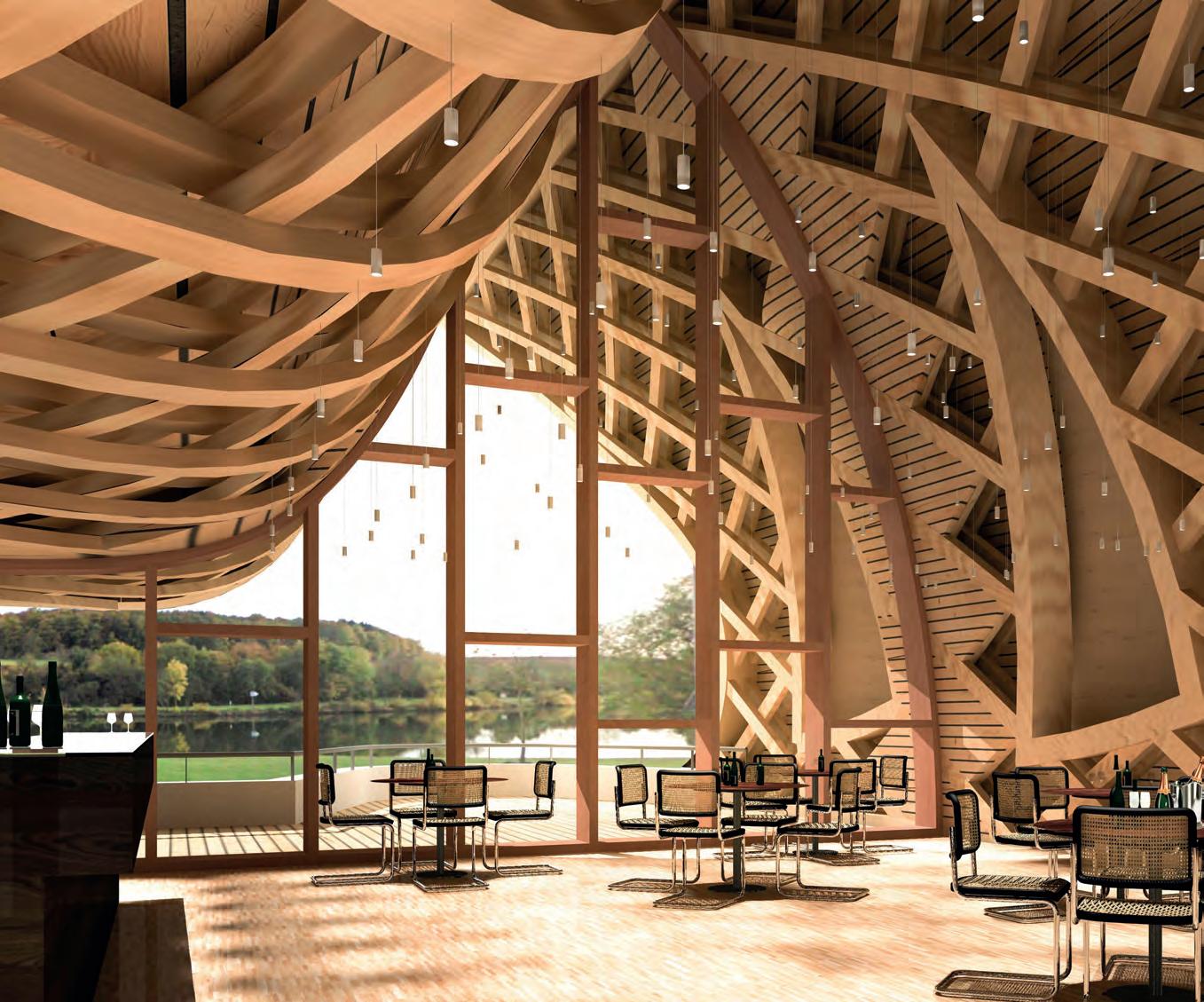
• The old winegrower’s house stood directly behind a petrol filling station run by the family. The client is one of the best winegrowers in the Moselle Valley. It was therefore important that the “architectural appearance” should help create an image that would match the quality of the wines. The architectural concept for the new wine cellar follows strictly the demands of quality wine production –it allows the grapes to be handled gently, that is to say no pumps, only gravity. Consequently the various functional zones of the cellar are laid out spatially, “from above to below”. At the very top the grapes are delivered, they fall downwards to be crushed, then there is the winepress, then the first fermentation in the tank, storage in barrels, followed by filling in bottles and, last of all, dispatch. The new winegrower’s house lies amidst the vineyards: the winery itself is embedded in the earth, the dwelling house above it is like an element folded out of the vineyard, the vegetation of the vineyards extending across its roof. The façade is made using the traditional regional, very coarse render technique –so that, as a whole, it conveys the impression of a rock. In spatial terms the dwelling house and outbuildings form a courtyard that is open to the Moselle Valley and that stands on top of the actual winery. A pool –used also for swimming –cools the barrel storage area lying underneath it. From the sampling room there is not only a view across the valley;
winegrowers in the Moselle Valley. It was the “architectural appearance” should help create an quality of the wines. for the new wine cellar follows strictly the demands of quality wine production –it alhandled gently, that is to say no pumps, only gravity. Consequently the various functional out spatially, “from above to below”. At the very top the grapes are delivered, they fall then there is the winepress, then the first fermentation in the tank, storage in barrels, and, last of all, dispatch. The new winegrower’s house lies amidst the vineyards: the the earth, the dwelling house above it is like an element folded out of the vineyard, vineyards extending across its roof. The façade is made using the traditional regional, very so that, as a whole, it conveys the impression of a rock. In spatial terms the dwelling form a courtyard that is open to the Moselle Valley and that stands on top of the actual for swimming –cools the barrel storage area lying underneath it. From the sampling view across the valley; one can also look into the barrique cellar.
Bereich für die erste Gärung im Tank, die Lagerung in den Fässern, schließlich folgt das Abfüllen in die Flaschen und zuletzt die Auslieferung. Das neue Winzerhaus liegt mitten im Weinberg: die Kellerei selbst in der Erde eingegraben, das Wohnhaus darüber, wie ein aus dem Weinberg heraus geklapptes Teil, die Vegetation der Weinberge zieht sich über das Dach. Die Fassade ist in der regional tradierten, sehr rauen Putztechnik ausgeführt –so wirkt das Ganze wie ein Fels. Räumlich bilden Wohnhaus und Wirtschaftsgebäude einen Hof, der zum Moseltal offen ist und auf der eigentlichen Kellerei steht. Ein Wasserbecken, das auch als Schwimmbad genutzt wird, kühlt das darunterliegende Fasslager. Von der Probierstube hat man nicht nur Ausblick auf das Tal, sondern auch Einblick in den Barrique-Keller.
Ganz oben werden die Trauben angeliefert, zum Pressen fallen sie hinunter, daran schließt das Keltern an, der
directly behind a petrol filling station run by of
Bauherr| Client: Henri
Das alte Winzerhaus stand unmittelbar hinter einer von der Familie betriebenen Tankstelle. Dabei ist der Bauherr einer der hervorragenden Winzer des Moseltales. Es war daher wichtig, auch über den „architektonischen Auftritt“ zu einem anderen, dem Qualitätsniveau entsprechenden Image beizutragen. Das architektonische Konzept für die neue Weinkellerei folgt strikt den Vorgaben der anspruchsvollen Weinproduktion –es ermöglicht den schonenden Umgang mit den Trauben, also kein Pumpen, nur Schwerkraft. Das heißt, die verschiedenen Funktionsbereiche der Kellerei sind räumlich „von oben nach unten“ angelegt.
Probierstube hat man nicht nur Ausblick
We have worked for some large Luxembourg winegrowing families, such as the one that runs the Henri Ruppert estate; these projects are often very closely monitored by the Ministry of the Environment, as well as by the project owners with whom we work.
For each of them, the aim was not only to promote the image of the winery that had launched the project, but also to contribute through the architecture to the image of the wine estate, as well as to ensure the quality of the construction.
Nous avons travaillé pour certaines grandes familles de vignerons luxembourgeoises, comme celle qui exploite le domaine Henri Ruppert ; ces projets sont souvent très suivis par le ministère de l’Environnement, en plus des maîtres d’ouvrage avec qui nous travaillons. Pour chacun d’entre eux, il s’agissait non seulement de mettre en avant l’image de l’entreprise viticole qui avait lancé le projet, mais aussi de contribuer par l’architecture à l’image du domaine viticole, ainsi que de veiller à la qualité de la construction.
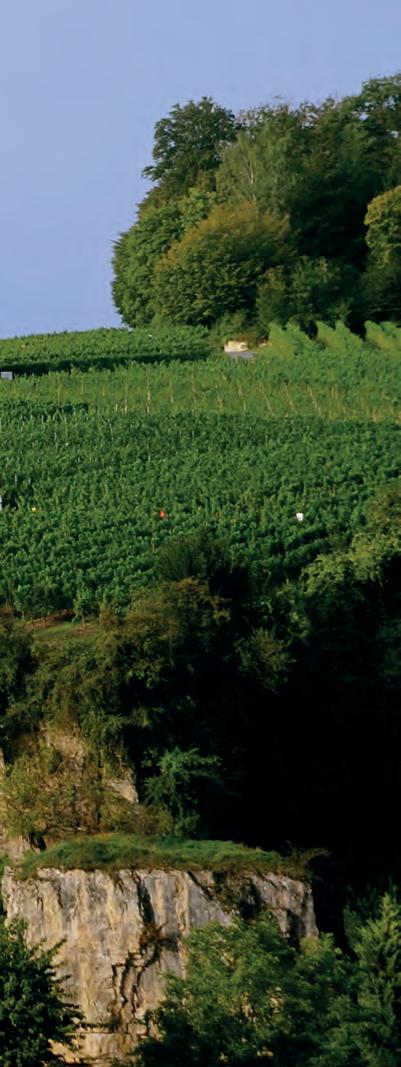
The redevelopment of the Henri Ruppert estate’s wine cellar was particularly complex, due to its location high up on Markusbierg hill in Schengen.
Le réaménagement de la cave viticole du domaine Henri Ruppert était particulièrement complexe, en raison de sa localisation en hauteur, sur le Markusbierg, à Schengen.
Weinkellerei ruppert in Schengen, L uppert Winery in Schengen, L
Winzerhaus stand unmittelbar hinter einer von der Familie betriebenen Tankstelle. Dabei ist der Bauder hervorragenden Winzer des Moseltales. Es war daher wichtig, auch über den „architektonischen einem anderen, dem Qualitätsniveau entsprechenden Image beizutragen. architektonische Konzept für die neue Weinkellerei folgt strikt den Vorgaben der anspruchsvollen Weines ermöglicht den schonenden Umgang mit den Trauben, also kein Pumpen, nur Schwerkraft. die verschiedenen Funktionsbereiche der Kellerei sind räumlich „von oben nach unten“ angelegt. werden die Trauben angeliefert, zum Pressen fallen sie hinunter, daran schließt das Keltern an, der die erste Gärung im Tank, die Lagerung in den Fässern, schließlich folgt das Abfüllen in die Flazuletzt die Auslieferung. Das neue Winzerhaus liegt mitten im Weinberg: die Kellerei selbst in der eingegraben, das Wohnhaus darüber, wie ein aus dem Weinberg heraus geklapptes Teil, die Vegetation Weinberge zieht sich über das Dach. Die Fassade ist in der regional tradierten, sehr rauen Putztechnik auswirkt das Ganze wie ein Fels. Räumlich bilden Wohnhaus und Wirtschaftsgebäude einen Hof, der zum Moseltal offen ist und auf der eigentlichen steht. Ein Wasserbecken, das auch als Schwimmbad genutzt wird, kühlt darunterliegende Fasslager. Von der Probierstube hat man nicht nur Ausblick sondern auch Einblick in den Barrique-Keller.
winegrower’s house stood directly behind a petrol filling station run by The client is one of the best winegrowers in the Moselle Valley. It was important that the “architectural appearance” should help create an would match the quality of the wines.
architectural concept for the new wine cellar follows strictly the demands of quality wine production – it algrapes to be handled gently, that is to say no pumps, only gravity. Consequently the various functional cellar are laid out spatially, “from above to below”. At the very top the grapes are delivered, they fall to be crushed, then there is the winepress, then the first fermentation in the tank, storage in barrels, filling in bottles and, last of all, dispatch. The new winegrower’s house lies amidst the vineyards: the
Bauherr| Client: Henri Ruppert Planungsbeginn | Start of planning: 2004
| Start of construction: 2006 Fertigstellung | Completion: 2008
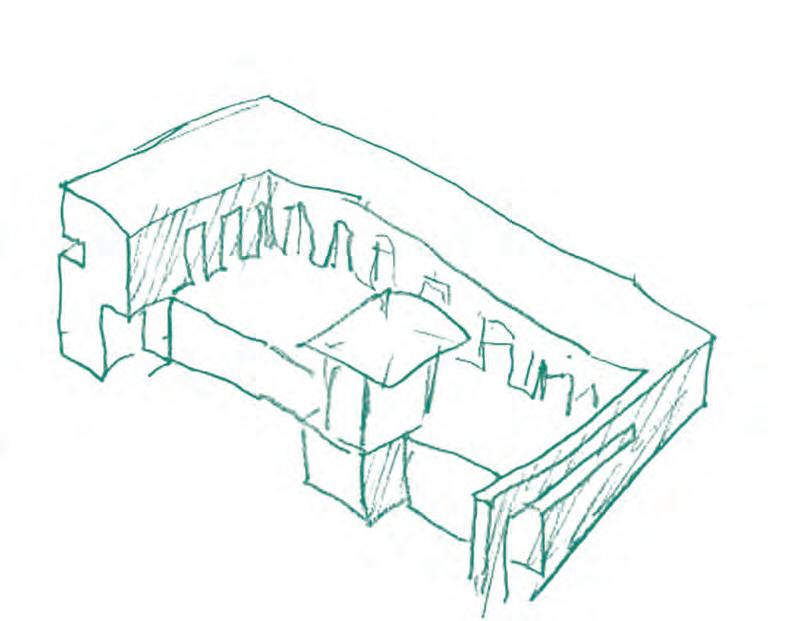
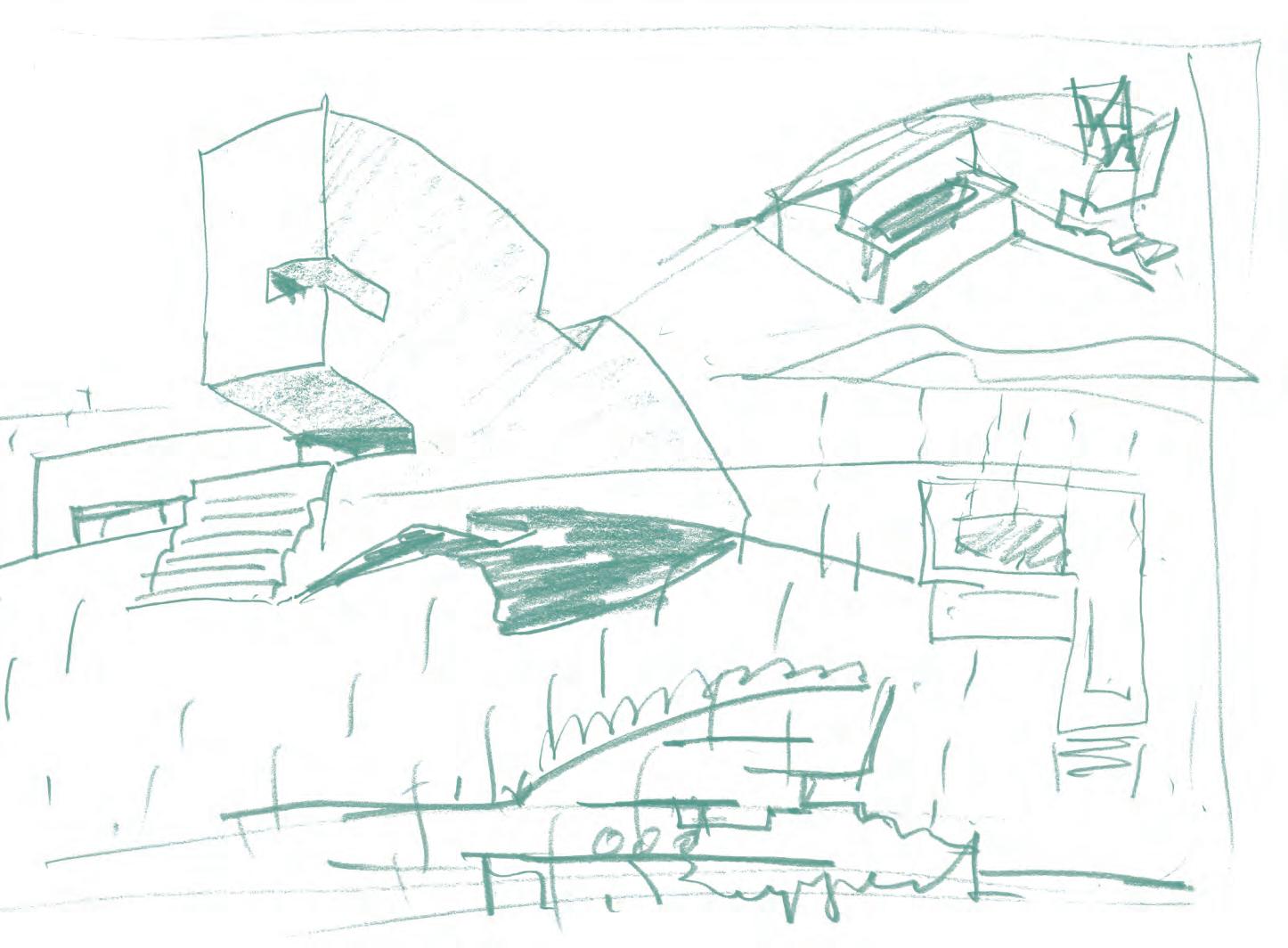
The concept of the new cellar strictly follows the stages of wine production. This means that the path of the bunch travels through the different functional zones, arranged in space from top to bottom: the grapes arrive from the top of the cellar, then fall to a lower level to be pressed before moving on to the first fermentation in vats, then to storage in barrels, and finally to the bottling process.
Le concept de la nouvelle cave suit strictement les étapes de la production de vin. Cela signifie que le chemin de la grappe parcourt les différentes zones fonctionnelles, disposées dans l’espace du haut vers le bas : le raisin arrive par le haut de la cave, puis tombe vers un niveau inférieur pour être pressé, passe à la première fermentation en cuve, puis au stockage en barrique, et enfin à la mise en bouteille.
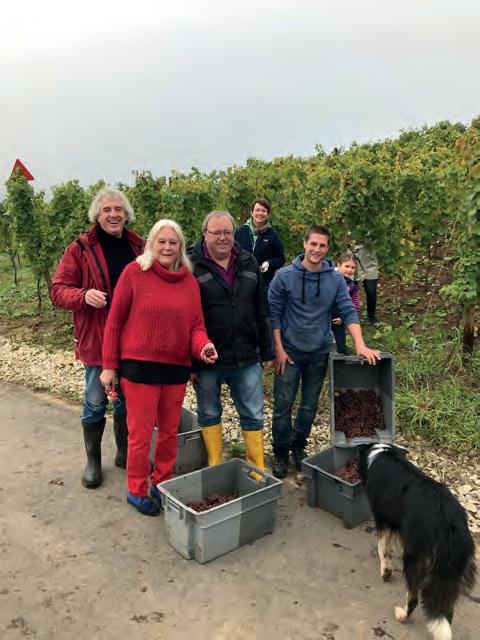
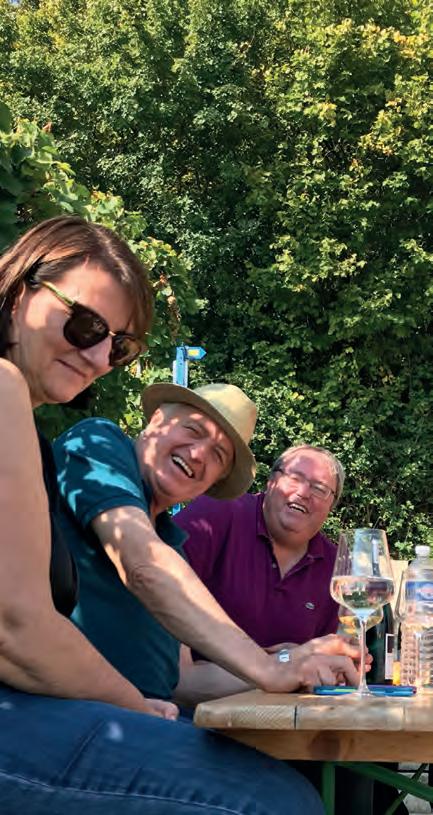
From left: François & Edith Valentiny, Henri Ruppert & Marc Kohll
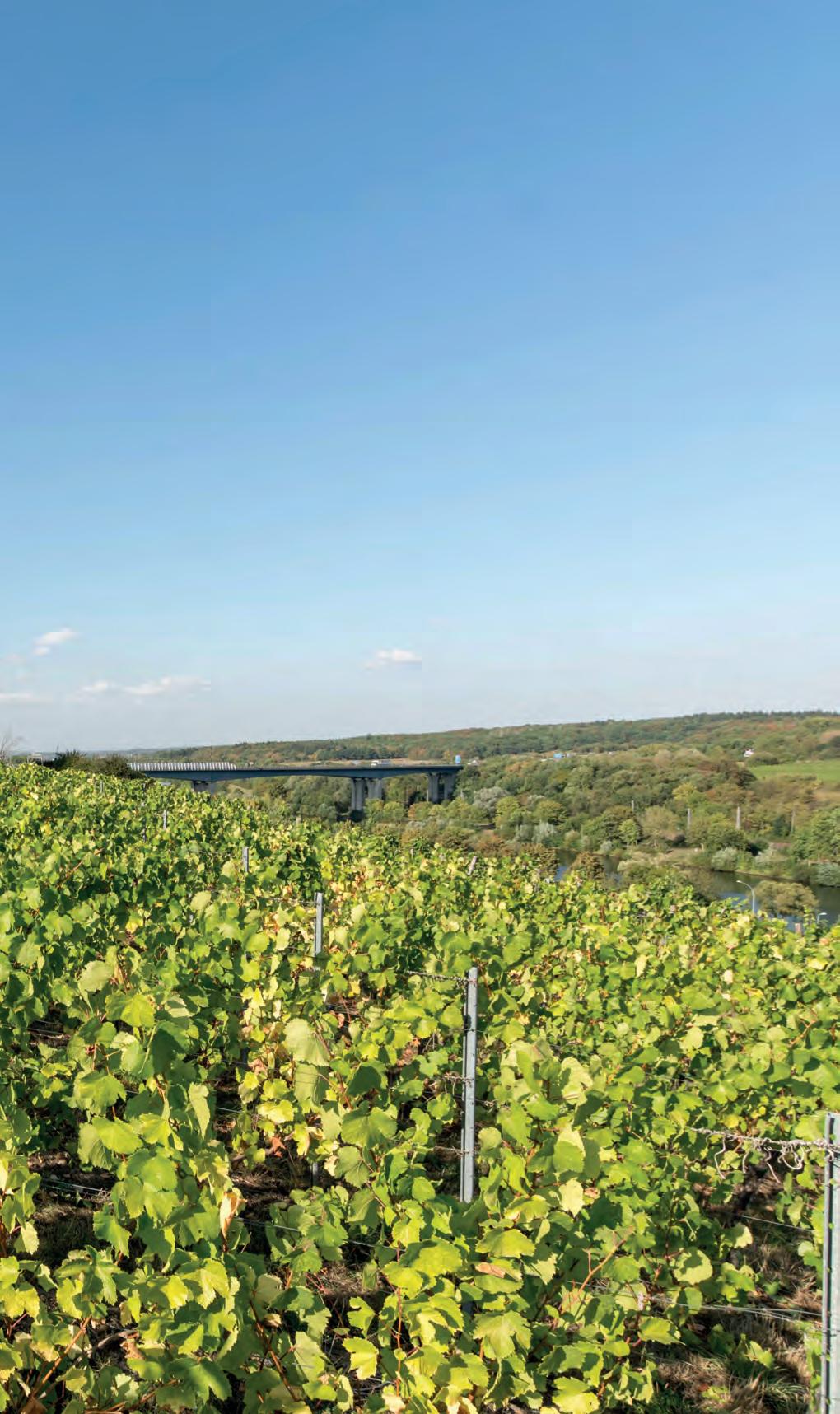
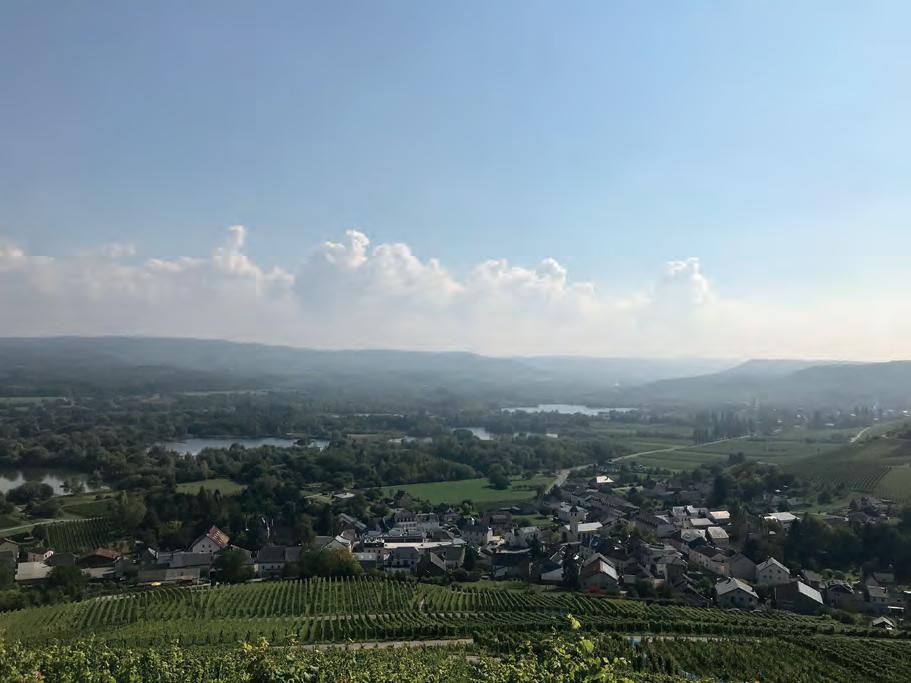
View from the statue of Saint Donat into the valley towards Wintrange, the lakes and Remerschen
From left: Marianne & Roger Weber and Henri Ruppert