Poems from the People Need Nature challenges on Young Poets Network
Poems from the People Need Nature challenges on Young Poets Network
Poems from the People Need Nature challenges on Young Poets Network
Poems from the People Need Nature challenges on Young Poets Network

The Poetry Society
22 Betterton Street London WC2H 9BX poetrysociety.org.uk
ISBN: 978 1 911046 62 2
© The Poetry Society and authors, 2026
The title of this anthology, The earth that whispers at my feet, is taken from Jamie Baty’s poem ‘Incantation (For a Sea Change)’.
* Content warning: these poems contain strong language.
‘Poetry acts as a playground for me to try and imagine a better future… to explore what our world would say if it could talk back.’
– young poet Aliyah Begum
People Need Nature (PNN) was founded in 2016 with a mission to promote the sensory, emotional and spiritual values of nature; encompassing nature as an inspiration for artistic creation, and the value of everyday nature on people’s doorsteps. The Poetry Society’s Young Poets Network is a free online platform for poets aged 5 to 25, offering regular writing workshops and challenges that encourage emerging writers to discover new themes and forms.
Established in 2011, Young Poets Network has long been a space where young poets can reflect on the environment and our place in it. In 2016, Young Poets Network and People Need Nature began what would evolve into a multi-year partnership, generously supported by Mrs J R King, in which we guided young poets to write about different aspects of their relationship with the natural world around them. We ran six writing challenges from 2016–2024: over 1,500 poems were submitted across the challenges by poets all over the UK and in 51 countries, from Algeria to Antigua, Ukraine to the USA.
This anthology showcases the winning and commended poems from four of these challenges. The challenges, all set and judged by experienced poets, take a range of approaches to the environmental theme, inviting young people to see and give voice to the natural world in novel ways. In ‘The Hill by the A13,’ set amid COVID-19 lockdowns in 2020, poet Gboyega Odubanjo prompted young poets to mix the human and natural worlds, while in ‘Soundworlds and Songscapes,’ poet Polly Atkin encouraged closer attention to our surroundings, including the sounds made by birds, animals, and plants. In ‘The Influence of the Earth,’ nurse and poet Romalyn Ante explored the idea of social prescribing, inspiring poems about how time spent in nature can make someone feel better. Louisa Adjoa Parker’s challenge asked young people to write poems imagining natural solutions to problems caused by the climate crisis.
The poems produced in response to these invitations interrogate our relationship with nature from all angles. As Renée Orleans-Lindsay puts it, ‘the solution isn’t “go green”. / rather, it’s quite a marshy brown; / all the colours on the spectrum thrust together, / pulled into braided harmony.’ In these poems by winners ranging from ages 11 to 25, you’ll find close listenings of bird calls, manifestos for climate justice, and calls to put down our phones and embrace the outdoors.
We are grateful to Mrs J R King for supporting these challenges. The winners all received prizes including poetry books, book tokens, and publication on Young Poets Network, where they have been viewed over ten thousand times.
Many of these poems have travelled far beyond the YPN community online: Hannah Burrows’ poem ‘Late August’ was included in a resource distributed to schools across the country as part of The Poetry Society’s poetry and wellbeing project, Steph’s Poetry Space, where it inspired hundreds of secondary-school pupils, and Jayant Kashyap’s ‘A Positively Violent Poem in Five Parts’ was featured in a resource commissioned by the Department for Education and has since been used in a number of peer-reviewed articles. In 2021, the winners of the ‘Poems to Solve the Climate Crisis’ challenge were invited to share their poems at the UN’s Climate Conference (COP26) in Glasgow.
This anthology of poems stands testament to the importance of the natural world to the current generation of young people, and the way creativity can foster a connection with it. As young poet Daniel Clark puts it, ‘poetry can’t reverse climate breakdown. But, as nature vanishes all around us, young poets are planting seeds for the type of world they want to grow up in.’
The challenge: write a poem or poems mixing the human and the natural worlds.
After Fatimah Asghar
a boardwalk a delicious suburb sun yellow caroline inner city wonder tram tracker train drover’s boy thank god I’m alive watermelon grapes watermelon bitter melon gourd yells the market yell at me until I have cauliflower ear then sell me as well so rain rain rain until my melbourne bones bloom damper walk me home to my grave kiss me rain rain again
take me now bendigo ballarat the briars say everything that makes us lovely is deceased so touch my hair bite my teeth do not speak of the day howling sun dead as a dollar ned kelly swallows when he meets me on the other side the stars our firm historians hair snagged by a gumtree jack rabbit ribbon of jawbone the grass as usual is curly and blonde
crocodiles have learned to our misfortune how to be fish seagulls ugly invincible gods watch green swimming pools nurse sharks below frankston great secondhand smoker far cry from a culture I weep for the arctic in the hotel as you smoulder nature strip like biting your lip tenebrous asphalt eyeliner your every galah pink like a cheap witness fleeing the scene
then deeper then I levitate halls gap rip in time then darker bell mynah night I am its ghost tree stripped back to its first fire like the wind I am an organ found in lonely bodies heading out of the city and screaming all the way to botanic gardens naked knees to the chest ochre dogs float above the crickets the colour red is the only friend for miles
gippsland loddon mallee come closer come to me ravaged come with your tall grasses come with white hot step come eerie come so close I can smell you burning come so close I rot your water is like a womb with no kick into the darkness the great laugh beyond laugh laugh come close come heavy laugh laugh unhinge your snake jaw laugh long river and eat me whole
send me by the tanjil to mornington hanging softly low like a lullaby arguing through the fog close your eyes the dead are long dust now mount martha below eliza east arthurs seat is above so swallow your white lies your churning ambergris irony native bees are stingless pull a tooth from a stone on my hand a silk worker baby fat softness putrefies first much faster
under this sun we are lean and young cool can of my shadow divined by the hard yakka linger gentle creatures fangs safe in the tabernacle mad splendour for me hover as if thinking I am warm I am bright there is so much ahead yes there is so much ahead.
Finn Farnsworth
Swift and agile
Sleek and prehensile –
Skittering across bark
And as dexterously over brick –Squirrel.
The arch survivor –A thief in woodland
A bandit of suburbia, Beautiful peanut pirate. You skim the rigging of Rotary washing lines And old telephone wires: Your sail-tail
A Spinnaker of balance –A back garden acrobat.
Grey down of fur covers The machine of sinew
Tendons tight
Like bowstrings
Wired to shoot across Fence top, Gate post, sign post, Post box – post haste.
The highwayman of the high street, Terror of the terraces
Ply your profession –Livelihood in the manmade Landscape.
A narrow escape
With a clutch of grapes
Hijacked from garden vine
Jam-packed with sweet juice. You make a getaway Into ornamental spruce
Where you have your hideaway.
Amy Wolstenholme
In Portland we don’t use the word, we dance around it – furry things , we’d say, the furry things are in backfield again. As a child I only knew I should never look directly at them, the same way I knew not to look at the sun. It was wrong. It would hurt later on. My grandfather called them underground mutton – the first time I heard the phrase I laughed, and he didn’t. I guess that means it’s okay to eat them. That it’s okay to roast and spit them but never see them. As an adult I learnt the fear behind the superstition – my home is always on the brink of slipping, because long ago we built mines where we shouldn’t. And, like always, nature far outshone the humans: the furry things would run before the rockfalls, the men would disappear beneath them. So when they skipped in fields en masse, bobtails flashing, we would know that somewhere below ground people were trapped, were crushed, were suffocating. We would know that when the underground mutton set to dancing, the Earth was eating the miners.
A sunlight-mottled river shunts its weight Towards the sea, having nowhere else to go; Even the evening’s syrupy light can’t glaze it Into something pretty. The days are slow,
So I come back often to this crease in the city’s palm, Where you might see a rabbit stare from the gorse Then vanish as quick to its deep, unseeable home, Like a coin you’ve slipped between the floorboards.
My sadness is small amongst the river’s slithering moods Where nothing means except the thought-clean flow Of browns and greens and occasional newspaper shreds And dragonflies ruffling the water where they flew.
Hollow redbrick warehouses discuss themselves, Towering and useless, lit up by the low-hanging sun, The windows shimmering pockets of gold like scales. They used to make leather, or seatbelts, or chewing gum.
Above me, the cars glide quietly across a bridge. They’re small enough to hold, up there near the moon. Here at the river’s slow, unglistening edge Where nobody knows me at all, I’m clean as a bone.
Natalie Perman
next to the vineyard tree pub extra ordinaire free gravy on the side with all chips and running down the carvery yellow walls as brown shadow coats rusted telephone poles in something pretty home of the famous hooke team their sweaty shins and boys crying after hours behind the mccoll’s dogs pissing up the side like a height chart mark their land on the Leading Neighbour hood Retailer of fizzedup stellagreen glass and exploding instant barbecue sets
the boys chug lucozade spiked with their fathers’ eyes wide whites screaming go on, son! from the side lines as a boy with flush fresh head boyteacherpleasinggirlfondlingbuttkiss ing cheeks thrusts a knee into son’s groin twisting to the others’ cheers he holds victory arms straight out like the parked audi’s dang ling crucifix wooden jesus grinning after the game of his life.
Content warning: strong language
Max Dixon
Leaves falling through my open window, I hear thorn bushes rustling in the wind.
I see trees dropping apples, Birds rustling their way through the thick branches To reach their nests.
Eagles swooping down on my house, Searching for rats. Horses running from the barn.
I hear the sudden noises of the cows mooing, Ants marching through the muddy ground.
I hear the pigs rolling in the mud. I see the grass swaying in the wind. I hear the cars zooming past.
They were here when I arrived; decadent strata of spots in rich orange, red, and green, a pointillist Zhangye Danxia on the ceiling of my student en-suite.
I tried to kill them, but they came back, appearing out of nowhere like an absurd flash mob so I shower each morning under a hundred spiteful sunrises, a firework display exploding in slow motion.
Grace Q. Song
walking down the side of my house, i count the number of steps it takes to cross this white field of pebbles. for months, i could not touch the world. i only knew it through the window in my room. now the wind bounds past me like a dog. someone has overturned a stone in the backyard. the vines are crawling over the summertanned fence again, and every day i feel less romantic.
chenrui
man heaves up stairs
man pauses on step seventy-two
man spits a prayer
man ascends
man gropes doorway
man forgets keys
man forgets keys in back pocket
man pushes through
man finds air
man plunges onto rails
man seeks the bars
man has cold cheeks
man catches a cloud
man lets it go
man plucks a green daisy
man counts his loves
man runs out of petals
man coughs and sits
man gets wet arse
man almost laughs
man makes tiny receipt plane
man won’t let it fly
man looks at his petals
man looks at plane
man drops plane
man opens eyes
man finds world staring back
Content warning: strong language
The challenge: Write a poem imagining natural solutions to problems caused by the climate crisis.
Maggie Wang
In June, Ba buys cherries, and we run our fingers along the skins, which gleam like piano keys or the moon after fog.
We eat the cherries on the back porch, watching the maples turn the last of the sunlight over their leaves.
Above, the clouds are gathering again, and the birds are tracing fractals along their edges.
After midnight, the wind will tessellate them across the mountains; on the other side, they will yawn rain into the sea.
Feeling the rain, the salmon will swim upstream to spawn as the water ices over above them.
The bears will be waiting in welcome by the bank, past the rapids, where the current seems to still.
A few bees will have followed the bears to the water, beating the cold in spirals from the air.
On the way, they will have passed an orchard beginning to bloom and dipped their tongues between the petals as they flew.
In their wake, the sky will have swarmed heavy with pollen and the scent of sugar thickening into cherries.
Jayant Kashyap
1.
That day we ruined the swimming pool
everyone was a hypocrite and angry
Content warning: strong language
we pulled out the tiles with bare hands and nails
our knuckles bled quietly into tattoos when we couldn’t notice that day we planted eightyfour trees one for everyone present there
because later the trees could oxygenate water
whereas the pipes were pvc and so were the chairs and there was no time for decomposition or conversations
that day we ruined the swimming pool we didn’t really ruin it only when we left it wasn’t so blue anymore
a bit dry a little muddy that day we left it like nature
2.
We then broke sinks and showers during the night and placed flowerpots everywhere we could it was like readying a graveyard for flowers before there were any
like there are instances when rivers part from land and all one could do is wait and on a wall graffitied
the dead have no use for flowers but this truth is offensive and unnecessary
we tell them plant little flowering shrubs in their name every once in a while the shrubs equal water
oxygen love
3.
Next morning we were met by a racket of people wanting to talk discuss having a mind to argue
swear for generations fuck! prepared to fight
kill someone saying son it doesn’t matter who –or what – you are money is god so we threw five-pound notes in water see if god couldn’t dissolve
4.
And that evening we cleaned the beach
there were more people with us now than against
we noticed the beach had more plastics and whatnot and not shells even the castles the kids built near water weren’t pure sand anymore
sometimes the bottlecaps serve as lighthouse roofs
sometimes the straws as flag posts as catheters for turtles
5.
On the third day we then advocated the use of cups mugs tumblers bottles jugs
buckets tanks even larger containers
heads
then animal lives a whale doesn’t bother about capitalism
racism but it worries about water what we do with it when it’s not ours to have
we distributed in the midst of light disdain leaflets basically small chits reading a head full of plastics is of no use to anyone
Brooke Nind
Under the canopy we planted trees and mushrooms –the mushrooms sang, nutrients pooling around them, humus darkening in delight.
Under the canopy the trees and mushrooms worked in tandem, pushing water through the dirt, underground transportation.
Under the canopy the mushrooms bore fruit, bore our burdens, bore everything.
Under the canopy we cut open our houses, found mushrooms, rolled them in our palms.
Under the canopy we dug a ditch, clawed into the earth and found mycelium, dipped our fingers into cleansed water.
Under the canopy we cried over oil spills, sent mushrooms to the shore to absorb the chemical pains of the thickened waters.
Under the canopy we dreamed of mushrooms, grown thick and fluffy like marshmallows – they latched onto our worries, decomposing them while we slept.
One day, you will notice the bluebird asthma pump, Hear the birdsong vapour slice through grey fumes And soothe the inflamed tarmac of these wheezing streets.
It hides in the tree, modest until it decides to sing. Its plastic sapphire beak harmonises with the white noise Of your earphones (only one side of which still works). It dispels the grey haze that exhausts, but today Its turbine wings clamour for your attention.
You step over the broken glass that shimmers beneath feet, The drunk confetti outside the pub from last night. But you miss the magpie sorting through the shards, Clinking them into different recycling bins, unseen.
You see the mayonnaise outline of the discarded chips, Ketchup packet exploded onto the pavement crime scene, But not the goldfinch that wears her high-vis with pride. She picks up the crisp packets from grass verges, Before they reach the polluted depths of a local puddle.
You gaze across these pools of mercury, And finally notice the world looking back. Upside down and inside out, it pleads with you, Asks you to take care of these streets you cross, Your allotment in the garden of this unruly world.
But you don’t listen, distracted by the Sound of an engine fading further away. You have missed your train too.
Sabrina Guo
In the summer when it pours, a lake forms in my backyard, rivulets soaking the grass –a jungle monsoon thousands of miles away.
My boots heavy in the rain, I share my sorrow with calming droplets and hear my truth, recall that
I was born in Queens, of which I remember little except for smoke unfurling from apartment roofs before my family moved to Long Island, which is hardly an island at all. It’s not tropical for one thing, and you don’t need a boat or a plane to get there. In Oyster Bay, it snows in the winter, cold enough for hot cocoa and heavy coats.
The blades of my skates cut into the ice but they don’t break the surface
as the frozen asteroid 65 Cybele did four point five billion
years ago, breaking off a chunk of rock that then became the moon.
In concert with the sun, that solar nebula collapsed by gravity spread its tendrils over the earth, melted the ice that remained into bodies of water. But where did the asteroid’s ice come from in the first place?
I can’t help but ask when I feel the blades of my skates tracing lines,
knowing full well all stories must start somewhere:
water is made of molecules and molecules are made of atoms and atoms are made of neutrons, electrons, and protons –opposite forces, that need each other to form life.
Everything a process –an experience of coming into contact with the other.
the solution isn’t ‘go green’. rather, it’s quite a marshy brown; all the colours on the spectrum thrust together, pulled into braided harmony.
might the sagging glaciers of the himalayas, dribbling into the yangtze and the indus, be nourished with kitschy korean neoprene? those gutsy, ebullient women divers; grasping cold abalone.
the waning coral reefs crumbling into chroma before your eyes –your child’s eyes might they be galvanised by ghanaian manganese, buzzing phone-chip’s life and breath?
it’s coalition we need; london’s taxis fuelling lima’s arid faucets, china’s offal coursing through phones rather than waters, tit-for-tat, recycling, redistribution –and if everyone made some contribution today’s teetering future might be solid, stuck
here’s a prayer for humanity and good luck.
Yvanna Vien Tica
I am watching the ocean drown us in a fit of love. The sand sticks
to the alcove of my knees. There is a mother dipping her child into the water, laughing.
The child is slipping in the sand, webbed toes shimmering on a long silver fin. The mother is crying from laughing too hard and looks
at her feet. Then she is crying from watching her child swim away. I am building a castle in the sand only for the ocean
to wash it away apologetically. There is a weight stringing across my chest,
and I panic until I realize it’s just the ocean, rising.
My phone sizzles in my pocket and I hear a politician crying out for Noah. But why would he want animals
like us? No, I am ready to go. I hold my breath
until my hair winds around my neck like seaweed. The sun weaves silk into the water, and the fish nuzzle me instead of swimming away. I breathe.
When my feet fuse together, I swim to the mother, laughing. Then we watch her toes disappear too, replaced with a long, silver fin. She is crying from having breathed too much air. The water embraces us.
I watch the mother swim away with her child. The ocean kisses me in a fit of love.
Irma K
Charles, let me tell you what I saw: in the last leg of our journey, rats ate the victuals. I had hoped for stars and jewels, yet here the ship spat back something hollow and actual. In our hunger, we gnawed on oars and barrel planks like teething babies.
On the seventh day, we saw a blot creased in the distance. From closer it became an island, of a curious shifting beauty. Heady visions sprouted behind our eyes and for the first time I saw the water clinging to our ship.
Then, strange noseless animals slapping our ship’s wooden hull, mussels flapping their shells and birds noising loudly on the seashore.
But Charles, if you only saw the island’s burning eels. These toothless creatures, plunged into a bucket, will make water boil. Already we have plucked an elver to heat our humble camp, to light up the teeming blue beach. It’s true, since arriving we have burnt nothing, not a twig.
But the nights are new and fitful, our hands wet guests in this land without people. We pray: Let sweat succeed the seawater beating the rocks, Let the sea stay still and low. I lay here, my back padded in bumps and open bites, if only to bid you:
Tonight when you lay down your head smell this salt smell with me think of the water clubbing itself and drift like a sea-cleaned pebble into sleep. Forget the unstoppable coming silence, the clear airless waters, free of life.
Think instead of your love standing here wishful with her fistful of fish.
The earth beneath my feet is speaking, Calling to me in a language I no longer remember.
The earth that whispers at my feet, Whose wrinkles form roots and concrete cracks and Whose curled-up weeping spills in steady sewers of grief.
This earth beneath my garden that squeezes ever newer Ever brighter miracles Out through its pores, That presses cold against my feet in early spring, And breathes out wild chervil clouds in summer.
That earth, fevered brow pressing out the moulds of the hills, Sickness slipping through your trepanned skull. That earth, whose trembling arms are the sea and whose hollow chest Is the sky in which we rattle like dry beads.
That earth that whispers at my feet –
And moss presses up through the cracks like tongues, everywhere its fine fur is pouring up to cover cars bicycles balconies swimming pools around our legs and all our sounds are muffled by the breathing green that goes on rising well above our mouths and slows slows our bodies until blood moves thick as sap and planes hang there suspended we have paused and like a word unsaid we feel the moss restoring
knitting water into ice stretching roots from lumber and dyeing leaves a deeper green
until the first snow shows through the moss and the first branches, the hairs of the first head
until a pulse returns, as before but slower and a spot of green on a fallen tree
conducts each rising breath.
Daniel Clark empty chairs the statues have gone back to the other museum (George Seferis)
at the end of the garden a pear tree alone 2 hair tied –silent sheep eating nettles
3 he carves his name into his tree 4 the last rays leaves reaching for light
summer’s breeze plastic box december
a plaque on a chair in a fire
messages daubed in delible ink washed away 8 trash talk cops and canapés promises in jet fumes
The challenge: Write a poem exploring how time spent in nature can make someone feel better.
I know the last time you declared life was worth living, you were sat on a grass patch surrounded by sycamores & a short dash from open water. I can take a picture of your cool body sliding into the lake & resurfacing to wave. Think of the pages of our barely read books basking in gold as we dry off, dead tree spines cradled in our bare laps. I’ll stroke your hair as the swallows make small talk in places we could reach if we weren’t afraid of grazed knees. Listen, the bucket hat kids are scream-laughing; someone has just popped open a bottle of white. Isn’t it better to lay here than under linen sheets eclipsed by blinds? Don’t you belong with the ladybirds making prayers amongst the daisies holding your weight? You can stay here & shape the sky into a blanket or a lullaby – I’ve got a punnet of strawberries in my bag for when you wake. I know you like to wait for winter, but leaden clouds would never hear you sigh this way, light as the pollen floating before our noses. Yes, why don’t we do this more often? Ambling to the train, sandals clapping, kicking baby stones back to their mothers. We’re not thinking of family this evening, just how full our lungs are. How the tangerine sun stains this gravel path to remind us that when you can’t remember where last month waned, when you have too many missed calls, you can retrace your steps to this cupped palm of green –an offering – a chance to breathe hidden from the constant, constant ringing.
日差し
Nina Brown
Sometimes it’s fine to hold your hand above your eyes, to turn away from the light.
Alexa Stevens
Did you think the legends lied about the origins of magic?
Arthur plunged his noble fingers into a lake and Destiny rose to meet him. A lake is home to nature’s knocking heart and you must open the door: with cautious steps towards cool submersion.
What will you find waiting to greet your hopeful palm?
Freshwater mud is most likely, but I find
Fate sometimes has terrible aim. Spend enough time in the eddies of
lakes, and their stillness will become a mirror within you.
Only then, perhaps could your hand catch a sword, and be worthy of wielding it.
Lucas Wong
to blur the edges of your body, chest heaving and breathing in black air, sweet and inky.
The vastness doesn’t talk back, you learnt – instead it fills with exhales as they seep into the sky lifting the stars afloat.
One day you will understand, but first –focus, strum the water like a cello, the fish like to listen. They hear your pulsing heart too and that was your second lesson, that the water is your blood. The white ripples as fine as veins, stretch web-like over the surface
and with eyes closed, feel the tug of moonlit water, of moon of black-scraped rock carved out of your palms.
The final lesson was the hardest to learn – have you found the void yet? The water is cold, my dear. Shiver with delight.
Kexin Huang
Outside the window, it will always be there. The leaves fall on janitors, supervisors and time as if stroking. When blame falls, a viridescent river of light tumbles out of the sky. It is a mirror of you, walking out of reality for a sip of soothing rain. Knowing that you are a small piece of future splintering, you can’t get past the corridor made of spring to meet the branches. You perched on your wings, looked outside, and flew inside of yourself.
Madeleine Oliver
Across the lake, two birds drag a surface out of stillness while you talk and I watch on at the tips of their two trails, always going, almost gone.
Birdsong, a breeze, how you’re doing now and what you’re watching on TV, as above us, the sky makes space for starlings as they cloud, billow, loop.
I can’t help but think that our lives seem so unshared compared to theirs: too much time spent trying to translate two worlds across that tricky gap in space.
We offer up our days, shy about our grief and skirt around the edge of either ecstasy or pain, both half-watching the starlings as they tug and pull to spool
out one joint thought, one sigh against a dimming evening. The two birds dip under, soundless and together to produce two ringed planets, rippling out, that gently, briefly overlap. You smile at me, and I smile back. Perhaps it is okay to live a little bit like that: in passing moments, never very certain, never very long.
Always going, almost gone.
On the days my pain is a small and questing thing –hot breath misting my eyes, scratching at the door to let her out – I take the dog’s old leash and step
out into the pathway of the sun, down the narrowed artery of a gorse-edged track to watch a crowd of starlings char the edges of a clearing and take flight.
As the afternoon light washes us – my small pain and I –in all its burning urgency, anything of me could become folklore. When I think of my past’s unspeakable seasons
I want to scream until my throat is rough and barked over. But somewhere in the distance is the sound of running water, the smell of undying pines.
Each breath feels like a long, cool drink. To enter a forest is to step into the heart of the matter; to carve out a space without breaking it.
Do not be afraid of reading this poem. Maggie Wang
Instead, go outside, where the tulips are flowering right on time, and watch the sunrise. Feel the wetness on the grass warm slowly with the day and the late birds miss their chance to drink. Let this poem disappear in the pileup of the minutes, its short limbs flailing like worms in the dryness. Do not make haste to rescue it. Rather, linger deep like the bees on the lilac blooms or the foxes defying the shortening night. Stand softly like the trees still waiting for their leaves: complain neither of the cold that sometimes sweeps in unannounced, nor of this poem’s last cries for your attention. But do let the long light stay beside you as you catch the season in your hands. No, do not be afraid of reading this poem. Instead, go outside, and let the splintering clouds remind you that this could be the last day of your life.
Ella Becker
I see in your file it says you’ve been drowning again?
Thrashing for breath in your cereal bowl again?
For how long? Do your muscles meet death like a friend again? Like a lover sometimes?
Well, I can’t do anything about the ocean. That’s the moon’s job, and try as I might I’m not her. However, I can teach you to swim.
My prescription:
Tomorrow when the sky opens up, lie down On your back so you can make eye contact with the stars. And for a moment
Imagine the sky as a bowl, A milk jug
Full of ink and glitter and imagine, If the earth gave you up briefly, A sinking downwards into a new ocean
Unexplored.
For a moment let yourself fall Far enough that if you wanted the stars could reach out And touch you with burning fingers. From this perspective, look back.
See how very small everything We’ve ever known is.
Then, let your earthen ties bring you back.
Let yourself settle back into the grass. From here, the ants can look like stars. The dew in the spiderwebs can remind you of comets. How very galactic the ground can be if you allow it. Let your toes feel the grass like they’ve felt stars.
Maybe then, knowing how big everything is, You might go back inside, And find the ocean a little smaller, A little less deep, Certainly manageable at least.
Bill Kelly
My friend, I hear you are feeling down in the dumps, so how about a rustic remedy to lift your mood?
Soak up the sensory sea of life, have a stroll with me and take time to notice.
Gaze at the greens that shimmer and glow, with dappled light stretching as the day begins.
Listen as birds chime in chorus and sing to the sky, a soothing sound that never falters.
Inhale the earthy smells of the forest, moss and fern, a breath-taking performance that entertains your nostrils.
Smile at the warm breeze as it dances on your lips, the lingering peppery taste of Papatūānuku herself.
Touch the furrowed bark of a tree as old as time, and feel the depth of wisdom that tells a story.
Connection and discovery prescribed as one, wellbeing restored, the power of Nature.
The challenge: Write a poem that pays close attention to the sensory impact of nature, whether through sound, sight, or touch.
Mica M. Gillard
Eyelashes and belly rumble
Eyelashes against pillow and heart tremble
Throat swallow – heart in throat
Eyelashes so loud, swimp, swimp (they say)…
Tuning in: the breath, the breath and the belly
Gurgling like a strange baby
The wind moves outside A soft skirt of sound
That threatens to enclose me
“the soil is rising up to make me an early grave!” belly crows “No,” heart says, “the comfort is all mine, go to sleep and dream.”
Cuckoo-soft lullaby pillow, Calling, calling…
Owl cries the promise of a wild ride
Exhilarated and awake, whilst the other birds slumber I dream of words, phantom sounds crossing my mind’s eye: dribble, drab, dram, reminiscent, explosion!, soft-slime-slink, recreate, regurgitate – the rabbit pup forced from the jaws of my dog – oh soft soft soft, little grey. The silence of death.
The only heart left beating was mine, (blood) in my fingertips, wishing her alive. And you, yours.
The silence of dark night is awfully close to death.
Where is the peace? in the eyelash?
In the collared dove?
Whose call I await, Signifying dawn.
And thankful, thankful am I For another day full of grief.
Moira Piazzoli Pedraita
Peewit, peewit, peewit the bird calls, a somersaulting nib piercing guilty skies with question marks. On the path out to the machair lambing sounds graze on my skin, crawl down my back, get stuck in clicking bike spokes, then on a whim they are untangled by the Atlantic wind.
I’ve drifted north-west, a washed-out guest the broken branch of an alien tree –I barely remember the words of woodpeckers, barn owls, jays, and all the rest.
Faced with lapping waves
I’m a wavering radio mast my ears losing their grasp on the lapwing as the dunlin comes in a ticking trickle of tiptoes then an oystercatcher, its frequencies dè nì mi? dè nì mi?
Cùm rithe, cùm rithe Thig an lìonadh, thig an lìonadh…
cridhe – in Gaelic, a heart skipping beats on sand-rasped sounds as I wade the flux to beach-comb words between tongues – the birds’ and the land’s, and my own from a faraway home –
I think they’re adoptive sister-calls and I hear my mothers, across the distance – thig-thig-thig rustling feathers in a feeble line like wary swallows on the power cable between drained-out languages, homesickness is seldom lost in translation.
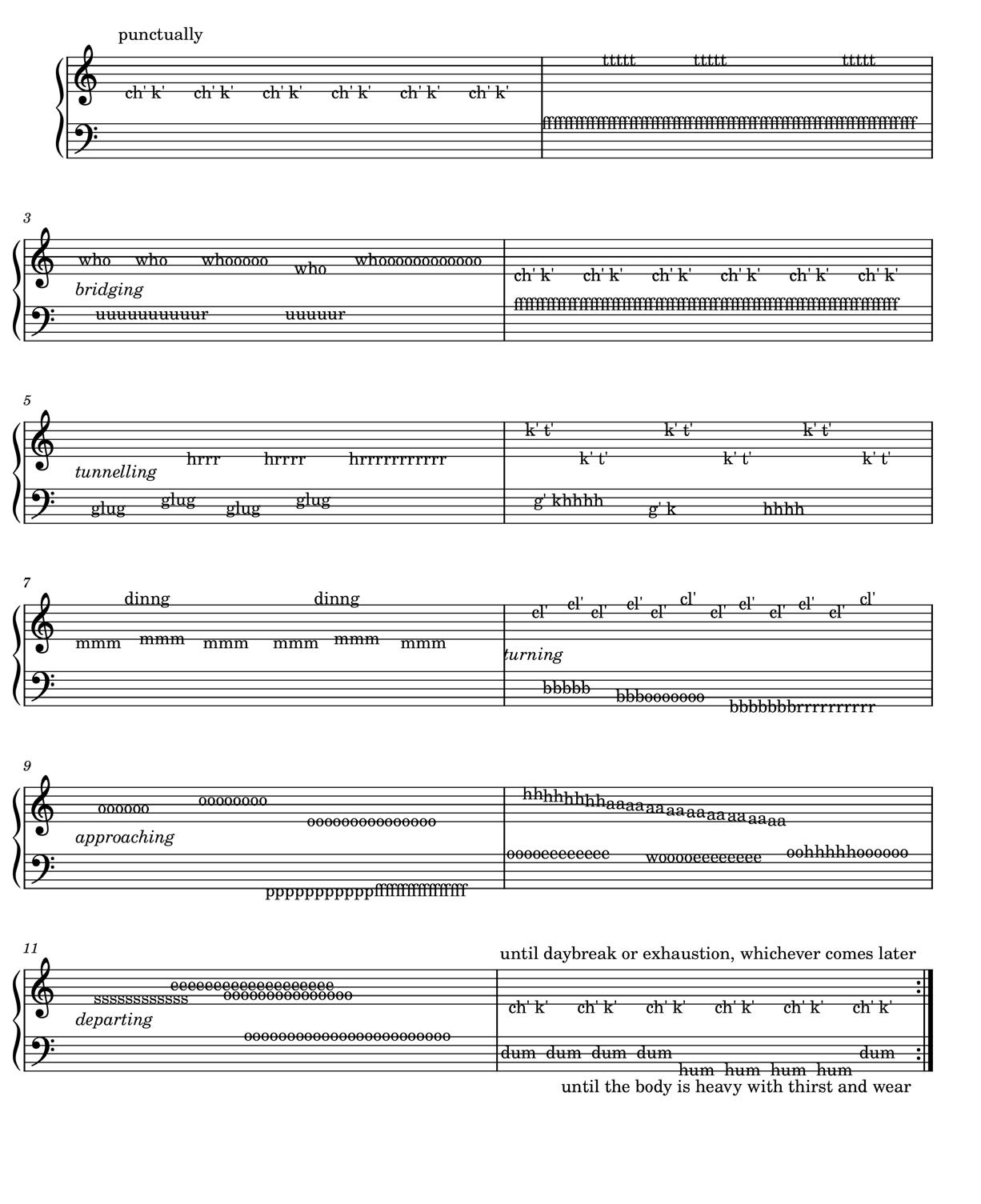
Maggie Wang
Kexin Huang
Words flowed like transient sunshine and were stirred by trembling hands. Do you still remember your neighbours, năi nai? I told Huihui’s grandma that you said hi. Sumei had a heart attack at home and was rushed to the hospital. Shanlan is going through chemo alone, her children living abroad. Shichang, on the fourth floor, passed away silently. You nodded, while I noticed that we were nothing more than magpies outside of this window. Your ears failed my words as if we were thrown in the middle of foreign bird songs: Love does our job too. You SLIP! SLIP! SLIP! SLIP! No sleep for spasms in the toes. HELP ME! HELP ME! Several magpies perched on the shoulder of the rain, singing for the one on the ground that never made it through this spring.
Nisha Patel
The future isn’t always blue. Neither is mountain water. But she ruffles her pearl linen feathers.
Chirping between branches, the washing lines for soaked berries. She tweets upon the olive hues, like she’s swooping across a xylophone.
The tearful tides of breeze rattle trees, yet she is still singing. Leaves hang up from a tree, draping as desk tissue paper.
If only birds could write. Her messages leaf through days. At the face of the lake, a mirror shares breakthroughs of a lifetime.
Hope is not a collector’s item, it is the blue spring that awakens the eye of the earth. The element of petals for bandages.
Sunlight bakes the soil below, a pudding from nature to feed sorrows. Pleating kindness brings dreams together.
The breadth between morning and night. Brush strokes from the sky reflecting her blueprint, where her shadow is doing pirouettes. Not disappearing into the blues, but watching herself rise like mist from a tea cup.
Chelsea Zhu
After Bain à la Grenouillère by Claude Monet
A leaf on the branch’s end breathes and my body teleports to this green creature – soaring, hovering, brushing a dangling strand of fabric on the gentleman’s hat: he balances on a bridge between two islands. Finished with his midday meal, he vanishes from a conversation like a snapshot, a plate of half-eaten madeleines, butter blurs him faceless. Water softens my stem, but I am never quick enough to bask and balance on each wave crest: it crashes into a couple’s conversation. Their voices stretch like starfish, expanding the coolness of the river bath. How refreshing the wind bends. How stunning the forest sways. They promise to return next summer, disregarding their future of floating on different wavelengths. It is difficult to make time and reminisce about their nostalgic vignettes. Moving in patterns, the puddles carry me to a wish. White bows flapping in a girl’s wet hair. A tang of gossip and raspberries and my blades thicken with vivacity. I don’t recognize the fluidity of experience, how a word rearranges from place to emotion, like neurons blinking synapses before another connection rushes past. Instead I waver in singular brushstrokes, thinking in static sentences, sinking inside the lake. I find myself dipping under the endless blue commas. Bodies of swimmers duplicate and disappear. And sparkles and sparkles of light. To forget yourself is to imagine you are an image with no thought – body in free fall, a world without pause: impressionistic. I spin and submerge myself deep enough to see indigo ripples. Below the chatter, boats bob out of my frame. When the wind tilts the world and throws my view off, the hull’s reflection bubbles back. I rise to the surface where the woman in her teal coat stands. I have never been alive.
overheard overhead
Jennie Howitt
look look looklooklook look look
here
look look
looklooklook
look look
hear
lititititititle ears
shiviviviviviver
we-we-we-we-we caught caught caught here
here
here
here
who whooooo whowho
who whooooo whowho
beakbeak between treetop treetop treetop
track track
track track
flung flung flung
hear here
looklooklook
here hear
lititititititle ear
full-ull-ull-ull of shimmer
Freya Gillard
Chalk! Chalk! Blackboard bird.
Coal dust. Chalk! Ash branch buckle. Soot and shadow.
Chalk! Diesel-croak, pitchy like tar. Oil grease.
Raspy rake. Chalk! Storm cloud scrape.
Chalk! Chalk! Shades of tallow. Hills stand hollow, fields lie fallow.
What I want to know is what it means to be needed. Not to need or be necessary but the aching for nettled emptiness. I saw a leaf grasshopper. He looked like a leaf. What does it mean to be constructed into the echo of something. To hide for survival. To remember is to must – to convince yourself of a certainty of existence. You must have loved me. If not what else would I have become? I am two languages deprived of my heritage, of knowing my body. In the heart of nostalgia, sunset is beginning, gnashing unrequited syllables. What does it mean to pierce history with my pencil, to weave a poem out of foreign tongues. I risk harbor. I risk anemones. I risk my grandmother’s abandoned thighs, the sloping of aching maternity. The body, incommensurable, the color of dusk. I am declining my own pain, the declension of evil, the body, a thing of evil. I collect people in my sleep. The topography of madness, of hands. I try to put on my skin like a coat. I am rhotic, rhodochrosite. Instead. I have dispensed with my life. I am. I will. The muscularity of speech, the way the city bows down to me and even you kneel. You once told me I smile when I write. I grimace, I don’t smile. I am not feeling joy but the relinquishing of joy. My facial structure doesn’t quite understand how to let go. I’m trying to square life, to duplicate each memory that tastes like the slender, bronze yolk of a fresh egg. I’m trying to keep. There’s no going back and so I write an elegy, an epigraph for the newspaper column, and then an elogy. I am episcopal. This is my epilogue. Eulogy? Epitaph. I am trying to teach my mouth how to remember.
The Poetry Society has a long history of championing poetry as a means to explore our relationship with the natural world. We provide resources to schools, profile environmental work on Young Poets Network, and work with environmental organisations and academic institutions to raise awareness about climate change and biodiversity.
On Young Poets Network, we regularly publish features and writing challenges about nature, prompting young people to articulate their responses to climate change through poetry. Recent challenge themes beyond our collaborations with People Need Nature have included: the history of landscapes, bogs, the ocean, adorable animals, and finding peace in nature.
Building on our work with People Need Nature, in recent years The Poetry Society’s environmental work has included collaborations with: the Natural History Museum and the Royal Horticultural Society on the Department for Education’s National Education Nature Park; Natural England and the South West Peatland Partnership on work around poetry and bogs; green engineering firm AESSEAL on imagining a greener future; and the National Trust and Exeter University on RENEW, a research programme that takes a people-innature approach to solving the biodiversity crisis.
Through our education work, we have created a wealth of environment-themed poetry learning resources for schools. These are free to download and designed to further pupils’ understanding of nature and how it is affected by human actions, with mapped links to the curriculum. resources.poetrysociety.org.uk/nature
Young Poets Network is The Poetry Society’s online platform for young poets up to the age of 25. It’s for everyone interested in poets and poetry - whether you’re just starting out, or you’re a seasoned reader and writer. You’ll find features, challenges, and a directory of online poetry opportunities to inspire your own writing, as well as new writing from young poets, and advice and guidance from the rising and established stars of the poetry scene.
For updates, follow us on Instagram (@thepoetrysociety), TikTok (@youngpoetsnet) and Bluesky (@youngpoetsnet.bsky.social).
Sign up to our mailing list at ypn.poetrysociety.org.uk
The Poetry Society’s Foyle Young Poets of the Year Award is one of the world’s largest and most prestigious poetry competitions for 11-17 year olds. Every year, high-profile poet-judges select a group of winners, who benefit from talent development support such as publication, performance and mentoring opportunities, as well as poetry goodies. The award has a reputation for finding and nurturing the best emerging poets: past winners include Sarah Howe, Caroline Bird, Jay Bernard and Mukahang Limbu, as well as a number of the young poets featured in this anthology.
The Award is free to enter and there is no theme. Find out more at foyleyoungpoets.org
Download free poetry teaching resources, lesson plans and activities on our resources site, Poetryclass. Covering all ages and exploring many themes and forms of poetry, each resource has been created by our team of expert poet-educators and teachers. resources.poetrysociety.org.uk
Book a poet to visit your school through our Poets in Schools service. Poets can deliver one-off workshops, long-term residencies, INSET sessions for staff, and poet-led assemblies. Online and in-person options available. poetrysociety.org.uk/education
School Membership connects your school with all that poetry has to offer. School members receive books, resources, posters, Poetry News and The Poetry Review (secondary only), as well as discounted access to our Poets in Schools service. poetrysociety.org.uk/membership
Cloud Chamber is an online network for poets and teachers delivering poetry in the classroom to come together and discuss ideas, experiences and best practice. Meeting regularly on Zoom, each session considers a different theme. A presentation by an experienced poet-educator is followed by discussion time, and an accompanying resource is circulated afterwards. It is free to attend and is open to anyone with an interest in poetry in the classroom. Find out more at bit.ly/CloudChamberPoetry
Sign up to our schools e-bulletin by emailing educationadmin@ poetrysociety.org.uk
For updates, follow us on Instagram (@thepoetrysociety) and Bluesky (@poetrysociety.org.uk).
Poetry can’t reverse climate breakdown. But, as nature vanishes all around us, young poets are planting seeds for the type of world they want to grow up in.
- Daniel Clark, young poet