How CVS Store Brands Handle Refreshing a 5,000-item Private Label Portfolio
CVS VP Michael Wier says store-brand growth and product/package localization are adding manufacturing complexity. Keychain CEO Oisin Hanrahan tells us that the newly launched Keychain 360 helps retailers and brands manage private-label packaging specs, vendors, and compliance across outsourced supply chains.
BY MATT REYNOLDS
When the external supply chain pro behind a 5,000-SKU private label portfolio like CVS hints at a strategy shift, then adds “But I need help,” external manufacturers and contract packagers listen.
On an event stage held in conjunction with the Private Label Manufacturers Assoc. (PLMA) show in Chicago late
shift that encompasses more localized assortments, more tailored SKUs, and more complexity across 7,000 stores. “Yeah, I’m ready,” Wier said, adding “But I need help.”
Oisín Hanrahan, founder and CEO of Keychain, a platform designed to connect brands and contract manufacturers/ packagers, didn’t let the moment pass, piggybacking on Wier’s plea to reveal the new Keychain360. It’s a software aimed
sprawling outsourced supply chains, external manufacturing and packaging, and product portfolios.
With portfolio complexity on one side and a new class of supply chain software on the other, the pairing frames what Keychain is trying to become: more than a matchmaking directory for co-manufacturers and co-packers, and closer to an operating layer that sits between brand teams and the third-
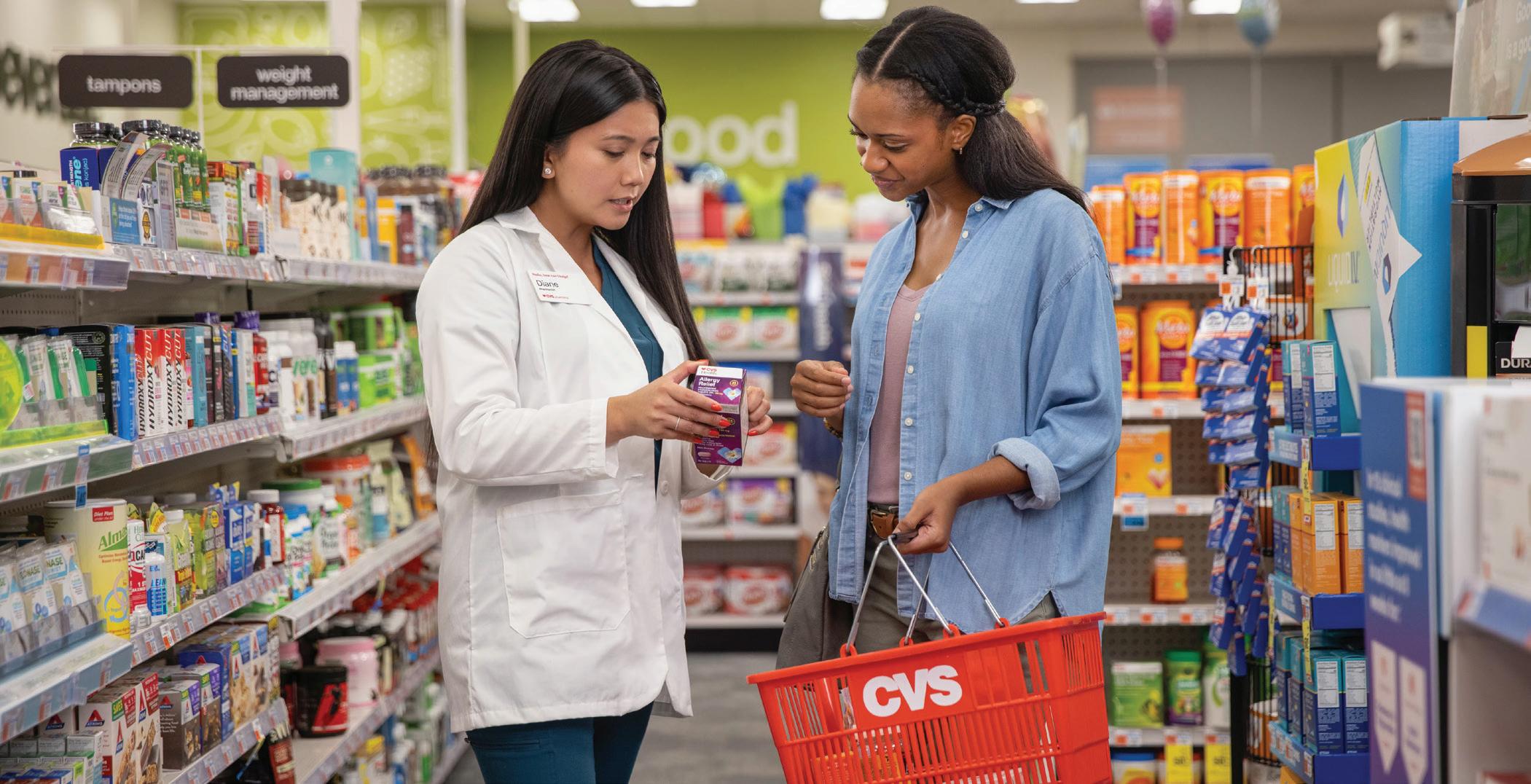
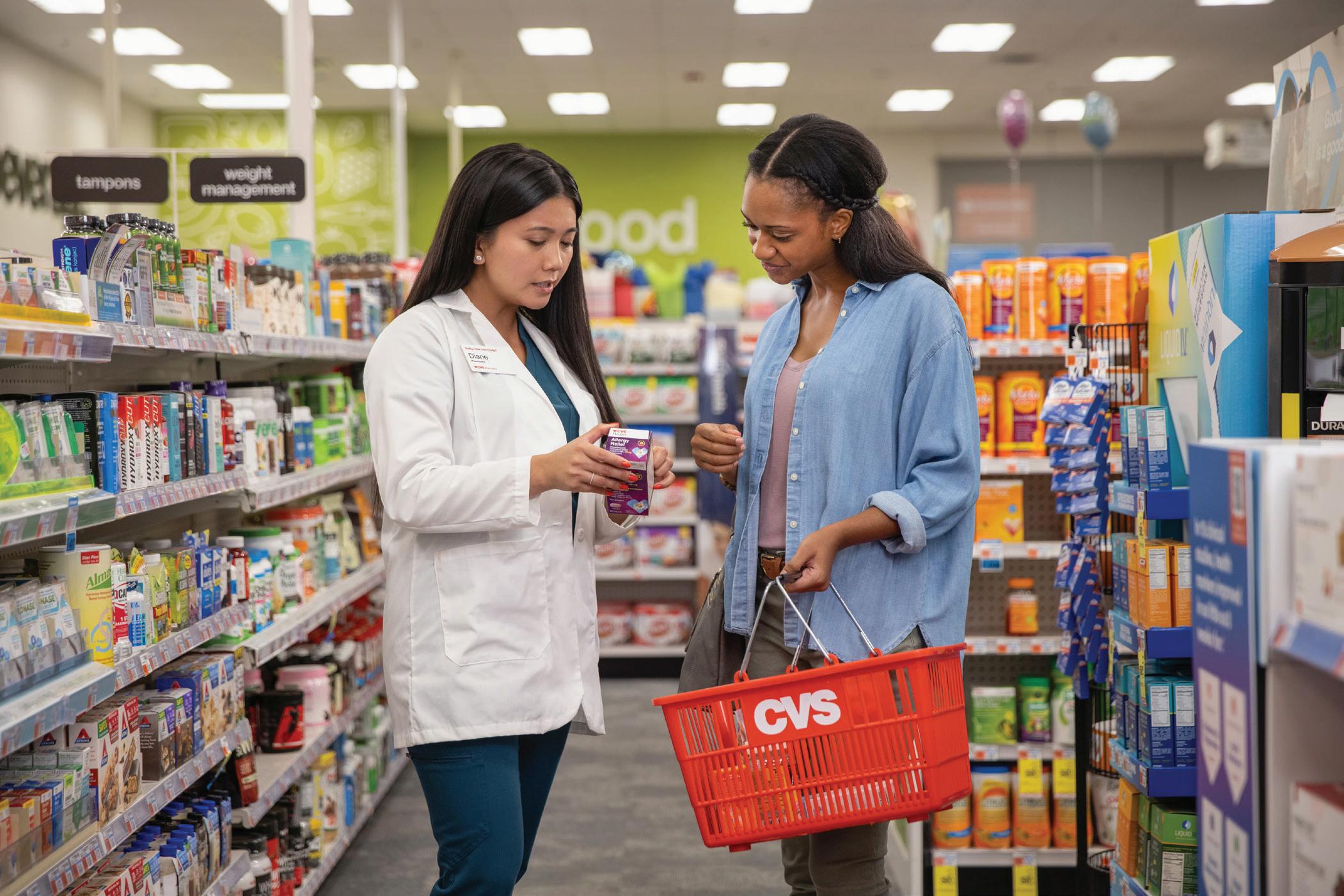
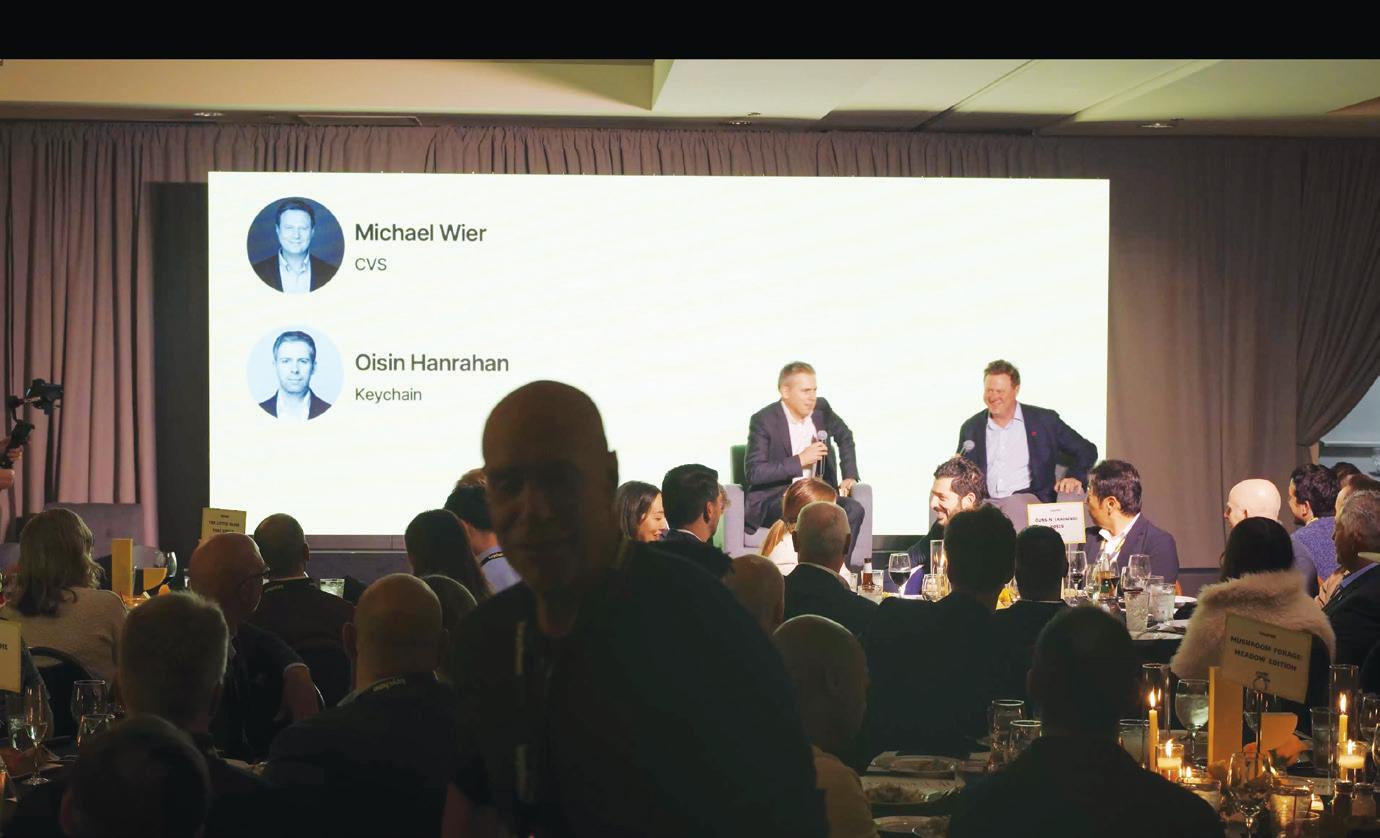
CVS store brands are expanding and localizing assortments, adding pressure on private-label teams to manage packaging, suppliers, and outsourced manufacturing at scale.
IMAGE COURTESY OF CVS HEALTH
From “who can make this?” to “how do we manage all of this?”
In an interview with Packaging World, Hanrahan described the premise in plain terms: “more and more of the manufacturing happens with third parties, contract manufacturers, packers, and ingredient providers,” he said. “And what Keychain does is it makes that process of working with a third-party manufacturer as easy as it possibly can be.”
He laid out Keychain as three products, or three legs of a stool:
• An existing search and discovery product that lets “anyone who’s a registered brand” search and “figure out who can make what product,” supported by AI and a database of “millions of consumer products” that have been “indexed and analyzed.”
• There’s also software “for manufacturers themselves, to better run their facilities,” which Keychain calls KeychainOS.
• And the latest part of the product suite,
a software platform called Keychain360 that allows brands and retailers to better manage their outsourced supply chain,” by providing a “single source of truth” for elements like “analysis and validation, food safety checks, and traceability,” among others.
At the event, Hanrahan summarized the evolution similarly: “Keychain’s Search and Discovery was first, then Keychain OS,” and now “what we think is the best way for brands and retailers to manage product portfolios… and manage these external vendors, Keychain360.”
What Keychain360 is meant to do for brands (and how it differs from search)
Search, Hanrahan said, answers a starting question: who can make what? But 360 is designed to become the system where a brand or retailer layers its own supplier and product data on top of Keychain’s network and data. “360… gives you a secure instance to overlay your data on top of the key chain
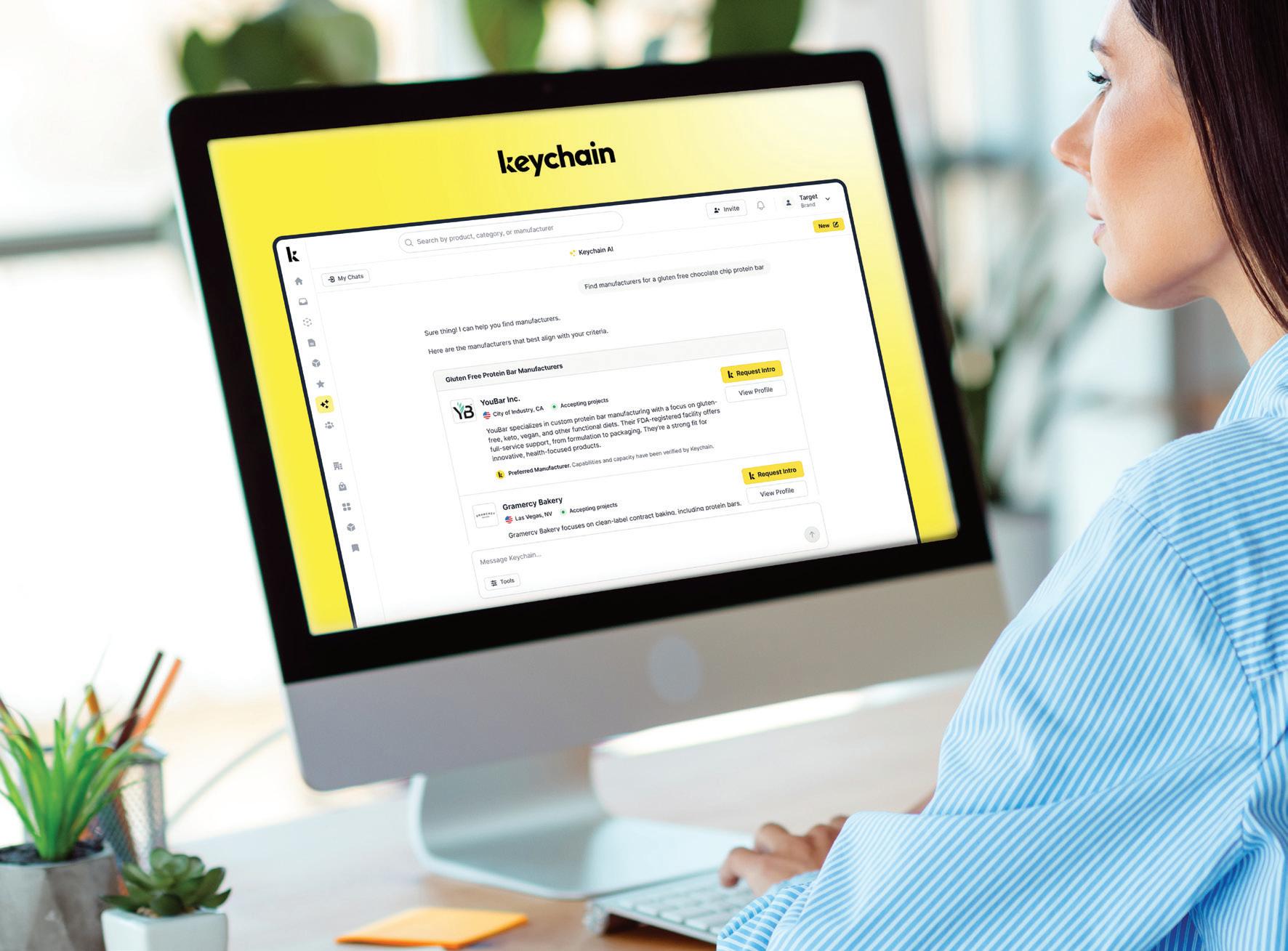
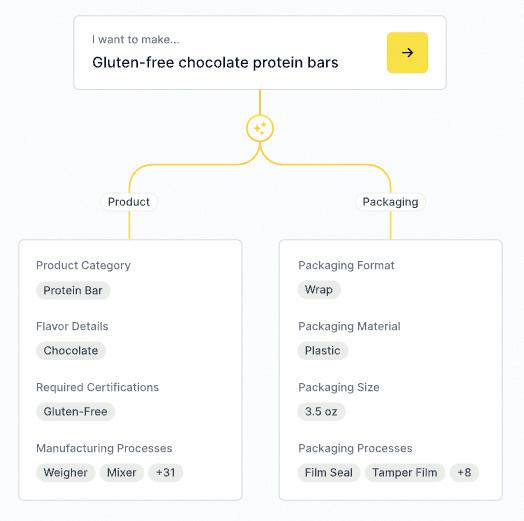
Keychain’s search and discovery interface.
data,” he said. “So with that you can look not just at the Keychain supply chain data, but you can look at your own data as well.” That “overlay” becomes practical, he argued, when organizations don’t fully understand what their current partners can do. “If a manufacturer makes a pureed beverage for you, you might not put the pieces together and realize they can also make a baby food for you,” he said.
Keychain’s approach, he added, is to let its data “sit below your data so you can have a single source of truth that lets you really look down into your supply chain… in a very powerful way that… you’ve never had before.”
Functionally, he described 360 as having layers:
• An “action layer” for “RFPs, RFIs, RQs,” NDAs, and even awarding business, plus supplier relationship management and compliance tracking.
• “AI enabled playbooks,” including portfolio-level analysis—how one sourcing decision covers not just the immediate SKU but future roadmap
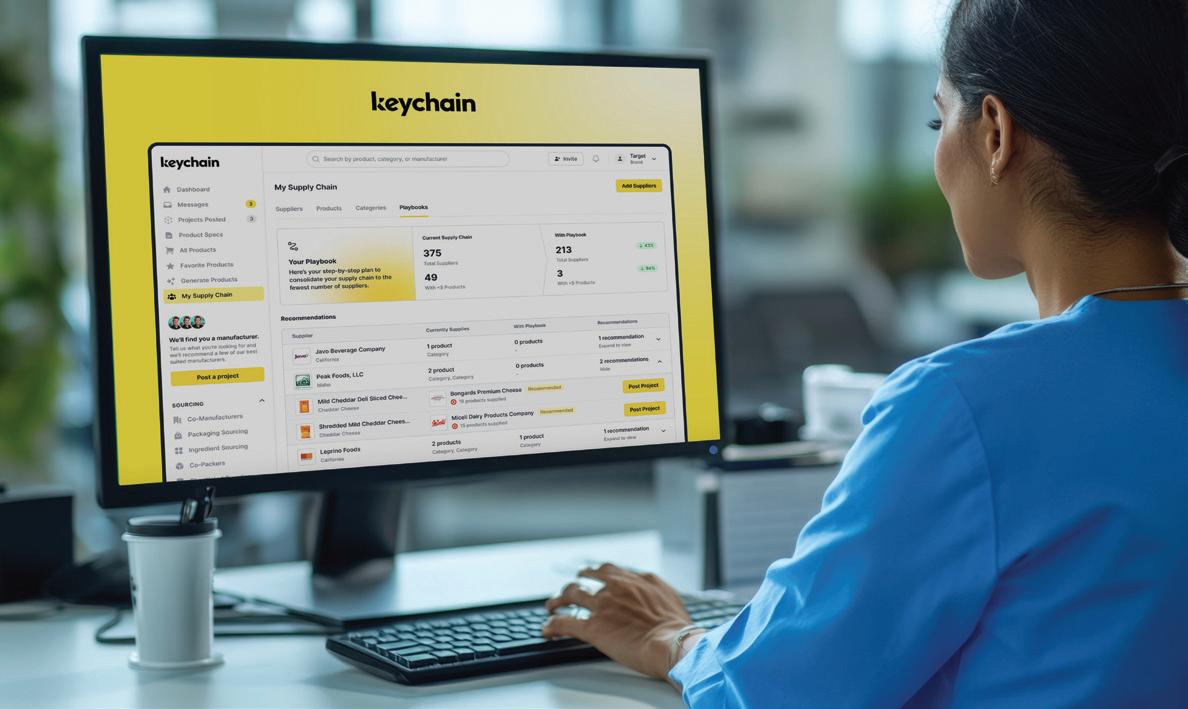
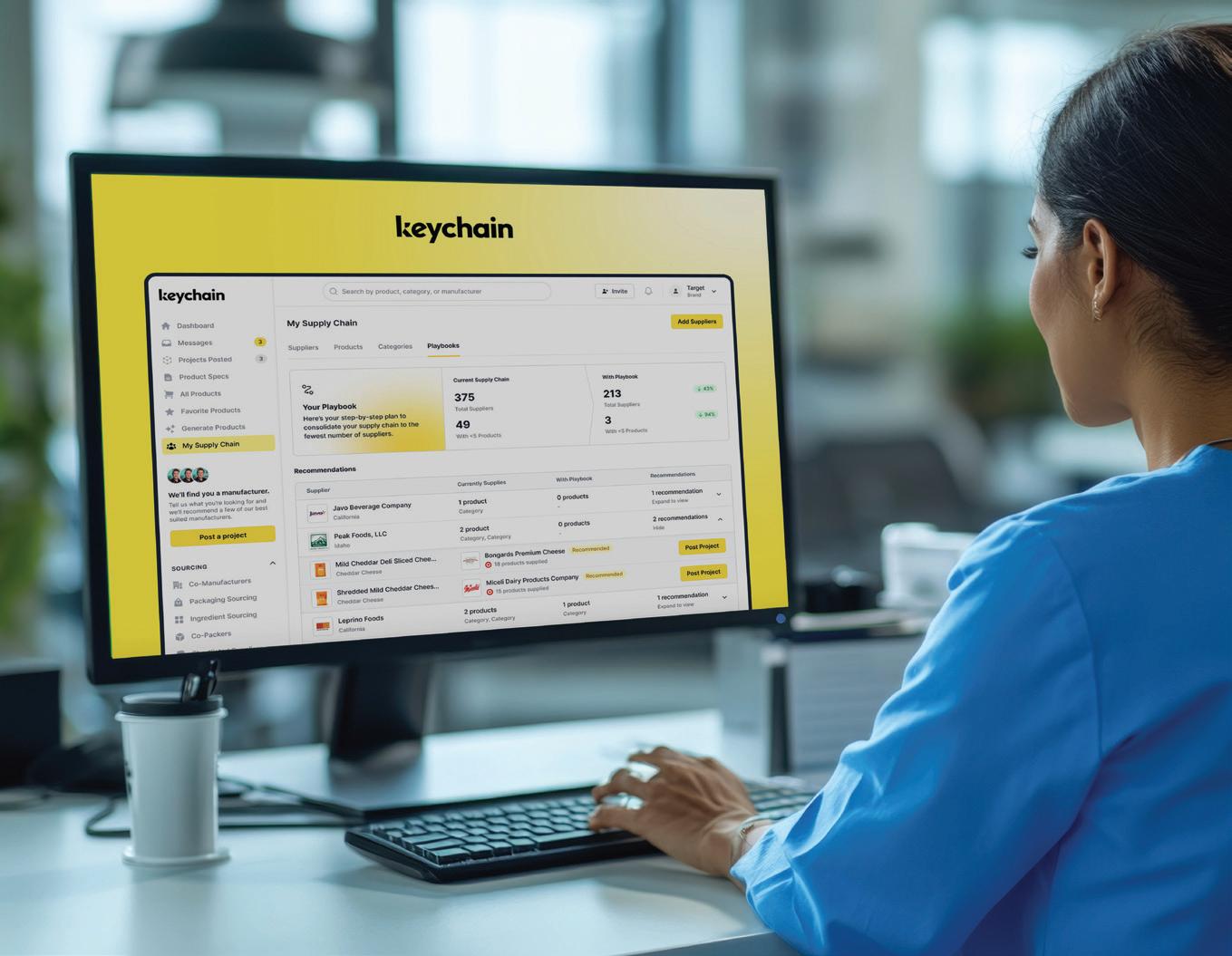
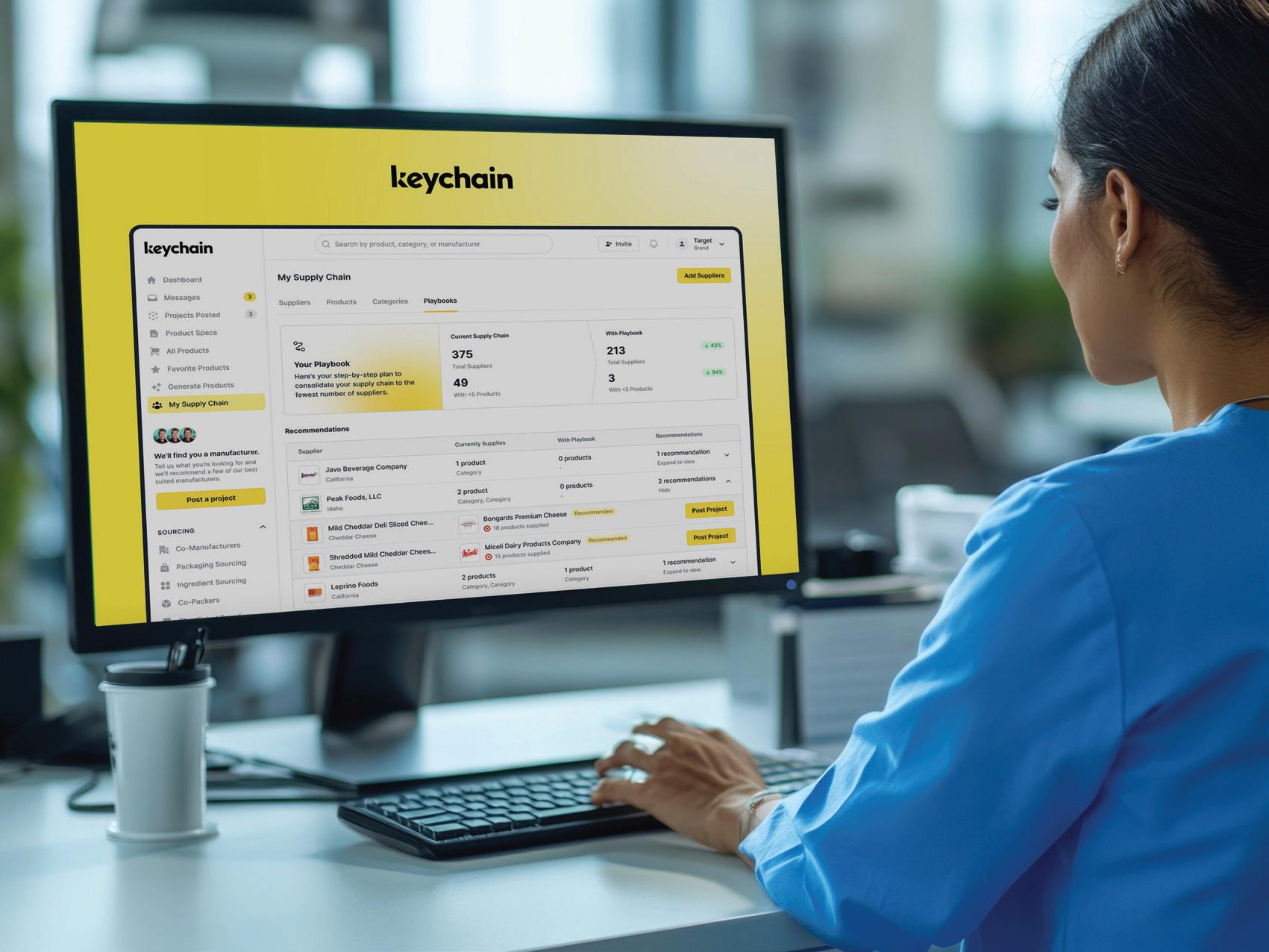
Keychain’s interface shows how brands and retailers can view suppliers, products, and “playbooks” designed to analyze and rationalize outsourced supply chains, including comanufacturers and co-packers.
products, and where it adds redundancy to reduce single-sourcing risk.
At the post-PLMA event, he positioned Keychain360 against traditional product lifecycle management (PLM) framing: “what a lot of PLM… tools do is they help you manage your existing portfolio,” he said. “What 360 does that’s incredibly unique is it gives you the ability to manage your innovation pipeline in a completely different way.”
He also pointed to vendor onboarding and vetting—“Know Your Vendor… KYV processes”—and a goal familiar to anyone who has reconciled supplier spreadsheets across functions: “what the heck is the source of truth?”
A sourcing workflow— starting with a competitive product and working backward
For private label teams, Hanrahan described a path that starts not at the plant, but at the shelf. A retailer decides it wants a private label version of a branded product (or a competitor’s private label SKU), then uses Keychain either to choose the comparison product or to “use the AI product creator to type in a description of the product to create the product.”
If Keychain shows only a small number of potential manufacturers for that concept, he said some teams ask a different question: “what can I change in that product to get the number of manufacturers up toward a 10, 15, 20 number?,” aiming to create competitive tension and sourcing flexibility.
From there, he described outreach, progressing from a lightweight spec check to RFI/RFQ/RFP and audit review, before
moving “off platform into samples and contracting.” He contrasted the time scale: a process that “typically takes like 8, 10, 12 weeks” to identify candidates becomes “like a week” with Keychain, “shrinking it down by 80 to 90%.”
Competitors crowd the co-pack matchmaking space
Keychain isn’t alone in trying to streamline how brands and private-label retailers find and manage external manufacturing partners. One notable example is CoPackConnect , an AI-enabled RFQ marketplace launched by the Contract Packaging Association and The Melville Group (TMG), positioned as a way to match brands with contract manufacturers and contract packagers when needs and capabilities align.
CoPackConnect’s backers argue that the biggest bottleneck isn’t simply building a big directory.
“A huge list of products and providers is not the hard part, nor does it address
COMPUTER SCREEN IMAGE COURTESY OF KEYCHAIN. PHOTO COURTESY OF SOMMAI/ADOBE STOCK
the core frictions,” Carl Melville, managing partner of TMG and owner of CoPackConnect.com, told Packaging World earlier this year. Melville said the platform’s AI-RFQ approach is meant to reflect “decades of brand and manufacturer input” and “solves these problems at a fraction of the cost of other platforms.”
When CoPack Connect launched at the end of 2024, CPA executive director Ron Puvak framed the same push in terms of supply chain dependence and speed. “Brands are more reliant on external manufacturing than ever before,” Puvak said. He described CoPackConnect as “a robust and focused solution for brands and manufacturers, enabling superior sourcing alternatives, improved speedto-market, greater innovation, and more efficient production capacity utilization.”
Where packaging shows up— in search, in sustainability, and as a deal-breaker
For readers interested in Keychain, the obvious question is whether “manufacturer capability” is defined only by product and process, or whether it extends to packaging specifics?
Hanrahan said the platform supports packaging attributes but described a boundary on technical specificity: “we’re certainly at the level of packaging properties for the outer packaging, packaging properties for the inner,” he said, adding that Keychain does not go “down to the level of what the degree of permeability of the barriers are.” Still, he said, “the product keeps getting better all the time… The more volume we put through the product, we’re constantly adding net new data points. We add around 10,000 net new data points on Keychain a day.”
On sustainability, he said Keychain avoids labeling any packaging as “sustainable” or not. “We don’t have a broad bucket of sustainable versus not because we find that that led us down a path of us being the determinant or arbiter of what was sustainable,” he
said. Instead, he described enabling selection by packaging type—“paper or card or card with a film or card with no film”—and leaving tradeoffs and judgments to the user.
Most pointed, for packaging professionals, was his answer to what makes deals fail. Asked how often packaging becomes the gating factor versus formulation and processing, Hanrahan replied: “I think the two reasons why manufacturers don’t end up doing a particular deal most of the time is either the deal doesn’t hit [the manufacturer’s] MOQs, or the packaging format is not right.”
That “packaging format” mismatch can take many forms, he said: “they wanted resealable, they don’t do resealable,” or “they wanted one size versus another size,” or “they wanted a sustainable… format… [and] the person can’t do it.” His conclusion: “the pack format is a super, super important part of the equation.”
Keychain’s own press materials point to packaging as an expanding focus. Last year, the company said it was launching two new beta products, “Keychain packaging and Keychain ingredients,” intended to “streamline the process of sourcing packaging materials and ingredient suppliers.”
“We’re refreshing the brand across 3,000 items”—why retailers care
Wier’s CVS comments help show why product teams, especially private label, are sensitive to these workflow bottlenecks.
He told the audience that CVS store brands have 5,000 products and described how his team reorganized to prioritize the customer and feedback signals. “We… started to create a separation of what people really liked and what people didn’t like,” he said, and built a process to address underperformers in the portfolio.
He also described a push for differentiation that reaches beyond supply base management. “We need to
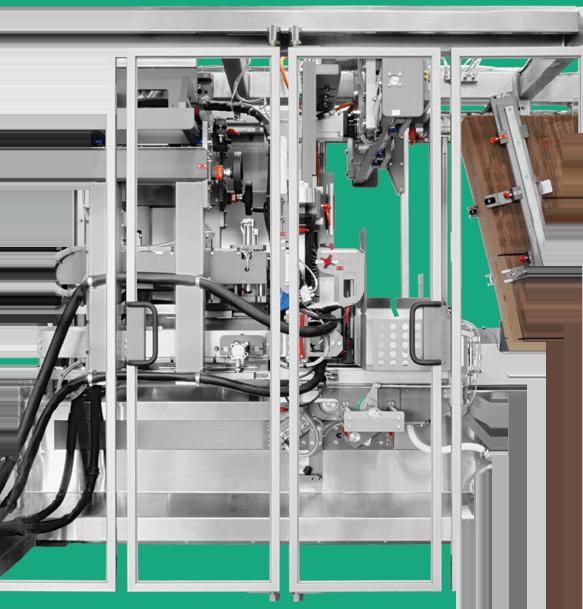
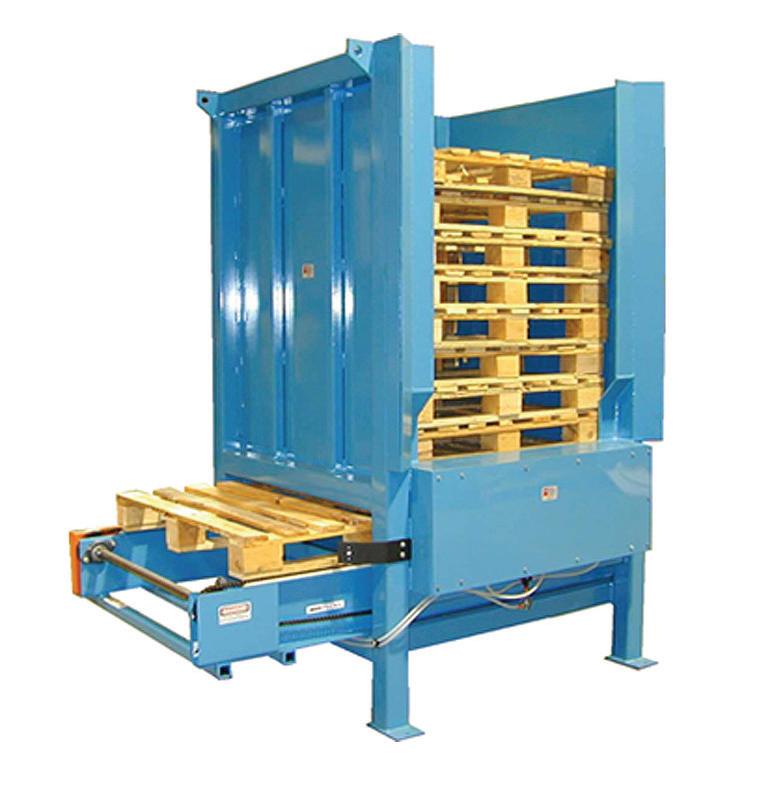
Pallet Dispenser
Our dispensers can stack or destack pallets, trays, slave boards, or bins automatically and safely. Most pallet dispenser models can be converted to a pallet collector as well. With our heavy-duty models, pallets can be discharged in one of three directions, onto another conveyor, or directly onto the floor.
» Wooden pallets, metal pallets, plastic pallets, corrugated pallets
» Highest-quality construction to reduce maintenance and improve machine life
» Proudly designed and built in the USA
to meet your needs. To learn more, contact us by calling 833-467-3432.
around certification and facility details, and noting the company is “releasing some ratings as well” to show how “other brands and retailers” have rated suppliers.
He described a common pain point: “you just become inundated with forms” during sourcing, and said Keychain aims to summarize supplier responses—flagging issues like “a recall history in the last three years,” and enabling “compare suppliers” views that compress “30 or 40 pages of forms” into a “very simple summary.”
He also said Keychain cross-checks some data “directly from the auditor… like SQF and USDA” against what suppliers submit, “so we highlight discrepancies,” and then flags where the external supply chain team should focus time. “It’s not like taking away their job,” he said. “It is helping them figure out where to focus with a very crisp, actionable suggestion.”
create differentiation… We’re refreshing the brand across 3,000 items. We are working on elevating the packaging, the branding, the flavors, the scents… and just upgrading the customer experience.”
Wier also pointed to a future where localization increases SKU complexity: “localization is a big thing for us over the next three years,” he said, describing a scenario where CVS might carry 8,000 items across all locations, while keeping “5,000 in the right stores, at the right place, at the right time.”
What brand users say they get (when they’re willing to say it)
One challenge Hanrahan acknowledged: private label and sourcing teams can be “tightlipped.” “It is private label world, eh? It’s full of people that don’t want to tell the story,” he joked.
From a platform vendor’s point of view, those pressures—more SKUs, faster refreshes, more tailored assortments— raise the value of better search, faster supplier qualification, and centralized vendor intelligence. From the brand/ retailer’s point of view, they raise the cost of fragmented tools and manual vendor workflows. And from the external manufacturing side, tools like these represent a gateway to better visibility
and faster onboarding, which could ultimately help contract manufacturers and contract packagers respond to RFQs more efficiently and scale partnerships as private-label portfolios expand.
In his interview with Packaging World, Hanrahan was explicit that Keychain is not trying to make sourcing decisions for users. “We’re providers of information, we’re providers of workflow tooling. We’re not in the business of saying you should or shouldn’t use this particular manufacturer,” he said, while emphasizing filters
Still, Keychain has collected on-the-record testimonials from brand and retailer users. Ferrero’s North America operations manager said, “Keychain helps us quickly access a wide variety of manufacturers -- faster than we ever did with web search or at trade shows -- providing great options to develop our external co-man network in North America.”
Lidl US’s chief buying officer said, “With Keychain, we’ve been able to accelerate our search for new suppliers while ensuring they meet our high standards for quality and cost-efficiency.”
Those statements echo the central bet: that faster discovery and better vendor intelligence can reduce the friction that
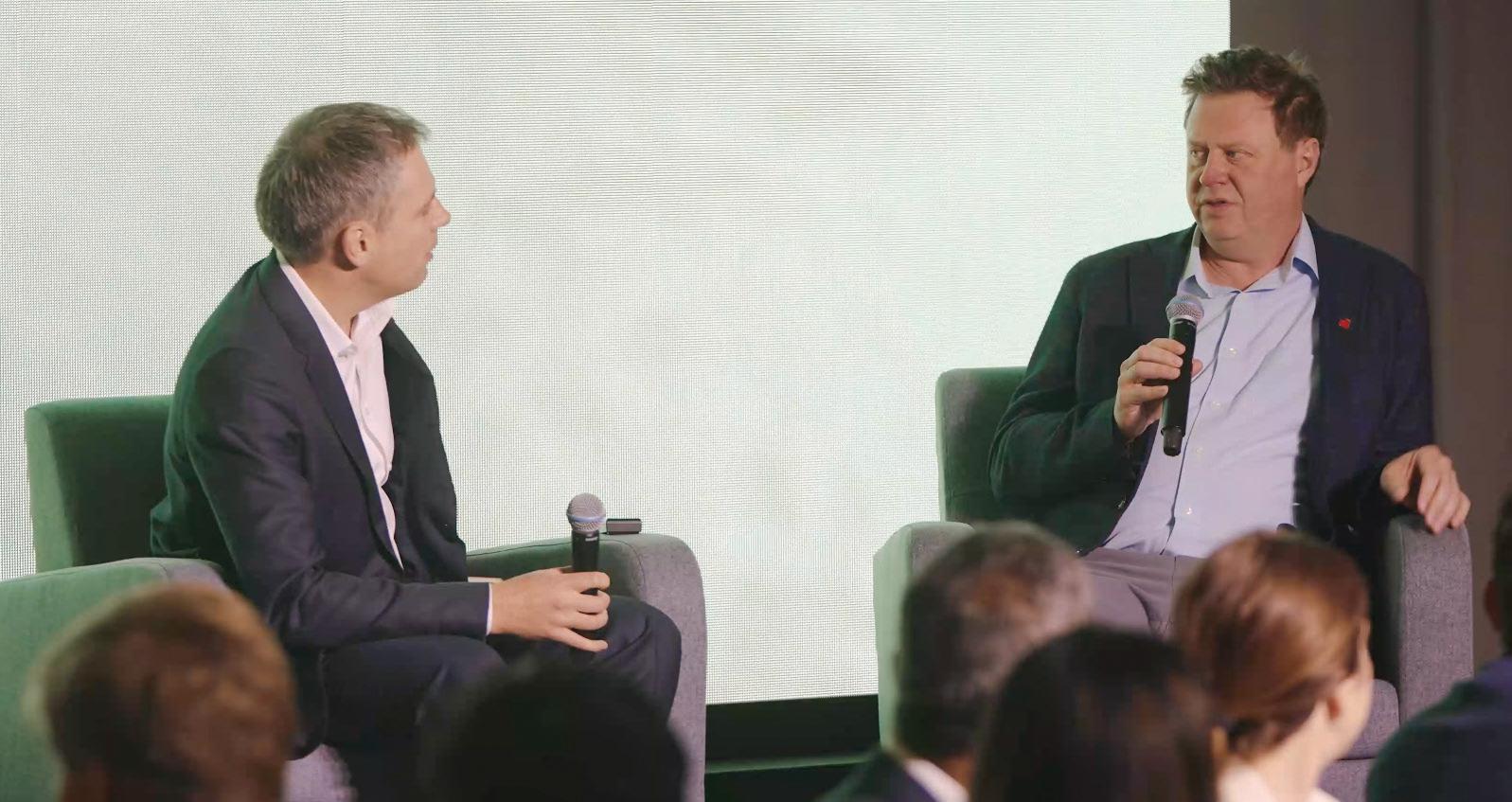
Keychain founder Oisín Hanrahan (left) speaks with Michael Wier, VP of Store Brands at CVS, about how Keychain 360 is designed to help retailers manage large private-label portfolios—potentially up to 8,000 SKUs—while supporting more localized assortments and packaging strategies.
IMAGE COURTESY OF KEYCHAIN
IMAGE COURTESY OF KEYCHAIN
Keychain founder Oisín Hanrahan (left) and Michael Wier, VP of Store Brands at CVS, discuss managing large, localized private-label portfolios and the packaging and supplier complexity behind them.
slows private label (and brand) product development—especially when packaging requirements, audit expectations, and capacity realities can derail a project late in the process.
Why this matters even if you never log in
Keychain’s story is about the growing share of CPG value creation that happens outside the four walls of the brand owner, and inside co-man and co-pack networks where packaging formats, line capabilities, and compliance documentation can determine whether a product concept is manufacturable at scale.
Hanrahan’s blunt assessment, that “the packaging format is not right” is one of the two most common reasons matches fail, will sound familiar to the packaging engineers, operations leaders, and quality teams who have lived through last-minute spec changes, line trials, film sourcing constraints, or format incompatibilities.
For brands and retailers, the question becomes whether systems like Keychain360 can move those realities earlier in the process—before the RFP stack grows to dozens of forms, before a packaging constraint collapses a shortlist, and before timelines stretch from weeks into quarters.
Or as Wier put it, facing a portfolio that may be expanding even as it becomes more tailored with location-specific products and packaging, “I need help.”
Growth narrative and funding rounds
Keychain’s press materials sketch a rapid expansion from a platform concept into a suite of products, with funding milestones along the way. In November 2023, Keychain announced “$18 million in seed funding,” describing a U.S. landscape where “$500 billion worth of packaged products are produced by more than 20,000 manufacturers” and calling it a “deeply fragmented” ecosystem dominated by “trade shows, brokers, and manual, time-intensive vetting.”
By February 2025, Keychain said it had raised $38 million since November 2023 and that its platform had grown to a “network of 30,000+ manufacturers and 20,000+ brands and retailers,” and was “facilitating over $1 billion in projects each month.”
In August 2025, Keychain announced a “$30 million Series B” and the launch of KeychainOS, positioning it as an AI operating system for manufacturers and contrasting it with traditional ERP implementations. Keychain also said that it had reached “$68 million” in total funding and claimed adoption by “8 of the top 10 retailers… and 7 of the top 10 CPG brands, including General Mills.”
And finally, last month on stage, Keychain announced an additional “$10 million investment” in 2025, including funding from W23 Global (Tesco, Woolworth’s), described as “backed by five leading grocery retailers,” including Ahold Delhaize. CM+P
How does this impact you?
The Keychain 360 story highlights how AI platforms are now or will soon be reshaping vendor management in private label.
But how do you think tools like this will impact your external manufacturing operation?
• Are you as a CPG brand already using AI tools to streamline RFQs or supplier communications?
• As a co-man, have brand partners mentioned these platforms to you?
• How are you preparing for the AI transformation? We want to hear from you. Please share your experience, insights, and challenges about these emerging tools. Contact Contract Manufacturing and Packaging at jderr@pmmi.org.