Faculty of Science and Engineering sciengoutreach@plymouth.ac.uk
University of Plymouth Drake Circus Plymouth Devon PL4 8AA
United Kingdom
Follow us on social media @PlymUniApply
Marine Biology Edition
SUBJECT
It’s never too early to start thinking about what you would like to do after school or college, or if you are thinking of a career move! At Plymouth, we know that choosing a university and course is a big decision. While you may have an idea of a profession, career or industry that you’re aspiring towards, if you’re unsure of exactly what you want to do or are keen to find out more – this is where our handy subject guide comes in.
Meet some of this issue’s contributors:
Louise-Oceane
BSc (Hons) Marine Biology and Coastal Ecology
Louise shares her career path since graduation P. 28
Matt
BSc (Hons) Marine Biology and Oceanography
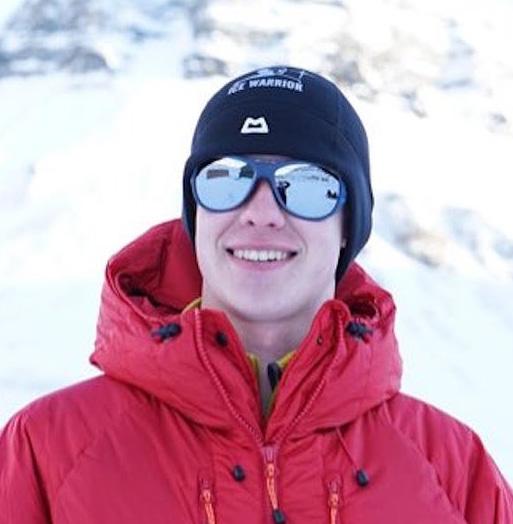
Matt tells us about his experience travelling to the Northern Pole of Inaccessibility P. 24
EXPLORE
Visit us at an Open Day
When it comes to finding out whether university feels right for you, nothing compares to an open day. Talk to our current students and quiz lecturers about your course. You can register to attend here: plymouth.ac.uk/open-days
Luke
BSc (Hons) Marine Biology and Coastal Ecology
Luke shares his journey since graduating, from moving for work and finding a role that fits his passions and interests P. 30
FUTURE HOME
Start exploring –take a virtual tour
Our virtual tour allows you to experience first-hand what it is like to be on campus and explore the environments and facilities that inspire and shape our learning every day. You can take a virtual tour here: virtual.plymouth.ac.uk
FEATURES:
P. 4 Why study at Plymouth?
We share our top 10 reasons to study Marine Biology for new starters!
P. 10 What can fieldwork do for you?
Find out where previous students have been and how fieldwork adds value to your degree.
P. 16 Facilities
Find out about the exciting facilities you will be using throughout your time studying with us here in Plymouth.
P. 32 Life after graduation
Ana tells us about the work she’s been doing overseas since graduating.
10 REASONS TO STUDY AT PLYMOUTH
Marine Biology is an incredibly broad subject covering biology, physiology, ecology, oceanography, evolution and behaviour disciplines. Are you ready to start your journey to create a more sustainable future, that fits your interests and passions? We’ve listed our top 10 reasons for studying in Plymouth, to help in your decision making.
2. TAUGHT BY EXPERTS
Plymouth boasts one of the highest concentrations of marine scientists in Europe. With our seafront location and links with internationally renowned research institutions, you’ll be joining a hub of activity for the study of marine life. The Marine Biological Association of the UK, Diving Diseases Research Centre, and Plymouth Marine Laboratory are just some of the marine research organisations in Plymouth.
1. BENEFIT FROM FIELDWORK, NEAR AND FAR
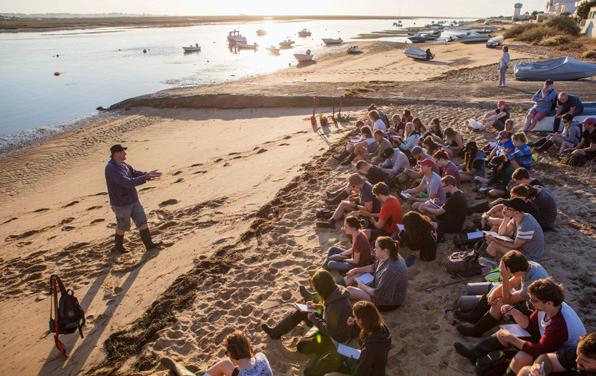
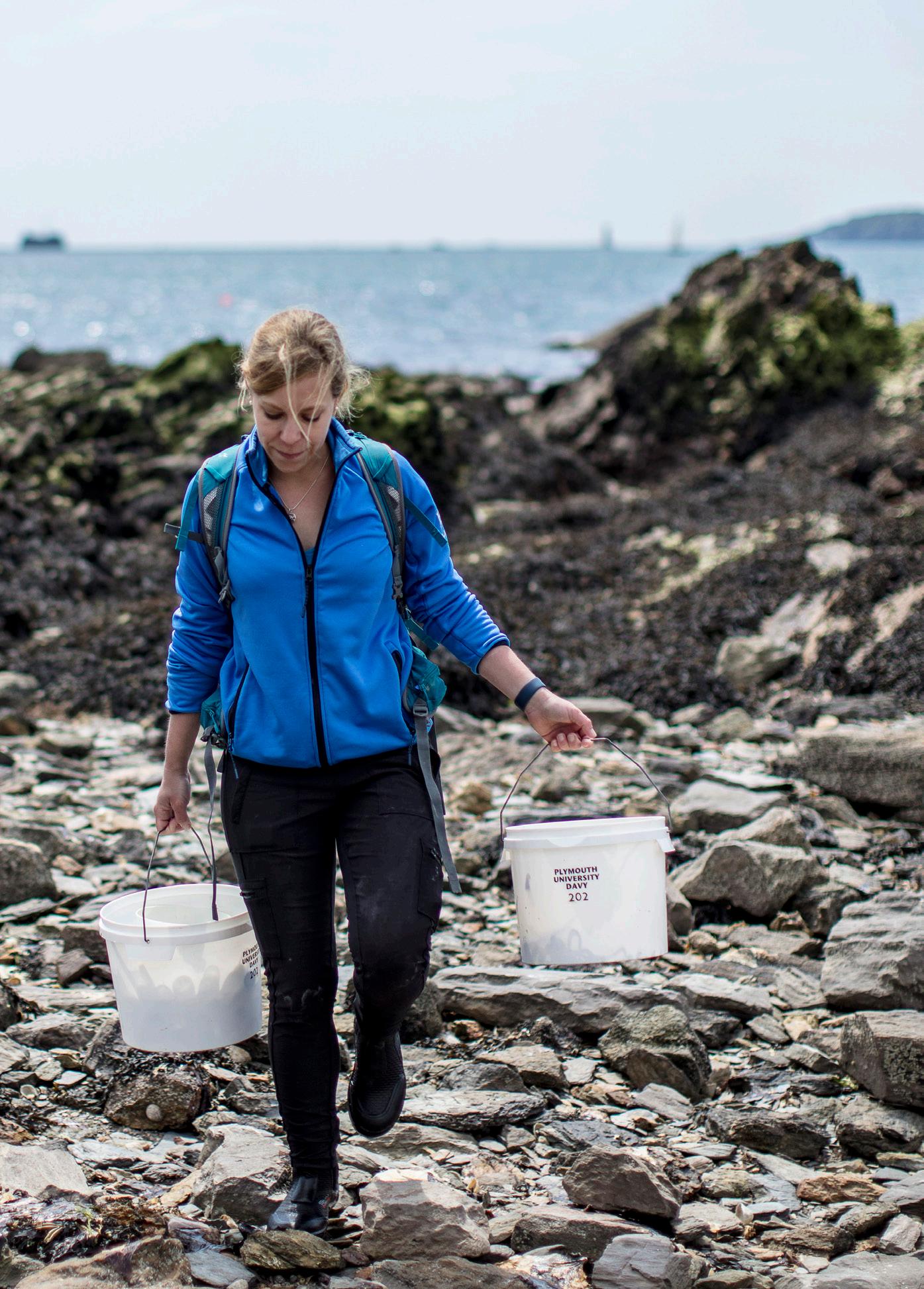
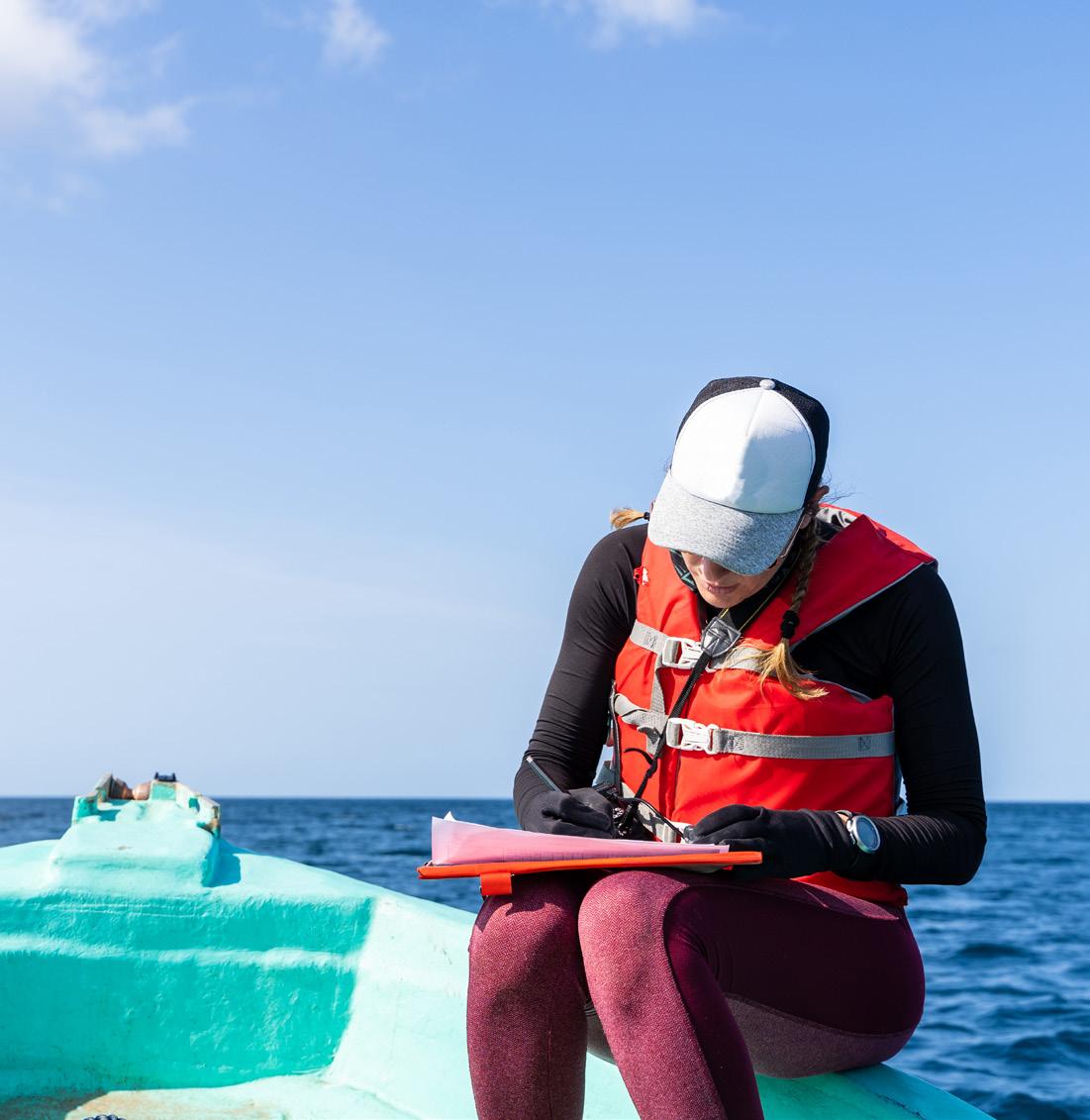
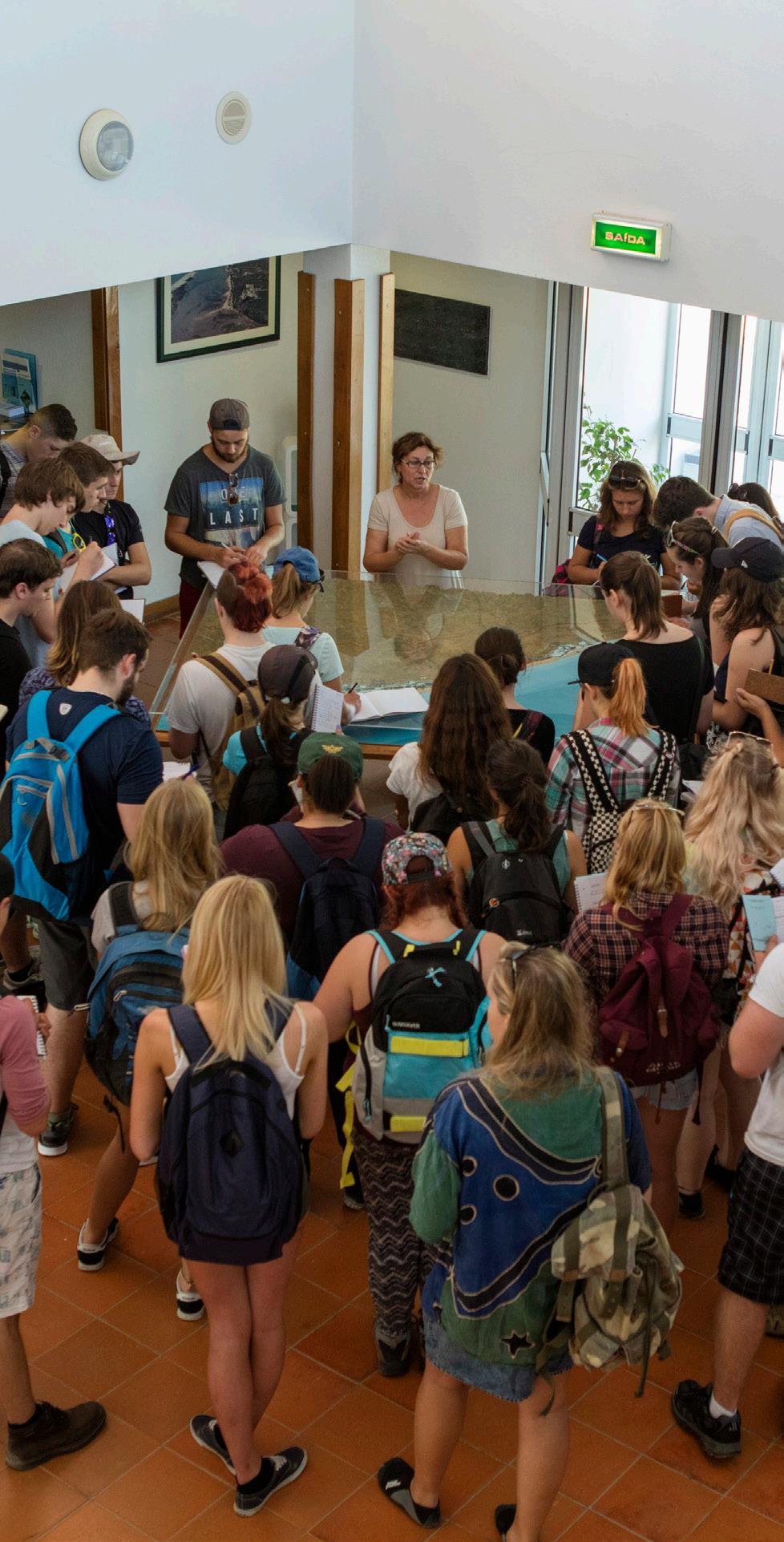
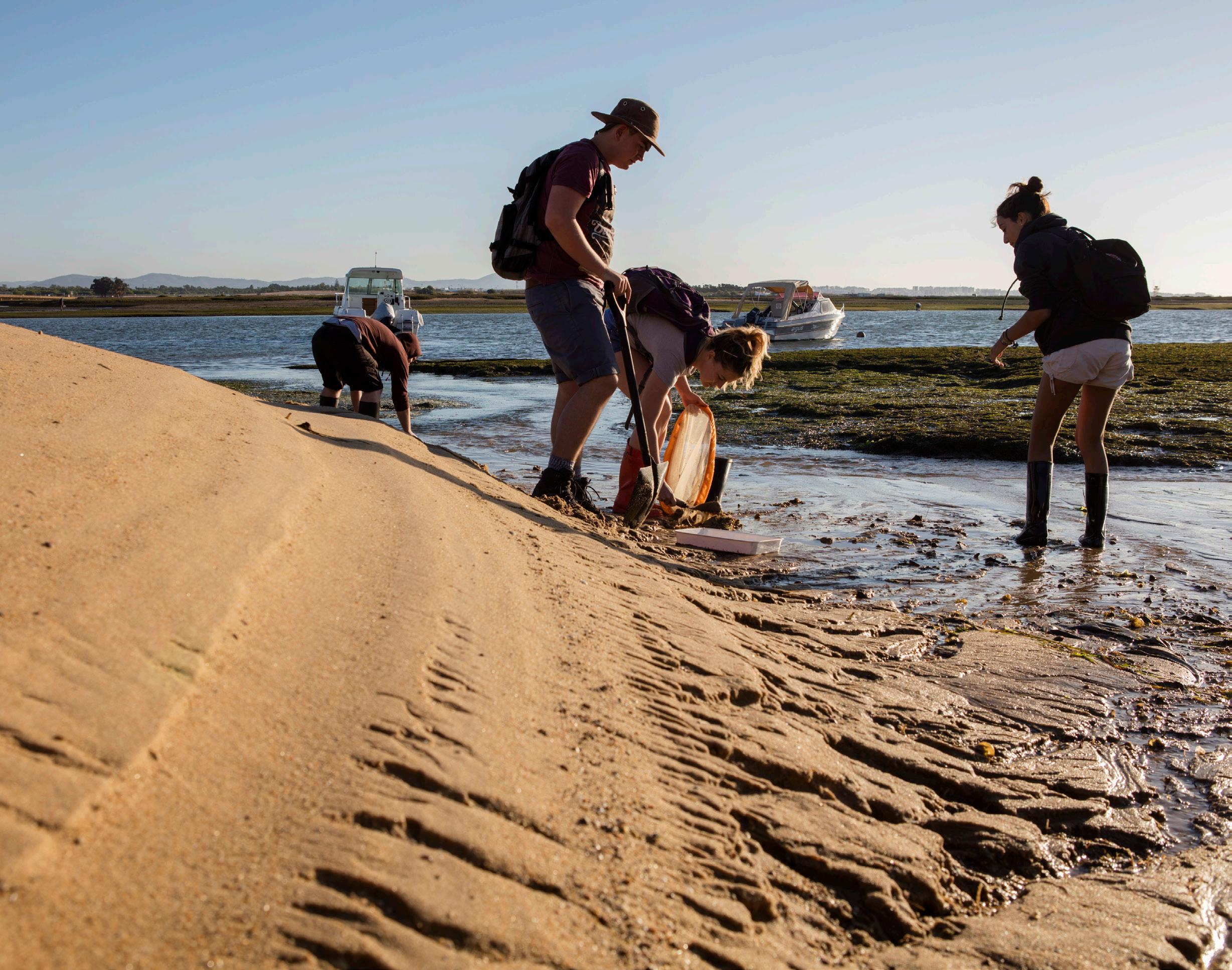
Throughout your time studying in Plymouth, you will have opportunities to put theory into practice on a range of field trips, both locally and internationally. Students have visited all kinds of diverse environments, from the miles of South West coastline to the KwaZulu-Natal Province of South Africa and the Algarve, Portugal. All of these add value to your degree, as well as enhance your employability.
3. GAIN REAL-WORLD EXPERIENCE AS YOU STUDY
An optional work placement year can be taken on all courses in the third year, either in the UK or overseas. We highly encourage this as it can give you a deeper understanding of working within industry, as well as the possibility of employment after graduation. As well as this, we can offer opportunities for short-term placements working alongside researchers in the Marine Biology and Ecology Research Centre or at our partner institutions.
4. TAILOR YOUR DEGREE TO FIT YOUR INTERESTS
Everyone’s interests are different, and at this stage, you may not even know what they are just yet. At Plymouth, we give you the flexibility to tailor your degree to your specific passions. In your first year, you’ll get to study modules from across all Marine Biology disciplines, regardless of your chosen pathway. Having this option really does give you the opportunity to explore all that we can offer, helping you to understand the field and figure out what you would like to study.
5. LEARN IN OUR CUTTING-EDGE FACILITIES
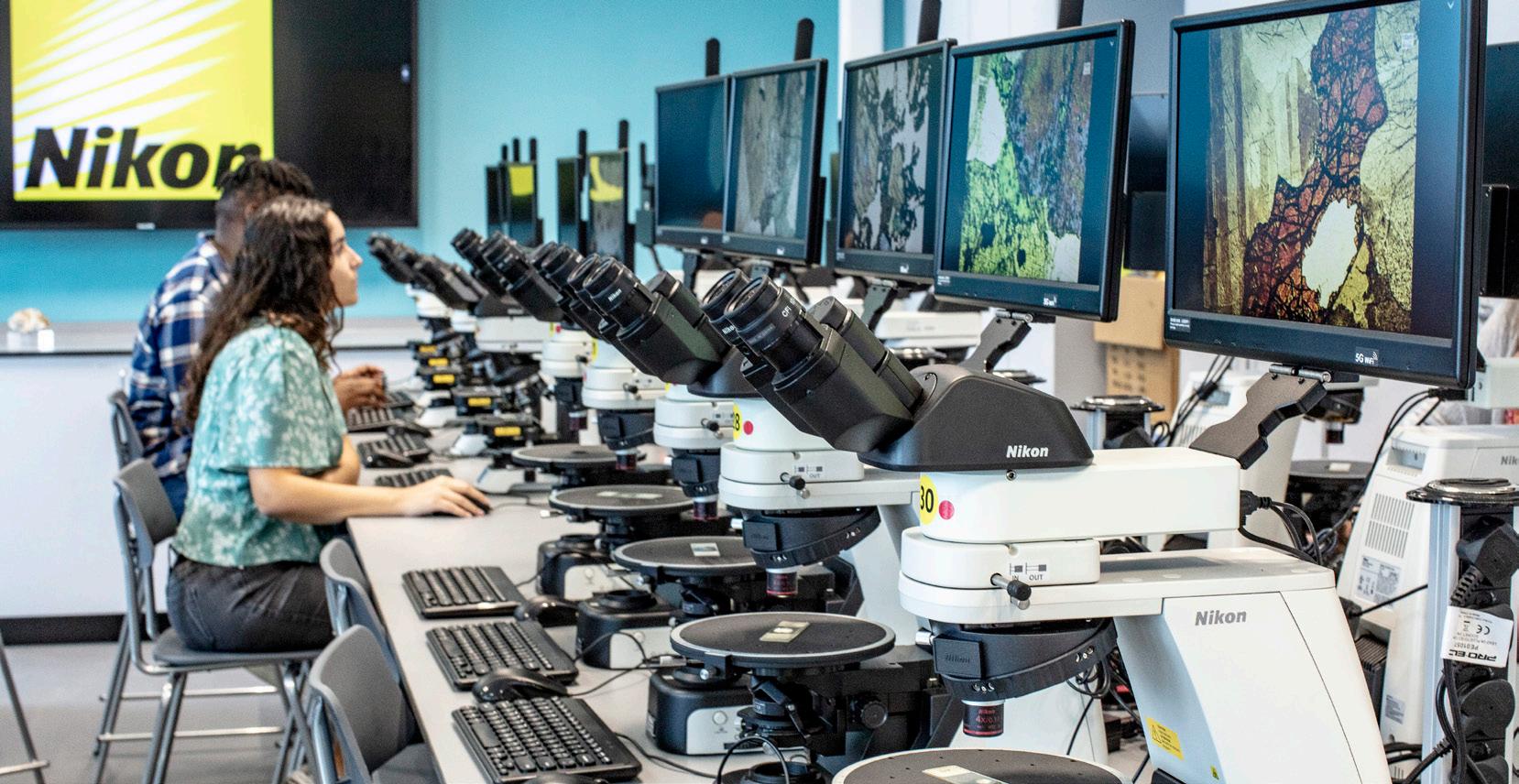
While studying with us here in Plymouth, you will have the opportunity to use our cutting-edge facilities, purpose-built to help with your studies. The University houses Europe’s first 5G Nikon microscope laboratory, which enables you to get up close with science. As well as this, you will have access to LABplus, our Marine Building and, right on the water, our Marine Station. Read more about these on page 16.
6. GRADUATE READY FOR EMPLOYMENT
We aim to develop graduates who have thorough knowledge, understanding and practical experience in key areas of marine biology as well as being intellectually inquisitive, equipped for lifelong learning and ready to play a cooperative and responsible role in society. Our graduates are employed in a wide range of careers, including environmental monitoring, pollution control, conservation, aquaculture and fisheries management, and in teaching and research activities at all levels.
9. ENJOY THE PLACE YOU’LL CALL HOME
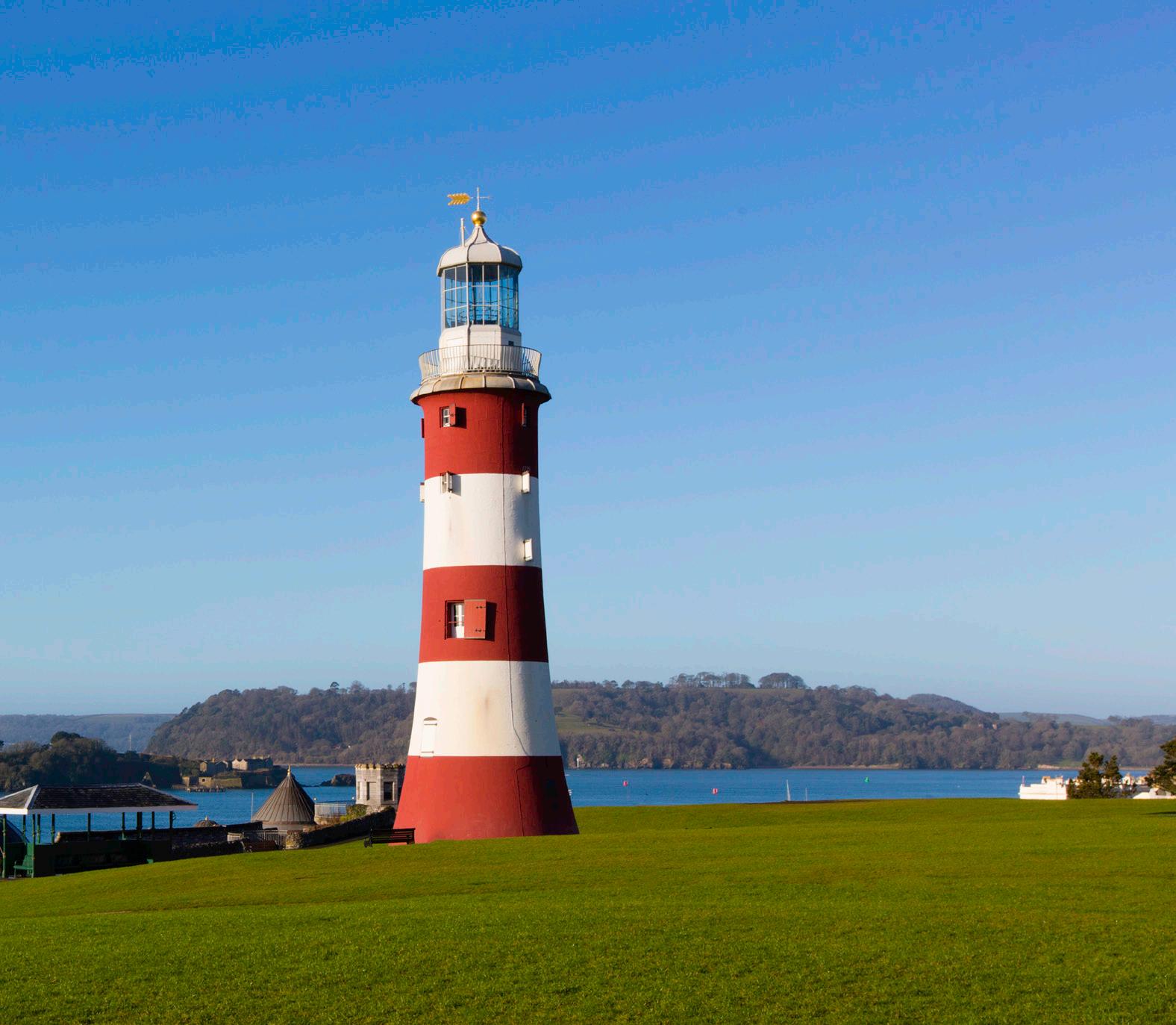
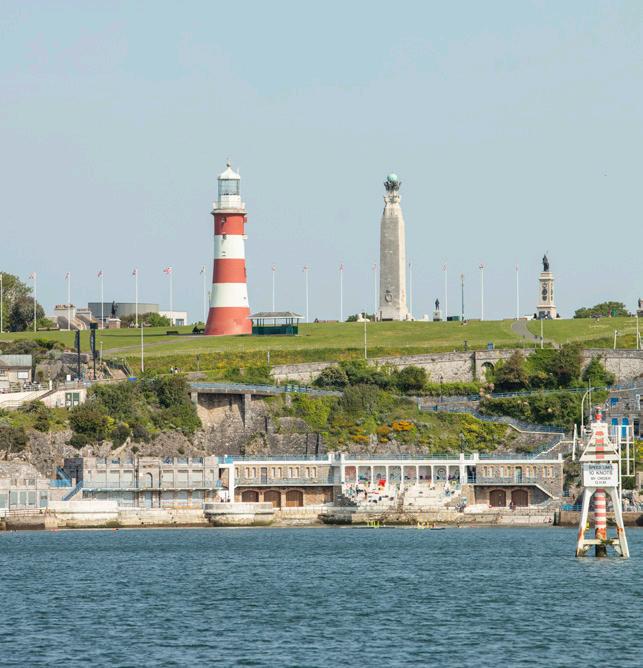
Plymouth is Britain’s Ocean City, home of the UK’s first National Marine Park and one of the UK’s most sustainable cities. With Dartmoor National Park and the Tamar Valley Area of Outstanding Natural Beauty on its doorstep, Plymouth has no shortage of outdoor activities. The city has just under ten miles of coastline and plenty of beaches, to keep you busy whether on land or sea.
7. OPPORTUNITY TO DIVE
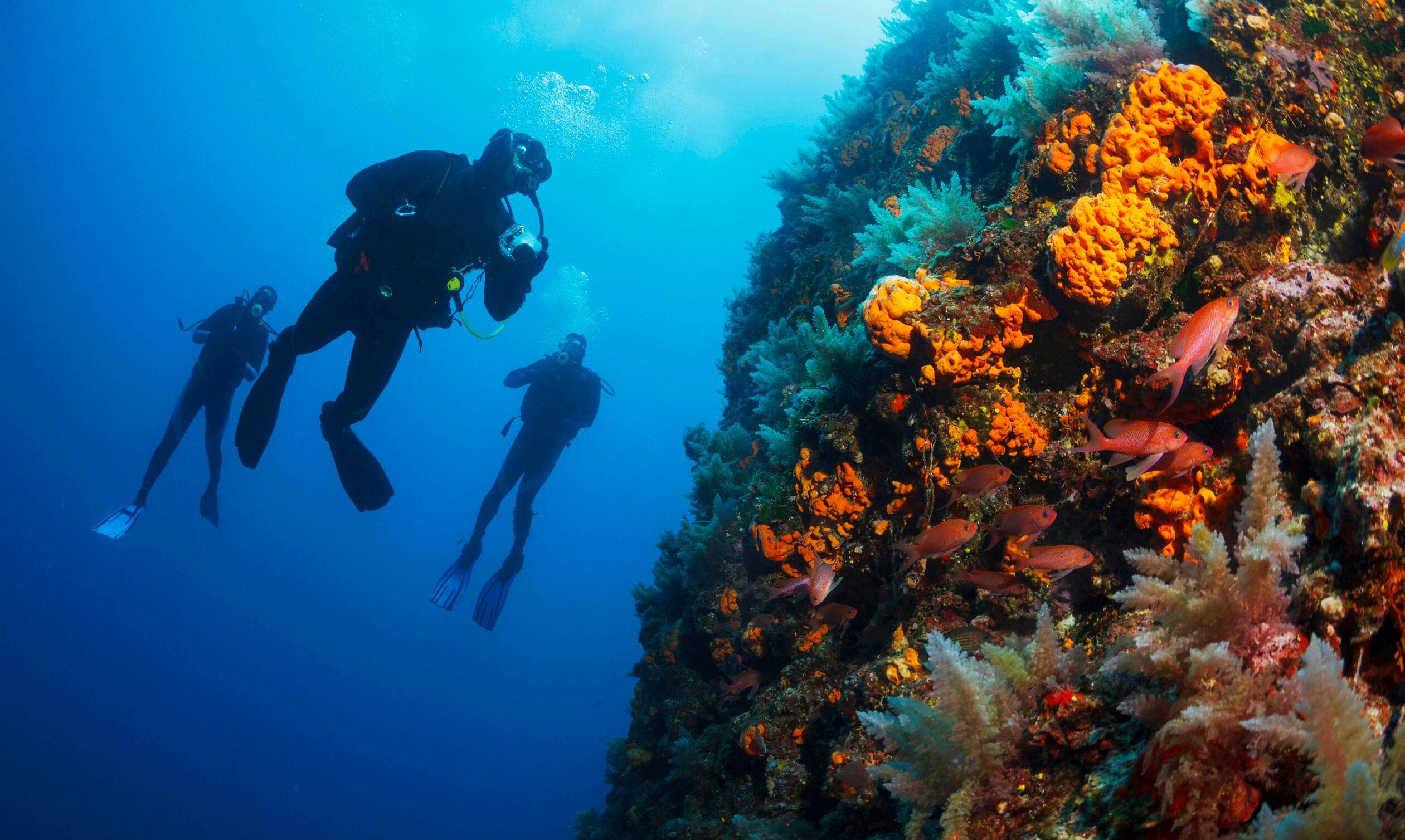
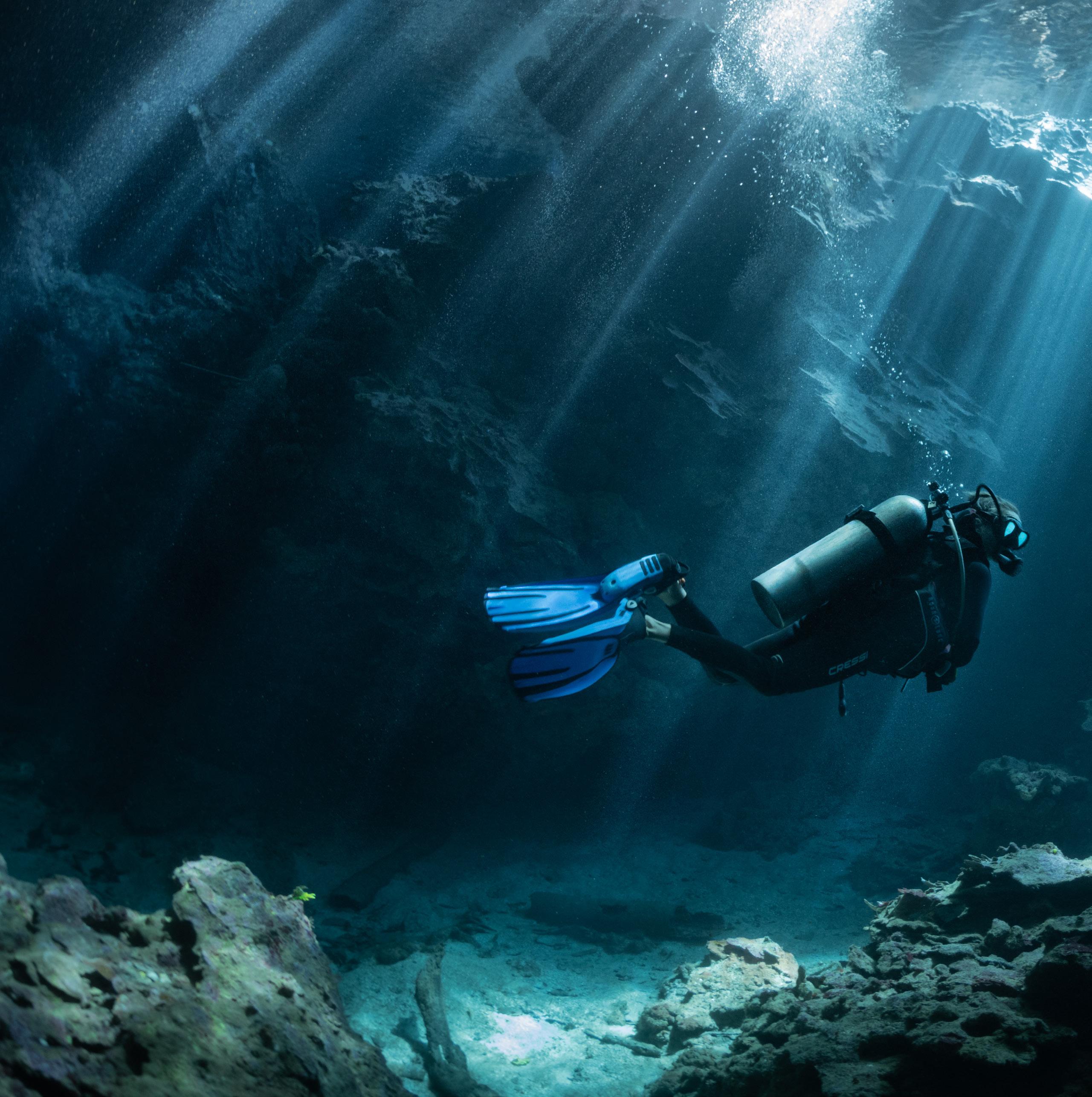
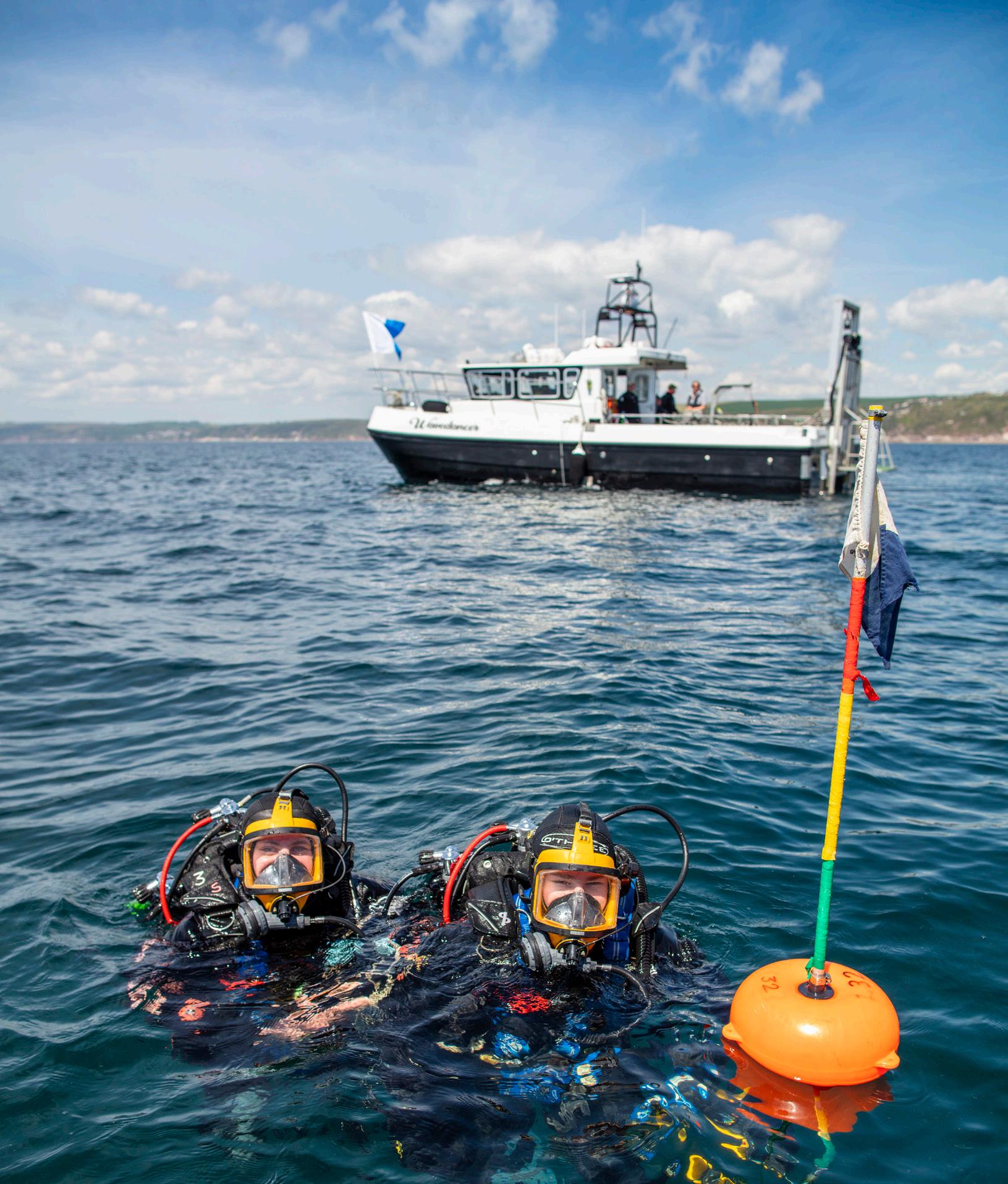
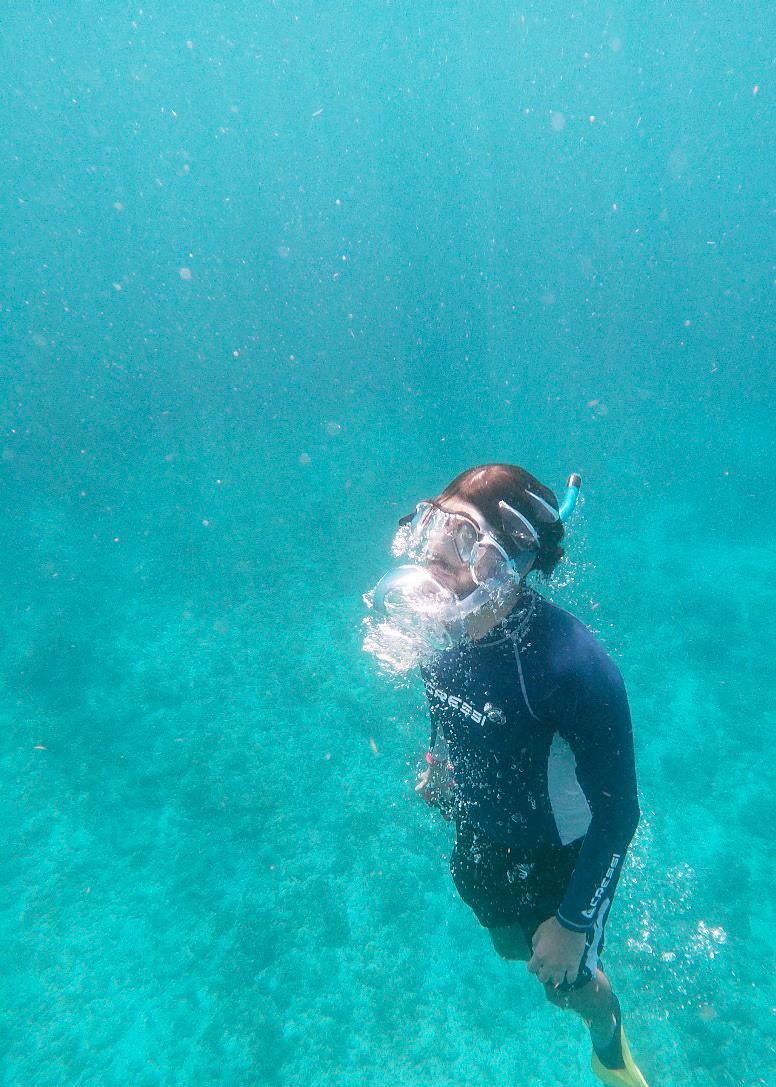
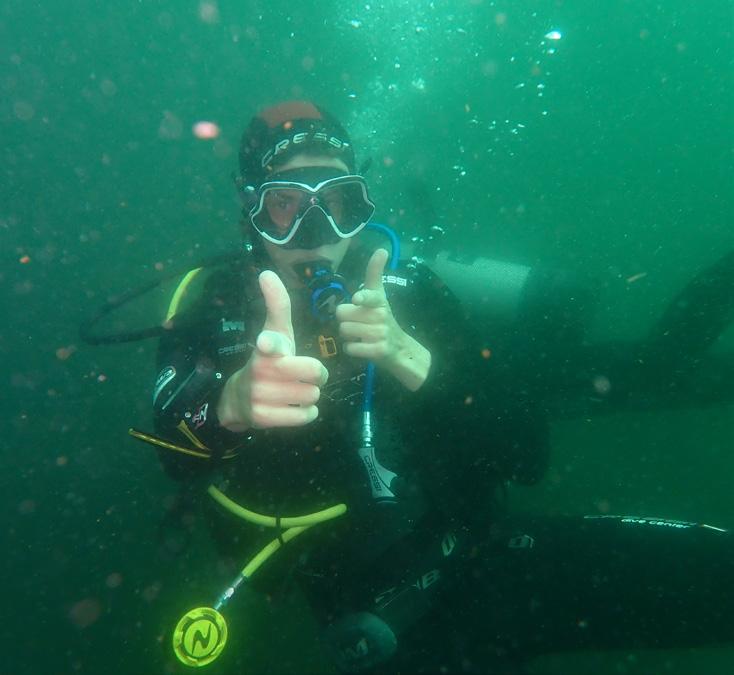
Many students will have developed an interest in marine biology through their diving experiences and can maintain this through the fantastic opportunities for recreational diving in Devon and Cornwall. For those who wish to pursue the Professional Working SCUBA Diver Qualification, this is delivered at our Marine Station as an intensive summer course. Places are limited, and there are some costs to incur, but this is something we love to offer our students and is very popular!
8. BE SUPPORTED BY THOSE AROUND YOU
We take special pride in the level and quality of our student support by friendly and approachable professors, lecturers and other staff. You will have a personal tutor who will provide academic and personal support and guidance throughout your years at Plymouth. This helps you plan and reflect on your learning and to apply it to personally relevant objectives and opportunities. A wide range of specialist advice is available, including a dedicated study skills unit, providing online support and workshops to support your learning.
10. TAKE ADVANTAGE OF PLYMOUTH’S REPUTATION
As you find out more about us, we hope you’ll recognise our facilities, expertise and the enthusiasm of our staff and students are second to none. Plymouth has an unrivalled reputation for the quality of its Marine Biology courses, and over the past 25 years our graduates have achieved great successes. We’d love for you to join our marine biology community on your own path to success!
WHICH DEGREE IS RIGHT FOR YOU?
Our suite of degrees share similar aims and learning outcomes, with differences in specific aspects according to the degree titles, and a foundation route that can lead onto one of the three subject areas.
We aim to deliver courses that:
• offer a broad, relevant and contemporary curriculum, enriched by scholarly activity of staff
• provide unrivalled practical/fieldwork and hands-on learning in marine biology
• challenge, stimulate, enthuse and encourage students by promoting a process-based approach to the different disciplines that comprise marine biology.
BS c (HONS) MARINE BIOLOGY WITH FOUNDATION YEAR
This course is intended for students with a passion to study marine biology, but who lack the normal entrance requirements for year 1 of our honours degrees. This four-year degree route incorporates a foundation year, giving you the study skills and scientific underpinning to continue the remainder of the course with confidence. Subject to passing the year with 60% overall, you will automatically progress to year 1 of one of the three honours degree routes.
FIND OUT MORE
About our BSc (Hons) Marine Biology with Foundation Year course
“Plymouth is well known for its excellence within the field of marine sciences. It has other advantages too! The campus is central to the city, the Students’ Union offers many societies and sports, and the view from the Hoe is unbeatable!” Naomi, BSc (Hons) Marine Biology and Oceanography graduate
BS c (HONS) MARINE BIOLOGY
This course has a primary focus on the understanding of marine life at the level of the biology of organisms – ranging from the microbes found on coral reefs to the physiology and behaviour of marine vertebrates. The evolution and diversity of marine organisms are core concepts.
BS c (HONS) MARINE BIOLOGY AND COASTAL ECOLOGY
This course has an emphasis on biodiversity and conservation. The course is unique in the UK in that it takes a cross-system approach, from looking at the integration of the ecology of the catchments that feed rivers, which in turn feed coastal seas, to studying marine biology, encouraging students to understand marine systems within a global context. Such an approach is highly relevant when considering the largescale nature of the current threats to marine and coastal organisms and ecosystems from humans and climate change.
FIND OUT MORE
About our BSc (Hons) Marine Biology course
FIND OUT MORE
About our BSc (Hons) Marine Biology and Coastal Ecology course
BS c (HONS) MARINE BIOLOGY AND OCEANOGRAPHY
This course is focused on the study of integrating ocean and coastal processes with marine life. The course provides an indepth study of the biology of the ocean but is set in the context of the influence of the physical and chemical environment on marine organisms. The course covers both theoretical and practical aspects, enabling you to acquire skills relevant to the challenges facing marine scientists today. Practical sessions provide a sound experience of biological and oceanographic techniques.
FIND OUT MORE
About our BSc (Hons) Marine Biology and Oceanography course
FIELDWORK WHAT CAN DO FOR YOU?
We provide many fieldwork opportunities for our students to give you a hands-on approach to your learning.
“My favourite memory of Plymouth is probably the field trip to Portugal: partly for the weather, as it’s pretty rare to be doing science in the blistering sun. But in all seriousness the group research projects were great and it’s amazing how much you can learn in a week. Plymouth gave me a good grounding in persevering with work and research. This has been, and will be, important in overcoming challenges.”
Tom, BSc (Hons) Marine Biology student
STUDENTS GAIN EXPERIENCE OF REAL-LIFE RESEARCH, INVESTIGATING MARINE ISSUES IN A WIDE VARIETY OF PLACES. THE SKILLS GAINED FROM FIELDWORK ARE HIGHLY SOUGHT AFTER BY MANY DIFFERENT EMPLOYERS AND INCLUDE:
• Data and sample collection and analysis
• Teamwork
• Problem-solving
• Experience using a wide variety of scientific equipment and technology
• Scientific writing.
We are proud to provide an extensive range of fieldwork opportunities, both locally, making the most out of our privileged location, and internationally, with residential field courses previously including France, Sweden and South Africa. We believe that worthwhile and responsible international travel provides an important context for us to better understand different marine environments, biology, and ecosystems. This international theme is also a core part of our focus on finding solutions to global challenges. Graduates from our courses will be well prepared to contribute to employers all over the world.
FIND OUT MORE About our marine biology field courses
ANTONY’S STORY
Get to know our BSc (Hons) Marine Biology and Oceanography student
WHY DID YOU DECIDE THAT THE UNIVERSITY OF PLYMOUTH WAS THE RIGHT PLACE FOR YOU TO PURSUE MARINE BIOLOGY?
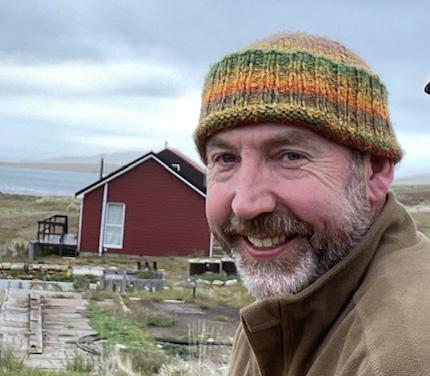
I love the area and love nature, especially in the sea. I served my last job in the RAF in the Falklands, which had amazing wildlife, which reminded me that I could study marine biology. So I did an access course, applied to universities, and got accepted to Exeter and Plymouth. During the application process, I researched the establishments, and not only was Plymouth convenient as I live here, but it also has a great reputation worldwide and some excellent facilities including the Marine Station and diving courses. Even though Plymouth had a higher requirement (had to get lots of distinctions in my access course – which was nerve wracking!), it genuinely seemed like the best place to study marine biology. This was backed up by attending an offer holder day which showed off all the great aspects of the University.
WOULD YOU RECOMMEND UNDERTAKING MARINE BIOLOGY WITH THE UNIVERSITY, IF SO, WHY?
Definitely! The course is challenging and hard work at times but incredibly interesting and rewarding. The staff are keen and engaging and their enthusiasm is infectious. Lab work, fieldwork and boat work are especially enjoyable and worthwhile. The online services via the DLE are great and I use the library and study areas in Babbage a lot. I treat studying like a full-time job so I can have evenings and weekends free, and
these places give me an ‘office’ to use when not in lectures and practicals. I have had some assistance with stats from the SUM:UP team too, which was great as maths is my Achilles heel.
“I did take part in the ‘Enhance Your Future’ programme, which was valuable and added to the resettlement package I got from the RAF, as well as engaging more with my cohort. It encouraged me to organise a miniinternship for the summer, which I did with the Deep-Sea Conservation Research Unit at the University, and this has in turn led to me working with Professor Kerry Howell on my final project next year.”
My first year had an introductory rock pooling session at Mount Edgcumbe, a field week based on sampling done at Devil’s Point, and a week’s residential course in Roscoff. Each of them was brilliant and built on lectures and techniques taught. I am very excited about the upcoming field trip to Sweden, where we can sample some deep-sea organisms from a fjord.
HOW DO YOU FEEL THE SUPPORT HAS BEEN DURING YOUR TIME AT THE UNIVERSITY?
So far, I have had a great experience with the staff. They are busy people, balancing their own research with teaching, so responses to emails are rarely instantaneous understandably. However, they do respond, act on feedback given, and provide good feedback to me on work I have done, enabling improvement. The support staff in the library have also been very helpful, including a one to one with the information specialist, Kim Davis, on how to use EndNote, a very useful referencing tool.
WHAT CAREER PATH ARE YOU HOPING TO FOLLOW, AND HOW IS THE UNIVERSITY HELPING YOU TOWARDS THAT GOAL?
I’m really not sure at this point as the field is so broad. Continuing to work in research and contribute to conservation efforts at somewhere like Plymouth Marine Laboratory would be awesome, but I’m also open to travelling for other opportunities, with the deep sea definitely my area of interest.
STUDENT STORIES
ROSE
BSc (Hons) Marine Biology
WHY DID YOU DECIDE THAT THE UNIVERSITY OF PLYMOUTH WAS THE RIGHT PLACE FOR YOU TO PURSUE MARINE BIOLOGY?
Being an international student, I didn’t have the opportunity to attend the open day and had to base my decision on pictures, facilities and reviews, and Plymouth seemed to excel in all those aspects. Getting in touch with the Faculty of Science and Engineering greatly helped my decision making too as I was put in touch with one of the Marine lecturers who cleared all my queries and basically sold the course to me!
The University offers an immersive setting ideal for hands-on learning, whether dissecting specimens under high-powered microscopes, performing experiments to analyse water quality parameters, or going on field trips to Roscoff and Portugal to study coastal ecosystems.
“In addition, facilities such as the career services and LABplus were great tools to boost my understanding of marine biology. “
The Careers Service has been instrumental in shaping the professional aspect of university for me and prepared me for the dynamic world outside of academia. As it can be especially challenging being an international student, the Careers Service team provided invaluable guidance and support, through personalised career counselling sessions, workshop, and networking events. From refining my CV and honing my interview skills, to exploring internship opportunities and connecting with industry professionals, their approach has equipped me with the skills needed to navigate my prospects after university.
WOULD YOU RECOMMEND UNDERTAKING MARINE BIOLOGY WITH THE UNIVERSITY, AND IF SO, WHY?
I would highly recommend going for marine biology at Plymouth, as one of its highlights is having the sea at its doorstep with a well-equipped Marine Station, where you will be spending half your time, from observing a variety of marine organisms to doing water sampling on boats. To add to it, Plymouth holds a profound and experienced set of experts for marine biology who widen your interest in the subject, with a willingness to go above and beyond to provide support and hands-on learning experiences which are transformative.
ELLIE
BSc (Hons) Marine Biology
WHAT WAS YOUR MAIN REASON FOR CHOOSING TO STUDY YOUR COURSE AT PLYMOUTH?
I had already heard about Plymouth’s great reputation for marine biology, but it wasn’t until I did some work experience during Year 12 at the National Marine Aquarium that I was truly won over. The choice was made even easier after finding out how to become a marine biologist from inspiring researchers at the open days. And, like many others, I was excited about the chance to get some professional dive training during the degree! The HSE course was intense but so worthwhile, as I met my undergraduate project supervisor through the second-year diving module, and it’s helped me to take part in scientific diving work overseas.
HOW DID STUDYING AT PLYMOUTH CHANGE YOUR CAREER ASPIRATIONS AND PLANS?
Without a doubt, the brilliant lecturers and staff who ran the courses inspired me to pursue the opportunities I did. For instance, I knew that I wanted to study coral bleaching and climate change for my undergraduate project, but no one specifically focused on that topic at Plymouth. However, after chatting to one lecturer, Jason HallSpencer, I discovered that he
collaborated a lot with a researcher in Israel who did. He ended up becoming my co-supervisor and I was able to do my project on Red Sea coral thermal tolerance with his colleague at the Interuniversity Institute for Marine Sciences (IUI) in Eilat. Because I liked the balance of the different roles and dynamics within research (i.e. between lab work, fieldwork, and science communication, etc.), I decided that I wanted to do that as a career.
WHAT HAS BEEN YOUR FAVOURITE MEMORY OF STUDYING FOR YOUR DEGREE AT PLYMOUTH?
• Marine Biology field courses to Roscoff and Portugal, and day trips to local coastal areas (Wembury was a particular favourite).
• HSE diving course: using full-face (AGA) masks to talk underwater, and when a huge basking shark swam right past the dive boat on the last week!
• University societies (e.g. music): a great form of stress relief from coursework and exams, and I made so many great friends through them.
• Working as a host at the National Marine Aquarium: not many things
are as motivating as seeing the looks of excitement on young people’s faces when you tell them some cool facts about sharks, corals, and tiny critters at their local beaches!
• Doing my undergraduate project in Israel and scientific diving in the Red Sea.
WHY WOULD YOU RECOMMEND UNDERTAKING A COURSE WITH THE UNIVERSITY OF PLYMOUTH?
Many marine biology courses at other universities also offered exciting field trips or interesting modules, but it was the people at Plymouth who made it so special for me. I was constantly having to learn multiple things at a fast pace, but I was surrounded by so many staff and students who were also there because they enjoyed the subject that it didn’t feel overwhelming, and it made the whole experience so rewarding for all of us. Plymouth also has an option to do a placement year, where you can gain numerous skills for your CV, or even set you up for a job after uni!
FACILITIES
WATERFRONT CAMPUS
We’re living in a world with an increasing number of global challenges that our graduates need to be prepared for when going into industry. As part of our portfolio, we’re proud to offer a selection of cuttingedge facilities that can be accessed by all our students. All were created to enhance the student experience and widen our ability to provide you with the best learning environments, relevant, hands-on experience, and world-class teaching.
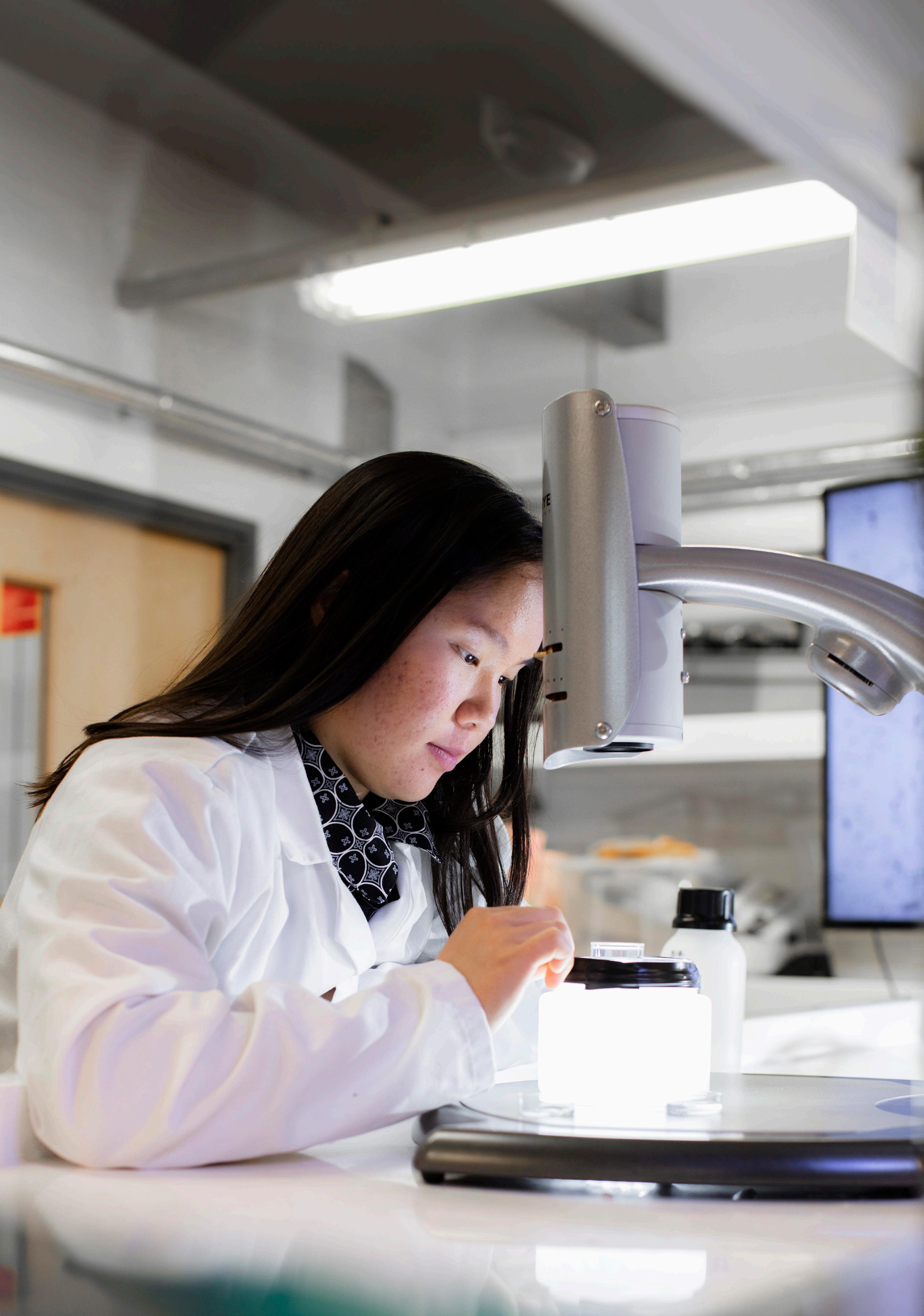
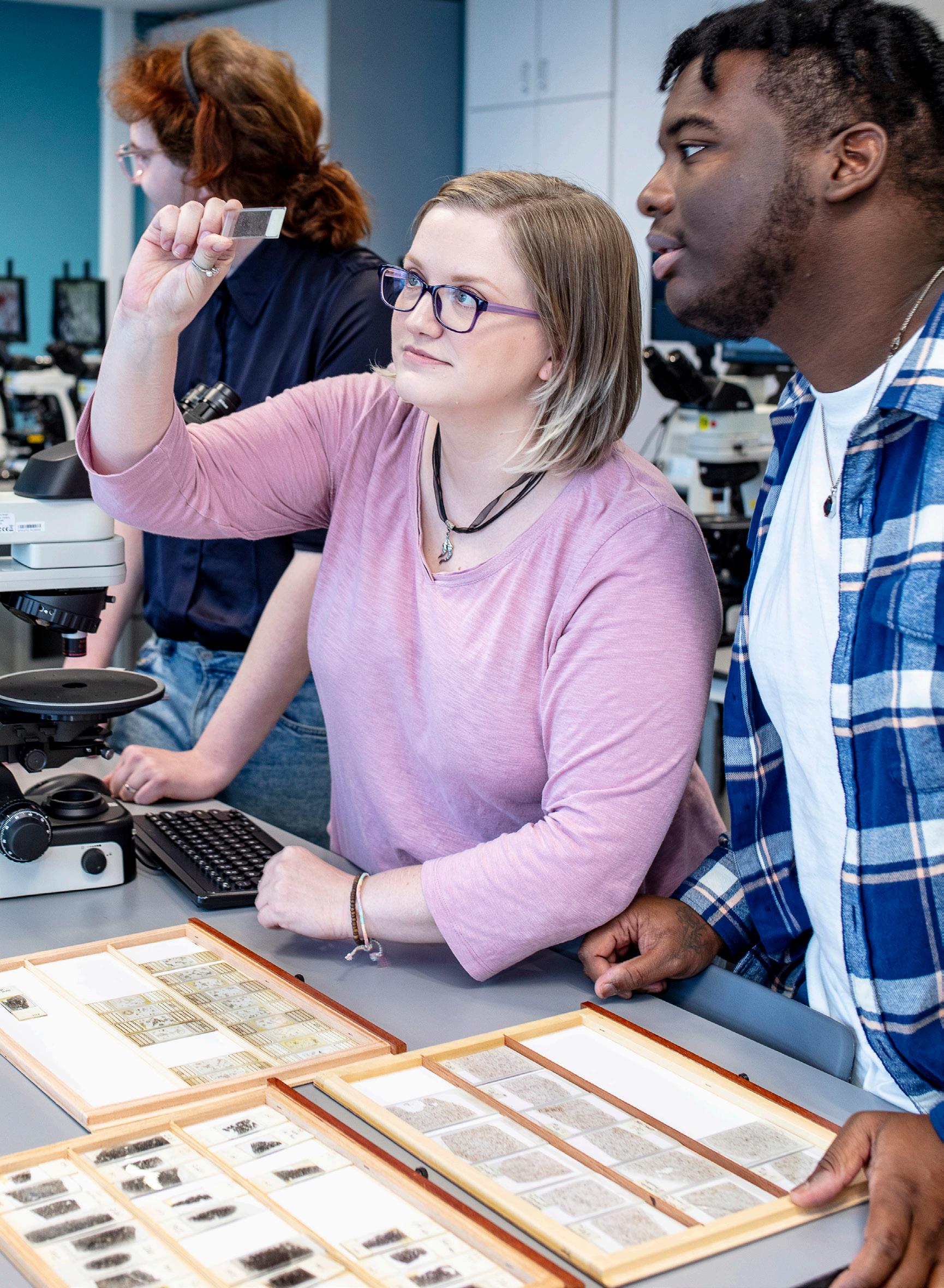
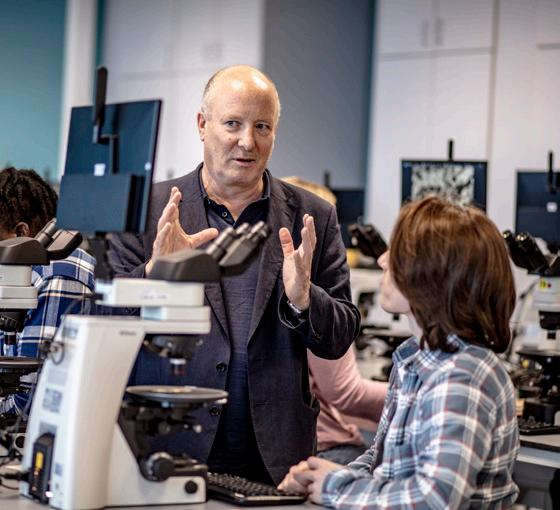
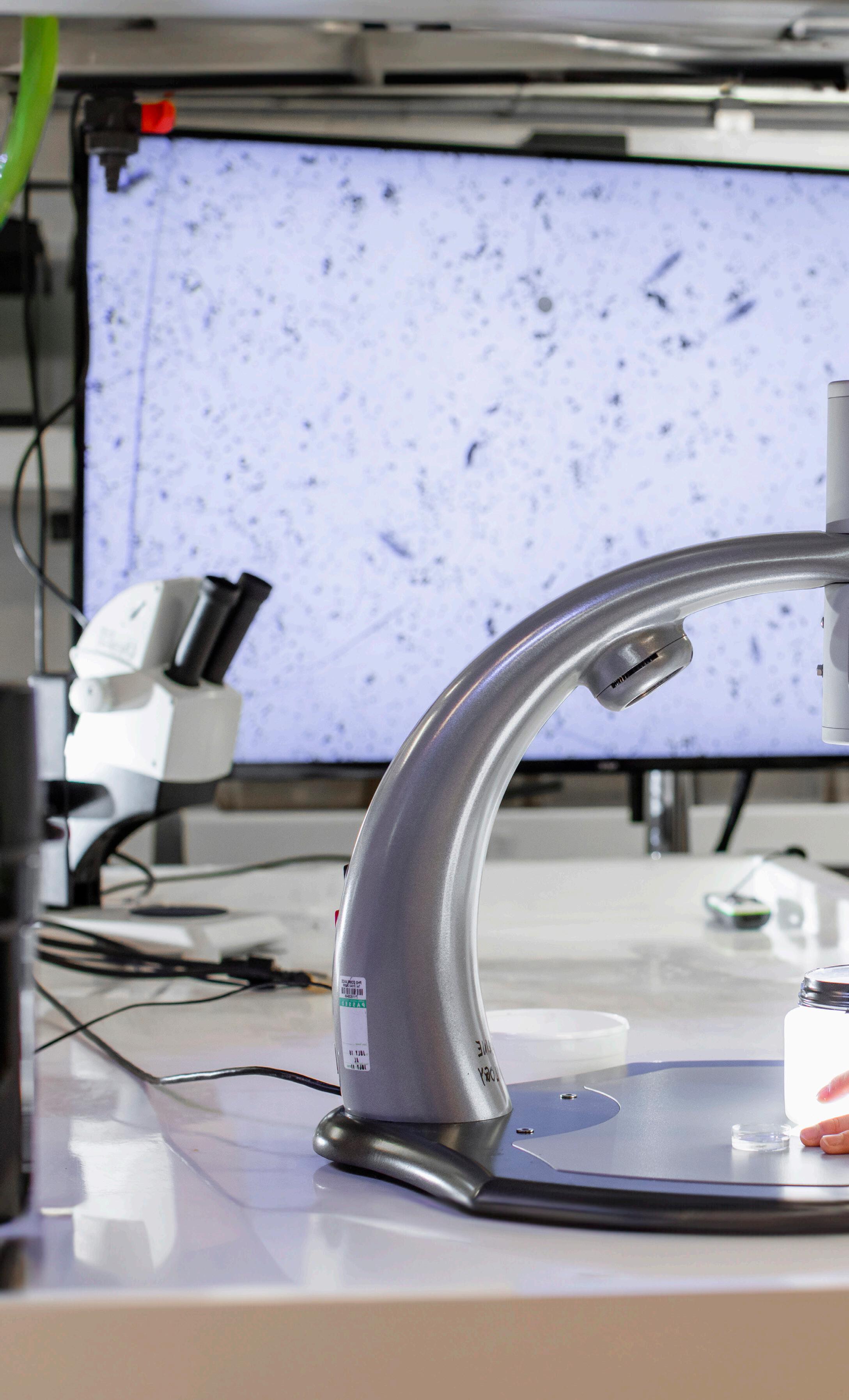
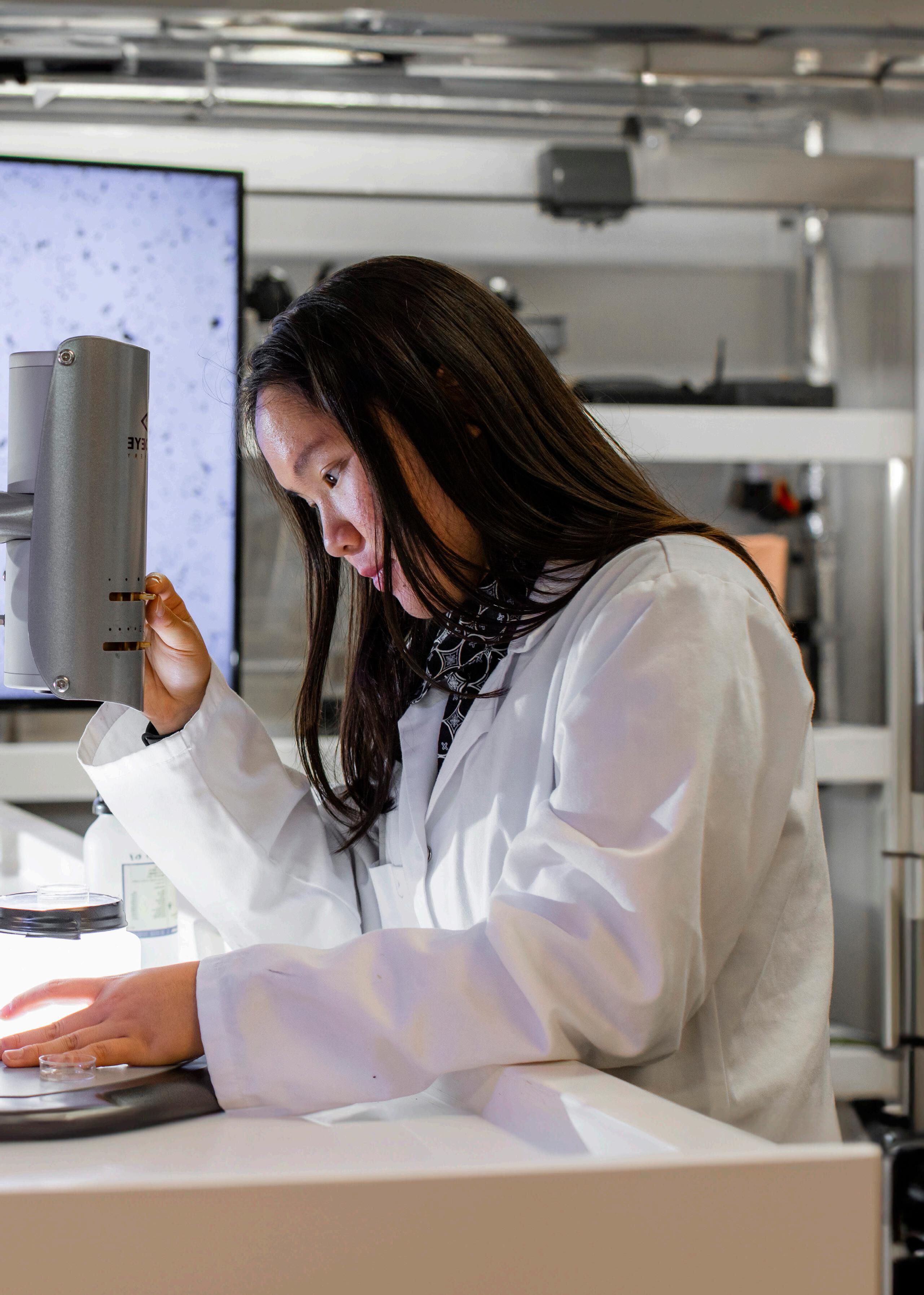
We’re partnered with Nikon Industrial Metrology Business Unit and Ostec Instruments to house Europe’s first 5G microscope lab, which transforms the
learning experience, enabling students to get up close with science in a way that they haven’t before. Comprising 150 microscopes, the labs have been created for you to look at a range of biological samples. You will collect many of these samples on your field courses and down at our Marine Station and explore the fundamentals of the planet’s life forms, and how they have changed due to climate change.
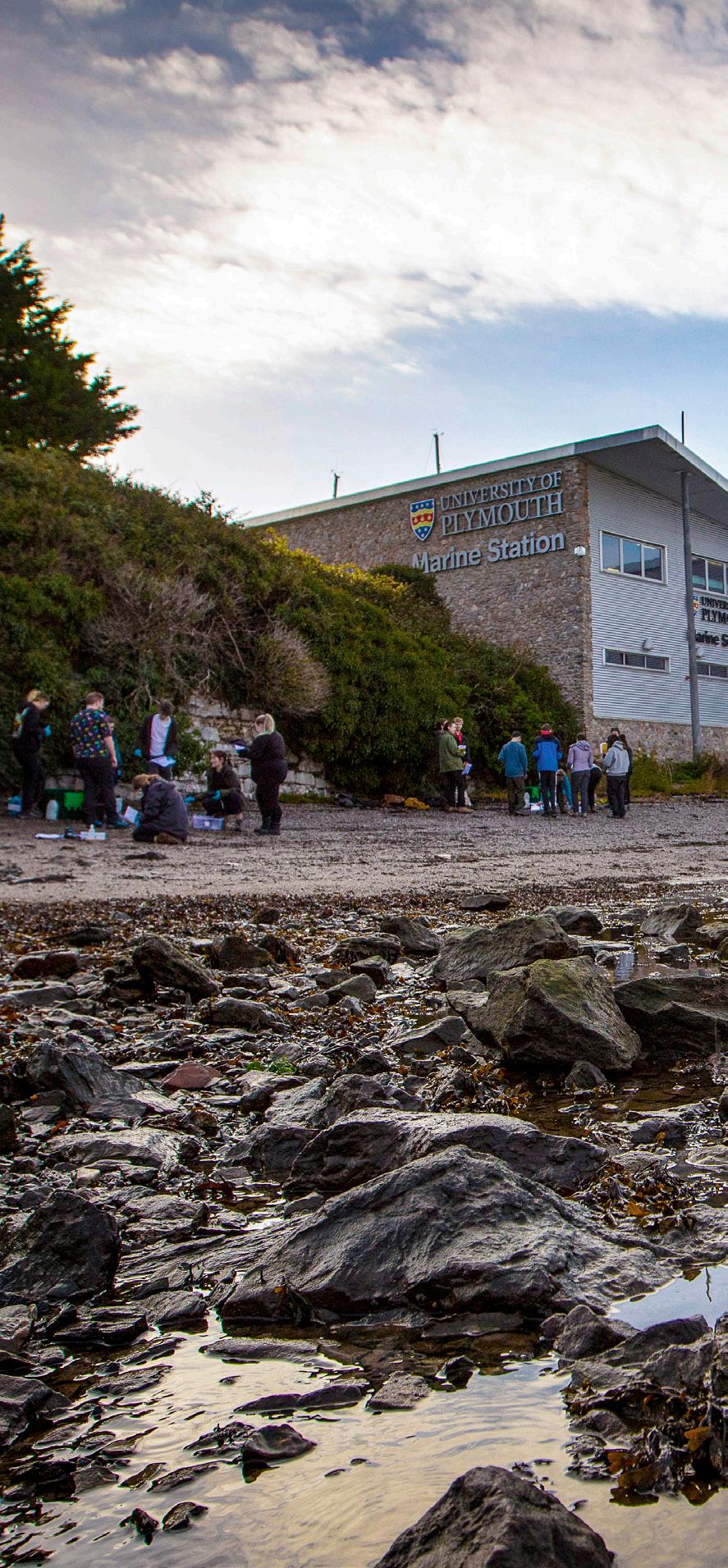
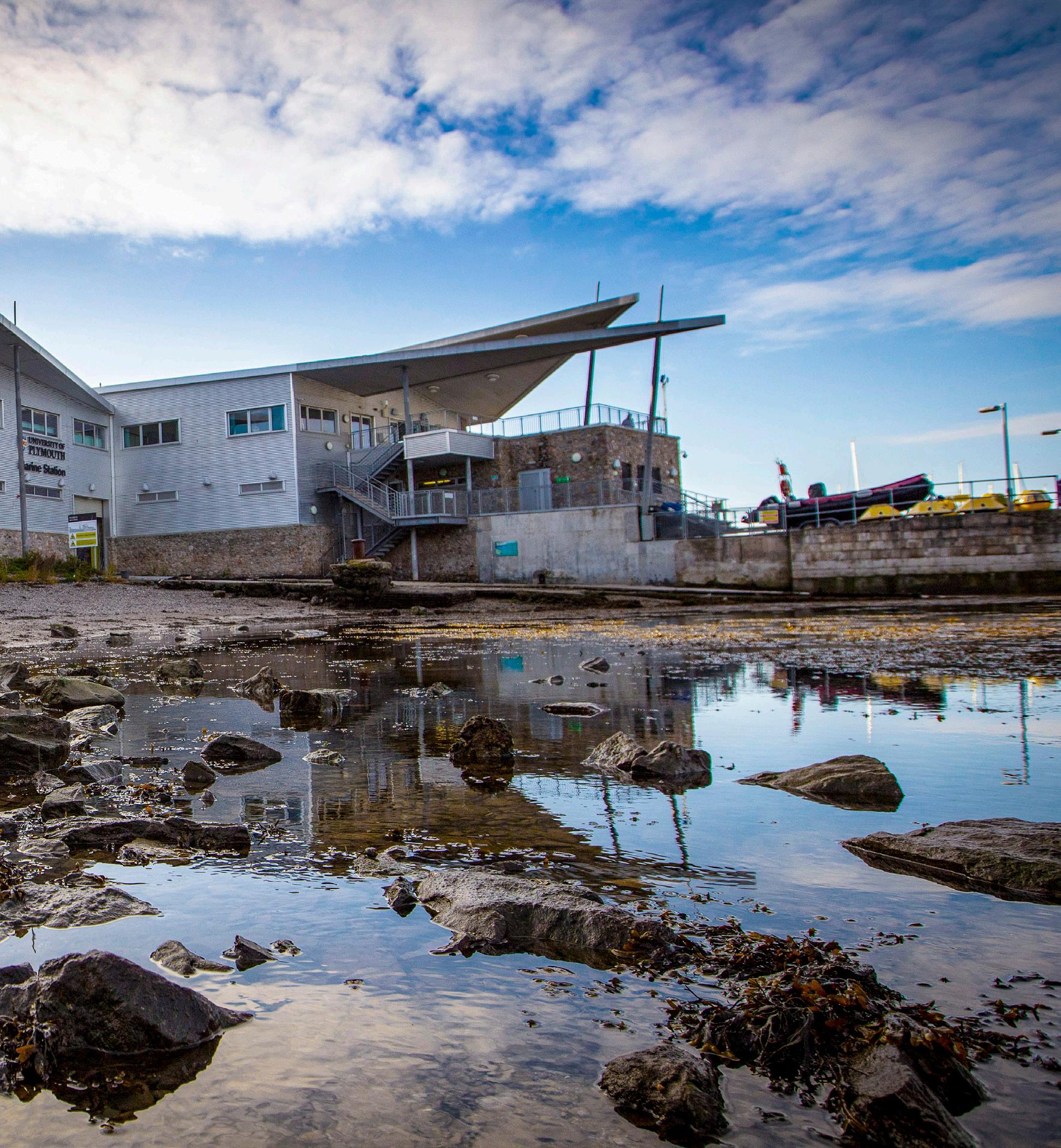
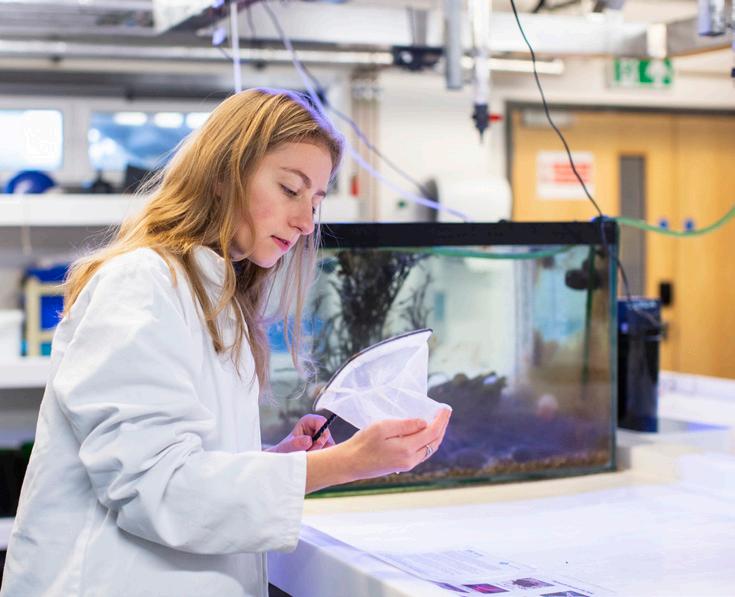
Our £5 million Marine Station is sited on our waterfront campus which is nestled on the shores of Plymouth Sound. This facility offers labs and classrooms extending out into the natural environment that will
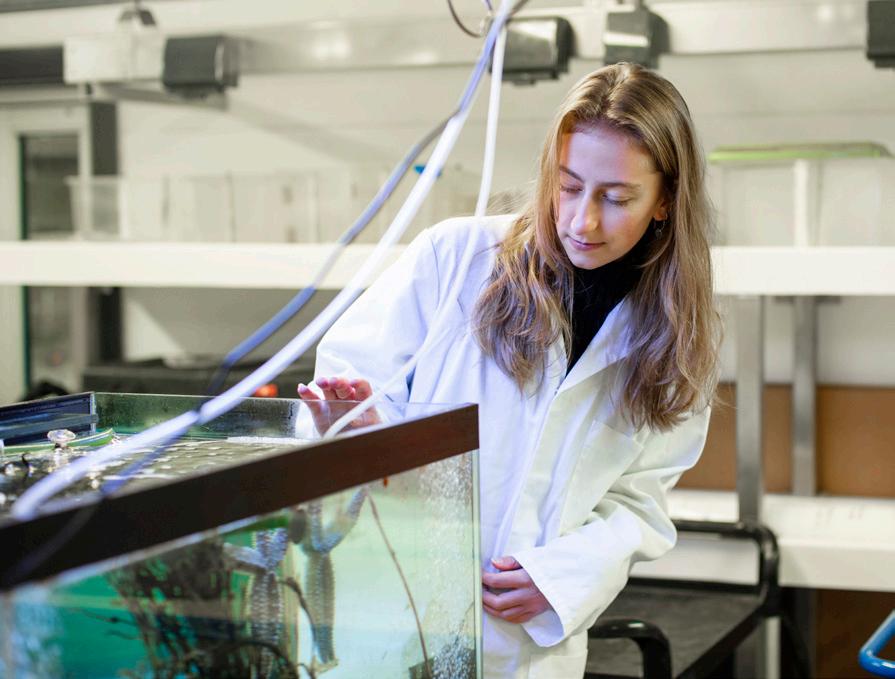
enable you to not only get first-hand experience within our wet laboratory used for sample examination and analysis, but also experience our seawater aquarium, where you will be able to store and examine specimens with minimal disturbance to sea life.
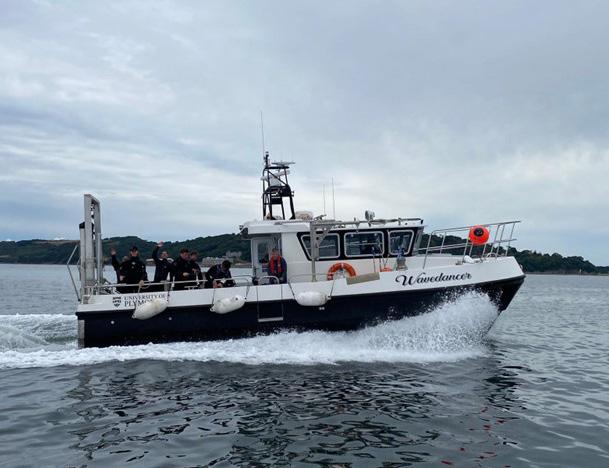
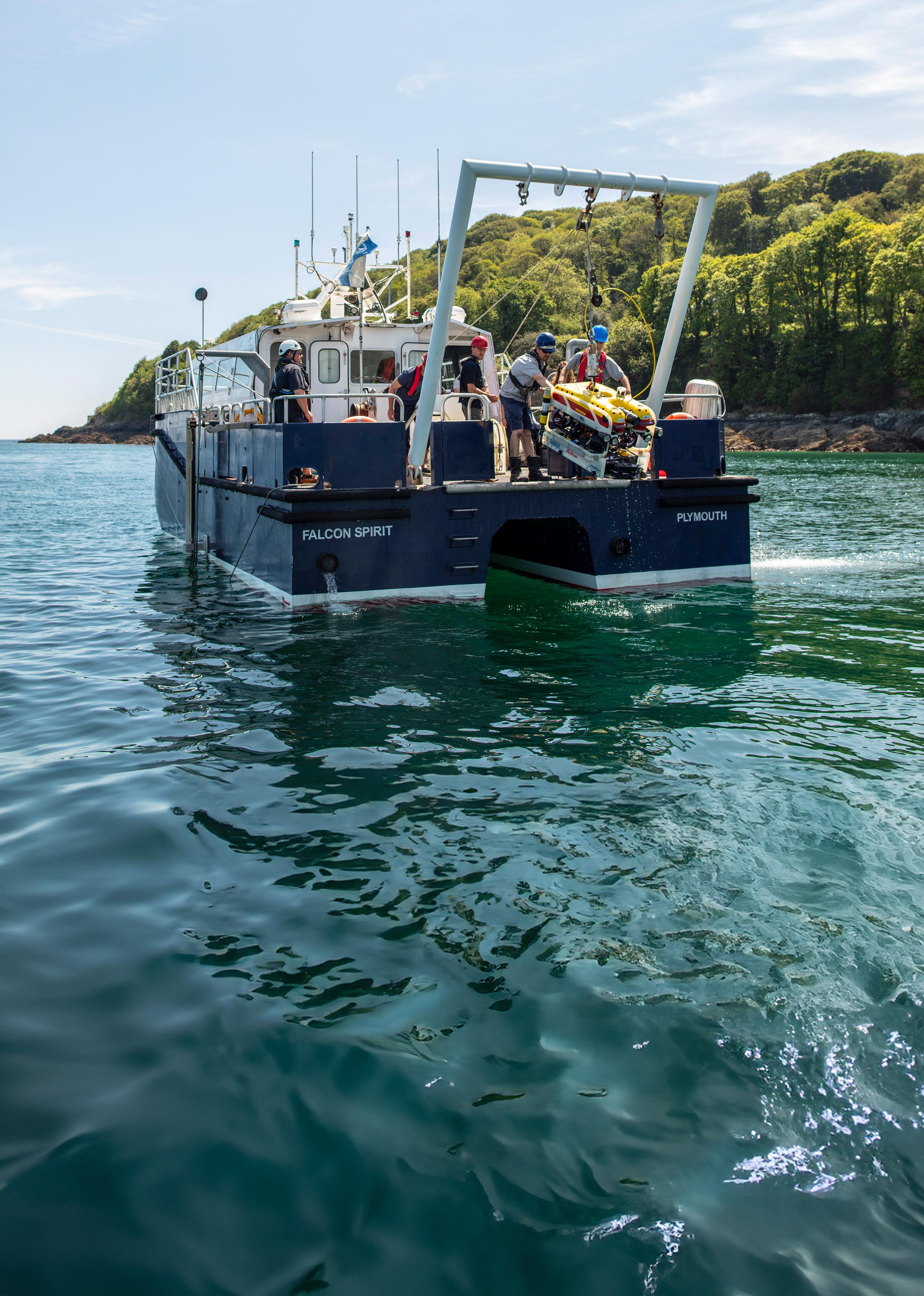
As well as this, the Marine Station is the base for our fleet of vessels, which you will be using during practical sessions, individual project work and research. You will have the opportunity to use these facilities for several different things, spanning the collection of seabed and water samples, to the acquisition of hydrographic survey and oceanographic datasets.
FIND OUT MORE Specialist facilities you may encounter during your time studying with us in Plymouth
SOME OF THE INSTRUMENTATION WITHIN THE BUILDING INCLUDES:
• survey sensors, including an acoustic Doppler current profiler
• a remotely operated vehicle (ROV) equipped with HD video camera
• a multi-beam echo sounder
• and much more...
“The University provides ample opportunities to gain laboratory experience, providing skills in taxonomy, though I was somewhat cheated out of this due to COVID-19; boat time, learning how to operate underwater ROVs, using CTDs and ADCPs, trawling, grab and core sampling, and scientific SCUBA diving; field trips both local and abroad; and workshops to learn how to use programs such as R and MATLAB. Such teachings have provided a stable foundation for further development after graduation”.
“One of the main reasons I came to study at Plymouth was the facilities and the fact that I could use them and that they weren’t reserved for research and external bookings. It was great being able to use equipment that I would be using out in the field – it really helped me to develop a deeper understanding of the field.”
Matt, BSc (Hons) Marine Biology and Oceanography student
Luke, BSc (Hons) Marine Biology graduate
WHY YOU SHOULD DO A PLACEMENT
Placements can be incredibly beneficial for undergraduate students studying our Marine Biology courses. A placement provides valuable, hands-on experience outside of the classroom and can prove to be a great networking opportunity.
Many of our students have either gone on to be offered graduate employment by their placement organisations or have used a placement to help them decide their career routes. A placement is the perfect opportunity to refine and enhance your CV, put theory into practice, and hone valuable skills that will be attractive to employers after you graduate.
WHAT COULD YOU DO ON YOUR PLACEMENT YEAR?
Placements can provide a deeper, working level understanding of the career paths that are available following a degree. For example, a student interested in marine biology may choose to pursue a placement in research, processing kelp holdfast samples in the lab, while another student may be interested in a placement as a project consultant, helping to develop a device to reduce cetacean bycatch in fisheries. Placements can help to highlight you as a candidate for a role, giving you valuable experience and specialist skills.
WHY SHOULD YOU UNDERTAKE A PLACEMENT?
While we equip you with as much hands-on experience and opportunity to put theory into practice as possible, a placement can provide you with that little bit extra to make you stand out from the crowd. A placement also exposes you to a professional environment where you’ll be expected to work with a team and communicate and collaborate with others in that setting. Being able to bounce off the people around you and gain direct experience of working in industry can be invaluable to your career path and your final years at university.
Louise-Oceane, BSc (Hons) Marine Biology and Coastal Ecology graduate
I recommend all students to do a placement year! Personally, I spent three months in South Africa in a marine conservation genetics laboratory and four months in Chile in a subtidal ecology laboratory. These were very different experiences, both professionally and personally, but both very rewarding. I acquired new skills in the laboratory and in the field, met lots of people, and became interested in subjects that I hadn’t known about before.
But above all, I was able to step back from the pace of university, away from the lecture theatres and library, and into a more professional environment with a completely different mindset and set of objectives, which enabled me to think about my career aspirations, my interests, my values and the direction I wanted to take after my degree.
I think that the human aspect of a placement year, which allows you to grow and mature, is just as important as the professional skills you acquire. Get out there, learn about marine biology topics, learn about yourself, and come back to uni with a better idea of who you are and where you are heading!
Find out more about what Louise-Oceane has been up to since graduating on P. 28.
RESEARCH INTERN, BAY ISLANDS
CONSERVATION ASSOCIATION (BICA), ROATAN, HONDURAS
TELL US ABOUT YOUR PLACEMENT...
I did my placement at BICA, which is an NGO that has pushed for conservation and the sustainable use of natural resources on the three bay islands of Honduras since 1991. They focus on environmental education, community development, protection, and research and monitoring.
There were over 20+ projects that were being undertaken at BICA while I was there, so my responsibilities varied depending on what project I was working on. I was responsible for all diving operations, from management of the Coral Nursery, application of antibiotic treatment to diseased corals, to survey dives to monitor reefs.
WHAT IS THE BEST MOMENT AND/OR MOST REWARDING ACHIEVEMENT YOU’VE EXPERIENCED DURING YOUR PLACEMENT?
Being given responsibility for all diving operations was quite rewarding, because it showed that an organisation believed in my abilities. I was also able to publish and present a poster on larval fish at the Gulf and Caribbean Fisheries
Institute’s 75th annual conference, which is quite important for my career. In collaboration with BICA, we were also able to successfully secure a grant for $20,000 for a project that I had planned out and was supervising.
WHAT SKILLS HAVE YOU GAINED FROM UNDERTAKING YOUR PLACEMENT?
I have gained the ability to work in a diverse team with scientific and nonscientific individuals. I have learnt how to write grants proposals and defend them in front of a committee. I improved my laboratory skills by preparing bacterial samples and identifying larval fish under a microscope. My diving ability has increased significantly owing to the sheer number of surveys that I have conducted. My interpersonal skills have increased significantly. I am also able to critically analyse projects a lot more efficiently having had the experience of doing it to projects in real-life situations.
HOW DID THE UNIVERSITY SUPPORT YOU TO ARRANGE YOUR PLACEMENT? I decided to extend my placement by over four months. The University helped me secure more funds to help cover the
added costs of staying longer in Roatan. This coordination was done by email and took two to three weeks to finalise. It was done very easily without hiccups and didn’t involve preparation of a lot of documents.
WHAT ADVICE WOULD YOU GIVE TO A PROSPECTIVE STUDENT CONSIDERING UNDERTAKING A PLACEMENT?
If you’re not sure what you want to pursue, doing a placement will open your eyes to the various possibilities that you have in front of you. If you’re sure of what you want to pursue, doing a placement will solidify your decision and give you the relevant skills to boost your career. It’s a year off university, but you’ll come back with a new attitude towards life. The motivation that a placement can give you is unrivaled and pushes you to complete your degree on a high, with a clear goal of how you want to proceed with your career.
PLACEMENT PROFILE
FRANCISCO
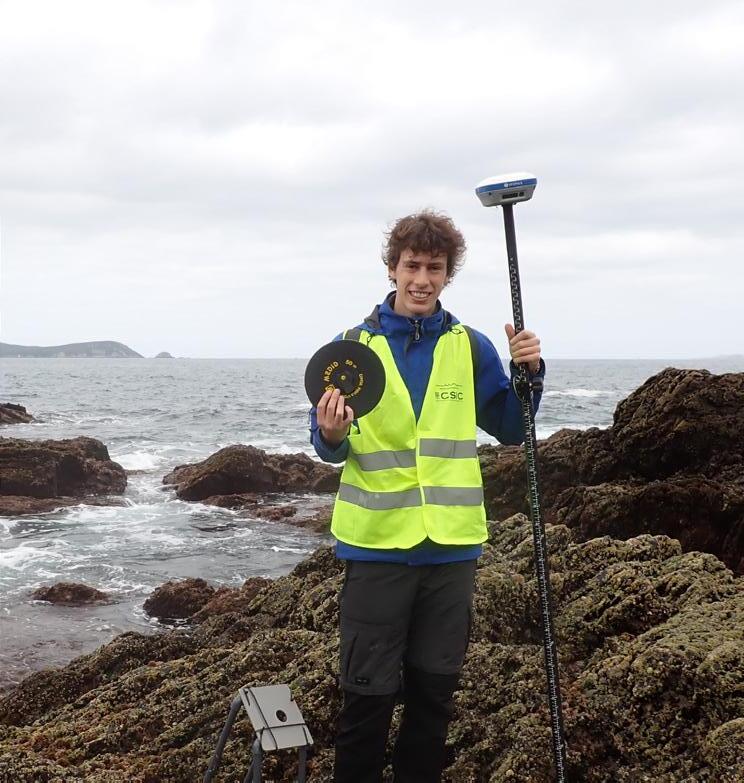
RESEARCH INTERN, INSTITUTO DE INVESTIGACIÓNS MARIÑAS (IIM-CSIC), SPAIN
WHAT ORIGINALLY MOTIVATED YOU TO TAKE A PLACEMENT IN THIS FIELD?
The main driver of my decision to take a placement was the need to find out what it would be like to work as a marine biologist. Was all the knowledge that I had learnt in lectures, practicals and field courses applicable to the real world? Could I have an impact on human society and the natural environment using the skills I acquired in my degree? I am now happy to say yes!
Not only that, but by diving into certain research fields and scientific questions I managed to discern the things I like from the things I dislike about the job.
WHAT WERE YOUR DAILY ROLES/ RESPONSIBILITIES/ROUTINE OF YOUR PLACEMENT?
I took part in assessing the growth, behaviour, morphology and resilience of
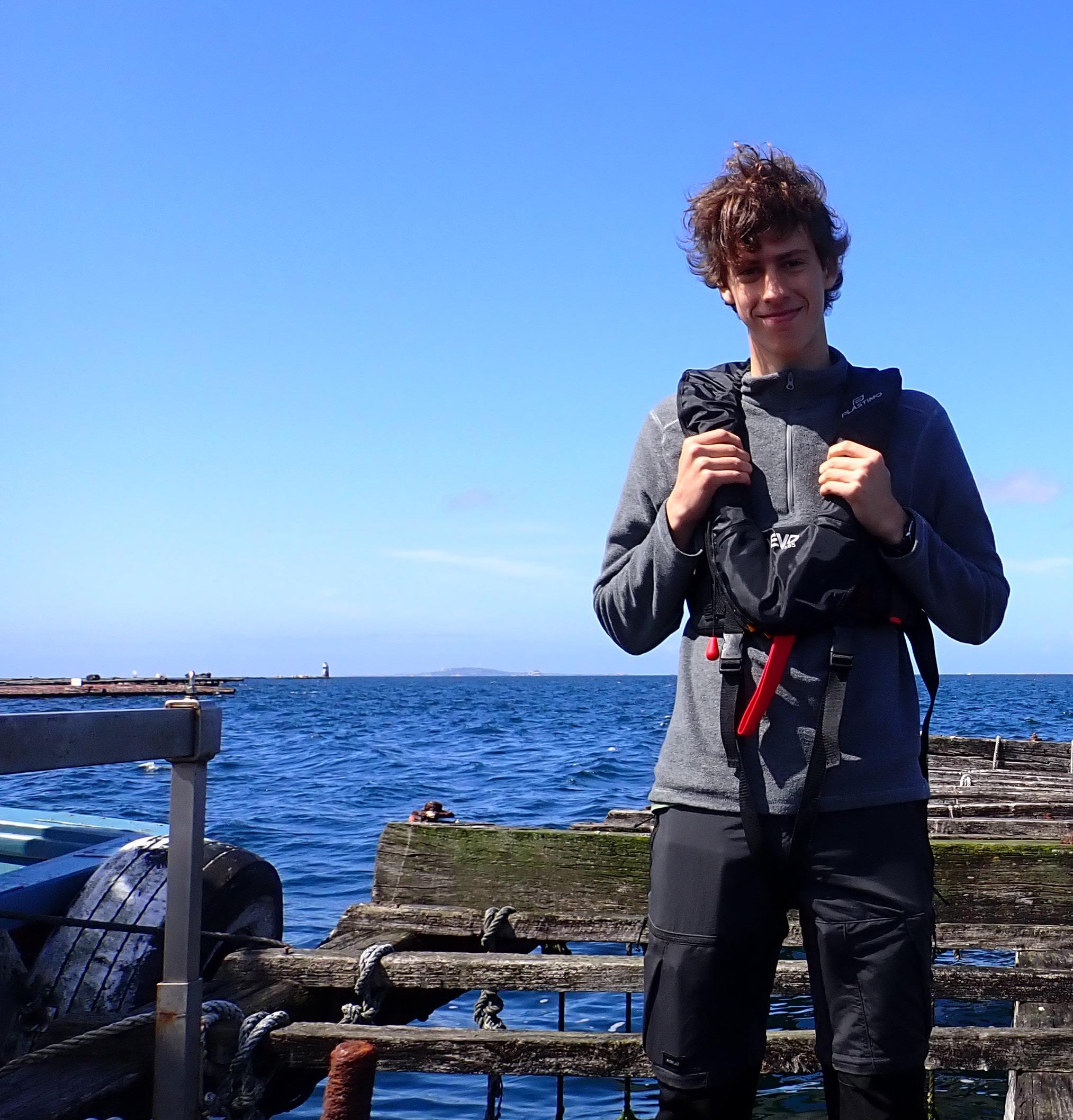
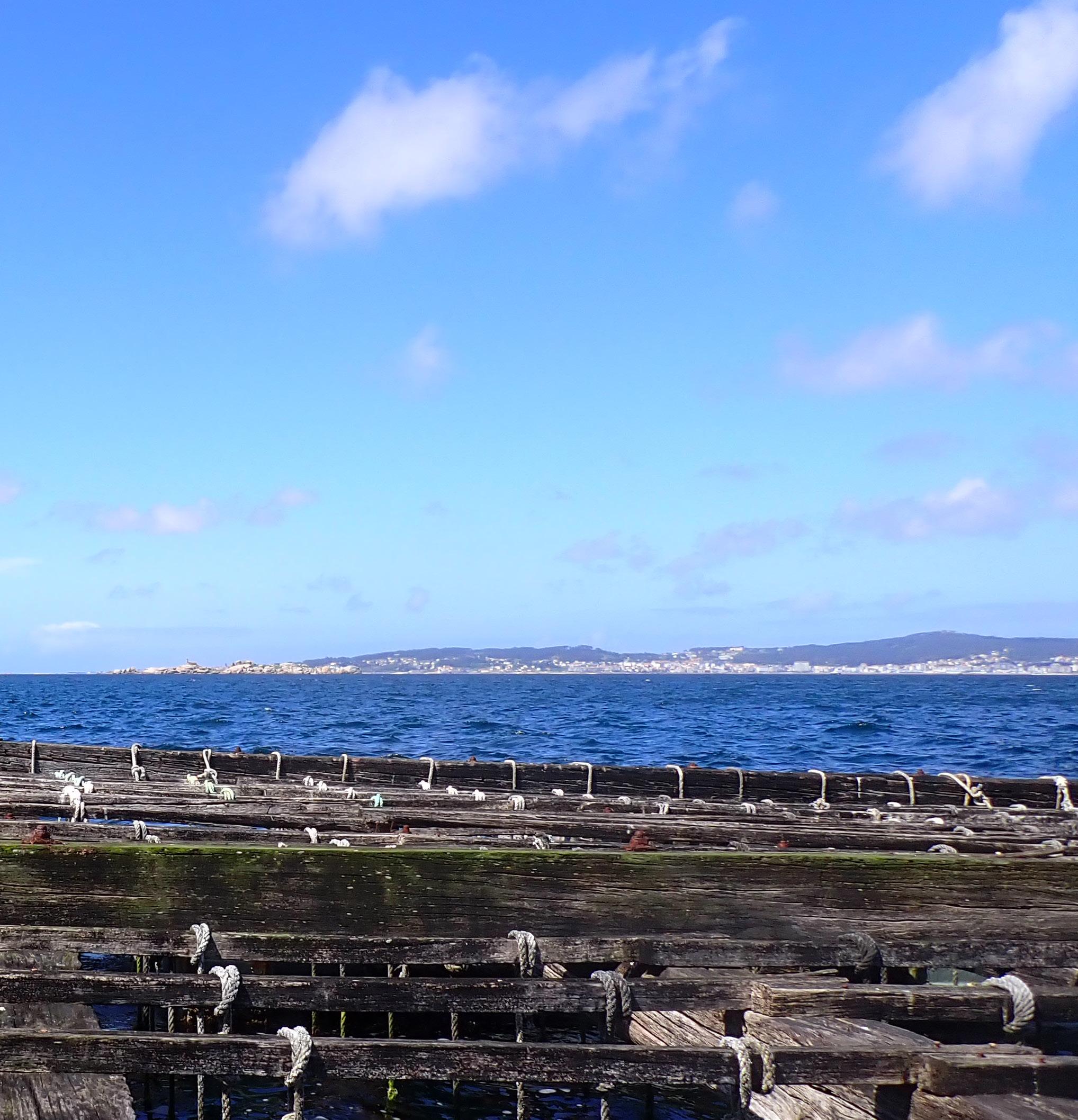
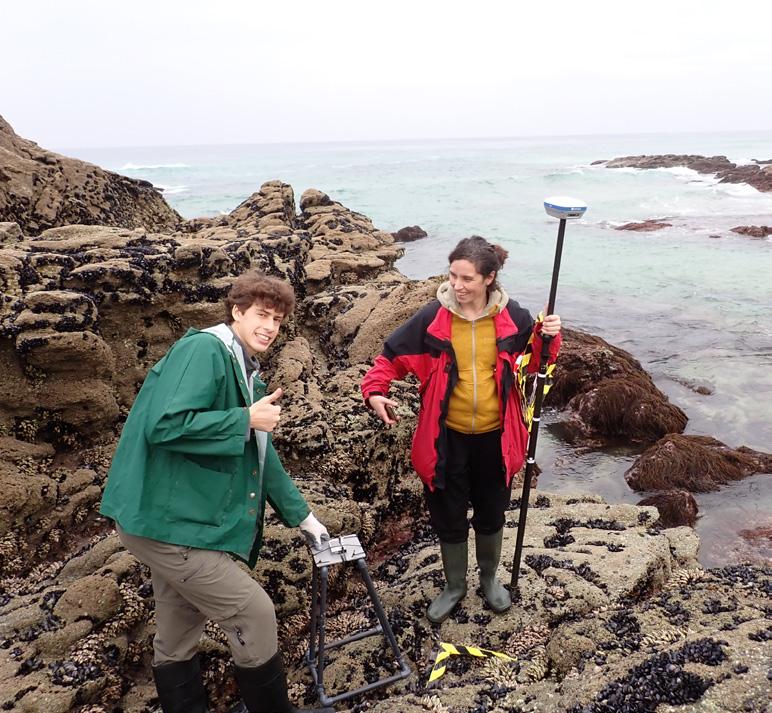
mussels cultivated in highly productive mussel farms from Galician estuaries. These surveys – rocky shores and mussel farms – took place monthly, leaving time between surveys to process samples in the labs, analyse the data collected, and write scientific reports about our findings. Much of the lab work consisted of measuring mussels, weighing mussel shells and meat contents, labelling and storing samples, and processing mussel recruit samples under the microscope.
I was also able to carry out my own research project, where I made use of samples collected from mussel farms to study the fauna associated with these farms and compared that to the fauna associated with mussels from rocky shore natural environments. I was doing this in parallel with all other tasks that the research group assigned me.
WHAT WAS THE BEST MOMENT DURING YOUR PLACEMENT?
Visiting the remote coasts of Galicia (North West Spain) must be one of the many highlights of my placement. These areas are hard to access, the ocean conditions are wild, and what lies on the horizon is an immense body of water we call the Atlantic! These sites are some of the most pristine marine areas in Europe and I feel terribly lucky to have been able to work there and help protect them.
WHAT SKILLS HAVE YOU GAINED FROM UNDERTAKING YOUR PLACEMENT?
After finishing my placement, I am now able to assess the growth rate and condition of mussels from shellfish farming sites, and recognise any species that are found living in association with mussels – whether that’s in the intertidal or on mussel cultivation ropes. Moreover, I learnt how to effectively communicate
with other scientists, discuss and plan studies before going on sample collection, and most importantly, ensure that my mental health was not compromised by the workload and the long working hours.
HOW HAS YOUR PLACEMENT EXPERIENCE INFLUENCED YOUR FUTURE AIMS/ASPIRATIONS FOR YOUR CAREER TRAJECTORY?
My placement experience has played a big part in how I envisage my future career. Seeing how PhD students and principal researchers function daily has shown me what I want my professional life to look like. It has given me a point of reference that I can use to gain perspective every time I feel overwhelmed by stressful situations – a final goal that can drive my life. Without this placement opportunity, I don’t think I would be as motivated as I am to pursue a career in marine research!
PLACEMENT PROFILE
EXPERIENCING THE NORTHERN POLE OF INACCESSIBILITY MATT
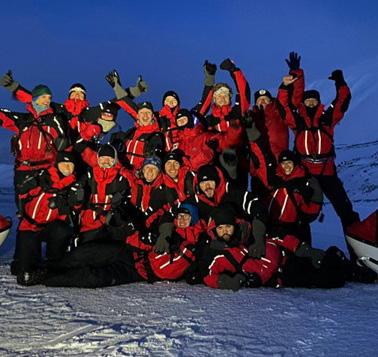
MATT WAS ONE OF THE FEW SELECTED TO PARTICIPATE IN AN ARCTIC EXPEDITION, AS PART OF THE ICE WARRIOR PROJECT IN THE PURSUIT OF SCIENTIFIC RESEARCH. HERE’S WHAT HE HAD TO SAY ABOUT THE EXPERIENCE AND THE TRAINING THAT HE RECEIVED...
To provide some context to this Arctic training, in 2023, a team of explorers hoped to set out on a journey to reach the last truly significant place yet to be reached by humankind: the Northern Pole of Inaccessibility (#LastPole). This is defined as the furthest point from land on the Arctic Ocean and therefore its centre. It is over 200 miles further than the geographic North Pole and one of four recognised North Poles.
To provide a short overview of all my training received over the various stages of the Ice Warrior Project (now called Global Warrior):
Basic Training (UK): Received training in all the skills required for the polar environment on Dartmoor (navigation, micro/macro, stove maintenance,
advanced first aid, knots, personal training, how to look after your body/ cleaning, and working as a team). These skills are carried forward to the polar environment.
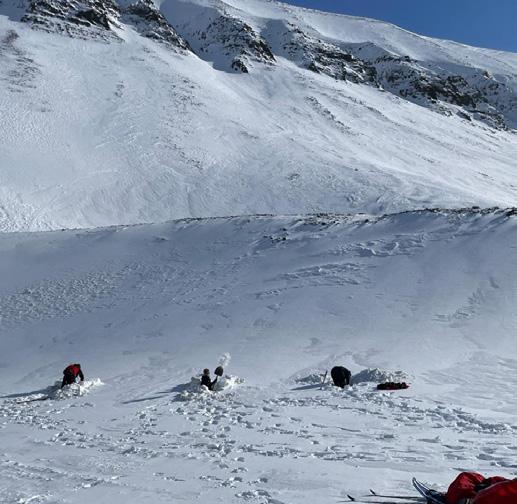
Polar Training: The Ice Warrior Project taught me all the basics of polar survival and living and working in the polar regions (in Svalbard).
Advanced Polar Training: Built upon the core modules from polar training and taught me the necessary skills for operating safely and effectively (in Svalbard).
WHAT ELSE HAVE YOU BEEN UP TO DURING YOUR PLACEMENT YEAR?
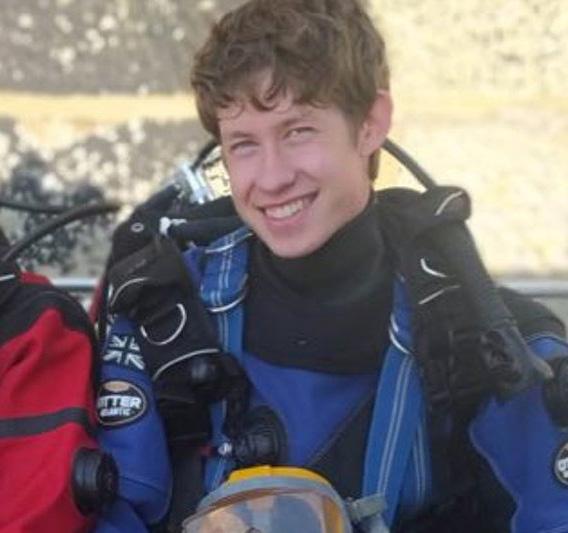
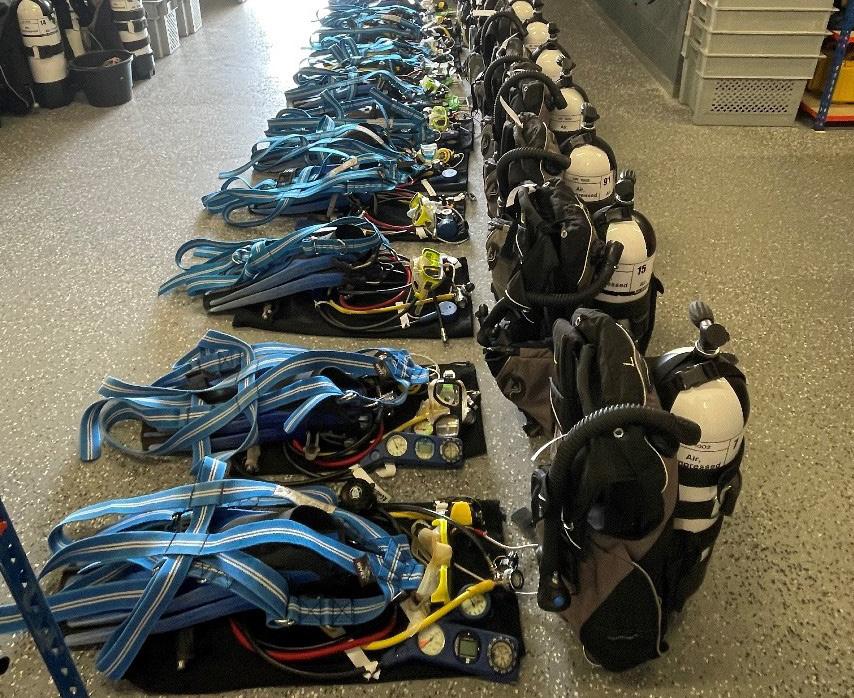
During my placement year I was selected to be the Marine Station’s diving intern. This consisted of assisting in the preparation of diving equipment for the HSE SCUBA courses:
• Filling diving cylinders
• Assisting the Dive Technician in repairing and servicing diving equipment (under supervision)
• Assisting on the surface at dive sites
• Diving when required to make up odd numbers of students on the HSE SCUBA courses
• Diving on project dives
• Assisting with support vessel operations (PIGs) during diving activities and skippering, under supervision, as required
• Providing social media updates of the students’ experiences on the diving placement
• Assisting with general boat maintenance and servicing.
Over the two months and my previous experiences in the preceding diving module, I identified a lack of information about informing new HSE divers on what to expect in the commercial workplace. I created a lecture and presented this at the end of their course, covering laws and legislations, questions to ask potential employers, red flags, ‘must bring’, how to invoice contractors, reasonable payment, potential employers, and additional qualifications commercial divers are also expected to have.
HOW HAVE YOU FOUND RETURNING TO UNIVERSITY AND CONTINUING YOUR STUDIES? DO YOU FEEL AS THOUGH YOUR EXPERIENCE HAS HAD A POSITIVE IMPACT ON YOUR FINAL YEAR IN PLYMOUTH?
It feels nice to be back at university for my final year. I think that having taken a placement year, I have put myself in a better position for both university assessment and employability.
WOULD YOU RECOMMEND MORE STUDENTS GET INVOLVED IN THIS SORT OF ACTIVITY? IF SO, PLEASE CAN YOU SHARE HOW YOU GOT INVOLVED IN IT?
Absolutely. Whether it be something extreme or more life-affirming, to steal a well-known phrase, ‘Just do it’. I learned about the #LastPole expedition during a talk hosted by the Marine Biological Association. I would say give yourself the best opportunities to join professional associates and keep up to date with research.
TO FIND OUT MORE ABOUT MATT’S EXPEDITION AND HIS TIME AT PLYMOUTH
CAREER SUPPORT
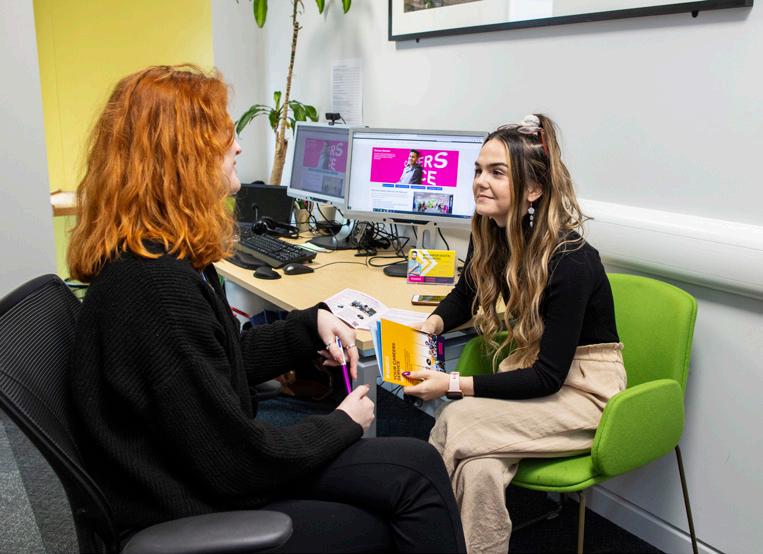
One of our main goals when it comes to our students is helping them to find employment after university. Our Careers Service offers bespoke guidance for both students and graduates which aims to support and encourage their development, networks, and job applications.
You may come into your degree with a career in mind. In that case, the Careers Service is there to offer you the opportunity to delve deeper, understand your chosen career more, and be able to utilise what we have to offer to enhance your applications. On the other hand if you are unsure about your career path (which is completely normal), there are plenty of resources to help you explore, plan and compete for opportunities. You will go through university and graduate life equipped with the skills and support you’ll need to feel ready for employment.
HOW DO WE SUPPORT THE CAREER PROSPECTS OF OUR STUDENTS?
Marine biology students are exposed to the industry possibilities from day one, with talks from industry professionals and our own graduates.
Our lively, immersive “Enhance Your Future” programme equips students with the tools they need to research and formulate their career ideas. Focused work experience preparation sessions bring students once more into contact with employers to gain an understanding of selection and students recruitment processes, and students can attend sessions
dedicated to making effective applications and increasing confidence in interview and assessment centre settings.
WHAT CAREER SUPPORT SERVICES DOES THE UNIVERSITY OFFER?
As well as our bespoke career development programme within the curriculum, we also offer a range of services.
THESE INCLUDE:
• Support with job hunting, application writing, CVs, networking, and interview skills.
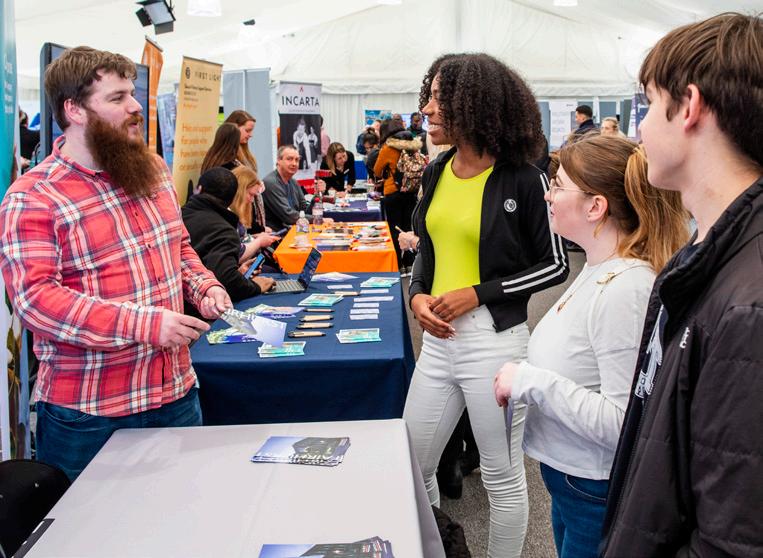
• On-campus careers fairs, where students can explore career opportunities and develop their professional networks.
• Individual placement support, both before and during the placement, as well as internship opportunities.
• Our myCareer internet platform hosts an extensive vacancy
“The Careers Service had been such a great help for me during my third year. They helped me to refine my CV ready for applying for roles after graduating as well as offering me the opportunity to do mock interviews. Without this, I don’t think I would have been so quick to get a job after finishing my degree.”
STEPHANIE
BSc (Hons) Marine Biology graduate
“I did the optional placement year and I’m so glad I did. It opened my eyes up to the industry and what it was like to work hands-on in a professional environment. We learn so much on the course and on field trips but there’s just something extra you get doing a placement that sets your CV apart from others. Thankfully the Careers Service was able to help me reflect the experience on my CV. They were the ones that helped me find the placement in the first place!”
TOM
BSc
(Hons) Marine Biology and Coastal Ecology graduate
database of both graduate, placement, and part-time opportunities. It allows students to sign up for events such as employer panels, enterprise competitions or mentoring. It also holds a range of highly specialised digital tools such as a CV builder, an interview simulator, online courses and video resources. Additionally, access to to myCareer is available to our graduates at any time in the future.
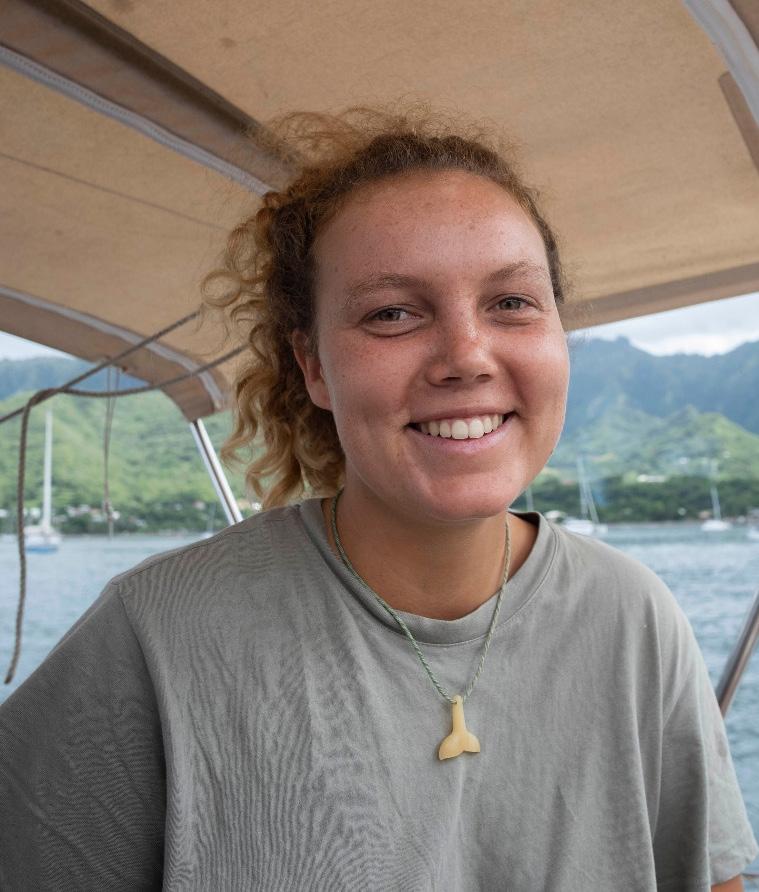
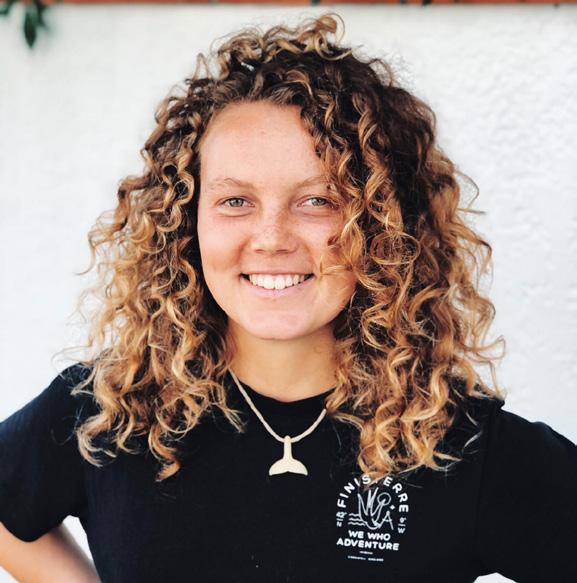
LOUISE-OCEANE
COMMUNITY COORDINATOR AND COMMUNICATIONS OFFICER AT WOMEN FOR SEA
CAREER PATH
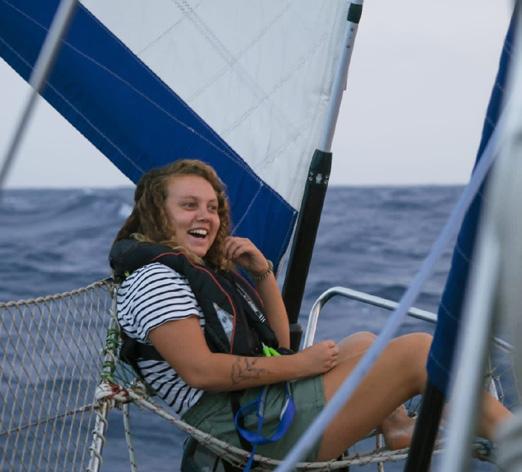
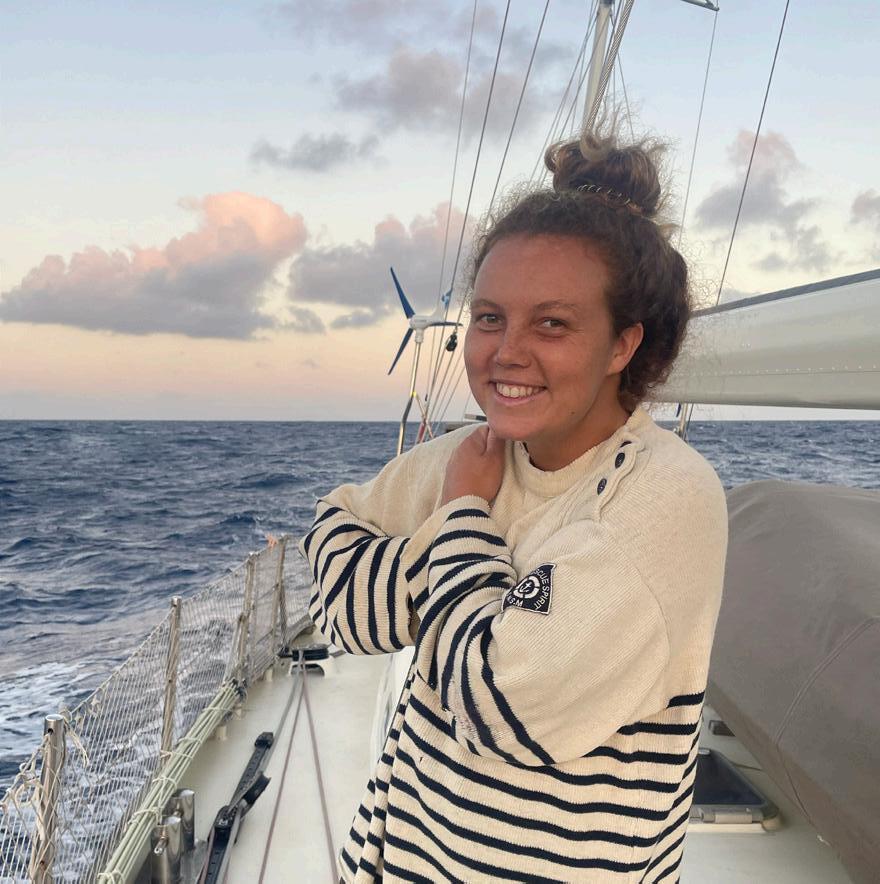
While I was finishing my degree, I started working as a volunteer on a sailing expedition project (Phoenix Expedition). From February 2021 to February 2022 (I graduated in September 2021), I prepared this expedition with a team of people, with the aim of sailing from France to California to visit and document marine ecosystem restoration projects. I was in charge of coordinating and planning all the encounters with local projects along the way, as well as overseeing all the communication aspects of the project (social media, website, newsletter, crowdfunding campaign, press releases...). We set sail in February 2022 and sailed for four to five months to San Diego, meeting seven projects along the way that we documented through blog posts and a web series on YouTube. At the time, I barely knew how to sail, and I had no communications skills, but I learned before and especially along the way.
After the Phoenix Expedition ended, I didn’t want to return to Europe and took advantage of this period of personal freedom to continue exploring the world. I moved to Mexico and stayed there for ten months, learning Spanish, spending time in the water, meeting local projects and working online, before finding another sailboat to cross the Pacific and reach French Polynesia, where I’ve now been living for almost a year.
During my time in Mexico, I started working with Women for Sea, an organisation based in Marseille, France. This organisation is a French community of women interested in ocean conservation. We organise various projects and expeditions, both on land and at sea, with the aim of better protecting the sea by raising awareness and proposing solutions, as well as empowering women to get involved and use their voices to change the world. I started out doing some communications work, and at the beginning of 2024 I signed a permanent contract with them as community coordinator (we have over 300 members) and communications officer. Although I work remotely, I’ll soon be coming back to France to be closer to my team and the community, and to take part in the various events and expeditions we organise.
I had no idea that I would one day end up working for an organisation like Women for Sea, but it really is the best job I could have dreamed of, allowing me to work flexibly and remotely, but above all to be in tune with my values, at the crossroads of my love for protecting the sea and my interest in feminism and women’s empowerment. I have the ability and potential to create my own role and help this young organisation to develop, and that’s so stimulating and exciting. Studying marine biology has given me a lot of tools and understanding of
the marine world and environmental issues, as well as strong writing skills, analysis and discipline, and I think these skills can be applied to any job, not necessarily scientific or research jobs.
The years I spent at the University were some of the best of my life, both personally and ‘professionally’. The quality and diversity of the content taught is really good, but it’s the people that have made my experience incredible. I learnt from some of the best researchers in the field, passionate about their work and teaching, always there to push and encourage you to follow your passion and try new things, as well as from the other equally passionate students with whom I made some of the strongest friendships to date. And Plymouth itself is a gem. There is so much going on in terms of marine conservation topics and projects, and its proximity to the sea – with the ability to swim, snorkel and spend time in/by the water so easily– was the icing on the cake.
ADVICE TO FUTURE STUDENTS
It’s normal and totally OK not to know exactly what you’ll do with your degree. It’s okay not to know what job you’re going to have after you graduate or what subject you’re going to focus on. You don’t need to know what you’re going to do with your life right now. Know that your next chapter is this degree because you’re passionate about the sea and willing to learn more about it. Be open to exploring and learning about things you never thought you’d be interested in. Be curious, meet people, ask questions, don’t be afraid to try and test things. Doors will open, paths will be paved, and opportunities will flourish. I started my studies thinking I was going to study whales, and look where my career has taken me... You never know where life takes you, so don’t put too much pressure on yourself.
STUDENT STORIES
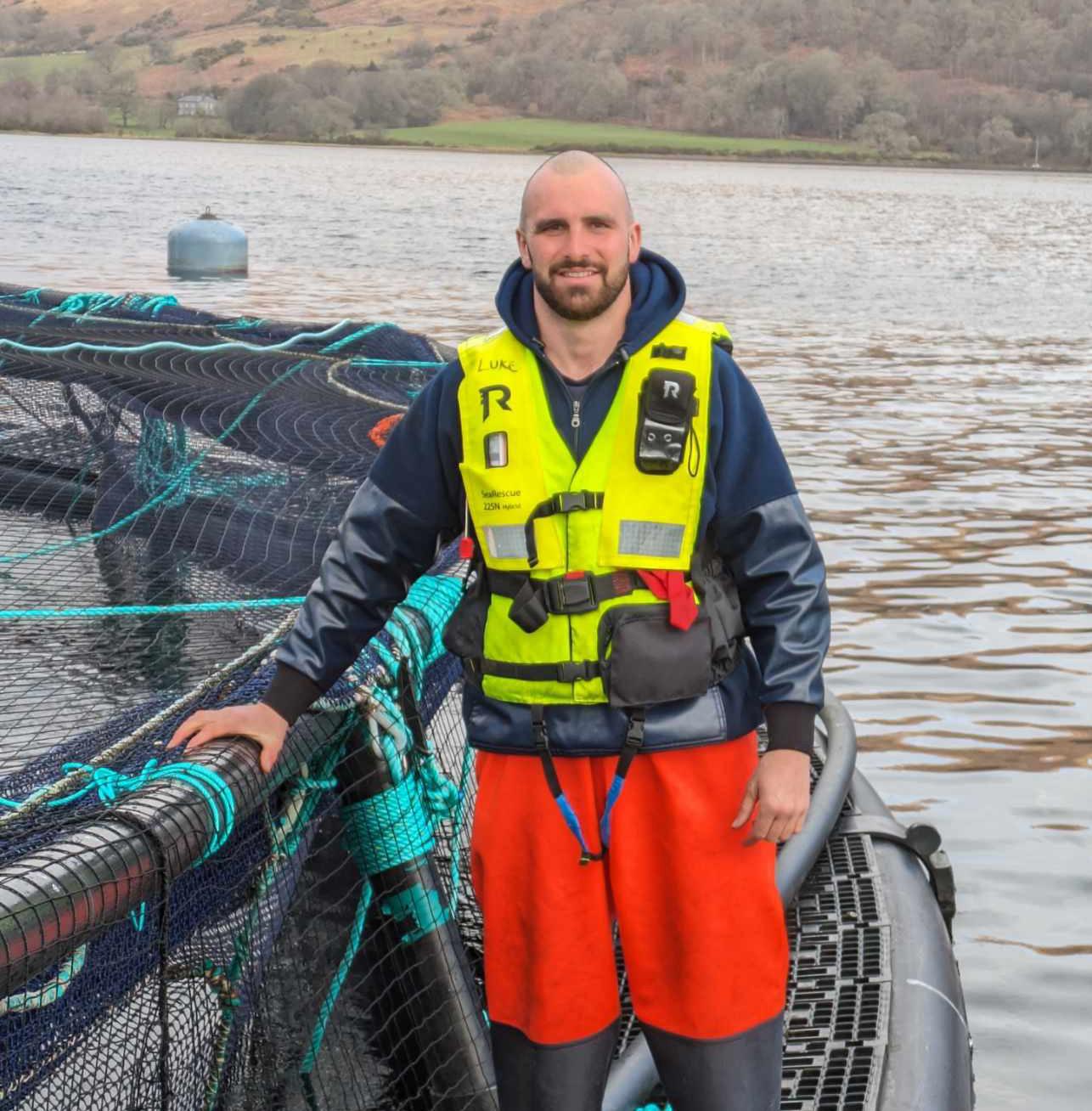
LUKE
ASSISTANT MANAGER IN OBAN, SCOTLAND
Plymouth is a great place to study marine biology, with the different courses focused on the various subjects within the field and resources to support, making it a standout choice for prospective students. Not only is the campus a great place to study with excellent laboratory and research facilities, but it’s also situated in a perfect area for students to enjoy the open surroundings and coastal areas Plymouth has to offer.
During my time on the course, I was able to identify within the subject an area that I was interested in, with a view to progressing to a career after graduating. I was able to focus my dissertation project on a study on aquaculture, and with the
support of some brilliant supervisors, my research project proved to be a success and enjoyable at the same time.
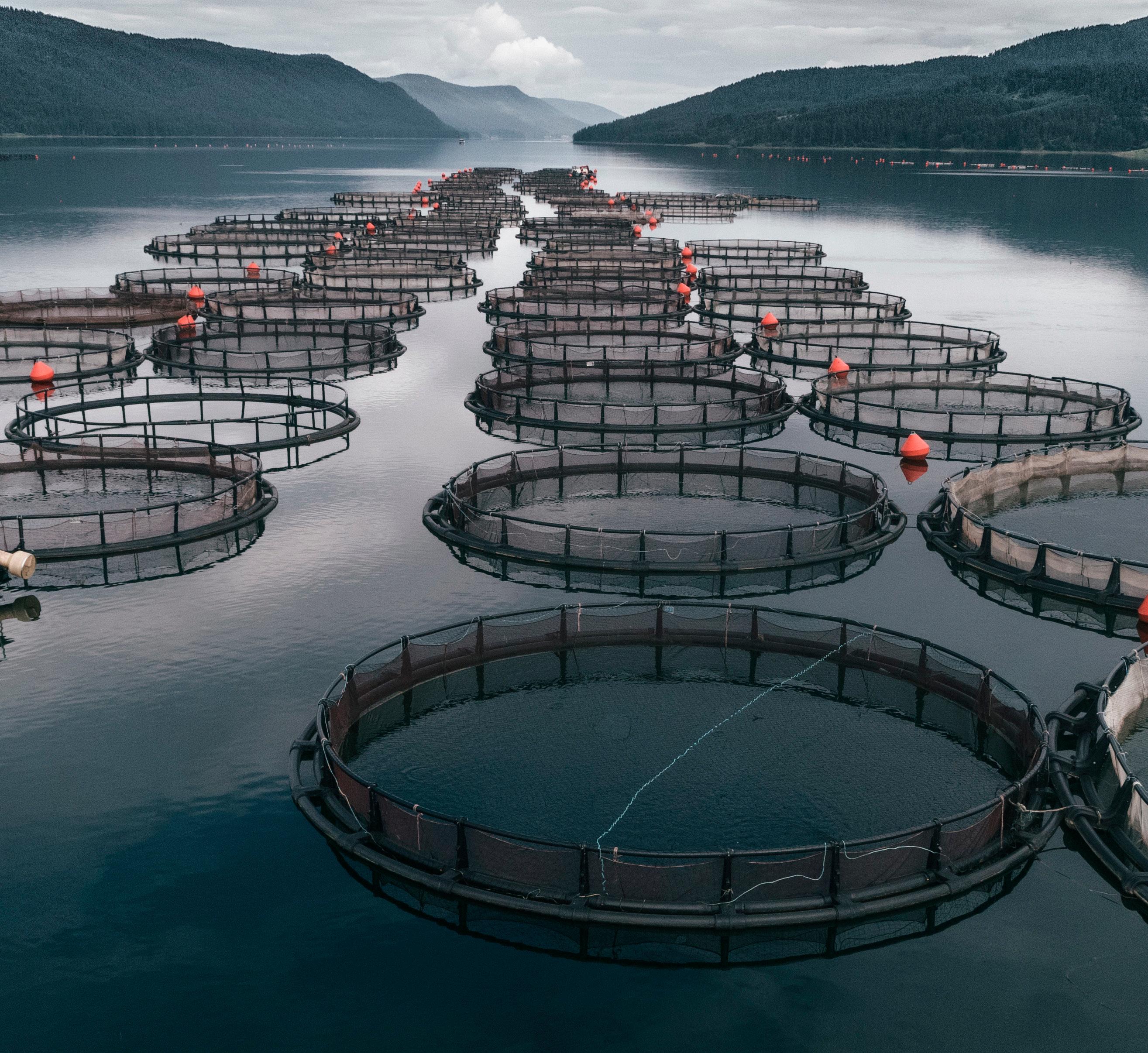
I’m currently working in Scotland for a Norwegian owned fish farm company as assistant manager, producing some of the best quality salmon on offer. We focus strongly on fish welfare and effective feeding whilst minimising environmental impacts. Having already spent seven years working across Scotland for various companies, there are huge opportunities here for anyone wishing to begin a career in aquaculture.
RORY
SENIOR PROJECTS MANAGER AT SOMERSET HOUSE, LONDON
I am Senior Projects Manager for Blue Marine Foundation (BLUE), a charity dedicated to the creation of marine protected areas (MPAs) and establishing sustainable fishing models. Our office is in Somerset House, London, but I spend a considerable amount of time at various project sites.
This year I am moving between several sites in the Mediterranean, where I work with small-scale fishermen with existing or impending MPAs. I travel often to Azerbaijan, where BLUE has helped create the first MPA in the Caspian Sea. The Caspian project goal is to save six critically endangered species of sturgeon and salmon from extinction.
As much I would like to spend all my days knee deep in Azeri rivers or 50 metres down on a Maldivian reef or out fishing with artisanal gear in the Mediterranean, the reality of project management can be quite different. It is my responsibility to
develop funding proposals and budgets and then ensure that these grants and donations are used as efficiently as possible (down to the last penny). Reporting must be accurate and timely. We are a small charity with a big impact, so efficiency is key.
Plymouth makes you more passionate about the ocean, and studying here kept me on the right path. I wanted to be by the ocean, I wanted to dive, I wanted to surf, and I wanted to study with the best marine biologists in the country. Plymouth was fantastic for me, and I will always love it.
I think making contacts is extremely important. If I were starting university again, I would have put myself ‘out there’ more, taken in as many experiences as possible, always have said yes to opportunities, and surfed more.
ANA
COMMERCIAL FUNDING OFFICER & RESM IN MARINE SCIENCE AT
UNIVERSITY OF PLYMOUTH
CAREER PATH SINCE GRADUATION
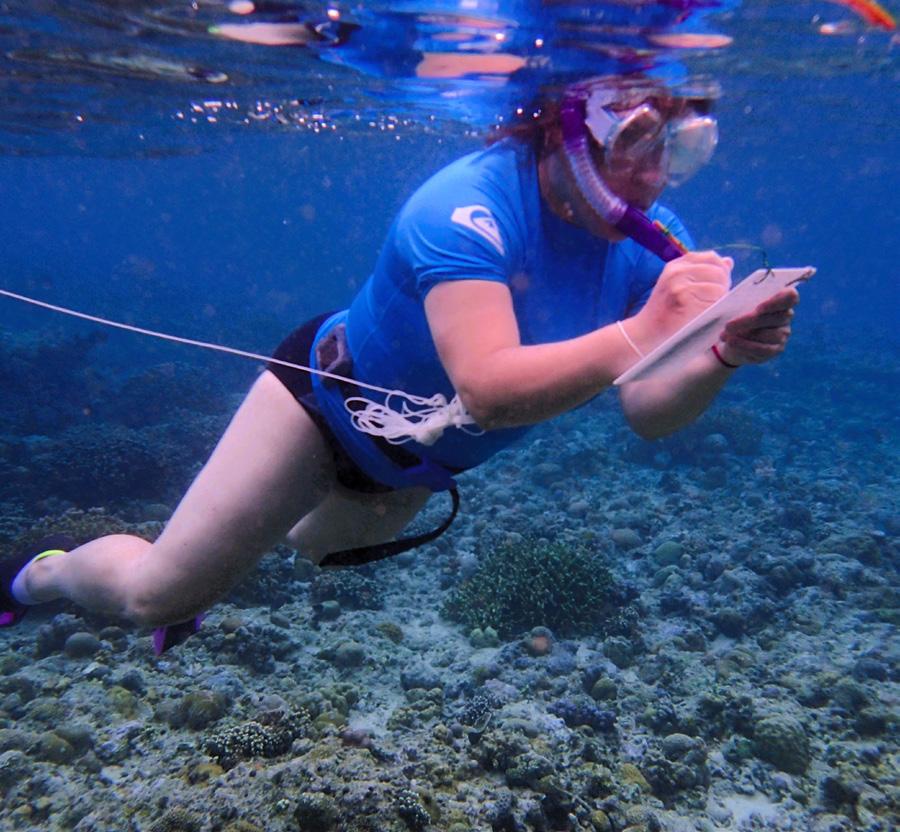
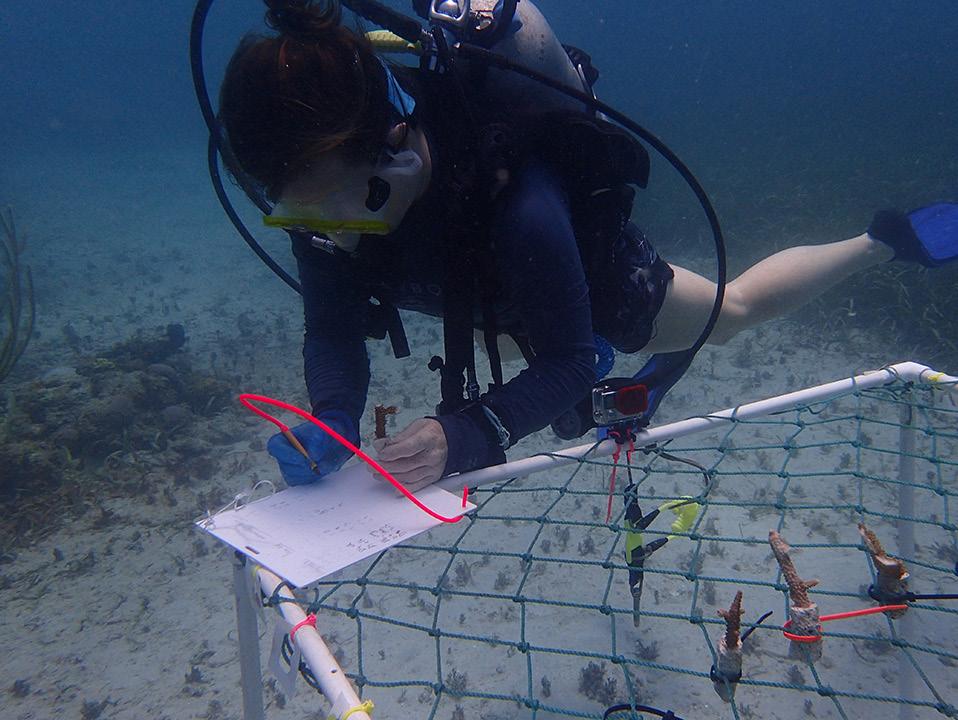
I currently work for the University’s Research and Innovation directorate within the contracts research and consultancy team as admin support. I am doing this alongside completing my research masters degree in Marine Sciences where I am studying the potential impact of different coral types on reef fish communities. It’s an area that is widely understudied and could have a potential impact on a global scale. For this research, I travelled to North Sulawesi, Indonesia, and collected data from different sites around Bangka Island. I utilised all the skills I learnt during my HSE Commercial SCUBA Diver course as well as the scientific diving module I did during the second year of my degree. My experiment consisted of laying down plots at different depths, using photos of quadrats to assess benthic (ground) cover, i.e. coral cover versus other substrates, and using video to capture fish communities interacting with the coral within the plots.
All these skills were then used on another expedition with my current advisor to Moorea, Tahiti, where we collected coral and water samples from different hard coral sites. This expedition involved identifying viable Acropora and Porites sites, collecting samples from each site, filtering the water in the lab, and processing some of the coral samples for transport back to the UK.
I can honestly say that both experiences, together with my time at the University, enhanced my belief that this is what I am supposed to be doing, that I was meant to be a marine biologist, and that I will always be grateful to my advisor Dr Miriam Reverter and the University for these opportunities.
MY EXPERIENCE AT PLYMOUTH
I would absolutely recommend this degree; it is one of the reasons I am still a student ambassador for open days. I love to talk to prospective students about this degree, the University and the lecturers. Coming to Plymouth was one of the best decisions I ever made and was the one university I reviewed that made me feel the people teaching the courses were as passionate about the marine world as they were about nurturing the next generation of ocean scientists. They are all experts in their field, encouraging students to get involved in their research or assisting them with getting opportunities to be involved in research that we are passionate about. Between them and the state-of-the-art facilities, I couldn’t recommend the University more highly for all ‘marine related’ degrees.
ADVICE TO FUTURE STUDENTS
The advice I give to many prospective students on open days is to look up the University lecturers doing the kind of research they may be interested in. Review their papers and read about their research so you know who you may want to approach when you get to Plymouth. Come down to Plymouth and see the University – and especially the Marine Station. Speak to the subject ambassadors and ask as many questions as you like. We love to talk about our degree. And then, take a walk around Plymouth, especially the Hoe. This is a city that has everything within walking distance. It’s beautiful and has so many opportunities for volunteering and work experience within the marine biology field.
GRACE
REEF GURU IN CANADA
My main reason for choosing Plymouth was its location. The other universities I looked at in Wales seemed a bit small and isolated, plus the proximity of accommodation to campus in Plymouth was a huge win. This turned out to be a great choice: the good thing about the University’s location is that Plymouth is home to a number of marine organisations (the Marine Biological Association, Plymouth Marine Laboratory, Shark Trust, etc.), which provide countless opportunities for volunteering, collaborations and networking. For me, two separate bouts of volunteering at the MBA led to further research positions overseas through connections and referrals.
I wouldn’t do anything differently. I started my degree with passion and drive; I sought out local volunteer opportunities to gain experience; I studied hard and I graduated with a firstclass honours, securing my first research opportunity before even starting my final exams. Passion and drive are definitely the key to success.
I have been working for various non-profit research companies around the world, including the Manta Trust, Save Our Seas Foundation, OceansWatch, and Cape Eleuthera Institute, with extensive travelling in between.
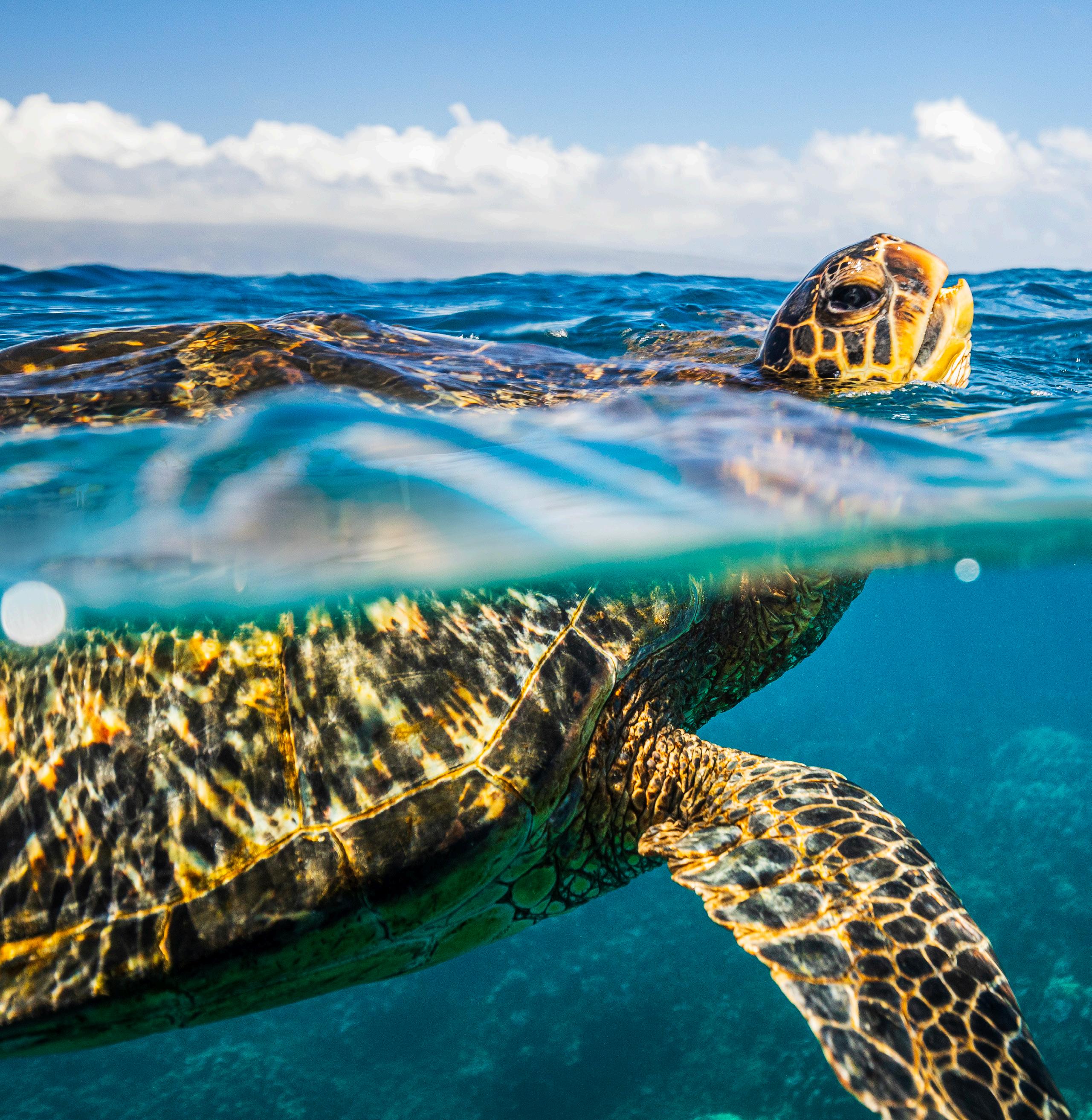
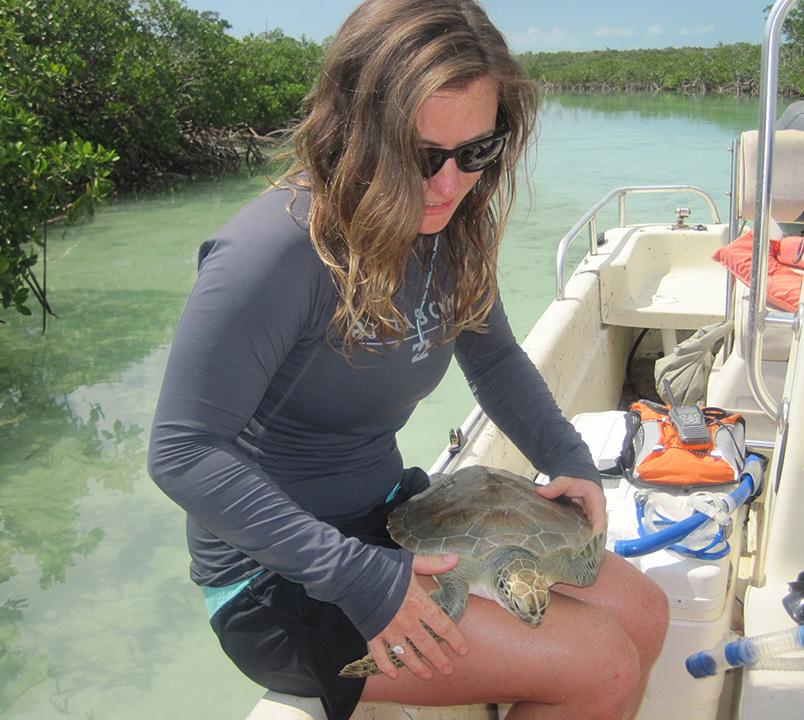
The most fun thing would be free diving with manta rays to collect data or catching green turtles by hand. The most exciting would be the recent creation of a coral reef conservation, eco-training and consultancy organisation called Reef Guru with fellow Plymouth graduate Lucy Fisher.
My favourite memory is probably how close we all were, in particular on my degree course but also across all three marine biology variants, which made lectures, laboratories, and field trips a lot of fun.
IT’S YOUR ADVENTURE MAKE IT COUNT
Over 95% of our graduates are in work or further study*