School & College Outreach Faculty of Arts, Humanities and Business foabhoutreach@plymouth.ac.uk
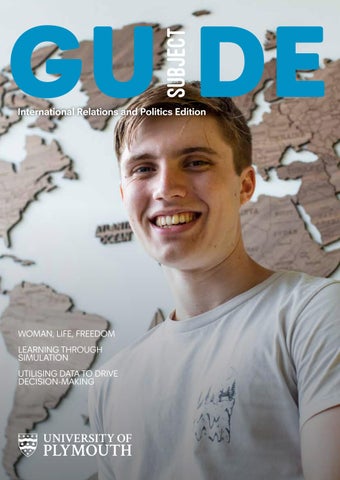
International Relations and Politics Edition
SUBJECT
University
It’s never too early to start thinking about what you would like to do after school or college, or if you are thinking of a career move. At Plymouth, we know that choosing a university and course is a big decision. If you have a career aspiration or an inkling of which profession or industry you would like to enter into but are unsure of what to do next, then this is where our handy subject guide comes in.
P. 14 Which degree is right for me?
Discover our courses on offer.
P. 16 Niamh’s revision tips
After graduating with a degree in BSc (Hons) Politics with International Relations, Niamh shares her best revision tips and tricks to help you succeed.
P. 18 Where will your degree take you?
What skills will you develop and what career options are available?
P. 20 Building my professional network
BSc (Hons) International Relations student Oliver discusses the importance of making real-world connections while studying.
P. 22 Learning through simulation
Follow
Meet some of this issue’s contributors:
Piers Revell, Lecturer in International Relations, discusses how students explore some of the most pressing challenges of the 21st century in their first-year module.
P. 28 The end of the liberal era?
Dr Patrick Holden explains why international relations expertise is more relevant than ever in the business community.
P. 30 The placement experience Emily, a Social Sciences exchange student originally from Canada, explains how she found a new career path in refugee support in Plymouth.
P. 34 Utilising data to drive decisionmaking
International Relations students discover how utilising data can drive decision-making in a humanitarian crisis simulation game.
P. 36 Find the right route for you via our foundation year course Grow academically and personally in a university environment.
P. 38 Model NATO
Lecturer in International Relations, Dr Lorenzo Cladi discusses taking a team of students to the Foreign Office in London to represent Croatia at Model NATO.
nothing compares to an open day. Talk to current students and quiz lecturers about your course. You can register to attend here plymouth.ac.uk/open-days Our virtual tour allows you to experience first-hand what it is like to be on campus and explore the environments and facilities that inspire
P. 50 Your next steps Explore the road to higher education.
THE GUIDE:
P. 46 Personalise your degree with the School of Society and Culture
Explore how you can gain hands-on experiences to prepare you for the real world.
10 REASONS TO STUDY AT PLYMOUTH
With evolving challenges in the field of international relations and politics and a complex global landscape, are you ready to embark on a mission to foster a more equitable, secure and inclusive world?
1. TRAVEL
Travel the world through our international student exchange programmes and internships. From the Czech Republic and Poland to Canada and the USA, you’ll have plenty of opportunities to gain insights into international relations and politics worldwide.
“The trip to Cuba has been the most educating trip I’ve ever had. It was not only educating from an international relations standpoint – Cuba’s revolution and the diplomatic relationship Belize has with Cuba, but also from a personal one. The skills I learnt at the Embassy and the knowledge I gained from people were acquired separately and under different circumstances, but they will all be beneficial to me in the future. I will carry these skills with me into future jobs, as well as future interactions with people.”
Aaliyah, BSc (Hons) International Relations graduate
2. NETWORK
University is the perfect time to start networking. By doing this, you can hear about new opportunities, gain important advice and learn more about the different sectors of politics and international relations that interest you. Graduating with a strong network of individual contacts can help you pursue your future career path. We run regular talks with political figures and activists. We welcome MPs, MEPs, local councillors and people working behind the scenes in UK politics to share their experiences and offer advice on how you can progress in the political world.
A great way to network is by joining our student-run Politics
and International Relations Society. The society provides you with the opportunity to connect with others who share your interests, meet new people, learn new things, explore your passions and have fun!
“I have learned some fantastic leadership skills. It’s also got me to branch out to talk to people that I may not have felt so comfortable talking to before! I have learned even more problemsolving skills and how to make my communication more efficient. It has been really rewarding so far!” Morissa, BSc (Hons) International Relations with Politics student, and President of the Politics and International Relations Society
3. VERSATILITY
Our course offers a wide variety of assessments including designing your political campaign, writing blogs, simulations and work-based learning. The assessments don’t rely on only testing knowledge and understanding, but critically applying what you know in a way that enables you to take meaningful skills into your future careers. At Plymouth we don’t just focus on understanding, we home in on your critical thinking, helping you build a
portfolio of skills that allows you to shape change.
“The International Relations course is fantastic. The content is dynamic and stimulating, and its delivery is orchestrated by individuals who are clearly passionate about their profession. I would not change a thing about it.”
Stephen, BSc (Hons) International Relations with Politics graduate
4. RESOURCES
All first-year students receive core textbooks for their six modules. Students also receive books in subsequent years to help with the cost of living and study skills.
5. EXPLORE
Address some of the most pressing challenges of the 21st century from a variety of ideological and political perspectives through field trips to London and Europe. These subsidised trips promote active and collaborative learning.
“Our field trip to London gave all of us a new understanding of the politics behind museum curation and what it means to have access to other cultures. The entire trip brought many of us closer together, and it was an honour to have conversations with our lecturers in contexts that wouldn’t come up in a classroom setting.”
Morissa, BSc (Hons) International Relations with Politics student
6. FLEXIBILITY
We are a small and friendly department in a big, diverse school. You can tailor your degree to focus on what fascinates you. By taking different options, you will gain a thorough grounding in your areas of interest – whether it be politics and international relations related or from a completely different subject such as criminology, law, history or sociology. Whatever your passion, you will have the freedom to explore it here. Find out more on page 46.
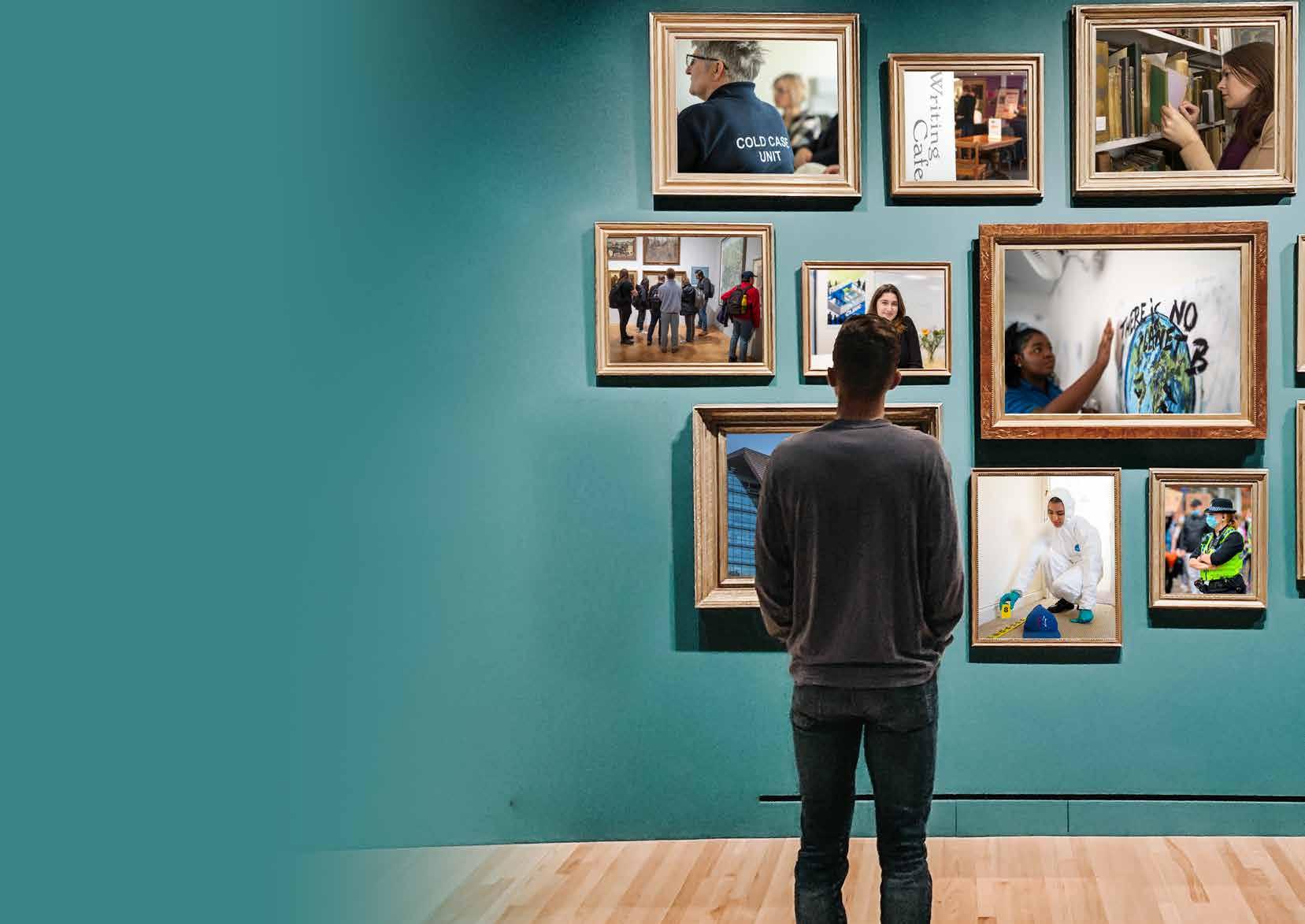
Our library provides access to a variety of specialist resources including books, journals, databases, full-text collections, special collections and electronic library guides. The library is open 24/7 term-time (08:00–20:00 in vacation) with services and facilities including library and IT advice and support; digital skills training; a range of equipped and nonequipped study spaces; laptop loans and the Writing Café. There is also a 24/7 all year open access study area along with a student ‘break room’.
7. LOCATION
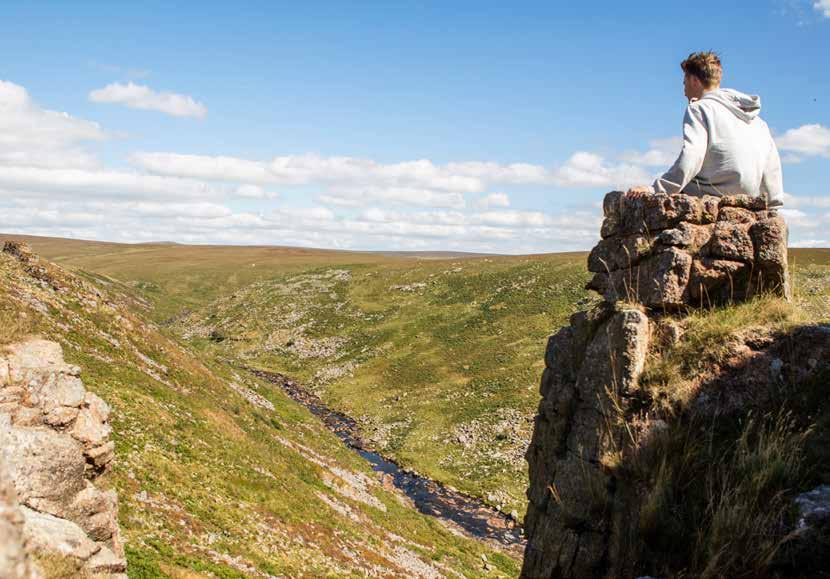
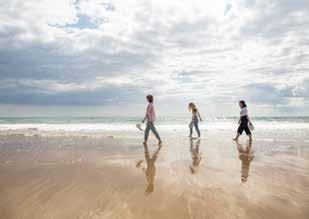
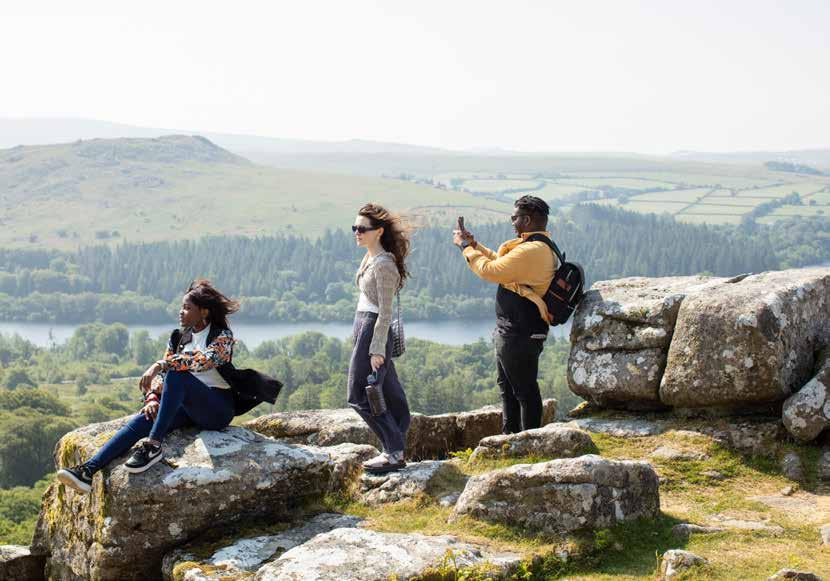
Benefit from a work-life balance in Britain’s Ocean City where you will be spoilt for choice with the thriving nightlife of our easy access city centre location, sandy beaches of Devon and Cornwall, and the picturesque countryside of Dartmoor. Enjoy a healthy quality of life, surrounded by the ocean and the moors.
“As a city, Plymouth is in a great location. It has the coast, a friendly atmosphere and a thriving student population. The city is big enough so that there is never a dull moment or nothing to do, yet small enough for you to get involved with the local community and truly explore the surroundings.”
Stephen, BSc (Hons) International Relations with Politics graduate
10. SUPPORT
8. EMPLOYABILITY
9. EXPERT LED TEACHING
Learn from experts. Be inspired by teaching rooted in research as you work closely with experienced and engaging staff who are leading experts in their fields. Understand the roles of democracy, freedom and security in the 21st century. Examine, compare and contrast political systems to better understand how to change them.
“The staff, both academic and administrative, are always there to assist you and to provide guidance and support. Plymouth offers everything an ambitious person could ask of his or her studies.”
Polychronis, MA International Relations: Global Security and Development graduate
We pride ourselves on our friendly and supportive learning environment run by internationally recognised staff. We are driven by our dedication to student-centred learning. Throughout your time here you have a personal tutor who supports you, and every tutor operates an open-door policy, meaning you can see them outside seminars, workshops, and lectures to talk through your work on a one-to-one basis.
We also offer writing workshops and other kinds of writing support, so that you have lots of opportunities to improve your work with guidance from experts. For example, you can drop into the Writing Café, a unique and creative space where you can have a conversation with a member of the Learning Development team, work with one of our trained writing mentors, or take part in one of our many events and activities centred on writing.
Learn more about the Writing Café
Get ahead with a course designed to help you stand out with employers. We have a focus on solving real-world problems through hands on learning, whether that be through placements, work-based learning projects or future skills developed as part of the modules you choose. You will be equipped with the sought-after experience that we know employers are looking for before you even start your career.
“The lecturers are attentive, supportive and passionate about their subject areas, and it shows. I have gone to my personal tutor and other lecturers for various needs. They always go above and beyond to ensure that the university experience is incredible for all students.”
Amy, BSc (Hons) International Relations with Politics student
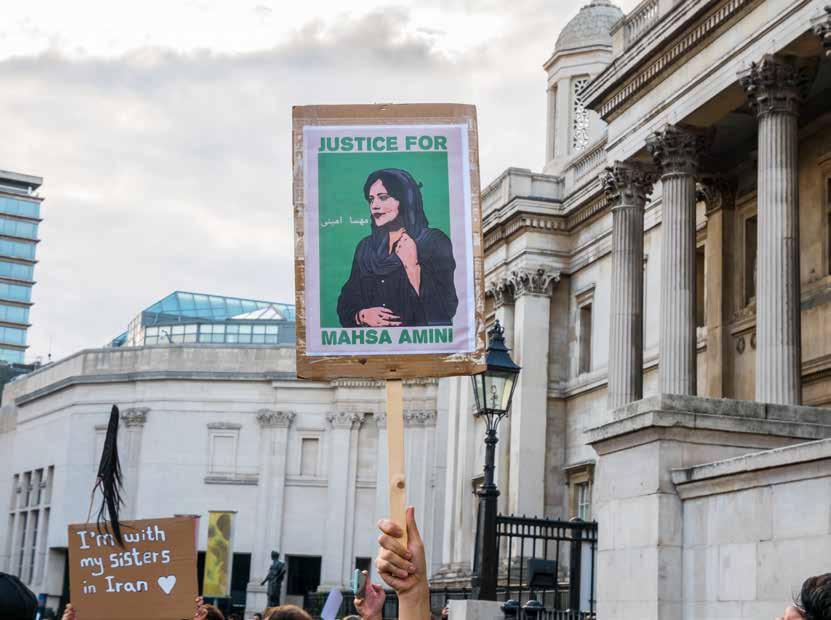
Dr Shabnam Holliday, Associate Professor in International Relations explores Iran’s women’s rights movement and its place on the global stage.
Iran’s protests are not only significant because they challenge the Islamic Republic as a political system, but they also challenge assumptions in global politics. They highlight that Iranians are global citizens. Like so many social and protest movements around the globe, they reject gender, religious and racial violence, and demand dignity and human rights.
WHERE THE PROTESTS BEGAN
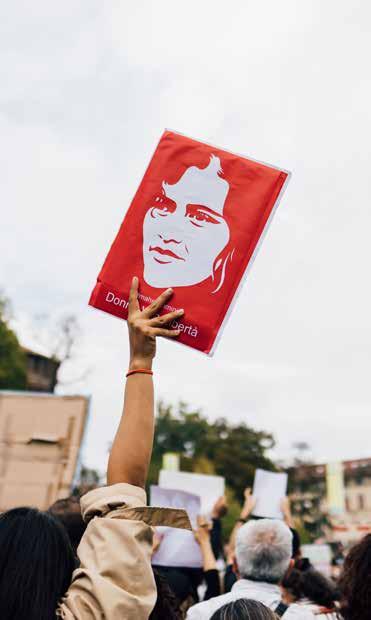
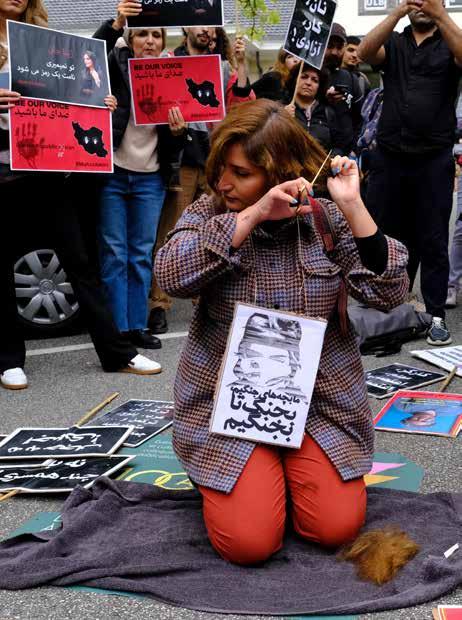
The protests were sparked by the death of the Kurdish 22-year-old woman, Jîna Mahsa Amini after she was arrested for what the Islamic Republic of Iran considers an improper hejab (headscarf). In response, schoolgirls and women, with the solidarity of boys and men, came out to protest against Jîna’s death and compulsory hejab by removing their hejab, cutting their hair and using the slogan ‘Woman, Life, Freedom’. This slogan has its roots in the Kurdish women’s freedom movement and can be found in Iran’s protests in the Kurdish, Persian, Balochi and Azeri languages. In turn, this slogan has highlighted to the outside world that Iran is made up of multiple nations (mellat) and language groups.
GENERATION Z AT THE FOREFRONT OF THE PROTESTS
Seen as Iran’s first feminist uprising in response to a political system that subjugates women, referred to as gender apartheid, the protests have quickly developed into a widespread
desire for revolution. Primarily led by Generation Z, but with the support of their parents and grandparents, the protestors demand freedom in their everyday lives. This generation, like their peers around the globe, wants to hang out freely; they want LGBTQ+ rights and are concerned about the environment. The protests also highlight the very different economic situations and discrimination faced by the Kurdish, Baloch, Bahai and Azeri communities, among others. Jîna’s death is therefore symptomatic of a political system that has no regard for basic human rights.
The Islamic Republic’s response to protests has been extensive and horrific violence, including executions.
Iran has a long history of protest and revolution before and during the Islamic Republic. Crucially, women have been active political agents, alongside men, not only under the Islamic Republic but also in bringing about the 1979 Revolution and Iran’s 1905–11 Constitutional Revolution. What constitutes a revolution is disputed. On
the one hand, it is seen as a change in the political system, and on the other, it is a significant challenge to an existing status quo. In Iran, we have seen both.
Iran’s 1979 Revolution, with the removal of the Pahlavi monarchy and subsequent establishment of a theocracy, the Islamic Republic, brought about a change in the political system.
Iran’s 2009–10 popular uprising began with protests in response to electoral fraud evident in the ‘re-election’ of the current Mahmoud Ahmadinejad as president. There wasn’t a widespread desire for a new revolution, but rather a hope for reform. Nevertheless, the Green Movement significantly challenged the political system in that the Islamic Republic responded with violence.
THE NEW REVOLUTION
Unlike previous protests in Iran, the current protests demonstrate a widespread desire for a new revolution, and they significantly challenge the status quo. There is an explicit desire
for a change in the political system with the removal of the Islamic Republic, the absolute rejection of its reform, and a desire to reclaim Iran. This is evident in the consistency of slogans rejecting the Islamic Republic; the widespread protests throughout Iran and across socio-economic, generational, political, gender, and identity groups; and the persistent protest despite violence by security forces. The desire for a new revolution has progressive politics, workers’ rights and human rights at its core.
The agency of Iranians, in all their diversity and multiple identities, to reject authoritarian and violent politics is not new, nor are such ideas unique to Iran. Nevertheless, the significance of this new revolution is that it is simultaneously led by women demanding ownership of their bodies, indicating the desire for progressive politics, in a predominantly Muslim state, rejects political Islam, and is also in the Middle East. Thus, this political project challenges other regional
powers that use an understanding of Islam to justify the survival of an authoritarian political system. Beyond the Middle East, such a revolution challenges assumptions about who ‘owns’ democracy, progressive politics, and feminism. It is not just the ‘West’.
So, revolutions in one part of the world, in this case, Iran, matter to the rest of the world. The 1979 Revolution and the subsequent establishment of an Islamist republic were significant beyond Iran. Now, Iran’s ‘Woman, Life, Freedom’ uprising highlights battles over the values that govern world order and global politics. MEET YOUR ACADEMIC Dr Shabnam Holliday specialises in the international relations of the Middle East and the politics of Iran, which she teaches at undergraduate and postgraduate levels. She is the author of Defining Iran: Politics of Resistance (2011) and co-editor with Phillip Leech of Political Identities and Popular Uprisings of the Middle East (2016).
WHICH DEGREE IS RIGHT FOR ME?
Politics and international relations are related fields of study, but they do have different focuses and prepare students for different careers. Both fields are essential to diplomacy and work together to achieve global peace.
Studying Politics and International Relations at Plymouth is special. We run two parallel course pathways representing the longstanding social science tradition of maintaining a difference between the two subjects. At the same time, however, the two courses are also designed to provide students with many opportunities to explore the multiplying overlaps, interactions and interfaces between politics and international relations in our increasingly globalised world.
Explore the driving forces of relationships between countries, policies and cultures in the 21st century, close to where the G7 leaders met in 2021. Our courses build your critical thinking to empower you to be part of a change. Hone your skills with our unique practical assessments that immerse you in mock-ups of real-world scenarios.
BS c (HONS) POLITICS
Politics degrees primarily concentrate on the study of power, governance and decision-making within a particular country or political system. This field explores various aspects of domestic politics, including ideologies, institutions, behaviour policy and theory. It examines the dynamic power relations within a nation-state, such as the functioning of government, electoral processes and policy formulation.
ALI
BSc (Hons) Politics Graduate
“I couldn’t recommend the Politics course highly enough. All of the modules I studied were well organised and well taught, allowing me to focus on areas that I was genuinely interested in. I found it easy to engage with the course, especially considering the enthusiasm and motivation the staff had for teaching their given subjects while displaying an impressive level of knowledge. The experiences were second to none and helped me pursue a career in my chosen field once I had graduated.”
BS c (HONS) INTERNATIONAL RELATIONS
International relations explores interactions and relationships between different countries and leaders on a global stage. It examines various aspects of international politics, such as diplomacy, international law, global governance, foreign policy, security studies, international organisations and the global political economy. This field delves into the complexities of interstate relations, regional integration, conflict resolution and the analysis of international issues like human rights, environmental sustainability and global security challenges
THOMAS
BSc (Hons) International Relations graduate
“When I visited the University, I found the learning environment to be friendly and welcoming while at the same time, staff were keen to address vital issues. I also found the lecturers to be passionate about their subject – and they taught it in a very engaging way. The beautiful location and active Students’ Union were also factors for me!”
BSc (HONS) POLITICS AND INTERNATIONAL RELATIONS
Take advantage of the best of both disciplines. Explore topics such as domestic political processes, government positions, policy analysis or political campaigns in a specific country. You will also have the chance to learn about global affairs, international diplomacy, foreign policy and international organisations. Explore careers in international development, humanitarian work or global governance.
CURTIS
BSc (Hons) Politics and International Relations Graduate
“The best module on the course concerned sustainability. We had to give two presentations. One was on an issue we chose and the second was a type of role play where we acted as delegates from a country and had to present a climate strategy. That was fun as it was the first presentation I had given, but also because it was such an immersive experience that it barely felt like work.”
NIAMH’S REVISION TIPS
After graduating with a degree in BSc (Hons) Politics with International Relations, Niamh shares her best revision tips and tricks to help you succeed.
Almost every course has exams, and I think finally cracking how to revise is so important. Thankfully, I feel like I have officially learnt how to revise the most efficiently for me. Although everyone has different learning methods, I like to write things down and watch revision videos.
HERE ARE MY REVISION TIPS:
TIP #1: UTILISE COURSE RESOURCES
Firstly, you need to split your revision into sub-sections. Go to your Module Handbook available on the Digital Learning Environment (DLE) and make a list of the titles of each lecture or seminar. If you’re a mind-map person or are reading orientated – creating lists 100% help. I write down a topic and colour in a little square next to it in terms of how well I understand it – green to red with their respective meanings.
TIP #2: SOURCE INFORMATION
Do you have the appropriate learning material pre-written or in a textbook? Make sure you have all the information you need to thoroughly revise a topic. Sometimes you’ll have completed worksheets or essays which completely cover the topic, and
you can use that to reproduce your revision in a clearer way making it more memorable. Or you can find more research on top of what you already have – push yourself but make sure you’re not pushing yourself too hard. Find your limits.
TIP #3: PRODUCE REVISION NOTES
Establish what method you’re going to use to revise. I like mind maps, past papers and flashcards. Past papers are generally found on the DLE in the specified module section. You can create mind maps online using apps or websites such as Popplet (which many schools use) or handwritten ones. I stick four pages of A4 paper together to create large ones. Flashcards are particularly useful for definitions and specific dates; you can find small pre-made flashcards in stationery shops or cut some up yourself! Alternatively, you can use an online website or app, I advise Brainscape. I tend to use all three methods appropriately – I write everything down on a mind map, then track how well I’ve remembered the information, and then convey the information into past paper questions and answers.
TIP #4: WRITE
You’ll have done all the preparation needed. I find I need to repeat the process of writing (mind maps), remembering (flashcards) and understanding (past papers) a few times before I feel I know a subject. Then refer to your colour-coded list of topics and colour in topics as you feel more confident and that’s it! You’re done! It’s a long process. But it is thorough.
BONUS TIP #5: TAKE TIME OUT
Revision is important, but you need to take time for yourself as well. The University offers a lot of wellbeing and mental health support, and I know when my summer exams approached, I sought advice. Remember to eat three times a day and keep some snacks by your side, and to keep your fluids up. Consider taking breaks to shower, get fresh air and talk to your friends or family. Exams are important and so are you!
In addition, sometimes revising with a friend can help you gain more ideas, especially if you’re studying something where all perspectives are relevant! Set up study lessons and make use of the University’s wonderful facilities.
WHERE WILL YOUR DEGREE TAKE YOU?
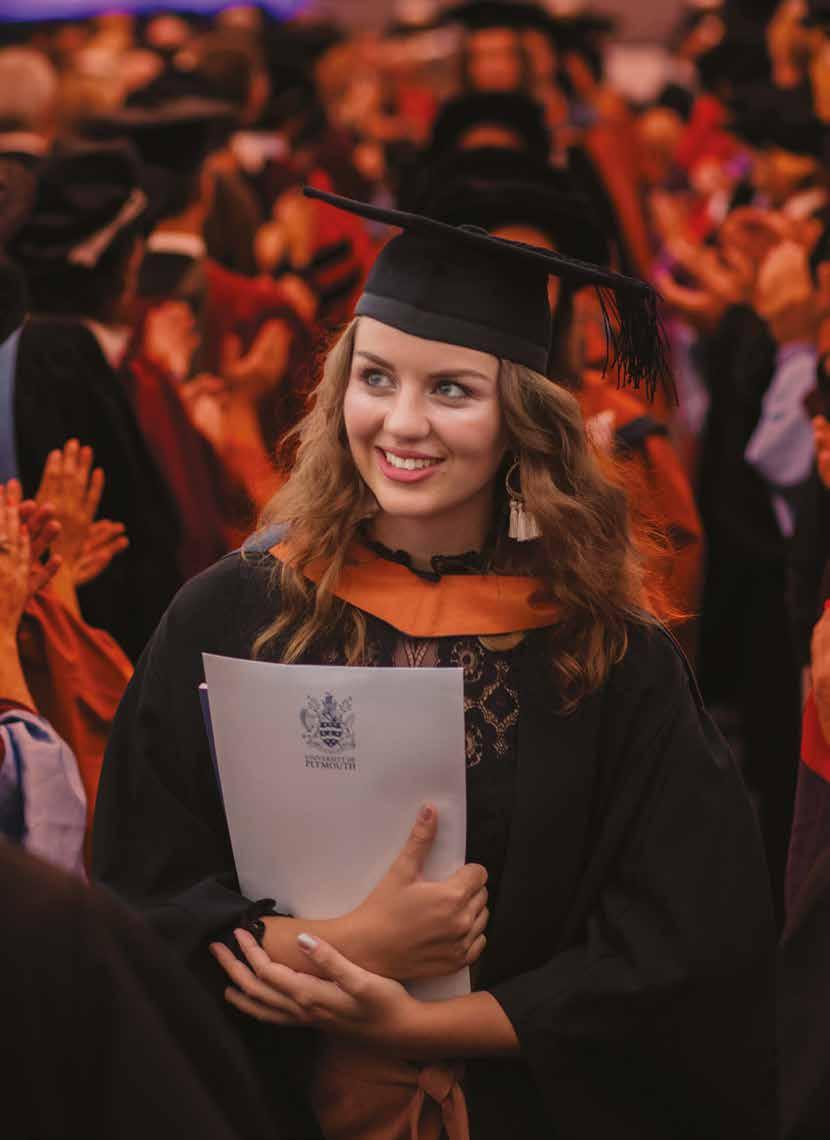
Graduation marks the end point of your undergraduate degree. It is a wonderful occasion for you, your family, your friends and your tutors. We want to make sure that, while you have been working towards your degree, you have also been preparing for the next phase of your life.
We aim to empower you to follow your passions, to develop lifelong skills in reading, writing and research, to help you realise your potential as a public speaker and advocator for change, and to prepare you for a variety of career opportunities.
DEVELOPING EMPLOYABILITY
At Plymouth, we have excellent opportunities for developing employability skills and gaining work experience in a range of graduate careers. Employability is at the forefront of our Politics and International Relations degrees.
To boost your chances of finding that perfect first job and gaining hands-on experience, our International Relations and Politics Internship is aimed at supporting undergraduate students to carry out unpaid work experience in global political settings such as embassies, political election campaigns and charities. These partially funded internships allow you to develop and improve your employability skills, extend your professional network and gain insight into your chosen career path, without having to worry about money.
• Programmes Officer
• Regional Security Analyst
• Risk Analyst
• Social Researcher
• Trade Union Worker
WHAT SKILLS WILL YOU DEVELOP?
• Researching, analysing and evaluating evidence through seminar work and independent assignments
• IT skills ranging from spreadsheets to databases and digital marketing to report writing
• Networking through peer work, discussions with academics and attending events
• Acknowledging global intercultural practices, laws and policies
• Critical thinking
chance to travel the Mediterranean and the Red Sea and participate in multinational operations. In addition, since August 2014, I have also been appointed as a part-time lecturer in the Hellenic Airforce Academy, and as of June 2015 I will also be teaching at the NATO Maritime Interdiction Operations Training Centre (NMIOTC) in Crete. More recently, I have moved to London to take a position at Chatham House as an Academy Research Fellow.”
Polychronis, MA International Relations graduate
Academy Stavros Niarchos Foundation Fellow
• Written and verbal communication via report writing, debating and presenting
• Teamwork and leadership skills through group projects
• Planning and project management via independent research tasks
• Problem-solving and flexibility
• Time management through juggling different module assessment requirements and work-based learning alongside studies
• Delegation and negotiation skills
“The internship fund has been invaluable to me as it has allowed me to gain experience that I would have been otherwise unable access due to cost. It has helped me to take further steps in my career progression and I would encourage applicants to give the application process their all as the benefits of undertaking work experience can lead to paid opportunities in the future.”
Sarah, BSc (Hons) International Relations graduate
CAREER OPTIONS
• Charity Worker
• Chief of Staff for a Member of Parliament
• Civil Service
• Constituency Assistant
• Diplomat
• Editorial Assistant
• General Manager
• Impact and Fundraising Officer
• Intelligence Analyst
• International Aid Worker
• Journalist
• Lecturer
• Policy Officer
• Political Campaign Manager
• Public Affairs Consultant
“I wrote my dissertation on maritime security and tried to tailor as many of my essays as possible to this topic as I had always held an interest. This helped me to forge a career in the maritime industry and was what helped me get my foot into the industry. For just under four years, I was working for a private maritime security firm, responsible for a variety of areas within the company, including risk management, licensing and the deployment of personnel and equipment. I started with the company as Logistics Manager and when I left in October 2017, I did so as Senior Operations Manager. Currently, I’m working for one of the major container shipping lines in Southampton.”
Kate, BSc (Hons) International Relations graduate Operations Manager
“After completing my postgraduate studies, I rejoined the navy and was appointed Operations Officer on board a Greek frigate warship. Since then, I have had the
“My educational experience at Plymouth honed critical thinking skills. Due to the subject, it attracted both young and mature students and therefore was very diverse. Critical thinking was encouraged – and this is important. Never stop questioning in life: the system, society and other people. I love that I can travel to various countries around the world and work, either as a travel writer or as an English language teacher. It means that I can integrate into society and learn from other cultures – thus growing in myself. I love the slightly crazy things I get to do – but don’t feel unsafe. Being the only passenger on a container ship with a 27 all-male crew from Athens to Hong Kong for 37 days as part of a writing assignment was the best trip in my life, ever. We went through the pirate zone and had to have security guards on board for ten days. One of them was from Plymouth. I got to become one of the crew – and felt like I had made a whole new family.”
Rebecca, BSc (Hons) International Relations graduate Travel Writer
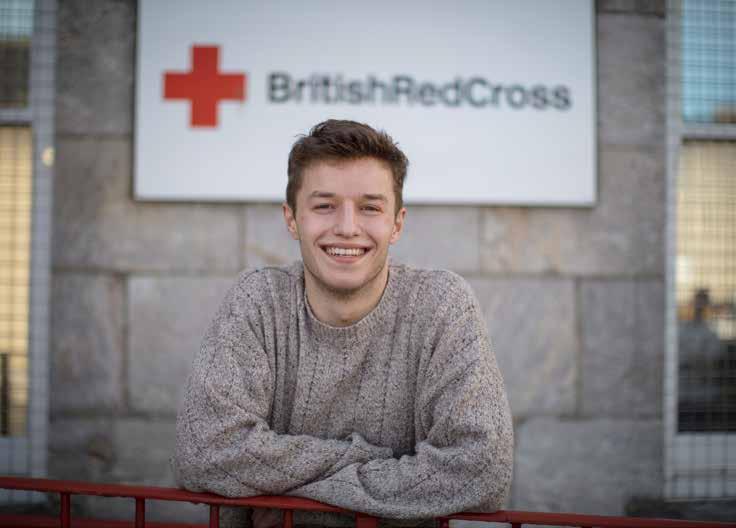
BUILDING MY PROFESSIONAL NETWORK
THIRD-YEAR POLITICS WITH INTERNATIONAL RELATIONS STUDENT OLIVER DISCUSSES
As a third-year student, my graduation is fast approaching and the events that I have attended have opened my eyes as to where my degree can take me. It can be difficult for students to know what careers are out there when they graduate, but the events that are arranged for Politics and International Relations students really help them to find out what they are interested in and what they are not.
Our lecturer James Goulbourn organised a husting, a meeting where Plymouth election candidates address potential voters. He invited each representative of the Drake Ward, the electoral ward the University is set in, to attend. The event lasted for an hour and a half, with each candidate describing their plans for the council should they be elected. It was an insightful evening that helped us to better our understanding of local politics by witnessing it in action.
We were also invited to attend a seminar and a lecture given by the former UK National Security Advisor (NSA), Lord Sedwill. The seminar was great as it was a chance for us to ask the former NSA our questions. Lord Sedwill
discussed contemporary threats and first-hand experiences, and even advised us as to how he got to his position. The event was a unique and useful experience.
These events were useful in terms of seeing what jobs were available to me after I graduate. They also allowed me to network; I have peers who have helped candidates canvass because of events such as these.
I benefitted from the seminar with Lord Sedwill on a personal level as I was able to discuss matters with the former NSA that were important to my dissertation.
I am hoping to work for the government in some capacity and this seminar allowed me to gain real-world advice and a greater understanding of how to apply for such jobs.
LEARNING THROUGH SIMULATION
Piers Revell, Lecturer in International Relations, discusses how students explore some of the most pressing challenges of the 21st century in their first-year module.
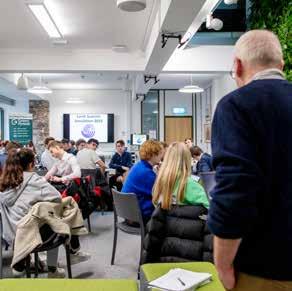
One Planet? Society and Sustainability is a first-year module taken by all our Politics and International Relations students which examines some of the most critical environmental challenges of the 21st century. The module aims to provide students with an understanding of key political debates relating to questions of sustainability. It critically evaluates key explanations for why global environmental degradation occurs and surveys contemporary political debates over a diverse range of organised human reactions and responses to environmental degradation, including violent conflict, multilateral diplomacy, transnational governance, individualising responsibility, problem displacement, and resistance. Our courses have a strong emphasis on active, scenario, problem-based learning. Assessments are designed to facilitate student participation and the development of collaborative team working skills. One of our collaborative activities is to ask students to prepare for and participate in the simulation of an Earth Summit held in our Sustainability Hub.
The scenario is that the Intergovernmental Panel on Climate Change has published
a report summarising the latest scientific consensus, which claims that ‘national carbon dioxide emissions need to be carbon neutral by 2030’. In response, the United Nations Framework Convention on Climate Change (UNFCCC) decides to convene an extraordinary ‘Earth Summit’ to try to close the ‘ambition gap’ between the targets agreed at Paris in 2015 and the sum of nationally determined contributions. Students form into groups and adopt an identity such as the USA, China, UK, India, Shell, Friends of the Earth, Survival International, and the Maldives. Student groups come to the summit prepared to present their perspectives and negotiate as representatives of states, global corporations, or environmental nongovernmental organisations.
SUSTAINABILITY HUB
The Sustainability Hub was built in 2019, with funding support from the European Regional Development Fund (ERDF). Every aspect of the refurbishment was designed to reduce the building’s environmental impact. It offers a place for people to come together in a collaborative space for sustainability research, education and partnership working.
Curtis’
GRADUATION STORY
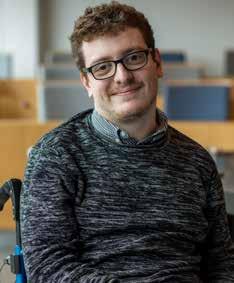
Curtis shares how a degree and masters from Plymouth allowed him to build an exciting career by setting up his own business.
“The team at The Cube have been instrumental in the success of my business. Whether it be helping me work out where I need to go next or connecting me with people who are key to the business. They gave me a safe space to grow the business on my terms.”
I chose to study BSc (Hons) Politics with International Relations for many reasons. Most prominently because from a young age, my parents introduced me to politics, I have always been interested in the topic and I soon started to wonder how political systems worked. I felt like this course was going to help me understand that, while also developing my knowledge further.
I decided to stay on and study for a masters because when coming to the end of my third year I was still hungry for knowledge. I had spent the last three years of my life in Plymouth and didn’t want to leave. I’d created great relationships with lecturers and staff too; I knew them and they knew me, so it was the best decision to continue.
Having now completed both the undergrad degree in Politics and International Relations and the MA International Relations: Global Security and Global Development, I have learnt a variety of skills to put me in good stead for the future.
SUPPORT
The University has been instrumental throughout my time studying. They always helped with accommodation, Disabilities Students’ Allowances assessments to assist me in my studies and several things that facilitated my life in Plymouth.
They gave me the confidence going forward to finally graduate and start my own business while studying for my MA.
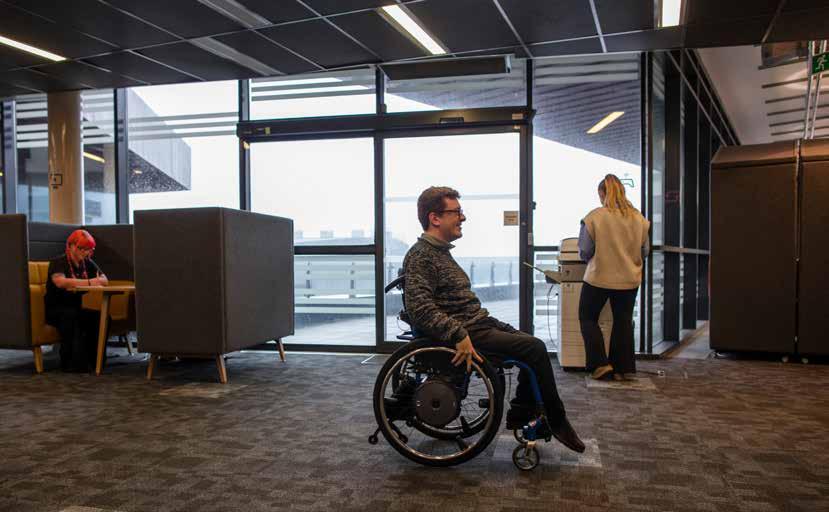
For me, as a wheelchair user, one thing I found special about studying at the University was the staff’s attitude, on the whole toward my disability and, as a result, my experience was very positive.
The facilities were great in meeting my needs. There were several teams behind the scenes that made my time at university a lot easier and more enjoyable. For example, because of their attitude towards disabilities, I could always say to my lecturers “I cannot come to a lecture today as I am in a lot of pain,”; not only would this mean they did not expect me in lectures but they would also set up a meeting to discuss the lecture privately so that I could keep up and have the same experience as my classmates. The relationship I have with the staff continues to be strong although I have graduated which I find massively positive.
THE CITY
I love Plymouth for many different reasons. One thing for me is that it is a city of perfect balance. You have the nightlife, lots of events going on if you know where to look and it can be very busy. Equally, you have spots in the city that can be quiet and relaxed. These two things exist side by side. Something rare in a city. In terms
“They gave me the confidence going forward to finally graduate and start my own business while studying for my MA.”
of the University, the campus is compact. Which, for me who uses a wheelchair, is a bonus.
Plymouth has a lot to offer that other cities simply can’t. The people are so friendly and so welcoming, both those from the University and those outside it. The geographical location offers you experiences away from university that you will not get anywhere else. There are also things like the British Firework Championships that you can only see in Plymouth or even SailGP.
STARTING A BUSINESS
Since graduating, I have become the director of the mental health group Marbles Lost & Found, and have been working on starting my own business, Disability Enabling Network (DEN). DEN will eventually be an interactive and socially inclusive app and website that helps those with disabilities and their family and friends, to live life to the full by providing them with a disability access platform, similar to TripAdvisor but for those with disabilities.
The reason I have set up the business is because I know that I have had an amazing support network in helping me accept my disability. I believe there is nothing I cannot do if I want to, regardless of my disability. But I know that some people do not have that support network.
I have also suffered from mental health issues because of my disability, and this is something I aim to support with my network.
The team at The Cube have been instrumental in the success of my business. Whether it be helping me work out where I need to go next or connecting me with people who are key to the business, they gave me a safe space to grow the business on my terms.
I hope to change national strategies, on a governmental level towards disability, while also changing attitudes towards people with disabilities. I know that if I follow the plan I have mapped out, I will help millions of people.
Throughout my studies, I gained several invaluable skills. Firstly, I learned how to project manage and meet deadlines. This is something that has become integral to my business, I determine what needs doing and set deadlines so that the business can grow. Secondly, I have learnt how to conduct thorough research as part of my degree. This has helped me when researching for my business. Another key skill I have learnt was communication and presentation skills via several modules and presenting arguments via debate workshops. This has been invaluable to me and my business as I can now present pitches to key stakeholders.
The Cube’s services are open to students from all schools, all levels of study and graduates.
We offer advice, funding and support at every stage of your entrepreneurial journey; you can come to us with anything from an idea to a fully-fledged business. Our expert team can help you take your venture in freelancing, selfemployment, business or social enterprise from your first innovative seed of an idea and help you grow and sustain it.
Have you got an idea that you’d love to turn into a business? Find out more about how the Cube could support you.
THE CUBE
THE END OF THE LIBERAL ERA?
Dr Patrick Holden explains why international relations expertise is more relevant than ever for the business community.
Politics and economics have always been interrelated. However, in the era we are entering, they are more intertwined than ever in increasingly complex and volatile ways. In recent decades businesses – in core Western countries at least – may have felt relatively secure in the political framework. If you were a business in the UK, you had guaranteed deep market access to your 30-plus neighbours. If you were a US-based transnational company, countries such as the People’s Republic of China (PRC) would entice you to set up manufacturing plants and base your supply chains there.
THE ‘LIBERAL’ WORLDVIEW
Although the World Trade Organization (WTO) was an unwieldy institution, more and more countries joined it after its establishment in 1995, including Russia, PRC and Saudi Arabia. Different forms of free trade were spreading across different world regions. Leading states and international organisations all expanded a ‘liberal’ worldview that the states of the world, would and should, gradually open their markets to each other.
Of course, this was never entirely the case in reality. Exporting food to ‘liberal’ Europe from outside could prove very demanding, while the US would not even allow foreign companies to bid for work transporting goods between its ports. Also, the geopolitical shadow for US companies working in China would (or should) have been obvious.
THE SHATTERING OF LIBERAL ILLUSIONS
Beginning with the financial crisis of 2008 a series of events shattered any liberal illusions. Brexit broke up the integrated
European Economic Area. 2016 brought to power Trump who completely shunned a liberal view of trade in favour of a zero-sum ‘winner takes all’ approach to trade as a power game.
More gradually, it had become apparent that countries such as the PRC that were actively engaging in the global economy were not ‘liberalising’ in the sense Westerners liked to think. Trump attacked the WTO directly and launched a trade war against China. Then along came COVID-19 which blocked the free flow of goods and services and led to zero-sum competition, rather than free trade, over key medical equipment.
THE CURRENT STATE OF AFFAIRS Biden’s administration (2021– ) did not return to free trade orthodoxy. It continues to sabotage the WTO by not nominating officials to its dispute settlement appeal board. It came up with more radical anti-Chinese economic measures, banning the export of key technology entirely.
Meanwhile, his Inflation Reduction Act to support green energy is a multi-billionpound subsidy to US-based companies, which US allies are currently negotiating to get a piece of. Russia’s invasion of Ukraine was responded to by extensive Western sanctions. This includes the US using its key financial and monetary powers as the holder of the global currency, an example of what call ‘weaponised interdependence’.
None of this means that ‘globalisation’ has ended but it does mean that the liberal vision of an open level playing field of free markets is very much on the defensive. Political risk for companies
was once felt to apply mostly to large transnational companies that do business in ‘trouble spots’.
This has now well and truly spread to a wider range of businesses. If you are a British company, should you mention Brexit as a source of your supply problems? If you are a South Asian small or medium-sized enterprises (SME), will investment from China put you in the US crosshairs? If you are an agri-food business in South America, are you willing to provide all your geo-data to the EU to allow them to check that you are not involved in deforestation? If you are a Chinese construction company, do you have a chance of bidding for reconstruction contracts in Ukraine?
CONCLUSION
In brief, trade and business policy globally is being primarily guided by climate, security and power considerations rather than commercial logic. To rework an old phrase, if you have a business or work in one, whether or not you are interested in international relations, international relations are interested in you.
MEET YOUR LECTURER
Dr Patrick Holden, Associate Professor in International Relations
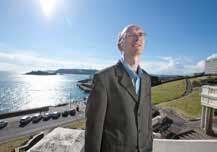
Patrick’s research explores the link between power, ideas and public policy on topics such as trade policy and development. Patrick’s career has been distinguished by engagement with policymakers and stakeholders at all levels, from working with policymakers from the EU and the Organisation for Economic Co-operation and Development (OECD) to local institutions in Plymouth. A proficient media contributor, Patrick prepared a ‘Brexplanations’ episode for Radio 5 Live (2019) and explained the G7 tax agreement for Sky News (2021).
THE PLACEMENT EXPERIENCE
Emily, a Social Sciences exchange student, originally from Canada, explains how she found her place in Plymouth and a new career path in refugee support.
As a Canadian, there were many reasons why I chose to study in the UK. Firstly, as an Englishspeaking country, it would be easier to navigate relationships and general life without a huge language barrier. Culturally speaking, UK and Canada do not differ hugely on social norms and habits which also appealed as something that would make it easier to integrate. I additionally
wanted to study Politics here due to the unique political climate. I thought that this perspective would help me look outside and expand my learning in a way that I just could not get by living in Canada. Also, two of my grandparents were born and lived here for quite a few years before moving abroad.
THE LOCATION
I chose Plymouth out of a list of universities in the UK due to its proximity to the coast. I also loved the general look of the campus from what I could see online. Once I got here, I continued to be happy with my decision as the university culture here is amazing and extremely welcoming. The city is very comfortable for someone who grew up in a small town in Canada. I always feel safe on the streets and there are tons of activities and businesses around the city to enjoy! Of course, that coastal view still pulls at my heartstrings.
MAKING FRIENDS
One of my favourite things about living in Plymouth is the people. I have met my forever friends, my soul sisters and brothers as cheesy as that sounds; however, it couldn’t be truer. I may be lucky with my core group of friends, but everyone else we surround ourselves with is so nice, outgoing and friendly. Secondly, I continue to love
outdoor spaces such as the Hoe and the Barbican. I love the walkability of the city and how close the University is to everything. I also love some of my favourite socialising spots such as the Caffeine Club, Twist Board Game Café, the SU and so many more.
I love the weather and as much as the Brits disagree with me, I compare it to California, maybe a rainy California, but California, nonetheless. Believe me, after experiencing 19 years of winters with lows of -30°C and the windchill of Canadian winters, it is certainly a good comparison!
THE TRAVEL BUG
Studying abroad has given me an entirely new outlook on politics and the course I have taken here has allowed me opportunities to learn things I never would have. Additionally, I have been lucky enough to do some travelling and continued my learning through those experiences, analysing the perspectives of different cultures.
This has helped me gain loads of perspective and knowledge I could’ve never dreamed of.
“I had always dreamed of travelling since I was 11 years old so it was nearly a decade when I finally took the leap. I applied post-pandemic, I guess something just clicked inside of me to say, “You only get one life.” I had an urge to finally stop putting it off and to go for it. I can say it was one of the best decisions I ever made.”
MY TEACHING EXPERIENCES
The facilities at the University are definitely an amazing addition to the beautiful campus and a huge help when studying here. However, the most beneficial things I have experienced in my course are the lecturers and class sizes. In comparison to Canadian universities, the class sizes are much smaller and this leads to a better learning experience. Even more than this though are the lecturers.
I have met lecturers from all different backgrounds and perspectives. They have a huge range of first-hand experience on some of the issues we are taught, which is extremely beneficial to my learning.
FINDING MY NICHE
My course involved an 80-hour placement at Devon & Cornwall Refugee Support. I have learned so much about the politics of immigration here in the UK. It has been an amazing opportunity to get work experience and first-hand learning of the issues and theories we learn in class.
It has been life changing. It has me rerouting my life plans to focus and specialise in refugee studies.
I have seen the horrible realities of the mismanaged immigration system in the UK. I have realised the extent to which misinformation rapidly spreads in the media, and how little we really know about anything. If I did not have
to finish my degree in Canada, I would be applying to stay and stay on at my placement as a volunteer. The work they do there really makes a difference in the lives of those who use their services. It has also provided me with invaluable work experience, which I am forever grateful for as it will help me with my future career.
I plan on returning to Plymouth in around a year once my degree is finished back in Canada. I qualify for an Ancestral visa through my grandparents and I plan to apply for it. I want to come back and continue working with refugees and hopefully obtain a job in the sector.
BENEFITS OF UNDERTAKING WORK EXPERIENCE:
• build several key employability skills
• put the theory of your course into practice
• get a taste for your chosen career, helping you to make informed decisions
• expand upon your professional network
• potentially earn money around studies
• learn skills you cannot develop on your course.
FIND OUT MORE
Our dedicated Careers Service provides you with several opportunities to gain work experience either via internships, placement years, part-time work, mentoring and more. Find out more about how they can help you on your professional journey.
UTILISING DATA TO DRIVE DECISION-MAKING
In an increasingly interconnected world, leaders are required to use data analysis and technology to inform and enhance the decisionmaking processes within military, governmental and humanitarian operations. It involves leveraging vast amounts of data, including intelligence, surveillance, and reconnaissance information; historical statistics, sensor and real-time operational data to gain insights, inform strategies and optimise decision-making.
The application of data-driven approaches has several key benefits:
• Enables a more comprehensive and accurate situational awareness by analysing diverse data sources. This improved understanding of the operational environment allows leaders to make informed decisions based on a holistic overview.
• Facilitates predictive analysis and scenario planning. By analysing historical data and employing advanced algorithms, planners can anticipate potential outcomes, simulate various scenarios, and assess the effectiveness of different strategies. This enables the team to respond to evolving threats.
• Enhances the efficiency and effectiveness of resource allocation and operational planning. By utilising analytics, leaders can optimise logistics, allocate personnel and assets more effectively and identify areas of improvement in terms of training, maintenance, and equipment utilisation. This leads to a more efficient operation and better utilisation of limited resources.
However, it is important to note that while data-driven decision-making offers significant advantages, it is not a standalone solution.
Human judgement, experience and contextual understanding remain critical. Data analysis should support and complement, rather than replace humans.
Implementing data-driven decision-making requires cybersecurity measures and
reliable communication networks. Safeguarding the integrity, confidentiality and availability of data is crucial to maintaining operational security.
HANDS-ON LEARNING
International Relations students took part in a special training event organised by data science business, Techmodal. For over 15 years Techmodal has been the partner of choice for UK defence, government and industry in the delivery of gamechanging data science and analytics solutions to help them transform how they operate. Their first step is to collect, organise, and integrate complex data from a myriad of sources to obtain one cohesive picture. Their data scientists then apply cutting-edge machine learning to identify patterns, make accurate predictions, and present it all in a clear and useful way for their clients.
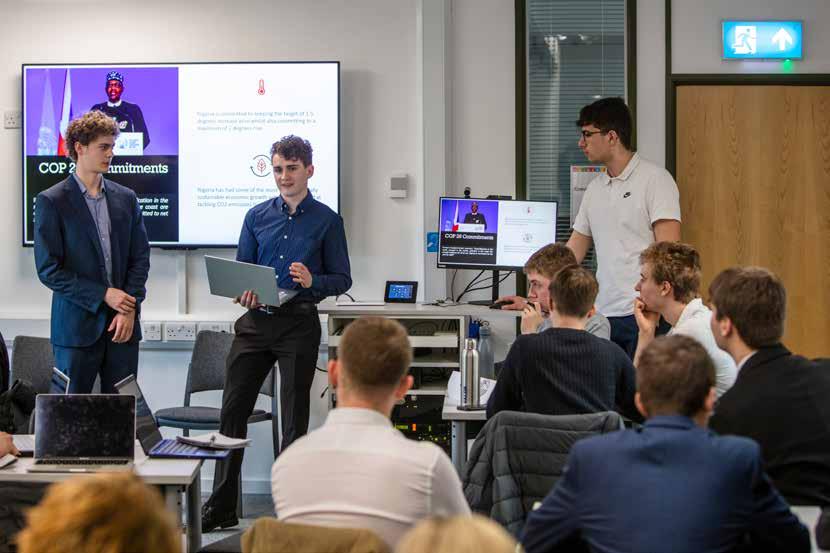
Mirroring the training delivered to staff in the Ministry of Defence, students took part in a simulation of a UK military intervention in Somalia due to a humanitarian emergency. Students were split into a range of teams from the UK military to Al Shabab, a militant group. They acted out and responded to various scenarios. The students found it tremendously engaging and it helped them develop their decision-making, analytical and negotiation skills. It was a very lively and enjoyable event all around and proved a very useful way to apply learnt ideas.
The students’ performance greatly impressed the organisers. The academic team at Plymouth are continuing to experiment with innovative and exciting ways to apply Politics and International Relations to the real world.
FIND THE RIGHT ROUTE FOR YOU VIA OUR FOUNDATION COURSE!
A foundation year forms part of a four-year degree and provides the understanding and basis needed to embark on the full degree. It offers students from a variety of backgrounds and skill sets an avenue into a wide variety of degrees that have traditionally been out of reach.
Whether you are returning to education after a break or if you come with qualifications other than A levels, a foundation pathway enables you to:
Build your confidence, regardless of your educational background.
Grow academically and personally in a university environment.
Develop research, utilise digital resources, essay-writing, academic argument, presentation, independent study and referencing skills.
Be supported via tutors, resources, and subject-specific skills training to prepare you for progression onto your chosen degree.
Join a community of like-minded students and make friends for life.
Politics and International Relations degrees draw students who want to make a mark on the world through debate, campaigns and activism. We believe that politics and international relations can make a tangible impact on society, whether you specialise in global diplomacy, environmental policy, human rights advocacy, economic cooperation or conflict resolution.
Join one of our foundation courses to:
• discover your inner academic.
• undertake an individual project.
• study political systems.
• explore how societies are governed.
Every year students thank their standout academics and peers at the STARR Awards. Our foundation stage leaders have been recognised as outstanding lecturers.
“Theresa is an exceptional foundation stage lead. I am studying a foundation year because my grades are not great. Due to this, I felt depressed and wasn’t putting my all in. She supported me and encouraged me that I could do it. She is very patient with us all on my course. She is such an amazing person and I hope she realises that.” Foundation student
“The best part of the course for me was the confidence it gave me. I wasn’t sure getting into university was something I’d be able to do. It’s an immense sense of achievement.”
Joe, BSc (Hons) Politics with Foundation student
BSc (Hons) International Relations with Foundation BSc (Hons) Politics with Foundation
STUDENT AWARDS CELEBRATE TEACHING STARS!
Theresa Waight – Foundation Stage Leader UPSU STARR Awards nomination 2022: Personal Tutoring and Programme Leadership.
MODEL NATO
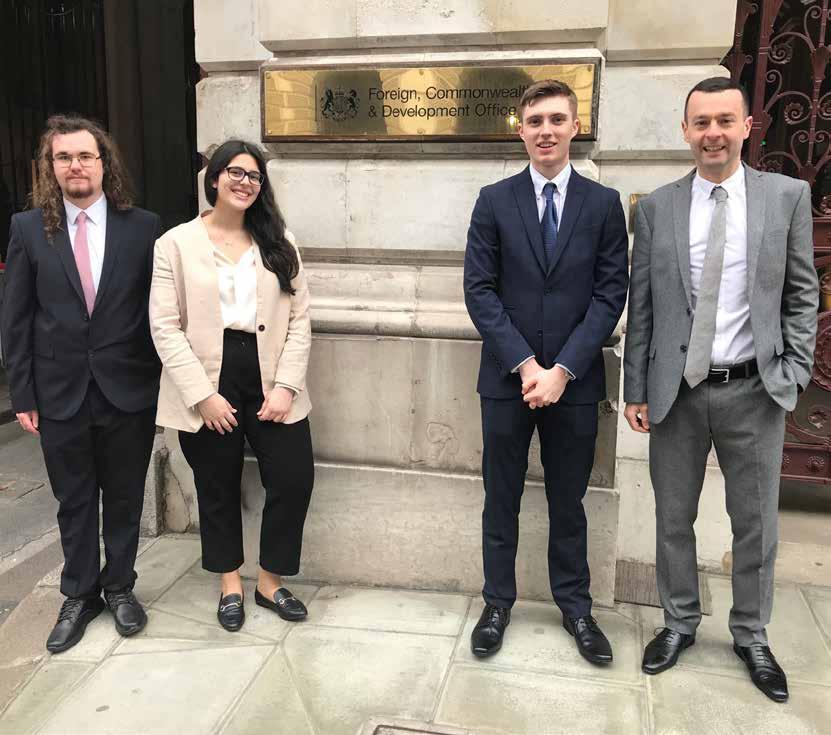
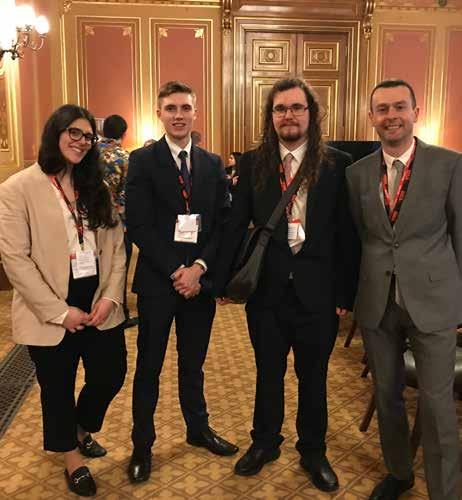
Lecturer in International Relations, Dr Lorenzo Cladi discusses taking a team of students to the Foreign Office in London to represent Croatia at Model NATO.
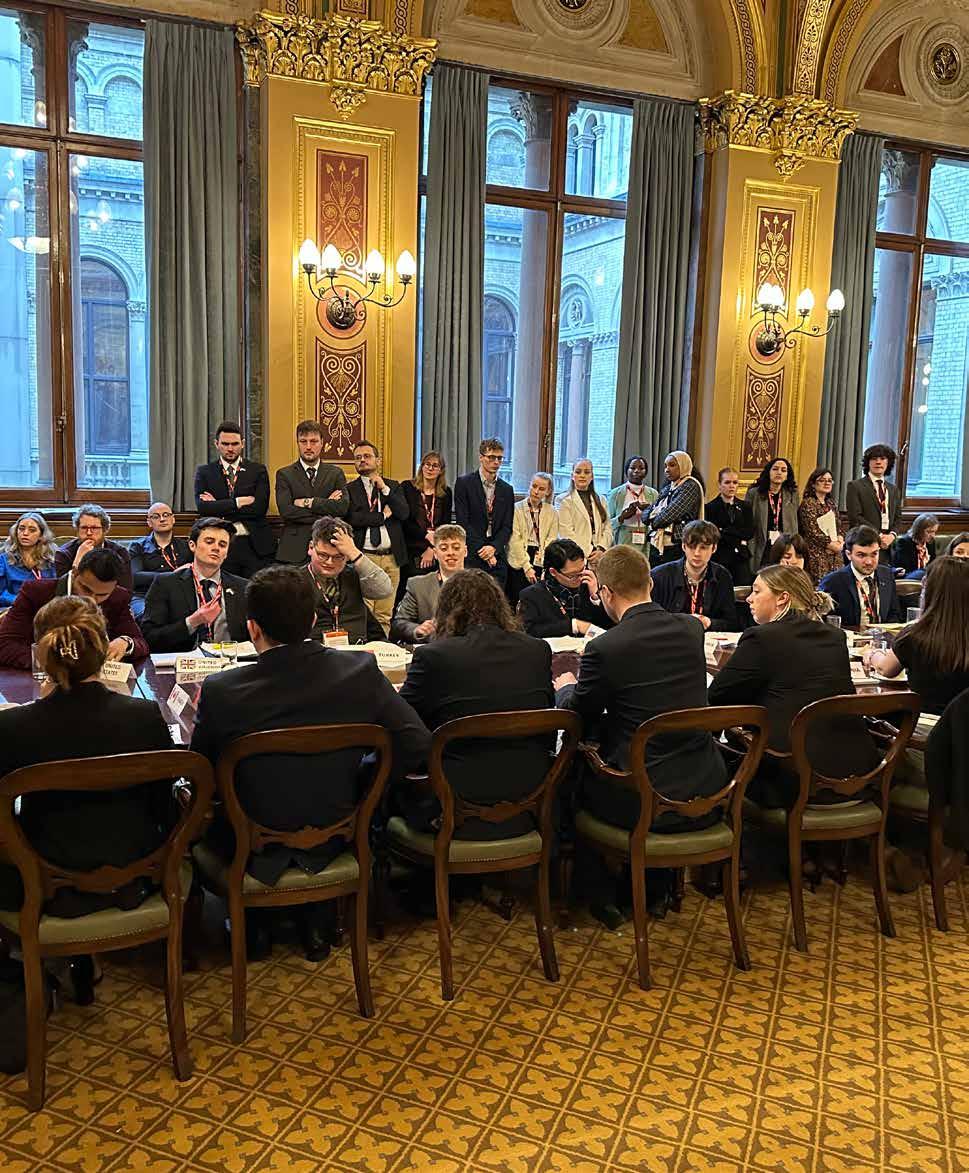
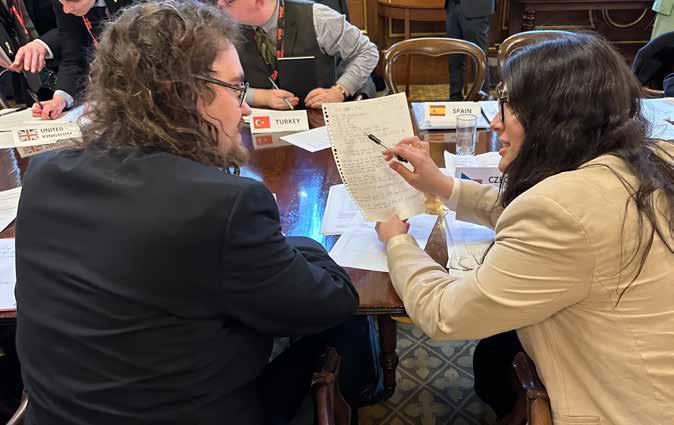
Students studying Politics and International Relations at the University had the opportunity to participate in a Model NATO event, hosted by the British International Studies Association (BISA), which was held at the Foreign and Commonwealth Development Office (FDCO) in London.
The group represented Croatia during the event, which saw the participation of 32 UK universities. Each university was allocated a country to represent at Model NATO, therefore, it was a large event that offered a unique opportunity for students to work on building consensus to solve a crisis.
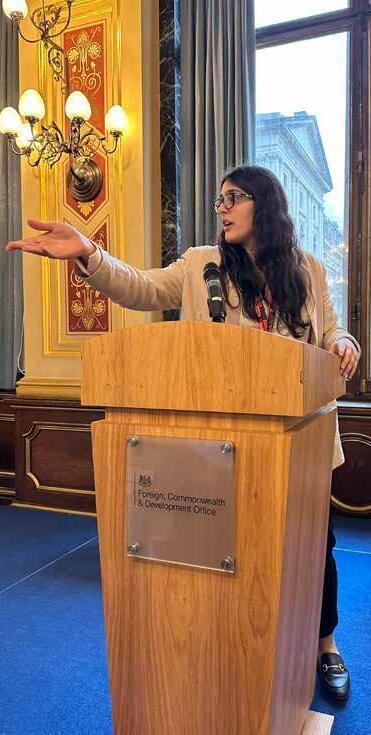
Students gained many invaluable skills in preparation for the event and during the event itself. As the event was an extracurricular activity, students were required to manage their course workloads to take part. In addition, students honed their public speaking skills as they had to represent a country at a high-profile event in front of many other students and
staff members from various UK universities who supervised the event. They practised research skills as they had to gather as much information as possible before the event to make sure they would represent the allocated country in the best possible way. Finally, they developed their networking skills, building connections with other students from other UK universities and interacting with civil servants from the FDCO. In short, they were able to ‘play diplomats’ for one day.
Thanks to having taken part in Model NATO, they will no doubt be able to explore further opportunities to become real-life diplomats in the future.
WHAT IS NATO?
• NATO, the North Atlantic Treaty Organization is a political and military alliance of 31 countries working together to maintain security and was founded in 1949, after the Second World War.
• NATO membership is open to any European state in a position to further the principles of the Treaty and to contribute to the security of the North Atlantic Area.
• NATO’s purpose is to guarantee the freedom and security of its members through political and military means, cooperation, diplomacy, crisis management, democracy and defence.
• Every day member countries consult and take decisions on security issues at all levels in a variety of fields.
BS c (HONS) INTERNATIONAL RELATIONS WITH POLITICS STUDENT LORENZA WAS ONE OF THE STUDENTS WHO HAD THE OPPORTUNITY TO ATTEND MODEL NATO.
My trip to London was an incredible experience. It started when I heard about the possibility of attending the event through my lecturer. Intrigued by the chance of attending such a prestigious event and related to what I intend to do professionally postgraduation, I decided to apply and underwent a selection process. I was honoured to be chosen and attended the event with two more coursemates, whom I was delighted to go with.
ARRIVING IN LONDON
I was immediately captivated by the vibrant atmosphere of the city. The event itself overcame all my expectations. I had the privilege of engaging with esteemed students, professionals from all around the world. This experience has left an unforgettable impact on both my personal and professional growth, and I am incredibly grateful for the opportunity I had!
NETWORKING OPPORTUNITIES
Attending the Model NATO event was an incredible experience and an opportunity for me to network.
I had the privilege of meeting and connecting with a diverse group of students and staff from various universities around the country. The
event promoted an environment of valuable discussions and exchange of ideas, which allowed me to improve my relationship-building and collaboration abilities.
This was a lifetime experience that I will always be grateful to my lecturer for organising. I had the opportunity to emerge in the political atmosphere and get to know the NATO realm. Being a student and having these kinds of opportunities is essential for our development as future professionals. I also had the opportunity to develop and enhance several skills throughout the event.
“I improved and understood the importance of effective communication and diplomacy.
Furthermore, I upgraded my critical thinking and problem-solving through engaging in multiple discussions and negotiations. I found the event to be an enriching experience that actively contributed to my professional growth.
THINKING
TO THE FUTURE
I believe that this experience will significantly benefit both my study and career! Being part of Model NATO provided me with a deeper understanding of global security, international relations and diplomacy. This knowledge will remain with me throughout my academic studies. I will be able to bring a more detailed perspective to my coursework.
I can positively affirm that the skills I gained, such as effective communication, critical thinking and problem-solving, are highly transferable and valuable in a wide range of professional settings, and will make me stand out once I emerge in the professional realm.
“I would like to thank my lecturer, Lorenzo Cladi, once again for allowing me and my coursemates to have a unique experience that I am sure will be extremely important for all of us. Everything was organised very masterfully.”
A HOME AWAY FROM HOME
BSc (Hons) International Relations with Politics student Morissa discusses how she found her place in Plymouth.
WHY DID YOU DECIDE TO STUDY ABROAD?
As a student in the United States, I studied a political science degree focused on American government. While I love political science, I felt there was more to discover. I ended up taking a class in International Relations and fell in love! Seeing how much there was to explore, I started considering the possibility that I no longer wanted to stay in one ‘box.’ I wanted to see politics outside of a single lens. It had been a dream since I was young to study abroad, although I wasn’t sure where. Studying abroad has given me a new understanding of a culture that was entirely new to me. Truthfully, it has given me more confidence and trust in myself than I thought I was capable of. This experience has forced me to branch out, create new friendships and be independent.
Exploring the world is scary, but it’s worth it for the stories and the memories that come with it.
WHY DID YOU CHOOSE TO STUDY YOUR COURSE?
I chose to study International Relations with Politics as I am deeply passionate about understanding the world and international relations offers different lenses from which to understand it. I am fascinated with looking at various theories of ’why’ in the decision-making of politics: from security to development to even why a state is called a state. I am always curious about the delicate balance held in state-to-state relations. Due to my passion for political literacy, I believe that understanding politics should be accessible to all, not just a select few. In the future, I hope to use my degree to help others globally; I aim to help improve communities and provide the tools to make politically informed decisions about what directly and indirectly impacts them and the world.
WHAT DO YOU LOVE ABOUT PLYMOUTH?
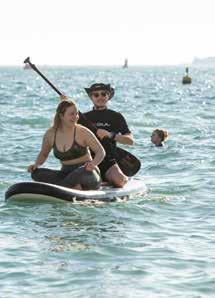
Being from the west coast of America, living by the sea has always been a big part of my life. Having close access to the water gives me a little memory from home. Being able to frequently swim in Plymouth Sound during the warmer months is a bonus! The city is also unique in that while it is populated, you never feel claustrophobic. It’s small, so going to get a food shop or going on a night out is all within walking distance. The public transportation system here in Plymouth is wonderfully convenient and affordable. I have taken the number 72 bus to Tregantle Beach in Cornwall to catch the sunset and walk on the sand. There are so many extracurricular activities that are all worth exploring. I highly recommend the Life Centre for swimming, climbing and diving.
WHAT SKILLS HAVE YOU GAINED SO FAR ON YOUR COURSE?
Through the course, I have developed and refined many skills so far. The seminars have helped me refine my debating and rapid critical thinking skills during hot-topic discussions. Lectures encourage us to ask questions that inspire us to further our research skills. The assessments challenge me to organise and reference all relevant information for essays and form educated opinions. The feedback given by the lecturers has elevated my writing skills and has even boosted my confidence in essay writing. Being a student representative has given me the pleasure of helping my fellow students solve any issues that may arise.
WHAT IS THE BEST, MOST EXCITING OR MOST FUN THING THAT YOU HAVE DONE ON YOUR COURSE SO FAR?
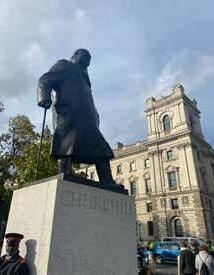
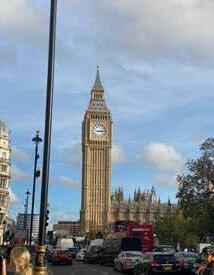
As a cohort, we went on a field trip to London and explored the city with our lecturers our tour guides. Each lecturer has a unique knowledge about the city, from personal anecdotes from their time working with an MP, to the critical views of the artefacts in the British Museum.
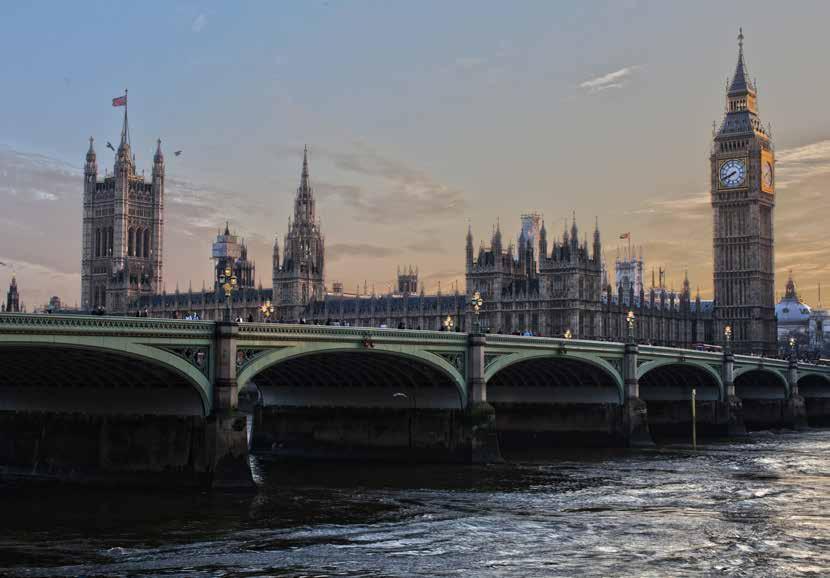
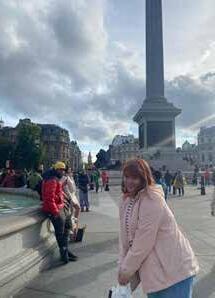
During the trip, we visited some beautiful historical landmarks, from Westminster to Camden Market, and even 10 Downing Street, just as Prime Minister Rishi Sunak was about to give a speech! It was fascinating to be up close and personal with the politics we all follow. News cameras and reporters took their stations while protestors flooded the streets.
“Exploring the world is scary, but it’s worth it for the stories and the memories that come with it.”
However, my favourite part was our visit to the British Museum. Our lecturer, Dr Elizabeth Cobbett, curated a worksheet for many of the exhibits inside and gave an insight into the thefts of artefacts which had purposely been rewritten as gifts on their placard. It gave all of us a new understanding of the politics behind museum curation and what it means to have access to other cultures. The entire trip brought many of us closer together, and it was an honour to have conversations with our lecturers in contexts that wouldn’t come up in a classroom setting.
WHAT MAKES STUDYING AT THE UNIVERSITY SPECIAL?
The University offers impressive facilities that everyone can use! I love going to the library for the study rooms, and if I have any enquiries, I can always
go to the staff for all my questions. However, the best part of the University is the lecturers. They are attentive, supportive and passionate about their subject areas, and it shows. I have gone to my personal tutor and other lecturers for various needs. They always go above and beyond to ensure that the university experience is incredible for all students.
WHAT ADVICE WOULD YOU GIVE TO PROSPECTIVE STUDENTS? BE YOURSELF!
Get out there and explore the city and the surrounding areas. Make as many friends as you can. Take advantage of what the University can do for you academically and with extracurricular activities. Carve out time for yourself, take time between studying, and create a healthy schedule. Oh – and do not forget to show up to lectures!
PERSONALISE YOUR DEGREE WITH THE
SCHOOL OF SOCIETY AND CULTURE
With our innovative curriculum, you can make your degree your own by choosing from a huge range of optional modules!
The School of Society and Culture offers you access to a reimagined set of courses across the social sciences, law and humanities. With a focus on hands-on learning, we have created an environment that roots your subject in the real world.
As a student at Plymouth you will be empowered to personalise your degree, by picking modules from other subject areas that are important to you, in your second and third years. By combining subject areas, you can follow your interests wherever they might take you – to make a real difference in society. Are you a politics student keen to explore the landscapes that shape our legal systems with a law module?
“The
course gave me an abundance of legal knowledge in many areas of law from criminal and civil to administrative law. The ability to select subjects that I was more interested in allowed me to tailor my degree to my own interests.”
Katherine,
LLB (Hons) Law graduate
Delivered by world-leading experts actively driving change, these degrees are designed so that you can experience the relevance of your subject in the modern world, addressing some of today’s most pressing social issues.
Photo by Derick McKinney on Unsplash
HOW IT WORKS
CHOOSE YOUR CORE DEGREE AFTER YOU START STUDYING…
• BA (Hons) Anthropology
• BA (Hons) Art History
• BA (Hons) Creative Writing
• BSc (Hons) Criminology
• BSc (Hons) Criminology and Psychology
• BSc (Hons) Criminology and Sociology
• BA (Hons) English
• BA (Hons) English and Creative Writing
• BA (Hons) History
• BSc (Hons) International Relations
• LLB (Hons) Law
• LLB (Hons) Law and Criminology
• BSc (Hons) Politics
• BSc (Hons) Politics and International Relations
• BSc (Hons) Professional Policing
• BSc (Hons) Sociology
Stick with modules from within your core degree subject area, or swap in modules from a different school subject area, such as computer programming in Python, environmental law or imagery in online and offline worlds: film, television and video games.
As you approach the final year of your degree, you should be in a good position to choose your final optional module.
If you’ve studied three optional modules from the same second subject area, you can choose to add this to your degree certificate – for example, LLB (Hons) Law with History.
“Our degrees give you experience of using your studies in the real world by getting hands-on in the community and with industry partners throughout your degree, ensuring you graduate with experience that sets you apart. Studying with us also means you have the opportunity to follow your passions and explore what really inspires and motivates you. All the school’s subjects are taught by a dedicated team of academics and practitioners who are actively driving change in their fields and who work with our students as individuals to help them achieve their goals. By focusing on the impact our disciplines can have in the real world – and giving students genuine experience of putting this into practice – we are supporting the next generation of change-makers and showing the value of these critical subjects to society.”
Dr John Matthews Interim Head of the School of Society and Culture
The aim is for you to experience real-world problem solving and practical learning, increasing your ability to prepare for the world of work. We have strong partnerships with major South West organisations like The Box which provide you with invaluable hands-on learning across English, creative writing and history.
Links with partners such as HM Prison Exeter bring new insights if you’re interested in criminology, with the option to study alongside prisoners; and the award-winning on-campus community Law Clinic will enable you to use your skills to support those most in need in the region.
There is a lot to consider on your student journey, from deciding to study a higher education course to having your application accepted. Explore our top tips below to help you prepare.
RESEARCH COURSE OPTIONS
At Plymouth, you can choose between a range of different courses. The emphasis of your degree depends on your interest. You can opt for a politics-focused degree, a straight international relations degree, or a more even blend.
Look into the detail of each course you are interested in.
• What tariff points and subject profile do you need?
• Does the course include modules you are interested in?
• Will it forge a career in an industry you aspire towards?
EXPLORE OUR COURSES
CHOOSE THE RIGHT A LEVELS OR EQUIVALENTS
Some courses require you to have obtained certain entry subjects or grades. Make informed choices when choosing your options.
Don’t worry if you didn’t have an idea when you were deciding, hopefully, you will achieve a strong set of grades across a range of subjects to maximise your options.
GET ORGANISED
Make a pros and cons list and discuss them with your family and friends. Undertake additional research by looking at course webpages, professional body sites or ucas.com for further information.
“Plymouth instantly stood out to me from other universities before my open day visit. I received information packs which always kept me informed and grew my curiosity about the course and the city. I knew instantly after my subject talk that attending the University would provide me with the relevant experience and employability skills which would distinguish me from other international relations and politics students.”
Anzey, BSc (Hons) Politics with International Relations student
VISIT AND CONNECT WITH US Find out more about our courses, facilities, and support services at one of our open days held throughout the year!
BOOK YOUR PLACE
IT’S YOUR FUTURE MAKE IT COUNT
Over 95% of our graduates are in work or further study*