
Subject Guide History Edition

Page 1


SUBJECT

History Edition

SIR FRANCIS DRAKEPIRATE OR PATRIOT?

TUDOR & STUART BRITAIN

THE ‘GREY GUARDIAN’ OF PLYMOUTH

Admissions

+44 (0)1752 585858 admissions@plymouth.ac.uk plymouth.ac.uk

Schools & Colleges Outreach

Faculty of Arts, Humanities and Business foabhoutreach@plymouth.ac.uk

University of Plymouth Drake Circus Plymouth Devon PL4 8AA United Kingdom

Follow us on social media @PlymUniApply

History Edition

SUBJECT

It’s never too early to start thinking about what you would like to do after school or college, or if you are thinking of a career move! At Plymouth, we know that choosing a university and course is a big decision. If you have a career aspiration or an inkling of which profession or industry you would like to enter into but are unsure of what to do next, then this is where our handy subject guide comes in.

Inside...

HOT TOPIC:

P. 10 More pirate than patriot? Examining Sir Francis Drake’s legacy of exploration

Dr Elaine Murphy, Associate Professor in History, unravels the two sides of the story behind Elizabethan mariner and explorer Sir Francis Drake.

FEATURES:

P. 16 Where will your degree take you?

What skills will you develop and what career options are available?

P. 18 Find the right route for you via a foundation year course

Grow academically and personally in a university environment.

P. 20 Things I wish I had known before coming to university

Settling into university can be a strange feeling. History student Amy shares her top tips for making the transition easier.

P. 22 Unboxing Plymouth’s history

Ever thought about taking your learning beyond the classroom and diving into history with a hands-on twist? Well, one of the great opportunities for history students is to learn inside

Meet some of this issue’s contributors:

Dr Jameson Tucker

Portfolio Lead for History and Art History

Jameson shares his top 10 reasons why studying at Plymouth is special. P. 4

Elijah BA (Hons) History

International student Elijah, originally from the United States, explains how he found his place in Plymouth. P. 52.

Thomas BA (Hons) History

History is about more than just sitting in a lecture theatre or seminar room. Graduate Thomas shares his field trip experience. P. 61.

EXPLORE YOUR FUTURE HOME

Visit us at an Open Day

When it comes to finding out if university feels right for you, nothing compares to an open day.

Talk to current students and quiz lecturers about your course. Register to attend at plymouth.ac.uk/open-days

Our virtual tour allows you to experience first-hand what it is like to be on campus and explore the environments and facilities that inspire and shape our learning every day.

The Box, Plymouth’s award-winning arts and heritage museum space located opposite the University.

P. 28 Oral history – narrating the past Dr Darren J Aoki, Associate Professor in World History and Oral History explains how narratives can spark memories, preserve stories and create history.

P. 30 Exploring the world

Discover how you can spend part of, or your entire, second year studying abroad.

P. 32 Soap and the Victorians: Cleanliness is next to Godliness

Join Associate Professor of Modern British History Dr James Gregory, to delve into the history of a humble bar of soap.

P. 36 The internship experience

Learn how you can gain valuable work experience to build your CV.

P. 40 Graduation Stories

Nicolas and Terri share how their history degrees have launched rewarding careers in the National Museum of the Royal Navy and the National Trust, and how you can find yours too.

P. 48 Tudor and Stuart Britain

Delving beneath the surface to discover the real people behind the stories.

P. 54 The Royal Citadel: The Grey Guardian of Plymouth

History student Archie talks about the history of the Royal Citadel.

P. 66 Your next steps

Explore the road to higher education.

THE GUIDE:

P. 62

Personalise your degree with the School of Society and Culture

Explore how you can gain hands-on experiences to prepare you for the real world.

10 REASONS TO STUDY AT PLYMOUTH

Studying history is not just about memorising dates and events, it’s about delving into the stories of the people who came before us and the societies they built. Are you ready to draw from the lessons of history to create a brighter future?

1. PASSION

Our degrees introduce you to new historical periods and people that shaped how we live today. You will learn how the past is important when thinking about possibilities for the future, and the ways that it can inform how we understand the present.

Our students spend three years with us, exploring five centuries of human history, including political intrigue, cultural transformation, war, sex, and revolution across the globe. You’ll graduate with a broad, deep appreciation of the complexities of narratives, and a new sense of your place as an analytical thinker against the sweep of history.

2. EXPLORE YOUR INTERESTS

Whether it’s a period, place, person, event or even a methodology, at Plymouth you will have the opportunity to follow your interests in history from the 1450s to the present day. With modules in piracy, civil rights, Tudors and Stuarts, oral history, the Irish Revolution, the UN and international relations, German unification, the First and Second World Wars, witches and werewolves in Renaissance Europe, the Cold War – there is something for everyone!

“There is a lot of freedom in the modules that you can decide to do, and the options are amazing. Before university, I was certain I was only going to study the Tudors and religious history, but I opted to study Maritime History as well which I discovered I had a real passion for, even to the extent of writing my dissertation on the topic. So, the main thing is to have your passions but be open to new ones as well.”

Alys, BA (Hons) History student

3. SUPPORT SURROUNDS YOU

We pride ourselves on our friendly and supportive learning environment, run by internationally recognised staff. Throughout your time here you will have a personal tutor who supports you, and every tutor operates an open-door policy, meaning you can see them outside seminars, workshops and lectures to talk through your work on a one-to-one basis. We also offer writing workshops and other kinds of writing support, so that you have lots of opportunities to improve your work with guidance from experts. For example, you can drop into the Writing Cafe, a unique and creative space where you can work with one of our trained writing mentors, or take part in one of our many events and activities centred on writing.

Learn more about the Writing Cafe

4. BEYOND THE CLASSROOM

We want you to embrace and experience all aspects of history. This can involve active participation in local, national and international field trips, behind-the-scenes access to museums and archives, and hands-on work with historical sources.

You can try your hand at Tudor dancing, draw a sword against a samurai master swordswoman, roll sushi or wear a Victorian beard or corset. All these immersive experiences help to enhance your understanding of the past and how people lived in and understood their world during that period.

“The main things I would say about university and Plymouth specifically is to do as much as you can, but try and find your balance. There are so many opportunities available that is very easy to forget why you filled out the UCAS documentation in the first place. The degree is the goal, but that doesn’t discount the fact that it takes three years to build your CV smartly and effectively. Use the time when you have your friends and lecturers on your doorstep to find out how best you work and gain a better appreciation of how you work smarter, not harder.”

Sophie, BA (Hons) History student

5. BOOKS AND THE BOX

Reading and writing are what we do. We welcome all new students into our department by providing them with free or subsidised core texts, so everyone starts their classes with the reading they need. Each of our History staff members is a practising author, with published writing ranging from academic

books to award-winning journals and publications.

Join our community to develop as a historian, thinker and writer, with resources at your fingertips within our Charles Seale-Hayne Library or at the fascinating museum, gallery and archives of The Box, opposite our campus.

6. JOIN THE EXPERTS

As a Plymouth History student, you will work with staff who are experts in their fields and at the forefront of cutting-edge historical research. We are changing the world around us, from Dr Louis Halewood’s research on cooperation between the Royal Navy and other military organisations to maintain peace in the 20th century, to Professor Daniel Maudlin’s exploration of Powderham Castle to discover its hidden histories and artefacts.

This research underpins all our teachings – and when you come to Plymouth, you too will become a researcher for your final-year dissertation. You will spend a year completing your own research project with support from an expert lecturer. You are encouraged to develop your

skills in areas such as oral history, archival research and writing skills, to enable you to reach your full potential as a historian. Our students regularly win national dissertation prizes and go on to develop their research at postgraduate level.

“While pursuing my dissertation I was mentored, challenged, directed and advised by my supervisor as well as the department team. From facilitating my research at the Churchill Archive Centre, Cambridge, to finalising my chapters in the dissertation, the team was constantly available to offer support throughout. It was this which was so vital to the success of my research.”

Elliot, BA (Hons) History graduate

7. THE CITY

Plymouth is a city steeped in history –from the 1500s through to today. Rich in maritime history, it was a gateway to the world. Numerous expeditions left the city, and it was the first port of call for many important visitors. As a History student, you will engage with the city and its vibrant heritage in many ways, ranging from visiting local archives and historic sites, designing heritage trails for visitors to the city and researching the past.

Study with us and discover a thriving waterfront city at the heart of the stunning South West. The University sits on the idyllic South Devon coastline at the very centre of the city, with Dartmoor National Park to the north. Our city set against is a stunning seaside location with a rich cultural life. With excellent national transport links, great shopping and culture, top sporting opportunities, pristine seas and south-coast sunshine, studying here allows you to live the lifestyle that only the South West peninsula can offer.

8. OPPORTUNITY

You will have the chance to study in another country and gain a diverse cultural perspective via our international exchange programme. Choose to spend either a semester or an entire year exploring history with one of our partner institutions in the USA, Canada and Europe. Students come to us as well, adding to the valuable diversity of our student body. Encountering a variety of innovative ideas, knowledge and people is one part of your degree experience.

9. FLEXIBILITY

We are a friendly department in a big, diverse school. You can tailor your degree to focus on what fascinates you. By taking different options, you will gain a thorough grounding in your areas of interest – whether it be history-related or a completely different subject such as anthropology, law, politics, or sociology. Whatever your passion, you will have the freedom to explore it here. Find out more on page 62.

10. REAL-WORLD HISTORY

History isn’t just about ‘being’ a historian; it’s about engaging the wider community with their past and heritage. You will be able to share your historical knowledge and experience by getting involved in internships and work experience with several of our partners across the city and region such as The Arts Institute, The Box (museum, gallery, archive), Plymouth City Council, Powderham Castle, Britannia Royal Naval College and the Histories of the Unexpected podcast.

“People may think there’s nothing unexpected about the past, or history. Our podcast adopts a new approach to exploring our past arguing that everything has a history – it is just about unpicking it. It’s cultural history meets comparative history, a fusion of object biography let us say, with a form of history that requires you to make connections temporally and geographically.”

Professor James Daybell, Professor of Early Modern English History, and presenter and co-writer of the Histories of the Unexpected podcast

MORE PIRATE THAN EXAMINING SIR FRANCIS DRAKE’S

Dr Elaine Murphy, Associate

Professor in Maritime History, unravels the two sides of the story behind Elizabethan mariner and explorer Sir Francis Drake.

Behind every famous story – from Sir Francis Drake to Sir Winston Churchill – different interpretations of history have always been told. At any point in time, the narrative around a historic event can change as society changes, sometimes reshaping how we view our heroes and the lasting impression they left on the world.

Beloved by Queen Elizabeth I, but nicknamed the dragon by the Spanish, Drake is a divisive figure with a rich history steeped in fact and legend.

THAN PATRIOT?

DRAKE’S LEGACY OF EXPLORATION.

THE QUEEN’S FAVOURITE PIRATE

Born in Tavistock, Devon around 1542, Francis Drake was a noted Elizabethan seafarer. But as one of the central English commanders who fought against the Spanish Armada, Drake is probably better known as a privateer or pirate. From 1577 to 1580, Drake led what became known as his circumnavigation of the globe –the first Englishman to do so – on board his ship, the Golden Hind, which sailed from and returned to Plymouth. Although it was not really a planned circumnavigation,

in the sense he was not exploring; Drake aimed to raid the Spanish.

Upon his return, Drake brought back a huge amount of treasure and privately met with Queen Elizabeth I and shared the wealth with her.

The Queen had Drake knighted on his ship in London and this privateer became Sir Francis, using his share of the loot to buy Buckland Abbey in Devon – now a National Trust property close to Plymouth you can visit.

Drake would later go on to be one of the leading naval commanders against the Spanish Armada, whose aim was to overthrow Queen Elizabeth I. Sailing from Plymouth, Drake led the attack against the Armada with ships that were faster and more manoeuvrable than the larger Spanish galleons.

He later died of dysentery, a common disease in the tropics at the time, while anchored off the coast of Portobelo, Panama in 1596.

THE DRAGON ALL OF SPAIN FEARED

If you were an English person in Drake’s day, his achievements were seen as legitimate, especially if you were a beneficiary of his pursuits. On the other hand, the Spanish who had claimed the New World as their territory, nicknamed Drake ‘El Draque’, the dragon. Piracy really is in the eye of the beholder.

Spain’s territorial claim was a problem for the English, who felt the Spanish should let them in. If you were Spanish, Drake became a feared pirate who robbed them of their riches – with a lot of his exploits taking place before any war had formally broken out with Spain. Throughout several voyages, Drake attacked many Spanish towns and killed countless people. In 1586 he captured Cartagena and demanded a ransom of 100,000 ducats from the townspeople before he and his men would leave.

THE CONSTRUCTION OF A HERO

Drake has this heroic, very gallant representation, like a lot of men of his time. If you walk down to the Barbican in Plymouth, you can see many plaques celebrating all kinds of voyages – there has always been a heroic element to exploration. An idea echoed in John Seymour Lucas’ painting The Surrender, which depicts a chivalrous Drake accepting the surrender of the Spanish fleet.

When we think of Drake depicted in art, the classic image is of him bowling on Plymouth Hoe, which we know now was actually very unlikely to have happened.

The Armada in Sight, Plymouth Hoe, again by Lucas, shows having just received the news of the Armada’s approach, Drake completing his game of bowls before launching into action. Whereas the likely reality was the English fleet was forced to wait because of the tide. The Hoe was a big open area with many

people walking about, so it was very unlikely an experienced commander like Drake would have stayed to complete a game when he knew the Spanish were approaching. He would have much more likely been down in the harbour getting his ships ready, knowing they would only have two or three hours until the tide turned.

But the popular story we know sounds too good not to believe, because it makes Drake appear very nonchalant. ‘He will finish his bowls because he knows he will go on and beat the Armada anyway.’

Drake’s privateering ways sometimes got the better of him. During the Armada campaign, he left his position to capture a struggling Spanish ship, Nuestra Señora del Rosario. Drake’s actions put other ships in the English fleet at risk. But he did well as it was a Spanish pay ship carrying 50,000 ducats.

THE SEARCH FOR DRAKE’S GHOST

Thomas Davidson’s painting Burial of Admiral Drake has helped mythicise his death and burial at sea. Drake wanted to be buried on land, but when he died in 1596, he was buried in a lead-lined coffin in

the Caribbean. Many people are still treasure hunting for Drake’s coffin to this day. Imagine if we were to find Drake’s coffin, what would we find inside? The interest and obsession with Drake isn’t going away.

Since his death, there have been numerous rumours and local myths about him. Some say Drake made a pact with the devil to defeat the Armada, and that his ghost now rides across Dartmoor in a black coach driven by headless horses, led by goblins and pursued by a pack of dogs –the possible inspiration for Arthur Conan Doyle’s The Hound of

The Queen had Drake knighted on his ship in London and this privateer became Sir Francis, using his share of the loot to buy Buckland Abbey in Devon.

the Baskervilles. It has also been said that shortly before he died, Drake ordered the snare drum, which he took with him when he circumnavigated the world, to be taken to Buckland Abbey.

Drake vowed that if England was ever in danger and someone was to beat his drum, he would return to defend the country. According to legend, the drum can be heard to beat in England’s hour of peril.

DRAKE’S LEGACY

Drake’s legacy is therefore very ambiguous. In a city like Plymouth, we celebrate Drake. Many places are named after him: from Drake Circus, the shopping centre, to Drake’s Kitchen on campus. When Drake returned from his adventures, Plymouth wanted to ensure he maintained a connection with the city, so they made him mayor for a term in 1581.

Drake was someone up and coming and the fear was he would decamp off to London and never come back. By giving him an important civil office, Plymouth showed him how much the city respected him. Drake was later married in Plymouth and stayed in this region for a lot of his life. Some years later, Drake oversaw a municipal contract to construct a shallow canal, bringing water to the city. This arrangement has given rise to the myth that Drake brought the first supply of water to Plymouth.

As historians, our views on Drake are much more mixed. Alongside his cousin and fellow Plymouthian, Sir John Hawkins, we cannot look past their involvement in starting the English slave trade to Africa.

Between 1562 and 1567, Hawkins and Drake made three voyages to Guinea and Sierra Leone, and enslaved between 1,200 and 1,400 Africans. In Plymouth, there are numerous public monuments to their achievements, including Sir John Hawkins Square, the Armada Memorial and the statue of Drake on the Hoe – but there are no public monuments to the thousands of Africans killed and enslaved by them. Historians view Drake with a lot more nuance today. He can be viewed as both a privateer and an admiral.

Figures such as Drake are not simplistic characters; they can be different things, at different points in time, to different people.

HOW WE CHOOSE TO COMMEMORATE

Plymouth chooses to commemorate pirates. But we don’t commemorate Pocahontas who landed here. Why is that? We don’t commemorate Catherine of Aragon, Henry VIII’s first wife, who landed here after a terrible storm stopped her original arrival in Southampton – an event which fundamentally changed England through her inability to bear Henry a son, leading to the English Reformation.

We do commemorate the Mayflower, which was only here for four days, while Sir Humphrey Gilbert has a plaque on the Barbican celebrating his voyage to find Newfoundland but is remembered in Ireland for his massacres and genocides.

Figures such as Drake are not simplistic characters; they can be different things, at different points in time, to different people.

Would we put a statue up for Drake today? If someone tried to take down Drake’s existing statue, I expect the city would be up in arms. But if we tried to put a statue up for Sir John Hawkins, then opinion would likely be different. I love the ambiguities of these people and how we see things differently.

The Navy commemorates Trafalgar Day – a celebration of when Horatio Nelson led Britain to victory over a combined

French and Spanish fleet in 1805, but one where Nelson was shot and died during the battle – but they don’t commemorate the Battle of the Nile in the same way, which was arguably a more important battle Nelson won. Is this because Nelson died during the Battle of Trafalgar?

Do we remember Robert Falcon Scott because he died? What if he hadn’t died? What if he just came back and was second in the race to the South Pole? Are we more likely to remember heroic failure?

THIS IS PART OF THE FUN OF STUDYING HISTORY –UNPACKING THE AMBIGUITIES OF COMPLEX CHARACTERS LIKE DRAKE AND THEIR ACTIONS, AND TRYING TO FIND THE TRUTHS IN THE TALES.

Research expertise

• Maritime and naval history

• A passion for piracy and privateering, and the experiences of women in the Navy

• British Civil Wars of the 1640s and 1650s

• Speeches of Oliver Cromwell

• Modern Irish history

• The British Civil Wars at Sea –nominated for Military History Matters Book of the Year 2019

Elaine showcases her passion for the past and why she believes she has the greatest job in the world – teaching and researching history at Plymouth: the perfect place to study both sides of the story.

Discover more

MEET DR ELAINE MURPHY

WHERE WILL YOUR DEGREE TAKE YOU?

Graduation marks the end point of your undergraduate degree. It is a wonderful occasion for you, your family, your friends, and your tutors. We want to make sure that, while you have been working towards your degree, you have also been preparing for the next phase of your life.

We aim to empower you to follow your passions, to develop lifelong skills in reading, writing and research, to challenge, define, debate and solve complicated problems, to prepare you for a variety of career opportunities.

DEVELOPING EMPLOYABILITY

At Plymouth, we have excellent opportunities for developing employability skills and gaining work experience in a range of graduate careers. To boost your chances of finding that perfect first job and gaining hands-on experience, we provide you with a range of intern opportunities to build your portfolio of experience with local and national heritage sites.

• Capability to work without direct supervision and manage your time and priorities effectively.

• Capacity to think objectively and approach problems and new situations with an open mind.

• Essential skills for the world of work including multi-tasking, time management, the ability to reflect, and communication skills to discuss, negotiate, question and summarise.

• Appreciation of the different factors that influence the activities of groups and individuals in society.

We also offer a range of workshops and one-to-one sessions throughout the year, to give all our students individually tailored advice through in-depth personalised and ongoing professional development training. This enables you to maximise your skills and sell your strengths in applications. We will also teach you international perspective skills and knowledge that will help you to take advantage of opportunities in the increasingly global world.

CAREER OPTIONS

• Academic Researcher

• Archivist

• Army or Naval Officer

• Charity Officer

• Conservation Officer

• Editorial Assistant

• Event or Outreach Officer

• Government Policy Officer or Civil Servant

• Heritage Manager

• Historic Buildings Inspector

• Historian

• Journalist

• Librarian

• Marketer

• Museum Education Officer

• Museum or Gallery Curator

• Teacher

WHAT SKILLS WILL YOU DEVELOP?

• Critical reasoning and analytical skills, including the capacity for solving problems and thinking creatively.

• Intellectual rigour and independence, such as the ability to conduct detailed research.

• Ability to construct an argument and communicate findings clearly and persuasively, both orally and in writing.

“Following graduation, I worked as a field organiser for US Senator Maria Cantwell’s re-election campaign, where I recruited and managed volunteers, planned events, and spoke to constituents daily. Not long after Senator Cantwell won the election, I was selected for the legislative internship in her DC office. As a legislative intern, I assisted in researching bills, attending briefings and writing memos for staff members, giving tours, and serving as the first point of contact for the office. Being a part of the legislative and administrative process, at the epicentre of government and history for the United States, has been both educational and thrilling.”

Emma, BA (Hons) History graduate Political Campaigner

“Plymouth understands that it’s not just your overall grade that helps you gain a job after graduating. They offer lots of support in terms of finding work experience and using LinkedIn.”

BA (Hons) History graduate Learning and Development Advisor

“During the final year of my degree, I applied to be an Assistant Language Teacher (ALT) in Japan as part of the Japan Exchange and Teaching (JET) Programme. My degree from Plymouth along with the support from my lecturers helped me to be accepted onto the programme and I have been living and teaching in Japan.

I was placed in Kochi Prefecture on Shikoku Island, and I teach in two elementary schools and one junior high school. The job is very interesting and super rewarding, plus the opportunity to live in Japan and explore the country has been fantastic.

My degree helped give me the skills I needed to be able to have this amazing opportunity. I received lots of support from the lecturers, who were always on hand to answer questions, give advice or go over feedback on an assignment. The wide variety of modules made sure that I was always interested and engaged in my studies and was a large reason why I chose to earn my History degree at Plymouth. I especially enjoyed the Japanese history modules I took in my second and third years, which were fascinating. They helped inspire me to apply for the JET Programme. My time studying at the University gave me the ability to go out and explore the world.”

Alfie, BA (Hons) History graduate English Teacher at JET

MEET OTHER ALUMNI

FIND THE RIGHT ROUTE FOR YOU VIA A FOUNDATION YEAR!

This four-year course incorporates an extra year that provides the understanding needed to embark on full degree study. It benefits those who had a break in study, have qualifications other than A levels or did not meet the specific entry requirements. Progression to year 1 of a full degree is available on successful completion of the foundation year (year 0).

History degrees draw students who are curious, imaginative, critical thinkers and are dedicated to exploring hidden histories. Whether you choose to specialise in the early modern period, unravel cultural narratives, explore historical justice, or explore socio-economic factors of the world, you will join a friendly and supportive community committed to shaping a more enlightened world.

Join our BSc (Hons) History with Foundation course to:

• discover your inner academic

• undertake an individual project

• imagine the past

• study literature, history and visual cultures.

STUDENT AWARDS CELEBRATE TEACHING STARS!

Every year students thank their standout academics and peers at the STARR Awards. Our foundation stage leaders have been recognised as outstanding lecturers.

THERESA WAIGHT FOUNDATION STAGE LEADER

UPSU STARR Awards nomination 2022: Personal Tutoring and Programme Leadership

“Theresa is an exceptional foundation stage lead. I am studying a foundation year because my grades are not great. Due to this, I felt depressed and wasn’t putting my all in. She supported me and encouraged me that I could do it. She is very patient with us all on my course. She is such an amazing person and I hope she realises that.”

Amy, BA (Hons) History with Foundation student

SANDRA BARKHOF FOUNDATION STAGE LECTURER (HUMANITIES)

UPSU STARR Awards nomination 2022: Inspirational Teacher of the Year

“Entering university, I was extremely nervous that I was not going to transition very well and find my lectures very difficult to understand, but when I first came into Sandra’s lecture my anxiety disappeared. It must have also been a challenge for her to be so excited because it was 9am on a Monday but I immediately knew that she had a great love for history and was eager to share it with us. Over the next few weeks, I was overwhelmed with the support she offered. Any emails my classmates and I sent were answered promptly and contained everything we needed to know. Furthermore, she was also ready to compromise for us at any time, for example, if we were worried about an assignment, she offered us assistance outside office hours just so we could have peace of mind. During my time in education, I have never met a teacher that was truly as engrossed in the subject they were teaching as Sandra.”

Joe, BA (Hons) History with Foundation student

THINGS I WISH I HAD KNOWN BEFORE COMING TO UNIVERSITY

Settling into university can be a strange feeling. BA (Hons) History graduate Amy tells you what she wished she knew before starting her course.

The main difference between university and school is the way that you’re taught. Compared to school, you’ll have a lot more independence at university. At school you have a set curriculum that you follow, each university course contains different course content.

You’re probably used to having a weekly timetable with lessons all day from Monday to Friday. In university your schedule will be very different. You’ll have fewer scheduled lessons during the week. You may also have long breaks between your lessons, or even a whole day off. In years two and three of your degree, you’ll get even more free time but you’ll be expected to do a lot more independent study.

At school and college, you’ll have the same teacher for a whole lesson, in a classroom, who gives you a lot of help and support. At university, you’ll have more teachers who are called lecturers for each of your lessons. You’ll learn through lectures for overview information, and be involved in seminars with smaller groups of students where you can ask questions and take part in activities based on what you learned in the lecture.

How many exams are there?

One of the reasons I loved the course at Plymouth is there were only two exams and those were in the first year; the rest of the degree is assessed by coursework. I’m not good with exams so this suited me really well. Also, your first year is only worth 10% and they only count your best four modules, so if you don’t do as well in the modules with exams, they may end up being discounted anyway! This is a great comfort if you’re worried about them.

What is writing university essays like?

I won’t lie, they’re not easy at first, but as you go through the degree, you’ll get to learn what works and what doesn’t, and you’ll find a style and routine that works for you. Our essays are submitted online on the Digital Learning Environment (DLE), or some call it Moodle. I would always recommend you submit a day, or a few hours at the very least, before the due time as it takes the pressure off. You may be the student who works well under pressure and needs that all-nighter to get the essay done or, like me, you may like to be prepared and get everything done in advance. I pretty much always submitted my essays a day or two early and would have my schedule written down in a plan to keep me on track.

A piece of advice, especially for second and third years where you can have several deadlines at once, is to learn to prioritise and manage your time. In the research phase, I would spend one day reading and planning my essay for one module. The next day I would do the same for another module and so on, and when it came to writing I would set myself a daily word count to meet for whichever essay I was focusing on that day. Sometimes, I might do 500 words on one essay, take a break, and then 500 words on another essay for a different module so I could keep on top of things. For me, organisation was key.

How much do we have to read?

It is a heavy reading-based subject, but we’re not expected to read loads of books cover to cover. Often, for essays you can just read the chapter that fits your topic. Each module will have a set reading list which can be found on the DLE.

What is the grading system at university?

It’s different to being at school, but you get used to it. Also, the grade bands feel so different, for example, an essay that is 63% feels different to one that is 67% even though this is the same grade band: a 2:1 (second class upper division). The grade bands are as follows:

• First – 70%+

• 2:1 – 60–69%

• 2:2 – 50–59%

• 3rd (Pass) – 40–49%

• Below 40% is a fail

Is it hard to keep up with lectures? Any tips?

At first, lectures can be daunting; you feel as though you must write everything down, but honestly, my biggest tip is to concentrate on writing down what the lecturer is saying! The stuff on the PowerPoint can be written down later as all the PowerPoints are available via the DLE, but often the lecturers are just using those points as guidance and the important stuff is what they’re saying to expand on these points in the slideshow.

Another tip is to find out whether hand writing or typing your notes is best for you. I know I couldn’t hand write very fast, so I chose to type all my notes. I now love Google Drive as everything saves automatically as I go along, and it’s backed up so I never have to worry about losing my work.

How hard are presentations at university level and are they graded? Presentations were so scary at first, and even now after three years of doing them in several modules, I still get nervous no matter how much I have prepared for them. In my third year, I found a good strategy for presentations was writing out a full script. The lecturers never ask you to know your presentation by heart with nothing to read from, although you can do this if you wish. They are graded but most are just based on the content, rather than your presentational skills. Also comforting to hear is that they are usually a small percentage of your module grade compared to your essays in that module.

Hopefully, that helps you feel reassured! Everyone is in the same position as you. If you’re unsure of what you need to do, ask! As you progress, you’ll find your feet and become a pro at assignments.

UNBOXING PLYMOUTH’S HISTORY

EVER THOUGHT ABOUT TAKING YOUR LEARNING BEYOND THE CLASSROOM AND DIVING INTO HISTORY WITH A HANDSON TWIST? WELL, ONE OF THE GREAT OPPORTUNITIES FOR HISTORY STUDENTS IS TO LEARN INSIDE THE BOX, PLYMOUTH’S AWARD-WINNING ARTS AND HERITAGE MUSEUM SPACE, LOCATED OPPOSITE THE UNIVERSITY.

Museums are like time machines that let you touch, see and experience history in a whole new way. Imagine stepping into a museum and being able to hold an ancient sword, feel the texture of a centuries-old letter, or see the intricate details of an artefact up close. That’s the magic of museums – they bring history to life! Instead of just reading about events and people in your lectures, you get to connect with the past by exploring artefacts, records, documents and artworks that were part of it. All material is related to modules you are studying such as pirate and naval history from the 16th century onwards.

But it’s not just about touching cool stuff. Museums are like storybooks that use pictures and objects to tell incredible tales from different times. They turn history into a detective game, where you piece together clues from artefacts and paintings to figure out what really happened. This helps you become a pro at understanding context and finding the deeper meaning behind events.

Here’s the best part – when you visit a museum, you’re not alone. Experts and curators are there to guide you and answer your

questions. Plus, you can chat with other History students who are just as curious as you. These conversations let you see history from different angles and learn things that might not be in your textbooks.

Walking through a museum feels like you’re walking through history itself. The quiet atmosphere and the way things are displayed make you think about how people lived, what they believed, and how it all connects to our world today. You can even let your imagination run wild and wonder about how things might have turned out if different choices were made in the past.

“I really enjoyed the visit to The Box as it applied to what we were looking at and made the subject area more relevant and more hands on. I enjoyed looking at the George Rutherford Wanted P oster as we had viewed it in the seminar and it was interesting to see the actual document in person. The visit was really interesting as it allowed me to look at naval documents differently.”

Charlie, BA (Hons) History student

THE BOX

OPENED IN 2020, THE BOX IS A MULTIDISCIPLINARY ARTS AND HERITAGE SPACE, AND ONE OF THE UK’S MOST RECENT SIGNIFICANT CULTURAL INITIATIVES.

This cultural destination is a museum, gallery and archive that showcases Plymouth’s rich and colourful history, as well as hosting groundbreaking exhibitions, musical compositions and performances. Bringing together the former City Museum and Art Gallery, Central Library and St Luke’s Church buildings, The Box is part of the city’s ongoing regeneration, re-shaping the landscape of Plymouth’s ‘cultural quarter’.

The Box brings together the collections of the Plymouth

City Museum and Art Gallery; the Plymouth and West Devon Record Office; the Local History Collections of the Central Library; the South West Film and Television Archive; the South West Image Bank, and some of the Naval Heritage Centre collections in Devonport, with a curated, contemporary programme complemented by rich academic research, from the University. The Box also features a striking elevated ‘archive in the sky’ with research and learning facilities, food, drink and retail spaces.

The Box has also created a major public square on Tavistock Place for performances, events and artistic responses.

Plymouth has a fascinating past and a dynamic present. The Box’s collections, programmes and commissions share stories of international and local significance. Moreover, contemporary artists can create new work that responds to our historic collections.

THE FOULSTON ROOM

The Foulston Room, housed in The Box, is a place where new ideas, skills and knowledge are generated. Our students are taught from this location which showcases our intellectual and creative talent in action, in a setting that facilitates engagement with wider

educational and cultural communities.

The Foulston Room boasts a rich history of learning in and of itself; the space was once the old lecture room within Plymouth Library and was latterly used as their open-access computer room. Within the newly configured space,

the room sits opposite archival and museum professionals and adjacent to both The Box’s invigilated Cottonian Research Room and the more informal Active Archive, which enables you to interact with the various collections of The Box.

TEACHING SPOTLIGHT – NAVAL FIGUREHEADS

ONE OF THE HIGHLIGHTS OF THE BOX, WHICH YOU CANNOT MISS, IS THE 14 CAREFULLY RESTORED NAVAL FIGUREHEADS THAT GREET VISITORS AS THEY COME IN THE MAIN ENTRANCE. YOU WILL LEARN ABOUT THESE TOO

A LONG NAVAL TRADITION

There is a long tradition of figureheads on the Royal Navy’s warships. Carved figureheads of animals, representing the ship’s name, can be seen on some of Henry VIII’s ships in the Anthony Roll from 1546. For example, the emblem of the Tudors, a rose, is also visible on the front of the Mary Rose. In 2005, divers raising part of the Mary Rose in the Solent found a 4 ft long carved wooden artefact which has been identified as

IN PERSON ON ONE OF OUR TEACHING VISITS.

the ship’s figurehead or badge, which is now on display in the Mary Rose Museum.

Lions were commonly featured on the front of naval vessels in the 17th century. Large men-of-war often received more elaborate and expensive decorations and figureheads. In 1727, the admiralty issued an order that permitted the carving of figures instead of a lion’s head. During the 18th century, figures

of people became more common on the Royal Navy’s ships, over time, they evolved into busts by the 19th century.

Figureheads began to fall out of fashion in the 1860s as iron and steel hulls replaced wooden ships. In 1894, the admiralty ended the practice of putting figureheads on larger naval ships. Some smaller vessels continued to have figureheads fitted until around the 1900s. HMS Espeigle was the last Royal

Navy ship to have a figurehead when the ship was broken up in 1923. Its figurehead is now housed at the National Museum of the Royal Navy in Portsmouth. The need for a symbol that illustrated the ship’s name still exists today as ship crests.

CARVING AND PAINTING THE FIGUREHEADS

The Royal Navy dockyards in Plymouth (re-named Devonport in 1824) and Portsmouth normally employed carvers who worked on the figureheads for ships under construction in that yard. Cuthbert Mattingly worked as the chief carver in Plymouth from the 1730s to 1760, when he moved from Portsmouth. Other Plymouth-based carvers who can be identified include Anthony Allen (1691–1701) and the Frederick Dickerson family in the 18th and 19th centuries.

The figurehead of ‘King Billy’ –more properly, William IV – was made at Devonport by Dickerson in 1833. The female figurehead for HMS Topaz made by Dickerson at Devonport in 1856 cost £28 10s. The turbaned and bearded bust of HMS Sphinx was designed by Hellyer of Portsmouth for £9 in 1845. Today we associate the figureheads with bright colours, but many were originally painted white.

FIGUREHEADS TODAY

Approximately 200 warship figureheads survive today. Nearly all the surviving examples are from the 19th century. The Royal Museums at Greenwich host a database of surviving figureheads including those on display at The Box.

Many were saved when their ship was broken up. This included HMS Implacable, which was stripped before it was sunk in 1949 as one of the oldest wooden warships. The ship fought on the French side at the Battle of Trafalgar in 1805 before being captured and renamed by the Royal Navy. The figurehead and stern are now on display at the National Maritime Museum in Greenwich.

ORAL HISTORY –NARRATING THE PAST

Dr Darren J Aoki, Associate Professor in World History and Oral History explains how narratives can spark memories, preserve stories and create history.

“Oral history is a field of study and a method of gathering, preserving and interpreting the voices and memories of people, communities, and participants in past events… [It] collects memories and personal commentaries of historical significance through recorded interviews.”

Oral History Association, ‘Oral History Defined’

“A spectre is haunting the halls of the academy: the spectre of oral history”, wrote the renowned oral historian, Alessandro Portelli in 1979. In this blaring call, he challenged scholars of modern history to set aside the documents they were reading for a moment and instead, listen to people about whose history they were researching. He contended that, in the memories they shared and especially in the way that they narrated their pasts, we can uniquely access the realities of both individual and collective human experience by actually hearing it from living witnesses of the past.

Fifty years on, Portelli’s incitement to revolutionise historical practice continues to transform – often contentiously – how academic and public history is done.

Critics continue to cite with reason the frailty of memory: what and how we remember is changeable across our lives, and sometimes, it is wrong.

In response, oral historians argue two things. First, this fragility – a key characteristic of the human condition – is precisely the point where research can begin. Just as the past is understood to shape the present – we are who we are because of who we once were – the present shapes the past. Much historical research is motivated by a concern in the present that then frames how and why we seek to understand history. For example, consider the history of Northern Ireland. Now, with the violence of ‘The Troubles’ ended and the momentum to reconciliation a driving

force, oral history plays a vital role in understanding and healing division. This is something some of our oral history students have found in interviews they conducted for dissertations exploring subjects as diverse as sectarian community relations and women in the Maze Prison hunger strikes.

Secondly, this fragility is also the point where research should begin since sometimes memory is all that we have. These are histories at risk on the verge of being lost, which are all the more precious when individuals and whole communities have remained hidden in history or even erased from history because documents weren’t concerned with them or records have excluded them. For example:

• surviving the Plymouth Blitz in the Second World War

• swimming for Britain’s medalwinning Paralympic team

• growing up in China in the 1980s, including waiting for the country’s first McDonald’s to open

• the 1980s miners’ strike from the perspective of the police

• the ballroom dance circuit in northern England pre-Strictly Come Dancing

• encountering the Soviets while on operation in a British nuclear submarine

• being held hostage as ‘human shields’ during Saddam Hussein’s 1990 invasion of Kuwait

• the 1969 occupation of Alcatraz by First Nation activists.

These are some of the topics that, with their supervisors’ guidance and approval, our History students chose, developed, conducted, and in the case of one that looked at what it was like to lead a Royal Air Force fighter squadron during the Cold War, won a national prize for the best dissertation.

One thing that makes the oral history experience of students definitively is the

opportunity to contribute actively to the enrichment of the wider community we serve. The development of oral history, as a targeted focus of study on our History course and other module opportunities, regularly sees students cultivate their employability profiles as they learn how to undertake oral history in real-world settings through our collaborative partnerships with organisations and charities across the South West. These include to name a few, Evolving Forests focusing on Dartmoor’s ecological sustainability; Memory Cafe at Wheal Martyn exploring social care; sailing Tectona helping people recovering from substance abuse; Geevor Tin Mine and Museum showcasing historical industrial practices, Heartlands Cornish Heritage documenting deindustrialisation and coastal community regeneration; and Bodmin Keep Museum delving into military history.

When you watch a modern history documentary or interact with a museum’s exhibits – oral history is everywhere. Yet, in their aim to recover and amplify the memories of individuals and communities, the initiative to make history more accessible started some five decades ago and continues to develop.

Join the revolution to spark the voices of the silent and silenced.

“Conducting and analysing our own oral history interview, as well as others, gave us a sense of how valuable and interesting these stories are to understanding and preserving the past.”

Kymberly, BA (Hons) History student “Oral history has allowed me to meet people and discuss their stories. The lives of real people are what oral history concerns, there’s a human element that emphasises the creation of compelling narratives through the engagement of interviewer and interviewee. This is the case in my interview with Chloe Griffin, who spoke about her experiences growing up while her dad was away for extended periods with the RAF. This section of the interview details one of her favourite memories, the time her dad arrived home early.”

Joe, BA (Hons) History graduate

“I conducted an interview with Nora Watson, which focused on her life in Northern Ireland during the Troubles. Before conducting this interview, I had no interest in oral history, but I now understand that recording the experiences of ‘ordinary’ people can make an extraordinary contribution to how we understand the events of the past. Being given this opportunity by the University has not only allowed me to explore an area of interest at a deeper level, but also helped me appreciate the amount of work that goes into recording oral histories.”

Amy, BA (Hons) History graduate

EXPLORING THE WORLD

DISCOVER HOW YOU CAN SPEND PART OF, OR YOUR ENTIRE, SECOND YEAR STUDYING ABROAD.

Plymouth is one of only 14 universities in the UK which are part of the International Student Exchange Program (ISEP), and considering these study options cost little more than a normal year studying in Plymouth, this is a great way to see the world while furthering your studies. You do not need to decide at the outset of your degree, as your goals and aspirations grow, you can explore the possibilities open to you.

Embarking on a university year abroad enables you to:

• expose yourself to a new culture, language or way of life

• build global awareness and expand your worldview

• improve language and communication skills

• develop your independence, resilience and adaptability

• step outside your comfort zone

• access new academics, courses and areas of research

• network with professionals to benefit your future career

• boost your CV

• form friendships that can last a lifetime

• explore new cities and travel around a new country

• create unforgettable memories.

STUDY IN THE UNITED STATES OR CANADA

We don’t simply teach you about America and Canada, we offer you

the chance to go there and find out for yourself. You’ll be able to experience life stateside with our partner universities – a fantastic opportunity to not only learn about the US and Canada but also to immerse yourself in American and Canadian culture.

United States:

• Plymouth State University, New Hampshire

• Longwood University, Virginia

• Northern Arizona University

• Nebraska Wesleyan

• University of North Carolina at Greensboro (UNCG)

• Montana State University

• Idaho State University

• University of Mississippi.

Canada:

• Thompson Rivers University, British Columbia

• Trent University, Ontario

• University of Lethbridge, Alberta

• University of Windsor, Ontario.

Over recent years, almost 10% of Plymouth’s History students have gone on student exchanges.

DON’T JUST TAKE OUR WORD FOR IT!

“To put it simply, my study abroad exchange was the best decision I’ve ever made. When I decided to apply I was so nervous that I was making a mistake, but I was wrong. The experiences I had were life-changing. I made friends with amazing people and experienced new things I’d never had the opportunity to do. You’re taken out of your comfort zone and placed into something unknown, but it truly is worth it. I met people from other cultures around the world I’d previously never had the chance to meet. It gave me so much more confidence in myself and I would encourage anybody to go on a study abroad.”

Joshua, Plymouth State University

“For my student exchange, I attended Longwood University in Farmville, Virginia for a semester, between January and May. There were many reasons I was interested in taking part in the study abroad programme, such as the opportunity to experience and immerse myself in a new culture and society. I was excited by the prospect of moving out of my comfort zone and fully embracing the American college lifestyle. Additionally, this was a chance to meet new people from all over the world, as part of the international programme, and broaden my understanding of different cultures and people.”

Daniel, Longwood University

“I am very much enjoying the US and Northern Arizona University; it really has been a once-in-a-lifetime experience. The beauty of the region is stunning, I’ve joined the hiking club and there are regular trips to areas of natural beauty, one every week!”

Aisha, Northern Arizona University

SOAP AND THE VICTORIANS: CLEANLINESS IS NEXT TO GODLINESS

JOIN ASSOCIATE PROFESSOR OF MODERN BRITISH

HISTORY DR JAMES GREGORY TO DELVE INTO THE HISTORY OF A HUMBLE BAR OF SOAP.

We are all acutely aware in the era of COVID and other associated pandemics, the cleansing properties of even a humble bar of soap were vital. I’m sure we can all remember the shelves bare of soap and sanitiser in the not-so-distant past. The ability to wash away bacteria and viruses was a relatively new concept in the 19th century.

There is already a significant body of scholarship and popular history on the 19th century environment, the diseased, dirty, and scented body, and the material artefacts, industries and workers, who ensured that the Victorian mantra of cleanliness being next to godliness, might be realised. There are histories of water supply, drainage, sewerage and plumbing; scents, and soap; philanthropic efforts to wash the poor and their clothes through public baths and laundries; and histories of fuel and heating systems that increased the possibility of hot water.

THE ‘GREAT PERSONAL SANITARY AGENT’ FRANCIS PEARS, SOAP MANUFACTURER

Soap as an artefact comes in a variety of shapes and sizes. Soap is of course not a Victorian invention, but its manufacture on a massive scale became a possibility after the industrial revolution. Lots of different types existed, such as coaltar soap which was advertised to have medicinal properties of a derivative from coal industries resulting in a pungent smell, and carbolic soap which was advertised as a disinfecting soap for hospitals and homes, and was used to deodorise and wash clothes and surfaces.

Plymouth was a centre for soap making. In 1848 the city produced 4,117,170 lbs of hard soap.

Soap was understood to soften the skin as well as emulsify oils and loosen impurities, allowing the pores of the skin to breathe. It was made from all sorts of fats in the 19th century. You could make it

from animal fats including cows, pigs and sheep, and vegetable fats such as olive, almond and palm oil. They then combined fats with alkaline soda or potash derived from plants such as kelp by licensed soap makers. As its use widened, perfumers would add oils to create the scented soap-making industry. Cheap fats made cheaper soaps, almond oil smelt of almonds but was expensive, cheaper soaps were made from sperm whale oil –very smelly! Soap made from coconut oil could be used in salt water. The chapter on soap in Francis Pears’ book of 1859, listed fats made from ‘kitchen and bone’, horses, and even ‘human fat’ – an alarming echo of 20th century atrocity.

Just as now, there was a ready market for fancily coloured, perfumed and shaped soaps. There was also a demand for cheap soaps that were mixed with a range of ingredients aimed at inferior working people. Estimates of usage in the period vary. Lobbyists calling for an end to the soap duty claimed the agricultural labourer used 4 lbs per head per annum,

the workman up to 12 lbs per head and wealthy families used up to 30 lbs per head.*

MARKETING

Soap advertisements appeared in newspapers, periodicals and the back of cheap books. Soap was displayed at public events such as the Great Exhibition of 1851. Among the wealth of statistics compiled for that iconic international event was the fact that 157,254,000 lbs of soap were made in Britain in 1850.** The American exhibits included soap busts and medallion portraits of Queen Victoria, Prince Albert and other celebrities. They even created a stained-glass window made of coloured soap.

Soap was advertised as health and beauty products are now, by linking the product to current concerns, such as the health of infants and children, to the desirability of a good complexion and contemporary celebrity endorsements. Memorably, there was a satire on this in the leading middle-class satirical magazine, Punch, by the cartoonist Harry Furniss titled Good Advertisement, which ended up being used by soap makers in advertisements. For historic companies such as Pears, soap was promoted with ingenious advertisements including the Pre-Raphaelite artist John Everett Millais’ sentimental A Child’s World, acquired by the firm in 1886 and renamed Bubbles. The firm also produced a longlasting Pears’ Annual, and even longer-lasting Pears’ Cyclopaedia.

Pears had been a soap manufacturer since the late 18th century and was famed for a transparent soap which had been ‘discovered’ by Andrew Pears in 1807. The beauty and royal mistress Lillie Langtry was paid for the right to reproduce her image and signature, in advertisements that appeared even beyond Britain, with the claim, ‘a perfectly pure soap, it keeps the pores open [a Victorian hygienic reformer’s obsession], the complexion clear,

“Cleanliness is next to Godliness. Soap must be considered as a Means of Grace and a Clergyman who recommends moral things should be willing to recommend Soap.”

Peterson’s Magazine, Philadelphia, September 1885

and the hands and skin soft’. In America, the celebrity American Congregationalist clergyman Henry Ward Beecher became a figurehead. He also asserted for the benefit of the firm:

“Cleanliness is next to Godliness. Soap must be considered as a Means of Grace and a Clergyman who recommends moral things should be willing to recommend Soap.”

Peterson’s Magazine, Philadelphia, September 1885

EXPLOITATION

As Cassell’s Household Guide informed its readership in 1869, the ‘use of soap is the most sure way of purifying the surface of the body’. Soap promised to bring cleanliness to the filthy bodies and clothes of the 19th century, as if a quick scrub could transform the waifs and strays as in the philanthropist Barnardo’s propagandist ‘before and after’ photographs, into respectable Victorians. Yet there was a darker side to soap manufacturing and the soap industry. The advertisements, for one, played on racism, with their trope of the African body being soaped white. Moreover, lots of ingredients needed to make soap such as palm oil were produced by colonised slaves.

POPULAR CULTURE

In terms of hygiene, soap was presented as a protection against infection in a variety of texts.

“A basin of water, soap, and towel should, of course, be always handy for the doctor, and if it is an infectious or contagious case it is well to make the clergyman or any visitors wash their hands before leaving the house.”

Arthur Brinckman, Notes on the care of the sick, London: Palmer, 1879

Soap was integral to Victorian culture. We are familiar, with the era of the soap-manufacturersponsored serials of American daytime radio from the 1940s and 1950s, with the ‘soap opera’: entertainment designed primarily for a female audience. Soap advertisers in the late 19th century generated their own soap-related genre of sentimental art with the Frenchman Pierre Édouard Frère’s More Bubbles a companion piece to Millais’, or Fred Morgan’s bath scene with chubby children and puppy.

LEGACY

Soap is marvellous, which is why it was such an outrage that it was monopolised or taxed from the 17th century in England, until the Victorian era when the duties were first lowered and then abolished in 1853. Soap may smell nice, especially through the chemistry that allowed later contemporary firms to create artificial scents. But its manufacture also created nuisances such as offensive smells in boiling down the materials to obtain the fat.

Nevertheless, as the global challenge of future pandemics is apparent to us all, we should be learning to appreciate more the value of this substance, which the great 19th century chemist Justus von Liebig linked to the character of a nation and as an index of civilisation:

“The quantity of soap consumed by a nation would be no inaccurate measure whereby to estimate its wealth and civilisation. Political economists, indeed, will not give it this rank; but whether we regard it as joke or earnest, it is not the less true, that, of two countries, with an equal amount of population, we may declare with positive certainty that the wealthier and more highly civilised is that which consumes the greatest weight of soap. This consumption does not subserve sensual gratification, nor depend upon fashion, but upon the feeling of the beauty, comfort, and welfare attendant upon cleanliness; and a regard to this feeling is coincident with wealth and civilisation. The rich, in the Middle Ages, who concealed a want of cleanliness in their clothes and persons under a profusion of costly scents and essences, were more luxurious than we are in eating and drinking, in apparel and horses. But how great is the difference between their days and our own, when a want of cleanliness is equivalent to insupportable misery and misfortune!”

Justus von Liebig, Familiar letters on Chemistry, and its Relation to Commerce, Physiology, and Agriculture, edited by John Gardner, London: Taylor and Walton, 1843, p.20.

FEATURED MODULE

FILTH AND THE VICTORIANS

Gain a critical awareness and understanding of aspects of British culture and society

The module examines 19th Britain and the British world through public debates, practices, objects and environments related to dirt and cleanliness. It explores ideas the Victorians held about urban dirt of human and animal waste; air and water pollution; washing and deodorising the Victorian body; the ‘cleansing’ of language and culture; the cultural history of soap; and ideas of pollution in terms of the racial ‘other’.

These are selected to reveal key aspects of the social, cultural and intellectual, political history of the period.

Each week you will work with Dr James Gregory to explore a key theme using a range of primary sources including literature, cartoons, songs and artefacts.

*Case of the Soap Duties, London: Clowes, p.9

**Guide-book to the Industrial exhibition, London: Partridge and Oakey, p.28

INTERNSHIP SPOTLIGHT

GAIN VALUABLE WORK EXPERIENCE TO BUILD YOUR CV

What next with your History degree? To help you decide we run a range of paid internships each year for our students. These internships will allow you to gain some valuable work experience to build your CV. They also allow you to try out some sectors such as teaching, archives, the heritage industry and public history to see if you would like to pursue a career in these areas. Internships can last anywhere between a few days to months, providing you with invaluable experience for your CV, future job applications and employability prospects.

Benefits of undertaking work experience:

• build several key employability skills

• put the theory of your course into practice

• get a taste for your chosen career, helping you to make informed decisions

• expand upon your professional network

• potentially earn money around your studies

• learn skills you cannot develop on your course.

INTERNSHIP SPOTLIGHT

HOLLIE

THIRD YEAR HISTORY STUDENT

ROLE: CULTURE AND HERITAGE EXCHANGE (CHEX) PODCAST RESEARCHER

The Culture and Heritage Exchange (CHEx) is a knowledge exchange initiative which engages academic researchers, industry professionals, heritage stakeholders, and the general public in interdisciplinary conversations through multi media methods, sources and platforms.

The study of culture offers an important forum for the discussion of key influences that have helped shape the present. The initiative disseminates members’ research through events such as public

exhibitions, film showings and public seminars.

My role within the CHEx podcast recently has been as a history researcher. My job is to do the background research on podcast guests, which includes identifying relevant works authored by them, and key themes within their research. My position as the historian will also be to identify past events or issues that directly relate to the current research. The topics I’m researching have allowed me to expand my historical

interest in local history. Specifically, into modern and recent history, which is unfamiliar to me. I feel that exploring local history has been a benefit to my general studies as an early modernist and making connections that I hadn’t thought about has opened new historical interests for me.

I’ve enjoyed my role because the depth of research needed has allowed me to expand on my skills as a historian and use the skills gained during my degree.

INTERNSHIP SPOTLIGHT

OLIVER

THIRD YEAR HISTORY STUDENT ROLE: TULGEY WOODS SANCTUARY RESEARCHER

The Tulgey Woods Sanctuary is a community interest company that strives to create a wildlife haven in the centre of Plymouth. Over the past six years, they have worked hard to rewild the woods, cleanse them of litter, create coppiced glades, plant wildlife-enhancing plants, reduce fires and vandalism, beat the bracken, and place nest boxes, all with the help of like-minded volunteers.

My role was based in Tulgey Woods, where I documented a species index within the woods to gain a better understanding of the environment and the work the sanctuary is undertaking. I learned a lot about different species, particularly birds and butterflies. Obviously, as a History student, it wasn’t something I was previously familiar with. I really enjoyed all aspects of the project from the people to the actual work I was doing. The sanctuary has cultivated a welcoming and pleasant environment.

DAVID AND HARRISON

THIRD YEAR HISTORY STUDENTS

Find out more Our dedicated Careers Service provides you with several opportunities to gain work experience via internships, placement years, part-time work, mentoring and more.

ROLE: DIGITAL STORYTELLER ON POST-TRAUMATIC STRESS DISORDER (PTSD) AT BRITANNIA ROYAL NAVAL COLLEGE (BRNC)

Britannia Royal Naval College (BRNC), commonly known as Dartmouth, is the naval academy of the UK and the initial officer training establishment of the Royal Navy, since 1863. The PTSD project aims to explore the role new communication technologies play in personal narration by active service personnel, especially on operations and those closest to them.

“The work I have done so far on the PTSD/Digital Storytelling Internship has been absolutely fascinating in terms

of historicising both expressions of mental health needs, and 20th century interaction with social media.”

David

“My work on the project entails searching through a large database of videos loosely or directly related to PTSD. The work has allowed me to further expand my knowledge of databases and their potential for historical analysis using both quantitative and qualitative methods intertwined.”

Nicholas’

GRADUATION STORY

Role: Archaeological Data Manager for HMS Victory Organisation: National Museum of the Royal Navy Location: Portsmouth

“The great thing about studying history at Plymouth was that it gave me greater options to diversify my experience and didn’t necessarily direct me down one single career path.”

DAY TO DAY

I am responsible for HMS Victory’s historical and restoration archive, material collection and artefact collection. This includes thousands of ship plans, historic photographs, letters and surveys documenting conservation, historic artefacts relating to Nelson and the Age of Sail, replica items used for interpretation, as well as historic material remains of the ship which have had to be removed during conservation.

Working for the museum is very exciting and we have an expanding fleet of historic vessels, such as HMS Warrior, HMS Caroline, and HMS Trincomalee, as well as the Fleet Air Arm Museum, and soon a new Royal Marines Museum. It is amazing to think that I work in a dockyard that has been used by the navy since Tudor times. We are surrounded by historic buildings – the store where the Victory material is

kept is an 18th century ropery – where the rope used to be made for the ships that sailed to every corner of the globe.

I enjoy working with historic archives and artefacts, looking at letters written by Nelson, or clambering down into the dark hold of HMS Victory and seeing timbers from over 250 years ago! It can really bring history to life.

SEEING THE WORLD

If you want to work in heritage, spending time volunteering can get your foot in the door. After graduating, I travelled to New Zealand and spent time volunteering at Taupo Museum and Art Gallery, in the centre of the North Island. It was great to be able to use skills from my degree and get some experience at a small museum overseas, where I helped catalogue their oral history collection. After travelling, I also volunteered at Norwich Castle

“It was being by the sea that got me interested in the maritime world, and a couple of years later I went on to study a masters in Maritime Archaeology in Denmark, something I wouldn’t have been able to do without my degree and experience from Plymouth.”

Museum, where I helped identify and catalogue new archaeological finds. This volunteering experience really helped me to get a job later.

Later, I undertook a paid internship at the National Maritime Museum and this experience helped me to get a full-time job there as an Assistant Curator where I was allowed to co-write a book with another curator about the Navy Board ship model collection from the 17th and 18th centuries. Persevering with a career in museums was worth it in the end, even when at times it seemed a difficult area to get into.

The great thing about studying history at Plymouth was that it gave me greater options to diversify my experience and didn’t necessarily direct me down one single career path.

FINDING MY PASSION

I chose to study history because it was the only subject which I was really passionate about at school. I remember reading history books in my spare time and visiting historical sites for fun and on family holidays. So, I thought why not try and make a career out of it?

The University was appealing because it was developing quite rapidly and had a lot of investment, good facilities and lots of students. Plymouth itself was appealing largely because of the area of the country it sits in. Devon is a fantastic county and there is quite a lot to do in the surrounding areas of Plymouth, particularly Dartmoor and of course Cornwall down the road.

Compared to most other courses, history will give you a much better understanding of the world and the society we live in. It will teach you critical thinking, and

you will learn how to read with scrutiny and to write with purpose. Unlike many other degrees, history isn’t simply training so you can fulfil a specific job in a competitive employment market, studying history gives you skills and knowledge that will stick with you for life.

A LOVE FOR MARITIME

It was being by the sea that got me interested in the maritime world, and a couple of years later I went on to study a masters in Maritime Archaeology in Denmark, something I wouldn’t have been able to do without my degree and experience from Plymouth.

Being a student in Plymouth is great fun. There is such a large student population, and the University is right in the heart of the city, between the city centre and the historic Barbican to the south.

Terri’s

GRADUATION STORY

Role: Visitor Experience Manager Organisation: National Trust Location: Ham House and Garden, Surrey

“Working for the Trust opens you up to a lot of behind-the-scenes opportunities: scaffold tour of Castle Drogo, cleaning an 18th century mirror, driving a tractor around Capability Brown landscapes, scaring people on ghost tours, walking along the edge of Ham House’s roof in a harness.”

CARVING OUT A CAREER

I didn’t know what I wanted to do after leaving university. I concentrated on earning money so that I could travel for a couple of months. When I returned, I started applying for jobs at local museums, organisations in London, and English Heritage, and then my Mum suggested the National Trust. There was a job at my local property, and this turned out to be my foot in the door at an organisation I believed in. I’ve worked with the Trust ever since, first in retail and catering and now I’m in visitor experience.

When I started at Chedworth Roman Villa it was in retail and catering. I was in that role for a few years, and I knew it wasn’t right for me. Whilst working for the Trust I learnt about the role of curators and liked the sound of that. I did some work shadowing with a couple of

curators and decided I would undertake a masters in Country Houses to help further my knowledge and strengthen my CV. Whilst I was doing the masters, I got involved with the visitor experience and ended up getting the role of Visitor Services Officer. I quickly realised this was the area I wanted to stay in and, after doing that role for a season, I then became the Assistant Visitor Experience Manager at Stowe Gardens, Buckinghamshire. I’ve stayed in visitor experience ever since and love it.

Working for the Trust opens you up to a lot of behind-the-scenes opportunities: scaffold tour of Castle Drogo, cleaning an 18th century mirror, driving a tractor around Capability Brown landscapes, scaring people on ghost tours, walking along the edge of Ham House’s roof in a harness. One of the best parts of my job is getting to go through the doors

that say ‘staff only’ and discovering new things every day!

FACING CHALLENGES

When I was working at Stowe I was in my mid-twenties and had to line manage two people who were about double my age. That was difficult because they had so much life and career experience of their own and had to be managed by some young upstart! Life experience is so invaluable and it’s important to respect that I learnt a lot from them and managed to build a rapport with them. My time at Stowe was a steep learning curve but one that has held me in good stead ever since.

ADVICE FOR GETTING AHEAD

Working for the National Trust or any heritage organisation is competitive, so I would advise getting work experience through volunteering and part-time

work. When I look at applications, I interview people who can express a real commitment to the organisation and have volunteered or worked in the sector, even at the entry level. If you’re like me and aren’t sure what you want to do, volunteer at a range of places and roles you are interested in, and the ones in which you’re not that interested.

My preferred period of history is early modern yet my first proper job was at a Romano-British villa from the 4th century AD. Don’t always expect to walk into your dream role, you might need to think outside the box and work sideways until you get there. I have always preferred country houses, but I’ve worked at a ruin, landscape garden and countryside property before I got to Ham House.

UTILISING MY DEGREE

The skills and experience I developed through my degree help me every day. I have to pitch for a range of things –more staffing, new facilities, different visitor offers – and I need to write business cases for all of them. I take the same approach as when I was studying history: I make sure that I have sufficient evidence to back up my argument. I need to state the current situation, why something needs to change, the expected benefits and what will happen if nothing is done. I look at data and research and analyse what’s going on. This analytical approach to my work was developed while studying history.

CHANGING DIRECTION

I got to Plymouth through clearing. I thought the world had ended and was so upset. But, with the benefit of hindsight, it all worked out for the best. I

had a fantastic time, made some great friends, and earned a 2:1 degree. I’m a believer in fate and that what will be will be. The only regrets I have are about things I didn’t do. Make the most of every opportunity and if it doesn’t work out, it doesn’t work out. It will be difficult at times but worth it in the end.

“History isn’t always about dates, facts and figures, it’s the process of interpretation, coming to a conclusion and making a decision.”

TUDOR & STUART BRITAIN

Delving beneath the surface to discover the real people behind the stories.

The Tudors and Stuarts could be the original reality TV show; they continue to fascinate people to this day. Constantly featuring in new documentaries and even inspiring the hit musical Six, they are the original drama kings and queens of history, and their storylines are juicer than any soap opera marathon.

Firstly, we’ve got the Tudors strutting onto the scene with their fancy ruffs and power struggles. Henry VIII, the guy who had more wives than your average reality show contestant, really knew how to keep things interesting. His daughter Elizabeth I was the ultimate Queen Bee, juggling politics, the marriage market, fashion and killer make-up.

Then, the Stuarts took over and decided to turn the drama up a notch. Cue the English Civil War, where the monarchy and Parliament went at it like siblings fighting for the TV remote, and who can forget about the Glorious Revolution? It’s the ultimate plot twist where the king gets replaced without anyone batting an eye.

From six marriages to civil wars and religious roller coasters, these dynasties had it all. But what is the real truth behind the sensationalised stories? What was ordinary life like for many people during this period?

FEATURED MODULE: TUDOR AND STUART BRITAIN

This module explores the main political, religious and social developments in Britain in the period 1485 to 1660. Starting with an analysis of the emergence of the Tudor dynasty and the great political and social upheaval of the Reformation, it traces the effects of this on the ‘three kingdoms’ and the popular reaction to the changes. It looks at the structures of power; the growth of the state; the advent of print and popular politics; exploration and new ways of understanding the world.

You will have the opportunity to read key documents of the period such as Elizabeth I’s Armada Speech at Tilbury in 1588 and engage with society at different social levels. You will discover the concerns of ordinary people about issues such as the Reformation and the dissolution of the monasteries through contemporary primary sources. The Tudor and Stuart period of British history offers you the opportunity to read some of the most exciting and innovative historical research and be at the forefront of historical debate through free lectures hosted by international experts.

You will also have the opportunity to go on a series of local and national field trips each year to places of relevance to the module. Recent trips included visits to the Mary Rose Museum in Portsmouth and a preReformation church at Bere Ferrers, Devon.

TOPICS COVERED IN THIS MODULE INCLUDE:

• Henry VII – Tudor monarchy

• Henry VIII – politics, culture, society and the Reformation

• Mid Tudor Crisis – reigns of Edward VI and Mary I

• Elizabeth I – gender, politics, religion and Reformation

• James I – politics and culture

• Charles I and Oliver Cromwell – Wars of the Three Kingdoms

• Charles II – sex, power and culture

1485 Henry VII defeats Richard III at the Battle of Bosworth Field to become king of England

1603 death of Elizabeth I end of Tudor dynasty; Stuart James VI of Scotland succeeds to the english throne as James I

1501

Katherine of Aragon, future queen and wife of Henry VIII lands in Plymouth

1509 Henry VII dies; succeeded by his son Henry VIII

1588 defeat of the Spanish Armada

1533 Henry VIII’s marriage to Queen Katherine of Aragon annulled; marries Anne Boleyn

1547 Henry VIII dies; succeeded by his son Edward VI

and

Find out more about our BA (Hons) History course at: plymouth.ac.uk/history or get in touch via elaine.murphy@plymouth.ac.uk 01752 585119

1549 Plymouth attacked by Cornish rebels as part of the Western Rebellion

1588 ships from Plymouth led by Drake and Hawkins attack the Spanish Armada

1562

John Hawkins sails from Plymouth on a slaving voyage to Guinea in Africa

1558 Mary I dies; succeeded by her sister Elizabeth I 1585

Sir Richard Grenville sails from Plymouth with 5 ships to establish a colony at Roanoke in the New World

1553 Edward VI dies; succeeded by his sister Mary I

1577

Francis Drake sails from Plymouth with 5 ships to begin his circumnavigation

1580 Drake and the Golden Hind return to Plymouth

1603 death of Elizabeth I end of Tudor dynasty; Stuart James VI of Scotland succeeds to the english throne as James I

1688

Glorious Revolution: James II overthrown; William III and Mary II crowned as joint sovereigns in 1689

September 1614

John Saris and the Clove arrive in Plymouth from Japan

1625 James I dies; succeeded by his son Charles I

Pocahontas and her husband John Rolfe arrived in Plymouth from Virginia 1685 Charles II dies; succeeded by his brother James II

Find out more about our BA (Hons) History course at: plymouth.ac.uk/history or get in touch via elaine.murphy@plymouth.ac.uk 01752 585119

June 1616

November 1688 William III lands at Brixham in Devon 1642 outbreak of Civil War in England between Charles I and Parliament

September 1620 Mayflower and the Pilgrim Fathers sail from Plymouth for the New World

1649 execution of Charles I 1642–46 Plymouth chooses Parliament in the Civil War and is besieged by the Royalists; Battle of Freedom Fields takes place in 1643

1649–60 Interregnum; Oliver Cromwell becomes Lord Protector in 1653 until his death in 1658 1660

Plymouth Fountain presented to Charles II by the city; now on display in the Tower of London

A HOME AWAY FROM HOME

BA (Hons) History student Elijah, originally from the United States, explains how he found his place in Plymouth.

WHAT WAS YOUR MAIN REASON FOR CHOOSING TO STUDY YOUR COURSE AT PLYMOUTH?

I chose to study at Plymouth for two primary reasons, the first being Plymouth’s excellent reputation regarding the treatment and care of its international students, ranging from international student support groups and clubs to a general integrative and accepting university

culture. The second reason was due to Plymouth’s friendly, welcoming, and well regarded History course. The professors and faculty that I interacted with, before attending university and during, have been not only highly intelligent and wellversed individuals but also kind and compassionate people.

TELL US MORE ABOUT YOUR JOURNEY AS AN INTERNATIONAL STUDENT.

My journey as an international student has been a relatively speaking easy one. I feel as if I have integrated with the local culture and people very well and I feel that my British peers view me in many ways as one of their own. When I first arrived in Plymouth, I had anxiety that I wouldn’t ever exactly fit

in, and while my accent still doesn’t, England and Plymouth have become a second home to me.

HAVE YOU FELT SUPPORTED SINCE ARRIVING?

Since arriving, I have felt consistently supported and cared for by not just University wellbeing services but also the professors and faculty within my area of study. Whenever I struggled with an assignment or mental health, the supporting faculty and Professors have been of the utmost understanding and helpfulness. The support that has been most beneficial to me is the one the lecturers have offered in times of struggle.

HOW HAVE YOU FOUND MEETING NEW PEOPLE AND MAKING FRIENDS?

I have found Plymouth to be an excellent place to make new friends and meet new, interesting and exciting people. Ranging from my firstyear flatmates, many of whom have

become my best friends, to the lively nightlife of Plymouth, there are plenty of opportunities to find new and exciting friendships. Furthermore, I have met many like-minded individuals within my course who provided a welcoming environment for someone far from home.

WHAT ARE YOUR PLANS FOR AFTER GRADUATION?

After graduation, I plan on pursuing my masters degree in Germany. I would love to continue studying history, and while I have thoroughly enjoyed my time in England and Plymouth, I desire to immerse myself in my second language to gain total fluency. This said I will be bringing with me the skills that I have been taught through the History course which have helped shape me into the person I am today.

WOULD YOU RECOMMEND OTHER INTERNATIONAL STUDENTS STUDY A HISTORY COURSE AT PLYMOUTH?

I would recommend undertaking a course at the University for a plethora of reasons ranging from Plymouth’s reputable academic courses to the caring and supportive lecturers and fun city life. History has been a dream for someone like myself who has a love of modern history. Whenever I talk about my university experience with friends and relatives I have only positive things to say.

I love the vibrant, diverse and interesting students, late night studying at the Charles Seale-Hayne library, the central location of the University within the city, and the contrast between old and new buildings within Plymouth. Most of all I love my degree, all of the lecturers are excited and passionate about the different subjects they teach.

THE ROYAL

History student Archie talks about the history of the Royal Citadel.

Grey limestone walls climbing into the clouds, steep green banks wrapping around and heavily guarded arches preventing entry. Or at least that is how it had always seemed growing up in this city endowed with military history. Plymouth’s guardian and

protector, a constant chasing the evolution of the growing city.

The citadel has always been a pocket of mystery, not easily open to the public, so I wanted to sit down with someone who didn’t just see the high

walls and green banks, but someone who’d experienced the heart of it – my father.

HISTORY

Some things never change, the importance of Plymouth comes with

ROYAL CITADEL

the harbour and the sea. Due to this significance, kings such as Edward III and Henry VI stressed this with the construction of a castle, which soon fell into decay, and was soon replaced by Drake’s Fort in the Elizabethan era.

This fort was esteemed by Drake himself to be capable of withstanding large-scale attack for prolonged periods of 10–12 days, ‘without one pennie charge to her Majestie; in which time the countrie might come to their releefe’. This captures the sheer

scale and prowess that they had in mind for the scope of the construction of such a fort.

In 1665, Drake’s Fort began to evolve further with the construction of the Citadel, which was built with the same intention of the defence of Plymouth, but also to keep the city in check. However, I found it entertainingly ironic when I learned that the Citadel was the first fortress to fall into the hands of William of Orange during the Glorious Revolution. It may have

been a bit overly ambitious on that front, considering that historically the garrisons of these forts and citadels have consisted of the Plymothians themselves.

After this, up to the 19th century, not many improvements to Plymouth’s defences were made, until the Royal Commission recommended the construction of further forts, one of these being Crownhill Fort, with slight improvements to be made to the Citadel.

PERSONAL CONNECTION

The Citadel now stands roughly how we see it today, high and mighty.

Currently the home to 29 Commando Regiment, Royal Artillery, and having sheltered the march of many service personnel. This included Andy Peters, former Warrant Officer Class 1 in the Royal Engineers who served for many years in 59 Independent Commando Squadron, Royal Engineers, but more importantly, my father.

I don’t think he expected me to question him on the Citadel during our dinner, which doesn’t usually consist of much substantial conversation. Try to imagine his face lighting up, the grin, as he got the

chance to relive his youth. Despite my attempt to stay on track with the topic, he was much better versed in Crownhill Fort, as that is where he spent a lot of his time due to it being the home for 59.

He told me of the Citadel’s presence during the Second World War, and how it accommodated and prepared troops and equipment for the D-Day Landings in 1944. We then moved on to his own experience with both the Citadel and Crownhill Fort. He stressed the use of the fortifications, the banks and the sea during the physical training that 59 would do in tandem with 29. I am still perplexed at his fond recollection of this memory.

FIT FOR PURPOSE

The Royal Citadel differed from other modern bases, as its ageing architecture and infrastructure made it starkly different. With many of its old and original elements being intact, and with building regulations not allowing improvements, Andy suggested that it did not come with the modern comforts and fittings that other bases had provided.

However, despite these complaints, it was explicit that he found the history nothing to sneer at, but something to celebrate. He suggested that the history and age of this building clearly showed some superiority over what is built today, as it still stands and is still used as a testament to this.

The position and strategical architecture of the Citadel still stands for the same purpose as it did, and he credits and commends its use of it as the reason it still stands in such the quality we can see today.

In 2016, there was a media spell that suggested the Citadel would be sold off and transformed from the bastion into a commercial residence. My father found the heritage of the Citadel to be of great importance when discussing the potential future of the Citadel, calling it an “absolute outrage” if it were to be sold. He believed this heart of heritage should stay as it is.

The high walls, moats and embankments make for excellent areas of physical training which you would not get at the average modern base, and the history only makes the Citadel a more valuable token to the military and the city.

He is not alone in this opinion, in 2016 the regiment themselves ran a £10,000 Crowdfunder appeal, showing that 29, who inhabit the Citadel, value its heritage as much as my father, who trained with 29 in the Citadel during his time in 59.

LEAVING A LEGACY

The Citadel has always been an anchor in Plymouth as you walk along the seafront with your ice cream or fish and chips. It is not hard to imagine what the high walls

have had to keep out over the centuries but speaking to my father and hearing his stories and memories within the Citadel, I was able to glimpse past the heavy gates, climbing walls and tumbling green banks.

Linked to my father for his invaluable green beret, inarguably his favourite thing in the world, potentially even above me. Plymouth’s Grey Guardian: a castle to a fort, William of Orange’s first fortress, the harbour and the city’s grand defence, but for so many, this history is a mystery waiting to be explored.

THE FIELD TRIP EXPERIENCE

History is about more than just sitting in the lecture theatre or seminar room.

We believe students need to get out into the field to experience and engage with a wide variety of different types of historical sites ranging from museums to stately homes, to battleships and Cornish mines. As part of your degree, you will have the opportunity to take part in a range of local, national and international trips. This enables you to:

• explore history outside your textbook

• connect the dots between what you learn in class and the actual sites

• observe different customs, cultures and traditions

• interact with experts in the field

• develop your research interests

• build teamwork, collaboration and social skills

• step outside your comfort zone

• appreciate the importance of heritage conservation.

The department covers most of the costs for trips with students making a small contribution.

LONDON

The highlight for most first-year students is our four-day field trip to London. Linked to one of our modules, this trip explores a range of historical sites in the city.

On the way up we stop at a National Trust property. Our first day is spent exploring the Tower of London and its collections, including some with a real Plymouth connection, such as a suit of samurai armour that arrived in Plymouth in 1614 with John Saris as a gift for King James I.

Students then have an afternoon free to explore historic sites that interest them –popular destinations include the Imperial War Museum, V&A, Science Museum and British Museum. On day three, we break into small groups as staff take students behind the scenes at a range of historic sites including Greenwich and the National Maritime Museum, the National Portrait Gallery, the Houses of Parliament, HMS Belfast and the British Library.

INTERNATIONAL

Every May our second- and thirdyear students can take part in our international field trip to a major European city with a rich history. In recent years, we have visited Vienna, Budapest, Berlin and Krakow.

LOCAL AND NATIONAL

Throughout the year, there are a range of day field trips to sites connected to modules. These include visits to local stately homes such as Saltram House and Powderham Castle. We also get out and about around Plymouth and visit sites such as Sutton Harbour, Plymouth Synagogue, Mount Edgcumbe, Bere Ferrers, the Hoe and Barbican. Going further afield we have visited Britannia Royal Naval College and Portsmouth Historic Dockyard with some of our naval history modules and the Tank Museum in Bovington for our World War II module Dunkirk to D-Day.

“Some of my best memories were made during a residential trip to London in my second year. The trip to the National Maritime Museum where we had the opportunity to handle and examine rare primary source documents was a particular stand-out moment. There was the first handwritten letter by Admiral Nelson after losing his dominant arm, which was understandably hard to read but equally fascinating.

The trip also gave us plenty of free time to go out independently for a nice meal, to catch a performance at the Globe Theatre or in the West End, or even just to sightsee and pass a George Clooney movie set in Greenwich! Perhaps it was this trip that planted the seed that has made me want to move to London ever since. Without studying at Plymouth, and without having been given that opportunity, maybe my current trajectory would not be the same.

Aside from London, the U niversity also facilitates trips abroad. For one, if you study American history, you might be able to visit the Roosevelt Institute in the Netherlands. I also have friends who are currently spending time in California as a summer school volunteer and in Japan as an English language tutor. They were both on the course with me and their trips overseas were supported and partly made possible by the University.”

Check out Thomas’ top tips below for getting the most out of your experience!

#1 RESEARCH – familiarise yourself with the historical sites you will be visiting. Read about their significance, historical context and any specific artefacts or events associated with them. This background knowledge will enhance your experience.

#2 ASK QUESTIONS – engage with guides, experts and your lecturers. Don’t hesitate to ask questions that deepen your understanding.

#3 STAY CURIOUS – approach the trip with an open mind and a curious attitude. Explore beyond the obvious and seek out hidden gems or lesser-known stories.

#4 ENGAGE IN DISCUSSIONS –participate in group discussions and interact with your fellow students. Sharing perspectives and interpretations can enrich your understanding and spark new ideas.

#5 TAKE NOTES – keep a journal or use your smartphone to jot down observations, reflections and questions during the trip. This will help you to remember key takeaways.

#6 REFLECT – set aside time after each site visit to reflect on what you have learned. Consider how the visit relates to your coursework and how it might influence your future studies or interests.

#7 USE IMMERSIVE LEARNING – take advantage of all your senses. Listen to guided tours, touch and feel artefacts, and engage with multimedia presentations to get a comprehensive understanding.

#8 PLAN REST BREAKS – field trips can be intensive and tiring. Ensure you have rest breaks to process the information and avoid an overload.

#9 VISIT NEARBY SITES – if possible, explore nearby historical sites or museums. This can offer a broader context and develop your knowledge of the period you’re studying.

#10 HAVE FUN – field trips are a great time away from university to bond with your lecturers and make memories with your friends. Take photos and videos of your time to document your experience, this will also come in handy as references for future discussions.

#BONUS TIP – once you’re back, review your notes, photos and any materials you’ve collected so you don’t forget anything. This will come in handy if you have an associated assignment.

PERSONALISE YOUR DEGREE WITH THE

SCHOOL OF SOCIETY AND CULTURE

With our innovative new curriculum, you can make your degree your own by choosing from a huge range of optional modules!

The School of Society and Culture offers you access to a reimagined set of courses across the social sciences, law and humanities. With a focus on hands-on learning, we have created an environment that roots your subject in the real world.

For the first time, you will now be empowered to personalise your degree, by picking modules from other subject areas that are important to you, in your second and third years. By combining subject areas, you can follow your interests wherever they might take you – to make a real difference in society. Are you a law student keen to explore the political landscapes that shape our legal systems with a politics module?

“The

course gave me an abundance of legal knowledge in many areas of law from criminal and civil to administrative law. The ability to select subjects that I was more interested in allowed me to tailor my degree to my own interests.”

Katherine, LLB (Hons) Law graduate

Delivered by world-leading experts actively driving change, these degrees are designed so that you can experience the relevance of your subject in the modern world, addressing some of today’s most pressing social issues.

Photo by Derick McKinney on Unsplash

HOW IT WORKS

CHOOSE YOUR CORE DEGREE

• BA (Hons) Anthropology

• BA (Hons) Art History

• BA (Hons) Creative Writing

• BSc (Hons) Criminology

• BSc (Hons) Criminology and Psychology

• BSc (Hons) Criminology and Sociology

• BA (Hons) English

• BA (Hons) English and Creative Writing

• BA (Hons) History

• BSc (Hons) International Relations

• LLB (Hons) Law

• LLB (Hons) Law and Criminology

• BSc (Hons) Politics

• BSc (Hons) Politics and International Relations

• BSc (Hons) Sociology

DISCOVER THE SCHOOL OF SOCIETY AND CULTURE:

AFTER YOU START STUDYING…

1. CHOOSE YOUR SECOND YEAR OPTIONAL MODULES

Stick with modules from within your core degree subject area, or swap in modules from a different school subject area. We give you the option to truly personalise your degree, allowing you the freedom to feed your curiosities.

CHOOSE YOUR FINAL YEAR OPTIONAL MODULE

As you approach the final year of your degree, you should be in a good position to choose your final optional module.

ACHIEVE YOUR FINAL DEGREE CERTIFICATE

If you’ve studied three optional modules from the same second subject area, you can choose to add this to your degree certificate – for example, BA (Hons) History with English.

“Our degrees give you experience of using your studies in the real world by getting hands-on in the community and with industry partners throughout your degree, ensuring you graduate with experience that sets you apart. Studying with us also means you have the opportunity to follow your passions and explore what really inspires and motivates you. All the school’s subjects are taught by a dedicated team of academics and practitioners who are actively driving change in their fields and who work with our students as individuals to help them achieve their goals. By focusing on the impact our disciplines can have in the real world – and giving students genuine experience of putting this into practice – we are supporting the next generation of change-makers and showing the value of these critical subjects to society.”

PERSONALISE YOUR DEGREE

RESEARCH COURSE OPTIONS

Look into the detail of each course you are interested in:

• What tariff points and subject profile do you need?

• Does it include modules you are interested in?

• Will it forge a career in an industry you aspire to?

EXPLORE OUR COURSES

CHOOSE THE RIGHT A LEVELS OR EQUIVALENTS

Some courses require you to have obtained certain entry subjects or grades. Make informed choices when choosing your options.

Don’t worry if you didn’t have an idea when you were deciding, hopefully, you will achieve a strong set of grades across a range of subjects to maximise your options.

GET ORGANISED

Make a pros and cons list and discuss them with your family and friends. Undertake additional research by looking at course webpages, professional body websites or ucas.com for further information.

“Attending an open day is a great chance to explore the University before fully committing. You get the chance to meet and talk with your potential lecturers. You also get a feel for the campus, the student community and accommodation options.”

VISIT AND CONNECT WITH US

Find out more about our courses, facilities, and support services at one of our open days held throughout the year!

BOOK YOUR PLACE

Emily, BA (Hons) History Student

IT’S YOUR FUTURE MAKE IT COUNT

Over 95% of our graduates are in work or further study*

Turn static files into dynamic content formats.
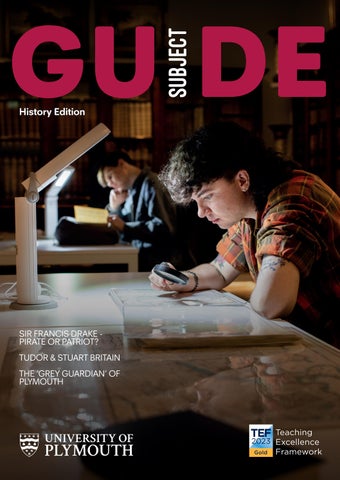
Create a flipbook