
CITY OF TEMPLE, TEXAS FILED BUDGET
CITY OF TEMPLE, TEXAS FILED BUDGET
This budget will raise more total property taxes than last year’s budget by $5,120,946 (7.59%), and of that amount $1,399,800 is tax revenue to be raised from new property added to the tax roll this year.
The record vote of each member of the governing body by name voting on the adoption of FY 2026-2027 Budget to occur on August 27, 2026:
The municipal property tax rates for the preceding fiscal year, and each property tax rate that has been adopted or calculated for the current fiscal year, include:
N/A
The total amount of outstanding municipal debt obligations (principal & interest) is as follows:
In accordance with Section 140.0045 of the Local Government Code, which requires the itemization of certain expenditures by a political subdivision, the City of Temple is expected to expend for the year ended September 30, 2026 and has budgeted for FY 2027 the following amounts, respectively:
• Notice required by law to be published in a newspaper: $45,701 and $46,725
• Lobbying activities: $176,208 and $180,548
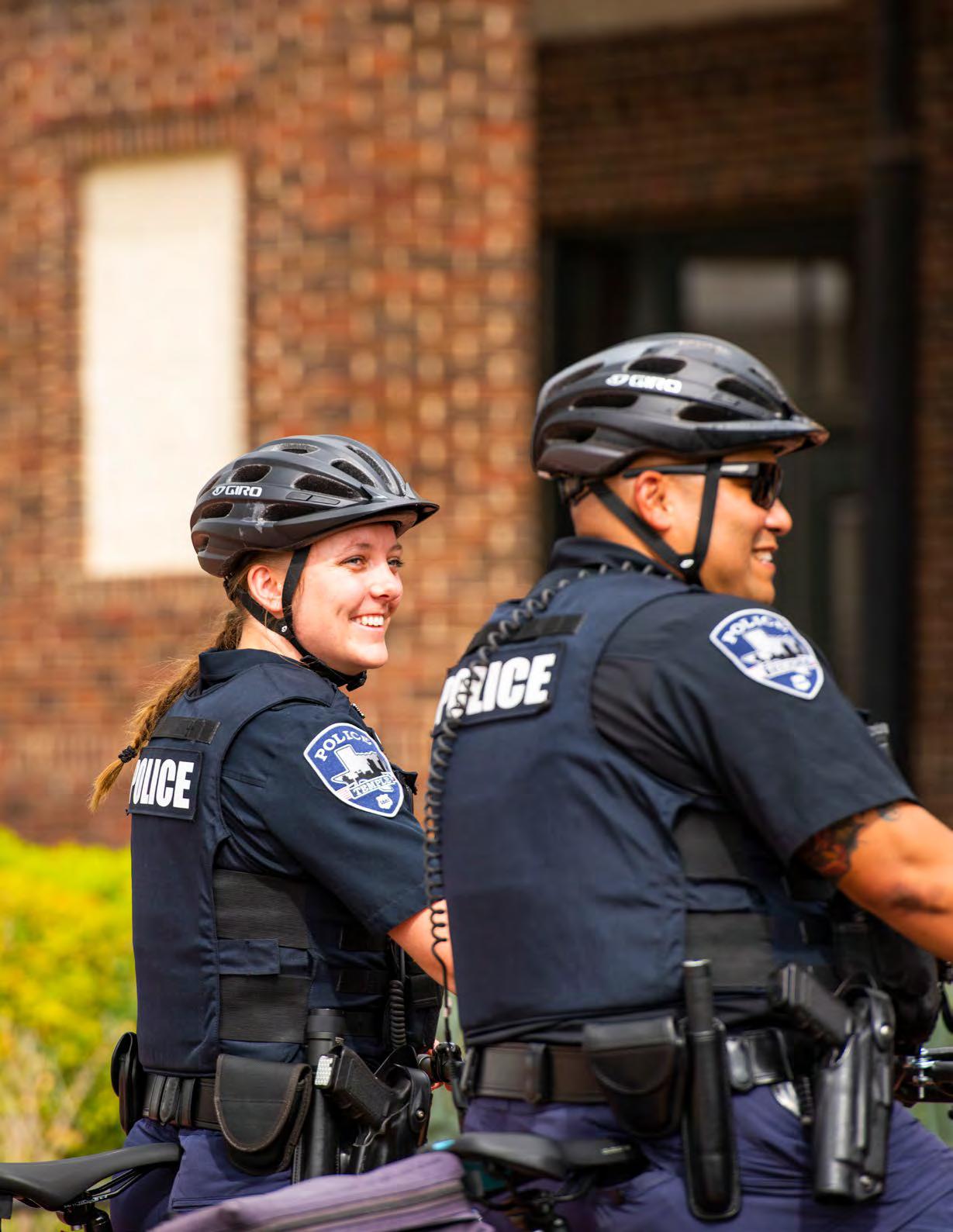
$27 for an acre of land seemed like a lot of money in 1881, but that’s what the Gulf, Colorado & Santa Fe Railway Company paid Jonathan Ewing Moore for 181 acres of his family’s farm. Trains brought prospective buyers from five different cities to the area on June 29, 1881. In true Texas style, a barbecue kicked-off the event and a land auction commenced. Everyone in attendance witnessed the founding of a town, named after the railroad’s chief engineer and the person responsible for building the tracks through Bell County, Bernard M. Temple.
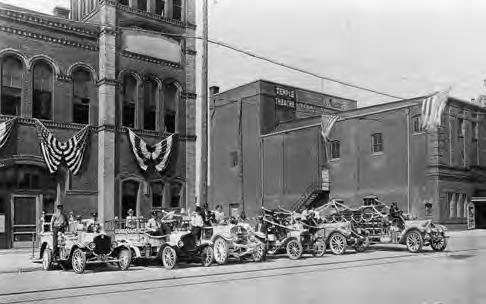
10 years later, the Gulf, Colorado & Santa Fe Railway built a hospital for its workers. This foreshadowed Temple’s future as a business hub with a thriving economy. In early 1892, Dr. Arthur Carroll Scott and Dr. Raleigh R. White, Jr. moved to Temple to work in the hospital. The doctors saw a need for medical services that reached beyond the railroad workers and extended to town residents. In 1904, the doctors opened the Temple Sanitarium, which became one of the fastest-growing healthcare systems in the 20th century, Baylor Scott & White Health.
Temple is a city built on success stories like that of these visionary doctors. Today, Baylor Scott & White Health continues its phenomenal growth after a multi-million-dollar expansion of its facility. The organization’s alignment with Texas A&M University Health Science Center’s teaching hospital provides unique, educational opportunities for medical students offered exclusively in Temple. McLane Company and Wilsonart Inter-
national have global headquarters here, and Temple is proving to be an attractive location for business expansion. In 2022, Meta (formerly the Facebook company) selected Temple as its newest location for an $800 million hyperscale data center, and FedEx Ground announced it would open a 250,000 square-foot distribution center in town. These are just two companies among many others moving to Temple.
These organizations are part of Temple’s solid economic foundation. Diversity is a driving force in the city’s billion-dollar business sector, composed of a strong industrial base of manufacturing, distribution, medical services, education, and technology. With Dallas, Houston, Austin, and San Antonio less than three hours away, Temple’s strategic location continues to attract new businesses and industries that want close proximity to Texas’ metropolitan areas but recognize Temple’s business-friendly environment. With 84% of the state’s population living within three hours of Temple city limits, the access businesses have to consumers is valuable.

Today, 145 years after it was founded, Temple continues to grow and adapt to its environment. It still offers residents the best aspects of two worlds: the conveniences of big-city dwelling with the atmosphere of a small town. The city’s affordability and central location continues to satisfy current residents and draw-in newcomers looking to provide a better quality of life for themselves and their loved ones. Major companies and small businesses are also recognizing the advantages of expanding operations to Temple. As a place where visionaries saw the fulfillment of their aspirations, Temple offers a bright future to those that live and work in this community of plentiful opportunity.

City Staff
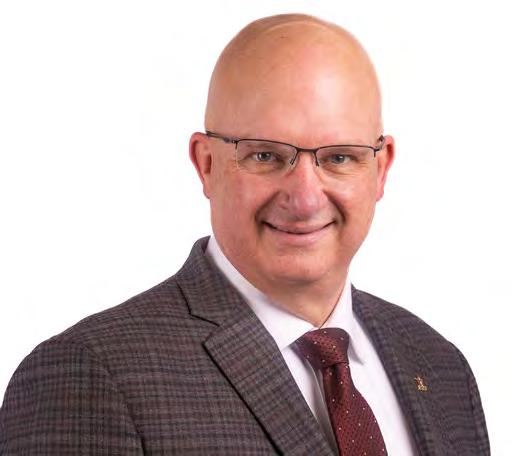
Brynn Myers
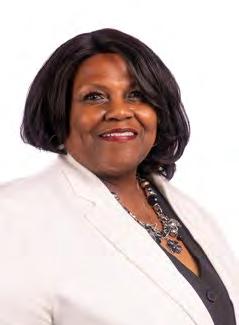
Erin Smith
David Olson
Shawn Reynolds
Traci L. Barnard, CPA
Charla Thomas
Jana Lewellen
City Manager
Assistant City Manager
Assistant City Manager
Assistant City Manager
Director of Finance
Interim City Attorney
City Secretary


The Government Finance Officers Association of the United States and Canada (GFOA) presented a Distinguished Budget Presentation Award to City of Temple, Texas, for its Annual Budget for the fiscal year beginning October 1, 2025. In order to receive this award, a governmental unit must publish a budget document that meets program criteria as a policy document, as a financial plan, as an operations guide, and as a communications device.
The award is valid for a period of one year only. We believe our current budget continues to conform to program requirements, and we are submitting it to GFOA to determine its eligibility for another award.
Traci L. Barnard, CPA
DIRECTOR OF FINANCE
Melissa A. Przybylski, CGMA, CPA
ASSISTANT DIRECTOR OF FINANCE
Jennifer Emerson, CGFO
BUDGET DIRECTOR
Stacey Reisner, CGMA, CPA
TREASURY & DEBT DIVISION DIRECTOR

Sherry M. Pogor CIP DIVISION DIRECTOR
Jo Ann Herrera
ACCOUNTANT III
Chelsea Sumbry ACCOUNTANT I
Jess Martin
PAYROLL DIVISION DIRECTOR
Miranda Drake, CGFO
BUDGET & REPORTING DIVISION DIRECTOR
Veronica Hernandez ACCOUNTANT III
Taylor Hooten ACCOUNTANT I
Krista Black ACCOUNTANT III
Mikayla Pryor ACCOUNTANT I
It is my privilege to present for your consideration the fiscal year 2027 Business Plan for the City of Temple. This plan is our blueprint to achieve the City’s vision of making Temple a place you love to call home. The plan is intended to reflect the community’s priorities and will guide the City’s decision-making as we strive to provide exceptional services to our community.
The fiscal year 2027 Business Plan is presented in several key sections, as well as covering a planning period from FY 2027 through FY 2032. The key sections include:
• Financial Plan (page 49)
• Annual Budget (page 109)
• Capital Improvement Program (page 293)
• Combined Bonded Debt (page 335)
This is the eighth year we have presented the annual budget in the context of a multi-year business plan. Through this initiative, instead of approaching the budgeting process and work plan development from a single year perspective, as we have traditionally done, the City of Temple committed to being future focused.
We challenged ourselves to look into the future and approach our planning from a longer-term view and to set an intentional direction for the organization. We challenged ourselves to plan for those things that are critical to maintain and enhance the Temple we love. We challenged ourselves to consider the need for growth, change, and innovation so that the City of Temple will be a city that next generations will also love to call home.
The multi-year planning framework of our Business Plan allows us to be flexible and responsive to changing circumstances while maintaining our focus on intentionally planning for the future.
The 2027 Business Plan is based on a FY 2027 property tax rate of 69.99¢ per $100 valuation, maintaining the same rate adopted for FY 2026. The plan includes rate adjustments for solid waste, water, and wastewater services.
I want to extend a special word of appreciation to Traci Barnard, Melissa Przybylski, Jennifer Emerson, Sherry
Pogor, Miranda Drake, Stacey Reisner, Jess Martin, Veronica Hernandez, Taylor Hooten, Jo Ann Herrera, Chelsea Sumbry, Krista Black, Stacey Hawkins, Wilson Whitener, Zach Kontor, Heather Bates, and Arielle Delery. Without the talent, commitment, dedication, and countless hours of work they carried out in pursuit of this plan, this document would simply not be possible. I also would like to extend my gratitude to Tammy Fennell, Heather Kirkwood, and Annalise Thompson for their incredible work on the compensation and benefits components of this plan.
I would like to thank the Mayor and City Council for your leadership and guidance, your collaboration and partnership, as well as your visionary thinking about our community and the amazing residents we serve. I am ever humbled by and grateful for the hard work and dedication of City staff in service delivery to the community 24 hours a day, 7 days a week, 365 days a year.
This plan is our guiding document as we face the challenges and capture the opportunities that lie ahead for the City of Temple.
Respectfully submitted,

Brynn Myers City Manager


The City’s budget provides estimated revenues and expenditures for programs and services to be provided during the fiscal year spanning October 1, 2026, through September 30, 2027. The total proposed budget for FY 2027 is $337,544,861 representing a 2.31% increase over the FY 2026 Budget.
GENERAL FUND EXPENDITURES
TOTAL EXPENDITURES $155,502,050
GENERAL FUND REVENUES
PROPOSED BUDGET
TAX PROJECTIONS
This budget document is prepared in a format that strives to reduce the level of difficulty for readers not familiar with public budgeting systems, yet still provides comprehensive information useful in communicating the overall financial direction and policy of the City. Each section of the budget document and its contents are described below:
page 5
This section contains cover page information as required by Local Government Code Section 102.007 (Adoption of Budget) and Section 140.0045 (Itemization of Certain Public Notice Expenditures Required in Certain Political Subdivision Budgets). Also, found within this section is a listing of the Mayor and Council Members, the Government Finance Officers Association (GFOA) Distinguished Budget Presentation Award, and the City’s organizational chart.
page 15
The message from the City Manager highlights the principal issues facing the governing body in developing the budget, as well as discusses the focus and vision of how the Business Plan was developed.
page 17
This section provides a simple overview of significant budgetary items included in FY 2027 Budget.
page 19
The User’s Guide section contains several key items for readers to understand the City’s financial and budgeting process. It explains the form of government utilized by the City, as well as the budget process. In addition, this area contains a budget calendar, describes all funds that are subject to appropriations, illustrates the department/fund relationship with an exhibit, and explains the basis of accounting and budgeting.
page 29
This section lays out the City’s Strategic Plan. This comprehensive plan serves as a management tool that helps the organization align its leadership, resources, and operations in support of achieving the City’s vision of making Temple a place you love to call home.
page 49
The Financial Plan, Financial Forecast, and Fund Summaries link the City’s strategic focus areas to a six-year funding model to ensure that the necessary resources are allocated to the City’s goals in order to make their achievement possible. This section aligns the City’s budget with the five strategic focus areas, estimates available revenue over the six-year planning period, and identifies the resources needed for the specific initiatives that will help accomplish the strategic goals of the City and drive improvement in each focus area.
109
The City is organized by department, and as such, each department is highlighted within the Annual Budget section. Information for each department include descriptive narratives, performance data, financial summaries, and a personnel schedule.
page 293
This section provides a detailed account of each capital improvement project including descriptions.
335
The Combined Bond Debt section includes financial data on current debt obligations, describes the relationship between current debt levels and legal limits, and explains the effects of existing debt level on current operations.
For the proposed budget, this section includes the financial and budgetary policy, the investment policy, and a listing of acronyms and glossary terms.
The City of Temple utilizes a Council–Manager form of government and is organized under the Constitution and Laws of the State of Texas. Temple is a home rule corporation. The City Council is composed of four members with a Mayor elected at-large. The City Council appoints the City Manager, City Attorney, Director of Finance, City Secretary, and the City Judge. These staff members work with the direction of the
City Council. All other staff members work with the direction of the City Manager.
The City Manager is the Chief Executive Officer and the head of the administrative branch of the City Government. She is responsible for the proper administration of all affairs of the City.
Budgeting is a core component of the City’s financial planning, control, and performance evaluation framework. The operating budget serves as the City’s annual financial plan, guiding the allocation of resources to meet community needs and support organizational priorities. The City’s fiscal year runs from October 1 through September 30. While the budget is legally adopted on an annual basis, the development process reflects both short-term and long-term financial planning through the inclusion of six-year projections for all major funds.
The City’s budget development typically spans an eight-month period and involves collaboration among departmental staff, directors, the City Manager, and the City Council. The process is designed to identify major policy issues well in advance of budget adoption, enabling thoughtful consideration and informed decision-making by City Council.
As part of our integrated approach to planning and budgeting, the City also follows a structured strategic planning cadence that aligns closely with the budget cycle. Every five years, the City conducts a comprehensive update of its Strategic Plan. This process includes the formation of a Strategic Plan Working Group and a City Council Strategic Planning Retreat, where long-term goals are reviewed, organizational priorities are reassessed, and new strategic directions are established.
In the intervening years, incremental updates to the Strategic Plan occur in conjunction with the annual budget process. These updates are shaped through department-level discussions on changes, new initiatives, or shifting community needs, and through direct

engagement with the City Manager to incorporate her recommended adjustments. This collaborative and iterative approach – followed during the 2027 budget cycle – ensures that the Strategic Plan remains a current and effective tool to guide resource allocation and operational focus.
The preparation of the FY 2027 Budget followed a series of structured steps:
• Department Head Budget Retreat
• City Council Budget Retreat
• Department Review Performance Measures and Strategic Initiatives (with Strategy & Innovation)
• Development of Department Budget Requests
• Departmental Budget Review Sessions
• City Manager Development of Proposed Budget
• City Manager’s Filling of Proposed Budget with the City Secretary
• City Council Budget Work Sessions
• Public Hearings on Budget & Tax Rate
• Adoption of Budget & Tax Rate
This comprehensive and coordinated process ensures that financial planning is directly informed by strategic priorities and community input, reinforcing the City’s commitment to transparency, accountability, and long-term sustainability.
The budget can be amended at any time during the fiscal year by submitting forms to Financial Services for review. The City Manager is authorized, without further City
Council action, to transfer appropriations within individual department budgets for each fund from line item to line item in the amount of $50,000 and greater provided that the total funds appropriated by the City Council for each individual department budget are neither increased nor decreased. The Director of Finance is authorized, without further City Council action, to transfer appropriations within individual department budgets for each fund from line item to line item in the amount greater than $5,000 provided that the total funds appropriated by the City Council for each individual department budget are neither increased nor decreased. The Director of Budget is authorized, without further City Council action, to transfer appropriations within individual department budgets for each fund from line item to line item less than $5,000 provided that the total funds appropriated by the City Council for each individual department budget are neither increased nor decreased. If an amendment is seeking funding between departments, from contingency accounts, or other financing sources, then the amendment must also be approved by the City Council. Amendments are submitted to City Council at each council meeting. Budget amendments for Council approved projects require only the Director of Finance and City Manager signatures.
The legal level of budgetary control (i.e., the level at which expenditures may not legally exceed appropriations) is maintained at the department level.
The accounts of the City are organized and operated on the basis of funds or account groups, each of which is considered to be a separate accounting entity. The operations of each fund are accounted for with a separate set of self-balancing accounts that comprise its assets, liabilities, fund balances or retained earnings, revenues and expenditures or expenses. The various funds are grouped by category and type in the financial statements. The City maintains the following fund types within two broad fund categories – Governmental Fund and Proprietary Fund.
Governmental funds are those through which most governmental functions of the City are financed.
The acquisition, use, and balances of the City’s expendable financial resources, and the related current liabilities (except those, if any, which should be accounted for in proprietary or fiduciary funds) are accounted for through governmental funds. The measurement focus is upon determination of financial position and changes in financial position, rather than upon net income determination. The following governmental fund types are maintained by the City:
General Fund – The General Fund is the general operating fund of the City. It is used to account for all financial resources except those required to be accounted for in other funds. This is a major fund.
Special Revenue Funds – Special revenue funds are used to account for the proceeds of certain specific revenue sources that are legally restricted to expenditures for specified purposes. The individual special revenue funds are:
• Hotel/Motel Tax Fund – Levy and utilization of Hotel/Motel occupancy tax, Civic Center revenues, and Railroad Museum revenues.
• Reinvestment Zone No. 1 Fund – Ad Valorem taxes levied on and used in a designated zone. This is a major fund.
• Federal/State Grant Fund – Operations of projects utilizing federal and state grant funds.
• Drainage Fund – Levy and utilization of a municipal drainage fee.
Debt Service Fund – The Debt Service Fund is used to account for the accumulation of, resources for, and payment of general long-term debt principal, interest, and related cost.
Exhibit 1 on page 25 illustrates the relationship between governmental fund types and the different departments within the City.
Proprietary funds are used to account for the City’s ongoing organizations and activities, which are similar to those found in the private sector. The measurement focus is upon determination of net income and capital maintenance. The following proprietary fund type is maintained by the City:
Enterprise Funds – Enterprise funds are used to account for operations (1) that are financed and operated in a manner similar to private business enterprises where the intent of the governing body is that the costs (expenses including depreciation) of providing goods or services to the general public on a continuing basis be financed or recovered primarily through user charges, or (2) where the governing body has decided that periodic determination of revenues earned, expenses incurred, or net income is appropriate for capital maintenance, public policy, management control, accountability, or other purposes. The City has two enterprise funds, as follows:
• Water and Wastewater Enterprise Fund Water and wastewater services provided to residents of the City. This is a major fund.
• Health Insurance Internal Service Fund The City uses an internal service fund to account for its self-funded health insurance program.
Exhibit 1 on page 25 illustrates the relationship between proprietary fund types and the different departments within the City.

Basis of accounting refers to the time at which revenues and expenditures or expenses, and the related assets and liabilities, are recognized in the accounts and reported in the financial statements. Governmental funds and agency funds are accounted for using the modified accrual basis of accounting.
Under the modified accrual basis of accounting, revenues are recorded when susceptible-to-accrual (i.e., both available and measurable). Available means collectible within the current period or soon enough thereafter to be used to pay liabilities of the current period. Expenditures, if measurable, are generally recognized when the related fund liability is incurred. Exceptions to this general rule include the unmatured principal and interest on general obligation long-term debt, which is recognized when due, and accrued vacation and sick leave, which is included in the General Long-Term Debt Account Group. These exceptions are in conformity with “generally accepted accounting principles” (GAAP).
Property tax revenues are recognized when they become available. In this case, available means when due, or past due and receivable within the current period and collected within the current period or soon enough thereafter to be used to pay liabilities of the current period. Such time thereafter shall not exceed 60 days. Tax collections expected to be received subsequent to the 60-day availability period are reported as deferred revenue.
Sales taxes are recorded when susceptible-to-accrual (i.e., both measurable and available). Sales taxes are considered measurable when in the custody of the State Comptroller and are recognized as revenue at that time. Other major revenues that are considered susceptible to accrual include utility franchise taxes, grants-in-aid earned, and other intergovernmental revenues. In applying the susceptible-to-accrual concept to intergovernmental revenues, the legal and contractual requirements of the numerous individual grant programs are used for guidance. There are essentially two types of intergovernmental revenues. In one, monies must be
expended for the specific purpose or project before any amounts will be paid to the City; therefore, revenues are recognized based upon the expenditures recorded. In the other, monies are virtually unrestricted as to purpose of expenditure and are revocable only for failure to comply with prescribed compliance requirements. These resources are reflected as revenues at the time of receipt, or earlier, if the susceptible-to-accrual criteria are met.
The accrual basis of accounting is utilized by the proprietary fund. Under the accrual basis of accounting, revenues are recognized in the accounting period in which they are earned and become measurable (i.e., water billings and accrued interest). Expenses are recorded in the accounting period incurred, if measurable.
Revenues in the Water and Wastewater Fund are recognized as billed on a cycle basis. Unbilled utility account receivables are not material and are not recorded in the financial statements.
Encumbrances represent commitments related to unperformed (executory) contracts for goods or services. Encumbrance accounting, under which purchase orders, contracts, and other commitments for the expenditure of monies are recorded in order to reserve that portion of the applicable appropriation, is employed as an extension of formal budgetary integration in the general fund, enterprise fund, and special revenue funds. Encumbrances outstanding at year end are reported as reservations of fund balances and do not constitute expenditures or liabilities since the commitments will be honored during the subsequent year.
For budgetary purposes, appropriations lapse at fiscal year-end except for that portion related to encumbered amounts. Encumbrances outstanding at year-end and the related appropriation are carried forward to the new fiscal year through a supplemental budgetary allocation.
The budget of a general government fund type (for example, the General Fund and Special Revenue Funds such as the Hotel/Motel Tax Fund, Reinvestment Zone No. 1 Fund, Federal/State Grant Fund, and Drainage Fund) is prepared on a modified accrual basis. Briefly, this means that obligations of the City (for example, outstanding purchase orders) are budgeted as expenses, but revenues are recognized only when they are actually received.
The Enterprise Funds (i.e., Water & Wastewater Fund and Health Insurance Fund), on the other hand, are budgeted on a full accrual basis. Not only are expenditures recognized when a commitment is made (for example, through a purchase order), but revenues are also recognized when they are obligated to the City (for example, water user fees are recognized as revenue when bills are produced).
The Annual Comprehensive Financial Report (ACFR) shows the status of the City’s finances on the basis of GAAP. In most cases this conforms to the way the City prepares its budget. Two exceptions are treated slightly different in the budget and ACFR, (1) the treatment of depreciation expense (this is not shown in the budget, although the full purchase price of equipment and capital improvements is, while purchases of capital improvements are depreciated in the ACFR for enterprise funds) and (2) compensated absences (accrued but unused sick leave). The ACFR shows both fund expenditures and revenues on a GAAP basis for comparison purposes.
The number one goal of the City Council is to improve or maintain the financial health of the City. Annual revenue projections are conservative and expenditures are closely monitored. In stable economic times, the combination of these two strategies results in excess revenues over expenditures. Unencumbered budget appropriations lapse at year end and do not carry forward to future years. The excess revenues are then available to increase the fund balance. The General Fund Balance is increased from excess revenues each year as part of the budget process to attain the appropriate level.
It shall be the goal of the City to maintain an undesignated fund balance in the General Fund equal to at least four months of the fund’s operating budget.
Debt reserves are established to protect bond holders from payment defaults. Adequate debt reserves are essential in maintaining good bond ratings and the marketability of bonds.
The amount of debt reserves are established by bond covenants adopted in association with each bond issuance. The City Council may establish, upon recommendation of the Director of Finance, supplemental Debt Service reserves. Such reserves shall not be deemed to confer any rights upon bondholders over and above those set forth in the Bond Covenant for each bond issue.
The Strategic Plan is the City of Temple’s roadmap for the future - our guide to aligning leadership, operations, and resources in pursuit of our shared vision: Temple - a place you love to call home. It supports sound decision-making, strategic investment, and community accountability by identifying long-term goals and outlining the specific initiatives required to achieve them.
In September 2019, the City Council adopted the City of Temple 2020 Strategic Plan, which established a five-year direction for the City’s vision, mission, values, and strategic focus areas. In 2023, as we approached the end of that planning horizon, the City embarked on a full-scale update to ensure that the next phase of strategic priorities would reflect the needs and aspirations of a growing and changing community.
The 2025 Strategic Plan was the result of a comprehensive, community-centered planning process that significantly expanded public participation. A Strategic Plan Working Group - comprised of City staff, community members, and individuals serving on City boards and commissions - led a robust engagement effort that included 17 professionally facilitated focus groups and five town hall events. Additionally, a public survey gathered more than 500 open-ended responses to help identify the community’s top priorities.
This engagement process informed every aspect of the updated plan, from the refinement of strategic focus areas to the development of new goals, commitments, and initiatives. The result is a Strategic Plan that captures both the operational priorities of the organization and the lived experiences and expectations of our residents.
While the comprehensive plan update occurs every five years, the Strategic Plan is designed to be a living document. Each year, in conjunction with the annual budget process, the City conducts an incremental review to ensure the plan remains relevant, actionable, and aligned with emerging community needs and organizational capacity.
This FY 2027 update represents one such annual refinement. While the structure and core priorities of the 2025 Strategic Plan remain in place, this year’s updates reflect adjustments to initiatives, timelines, and resource allocations based on progress to date, newly identified opportunities, and ongoing community feedback.
By embedding this continuous planning cycle into our budget process, the Strategic Plan remains both grounded and dynamic - anchored in long-term vision while responsive to real-time changes.
The Strategic Plan is not simply a document - it is a public promise. It articulates what we are working toward, why it matters, and how we will get there. By regularly updating the plan and reporting on its implementation, the City demonstrates its commitment to transparency, stewardship, and continuous improvement.
As the City of Temple moves forward into FY 2026 and beyond, this Strategic Plan will continue to serve as our compass - shaped by the community, built by City staff, and guided by the leadership of the City Council.

Temple – a place you love to call home
Exceptional service without exception
Organizational values guide behavior, whether stated or unstated, and are observed when the workforce is at its best. The City of Temple is committed to a culture of performance excellence that is grounded in the values of:
We are engaged and dedicated to our mission.
We encourage creative thoughts and are open to new ideas.
We are ethical, respectful, and trustworthy in our actions.
We honor our commitments, take ownership of our work, and are fiscally responsible.
We rely on teamwork and open communication to accomplish our purpose.
A principle component of the strategic plan that delineates areas of sustained focus and action, grounded in the City’s mission and vision and prioritized by City Council.
Broad statements that define what we want to achieve or accomplish in a specific focus area, providing direction and purpose.
Strategies that outline what we are going to do, demonstrating accountability and intention.
Tactics that detail the specific projects, programs, or actions that we will accomplish.
The High-Performing Organization focus area reflects our commitment to organizational excellence, data-driven decision making, and continuous improvement within our organization to ensure we provide exceptional service without exception.
The Communication & Collaboration focus area reflects our commitment to building strong community connections and expanding opportunities for engagement and participation. We are committed to responsive and transparent communication with our community.
The Places & Spaces focus area reflects our commitment to making Temple a place you love to call home. We are committed to fostering vibrant neighborhoods, beautiful spaces, and unique experiences to ensure that Temple is a unique place with amazing arts, culture, dining, and recreation.
The Health & Safety focus area reflects our commitment to providing the community a safe place where citizens and businesses can thrive. We are committed to supporting vulnerable populations including those experiencing homelessness and mental health challenges by providing essential resources and services.
The Smart Growth focus area reflects our commitment to investing in our infrastructure, facilities, and systems in order to prepare for growth and redevelopment as well as to preserve our assets.
A principle component of the strategic plan that delineates areas of sustained focus and action, grounded in the City’s mission and vision and prioritized by the City Council.
Broad statements that define what we want to achieve or accomplish in a specific focus area, providing direction and purpose.
Commitment
Strategies that outline what we are going to do, demonstrating accountability and intention.
Initiative/Priority
Tactics that detail the specific projects, programs, or actions that will accomplish.
SUCCESS INDICATORS
• Number of Strategic Plan initiatives completed
• Quality of Services (National Community Survey, NCS)
• Overall direction Temple is taking (NCS)
• Being open and transparent to the public (NCS)
Pursue innovation and continuous improvement to drive performance excellence.
Implement the Baldrige Performance Excellence program framework.
Achieve CPSE accreditation for the Fire Department.
Achieve CAPRA accreditation for the Parks & Recreation Services Department.
Achieve CALEA accreditation for the Police Department.
Develop a comprehensive survey program.
Develop an innovation strategy to leverage emerging technology, enhance collaboration, and foster creative problem solving.
Explore the creation of a public-private partnership for an Innovation Lab.
Achieve International Association for Identification accreditation for crime scene investigators.
Utilize data to make decisions and drive innovation.
Conduct department assessments to optimize resources to provide high-quality, cost-effective services.
Provide exceptional customer service.
Develop a plan for a cultural competency program.
1.2.SI2
1.2.SI3
1.2.SI4
Develop a comprehensive Customer Experience Strategy to enhance service excellence and foster inclusive access to City services.
Develop a Customer Care Program.
Implement a citywide call center.
Optimize the use of technology to improve service and protect mission critical infrastructure.
1.3.SI1
1.3.SI2
1.3.SI3
1.3.SI4
1.3.SI5
1.3.SI6
1.3.SI7
1.3.SI8
1.3.SI9
1.3.SI10
1.3.SI11
1.3.SI12
1.3.SI13
1.3.SI14
1.3.SI15
Develop a Technology Master Plan.
Convert paper-based personnel files to digital format.
Convert paper-based records of plans and permits to digital format.
Implement an interactive, web-based financial dashboard to promote understanding and confidence in the expenditure of public funds.
Implement an online community engagement platform.
Implement a new document and contract management software.
Implement a new Police Department digital records management system.
Implement a debt management software.
Implement a new Fire Department response and reporting software.
Implement a traffic monitoring software system.
Implement a new event design and billing software.
Implement a police officer management software.
Develop a Smart City Strategy.
Implement an enhanced citizen request and engagement platform.
Implement a museum web-based computer software to optimize operations.
1.3.SI16
1.3.SI17
1.3.SI18
1.3.SI19
1.3.SI20
1.3.SI21
1.3.OP1
Implement website quality management software.
Develop a new Parks & Recreation Services online registration system.
Implement visitor analytics software.
Implement new business management and point of sale software at the Airport.
Upgrade the phone system to ensure reliable communications.
Implement an integrated real-time crime center.
Continue to invest in the resources necessary to ensure the strategic and effective use of technology in support of performance excellence.
1.3.OP2
Enhance the use of Microsoft 365 to promote stronger collaboration among City departments.
Replace police and fire mobile data laptops.
Continue to invest in the resources necessary to prioritize cyber security.
Make strategic investments in fleet and equipment to increase efficiency, capitalize on technology advances, and improve safety.
1.3.OP3 1.3.OP4 1.4.SI1 1.4.SI2 1.4.SI3 1.4.OP1
Establish a fleet and equipment sharing program.
Develop a program to improve employee accountability for fleet condition and operation.
Complete fuel truck refurbishment to extend the life of the fleet.
Invest in the continued maintenance and replacement of the City’s fleet and equipment, including the implementation of the Equipment Capital Improvement Program.
COMMITMENT 5
Create efficient, integrated, and streamlined regulations, policies, and processes.
Develop clear processes for routing and evaluating public-private partnership requests.
Implement records management processes to incorporate up-to-date technologies and best practices.
Develop a process improvement program to support red tape reduction and service excellence.
1.5.SI4
1.5.OP1
1.5.OP2
1.5.OP3
Develop a comprehensive records management program.
Align staff work plans to strategic plan commitments.
Develop or update standard operating procedures for each department.
Provide transparent, predictable, and efficient processes to make it easier for citizens and businesses to interact and do business with the City.
1.6.OP3
1.6.OP4
1.6.OP5
1.6.OP6
1.6.OP7
Maximize resources by strategically pursuing grants.
Continue to invest in the resources necessary to ensure financial excellence.
Maintain and strengthen the City’s bond rating.
Conduct cost comparisons between in-house and contract service delivery.
Develop recommendations to reduce overtime expenditures.
COMMITMENT 7
Equip the City Council and board members with the knowledge and tools necessary for effective governance.
Establish a continuing education and professional development program for City Council.
Establish clear goals and work plans for each City board, commission, and committee.
1.5.OP4
1.5.OP5
Ensure personnel policies are up-to-date.
Continue to update and modernize the Code of Ordinances.
COMMITMENT 6
Employ fiscally-responsible practices and policies that ensure City investments are made based on sound review and analysis.
Conduct a cost of service study for all rates and fees.
Align the City’s budgeting process with the Strategic Plan to ensure resource allocations are focused on City’s strategic goals and commitments.
Align capital improvement programs with adopted master plans.
SUCCESS INDICATORS
• Employee retention and turnover
• Employee participation in skills development programs
• Total Recordable Injury Rate
• Days Away, Restricted, or Transfered Rate
Explore opportunities for public/private partnerships to provide transportation to work. 1.6.SI1
COMMITMENT 1
Attract and retain talented employees.
Establish an employee health center.
2.1.SI3
2.1.SI4
2.1.SI5
2.1.OP1
2.1.OP2
2.1.OP3
2.1.OP4
2.1.OP5
Explore the option of developing a child care program.
Develop a city-wide volunteer and internship program.
Develop a comprehensive employee wellness program.
Enrich the employee experience through an active employee engagement program.
Conduct annual compensation studies to ensure competitive compensation.
Conduct a proposal request process for employee benefits.
Update the Temple Police Association Meet and Confer Agreements.
Continue to support recruitment and retention efforts by establishing noncompensation recruitment incentives.
Invest in employee development and training programs.
2.2.SI1
Develop a succession plan.
Create an employee scholarship program.
Host an employee development expo to provide all employees professional development opportunities.
Continue to invest in training, licensing, and certification opportunities to support performance excellence.
Make safety a priority to ensure employees go home safe every day.
Develop a comprehensive safety program.
Develop and implement an in-house driver’s training program.
*2.3.SI2 and 2.3.SI3 were rolled up into 2.3.SI1 and deleted from the plan.
A principle component of the strategic plan that delineates areas of sustained focus and action, grounded in the City’s mission and vision and prioritized by the City Council.
GOAL
Broad statements that define what we want to achieve or accomplish in a specific focus area, providing direction and purpose.
Commitment
Strategies that outline what we are going to do, demonstrating accountability and intention.
Initiative/Priority
Tactics that detail the specific projects, programs, or actions that will accomplish.
COMMUNITY LEADERS WHO FOSTER COLLABORATION, ENGAGEMENT, AND PARTICIPATION THROUGH STRATEGIC
SUCCESS INDICATORS
• Number of bills tracked in a legislative session
• Number of stakeholder meetings held
COMMITMENT 1
Build strong intergovernmental relationships to cultivate a collaborative approach to governance.
Establish a regional legislative task force.
Establish an intergovernmental relations program to represent the City’s interests with various governmental agencies and officials.
Proactively engage with other governmental officials, key stakeholders, educational partners, and community organizations.
SUCCESS INDICATORS
• Being open and transparent with the public (NCS)
• Informing residents about issues facing the community (NCS)
• Public information services (NCS)
• Reach and engagement of the City’s social media and communication channels
• Number of public forums held
COMMITMENT 1
Utilize a comprehensive public communications strategy with multiple outreach channels that
allows the City to share information about its work, as well as engage with citizens.
4.1.SI1
4.1.SI2
4.1.SI3
4.1.SI4
4.1.SI5
4.1.SI6
4.1.SI7
4.1.OP1
4.1.OP2
4.1.OP3
4.1.OP4
4.1.OP5
Develop a speaker’s bureau.
Establish an audiovisual production studio to create original programming to enhance public outreach and better communicate City news.
Update the 2020 Strategic Communications Plan.
Develop a Community Ambassador Program.
Develop “Ask Fred” visitor campaign.
Establish an annual Media Day event
Develop a Comprehensive Sponsorship Guide.
Maintain positive working relationships with members of the media.
Produce a quarterly City news publication to help keep residents informed.
Ask residents for regular feedback by conducting community surveys.
Provide additional channels for input and communication with residents and businesses.
Develop marketing and communication action plans for identified City departments, facilities, programs, and events to increase transparency and awareness.
4.1.OP6
Continue to promote open governance by providing clear and timely information on City decisions to residents.
COMMITMENT 2
Promote an excellent image by strengthening Temple’s brand identity.
4.2.OP1
Maintain a library of high-resolution imagery for use in digital collateral and other marketing efforts.
4.2.OP2
Ensure that local real estate professionals have the information they need to accurately represent Temple’s amenities.
4.2.OP3
4.2.OP4
Pursue award and recognition programs.
Develop or update brands for identified City facilities, programs, and events to increase awareness and enhance promotional efforts.
Expand opportunities for engagement and participation in the community to increase opportunities for bidirectional sharing of ideas and feedback among stakeholders.
4.3.SI1
4.3.SI2
4.3.SI3
4.3.SI4
4.3.OP1
Develop a community engagement program.
Develop a citizen’s leadership academy.
Develop a process to align common priorities among community partners and organizations to improve strategic focus and impact.
Update the Community Engagement Plan.
Broaden methods of community engagement with additional consideration to diverse backgrounds, languages, and needs to ensure vulnerable and historically underserved populations within the community have equitable access to City services and opportunities to participate in civic life.
4.3.OP2
Continue to support the Leadership Temple program to help educate current and future leaders about key issues and service opportunities.
Focus Area
A principle component of the strategic plan that delineates areas of sustained focus and action, grounded in the City’s mission and vision and prioritized by the City Council.
GOAL
Broad statements that define what we want to achieve or accomplish in a specific focus area, providing direction and purpose.
Commitment
Strategies that outline what we are going to do, demonstrating accountability and intention.
Initiative/Priority
Tactics that detail the specific projects, programs, or actions that will accomplish.
SUCCESS INDICATORS
• Number of cultural and artistic events hosted
• Growth in tourism and related spending and events
• Public facility satisfaction/utilization
• Library circulation, visitors, & program participation
• Quality of park and recreation facilities (NCS)
• Temple as a place to visit (NCS)
COMMITMENT 1
Enhance and expand our infrastructure of parks, recreation centers, greenspaces, and trails to encourage active living and wellness.
Develop a strategic plan for the Parks & Recreation Services Department.
Develop a master plan for the Summit Recreation Center.
Develop a master plan for Hillcrest Cemetery.
Establish a park ranger program.
Develop a Sammons Golf Course Master Plan.
Update the Parks and Trails Master Plan.
Plan for, design, construct, and invest in the continued maintenance of and improvement to the City’s park, recreation, greenspace, and trail system.
Expand the wildflower initiative within City parks, trails, and greenspace.
Promote improved, safer connections from neighborhoods to City parks and trails.
COMMITMENT 2
Develop and showcase Temple as a unique place
with amazing arts, culture, dining, and recreation experiences and amenities.
5.2.SI1
5.2.SI2
5.2.OP1
5.2.OP2
5.2.OP3
5.2.OP4
5.2.OP5
Develop an Arts and Culture Master Plan.
Develop a Museum Master Plan.
Provide a wide variety of high-quality recreation services and opportunities.
Invest in public art and community gateway enhancements.
Leverage athletic facilities to attract sports tourism opportunities.
Develop or update destination marketing strategies to support tourism in Temple.
Develop or update sports marketing materials to support sports tourism in Temple.
COMMITMENT 3
Create and promote culturally diverse events and activities through partnerships.
5.3.SI1
5.3.SI2
5.3.SI3
5.3.OP1
Implement the Special Events Strategic Plan.
Implement an events permitting website.
Develop a cultural heritage event where all cultures are represented and celebrated together.
Expand community and special events and attractions to bring neighbors together and encourage additional tourism.
COMMITMENT 4
Cultivate and promote Downtown Temple as a unique destination where commerce, culture, and recreation intersect.
5.4.SI1
5.4.SI2
Develop a reuse program for historic brick street pavers.
Update the Temple Commercial National Register District for the historic tax credit program.
5.4.SI3
5.4.SI4
5.4.SI5
5.4.SI6
5.4.SI7
5.4.OP1
5.4.OP2
Conduct a historic resources survey to support historic preservation.
Implement the Downtown Parking Action Plan.
Develop a Historic Preservation Plan.
Implement a downtown events calendar.
Develop a customized Downtown Temple marketing and development program.
Encourage distinctive, attractive, and functional building and streetscape design while preserving valuable historic resources.
Plan for, design, construct, and maintain high quality public infrastructure and services in Downtown Temple.
COMMITMENT 5
Cultivate a library system where reading, learning, and imagination thrive.
5.5.SI1
5.5.SI2
5.5.SI3
5.5.SI4
5.5.OP1
5.5.OP2
Implement the Library Master Plan.
Implement Radio Frequency Identification (RFID) technology for enhanced efficiency of library operations.
Implement a new Integrated Library System (ILS).
Develop an Archives Master Plan.
Design library programs, services, and collections based on the needs and interests of the community.
Maintain welcoming, safe, and technologyenhanced library spaces for learning and exploration.
SUCCESS INDICATORS
• Your neighborhood as a place to live (NCS)
• Temple as a place to live (raise children, work, etc.) (NCS)
• Property values over time
Foster cohesive, distinct, vibrant, safe, and attractive neighborhoods where citizens take pride and are engaged with their community.
6.1.SI1
Improve access to a wide variety of housing types that are safe, accessible, and affordable.
6.2.SI1
6.1.SI2
6.1.SI3
6.1.SI4
6.1.SI5
6.1.SI6
Develop a master plan for each Neighborhood Planning District that meets the needs of the community and supports a high quality of life.
Develop neighborhood-specific zoning ordinances to ensure design standards and land use regulations align with neighborhood master plans.
Develop a Housing Preservation Program to renovate vacant residential structures.
Develop a program to reactivate empty lots using a variety of solutions, including tactical urbanism.
Develop a plan for a community resource center.
Pursue a memorandum of understanding (MOU) with Bell County and other taxing entities related to the sale of tax foreclosed property.
6.1.SI7
6.1.OP1
6.1.OP2
6.1.OP3
6.1.OP4
Explore opportunities to improve access to fresh, healthy foods in underserved areas of east Temple.
Cultivate neighborhood coalition leaders in all neighborhood districts and develop a contact list accessible on the City’s website.
Develop programs and events to support strong neighborhoods.
Continue to support the Temple Revitalization Corporation in their redevelopment efforts.
Invest in the continued improvement and revitalization of the City’s Neighborhood Planning Districts, including the implementation of the Places & Spaces Capital Improvement Program.
6.2.SI2
6.2.OP1
Develop an Affordable Housing Policy using information gathered through a Market Value Analysis.
Implement the Homeowner Assistance Reconstruction Program (HARP).
Coordinate with other agencies and organizations to improve access to affordable housing and leverage existing programs and resources.
6.2.OP2
Continue a growth management approach that encourages infill and redevelopment and maximizes the efficient use of public infrastructure.
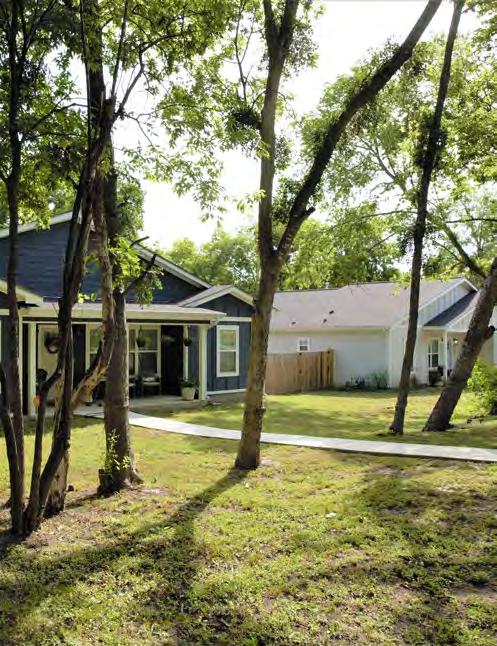
A principle component of the strategic plan that delineates areas of sustained focus and action, grounded in the City’s mission and vision and prioritized by the City Council.
Broad statements that define what we want to achieve or accomplish in a specific focus area, providing direction and purpose.
Strategies that outline what we are going to do, demonstrating accountability and intention.
Initiative/Priority
Tactics that detail the specific projects, programs, or actions that will accomplish.
SUCCESS INDICATORS
• Feeling of safety (NCS)
• Crime rates
• Homelessness diversion capacity, utilization, and outcomes
COMMITMENT 1
Enhance our public safety services to create a safer community and foster public trust.
Expand the community oriented policing program.
Implement a ten district patrol system to provide more efficient police patrol services.
Complete staffing of Violent Crimes Enforcement Squad.
Update and expand the outdoor warning siren system.
Split the city into two Fire & Rescue response divisions to adequately manage field operations as the city grows.
Enhance Fire Marshal evidence procedures and storage facility.
Collaborate with the development community to implement a safety device program.
Update the City of Temple’s Emergency Management Plan.
Establish a National Incident Management System (NIMS) Compliance Program.
Develop an Industrial Education and Fire Prevention Strategy.
Implement mobile vehicle barrier for Hostile Vehicle Mitigation (HMV).
Implement Integrated Ballistic Identification System (IBIS) program.
Provide additional response capabilities to maintain emergency services in response to growth and increasing service demands, including the implementation of the Public Safety Capital Improvement Program.
7.1.OP2
7.1.OP3
7.1.OP4
7.1.OP5
7.1.OP6
7.1.OP7
7.1.OP8
7.1.OP9
Promote public safety and animal health and welfare through an effective animal services program.
Implement innovative programs and techniques to achieve compliance with City codes and regulations.
Engage citizens in ways that promote trust and community connectivity.
Provide educational programs and information to enhance public health and safety awareness.
Maintain the Teen Court program to help reduce recidivism of juvenile offenders and spark an interest in the legal profession.
Continue to support community connectivity and officer wellbeing through a Police Chaplaincy program.
Implement policies and practices that promote procedural fairness for court users.
Continue to support the Police Officer and Firefighter wellness and safety program.
COMMITMENT 2
Enhance facilities, programs, and services for those experiencing homelessness and other vulnerable populations.
7.2.SI1
7.2.SI2
7.2.SI3
7.2.SI4
7.2.OP5
Coordinate the development of the Arbor of Hope Campus and identify a non-profit organization to oversee operations.
Coordinate the development of permanent supportive housing.
Develop a substance use disorder treatment program that includes collaborating with community partners.
Implement the Mental Health Services Strategic Plan.
Expand opportunities to coalesce with community partners to ensure a cohesive strategy related to providing services to vulnerable populations.
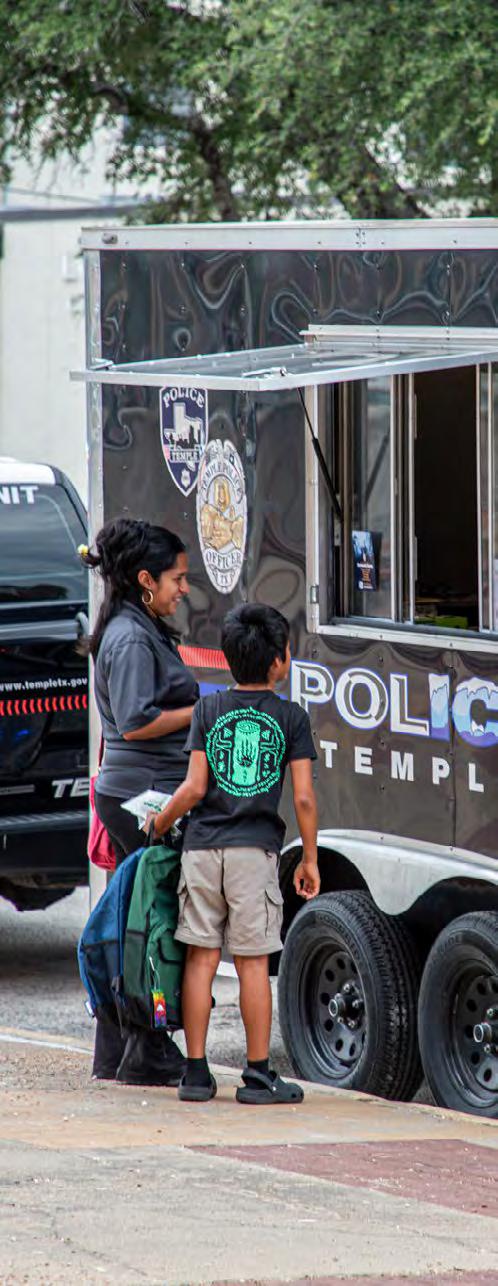
A principle component of the strategic plan that delineates areas of sustained focus and action, grounded in the City’s mission and vision and prioritized by the City Council.
Broad statements that define what we want to achieve or accomplish in a specific focus area, providing direction and purpose.
Strategies that outline what we are going to do, demonstrating accountability and intention.
Initiative/Priority
Tactics that detail the specific projects, programs, or actions that will accomplish.
SUCCESS INDICATORS
• Ratings of services (water, sewer, trash, traffic) (NCS)
• CIP projects completed
COMMITMENT 1
Develop a safe, connected, and well-maintained mobility system that incorporates all modes of travel including vehicular, pedestrian, bicycle, transit, and air.
Develop standard street section designs that facilitate wellconnected vehicular, pedestrian, bicycle, and transit systems.
Develop a comprehensive sidewalk strategy.
Establish a new transit district.
Complete a pavement inventory and assessment.
Develop a pavement maintenance plan.
Complete the citywide signal coordination plan.
Continue to invest in the design, construction, and maintenance of high quality mobility infrastructure, systems, and services, including the implementation of the Mobility Capital Improvement Program.
Focus efforts on enhancing the I-14 corridor through collaboration with regional and state partners.
Continue to invest in a comprehensive pavement maintenance program.
Plan for, design, construct, and maintain high quality water, wastewater, and drainage infrastructure, systems, and services that meet
the needs of the community now and in the future.
8.2.SI1
8.2.SI2
8.2.SI3
8.2.SI4
8.2.SI5
8.2.SI6
8.2.SI7
8.2.SI8
8.2.SI9
8.2.SI10
8.2.SI11
8.2.SI12
8.2.SI13
8.2.OP1
Implement a water modeling program.
Expand the advanced metering infrastructure program.
Expand the capacity of the Temple-Belton wastewater treatment plant.
Develop a comprehensive drainage modeling and assessment plan.
Develop a Drainage Area Master Plan.
Expand the capacity of the Doshier Farm wastewater treatment plant.
Implement a leak detection program.
Complete sewer basin assessments and repair identified deficiencies.
Evaluate the possibility of establishing an inhouse pipe bursting program.
Transition operations of the wastewater treatment plant to in-house.
Conduct a water distribution condition assessment.
Implement a wastewater modeling program.
Implement a drainage modeling program.
Invest in the continued maintenance, replacement, and improvement of the City’s water, wastewater, and drainage infrastructure, including the implementation of the Utilities Capital Improvement Program.
8.3.SI2
8.3.SI3
8.3.OP1
Implement a paint remixing program.
Develop a landfill master plan.
Strategically add solid waste routes and resources to prepare for and respond to growth.
4
Plan for, design, construct, and maintain high quality facilities that meet the needs of the community now and in the future.
8.4.SI1
8.4.SI2
8.4.SI3
8.4.SI4
8.4.SI5
8.4.SI6
8.4.SI7
8.4.SI8
8.4.SI9
8.4.SI10
Conduct a building condition assessment for each city facility.
Construct an expansion to the Service Center facility.
Construct improvements to the Downtown Civic Center including expansion of the Municipal Building.
Expand the Public Safety Training Center and indoor shooting range.
Construct Taxiway D improvements.
Redevelop the Frank W. Mayborn Civic & Convention Center.
Renovate the central library.
Construct library branch locations.
Construct new fire stations to maintain emergency services in response to growth and increasing service demands.
8.2.OP2
8.2.OP3
Ensure a high-quality and sufficient water supply to sustain existing development and support future growth.
Plan for a sufficient wastewater treatment capacity to sustain existing development and support future growth.
COMMITMENT 3
Provide responsive and sustainable solid waste and recycling services.
8.3.SI1
Implement a food waste recycling pilot program.
8.4.SI11
8.4.SI12
8.4.SI13
8.4.OP1
Construct an expansion to the downtown police campus.
Construct a Facility Services maintenance facility.
Construct and activate the Resource Hub.
Construct improvements to the outdoor shooting range.
Invest in the continued maintenance of and improvement to the City’s facilities, including the implementation of the Facilities Capital Improvement Program.
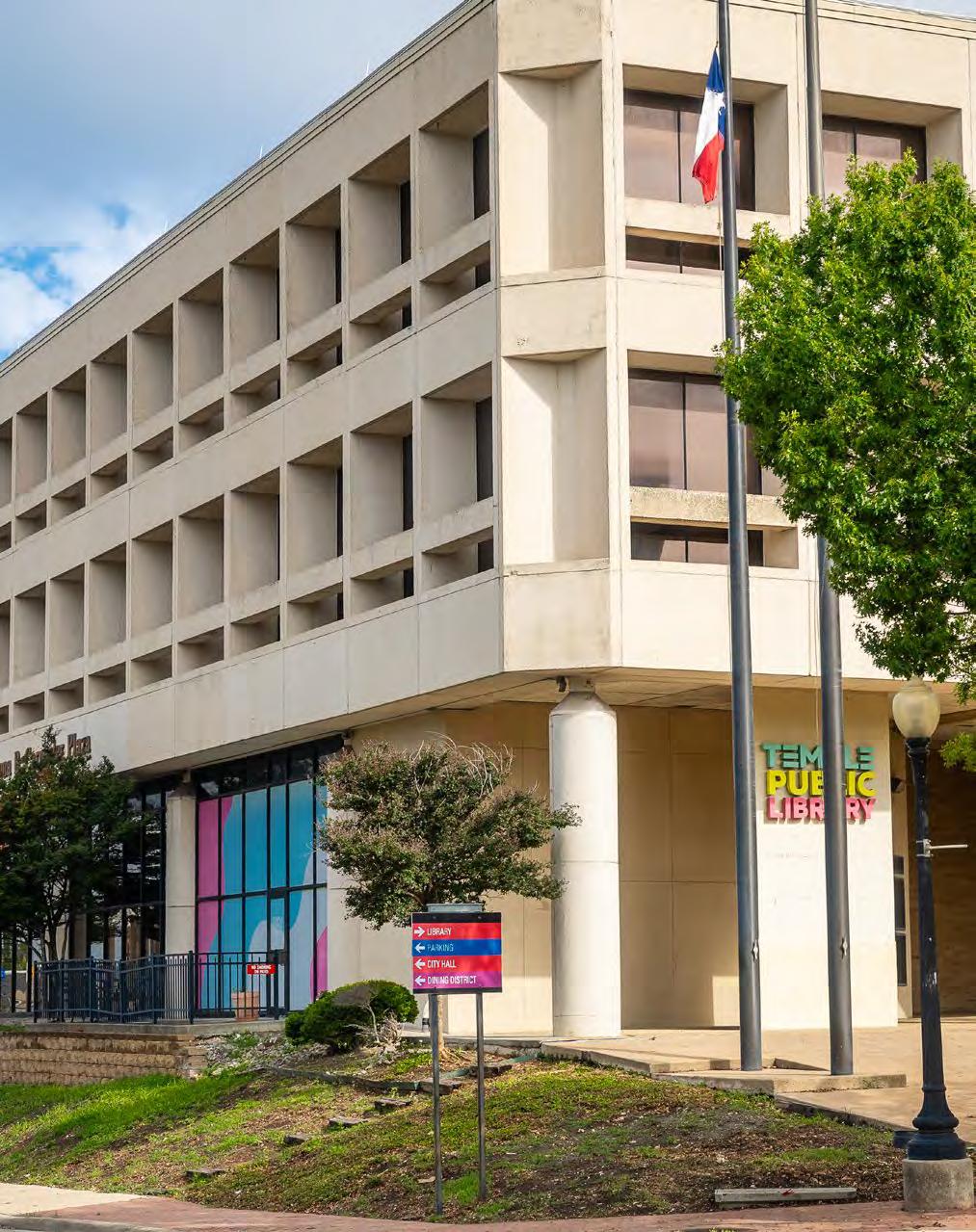
COMMITMENT 5
Ensure sustainable water resource management to meet the needs of the community now and into the future.
8.5.SI1
Develop an integrated water resources plan.
SUCCESS INDICATORS
• Overall quality/variety of business and service establishments (NCS)
• Overall economic health of Temple (NCS)
COMMITMENT 1
Encourage high-quality, stable jobs and strengthen the sales and property tax base through business retention, expansion, and attraction efforts.
9.1.SI1
9.1.OP1
9.1.OP2
Update the City’s Economic Development Policy.
Actively engage in a comprehensive business recruitment and retention program.
Continue to invest in the design, construction, and maintenance of high quality infrastructure to support economic development, including the implementation of the Reinvestment Zone Capital Improvement Program.
COMMITMENT 2
Use a multidisciplinary approach to facilitate high quality, safe, and strategic community growth.
9.2.SI1
9.2.SI2 9.2.SI3
Update the unified development code to ensure community design standards and land use regulations align with the Comprehensive Plan.
Implement a Business Navigator program to provide increased support to small and start-up businesses.
Establish an enhanced certificate of occupancy process to ensure that development and construction activity are consistent with adopted building codes and land use regulations.
9.2.SI4
9.2.SI5
9.2.SI6
9.2.OP1
Explore an entrepreneurial and small business support program.
Adopt an updated building code.
Update construction standards and details.
Strengthen coordination between departments and regional partners to improve collaboration during the development process.
9.2.OP2
Engage the community about infrastructure needs and incorporate input into decision making process.
9.2.OP3
9.2.OP4
Streamline and enhance development review and inspection services.
Promote higher-density, mixed-use development in targeted areas of the city, blending residential, commercial, and retail uses.
9.2.OP5
9.2.OP6
Develop policies to support a comprehensive growth management program.
Conduct regular Development Standards Advisory Board meetings to update constructions standards and engage the development community on materials, practices, and standards.
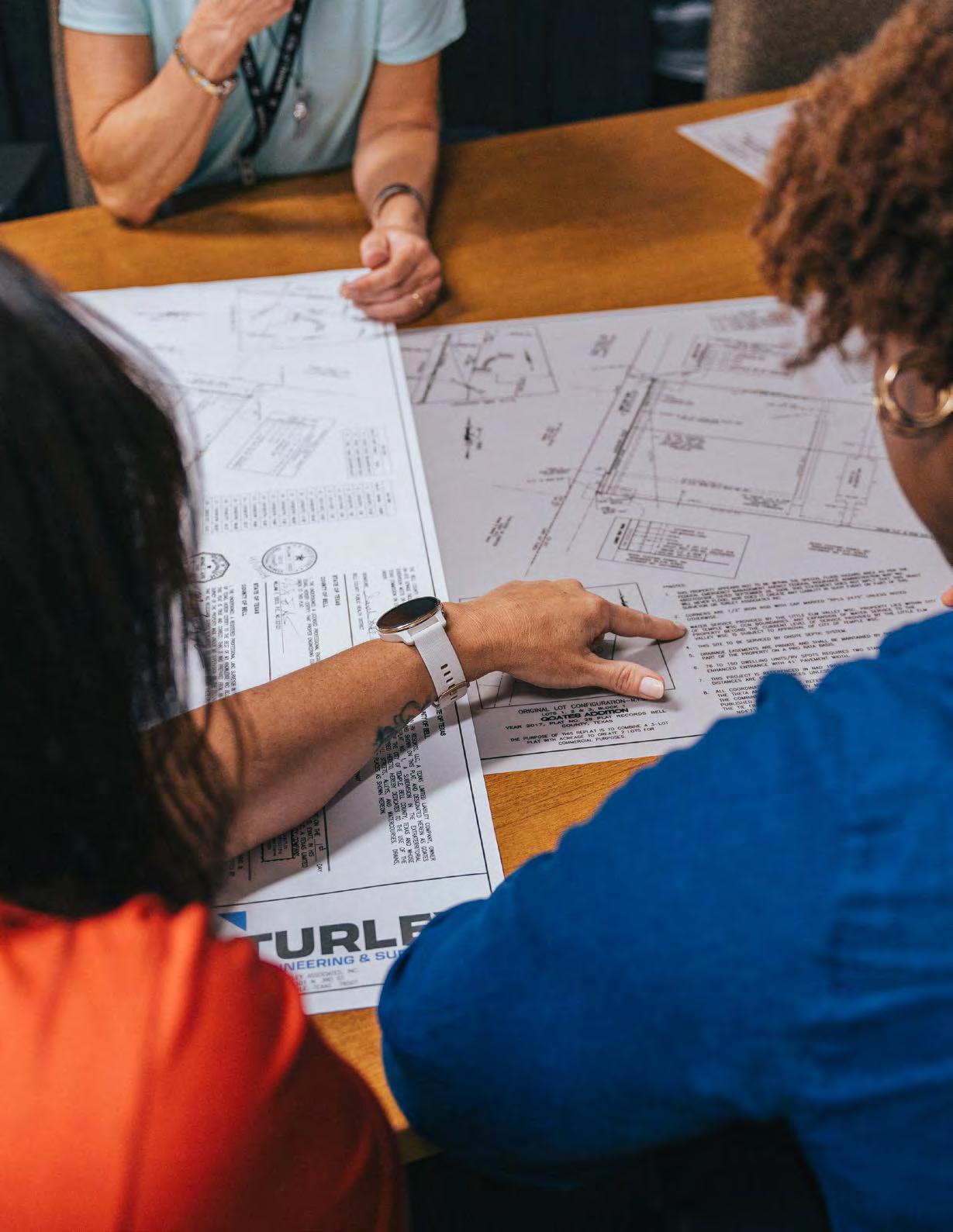
The Financial Plan links the City’s Strategic Plan to a multi-year funding model that ensures the organization continues to advance community priorities while managing growth responsibly. The FY 27 – FY 32 Financial Plan represents a comprehensive, long-range approach to investing in the people, systems, infrastructure, and services that maintain Temple’s high quality of life and support a rapidly growing community.
This plan provides a framework for aligning operational, capital, and personnel resources with the Strategic Focus Areas adopted by the City Council. It includes recommendations for staffing, programs, and initiatives necessary to deliver exceptional public service, address community expectations, prepare for future development, and maintain the infrastructure and amenities that residents rely upon every day.
The Financial Plan also reflects our ongoing commitment to organizational excellence, employee development, innovation, customer service, community engagement, and neighborhood reinvestment. Through thoughtful prioritization and strategic investment, this plan prepares Temple for sustained growth and ensures we continue to build a safe, healthy, vibrant, and prosperous city for current and future generations.
At the core of the City’s success is a highly skilled, dedicated workforce committed to serving the community. To support employee development, training, recruitment, benefits administration, and workforce planning, the financial plan includes the addition of:
• Benefits Specialist (FY 29);
• two People Operations Generalists (FY 27, FY 29); and
• Training Coordinator (FY 31).
These positions enhance organizational capacity to support staff across all departments and ensure the workforce remains prepared, well-supported, and positioned for success.
The plan continues to prioritize competitive compensation, professional development, workforce sustainability, and programs that strengthen the recruitment and retention of high-quality employees.
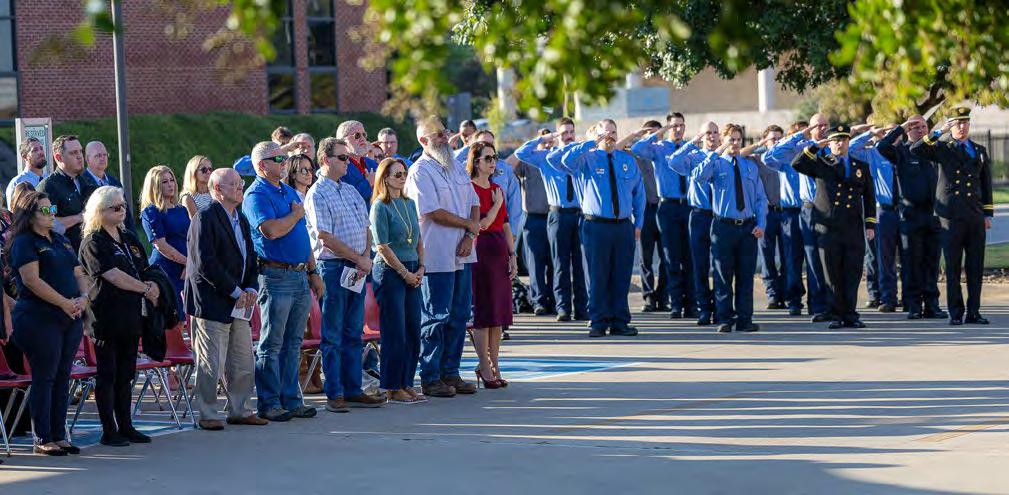
The Financial Plan includes an allocation to conduct and implement compensation studies for public safety employees (FY 28, FY 30, FY 32) and general government employees (FY 27, FY 29, FY 31) to ensure competitive compensation. In addition, the plan includes funding for a self-insured health plan, employee retirement plan, and employee longevity program.
The Financial Plan also proposes funding to add staffing positions for three critical initiatives: a strategy and analytics program, a continuous improvement program, and a legislative engagement/policy program. These programs will drive efficiency, improve service delivery, and foster innovation within our city operations, ultimately leading to more responsive and streamlined services for our residents. The strategy and analytics team will provide data-driven insights to enhance decision-making, track implementation of our Strategic Plan, and measure the impact of our initiatives. Meanwhile, the continuous improvement team will lead efforts to improve how the City does business by evaluating internal processes, reducing unnecessary steps, increasing efficiency, and helping ensure City services remain responsive to the evolving needs of our community. Additionally, the legislative engagement/ policy program will strengthen our city’s relationships with key stakeholders and lawmakers, ensuring our policies and initiatives align with legislative priorities and benefit from broader support and advocacy.
To strengthen data-driven decision making, process improvement, strategic planning, and organizational performance, the plan includes:
• three Continuous Improvement Coordinators (FY 27, FY 28, FY 32);
• two Data Analysts (FY 28, FY 32);
• three Policy Analyst (FY 28, FY 29, FY 32);
• Legislative Engagement/Policy Manager (FY 28); and
• three Strategy Analysts (FY 28, FY 29, FY 32).
These roles position the City to expand performance management, deliver operational efficiencies, enhance cross-functional collaboration, and support long-term organizational strategy.
Temple is committed to continuing our history of being a well-run, financially stable city as evidenced by our strong fund balance, conservative budgeting practices, and AA bond rating from Standard & Poor’s.
To meet increased reporting requirements, financial controls, budget oversight, and capital program management needs, the plan recommends:
• Accountant I – Budget & Reporting/CIP (FY 27);
• Payroll Analyst (FY 28); and
• Accountant I – Treasury & Debt Management (FY 29).
These additions improve financial stewardship, strengthen internal controls, and support the City’s growing capital and operating budget.
To enhance procurement processes, ensure compliance, and support organizational purchasing demands, the plan includes:
• Accounts Payable Technician (FY 29);
• Strategic Procurement Manager (FY 30);
• Purchasing Manager (FY 30); and
• two Purchasing Coordinators (2 - FY 30).
These roles support more efficient purchasing workflows and improve service levels to internal departments.
In order to plan for, design, construct, and maintain high quality facilities that meet the needs of the community now and in the future, the Financial Plan allocates funding for our Facilities Capital Improvement Program with $19.9 million in facility related projects identified in the proposed capital improvement program.
The Financial Plan recommends continued funding for routine facility maintenance. The Facility Maintenance Program was established in FY 2024 with an initial allocation of $250,000. The Financial Plan recommends maintaining the annual allocation at $250,000 in FY
2027, with planned annual increases thereafter to reach an optimum funding level of $800,000 by FY 2032. Maintaining high-quality public facilities, managing construction projects, and supporting growth in facility assets require expanded staffing. The plan includes:
• Custodian (FY 29);
• Custodial Supervisor (FY 28);
• three Facility Logistics Technicians (FY 30, 2 - FY 31)
• Facility Logistics Supervisor (FY 31)
• six Maintenance Technicians for Maintenance Team (2 - FY 27, FY 28, 2 - FY 29, FY 30);
• Facility Maintenance Supervisors (2 - FY 31);
• Maintenance Technician for Building Improvement Team (FY 30);
• Facility Maintenance Supervisor for Building Improvement Team (FY 30);
• HVAC technician (FY 27);
• Journeyman Electrician (FY 30);
• Facility Services Manager (FY 29);
• Project Manager (FY 27);
• Construction Services Division Director (FY 27);
• Project Coordinator (FY 30);
• Project Inspector (FY 31);
• Energy & Efficiency Manager (FY 32) and
• Energy & Efficiency Technician (FY 31).
These additions support ongoing maintenance, energy management, custodial operations, and construction project delivery.
In FY 2025, the City created a comprehensive customer care program to establish a consolidated call center, streamlining citizen access to municipal services and information. The purpose of the consolidated call center is to ensure efficient and effective service delivery, enhancing overall community satisfaction and engagement.
To enhance customer service operations addressing billing, service requests, and resident support for a growing community with heightened expectations for
accessibility, outreach, and responsiveness, the plan encompasses:
• Customer Care Specialist (FY 29)
• Community Solutions Specialist (FY 28);
• Solid Waste Service Delivery Specialist (FY 28);
• two Service Resolution Specialist (2 - FY 28); and
• Utility Billing Coordinator (FY 29).
In support of our strategic commitment to optimize the use of data and technology to improve service and protect mission critical infrastructure, the Financial Plan proposes the implementation of the following technology initiatives:
• a new financial management system (FY 27);
• a new document management system (FY 30); and
• replacement police and fire mobile data laptops (FY29).
In addition to the above, the Financial Plan includes an allocation of approximately $3.4 million to invest in other essential software, technology programs, and devices, including robust cybersecurity measures, to modernize our infrastructure and ensure the secure and efficient delivery of services to our community.
To support a rapidly growing digital environment, network infrastructure, cybersecurity needs, and technology project volume, the plan includes:
• GIS Analyst (FY 28);
• Software Project Manager (FY 28);
• Facility Technology Project Manager (FY 29);
• Network Analyst (FY 29);
• Systems Analyst I (FY 30);
• Technical Trainer (FY 30);
• Software Developer (FY 31); and
• IT Security Administrator (FY 32).
These positions support system implementation, data integrity, cybersecurity resilience, and technology modernization initiatives.

The continued growth of the City’s fleet, expansion of operational divisions, and increasing need for specialized maintenance and asset management require additional personnel to ensure efficient and reliable service delivery. The Financial Plan includes staffing to support a sustainable, modern, and safety-focused fleet operation capable of meeting the needs of all departments. The Financial Plan allocates approximately $6.1 million for capital equipment purchases and replacements in fiscal year 2027 and more than $35 million over the remainder of the multi-year plan.
FY 2025 was a challenging year for the Fleet Services team, marked by frequent vehicle breakdowns and maintenance backlogs driven largely by ongoing supply chain delays and a significant number of replacement vehicles still on order. Solid Waste Services was among the departments most impacted by these issues.
To provide a long-term solution, additional staffing positions were added in FY 2026 to Fleet Services to establish a night team focused primarily on preventive maintenance on the Solid Waste vehicles. Building on this effort, the FY 27 plan recommends further investments to expand leadership capacity, strengthen maintenance teams, and enhance fleet lifecycle management, including:
• Fleet Share Coordinator (FY 27);
• five Heavy Duty Truck Technicians (FY 27, 4 - FY 29);
• Program Manager – Service Delivery Support (FY 28); and
• Automotive Technician I – Light Duty Shop (FY 30).
These positions ensure fleet operations can support City-wide service delivery reliably and safely.
As Temple continues to grow, so does the need for effective communications, and community engagement. The Financial Plan provides resources to enhance transparency, improve access to information, and support accountable, responsive governance.
To enhance public information, marketing, and community outreach, the Financial Plan includes:
• Community Engagement Coordinator (FY 28);
• Graphic Designer (FY 28);
• Website Coordinator (FY 28); and
• Marketing Specialist (FY 29).
These positions strengthen the City’s ability to engage residents, tell its story, promote programs, and support a unified brand identity across platforms.
Quality of life, the characteristics of our community that make it an attractive place in which to live and raise a family, is an important priority for the City of Temple. Temple is a unique place with amazing arts, culture, dining, and recreation experiences and amenities which add to the City’s excellent quality of life.
Temple’s Parks, Recreation, Arts, Library, and Destination Services programs play a foundational role in quality of life, community identity, and placemaking. As the population grows, so does the demand for high-quality programming, well-maintained facilities, and expanded amenities. The Financial Plan includes investments that support maintenance capacity, program development, and service expansion.
The Financial Plan proposes several areas of additional funding in our Parks & Recreation Services Department to enhance and expand our infrastructure of parks, recreation centers, greenspaces, and trails to encourage active living and wellness.
The Financial Plan includes continued funding for our Places and Spaces Capital Improvement Program with a total of $6.7 million in parks-related projects identified in the proposed capital improvement program throughout the multi-year plan.
The Financial Plan recommends continued funding for routine Parks and Recreation improvement programs. The Parks Improvement Program was established in FY 2024 with an initial allocation of $250,000. The Financial Plan recommends increasing the annual allocation to $350,000 in FY 2027, with planned annual increases thereafter to reach an optimum funding level of $1,500,000 by FY 2032.
The Financial Plan also recommends establishing a similar funding approach for the Recreation Improvement Program, beginning with an allocation of $350,000 in FY 2027 and increasing annually on the same schedule as the Parks Improvement Program until reaching $1,500,000 in annual funding by FY 2032.
The Financial Plan includes a variety of staffing enhancements to support park maintenance, forestry, horticulture, custodial operations, recreation programming, and expanding community use of facilities:
• Communications Coordinator for Parks & Recreation Administration (FY 28);
• Service Coordinator for Parks & Recreation Administration (FY 30);
• Strategic Programs Coordinator for Parks & Recreation Administration (FY 30);
• Parks Ranger Manager (FY 30);
• four Park Rangers (2 - FY 30, 2 - FY 31);
• four Part-Time Park Ambassadors (2 - FY 30, 2 - FY 31);
• two Park Inspectors (2 - FY 31);
• Parks Maintenance Manager (FY 28);
• Contactor Coordinator (FY 31);
• Crew Leader for Custodial Crews (FY 28);
• two Maintenance Workers for Custodial Crew (FY 28);
• two Maintenance Workers for Hillcrest Cemetery (FY 28);

• Maintenance Worker for Ball Field Maintenance Crew (FY 29);
• Equipment Operator for Mow Crew #3 (FY 29);
• Crew Leader for Forestry Crew #2 (FY 30);
• Equipment Operator for Forestry Crew #2 (FY 30);
• Crew Leader for Mowing Crews (FY 31);
• two Maintenance Workers for Mowing Crew #4 (FY 31);
• two Equipment Operators for Horticulture Crew #2 (FY 31);
• Equipment Operator for Mowing Crew #4 (FY 31);
• Spray Technician – Chemical Application (FY 31);
• Team Leader – Chemical Application (FY 31);
• Team Leader – Irrigation (FY 31); and
• Team Leader – Roadside (FY 31).
These additions strengthen field operations, enhance visitor experience, and support increased programming and facility use.
This plan includes a new park ranger program to be responsible for enforcing park rules, regulations, curfews, and other city ordinances, while ensuring visitor safety.
To support expanded programming capacities, community center operations, and specialty program development, the plan includes:
• Athletics Program Coordinator for (FY 28);
• four Recreation Specialists (4 - FY 30);
• Recreation Program Development Manager (FY 30); and
• three Recreation Program Coordinators (3 - FY 30).
These positions enhance Temple’s ability to deliver diverse, innovative recreation programs tailored to community needs.
The Financial Plan recommends adding a Youth Services Librarian (FY 30) to support expanded programming, outreach, and services for children, teens, and families.
To expand events, cultural programming, and community celebrations, the plan includes:
• Special Events Coordinator (FY 30).
This role strengthens support for signature events, partnerships, and tourism activities that make Temple a vibrant place to live and visit.
To advance downtown development, redevelopment partnerships, and community programming, the plan includes:
• Downtown Coordinator (FY 32).
In order to continue leveraging partnerships with other community organizations in providing culture and art programming, the Financial Plan recommends a $200,000 allocation for grant funding for Heritage and Arts Partnership organizations. Partnerships created under this grant program will focus on programs or services that promote the arts, history and Temple’s rich heritage. Partner agencies in this category must meet all requirements of State law regarding the proper use of Hotel Occupancy Tax funds.
Temple is committed to fostering strong, connected, safe, and thriving neighborhoods. The Financial Plan expands capacity in planning, development review, permitting, beautification, and supportive services.
To expand neighborhood engagement, case coordination, and community support, the plan recommends:
• Grant Coordinator – Outbound Services/Tax Credit Support (FY 29); and
• Homelessness Services Manager (FY 28).
The Financial Plan continues to leverage our Community Development Block Grant (CDBG) funds to assist with the implementation of our efforts to build strong neighborhoods. Programs proposed for funding throughout the multi-year plan include housing improvements, neighborhood revitalization, homelessness and mental
health programs, and other community development projects.
Successful partnerships within the community help the City leverage service delivery and offer the ability to respond to the needs of our growing community. To help us foster coordination with other agencies and organizations and to improve access to affordable housing and social services, the Financial Plan recommends a $25,000 allocation for grant funding available for Education and Recreation Partnership organizations. This funding is focused primarily on educational and recreational programs for underserved youth. These programs could include after school care, athletics, nutrition, arts, and music. The Financial Plan also recommends $40,000 for grant funding available for Community Enhancement Partnerships. Partnerships created under this category will relate to administration of programs and activities that achieve specific outcomes that are in alignment with the City of Temple’s Strategic Plan and/or Community Development Block Grant Consolidated Plan. Additionally, the funding for Heritage & Arts Grants stayed at $200,000.
The continued funding of the Small Business Economic Development Matrix Funding and Neighborhood Stabilization Program are also recommended in the plan.
The plan recommends continued support for the Temple Revitalization Corporation as part of the City’s Community Development Program. This funding will provide necessary support services, such as legal and professional fees, as well as provide funding for the creation of development plans and for strategic property acquisition.
To support expanding development activity, long-range planning, code improvement, and case management, additions include:
• two Plans Examiners (FY 28, FY 30);
• Permit Technician (FY 29);
• two Combination Building Inspectors (FY 28, FY 30);
• Chief Building Inspector (FY 29); and
• two Senior Planners (FY 28, FY 29).
The City’s diverse economy generates high quality, well-paying jobs that strengthen the sales and property tax base and contribute to an exceptional quality of life. Temple’s rapid growth requires strategic investment in economic development services.
In order for us to continue to meet the demands for current services, and in order for us to meet the needs of projected growth and development, it is critical that we continue to invest in expanding our tax base. For many years, the City of Temple has committed to fund the operations of the Temple Economic Development Corporation to provide investment attraction marketing and incentive negotiation services.
The Financial Plan continues that commitment.
To support business attraction, retention, and expansion strategies, the plan also includes:
• Director of Economic Development (FY 29); and
• Economic Development Coordinator (FY 30).
These positions strengthen Temple’s competitive advantage and ability to support a diverse, growing economy.
The City continues to implement the largest capital improvement program in the history of the community. The Financial Plan recommends significant funding to continue the priority of investing in our infrastructure and systems in order to prepare for growth and rede-
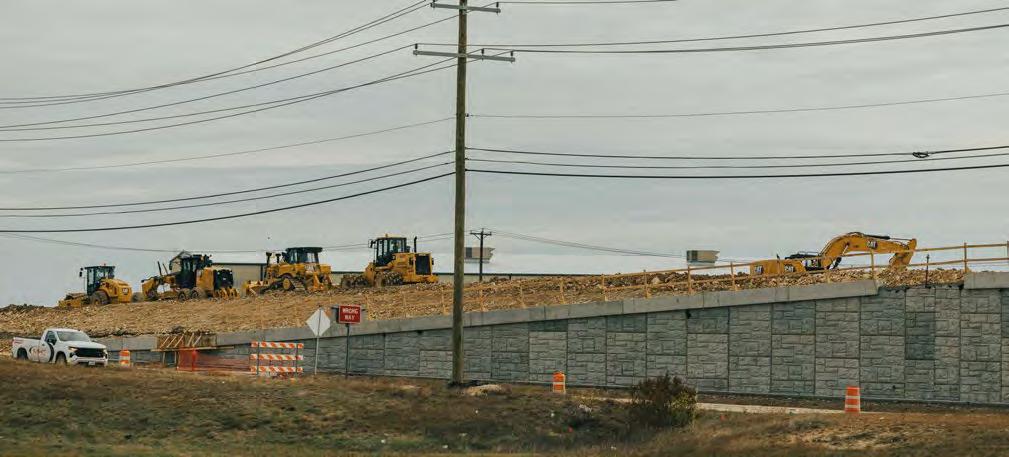
velopment, as well as to preserve our assets and the investments made by the generations before us.
To support communications, internal coordination, operational staging, and strategic project delivery within Public Works, the plan recommends:
• Communications Coordinator (FY 28);
• Equipment Operator – Material Staging Yard (FY 28);
• Fleet Coordinator (FY 28); and
• Strategic Programs Coordinator (FY 30).
These positions directly support operational efficiency and ensure high-quality internal and external service.
To support capital project planning, real estate acquisition, delivery, and inspection, the plan recommends:
• Project Engineer Team Leader – Delivery Team (FY 27);
• Project Engineer Team Leader – Planning Team (FY 29);
• Project Engineer – Planning Team (FY 29); and
• Project Inspector (FY 28).
These positions expand support for capital improvement programs and private development.
The Financial Plan includes continued funding for our Mobility Capital Improvement Program with $68 million in mobility related projects identified in the proposed capital improvement program.
The Financial Plan recommends continued funding for the routine Pavement Maintenance Program. The Financial Plan recommends allocating $1,500,000 starting in FY 2029 and then includes adding in an additional $250,000 per year beginning in fiscal year 2030 and continuing until we reach the optimum funding level of $1,750,000 per year.
A well-maintained transportation network is essential to public safety, mobility, and quality of life. The Financial Plan includes resources to preserve streets, alleys, curbs, gutters, parking areas, and signage, along with the staffing needed to support this work.
The Financial Plans recommends the following:
• Infrastructure Maintenance Manager (FY 27);
• Infrastructure Construction Manager (FY 32);
• Administrative Assistant (FY 29);
• Crew Leader for Pavement Repair Crew (FY 30);
• two Equipment Operators for Pavement Repair Crew (2 - FY 30);
• Crew Leader for Construction Crew (FY 30);
• three Equipment Operators for Construction Crew (3 - FY 30);
• Crew Leader for Concrete Crew (FY 31);
• Equipment Operator for Concrete Crew (FY 31);
• two Maintenance Workers for Concrete Crew (2 - FY 31);
• Foreman for Signs/Pavement Marking (FY 29);
• Crew Leader for Pavement Marking Crew (FY 29);
• Equipment Operator for Pavement Marking Crew (FY 29);
• Maintenance Worker for Pavement Marking (FY 29);
• Crew Leader for Sign Installation & Maintenance Crew (FY 30);
• Maintenance Worker for Sign Installation & Maintenance Crew (FY 30);
• Crew Leader for Forestry Crew (FY 29);
• Equipment Operator II for Forestry Crew (FY 29);
• Crew Leader for ROW Crew/Alley Maintenance (FY 29);
• Equipment Operator for ROW Crew/Alley Maintenance (FY 29);
• Maintenance Worker for ROW Crew/Alley Maintenance (FY 29);
• Traffic Signal Maintenance Technician (FY 30);
• Traffic Signal Foreman (FY 32);
• Traffic Management Center Coordinator (FY 31);
• Crew Leader for Drainage Mow Crew (FY 27); and
• two Equipment Operators for Drainage Mow Crew (2 - FY 27).
FY 2025 and FY 2026 were challenging years for the Solid Waste Division, marked by ongoing fleet breakdowns and service backlogs. These issues were partially mitigated through the temporary rental of
refuse trucks and the use of third-party contractors to assist with backlog reduction.
To implement a long-term solution, additional staffing positions were added to Fleet Services to establish a night shift dedicated to preventive maintenance for Solid Waste vehicles. In addition, the Financial Plan proposes funding for new Solid Waste and Recycling routes to help sustain and improve service levels as the community continues to grow.
Commercial Collections:
• Commercial Collections Manager (FY 28);
• Solid Waste Driver for Frontload, Route 7 (FY 28);
• Solid Waste Driver for Frontload, Route 8 (FY 30); and
• Solid Waste Driver for Frontload, Route 9 (FY 32).
Residential Collections:
• Solid Waste Driver for Residential, Swing Driver (FY 28);
• Solid Waste Driver for Residential Recycling, Swing Driver (FY 29);
• Solid Waste Driver for Residential, Route 12 (FY 29);
• Solid Waste Driver for Residential Recycling, Route 9 (FY 29);
• Solid Waste Driver for Residential, Swing Driver (FY 30);
• Solid Waste Driver for Residential, Route 13 (FY 31); and
• Solid Waste Driver for Residential Recycling, Route 10 (FY 31).
Maintenance Program:
• Maintenance Program Manager (FY 29).
Special Collections:
• Special Collections Program Manager (FY 28);
• Solid Waste Driver for Roll-Off, Route 11 (FY 28);
• Solid Waste Driver for Roll-Off, Route 12 (FY 31);
• Equipment Operator for Rapid Response Crew (FY 29); and
• Maintenance Worker for Rapid Response Crew (FY 29).
Transfer Station Operations:
• Equipment Operator (FY 29).
Utility Services
The Financial Plan includes an additional $193 million in capital funds to implement water and wastewater improvement projects.
The Water Treatment division supplies Temple with superior drinking water by operating the treatment plant, storage tanks, and booster pump stations, which can produce up to 56 million gallons of water per day.
The Water Distribution team maintains over 700 miles of water transmission mains, installs new service taps, inspects valves, and repairs water line breaks, as well as maintaining 9,000+ valves and 4,000+ hydrants.
Wastewater Treatment processes wastewater from homes, industries, and commercial establishments through a 500+ mile collection system and two plants: Temple-Belton and Doshier Farm. The Wastewater Collection team manages the system collecting sewage
and wastewater, conveying it to treatment plants for reuse or discharge.
The Metering department ensures accurate billing by reading meters monthly and maintaining them according to American Water Works Association standards, repairing meter leaks and boxes, testing accuracy, and handling meter connections and disconnections, including those for delinquent accounts.
To support these efforts as the City continues to grow, the plan includes:
Environmental Program:
• two Environmental Programs Technician (FY 28, FY 31);
• Stormwater Team Leader (FY 28); and
• Program Assistant (FY 29).
Metering:
• Meter Technician (FY 30).
Water Distribution:
• two Maintenance Technicians for Hydrant Inspection Crew (2 - FY 27);
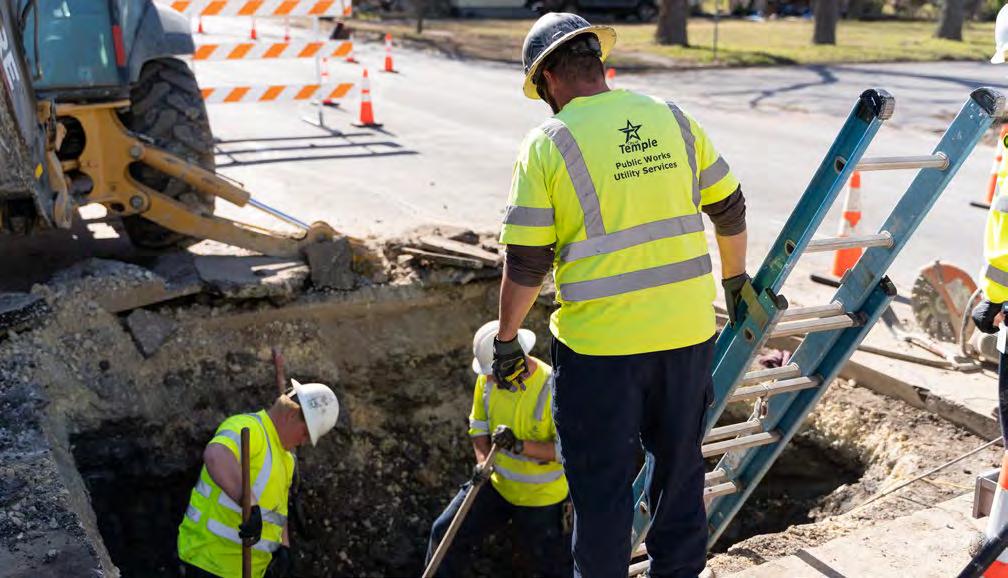
• Crew Leader for Distribution Maintenance Crew #8 (FY 27);
• two Utility Technicians for Distribution Maintenance Crew #8 (2 - FY 27);
• Crew Leader for Distribution Maintenance Crew #9 (FY 28);
• two Utility Technicians for Distribution Maintenance Crew #9 (2 - FY 28);
• Utility Foreman for Proactive Crews (FY 28); and
• two Utility Technicians for Leak Detection Crew (2FY 29).
Water Treatment:
• SCADA Coordinator for Treatment Plants (FY 30);
• SCADA Technician for Treatment Plants (FY 30);
• four Water Operators for Remote Infrastructure Program (2 - FY 27, 2 - FY 30);
• six Water Operators for Operations Program (6 - FY 31); and
• two Water Operators for Ground Water Team (2 - FY 31).
Wastewater Collection:
• Utility Foreman for Proactive Crews (FY 28);
• Crew Leader for Crew #6 (FY 28);
• two Utility Technicians for Crew #6 (2 - FY 28);
• Crew Leader for Crew #7 (FY 29); and
• two Utility Technicians for Crew #7 (2 - FY 29).
Reclamation Plants:
• IPP Coordinator (FY 30);
• Maintenance Manager (FY 30);
• Operations Manager (FY 30);
• Reclamation Plants Division Director (FY 30);
• Service Coordinator (FY 30);
• five Water Operators for Temple-Belton Plan (5 - FY 30);
• four Water Operators for Doshier Plant (4 - FY 30);
• two Water Operators for Remote Infrastructure Program (2 - FY 30);
• three Water Operators for Temple-Belton Plan (3FY 32);
• three Water Operators for Doshier Plant (3 - FY 32); and
• two Water Operators for Remote Infrastructure Program (2 - FY 32).
The Financial Plan continues to support existing District Services programs, including the downtown team, parking management, and code compliance, while expanding the division to create a more proactive, district-based approach to identifying and addressing service needs throughout the City.
Under this proposal, Service Coordinators will take ownership of assigned districts by identifying needs, coordinating work orders, and routing items to the appropriate department, while Rapid Response Crews will provide flexible capacity to address smaller tasks, cleanups, emerging issues, and cross-functional needs that can be resolved quickly without waiting in larger departmental work queues.
Additional staffing proposed in the Financial Plan to provide resources for these priorities include:
Transform Temple Program:
• Transform Temple/District Operations Manager (FY 27);
• four Service Coordinators (2 - FY 27, 2 - FY 30)
• Crew Leader I for Rapid Response Crew - East (FY 27);
• Equipment Operator for Rapid Response – East (FY 27);
• Maintenance Worker for Rapid Response Crew - East (FY 27);
• Crew Leader I for Rapid Response Crew - West (FY 31);
• Equipment Operator for Rapid Response CrewWest (FY 31);
• Maintenance Worker for Rapid Response Crew - West (FY 31);
• Crew Leader - Mow Crew (FY 28);
• Equipment Operator – Mow Crew (FY 28); and
• Maintenance Worker – Mow Crew (FY 28).
Code Compliance Program:
• Code Compliance Team Leader (FY 29); and
• two Code Compliance Officers (2 - FY 31).
Protecting our public safety is a top priority for the City of Temple in providing a community where businesses can thrive, and residents want to call home.
An allocation of more than $65.5 million for a Public Safety Capital Improvement Program is included in the Financial Plan. It is recommended that this bond include expanding the Police Department downtown, relocating Fire Station 7, relocating Fire Station 6, construction of three additional fire stations (9, 10, and 11), and investments in equipment.
The Animal Services department improves public safety by ensuring humane and prompt compliance with City animal control regulations and state laws, aiming to create a safer community and build public trust.
To support the growth in population, increased call volume, customer service demands, and shelter operations, the plan recommends adding the following positions:
• two Shelter Technicians (2 - FY 28); and
• Animal Control Officer (FY 32).
These positions support humane care, customer service, adoption programs, and operational efficiency.
The Financial Plan recommends adding a total of 29 sworn police officer positions and 3 civilian positions to add the resources necessary for our Police Department to provide enhanced response capacity; a

consistent, visible police presence in our community; and build ongoing, authentic relationships between the community and the police.
Temple’s continued population growth requires expansion of police staffing, training, investigative resources, and specialized units. The plan includes the following:
Patrol Program:
A total of 15 additional sworn positions including:
• three Police Officers in FY 27;
• three Police Officers in FY 28;
• three Lieutenants in FY 29;
• three Police Officers in FY 30; and
• three Police Officers in FY 31;
Investigations Program:
A total of 10 additional positions (9 sworn and 1 civilian) including:
• Police Officer for Violent Crime Enforcement Squad in FY 29;
• Police Officer for Violent Crime Enforcement Squad in FY 30;
• Sergeant for Violent Crime Enforcement Squad in FY 31;
• Police Officer for Criminal Investigations Division Team in FY 29;
• four Police Officers for Criminal Investigations Division Team in FY 31;
• Sergeant for Criminal Investigations Division Team in FY 31; and
• Crime Scene Supervisor in FY 31.
Special Operations Program:
A total of five additional sworn positions including:
• Police Officer for School Resource Officer Unit in FY 27;
• Police Officer for School Resource Officer Unit in FY 29;
• Sergeant for School Resource Officer Unit in FY 31; and
• two Police Officers for Community Oriented Policing Unit in FY 31.
Administration:
A total of two additional civilian positions including:
• Administrative Assistant for Administrative Services in FY 29; and
• Strategic Programs Coordinator in FY 29.
These additions enhance patrol coverage, investigations, training, crime prevention, and supervisory capacity.
The Financial Plan includes major investments to expand fire and rescue capacity consistent with the
City’s Fire Master Plan, growth patterns, and service needs. The plan recommends adding a total of 56 sworn firefighter positions and 2 civilian positions to add the resources necessary for our Fire Department to provide emergency response as our community grows. The plan includes the following:
Emergency Response Program:
A total of 50 additional sworn positions including:
• three Fire Drivers for Station 4 Squad/Future Station 10 Company in FY 27;
• three Firefighters for Station 4 Squad/Future Station 10 Company in FY 27;
• three Firefighters for Minimum Staffing Coverage in FY 27;
• three Fire Captains for Station 9 Company in FY 28;
• three Fire Drivers for Station 9 Company in FY 28;
• three Firefighters for Station 9 Company in FY 28;
• three Firefighters for Minimum Staffing Coverage in FY 28;
• Firefighter for Westside Rescue Squad in FY 28;
• three Fire Captains for Fire Station 10 Company in FY 29;
• two Firefighters for Westside Rescue Squad in FY 29;
• three Firefighters for Minimum Staffing Coverage in FY 30;
• Fire Driver for Westside Rescue Squad in FY 30;
• two Fire Drivers for Westside Rescue Squad in FY 31;
• three Fire Captains for Fire Station 11 Company in FY 31;
• three Fire Drivers for Fire Station 11 Company in FY 31;
• three Firefighters for Fire Station 11 Company in FY 31;
• three Firefighters for Truck 6 Staffing in FY 31;
• two Firefighters for Minimum Staffing Coverage in FY 31; and
• three Firefighters for Truck 9 Staffing in FY 31.
Fire Academy Program:
One additional sworn positions including:
• Firefighter – Training Officer in FY 31.
Fire Prevention Program:
A total of four additional sworn positions including:
• Battalion Chief for Assistant Fire Marshal in FY 29;
• Fire Captain for Fire Marshal Team in FY 29;
• Fire Driver for Fire Marshal Team in FY 29; and
• Fire Driver for Community Education Officer in FY 29.
Support Services Program:
A total of three additional positions (1 sworn and 2 civilian) including:
• Battalion Chief for Support Services in FY 27;
• Logistics Coordinator in FY 31; and
• Strategic Programs Coordinator in FY 31.
These additions support expanded service territory, reduced response times, enhanced supervision, and overall fire readiness.
A part-time Executive Assistant I (FY 28) is included to support growing administrative needs and customer service functions.
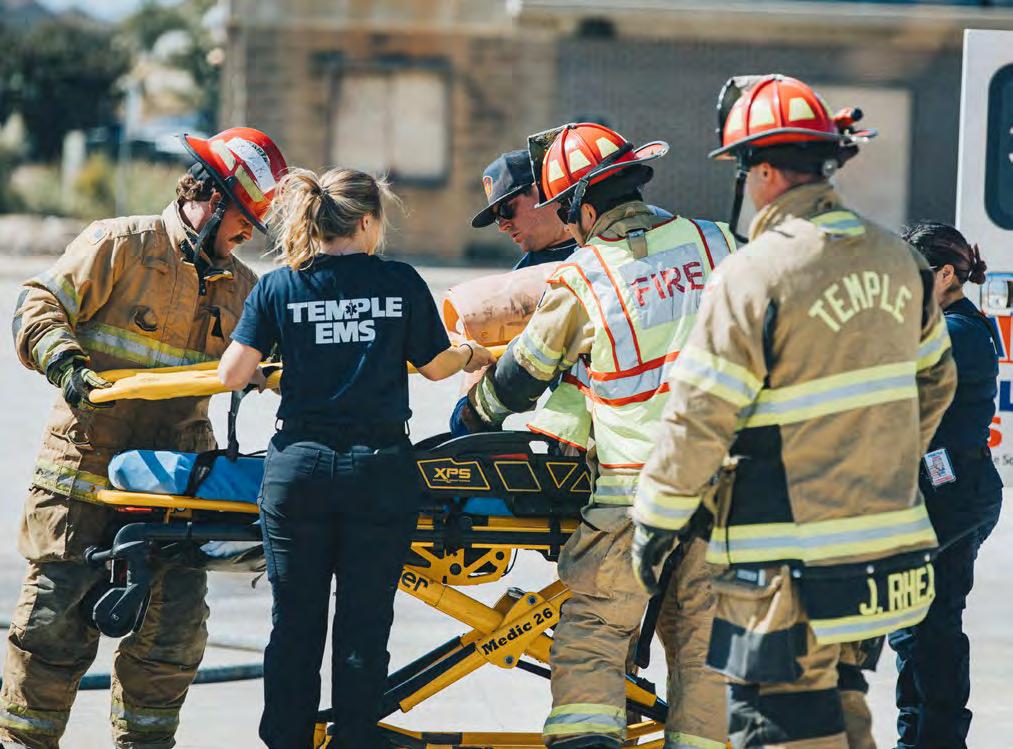
The following Fund Summaries section outlines the City’s long-term planning process designed to achieve its mission, goals, and strategic focus areas. A conservative six-year funding model has been developed to ensure the allocation of necessary resources to support the City’s objectives and make their achievement feasible. The funding model aligns the City’s budget with its five strategic focus areas, projects available revenue over the six-year planning period, and identifies the resources required for specific initiatives that will help accomplish the City’s strategic goals.
The development of a multi-year financial forecast involves numerous variables and assumptions for both revenue and expenditure projections. Revenue forecasts are based on a combination of historical trend analysis, anticipated growth and development, and planned rate increases or adjustments. Expenditures are projected by applying a mix of Consumer Price Index (CPI) adjustments and anticipated service expansions.
Projected property tax revenues were based on anticipated growth in the City’s taxable assessed property values and estimated tax rates. These projections used demographic data and expected future residential and commercial developments, with the tax rate calculations designed to remain below the voter-approval threshold.
On December 5, 1967, City of Temple voters approved adoption of 1.00% local sales and use tax in accordance with the provisions of House Bill No. 207.
In 1990, Temple voters approved an additional sales tax to create a revenue stream funded by both residents and non-residents. This tax supports essential city services such as public safety and quality of life initiatives. The additional sales tax factors into the calculation of the property tax voter-approval rate, which was reduced to 3.5% following the passage of
Senate Bill 2, also known as the Texas Property Tax Reform and Transparency Act of 2019.
On November 7, 2023, a Special Called Election was held in which voters approved an amendment to reallocate 0.5% of the sales tax rate from Property Tax Relief (as designated in the Texas Tax Code as an additional sales and use tax) to General Government Purposes.
Sales tax was forecasted based on the anticipated growth in both retail and non-retail tax base, assumptions on consumer behavior, and local economic drivers (e.g., tourism, major events, or regional business trends, and residential and commercial construction trends). Future growth rates based for sales tax are as follows:
• FY 2028 - 5.75%,
• FY 2029 - 6.15%,
• FY 2030 - 6.75%,
• FY 2031 - 6.75%, and
• FY 2032 - 7.00%.
An average 11% annual increase is projected for all franchise fees (excluding water/wastewater franchise) from FY 2028 through FY 2030. The water/ wastewater franchise fee is a 5.00% fee based on budgeted water/wastewater gross revenues for FY 2028 through FY 2032. Electricity franchise fees are expected to rise substantially in 2031 and 2032 due to economic development.
The water/wastewater contractual fee paid by the Water/Wastewater Fund is calculated at 10.5% based on budgeted water/wastewater gross revenues for FY 2028 through FY 2032.
The growth of local business, as well as new housing developments contribute to the number of permits and licenses issued, which is a primary driver tied to the revenue stream for licenses and permits. Taking into consideration several factors such as historical trends, growth assumptions, and external factor consideration (e.g., demographic changes, regulatory changes), the annual increase for revenue associated to licenses and permits is 2.00% annually for FY 2028 through FY 2032.
Revenue tied to fines is typically forecasted based on several factors, including historical data, changes in enforcement policies, staffing levels, anticipated
changes in fees, and shifts in behavior or regulations. From FY 2028 through FY 2032, the fine revenue stream is projected to grow by an average annual rate of 1.00%, based on stable enforcement levels, anticipated fee adjustments, and continued compliance with regulations.
Golf course revenue is projected to increase by 2.00% annually from FY 2028 through FY 2032. This steady growth rate is based on expectations of consistent demand, potential improvements in course facilities, and increased participation in golf-related activities.
Airport sales and rental revenue varies based on type:
• Fuel sales and discount on fuel increases 2.00% annually in FY 2028 through FY 2032
• Rental revenue related to hangar complex (hangars 20 and 26) is expected to remain constant from FY 2028 through FY 2032, and
• All other airport charges are forecasted to grow by an average annual rate of 1.33% from FY 2028 through FY 2032.
When forecasting solid waste revenue, several key components are considered. These components include the number of households or businesses receiving services, the rate charged per service, and any expected rate adjustments and/or growth assumption. Below are the customer growth and rate adjustments used for residential and commercial services for forecasting FY 2028 through FY 2032:
assumptions (such as inflation in salaries and benefits, growth in positions, and general inflation on operational and capital expenditures).
Personnel costs encompass newly planned positions for FY 2028 through FY 2032, as well as proposed pay increases for employees within civil service (FY 2028, FY 2030, and FY 2032) and general government (FY 2027, FY 2029, and FY 2031). In addition to new positions and market adjustments, compensation costs are expected to rise by an average annual rate of 1.25%, starting in FY 2028 and continuing through FY 2032.
Operational costs are projected to increase by an average annual rate of 3.04% each year from FY 2028 to FY 2032. These costs also account for new operational needs arising from the addition of personnel and fleet (vehicles and equipment).
Capital costs are based on scheduled fleet replacements, along with additional fleet requests for FY 2028 through FY 2032. Fleet costs are estimated using current pricing, with an inflation factor applied depending on the fiscal year and type of equipment.
Contingency funds are allocated in future fiscal years to cover unforeseen expenses that may arise during the forecast period.
All other charges for services revenue in General Fund are projected to increase by an average annual rate of 3.94% from FY 2028 through FY 2032.
Forecasting expenditures involves projecting future costs across various categories over a specific time period, using available data, historical trends, and key
The Hotel Occupancy Tax (HOT) revenue is a key source of funding for tourism-related initiatives. This tax is levied on guests staying in hotels, motels, and other short-term lodging establishments within the City. The revenue generated from this tax is limited to specific uses such as to promote tourism, support local events, and develop projects that attract visitors and enhance the hospitality sector. Forecasting revenue for HOT involves estimating the income generated from the taxes while taking into consideration historical data, trends in tourism, occupancy rates, event-driven growth, new hotel development, and economic conditions (e.g., recession, inflation, or a tourism boom). The HOT revenue is projected to increase by an average annual rate of 2.92% for FY 2028 through FY 2032.
Charges for services revenue forecasts for the Frank W. Mayborn Civic & Convention Center, as well as the Railroad & Heritage Museum include a variety of factors. These factors include historical revenue data, expected event bookings, local market conditions, rental rates (existing and new), and potential improvements to the facilities. The revenue forecast associated to charges for services at the Frank W. Mayborn Civic & Convention Center, and the Railroad & Heritage Museum are projected to increase 1.50% annually for FY 2028 through FY 2032.
Forecasting expenditures involves projecting future costs across various categories over a specific time period, using available data, historical trends, and key assumptions (such as inflation in salaries and benefits, growth in positions, and general inflation on operational and capital expenses).
Personnel costs encompass newly planned positions for FY 2028 through FY 2032, as well as proposed pay increases for general government employees. In addition to newly planned positions and market adjustments, compensation costs are expected to rise by 0.50% annually, starting in FY 2028 and continuing through FY 2032.
Operational costs are projected to increase by an average annual rate of 2.87% each year from FY 2028 to FY 2032. These costs also account for new operational needs arising from the addition of personnel and fleet (vehicles and equipment).
Capital costs are based on scheduled fleet replacements, along with additional fleet requests for FY 2028 through FY 2032. Fleet costs are estimated using current pricing, with an inflation factor applied depending on the fiscal year and type of equipment.
Contingency funds are allocated in future fiscal years to cover unforeseen expenses that may arise during the forecast period.
During the budget process, the City allocates funding for two grants that are expected to continue in future years: Community Development Block Grant and the Crisis Assistance Program.
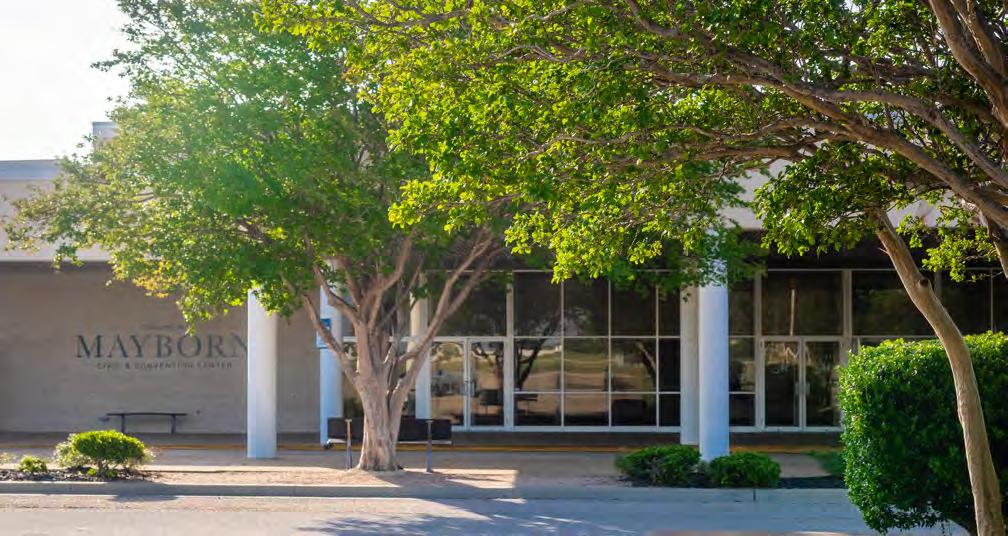
The Community Development Block Grant (CDBG) is a federal funding program, administered by the Department of Housing and Urban Development (HUD), providing communities with resources to address various development needs. The City of Temple is designated by HUD as an Entitlement Community, meaning it receives annual grant funding to support and enhance services for its residents. These CDBG funds are used for projects that improve access to affordable housing, create suitable living environments, and expand economic opportunities, with a primary focus on benefiting low- and moderate-income individuals.
The Crisis Assistance Program, administered by the Texas Office of the Governor - Criminal Justice Division, is designed to provide emergency assistance and services to individuals facing immediate crises, often due to domestic violence, sexual assault, human trafficking, or other situations that require urgent support for vulnerable individuals.
Revenues for the Community Development Block Grant (Federal Grants) and the Crisis Assistance Program (State Grants) are expected to grow by 3.00% annually from FY 2028 through FY 2032.
Forecasting expenditures involves projecting future costs across various categories based on available data, historical trends, and assumptions, including factors like salary and benefit inflation, growth in positions, and general inflation in operational and capital expenses.
Personnel costs include new positions planned for FY 2028 through FY 2032, as well as proposed pay increases for general government employees. In addition to newly planned positions and market adjustments, compensation costs are expected to rise by 3.00% annually, starting in FY 2028 and continuing through FY 2032.
Operational costs are anticipated to increase by 3.00% each year from FY 2028 to FY 2032. These costs also account for new operational needs associated with new personnel.
Capital costs are not projected for the Federal/State Grant Fund for FY 2028 through FY 2032.
A street maintenance fee supports the repair and upkeep of municipal roadways, including pavement treatments, crack sealing, and pothole repairs. Collected through utility bills, this fee provides a reliable revenue source to maintain street conditions, reduce long-term reconstruction costs, and promote safe travel for residents and businesses.
City staff is currently working with a consultant to develop a fee study required to adopt and implement a transportation user fee in accordance with State of Texas laws and regulations. The fee will apply to both residential and non-residential customers, with an anticipated implementation date of October 1, 2028 (FY 2029). The business plan incorporates projected revenues beginning in FY 2029 and continuing in future years. Preliminary estimates forecast approximately $8.57 million in revenue during FY 2029.
Beginning in FY 2029, the Street and Traffic Signal Departments will transition into the newly created Street Maintenance Fund. Projected expense growth in subsequent years reflects additional staffing needs identified for FY 2029 through FY 2032. The financial plan also includes $1.5 million for pavement management contracted services starting in FY 2029.
City staff is currently working with a consultant to complete the drainage rate study and fee structure analysis which is proposed to be implemented in FY 2027. When forecasting revenue for the Drainage Fund,
several key elements must be taken into consideration. These include collection rates, commercial and residential development, population growth and urbanization, weather patterns, economic conditions, and regulatory changes. Commercial and residential drainage fees for FY 2028 through FY 2032 are projected to increase by an average of 0.50% annually, driven primarily by development growth rather than fee increases.
It should be noted that projected drainage fee revenues and rates may be revised upon completion of the drainage rate study and fee structure analysis.
Forecasting expenditures involves estimating future costs across various categories over a specific time period, based on available data, historical trends, and key assumptions (such as inflation in salaries and benefits, growth in positions, and general inflation in operational and capital expenses).
Personnel costs include new positions planned for FY 2028 through FY 2032, as well as proposed pay increases for general government employees. In addition to newly planned positions and market adjustments, compensation costs are expected to rise by 0.50% annually, starting in FY 2028 and continuing through FY 2032.
Operational costs are also projected to rise by an average annual rate of 1.10% each year from FY 2028 to FY 2032.
Capital costs are based on scheduled fleet replacements for FY 2028 through FY 2032. Fleet costs are estimated using current pricing, with an inflation factor applied based on the fiscal year and the type of equipment.
Contingency funds are allocated in future fiscal years to cover unforeseen expenses that may arise during the forecast period. Debt Service
Property taxes are forecasted based on anticipated growth in the tax base, planned future development, and the proposed interest and sinking tax rates required to support both existing and future debt issuances.
Debt service expenditures are forecasted based on the amortization schedules for existing debt, along with projections for future debt issuances. Future debt capacity is calculated to minimize and stabilize tax rate impact.
Water and wastewater revenues are forecasted based on current or projected rates applied to the five-year median customer consumption of water and wastewater flow, along with anticipated growth in the customer base. Planned rate adjustments are determined by the annual cost of service update.
Base Growth - Wastewater Planned Rate Adjustments Based on Annual Cost of Service Update
All other charges for services within the Water/Wastewater Fund are projected to increase by 2.00% annually from FY 2028 through FY 2032.
Forecasting expenses involves projecting future costs across various categories over a specific time period, using available data, historical trends, and key assumptions (such as inflation in salaries and benefits, growth in positions, and general inflation on operational and capital expenses).
Personnel costs encompass newly planned positions for FY 2028 through FY 2032, as well as proposed pay increases for general government employees.
Operational costs projections vary based on the type of expense. For example, the reclamation plants have an overall 3.00% increase in their operations to help account for the unexpected when planning to actively assume the day-to-day operations of two facilities. These costs also account for new operational needs arising from the addition of personnel and fleet (vehicles and equipment). Overall, operating costs are projected to rise by an average annual rate of 1.93% each year from FY 2028 to FY 2032.
Capital costs are based on scheduled fleet replacements, along with additional fleet requests for FY 2028 through FY 2032. Fleet costs are estimated using current pricing, with an inflation factor applied depending on the fiscal year and type of equipment.
Debt service expenses are forecasted based on the amortization schedules for existing debt, along with projections for future debt issuances.
The Temple Revitalization Corporation (TRC) was formed on November 3, 2021, as a non-profit, local Government Corporation under Texas Transportation Code Chapter 431. TRC was created to aid, assist, and act on behalf of the City in the performance of its governmental functions, to promote the common good and general welfare of the City, including the sale, purchase, development, redevelopment, and revitalization of real
property and to help promote, develop, encourage, and maintain employment, commerce, economic development, and public facility development in the City.
As indicated in the bylaws for TRC, the annual budget shall be prepared by the Board and be approved by a majority vote of the entire Board. After approval by the Board, the budget shall be submitted to the City for approval. The budget shall, at a minimum, include capital, operational, debt services, and project-specific expenditures and corresponding revenues. The budget shall also clearly indicate the sources and purposed use of revenue contributed by the City as part of the Funding and Operating Agreement between the City and TRC.
On September 16, 1982, the City Council approved Ordinance No. 1457, establishing Reinvestment Zone No. 1 (the “Zone”) in accordance with Texas Tax Code Chapter 311. This designation created a geographic area within the City and its jurisdiction to foster development and redevelopment. Initially, the Zone encompassed approximately 1,943 acres of land located in the northwest section of the City and parts of Bell County. On November 4, 2010, the City expanded the Zone’s boundaries to include an additional 2,221 acres, known as the Temple Medical and Education District, and extended the Zone’s duration from 2022 to 2062.
The Reinvestment Zone No. 1 Board of Directors is tasked with overseeing the Zone’s development and implementation. This includes creating project plans, managing financing, and recommending projects to the City Council that enhance the area, with a focus on economic growth through infrastructure improvements and attracting new businesses. The increased tax increment revenue generated within the Zone is used to fund these initiatives. The Board is also responsible for preparing and adopting a project plan and a reinvestment zone financing plan, which serves as the “budget” for Reinvestment Zone No. 1, and submits them to the City Council for approval.

2
3
4
During the budget process each position funded within the Federal/State Grant Fund is evaluated based on program needs and available resources. Therefore, personnel distributions amongst the divisions within the Federal/State Grant Fund will be adjusted accordingly each fiscal year. Several positions within District Services and Housing & Community Services are partially funded with Federal/State Grant Funds.
2 - During FY 2026, one Legal Assistant position was added.
3 - In FY 2026, one Assistant City Manager and two Executive Programs Coordinator positions were added. One Administrative Assistant position was moved from Strategy and Innovation to City Manager. One Community Education Specialist was moved from Fire to City Manager. During FY 2026, one Administrative Assistant was moved from City Manager to Permits/Inspections and the Community Education Specialist was moved back to Fire from City Manager.
4 In FY 2026, one Administrative Assistant was moved from Mayborn Convention Center to Communications & Destination Services and funding changed to 80%Communications & Destination Services and 20% Mayborn Convention Center. One Destination Marketing Coordinator was moved from Tourism to Communications & Destination Services and retitled to Marketing Coordinator. One Marketing Coordinator changed funding from 25% - Communications and Destination Services and 75%Utilities Administration to 100% -Communications & Destination Services.
5 - During FY 2026, the following changes occurred:
One Special Events Coordinator was reclassified to Marketing Specialist and moved from Events to Communications & Destination Services, and
• Neighborhood Navigator was retitled to Community Engagement Coordinator and moved from Housing & Community Services to Communications & Destination Services.
6 In FY 2026, the following changes occurred:
• Assistant Director of Purchasing & Facility Services was retitled to Assistant Director of General Services and funding was changed from 100% Purchasing to 50%Purchasing and 50% - Facility Services,
• One Plumber position was added, and
• One Maintenance Technician II was reclassed to HVAC Technician.
7 - During FY 2026, the Plumber position was reclassified to Executive Support Coordinator position and funding changed from 100% - Facility Services to 25%Purchasing and 75% Facility Services.
8 In FY 2026, the following changes occurred:
• One Director of Fleet Services was added,
• One Fleet Accountability Coordinator was added,
• One Fleet Service Advisor position was added,
• One Fleet Asset Coordinator position was added, Two Foreman positions were added,
• One Inventory Specialist was added,
• One Heavy Duty Truck Technician was moved from Solid Waste to Fleet Services,
• Four Heavy Duty Truck Technician positions were added,
• One Automotive Technician was added,
• Part-time funding for the Summer Program was eliminated, and
• Assistant Director of Public Works was reclassed to Director of Utility Services and funding changed to 50% - Solid Waste and 50% - Fleet Services to 40% Water Distribution, 40% - Wastewater Collections, and 20% - Environmental Programs.
9 During FY 2026, the Neighborhood Navigator was retitled to Community Engagement Coordinator and moved from Housing & Community Services to Communications & Destination Services.
10 - In FY 2026, one Real Estate Acquisition Manager was added and one Development Services Coordinator was reclassed to a Planner position and was moved from Building Services to Planning.
11 In FY 2026, the following changes occurred:
• Director of Public Works title changed to Managing Director of Public Works and funding was changed from 45% - Engineering Services, 45% - Public Works Administration, and 10% - Drainage to 100% Public Works Administration,
• Executive Assistant II reclassed to Executive Support Coordinator and funding was changed from 100% Public Works Administration to 50% - Public Works Administration and 50% - Public Works Administration,
• Public Works Program Coordinator reclassed to Program Manager and funding was changed from 100% Public Works Administration to 50% - Public Works Administration and 50% - Public Works Administration.
12 - In FY 2026, the Assistant Director of Purchasing & Facility Services was retitled to Assistant Director of General Services and funding changed to 50% - Purchasing and 50% Facility Services.
13 - In FY 2026, one Administrative Assistant was moved from Strategy & Innovation to City Managers Office.
14 - In FY 2026, one Animal Services Manager was added.
15 - In FY 2026, three Battalion Chief positions, one Fire Captain, four Driver positions, and two Firefighter positions were added. One Firefighter Overhire position was also funded.
16 - In FY 2026, two Police Officer positions were added. The funding for the Family Violence Case Manager changed to 75% - Police (Federal/State Grand Fund) and 25%Police (General Fund). Two Police Officer Overhire positions were funded..
17 - In FY 2026, the following changes occurred:
• Deputy City Engineer was reclassed to Capital Delivery Division Director and funding was changed from 50% Engineering Services and 50% Public Works Administration to 100% - Engineering Services,
• One Real Estate Acquisition Manager was added,
• One Development Engineering Division Director position was added,
• Director of Public Works title was changed to Managing Director of Public Works and funding was changed from 45% Engineering Services, 45% Utilities Administration, and 10% - Drainage to 100% Public Works Administration, and
• Water Resource Modeler position changed funding from 25% - Drainage and 75% Water Distribution to 100% Engineering Services.
18 - In FY2026, the following changes occurred:
• Director of Transportation from 33% - Traffic Control, 34% - Streets, and 33%Drainage to 45% - Traffic Control, 10% - Drainage, and 45% - Streets,
• Transportation Dispatch Manager was reclassed to Service Delivery Support Manager and funding changed to 50% Traffic Control and 50% Streets, and
• Administrative Assistant II from Drainage was reclassed to a Service Coordinator, moved to Streets and funding changed to 50% - Streets and 50% Traffic Control.
19 - In FY 2026, the following changes occurred:
• Director of Transportation from 33% - Traffic Control, 34% - Streets, and 33%Drainage to 45% - Traffic Control, 10% - Drainage, and 45% - Streets,
• Transportation Dispatch Manager was reclassed to Service Delivery Support Manager and funding changed to 50% Traffic Control and 50% Streets, and
• Administrative Assistant II from Drainage was reclassed to a Service Coordinator and funding changed to 50% Streets and 50% Traffic Control.
20 In FY 2026, the following changes occurred:
• Three Solid Waste Drivers positions were added,
• One Disposal & Special Collections Division Director position was added, and
• Heavy Duty Truck Technician was moved from Solid Waste to Fleet Services.
21 - During FY 2026, one PT Aircraft Rescue & Fueling Specialist was eliminated and one Aircraft Rescue & Fueling Supervisor was added.
22 In FY 2027, one Construction Services Division Director, one HVAC Technician, two Maintenance Technicians, and one Project Manager will be added.
23 In FY 2027, one Accountant position will be added.
24 - In FY 2027, one Fleet Share Coordinator and one Heavy Duty Truck Technician will be added.
25 In FY 2027, one People Operations Generalist position will be added.
26 - In FY 2027, the funding for the existing Executive Support Coordinator and existing Support Services Manager position will change from 50% - Public Works Administration and 50% - Utilities Administration to 100% - Public Works Administration.
27 - In FY 2027, one Continuous Improvement Coordinator position will be added.
28 - In FY 2027, the following changes will occur:
• One District Services Manager will be added,
• A Rapid Response Crew will be added, consisting of one Crew Leader, one Equipment Operator, and one Maintenance Worker, and
• Two Service Coordinator positions will be added.
29 - In FY 2027, one Battalion Chief, three Fire Drivers, and six Firefighter positions will be added.
30 - In FY 2027, four Police Officer positions will be added.
31 - In FY 2027, the following changes will occur:
• Funding allocation for the Director of Engineering will change to 100% - Engineering Services, and
• One Project Engineer Team Leader position will be added.
32 - In FY 2027, the following funding allocations will occur:
• Foreman II - Streets from 40% - Streets, 20% - Drainage, 20% - Water Distribution, and 20% - Wastewater to 50% - Streets and 50% - Drainage,
• Crew Leader II - Streets from 40% - Streets, 20% - Drainage, 20% - Water Distribution, and 20% - Wastewater to 50% - Streets and 50% - Drainage, Equipment Operator I - Streets from 40% - Streets, 20% - Drainage, 20% - Water Distribution, and 20% - Wastewater to 50% - Streets and 50% - Drainage, Equipment Operator from 100% - Streets to 50% - Streets and 50% - Drainage,
• Equipment Operator III - Heavy Construction from 40% - Streets, 20% - Drainage, 20% - Water Distribution, and 20% - Wastewater to 50% - Streets and 50%Drainage, and
• Maintenance Worker from 40% - Streets, 20% - Drainage, 20% - Water Distribution, and 20% Wastewater to 100% - Streets.
33 - In FY 2027, the following changes will occur: Funding allocation for the Director of Libraries and Museums will change from 60% - Library and 40% - Railroad & Heritage Museum to 70% - Library and 30% - Railroad & Heritage Museum,
• Funding allocation for the Assistant Director of Library will change from 60%Library and 40% - Railroad & Heritage Museum to 80% - Library and 20% - Railroad & Heritage Museum, and
• Funding allocation for the Museum Archivist will change from 100% - Railroad & Heritage Museum to 50% - Library and 50% & Heritage Railroad Museum.
34 - In FY 2027, one Equipment Operator II position will change funding from 50%Drainage and 50% Parks to 100% - Parks.
35 - Starting in FY 2029, the positions funded under Streets and Traffic Control will shift from the General Fund to the Street Maintenance Fund.
36 - Forecasted F.T.E.
Building Services:
2028 - One Plans Reviewer/Inspector and one Combination Building Inspector will be added.
2029 - One Permit Technician and one Chief Building Inspector position will be added. 2030 - One Plans Reviewer/Inspector and one Combination Building Inspector will be added.
Communications & Destination Services
2027 - One Community Engagement Coordinator, one Website Coordinator will be added, and one Graphic Designer will be added.
2029 - One Community Engagement Coordinator, one Marketing Specialist, and one Program Coordinator will be added.
Customer Care
2028 - One Community Solutions Specialist will be added and funding will be 50%Customer Care (General Fund) and 50% - Customer Care (Water/Wastewater Fund).
2028 - Two Customer Care Coordinators will be retitled to Customer Care Supervisor and funding will be 50% - Customer Care (General Fund) and 50% - Customer Care (Water/Wastewater Fund). .
2028 - Four Community Solutions Specialist positions will be retitled to Customer Care Specialist and funding will change to 50% - Customer Care (General Fund) and 50% - Customer Care (Water/Wastewater Fund).
Economic Development
2029 - One Director of Economic Development will be added.
2030 - One Economic Development Coordinator will be added.
Facility Services
2028 - One Maintenance Technician and one Custodial Supervisor will be added.
2029 - Two Maintenance Technicians, one Custodian, and one Facility Services Manager position will be added..
2030 - Three Maintenance Technicians, one Facility Maintenance Supervisor, one Journeyman Electrician, and one Project Manager will be added.
2031 - Two Facility Maintenance Supervisors, one Project Inspector, and one Energy & Efficiency Technician will be added.
2032 - Two Maintenance Technicians, one Facility Maintenance Supervisor, and one Energy & Efficiency Manager will be added.
Financial Services
2028 - One Payroll Analyst position will be added.
2029 - One Accountant position will be added.
Fleet Services
2028 - One Service Delivery Support Manager will be added.
2029 - Four Heavy Duty Truck Technician positions will be added.
2030 - One Automotive Technician position will be added.
Housing & Community Services
2028 - One Assistant Director of Housing & Community Services and one Homeless Services Manager will be added.
2029 - One Grant Coordinator will be added.
Information Technology Services
2028 - One Project Manager, One GIS Analyst and one Systems Analyst position will be added.
2029 - One Project Manager and one Network Analyst will be added.
2029 - One Systems Analyst and one Technical Trainer will be added.
2030 - One Systems Analyst I and one Technical Trainer will be added. One Systems Analyst position will be eliminated.
2031 - One Software Developer will be added.
People Operations
2029 - One People Operations Generalist and one Benefits Specialist will be added.
2031 - One Administrative Assistant and one Training Coordinator position will be added.
Planning
2028 - One Senior Planner position will be added.
2029 - One Senior Planner position will be added.
Public Works Administration
2028 - One Fleet Coordinator, one Communications Coordinator, and one Equipment Operator will be added.
2030 - One Strategic Programs Coordinator will be added.
Purchasing
2029 - One Accounts Payable Technician will be added.
2030 - One Strategic Procurement Manager, two Purchasing Coordinators, and one Purchasing Manager will be added.
Strategy & Innovation
2028 - One Policy Analyst, one Business Data Analyst, two Continuous Improvement Coordinators, one Policy Manager, and two Strategy Analysts will be added.
2029 - One Policy Analyst will be added.
2032 - One Policy Analyst, one Strategy Analyst, one Business Data Analyst, and one Continuous Improvement Coordinator will be added.
Animal Services
2028 - Two Shelter Technician positions will be added.
2032 - One Animal Control Officer will be added.
District Services
2028 - One Crew Leader position, one Equipment Operator position, and one Maintenance Worker position will be added.
2029 - One Team Leader - Code Compliance will be added.
2030 - Two Service Coordinator positions will be added.
2031 - Two Code Compliance Officer positions, one Crew Leader position, one Equipment Operator, and one Maintenance Worker position will be added.
Fire
2028 - Three Fire Captain positions, three Fire Driver positions, and seven Firefighter positions will be added.
2029 - One Battalion Chief, four Fire Captain positions, two Fire Driver positions, and two Firefighter positions will be added.
2030 - One Fire Driver and three Firefighter positions will be added.
2031 - Twelve Firefighter positions, three Fire Captain positions, five Fire Driver positions, one Logistics Coordinator, and one Strategic Programs Coordinator will be added.
Municipal Court
2028 - One part-time Executive Assistant position will be added.
Police
2028 - Three Police Officer positions will be added.
2029 - Three Lieutenants, three Police Officer positions, one Administrative Assistant position, and one Strategic Programs Coordinator position will be added.
2030 - Four Police Officer positions will be added.
2031 - Two Sergeant positions, ten Police Officer positions, and one Crime Scene Supervisor position will be added.
Engineering Services
2028 - One Project Inspector will be added.
2029 - One Project Engineer and one Team Leader will be added.
Solid Waste Services
2028 - One Service Delivery Support Specialist, two Service Resolution Specialists, three Solid Waste Drivers, one Collections Manager, and one Special Collections Manager position will be added.
2029 - Three Solid Waste Drivers, one Maintenance Manager, two Equipment Operators, and one Maintenance Worker will be added.
2030 - Two Solid Waste Drivers will be added.
2031 - Three Solid Waste Drivers will be added.
2032 - One Solid Waste Driver will be added.
Golf Course
2030 - One Assistant Golf Professional, one Food & Beverage Manager, and one Food & Beverage Attendant will be added.
Hillcrest Cemetery
2028 - Two Maintenance Workers will be added.
Library & Museum Services
2030 - One Librarian will be added..
Parks
2028 - One Parks Maintenance Manager, one Crew Leader, and two Maintenance Workers will be added.
2029 - One Equipment Operator and one Maintenance Worker will be added.
2030 - One Park Ranger Manager, two Park Rangers, one Crew Leader, one Equipment Operator, and two Park Ambassadors - PT positions will be added.
2031 - Two Park Rangers, two Parks Inspectors, one Contract Coordinator, two Crew Leaders, three Equipment Operators, two Maintenance Workers, three Team Leaders, one Landscape Spray Technician, and two Park Ambassador - PT positions will be added.
Parks & Recreation Services Administration
2028 - One Communications Coordinator will be added.
2030 - One Service Coordinator and one Strategic Programs Coordinator will be added.
Recreation
2028 - One Program Coordinator position will be added.
2030 - One Recreation Program Development Manager, three Program Coordinators, four Recreation Specialists, and part time funding for Wilson Park Recreation Center Open Gym will be added..
Special Events
2030 - One Special Events Coordinator will be added.
Airport Services
2032 - One Customer Service Representative position will be added.
In FY 2026, one Food & Beverage Specialist position was eliminated. The Administrative Assistant position funding was changed to 80% - Communications & Destination Services and 20% - Mayborn Convention Center.
2 - In FY 2027, the Archivist funding will change from 100% Railroad & Heritage Museum to 50% - Library and 50% - Railroad & Heritage Museum, the Assistant Director of Library funding will change from 40% Railroad & Heritage Museum and 60% - Library to 80% - Library and 20% - Railroad & Heritage Museum, and the Director of Libraries and Museums funding will change from 40% - Railroad & Heritage Museum and 60% - Library to 70%Library and 30% Railroad & Heritage Museum..
3 - Forecasted F.T.E. Tourism 2032 - One Downtown Coordinator position will be added.
Body for Pavement Marking Crew
Chipper for Forestry Crew
Streets Replace 2012 F150 Super Cab - Add 4WD Asset # 13511
Traffic Control Truck for Sign & Pavement Marking Foreman **Addition to Fleet**
Traffic Control
Thermoplastic Applicator for Pavement Marking Crew
Traffic Control Paint Machine for Pavement Marking Crew
Traffic Control Light Duty Trailer for Pavement Marking Crew
to Fleet**
Traffic Control Herbicide Distributor for Pavement Marking
Patch Truck for Pavement Repair
In FY2026, funding allocations for the following positions changed:
• Managing Director of Public Works from 45% Engineering Services, 10% - Drainage, and 45% - Public Works Administration to 100% - Public Works Administration,
• Director of Transportation from 33% - Traffic Control, 34% - Streets, and 33% Drainage to 45% - Traffic Control, 10% - Drainage, and 45% Streets, Water Resources Modeler from 75% - Public Works Administration and 25% - Drainage to 100% - Engineering Services,
• Transportation Dispatch Manager was reclassified to Program Manager - Service Delivery Support and funding changed to 50% Traffic Control and 50% Streets, and
• Administrative Assistant II was reclassed to a Service Coordinator and funding changed to 50% Streets and 50% - Traffic Control.2 Forecasted F.T.E.
2 - In FY 2027, one Infrastructure Maintenance Manager, one Crew Leader, and two Equipment Operator positions will be added. The following funding allocations will occur:
• Foreman II - Streets from 40% - Streets, 20% - Drainage, 20% Water Distribution, and 20% - Wastewater to 50% - Streets and 50% Drainage,
• Crew Leader II - Streets from 40% - Streets, 20% - Drainage, 20% - Water Distribution, and 20% Wastewater to 50% Streets and 50% - Drainage,
• Equipment Operator I - Streets from 40% Streets, 20% - Drainage, 20% - Water Distribution, and 20% - Wastewater to 50% - Streets and 50% - Drainage,
• Equipment Operator III Heavy Construction from 40% - Streets, 20% - Drainage, 20% Water Distribution, and 20% - Wastewater to 50% - Streets and 50% Drainage,
• Maintenance Worker from 40% - Streets, 20% Drainage, 20% - Water Distribution, and 20% - Wastewater to 100% - Traffic Control,
• Equipment Operator I - Streets from 100% - Traffic Control to 50% Streets and 50% Drainage, and
• Equipment Operator - Parks from 50% Drainage and 50% - Parks to 100% Parks.
3 - Forecasted F.T.E.
Drainage
2028 - One Team Leader Stormwater position will be added.
2031 - One Environmental Programs Technician position for stormwater will be added.
In FY 2026, one Customer Care Quality Assurance specialist was added.
2 - In FY 2026, one Environmental Services Manager was added.
3 - In FY 2026, the following changes occurred:
• Deputy City Engineer title changed to Capital Delivery Division Director and funding was changed from 50% - Engineering Services and 50% - Utilities Administration to 100%Engineering Services, Director of Public Works title was changed to Managing Director of Public Works and funding was changed from 45% Engineering Services, 45% - Utilities Administration, and 10%Drainage to 100% Public Works Administration,
• Executive Assistant II was reclassed to Executive Support Coordinator and funding was changed from 100% - Utilities Administration to 50% - Utilities Administration and 50%Public Works Administration,
• Public Works Program Coordinator was reclassed to Service Delivery Manager and funding was changed from 100% Utilities Administration to 50% - Utilities Administration and 50%Public Works Administration, and
• Marketing Coordinator funding changed from 25% - Communications and Destination Services and 75% - Utilities Administration to 100% - Communications and Destination Services.
4 During FY 2026, the Assistant Director of Public Works Engineering was reclassed to Director of Engineering and the funding was changed to 100% - Engineering Services.
5 - In FY 2026, the following changes occurred:
• One Executive Assistant position was added and funded 50% Water Distribution and 50%Wastewater Collection, and
• Two Utility Technician positions were added.
6 -In FY 2026, the following changes occurred:
• One Executive Assistant position was added and funded 50% - Water Distribution and 50% Wastewater Collection,
• Water Resource Modeler funding was changed from 25% Drainage and 75% - Water Distribution to 100% - Engineering Services.
7 - During FY 2026, one Executive Assistant will be reclassed to a Support Services Manager position with a funding change from 50% - Water Distribution and 50% - Wastewater Collection to 100% - Utilities Administration.
8 - In FY 2027, one Fleet Coordinator position will be added. The funding for the Executive Support Coordinator position and existing Support Services Manager position will change from 50% - Public Works Administration and 50% - Utilities Administration to 100% - Public Works Administration.
9 - In FY 2027, two Water Operator positions will be added for the Remote Infrastructure Program.
10 - In FY 2027, the following funding allocations will occur:
One Executive Assistant will be reclassed to a Support Services Manager position with a funding change from 50% - Water Distribution and 50% Wastewater Collection to 100%Utilities Administration, Foreman II Streets from 40% - Streets, 20% - Drainage, 20% - Water Distribution, and 20% Wastewater to 50% - Streets and 50% Drainage,
Crew Leader II - Streets from 40% - Streets, 20% Drainage, 20% Water Distribution, and 20% Wastewater to 50% Streets and 50% - Drainage,
Equipment Operator - Streets from 40% - Streets, 20% - Drainage, 20% Water Distribution, and 20% - Wastewater to 50% - Streets and 50% Drainage,
Equipment Operator III - Heavy Construction from 40% - Streets, 20% - Drainage, 20%Water Distribution, and 20% - Wastewater to 50% - Streets and 50% - Drainage, and
Maintenance Worker - from 40% - Streets, 20% - Drainage, 20% - Water Distribution, and 20%
- Wastewater to 100% - Streets.
11 - In FY 2027, one Utility Crew Leader, two Utility Technician positions (Distribution Maintenance
Crew #8) and two Maintenance Technician positions (Hydrant Inspection Crew) will be added
The following funding allocations will occur:
One Executive Assistant will be reclassed to a Support Services Manager position with a funding change from 50% - Water Distribution and 50% Wastewater Collection to 100% -
Utilities Administration
Foreman II Streets from 40% - Streets, 20% - Drainage, 20% - Water Distribution, and 20%
Wastewater to 50% - Streets and 50% Drainage,
Crew Leader II - Streets from 40% - Streets, 20% Drainage, 20% Water Distribution, and 20% Wastewater to 50% Streets and 50% - Drainage,
Equipment Operator - Streets from 40% - Streets, 20% - Drainage, 20% Water Distribution, and 20% - Wastewater to 50% - Streets and 50% Drainage,
Equipment Operator III - Heavy Construction from 40% - Streets, 20% - Drainage, 20%Water Distribution, and 20% - Wastewater to 50% - Streets and 50% - Drainage, and
• Maintenance Worker from 40% Streets, 20% - Drainage, 20% - Water Distribution, and 20%Wastewater to 100% - Streets.
12 - Forecasted F.T.E.
Customer Care
2028 - One Community Solutions Specialist will be added and funding will be 50% Customer Care (General Fund) and 50% - Customer Care (Water/Wastewater Fund).
Two Customer Care Coordinators will be retitled to Customer Care Supervisor and funding will be 50% Customer Care (General Fund) and 50% Customer Care (Water/Wastewater Fund). Four Community Solutions Specialist positions will be retitled to Customer Care Specialist and funding will change to 50% - Customer Care (General Fund) and 50%Customer Care (Water/Wastewater Fund).
2029 - One Customer Care Specialist will be added and funding will be 50% - Customer Care (General Fund) and 50% - Customer Care (Water/Wastewater Fund).
Environmental Programs
2028 - One Environmental Programs Technician will be added.
2029 - One Program Assistant will be added.
Metering
2030 One Meter Technician will be added.
Public Works Administration
2028 - One Communications Coordinator position will be added.
2029 - One Executive Support Coordinator position will be added.
2030 One Strategic Program Coordinator position will be added.
Reclamation Plants
2030 One IPP Coordinator, one Maintenance Manager, one Operations Manager, one Reclamation Plants Division Director, one Service Coordinator, and eleven Water Operator positions will be added.
2032 Eight Water Operator positions will be added.
Treatment Plants
2030 One SCADA Coordinator, one SCADA Technician, and two Water Operator positions will be added.
2031 - Eight Water Operator positions will be added.
Utility Business Office
2029 One Utility Billing Coordinator will be added.
Wastewater Collection
2028 One Crew Leader, one Foreman, and two Utility Technicians will be added. 2029 One Crew Leader and two Utility Technicians will be added.
2031 Two Service Coordinator positions and seven part-time Customer Service Representative positions will be added. Funding will be 50% Wastewater Collections and 50% Water Distribution.
Water Distribution
2028 One Crew Leader, one Foreman, and two Utility Technicians will be added. 2029 Two Utility Technician positions will be added.
2031 Two Service Coordinator and seven part-time Customer Service Representative positions will be added. Funding will be 50% - Wastewater Collections and 50% - Water Distribution.
The Annual Budget provides the resources necessary to carry out the City’s plan for providing the services, facilities, and infrastructure that help make Temple a place you love to call home. The Annual Budget is more than a spending plan; it is the way the City operationalizes our Strategic Plan, which reflects the needs and input of the community and priorities of City Council.
The development of the Annual Budget is a task of primary importance for the City Manager and the City Council. The budget is the most important working and planning tool used by the City to determine and fund the desired levels of services and infrastructure investment determined by the City Council to be necessary for the community.
The Annual Budget portion of the Business Plan formally proposes the next phase of the multi-year Financial Plan, fulfilling the City’s Charter’s requirement that the City Council files a complete financial plan of all the City funds and activities for the upcoming fiscal year.
This is the eighth year we have presented the Annual Budget in the context of a multi-year business plan. The multi-year planning framework of our Business Plan allows us to be flexible and responsive to changing circumstances while maintaining our focus on intentionally planning for the future.
The FY 2027 Budget emphasizes improving service levels to meet the needs of our growing community, while preserving the City’s financial stability. It represents a fiscally responsible plan to enhance infrastructure and deliver high-quality services as our population continues to expand.
In accordance with the Financial Plan, the City’s Annual Budget allocates resources based on the five focus areas identified in the Strategic Plan. The Annual Budget estimates available revenue over the upcoming fiscal year and identifies the resources needed for the specific initiatives that will help accomplish the strategic goals of the City and drive improvement in each focus area.
For fiscal year 2027, the Budget totals $337,544,861 for all funds. This Annual Budget has been developed with the goal of providing a wide range of high-quality services while maintaining fiscal soundness as the foundation of all that we do. The Proposed Budget is based on a property tax rate of 69.99¢ per $100 valuation, which represents no change from the FY 2026 tax rate of 69.99¢.
The Budget prioritizes structuring for success by investing in organizational capacity, management systems, and effective work structures to deliver services as Temple grows. It also prioritizes scaling with growth by adding frontline operational capacity to match service delivery with the demands of a rapidly growing community.
Through the FY 2027 Budget, the City continues to maintain a strong financial position while investing strategically in the community’s future, ensuring that Temple remains a place our residents love to call home.
The FY 2027 Budget allocates resources based on the five focus areas identified in the Strategic Plan:
Total revenues for the FY 2027 General Fund Budget are presented at $153,806,450 an increase of 7.21% as compared to the FY 2026 Adopted Budget. The three largest sources of revenue for the General Fund are property tax, sales tax, and solid waste charges.
In the FY 2027 Budget, property tax accounts for 26.03% of the General Fund budgeted revenues and is the second largest revenue source of the General Fund. The Budget is based on a property tax rate of 69.99¢ per $100 valuation, which represents no change from the FY 2026 tax rate of 69.99¢.
This rate is based on a preliminary appraised value of $10,762,508,782 (net taxable value not adjusted for frozen values). The tax rate is comprised of two components, the Maintenance and Operations rate (M&O) and the Interest and Sinking rate (I&S). This year’s tax rate is 37.54¢ for the M&O rate and 32.45¢ for the I&S rate.
Our largest source of revenue for the General Fund is sales tax revenue. In the FY 2027 Budget, sales tax accounts for 26.61% of the General Fund budgeted revenues.
The FY 2027 Budget estimates $40,928,320 in sales tax revenue, an 0.81% decrease in sales tax revenue over budgeted FY 2026 sales tax revenue.
Solid waste service charges are the third largest source of revenue for the General Fund, projected to make up 12.87% of total General Fund revenues. For the FY 2027 Budget, solid waste revenue is estimated at $19,787,596, a 7.04% increase over the FY 2026 Adopted Budget of $18,485,826. A rate adjustment of approximately 8.89% is being proposed for residential services, as well as an approximate 3.00% rate adjustment for commercial services.
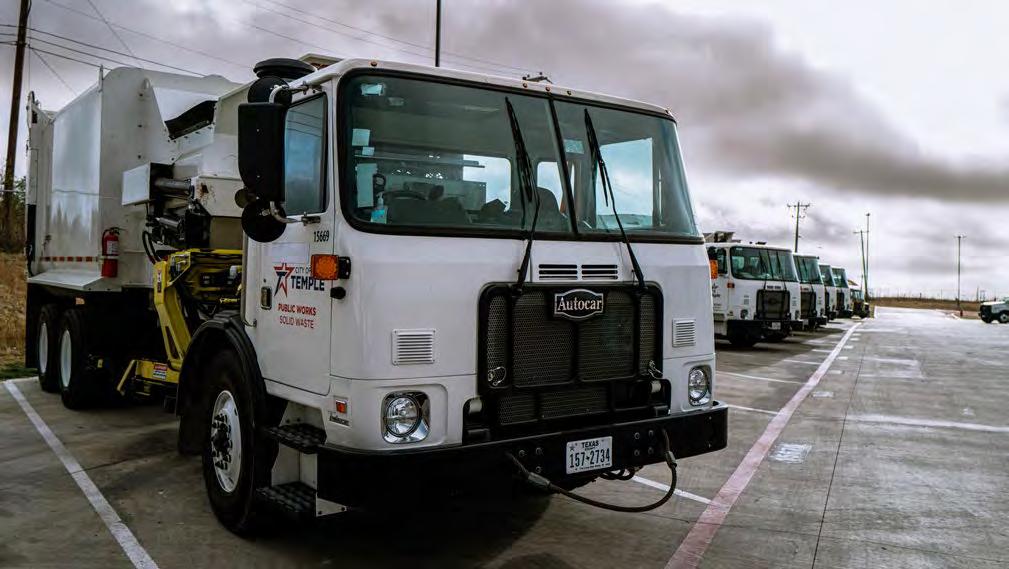
Total expenditures for the FY 2027 General Fund Budget are presented at $155,502,050, an increase of 5.42% compared to the FY 2026 Adopted Budget. There is an increase of 34.70 full-time equivalents (FTEs):
Total revenues and expenditures for Federal and State Grant Fund Budget are presented at $840,789, an increase of 5.34% compared to the FY 2026 Adopted Budget. Total revenues include the award of the Community Development Block Grant (CDBG), the anticipated award of $83,724 for the Crisis Assistance grant, and payment toward the Section 108 loan of $279,765. The allocation of CDBG funds are as follows:
Total FY 2027 Water and Wastewater Fund Budget includes total revenues of $78,505,181, reflecting a 2.99% increase over the FY 2026 Adopted Budget. Expenditures are projected at the same amount, also representing a 2.99% increase from the FY 2026 Adopted Budget. Proposed rate adjustments include an approximate 2.94% increase in water rates, based on average monthly usage of 8,000 gallons, and an approximate 6.35% increase in wastewater rates, based on average monthly flow of 8,000 gallons. The higher increase in wastewater rates is primarily driven by capital costs associated with wastewater line improvement projects and the annual sewer line rehabilitation program.
Total revenues for the Hotel/Motel Fund Budget are presented at $3,284,907, a decrease of 44.13% compared to the FY 2026 Adopted Budget. Expenditures for the Hotel/ Motel Fund Budget are presented at $3,405,007, a decrease of 44.43% compared to the FY 2026 Adopted Budget. The decrease in both revenues and expenditures is primarily attributable to the pause of the Tanglefoot Music & BBQ Festival, which launched in September 2025. This pause will allow staff to evaluate the event’s performance, financial sustainability, and alignment with the City’s broader strategy for large-scale event programming.
Total revenues for the Drainage Fund Budget are presented at $3,949,041, an increase of 19.43% compared to the FY 2026 Adopted Budget. Commercial and residential drainage fees are projected to increase by an average of 0.50% annually, driven primarily by development growth rather than fee increases. It should be noted that projected drainage fee revenues and rates may be revised upon completion of the drainage rate study and fee structure analysis during FY 2027. Expenditures for the Drainage Fund Budget are presented at $4,255,541, an increase of 15.98%. HOMELESSNESS
TOTAL REVENUES
$153,806,450
TOTAL EXPENDITURES
$155,502,050
TOTAL REVENUES
$3,284,907
TOTAL EXPENDITURES
$3,405,007
260 | REVENUES & EXPENDITURES
TOTAL REVENUES
$840,789
TOTAL EXPENDITURES
$840,789
TOTAL REVENUES
$3,949,041
TOTAL EXPENDITURES
$4,255,541
430 | REVENUES & EXPENDITURES
TOTAL REVENUES
$37,260,199
TOTAL EXPENDITURES
$37,260,199
TOTAL REVENUES
$78,505,181
TOTAL EXPENDITURES
$78,505,181
650 | REVENUES & EXPENDITURES
TOTAL REVENUES
$10,749,606
Contributions - 93.49%
TOTAL EXPENDITURES
$10,749,606
710 | REVENUES & EXPENDITURES
TOTAL REVENUES
$93,400
TOTAL EXPENDITURES $93,400
Other Financing Sources (Transfers) 100.00% Operations 100.00%
795 | REVENUES & EXPENDITURES
TOTAL REVENUES
$47,040,243
TOTAL EXPENDITURES
$46,933,088

The Mayor and City Council members formulate public policy to address community needs and assure responsible development in the City. Major activities of the City Council are to adopt the annual budget, establish a strategic plan for the City, review and adopt all ordinances and resolutions, and approve purchases/contracts as prescribed by the City Charter and State Law.


The City Manager serves as the Chief Executive Officer of the City. As the head of the administrative branch of the City Government, the City Manager is responsible for the proper administration of all affairs of the City. In addition to managing an annual business plan of nearly $326 million and staff of approximately 1,166 full and part-time employees, the City Manager provides strategic advice to the Council on the long-term directions of the City.
• Coordinated with Temple Professional Fire Fighters Association and Temple Police Association regarding meet and confer negotiations
• Completed the Downtown Redevelopment Plan
• Coordinated with staff and Bell County regarding the development of an interlocal agreement related to platting authority
• Continued implementation of the Real Estate Local Government Corporation – TRC
• Completed the sale of five TRC-owned properties and purchase of the property at 612 Industrial Boulevard
• Completed the Wilson Park Master Plan and update to the Crossroads Park Master Plan
• Updated the Economic Development Policy, including an update of the Neighborhood Enhancement Grant Program Policy and the Strategic Investment Zone Grant Program Policy
• Negotiated Economic Development Agreements for:
• East Penn Manufacturing
• HEB Distribution Expansion
• Rowan Data Centers
• Sesajal
• Completed departmental reorganizations
• Finalized permit submittal for Temple Aquifer Storage and Recovery 1 project
• Acquired property for the expansion of the Temple Landfill
• Completed Council Chambers Vision and Investment Planning Project
• Updated interlocal agreement with school district for school resource officers
• Complete Little Flock Community construction plans
• Completed the Unified Development Code update
• Begin development of the Economic Development Policy update
• Continue implementation of the Real Estate Local Government Corporation – TRC
• Coordinate with City Attorney’s Office and local taxing entities regarding the sale of tax foreclosed properties
• Complete the Parks, Recreation, Trails, and Open Spaces Master Plan
• Coordinated with Temple Professional Fire Fighters Association and Temple Police Association regarding meet and confer negotiations
• Coordinate with Housing & Community Services and Feed My Sheep to develop an operations plan and policies associated with the Little Flock Community
• Continue industry recruiting efforts with the Temple Economic Development Corporation
• Begin the use of the Strategic Tracking and Reporting system
• Complete permitting for Temple Aquifer Storage and Recovery 1 well
• Begin Integrated Water Resource Master Planning
• Establish Capital Tracking and Reporting Policy and framework
• Establish Economic Development Tracking and Reporting Policy and framework
• Complete contract negotiations for landfill management to implement measures within the Landfill Master Plan
• Establish an enterprise-wide software acquisition policy
1.5.SI1 Develop clear processes for routing and evaluating public-private partnership requests.
5.2.SI1 Develop an Arts and Culture Master Plan.
6.1.SI1
6.1.SI2
6.1.SI6
Develop a master plan for each Neighborhood Planning District that meets the needs of the community and supports a high quality of life.
Develop neighborhood-specific zoning ordinances to ensure design standards and land use regulations align with neighborhood master plans.
Pursue a memorandum of understanding (MOU) with Bell County and other taxing entities related to the sale of tax foreclosed property.
6.1.SI7 Explore opportunities to improve access to fresh, healthy foods in underserved areas of east Temple.
8.1.SI3 Establish a new transit district.
8.5.SI1 Develop an integrated water resources plan.
9.1.SI1 Update the City’s Economic Development Policy.
9.2.SI3
Establish an enhanced certificate of occupancy process to ensure that development and construction activity are consistent with adopted building codes and land use regulations.
9.2.SI4 Explore an entrepreneurial and small business support program.
City Manager’s Office
City Manager’s Office Communications & Destination Services, Library & Museum Services
City Manager’s Office Engineering Services, Housing & Community Services, Planning & Development Services, District Services
City Manager’s Office City Attorney’s Office, Planning & Development Services
City Manager’s Office Housing & Community Services
City Manager’s Office Housing & Community Services
City Manager’s Office Planning & Development Services, Engineering Services, Public Works Admin, Transportation
City Manager’s Office Planning & Development Services, Engineering Services, Public Works Admin, Utilities
City Manager’s Office City Attorney’s Office, Financial Services
City Manager’s Office Fire, Planning & Development Services
City Manager’s Office
* Percentages reflect the total proportion of respondents who answered ‘Excellent’ or ‘Good’ on the National Community Survey ** Projection
The City Manager serves as the Chief Executive Officer of the City. As the head of the administrative branch of the City Government, the City Manager is responsible for the proper administration of all affairs of the City. In addition to managing an annual business plan of nearly $326 million and staff of approximately 1,166 full and part-time employees, the City Manager provides strategic advice to the Council on the long-term directions of the City.
1 - In FY 2026, one Assistant City Manager was added, two Executive Programs Coordinator positions were added, one Executive Programs Administrator was reclassed to Executive Operations Manager, one Administrative Assistant I position was moved from Strategy and Innovation to City Manager, and one Community Education Specialist was moved from Fire to City Manager.
2 - During FY 2026, one Administrative Assistant was moved from City Manager to Permits/Inspections and the Community Education Specialist moved back to Fire from City Manager.
The City Manager’s office also provides oversight to the Economic Development budget as a commitment to the promotion of high quality commercial and industrial development in all parts of the City. The City is committed to establishing long-term economic vitality. This vitality is an essential key to the growth of any community and includes both responding to and preparing for challenges and changes in an economic environment characterized by ongoing competition for sustained advantage and identity. The City has adopted a comprehensive economic development policy that includes guidelines and standards for authorizing property tax abatements, an overview of the Strategic Investment Zone Incentive Program, and guiding principles and criteria for additional City incentives as authorized by the Texas Local Government Code.
Summary
The Temple Revitalization Corporation (TRC) serves all the citizens of the City of Temple and is governed by a board composed of the City of Temple’s elected Council. TRC was created to assist the City with acquiring, holding, and conveying property for the primary purpose of encouraging economic development and redevelopment in the City of Temple.
Summary
This department does not have direct personnel assigned to it.

The City Attorney serves as the chief legal officer for the City and also leads the legal team in providing counsel to officials, employees, and appointed board and commission members regarding legal and risk management matters related to daily government activities. The legal team assists the City Manager in implementing City Council’s policies, initiates and defends lawsuits, and prosecutes cases filed in municipal court. Additionally, staff drafts and reviews ordinances, resolutions, policies, and contracts prior to City Council consideration to ensure compliance with state, federal, and local laws.
• Assisted with negotiation and drafting of multiple significant contracts
• Negotiated and drafted the Meet and Confer Agreement between the City and the Temple Professional Fire Fighters’ Association and amendments/extension to the same with Temple Police Association
• Assisted in 3 Civil Service disciplinary proceedings, a successful mediated settlement to acquire property for a long-term future animal shelter expansion, provided prelitigation services to multiple departments, and assisted in litigation with outside counsel
• Assisted with Love Where You Build standards, creating Neighborhood Conservation overlays in the City’s adopted Neighborhood Planning Districts
• Assisted with amendments to the Unified Development Code and City Ordinances
• Updated bylaws for the Temple Railroad & Heritage Museum Foundation to further its public educational mission
• Streamlined Municipal Court case intake process and updated Police Department complain templates
• Developed and implemented a street naming policy in conjunction with GIS
• Acquired over 60 property interests for current and future capital improvement projects, with anticipated near-term acquisition of landfill expansion property
• Assist with revisions to City of Temple Employee Manual
• Ensure compliance with the Digital Accessibility requirements of the Americans with Disabilities Act
• Advise and assist with finalizing Police Department’s migration to electronic tickets
• Assist with Code Compliance’s case creation process, including updated formatting for generated documents
• Finalize several ongoing updates to the Code of Ordinances, including a Right of Way ordinance and updates to Chapter 38
• Provide a comprehensive review of the City’s Code of Ordinances, and update as needed, to ensure conformity and consistency with current law, policy, and any recent legislative changes
• Assist with an interlocal agreement to allow tax foreclosure properties to be managed and sold by the City
• Update City form contracts and improve processes for collection, review, tracking and retention of certificates of insurance, bonds and related documentation
• Create a centralized repository for standard legal forms and resources
• Create departmental Public Information Act training and develop efficiencies for processing voluminous records requests
The City Attorney serves as the chief legal officer for the City and also leads the legal team in providing counsel to officials, employees, and appointed board and commission members regarding legal and risk management matters related to daily government activities. The legal team assists the City Manager in implementing City Council’s policies, initiates and defends lawsuits, and prosecutes cases filed in municipal court. Additionally, staff drafts and reviews ordinances, resolutions, policies, and contracts prior to City Council consideration to ensure compliance with state, federal, and local laws.
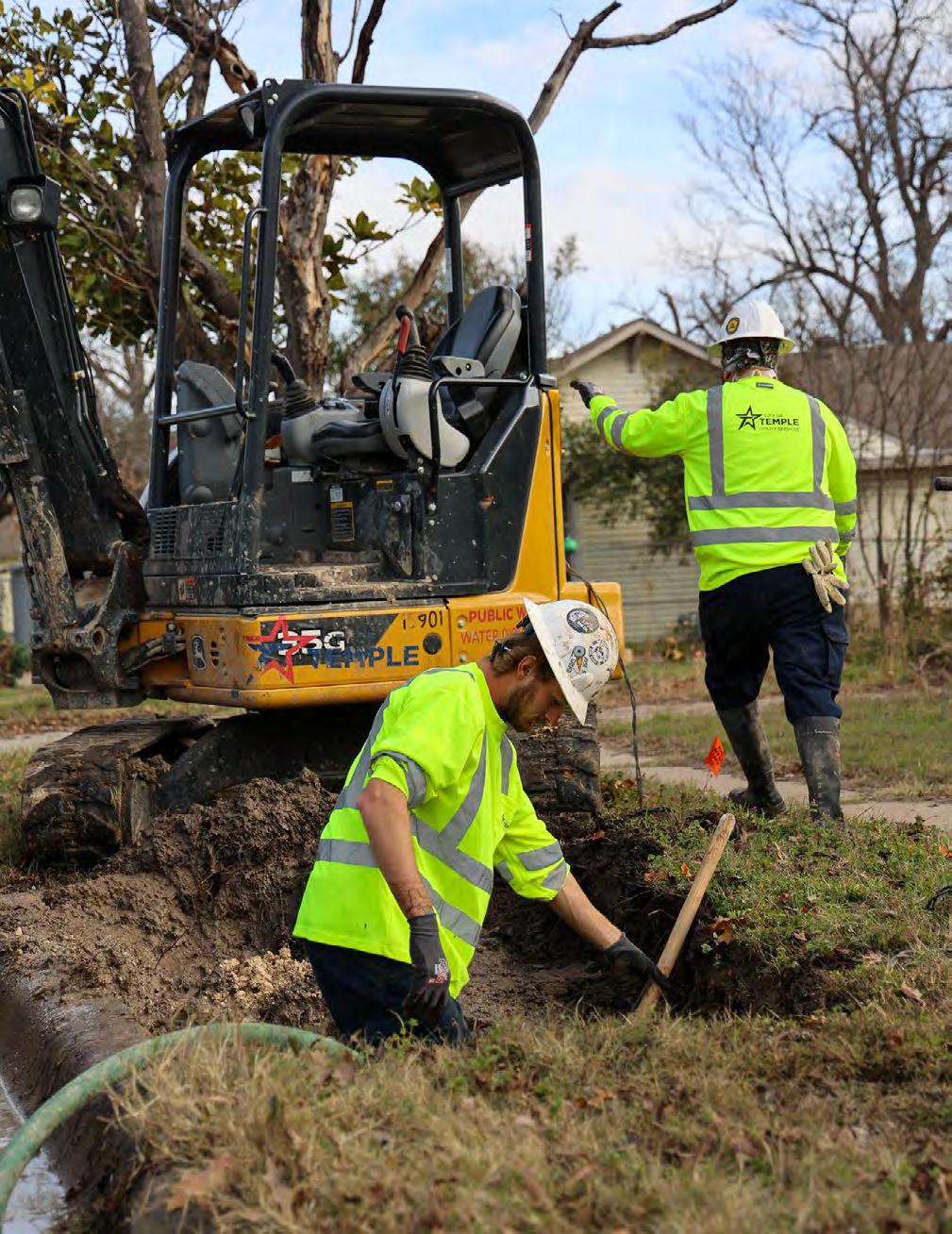

The City Secretary is the administrator of all official municipal records, including the publication and posting of authorized legal notices and meeting requirements; the publication of the City’s Code of Ordinances; and coordination of municipal elections. The City Secretary and staff serve as the Vital Statistics Registrar, registering all birth and death records within the City and perform research for information requests from City Council, staff, and citizens. The City Secretary’s Office serves as support to the City Council including coordinating the Council’s boards and commissions appointment process, as well as and maintaining the records relating to these appointments.
• Relocated to new CSO Suite
• Completed records assessment site visits
• Completed the scanning of all:
• Resolutions
• Ordinances
• Minutes
• Birth/Death Certificates
• Conduct City-wide Records Destruction following site assessment visits
• City-wide Records Management Training
• Plat Records Identification and Preservation Project
Initiative
1.5.SI2 Implement records management processes to incorporate up-to-date technologies and best practices.
1.5.SI4 Develop a comprehensive records management program.
Office
1.7.SI1 Establish a continuing education and professional development program for City Council City Secretary’s Office
Estimate ** Projection
The City Secretary is the administrator of all official municipal records, including the publication and posting of authorized legal notices and meeting requirements; the publication of the City’s Code of Ordinances; and coordination of municipal elections. The City Secretary and staff serve as the Vital Statistics Registrar, registering all birth and death records within the City and perform research for information requests from City Council, staff, and citizens. The City Secretary’s Office serves as support to the City Council including coordinating the Council’s boards and commissions appointment process, as well as and maintaining the records relating to these appointments.
Summary
Personnel Schedule


Financial Services develops and implements the financial policies of the City and is responsible for the accounting records of all City funds. Financial services are provided to all City departments through accounts payable and receivable, payroll, fixed assets, inventory accounting, internal audit, grant and contract administration, treasury and debt management, and preparation of the Annual Comprehensive Financial Report (ACFR). The Financial Services Department compiles timely reports in a format that effectively and efficiently communicates financial data to Council, citizens, bond holders, and other interested users. The Financial Services department also assists the City Manager in development of the City’s Annual Budget, as well as monitors budgetary compliance throughout the fiscal year.
• Continued implementation of the City’s Business Plan and Capital Improvement Program (CIP) initiatives
• Implemented updates to the Civil Service Compensation Plan
• Established and implemented the Health Insurance Fund
• Initiated the transition to a new utility billing software platform (SpryPoint)
• Implemented Commercial Solid Waste Service Request Tracking and Workflow Automation
• Enhanced Customer Issue Resolution and Escalation Management
• Improved Customer Experience and Internal Service Delivery Processes
• Developed a Smartsheet dashboard to track invoice processing metrics, including transaction volume, compliance with the Prompt Payment Act, and areas where departments may benefit from additional training.
• Designed and implemented scheduling and process improvements that enabled the cleaning and maintenance team to keep pace with the City’s expanding facility inventory without adding staff.
• Supported and coordinated the completion of numerous facility construction projects
• Continue funding and advancing Capital Improvement Program projects in alignment with adopted master plans
• Implement updates to the General Government Pay Plan and conduct a comprehensive assessment of the Civil Service Pay Plan
• Maintain a commitment to financial excellence through targeted investments, process improvements, and strategic resource planning
• Select a new Enterprise Resource Planning (ERP) system and begin a multi-phase, multi-year implementation effort
• Modernize Customer Care Technology Platforms
• Successfully Implement SpryPoint Customer Information System (CIS)
• Improve Customer Experience and Internal Service Delivery Processes
• Adopt a new Purchasing Policy & Procedures Manual to modernize procurement practices and ensure consistency across all departments.
• Lead the development and adoption of a citywide Service Center Master Plan to guide long term space planning, operational efficiency, and service delivery.
• Support and coordinate facility construction and renovation projects
1.2.SI3 Develop a Customer Care Program.
1.3.SI4 Implement an interactive, web-based financial dashboard to promote understanding and confidence in the expenditure of public funds.
1.3.SI8 Implement a debt management software.
1.3.SI14 Implement an enhanced citizen request and engagement platform.
1.6.SI1 Conduct a cost of service study for all rates and fees.
8.2.SI2 Expand the advanced metering infrastructure program.
8.4.SI1 Conduct a building condition assessment for each city facility.
8.4.SI2 Construct an expansion to the Service Center facility.
Services Information Technology
Care City Manager’s Office, Communications & Destination Services, Information Technology
Business Office, Metering
Services Publics Works Admin
8.4.SI3 Construct improvements to the Downtown Civic Center including expansion of the Municipal Building. General Services City Manager’s Office
8.4.SI4 Expand the Public Safety Training Center and indoor shooting range.
8.4.SI6 Redevelop the Frank W. Mayborn Civic & Convention Center.
8.4.SI7 Renovate the central library.
Services Financial Services, Fire, Police
Services City Manager’s Office, Parks & Recreation Services
Services Library & Museum Services
8.4.SI8 Construct library branch locations. General Services Library & Museum Services
8.4.SI10
This department reflects capital and one-time operational items funded with available fund balance in the General Fund. Funding is typically allocated in the budget process and/or carried over from one fiscal year to another when projects are not completed by fiscal year end.
Summary
1,695,600
This department is managed by the Financial Services department and does not have direct personnel assigned to it.
The City of Temple is developing citywide 311 customer service program so that community members, whether contacting the City by phone, email, chat, text or online, can readily access the information and services they need. The 311 Contact Center will act as the front door to the City for residents, businesses, and visitors who are seeking information and assistance. The Community Solutions Specialists, acting as part of team, will provide assistance to our community members, while supporting the mission of exceptional service without exception.
The City of Temple is developing citywide 311 customer service program so that community members, whether contacting the City by phone, email, chat, text or online, can readily access the information and services they need. The 311 Contact Center will act as the front door to the City for residents, businesses, and visitors who are seeking information and assistance. The Customer Care Specialist, acting as part of team, will provide assistance to our community members, while supporting the mission of exceptional service without exception.
Summary Personnel Schedule
1 - In FY 2026, one Quality Assurance Specialist was added.
2 - During FY 2026, one Customer Care Specialist was reclassed to a Customer Care Coordinator.
The Debt Service department within the General Fund is utilized to support the principal and interest payments for the General Fund’s portion of the City’s copier lease, as well as subscription-based information technology arrangements (SBITAs).
Summary
This department is managed by the Financial Services department and does not have direct personnel assigned to it.
The Debt Service department within the Hotel/Motel Tax Fund is utilized to support the principal and interest payments for the fund’s portion of the copier lease for the City.
Summary
This department is managed by the Financial Services department and does not have direct personnel assigned to it.
The Debt Service Fund is used to account for the accumulation of, resources for, and payment of general long-term debt principal, interest, and related costs. Long term debt includes general obligation refunding bonds, certificates of obligations, repayment of the loan from the State Energy Conservation Office LoanSTAR Energy Program, and limited tax notes.
Summary
This department is managed by the Financial Services department and does not have direct personnel assigned to it.
The Debt Service department within the Water & Wastewater Fund is utilized to support the principal and interest payments for a portion of the City’s copier lease, subscription-based information technology arrangements (SBITAs), repayment of the loan from the State Energy Conservation Office LoanSTAR Energy Program, as well as other long term debt to include general obligation refunding bonds, utility system revenue bonds, and limited tax notes.
Summary
This department is managed by the Financial Services department and does not have direct personnel assigned to it.
The Financial Services department develops and implements the financial policies of the City and is responsible for the accounting records of all City funds. Financial services are provided to all City departments through accounts payable and receivable, payroll, fixed assets, inventory accounting, internal audit, grant and contract administration, treasury management, and preparation of the Annual Comprehensive Financial Report (ACFR). Financial Services compiles timely reports in a format that effectively and efficiently communicates financial data to Council, citizens, bond holders, and other interested users. Financial Services also developments the City’s Annual Budget, as well as monitors budgetary compliance throughout the fiscal year.
Summary
1 - During FY 2026, two Accountant II positions were reclassed to Accountant III positions.
2 - In FY 2027, one Accountant I position will be added.
The City owns and maintains more than 40 buildings, many of which provide recreational, cultural, and social experiences for citizens. Other buildings provide the office spaces necessary to house and/or support 900+ City employees as they administer needed services for our community. Facility Services is responsible for the repair and preventive maintenance of City-owned facilities. Responsibilities include maintaining and repairing heating, ventilation, and cooling (HVAC) systems, electrical systems, plumbing systems, and other general maintenance items. Additional responsibilities include small construction projects and coordinating with outside contractors on larger plans. Facility Services also includes a Custodial Services team, which is responsible for the cleaning of City facilities.
The City has an active capital improvement plan, which is needed to keep up with the City’s growth. Facility-related projects are managed by the Construction Services division. Responsibilities include defining programming needs with end-user departments, coordination of project designs, review of project drawings and specifications, monitoring construction, and general administration of the projects. Summary
1 - In FY 2026 the following changes occurred:
• Director of Purchasing & Facility Services was retitled to Director of General Services,
• Assistant Director of Purchasing & Facility Services was retitled to Assistant Director of General Services and funded 50% - Purchasing and 50% - Facility Services,
• One Plumber position was added, and
• One Maintenance Technician II was reclassed back to HVAC Technician.
2 - During FY 2026, the following changes occurred:
• Plumber position was reclassified to Executive Support Coordinator position and funding changed from 100% - Facility Services to 25% - Purchasing and 75% - Facility
• Maintenance Technician II reclassed to Maintenance Technician I,
• Construction Services Division Director was reclassified to Assistant Director of General Services, and
• Facility Services Manager was retitled to Custodial Services Manager.
3 - In FY 2027, one Construction Services Division Director, one HVAC Technician, two Maintenance
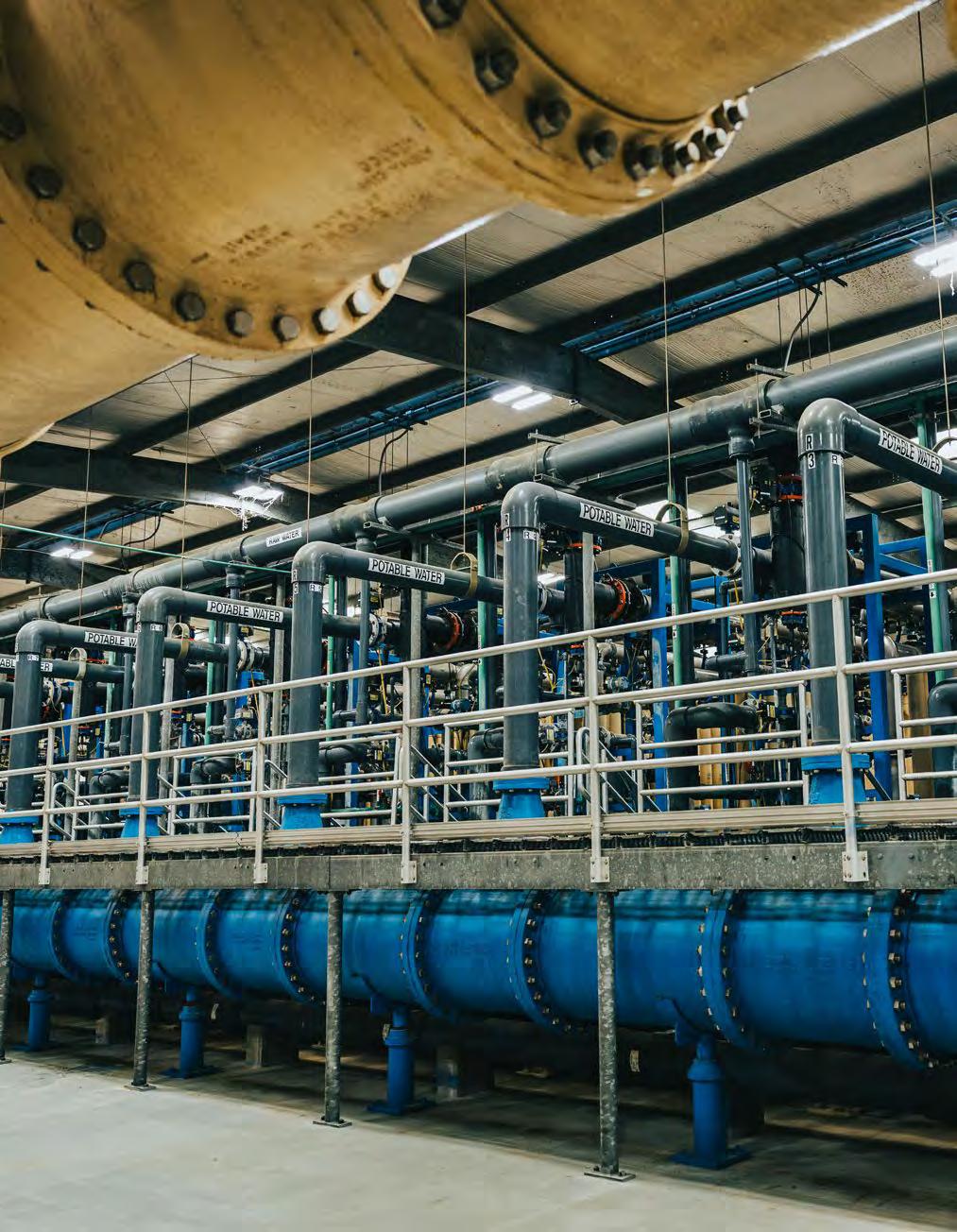
The Metering department oversees the monthly reading of water meters to ensure accuracy for billing purposes. Staff also maintains meters according to American Water Works Association standards, repairs meter leaks and meter boxes, and performs accuracy tests. Staff also performs meter connections and disconnections, including delinquent accounts.
Municipal Court is the judicial branch of City government and its mission is predetermined by the Texas Code of Criminal Procedure and the Code of Judicial Conduct. All class “C” misdemeanor violations occurring within the territorial City limits are under the jurisdiction of the Municipal Court, including Texas State Law and City Ordinances. As court of record, the Municipal Court also has jurisdiction over civil code and state law accusations which include health and safety code and nuisance accusations.
The Court and all support personnel are responsible for providing equal and impartial justice under the law and expediting each case efficiently without delay or undue expense. Court trials are held weekly and preliminary hearings are held three times weekly. Staff is also responsible for community service, teen court, defensive driving, payment bonds, and deferred adjudication programs provided to assist defendants in bringing their cases to final disposition.
Summary
Public Safety Communications provides professional, responsive and effective Public Safety Communications for City of Temple citizens, ensuring that necessary information is secured and relayed to EMS, Fire, and Police in a timely manner.
Summary
This department does not have any associated personnel. The City partners with Bell County Communications who provide response services for our citizens, including EMS, Fire, and Police 911 calls.
The Purchasing department provides support services to all City departments through central control of procurement activities to ensure the best value is received for the public dollar. Staff contributes to the overall efficient and cost-effective operation of the City by purchasing quality goods and services at the best possible prices while guarding against misappropriation of assets procured. Staff fosters a favorable climate for business opportunities by administering the competitive bid and proposal processes for vendors through both statutory requirements and the City’s own purchasing policies and procedures. Staff is also responsible for processing payment of all expenditures, managing the procurement card program, and coordinating the disposition of the City’s excess personal property.
Summary
1 - In FY 2026, the following changes occurred:
• Director of Purchasing & Facility Services was retitled to Director of General Services, and
• Assistant Director of Purchasing & Facility Services was retitled to Assistant Director of General Services and
2 - During FY 2026, one Plumber position was reclassified to Executive Support Coordinator position and
- Facility Services.
The City maintains an onsite warehouse of routinely needed utility, safety, and janitorial supplies. The inventory housed in this warehouse typically turns over two times per year on average. Inventory accuracy refers to all the discrepancies between electronic records of the inventory and the physical state of the inventory. The issuance of items out of the warehouse is strictly controlled and tracked, which results in high inventory accuracy when the warehouse inventory is physically counted at the end of the fiscal year. Warehouse staff are on call 24-7 to provide parts needed for emergency repairs.
Summary Personnel Schedule
The Reinvestment Zone No. 1 was created in 1982 as a Tax Increment Fund to aid in industrial and commercial expansion. The Zone maintains and makes improvements within the zone with the incremental taxes received from tax levies on an annual basis. These improvements may be made with operating capital or by issuing tax-supported debt.
Summary
Special Services is designed to account for costs that cannot be directly allocated to other departments, such as contributions to community service agencies or bad debt expenses. The contingency/contribution to fund balance is budgeted in this department, as well as separation pay. Specific activities budgeted in this department include:
• Contingency/Contribution funds
• Contingency/Unprogrammed funds
• Contributions to community service
• Bad debt expenses
Summary
Transfers out of the General Fund include transfers of funding to the Debt Service Fund to cover the General Fund’s portion of debt issues primarily in the form of limited tax notes, as well as repayment of the loan from the State Energy Conservation Office LoanSTAR Energy Program. Also included in transfers out is the City’s monetary funding to Temple Revitalization Corporation (TRC) as approved in the Funding and Operating Agreement between the City and TRC.
Summary
Transfers out of the Hotel/Motel Tax Fund include a transfer of funding to the Debt Service Fund to cover repayment of the loan from the State Energy Conservation Office LoanSTAR Energy Program.
Summary
Transactions related to debt service are performed by the Financial Services department.
Transfers out of the Drainage Fund include a transfer of funding to the Debt Service Fund to cover three certificate of obligation issuances for drainage improvements. Also included in transfers out is the 10.5% administration fee paid to the General Fund.
Summary
Transactions related to debt service are performed by the Financial Services department.
The Utility Business Office (UBO) provides professional and reliable service to our customers for billing inquiries, payments, and connection or disconnection of utility services. Staff is responsible for billing and collecting utility receivables including water, wastewater, solid waste, and drainage. Staff is also responsible for the collection and deposit of all monies and other receivables from all departments within the City.

The Draughon-Miller Central Texas Regional Airport is a modern, award-winning aviation facility that serves as a critical transportation and economic development asset for Central Texas. The Airport is equipped with an Automated Weather Observation System (AWOS) and provides essential aviation services supporting corporate, medical, military, and general aviation operations. Situated on approximately 922 acres, the Airport features extensive airfield infrastructure, including two runways and associated taxiway systems, Aircraft Rescue and Fire Fighting (ARFF) capabilities, a modern general aviation terminal, full-service and self-service Jet-A and 100LL fueling operations, T-hangar facilities, and significant acreage available for future aviation and commercial development.
• Secured four new land leases supporting private investment in aviation infrastructure and long-term airport growth
• Successfully negotiated a new fuel provider contract that includes funding for future fuel farm expansion, acquisition of a new Avgas fuel truck, support for routine fuel system maintenance and supplies, and annual licensing costs for the airport’s Point-of-Sale and Business Management software
• Transitioned airport operations to a modern software platform, improving fuel sales management, customer service, financial reporting, and operational efficiency
• Implemented a revised fuel pricing strategy that ensures fuel margins adequately cover operational costs while maintaining market competitiveness
• Increased public engagement through airport tours, school career days, participation in the Belton ISD STEM Program, and monthly Airport Food Truck Events, promoting aviation awareness and workforce development opportunities
• Completed the Taxiway D Realignment Project, extending Runway 03/21 by 500 feet and improving operational safety and efficiency
• Completed the Runway 34 Navigational Aids LED Upgrade Project, enhancing reliability while reducing maintenance and energy consumption
• Continue efforts to attract aviation-related investment, support the transportation needs of corporate partners, and expand opportunities for aviation education and workforce development
• Initiate and complete a comprehensive update of the Airport Master Plan and FAA-approved Airport Layout Plan to guide future development and infrastructure investments
• Design and construct a fuel farm expansion to accommodate future aviation fuel requirements, increase storage capacity, and support airport growth
• Upgrade the existing Scully overfill prevention and grounding system to improve fueling safety, reliability, and regulatory compliance
• Continue community outreach efforts through educational programs, public events, and partnerships with local schools and organizations to increase awareness of airport services and aviation career opportunities
Estimate
Measured separately as Landings and Takeoffs beginning FY24
Projection

The Communications & Destination Services Department is responsible for shaping and promoting the City of Temple’s identity as a vibrant place to live, work, play, and visit. The department develops strategic communications and marketing initiatives that inform, engage, and connect residents, businesses, and visitors with city programs, services, projects, and community opportunities. Staff deliver timely and accurate information across the City’s websites, social media channels, television, radio, and print publications. The department also plans and manages city-sponsored special events that enhance quality of life, foster community pride, and support tourism and economic activity. In addition, the department oversees operations of the Frank W. Mayborn Civic & Convention Center, helping attract visitors, meetings, conventions, and events to Temple.
• Implemented an internal quarterly departmental Leadership Report to increase visibility into department initiatives, campaign performance, and communications efforts
• Successfully completed the City’s website migration and supported City departments with content management and resident-facing communications throughout the transition
• Supported major citywide communication campaigns, public engagement initiatives, and operational updates to keep residents informed and connected to City services
• Developed an Accessibility Working Group and ADA Compliance Plan
• Implemented a digital Outdoor Event Application process
• Installed a visitor information kiosk at Buc-ee’s
• Developed full calendar of Downtown Temple activities and events to draw traffic and interest to the Downtown District
• Improve ADA compliance across the City’s website and other digital platforms to enhance accessibility and user experience.
• Strengthen strategic communications planning and content management processes across departments.
• Develop a Residents Academy Program
• Develop a Community Ambassador Program
• Expand the Youth Advisory Commission Program
• Develop a Special Events Assessment & Strategy
• Develop experiential trails to include music (Texas Music Friendly), craft brews (Brew City Texas), food/ culinary, recreation and the Downtown District
• Develop Hotel Relations Program (meetings, news sharing, tourism analytics, etc.)
• Develop Group Sales, Conference, and Sports Event Recruitment Strategies
• Develop & Implement a Mayborn Civic & Convention Center Facility Modernization & Asset Replacement Plan
• Develop & Implement a Mayborn Civic & Convention Center Event Revenue Growth & Market Expansion Strategy
Strategic Initiative
4.1.SI1 Develop a speaker’s bureau.
4.1.SI2 Establish an audiovisual production studio to create original programming to enhance public outreach and better communicate City news.
4.1.SI3 Update the 2020 Strategic Communications Plan.
4.1.SI4 Develop a Community Ambassador Program.
4.1.SI5 Develop “Ask Fred” visitor campaign.
4.1.SI6 Establish an annual Media Day event.
4.3.SI1 Develop a community engagement program.
4.3.SI2 Develop a citizen’s leadership academy.
4.3.SI3 Develop a process to align common priorities among community partners and organizations to improve strategic focus and impact.
4.3.SI4 Update the Community Engagement Plan.
Communications & Destination Services
Communications & Destination Services Information Technology
Communications & Destination Services
Communications & Destination Services
Communications & Destination Services
Communications & Destination Services
Communications & Destination Services
Communications & Destination Services
Communications & Destination Services City Manager’s Office
Communications & Destination Services
5.4.SI6 Implement a downtown events calendar. Communications & Destination Services
5.4.SI7 Develop a customized Downtown Temple marketing and development program.
Communications & Destination Services
The Communications & Destination Services department is responsible for creating and maintaining a clear, vibrant identity for the City of Temple, as a desirable place to live, work, and visit. Staff develop strategic messaging, using photography, graphic design, and video production, to inform residents about city programs, services, projects, and events, while also managing emergency communications. These messages are delivered across the City’s websites, social media, television, radio, and print publications. Additionally, the department manages special events and oversees operations at the Frank W. Mayborn Civic & Convention Center. These efforts ensure consistent branding, effective outreach, community engagement, and effective emergency communications, reinforcing Temple’s identity and connection with its residents and visitors.
Summary
1 - In FY 2026, the following changes occurred:
• Title changed from Director of Communications & Marketing to Director of Communications & Destination Services,
• Title changed from Assistant Director of Communications & Marketing to Assistant Director of Communications & Destination Services,
• Title changed from Communications & Public Relations Division Director to Public Relations & Engagement Division Director,
• Administrative Assistant moved from Mayborn Convention Center to Communications & Destination Services and funding changed to 80% - Communications & Destination Services and 20% - Mayborn Convention Center,
• Moved one Destination Marketing Coordinator from Tourism to Communications & Destination Services and retitled to Marketing Coordinator, and
• Marketing Coordinator funding changed from 25% - Communications and Destination Services and 75% - Public Works Administration to 100% - Communications and Destination Services.
2 - During FY 2026, the following changes occurred:
• One Special Events Coordinator was reclassified to Marketing Specialist and moved from Events to Communications & Destination Services,
• Neighborhood Navigator was retitled to Community Engagement Coordinator and moved from Housing & Community Services to Communications & Destination Services,
Administrative Assistant was retitled to Guest Experience Specialist,
• Marketing Coordinator reclassified to Marketing & Digital Media Manager, and
• Senior Marketing Assistant reclassified to Executive Assistant.
The Bell County Hotel Occupancy Tax (HOT) department was created in 2016 to support the Interlocal Cooperation Agreement between Bell County and the City regarding the disbursement and expenditure of the Bell County hotel occupancy tax. Under this agreement, the County would pay the City, on an annual basis, 17% of the net County tax receipts collected from hotels in the geographical boundaries of the City for management by the City in providing City programs. The programs must directly enhance and promote tourism and the convention and hotel industry in the City.
Summary
The Frank W. Mayborn Civic & Convention Center is a premier venue in Temple, Texas, adept at hosting a diverse array of events, from business meetings and trade shows to conventions and social gatherings. Its expansive Main Hall can accommodate large-scale events such as bird shows, billiards tournaments, and military balls, while its smaller, dividable spaces are ideal for more intimate gatherings.
Staff at the center are dedicated to ensuring the success of each event, providing comprehensive services that include event planning, layout design, setup and breakdown of furnishings, audiovisual support, and coordination of food and beverage services. Their commitment to excellence ensures that every event is executed seamlessly, reflecting the center’s reputation for outstanding service and attention to detail.
Summary
1 - In FY 2026, the following changes occurred:
• Two Food & Beverage Specialist positions were eliminated,
• Part-time positions were eliminated,
• Event Coordinator had a title change to Team Leader - Venue Management,
• Event Specialist had a title change to Venue Specialist, Event Maintenance Worker positions had a title change to Event Production Specialist,
• Food & Beverage Coordinator had a title change to Operations Coordinator, and
• Administrative Assistant funding changed to 80% - Communications & Destination Services and 20% - Mayborn Convention Center.
2 - During FY 2026, the Administrative Assistant was reclassed to Guest Experience Specialist, one Food & Beverage Specialist was added, and the part-time funding was added back.
The City of Temple’s Special Events Division is responsible for planning, coordinating, and executing a diverse array of events that enhance community engagement and promote quality of place. This includes managing logistics, securing permits, coordinating with vendors and volunteers, and ensuring public safety.
2
1
The City of Temple’s Special Events Division is responsible for planning, coordinating, and executing a diverse array of events that enhance community engagement and promote quality of place. This includes managing logistics, securing permits, coordinating with vendors and volunteers, and ensuring public safety. A key initiative in the Special Events Strategic Plan is the launch of the inaugural Tanglefoot Music & BBQ Festival in Fall 2025, aiming to establish it as the premier destination event for Temple. This country music festival will feature national headliners, regional talents, and local performers, complemented by a distinctive hospitality experience showcasing authentic BBQ styles from renowned pitmasters from all over the country.
Summary
Transactions related to the iconic music festival is contracted out.
The Destination Services Division is dedicated to promoting Temple as a premier destination for both leisure and business travelers. Recognizing tourism as a vital economic driver, the division focuses on increasing hotel occupancy tax (HOT) and sales tax revenues by developing targeted promotions and initiatives. These efforts aim to attract individuals, families, and groups of all sizes, thereby enhancing the city’s economic vitality and supporting local businesses. Staffing for this division is strategically allocated to ensure the effective execution of tourism and destination marketing initiatives, aligning with the division’s objectives and the city’s broader economic goals.
Summary
1 - In FY 2026, the following changes occurred:
• One Downtown Coordinator moved from Main Street Program to Tourism,
• One Destination Marketing Coordinator moved from Tourism to Communications & Destination Services and retitled to Marketing Coordinator, and
• One Tourism Division Director was retitled to Convention and Tourism Division Director.

District Services is responsible for promoting and maintaining a safe and attractive living and working environment for the City. In order to ensure healthy, vital neighborhoods, the staff works collaboratively with residents to comply with City codes regarding the elimination of tall grass and weeds, debris, and inoperable vehicles. Staff is also responsible for public education of City codes for better health, welfare, and harmony within the community.
• Successfully finalized implementation of Downtown Parking Program software for Ticketing and Tracking
• Completed the first full year of Code Compliance abatements
• Warrant process established and working
• Junk and Debris removal from Private Property
• Billing process finalized and working
• Created schedule for Clean Ups
• Onboarded Tool Library technician
• Onboarded Service Delivery Manager to:
• Oversee tool Library tracking and tool maintenance
• Create a process to track all KPIs and ongoing projects
• Streamline and track all incoming calls and concerns
• Identified Service Delivery areas for the department
• Contracted the majority of City Property mows freeing the Code Abatement team up to focus on Code mows
• Refine Service Delivery expectations for staff
• Refine Job Descriptions to match Service Delivery expectations
• Focus on all ROI descriptions for the Department, refine as needed
• Changes to Tool Library, including:
• Revised and possibly expanded hours
• Location change
• Responsibilities
• Prepare for potential additions to staff
• District Services Manager
• Rapid Response crews and coordinators
• Work with Leadership to establish Downtown Parking expectations
• Revise department KPIs and KPI tracking
5.4.SI4 Implement the Downtown Parking Action Plan.
6.1.SI5 Develop a plan for a community resource center.
8.4.SI12 Construct and activate the Resource Hub
Services
Manager’s Office, Housing & Community Services, General Services
The District Services team is in charge of the enforcement of violations of the City’s Code of Ordinances and Unified Development Code (UDC) mostly focusing on property violations to include high grass, outside storage, junk and debris, junk vehicles, permit violations, substandard structures, sign violations, and others.
The team works with homeowners utilizing a proactive, solution-oriented approach to include the various programs and tools offered by the City - Tool Library, Neighborhood Clean Ups, and Dumpster Drops. The focus with this approach allows for a positive and educational compliance experience that creates a safe and healthy environment for both the homeowners and the surrounding neighborhoods.
Summary
1 - During the budget process each position funded within the Federal/State Grant Fund is evaluated based on program needs and available resources. Therefore, personnel distributions amongst the divisions within the Federal/State Grant Fund will be adjusted accordingly each fiscal year. Several positions in District Services and Housing & Community Services are partially funded with Federal/Grant Funds.
2 - In FY 2026, the following changes occurred:
• Director of Transform Temple was retitled to Director of District Services,
• Assistant Director of Transform Temple was retitled to Assistant Director of District Services,
• Transform Temple Coordinator was retitled to a Foreman position,
• Six Transform Temple Agents were retitled to Maintenance Workers,
• One Transform Temple Agent was reclassed to Inventory Technician, and
• Operations Coordinator was retitled to Support Services Manager.
3 - In FY 2027, the following changes will occur:
• One District Services Manager will be added,
• Rapid Response Crew will be added, consisting of one Crew Leader, one Equipment Operator and one Maintenance Worker,
• Two Service Coordinator positions will be added,
• Administrative Assistant position will be reclassed to Service Coordinator, and Administrative Assistant - PT will be reclassed to Service Coordinator - PT.
Temple Fire & Rescue provides comprehensive fire, EMS, rescue, HAZMAT, emergency management, and other specialized services across an approximately eighty square mile response district. In 2025, the department responded to more than 15,000 calls for service, averaging about 50 calls per day from eight strategically located fire stations throughout the City. TFR personnel deliver fire prevention and first aid training to the community, including schools, businesses, and local industries. In addition, the Fire Prevention Division conducts fire inspections, enforces adopted fire and life safety codes, and performs fire origin and cause investigations to help reduce the risk of future incidents.
• In conjunction with City Management, conducted a nationwide search and interviews for a new Fire Chief, ultimately selecting Fire Chief Christopher Perez from Laredo Texas
• Implemented a new promotional process that evaluates candidates’ knowledge and skill level to provide the best possible promotional outcomes
• Graduated 18 cadets from fire academy #16, eight of whom are now Probationary Temple Firefighters
• Added a west side Battalion Chief and Safety Officer. This split the city into two battalions and:
• Provided additional command staff when multiple large incidents occur
• Provided additional administrative support for operational units
• Began the relocation of Fire Station 7
• Added a 2000-gallon tanker to increase the water supply for firefighting to more rural areas of our city.
• Update existing fire station facilities to improve safety and maintain emergency response capabilities to keep up with increasing service demands
• Plan for additional stations and staff to maintain emergency coverage in developing areas
• Assess and improve fire prevention activities by prioritizing personnel development and utilizing existing resources
• Develop administrative positions to ensure adherence to accepted professional standards, including policy and procedure review and department accreditation
• Invest in equipment and training to ensure an effective response to a wide variety of emergency situations
Initiative
1.1.SI2 Achieve CPSE accreditation for the Fire Department.
1.3.SI9 Implement a new Fire Department response and reporting software.
7.1.SI4 Update and expand the outdoor warning siren system.
7.1.SI5 Split the city into two Fire & Rescue response divisions to adequately manage field operations as the city grows.
7.1.SI6 Enhance Fire Marshal evidence procedures and storage facility.
7.1.SI8 Update the City of Temple’s Emergency Management Plan.
7.1.SI9 Establish a National Incident Management System (NIMS) Compliance Program.
7.1.SI10 Develop an Industrial Education and Fire Prevention Strategy.
8.4.SI9 Construct new fire stations to maintain emergency services in response to growth and increasing service demands.
Information Technology
Police, General Services
The Fire & Rescue department provides fire, EMS, emergency management, vehicle extrication, hazmat, and other specialized rescue services for our coverage area of approximately eighty square miles. An average of 12,500 requests are responded to from eight fire stations strategically located throughout the City. Fire & Rescue provides comprehensive preventive and educational programs for businesses, school, and citizens. Staff also works with commercial and manufacturing industries to reduce the hazard of fires through inspection and code compliance programs.
Summary
1 - In FY 2026, three Battalion Chiefs, one Fire Captain, four Fire Drivers, and two Firefighter positions were added. One Firefighter Overhire position was also funded. The Community Education Specialist was moved from Fire to City Manager.
2 - During FY 2026, the Community Education Specialist was moved back from City Manager to Fire.
3 - In FY 2027, one Battalion Chief, three Fire Drivers, and six Firefighter positions will be added.
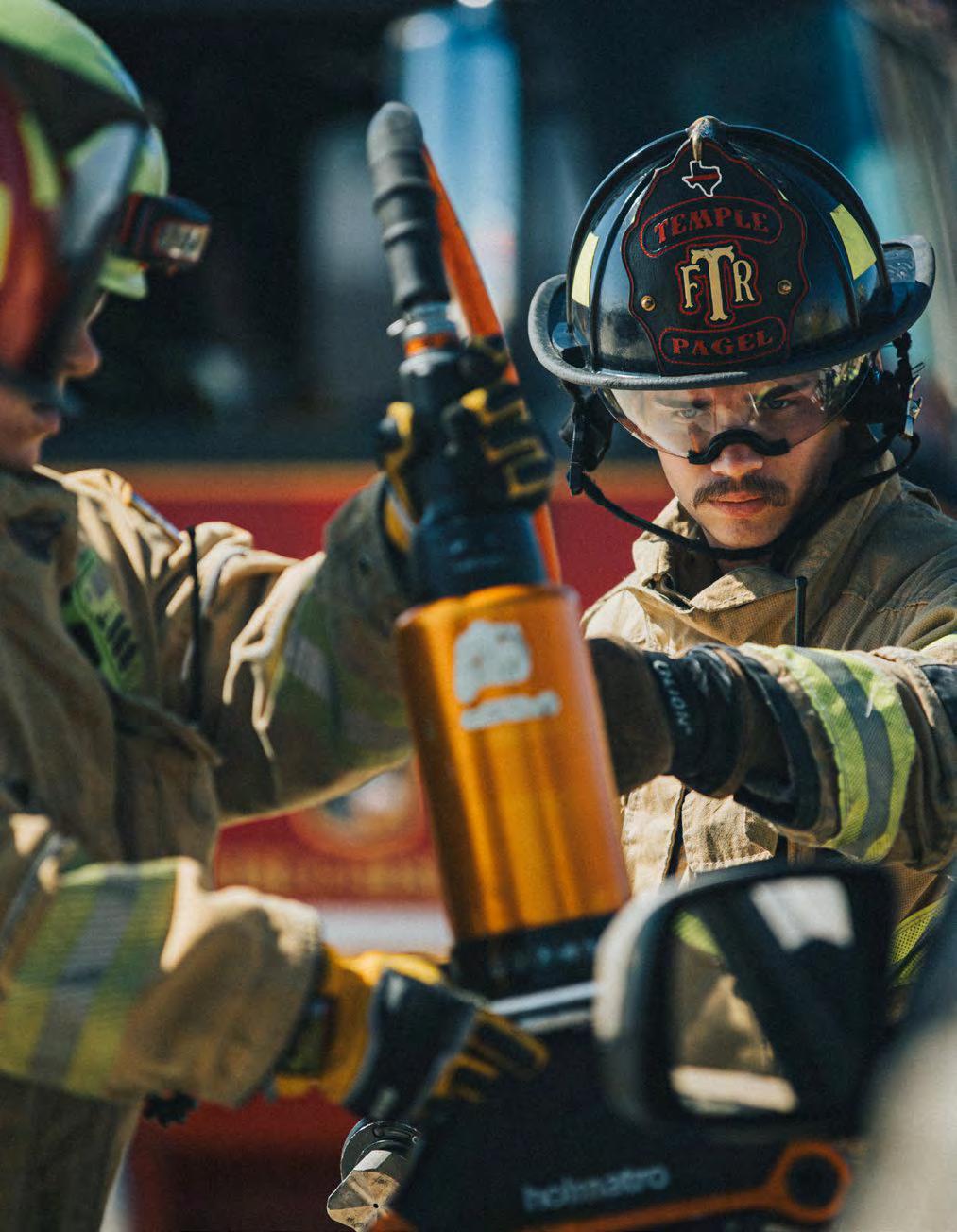

The Housing & Community Services Department provides a variety of programs that improve the quality of life for our citizens while also enhancing our neighborhoods. By leveraging partnerships and funding sources, the department actively assists low to moderate income homeowners with home repairs and housing-related needs, in addition to other community improvement projects. The department is also responsible for administering the City’s allocation of Community Development Block Grant (CDBG) funding, as well as other grants from a variety of sources. In addition, the department collaborates with local nonprofit organizations to support programs and services that align with the City’s Strategic Plan and address critical community needs.
• Began the process to build up to five homes for low to moderate income citizens using grant funds from the Texas Department of Housing & Community Affairs
• Updated the 5-Year Consolidated Plan and the 2025-2026 Annual Action Plan with a substantial amendment that included the application submission for a HUD Section 108 Guarantee Loan to fund development of the Little Flock Community
• Implemented a holistic support program for people experiencing homelessness to include substance use disorder treatment, housing services, and mental health counseling
• Develop program(s) to maximize investments in the Neighborhood Revitalization Strategy Area (NRSA)
• Build up to five homes for low to moderate income citizens using grant funds from the Texas Department of Housing & Community Affairs
• Begin and complete the design of the Little Flock Community
6.1.SI3
6.1.SI4
6.2.SI1
Develop a Housing Preservation Program to renovate vacant residential structures.
Develop a program to reactivate empty lots using a variety of solutions, including tactical urbanism.
& Community Services
Services
Develop an Affordable Housing Policy using information gathered through a Market Value Analysis. Housing & Community Services City Manager’s Office
6.2.SI2 Implement the Homeowner Assistance Reconstruction Program (HARP). Housing & Community Services
7.2.SI1
Coordinate the development of the Arbor of Hope Campus and identify a non-profit organization to oversee operations.
7.2.SI2 Coordinate the development of permanent supportive housing.
7.2.SI3
Develop a substance use disorder treatment program that includes collaborating with community partners.
7.2.SI4 Implement the Mental Health Services Strategic Plan.
Housing & Community Services City Manager’s Office, General Services
& Community Services
& Community Services
& Community Services
* FY2024 reflects changes in the grant program following the introduction of the
The Community Development Block Grant (CDBG) Program funding allows for an allocation for general administration to carry out the various CDBG program and activities.
Summary
Personnel Schedule
The City has programmed a portion of the CDBG allocation to support the goals of a homelessness and mental health program. This program will provide initiatives identified in the Homelessness & Mental Health Strategic Plan, Operation RISE. The plan includes infrastructure improvement recommendations, as well as recommendations for program development and improvement. The dedicated personnel will work closely with local agencies and other municipalities in the County to reduce, if not end, homelessness.
During the budget process each position funded within the Federal/State Grant Fund is evaluated based on program needs and available resources. Therefore, personnel distributions amongst the divisions within the Federal/State Grant Fund will be adjusted accordingly each fiscal year.
1 - In FY 2026, one additional Case Manager was added.
The City has programmed a portion of the CDBG allocation to support the goals of a housing improvement program. This program will provide minor and major improvements to owner-occupied homes to address and prevent deferred maintenance and property deterioration. Improvements will provide energy efficiency, improved accessibility, and enhance the neighborhoods.
During the budget process each position funded within the Federal/State Grant Fund is evaluated based on program needs and available resources. Therefore, personnel distributions amongst the divisions within the Federal/State Grant Fund will be adjusted accordingly each fiscal year.
1 - In FY 2026, the Housing Project Manager was retitled to Program Manager - Housing Services.
The City has programmed a portion of the CDBG allocation to support the goals of a neighborhood revitalization program. This program is built around active revitalization of neighborhoods by passing code violations to the Resource Coordinator to facilitate code mitigation.
During the budget process each position funded within the Federal/State Grant Fund is evaluated based on program needs and available resources. Therefore, personnel distributions amongst the divisions within the Federal/State Grant Fund will be adjusted accordingly each fiscal year.
The City has programmed a portion of the CDBG allocation to support the goals of various projects, as well as demolitions and clearance of substandard structures within low-and moderate-income (LMI) areas.
Summary
This department is managed by Housing & Community Services and does not have direct personnel assigned to it.
The City of Temple is committed to developing neighborhoods that are beautiful, safe, and, stable, and to connecting citizens together to help reinvigorate communities. The Housing & Community Services department works to provide programs to assist in neighborhood enhancement opportunities to improve quality of life for all residents and to make Temple a place you love to call home. By effectively using partnerships and funding sources, the Housing & Community Services team actively assists low to moderate income homeowners with minor home repairs and other needs, while also completing large scale community improvement projects including sidewalk installations, road repairs, beautification projects, and neighborhood plans.
Personnel Schedule
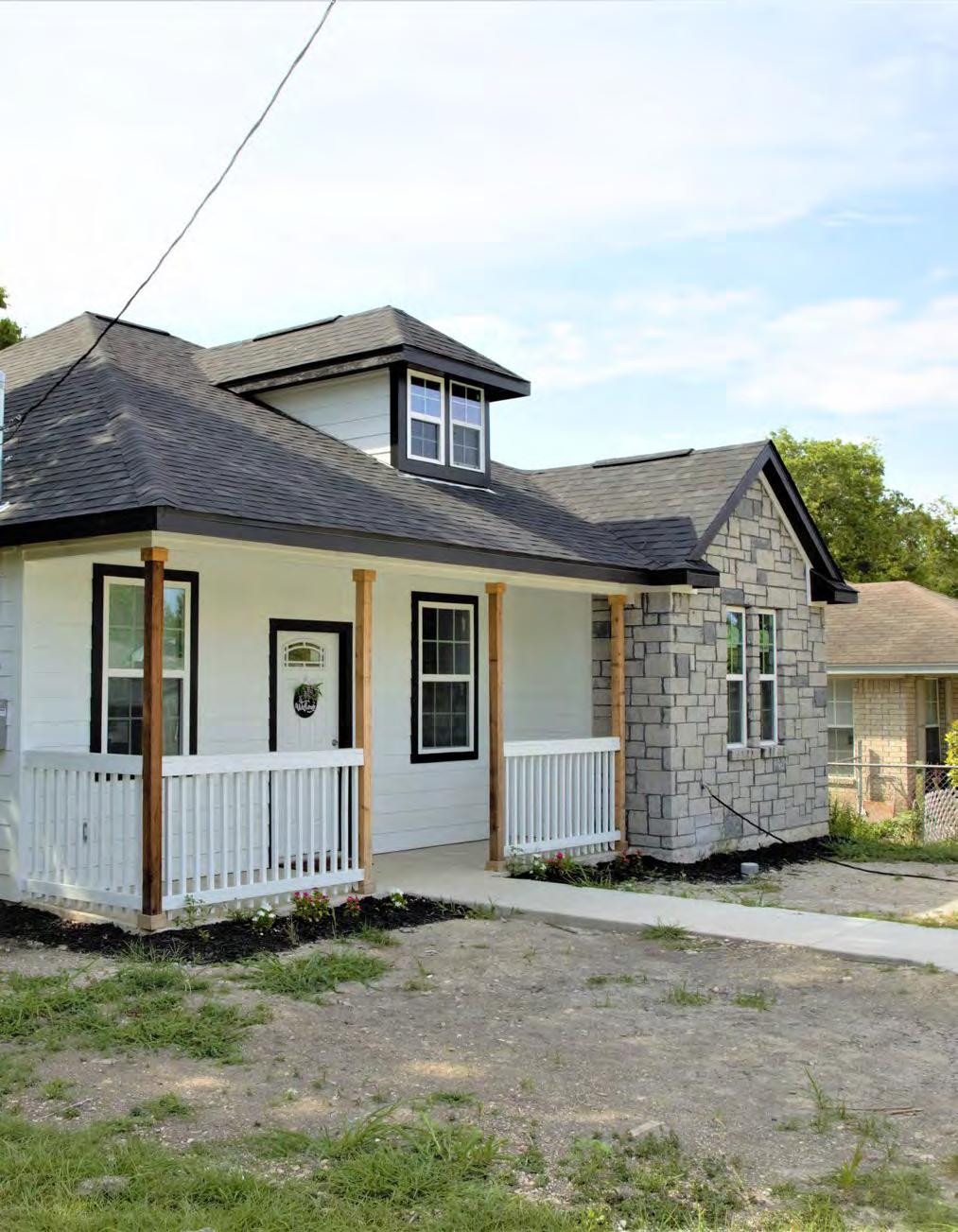

Information Technology Services (ITS) administers sophisticated, secure, and state-of-the-art computer and telecommunications systems that deliver advanced technological services to City departments. Staff implements and maintains an accessible and sustainable communications and resource infrastructure to provide the highest level of computing services. In addition to maintaining the current systems, ITS staff proactively identifies methods in which the City can work more efficiently through technology to better serve taxpayers and enable City departments to accomplish their goals in providing quality services to our citizens.
• Completed IT infrastructure for 4 capital construction projects
• Completed ESRI Advantage Program on GIS data
• Completed fiber change over to new vendor
• Implemented new library software, airport software, open record retrieval software, and phone system.
• Implemented new vehicle reporting devices and software
• Implemented new street renaming policy and created the review committee
• Implemented updated citywide password policy
• Continued implementation of a new Police Department digital records management system and provided ongoing support
• Continued to invest in the resources necessary to prioritize cyber security
• Completed annual state mandated security training citywide
• Continued transition to Extreme networking equipment
• Continued implementation of parking software
• Complete Police Department digital records management implementation for remaining original agencies and allow the opportunity for additional agencies to join
• Complete the implementation of the citations module in the new Police Department digital records management software for all agencies
• Implement a new utility billing software
• Implement updated remote connection policy
• Continue implementation of a new financial system
• Continue to invest in the resources necessary to prioritize cyber security
• Complete annual state mandated security training citywide
Strategic Initiative
1.3.SI1 Develop a Technology Master Plan.
1.3.SI5 Implement an online community engagement platform.
1.3.SI6 Implement a new document and contract management software.
1.3.SI7 Implement a new Police Department digital records management system.
1.3.SI10 Implement a traffic monitoring software system.
1.3.SI13 Develop a Smart City Strategy.
1.3.SI16 Implement website quality management software.
1.3.SI17 Develop a new Parks & Recreation Services online registration system.
1.3.SI18 Implement visitor analytics software.
1.3.SI20 Upgrade the phone system to ensure reliable communications.
Department/ Division
Department(s)/ Division(s)
Information Technology
Information Technology Communications & Destination Services
Information Technology City Attorney’s Office, City Secretary’s Office, Financial Services, General Services
Information Technology Police
Information Technology Police, Transportation
Information Technology City Manager’s Office, Strategy & Innovation
Information Technology Communications & Destination Services
Information Technology Parks & Recreation Services
Information Technology Parks & Recreation Services
Information Technology
Information Technology Services (ITS) administers sophisticated, secure, and state-of-the-art computer and telecommunications systems that deliver advanced technological services to City departments. Staff implements and maintains an accessible and sustainable communications and resource infrastructure to provide the highest level of computing services. In addition to maintaining the current systems, ITS staff proactively identifies methods in which the City can work more efficiently through technology to better serve taxpayers and enable City departments to accomplish their goals in providing quality services to our citizens.
Summary
1 - In FY 2026, the IT Support Division Director was retitled to Application and Technical Support Division Director.
2 - During FY 2026, the Lead Project Manager position was reclassed to Technology Strategy & Delivery Division Director.
Library & Museum Services strengthens education, cultural identity, economic opportunity, and community connection through the Temple Public Library, Temple Railroad & Heritage Museum, and the Springer Archives. Together, these services provide access to lifelong learning, digital resources, historical preservation, public programming, and safe and welcoming public spaces that serve residents across Temple and beyond. Serving nearly 200,000 annual visitors, the division operates seven days per week across library, museum, archives, and outreach locations while stewarding collections, expanding access, and preserving Temple’s stories for future generations.
• Broaden access to materials and programs
• The library expanded its collection of bilingual and Spanish-language materials; launched a World Languages Collection at the library; and added LOTE4Kids that provides online language learning for children
• Hosted the bilingual exhibition Vaquero: Genesis of the American Cowboy at the museum
• Expanded the partnership with Temple ISD and broadened circulation in support of bilingual summer school classes
• New sensory, literacy, and memory kits were added to the circulating library collection
• Enhanced Community Engagement
• A new library cardholder orientation and tour began in April 2026 and will continue monthly
• The interactive Temple Poetry Project began in February and will continue throughout this year with activations at special events, including the first-ever Texas Authors and Literature Event (TALE) held this spring
• Delivered more than 800 programs and events across library, museum, outreach, and archives services with more than 29,000 program visits
• Expand the Library of Things to increase resident access to educational and recreational materials
• Continue expanding Spanish-language and the World Languages collections to improve access
• Increase multicultural programming and exhibitions to broaden community access and representation
• Launch a digital Springer Archives platform
• Launch Temple Railroad & Heritage Museum exhibitions online
• Expand museum outreach through schools and community partnerships
• Launch school-age STEAM programming
• Expand the Temple Authors & Literature Event (TALE) through featured authors and children’s programming
• Develop a museum lecture series
• Launch Phase Two of the Discovery & Learning Team to increase community partnerships that highlight the library, archives, and museum
• Implement LendingKey to support the Library of Things and Tool Library analytics
• Launch online library card registration and renewals
1.3.SI15 Implement a museum web-based computer software to optimize operations.
5.2.SI2 Develop a Museum District Master Plan.
5.5.SI1 Implement the Library Master Plan.
5.5.SI2 Implement Radio Frequency Identification (RFID) technology for enhanced efficiency of library operations.
5.5.SI3 Implement a new Integrated Library System (ILS).
5.5.SI4 Develop an Archives Master Plan.
& Museum Services
The Temple Public Library is a cornerstone of our community, offering invaluable access to information and resources that support literacy, education, and lifelong learning. More than just a repository of over 190,000 sources, including books, videos/DVDs, digital content, and music CDs, the Library is a vibrant hub that fosters a sense of community and enrichment. The Library goes above and beyond with a wide range of services such as expert reference and technology help, personalized reader’s advisory, outreach programs, public Internet and computer access, homebound services, and diverse programming for all ages. Whether you are a child, teen, or adult, there is something for everyone at the Temple Public Library.
Summary
1 - In FY 2026, the Facility Manager position was reclassed to a Facility Coordinator position.
2 - In FY 2027, the following changes will occur:
• Administrative Assistant I will be reclassed to Executive Assistant,
• Funding allocation for the Director of Libraries and Museums will change from 60% - Library and 40% - Railroad &
Heritage Museum,
• Funding allocation for the Assistant Director of Library will change from 60% - Library and 40% - Railroad & Heritage Museum to 80% - Library and 20% - Railroad & Heritage Museum, and
• Funding allocation for the Museum Archivist will change from 100% - Railroad & Heritage Museum to 50% - Library and
Temple’s rich heritage is proudly celebrated at the Temple Railroad and Heritage Museum, housed in the historic Santa Fe Depot. This museum not only preserves the City’s legacy but also brings history to life with engaging permanent and rotating exhibits, interactive educational programs, and exciting special events. The museum offers school tours and unique event rental opportunities, making it a hub of community activity. In addition, Amtrak continues to use the Santa Fe Depot as a station, seamlessly connecting our past with the present. On the museum grounds, a remarkable collection of railroad equipment stands proudly next to an active railroad yard, showcasing Temple’s enduring connection to the railways. Our history thrives here, where the stories of yesterday meet the vibrancy of today.
Summary
1 - In FY 2026, the following changes occurred:
• Facility Manager was reclassified to Facility Coordinator,
• Museum Assistant was retitled to Guest Experience Coordinator, and
• One Museum Development Assistant - PT and one Office Assistant II - PT were retitled to Program Assistant - PT positions.
2 - In FY 2027, the following changes will occur:
• Funding allocation for the Director of Libraries and Museums will change from 60% - Library and 40% - Railroad & Heritage Museum to 70% - Library and 30% - Railroad & Heritage Museum,
• Funding allocation for the Assistant Director of Library will change from 60% - Library and 40% - Railroad & Heritage Museum to 80% - Library and 20% - Railroad & Heritage Museum, and
• Funding allocation for the Museum Archivist will change from 100% - Railroad & Heritage Museum to 50% - Library and 50% - Railroad & Heritage Museum.

Quality of life, one of the characteristics of our community that makes Temple an attractive place to live and raise a family, is an important priority for the City of Temple. Our system of 60+ parks and open spaces along with 20+ trails help our residents and guests pursue a healthy lifestyle. The Parks department maintains the grounds and equipment for various City parks, prepares facilities for rental, and prepares sports fields for tournaments held by City sponsored leagues and local youth sports associations. The Recreation department provides relaxation, enjoyment, and fitness opportunities to Temple’s citizens and visitors of all ages. The Recreation department includes 2 recreation centers, adult and youth athletics, after school programs, summer camps, senior programming, adult programming, 2 outdoor swimming pools, an indoor pool, a family water park, and a fitness center with an outdoor pool.
• Successfully integrated staff, patrons, and programs from Sammons Community Center to the Wilson Park Recreation Center
• Began the Parks, Trails, and Open Space Master Plan in June 2026
• Completed Park improvements at:
• Jones Park
• Lions Park
• Ferguson Park
• Von Rosenberg Park
• Miller Springs Boardwalk/Overlook
• Design of West Temple Park Trail to Prairie View
• Train themed play unit Fred Springer Park
• Lions Junction
• Lions Park received the Lonestar Legacy Park from Texas Recreation and Park Society
• Achieved department accreditation from the National Parks and Recreation Society
• Continued focus on park improvements:
• Pepper Creek Trail repairs
• Whistlestop Playground
• West Temple Park
• Walker Park
• Hodge Park
• Lions/Mercer Park
• Western Hills Park
• Terrace Gardens Park
• South Rotary Park
• Baker Field
• Complete the Parks, Trails, and Open Space Master Plan
• Complete design of a new Sammons Community Center
• Completion of the ADA transition plan
• Continue funding increase for the parks maintenance program
• Continue funding increase for the recreation maintenance program
1.1.SI3 Achieve CAPRA accreditation for the Parks & Recreation Services Department.
1.3.SI11 Implement a new event design and billing software.
5.1.SI1 Develop a strategic plan for the Parks & Recreation Services Department.
5.1.SI2 Develop a master plan for the Summit Recreation Center.
5.1.SI3 Develop a master plan for Hillcrest Cemetery.
5.1.SI4 Establish a park ranger program.
5.1.SI5 Develop a Sammons Golf Course Master Plan.
5.1.SI6 Update the Parks and Trails Master Plan.
5.3.SI1 Implement the Special Events Strategic Plan.
5.3.SI2 Implement an events permitting website.
5.3.SI13 Develop a cultural heritage event where all cultures are represented and celebrated together.
Parks & Recreation Administration is responsible for supporting the operating divisions within the Parks & Recreation Services department.
1 - In FY 2026, the Operations Manager was reclassified to Support Services Manager.
In 2019, the City of Temple took over Hillcrest Cemetery, a historic 68-acre property. A few of the historic gravesites located on this site are: 1) Mary Williams which is the earliest marked grave (1877), 2) W. Goodrich Jones who is considered the father of the Texas Forestry Service, 3) Raleigh R. White Jr., MD and Arthur Carroll Scott, MD who were the co-founders of Scott and White Memorial Hospital, and 4) Frank Doering who established the Doering Hotel, later renamed the Hawn Hotel. City staff has done a great job getting records organized and keeping the grounds mowed and maintained since assuming operations. The Cemetery is in an exciting phase as the property underwent a comprehensive master plan that provides the City with direction on how to enhance and make long lasting improvements. The resulting plan was adopted by City Council in March 2025.
The Parks department maintains the parks, open spaces, and roadsides. Some of the tasks are mowing, edging, trimming trees, landscaping, along with the repair of damaged equipment. They also prepare facilities and sports fields for rentals, leagues, and tournaments. This department is also responsible for the day-to-day maintenance of our pools and splash pads. Another key element is providing logistical support for special events such as the Christmas Parade, the AirFest, and the 4th of July celebration.
Summary
1 - During FY 2026, the Foreman I position was reclassed to a Foreman II position.
2 - In FY 2027, one Equipment Operator II position will change funding from

The Recreation department provides opportunities to learn or enhance skills, relaxation and enjoyment of passive activities, and fitness opportunities for all ages. This is achieved through the use of three recreation centers, adult and youth athletics, after school programs, summer camps, senior and adult programming, two outdoor swimming pools, an indoor pool, a family water park, and a fitness center with an outdoor pool. Summary
POSITION TITLE
1 - In FY 2026, three Administrative Assistants were reclassed to Program Assistants.
First opened in 1922, the historic Sammons Golf Course is an award-winning 18-hole championship course open to the public year-round. The Sammons team is responsible for operating and maintaining the course with both fun and challenging golf holes throughout while also providing a collection of some of the best par 3s in Central Texas. The greens were renovated in 2018 with Mini Verde Bermuda grass installed to provide top notch putting surfaces for golfers. With four sets of tee boxes, players of all skill levels can enjoy a golf course in a truly memorable setting. Our friendly and inviting staff manages the Pro Shop and Grill at Sammons, as well as maintaining all of the grounds on property. The Sammons Golf staff also promotes and conducts leagues, tournaments, youth development programs, clinics, and private lessons.
Summary

People Operations provides support services to the City’s most valuable resource - our employees. The services provided by People Operations include recruiting qualified individuals to develop our diverse workforce, providing continued training and career development to grow our employees, establishing sound personnel policies, ensuring compliance with employment laws, conducting compensation studies and administering the compensation plan including employee benefits. In addition, People Operations administers the Civil Service program for sworn Police and Fire employees.
• Expanded leadership training and development program
• Conducted Customer Services Excellence training series
• Enhanced the Lead with Purpose new manager training
• Conducted the General Government market study
• Continued conversion of historical records to digital format
• Enhance the City-wide Safety Program, including online training
• Relaunch Learning Management System with new User Interface
• Conduct the Civil Service Market Study
• Enhance recruiting initiatives with educational partnerships
• Optimize HRIS systems and process automations
• Launch the improved digital onboarding training, coupled with an in-person interactive experience
Strategic Initiative
Lead Department/ Division Involved Department(s)/ Division(s)
1.2.SI1 Develop a plan for a cultural competency program. People Operations
1.3.SI2 Convert paper-based personnel files to digital format. People Operations
2.1.SI1 Establish an employee health center. People Operations City Manager’s Office
2.1.SI2 Explore opportunities for public/private partnerships to provide transportation to work. People Operations City Manager’s Office
2.1.SI3 Explore the option of developing a child care program. People Operations
2.1.SI4 Develop a city-wide volunteer and internship program. People Operations
2.2.SI1 Develop a succession plan. People Operations City Manager’s Office Information Technology
2.2.SI2 Create an employee scholarship program. People Operations City Manager’s Office Information Technology
2.2.SI3 Host an employee development expo to provide all employees professional development opportunities. People Operations
2.3.SI1 Develop a comprehensive safety program. People Operations
2.3.SI4 Develop and implement an in-house driver’s training program. People Operations
*2.3.SI2 and 2.3.SI3 were rolled up into 2.3.SI1 and deleted from the plan.
Estimate
Projection
People Operations delivers essential support services to the City, recognizing our employees as our most valuable asset. These services encompass a broad spectrum, including recruiting qualified individuals to cultivate a diverse and skilled workforce, facilitating onboarding processes for new hires, overseeing compensation administration, managing employee engagement programs, managing the administration of employee and retiree benefits, providing training and career development opportunities, coordinating volunteer and internship programs, developing clear and comprehensive personnel policies, ensuring compliance with employment laws, administering employee safety programs, managing retirement plans, and configuring the Human Capital Management System. Additionally, People Operations is responsible for administering the Civil Service program for sworn Police and Fire employees.
Summary
1 - In FY 2027, one People Operations Generalist I position will be added.
The Health Insurance Fund is a renewed initiative for the City of Temple. Created in FY 2011 when the city opted for self-funding, it returned to a fully insured plan by FY 2014. Due to rising health care costs, bids were requested during FY 2025 for both self-insured and fully insured plans. A self-insured plan offered significant savings and greater control over future rates and benefits.
Summary
1 - In FY 2026, one Benefits Specialist was added.
The Planning & Development Services department supports the City Council’s vision of well-managed growth and sustainable development. The department provides professional planning, development review, permitting, and inspection services that guide investment and development throughout the community while ensuring compliance with adopted plans, policies, and regulations. The department is comprised of three divisions: Long Range Planning, Development Review, and Building Permits & Inspections. These divisions oversee implementation of the Comprehensive Plan, administration of the Unified Development Code, development review and permitting processes, neighborhood planning initiatives, historic preservation efforts, and building safety programs. The department also provides staff support to boards and commissions, including the Planning & Zoning Commission, Historic Preservation Board, and Zoning Board of Adjustments.
• Processed plats, zoning cases, and variance cases.
• Implemented a Certificate of Occupancy program for all new businesses occupying existing structures.
• Completed the Oak Hills and East Downs neighborhood plans.
• Completed the historic preservation ordinance update.
• Established the Neighborhood Conservation Zoning Overlays (NC1, NC2, and NC3) for Love Where You Build.
• Updated the Strategic Investment Zone (SIZ) and Neighborhood Enhancement Program policies.
• Implemented a weekly case manager training program covering code interpretation, case processing, and state law compliance.
• Complete the Interstate Highway 35 State Highway 317 corridor plans.
• Complete the South Kegley Master Plan and Western Hills Neighborhood Plan.
• Complete an update to the International Building Code (IBC).
• Complete an update to the Unified Development Code.
• Develop written standard operating procedures for all case types.
• Cross-train all case managers across annexations, plat, zoning, and variance processing.
1.3.SI3 Convert paper-based records of plans and permits to digital format. Planning & Development Services
5.4.SI1 Develop a reuse program for historic brick street pavers.
5.4.SI2 Update the Temple Commercial National Register District for the historic tax credit program.
Planning & Development Services
& Development Services
5.4.SI3 Conduct a historic resources survey to support historic preservation. Planning & Development Services
5.4.SI5 Develop a Historic Preservation Plan. Planning & Development Services
8.1.SI1 Develop standard street section designs that facilitate well-connected vehicular, pedestrian, bicycle, and transit systems.
8.1.SI2 Develop a comprehensive sidewalk strategy.
9.2.SI1 Update the unified development code to ensure community design standards and land use regulations align with the Comprehensive Plan.
Planning & Development Services Engineering Services
Planning & Development Services City Manager's Office, Engineering Services, Public Works, Parks & Recreation Services
Planning & Development Services City Attorney’s Office
9.2.SI2 Implement a Business Navigator program to provide increased support to small and start-up businesses. Planning & Development Services
9.2.SI5 Adopt an updated building code. Planning & Development Services
The Building Services department works collaboratively with residents and the development community to help ensure the highest quality of life. Permits & Inspections are responsible for reviewing building plans, issuing permits, and performing inspections for new construction, as well as additions and remodeling projects on existing structures for both residential and commercial properties. The Permits and Inspections department ensures compliance with City building code ordinances and the International Building, Residential Plumbing, Mechanical Energy, and Fuel Gas Codes along with the National Electrical Code.
Summary
1
2
The Planning department provides professional urban growth and development services by maintaining an updated Comprehensive Plan and Unified Development Code to guide policy recommendations and regulations related to land development. Staff also works cooperatively with design professionals, property owners, and developers from concept to completion of their projects.
1
Personnel Schedule


The Temple Police Department is committed to protecting life and property, reducing crime, and enhancing the quality of life for all who live, work, and visit Temple. Through professional law enforcement services, innovative technology, community partnerships, and a highly trained workforce, the department strives to provide exceptional public safety services while maintaining the trust and confidence of the community. As Temple continues to grow, the department remains focused on proactive policing, organizational excellence, transparency, employee development, and continuous improvement to meet the evolving needs of the city.
• Enhanced emergency response capabilities through technology and staffing investments
• Successfully implemented the department’s tendistrict patrol model, improving citywide coverage and balancing call workloads.
• Continued development and deployment of the Drone as First Responder (DFR) program
• Increased patrol staffing through successful recruiting and field training efforts
• Conducted successful investigations into organized retail theft networks, resulting in the recovery of more than $250,000 in stolen property.
• Continued proactive operations targeting vehicle theft and other property crimes.
• Reduced jugging-related offenses through focused investigative and enforcement efforts.
• Hosted community outreach initiatives including Burgers with the Badge.
• Continued modernization of public safety operations
• Advanced technology initiatives including Flock Safety systems, AXON integration efforts, and expansion of drone operations.
• Expand efforts targeting organized retail theft, vehicle crimes, and Internet Crimes Against Children (ICAC) investigations.
• Explore implementation of mobile license plate reader technology to support targeted criminal investigations.
• Continue partnership with the District Attorney’s Office to implement AXON case review and screening processes.
• Lead development and implementation of a citywide illegal dumping reduction strategy in partnership with Public Works, Code Enforcement, and other City departments.
• Utilize technology, public education, data analysis, and targeted enforcement efforts to reduce illegal dumping and improve neighborhood appearance.
• Expand community outreach and crime prevention programs.
• Continue expansion and optimization of public safety technologies including Drone as First Responder (DFR), Flock Safety systems, and AXON integration.
• Continue investing in training, licensing, and certification opportunities to support professional development and performance excellence.
1.1.SI4 Achieve CALEA accreditation for the Police Department.
1.1.SI8 Achieve International Association for Identification accreditation for crime scene investigators.
1.3.SI12 Implement a police officer management software.
1.3.SI21 Implement an integrated real-time crime center.
7.1.SI1 Expand the community oriented policing program.
7.1.SI2 Implement a ten district patrol system to provide more efficient police patrol services.
7.1.SI3 Complete staffing of Violent Crimes Enforcement Squad.
7.1.SI7 Collaborate with the development community to implement a safety device program.
7.1.SI11 Implement mobile vehicle barrier for Hostile Vehicle Mitigation (HMV).
7.1.SI12 Implement Integrated Ballistic Identification System (IBIS).
Information Technology
Information Technology
& Community Services
The Animal Services department enhances our public safety services to create a safer community and foster public trust through the prompt and humane compliance with City animal control ordinances and state statutes. Animal Services Field Officers also respond to requests regarding cruelty to animals, animal bites, loose livestock or wildlife, stray animals, and animal disturbances. Staff also operates the newly expanded Heart to Home Animal Adoption Center by providing pet adoption services, as well as clean and sanitary confinement for thousands of surrendered and seized animals.
1 - In FY 2026, one Animal Services Manager was added.
Protecting our public safety is a top priority for the City of Temple. The Police department plays the unique and critical role of providing crime prevention and public order maintenance services 24 hours per day, 7 days per week to those who live in, work in, and visit the City of Temple. We work with civic organizations and individual citizens to build a community where businesses can thrive, and residents love to call home. Officers, staff, and our community partners work to prevent, reduce, and solve crime with integrity, honor, and dedication. Summary
Personnel Schedule Continued
POSITION TITLE
1 - In FY 2026, two Police Officer positions were added and one Facility Maintenance Coordinator was retitled to Facility Coordinator. The funding for the Family Violence Case Manager changed to 75% - Police Grant and 25% - Police General Fund. Two Police Officer Overhire positions were also funded.
2 - During FY 2026, one Project Manager was reclassified to a Senior Project Manager position.
3 - In FY 2027, four Police Officer positions will be added.
The purpose of the General Victim Assistant Grant Program administered by the Office of the Governor, Criminal Justice Division is to provide services and assistance directly to victims of crime to speed their recovery and aid them through the criminal justice process. The City of Temple has been awarded funding through the Victims of Crime Act (VOCA) grant to help support the services and assistance to be provided to crime victims.
During the budget process each position funded within the Federal/State Grant Fund is evaluated based on program needs and available resources. Therefore, personnel distributions amongst the divisions within the Federal/State Grant Fund will be adjusted accordingly each fiscal year.

Public Works creates and maintains the infrastructure necessary for Temple to thrive and build a city you love to call home. Staff provide long-range planning, personnel oversight, budget management, community relations, Capital Improvement Program planning and reporting, project design and administration, and operations of systems and facilities that comprise the Public Works system.
• Implement ESRI integration along with Routeware to have a concise data set City wide for routing.
• Expanded both residential garbage and residential recycling routes to a total of 11 and 8 respectively
• Completed the Landfill Master Plan
• Reconstructed 400’ of Storm drain culverts on Ira Young Drive
• Completed design of traffic signal at FM 438 (E Young Ave) and Loop 363
• Completed design of traffic signal at S 5th Street and Loop 363
• Completed design of traffic signal at Clinite Grove and W Adams
• Completed Barnhardt Road Reconstruction
• Anticipated completion of Kegley Road Reconstruction
• Anticipated completion of Outer Loop North Ph 3 (Wendland Rd to I35)
• Anticipated completion of S Pea Ridge Road Improvements
• DSAB – Update Utility Related Engineering Design Details
• Migrated Public Works Permit to MGO
• Completed Drainage Design Criteria review
• Improved coordination between Departments for private development
• Implement landfill expansion plans to include wider entrance and begin the permitting process for a longterm growth roadmap
• Start construction for Solid Waste Complex improvements for the recycling drop-off center and additional truck parking
• Install dash cameras in all collection vehicles for improved service verification
• Construction of traffic signal at FM 438 (E Young Ave) and Loop 363
• Construction of traffic signal at S 5th Street and Loop 363
• Construct traffic signal at Clinite Grove and W Adams when Clinton Gove fire station completed
• Complete annual overlay and slurry seal when funded
• Complete pavement evaluation for the entire City when funded
• Completion of Veteran’s Memorial Phase 1 and Friars Creek Detention Pond
• Completion of N Pea Ridge Phase 1
• Migrate Floodplain Development Permit to MGO
• DSAB – Update Transportation/Drainage Related Engineering Design Details
Initiative
1.4.SI1 Establish a fleet and equipment sharing program. Fleet
1.4.SI2 Develop a program to improve employee accountability for fleet condition and operation. Fleet
8.2.SI1 Implement a water modeling program.
8.2.SI3 Expand the capacity of the Temple-Belton wastewater treatment plant.
8.2.SI4 Develop a comprehensive drainage modeling and assessment plan. Engineering Services Information Technology, Transportation
8.2.SI5 Develop a Drainage Area Master Plan.
8.2.SI6 Expand the capacity of the Doshier Farm wastewater treatment plant.
8.3.SI1 Implement a food waste recycling pilot program.
8.2.SI12 Implement a wastewater modeling program.
8.2.SI13 Implement a drainage modeling program.
8.3.SI2 Implement a paint remixing program.
8.3.SI3 Develop a landfill master plan. Public Works Admin City Manager's Office, Solid Waste Services
9.2.SI6 Update construction standards and details.
Public Works Administration supports the operational divisions that maintain and operate Temple’s infrastructure. Public Works divisions include Drainage, Engineering Services, Fleet Services, Recycling, Wastewater Collection, Solid Waste Services, Street Services, and Traffic Control.
1 - In FY 2026, the following changes occurred:
• Director of Public Works title changed to Managing Director of Public Works and funding was changed from 45% - Engineering Services, 45% - Public Works Administration, and 10% - Drainage to 100% - Public Works Administration,
• Executive Assistant II was reclassed to Executive Support Coordinator and funding changed from 100% - Public Works Administration to 50% - Utilities Administration and 50%Public Works Administration, and
• Public Works Program Coordinator reclassed to Support Services Manager and funding changed from 100% - Public Works Administration to 50% - Utilities Administration and 50% - Public Works Administration.
2 - In FY 2027, the funding for the Executive Support Coordinator position and the Support Services Manager position will change from 50% - Public Works Administration and 50%Utilities Administration to 100% - Public Works Administration.
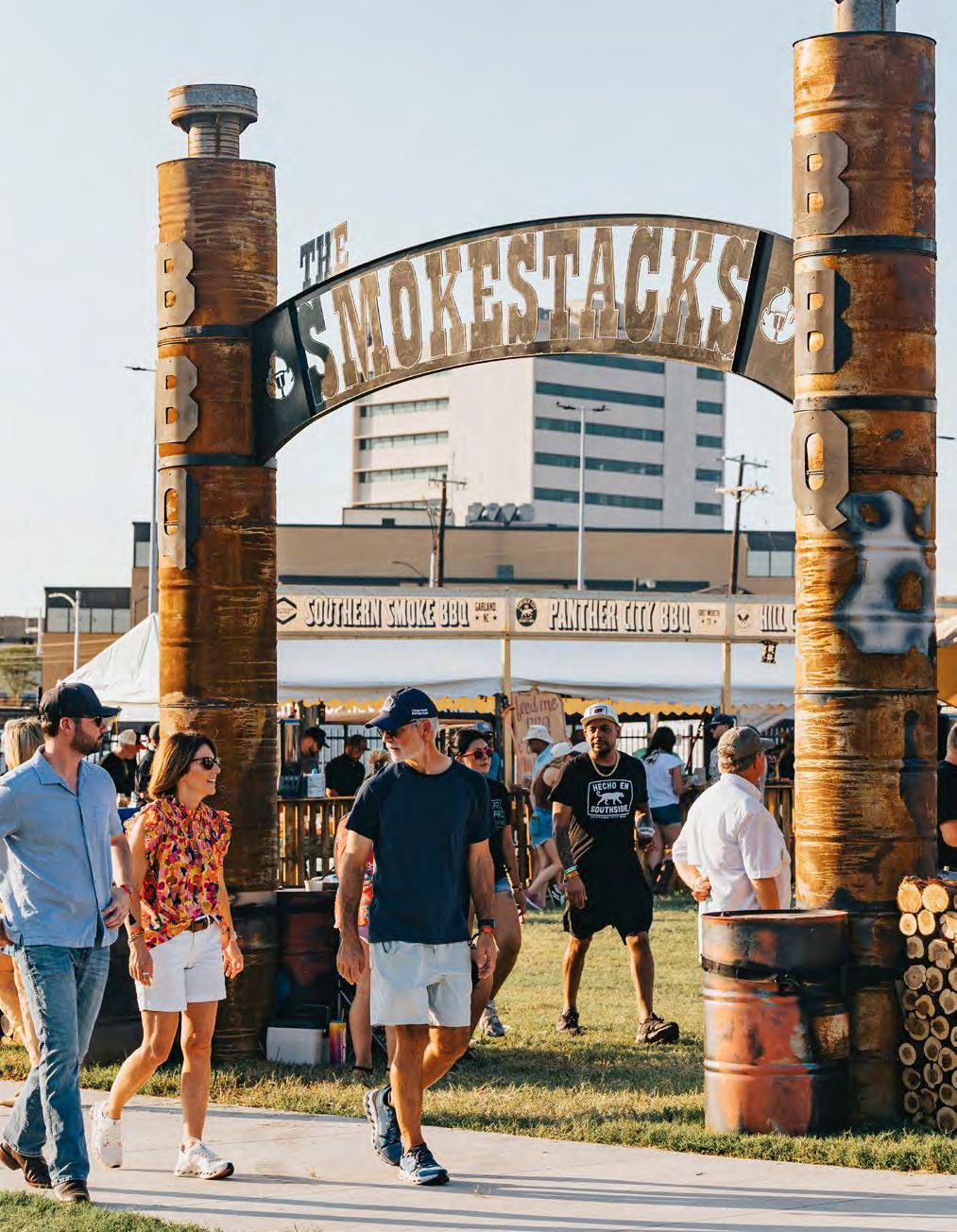
The Drainage department protects the public health and safety by maintaining the public drainage system to drain and convey rain and stormwater runoff. Ordinance 98-2576 was passed to protect the public from the loss of life and property caused by surface water overflows, surface water stagnation, and pollution arising from non-point source runoff.
POSITION TITLE
1 - In FY 2026, one Stormwater Specialist was reclassified to Team Leader - Stormwater. Funding allocations for the following positions were changed:
• Director of Public Works title changed to Managing Director of Public Works and funding was changed from 45% - Engineering Services, 45% - Utilities Administration, and 10%Drainage to 100% - Public Works Administration,
• Assistant Director of Public Works from 33% - Traffic Control, 34% - Streets, 33% - Drainage to 45% - Traffic Control, 10% - Drainage, and 45% - Streets,
• Water Resources Modeler from 75% - Public Works Administration and 25% - Drainage to 100% - Engineering Services,
• Transportation Dispatch Manager was reclassified to Program Manager - Service Delivery Support and funding was changed to 50% - Traffic Control and 50% - Streets, and
• Administrative Assistant II was reclassed to a Service Coordinator and funding was changed to 50% - Traffic Control and 50% - Streets.
2 - During FY 2026, the Assistant Director of Public Works was reclassed to Director of Transportation.
3 - In FY 2027, one Infrastructure Maintenance Manager, one Crew Leader, and two Equipment Operator positions will be added. The following funding allocations will occur:
• Foreman II - Streets from 40% - Streets, 20% - Drainage, 20% - Water Distribution, and 20% - Wastewater to 50% - Streets and 50% - Drainage,
• Crew Leader II - Streets from 40% - Streets, 20% - Drainage, 20% - Water Distribution, and 20% - Wastewater to 50% - Streets and 50% - Drainage,
• Equipment Operator I - Streets from 40% - Streets, 20% - Drainage, 20% - Water Distribution, 20% - Wastewater to 50% - Streets and 50% - Drainage,
• Equipment Operator III - Heavy Construction from 40% - Streets, 20% - Drainage, 20% - Water Distribution, and 20% - Wastewater to 50% - Streets and 50% - Drainage,
• Maintenance Worker from 40% - Streets, 20% - Drainage, 20% - Water Distribution, and 20% - Wastewater to 100% - Streets,
• Equipment Operator I - Streets from 100% - Traffic Control to 50% - Streets and 50% - Drainage, and
• Equipment Operator - Parks from 50% - Drainage and 50% - Parks to 100% - Parks.
The Engineering Services team coordinate the expansion and extension of the City’s infrastructure networks. This coordination includes specifying and managing the design and construction of streets, sidewalks, drainage infrastructure, water & wastewater infrastructure, street lighting, and other amenities.
Summary
1 - The following positions are funded with bond proceeds:
• Senior Project Manage isr 50% - Mobility CO Bonds and 50% - Utility Revenue Bonds, and
• Project Engineer is 50% - Mobility CO Bonds and 50% - Utility Revenue Bonds.
2 - In FY 2026, the following changes occurred:
• Deputy City Engineer was reclassed to Capital Delivery Division Director and funding was changed from 50% - Engineering Services and 50% - Public Works Administration to 100% - Engineering Services,
• Lead Project Inspector was reclassed Team Leader- Infrastructure,
• One Real Estate Acquisition Manager was added,
• One Development Engineering Division Director position was added,
• Director of Public Works title changed to Managing Director of Public Works and funding was changed from 45% - Engineering Services, 45% - Utilities Administration, and 10% - Drainage to 100% - Public Works Administration, and
• Water Resource Modeler position changed funding from 25% - Drainage and 75%Water Distribution to 100% - Engineering Services.
3 - During FY 2026, the Administrative Assistant position was reclassed to Executive Assistant and the Assistant Director of Public Works was reclassed to Director of Engineering.
4 - In FY 2027, the following changes will occur:
• Funding allocation for the Director of Engineering will change to 100% - Engineering Services,
• Senior Project Engineer will be reclassed to Project Engineer, and One Project Engineer Team Leader position will be added.
Fleet Services is responsible for the processes and systems used to control and optimize the operations, maintenance, and performance of Temple’s fleet of vehicles ranging from automobiles to heavy duty road work equipment, with the purpose of reducing costs, improving efficiency, and increasing productivity.
Summary
1 - In FY 2026, the following changes occurred:
One Director of Fleet Services was added,
• Fleet Services Division Director was reclassed to Operations Division Director,
• Fleet Acquisition Administrator was reclassed to Asset Management Division Director,
• One Fleet Accountability Coordinator was added,
• One Fleet Service Advisor position was added,
• One Fleet Asset Coordinator position was added,
• Two Foreman positions were added,
• One Inventory Specialist was added,
• Fleet Inventory Supervisor was retitled to Inventory Team Lead,
• One Heavy Duty Truck Technician was moved from Solid Waste to Fleet Services,
• Four Heavy Duty Truck Technician positions were added,
• One Automotive Technician was added,
• Part-time funding for Summer Program was eliminated, and
• Assistant Director of Public Works was reclassed to Director of Utility Services and funded will change 50% - Solid Waste Services and 50% - Fleet Services to 40% - Water Distribution, 40% - Wastewater Collections, and 20% - Environmental Programs.
2 - In FY 2027, one Fleet Share Coordinator and one Heavy Duty Truck Technician will be added.
The Solid Waste Services team provides the citizens, industries, and commercial customers of Temple with solid waste collection, recycling, and disposal services that are safe, reliable, efficient, and environmentally sustainable. Staff provide this service for the health, safety, and quality of life of citizens of and visitors to our community.
Solid Waste Services provides garbage and recycling collection service to over 30,000 residential and 2,100 commercial and industrial customers using eight residential garbage trucks, five residential recycling trucks, six commercial front-load trucks, and nine roll-off trucks.
Brush collection and bulk item pickup are also provided to residential customers by six brush trucks. Brush is diverted from the landfill to the Temple-Belton Wastewater Treatment Plant where it’s composted into mulch available for purchase by the public.
The tonnages of solid waste are tallied for each typed collected to quantify the demands for various solid waste services. Accurate accounting of waste streams allows the solid waste management team to develop efficient work schedules, collection routes, asset replacement schedules, and future staffing needs.
Summary
1 - In FY 2026, the following changes occurred:
• Three Solid Waste Drivers positions were added,
• One Disposal & Special Collections Division Director position was added,
• Five Solid Waste Driver positions were reclassed to Team Leader positions,
• Four Customer Service Representative positions were retitled to Service Delivery Support Specialist positions,
• Maintenance Coordinator was retitled to Maintenance Supervisor,
• Recycling Manager was retitled to Transfer Station Operations Manager, Solid Waste Operations Manager was retitled to Collections Manager,
• Solid Waste Business Manager was retitled to Service Delivery Support Manager,
• Administrative Assistant was reclassed to Executive Assistant,
• Assistant Division Director was reclassed to Fixed Collections Division Director,
• Solid Waste Division Director was reclassed to Director of Solid Waste, and
• Heavy Duty Truck Technician was moved from Solid Waste to Fleet Services.
2 - During FY 2026, one Service Delivery Support Specialist was reclassified to Solid Waste Billing Coordinator.
3 - In FY 2027, one Service Delivery Support Specialist will be reclassified to Service Delivery Support Team Leader.
The Streets division is responsible for providing maintenance of the City’s roadway system for the public’s safety and convenience to the highest standard allowed by funding. These services include the maintenance of street surfaces, curbs, gutters, alleys, City-owned parking areas, and signage. Staff is also responsible for tree trimming and street sweeping.
Summary
The Streets division is responsible for providing maintenance of the City’s roadway system for the public’s safety and convenience to the highest standard allowed by funding. These services include the maintenance of street surfaces, curbs, gutters, alleys, City-owned parking areas, and signage. Staff is also responsible for tree trimming and street sweeping.
1 - In FY2026, the following changes occurred:
• Assistant Director of Public Works funding changed from 33% - Traffic Control, 34% - Streets, 33% - Drainage to 45% - Traffic Control, 10% - Drainage, and 45% - Streets,
• Transportation Dispatch Manager was reclassified to Service Delivery Support Manager and funding changed to 50% - Traffic Control and 50% - Streets, and
• Administrative Assistant II from Drainage was reclassed to a Service Coordinator, moved to Streets and funding changed to 50% - Streets and 50% - Traffic Control.
2 - During FY 2026, the Assistant Director of Public Works - Transportation was reclassed to Director of Transportation.
3 - In FY 2027, the following funding allocations will occur:
• Foreman II - Streets from 40% - Streets, 20% - Drainage, 20% - Water Distribution, and 20% - Wastewater to 50% - Streets and 50% - Drainage,
• Crew Leader II - Streets from 40% - Streets, 20% - Drainage, 20% - Water Distribution, and 20% - Wastewater to 50% - Streets and 50% - Drainage,
• Equipment Operator I - Streets from 40% - Streets, 20% - Drainage, 20% - Water Distribution, 20% - Wastewater to 50% - Streets and 50% - Drainage,
• Equipment Operator from 100% - Streets to 50% - Streets and 50% - Drainage,
• Equipment Operator III - Heavy Construction from 40% - Streets, 20% - Drainage, 20% - Water Distribution, and 20% - Wastewater to 50% -
• Maintenance Worker from 40% - Streets, 20% - Drainage, 20% - Water Distribution, and 20% - Wastewater to 100% - Streets. POSITION TITLE
and 50% -
1
Traffic signals serve the traveling public by providing orderly movement of vehicles, improved safety, reduced travel times and traffic management at intersections. The Traffic Control team maximizes the efficiency of Temple’s current transportation network by evaluating and improving signal operations with new timing plans focused on minimizing stops for the major direction flows. Staff also work to balance the delay to minor side-street traffic.
The City is responsible for each of the 71 signals within the current city boundaries. Staff continually monitor and evaluate the ever-changing needs of our growing transportation network.
2 - During FY 2026, the following changes occurred: • Assistant Director of Public Works - Transportation was reclassed to
Transportation, and • Foreman II was reclassed to Traffic Operations Manager.

The Strategy & Innovation Department plays a central role in helping Temple grow with purpose. Strategy staff guide the City’s Strategic Plan, ensuring that big-picture goals translate into daily action across departments and reflect the priorities of the City Council and the community. Data Analytics shines a light on performance, making progress visible and transparent. The Policy team builds partnerships and advocates for legislation that matters to Temple, coordinating the Legislative Task Force and engaging community members in conversations about key policy issues. Continuous Improvement drives change from within, helping employees streamline services and innovate for the future. Each program is designed to make the City more effective, accountable, and prepared to meet the needs of a vibrant community.
• Developed the Strategic Tracking and Reporting Program (S.T.A.R.), a comprehensive project management system to track and report strategic plan progress.
• Developed an integrated project management framework to support three programs: the Strategic Tracking and Reporting (S.T.A.R.) Program, Shortcycle Project (SCP) Program, and the Department Work Plan Program
• Completed the National Community Survey and continued building out survey program content and infrastructure
• Commenced the update of KPI dashboards to support performance tracking and reporting
• Developed a Continuous Improvement Program in support of red tape reduction and service excellence
• Continued development of the Analytics Academy, including content creation and program design
• Developed a community-centered legislative strategy for the 2027 legislative session and established a Legislative Task Force.
• Complete the development of a comprehensive survey program
• Complete the implementation of the Analytics Academy, including full content development and program launch
• Onboard a Continuous Improvement Manager to lead the Continuous Improvement Program and conduct staff training on continuous improvement methodologies
• Complete the redesign of the City’s KPI Dashboards to enhance performance tracking and reporting
• Implement the S.T.A.R. Program for strategic plan progress tracking
• Develop and execute the 2027 legislative program; triage, track, and report on legislation during the 90th Texas Legislative Session; and ensure the City’s policy priorities are heard at the Capitol
1.1.SI1 Implement the Baldrige Performance Excellence program framework.
1.1.SI5 Develop a comprehensive survey program.
1.1.SI6
& Innovation
& Innovation
Develop an innovation strategy to leverage emerging technology, enhance collaboration, and foster creative problem solving.
1.1.SI7 Explore the creation of a public-private partnership for an Innovation Lab.
1.2.SI2
1.5.SI3
Develop a comprehensive Customer Experience Strategy to enhance service excellence and foster inclusive access to City services.
Develop a process improvement program to support red tape reduction and service excellence.
3.1.SI1 Establish a regional legislative task force.
3.1.SI2
& Innovation City Manager’s Office, Information Technology
Strategy & Innovation City Manager’s Office, Customer Care
Establish an intergovernmental relations program to represent the City’s interests with various governmental agencies and officials. Strategy & Innovation City Manager’s Office
The Strategy & Innovation Department plays a central role in helping Temple grow with purpose. Strategy staff guide the City’s Strategic Plan, ensuring that big-picture goals translate into daily action across departments and reflect the priorities of the City Council and the community. Data Analytics shines a light on performance, making progress visible and transparent. The Policy team builds partnerships and advocates for legislation that matters to Temple, coordinating the Legislative Task Force and engaging community members in conversations about key policy issues. Continuous Improvement drives change from within, helping employees streamline services and innovate for the future. Each program is designed to make the City more effective, accountable, and prepared to meet the needs of a vibrant community.
Summary
2
1 - In FY 2026, one Administrative Assistant was moved from Strategy & Innovation to City Managers Office.
2 - In FY 2027, the Process Improvement Strategist will be retitled to Continuous Improvement Manager and one Continuous Improvement Coordinator will be added.

Utility Services maintains the facilities and infrastructure that Temple requires to grow and thrive. Staff provides personnel oversight, budget management, community relations, capital planning, maintenance related construction, and regulatory compliance. Utility Services consists of many systems including drinking water distribution and treatment, groundwater production and aquifer storage, sewer collection and reclamation, and environmental compliance and enforcement. The hardworking people in the Utility Services department ensure the viability of the systems that make Temple a place you love to call home.
• Completed half of all service line material assessments
• Replaced or repaired all damaged hydrants and valves
• Completed federally funded basin rehabilitation
• Completed one year in the Texas Optimization Program at the conventional treatment plant
• Installed chlorine feed system at the 920 Elevated Storage Tank
• Installed a chemical feed system at the Membrane Water Treatment Plant gravity thickener
• Finish service line material assessments
• Finish water system pipe condition assessment
• Fully develop in house sewer rehabilitation / replacement program
• Rehabilitate basement pipe gallery at the Conventional Water Treatment Plant
• Construct sludge handling basins and belt press at the Conventional Water Treatment Plant
• Finish replacement of intake traveling screens at the Leon River Intakes
Initiative
8.1.SI4 Complete a pavement inventory and assessment.
8.1.SI5 Develop a pavement maintenance plan.
8.1.SI6 Complete the city-wide signal coordination plan.
8.2.SI7 Implement a leak detection program.
8.2.SI8 Complete sewer basin assessments and repair identified deficiencies.
8.2.SI9 Evaluate the possibility of establishing an in-house pipe bursting program.
8.2.SI10 Transition operations of the wastewater treatment plant to in-house.
8.2.SI11 Conduct a water distribution condition assessment.
& Utilities
Services, Financial Services, Public Works Admin
Utilities Administration supports the operational divisions that maintain and operate Temple’s infrastructure. Utility divisions include Environmental Programs, Wastewater Collection, Water Distribution, the Treatment Plant, and Reclamation Plants.
Summary
SUMMARY & PERSONNEL
1 - In FY 2026, the following changes occurred:
• Director of Public Works title changed to Managing Director of Public Works and funding was changed from 45% - Engineering Services, 45% - Public Works Administration, and 10% Drainage to 100% - Public Works Administration,
• Executive Assistant II was reclassed to Executive Support Coordinator and funding changed from100% - Public Works Administration to 50% - Utilities Administration and 50%Public Works Administration,
• Public Works Program Coordinator was reclassed to Support Services Manager and funding changed from 100% - Public Works Administration to 50% - Utilities Administration and 50% - Public Works Administration,
• Public Works Deputy Director was reclassed to Director of Utilities, and
• Marketing Coordinator funding changed from 25% - Communications and Destination Services and 75% - Utilities Administration to 100% - Communications and Destination Services.
2 - During FY 2026, the Assistant Director of Public Works - Engineering was reclassed to Director of Engineering and the funding was changed to 100% - Engineering Services. In addition, one Executive Assistant will be reclassed to a Support Services Manager position and funding changed from 50% - Water Distribution and 50% - Wastewater Collection to 100% - Utilities Administration.
3 - In FY 2027, one Fleet Coordinator position will be added. The funding for the Executive Support Coordinator position and one Support
50% - Public Works Administration and 50% - Utilities Administration to 100% - Public Works Administration.
Environmental Programs supports the Public Works Utility Services to provide quality water and wastewater services. Staff ensure the integrity of the public drinking water system by administering the City’s Cross-Connection Control Program to protect against a backflow event. There are approximately 11,000 known backflow assemblies installed in the system to prevent drinking water from contamination. Staff perform Customer Services Inspections to identify areas lacking protection. Staff also manages the disposal of liquid waste in the 500+ miles of wastewater lines by educating the community on the importance of disposing of fats, oils, and grease (FOG) properly. Improper disposal of FOG can cause blockages in private service lines, as well as the City’s wastewater collection system, resulting in sanitary sewer overflows. Environmental Programs staff also inspect, evaluate, and ensure proper maintenance of over 500 grease/grit interceptors installed throughout the city. Programs administered by our Environmental Programs staff comply with Texas Commission on Environmental Quality (TCEQ) standards.
Personnel Schedule
The Groundwater Division will manage the extraction of groundwater from City-owned wells and oversee the injection of water into underground aquifers, a process known as Aquifer Storage and Recovery (ASR). The division is currently in the planning phase, with further details to be developed in future budgets.
Summary
This department does not have direct personnel assigned to it.
Reclamation Plants treats wastewater collected through the 500+ miles of the collection system. Wastewater comprises used water and waste disposed of through plumbing fixtures from homes, industries, and commercial establishments. Two treatment plants (WWTPs) serve Temple: Temple-Belton WWTP and Doshier Farm WWTP. These two facilities receive, treat, and either reuse the cleaned water or return it to the environment. The City contracts with Brazos River Authority to operate and maintain both plants, including 28 lift stations, and the Industrial Pretreatment Program with 12 permitted industrial users. All operations meet or exceed Texas Commission on Environmental Quality (TCEQ) and US Environmental Protection Agency (EPA) standards.
Summary
This department does not have direct personnel assigned to it.
The Treatment Plants division provides superior drinking water to Temple. Staff operate and maintain the treatment plant, storage tanks, and booster pump stations, all part of a system capable of producing up to 56 million gallons of water per day. All operations meet or exceed Texas Commission on Environmental Quality (TCEQ) and US Environmental Protection Agency (EPA) standards.
1 - In FY 2026, the following reclasses occurred:
• Treatment Plant Division Director to Assistant Director of Water Treatment Services, • Treatment Plant Services Manager to Treatment Plant Division Director, and • Three Lead Operator positions will be reclassed to a Maintenance Manager, an Operations Manager, and a Remote Infrastructure Manager.
2 - In FY 2027, two Water Operator positions will be added for the Remote Infrastructure Program.
The Wastewater Collection team operates and maintains 500+ miles of the system which collects sewage and wastewater from homes, businesses, and industries. Collected sanitary sewage is conveyed to either of two wastewater plants where it’s treated for reuse or discharge to water bodies or land. Responsible sewage collection is among the most important services contributing to the general level of good health enjoyed in the United States.
1 - In FY 2026, the following changes occurred:
• One Executive Assistant position was added and funded 50% - Water Distribution and 50% - Wastewater Collection, Utility Division Director title changed to Assistant Director of Field Operations,
• Utility Dispatch Manager reclassed to Service Delivery Support Manager,
• Three Customer Service Representative positions titles were changed to Service Coordinator and funding changed to 50% - Water Distribution and 50% - Wastewater Collection, and
• Two Utility Technician positions were added.
2 - During FY 2026, one Executive Assistant will be reclassed to a Support Services Manager position and funding changed from 50% - Water Distribution and 50%Wastewater Collection to 100% - Utilities Administration.
3 - In FY 2027, the following funding allocations will occur:
• Foreman II - Streets from 40% - Streets, 20% - Drainage, 20% - Water Distribution, and 20% - Wastewater to 50% - Streets and 50% - Drainage, Crew Leader II - Streets from 40% - Streets, 20% - Drainage, 20% - Water Distribution, and 20% - Wastewater to 50% - Streets and 50% - Drainage, Equipment Operator I - Streets from 40% - Streets, 20% - Drainage, 20% - Water Distribution, 20% - Wastewater to 50% - Streets and 50% - Drainage,
• Equipment Operator III - Heavy Construction from 40% - Streets, 20% - Drainage, 20% - Water Distribution, and 20% - Wastewater to 50% - Streets and 50%Drainage, and
• Maintenance Worker from 40% - Streets, 20% - Drainage, 20% - Water Distribution, and 20% - Wastewater to 100% - Streets.
Water Distribution provides customers with a superior public drinking water system by operating and maintaining the 700+ miles of water transmission mains. Staff locate lines, install new service taps, inspect air relief valves, and repair water line breaks. Staff maintain and repair the 9,000+ valves and 4,000+ hydrants in the system, pothole to locate underground lines, and perform dress-ups where work has been completed.
Summary
1 - In FY 2026, the following changes occurred:
• One Executive Assistant position was added and funded 50% - Water Distribution and 50% - Wastewater Collection,
• Utility Division Director title changed to Assistant Director of Field Operations,
• Utility Dispatch Manager reclassed to Service Delivery Support Manager,
• Three Customer Service Representative positions were changed to Service Coordinator and funding changed to 50% - Water Distribution and 50% - Wastewater Collection,
• Water Resource Modeler funding changed from 25% - Drainage and 75% - Water Distribution to 100% - Engineering Services.
2 - During FY 2026, one Executive Assistant will be reclassed to a Support Services Manager position and funding changed from 50% - Water Distribution and 50% - Wastewater Collection to 100% - Utilities Administration.
3 - In FY 2027, one Utility Crew Leader, two Utility Technician positions (Distribution Maintenance Crew #8) and two Maintenance Technician positions (Hydrant Inspection Crew) will be added. The following funding allocations will occur:
• Foreman II - Streets from 40% - Streets, 20% - Drainage, 20% - Water Distribution, and 20% - Wastewater to 50% - Streets and 50% - Drainage,
• Crew Leader II - Streets from 40% - Streets, 20% - Drainage, 20% - Water Distribution, and 20% - Wastewater to 50% - Streets and 50% - Drainage, Equipment Operator I - Streets from 40% - Streets, 20% - Drainage, 20% - Water Distribution, 20% - Wastewater to 50% - Streets and 50% - Drainage,
• Equipment Operator III - Heavy Construction from 40% - Streets, 20% - Drainage, 20% - Water Distribution, and 20% - Wastewater to 50% - Streets and 50% - Drainage, an
• Maintenance Worker from 40% - Streets, 20% - Drainage, 20% - Water Distribution, and 20% - Wastewater to 100% - Streets. Maintenance Worker - from 40% Streets, 20% Drainage, 20% Water Distribution, 20% Wastewater to 100% Traffic Control.
The Capital Improvement Program (CIP) is a community planning and fiscal management tool used to coordinate the location, timing, and financing of capital improvements over a multi-year period. The program as a whole includes all routine and non-routine capital expenditures. Routine capital expenditures can include vehicle replacements, computer hardware and/or software, furniture and fixtures, various facility equipment, and some water and wastewater line repairs. These items are typically less than $100,000 and have a life expectancy of 7+ years. The Annual Operating Budget, Federal/State Grant Funds, Assigned Fund Balance, and Retained Earnings are the primary non-debt sources of funding that cover these recurring items. These routine capital expenditures are listed by fund as capital summary in the Fund Summaries section.
This section lays out the Capital Improvement Program related to non-routine capital expenditures which can be defined as activities or projects that create, improve, replace, repair or maintain a fixed asset. These items are typically greater than $100,000, have a life expectancy of 5 to 20 years or more, and would otherwise place a significant burden on the operating budget. Debt financing allows these non-routine capital expenditures to be incurred over a fixed period of several future years which helps distribute the cost of these items over more generations of users. Debt financing options available include:
• Certificate of Obligation Bonds (COs) - An instrument of public debt issued without voter approval and backed by tax revenue. As such, repayment is planned for in the calculation of the tax rate that is needed to support debt payments. City of Temple standard practice is a 20-year amortization.
• Combination Tax & Revenue Certificate of Obligation Bonds (COs) - An instrument of public debt issued without voter approval and backed by a combination of tax and other fee revenues. As such, a portion of repayment is planned for in the calculation of the tax rate that is needed to support debt payments. City of Temple standard practice is a 20-year amortization.
• General Obligation Bonds (GOs) - An instrument of public debt requiring voter approval and backed by tax revenue. As such, repayment is planned for in the calculation of the tax rate that is needed to support debt payments. City of Temple standard practice is a 20-year amortization.
• Limited Tax Notes (LTNs) - An instrument of public debt issued without voter approval and backed by tax revenue. As such, repayment is planned for in the calculation of the tax rate that is needed to support debt payments. City of Temple standard practice is a 7-year amortization.
• Utility Revenue Bonds (URs) - An instrument of public debt issued without voter approval and backed by utility fee revenue. At the City of Temple, repayment is planned for in the budget process to ensure revenue is sufficient to support both debt payments and all on-going operational needs.
The City of Temple Strategic Plan focuses on ensuring facilities, equipment, and resources will meet future needs. Many of its goals and initiatives call for the development of various master plans to help direct future growth and development and guide investment for critical community assets. Capital improvement projects can emerge from a variety of sources, including staff recommendation, but the main source of project identification and prioritization comes from the creation of master plans that originated through goals and initiatives tied directly to four of the five focus areas of the strategic plan.
The City of Temple’s Capital Improvement Program represents one of the most consequential decisions made each budget cycle; determining which community investments move forward, which are deferred, and how much taxpayers will be asked to fund. For the FY 2027–2032 Business Plan, the City implemented a structured, transparent prioritization process designed to align staff expertise with elected official judgment and clear fiscal boundaries.
Capital project needs do not emerge in isolation. The majority of projects in this CIP originate from adopted master plans, including the Fire & Rescue Master Plan, Mobility Master Plan, Water and Wastewater Master Plan, Trails Master Plan, Library Master Plan, Parks Master Plans, and Neighborhood Planning District plans developed through the Love Where You Live program. Each plan was developed with community input and adopted by City Council, establishing a long-term framework for capital investment in that service area. Additional projects were identified through facility condition assessments, staff observations, and operational data.
The CIP Team is made of staff primarily responsible for master plan development and related project delivery. This team compiled the universe of 106 potential capital projects for City leadership review, documenting each with a cost estimate, the source of the identified need, and a project description. Staff prepared a presentation slide for each project that the City Manager then delivered during a special called City Council Workshop.
During the presentation, City Council members individually scored each project based on their own understanding and evaluation of its merits. Limited group discussion occurred, primarily to clarify project need or scope; however, scoring methodologies were not discussed, and each Council member independently determined how to evaluate and rank projects. The
CIP Team also independently scored the same 106 projects during the workshop. This approach captured two distinct perspectives on each project: the elected officials’ view of community priorities and service impact, and the technical team’s assessment of asset condition, risk, and operational consequences.
Using a purpose-built scoring application, projects were rated on six criteria:
• Existing Condition / Failure Risk
What shape is it in, and what fails or worsens if we wait?
• Community Benefit/Service Impact
Does this meaningfully improve daily life, and the services people depend on?
• Growth and Economic Readiness
Does this support where we’re headed, unlock development, or expand capacity?
• Public Health and Safety
Does this protect lives, prevent injuries, or improve emergency response?
• Regulatory and Legal Compliance
Are we required to do this by law, regulatory mandate or court-ordered agreement?
• Financial Responsibility
Does this save money long-term, leverage outside funding, avoid costlier future repairs, or protect revenue?
Each criteria was assigned one of the four ratings:
• Low - Desirable but no near-term consequence if delayed
• Medium - Real need, manageable risk if deferred 1-2 years
• High - Significant need, meaningful consequences if delayed
• Critical - Immediate risk, legal requirement, or failure likely without action
Projects where Council and staff scores aligned closely indicated broad consensus regarding project urgency and priority. Projects with significant differences in scoring became the focus of subsequent one-on-one discussions.
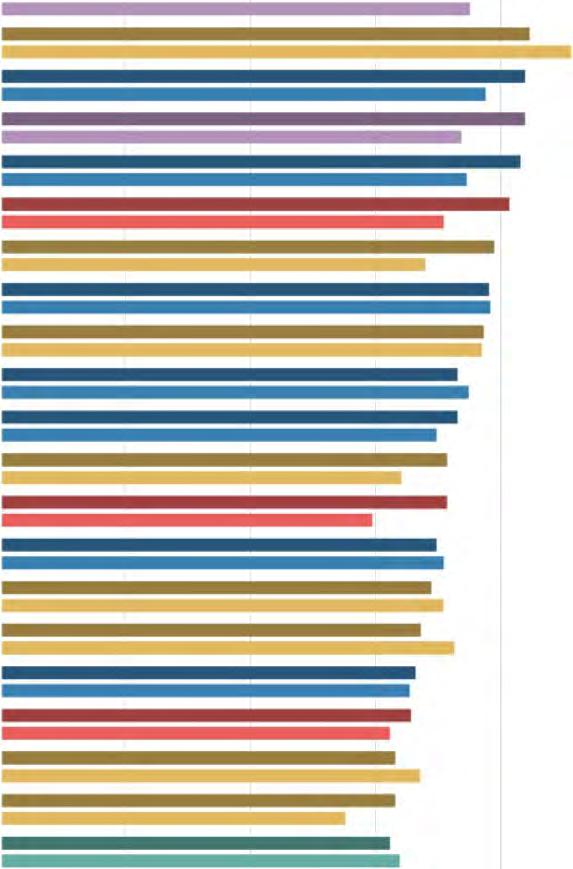
Following the workshop and before any group funding decisions were made, the City Manager and Executive Team met individually with each Council member. These meetings provided an opportunity to review project scoring results in greater detail, answer questions regarding project scope and need, and discuss areas where Council and staff perspectives differed.
The meetings also introduced the fiscal capacity framework that would ultimately guide decision-making, including the tradeoffs between service levels, project delivery, tax and rate impacts, and long-term financial sustainability. By conducting these discussions individually, each Council member had the opportunity to fully understand the implications of the various funding scenarios and clarify priorities before returning to the workshop to build consensus as a governing body.
City Council members reconvened in a workshop setting to build consensus on which projects should be included within the various fiscal capacity scenarios and to provide direction on the level of investment they would support.
During the workshop, Council members used a second purpose-built application that organized the project universe into four funding lanes (kanban style) based on tax rate impact scenarios:
• No Tax Rate Impact - $140 million
• Tax Rate Impact
$0.02 - Additional $30 million
• Tax Rate Impact
$0.05 - Additional $85 million
• GO Bond Proposition - total determined by project selection; requires voter approval
Working within these lanes, Council members made explicit the connection between each project selection and the financial ask to Temple taxpayers. The group ultimately aligned on funding within the no-tax-rate-impact scenario, with two projects selected for a GO Bond Proposition subject to voter approval.
The Utility Capital Improvement Program requires its own scenario-planning application because project delivery is directly tied to utility rates rather than
property taxes. Water and Wastewater projects were scored using the same six evaluation criteria but were allocated across funding scenarios based on varying levels of the previously planned rate increases, ranging from no rate increase to full implementation of the prior Adopted Business Plan rate path.
To provide policy flexibility, staff developed graduated funding scenarios representing approximately 30 percent, 60 percent, and 100 percent of the prior Adopted Business Plan rate increases. This approach allowed City Council to directly evaluate the relationship between infrastructure investment, rate affordability, and the impact on utility customer bills.
The scoring results, fiscal scenario decisions, and Council deliberations collectively shaped the FY 2027–2032 CIP presented in this document. Projects that earned the highest combined Council and staff scores and fit within the accepted fiscal parameters were advanced into the plan. The projects included in this document represent Temple’s highest-priority capital investments as determined through this process.
Projects that were evaluated but are not included in this plan were deferred, not eliminated, due to fiscal capacity constraints, phasing requirements, or the need for additional planning before commitment. These deferred projects remain documented candidates for future planning cycles. Where applicable, the rationale behind specific project decisions, including projects advanced, deferred, or reconsidered, is documented within each program section of this CIP, providing transparency into not just what was funded but how and why each decision was made.
This process ensures that Temple’s capital investments reflect a consistent, documented framework; one that residents, Council members, and future decision-makers can review and build upon as the community continues to grow.
As of March 31, 2026, the FY 2026 Capital Improvement Program Team is currently managing 404 projects for a total of $579,030,649 in routine and non-routine capital expenditures.
CAPITAL IMPROVEMENTS BY SOURCE
$579,030,649
CAPITAL IMPROVEMENTS BY CURRENT STATUS
$579,030,649
While more than $24,000,000 in current projects near completion, the FY 2027 Proposed Budget includes an additional $75,500,000 in non-routine capital expenditures and a total of $333,200,000 in planned projects across the FY 2027-2032 Business Plan.
As part of our goal to create a High-Performing Organization, the CIP includes strategic investments in fleet and equipment to increase efficiency, capitalize on technology advances, and improve safety. With the aid of the City’s FMIS (Fleet Management Information System) Faster, the City of Temple Fleet department prepares an annual replacement schedule for over 800+ assets. The Equipment CIP includes assets over the $100,000 threshold such as departmental heavy-duty equipment and solid waste refuse vehicles, as well as information and public safety technology.
Invest in the continued maintenance and replacement of the City’s fleet equipment.
Equipment capital investments serve three distinct purposes. Replacement projects address equipment that has reached the end of its useful life, reducing the risk of operational failure, unplanned downtime, and escalating maintenance costs. Upgrade projects improve upon the equipment being replaced, capitalizing on technology advances, improved safety features, or enhanced capability that delivers greater value over
the next service life. Addition projects provide new equipment required to support an approved position, crew, or route that has been planned for in the Financial Plan.
All replacement and upgrade recommendations are prioritized by the year in which they are funded based on a consistent set of criteria including age, hours and mileage, maintenance costs, asset condition, and expected useful life. This evaluation is conducted annually by the Fleet department using the City’s Fleet Management Information System and produces an objective, data-driven replacement schedule that does not require project-by-project Council scoring. Unless otherwise noted, all additions are prioritized in the same year that the additional personnel needed to operate the equipment has been planned for in the Financial Plan.
With an average useful life of approximately seven years, the FY 2027 Budget and Financial Plan includes funding for the $10.2 million Equipment CIP with the issuance of Limited Tax Notes.
The City is evaluating a new financial management system to replace software that has been in use for more than two decades. During that time, departments have adopted specialized software solutions to better support their operational needs, resulting in an increasing reliance on manual data entry, paper-based workflows, and the movement of information between systems. A modern ERP platform would serve as the City’s operational backbone, connecting systems through automation and integration rather than manual processes. This initiative is intended to improve efficiency, strengthen internal controls, enhance reporting capabilities, and provide a scalable foundation for future growth and service delivery. The project will reduce administrative effort, improve data accessibility, and support more timely and informed decision-making across the organization.
Line 1 – Financial Software
$3,000,000
Police radios (portable and mobile) provide a necessary lifeline between officers and telecommunicators. They must be P25 compliant for seamless interagency communications, provide multiple encryption options, and are rugged to meet intrinsically safe and multiple military specification standards. Radio communications serve as a means of receiving and transmitting assignments and can also be utilized to summon assistance, broadcast alarms, and coordinate field activities. It is an essential and sometimes the only method of relaying lifesaving information or calling for assistance. During the May 2024 tornadic event, it provided the only consistent and reliable form of communication.
Line 2 – Mobile Unit Radio Replacement Plan
$245,000
Line 3 - Portable Unit Radio Replacement Plan
$192,800
The solid waste department currently has five different route types:
• residential sideload refuse and recycling,
• residential brush and bulk refuse,
• commercial frontload refuse,
• commercial sideload refuse, and
• commercial roll-off refuse.
By the end of FY 2026, the department will operate a total of 54 frontline trucks and 14 spares to service these routes. Frontload and sideload vehicles have a lifespan of 6-8 years and the typical life of the brush and rolloff trucks last about 8-10 years. In 2020, the lead time for procuring a residential solid waste vehicle was approximately seven months with an average cost of $285,000. While procurement lead times have stabilized around 6-10 months, the average cost has risen significantly to approximately $475,000.
Line 4 – Frontload Refuse - Replacements
$987,400
Line 5 – Brush/Bulk Refuse - Replacements
$1,299,600
Line 7 – Rolloff Refuse - Replacements
$644,700
Staff has evaluated projected growth scenarios to identify route optimizations that align with industry-standard operational thresholds. The proposed additions to the Solid Waste Services fleet reflect this anticipated service expansion. Additions required in FY 2028 will be funded with Limited Tax Notes. However, future fleet additions are incorporated into the operating capital budget to reduce – and potentially eliminate – the reliance on debt instruments for this equipment.
Line 6 – Residential Refuse - Additions
$1,080,400
Line 8 – Frontload Refuse - Additions
$479,300
Line 9 – Rolloff Refuse - Additions
$290,700
The Airport’s Jet A fueling truck was placed into service in 1999 and has exceeded its expected service life. As a critical piece of equipment used to provide aircraft fueling services, increasing age and maintenance requirements create a greater risk of operational disruptions and downtime. Replacing the vehicle will improve reliability, reduce maintenance costs, and ensure the Airport can continue to provide safe and efficient fueling operations. The investment supports ongoing customer service, operational readiness, and the long-term sustainability of airport operations.
Line 10 – Airport Equipment
$350,000
The District Services sweeper supports the maintenance of public streets, sidewalks, and downtown areas. Replacement of the 2018 Tennant Green Machine is consistent with the City’s fleet lifecycle management program and will reduce the risk of increasing maintenance costs and service disruptions associated with aging equipment. The replacement unit expands the City’s cleaning capability to include the downtown parking garages, delivering broader service coverage at a cost increase that is modest relative to the expanded scope. This investment supports the continued delivery of clean, safe, and welcoming public spaces..
Line 13 – District Services Equipment
$178,000
The Fire Department’s 2004 F-350 stake bed truck has exceeded its useful life and is experiencing increasing maintenance requirements associated with aging equipment. Replacement of the vehicle is consistent with the City’s fleet lifecycle management program and will improve reliability, reduce maintenance costs and
downtime, and ensure continued support of departmental operations and emergency response activities.
Line 12 – Fire Support Vehicles
$120,000
The Parks Department maintains approximately 2,500 acres of public property, including parks, trails, roadsides, medians, open spaces, and City facilities. Maintaining this extensive network of assets requires specialized equipment capable of supporting routine maintenance activities, infrastructure repairs, vegetation management, and community events. The Fleet Replacement Program anticipates replacing the City’s large event stage and an aging dump truck, while adding a bucket truck in FY 2028 to enhance operational capabilities and improve service delivery. These investments will improve operational reliability and support the continued delivery of high-quality public spaces and services to residents and visitors.
Line 14 – Parks Equipment
$450,400
The Streets and Traffic Control departments regularly utilize heavy equipment in their day to day operations maintaining 1,202 lane miles and 80 signals. The Fleet department is forecasting the replacement of one crack sealer in FY 2027 and two dump trucks in FY 2028. The replacement crack sealer is an upgraded unit with double the material capacity of the current equipment, significantly improving crew efficiency by extending working time between refills, allowing crews to cover twice the ground before stopping to reload.
Future additions and replacements would fall within the proposed Street Maintenance Fund that could begin as early as FY 2029, if approved.
Line 11 – Streets Heavy Equipment
$424,400
The City owns and maintains more than 80 buildings that serve a wide range of functions. These facilities provide recreational, cultural, and social opportunities for residents while also housing the office and operational spaces needed to support more than 1,000 employees who deliver essential services to the community.
Significant investment in City facilities continues. The acquisition of the City Hall Extension is complete, Phase II of the Public Safety Training Campus has entered vertical construction, and the Parks Maintenance Building Expansion is funded and expected to begin construction in the coming months.
While Certificates of Obligation remain an important financing tool for public works projects, public safety facilities, and improvements to existing buildings, state law limits their use for most new facility construc-
tion. Consequently, projects involving new facilities generally require voter authorization through a General Obligation Bond election. Accordingly, a General Obligation Bond Election is proposed in FY 2027 to fund the demolition and reconstruction of the Sammons Community Center.
As the City’s facilities portfolio continues to age and service demands evolve, facility assessments and master planning efforts have identified additional investments needed to preserve critical assets, modernize aging infrastructure, and ensure facilities continue to meet community and organizational needs. The Facilities Capital Improvement Program serves as the City’s long-term strategy for prioritizing and delivering those investments.
Invest in the continued maintenance of and improvement to the City’s facilities.
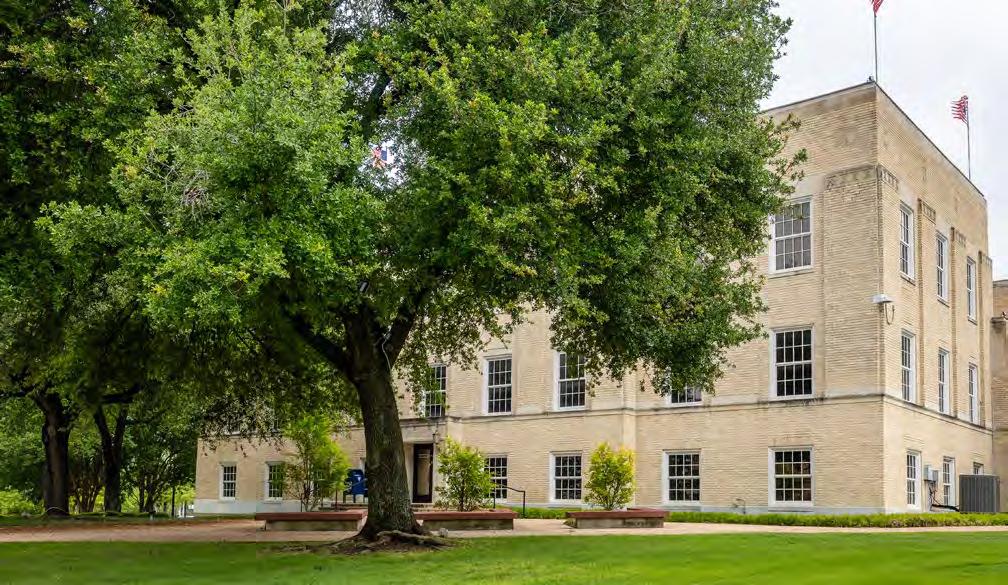
Facilities capital investments serve three distinct purposes. Safety projects bring electrical, plumbing, fire suppression, HVAC, and roof systems to code and good working order while addressing security needs, ensuring every facility is safe for the employees and residents who use it. Function projects ensure that adequate space and amenities meet the purpose of the facility and the needs of its users, supporting efficient service delivery and organizational effectiveness. Preservation projects renovate dilapidated or historically significant facilities through restoration or contextual remodel, and deliver aesthetically thoughtful new facilities that serve the community while remaining budget conscious.
Facilities capital projects were evaluated as part of the City’s structured FY 2027 CIP prioritization process described in “How Temple Prioritizes Capital Investment” at the beginning of this section, where full detail on the scoring methodology and citywide results is provided.
The highest-priority Facilities projects as scored by City Council were the Sammons Community Center, Library Parking Garage Repairs, Library Chiller and Cooling Tower Upgrade, Service Center Improvements, and Gober Party House Restoration. The Sammons Community Center earned the top ranking in this program area and ranked 10th across all 106 projects citywide reflecting broad Council consensus on the
urgency of replacing a facility that has served Temple residents since 1921 but can no longer be viably rehabilitated. Library infrastructure projects scored highly on Existing Condition and Financial Responsibility criteria, reflecting the risk and cost escalation associated with deferring mechanical and structural repairs to critical public facilities. Service Center and operational facility projects scored consistently on Function criteria, recognizing that well-maintained operational infrastructure directly supports the City’s ability to deliver services effectively.
Several projects evaluated during the prioritization process, including the Library Chiller and Cooling Tower Upgrade, the Jaime Clements Parking Lot and Bend of the River Improvements, were funded with existing bond proceeds due to either the urgency of the need or the lower cost of the investment relative to the return on deferred maintenance avoided.
The significant maintenance items identified in the Facilities CIP have a typical useful life of 20+ years. The FY 2027 Budget and Financial Plan includes funding for the $10.9 million Facilities CIP with the issuance of Certificate of Obligation Bonds.
The GO Bond Proposition for the Sammons Community Center reconstruction for $9 million is subject to voter approval in FY 2027. In the event the proposition is not approved, the project would be deferred to a future planning cycle pending identification of a viable funding path.
Originally constructed in 1921, the Sammons Community Center has served generations of Temple residents as a gathering place for recreation, community events, and social activities. Following storm damage in May 2024, an assessment of the facility’s roof system revealed previously unknown structural deficiencies that were not caused by the storm itself, but rather by the cumulative impacts of multiple building expansions and aging infrastructure over more than a century of use. Subsequent engineering evaluations identified significant structural, utility, and building system deficiencies and recommended continued closure of the facility.
After evaluating both rehabilitation and reconstruction options, Council determined that replacing the facility is more prudent than investing substantial resources into a building with significant long-term deficiencies
and limited remaining useful life. The project includes demolition of the existing structure and construction of a new community center designed in coordination with the adjacent indoor pool and golf course to create a cohesive recreation campus.
The replacement facility will restore an important community amenity and provide modern, accessible, and flexible spaces that support expanded programming, community events, senior activities, and recreational opportunities for future generations of Temple residents.
Due to statutory limitations on the use of Certificates of Obligation for most new facility construction, a GO Bond Election is necessary to fund reconstruction of the Sammons Community Center. If approved, construction could begin in late 2027.
Line 4 - Sammons Community Center
$9,000,000
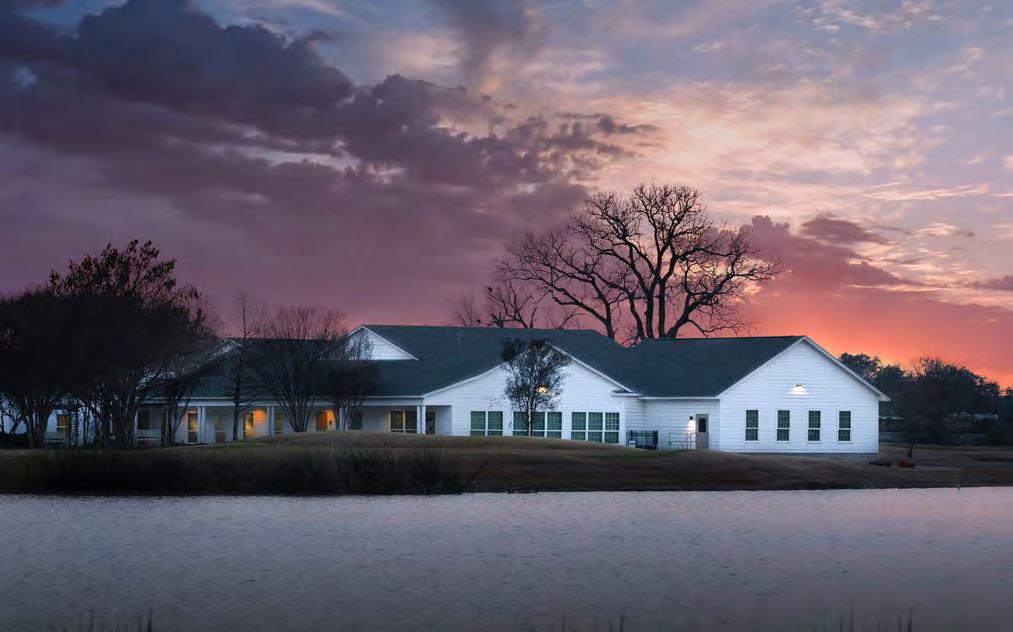
Originally established by the youth of Temple in 1945 and opened in 1946, the Gober Party House has served generations of residents as a gathering place for recreational activities, civic meetings, community programs, and private events. The facility has not undergone a major renovation since 1988, and recent assessments have identified significant structural and building envelope deficiencies that require corrective action to preserve the long-term viability of the building. This project combines essential restoration work with strategic facility enhancements, including structural and façade repairs, modernized restrooms, an upgraded kitchen, expanded event space, and updated interior finishes. These improvements will preserve a historically significant community asset, enhance the user experience and ensure the facility continues serving residents for decades to come.
Line 2 - Gober Facility Improvements
$2,200,000
The City of Temple operates multiple service centers that serve as the operational backbone for daily field operations, fleet maintenance, community programs, and essential municipal functions. As the organization has grown, these facilities have struggled to keep pace — some have been outgrown, others require updates and modernization to meet current operational standards and support an evolving workforce.
The FY 2027 Budget and Financial Plan includes funding for improvements across three service center locations. At the 12th Street Service Center, investments will improve functionality, appearance, and code compliance through facility renovations, exterior enhancements, and the addition of employee support amenities and tool library space. At the East Service Center, upgrades include a backup generator, parking lot resurfacing, and renovation of the fleet parts room to improve operational reliability, employee safety, and service continuity. The Avenue H facility will be renovated and modernized to establish a permanent operational home for the General Services Department, reconfiguring and expanding office, shop, and meeting spaces to
accommodate current staffing levels and support future growth.
Recognizing that a more comprehensive and coordinated approach is needed to address the City’s long-term service center needs, the City will initiate a Service Center Master Plan in FY 2027. This planning effort will evaluate all service center locations, identify facility deficiencies and operational gaps, and establish a prioritized investment framework to guide future capital decisions across the entire portfolio.
Line 1 - Service Center Improvements
$8,000,000
The Library Parking Garage is experiencing structural deterioration associated with steel corrosion and concrete degradation identified through a 2025 forensic assessment. This project will fund priority repairs, including concrete restoration and protective treatments, to preserve the structural integrity of the facility and extend its useful life. Timely investment in these improvements will reduce future repair costs, mitigate public safety risks, and protect a critical public asset that supports library services and downtown access.
Line 3 - Library Parking Garage Rehabilitation
$750,000
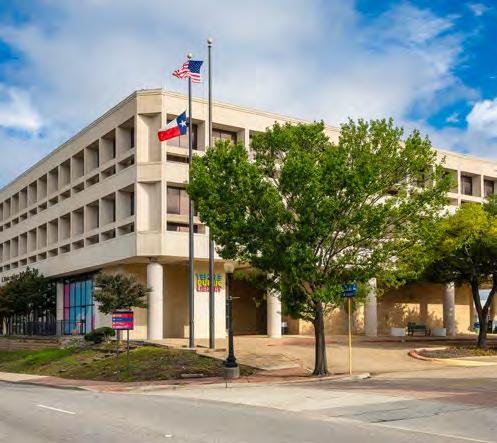
Enhancing public safety services to create a safer community and foster public trust remains a top priority in building a community where businesses can thrive and residents want to call home. In 2023, the City completed an update to the Temple Fire & Rescue Master Plan, including a Community Risk Assessment and Standards of Cover analysis to evaluate current service levels and future needs. Based on anticipated population growth and economic development, the plan identified the need for three additional fire stations to maintain response capabilities and meet community expectations.
To implement these recommendations, a General Obligation Bond Election is proposed in FY 2027 to fund the construction of Fire Station #9, followed by Fire Station #10 in FY 2028 through the issuance of Certificates of Obligation. With the planned relocation of Fire Station #7 in FY 2026 and Fire Station #6 in FY 2029, the third new station, Fire Station #11, is anticipated beyond the current FY 2032 planning horizon.
The Police Department Master Plan was completed in 2024. Based on current growth the plan identified the need for an expansion to the downtown campus and improvements to the outdoor range to support advanced marksmanship training and law enforcement qualification requirements.
While facilities and equipment investments are often addressed under other strategic focus areas, public safety-related facilities and equipment are included within the Public Safety Capital Improvement Program to provide a comprehensive and coordinated approach to meeting the City’s long-term public safety needs.
• Develop a Fire Master Plan (Public Safety)
• Expand the Public Safety Training Center and Shooting Range (Smart Growth - Facilities)
• Invest in the continued maintenance and replacement of the City’s fleet equipment (High Performing Organization - Equipment)
Public Safety capital investments serve three distinct purposes. Replacement projects address equipment or facilities that have exceeded their useful life and present operational or safety risk if not addressed. Expansion growth and the geographic reach required to maintain response time standards across a growing service area. Improvement projects enhance capability within existing facilities or equipment inventories to meet evolving service demands, training requirements, and community expectations.
Public Safety capital projects were evaluated as part of the City’s structured FY 2027 CIP prioritization process described in “How Temple Prioritizes Capital Investment” at the beginning of this section, where full detail on the scoring methodology and citywide results is provided.
The five highest-priority Public Safety projects as scored by City Council were Fire Station #7 Relocation, Fire Station #10 (South 31st/FM93), Fire Station #9 (Old Waco Road), PD: Westside Substation, and PD: Backup Generator Upgrade. Fire station projects earned elevated scores on Community Benefit, Growth & Economic Readiness, and Public Health & Safety criteria, reflecting the direct connection between station placement and the City’s ability to maintain response time standards as population grows. Police facility projects scored highest on Existing Condition and Financial Responsibility criteria, reflecting aging infrastructure and operational risk.
One notable outcome of the individual Council meetings and funding scenario workshop was the evolution of the Fire Station #6 project — originally presented as a remodel and expansion, the project was reconsidered in light of the facility’s age and location and ultimately
advanced as a full relocation, better positioning the City to serve northwest Temple long-term.
Fire Station #11, while a recognized priority, was deferred outside the current planning window from a timing perspective and remains a documented candidate for a future planning cycle as growth patterns and fiscal capacity allow.
The following new facilities, facility improvements, and specialized equipment have a useful life beyond 20 years, so the FY 2027 Budget and Financial Plan includes funding for the $44 million Public Safety CIP with the issuance of Certificate of Obligation Bonds.
The GO Bond Proposition for Fire Station #9 for $21.5 million is subject to voter approval in FY 2027. In the event the proposition is not approved, the project would be deferred to a future planning cycle pending identification of a viable funding path.
The Temple Fire and Rescue Master Plan recommends adding a new Station #9 in the west/southwest section of the city and a new Station #10 in the southeast section within the next 1 to 3 years. As population density increases, so does incident density. With significant development forecasted in the northwest and northeast areas of the city, staff is also planning for two additional stations, along with supporting resources, within the next 5 to 8 years.
Fire Station #9, recommended in the 2023 Fire Department Master Plan, will serve the growing southwest area of Temple. It is planned to house a Ladder Truck and Battalion Chief, along with expanded apparatus bays, living quarters, and administrative office space to accommodate the City’s future growth.
Due to capacity constraints, a GO Bond Election will be necessary to fund the construction of new Fire Station #9. If approved, construction could begin during 2027.
Line 12 – Future Fire Station #9 - Old Waco Road
$19,500,000
Line 13 – Future Fire Station #9 - Ladder Truck
$2,000,000
Fire Station #10 will serve the rapidly growing southeast area of Temple, where residential development and annexations have surged in recent years. This area includes two of the City’s busiest stations, which together handle nearly one-third of monthly call volume. The new station will help manage current demand, support future growth, and improve response times in the expanding southeast region.
Line 6 - Future Fire Station #10 - 31st St and FM93
$8,500,000
Line 2 – Fire Engine, Station #10
$1,200,000
Constructed in 1986, Fire Station #6 is the City’s oldest and smallest fire station and is no longer optimally
located to serve its response area. The development of Loop 363 and increased transportation barriers have contributed to longer response times, particularly to the Northwest Industrial Park, while the existing facility no longer meets modern operational and workforce needs. Relocating Fire Station #6 will improve emergency response capabilities, provide a modern and appropriately sized facility, and support the City’s long-term public safety strategy and continued growth in northwest Temple.
Line 7 - Fire Station #6 - Relocation
$8,800,000
Land for future Fire Stations #11 and #12 is planned through existing funding. As development pressures begin to emerge in other areas of the City, it is prudent to proactively plan for future public safety infrastructure needs by identifying and securing strategically located sites in advance of development. While the specific locations of future Fire Stations #13 and #14 have not yet been determined, early land acquisition funding provides flexibility to respond to evolving growth patterns, preserve suitable siting opportunities, and avoid increased land costs associated with future development.
Line 8 - Future Fire Station Sites #13 & #14
$2,000,000
The useful life of a fire apparatus is generally 15 to 20 years, followed by an additional five years in reserve status. The City proactively plans for the replacement of aging fire apparatus to ensure reliable emergency response capabilities and maintain operational readiness. Key replacements include a 2004 Rescue Vehicle at Station #5, which supports heavy rescue and hazardous materials response, and a 2008 Booster Truck utilized for wildland fire incidents. The plan also provides flexibility to evaluate the future addition of a wildland response unit should service demands and community growth warrant expanded capabilities. Due to extended construction lead times—approximately 18 to 24 months for brush trucks, 38 to 45 months for
engines, and 48 to 52 months for rescue vehicles—the City must plan apparatus purchases years in advance to ensure consistent service delivery and readiness. This funding plan may be adjusted as manufacturing lead times and operational needs evolve.
Line 1 – Rescue Apparatus - Replacement
$2,000,000
Line 4 – Booster Truck - Replacement
$275,000
Line 5 – Brush Truck - Addition
$160,000
The Temple Police Department headquarters, operational in 2005, is scheduled for expansion and remodeling to support growing operational demands. The 2024 Police Downtown Campus Master Plan identified critical facility deficiencies in patrol operations, evidence management, and crime lab capabilities that limit the department’s operational efficiency and long-term capacity.
This project provides for the strategic renovation and expansion of the existing campus, including reconfigured internal spaces, expanded administrative and patrol work areas, enhanced telecommunications coordination, and additional storage to create appropriately sized, purpose-built spaces for essential police functions. These improvements will strengthen organizational readiness, improve operational efficiency and staff wellness, and support the continued delivery of public safety services to a growing community.
The project will be delivered through a combination of operating and capital funding sources to align project delivery with available resources, maximize available General Fund capacity, and minimize future financing needs.
Line 11 – Police Department Expansion - Downtown
$15,800,000
The existing outdoor firing range no longer adequately supports the specialized training requirements of a modern law enforcement agency. This project will modernize the facility into a purpose-built outdoor training environment that supports long-distance marksmanship, sniper certification, and other specialized
training needs that cannot be accommodated at the indoor range. The improvements will enhance training effectiveness, maintain critical capabilities in-house, and ensure personnel remain prepared to respond to increasingly complex public safety challenges.
$3,000,000
The Public Safety Driving Skills Pad was not originally designed to accommodate high-speed emergency vehicle operations training. This project will construct a purpose-built driving track that provides officers with a safe and controlled environment for advanced driving instruction, pursuit training, and emergency vehicle operations. The facility will enhance training effectiveness, improve operational readiness, and support the long-term training objectives identified in the Public Safety Drill Field Master Plan.
$1,900,000
The current SWAT vehicle, a 2008 BearCat Armored Ford F-550, has been a vital asset supporting high-risk operations for more than 15 years and is approaching the end of its useful life. A replacement vehicle will provide enhanced protection, increased passenger and equipment capacity, modern armor technology, and upgraded communication and surveillance capabilities. This investment will improve officer safety, support critical incident response, and strengthen the department’s ability to protect the community.
$400,000

The Places and Spaces Capital Improvement Program invests in public spaces and neighborhood infrastructure that enhance quality of life and support healthy, connected communities. The program focuses on maintaining and improving parks, recreation amenities, sidewalks, and neighborhood assets that are important to residents’ daily experiences.
Given current financial capacity constraints and competing citywide infrastructure priorities, the FY 2027–FY 2032 program emphasizes targeted investments that preserve existing assets, improve accessibility, and address high-priority community needs. Projects included in this program advance neighborhood livability while positioning the City to respond to future opportunities as additional resources become available.
• Promote improved, safer connections from neighborhoods to City parks and trails
• Plan for, design, construct, and invest in the continued maintenance of and improvement to the City’s park, recreation, greenspace, and trail system
Places and Spaces capital investments serve four distinct purposes. Active and Multimodal projects encourage walking and biking as sustainable transportation options, promote health and wellness, and expand connectivity for residents who do not own a vehicle. Operations & Maintenance projects invest in existing infrastructure to address safety, function, and beautification needs before they escalate into costlier repairs. Planning projects provide the direction and framework
needed for future capital action. Safety projects mitigate the increasingly complex interactions between different modes of travel to protect pedestrians, cyclists, and motorists alike.
Places and Spaces capital projects were evaluated as part of the City’s structured FY 2027 CIP prioritization process described in “How Temple Prioritizes Capital Investment” at the beginning of this section, where full detail on the scoring methodology and citywide results is provided.
The highest-priority Places and Spaces projects as scored by City Council were the ADA Transition Plan, Playground Replacements, Dog Park at Nugent Avenue, NPD – Saulsbury Drive Sidewalks, and NPD – W Zenith Avenue. The ADA Transition Plan earned the top ranking in this program area, reflecting Council’s emphasis on accessibility and regulatory compliance across the City’s parks, trails, and public gathering spaces. Neighborhood Planning District projects scored consistently
on Community Benefit and Safety criteria, reinforcing the connection between the Love Where You Live planning process and capital investment priorities. Park infrastructure projects like restrooms, playgrounds, and park improvements scored on asset condition and community impact, reflecting the importance residents place on well-maintained public spaces.
Several high-scoring projects, including the Wilson Park Recreation Center, Southwest Community Park Development, and the Dog Park at Nugent Avenue, were evaluated but deferred from this plan due to fiscal capacity constraints within the no-tax-rate-impact scenario. These projects remain documented priorities and are strong candidates for a future planning cycle or alternative funding strategies as capacity allows.
The FY 2027 Budget and Financial Plan includes funding for the $6.7 million Places and Spaces CIP with the issuance of Certificate of Obligation Bonds.
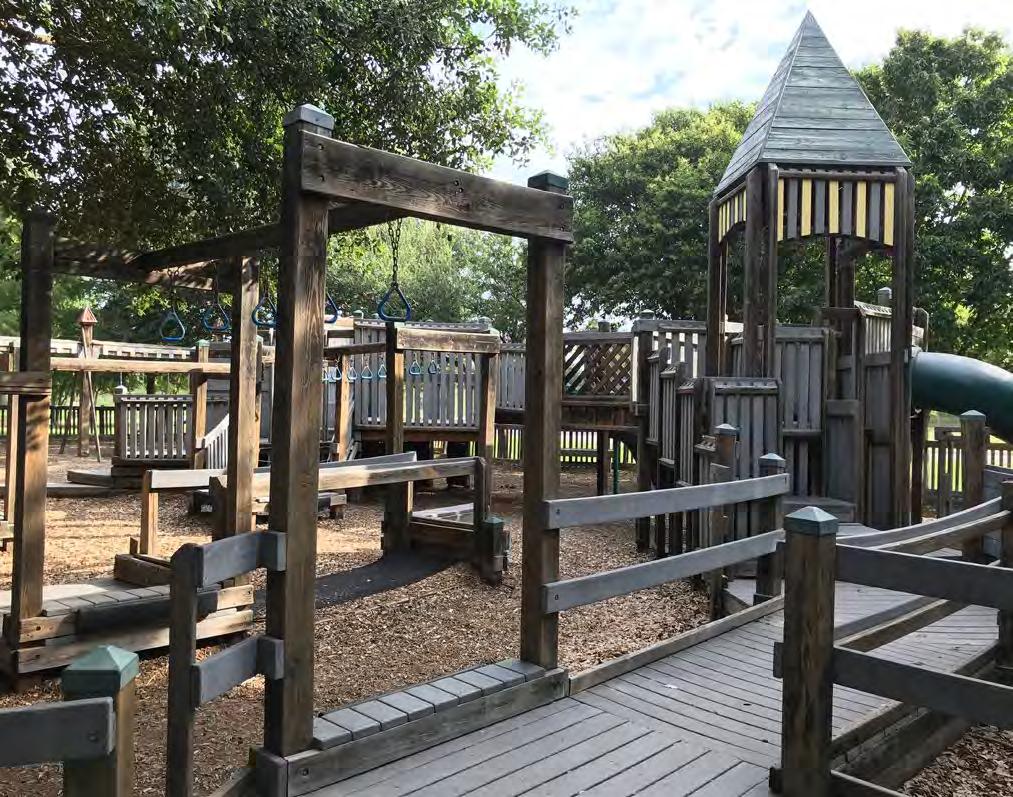
Neighborhood Planning District projects originate from community-driven planning efforts completed through the Love Where You Live Program. Each district plan identifies infrastructure, mobility, parks, and placemaking investments that reflect the unique needs and priorities of individual neighborhoods. Projects included in the Capital Improvement Program represent implementation of these adopted recommendations and support the continued enhancement of neighborhood connectivity, safety, and quality of life.

The Northwest Hills District is home to many families, with children who walk to Jefferson Elementary School and enjoy nearby parks. Saulsbury Drive, the primary route for neighborhood traffic, plays a crucial role in connecting residents to major arterial roads but currently lacks pedestrian infrastructure. Planned funding will support the construction of 5-foot-wide sidewalks on both sides of the street, creating a safe and accessible walking environment for residents. These improvements will greatly enhance pedestrian safety and promote walkability in this growing residential area.
Line 2 - Saulsbury Drive Sidewalk Improvements
$600,000
Barton Avenue, located in the Central District and adjacent to Temple High School, serves as a key pedestrian corridor for students walking to and from school. While the roadway has recently been improved for vehicular traffic, it currently lacks sidewalks to ensure pedestrian safety. To address this gap, 5-foot-wide sidewalks will be constructed along Barton Avenue – from 23rd Street to 31st Street – alongside a landscape buffer to further separate pedestrians from roadway traffic. Scheduled for design and construction in FY 2030, the project will create a safer, more inviting route for students
and those accessing nearby retail and food establishments.
Line 1 - Barton Avenue, 31st Street to 23rd Street
$700,000
This project initiates the development of a comprehensive Americans with Disabilities Act (ADA) Transition Plan for City parks, trails, recreation facilities, and public gathering spaces. The assessment will evaluate existing conditions, identify accessibility barriers, and establish a prioritized, multi-year implementation plan to systematically address deficiencies and achieve ADA compliance. Beyond meeting regulatory requirements, this investment advances the City’s commitment to ensuring all residents and visitors—regardless of age or ability—can safely access and enjoy public spaces and amenities. The resulting plan will provide a strategic roadmap for future capital investments while reducing compliance risk and improving accessibility throughout the community.
Line 3 – ADA Transition Plan
$1,000,000
Whistle Stop Park is one of Temple’s most recognizable and heavily utilized neighborhood parks, serving residents and visitors alike with its unique railroad-themed playground and prominent location near downtown attractions. These improvements will modernize aging park infrastructure through playground enhancements, restroom upgrades, and amenity improvements that enhance the visitor experience and preserve the park’s role as a premier family destination. The investment supports continued recreational opportunities, extends the useful life of park assets, and reinforces the City’s commitment to providing high-quality public spaces that contribute to downtown vitality and community quality of life.
Line 4 – Whistle Stop Park Improvements
$1,000,000
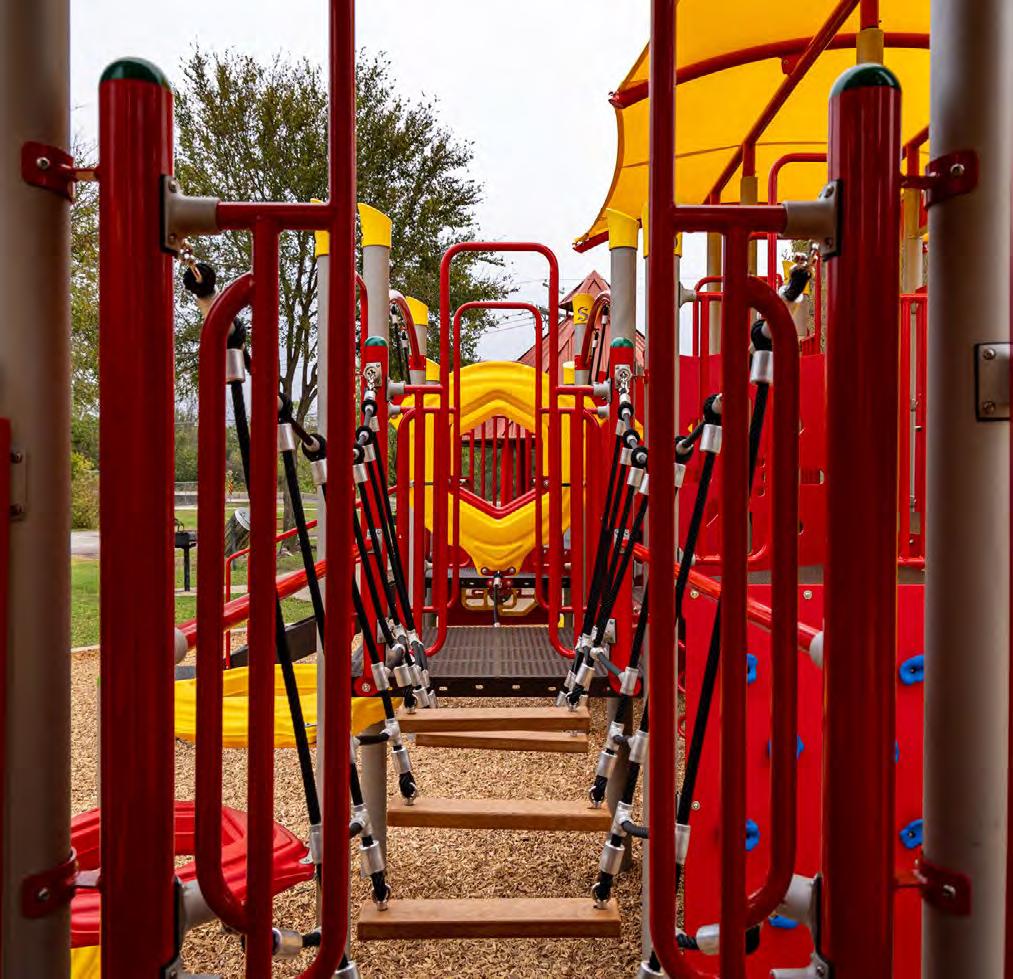
Playground equipment is designed to be long-lasting and can remain in good condition for up to 20 years with proper care; however, aging equipment presents increasing safety risks, rising maintenance costs, and growing difficulty meeting current ADA accessibility standards. The City replaces playground equipment on a timely basis to maintain safe, accessible, and high-quality recreational spaces for residents of all ages while
avoiding the higher cost of emergency replacement. New equipment is selected to meet current accessibility requirements, ensuring playgrounds serve children and families of all abilities. The CIP Team is recommending the replacement of playgrounds at West Temple Park, Walker Park, Hodge Park, Lions Park – Mercer, Gober House, Baker Field and South Rotary Park.
Line 5 – Playground Replacements
$3,430,000
Temple is situated along Interstate 35, the single most important north-south corridor in Texas, linking the city with major metropolitan areas, tourism, and international trade. The City is beginning to experience traffic pressures as a result of a growing local economy and expanding residential market, particularly to the south and west. The two railroads running through town also provide a continued draw for industry to the area. As set out in the Smart Growth Strategic Plan goals, the City is actively working to develop a safe, connected, and well-maintained mobility system that incorporates all modes of travel including vehicular, pedestrian, bicycle, transit and air.
The initiative to develop a Mobility Master Plan was completed in the summer of FY 2022. The project included stakeholder engagement combined with a public participation program, as well as data driven analysis of existing conditions to create testing scenarios based on various anticipated future condition assumptions. The team focused on unmet transportation needs, network gaps, connectivity issues, and locations experiencing safety or congestion issues. The process drew on priorities from the Comprehensive Plan, Thoroughfare Plan, Neighborhood District Plans, Parks and Trails Master Plan, and other adopted documents ultimately producing recommended solutions in the form of program, policy, and individual project recommendations.
• Develop a Mobility Master Plan
• Design, construct, and maintain high quality mobility infrastructure, systems, and services
Mobility capital investments serve six distinct purposes. Active & Multimodal projects encourage walking and biking as sustainable transportation options, promote health and wellness, and expand connectivity for residents who do not own a vehicle. Capacity &
Connectivity projects reduce congestion and improve the efficiency of the transportation network. Complete Streets projects design and retrofit roadways to accommodate all modes of transportation, ensuring safe and equitable access for bicyclists, transit riders, pedestrians, and motorists alike. Operations & Maintenance projects invest in existing infrastructure to address safety, function, and beautification needs on a timely basis. Planning projects provide the direction and framework needed for future capital action. Safety projects mitigate the increasingly complex interactions between different modes of travel to protect all users of the transportation network.
Within the Mobility program, projects undergo an additional technical screening as part of the Mobility Master Plan process before they are ever considered for the CIP. Projects are initially assessed using available data on crash rates, peak levels of service, connectivity, and linkage to other adopted plans. Multimodal projects are evaluated using similar data - pedestrian and bicycle crash rates, level of demand, traffic stress scores, proximity to schools, and network connectivity. Projects that emerged from this master plan screening were then carried forward and evaluated as part of the City’s structured FY 2027 CIP prioritization process described in “How Temple Prioritizes Capital Investment” at the beginning of this section, where full detail on the scoring methodology and citywide results is provided.
The highest-priority Mobility projects as scored by City Council were Pavement Preservation, Road Reconstruction, Midway Drive Reconstruction, Traffic Signal Installation, and North 3rd Street Sidewalks. Pavement Preservation and Road Reconstruction scored identically, both earning a Council average of 17.67, reflecting strong and equal consensus on the urgency of maintaining the City’s existing street network alongside targeted reconstruction of its most deteriorated corridors. Midway Drive Reconstruction scored highly on Growth & Economic Readiness criteria, as anticipated changes to the IH 35 corridor and the completion of Kegley Road are expected to increase traffic demand along
the corridor. Traffic Signal Installation earned elevated scores on Community Benefit and Safety criteria, reflecting the City’s ongoing obligation to meet state and federal warrant requirements before new signals can be installed, meaning every signal project represents a documented, data-confirmed need rather than a discretionary improvement.
Several high-scoring projects were deferred from this plan for varying reasons. Little River Road and the 5th Street Extension are both north-south collectors that would improve traffic patterns and flow in southeast Temple; Little River Road was advanced over the extension because it serves an existing corridor and provides direct access to a school site, making it the higher-priority investment at this time. FM 93 Spur Road Improvements were deferred due to fiscal capacity constraints; if development pressures in that corridor continue to accelerate, alternative funding options will need to be identified. North 3rd Street Sidewalks
were deferred after anticipated grant funding did not materialize, while the Georgetown Railroad Trail Phase II was advanced after successfully securing grant funding, illustrating how outside funding availability directly influenced which projects moved forward in this cycle. The Nugent Avenue Extension ranked lower in the initial scoring but was ultimately included in the plan based on the strategic importance of establishing a collector connection from an established neighborhood over the railroad into a rapidly growing corridor in northeast Temple, as well as the potential to leverage federal funding to offset the significant project cost.
The FY 2027 Budget and Financial Plan includes funding for the $68 million Mobility CIP with the issuance of Certificate of Obligation Bonds.
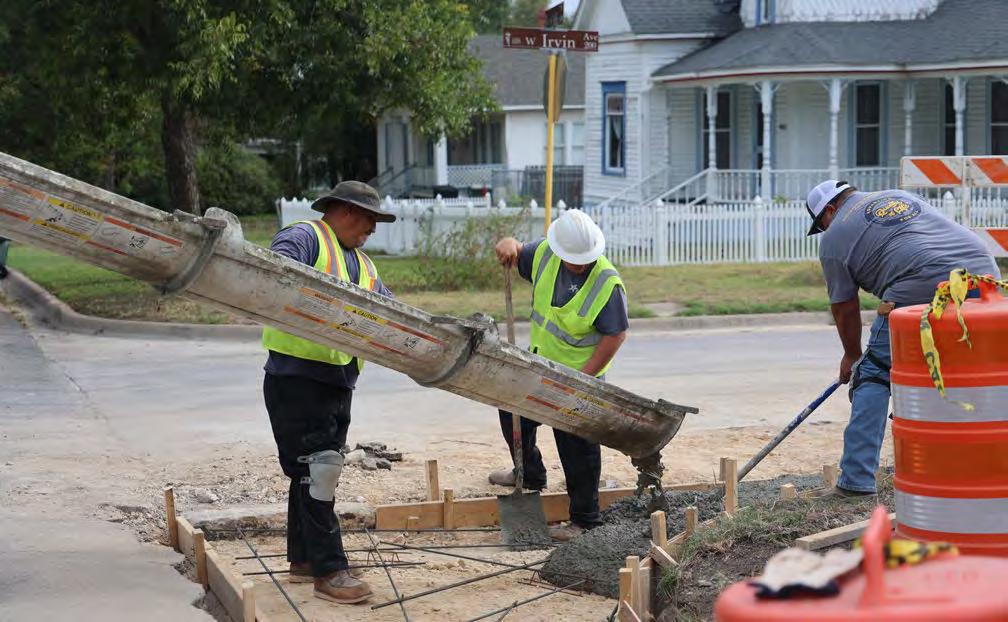
1
5
The Georgetown Railroad Trail is a 10-foot-wide, four-mile shared-use path that will transform the former Georgetown railroad corridor into a recreational and transportation asset for South Temple. Identified as a Priority Trail in the City’s Trails Master Plan, the railsto-trails project is designed to improve pedestrian and bicycle connectivity, linking neighborhoods and key destinations while providing a safe route from South 31st Street to the historic MK&T railroad bridge over the Leon River.
The trail will include safety lighting and enhanced street-crossing treatments to minimize conflicts between pedestrians, cyclists, and vehicular traffic and encourage use by residents of all ages and abilities. Beyond improving mobility, the trail will create new opportunities for recreation, exercise, and access to natural areas throughout South Temple.
Phase I, extending from South 5th Street to South 31st Street, is anticipated to be complete in early 2027. Phase II will continue west from South 31st Street to Temple’s city limits at the Leon River and is programmed for additional grant funding in FY 2029 through the Killeen-Temple Metropolitan Planning Organization’s Transportation Alternatives Program.
Line 1 - Georgetown Railroad Trail, Phase II
$4,200,000
The need to improve Little River Road originated in 2019 when Temple ISD requested roadway and utility extensions to support a future school site east of Canyon Creek and Blackland Road. Since that time, the area has experienced significant planning activity, voluntary annexations, and residential development, accelerating the need for transportation improvements along the corridor.
Phase I will reconstruct and widen Little River Road from Loop 363 to Barnhardt Road, creating a minor
arterial roadway with pedestrian accommodations and improved access to the new school and surrounding neighborhoods. The project will enhance roadway safety, increase capacity, and establish critical infrastructure needed to support continued growth in northeast Temple.
Design and right-of way acquisition are currently underway, with construction funding scheduled in FY 2029.
Line 3 - Little River Road, Phase I
$7,510,000
Phase II will extend improvements from Blackland Road south to FM 93 Spur, completing a key north-south transportation corridor serving both the City of Temple and Little River Academy. Funding is programmed for design and right-of-way acquisition to preserve the corridor and position the City for future construction as development continues to advance in the area.
Together, Phases I and II create a connected transportation corridor that improves mobility, supports future residential and commercial growth, and provides the infrastructure necessary to serve one of Temple’s fastest-growing areas.
Line 4 - Little River Road, Phase II (Design and Rights-of-Way)
$5,650,000
The Nugent Avenue Extension project will construct a new east-west corridor from 14th Street to Loop 363, including a grade-separated crossing of the Union Pacific Railroad. Recommended through the East Downs Neighborhood Planning District, the project provides critical connectivity needed to support continued development and redevelopment in the area while improving access to arterial roadways for residents, businesses, pedestrians, and emergency services.
The project also includes right-of-way acquisition and the extension of 18th Street to Munroe Avenue to improve local circulation and neighborhood connectivity. Once completed, the corridor will enhance safety, improve mobility, and support long-term investment
in the East Downs area. The City has submitted an application for competitive federal funding opportunities to support the project; however, no external funding has been assumed in the current financial plan pending award notification.
Line 2 – Nugent Avenue Extension
$21,000,000
The 14th Street Trail and Road Improvements project originated through the Ferguson Park Neighborhood Planning District and will improve connectivity along the 14th Street corridor from Avenue H to Adams Avenue. The project includes roadway enhancements and the construction of a 8-foot shared-use trail with pedestrian lighting, landscaping, and other streetscape improvements to create a safer and more accessible corridor for all users.
Currently, this section of 14th Street lacks adequate pedestrian infrastructure despite serving as an important connection to arterial roadways, neighborhood destinations, and nearby commercial services. The improvements will address longstanding safety and accessibility concerns while enhancing pedestrian and vehicular connectivity, improving traffic operations, and providing residents with safe access to essential services and recreational opportunities. Design work for the project is currently underway.
Line 5 - 14th Street Trail and Road Improvements
$5,800,000
The Avenue D Improvements project originated through the Ferguson Park Neighborhood Planning District and was identified as a priority due to the corridor’s narrow roadway, lack of pedestrian infrastructure, and limited connectivity. The project will fully repave Avenue D from 14th Street to 18th Street into a two-lane roadway with curb and gutter, sidewalks on both sides, landscaping, irrigation, lighting, and associated utility improvements.
The project also includes new sidewalk connections directly serving adjacent residences and establishes an enhanced internal connection to Jeff Hamilton Park through new roadway and pedestrian improvements. Together, these investments will improve safety for pedestrians and motorists, strengthen neighborhood
connectivity, enhance access to community amenities, and create a more attractive and welcoming corridor for residents and visitors.
$5,000,000
The Avenue H and 31st Street Intersection Improvements project addresses long-standing safety and operational concerns at one of Temple’s key intersections. Avenue H serves as an important east-west connector for surrounding neighborhoods, while 31st Street carries significant traffic volumes and provides access to major community destinations, including Baylor Scott & White Hospital and Temple High School.
The existing intersection configuration includes channelized turn lanes and curb islands that create sight-distance limitations, difficult turning movements, and contribute to a higher frequency of crashes. The project will reconstruct the intersection into a more conventional design that improves visibility, simplifies traffic movements, and enhances safety for motorists and pedestrians alike.
Originating from the Midtown and Las Cruces Neighborhood Planning Districts, this investment addresses a long-standing community concern while improving access to essential services, supporting economic activity, and strengthening connectivity between neighborhoods and the City’s arterial street network.
Line 7 - Avenue H and 31 Street Intersection
$925,000
The City recently completed a comprehensive pavement condition survey of every street in its transportation network. The resulting data supports a long-range pavement management plan that establishes minimum Pavement Condition Index (PCI) targets by roadway classification and uses deterioration models to forecast future maintenance and rehabilitation needs. This data-driven approach guides the City’s annual $4.5M pavement investment and helps ensure limited resources are directed to the right roads at the right time.
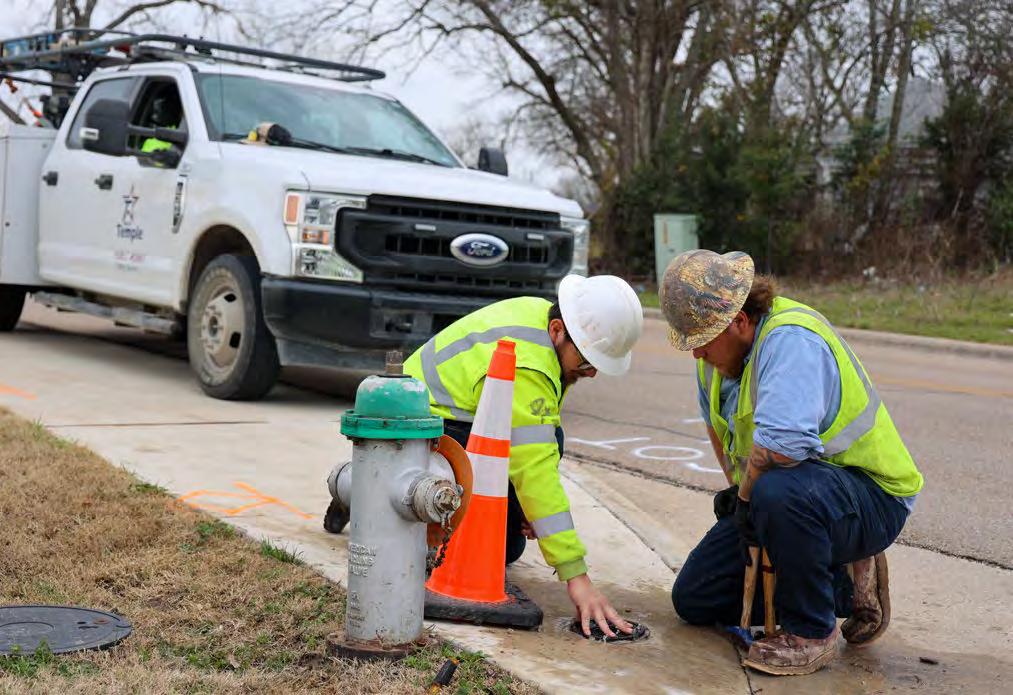
The pavement management strategy relies on two complementary approaches: preservation and reconstruction.
• Preservation focuses on extending the life of streets that remain in good or fair condition through proactive, low-cost treatments such as sealcoating, crack sealing, and thin overlays. These treatments slow deterioration and allow the City to maintain a greater portion of its street network in higher condition for less cost over time.
• Reconstruction is reserved for roadways that have deteriorated beyond the point of cost-effective repair or no longer meet minimum PCI standards. These projects require removing and rebuilding all or most of the pavement structure and are significantly more expensive and time-intensive than preservation activities.
By balancing preservation and reconstruction through a comprehensive, data-driven pavement management
program, the City maximizes the value of every transportation dollar invested while maintaining a safe, reliable, and functional street network for residents, businesses, and visitors.
Line 8 - Pavement Preservation
$9,000,000
Line 9 – Road Reconstruction
$9,000,000
Smart Growth requires the City to plan, design, construct, and maintain high-quality water, wastewater, and drainage infrastructure that meets the needs of the community both today and into the future.
To guide these investments, the City completed a comprehensive Water and Wastewater Master Plan in 2019 and updated the plan in 2021 to reflect changing development patterns and infrastructure needs. The master planning process evaluated the City’s existing utility systems, identified capacity and rehabilitation needs, and established a long-range framework for delivering utility infrastructure necessary to serve projected growth through 2070.
The plan includes:
• Evaluation of existing utility infrastructure and extension policies;
• Consideration of regulatory requirements and governing agency coordination;
• Identification and prioritization of capital improvements and system deficiencies; and
• Phasing strategies to support growth and maintain reliable utility service.
Because water and wastewater systems are highly interconnected, project timing often depends on system capacity, development activity, and the completion of related infrastructure improvements. As growth patterns evolve, projects may be accelerated, deferred, or reprioritized to align with actual demand, regulatory requirements, and available funding resources.
The Utilities Capital Improvement Program includes strategic investments to rehabilitate aging infrastructure, expand system capacity, improve resiliency, and ensure the continued delivery of safe and reliable utility services to residents and businesses throughout the community.
• Develop a Water and Wastewater Master Plan.
• Expand the advanced metering infrastructure program.
• Expand capacity of the Temple-Belton wastewater treatment plant.
• Expand capacity of the Doshier Farm wastewater treatment plant.
• Complete sewer basin assessments and repair identified deficiencies.
• Invest in the continued maintenance, replacement, and improvement of the City’s water, wastewater and drainage infrastructure.
Utilities capital investments serve five distinct purposes. Growth & Capacity projects extend and expand the water and wastewater system to serve new development and meet increasing demand as Temple continues to grow. Rehabilitation projects address aging infrastructure that has reached or is approaching the end of its useful life, reducing the risk of failure, minimizing costly emergency repairs, and maintaining reliable service to existing customers. Plant Expansion projects increase the treatment capacity of the City’s water and wastewater facilities to meet projected demand and maintain regulatory compliance. Mobility projects coordinate utility improvements with roadway construction to minimize future disruption and maximize the return on infrastructure investment. Metering projects advance the City’s automated metering infrastructure program, improving billing accuracy, water loss detection, and system management.
Utilities capital projects were evaluated as part of the City’s structured FY 2027 CIP prioritization process described in “How Temple Prioritizes Capital Investment”
at the beginning of this section, where full detail on the scoring methodology and citywide results is provided.
The highest-priority Utilities projects as scored by City Council were the Knob Creek Interceptor Phase II-V, Avenue H Reservoir Replacement, Aquifer Storage and Recovery, CWTP: Clarifier #4 Retrofit, and Elevated Storage Tank Rehabilitations. The Knob Creek Interceptor earned the top utility ranking and ranked second overall across all 106 citywide projects, reflecting strong Council and staff consensus on the urgency of rehabilitating and expanding aging interceptor infrastructure that serves a significant portion of Temple’s wastewater collection system. The Avenue H Reservoir Replacement scored highly on Existing Condition criteria following a structural assessment that determined rehabilitation of the existing reservoirs was no longer feasible, making replacement the only viable path to continuing to provide reliable storage and pressure in that service area. Aquifer Storage and Recovery ranked as a Council priority reflecting the long-term strategic value of diversifying Temple’s water supply and building drought resiliency for future generations. The Clarifier #4 Retrofit scored highly on Financial Responsibility criteria, representing one of the most cost-effective investments in the entire utility program — a relatively modest expenditure that restores the treatment plant’s full design capacity without the cost of new construction. The Elevated Storage Tank Rehabilitations similarly scored on Financial Responsibility criteria,
representing timely investments that extend the life of existing infrastructure and defer the need for far more expensive replacements.
Three utility projects were deferred from this plan for distinct reasons. The Leon River Trunk Sewer Phase II will be reconsidered in a future planning cycle depending on the pace of development activity in that corridor — as growth patterns clarify, the timing and phasing of this project will be evaluated accordingly. The Wastewater Line to Moffat Road was deferred in favor of the Water Line to Moffat Road, which was determined to be the more immediate infrastructure need for extending service to the CCN boundary in that area; wastewater capacity to that corridor will be addressed as development demand warrants. The Membrane Treatment Plant Expansion was deferred based on current system capacity — the recently completed Membrane Water Treatment Plant addition provides sufficient treatment capacity to meet projected demand for the foreseeable future, and expansion will only be advanced if growth rates or usage patterns shift in ways that require additional capacity ahead of current projections.
The FY 2027 Budget and Financial Plan includes funding for the $193 million Water and Wastewater CIP with the issuance of Utility Revenue Bonds.
Aquifer Storage and Recovery (ASR) is a long-term water supply strategy that allows the City to store treated water in a deep underground aquifer during periods of surplus and recover that water when demand is high or supplies are constrained. By effectively “banking” water underground, ASR creates a locally controlled reserve that improves system resiliency and strengthens the City’s ability to respond to drought, peak demand conditions, and future growth.
The proposed program includes the development of three additional ASR wells and supporting infrastructure, increasing the City’s available water portfolio by approximately 15 million gallons per day. The project also maximizes the use of existing water resources by capturing water that might otherwise go unused and storing it for future needs.
Initially, the ASR program is intended to support industrial and non-potable demands while establishing the infrastructure and operational experience necessary for potential potable reuse applications in the future. This phased approach provides immediate operational benefits while creating long-term flexibility for future water management strategies.
As a Council priority, ASR represents a strategic investment in Temple’s water future by diversifying water sources, improving drought resiliency, and preserving options for future generations. The project reflects the City’s longstanding commitment to proactive planning and ensuring that future residents and businesses continue to have access to a reliable and sustainable water supply.
Line 3 – Aquifer Storage and Recovery
$20,000,000
The Utilities Administration Building project creates a second operational location and provides the space necessary to support continued growth of the Utilities
Department. Portions of the Conventional Water Treatment Plant are more than 100 years old, and future reconstruction and expansion efforts require the relocation of administrative functions and support services currently occupying valuable treatment plant space. By consolidating these functions into a new facility, the City can repurpose existing areas for additional filters, clarifiers, and other infrastructure improvements necessary to maintain reliable water service and meet future demands.
4 – Water Treatment Plant Administration Building
$10,000,000
Clarifier #4 currently operates below its 30 MGD design capacity due to deficiencies in the sludge collection system that limit performance and increase the risk of solids carryover. This project will retrofit the clarifier to address these issues, increasing the Conventional Water Treatment Plant’s effective capacity from approximately 26 MGD to its full 30 MGD design capacity—an additional four million gallons per day of production without constructing new treatment infrastructure.
The improvements will also reduce environmental and regulatory risk by improving solids handling and minimizing the potential for sludge discharge into the Leon River. As one of the utility system’s highest-priority projects, the Clarifier #4 Retrofit maximizes existing infrastructure, improves operational resiliency, and supports the City’s long-term water supply needs.
Line 2 – Water Treatment Plant Clarifier #4 Rehabilitation
$300,000
This project adds aeration and clarifiers ahead of the Membrane Water Treatment Plant to address growing capacity needs and evolving regulatory requirements. The improvements will improve raw water pretreatment, extend membrane life, and allow the plant to be re-rated for additional production capacity while reducing chemical costs and strengthening the City’s ability to respond to source water quality events.
By maximizing existing infrastructure and improving operational resiliency, these modifications support the long-term reliability and capacity of Temple’s water system.
$14,000,000
The City of Temple operates thirteen elevated storage tanks (EST) with a combined storage capacity of approximately 13.5 million gallons of potable water. These facilities are critical components of the water distribution system, providing system pressure, fire protection, and reliable water service throughout the community.
Industry standards and regulatory guidance recommend that elevated storage tanks undergo comprehensive rehabilitation every 10 to 15 years to maintain structural integrity, preserve water quality, and extend service life. Rehabilitation activities may include interior and exterior coating replacement, structural repairs, safety improvements, and upgrades to meet current regulatory requirements.
The Public Works Department conducts ongoing assessments of each tank’s age, condition, and operational performance to identify facilities approaching their recommended rehabilitation cycle. Based on these evaluations, a prioritized rehabilitation schedule is incorporated into the City’s six-year business plan. This funding plan includes five elevated storage tank rehabilitation projects and represents a proactive investment strategy that helps prevent deterioration, avoid service interruptions, and reduce the likelihood of costly emergency repairs and replacements.
1 - Elevated Storage Tank Rehabilitations
$5,850,000
Ground storage and clearwell storage are sufficient per TCEQ requirements. However, additional clearwell storage was recently added as part of the completed membrane plant expansion.
The Water and Wastewater Master Plan identified the need for additional storage capacity within the
785 Pressure Plane to support continued residential and industrial growth in South Temple. This project includes construction of a new 1.0 million gallon elevated storage tank near Barnhardt Road and Little River Road to maintain adequate system pressures and provide operational flexibility as development continues in the area.
Due to the pace of growth and development activity occurring in South Temple, this project has been accelerated within the six-year business plan. Without these improvements, the City may face system pressure constraints that could limit future development opportunities within the service area.
Line 7 - New Elevated Storage Tank, Little River Road
$7,700,000
Similarly, the installation of an 8” water main from Hartrick Bluff Road looping to Old 95 is an additional need identified by staff to improve water distribution in this rapidly growing area of South Temple.
Line 6 - Water Line at Hartrick Ranch
$2,020,000
The Avenue H Reservoirs are a critical component of Temple’s water system, providing 7.0 million gallons of storage and maintaining system reliability and pressure. Following a structural failure in 2025, a comprehensive engineering assessment determined that rehabilitation of the existing reservoirs is not feasible due to significant structural deterioration.
This project will reconstruct and expand the north and south reservoirs to restore critical infrastructure, increase storage capacity, and improve the system’s operational safety margin, ensuring the continued reliability of Temple’s drinking water system.
Line 8 - Ave H Reservoir Replacement
$24,000,000
The Water and Wastewater Master Plan identified the need for a primary water transmission main along Northeast Loop 363 to address a significant service gap within the 876 Pressure Plane. This project includes approximately 19,700 linear feet of new 12-inch water main
extending from Avenue H to IH-35, creating a continuous loop within the City’s water distribution system.
The three-phase project will improve system reliability, enhance pressure stability, and increase water availability throughout Northeast Temple while supporting future residential and commercial development along the corridor. By strengthening connectivity between existing water infrastructure, the project provides additional operational flexibility and resiliency for one of the City’s fastest-growing areas.
Line 9 - North East Loop 363 Water Lines
$2,900,000
The Temple Heights District Utility Improvements project replaces aging and undersized water and wastewater infrastructure within one of the City’s established neighborhoods. The project includes approximately 2.7 miles of water line and 7 miles of sanitary sewer line replacements identified through the Utilities Department’s ongoing condition assessment program.
Many of the existing utilities have reached the end of their useful life, require increased maintenance, and no longer meet current service demands. These improvements will improve service reliability, reduce maintenance costs, and ensure the continued delivery of dependable utility services to Temple Heights residents.
Line 10 - Temple Heights District Utility Improvements
$16,500,000
The Water Line to Moffat Road project extends municipal water service to an area annexed in 2008 that currently relies on rural water infrastructure. Existing water capacity and fire flow limitations have emerged as barriers to recent development proposals in the corridor.
By extending a municipal water connection to Moffat Road, the City will improve service reliability, enhance fire protection, and support future residential and commercial development in this growing area.
Line 11 - Water Line to Moffat Road
$2,500,000
The Mobility Capital Improvement Program includes new roadways, extensions, and major roadway improvements. To minimize costs and future disruptions, utilities are added, replaced, or upgraded concurrently with roadway construction whenever practical. Funding for these utility improvements, along with contingency for water-related projects, is identified within the Utilities Capital Improvement Program.
Line 12 - Mobility Related Utility Improvements
$2,010,000
Line 13 - Contingency
$2,567,500
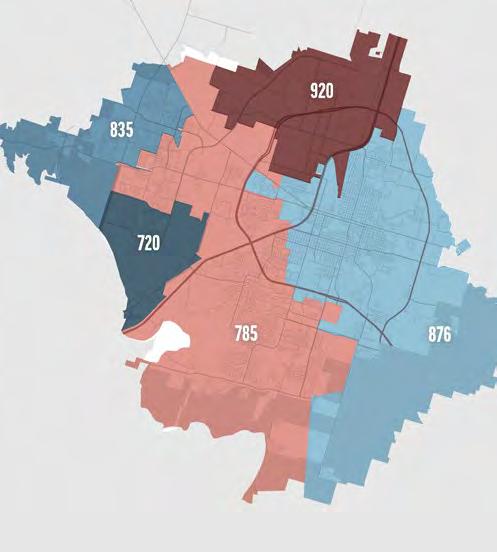
Water Pressure Planes
The City of Temple is served by two reclamation plants, the Temple-Belton Wastewater Treatment Plant (TBWWTP) and the Doshier Farm Wastewater Treatment Plant (DFWWTP). Within each of these sewerage systems is a network of gravity lines, pressurized force mains, and lift stations. Gravity flow is the most economic means of conveyance in a wastewater collection system, so these wastewater lines typically follow the natural topography of the local area creek basins. The components within these basin networks function as a system to connect customers of the wastewater collection systems with their respective treatment facilities.
Cedar Creek Basin
Leon River Basin
Pepper Creek Basin
Bird Creek Basin
Friars Creek Basin
Little River Basin
Boggy Creek Basin
Knob Creek Basin
Williamson Creek Basin
Little Elm Creek Basin
At the direction of City staff, the Wastewater Master Plan now includes the Cedar Creek Basin, which was previously considered outside the planning area. In anticipation of potential growth and development in this basin, the plan identifies the necessary improvements in the Leon River and Pepper Creek Basins to accommodate additional flows from Cedar Creek. These required upgrades are outlined in the respective discussions for each basin.
The Leon River Basin currently consists of two independent wastewater collection systems that limit service flexibility and require reliance on the aging Pea Ridge Lift Station. The Master Plan recommends constructing a continuous trunk sewer to connect the upper and lower basin systems, improving system efficiency and reliability while expanding wastewater service south of Poison Oak Road and to developing areas along SH 317.
The Master Plan summarized the analysis and planning of improvements for the City’s wastewater collection system and wastewater treatment facilities. Wastewater flow projections were based on future land use and a model utilizing SewerGEMS. The continued growth and development of Temple necessitates that the existing wastewater system be analyzed for adequacy of service and that facilities be planned ahead of development. The report identifies and determines the wastewater collection system improvements including gravity lines, force mains, and lift stations which will be required to provide service within the planning area. Projects are included in the wastewater funding schedule utilizing the most recent opinions of probable cost.
Completion of the trunk sewer will allow for the abandonment of the Pea Ridge Lift Station, reduce long-term maintenance needs, and position the wastewater system to accommodate future flows from both the Leon River and Cedar Creek Basins.
Line 14 - Leon River Trunk Sewer, Phase II
$5,900,000
Proposed higher-density development in the West Airport area prompted a comprehensive evaluation of the West Airport Trunk Sewer system. The analysis determined that portions of the existing sewer infrastructure must be upsized to accommodate future wastewater flows and maintain adequate system capacity.
The recommended improvements utilize a combination of pipe bursting and open-cut construction to economically increase capacity while maximizing the use of existing infrastructure. These upgrades will support
future development, improve long-term system reliability, and eliminate the need for construction of an additional lift station. Without these improvements, the existing system could experience surcharging during peak flow conditions and limit future development opportunities.
Line 15 - West Airport Trunk Sewer Improvements
$3,000,000
The proposed improvements within the Friars Creek Basin include extending wastewater collection service beyond FM 93, eliminating the Valley Ranch Lift Station, and relocating the Friars Creek Lift Station to a lower, more advantageous location near the Leon River. These improvements would increase system efficiency, improve long-term serviceability within the basin, and support future growth in the area. Because additional development in this service area is anticipated beyond the current planning horizon, these projects are not currently programmed within the six-year business plan.
A new trunk sewer, lift station, and force main were recently completed in this basin through a cost-participation agreement with a developer, made possible by Texas Local Government Code Section 212.072. This provision allows the City to partner with developers to share the cost of constructing public infrastructure that supports
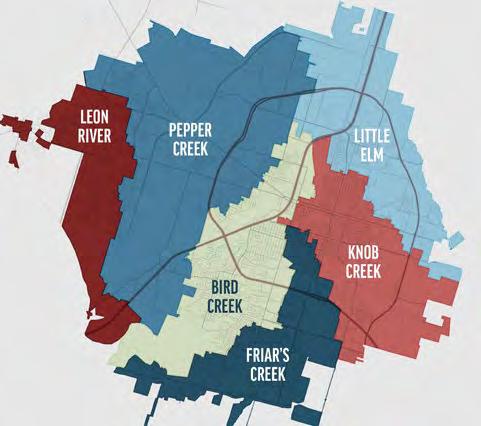
new growth. This project successfully established the wastewater framework within the Little River Basin.
The addition of future interceptors to bring wastewater flows to the trunk sewer will provide the necessary infrastructure for future development. These interceptors will also function as an outfall for inter basin transfer from the Boggy Creek Basin.
Line 16 - Little River Trunk Sewer
$5,940,000
The Boggy Creek Basin currently lacks the major wastewater infrastructure necessary to support long-term development south of FM 93. The Master Plan recommends constructing a continuous trunk sewer, new lift station, and associated gravity lines to establish a complete wastewater collection framework for the basin.
These improvements will expand serviceable areas within the basin and provide an inter-basin transfer to the Little River Basin, creating the capacity and flexibility needed to accommodate future residential growth in this area.
Line 17 – Boggy Creek Trunk Sewer, Lift Station and Force Main
$20,300,000
The Knob Creek Interceptor Improvements are a high-priority initiative identified through the City’s wastewater system planning efforts. The project rehabilitates and upsizes aging interceptor lines in the upper Knob Creek Basin to increase system capacity, improve reliability, and reduce infiltration and sanitary sewer overflows.
Final design is complete, and Phase I construction was completed in June 2026. Phase III is currently funded and anticipated to bid in fall 2026. Phases II, IV, and V will continue the replacement and expansion of the interceptor system, supporting future development while reducing maintenance needs and the risk of regulatory compliance issues associated with aging infrastructure.
Line 18 - Knob Creek Interceptor Improvements
$18,040,000
A future trunk sewer extension to the southeast will redirect flows to the Little Elm Basin, expand serviceable areas, and eliminate the existing Williamson Creek Lift Station and force main, significantly reducing long-term operations and maintenance costs.
Line 19 – Williamson Creek Trunk Sewer, South
$3,700,000
Future improvements in the Little Elm Creek Basin focus on extending wastewater service beyond the City’s existing CCN boundary and expanding the Little Elm Trunk Sewer through currently undeveloped areas of the basin. These improvements will establish the infrastructure necessary to support future growth and provide wastewater service to areas that currently have no existing collection system.
Line 20 – Little Elm Trunk Sewer, Lift Station and Force Main
$22,205,000
The Wastewater Capital Improvement Program also includes contingency funding to address unforeseen conditions, cost escalation, and scope adjustments that may arise during project design and construction.
Line 21 – Contingency
$3,567,500
The City maintains high-quality credit ratings of AA/Aa by Moody’s Investor Services and Standard and Poor’s. These ratings reflect the City’s strong financial position and commitment to sound fiscal management, allowing the City to borrow at lower interest rates and reducing the cost of capital projects for taxpayers.
For each bond sale, City of Temple is evaluated for overall debt burden, financial management, financial performance, and the City’s economic base and prospects.
The City’s most recently received credit opinions in May of 2025. Credit strengths noted by the rating agencies include:
• Adequate economy,
• Very strong management, with strong financial policies and practices,
• Strong budgetary performance,
• Very strong budgetary flexibility,
• Very strong liquidity, and
• Strong institutional framework score.
These ratings demonstrate the City’s continued commitment to long-term financial sustainability and responsible stewardship of public resources.
Statutes of the State of Texas (Article 1028) limit the maximum amount that a city can designate for debt service to $2.50 per $100 of assessed valuation. However, under City Charter, a limitation on taxes levied for general municipal operating purposes and for the purpose of paying interest and providing a proper sinking fund for paying the outstanding bonds and other obligations of the City, issued for municipal purposes, and any such future bonds or obligations which may be authorized, may not exceed $1.20 per $100 assessed valuation.
Assessed value, 2025/2026 tax roll
Limit on amount designated for debt service per $100 assessed valuation
Legal debt service limit
Actual amount to be expended by Debt Service Fund for general obligation debt service during the year ended September 30, 2026 $9,504,121,950
$1.20 $114,049,463 $37,260,199
and assessed value are both based on 100% of the
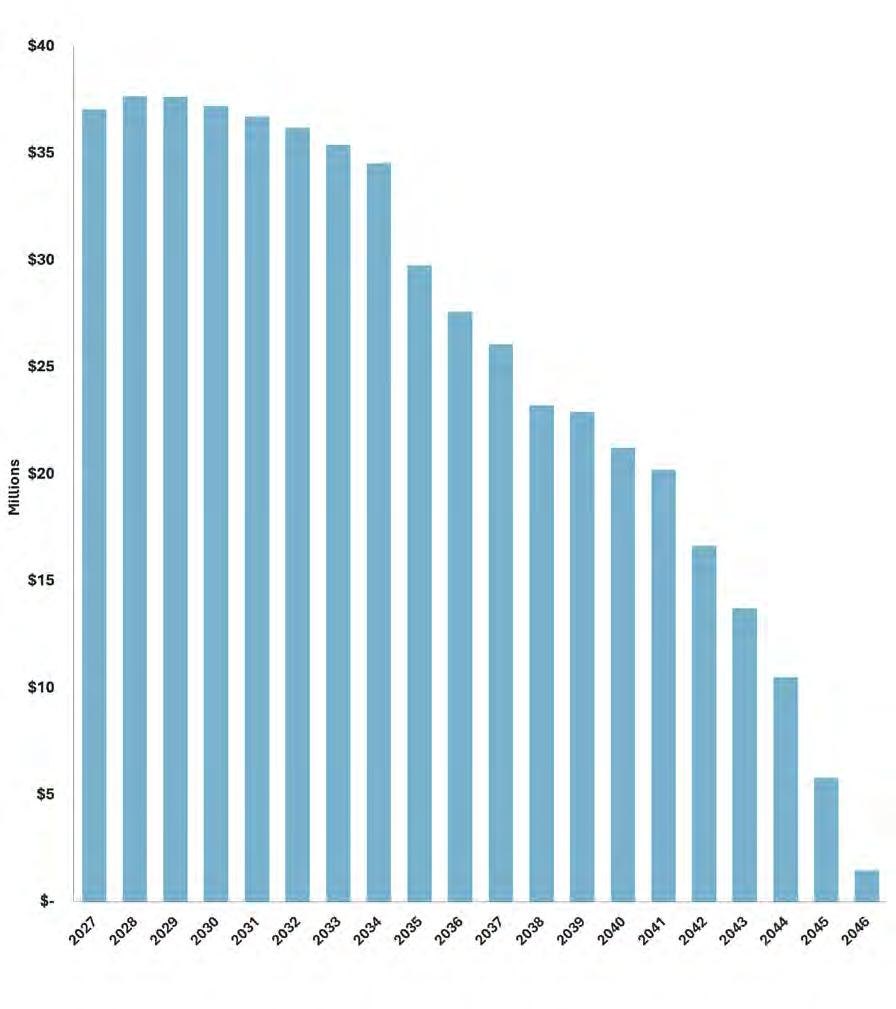
2012
CERTIFICATES OF OBLIGATION
$9,420,000, Mature 2033
Proceeds used for constructing, improving, extending, expanding upgrading and/or developing streets, bridges, sidewalks, intersections, traffic signalization and other traffic improvement projects and related utility and rail relocation costs, drainage improvements and purchasing necessary rights-of-way.
2012
CERTIFICATES OF OBLIGATION, TAXABLE
$4,645,000, Mature 2032
Proceeds used for permitting, construction, land acquisition and other costs related to the expansion of the City’s landfill.
2014
CERTIFICATES OF OBLIGATION,
$21,230,000, Mature 2028
Proceeds used for constructing, improving, extending, expanding upgrading and/or developing streets, bridges, sidewalks, intersections, traffic signalization and other traffic improvement projects and related utility and rail relocation costs, drainage improvements and purchasing necessary rights-of-way.
2017
CERTIFICATES OF OBLIGATIONS
$33,900,000, Mature 2037
2017 Certificates of Obligation
$ 27,665,000 [TCIP] Mature 2037
3,735,000 [Drainage] Mature 2037
1,100,000 [Public Safety] Mature 2037
1,400,000 [Solid Waste] Mature 2037
$ 33,900,000
Proceeds used for constructing, improving, extending, expanding upgrading and/or developing streets, bridges, sidewalks, intersections, traffic signalization and other
traffic improvement projects, related utility and rail relocation costs, drainage improvements and purchasing necessary rights-of-way, drainage improvement projects, public safety radios, and sanitation equipment.
REFUNDING BONDS
$17,780,000, Mature 2034
Proceeds used for partial refunding of 2012 PassThrough Revenue & Limited Tax Bonds.
CERTIFICATES OF OBLIGATION
$17,820,000, Mature 2039
Proceeds used for constructing, improving, extending, expanding upgrading and/or developing streets, bridges, sidewalks, intersections, traffic signalization and other traffic improvement projects and related utility and rail relocation costs, and purchasing necessary rights-ofway.
GENERAL OBLIGATION REFUNDING BONDS, TAXABLE
$685,000, Mature 2031
Proceeds used for partial refunding of 2012 PassThrough Revenue & Limited Tax Bonds.
CERTIFICATES OF OBLIGATION
$16,840,000, Mature 2040
Proceeds used for constructing, improving, extending, expanding upgrading and/or developing streets, bridges, sidewalks, intersections, traffic signalization and other traffic improvement projects and related utility and rail relocation costs, facility improvements, and purchasing necessary rights-of-way.
2020
CERTIFICATES OF OBLIGATION
$4,095,000, Mature 2040
Proceeds used for drainage improvements and purchasing necessary rights-of-way
2020
LIMITED TAX NOTES
$2,725,000, Mature 2027
Proceeds used for solid waste vehicles, street and signal heavy equipment, and parks equipment.
2021
CERTIFICATES OF OBLIGATION
$46,290,000 Mature 2041
Proceeds used for constructing, improving, extending, expanding upgrading and/or developing streets, bridges, sidewalks, intersections, traffic signalization and other traffic improvement projects and related utility and rail relocation costs, facility improvements, and purchasing necessary rights-of-way.
2021
CERTIFICATES OF OBLIGATION
$3,990,000, Mature 2041
Proceeds used for drainage improvements and purchasing necessary rights-of-way
2021
LIMITED TAX NOTES
$2,940,000, Mature 2028
Proceeds used for solid waste vehicles, street and signal heavy equipment, and parks equipment.
2022A
CERTIFICATES OF OBLIGATION
$39,865,000 Mature 2042
Proceeds used for (i) constructing, improving, extending, expanding upgrading and/or developing streets, bridges, trails, sidewalks, intersections, traffic signalization and other traffic improvement projects including related infrastructure, and purchasing necessary rights-of-way, (ii) constructing, renovating, repairing, demolishing and equipping existing City buildings and facilities including HVAC repairs and replacements, the Lanier Center
building repairs and the Parks Department Maintenance Building; (iii) designing, constructing and equipping an expansion to the existing City animal shelter; (iv) designing, constructing, improving, acquiring and equipping City public safety facilities including Fire Training Skills Pad, Simulation Shoot House and Fire Training Burn Props, and (v) acquisition of fire trucks.
LIMITED TAX NOTES
$2,575,000, Mature 2029
Proceeds used for solid waste vehicles, street and signal heavy equipment, and parks equipment.
CERTIFICATES OF OBLIGATION
$41,340,000 Mature 2043
Proceeds used for (i) constructing, improving, extending, expanding upgrading and/or developing streets, roads, bridges, trails, sidewalks, intersections, traffic signalization and other traffic improvement projects and related utility and rail relocation costs, facility improvements, and purchasing necessary rights-of-way, (ii) constructing, renovating, repairing, demolishing and equipping existing City buildings and facilities, (iii) designing, constructing, improving, acquiring and equipping City park facilities, (iv) designing, constructing, improving, acquiring and equipping City public safety facilities, (v) acquisition of fire engines and mobile command vehicles, (vi) Neighborhood Planning Districts plans and related improvements, (vii) professional services including fiscal, engineering, architectural and legal fees and (viii) paying the costs of issuing the certificates.
$2,890,000, Mature 2030
Proceeds used for solid waste vehicles, and street and signal heavy equipment.
$60,130,000 Mature 2044
Proceeds used for (i) constructing, improving, extending, expanding upgrading and/or developing streets, roads, bridges, trails, sidewalks, intersections, traffic signaliza-
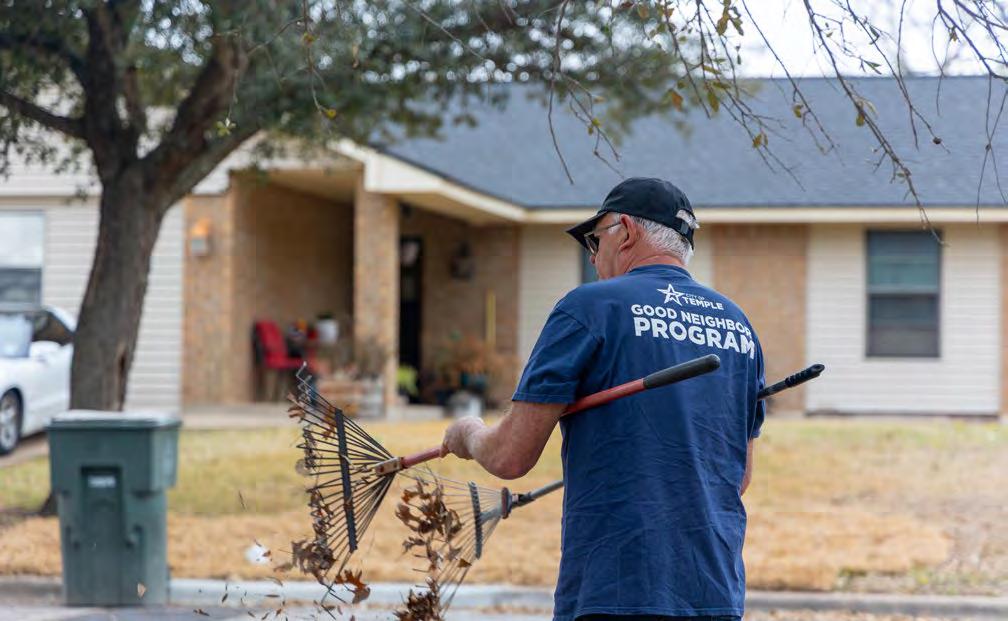
tion and other traffic improvement projects and related utility and rail relocation costs, facility improvements, and purchasing necessary rights-of-way, (ii) constructing, renovating, repairing, demolishing and equipping existing City buildings and facilities, (iii) designing, constructing, improving, acquiring and equipping City park facilities, (iv) designing, constructing, improving, acquiring and equipping City public safety facilities, (v) acquisition of fire engines and mobile command vehicles, (vi) Neighborhood Planning Districts plans and related improvements, (vii) professional services including fiscal, engineering, architectural and legal fees and (viii) paying the costs of issuing the certificates.
$3,030,000,
Proceeds used for solid waste vehicles, and street, signal and parks heavy equipment.
$50,030,000
Proceeds used for (i) constructing, improving, extending, expanding upgrading and/or developing streets, roads, bridges, trails, sidewalks, intersections, traffic signalization and other traffic improvement projects and related utility and rail relocation costs, facility improvements, and purchasing necessary rights-of-way, (ii) constructing, renovating, repairing, demolishing and equipping existing City buildings and facilities, (iii) designing, constructing, improving, acquiring and equipping City park facilities, (iv) designing, constructing, improving, acquiring and equipping City public safety facilities, (v) acquisition of fire engines and mobile command vehicles, (vi) Neighborhood Planning Districts plans and related improvements, (vii) professional services including fiscal, engineering, architectural and legal fees and (viii) paying the costs of issuing the certificates.
$4,770,000, Mature 2032
Proceeds used for solid waste vehicles, information technology equipment, and public safety communication equipment, and street, signal and parks heavy equipment.
2026
$17,500,000 Mature 2046
Proceeds used for (a) acquiring, designing, constructing, improving, extending, and expanding City landfill facilities, including the acquisition of future landfill sites; (b) acquiring, designing, constructing, improving, extending, and expanding City animal shelter facilities, including the acquisition of future animal shelter sites; and (c) professional services including fiscal,
engineering, architectural and legal fees and other such costs incurred in connection therewith including the costs of issuing the Certificates.
$4,595,000, Mature 2033
Proceeds used for solid waste vehicles, and street and signal heavy equipment.
2027
LIMITED TAX NOTES
$6,000,000, Mature 2034
Proceeds used for solid waste vehicles, new financial software, public safety equipment, and street heavy equipment.
1,346,543
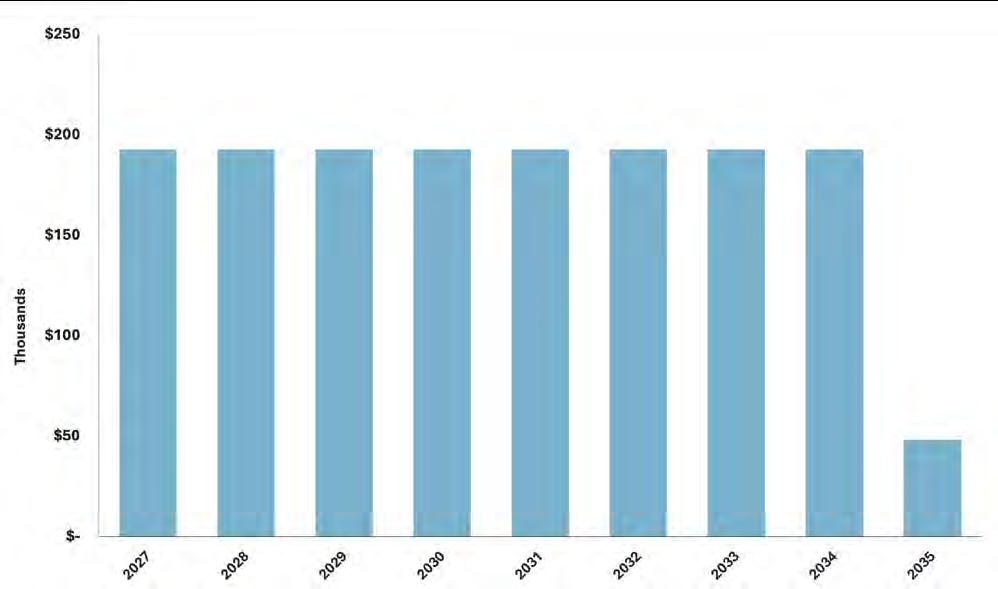
2020
ENERGY PROGRAM
$1,715,313, Mature 2034
State Energy Conservation Office LoanSTAR Energy Program proceeds used to install energy efficient lighting, heating and cooling systems at various locations.
ENERGY PROGRAM - HOTEL/ MOTEL
$925,310 Mature 2034 State
Conservation Office LoanSTAR Energy Program
and
at various Hotel/ Motel Tax Fund locations.

2,064,148
(291,914)
1,772,234
2023 LEASE FIRE EQUIPMENT
$54,919, Mature 2033
Proceeds used to purchase an integrated digital evidence management solution for the fire department.
$2,428,858, Mature 2033
Proceeds used to purchase an integrated digital evidence management solution for the police department.
$199,037, Mature 2029
Proceeds used to purchase copiers for various General Fund departments.
$12,625, Mature 2029
Proceeds used to purchase copiers for various Hotel/ Motel Tax Fund departments.

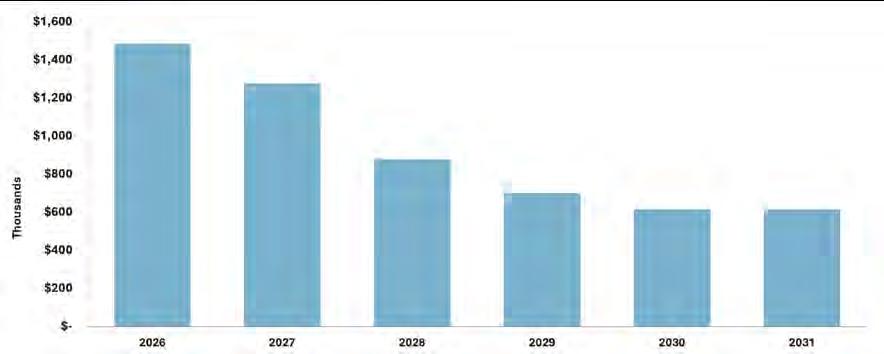
PURPOSES
2023 SUBSCRIPTION OPERATING SYSTEM
$1,061,110 Mature 2028
2023 SUBSCRIPTION POLICE INVESTIGATIVE SYSTEM
$44,384 Mature 2028
2024 SUBSCRIPTION FIRE DIGITAL EVIDENCE
$69,584 Mature 2033
2024 SUBSCRIPTION LICENSE PLATE AND AUDIO DETECTION
$332,309 Mature 2028
2024 SUBSCRIPTION POLICE DIGITAL EVIDENCE
$5,121,795 Mature 2033
2025 SUBSCRIPTION TRAFFIC SIGNAL MONITORING
$402,027 Mature 2030
2026 SUBSCRIPTION GEOGRAPHIC INFORMATION SYSTEMS
$185,987 Mature 2029
2026 SUBSCRIPTION LEASE TRACKING
$73,805 Mature 2029
2026 SUBSCRIPTION FLEET TRACKING
$145,987 Mature 2029
2026 SUBSCRIPTION INTEGRATED LIBRARY SYSTEM
$195,460 Mature 2028
2027 SUBSCRIPTION TRAINING AND DEVELOPMENT
$52,033 Mature 2029
2027 SUBSCRIPTION SOLID WASTE ROUTE MONITOR
$355,450 Mature 2029
2027 SUBSCRIPTION ENTERPRISE RESOURCE PLANNING
$112,669 Mature 2029
2015 Series - Issued $23,685,000 Rates 2.00% - 5.00%, Date of Maturity 2035
-
$35,000,000
2019 Series - Issued $22,000,000
4.00% - 5.00%, Date of Maturity 2039
2020 Energy Loan - Issued $196,012
2034
$68,145,000
$26,200,000
2021 Refunding Series, Taxable - Issued $23,145,000 Rates 0.31% - 3.01%, Date of Maturity 2044
2022 Series - Issued $17,695,000 Rates 4.00% - 5.00%, Date of Maturity 2042
2023 Series - Issued $21,000,000
Rates 4.22%, Date of Maturity 2042
2023 Selectron Subscription - Issued $250,126 Rates 3.37%, Date of Maturity 2027
2025 GO Refunding Series - Issued $3,080,000 Rates 5.00%, Date of Maturity 2028 2,120,000 2025 Limited Tax Notes - Issued $1,815,000 Rates 5.00%, Date of Maturity 2032 1,605,000 2025 Series - Issued $95,850,000
Rates 5.00% - 5.25%, Date of Maturity 2050 94,110,000 2025 Lease - Copiers - Issued $19,980
2.97%, Date of Maturity 2029
OUTSTANDING 10/1/2026 $ 273,417,659 Principal Retirements Through 9/30/2027 (15,492,470) Principal Additions Through 9/30/2027 39,000,000 Total Debt Outstanding 9/30/2027 $ 296,925,189 Sinking and Reserve Fund Balance as of 9/30/2027 (4,435,156) NET BALANCE OF DEBT OUTSTANDING $ 292,490,033
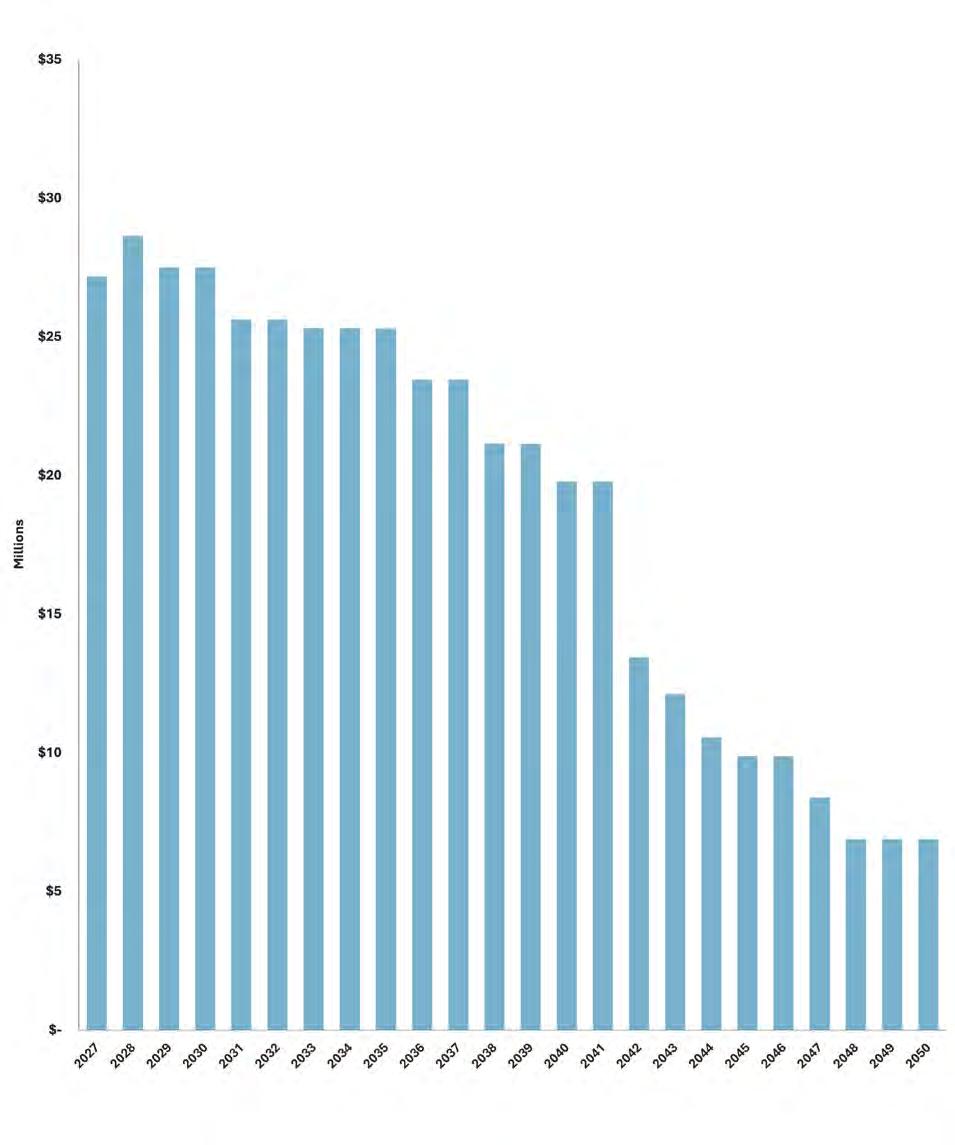
2015 SERIES
$23,685,000, Mature 2035
Proceeds used for water line replacements, elevated storage tank rehabilitation, generators for water treatment plant, wastewater line replacements, lift station rehabilitation and sewerage system land acquisition and design.
2017 SERIES
$32,755,000, Mature 2037
Proceeds used for water line replacements, elevated storage tank rehabilitation, generators for water treatment plant, wastewater line replacements, lift station rehabilitation and sewerage system land acquisition and design.
2019 GENERAL OBLIGATION REFUNDING BONDS
$15,440,000, Mature 2030
Proceeds used for partial refunding of the 2010 Utility System Revenue Bonds and 2011 General Obligation Refunding Bonds.
2019 SERIES
$20,705,000, Mature 2039
Proceeds used for water line replacements, elevated storage tank rehabilitation, generators for water treatment plant, wastewater line replacements, lift station rehabilitation and sewerage system land acquisition and design.
2020 ENERGY PROGRAM
$196,012, Mature 2034
State Energy Conservation Office LoanSTAR Energy Program proceeds used to install energy efficient lighting, heating and cooling systems at various locations.
2021 SERIES
$68,145,000 Mature 2041
Proceeds used for water treatment plant improvements, construction and rehabilitation of elevated storage tanks, water and wastewater line replacements and extensions, lift station rehabilitation and abandonment, sanitary sewer evaluation surveys and related improvements, and design for expansion of wastewater treatment plant.
$26,445,000, Mature 2041
Proceeds used for water treatment plant improvements (including ground storage tanks and pump stations), elevated storage tank rehabilitation, water and wastewater line replacements, upgrades and extensions, sanitary sewer evaluation surveys and related improvements, and design for expansion of treatment plants.
TAXABLE
$23,145,000, Mature 2044
Proceeds used for partial refunding of the 2014 Utility System Revenue Bonds, Taxable Series and 2015 Utility System Revenue Bonds.
2022 SERIES
$17,695,000, Mature 2042
Proceeds used for water treatment plant improvements (including ground storage tanks and pump stations), elevated storage tank rehabilitation, water and wastewater line replacements, upgrades and extensions, sanitary sewer evaluation surveys and related improvements and metering infrastructure.
2023 SERIES
$19,775,000, Mature 2043
Proceeds used for water treatment plant improvements (including ground storage tanks and pump stations), elevated storage tank rehabilitation, water and wastewater line replacements, upgrades and extensions, sanitary sewer evaluation surveys and related improvements and metering infrastructure.
2023
SUBSCRIPTION LIABILITY –UTILITY BILLING IVR
$250,125, Matures 2027
Proceeds used for interactive voice response (IVR) system for the utility billing department in the water and sewer fund.
2025 GENERAL OBLIGATION REFUNDING BONDS
$3,080,000, Mature 2028
Proceeds used refunding of the 2015 General Obligation Refunding & Improvement Bonds.
2025 LIMITED TAX NOTES
$1,815,000, Mature 2032
Proceeds used for utility vehicles, and equipment.
2025 SERIES
$95,850,000, Mature 2050
Proceeds used for water treatment plant improvements (including ground storage tanks and pump stations), elevated storage tank rehabilitation, water and wastewater line replacements, upgrades and extensions, sanitary sewer evaluation surveys and related improvements and metering infrastructure.
2025 GENERAL OBLIGATION REFUNDING BONDS
$1,815, Matures 2032
Proceeds used for partial refunding of 2015 General Obligation Refunding & Improvement Bonds.
CAPITAL LEASE - COPIERS
$19,980, Matures 2029
Proceeds used to purchase copiers for various water and sewer fund departments.
2027 SERIES
$39,000,000, Mature 2047
Proceeds used for water treatment plant improvements (including ground storage tanks and pump stations), elevated storage tank rehabilitation, water and wastewater line replacements, upgrades and extensions, aquifer storage and recovery, and facility upgrades.
Ad valorem taxes are levied on captured increments of growth in real property values in a designated zone. The tax revenues derived from this increment are to be used for public improvements within this designated zone. The entities and tax rates within the zone are as follows:
Temple I.S.D.* $ 1.1372
City of Temple 0.6999
Bell County 0.3128
Temple College 0.2017
Elm Creek Flood Control District 0.0228
Troy I.S.D.* 0.8074
Belton I.S.D.* 1.4940
*Per Sec 311.03 (n) of the Texas Property Tax Code, the calculation of the tax levy for school districts is based upon the tax year 2005 I&S rate and the 2005 M&O rate if the 2005 rate is higher than the current M&O and I&S rate. The 2005 I&S and M&O rate for the following school districts were: Temple I.S.D. - $1.6300, Troy I.S.D. - $1.6725, Belton I.S.D. - $1.7185.
Fund Balance as of 9/30/2027 -
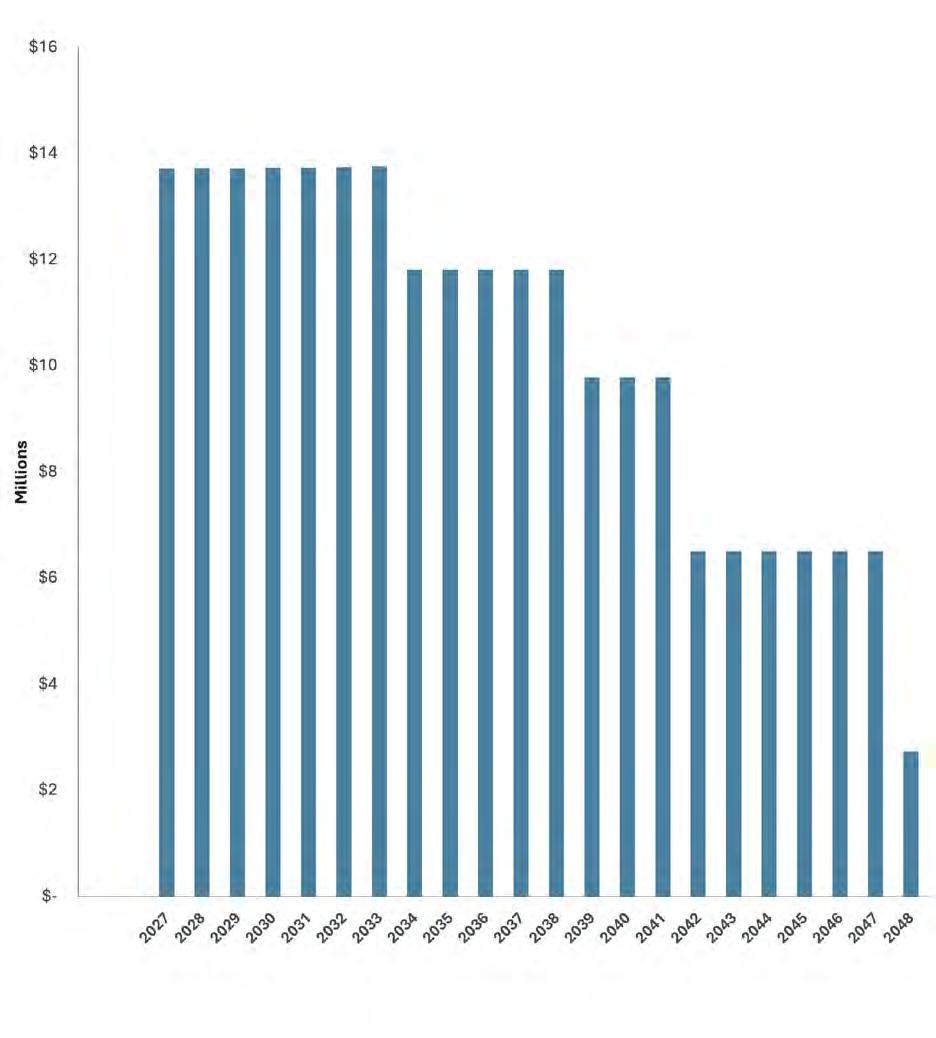

$16,750,000, Mature 2033
Proceeds used for the partial refunding of the 2013 Certificates of Obligation.
$25,455,000, Mature 2041
Proceeds used for the purpose of (a) designing, constructing, improving, acquiring, extending, expanding, upgrading, developing and equipping within reinvestment Zone Number One (i) streets and roads, including the Outer Loop Project, (ii) the sewer extension and drainage improvements for the Industrial Park, (iii) the Downtown City Center Project, (iv) the Draughon-Miller Regional Airport (v) the MLK Festival fields, (b) funding the Reserve Account for the Series 2021A Bonds and (c) paying the costs of issuing the Series 2021A Bonds.
$19,160,000, Mature 2041
Proceeds used for the purpose of (i) designing, acquiring and constructing two multi-story parking garages within the Zone and (ii) funding the Reserve Account for the Taxable Series 2021B Bonds and (iii) paying the costs of issuing the Taxable Series 2021B Bonds.
$40,560,000, Mature 2047
Proceeds used for the purpose of (i) designing, constructing, improving, acquiring, extending, expanding, upgrading, developing, equipping and purchasing any necessary rights-of-way within City of Temple, Texas Reinvestment Zone Number One (“TIRZ #1”) including (a) storm water, water and wastewater improvements including 3MG elevated storage tank and related transmission line, McLane Pump Station and related transmission main, Range Road transmission line, Loop 363 transmission line and Southeast Temple Water Supply Projects including transmission lines, pump station and ground storage tank, (b) Draughon-Miller Regional Airport including taxiway extension, fixed base operator facility with customer service center, offices, lounges, parking facility, Airport Fire Fighting and Rescue facility and related utility improvements, (c) City Center Project which includes reconstruction of Central Avenue including storm water improvements, water improvements, wastewater improvements, pedestrian improvements, lighting and landscaping, (d) East/West Gateway for Temple on IH-35 including signage, art, landscaping and irrigation and (e) streets and roads including Lorraine Drive Roadway Extension with related stormwater, utilities, pedestrian improvements, lighting and landscaping; and (ii) professional services including fiscal, engineering, architectural and legal fees and other such costs incurred in connection therewith including the costs of issuing the Series 2022B Bonds.
CERTIFICATES OF OBLIGATION, TAXABLE
$12,145,000, Mature 2047
Proceeds used for the purpose of (i) designing, constructing, improving, acquiring, extending, expanding, upgrading, developing, equipping and purchasing any necessary rights-of-way within City of Temple, Texas Reinvestment Zone Number One (“TIRZ #1”) including the Pepper Creek Wastewater Extension with equalization basin and upsizing the Pepper Creek trunk sewer along Kegley Road, and (ii) paying the cost of issuing the Series 2022C Bonds.
2023B CERTIFICATES OF OBLIGATION
$38,360,000, Mature 2048
Proceeds used for the purpose of (i) designing, constructing, improving, acquiring, extending, expanding,
upgrading, developing, equipping and purchasing any necessary rights-of-way within City of Temple, Texas Reinvestment Zone Number One (“TIRZ #1”) including storm water, water and wastewater improvements including water line extension along Old Howard Road, wastewater line extension near the North Industrial Park and South Temple Transmission Line, streets and roads including Outer Loop section from Wendland Road to IH-35, (ii) professional services including fiscal, engineering, architectural and legal fees and (iii) paying the costs of issuing the Series 2023B Bonds
$18,820,000, Mature 2038
Proceeds used for the refunding of the 2018 TIRZ Revenue Bonds.

The broad purpose of the following Fiscal and Budgetary Policy Statements is to enable the City to achieve and maintain a long-term stable and positive financial condition. The watchwords of the City’s financial management include integrity, prudent stewardship, planning, accountability, full disclosure and communication.
The more specific purpose is to provide guidelines to the Director of Finance in planning and directing the City’s day-to-day financial affairs and in developing recommendations to the City Manager and City Council.
The scope of these policies generally spans, among other issues, accounting, auditing, financial reporting, internal controls, operating and capital budgeting, revenue management, cash and investment management, expenditure control, asset management, debt management, and planning concepts, in order to:
• present fairly and with full disclosure the financial position and results of the financial operations of the City in conformity to generally accepted accounting principles (GAAP) and;
• determine and demonstrate compliance with financerelated legal and contractual issues in accordance with provisions of the Texas Local Government Code and other pertinent legal documents and mandates.
The City Council will annually review and approve the Fiscal and Budgetary Policy as part of the budget process.
Budgeting is an essential element of the financial planning, control, and evaluation process of municipal government. The “operating budget” is the City’s annual financial operating plan. The annual budget includes all of the operating departments of the general fund, proprietary fund, the debt service fund, special revenue funds, and capital project funds of the City. The budget
is prepared by the City Manager and Director of Finance with the cooperation of all City Departments, on a basis which is consistent with generally accepted accounting principles. In accordance with Article 12 of the City Charter, the City Manager must submit the budget to the City Council by filing with the City Secretary. The budget should be presented to the City Council on or before the 1st day of August each year.
A proposed budget shall be prepared by the City Manager with the participation of all the City’s Department Heads within the provisions of the City Charter.
• The budget shall include four basic segments for review and evaluation. These segments are: (1) revenues, (2) personnel costs, (3) operations and maintenance costs, and (4) capital and other (noncapital) project costs.
• The budget review process shall include City Council participation in the development of each segment and allow for resident participation in the budget preparation.
• The budget process shall allow sufficient time to address policy and fiscal issues by the City Council.
• A copy of the proposed budget shall be filed by the City Manager with the City Secretary when it is submitted to the City Council in accordance with the provisions of the City Charter.
Upon the presentation by the City Manager of a proposed budget document to the City Council, the City Council shall call and publicize a public hearing. The City Council will subsequently adopt by Resolution such budget, as it may have been amended, as the City’s Annual Budget effective for the fiscal year beginning October 1st.
The operating budget will be balanced with current
revenues, which may include beginning fund balances less required reserves as established by City Council, greater than or equal to current expenditures/expenses.
The budget process will be coordinated so as to identify major policy issues for City Council consideration several months prior to the budget approval date. This will allow adequate time for appropriate decisions and analysis of financial impacts.
Periodic financial reports will be prepared by the Director of Finance to enable the Department Managers to manage their budgets and to enable the Director of Finance to monitor and control the budget as authorized by the City Manager. Summary financial and budgetary reports will be presented by the Director of Finance to the City Council to understand the overall budget and financial status.
The Department Heads of each department will be solely responsible to ensure that their department budgets will not exceed budgeted amounts. In addition, each Department Head will be solely responsible to achieve budgeted revenues that are generated by activities of that department. Failure to achieve budgetary control of their individual expenditure and revenue budgets will be evaluated and investigated by the City Manager.
The Financial Services will evaluate expenditure requests from departments to ensure that the requests are in the amount and kind originally budgeted in those departments and that adequate funds are available to comply with individual expense request. The Director of Finance will make every effort to assist departments in obtaining purchases to accomplish the goals and objectives delineated in the budget information for each department set forth in the current yearly adopted budget.
The City Manager should establish an adequate contingent appropriation in each of the operating funds. Expenditures from this appropriation shall be made only in cases of emergency or an unforeseen/unusual need. A detailed account shall be recorded and reported. The
transfer of this budget appropriation shall be under the control of the City Council. Any transfer of contingency must be expressly approved in advance by the City Council.
All transfers from the contingent appropriation will be evaluated using the following criteria:
• Is the request of such an emergency nature that it must be made immediately?
• Why was the item not budgeted in the normal budget process?
• Why the transfer cannot be made within the division or department?
City Financial Services will strive for the following optimum characteristics in its revenue system:
• Simplicity – The City, where possible and without sacrificing accuracy, will strive to keep the revenue system simple in order to reduce compliance costs for the taxpayer or service recipient.
• Certainty – A knowledge and understanding of revenue sources increases the reliability of the revenue system. The City will understand its revenue sources and enact consistent collection policies to provide assurances that the revenue base will materialize according to budgets and plans.
• Equity – The City shall make every effort to maintain equity in its revenue system structure; i.e., the City should seek to minimize or eliminate all forms of subsidization between entities, funds, services, utilities, and customer classes.
• Revenue Adequacy – The City should require that there be a balance in the revenue system; i.e., the revenue base will have the characteristics of fairness and neutrality as it applies to cost of service, willingness to pay, and ability to pay.
• Administration – The benefits of a revenue source should exceed the cost of levying and collecting that revenue. The cost of collection should be reviewed annually for cost effectiveness as a part of the indirect cost of service analysis. Where appropriate, the City will use the administrative processes of State, Federal or Local Governmental collection agencies in order to reduce administrative cost.
• Diversification and Stability – A diversified revenue system with a stable source of income shall be maintained. This will help avoid instabilities in two particular revenue sources due to factors such as fluctuations in the economy and variations in the weather.
The following considerations and issues will guide Financial Services in its revenue policies concerning specific sources of funds:
• Cost/Benefit of Abatement – The City will use caution in the analysis of tax or fee incentives that are used to encourage development. Ideally, a cost/benefit (fiscal impact) and analysis should be performed as part of such caution.
• Non-Recurring Revenues – One-time or nonrecurring revenues should not be used to finance current ongoing operations. Non-recurring revenues should be used only for non-recurring expenditures and not be used for budget balancing purposes.
• Property Tax Revenues – All real and business personal property located within the City shall be valued at 100% of the fair market value for any given year based on the current appraisal supplied to the City by the Bell County Tax Appraisal District.
Conservative budgeted revenue estimates result in a projected ninety-eight percent (98%) budgeted collection rate for current ad valorem taxes. Two percent (2%) of estimated current ad valorem taxes will be projected and used as the budget for delinquent ad valorem tax collections. The combined ad valorem tax collections budgeted each fiscal year will be no less than one hundred percent (100%) of the tax levy and should ensure that ad valorem tax collection projections will not be over estimated.
Financial Services will endeavor with the Tax Assessor Collector to collect ad valorem taxes in excess of ninety-seven percent (97%) of total ad valorem tax levy with a goal of one hundred percent (100%) collection of actual ad valorem taxes levied in each fiscal year.
All delinquent taxes shall be aggressively pursued each year by the Tax Assessor/Collector. Tax accounts delinquent greater than 90 days shall be submitted for collection each year to an attorney selected by the Bell County Tax Appraisal District. A penalty shall be assessed on all delinquent property taxes, which shall include all court costs, as well as an amount for compensation of the attorney as permitted by State law and in accordance with the attorney’s contract with the County.
• Interest Income – Interest earned from investment of available monies, whether pooled or not, will be distributed to the funds in accordance with the equity balance of the fund from which monies were provided to be invested.
• User-Based Fees and Service Charges – For services associated with a user fee or charge, the direct and indirect costs of that service will be offset by a fee where possible. There will be an annual review by all Department Heads of fees and charges to ensure that fees provide adequate coverage of cost of services for their respective departments.
The City Council will determine how much of the cost of a service should be recovered by fees and charges.
• Enterprise Fund Rates – The Director of Finance will review rates annually, and the City Council will adopt rates that will generate revenues sufficient to cover operating expenses, meet the legal restrictions of all applicable bond covenants, and provide for an adequate level of working capital.
Additionally, enterprise activity rates and other legal funds of the City will include transfers to and receive credits from other funds as follows:
• General and Administrative Charges –Administrative costs should be charged to all funds for services of general overhead, such as administration, finance, customer billing, personnel, data processing, engineering, and legal counsel, and other costs as appropriate. The charges will be
determined by the Director of Finance through an indirect cost allocation following accepted practices and procedures not to exceed 10.5%.
• Payment in-lieu-of costs – This transfer will be made in accordance with the following methods, not to exceed 5% of the total estimated operating revenues of the respective fund.
• In-lieu-of franchise fee -This fee will be included as a part of the rate computation of gross sales consistent with the franchise rates charged to investor owned utility franchises to operate within the City. Currently, the City levies a 5% franchise fee.
• Payment in-lieu-of ad valorem tax - Rates will be calculated so as to include a fee equal to the ad valorem taxes lost as a result of municipal ownership of the various utility and other enterprise activities owned by the City. Net book value will be used as a basis, barring absence of known market value and applied only to capital assets actually within the incorporated City limits.
• Intergovernmental Revenues (Federal/State/ Local) – All potential grants will be examined for matching requirements and the source of the matching requirements. These revenue sources will be expended only for intended purpose of grant aid. It must be clearly understood that operational requirements set up as a result of a grant or aid could be discontinued once the term and conditions of the project have terminated.
• Revenue Monitoring – Revenues actually received will be compared to budgeted revenues by the Director of Finance and any variances considered to be material will be analyzed. This process will be summarized in the appropriate budget report. The Director of Finance will report results of the analysis to the City Manager and City Council.
The point of budgetary control is at the department level budget for all funds. When budget adjustments among Departments and/or funds are necessary, they will be made in accordance with the City Charter. Budget appropriation amendments at lower levels of
control shall be made in accordance with the applicable administrative procedures.
No recognized or significant salary or capital budgetary savings in any Department shall be spent by the Department Head without the prior authorization of the City Manager. This control will realize budget savings each year that will be recognized in the approved budget as “unexpended appropriations” or contingency “sweep” accounts.
Without further City Council action, the following are authorized to transfer appropriations within individual department budgets for each fund from line item to line item provided that the total funds appropriated by City Council for each individual department budget are neither increased nor decreased. The thresholds for authorization are as follows:
• City Manager: amounts greater than $50,000
• Director of Finance: amounts greater than $5,000
• Director of Budget: amounts less than $5,000
All City purchases of goods or services will be made in accordance with the City’s current Purchasing Manual.
All invoices approved for payment by the proper City authorities shall be paid by Financial Services within thirty (30) calendar days of receipt in accordance with State law.
The Director of Finance shall establish and maintain proper procedures which will enable the City to take advantage of all purchase discounts, when possible, except in the instance where payments can be reasonably and legally delayed in order to maximize the City’s investable cash.
Quarterly reports will be presented by the Director of Finance in open Council meetings describing the financial and budgetary conditions of the City. Comparisons of actual to budget and actual to prior year, appropriate ratios and graphs to fully disclose and
present meaningful information will be used whenever possible.
The City’s Capital Budget will include all capital project funds and all capital resources. The budget will be prepared annually and on a project basis. The Capital Budget will be prepared by the City Manager with the involvement of responsible departments.
All capital project expenditures must be appropriated in the Capital Budget. The Financial Services Department must certify the availability of resources before any capital project contract is presented to the City Council for approval.
The Capital Budget will be taken from capital improvements plan for future years. The planning time frame for the capital improvements project plan should normally be five years, but a minimum of at least three years. The replacement and maintenance for capital items should also be projected for the next ten (10) years. Future maintenance and operational costs will be considered so that these costs can be included in the operating budget.
Where applicable, assessments, impact fees, pro rata charges, or other fees should be used to fund capital projects which have a primary benefit to specific, identifiable property owners.
Recognizing that long-term debt is usually a more expensive financing method, alternative-financing sources will be explored before debt is issued. When debt is issued, it will be used to acquire major assets with expected lives that equal or exceed the average life of the debt issue. The exceptions to this requirement are the traditional costs of marketing and issuing the debt, capitalized labor for design and construction of capital projects, and small component parts which are attached to major equipment purchases.
The CIP Manager will work with Department Heads during the budget preparation to schedule the timing of capital equipment purchases to ensure funds availability. The final schedule of capital purchases will be given to Directors or Department Heads to assist them in timing purchase requests to the General Services Department.
The City recognizes the deferred maintenance increases future capital costs. Therefore, a portion of all individual funds with infrastructure should be budgeted each year to maintain the quality of the City’s infrastructure. Replacement schedules should be developed in order to anticipate the deterioration and obsolescence of infrastructure.
Periodic financial reports will be prepared by the Director of Finance to enable the Department Heads to manage their capital budgets and to enable Financial Services to monitor and control the capital budget as authorized by the City Manager.
Financial Services is solely responsible for the reporting of the financial affairs, both internally and externally. The Director of Finance is the City’s Chief Fiscal Officer and, through responsibility delegated to the Assistant Director of Finance, is responsible for establishing the Chart of Accounts and for properly recording financial transactions.
Qualifications of the Auditor – In conformance with the City’s Charter and according to the provisions of Texas Local Government Code, Title 4, Chapter 103, the City will be audited annually by outside independent accountants (“auditor”). The auditor must be a CPA that can demonstrate that it has the breadth and depth of staff to conduct the City’s audit in accordance with generally accepted auditing standards and contractual
requirements. The auditor must hold a license under Article 41a-1, Section 9, of the Civil Statues of Texas, capable of demonstrating that it has sufficient staff which will enable it to conduct the City’s audit in accordance with generally accepted auditing standards as required by the City Charter and applicable state and federal laws. The auditor’s report on the City’s financial statement will be completed within 120 days of the City’s fiscal year end, and the auditor will jointly review the management letter with the City Council within 30 days of its receipt by the staff.
In conjunction with their review, the Director of Finance shall respond within 100 days in writing to the City Manager and City Council regarding the auditor’s Management Letter, addressing the issues contained therein. The City Council shall schedule its formal acceptance of the auditor’s report upon the resolution of any issues resulting from the joint review.
Responsibility of Auditor to City Council – The auditor is retained by and is accountable directly to the City Council and will have access to direct communication with the City Council if the City Staff is unresponsive to auditor recommendations or if the auditor considers such communication necessary to fulfill its legal and professional responsibilities.
External Reporting – The City Financial Services Department shall prepare a written Comprehensive Annual Financial Report (ACFR) which shall be presented to the City’s auditor within 60 days of the City’s fiscal year end. Accuracy and timeliness of the AFR is the responsibility of the City staff. The ACFR will be prepared in accordance with generally accepted accounting principles (GAAP). If City staffing limitations preclude such timely reporting, the Director of Finance will inform the City Council of the delay and the reasons therefore. Upon the completion and acceptance of the ACFR, the City’s auditor shall present the audited ACFR to the City Council within 120 days of the City’s fiscal year end.
Internal Reporting – The Financial Services Department will prepare internal financial reports, sufficient to plan, monitor, and control the City’s financial affairs. Internal financial reporting objectives are addressed throughout these policies. As Financial Services strives for excellence in financial reporting, the following
Qualitative Characteristics of Accounting Information will be incorporated in all reports and policies that are prepared or implemented.
Bias – Bias in measurement is the tendency of a measure to fall more often on one side than the other of what it represents instead of being equally likely to fall on either side. Bias in accounting measures means a tendency to be consistently too high or too low. Financial reporting will strive to eliminate bias in accounting data.
Comparability – The quality of information that enables users to identify similarities in and differences between two sets of economic phenomena.
Completeness – The inclusion in reported information of everything material that is necessary for faithful representation.
Conservatism – A prudent reaction to uncertainty to try to insure that uncertainty and risks inherent in financial situations are adequately considered.
Consistency – Conformity from period to period with unchanging policies and procedures.
Feedback Value – The quality of information that enables users to confirm or correct prior expectations.
Materiality – The magnitude of an omission or misstatement of accounting information that, in light of surrounding circumstances, makes it probable that the judgment of a reasonable person relying on the information would have been changed or influenced by the omission or misstatement.
Neutrality – Absence in reported information of bias intended to attain a predetermined result or to induce a particular mode of behavior.
Predictive Value – The quality of information that helps users to increase the likelihood of correctly forecasting the outcome of past or present events.
Relevance – The capacity of information to make a difference in a decision by helping users to form predictions about the outcomes of past, present, and
future events or to confirm or correct prior expectations.
Reliability – The quality of information that assures that information is reasonably free from error and bias and faithfully represents what it purports to present.
Representational Faithfulness – Correspondence or agreement between a measure or description and the phenomenon that it purports to represent (sometimes called validity).
Timeliness – Having information available to a decision-maker before it loses its capacity to influence decisions.
Understandability – The quality of information that enables users to perceive its significance.
Verifiability – The ability through consensus among measurers to ensure that information represents what it purports to represent or that the chosen method of measurement has been used without error or bias.
The Director of Finance shall promptly deposit all City funds with the City’s Depository Bank in accordance with the provisions of the current Bank Depository Agreement. The Director of Finance will then promptly invest all funds in any negotiable instrument that the Council has authorized under the provisions of the Public Funds Investment Act, and in accordance with the City Council approved Investment Policies.
The City’s cash flow will be managed to maximize the cash available to invest. Such cash management will entail the centralization of cash collections, where feasible, utility bills, building and related permits and licenses, and other collection offices as appropriate.
The Financial Services Department shall use the facsimile check-signing machine, bearing the signatures of the City Manager and Director of Finance.
The Director of Finance may transfer funds, via electronic transfer, through verbal or electronic instructions to the City’s Depository only for payment of any obligation of the City under the conditions applicable to the use of the facsimile machine. Payment authori-
zation shall be in accordance with the pay authorization criteria as defined in the current Bank Depository Agreement, approved by Council, stipulating the conditions and control procedures on such activity.
The City will safeguard, accurately track, and appropriately insure all fixed assets.
For purposes of budgeting, accounting, and financial reporting, an expenditure will be capitalized as a fixed asset when the following criteria are met:
1. Ownership or Right-to-Use:
The City must own the asset or hold a qualifying right-to-use under applicable GASB standards [GASB 87 for leased equipment, GASB 96 for subscription-based IT arrangements).
2. Useful Life
The asset must have an expected useful life greater than one year. An improvement to the asset must extend the useful life of an existing capital asset by more than one year.
3. Capitalization Threshold
The total original cost of the asset (including all capitalizable ancillary costs) must be at $10,000, except for (1) land, which is capitalized regardless of cost, and (2) CIP, which temporarily accumulates project costs until placed in service.
4. Nature of the Asset:
The asset must be tangible, such as land, buildings, equipment, machinery, infrastructure or other physical property; or a qualifying intangible/right-touse asset, including leased equipment or subscription-based IT arrangements that meet GASB 87 or GASB 96 criteria.
Capital assets that meet the above criteria will be recorded in the City’s financial system using one of the following standard asset classes:
• Land
• Buildings
• Machinery & Motor Equipment
• Furniture & Equipment
• Infrastructure
• Right-to-Use (RTU) Leased Equipment
• Right-to-Use (RTU) Subscriptions
• Construction In Progress (CIP)
Assets that do not meet the above criteria will be treated as operating expenditures unless designated as controlled assets for tracking purposes.
Reporting and Inventory - The Finance Department will maintain permanent fixed asset records, including descriptions, costs, responsible departments, acquisition dates, depreciation, and expected useful life. Departments will undergo periodic random inventories of assigned assets, and each supervisor or manager is responsible for safeguarding the fixed assets within their department.
Periodic review of each cash flow position will be performed to determine performance of cash management and investment policies. A detailed policy structure will be followed with respect to Cash/Treasury Management. The underlying theme will be that idle cash will be invested with the intent to 1) safeguard assets, 2) maintain liquidity, and 3) maximize return. Where legally permitted, pooling of investments will be done.
The City will adhere to the investments authorized through the Public Funds Investment Act and any amendments to such act and will additionally establish comprehensive Investment Policies and Guidelines. Such policies will clarify acceptable investment securities, brokers, terms, and other pertinent investment information.
The City of Temple recognizes the primary purpose of capital facilities is to support provision of services to its residents. Using debt financing to meet the capital needs of the community must be evaluated according to two tests – efficiency and equity. The test of efficiency equates to the highest rate of return for a given investment of resources. The test of equity requires a determination of who should pay for the cost of capital improvements. In meeting the demand for additional capital facilities, the City will strive to
balance the load between debt financing and “pay as you go” methods. The City realizes failure to meet the demands of growth may inhibit its continued economic viability, but also realizes that too much debt may have detrimental effects. Through the rigorous testing of the need for additional debt financed facilities and the means by which the debt will be repaid, the City Director of Finance will strike an appropriate balance between service demands and the amount of debt.
General Obligation Bonds (GOs) – General obligation bonds will be used only to fund capital assets of the general government, are not to be used to fund operating needs of the City and are backed by the full faith and credit of the City as well as the ad valorem taxing authority of the City as prescribed by law. The term of a bond issue will not exceed the useful life of the asset(s) funded by the bond issue and will generally be limited to no more than twenty years. General obligation bonds must be authorized by a vote of the citizens of the City of Temple.
Revenue Bonds (RBs) – Revenue bonds will be issued to provide for the capital needs of any activities where the capital requirements are necessary for continuation or expansion of a service which produces a revenue and for which the asset may reasonably be expected to provide for a revenue stream to fund the debt service requirements. The term of the obligation may not exceed the useful life of the asset(s) to be funded by the bond issue and will generally be limited to no more than twenty years.
Certificates of Obligation, Contract Obligations, etc. (COs) – Certificates of Obligations or Contract Obligations will be used in order to fund capital requirements which are not otherwise covered under either Revenue Bonds or General Obligation Bonds. Debt service for CO’s may be either from general revenues or backed by a specific revenue stream or streams or by a combination of both. Generally, CO’s will be used to fund capital assets where full bond issues are not warranted as a result of cost of the asset(s) to be funded through the instrument. The term of the obligations may not exceed the useful life of the asset(s) to be funded by the proceeds of the debt issue and will generally be limited to no more than twenty years.
Method of Sale – The Director of Finance will use a competitive bidding process in the sale of bonds unless
the nature of the issue warrants a negotiated bid. In situations where a competitive bidding process is not elected, the Director of Finance will publicly present the reasons why, and the Director of Finance will participate with the financial advisor in the selection of the underwriter or direct purchaser.
Financial Services Staff will explore alternatives to the issuance of debt for capital acquisitions and construction projects. These alternatives will include, but are limited to: 1) grants-in-aid, 2) use of reserves/designations, 3) use of current revenues, 4) contributions from developers and others, 5) leases, and 6) impact fees.
Debt financing of capital improvements and equipment will be done only when the following conditions exist:
• When non-continuous projects (those not requiring continuous annual appropriations) are desired;
• When it can be determined that future users will receive a benefit from the improvement;
• When it is necessary to provide basic services to residents and taxpayers (for example, purchase of water rights);
• When total debt, including that issued by overlapping governmental entities, does not constitute an unreasonable burden to the residents and taxpayers.
The City Financial Services Department will maintain procedures to comply with arbitrage rebate and other Federal requirements related to the issuance of bonds.
The City Financial Services Department will maintain post-issuance compliance written procedures for bonds and financed projects. The City will monitor the use of proceeds and expenditures from the Construction/ Project Fund for all bond issues. The City will retain various records with respect to each series of Bonds.
When the City utilizes debt financing, it will ensure that the debt is soundly financed by:
• Conservatively projecting the revenue sources that will be used to pay the debt;
Financing the improvement over a period not greater than the useful life of the improvement;
• Determining that the benefits of the improvement exceed the costs, including interest costs;
• Maintaining a debt service coverage ratio which ensures that combined debt service requirements will not exceed revenues pledged for the payment of debt; and
• Evaluating proposed debt against the target debt indicators.
The City maintains the following policies in relation to methods of financing used to issue debt:
• An Ad Valorem tax rate of $1.20 per $100 of assessed value is the maximum municipal tax rate (by City Charter) that may be levied for all General Fund tax supported expenditures and debt service;
• Where possible, the City will use revenue or other self-supporting bonds in lieu of General Obligation Bonds;
• When appropriate, the City will issue non-obligation debt, for example, Industrial Development Revenue bonds, to promote community stability and economic growth; and
• Staff will maintain open communications with bond rating agencies about its financial condition and whenever possible, issue rated securities.
The Charter also regulates which securities may be issued only after a vote of the electors of the City and approved by a majority of those voting on the issue.
Election Required – Securities payable in whole or in part from Ad Valorem taxes of the City except issues such as tax increment securities, certificates of obligation, and contractual obligations.
• Short-term notes (12 months or less) issued in anticipation of the collection of taxes and other revenues.
• Securities issued for the acquisition of water rights or capital improvements for water treatment.
• Securities payable solely from revenue other than Ad Valorem taxes of the City.
• Refunding securities issued to refund and pay outstanding securities.
• Securities for any special or local improvement district, such as a Public Improvement District (PID).
• Tax increment securities payable from Ad Valorem tax revenue derived from increased valuation for assessment of taxable property within a plan of development or other similar area as defined by applicable State Statutes.
• Securities issued for the acquisition of equipment or facilities pursuant to a lease-purchase contract.
The City’s Proprietary Utility fund will comply with all bond covenants and maintain an operational coverage of at least 125%, such that current operating revenues will exceed current operating expenses.
Deferrals, short-term loans, or one-time sources will be avoided as budget balancing techniques. Reserves will be used for emergencies or non-recurring expenditures, except when balances can be reduced because their levels exceed guideline minimums as stated in Paragraph B, following.
The City’s Fund Balance is the accumulated difference between assets and liabilities within governmental funds, and it allows the City to meet its contractual obligations, fund disaster or emergency costs, provide cash flow for timing purposes and fund non-recurring expenses appropriated by Council. This policy establishes limitations on the purposes for which Fund Balances can be used in
accordance with Governmental Accounting Standards Board (GASB) Statement Number 54.
The City’s Fund Balance will report up to five components:
1. Non-spendable Fund Balance – amounts that are not in a spendable form or are required to be maintained intact. Assets included in this category are prepaid items, inventory, and non-financial assets held for resale.
2. Restricted Fund Balance – represents the portion of fund balance that is subject to legal restrictions, such as grants or hotel/motel tax and bond proceeds.
3. Committed Fund Balance – describes the portion of fund balance that is constrained by limitations that the Council has imposed upon itself and remains binding unless the Council removes the limitation.
4. Assigned Fund Balance – is that portion of fund balance that reflects the City’s intended use of the resource and is established in a less formal method by the City for that designated purpose.
5. Unassigned Fund Balance – represents funds that cannot be properly classified in one of the other four categories.
The General Fund’s Unassigned Fund Balance should be at least 33% of the General Fund’s annual operating expenditures. This percentage is the equivalent of four months operational expenditures. The General Fund’s annual operating expenditures are defined as all personnel and operations expenditures less those related to the operation of the Solid Waste Services department, airport and golf course. Any expenditure funded with General Fund Balance is also excluded from this calculation.
The General Fund’s Assigned for Technology Fund Balance is replenished each year at a level sufficient for the City’s technology needs based on a recommendation by Management.
The General Fund’s Assigned for Capital Projects Fund Balance is adopted by Council with the acceptance of the fiscal year end financial statements. At the end of each fiscal year, any available fund balance that is not restricted or allocated to technology is added to the balance of the General Fund’s Assigned for Capital Projects Fund Balance.
The Enterprise Fund working capital should be maintained at 33% of total operating expenses or the equivalent of four months.
Procedures will be followed to maximize discounts and reduce penalties offered by creditors. Current liabilities will be paid within 30 days of receiving the invoice. Accounts Receivable procedures will target collection for a maximum of 30 days from service. Receivables aging past 120 days will be sent to a collection agency. The Finance Director is authorized to write-off non-collectible accounts that are delinquent for more than 180 days, provided proper delinquency procedures have been followed. The Finance Director will make an annual report to the City Council of the status of delinquent write-offs of non-collectible accounts.
Monies in the Capital Projects Funds should be used within 24 months of receipt or within a reasonable time according to construction schedule. Balances will be used to generate interest income to offset construction cost. Any unused monies can be used to fund similar projects as outlined by bond covenants and remaining excess funds will be transferred to the Debt Service Fund, provided that this complies with the bond covenant.
Revenues in the Debt Service Fund are based on property tax revenues, interest earnings and transfers from other funds. Reserves in the Debt Service Fund are designed to provide funding between the date of issuance of new debt and the time that property tax levies are adjusted to reflect the additional debt. Reserve levels should not exceed one month of average annual debt service.
Revenue obligations will maintain debt coverage ratios as specified by the bond covenants.
Ratios and significant balances will be incorporated into monthly, quarterly and financial reports. This information will provide users with meaningful data to identify major trends of the City’s finances through analytical procedures. We have selected the following ratios/balances as key indicators:
• Fund Balance/Equity (FB/E):
Assets – liabilities
AL (acceptable level) > 33.0% of operations
• Working Capital (CA-CL):
Current assets less current liabilities
AL > 33.0% of operations
• Current Ratio (CA/CL):
Current assets divided by current liabilities
AL > 1.00
• Quick Ratio (Liquid CA/CL):
“Liquid” current assets divided by current liabilities
AL > 1.00
• Debt/Assessed Ad Valorem Taxes (D/AV):
Debt divided by assessed Ad Valorem value
AL < 5
• Debt Ratio - % (CL+LTL / TA):
Current liabilities plus long term liabilities divided by total assets
AL < 1.00
• Enterprise Operational Operating Coverage (OR/OE):
Operating revenue divided by operating expense
AL > 1.25
Our goal is to develop minimum/maximum levels for the ratios/balances above through analyzing City of Temple historical trends and anticipated future trends. We will also analyze/compare City of Temple to other municipalities to develop these acceptable levels.
Wherever possible, written procedures will be established and maintained by the Director of Finance for all functions involving cash handling and/or accounting throughout the City. These procedures will
embrace the general concepts of fiscal responsibility set forth in this policy statement.
Each Department Head is responsible to ensure that good internal controls are followed throughout their Department, that all Financial Services Department directives or internal controls are implemented, and that all independent auditor internal control recommendations are addressed.
Staffing levels will be adequate for the fiscal functions of the City to operate effectively. Overtime shall be used only to address temporary or seasonal demands that require excessive hours. Workload allocation alternatives will be explored before adding staff.
The City will support the continuing education efforts of all financial staff members including the investment in time and materials for maintaining a current
perspective concerning financial issues. Staff will be held accountable for communicating, teaching, and sharing with other staff members all information and training materials acquired from seminars, conferences, and related education efforts.
The Financial Services Department will support efforts and involvement which result in meeting standards and receiving exemplary recitations on behalf of any of the City’s fiscal policies, practices, processes, products, or personnel. Staff certifications may include Certified Public Accountant, Management Accountant, Certified Internal Auditor, and Certified Cash Manager.
The Financial Services Department will strive to maintain a high level of excellence in its accounting policies and practices as it prepares the ACFR. The ACFR will be presented annually to the Governmental Finance Officers Association (GFOA) for evaluation and consideration for the Certificate of Achievement for Excellence in Financial Reporting. The Budget will also be submitted to the GFOA for evaluation and consideration of the Distinguished Budget Presentation Award.

The Public Funds Investment Act, Chapter 2256, Texas Government Code, as amended, (the “PFIA”) prescribes that each City must adopt rules governing its investment practices and to define the authority of the investment officers. The following Investment Policy addresses the methods, procedures, and practices, which must be exercised to ensure effective and judicious fiscal management of the City’s funds.
The Director of Finance, Assistant Director of Finance, Treasury & Debt Division Director, CIP Division Director, and designated Accountant II’s are authorized as the Investment Officers of the City of Temple, Texas, and are responsible for all investment decisions and activities.
This policy applies to all investment activities of the City’s funds under its control, except those subject to other investment covenants, or excluded by contract. The Investment Policy will govern the activities of the Investment Officers and designated deputies in their management of all public funds covered by this Investment Policy.
To make effective use of the City’s resources, all funds shall be pooled for investment purposes, except for those funds required to be accounted for in other accounts as stipulated by applicable laws, bond covenants, contracts or City policy. The pooled funds will include, but are not limited to, the funds of the General Fund, Water & Wastewater, GO Interest & Sinking, Hotel/Motel, Capital Projects, Federal/State Grant, Drainage, and Tax Increment Funds. Bond Proceeds may be invested in separate portfolios. The Firemen’s Pension Fund, Deferred Compensation Plans, and any investments donated to the City for a particular purpose, or under terms of use specified by the donor, are outside the scope of this Investment Policy.
This policy also requires the formal adoption of an Investment Strategy that specifically addresses each of the City’s fund groups (see section “Investment Strategy”).
The primary objectives of the City investment activities, in order of priority, shall be:
Safety – Investments shall be undertaken in a manner that seeks to ensure the preservation of principal.
Liquidity – The City’s investment portfolio will remain sufficiently liquid to enable the City to meet all operating requirements, which might be reasonably anticipated.
Yield – The City’s investment strategy is conservative. Given this strategy, the benchmark used by the Director of Finance to determine whether market yields are being achieved shall be the average rolling 90-day T-bill rate. Weighted average yield to maturity shall be the portfolio performance standard. Return on investment is of least importance compared to the safety and liquidity objectives.
Each investment transaction shall seek to first ensure that principal losses are avoided, whether they are from issuer defaults or erosion of market value.
The Director of Finance may designate deputies to assist with the management of the investment portfolio, but only the City Council may designate Investment Officers.
The Investment Officers shall be responsible for all transactions, compliance with internal controls, and ensuring that all safekeeping, custodial, and collateral duties are in compliance with this Investment Policy and other applicable laws and regulations.
Investments shall be made with judgment and care, under prevailing circumstances, that a person of prudence, discretion, and intelligence would exercise in the management of the person’s own affairs, not for speculation, but for investment, considering the
probable safety of capital and the probable income to be derived. This investment principle shall be applied in the context of managing the overall investment portfolio.
The Investment Officers, acting in accordance with written procedures and exercising due diligence, shall not be held personally responsible for an individual issuer’s credit risk or market price changes, provided that deviations from expectations are reported in a timely manner to the City Manager, and appropriate action is taken to control adverse developments.
The Investment Officers and designated deputies shall refrain from any personal business activity that could conflict with proper execution of the investment program, or which could impair their ability to make impartial investment decisions. An Investment Officer who has a personal business relationship with a business organization offering to engage in an investment transaction with the City shall file a statement with the Texas Ethics Commission and the City Council disclosing that personal business interest. A disclosure statement will also be filed if an Investment Officer is related within the second degree by affinity or consanguinity, as determined under Chapter 573, to an individual seeking to sell an investment to the City.
For the purpose of this section, an individual has a personal business relationship with a business organization if:
• The individual owns 10 percent or more of the voting stock or shares of the business organization, or owns $5,000 or more of the fair market value of the business organization;
• Funds received by the individual from the business organization exceed 10 percent of the individual’s gross income for the previous year; or
• The individual has acquired from the business organization during the previous year investments with a book value of $2,500 or more for the personal account of the individual.
The Investment Officers shall, not less than quarterly, prepare and submit to the City Council a written report of investment transactions for all funds covered by this Investment Policy for the preceding reporting period. The report should:
• Describe the investment position of the entity on the date of the report;
• Be prepared and signed by the Investment Officers;
• Contain a summary statement that states the beginning market values, ending market value, and fully accrued interest for the reporting period;
• State the book value and market value of each separately invested asset at the beginning and end of the reporting period by type of asset and fund type invested;
• State the maturity date of each separately invested asset that has a maturity date;
• State the compliance of the investment portfolio as it relates to the City’s Investment Policy, the City’s Investment Strategy, and the Public Funds Investment Act; and
• The reports should be formally reviewed at least annually by an independent auditor and the results of that audit reported to the City Council by that auditor.
The method used to monitor the market value of acquired investments is to obtain market prices from a recognized entity independent from the original transaction.
The City will seek to control the risk of loss due to failure of an investment issuer by monitoring the ratings of portfolio positions to ensure compliance with the rating requirements imposed by the Public Funds Investment Act. Not less than quarterly, the Investment Officers will obtain from a reliable source the current credit rating for each held investment that has a PFIA-required minimum rating and will include this information in the quarterly report.
The City will diversify use of investment types and issuers to avoid incurring unreasonable risks inherent in over-investment in specific instruments, individual issuers, or maturities (when appropriate).
The investment portfolio shall not exceed the following guidelines without prior approval of the City Manager:
• With the exception of U.S. Treasury securities and authorized pools, no more than 80% of the total investment portfolio will be invested in a single investment type.
• Commercial paper shall not exceed more than 5% of the total investment portfolio.
• With the exception of U.S. Treasury securities and authorized pools, no more than 40% of the total investment portfolio shall be invested with a single issuer.
• The maximum maturity for each investment and the total portfolio will be timed to mature to meet cash flow needs established by the cash flow analysis. The maximum maturity of any individual investment shall not exceed three (3) years.
• The maximum dollar-weighted average maturity of the total investment portfolio is 270 days.
Maturity schedules shall be timed according to anticipated liquidity needs. Investments, from time to time, may be liquidated before maturity for cash-flow or portfolio restructuring purposes. To meet these disbursement schedules, market gains or losses may be required. Any losses for early maturity liquidation should be minimized, and they should be reported as such to the City Manager in a timely manner. Actual risk of default shall be minimized by adequate collateralization, where applicable. Market risk shall be minimized by diversification of investment type and maturity.
The Investment Officers shall routinely monitor the contents of the investment portfolio, the available markets and the relative values of competing instruments, and shall adjust the investment portfolio accordingly, keeping in mind the overall objectives of the investments.
The Director of Finance monitors cash flows for all of the City’s fund types. The purposes will be to determine liquidity needs and the available funds for investing.
The following is a list of authorized investments:
• Obligations issued, guaranteed, insured by, or backed by the full faith and credit of the United States or its agencies and instrumentalities (i.e. U.S. Treasury and Agency Issues), including obligations of the Federal Home Loan Bank, the Federal Deposit Insurance Corporation, and U.S. Agency Letters of Credit.
• Obligations issued, guaranteed, insured by, or backed by the State of Texas. Obligations issued by counties, cities, and other political subdivisions of the State of Texas that are rated as to investment quality by a nationally recognized investment rating firm not less than A or its equivalent.
• Deposits in Financial Institutions, which are guaranteed or insured by the Federal Deposit Insurance Corporation (FDIC) or its successor or the National Credit Union Share Insurance Fund (NCUSIF) or its successor and are secured in compliance with Section XII Collateralization Requirements and placed in compliance with the PFIA.
• Fully collateralized repurchase agreements that have a defined termination date and are secured by cash or obligations of the United States or its agencies and instrumentalities. The securities purchased by the City must be pledged to the City, held in the City’s account and deposited at the time the investment is made with the City’s custodial bank. Repurchase agreements can only be placed through primary government securities dealers or financial institutions doing business in Texas.
• Commercial paper with a stated maturity of 270 days or less from the date of issuance. Commercial paper must be rated not less than A-1 or P-1, or an equivalent, by at least two nationally recognized credit rating agencies or rated by one credit rating
agency plus fully secured by an irrevocable letter of credit issued by a domestic bank.
• Investment pools that are authorized by Council, invest only in investments approved by the Public Funds Investment Act, have an advisory board, and are continuously rated no lower than AAA or AAA-m or at an equivalent rating by at least one nationally recognized rating agency. Investment pools must comply with all requirements of the Public Funds Investment Act and provide an offering circular, investment transaction confirmations, and monthly reports.
• S.E.C. registered no-load money market mutual funds that comply with federal Securities and Exchange Commission Rule 2a-7 and the Public Funds Investment Act and are continuously rated no lower than AAA or at an equivalent rating by at least one nationally recognized rating agency.
An investment that requires a minimum rating under this Policy does not qualify as an authorized investment during the period the investment does not have the minimum rating. The Investment Officers will take all prudent measures that are consistent with this Policy to liquidate an investment that does not have the minimum rating. The Investment Officers will not be required to liquidate investments that were authorized investments at the time of purchase.
The Investment Officers are specifically prohibited from investing in:
• Structured notes, investments with inverse-floaters, collateralized mortgage obligations, or any other form of derivatives;
• Any investment not authorized by this policy or the Public Funds Investment Act;
• Any investment pool in which the City would own more than 20% of the market value of the pool;
• Highly sophisticated investments not freely conducted in the marketplace (e.g., derivatives); and
• Any one mutual fund in which the City would own more than 10% of the total assets of the mutual fund.
The Investment Officers are also specifically prohibited from borrowing funds for the purpose of reinvesting the funds to leverage return.
The following financial institutions are eligible for consideration for investment transactions by the Investment Officers:
• State or national banks with a main or branch office in the State of Texas;
• Savings banks with a main or branch office in the State of Texas;
• State or federal credit unions with a main or branch office in the State of Texas;
• Brokers approved and designated as primary dealers by the Federal Reserve Bank of New York;
• Secondary or regional brokers who meet the following requirements:
• Registered and in good standing with the Financial Industry Regulatory Authority (FINRA);
• Maintain Texas State Registration;
• Have net capital of $1 million or more for Delivery Versus Payment investment transactions or net capital of $50 million or more for Repurchase Agreement transactions; and
• Have at least five (5) years of operation.
• Local government investment pools, (i.e. Texpool, TexSTAR, etc.); and
• S.E.C. registered money market mutual funds.
A written copy of the City’s Investment Policy shall be presented to any local government investment pool offering to engage in an investment transaction with the City. The qualified representative of the business organization (e.g. local government investment pool or discretionary investment management firm) shall execute an Investment Policy Certification substantially to the effect that the business organization or has:
• Received and reviewed the City’s Investment Policy; and
• Agrees to comply with the requirements of the Public Funds Investment Act.
A list of individual qualified broker/dealers authorized to engage in investment transactions with the City shall, at least annually, be reviewed, revised, and adopted by the City Council (see section “List of Authorized Brokers/

Dealers”). All broker/dealers will have on file Trading Authorization Agreements with the City.
The City will determine investment requirements based on cash flow analysis and current cash positions. The City will create a competitive environment to evaluate available options best suited for the City’s requirements.
Investment selections and term will be determined in accordance with, (1) safety of principal, (2) cash flow needs, (3) investment type as a percentage of total investment portfolio, and (4) yield.
Brokers/dealers are not encouraged to contact the City on currently available securities that the broker/dealers believe are items of interest to the City.
The Treasury & Debt Division Director will obtain investment alternatives and get approval from an Investment Officer prior to making any investment decision. All security purchases and trades conducted through the City will be settled with the City’s third-
party safekeeping agent using Delivery versus Payment (DVP).
The Director of Finance, Assistant Director of Finance, Treasury & Debt Division Director, CIP Division Director, designated Accountant II’s, City Manager, and City Secretary are the only individuals authorized to wire funds for the City. Dual authorization shall be used for all non-repetitive wire transfers.
The City’s Investment Officer must approve any substitution of securities on repurchase agreements. The City will only enter repurchase agreements under the terms of the Master Repurchase Agreement or similar format.
Consistent with the requirements of the Public Funds Collateral Act, Chapter 2257, Texas Government Code, as amended, the City will require full collateralization of all non-insured deposits with depository institutions. To anticipate market changes and provide a level of security, the collateralization level for marketable securities pledges will be a combined market value of at least 102% of principal and accrued interest on the ledger
deposits less the amount insured by the FDIC. Securities pledged as collateral shall be held in the City’s account by an independent third-party with whom the City has a current custodial agreement. A clearly marked evidence of pledge must be supplied to the City for retention. The City must approve any release and/or substitution of collateral before such action is taken. Collateral shall be reviewed at least monthly to assure that the market value of the securities pledged equals or exceeds the required amount. When Federal Home Loan Bank Letters of Credit are pledged as collateral, the value of the Letter of Credit shall be at least 100% of principal and accrued interest of the deposit less the amount insured by the FDIC or NCUSIF. Deposit specific Federal Home Loan Bank Letters of Credit should extend at least three (3) business days beyond the maturity date of the deposit.
Obligations authorized by the Public Funds Collateral Act are acceptable for collateralization purposes. The City reserves the right, in its sole discretion, to accept or reject any form of insurance or collateralization pledged towards deposits.
All financial institutions pledging securities as collateral shall be required to sign a collateralization agreement with the City. The agreement shall define the City’s rights to the collateral in case of default, bankruptcy, or closing and shall establish a perfected security interest in compliance with Federal and State regulations, including:
• The agreement must be in writing;
• The agreement must be executed by the financial institution and the City contemporaneously with the deposit;
• The agreement must be approved by the Board of Directors or designated committee of the financial institution and a copy of the meeting minutes must be delivered to the City; and
• The agreement must be part of the financial institution’s “official record” continuously since its execution.
Private insurance coverage is not an acceptable collateralization form.
In order to ensure the quality and capability of investment management, the Investment Officers shall attend:
• At least one training session to accumulate at least ten (10) hours of instruction relating to the Investment Officer’s responsibilities within 12 months after taking office or assuming duties.
• Investment training sessions not less than once in a two-year period that begins on the first day of the City’s fiscal year and consists of the two consecutive fiscal years after that date and accumulate not less than eight (8) hours of instruction relating to investment responsibilities.
Training must include education in investment controls, security risks, strategy risks, market risks, diversification of the investment portfolio, and compliance with the Public Funds Investment Act.
All training shall be from an independent source on the list of approved training seminar sponsors (see section “Approved Training Seminar Sponsors”).
The Investment Officers will adhere to the Investment Policy in all investment decisions of the City. All current investment activity, which does not comply with the above stated Policy, will be allowed to mature, and all future investment activity will be performed under the terms of this Policy.
In conjunction with the annual financial audit, a compliance audit will be performed on management controls and adherence to this Policy.
An annual review of the Investment Policy and Strategy will be conducted by the Director of Finance. The Investment Policy and Strategy, with any changes, will then be presented for the City Council to review and adopt. Formal adoption of the Investment Policy and Strategy will be documented in the minutes of the City Council meeting and the adopting ordinance.
The Investment Strategy of the City of Temple, Texas, is adopted to provide investment guidelines that will
minimize the risk of loss of principal. To make effective use of the City’s resources, all monies shall be pooled into one fund, except for those monies required to be accounted for in other accounts as stipulated by applicable laws, bond covenants, contracts, or City policy. Investment priorities (in order of importance) are as follows:
• Suitability – Any investment allowed by the Investment Policy is suitable. Maturity schedules shall be timed according to anticipated needs.
• Safety of Principal – All investments should be of high quality with no perceived default risk.
• Liquidity – Bank Deposits, local government investment pools and money market mutual funds shall provide daily liquidity. Fixed maturity investments shall provide liquidity as required by anticipated needs.
• Marketability – Securities should have an active and efficient secondary market to enable the City to liquidate investments prior to the maturity for unanticipated cash requirements.
• Diversification – The City will diversify use of security types, issuers, and maturities as per the Investment Policy.
• Yield – The City’s investment strategy is conservative. The benchmark shall be the average rolling 90-day T-bill rate.
A list of Broker/Dealers that are authorized to engage in investment transactions with the City shall, at least annually, be reviewed, revised, and adopted. The following Broker/Dealers are authorized for use by the Investment Officer:
• SouthState / Duncan-Williams
• FHN Financial
• Hilltop Securities, Inc.
• Great Pacific Securities
• MultiBank Securities, Inc.
• Rice Financial Products
• SAMCO
• Stifel Fixed Income Capital Markets
• Wells Fargo Securities
All investment training shall be from an independent source approved by the City Council. The following sponsors are hereby approved:
• Government Finance Officers Association (GFOA and GFOAT);
• Texas Society of Certified Public Accountants (TXCPA);
• Texas Municipal League (TML);
• Government Treasurers’ Organization of Texas (GTOT);
• Council of Governments;
• Sponsors approved by the TXCPA and GFOA, GFOAT, GTOT, to provide CPE credits; or
• University of North Texas.
ACFR – Annual Comprehensive Financial Report
AL – Acceptable level
APWA – American Public Works Association
BRA – Brazos River Authority
CA – Current assets
CCN – Certificate of Convenience and Necessity
CDBG – Community Development Block Grant
CEG – Community Enhancement Grants
CIP – Capital Improvement Program
CL – Current liability
CO – Certificate of Obligation
CPA – Certified Public Accountant
CSI – Customer Service Inspection
DF WWTP – Doshier Farm Wastewater Treatment Plant
EMS – Emergency Medical Services
EPA – US Environmental Protection Agency
EST – Elevated storage tank
FBO – Fixed-based operations
FDIC – Federal Deposit Insurance Corporation
FOG – Fats, Oils & Grease
FTE – Full-time equivalent
FY – Fiscal year
GAAP – Generally Accepted Accounting Principles
GFOA – Government Finance Officers Association
GIS – Geographic Information Systems
GO – General Obligation
GTOT – Government Treasurers’ Organization of Texas
HVAC – Heating, ventilation & air conditioning
I&S Fund – Interest and Sinking Fund
ICMA – International City/County Management Association
ISO – Insurers Services Office
IT – Information Technology
ITS – Information Technology Services
KPI – Key performance indicators
KTMPO – Killeen-Temple Metropolitan Planning Organization
LTN – Limited Tax Notes
M&O – Maintenance and operations
MCIP – Mobility Capital Improvement Program
MG – Million gallons
MGD – Million gallons per day
NCUSIF – National Credit Union Share Insurance Fund
O&M – Operations and maintenance
OCU – Organized Crime Unit
OE – Operating expense
OR – Operating revenue
PARD – Parks & Recreation Services Department
RNAV – Area navigation
RZ – Reinvestment Zone No. 1
SBITA – Subscription-based Information Technology Arrangements
TA – Transportation Alternatives
TBD – To be determined
T-B WWTP – Temple-Belton Wastewater Treatment Plant
TCEQ – Texas Commission on Environmental Quality
TEDC – Temple Economic Development Corporation
TIRZ – Tax Increment Reinvestment Zone
TISD – Temple Independent School District
TML – Texas Municipal League
TPDES – Texas Pollution Discharge Elimination System
TSCPA – Texas Society of Certified Public Accountants
TxDOT – Texas Department of Transportation
UBO – Utility Business Office
UR – Utility Revenue
W&WW – Water and Wastewater
WWTP – Wastewater Treatment Plant
Account – A code comprised of numbers used to classify how specific dollar amounts come into the City or how they are spent.
Accrual Accounting – A basis of accounting in which revenues are recognized in the accounting period in which they are earned, and expenses are recognized in the period in which they are incurred.
Ad Valorem Tax – A tax levied on the assessed value of real property (also known as “property taxes”).
Amortization – The process of paying money that is owed for something by making regular payments over a long period of time.
Appropriation – A specific amount of money authorized by City Council to make expenditures and incur obligations for specific purposes, frequently used interchangeably with “expenditures”.
Arbitrage – A value that is established for real and personal property for use as a basis for levying property taxes. Property values are established by the Bell County Appraisal District.
Assessed Valuation – The difference between the interest expense paid by the bond debt issuer and the earnings from the invested proceeds. Tax-exempt municipal bond issuers are subject to Federal arbitrage compliance rules as a condition of bond covenants or other issuance requirements.
Assessment Ratio – The ratio at which the tax rate is applied to the tax base. The assessment ratio is currently set at 100% by State law.
Audit – A comprehensive examination as to the manner in which the government’s resources were actually utilized, concluding in a written report. A financial audit is a review of the accounting system and financial information to determine how government funds were spent and whether expenditures were in compliance with the legislative body’s appropriations. A performance audit consists of a review of how well the government met its stated goals.
Balance Sheet – A financial statement that discloses the assets, liabilities, reserves and balances of a specific governmental fund as of a specific date.
Balanced Budget – A budget in which estimated revenues equal estimated expenditures. The City defines “balanced budget” as the operating budget balancing with current revenues, which may include beginning fund balances less required reserves as established by City Council, greater than or equal to current expenditures/expenses.
Bond – A written promise to pay a specific sum of money, called the face value or principal amount, at a specific date or dates in the future, called the maturity date, together with periodic interest at a specified rate.
Bonded Debt – The portion of indebtedness represented by outstanding bonds.
Budget – A plan of financial operation specifying expenditures to be incurred for a given period to accomplish specific goals, and the proposed means of financing those goals.
Budget Calendar – The schedule of key dates or milestones that the City departments follow in preparation, adoption, and administration of the budget.
Budget Document – The official plan showing how the City finances all of its services.
Budget Message – The opening section of the budget that provides the City Council and the public with a general summary of the most important aspects of the budget, changes from the previous fiscal year, and recommendations of the City Manager. This section is also referred to as the City Manager’s transmittal letter.
Budget Year – From October 1st through September 30th, which is the same as the Fiscal Year.
Budgetary Control – The control or management of a governmental unit or enterprise in accordance with an approved budget for the purpose of keeping expenditures within the limitations of available appropriations and available revenues.
CCapital Assets – Assets of a long-term character that are intended to continue to be held or used, such as land, buildings, improvements other than buildings, machinery and equipment.
Capital Equipment – Equipment with a value in excess of $5,000 and an expected life of more than two years.
Capital Equipment Budget – The portion of the annual budget that appropriates money for the purchase of capital equipment. This is different from expenditures for salaries, utilities and office supplies. Examples include vehicles, furniture, machinery, building improvements, microcomputers, and special tools. The definition of capital varies according to the policy established by each jurisdiction. For the City of Temple, capital is defined as items with a value of at least $5,000 and a useful life of more than two years.
Capital Improvement Program – A plan for capital expenditures to provide long-lasting physical improvements to be incurred over a fixed period of several future years. This is the way major streets, bridges, municipal buildings, fire stations and central service facilities are repaired and built. In addition, debt financing distributes the burden of the cost of items with long life spans over more generations of users.
Capital Improvement Program Budget – The Capital Improvement Plan Budget is a separate budget from the operating budget. Items in the CIP are usually capital assets and construction projects designed to improve the value of the government assets.
Capital Lease – When a capital asset is leased and is balanced by a long-term liability. The amount of the asset and liability is equal to the present value of the future lease payments.
Capital Outlay – Expenditures which result in the acquisition of or addition to capital assets.
Capital Projects Fund – A fund created to account for financial resources to be used for the acquisition or construction of major capital facilities or equipment.
Cash Accounting – A basis of accounting in which transactions are recorded when cash is either received or expended for goods and services.
Cash Management – The management of cash necessary to pay for government services while investing temporary cash excesses in order to earn interest revenue. Cash management refers to the activities of forecasting the inflows and outflows of cash, mobilizing cash to improve its availability for investment, establishing and maintaining banking relationships, and investing funds in order to achieve the highest interest and return available for temporary cash balances.
Community Development Block Grant (CDBG)
– Federal HUD entitlement funds to meet a variety of needs of low-income citizens including housing, infrastructure, equipment, facilities and public services.
Certificate of Obligation (CO) – Legal debt instruments used to finance capital improvement projects. Certificates of obligation are backed by the full faith and credit of the government entity and are fully payable from a property tax levy. Certificates of obligation differ from general obligation debt in that they are approved by the City Council and are not voter approved.
Certified Tax Roll – A list of all-taxable properties, values and exemptions in the City. This roll is established by the Bell County Tax Appraisal District.
Character – The method of classifying expenditures. The three major characters used by the City are: personnel services – 1100 & 1200, operations – 2100 thru 2600 & 8000, and capital outlays – 6000.
Contingency – The appropriation of reserve funds for future allocation in the event specific budget allotments have expired and additional funds are needed.
Current Taxes – Taxes that are levied and due within the ensuing fiscal year.
DDebt Service – The payment of principal and interest on borrowed funds.
Debt Service Funds – Used to account for the accumulation of resources for, and the payment of, general long-term debt principal and interest.
Deferred Inflows – A deferred inflow of resources is when a government receives assets (like cash for grants or taxes) but can’t recognize them as revenue
yet because they apply to a future reporting period, essentially representing net asset acquisitions not yet earned, sitting between liabilities and equity on the balance sheet.
Deferred Outflows – A deferred outflow of resources is a government’s consumption of net assets that applies to a future reporting period, treated like an asset but not actually an asset, reported on the balance sheet after assets but before liabilities, and recognized as an expense later.
Delinquent Taxes – Taxes remaining unpaid after January 31st.
Department – An administrative division of the City having management responsibility for an operation or a group of related operations within a functional area.
Department of Housing & Urban Development (HUD) – Federal agency that provides block grant funds to meet needs of low-income citizens
Depreciation – The decrease in value of physical assets due to use and the passage of time.
EEncumbrance – A commitment of funds against an appropriation. It may be in the form of a purchase order or a contract.
Enterprise Fund – A fund used to account for operations financed and operated in a manner similar to private business enterprises in that they are self-supported by user fees. These funds use full accrual accounting.
Estimated Revenue – The amount of revenue expected to be collected during the year.
Expendable Trust Fund – These funds are used to account for assets held by the City in a trustee capacity or as an agent for individual, private organizations, other governments, and/or other funds. They are accounted for in essentially the same manner as governmental funds.
Expenditure – The incurring of liability, the payment of cash, or the transfer of property for the purpose of acquiring an asset or service or settling a loss.
Expense – A charge incurred in an accounting period, whether actually paid in that accounting period or not.
FFiscal Year – October 1st through September 30th of each year.
Fiduciary Fund – Fiduciary funds are used to account for assets held by a government as an agent or trustee for individuals, private organizations, or other governmental units.
Franchise Fee – A fee paid by public service businesses for use of City streets, alleys and property in providing their services to the citizens of a community. Services requiring franchises include electricity, telephone, natural gas, taxicabs, ambulances, and cable television.
Full Faith and Credit – A pledge of the general taxing power of the City to repay debt obligations. This rm is typically used to reference general obligation bonds.
Full-Time Equivalent (FTE) – A quantifiable unit of measure utilized to convert hours worked by part-time, seasonal or temporary employees into hours worked by full-time employees. Full-time employees work 2080 hours annually. A part-time employee working 1040 hours annually represents a .5 FTE.
Fund – A fiscal and accounting entity with a self-balancing set of accounts recording cash and other financial resources, together with all related liabilities and residual equities or balances, and changes therein. Funds are usually established to account for activities of a certain type.
Fund Balance – The excess of assets over liabilities for governmental funds.
GGeneral Fund – The general operating fund of the City. It is used to account for all financial resources except those required to be accounted for in another fund.
General Ledger – A file that contains a listing of the various accounts necessary to show the financial position and results of City operations.
General Obligation Bonds – Bonds that finance a variety of public projects such as streets, buildings, and capital improvements. The repayment of these bonds is
usually made from the General Fund. They are backed by the full faith and credit of the City. Voter approved
General Obligation Debt (GO) – The supported bonded debt, which is backed by the full faith and credit of the City.
Goal – A long-term, attainable target for an organization – its vision of the future.
Governmental Fund – Referring to the General Fund, all Special Revenue Funds and the Debt Service Fund.
Grant – Contributions or gifts of cash or other assets from another government to be used for a specific purpose, activity, or facility
HHOME-HUD Housing Program – A federal program to meet the housing needs of low-income households through rehabilitation for homeowners and rental units, new housing construction, and through rental assistance.
IInterest and Sinking Fund (I&S Fund) – Also referred to as Debt Service Fund.
Income – Funds available for expenditures during a fiscal year.
Infrastructure – Substructure or underlying foundation of the City (e.g. streets, utility lines, water and wastewater facilities, etc.)
Interfund Transfers – Amount transferred from one fund to another.
Intergovernmental Revenue – Revenues received from another governmental entity, such as county, state or federal governments.
Internal Service Fund – Fund used to account for the financing of goods or services provided by one department or agency to other departments or agencies of the City, or to other governments, on a cost reimbursement basis.
Inventory – A detailed listing of property currently held by the City.
LLevy – To impose taxes, special assessments, or service charges for the support of City activities.
Limited Tax Note Funding (LTN) – LTNs are typically a direct obligation issued on a pledge of the general taxing power for the payment of the debt and has a seven-year maximum maturity. LTNs do not require voter approval as a prerequisite to issuance.
Line-Item Budget – A budget that lists each expenditure category (salary, materials, telephone service, travel, etc.) separately along with the dollar amount budgeted for each specified category.
Long-Term Debt – Any unmatured debt that is not a fund liability with a maturity of more than one year.
Major Fund – In accordance with GASB Statement No. 34, major funds are funds whose revenues, expenditures/expenses, assets, or liabilities (excluding extraordinary items) are at least 10 percent of the aggregate amount for all governmental and enterprise funds. Any other fund may be reported as a major fund if the government’s officials believe that fund is particularly important to financial statement users.
Modified Accrual Accounting – A basis of accounting in which revenues are recorded when collectible within the current period or soon enough thereafter to be used to pay liabilities of the current period, and, expenditures are recognized when the related liability is incurred.
NNet Position – Net Position is the financial difference between an entity’s assets (plus deferred outflows) and its liabilities (plus deferred inflows), similar to equity in for-profit accounting, representing accumulated resources, often categorized as invested in capital assets, restricted, or unrestricted.
Non-operating Expenditures – The costs of government services which are not directly attributable to a specific City program or operation. An example includes debt service obligations.
Non-operating Revenues – The incomes received by the government that are not directly attributable to providing a service. An example is interest on investments.
OObjectives – A specific, measurable, and observable result of an organization’s activity that advances the organization toward a goal.
Operating Budget – A financial plan that presents proposed expenditures for the fiscal year and estimates of revenue to finance them.
Operating Transfers – Legally authorized transfers from a fund receiving revenue to the fund through which the resources are to be expended.
Performance Budget – A budget that focuses upon activities rather than line items. Workload and unit cost data are involved to gauge the efficiency of services. Typical data that is analyzed includes miles of streets paved per year, cost of paved streets per mile, tons of garbage collected per employee hour, and cost per employee hour of garbage collection.
Policy – A plan, course of action, or guiding principle, designed to set parameters for decisions and actions.
Program Budget – A budget that focuses upon the goals and objectives of the City rather than how it is organized and how it spends its money.
Property Tax – Taxes that are levied on both real and personal property according to the Property’s valuation and tax rate.
Proprietary Fund – Used for business-like activities, typically operates on an accrual basis.
Reconciliation – A detailed analysis of changes in actual revenue or expenditure balances within a fund.
Requisition – A written request from a department to the purchasing office for specific goods or services. This action precedes the authorization of a purchase order.
Reserve – An account used to indicate that a portion of a fund’s balance is legally restricted for a specific purpose and is, therefore, not available for general appropriation.
Retained Earnings – The accumulated earnings of an Enterprise or Internal Service Fund which have been retained in the fund and which are not reserved for any specific purpose.
Revenue – All money received by a government other than expense refunds, capital contributions, and residual equity transfers.
Revenue Bond – Bonds whose principal and interest are payable exclusively from user fees.
Risk Management – An organized effort to protect the City’s assets against loss, utilizing the most economical methods.
SSource of Revenue – Revenues are classified according to their source or point of origin..
Special Revenue Funds – Funds used to account for the proceeds of specific revenue sources (other than special assessments, expendable trusts, or major capital projects) that are legally restricted to expenditures for specific purposes.
TTax Base – The total value of all real and personal property in the City as of January 1st of each year, as certified by the Appraisal Review Board.
Tax Levy – The total amount of taxes imposed by the City on taxable property, as determined by the Bell County Tax Appraisal District.
Tax Rate – The tax rate is set by Council and is made up of two components; debt service and operations rates.
Texas Commission on Environmental Quality (TCEQ) – State regulatory agency for environmental quality control. TCEQ replaced Texas Natural Resource Conservation Commission - TNRCC.
Unencumbered Fund Balance – For budget purposes, the unencumbered fund balance is the amount of undesignated balance of a fund, which is available for allocation.
Utility Revenue Bonds (UR Bonds) – Bonds that constitute special obligations of the City secured solely by a lien on a pledge of the net revenues of the water and sewer system.
Voucher – A document showing that a transaction has occurred.
WWorking Capital – The amount of an entity’s current assets minus the amount of its current liabilities.