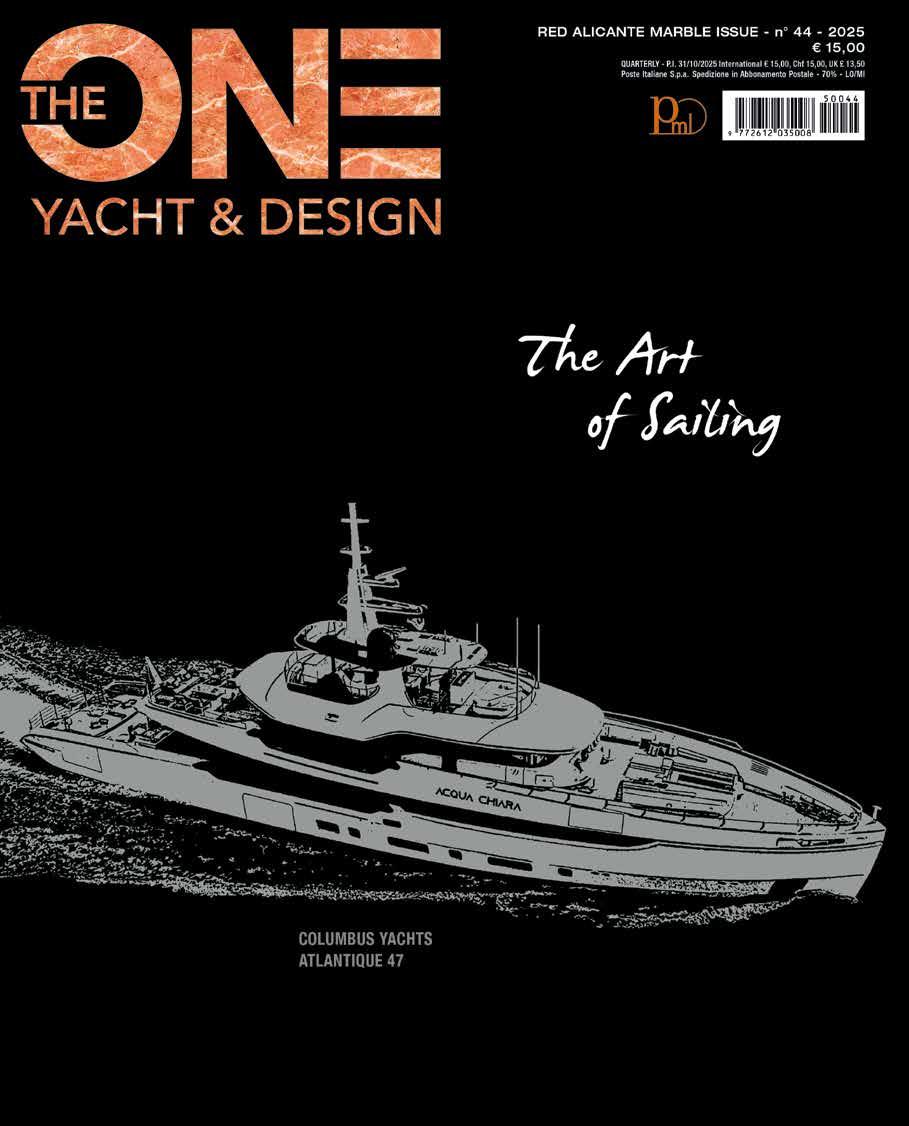
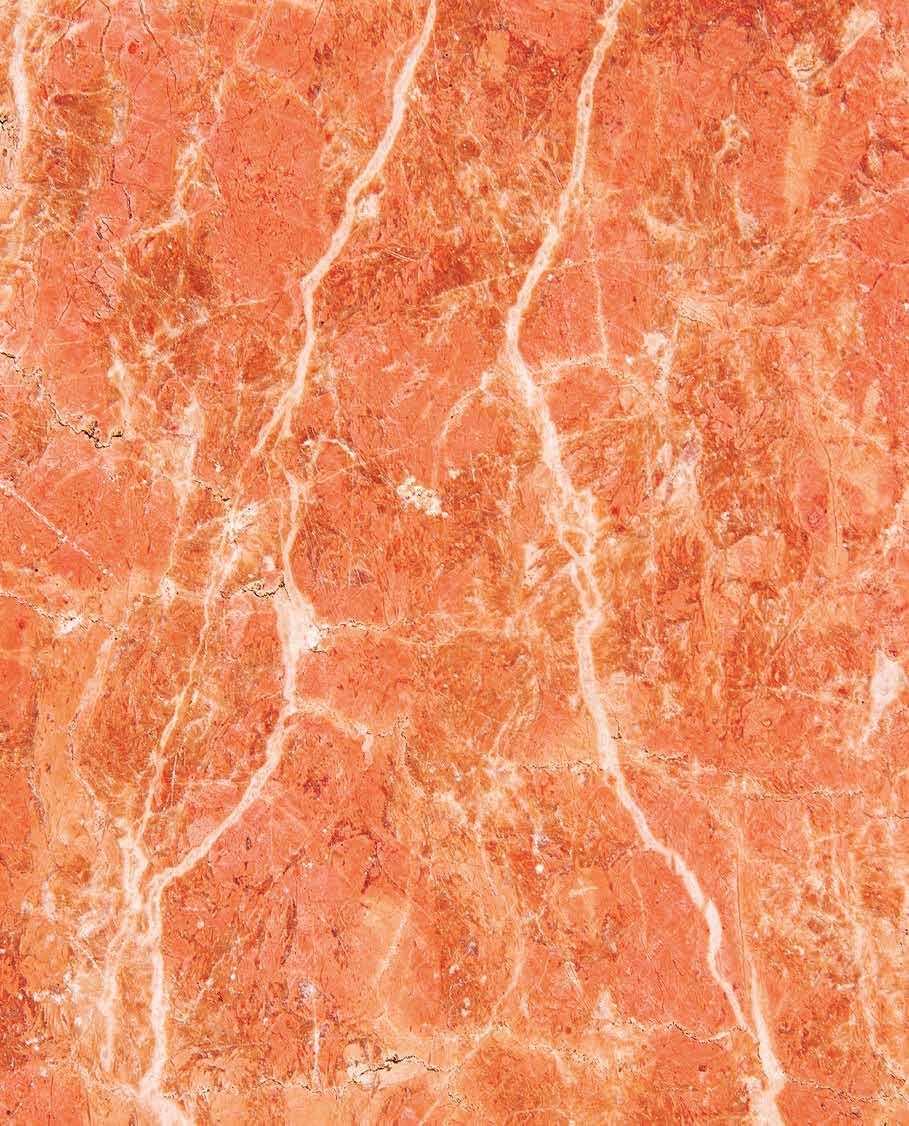
THE ONE Yacht & Design n°44/2025 Red Alicante Marble issue
WE FOLLOWED MANY COURSES. THEY ALL POINTED TOWARDS THE FUTURE.
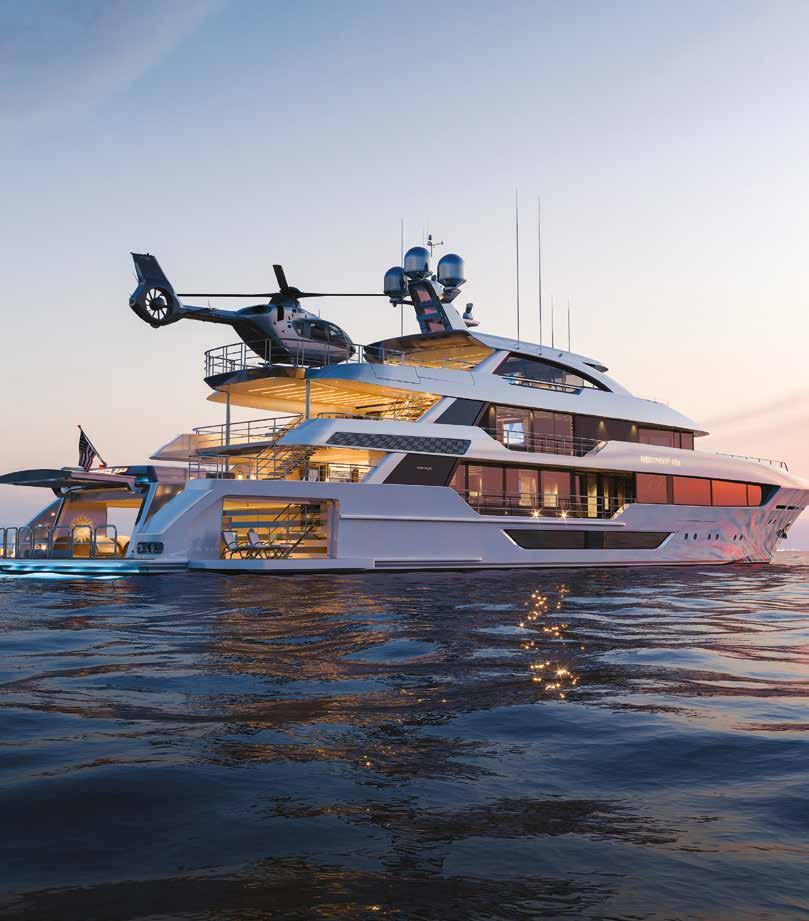
When at sea for more than 170 years, you realize that there is no such thing as a straight line. Sea is freedom, novelty, adaptation. Yet, there is a direction. For us, it is future.
baglietto.com
WORLD LEADING MANUFACTUERER OF HAND MADE CARPETS
Craftsmanship
SHE DOESN’T BREAK THE WAVES, SHE KISSES THEM.
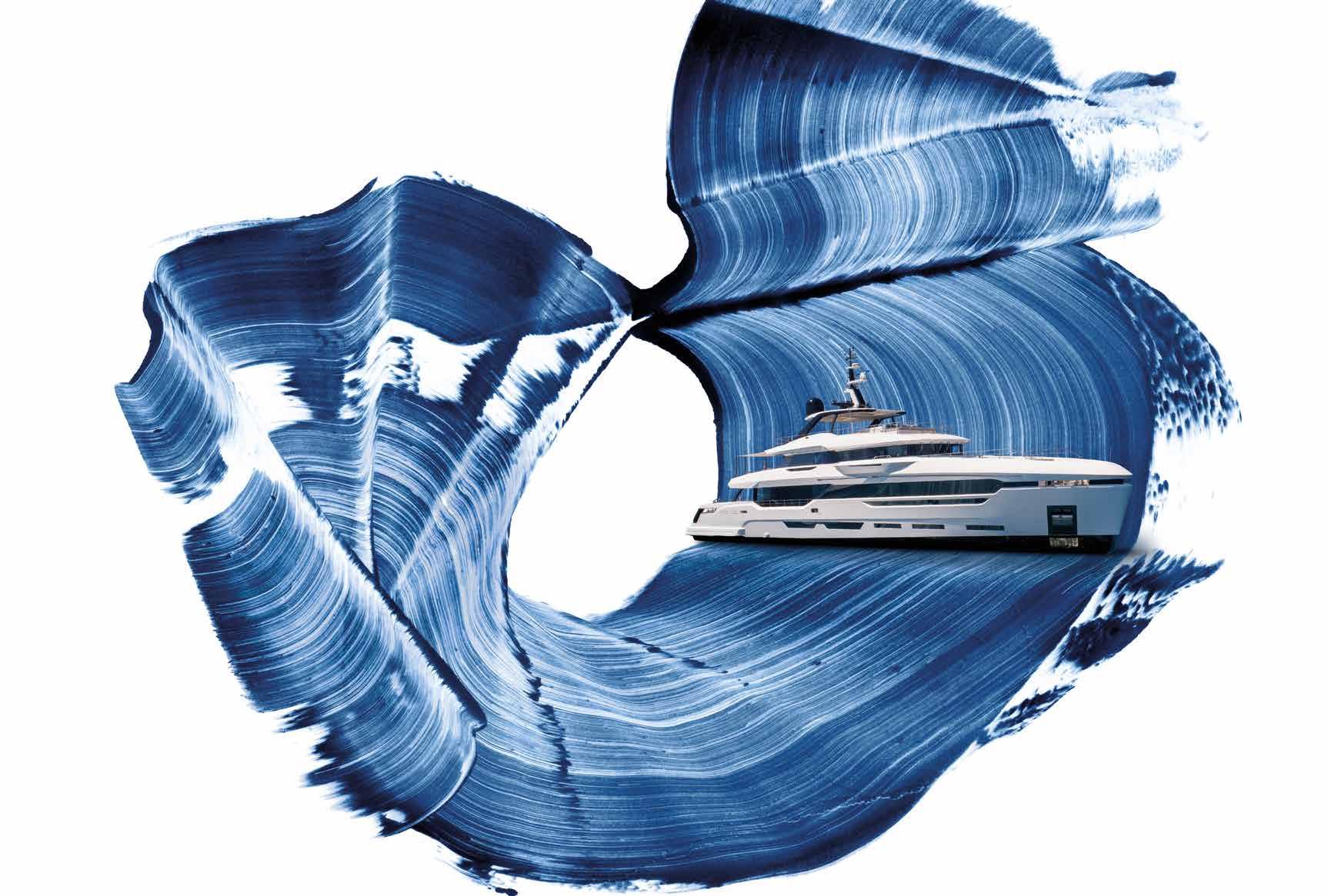
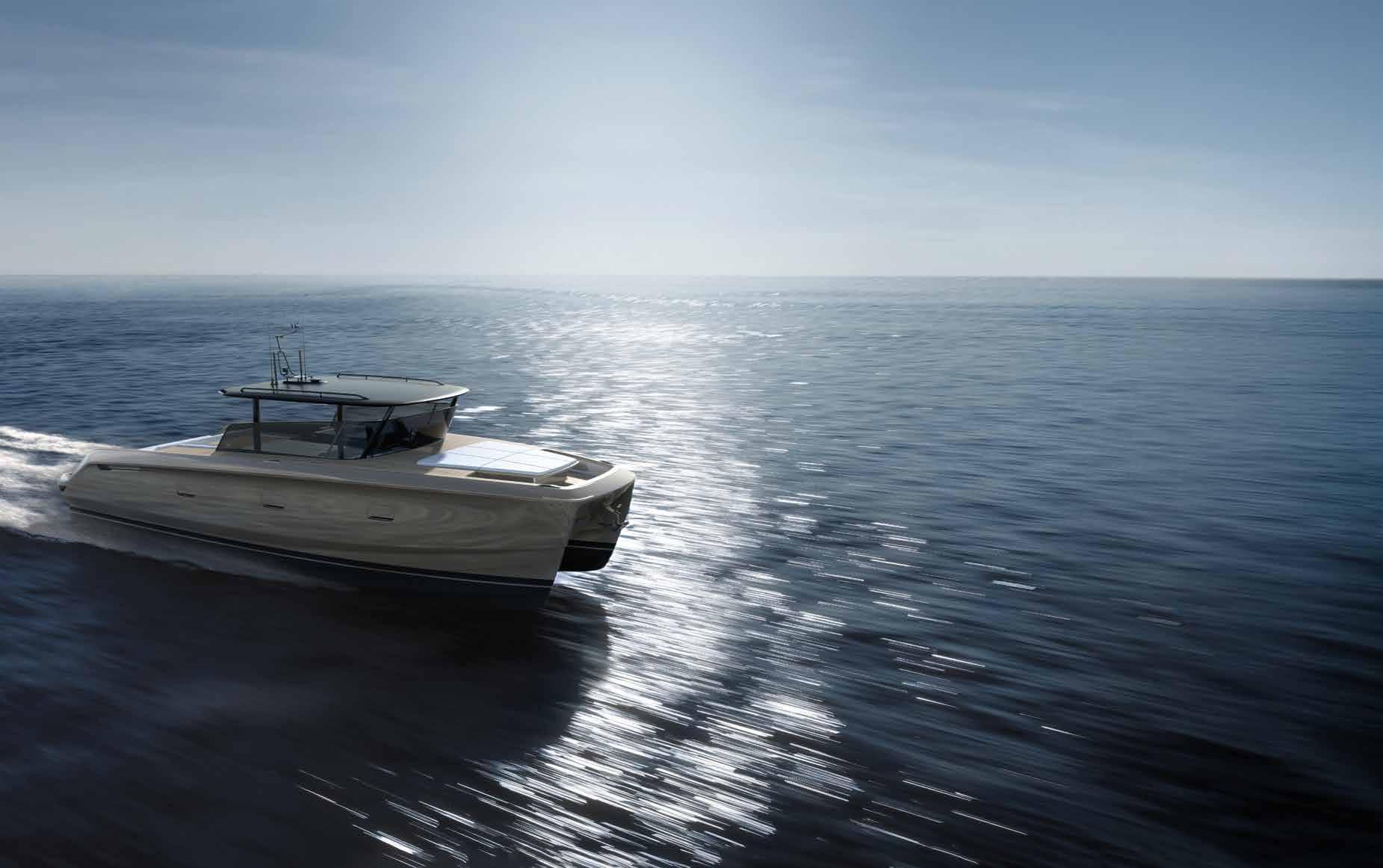
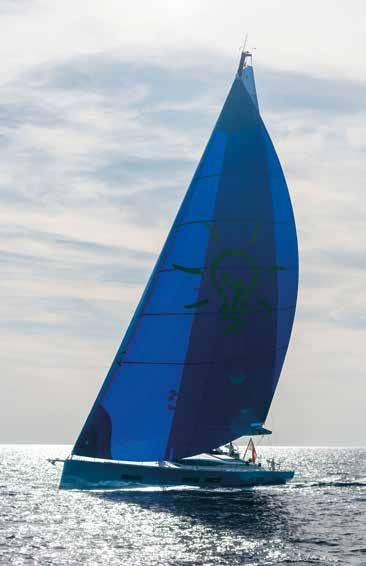
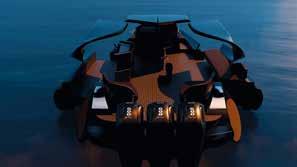
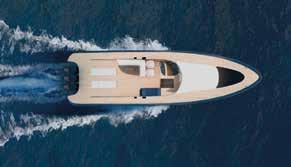
Once again Bluegame redefines the relationship between man and the sea with a groundbreaking new range of multihulls. The BGF45 glides smoothly over the water using innovative foiling technology modelled on the BGH-HSV America’s Cup chaseboat.
Dear Readers,
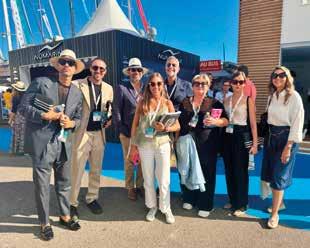
We’re back from the September boat shows at Cannes, Genoa and Monaco, where we were invited on board various megayachts whose characteristics and special features we’ll be describing in forthcoming issues of THE ONE Yacht & Design
We were also present at the Simone Micheli Architectural Hero stand at the IN-OUT show in Rimini, an event dedicated to outdoor, spa and wellness furnishings. We saw a lot of interesting ideas and outdoor furnishing proposals that could easily be adapted for megayachts.
During that event we held a discussion on new megayacht furnishing trends, involving the participation of Andrea Pezzini, CEO of Floating Life S.A., as well as myself. In front of a packed audience of architects and designers, talked centred on a variety of aspects regarding the requirements of demanding owners that have made us realise how we are often faced by real engineering, design and furnishing challenges.
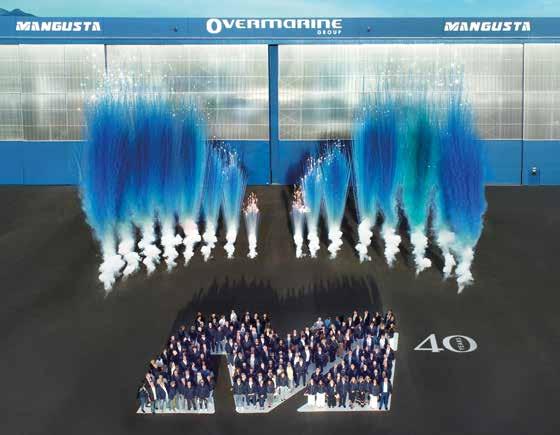
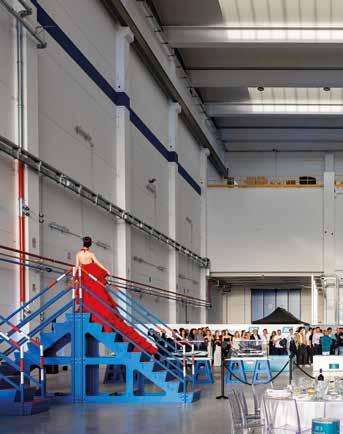
Birthday wishes to Cantieri Navali Codecasa, which has been plying the seas for 200 years now, Overmarine and Pershing, three international centres of yacht building excellence.
Enjoy your reading!
Matteo Galbiati
CEO Platinum Media Lab
Art and Restoration
Communication
Design
Fashion
Film
Visual Arts
Europeo di Design
MILANO - BARCELONA - BILBAO - CAGLIARI - FIRENZE - MADRID - RIO DE JANEIRO - ROMA - SÃO PAULO - TORINO
FART AND THE ENSEMBLE, BEYOND THE CATWALK: DARING TO DECONSTRUCT
by Umberto Sannino, Head of Fashion School IED (Istituto Europeo di Design) Milano
or those who live and breathe fashion, the onset of autumn is always an intense time. With its protocols and rituals, from Milan to Paris it’s time for Fashion Week, the global showcase that shapes the ideas and trends of a season. However, for those who, like us, experience fashion not just as an aesthetic language but as a cultural and research discipline, the catwalk is no longer enough. We want to do more than just display, we want to interrogate, cross over, open and overturn.
This desire inspired “Unstage”, a choral project presented during the Milan Fashion Week in the spaces of the Galleria Lia Rumma. Our intention to shift the focus is already made clear by the title - not stage, but un-stage, subtract, deconstruct, negate the very concept of the catwalk. Fashion is no longer simply a showcase but a shifting terrain where gestures, sounds, bodies and garments become part of the same creative geography.
We wanted to initiate this rite with a voice singing outside the choir, that of the artist Scarlett Rouge, someone able to transform the first garment into a performative act, a collective ceremony. The fifty looks by our young designers then appeared in a space with no barriers between garment and movement, light and darkness, individuality and the chorus. Because that is what Unstage really is – a dialogue, a shared practice, a political as well as aesthetic act.
In a world that often exalts protagonism and the superficial, we sought to shift attention onto what was happening beneath: making, thinking, collaborating. In that way fashion became not just an expression of style but an instrument of liberation, a lens through which to observe the complexity of a generation that reflects on memory, roots and identity, finding its true strength in collaboration.
Staging this experience in an art gallery – an unconventional setting for a fashion show – wasn’t just a detail, it was a necessary choice, because art, like fashion, is a platform for exchanging influences, with visions that interweave and become transformed. Taking the catwalk show out of its normal setting means restoring it to the dimension it deserves – not just a show but a creation of the senses. Unstage was all this – a mosaic of voices that together have described a new landscape. Not an event to watch but an experience to enjoy, not a sum of individuals but a choir speaking a shared language.
I believe that fashion of the future is here, in the courage to disobey, transforming the catwalk into a place of relationships, no longer about displaying clothes but creating worlds. Perhaps this is really the most authentic task facing a school of fashion and design – teaching young creatives that true elegance doesn’t mean conforming, it means having the courage to write new narratives.
“
TH
ERE IS A BE AU TY TH AT REMAI
NS WITH US AFTER WE ’V E
STO PPE
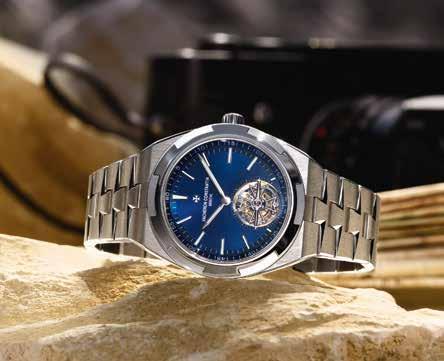
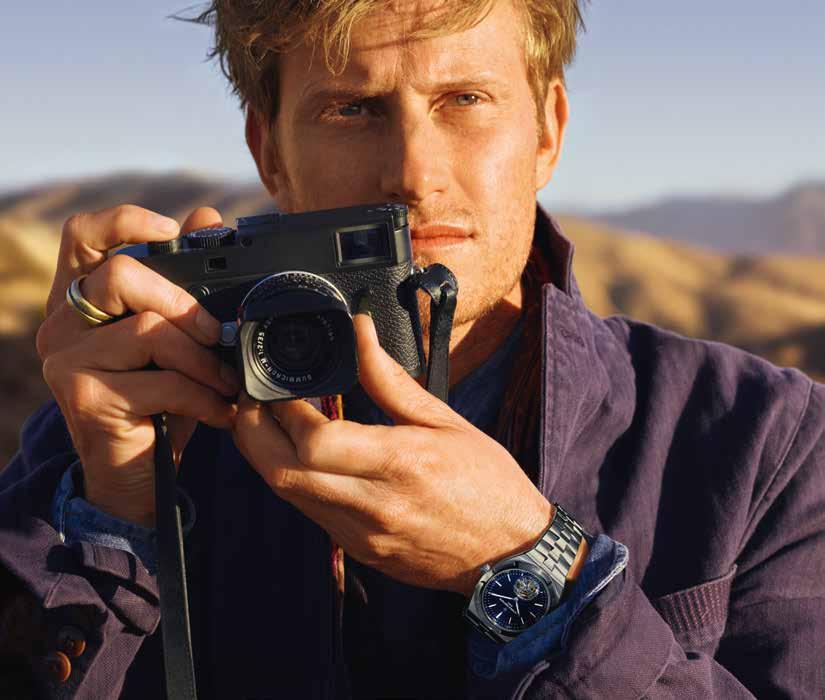
D LO OKIN G.” CO RY RICHAR DS , PH OT OG RA PHER AN D EX PL ORER , WEAR S TH E VA CHERON CO NS TA NTIN OV ERSE AS .
ONE OF NOT MANY.
ItTHE PRESENT-FUTURE OF LUXURY YACHTS
by Simone Micheli co-founder of Simone Micheli Architectural Hero
used to be assumed that luxury, in architecture and the world of pedigree yachts alike, always involved the use of opulent materials like gold, bronze, zinc, titanium, marble and an array of select woods and surfaces. This idea, though, is now losing currency. For years we’ve believed that wealth is measured by the quantity and weight of materials, the ostentatious display of prestige. However, a new sensibility is now taking over, driven by a deeper awareness that luxury no longer resides in materials, it’s a product of thought. Contemporary luxury is inspired by a new relationship between space, people and time.
Living, moving around, inhabiting – on the sea, too – no longer means simply surrounding yourself with costly materials, it’s all about creating places where the moments of life, precious, unrepeatable gifts, can be lived to the full. Value no longer lies in excessive decoration, almost always incoherent and in questionable taste, but in experience. As a result, materials are becoming simpler, more sincere. Spaces are stripping off those horrible frills and rediscovering their essential spirit. Nakedness becomes elegance, austerity becomes richness. Qualities that welcome, rather than impose themselves. It’s a luxury that doesn’t shout, but breathes. In this new perspective the yacht is no longer a status symbol but a work of art. A place shaped by thought, not built following
unreflective routine.
That’s the real challenge facing us now – transforming yachts from objects of consumption into spaces of awareness. What’s needed is a radical rethink of the concept of luxury, we have to free ourselves from the now-obsolete stereotypes that have guided yacht design for decades past. The present-future demands we provide simplicity, linearity, essentiality, softness and fluidity, placing greater value on living, with individuals once again becoming the centre of their world in a different dimension. We have to think with strength, imagine spaces that don’t seek to impress using banal stereotypes but are able to evoke emotions and encourage reflection. The yachts of the future will no longer be characterised by material ostentation but by the human and spiritual value they communicate. They will be spaces where light, silence and shape become instruments of dialogue between individuals and the sea, between time and memory. Unique places, not because of their visual richness but rather their ability to restore a sense of harmony and true balance.
Luxury today means thinking, reflecting, stopping in order to listen. It’s about creating sense, not accumulation. It’s the courage to take away in order to rediscover. This is the path that leads to a new way of experiencing the sea, and perhaps a new way we experience ourselves.
MATTEO LUONI CEO OF FLOS
by Veronica Lempi
An ambassador of Italian excellence throughout the world, Flos has been creating timeless, iconic lamps since 1962, when it was founded in Merano by Dino Gavina and Cesare Cassina. Collaborations with Italian design celebrities like Achille and Pier Giacomo Castiglioni or Afra and Tobia Scarpa inspired projects that soon became icons, like the Arco lamp of 1962. Innovative materials and shapes helped the brand contribute to a redefinition of how designers think about light in spaces. In Flos pieces, tradition and contemporary vision, design and technology, ethics and sustainability combine with emotion and poetry.
What is, to quote Castiglioni the ‘sense of our time’ today, and how does the company relate to contemporary needs?
Interpreting the spirit of our time and creating objects that remain contemporary has always been a crucial aspect of the Flos vision. Many lamps created in the early 1960s have overcome any temporal limits thanks to the pure, poetic and innovative vision possessed by the brilliant minds that imagined them. Over the years we’ve collaborated with people with different visions, linked by the ability to create objects that are unique, sometimes revolutionary and as a result timeless.
What are values that identify Flos, yesterday and today?
In Flos there is a constant dialogue between past and present. Experimentation, innovation and research into visionary design are our fundamental values. Our R&D divisions provide an extraordinary playground where our designers can experiment and dare to try out new ideas in total freedom. These values enable us to create design objects that become archetypes destined to change our way of inhabiting spaces and the way we think about lighting.
How do you see the future for Flos?
Since its very beginnings Flos has looked to the future, reinterpreting its historic identity in a contemporary key, appealing to the new generations of consumers. In future we’ll continue to consolidate this precious heritage while remaining true to our original values and offering designers technical and creative skills to help develop excellent products in the four collections: Decorative, Architectural, Outdoor and Bespoke. Implementing a design strategy like this also involves shouldering some responsibilities – it means developing creative responses to increasingly complex technological, economic and production challenges, assessing the environmental and social impact of all our choices. How does a bespoke product by Flos come into being?
Flos Bespoke is the division that specialises in the development of made-to-measure lighting solutions for complex, high-level projects. Every product is the result of a sartorial process that starts from the design idea and evolves into a unique object where the Flos DNA blends with the project aesthetics. The Flos Bespoke facility in Collebeato (Brescia) collaborates with the entire world to make bespoke products, working side by side with the new production site opened in Brooklyn, New York, specifically intended to serve the American market, and is backed by a dedicated technical team.
What’s the link between Flos and the yachting world?
Flos also works with the yacht building industry, developing Flos Bespoke projects and integrating products from decorative, architectural and bespoke solutions. We combine design research with meticulous technical management to create welcoming, prestigious spaces. On the Sanlorenzo SX100 yacht designed by Lissoni & Partners, for example, Flos Bespoke has created a solution based on Light Shadow, a patented revolutionary optical solution offering low glare lighting, visual comfort and luminous efficiency, respecting strict maritime regulations. In this project, the real challenge involved in the personalisation was engineering the solutions while complying fully with the stringent technical yacht construction standards, which are very different from those in force in the residential and hotel sectors. What’s more, MSC Crociere and Costa Crociere rely on Flos to bring innovative, elegant lighting solutions on board their ships with systems capable of enhancing perceptual well-being.
How is the refit market at the moment?
FERDINANDO PILLI
GENERAL MANAGER
AT LUSBEN
by Désirée Sormani
Compared to other markets the refit sector is experiencing a lively period. It’s attractive to all types of owner because the lead time for a new build is now very long. On the other hand, those who already own a yacht want to keep it running well and anyone seeking to buy will find a fast, valid alternative in the used - and therefore refit - market. Mr Paolo Vitelli was far-sighted enough to see years ago that the refit market would gain importance and so he invested in its expansion. Now Lusben is enjoying great success at its three shipyards in Livorno, Viareggio and Varazze, which specialise in transforming superyachts and sailing yachts.
Where do the owners come from?
These days our clients come from all over the world. We chose to focus on greater internationalisation, a strategy that’s also demonstrated by the launch of the new commercial facility in Antibes. Being present in the world of megayachts and yachts over 50 metres and where there’s a pool of captains and other professionals enables us to strengthen our presence and make ourselves known in strategic settings. Our Italian identity is a crucial element in this international expansion. It’s all about the know-how that makes us stand out, together with cutting edge technology and infrastructure.
Are you implementing any other strategies?
In February we introduced Benetti Lifetime Care, a programme designed to support owners throughout the lifecycle of their yacht. The aim is simple yet ambitious – to provide continuity, assistance and a direct relationship with the yard even after the yacht has been delivered. We want to forge a strong, enduring link between our brand, crews and owners. The synergy with Benetti means we can offer an all-round service that involves every stage, from new construction to the warranty period, refit and ordinary and
extraordinary maintenance, as is the practice in the automotive industry. Among other things this enables us to rely on the same network of suppliers and often the same workforce that built the yacht: it’s a significant added value, because it means we can ensure coherence, quality and a deep knowledge of the yacht.
We’re also putting together modular assistance packages that include, for example, the first-year check and the first five-year service — which are also linked to the class regulations — to keep the yacht running well and help it hold its value.
How important is belonging to the Azimut|Benetti group for the Lusben brand?
Belonging to the Azimut|Benetti group is a fundamental value for Lusben. Being part of the world’s largest luxury yacht producer means we can benefit from a shared strategic vision, solid industrial competencies and a level of know-how that is unique in the sector. At the same time Lusben maintains its identity and its specialisation in refitting, emphasising the group’s synergies, contributing its experience to an increasingly complete, integrated offer.
And the Livorno site has been extended…
Yes, we’ve finally reached the conclusion of a large investment that began in 2023 and that has seen a significant enlargement of the Livorno site. The last piece is still be put in place, but we’re already working on that. Next year we’re going to open an area dedicated to crews, intended to provide comfortable, functional spaces during their downtime on land. In the meantime, we’ve already launched a series of agreements with local businesses to offer from this year access to gyms, swimming pools, saunas and other services dedicated to crews’ well-being. It’s yet another service we regard as crucial, because the comfort and quality of life offered to crews when on land form part of the value we seek to bring to the refit industry.
LAND OR SEA, DISTINCTION PREVAILS.
ABOARD OR ON LAND, LIFESTYLE IS ALWAYS AT THE CORE OF OUR DESIGN PHILOSOPHY.
IARE VISION AND RESEARCH NO LONGER RELEVANT IN TODAY’S YACHTING WORLD?
by Andrea Pezzini, CEO & Co-Founder of Floating Life
have just returned from a wonderful experience of exchanging ideas and reflecting on a number of key yachting aspects in Rimini, during the InOut Fair, where I was a guest of this magazine and of architect Simone Micheli. There, I spoke publicly about my vision for the future, about the new projects and materials that could represent a pivotal moment for the world of yachting. After finishing my talk, I took my time walking among the stands, reliving the same emotions I used to feel when, as a much younger man, I was sent to explore trade fairs outside our sector for products that might prove to be useful in our own industry. Back then, I had been “gently nudged” by the general manager of the yard where I worked to attend industrial construction events, civil aviation shows, exhibitions for merchant ship supplies, and interior design fairs, where one could see and touch the finest and most exclusive fabrics, meet with artisan companies showcasing their extraordinarily crafted pieces made for exclusive villas, or even castles. I felt that same curiosity arise once more, as I scoured the event with the same eager eye for something that might catch my attention or awaken a creative instinct. Then, once I finished my wandering, I asked myself: among all the people I know from the various yards, who did I actually meet here? So I asked here and there whether the stands had received any visits from yacht technicians, and the answer was always the same: “No. It’s rare to see them at these kinds of fairs. Usually, we meet independent architects who might design interiors for villas, and sometimes yachts, but never
boatyard technicians.”
I’m sorry to have to say this, but this is an enormous mistake. Of course, there is nothing wrong with attending the major fairs in our own sector, but one should also visit those of other industries in order to reimagine our designs from the ground up, starting with the technicians, especially the younger ones. Investing in the education of young professionals should be a moral obligation for everyone, especially in our field, which is beginning to run short of new ideas. It is just incredible how much innovation exists in other sectors that could be absorbed into our own at no cost. Of course, to do this, we would need to break away from the usual routine that sees yards sitting and waiting for ideas to be provided by external offices, a practice that atrophies a yard’s internal ability to make a difference, the very quality that once made them stand out in the world of luxury, when every yacht was a crown jewel of craftsmanship and engineering, and every shipyard championed the innovation and unique qualities of its product.
I shall stop here but shall also reiterate to the managers of both large and small boatyards: nurture young professionals and use their natural curiosity to revamp our world. Push them towards research and innovation, instead of sitting back and waiting for ideas to come from without.
Of course, those of us who work externally, myself included, have a duty to also push in this direction, but I hope yards will lead the way.
Inspired by an affinity for grandeur, the Azimut Grande Series is a spectacular collection of works of art that combines advanced technology with engineering mastery. Visionary design reimagines the function of space with surprising innovation, revolutionizing the onboard lifestyle through the creative touch and aesthetic of authentic Made in Italy.
Discover our Dealers’ network on azimutyachts.com AZIMUT. DARE TO AMAZE.
WHAT’S NEW
A selection of new projects and concepts from the leading international shipyards and design studios that will grace the waves in the near future
by Désirée Sormani
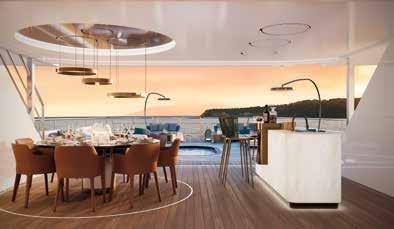
Sunreef has unveiled its new 65-metre yacht, the world’s largest luxury catamaran. With vast living spaces and an impressive 1,800GT volume, the yacht offers seven sumptuous double cabins for guests, two interior dining and lounge areas, a pool, Jacuzzi, beach club, and gym. The owner’s palatial suite commands the forward half of the upper deck, enjoying private access, while two expansive VIP cabins sit aft of the master suite. On the main deck below are four additional guest cabins, accommodating a total of 22 crew members. Social areas are focused in the aft sections of both decks. On the main deck, a grand dining area seating up to 14 guests surrounds a
custom-built oval table, where panoramic views pour through the glazed aft wall. The upper deck, designed for the owner’s private use, has a more intimate scale with an emphasis on outdoor living. One of the yacht’s most striking features is the vast beach club aft, where a 6-metre pool is built flush into the main deck, encircled by sofas, sunpads, and low tables. Folding wings extend from both hulls to enlarge the platform and provide access to a port-side gym and starboard toy garage. The catamaran’s twin-hull design ensures exceptional stability and efficiency for long-range exploration. sunreef-catamarans.com
Premiered by Azimut at the Cannes Yachting Festival, the Magellano 27M introduces the third generation of the iconic Magellano series. The yacht emerges from the vision of Jarkko Jämsén for the exterior and AMDL CIRCLE & Michele De Lucchi for the interiors, marking their yachting debut.
The straight line of the corner, the industrial feel of the fillets and the precise mastery of proportions make the Magellano 27M instantly recognisable. The exterior surfaces are deliberately pure, allowing complex curves to capture and reflect the play of light, sea and
sky. Inside, AMDL CIRCLE & De Lucchi’s touch evokes the spirit of discovery, transforming the journey into a place of meaning and identity. At the heart of the design lies the main deck, envisioned as a vast loggia over the sea, an expansive, light-bathed space framed by wooden architectural elements that recall Mediterranean pergolas and patios. The result is an environment suspended between the interior and exterior, where natural light and seascape merge into daily life.
azimutyachts.com
FEADSHIP_PROJECT
Feadship
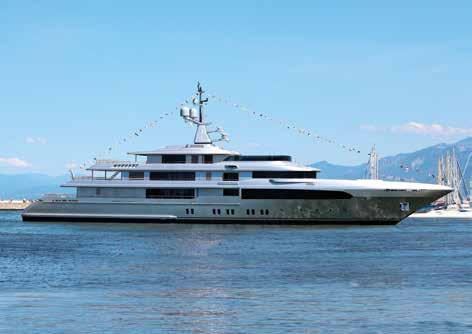
Resale has announced the sale of Project 717, a 49.50-metre yacht that combines an angular, low-profile exterior by Studio De Voogt with a serene, contemporary interior.
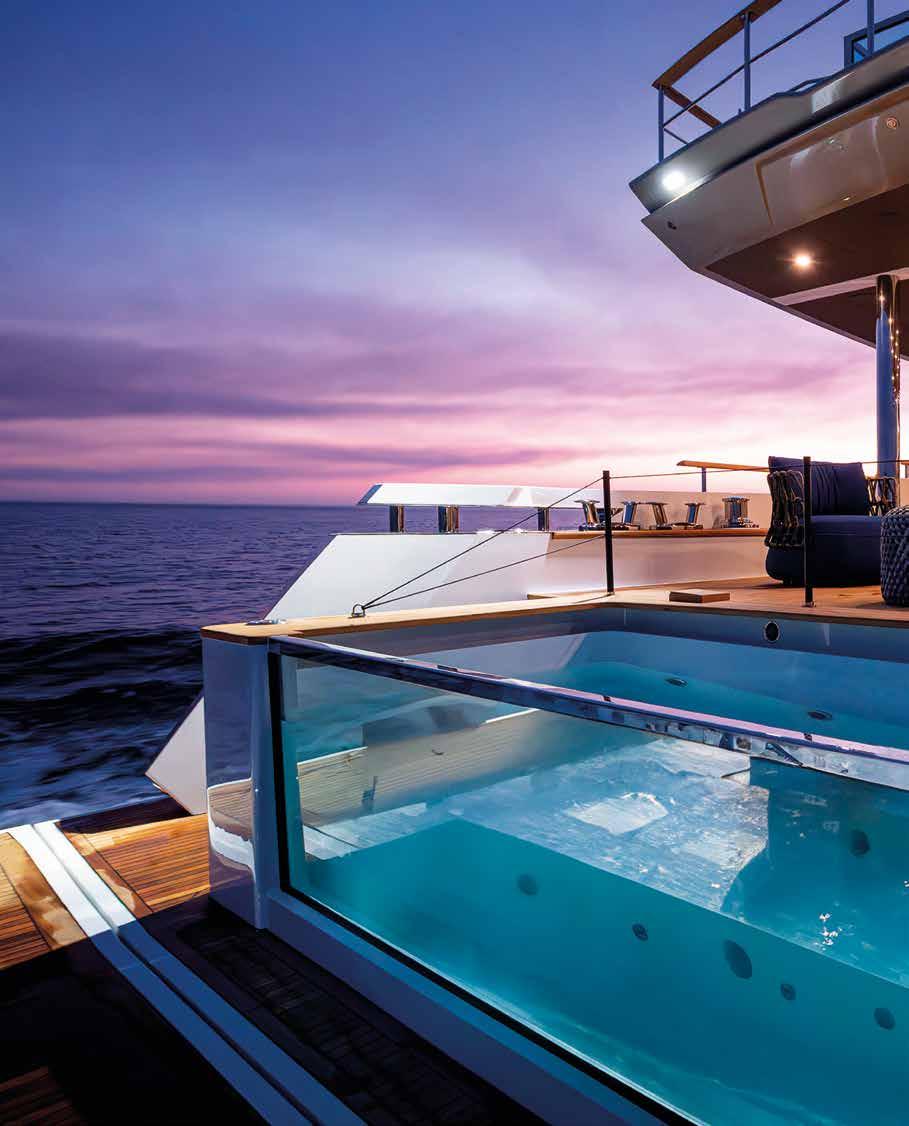
Accommodation is provided for up to ten guests across five staterooms, including a full-beam owner’s suite with stunning views and a private study. Exterior highlights include a glass-fronted Jacuzzi, fold-down bulwarks that extend the beach club, and a sundeck with bar and barbecue. This sale marks another milestone for Feadship Resale, the recently established division dedicated to
supporting clients with the purchase and resale of existing Feadships. Following the sales of ONE and Savannah, the division continues to demonstrate its value as a trusted platform for both buyers and sellers. Feadship attended the Monaco Yacht Show without a stand. Instead, the House of Feadship welcomed clients and friends for relaxed lunches in partnership with Dior. The real stars were on the water, the spotlight shining on Valor, in prime position at Port Hercule, her elegant lines admired from every angle. feadship.nl
www.paszkowskidesign.it
FRANCESCO PASZKOWSKI DESIGN
TANKOA YACHTS_S520
Followingtthe success of the S501, boutique builder Tankoa Yachts has revealed the next evolutionary step: the S520. Designed by Francesco Paszkowski Design, the new model extends the S501 platform from 49.80 metres to 52 metres, introducing a sleeker, sportier profile. The distinctive glazing of the wheelhouse and the taut lines that sweep downward from stern to bow give the yacht a dynamic stance on the water. Key distinctions between the S520 and her predecessor include enhanced outdoor living areas: a longer, wider sundeck, an enlarged upper-deck skylounge and an
extended flybridge. Paszkowski has reinterpreted the stern to create an exceptional beach club spread across two levels, opening onto side platforms for an unmatched connection with the sea. Inside, the collaboration between Francesco Paszkowski and Margherita Casprini once again delivers outstanding results. Carefully selected materials flow harmoniously through each space, with a subtle grey-toned palette effortlessly linking interior and exterior environments.
tankoayachts.com
TUREDDI YACHTS_AZZURRA
Giamboi
Designs, Van Oossanen Naval Architects and Tureddi Shipyard together unveiled the Azzurra Linea36 Custom Platform at the Monaco Yacht Show. This bespoke superyacht marks a new chapter in the celebrated Azzurra Series, fusing Italian design, Dutch engineering and Italian craftsmanship. Building on the foundations of the acclaimed modular family of sub-500GT yachts ranging from 36 to 50 metres, she offers clean lines, refined proportions and timeless style. The yacht is based on Van Oossanen’s tried and tested Fast Displacement Hull Form (FDHF), optimised
for efficiency, comfort and long-range performance. A reimagined deck layout blends lifestyle and function seamlessly. The interior arrangement reflects the same spirit of collaboration: a panoramic main-deck owner’s suite, an uncommon upper-deck VIP cabin and expansive exterior spaces including a sundeck, forward pool, and generous aft lounge areas. Designed for either private cruising or discreet charter, the Linea36 Custom offers a yachting lifestyle more often associated with much larger vessels. tureddigroup.com
The Italian Way to Relax
Designed by Ivo Redaelli from Studio di Architettura e Ingegneria Redaelli & Associati
ARES YACHTS_50.55-M SPITFIRE
ARES
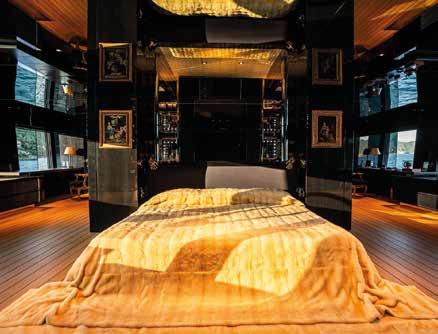
Yachts has kicked off construction of the 50.55-metre Spitfire, entirely designed by Bannenberg & Rowell. Drawing inspiration from the legendary Supermarine Spitfire, the yacht captures the aircraft’s spirit through clean, aerodynamic lines and metallic finishes, set to be created using advanced composites. Spitfire features a sleek, low-profile superstructure defined by dark glass bands and a refined military-grey exterior. Inside, the atmosphere is shaped by natural, camouflageinspired tones, punched metal, leather and tinted glass. The full-beam owner’s suite forward on the main deck is complemented by four spacious
guest cabins below. A standout feature is the owner’s freestanding bed offering sweeping 270-degree sea views. For movie enthusiasts, the private forward cockpit transforms into an outdoor theatre, complete with retractable side screens and glass bulwarks framing the horizon. Built on speculation, the yacht allows potential owners to personalise the interior, particularly carpets and soft furnishings, from a wide range of options. In performance terms, Spitfire employs a hybrid diesel-electric propulsion system, uniting efficiency and innovation. aresyachts.com
FROM LAND TO SEA
by Désirée Sormani - ph. courtesy by Cantori
and Federico
Nick Maltese Studio, Federico Spagnulo and Spagnulo & Partners, Valentina Roj and Matteo Colombo of Progetto CMR, Sarah Gabaglio of Studio Marco Piva, Polina Zaiafarova of Spagnulo & Partners and Kimia Nasiry of Studio Marco Piva. To side, the Flexplorer 146 by CdM and left, the Cantori outdoor TWIST collection (designed by Castello Lagravinese Studio) with coffee tables Atenae (designed by Maurizio Manzoni) are perfect on a yacht deck
The first Cantori Design Challenge, held in collaboration with the Cantiere delle Marche shipyard, invited ten international architecture companies to formulate unconventional interior design projects for the Flexplorer. The result was a new research platform, opening the way for new visions and perspectives in design. The four winning studios were announced at the Monaco Yacht Show
Above, from left, Nick Maltese
Pagetti,
NICK MALTESE STUDIO – The Quiet Agent: this project is striking for its expressive power and the originality of its solutions, which reinterpret the cinematographic image of James Bond though a coherent aesthetic language. The narration develops as a continuum, blending the different settings and functions – the yacht does not appear as a collection of spaces but as a unitary organism that draws those living inside it into a suspended, almost cinematic, dimension. Luxury and intimacy interweave without ostentation.
Challenges are meant to be taken on, and Cantori, a famous furnishings brand whose products already feature on board a large number of craft, launched the first Cantori Design Challenge in collaboration with the Cantiere delle Marche, involving ten illustrious architecture studios. The aim was to for them to provide their interpretation of three interiors for the yacht Flexplorer 146 CdM (owner’s cabin, main saloon and terrace) and transfer the comfort and aesthetic language of the domestic space to the seaborne world. The gauntlet was picked up by ten of the most important studios on the Italian and international scene, selected by the organisers
PROGETTO CMR – A Journey Home: a project that stands out for the refinement with which it transforms the Penelope and Ulysses myth into an architectural story with a poetic, intimate tone. The narrative does not limit itself to expressing literary evocations but translates them into spaces that restore the essence of travel and waiting - the terrace as a metaphor for the path, the cabin as a place of memory and the saloon as the welcoming embrace of the return. The layout of the spaces reveals a skilful production where natural materials, textiles and flowing geometries combine to create an atmosphere of domestic warmth, capable of blending adventure and welcome.
because they are from areas outside yacht design. The aim was to showcase unusual, unconventional approaches: Barreca & La Varra, Fabric, Flaviano Capriotti Architetti, Lombardini22, Nick Maltese Studio, Orizzonti Verticali (Monica Gasperini + Ambra Piccin), Progetto CMR, Spagnulo & Partners, Studio Marco Piva and WIP Architetti. With the designers’ creativity guided by the theme “From land to sea”, the result was ten high-quality projects that combined functionality, aesthetic research and narration inspired by four sets of imaginary owner couplesJames Bond and Honey Ryder, Penelope and Ulysses, Warhol and Basquiat
[ CROSS-FERTILISATIONS ]
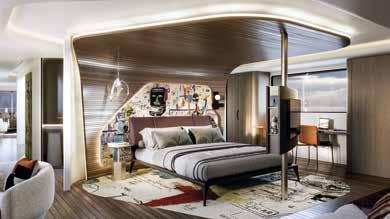
SPAGNULO & PARTNERS – Warhol & Basquiat
The project transforms the yacht into a shifting gallery inspired by the unconventional creative energy of Warhol and Basquiat. The space becomes a manifesto of freedom, colour and experimentation with iconic patterns, vibrant tones and furnishings given an artistic reinterpretation, creating spaces that are full of life, in constant transformation. The owner’s experience becomes a sensory and visual voyage. The project celebrates art as the universal language and the yacht as a privileged platform for cultural cross-fertilisation.
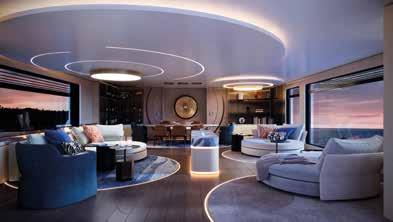
STUDIO MARCO PIVA – Twine. The World Is Not Enough
The project has a symbolic vision: the geometry of the circle and spiral become metaphors for the voyage without limits, a story of adventure and intimacy. Every space is conceived as part of a fluid continuum where materials, light and shapes define an immersive experience. Attention to detail and the evocative use of symbols transform the yacht into a contemporary refuge that posits the expanse of the sea as horizons of freedom and design as a universal language of beauty.
and finally, Federico Fellini and Giulietta Masina. Four archetypes to transform the yacht into a narrative scenario where myth, glamour and contemporary art enter a dialogue with design.
The four proposals the jury considered to be especially significant were announced at the Cantiere delle Marche stand during the Monaco Yacht Show (24–27 September 2025), one of the most eagerly-awaited luxury yacht events. They were by the Nick Maltese Studio, Progetto CMR, Spagnulo & Partners and Studio Marco Piva. The assessment was based on the expressive power and originality of the solutions, optimisation of
spaces and functionality, comfort as sensory and luxury experience, and the ability to present and narrate the project through efficient, coherent storytelling.
All ten projects will be featured in a book published by Cantori for Cantiere delle Marche. This will become an invaluable resource to propose these new visons to owners of the yard’s yachts. The Cantori Design Challenge is a platform for international research, able to combine Italian artisanal know-how with an innovative, experimental vision, opening up new perspectives in design.
What international businesses and organisations are doing to build a better carbon-neutral future
NEWS AND PROJECTS FOR A CLEANER, MORE ECO-FRIENDLY WORLD
by Désirée Sormani
SUSTAINABILITY TAKES CENTRE STAGE AT THE GENOA BOAT SHOW
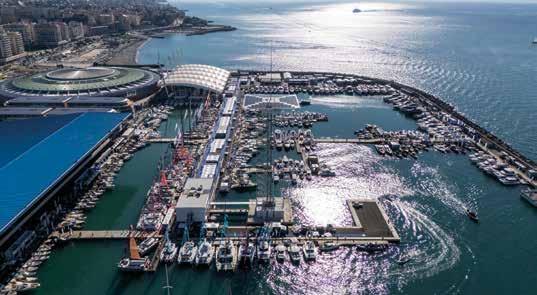
Celebrating the impressive milestone of its 65th edition, the 2025 Genoa International Boat Show was a hub of sustainable innovation. Beyond the plethora of boats on display showcasing both technological and material solutions aimed at respecting the sea, there was also a brimming conference programme focused on environmental issues. The 4th World Yachting Sustainability Forum was a prime example, bringing together politicians and industry leaders to illustrate how sustainability is transforming yachting. The opening session, “The European Ocean Pact and Its Impact on the Boatbuilding Sector”, featured top-tier representatives from the European Commission, including Massimo Pronio, Head of Communication in Italy, and Karin Aschberger, Deputy
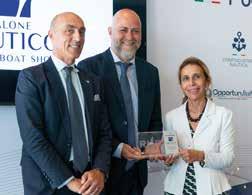
Emanuele Castagno, RINA’s Certification Executive Vice President, hands Marina Stella, General Manager of Confindustria Nautica – Italian Marine Industry Association, the ISO 20121 Certification plaque for the Genoa Boat Show’s sustainable design
The boating industry must take a step forward and make itself heard as an independent sector in defining Europe’s blue economy, no longer as just an appendage of tourism
Director of the Oceans and Water Unit at the Joint Research Centre. With them was Philip Easthill, Secretary General of the European Boating Industry, to illustrate the Commission’s new strategy and its possible implications for recreational boating. The panel outlined the Pact’s six pillars, from protecting and restoring the health of the oceans to strengthening the competitiveness of Europe’s sustainable blue economy, to consolidating ocean diplomacy, and advancing research, innovation and skills.
The 3rd edition of the European Sustainable Boating Roundtable, organised by the European
Boating Industry (EBI) and Confindustria Nautica, the Italian Marine Industry Association and boat show organiser, also took place. Another key event was the roundtable on ESG criteria for the boating industry, organised by Confindustria Nautica, BPER Banca, and RINA, which developed the “Sustainable Finance Lab” project to promote greater awareness of ESG issues and sustainable finance, through the development of financial services and tools dedicated to the boating sector, supporting the implementation of ecological, energy-related, and sustainable transition plans.
ROYAL HUISMAN AERA TAKES THE CROWN AS THE WORLD’S GREENEST SUPERYACHT
Royal
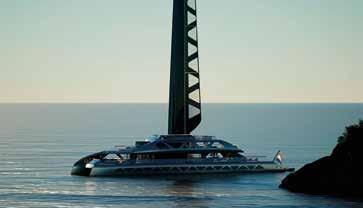
Huisman has unveiled AERA, a groundbreaking 50m/164ft hybrid catamaran that redefines sustainability and blurs the boundaries between motor and sail, showcasing an unprecedented matrix of technical innovation. Concept AERA is the outcome stemming from a multi-year R&D investment by Royal Huisman, sister company Rondal, Artemis Technologies and Cor D. Rover Design, merging cutting-edge research into wind-assisted propulsion, advanced hydrogeneration, a pioneering energy storage system and a super-efficient, head-turning design. She is a yacht that navigates at sail or motor with levels of efficiency, stability, ease of operation and comfort never before achieved. This hybrid superyacht fuses wind, water, hydrogen and hydrogeneration to power luxury cruising. Through its blend of design and technology, AERA allows owners to embrace the superyacht lifestyle with a dramatically lower environmental impact than comparable 10-passenger yachts.
MDL MARINAS RECOGNISED AS AN INDUSTRY LEADER IN SUSTAINABILITY
MDL
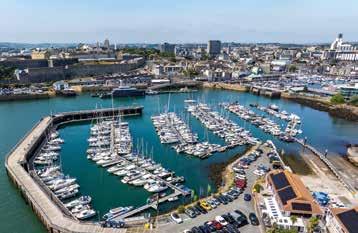
Marinas, UK’s leading marina and water-based leisure provider and one of Europe’s largest marina groups, offering members over 160 destinations to cruise to in the UK, France and Spain, has been selected as an official participant in Blue Wake™, the Monaco Yacht Show’s initiative spotlighting environmentally sustainable solutions from across the superyacht and marina industries. The recognition follows MDL’s successful application, reviewed by the Water Revolution Foundation, and underscores the company’s leadership in decarbonising marina operations. Between 2022 and 2025, MDL achieved a 54% reduction in operational carbon emissions, supported by its commitment to 100% renewable electricity and the installation of solar PV across 18 marina and boatyard sites. MDL is also the first UK marina operator to apply the internationally recognised BREEAM sustainability framework to marine environments, using the standard to guide refurbishment, new-build and development projects throughout its estate.
NEREID, A HABITAT DESIGNED TO HELP RESTORE THE MARINE ECOSYSTEM
Established by the World Design Organization (WDO) in partnership with the UK Design Council, the 2025 World Design Congress (WDC) united the global design community to address the concept of design for the benefit of the planet. Exploring design’s potential as a crucial tool for environmental action, Zaha Hadid Architects (ZHA), in collaboration with the Hong Kong Science & Technology Parks Corporation (HKSTP) and D-Shape, presented projects that advance sustainable innovation across marine ecosystems, renewable materials, urban regeneration and future mobility, demonstrating design as a powerful catalyst for ecological resilience. ZHA showcased Nereid, a digitally fabricated habitat designed to encourage the growth of phytoplankton and filter-feeding shellfish that form the foundation of the marine ecosystem’s food chain within the North Lantau Marine Park conservation zone in Hong Kong, developed using advanced 3D printing technology.
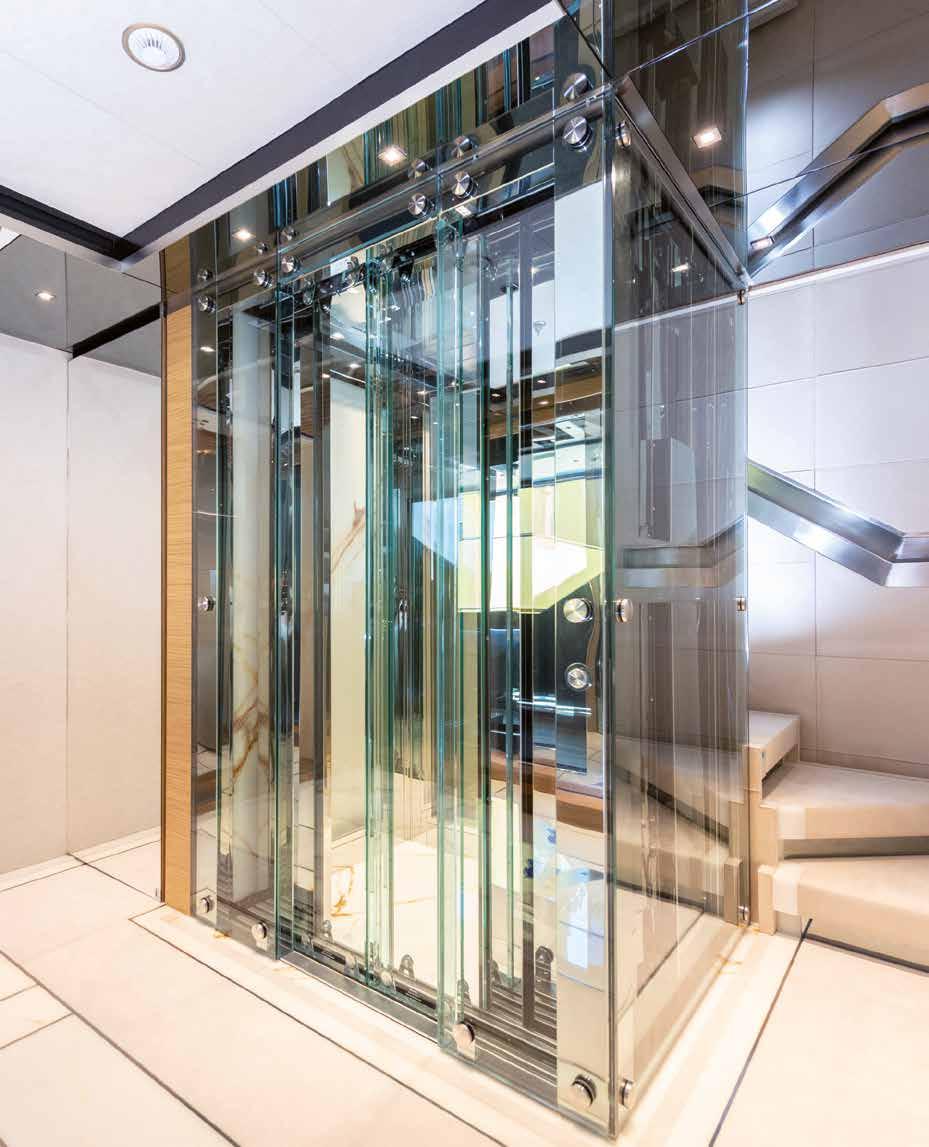
Elevators with sinuous shapes and attractive design are the perfect solution to luxurious, exclusive settings. The use of valuable materials combined with modern high technologies can meet the most particular needs in terms of space and design.
Personalization and customisation is our must.
A particular attention is paid to norms and regulations in force in the elevator industry as well as to materials and their treatment in order to make them suitable for installation and functioning into a marine environment.
Bertazzoni Servizi S.r.l.
Powered by
Via Frassina, 65 Loc. Avenza - 54033 Carrara- ltaly T. +39 0585 791727- F. +39 0585 791728 www.bertazzoniascensori.com info@bertazzoniascensori.com
I.C.M. S.r.l. - Lift Marine Components Via Kempten, 12 - 38121 Trento- ltaly T. +39 0461 960648- F. +39 0461 991165 www.icmlift.com info@icmlift.com
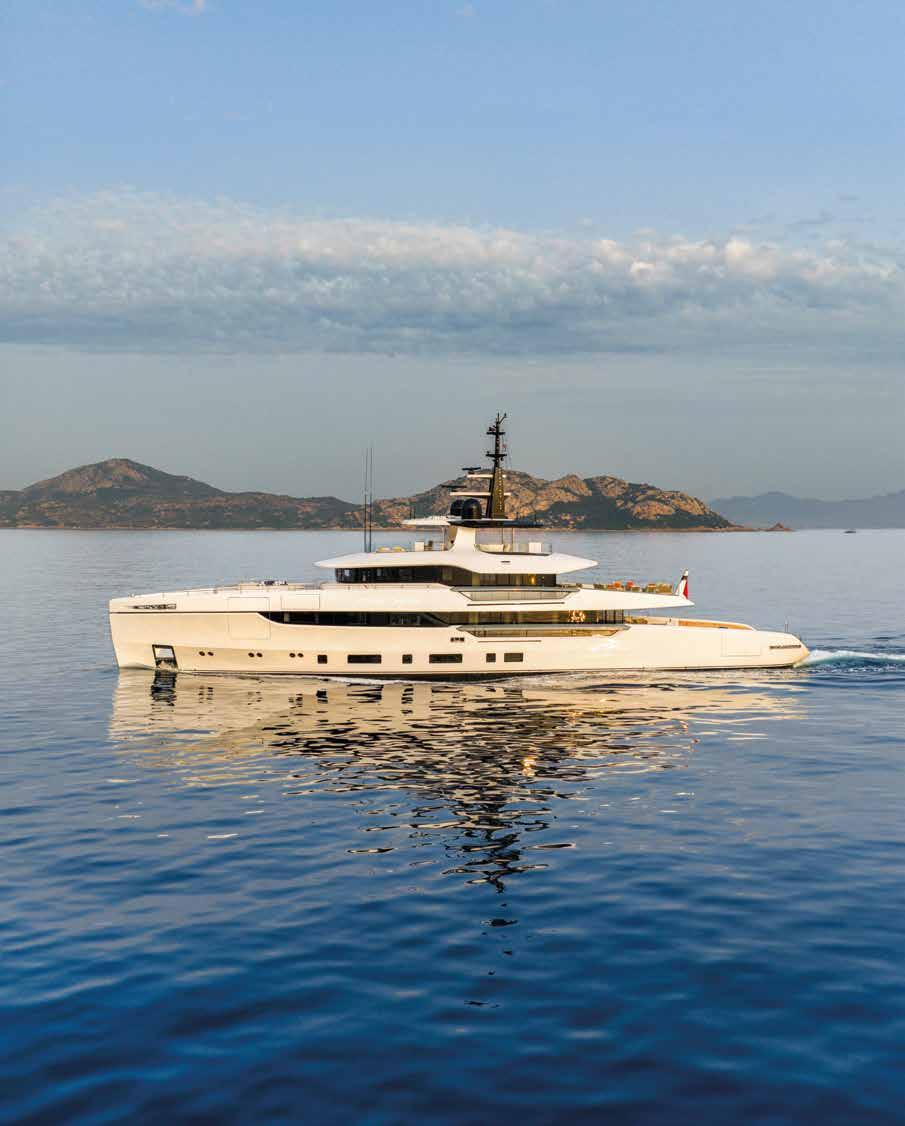
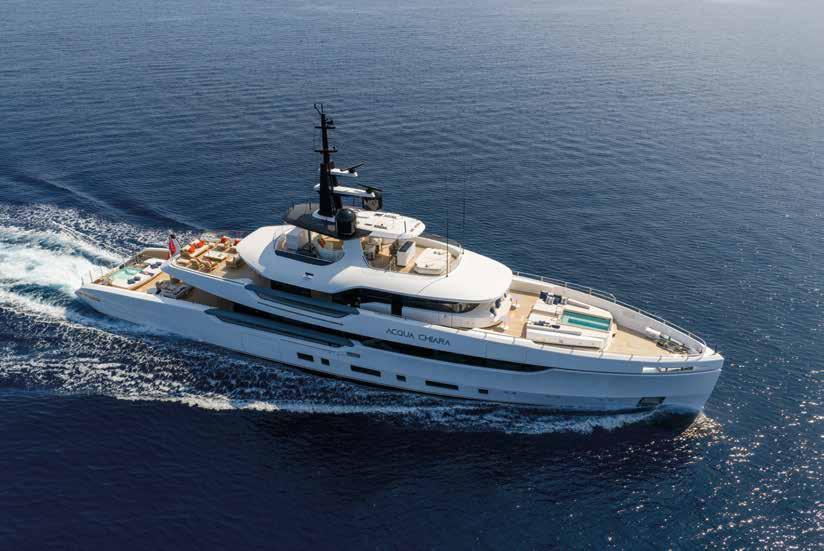
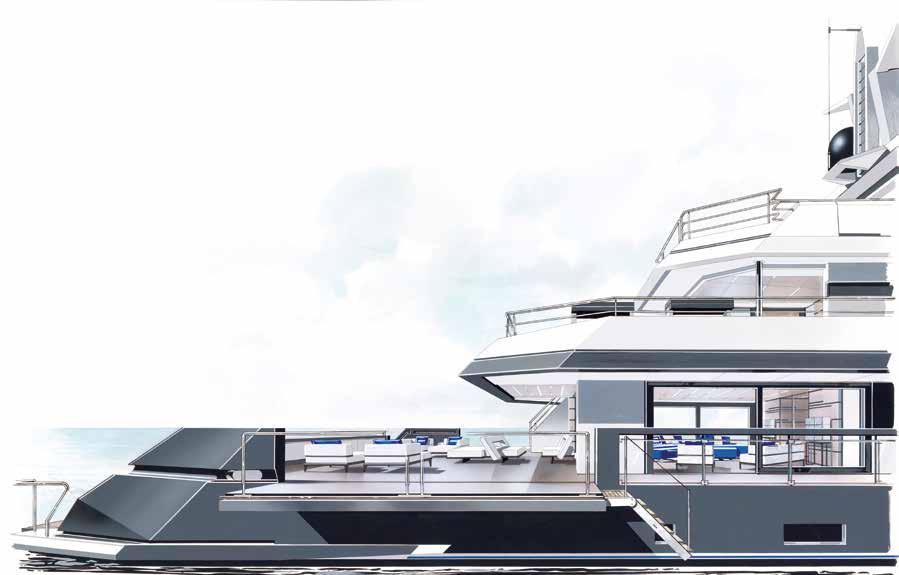
With fluid lines, tiered outdoor living and a tactile interior, Acqua Chiara - the first unit of Columbus’ Atlantique 47 line - reframes connection with nature as an everyday ritual. Her design is conceived for owners who treat each cruise as an immersion in place – unhurried, attentive and always close to the water
by Bryony McCabe - ph. by Giovanni Malgarini
ith yacht owners increasingly seeking holistic onboard lifestyles, Acqua Chiara by Columbus Yachts responds with seamless flow, sensory calm and constant closeness to the water. Hot Lab’s exterior design for the series marks a considered evolution in the shipyard’s language: more liveability, more flow and a more deliberate relationship with the sea.
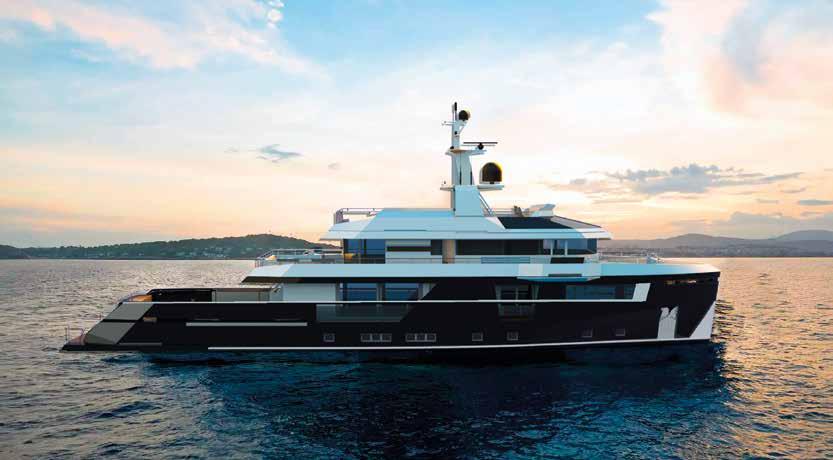
As with the broader Atlantique range, Acqua Chiara’s most recognisable exterior trait is the sailing-inspired composition. The distinctive profile widens amidships and tapers towards bow and stern. It’s elegant on the eye, but the geometry also unlocks sightlines, natural circulation and constant proximity to the elements, so that the boat’s form actively supports how people want to live onboard.
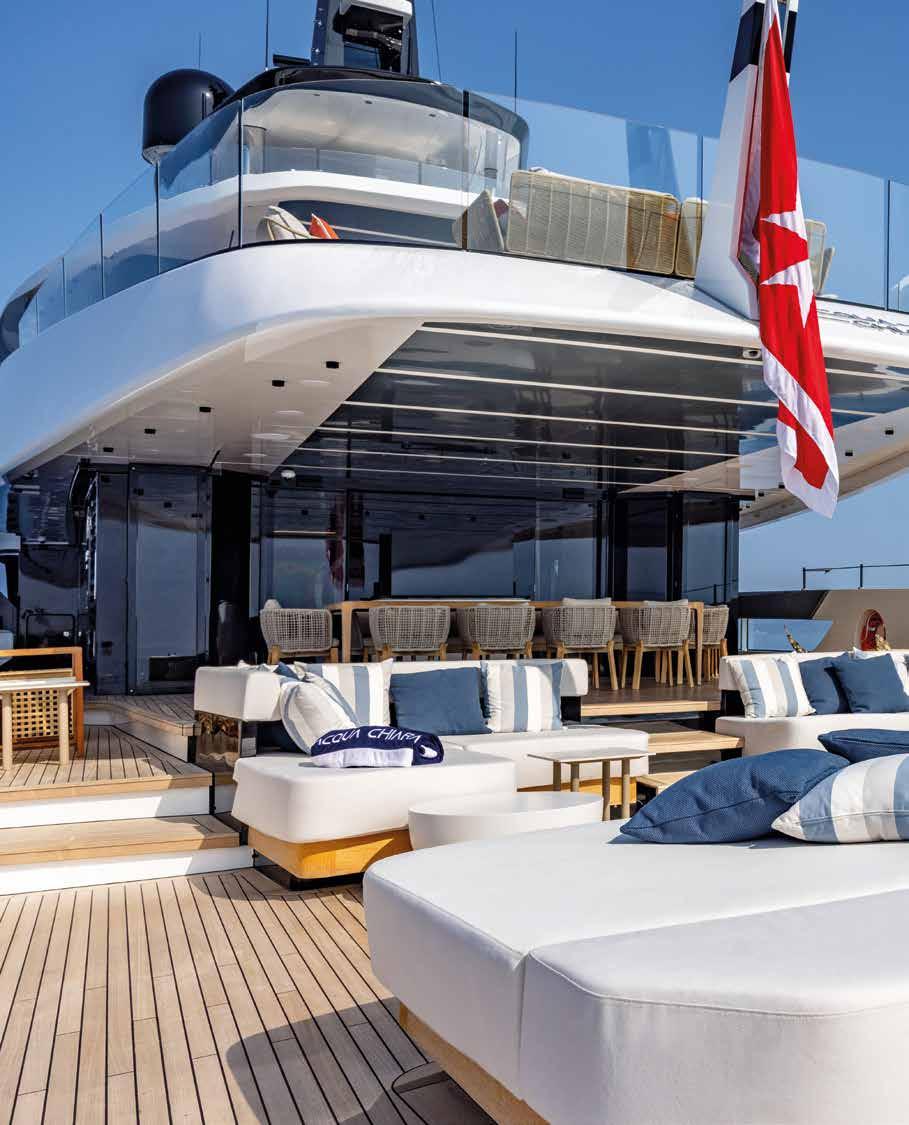
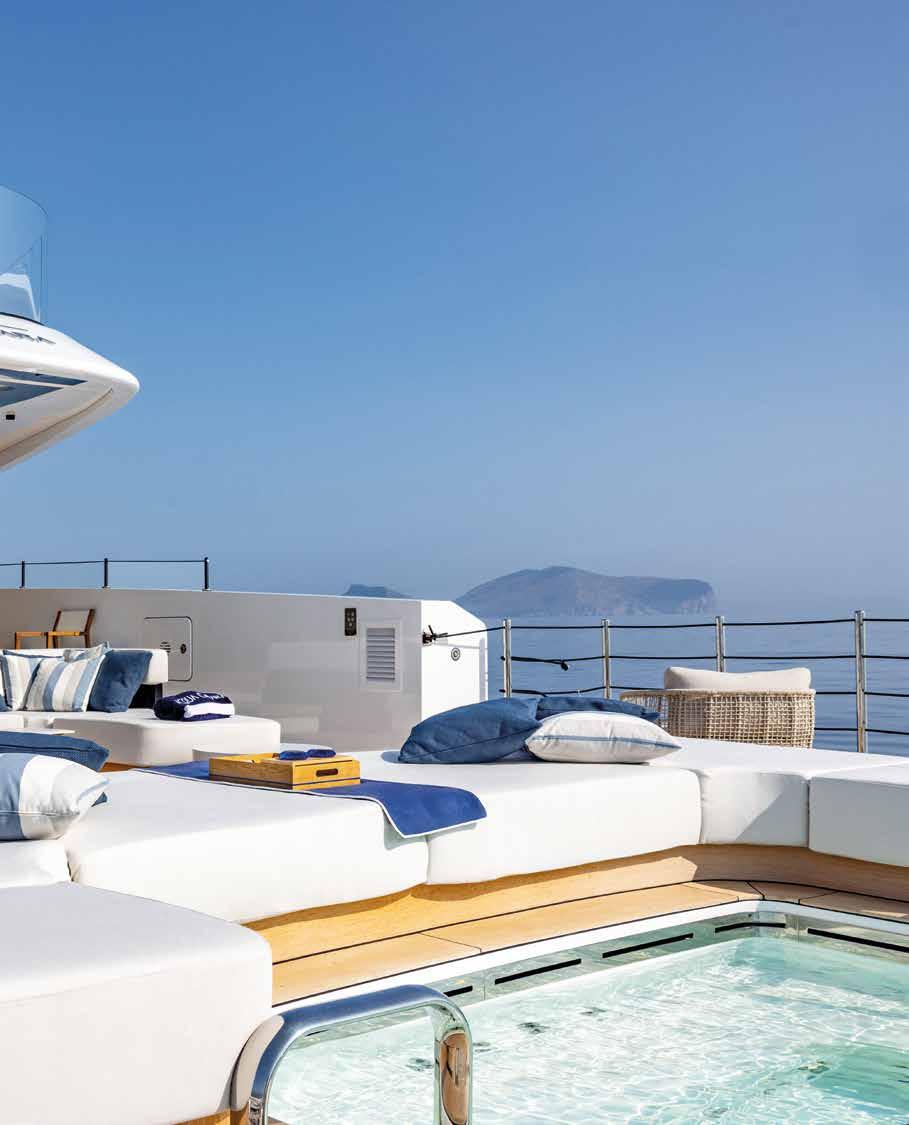
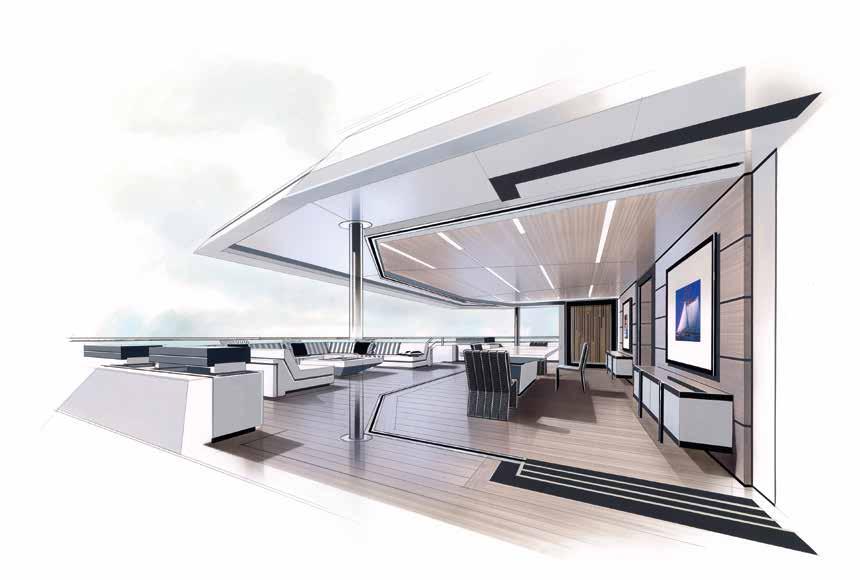
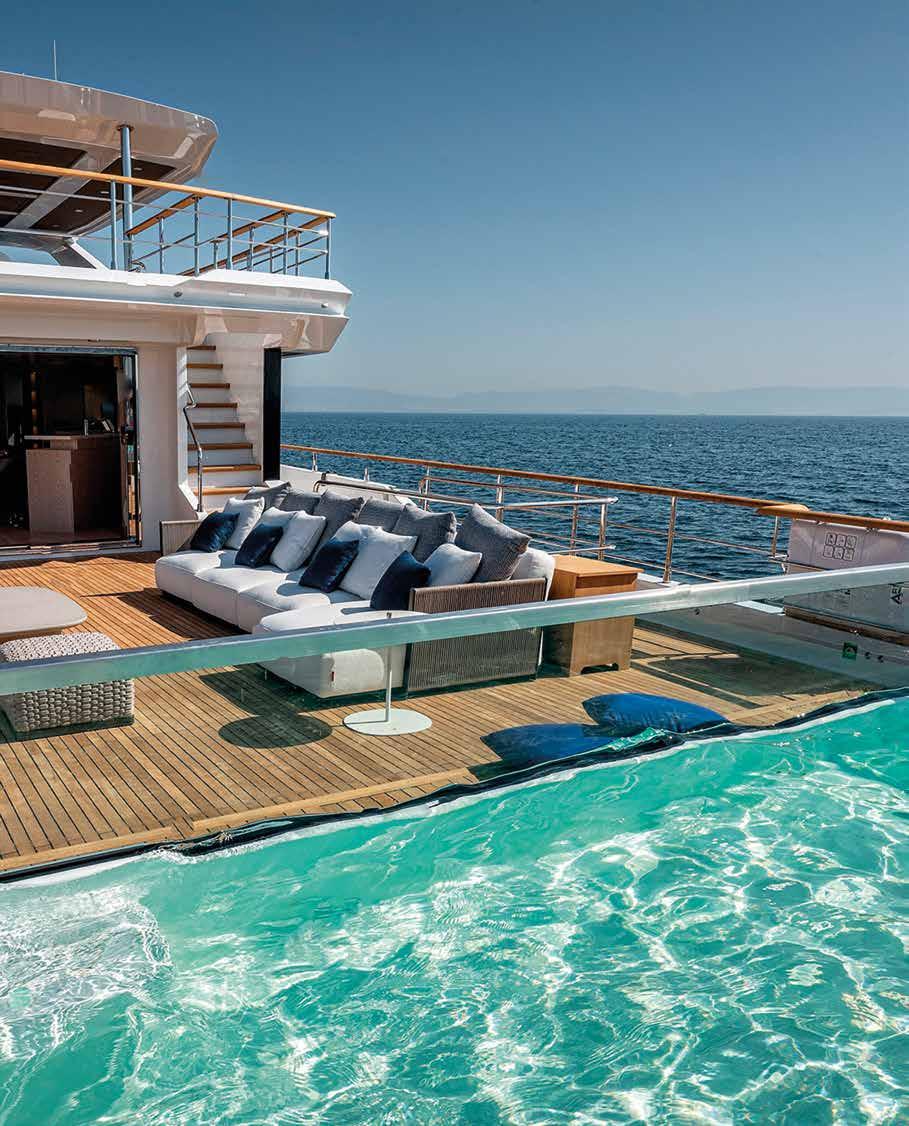
Nowhere is this clearer than at the stern, where daily life is choreographed across three staggered terraces. The journey begins at a covered dining area, drifting down to an expansive deck anchored by a scenic pool and fold-out balconies, and finally to a near-water platform set just 50cm above the sea.
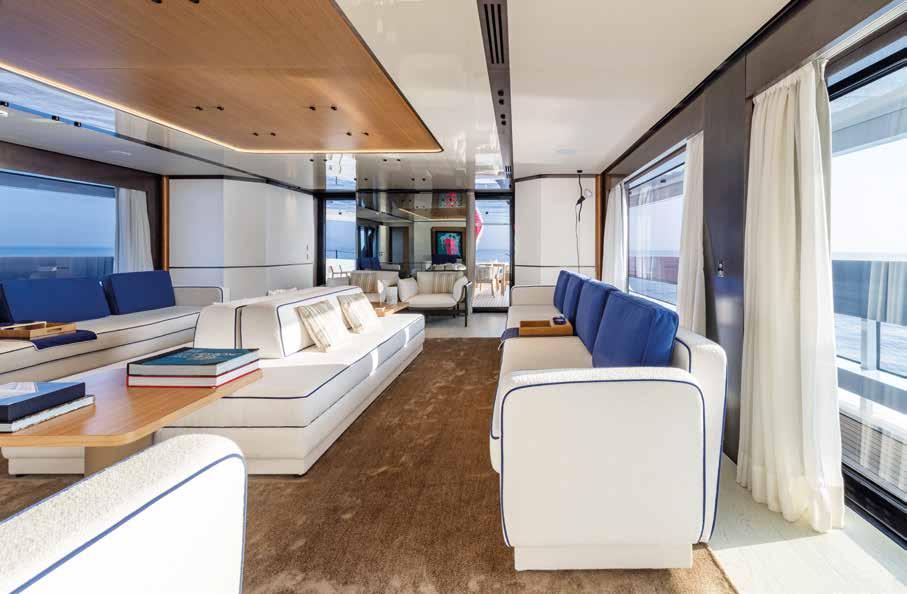
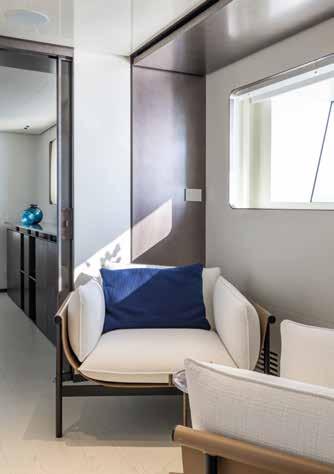
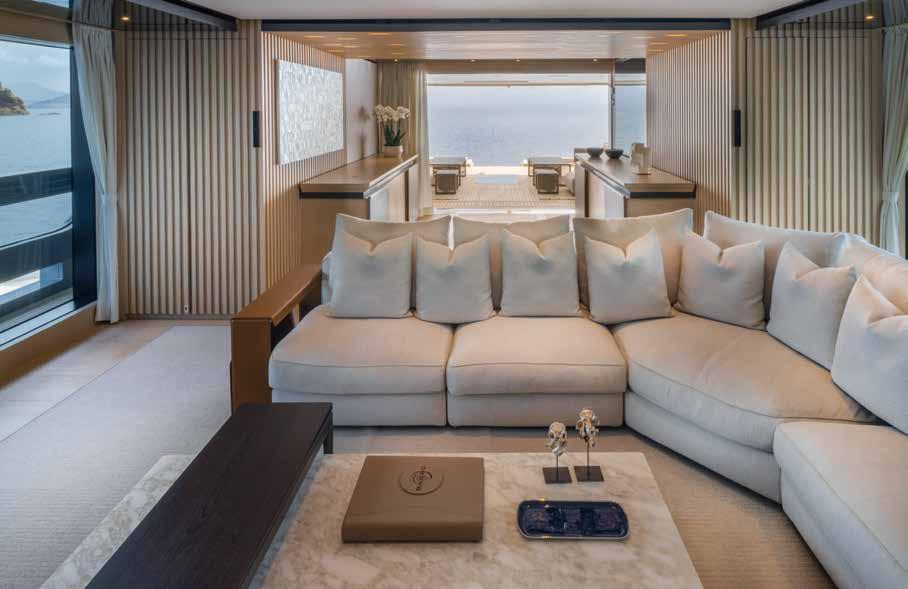
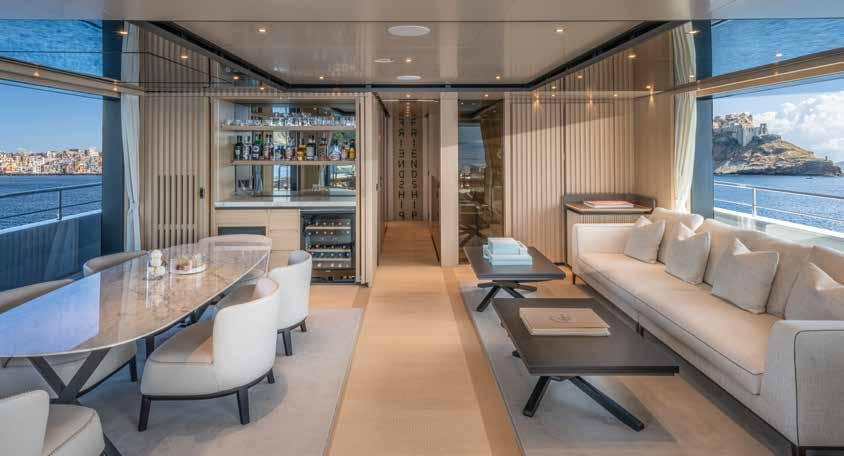
Forward on the upper deck, a second, more contemplative aquatic moment appears: a pool encircled by loungers, sofa and side tables – creating a quiet counterpoint to the sociable aft area. Up top, the sundeck centres on a relaxed lounge of sofas and armchairs, with a console aft and a broad sun pad with bar at the bow completing a day-to-night envelope of open-air living. The interiors, also penned by Hot Lab, are classic with modern inflections. White parquet floors meet natural-oak ceilings, softened by areas of matte white lacquer. Wall panels in lacquered wood with a subtle metal effect frame the floor-to-ceiling windows and draw the eye out to the horizon. In the main saloon, large custom sofas in white sponge fabric with blue edging form “islands” around a teak coffee table and four Fendi Totu armchairs.
The upper deck carries a second living space that shifts gracefully from day to evening. By day, it reads as an airy lounge; by night, it becomes a convivial dining room. Open the floor-to-ceiling windows to port and starboard and the glazed entrance aft, and the entire deck dissolves into a terrace on the sea.
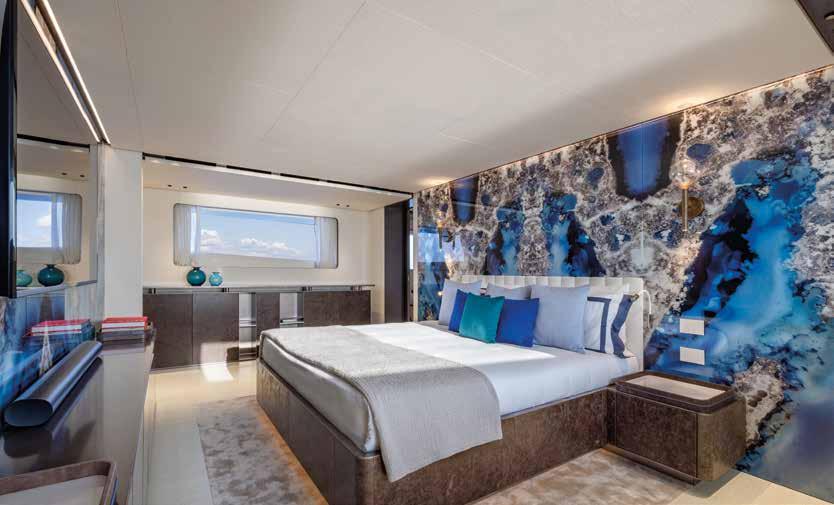
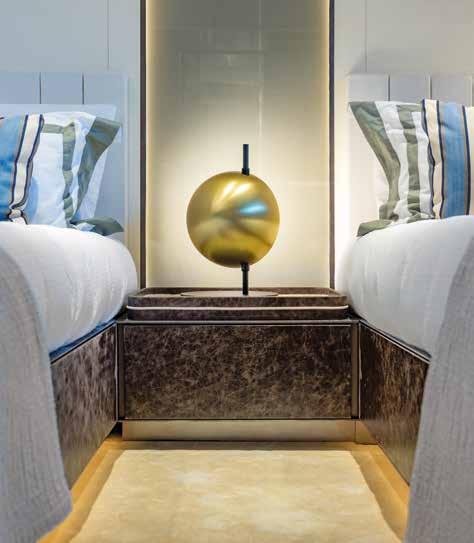
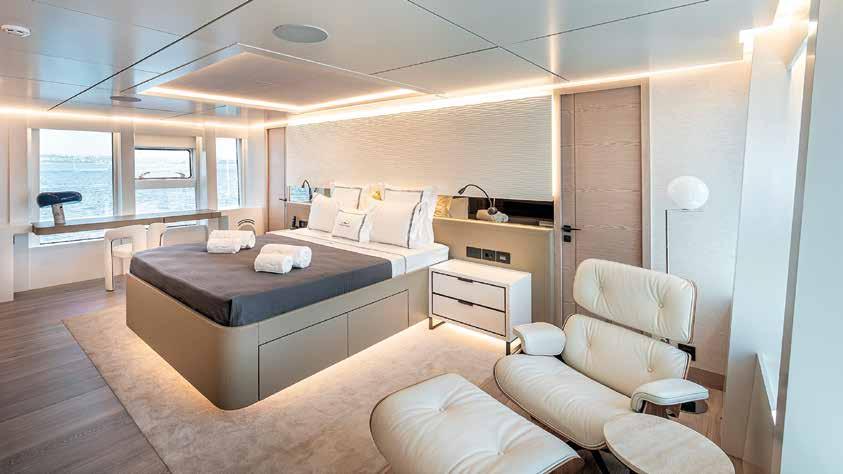
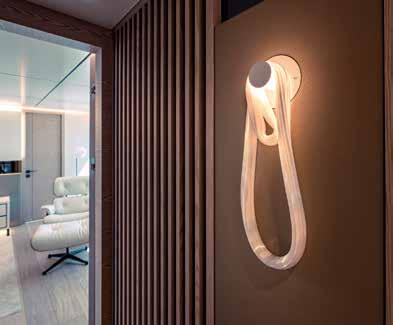
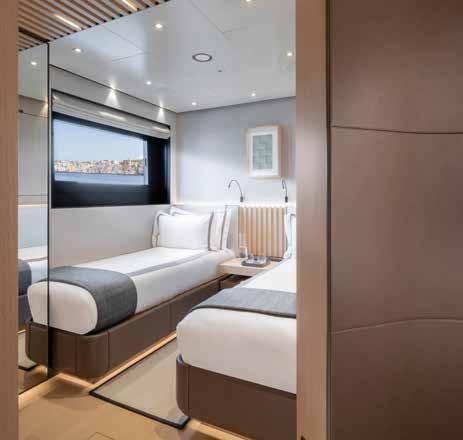
The owner’s suite continues this material narrative with Galaxyblue glass accents, dark-brown leather details and burnished metal finishes. Lighting by Bonaldo – in blown glass and burnished brass – adds a warm, residential glow. The ensuite leans deliberately spalike: white marble, a hammam-equipped shower and a generous tub accented by a silver geometric mosaic by Sicis. It’s a private ritual space that still feels attuned to the yacht’s broader calm. Guest accommodation echoes the theme of contrast and composure. Two doubles with king-size beds and two twins each carry ensuites in marble with geometric Sicis mosaics. Dark-brown leather bed frames and nuanced Vetrite details find balance against bright, intentionally simple carpeting. Brokis Bonbori appliqués recall lanterns in a coastal garden, while Oluce Superluna lamps add a crisp, graphic note at the bedside. Even thresholds are elevated: doors in charcoal-grey metal and glass are interlaid with a metallic fabric, turning a functional moment into a tactile pleasure. Circulation between decks is given the same care.
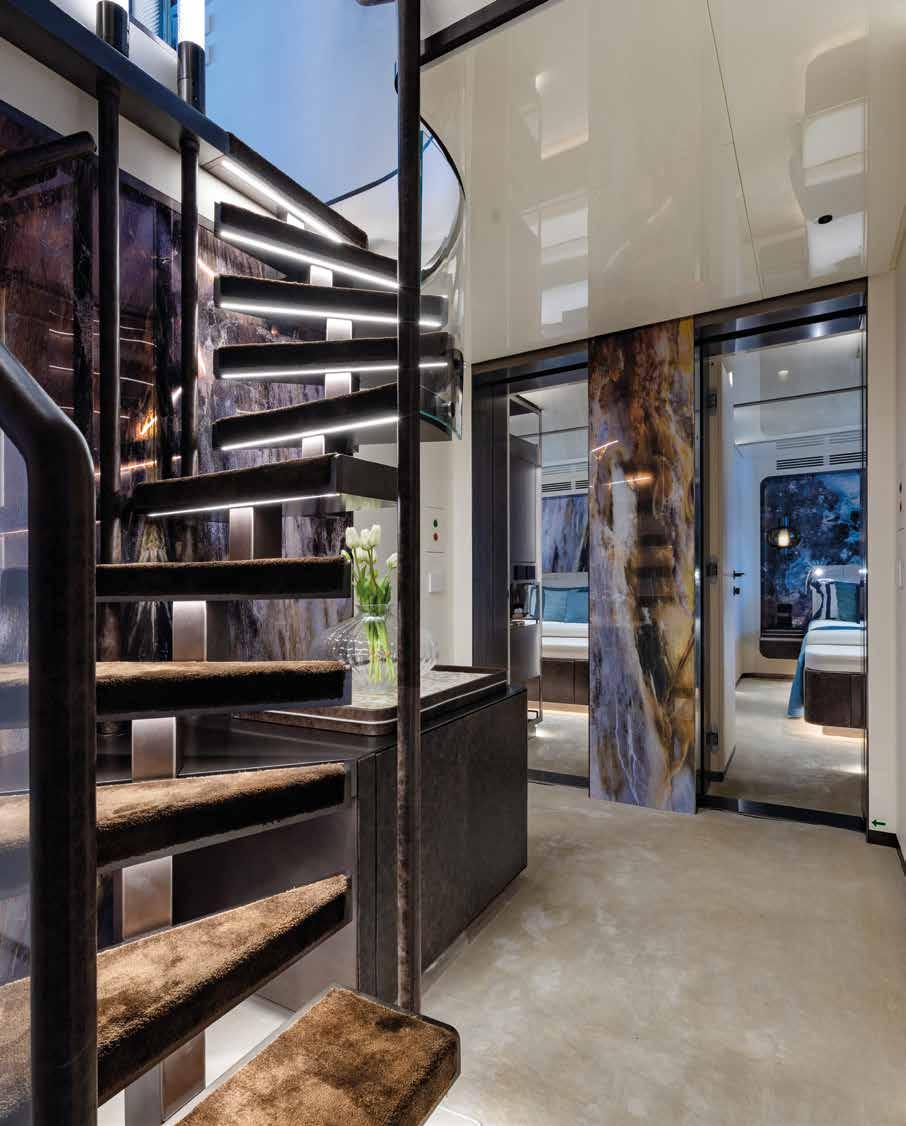
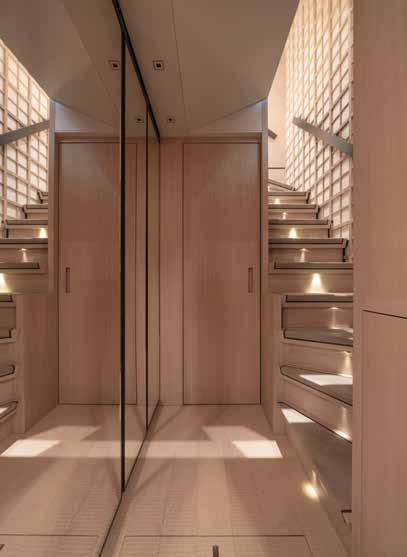
The main staircase is a crafted object in its own right, featuring a burnished-metal structure, dark-brown treads and a hammeredleather handrail and set against a Vetrite backdrop in shifting shades. Cantalupi’s tubular lamps in borosilicate glass, twisted with black and white, provide the finishing touch: a quiet play of light and texture that guides you from one moment to the next. What distinguishes Acqua Chiara is the way everything is orchestrated. She invites you to move without ever breaking the flow. The result is a proximity to the water that is folded into daily life. columbusyachts.it
This page, Acqua Chiara’s distinctive exterior profile features taut yet fluid lines widening amidship and tapering towards the stern and bow. Opposite page, Two engines of 1350 hp each will provide a maximum speed of 15.5 knots, a cruising speed of 14.5 knots and a range of 3400 nautical miles at 12 knots. Opening page, the stern spaces are distributed on three close levels, creating an expansive and sociable aft deck
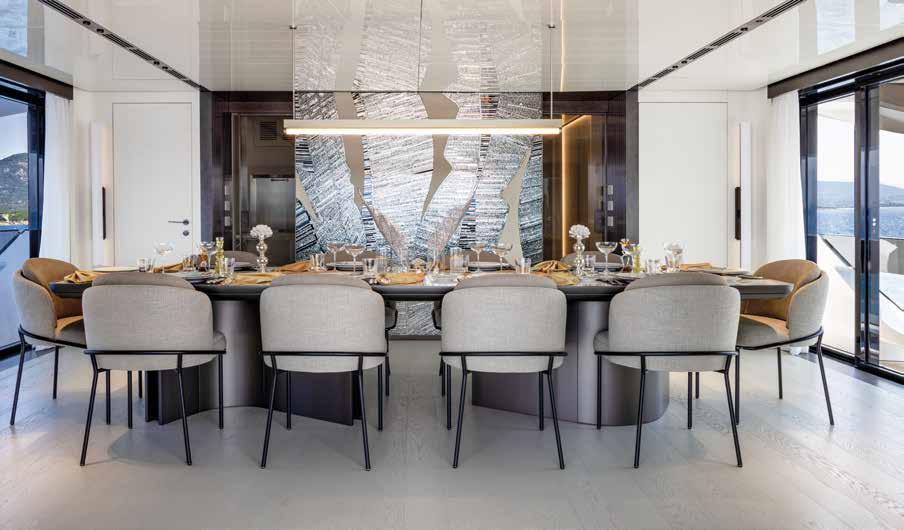
This page, a burnished metal staircase with hammered brown leather handrail stands in front of a Vetrite wall. Opposite page top, the saloon is furnished with custom sofas in white sponge fabric and blue edges, Fendi Totu armchairs and a teak coffee table. Bottom, a formal dining table in teak and marble with Minotti chairs sits under a sculptural chandelier from Viabizzuno’s Linea collection. A bespoke wall mosaic by Sicis gives a sense of depth and motion
Exterior Design
Enrico Lumini, Co-Founder Hot Lab
For the first time for the shipyard, the Atlantique line embraced an organic and fluid approach in the design of the exterior lines, with volumes sharply tapered both towards the stern and between decks. This involved an enormous effort, not only stylistic but also technical and engineering. In other words, Atlantique marked a step forward in the shipyard’s construction and stylistic possibilities, which is increasingly aiming for a stylistic refinement in constant evolution.
The idea was to show that one does not have to be bound by preconceptions: it’s not true that only sailing boats are elegant and refined, and that all motor yachts are “irons” as many sailors claim. Nowadays, the world of yacht design is influenced by many different sources, and it is right to evolve the style taking inspiration from design in other fields, both related to boating itself, as in the case of Atlantique, as well as automotive design, and even pure industrial design. We must design complex objects
and give them a simple, clean garment.
The Atlantique 47 is the third unit in the Atlantique line, and the exterior design was the result of extensive study. The goal was to propose new proportions and an innovative approach to the treatment of surfaces and the stern, through a kind of streamlining of the lines and elimination of anything superfluous.
The approach is quite consistent and many distinctive style traits can be found throughout the boat. Alongside the already mentioned stern design, I could add the connecting element between the upper deck structure and the hard top, which is also soft and fluid, almost born from a fold in the surface from which it starts. Also, the upper deck’s “hat” that bends downward to protect guests from the sun, and the storage consoles on the aft upper deck, which serve a dual purpose as storage cabinets and as barriers to prevent interference with the “hat” above. Every element is designed according to the same philosophy.
This page, the sun deck features a large sun pad with a bar at the bow. Opposite page top, a large relaxation area with sofas and armchairs is located at the centre of the sun deck. Bottom, the forward part of the upper deck hosts a scenic swimming pool equipped with sun loungers, a sofa and side tables
Interior Design
Enrico Lumini, Co-Founder Hot Lab
We began from the philosophy that distinguished the two previous units: fluid surfaces, free of corners, to facilitate movement and make the spaces soft to the eye. Beyond this, a certain quest for spectacle; that is, an attempt to engage the guests onboard, not only to make them feel comfortable, but if possible, to amaze and make them smile. This was also the thinking behind the style: to seek a form of interaction with the guests onboard, not to use the boat, but rather to live it. Thus, the spaces have transformed somewhat into sets, with these voluminous coloured surfaces, almost like theatrical backdrops, not only on the bulkhead, vertically, but even more so horizontally, on the ceilings. This certainly helped a lot in achieving our goal. One of the most interesting spaces to work with was the main saloon. This is because, unlike in the
Guest accommodation includes two king-size bed cabins and two cabins with twin beds, all with bathrooms in marble and geometric mosaic Sicis. To contrast with the dark tones of the bed frame in darkbrown leather and the different nuances of Vetrite applied in the cabins, the colour white was selected for the floor carpet. The decorative appliqués by BonboriBrokis are reminiscent of the traditional paper lamps found in Japanese temples. The bedside lamps in the double cabins are in gold and black metal from the Superluna line by Oluce
previous two Atlantique units, which were slightly shorter, here we succeeded in making the interior and exterior spaces interact even more, with greater dimensional and volumetric flexibility. This explains the somewhat unusual seating arrangement, which looks both outward but also inward – towards the person sitting nearby, not metres away, like in a luxury hotel lobby, but close enough to speak quietly. A combination of traditional and innovative materials were used, especially for their rare use in the naval field. Large glass surfaces, aged leather, metallic lacquers: all to amaze and surprise a bit. To create a distinction between visual and tactile sensation, for example, and surprise the guest who tries to touch a metal panel finding it warm to the touch. Contrasts that are part of the scenography and choreography of Acqua Chiara.
The outdoor spaces on the aft deck are distributed on three close levels: from bow to stern, we find a first covered dining area, a living area with a scenic pool and fold-out balconies, and finally a platform with transformer, sitting just 50cm above the sea surface
The Shipyard Giuseppe Palumbo, Sole
Director, Palumbo
Superyachts
Acqua Chiara is certainly an exclusive and highly customized project, shaped around a passionate owner who actively took part in the entire construction process.
This innovative line was born from my own vision, which Hot Lab was able to bring to life.
The superyacht combines a distinctive exterior design – characterized by sharp yet fluid lines that broaden at midship and taper once again towards the stern and bow. Without a doubt, it is an innovative project that places onboard liveability and a constant connection with the sea at its very core.
The Atlantique 47 is the natural evolution of the two previous 43-metre models, where we optimized a series of exterior and interior elements. The range also includes a 55-metre and a 65-metre, as well as the more compact 37-metre model, which will be delivered at the beginning of 2026. In general, the Atlantique line is aimed at a sophisticated clientele who enjoy spending time in outdoor spaces while seeking maximum comfort and interior liveability. With a gross tonnage of 499, it also features a vast, multifunctional cockpit that gently descends towards the sea to meet the diverse needs of the market.
Acqua Chiara is yet another project that underscores Columbus Yachts’ ability to create fully custom designs that meet the diverse needs of each owner. The beauty of this model’s exterior is unmistakable, with unique and instantly recognizable lines that set it apart even from a distance.
Based on authentic style, the Atlantique 47 line was devised specifically for owners who make each cruise a truly enriching discovery and immersion in nature
AS IF PART OF A WELL COMPOSED MELODY, EVERY SPACE MUST BE IN HARMONY
by
Architect and interior designer Michela Reverberi is backed by a wealth of experience in designing motor and sail yachts that have won prestigious international accolades. She teaches the Masters in Yacht Design at the Milan Polytechnic, at the Rome University of Fine Arts and the Academy of Luxury in Milan. She is proprietor of the Rome-based Reverberi Design Studio
Samuela Urbini - ph. courtesy by Michela Reverberi
ph.Cristian Castelnuovo
In this photo, the communicating saloons on the main deck of yacht Bugia, currently under construction. With a modular structure, the yacht is ready to inaugurate a line of craft of different lengths. This one, a 37-metre model, has interiors and exteriors designed by Reverberi. Opposite page, top, the upper-deck lounge of the same yacht, also with exceptional communication that blurs the line between interior and exterior. Bottom, a rendering of the yacht’s external profile with its straight bow
Michela Reverberi describes how she thinks of design in a gentle, unhesitating voice that is full of awareness. One of the most refined, original interior designers on the maritime scene, Reverberi has been creating interiors for over 33 years, but she insists that her aim is still to have fun, to seek out that invisible vibration that makes a space alive and harmonious, like a melody. After beginning her career in the Sturchio studio, in 2000 she founded her own studio in Rome, creating interiors for owners from around the world – but it is with Stella Maris of 2012, a 72-metre yacht designed for VSY, that her vision was fully realised. “I really understood it with that yacht because I made certain choices. The owner gave a free hand, telling me to make something that would set people talking. So I began thinking about the project’s full potential and I tried to enhance every aspect of it, especially the light, the height of the saloons and the flexibility of every space. I liked the idea of having spaces that were used as filters, spaces that could change function. The saloons, for example, can be closed spaces, but they can open out and become external decks. It was no longer just an interior, it was a space that breathed”. The idea played a central role in the projects that were to
follow – the yacht as an organism. “Every part should serve a purpose, like in the human body. There is no duplication of functions, everything is designed to improve on-board life. Flow patterns are streamlined, not only providing the crew with their own circulation routes, avoiding interaction with the Owner and guests, but also achieving the maximum efficiency with the least amount of energy expended”. The evolution of this approach is embodied by a series of concepts designed in different lengths. One of them, the new 37-metre Bugia, is currently under construction. “The concept was created to be modular – it can be extended, while maintaining the same base structure and the position of the staircase. The stern is faceted like a diamond, a jewel”. It has a spacious saloon that provides flexible communication with the exterior, like on Stella Maris. Bugia is the first time Reverberi has also designed the exteriors, together with long-time friend and collaborator Roberto Terrinoni. “After so many years of collaboration we desired to gather all our experience into something that could express the evolution of our thinking. It’s the synthesis of all the ideas we developed together”. The distinctive design element is still the refined lightness that defines all her creations.
[ CREATIVE MINDS
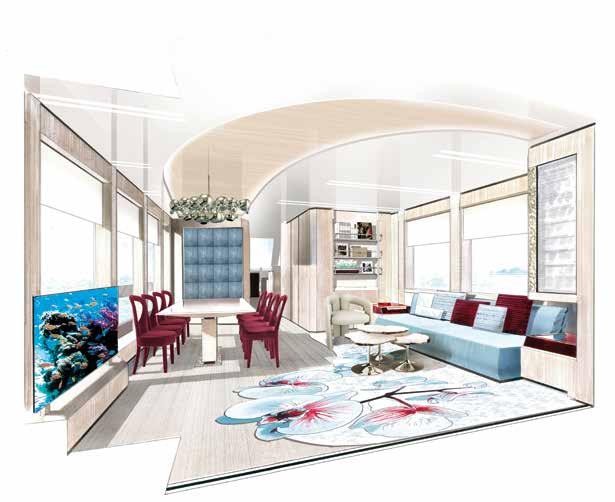
In these pictures, the 24-metre yacht Veronika built by the Giangrasso shipyard in Viareggio. The interior design reflects the owner’s enthusiasm for flowers and nature – in the main saloon, for example, (right), where the carpet recalls the colours of a sky blue and Bordeaux orchid. Below, a rendering of the guest cabin. Below right, the yacht’s exteriors
“Despite using all the more advanced technologies, I still start my design by hand, always. I like to maintain the creative emotion inherent in the stroke that is shaped by the hand. Talking about emotions, my father was a musician, and we spent lot of time talking about music and I have always loved to introduce the same harmony and rules that guide music into my projects. “When we listened to Simon and Garfunkel’s ‘Bridge Over Troubled Water’ together, for instance, he used to make me pay attention to the voice and piano, so adeptly chosen they were enough in themselves. Then when the cymbals arrives and then the orchestra comes in, in an atmosphere already full of emotion, the sensation is thrilling. That’s how I
try to work – first the GA, the structure, the harmony among the parties, and when it works then the emotional details complete the picture”. Reverberi now lectures the Milan Polytechnic and the Rome University of Fine Arts, but is still deeply involved in the yacht industry. At the moment she is also working on the design of the 24-metre yacht Veronika for the Giangrasso yard, and on the refit of a 38m sailing Yacht by the Zancle757 Yard. “The yacht is a world in itself. She should breathe, generate energy, maintain the temperature. She is a living organism. Our job is to make it work well, with poetry. I design to make people feel good. And when I succeed, it’s like finding the right chord”.
THE WATCHWORD IS TIMELESS ELEGANCE
by Samuela Urbini
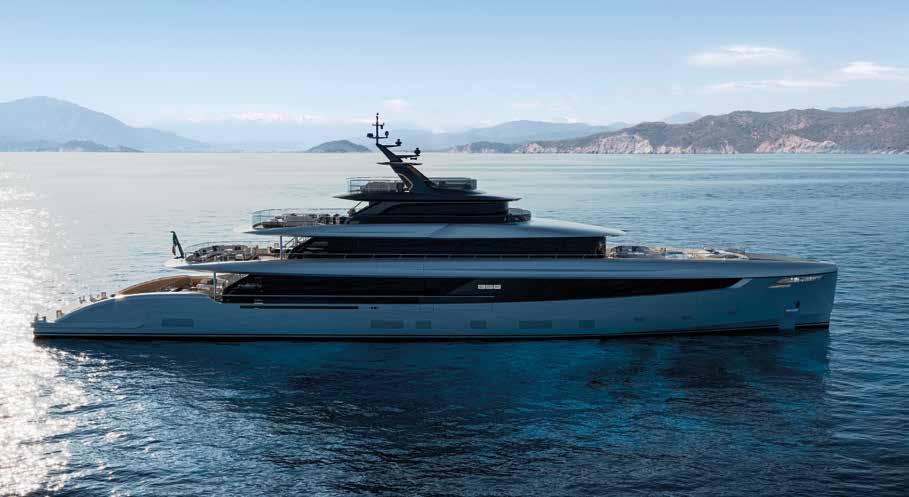
Technical and aesthetic elegance is a crucial part of Baglietto’s way of working, without losing sight of the need to balance shapes that express a sober, distinctive style. This exerts a strong influence on the creative process of the numerous designers who collaborate with the yard– in Project Vesta 56, for example, designed by Enrico Gobbi (Team for Design) with interiors by Meyer Davis
ph. courtesy by Baglietto
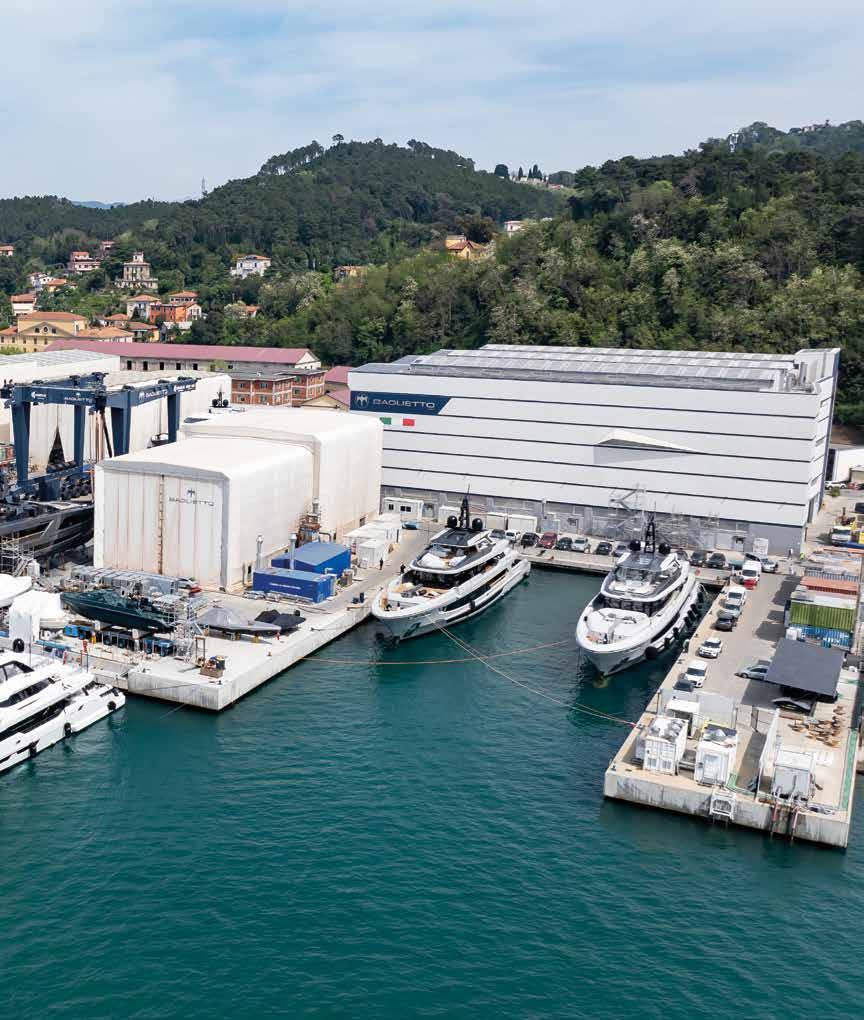
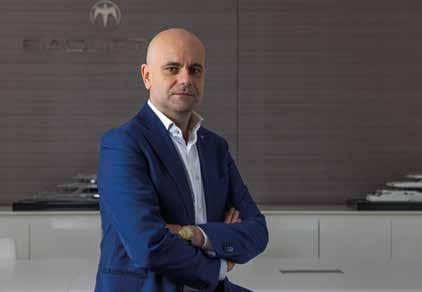
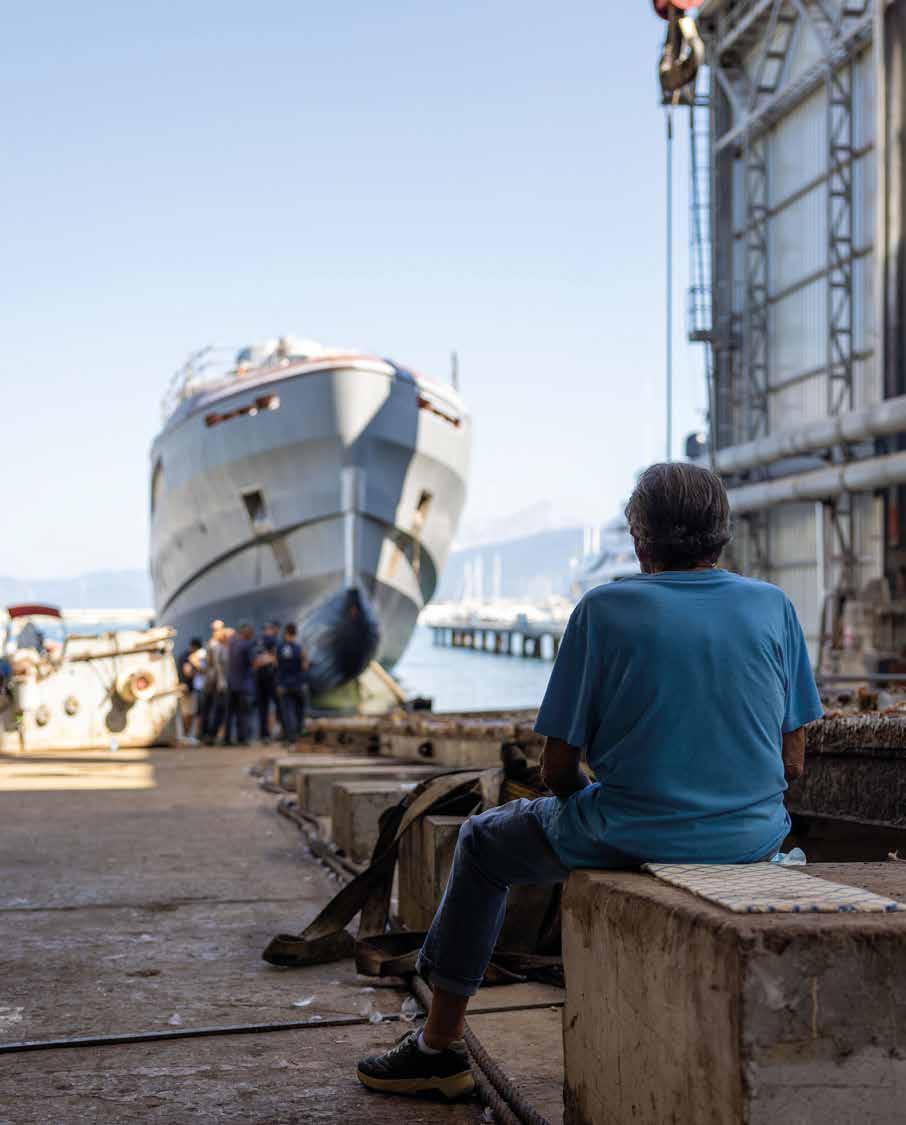
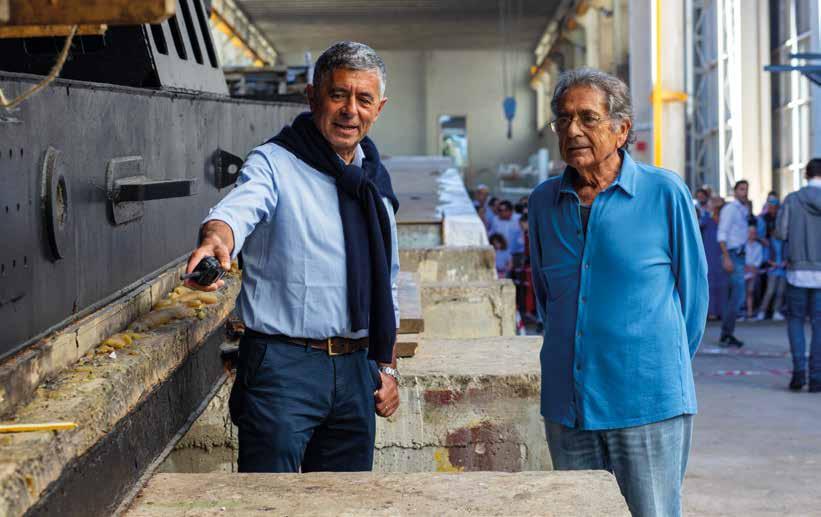
Founded in 1854 in Varazze, Baglietto is a well-established Italian brand that is now led by the Gavio Group. Its headquarters in La Spezia (photo) cover an area of around 35,000 square metres. It has been significantly expanded and renewed in recent years, resulting in the creation of two quays for yachts up to 70 metres in length. A second facility is located in Carrara. Right, Fabio Ermetto, the yard’s Chief Commercial Officer
Speak to anyone working for Baglietto and one word is bound to be heard at some point in the conversation – elegance. But it’s not just a question of aesthetics and decoration, it’s an approach, a philosophy, one that’s all about designing yachts that will endure, not just structurally but above all in visual terms. Yachts that are contemporary now and will still be relevant in fifteen years’ time, because style, real style, is what remains when all the rest has changed.
“The essence of Baglietto is a timeless elegance”, says Fabio Ermetto, the shipyard’s Chief Commercial Officer. “We want to build innovative yachts with new solutions and unusual spaces without ever losing the balanced shapes, the sobriety that makes us stand out”. This philosophy sounds deceptively simple – in fact, it presents a challenge every time, especially when the project involves so many different entities. And it is this guided but aware openness that makes the Baglietto language so recognisable. “Working with different designers, especially on the interiors, is a choice that involves complexity. We always ask them to ensure their style adapts to our statement. The project isn’t led by the names – Baglietto defines the route. The brand has its own in-house style centre that designs the interiors for some yachts and also acts as a bridge when the yacht has a different interior designer, with a dedicated architect who’s involved in the design”, says Ermetto.
Founded in 1854 in Varazze, Baglietto is one of the oldest shipyards on the international nautical scene. It has built yachts for Puccini, D’Annunzio and
the royal families of Spain and Egypt as well as icons like the Chato (1986), still one of the fastest yachts in its category, Al Fahedi (designed by Giovanni Zuccon) and Opus (Francesco Paszkowski). Now, under the guidance of the Gavio Group, Baglietto has renewed and extended its two production facilities of La Spezia and Carrara, for a limited, carefully curated production under a management that combines heritage and research. The success of the recent T52, with exteriors by Francesco Paszkowski Design, which has interpreted the Baglietto DNA for over thirty years, and the DOM133 designed by Stefano Vafiadis provides clear evidence of this with yachts that are different but that share a rare balance between innovation and restraint. This equilibrium can also be found in Project Vesta56, the latest 56-metre design recently presented in New York with exteriors by Enrico Gobbi (Team for Design) and interiors by the New York studio Meyer Davis. “The Gobbi style fits our DNA”, says Ermetto, “with sober, non-aggressive lines. And with Meyer Davis, newcomers to the marine industry, the collaboration has been surprisingly natural. It isn’t often that interiors and exteriors speak the same language”.
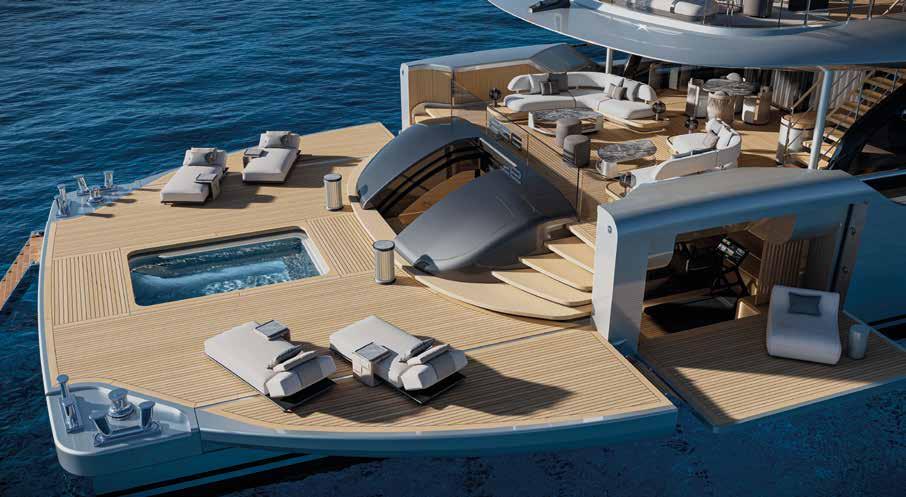
The tapered lines, long, uninterrupted windows and projections fore and aft recalling the wings of a jet aircraft create an elegant, dynamic profile. But it is the stern, laid out over three levels with infinity pool and gentle descent to the sea, that makes the design so distinctive – it’s a development of the beach club concept, already featured on other models but here taken
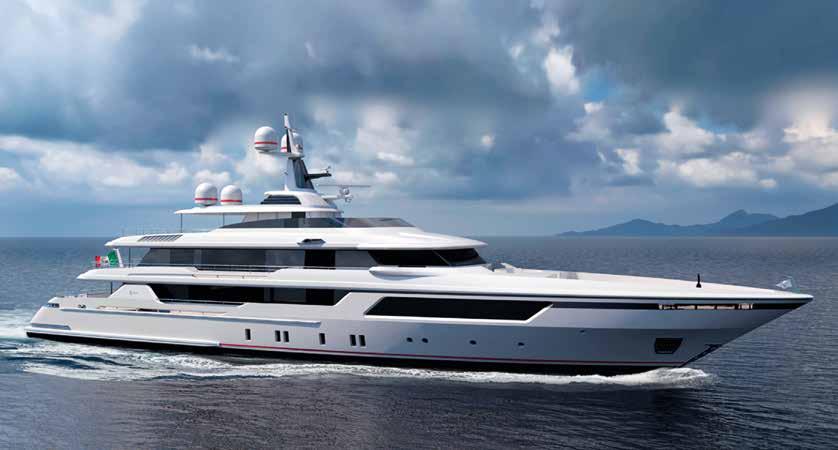
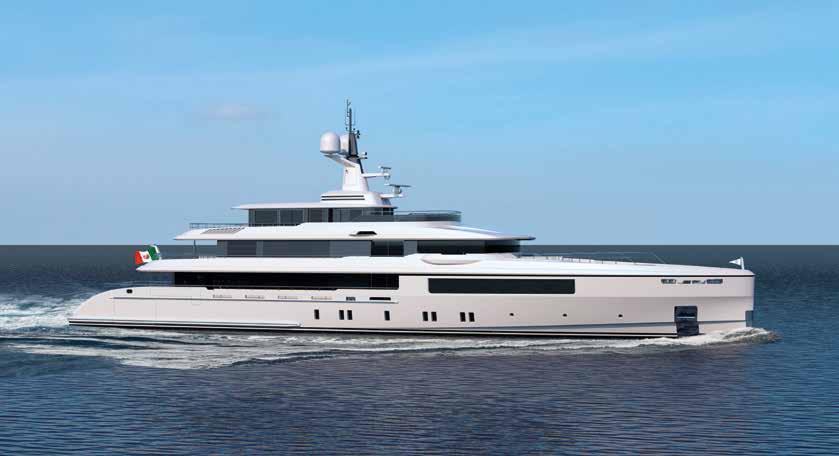
In these pictures, some renderings of the yacht Project Vesta 56. Opposite page, the sleek exterior lines by Enrico GobbiTeam for Design, with ultra-slender aft overhangs that resemble the outlines of a jet aircraft. Above, the swimming pool aft in the beach club, connected to the outdoor lounge by a gentle staircase and rounded lines. Below, the interior saloon designed by Meyer Davis, with large windows framed by sinuous walls
to a new level of refinement.
The warm, carefully thought-out interiors are inspired by the idea of home and a feeling of refuge. In the words of Gray Davis, co-founder of Meyer Davis, the inspiration was provided by Vesta, the Roman goddess of the hearth, which led them to create spaces that are not only spectacular but also intimate and comfortable. Raffia, cognac leather, travertine and dark anthracite finishes define refined settings where every material is chosen to evoke emotions
A sketch of the owner’s cabin (left) and the rendering (below) where soft shapes and materials like raffia and leather immediately capture the attention. The colours are warm and natural, from cognac to brown and beige, helping to create a space that is an intimate refuge for the owner, to whom the entire exterior forward deck is dedicated
rather than wonder. The owner’s apartment with private terrace, invisible from above, is a perfect example of this concept, providing total privacy. This yacht is the result of an interesting collaboration with an interior designer specialising in hotels, large restaurants, boutiques and distinctive residences, which means it’s been possible to bring a new point of view to the creation of this yacht. In an industry often dominated by fashion, Baglietto continues to design yachts that stand the tests of time and style.
THE SHAPE OF WATER
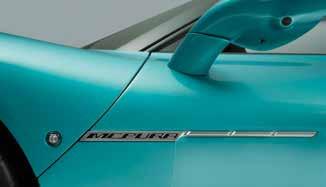
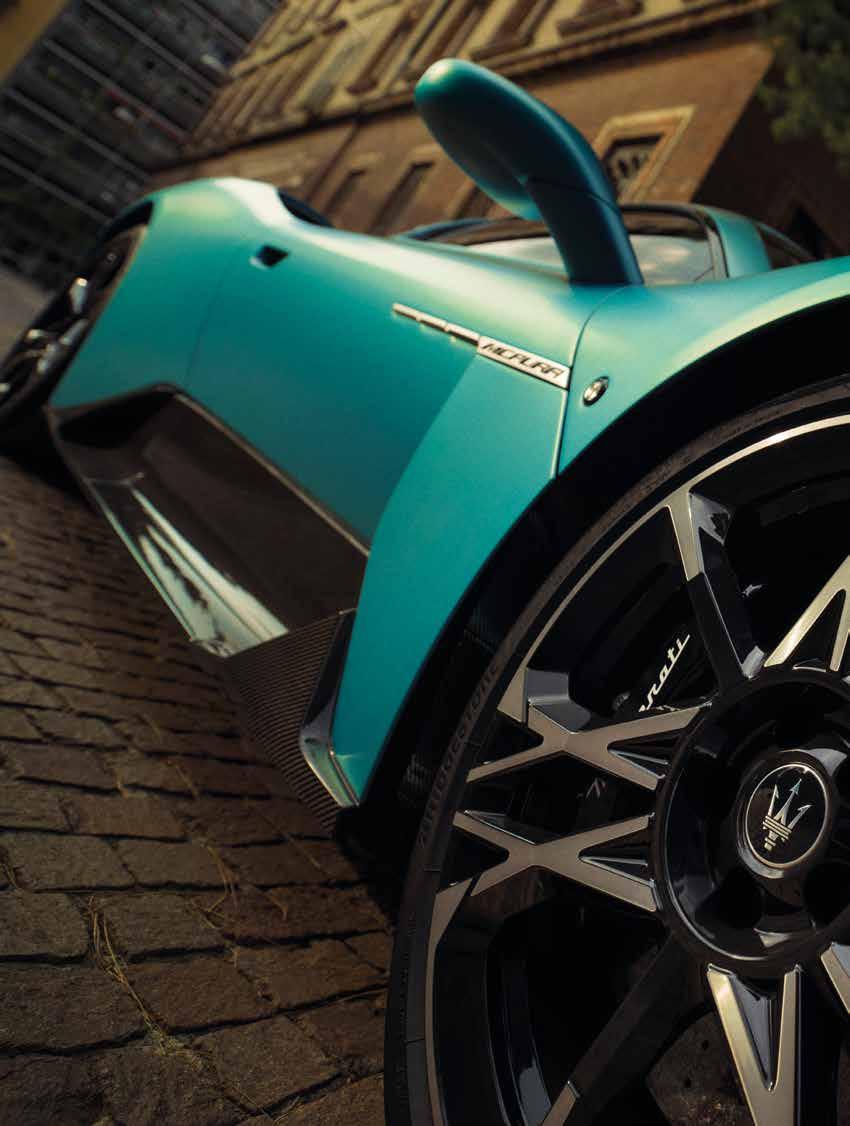
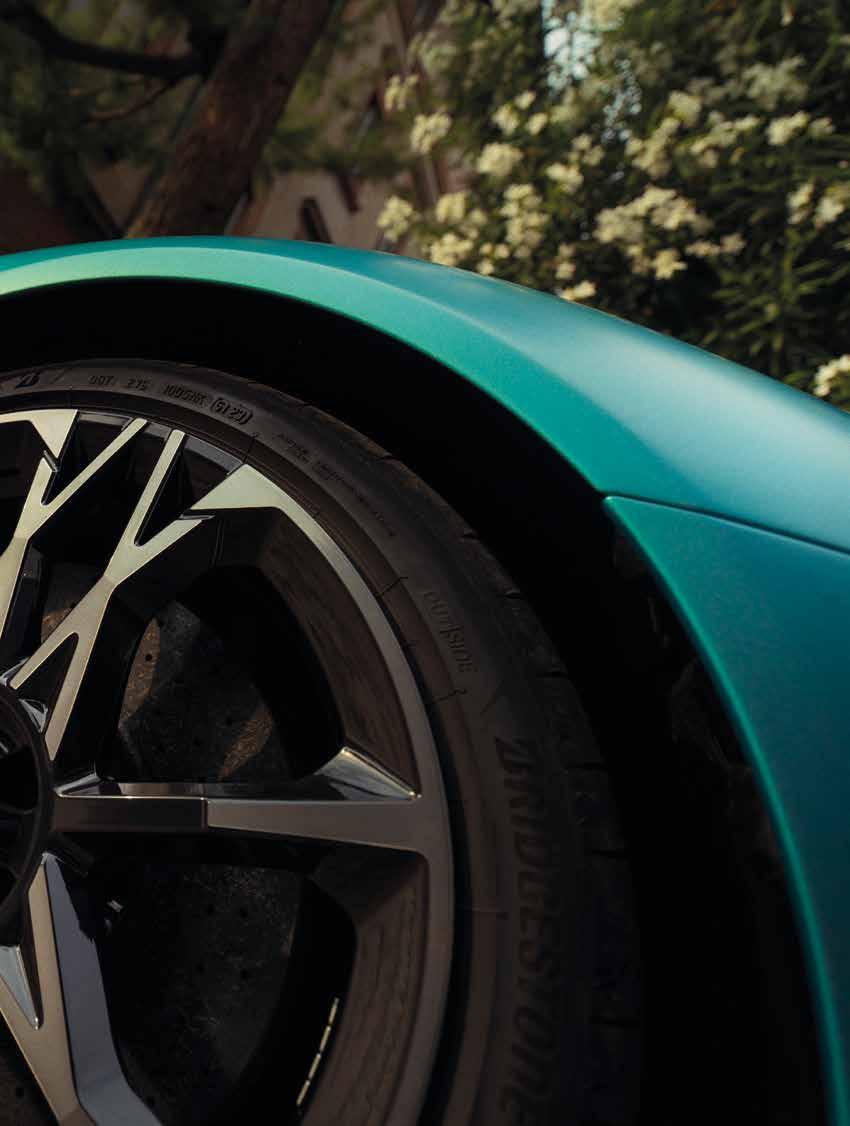
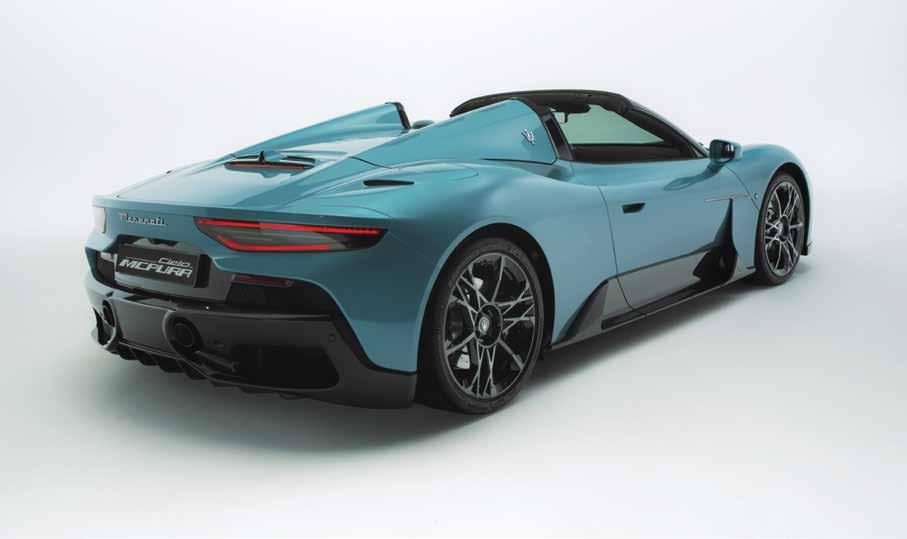
Pure elegance, pure adrenaline, pure emotion. Maserati’s new sports car, the MCPura, is a sublime example of the twoseater concept. Clothed at its debut in a striking Ai Aqua Rainbow livery, a blue with a subtly changing iridescent hue created by special pigments
by
Diego Tamone - ph. courtesy by Maserati
The formula underpinning its balanced mix of elegance and sporty appeal is jealously guarded in Modena, nestling safely within the folder containing the classified plans for the latest sports car to leave the Viale Ciro Menotti factory. To present a playful parallel between two strokes of genius from the realms of physics and mechanics, this car can be summed up in one provocative, rather grandiose equation: E = MCPura. In other words, a combination of Einstein and Maserati. An exaggeration, of course, but one that helps underline the importance of the newest sports car to bear the trident marque, the MCPura. This model is a coupé, although the Italian brand also offers it in the equally attractive guise of an open-top version with retractable electro-chromatic glass roof that opens in only 12 seconds and can shift instantaneously from transparent to opaque. It is a development of the MC20, a car that five years ago introduced the aesthetic lines and technological solutions that opened a new era for the brand. This transformation was made possible by the Turin “Centro Stile” and the sensitivity and skill of the designers who work there. The lines were then perfected in the wind tunnel by the illustrious Dallara company. This dual heritage helps ensure that the MCPura is a
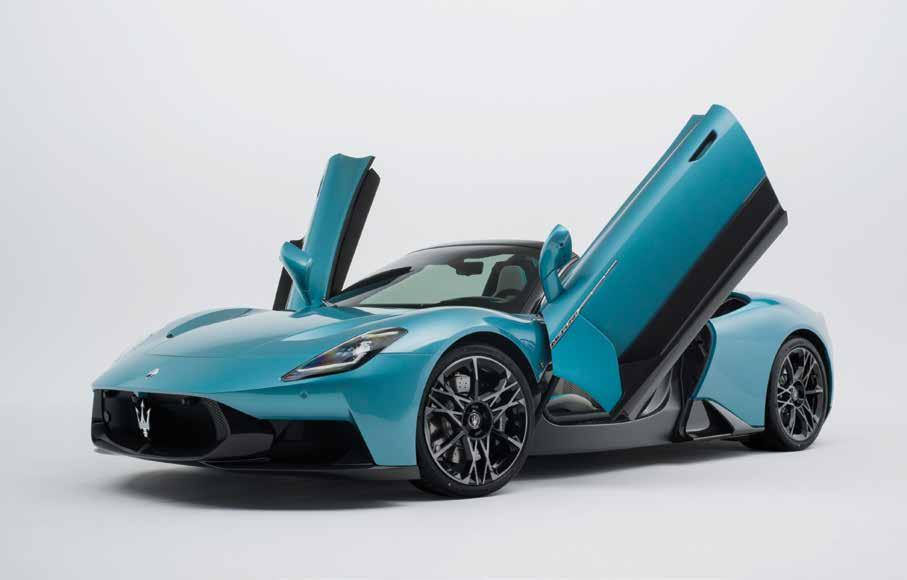
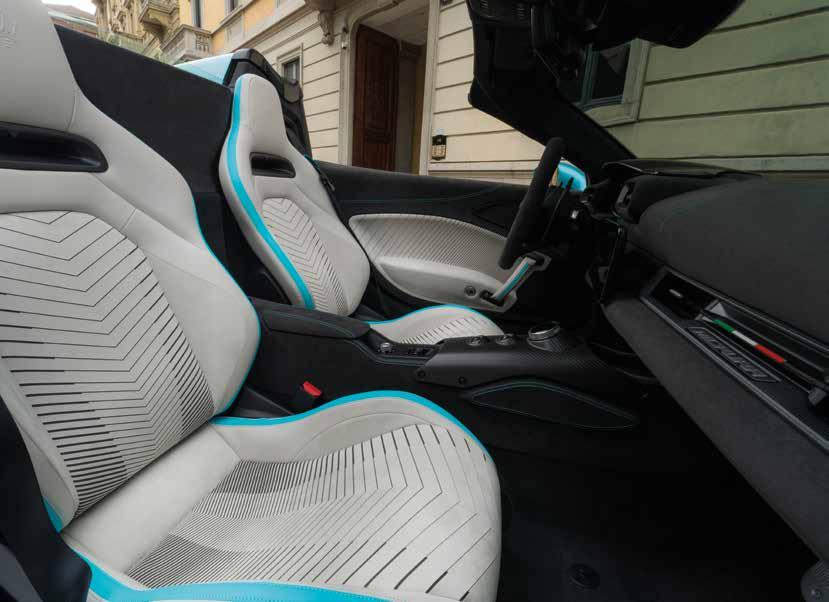
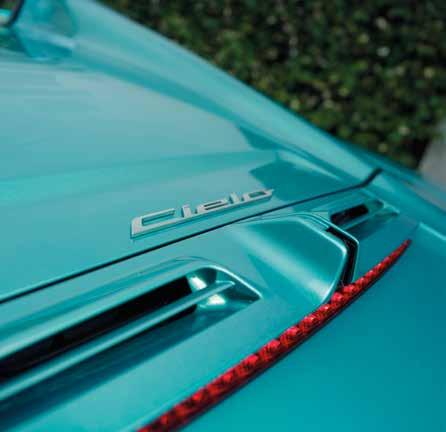
The MCPura in the two configurations produced by Maserati: Cielo, or convertible (below and opposite page, top) and coupé (opposite page, bottom). Both feature butterfly doors and are personalisable through the Officine Fuoriserie Maserati programme. Made in Italy in every detail, the fluid lines combine with aerodynamics developed with Dallara.
proudly Italian creation. Conceptually, the car was developed by dividing it into an upper and lower section. The upper part was shaped by the creatives, whose aim was to emphasise the aerodynamic aspect through extremely clean, subtle shapes. Everything is designed to please the eye, like the flowing outline, the absence of glaringly obvious aerodynamic appendages and the semi-concealed air intakes. Then there is the “shark nose” front, recalling the cars that used to dominate the track, and the butterfly doors – not only aesthetically pleasing but functional, too, as they provide more comfortable access to a cabin fitted out in Alcantara
Above, the design interiors of the MCPura, with seats, door panels, dashboard and steering wheel, covered with Alcantara. The shape of the steering wheel, which has a flat upper section, is inspired by the design adopted by the cars in the GT2 championship. Left, the unmistakeable hallmark lines of the open roof version
leather. The undershell, though, was developed by high-tech devices and programmes with the aim of optimising efficiency and airflow in the lower body. This is all the result of over two thousand work hours, required to implement the sartorial approach behind the carbon fibre and composite body shell. In the context of this sartorial, artisanal philosophy, personalisation of the MCPura is handled by the Officine Fuoriserie Maserati, a recently-launched workshop whose extensive tailor-made programme makes it possible to render all the brand’s super sports cars personal, or even unique. The engine, though, is untouchable – the MCPura is powered by a 3-litre twin-turbo engine called Nettuno in a 6-cyclinder V configuration generating 630 Hp and 720 Nm of torque, providing this model, which weighs in at around 1,500 kg, with an enviable power to weight ratio of 2.3 kg/Hp. maserati.com
There are many reasons to choose Eccelsa Aviation for your trips to Sardinia
· State-of-the-art dedicated Business Executive Terminal
· Gateway to Costa Smeralda and Sardinia since 1963 *
· 3 km from the Marina of Olbia and 25 km from Porto Cervo
· Complete under the wing services for aircraft up to A340 and B747
· Tailored passenger services
· Full plannig for crew stay(s) at preferential rates
· Hangarage recovery
· Maintenance service in cooperation with Meridiana Maintenance
· Slot- and PPR-free landing and take-off **
· Great value-for-money services and easy payment methods
· Award-winning professional and experienced multi-language staff
However, you can forget about all of them. In fact, what you’ll really appreciate is how you will feel And that’s all the difference between simply landing and truly arriving.
So whatever your reason for visiting Sardinia, keep in mind you are always welcome to
OLBIA COSTA SMERALDA AIRPORT
ITALIAN STYLE FLIES HIGH WITH RIVA
Flexjet, one of the world’s most important business jet fleet operators, has joined with the Ferretti Group to launch an elegant, daring design project on board the Gulfstream G650, a long-range twin engine aircraft. The result is a unique flight experience
Sergio Barlocchetti - Ph. courtesy by Ferretti Group
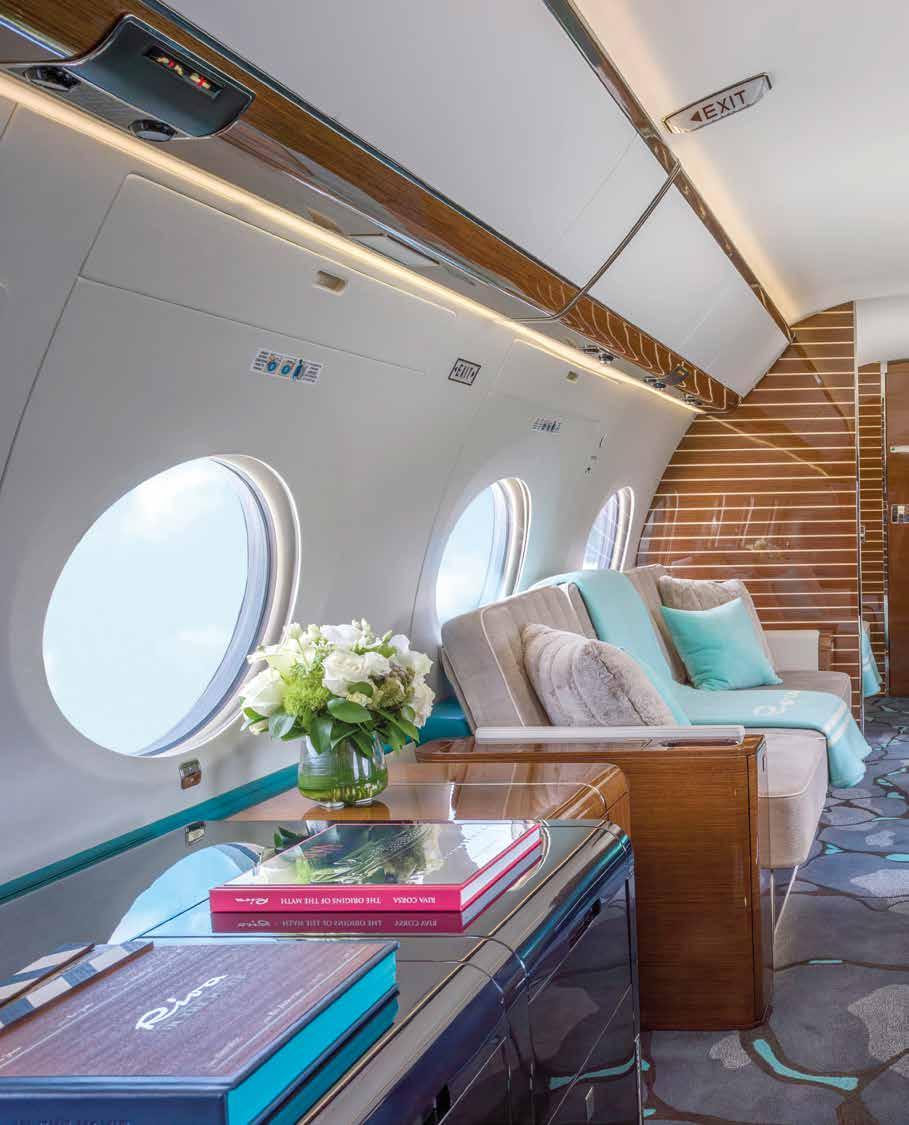
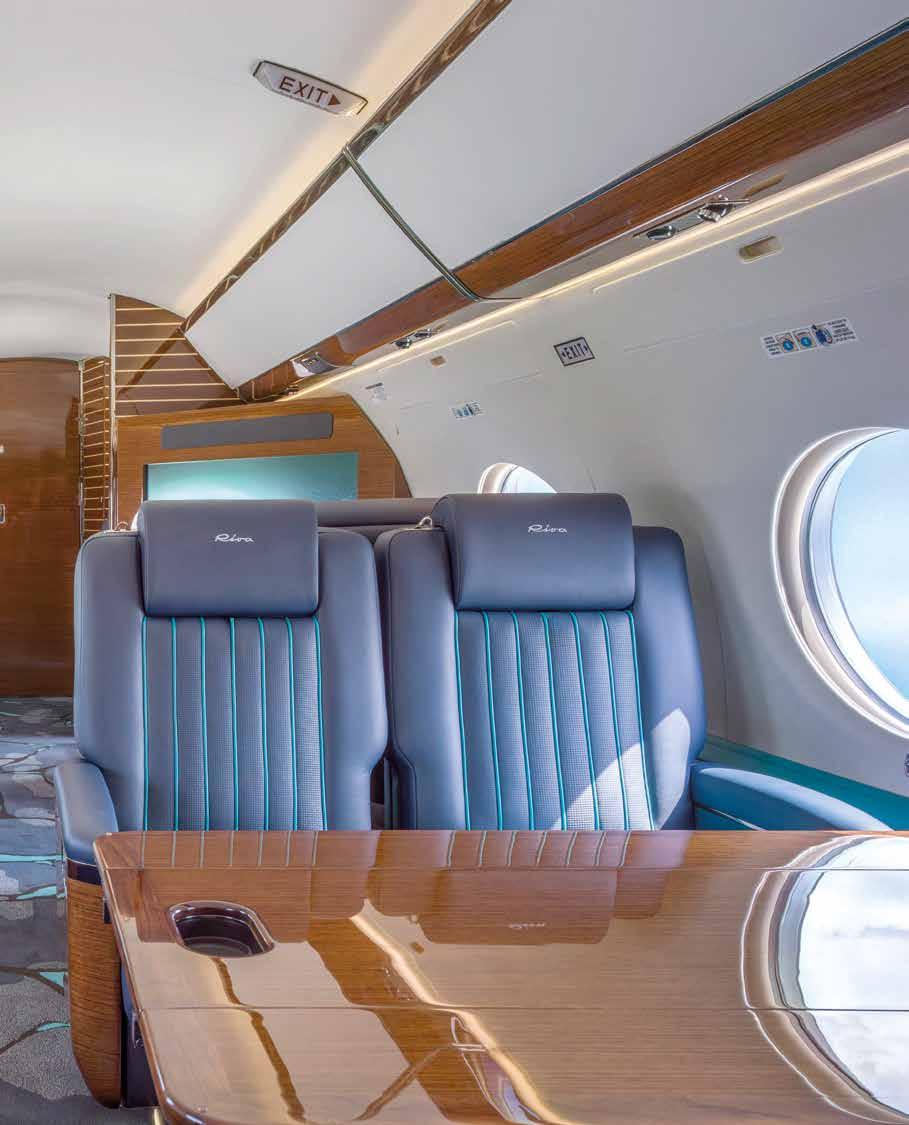
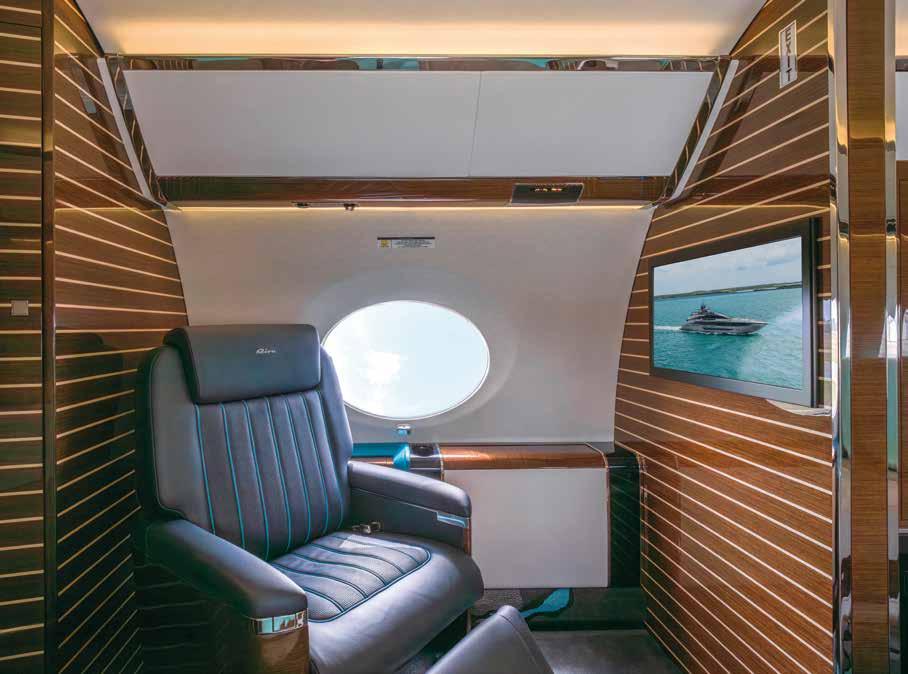
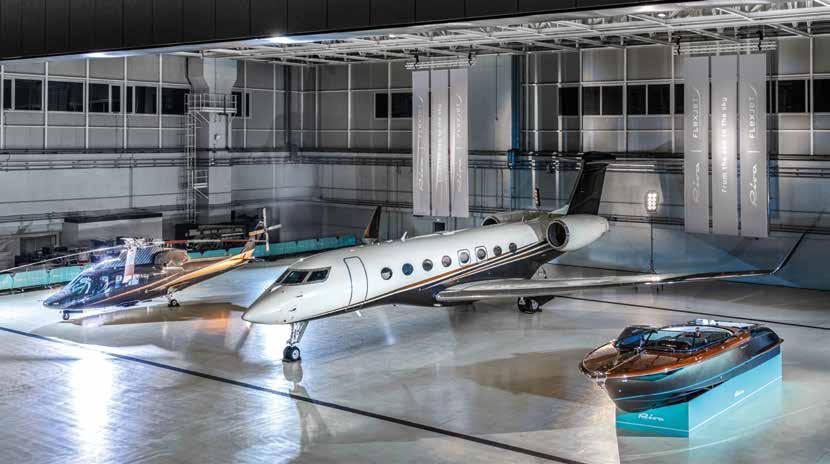
Riva Volare is the new design for the furnishings of the Gulfstream G650 jet (photo) and the Sikorsky S-76 helicopter of the Flexjet fleet. The style aims to provide a high-end flight experience and is inspired by the iconic craft built by the Sarnico shipyard
Riva Volare graces one of Flexjet’s long-range twin-engine aircraft, a Gulfstream G650. It provides unique flight conditions for 12-15 passengers, even on longer flights linking New York with Tokyo, London, Singapore and Milan. The G650, a technological icon of Gulfstream and American-made production, is now regarded as one of the best long-range business jets
From yachts to a special version of the Fiat 500 manufactured between November 2016 and December 2017, it’s now featured in the cabins of executive aircraft and helicopters. Riva’s nautical style is highly regarded and deeply Italian, but now the Riva Volare name has been assigned to a new design for the interiors of the Flexjet fleet’s Gulfstream G650 jet and Sikorsky S-76 helicopter. The style, inspired by the most refined boats from the most soughtafter Italian shipyard in Sarnico, icons of the dolce vita and now brand of the Ferretti Group, was created to offer a high-profile travel experience. The Riva Volare helicopters - the Flexjet fleet’s Sikorsky S-76 rotor craft with Riva interiors – will operate in Italy, the Côte
d’Azur and Florida. Flexjet, one of the world’s major business jet fleet operators, has joined the Ferretti Group in this project, launched May 2024 with the aim of creating an elegant yet daring design. As a result
Riva Volare now clothes the interiors of one of Flexjet’s long range twin-engine jets, a Gulfstream G650 that will offer unique travel conditions for the 12-15 passengers sharing the cabin for up to 14-16 hours on flights linking New York with Tokyo, London, Singapore and Milan. The G650, a technological symbol of Gulfstream expertise and American manufacture, is now regarded as one of the best ultralong range business jets. The aircraft features fly-by-wire controls and fuselage with oval section. The cabin is 196 cm high and has large
windows. Its top speed is Mach .925 and range is 7,000 nautical miles in the “Extended Range” version. It’s all about an installation embellishing state-of-the-art aeronautical technology with several innovative features like unrivalled 47 dB sound proofing and high-speed connectivity via Starlink. The G650 will also provide Riva glassware, porcelain and silverware. During their flight passengers can luxuriate in hand-stitched leather seats with trim in Riva’s classic aquamarine colour, admire the striped wood panels recalling the iconic Riva interiors and use the popup kibitzer seats with a classic nautical blue and white pattern. The Riva Volare interior will also feature on two Sikorsky S.76 helicopters owned by Flexjet, one operating in Florida and the other in Italy and
France. This reflects the growth of the company’s helicopter division in continental Europe and adds to the services already offered in London, New York, Florida and the Bahamas, to which Ferretti Group clients will enjoy privileged access. The S.76 is a well-established model launched in 1976 but has undergone constant development. It carries up to eight people, or twelve in a less spacious configuration. Around 900 examples have been built, and those dedicated to VIP/corporate transport have always sported American-style colours and lines. Now, though, those flying in Europe are offered an Italian ambience with the finest artisanal furnishings with patterns, textures and colours inspired by the lines and elements of Riva motorboats. And the S.76, which can whisk passengers
from yacht to city, can fly for 300 nautical miles (555km) or up to 2.5 hours. At the product presentation, Kenn Ricci, president of Flexjet, said: “I’m a great lover of the Riva style and welcoming it on board our aircraft is a wonderful development. Flexjet is now enjoying its 30th year of operations and Riva Volare is not only a celebration of a timeless design”. Ferretti Group CEO Alberto Galassi adds that “Riva is an expression
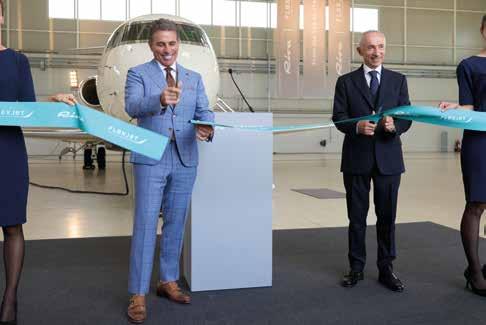
At the presentation of the partnership, Kenn Ricci, president of Flexjet, and Alberto Galassi, CEO of Ferretti Group (left). The Riva Volare interior will also feature in two Sikorsky S.76 helicopters owned by the same operator, one to operate in Florida and the other in Italy and France.
of elegance that blends class and exclusivity in every project. Looking at the sky and clouds while immersed in the Riva world is a beautiful, highly satisfying experience”.
This development means lovers of the Riva style can experience it by sea, on land and in the sky, enjoying a round-the-world journey amid true Italian style. flexjet.com
echnology, quality, high performance, efficiency, flexibility. Not just words but the solid, unswerving content that links, like a string of pearls, every single particle that goes to make up a yacht, mostly conceived, as the majority are these days, in the context of maximum personalisation.
Tailor-made means listening to desires, interpreting the owner’s dreams and translating these into reality that fits them perfectly, exactly like a bespoke suit is made. The yacht becomes a coherent whole, the perfect complement to its owner’s lifestyle.
Personalisation does not just mean decorating the yacht to reflect the owner’s tastes, it’s creating an object of desire where every single component, from furnishings to lighting, from surfaces to the most technical elements, go together to create a harmonious symphony, which is what the true peak of the sailing experience. Because behind every individual part is a design that’s not intended as a simple style exercise, but an evolution driven by companies’ investment in technology and materials research, creating sublime results that can be seen by all.
Technology, quality, high performance, efficiency, flexibility. Not just words but concepts that are shared by the companies featured in these pages, qualities that enable the creation of those extraordinary superyachts.
Désirée Sormani ManagingDirector
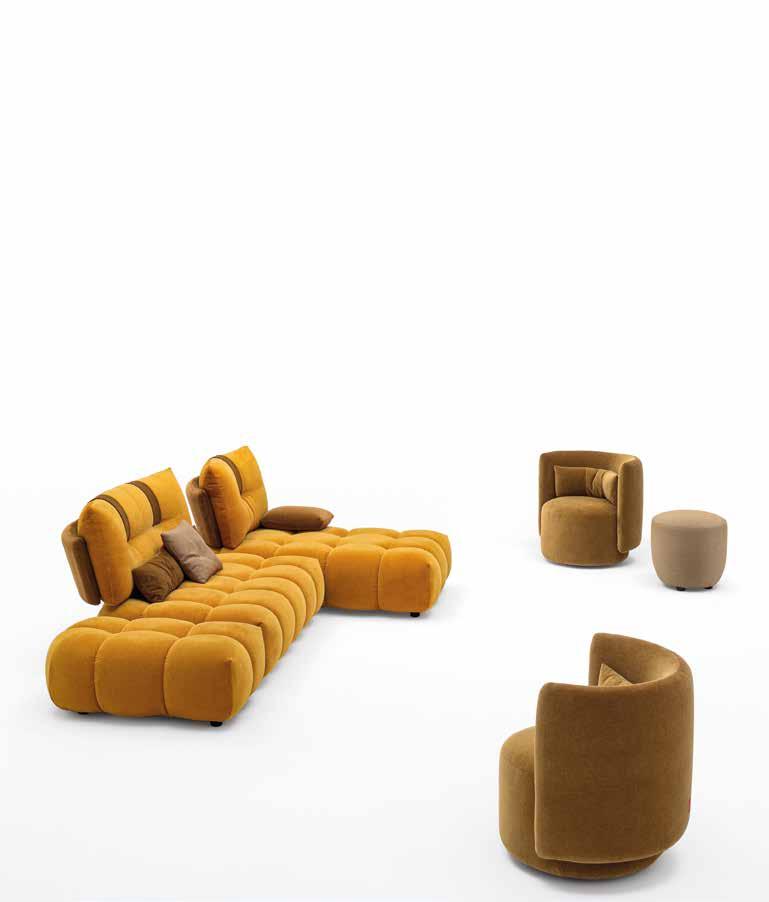
With winter on the way interiors are responding to the natural human desire for warmth, calm and comfort. The transformation is easy when the furniture is modular, the complements are eclectic and the upholstery is removable. Current trends reflect this. The colourways are warm, with elements of ochre, brown and orange drawing the eye in to the desired focus. Great attention has also been paid to the acoustics – total silence or sophisticated playlists. Alongside integrated furnishings, in homes and yachts that that increasingly resemble one another.
by Veronica Lempi
Shinobi by Aerre Italia combines Zen aesthetics and artisanal expertise with embracing shapes and sartorial details inspired by Samurai armour. The soft undulations of the upholstery offer visual and tactile comfort, evoking the tranquillity of a Japanese garden. Gea chairs, also by Aerre Italia
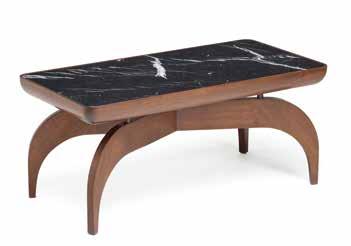
The Babylone coffee table by Reda Amalou Design displays an irresistible 1970s style elegance created by the precious materials it is made from – American walnut legs and inlaid black Marquina marble top
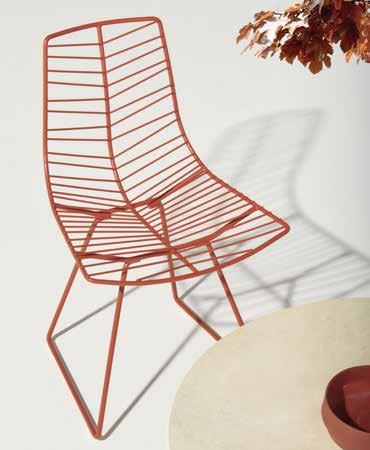
Graceful, airy and an immediately autumnal look. The Leaf chair by Arper is reinterpreted while remaining true to its identity, with slender, ergonomic lines. The new warm, sophisticated rust colour is complemented by removable cushions with removable cushions and covers
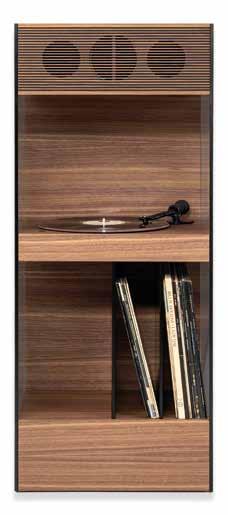
PR Alta is the new all-in-one audio unit by La Boite concept. Designed as a compact piece of furniture, the vertical solution integrates a connected hi-fi speaker featuring patented APR –Active Pressure Reflex 2.0 technology and a turntable
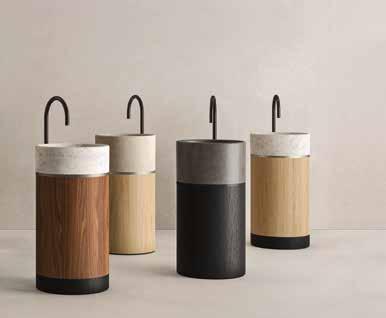
Symmetry, geometric purity and combinations of materials and techniques - ROMA by Noorth designed by Altherr Désile Park, a collection of freestanding washbasins and bathtubs that evoke classical Mediterranean architecture
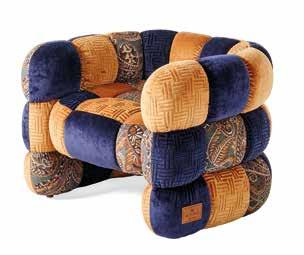
Soft and embracing, the Quiltana armchair by Etro Home Interiors is embellished by a refined patchwork quilt. The brand’s mix of colours, textures and patterns creates eclectic furnishings with a strong decorative value
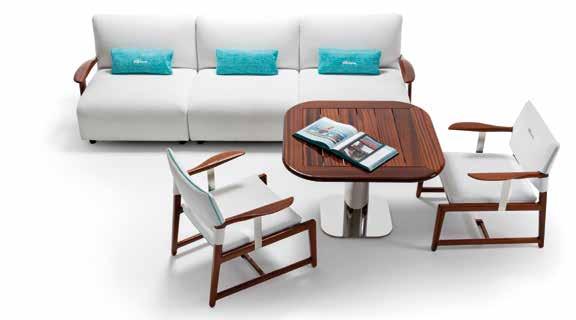
The new Exteta x Riva collection, designed by Massimo Castagna, recalls the timeless art of maritime living. This encounter between design and heritage is features precious materials like Sapelli mahogany, skilfully worked and displaying the brand’s iconic high-gloss varnish finish
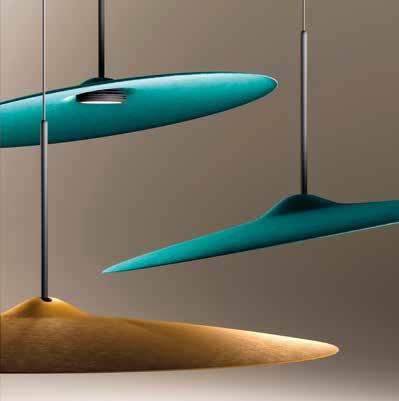
Acustica is not only a lamp and a piece of furniture, it also enhances the acoustics of an interior. Inspired by cymbals, the light shade by Fabbian, available in wall or hanging versions, is made of recycled PET and is designed by Gio Minelli & Marco Fossati
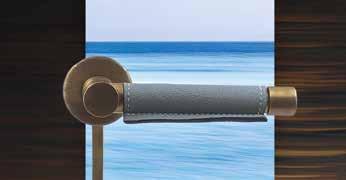
EUREK-ART is a collection of artistic handles made by hand by Giangi Razeto of F.lli Razeto & Casareto: in this way, every handle becomes a bespoke piece of art. Using artisanal techniques, the surface is worked to become an artistic element
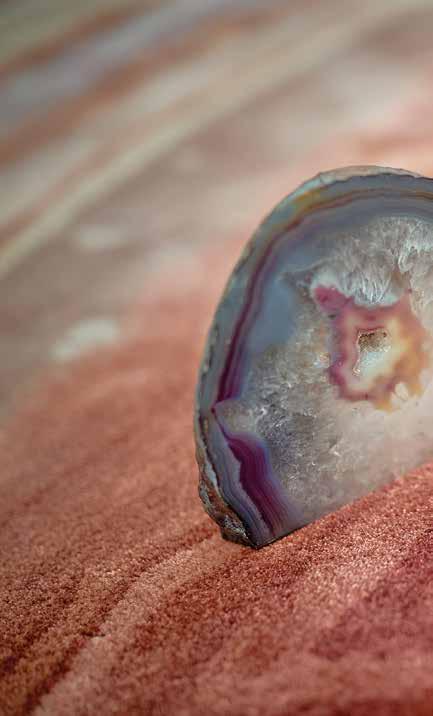
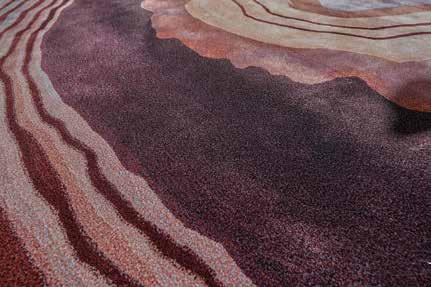
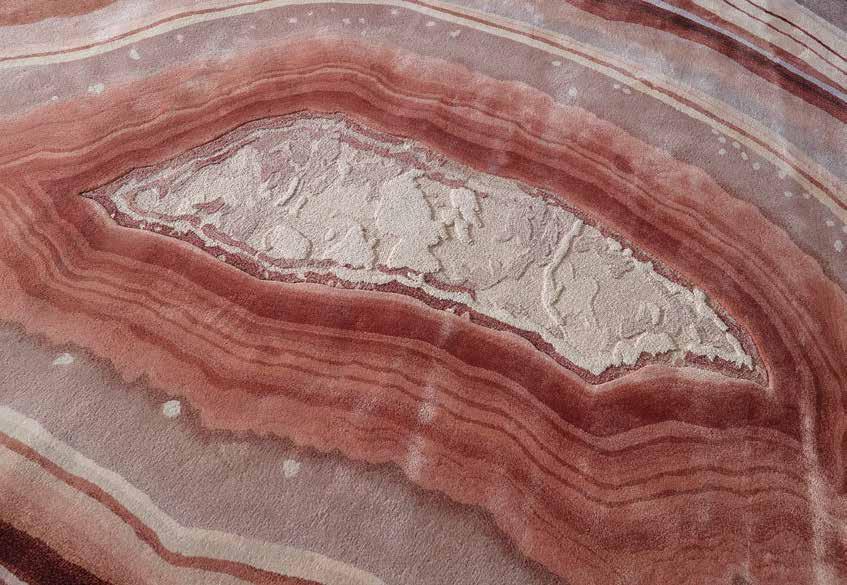
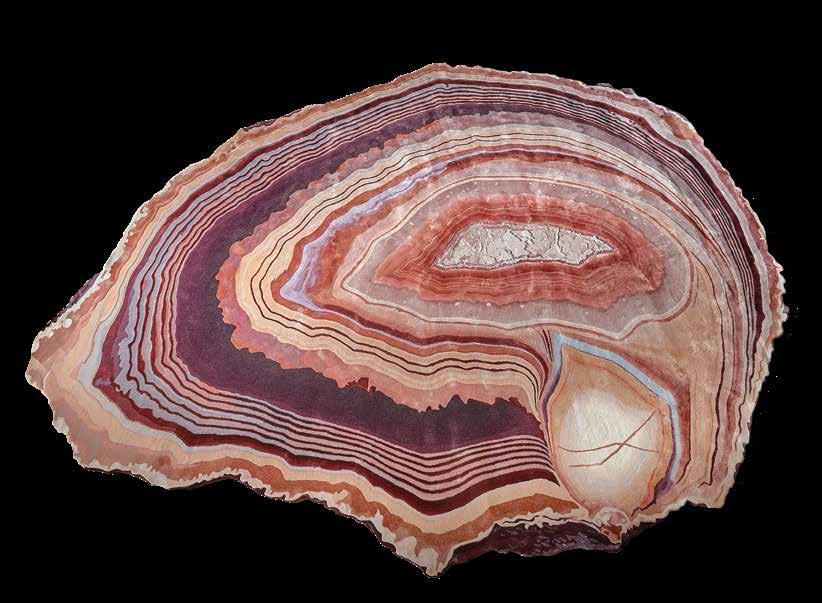
Agate Elegance, Woven Through Nature
OT Carpets has been synonymous with luxury and innovation in bespoke carpet design for over four decades. At this year’s Monaco Yacht Show, the company, now led by the next generation - Julia and Max Treutlein - introduced its Agate collection, inspired by the natural beauty of stones and gems
by Jane Catchpole - ph. Tim Marquardt - teamfoto Marquardt
Rooted in nature’s profound beauty and the company’s meticulous craftsmanship, this collection highlights a timeless aesthetic that draws from gemstones’ hidden allure. Crafted with 100% sustainable materials like New Zealand wool, it embodies environmental responsibility and bespoke elegance
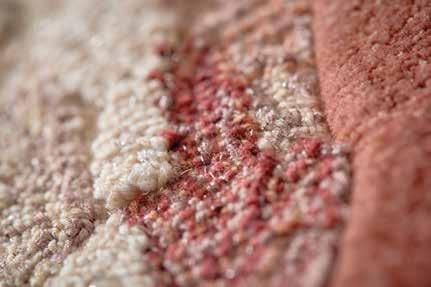
The Agate collection is the latest masterpiece in a rich tapestry of exquisite designs by this tight-knit teamonce again reflecting OT Carpets’ philosophy of drawing inspiration from nature - not to replicate it, but to reimagine it artistically. As Julia Treutlein observed, “Visitors to the OT booth were immediately captivated, with many spontaneously recognising the gemstone-like aesthetic, exclaiming ‘agate’ and ‘gemstone’ upon seeing the designs”. The centrepiece, the Agate carpet, is a testament to this vision, blending organic textures with subtle, sparkling accents. Crafted from bamboo fibres, the carpet incorporates delicate areas of lurex to evoke the glistening crystal formations found within polished agate stones, creating a glossy,
luxurious finish certain to elevate any interior.
Complementing the floor design, the booth’s back wall featured a striking installation: a carpet split into two sections, divided by a strip of light symbolising the hidden beauty beneath the stone’s rough exterior. This rocky-textured piece, made exclusively from carefully selected wool and linen yarns, including pure linen, velvet wool, and semi-worsted New Zealand wool, achieves a matte, organic feel that contrasts beautifully with the Agate carpet’s shimmer. The interplay of textures and materials showcases OT Carpets’ mastery in balancing innovation with the tactile richness of natural fibres.
As Julia and Max Treutlein step into leadership roles, they bring
fresh inspiration while upholding the same tradition of excellence that Oliver and Elke Treutlein instilled in the company since its founding in 1980. Based in Meerbusch, Germany, OT Carpets remains a family affair, with Julia and Max working closely alongside Julia’s parents to ensure every project reflects the company’s legacy of quality and style. This new generation is poised to carry the business forward, blending cutting-edge design with the handcrafted artistry that has made OT Carpets a trusted partner for high-end projects, from luxurious yachts to private residences and aviation interiors. “As a family-run business, we’re deeply involved in every project, delivering bespoke carpets tailored to clients’ visions,” comments Max. The Agate collection offers a sneak peek into a broader range of stone and gem-inspired
The Agate collection transforms gemstone-inspired textures into handcrafted luxury masterpieces. Blending sustainable bamboo fibres with lurex accents, it evokes the glistening crystals of polished agate stones. This innovative range reimagines nature’s elegance, balancing bold design with timeless quality for enduring appeal
designs set to launch officially in spring 2026. These creations will continue OT Carpets’ tradition of collaborating with renowned international designers and sourcing the finest natural materials, such as silk, cashmere, and merino wool, to craft bespoke carpets that enhance the atmosphere of any space. With a focus on sustainability, the company uses 100% natural materials, ensuring their carpets are environmentally friendly and built to last for decades.
With Julia and Max at the helm, OT Carpets continues to weave a legacy of excellence, ensuring that each carpet is not just a product but a work of art that tells a story of craftsmanship, innovation, and timeless beauty. olivertreutlein.com
Beyond the Revolution
Twenty years after the first appearance of the IPS, Volvo Penta continues to define the future –the new IPS Professional Platform opens the way for new generation of superyachts, while the Electric IPS brings a zero-emission experience to sailing
by Paola Bertelli - ph. courtesy by Volvo Penta
Some ideas don’t just resist time, they transform it. When Volvo Penta presented its Inboard Performance System (IPS) at the London Boat Show in 2005, it didn’t only introduce a new propulsion system but also a completely different way of experiencing a yacht. IPS created the concept of Easy Boating, simplifying the art of navigation so that it once again becomes sheer pleasure. Since that time this technology has never ceased to evolve, widening its horizons and refining its potential. Now, twenty years after its launch and 41,000 units sold worldwide, this revolutionary system enters a new phase with two products that will have a powerful impact on the story of propulsion – the IPS Professional Platform and the electric IPS line.
The IPS Professional Platform is a natural extension of the IPS system into the superyacht market and the world of larger work vessels. The system is desired by those seeking uncompromising power and fluidity – it is capable of reducing consumption and emissions by up 30%, thanks also to the new Eco Mode function that automatically controls the start and stop of each engine according to the required load, improving acceleration and cutting noise and vibration while still providing the control immediacy the platform is famous for. There is another advantage: the extreme compactness of the engines means more free space in the engine room – this can be used to enlarge the interiors, providing more room for the owner, guests and crew, meaning greater on-board comfort. Its modular architecture, which can integrate
The IPS Professional Platform re-designs large yacht propulsion. The system, backed by years of production and thousands of hours of bench and sea tests, integrates engines, pods, exhaust and controls.
Currently available with combustion engines, the hybrid version is set to appear in 2027, with a full-electric system introduced the following year
internal combustion engines burning renewable fuels as well hybrid or full electric solutions makes this a forward-looking system, a technological bridge to a large, more efficient and more aware sailing experience.
Confirmation of this was seen at the Cannes Boat Show 2025, which hosted the first superyacht equipped with the IPS Professional Platform, the Sanlorenzo SX120, followed by the launch of the Amer 42 Explorer. At the same time, this year Volvo Penta revealed a further development of the IPS system with a 100% electric version. Now on the market, the line offers 220 kW to 1.1 MW of power, ready to equip yachts capable
of sailing in total silence and with zero emissions. It is not only a green choice, it’s also a development of the IPS philosophy – flawless manoeuvrability, joystick and dynamic positioning, autopilot and assisted mooring remain unchanged, but are now enhanced by a smart energy management system and plug & play integration that simplifies installation and operations.
Two new arrivals that confirm Volvo Penta’s ability to set the pace in marine innovation, ensuring that IPS continues to be the name that redefines the future of the sea. volvopenta.com
IPS Electric is the 100% electric propulsion system based on the IPS platform. This plug and play solution is supported by a smart energy management system
The Dimensions of Water
Personalisation, compactness and automation. The Numarine 30XP yachts and the new Majesty 100 Terrace feature two types of HP Watermakers desalinator, embodying the concept of water efficiency on board
by Paola Bertelli - ph. courtesy
by
HP Watermakers
Water on board is no longer just a resource, it’s an experience. Ensuring its availability, quality and intuitive management is now a crucial element in any advanced yacht design. HP Watermakers continues to stand out in this field, designing and building totally automatic desalinators that adapt to the layout and style of any yacht, making water autonomy not only a certainty but also a tangible comfort. This approach is embodied by the recent installation of HP Watermakers products on board the Numarine 30XP models, 30.90-metre explorer yachts designed to provide owners with an off-grid experience of the sea, and the Majesty 100 Terrace by Gulf Craft. Two designs, two construction philosophies, two system choices but only one technical response - HP Watermakers.
The Zucco family have been at the helm of HP Watermakers for thirty years. Opposite page, bottom: Gianni with his father Luciano, mother Valeria and sister Valentina. HP desalinators are chosen on the basis of a number of system requirements. The latest installations include the SCA Double 660 (opposite page, top) on the Numarine 30XP (bottom right) and the SCD Double 260 (right) on the new Majesty 100 Terrace (bottom left)
“The criterion guiding the choice between the SCA Double 660 and SCD Double 260 models is essentially one of where the unit is located with respect to the waterline”, says Gianni Zucco, co-founder of the company. “In the case of the 30XP the unit is located above the waterline, and the choice was a configuration with separate pumps. On the contrary, on the Majesty 100 the desalinator is below the waterline, making it possible to instal a monobloc unit with pumps included in the body of the machine”. The model chosen for the Numarine 30XP fleet (two are already in operation and two are under construction) is the SCA Double 660, two independent desalinators that work in parallel, mounted in the same framework and generating a combined production of 660 litres/hour. It’s a compact, robust system designed to optimise consumption and enable flexible management during peaks in water demand. All the Numarine 30XP are equipped with Sea0Spot, the HP unit that makes it possible to treat and desalinate dock water, transfor-
ming it into soft water, and with Part-NET, an interface system compatible with the most common bridge plotters for integrated and immediate control. For the Majesty 100 Terrace, though, Gulf Craft has chosen the SCD Double 260 RP Tronic, an automatic system with two desalinators integrated in the same box, capable of producing between 2x260 and 2x320 litres/hour. This choice is a perfect response to the requirements of a yacht that emphasises liveability and functionality. “In this case the desalinators’ compact footprint – just 1,100 mm – has been determined to optimise its usability in the engine room without compromising on performance and automation”, says Zucco. “But we were involved in the entire hydraulic system, from sterilisation to softening”. Two case histories that reflect HP’s philosophy – not simply to supply products but also personalised solutions designed to respond to the needs of owners and shipyards, supporting development right from the initial stages. hpwatermaker.it
“Goccia” is a response to a shipyard’s request to solve problems of cavitation and loss of speed. To side: top, Alessandro and Daniele Guidi; bottom, the Guidi System, a kit that integrates water intake, non-stick valve, filter and fittings, designed to ensure maximum safety for the on-board hydraulic systems
The Shape of Efficiency
Guidi presents the new bronze water intake “Goccia”, inspired by the natural world and developed for enhanced hydrodynamics. A small technical component with a big impact on the sailing experience
by Paola Bertelli - ph. courtesy by Guidi
The latest patented product from Guidi is the bronze water intake “Goccia” (“Drop”). The name refers to the component’s unusual shape, inspired by nature and designed to generate improved hydrodynamics. Geometrically speaking, it recalls a pyriform quartic formula, a type of algebraic curve that mimics the shape of a drop. This design is not intended as a simple style exercise, it’s a solution that optimises water flow inside and out of the cover, enabling a significant reduction in vortices and minimising turbulence.
It has a rather unusual backstory: “The product is the result of a specific request by an Italian shipyard that was having problems with
cavitation and loss of speed caused by the water intakes mounted on their high-performance yacht. The new design of the “Goccia” ensures greater efficiency from many points of view, providing greater navigability, comfort and sustainability”, says Alessandro Guidi, the company’s technical and operational manager.
Guidi handled the design, while DITEN (the University of Genoa Department of Naval Engineering) measured the advantages through a CFD (computational fluid dynamics) analysis. The analysis showed increased efficiency, reduced water resistance, a greater flow rate and lower noise, an increasingly important aspect in the marine context. Generally, noise and efficiency are rarely compatible – lowering one
usually leads to an increase in the other. However, in the case of this water intake, no compromises were necessary, as excellent results have been achieved on both fronts. It’s also interesting to note that as the boat’s speed increases so do the positive effects generated by the new water intake. CFD analysis has confirmed the superlative performance offered by the “Goccia”, demonstrating that drawing inspiration from nature and using computer simulation technology can lead to innovative solutions for the marine industry. Like all Guidi products, the “Goccia” is designed for maximum endurance and reliability, supported by quality and performance guarantees. The physical and mechanical properties of the materials used are retained over time. The materials are also totally recyclable and requires minimal maintenance. Presented at the METS 2024 as a prototype, the new water intake is now generally available, including in the USA. An example of how a “small technical component” can also have an impact on a complex system, helping in the creation of yachts that are increasingly sophisticated from every point of view. guidisrl.it
Silent Energy
Compact, high-performance and easy to instal, the new IS 25.05i by Mase unleashes 25 kW of on-board power provided by a super-silenced generator designed for uncompromising everyday comfort
by Paola Bertelli
- ph. courtesy by Mase
well-known benchmark in the high-tech marine generator sector, Mase continues to set the pace of innovation with a vision that combines versatility, efficiency and sustainability, transforming generators into a strategic asset for yacht design. One of the new models for 2025 is the IS 25.05i, a 25 kW (23 kW continuous at 50 or 60 Hertz) unit designed for medium and large craft. It is compact, silent and high-performance, powered by a Kubota V2403 (35.5 hp - 26.11 kWm) block at 1800 revs per minute and with integrated inverter. “The IS 25.05i project was inspired by listening directly to the requirements of yards and owners. There is an increasing demand for compact, efficient and smart solutions”, says Stefano Campanelli, Commercial Director of
Mase. “The requirements were clear – high performance, operational flexibility, compact footprint and easy management. Our response was a product that anticipated market needs, integrating advanced technology and a more highly-developed functional operation”. The water/air (W/A) intercooler system enables the generators to work constantly at the optimal temperature regardless of exterior and interior conditions without any power loss or derating. This means it can be installed in any compartment without the need for additional ventilation system, maintaining reliability and output. The soundproof marine aluminium cabin and dual vibration dumping system ensure silent operation at 53 dBA at 7 metres, reducing perceptible on-board noise and vibration to a minimum. But this
Mase Generators was founded in 1970 in Cesena, where the company is still based (opposite page). It produces generators for marine and land-based applications. Its products for the nautical industry range from small 2 kW generators to high-power systems (500 kW) for yachts and commercial craft.
Stefano Campanelli, commercial director of Mase. Below, the new IS 25.05i generator.
model’s real stand-out feature is its ability to adapt to a range of operational requirements. “Compared to traditional generators, the IS 25.05i offers a more compact form, superior noise reduction and more precise electronic control”, says Campanelli. “The system’s modularity makes it extremely versatile and enables easy integration into a variety of scenarios of use”. One of its most valued features is that it is designed for parallel operation, a solution that extends the range of design and operational possibilities. “The potential to work in parallel is a real game-changer”, says Campanelli. “For shipyards it means more flexible and scalable units, for the owners greater safety, uninterrupted operation and the possibility of redundancy. When required the generators can work together to provide
the required power without interruption”. The unit’s electronic heart is the COMAP EVO IL4 control module for system management – manual start, reading the main parameters and alarm signalling, with integrated protection functions and emergency stop button. The IS 25.05i is also compatible with the Easy Click control unit, a monitoring system that brings energy control directly to the helm station. “Simplicity of use is crucial: a generator should be intuitive and ready to use even for those who don’t have specific technical skills”, Campanelli concludes. “Easy Click is an immediate interface that enables generator start and control in a single action. It’s our way of making the technology more human and closer to everyday needs”. masegenerators.com
Right,
Technical and Sensory Masterworks
Entirely personalised and therefore always one of a kind, solutions by Edilfare Piscine embody Made in Italy excellence for those seeking made-to-measure pools and well-being spaces on board megayachts and for luxurious properties
by Veronica Lempi - ph. courtesy by Edilfare Piscine
For almost 30 years Edilfare Piscine has remained a benchmark for powerful visions and flawless aquatic creations.
The company founded and led by Fabio Signorelli designs and constructs swimming pools, mini-pools and customised spas for high-end yachts and residences, with the aim of combining comfort, technology and aesthetic harmony - always made-to-measure.
Clients’ wishes are always the starting part – “ready-made” isn’t part of the Edilfare world! Every project is based on a deep understanding of the onboard context and the personality of the client, interpreted by people with a proud knowledge of the language of yachts and a flawless sense of harmony.
The result is the figure of the Pool Consultant, unique in an industry where Signorelli is a pioneer. This role enables the company to provide a complete multi-disciplinary service, from conception to construction.
From form to finishes, natural surfaces to more advanced accessories, alongside innovations like ecological filtration systems. Every detail is developed with care and precision, with solutions shaped by the client’s requirements and the specific characteristics of the yacht or residence.
Edilfare Piscine is currently working on projects in the world’s most exclusive locations, from the Côte d’Azur to Sardinia.
The company has built its success on investing in materials research and
Interpreting desires, visions and spaces, transforming them into aquatic spaces that are made to measure from the point of view of aesthetics, technology and energy use. The Pool Consultant is backed by almost thirty years of experience in completed projects. With skill and sensitivity, the consultant supports the client step by step, from the initial sketches to the first plunge into the water and then maintenance, ensuring optimal performance over time
integrating domotics, developing smart systems that can simplify control and optimise consumption and maintenance. The result is new dimensions in on-board relaxation provided by technical, sensory masterpieces backed by intense attention to detail, and always in line with the highest quality standards.
The pool consultant creates a link between the shipyard, architect and owner, ensuring that the final result is not only aesthetically flawless but also high-performance and enduring. The consultant analyses structures and materials, anticipates criticalities, proposes alternatives and makes sure that every element – hydraulic, structural and visual – enters into a clear,
unimpeded dialogue with the elements in its surroundings.
This services provided by the Pool Consultant makes it possible for Edilfare Piscine to transform its technical consultancy into a design value, where the pool is not just an aquatic space but an environment of well-being where the balance between nature, technology and aesthetic pleasure combine to enhance all aspects of everyday life.
With the Pool Consultant, the swimming pool becomes an extension of lifestyle, in the home or on board, reflecting the owner’s personality and a mastery of Italian know-how. www.edilfare.it
THE POWER OF RECOGNISABILITY
Constant oversight, a family spirit and an orchestra of expert artisans. Fulvio Codecasa’s daily presence at the yard still ensures that every Codecasa yacht receives the personal touch. Elegance, proportions and a distinctive look remain the guiding principles of his creativity and define the yard’s unmistakeable style
by Paola Bertelli - ph. courtesy by Codecasa
Some stories begin with three rapid pencil lines. Fulvio Codecasa has never abandoned this approach, and maintains his habit of revelling every day in the organised hubbub of the hangars, even though he is now over 80 years old.
“Many of our yachts began life as one of my sketches, a precise idea that came into being in my mind. I just pick up a pencil and a sheet of paper and draw”, he says. This spontaneous, almost ritualistic action gives rise to the aesthetic identity that makes every Codecasa build so distinctive. The sketch is the original creative act, the moment when a line, a proportion and a project’s personality is decided.
Fulvio has vivid memories of the sketch for Family Day, a 65-metre yacht launched in 2010 for a Hong-Kong based owner. It was simple drawing, three lines, one above the other. “They made fun of me because they said that you couldn’t see the sea from the helm station, but that was absolutely not true. The Codecasa Jet 2020 design started life like that, too, starting from an idea, a sheet of paper and a pencil. Yachts mean everything to me, I’m always thinking about them”, he says.
This initial gesture isn’t a whim, it’s the foundation stone for every project – it guides the process, shapes the design and influences the engineering.
Fulvio Codecasa taking part in the excitement of a launch. The yard is one of the last to use skids to guide craft into the water, a method charged with tradition and charm. To side, the Codecasa family with Fulvio in the centre. To his left, his daughters Fulvia and Elena and sonin-law Ennio Buonomo; to his right his grandchildren Matteo, Chiara and Niccolò and son-in-law Fabio Lofrese
Every day Fulvio Codecasa enters the yard at seven in the morning.
“I can’t imagine a day of my life without going to the yard”, he says. He’s a constant presence until 5 pm, supervising, giving advice, correcting. He does all this with an expert eye that takes in everything he sees – a ceiling panel to refit, an out-of-scale handle, dining tables to redesign, sofas or bar units to adapt to various needs, armchairs and seats designed to suit clients’ physiognomy.
He has an acute awareness of ergonomics and has taught those working with him to propose solutions that are adapted to the client, skilfully calibrated, blending aesthetics and well-being.
“No solution is good enough if it’s not excellent”, they say in the technical office. “Working under his gaze means learning to raise the bar all the time. It’s like making a bespoke suit – every stitch, every seam must be in its place, no matter if it’s hidden from view”.
Fulvio Codecasa likes to compare the yard to an orchestra. “There are carpenters, electricians, plumbers, marble workers, painters, each with their own tool, their own speciality. The sound they produce when they’re working together, with the yacht taking shape, piece by piece, always gives me a thrill”.
Fulvio Codecasa does not experience the shipyard alone. The family
Codecasa is and seeks to remain an artisanal shipyard. It delivers an average of two craft per year, a rhythm that enables it to maintain high quality levels and a direct relationship with owners, collaborators and suppliers. Currently under construction, a 57-metre (above) and a 58-metre yacht (right), both set for delivery in 2026. These are taking shape under the watchful eye of Fulvio Codecasa (to side, top), who still arrives at the yard with his legendary punctuality at seven every morning
[ A DYNASTIC SHIPYARD ]
Among the most recent launches, the 58 metre Kathryn (right), and Gioia (bottom right and left), the sixth unit in the successful Vintage 43 metre series, a line introduced in 2011 with the aim of offering superyachts below 500 GT with a classic, timeless appeal. The main deck saloon features large windows, steel and mirrors that make the spaces look larger than they are
dimension is an integral part of this ecosystem. By his side work his daughters Fulvia and Elena, sons-in-law Ennio Buonomo and Fabio Lofrese and his grandchildren Matteo, Niccolò and Chiara. “Being surrounded by my family at work is great success for me, it means I’ve made it”, he says. The values passed on are not just technical, like the ability to read a drawing, know a wood, understand a curve in the hull, but also human – dedication, sacrifice and humility. The sketch, the initial idea, leads on to the rendering and 3D CAD models. The engineers and architects in the design team collaborate to transform the idea into a sailing reality. This is achieved through hydrodynamic CFD simulations, structural analyses and structural, weight and performance considerations. The stylistic details requested by Fulvio have led to innovative and functional solutions like the extension of the hard top to shade the relaxation areas more effectively
and the elimination of the central mast in the Vintage 43 series, made possible by the introduction of the roll bar, which transformed the sun deck into one of the yacht’s more comfortable spaces.
“Fulvio Codecasa has always had a personal and aesthetic vision of yachts – clean lines, balanced volumes and elegant proportions”, say his collaborators. The idea should become technical without losing elegance, and every stylistic modification involves calculations, testing and adjustments. And it’s a constant balance – beauty and functionality, design and comfort, aesthetic detail and safety standards.
Members of the creative and technical team learn by observing Fulvio –how to select materials, handle surfaces, decide that a furnishing should be simplified, how to lighten a colour or that decorative detail should be eliminated to enhance spatial fluidity. He also regards listening as crucial - listening to owners, understanding their desires but also
Family Day (right) began as a sketch by Fulvio Codecasa, three simple lines, one above the other, that sparked off a creative process that led to the design and construction of this 65-metre craft. Below right and left, Regina d’Italia, the Dolce & Gabbana yacht that is now for sale. The style in the interiors is unmistakeable – in the owner’s suite the mink bedspread transforms itself into a carpet.
@@@@@@@o opturem conse quiatempel mi, intio eum quame vollaceat esenitis aut eos ipicitia inctatem noneceperi opta dest, conseque esciatius. Epe des quatem es eicaes et iuntionsequo consector saepernatum isquid quia delest voluptat litasped excero omnim aboriandi quaturibus, endae ent
listening to the sea, technology and physics.
And the moment of the launch arrives. It never loses its appeal. Even after years of work, launching a vessel is still pure emotion. “It’s like a child leaving home and following his own path”. It’s a time for celebration – the family, the staff, the yard, all united. It’s the completion of an idea, the culmination of years of work, effort and precision.
If he had to define the Codecasa style in one word, Fulvio would say “identity”. Recognisability is preserved, even when it is innovated. Style is not ostentation, it’s perceived value. It’s a balance between simplicity, safety, comfort and elegance. To him, “Silent luxury” means a yacht that excites without raising the volume – clean lines, measured proportions, bright but not loud interiors, materials that are refined without being ostentatious. It is seeing the yacht and recognising it, even years later. It’s knowing that comfort isn’t measured in gadgets but how people
move through the interiors, how shade falls on a relaxation deck, how silence is a vital part of night-term sailing.
When we asked him if he had ever refused a project because it didn’t reflect the yard’s philosophy, Fulvio Codecasa’s unequivocal response was “Of course, it’s happened frequently. I have a firm belief in our philosophy and principles, and I’m the kind of man who finds it hard to compromise.” This “no” is just as important as every “yes” he has given – it’s the restrictions that preserve identity.
What would he say to the Fulvio Codecasa of forty years ago? “I’d tell him to do exactly what I’ve done. I have no complaints or regrets. Every choice, even if it wasn’t easy, every challenge and every result has shaped my path”.
The motto that still defines him is “Avanti Tutta!” (“Full ahead”, ed. note) Not a war cry but a daily promise.
Numarine’s 40MXP range redefines the explorer yacht through a Mediterranean lens, uniting long-range capability with open, sunlit living. As the first unit, she showcases how the freedom of adventure combines with the effortless grace of Mediterranean living
by Bryony Mc Cabe - ph. Kerem Sanliman
ith the launch of the first 40MXP, Miouch, Numarine opens a new chapter in the evolution of the explorer yacht.
Conceived as the flagship of the acclaimed XP Series, the range captures the spirit of freedom and the effortless rhythm of Mediterranean life, while upholding the robust, long-range character that defines the brand. She is a yacht created for those who value discovery as much as repose.
From the outset, the ambition was to take the proven explorer DNA of Numarine’s XP range and reinterpret it through a lifestyle lens. The result is a vessel that remains resolutely capable of crossing oceans, yet feels equally at home anchored off the Amalfi coast or tucked into a quiet bay. The name – short for Mediterranean Explorer – embodies this balance between adventure and ease.
As such, Miouch offers the freedom to voyage anywhere, but with the warmth and openness of a Mediterranean home. Her design invites the outdoors in, transforming each deck into a stage for connection – with the sea, with family, and with the moment. That vision informs every detail, from her commanding stance to her gentle sense of flow.
An evolution of the shipyard’s successful 37XP platform, the 40MXP builds on proven engineering while introducing a host of new ideas. The hull has been lengthened, allowing for an expansive aft section that transforms the yacht’s relationship with the sea. This area is now an impressive, full-beam social hub centred around a glass-fronted pool and surrounded by generous lounging and dining areas. Steps lead down to an 8-metre-wide hydraulic swim platform, creating a seamless transition from yacht to sea. Whether shaded beneath an awning or basking in open sunlight, this is the heart of life onboard – a space made for gathering, entertaining and unwinding in perfect proximity to the water.
Yet the 40MXP is far more than a lifestyle statement. Beneath her sleek, muscular lines lies the robust spirit of a true explorer. Her steel hull, drawn by long-time Numarine collaborator Umberto Tagliavini, ensures exceptional efficiency, stability and range. She can cruise up to 6,000 nautical miles at 8 knots – a transatlantic capability that allows her owners to venture far beyond the Mediterranean should they wish. Power comes from twin MAN engines, with the option of a Tier III-compliant package that meets the latest emissions standards without compromising performance.
Inside, Miouch reflects Numarine’s design philosophy of light, space and modern comfort. Both the exterior and interior styling are by Can Yalman, whose architectural approach creates a strong sense of continuity between the yacht’s inner and outer worlds. Expansive glazing floods the interiors with daylight, while six guest suites – including a full-beam master on the main deck –provide accommodation for up to 12 guests. The atmosphere is open and harmonious, balancing elegance with informality. It is an environment where family life, quiet moments and social gatherings unfold with equal ease.
Every detail has been considered to enhance the onboard experience. The spacious flybridge offers panoramic views and versatile lounging areas, while the upper deck is perfect for dining under the stars. Below, the tender deck can carry a 9-metre tender and multiple jet skis, ensuring the yacht is as capable for adventure as it is for relaxation. In every aspect of her design, the 40MXP demonstrates Numarine’s belief that functionality and beauty should be inseparable – that a yacht built for distance should also be built for delight.
With several hulls already in build, the 40MXP has struck an immediate chord with owners seeking a yacht that offers both freedom and familiarity. numarine.com
This page and opposite, the 40MXP continues the high-volume, low-maintenance and long-range ethos of Numarine’s XP range, but in a larger package. Opening page, Miouch features an aft pool with a glass transom and a full-beam hydraulic swim platform for direct access to the water
Clockwise from top: the upper deck saloon is bright, contemporary, and inviting while maximizing the flow of natural light from the yacht’s large windows; the sun deck features a curved modular sofa for lounging; the main deck saloon continues the contemporary feel with wooden panelled ceilings, white furnishings and light oak flooring
Exterior Design
Bengu
Ozdogan, Sales and Marketing Manager at Numarine
With the exterior of the 40MXP, our goal was to evolve the robust explorer DNA of the XP Series into a model that also celebrates Mediterranean-style living. We wanted to maintain the purposeful stance and seafaring strength of an explorer while opening up new ways for owners and guests to enjoy life on the water. The 40MXP is still every inch an explorer, but its exterior is more fluid and lifestyle-oriented. This was achieved by enlarging exterior decks, and introducing lifestylefocused areas such as the expansive aft deck, the 8m full-beam beach club and extended swim platform.
We retained the defining cues of the XP Series: strong vertical bow, purposeful geometry, and expansive windows that flood interiors with natural light. What’s new in the MXP language is a more open and welcoming aft section, underlining the yacht’s Mediterranean character. The aft deck is the heart of the 40MXP. It is where the connection to the sea is strongest and where owners and guests spend much of their time. We designed it as a full-beam space leading directly to an extended swim platform, creating a seamless transition between yacht and sea. This area was optimized by dedicating generous proportions to leisure while ensuring that operational requirements remain uncompromised.
A key aspect was achieving the right balance between leisure and expedition. We ensured the yacht retained her long-range cruising ability, robust engineering, and storage for tenders and toys, while also offering expansive outdoor living spaces. The 40MXP demonstrates that a serious ocean-going yacht can also deliver a lifestyle-oriented exterior without compromise.
The exterior lines by Can Yalman preserve the same stylistic cues and DNA of all Numarine’s models, while offering a number of new design features that enhance the intimate connection with the sea that a yacht provides. The focus was to create a beach-club lifestyle typical of the Mediterranean, connecting thos onboard with the water
Interior Design
Bengü Ozdogan, Sales and Marketing Manager, Numarine
Each yacht is created around the owner’s choices, guided by our team to ensure harmony, practicality, and comfort. The layout is designed by Can Yalman, but the styling is always individualized. For the first 40MXP, the brief was to keep interiors bright, contemporary, and inviting while maximizing the flow of natural light from the yacht’s large windows.
Owners choose their own materials, colours, and finishes, and we support them in creating interiors that match their vision. Whether that means light woods and neutral palettes, darker tones, or bold accents, the 40MXP is a canvas for personalization. What remains consistent is the emphasis on natural light, excellent acoustics, and layouts that encourage both social interaction and privacy.
We want guests to feel both secure and relaxed. Secure in the knowledge that they are on a true long-range explorer, and relaxed because the spaces are comfortable, inviting, and open to the sea. It is this dual character, strength and serenity, that defines the experience onboard. The confidence of being on a serious ocean-going explorer, and the serenity of being in a Mediterranean villa by the sea, they should feel at once adventurous and at home, able to enjoy long passages in absolute comfort while having open, breezy spaces for leisure.
We rely on proven materials but implement advanced techniques to optimize comfort and efficiency. Acoustic insulation and vibration reduction systems, for example, ensure that long passages are quiet and comfortable. Lightweight construction methods also allow us to maximize volume and efficiency without compromise.
The interiors by Can Yalman place an emphasis on natural light, excellent acoustics, and layouts that encourage both social interaction and privacy. Accommodation can be arranged across six suites for up to 12 guests, including a full-beam master on the main deck
Sales and Marketing Director, Numarine
The 40MXP was born as a natural evolution of our highly successful XP Series. Owners had expressed a desire for a yacht that retained the explorer DNA and robust oceangoing capabilities of the XP line, but with even more emphasis on lifestyle features. It’s a yacht that embraces the relaxed, social, open-air living of the Mediterranean while retaining the range and endurance to explore the farthest reaches of the globe. It is aimed at clients who want the best of both worlds, serious expedition capability paired with generous luxurious spaces for leisure and entertainment. One of the standout achievements was the successful integration of the expansive beach club concept into a sub-500gt vessel. This required close collaboration between design, engineering, and production teams to maximize use of space without compromising performance or stability. We also refined noise and vibration solutions in collaboration with Silent Line, ensuring exceptional onboard comfort especially for those long passages. The process reinforced the importance of listening to client feedback, as the 40MXP directly responds to evolving owner demands for both autonomy and lifestyle luxury. The 40MXP has been met with enthusiasm from the market, with strong interest from both existing Numarine clients and new owners who value its unique positioning between a rugged explorer and a lifestyle-driven superyacht. It demonstrates Numarine’s ability to innovate within the explorer yacht category, continually pushing boundaries in design, comfort, and functionality. Above all, it showcases our strength as a boutique shipyard: flexible enough to tailor each yacht to its owner, yet consistent in delivering robust engineering, efficiency, and signature style.
With naval architecture by Umberto Tagliavini, exterior styling by Can Yalman, the yacht was envisioned as a seamless blend of rugged explorer functionality and refined Mediterranean aesthetics. Standard propulsion is provided by twin MAN 800hp engines, with the option to upgrade to a Tier III-compliant twin MAN 900hp configuration
A HUNDRED YEARS ALREADY!
Ph Luca Carrà, Milano
Robert Rauschenberg (Port Arthur, Texas 1925Captiva Island, Florida 2008) Earth Day, 1970-1971 lithograph with chine collé, 132 x 95 cm
ilton Ernest Rauschenberg, known as Robert (Port Arthur, Texas, 22nd October 1925 – Captiva Island, 12th May 2008), is regarded as one of the most important artists in the American avant garde, a man who made a great impact on 20th century art. His fame grew in the 1960s, especially after he won the grand prize at the 1964 Venice Biennale, where the Leo Castelli gallery of New York presented the famous “Combines”. He was the first American painter to be so honoured. His works are often the star lots at auction, as recent results show. Last May at Sotheby’s New York, “Rigger” (oil, metal, rope, wood, fabric, plastic buttons, paper, graphite and sand on canvas) of 1961 was sold for eight million dollars, while “Deli Down (Borealis)” (tarnish, silkscreen ink on copper) of 1991 went under the hammer for 781,200 euro at a sale by Christie’s Paris in October 2024 (Collection Danute et Alain Mallart : Brussels - Paris – Vilnius). In the same year at Bonhams London, “Cradle Tilt (Borealis)” (acrylic and tarnish on brass) of 1991 reached a price of £584,600. Such record prices are especially linked to masterpieces of the 1960s, like “Buffalo II” (oil and silkscreen ink on canvas) of 1964 (with an image of J F Kennedy), which sold in 2019 for 88.8 million dollars at Christie’s New York. Many shows are being held to celebrate the artist’s centenary, providing an opportunity to enjoy a close-up view of his work. A list of these can be found on the website of the foundation established at the will of the artist in New York in 1990: rauschenbergfoundation.org. In Milan, Italy, after a show at the Museo del Novecento with eight masterpieces from the
Roy Lichtenstein (New York 1923 - 1997), Yellow and Black Brushstroke (Eat Art), 1965-1966, Painted plastic on plywood, 47 x 116 cm
Luigi and Peppino Agrati Collection - Intesa Sanpaolo
1970s and 80s from across Europe, his works can be admired at the Gallerie d’Italia (Intesa San Paolo). The exhibition “Una Collezione inattesa. La Nuova Arte degli Anni Sessanta e un Omaggio a Robert Rauschenberg” (“An Unexpected Collection. The New Art of the 1960s and a Homage to Robert Rauschenberg”) curated by Luca Massimo Barbero, on until 5th October, offers a journey through the trends of the period and celebrates the American artist with 17 works, in a dialogue with other European and American artists such as Roy Lichtenstein, Giulio Paolini, Jasper Johns, Edward Ruscha, Andy Warhol and James Rosenquinst. Almost all the works are part of the Luigi and Peppino Agrati collection, donated to Intesa Sanpaolo. Born in Texas, Rauschenberg studied at the Kansas City Art Institute, the Académie Julian in Paris and the famous Black Mountain College in North Carolina, where his
Piero Manzoni (Soncino 1933 - Milano 1963)
Achrome, 1958
China clay on canvas, 70 x 100 cm
Intesa Sanpaolo Collection
tutor, the painter Josef Albers, one of the founders of the Bauhaus in Germany, would opine that his pupil was an “outstanding example of what he was not talking about”. Rauschenberg then moved to New York, studying at the Art Students League. Alongside Cy Twombly and Jasper Johns he challenged the prevailing trend of Abstract Expressionism as exemplified by Jackson Pollock and Willem De Kooning. From the first monochromes of 1954 he moved on to his “Combines”, which combined elements of painting and sculpture in an assembly of different materials, photographs and everyday objects integrated on the canvases, in line with the work of the New Dada movement founded by the composer John Cage, which differed from Marcel Duchamp’s original Dadaism through its references to personal experience. One famous work was his “Bed” (1955, Museum of Modern Art, New York): oil and graphite on a
Giulio Paolini (Genoa 1940), Jasper Johns, 1967, oil on photographic canvas and on prepared canvas, collage on photographic canvas, nylon strand, 94 x 70 cm, Luigi and Peppino Agrati Collection - Intesa Sanpaolo
Giulio Paolini - (Genoa 1940) - Averroè, 1967 - cotton drapes, steel rod, brass topper, h.180 cm, Luigi and Peppino Agrati CollectionIntesa Sanpaolo
James Rosenquist -(Grand Forks, Dakota del Nord 1933 - New York 2017) Waco, Texas, 1966, oil on canvas, neon, 154 x 203.5 cm
Luigi and Peppino Agrati Collection - Intesa Sanpaolo
cushion, a quilt and a sheet on a wooden frame. Influenced by New Dada with dashes of Pop Art sensibility, Rauschenberg was a tireless explorer, working with silkscreen, performance, set design and textiles. From 13th September to 26th April 2026 the Museum of the City of New York (MCNY) is to host the exhibition “Robert Rauschenberg’s New York: Pictures from the Real World”, dedicated to Rauschenberg’s relationship with photography in the context of the Big Apple.
The porcelain ware by Coralla Maiuri transcends the limits of design. Her unique, unrepeatable pieces are shaped by a myriad of inspirations and are created through daring experimentation in material and colours
by Marta Bernasconi - ph. courtesy by Coralla Maiuri
The creation of the brand reflects Coralla Maiuri’s artistic style, which embraces different expressive forms. Porcelain, fabrics, silk and precious metals play a significant role. A range of offers that combines fashion, art and design
orcelain ware that seems to spring from a fairytale or be the result of a magic spell. Plates, bowls, jugs, vases, jars and centrepieces embody the artist’s experience and imagination, evoking memories of the countryside of the Lazio region where she grew up. She then began to draw on the energy of the Baroque style she encountered during her first sojourn in Rome. In 2017 Coralla Maiuri founded the artisanal brand along with her husband and a small group of young artists and artisans. Coralla’s talent for ceramics had been evident since her childhood, when she began to nurture her passion for clay and oil colours, creating works that already reflected her artistic vision. The artist favours the delicacy of pastel colours embellished by touches of gold and opalescent tones, a technique that clothes her works with a suffuse luminosity, almost a magical aura.
Coralla Maiuri’s special way of using colour in the Golden Ash collection where the theme of the Baroque, a favourite of the artist, is treated with a lighter, more contemporary touch. The intrinsic uniqueness of manual work is reflected in every piece, created artisanally and decorated by hand
The uniqueness of her entirely hand-decorated creations – for example, her most recent pieces in the Golden Ash collection – evoke the Baroque style but transform it into something light and contemporary. The name is a reference to the artist’s ability to play with the material. Coralla Maiuri describes the creative process behind her objects in this way: “As I was blowing on extremely thin leaves of gold, I saw ashes dancing in the air. When the gold is still fresh on the porcelain I break it up, split it, let it set through secret alchemical methods – that’s how the Baroque reveals itself in its lightest, least physical essence, a state of the spirit where there’s room for light, for falling snow, for floating pollen”. Artisanal work lies at the basis of every piece, whose personality is based on the harmony between colours, something that is reborn on every porcelain object.
The brand featured in the exhibition MoscaPartners Variations during the recent Milan Design Week. In the setting of the historic Palazzo Litta, guests visiting the “Stanza di Coralla” were immersed in a chamber of wonders, surrounded by light and the colours of porcelain on a fairy-tale table, soft silk velvet cushions and shiny steel coffee tables, also part of the catalogue.
A dramatic setting showcasing porcelain collections that transform the table into an art installation. corallamaiuri.com
ENTREPRENEURIAL ADVENTURES
Amid performances, music and shared memories, Overmarine celebrated Mangusta’s 40th anniversary in the heart of its facility in Pisa. The event highlights not only a family story but also the evolution of a design language that has redefined the sport yacht concept and on-board comfort and convenience
by Paola Bertelli - ph. courtesy by Overmarine
Celebrations at the Overmarine yard. Below: Katia and Maurizio Balducci (right) emphasised the imagination and skills of their father Giuseppe, who founded the group in 1985. The party was held in the hangars at the Pisa facility
Rather than staging a large, brash festival, Overmarine chose the heart of its own world as the setting for the celebration of its 40th anniversary – its yard in Pisa, hosting an evening reserved for the Mangusta team. Toasts, music, parties and artistic performances animated the production spaces, filling them with life and sound in an intimate, authentic moment that brought together the team from the company’s various centres to celebrate not only a milestone but also an identity. During the evening, Maurizio and Katia Balducci stepped up to the microphone to describe the origins of this entrpreneurial adventure. They recalled how it all stemmed from the vision of one
man – their father, a man who was able to see beyond contemporary limits to envisage a future others would only perceive much later. Step by step, together with his children he built a company that is now the international leader in the sector, without ever compromising on the brand’s fundamental values.
“Forty years of challenges overcome and dreams realised, but especially of people who worked side by side with passion and professionalism”, said group CEO Maurizio Balducci. “For us, Mangusta isn’t just a shipyard, it’s a family, a family that’s grown yacht after yacht, without ever losing sight of what really counts – human relationships, respect
[
DESIGN VALUES ]
The Mangusta REV line, designed by Igor Lobanov and introduced in 2022, reinterprets the brand’s large open yachts. Top, a detail of the main deck lounge of the Mangusta 104 REV; below, the beach area of the Mangusta 165 REV. Opposite page, the magical moment of the launch of one of the two Mangusta Oceano 44s that have taken to the water this year
for everyone’s work”.
The anniversary is also a tribute to Overmarine’s origins. “This evening is the description of a journey, one that began with our father and that we are now carrying forward together”, says Katia Balducci. “We didn’t choose this date by chance – it’s his birthday – and celebrating here, in the last facility he had built, is like celebrating the Mangusta family’s birthday”. A birthday that speaks of roots, vision and future.
The tension between solid roots and looking to the future that drives the Balducci family is also reflected in the style of Mangusta yachts. While values lie at the heart of the yard, design is its skin, its aesthetic grammar. There is an invisible thread linking Overmarine yachts, a constant tension between speed and shape, sporty personality and the potential to evolve without ever betraying the brand’s essence. Mangusta originated as a declaration of speed –pure, powerful and recognisable – but it has gradually transformed this energy into a language with a broader scope, one that can interact with architecture, the automotive world, with the imagery of contemporary design.
For this Tuscan brand, design is not simply an aesthetic expression, it is a fundamental act – every new line is inspired by the desire to sculpt dynamic shapes, to create objects with a seductive appeal. Forty years on from the brand’s foundation this design coherence continues to trace a clearly-defined route through the international yacht design scene.
In this journey three design names have played a central role in shaping the Mangusta identity and driving its evolution - Stefano Righini, Alberto Mancini and Igor Lobanov. Designers with different languages and sensibilities, but linked by a shared ability to interpret – always in synergy with the yard – an idea of yachting that sets trends rather than following them.
The original Mangusta stylistic cues that defined the Maxi Open concept, which then became international, were by Stefano Righini, who created taut, pure, essential silhouettes that transformed speed into form. His great intuitive leap, though, was to “make speed habitable”. He opened out the interiors, creating spaces where cruising could be not just a functional interlude but a lifestyle. In step with developments in technology he introduced increasingly large windows that allowed light to flood the interiors while also redesigning the exterior profiles, giving them a more contemporary look. In his design the sports concept is no longer cramped, compressed, “race style”, it opens out into generous, welcoming volumes. The culmination of this dialogue is the Mangusta 165, launched in 2007. At the time it was the largest Maxi Open ever built, 50 metres of sculpted power with a top speed of 40 knots,
With its Mangusta Oceano line, designed by Alberto Mancini, the brand widens its horizons and enters the displacement yacht sector. The first yacht, the Mangusta 42 (above), is the first step in a transformation that will see these yachts increasingly take on the character of seagoing villas. The Mangusta Oceano 44 (below) is a perfect example
the fullest expression of the encounter between technical innovation and stylistic vision.
The same tension between power and shape became fertile soil for Igor Lobanov, who from 2022 reinterpreted the Maxi Open concept with the REV line. Here the original sporty spirit takes on the look of a visionary future – flowing curves, sculpted surfaces, windows integrated into the hull as aerodynamic spaces create dramatic, aggressive profiles. It’s a language that draws on the worlds of science fiction and automotive design, able to surprise and excite.
Details like the aft hatch that opens like a sports car roof to reveal the beach lounge, or the owner’s suite designed as a scenic loft on two levels, transform the on-board experience into a spectacular, almost
In its forty years of activities, Overmarine has delivered over 320 yachts. The group operates from ten production centres, including facilities in Viareggio, Massa and Pisa. For the Tuscan brand design is a fundamental act to create objects with a seductive appeal
cinematic narrative.
With Alberto Mancini at the helm, the yard broadened its horizons, setting its sights on the displacement and semi-displacement yacht market. This led to the appearance of the Mangusta Oceano and Mangusta GranSport lines, extending the Mangusta identity through architectural and residential design cues. The yachts grew to become more like residences, where transparent, reflective surfaces dissolve the confines between interior and exterior, the proportions took on domestic proportions and the connections with the surrounding seascape became the dominant element. From the Oceano 42, which introduced a slower, more contemplative narrative, to the more radical Oceano 44, a true “villa on the sea” with a swimming pool hosting
the iconic “island” with a sunpad suspended above the water, to the new Oceano 52 (the first unit is currently under construction) with a panoramic suite and multifunctional lounge, the design vocabulary evolved in language of liveability and lifestyle. At the same time, the Mangusta GranSport line blends speed and comfort like a seagoing SUV coupé, with muscular profile, sculpted lines, range and versatility in a perfect balance of adrenaline and relaxation.
For Overmarine, Mangusta means emotion that changes shape but remains true to its essence. It means innovating without betraying its distinctive identity. Its stylistic coherence is a statement of direction –every model is not a point of arrival but a stage in a journey that forty years on still looks to the future.
A rendering of the Mangusta Oceano 52. The first unit is currently under construction. The main deck will in effect be “all glass”. The owner’s suite will be on the upper deck, facing forward and enjoying a 180° view of the sea
Cantiere delle Marche’s 43m full-custom explorer yacht was born from a family’s years of life aboard their earlier yacht. Conceived as a refined yet understated home on the water, she carries forward their spirit of togetherness, balancing strength with elegance
by Bryony McCabe - ph. Maurizio Paradisi
or many yacht owners, time spent at sea reveals not only the joy of cruising but also the nuances of how they truly live on board – and, in turn, how their needs evolve until the yacht they once considered perfect no longer fully fits their lifestyle. The new 43m explorer yacht Babbo is the embodiment of this evolution: a fully bespoke creation that builds upon everything her owners loved about their previous vessel. Having spent years sharing quality time as a family aboard the earlier Babbo, a Darwin 102, they recognised as their family expanded that a larger yacht would offer the comfort, space and versatility they required.
Their longstanding relationship with Cantiere delle Marche gave them the confidence to progress from a semi-custom build to a fully custom project, allowing them to shape an explorer yacht precisely around their vision. Just like her predecessor, the new Babbo is conceived as a true family home on the water – an environment where everyone can come together, or find peaceful moments alone, depending on their mood. The design brief centred on achieving an ideal balance of indoor and outdoor spaces that would naturally complement the way they live and cruise. As the owners explain: “We wanted her to feel like a natural extension of our lifestyle: comfortable, functional and quietly elegant without ever being ostentatious.”
Penned by Francesco Paszkowski, Babbo’s exterior design unites architectural rigour with softness of form, giving her a silhouette that embodies both structural strength and grace. With her imposing proportions and generous volumes – 476gt across three decks plus a sun deck – she accommodates equally expansive interiors. Social areas were a particular focus, with spaces designed to foster relaxed togetherness, whether over meals, celebrations or simply quiet family moments. The main deck houses a welcoming lounge, while the upper deck is dedicated to dining, anchored by a panoramic dining area that opens onto the views.
Not inclined towards showiness, the owners asked that the interiors convey refined elegance while remaining understated and inviting – a timeless environment to be enjoyed privately, never ostentatiously. They entrusted Paszkowski with the interiors too, confident that he would harmonise inside and out. The result is a scheme that is both beautiful and highly functional for family life at sea, with the use of wooden strips as a recurring theme that creates a perfect balance between surfaces and volumes. Layout choices reflect their unique approach: four identical suites on the main deck, ensuring each family member enjoys the same level of comfort, alongside two twin cabins on the lower deck for flexibility.
Equally important are the yacht’s outdoor spaces, conceived to draw guests ever closer to the sea. On the expansive main deck aft, furnished with sofas and sunbeds, a sweeping full-beam staircase leads down to the swim platform, creating an inviting transition to the water. The upper deck offers a large outdoor table, sheltered by the sun deck overhang, while above, the sun deck itself is a versatile retreat, complete with dining area, bar, sunbeds and a panoramic swimming pool. Whether underway or at anchor, these areas frame the surroundings as part of the onboard experience.
Beneath her elegant lines lies robust naval architecture from Hydro Tec, which combines efficiency with outstanding seakeeping. A refined hull shape minimises drag and maximises fuel economy, delivering long-range cruising potential even with a modest propulsion package. Structural innovations optimise interior space without compromising strength, while careful attention to stability ensures comfort and safety in a wide range of conditions. “This yacht represents a perfect blend of engineering and design, offering owners a vessel that is both sustainable and capable, with the autonomy to embark on extended voyages without sacrificing performance or comfort,” says Sergio Cutolo, founder of Hydro Tec.
Since her delivery, Babbo has already travelled thousands of miles – a fitting testament to the foresight of her owners and the collaboration that brought her to life. cantieredellemarche.it
This page, Babbo’s exterior lines are designed to be striking and memorable, combining beauty with purpose.
Opposite page, the spacious sun deck features a panoramic pool. Opening page, in the saloon, walls and cabinetry feature vertical wooden strips
Clockwise from top: the spacious sun deck offers ultimate relaxation; a full-beam staircase gently slopes down from the cockpit to the swim platform; in the owners’ suites, the headboard walls are clad in vertical wooden strip panels, forming a sculptural yet tranquil backdrop for the bed; each owners’ suite has an equally impressive bathroom (left)
Exterior Design / Francesco Paszkowski,
founder
of Francesco Paszkowski Design
We approached the project with a well-defined vision, made possible by the exceptional collaboration between CdM, the owners and our studio. Their trust in us to create a yacht that seamlessly blends contemporary elegance with timeless appeal allowed us to deliver a vessel that perfectly embodies the best of both explorer yachts and luxury yachts. This unique balance ensures that the yacht is equally suited for adventurous exploration and sophisticated leisure.
Babbo’s exterior lines are designed to be striking and memorable, combining beauty with purpose. Her bold stance, especially with the imposing bow, ensures she stands out everywhere she goes.
Her muscular yet elegant profile is accentuated by expansive side windows that span the widebody section of the superstructure, offering panoramic views and enhancing the dynamism of her silhouette. The elegantly designed overhangs of her decks add a sense of refinement, blending strength with sophistication in perfect harmony.
The architecture of Babbo focuses on making outdoor and indoor spaces feel continuous, offering a seamless transition between them. The deck layout is thoughtfully designed, providing ample outdoor spaces where guests can relax in privacy. These areas are seamlessly integrated to offer a sense of openness and flow throughout the yacht. The exterior spaces are not only designed for relaxation but are also positioned to provide maximum privacy while still feeling open and free, ideal for enjoying various outdoor settings onboard.
Designer Francesco Paszkowski conceived an exterior aesthetic that fuses architectural rigour with softness, creating a yacht that embodies both structural strength and elegance
Interior Design
Francesco Paszkowski Design
Babbo’s interiors are characterised by an understated sophistication, enveloped in a delicate palette that transitions seamlessly from warm whites to earthy, sandy tones. These hues create an atmosphere of profound calm, reminiscent of Mediterranean limestone cliffs at golden hour. As you step inside, the first impression is of vastness and light. Wall panelling, ceilings and cabinetry are adorned with wooden strips, their fine linear rhythm creating a play of chiaroscuro. The gentle shadows cast between each strip change dynamically throughout the day as natural light filters in from panoramic glazing, adding depth and a sense of movement to the otherwise serene, minimalistic backdrop. The wood itself is a pale, warm oak with delicate veining, treated with a matte oil to preserve its authentic texture while blending harmoniously with creamy woven fabrics and warm sand-tone, tan or taupe leathers. The flooring is an ultra-matte engineered European oak (tatami finishing) in wide planks, while low furnishings ‘float’ almost sculpturally on the floor.
Throughout the yacht, there is an overwhelming sense of complex simplicity: details are highly refined, hidden and resolved with obsessive precision to maintain the purity of form. The complexity lies in its perfect linearity and absence of visual noise. The chiaroscuro of the wooden strips adds character and life to the serene palette, ensuring that while the environment feels peaceful, it is never monotonous. Instead, it is rich with subtle texture, rhythmic shadows and quiet sophistication, embodying discreet luxury and architectural restraint.
Below, on the staircase walls are lattices reminiscent of a Japanese interior. Left, a double bed cabin. Opposite top, a comfortable Flexform Harper sofa by Antonio Citterio with saddle-hide-clad console armrest. Opposite bottom, an angular sofa by Maxalto creates a lounging area on the upper deck.
The Maxalto Pathos table with Calacatta marble top is surrounded by low Maxalto Febo chairs
Shipyard
Vasco Buonpensiere, CEO and Co-founder, Cantiere delle Marche
The exterior spaces are not only designed for relaxation but are also positioned to provide maximum privacy while still feeling open and free, ideal for enjoying various outdoor settings onboard as a family
At our shipyard, the construction of an explorer yacht goes beyond just building a vessel: it’s about crafting a vessel that combines beauty, robustness and technical excellence. Our approach begins with a commitment to designing a yacht that is not only aesthetically stunning but also highly functional and dependable in even the most demanding maritime conditions.
Durability is at the core of our construction process and Babbo is no exception. We used the highest-grade materials, steel and aluminium, from the hull (8mm thick plates) to the superstructure, ensuring that the yacht is built to withstand the harshest ocean environments.
The structural integrity of the vessel is designed with a focus on longevity, stability and strength. Our expert craftsmen and engineers work closely together to build a yacht that can venture safely into remote, challenging waters, ensuring a smooth and secure journey, whether crossing vast oceans or exploring secluded bays.
The decision to install modestly powered engines (2 x Caterpillar C32 Acert 746 kW) with a selective catalytic reduction (SCR) system reflects a focus on fuel efficiency, emission reduction, and long-range capability. These engines are paired with very generous fuel tanks (over 60,000 litres), which allow for an impressive autonomy of over 5,000 nautical miles at a cruising speed of 10 knots. The SCR system helps ensure compliance with stringent environmental regulations by reducing harmful nitrogen oxide (NOx) emissions, making the vessel as environmentally friendly as possible.
Carlo Ratti Associati
THINK, UNDERSTAND... THEN BUILD
A beacon for the world of contemporary international design,
curator this year of the Venice Biennale, Carlo Ratti describes his vision of architecture today and tomorrow
by Marta Bernasconi - ph. courtesy by Carlo Ratti Associati
Carlo Ratti can’t be described in one word – architect, engineer and lecturer, urbanist and architectural theoretician, he also teaches at Milan Polytechnic and the Massachusetts Institute of Technology in Boston, where he runs the MIT Senseable City Lab. He is one of the most frequently quoted experts internationally in the field of urban planning and this year he curated the Venice
Architecture Biennale. We take his latest post as a starting point, asking him what aspects of design he is concentrating on at the moment. “I think we’ve reached a turning point. For decades architecture has been trying to mitigate climate change, focussing on reducing emissions, using new materials and increasing efficiency. However, the carbon already in the atmosphere has triggered
Right: Carlo Ratti. “My creativity derives from finding myself in different situations like a woodland path, a crowded bus, a walk through a city I don’t know. Movement helps, and so do new places”. Above, the Greenary private residence, designed around a tree inside the structure. According to Carlo Ratti, “A good home can breathe, allows the right amount of light to enter, at the right moment. It frames a panorama and gradually adapts to the lives it hosts”
Delfino
Sisto Legnani and Alessandro Saletta from DSL Studio
[ TREND SETTER
transformations that we can’t ignore. This year’s Biennale asks how intelligence, artificial or collective, can help us overcome the challenges we’re facing. We need new instruments and especially new alliances between disciplines that until now have enjoyed too little interaction. Donna Haraway, this year awarded the Golden Lion for Lifetime Achievement, writes that we must “stay with the trouble”, without giving in to the temptation to grasp at immediate solutions. In this sense, adaptation is less a response and more an approach – reprogramming the way we inhabit, build, think and design, accepting uncertainty as part of the process”. Design by the Carlo Ratti Associati studio is always founded on critical thought, often focussed on a search for a convergence between
the natural and the artificial, but in a world that aspires to excellence in terms of technology and performance.
“I often think of our work as being like wielding a plough, an attempt to delve into the ground that separates, or perhaps unites, natural and artificial. On the one hand we explore how computation can make architecture more reactive to its context, while on the other we seek to bring nature into built spaces, not as an ornament but as a structural presence. For example, in Greenary, our project in the countryside of the Parma region, in the north of Italy, for Francesco Mutti and his family, a ten-metre-tall tree became the heart of domestic life. To me, technology is never an end in itself. The aim is to find an equilibrium, a new ecology where
Agnese Bedini]
Delfino Sisto Legnani and Alessandro Saletta from DSL Studio
Opposite page: top, two interior views of Greenary, a house in the countryside near Parma. Below, a model of AquaPraça, a project under way for a floating piazza designed alongside the American studio Höweler + Yoon and presented at the Architecture Biennale 2025. It covers over 400 square metres and floats, adapting itself to the sea level and the number of people on board. It will host exhibitions, debates and performances. This page: the design for Palazzo Mondadori in Segrate. Here, Carlo Ratti Associati has reimagined the spaces to adapt them to new work flexibility without compromising the original spirit of Oscar Niemeyer’s building, an icon of the Modern Movement
architecture does not impose but learns to grow together with other systems”. Carlo Ratti also considers the effects that the ubiquitous presence of technology produces on society and social life and how architecture is called on to respond to these changes. He is convinced that exchanges in physical space are crucial and the more digital life becomes the greater our need for physical places where unexpected, unmediated meetings can take place. “It’s what’s always happened in public squares, beneath the arcades, on the streets. It’s confirmed by our research, based on an analysis of data gathered on the MIT campus in Boston. We designed interior squares for the Sella Innovation Centre in Turin to encourage informal exchanges between start-ups. Architecture can’t force social
life, but it can invite it”. The studio is attracted by projects that start from what already exists, working on structures that are stratified or charged with meaning, generating fertile creative tension in the team of architects, as shown by the installation in Palazzo Mondadori. Carlo Ratti also regards design linked to the sea as rather stimulating, as it is an unpredictable, changeable setting, never remaining still. It offers a constant yet fulfilling challenge. “The AquaPraça floating piazza was inspired by this sense of movement. It’s under construction in northeast Italy, built by Cimolai, a company that specialises in precision steel structures. Inside, a ballasting system allows it to rise and fall in response to sea conditions and the people present. It’s a living architecture, one
DSL Studio_ Delfino
Sisto Legnani, Melania Delle Grave
DSL Studio_ Delfino Sisto Legnani, Melania Delle Grave
This page, the Sella Innovation Centre, Turin, where the Carlo Ratti Associati studio has configured the spaces as small piazzas. The aim is to facilitate informal exchanges among startups. In the words of the architect, speaking about the importance of social relations, “The space isn’t designed to maximise efficiency, but to create interaction and encourage socialisation. Opportunities for exchange in the physical space are vital”
that listens, adapts and occasionally puts to sea”. He’s also fascinated by yachts, which he sees as a hybrid form, a cross between architecture and naval engineering. “Houses that move, combining comfort, lightness and adaptability, an interesting testbed for rethinking the relationship between constructed space and exterior environments”.
Melania Delle Grave, Alessandro Saletta, DSL Studio
Melania Delle Grave, Alessandro Saletta, DSL Studio
Designs by the CRA studio investigate ways of achieving a symbiosis between natural and artificial. As well as Greenary, another example is CapitaSpring, a skyscraper created with BIG in Singapore, where a tropical forest grows in the sky. Carlo Ratti believes technology is not an end in itself, its purpose is to achieve an equilibrium, a new ecology where architecture does not impose but learns to grow together with other systems
Finbarr Fallon
Finbarr Fallon
Stefano Gattini, Studio
Borlenghi
The Monaco Yacht Show saw the debut of the new Swan 128, with naval architecture by German Frers and a main deck of extraordinary purity by Micheletti & Partners. The interiors are by Misa Poggi. This 128-metre yacht redefines the contemporary sailing concept – pure, exciting, with the spirit of a superyacht
by Paola Bertelli
Taut lines and calibrated proportions: German Frers has created a naval architecture that blends an imposing presence with lightness. BeCool measures 39 metre in length with an 8.65 maximum beam. It is built entirely in carbon fibre. Opening, the guest cockpit with deep sofas and sunpads, and the extra-large companionway leading below
t’s a concept of seagoing beauty. With the new Swan 128 BeCool the Finnish yard has built the largest Maxi Swan ever launched, not in terms of overall length – that record belongs to the Swan 131 – but for total volumes. Presented as a project at the Monaco Yacht Show three years ago it was presented in material form this year, once again at Monaco. The Swan 128 not only has impressive dimensions, it also embodies on a larger scale the aesthetic and functional cues that have led the brand to become a benchmark in nautical design. But balance, rather than size, is the dominant theme – balanced proportions, visual continuity and lightweight shapes. But most of all the Swan 128 is a sail yacht, to experience on the water – because Swan is famous not only for its elegant lines but also its ability to provide a pure, exciting sailing experience. The increase in scale has not affected this DNA, as the craft remains true to its sports yacht heritage while introducing a level of comfort and personalisation more typical of superyachts. The presence behind the project is that of German Frers, one of the great masters of naval architecture, who has been collaborating with Swan since 1980. His work has spanned an entire epoch, and with the Swan 128 Frers confirms his ability to combine performance and harmonious shapes, retaining the purity of the sail yacht spirit on a model nudging forty metres in length. “The hull has a graceful shape, pleasant sheer, and powerful back end that reaches maximum sailing length while under way with a low resistance while heeled, excellent balance through the range of heel angles,” says Frers. Her performance is intended to excel in 6 to 10 knots of true wind speed for the enjoyment of the owner, an experienced racing sailor and his family. At the same time, it would be easy to manage and fast on deliveries with a reduced sailing area to facilitate the handle by the crew. The deck plan and deckhouse are by the Micheletti & Partners studio, and the interiors are by Misa Poggi in
collaboration with the yard’s dedicated in-house department. The hull and deck lines are some of the most striking results of the collaboration between Frers, Micheletti and the Nautor Swan team. Every detail, every connection between volumes and shapes is the result of extensive shared effort, with the objective of achieving maximum purity of form. The result is extraordinary – perfect proportions, taut surfaces and a deck of exceptional elegance that is notable for its uninterrupted visual continuity and essential geometries. The semi-raised deckhouse almost dissolves into deck, thanks to a millimetre-precise study of curves and proportions. A roomy flush deck extends forward of the mast, and behind it are three areas, distinct yet seamlessly connected – the guest cockpit with two infinity sofas followed by a series of sunpads, an area dedicated to sail operations and controls, and then a slightly lower area, the beach club linked to the sea deck. The purity of the lines and balanced volumes create a feeling of lightness and strength, with a natural harmony that can be perceived from every perspective. Below deck, the interior design by Misa Poggi translates the sail yacht spirit into material and light. The atmosphere is nautical, built around a direct relationship with the sea and a search for functional, personal comfort. The saloon, below the deckhouse, opens out with generous glazed surfaces that diffuse the natural light and create a constant dialogue with the exterior. Two steps separate the conversation and dining areas in a flowing, coherent sweep. The colour palette is light, textured and essential, with neutral tones, natural woods, leather and soft fabrics with original tartan upholstery that adds a note of warmth and personality. The owner’s suite forward is surprisingly large and brightness. It occupies almost a quarter of the interior length, with open spaces, airy volumes and a full beam bathroom. The crew area aft is designed with the same attention to detail, providing superyacht-style comfort and functionality. nautorswan.com
Stefano
Gattini, Studio Borlenghi
Eva-Stina Kjellman
Eva-Stina Kjellman
Eva-Stina Kjellman
The contemporary below deck interiors interpret the lightness and reflections of the sea, creating an intimate, fluid setting. Innovative materials and lightweight surfaces evoke the texture of stone and marble, combining them with warm inserts and original tartan fabrics. Almost a quarter of the interior length is occupied by the owner’s suite (this page). Forward of the sleeping area, the full-beam bathroom with lightened marble top and surfaces. To side, top, the saloon beneath the deckhouse and bottom, the guest (left) and crew (right) dining areas
Eva-Stina Kjellman
Eva-Stina Kjellman
Exterior Design
Lucio Micheletti, founder of Micheletti & Partners
When we took the Swan 128 project, for me it was clear that it didn’t involve just designing a larger yacht, it was also about following the path begun with the Swan 88 and then the 108. Every step was a new development, and the 128 was the fulfilment of this research. The main aim was to make the deckhouse less obvious. We couldn’t lower it totally but we could work on its proportions. We introduced teak coamings that are raised in relation to the fibre glass sections. In this way the white band seems smaller and the deckhouse appears lower. It’s a play of visual equilibriums that makes the yacht more streamlined and harmonious. We also dedicated a lot of work to the geometries. We used radii and curves that create the sensation of surfaces shaped by the wind. The idea was to lighten the visual perception while restoring power. Lighten and make more powerful - it only seems to be a contradiction. This equilibrium is what makes the design functional and elegant at the same time. The flush deck is free of obstacles, designed to provide freedom of movement and clean visual lines. The cockpits are designed with an emphasis on ergonomics, for both the owner and guests. The space must work when under way but also when the yacht is not moving, when it becomes a place for living. The beach club at the stern is the element that marks a step forward – it enhances the relationship with sea and introduces a contemporary language to a Swan build. The entire project is based on one concept – balance. We didn’t want any excess, we didn’t want any element to overpower the others. The challenge was to combine lightness and strength, elegance and functionality. I think the result succeeds in this because no single detail imposes itself on the others and an overall coherence holds everything together. For me the 128 is a fundamental step forward. It’s the proof that we can maintain the Swan identity even on this scale, working on the proportions and the visual perception. It’s a project that’s enabled me to handle large dimensions without losing gestural delicacy. And in the end that’s the biggest source of pride – finding a natural equilibrium between power and lightness, architecture and wind.
BeCool is the largest Maxi Swan by volume ever built by Nautor. The exterior design is the result of a joint effort by German Frers, Lucio Micheletti and the yard. The light, dynamic lines of the deckhouse are the result of an intense study of proportions, shapes, materials and chromatic details
Stefano Gattini, Studio Borlenghi
Interior Design
The sketch for the saloon reveals the origins of a space designed as a refuge and as a personal expression of the owner – a light, bright space made-to-measure to interpret the sea as an unrestricted, intimate experience
Misa Poggi, architect
The project’s underlying theme is a constant dialogue between two poles – on the one hand, the authentic structure of the sail yacht, the Swan language that holds all the truth of the sea, and on the other, the owner’s desires, imagination and energy. My design builds a bridge between these two worlds with a language that must respect both spirits, which at their roots remain closely linked, because someone who wants a sail yacht is driven by a love for the sea and sailing. The interior design never imitates the domestic space, it seeks to translate the lightness of the wind, the shifting reflections of the sea, the intimacy of the relationship with nature. The Swan language guided me in this – the brand has always offered the highest expression of sail yachting, it’s loved by sail yacht enthusiasts for its coherence and functionality. On this authentic base, my task has been to “dress” the yacht, to interpret it as a second skin that expresses the same sporty spirit, making it a living, fluid, poetic experience. I create through materials, colours and techniques. Nowadays technology offers extraordinary solutions, genuine “intelligent lies”: what initially seems to be marble or stone is actually light, functional and adapted
to on-board life. Combined with noble materials they create an image of the authentic material without the restrictions imposed by weight. In this project I also made some daring, even courageous choices, like tartan and very personal details that hold within them the energy of the owner and tell a unique story. Light is crucial, both natural and artificial. Daylight enters and changes the spaces, The lightness of the materials diffuses and reflects it while the nocturnal light constructs new ambiences. The yacht breathes with the sea, and this continuity between interior and exterior becomes a concrete experience, not an abstract concept. As for the exteriors, for me it’s simply a continuation of the interior story, or vice versa. On the water the yacht is supersporty – it commands the sea, the wind and the rain. It commands functionality. As a result the exterior should be an ideal synthesis of rationality, functionality and spontaneity, never contrasting with the interior but in correspondence with its logic, with sobreity and style. We should not forget that a sail yacht lives the moment and should do so in safety. Every choice should respond to the truth of what sailing is all about, not passing trends.
Shipyard
Giovanni Pomati, CEO Nautor Swan
The Swan 128 is the most important yacht Nautor has ever made, not only because of its size but also because it’s the greatest expression of the values that define us – style, performance and reliability. In this yacht everything is refined to the nth power. Style is embodied in the hull, the deck, the interiors, performance is provided by a modern sail plan, designed for genuine easy sailing and reliability is ensured by the careful construction that has enabled us to launch this yacht at the end of July and cover 5,000 miles without problem. It’s not a collection of special effects, but a harmony, a balance of many things that function together. We were able to rely on a high-level team. Frers with his naval architecture, Micheletti with the deck, Poggi and our in-house design office with the interiors. Micheletti’s signature on the deck design is not there by chance – it’s the mark of our desire to open up to new influences and to promote complementary points of view. Surprisingly, from the construction point of view work went very smoothly. We didn’t come up against the same type of challenge we had in other projects – it was a harmonious process. The client is a passionate sail yachtsman and participated with great courtesy in the entire project, the suppliers provided continuity and the owner representative, Odo Giordo, was impeccable. The experience gave us strength and awareness. The Swan 128 is a springboard towards what is to come. I’m thinking of alloy supermaxis that will allow us to grow even further and enter the over 40-metre segment. But even here, with the 128, we have gained respect – presenting at the show a yacht with superyacht-level interiors means positioning ourselves in another size range. If I had to say what makes me proud, I’d say the deck most of all. It’s a masterpiece of proportions, the fruit of intense work with Micheletti and the owner. Then there’s the division of the interiors and the light in the saloon. Finally, the crew area, because the idea of good quality of life must apply to everyone on board. If I had to sum up the Swan 128 in one word, I’d say harmony. That’s the concept that holds everything together.
The cockpit is laid out in three sections –guests behind the deckhouse, operations in the centre and beach club aft. The Swan 128 is a semi-custom yacht. The flat, unencumbered floor makes it possible to personalise the configuration to reflect owners’ requirements
Stefano Gattini, Studio Borlenghi
A LANGUAGE OF THE SEA
Solidity, performance, comfort and timeless beauty are the hallmark qualities of the Solaris group, and all are clearly embodied by the Luminous III, a 22-metre yacht with essential lines, harmonious proportions and a design that becomes a sailing experience
by Paola Bertelli - ph. courtesy by Solaris Yachts
In its over fifty-year history Solaris has established a distinctive presence in the maritime world with a language that combines technology and beauty, aesthetics and engineering, always drawing on an authentic idea of the sea, one of solidity, reliability and comfort. From its facility in Aquileia, in the heart of Friuli Venezia Giulia, a dynamic region in north-east Italy where artisanal tradition goes hand-in-hand with industrial innovation, the shipyard has become an international benchmark for high-end sail yachts, with a portfolio of over 900 vessels that have made a deep impact with their construction quality and style.
Nowadays the company is developing within the Solaris group, a constellation of centres of excellence that brings together sail and motor, tradition and innovation. Four diverse yet complementary spirits - Solaris Yachts, with its fast sail cruisers between 40 and 80 feet, CNB Yachts, acquired in 2021 and specialising in blue water cruisers between 60 and 90 feet, Performance Boats, a workshop dedicated to sail maxi-yachts up to 140 feet in length and Solaris Power, which introduced a new philosophy for opens and coupés between 40 and 80 feet. All these brands share the same design and construction cues, based on quality, elegance and reliability. The
Luminous III is a 22-metre bluewater performance semi-custom cruiser with a 6.10 metre beam. The semi raised deckhouse enables light to flood into the saloon below (above). Light colours dominate the interiors, from the owner’s cabin to the guest cabins and crew quarters
result is a series of craft that, while being of a range of types and appealing to a variety of markets, all speak the same language, that of seaworthiness and safety, combined with an essential, timeless aesthetic.
While the group’s identity is reflected in the strength of this diversity, it is in the individual models that its philosophy finds its purest expression. Luminous III is one example – a fast cruiser reflecting the yard’s design maturity, blending simplicity of form with a suitability for bluewater sailing.
Launched last year and the first in the Solaris 74 RS series (a further two have already taken to the water) is a 22-metre craft designed by Javier Soto Acebal, with Lorenzo Argento handling the interiors. It’s a yacht created to sail with same ease as it faces the challenge of a race or a cruise in total comfort, offering a contemporary interpretation
of the Solaris DNA with an equilibrium between performance and comfort and an aesthetic that reflects the brand’s essential personality. Clean lines and balanced proportions express a natural elegance – the slightly negative bow creates a feeling of modern pugnacity and the deckhouse, whose lines flow smoothly into the cockpit and bridge deck, becomes a distinctive feature of the yacht. A powerful hull, optimised manoeuvrability and a generous sail plan provide excellent performance even with a reduced crew.
Below deck the large saloon below the deckhouse, the owner’s cabin forward, the guest cabins and crew quarters aft reflect the style that has made the Solaris line famous, with bright spaces thanks to the long, extensive windows in the deckhouse and hull, light wood surfaces, white panelling. There is an intense attention to detail throughout. It is, however, not all about practicality and comfort, there is also an emphasis on the ability to create warm, functional spaces where design is an integral part of the sailing experience.
With the Solaris 74 the yard reaffirms its core vocation – to build yachts that are both a means to sail and objects of design, intended for owners seeking a direct, authentic relationship with the sea. solarisyachts.com
THE FUTURE OF YACHTING
The degree thesis for the designers of the future at the IED Milan opens new perspectives in the yacht and luxury worlds. In a collaboration with SACS Tecnorib and Sanlorenzo, two international centres of excellence in the industry, students were given the opportunity to tackle real-life briefs and give shape to their vision
by Désirée Sormani - ph courtesy by IED Milan
Innovation meets emerging talent. Thanks to a collaboration with SACS Tecnorib and Sanlorenzo, a series of degree theses by future designers were presented in June at the IED (Istituto Europeo di Design), Milan. The two companies gave the students subjects to develop and opportunities to gain exposure to their chosen profession by working on projects where creativity and practicality combine, developing solutions that are a blend of design, sustainability and new types of on-board experience. “The strength of these projects lies in creating a platform where future designers and leading companies can enter into a dialogue, inspiring solutions that are not simply academic exercises but involve real dynamics and requirements”, says Giacomo Bertolazzi, Head of the IED
(Istituto Europeo di Design), Milan: “In this way we can train professionals who can lead the design of tomorrow.” SACS Tecnorib, leader in the production of chase boats and Maxi-RIBs, set the students the task of imagining new directions for the yachts of the future. The route to be followed was “Wave of Sustainability”, and the result was four design proposals proposing four approaches to the sea and sailing. The first proposal, Recon 13, is a concept for the adrenaline junkie adventurer. It is modular and versatile, able to host sport and technological equipment. Developed by Luca Baseggio, Aurora Lupatini, Paolo Milani and Alice Paleari, it’s a chase boat for those who experience the sea as a place to be explored.
In the rendering above, some of the solutions proposed in the theses developed to reflect Sanlorenzo’s guidelines with the aim of allowing maximum personalisation requested by the shipyard: 1) Eterna; 2) gym area of the Zonda; 3) Azurènne; 4) the Sevent; 5) El Jinete; 6) V2. SACS Tecnorib set the students the task of imagining the new, sustainable solutions visible in these designs: 7) Mach 13; 8) Valoè; 9) Recon 13
The second, Exedra, is a 13-metre chase boat created by Andrea Rocco Valentino, Davide Grossi, Andrea Piazza and Mattia Renzo, dedicated to comfort and privacy, created with recyclable materials and a made-tomeasure design that transforms every voyage into an exclusive experience. The third proposal, Valoè, emphasises emotion, discreet technology and a connection with the environment with adaptive lighting and continuous surfaces that define the immersive experience. It was conceived by Niccolò Bua Odetti, Isacco De Castro, Riccardo Federico and Francesco Tagliabue.
The fourth proposal, Mach13, by Michaela Christova, Vittoria Giorgi, Alberto Adolfo Piccinno and Simone Melis redefines sailing as a total experience, a blend of performance and sophistication. A Maxi-RIB with decisive lines designed for those who live the sea with style and seek freedom without compromise.
The title proposed by the Ameglia-based yard was “The boutique of the sea: Sanlorenzo and designing interiors”. Sanlorenzo, famous for making yachts that reflect their owners’ requirements, tasked the IED students with the development of interior designs for the SD112 with the aim of reconciling innovation with sustainability and the brand’s philosophy.
Group 1, comprising Martina Villani, Guia Savino, Federico Pianta and Nazli Hilal Basak proposed “The Seventh F18”, an interior design intended for a cinema producer, where every deck becomes an emotive set inspired by the language of film.
Group 2, with Sofia Cogliati, Giulia Giorgia Rollandini, Mattia Saroldi and Annalisa Orietti, created “El Jinete”, inspired by the life of polo player Jorge Rodriguez, where the yacht becomes a dynamic, convivial residence in Miami, with interiors emphasising light, circular elements and constant connection with the exterior.
Group 3, with Lorenzo Baldo Zannelli, Giorgia Sporck, Michela Bertolini and Sofia Savchenko, presented “Eterna”, which reflects the owner’s passion for artisan production and timeless design, offering intimate spaces for socialising.
The design for “Azurènne” proposed by Dalila Sabato, Federico Savioni,
Saher Sherif and Alessia Tornavacca, intended for a 50-year-old female owner, Ameliè Olivier, interprets the relaxed elegance of the Côte d’Azur, with Mediterranean colours, scents and sounds that create an oasis of calm on the sea.
“Crossway”, by Lucrezia Ditadi, Ludovica Pancotti and Greta Pezzini is inspired by the lifestyle of the owner Edward Harrington, a project that combines refinement and English tradition, with discreetly elegant interiors embodying a passion for classic cars and timeless design.
“Khor” by students Martina Adrelli, Gina Landiorio, Luca Cantarale and Nicola Franco, blends design, artisanal skills and art in spaces that create a connection between people and nature. It’s a travelling art gallery promoting sustainable themes through immersive experiences.
“Mystify”, created by Federica Corbellini, Marta Pinato, Angelica Borgonovo and Marika Albore for the 55-year-old movie producer Paul Richardson, integrates jaw-dropping scenic spaces that transform the yacht into a unique experience. “Zonda”, designed by Silvia Diamanti, Riccardo Milano, Michela Napoleone and Tania Ottaviani for the 40-year-old Argentinean Felipe Pieres Zavaleta, reflects the owner’s traditions and background with fluid spaces that strengthen the link between guests and the yacht’s environment.
The Marche-based brand celebrates its 40th anniversary. Forty years of innovative vision, cuttingedge technology and sheer daring. A glorious, powerful story, told through the construction of yachts that have amazed the world with their design, technology and innovative content
Visiting a shipyard where owners’ dreams are constructed is always a powerful experience. We had the good luck to visit the temple of Pershing (a Ferretti Group brand since 1998), in the year of its 40th anniversary, the culmination of an adventure studded with important events for the yacht-building world and with iconic yachts characterised by audacious lines, cutting-edge engineering solutions and superlative performance. Extraordinary crafts, expressions of sport luxury and an all-Italian style. For four decades Pershing yachts have taken shape in Mondolfo, in a centre of production excellence complementing the historic original facility. Pershing presented its first model, the Pershing 45, in 1985 (made, like many others in the range, in collaboration with yacht designer Fulvio De Simoni). The yard then introduced fundamental innovations on the
models that followed. One example is the surface piercing propeller system – a technology in which it is now world leader in the pleasure sailing sector - and another is the adoption of gas turbine hydrojets (on the Pershing 115 in 2004), capable of delivering more than 5,100 hp. The brand also introduced tri-motor propulsion (on the Pershing 108 of 2011), construction solutions optimising weight, seakeeping and comfort, and the Volvo Penta IPS propulsion system, in close collaboration with the engineering department, which helped make Pershing yachts more agile and functional. The innovations introduced by the brand also include advances made in on-board technology, where aesthetics combine with functionality, thanks to solutions that have become iconic, like the hydraulic gangway (installed for the first time on Pershing 45) and the concealed
It all started in the early 1980s, when three friends, all passionate about sailing, founded the Cantiere Navale dell’Adriatico 1° S.r.l. The turning point came in 1985 with the presentation of the Pershing 45 in partnership with yacht designer Fulvio De Simoni. Opposite page, some of the models from the brand’s 40-year history. From left, top: 1. the Pershing 45, the first yacht equipped with a hydraulic gangway; 2. the Pershing 70 with gas turbine; 3. with the Pershing 72, the yacht becomes a villa; 4. the Pershing 88, the first in a silver livery; 5. the Pershing 115 introduced hydrojets; 6. the flagship Pershing 140; 7. the interior of the GTX 116, the first Sport Utility Yacht; 8. the Pershing 7x, a combination of design, technology, performance and the use of ultra-light materials
Left, three models of the Pershing GTX line. Right, the Pershing production site in Mondolfo, designed by architect Sandro Sartini, covers more than 84,000 square metres and hosts four facilities, two paint shops and a testing tank.
To side the Pershing 115 helmstation. Below, the new Pershing GTX70
sliding glass door (on the Pershing 72), both developed in collaboration with the Besenzoni company. Pershing also introduced an especially sleek, athletic design that has made the brand instantly recognisable, with elements like the “Pershing wings” on the Pershing 70, the retractable carbon fibre staircase and one-piece windscreen. The interiors on all models, backed by important collaborations with prestigious brands like brands like Poltrona Frau and others, feature large, bright spaces where much attention has been paid to details. Pershing is also a design innovator, introducing revolutionary shapes that then inspired the stylistic trends of open cruiser, coupé, sport-fly and luxury Sport Utility Yacht. All these have given rise to an unmistakeable, extremely striking style shaped by streamlined, aggressive lines with a strong sporty character. This is demonstrated by the
current Pershing fleet, comprising two lines and a superyacht, all embodiments of innovation, performance and design – the X Generation, with the Pershing 5X, 6X, 7X, 8X and 9X models, is a perfect equilibrium of power, lightness and advanced technology, made possible by the use of ultra-light materials, integrated control systems and sleek lines. The more recent GTX series, comprising the GTX116, GTX80 and the new GTX70 model, redefines the Sport Utility Yacht concept with an emphasis on comfort and liveability without compromising on performance. Finally, the flagship, the Pershing 140, the yard’s first all-aluminium superyacht, built at the Ferretti Group Super Yacht Division in Ancona, which combines extreme athleticism, revolutionary architectural solutions and attention to detail. A symbol of the brand’s most daring vision.
Mechanical instruments for measuring short periods of time, better known as chronographs, are a speciality of Eberhard & Co., a Swiss brand that has now reinterpreted the Contodat Chronographe with shapes and colours harking back to its origins in the 1970s
by Diego Tamone - ph. courtesy by Eberhard & Co
Chronographs, at the time strictly mechanical and hand-wound, were the watches that led him to fall in love with a brand that since the late 19th century had embodied the rigour and precision of Swiss watchmaking. The sector radiated quality, but, on the other hand, demanded consideration mixed with respect. And there were many such models included in the gilded catalogue of Eberhard & Co products in the 1960s, featuring two or three counters. When in 1969 Palmiro Monti achieved his dream of becoming the owner of the brand, this type of watch became much more than a priority for him. He believed the best way to ensure the continued success was to follow in the footsteps of tradition and continue the brand’s commitment to measuring short periods of time. This consistent approach
Above, the Contodat Automatic with green dial in the three hands version. Opposite page, the Contodat Chronographe with silver dial. These models, the result of a recent re-edition by Eberhard & Co., feature tasteful evocations of lines and colours typical of the 1970s
was leavened by a dash of pride. In a decade still recognised for the disruption caused by the sudden arrival of new materials and above all aesthetic solutions, Monti looked to the future with courage, but without rejecting the past out of hand. As well as producing wristwatches with more classic, even ordinary lines typical of the 1960s, Eberhard & Co marked the arrival of a new decade with the introduction of models with more geometric shapes, featuring integrated bracelets and rather unconventional touches of colour on the dial. One of these was the Contodat, and now, fifty years on from its launch, it once again becomes part of the brand’s portfolio, the only model offered with an integrated bracelet. Its vintage appeal is created by its shape and essence, eye-catching dashes of colour and the geometry of the trapezoidal date window as well as the restrained case measurements of just 39 mm. Its mechanical heart, though, is thoroughly contemporary – a Swiss-made calibre with bi-compax configuration manufactured by Sellita, as well as a bracelet with 2CLICK® security system. eberhard-co-watches.ch
Two more animations, chronograph (left) and time only (below) from the Contodat collection, reinterpreted this year by the Swiss brand. All the dials have a sunray finish with subtle colour details. Above, the case back of the Contodat Chronographe. Water resistant to 10 atm, it is powered by a self-winding movement
IN THE NAME OF RARITY
Green and red diamonds, and stories to wear: for Garatti, beauty is a matter of soul and colour
by Gianfilippo Versari - ph. courtesy by Garatti
In the heart of Milan, the world’s rarest diamonds become stories of light, identity and beauty. Founded in 2018 by Nicolas and Milena Garatti, the Maison redefines high jewelry with creations that celebrate uniqueness, emotion and purity. Each stone is a fragment of soul. Each jewel, a one-of-a-kind masterpiece.
On the opposite page, some Garatti creations being worn. On this page, a necklace from the Domino collection in yellow gold, featuring expertly cut squareshaped emeralds surrounded by hand-set diamonds. New geometries for a new concept of jewellery
Garatti has chosen a distinctive color: green. Hypnotic, rare, profound. “We’ve always pursued uniqueness and exclusivity,” says Nicolas Garatti, “and that’s why it was essential to have a defining symbol.”
Today, the Maison holds the world’s largest collection of green diamonds: 60% of the known total and over 90% of those actually available on the market. “I personally select every fancy
diamond,” Garatti continues, “assessing color, clarity, and cut. Each stone is unique—just like the person who will wear it.” While the white diamond faces something of an identity crisis between luxury and commodification, color is emerging as the new frontier of value. It’s about identity—and it is within color that the future of the diamond is being shaped. Alongside greens, Garatti also works with the ultra-rare Fancy Reds: only 20 to 30 specimens are known globally, with very few exceeding one carat.
Each creation is born from a fully artisanal process. In the atelier on Piazza Cadorna, Milan, opened in 2024, clients are guided through an immersive experience: from concept to realization, in an emotional journey that transcends the stone itself.
On this page, clockwise: necklace from the Akoya Rose collection with Japanese
Every collection expresses a vision: Akoya Rose, with Japanese pearls and rose gold petals; Domino, where emeralds play with the light; Venezia, a tribute to Venetian chandeliers; Universale, inspired by infinity; Liberty, evoking the natural world. With Iride, however, the Maison reaches its peak: a necklace broken and reassembled around a green diamond, symbolizing
Garatti also stands for sustainability and culture. All stones are natural, traceable and selected according to the Kimberley Process principles. “We work with sustainable stones. A diamond’s value also lies in its story. These are nature’s works of art—unrepeatable and authentic,” says Nicolas Garatti. Combining craftsmanship and innovation, every jewel is tailor-made to enhance extraordinary gems.
Interest in fancy colour diamonds is rapidly growing among collectors and investors. “It was Garatti who brought this market to Europe—and we are proud of that.”An example of Italian excellence, with deep roots in Milan. Nicolas Garatti concludes: “Italy is our creative engine. This is where we want to continue building value. Colored diamonds will keep rising—like
YACHT SELECTION UP TO 140 MT CHARTER SALES
NEW CONSTRUCTION
YACHT MANAGEMENT
CREW RECRUITMENT
WATER TOYS
CAR RENTAL: HYPERSPORT CARS
ULTRA LUXURY
CHARGING INFRASTRUCTURE FOR ELECTRIC VEHICLES
LXRY1 SRLS, Piazzetta della Marina
07021 Porto Cervo (SS) Italy - 41°08’09’’N 9°31’39’’E mail: info@lxry1.com
Visit: lxry1.com LXRY1 lxryone
AIR TRANSFER
PRIVATE JETS
HELICOPTERS
AIR AMBULANCE
SALES ‹ ACQUISITION
NAT’L ‹ INT’L AIR TRANSFERS
24/7 BOOKING
SHORT-MID-LONG HAUL FLIGHTS
YACHT BROKER alessio.dangelo@lxry1.com
A NAUTICAL MASTERPIECE IN FORT LAUDERDALE
Nestled along the Intracoastal Waterway, Riva Residenze epitomises luxury living with a design that blends the elegance of Italian yacht craftsmanship with the coastal charm in the heart of America’s yachting capital. Developed in partnership with iconic shipyard Riva and architect and interior designer Giuseppina Arena, this 20-storey masterpiece is a testament to sophistication, innovation, and nautical inspiration
by Jane Catchpole
With its modern glass aesthetic, curated landscapes, and exclusive amenities, Riva Residenze promises residents a lifestyle that echoes the refined allure of life at sea. Designed by the internationally acclaimed Arquitectonica, with interiors crafted by renowned designer Giuseppina Arena, the project is poised to become a landmark in Fort Lauderdale’s architectural and cultural landscape. Giuseppina Arena, whose expertise in yacht design profoundly shaped the project, explains, “Having an in-depth knowledge of naval design allowed me to incorporate materials and details typical of the nautical
world. My deep familiarity with the Riva shipyard allowed me to apply the brand’s distinctive design principles.” From high-gloss mahogany wood and aquamarine tones to signature stainless steel accents and finely crafted saddle stitching, every detail reflects Riva’s storied legacy, which began with founder Carlo Riva’s wooden yachts and evolved into the sleek fibreglass models that define the brand today.
The development’s prime waterfront location enhances its nautical identity with seven private slips directly linking the building to the Intracoastal Waterway. Arena worked closely with Arquitectonica and its landscape
Boasting expansive views of the ocean and the Intracoastal Waterway, Riva Residenze (left) rises above the heart of Fort Lauderdale Beach, with a cascading architectural facade that mirrors the gentle movement of the waves. Classic Riva styling can be seen throughout with highglossed Mahogany, polished steel and aquamarine tones. Below, the sundeck features a 75ft Infinity pool, Jacuzzi and Wellness Centre
division, Arquitectonica GEO, to harmonise the design with Fort Lauderdale’s coastal environment. Arena notes. “Their expertise was instrumental in helping me integrate nautical elements into a timeless design vision.” The development boasts 36 two to six-bedroom residences, each featuring private elevators, soaring ceilings, floor-to-ceiling windows, Italian-designed kitchens with Gaggenau appliances, and spa-inspired bathrooms. Residents can also enjoy a curated art gallery in the grand lobby, a Japanese-inspired indoor meditation garden, ample parking with valet service, a sundeck with 75ft infinity pool and Jacuzzi, and a wellness centre. Added to this
impressive list is a residents’ salon with private cinema, cigar room, wine room and media centre with a golf simulator as well as exclusive access to a private beach club on Fort Lauderdale beach. Notably, the project’s location at Bahia Mar - the namesake of Riva’s first fibreglass yacht - adds a layer of historical significance, tying the development to the brand’s storied past. Riva Residenze Fort Lauderdale is more than a residential tower; it is a celebration of nautical heritage, luxury, and innovation. Prices start at $3,500,000 For more information, contact. rivaresidenze.com
The ONEYacht&Design is distributed in the major newsstands and airports in the following countries: Austria, Belgium, Brazil, France, Germany, Greece, Hong Kong, Italy, Luxenbourg, Malta, Norway, Poland, Portugal, Principality of Monaco, Slovenia, Spain, Sweden, Switzerland, Taiwan, The Netherlands, Turkiye, U.a.e., U.s.a., United Kingdom
ALTERNATIVE DISTRIBUTION
The updated list of our distribution among Platinum Media Lab’s premium partners can be found on our web site platinummedialab.com
All rights reserved for Italy and abroad The One, Registered at the Milan law court n° 22 - 30/01/2015
Via San Calimero, 1 20122 Milan Italy ph. +39/02-36683420 a.r. - fax + 39/02-36683421 info@platinummedialab.com