






PYRAMID ISSUE • N° 45 • 2026
What international businesses and organisations are doing to build a better carbon-neutral future
What international businesses and organisations are doing to build a better carbon-neutral future
by Désirée Sormani
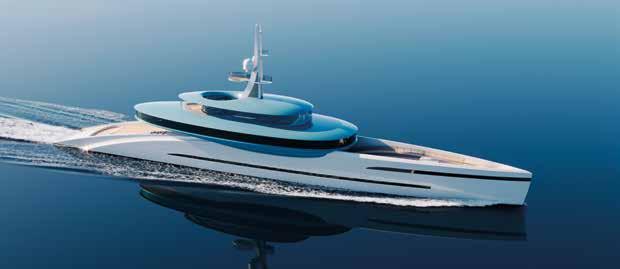
Feadship has joined the Nuclear Energy Maritime Organisation (NEMO), an international body focused on developing fair and effective regulations concerning floating nuclear power and nuclear mobility across the maritime sector. The move underlines the Dutch superyacht builder’s intention to remain engaged with emerging energy technologies as part of its long-term sustainability strategy. This decision builds on Feadship’s energy transition roadmap launched in 2020, which outlines a pathway towards carbonneutral yachting. Since then, the shipyard has introduced next-generation multi-fuel propulsion systems and integrated fuel cell technology, demonstrating both technical readiness and a willingness to explore solutions beyond conventional fuels.
Feadship concept design Relativity could be the first superyacht fuelled with nuclear power. Right Giedo Loeff, Head of Innovation and Strategy at Feadship
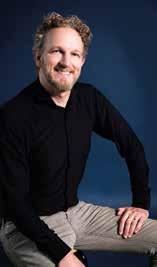
“Nuclear power may not be an immediate solution,” comments Giedo Loeff, Head of Innovation and Strategy, “but engaging today is essential to ensuring any future application is safe and sustainable.”
Interest in floating nuclear power has seen an uptick in recent years throughout the wider maritime industry as fourth-generation nuclear reactors approach maturity. By the mid-2030s, potential applications could already include offshore power barges supporting synthetic fuel production and zero-emission propulsion for large commercial vessels. Feadship maintains that an open and informed approach to these developments is essential for future-proofing the superyacht sector.
Through its own internal research and development, the company has examined nuclear
propulsion feasibility for yachts, assessing technological, regulatory and operational implications. While economic viability and crewrelated challenges remain significant, Feadship has identified the absence of a clear regulatory framework as the most relevant barrier. Issues such as radiation limits, access to sensitive ecological areas and entry into densely populated ports would need to see effective solutions before nuclear systems can be taken into real consideration. By joining NEMO, Feadship aims to contribute to shaping future regulations in support of responsible innovation.
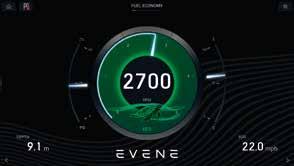
EveneTenders, a Williams Marine Group brand, has unveiled what it claims to be the world’s first propulsion “Eco-Interface”, developed in partnership with marine electronics specialist Raymarine. The new visual system is designed to help captains better understand and manage fuel consumption without compromising on performance. Integrated into the Raymarine Axiom 12 chartplotter, the interface provides real-time insights into engine behaviour, allowing crews to balance speed and efficiency more responsibly. The technology makes its debut alongside that of the Evene Origin Series, during which the Origin 57 and Origin 71 superyacht tenders were launched. In Evene’s words, the system represents a significant step towards more sustainable marine operations, offering transparency on performance versus fuel use. The Origin Series then takes this digital innovation and applies it to an advanced hull design, including the patented Petestep hull, which reduces drag and improves comfort. Sustainability-focused features are present throughout the range, from cork decking and eco-upholstery to YANMAR diesel engines compatible with HVO 100 fuel, cutting net CO2 emissions by up to 97%. With extensive customisation options, Evene aims to establish a new benchmark that will define responsible luxury in the superyacht tender market.
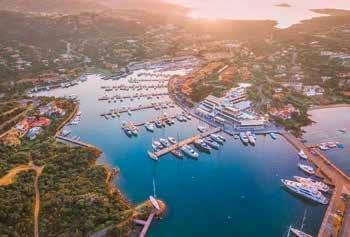
Cervo Marina, part of Smeralda Holding and one of the Mediterranean’s most renowned marinas, has been awarded the Porto Sostenibile® certification and the ethical sustainability labels that confirm adherence to top-tier environmental, social, and governance (ESG) standards. This recognition covers both ESG Rating and Reporting, ensuring transparent, international-standard reporting. Located in Costa Smeralda, Italy, the marina boasts around 600 berths for units up to 160 meters in length, welcoming a high-quality clientele, 60% of whom are from overseas and who stay an average of 30 days. Managed by the Consorzio Costa Smeralda®, the area spans 3,114 hectares, with 96% dedicated to green spaces and 55 km of coastline. The certification itself, based on the ISO 17029 FidESG® framework and verified by DNV, reflects Porto Cervo Marina’s commitment to sustainable operations, efficient resource management, and community engagement, including local school initiatives and cultural promotional activities. CEO Mario Ferraro emphasised how sustainability aligns with the group’s long-term vision, enhancing both environmental stewardship and local ties.
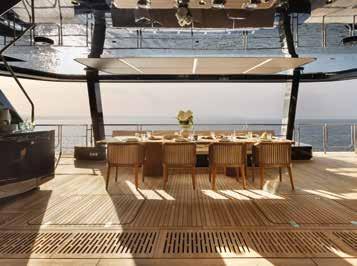
“Continuing with teak no longer aligns with our values,” states Nicolas Lapp, Chief Technical Officer and co-founder of Sunreef Yachts. “We have chosen to move forward with more sustainable, natural alternatives that look and feel just as luxurious, while significantly reducing environmental impact.” Sunreef Yachts recently announced its bold decision to transition away from traditional teak decking in favour of more innovative materials. After extensive research, the shipyard narrowed its focus onto two wood-based options and one non-wood-based option, promising directions that in some cases have been shown to outperform teak in terms of durability and thermal efficiency. One thermally modified wood in particular reduces surface heat by 16% and improves insulation by over 25%, helping to lower energy consumption on board. The customer response has been positive, driven by the technology’s capability to provide eco-friendly benefits without sacrificing style. The new decks also require far less maintenance and resist staining more effectively, easing the crew’s workload. Even for more sporty models like the ULTIMA 55, sustainability remains a priority, balanced with performance through a premium synthetic decking. The direction is clear: Sunreef Yachts is charting a bold, responsible course for the future of yacht building.
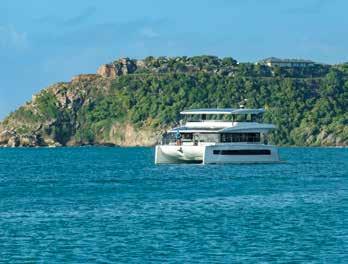
SilentYachts has reached a milestone in clean-energy navigation as its SY62 3-Deck Open “100%” arrived in Antigua after a four-week transatlantic voyage from Gibraltar. The 18.9-metre solar-electric catamaran, following a route that included Morocco, the Canary Islands and Cape Verde, demonstrated long-range cruising with minimal fuel and remarkable efficiency. Owner Jay Dollries fulfilled a lifelong dream as he led the voyage with a skeleton crew, including Silent Yachts Chairman Steve Bell. The crossing tested solar panels, liquid-cooled battery banks, emission-free electric motors, and a range extender in real-world offshore conditions. Daily energy metrics were shared publicly, reinforcing transparency and offering valuable operational insights. Bell highlighted the achievement, describing how “the SY62 has proven that long-range solar-electric cruising is a reality today.” The journey underscores the potential of sustainable yachting, combining comfort, independence, and environmental responsibility in the open ocean.
Leading Mediterranean marina network Marinedi has launched a new educational project in collaboration with social start-up Sea the Change to combat marine plastic pollution. The initiative is aimed at local students attending schools near its 13 marinas, raising awareness about the harmful impact of plastic waste on the marine ecosystem through creative and sustainable approaches. The programme features two phases: an initial theory-based workshop led by artist and educator Massimo Marchiori, who explains the causes and effects of marine pollution, followed by a practical phase where students transform collected plastic waste into unique works of art. As emphasised by Renato Marconi, CEO of Marinedi, sustainability means engaging communities and fostering a culture of caring for the sea. This project fits perfectly within Marinedi’s broader environmental commitment, including eco-friendly materials, electric vehicles, water treatment, and clean-up technologies. The first workshop will take place on 6-7 May in Vieste, marking the first step on a journey towards inspiring future generations to actively protect the Mediterranean.
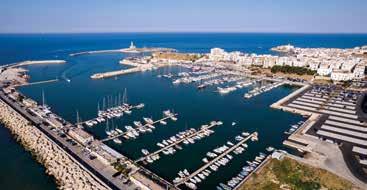
TheLeading Yacht Brokers Association (LYBRA) has teamed up with the Water Revolution Foundation (WRF) to create their own Environmental Committee, with the commitment to steer the superyacht industry towards a sustainable future. This new body will drive the ambitious goals of Roadmap 2050 –Towards Regenerative Yachting, an initiative launched earlier this year. Combining LYBRA’s brokerage expertise with WRF’s scientific approach, the committee will offer practical steps, resources, and data-driven tools to support yacht managers in reducing emissions and adopting regenerative practices. LYBRA President Charlie Birkett underlined the shift from dialogue to action while Aino Grapin, WRF President, highlighted the committee’s key role in empowering yacht managers to lead the sector’s transition. This partnership signals the industry’s growing commitment to environmental responsibility as an essential value for its future.