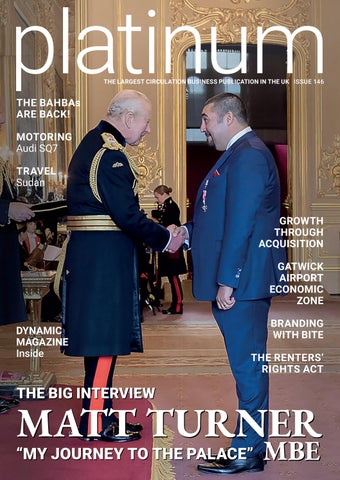
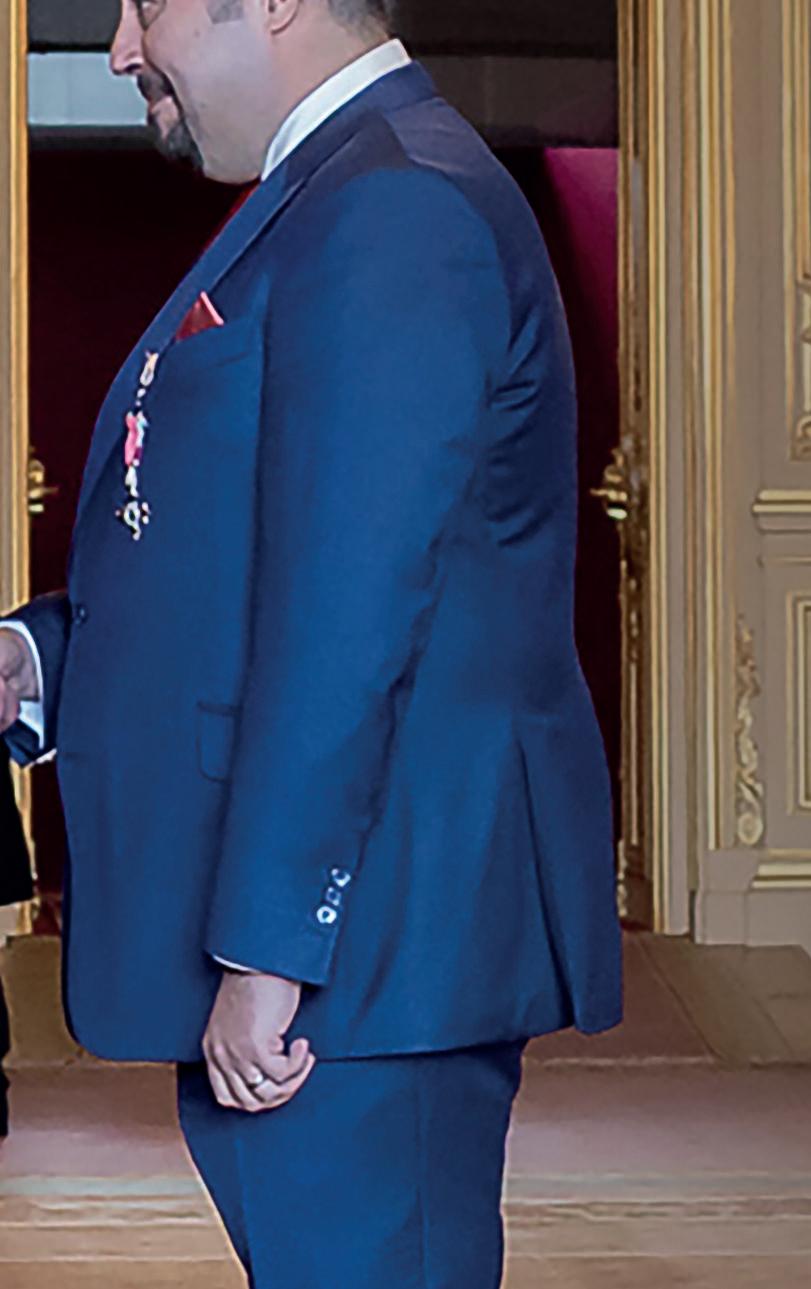
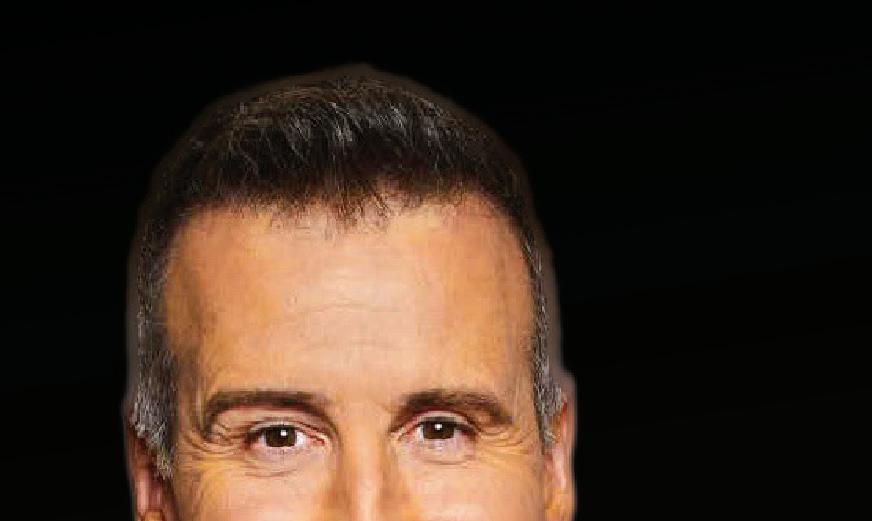
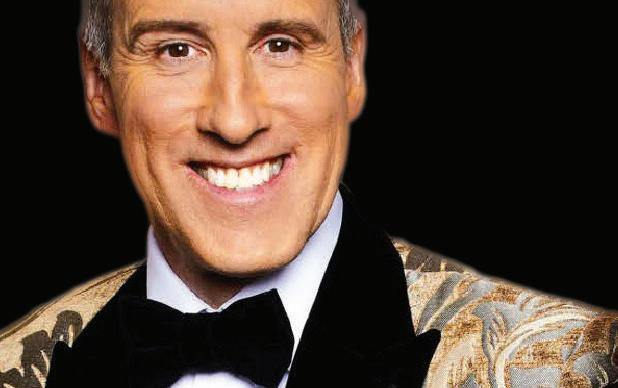
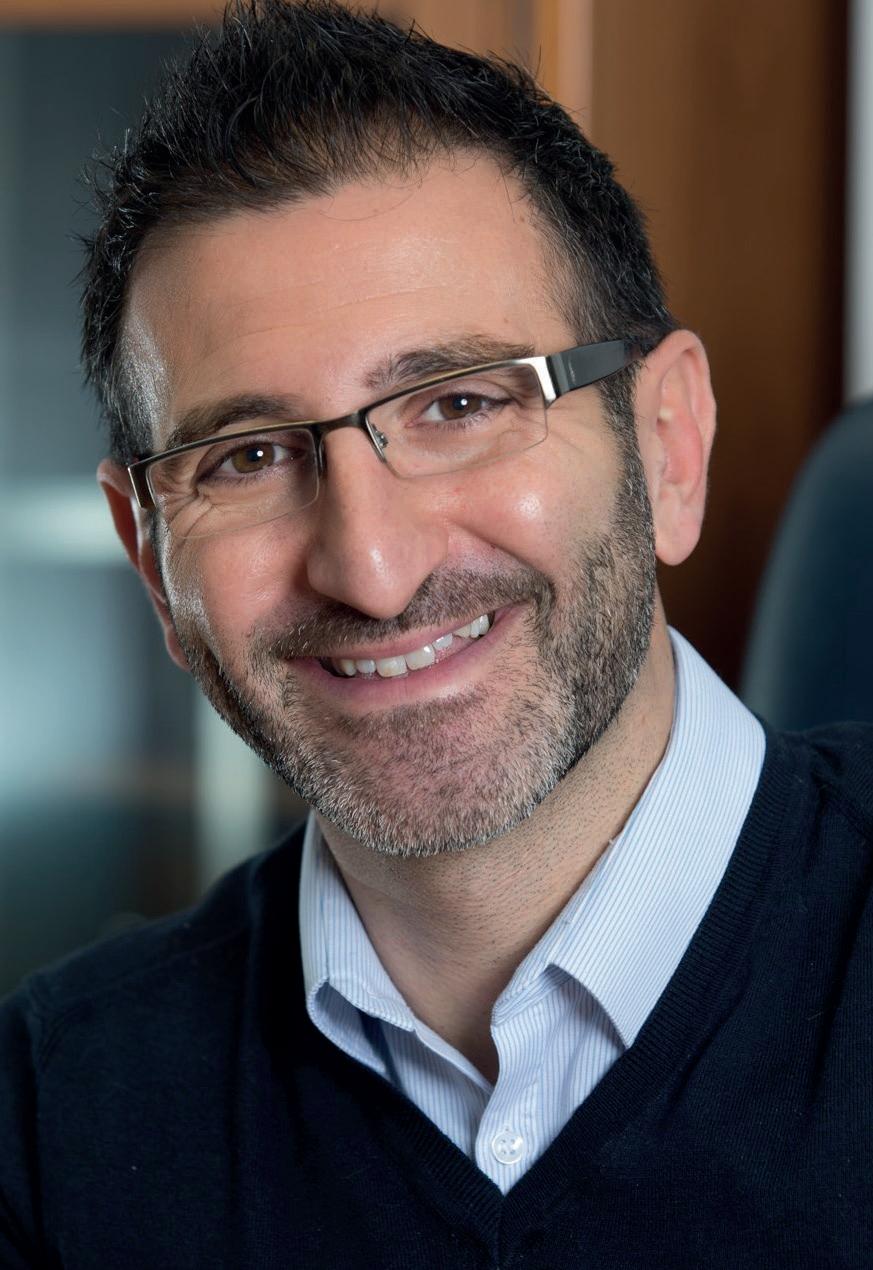
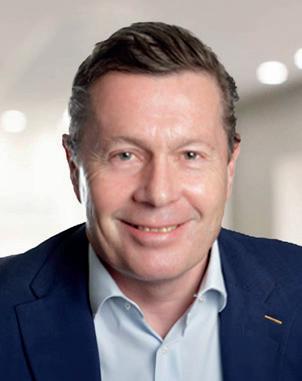
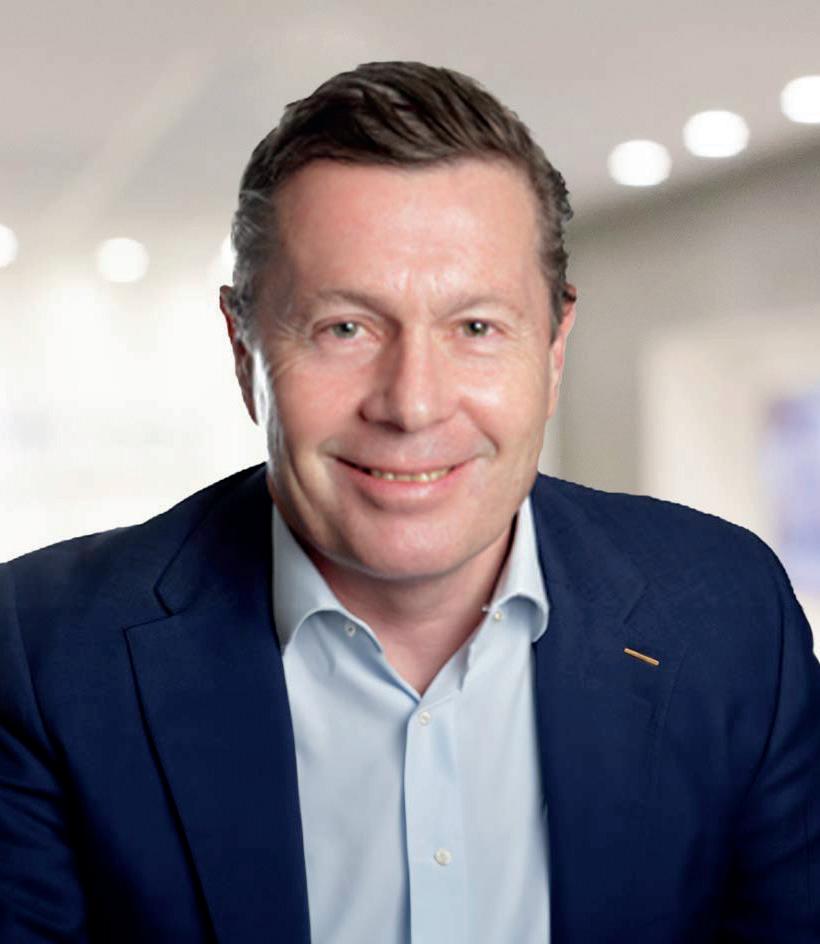
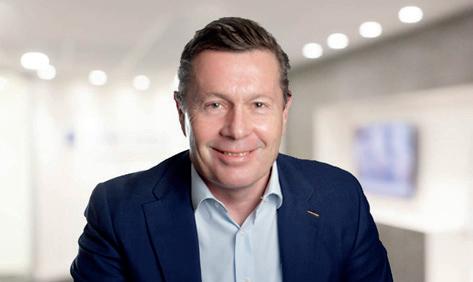
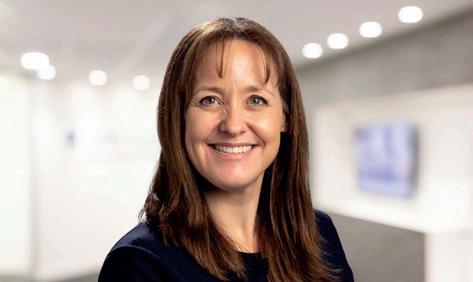
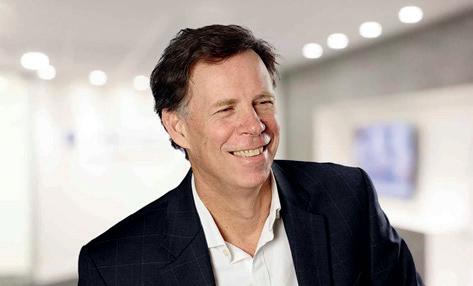
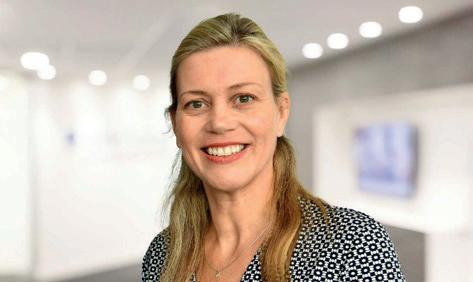
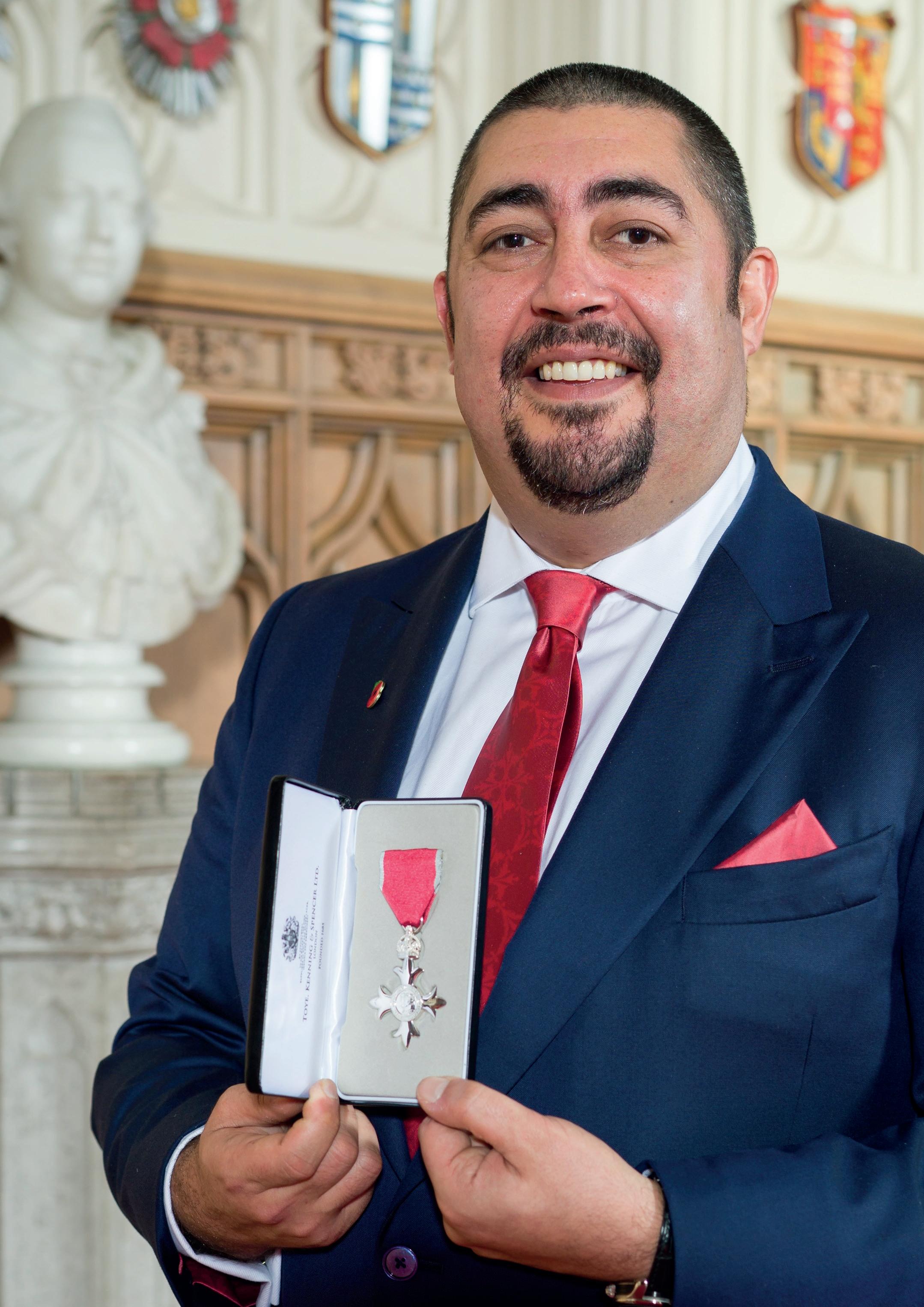
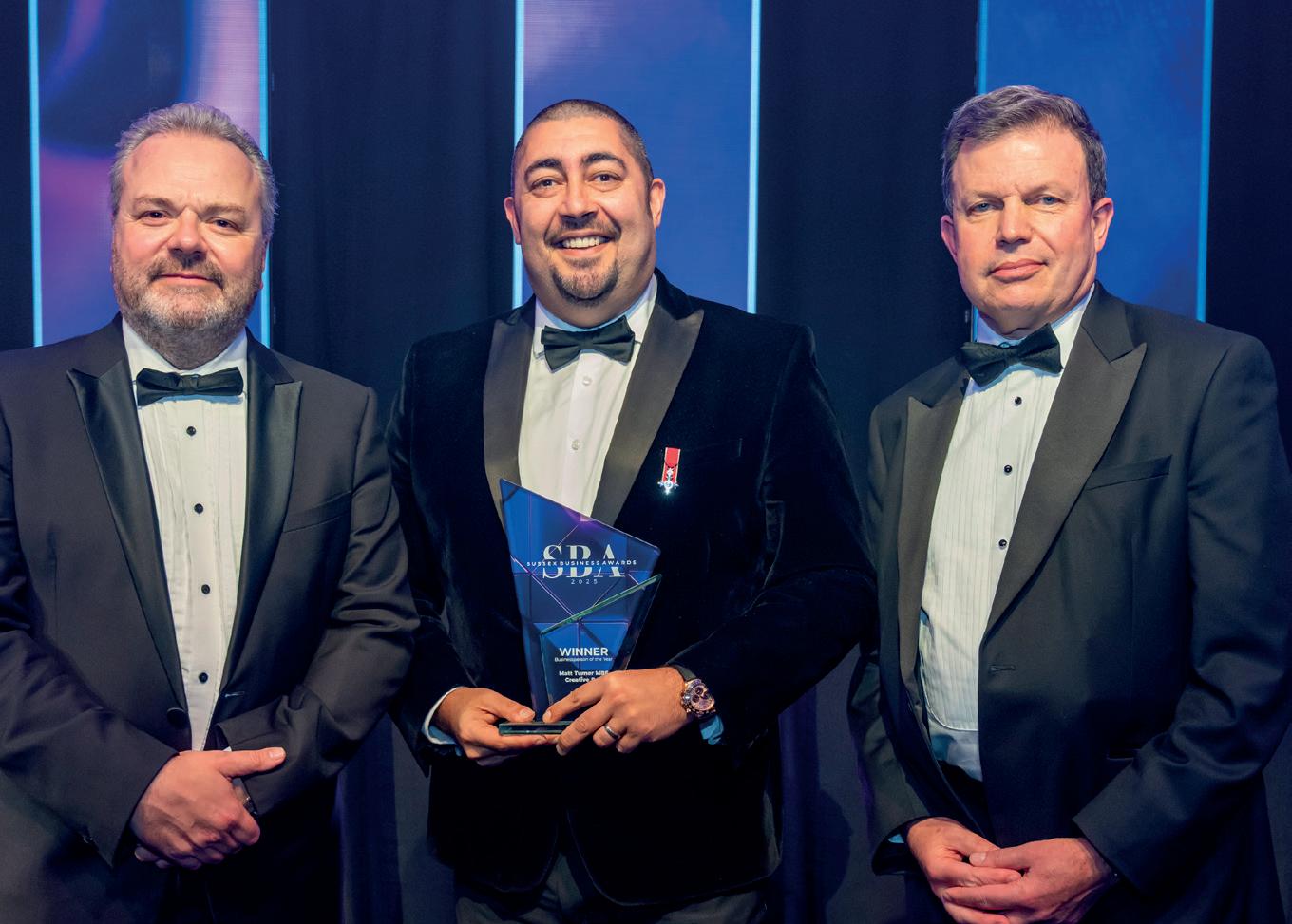
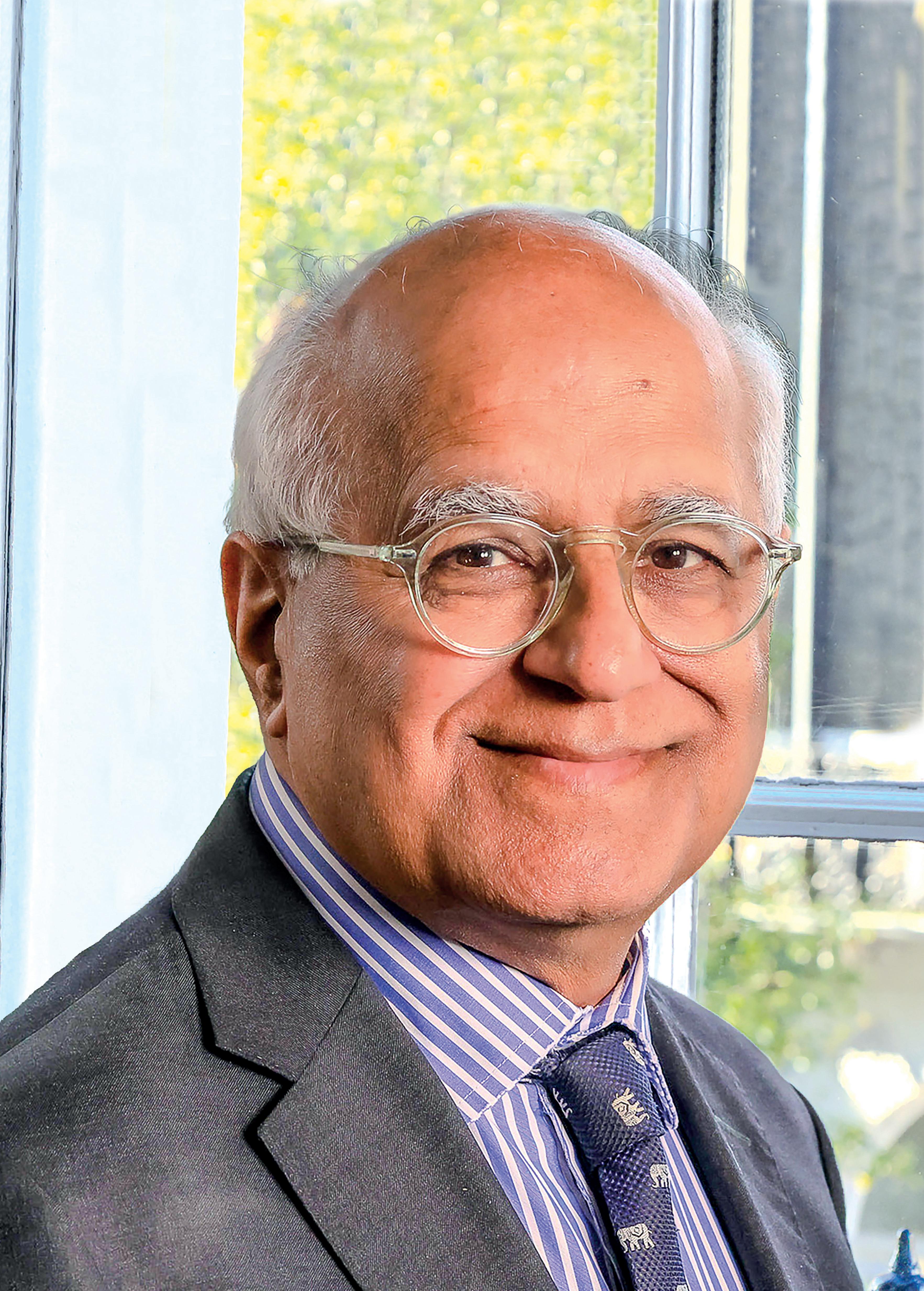
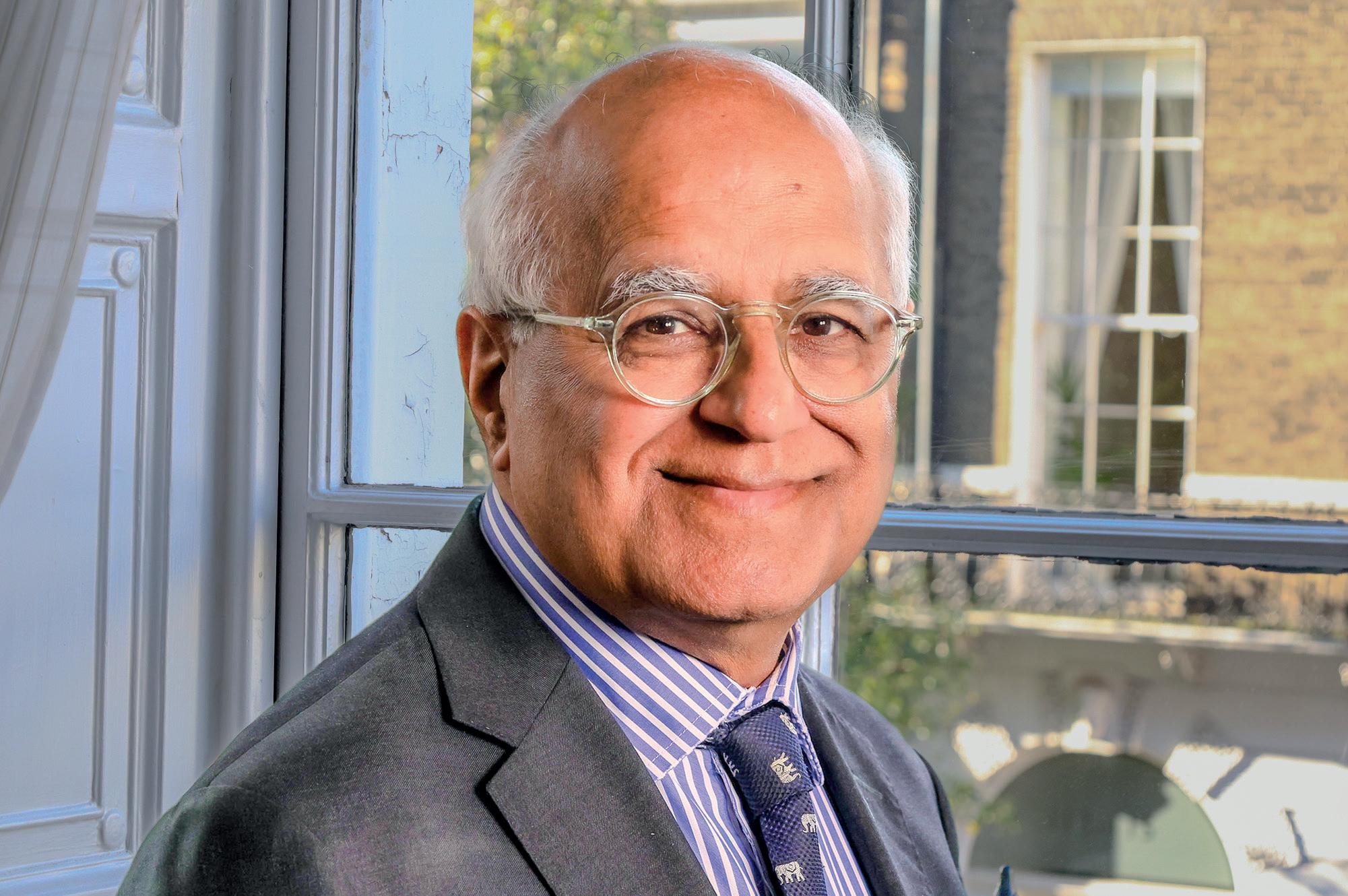
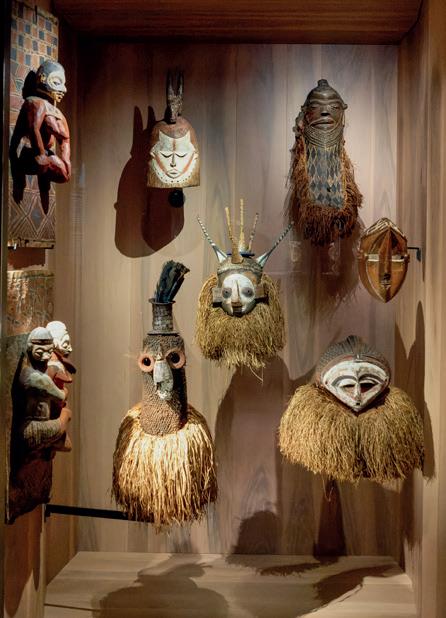
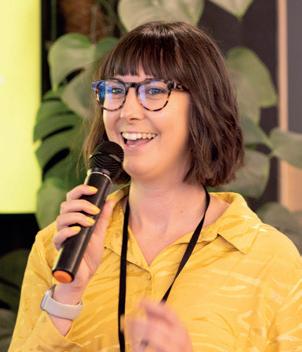
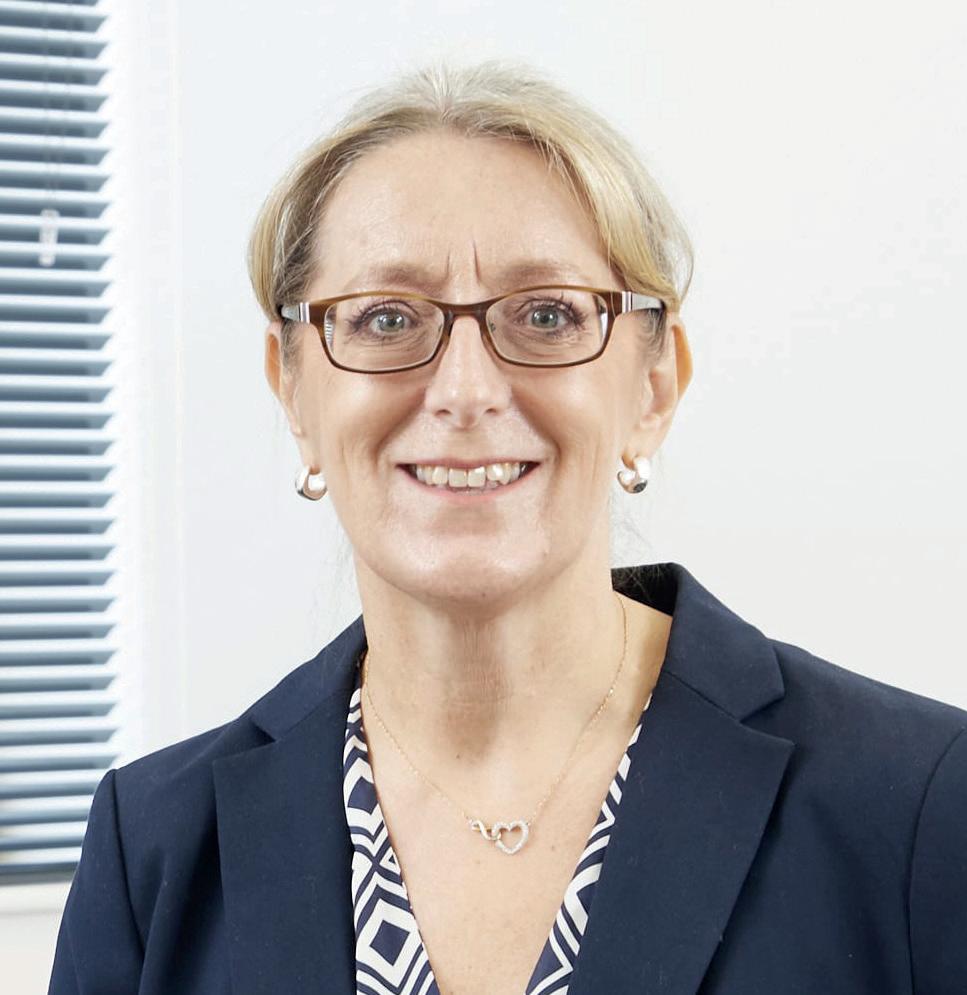
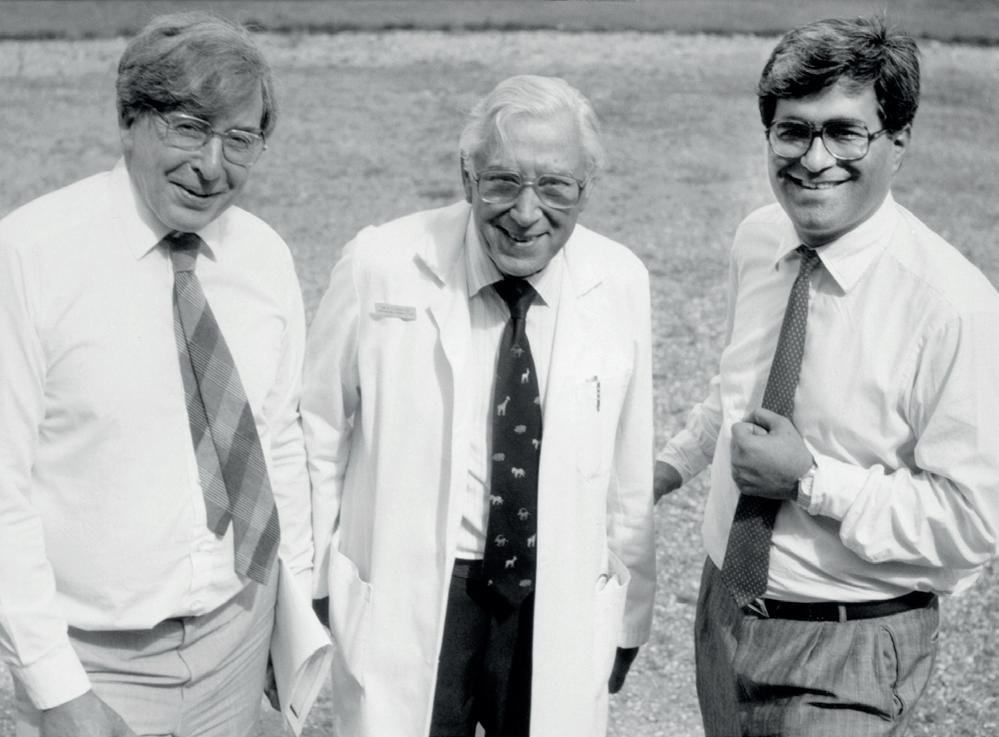
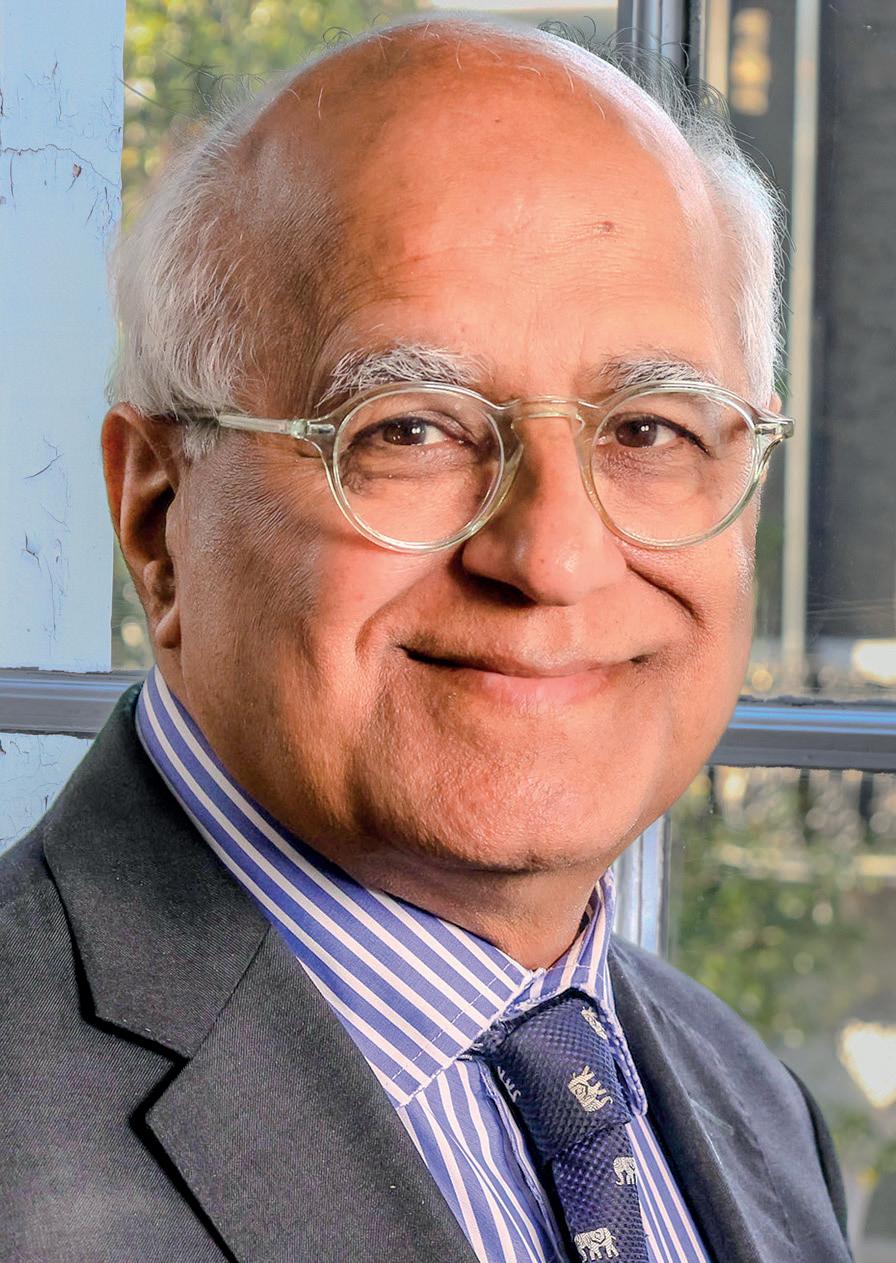
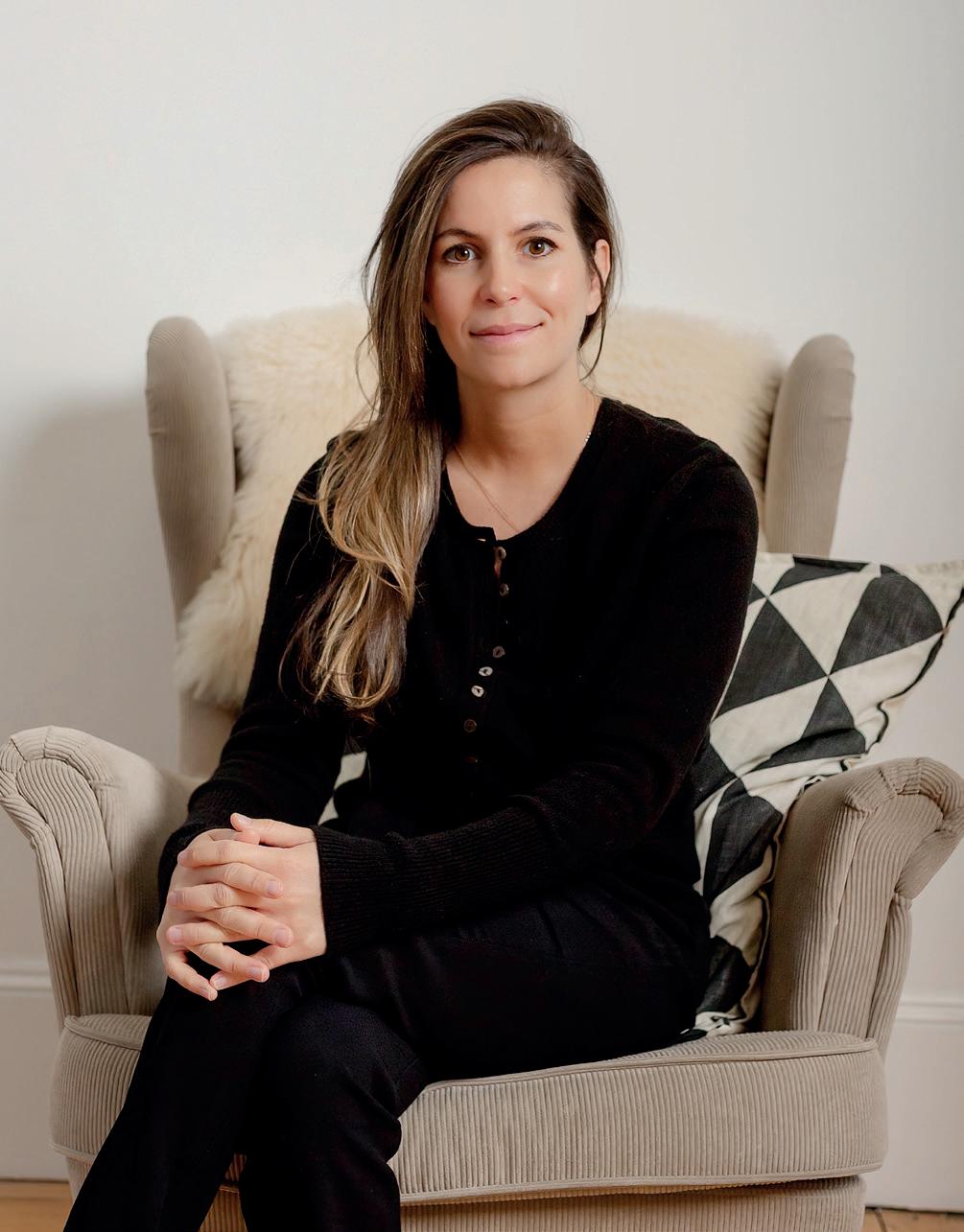
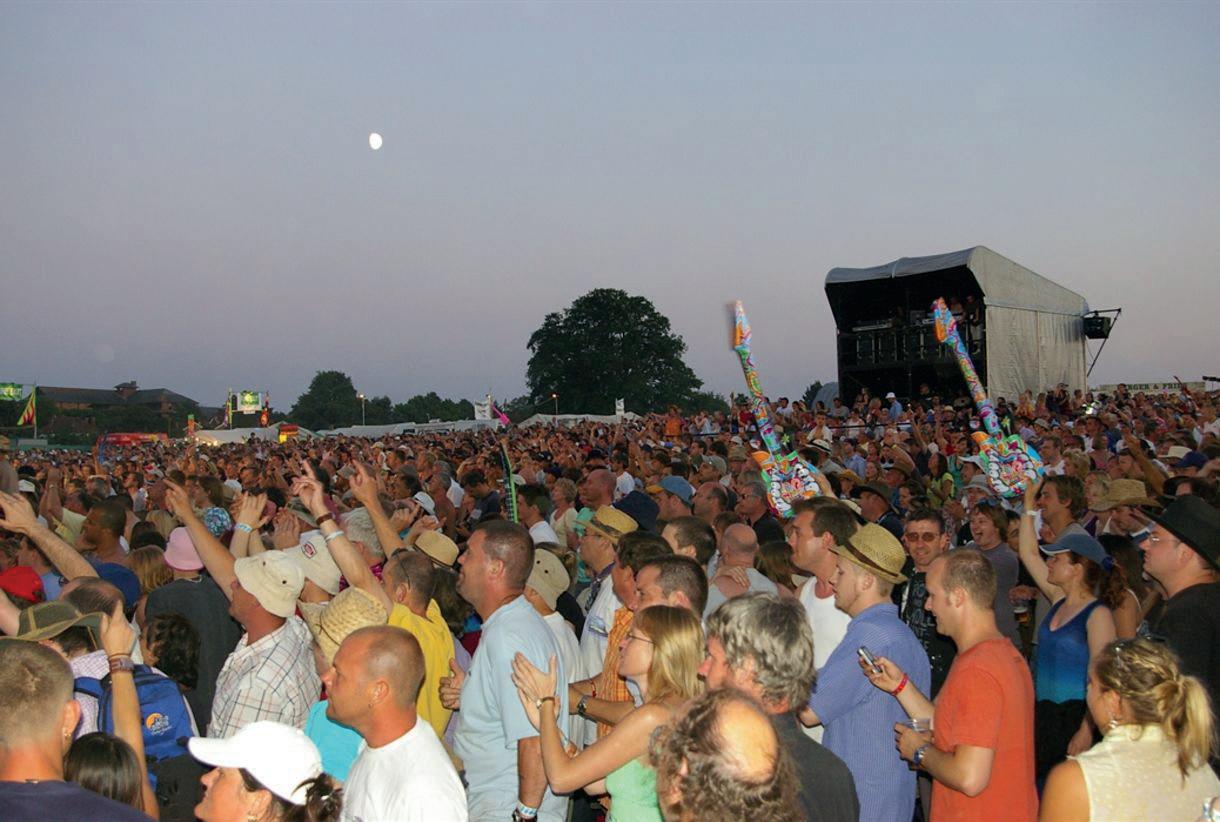
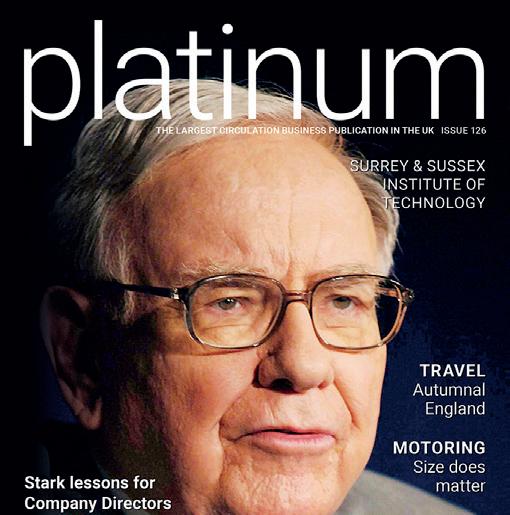
Matt Turner has been a fixture on the SE business scene for many years. Platinum’s candid interview demonstrates that we can all learn more from our failures than our successes.
NEWS
6 National news
A round up of important business stories from around the world
8 Local news
A look at the business news stories across the South East
58 Property News
The Renters’ Rights Act, plus property and planning news across the region
EVENTS
10 Platinum Club
Going strong in its 16th year, see the highlights of the May get-together
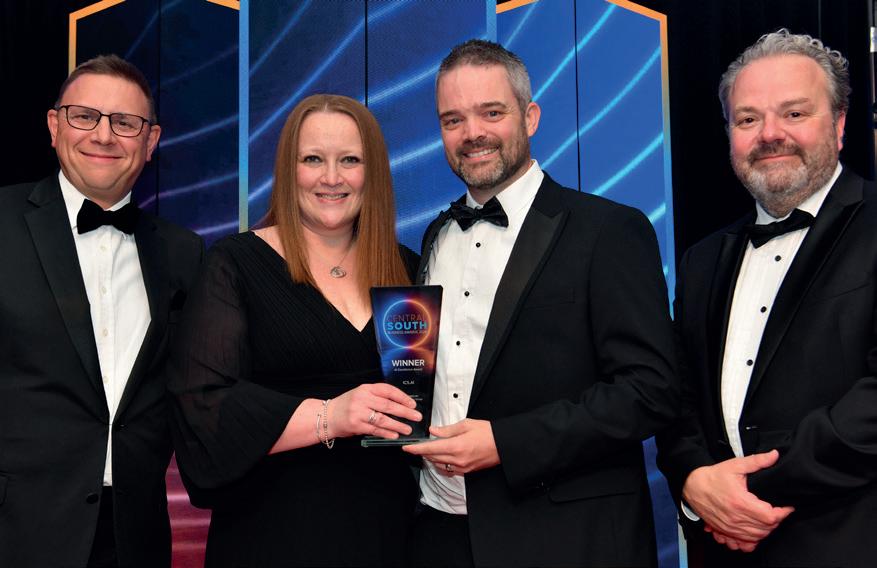
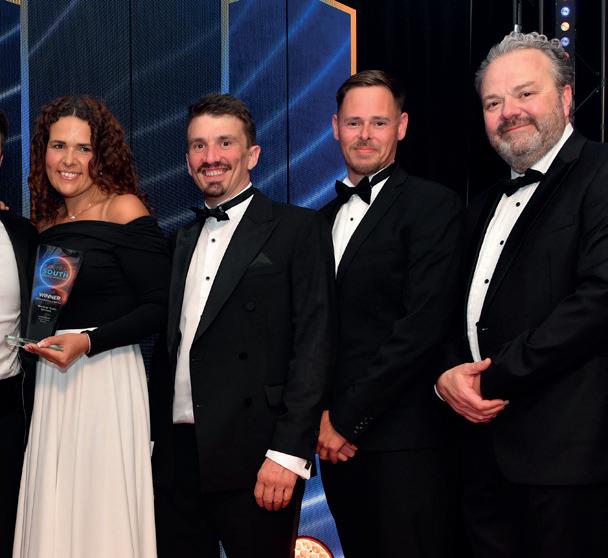
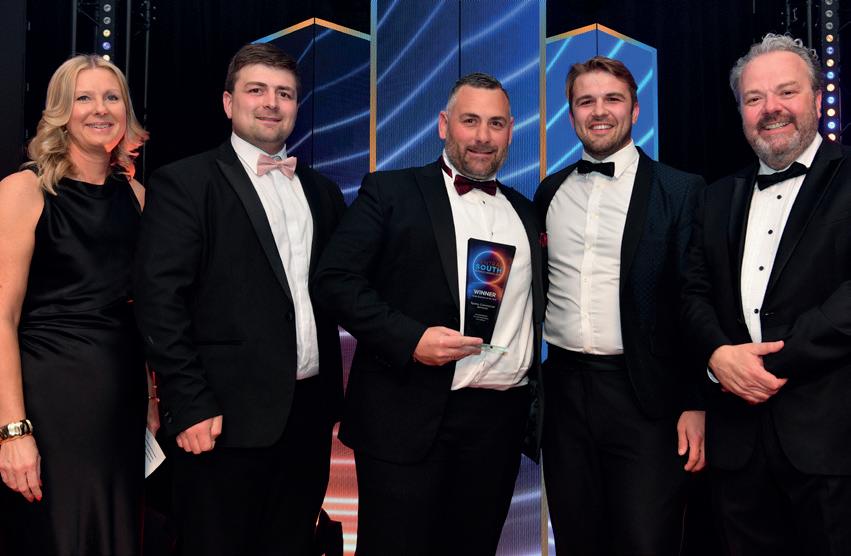
28 Central South Business Awards
All the winners and highlights of this fabulous event celebrating the best companies in Central Southern England
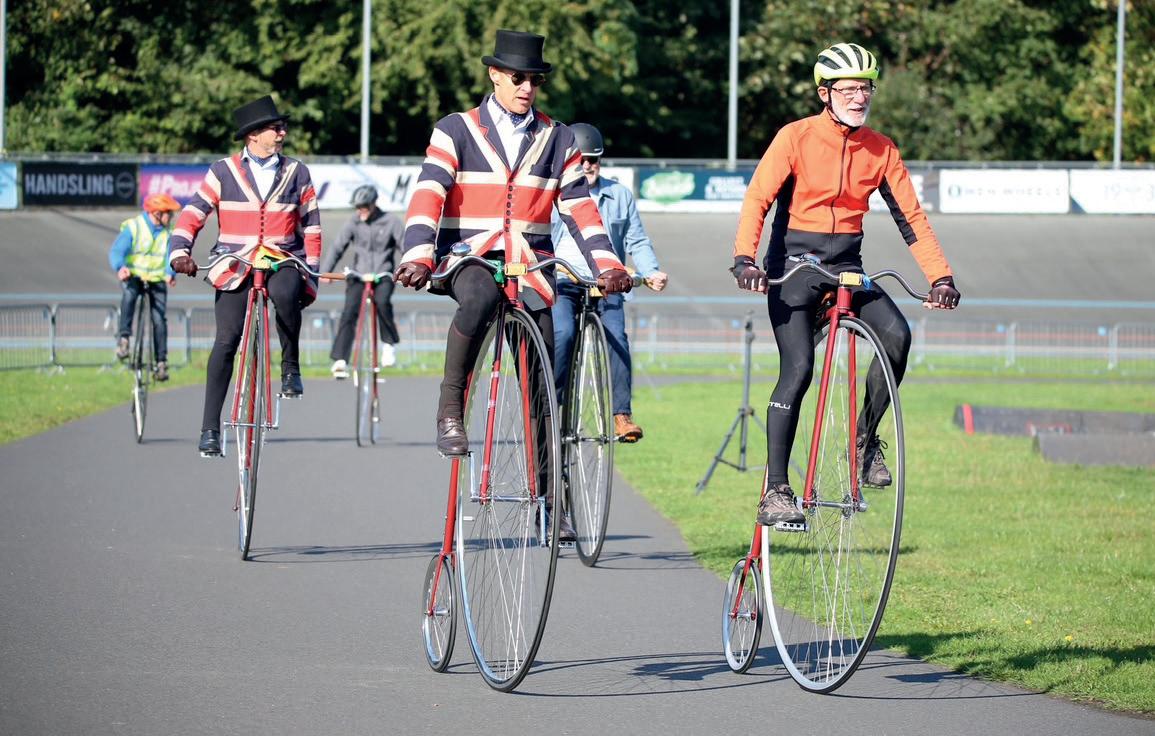
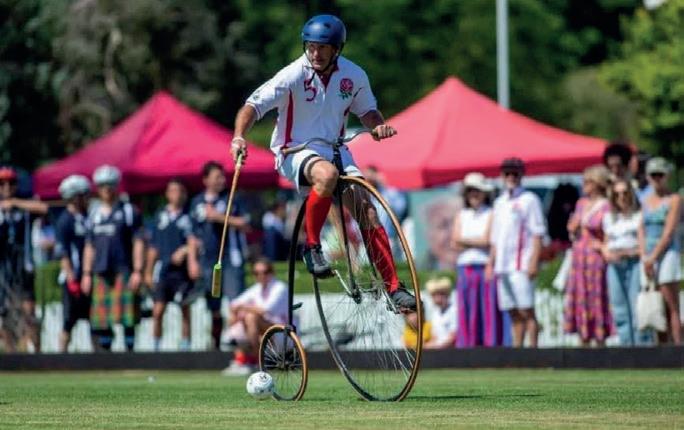
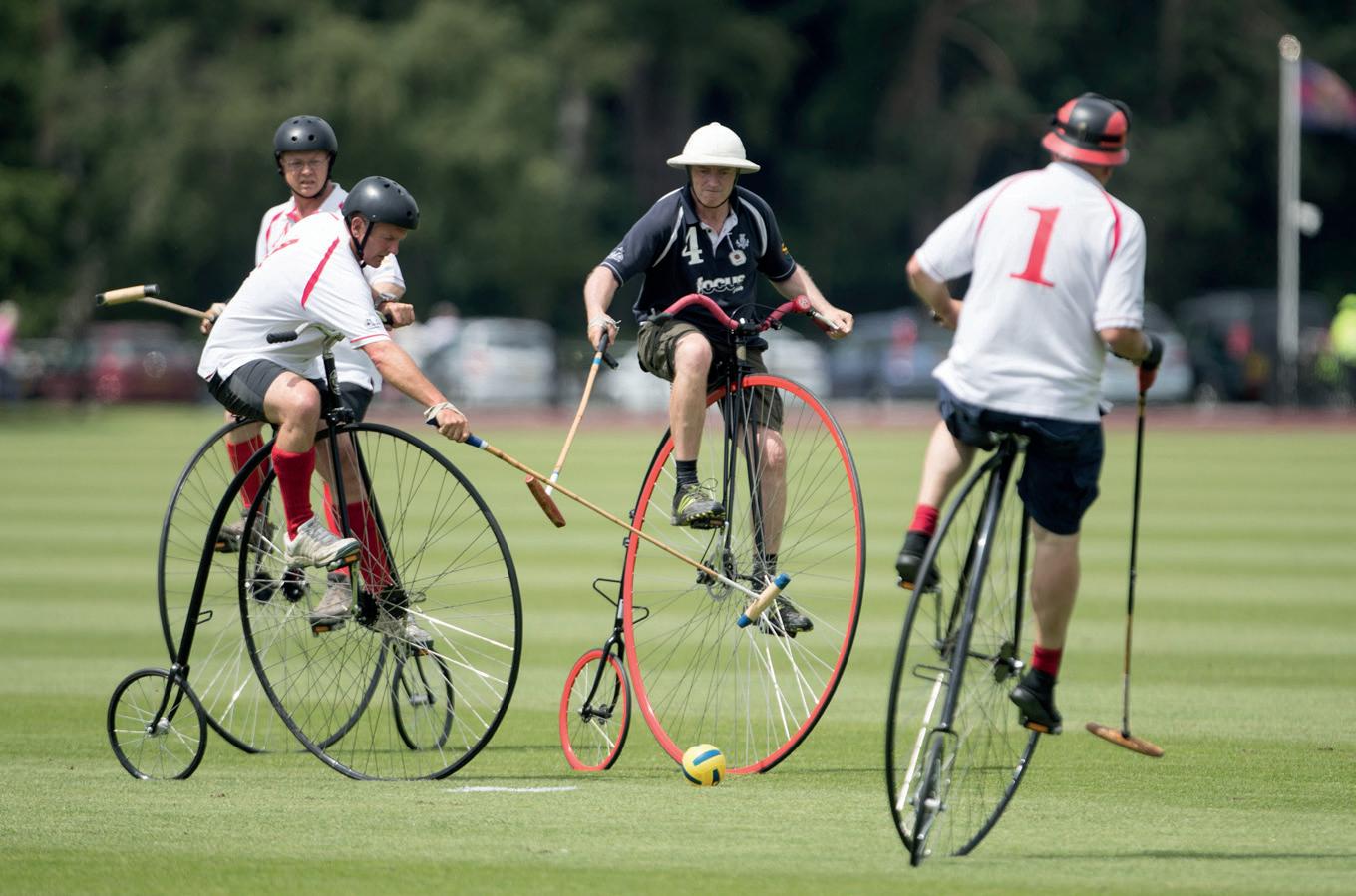
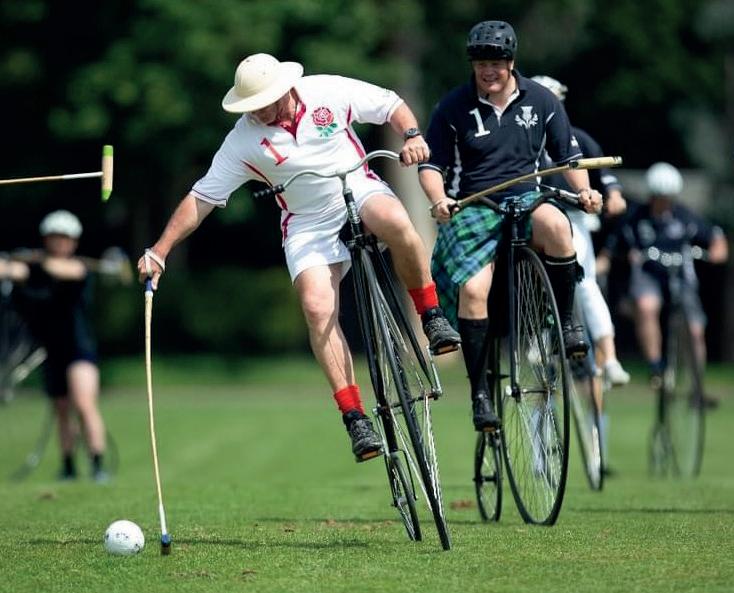
38 Penny Farthing Tour
The Team GB penny farthing tour of the USA
40 Surrey Business Awards
The prestigious 2026 event, taking place in Guildford in November, is open for entries
PLATINUM MEDIA GROUP
52 Brighton & Hove Business Awards
The BAHBAs are back, and open for entries, so get involved!
64 Sussex Business Awards
Meanwhile, in December, the Sussex Business Awards celebrates its 39th anniversary
BUSINESS
12 Gatwick Airport
How Gatwick is championing a unified SE business proposition
16 Regency Purchasing Group
‘Buy British’ to help combat the rising cots of war
18 Sunday Times ‘Best Places to Work’ 2026
Monitoring the happiness and satisfaction of UK business employees
20 Growth Animals
Branding with bite; people with pulse. Why ‘good isn’t enough’ any more
22 base Insurance
The insurance blind spots of hybrid working
24 Lionel Hitchen
A family business with global reach:
The Lionel Hitchen Story
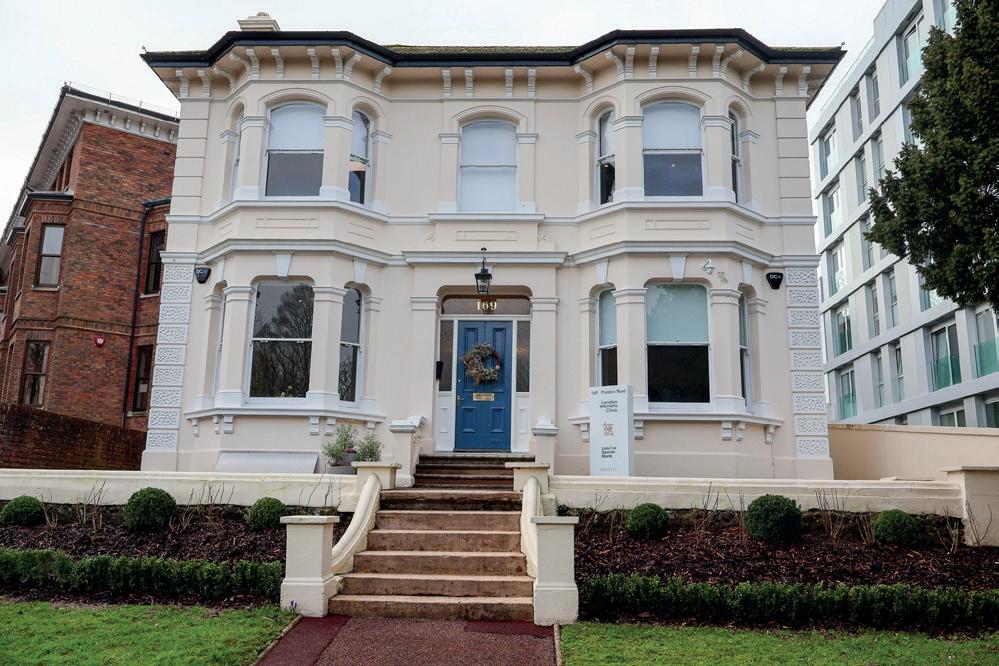
54 London Women’s Clinic
The ground breaking IVF treatment clinic has recently opened in BrightonHarley Street comes to town
66 Cleankill
Awaab’s Law: why landlords must prepare now
LEGAL
26 Mayo Wynne Baxter
Shared care and child maintenance: what parents need to know
42 DMH Stallard
Can growth through acquisition dramatically increase your exit price?
44 DMH Stallard Roadmap to Exit Family investment companies
FINANCE
14 Kreston Reeves
Where does profi t come from when growth is hard to find?
36 Southover Wealth
What savers often overlook about their retirement pot. Can a trust help protect your estate?
TRAVEL
68 193 countries
Sudan was one I almost skipped
MOTORING
72 Audi SQ7 Vorsprung
“If you need a huge SUV with seven seats and a rocket under your right foot, this could be the car for you.”
WELCOME
Welcome to the June issue of your best selling and most loved business magazines for the South East.
It is possible to talk ourselves into a bad situation such as the much vaunted economic recession that we are apparently going to suffer. The UK might indeed be hit with an economic downturn but we hear so many people talking about it that we might just talk ourselves into it. Let’s keep our peckers up and crack on with the hard graft the South East is well-known for, and see if we can trade ourselves out of the problem as currently, business is generally good, trade is flowing and cash is readily available.
Platinum brings you oodles of news, views and opinion with Thought Leadership features written by many of the leading lights of our region, such as advice on insurance, family investment companies, growth through acquisition, the unified South East investment proposition, branding with bite, what parents should know regarding shared care and maintenance, the Renters’ Rights Act and so much more.
Our Big Story features Matt Turner MBE and everything he did prior to launching Creative Pod: Travel features Sudan and Motoring looks at the barnstorming Audi SQ7.
If there is not everything you need in this issue just wait 30 days and another one will be along.
HEAD OF DESIGN / SUB EDITOR: Alan Wares alan@platinummediagroup.co.uk
GREEN ECONOMY WORTH ‘£100BN A YEAR’ IN UK
More than a million jobs, higher wages, nearly half a trillion pounds in investment in the pipeline – the UK’s green economy is powering ahead, according to research by the country’s leading business organisation.
The net zero economy, which is worth more than £100bn a year, benefits all of the UK, according to the CBI Economics analysis commissioned by the Energy and Climate Intelligence Unit thinktank, despite critics who want to abolish the UK’s net zero targets. Net zero workers also enjoy higher wages, topping £43,000 a year on average, about 11% higher than the national average of £39,000.
TOP CHEFS URGE LOWER VAT ON HOSPITALITY
Four top UK chefs and restaurant owners have urged the government to cut VAT for restaurants and pubs, warning that working in the hospitality industry is the “hardest it has ever been.”
Tom Kerridge, Yotam Ottolenghi, Ravneet Gill and Simon Rogan told BBC Newsnight VAT should be slashed to 10% to ease pressure
on businesses and bring rates closer to levels across Europe.
“We’re not making any money whatsoever, and we’re just keeping our heads above water,” warned Rogan. The industry has repeatedly argued for VAT to be lowered to rates seen in Germany (7%), Ireland (9%), France, Italy and Spain (all 10%).
NATIONAL NEWS
BP CHAIR TOLD TO LEAVE POST
BP has removed its chair, Albert Manifold, with the oil company’s board saying it had serious concerns about “important governance standards, oversight and conduct”.
The FTSE 100 company announced Manifold’s departure with immediate effect on May 26th, without giving further details. He had lasted only eight months in the role. BP’s share price slumped briefly by 9% in the minutes after the announcement just before lunchtime in London before closing down 4%.
Manifold’s conduct was considered too aggressive by other directors, and he was also seen as trying to exert control in the manner of an executive rather than of a chair, according to reports.
CAUTIOUS UPGRADE FOR UK ECONOMY
The International Monetary Fund (IMF) has upgraded its forecast for the UK’s growth this year, but warned that the war in Iran and “domestic uncertainty” could hit the economy. It has upgraded the 2026 growth estimate to 1% from 0.8%, saying in May that the UK would be hit hardest by the Iran war among the world’s advanced economies. In its
latest forecast, it said the UK “remained resilient” but added a prolonged conflict in the Middle East risked hitting growth and resulting in “higher energy and food prices”. “Domestic uncertainty could also add to the already volatile global environment, holding back consumption and investment decisions,” it added.
❛❛Nearly all men can stand adversity, but if you want to test a man’s character, give him power. ❜❜ Abraham Lincoln
OUR COOP CRITICISED BY MEMBERS
OurCoop, an independent mutual that runs about 500 food stores across England, is facing criticism from members after it more than tripled its chief executive’s pay to £2.2m despite falling sales and profi ts. The chain, which is a separate company from the Co-op Group but relies on the much bigger business to supply some products, has not approved an annual profi t-share payment to members
this year, although they have received discounts on shopping. Total pay for Deborah Robinson, the chief executive of OurCoop, rose to £2.16m after she received an 11.5% increase in basic pay, an £1.1m “incentive” payment and a £400,000 one-off discretionary remuneration payment.
BUSINESSES CONCERNED OVER CRIME
UK business leaders have warned that crime is becoming an increasingly “serious barrier” to growing Britain’s economy amid a rise in shoplifting, fraud and cyber-attacks against companies.
The British Chambers of Commerce, which represents tens of thousands of
businesses across the country, called on the government to provide “a step change in the support businesses can count on” after saying two-fifths of companies had experienced some form of crime in the past year.
Warning that decisive action was required, it said a fifth of companies in
UK HOUSEHOLD ENERGY PRICES SET TO RISE AGAIN
Household energy prices will rise by 13% a year in July, as soaring wholesale costs caused by the US-Israel war with Iran hit bills for the first time. Regulator Ofgem says the war means a household using a typical amount of gas and electricity will pay £221 more per year, bringing the annual bill to £1,862.
The cap affects millions of homes on variable tariffs in England, Scotland and Wales, and suppliers are warning it could go even higher in the colder winter months without an end to the conflict. Energy costs have rocketed since Iran responded to US and Israeli attacks by effectively blocking the crucial Strait of Hormuz shipping route.
UK INFLATION RATE LOWER THAN EXPECTED
Lower gas and electricity bills were behind a bigger-than-expected drop in the UK’s inflation rate.
The rate of inflation fell to 2.8% in the year to April, down from 3.3% in the year to March. Energy prices were lower due to the government’s energy bill support package and lower wholesale energy prices before the conflict, the ONS said.
However, analysts expect inflation to rise to about 4% by the end of the year, as the Middle East conflict continues to put pressure on global prices.
The drop in inflation occurred despite the rise in fuel prices, pushing prices to levels not seen since 2022.
a survey of 1,411 firms had faced fraud or scams. As many as 21% said they had experienced cyber-attacks.
LIDL BREAKS INTO THE TOP FIVE
Lidl has overtaken Morrisons to become the fifth-largest grocer in Great Britain, as its sales were driven higher by households seeking to keep a lid on their weekly bills.
The German-owned discounter increased its sales by 8.8% year on year – making it the fastest-growing store-based grocer – to hit a record high market share of 8.6% over the 12 weeks to May 17th, according to figures from the market analysts Worldpanel by Numerator.
That compared with an 8.3% share for Morrisons in the period as the Bradford-based chain grew its sales by only 1.3% compared with a year earlier. Twenty-five years ago, Lidl accounted for only 1.4% of the grocery market, behind long-gone names such as Safeway, Somerfield and Kwik Save.
❛❛If justice truly existed, prisons would be filled with politicans, not the poor. ❜❜
Niccolo Machiavelli
BANK OF ENGLAND CONFIDENT ON INTEREST RATES
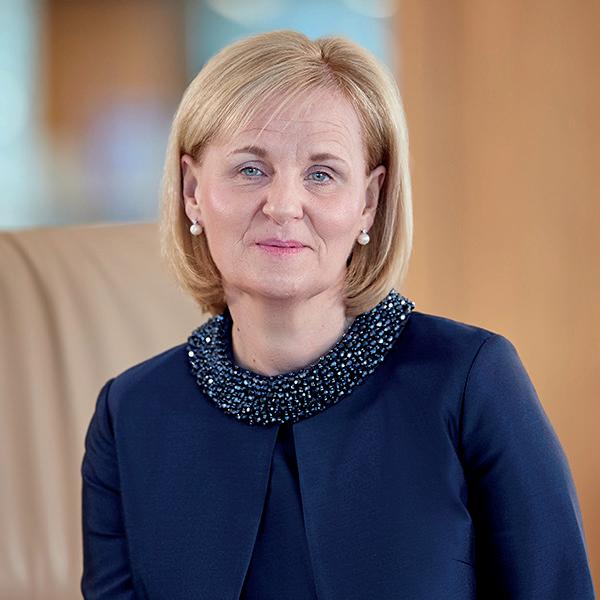
The Bank of England is in no rush to raise interest rates while the outcome of the Iran war remains uncertain, its governor, Andrew Bailey (pictured, right), has said.
Signalling that borrowing costs will remain at 3.75% at least during the summer, Bailey said it was tolerable for inflation to stay above the Bank’s 2% target during the current crisis. However, that would change if more permanent price increases began to take effect.
“Given the context of softness in the
real economy and uncertainty around the scale and duration of the shock, tolerating temporarily above-target inflation to provide some support for the real economy is an appropriate way to approach the trade-off [between inflation and activity],” he said.
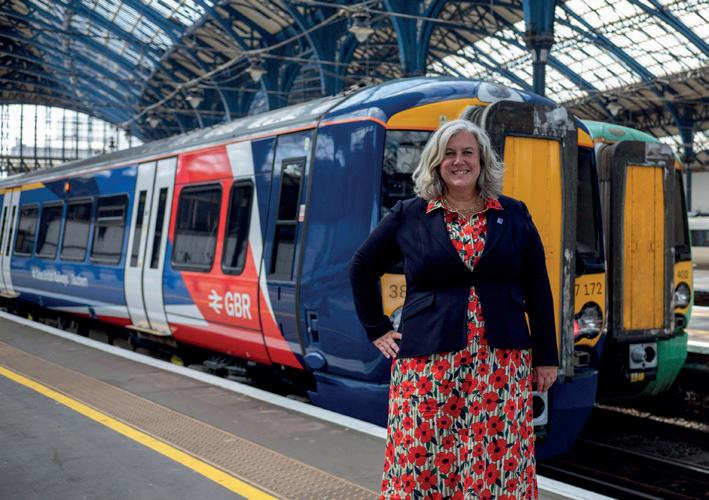
NEW LIVERY FOR GBR TRAINS
The first Great British Railways (GBR) branded train was officially unveiled in Brighton on May 21st.
The unveiling of Southern 387172 comes five months after the unveiling of the mock-ups of the intended design last year, and is timed to coincide with Govia Thameslink Railway (GTR) joining the DFTO on May 31st.
Transport Secretary Heidi Alexander said: “The unveiling of the first GBR- branded train in Brighton today makes the future of Britain’s railways a reality. This isn’t just a paint job—it’s an important step towards building a more joined - up, publiclyowned railway that puts passengers first, delivers better services and leaves the frustrations and fragmentation of the past behind.”
BREWERY RECEIVES PLANNING PERMISSION
LOCAL NEWS
❛❛ The greater our knowledge increases, the more our ignorance unfolds. ❜❜
John F Kennedy
MORE WATER SUPPLY PROBLEMS FOR KENT
The water minister has said she is “in close contact” with water firms in the South East, as supply problems, not for the first time, continue for customers in Kent.
The company said it has restored supplies to 1,500 properties but said about 500 were still without water on May 30th due to drinking water storage tanks reaching “a critical level”. The firm said it was also working to repair a burst water main “impacting around 182 customers” in Brook, Ashford, adding that about 3,000 customers “may be experiencing low pressure or an intermittent supply” in the Coxheath, Loose, Headcorn, Ulcombe, Kemsing and Benenden areas.
Gun Brewery has secured retrospective permission to ‘regularise breaches of planning control’. for features linked to the business’s main premises at Hawthbush Farm in Gun Hill. The brewery had been seeking retrospective planning permission for a more intensive use of its tap room than allowed by the original planning permission. In 2020, when the original permission was given, the tap room had been expected to be ‘incidental and ancillary to the main brewery use’. However, council officers consider the way the taproom now operates to go ‘beyond an incidental use’. As a proposed mitigation, the brewery had offered a condition to control when the tap room can be open to the public, but council planning officers waived the mitigation offer as ‘unreasonable’.
TOURISM COMPANY BOOSTS AWARDS
Chichester-based tourist information company, The Great Sussex Way, has announced it is sponsoring the Hospitality, Leisure and Tourism Award at the Chichester and Bognor Regis Business Awards on June 12th.
The Great Sussex Way considers the Chichester and Bognor Regis Business Awards a key platform for the outstanding businesses making waves in the community. The highly anticipated occasion celebrates the diverse range of businesses thriving in the Chichester and Bognor Regis area, spanning all sectors of the economy. These include a broad range of well-known names, specialist companies and start-up ventures keeping our local economy flourishing.
UNIVERSITY OF SUSSEX COMPANY ATTRACTING US ATTENTION
US funds are pushing to pull one of the UK’s most closely watched quantum computing start-ups towards a New York listing.
Universal Quantum, founded in 2017 by University of Sussex experts Sebastian Weidt and Professor Winfried Hensinger,
has reportedly been approached by multiple Spac vehicles about a potential transatlantic deal. The Brighton-based company is also said to be in talks to raise up to $100m in funding to support its work on linking multiple quantum chips.
The timing, reports say, matters, as the UK has committed £2bn for quantum computing by the end of 2030, while the US is also using public funding and market incentives to consolidate its position against China.
❛❛Talent is God given; be humble. Fame is man-given; be grateful. Conceit is self-given; be careful.❜❜
John Wooden
PORTSMOUTH HOSPITALITY COMPANIES MEET IN WESTMINSTER
Portsmouth’s MPs Stephen Morgan and Amanda Martin hosted representatives from the city’s hospitality sector in Parliament for a roundtable discussion with the Hospitality Minister, giving local businesses the opportunity to raise the challenges facing the industry directly with government.
The meeting brought together a range of over 20 hospitality businesses from across Portsmouth, who highlighted the vital role the sector plays in supporting jobs, communities, tourism and
the local economy. Hospitality leaders spoke candidly about the increasing pressure on independent businesses and warned that without light at the end of the tunnel, many venues face an uncertain future despite continued customer demand.
Mike Lawrence, CEO and founder of private wealth practice, Global Wealthmap, welcomed novelist Dame Jacqueline Wilson GBE to the community workspace, Foundry in Eastbourne, to raise funds for local charity Children With Cancer Fund, which operates across Sussex. Dame Jacqueline, who has been
PMW A HAPPY PLACE FOR PAST THREE YEARS
Billingshurstbased business PMW Communications has once again been recognised, earning a place on The Sunday Times Best Places to Work list for the third year running. This latest achievement marks a significant milestone for PMW, reinforcing the company’s ongoing commitment to creating an exceptional workplace culture where people feel valued, supported and empowered to succeed.
Securing recognition for three consecutive years highlights PMW’s consistent investment in its people and its belief that a strong team culture is central to long-term success. For a fuller look at the list, go to page XX
NATWEST LAUNCHES NEW ACCELETATOR HUB
NatWest has launched a new Accelerator Hub at the University of Brighton’s School of Business and Law to support entrepreneurs and small businesses across Sussex. Based at the university’s Moulsecoomb campus, the hub offers free access to professional workspaces, meeting rooms, expert-led workshops, mentoring and networking opportunities.
The hub officially opened in May at an event attended by local business owners, students and industry leaders. The opening supports the bank’s ‘Growing Together’ plan, focused on driving long-term economic growth by connecting entrepreneurs and businesses to the support, networks and funding they need to start, scale and succeed.
Patron of the Children With Cancer Fund since 2022, signed books for delighted guests, who also heard from the charity’s founder,
Chris Downton. Mike Lawrence said, “Global Wealthmap has supported Children With Cancer Fund for the past three years and we are pleased to have raised vital funds for the charity. This is a cause that is very personal to me, so I am delighted that the money raised will support the charity.”
PLATINUM CLUB IS A REALLY WELL ORGANISED NETWORKING GROUP, WITH THE HOSTS HELPING TO FACILITATE TO ENSURE WE ALWAYS MAKE USEFUL NEW CONTACTS AT EACH EVENT
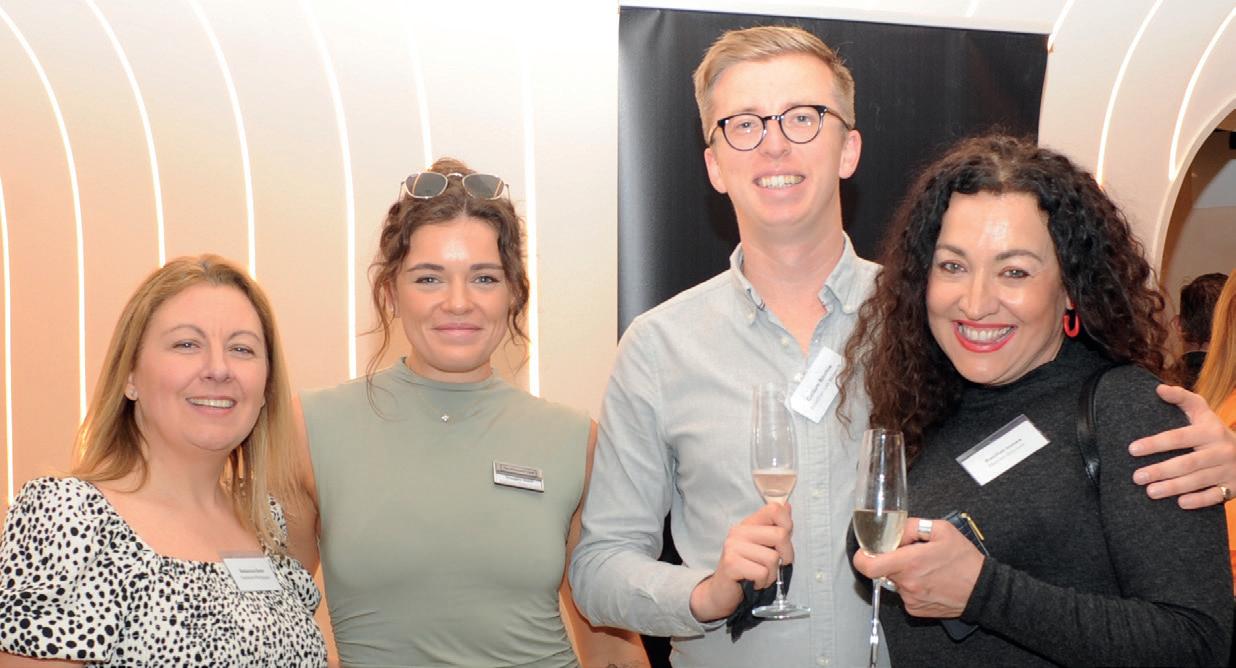
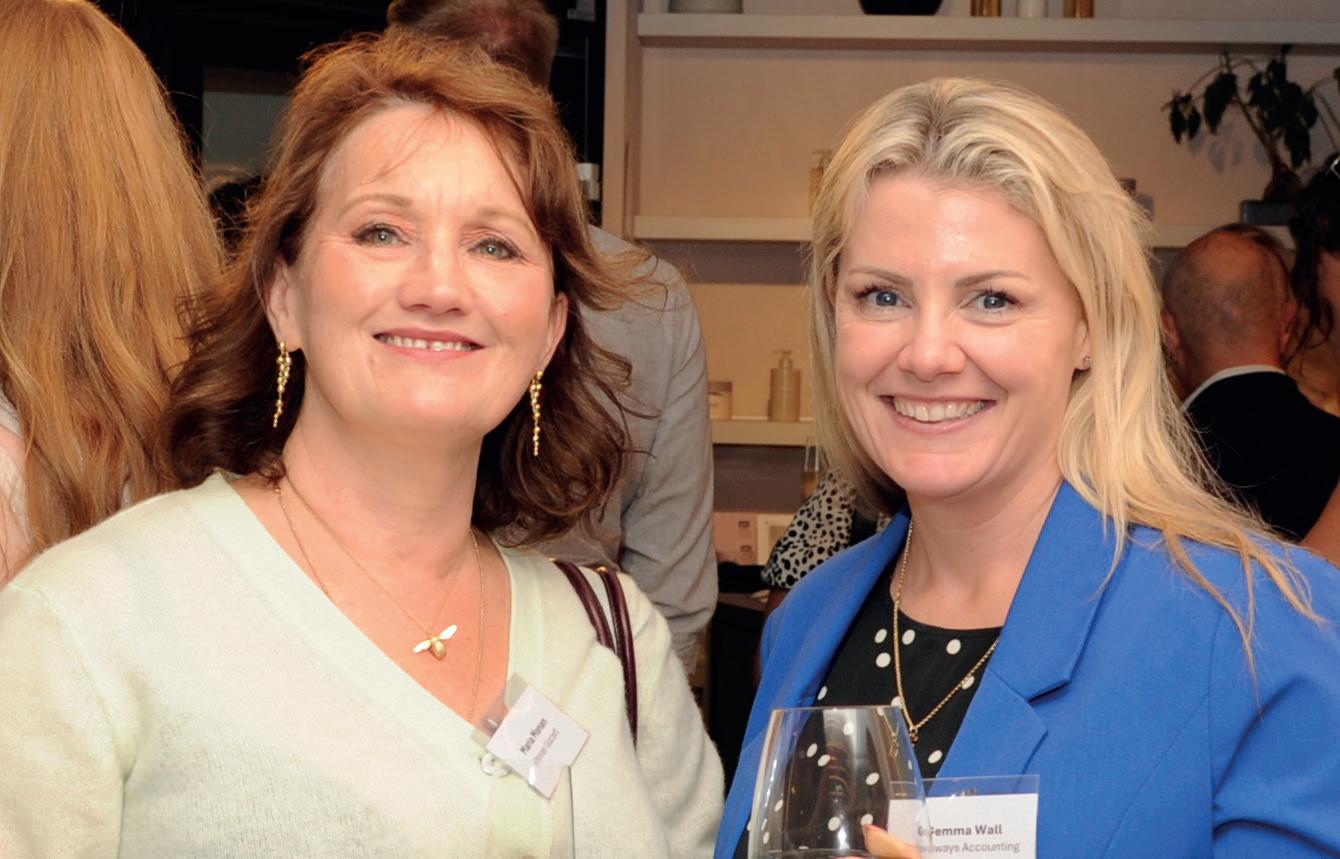
Maria Monan (Co-Founder, Monan Gozzett); Gemma Wall (Partner Galloways Accounting)
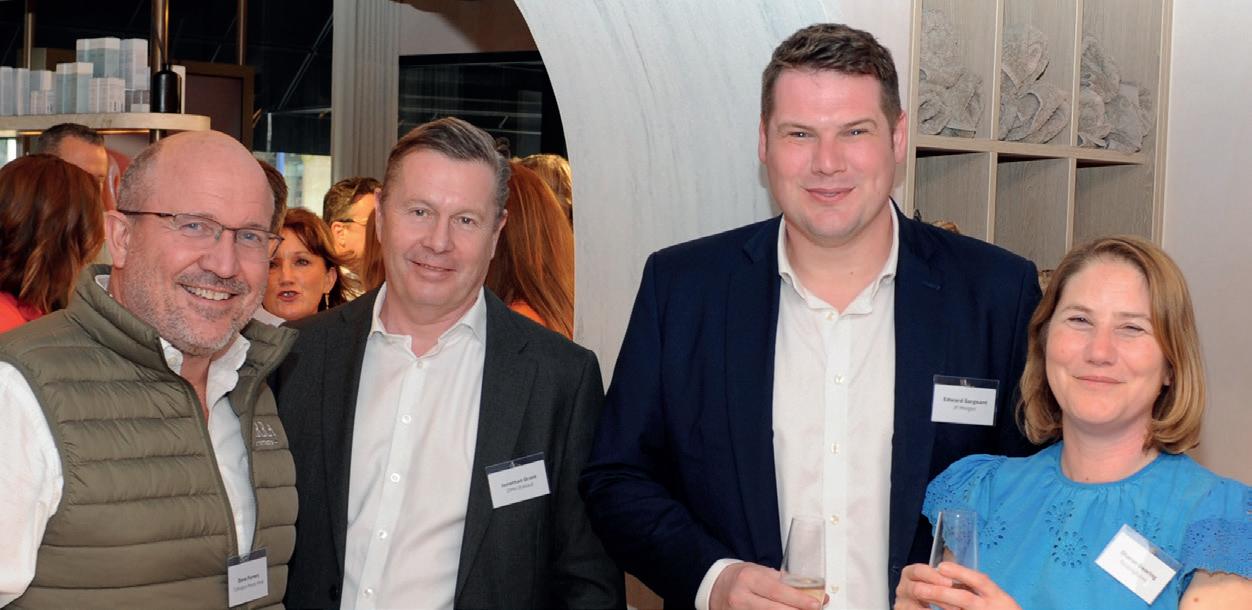
Steve Pomery (Co-Owner, Tottington Manor Hotel); Jonathan Grant (Partner, DMH Stallard); Edward Sargeant (Private Banker, JP Morgan); Sharon Gearing (Head of Philanthropy, Rockinghorse)
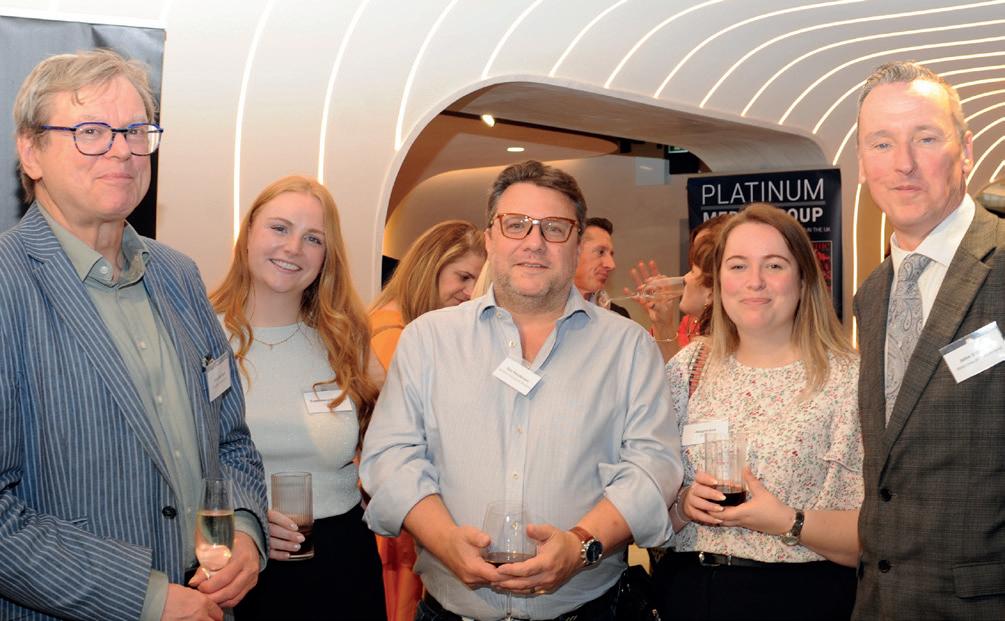
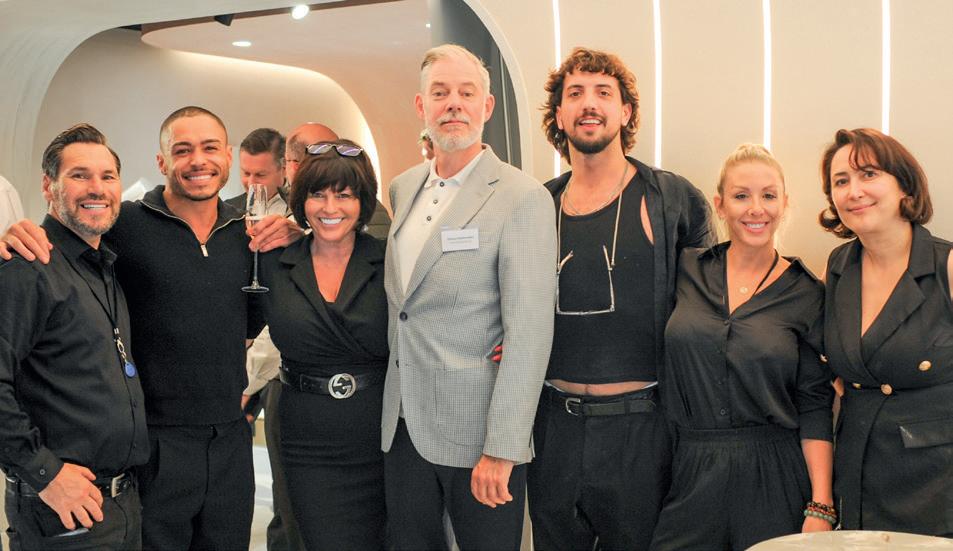
Dallibar (Director, Gordian Solutions); Francesca Harrison (Associate, Cripps); Des Henderson ( Account Director, Jensten Insurance Brokers); Abigail Kirk (Associate, Cripps); John O’Connor (Showroom Director, Watches of Switzerland)
ALL BUSINESS IS BASED ON RELATIONSHIPS, AND PLATINUM GIVES YOU THE PLATFORM TO CREATE THE MEANINGFUL HUMAN CONNECTIONS THAT MATTER ❜❜ BAILEY & FRENCH
We meet once per month, excluding August. If you would like to attend an event, please get in touch: info@platinummediagroup.co.uk
As annual membership isn’t required, we look forward to welcoming you to the most effective, enjoyable and lively networking group in the South
★ ★
★ ❛❛ WE SEE THE PLATINUM CLUB AS AN IMPORTANT AND INTEGRAL PART OF OUR BRAND AWARENESS STRATEGY, THROUGH INTERACTIONS WITH WELL CONNECTED BUSINESS PEOPLE AND OTHER INFLUENCERS. IT IS WELCOMING AND GREAT FUN TOO! ❜❜ MATTIOLI WOODS
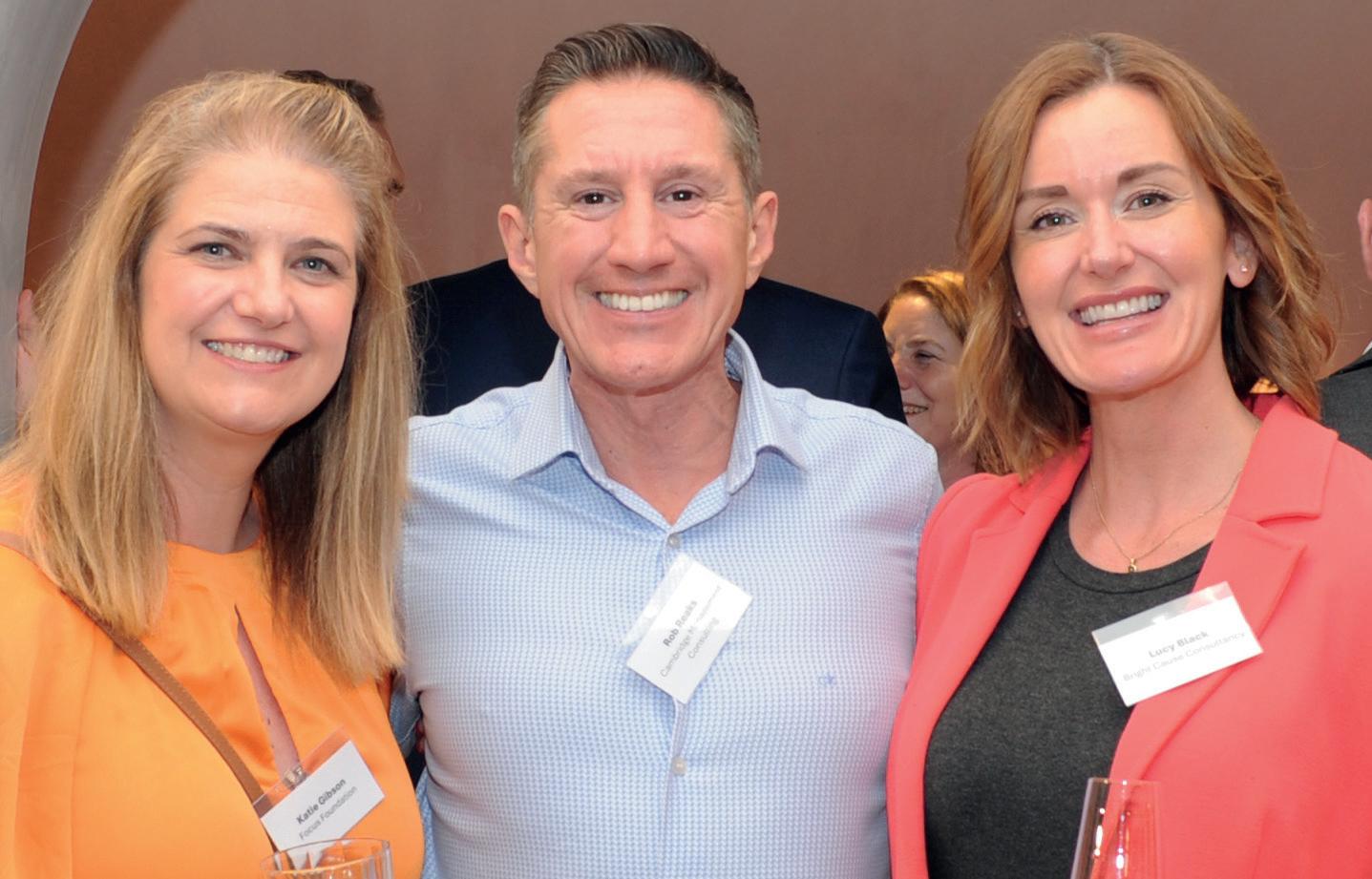
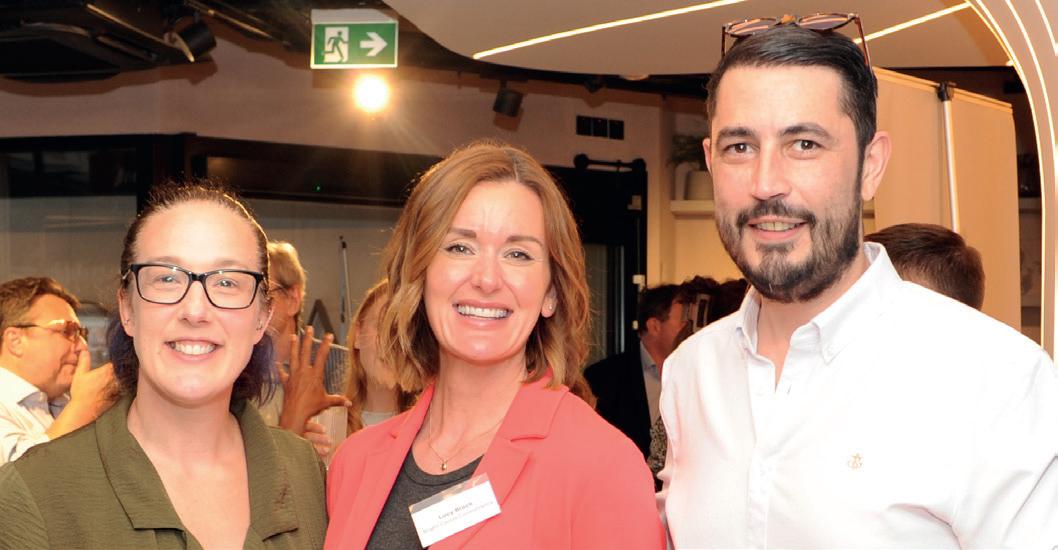
Donna Holland (CEO, Rockinghorse); Lucy Black (Director, Bright Cause Consultancy); James Turner (Head of Commercial, Creative Pod)
Paul
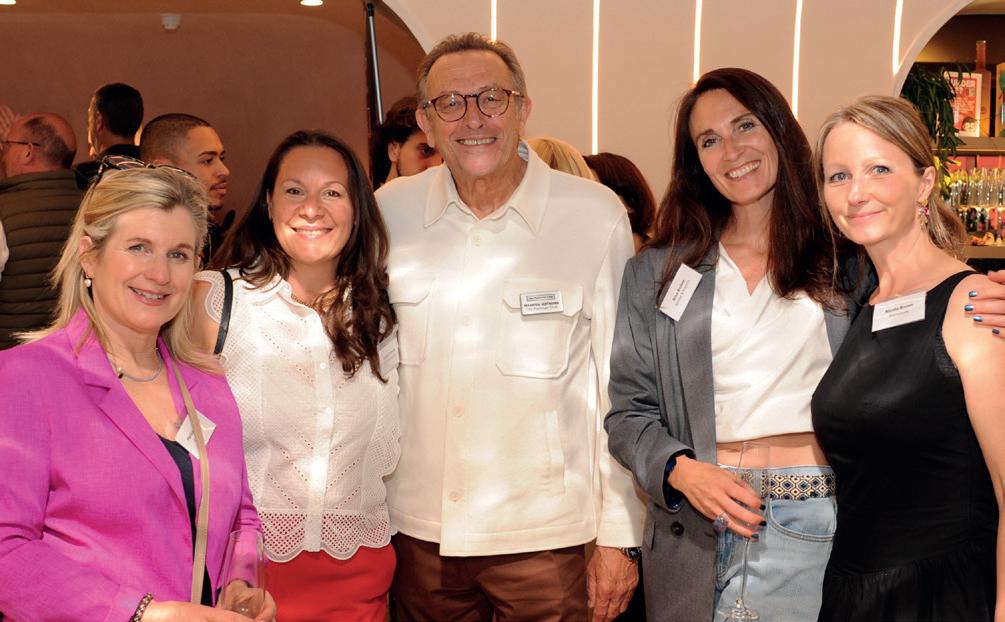
Marina Mologni (Head of People & Culture, Atlas Copco); Louise Wheeler (Consultant, NHS Confederation); Maarten Hoffmann (Managing Director, Platinum Media Group); Alex Bailey (CEO, Bailey & French); Nicola Brown (Associate Director, Hamptons)
Simon Haffenden and his team at the TGB Spa
Neil Laughton (Managing Director, Laughton & Co), receives the trophy from Clive Gordon (Director, Gordon Group Promotions), ahead of the Team GB
Penny Farthing Polo tour of the United States, which Neil will be leading
How London Gatwick is championing unified South East investment
London Gatwick’s role in the South East goes far beyond connecting passengers to destinations. It is a major economic anchor for the region – linking people and businesses to global markets and bringing partners together around investment, skills and growth.
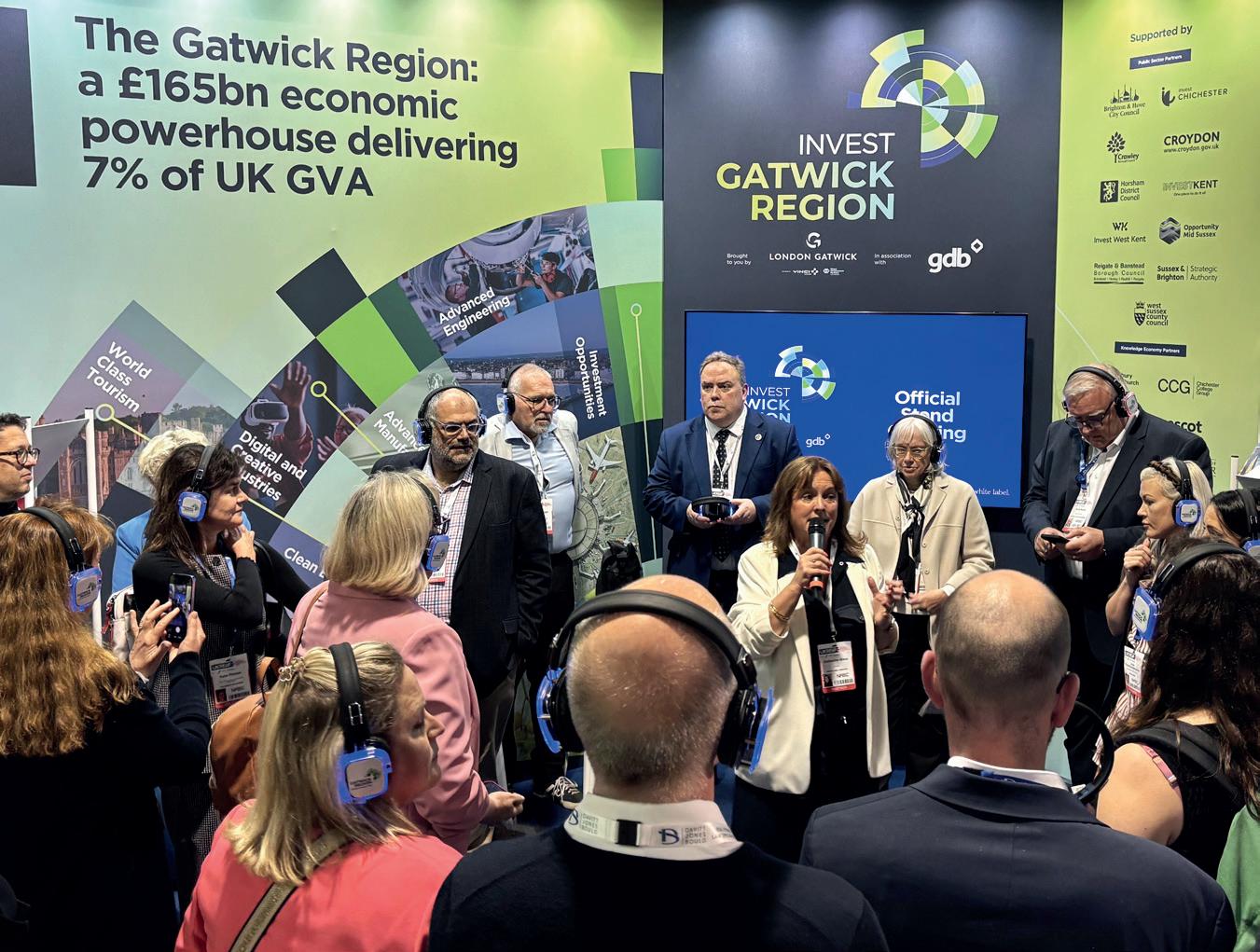
UKREiiF (the UK Real Estate Investment and Infrastructure Forum) 2026 offered a clear illustration of that role. The forum brought together investors, developers and public-sector decision makers, and the Gatwick Region demonstrated what a joined-up proposition can look like in practice: a single banner, shared messages and a coordinated programme designed to turn regional strengths into investor conversations.
the region combines global connectivity with strong local transport links and key ports along the south coast – creating a connected platform for trade, investment and growth.
What makes the proposition especially relevant is the breadth of the region’s
THE GATWICK REGION AIRPORT ECONOMIC ZONE
In 2025, London Gatwick launched the Gatwick Region Airport Economic Zone (AEZ) as the UK’s first aviation-powered economic zone. The idea is straightforward: harness the airport’s convening power to help the region speak with a single voice, aligning local priorities around opportunity, connectivity and delivery.
❛❛ The Gatwick Region is already a major economic area, contributing £165bn GVA –roughly 7% of the UK economy ❜❜
A REGION WITH NATIONAL SCALE AND GLOBAL REACH
The Gatwick Region is already a major economic area, contributing £165bn GVA – roughly 7% of the UK economy –in 2023. Anchored by London Gatwick,
economy. The Gatwick Region spans aviation, aerospace and advanced engineering; digital, AI, cyber and creative industries; financial services; life sciences; clean energy and emerging technologies, including quantum; and a strong visitor economy supported by fast-growing viticulture. Behind this sits a deep knowledge economy with universities, colleges and research institutions driving talent pipelines and innovation.
At UKREiiF, the AEZ’s outward-facing identity was Invest Gatwick Region – a banner designed to help investors understand the momentum of the region’s offering and engage with partners through one coherent platform.
Importantly, the AEZ proposition is not only about promotion. It is organised around practical themes directly linked to growth: inward investment, international trade and the visitor economy. These pillars reflect how London Gatwick turns locally created economic value into national and international opportunities.
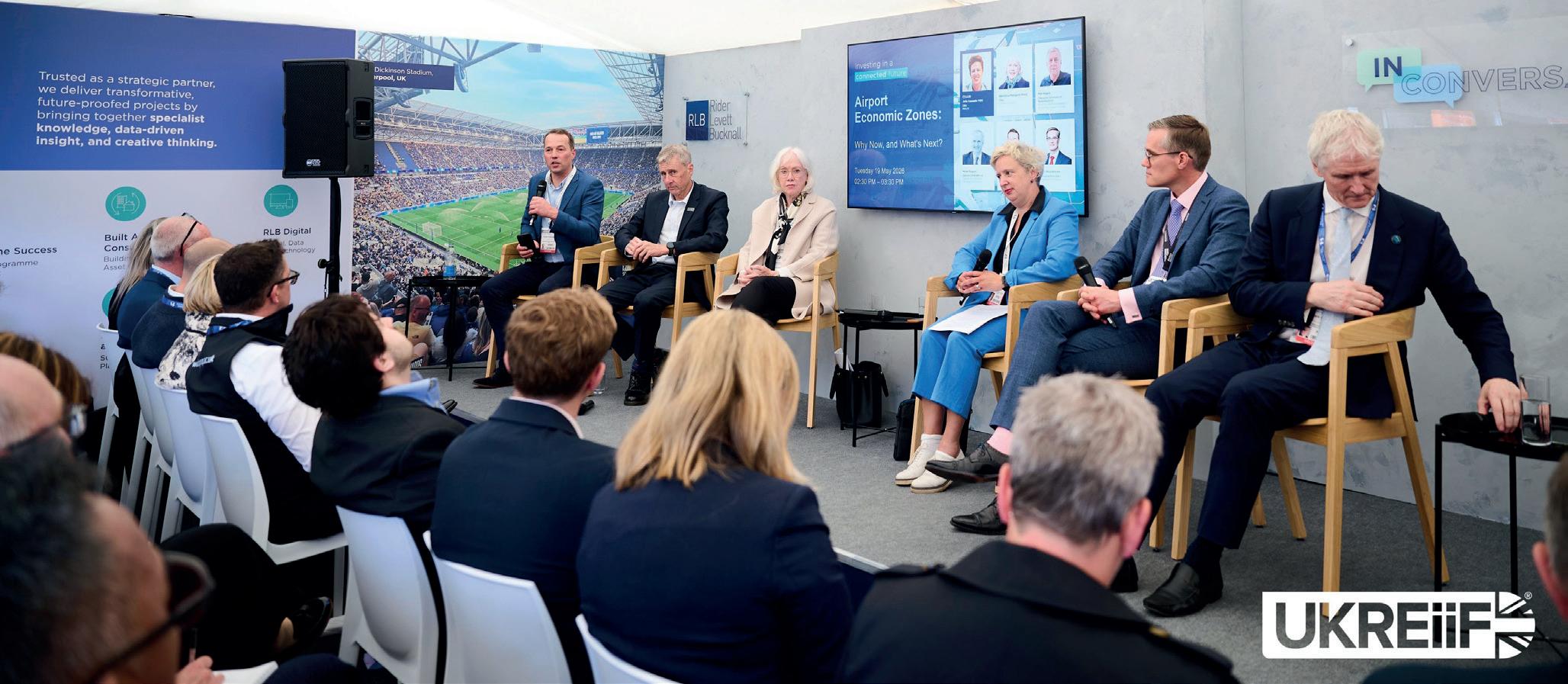
Members of the Invest Gatwick Region delegation contribute to a panel on the benefits of Airport Economic Zones
championing a proposition
UKREIIF 2026: “ONE REGION, ONE STORY”
UKREiiF is where investment conversations begin, bringing key stakeholders together with a shared focus on growth. For the Gatwick Region, UKREiiF presented an opportunity to demonstrate that its investment pipeline is ready for serious engagement and that collaboration can translate into real opportunities.
This year’s delegation grew again with more than 60 delegates and 28 partner organisations, up from 23 partners in 2025. Partners spanned the knowledge economy, private sector and local authorities – reflecting a whole-system approach and building on continued momentum since the region’s first delegation in 2024.
In 2025, partners initially identified 52 opportunity sites, which were collaboratively refined to a final 19 showcased to investors – demonstrating a move to a curated, investable pipeline. Feedback also highlighted the value of London Gatwick’s role in presenting the region through a unified lens.
This year, the focus shifted further toward investor engagement through a programme of showcases and networking designed to profile the region’s strengths and to lay the groundwork for future partnerships.
London Gatwick’s role was central to
the delegation’s success, aligning partners around a single narrative and providing a platform to engage investors with confidence.
MAKING OPPORTUNITY TANGIBLE
A unified investment story must be grounded in real opportunities. A strong example is the King Alfred site, described as one of Brighton & Hove’s most desirable potential residential developments.
Planning approval has been granted for at least 400 homes alongside complementary retail and restaurant units. Adjacent redevelopment includes a £65m sports and leisure centre with improved public spaces, supporting a positive regeneration for the community.
A recent valuation estimated the site will deliver £196m GDV, and across the wider prospectus, Invest Gatwick Region showcased more than £1.4bn in investable opportunities through 28 sites.
This kind of opportunity is where London Gatwick’s joined-up proposition adds value. Led by the airport, the role of Invest Gatwick Region is to convene and amplify – giving regional opportunities a platform they would not achieve in isolation. That platform helps create
investor visibility and connect individual sites to the wider South East story: talent, connectivity, supply chain capability and quality of place.
WHY THIS MATTERS FOR THE SOUTH EAST
Crucially, a strong inward investment proposition tends to create a virtuous circle:
• It raises the region’s visibility with investors and decision makers
• It strengthens the case for growth in high-value sectors
• It helps align skills, infrastructure and development priorities
• It opens up new partnerships
UKREiiF 2026 underlined London Gatwick’s role at the heart of the region’s growth story, convening partners and demonstrating at scale why the South East is one of the UK’s most prosperous destinations for long-term opportunities.
To fi nd out more, visit www.gatwickregion.com and contact the AEZ team.
www.gatwickairport.com
Katharine Glass, Director at Develop Croydon Forum, speaks at the opening of the Invest Gatwick Region stand
FINANCE
For many business leaders, the past few years have felt like a constant test of resilience.
By Mike Brewer, Restructuring Senior Manager and Andrew Griggs, Senior Partner and Head of Global, Kreston
Reeves
Where does profit come from when growth is hard to fi nd?
Rising costs, increasing tax burdens and ongoing geopolitical uncertainty – most recently the conflict in the Middle East – are all contributing to a sustained squeeze on margins. In this environment, the question is no longer simply how to grow. It is more fundamental: where does profi t come from when growth is hard to find?
NEW THINKING AND NEW PRACTICES
Previously, improved profi ts might have come from a new product range, growth in overseas markets, another round of cost-cutting or price increases. They may well still be part of the answer, but now, it starts with a change in mindset.
Many businesses have already taken out as much cost as they reasonably can. There is little left to squeeze. The bigger risk now is inertia, or the belief that conditions will improve if they simply hold their course, and delay can make problems harder to fix.
Increasingly, improved profi tability is found in how businesses operate rather than simply in what they sell.
That might mean using technology to reduce delivery costs and then reinvesting the time saved into higher-value activities, such as strengthening client relationships, providing more strategic advice or developing new opportunities.
❛❛ One theme that comes through clearly when we speak to businesses is that doing what has always worked is not enough ❜❜
One theme that comes through clearly when we speak to businesses is that doing what has always worked is not enough. We have been here before.
Markets are evolving quickly. Technology is changing how products and services are delivered. Customer expectations are shifting. Relying on historic ways of working will quietly erode margins.
The businesses performing best are not just becoming more efficient; they are becoming more valuable to their customers. By freeing up time in your business operations, you can spend more time with customers, helping them with their challenges. This may be assisting with their own data interpretation.
MAKING DIFFICULT DECISIONS
Business leaders need to be selective, often making difficult decisions. For example, continuing to serve unprofi table customers or maintain underperforming parts of the business ties up time
and resources that could be better deployed elsewhere. In some cases, walking away from work can be one of the most profi table decisions a business makes. We have seen clients review their customer lists, especially where they are tight on skilled resources, and
either talk with them about increasing prices (accepting they might lose them) or saying they can no longer deliver at that price.
For others, more structural change may be needed. Acquiring complementary businesses, restructuring existing operations or revisiting funding arrangements can all help improve profi tability. In a slower-growth environment, buying market share or improving efficiency at scale can be more effective than waiting for organic growth to return.
A WIDER VIEW
• source their supplies and raw materials;
• sell their product/services; and
• crystalise their profi ts
FOCUS ON VALUE, DELIVER CHANGE
Underlying all of this is the need for a conscious shift away from concentrating solely on cost and towards value. In our experience, customers will
❛❛ There is no single route to improving profitability. ❜❜
Growth is increasingly unlikely to be restricted to domestic markets. Businesses need to continually assess where they:
• create their product or services;
question what they perceive as high charges for activities that feel commoditised or low-value. But they will pay a premium for quality insight, advice and outcomes that make a tangible difference to their business.
That creates a challenge: if something within your organisation is not contributing to that end value, why is it there? Answering that question is not always straightforward. Business owners are often close to their operations, and it can be difficult to step back and challenge long-established ways of working. In some cases, businesses simply outgrow their existing structures.
This is where our external perspective can be invaluable: not to provide a prescriptive list of actions, but to identify the questions and actions that help business leaders unlock change.
There is no single route to improving profi tability. For some, it will mean refining their core business. For others, it may involve more fundamental change or looking beyond the UK. What is consistent, however, is the need to think differently.
When there is uncertainty, the most valuable conversations are not about what to do next, but about how the business works today and where it could work better.
HOW WE CAN HELP
If you would like to explore where greater profi tability could be unlocked in your business, a conversation with us can provide a fresh, external perspective. Please contact Mike Brewer, Restructuring Senior Manager or Andrew Griggs, Senior Partner and Head of Global: Call: +44 (0)33 0124 1399
‘Buy British’ is one of the most important lessons to emerge from the impact the Middle East conflict has on household budgets and the cost of living.
That’s according to a leading UK procurement business, which says Britain needs to place more emphasis on food and energy security as an island nation and become more self-sufficient.
Soaring fuel and food prices might be regularly grabbing the headlines at present, but Regency Purchasing Group is raising awareness of the hidden costs of the war in the Middle East, which pose some of the biggest threats to hospitality businesses.
Regency says the closure of the Strait of Hormuz could adversely affect costs long after the fighting stops because of a delayed effect on pricing and supply chains, and suggests that we need to be prepared for the medium and long-term impact of the war, claiming prices could continue to rise for a further nine-to-12 months after the conflict ends.
Alex Demetriou, founder of RPG and CEO of Foodbuy UK&I, said: “As we saw during the pandemic and at the start of the war in Ukraine, the immediate impact is often felt in areas such as fuel costs. But the knock-on effects across
in the short term, because the longterm benefi ts will outweigh the costs.
And third, industry leaders (like us!) need to provide farmers with greater certainty through long-term contracts and investment support, giving them the confidence to plan ahead, improve efficiency and become more competitive.
❛❛ The knock-on effects across wider supply chains can linger for months, and in some cases more than a year ❜❜
wider supply chains can linger for months, and in some cases more than a year, before pricing stabilises.
“However, we have to believe that the UK can adapt and recover over the long term. A key part of that recovery must involve better use of the nation’s own resources and strengthening domestic production and supply chains.
“Many consumers avoid buying British produce because it can be more expensive. But without consistent demand, British farmers and growers struggle to achieve the volumes and scale needed to bring prices down. The more we invest in British agriculture, the stronger our food security becomes, as an island nation.
“That requires action on three fronts. First, the government must do more to support farmers and encourage the right long-term behaviours. Second, consumers should be encouraged to buy British, even if it costs slightly more
“For example, with one project, we pay an extra 10p per dozen eggs back to farmers, which quickly accrues to around £10,000 per month, which they plan to invest in a new project each quarter, in areas such as regenerative agriculture, animal welfare, carbon reduction, risk and resilience and other areas. If we get that balance right, Britain will be far better prepared for future global shocks, and the impact on household budgets will be far less severe.”
Since the war started on February 28th, the RAC says the average price of petrol has risen by nearly 25p per litre, with diesel prices increasing by almost 46p per litre. But Mr Demtriou said these headline-grabbing statistics mean some may be overlooking the ‘hidden costs’, such as those involving fertilisers and plastics, which may take months to be fully realised, increasing the pressure on a UK hospitality sector which was already struggling with a challenging financial climate before the war started in February.
Alex Demetriou
combat hidden costs of war
Businesses are not only facing further cost increases because of the conflict’s knock-on effects, but household budgets are also coming under pressure, leaving families with less disposable income to spend on ‘luxuries’ such as eating out and supporting hospitality businesses. However, there are some signs of resilience. Regency says it has so far used its buying power and sector expertise to limit the impact of rising prices on its members.
Founded in the South West, Regency Purchasing Group is part of Foodbuy, the UK’s largest buying group, and its scale and buying power are helping to shield the businesses it supports from many of the rising costs affecting the food and beverage sector.
much longer to materialise because of the lag effect.”
“For example, many national distributors purchase fuel through long-term fixed-price contracts, meaning the fuel being used today was bought at lower rates. When those contracts are renewed, however, suppliers will face
“So, even if the war were to end within days, business and consumers will still see some costs increase, rather than decrease, for some time to come, and it’s this kind of medium-to-long-term impact of the conflict that is not being thought about as much as the immediate ‘front line’ price-hikes.
“Petroleum is a key component in plastics, so once again, there is a delayed effect. The raw materials are being bought at today’s higher prices, but those increased costs may not be passed on until the finished plastic products reach the market. That is the true long-term impact of the war.”
❛❛ Even if the war were to end within days, business and consumers will still see some costs increase, rather than decrease, for some time to come ❜❜
Alex added, “So far, we have worked through 17 separate price increases, mainly through consolidating and growing our business with suppliers, which has allowed them to offset the increases they are receiving, which, in turn, means our members are not currently seeing those additional costs passed on to them.
“We have a dedicated team monitoring the ongoing impact of the conflict in the Middle East on a daily basis, alongside a weekly focus group that continually assesses developments and responds to any changes in the market. It is easy to be distracted by news focusing on
higher prices, and those additional costs are likely to be passed on further down the supply chain. In other words, the full impact of today’s fuel prices may not be felt immediately.
“There’s a similar situation with fertiliser, the cost of which is also impacted by fuel costs. Much of the produce currently on shelves was grown using fertiliser purchased months ago at lower rates. Crops being planted now and over the coming months will rely on more expensive fertiliser, but those increased costs will not reach consumers until the produce enters the market, potentially six months or more from now.
He added: “Businesses need expertise, focus and strategic support to navigate the challenges ahead, and we are fully committed to doing everything we can to support this industry. That is why we are working hard to support the industry and help its long-term recovery. Consumers can play their part by buying British.”
To fi nd out more about Regency Purchasing Group, visit: www.regencypurchasing.co.uk
The Sunday Times ‘Best Places to Work’ list 2026
We spend around a third of our lives working. In a daily grind reshaped by digital transformation, fully remote ‘offices’, paternity leave — among other innovations — and businesses hit by ongoing and unexpected economic considerations, the value of a happy, healthy workplace feels more valuable than ever.
The Sunday Times Best Places to Work 2026, now in its fourth year, reveals those companies that excel at workplace contentment. Voted for by their own employees via a survey of more than 200,000 staff across 25 UK industry sectors, the Best Places to Work are at the vanguard of meaningful jobs today, whether at a small charity or a specialist law firm, a multinational fastfood chain or a utility giant — and all points in between.
The Sunday Times Best Places to Work highlights the best SMEs, large and multinational organisations and best workplaces for women, LGBTQIA+ staff, disabled employees, ethnic minorities, younger and older workers and wellbeing.
The lengths to which the best employers go to create connections among employees are increasing in step with their hybrid working policies. In addition to fair pay, career development opportunities and thoughtful fringe benefits, initiatives include shadow boards for junior staff to ensure employees are part of the discussion, training and trust in managers that motivate them to take ownership and psychological safety embedded in daily operations.
Health-related benefits have moved up several levels, from discounted gym memberships to tailored support at different life stages — including therapy sessions, physical and mental health checks, subsidised fertility treatment and targeted support for the menopause. And don’t forget the wellbeing offered by allowing four-legged companions into the workplace.
The data — compiled by The Sunday Times’ research partner WorkL, the employee experience specialist — shows that employees at the Best Places to Work organisations are happier and more engaged in their roles than those elsewhere, with engagement among this year’s winners 7% higher than the average across WorkL’s UKwide database of 45,000 organisations.
“Happy staff make the most productive workers,” says Lord Mark Price, Found -
er of WorkL and formerly Managing Director of Waitrose and Deputy Chairman of the John Lewis Partnership. “What we are able to do is look at the extra discretionary effort a company gets from individuals, and what we see is a big difference between an individual who is happy in his or her job and somebody who is not.”
Currys indulges in this philosophy. While many high street brands have gone the way of the dodo, the electrical retailer is thriving. It’s a FTSE 250 company with 14,500 employees and started a turnaround programme in 2018 based on a people-first approach. It ditched brands including Carphone Warehouse and PC World to trade under the Currys name only and has gone from being a loss-making business to a profitable one. Latest pre-tax profits are up 37% year-on-year to £162m.
METHODOLOGY
The Sunday Times Best Places to Work analysis uses 26 questions from WorkL’s employee engagement survey, developed by behavioural scientists, data analysts, psychologists, business leaders, academics and other independent parties to most accurately monitor employee engagement, wellbeing and discretionary effort in the workplace.
To achieve a high overall engagement score, an organisation must score well across WorkL’s six-step framework, each of which consists of three to five key elements measured on a 0-10 scale:
• Reward and recognition
• Instilling pride
• Information sharing
• Empowerment
• Wellbeing
• Job satisfaction
An organisation’s overall engagement score is the sum of all question responses, divided by the maximum possible value as a percentage. Employees also respond to statements including:
• I am happy with the hours I work
• I am fairly paid
• I am recognised when I do something well
• I do something worthwhile
• My views are heard at work
• I understand the organisation’s plan
• I am trusted to make decisions
• My employer cares for my wellbeing
• I rarely feel anxious or depressed about work
• I am treated with respect
• I have a good relationship with my manager
• I work in a well-run organisation
Firms in thse lists are shown alphabetically, rather than on merit. Companies in the South East region are highlighted in red
My Inhouse Lawyer Legal Services London myHappymind
Education and Research Alderley Edge, Cheshire
Outrank Marketing and Advertising Middlesbrough
Retec Group Technology Bolton
Ribble Recruitment Business and Management Services Clitheroe, Lancashire
Stuart Energy Energy and Utilities Skelmersdale, Lancashire
The Workplace Depot Retail Bingham, Nottinghamshire
Firms with 50-249 employees
NAME
Ardent Pub Group Hospitality London
Black Cat Construction and Building Materials Manchester
Hall Brown Family Law Legal Services Manchester
IMEX Group Hospitality Hove iplicit Technology Bournemouth
Jones Hargreaves Business and Management Services London
LDN Apprenticeships Education and Research London
LegalforLandlords Financial Services Birchwood, Cheshire Omnea Technology London
Wright Robinson College Education and Research Manchester
Firms with 250-1,999 employees
NAME
Bella Italia Hospitality London
Clarion Legal Services Leeds
Dakota Hotels Hospitality Manchester
Dorchester Collection Hospitality London and Ascot
Ison Harrison Solicitors Legal Services Leeds
Matchtech Business and Management Services Whiteley, Hampshire
Octopus Electric Vehicles Financial Services London
Shrewsbury College Education and Research Shrewsbury, Shropshire
Synthesia Technology London
The Belfry Hotel & Resort Hospitality Sutton Coldfield
BUSINESS
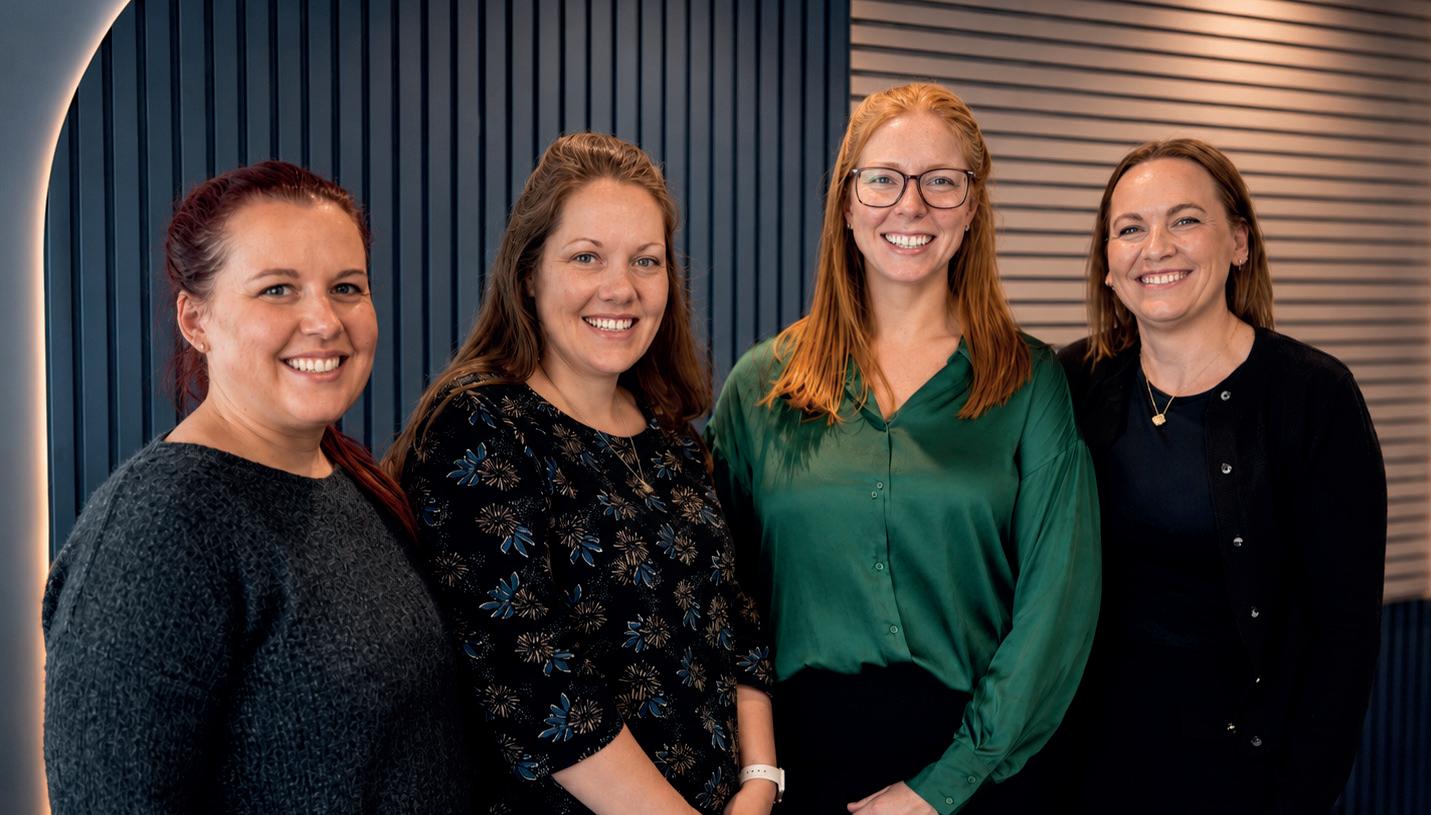
By Jen Melbert, Co-Founder, Growth Animals
BRANDING WITH BITE. PEOPLE WITH PULSE
Why ‘good’ isn’t good enough anymore
You know your business is good. Your clients are happy. Your service delivers. Your team works hard. And yet… growth feels harder than it should.
These days, ‘good’ isn’t a differentiator. It’s the minimum required to even get on the shortlist. Your audience is drowning in choice. Competitors are louder. People’s attention is pulled in every direction. And internally, your team is likely stretched across far too many priorities.
So why do some businesses cut through, grow faster, and command higher value, while others plateau? It’s rarely down to doing more. It’s because they’ve got far greater clarity on two powerful assets… their brand and their people.
THE MYTH OF ‘MORE MARKETING’
When growth slows, the default reaction is to do more. More content. More campaigns. More noise. But more isn’t the answer.
❛❛ These days, ‘good’ isn’t a differentiator. It’s the minimum required to even get on the shortlist. ❜❜
Without a clear brand, more activity just dilutes what makes you distinctive. Teams stay busy, but the work doesn’t create impact. The businesses that break out of this don’t start by asking, what should we do next? They ask something far more uncomfortable… “What actually makes us different, and are we saying it clearly enough?” Growth doesn’t come from being louder. It comes from being clearer
UNEARTHING WHAT MAKES YOU DISTINCTIVE
Most organisations do have something genuinely special about them. The problem is, they’re too close to it to see it.
porate Finance. Technically excellent, with a strong reputation, but struggling to stand apart in a crowded market. By getting under the skin of what clients truly valued (clarity, candour and calm guidance in high-stakes moments), they were able to articulate a far more distinctive position and evolve their brand accordingly. The result was, most importantly, a clearer sense of who they are and why clients choose them.
Bright Harbour Advisory
It might be how your team solves problems. How you build relationships. The level of care you bring. Or the commercial lens you apply that others don’t.
When you get to that level of clarity, things shift quickly. Your messaging sharpens. Your confidence grows. And your marketing starts to work harder because it’s rooted in something real. You stop trying to appeal to everyone and start resonating with the right people.
Bright Harbour Advisory
But if you can’t articulate it, your clients won’t feel it. And this is where most branding conversations go wrong. They jump straight to visuals or campaigns before doing the harder work underneath.
Our Role
Real differentiation comes from curiosity. Taking the time to dig. To challenge assumptions. To properly understand what clients value about you, not what you assume they do.
CASE STUDY: Bright Harbour Advisory (formerly ABG) needed to not simply to refresh the brand, but to defi ne a clear identity, proposition and name that would:
• Better refl ect the fi rm’s valuesled, hands-on approach
Growth Animals led the research, stakeholder engagement, brand strategy, positioning, naming exploration and recommendation, working closely with the wider ABG team to articulate what truly set the firm apart and how that difference should be expressed in the market
• Differentiate ABG decisively in the market
• Support more proactive, outbound business development
• Transcend the founders’ individual profi les over time
Our role was to provide clarity, challenge and direction, ensuring the final brand decision was rooted in strategy, not personal preference
We see this time and again. Take Bright Harbour Advisory, formerly ABG Cor-
We partnered with xHeight Design, who translated the strategic direction into the visual identity and new website, ensuring the brand came to life in a way that was confident, credible and fit for the firm’s next phase of growth
The strongest brands don’t feel like they’re constantly chasing the next opportunity. They’re clear enough that the right opportunities start to come to them.
Prospective clients already have a sense of who you are and how you work. Conversations move faster. Trust builds earlier. And you spend less time justifying your value. That has a direct commercial impact.
Price becomes less of a sticking point. Decisions happen more quickly. And you shift away from competing on cost to being chosen for fit. It’s not about being louder, but about being unmistakable.
❛❛ Brand on its own won’t carry you. Your people ARE the experience. They’re the conversations, the relationships, the judgment calls.❜❜
THE UNTAPPED POWER OF YOUR PEOPLE
But brand on its own won’t carry you. Your people ARE the experience. They’re the conversations, the relationships, the judgment calls. They’re where your brand is either reinforced or undermined.
And yet, in many organisations, people are still treated as ‘delivery’ rather than a core part of growth. They’re busy. Often stretched. Focused on getting the work out the door. Not always connected to the bigger picture. When that happens, even a strong brand struggles to land consistently.
The shift comes when people understand the role they play in bringing the brand to life, not just what they do, but how they do it differently. The strengths they bring. The way they build trust, communicate, and create value. When people recognise that, something changes.
They show up with more confidence, ownership, and energy. And your brand becomes something clients experience, not just something you “say”.
LEADING THE PACK
Growth comes from being clearer, braver, and more consistent in the things that matter… namely, building a brand that cuts through the sameness in your market, and investing in people who are engaged, aligned, and confident in the role they play.
When those two things come together, growth stops feeling like a constant push and starts to feel like momentum!
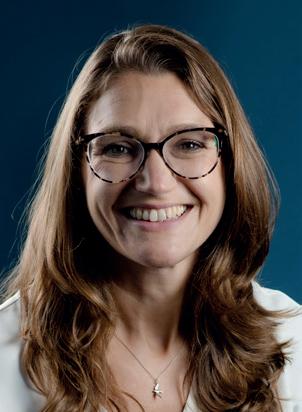
Jen Melbert is co-founder of Growth Animals, a B Corp-certified growth consultancy built on a simple belief… the most successful organisations harness two powerful forces, their brand and their people.
www.growthanimals.com
By Daniel Stoner, Managing Director, base Insurance Brokers
The insurance blindspots of hybrid working
A few years ago, during the surreal and dystopian days of lockdowns, we discovered the joys of video meetings - and remote working became a reality. Many of us never returned full-time to the workplace.
For a while, everyone’s LinkedIn stream was packed with posts about hybrid and remote working. Thankfully, the avalanche of hybrid working advice pieces has subsided, so apologies for returning to the subject!
So why this article? Hybrid working is now mainstream, but insurance coverage hasn’t always kept pace. Meanwhile, the risks have multiplied…
THE WORKPLACE IS EVERYWHERE
In the past, business insurance focused on a single workplace. Employers knew where their staff worked, where equipment was kept, and how daily operations ran. Hybrid working changed this setup very quickly.
Now, employees often work from home, in cafés, in co-working spaces, or at client sites. Company laptops move between these places, sensitive data is accessed on different networks, and managers lead teams from a distance.
This flexibility can be great for daily operations. From a risk point of view, it
brings many new challenges that businesses did not face before.
CYBER RISK HAS EXPANDED DRAMATICALLY
One major result of hybrid working is a big increase in cyber risks. When teams work remotely, businesses lose some of the control that office IT systems provide. Employees might use unsecured Wi-Fi or cloud platforms outside the main company systems.
Cyber criminals have quickly adjusted to these changes. Remote workers are now more often targeted by phishing and ransomware, since they can be more vulnerable outside the office. Just one hacked device or email account can now cause major problems for an entire company.
In the past, many small businesses and professional firms saw cyber insurance as optional. Now, companies that depend on digital tools and cloud systems face serious risks to their operations and reputation, which can be costly without the right insurance.
EMPLOYERS’ LIABILITY DOESN’T END AT THE OFFICE DOOR
Businesses are still responsible for employee wellbeing, even when staff work remotely. This means making sure workspaces are safe and suitable.
❛❛ This flexibility can be great for daily operations. From a risk point of view, it brings many new challenges that businesses did not face before. ❜❜
Most companies adjusted quickly when home working began, but many have not reviewed these setups since. Bad workstations, poor equipment, and repetitive strain injuries can all lead to claims over time.
Mental health and workplace stress are now bigger concerns. Remote work can
blur the line between work and home life, causing burnout, isolation, and communication problems. For employers, managing these risks remotely is often more complex than in traditional office environments.
BUSINESS EQUIPMENT IS CONSTANTLY MOVING
Hybrid working has also changed how companies handle their physical equipment. Laptops, monitors, phones, and other equipment are no longer kept just in the office. Now, they often move between homes, offices, and public places.
This makes accidental damage, theft and loss more likely.
Many businesses think their office insurance covers equipment everywhere, but in fact, coverage can vary a lot depending on the policy and how the
❛❛ The workplace is anywhere, but so
equipment is used. If businesses do not check their coverage closely, they might find out too late that off-site equipment is not protected.
HR EXPOSURE HAS INCREASED
Managing hybrid teams introduces a new layer of leadership and HR risk. Problems with communication and less face-to-face time can lead to misunderstandings and disputes more easily than in a regular office.
It can be harder to spot and address issues such as performance, discrimination, flexible work, or workplace culture when working remotely. Businesses still need to follow employment rules, no matter where their staff work.
For directors and senior leaders, these new responsibilities make management liability insurance more important,
especially as employment claims are rising in many industries.
POLICIES WRITTEN FOR A DIFFERENT BUSINESS ENVIRONMENT
Many organisations face a challenge because their insurance policies were set up before hybrid working became common. Policies might still be based on old ideas, like everyone working in the office, equipment staying put, or less digital risk. As businesses change, these ideas can become outdated without people realising.
This does not always mean businesses have no insurance. More often, it means their policies do not fully match how they work now. This difference is very important if a claim needs to be made.
HAS YOUR INSURANCE KEPT UP?
As work environments keep changing, insurance should change too. Regular reviews help ensure coverage aligns with current operations, technology, staffing, and management needs.
Insurance shouldn’t be an afterthought. Companies that handle hybrid working well are not just changing how they operate. They are also rethinking how they manage risk throughout the business.
The workplace is anywhere, but so are the risks!
Daniel Stoner Founder / Managing Director of base Insurance Brokers.
NATURALLY FABULOUS GROWTH: THE LIONEL HITCHEN A family business with a global
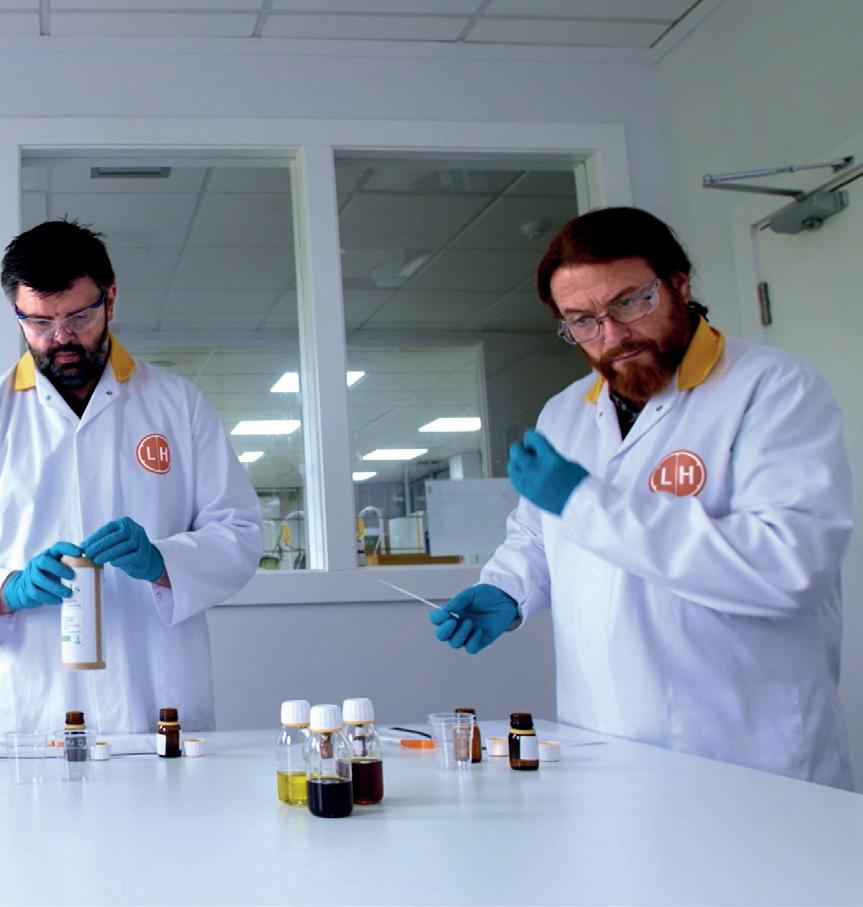
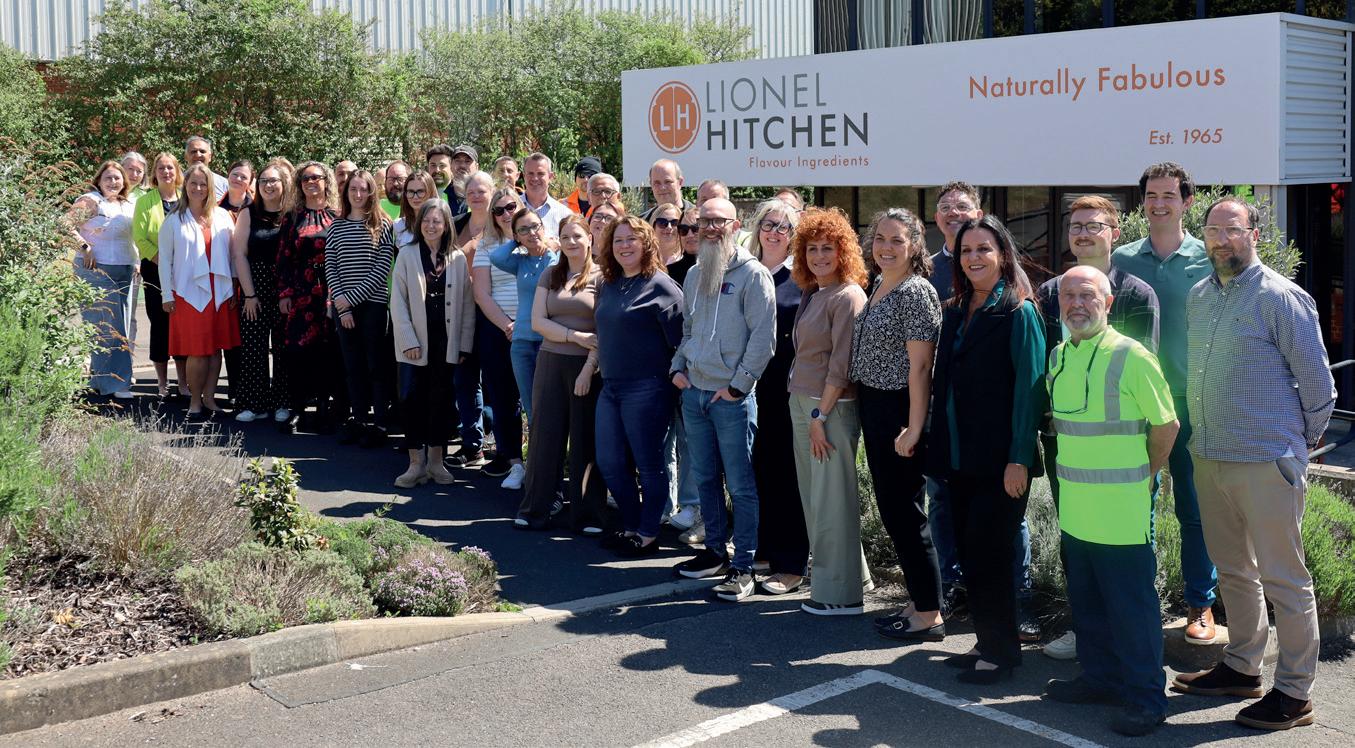
Founded in 1965, Lionel Hitchen Ltd is an independent, family-owned manufacturer of natural flavours and flavour ingredients for the global food and beverage industry. Operating from two sites in Hampshire, the business combines deep technical and manufacturing expertise with a strong sense of purpose and community. Today, Lionel Hitchen employs 160 people and is a significant contributor to the local economy.
While proudly rooted in the UK, Lionel Hitchen is firmly international in outlook. The business exports 85% of its sales, supplying customers in more than 60 countries either directly, through a network of 13 global distributors, or via its USA subsidiary. Its portfolio includes citrus specialities, herb and spice extracts, and bespoke flavours developed in-house to meet customer needs across multiple markets. As a B2B business, Lionel Hitchen partners
closely with food and drink manufacturers, flavour houses and seasoning specialists around the world.
AN AMBITIOUS AND SUSTAINED GROWTH JOURNEY
Over the past decade, Lionel Hitchen has embarked on a bold, carefully
❛❛ Over the past decade, Lionel Hitchen has embarked on a bold, carefully planned growth journey ❜❜
planned growth journey, achieving significant expansion, especially in export sales. This has been underpinned by a refreshed international sales strategy and geographic expansion through new distributor partnerships. Turnover has
grown year on year, reaching £83 million in 2024, while significant reinvestment in facilities, equipment and people has ensured the business remains well positioned for the future.
A key feature of Lionel Hitchen’s success has been its decision to strengthen the business’s foundations before accelerating growth. This has included building capacity and capability across all functions, introducing sound and efficient processes and embedding a World Class Manufacturing (WCM) continuous improvement programme that actively involves every employee in driving efficiency, quality and innovation.
Innovation sits at the heart of this strategy. The business continually tracks global food trends and runs an intensive new product development programme to ensure its portfolio meets diverse regional tastes. In recent years, hundreds
GROWTH:
STORY global reach
of new concepts have been developed annually, with a growing proportion converted into successful commercial products, strengthening competitiveness and supporting longterm growth.
PEOPLE AT THE HEART OF PERFORMANCE
While the growth figures are impressive, Lionel Hitchen is clear that its people are the real drivers of success. As a family-owned business, it believes that sustainable growth is only possible when employees feel valued, engaged and supported. This philosophy is reflected in the Company’s culture, policies and everyday working practices.
Employee development is a central priority, and leadership capability is deliberately nurtured and trained using the Kouzes and Posner Leadership Fundamentals model, helping leaders translate theory into meaningful change in their teams.
REWARD, RECOGNITION AND WELLBEING
Lionel Hitchen places strong emphasis on rewarding contributions and reinforcing positive behaviours. ‘The Hitchen Way’ rewards and recognition programme celebrates innovation, teamwork and going the extra mile, while promotion from within and referral incentives support talent retention and recruitment. The company also offers a highly competitive benefi ts package, including a generous profit-related bonus, competitive pension contributions, life cover, health cash plans and an electric vehicle salary sacrifice scheme.
These are supplemented by other, less significant but appreciated benefi ts such as Easter eggs, a hamper or a turkey at Christmas, frequent visits from ice-cream or pizza vans, vouchers to recognise employees who go above and beyond, off-site celebration days, and, most recently, a day off for birthdays.
In the most recent employee survey, 96% of employees said they were proud to work for Lionel Hitchen, with loyalty evidenced by long service across the business and a low unexpected turnover rate.
BUILDING A SUSTAINABLE FUTURE
❛❛ Alongside commercial growth, Lionel Hitchen is committed to environmental and social responsibility. ❜❜
Alongside commercial growth, Lionel Hitchen is committed to environmental and social responsibility. The Company publishes an annual sustainability report and has achieved Gold EcoVadis Awards, reflecting strong performance across responsible sourcing, sustainability and human rights. Longterm initiatives focus on reducing greenhouse gas emissions and increasing onsite renewable energy, ensuring that growth today does not compromise future generations.
Wellbeing and work-life balance are equally important. Hybrid working arrangements, flexibility around personal needs, generous annual leave (with options to buy more), cost-of-living support through above-inflation pay rises and Living Wage Employer accreditation all demonstrate Lionel Hitchen’s commitment to supporting employees both at work and at home.
This focus on people is clearly reflected in employee engagement and retention.
As Lionel Hitchen enters its next growth phase, with ambitious five-year targets aligned through its company-wide, audacious growth programme, one thing remains constant: growth is not pursued for its own sake, but as a means to create opportunity, invest in people and build a resilient, responsible business for the long term.
www.lionelhitchen.com
By Neshanga Nimalesan, Solicitor, Mayo Wynne Baxter
Shared care and child maintenance: WHAT PARENTS NEED TO KNOW
When parents separate, one of the most challenging and emotionally sensitive issues to resolve is how children will divide their time between two homes, and how this arrangement affects child maintenance.
These questions arise early, when families are adjusting to change and seeking stability. Understandably, many parents begin this process with worries about fairness, financial security, and whether their proposed arrangements will genuinely support their children’s wellbeing This article explains the relationship between shared care and child maintenance, highlights a recent case that clarifies the law, and outlines how legal advice can help families navigate these decisions with confidence.
WHAT IS EQUAL SHARED CARE?
Equal shared care means that children spend the same or broadly similar amounts of time with each parent, with both parents taking an active role in day-to-day responsibilities. Importantly, equal shared care does not require a strict 50/50 split measured by overnight stays.
The law recognises that practical family life rarely fi ts neatly into mathematical divisions. What matters most is that arrangements meet the child’s needs, offer consistency and routine, and allow both parents to remain meaningfully involved in the child’s upbringing.
A very common misconception is that if parents share care equally, then no
child maintenance is payable. This is not automatically true. The legal position is more nuanced and depends on which decision-making body, either the Child Maintenance Service or the Family Court, has jurisdiction to consider the matter.
WHO DECIDES CHILD MAINTENANCE?
Child maintenance can be determined in two ways:
1.The Child Maintenance Service (CMS)
In most situations, the CMS is responsible for calculating maintenance. It uses a statutory formula based on the paying parent’s income and the number of nights the child spends in that parent’s care.
2. The Family Court
The Court’s role is more limited. It can handle certain types of financial support, such as school fees and lump-sum payments. The CMS has primary authority for calculating routine weekly maintenance, unless specific exceptions apply.
However, one key exception is where care is truly equal. In such circumstances, the CMS may not have
jurisdiction at all, and the Family Court may retain the ability to make orders instead.
WHAT DID THE COURT DECIDE IN OS V DT?
The case of OS v DT provided helpful clarification on how child maintenance should be approached where parents claim equal shared care. The Court held:
❛❛ The law recognises that practical family life rarely fits neatly into mathematical divisions. ❜❜
1. The CMS has no jurisdiction where care is exactly equal.
2. The Court retains the power to make child periodical payments in these cases.
3. Where equal care is in dispute, the Court can determine whether care is in fact equal and then decide if it has jurisdiction. Parents do not need to apply to the CMS first.
In OS v DT, the Judge decided that no regular child maintenance should be paid, having regard to the parents’ respective financial positions. However, the Court recognised a disparity in resources and ordered one parent to contribute a greater share of the
children’s school fees. This ensured that the children’s needs were properly met without imposing unnecessary financial pressure.
This case demonstrates that even when routine maintenance is not appropriate, the Court can still make targeted financial arrangements to support a child’s wellbeing.
WHAT THIS MEANS FOR YOU
When parents assume that equal shared care automatically extinguishes maintenance, it can often lead to unnecessary conflict. This may create disputes centred on achieving a particular number of nights, rather than
❛❛ When parents assume that equal shared care automatically extinguishes maintenance, it can often lead to unnecessary conflict ❜❜
focusing on what arrangement is genuinely best for the child. It can also lead to unrealistic expectations during negotiations, making it harder for parents to reach amicable agreements.
A clear understanding of the correct legal position can help parents:
• Avoid misunderstandings that lead to entrenched positions.
• Reduce conflict and avoid unrealistic expectations.
• Focus on what arrangements are genuinely best for their children
• Have clearer, more constructive negotiations
• Reach agreements that feel fair and sustainable for both families
• Maintain a more cooperative, co-parenting relationship.
HOW CAN WE HELP?
At Mayo Wynne Baxter, we can help you navigate your separation by providing you with tailored advice that can help you understand:
• What a realistic shared care arrangement could look like.
• How equal (or near-equal) care may affect child maintenance.
• Whether your situation is likely to fall within CMS or Court jurisdiction.
• How child maintenance is likely to be assessed in your circumstances
Our aim is to support you in making informed decisions that reduce conflict and promote stability for your children. We provide thoughtful, tailored advice that can make a signifi cant difference to both the process and the outcome.
If you need any assistance with a Family Law matter, please do not hesitate to contact our experienced Family Team at Mayo Wynne Baxter on 0800 84 94 101. Our specialist team can advise you as to the best possible ways to resolve matters.
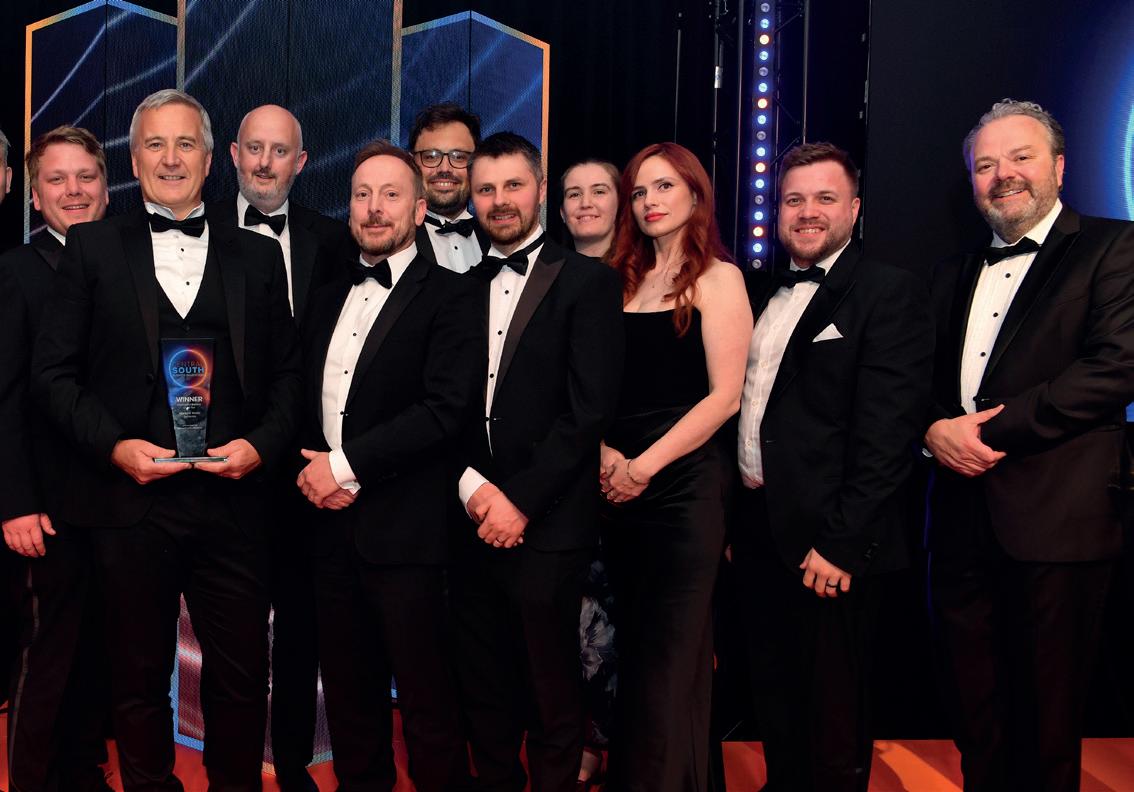
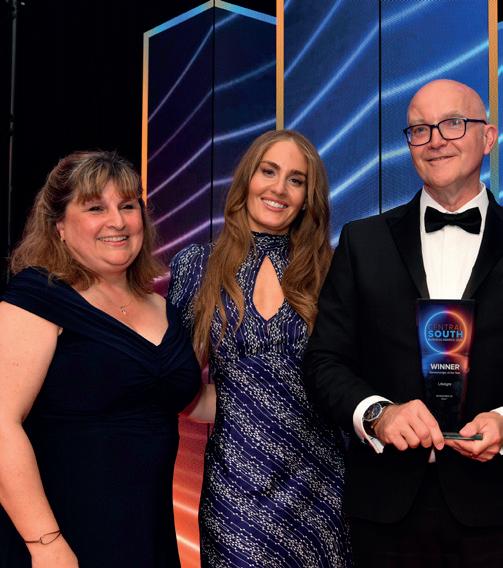
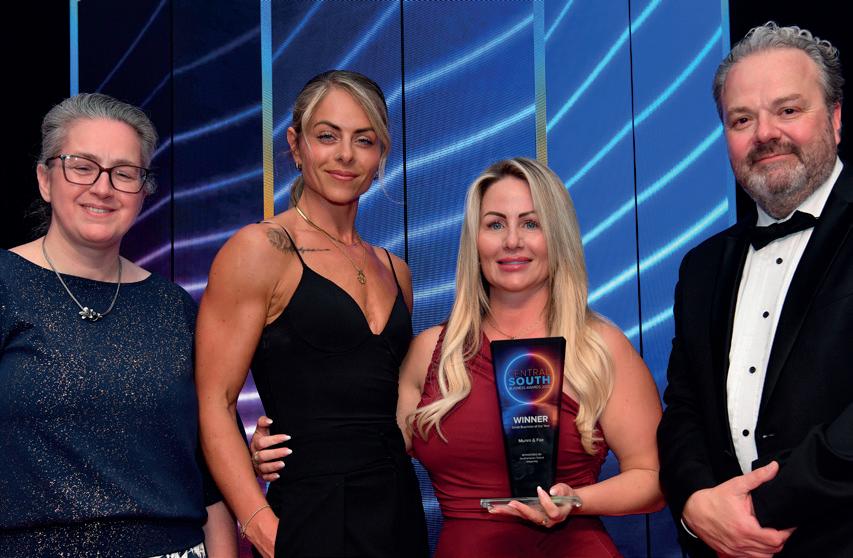
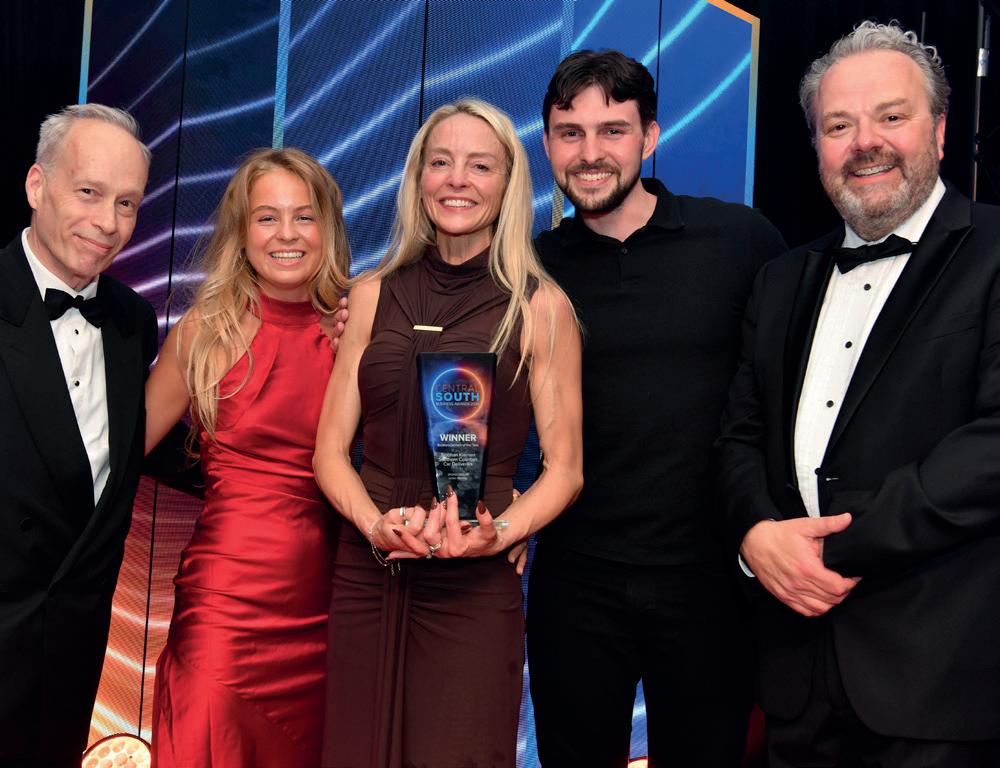
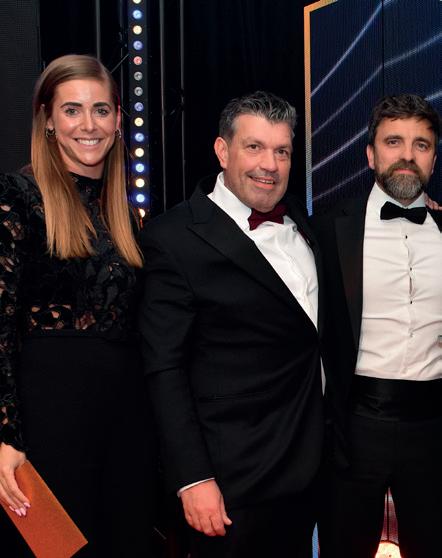
WINNERS FOR THE CENTRAL SOUTH BUSINESS AWARDS 2026 ANNOUNCED
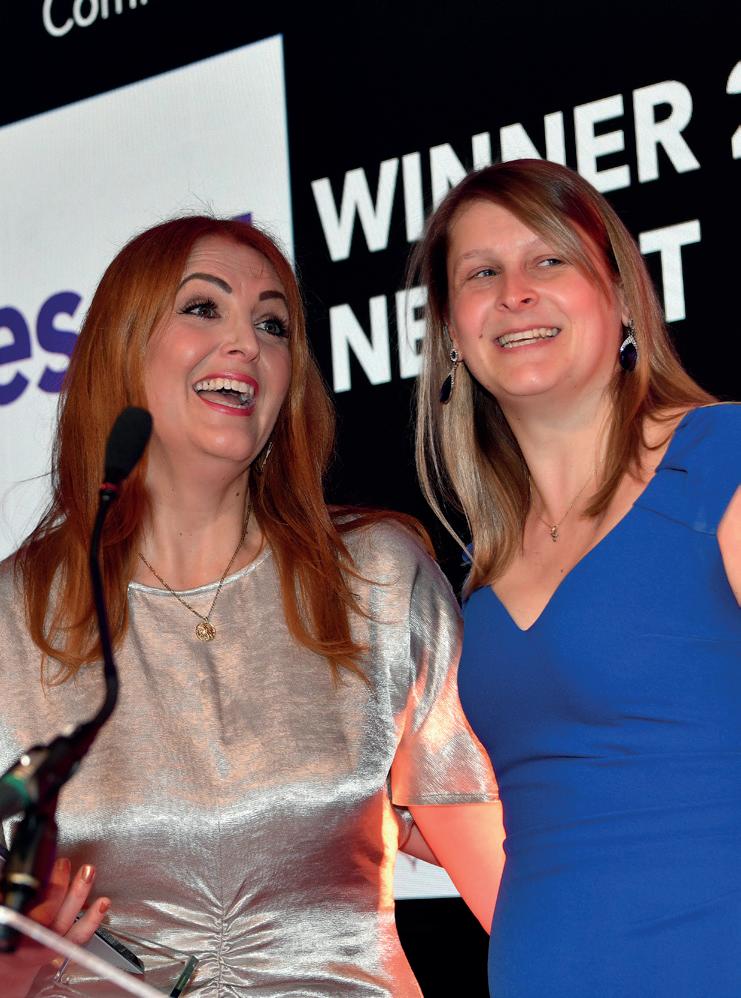
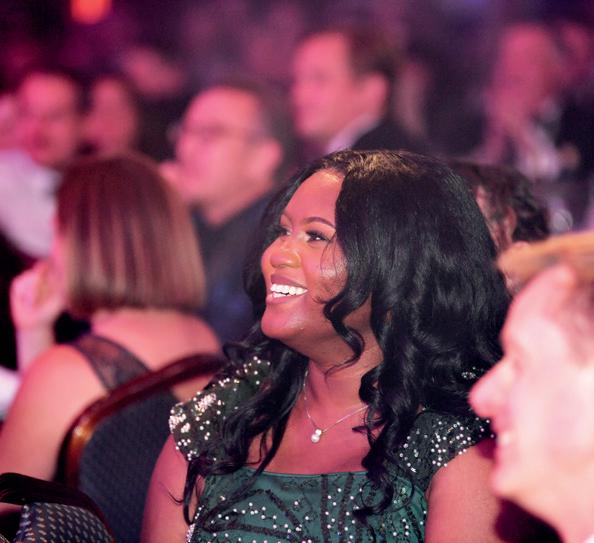
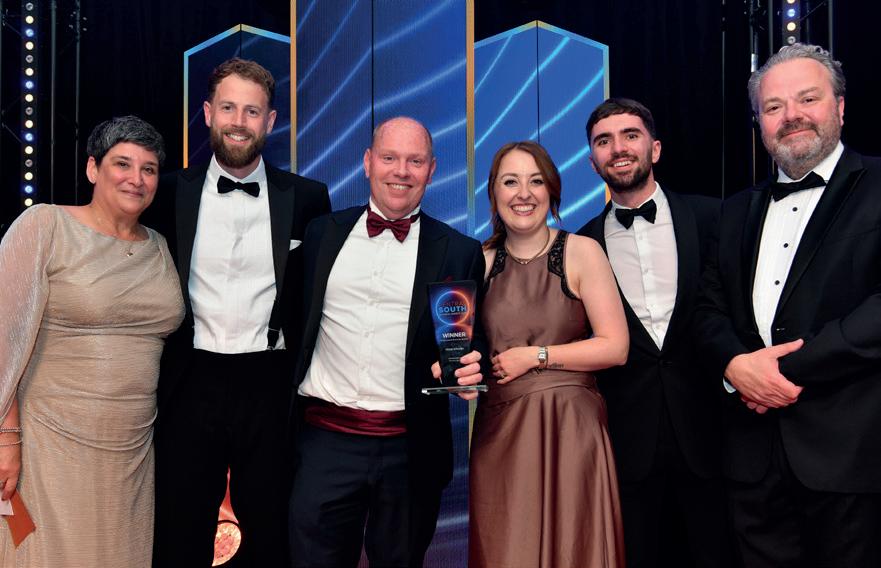
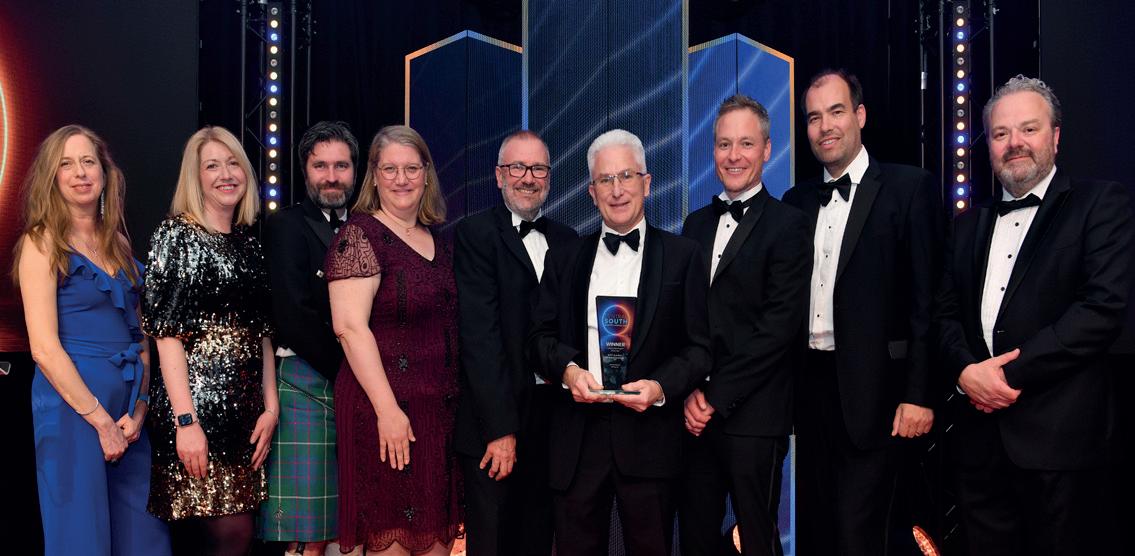
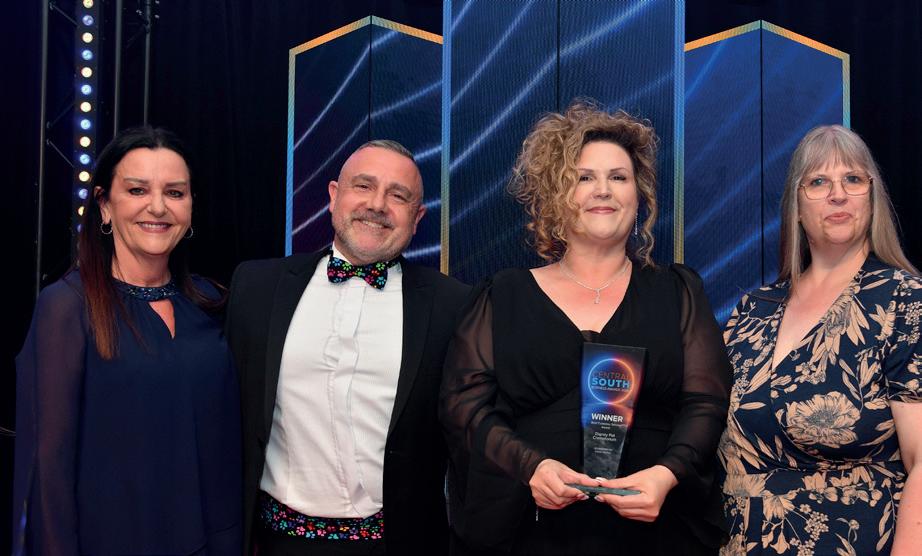
The region’s leading businesses took centre stage on May 13th as the awards returned for another sold-out celebration of innovation, achievement and success across the Central South.
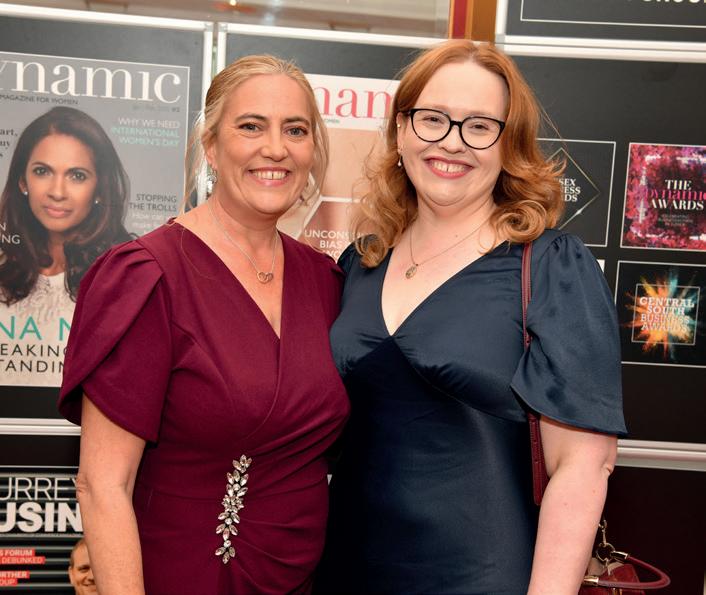
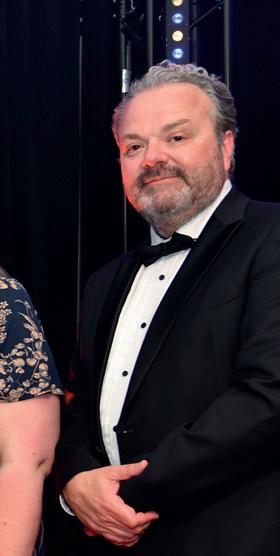
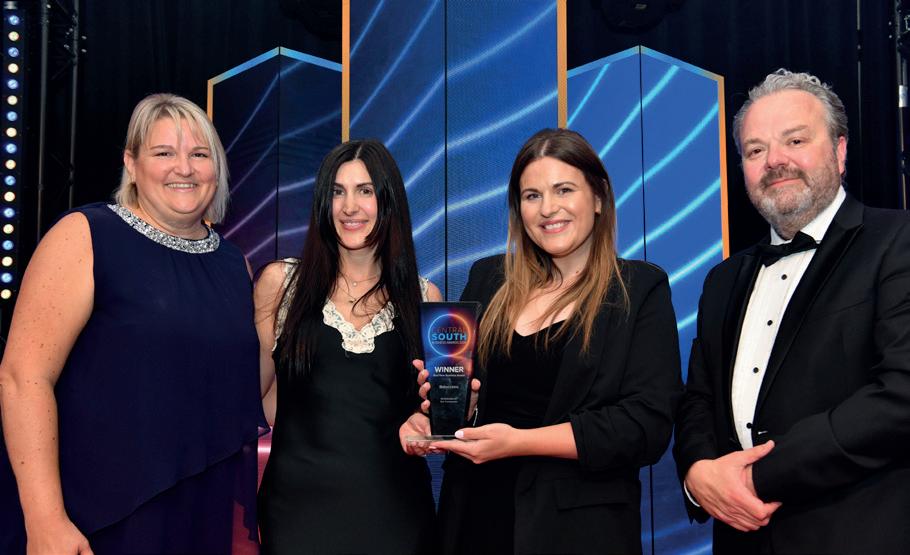
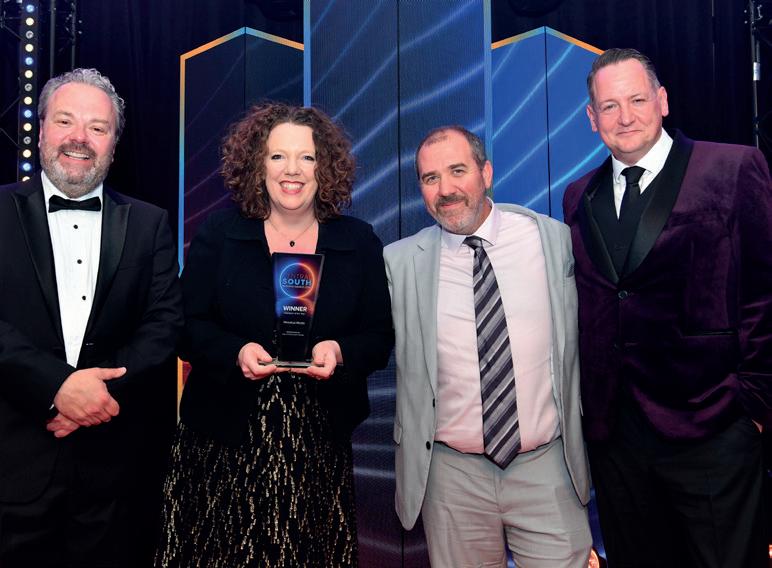
Held at the Leonardo Royal Hotel Southampton Grand Harbour, the prestigious black-tie ceremony welcomed hundreds of business leaders and professionals from across Surrey, West Sussex, Kent, Dorset and Hampshire. Hosted by acclaimed comedian Hal Cruttenden, the evening was a joyous celebration of regional business success while also raising money for Heartbeat, a charity that supports cardiac care for patients and their families across the Wessex region and beyond.
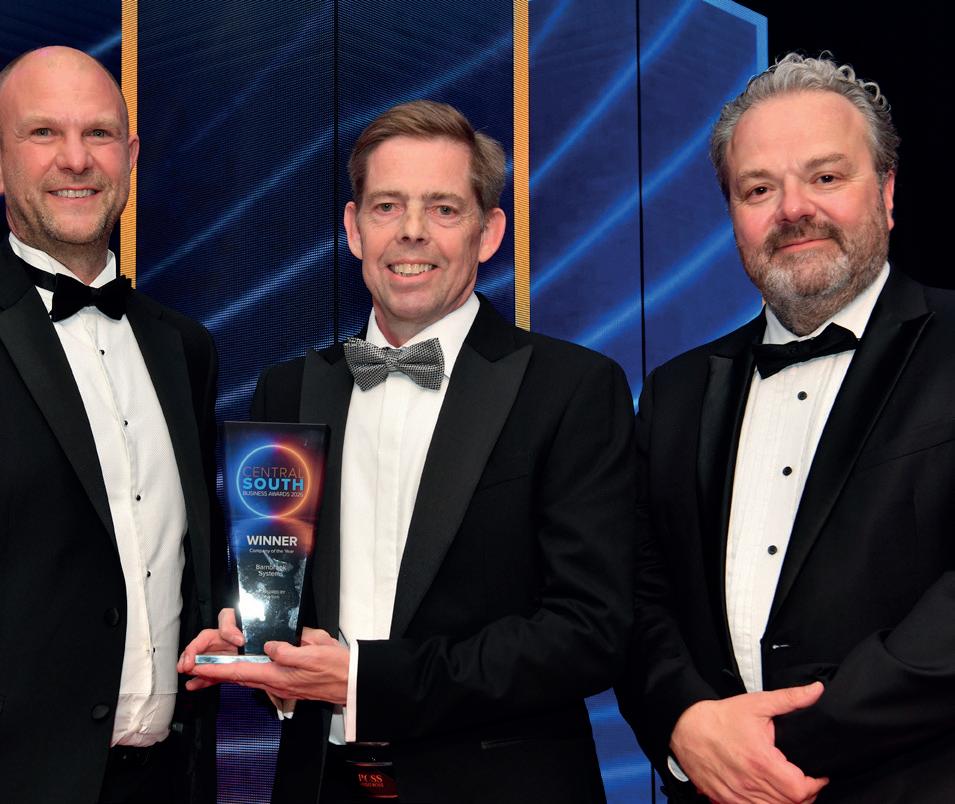
This year’s awards celebrated achievements across 16 categories, spanning Customer Service, Innovation, Construction, Startups and Professional Services. The evening’s top honour, Company of the Year, was awarded to Barnbrook Systems, the Fareham-based electronics manufacturer recognised for its outstanding business performance and industry impact.
Fiona Graves, Events Director of Platinum Media Group and organiser of the awards, commented:
“It’s incredible to see the Central South Business Awards continue to grow year after year, with another completely sold-out event and such an exceptional standard of entries.
“These awards shine a spotlight on the remarkable businesses operating across the Central South and it’s inspiring to see so many organisations pushing boundaries, driving innovation and making a real impact within their industries and communities.
THE 2026 WINNERS
PROFESSIONAL SERVICES AWARD
Sponsored by Business South WARD WILLIAMS
FUTURE TALENT OF THE YEAR
Sponsored by HDSC
JAKIAT JITU
SOUTHAMPTON CITY COUNCIL
COMMUNITY HERO AWARD
Sponsored by Heartbeat NESCOT
❛❛ The win reflects the incredible e orts of all our sta and students who get involved in countless initiatives, from cleaning storm debris and transforming a local underpass, to donating expertise, food and funding to those in need…❜❜ NESCOT
❛❛ What a truly memorable and uplifting evening, celebrating so many outstanding business achievements. Being surrounded by such an inspiring group organisations, the very best best, was both energising and deeply motivating…
Heartbeat
BEST CUSTOMER SERVICES AWARD
Sponsored by Lionel Hitchen DIGNITY PET CREMATORIUM
memorable celebrating business surrounded group of best of the energising
❜❜
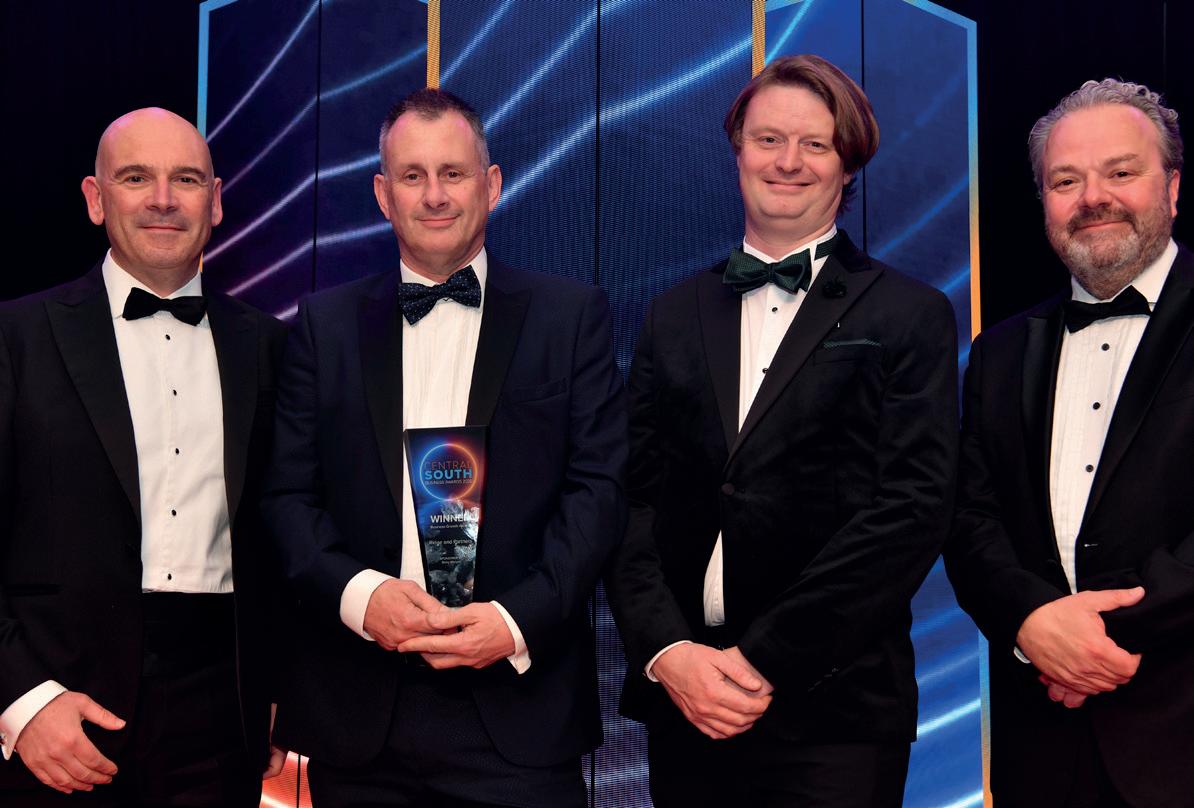
BUSINESS GROWTH AWARD
Sponsored by Blake Morgan RIDGE AND PARTNERS LLP
❛❛With over 1,500 people across 16 o ces, this award reflects what the whole business has built togetherand continues to build every day…❜❜ Ridge and Partners
INTERNATIONAL BUSINESS OF THE YEAR
Sponsored by Surrey Business Magazine WÄRTSILÄ WATER SYSTEMS
❛❛ Winning was a proud moment. It reflects the hard work, expertise and commitment of our entire team across the business. Every department has played a part in building the trusted relationships, technical capability and global support that our customers rely on…❜❜
Wärtsilä Water Systems
❛❛ It was a fabulous evening, rubbing shoulders with some of the Central South’s finest. Events like this are a reminder of just how much talent and ambition there is across this region and how important it is to celebrate it…
Aura Technology
BEST NEW BUSINESS AWARD
Sponsored by Kier Construction BABYCCINOS
THE 2026 WINNERS
❛❛Thank you for organising these awards - the evening always so well organised, with genuine integrity throughout the judging process…❜❜
Occupational Health Consultancy
EMPLOYER OF THE YEAR
Sponsored by City of Portsmouth College
WOODCUT MEDIA
GAMECHANGER OF THE
Sponsored by Omni™
LIFELIGHT
SMALL BUSINESS OF THE YEAR
Sponsored by Southampton Solent University
MUNRO & FOX
BUSINESSPERSON OF THE YEAR
Sponsored by Lester Aldridge
SIOBHAN KIERNAN
SOUTHERN COUNTIES
CAR DELIVERIES
MEDIUM BUSINESS
Sponsored by MARITIME
❛❛ This recognition reflects the dedication, passion and hard work of the entire team. I am incredibly proud of what we have achieved together and excited to continue driving growth, maintaining high standards and delivering exceptional service to our customers… ❜❜
Siobhan Kiernan, Southern Counties Car Deliveries
❛❛ So much work goes into events that run as smoothly as that, thank you for everything you and the team put into it – we thoroughly enjoyed ourselves…
BUSINESS OF THE YEAR
James Cowper Kreston
Sponsored by Aura Technology Group ICS.AI
COMPANY OF THE YEAR
Sponsored by Tetra Tech
BARNBROOK SYSTEMS
Barnbrook Systems
Havant & South Downs College AI EXCELLENCE AWARD
❛❛Wow, what an evening! You guys really do know how to put on a party. Last night was sensational…
❛❛This is for every person who has walked through our doors, picked up a problem and refused to put it down until it was solved…
FINANCE
What
savers often overlook about their retirement pot. By
William Martin, Managing Director, Southover Wealth
Can a trust help protect your estate?
“Inheritance Tax is, broadly speaking, a voluntary levy paid by those who distrust their heirs more than they dislike the Inland Revenue.”
This fantastic quote is attributed to Roy Jenkins, a former Labour Chancellor of the Exchequer. The point is simple. There are often ways you can reduce potential Inheritance Tax. Though, to be fair, I wouldn’t go as far as saying that those who don’t take action are deliberately giving HMRC more money!
So, was Baron Jenkins right? One way to reduce your Inheritance Tax liability is to use trusts.
WHY ARE TRUSTS BEING CONSIDERED MORE OFTEN?
as part of your estate. However, giving away assets does have its downsides.
THE BALANCE BETWEEN GIVING AND CONTROL
Once you give something away, you usually lose control over how it’s used. Money given to family members could end up in a divorce settlement, be claimed by creditors, or just be spent in ways you didn’t plan.
structure can be particularly useful in situations where:
• beneficiaries are young or financially inexperienced
• there are concerns about third-party claims, such as divorce
• long-term family planning is a priority
PLANNING ACROSS GENERATIONS
❛❛ I wouldn’t go as far as saying that those who don’t take action are deliberately giving HMRC more money! ❜❜
Inheritance Tax (IHT) is charged on the value of your estate when you die. While there are allowances in place, including the £325,000 nil-rate band, this threshold has remained unchanged since 2009 and is set to remain frozen until at least 2031.
At the same time, asset values, especially property and investments, have gone up significantly. Starting in April 2027, unused pension funds will also be included in an individual’s estate for Inheritance Tax. All of this means that more families may face IHT than in the past.
One simple way to lower a future IHT bill is to give away assets while you’re still alive. If you live for seven years after making the gift, it usually won’t count
Trusts can provide another option. By putting assets into a trust, you might be able to take them out of your estate but still keep some control over how and when they’re used.
HOW TRUSTS WORK IN PRACTICE
A trust is a legal structure where assets are held by trustees on behalf of beneficiaries. In a discretionary trust, the trustees you appoint have the authority to decide:
• who benefi ts from the trust
• how much they receive
• when distributions are made
You can also give guidance through a “letter of wishes.” This helps trustees understand what you want, while still allowing flexibility if things change. This
Trusts can help manage the transfer of wealth across generations. Sometimes, people want to help their children or grandchildren financially without making their estates bigger for IHT. A trust allows assets to be used for a beneficiary’s benefi t without the beneficiary owning them directly. However, because trusts separate assets from personal ownership, they have their own tax rules.
UNDERSTANDING THE TAX IMPLICATIONS
Trusts, especially discretionary trusts, are subject to specific Inheritance Tax charges. One key feature is the periodic charge, which can be applied every 10 years. Each trust has its own nil rate band, currently £325,000. If the trust’s value exceeds this threshold at the tenyear anniversary, the excess may be subject to a charge of up to 6%.
There may also be tax charges when assets are distributed from the trust. Although these rates are lower than the standard 40% Inheritance Tax rate, trusts still need careful planning and ongoing management.
❛❛ As with most financial planning, starting early gives you more flexibility and more options in the long run. ❜❜
Whether a trust is appropriate will depend on factors such as the size of the estate, the intended beneficiaries, and how the assets are likely to be used in the future.
CAN YOU STILL ACCESS THE MONEY?
A common question is whether it is possible to reduce the value of an estate while still retaining access to the assets. In some cases, trusts can be part of this strategy, but the rules are strict.
If you give assets away but continue to benefi t from them, HMRC may treat this as a “gift with reservation of benefi t”. In these situations, the assets may still be considered part of your estate for Inheritance Tax purposes.
Certain structures, such as discounted gift trusts, are sometimes used to balance access with estate planning. Broadly, these allow an individual to make a gift into trust while retaining the right to regular withdrawals. However, these arrangements are complex and must be set up carefully to ensure they work as planned.
NOT A ‘SET IT AND FORGET IT’ SOLUTION
Trusts can be a powerful tool for estate planning, giving you control, flexibility, and possible tax benefi ts. However, they are not suitable in every situation. Once set up, many trusts are hard, and sometimes impossible, to undo. They also involve administrative tasks and require trustees to fulfil their responsibilities. In general, trusts work best when they’re part of a larger financial plan rather than used on their own.
A BROADER PERSPECTIVE
With Inheritance Tax thresholds frozen and further changes on the horizon, more people are reviewing how their estate is structured. Trusts can help with this process, but they’re just one of several planning tools you can use. Understanding how trusts work, where they add value, and how they fi t with other
strategies can help you make decisions that align with your long-term goals.
As with most financial planning, starting early gives you more flexibility and more options in the long run.
William Martin DipFA CeMAP
Managing Director, Southover Wealth Senior Partner Practice of St. James’s Place Tel: 020 8058 8230 | Mobile: 07487 727 498 www.southoverwealth.co.uk william.martin@sjpp.co.uk
Southover Wealth is an Appointed Representative of and represents only St. James’s Place Wealth Management plc (which is authorised and regulated by the Financial Conduct Authority) for the purpose of advising solely on the Group’s wealth management products and services, more details of which are set out on the Group’s website www.sjp.co.uk/products. The ‘St. James’s Place Partnership’ and the titles ‘Partner’ and ‘Partner Practice’ are marketing terms used to describe St. James’s Place representatives.
EVENTS
As the United States of America marks 250 years of independence this year, a British team will arrive on five-foot high bicycles, playing polo.
THE SPECTACLE
This is not simply a sporting tour. It is a rare convergence of heritage, adventure and spectacle — a British team competing across the United States in a visually captivating and highly shareable format. A compelling narrative: Great Britain versus the United States, played out on one of the most iconic machines ever created.
WHY NOW? 250 YEARS OF INDEPENDENCE
The 250th anniversary of American Independence is a once-in-a-generation moment. This tour aligns with that milestone, offering the media a powerful and timely platform for storytelling, engagement and cultural connection.
THE TOUR MATCHES
• El Paso, Texas — June 28th
• Nashville, Tennessee — July 4th
(US Independence Day)
• Dayton, Ohio — July 12th
Team GB penny farthing polo challenge
Supported by promotional appearances, media engagement and sponsor activations across multiple cities.
GB v USA farthing challenge
transatlantic sporting spectacle in year of US independence
NEIL LAUGHTON — TOUR MANAGER & TEAM CAPTAIN
• Organised and led ~75 expeditions on seven continents (by land, sea & air)
• 11 Guinness World Records (including seven cycling)
• World’s Highest Bicycle Ride — 7,246m, Nepal
• World’s Highest Black Tie Dinner — 7,056m, Mt Everest
• First & Fastest circumnavigation of Britain & Ireland by jet-ski
• Furthest distance in 1 hour on a Penny Farthing (no hands)
• Rode a penny farthing 900 miles from Land’s End to John O’Groats in 11 days
England v Scotland Penny Farthing ‘Calcutta Cup’ match held at Ham Polo Club, London in May 2025
STEP INTO THE SPOTLIGHT
WHERE SURREY’S LEADING BUSINESSES ARE RECOGNISED
The Surrey Business Awards, in association with Surrey Chambers of Commerce, is the largest event of its kind, and the most prestigious in the county.
Delivering these awards is a fantastic opportunity to showcase your business, earn well-deserved recognition and network with key industry leaders
Businesses can sumbit a a maximum of three categories (£25 per entry) and must have an office based in Surrey
Small
Medium
Best
Best
Business
Chamber Member of the Year
Community Hero Award
Employer of the Year
Gamechanger of the Year
International Business of the Year
Professional Services Award
Sustainability Champion Award
Large Business of the Year
Businessperson of the Year
Company of the Year
By Jonathan Grant, Head of Corporate, DMH Stallard
Can growth through acquisition dramatically increase your exit price?
We often meet business owners who have an ideal exit value they would like to achieve, but who have not really considered how that value might be delivered. The value equation can be very different between sellers and buyers:
Seller: sweat + inspiration + the perceived need for a comfortable retirement = value
Buyer: reliable profi tability + future expansion, less costs of reorganisation/investment x sector multiple = value
Before unpacking this, I would urge entrepreneurs to seek good financial advice early, as it can help you work out what you really need. It may also help you work out if a reliable home for your employees or maximising price is the priority.
Once you are clear on your desired exit value/financial plan, you can have your business valued and understand what you need to do. If the value and needs do not match up, growth through acquisition can be a solution.
A larger business with stronger management, a good track record, and some international element will deliver a higher multiple than a small, domestic business reliant on its founder and a few clients.
Example:
• Target exit value £20m, with EBITDA (earnings before interest, tax, depreciation and amortisation) at £2m.
• If your sector delivers a multiple of 5x EBITDA, you will be £10m short of your target.
If organic growth is around 5%, and you need to plan your exit soon, an acquisition can help.
WHAT CAN AN ACQUISITION DELIVER?
• New territory, an established sales team, logistics, and customers (speed to market).
• Skilled workforce and equipment.
• New product lines.
• A complementary business which has a higher multiple on sale – an obvious example would be a software product which complements a manufacturer’s product.
HOW YOU FINANCE AN ACQUISITION WILL BE IMPORTANT
Raising equity: introducing investor(s) will avoid debt financing costs, putting pressure on working capital, but you will be sharing your ultimate exit price and control. You will need to change your constitution (usually articles of association) to make sure you can control key decisions (including when to sell –
a “drag along clause”). Disruptive shareholders can be a big distraction.
Debt fi nance: avoids the need to manage investors and allows the founder to retain 100% of the equity. If you acquire a business which can be scaled quickly, this can be the most straightforward option. Cash flow projections and fore-
❛❛ Once you are clear on your desired exit value/financial plan, you can have your business valued and understand what you need to do ❜❜
casts (with risk factors built in) are critical.
Using cash: within your business or within the target. If the target has cash reserves, use them to help fund the acquisition by releasing them to sellers as capital in a tax-efficient manner.
Delayed payment: most deals today involve an element of deferred consideration, whether through an earn-out (performance of the target post-acquisition) or a deferred payment. Earn-out helps avoid overpaying and can help close a value gap between buyer and seller.
RISK
The benefi t of an acquisition can be lost if risk is assumed without protection. Deferred payment, combined with warranties and indemnities, is designed
to protect buyers. Having a professional team able to support you is critical to assessing this risk and designing the deal to protect you as a buyer, and working out where you can make compromises.
Examples:
• A risk associated with a key customer renewing a large contract could be covered by deferred consideration or a condition precedent.
• A business which relies on independent contractors who work predominantly for the target could have part-time employees incorrectly characterised for tax purposes. This may need to be corrected pre-deal, because the risk can be high.
Warranty and indemnity insurance is now available to cover (unidentified) risk. Buyers should, however, consider
the impact of management distraction, which can result from warranty claims.
KEY PEOPLE
Tying in key people is critical. Normally, sellers remain for only one to three years, motivated by the prospect of an earn-out. Key managers will typically need enhanced deals, with improved service contracts, share options, or growth shares. These need to be taken into consideration when reaching a price.
BACK TO THE PRICE
Why can a larger business justify a higher multiple when calculating price? Of course, that is not always the case, but these are commonly perceived benefi ts:
• Access to larger trade buyers with greater resources.
• Private equity value increases: PE multiples often rise as management scale and sophistication increase (resilience and reliability).
❛❛ Having a professional team able to support you is critical to assessing this risk and designing the deal to protect you as a buyer ❜❜
• Synergies increase: Synergies are far greater for a larger business.
• Greater resilience
• Culture: Less reliant on a founder.
FINALLY… LEAVE SPACE TO TAKE THE VALUE
If you buy with a view to future exit, your eventual sale multiple should be greater than your acquisition multiple.
Example: Buy a retirement sale at 3x EBITDA and sell it at 6x as part of your larger business.
For an early discussion on growth and acquisitions, please contact enquiries@dmhstallard.com
Roadmap to exit
Mergers & Acquisitions can be transformative, creating new opportunities, expanding market share and driving strategic growth. Yet not every potential deal reaches the finish line.
Jonathan Grant
Family companiesinvestment
Entrepreneurs and business founders are increasingly using family investment companies (FIC) to protect and build family wealth, often following a business exit. The logic is that, having built significant wealth, they want the right structure to share that wealth with the next generation while managing risk and providing governance.
The founders generally provide capital, retain strategic control at board and shareholder level, and issue different classes of shares to children or trusts. Those shares can carry income and capital rights without conferring control, enabling intergenerational participation in growth while maintaining stewardship at the centre.
❛❛ An FIC is a private company, typically limited by shares, established to hold and manage family wealth such as cash and portfolios ❜❜
While tax efficiency is an important feature, the real commercial advantage of an FIC lies in its ability to combine a strategic investment structure with bespoke family governance.
WHAT IS A FAMILY INVESTMENT COMPANY?
An FIC is a private company, typically limited by shares, established to hold and manage family wealth such as cash, portfolios, and, in some cases, property or interests in private businesses.
WHERE TAX FITS IN
Tax is an important consideration, but it should support, not drive, the commercial design.
An FIC is a company and pays corporation tax on its profits. The overall outcome depends on the asset mix, funding route, and extraction strategy, and should be modelled on a case-by-case basis with input from specialist tax advisers.
The key tax themes families should be aware of include:
• Certain investment returns, particularly UK and overseas equity dividends, can benefit from favourable corporation tax treatment, making the FIC wrapper attractive for equity-heavy portfolios. Other returns, such as interest and capital gains, are taxable at corporation tax rates in the usual way.
• Dividends, interest on founders’ loans, and share buy-backs each have different personal tax consequences for recipients. Alphabet shares can allow dividends to be directed to specific family members.
• Growth shares can allow future growth in the fund to accrue outside the founders’ estate.
The optimal position depends on family objectives, time horizon, and existing wealth structures, and requires careful coordination across personal, trust, and corporate tax advice.
WHEN AN FIC MAY BE SUITABLE
An FIC tends to suit families with material investable wealth, a multi-decade horizon, and a desire for disciplined, board-led governance over a pooled asset base.
For further information or an initial discussion with our expert Corporate lawyers about family investment companies, please contact enquiries@dmhstallard.com
Specialising
Buying
Selling
Private
Chambers
IN CONVERSATION WITH
MATT TURNER MBE
Matt Turner has been a fixture on the SE business scene for many years. We first met when Platinum was asked to be the media partner for the Young Startup Talent event he launched to help 16-25 years olds start a business, and offered a £50,000 prize fund. This candid interview demonstrates that we can all learn more from our failures than our successes. By Maarten Hoffmann
MAARTEN HOFFMANN: Tell us about your childhood, family background and early career.
MATT TURNER
MBE: I had a really simple yet fun childhood. My brother James and I were always super competitive. We lived in a semi-detached house, shared a bedroom and had a work ethic drilled into us from an early age. My dad had his own small catering business that I would often work in at weekends, and I don’t think we ever had a family holiday as money was always tight.
❛❛ We lived in a semidetached house, shared a bedroom and had a work ethic drilled into us from an early age. ❜❜
creativity. Her name is Barbara Southgate (or Mrs Southgate to me), and yes, she is the mother of England manager Sir Gareth Southgate! Saying that, we always practised penalties in PE!
From the ages of 14 to 16, I did work experience at the Football Association’s design agency in Bayswater during my school holidays. Little did I know back then that I would own 50% of a League One professional football team!
At the age of 11, my school teacher had a massive influence in encouraging my
I didn’t go to college or university; I left school at 16 with 11 GCSEs and went straight into full-time work. I wrote to about 100 lo-
cal design and print companies and said I was leaving school. I said I’d work the first month for free, then I wanted £6,000 a year, and a company in Redhill gave me my first opportunity.
I trained as a terrible graphic designer. Great at the ideas and vision, but absolutely atrocious at putting them on paper. I learnt so much, and because the
business was small, I got to see every aspect. After two years, I was fired because I told the owner I thought it could be done better!
My final job was with a family-run agency in London. I started as an awful graphic designer, and by the time I was 20, I was running the business, had doubled the turnover and brought in new service offerings, but you have
to remember this was 2004/05, and the internet was starting to blow up, especially in the creative marketing space. My final managers’ meeting was on Friday, March 31st 2006, where I requested that we start a digital department; otherwise, the traditional design-forprint side of things was going to slow down. I was told it was just a fad, and when I dug my heels in, I was fired!
On Saturday, April 1st 2006, Creative Pod was born!
MH: How did you start in business?
MT: I saw the writing on the wall with my final employer, and in October 2005 I registered Creative Pod. I knew I needed to see if I was right and if my way and thoughts worked. I had lost my fulltime job, had just bought my first flat, had £6,000 saved and no computer, portfolio or clients. I started small and slow, going to networking events, messaging people on what was a very primitive LinkedIn, and slowly winning work, outsourcing the printing and keeping a small margin.
❛❛ The irony is that my first-ever job was a £1,200 order for some brochures. I still have the cheque the client sent me as it bounced! ❜❜
The irony is that my first-ever job was a £1,200 order for some brochures. I still have the cheque the client sent me as it bounced! That was a very wide awakening to the real world and how business actually works.
Creative Pod was my first ever proper business, and we started trading in April 2006. I’d tried different side hustles that delivered pocket money, but this
Matt receiving his MBE from King Charles III
was the first time I was going at things properly.
MH: Give some context to the launch of Creative Pod. Why, what were your original plans, and how much has that plan changed over the years?
MT: I was on my arse; I had zero income and a mortgage to pay with limited experience in the bigger scheme of things. The initial plan was to design collateral for people, put a mark-up on the print and literally win enough jobs to pay the bills. Then, when digital marketing, social media and websites exploded, I jumped on the bandwagon and started to push those services.
After about two years, I had grown the business to about £400,000 a year –but then in 2008, the credit crunch hit. Innocence can sometimes be a blessing in disguise, and I had no idea what a recession was or even meant.
This was until, overnight, two of my biggest clients, who made up 80% of the business, relocated and brought everything in-house. I was in trouble again.
So I went on holiday to Dubai and ended up winning a £100,000 project whilst on holiday! That saved me and enabled me to weather the storm that was taking place. I stayed in the Middle East for about two years and then won Young Entrepreneur of the Year in 2010
This culminated in my co-founding Young Start up Talent - a not-forprofit social enterprise that helped 16-25-year-olds start their business, with a £50,000 prize fund. It was meant to be a one-hit wonder and ended up running for 11 years, creating over 700 start-ups and over 3,000 jobs.
I’m also a Patron for two local Sussex-based charities, Chestnut Tree House and St Peter and St James Hos -
❛❛ In 2013, I had the opportunity to acquire 50% of my boyhood team Crawley Town FC. To be the co-owner 20 years later was a massive pinchyourself moment. ❜❜
pice and an Ambassador for others such as the Johnson BeHarry Foundation, The Actors House and The Russell Martin Foundation, just to name a few.
MH: How meaningful was the awarding of the MBE?
MT: The MBE was a massive shock. I thought the letter was Jury Service at first! 30-odd years ago, my brother and I used to host our own investitures in the back garden, pretending to Knight and Honour one another. Little did we know when we were playing in the garden that this was actually going to reality infant one the King!
Receiving the MBE on November 12th 2025, nearly 20 years to the day that I registered Creative Pod, was the most surreal day of my life. It’s like having a wedding where you’re the bride and the groom!
I’m incredibly proud of the honour and wear it with pride. It’s special to receive that level of recognition, especially when my career still has a long way to go!
MH: What are your plans for the future?
MT: Achieving great things is the easy bit. The challenge is maintaining, appreciating and evolving what you have achieved or created. That’s my main focus along with continuing the good I do for so many
Matt has a role as Export Champion within the Department for Business and Trade
Matt’s personalised Crawley Town shirt at the club’s Broadfield Stadium
charities and not-for-profi t organisations.
MH: Tell us about Matt Turner MBE when he’s away from Creative Pod… MT: I’ve had three employers in my lifetime and been fired by every single one. My only regret is that I’ve never had a leaving party!
In 2013, I had the opportunity to acquire 50% of my boyhood team Crawley Town FC. I used to go and watch them when they were non-league, and to be the co-owner 20 years later was a massive pinch-yourself moment.
Football taught me so much. Everything I applied to football administration from the way I run the business failed monumentally, yet everything I applied the other way around worked incredibly well. When you’re working with limited resources, experience and knowledge, you have to think smart.
Several times a season, the manager would send round lists of possible players they wanted to buy, so one of the things I used to do was go home, buy all the players on FIFA, put them into my Crawley team, and see how they performed. It was crude, but it worked for sure!
A role I’m incredibly proud of is my position with the Department for Business and Trade as an Export Champion. A role that enables me to fly the flag for British business whilst also helping clients and companies expand into new markets overseas.
Matt Turner MBE is Founder and CEO of Creative Pod
www.creativepod.uk.com
Matt winning Businessperson of the Year at the Sussex Business Awards
How advice can boost your financial wellbeing
Money worries are common and can affect people from all walks of life. Here are some of the ways taking financial advice can help.
Money and wellbeing are intertwined
According to a survey by the Money and Mental Health Policy Institute, almost four in ten (39%) respondents with mental health problems said their financial situation had made their mental health problems worse1.
With this in mind, improving your financial wellbeing could boost your finances as well as your overall satisfaction with life.
Four ways financial advice can help
1. Feeling in control
Feeling in control of your finances means having a firm grasp of your incomings and outgoings, and a solid budgeting and savings plan. A wealth manager can help you become more aware of your monthly spending and find ways to spend less and save more. They’ll also look at the best ways to tackle any debts you may have.
2. Capacity to absorb a financial shock
You might be saving regularly, but would your finances hold up in an emergency? Having around six months’ worth of essential expenditure in an easy-access savings account could help you pay for unexpected repairs to your home or cover you during a period of unemployment.
Serious illness or death could cause a major hit to your finances. Protection products – such as life insurance, critical illness and income protection – could provide vital financial support, but they vary enormously, so it’s crucial to seek advice.
3. On track to meet goals
Whatever your goals, a wealth manager can help you determine whether you are on track and, if not, how to try to make up the shortfall. They can also help you save and invest tax efficiently so that more of your money goes towards your future.
4. Flexibility to make choices
A wealth manager can build a picture of your life and give a projection of how long your money could last. Understanding the impact of your financial decisions can help provide clarity and confidence about your finances, both today and well into the future.
Next steps
Money worries aren’t easy to tackle on your own. We can develop a financial roadmap that sets out where you are now, where you want to be, and how to get there.
The value of investments, and any income from them, can fall and you may get back less than you invested. This does not constitute tax or legal advice. Tax treatment depends on the individual circumstances of each client and may be subject to change in the future. You should always check the tax implications with an accountant or tax specialist. Forecasts are not a reliable indicator of future performance. Information is provided only as an example and is not a recommendation to pursue a particular strategy.
RBC Brewin Dolphin is a trading name of RBC Europe Limited. RBC Europe Limited is registered in England and Wales No. 995939. Registered Address: 100 Bishopsgate, London EC2N 4AA. Authorised by the Prudential Regulation Authority and regulated by the Financial Conduct Authority and the Prudential Regulation Authority.
® / TM Trademark(s) of Royal Bank of Canada. Used under licence. RBCBDM6674_2603_1.01
OPEN FOR ENTRIES
Since 2004, the Brighton & Hove Business Awards have recognised the businesses shaping the
From start-ups to market leaders, we celebrate innovation, impact and growth.
PREVIOUS WINNERS AT THE BAHBAS INCLUDE...
ENTERING IS SIMPLE RULES & ELIGIBILITY
Visit www.platinummediagroup.co.uk
Select your chosen award categories and download the entry forms
Complete your entry (up to 1,500 words per submission)
Upload your completed entries online
Entries are open to any business with an o ice located within the following postcode areas: BN1, BN2, BN3 and BN41
The deadline for submissions is July 17th 2026
Maximum of three categories per business 18 CATEGORIES OPEN TO ALL FREE TO ENTER COULD THIS BE YOUR YEAR?
By Camilla Ferrari, Business Development Manager, London Women’s Clinic
Fertility treatment
Fertility treatment is increasingly recognised in the workplace, with more organisations signing up to be ‘fertility friendly’. Research from Fertility Matters at Work (FMAW) has found that 69.5% of employees will take sick leave during fertility treatment to avoid disclosing their situation to a manager — yet unplanned sickness absence is far harder to manage than planned, flexible working arrangements.
psychologically safe, they are more likely to disclose early and seek the support they need to stay engaged and productive.
❛❛ Supporting someone through a significant life event such as this builds loyalty and engagement. ❜❜
Supporting someone through a significant life event such as this builds loyalty and engagement. With 36% of employees having considered leaving their job due to a lack of support, retaining good talent depends on getting this right.
In this article, we explore how managers can best support employees navigating fertility treatment, and how employees themselves can approach these conversations — so that organisations can adopt best practice for all parties.
SUPPORT FOR LINE MANAGERS
Effective manager conversations have a profound impact — both on the individual and on the organisation. Fertility challenges remain an emerging and often invisible workplace issue, and many managers are simply unaware of how frequently they affect colleagues. The culture you create in your team makes a genuine difference: when people feel
When an employee does come forward, be mindful that this is a private and sensitive topic that will have taken considerable courage to raise. They are likely worried about your reaction. Your instinct may be to jump ahead to questions about maternity or parental leave — but it is important to stay present, focus on the here and now, and let the employee lead the conversation at their own pace.
PRACTICAL TIPS FOR MANAGERS:
• Listen and empathise — ask how you can help, avoid assumptions, and remember that every person’s situation is different.
• Make employees aware of all available flexible working options.
• Agree a communication approach and schedule regular, low-pressure checkins.
• Explore reasonable adjustments for storing and taking medication where needed.
• Always respect privacy and confidentiality.
treatment in the workplace
• Avoid intrusive questions — let the employee set the pace and the level of detail they share.
• Remind employees of additional support available, such as Employee Assistance Programmes (EAPs) and Mental Health First Aiders.
SUPPORT FOR EMPLOYEES
We recognise that discussing fertility challenges with a manager can feel daunting. Concerns about confidentiality, career impact, or not being taken seriously can all make these conversations difficult. However, managers are expected to provide support and make reasonable adjustments where needed, and there is often more flexibility available than people realise.
STARTING THE CONVERSATION
If fertility issues, investigations, or treatment are affecting your wellbeing or your ability to work, we encourage you to consider speaking openly — at whatever level you feel comfortable. How much you choose to share is entirely your decision, and you should never feel pressured to disclose more than you wish. That said, keeping your manager informed, even in broad terms, can help them better understand your circumstances and offer appropriate support.
For those who find it too difficult to speak directly with a line manager, a first conversation with an HR partner or a trusted colleague can offer a gentler starting point — someone who can listen, offer reassurance, and help facilitate further conversations when the time feels right. Support does not have to begin with full disclosure; it can start quietly, building gradually towards practical solutions.
❛❛ Managers are expected to provide support and make reasonable adjustments where needed, and there is often more flexibility available than people realise. ❜❜
Once those conversations begin, adjustments to ways of working — such as altered
hours or the option to work remotely — can make a real difference. Fertility appointments can be frequent, emotionally demanding, and sometimes arranged at short notice. While many people do their best to schedule them outside core hours, this is not always possible, and flexible working can provide crucial breathing space during an already demanding time.
TAKING LEAVE FROM WORK
Treatment can also bring physical side effects, and there will be days when work simply is not possible. In these situations, standard sickness absence procedures apply; however, annual leave, special leave, or unpaid leave may provide a more manageable alternative for some individuals. Partners should not be overlooked either: when a colleague’s partner is undergoing treatment, time off to attend appointments or to provide support can be equally important, and employers are encouraged
Staff at the recently-opened London Women’s Clinic Brighton satellite
❛❛ As the only fertility clinic in the UK holding a research licence, LWC has published more than 100 research papers and is widely regarded as a pioneer in inclusive fertility care, supporting LGBTQIA+ individuals, single women, and those underrepresented in reproductive healthcare. ❜❜
to consider flexibility where a partner’s presence is a meaningful part of the medical process.
Above all, no one should feel they have to navigate this alone. When handled with care and compassion, these conversations can transform what feels like a hidden and isolating struggle into a moment of genuine support — allowing employees to focus on their wellbeing while remaining connected to their work and their team.
CREATE A FERTILITY-FRIENDLY CULTURE
Creating a fertility-friendly culture — built on empathetic management, flexible working, reasonable adjustments, and genuine respect for privacy — improves wellbeing, engagement, and retention. Line managers play a pivotal role in supporting employees through sensitive conversations, while employees are encouraged to share
information at whatever level they are comfortable with to access appropriate support. Proactive and compassionate approaches benefi t both the individuals undergoing treatment and the organisations they are part of.
FURTHER RESOURCES
London Women’s Clinic — Leading independent fertility provider with 20 clinics across England and Wales, offering every pathway to parenthood including IVF, egg and sperm donation, egg freezing, and fertility preservation.
Fertility Matters at Work — A Community Interest Company dedicated to improving fertility support in the workplace.
Fertility Network UK — A charity providing free and impartial support, advice, and information for anyone affected by fertility issues, including regional support groups and a dedicated helpline.
HIMfertility — Information and support for men affected by fertility issues.
Human Fertilisation and Embryology Authority (HFEA) — The UK’s independent regulator of fertility treatment and research using human embryos.
Fertility Friends — An online support community exploring a wide range of topics related to infertility and fertility treatment.
Tommy’s — The UK’s largest charity researching the causes of pregnancy complications, miscarriage, stillbirth, and premature birth, with advice and support during pregnancy and after baby loss.
NHS – Infertility — Detailed NHS information on infertility, including causes, diagnosis, and treatment options.
ABOUT LONDON WOMEN’S CLINIC
Established in 1985, London Women’s Clinic (LWC) is one of the UK’s leading independent fertility providers, with over four decades of experience and more than 40,000 families created.
With a network of 20 clinics across England and Wales — including satellite clinics for consultations and monitoring closer to home — LWC offers every possible pathway to parenthood: IVF, egg and sperm donation, egg freezing, and fertility preservation.
As the only fertility clinic in the UK holding a research licence, LWC has published more than 100 research papers and is widely regarded as a pioneer in inclusive fertility care, supporting LGBTQIA+ individuals, single women, and those underrepresented in reproductive healthcare.
Through London Egg Bank and London Sperm Bank, the organisation continues to expand access to treatment nationally. For employees embarking on a fertility journey, LWC’s hub-andspoke model means expert care is rarely far from home.
londonwomensclinic.com
By Kathryn Winster, Senior Associate, Real Estate Litigation, DMH Stallard
THE RENTERS’ RIGHTS ACT 2025:
Action required on the Mandatory Information Sheet
Landlords and managing agents who have not yet served the mandatory Information Sheet on qualifying tenants should treat compliance as an immediate priority. The deadline for service was May 31st 2026, and local authorities now have the power to impose financial penalties for non-compliance. Below, we set out what is required, the consequences of failure, and the steps that should be taken without delay.
WHAT ARE THE CONSEQUENCES OF NON-COMPLIANCE?
Failure to provide the Information Sheet constitutes a breach of the landlord’s obligations under the Act. Local authorities have the power to impose financial penalties of up to £7,000 for a first offence, and repeated non-compliance may attract higher penalties. Non-compliance may also be taken into account in any proceedings before the First-tier Tribunal.
IMMEDIATE STEPS FOR LANDLORDS AND AGENTS
Landlords and managing agents who have not yet complied should act without delay. We recommend reviewing all tenancies to identify those that meet the criteria set out below, obtaining the latest version of the Information Sheet from the Government’s website, and arranging service for all qualifying tenants with appropriate proof of delivery.
WHO MUST PROVIDE THE INFORMATION SHEET?
The requirement to provide an Information Sheet applies where the tenancy:
• Is an assured or assured shorthold tenancy
• Was created before May 1st 2026
• Has a wholly or partly written record of terms (including a written tenancy agreement)
If a letting agent manages the property, they are also responsible for providing the Information Sheet to the tenant, even if the landlord has already done so.
WHAT DOES THE INFORMATION SHEET INCLUDE?
The Information Sheet sets out key information that tenants need to be aware of under the new regime. It covers matters including the abolition of Section 21 “no-fault” evictions, the transition from fixed-term tenancies to periodic tenancies, revised grounds for possession under Section 8, new rules on rent increases, and tenants’ rights to request permission to keep pets. The sheet is intended to provide tenants with a clear and accessible summary of how their rights and obligations have changed.
❛❛Landlords are required to provide an Information Sheet to each tenant where certain conditions are met ❜❜
HOW THE INFORMATION SHEET MUST BE PROVIDED
The Information Sheet must be provided in the prescribed form published by the Government. Landlords and agents should ensure they use the most up-
❛❛The ability to demonstrate that the Information Sheet has been properly served is likely to be critical, particularly where compliance is challenged ❜❜
to-date version. It may be delivered to the tenant in hard copy (by post or by hand) or by sending the PDF as an attachment, provided there is provision for this in the tenancy agreement.
Sending a link to the document does not constitute valid service. Landlords and agents should also retain clear and reliable evidence of service. The ability to demonstrate that the Information Sheet has been properly served is likely to be critical, particularly where compliance is challenged or relied upon in enforcement or possession proceedings.
Landlords and agents who have missed the May 31st deadline should be aware that a failure to serve the Information Sheet may still constitute a breach, even where service is subsequently effected.
However, serving the Information Sheet now may go a considerable way towards mitigating exposure to enforcement action and higher penalties. Prompt compliance demonstrates good faith and reduces the risk that a local authority will treat the breach as a continuing or repeated offence attracting more severe sanctions.
❛❛Failure to provide the Information Sheet within the required timeframe is a breach of the landlord’s obligations under the Act. ❜❜
For help with your rent renewals, please contact enquiries@dmhstallard.com.
600-ACRE KENT FARM FOR SALE
A plot in East Kent spanning almost 600 acres of productive arable land has been brought to market by Savills, inviting offers in excess of £8.95m.
Adisham Court Farm features a Grade II-listed five-bedroom farmhouse, a range of modern and traditional agricultural buildings, and a three-bedroom semidetached cottage.
It produces a rotation of crops
such as wheat, barley, oats, linseed and, in alternate years, peas, beans and oilseed rape.
More recently, the farm has embraced environmental practices, having been entered into Natural England’s Environmental Stewardship Scheme – enhancing biodiversity and supporting sustainable land management.
The five-bedroom farmhouse, which lies in the heart of Adisham
village next to the parish church, extends to approximately 3,879 sq ft and dates back to the late 17th century, with retained period features.
Chris Spofforth of Savills Farm Agency said: “Adisham Court Farm represents a blend of longstanding agricultural heritage and forward-looking farming, rooted firmly in the landscape that has sustained the village of Adisham for more than a thousand years.”
PROPERTY NEWS
STEELE RAYMOND ESTABLISHES FOUR-STRONG NEW HOMES TEAM IN SOUTHAMPTON
Law firm Steele Raymond has expanded its Southampton office by appointing a four-strong new homes team.
Making up the team are legal director Natalie Marsh, senior associates Charlotte Goodson and Kirsten Wickham, and associate Jodie Coy, who all join the firm from Knights. The new homes team will advise buyers purchasing new build properties, often through developer panels, where transactions require proactive management, accuracy and a detailed understanding of site documentation. They are set to work closely with Steele Raymond’s residential property and residential development teams, supporting clients across the full lifecycle of property transactions.
Jennifer Rogerson, managing partner at Steele Raymond, said: “This is a strong team joining us, and we are
pleased to welcome them. They bring deep experience in the new homes market and a real focus on doing the job properly for clients.”
Legal director Natalie Marsh brings 14 years of experience in the residential sector, including as a partner at
❛❛ “Safety isn’t expensive, it’s priceless. ❜❜
Jerry Smith
Knights. She is joined by Kirsten Wickham, who has specialised in new build property work since qualifying in 2017 and is recommended by national housebuilders; Charlotte Goodson, who advises on high-value residential and new build transactions, including for overseas investors; and Jodie Coy, who brings more than 15 years’ experience in residential property with a focus on new build work.
FAMILY FIRM LANDS £14M CONTRACT TO BUILD 43 COUNCIL HOMES IN BRIGHTON
A family-run construction firm founded by two brothers from Brighton has won an almost £14m contract with Brighton & Hove City Council to build 43 new council homes in Portslade.
Woodhart Group, based in Portslade since its establishment in 2006, will build three blocks of flats across two sites as part of the council’s New Homes for Neighbourhoods programme. The project includes 15 homes in a single block at Windlesham Close and 28 homes in two blocks at Portslade Village Centre, along with a replacement community centre and outdoor play area.
All 43 homes will be affordable housing let at social rent levels to people on the council’s housing register, at a time when over 7,500 households are on the city’s waiting list.
Matt Woodhart, co-founder of the Woodhart Group, said: “This is a really
UK HOLIDAY PARK FIRM ACQUIRED
A business which runs 56 holiday parks across the UK is set to be acquired by one of Europe’s largest asset management companies in a deal worth £768m.
Park Holidays UK, currently owned by US-based real estate investment trust Sun Communities, will be handed over to Aermont following regulatory approval – expected in the second half of 2026.
Since 2022, under the stewardship of Sun Communities, Park Holidays UK has grown its core business from 42 to 56 parks, with further expansion planned.
The East Sussex-based business also operates a sister brand, Park Leisure.
Jeff Sills, chief executive of Park Holidays, said: “We are grateful for
Sun’s partnership and support over the past several years. Together, we have continued to build and strengthen Park Holidays, and I am incredibly proud of what our team has accomplished.
“We look forward to the next chapter for the business under Aermont’s ownership and remain excited about the opportunities ahead.”
Giovanni Manfredi, Managing Director at Aermont, added: “We are delighted to be part of the extraordinary business that the team at Park Holidays UK has created, and we look
big moment for us as a business. It makes us feel like we’ve arrived as a contractor and we’re making a lasting impression by undertaking this prestigious project.
“We always endeavour to employ local people – tradesmen and suppliers. We’re always looking at training up apprentices and bringing young people into the industry. We’ve got about ten apprentices at the moment.”
Woodhart Group started as a two-man carpentry outfi t 20 years ago and now employs more than 200 people across four divisions.
forward to supporting the company as it embarks on its next phase of growth.”
❛❛ Use the best possible materials, and reveal the quality of those materials and the craftsmanship of their assembly. ❜❜
Karl Friedrich Schinkel
SIX-COURT PADEL CLUB HEADING TO SHOREHAM WATERFRONT
Work has begun at a site fronting Shoreham Harbour in West Sussex to develop an indoor padel facility, set to open in autumn 2026.
Club Padel has already secured planning consent and commenced works
at the 1.1-acre site at Fishermans Wharf on Brighton Road, for which local firm Flude Property Consultants oversaw the sale. The new padel club will feature six courts, changing rooms, parking, and a bar overlooking the courts.
Andrew Halfacree, director at Flude Property Consultants, said: “We are delighted to have assisted Club Padel with their expansion plans through this acquisition. Padel is a highly accessible and sociable sport and has experienced explosive growth over the past five years. Meeting demand
SOUTH COAST CPS REGATTA
The South Coast CPS regatta, which anticipates the region’s annual commercial property conference, returned for its sixth year this week with record turnout. Hundreds of property professionals from across the South Coast gathered at Port Hamble in Southampton for a day of racing, networking and team spirit.
Amid changeable weather, 24 yachts set sail from the marina, and strong winds towards the end of the day helped the teams safely back to the RAF Yacht Club. Planning consultancy tor&co took the overall win on the Espresso Martini, followed by the Waterman Group in second and AtkinsRealis in third. Line honours were given to Welborne, while Savills took home the wooden spoon.
The regatta is sponsored by Gracelands Civil Engineering and Groundworks and Barratt David Wilson Homes’ Southampton division.
It is part of a year-round schedule of events in the lead-up to the flagship South Coast CPS conference, to be held on November 11th and 12th at St Mary’s Stadium.
Lucy Richmond, director of South Coast CPS, said: “This was our biggest regatta yet, and the atmosphere throughout the day was fantastic. We had a real mix of conditions out on the water, but somehow managed to dodge the rain completely.
“What makes this event special is that it brings together people from
❛❛ “Safety isn’t expensive, it’s priceless. ❜❜
Jerry Smith
for the sport in the Brighton, Hove and Shoreham area has been particularly challenging with the physical constraints of the area, particularly for indoor courts. We look forward to the opening of this site and wish Club Padel every success with it.”
Alan McGuiness, director of Club Padel, said: “Andrew and the team at Flude have been very supportive throughout what has been a complex process. Securing the right site for Club Padel was no easy task, and their advice, persistence and local market knowledge were invaluable from start to finish. We’re excited to bring this much-needed indoor padel facility to the area and look forward to opening later this year.”
right across the property industry in a completely different environment. Some teams may sail regularly, others are stepping onto a yacht for the first time, but everyone gets involved and has a brilliant day.
“To now be recognised as the largest corporate regatta on the Solent is a huge achievement and a reflection of how much support the event has built across the industry over the last five years.”
DATA CENTRE IN REDHILL GIVEN PLANNING APPROVAL
Real estate investor Castleforge, in partnership with full-service data centre operator and advisory firm Galaxy Data Centers, has announced that full planning consent has been granted for a new 15MW data centre development at its Redhill campus.
Located just outside London, the new development will include four data halls and support a local waste-heat recovery initiative.
Following approval from Reigate & Banstead Borough Council’s Planning Committee, the consented project marks a significant step forward in the joint venture’s plans to expand digital infrastructure capacity in the London market, following the partnership’s £100 million-plus investment in the existing Redhill Data Centre campus in December 2024. The campus will see a follow-on £200m investment, with a gross project value of around £500m.
The development has been designed to achieve a ‘Very Good’ BREEAM rating and incorporates a range of low and zero carbon technologies. Waste heat generated by the facility will be reused on-site, and the design enables future export of waste heat to the neighbouring residential heat network, supporting the wider community’s transition to lower-carbon energy.
The expansion follows surging demand for digital infrastructure across the London market, driven by advancements in AI, cloud computing and hybrid workloads. Demand for data continues to significantly outstrip current power supply levels, and the difficulty of constructing new data centres in major metropolitan areas makes established hubs increasingly
attractive investment prospects.
Mike Adcock, Head of Investments at Castleforge, said: “Securing planning consent for our new development at Redhill is a major milestone in our plans to deliver high-quality, sustainable digital infrastructure to one of the world’s most important data centre markets.”
Paul Leong, Chief Financial Officer and Partner of Galaxy Data Centers, said: “This planning consent is a pivotal step in realising the long-term vision we set out when we acquired Redhill alongside Castleforge.
“The new facility will significantly expand the capacity available to our customers and ensure Redhill is
positioned to meet the evolving needs of edge, hyperscale and enterprise users.”
The Redhill campus currently spans 11,800 square metres across three buildings serving a dynamic existing customer base, including Fortune 500 enterprises across financial services, AI and other sectors. Customers are drawn to the site’s secured green energy, low-latency connectivity to data centre hubs including Slough and the Docklands, and scalable infrastructure.
With planning consent now secured, Castleforge and Galaxy will move forward with the next phase of development, with further milestones to be announced in due course.
❛❛ Use the best possible materials, and reveal the quality of those materials and the craftsmanship of their assembly. ❜❜
Karl Friedrich Schinkel
Community
Best
Best
Business
AI
Employer
Gamechanger
International
Medium
Small Business of the Year -£500k
Businessperson of the Year CEO of the Year
Company of the Year
By Paul Bates, Managing Director, Cleankill Pest Control
AWAAB’S LAW: why landlords must prepare now
The introduction of Awaab’s Law marks one of the most significant changes to housing standards and landlord responsibilities in recent years. Named after two-year-old Awaab Ishak, who tragically died following prolonged exposure to mould in his family’s social housing flat, the legislation is designed to ensure that tenants living in unsafe or unhealthy conditions receive prompt action from landlords and housing providers.
While many landlords are already aware of the law’s focus on damp and mould, fewer realise that the regulations are
being introduced in stages and will soon extend much further.
The first phase, which came into force in October 2025, introduced strict timescales for investigating and remedying dangerous damp and mould issues as well as emergency hazards. However, the second phase, which comes into effect in October 2026, will signifi cantly broaden the scope of the legislation.
Landlords and housing providers will also be required to respond within
defined timeframes to hazards, including pest infestations, excess cold and heat, fire and electrical risks, hygiene concerns and structural safety issues where these present a danger to tenant health. A third phase, due in October 2027, will expand the law further to cover virtually all remaining Housing Health and Safety Rating System (HHSRS) hazards, except overcrowding.
For landlords and property managers, this represents a major operational and compliance challenge.
Pest infestations, in particular, are increasingly recognised as a serious housing and public health issue.
❛❛ While many landlords are already aware of the law’s focus on damp and mould, fewer realise that the regulations are being introduced in stages and will soon extend much further. ❜❜
PEST CONTROL
❛❛ Under Awaab’s Law, reactive property management will no longer be enough.❜❜
Rodents, cockroaches, bed bugs and fl ies are not simply an inconvenience; they can spread disease, damage property and severely impact mental wellbeing. In many cases, infestations are also symptomatic of wider structural or environmental problems such as defective drainage, poor waste management, water ingress or inadequate maintenance.
The scale of the issue was highlighted recently in a report by the Property Care Association, which revealed that homeless families were placed in temporary accommodation affected by serious pest infestations. The report underlined growing concerns around housing standards and the urgent need for faster intervention when problems are identified.
Under Awaab’s Law, reactive property management will no longer be enough. Landlords will need clear reporting systems, documented inspections, reliable contractor partnerships and robust audit trails demonstrating that hazards are being addressed within the required timescales.
Property managers should already be reviewing their procedures ahead of the 2026 and 2027 phases. Regular inspections, preventative maintenance
ABOUT THE AUTHOR
Paul Bates is Managing Director of Cleankill Pest Control, one of the UK’s leading independent commercial pest management specialists. With more than 30 years’ experience in the industry, Paul works closely with facilities managers, local authorities and businesses across
programmes and rapid-response pest control support will become increasingly important in demonstrating compliance and protecting tenants.
At Cleankill Pest Control, we are already working with landlords, housing associations and facilities management companies to help prepare for these changes. Prevention, monitoring and early intervention are always more effective and far less costly than dealing with large-scale infestations and potential enforcement action later.
multiple sectors to deliver compliant, effective and sustainable pest control solutions. Under his leadership, Cleankill has built a reputation for technical expertise, high service standards and long-term customer partnerships.
Awaab’s Law is ultimately about accountability and raising standards across the housing sector. Those organisations that act now will be in the strongest position when the next phases of the legislation come into force.
The Cleankill team is always available to provide expert advice and practical solutions. Call 020 8668 5477 today for a free, no-obligation quote and take the fi rst step towards a safer, cleaner environment.
www.cleankill.co.uk
By Barry Hoffner
“She said to go ahead and apply.” That was the response from my longtime visa consultant, Annette, after she called the Sudanese embassy in Washington, DC and mentioned that I was the founder of an NGO that does humanitarian work in Africa.
I stared at my phone for a moment, unsure whether this was good news.
Most travellers, understandably, were staying far away, and those who still wanted to go could not get a visa. But a small window had opened into Port Sudan, the Red Sea city that had become the Sudan’s de facto capital after Khar-
❛❛ “The country is in chaos,” he told me quietly, “but people still have to survive.” ❜❜
At the beginning of 2024, I was mapping out the final stretch of an unusual personal goal: visiting every country in the world. Only a handful remained. North Korea was still closed. Sudan was in the middle of a devastating civil war.
193 COUNTRIES Sudan was one I almost skipped
toum descended into chaos. Fighting reportedly hadn’t reached the city itself. Technically, it was possible to go. The real question was whether I should.
I had travelled to difficult places, previous war zones— Afghanistan, Iraq,
Syria, Yemen — but never somewhere that was in the middle of an active war. It wasn’t fear that unsettled me most. It was the discomfort of stepping into a place where people’s lives were collapsing while I was travelling the world, trying to achieve my goal of visiting 193 UN member states. A feeling of guilt for my life against those who are truly suffering.
Sudan had become one of those crises the world seemed to absorb only in passing: a headline briefly noticed before disappearing beneath the day’s headlines, wars in Ukraine and Gaza. The capital, Khartoum, had been completely destroyed. Tens of thousands were dead, and millions were displaced. Yet outside humanitarian
COUNTRIES skipped
❛❛ Most travellers, understandably, were staying far away, and those who still wanted to go could not get a visa. ❜❜
circles, almost nobody seemed to be talking about it. The media had decided that the tragedy unfolding in real time in Sudan was not important enough.
But a few weeks later, after my visa was approved, I told myself that I was unsure of my trip to Afghanistan, only a year after the Taliban took over, a few years earlier. Yet it was a highlight of my journey. So, I boarded the Egypt Air flight from Cairo to Port Sudan, still wondering if I was making a mistake.
Within an hour of landing, I was in the backseat of a taxi with my guide, Khalid, driving through crowded streets overflowing with displaced families “The country is in chaos,” he told me quietly, “but people still have to survive.”
Khalid was soft-spoken and gentle, carrying himself with the calm dignity of someone trying not to burden others with his pain. Before the war, he had lived in Khartoum and worked as a painter. When fighting erupted between the Sudanese army and the Rapid Support Forces, soldiers ransacked his home and destroyed much of his artwork.
Now he had the rare opportunity to earn some money for his family by guiding one of the only tourists to enter Sudan in months.
As we walked through Port Sudan’s markets together, I noticed NGO logos everywhere — the Red Cross, Relief International, UN agencies — signs of a humanitarian catastrophe unfolding largely out of view. Men crowded around outdoor coffee stands, drinking
strong Sudanese coffee mixed with ginger. Refugees slept in unfinished buildings. Entire families had fled Khartoum with little more than what they could carry.
As the trip went on, my focus began to shift. I had arrived in Sudan curious about a forgotten crisis, but more than anything, I now wanted to be fully present to the devastating reality so many people had endured. I couldn’t offer aid
❛❛ These women, despite everything, were dressed in radiant, flowing gowns and brilliantly coloured headscarves, as if walking a catwalk rather than standing in a food line. ❜❜
or solutions. I couldn’t stop the war or rebuild shattered lives. But I could bear witness with a caring heart. And somehow, that felt like something.
Just outside Port Sudan, Khalid brought me to a sprawling UNHCR refugee camp sheltering thousands displaced from Darfur and Khartoum. Under the searing afternoon sun, women stood patiently in long lines holding metal dishes, waiting for what was likely a small ration of grain to feed their families.
Then I looked closer. These women, despite everything, were dressed in radiant, flowing gowns and brilliantly coloured headscarves, as if walking a
❛❛ Sudan reminded me that sometimes the deepest purpose of travel is the opposite: to move closer to realities the world would rather ignore. ❜❜
catwalk rather than standing in a food line. Their elegance felt defiant, almost transcendent. I couldn’t reconcile the desperation of their circumstances with the pride and grace with which they carried themselves. It was as if dignity was not merely part of survival here — it was survival. And it was utterly breathtaking.
The stories I heard throughout Sudan — of homes destroyed, families separated, entire lives erased overnight — left little doubt that suffering had touched
nearly everyone. Yet what stayed with me most was not only the hardship but also the resilience beneath it.
I couldn’t fully grasp the scale of destruction in Sudan, nor understand how a catastrophe affecting millions could feel so absent from global conversation. The world seemed largely disengaged while outside powers continued to supply weapons and back rival sides.
No one seemed to ask the obvious question: Why didn’t the world care? Perhaps because apathy demands nothing, while caring — especially when one feels powerless — can be overwhelming. Still, I realised there was a difference between changing the world and refusing to look away from it.
Before leaving Sudan, I agreed to help Khalid get several of his paintings safely out of the country so they could be sold by an Italian friend in Europe to raise money for his family. One watercolour stopped me cold: faceless figures dissolving into a city consumed by chaos, as though war itself was erasing people from existence.
“How much?” I asked him. He hesitated. “Maybe $40.” I paid him five times that amount, embarrassed by how little he valued his extraordinary work after everything he had survived. Today, that painting hangs in my home.
Barry is the author of Belonging to the World and was recently named the 2026 “Most Purposeful Traveler” by NomadMania. He has visited every country in the world (except North Korea, which he will visit soon), including all the highest-risk “Level 4: Do Not Travel” regions. His fi rsthand experiences challenge one-dimensional narratives, revealing the complexity, resilience, and humanity that exist alongside very real danger.
Most people think of travel as a form of escape. Sudan reminded me that sometimes the deepest purpose of travel is the opposite: to move closer to realities the world would rather ignore. I went to Sudan hoping to better understand a crisis. I left, realising how dangerously easy it is to look away.
Audi SQ7 Vorsprung
By Maarten Hoffmann, Motoring Editor
The trend of souping up large SUVs continues unabated, this time with the behemoth Audi Q7, having been breathed on by the Audi engineers with an S in front of the name. The aim ap-
pears to be to make a huge SUV drive like a sports car, following on from the very first, the BMW X5, which drove like a normal car.
They have made a great fist of it as the magnificent, barnstorming 4.0-litre twin-turbo V8 produces 507 bhp and 770 Nm of torque, propelling this 2.2-tonne monster to 62mph in 4.1 seconds and that is a mightily impressive feat. The
❛❛ This is the same engine that sits in the Bentley Bentayga and the Lamborghini Urus, and as I stated when I reviewed them, they are brilliant cars ❜❜
Vorsprung
power just goes on and on, and it seems such a shame to take your foot off the ‘go’ pedal as it’s a thrilling rush that I just didn’t want to end. But it doesn’t have to be like that - pop it into Economy mode and it potters along on the school run or the weekly Waitrose shop.
This is the same engine that sits in the Bentley Bentayga and the Lamborghini Urus, and as I stated when I reviewed them, they are brilliant cars - and you get it for £100,000 less with the SQ7. The eight-speed gearbox is lightning fast, and you forget the hard work it’s doing, as you should.
It also handles brilliantly thanks to the air suspension, real-wheel steering, torque vectoring, rear differential and the massive 22-inch wheels that roll over potholes and make cornering a breeze, with little concern about the car’s weight or the high ride height. The four-wheel drive system will also ensure you get where you are going in
rain, sleet and snow. The air suspension automatically lowers the car at speed, therefore making it slightly more aerodynamic.
As my regular readers will know, I like a thunderous roar from my cars, and this did not disappoint - this is probably one of the best-sounding V8s around when in Dynamic mode - again, pop it into Economy mode, and it is near silent, so if you leave the house at 6am, the neighbours will still be speaking to you when you get home.
The cabin is typically Audi - well put together with premium materials, great seats and with the
“The standard interior is excellent so why mess with it?”
seven-seat option as on my car, you can haul seven people with a full boot and almost not even notice they are on board. With all rear seats down flat, it offers a class-leading 793 litres, which is enough to move house!
No muscle required either, as all seats go up and down at the press of a button.
❛❛ Fuel consumption will trouble some, as it is heavy if you overuse your right foot.❜❜
Many folk might be put off by the fact that there is very little difference in the exterior and interior than the standard Q7, but what do you want - disco lights and dancers? The standard interior is excellent so why mess with it? Also, there is the synthetic exhaust note coming from the speakers and some
fake exhaust pipes, but I am not really sure why anyone would give a hoot about any of that - it sounds great.
The head-up display works really well, the AC is freezing cold, the infotain-
ment screens are all where they should be, and the famous Audi ‘view’ button means you can change the screen in front of the driver to any view you would like - still unmatched by any other car, and the sound system is terrific.
“With all rear seats down flat, it offers a class-leading 793 litres, which is enough to move house!”
❛❛ If you need a huge SUV with seven seats and a rocket under your right foot, this could be the car for you. ❜❜
Drawbacks - well, of course there are a few. The touchscreen has now become annoying and difficult to use when on the move without rear-ending the car in front. The piano black centre console looked fantastic when they de-
livered the car, but after 100 miles, it was covered in dust and fingerprints - time for a change, Audi, as it is all a tad dated. Fuel consumption will trouble some, as it is heavy if you overuse your right foot. In anger, I got it down to 10 mpg, but the average is 24 mpg.
If you need a huge SUV with seven seats and a rocket under your right foot, this could be the car for you.
TECH STUFF:
Model tested: Audi SQ7
Vorsprung TFSI
Power: 507 bhp
Speed: 0-62 - 4.1 secs
Top: 155 mph
Economy: 22.8 mpg combined
Standard Q7 price from: £73,225.00
SQ7 as tested: £119,920.00
DYNAMIC COLUMNISTS
Alex Bailey
What’s the biggest shift right now?
Laura Hearn In defence of boredom
Pippa Moyle
Becoming the leader your business needs
Natalie Montagnani Is expertise no longer enough?
INTRODUCING...
Sophia Lorimer Female style at work
Camille Pierson Your new wellness companion
DR KAMAL AHUJA
News
4 Upfront: The top international news stories involving women in business
12 In the Right Direction: Good news stories from around the world
Regulars
8 The Alex Bailey Column
AI isn’t the biggest shift at work, culture is
10 The Laura Hearn Column In defence of boredom
14 The Pippa Moyle Column
Becoming the leader your business needs right now
16 The Natalie Montagnani Column Is leadership now no longer enough?
42 The Camille Pierson Column
In the first of a new series, wellness expert and spa owner Camille Pierson looks at your whole-body wellness shakedown
PLATINUM MEDIA GROUP CONTENTS
46 The Sophia Lorimer Column
In another first of a new series, fashion expert Sophia Lorimer, suggest ways to present yourself
Finance
6 Kreston Reeves
Alison Jones bows out with a final helping of wisdom
Features
18 Dame Inga Beale
The first female, and openly bisexual CEO, of Lloyd’s of London
If you have yet to be called an incorrigible, defiant woman, don’t worry, there is still time.”
– Clarissa Pinkola Estés
US
/ Mexican writer
Further Reading
50 Persia Hayley
The myth of control ...and why it might be holding you back in business
Wellbeing
24 What’s in a name?
The 11-year battle to get PCOS renamed to a more appropriate PMOS
44 The Neko Body Scan
The nearly-full body scan which gives you a mildly comprehensive health MOT
Art
28 Spotlight
Focusing on two women who are not getting the recognition they deserve
30 The Longevity Gap
How women over 50 are re-writing the business rules
36 Curiosity, not perfection
The new skill that ends DEI inaction
48 Yasmine Anane
From manuscript to market: the business of publishing
48 Scarlett Raven
Her new English Garden collection at Castle Fine Art, Brighton
Travel
50 A day in Dinant
The quickest of flits around the town in Belgium, full of history, despite its size
Wine & Dine
52 Green, going, gone Michelin has done away with its Green Star merit system - without telling anyone
What’s On
54 A brief snapshot of what’s on in the South East
EDITOR’S NOTE
Welcome to Dynamic
You might be forgiven for doing a double take when you first saw this month’s cover. A man on the front of Dynamic? We know, it’s a little different for us. But Dr Kamal Ahuja is no ordinary cover story. As one of the leading voices in fertility and reproductive medicine, his work has influenced conversations around IVF and women’s health for decades. His career, insight and influence made him impossible to ignore for this issue – even if it does make for an unexpected Dynamic cover.
Inside, you’ll also find Dame Inga Beale’s remarkable story, from becoming the first female CEO of Lloyd’s of London to challenging long-standing ideas around leadership and inclusion, alongside thoughtful contributions from our regular columnists on culture, confidence, reinvention and the value of taking the time to just be.
This month also marks a moment of change
for Dynamic itself as we say a heartfelt thank you to Alison Jones, whose articles have brought warmth, intelligence and generosity to these pages over the years. Alison has consistently championed women in business with honesty, empathy and quiet wisdom, and we are incredibly grateful for her contribution to the magazine. We wish her a fulfilling retirement and every happiness in her next chapter.
At the same time, we are delighted to welcome two new columnists to Dynamic. Sophia Lorimer joins us with a fresh perspective on style, confidence and personal presentation in business, exploring how what we wear can shape how we feel and shape up professionally. We also welcome Camille Pierson, owner of The Float Spa, whose commitment to health and wellbeing brings another thoughtful and inspiring voice to the magazine.
HEAD OF DESIGN / SUB EDITOR: Alan Wares alan@platinummediagroup.co.uk
FEMALE LEADERSHIP GAP PERSISTS
We’d love to report a rapidly closing gap, but while women are gradually gaining ground in UK business leadership, significant gaps persist across sectors, regions, and access to finance. While one in five active UK companies – approximately one million of the 5.2 million – are female-led, a funding gap is holding female-led businesses back. Generational trends show that younger founders are slightly more likely to be women, with female representation among Gen Z-led businesses rising from 18.7% in 2024 to 20.28% in 2026. Millennials mirror this pattern at 20.13%, while Gen X and Boomer-led companies lag behind at 18.63% and 18.19%, respectively. Despite these gains, progress toward gender parity remains slow and inconsistent across industries.
BBB BACKS FEMALE INVESTMENT
In an attempt to alleviate some of this persistent disparity, The British Business Bank invests £1 million to support female founders amid declining women-led business leadership. The British Business Bank has pledged £1 million to back female founders, as recent data shows the number of women leading mid-market businesses falls to its lowest in nearly a decade.
The state-backed lender said the capital will be deployed through Angel Academe’s Enterprise Investment Scheme (EIS) fund, which invests in high-growth businesses with at least one female founder. The move comes amid longstanding concerns that women-led businesses continue to attract a disproportionately small share of venture capital in the UK.
UK / FRANCE AGREE PARTNERSHIP FOR WOMEN’S HEALTH
The UK and France have formed a partnership to explore solutions to millions of women suffering from complications arising from childbirth or living with endometriosis. As the technology secretary arrives in Paris for talks with G7 Ministers, scientists in both countries
will bring together their AI capabilities and data for the study. The collaboration targets under-researched, underdiagnosed conditions - like endometriosis and childbirth complications - that affect millions globally but currently lack proper treatment. This partnership will
unlock new treatments, enable earlier diagnoses for safer pregnancies and more personalised care. The deal will also track drug-resistant microbes (such as E. coli) to speed up the way international teams identify and tackle infectious outbreaks before they spread.
UPFRONT
THE LATEST BULLETINS FROM AROUND THE WORLD
AMANDA BLANC TO LEAD SEARCH FOR NEXT BP BOSS
BP has backed Amanda Blanc to lead its search for a new chair for the second time, shrugging off investor concerns about her role at the company following the shock departure of its chair last week.
Some shareholders have voiced concerns over Blanc, the senior independent director at the British oil company, running the process again after Albert Manifold’s short stint as chair.
WOMEN GAINING GROUND IN LEADERSHIP ROLES
A Lewes-based entrepreneur has launched a new women’s intimate wellness brand – finally bringing to life a business concept she had shelved for six years because, as she put it, she felt too embarrassed to front it publicly.
However, the BP interim chair, Ian Tyler, said in a statement: “At the request of the board, Amanda Blanc will lead the search process for BP’s next chair. As in previous searches, this will be a rigorous process involving the entire board and the final decision will reflect our collective view.”
Barbara Rowe (pictured), founder of the established Sussex wellness brand Take Good Care, has officially launched Confortá-la (‘Comfort Her’ in Portuguese), an online store that combines intimate wellness products with a broader self-care philosophy rooted in conversations about menopause, ageing, confidence, and women’s wellbeing.
The website – www.confortala.com – is now live and accepting orders.
WOMEN PAID LESS - AT EVERY AGE LEVEL
According to the Office for National Statistics, median weekly pay of men working full-time outstrips that of women at every age. The gap widens significantly from around age 30 until workers are in their 60s, likely because more women than men have disrupted career paths due to caring responsibilities for children or elderly relatives.
Women tend to be more likely to take career breaks and re-enter the workforce in lower-paid roles. The median annual salary of men aged 50 to 59 in full-time work is £43,940 – 8% more than that of women of the same age, whose median salary is £40,456.
SHEGULLS MAKE THEIR WEMBLEY DEBUT
❛ ❛
The most beautiful thing a woman can wear is confidence.”
- Blake Lively
FORTUNE’S MOST POWERFUL WOMEN LIST – REVEALED
Fortune Magazine has published its Most Powerful Women List 2026, and a new name occupies the top spot.
Jane Fraser (left) is the CEO of Citigroup, having led a five-year upward turnaround in the bank’s fortunes. Fraser broke Wall Street’s glass ceiling when she became the first woman CEO of a major bank in 2021. Her rise
Brighton & Hove Albion Women’s team made history by reaching their first FA Cup Final this season. The showpiece event took place at Wembley Stadium on Sunday, May 31st, between the Albion and Manchester City, attended by a crowd of 43,917. Brighton fans outnumbered City fans, though the largest contingent were clearly neutrals, who came along to celebrate the high point of England women’s domestic football.
Ultimately, it was not to be for the debutants, as despite Brighton dominating possession, the Sky Blues from Manchester scored four unanswered goals to win the Cup and complete a historic first domestic League-andCup double.
❛
A pessimist is a man who thinks all women are bad. An optimist is a man who hopes they are.”
- Chauncey Depew
exemplifies how this list tracks not just who has an impressive title, but also what they are doing with it—backed by hard business metrics.
Last year’s No.1, Mary Barra, CEO of General Motors, is now at No.2. Meg O’Neill, CEO of BP, is the highest-placed British woman on the list, coming in at No.16.
UK ACCOUNTS FOR ONE-THIRD OF ALL EUROPEAN C-LEVEL WOMEN
Analytics companies The Big Search and Statista partnered to uncover deeper insights into the number of women holding C-level titles.
The research analysed 284 growth-stage and late-stage European B2C internet companies, which together employ 1,470 C-level executives across Europe, excluding managing directors. Among the companies surveyed, 37% had at least one woman in a C-suite role, representing 331 female executives overall.
The United Kingdom accounts for one-third of the entire female C-level sample. But volume isn’t the same as share. Among countries with at least 10 female executives, the Netherlands has the highest representation (31.9%). Germany ranks at the bottom, despite having the secondlargest pool of female executives, with only 15.8%.
By Alison Jones, Partner, Kreston Reeves
Keep supporting women in business
“Good luck, and I hope you enjoy your career journey as much as I have enjoyed mine.”
This is my last article for Dynamic magazine. As I prepare to take early retirement, I’ve found myself reflecting on my working life: what shaped me, what challenged me, and what I hope I’ve passed on to others.
Within weeks of starting my fi rst job, I discovered that the other student who had joined at the same time was being paid more! After a few sleepless nights, I plucked up the courage to ask my boss, Brian, why. He had no answer. There was no performance issue, no difference in experience, no justification at all, except that I was a young woman and he was a young man.
I am pleased to say that Brian soon sorted this out for me, but this was the fi rst of many occasions during my career where differences and inequality arose. From then on, Brian and I developed a real professional respect for each other, and he became a mentor to me. For many years, we met regularly for lunch, and I sought his perspective when I was facing a tough decision, doubting myself, or trying to work out my next career step.
• Ability to motivate and inspire – People are more motivated when they know why something matters, not just what needs to be done.
• Mentoring – a good leader doesn’t just give instructions; they build knowledge. Coaching someone through a task, explaining what “good” looks like, sharing context, and checking understanding means that next time they can do it with more confidence and less support.
• Fairness – be fair to everyone in your team and avoid favourites. Human nature can make this difficult, but your decisions must still be consistent, transparent, and evidence-based.
“We sometimes forget how closely our teams watch us. People learn from the way we speak, the way we make decisions, and the way we respond under pressure”
He never pretended leadership was easy, but he reminded me that people remember how you treat them far longer than they remember what you say in a meeting. I will always be grateful for his advice, his honesty, and his kindness.
For me, Brian was a great example of what leadership can look like in practice. Later, when I became a leader myself, I decided I wanted to have the same positive impact on others as he had on me. We sometimes forget how closely our teams watch us. People learn from the way we speak, the way we make decisions, and the way we respond under pressure. If we behave badly, if we are dismissive, impatient, or unfair, then we silently give others permission to do the same.
If we want brilliant leaders in the future, we need to be brilliant leaders now, especially in the small, everyday moments that don’t feel like ‘leadership’ at the time, but which can have a massive impact on our teams.
Over the years, I’ve worked with some exceptional leaders (and a few who were not so good!). These are the qualities that, for me, make a good leader:
• Kindness – no matter what has happened, we should always be kind. Kindness is not weakness. Yes, someone may have made a mistake, but didn’t we all make mistakes when we were learning? Feedback should always be in private.
• Respect – we should always respect each other. It shouldn’t matter who we are, where we come from, or what we look like. We should be treated equally, not more, not less, just equal.
• Humour – we can’t be serious all the time at work. Being able to share a joke, smile at the chaos, or laugh together after a long week helps people connect. Humour is often the glue that makes a team more resilient, especially during stressful projects.
In conclusion, be yourself. Don’t try to copy someone else’s style because you think it looks more ‘senior’ or more ‘confident’. Lead in a way that is authentic to you. If you don’t know something, admit it. If you make a mistake, own it. These actions inspire your team far faster than any title ever will.
If you aim for these behaviours, you will build stronger relationships with colleagues and clients, and you will help shape the next generation by showing them what good leadership looks like, day after day.
Good luck, and I hope you enjoy your career journey as much as I have enjoyed mine.
Finally, I am delighted to tell you that I am handing the baton to Sam Jones (pictured, below), one of my fellow partners. Sam is equally passionate about supporting women in business, so I know that I will be leaving this role in safe hands.
Sam will tell you more about herself when she writes her fi rst article in the next magazine.
To fi nd out more, please contact Sam Jones, Partner, Head of Corporate Tax: Call: +44 (0)33 0124 1399 Email: enquiries@krestonreeves.com Visit: www.krestonreeves.com
By Alex Bailey
The
Alex Bailey Column
COMPANY OF THE YEAR 2022
We are delighted to have and CEO of Bailey & French, She founded leadership team delivering work across large blue chips as well
AI isn’t the biggest shift at work right now;
At its simplest, culture is the space between people: how we connect, make sense of work, and understand what matters. And that space has changed.
We are spending a lot of time talking about AI, and understandably so. It is moving quickly, it is visible, and it is changing how work gets done. Conversations with clients and leaders often start there: what tools are we using, how far behind are we, and how do we keep up?
But I am noticing those conversations don’t stay there for long. They move to something harder to define but more important: the experience of work itself. Leaders can feel a shift, even if they cannot always articulate it. Teams are still delivering, but work feels different.
The same patterns keep coming through. Energy feels less even. Connection is thinner, especially across teams that spend little time together. Shared understanding of priorities is weaker, with more left to individual interpretation.
I saw this clearly in a recent leadership session. We spent the first hour on AI adoption: tools, capability and where the organisation needed to move faster. But when we shifted to how work actually felt for their teams, the tone changed. One leader said, “We’re all busy, but I don’t think we’re very connected anymore.” Another added, “I’m not sure people really know what matters most week to week.”
It would be easy to attribute this to AI because it is the most visible shift. But AI has not created these conditions; it has accelerated and exposed them. Hybrid work has stretched connection and trust. The pace of change has made clarity harder to maintain. Heavy workloads have pushed people into more individual, task-focused ways of working.
Many organisations underestimate this because culture is often treated as background while strategy evolves. In reality, it shifts through daily interactions: how people communicate, what gets noticed, what gets reinforced, and how decisions are made under pressure.
The conditions that once held it together have shifted: less time physically together, more communication through
“AI will keep advancing. But culture will decide whether it works.”
have Alex Bailey contributing to Dynamic. She is an organisational psychologist, author, French, and a global expert in humanising leadership, culture, and the world of work. leadership and culture consultancy Bailey & French which has grown organically to a global across 155 countries, in all markets and industries and trusted by the board/execs of as those at the most senior levels of central government.
shift happening culture is.
screens, and work that is faster and more fragmented. Many organisations respond with values, surveys and programmes, but these often miss the reality of how work actually feels.
The result is that little appears to have changed, but something important has eroded. Belonging is harder to feel.
Purpose is referenced more than experienced. Collaboration becomes more transactional.
This is why the conversation about AI matters even more. If AI takes on more task-based work, the human system around it must be stronger. How people connect, build trust, maintain energy, and stay aligned becomes critical.
For many women leaders, this will feel especially familiar. Many are carrying not just performance pressure, but the invisible work of holding people together: sensing shifts in energy, creating clarity, managing tensions, and sustaining connection across teams. In an AI-shaped world of work, I believe that supporting women leaders to engage confidently with these tools, without losing the human strengths they already bring, matters enormously. Those capabilities are not soft extras. They are becoming central to whether organisations function well at all.
What I am seeing in organisations navigating this well is not more programmes, but a shift in attention. Leaders are noticing where energy builds or drains, where connection holds or weakens, and where people are clear versus left to interpret things for themselves.
This is the early work of reculturing: understanding the culture you have, the one you need, and how to close the gap through everyday experience.
SO, WHAT SHOULD LEADERS FOCUS ON?
This does not start with a programme. It starts with noticing. Notice where energy lifts and where it drops. Notice which conversations create clarity and which leave people guessing. Notice how decisions are made when pressure is high.
Be explicit about what matters day to day. If people are left to determine their own priorities, cultures begin to fragment.
Create space for genuine connection in how people work together. How people listen, challenge, and support each other matters more than anything written down.
AI will keep advancing. But culture will decide whether it works. If the space between people is weak, no amount of technology will compensate. If it is strong, technology can build on something solid.
Laura Hearn is a former BBC journalist, now storytelling consultant and founder of Flip It - a podcast and platform helping people and businesses use storytelling as a tool for clarity, connection and change. This month, for Dynamic, Laura looks at the upsides of ‘boredom’, and how it can be a force for creativity
“Like many people, I struggle to watch a 30-minute episode without instinctively picking up my phone halfway through...”
IN DEFENCE
By Laura Hearn
Istill remember setting up my first Hotmail account in an internet café in Australia almost two decades ago. Tucked between a surf shop and a backpackers’ hostel in Byron Bay, the café was bustling with travellers and the smell of a flat white permeated throughout. Back then, internet cafés were the only way I could update (and reassure) my family at home that I was all OK - they were an intrinsic part of the travelling experience. You’d queue to use a bulky computer, quickly check your emails, so as not to clock up too many charges, perhaps upload a few grainy digital photos, then return to the real world again.
For more than a year, I travelled across multiple countries without a mobile phone or social media. I navigated unfamiliar cities, overnight coach journeys, hostels, jobs, and friendships armed with little more than a paper map, instinct, and conversations with strangers. Somehow, despite being less connected digitally, I felt more connected to life itself. I was present for it all.
I would lie on beaches and simply people-watch for hours on end. I would read books from beginning to end without interruption (I first discovered Memoirs of a Geisha, left on a boat along the Gold Coast, and consumed it in a matter of hours). Long stretches of silence existed naturally throughout the day, and rather than feeling uncomfortable, they felt spacious.
Now, like many people, I struggle to watch a 30-minute episode without instinctively picking up my phone halfway
DEFENCE OF BOREDOM
through. Even when I’m enjoying what I’m watching, part of my brain seems to crave another layer of stimulation. A quick scroll. A notification. Another hit of something. Just the other night, I realised I had rewound the same episode several times, having completely lost track of what was going on - it struck me that somewhere along the way I had lost the practice of doing nothing.
Boredom has developed a terrible reputation in modern life. We speak about it as though it’s something to avoid at all costs - lazy, unproductive, empty. The moment boredom appears, we rush to eliminate it. We have confused constant stimulation with living fully, when in reality, it often pulls us further away from ourselves. Even our downtime has become layered. We scroll while we watch. We reply to messages while we eat. We listen while simultaneously half-reading something else. Rarely do we experience one thing at a time anymore.
itself instantly, but emerges gradually, through listening, waiting, and sitting long enough in a moment for something far deeper to appear.
Some of the most important conversations I’ve had in my career happened not during the formal interview itself, but afterwards. In the silence after a difficult question. During a long car journey to the next location. Over coffee, when the recorder was already packed away. The subject had relaxed. The performance was over. And that’s precisely when the truth came out - which is why anyone who has attended a conference will tell you the real conversations happen in the margins, not on the main stage.
“I’ve started wondering whether boredom was ever really the problem at all. Perhaps boredom is the solution...”
But I’ve started wondering whether boredom was ever really the problem at all. Perhaps boredom is the solution, and our need to fill space is the problem. Space to think, to notice, to process, to feel. And yet some of the most meaningful things arrive in silence.
I spent two decades working in journalism, and the older I get, the more convinced I am that real observationthe kind that produces stories worth telling - is impossible without taking a pause. The best material rarely reveals
That quality of attention - the willingness to wait, to resist filling silence, to stay present rather than reach for distraction - isn’t something you can manufacture on demand. It requires practice. And I think my own experience has only highlighted that removing every quiet moment from our lives also removes the conditions in which that kind of thinking can happen.
Our brains need moments of idleness. Creativity can’t be ignited when we’re force-feeding ourselves stimulation every waking second. It tends to surface during the in-between moments we’re increasingly reluctant to sit with. Of course, technology itself is not the enemy. I’m genuinely grateful for the connections and opportunities it has brought into my life, but I do think we’ve lost balance. We’ve forgotten that not every moment needs optimising, documenting, or filling. That there is value in staring out of the window. In silence. In letting your thoughts wander without immediately directing them somewhere useful.
For driven professionals, this matters more than it might initially seem. The ability to think clearly, to spot what others miss, to bring genuine insight rather than reactive noise, depends on having some mental space to work with. You cannot operate at your best on a brain that is never still.
Boredom is not a flaw in modern life that needs fixing. It might be one of the more underrated professional assets we keep discarding. Perhaps the moments we label as doing nothing are actually where some of our clearest thinking happens. The trick is learning to tolerate them again - and trusting that something worthwhile will surface if we do.
You can listen to Laura’s podcast, Flip It, wherever you get your podcasts, and you can connect with her at www.flipitglobal.com
GAZA SISTERS WIN AWARD FOR RECYCLING INNOVATION
Two teenage sisters in Gaza have won an environmental award for developing a method to turn rubble from destroyed buildings into reusable construction blocks. The process uses crushed debris mixed with natural binders to create materials for non-structural uses like pavements and garden features. Despite living amid conflict and displacement, they recognised their innovation’s potential for post-war reconstruction. The sisters hope their work can support rebuilding efforts in their community.
IN THE RIGHT DIRECTION
FRANCE EXPANDS €1 UNIVERSITY MEAL SCHEME
poverty and improving access to affordable nutrition on campus.
have skipped meals due to financial initiative. Officials describe it as a
France has extended its €1 threecourse university meal programme to all students, aiming to ease food insecurity in higher education. Previously limited to those receiving financial aid, the scheme follows reports that nearly half of students have skipped meals due to financial strain. The government has committed €120m to support the initiative. Officials describe it as a major step in addressing student
Bad behaviour makes men more glamorous. Women get destroyed, thrown out of society and locked up in institutions”
Marianne
Faithfull
MONITORING IMPROVES HEART HEALTH AFTER PRE-ECLAMPSIA
A study from the University of Oxford suggests that daily blood pressure monitoring after pre-eclampsia may improve long-term cardiovascular health. Women who tracked readings at home and adjusted treatment showed improved arterial health compared with standard care. Preeclampsia affects up to 8% of pregnancies and can increase later heart disease risk. Researchers say regular monitoring could help reduce complications such as stroke and heart attack, with larger trials now underway to confirm the findings.
NEW RAIL LINK RECONNECTS EUROPEAN CAPITALS
A direct high-speed train between Prague and Copenhagen has been restored after more than a decade, reflecting growing demand for low-carbon travel. The 13-hour service passes through Berlin and Hamburg, reaching speeds of 230kph. Interest in rail travel is rising as travellers seek alternatives to flying, with searches for “flight-free holidays” increasing significantly. The route is part of a broader European trend toward expanding international rail connections and reducing dependence on aviation.
GLOBAL NET ZERO COMMITMENT WIDESPREAD
New research challenges claims that most countries are abandoning climate action, showing that 71% now have net-zero targets. Data from Carbon Brief indicates that only a small number of major emitters, including the United States and Iran,
UK ENDS NEW NORTH SEA OIL LICENCES
The UK government has announced a ban on new oil and gas exploration licences in the North Sea, a move praised by climate groups but criticised by opposition politicians. Supporters argue it strengthens climate commitments and reduces reliance on fossil fuels, while critics warn it could harm energy jobs. Scientists have long cautioned against expanding fossil fuel extraction. The decision reflects ongoing tension between energy security, economic concerns, and climate policy goals.
FRANCE EASES RETURN OF COLONIAL ARTEFACTS
lack such commitments. The UK was an early adopter of net-zero, and around 74% of global emissions are now covered by national targets. The findings counter political arguments that limit international participation in emissions-reduction efforts.
BLOOD TEST PREDICTS DISEASE PROGRESSION
Scientists have developed a blood test that can predict how diseases may progress and how patients will respond to treatment. The method analyses RNA markers associated with changes in gene activity during illness. Early trials suggest it could forecast outcomes for conditions such as inflammatory bowel disease and infections. Researchers say it may help clinicians intervene earlier and personalise treatment. While still in development, the test could reach clinical use within five years if further studies confirm its accuracy.
France has passed new legislation that streamlines the return of cultural artefacts taken during its colonial era. Instead of requiring a separate parliamentary law for each restitution, the government can now approve returns by decree. The move reflects growing pressure to address the legacy of colonial-era looting, much of which still shapes Western museum collections. Other countries, including the Netherlands and Indonesia, have also introduced frameworks or actions to facilitate the repatriation of cultural heritage in recent years.
If you can’t handle me at my worst, then you sure as hell don’t deserve me at my best”
Marilyn Monroe
Becoming the leader your business now
By Pippa Moyle
Last month, I shared that I’m entering a new chapter as a business leader. One where the opportunities are bigger, the rooms are bigger, the expectations are bigger, and the invoices are, thankfully, bigger too.
The City Girl Network is now VAT registered. We’re hosting larger-scale events, building partnerships with major institutions, strengthening our national presence and creating opportunities that didn’t feel possible even 18 months ago. I’m even flying out to Canada this month for a project.
It’s incredibly welcome progress. But there’s a strange thing that happens when your business starts to grow into a version of itself that you once scribbled into notebooks, pitch decks and wildly optimistic spreadsheets. The business is not just asking you to keep going anymore. It is asking you to change.
“There’s a strange thing that happens when your business starts to grow... The business is not just asking you to keep going anymore. It is asking you to change.”
For a long time, my leadership style was built around survival. I became very good at figuring things out. I could stretch a budget, rescue a project, rewrite a proposal, fill a venue, patch a system, chase an invoice, and convince myself that everything was absolutely fine because, frankly, it had to be.
That version of me was useful. She was scrappy, energetic and stubborn, and she refused to let the whole thing fall apart. She could build something out of very little and make it look much shinier than the bank account suggested. She could take rejection, disappointment and the occasional existential spiral, then turn up the next morning with a strong coffee and a new plan.
Survival mode may be useful in a crisis, but it’s not a
leader now needs
long-term leadership strategy. As the business gurus say: there comes a point where the skills that helped you build the business are not the same skills that will help you lead it into its next stage. The instinct to say yes to everything becomes a capacity problem. The ability to do everything yourself becomes a bottleneck. The willingness to keep pushing through becomes a risk to your health, creativity and judgement.
The business starts to need something different from you. It needs structure, strategy, better boundaries, clearer decision-making, and to stop treating every opportunity like it might be the last one you’ll ever get. That last one is particularly hard to shake.
When you have built through uncertainty, you can become incredibly attached to urgency. Every email feels important. Every opportunity feels make-or-break. Every ‘no’ feels personal. Even when the business is growing, your nervous system can still be sitting in the passenger seat of the car from last year, surrounded by tissues, fearing it’s falling apart.
Pippa Moyle is the CEO and founder of the City Girl Network, a mission-driven business dedicated to empowering and supporting women across the UK. Since launching in March 2016, the network has built a vibrant community of over 150,000 women, facilitating new friendships, business connections, job opportunities, housing solutions, and valuable life advice.
moving parts and greater consequences if something slips. It is no longer enough to hold the plan in my head and trust that I’ll somehow pull it together. I need timelines, briefs, budgets, delivery plans, decision points and a clear understanding of who owns what.
It’s working with highly skilled creatives and learning that good leadership is not about having every answer, but setting the vision clearly enough that brilliant people can do their best work. In other words, giving a designer, photographer, videographer, writer or strategist enough direction to understand the purpose, while leaving enough space for them to bring the expertise I hired them for in the fi rst place.
“Leadership becomes less about being able to carry everything and more about building something that doesn’t require you to.”
It also looks like saying no to things that do not align, even when they are fl attering. It’s charging properly without over-explaining the value; and asking for what the business needs, not just what feels safest to request.
As many a business guru has said, at some point, leadership becomes less about being able to carry everything and more about building something that doesn’t require you to.
External reality changes faster than internal reality. I would much rather tell you that growth has made me effortlessly confident, brilliantly composed and entirely immune to waves of imposter syndrome. But confidence changes shape as the business grows.
In the early days, confidence looked like putting something out there and hoping people would show up. It looked like pressing publish, sending the pitch, booking the room, making the Instagram post and applying for the award.
Now, confidence looks quieter and more disciplined. It looks like opening a budget spreadsheet and not just asking, “Can we afford this?” but “What return does this need to deliver?” It’s understanding cash flow, VAT, supplier payments, contingency and payment terms with a level of seriousness I could once avoid when the numbers were smaller.
It looks like leading larger projects with more people, more
That is the version of leadership I’m stepping into now. It is an uncomfortable shift, because it asks you to grieve parts of yourself that once kept you safe. But like everyone who’s been promoted to a new role after being stuck in the same one for years, it’s a change that I’m ready for – after all, I built it.
Natalie Montagnani is a Business & Leadership Coach for Women and Founder of Ignite. Drawing on 25 years helps female founders and leaders strengthen self-leadership, commercial confidence and influence. Through curated leadership rooms, Natalie is on a mission to advance a new era of female leadership.
Is expertise
no longer Why success now requires far more than simply being
By Natalie Montagnani
There comes a point in so many women’s careers where the role quietly changes beneath their feet. What am I talking about here? Commercial leadership - revenue, sales, business development and money.
The HR consultant who thought she was building a business around helping people, only to realise she now spends most of her time leading a team, managing cashflow, making difficult decisions and trying to generate consistent revenue.
The senior lawyer who excelled technically for years, only to discover that partnership is no longer simply about expertise. They’re now expected to become a ‘rainmaker,’ generating significant new business, attracting lucrative clients and strengthening commercial growth within the fi rm.
Th is is largely a shock to the system because many women enter professions because they are exceptional at the technical work, and they’ve never been formally taught how to network strategically, market themselves confidently or generate business opportunities.
I met a lovely accountant at her fi rst networking event and asked her what type of client she was looking for, so I could make a useful introduction. Her response?
“Oh, anyone really.” On pressing, she revealed she hadn’t been told who to target, a huge, missed opportunity for her employer. And instead of feeling empowered to work the room, she stood and chatted to her colleague most of the evening out of awkwardness.
“Perhaps
the deeper issue is that women have been conditioned to feel uncomfortable with money altogether.”
But perhaps the deeper issue is that women have been conditioned to feel uncomfortable with money altogether.
Women in the UK could not even open their own bank accounts without a male guarantor until the 1970s, and, historically speaking, fi nancial independence for women is still incredibly recent.
Even now, many women still do not manage the fi nances within their households despite being highly educated
Emma Grede
years of commercial experience, she Through her coaching, workshops and
longer enough? being brilliant
at your job
and capable. And language around wealth and ambition continues to carry very different undertones for women. A wealthy man is often seen as successful. A wealthy woman is still, in some circles, labelled intimidating, materialistic, or a gold-digger.
And so many women grow up learning to associate money not with freedom, security, influence or impact, but with guilt, judgment or discomfort. It’s no wonder then that highly capable women struggle when their careers suddenly require them to become more commercially confident and financially driven.
And why I see so many female founders massively undercharge and overdeliver, quietly exhausting themselves trying to prove their value before they feel justified charging properly for it. Hesitating to raise prices, speak confidently about money or fully own the value of what they bring.
Which is why Emma Grede’s new book, Start With Yourself, feels particularly timely and I am honestly obsessed.
Her message is clear: women must become more comfortable talking about money, building wealth and positioning themselves commercially without shame. As Grede famously says: “If you elegantly avoid the subject of money, money will somehow elegantly avoid you,” which is a powerfully accurate observation.
“Her message is clear: women must become more comfortable talking about money, building wealth and positioning
themselves commercially without shame.”
As the British-born Co-Founder and CEO of Good American and Founding Partner of SKIMS, she dedicates an entire chapter to money and openly challenges the conditioning many women still carry around ambition, visibility, money and power.
She argues that as women, “We’ve been conditioned to avoid the very behaviours that lead to money, leadership, and influence.”
With an estimated net worth of more than £300 million, Grede has become one of the most commercially successful self-made businesswomen in the world. When discussing fundraising and investment, she has spoken openly about the difference in how men and women often position themselves commercially — with male entrepreneurs typically speaking confidently about profit and scale, whilst female founders are more likely to focus on purpose, impact or service first.
Although this is a significant shift in female leadership, many are still trying to navigate the transition alone, quietly believing they should somehow already know how, and they shouldn’t, because many of these skills were never taught. But the good news is that they can absolutely be learned.
And this is essential, because expertise may open the door, but commercial confidence is often what determines who gets to stay in the room, shape the conversation and build lasting influence once they are there – and boy, do we need some more women with power in this world.
So maybe Jessie J got it wrong. Maybe it is about the ‘money, money, money’, and as women, we all need to get comfortable with that.
Natalie Montagnani Founder of IGNITE Women in Business
07900 153503
ignitewomeninbusiness.com
Connect with Natalie on LinkedIn or drop her an email to natalie@ignitewomeninbusiness.com
Inga DAME
Inga Beale DAME
THE FIRST FEMALE CEO OF LLOYD’S OF LONDON
DAME INGA BEALE is a British entrepreneur best known as the first female CEO of Lloyd’s of London, a position she has since left. She has over 40 years of experience in the financial world. While working for the company, she saw it through a dramatic period of modernisation.
She is credited with significantly enhancing the company’s access to the international insurance market. It takes an exceptional profile to work at the helm of a company founded over three centuries ago, and Beale has one.
Before she joined Lloyd’s, Beale worked for many other companies in various capacities. She was the Group CE of Converium, a Swiss reinsurance firm that closed operations in 2007. Other companies she worked for include Canopius and GE Insurance Solutions.
Inga Beale was born in Berkshire in 1963. Beale is the second child of an English father and a Norwegian mother, and studied economics and accounting at Newbury College, Berkshire.
She started her career in 1982, at Prudential Assurance Company in London. She trained as an underwriter, specialising in international treaty reinsurance.
The industry was composed predominantly of men at the time; she once took issue with posters in the office depicting half-naked women, only to have her colleagues plaster them across her computer and chair. In 1989, weary of the overtly male-dominated lad-culture in the City, she took a year off, cycling in Australia and backpacking in Asia. She ultimately left Prudential in 1992 to work as an underwriter in General Electric’s insurance division. She joined GE’s management in Kansas in 2001, and continued with GE
However, it was her stint at Lloyd’s that stands out most. While at the company, she delivered some of the firm’s best financial returns. The company’s presence in the Middle East and Asia is now highly noticeable thanks to her efforts.
Under her eagle eye, Lloyd’s of London developed and implemented numerous diversity initiatives, with the Dive In Festival being one of the most notable ones. The initiative would blossom into an international event that fosters diversity and inclusion in the insurance world.
Looking at her achievements, many people believe that Inga is a true example of a one-of-a-kind female leader who succeeded where even male figures failed. When it comes to driving women’s inclusion agenda, perhaps no one does it better than her.
Insurance Solutions until 2006, taking leadership roles in Paris and Munich, and at Swiss reinsurer Converium.
In 2008, she joined Zurich Insurance Group as a member of their Group Management Board. It was here, at her interview, that she made her first public admission of her sexuality. This led to her effectively having a dual role going forward; as a businessperson and, ultimately, as an open supporter of LGBT issues.
The following year, she was named the group’s Global Chief Underwriting Officer. From 2012–13, she was the Group CEO at the privately held Lloyd’s insurer Canopius. Beale was announced as the new CEO of Lloyd’s of London in December 2013, replacing Richard Ward. She was Lloyd’s first female CEO in the insurance market’s then328-year history.
The CEO role at Lloyd’s was one she held for four and a half years. In June 2018, she announced that she would be stepping down. During her time there, she was instrumental in increasing the company’s turnover and profits and in launching Pride@Lloyds, an internal LGBT employee resource group, and has supported the LGBT Insurance Network.
She helped start the international Insurance Supper Club for leading female executives. In 2015, Beale became the first woman and the first openly bisexual person to be named number one on the OUTstanding & FT Leading LGBT executive power list.
PARALLEL CAREER
During the first nine years of her working life, she found sports to be her saviour. She would spend a lot of time after work rowing with her crew on the Thames near Chiswick. She also played rugby; indeed, she played for Wasps for 12 years, into her early 30s. Looking back, she stated that in 2022 she now realises how important sport was to her, as the playing field was the only place she felt she really belonged. “I was part of the team, and I felt valued for what I could contribute. That support network enabled me to be able to come into work every day, even when I was feeling odd and out of place.”
However, sports can be a mixed bag for LGBTQ+ people. A lot of the ‘banter’ that some people defend can quickly become abusive. In fact, banter is often the lazy trope homophobes and misogynists use when they are challenged over their comments. Banter, they don’t realise, is always a two-way street; it doesn’t work any other way. If the other person doesn’t respond or indulge in the same supposed wit, it’s abuse.
It’s this same kind of ‘banter’ that causes LGBTQ+ people and women to leave jobs or feel unsafe in the workplace.
“I experienced awful sexism in the workplace. When I was 27, some colleagues hosted a cocktail party for the Jamaican
The iconic Lloyd’s of London building
tourist board and decorated the walls with tourism adverts, all featuring women in wet T-shirts and bikinis. Weeks after the party, these posters were still up in the office. I was so proud of myself for working up the courage to speak to my boss and explain why they made me uncomfortable.
“In 2008, she made her first public admission of her sexuality. This led to her effectively having a dual role; as a businessperson and, ultimately, as an open supporter of LGBT issues.”
“At first, he was very apologetic, but I came in the next day to find the posters wrapped around my workstation. I was so angry I walked out of the office and went straight home. I was sure I’d never work in insurance or finance again – so I decided to go backpacking.”
When she returned to work, “because I needed money” after a year backpacking around Australia and the Far East, she did things differently. “I’d met people who made me realise I could succeed being myself and stop pretending.”
She’d tired of hiding the reality; of leading a dual life. “I can now be much more myself; I can be my own personality,” she said in 2017. And she’s found that personal transparency is a way “to engage with the younger generation.”
“Once I was ‘out’,” she told Rosie Parry of the London Business School in 2022, “I realised how much effort it had taken to hide my sexuality. I felt better equipped to do my
job, because I wasn’t wasting all that energy” Of course, not everyone was completely on board.
“When I fi rst became CEO of Lloyd’s in 2014, I was shocked by the culture. Bear in mind they’d only been accepting females on the trading floor since the 1970s, after nearly 300 years of an all-male workforce. I remember walking through the trading floor and marvelling at how all these men – regardless of their age – looked exactly the same as each other in their suits and ties.”
Not only was she the fi rst female CEO Lloyd’s of London had had, but she wasn’t afraid to use words that had previously been taboo. She started talking openly about not seeing many gay, lesbian, or bisexual staff members – she thought some people thought it was all just too much for that audience. Despite the criticism, and there was plenty, she kept going.
“Once I was ‘out’, I realised how much effort it had taken to hide my sexuality. I felt better equipped to do my job, because I wasn’t wasting all that energy”
She always felt she was on to something regarding cultural values, so she kept talking. Slowly, related employee resource groups began to spring up. Beale hadn’t hired a D&I consultant, so these grassroots movements were really her only support. Finally, people were coming together and properly discussing LGBTQ+ issues.
She told Parry that she will always remember the night she formally launched the LGBT network. “It was a real celebration, and we even had someone from Stonewall speaking. I remember looking at her and thinking ‘wow!’ we’ve got somebody like this in the Lloyd’s offices.
“A member of staff approached me with a tear in his eye and told me
THE INTERNATIONAL PANEL ON THE INFORMATION ENVIRONMENT (IPIE)
The IPIE is an international consortium of over 250 experts from 55 countries dedicated to providing actionable scientific knowledge on threats to the global information environment. The organisation has been compared with the Intergovernmental Panel on Climate Change, but also (CERN) and the International Atomic Energy Agency, because it uses the model of scientific panels and neutral assessments to identify points of consensus or gaps in knowledge. The IPIE was legally registered as a charitable entity in the Canton of Zurich, Switzerland, in 2023.
ORIGINS
The concept was proposed in 2021 during the first Nobel Prize Summit organised by the US National Academy of Sciences and the Nobel Foundation, involving Dr Sheldon Himelfarb, then head of PeaceTech Lab,[6] and Professor Philip N Howard, a Professor at Oxford University and then Director of the Oxford Internet Institute
he never thought he would see a moment like that at Lloyds, not in his whole 30 years there. It was a moment of such joy – I was sure he was about to come out. But what he actually said was that his son was gay, and he’d been avoiding talking about it because he was afraid of people’s reactions. Conversations like that remind me how the things we do in the workplace can seep out into our personal lives.”
In 2013, she married Philippe Pfeiffer, a Swiss jewellery designer, and the couple live in Spitalfields, London.
Beale was appointed Dame Commander of the Order of the British Empire (DBE) in the 2017 New Year Honours for services to the economy. In February 2022, she was appointed president of The British-Swiss Chamber of Commerce. In December 2024, she joined the Board of the International Panel on the Information Environment.
She is also a Patron of Insuring Women’s Futures, an alliance of insurance and personal fi nance professionals helping to improve women’s long-term fi nancial resilience. She is also a member of Stonewall’s Development Council, and was awarded a Damehood for her influential work in driving the inclusion agenda for women and the LGBT community.
She has served as President of the UK Chartered Insurance Institute, a member of the Geneva Association Board, and a member of the UK Government’s Financial Services Trade and Investment Board. She also sits on the London First Board and the London Mayor’s Business Advisory Board.
In addition, Beale is the Chair of the HIV Commission established by UK AIDS charities the Terrence Higgins Trust and National AIDS Trust. The year-long Commission was scheduled to publish its recommendations in spring 2021. The UK Government committed to end HIV transmission in the country by 2030 and was to develop its action plan once it received the HIV Commission’s report.
“A member of staff approached me with a tear in his eye and told me he never thought he would see a moment like that at Lloyds”
Today, Dame Inga Beale continues to speak on a range of business issues, especially those that have affected her personally. Acceptance of LGBTQ+ in the workplace foremost among them.
Eleven years, 22,000 voices and a landmark paper in The Lancet later, one of the world’s most common hormonal conditions has finally been renamed. The story of how PCOS became PMOS is one of patient frustration, scientific persistence and a medical system forced to reckon with its own blind spots.
Imagine being told for years that your condition is about cysts on your ovaries, then learning the cysts aren’t actually cysts, they aren’t necessarily on your ovaries and that the real story of what’s happening inside your body is more complex and consequential than anyone told you. For more than 170 million women worldwide, that has been the reality of polycystic ovary syndrome.
This just changed. On May 12th 2026, a landmark paper in The Lancet officially announced that PCOS - polycystic ovary syndrome - is now PMOS: Polyendocrine Metabolic Ovarian Syndrome. The new name follows an eleven-year global campaign widely described as the most rigorous disease-renaming process in medical history. It is a change that doctors, researchers and patients have been pushing for across three generations of effort, and its implications stretch far beyond nomenclature.
A CONDITION HIDING IN PLAIN SIGHT
PMOS is startlingly common. It affects roughly one in eight women of reproductive age, more than 170 million people globally, and yet an estimated 70% of those with the condition have never received a diagnosis. It is, in large part, a consequence of a name that pointed clinicians and patients in the wrong direction from the very beginning.
The condition is characterised by hormonal fluctuations that affect almost every system in the body. Symptoms include irregular or absent periods, excess body hair, acne, hair thinning, difficulty managing weight and significant impacts on mental health. People with PMOS face substantially elevated risks of type 2 diabetes, gestational diabetes, cardiovascular disease and high blood pressure. The psychological burden is considerable, too: anxiety and depression are disproportionately prevalent among those affected.
And yet, for decades, the clinical framing of the condition, shaped by its name, concentrated attention almost entirely on reproduction and the ovaries. Gynaecologists took the lead in diagnosis and management, while the broader metabolic and endocrine story went largely untreated. Patients were often seen only when they sought help with fertility. By then, years of unaddressed cardiometabolic risk had already accumulated.
What’s How PCOS became
“On May 12th 2026, a landmark paper in The Lancet officially announced that PCOS - polycystic ovary syndrome - is now PMOS: Polyendocrine Metabolic Ovarian Syndrome.”
THE PROBLEM WITH ‘POLYCYSTIC’
The term polycystic ovary syndrome has been contested almost since it was first used. The ‘cysts’ it references are not pathological cysts at all. Under ultrasound, the ovaries of someone with the condition can appear to contain multiple small follicles - eggs whose development has been arrested as a result of a disruption in the endocrine system. They are not cysts in any meaningful clinical sense. Describing them as such misled generations of patients into believing they had a structural problem with their ovaries, and misled clinicians into treating it as one.
The effect was compounding. Research into the condition was narrowly framed around reproduction and ovarian function, leaving the metabolic and endocrine mechanisms - insulin resistance, androgen excess, disrupted
and why it took so long
in a name? became PMOS
Professor Helena Teede, Director of Monash University’s Monash Centre for Health Research and Implementation in Melbourne, has spent more than 25 years researching the condition and advocating for those affected. She led the renaming process through three phases of global consultation, beginning with surveys administered in 2017 and 2023 and culminating in a third survey that reached nearly 15,000 stakeholders in 2025. In total, around 22,000 people contributed; doctors, researchers, patients, charities and advocacy groups from every region of the world.
hormone signalling - underexplored and underfunded. Patients who did not fit the reproductive template fell through diagnostic gaps. Those who presented primarily with metabolic symptoms were often told they simply needed to lose weight. The diagnostic delay, on average, can run into years.
ELEVEN YEARS TO A NEW NAME
Campaigns to rename the condition are not new. As far back as the 1990s, clinicians were raising concerns about the accuracy of the PCOS label. What changed in recent years was the emergence of a coordinated, evidence-based international effort to actually get it done.
The coalition behind the final paper comprised 56 major academic, clinical and patient organisations. Their brief to participants was clear: what do you want a new name to accomplish? The responses were unambiguous. Avoiding stigma came first. Scientific accuracy came second. Ease of communication came third. Participants wanted a name that was descriptive rather than generic, that acknowledged the endocrine system’s central role, and that did not inadvertently create new burdens for women in cultures where certain reproductive terms carry stigma.
Names were tested in workshops with diverse international groups. The result - polyendocrine metabolic ovarian syndrome - was close to unanimous among the panel of clinicians, researchers and patient advocates. The paper was simultaneously published in The Lancet and presented at the European Congress of Endocrinology in Prague on May 12th.
“This is about accountability and progress. It is about my daughters, their daughters and the countless women yet to be born. We deserve clarity, understanding and equitable healthcare from the very beginning.”
— Lorna Berry, PMOS patient and advocate
WHAT THE NEW NAME ACTUALLY MEANS
Breaking down PMOS word by word is instructive. ‘Polyendocrine’ acknowledges what science has long established: this is a condition involving multiple hormones and the endocrine system more broadly, not simply the ovaries. ‘Metabolic’ centres the insulin resistance, disrupted blood sugar regulation and cardiovascular risks that define the condition for many of those affected. ‘Ovarian’ is retained to reflect the impact on the reproductive system and to maintain some continuity for patients and clinicians navigating the transition. ‘Syndrome’ acknowledges the constellation of symptoms that present differently across individuals.
The practical implications are significant. The new framing is expected to encourage collaboration across medical specialties - endocrinology, cardiology, dermatology and mental health - rather than leaving management siloed within gynaecology. It should also prompt a shift in research funding and clinical guidelines, with greater attention to the upstream metabolic drivers of the condition, as well as its reproductive dimensions.
The Lancet paper sets out a three-year transition plan. It includes multilingual patient resources, clinician education programmes, updates to electronic health records and medical textbooks, engagement with research funders and journals to adopt the new terminology, and formal work with the World Health Organisation to incorporate PMOS into the International Classification of Diseases by 2028.
“The stigma associated with the old name was also real and specific. The word ‘polycystic’ conjured images of diseased organs.”
THE HUMAN COST OF GETTING IT WRONG
Behind the scientific and semantic debate lies something simpler: the experience of millions of people who spent years being misunderstood by the medical system. Many described being dismissed when they raised symptoms beyond fertility. Others reported receiving contradictory diagnoses from different specialists, each looking at one piece of a much larger puzzle. Some were told to lose weight, take the pill and come back when they wanted children.
The stigma associated with the old name was also real and specific. The word ‘polycystic’ conjured images of diseased organs. The emphasis on ovaries and reproduction reduced a complex systemic condition to a fertility problem, attaching shame and inadequacy to an experience that was already difficult enough to navigate.
WHAT TO EXPECT NOW
Change will not happen overnight. Some pushback is anticipated. Not from the clinical community, which has largely welcomed the new name, but from the commercial ecosystem that has grown up around the PCOS brand. Wellness
Professor Helena Teede
influencers, supplement companies and online communities have invested heavily in the PCOS identity.
As Professor Teede has noted, these voices are loud and financially motivated to resist the shift. She is candid about the challenge: “It costs them money, and they have a loud voice and a loud platform. And yet, we know from women in the community they really want this.”
“Change will not happen overnight. Some pushback is anticipated. Not from the clinical community, but from the commercial ecosystem that has grown up around the PCOS brand.”
There is also a minority view within the scientific community that PMOS still does not go far enough, specifically, that retaining ‘ovarian’ forecloses the possibility of recognising what some early research suggests may be a male equivalent of the syndrome. This remains an open question, and the paper acknowledges it.
For the vast majority of clinicians and patients, however, the change is long overdue and unequivocally welcome. The new name will not solve every problem facing those with the condition - underfunding, diagnostic delays, and
inadequate care are systemic issues that outlast any renaming. But a name that accurately reflects what a condition is, and what it does, matters. It shapes how doctors think, how researchers frame their questions, how patients understand their own bodies and how policymakers decide where to direct resources.
After eleven years, 22,000 voices and the most extensive naming process in medical history, PCOS is gone. PMOS is here. And for millions of people living with it, the change cannot come soon enough.
The Lancet article in full - www.thelancet.com/action/ showPdf?pii=S0140-6736%2826%2900717-8
Monash University, Melbourne
In our exclusive Spotlight feature, we highlight women who are doing good things in their community. They’re not always seen but we think they should be.
SP OTLIGH T
Sarah Whitemore
Sarah is Senior Partner, Head of Peace Of Mind. For and on behalf of Warner Goodman LLP. Winner of the Dynamic Professional Services Award
Ididn’t set out to be a traditional lawyer. Right from the start, I set out to challenge perceptions of lawyers and law firms. Early in my career as an employment lawyer, I kept seeing the same pattern. Employers would only pick up the phone when things had already gone wrong — when a tribunal claim had landed, and the focus had shifted to damage limitation. By that stage, the best we could often do was negotiate a settlement, rather than prevent the issue in the first place.
I found myself asking, “Why so late?” The answer, I felt, was simple. Lawyers were often seen as aloof, hard to reach and, perhaps most significantly, expensive. The uncertainty around hourly rates created a barrier that prevented businesses from seeking advice when they needed it most — early on.
So, around 20 years ago, I decided to do things differently. I built a subscription-based employment law and HR service designed to be affordable, accessible and approachable. A service where clients could pick up the phone without hesitation, knowing they would get clear, pragmatic advice without worrying about the ticking clock. That service became Peace of Mind — or POM, as our clients know it.
it feels like being part of an extended professional family, where relationships deepen over time, and trust becomes the foundation.
I get a real buzz from that journey. From the conversations, the shared laughter at events, and even the moments of vulnerability that build stronger partnerships. I love giving HR professionals an opportunity to learn and grow, and to provide a space where they can ask questions without fear of the cost. I always say there’s no such thing as a stupid question, just one that you don’t yet know the answer to.
“For me, it has never just been about the law. It’s about helping people feel supported, confident and able to focus on what they do best”
What I didn’t fully anticipate at the start was what POM would grow into.
Yes, we support businesses with their legal and HR needs, but over time, we’ve built something much more meaningful — a community. Many of our clients have been with us for over 15 years. We’ve supported them as they’ve grown their businesses, navigated challenges and celebrated successes. In many ways,
We’ve also surrounded our clients with a network of trusted partners, offering support across areas like visas, sponsorship, pensions, health and safety and employee wellbeing — creating a genuine wraparound service.
For me, it has never just been about the law. It’s about helping people feel supported, confident and able to focus on what they do best — running their businesses.
And that’s what continues to drive me today.
www.warnergoodman.co.uk
Professional Services Award
Julia Foxwell
Julia runs The Old House at Home – a community pub combining commercial success with social value, sustainability, and inclusion. The pub won this year’s Dynamic Best New Business Award
Inever expected to end up in hospitality. My background has always been in education. After moving to the UK from Russia in 2006, I gradually built London & Surrey Montessori Schools Ltd, a group of three nurseries. Education became my world — supporting children, families, and staff, and creating environments where people felt safe and valued.
My husband, Michael, came from recruitment. Between us, we had strong business experience, but absolutely no hospitality background. Looking back, that was one of our biggest advantages. We weren’t tied to traditional ways; we simply focused on how we wanted people to feel.
The Old House at Home came about because we saw a village pub at risk of disappearing. Having lived locally for many years, we wanted to create a welcoming, inclusive place where everyone felt comfortable regardless of age, background, or circumstance.
When we reopened the pub in March 2024 under our company, Meridius Ltd, we knew the hospitality industry would be difficult. But we believed business skills can be adapted, while kindness, energy, and genuine care create true community.
One of our proudest moments was becoming the first Shepherd Neame pub to achieve sustainability accreditation, followed by our win of the BII Sustainability Training Award. We believe businesses should give back and think about the future, not just profit.
“Winning the Dynamic Award was incredibly emotional because it reflected the support of an entire community that believed in our vision.”
Michael quickly became the friendly face of the pub — chatting at the bar, remembering names, and making people feel at home. Around us, an incredible team formed. So much of what the pub has become comes from collective ideas and simply being present with people.
Community, inclusion, and wellbeing sit at the centre of everything we do. We wanted the pub to feel alive — somewhere families spend time, where people struggling with loneliness feel connected, and where customers belong rather than simply being “served.”
At the same time, we never wanted to lose the fun. Pubs should bring joy. Some of my happiest moments are seeing strangers become friends, watching families celebrate milestones, or hearing live music with a full pub laughing together.
Winning the Dynamic Award was incredibly emotional because it reflected the support of an entire community that believed in our vision.
www.oldhouseathome.co.uk
Best New Business
THE LONGEVITY
How women over 50 are rewriting
The longevity conversation has been dominated for too long by tech bros in ice baths trying to biohack their way to immortality one podcast at a time. But that’s not the longevity economy I’m interested in.
By Lucy Patterson in
The real opportunity is much bigger, more human, and far more commercially significant. It’s being shaped by people who are more interested in living better, working differently, spending intentionally, protecting their health, staying connected, and remaining economically active for longer.
Leading the charge? Women over 50.
confused, technically baffled, and irrelevant? It’s patronising and doesn’t make commercial sense.
“The World Economic Forum described the longevity economy as one of the largest economic opportunities of our time”
The World Economic Forum described the longevity economy as one of the largest economic opportunities of our time, calling for businesses and governments to redesign systems for longer lives. That matters because the organisations that win in this space won’t be the ones making lazy assumptions about older consumers. They’ll be the ones brave enough to involve us in shaping what comes next.
50 IS NOT ‘LATER LIFE’
At 50, most women are not winding down. They’re just starting quarter three. Th ink less epilogue, more complex chapter. They’re navigating career pivots, caring responsibilities, menopause, divorce, financial rebuilding, business ownership, and they’re refusing to tolerate things that no longer fit.
Prowess reports that women aged 50 and over is now one of the fastest-growing groups of entrepreneurs in the UK, accounting for one in four female business owners. So why are businesses still talking to us as though we’re cautious,
THE GAP IS ABOUT RELEVANCE
I work in the longevity economy using design thinking, co-creation and LEGO® SERIOUS PLAY® to help organisations better understand the 50+ female market. What I see repeatedly is more about misalignment than disengagement. Women are interested in money, work, health, independence, creativity, connection, and future planning. But they’re not always interested in the way those things are currently packaged and sold to them.
Take financial services. Too much of the language still centres on retirement as the main event. The imagery is often grey-washed, and the tone can feel like someone gently explaining life to a woman who has already survived recessions, career changes, teenagers, ageing parents, broken systems, and possibly a kitchen renovation.
She’s busy, not helpless, and she’s already researching before she ever speaks to an adviser; using digital tools, asking friends, reading widely, experimenting with AI, and often bypassing traditional advice routes entirely. That should make the sector sit up. Because if women are bypassing traditional systems, the
LONGEVITY GAP: rewriting the rules of business
answer shouldn’t be to shout louder from the same old script, but to instead ask why the old script no longer fits.
LONGEVITY IS MORE THAN MONEY
Office for National Statistics data shows that although women in the UK live longer than men, they spend a greater proportion of their lives in poorer health. Despite the huge implications for work, wellbeing, and financial security, these conversations are still gatekept separately within an outdated model.
Financial planning over here. Health and wellbeing over there. Connection and purpose somewhere else. For longer lives, we need to think in terms of what I call a Longevity Portfolio - A living, breathing toolkit based around three pillars:
• Health and wellbeing
• Social connection and creativity
• Financial capability
Women who are 50 or older do not fit neatly into a single demographic. For example, a 54-year-old launching a consultancy after redundancy has different needs from a 63-yearold caring for a parent, or a 72-year-old funding a creative second act. Acting as though they do is lazy segmentation; this fails because it flattens people. Flattened people do not feel seen, so they opt out.
“Women who are 50 or older do not fit neatly into a single demographic. Acting as though they do is lazy segmentation; this fails because it flattens people.”
The businesses that get this right will start bringing women over 50 into the room at the point of design, rather than just deciding how to market to them. Shifts need to happen from assumption to insight, from segmentation to co-creation, and from ‘later life’ to designing for longer, better lives.
Yes, money matters deeply, but as money is what enables choice in every other part of life, it shouldn’t sit in isolation.
STOP DESIGNING FOR US.
START DESIGNING WITH US
The House of Commons Women and Equalities Committee recently reported that female entrepreneurs continue to face barriers in access to finance, investment networks and business support, driven in part by systemic bias and entrenched cultural norms. That matters because the longevity economy is as much about founders, carers, workers, investors, and decision-makers as it is about consumers.
Th is needs to be addressed within strategies, visions, missions, and value statements, rather than being seen as a ‘soft’ issue. The longevity gap is widening. The gap between how women 50+ actually live and how businesses still imagine we live is widening. And frankly, that gap is looking expensive.
Lucy Patterson is a design thinking & LEGO® SERIOUS PLAY® expert for the Longevity Economy and award-winning podcast host.
She is launching a new podcast, The Long Game with Lucy Patterson, in June. It will be a curated blend of thoughts on design thinking, longevity, curiosity, and building ideas that last.
Harley Street care on your doorstep
Established in 1985, London Women’s Clinic (LWC) is a UK fertility provider with over four decades of experience and over 40,000 families created. Its flagship Harley Street centre in London provides treatment procedures and laboratory services supported by experienced clinical teams.
fertility doorstep
LWC’s network of strategically placed satellite clinics, including Brighton, Bromley, Guildford, Tunbridge Wells and Canterbury in the South, provides access to consultations, investigations and monitoring closer to home. Owned and managed by Dr Kamal Ahuja, under the parent company JD Healthcare (JDH), the organisation is now a leading independent fertility provider encompassing London Women’s Clinic, Kind iVF, London Egg Bank and London Sperm Bank.
DR KAMAL AHUJA, SCIENTIFIC AND MANAGING DIRECTOR
Dr Ahuja’s story began with the resilience and determination of a first-generation immigrant family. His mother, a dedicated midwife, was the linchpin of the family, providing stability, care and an enduring example of service that inspired his own profession in science and healthcare. Named after his mother’s initials, JDH reflects his enduring respect for family roots and the role of strong women in his life.
In 1977, Dr Ahuja arrived in Cambridge to begin his doctoral studies in reproductive physiology under Professor Robert Edwards, the Nobel Prize–winning scientist behind
the world’s first IVF birth. The Marshall Laboratory was then at the centre of global excitement, with the imminent arrival of Louise Brown, the first IVF baby, signalling a revolution in reproductive medicine.
“In the past four decades, LWC has forged its reputation in many emerging techniques in reproductive medicine”
What began as a daunting step into the unknown quickly turned into a defining chapter: Dr Ahuja not only came under the mentorship of Edwards—who remained the single greatest influence on his scientific and professional trajectory over the next three decades—but Dr Patrick Steptoe and Jean Purdy provided pivotal guidance and inspiration that shaped his early scientific approach and his enduring commitment to patient-centred care. It was a defining moment in Dr Ahuja and LWC’s history to open a clinic in Cambridge in 2024, back where it all began.
FOUR DECADES OF INNOVATION, RESEARCH AND COLLABORATION
In the past four decades, LWC has forged its reputation in many emerging techniques in reproductive medicine - most notably in embryo screening and egg-sharing, in the IVF treatment of same-sex female couples and single women, and in the fertility preservation procedure of egg freezing.
As the only fertility clinic in the UK with a research license, their contribution to the industry runs across the board. LWC has now published more than 100 research papers, many with Dr Ahuja’s own contributions, including the largest egg-freezing study in the UK, the first study into trans fertility, and the first into shared motherhood.
In its research and clinical programmes in egg freezing, LWC has established itself as Britain’s largest and leading IVF centre. Notably, the opening of London Egg Bank as part of the JDH network has enabled the company to grow into the UK’s largest and only source of home-based donor eggs for the donation treatment of women unable to produce their own eggs.
London Sperm Bank, a personal labour of love for Dr Ahuja, is now, after fifteen years, recognised as the sole provider of UK donor sperm, supplying over 85% of UK licensed centres. This has driven their treatment of solo mothers and samesex couples, as well as a growing number of surrogate and
Robert Edwards, left, with Patrick Steptoe and Kamal Ahuja, 1987
Dr Kamal Ahuja
‘shared motherhood’ arrangements. At LWC Harley Street, over 12,000 cycles of Intrauterine Insemination (IUI) with donor sperm have been completed.
GROUNDBREAKING ‘HUB-AND-SPOKE’ MODEL
All these cutting-edge techniques, part of a world-class IVF programme, are available at every LWC clinic. Its groundbreaking ‘hub-and-spoke’ model has defined LWC’s growth throughout the past four decades. The re-launch of LWC’s Brighton clinic, as well as the opening of three new satellite clinics – Newcastle, Oxford and York - brings the total number of LWC clinics to twenty.
Th is satellite model enables patients to access consultations, investigations and monitoring closer to home, while procedure stages are delivered through LWC’s full-service clinics, located in Harley Street, Bristol, Bromley, Cardiff and Darlington, which operate seven days a week and are strategically located with easy rail access from the satellites.
access to fertility treatment, supporting LGBTQIA+ individuals, single women and others historically underrepresented in reproductive healthcare.
“With over 40,000 babies born and more than 100 research papers published, JD Healthcare remains privately owned and proudly independent.”
Th is welcoming and inclusive attitude was fundamental to the development of LWC’s new Brighton clinic. Located in a Victorian property at 169 Preston Road, LWC Brighton has been thoughtfully designed to be warmer and more spacioussomewhere that feels welcoming and safe, rather than clinical or sterile. A space grounded in heritage but designed for hope and reassurance. Th is truly patient-friendly clinic is helping meet the growing demand for fertility care across Sussex and the South Coast.
AN INTEGRATED NETWORK COVERING EVERY POSSIBLE PATHWAY TO PARENTHOOD
LWC BRIGHTON: AN INCLUSIVE CLINIC
Dr Ahuja’s leadership philosophy combines ambition with compassion: building clinics that are not only centres of scientific excellence but also welcoming, inclusive spaces for all patients. He has been a consistent advocate for equitable
With a 40-year legacy, the LWC network has grown to span twenty clinics across England and Wales. With over 40,000 babies born and more than 100 research papers published, JD Healthcare remains privately owned and proudly independent.
Its integrated network offers every possible pathway to parenthood: egg and sperm donor banks, affordable IVF programmes, and a laboratory infrastructure connecting clinics across the country. Dr Ahuja’s philosophy remains strong 40 years on, with an ambitious resilience and determination for the organisation to grow and succeed, and a welcoming and inclusive attitude towards patient care.
LWC Brighton and LWC Harley Street receptions
London Women’s Clinic’s Brighton satellite at 169 Preston Road
By Dr Poornima Luthra
CURIOSITY, NOT PERFECTION
The new leadership skill that ends W
hen it comes to diversity, equality and inclusion (DEI) initiatives, it’s easy to avoid acting out of fear. Fear of saying or doing the wrong thing, of being cancelled, of being perceived as incompetent, of having a negative or unintended impact, of not knowing the ‘correct’ words and phrases.
Leaders are often expected to always have the necessary answers and know-how. But we’ve also been conditioned into believing that not having all the answers is a sign of weakness, so it can be scary to admit that you’re not perfect. Th is can lead to inaction in advancing DEI initiatives.
So how do we let go of this idea of perfection? The answer involves addressing the root cause of the fear of getting it wrong – not knowing enough about DEI-related topics and issues.
Though it sounds simple enough, overcoming this requires curiosity – curiosity to unlearn, learn and make mistakes. Th rough curiosity, we expand our understanding of the bias and discrimination around us, which enables us to see DEI as an opportunity for growth and self-development.
Here are four ways you can use curiosity to improve your DEI leadership.
1. Unlearn to understand biases
When it comes to learning about our biases and how to stop them from influencing our words and actions, it actually begins with unlearning.
Th roughout our lives, we have developed certain views of the world and of other people. There are times when these socially conditioned attitudes harm others and uphold systemic and cultural inequity, so we have to unlearn them.
the workplace. In unlearning, we try to make the familiar strange. Th is means approaching all the things that we’ve taken for granted or accepted as ‘just how it is’ with curiosity.
“We’ve been conditioned into believing that not having all the answers is a sign of weakness”
Unlearning a lifetime of conditioning is not easy, but it’s essential to understand our biases and how they affect the decisions we make and the way we interact with others in
2. Educate yourself
If we want to make our workplaces more inclusive, we must fi rst recognise that we experience them differently, and to do so, we must be curious about other viewpoints and educate ourselves. Th is involves challenging our preconceptions and assumptions about what constitutes good practice in our organisations.
In today’s information age, there are plenty of resources out there. Read books, listen to an audiobook or podcast, or read one of many articles available. Follow people on social media
PERFECTION ends DEI inaction
who have made it their life’s work to educate us to be inclusive. Attend events by speakers from a different background and be curious about their life stories and experiences.
Once you’ve made the effort to educate yourself, take time to deeply reflect on what you have read/listened to. Allow the know-how to be internalised. That’s when it has the potential to change attitudes and behaviours.
3. Use communication inclusively Inclusive communication is crucial. Here are some good starting points:
• Avoid using language and jargon that make DEI complex and create opportunities for misunderstanding and misinterpretation. Ground it in the core principles of what DEI is about – uniqueness, fairness and belonging.
• Make a genuine effort to spell and pronounce another person’s name in the way that they would spell and pronounce it. You may not get the pronunciation right the fi rst or second time, but keep trying until you do.
• When tempted to ask a question to someone that may be discriminatory, sense check by asking yourself a fl ip question – would you ask that question to a man, or to a white woman, or to an able-bodied person? If not, don’t ask that question.
• Redirect focus from intention to impact. There is a big difference between intention and impact. We often think that our intentions are good enough, but the impact that we have matters. If harm is caused, then take accountability.
“We can’t be perfect when it comes to DEI. But we can be curious and develop this as a leadership skill.”
4. Embrace intelligent failure
The concept of ‘intelligent failure’ by Prof. Amy Edmondson is helpful here, where you reframe mistakes as opportunities for learning and growth. In engaging with DEI, view your efforts as an experiment, even if things don’t quite go as you hoped. Learn what worked, what did not and what needs to be done differently the next time to achieve positive outcomes.
Remember, if you get it wrong, it doesn’t mean you’re not a good person or leader. Don’t see it as a blow to your ego, but instead as a growth opportunity to learn and do it better.
USING CURIOSITY TO TAKE DEI FORWARD
We can’t be perfect when it comes to DEI. But we can be curious and develop this as a leadership skill.
It’s important to remember that we’re all learning along the way. There will be times we get it right and other times when we don’t, but we cannot let fear of failing hold us back from making our workplaces more inclusive.
Dr. Poornima Luthra is a globally recognised expert on developing inclusive workplaces, a leading academic, Fortune 500 consultant, keynote speaker and award-winning author of ‘Can I Say That?’
By Yasmine Anane
From manuscript to the business of publishing
The manuscript is only the start. Finishing a manuscript feels like a milestone. For a long time, it was the goal I had in mind. Sitting down to write The Family Tree was a quiet, creative process, shaped by instinct and emotion. It was just me, the story, and the meaning I hoped it would carry.
But what I hadn’t fully appreciated at the start is that writing the book is only one part of the journey.
As soon as the manuscript begins to move towards publication, everything shifts. The process becomes more collaborative, more practical, and more outward-looking. You start thinking not just about the story itself, but about how it will
be experienced. Who is it for? How will it be read? What will it look and feel like in a child’s hands?
For me, that meant stepping out of a purely creative mindset and into something broader. Th inking about illustrations, pacing, format, and how the story would land beyond the page. It’s a different kind of work, and one that doesn’t always get talked about.
THE STORY BEHIND THE STORY
One of the things I’ve learned is that people don’t just connect with the words on the page. They connect with the reason the book exists in the fi rst place.
The Family Tree came from a very simple place. I wanted to create something that would help children understand that families, people and lives can look different and that those differences are something to be valued rather than questioned. That idea of belonging sat at the heart of everything.
What surprised me was how much that “why” mattered beyond the writing itself. It shaped conversations with my publisher, guided partnerships, and gave people a clear way to talk about and share the book.
“What I hadn’t fully appreciated at the start is that writing the book is only one part of the journey.”
“The commercial reality of being a modern author may look different from the traditional image many of us grew up with, yet it also offers something powerful.”
to market: publishing
It wasn’t about over-explaining or turning the book into a message. It was simply about being clear on where it came from. And in a crowded space, that clarity makes a difference.
BRINGING A BOOK INTO THE WORLD
If writing is a largely private process, publishing is anything but. Getting a book into people’s hands takes intention. It means thinking early about where it will live, how people will discover it, and what will make someone pick it up in the fi rst place.
For me, that involved a mix of approaches. Exploring different channels, from online platforms to independent bookshops. Sharing early copies. Starting conversations before the book was even fi nished. Building momentum slowly rather than relying on a single launch moment.
What I’ve come to realise is that visibility doesn’t happen by accident. It comes from a series of small, consistent actions over time. None of them feel particularly significant on their own, but together they create something that allows the book to travel further than it otherwise might.
Writing a book will always be the most personal part of the process. But learning how to bring that book into the world, and helping it fi nd the people it was written for, is what turns it into something lasting.
Yasmine is a best-selling children’s author of The Family Tree & Whitney the Wasteater and the Wrong Bite.
www.yasmineanane.com
FURTHER READING… THE MYTH OF CONTROL
...and why it might be holding you back
Persia Hayley is co-author of The Easy Way to Overcome Anxiety: Build Emotional Resilience and Boost and Robin Hayley, out on June 1st, published by Arcturus, priced £9.99 (paperback and audiobook) and
For many women in business, control can feel like competence. When you know you may be judged for being too assertive or not assertive enough, too emotional or too cold, it is easy to believe the answer is to manage every detail perfectly. And when women are still so often expected to prove themselves, it can feel as if you must be more prepared than everyone else to be taken seriously.
“This is the myth of control: the belief that certainty is possible if only you work hard enough to secure it.”
So, you rewrite an email five times before pressing send or
THE PERFECTION TRAP: EMBRACING THE POWER OF GOOD ENOUGH
By Thomas Curran (Scribner,
2024)
Curran examines how perfectionism has become a cultural epidemic fuelled by competition, social media, and workplace pressure. Drawing on psychological research and personal stories, he explains how impossible standards create burnout, anxiety, and chronic dissatisfaction. The book offers a compelling argument for “good enough” thinking as a healthier, more sustainable path to ambition, creativity, and professional fulfilment.
prepare for every possible objection before a meeting. On the surface, this can look responsible, professional, even impressive. But often it is anxiety disguised as diligence. It tells you that if you can just find the perfect words, anticipate every reaction, and avoid every possible mistake, you can escape your racing thoughts, the tight chest and the knot in your stomach.
Th is is the myth of control: the belief that certainty is possible if only you work hard enough to secure it. Th is often manifests as the Illusion of Preparedness: the idea that if
MANAGING YOUR ANXIETY
By Harvard Business Review and contributors including Alice Boyes (Harvard Business Review Press, 2024)
This workplace-focused guide examines how anxiety influences leadership, communication, productivity, and decision-making. Using researchdriven strategies, the contributors address overthinking, perfectionism, imposter syndrome, and fear of failure. Designed for professionals in demanding environments, the book combines emotional intelligence frameworks with practical techniques to help readers manage stress without sacrificing ambition, confidence, or performance.
THE UNACCOUNTABILITY MACHINE
By Dan Davies (Profile Books, 2025)
Davies explores how modern organisations create confusion, stress, and emotional detachment through complex systems where responsibility becomes diffused. Although not strictly a self-help book, it offers sharp insight into the psychological pressures of corporate life, workplace anxiety, and decision paralysis. The book reveals how dysfunctional structures often intensify perfectionism, fear, and chronic professional dissatisfaction.
back in business
Your Mental Health with Allen Carr and £6.99 (ebook)
you can mentally rehearse every outcome now, you will be protected later. Th is is not to suggest you walk into a pitch, presentation or negotiation unprepared. Of course, doing the work matters. But there is a point at which preparation tips over into anxiety. You are no longer sharpening your argument; you are trying to make yourself immune to criticism, embarrassment or failure.
The problem is that no amount of rehearsal can eliminate uncertainty. You can anticipate ten objections and still be asked an eleventh. You can write the “perfect” email and still find that the recipient responds negatively. Worse, over-preparation can drain the very
LETTING GO OF IMPOSTER SYNDROME
By Serena Choo (Sispara Hodford, 2024)
This practical guide explores the emotional patterns beneath imposter syndrome, self-doubt, and perfectionist thinking. Choo focuses on how ambitious individuals become trapped in cycles of overachievement and chronic selfcriticism. Combining reflective exercises with psychological insight, the book helps readers build confidence, separate identity from productivity, and develop healthier ways of approaching career growth and success.
energy, flexibility and presence of mind you need to perform well when the moment actually arrives.
Letting go of the myth of control does not mean lowering your standards. It means writing the email, preparing for the meeting, making the decision, and accepting that the outcome is not entirely up to you.
“The problem is that no amount of rehearsal can eliminate uncertainty. ”
The strongest position in business is not being certain of the outcome. It is being willing to act without perfect certainty and trusting that, whatever happens, you can handle it.
THE ANXIOUS GENERATION
By Jonathan Haidt Penguin Press, 2025)
Haidt examines the rise of anxiety, perfectionism, and emotional fragility among younger generations shaped by social media and high-performance culture. While focused broadly on societal change, the book offers powerful insight into why younger professionals increasingly struggle with comparison, fear of failure, and workplace pressure. It connects digital culture with declining resilience, confidence, and emotional wellbeing.
THINK LIKE THE MINIMALIST
By Chirag Gander and Sahil Vaidya Penguin Business
This business and creativityfocused book argues for simplifying work, decision-making, and personal ambition. Using examples from branding, design, and entrepreneurship, the authors challenge perfectionist habits and productivity obsession. The result is a thoughtful guide for professionals seeking clarity, focus, and calmer ways of working without becoming trapped in cycles of overwork and constant optimisation.
Your new wellness companion...
Camille Pierson is a wellness entrepreneur, founder of Float Spa, and a qualified naturopathic health coach specialising in behaviour change and nervous system regulation. With over a decade of experience in the wellness industry and a background in marketing, Camille brings a unique blend of science, strategy and real-world insight to her work.
Following her own personal health challenges, she has developed a deep understanding of stress, resilience and sustainable wellbeing. Camille is passionate about helping individuals and organisations move from burnout to balance through practical, accessible tools that create lasting change.
By Camille Pierson
Hello, Dynamic readers. I’m Camille Pierson, Wellness Entrepreneur, Naturopathic Health Coach, and founder of Float Spa. Every issue, I’ll be right here in these pages with you, exploring what it truly means to feel well in a world that doesn’t always make that easy.
Not the Instagram version of wellness, the crystal-infused smoothies and perfectly arranged fl at lays, but the real, honest, sometimes-messy work of understanding your body, your mind, and what they’re quietly asking of you.
My path into this world didn’t begin in a classroom. In 2014, I was the stressed stereotype. Operating on Diet Coke and fresh air, never exercising, working impossibly long hours whilst trying to parent and telling myself, as so many of us do, that I was absolutely fi ne. I wasn’t. A diagnosis of PTSD, anxiety and depression, and what we now more honestly call burnout, changed everything.
It forced me to stop, to look properly at how I was living, and to ask what it would actually mean to feel well. It took stepping into a float tank for the fi rst time, into complete
“In 2014, I was the stressed stereotype. Operating on Diet Coke and fresh air, never exercising, working impossibly long hours... and telling myself that I was absolutely fi ne.”
darkness, total silence, and the strange gift of having nowhere to be and nothing to do, to begin to find the answer (though I did not enjoy my fi rst float, that’s a much longer story).
That experience changed the course of my life and eventually led me to build The Float Spa, train as a Naturopathic Health Coach, and dedicate my work to helping others fi nd their way back to themselves.
That’s what this column is for. Each issue, I’ll bring you insight, tools, and honest conversation around a topic that matters. And I can’t think of a more fitting place to start than where so many of us quietly live, right in the middle of stress we don’t even know we’re carrying.
YOU’RE PROBABLY MORE STRESSED THAN YOU THINK
Here’s something I say to almost every client I work with, and almost every one of them responds with the same slightly defensive look: “I’m not that stressed, really.”
Your nervous system, however, is keeping a very careful score. And to be clear, stress itself is not entirely the enemy. We were wired for it. The dark alley, the chase, the sudden surge of something that makes us sharp and fast. That spike of cortisol kept our ancestors alive, and it still has its place today. The body does that brilliantly. What it was never built for is living there permanently, running the ancient survival software on a very modern, very relentless life. That is where the trouble begins.
Chronic stress doesn’t always look like panic or overwhelm. It is far more subtle and creative than that. It shape-shifts. It hides in plain sight. And when you know what to look for, the signs are often everywhere.
WATCH FOR THESE QUIET SIGNALS
“The fi rst step in managing stress is something deceptively simple: acknowledging it is there.”
And I believe them. I believe that they believe it. at’s precisely the problem.
We have normalised stress to such a profound degree that most of us no longer recognise it as stress at all. It has simply become the texture of daily life, the low hum beneath everything, the background noise we stopped noticing years ago. We reserve the word ‘stressed’ for crisis moments: a redundancy, a bereavement, a relationship falling apart. But the truth is that chronic, low-grade stress, the kind that simmers quietly and persistently, is often far more damaging than the acute kind, precisely because we never address it. We never even name it.
You wake up tired. Not just occasionally, but consistently. Sleep that should restore you doesn’t. You open your eyes, already bracing for the day. Th is is often a sign that your cortisol rhythm has been disrupted, a hallmark of a nervous system that has been running on high alert for too long.
You’ve lost your appetite, or can’t stop eating. Stress hormones directly interfere with hunger cues. Some people fi nd they forget to eat; others fi nd themselves reaching for food not out of hunger but out of a need to self-soothe. Both are worth paying attention to.
You feel oddly fl at. Stress doesn’t only make us anxious. Prolonged stress can actually switch us into a kind of emotional grey zone. Joy feels slightly out of reach. Enthusiasm is hard to locate. Th is emotional blunting is your body’s self-protective response, and it’s more common than people realise.
Small things feel enormous. When your stress bucket is full, there is no room left for the ordinary frustrations of life. The traffic, the slow email response, the spilt coffee, they land with a weight entirely disproportionate to their size. If you’re noticing that your fuse has shortened, look beyond the small things to what’s fi lling the bucket beneath them.
Your body is sending postcards. Tight jaw. Raised shoulders. A persistent knot between the shoulder blades. Recurring headaches. Digestive grumbles. The body is an extraordinarily faithful messenger. The question is whether we are listening.
The fi rst step in managing stress is something deceptively simple: acknowledging it is there. Not catastrophising, just noticing. Your body has been talking. Th is column is an invitation to start listening.
Next issue, we go deeper: what to actually do about it, and why the people who insist they thrive on stress might be the ones who need to read it most. Camille x
www.camillepierson.co.uk www.thefloatspa.co.uk
THE NEKO BODY SCAN
A HEALTH CHECK WORTH HAVING
(as long as you don’t expect too much)
By Tess de Klerk
Ididn’t book the Neko Body Scan because it was trending, or because 100,000 people are on the waiting list, or because Spotify billionaire Daniel Ek co-founded it. I booked it, looking for some reassurance. I booked it because I knew spiralling down the worry hole each time I had a migraine or awful brain fog was unreasonable.
Or is it? My mother suffered a brain aneurysm at 52. I’m nearly 45, more stressed than she ever was and dealing with a health condition that she never had. Plus, my father had two ischemic strokes. A high-tech full-body scan for £299 sounded like a great idea.
The day arrived, around a year after signing up for the waiting list. Designed by Foster & Partners, the steel pavilion that houses Neko’s Spitalfields clinic is cool, calm and futuristic - all Nordic minimalism and soft citrus tones. Staff glide around quietly as you’re asked to slip into a cream robe and Nike-designed pale slippers. You feel, rather pleasingly, like you’ve stepped into the healthcare of tomorrow. And in many ways, you have.
WHAT GETS TESTED?
Two things genuinely impressed me. The Ankle-Brachial Pressure Index (ABPI) test measures blood pressure in the arms and ankles to detect Peripheral Artery Disease, a condition in which plaque builds up in the arteries and restricts blood flow to the limbs. It’s simple, non-invasive and underused in standard primary care. It’s worth having it done.
But the real star of the show is the skin-scanning, which is extraordinary. Using 70 high-resolution sensors capturing 50 million data points, the technology maps every single mole and mark on your body in seconds. Mine totalled over 900! Each one is photographed, logged and assessed by a doctor there and then, with anything borderline referred to a dermatologist within 24 hours, included in the £299 fee. For early detection of skin cancer, this is genuinely above and beyond anything a standard GP appointment can offer.
My nurse and doctor were terrific too, with fantastic bedside manner and absolutely no feeling of being pressed for time.
MY VERDICT
“In short, it’s a cardiovascular and metabolic health check; and a very good one.”
The scan itself takes around ten minutes. Blood pressure is measured simultaneously at your fi ngers, arms and ankles. A cardiovascular scanner using different wavelengths of laser light examines blood flow through your veins and arteries. A radar sensor sweeps your chest, an ECG records your heartbeat, and blood is taken for a panel covering cholesterol, LDL, haemoglobin, high-sensitivity CRP (an infl ammation marker) and HbA1c - your long-term blood sugar. Grip strength and BMI complete the picture.
In short, it’s a cardiovascular and metabolic health check; and a very good one. Slick, immediate and doctor-led, but not the organ-scanning, brain-imaging full body MOT that the phrase ‘full body scan’ might lead you to imagine. And there, for me, lay the rub.
Most of these tests are available through your GP. A full blood panel - which many of us can request at our local surgery - actually covers more biochemically than the Neko offering. For someone with my family history, what I truly needed was a brain MRI, or at a minimum, a transcranial Doppler scan to assess blood flow to the brain. Neither is on the Neko menu.
Neko Health reports that in its fi rst year, 6.6% of people scanned had a moderate-to-severe condition they were completely unaware of. One per cent received potentially life-saving interventions. Those are significant numbers. For someone who has never had a proper health baseline or who simply wants the peace of mind of knowing their heart, arteries, blood sugar and skin are in good shape - all in under an hour - the Neko Body Scan at £299 is genuinely worthwhile.
I left knowing mine were all in good nick. And that is not nothing.
But my brain, and the long shadow of my mother’s aneurysm, remains unexamined. The Neko scan is excellent at what it does - I just wish it were more obviously upfront about what it doesn’t do. Yes, the website makes clear what it tests when you start reading thoroughly, but you’ll be forgiven for initially thinking a ‘full body scan’ and the hightech marketing images mean a scan of more than your skin and cardiovascular markers. Something more akin to an MRI – a scan that actually images what’s going on inside.
Nevertheless, Neko’s exit was at Spitalfields Market’s entry, and I was smiling contentedly as I wolfed down a double cheeseburger, now knowing my cholesterol is optimal and my heart is the age of someone quite a bit younger than the me I see in the mirror.
nekohealth.com
“...your wardrobe is your nonverbal business card, speaking before you’ve even had the chance to say your name.”
FEMALE
Presenting
Have you ever stood in front of a wardrobe full of clothes and still felt like you had nothing to wear?
By Sophia Lorimer
Most people don’t have a wardrobe that reflects who they are or who they want to be. Instead, they have a collection of clothes that’s quietly holding them back. Because what we wear is more than fabric. It’s a gateway to confidence, a tool for self-expression, and often the fi rst impression we make in a professional space.
So the question is, does your wardrobe reflect where you are now… or where you’re trying to go?
Imagine using your clothes as a tool. Showing up professionally and feeling respected, heard, and confident in who you are because your wardrobe is your non-verbal business card, speaking before you’ve even had the chance to say your name.
I kept seeing incredibly capable, credible people not being reflected in how they showed up, opportunities missed, confidence lacking, and time wasted second-guessing what to wear. I thought, enough was enough. We spend so much time focusing on credentials, strategy, and business growth, yet we often overlook one of the most powerful tools we have: how we present ourselves.
I wanted to see more women walk into rooms of opportunity without shrinking. Not shying away from visibility, but stepping into it, taking up space, and embodying the leaders they already are.
Today, I work with women who feel stuck in a style rut but know they’re ready for more. Women who recognise that up-levelling doesn’t just happen externally, it starts from within, and how they show up plays a huge part in that.
Dynamic Magazine is pleased to welcome Sophia Lorimer as its new columnist for Female Style at Work. A sustainable stylist and founder of Fine-Tuned Wardrobe, Sophia helps people feel confident in what they wear while making more conscious choices. She has spoken at the House of Lords, spoken at Channel 4 and been featured in Forbes Magazine, Good Housekeeping and The Sun. She was also named Sustainability Champion of the Year at The Dynamic Awards.
STYLE AT WORK:
Presenting a fine-tuned you
I help women feel seen. To dress in alignment with their values. To show up with confidence that feels unshakable, not because they’ve changed who they are, but because they’re finally expressing it.
Because your brand doesn’t stop at your logo. It doesn’t end with your website or your social presence. It lives in how you show up every single day.
And when your inner identity aligns with your outer expression, something shifts. You carry yourself differently. You speak differently. You lead differently.
and authority. We’ll also explore how to align your personal brand with what you wear, so that every outfit becomes an extension of who you are and where you’re going.
And just as importantly, we’ll talk about sustainability in a way that feels realistic and empowering. Not as a trend or buzzword, but as a mindful, intentional way of dressing that lets you truly wear your values.
“The way you show up is how you are received… and that can truly change everything.”
I’m not just a stylist. I align your image with your impact.
As the founder of Fine-Tuned Wardrobe, I’ve spent years helping women transform how they show up by using their wardrobes as tools for confidence, clarity, and impact.
That is why I’m so excited to bring you this column.
After working with hundreds of women and connecting with many more, I truly believe we are selling ourselves short when it comes to how we use our wardrobes. This column is here to change that.
Think of me as your style sister, bringing that big-sister energy each month, guiding, challenging and empowering you to get dressed with intention and impact. It’s time to let go of the outdated belief that fashion and business don’t belong together. They do. And when used intentionally, they can become one of your most powerful assets.
Throughout this column, we’ll explore different chapters of life, whether that’s motherhood, a career shift, menopause, or moments of loss, that require us to show up differently. And how our clothes can support us through those transitions, helping us step into each new version of ourselves with clarity and confidence.
Now, if you’re anything like me, you’re probably wondering what you can expect from this column each month. This isn’t your average fashion column. This is a space where we bridge the gap between business and personal style, aligning your inner capability with your outer image and presence.
Each month, I’ll share practical wardrobe strategies you can use in your day-to-day life. From building a wardrobe that supports your goals, to dressing for confidence, visibility,
All of this is designed to help you shift your mindset and start using your wardrobe as a powerful business tool, rather than something you overlook or feel disconnected from, because when you become intentional with how you show up, the impact can be transformational.
Before we dive into the months ahead, I’ll leave you with this...
The way you show up is how you are received… and that can truly change everything.
www.finetunedwardrobe.com
SCARLETT RAVEN
Her new English Garden collection at Castle Fine Art, Brighton
Scarlett Raven is a contemporary British impressionist whose work is widely recognised for its emotional intensity and heavy texture. Through bold colour, dramatic paint application and vivid scenery, her textured landscape paintings have positioned her as one of the most exciting female impressionists in the UK today. With stylistic influences from Vincent van Gogh, Anselm Kiefer, Gustav Klimt and David Hockney, her emotive works are inspired by her deep personal connection with nature.
The English Garden collection is a captivating new collection of original works. Inspired by the profound meaning a garden can hold in a person’s life, the artist sees a garden not simply as a physical space but as a deeply personal and sacred one: a place of healing, grounding, memory, and quiet renewal.
Symbolising places of safety and aliveness, gardens are living expressions of hope, care and continuity, spaces we nurture to nurture ourselves. Drawing upon the rich cultural and literary symbolism of the English country garden, the collection was also inspired in part
“Rather than offering escapism, Raven’s representation of the natural world brings us fully into the present moment.”
by William Wordsworth’s ‘I Wandered Lonely as a Cloud’ – reflecting the idea that nature has the power to inspire joy, awaken memories and reconnect us to our true selves.
Rather than offering escapism, Raven’s representation of the natural world brings us fully into the present moment. Rooted in personal memory, as Scarlett draws directly from the landscapes around her home, the collection is an orchestra unfolding through seasons with different flowers emerging at different moments. With their continual cycles of growth and bloom, flowers embody fragility, resilience and beauty not only in triumph but also in surrender and transformation.
“I’m turning 40 this year, and as I’ve got older, I keep coming back to what’s around me - the sea, and the daffodils I’ve planted in my garden in memory - the things that bring beauty and joy. That’s what a garden does - it’s a safe space to be, to feel, and most importantly, to grow.” – Scarlett Raven.
Each original artwork is hand-signed by Raven and available exclusively from Castle Fine Art. As the UK's leading group of retail art galleries, Castle Fine Art has been at the heart
of the contemporary art movement for 30 years. Specialising in original fine art, hand-signed limited editions and sculptures, it unites collectors with artworks from some of the most renowned figures in the art world.
Recent releases include work by Johnny Depp, Bob Dylan, Billy Connolly, James Francis Gill and John Myatt. They offer an exceptional collection of art for all, and you can discover more at their Brighton gallery located at 55-56 East Street. When you step through the doors, you’ll be sure to receive a warm welcome from their team of friendly experts. They will make you feel right at home, allowing you to browse or guiding you through their collection of incredible art, with a touch of luxury along the way.
Whilst each gallery is unique to its area, their shared passion for quality, creativity and excellence can be felt in every one, with Castle Fine Art in Brighton being no exception.
Abstract impressionist artist, Scarlett Raven, graduated from Central St Martins. Her artworks can be viewed at Castle Fine Art Brighton, across their nationwide network of galleries, and on Castlefineart.com.
Une journée à Dinant / Een dag in Dinant
A day in Dinant
By Tess de Klerk
Just a hop, skip and a train ride from Brussels, and you can find yourself in pretty Dinant – an ideal day trip from the Belgian capital.
The thing that struck me first was the dramatic cliffs. They rise straight out of the river, limestone and shadow, and the town has simply arranged itself in the narrow strip of land between water and rock as if it had no other choice. A citadel crowns the top. A Gothic church with an onion dome anchors the middle. Pastel houses do their best along the bottom. Standing on the bridge looking at Dinant, I thought of pages straight out of fairytales. Then a saxophone started playing somewhere nearby, and off I went to explore.
day. A young Lieutenant Charles de Gaulle was wounded nearby in the same campaign. There's a simple memorial near the Capuchin convent that marks the spot.
“For a town you can walk end to end in under an hour, Dinant carries an extraordinary amount of history.”
The Citadel is the obvious first stop and can be reached by cable car or, if you're feeling optimistic, 408 steps. I chose the stairs, regretted it somewhere around step two hundred, then forgot entirely once I reached the top. The Meuse valley spreads out below in that particular green-gold way river valleys do on clear mornings, wide and unhurried and worth every breath of the climb. The fortress dates back to the 11th century, and the guided tour moves briskly through sieges, occupations and restorations, each layer of conflict folded into the next. Each stone seeped in history.
For a town you can walk end to end in under an hour, Dinant carries an extraordinary amount of history. It was razed by Charles the Bold in 1466, then devastated again in August 1914 when German forces massacred 674 civilians in a single
Back down by the river, the Charles de Gaulle Bridge stopped me in my tracks - it's lined with saxophone sculptures, each one painted differently, gilded and colourful and a little wild, honouring the man who was born just a few steps away in 1814. Adolphe Sax's birthplace is now a small free museum, and though I walked in with modest expectations,
I found myself entirely absorbed by the strangeness of his life: an inventor who gave the world one of its most beloved instruments, who spent decades locked in legal battles over his own patents, who then died in poverty, famous in name but not in fortune. The museum tells his story without embellishment, and I left it with a fondness for someone I could never have met.
I ate lunch at a riverside table watching the boats. Ordered Moules-frites and a local Leffe, brewed for centuries only in Dinant before the brand became ubiquitous the world over. It tasted better than ever at the original source!
Save the afternoon for wandering, because Dinant rewards it generously. The Collegiate Church of Notre-Dame is Gothic and gorgeous, its side chapels holding Renaissance woodwork and a 1914 memorial that stopped me in my tracks. Outside, pick up the saxophone trail along the riverfront; there are dozens of the sculptures, each painted differently, each dedicated to a different country, silly and joyful and somehow very Belgian. It costs nothing and takes as long as you let it.
“Save the afternoon for wandering, because Dinant rewards it generously.”
Before you leave town, duck into a boulangerie and buy couques de Dinant, the local biscuit made from nothing but honey and flour, pressed into carved wooden moulds and baked until rock hard. The woman behind the counter laughed when I bit into one too enthusiastically. ‘You eat them slowly,’ she said, ‘or you don't eat them at all.’ Buy a packet - they make beautiful gifts for people you'd also like to warn.
If you have time for one final detour, make it the Grotte La Merveilleuse, a cave system just below the citadel where the temperature drops and the world narrows to stalactites and still, mirror-flat pools that reflect everything back, doubled. Cool, strange and entirely worth the stop.
Dinant is worth the stop and doesn’t ask much of you. A day, comfortable shoes, a willingness to look up. It has been burned and bombed and rebuilt, and it carries that history without heaviness, with something closer to dignity. No doubt, Dinant has earned its beauty several times over.
How to get there: You’ll find plenty of daily trains from Brussles to Dinant – some direct, some with 1 stop. Average travel time is around 1h30.
A car journey will get you there in around 1h10, from central Brussels.
Green, going gone: drops its Sustainability
By Tess de Klerk
For six years, the little clover-shaped emblem next to a restaurant’s name meant something. It said: “This place cares. About where the food comes from, how it’s grown, and what happens to the food waste.”
And now, without fanfare or explanation, it’s gone.
Michelin confirmed in May that the Green Star is being discontinued globally, with roughly 40 recipients in the UK and Ireland gradually losing their accolades by the end of 2026. We understand that the announcement dropped without any direct communication with the restaurants themselves. Chefs and restaurateurs who had built their identity, their menus, even their marketing around the award were apparently left to find out via the press release, like everyone else. It’s hard not to feel let down for them.
The Green Star launched in France in 2020 and arrived in the UK and Ireland guide the following year. It was Michelin’s way of saying fine dining has a duty to the planet, not just to the palate. Restaurants were recognised for preserving biodiversity, reducing food waste and cutting their use of non-renewable energy. This wasn’t the Michelin star you got for perfect hollandaise, it was the one you got for composting your vegetable peelings and knowing your farmer by name.
Plenty of top-tier British spots fully embraced it. Moor Hall in Lancashire, currently topping the Harden’s 100 as the country’s best restaurant, earned a Green Star and wears it proudly on its website. Chef-owner Mark Birchall has spoken passionately about the kitchen’s commitment to local sourcing and seasonal cooking, describing sustainability as part of the restaurant’s very philosophy. Knepp Wilding Kitchen in West Sussex, set on one of England’s pioneering rewilding estates, received its Green Star just three months before the axe fell. Chef-director Ned Burrell said he was “really proud of getting it”, which makes the cancellation even more disappointing.
Most vocal was Piers Milburn of Pythouse Kitchen Garden in Wiltshire: “We think it’s quite irresponsible for Michelin to build a platform for businesses to thrive from for an accolade and then whisk it away. We were enormously proud of it, and now we feel let down by them.” Hard to argue with that.
“The Green Star launched in France in 2020 and arrived in the UK and Ireland guide the following year. It was Michelin’s way of saying fine dining has a duty to the planet, not just to the palate.”
Michelin Sustainability Star
So why pull it?
Michelin hasn’t said, which has left the food world to fill in the blanks. One theory doing the rounds is that the EU’s increasingly robust anti-greenwashing legislation made the award’s future legally awkward - particularly given that Green Stars were handed out without any checks from inspectors, which is a rather significant caveat for a credentialling body of Michelin’s standing. Another, more frightening, theory is that the cultural mood is shifting, and sustainability projects are being quietly dropped as political priorities change.
“The restaurants that earned those Green Stars do not need Michelin’s stamp of approval to keep doing good work”
Whatever the reason, Michelin’s choice of replacement does not exactly inspire confidence. Instead of the star, they are launching ‘Mindful Voices’ - a ‘global editorial initiative’ meant to celebrate forward-thinking practices in food, hospitality, and wine. To be honest, it sounds like something cooked up in a corporate marketing meeting. Crucially, it is not an actual award, has no logo, and gives restaurants absolutely nothing physical to show off. Going from a highly prized badge of honour to a vague shoutout in an article is a massive downgrade for businesses that put so much into the original star.
Still, Juliane Caillouette Noble of the Sustainable Restaurant Association sees a silver lining. She suggests looking at the end of the Green Star as a push for “greater accountability” rather than a step backwards. In her view, it proves that sustainability is “no longer just a ‘nice to have’” and that restaurants now need to show real, measurable results. That is a pretty generous take, though it probably offers very little comfort to chefs who were handed a trophy in February only to be told to give it back by December.
At the end of the day, the restaurants that earned those Green Stars do not need Michelin’s stamp of approval to keep doing good work. Hopefully, the compost bins will keep turning, the kitchen gardens will keep growing, and those close bonds with local farmers won’t go anywhere. But the main spotlight that made all those hard efforts visible has officially been turned off.
In a world that desperately needs more of that spotlight, not less, Michelin’s timing could not feel worse.
BRIGHTON PRISCILLA QUEEN OF THE DESERT –THE MUSICAL
This flamboyant stage adaptation of the celebrated film arrives in Brighton with dazzling costumes, iconic dance-floor hits and uplifting humour. Following three friends as they travel across Australia aboard a battered bus, the production combines emotional storytelling with spectacular choreography and infectious energy.
Theatre Royal, Brighton June 16th-20th atgtickets.com/venues/theatre-royal-brighton
BEXHILL-ON-SEA
BEXHILL’S BIG SUMMER SOUNDS
The Royal Philharmonic Orchestra heads to the Sussex coast for a seaside music festival blending orchestral classics with outdoor entertainment. Concerts include symphonic disco, ABBA-inspired performances and classical masterworks presented beside the sea at the De La Warr Pavilion.
De La Warr Pavilion, Bexhill-on-Sea June 27th – July 4th dlwp.com/
WHAT’S ON...
A brief snapshot of art and culture in the region
GUILDFORD GUILFEST
GLYNDE
LOVE SUPREME JAZZ FESTIVAL
A spectacular three-day music event set against the stunning backdrop of Glynde Place. This immersive outdoor festival celebrates the very best of jazz, soul, funk, and R&B beneath the Sussex sun. Attendees can enjoy world-class main stage headliners, discover emerging
This popular, family-friendly music festival returns to the heart of Guildford for a weekend of fantastic entertainment. Across multiple stages, the event showcases a brilliant mix of legendary rock icons, pop hitmakers, and exciting breakthrough acts. Alongside the live music, guests can explore a massive comedy tent, craft village, children’s entertainment, and food stalls.
Stoke Park, Guildford July 4th-5th 2026 visitsurrey.com/whats-on/festivals
talent on secondary stages, experience club nights, and enjoy luxury camping and wellbeing areas.
Glynde Place, Lewes July 3rd-5th lovesupremefestival.com
CHICHESTER
GOODWOOD THREE FRIDAY NIGHTS
Experience a thrilling combination of high-stakes horseracing and sensational open-air music. The afternoon starts with a series of competitive flat races on the picturesque racecourse. As dusk falls, the atmosphere transforms completely into a vibrant festival as world-renowned DJs take to the decks in the parade ring, creating an unforgettable summer party.
Goodwood Racecourse, Chichester June 5th-19th media.goodwood.com/ save-the-date-goodwoods-2026-event-season-is-here
GUILDFORD
SUMMER SALADS WITH MICHELINSTARRED CHEF STEVE DRAKE
KNEPP WILDING KITCHEN AND SUMMER EVENTS
Knepp Estate hosts seasonal gatherings combining rewilding experiences, outdoor dining and live entertainment in the Sussex countryside. Guests can enjoy locally sourced food, nature walks and talks exploring conservation and sustainable farming. The estate’s celebrated landscape offers a distinctive setting where wildlife, culture and hospitality combine to create an inspiring and relaxing summer escape.
Knepp Estate, West Sussex June – July 2026 knepp.co.uk/
Join Michelin-starred chef Steve Drake for an inspiring, fresh, and fun summer salad workshop. In this live demonstration, Steve shares pro tips for crafting vibrant, ingredient-led dishes perfect for barbecues and relaxed summer entertaining. It is a laid-back, delicious culinary experience ideal for anyone who loves great food and company.
Sorrel Social, 4 Tunsgate, Guildford June 25th eventbrite.com/e/summer-salads-with-michelinstarred-chef-steve-drake-tickets-1985957894523
DORKING DENBIES SECRET VINEYARD TRAIL
Embark on a magnificent outdoor journey through the rolling green hills of the UK’s largest independent wine estate. This exclusive, informative trail guides visitors through beautiful, secluded areas of the vineyard normally closed to the general public. Participants will learn about English viticulture, admire stunning panoramic views, and enjoy a premium tasting of awardwinning Surrey wines.
Denbies Wine Estate, London Road, Dorking June 8th - July 8th (Select dates across the season) surreycc.gov.uk/community/news/whats-on