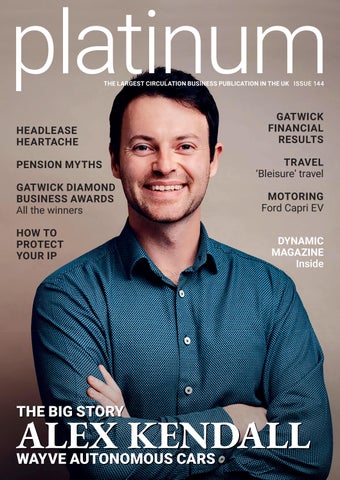
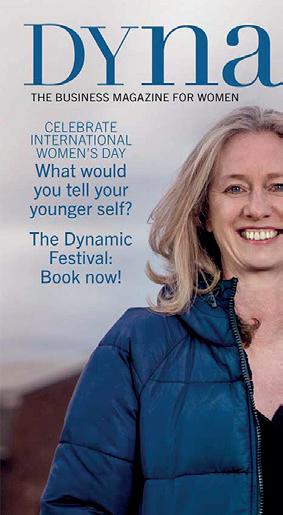
Profile on the Co-Founder of Wayve, developing technology to build a fleet of automated private cars and taxis
NEWS
6 National news
A round up of important business stories from around the world
8 Local news
A look at the business news stories across the South East
10 Business news
Redundancy warning hit five-year peak
13 Business news
UK employment tribunal claims soar
EVENTS
26 Central South Business Awards
The finalists are announced, so make sure you get one of the last few remaining tickets
34 Gatwick Diamond Business Awards
All the winners from this prestigious event
50 Platinum Property Awards
Entries are open for this inaugural awards event
PLATINUM MEDIA GROUP
BUSINESS
14 Base Insurance
What happens if a key supplier fails?
16 Gatwick Airport
Encouraging signs from the airport’s 2025 financial report
48 BDO
Careers advice in the South East still considered ‘unequal’
62 Cleankill
Why accreditations matter: building confidence for customers and staff
PROPERTY
52 PROPERTY SECTION
Covering all aspects of property, from architecture, planning, tendering, construction, real estate, property news culminating in the inaugural Platinum Property Awards
LEGAL
18 Mayo Wynne Baxter
Headlease heartache: Superior landlords v Assured periodic tenancies
22 LegalVision
Five steps to protect your IP
30 Monan Gozzett
38 DMH Stallard Roadmap to Exit
What the last two Budgets meant for EOTs
FINANCE
20 James Cowper Kreston
Business exit: why it matters and how to prepare your business
24 Southover Wealth
Seven pension myths that could cost you
32 Kreston Reeves
How businesses can achieve growth without adding to the headcount
TRAVEL
64 Bleisure travel
Exploring the notion of two worlds combining: a business trip and a leisure trip
MOTORING
66 Ford Capri EV
It’s always risky giving a much-loved classic-car name to an unrelated brand new EV. Maarten Hoffmann puts Bodie & Doyle’s re-incarnation to
Legally privileged: why turning to Monan Gozzett is right for you
36 DMH Stallard
Has data protection compliance just become a little easier?
WELCOME
Welcome to the April issue of Platinum and Dynamic.
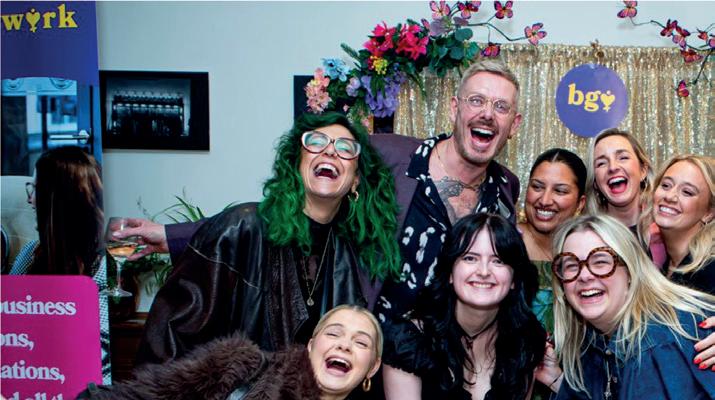
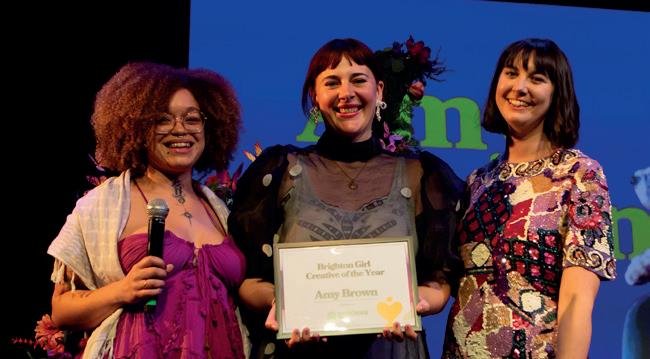
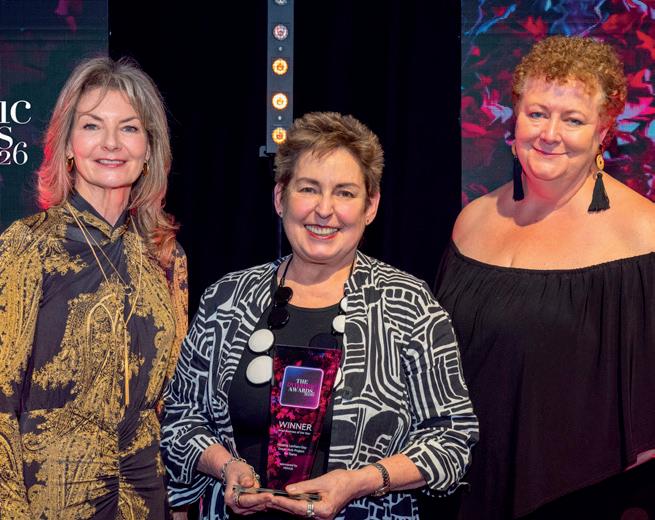
Events season is in full flow and inside we present all the winners of the 2026 Dynamic Awards, Brighton Girl Awards and the Gatwick Diamond Business Awards, leaving us with some very happy winners right across the South East. Details and images of all the winners are inside.
In addition, we have features on ‘unequal’ careers advice, the future of EOTs, London Gatwick’s 2025 financial results, how to prepare your business for an exit, why employment tribunals are soaring and seven pension myths that could be costing you dearly. And lots more, of course.
The Big Story looks at Alex Kendall, the co-Founder of the autonomous car and taxi firm, Wayve, coming to a road near you soon – with an investment of £65 million to date.
Travel looks at the advent of ‘Bleisure’ - the blending of work and leisure travel, and in the Motoring section, Maarten reviews the all-new Ford Capri EV and the risk taken in naming a new EV after one of the most famous models in UK history.
The pages are packed with information and advice on a wide range of subjects for your delight and delectation.
HEAD OF DESIGN / SUB EDITOR: Alan Wares alan@platinummediagroup.co.uk
SMALL WIND TURBINES ENCOURAGED
The UK government is proposing new plans to allow businesses, schools, and farms to install small single wind turbines without requiring planning permission. The turbines, which can be up to 30 metres tall, would be permitted under specific conditions to help organisations reduce energy bills and increase clean power generation. The move is part of the government’s wider strategy to promote clean energy, aiming to safeguard against volatile fossil-fuel markets and rising energy costs. The proposals exclude sensitive locations such as conservation areas, national parks, and heritage sites, while extending permitted development rights for onshore wind to non-domestic settings.
GREENE KING SEEKS PUB SALES
Greene King is considering putting up to 150 of its managed sites up for sale, and converting around another 150 into tenanted pubs, as part of a shake-up of its estate in the face of soaring costs and tougher trading.
The group – Britain’s second biggest pub group – is hiving off about 300 managed pubs into a new business division ahead of the proposed changes, with
about half earmarked for sale. The firm is also planning to shut about 20 of its 1,500-strong managed pub estate, but said this was line with usual annual changes.
It will look to offer impacted staff jobs elsewhere in the business. Greene King said the overhaul was being carried out in response to a changing consumer and trading environment.
NATIONAL NEWS
RETAILERS WARN OF JOBS RISKS OVER RIGHTS ACT
The British Retail Consortium (BRC), which represents large UK retailers, has said planned reforms to guaranteed working hours could put UK jobs at risk. Expanding guaranteed-hours rights under the Employment Rights Act, which begins rolling out in its first phase next week, aims to tackle what the government describes as exploitative zero-hours contracts.
The BRC has argued the changes could make it harder for businesses to offer part-time work, discouraging employers from creating those roles. It said the focus should be on tackling bad practice without “making recruitment more complex”.
UK TO BE HIT HARDEST AMONG G20
The UK is facing the biggest hit to growth from the Iran war out of the G20 major economies, according to an influential global policy group. Economic growth in the UK this year is forecast to be 0.7%, the Organisation of Economic Co-operation and Development (OECD) said, down from its previous forecast of 1.2%. Inflation is also predicted to be
higher than expected. The OECD has downgraded forecasts for many of the world’s biggest economies due to the US-Israel war with Iran. A prolonged conflict could trigger “significant energy shortages” globally, it warned, while a sustained sharp rise in fertiliser prices will impact crop yields and drive food prices to soar next year.
❛❛ I’d rather have questions that can’t be answered than answers that can’t be questioned. ❜❜
Richard Feynman
UNILEVER MERGES FOOD DIVISION
Unilever has agreed to merge its food division with spice maker McCormick in a deal worth around $45bn (€39bn; £34bn), the biggest in the history of both companies. Upon completion of the merger, the maker of Hellmann’s mayonnaise and Marmite will hold a 65% stake in the resulting combined entity. Major food firms like Unilever have taken a hit as cash-strapped shoppers increasingly turn to
supermarkets’ own brands or cut back their spending entirely. The company has also imposed a temporary hiring freeze amid “significant challenges” from the Iran conflict.
“This transaction is another decisive step in sharpening our portfolio and accelerating our strategy towards higher-growth categories,” commented Fernando Fernandez, CEO at Unilever.
BOE ‘READY TO ACT’ ON INTEREST RATE RISE
The Bank of England “stands ready to act” on interest rates to curb rising prices, its governor, Andrew Bailey, has said, if the Middle East conflict continues. His comments came as the Bank announced it was leaving its key
CHANGES TO LATE PAYMENT RULES
Under proposed changes brought in by government, large construction companies will be required to pay smaller suppliers within a maximum of 60 days. This represents a significant shift from current industry practices where payment terms of 90 days or more are not uncommon in construction contracts.
All commercial contracts will be required to include statutory interest on late payments, set at 8% above the Bank of England base rate. These measures are intended to create a financial disincentive for late payment and encourage faster payment practices. The reforms also propose enhanced powers for the Small Business Commissioner, including the ability to investigate poor payment practices, adjudicate disputes and impose fines on companies who pay late.
FOOD PRICES NOT EXPECTED TO RISE
Shoppers will not see food prices rise until at least the summer, and Easter will be unaffected by conflict in the Middle East, the boss of Sainsbury’s has said, despite fears of an inflation spike.
Simon Roberts said it was “too early” to say whether and when food price inflation related to higher commodity costs would hit supermarket shelves and that the UK’s secondlargest supermarket had long-term agreements with suppliers to help protect shoppers.
“We have a lot of the tools to make sure we’ll do everything possible to contain the impact on inflation,” he said. “Obviously, we are watching and monitoring events closely.”
rate unchanged at 3.75%. Before the conflict, a rate cut had been expected.
The Bank said prices would rise more quickly due to the “new shock to the economy” and now expects inflation to be close to 3.5% in March. All members
of the rate-setting committee voted to hold rates and “assess how events unfold”. They also discussed whether a rate rise could be needed, although Bailey suggested markets were “getting ahead” of themselves.
£100 CONTACTLESS LIMIT ABOLISHED
The limit on contactless spending with a credit or debit card has been scrapped, and banks will be allowed to set their own restrictions. The City watchdog, the Financial Conduct Authority (FCA), said the move would allow banks to respond to changing
consumer demands, inflation and new technology.
When you paid for something in person with a credit or debit card, there was a limit of £100 per contactless transaction under rules set by the FCA. There were also limits on cumulative spending. You could spend up to £300 or make five contactless payments before you are asked for verification – typically your 4-digit PIN. Anytime you use your pin or pay online, the total is reset to £0.
❛❛Humans are the only creatures on earth that will cut down trees, turn it into paper, then write 'save trees’ on it. ❜❜
CAA SAYS ‘NO’ TO LANDING FEES HIKE
The UK aviation regulator has partly rejected Heathrow’s plans to significantly raise landing fees to fund a multibillion-pound upgrade, arguing the airport can still invest without steep ticket price rises.
The Civil Aviation Authority said the average charge for each passenger should rise from £28.40 to £28.80 between 2027 and 2031. Last year, Heathrow proposed a 17% increase to £33.26, which drew criticism from airlines who said it would lead to higher ticket prices for passengers.
The CAA said its average passenger charge would instead rise by 1%. That increase is £5.40, or 16%, lower than the changes proposed by Heathrow, but significantly higher – £5.80, or 25% –than the changes sought by the airlines.
DENBY CALLS IN ADMINSTRATORS
Denby has called in administrators, putting the 217-year-old Derbyshire pottery at risk of closure with the loss of almost 600 jobs. The company, which was rescued from administration in 2009 by the restructuring experts Hilco and also owns the Burleigh brand, produced by Burgess and Leigh, based in Stoke-on-Trent, is understood to have struggled with rising costs and softening consumer demand for its premium homeware.
A #SaveDenby campaign was launched to encourage people to buy more products and to lobby the government for support.
BUSINESS CRIME REDUCTION PARTNERSHIP
Sussex Police is marking Business Crime Reduction Partnership (BCRP) Awareness Week with a series of dedicated operations across the county.
The Sussex Police business crime team is engaging with businesses in across the county to promote reporting and better understand the challenges facing retailers.
Katy Bourne, Sussex Police and Crime Commissioner, said: “Shop theft is not just a matter of lost goods and the cost to the retailer; it can come with increased anti-social behaviour, violence towards shopworkers and customers retreating from the high street. That’s why we take retail crime seriously in Sussex and why I’m delighted to report a 69% decrease in violence and assaults against shop staff in Sussex.”
PORTSMOUTH BUSINESS OWNER COLLECTS AWARD
A family business owner has been named Local Entrepreneur of the Year by Entrepreneurs Circle (EC) following a year of significant turnaround, growth and renewed focus.
Dan Swatton, who leads the Fareham-based fitted furniture firm Deanes, received the award at the Portsmouth EC Local Event in recognition of the progress he made during 2025. The award was presented by David Sekules and Steve Wilson, the local ambassadors for Entrepreneurs Circle in Portsmouth.
“Dan’s year really stood out,” said Steve Wilson. “He didn’t have the smoothest start, but what impressed everyone was how he responded. He took on board learning from EC, listened to advice around the table and made some tough but necessary decisions.”
LOCAL NEWS
❛❛ All those who were seen dancing were thought to be insane by those that could not hear the music ❜❜
Frederick Nietzche
TAPAS BAR ‘BEST IN SUSSEX’
Spanish tapas bar, Andalucia, in Ferring, has scooped the prize for Best Restaurant in Sussex at the 2026 Bravo Awards.
“This stylish Spanish destination brings the tantalising taste of classic tapas to the Sussex coast to take the top spot. Premium ingredients, including fine Jamón Ibérico Bellota and Iberian charcuterie, are matched by carefully selected wines, Spanish lagers and fabulous cocktails. The Sunday sharing paella is a popular standout,” commented the organisers.
The BRAVO Awards Brighton (Brighton Restaurant Vote Online) are the city’s biggest food and drink celebration, shining a spotlight on the restaurants, pubs and cafés that make Brighton, Hove and Sussex such a vibrant destination.
HELPING HAMPSHIRE UNDERSTAND AI
A new initiative is helping Hampshire businesses understand artificial intelligence. AI for Business Hampshire aims to assist small businesses and leaders in utilising AI to cut costs, boost productivity and adapt to rapid workplace changes. The project is led by Faith Ruto, an executive coach who has aided leaders from more than 80 countries in digital transformation, organisational change and AI adaptation over the last 20 years. Many business leaders have reportedly expressed feeling “overwhelmed” by the fast pace of change and uncertainty about AI’s practical applications.
HANTS COLLEGE NOMINATED
A college group has been named a finalist in the SEHTA Healthcare Business Awards. South Hampshire College Group earned the recognition in the Partnership between Academia and Business category for their involvement in developing the MYRA app, a digital tool designed to reduce delayed hospital discharges. Janet Hadfield, innovation manager at South Hampshire College Group, said: “Healthcare is an amazing sector to work in and this is something we’re trying to instil in all of our students. Myra is one of many strategic projects we are involved with that are tackling real issues and providing students with wonderful opportunities.”
SBS AWARDED SMALL BUSINESS CHARTER ACCREDITATION
Surrey Business School at the University of Surrey has been awarded the prestigious Small Business Charter (SBC) accreditation for the next five years – achieving a perfect score across all 30 out of 30 areas assessed.
and local economic growth.
The national accreditation recognises business schools that play a leading role in supporting SMEs, student entrepreneurship
The Small Business Charter assessment panel praised the School as “a significant and dynamic business school” with a “holistic approach to delivering business education”.
They highlighted its 2024–2030 Incubating Vibrant Futures strategy and its strong focus on knowledge exchange and collaboration with the small business community.
“GET AHEAD IN AI” WARNS WRITER
Tech founders are being warned to get ahead in artificial intelligence before rivals leave them behind.
Jon Card, a former Guardian business journalist and founder of Full Story Media, said companies need to start thinking about their visibility in AI-driven search tools before it becomes mainstream. He said, “AI searches will soon become the dominant way people find information. Instead of
scrolling through Google, people are already turning to tools like ChatGPT or Gemini.
“So businesses that are visible to AI tools will have a clear advantage. My view is that the sooner businesses grasp how AI can help their visibility, the better.”
He highlighted Brighton’s strong concentration of technology and creative startups as evidence of the city’s untapped potential.
VAIL WILLIAMS CLEANS UP AT GDBA
Property consultancy Vail Williams has been named Professional Services Firm of the Year at the Gatwick Diamond Business Awards. The firm scooped the prestigious award at a glittering ceremony attended by hundreds at The Grand Brighton.
Suzanne Holloway, Vail Williams’ Gatwick Regional Managing Partner, said: “We are overjoyed to have won this award. It is a testament to the fantastic effort put in by our skilled, diligent and
dedicated team across the year for our valued clients.”
With a team of 20, the Sussex offices combine deep local knowledge with national reach, enabling Vail Williams to play a pivotal role in driving economic growth.
Go to page XX for the full list of winners.
DOOR MAKER ADDS TO SENIOR TEAM
A timber fire door manufacturer has expanded its senior team as part of a wider growth strategy. Forza Doors, based in Partridge Green, West Sussex, has hired two new senior staff members to support commercial development and strengthen relationships with the architect and design community.
Anthony Kennedy has been appointed as specification manager, and Ricky Thomas as head of commercial. Mr Kennedy brings industry experience from architectural ironmongery firms Franchi and Allgood. His role marks the company’s first dedicated position focused on engaging the architect and design sector.
❛❛Before you speak, let your words pass through three gates: Is is true? Is it necessary? Is it kind?❜❜
Rumi, Sufi mystic
GOVERNMENT URGED TO PROVIDE CLARITY
Brighton entrepreneur Kyriakos Baxevanis has urged the government to offer greater clarity for UK businesses. Mr Baxevanis met Hove MP and Business Secretary Peter Kyle in Brighton to discuss the current challenges facing UK entrepreneurs. He said, “Right now, what businesses are really looking for is leadership and a clear vision for the future. It’s not actually about tax rates or the latest AI trend. Those things matter, but they are not the core issue. Entrepreneurs want to know the country has a sense of direction and that its government wants them to succeed.”
MENZIES OPENS NEW OFFICES IN CRAWLEY
Menzies LLP’s new office in Crawley, will provide a modern workspace for its expanding 80-member team. The move reflects the company’s ongoing growth and commitment to strengthening its presence in the UK. With improved facilities and a
strategic location, the new office is expected to better support both employees and clients. The opening of the Crawley office marks an important step in Menzies’ expansion strategy. By investing in a larger and more advanced workspace, the firm
aims to accommodate its growing workforce and enhance operational efficiency. The location offers strong transport links and proximity to key business hubs, making it an ideal choice for continued development and client engagement.
XAVIER BUENDIA
Redundancy warnings reach highest peak since COVID
By the end of 2025, unemployment in the UK rose to its highest level in almost five years, reaching 5.2% in the final quarter of the year. Britain’s labour market is under increasing strain as businesses struggle to cope with rising operational costs, weaker demand, and ongoing economic uncertainty. The challenges facing businesses have led many employers to cut their workforce or even go into insolvency.
Now, new data sourced by the experts at Liquidation Centre has revealed that 2025 was the most severe year for redundancy warnings since 2020, with 315,605 jobs flagged for potential redundancy and redundancy payouts totalling £477,709,323.
planned redundancies and the expected redundancy payout for proposed dismissals from 2020 to 2025.
Study highlights:
• 2025 was the worst year since COVID for redundancies, with 315,605 jobs flagged for potential redundancy with a combined payout of £477,709,323
were made between 2020 and 2025 (2,087,709), with June appearing as the worst month for redundancies in the UK
REDUNDANCIES
UP 45% SINCE 2021
The FOI request revealed that over 2 million redundancy warnings were issued between 2020 and 2025 (2,087,709), with 2025 the most severe of the past five years. Last year, 315,605 jobs were flagged for potential redundancy, a 45% increase since 2021, with redundancy payouts totalling £477,709,323.
❛❛ Over 2 million redundancy warnings were made between 2020 and 2025, with June appearing as the worst month ❜❜
The experts at Liquidation Centre, a trusted UK liquidation firm focused on solvent liquidations (MVL), for contractors and small business owners, while also supporting Creditors’ Voluntary Liquidations (CVL) for insolvent businesses, sent a Freedom of Information request to the Insolvency Service to determine how many employers made or
• In the first two months of 2026, 736 employers have already filed for proposed redundancies, putting 56,396 jobs at risk of redundancy - 9% higher than in 2025
• The number of HR1 advance notice of redundancy forms issued in February 2026 (430) is almost identical to February 2009 (433), shortly before the recession peak
• Over 2 million redundancy warnings
REDUNDANCIES ALREADY UP 9% YEAR-ON-YEAR IN 2026
In the first two months of 2026, 736 employers filed for proposed redundancies, putting 56,396 jobs at risk of redundancy, compared to the first two months of 2025, which were 51,905 redundancy warnings, a 8.65% increase in warnings.
UK REDUNDANCY PAYOUTS TOP £477M IN 2025
The number of HR1 advance notice of redundancy forms issued in February 2026 (430) is almost identical to February 2009 (433), shortly before the peak of the 2008-2009 recession, highlighting the scale of pressure currently facing the UK labour market.
Using historical redundancy data, the experts at Liquidation Centre estimate that 2026 could see as many as 327,227 redundancies, with 11,622 more jobs lost than in 2025. This marks a forecasted 3.7% increase from 2025; however, this is less severe than that of 2024-2025, which saw an 18.1% increase in redundancies.
https://liquidationcentre.co.uk/
EXPERIENCE SUSSEX CRICKET HOSPITALITY
Nestled in the heart of Hove, our picturesque ground offers one of the most enjoyable and welcoming settings to watch cricket — the perfect venue for families, corporate guests, and special celebrations alike. Surrounded by the proud history of a club that has lifted every domestic title, with 13 trophies in our cabinet, Sussex Cricket provides an unforgettable matchday backdrop.
All our hospitality suites offer the best seats in the house, combining outstanding views with exceptional food, drink, and service. Whether you’re entertaining clients, celebrating a milestone, or creating lasting memories with family and friends, our tailored hospitality packages promise a truly special day at The County Ground, Hove.
Book your experience and explore our full range of packages online or contact our hospitality team at hospitality@sussexcricket.co.uk for further enquiries.
UK Employment Tribunal claims soar during 2025
Last year saw 9,100 employment tribunal claims, marking a staggering 234% increase on 2024. And as these claims rise, so does the question of how many result in claimants receiving cost awards – when a tribunal orders an employer to pay out to the employee, for example, or vice versa.
For businesses, facing a tribunal claim can be daunting. But fresh data from the experts at LegalVision, analysing both cost awards and claim volumes across over two million tribunal claims from the Ministry of Justice (20072024/17 years of data), reveal reassuring trends.
Study highlights:
• The average cost award now stands at £4,313, up 210% since 2007/08
• The average maximum cost award has grown fivefold - from £35,915 across the first five years of the study to £197,504 across the most recent five
• This is despite cost awards falling by 58% in volume between 2007/08 and 2023/24
• When they are given, they mostly favour employers, who receive 68% of the awards
• The introduction of tribunal fees briefly pushed the cost award rate to 1.42% in 2014/15, nearly four times the longrun average
KEY FINDINGS
For employers facing tribunal claims, the main finding is clear: the cost of defending against dubious or unreasonably pursued claims has risen, but so too has the financial recovery possible when costs are awarded.
THE IMPACT OF TRIBUNAL FEES
The introduction of tribunal fees in 2013 had a dramatic effect on claim volumes, with cases falling from 236,103 in 2009/10 to just 61,308 in 2014/15, a drop of almost 75%.
However, cost awards did not fall at the same rate, which briefly pushed the proportion of claims resulting in a cost award to 1.42% in 2014/15, nearly four times the long-run average of 0.37%. Following the Supreme Court’s abolition of tribunal fees in 2017, claim volumes recovered and the cost award rate returned to its historical norm.
WHAT THIS MEANS IN PRACTICE
For employers facing tribunal claims, the data offers three clear takeaways:
1Employers should not assume they have no cost recovery options in tribunal proceedings. The data shows that businesses win more than twothirds of all cost awards made, and the average value of those awards has risen by 210% since 2007/08. Cost of recovery is a real, and increasingly valued option for employers pursuing it.
2 Businesses should document unreasonable conduct throughout proceedings. The foundation of a successful cost application is a clear record of unreasonable behaviour, whether that is pursuing a claim with no reasonable prospect of success, rejecting a reasonable settlement offer, or failing to comply with tribunal orders.
3 Seek legal advice early. Identifying the conduct most likely to support a cost application takes expertise. Early legal advice helps employers build the strongest possible case for cost recovery from the outset, rather than trying to reconstruct events later.
https://legalvision.co.uk
By Daniel Stoner, Managing Director, base Insurance Brokers
What happens if a key supplier
You might run your business carefully and avoid unnecessary risks, but you still can’t control what happens outside your company.
You cannot control Donald Trump’s whims or what happens in the Middle East. As I write this, the world is in a very uncertain place. Bombs and drones are falling across a volatile region, shipping routes are being targeted, and oil prices are surging.
Many small businesses rely on just one or two key suppliers without realising how risky that is. It could be a specialist manufacturer abroad, a wholesaler with vital stock, or a logistics partner who handles all your deliveries. If that
Suppliers also face their own risks. Higher fuel costs, shipping problems, cyber attacks, staff shortages, or money troubles can all affect them before you even notice.
❛❛ Modern supply chains are efficient, global, and closely linked. But if one part has problems, the effects spread fast. ❜❜
These events could have a huge impact on the economy. Even if your business isn’t affected right away, your suppliers might be.
In times of crisis, transport companies raise their prices, distributors change their rates and manufacturers start warning about possible delays or shortages. Sooner or later, small businesses feel the impact through late deliveries or higher bills.
Your business might be running smoothly. Customers still want what you offer, and your team is ready to go. But what if you suddenly can’t get the materials or services you depend on? Modern supply chains are efficient, global, and closely linked. But if one part has problems, the effects spread fast.
DEPENDENCY RISK: A WEAK SPOT MANY BUSINESSES MISS
Most companies know they rely on a few key customers. Losing one would be a big blow, so you keep an eye on that risk. But how much do you think about your suppliers?
supplier fails, your business could grind to a halt right away.
This is called dependency risk. Your business depends on another company staying stable.
WHERE STANDARD BUSINESS INTERRUPTION COVER STRUGGLES
Traditional business interruption insurance was designed for clear-cut situations, such as when your building is damaged by fire, flood, or another covered event. In those cases, insurance helps replace lost income while you recover.
But supply chain problems don’t usually work that way. Your building might be fine, your staff might show up, and your
supplier fails?
equipment might be ready. The problem is that your supplier can’t deliver what you need.
Your income still drops, even though nothing happened at your own site. Many standard insurance policies don’t cover this because the problem started elsewhere.
CONTINGENT BUSINESS INTERRUPTION
can help cover your lost income.The principle may sound simple, but the devil is in the details.
• Which suppliers should be named in the policy?
• Where are they located?
• What events actually trigger the cover?
Some policies only respond if the supplier suffers physical damage. Others can be extended further depending on the wording. Without a clear understanding of your supply chain, it is easy to assume protection exists when it doesn’t.
• How long would it take to qualify them?
• How much stock buffer exists right now?
• Which customers would feel the impact first?
Many businesses find out they depend on one supplier more than they thought. Spotting these weak points lets you make decisions before problems hit.
A growing risk for SMEs
Global supply chains have spent decades becoming faster and more efficient. Lean inventories and rapid logistics reduced costs across industries, but efficiency comes at a cost.
❛❛ If your main supplier stopped trading tomorrow, how long could your business last? ❜❜
This is where contingent business interruption insurance can help. Often called CBI, this coverage protects you if a key supplier or customer faces a disruption.
If a supplier you depend on has a covered event and can’t operate, the policy
TECHNOLOGY HAS MADE SUPPLY CHAINS MORE FRAGILE
Supply chains now rely heavily on digital infrastructure. Inventory systems, logistics platforms, online ordering portals, and cloud services underpin almost every transaction. If a distributor is hit by a cyber attack, ordering systems can go down. If a logistics platform fails, shipments across many companies can stop. The stock you need might not move until the system is fixed.
For your business, it feels like just another disruption. Production slows down, customers get frustrated, and your revenue falls.
PLANNING FOR DISRUPTION
Insurance can help cover financial losses, but it won’t fix your supply problems right away. You still need a plan for how to keep trading if a key supplier fails.
That’s why you need a business continuity plan. It usually starts with some tough questions.
• If your main supplier stopped tomorrow, who else could provide the same goods?
Events in places like Iran show that a crisis far away can still affect fuel prices, shipping costs, and the reliability of your suppliers here in the UK. For many small businesses, the real risk is having just one weak link somewhere in the supply chain.
That brings up an important question to ask before trouble hits: If your main supplier stopped trading tomorrow, how long could your business last?
Daniel Stoner Founder / Managing Director of
RESULTS 2025: confident delivery, clear direction
A strong 2025 delivered operational excellence and set the pace for sustainable growth at London
London Gatwick closed 2025 with confidence and momentum, having welcomed 42.8 million passengers and delivering £1.13 bn in revenue, £671.6m EBITDA and £334.7m profi t after tax.
Network breadth reached a new high, with a record 57 airlines serving 227 destinations – giving businesses and travellers more choice and resilience across key markets.
Gatwick
First-class passenger service and experience remained at the fore. The airport met 99% of its Customer Service Standards and received the Civil Aviation Authority’s top rating for assisted travel, supporting more than 850,000 passengers who required assistance, while a £60m Next Generation Security upgrade now sees passengers clearing security in under five minutes more than 95% of the time. These improvements mean a smoother, more inclusive experience for everyone and are underpinned by our commitment to be the airport for everyone, whatever your journey.
These gains reflect London Gatwick’s culture of operational excellence – continually innovating to get the very best from its operation, with greater resilience and flexibility at peak times.
❛❛ The airport met 99% of its Customer Service Standards and received the Civil Aviation Authority’s top rating for assisted travel ❜❜
Long-haul momentum continued to diversify the network. Long-haul traffic grew 3.3%, with year-on-year strength to sub-Saharan Africa (+22%), the Far East and South Asia (+24%), and the Middle East and Central Asia (+17%). London Gatwick also now accounts for more than a third of London’s seat capacity to China, signalling the airport’s pivotal and growing role in strengthening links with high-growth Asian markets.
Runway and airfield innovation improved punctuality and unlocked capacity. London Gatwick introduced time-based separation (a world first for a single runway airport) and delivered a Rapid Exit Taxiway, helping secure the best on-time departures in a decade (outside of the pandemic) with an 11% improvement year-on-year; as well as enabling maximum declared capacity to rise from 55 to 57 movements per hour in summer 2026.
Investment stayed firmly focused on experience, capacity and resilience. Within a £1.9bn Capital Investment plan running until 2030, the airport invested £192.7m in 2025: completing the South Terminal departure lounge refurbishment; advancing North Terminal expansion (adding more than 6,000m² of passenger space); progressing the ‘Pier 6’ Western Extension which will provide eight new aircraft stands (meaning pas-
sengers can board and disembark directly at the gate, rather than by shuttle) by summer 2027; and opening a 3,200 space mid-stay multistorey car park for the North Terminal.
Upgrades aimed at elevating the experience today and future-proofing the operation for tomorrow – underscoring London Gatwick’s commitment to invest for an exciting next phase of growth.
Driving a richer passenger experience, 2025 saw a series of high-profile retail openings and the completion of the South Terminal departure lounge refurbishment (following the North Terminal refurbishment in 2024). New stores – including Pandora, GAIL’s first airport bakery and Venchi’s first UK airport boutique – sit alongside Discover London, which offers British heritage brands and local goods.
The airport continues to champion local enterprise at scale in its retail offering, with supplier showcases connecting local producers to airport buyers and a wide range of regional products now available across outlets. These changes give passengers more choice and a clearer local identity across both terminals, all while supporting the local and regional economies.
PAS:2080 carbon management certification for buildings and infrastructure, progressed plans for a zero carbon energy centre to heat both terminals, and added 48 electric vehicles (including four buses) to its fleet – all reinforcing the commitment to Net Zero (Scope 1 & 2) by 2030 and Airport Carbon Accreditation Level 4+. These steps are about developing capacity and cutting emissions together, ensuring all growth is delivered responsibly and sustainably.
❛❛ As part of its Decade of Change commitments, London Gatwick delivered more than 200,000 student encounters in 2025. ❜❜
Funding and balance sheet flexibility support continued delivery. Year-end available liquidity of £1,072.6m, a second €750m sustainability-linked bond (June 2025) and a £300m bond issued in February 2026 at the airport’s lowest spread to gilts provide a strong platform for ongoing investment, with comfortable headroom on both Senior ICR (2.64x) and Senior RAR (0.51). That gives London Gatwick the headroom to keep investing in what matters for passengers, partners and the region.
Sustainability continues to underpin all work. London Gatwick became the world’s first airport to achieve
People, skills and regional impact continued to scale. As part of its Decade of Change commitments, London Gatwick delivered more than 200,000 student encounters in 2025, taking the cumulative total past 630,000 (towards a goal of a million encounters across the decade), and spent £94.9m with local and regional suppliers (of which £45.3m were in the RH postcode).
In 2025, London Gatwick also launched the Gatwick Region Airport Economic Zone (AEZ), bringing public and private sector partners together to attract investment and jobs – clear signals of a widening regional skills pipeline and sustained local economic contribution.
Looking ahead, planning for the Northern Runway continues with the next phase towards development expected to start later in the year.
2025 BY THE NUMBERS
• 42.8m passengers in 2025; 227 destinations; 57 airlines (record)
• £1,132.1m revenue; £671.6m EBITDA; £334.7m profi t after tax
• 99% service standards met; £60m security upgrade
• 57 movements/hour declared for summer 2026 (up from 55)
The Renter’s Rights Act 2025 (RRA) reshapes residential renting, but its quiet aftershocks are yet to hit mixed-use sites where one commercial lease covers the whole property, and a residential flat is sublet. From May 1st 2026, both freeholders (the superior landlords) and commercial tenants (standing in as the intermediate residential landlords) face new rules, longer timelines and liabilities they may not expect.
For clarity: an ‘AST’ is an assured shorthold tenancy; post-RRA, most ASTs become open-ended ‘assured periodic tenancies’ (rolling tenancies with no fixed end date). ‘Vacant possession’ means getting the building back empty of people and belongings so works, sale, or reletting can proceed.
CONVERSION OF ASTS: FIXED TERMS OUT, ROLLING TENANCIES IN
From May 1st 2026, most ASTs convert into assured periodic tenancies. The rent and other deal points broadly carry over, but the simple tactic of waiting for a fixed term to end no longer applies. Any eviction now relies on statutory ‘grounds for possession,’ which carry strict requirements; these requirements are unlikely to fit the landlord’s timetable.
All parties should review existing AST arrangements before May 1st 2026. Commercial tenants should assess
which sublet tenancies will convert and brief contractors and lenders on potential impacts on the timeline. Superior landlords should request confirmation of all residential sublets and their current status, updating schedules accordingly.
NEW REGULATORY BURDENS: RESIDENTIAL RULES THAT BITE COMMERCIAL PLAYERS
If a commercial tenant sublets the flat, it becomes a ‘residential landlord’ for that dwelling. That role brings responsibility. You must join a governmentapproved redress scheme (a mandatory complaints route for tenants) and register on the Private Rented Sector (PRS) Database. Miss either, and civil penalties follow, along with uncomfortable questions on refinancing and consents.
Standards tighten too: expect Decent Homes-style requirements and quicker ‘improvement notices’ from the council—formal directions to fix hazards within set timescales. Those notices can be served on whoever is the flat’s
landlord, not necessarily the freeholder. ‘Rent Repayment Orders’ (RROs) allow a tribunal to order up to a year’s rent back from a landlord after certain breaches; in some cases, this can reach a superior landlord.
VACANT POSSESSION: WHY GETTING THE WHOLE BUILDING BACK NOW TAKES TWO BATTLES Forfeiture of the commercial headlease no longer guarantees you can empty the building. If your tenant has underlet the
❛❛ All parties should review existing assured shorthold tenancy arrangements before May 1st 2026. ❜❜
flat and that sub-tenancy has become an assured periodic tenancy, you—or whoever becomes the new landlord after forfeiture—must also complete the residential possession process. That means proving a statutory ground, serving the correct notice and, if required, getting a tribunal order. Timing rarely matches construction programmes or conveyancing timetables.
Tactics that help in the real world include robust information covenants to ensure the freeholder is kept ‘in the know’, clear step-in and access rights to carry out works and comply with notices, and pre-agreed vacant-possession protocols that require the tenant to cooperate lawfully with the service of notices.
Keep the option to deal directly with the sub-tenant for temporary relocations or surrenders without waiving rights against your tenant. Above all, make sure all stakeholders are aware of the new, longer timeframes.
WHEN THE INTERMEDIATE LEASE ENDS, LIABILITIES FLOAT UPWARDS
If the commercial lease ends — by forfeiture, insolvency or surrender — responsibilities linked to the flat can jump to the freeholder. Improvement notices do not die with the lease; they
follow the property and the new “landlord”. Some steps the former landlord took (like valid notices) can carry over, but so do their problems. Rent Repayment Orders may, in certain cases, be issued against a superior landlord, exposing investors to breaches committed by a lower landlord. Treat tenant compliance as part of covenant strength, not an afterthought.
❛❛ For commercial tenants who sublet flats, make sure you are ready to meet this new regulatory burden ❜❜
Commercial tenants should ensure all regulatory obligations are discharged before lease expiry or surrender and provide full handover documentation to the superior landlord. Superior landlords should conduct thorough due diligence on outstanding improvement notices and RRO exposure when taking back property and build these risks into their commercial decisions.
QUICK POINTERS
For commercial tenants who sublet flats, make sure you are ready to meet this new regulatory burden. You might be focused on your business under the same lease, but these provisions apply
regardless. Rebuild your refurbishment and budget plans around the new possession timeline and remove any discriminatory wording from your underlease and policies.
For superior landlords, insist on timely underlet information and compliance certificates, hard-wire step-in, access and information rights at grant or renewal, and stress-test vacant-possession strategies where assured sub-tenancies exist—tracking realistic best and worst dates. Make PRS/ redress status, live notices, and any RRO history standard due diligence asks.
CONCLUSION
The RRA’s residential reforms now drive commercial outcomes. In mixed-use buildings with residential underlets, expect longer possession paths, heavier compliance and liabilities that travel upwards. Treat residential management as a board-level risk—and plan for vacant possession as a project, not an event.
Fore more information, contact James Cooper, Solicitor jcooper@mayowynnebaxter.co.uk
By Mike Bath, Partner, James Cowper Kreston
Exit readiness: why it matters and how to prepare your business
For many business owners, exit planning only becomes a priority when a buyer appears. At that stage, pressure is high, options are limited, and value can easily be left on the table. The strongest exits, however, are rarely built in a rush. They are the result of years of preparation and deliberate value creation.
Exit readiness isn’t about deciding to sell tomorrow. It’s about building a business that is resilient, attractive and valuable whenever the timing is right. An exit is an outcome; readiness is a strategy.
WHY EXIT READINESS MATTERS
Some exits are carefully planned; many are not. Burnout, health issues, market changes, or personal circumstances can all force decisions sooner than expected. When timing is limited, business value is diluted, negotiating leverage is reduced, and issues emerge late, when they’re hardest to fix.
❛❛ Exit readiness planning gives owners greater control over timing, improves deal certainty, and helps ensure the value built over years of hard work is realised. ❜❜
Exit readiness planning protects against these risks. It gives owners greater control over timing, improves deal certainty, and helps ensure the value built over years of hard work is realised.
Crucially, exit readiness isn’t only for those actively planning a sale. The disciplines that make a business attrac-
tive to buyers also make it better run, more resilient and better positioned for growth today.
WHAT DOES IT REALLY MEAN TO BE “EXIT READY”?
Buyers do not just buy growth projections; they buy confidence and clarity. A central part of exit readiness
❛❛ The businesses that achieve the best exits are rarely the ones that rushed to prepare. They are the ones that treated exit readiness as part of how they run the business, not a last-minute exercise. ❜❜ Mike Bath
is demonstrating a clear understanding of what drives performance in the business, supported by robust evidence.
This starts with reliable financial information and a focused set of meaningful KPIs that genuinely reflect how the business creates value. When performance is tracked consistently, buyers
gain confidence that results are repeatable and growth is sustainable.
An exit ready business typically demonstrates:
• Clear and credible financial reporting
• Transparent performance measures and well understood KPIs
• Reduced risk through strong governance and compliance
• A structure that does not rely solely on the owner
• Certainty around tax, ownership and future liabilities
When value is concentrated in a single individual, buyers see risk. Exit readiness is about embedding value within the business itself rather than the owner alone.
KEY
AREAS TO ADDRESS EARLY
Exit readiness is most effective when it starts well before a transaction is on the horizon. Some of the most important areas to consider include:
• Structure and assets
• Tax efficiency and compliance
• Share schemes and incentives
• Data and reporting
• Commercial readiness review
• Future strategy planning
START EARLIER THAN YOU THINK
One of the most common misconceptions is that exit planning begins when heads of terms are agreed. In reality, meaningful exit readiness often takes years rather than months. Many of the
most value-enhancing changes need time to be embedded and proven.
Starting early does not mean committing to a sale. It means running the business in a way that keeps options open. Whether the ultimate outcome is a trade sale, private equity investment, succession to family or management, or simply a better-run business, exit readiness puts owners in a position of strength.
HOW JAMES COWPER KRESTON CAN HELP
Exit readiness is rarely about one issue in isolation. It brings together strategy, fi nance, tax, governance and people. At James Cowper Kreston, we work alongside business owners well before a transaction is on the table, helping them prepare with confi dence and clarity.
If you would like to discuss your business’s exit readiness, please contact us:
Call: 02380 221222
Email: info@jamescowperkreston.co.uk
Visit: www.jamescowperkreston.co.uk
Five steps to protect
IP disputes are on the rise, with 446 new cases recorded in 2025 by the Business and Property Courts of England and Wales - a 14.9% increase on 2024. In the age of AI and intensifying competition between businesses, protecting your business ideas has never been more crucial.
A good idea is the lifeblood of any successful business - so what happens if you suspect that another person or company has copied your concept? Having your intellectual property misappropriated can be both frustrating and damaging, but taking the right steps quickly can help you protect your rights and come out on top.
In light of this, Sahil Verma, Practice Leader at commercial law firm LegalVision, shares five practical steps for businesses to safeguard their work and react effectively.
“They stole my idea!” Business law experts share five steps to protect your intellectual property
1 GATHER EVIDENCE BEFORE REACTING
It's natural to feel emotional or outraged when you first discover that someone may have copied your idea. A common and understandable instinct is to confront the other party immediately, but experts warn that acting impulsively can actually undermine your position, and could potentially weaken future legal claims.
Instead, if you are certain that this idea is a duplicate of yours, focus on gathering evidence and documenting everything. Keep everything: emails, pitch decks, draft designs, contracts, and any other materials that prove when and how the idea was developed. When Getty
Images tried to sue Stability AI for training its image-making model on its photos, the case had to be dropped because Getty could not prove that the training was conducted in the UK.
Make sure dates are clearly recorded so you can build a detailed timeline of creation and disclosure. Properly kept, a paper trail can provide crucial evidence of ownership.
2 UNDERSTAND WHAT IS LEGALLY PROTECTED
Sometimes, even in the case of a frustrating personal slight, nothing illegal has occurred. Business history is full of examples of that grey area between inspiration and plagiarism.
An innovative idea itself is not legally protected, and anyone is legally allowed to execute it. For example, many accusations of plagiarism in the music industry often go nowhere due to melodies themselves not being subject to legal protection.
intensifying between your business been
your IP
To make sure that you have a claim to your stolen business idea, you need to make sure it falls under a specific category of protected intellectual property. Four of the most common types of intellectual property include trade marks, copyright, patents and design rights. In the UK, trade marks, patents and design rights can be registered at the Intellectual Property Office (IPO), whereas copyright is not.
In either case, if the expression of the idea that you believe was stolen from you does not fi t into these distinct areas, your chances of seeing compensation are considerably lower.
3 ASSESS THE COMMERCIAL IMPACT
If you are able to prove that a person has taken an idea from you, and you can show that this idea is protected for you by the law, the next step is to get an accurate idea of how much the person who stole it has benefi ted from its execution. Just as you want to keep a
paper trail of the idea being formed and built into something tangible, you also want a quantifiable measure that clearly reflects how much can be attributed specifically to your idea.
For example, a 2015 lawsuit between hosting providers GoDaddy and the Academy of Motion Picture Arts was thrown out when the Academy could not prove that the hosting service intended to profi t from registering domains like “oscars.com”.
When you establish commercial impact with the help of a legal professional, this can help you build your case and establish a credible claim to any damages lost as a consequence of intellectual property theft.
4
In the age of AI and intensifying competition between businesses, protecting business ideas has never been more crucial. ❜❜
cial media with good reach. Cease and desist letters sent on shaky grounds can become public relations problems when two large brands are duking it out, but these cases aren’t too common.
5
STRENGTHEN YOUR PROTECTION GOING FORWARD
While there are legal protections in place to rectify any intellectual property infringement, many take action as a reactive measure for an offence that could have been prevented in the first place.
❛❛ Clear communication between parties can also help dissuade people from stealing or lifting someone else’s idea ❜❜
SEEK LEGAL ADVICE AND CONSIDER A ‘CEASE AND DESIST’ LETTER
If you haven’t already, it’s now time to review all the information with a solicitor. Once you’ve done this, and if you believe that your evidence is strong enough, you can initiate the first legal step with a Cease and Desist letter. This formal legal notice informs the offending party that their actions violate your or your business’s rights.
There needs to be a credible legal basis for sending these, otherwise, the other party can easily ignore them. Make sure all prior steps have been thoroughly completed before reaching this stage. In many cases, sending a Cease and Desist letter is a legally required precursor before escalating the matter to third-party adjudication.
Even when it isn’t strictly required, it is often the simplest and quickest way to encourage the other party to stop their infringing conduct. If they do not comply, the letter demonstrates good faith, showing your willingness to do things the right way.
Be prepared for a response, especially if they have a large public platform like so-
Sahil Verma, Practice Leader at commercial law firm LegalVision, comments “There is rarely a true sure-fire way to prevent intellectual property infringement, but a good prevention strategy can go a long way. If you think you have something worth stealing, then it’s worth protecting. Take the time to register your intellectual property through the appropriate legal channels, so that you are in the best position possible if another party decides to profi t from your work.
“Aside from the hard legal moves, clear communication between parties can also help dissuade people from stealing or lifting someone else’s idea. Conversely, make sure you check where you are getting your own inspiration, as you don’t want to be on the receiving end of a Cease and Desist letter yourself.”
What savers often overlook about their retirement pot. By William Martin, Managing
Director, Southover Wealth
Seven pension myths that could cost you
Pensions are a great way to build longterm financial security, but many people still misunderstand how they work. Even those who have saved for years can be caught out by myths, old ideas, or rules that seem simpler than they are.
It’s time to challenge some of the most common myths that stop people from making the most of their pension savings. Left uncorrected, these misconceptions can quietly cost savers tens of thousands of pounds over the course of their retirement.
Here are seven pension myths that deserve to be firmly put to rest.
MYTH 1: “I’ve already paid £60,000 into my pension this year, so I can’t contribute anymore”
For most people, the annual limit for pension contributions with tax relief is £60,000. But that doesn’t always mean you can’t add more.
With the ‘carry forward’ rules, you might be able to use any unused pension allowance from the past three tax years, as long as you were in a pension scheme then. This is helpful if you receive a bonus, an inheritance, or another lump sum.
For example, if you put only £10,000 into your pension in 2024–25, you could carry forward the unused £50,000 allowance and add it now, as long as you meet the earnings limits. This is especially useful for higher earners who want to grow their pensions and benefi t from tax relief.
MYTH 2: “I’m not working, so I can’t get pension tax relief”
Many people think this is true, but it isn’t. You don’t have to be working to get pension tax relief. If you’re not earning, such as if you’re on a career break or caring for family, you can still put up to £2,880 a year into a pension. The government adds basic-rate tax relief, bringing it up to £3,600.
This rule also applies to children, so pensions can help with long-term planning for the whole family. Starting early means your money has more time to grow.
MYTH 3: “I can only pay into my own pension”
You can pay into someone else’s pension just as easily as your own. These third-party contributions can be made for a spouse, partner, child, grandchild, or any other beneficiary with a pension.
❛❛ It’s time to challenge some of the most common myths that stop people from making the most of their pension savings. ❜❜
This is helpful if one partner has taken time off work and is behind on pension savings. It can also be part of a family plan to pass on wealth in a tax-efficient way. Once a pension is set up, anyone can add money to it, as long as they follow the usual tax-relief limits.
MYTH 4: “Pensions are already subject to inheritance tax”
There’s been a lot of talk about pensions and inheritance tax, which can be confusing. The government has said it plans to include pensions in the value of an estate for inheritance tax from April 2027, but this hasn’t started yet.
Until then, pensions generally sit outside the estate for inheritance tax, making them one of the most efficient vehicles for passing wealth to beneficiaries. The rules around who inherits a pension and how it is taxed can be complex, but for now, pensions continue to play an important role in estate planning.
MYTH 5: “The state pension and auto-enrolment will be enough”
For most people, this is an optimistic assumption. The full state pension provides a useful foundation, but on its own, it is unlikely to support a comfortable lifestyle. Auto-enrolment has helped millions start saving, but minimum contribution levels are rarely sufficient for later life.
Industry estimates say a single person needs about £43,900 a year for a comfortable retirement. To reach that, most
people will need to save a lot in a private pension, since the state pension alone won’t be enough.Without extra savings, many retirees find there’s a big gap between what they expect and what their income actually covers.
pension, it’s taxed based on your total retirement income, not the rate you paid while working. Many people have a lower income in retirement, so they may pay less tax overall.
❛❛ Pensions are useful, flexible, and often misunderstood. ❜❜
MYTH 6: “It’s too late to improve my pension”
It’s best to start early, but it’s never too late to make a difference. Adding more to your pension in your 40s, 50s, or even 60s can still boost your retirement income.
Regular top-ups or one-off payments can make a big difference, especially with tax relief. Even small increases add up over time, giving you more options in retirement and less need to use other savings.
MYTH 7: “I’ll pay the same tax rate on my pension as I do now”
When you take money from your
In addition, most people can usually take up to 25% of their pension tax-free. When withdrawals are planned carefully alongside other income sources, this can make pension income surprisingly tax-efficient.
TURNING KNOWLEDGE INTO ACTION
Pensions are useful, flexible, and often misunderstood. The main challenge is understanding the rules and making good choices at the right time. We can help you see past the myths, spot new opportunities, and create a plan that fi ts
your goals and finances. Getting the details right can be the difference between just getting by and enjoying the retirement you’ve worked for.
William
Martin DipFA
CeMAP Managing Director, Southover Wealth Senior Partner Practice of St. James’s Place Tel: 020 8058 8230 | Mobile: 07487 727 498
Southover Wealth is an Appointed Representative of and represents only St. James’s Place Wealth Management plc (which is authorised and regulated by the Financial Conduct Authority) for the purpose of advising solely on the Group’s wealth management products and services, more details of which are set out on the Group’s website www.sjp.co.uk/products. The ‘St. James’s Place Partnership’ and the titles ‘Partner’ and ‘Partner Practice’ are marketing terms used to describe St. James’s Place representatives.
CENTRAL SOUTH
BUSINESS AWARDS 2026
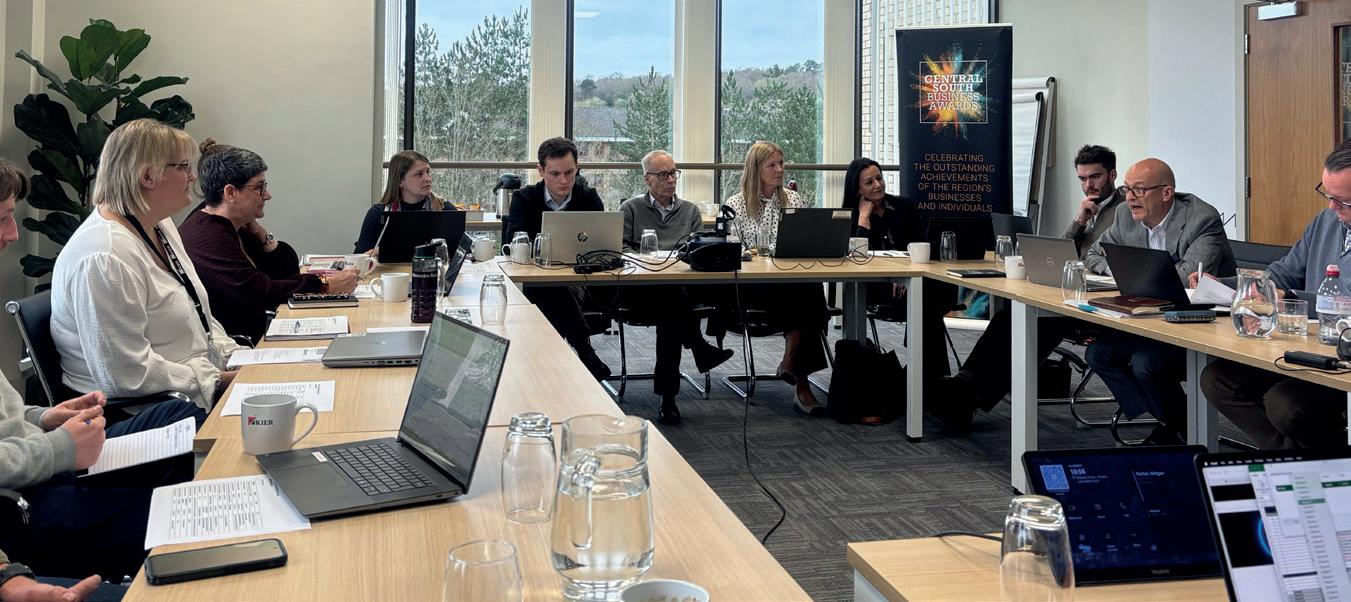
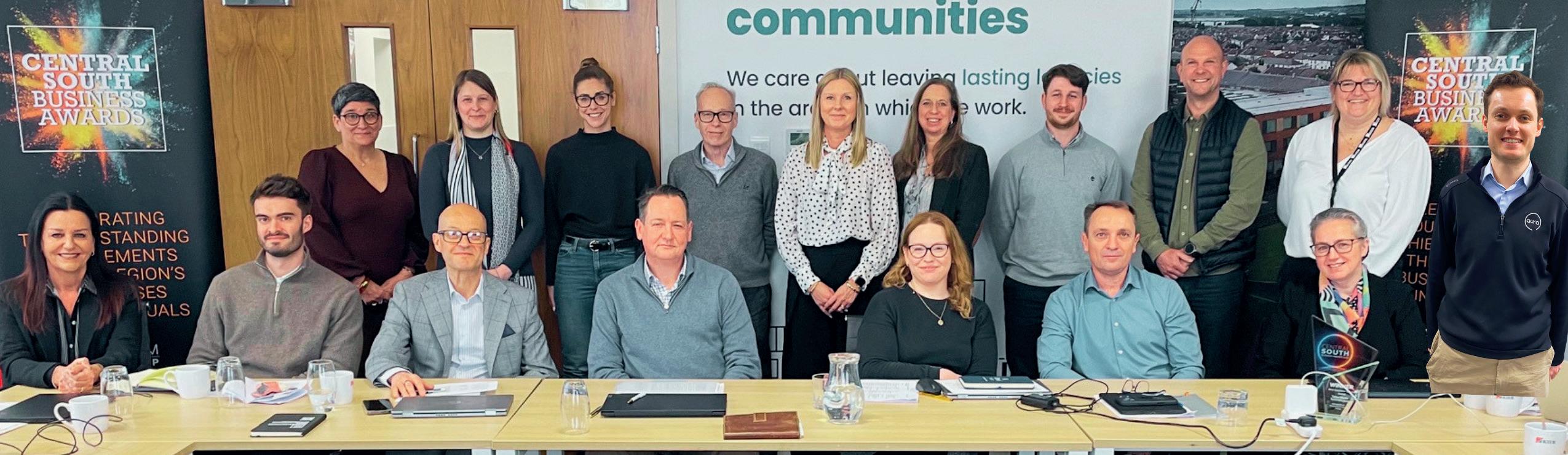
The finalists for the 2026 Central South Business Awards have been officially revealed, following a rigorous threestage judging process that showcased the very best businesses from across the region.
Widely recognised as the Central South’s leading business awards programme, the annual event - held in association with Business South - celebrates the organisations and individuals driving innovation, growth and excellence across a diverse range of sectors.
This year’s distinguished judging panel, made up of respected business leaders and industry experts, undertook an intensive evaluation process. Each entry was meticulously reviewed and scored, followed by in-depth interviews with shortlisted candidates. The process culminated in a robust judges’ meeting, where finalists - and ultimately the
2026 FINALISTS ANNOUNCED
winners - were decided after intense debate.
The judging panel included representatives from a wide range of leading organisations including Moneycorp, HSDC, Blake Morgan, Heartbeat, Surrey Business Magazine, Business South, Lionel Hitchen, Kier Construction, City of Portsmouth College, Omni, Aura Technology, Southampton Solent University,
James Cowper, Occupational Health Consultancy and Lester Aldridge as well as Tetra Tech.
Winners will be announced at a prestigious black-tie gala on May 13th at the Leonardo Royal Grand Harbour Hotel in Southampton. As the region’s premier business event, tickets are in high demand and early booking is strongly recommended.
THE 2026 FINALISTS
CONSTRUCTION PROJECT OF THE YEAR
Sponsored by Moneycorp
Adanac Business Park
Foxglove House
Integrated Health Projects (IHP)
Southampton City Art Gallery
The Gables
Welborne Garden Village
FUTURE TALENT OF THE YEAR
Sponsored by HSDC
Big Growth Marketing -
Isabella Venturella
Meridian Medical - Madeline Smith
Reizia Digital - Jamie Reilly
Southampton City Council -
Jakiat Jitu
Utilita Energy - Ella Moorey
BUSINESS GROWTH AWARD
Sponsored by Blake Morgan
Evolve
Fiander ETL
Maritime Yacht Services
Paul Basham Associates
Phoenix Beauty Ridge and Partners
COMMUNITY HERO AWARD
Sponsored by Heartbeat 22Midnight
Harvest
Nescot
The Old House at Home
Victorious Festival
ViewHR
INTERNATIONAL BUSINESS OF THE YEAR
Sponsored by Surrey Business
Magazine
Barnbrook Systems
ISON Travel
Life Couriers
MHH International
Peritus International
Wartsila Water Systems
PROFESSIONAL SERVICES
AWARD
Sponsored by Business South
Ridge and Partners
SBTutoring
TMT Legal Services
ViewHR
Ward Williams
Woodstock Legal Services
BEST CUSTOMER SERVICE
AWARD
Sponsored by Lionel Hitchen Brucan Pubs circle.cloud
Dignity Pet Crematorium
entrustIT
Mandira’s Kitchen
SBTutoring
BEST NEW BUSINESS AWARD
Sponsored by Kier Construction
Babyccinos
Bulgarian Women In Business
Lahat Creative
Loose Legal
Macvere
Total Task Consultancy
EMPLOYER OF THE YEAR
Sponsored by City of Portsmouth College
Oyster Design
Paul Basham Associates
Roofline
Scott Bailey
Waterman Aspen
Woodcut Media
GAMECHANGER OF THE YEAR
Sponsored by Omni
Barnbrook Systems
iFAST Diagnostics
Lifelight
ReConnected Life
STEM Returners
WF Recycle-Tech
AI EXCELLENCE AWARD
Sponsored by Aura Technology
ICS.AI
Innovation in Equity
Kiwi Education
Lifelight
Prospectus IT Recruitment
SAIReco
SMALL BUSINESS OF THE YEAR
Sponsored by Southampton Solent University
Macvere
Munro & Fox
SBTutoring Step8Up
ThinkEngine
Tiger Marketing
MEDIUM BUSINESS OF THE YEAR
Sponsored by James Cowper
Barnbrook Systems
Carswell Gould Marcom
Heartbeat
Maritime Yacht Services
PTS Compliance
Roofline
LARGE BUSINESS OF THE YEAR
Sponsored by Occupational Health
Consultancy
Biscoe Legal Services
Brucan Pubs
London and Surrey Montessori Schools
Ramboll
Ridown Group
Sparks Commercial Services
BUSINESSPERSON OF THE YEAR
Sponsored by Lester Aldridge
CV-Library - Lee Biggins
Giftpoint - Helen Westmoreland
Guardian Angel CarersChristina Handasyde Dick
Powder Monkey Brewing CoNick Hall
Southern Counties Car DeliveriesSiobhan Kiernan
Wartsila Water SystemsFraser Scott
”The awards were one of the most professional we have ever attended” Heathrow Airport
Presented by comedian, Hal Cruttenden
By Rachel Innes, Associate Solicitor, Monan Gozzett LLP
Legally privileged
The flagship offices of Monan Gozzett LLP are situated under the watchful gaze of the ancient castle that presides over the historic town of Arundel, in the heart of Sussex.
The interplay of complementary legal services, combined with our exceptional attention to personal service, affords our clientele total legal protection.
You may require one of our expert lawyers to assist you with your high-value divorce and the complex financial and child arrangements that often accompany legal separation. Emanating from this, you may decide that our estate and wealth planning services can assist, to guide you with your decision-making, ensuring your wishes are fully reflected to future-proof you and your loved ones.
Founders and co-owners of Monan Gozzett, Maria Monan and Neal Gozzett, have, for over a decade, applied their legal expertise and business acumen to create a bespoke law firm centred on the cornerstones of empathy, understanding, and dedicated per-
❛❛ Should you find yourself facing civil or criminal matters, regulatory or reputational issues, Monan Gozzett has an expert lawyer on hand who can assist ❜❜
sonal care. It is these founding cornerstones that resonate throughout every client experience, are echoed by our hand-picked, highly trained, and professional team and are reflected in our client testimonials.
Litigation cannot always be predicted, and should you find yourself facing civil or criminal matters, regulatory or reputational issues, Monan Gozzett has an expert lawyer on hand who can assist and provide you with strategic, expert legal advice to protect or safeguard your interests.
Contact us on 01903 927055 or email info@monangozzett.com in the strictest of confi dence, to see how we can make a difference.
FINANCE
By Lynsey Light, Business Advisory Director and Andrew Griggs, Senior Partner and Head of Global, Kreston Reeves
How businesses can achieve growth without adding to the headcount
For many owner-managed businesses, growth creates new challenges and pressures. And with continued global economic uncertainty and higher labour costs, those challenges can multiply. Fast-growth businesses are increasingly looking at alternatives to adding to headcount.
The UK labour market is tightening. The number of advertised jobs in January 2026, according to the job search website, Adzuna, fell below 700,000 ‘live’ vacancies for the first time since the depths of the global pandemic.
On top of that, the graduate job market has plummeted. Adzuna reports fewer than 10,000 graduate vacancies for the first time since 2016, when it started tracking this data.
The Chartered Institute of Personnel & Development (CIPD) reported in February that three-quarters of the 2,082 employers it regularly polls expect the cost of hiring and employing staff to increase further in 2026, with 37% saying they will recruit fewer people. And that the Employment Rights Act risks halting recruitment plans for 37% of UK employers.
Whether it’s rising employment costs, the scarcity of skilled talent, or the desire to stay agile, many businesses are asking: How can we achieve sustainable growth without increasing their headcount or enlarging their payroll?
Three strategies we see delivering real results for our clients:
1Remove waste and use process effi ciency as a growth strategy Before adding people, most businesses have efficiency gains within their existing processes. Whether within finance workflows, sales/customer onboarding or internal management processes.
Business leaders need to challenge and question every process to better understand where time savings can be made and, at the same time, refocus staff on where value can be generated.
• Tailored action plans to improve profi tability and streamline operations.
2
Leverage technology, AI and automations
Advances in technology, particularly AI, are reshaping how work is delivered. Gartner’s 2025 CEO and Senior Business Executive Survey estimates that AI tools are saving employees an average of 5.7 hours per week, although much of this time is not yet being redirected into higher-value activity.
It is unlikely that we will see AI replace
Employees are often best placed to identify inefficiencies. Encourage them to challenge established ways of working and embrace their ideas and suggestions.
We offer a dedicated waste audit workshop designed to help businesses identify and reduce inefficiencies, driving profi tability and operational excellence.
The workshops equip businesses with:
• A comprehensive waste audit diagnostic to pinpoint areas of inefficiency.
• Practical tools and strategies to prioritise and eliminate waste.
❛❛ The number of advertised jobs in January 2026 fell below 700,000 ‘live’ vacancies for the first time since the depths of the global pandemic. ❜❜
staff in any meaningful way, although the roles people play and the skills they need will evolve.
As Gartner suggests, the time savings are becoming apparent, yet businesses appear to be failing to use that time saved in meaningful ways.
However, technology doesn’t need to be complicated or expensive to deliver impact. Practical automations that businesses can explore include:
• Cloud accounting platforms that automate bank feeds, invoices and debtor reminders.
house. Outsourcing doesn’t just reduce the burden on your team – it gives you access to specialist expertise and best practice processes that can be difficult to maintain internally.
Businesses may turn to freelance or gig-economy workers. This is a well-established and effective approach, particularly for managing seasonal demand, short-term projects or accessing highly specialised expertise.
quality management information and commentary.
• Insightful forecasting, budgeting and variance analysis.
• An impartial and independent voice to facilitate strategic conversations around funding, growth, M&A and exit planning.
• Preparing a business for its first audit, improving controls and processes where weaknesses have been identified.
❛❛ In uncertain markets, growth is rarely achieved by simply adding cost.❜❜
• Document management tools to cut down time spent emailing or searching for files.
• AI-enabled reporting tools and dashboards.
• Workflow automations or built-in tools within CRMs to remove repetitive administrative tasks.
Every minute your team saves on low-value work can be redirected to activities that drive growth – client service, product or service development, sales or strategic projects.
3 Fractional staffi ng and outsourcing strategically You don’t need to do everything in-
Many businesses also reach a tipping point: the numbers and reporting matter more, but a full-time finance director feels premature. Here, a fractional or outsourced finance director might be a more cost-effective option.
We support many businesses by offering a fractional finance team, from a finance director (FD) to a finance assistant, supporting them as and when required. We also help businesses better understand the support they need, and when, before making the sizeable investment of a full-time FD.
A fractional finance director can provide a wide range of outcomes:
• Improved cashflow visibility via high-
• Implementing new ways of working, efficiencies and processes.
Appointing the first full-time finance director is a significant step, and getting it wrong can cause friction and cost. A virtual FD helps that transition, with an expert in the room who can assist in that all-important hire.
In addition, we can provide outsourced payroll, bookkeeping and company secretarial services to reduce administrative burden and support efficient growth.
SUSTAINABLE GROWTH
While flexible resource can solve immediate capacity challenges, it does not always address the structural requirements of long-term growth.
In uncertain markets, growth is rarely achieved by simply adding cost. Sustainable expansion often calls for a more considered and integrated approach, one that improves operational efficiency, strengthens financial oversight/visibility and introduces expertise at the right stage of development.
If you would like to discuss how your business could improve efficiency or access flexible financial expertise, get in touch with Lynsey Light, Business Advisory Director or Andrew Griggs, Senior Partner and Head of Global:
Call: +44 (0)33 0124 1399
Email: enquiries@krestonreeves.com
Visit: www.krestonreeves.com
GDBA 2026 winners
The 2026 winners of the prestigious Gatwick Diamond Business Awards were announced on March 19th to a packed audience at The Grand Brighton.
Now in their 18th year, the Awards are a well-established highlight of the business calendar and are strongly supported by the Gatwick Diamond business community with headline sponsors Birketts LLP, Chichester College Group, Menzies and London Gatwick.
Celebrating the achievements of individual businesses and business people across a wide range of categories, they also showcase the success of the Gatwick Diamond economic area as major driver of the regional and national economies.
This year’s ceremony was hosted by comedian, actor and writer Ellie Taylor. She is a regular on panel and stand up shows, appearing on 8 out of 10 Cats, Live at the Apollo and Mock the Week.
APPRENTICE OF THE YEAR sponsored by Glide Training Gabriel Silva - Annex Media
SSIOT GRADUATE OF THE YEAR sponsored by Sussex & Surrey Institute of Technology Tom Miller
ENVIRONMENTAL CULTURE AWARD sponsored by MHA Denbies Wine Estate
Control and was rounded-off with the
The evening started with a pre-dinner reception sponsored by Cleankill Pest Control and was rounded-off with the now highly anticipated after-show party, with a guest appearance from ABBA Inferno.
PROFESSIONAL SERVICES FIRM OF THE YEAR sponsored by SOS Systems Ltd Vail Williams LLP
THE AWARD FOR CUSTOMER DELIGHT sponsored by Nescot Advance Online
KINDNESS IN OUR COMMUNITY sponsored by Chichester College Group Jenni Standen, Crowne Plaza London Gatwick Airport
INTERNATIONAL BUSINESS OF THE YEAR sponsored by Irwin Mitchell The English Soap Company
THE AWARD FOR COMMUNITY CONTRIBUTION sponsored by Crawley Innovation Centre Olive Tree Cancer Support Group
MANUFACTURING BUSINESS OF THE YEAR
Sponsored by Menzies LLP The English Soap Company
winners announced
NEW BUSINESS OF THE YEAR -
Sponsored by DigiBubble Roots Chiropractic
EMPLOYER OF THE YEAR sponsored by Reigate & Banstead Borough Council Annex Media
BUSINESS OF THE YEAR (UP TO £1M)
THE AWARD FOR INNOVATION –sponsored by Chess Dynamics Airware Solutions
Sponsored by Carnegie Group Stribe
BUSINESSPERSON OF THE YEAR
Sponsored by Lotus Labels Gary Tomlinson - SOS Systems Ltd
BUSINESS OF THE YEAR (OVER £1M)
Sponsored by Richard Place Dobson Carnegie Group
EMPLOYEE OF THE YEAR sponsored by Birketts LLP Kellyann McGovern - Aircraft Leasing and Management
THE AWARD FOR OUTSTANDING CONTRIBUTION TO THE GATWICK DIAMOND supported by Gatwick Diamond Business Council Julie Kapsalis MBE
Dee Mathieson, Chair of the gdb Council presented the award to Julie. Over the span of two decades, Julie’s career in economic development, skills enterprise and inclusive growth has made her one of the region’s most influential and transformative leaders, and a profoundly deserving winner.
By Jay Barnett, Senior Associate and
John Yates, Partner,
DMH Stallard
Has data protection compliance become a little easier?
GDPR has significantly impacted businesses across the UK and EU. Recognising scope for improvement, the UK government enacted the Data (Use and Access) Act 2025 (DUAA) last summer to reduce administrative burdens and encourage economic growth. The EU is now looking at similar reforms.
The DUAA is being phased in over a year, with the most recent changes coming into force last month. This article walks you through three changes that may simplify your day-to-day compliance, and provides a heads-up on the new complaints regime arriving this summer.
EASIER JUSTIFICATION FOR CERTAIN DATA USES
Some good news: certain types of data processing now require less paperwork.
Previously, if you wanted to use customer or employee data for specific purposes, you needed to document a detailed ‘balancing test’ weighing the impact on individuals against the benefi ts of processing. That requirement has been removed for particular activities, including where processing is for:
• Preventing or detecting crime (e.g. fraud prevention)
• Safeguarding vulnerable individuals
• National or public security
• Responding to emergencies
Admittedly, this is a limited set of exclusions, but they may benefi t those in the financial services sector, security and tech companies, and healthcare and social care providers, amongst others.
Remember, individuals can still request that you stop processing their data, so ensure you have a process in place to handle such requests promptly.
If you wish to rely on these exclusions, you must review and update your privacy notice to reflect the new rules.
SIMPLER COOKIE COMPLIANCE?
We have all grown accustomed to the cookie banner that appears when you first land on a website. Under the DUAA, you may no longer need consent for certain cookies, which could streamline
❛❛ Recognising scope for improvement, the UK government enacted the Data (Use and Access) Act 2025 (DUAA) last summer to reduce administrative burdens and encourage economic growth. ❜❜
your cookie banner and improve user experience.
The following cookie types are now exempt from consent requirements:
• Analytics/statistical cookies - those collecting anonymous usage data
• Preference cookies – those remembering display settings (e.g. dark mode)
• Emergency location cookies – those finding a user’s location for emergency services
Whilst you do not need consent to set these cookies, you must still offer users an easy, free way to opt out of analytics and preference cookies. This can be achieved using clear toggle options on your cookie banner.
With good news, less good news follows. The DUAA clarifies that cookie rules extend beyond traditional cookies to include any technology that stores or accesses information on a user’s equipment, including tracking pixels, link decoration, navigational tracking, web storage, fingerprinting techniques, scripts and tags. If you use such technologies, you may need to update your cookie policy.
Take heed: cookie compliance matters more than ever, as maximum fines have increased dramatically from £500,000 to £17.5 million or 4% of global turnover. A thorough cookie audit is now essential for every business with a website.
If you have been collecting explicit consent for automated decision-making, consider whether this is still necessary. You may be able to streamline your approach, but you must ensure you have a clear process for handling challenges and requests for human review.
NEW COMPLAINTS PROCEDURE COMING IN JUNE 2026
Here is one to prepare for. From June 19th 2026, individuals will have a formal legal right to complain directly to your
❛❛ Cookie compliance matters more than ever, as maximum fines have increased dramatically from £500,000 to £17.5 million or 4% of global turnover. ❜❜
AUTOMATED DECISIONS: MORE FLEXIBILITY FOR YOUR BUSINESS
If your business uses technology to make decisions without human involvement - such as automated credit checks, algorithmic hiring tools, or AI-driven customer profiling - the rules have been relaxed. This should be welcome news for businesses investing in automation and artificial intelligence.
Previously, automated decision-making that significantly affected individuals required either explicit consent or a contractual basis. Now you have more flexibility, unless you are processing sensitive data such as health information or details about ethnic origin.
The key requirement remains: you must still give individuals the right to challenge automated decisions and request human review. This safeguard protects people from decisions made entirely by machines.
business about how you handle their personal data. This applies to all organisations.
Your business must acknowledge complaints within 30 days and respond fully ‘as soon as possible’. Failure to comply may result in financial penalties.
We recommend you start preparing now by auditing your current complaints process, adopting a data complaints policy, and ensuring you have systems in place to track deadlines and document responses.
Need help? If you would like support reviewing your data protection compliance or preparing for these changes, contact our Commercial team by email or call 01293 558562.
Roadmap to exit
Mergers & Acquisitions can be transformative, creating new opportunities, expanding market share and driving strategic growth. Yet not every potential deal reaches the finish line.
Turning tides: What the last two Budgets mean for EOTs
The UK’s last two Budgets have materially reshaped the tax treatment of sales to Employee Ownership Trusts (EOTs), tightening requirements and shifting from full tax exemption to halved relief, while leaving the broader principles in place.
WHAT HAS CHANGED
The Autumn Budget 2024 retained 100% Capital Gains Tax (CGT) relief on qualifying EOT disposals, even as CGT rates on third-party exits increased from April 2025.
However, EOT rules were tightened, making valuations more robust and extending the disqualification period from one to four years (e.g. if the EOT fails to qualify within four tax years following the year of disposal, then the CGT relief would be withdrawn, and the vendor would be required to pay CGT at the prevailing rate).
Disposal Relief (BADR) and Investors’ Relief, cannot be used in conjunction to reduce the chargeable 50%.
Despite the reduction, EOTs remain a more tax-efficient disposal mechanism. From April 2026, the BADR rate
Importantly, the £3,600 income taxfree bonus regime for employees in EOT-owned companies continues, supporting employee engagement and retention.
LOOKING AHEAD
❛❛ For business owners, weighing succession tax is always a key consideration, and EOTs continue to offer a more tax-efficient option ❜❜
increases from 14% to 18%, further widening the gap for non-EOT disposals.
PRACTICAL IMPLICATIONS FOR VENDORS AND COMPANIES
The Autumn Budget 2025 then reduced CGT relief on qualifying EOT disposals from 100% to 50%, with immediate effect. HM Treasury’s costings anticipate substantial additional tax yield from the change, underscoring the fiscal intent of this EOT update.
Other reliefs, such as Business Asset
For qualifying EOT transactions completed on or after November 26th 2025, half the gain is eligible for 0% CGT, and half is subject to CGT at the prevailing rates. There is no stacking of BADR/ Investors’ Relief on the taxable portion. While this represents an increase versus the pre-2025 Autumn Budget position, it still preserves a significant incentive relative to third-party disposals at headline rates.
The direction of travel is clear: the government intends to retain EOTs while rebalancing the cost of the CGT relief, signalling that, although zero-tax exits are no longer available via EOTs, employee ownership will continue to be supported.
For business owners, weighing succession tax is always a key consideration, and EOTs continue to offer a more tax-efficient option. Disposals to an EOT, however, will not be right for all vendors and companies, and consideration must be given to qualifying requirements and practical implications of such an exit route.
If you have any questions about the above or would like to discuss EOTs more generally, please contact Chris Gleeson or Mark Diamond or call
Chris Gleeson Mark Diamond
We help turn your spark into reality.
Expert financial advice to ensure your future shines bright
Whether you’re looking for ideas on growing your money, planning for retirement or leaving a financial legacy for your loved ones, we’ll guide you with personalised financial planning and investment management, so you can look to the future with confidence.
Speak to us to find out how our ideas can help make your ideas a reality.
Contact our Tunbridge Wells office to arrange an introductory meeting with Paul Cannons. Call 01892 739580 or email paul.cannons@brewin.co.uk brewin.co.uk/royal-tunbridge-wells
The value of investments can fall and you may get back less than you invested.
❛❛ Wayve, the company he co-founded that year, has since attracted $65 million in investment, and Alex was featured on the Forbes 2020 ‘30 Under 30’ list. ❜❜
ALEX
ALEX KENDALL
Who’s going to drive you home tonight?
So queried - appropriately enough - The Cars in their 1984 ballad which took on a significant change of meaning the following year.
When Alex Kendall co-founded Wayve in 2017, he foresaw autonomous vehicles (AVs) with the intelligence to make their own decisions based on what they see with computer vision.
Fast-forward nearly a decade and the start-up is pioneering an artificial intelligence (AI) led approach to AVs on a global scale, using the embodied intelligence of an end-to-end deep learning system that continually learns from driving data. By Alan Wares
Alex Kendall describes himself as a ‘proud Kiwi’. A native of Christchurch, the third-largest city in New Zealand, Alex attended the University of Auckland.
His skills were so advanced that he directly entered the second year of Mechatronics Engineering from high school and graduated first in his class. Alongside his studies, he was elected by his peers to the board of the Auckland University Engineering Society 2011-13, and represented the university at hockey.
After graduating with those honours from engineering school, Alex completed his PhD in deep learning, computer vision and robotics at the University
of Cambridge in 2017 and worked on drone algorithms at California start-up Skydio. Wayve has since attracted $65 million in investment, and Alex was featured on the Forbes 2020 30 Under 30 list.
WAYVE - THE R&D AND BUSINESS MODEL
Wayve was founded in Cambridge in 2017 by Amar Shah and Alex Kendall, two machine learning PhD students at the University of Cambridge. Shah initially served as CEO while Kendall was CTO, and the pair set out to develop an unconventional self-driving car system using machine learning at every layer of the driving task.
It is a privately held company headquar-
tered in London, with its primary research and development office in King’s Cross. The company was initially incorporated as Wayve Technologies Ltd in the UK. Wayve has also established a presence in Silicon Valley; and research hubs in Vancover, Canada, Yokohama, Japan, and Leonberg in Germany.
The leadership team includes research scientists and engineers with backgrounds in computer vision, robotics, and automotive systems. President Erez Dagan was hired in 2024, following two decades at Mobileye; chief scientist Jamie Shotton is formerly of Microsoft Research; CEO Alex Kendall, took over this role in 2020 after the departure of his co-founder, Amar Shah.
In May 2018, Wayve emerged from stealth mode with backing from early-stage investors. At this time, the company had around 10 employees, and its advisory investors included Uber’s Chief Scientist, Zoubin Ghahramani, who shared Wayve’s vision of a learning-centric driving AI.
In 2019, Wayve achieved a milestone by training a car to drive autonomously on public roads it had never seen before, using only cameras, a basic GPS map, and end-to-end deep learning control. The company moved its base to London and secured a $20 million Series A funding round in November 2019.
This investment enabled Wayve to launch a pilot fleet of autonomous electric vehicles in central London for real-world testing. During these trials, Wayve’s cars (such as retrofi tted Jaguar I-Pace SUVs) began navigating the complex, narrow streets of London to prove the system’s ability to adapt to challenging urban scenarios.
In 2020, co-founder Amar Shah departed the company, and Alex Kendall assumed the role of CEO.
The startup joined the Microsoft for Startups: Autonomous Driving programme in 2020, leveraging Microsoft
Azure’s cloud computing for training its machine learning models at scale. It is also committed to testing exclusively on electric vehicles and aims to reduce carbon emissions.
In 2021, Wayve entered pilot programmes with major UK retailers. It launched a 12-month autonomous delivery trial with supermarket chain Asda, and received a £10 million ($13.6 million) investment from online grocer Ocado Group as part of a part-
❛❛ In 2020, cofounder Amar Shah departed the company, and Kendall assumed the role of CEO. ❜❜
nership to develop self-driving grocery delivery vans. Ocado’s backing gave Wayve access to a fleet of delivery vans for data collection and testing on busy London routes to train its AI in urban traffic. At all times, human safety backup drivers were present
In 2022, after a successful Series B funding round, the company extended road testing beyond the UK to other regions and, by 2023, to multiple coun-
tries. The company had begun operating in the United States and in continental Europe, in preparation for larger commercial deployments.
The following year, Wayve announced a collaboration with Nissan to integrate Wayve’s AI-driven software into its ProPilot ADAS system, slated to launch in 2027.
Most significantly, Wayve received strategic investment from Uber, in 2024, to jointly develop autonomous ride-hailing services. The two companies plan to trial a fully driverless robotaxi service in London, supported by a UK government programme to accelerate commercial self-driving pilots as early as this year.
To demonstrate the scalability of its technology, Wayve conducted an “AI-500” roadshow project, driving in dozens of cities across Asia, Europe, and North America using the same AI model. By mid-2025, it had completed autonomous driving demos in 90 cities without prior HD mapping.
University of Auckland, where it all started for Kendall
In April 2025, Wayve opened its first Asian research hub in Japan, with investment from SoftBank, to improve the generalisation of its model using local driving data. That year, the company conducted driving tests in over 500 cities in Europe, North America and Japan without city-specific programming.
In February 2026, Nissan, Uber and Wayve announced their collaboration on robotaxi development, with the aim of launching a pilot programme in Tokyo by late 2026. Wayve also formed a ‘strategic alliance’ with MercedesBenz and Dutch-owned car manufacturer Stellantis on personal vehicle and robotaxi applications.
WAYVE - THE TECHNICAL JOURNEY
January 2022 marked an important milestone for Wayve CEO Alex and his team, as the London-based start-up announced it had secured investment of $200 million in its Series B funding round to accelerate the development of AV2.0 – the next wave of AVs.
❛❛ In February 2026, Nissan, Uber and Wayve announced their collaboration on robotaxi development, with the aim of launching a pilot programme in Tokyo by late 2026 ❜❜
Wayve is reimagining autonomous mobility. Its AI software, lean camera-first sensing suite, and fleet learning platform for AV2.0 are designed to be the most adaptable AV system for fleet operators, one that can quickly and safely adapt to new driving domains anywhere in the world.
During his PhD in Deep Learning, Computer Vision and Robotics, under the supervision of Professor Roberto Cipolla in the Machine Intelligence Laboratory, the groundwork for what would become Wayve began to take shape.
In 2015, Alex contributed to developing a deep learning algorithm for semantic segmentation – SegNet – a practical algorithm that achieves accurate, real-time pixel-level Erez Dagan
Wayve
– President of
recognition on real driving sequences. The research was published in the journal IEEE Transactions on Pattern Analysis and Machine Intelligence and is one of the journal’s and research field’s most quoted papers.
The early work that led to this paper was first funded by Toyota in 2007 and resulted in Professor Cipolla’s team building a fully labelled/annotated database (CamVid) of urban road scenes and driving videos, with each pixel in every image labelled by hand as belonging to one of 12 classes of object or background (Brostow et al; 2009)
Shotton both joined Alex at Wayve as VP Autonomy (2020) and Chief Scientist (2021), respectively.
ALEX KENDALL AND PROFESSOR
ROBERTO CIPOLLA
In a blog post of 2022, Alex said: “I was fortunate enough at this time (2014-
“With this breakthrough technology, I imagined we could now move away from what we predicted to be the prohibitive hurdles to scale, such as HDmaps, LiDAR and rules-based autonomy, towards machines that have the intelligence to make their own decisions based on what they see with computer vision.
❛❛ Wayve began in a garage, developing a Driving Intelligence. The results were quickly promising. ❜❜
Using this data, the Cambridge team then trained state-of-the-art machine learning algorithms to segment and label each pixel (Shotton et al., 2008; Badrinarayanan et al., 2015). In later years, Vijay Badrinarayanan and Jamie
2017) to be studying computer vision and deep learning for my PhD at the University of Cambridge, with a supervisor and an environment which encouraged entrepreneurship. Our award-winning research showed for the first time that it was possible to use deep learning to teach a machine to understand where it is and what’s around it, plus crucially, understand what it doesn’t know.
“Wayve began in a garage, developing a Driving Intelligence. The results were quickly promising. For the first time in the world, we showed a reinforcement learning system learning to drive a real-life autonomous vehicle from computer vision. In our first year, we demonstrated model-free and model-based reinforcement learning, driving our car, sim2real and more.
“In five quick years, we established the necessary ingredients to pioneer
the entire problem from input to output,” says Alex. “It is the most flexible and powerful tool we have to overcome insanely challenging problems with large amounts of data, such as self-driving cars.”
You can see the cars “learning” how to drive on the Wayve website; it’s like a child copying a parent. The vehicle “learns to drive with computer vision by both observing human driving and by using reinforcement learning.”
family is “one to chase excellence”, he says, and were inspirational and supportive.
“I feel very fortunate to have the confidence to be a tall poppy and live a unique life because of my family.”
As a child, he designed a solar-heating roof system with his dad, built tree houses, and made video games and Lego stop-motion movies. He loved learning and “pushing my comfort zone” and gave everything, from debating to music, a go.
Alex says he grew as a leader at university, and it was where he made friends and memories, not to mention being challenged academically and the lasting effect of “first principles knowledge across engineering”.
❛❛ It is important that this technology is scalable, so everyone everywhere can benefit. ❜❜
Alex also believes that this approach is a historic milestone because “it is the first time we are giving robots a physical interface to interact with us. There are prolific examples of artificial intelligence interacting with society through software – newsfeeds, dating apps and e-commerce, for example – but with self-driving cars, we will see the first physical interface between humans and machines.
AV2.0: data, compute, partnerships, operations and – most importantly – our team. We’ve solved the fundamental technical challenges and earned the right to build AV2.0 at scale.”
WAYVE – THE RAISON D’ETRE
Self-driving vehicles are “the space race of my generation”, Alex Kendall told the University of Auckland in 2024. The highly respected institution is understandably proud of this one alumnus. “And will completely change society”. They’re certainly one of the great technical challenges of the age, and Alex is at the forefront of what could become a robotic revolution.
Alex and the team at Wayve are pioneering a new approach to autonomous vehicle systems called end-toend learning. Instead of a rules-based approach that becomes increasingly more complex, “end-to-end machine learning allows the algorithm to learn
“It’s an approach that will power the robots of the future, everything from cars to planes to ships to domestic robots or warehouse robots.”
Alex has been on the fast track since he went into the second year of mechatronics engineering from high school. His career reflects his childhood in Christchurch, with an engineer dad and a small-business-owning mum. His
“I was able to surround myself with exceptional people who could teach me so much.” Alex’s future, for now, is in autonomous vehicles and the challenges of driving in one of the most complex urban environments in the world: London. But Wayve doesn’t plan to stop there.
“It is important that this technology is scalable, so everyone everywhere can benefi t,” says Alex. “We aim to be the first to deploy our technology in a hundred cities. The ability to move is so central to our happiness, and self-driving cars will make this safe, sustainable, accessible and efficient.”
By Phil Cliftlands, Regional Managing Partner, BDO
Careers advice for young people in SE still considered ‘unequal’
• 18-25 year olds in the region turn to tech to fill the void in career advice, with just over one in three having access to career advisers
• Inequality in opportunities exposes ‘access gap’ for students from a lower socio-economic background
• BDO calls for mandatory career guidance and an employer-school ‘match maker’ programme to improve social mobility and access to meaningful work experience
New research has exposed stark disparities in access to careers advice and work experience for young people across the UK, fuelling calls for urgent action to ensure equal, high-quality support.
The Young Minds survey of 2,000 young people aged 18–25, carried out
by accountancy and business advisory firm BDO, found that just 38% of respondents in the region have, or have had, access to a dedicated careers adviser at school or college, leaving young people reliant on more informal career advice.
As a result, more than half are turning to
tech to fill the void. AI tools that provide career guidance, online searches, and social media platforms are now among the most influential factors in career decisions for 55% of 18-25-year-olds across the region.
Work experience remains important, with opportunities to build relationships with local employers ranking as the single most important factor in shaping early career decisions.
However, across the UK, those from intermediate or higher socio-economic backgrounds (SEB) ranked this higher (41%) than those from more disadvantaged backgrounds (29%), indicating a possible ‘access gap’ in business connections and work experience opportunities.
While half of the Southeast respondents believe access to their chosen career is equal, they say this is true only if a person has relevant work experi-
❛❛ New research has exposed stark disparities in access to careers advice and work experience for young people ❜❜
ence. Given that such access appears uneven, work experience becomes a gateway to opportunity for some but a significant barrier for others, allowing more well-connected students to more easily convert connections into paid opportunities.
In addition, those from a lower SEB are less likely to have taken part in structured career preparation such as CV workshops and mock interviews (41%). This compares to nearly half (49%) of their peers from more advantaged backgrounds. In relative terms, young people from a higher SEB are around 20% more likely to access this kind of formal careers support, says BDO.
This initiative could be supported by the introduction of an online employer–school matching platform that automatically matches schools with employers based on postcode, sector, and placement capacity.
in high-quality and relevant work experience. However, we risk leaving those who don’t know the right people at a disadvantage unless schools and colleges can more evenly facilitate and guarantee these opportunities.
❛❛ We believe education providers should provide essential and mandated dedicated careers guidance for all young people ❜❜
Phil Cliftlands, BDO
In May last year, the Government outlined its vision for a guarantee of two weeks’ work experience between Years 7-11 of school, but this remains guidance only. To ensure equal coverage of this programme, BDO recommends making it a statutory entitlement.
Phil Cliftlands, regional managing partner at BDO in the South East, commented on the findings: “This research highlights a clear issue. Without structured employer engagement and guaranteed access to careers support, too many young people across our region risk being locked out of opportunity before their careers even begin.
“There is an appetite from young people across the South East to take part
“We believe education providers should provide essential and mandated dedicated careers guidance for all young people, but they’ll need government funding and support to do that. Improving social mobility should be a priority; therefore, the focus should be on those from lower socio-economic backgrounds or living in areas of high social deprivation to ensure equal access to a meaningful career.”
www.bdo.co.uk/en-gb/home
The Platinum Property Awards celebrate the outstanding achievements of businesses driving excellence, innovation and growth across the property and construction sectors in the South East.
This prestigious event will quickly establish itself as the must-attend date in the industry calendar - bringing together hundreds of influential leaders from business, education and government, alongside VIP guests and
WHY ENTER?
• Gain industry recognition for your achievements and hard work
• Enhance your credibility with clients, partners and stakeholders
• Raise your profile across the South East property sector
• Motivate your team by celebrating success and boosting morale
• Differentiate your business from competitors
• Unlock PR and marketing opportunities before and after the event
• Network with key decision-makers and influential figures at the awards evening
industry pioneers, for an exceptional gala evening on October 8th in Brighton.
HOW TO ENTER
1. Visit www.platinummediagroup.co.uk
2. Choose your categories
3. Download the entry forms
4. Prepare your submission
5. Submit your entries online by June 10th
CATEGORIES
Business Growth Award
Social Impact initiative of the Year
Contractor of the Year
Property Law Firm of the Year
Estate Agency of the Year
Interior Designer of the Year
Future Talent Award
Property Funder of the Year
Mortgage Adviser of the Year
Employer of the Year
Sustainability Champion of the Year
Construction Project of the Year
Lifetime Achievement Award
Property Company of the Year
Architect of the Year
By Katie Raymond, Partner, Real Estate, DMH Stallard
Banning ‘upwards-only’ rent review clauses in commercial leases
Cast your mind back to July 10th 2025, when a new Bill was introduced to Parliament entitled the English Devolution and Community Empowerment Bill. What does that have to do with real estate? Not much — until you reach Schedule 31. Tucked away in Part 5, which is mostly concerned with devolving power to local authorities, lies an unexpected, proposed amendment to the Landlord and Tenant Act 1954.
WHAT IS AN UPWARDS-ONLY RENT REVIEW?
Most commercial leases include a mechanism for periodic rent review. An upwards-only rent review can increase the rent or keep it the same — it can never reduce it.
Typically, these are open-market reviews that revise the rent to the higher of the passing rent and the market rent. If the market has fallen, the rent simply stays put. The aim is to protect landlord income. Upwards and downwards reviews exist but are rare. Upwards-only rent reviews were banned in Ireland in 2010, and some of the drafting of this Bill draws on lessons learned from that experience.
THE NEW BILL
The Bill delivers Labour’s manifesto pledge to “bring a new dawn of regional power.” Most of it concerns devolution, but Part 5 directly affects commercial leases, with the accompanying press release heralding the change as “banning upwards-only rent review clauses in commercial leases which pit landlords against business and can make rents unaffordable and cause shops to shut.”
The ban applies in both England and Wales. The Government’s stated aims are to “make commercial leasing fairer for tenants, ensure high street rents are set more efficiently, and stimulate economic growth.”
WHICH LEASES WILL BE AFFECTED?
The ban would be enacted by inserting a new Schedule 7A into the Landlord and Tenant Act 1954, and will apply where four conditions are met.
• The tenancy must be a ‘business tenancy’ — a commercial lease of more than six months where the tenant uses the premises for business pur-
❛❛Upwards-only rent reviews were banned in Ireland in 2010, and some of the drafting of this Bill draws on lessons learned from that experience. ❜❜
poses. This includes contracted-out tenancies. The Secretary of State may grant exemptions by regulation.
• The tenancy must be granted after the new Act comes into force — the ban is not retrospective.
• The tenancy must contain a ‘relevant rent review’ — one where the rent may change during the term and is not known or fixed at the outset.
This broad definition encompasses open-market, indexation-linked, and turnover-based reviews. Leases with entirely fixed or stepped rents would fall outside this condition.
• The review method must involve calculating a reference amount and requiring the new rent to differ from it. Crucially, if that reference amount is lower than the current rent, the reviewed rent must fall accordingly —
meaning the review must genuinely be capable of moving in both directions.
IS THERE A WAY TO AVOID THIS?
❛❛ In practice, the only reliable way to avoid the ban will be to complete leases before the new law comes into force. ❜❜
The Bill contains anti-avoidance provisions. Parties will not be able to use a put option requiring the tenant to take a renewal lease at the higher of the market and passing rents, nor can tenants be required to pay any shortfall between existing and new rents. In practice, the only reliable way to avoid the ban will be to complete leases before the new law comes into force.
POSSIBLE IMPACT AND PARLIAMENTARY PROGRESS
Industry professionals predict a shift towards shorter lease terms with stepped rents, greater use of landlord break rights, and contracted-out leases (which give the landlord more control), as well as more frequent indexation-linked reviews — raising concerns about lender confidence and investment appetite.
At the Commons Report stage, Ministers outlined further anti-avoidance measures to close loopholes, such as ensuring the ban applies even where a tenant has not yet occupied or has vacated and granting tenants a right to trigger a rent review so landlords cannot sidestep reviews during market downturns. The Bill is now at the House
of Lords committee stage, with the core ban having survived both Commons Report and Lords Grand Committee.
KEY TAKEAWAYS
For tenants, the proposed ban is welcome news. If enacted, rent reviews in new commercial leases will genuinely reflect market conditions, offering meaningful relief when values fall. For landlords and their lenders, the implications are more challenging. Guaranteed income growth can no longer be baked into lease structures, and the market is likely to respond with shorter terms, stepped rents, and more creative deal structuring.
Both sides should now be reviewing leasing strategies, and any landlord looking to lock in an upwards-only review would be advised to do so before Royal Assent. As legislation continues to evolve, close monitoring of its progress will be essential.
David Mindham, Group Director and Co-Founder of Carnegie Group, looks at the reasoning behind steel frames, especially in this region
Why steel frame construction makes sense for commercial projects in the Southeast
Land in the Southeast is costly. When timescales are tight and expectations are high, you need to make informed choices about expansion or new prop-
install, and erected effi ciently. That shortens the programme and reduces time on site, which is often critical in areas with tight access or neighbouring businesses.
❛❛ When timescales are tight and expectations are high, you need to make informed choices about expansion or new properties ❜❜
erties. Whether you are developing a commercial or industrial building in this part of the country, the structure needs to work hard from day one.
That’s one of the reasons steel-frame construction remains the preferred choice for warehouses, manufacturing units and other large-scale projects.
SPEED MATTERS
Steel frame buildings go up quickly. The structural components are manufactured off-site, delivered ready to
For developers and business owners, shorter build programmes mean earlier occupation and faster return on investment.
STRENGTH WITHOUT COMPLICATION
Steel can create large areas without the need for multiple internal columns, providing more floor space and, in turn, more options for the interior fi t-out. For warehouses, manufacturing units and logistics buildings, this kind of flexibility is essential. It means that the layout can adapt as the business grows and needs may change over time.
You’re not fi tting your business around the structure; it’s working around you.
PLANNING AND PREDICTABILITY
Local authorities across the South East expect well-considered design, sustainable performance and good site management. The type of materials, such as cladding or specifi c fi reproofi ng, is often subject to building control or planning decisions, so experience is extremely helpful in this context.
Steel frame construction is well understood by planners, engineers and building control. That understanding reduces uncertainty and can lead to quicker approvals, which, in turn, means a smoother design and approval process. When projects need to move quickly and steadily, predictability matters.
COST CONTROL
No build is immune to market pressures, but steel frame construction offers a high degree of cost clarity early on. Quantities are measurable. Design is precise. Programmes are structured.
This is because a good understanding of the quantities and types of materials used at the outset makes estimates realistic.
When a contractor manages a project professionally without promising the earth but basing estimates on previous experience, there should be fewer surprises later. Commercial and industrial
buildings need to last. They must cope with heavy use, changing requirements and evolving business needs. Steel frame structures provide durability and adaptability without unnecessary complexity.
At Carnegie Group, we design and build steel-frame commercial and industrial buildings across the South East.
❛❛ Commercial and industrial buildings need to last. They must cope with heavy use, changing requirements and evolving business needs. ❜❜
We keep the process straightforward, manage each stage carefully, and focus on delivering buildings that work as intended.
If you’re planning a development and want clear advice at an early stage, we’re always happy to have a conversation and a complementary site visit.
Just visit our website for more details – www.carnegiegroup.co.uk
OCTOPUS AND BELLWAY PLAN AFFORDABLE HOMES SCHEME
Real estate lender and investor Octopus Capital has agreed a forward funding deal with housebuilder Bellway Homes to develop 128 affordable homes at Sittingbourne, Kent, and Bexhill and Hailsham in East Sussex.
The homes will be funded via the Octopus Affordable Housing Fund (OAHF), with 30 to be built at Iwade near Sittingbourne, plus 77 at Hailsham and 21 at Bexhill. The homes will range from onebedroom flats to four-bedroom
houses, with 89 available for rent and 39 for shared ownership.
Bellway will develop the homes and transfer the freeholds to NewArch Homes, Octopus Capital’s for-profi t registered social housing provider.
EPC ‘B’ ratings or above are being targeted for the homes, which will have sustainability features, including air source heat pumps. Ellie Vlavianou, investment director at Octopus Capital, said: “This deal marks an important milestone for
our affordable housing strategy. Partnering directly with Bellway for the first time allows us to deploy capital at scale regionally to support the delivery of high-quality affordable homes where they’re needed most.”
Construction dates and costs for the housing have not been disclosed. Earlier this month, Octopus Capital raised £10m for its Affordable Housing Fund from the Henry Smith Foundation.
PROPERTY NEWS
GOVERNMENT TO UNBLOCK STALLED HOUSING SITES
The Department for Transport has launched a £165m Growth and Housing Accelerator Fund to help kickstart stalled housing and employment developments in England.
The fund will target sites where schemes have stalled due to funding constraints and will be used to fund new transport improvements and links in a bid to get development underway again. The fund forms part of Road Investment Strategy 3, the government’s £27bn plan to improve motorways and major A-roads between 2026 and 2031.
Set to launch in the coming weeks, the fund will be used to maintain and renew existing networks, as well as to remove infrastructure barriers that block development. It will focus on locations on or near motorways and A-roads across England.
The fund launch follows a recent £70m government funding package to bolster skills in the fire engineering workforce and train 700 new registered building inspectors. Both funds form part of the government’s wider commitment to deliver 1.5 million new homes in this parliament.
❛❛ Measure twice, cut once, swear silently. ❜❜
Tim Johnson
PLANS FOR NEXT PHASE OF PORTSMOUTH REGENERATION
Landsec has submitted a planning application to refurbish the waterfront at the Gunwharf Quays shopping centre in Portsmouth, with enlarged terraces, refreshed façades and enhanced public realm.
The plans mark the next phase of a £45m regeneration of the destination as the 330,000 sq ft shopping outlet celebrates its 25th anniversary. The proposals include creating an al-fresco dining destination with views of the waterfront and a new public staircase.
The grade-II listed Old Customs House will remain unchanged. The proposals build on enhancements completed at the centre’s The Avenues area and soon to be completed in Marlborough Square, one of the site’s main arrival points. Footfall is up 5.7% at Gunwharf Quays in the financial year to date, ahead of the MRI national benchmark of 0.2%. Subject to planning approval, works are expected to start in 2027.
RENTERS’ RIGHTS ACT – UNINTENDED CONSEQUENCES
The Renters’ Rights Act (RRA) 2025 marks the most significant overhaul of England’s private rented sector in nearly four decades. After several years and two governments, it introduces stronger tenant protections and rights for the UK’s estimated 11 million private renters.
However, this much-anticipated swing of the pendulum from landlords to tenants will have various unintended consequences. Commercially, Savills has estimated a £48bn drop in the rental property market last year as landlords left the sector, which may put more pressure on supply for private renters. Legally, the RRA must be carefully considered by all those who own and occupy buildings with residential elements let to third parties.
The RRA will affect traditional residential lettings, but it will also apply to a mixed-use property, such as a shop or café on the ground floor with
flats above let to individuals. Therefore, it will affect asset management for parties who find themselves, even inadvertently, to be residential landlords because they own or occupy a building and sublet residential units.
On May 1st 2026, non-exempt existing assured shorthold tenancies will be replaced by assured periodic tenancies, and the landlord’s right to terminate for no fault (the Section 21 procedure) will be abolished.
Fixed terms will be replaced by rolling monthly or weekly agreements, and landlords will only be able to require tenants to vacate in limited
circumstances. Revised grounds for possession include: the landlord selling or moving into the property – not to be exercised within the first 12 months and, after that, four months’ notice must be given; and rent arrears or antisocial behaviour.
This might put a tenant of a mixed-use building in a difficult position. At the end of a lease, a tenant must surrender possession. It is also common practice for a break option to include a strict pre-condition that the tenant hands back the property free from any underleases or occupiers. If it fails to do so, the landlord may require the lease to continue for the whole contractual term, despite the tenant’s desire to terminate.
UNEXERCISABLE OPTIONS
Even if there are grounds to serve notice and it can be served in time, if the subtenant of the residential parts then fails to vacate, court proceedings will be required to secure possession, which may well take the tenant beyond the lease expiry or the break date. Consequently, tenants may find that their break options become unexercisable, or that they face a claim for failure to hand over the premises
Both landlords and tenants of mixeduse properties should therefore be aware of these issues and take early legal advice on any letting or where an existing lease is due to be terminated.
❛❛ If at first you don’t succeed, that’s about average for a construction project. ❜❜
Sam Stevens
KINGSTON COUNCIL REJECTS BERKELEY’S 586-HOME SCHEME
The Royal Borough of Kingston upon Thames has rejected Berkeley Group’s 586-home residential scheme despite it being recommended for approval by the planning inspector.
The scheme would have involved demolishing the Motspur Park gasholders station in New Malden and constructing five new blocks ranging from eight to 16 storeys. Of the new homes, around 174 would have been affordable.
Plans also included a new public square, pedestrian and cycle routes and 89 car parking spaces.
The council’s planning committee rejected the development on a 10-toone vote due to its mass, height and
scale, as well as the potential harm it could cause to the surrounding area and its clash with the character of the area.
Berkeley chair Rob Perrins said: “It is deeply concerning that plans to build more than 580 much-needed homes on a brownfield site next to a train station have been refused, despite the council’s own planning officers recommending approval. This is happening during a severe housing crisis in London, and despite the government’s and Greater London Authority’s commitment to increase homebuilding rates in the city, which have fallen to historic lows. Decisions like this will undermine confidence in our planning system unless there is decisive action to put them right.”
❛❛ Every structure we build is a monument to the power of human imagination and hard work. ❜❜
Susan
Sanders
VISTRY BUYS WEST SUSSEX SITE TO BUILD 550 HOMES
Housebuilder Vistry has acquired a farmland site in East Grinstead, West Sussex, with plans to build 550 homes. The housebuilder purchased the arable land for an undisclosed amount from an unnamed seller, after Mid Sussex District Council granted land promoter Welbeck Land hybrid planning permission for the housing scheme in December. Vistry said it planned to forward-sell 130 homes earmarked for the site to Barratt David Wilson, a subsidiary of Barratt Redrow, before starting work in 2027 to build the remaining homes by 2032. A Vistry
spokeswoman said: “Welbeck obtained the outline consent and we have submitted a reserved-matters planning application for 550 units, which is under consideration by the council.”
She declined to say how much Vistry and Barratt David Wilson were investing in the project, which will include 165 affordable homes.
The planning approval also includes land for a care village to be developed by Rangeford Retirement Villages, and for a school to be brought forward by West Sussex County Council.
RIGHTMOVE HIT BY £1.5BN LAWSUIT
A former Competition and Markets Authority (CMA) panel member has lodged legal action in the Competition Appeal Tribunal against online property giant Rightmove, seeking damages of £1.5bn over “unfair subscription fees”.
The claim, brought on behalf of more than 250 agents by accountant Jeremy Newman, was announced in November, when the damages being sought were £1bn.
The legal team cited Rightmove data that showed around 80% of all consumer time spent on UK property portals is focused on its platform.
Scott+Scott partner James Hain-Cole said: “For years, thousands of businesses have been captive customers of Rightmove, which faces no effective competition. It’s therefore been allowed to financially squeeze subscribers by consistently and materially raising prices without proper justification or explanation.”
❛❛ Tomorrow: your reward for working safely today. ❜❜
Robert Pelton
DUCHY OF CORNWALL GETS GREEN LIGHT FOR 2,500-HOME KENT NEIGHBOURHOOD
The Duchy of Cornwall has secured planning approval for a 2,500-home neighbourhood just outside Faversham in Kent.
The South East Faversham scheme will include affordable housing, a primary school and nursery, health and wellbeing facilities, local employment centres and sustainable transport connections.
Half of the site will be dedicated to green space and the development is targeting an overall 20% biodiversity net gain.
The homes will incorporate renewable energy, electric vehicle charging and on-site water recycling to reduce the project’s environmental impact.
The Duchy, the royal private estate held by Prince William, hopes to start construction of the first phase in 2027/8. This would include 261 homes, 35% of them affordable, alongside the first local centre, which would provide almost 35,000 sq ft of space for retail, commercial and community uses.
Sam Kirkness, executive director for development at the Duchy of Cornwall, said: “The Duchy has a fantastic track record of creating successful neighbourhoods that knit seamlessly into existing towns. We are using this experience to design a new neighbourhood for Faversham that would be among the most sustainable and environmentally friendly in the UK.
“Our focus now is on continuing to work collaboratively with the council, partners and local residents to deliver a landscape-led, environmentally friendly and sustainable neighbourhood that enhances biodiversity, supports local jobs and reflects the unique character of Faversham.”
The Rockinghorse Circus
Rockinghorse Children’s Charity recently hosted their spectacular Circus of Dreams, raising funds to help children’s dreams come true.
The Circus of Dreams was held at Brighton’s beautifully restored Corn Exchange, bringing together supporters, sponsors, volunteers and NHS staff from the Royal Alexandra Children’s Hospital. The immersive evening was full of entertainment and fundraising to help make children’s dreams come true during some of the most difficult moments of their young lives.
The event was supported by their generous co-sponsors: IMEX, Goring Electrical, Platinum Media Group, Creative Pod, Henners and Crown Services Group. Guests enjoyed dazzling circus acts and roaming performers from Electric Cabaret, a delicious three-course dining experience from the Secret Restaurant, live auction, raffle, close-up magic, tarot readings and music from Big Mama Funk and DJ
Funds raised on the night will support a wide range of projects, from sensory spaces and wellbeing activities to mini electric cars that help children travel to surgery with confidence.
Donna Holland, Chief Executive of Rockinghorse, said: “All children have dreams, whether it’s to become a film star, to get the latest smartphone, or go on a trip to Disneyland. But for children in hospital, their dreams can be much simpler.
“They dream is to grow up healthy, or happy, dream to not feel sick, tired or unwell, a chance to do normal things with their friends, a chance to be normal. And this evening was a chance for our wonderful supporters to help make these dreams come true.
“Thanks to everyone in the room, both supporters and our wonderful sponsors IMEX, Goring Electrical, Platinum Media Group, Creative Pod, Henners and Crown Services Group, for helping us to do this. It really has been an incredible evening of fun, festivities and fabulousness!”
And if you weren’t able to join them on the night, don’t worry, you can still support their campaign to make children’s dreams come true, just click here to donate.
Any donation, big or small, will make a difference to so many children and families.
the Secret Restaurant, live auction, raffle, close-up magic, tarot readings and Matt Singer.
of Dreams comes to town!
By Paul Bates, Managing Director, Cleankill Pest Control
WHY ACCREDITATIONS MATTER: Building confidence for customers and staff
Accreditations and independent compliance checks play a crucial role in maintaining high standards across the pest control industry. For businesses operating in sensitive environments such as offices, healthcare settings, hospitality venues and food production facilities, confidence in a contractor’s professionalism and safety standards is essential. This is why accreditations and third-party verification systems have become increasingly important for both customers and employees.
At Cleankill Pest Control, maintaining the highest operational standards has always been a priority. This year, the company is celebrating a significant milestone - ten years of partnership
with supply chain risk management specialist Avetta, an organisation that helps businesses ensure their contractors meet strict health, safety and compliance requirements.
Avetta operates a global platform that enables companies to verify the credentials of their suppliers and contractors. Businesses that join the system must demonstrate compliance across a wide range of criteria, including health and safety policies, insurance, training and
operational procedures. For customers, this provides reassurance that the contractors they engage have been independently vetted and meet recognised industry standards.
For Cleankill, maintaining this accreditation over the past decade has required ongoing commitment and rigorous documentation. Health and safety processes, staff training records, insurance documentation, and risk assessments are all regularly reviewed
❛❛ For businesses operating in sensitive environments, confidence in a contractor’s professionalism and safety standards is essential.❜❜
PEST CONTROL
to ensure they meet the platform’s requirements.
According to Cleankill Managing Director Paul Bates, the value of these accreditations extends far beyond simply meeting a compliance requirement.
“Independent accreditations demonstrate that a company is serious about doing things properly,” he explains. “For our clients, it provides reassurance that they are working with a professional contractor that meets robust standards for safety, training and operational procedures. But it’s equally important for our team because it shows that we invest in the systems and processes that keep them safe at work.”
Avetta refl ects Cleankill’s longterm commitment to maintaining these standards.
This is particularly relevant in pest control, where technicians frequently work in complex environments and may encounter hazards ranging from working at height to handling specialist products and equipment. Robust safety procedures and regular training are essential to ensure technicians can carry out their work effectively while minimising risk.
Accreditations also provide an important benchmark for continuous
ABOUT THE AUTHOR
Paul Bates is Managing Director of Cleankill Pest Control, one of the UK’s leading independent commercial pest management specialists. With more than 30 years’ experience in the industry, Paul works closely with facilities managers, local authorities and businesses across
improvement. Compliance frameworks require businesses to regularly review their policies and keep documentation up to date, helping embed a culture of accountability and professionalism throughout the organisation.
For customers, especially those operating in regulated sectors such as food production, logistics or facilities management, these credentials are often a prerequisite when selecting suppliers. Many organisations now require contractors to hold recognised certifications or to be registered on risk management platforms before they can be approved to work on site.
“Partnerships like this are about trust,” says Paul. “Clients want to know that the contractors they appoint operate safely, responsibly and professionally. Maintaining accreditations demonstrates that commitment and helps give both our customers and our staff confidence in the way we operate.”
As supply chains become more transparent and regulatory expectations continue to evolve, independent verification and accreditation are likely to become even more important. For responsible service providers, they are not just a badge of compliance, but a foundation for building trust, protecting staff and delivering consistent, highquality service.
❛❛ Accreditations provide an important benchmark for continuous improvement. ❜❜
Reaching the ten-year milestone with
multiple sectors to deliver compliant, effective and sustainable pest control solutions. Under his leadership, Cleankill has built a reputation for technical expertise, high service standards and long-term customer partnerships.
Cleankill Pest Control specialises in providing commercial and residential pest control services across London, Surrey, Kent, Sussex, Hampshire, Bucks, Bristol and the rest of the country. Get in touch today for a free quote or cost comparison.
www.cleankill.co.uk
EXPLORING THE GROWING WORLD OF
‘BLEISURE’ TRAVEL
By Tess de Klerk
The boundary between professional and personal lives has never been more porous. The traditional business trip, all sterile hotel rooms, fluorescent-lit conference halls and a frantic dash back to the airport, is becoming outdated.
Welcome to the era of bleisure. A rather inelegant portmanteau, admittedly, but the idea behind it is straightforward. Blending business and leisure within a single trip has shifted from something a few people did quietly to something far more common. Increasingly, the question is less “should I?” and more “why not?”
The numbers back that up. Six in ten UK business travellers now extend work trips for personal time, and 78% say it improves the overall experience. As remote and hybrid working continue to loosen the need to be tied to a desk, it makes sense. If you can meet a deadline from a terrace in Barcelona or a riverside café in Amsterdam just as easily as from your kitchen in Guildford, there is less reason to rush straight home.
There are practical benefi ts too. Combining business and pleasure can re-
duce the need for separate trips, saving time and often money. Flights are usually covered for work, so extending your stay usually just means paying for extra nights and your own expenses. For busy professionals, it is a relatively simple way to get more out of travel without adding another trip to the diary.
Hotels have been quick to respond. Places that once focused almost entirely on being close to conference centres are now paying more attention to the overall experience. Location still matters, but so does the feel of the neighbourhood, the quality of the restaurant and how easy it is to switch from work mode to downtime. Many hotels now offer coworking spaces, wellness facilities and local recommendations, making it easier to settle in and stay a little longer.
❛❛ Six in ten UK business travellers now extend work trips for personal leisure, and 78% say it improves their overall work trip experience. ❜❜
Some cities are better suited to bleisure than others. Amsterdam, Vienna, Singapore and Copenhagen tend to come up again and again, largely because they are easy to get around in and have plenty to do beyond work. Closer to home, London consistently ranks among the top bleisure destinations, which is rather pleasing, even if most of us rarely experience it as travellers.
THE TAX QUESTION
This is the part people often overlook, but it matters.
HMRC is clear that travel expenses must be wholly and exclusively for business to qualify for full tax relief. If your trip includes both business and person-
al time, you need to split the costs. In many cases, flights can still be claimed if the main purpose of the trip is work. But extra hotel nights, meals and anything you do during your extended stay are personal expenses.
A common mistake is trying to claim the entire trip. HMRC is strict on this, so it is important to keep clear records and separate business from personal spending as you go, not after the fact.
It is also worth checking what your employer will cover. Some companies are open to contributing towards certain costs, but it varies. A quick conversation before booking can save a lot of confusion later.
GETTING THE BALANCE RIGHT
Bleisure works best when it is planned properly. Your work commitments come first, and the leisure part should fi t around them. Extending your trip by a day or two at the end is usually the easiest option, as it allows you to finish work before switching off.
One thing that is often underestimated is the transition between work and downtime. Going straight from a full day of meetings into a packed sightseeing schedule can feel more tiring than enjoyable. Slowing it down works better. A walk, a good meal and a proper night’s sleep can reset things far more effectively.
It is also worth remembering that this is not a full holiday. Trying to fi t one in rarely works. A couple of things you actually want to do, with space around them, tend to be a better approach.
❛❛ Bleisure works best when it is planned properly. Your work commitments come first, and the leisure part should fit around them. ❜❜
Finally, check your travel insurance. Cover often ends when your business commitments do, which can be an issue if you are planning activities afterwards.
Bleisure will not suit every trip. A onenight stay in Birmingham for a breakfast briefing does not lend itself to the same thinking as a week in Tokyo. But for those longer hauls to genuinely compelling destinations, the question is not whether to extend, but by how many days.
By Maarten Hoffmann, Motoring Editor
It is always a worry when a manufacturer remakes one of their iconic models, and none more so than the Ford Capri.
The original Capri was much loved when it was launched in 1968, as in a British world of dull cars, the fastback coupe Capri had a whiff of the American ‘big boy’ cars about it. Named after the Italian island of Capri, having been refused the right to use the first choice of name, which was Colt, as Mitsubishi had registered that name, so the Capri was chosen.
Built in Ford’s Halewood plant, production ran from 1968 to 1986. It sold 1.9 million units, was an absolute hit, and was the go-to car for every boy racer, bank robber and TV super sleuth.
Today, that first model is highly prized as a modern classic, with the highest price achieved being £74,250 for a Mk.1 RS3100, and the prices will only climb.
As a Capri owner back in the day, and with the exception of the name, I can
see no link to the original model, and that is a great shame, as so many previous owners would have flocked to the car if it rang a bell for them and gave them that sense of the past. Therefore, I have to review this car as a new car and not a sentimental throwback.
The electric Ford Capri
It’s fully electric, of course, and therefore drives like every other electric car – fast off the line, silent and relatively soulless – a tag that goes with all EVs. But within that class, it is pretty good and is helped by being based on the VW platform. The quality is good, everything is bolted down well, and there are few complaints about the interior.
The Capri is available in reardrive 77kWh, 286hp form, or the 340hp, 79kWh, dual-motor, fourwheel-drive (AWD) version. There is also a smaller 52kWh, 170hp version incoming.
The original Capri, so beloved of Minder, The Sweeney, The Professionals et al
Capri
❛❛ It is always a worry when a manufacturer remakes one of their iconic models, and none more so than the Ford Capri. ❜❜
❛❛ The drive is impressive with little body roll and good grip levels, and it is a very easy drive. ❜❜
The AWD version has a combined ‘quoted’ range of 346 miles, although my car achieved a late200-mile range in cool Spring weather, with a 10-80% charge taking 26 minutes. Acceleration from 0-62mph was quick enough, but I don’t think it was fast enough to match the 5.3-second official figure.
The drive is impressive with little body roll and good grip levels, and it is a very easy drive. Here is the list of standard equipment: blind spot info system, clear exit warning, cross traffic alert with active braking, evasive steering assist, lane departure warning, traffic sign recognition, front and rear park sensors, rear-view camera, independent
adaptive cruise control, two-zone climate control, 5-in digital instrument cluster and 14.6-in adjustable central touchscreen, Bluetooth wireless Apple and Android mirror screening, heated steering wheel and front seats with massage, keyless entry and start, 19in alloys, and a wireless smartphone charging pad.
No surprise that the dash is shared with the Explorer. It's a clean, horizontally-focused design. Unfortunately, when this is supposed to be a glam, design-led car, much of the structure is a sea of black and grey plastic. At least the fabric-clad soundbar cheers it up a little, and the B&O system in the Premium spec cheers your ears too.
The front seats have integrated head restraints. They're supportive and electrically adjusted as standard. Any driver will get comfy, thanks to straight-ahead pedals and plenty of seat and wheel adjustment. The squared-off wheel is a bit of an acquired taste, mind. The concise driver display is small enough to be seen beneath its rim.
The head-up display is always a great addition, but try as I might, I could not
get the seat into a position where I could actually see it. It worked if I lowered the seat all the way down, but then I felt like I was a twelve-year-old who had nicked his dad’s car, trying to peek over the steering wheel.
The whole car is almost like-for-like with the new Explorer we had a few weeks back – motors, interior, the lot. Therefore, you have to ask yourself which one you want, as you’ll effectively get the same car with a different bodyshell.
Personally, I think the Explorer is a much better looking, chunkier car and, surprisingly, it’s £2,000 cheaper like-for-like with the base model of both. The Capri base is £37,485, while the Explorer is £35,285.
It's a bit of a no-brainer to me.
TECH STUFF:
Model tested: Capri Premium
RWD
Power: 286bhp 77kWh
Speed: 0-62 5.3 secs
Top: 112 mph
Range: 389 miles combined
Price from: £37,485
❛❛ Any driver will get comfy, thanks to straight-ahead pedals and plenty of seat and wheel adjustment. ❜❜
Now available to test drive at smart of Epsom.
Sometimes a trip is about the journey, sometimes the destination. Who you’re bringing, what you’re packing, where you’re headed: every day is different. So you need a car as flexible as you are.
With a maximum range of 273 miles for the #1 (WLTP)* and 283 miles for the #3 (WLTP)** and with a less-than-30-minute charging time^, you’ll always be quickly and confidently on your way back home, or off to your next adventure.
WOMEN IN TECH
Launching a creative product
CITY GIRL AWARDS
All the winners TRAVEL
Crowd-free locations
DYNAMIC COLUMNISTS
Alex Bailey Are leaders risk-averse?
Laura Hearn
The feeling you leave behind Natalie Montagnani What is indecision costing you?
THE DYNAMIC AWARDS 2026
DYNAMIC AWARDS 2026
4 Upfront: The top international news stories involving women in business
10 In the Right Direction: Good news stories from around the world Regulars
6 The Alex Bailey Column
Are leaders being too risk-averse?
8 The Laura Hearn Column
The feelings you leave behind
16 The Natalie Montagnani Column
What is indecision costing you? Events
12 City Girl Awards
Highlights and winners from the cultural celebration of Brighton’s women
18 Dynamic Awards 2026
Highlights of a celebration of women in business across the South East, held at The Grand Brighton, culminating in the presentation of 17 lucrative Dynamic Awards.
PLATINUM
The least I can do is speak out for those who cannot speak for themselves.”
Dame Jane Goodall
British primatologist and conservationist
Wellbeing
32 Abby Maclachlan
Creating inclusive wellness spaces that welcome all bodies
36 Dr Samantha Hiew
Rediscovering how you are after an ADHD or ASD diagnosis
Features
26 Spotlight
Focusing on two women who are not getting the recognition they deserve
28 La Fosse Academy
Which tech roles are most in demand? And how women can break into those roles
30 Yasmine Anane
The mindset required to launch a creative product
Further Reading
34 Laura Best
Born To Buzz: How to live ‘passionfirst’
Art
38 Art
‘Guilty Pleasures’ – Kellie Miller on the works of Anna Barlow
Travel
40 Crowd-free travel
Some suggestions where you can take a break to really get away from it all
What’s On
46 A brief snapshot of what’s on in Sussex and Surrey
EDITOR’S NOTE
Welcome to Dynamic
We bring you another edition filled with news, thought leadership and, of course, remarkable women.
Amongst our columnists, Natalie Montagnani tackles something many will recognise - indecision. Her column cuts straight to the cost of hesitation, not just financially but in terms of confidence and momentum and makes a great case for acting before you feel fully ready.
Laura Hearn’s piece shifts the focus slightly, looking at the feeling businesses leave behind. It’s a reminder that connection and emotional impact still play a defining role in how brands grow.
You’ll also find pages of celebration in the form of our fantastic Dynamic Awards. See all the winners, finalists and highlights on p18 - 25.
Further on, we explore what it really takes to bring a creative idea to life, the mindset behind launching something new, and the realities of building it beyond the initial concept. There’s also a practical look at the tech sector; where the opportunities are, where demand is growing and how women can position themselves within it.
You’ll find even more inspiration in our Further Reading, Art, Travel and Wine & Dine sections.
HEAD OF DESIGN / SUB EDITOR: Alan Wares alan@platinummediagroup.co.uk
BP BOSS PROMISES CLEAR DIRECTION IN FUTURE
The new boss of BP has told staff that the oil company is operating in a world of “significant complexity” as it attempts to rebuild its strategy under a fresh leadership team.
In her first message to staff as BP’s chief executive, Meg O’Neill promised a “clear direction and consistency” after a tumultuous period for the 117-year-old fossil fuel company, in which it has pivoted away from a failing green strategy.
BP’s third chief executive in under five years has stepped into the top job during the fifth week of the Iran war, a conflict that has triggered the global industry’s biggest supply shock.
GOVERNMENT LOOKS TO HELP WITH FUEL COSTS
Government support with energy bills pushed up by the Iran war would be based on household income, the chancellor has told the BBC, as she hinted help might not come until the autumn.
Wholesale oil and gas prices have soared over the past month amid severe disruptions to supply from the Middle East. While home energy bills are set to fall under Ofgem’s price cap
NEW MINIMUM WAGE RATES COME INTO EFFECT
The official minimum rates of pay have risen, meaning 2.7 million workers will be paid more from April. The rate for workers aged 21 and over across the UK is euphemistically called the National Living Wage, while those aged 18 to 20
are paid the National Minimum Wage. Starting April 1st, workers over 21 on the National Living Wage will be paid £12.71 an hour, 50p more than last year. For someone working full time, that amounts to £24,784.50 a year - an
between April and June, there is likely to be a big jump after that.
Rachel Reeves said it was “too early” to say exactly who would get help, adding that demand for energy is low in summer but starts rising in autumn.
But she refused to promise any immediate support for drivers, emphasising the need to keep the public finances under control.
increase of £900. The rate for 18- to 20-year-olds has increased to £10.85 an hour, up 85p. The government said its goal is to eventually scrap this separate rate for 18 to 20-year-olds, and have one rate for all adults.
UPFRONT
THE LATEST BULLETINS FROM AROUND THE WORLD
11% OF UK WOMEN REMAIN IN ‘PERIOD POVERTY’
Access to menstrual health remains a challenge in the UK, with more than one in ten women (11%) struggling to afford period products, either for themselves or a dependent in the last year, according to a new survey.
About 36% said they wore single-use pads or tampons for longer duration, which could lead to serious bacterial infections such as Toxic Shock Syndrome (TSS). Over a quarter (27%) said they used tissues or cotton wool, and 6% resorted to using paper.
With the price of essentials remaining well above pre-pandemic levels, and the Middle East war expected to further aggravate the cost of living crisis, ActionAid UK warns the issue of period poverty “risks becoming even further entrenched”.
WOMEN GAINING GROUND IN LEADERSHIP ROLES
While women are gradually gaining ground in UK business leadership, significant gaps persist across sectors, regions, and access to finance. New analysis from Funding Circle, drawing on the UK Gender Index and other datasets, reveals that while one in five active UK companies – approximately one million of the 5.2 million – are female-led, a funding gap is holding female-led businesses back.
Generational trends show that younger founders are slightly more likely to be women, with female representation among Gen Z-led businesses rising from 18.7% in 2024 to 20.28% in 2026. Millennials mirror this pattern at 20.13%, while Gen X and Boomer-led companies lag behind at 18.63% and 18.19%, respectively. Despite these gains, progress toward gender parity remains slow and inconsistent across industries.
YOUNG MEN HAVE MORE OPPRESSIVE VIEWS ON WOMEN THAN BOOMERS
In a worrying young trend, Gen Z men (born between 1997 and 2012) were twice as likely as Baby Boomer men (born between 1946 and 1964) to have traditional views on decision-making within a marriage, with just 13% and 17% of Baby Boomer men agreeing with those statements respectively. By contrast, far fewer Gen Z women
agreed that a wife should always obey her husband (18%) and an even smaller share of Baby Boomer women (6%) held that view. The 29-country survey which included Great Britain, the USA, Brazil, Australia and India, finds that young men today are more likely than those in older generations to hold traditional views about gender roles.
GENDER PAY GAP STILL WIDE
In a subject Dynamic will never stop banging the drum about, according to the Office for National Statistics, the median weekly pay of men working full-time outstrips that of women at every age. The gap widens significantly from around age 30 until workers are in their 60s, likely because more women than men have a more disrupted career path due to caring responsibilities, whether children or elderly relatives.
Women tend to be more likely to take career breaks and reenter the workforce in lower-paid roles. The median annual salary of men aged between 50 and 59 in full-time work is £43,940 – 8% more than that of women of the same age, where the median salary is £40,456.
‘HERSTORY’ BECOMES THE STORY
Over 140 business leaders, entrepreneurs and community members gathered at the DoubleTree by Hilton Brighton Metropole for what became Brighton’s largest International Women’s Day event, Herstory V.
Hosted by local business leader Stephanie Prior, the event was already shaping up to be a significant moment for the city’s business community. What made it even more remarkable, however, was that Prior organised and hosted the entire event while eight months pregnant. Prior, Founder of Prior Media & Marketing, said: “Herstory exists to showcase the power of women leading change and to demonstrate that motherhood and leadership do not have to be mutually exclusive.”
❛ ❛
Stand for something or you will fall for anything. Today’s mighty oak is yesterday’s nut that held its ground.”
- Rosa Parks
❛ ❛Opinions are like orgasms – mine matters most, and I don’t really care if you have one.”
Sylvia Plath
ACTION PLANS ANNOUNCED TO IMPROVE WOMEN’S WORKING
Action plans supporting women to succeed at work have been launched by Bridget Phillipson MP, Secretary of State for Education and Minister for Women and Equalities. Women are to benefit from employers taking robust action on the gender pay gap and menopause support, as the Minister for Women and Equalities commits to ensuring women can thrive at work.
Employers with 250 or more employees will be encouraged to publish the steps they are taking to reduce their gender pay gap and support employees through menopause from April. The government and businesses will work hand-in-hand to share best practices and motivate others to follow their lead voluntarily.
SOPHIA LORIMER ANNOUNCED AS FINALIST - AGAIN
Crawley businesswoman Sophia Lorimer, founder of Fine-tuned Wardrobe, has been announced as a finalist in two categories for the 2026 Women Changing the World Awards. She is the founder of Fine-Tuned Wardrobe, a multi-award-winning sustainable styling business that empowers women to feel confident, seen, and aligned with their values through their wardrobe choices.
The Women Changing the World Awards celebrate and recognise women who are achieving outstanding success in areas such as sustainability, humanitarian work, leadership, advocacy, environmental work, tech, product development, education, health and innovation. The awards not only celebrate individual accomplishments but also seek to inspire others to create change in their local communities and beyond.
By Alex Bailey
FThe
Alex Bailey Column
We are delighted to have Co-Founder, with 20+ years organisational change. delivering impactful programmes
ARE LEADERS
or years, business culture has treated “risk-aversion” as a leadership fl aw, a sign of hesitation in a world that rewards speed above all else. Yet as we enter the era of Agentic AI, where digital entities don’t just advise us but act autonomously on our behalf, that so-called fl aw is becoming one of the most critical leadership capabilities of our time.
In 2026, the goal isn’t to ‘move fast and break things.’ It’s to move intelligently and protect the things that matter. As we hand increasing decision-making power to AI agents, the most dynamic leaders aren’t the ones racing to automate; they are the ones acting as guardians of the human soul inside the machine.
We are crossing a threshold where AI is no longer a clever assistant or an enhanced search engine. It is becoming a digital employee that is capable of taking actions, making decisions, and influencing outcomes without us watching every step. Th is shift will redefi ne what it means to lead. Agentic AI promises extraordinary gains in efficiency, quality and output. But the question we must ask is: at what cost to our cultural felt sense, our relationships, and the subtle human signals that hold organisations together?
Leadership has always required the ability to scan the horizon, anticipate consequences, and understand the human impact of decisions. These skills of contextual thinking, empathy, and long-term orientation have often been undervalued in environments that prioritise short-term gains. But in an AI-driven workplace, they become strategic assets. Leaders who can sense nuance, who understand the emotional undercurrents of teams, and who consider the ethical implications of technology are now essential to organisational resilience.
Th is is where the research becomes particularly interesting. Borwein et al. (2026), drawing on survey data from 3,000
“We are crossing a threshold where AI is no longer a clever assistant or an enhanced search engine.”
respondents across Canada and the USA, found that women consistently perceived AI as riskier than perceptions men hold, with a difference of up to 11% in the belief that AI’s risks outweigh its benefits.
While the study focuses on gender differences, the insight is relevant to all leaders: those who identify more potential downsides are not necessarily resistant to innovation. They may simply be more attuned to the ethical, cultural, and relational implications of rapid technological change. In other words, what has historically been labelled “risk-aversion” may actually be a form of ethical risk intelligence.
And that reframing matters. Because in the age of agentic AI, the leaders who pause, question, and challenge are not slowing progress; they are
have Alex Bailey contributing to Dynamic. She is a Global CEO and years of expertise in HR leadership, psychology, coaching and She specialises in cultural evolution, leadership and performance, programmes globally while speaking at international events.
ensuring progress doesn’t compromise trust, culture, or humanity. They are the ones preventing misuse, misalignment, and mission drift. They are the firewall.
To maintain a level playing field in this new era, we must celebrate, not sideline, the leaders who raise caution; who ask the uncomfortable questions, who notice the bias creeping into datasets, or the erosion of empathy in increasingly “sentient-sounding” AI responses. These leaders are not laggards. They are the guardians of organisational integrity.
As AI agents take on more cognitive heavy lifting, leadership will shift again. Our roles will become less about managing tasks and more about calibrating the values, boundaries, and ethical frameworks that AI systems use to make decisions on our behalf. We will need leaders who can sense when an agent is drifting from the organisation’s tone of voice, when a shortcut risks a client relationship, or when nuance is being flattened into efficiency. We will need guardians of judgment, guardians of meaning, guardians of the human experience at work.
In my previous article, I described us as a bridge generation: those who have lived through analogue, digital, and now agentic eras of work. With that unique lens, we have an opportunity to redefine leadership. We can use AI to reclaim time for the deeply human work: mentoring, navigating complex interpersonal dynamics, and shaping the creative vision that no agent can replicate.
Risk-intelligent leadership is not a soft skill. It is a strategic imperative. And every leader, regardless of background, discipline, or style, has a role to play in shaping an AI-enabled future that remains deeply, unmistakably human.
References: Sophie Borwein, Beatrice Magistro, R Michael Alvarez, Bart Bonikowski, Peter J Loewen, Explaining women’s skepticism toward artificial intelligence: The role of risk orientation and risk exposure, PNAS Nexus, Volume 5, Issue 1, January 2026, pgaf399, https://doi.org/10.1093/pnasnexus/ pgaf399
Alex Bailey styled by Gresham Blake
Email: Alex@baileyandfrench.com www.baileyandfrench.com Insta @alexbaileybackstage Follow me on LinkedIn: www.linkedin.com/in/ alex-bailey-26562b2/
BEING RISK-AVERSE... ...OR RISK-INTELLGENT?
Laura Hearn is a former BBC journalist, now storytelling consultant and founder of Flip It - a podcast and platform helping people and businesses use storytelling as a tool for clarity, connection and change. This month, for Dynamic, Laura looks at nostalgia as a positive experience rather than something quantifiable
“
Natsukashii.
It describes the feeling of something from the past: a smell, a sound, a moment that catches you off guard and fills you not with grief, but with warmth.”
The feeling
By Laura Hearn
In 1968, five friends threw their gear into a beat-up vehicle and drove from California to Patagonia. They called themselves the Fun Hogs. They surfed breaks no one had even named, skied on sand and snow, spent 31 days in a snow cave, and made the first ascent of Cerro Fitz Roy - filming the whole thing on a 16mm Bolex camera.
The film became an underground classic, passed around for 50 years before it ever had a wide release. And one of those five friends went on to build one of the greatest brands on the planet - Patagonia, a company with one of the most fiercely loyal customer communities in business.
Patagonia didn’t grow through clever marketing or the latest AI tool. They left something behind that is so innately human it can’t be manufactured: a feeling. An emotion that invites you to want to be part of the story.
THE SCIENCE OF SPENDING LESS AND GIVING MORE Nostalgia has long been a tool in the marketer’s kit. But recent research reveals a mechanism that goes far deeper than warm feelings and retro aesthetics.
A series of six experiments found that when people feel nostalgic, their desire for money actually decreases - not marginally, but measurably. Participants in a nostalgic state were willing to pay more for products, parted with more cash, placed lower value on money, and put less effort into obtaining it. The driving force? Social connectedness. Nostalgia doesn’t just make us feel good about the past - it reminds us that we belong to something. And in that moment of belonging, money matters less.
Think about that as a business leader. The brands you love most, Patagonia, Nike, Apple, and Yeti, are not winning on product specification, but on belonging. They’ve made you feel part of something bigger than a transaction.
THERE’S A WORD FOR IT
In Western culture, nostalgia tends to come loaded with sadness; a longing for something gone. But in Japan, there’s a different word: natsukashii
It describes the feeling of something from the past: a smell, a sound, a moment that catches you off guard and fills you not with grief, but with warmth. Not “I wish I could go back. But I’m so glad that happened.”
It’s nostalgia without loss, with gratitude, not grief.
The brands that endure aren’t the ones that make you sad about the past. They’re the ones that make you glad you discovered them - and make you want to feel that way again.
feeling you leave behind
Natsukashii is about creating a genuine emotional residue from a real interaction. One that people carry with them and want to return to.
THE PROBLEM MANY LEADERS DON’T SPOT
Many organisations focus on how to get more customers. They think of ways to ‘sell.’ But the most successful brands never have to do this. Instead, they ask, “How do I want them to leave feeling?”
After a client interaction - what do they feel? After reading our website, how do they feel? After six months working with us, what do they feel? Feeling is what customers carry away from your brand. It’s created by your culture, reinforced by your behaviour, and amplified - or undermined - by your communication.
THE STORY YOU LIVE MATCHES THE STORY YOU TELL
This is where brands break down - through a lack of alignment between the internal and external story. A company can build a beautifully nostalgic campaign. The imagery is warm; the music is perfect. And then a customer is kept on hold for 40 minutes. Or a new employee arrives full of excitement and finds a culture that looks nothing like the
“Many organisations focus on how to get more customers. But the most successful brands never have to do this. Instead, they ask, ‘How do I want them to leave feeling?’”
story they were sold. The feeling - and trust - evaporates. And once it’s gone, it’s incredibly hard to rebuild.
Natsukashii is only possible when what people experience matches what they’ve been told. Patagonia donates 1% of sales to environmental causes, makes products designed to last a lifetime, and once ran an ad saying: Don’t Buy This Jacket. The story they live and the story they tell are the same truth - and customers feel that alignment even when they can’t articulate it.
THREE QUESTIONS TO ASK YOURSELF
• What feeling are we creating - and do we know it? The gap between the feeling you intend and the feeling you leave is often where loyalty is lost.
• Does our internal story match our external one? If your team doesn’t feel the story you’re telling customers, customers will eventually feel it too.
• Are we building a sense of belonging and lasting relationships? The brands that create Natsukashii don’t talk at their audiences, they invite them to join the future journey.
FIVE FRIENDS AND A 16MM CAMERA
That 1968 road trip was never a brand strategy as we know it today. Yvon Chouinard and his friends were simply living something they believed in: freedom, wildness, and adventure; experiences many of us have lost.
The Fun Hogs film unexpectedly became the foundation for one of the world’s most loved brands. Fifty years later, the film resonates just as much as it ever did – the story Patagonia has been telling ever since is the same one those five friends lived on the road south.
You can read Yvon Chouinard’s business story in Platinum Business Magazine, issue 102. https://tinyurl.com/2y8e9nxz
You can listen to Laura’s podcast, Flip It, wherever you get your podcasts, and you can connect with her at www.flipitglobal.com
Yvon Chouinard in 1972
TOM FROST
GLOBAL PUSH FOR WOMEN’S JUSTICE
At a UN summit, dedicated to equality, governments have agreed new measures to strengthen justice systems for women and girls, addressing drivers of rising female incarceration, including poverty, violence against women and discriminatory laws, notably those related to child marriage and property rights. While women
remain a small share of prison populations, their numbers are growing faster than men’s. The agreement sets out a framework for fairer legal systems and improved protections. Challenges persist though, with no country yet achieving full legal equality between women and men. Turning commitments into action will be the true test.
IN THE RIGHT DIRECTION
INDIA DECLARES MENSTRUAL HEALTH A RIGHT
India’s supreme court has ruled that access to menstrual hygiene products is a fundamental right, requiring schools to provide them for free. The decision follows evidence linking access to improved attendance among girls. It addresses a longstanding barrier to education, particularly for those from disadvantaged backgrounds. Schools have been given a deadline to comply, marking a significant
step towards equality and dignity in education.
TECH’S ‘BIG TOBACCO’ RECKONING
A US jury has delivered a landmark verdict against Meta and Google, ruling they failed to protect a young user from harmful platform design. The case centred on a now 20-year-old who became addicted to Instagram and YouTube as a child. Jurors found the companies knowingly built addictive features and failed to enforce age restrictions. She was awarded $6m in damages. Both firms will appeal, but the ruling could shape thousands of similar lawsuits and marks a turning point in how tech’s responsibility to young users is defined.
❛ ❛
Be yourself, it’s a tough act to follow”
Katherine Hepburn
UK BACKS ARTISTS ON AI COPYRIGHT
Plans to allow AI companies to use copyrighted material without permission have been dropped by the UK government after strong opposition from the creative sector. Artists and industry groups argued the proposal would undermine livelihoods and devalue original work. The reversal has been welcomed, though questions remain about how existing AI models are regulated. The debate highlights ongoing tension between technological progress and protection of creative rights.
GREEN ECONOMY OUTPACES UK GROWTH
The UK’s low-carbon sector is expanding at a pace well beyond the wider economy, with growth of 10.2% compared to 1.3% overall. The sector now contributes more than £80bn in value and plays a significant role in
SOLAR POWER COMES TO THE HIGH STREET
Plug-in solar panels are set to become widely available in UK supermarkets, opening access to renewable energy for people without rooftops. Designed for balconies and small spaces, the systems are already popular in parts of Europe. The rollout forms part of broader efforts to strengthen energy independence, alongside proposed requirements for solar in new homes. Demand is rising quickly, though concerns remain over costs and how new rules could affect housing development.
supporting wider economic activity. Analysts point to clean technology investment as a key driver of productivity and resilience, particularly as businesses contend with high energy costs and global market uncertainty.
NEW HOPE FOR PROSTATE CANCER TREATMENT
An experimental immunotherapy is showing encouraging signs in patients with advanced prostate cancer. In an early trial involving 58 men whose disease no longer responded to standard treatment, nearly half experienced tumour reduction. Side effects were generally mild. The results are notable given the limited success of immunotherapy in this cancer type to date. Further research will determine whether the approach can offer a reliable new treatment pathway.
RETHINKING AGEING AND DECLINE
Ageing is often framed as inevitable decline, but new research from Yale University challenges that view. Tracking more than 11,000 adults aged 65 and over for 12 years, researchers found that 32% improved cognitively and 28% improved physically. When those who remained
stable were included, more than half defied decline. Lead researcher Dr Becca Levy said individual trajectories tell a more hopeful story, with earlier work also linking positive age beliefs to better memory, mobility and longterm health outcomes.
I know my worth. I embrace my power. I say if I’m beautiful. I say if I’m strong. You will not determine my story. I will.”
Amy Schumer
Pippa Moyle is the CEO and founder of the City Girl Network, a mission-driven business dedicated to empowering and supporting women across the UK. Since launching in March 2016, the network has built a vibrant community of over 150,000 women, facilitating new friendships, business connections, job opportunities, housing solutions, and valuable life advice.
BRIGHTON GIRL AWARDS A night of celebration, community
By Pippa Moyle
The 2026 Brighton Girl Awards took place at The Old Market, Hove on March 19th, bringing together hundreds of guests to celebrate the women, businesses and organisations shaping the city’s cultural and economic landscape.
Spanning 17 categories, the ceremony recognised contributions across industries including hospitality, wellness, creative industries, retail and community impact. But beyond the awards themselves, the evening reflected something deeper: a city powered by connection, resilience and purpose-led business.
The night opened with Brighton Book Festival taking home the Experience award, setting the tone for a ceremony that championed creativity and culture from the outset. Throughout the evening, winners represented a broad cross-section of Brighton life, from established names like Redroaster for Best in Hospitality to the Charity of the Year, RISE, recognised for its work supporting those affected by domestic abuse.
Community remained a central theme. City of Stars Choir was awarded for its inclusive approach to bringing people together through music, while Trusted Housesitters was recognised as Employer of the Year for its people-first approach to flexible working.
There were also standout moments that captured the emotion behind the achievements. In one of the most memorable acceptance speeches of the night, Wellbeing Champion Hema Patel shared a poem she had written, offering a deeply personal reflection on
her work. In contrast, the win for Yoga in the Lanes saw its founder visibly overcome, sharing that the recognition followed 16 years of dedication to building her business.
Elsewhere, the awards highlighted the continued growth of Brighton’s entrepreneurial ecosystem. Remarkabull Marketing, founded by Lydia Ecclestone, was named New Business of the Year, sponsored by our very own Dynamic Magazine and judged by the Dynamic publisher, Maarten Hoffmann. A week later, Lydia went on to win Rising Star of the Year at the Dynamic Awards.
One of the loudest celebrations of the night was when Bang The Drum Events won Professional Service of the Year. Founder Amy Gibson credited the Brighton Girl Awards campaign with helping her build meaningful connections locally, including hosting a nominee showcase event at PLATF9RM Hove.
Personal moments were woven throughout the evening. Harriet’s of Hove was named Retailer of the Year, with
“This year’s ceremony highlighted not only the scale of talent within the city, but also the stories behind it.”
AWARDS 2026: community and impact
founder Harriet Dean-Orange accepting the award while holding her newborn son. In another, Claire Lipscomb Mortgage and Protection Advice, accepted the Property Service award via pre-recorded video while recovering from surgery.
The ceremony culminated in the headline award, Brighton Girl of the Year, which was presented to Monica Zammit. Recognised for her work as a dance instructor and advocate for inclusion, Zammit’s win reflected the wider ethos of the awards: celebrating impact that extends beyond commercial success.
Additional winners on the night included Skylark Coffee for Green Business, The Hair Salon for Health and Beauty Space – whose full team took to the stage – and Harbour Hotel Brighton for Wedding Service. The host venue, The Old Market, was also recognised, winning Venue of the Year for the second consecutive year.
A REFLECTION OF BRIGHTON’S BUSINESS COMMUNITY
The Brighton Girl Awards are notable for their community-led approach, with nominations and voting driven by the public and winners chosen by an expert judging panel. Organisers say this ensures the awards reflect genuine local impact and connection, rather than purely commercial metrics.
As the event continues to grow, it is increasingly seen as a platform for elevating the visibility of women-led businesses and community initiatives across Brighton and Hove.
Th is year’s ceremony highlighted not only the scale of talent within the city, but also the stories behind it. Businesses built alongside life’s challenges, communities formed through shared purpose, and a collective commitment to lifting others along the way.
Brighton Girl (sponsored by Gold Arts Jewellers) MONICA ZAMMIT
Creative (sponsored by Backbone Studio) AMY BROWN
Wellbeing Champion (sponsored by Be Well Live Well) HEMA PATEL
COFFEE
Natalie Montagnani is a business and leadership strategist and Founder of IGNITE. With over 25 years’ commercial female founders and senior leaders to strengthen self-leadership, make confident decisions, and drive meaningful coaching, corporate programmes and speaking, Natalie is on a mission to advance female leadership and infl
WHAT IS INDECISION COSTING YOU?
By Natalie Montagnani
Believe me, if I had a pound for every time a female leader said one of the following phrases to me, I’d be a rich woman.
• “I’ve got this idea… but what do you think, should I do it?”
• “I’m not quite ready yet.”
• “I think I’ll wait for now, just to be sure.”
And on the surface, it sounds sensible. But from experience, I know it goes deeper than that; it’s avoidance.
IT’S NOT PERSONALITY TYPE, IT’S CONDITIONING
As women, we’ve been conditioned to believe that taking our time and seeking other people’s opinions or approval is the smart move; it’s what ‘good girls’ should do, that if we just gather a little more information, wait for the perfect moment, or feel 100% certain… then we’ll make the right decision and get a pat on the head.
“Good leadership doesn’t come from readiness. It comes from self-leadership”
(Spoiler: it’s more than you think)
Women have also been taught not to be ‘too much,’ ‘too bold,’ or ‘too risky.’ So, of course, we hesitate, overthink, and wait until we feel more prepared, more certain, more ready. But good leadership doesn’t come from readiness. It comes from self-leadership — the ability to move forward despite uncertainty.
I have seen too many brilliant women miss out on opportunities simply because they didn’t step forward, or not quickly enough. Because for every day that you don’t decide, you are, in fact, making a decision. You’re choosing:
• to stay where you are
• to delay momentum
• to keep carrying the mental load of “should I, shouldn’t I?”
And that weight? Oh my goodness, it’s exhausting. So when clients come to me for reassurance, I often say, “Go for it, or let’s test it and see.”
Because with my background in marketing, I know experimentation, trial and error, and learning as you go are not
commercial experience, she works with meaningful commercial growth. Through her influence in business.
“Simply put, stop waiting and start acting. Ignore that selfdestructive inner dialogue”
signs of failure; they are how business actually works. And when you allow yourself to “fail forward,” you open up a world of possibility.
THE REAL COST OF INDECISION
Indecision impacts your revenue, your growth, and your ability to scale or rise in an organisation. But the deeper cost? It chips away at your confidence – hello, imposter syndrome. Every time you hesitate, second-guess yourself, or stay stuck in ‘thinking mode,’ you send yourself a subtle but powerful message, “I don’t trust myself.”
And that is where the real damage begins. Because confidence doesn’t come from having all the answers, it comes from backing yourself without them. Indecision keeps you in a loop of overthinking, overanalysing and outsourcing your power. And before you know it, you’re looking outside of yourself for validation you already have within you.
THE WOMEN WHO MOVE FAST WIN
When I look at the women who grow, scale, pivot and lead, they are not the ones with the perfect plan. They are the ones who decide, the ones who put the proverbial ‘big girl pants’ on and go for it and make decisions quickly and with conviction. Not because they’re reckless, but because they trust themselves to figure it out.
They don’t spend months deliberating over:
• whether to raise their prices
• whether to hire
• whether to pivot
• or go for the promotion
They make the call and move.
Take inspiration from Sara Blakely, founder of Spanx. She didn’t wait until she felt ready or fully qualified to start her business. She had no background in fashion or retail, no roadmap, and no guarantees. But she had an idea, the willingness to act on it before she had all the answers and built a billion-dollar company.
SO WHAT DO YOU NEED TO DO?
Simply put, stop waiting and start acting. Ignore that self-destructive inner dialogue telling you that you need
more time, more information, more reassurance. And ask yourself a different question: “What would I decide if I trusted myself?”
Not your peers or partner. Not Google, Chat GPT or another podcast episode. You. Just YOU. Because the truth is, most of the time, you already know. And here’s the kicker: It is far quicker to make a decision, learn, realign, and move again than it is to sit still trying to get it perfect the first time.
“As the quote says ‘But what if I fail?’ ‘Oh my darling, what if you fly?’”
A FINAL THOUGHT
For me I think the biggest cost of indecision is not just the opportunities you miss, it’s the version of you that never gets to emerge. So decide. Not perfectly. Not with guarantees. But with self-trust.
As the quote says “But what if I fail?” Oh my darling, what if you fly?
Natalie Montagnani Founder of IGNITE Women in Business
07900 153503
ignitewomeninbusiness.com
Connect with Natalie on LinkedIn or drop her an email to natalie@ignitewomeninbusiness.com
highlights...
The winners, and
WINNERS ANNOUNCED FOR THE DYNAMIC AWARDS 2026
The winners of the Dynamic Awards 2026, the South East’s leading awards programme celebrating the achievements of businesswomen, have been o cially revealed, following a prestigious ceremony in Brighton.
The winners were announced at a spectacular black-tie gala on March 26th at The Grand Brighton, where hundreds of guests gathered for an unforgettable evening of celebration, inspiration and entertainment. The night was brought to life by a standout performance from acclaimed comedian Jo Caul eld (Live at the Apollo, Mock the Week, Have I Got News for You), whose sharp wit set the tone for a truly memorable occasion.
A highlight of the evening saw four exceptional women take to the stage to share powerful and deeply personal stories, capturing the resilience, innovation and leadership that lie at the heart of the Dynamic Awards community.
Following a record-breaking year for entries, 96 businesswomen were shortlisted, with just 17 taking home a coveted award on the night.
Maarten Ho mann, Event Organiser and Managing Director of Platinum Media Group, said: “Every year, we are inspired by the extraordinary calibre of women entering these awards. The judging panel faced an incredibly di cult task, re ecting the exceptional quality of this year’s entries. We are immensely proud of all our nalists and winners.”
The evening’s host – Jo Caul eld
THE 2026 WINNERS
Employer of the Year
Sponsored by Nescot HELEN WESTMORELAND Giftpoint
❛❛ At these awards last night, it was the men who cheered the loudest! That was genuinely beautiful to see...
AI & Tech Excellence Award
Sponsored by Samantha Harland
JOANNA HASLAM Snap Finger Click
Best New Business Award
Sponsored
Property Professional of the Year
Sponsored by Dynamic Magazine SARAH ROWLAND
Bennett Oakley Solicitors
Future Talent of the Year
Sponsored by Move Di erent
LYDIA ECCLESTON
Remarkabull Marketing
❛❛ This journey has taken courage, resilience and a lot of belief in myself, even when others didn’t. To be recognised like this is a reminder that taking the leap is always worth it and that you’re capable of far more than you think.
Remarkabull Marketing
Professional Services Award
Sponsored by Growth Animals Marketing
SARAH WHITEMORE
Warner Goodman
❛❛ The ceremony brings together an incredible group of talented women, celebrating success as well as shining a light on future leaders. It’s a privilege to champion such amazing talent across our region.❜❜
Kreston Reeves
Inspirational Award
Sponsored by The English Soap Company
JANE COLEMAN
The Russell Martin Foundation
❛❛ To stand in a room lled with such driven, inspiring women (and men) was powerful. The level of collaboration, support and ambition in the room was something special. ❜❜
The English Soap Company
Best Customer Service Award
Sponsored by Creative Pod
MANDIRA SARKAR
Mandira’s Kitchen
THE 2026 WINNERS
MD of the Year
Sponsored by FRP Advisory
HANNAH MORGAN
The Gel Bottle Inc
❛❛ To be recognised alongside so many inspiring women in business means so much. It’s a real re ection of the journey we’ve been on and the amazing team around me.❜❜
Horsham Sports Clinic
Large Business if the Year
Sponsored by Monan Gozzett
DAISY KALNINA
The Gel Bottle Inc
Businesswoman of the Year
Sponsored by DMH Stallard
NATALIE REA
Clarity Environmental
Company of the Year
Sponsored by Omny Group
HELEN CANNON ISON Group
Business Growth Award
❛❛ What stood out most for me wasn’t just the awards themselves, but the energy in the room, a real sense of ambition, support and shared success. ❜❜ Better Days Recruitment
Sponsored by Benchmark Financial Planning
CHERYL PROBIN
Horsham Sports Injury CLinic
❛❛ Winning was an incredible moment. It’s a recognition of the energy, creativity and dedication everyone brings every day. We’re proud to continue Changing the Workplace for Good and making a real di erence for our clients and people. ❜❜
ISON Travel
Gamechanger of the Year
Sponsored by SpaBreaks.com
Sponsored by Kreston Reeves SHAZIA DAVID Caremark Spelthorne & Runnymede
In our exclusive Spotlight feature, we highlight women who are doing good things in their community. They’re not always seen but we think they should be.
SP OTLIGH T
Karen Morton
Karen in the Founder of Stripey Lemon, a Learning & Development Consultancy which provides communication coaching for teams and individuals. Better relationships, better outcomes
As a global coach and mentor, I help individuals and teams unlock confidence, clarity, and leadership potential — guiding them to communicate with impact and purpose across cultures and industries. Starting my career journey as a PR Intern, I discovered my love of organising events, providing hospitality through creating memorable experiences and working with the media.
It was exciting, no two days were the same, and there was always a great sense of achievement. Getting into L&D came by invitation, a natural progression, and I believe my own commercial experiences help me understand the needs of my clients today.
When I’m not facilitating coaching conversations for Global clients, I love making connections in Brighton & Hove, where I live. I host a local radio show dedicated to food and drink. Each month, the Food and Drink Show shines a light on the artisans, producers, and hospitality heroes who shape the Sussex community’s food culture — giving them a platform on Radio Reverb, Brighton, to share their stories, struggles and successes. It’s about people, passion, and connection — the very things that make communities thrive.
connector of shared experiences, creates interest in trying new things and provides an important platform for people to have a voice.”
As well as connecting to my local community through radio, I believe it’s important to support the next generation of women. As a volunteer mentor with Flourish Mentors, I hope to inspire young women as they build their confidence and self-belief so they have the courage to embrace life’s opportunities.
“At the heart of all I do – it’s about building relationships, storytelling, and sparking possibility.”
“What I love about mentoring is how you get mentored right back; each conversation is a joy, sharing perspectives on life, music, food and learning how to navigate tough decisions. It’s an honour to be part of the Flourish Community led by Founders Frederique Lambrakis-Haddad and Cathy Chesson.
At the heart of all I do – it’s about building relationships, storytelling, and sparking possibility.
At 19, I was introduced to a radio studio in Bray, Co. Wicklow, Ireland. It was a passion that took hold – the idea that radio can create a sense of place and purpose. “It’s a
Antoinette is Trustee of Flourish, rooted in empowering young women to “believe, belong and become.”
SAYING YES AGAIN
Ionce vowed I would never be a trustee again. It wasn’t because I didn’t believe in the work. Quite the opposite. I loved the charities I served and remain deeply passionate about their missions. But as someone who builds and leads through action, I found myself struggling with endless governance papers, policies and meetings that felt far removed from the people we were trying to help.
At the same time, my own business, Just Helpers, a multiaward-winning London-based ethical cleaning company, was demanding everything I had. A move to Worthing and the upheaval of Covid meant survival required total focus. Becoming a trustee again felt impossible.
Then I met Frederique, known to everyone as Fred, one of the co-founders of Flourish.
intentionally offers changed the trajectory of my own life, because ordinary adults chose to stay, mentor and believe in me when my world felt uncertain.
“Flourish, a mentoring charity supporting young women, stands in the
gap where other services often fail.”
We met at an event where I was speaking, and there was an immediate sense of shared energy. Over coffee, as we exchanged stories, it became clear how much overlap there was between my own journey and the heart behind Flourish. For a year, I gently resisted her invitations to join the board. “Not yet” became my refrain. What changed my mind was Flourish’s desire to go deeper in supporting care-experienced young women. Having entered the care system myself at the age of seven, I recognised something deeply personal in that vision. Eventually, I ran out of reasons to say no, and I am profoundly glad I did.
Flourish, a mentoring charity supporting young women, stands in the gap where other services often fail. Through a two-year mentoring programme, workshops and an intergenerational community of women, it helps young women shape identity, build healthy relationships and imagine aspirational futures.
At its heart is a simple belief: no young woman should navigate her formative years alone. Much of what Flourish now
Being a trustee this time feels different. Our conversations are purposeful and strategic. Governance matters, but it serves the mission rather than obscuring it. Most importantly, we are invited into the community itself, hearing stories and witnessing transformation firsthand. Watching these young women step into confidence and possibility regularly moves me to tears of pride and joy.
My Christian faith shapes my conviction that we are meant to walk alongside one another. I believe everyone should be mentored and mentor others for their entire lives.
One day, I hope to help build a grant-making mentoring foundation for bright, sparky young people leaving care, offering belief and seed funding to help their ideas flourish. For now, I am learning what it means to live more deeply in community, increasing my capacity by sharing what I have with others.
If there is one thing I have learned, it is this: sometimes the right yes finds you when you least expect it.
flourishmentors.com
Which tech roles are most in demand? And how women can break into them
Claudia Cohen, career expert and Director of La Fosse Academy, reveals which tech roles are most in-demand right now, and highlights how the right mindset, skills, and career approach can open long-term careers for women in a competitive industry.
The tech sector is evolving fast, and while demand for skilled talent continues to grow, many people still struggle to understand which roles offer longterm career potential. For women in particular, the path can feel even less clear.
Despite making up only 20% of tech roles in the UK, women face additional barriers to entry. Research shows that 63% of women report feeling less confident when job-seeking, particularly when facing complex or automated hiring processes, which can influence where and how they apply.
WHICH TECH ROLES ARE MOST IN DEMAND RIGHT NOW?
According to Claudia, the strongest demand is currently in data and AI, as organisations focus on establishing solid foundations before fully investing in AI solutions, with roles like data analysts and data governance specialists seeing particularly high interest.
“There’s also a huge need for junior AI roles,” Claudia explains. “Businesses want tech-savvy people who can grow with the technology, often in project-based or in-house positions like Project Management Officers. These roles allow women to gain experience across the business, even if engineering or development teams are outsourced.”
Other high-demand areas include software engineering, cloud, information security, and tech architecture. “Many companies are actively creating pipelines into
architecture roles, because junior entry points historically haven’t existed. This is a great opportunity for women looking to build long-term careers in technical leadership,” she adds.
HIGHEST-PAYING TECH ROLES
The roles with the strongest earning potential currently include data engineering, software development, cloud specialists, data scientists, and machine learning positions.
“Salary growth is fastest where skills are scarce and the business impact is high,” Claudia explains. “If you’re aiming for a high-earning trajectory, these areas offer clear progression opportunities - but it’s not just about pay. Women entering tech should focus on gaining hands-on experience and building transferable skills that will let them pivot into different specialisms as technology evolves.”
FIVE WAYS WOMEN CAN BREAK INTO IN-DEMAND TECH ROLES
According to Claudia, building a successful career in tech isn’t about having all the skills from day one - it’s about curiosity, adaptability, and a willingness to learn.
“Tech careers aren’t linear,” she explains. “Senior professionals all took different paths, so early-career women need to be open-minded about where their journey could lead. Learning the core capabilities and concepts is far more important than mastering every tool immediately, and your attitude will define your journey.”
CLAUDIA’S TOP TIPS INCLUDE:
1. Build foundational skills
“Understanding the principles behind data, AI, software, and cloud, gives you a framework to grow,” Claudia says. “Focus on learning how systems work and developing problem-solving skills - the technical tools can be learned along the way.”
2. Gain practical experience “Internships, project-based work, or volunteering in tech initiatives provide invaluable exposure. Even small, self-directed projects help build confidence and demonstrate capability to employers.”
putting yourself forward, asking questions, and applying to training programmes will all help you to grow. At La Fosse’s Academy, we see many women looking to change roles or gain further experience in the industry, and simply taking the leap into these new settings can build confidence in itself. Filling that skills gap in a supportive environment is vital for progress, or even just a fresh start.”
“Building a successful career isn’t about having all the skills from day one – it’s about curiosity, adaptability, and a willingness to learn.”
PUTTING IT INTO PRACTICE
3. Leverage mentoring and communities “Mentorship helps you navigate the tech industry and progression routes. Joining women-in-tech networks like UNBOUND or engaging with online communities can also give support, guidance, and visibility.”
4. Be open-minded about career pathways “Don’t feel constrained by traditional roles,” she adds. “Some women may start in project management before pivoting into data or AI. Others might explore cloud or software roles before moving into architecture or leadership. Early flexibility creates long-term opportunities.”
5. Build confidence, resilience, and experience
“While entering the tech industry might feel intimidating,
Claudia adds, “Breaking into tech as a woman requires curiosity, adaptability, and persistence. Start with strong foundations, gain practical experience, find mentors, stay open to different paths, and focus on building confidence. Tech is changing constantly, and this is the perfect time for women to step in and shape their careers.”
La Fosse partners with ambitious organisations to build high-performing, agile teams- connecting the right people with the right opportunities from the classroom to the boardroom.
www.lafosseacademy.com
By Yasmine Anane
The mindset required launch a creative
Creative ideas are surprisingly common. Most people have one tucked away somewhere. A book they have always wanted to write, a product they believe should exist, a concept that sits quietly in the background while life moves on around it.
The real difference between a creative idea and a creative product is the mindset required to bring it into the world.
Launching something creative rarely begins with certainty. It usually starts with a mixture of curiosity, excitement and a fair amount of doubt. Unlike more traditional career paths, there is no clear roadmap. You are stepping into something personal, and that can feel uncomfortable.
For me, the idea for my fi rst children’s book, The Family Tree, began long before the book itself existed. Like many creative ideas, it lived quietly in the background for some time while I balanced a busy career and family life. The shift happened when I decided to stop treating it as an idea and start treating it as something real.
ACCEPT THAT CREATIVE WORK RARELY STARTS PERFECTLY
One of the biggest barriers to launching a creative product is the belief that everything needs to be fully formed before you begin. In reality, creative ideas rarely start that way.
“One of the biggest barriers to launching a creative product is the belief that everything needs to be fully formed before you begin.”
Early versions are often messy. Stories evolve. Concepts change shape. Feedback reshapes the work in ways you did not originally expect.
When I began writing The Family Tree, the story went through several drafts before it reached its final form. The rhythm of the text, the pacing of the story and the emotional heart of the message all developed gradually. At its core, the book celebrates kindness, inclusion, and the beauty of our differences, but those ideas grew stronger over time as the story evolved.
required to creative product
Creative work is rarely about waiting for the perfect idea to arrive. It is about starting with something meaningful and allowing it to grow through iteration.
MOVE FROM CREATOR TO BUILDER
Another important mindset shift happens once the creative work itself exists. Many people assume that launching a creative product is simply about creating the thing. In reality, that is only one part of the process.
Bringing something creative into the world requires thinking beyond the work itself. You begin to think about who it is for, how people might discover it and how the message behind it can reach the audience it was written for.
After publishing The Family Tree, I quickly realised that the work did not end with the book. Much of the journey happened outside the writing process. Visiting schools, hosting readings in bookshops, and building relationships with communities that cared about the story's themes became an important part of helping the book find its readers.
CREATIVE IDEAS COME TO LIFE WHEN THEY CONNECT WITH PEOPLE
That same mindset shaped my next project, Whitney the Wasteater and the Wrong Bite, created in partnership with Biffa. While The Family Tree focuses on kindness and inclusion, this story builds on the idea of caring for others by extending it to caring for our planet.
Th rough storytelling, children are introduced to ideas
around recycling and sustainability in a way that feels engaging and accessible. Creative products often grow beyond their original idea when they connect with a wider purpose.
STAY ANCHORED TO WHY THE IDEA MATTERED
Launching something creative inevitably comes with moments of uncertainty. Progress can feel slower than expected. Not every idea lands immediately. Balancing creative work alongside other responsibilities, whether career or family, can sometimes make the journey feel unpredictable.
“Bringing something creative into the world requires thinking beyond the work itself.”
For me, returning to the reason the idea existed in the fi rst place has always been important. Both of my books began with a simple belief that stories can help children understand the world around them. Whether that is learning about kindness and belonging, or understanding how we care for the planet we live on.
Purpose provides the resilience that creative work often requires. While launching a creative product may involve strategy, partnerships and persistence, the foundation is always the same. It begins with an idea that matters enough to bring into the world.
Yasmine is a Best Selling Children’s Author of The Family Tree & Whitney the Wasteater and the Wrong Bite.
www.yasmineanane.com
CREATING INCLUSIVE SPACES THAT
By Abby McLachlan, Founder of East of Eden
Wellness should be for everyone. Yet for many people, stepping into a new fitness studio space can feel intimidating, exclusive or simply not designed with them in mind. Whether it’s yoga, Pilates, meditation or any other movement class, the industry has historically centred a narrow image of who wellness is “for”. Too often, the messaging, marketing and even the environments themselves suggest that classes belong only to certain body types, fitness levels or lifestyles.
Creating truly inclusive wellness spaces requires a shift in mindset. It means recognising that bodies come in many forms, abilities and experiences, and designing environments where people feel welcome exactly as they are.
At its core, inclusive wellness is about belonging. It’s about walking into a studio or class and feeling that you don’t have to change yourself to participate. That begins with acknowledging that everyone arrives at wellness from a different starting point. Some people are experienced movers; others may be returning after injury, navigating chronic illness, or simply taking their fi rst step into a movement practice.
“Inclusive wellness is about belonging. It’s about walking into a studio or class and feeling that you don’t have to change yourself to participate.”
Language plays a powerful role in shaping this experience. The words instructors use in classes, online and in marketing materials can either invite people in or unintentionally push them away. Phrases that emphasise ‘burning off calories’, achieving a “bikini body,” or striving for aesthetic goals can reinforce the idea that movement is only valuable if it changes how we look. By contrast, language that focuses on how movement makes us feel, stronger, calmer, more energised, more connected, creates space for people of all shapes and sizes to participate without judgement.
Representation matters too. When people see bodies like their own reflected in instructors, marketing imagery and
INCLUSIVE WELLNESS THAT WELCOME ALL BODIES
community members, it sends a powerful message that they belong. Inclusive spaces actively celebrate diversity across body size, age, gender identity, ethnicity and ability. This doesn’t happen by accident - it requires conscious decisions about who is represented, who is hired and whose voices are amplified.
Physical accessibility is another crucial part of inclusive design. Wellness environments should be welcoming not only in philosophy but also in practical terms. That might mean ensuring studios are accessible for people with mobility needs, offering a range of class formats and intensities, or providing props and modifications that allow people to adapt movements to suit their bodies. True inclusivity recognises that there is no single “right” way to move.
Instructors play a particularly important role in shaping inclusive experiences. Teaching with awareness means offering options rather than rigid instructions, encouraging participants to listen to their bodies and emphasising that rest is always valid. It also involves avoiding assumptions about people’s abilities or goals. Not everyone attending a class is aiming to become stronger or more flexible; some may simply be seeking a moment of calm or connection in an otherwise busy day.
Another key element of inclusive wellness is removing the pressure to perform. In many fitness environments, there can be an unspoken expectation to keep up, push harder or achieve certain milestones. Inclusive spaces challenge this narrative by creating an atmosphere where participants are encouraged to move at their own pace and honour what their bodies need on any given day.
with the time and financial resources to access it. Offering a variety of price points, community classes, or flexible memberships can help make movement practices more accessible to a wider audience.
“Ultimately, inclusive wellness spaces recognise that the purpose of movement and self-care is not to fix our bodies but to support them.”
Ultimately, inclusive wellness spaces recognise that the purpose of movement and self-care is not to fix our bodies but to support them. When we move away from ideals of perfection and toward practices rooted in compassion, we create environments where people feel safe to explore what wellbeing means for them. This shift is powerful. When people feel welcomed rather than judged, they are more likely to return, build sustainable habits and develop a healthier relationship with their bodies. Instead of striving to fit into a wellness space, they experience a space that has been thoughtfully designed to include them.
Community is equally important. When people feel seen and supported by those around them, wellness becomes less about individual achievement and more about shared experience. Studios can foster this by creating opportunities for connection, encouraging kindness, and ensuring that every participant, whether new or experienced, feels valued.
Affordability is also part of the inclusivity conversation. Wellness should not feel like a luxury reserved for those
The future of wellness lies in this approach, one that celebrates diversity, prioritises kindness and acknowledges that every body deserves access to practices that support health and wellbeing. Inclusive spaces remind us that wellness isn’t about looking a certain way. It’s about creating environments where people can move, breathe and reconnect with themselves in ways that feel supportive, empowering and genuinely welcoming.
eastofeden.uk
FURTHER READING… LIVING PASSION-FIRST
Laura Best is a keynote speaker helping organisations cultivate passion as a performance driver, the author Born to Buzz: How to Spark Your Passions (Without Quitting It All) and founder of Passion Collective, a global community for professionals who are harnessing their passions to create success.
Years ago, when navigating a challenging job (one of those that makes you question your sanity!), an HR leader told me to expect to dislike 30% of my role. He wasn’t talking about the occasional tedious Zoom call. He meant real dislike, and he believed it was the price of having a career, one that I should accept, with a smile. I quickly calculated that’s roughly 70 days a year of not feeling your best at work.
We’ve been taught that loving what we do comes last, that passion is a luxury, a reward for years of hard work and sacrifice, an optional extra that we give up the higher we climb. This belief clearly isn’t working. Gallup’s most recent State of the Global Workplace report found that only 23% of employees are engaged at work. Talented people are losing
PASSION STRUCK: TWELVE POWERFUL PRINCIPLES TO UNLOCK YOUR PURPOSE AND IGNITE YOUR MOST INTENTIONAL LIFE
By
John R. Miles (Post Hill Press, 2024)
A practical, high-energy guide to transforming passion into intentional action. Miles outlines 12 principles to help individuals move from passive interest to purposeful work, blending neuroscience, leadership insights, and real-world case studies. The book reframes passion as something built through discipline, curiosity, and clarity rather than something you simply ‘find’.
their motivation; organisations are losing their competitive edge. There is another way.
PUT YOUR PASSIONS FIRST
Job crafting — developed by organisational psychologists
Jane Dutton and Amy Wrzesniewski — is the practice of shaping your role around more of what you love. It has three forms: the tasks you take on, the relationships you build, and the mindset you bring. Essentially, you get to honour your responsibilities while bringing more of “you” into your work.
WHAT THIS LOOKS LIKE
Sarah led a compliance function after spending years in project management. She was reluctant to admit it, but she missed the impact of those earlier days. She didn’t want to
VENTURE MEETS MISSION: ALIGNING PEOPLE, PURPOSE, AND PROFIT
By Arun Gupta, Gerard George, Thomas J. Fewer (Stanford University Press, 2024)
This book reframes business passion through the lens of mission-driven entrepreneurship. It argues that the most meaningful careers emerge when profit and purpose align, offering a model where innovation addresses global challenges. A compelling read for those wanting to channel passion into ventures that create both economic and societal value.
THE PATHLESS PATH: IMAGINING A NEW STORY FOR WORK AND LIFE
By Paul Millerd (Penguin,
2022)
A reflective, modern exploration of leaving traditional career paths to pursue meaningful work. Millerd blends memoir with philosophy, encouraging readers to rethink success beyond linear careers. It speaks to a growing generation seeking passion not in titles, but in autonomy, creativity, and self-directed work.
PASSION-FIRST
quit her job — she wanted to feel more passionate about the one she had. What’s more, she felt guilty for wanting “more” when she’d already achieved so much. What if her organisation had a committee she could join, where she could offer ideas to improve systems, or mentor others? It would mean Sarah making time and the organisation giving her flexibility, but it would be a gain for her and the business.
“We’ve been taught that loving what we do comes last, that passion is a luxury, a reward for years of hard work and sacrifice”
THE KEY
Think of job crafting as a Venn diagram; business goals on one side, your passions on the other. Where do they overlap? Perhaps a passion outside work brings something new
MORAL AMBITION
By Rutger Bregman (Bloomsbury, 2025)
A bold call to rethink career success, urging readers to pursue work that genuinely matters. Bregman challenges the idea of “comfortable careers” and instead advocates impact-driven ambition. Passion here is framed as moral urgency — using your skills to solve meaningful problems and contribute to society rather than simply advancing personal success.
to your culture. Perhaps that finance knowledge you geek out about (even though you’re in HR!) helps solve a complex problem. That overlap is where passion acts as fuel, if we’re brave enough to prioritise it. It’s where you stop fitting yourself around the job and start building the job around you. Passion brings proven benefits — to performance, wellbeing, and the people around you. The question is: are you ready to put it first?
Sources: Wrzesniewski, A., & Dutton, J. E. (2001). Job crafting: Revisioning employees as active crafters of their work. Academy of Management Review, 26(2), 179–201.
HIDDEN POTENTIAL: THE SCIENCE OF ACHIEVING GREATER THINGS
By Adam Grant (Viking / Penguin, 2024)
Grant challenges the myth that passion and talent are innate. Instead, he shows how passion develops through growth, persistence, and environment. With engaging storytelling and behavioural science, the book reframes success as something cultivated over time — offering a powerful perspective for anyone building a meaningful and energising career.
THE GOOD ENOUGH JOB: RECLAIMING LIFE FROM WORK
By Simone Stolzoff (Portfolio / Penguin, 2023)
A nuanced take on passion culture, this book questions whether work should be the primary source of identity and fulfilment. Stolzoff explores the risks of over-identifying with passion-driven careers and encourages readers to redefine success more sustainably. A thoughtful counterbalance to hustle culture and “follow your passion” narratives.
AFTER MASKING: Rediscovering you are after an ADHD or ASD
FBy Dr Samantha Hiew
By Dr Samantha Hiew
or years, I thought everyone worked this hard to seem normal. I thought the exhaustion that followed social events was just introversion. I thought the internal checklist I ran before speaking – “Is this the right tone? Am I making enough eye contact? Did I laugh at the right time? – was what everyone did to be likeable and accepted as normal.
because you’ve spent so long prioritising how others perceive you. You become so good at playing this character that you are asking yourself what you need. When the hormonal changes of perimenopause landed for me, my ability to mask slipped away.
And then one day, I fi nally got the diagnosis. It felt like relief and grief at the same time. Relief because suddenly, so much made sense. That I had spent so long trying so hard to camoufl age in a world where the way I thought, process, emote, and act was just different.
It wasn’t until my ADHD and ASD diagnosis that I realised: I’d been masking my entire life.
The way my brain worked wasn’t broken; it was just wired differently. Grief because I realised how much energy I’d spent trying to be someone I wasn’t. How many opportunities I’d passed up because I didn’t think I could handle them “normally.”
Masking is the term for suppressing your natural neurodivergent traits to fit neurotypical expectations. It’s learning to make eye contact even when it feels uncomfortable. It’s rehearsing conversations in your head so you don’t say the ‘wrong’ thing. It’s forcing yourself to sit still in meetings when your body is screaming to move. It’s editing your enthusiasm down so you don’t seem “too much.”
For many of us, masking isn’t a conscious choice; it’s a survival strategy. For autistic and ADHD women and girls, it’s both how we are wired and socialised to be. We learn early that being ourselves leads to confusion, rejection, or being labelled difficult. So, we adapt and study how other people behave, mirroring it back and blending in. But masking comes at a cost.
The thing about performing all the time is that eventually, you forget where the performance ends and you begin. You lose touch with your own needs, preferences, and instincts
How many relationships I’d kept at arm’s length because I was terrified of being found out. To be seen so authentically, to have real, human needs when the core belief was that no one can ever meet me there… because I haven’t met me.
The diagnosis gives you language. But it doesn’t automatically give you permission. That part, the unmasking, is harder. I’ve seen people unmask clunkily, and I’ve cringed at myself
“For many of us, masking isn’t a conscious choice; it’s a survival strategy. For autistic and ADHD women and girls, it’s both how we are wired and socialised to be.”
Rediscovering who ASD diagnosis
asserting my needs almost too bluntly. It is so unnatural. But to be otherwise can be unthinkable.
Unmasking means letting yourself stim in public. It means saying no to plans when your nervous system is fried, even if it disappoints someone. It means admitting when you don’t understand something instead of nodding along. It means being honest about what you need, e.g., noise-cancelling headphones, written instructions, time alone to recharge, emotional safety, even when it feels embarrassing.
Because unmasking isn’t just about changing your behaviour, it’s about reclaiming your worth. For so long, I believed my value was tied to how well I could perform normalcy. If I could just keep it together, stay useful, respond quickly, and be reliable and pleasant, then I’d be worthy of love and belonging. But the truth is, I was never unworthy. I just had a faulty self-recognition engine. I’m worthy just for existing and breathing.
It means risking being seen as difficult, awkward, or too sensitive. And not everyone will understand, and some people will prefer the masked version of you because it was easier for them. They’ll say you’ve changed, and maybe your diagnosis is seen as an excuse. They’ll wish you could “try harder” to be the person they’re used to. Th is is where the real work begins.
Unmasking requires you to separate who you actually are from who you’ve been performing as, and that process isn’t linear. Some days, you’ll feel liberated. Other days, you’ll slip back into old patterns because they are so ingrained. You’ll catch yourself apologising for things that don’t need apologies. You’ll second-guess whether you’re “ADHD enough” or “autistic enough” to deserve accommodations.
“Unmasking requires you to separate who you actually are from who you’ve been performing as, and that process isn’t linear.”
But slowly, you start to notice something shift. You stop forcing yourself into conversations that drain you. You build routines that work with your brain, not against it. You fi nd people who don’t just tolerate your neurodivergence, they celebrate it. You realise that the things you once saw as fl aws, your intensity, your need for alone time, your hyperfocus, your sensitivity, are actually gifts when you stop trying to sand them down.
You start to trust yourself again. Rediscovering who you are after a late ADHD or autism diagnosis isn’t about becoming someone new. It’s about peeling back the layers of performance and meeting the person who’s been there all along, the one you had to hide to survive, but no longer need to.
It’s about learning that you were never too much or not enough. You were just never meant to fit a box that wasn’t built for you. No one should. And the more you unmask, the more you realise: the people who truly belong in your life won’t ask you to shrink. They’ll make space for all of you – stimming hands, racing thoughts, intense passions, and all.
Because that version? The unmasked one? She’s not harder to love, she’s just fi nally free.
Dr Samantha Hiew is the founder of ADHD Girls, a lived-experience scientist, and the author of The Tip of the ADHD Iceberg.
Guilty Pleasures
The works of Anna Barlow
By Kellie Miller
Anna Barlow creates sculptures featuring intricate, realistic ceramic representations of ice cream, cakes, and sweets to evoke fantasies around food. Her work would not be out of place in a Bridgerton television series, a period drama set in 18111820. Yet it was the Victorian era where we witnessed the grandiose of sugary mastery in cakes and desserts.
Artists can naturally be controversial, even when they inadvertently produce works with a deeper meaning than their initial intentions. It highlights the importance of the art critic, who reveals the hidden and unconscious meanings behind artworks. The last thing any artist wants is for their work to be considered saccharine, even if the work’s intention is to predominantly bring joy.
On one level, Anna’s work is about capturing fleeting moments, but, as she admits, she explores the dangers and considers sugar a poison that can overwhelm our systems and be detrimental to small children. She says, “Th is complicated relationship with sugar has become a subtle backdrop to what I make. The joyful poison is no longer innocent. The sharp contrast between sugary childhood delight and something addictive, chemical, and harmful now actively shapes the tone of the work I produce.”
“The last thing any artist wants is for their work to be considered saccharine, even if the work’s intention is to predominantly bring joy”
It would be remiss to write about sugar with all its delights and pleasures, and not acknowledge its origins and how it came to the mass markets.
From the 16th Century, sugar was harvested by enslaved Africans on plantations in the Americas and the Caribbean. The increased production lowered costs, making it more accessible and shifting it from a medicine to an ingredient in food, particularly for baking.
It also created enormous wealth for slave traders and landowners. Much as we can still see
today, societies and countries involved in this trade benefited from the backs of these enslaved workers. The UK completed paying for slave owner compensation as recently as 2015, funded by UK taxpayers for generations.
“It would be remiss to write about sugar with all its delights and pleasures, and not acknowledge its origins and how it came to the mass markets.”
Yet the slaves and their descendants have never received any compensation, apologies or reparations. In contrast, some countries, like the Netherlands, have taken action, calling it a “crime against humanity,” and established funds to address some of these injustices.
What might appear beautiful to the eye can, with additional knowledge, carry a deep meaning that may even radically change your perspective once you are privy to additional information.
Essentially, for Anna, her ceramic sculptures have always
been about freezing the special, ethereal moments. She desires to be present, to preserve both the monumental and the fleeting, the latter manifesting in her work through the inclusion of porcelain flowers and candles. They hold the feeling of a moment just passed and extinguished, cherished and joyfully celebrated, but already in the past.
www.kelliemillerarts.com
Kellie Miller is an artist, curator, critic and gallery owner.
Crowd-free travel
Let’s be honest: the world’s most famous destinations are currently being loved to death. But beyond the selfie sticks and tour buses, there is still a version of travel that feels like a discovery. We’ve curated 12 holidays, ranging from nomadic cycling expeditions to luxury safari tents, where the only influencer you’ll encounter is the landscape itself. By Tess de Klerk
GONDWANA ECOTOURS: THE PATH LESS TRAVELLED
Gondwana specialises in the ‘un-tour’. Whether you’re sharing a private meal with a family in Rwanda or soul-searching in a quiet Alaskan glamping basecamp, its small-group model ensures you’re a guest of the community, not just another face in a crowd of selfie sticks and tour buses.
gondwanaecotours.com
SACHA LODGE: THE SILENT AMAZON
Forget motorised tourist traps. To reach this private Ecuadorian reserve, you must glide across a blackwater lake in a hand-paddled canoe. High above the forest floor on a 135-foot canopy walk, you’ll witness the Yasuní Biosphere’s rarest wildlife in a cathedral of emerald silence, miles from the nearest road.
sachalodge.com
SOUTH LUANGWA: ZAMBIA’S WALKING SAFARI
While the masses pack into safari vehicles in the Serengeti or Kruger, South Luangwa offers a more intimate, uncut African experience. Renowned as the birthplace of the walking safari, this park allows you to traverse the landscape on foot with expert guides, tracking leopards and elephants without the roar of an engine or a circle of other vehicles. It is your own raw, unscripted encounter with nature.
southluangwa.com
ESCAPE ADVENTURES: THE DEEP DESERT SECRET
Escape Adventures uses custom support vehicles to push deep into the silent corners of the American West. From the red-rock solitudes of Utah to the hidden alpine singletracks of Idaho, it provides a carbon-neutral way to find absolute isolation on two wheels, far beyond the reach of pavement. escapeadventures.com
CIRCLE BAR RANCH: COWBOY UP ON MONTANA’S FRONTIER
Located at the base of Montana’s Little Belt Mountains, this historic guest ranch offers a true escape. With 520 private acres along the Judith River and access to thousands more in the neighbouring national forest, you can explore a frontier that remains blissfully unchanged while horseback riding, hiking or fly fishing.
circlebarranch.com
EUROHIKE AND EUROBIKE: GO YOUR OWN WAY
Skip crowded group tours and go your own way with Eurohike and Eurobike. These self-guided walking and cycling itineraries among the Alps and Europe’s lakes, rivers and islands handle the heavy lifting with hand-picked hotels and luggage transfers taken care of, leaving you free to take in the scenery on routes rarely seen by the masses.
eurofun-touristik.at/en
“You
can explore a frontier that remains blissfully unchanged while horseback riding, hiking or fly fishing.”
BOAT BIKE TOURS: EUROPE’S HIDDEN WATERS
Experience a floating boutique hotel that docks where larger ships can’t. By day, you’ll cycle through sleepy Dutch villages, hillside vineyards in France and Germany, or Greece’s islands; by night, you’ll retreat to a small, intimate barge, sailing ship or motor yacht. It’s the ultimate unpack once solution for exploring Europe’s quietest, most charming corners.
boatbiketours.com
THE ALENTEJO COAST: PORTUGAL’S FORGOTTEN SHORE
While the masses flock to the crowded umbrellas of the Algarve, the Alentejo remains Europe’s best-kept coastal secret. This is a land of wild, Atlantic-battered cliffs, vast cork forests, and sleepy whitewashed villages. Here, rush hour is a shepherd moving his flock across a dusty road and the only soundtrack to your private beach picnic is the crashing surf.
visitalentejo.pt/en/
RIDE & SEEK: BIKING THROUGH HISTORY
These aren’t your average cycling routes. Ride & Seek maps epic tours across Europe, Oceania, Asia and South America that follow in the footsteps of Napoleon, Caesar, the samurai and more. Favouring backroads and small towns over tourist hubs, the company offers a historical deep dive where most of the traffic comes from fellow travellers on two wheels.
rideandseek.com
THE KANCHENJUNGA REGION: NEPAL’S
The trek to Everest Base Camp might be legendary, by thousands of hikers. For those wanting spectacular the far eastern corner of Nepal offers a sanctuary. While Everest yearly, fewer than 1,300 reach the Kanchenjunga Here, you’ll find a glacial garden of snow peaks and have remained largely unspoiled by mass tourism.
kanchenjunga.org/
“Atlantic-battered cliffs, vast cork forests, and sleepy whitewashed villages. Here, rush hour is a shepherd moving his flock across a dusty road”
NEPAL’S SILENT HIMALAYAS
legendary, but the trails can be mobbed spectacular views in absolute silence, While 40,000 trekkers visit Kanchenjunga Conservation Area. and remote farming villages that
While most travellers stay in busy harbour towns, Scalesia perches on the slopes of a volcano in the Isabela Island highlands. Inhabiting luxurious safari-style tents within a private 40-acre forest, you’ll trade the busy docks for panoramic ocean views and the rare, ancient silence of the archipelago’s misty cloud forests.
scalesialodge.com
THE ISLES OF SCILLY: BRITAIN’S NEARLY SUBTROPICAL ARCHIPELAGO
Just 28 miles off the coast of Cornwall, these islands feel a world away from the mainland’s summer traffic. With no cars on most islands and a strictly limited number of beds, the white-sand beaches and turquoise waters remain blissfully
empty. It is a place of simple pleasures: island-hopping by small boat, foraging for samphire, and watching the stars in some of the UK’s darkest skies.
visitislesofscilly.com/
SCALESIA LODGE: THE GALAPAGOS HIGHLANDS
LES RESTAURANTS PRÉFÉRÉS DES PARISIENS
We recently featured Paris in our Travel section, sharing a few favourite places to wander, pause and take it all in. Afterwards, the questions came quickly. Where should we eat? So we asked around. We asked Parisians who care deeply about food. Here are four recommendations that kept popping up.
UNI PARIS
Just off Avenue Montaigne, UNI Paris offers a focused take on Japanese dining in the 8th arrondissement. The layout moves between a main dining room, a counter where you can watch the sushi chefs at work, and a more private lounge inspired by a traditional Japanese interior.
In the kitchen, renowned Chef Akmal Anuar works alongside Executive Chef Dmitri Pak on a menu that respects Japanese technique while allowing for some freedom in fl avour and combination. Sea urchin, or uni, runs through the menu in subtle ways. You will fi nd it in dishes that are clean and minimal, alongside plates touched by binchotan charcoal. The drinks list follows the same idea. Excellent sake, some rare Japanese wines and cocktails that are balanced rather than showy.
If you happen to be in Paris at the right time, the monthly tuna-cutting ceremony is worth booking ahead for. It is as much about ritual as it is about food.
uni-fr.com
TERRA
In the Marais, Terra Restaurant is fi lled with light. A glass roof stretches overhead, greenery softens the space, and everything feels open.
At the centre is the kitchen, anchored by a wood fi re grill. Cooking is seasonal and designed for sharing, shaped by what is available rather than a fi xed idea of the menu. Chef Allan Gilley Pavard brings a wide range of experience, from mountain resorts to Michelin-starred kitchens and time abroad. His approach is straightforward and fl avour-led.
Wine plays a major role at Terra, with an extensive cellar, sourced directly from producers across France. terraparis.fr
UNI Paris
MARGAUX
For something more traditionally Parisian, Margaux Restaurant sits quietly along the Seine, with the Eiffel Tower in full view.
It would be easy for a restaurant like this to rely on the setting, but Margaux does not. The food, led by PaulAlexandre Laumont, is rooted in classic French cooking. Dishes are familiar but carefully done. Seasonal where it matters, comforting where it should be.
Inside, the room glows in the evening. Candlelight, a slightly worn elegance, and windows that frame the Eiffel
“Paris needs no introduction when it comes to food. What matters is knowing where to go!”
Tower almost too perfectly. There is something nostalgic about it, in the best sense. It feels like a place where time slows down a little.
restaurantmargaux.com/en
MAM by Stéphanie Le Quellec MAM by Stéphanie Le Quellec is a more relaxed expression of Stéphanie Le Quellec’s cooking. Part bistro, part bakery, part deli, it shifts from morning through to evening.
The focus is on generous, familiar dishes. Slow-cooked recipes, daily staples and a few richer options sit alongside pastries by Pierre Chirac.
There are two locations, both easy to find, both built around the same idea: good food, made well, in a space you can drop into at any time of day.
75paris.com/fr
Paris needs no introduction when it comes to food. What matters is knowing where to go!
Terra
Margaux
MAM by Stéphanie Le Quellec
ESHER
SURREY BUSINESS EXPO
As the largest business-to-business event in the county, this expo attracts over 100 exhibitors and 1,000 attendees. It features dedicated networking zones, speed networking sessions, and keynote speakers covering the latest trends in digital marketing and local economic growth. It is an essential date for any professional looking to expand their reach and find new suppliers or partners in Surrey.
Sandown Park Racecourse, Esher April 29th businessinsurrey.co.uk/spring-expo-2026/
HOVE
DIGITAL MARKETING FOR GOOD: LIVE!
Join City Girl Network, Search Seven and a collective of local ‘digital for good’ experts for a live event designed for charity professionals, social entrepreneurs, and purposedriven business owners. The event features expert-led workshops on SEO, social media strategy and impactful storytelling, all aimed at helping ethical organisations amplify their message. Attendees will gain practical digital tools to increase their social impact while networking with a community of like-minded changemakers.
PLATF9RM, Hove April 15th citygirlnetwork.com/tickets/ digital-marketing-for-good-live-brighton-2026
WHAT’S ON...
A brief snapshot of art and culture in the region
GUILDFORD ANDY HAMILTON:
BRIGHTON
JOSH WIDDICOMBE: NOT MY CUP OF TEA
The beloved comedian and star of “The Last Leg” returns to Brighton with his brand-new stand-up show. Known for his observational humour and grumpy yet relatable persona, Widdicombe tackles the frustrations of modern life with his signature wit. Expect a night of sharp comedy as he explores everything from mundane daily tasks to the absurdities of the world.
Brighton Dome April 24th brightondome.org/whats-on Vnf-josh-widdicombe-not-my-cup-of-tea
A NIGHT TO REMEMBER
The award-winning comedian and writer Andy Hamilton shares hilarious stories and insights from his long career in television and radio. Known for “Outnumbered” and “Old Harry’s Game,” Hamilton’s sharp wit and observational humour make for an engaging and thought-provoking evening. This solo show offers an intimate look at the world through the eyes of one of Britain’s finest satirists.
Yvonne Arnaud Theatre, Guildford April 7th
yvonne-arnaud.co.uk/whats-on
WORTHING THE REVOLVER REVUE
Step into a world of glamour and mystery with this captivating burlesque and cabaret show. The evening features a diverse line-up of talented performers, including acrobats, singers, and dancers, all delivered with a vintage twist. It is a sophisticated and entertaining night out for adults, offering a unique blend of spectacle, humour, and world-class variety performance.
The Factory Live, Worthing Friday 10 April 2026 thefactorylive.co.uk/event/revolverevue
BRIGHTON WAITRESS: THE MUSICAL
The hit Broadway and West End musical arrives in Brighton, starring Carrie Hope Fletcher as Jenna. This heart-warming story follows a pie-maker and waitress stuck in a small town and a loveless marriage. With a celebrated score by Sara Bareilles, it is a delicious celebration of friendship, motherhood, and the magic of a well-made pie.
Theatre Royal Brighton April 6th-11th brightontheatre.co.uk/shows/theatre-royal-brighton/waitress
Celebrate the legendary career of Elton John with this highenergy tribute show. Featuring all the greatest hits, from “Your Song” to “Rocket Man” and “I’m Still Standing,” the performance captures the flamboyant style and musical genius of the star. With dazzling costumes and a live band, it is an unmissable night for any Elton fan.
The Hawth, Crawley April 8th
CAMBERLEY EXCITING SCIENCE
This high-energy, educational show is designed to spark a love for science in children and adults alike. Featuring live experiments, volcanic eruptions, and various “don’t try this at home” demonstrations, the performance is both fun and informative. It’s an ideal family outing during the school holidays, making complex scientific concepts accessible through interactive and visually stunning stagecraft.
Camberley Theatre, Surrey April 6th camberleytheatre.co.uk/events/exciting-science