DIGITAL
www.plasticsandrubberasia.com
A S l A ’ S L E A D l N G m aga z l ne f o r t h e p las t l c s and r u b b e r l nd u s t r y
In this issue
Volume 41, No 281
publlshed slnce 1985
A S l A’ S L E A D l N G maga z l ne f o r the plastlcs and rubber lndustry
Features 8 Medical Fair Asia – From medical manufacturing and AI-enabled healthcare to rehabilitation, assistive technology and independent living, the healthcare value chain will come together at the Medical Fair Asia 2026 from 9-11 September at Marina Bay Sands, Singapore 10 Recycling – Even though there is no quick solution for making packaging fully sustainable, expanding recyclability of packaging and recycling at scale to cover as much packaging as possible are effective steps toward reducing packaging waste
14 Medical Technology Sector – Since healthcare demands are becoming more challenging, requiring more sophisticated therapies, medical technology manufacturers need to balance this with higher patient compliance and better outcomes
Publisher/Editor-in-Chief Arthur Schavemaker Tel: +31 547 275005 Email: arthur@kenter.nl Associate Publisher/Executive Editor Tej Fernandez Tel: +6017 884 9102 Email: tej@plasticsandrubberasia.com European Correspondent Jeanet Draaijer E-mail: jeanet@kenter.nl Asian Correspondent Angelica Buan
Regulars
Email: gel@plasticsandrubberasia.com Circulation
P1 Industry News
Stephanie Yuen
p4 Materials News
Email: stephanie@taramedia.com.my
Supplements
Layout/Design
Electrical/Electronics: Recent developments in manufacturing, automation, energy and AI chart the electrical/electronics sector gaining place in the wider industrial ecosystem Engineering Plastics: ExxonMobil Signature Polymers teamed up with Reinhardt Teknik and Greenage Industries to create a durable kayak that is also aesthetically appealing and produced efficiently using less energy. In another approach, ExxonMobil partnered Italian machinery maker Bandera to create PE substrate films with conventional blown film extrusion
Prestige Trading Email: prestige9a@gmail.com Permits ISSN 1360-1245
is published 4 (four) times a year in English by Kenter & Co Publishers’ Representatives BV. Whilst every effort is made to ensure that the information contained in this publication is correct,
Glove Industry: As a main exporter of gloves in the global market, Malaysia is handling suitably geopolitical pressures and sustainability demands and has its sights set on new directions in markets and technologies
the publisher makes no warranty, expressed or implied, as to the nature or accuracy of such material to the extent permitted by applicable law. © 2026 Kenter & Co Publishers’ Representatives BV No part of this publication may be reproduced, stored or used in any form, or by any means, without specific prior permission from the publisher.
DIGITAL
www.plasticsandrubberasia.com
A S l A ’ S L E A D l N G m A G A z l N E f o r thE pLAStlcS AND rubbEr lNDuStry
On the Cover
PRA is a digital publication that is circulated free to
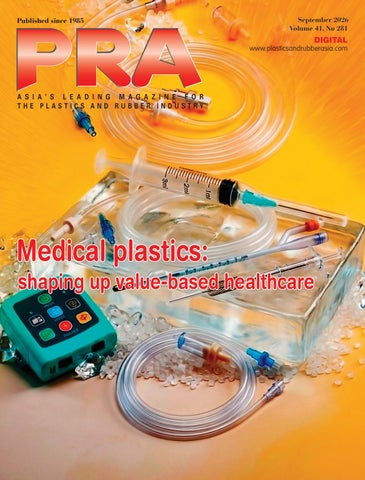
In the patient-centric medical market, gravitating towards innovation and affordability, as well as manufacturer returns, advancements have been made in medical technology for the benefit of all
Connect @ facebook.com/PRA.Malaysia
twitter.com/PRA_Malaysia
trade readers in the plastics and rubber industry. Please view this link to subscribe/renew your free subscription: http://plasticsandrubberasia.com/register.html
www.plasticsandrubberasia.com www.rubberjournalasia.com www.injectionmouldingasia.com www.eog-asia.com
Industry News
Engineering plastics require different recycling methods
I
n order to recycle a wide range of plastics, various recycling technologies are necessary. While plastics for mass applications, such as polyolefins for packaging, can often be recycled using established processes, specialty plastics often require recycling solutions tailored to their specific properties and applications. This applies, for example, to plastic mixtures that contain numerous additives such as additives or dyes in addition to polyolefins, PUs or PAs. These materials are developed for demanding applications, such as the automotive sector, where standard plastics often do not meet the required performance characteristics. This is what German chemical firm BASF’s researchers have concluded in an article published in the US journal Accounts of Materials Research. In order to keep plastics from heterogeneous waste streams in the cycle, two prerequisites are crucial: efficient sorting processes on an industrial scale and a wide range of recycling technologies. Which recycling solution is suitable depends on both the material and the composition of the waste stream. "There is no one standard technology for recycling engineering plastics," emphasised fir st author Dr. Bernhard von Vacano, head of the Plastics Circularity research program at BASF. "Rather, an intelligent mix of different, complementary technologies that match the respective plastic waste is decisive. The goal is to produce high-quality recycled materials and to keep engineering plastics in the cycle permanently." Mechanical recycling is the most widespread: plastics are sorted, shredded and melted down. This process is energy-efficient, but does not work with all plastics and only for clean and sorted waste. Mechanical recycling is particularly suitable for packaging waste, which produces
large quantities of relatively homogeneous plastics with only a few additives. However, high quality and hygiene requirements can limit the use of mechanically recycled materials in new packaging. In the case of plastics for technically demanding applications, mechanical recycling often reaches its limits, as suitable waste streams are often only available to a limited extent and the products usually consist of complex polymer compositions. In contrast, solvent-based recycling is suitable for more complex plastic waste. In this process, a special type of plastic is selectively dissolved with a solvent, separated and purified. For example, polyamides can be recovered from vehicle scrap and processed into components again. A n o t h e r i m p o r t a n t r e c y c l i n g t e ch n o l o g y i s depolymerisation. Here, plastics are brok en down into their basic building blocks and reassembled. With loopamid, BASF researchers have developed an innovative process that enables the circular textile-totextile recycling of PA6. As a result, PA fibres can be produced from textile waste thatare just as high quality as conventional polyamide 6. At the beginning of 2025, BASF commissioned the first commercial loopamide production plant at its Caojing site in Shanghai, China. Plastics from highly mixed waste, which so far have mainly ended up in waste incineration, can be recovered in thermochemical processes such as pyrolysis and gasification. These technologies require a lot of energy. In pyrolysis, the long-chain polymers of the plastics break down into short hydrocarbon chains, which can be reused as a raw material as pyrolysis oil. Gasification produces syngas, which serves as a chemical starting material in production. Numerous pilot projects by BASF show that many recycling processes for PUs and PAs work technically and that raw materials in virgin quality can be recovered from plastic waste. "However, we are still missing two crucial building blocks so that we can use these technologies on an industrial scale and enable viable business models for large investments: On the one hand, we need a suitable waste management system so that we can keep the plastics in the cycle in the long term. In addition, policymakers must establish clear and reliable framework conditions for recycling," said Dr. Jens Hamprecht, co-author of the publication and Vice President of BASF's Performance Materials division. BASF says it helps to close and expand the loops by developing and implementing circular solutions for various materials
2
SEPTEMBER 2026
Advertorial
TaipeiPLAS 2026 unveils diverse events
T
aipeiPLAS 2026 will take place September 15-19 at Taipei Nangang Exhibition Centre, Hall 1. Under the slogan “Form to Future,” the show centres on Smart Manufacturing, Innovative Materials, and Sustainability & Circular Economy, through diverse programs including the TaipeiPLAS Forum, TaipeiPLAS Award, Plastic Market Insights, and a special sustainability pavilion. Exploring Emerging Markets: Opportunities in Central and Eastern Europe, North Africa, and Southeast Asia The “Plastic Market Insights” will provide first-hand insights into the plastics and rubber markets of Central and Eastern Europe, North Africa, and Southeast Asia, covering regional industry developments, market trends, and emerging business opportunities. Material Innovation in Focus: Forum Explores Key Drivers of Industry Transformation The featured TaipeiPLAS Forum session, “Circular Materials: Technological Breakthroughs & Value Transformation” will be addressing geopolitical uncertainties, raw material price volatility, and supply chain challenges. The session will explore mechanical and chemical recycling, energy-efficient smart equipment, and functional additives, examining how circular materials can reduce resource dependence and strengthen supply chain resilience. BASF, Arburg, Nittobo, and Milliken will share their latest technologies and industry insights. The session is free to attend. Agenda and registration: https://reurl.cc/1l3KoV
TaipeiPLAS Award Showcases Taiwan’s Plastics and Rubber Industry Innovation The TaipeiPLAS Award 2026 recognises innovation in Taiwan’s plastics and rubber industry. The award encourages manufacturers to apply innovative design and advanced manufacturing technologies, create greater product value, and showcase outstanding products and machinery to international buyers. This year, 21 entries from 17 companies have been shortlisted for the final selection, which will take place on September 16, followed by the award ceremony that evening. From Showcase to Action: Bringing Circular Sustainability to the Show Floor Reflecting global trends toward plastics reduction, waste reduction, and resource circulation, the Care About Tomorrow Pavilion presents circular sustainability through four themes: “See,” “Transform,” “Coexist,” and “Choose.” Reusable wooden pallets will be used for displays, while “Gugu Coins,” made from marine waste collected in Xiaoliuqiu, will serve as voting tokens and return to the island for continued use after the show. In support of Taiwan’s efforts to reduce singleuse beverage cups and promote reuse, TaipeiPLAS 2026 is also partnering with Living Fountain and uCup to provide a reusable cup rental service throughout the exhibition, encouraging exhibitors and visitors to reduce disposable waste. From materials and equipment to end-use applications, TaipeiPLAS 2026 connects the industry value chain and global markets through diverse programs, showcasing the innovation and resilience of Taiwan’s plastics and rubber industry. Visitor registration is now available on the official website at www.taipeiplas.com tw. For the latest information, stay tuned to the official website, social media, and subscribe to the newsletter. JULY 2026
3
Materials News
Lindner Washtech partners with Indian plastics recycler Srichakra Polyplast for the supply of two washing lines for processing PCR film and rigid plastic waste
In India, plastics recycler Srichakra Polyplast has installed two washing lines from Germany-headquartered recycling machine maker Lindner Washtech for post-consumer recycled film and rigid plastic waste. The systems will produce recycled materials building on Srichakra Polyplast’s existing operations as the operator of India’s first food-grade rPET facility and a major producer of food-grade rPET and rHDPE. The company collects post-consumer packaging waste and processes it into recycled materials for beverage and fastmoving consumer goods brands, and is expected increase the supply of recycled plastics in India and strengthen the production of recycled materials for sustainable packaging and other applications. Scrap plastics get unwrapped for food and packaging Regulations for the use of recycled plastics in food packaging have become stricter. However, this innovation may come as a surprise – waste plastic as actual food? A team from Southern Illinois University (SIU) Carbondale has used microbes to turn plastic and agricultural waste into edible 3D-printed cookie-like food, as part of a NASA-led project focused on producing nutrition in the resource-limited conditions of deep-space exploration.
SIU Carbondale has used microbes to turn plastic and agricultural waste into edible 3D-printed food for a NASA-led deep-space research project. (Photo: ACS/ SIU Carbondale Communications)
Associate Professor Lahiru Jayakody said the team saw food production as a practical application for plastic upcycling because PET contains carbon-rich molecules that can be converted into food ingredients through biological processes rather than chemical reactions and solvents. For this process, the researchers programmed yeasts, including baker’s yeast, to convert molecules from PET and agricultural waste into proteins, vitamins, fats, acids and flavourings. They first process PET, discarded corn stalks and leaves, and other biomass using oxidative hydrothermal dissolution (OHD), a process developed by SIU Carbondale Geology Professor Ken Anderson that uses water and oxygen at high temperature and pressure to break down tough materials into molecules that microbes can use. The yeasts then convert these molecules into food ingredients, which are mixed with fibre, starch and sweetener before being formed into protein-rich cookies through a 3D printer called µBites. The system combines eight components, including waste grinding and extrusion, OHD and reverse osmosis, yeast cultivation, ingredient separation and mixing, 3D printing, microwave processing, micro-Raman monitoring and a control panel. A full production cycle takes about 24 hours and includes 33 steps designed to maintain food quality and safety. Micro-Raman technology and AI algorithms monitor the production process, while further yeast development has enabled the production of vanilla flavouring from plant biomass and the conversion of ethylene glycol from PET into beta-carotene, which the body can convert into vitamin A. The team says the cookies have shown favourable aroma results and could serve as a food source in resource-limited settings, although institutional approval is still pending for taste testing. The researchers aim to produce more of the ingredients through microbes and make µBites available for public consumption within a few years, with potential applications on Earth, in submarines and during missions or settlements on the Moon and Mars. Meanwhile, researchers at Japan’s Saitama University have demonstrated the potential value of polyamide microplastics by converting them into light-emitting carbon quantum dots (CQDs), fluorescent nanomaterials smaller than 10 nm, for use in UV-blocking food packaging Microplastics, given their widespread presence in daily life, are difficult to remove once they enter water, soil and other parts of the environment, making technologies that can turn this persistent waste into useful materials a welcome development. The research team produced four types of polyamidederived CQDs through one-pot hydrothermal carbonisation, using oxidation as well as boron and nitrogen doping to tune their optical properties before incorporating them into transparent and flexible polyvinyl alcohol (PVA) films. Among the materials tested, the boron-doped PVA film provided the strongest overall performance. It blocked 89% of UVC, 73% of UVB and 57% of UVA radiation while still SEPTEMBER 2026
5
Materials News allowing 63% of visible light to pass through, meaning the film could protect food from harmful UV exposure without making the packaging too opaque. In grape storage tests, grapes packed with the film lost 2.34% of their weight after eight days, a result close to that achieved with commercial HDPE packaging. Led by Dr Christian Ebere Enyoh and Professor Emeritus Wang Qingyue, the research evidences how polyamide microplastic waste can be converted into functional nanomaterials rather than treated only as an environmental pollutant. The researchers say further work is needed to assess migration safety, long-term photostability, mechanical durability and performance under real cold-chain conditions before the films can be considered for wider food-packaging use. Making a case for health and lifestyle applications It may seem like an oxymoron that plastic waste could also become a useful resource in medicine. Yet recent studies are finding ways to put it to work in pharmaceutical applications, including a process that converts scrap PET into a chemical building block for an anticancer drug. A University of St Andrews-led team has developed a method for converting household PET waste, including plastic bottles and textiles, into ethyl-4-hydroxymethyl benzoate (EHMB), a chemical building block used to make the anticancer drug Imatinib, the blood-clotting medication Tranexamic acid and the insecticide Fenpyroximate. Published in Angewandte Chemie International Edition, the study uses a ruthenium-catalysed semi-hydrogenation process to break PET into its chemical components and produce EHMB. The researchers found that this method can reduce the environmental impact associated with conventional EHMB production, which relies on fossil-derived feedstocks and can involve hazardous reagents that generate substantial waste. EHMB can also be converted into a new recyclable polyester, giving the process another potential use for the resulting chemical. The team’s analysis showed that the catalyst achieved turnover numbers of up to 37,0 0 0, with kinetic and mechanistic studies used to improve catalyst durability and process efficiency. Dr Amit Kumar of the Scottish public university said the work shows how PET waste could serve as a feedstock for high-value active pharmaceutical ingredients and agrochemicals rather than being used only to produce another generation of plastic. Taking a new route to aviation fuel, hydrogen Waste plastics can serve as a feedstock for hydrogen and aviation fuel production, offering another source of usable energy while reducing the amount of plastic sent to landfill, burned or released into the environment. Researchers from the University of California Los Angeles (UCLA) Samueli School of Engineering, and South Korea’s women’s research institution Ewha Womans University, led by co-corresponding author Ah-Hyung Park, Ronald and Valerie
6
SEPTEMBER 2026
Sugar Dean of UCLA Samueli and professor of chemical and biomolecular engineering, have developed an alkaline thermal treatment (ATT) process that converts mixed PET, PE and PP into hydrogen with purity exceeding 90%. The ATT process was adapted from a method initially developed by Park and study co-corresponding author WooJae Kim, an Ewha Womans University professor of chemical engineering and materials science, as a carbon-neutral method of converting biomass such as seaweed into hydrogen gas. Published in Proceedings of the National Academy of Sciences, the study shows that the process operates at temperatures 300-400°C lower than conventional steam gasification. Because PE and PP are resistant to alkaline treatment, the researchers first expose them to mild heat and air, adding oxygen-containing groups that make the plastics more reactive. During the main reaction, sodium hydroxide captures carbon released from the plastics and converts it into solid sodium carbonate rather than atmospheric carbon dioxide. More than 75% of the original plastic carbon was retained as stable carbonate or liquid organic residues, while less than 13% entered the gas phase and direct atmospheric carbon release was negligible. The sodium carbonate can also be converted into calcium carbonate, permanently storing the carbon in a mineral used in several industrial applications. The process could overcome a limitation of lowertemperature plastic-to-hydrogen methods, which often work only with oxygen-containing plastics such as PET, while avoiding the higher temperatures and carbon emissions associated with gasification. The researchers said that further work is needed to improve the process and assess its economic viability before it can be deployed at commercial scale. The research was supported by the National Research Foundation of Korea. Along the same vein, a separate project is using waste plastic as a feedstock for sustainable aviation fuel (SAF). Chinese pyrolysis technology company Niutech Technology Group has signed an agreement with a global energy major to supply an industrial continuous waste plastic pyrolysis line for a refinery upgrade. The system will convert waste plastics into pyrolysis oil that can then be processed into SAF, offering an alternative to used cooking oil, which is currently the dominant SAF feedstock but has limited supply. Niutech’s technology can process low-value plastics including PP, PE, PS, ABS and nylon, either separately or in mixed streams, without complex washing, sorting, drying or fine shredding. Each unit can process 10,000 to 50,000 tonnes/year of waste, and the company has already commercialised its technology in markets including the UK, South Korea, Denmark, Thailand, Vietnam and China. Sunlight-powered method to produce hydrogen Harnessing the power of the sun could be a promising way to produce hydrogen fuel. From a sustainability standpoint, the method uses a clean energy source while giving recycled plastics viability as feedstock, particularly for waste streams that are difficult to recycle.
Materials News One example is the work of Dr Yunqing Kang from the Australian Institute for Bioengineering and Nanotechnology (AIBN) who is researching a method that uses sunlight, seawater and discarded plastics to produce hydrogen fuel while reducing the energy needed for water splitting. His research uses molecules derived from plastic waste to replace the energy-intensive oxygen-producing reaction in hydrogen production. Seawater could reduce costs because it is abundant, but its salts and impurities require catalysts that are active, stable and corrosion-resistant. Dr Kang has developed porous metal alloy coatings using abundant metals such as iron, nickel and cobalt, creating low-cost, efficient catalysts for simulated seawater splitting without relying on precious metals. His research also covers semiconductor nanomaterials that can detect tiny traces of pollutants, including microplastics, by identifying their molecular fingerprints in complex water samples. Although these nanomaterials remain expensive and difficult to scale for industry, his long-term goal is to develop small, scalable solar-powered devices that can break down plastic and water at the same time to produce hydrogen and value-added chemicals. Similarly, researchers at the University of Cambridge have developed a solar-powered reactor that uses acid recovered from spent car batteries to break down hard-to-recycle plastics, including PET bottles, nylon textiles and polyurethane (PU) foams, into hydrogen and industrial chemicals.
The process, known as solar-powered acid photoreforming, uses a photocatalyst designed to withstand highly corrosive acid. Waste plastic is first broken down into chemical building blocks such as ethylene glycol, which the photocatalyst converts into hydrogen and acetic acid when exposed to sunlight. Laboratory tests produced high hydrogen yields and high selectivity for acetic acid, while the reactor operated for more than 260 hours without losing performance. The system also worked with acid recovered from spent car batteries, which typically contain 20% to 40% acid by volume and is normally neutralised and discarded after the batteries are replaced. Reusing this acid could reduce waste from battery disposal while providing a reusable input for plastic conversion. The researchers estimate that the process could cost about an order of magnitude less than other photoreforming methods because the acid can increase hydrogen production rates and be reused rather than consumed. The technology could complement conventional recycling by processing contaminated or mixed plastics that have limited recycling options. Related research also showed that the system can produce amines, organic compounds widely used in pharmaceuticals, industry and agriculture. The team is now working towards commercialisation, with further engineering needed to develop reactors capable of continuous operation under corrosive conditions.
Virgin or Recycled. Know How Your Material Performs.
A2LA Accredited Laboratory
TALK TO ARDL ABOUT YOUR MATERIAL EVALUATION. ARDL.com | answers@ARDL.com | 866-778-ARDL
JULY 2025
7
Advertorial
Medical Fair Asia 2026 brings Asia’s healthcare ecosystem together in Singapore
F
rom medical manufacturing and AI-enabled healthcare to rehabilitation, assistive technology and independent living, the healthcare value chain will come together in Singapore this September as Medical Fair Asia 2026 returns from 9 to 11 September at Marina Bay Sands. The 16th edition of Medical Fair Asia will be held alongside the 7th Medical Manufacturing Asia and the inaugural RehaCare Asia, creating a connected platform spanning the development and manufacture of medical technologies through to their use in healthcare environments, rehabilitation and longer-term care. Across the three exhibitions, more than 1,000 exhibitors from 40 countries and regions will showcase over 10,000 products and solutions. More than 14,000 trade visitors are expected, with 17 national pavilions and country groups bringing international perspectives and technologies to Singapore.
For healthcare providers, procurement professionals, manufacturers, distributors, investors and innovators, the co-location creates opportunities to look beyond individual parts of the healthcare sector and understand how new technologies, manufacturing capabilities and changing models of care increasingly intersect. “Innovation in healthcare begins long before a product reaches the patient. Medical Manufacturing Asia highlights the critical role that manufacturers, engineers and technology providers play in advancing healthcare innovation. Together with Medical Fair Asia and RehaCare Asia, the exhibition reflects the interconnected ecosystem that drives better healthcare outcomes across the region,” said Lars Wismer, Managing Director, Messe Düsseldorf Asia.
8
SEPTEMBER 2026
Innovation across the healthcare journey Medical Fair Asia will bring together innovations across medical technology, diagnostics, hospital equipment, digital health, artificial intelligence and connected care. Among the new features for 2026 is the K-AI Medical Diagnostic Hub, which will demonstrate how AI can be integrated across the diagnostic journey. The experience brings together an AI Screening Centre, Smart Diagnostic Room and multi-vendor technologies to demonstrate applications from screening and diagnostics through to clinical decision-making.
The FTR4H Conference and Showcase will extend the conversation into digital health, AI, robotics, wearables, connected healthcare and emerging models of care, while LaunchPad Innovation will give new and emerging companies a platform to introduce solutions to healthcare and industry audiences. Upstream, Medical Manufacturing Asia will focus on the technologies and capabilities behind the products used in healthcare, from components, materials and precision engineering to automation, production technologies and advanced manufacturing. RehaCare Asia, making its Singapore debut this year, expands the ecosystem further into rehabilitation, mobility, assistive technology, accessibility, healthy ageing and independent living. Its introduction reflects growing attention across Asia to what happens beyond acute treatment, including recovery, ageing, community-based support and care at home. Connecting innovation with implementation A focus on real-world implementation will be strengthened by SingHealth, which joins Medical Fair Asia 2026 as its Healthcare Innovation Partner.
Advertorial Through its participation in the exhibition and knowledge programme, SingHealth will bring healthcare practitioner perspectives into discussions around how new ideas and technologies can be tested, implemented and scaled within actual care environments. The partnership will also create opportunities for healthcare professionals and industry to engage more directly, connecting clinical needs with the technologies, expertise and capabilities required to address them. Associate Professor Goh Su-Yen, Group Director, Innovation & Transformation, SingHealth, said: “Innovation has the power to transform healthcare when it delivers meaningful improvements for patients, healthcare professionals and the wider healthcare system. As Healthcare Innovation Partner, we look forward to sharing our implementation experience and engaging with industry partners to help translate promising ideas into practical, scalable solutions.” SingHealth healthcare professionals will also contribute to the wider programme, including Paradigm Shifts in Healthcare, which will explore real-world applications of artificial intelligence, robotics, innovation and sustainability within Singapore’s healthcare environment.
Beyond the exhibition floor A series of conferences, workshops, forums and demonstrations across the three days will examine the issues influencing healthcare and MedTech across Asia. The programme includes the FTR4H Conference, Medical Manufacturing Asia Conference, RehaCare Asia workshops and discussions, as well as the MotusAcademy × RehaCare Asia Leadership Forum, which will examine why promising rehabilitation technologies can struggle to move from pilot projects into routine care. Visiting delegations from across Southeast Asia and beyond will add another dimension to the three days, alongside business matching and international country participation, creating opportunities for manufacturers, buyers, healthcare providers and distributors to build new regional connections. Singapore as a meeting point for healthcare in Asia The 2026 exhibitions also build on Messe Düsseldorf Asia’s longstanding presence in Singapore. Established in Singapore in 1995, the company has organised Medical Fair Asia since 1997, developing the exhibition alongside the region’s evolving healthcare and MedTech landscape. Today, Singapore serves not only as the home of Medical Fair Asia but as a regional meeting point where international companies can connect with healthcare and industry stakeholders from markets across Southeast Asia. As healthcare systems respond to ageing populations, workforce pressures, rapid technological change and growing demand for care beyond the hospital, Medical Fair Asia, Medical Manufacturing Asia and RehaCare Asia will provide a platform for the different parts of the ecosystem to meet, exchange perspectives and explore what comes next. For more information and registration, visit www.medicalfair-asia.com. SEPTEMBER 2026
9
Recycling
A new chapter for recyclingfriendly packaging While there is no quick solution for making packaging fully sustainable, expanding recyclability of packaging and recycling at scale to cover as much packaging as possible are effective steps toward reducing packaging waste, says Angelica Buan in this report. Packaging takes a new direction Over the past three years, recyclable packaging has veered toward simpler material structures, greater use of biobased materials, and stricter regulations governing how packaging is designed and recycled. One of the clearest trends is the move toward mono-material packaging, which uses fewer material types and can make sorting and mechanical recycling easier. Regulation is also pushing companies to rethink packaging design. The European Union’s Packaging and Packaging Waste Regulation (PPWR), which entered into force in 2025, introduces new requirements covering recyclability, packaging minimisation, recycled content, and design for recycling. Most of these requirements apply from August 2026, with further requirements being introduced over the following years. The PPWR requires packaging placed on the EU market to meet recyclability criteria by 2030, while recycledcontent targets will increase over time for certain types of plastic packaging. EPR gains ground in Asia Plastic waste remains a major waste management challenge across Southeast Asia. A 2025 World Bank report, "Extended Producer Responsibility for Plastic Packaging in Selected ASEAN Member States" found that rising populations, GDP, and urbanisation in ASEAN have increased the volume of plastic waste, while waste collection and recycling systems remain inadequate. Nevertheless, recycling rates remain low. The Organisation for Economic Co-operation and Development (OECD) reported in 2022 that only about 9% of plastic waste worldwide was recycled. In major urban areas of Indonesia, Thailand, and Vietnam, only around 8% to 25% of plastic waste is collected for recycling. Limited funding, weak waste segregation, inadequate recycling infrastructure, and policy gaps continue to restrict recovery rates. Governments across ASEAN are now turning to Extended Producer Responsibility (EPR) as one way to improve plastic waste management. Under EPR, producers take greater responsibility for the collection and treatment of the packaging they place on the market, reducing the burden on public waste management systems.
10
SEPTEMBER 2026
The ASEAN Framework of Action on Marine Debris, adopted in 2019, recommended the development of EPR policies, followed by the ASEAN Regional Action Plan for Combating Marine Debris in 2021, which called for greater regional cooperation and knowledge-sharing on EPR. Asia is seeing wider EPR adoption, although countries remain at different stages of implementation, with mandatory producer-responsibility schemes and recycling targets, while countries such as China, India, and Indonesia have introduced stronger measures to reduce plastic pollution. Regional goals also call for higher collection-forrecycling rates, creating greater pressure on producers to design packaging that can enter existing recovery systems. Major packaging sector players such as German multinational company Henkel are also responding to stricter recyclability requirements. For instance, the firm’s Packaging Recyclab Shanghai has passed an official audit by the cyclos-HTP Institute (CHI), allowing the facility to conduct EU paper packaging recyclability tests and issue EU-recognised external assessment reports for customers across Asia-Pacific.
Henkel's Packaging Recyclab Shanghai is cyclos-HTP accredited for EU paper packaging recyclability test
Henkel’s Shanghai facility puts emphasis on packaging performance during recycling, which depends not only on the main packaging material but also on coatings, adhesives and the overall structure. Testing these elements during development allows companies to identify
Recycling problems before a product reaches the market and generate technical data for recyclability assessment Meanwhile, the lab in Shanghai currently focuses on paper packaging, and Henkel is preparing to add plastic packaging recyclability assessments, and plans to include other export packaging categories. Creating more circular PET bottles Recent developments in various markets with growing demand for sustainable packaging show how companies are improving the way PET bottles are collected, recycled, and returned to packaging production. Against this backdrop, beverage maker Asahi Beverages has switched all of its plastic soft drink bottles in Australia to 100% recycled plastic, excluding caps and labels. The change covers major brands such as Schweppes, Solo and Pepsi, which is about 350 million bottles produced in Australia each year that are now made from recycled PET (rPET). In the Philippines, PETValue Philippines, a joint venture between CCEAP and Indorama Ventures, enables bottle-tobottle recycling of collected clear PET bottles. (Photo from CCEAP)
Asahi Beverages has switched all of its plastic soft drink bottles in Australia to 100% recycled plastic, excluding caps and labels, as well as invested in Australia’s Container Deposit Schemes and in two PET recycling plants in New South Wales and in Melbourne
Asahi Beverages has also invested in Australia’s Container Deposit Schemes (CDS) and in two PET recycling plants in New South Wales and in Melbourne. The facilities are part of Circular Plastics Australia, a joint venture between Asahi, UK-headquartered Coca-Cola Europacific Partners and Australian waste management company Cleanaway Waste Management, and specialty packaging company Pact Group. CDS collects used beverage bottles and processes them into rPET, which can then be used to make new bottles. This local supply has allowed Asahi to replace virgin plastic across its Australian soft drink bottle range while reducing its reliance on imported recycled
material. Asahi’s investment in collection and recycling facilities has also helped establish this supply chain within Australia. Over in the Philippines, the country has also begun building a more complete system for recovering PET bottles and turning them into new packaging. Coca-Cola Europacific Aboitiz Philippines (CCEAP) runs “Tapon to Ipon”, a nationwide PET collection programme developed with communities, organisations and local government units. The programme includes collection points where consumers can return empty PET bottles, including through variety stores partnered with CCEAP, environmental solutions company Basic Environmental Systems and Technologies (BEST), and microretailers organisation Philippine Association of Stores and Carinderia Owners (PASCO). Collected bottles can then enter the bottle-to-bottle recycling system operated by PETValue Philippines, a joint venture between CCEAP and Thailand-based PET producer/recycler Indorama Ventures. Located in General Trias, Cavite, the facility processes used clear PET bottles through an eight-step recycling process that includes sorting, cleaning, flake production and conversion into pellets for new foodgrade bottles. Pakistan is also turning to recycling technology to reduce the amount of plastic waste entering its waste streams. PET producer Novatex Ltd has invested in Austrian machinery maker Starlinger’s bottle-to-bottle recycling system that processes post-consumer PET bottles collected mainly through municipal kerbside programmes. The system can produce up to 3,000 kg/ hour of food-contact rPET. SEPTEMBER 2026
11
Recycling
Novatex Ltd has invested in Starlinger’s bottle-to-bottle recycling system, which processes post-consumer PET bottles from mainly municipal kerbside programmes to produce up to 3,000 kg/hour of food-contact rPET
Novatex uses the rPET chips to produce its own PET preforms or sells them locally and internationally, with major brands such as PepsiCo and Coca-Cola using the food-contact-certified material. This capacity is particularly relevant for Pakistan, which generates an estimated 3.12 million tonnes/year of plastic waste, while only about 4% to 9% is recycled. Smart technology for recycling-compatible packaging Technology is also improving the recyclability of packaging, including PET bottles. For example, adopting digital tracking for sustainability and traceability can ensure compatibility with existing PET recycling systems. Traditional RFID labels may not be compatible with PET recycling because components such as permanent adhesives can remain bonded during mechanical recycling, leaving adhesive and metal residue that can reduce recycled PET purity, according to US digital identification solutions company Avery Dennison, which has received RecyClass Technology Approval in Europe for its AD CleanFlake RFID tag.
Avery Dennison’s AD CleanFlake RFID tag has received RecyClass Technology Approval in Europe. Its CleanFlake adhesive and patent-pending RFID construction enable the tag to separate from rigid PET during recycling, reducing adhesive and metal contamination
12
SEPTEMBER 2026
The AD CleanFlake RFID solution combines Avery Dennison’s CleanFlake adhesive technology with a patent-pending RFID inlay and label construction. During mechanical recycling, the tag can be separated from rigid PET, reducing the risk of adhesive and metal contamination in the recycled material. This allows brands to use RFID for tracking while keeping the label construction compatible with PET recycling processes. The recognition from both RecyClass and APR also gives multinational brands a more consistent label construction for PET packaging used across North American and European markets. However, these approvals apply to the label and adhesive construction under specific testing conditions. Brand owners still need to assess the recyclability of the complete packaging design, since the label is only one part of the finished package. Concerted efforts to strengthen recycling chain Elsewhere, companies are working to improve the systems that collect and process packaging after use. Swiss packaging solutions company SIG and its partners Plastic Bank, the Wuppertal Institute for Climate, Environment and Energy, and Decision Context have launched “Recycle for Good – Prevent Marine Litter,” a three-year initiative focused on reducing packaging waste entering the ocean in Thailand, Indonesia and the Philippines. The project, which runs until November 2028, targets the prevention of at least 10,000 tonnes of packaging waste from reaching the ocean and plans to engage around 100,000 people, including students, teachers, households SIG and partners have launched and informal waste a three-year recycling initiative collectors. in Thailand, Indonesia and the The project Philippines, aiming to prevent at least combines community 10,000 tonnes of packaging waste from reaching the ocean and engage education with 100,000 people improvements to collection and recycling infrastructure for packaging such as beverage cartons and plastics. It works with schools, local recyclers, Producer Responsibility Organisations and public authorities to improve waste segregation and collection. The programme also plans to upgrade or establish facilities that can process used beverage cartons and flexible plastics, while bringing informal waste collectors into formal recycling value chains. SIG has also expanded the programme to Vietnam, where used milk cartons are collected at schools in Bac Ninh province for recycling into paper products, while the separated PolyAl material is processed into products such as clothing hangers, flowerpots and building panels.
The Plastics Recycling Show Asia is THE event in the region dedicated specifically to plastics recycling.
Book your stand today! Contact: Matt Barber on +44 (0)7739 302081 or email mabarber@crain.com
www.prseventasia.com Organised by
Supported by
PRS Global Events:
MIDDLE EAST & AFRICA 10-12 September 2024 Dubai World Trade Centre, Dubai
PRS Asia 2026 page ad for PRA March 2026.indd 1
19/03/2026 14:25
Medical Technology Sector
Medical care gains an edge in next generation technologies Healthcare demands are becoming more challenging, requiring more sophisticated therapies. Balancing this with higher patient compliance and better outcomes remains a work in progress that medical technology manufacturers continue to address, says Angelica Buan in this report. Rise of value-based healthcare Over-complex innovation does not cut it in medical technology. This is because the demand now is patientcentric, gravitating towards patient benefit, societal affordability, as well as manufacturer returns. That said, it behooves both manufacturers and healthcare systems to advance medical technology because doing so generates a shared, reinforcing cycle: better technology improves patient outcomes and system efficiency, which generates market demand and reimbursement, which in turn funds further innovation. Continuous innovation backs the growth of the global medical device manufacturing market, which is projected to cross US$153 billion by 2034 from US$92 billion in 2026, representing a CAGR of 6.5% over the forecast period, according to Fortune Business Insights. Currently, there are certain expectations that advanced devices must meet, such as enabling earlier and more accurate diagnosis, less invasive treatments, and better long-term disease management. They must also provide justifiable costs, shorten hospital stays, reduce procedure complexity, and enable more care to be provided in outpatient rather than inpatient settings. At the same time, advanced materials such as thermoplastic elastomers (TPE), silicones, and highperformance medical plastics matter to value-based healthcare because they directly affect the three pillars that define “value”: quality of outcomes, cost of care, and equity of access. Put simply, better materials enable better, more affordable, and more widely available devices, which is exactly what value-based care demands. TPEs in critical devices For emergency equipment such as automated external defibrillators (AEDs), materials must combine durability with flexibility, insulation and a secure grip. Germanybased TPE manufacturer Kraiburg TPE's Thermolast H compounds are designed for healthcare applications and can be used in AED grips, cables, seals and protective housings. The medical TPE compounds meet ISO 10993-5 and GB/T 16886.5 cytotoxicity standards, as well as Regulation (EU) No 10/2011 and US FDA CFR 21 raw material requirements. They can also be sterilised through
14
SEPTEMBER 2026
Kraiburg TPE's Thermolast H compounds are designed for healthcare applications and can be used in AED grips, cables, seals and protective housings
autoclave processes at 121°C and ethylene oxide treatment, and are free from animalderived ingredients, heavy metals and toxic substances. The compound’s ability to bond with engineering plastics such as PC, ABS, PC/ABS, ASA, SAN, PET, PETG and PS gives manufacturers more options when producing integrated components. The materials can be injection moulded or extruded into switches, seals, membranes and flexible connections, while their soft-touch surface is suited to grips and other parts that need comfortable handling. Similarly, chemical producer Saudi Basic Industries Corporation (Sabic) offers its latest medical-grade TPE such as the Ultem HU resins and Siltem HU copolymers as fluoropolymer alternatives for selected medical tubing applications. Its portfolio also includes LNP Elcres NPCRX9612U resin, certified under UL746G as nonPFAS for device housings, and LNP Lubriloy compounds formulated without PTFE for wear and friction parts.
SABIC’s new Siltem HU resins can replace fluoropolymers in select medical tubing, while LNP Elcres SLX provides impact and UV resistance for Rotaid’s AED cabinet covers
Medical Technology Sector Other Sabic materials target the physical demands of equipment. LNP Elcres CRX copolymer resins provide chemical resistance for equipment and device housings, while LNP SLX grades offer impact and UV resistance, including use in the transparent cover of a Rotaid AED cabinet. Ultem HU resins are also used for surgical robot wrist and arm-base components, where lightweight strength and compatibility with sterilisation methods are required. German materials producer BASF is also applying different polymer properties to medical and safety equipment. Its Ultrason P 3010 BMB is a biomass-balanced PPSU containing 20% attributed bio-circular feedstock while retaining the same chemical identity, processing characteristics and certificates as its standard counterpart. The material offers high-temperature stability, chemical resistance, toughness and long-term durability for applications including medical devices.
BASF's Ultrason P 3010 BMB is a certified biomass-balanced PPSU with 20% attributed bio-circular feedstock
Another BASF material, Ultramid A3XZC3 ESD, shows how a polymer can be formulated for a very different need. The highly impact-modified, carbon fibre-reinforced material is used for the backplate of MSA's M1 selfcontained breathing apparatus. It combines flame retardancy, mechanical strength and reduced surface resistivity. The assembled breathing apparatus passed an independent flame test while retaining full operational function, and its handle can withstand emergency loads of up to 200 kg. In explosion-hazard areas, its reduced surface resistivity also lowers electrostatic charging and the risk of spark formation. Meanwhile, Belgian materials company Syensqo provides another example of how polymers can be used in implantable devices. Its medical-grade TPEs include Radel PPSU and Udel PSU, while its Solviva biomaterials portfolio includes Zeniva PEEK, Eviva PSU and Veriva PPSU. These materials are used in medical equipment and long-term implantable devices, with properties suited to applications requiring durability, strength, sterilisation resistance and lightweight, radiolucent designs.
Silicone for fluid management Similarly, silicone materials are gaining prominence in more sophisticated operations. For example, fluid management presents a different material challenge because tubing must remain flexible while maintaining consistent flow during repeated use. US healthcare company TekniPlex Healthcare’s medical silicone tubing is designed for peristaltic pumps, infusion pumps and other medical fluid management devices, where elasticity, fatigue resistance and long-term performance stability are required. Silicone is also used in more specialised tubing configurations. TekniPlex's Para-tubing solutions are designed for ophthalmic minimally invasive surgical devices, where several independent tubing lines may need to fit within a compact space. The design allows separate fluid and gas lines to be arranged in multi-row configurations while maintaining consistent quality. For vascular procedures, TekniPlex also produces PTA/ PTCA precision interventional tubing, including singlelayer and multi-layer balloon catheter tubing and threelayer inner tubing. These products require low friction, bondability, dimensional control and trackability, together with accurate dimensions, concentricity and consistent manufacturing. High-performance polymers for advanced therapies The material story does not end with the finished medical device. Specialised materials are also needed to manufacture and deliver newer medicines, particularly treatments based on peptides, oligonucleotides and nucleic acids. US materials firm DuPont's AmberChrom XT20 SL and XT30 SL chromatography resins are designed for downstream purification of oligonucleotide and peptide therapeutics. The slurried versions eliminate the need to hydrate the resin before column packing, simplifying preparation. XT20 SL has the smallest particle size in the AmberChrom XT portfolio for high-resolution separations, while XT30 SL is designed for separations at higher flow rates. The company also offers AmberChrom CG and AmberChrom TQ1 for other purification applications involving oligonucleotides and peptides. Meanwhile, German chemicals company Evonik is expanding its lipid-based drug delivery capabilities with a new GMP manufacturing facility in Vancouver, Canada. The C$150 million investment is expected to begin drug product production at the end of 2029 and will provide more than three times the current manufacturing capacity for advanced pharmaceutical products. The facility will produce lipid-based products including vaccines and therapeutics, while its Vancouver operation already provides formulation research, GMP clinical manufacturing and commercial process scale-up for lipid nanoparticles and liposomal delivery systems. SEPTEMBER 2026
15
Medical Technology Sector The ability to manufacture medical products in patientspecific forms is creating another demand for specialised polymers. Evonik's Vestakeep Fusion filaments have been used to produce patient-matched cranial implants made through FDM additive manufacturing, receiving China's first registration certificate for medical-grade devices produced with this method. Modules for ultra-thin imaging device Imaging devices that enter the body need to balance image quality with size, flexibility and mechanical strength. US semiconductor company Omnivision's OVMed ultra-thin medical-grade LED cable modules bring several imaging components together for single-use endoscopes. The modules combine an image sensor with waferlevel optics, illumination and cabling. They support CameraCubeChip platforms including OCHTA, OCHFA, OCHSA and OCH2B, and can be used in a wide range of endoscopes, including bronchoscopes, gastroscopes, laparoscopes, colonoscopes, cystoscopes and arthroscopes. Omnivision says it can customise the modules according to the camera, cable type, connectors, LED illumination and distal-tip geometry required by the manufacturer. Its standardised products and high-volume production also give manufacturers a ready-made imaging and illumination package rather than requiring them to develop each component separately. The result is a compact imaging system that can be incorporated into a range of single-use endoscopes, making the technology suitable for procedures that require cameras and illumination to reach narrow areas inside the body. Cardiovascular devices made more reliable Cardiovascular devices place another set of demands on material and device engineering. Specifically, two new technologies enable device to function inside small and often heavily calcified blood vessels, or provide temporary scaffolding without leaving a permanent stent behind. US medical technology company Boston Scientific's Seismiq 4CE coronary intravascular lithotripsy catheter is designed for patients with severe coronary artery calcification. The catheter uses laser energy inside a balloon catheter to generate acoustic pressure waves that fracture calcium. Directional emitters provide controlled energy at low pressure, preparing the vessel for stent implantation and expansion. Another innovation to vascular treatment comes from US interventional vascular device company Reflow Medical's spur peripheral retrievable stent system. Rather than leaving a permanent implant, the system provides temporary mechanical scaffolding during treatment and is retrieved afterwards. It is intended for use with percutaneous transluminal angioplasty in infrapopliteal arteries measuring 2.5 mm to 4.5 mm in diameter.
16
SEPTEMBER 2026
Computing technology at the heart of medical devices As digital healthcare expands, computing systems are being deployed across nursing stations, patient rooms, operating theatres, diagnostic imaging systems, medical carts and telemedicine platforms. Unlike conventional office environments, clinical settings can require computers to operate close to patients, connect with sensitive medical equipment, handle continuous workloads and withstand frequent cleaning. Avalue Technology, a Taiwanese computing specialist, offers purpose-built medical computing platforms for applications ranging from patient care and vital signs monitoring to medical imaging, surgical visualisation and Edge AI. Avalue’s medical computing portfolio includes medical panel PCs, embedded computers, high-performance computing systems, workstations, data gateways and Edge AI platforms. Medical-grade computing is not defined by a single classification, but by how well a system meets the safety, hygiene, reliability and regulatory requirements of its intended application. Depending on the configuration, deployment environment and target market, selected models are designed to meet applicable medical electrical safety and electromagnetic compatibility requirements, including IEC 60601-1 and IEC 60601-1-2. Compared with commercial computers, medical computing systems can feature medical-certified power supplies, controlled leakage-current designs, enhanced electromagnetic shielding, sealed controls, fanless cooling and enclosure materials designed to withstand frequent cleaning and disinfection. Sealed enclosures and fewer surface gaps can make routine cleaning easier while reducing areas where dust and contaminants can collect in high-touch environments. Long-term product availability and controlled component revisions can also help medical equipment manufacturers maintain consistent system configurations through development, certification and deployment. Through its range of medical computing platforms, Avalue provides healthcare organisations and medical device manufacturers with application-ready computing solutions for different clinical environments.
Avalue Technology’s medical computing portfolio includes medical panel PCs, embedded computers, high-performance computing systems, workstations, data gateways and Edge AI platforms
Injection Moulding Asia Electrical/Electronics
Rewiring smart manufacturing and AI infrastructure Recent developments in manufacturing, automation,
The material has a melt viscosity of 2,700–3,000 mPa·s at 210°C and 1,065–1,180 mPa·s at 240°C, with good penetration, wetting and adhesion across several substrates. It passed lap shear testing after 1,200 hours at 85°C and 85% relative humidity. The company positions the material as an alternative to conventional potting encapsulants, with a three-step process and cycle times as short as 30 seconds compared with potting processes that can require up to eight steps and 24 hours. The material also provides electrical insulation, meets UL 94 V-0 flame-retardancy requirements, has a coefficient of thermal expansion of 175 ppm and operates from -20°C to 140°C. Applications include motors, connectors, sensors and printed circuit boards, particularly electronic assemblies exposed to demanding outdoor conditions. Henkel has also recently launched Loctite Ablestik CDF900, its next-generation conductive die attach film (cDAF) series. The material delivers thermal conductivity exceeding 8 W/m-K and is designed to help semiconductor manufacturers address thermal and stress challenges in AI, 5G, emerging 6G telecommunications and high-performance computing (HPC) applications.
energy and AI chart the electrical/electronic sector gaining place in the wider industrial ecosystem, according to Angelica Buan in this article.
T
he electrical/electronics sector is entering an unprecedented phase of industrial growth. It is no longer confined to domestic appliances and personal consumer products. It is now heavily entrenched in factory robots, automated inspection equipment, power systems, cooling infrastructure and connected devices, while also providing the hardware and control systems needed for artificial intelligence (AI). Backbone of manufacturing reliability As electronic assemblies become more complex, manufacturers need both reliable protection for components and more automated ways to test finished assemblies. As such, German multinational company Henkel and European electronics manufacturing services (EMS) provider Scanfil are heeding these requirements through different manufacturing technologies. Henkel has expanded its Technomelt low-pressure moulding Technomelt PA 6370, a polyamide-based hot melt designed for electronic systems with small gaps. Its ultra-low melt viscosity enables filling of gaps as small as 0.5 mm while providing resistance to moisture, heat, corrosion and other environmental conditions.
Scanfil has installed an automated test cell that uses a cobot for panel handling, electronic testing and automatic sorting based on test results
Meanwhile, Scanfil is applying automation to the testing stage of electronics production. Its Wutha facility in Germany has installed a fully automated test cell combining a collaborative robot (cobot), electronic testing and process control. The cobot takes panels from a magazine, loads them into a test fixture and starts the test cycle, with results sent to the cell controller for automatic sorting. Defective boards are identified, marked and sent to a rework magazine, while approved boards are transferred to another magazine. The system can operate for extended periods with limited operator involvement, with personnel mainly loading and unloading magazines.
Henkel’s Loctite Ablestik CDF900 conductive die attach film offers thermal conductivity above 8 W/m-K for semiconductor applications in AI, 5G, 6G and high-performance computing
1 SEPTEMBER 2026
www.injectionmouldingasia.com
Injection Moulding Asia Electrical/Electronics Scanfil, which has 16 production facilities and serves the aerospace and defense, energy and cleantech, industrial, and medical technology markets, describes the setup as a foundation for a “black shift,” where testing and sorting can continue without direct operator involvement.
The merger brings Enercon’s nuclear and power engineering capabilities together with Pond’s experience in federal energy, natural gas and mission-critical infrastructure. Management teams from both companies have invested more than US$100 million in the combined business alongside Arlington. AI and automation in electronics production AI is also being integrated directly into manufacturing equipment and production planning, allowing factories to combine robotics, simulation and automated inspection. Taiwanese electronics manufacturing firm Delta Electronics is applying these technologies in electronics, semiconductor and machinery production. Delta’s Embodied AI Dual-Arm Robot Platform combines AI models with robotic control, allowing robots to learn tasks, analyse workflows, execute actions and make corrections using multimodal data. The system is being developed for applications ranging from flexible, high-mix production to AI server assembly. Its AI Robotic Control Platform uses the NVIDIA Jetson AGX Orin module, providing up to 275 TOPS of AI performance, together with NVIDIA Isaac ROS Nvblox and cuMotion for real-time 3D modelling and obstacle avoidance.
Powering cooling and energy systems AI computing requires substantial physical infrastructure, from thermal management to electricity generation and transmission. Filling the requirements in this segment, South Korean consumer electronics manufacturer Samsung Electronics and Samsung company specialiing in air technology FläktGroup are expanding cooling capacity.
Samsung is investing in an HVAC production line in Gwangju, South Korea, scheduled to begin operations in 2028 and manufacture FläktGroup cooling systems for AI data centres
Samsung plans to invest about US$158 million in a 21,500sq m HVAC production line at its Gwangju site in South Korea. Scheduled to begin operations in 2028, the facility will manufacture FläktGroup HVAC products, including cooling systems for AI data centres. Samsung acquired FläktGroup in 2025 as part of its expansion into HVAC. The Gwangju facility will become FläktGroup’s 15th manufacturing site worldwide, following its existing network of 14 facilities and the recent expansion of its manufacturing footprint through Project Gagan, a new production line in Pune, India. The companies are targeting industrial HVAC demand in South Korea, with AI data centres among the applications driving demand. Meanwhile, the expansion of electronics-intensive industries is also driving demand for additional power infrastructure. US private investment firm Arlington Capital Partners has acquired nuclear engineering company Enercon from funds managed by US global asset management firm Oaktree Capital Management. As part of the transaction, Enercon will merge with Arlington’s Pond & Company, a full-service design and engineering firm providing technical services to the federal government and customers across the energy industry. The new company will operate under the Enercon name and is expected not only to broaden market access but also to cater to growing energy demand from AI, manufacturing and other large industrial applications.
Delta’s Embodied AI Dual-Arm Robot Platform combines AI and robotic control to let robots learn tasks, analyse workflows and self-correct for applications including high-mix production and AI server assembly
For production planning, Delta’s AI-enhanced digital twin combines its DIATwin Virtual Machine Development Platform with NVIDIA Omniverse libraries to simulate processes such as PCB glue dispensing, generate production paths and convert verified results into machine recipes. The system has been deployed at Delta’s Thailand plant for AI server powersupply production lines. Delta is also using NVIDIA’s Defect Image Generation skill, powered by NVIDIA Cosmos, with NVIDIA TAO and NVIDIA Isaac Sim to generate defect patterns and surface textures for automated optical inspection. The company, which also supplies power components to Apple and Tesla, says this reduced preparation time for models covering new product defects from three months to two weeks and increased AOI rates by 17%.
2 SEPTEMBER 2026
www.injectionmouldingasia.com
Injection Moulding Asia Electrical/Electronics Crossing from steel to smart energy Industrial electrification is also opening opportunities for traditional manufacturers to enter the smart energy sector, as electronics-intensive industries require more reliable and flexible power.
NanopowerNanopower’s nPZero Gen1 Power Management IC handles low-power monitoring and wake-up functions, allowing the main processor to stay powered down longer and reduce energy consumption
monitor sensors, manage wake-up events and perform lowpower housekeeping, nPZero transfers these functions to dedicated ultra-low-power hardware. This allows the primary processor to remain powered down for longer periods, reducing overall consumption. For applications in industrial systems, smart buildings, healthcare, environmental monitoring and consumer IoT devices, the technology can extend battery life, reduce battery replacement and maintenance requirements, allow smaller batteries and make energy-harvesting systems more practical. Along the same lines, advanced materials such as chemical manufacturing company Sabic’s new PVD-capable Ultem DU762 resins are giving consumer electronics manufacturers’ new options for lighter, more durable and easier-toproduce smartphone frames. The polyetherimide thermoplastic, developed for smartphone middle frames, is compatible with non-conductive physical vapour deposition (PVD) sputtering, producing a high-gloss metallic finish while providing heat and chemical resistance, ductility and strength. Unlike titanium, stainless steel and aluminium, it can be processed through high-speed, high-volume injection moulding, while its non-conductive properties can eliminate the antenna splits required in metal frames. Its unreinforced structure also provides a smoother surface than glass fibre-reinforced polycarbonate, delivering a polished finish suited to topof-the-line smartphones incorporating AI and other next-generation technologies.
Quintain Steel invested in a smart energy storage project that stores electricity during low demand and releases it during peak periods, connected directly to the Taipower grid
Taiwanese steel manufacturer Quintain Steel exemplifies how this is playing out in traditional industry, having expanded from its more than five-decade steel business into grid-scale energy storage with an 80 MW/305 MWh installation in Tainan. Changing lanes from steelmaking to smart energy, Quintain Steel invested NT$4.5 billion in the project, which stores electricity during periods of lower demand and releases it during peak periods. Connected directly to Taiwan Power Company (Taipower) grid, the system can discharge at full power for at least three hours and provides E-dReg services through the utility’s electricity trading platform. With 305 MWh of storage capacity, it is designed to respond to grid conditions and balance electricity supply and demand, as the city’s largest grid-connected energystorage installation. The project is timely as Taiwan’s technology sectors, including semiconductors, AI and smart manufacturing, continue to expand. Making headway in smarter connected devices At the device level, reducing energy consumption is important for battery-powered and energy-harvesting products. Norway-headquartered fabless semiconductor company Nanopower Semiconductor and UK-based electronics components distributor Anglia Components are working together to boost access to ultra-low-power technology across Europe. Anglia Components will serve as Nanopower’s panEuropean distributor, providing access to its products, development tools and application assistance. Nanopower’s flagship nPZero Gen1 Power Management IC is designed to reduce the workload placed on a system microcontroller. Instead of keeping the MCU active to
Sabic’s new PVD-capable Ultem DU762 resins enable lighter, more durable and easier-to-produce smartphone
3 SEPTEMBER 2026
www.injectionmouldingasia.com
Injection Moulding Asia Engineering Plastics
Producing multi-coloured kayaks with reduced energy/cycle time
R
otational moulding is a preferred process to produce large hollow articles like tanks for water or agrochemicals. In addition, this process is widely used for custom mouldings such as for marine sports, fish tubs and defence applications, owing to greater design flexibility and cost advantage. However, potential challenges with rotational moulding are energy consumption and long cycle times. Reinhardt Teknik, a global rotomoulding machine OEM with a plant in India operating under guidance of Reinhardt GmbH, Germany, teamed up with Greenage Industries, a South Asian compounder and exporter for rotomoulding powders located in India, with the goal of creating a durable, tough kayak that was also aesthetically appealing and produced efficiently using less energy. Ravi Kadivar, Managing Director, Greenage Industries notes, “Integrating ExxonMobil’s metallocene LLDPE into our rotomoulding formulations unlocked a new level of performance and versatility. Its high uniform molecular architecture ensures smoother extrusion, superior low-temperature ARM impact and a consistently wide processing window, critical for maintaining quality across varied rotomoulding conditions.“ The solution applied is ExxonMobil’s Exceed metallocene PE grades. Leveraging the material expertise of ExxonMobil Signature Polymers, Greenage developed a compounded coloured powder with machine and processing expertise from Reinhardt Teknik.
Following initial discussions, Exceed Tough m 4536 was chosen as the high-performance resin for the application. Exceed Tough performance PE offered ageing and stress crack performance with enhanced toughness, providing potential cycle time reduction over the conventional compounded ZN C6LL grade. Rustom Patell from Reinhardt Teknik, said, “ExxonMobil’s latest rotomoulding metallocene LLDPE demonstrates excellent heat stability at elevated temperatures. Designed for rotomoulding, this grade offers a broad processing window and cycle reduction possibilities over conventional PE, which is of great value to rotomoulders. It exhibits excellent ARM impact performance, critical in applications like kayaks.” Potential benefits of Exceed Tough highperformance PE resin include: • Heat stability performance with wide processing window • Aesthetics and whiteness • Cycle time reduction of up to 20% • ESCR performance PE pet food pouch designed for recyclability Machine direction-oriented (MDO) PE films can exhibit improved mechanical, barrier and optical properties but implementing MDO technology requires investment in specialised equipment, which can be a significant upfront cost.
ExxonMobil, Greenage and Reinhardt develop a long-lasting kayak with the use ofmetallocene PE
4 SEPTEMBER 2026
www.injectionmouldingasia.com
Injection Moulding Asia Engineering Plastics Italian machinery maker Bandera partnered with ExxonMobil Signature Polymers to create PE substrate films with conventional blown film extrusion. “Extrusion technology has come a long way”, said Diego Castiglioni, Technical Director, Bandera. “Our technology contributes to extreme flexibility
ExxonMobil and Bandera created a full PE pet food pouch that is designed for recyclability
and outstanding technical properties; our lines are suitable for PE substrate like films without MDO for mono-material solution.” The challenge was to develop a PE mono-material pet food pouch, designed for recyclability using a substrate film providing stiffness and optics, meeting converting requirements for printing and lamination. The substrate film was made on a conventional Bandera blown film extrusion line, resulting in good optical properties, high stiffness and dimensional stability at elevated temperatures, which are important requirements for printing and lamination. As sealant film for this PE pet food pouch, an EVOH-containing film was made on a Bandera Barrier Flex extrusion line using an Exxtra Seal enhanced polymer, ensuring a broad sealing window. The partners created a solution using conventional blown film extrusion technology, for a stiff high clarity substrate film that can be used for PE mono-material pouch applications designed for recyclability. Contributing to the creation of the mono-PE pet food pouch were: • Goglio, a complete systems provider for packaging lines, high barrier flexible laminates and plastic accessories • Mitsubishi Chemical Group for EVOH supply in the sealant film; SoarnoL BF3205B • Industrie Polieco – MPB SpA for tie layer resin in the sealant film; MPB Coesive L600F
18-21 2026 NOV
JIExpo Kemayoran, Indonesia
Rubber Journal Asia Gloves Sector
Malaysia’s gloves sector holds its place in a volatile market As a main exporter of gloves globally, Malaysia is handling suitably geopolitical pressures and sustainability demands and has its sights set on new directions in markets and technologies, according to Angelica Buan in this report.
Malaysia, a major global glove supplier, demonstrates the resilience of its glove sector amid market headwinds
M
alaysia has moored itself as a major hub and exporter of rubber gloves in the Asian region and globally, with large manufacturers including Top Glove, Hartalega, Supermax, Kossan Rubber, YTY, Ansell, Sempermed and more, as well as an established production base serving buyers in major markets. The Malaysian Rubber Glove Manufacturers Association (MARGMA) pegs the country’s global market share at about 45% in 2024, ahead of China at around 28%. Other industry data puts Malaysia’s share of global rubber-glove exports by quantity at about 60%, although that figure comes from historical data and uses a different measure.
These pressures raise a broader question: how resilient is Malaysia’s glove industry when external shocks test its spot in the global market? Hormuz impact on the gloves sector The closure of Gulf’s Strait of Hormuz has created a mixed scenario for Malaysia’s rubber glove industry. According to Malaysia-based Hong Leong Investment Bank (HLIB), disruptions to naphtha supplies from the Middle East could reduce global nitrile butadiene rubber (NBR) availability by as much as 24%. HLIB analyst Chee Kok Siang said the disruption could temporarily benefit glove makers by easing the industry’s structural oversupply. A prolonged shut down of this key chokepoint could also give manufacturers more room to adjust average selling prices, potentially outweighing oversupply concerns in the near term. The same supply disruption, however, has brought serious cost constraints for some manufacturers. One of these is Malaysian glove maker WRP Asia Pacific that had been forced to begin winding down its operations this year, while seeking potential buyers for the company. Meanwhile, MARGMA had warned that the Hormuz blockade was causing shortages of key raw materials like NBR and nudged the government to provide temporary relief measures. MARGMA President Oon Kim Hung said temporary relief was needed to help manufacturers manage the external supply shock, maintain production and fulfil commitments to hospitals and healthcare distributors worldwide. He also cautioned against a prolonged disruption could affect global healthcare supplies and Malaysia’s standing as a reliable supplier of medical protective equipment.
Kossan is acquiring full ownership of Singapore-based Inout Enterprise and a 51% stake in its Thailand associate for RM48 million to expand its Cleanroom Division and distribution business
The industry’s importance to Malaysia’s rubber trade remains clear: from January-June 2026, the country recorded RM11 billion in rubber exports, with gloves accounting for more than RM7 billion, or about 66% of the total. The US was the largest destination, followed by the European Union, Japan, China and Singapore. The country’s position in the global glove market is therefore well established. But the industry now faces a different test. The US-Iran conflict and the resulting closure of the Strait of Hormuz, a major route for global oil trade, have disrupted energy and petrochemical supplies, with knock-on effects on rawmaterial availability, production costs and other parts of the business.
1 SEPTEMBER 2026
www.rubberjournalasia.com
Rubber Journal Asia Gloves Sector Supermax is also expanding its manufacturing base in the US, to reduce exposure to international freight and cross-border logistics volatility. Following the completion, testing and commissioning of its final production lines in June 2026, installation and pre-operating costs are expected to decline. From the second half of 2026, the plant is expected to take on larger orders from US domestic customers.
Meanwhile, Top Glove has also reported higher input costs by more than 50%, resulting in higher glove prices, and the company encouraged customers to consider natural rubber gloves since NBR pricing has been affected. Buffering growth with Investments While Malaysia’s glove industry faces slower conditions amid global political and economic uncertainty, major players continue to invest, expand and look for new sources of growth. Kossan is acquiring full ownership of Singapore-based Inout Enterprise and a 51% stake in its Thailand associate for RM48 million to expand its Cleanroom Division and cleanroom distribution business. The deals, funded internally, are expected to be completed in Q1 2027 Supermax, another leading homegrown glove maker, and its associate company, Supermax Brasil, are investing US$50 million to establish a medical-glove manufacturing facility in Paraná, Brazil. The project will give Supermax its first manufacturing base in South America and strengthen its presence in Brazil and the wider Mercosur market, a regional trade bloc in South America. The plan comes as Brazil introduces import duties on medical gloves after removing previous anti-dumping measures. Supermax sees opportunities in the country’s growing healthcare sector, regional demand for medical and industrial gloves, Mercosur access and government efforts to encourage local manufacturing. The facility will have an estimated production capacity of 2.4 billion gloves/year, with production lines installed in phases, and will produce both natural-rubber latex and nitrile examination gloves for the Brazilian and regional markets.
Dipping into more advanced applications Manufacturers are also working on products aimed at more specialised applications. In October 2025, Malaysian glove maker Nastah Industries unveiled electrostatic discharge (ESD) chemical gloves incorporating Tuball graphene nanotubes supplied by Luxemburgheadquartered manufacturer of graphene nanotubes and nanotube products OCSiAl.
Nastah Industries’s ESD chemical gloves incorporate Tuball graphene nanotubes supplied by OCSiAl
According to Nastah and OCSiAl, the nanotubes provide a conductive network within the glove, allowing it to combine static-discharge protection with resistance to abrasion, chemicals and tearing. Nastah said its 15,000-sq-m facility in Penang produces more than 30 million pairs of gloves/year. The gloves are certified under EN 16350, EN 374 and EN 388 and are intended for industries such as chemical processing and electronics manufacturing. Research collaboration is also taking place between manufacturers and academic institutions. For instance, the Malaysian Rubber Council (MRC) facilitated an engagement between Seremban-based glove maker Avecena Gloves and Monash University researchers to discuss possible collaboration in rubber technology.
Supermax and Supermax Brasil are investing US$50 million in a medical-glove facility in Paraná, Brazil, representing Supermax’s first manufacturing base in South America
2 SEPTEMBER 2026
www.rubberjournalasia.com
Rubber Journal Asia Gloves Sector Charting a sustainable path for rubber gloves Waste is another concern the glove industry, as a whole, cannot ignore, particularly because used rubber gloves are difficult to recycle through conventional waste systems. A development has taken form along the material line, from UK-headquartered chemicals company Synthomer, which operates a facility in Pasir Gudang, Johor Bahru, that teamed up with Finnish renewable fuel producer Neste and Singaporebased chemicals company PCS to establish an ISCCcertified value chain for bio-based NBR latex. According to the companies, the latex contains at least 20% bio-based feedstock while retaining the quality, safety and functional performance of its fossil-based equivalent. The ISCC Plus certification allows certified bio-based or circular feedstock to be incorporated into existing manufacturing systems and traced through the supply chain. Elsewhere, novel initiatives are repurposing used gloves. Medical gloves manufacturer Sri Trang Gloves (Thailand), Thailand-based food and beverage group Oishi Group and Thaksin University launched the Sri Trang Green Steps project, which collects used rubber gloves from business operations and processes them into new products. The university oversees the research, innovation and recycling process, which includes cleaning, sorting and recycling the gloves.
Researchers also developed a production formula designed to reduce chemical use while increasing the amount of reused rubber. The first project produced rubber floor mats for a 70-sq m indoor sports training field at Kanjandit School in Surat Thani Province. According to the organisations involved, the initiative also reduces industrial waste and greenhouse gas emissions linked to conventional disposal methods. Similarly, Australia’s Ansell Ltd has launched TouchNTuff 93-800, a disposable chemical-protection glove offering at least 15 minutes of acetone resistance, which the company says is 15 times longer than standard nitrile disposable gloves. Designed for workers in aerospace, automotive, chemical manufacturing and maintenance, it reduces the need for frequent glove changes when handling strong solvents. The TÜV certified glove, which contains more than 60% bio-based carbon uses Ansell’s Microchem Chemical Barrier Technology and a multi-layer construction of neoprene, nitrile and NR latex. It provides EN ISO 374-1 Type A chemical resistance, including against ketones and other harsh solvents, as well as EN388 2110A-certified abrasion and cut resistance. Its ergonomic design is intended to improve dexterity and reduce hand fatigue, while its high-visibility orange colour aids foreign-object detection. For glove manufacturers, using such materials offers another way to reduce the carbon footprint of nitrile gloves while working towards more sustainable production.
Ansell’s TouchNTuff 93-800 is based on its Microchem Chemical Barrier Technology and a multi-layer construction of neoprene, nitrile and NR latex
3 SEPTEMBER 2026
www.rubberjournalasia.com
Events 2026
15 – 19 SEPTEMBER TaipeiPLAS Venue: Taipei, Taiwan Tel: +886 2 27255200 Fax: +886 2 27251959 Email: plas@taitra.org.tw Website: www.taipeiplas.com.tw 16 – 19 SEPTEMBER VietnamPrintPack Venue: Ho Chi Minh City, Vietnam Tel: +886-2-2659-6000 Fax: 886-2-2659-7000 Email: exfdp@chanchao.com.tw Website: www.vietnamprintpack.chanchao.com.tw 8 – 10 OCTOBER Pack Print Plas Philippines Venue: SMX Convention Center Manila, Philippines Tel: + 63 917 792 4454 Email: info@packprintplasphilippines.com Website: www.packprintplasphilippines.com 12 – 16 OCTOBER Fakuma Venue: Friedrichshafen, Germany Tel: + 49 (0) 7025 9206-0 Email: fakuma@schall-messen.de Website: www.fakuma-messe.de 13 – 15 OCTOBER MTA Hanoi Venue: Hanoi, Vietnam Tel: +84 28 3622 2588 Email: Dung.Nguyen@informa.com Website: www.mtahanoi.com 20 – 23 OCTOBER AllPack Indonesia Venue: JIExpo Kemayoran, Indonesia Tel: +62-21 6345861 Email: info@kristamedia.com Website: www.allpack-indonesia.com 27 – 29 OCTOBER NEPCON Asia Venue: Shenzhen World Exhibition & Convention Center (Bao'an), China Tel: +86 21 2231 7010 Email: julia.gu@rxglobal.com Website: www.nepconasia.com 27 – 29 OCTOBER Film & Tape Expo Venue: Shenzhen, China Tel: +86 21-2231 7259 Email: aaron.ye@rxglobal.com Website: www.film-expo.com 28 – 29 OCTOBER 5th ASEAN Circular Plastics Summit Venue: Jakarta, Indonesia Tel: +86 512 6538 9108 ext. 808 Email: james.chen@apexevents.cn Website: www.plastics.apexevents.cn
29 OCTOBER – 1 NOVEMBER Loupe India Venue: Greater Noida, India Tel: +91 11 4904 9266 Email: pradeep.saroha@informa.com Website: www.loupe-india.com 3 – 5 NOVEMBER Plastics Recycling Show Asia (PRSA) Venue: Shanghai, China Tel: +44 (0)7739 302081 Email: mabarber@crain.com Website: www.prseventasia.com 3 – 5 NOVEMBER UTECH Asia | PU China Venue: Guangzhou, China Tel: +44 (0)7739 302081 Email: mabarber@crain.com Website: www.puchina.eu 3 – 5 NOVEMBER Plastimagen México Venue: Centro Citibanamex, Mexico Tel: +52 55 2919 5991 Email: erika.martinez@informa.com Website: www.plastimagen.com.mx 3 – 5 NOVEMBER Metalex Venue: BITEC, Bangkok, Thailand Tel: +66 2 686 7222 Email: metalex@rxbitec.com Website: www.metalex.co.th 16 – 18 NOVEMBER Interpack China Venue: Shanghai New International Expo Centre, China Tel: +49 211 4560 7781 Fax:+49 211 4560 877781 Email: portilloi@messe-duesseldorf.de Website: www.interpack-cn.com 17 – 20 NOVEMBER Plastics and Rubber Indonesia Venue: JIExpo, Kemayoran, Indonesia Tel: +62 21 2525 320 Email: faradiba@pamerindo.com Website: www.plasticsandrubberindonesia.com 1 – 5 DECEMBER IPF Japan Venue: Makuhari Messe, Japan Tel: +81-3-6273-2966 Fax:+81-3-6630-7068 Email: office_ipfjapan@ipfjapan.jp Website: www.ipfjapan.jp 3 – 5 DECEMBER Interfoam China Venue: Shanghai, China Tel: +86 18811404986 Email:ouyang@hjtexpo.com Website: www.interfoam.cn/en/ 8 – 10 DECEMBER Oman Plast Venue: Oman Convention & Exhibition Centre, Muscat, Oman Tel: +968 24788804 Fax: +968 24788845 Email: info@omanplast.net Website: www.omanplast.net
ADVERTISERS’ ENQUIRIES Check out the Advertisers' page on our website. Information is categorised by the YEAR & DATE of publication for easy reference. For further details, email us at: news@plasticsandrubberasia.com
PRA Digital issue is available ONLINE! www.plasticsandrubberasia.com
INTERNATIONAL OFFICES Publishing Office/Scandinavia, Benelux & France Postbus 130, 7470 AC Goor, The Netherlands Tel: +31 547 275005 Fax: +31 547 271831 Email: arthur@kenter.nl Contact: Arthur Schavemaker European Correspondent: E-mail: jeanet@kenter.nl Contact: Jeanet Draaijer Regional Office B6-11, Menara Indah, Jalan 9, Taman TAR 68000 Ampang, Selangor, Malaysia Mobile: +6017-8849102 Email: tej@plasticsandrubberasia.com Contact: Tej Fernandez China & Hong Kong Room 6B, Floor 6, Building HengLong, No. 50 Renming Zhong Road, Zhangjiagang, 215600 China Tel: 0512-58919146 Fax: 0512-58919145 Mobile: +86-17751702720 Email: henry.xiao@matchexpo.com Contact: Henry Xiao/Zhu Wei Malaysia (Print, Web, Digital Advertising & Conferences) Tara Media & Communications Mobile: +6017 610 1270 E-mail: yokepeng@taramedia.com.my Contact: Yoke Peng Southeast Germany, Switzerland & Austria Verlagsbüro G. Fahr e.K Breitenbergstrasse 17 D-87629 Füssen, Germany Tel: +49 8362 5054990 Fax: +49 8362 5054992 Email: info@verlagsbuero-fahr.de Contact: Simon Fahr North-West Germany JRM Medien+Verlag Minkelsches Feld 39 D-46499 Hamminkeln, Germany Tel: +49 2852 94180 Fax: +49 2852 94181 Email: info@jwmedien.de Contact: Renate Wickenhöfer Malaysia, India, Indonesia, Singapore, Thailand, Australia, New Zealand, Korea & Philippines Tara Media & Communications B6-11, Menara Indah, Jalan 9, Taman TAR 68000 Ampang, Selangor, Malaysia Mobile: +6017-8849102 Email: tej@plasticsandrubberasia.com Contact: Tej Fernandez Italy, Spain & Portugal MediaPoint & Communications Srl Corte Lambruschini, Corso Buenos Aires, 8, Vo Piano - Interno 9, 16129 Genova, Italy Tel: +39 010 570 4948 Fax: +39 010 553 0088 Email: info@mediapointsrl.it Contact: Fabio Potesta Taiwan 宗久實業有限公司 Worldwide Services 11F-B, No.540 Sec.1, Wen Hsin Rd., Taichung, Taiwan Tel: +886 4 23251784 Fax: +886 4 23252967 Email: global@acw.com.tw Contact: Robert Yu 游宗敏 USA & Canada Plastics Media International P. O. Box 44, Greenlawn, New York 117430, USA Tel/Fax: +1 631 673 0072 Email: mjm@4m-media.com Contact: Michael J Mitchell
www.plasticsandrubberasia.com www.rubberjournalasia.com www.injectionmouldingasia.com