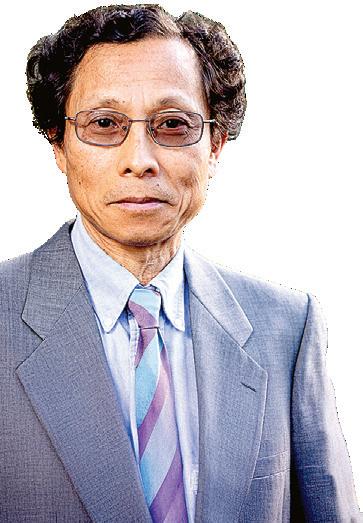
Fang Peng Elected to National Academy of Engineering
This past February, the National Academy of Engineering (NAE) announced that University of Pittsburgh Professor Fang Peng, an internationally acclaimed power electronics researcher, is among the newest cohort elected to the academy. The NAE is recognizing Peng for “contributions to the development of high-powered electronic technologies for advanced power grid and energy conversion.”
Peng, the RK Mellon Endowed Chair Professor of Electrical and Computer Engineering and Director of the Energy GRID Institute, is among the 128 new members and 22 international members announced today by NAE President John L. Anderson.
The members will be inducted at the NAE Annual Meeting this fall, October 5 in Washington, DC.
Peng joins Anna Balazs, Distinguished Professor of Chemical and Petroleum Engineering, and Michele V. Manuel, U. S. Steel Dean of Engineering, as Pitt’s NAE members, as well as Distinguished University Professor Emeritus Savio L-Y. Woo (1994), and alumni Marwan A. Simaan, PhD MSEE ‘70 (2000) and John A. Swanson, PhD ‘66 (2009).
Transforming Immunotherapy Design
Natasa Miskov-Zivanov Receives CAREER Award for Developing a System to Design New Cancer Immunotherapies
N“Fang is a phenomenal researcher in modernization of electric power systems, which has tremendous national security importance for our nation,” Dean Manuel said. “His career contributions to electric power research and new collaboration with our diverse grid programs have helped to establish Pitt and the Swanson School as one of the nation’s leaders in this critical field.”
continued on next page
atasa Miskov-Zivanov, assistant professor of electrical and computer engineering, received a Faculty Early Career Development (CAREER) Award of $581,503 from the National Science Foundation (NSF) for her project titled “Artificial Intelligence-Driven Framework for Efficient and Explainable Immunotherapy Design.” Through her novel approach and the development of an automated system that leverages AI and knowledge graphs to design more effective lymphocytes, she hopes to transform the design of life-saving immunotherapies.
Chimeric antigen receptor (CAR) T cell-based therapies have revolutionized the treatment of blood cancers such as leukemia and lymphoma, demonstrating the power of synthetic signaling receptors for immunotherapy. For these therapies, patient T cells are harvested, engineered with a CAR, and then reintroduced into the patient. However, CAR T cells have
Chair’s Message
Dear Colleagues and Friends,
I’m delighted to share the latest news and achievements in our Department of Electrical and Computer Engineering.
First, our department and school were overjoyed to hear that Fang Peng, our RK Mellon Endowed Chair Professor of Electrical and Computer Engineering and Director of the Energy GRID Institute, is our newest faculty member to join the illustrious ranks of the NAE. Fang is internationally known for his research in electric power and is helping to guide our several programs in that area and further their growth. Please join me in congratulating him on this lifetime achievement.
Equally exciting is that Assistant Professor Natasa Miskov-Zivanov recently received notice of her NSF CAREER Award to leverage AI in designing new cancer immunotherapies. I am tremendously proud of our faculty and student accomplishments this past year, which you’ll read about below.
Since retooling our undergraduate program in 2019 and a four-year cohort through the curriculum, we have observed greater innovation and initiative from our undergraduates, a surge of interest from industry in hiring our
graduates, and a growing desire with our students to earn advanced degrees. Faculty mentorship plays a key role in this effort, and you’ll see some examples below.
I wish you a wonderful summer and look forward to welcoming our new students for the 2025/26 academic year.
Best,
Alan D. George, PhD, FIEEE
Department
Chair and R&H Mickle Endowed
Chair
& Professor
Fang Peng Elected to National Academy of Engineering...
continued from page 1
Peng is a well-respected author in electric power research and leader in power conversion technology, with more than 400 publications in IEEE Xplore and more than 18,200 citations, with more than 73,000 citations overall and an h-index of 109. Prior to Pitt, he served as a Distinguished Professor of Engineering at Florida State University and was part of its Center for Advanced Power Systems. His research on multilevel inverters for static synchronous compensator (STATCOM) applications provided essential power electronics tools for improving power flow capability and dynamic stability of transmission
and distribution networks. Many STATCOM installations are still widely used across the world and incorporate his patented innovations.
Alan George, R&H Mickle Endowed Chair and Professor and Department Chair of Electrical and Computer Engineering, noted that Peng builds upon a 132-year legacy of electric power research at Pitt. “It is fitting that Peng receives this honor in the program founded in 1893 by George Westinghouse, one of the pioneers and original drivers for electric power. We are incredibly proud that his name will be part of the groundbreaking history of our department and the university.”
Peng’s achievements span more than 30 years with his most recent being named to the National Academy of Inventors in 2022. His career in industry led him to his fruitful exploration into research. From 2000 to 2018, Peng served as a University Distinguished Professor at Michigan State University, the most prestigious ranking designated by the university’s Board of Trustees. He also led projects for the Oak Ridge National Laboratory and as the principal scientist with the Power Electronics and Electric Machinery Research Center. ■
Publisher: ECE Department
Editor: Paul Kovach
Lead Writer: Steinur Bell
Sr. Designer: Leslie K. Sweeney
A Multi-Level Breakthrough in Optical Computing
For the first time, an international cadre of electrical engineers has developed a new method for photonic in-memory computing that could make optical computing a future reality.
The team includes researchers from the University of Pittsburgh Swanson School of Engineering, the University of California – Santa Barbara, the University of Cagliari, and the Tokyo Institute of Technology (now the Institute of Science Tokyo). Their results were published in the journal Nature Photonics (“Integrated non-reciprocal magnetooptics with ultra-high endurance for photonic in-memory computing,” doi: 10.1038/s41566-024-01549-1).
This research has been a collaborative effort jointly coordinated by Nathan Youngblood, assistant professor of electrical and computer engineering at Pitt, together with Paulo Pintus, previously at UC Santa Barbara and now assistant professor at the University of Cagliari, Italy; and Yuya Shoji, associate professor at the Institute of Science Tokyo, Japan.
Until now, researchers have been limited in developing photonic memory for AI processing – gaining one important attribute like speed while sacrificing another like energy usage. In the article, the team demonstrates a unique solution that addresses current limitations of optical memory that have yet to combine non-volatility, multibit storage, high switching speed, low switching energy, and high endurance in a single platform.
“The materials we use in developing these cells have been available for decades. However, they have primarily been used for static optical applications, such as on-chip isolators rather than a platform for high performance photonic
memory,” Youngblood explained. “This discovery is a key enabling technology toward a faster, more efficient, and more scalable optical computing architecture that can be directly programmed with CMOS (complementary metal-oxide semiconductor) circuitry – which means it can be integrated into today’s computer technology.
“Additionally, our technology showed three orders of magnitude better endurance than other non-volatile approaches, with 2.4 billion switching cycles and nanosecond speeds.”
The authors propose a resonance-based photonic architecture which leverages the non-reciprocal phase shift in magneto-optical materials to implement photonic in-memory computing.
A typical approach to photonic processing is to multiply a rapidly changing optical input vector with a matrix of fixed optical weights. However, encoding these weights on-chip using traditional methods and materials has proven challenging. By using magnetooptic memory cells comprised of heterogeneously integrated ceriumsubstituted yttrium iron garnet (Ce:YIG) on silicon micro-ring resonators, the cells cause light to propagate bidirectionally, like sprinters running opposite directions on a track.
Computing by Controlling the Speed of Light
“It’s like the wind is blowing against one sprinter while helping the other run faster,” explained Pintus, who led the experimental work at UC Santa Barbara. “By applying a magnetic field to the memory cells, we can control the speed of light differently depending on whether the light is flowing clockwise
continued on page 5
Image Credit: Brian Long, Senior Artist, UCSB
Transforming Immunotherapy Design...
been less successful at treating solid tumors. The recognition and infiltration of solid tumors requires new CAR T cell designs.
While researchers continue to explore the most potent configurations, the combinatorial complexity of potential therapeutic lymphocyte designs, including CAR T cells, is vast. Miskov-Zivanov will create a system that will survey the scientific literature and databases to efficiently retrieve and integrate existing expert knowledge with experimental data and recommend more effective CAR T cells and tumor infiltrating lymphocytes (TILs).
Miskov-Zivanov, whose post-doctoral research was in computational and systems biology, hopes that the automated framework she is developing can reliably accelerate this process. “As a computer engineer,” she said, “I am driven to automate complex design processes. I explore how tasks traditionally performed manually by biologists can be streamlined and executed automatically using computational approaches.”
In 2023, Miskov-Zivanov received an NSF EAGER Award to create a tool that uses Natural Language Processing (NLP) to extract information from scientific literature and, with the integration of experimental data, help synthetic biologists engineer new CAR T cells.
Building off that two-year project, she will develop a new system that uses both traditional NLP approaches and more recent large language models (LLM) together with neural networks to read, analyze, and interpret research papers and experimental data and conduct comprehensive in silico experiments on a wide range of cell designs. By developing and testing new prompting methods, Miskov-Zivanov hopes that “instead
continued from page 1
of a researcher having to go through tens of thousands of papers, many that are irrelevant, the system can extract meaningful data and insights.”
Educating Future Engineers
The extracted information will be presented as knowledge graphs (KGs), which she will further refine and analyze using graph neural networks (GNNs) to predict the most effective therapeutic cell designs. This past year at Pitt, Miskov-Zivanov also introduced a new graduate-level course focused on KGs and the methods for their construction and application. She sees great promise in integrating information and structured knowledge within KGs with data-driven predictions enabled by GNNs, and she aims to uncover novel and meaningful connections and relationships that will significantly advance the engineering of new therapies. Equipping the next generation of engineers with these tools is essential for addressing critical, life-saving research challenges.
Miskov-Zivanov hopes to build “reliable methodology to engineer and test thousands of designs for immunotherapeutic cells such as TILs and CARs with diverse and potent receptor systems.” Her work seeks to advance immunotherapy while developing new algorithmic processes to identify and present trustworthy, predictive scientific data and research.
“I am so grateful and honored to have received this CAREER Award,” she said. “My interest in immunotherapy began twelve years ago when I read about a young girl whose leukemia was cured by this kind of treatment. Since then, I’ve been inspired to help advance this research. I’m especially motivated by opportunities to apply computing to make a meaningful impact in other fields.”
“Our department of electrical and computer engineering is so proud of Natasa and her latest achievement, the NSF CAREER Award,” said Alan George, Department Chair, R&H Mickle Endowed Chair, and professor of electrical and computer engineering. “She leads the MeLoDy (Mechanisms and Logic of Dynamics) Laboratory, where her research spans a broad range of cutting-edge topics by leveraging her expertise in digital circuits, synthetic biology, artificial intelligence, and dynamic systems. Natasa’s new project promises to significantly advance the field of immunotherapy design. She is an innovator in both the laboratory and the classroom, and I am so excited about her future as a rising star in the field.” ■
Pitt Researchers Recognized for BioRECIPE
The American Chemical Society (ACS) included Natasa Miskov-Zivanov and her students’ research in its collection celebrating International Day of Women and Girls in Science 2025. The paper, “The BioRECIPE Knowledge Representation Format,” describes a standardized format that researchers can use to write and share complex information more easily.
“It’s an honor to be selected by the ACS for this collection,” said Miskov-Zivanov. “As a woman scholar in electrical and computer engineering, we are a minority, so it is especially rewarding to see this acknowledgement of our efforts.”
Miskov-Zivanov runs the Mechanisms and Logic of Dynamics (MeLoDy) Lab and is principal investigator (PI) for two Defense Advanced Research Projects Agency (DARPA) projects. She and her longtime collaborator Cheryl Telmer, a senior molecular biologist at Carnegie Mellon University, worked with students to develop “methods and tools for information retrieval, knowledge representation, model inference, and analysis of complex systems.”
“In systems and synthetic biology research, understanding the mechanisms of interaction and communication between cells, genes, and proteins within complex cellular networks is critically important,” Miskov-Zivanov explained.
The details of the mechanisms are available in the scientific literature, and machine reading can be used to extract information. However, many of the formats that are produced are only machine-readable and can be difficult for humans to interpret and evaluate. “To improve access to this information, biologists and computer scientists have developed standard representation formats of cell signaling and gene regulatory networks, a spreadsheet format that is both machine- and human-readable,” Miskov-Zivanov said.
The most recent version – Biological system Representation for Evaluation, Curation, Interoperability, Preserving, and Execution (BioRECIPE) – was released in spring 2024 and was developed using FAIR principles (findable, accessible, interoperable, and reusable). BioRECIPE is a knowledge representation format in spreadsheet form that is machinereadable. It can be used for analysis and modelling, and it is compatible with AI tools that can search and filter scientific literature and assist in curating knowledge. It represents an important step forward in making complex data more accessible to biologists.
This version of BioRECIPE was developed by a team of researchers, including five women, who wrote about it in “The BioRECIPE Knowledge Representation Format,” published in ACS Synthetic Biology in July 2024.
On February 11, International Day of Women and Girls in Science, Miskov-Zivanov learned that the paper had been included in an ACS collection that highlights “the latest achievements in research designed, performed, and published by women in chemistry.”
The collection celebrates a day dedicated to promoting opportunities for women and girls worldwide to pursue education and careers in STEM-related fields.
“These women involved in BioRECIPE have played a vital role in developing it into what it is today. Having the opportunity to work with them and to get to watch them take these experiences and move into their future careers is so rewarding,” Miskov-Zivanov said. ■
Optical Computing...
continued from page 3
or counterclockwise around the ring resonator. This provides an additional level of control not possible in more conventional non-magnetic materials.”
The team is now working to scale up from a single memory cell to a large-scale memory array which can support even more data for computing applications. They note in the article that the non-reciprocal magneto-optic memory cell offers an efficient non-volatile storage solution that could provide unlimited read/write endurance at sub-nanosecond programming speeds.
“We also believe that future advances of this technology could use different effects to improve the switching efficiency,” Shoji at Tokyo added, “and that new fabrication techniques with materials other than Ce:YIG and more precise deposition can further advance the potential of non-reciprocal optical computing.”
Other researchers on this project include:
■ John E. Bowers, distinguished faculty at University of California at Santa Barbara
■ Mario Dumont, graduate student researcher at University of California at Santa Barbara
■ Duanni Huang, former researcher at University of California at Santa Barbara
■ Galan Moody, faculty at University of California at Santa Barbara
■ Toshiya Murai, researcher at National Institute of Advanced Industrial Science and Technology, Japan
■ Vivswan Shah, graduate student researcher at University of Pittsburgh ■
Scaling a Brain-Inspired Approach to Computing
As neuroscience continues to illuminate the power and efficiency of the human brain, neuromorphic computing researchers are mimicking its biological processes in electronic hardware and software. Novel artificial neural networks now mirror the way biological neurons communicate through synaptic connections.
In the journal Nature article “Neuromorphic computing at scale,” 23 experts from around the world highlight the promise of this brain-inspired approach and explore challenges and questions that must be considered to successfully develop large-scale neuromorphic systems. (doi: 10.1038/s41586-024-08253-8)
The idea for such a collaborative article originated at a 2022 National Science Foundation (NSF) workshop on large scale neuromorphic computing. Rajkumar Kubendran, associate professor, was a panelist at the workshop and contributed to the paper. For Kubendran, the collaboration has been hugely rewarding. “The neuromorphic community for the first time ever has come together in such a unified, focused fashion to address the problems that our community is facing and to share its work and plot a path forward.”
Today, tech companies are building massive data centers that require more power to meet the growing demands of mainstream AI systems. Unlike traditional von Neumann and AI models, which have separate memory and processing units, the memory and processing functions in neuromorphic
systems are closely connected and use event-driven communication like what happens in the brain.
Through its efficiency and ability to mimic the working of the brain, neuromorphic computing at scale, the authors assert, has the potential to dramatically transform machine learning and advance neuroscience research.
Dhireesha Kudithipudi, Robert F. McDermott Chair in Engineering and Professor in Electrical and Computer Engineering at the University of Texas at San Antonio, who led in the formation of the workshop and in authoring the paper, said, “When I first proposed the idea of publishing an article… it was clear that there was a shared, deep interest in the future of the field and a collective desire to articulate a unified vision.
“As the perspective was on building a sustainable ecosystem, it became essential to capture ideas from a wide range of expertise… to ask the right questions – and, more importantly, avoid missing key insights that might have slipped through if we had worked in a more siloed or fragmented way.”
Pitt’s Kubendran sees neuromorphic computing as a bridge between biological and computer sciences. “Just as the NSF panel connected neuromorphic computing leaders across many time zones to produce this paper, I hope that ongoing advances and collaboration across fields will fuel new discoveries and help realize the full potential of a brain-inspired approach to computing.” ■
Image courtesy of Tej Pandit and NuAI Lab at University of Texas at San Antonio. Large Scale Neuromorphic Computing.
Advancing Electricity Transmission Technology
Originally published by the Department of Energy
The University of Pittsburgh is among four groundbreaking high-voltage direct current (HVDC) transmission research and development projects selected to receive a total of $11 million from the U.S. Department of Energy’s (DOE) Office of Electricity (OE) and Office of Renewable Energy and Energy Efficiency (EERE). The awards are part of the Innovative DEsigns for high-performAnce Low-cost HVDC Converters (IDEAL HVDC) funding opportunity.
Pitt’s Swanson School of Engineering will lead a $3.3 million university/industry partnership using artificial intelligence to optimize an HVDC converter design for increased power density and decreased cost.
“The Swanson School is proud to lead this important effort with our partners, the Pennsylvania State University, Eaton, HICOHyosung, and National Renewable Energy Laboratory (NREL),” said Brandon Grainger, associate professor, Eaton Faculty Fellow, and PI of the program at the Swanson School. “By utilizing our unique Electric Power Technologies Lab (EPTL) at the Energy Innovation Center (EIC) in Pittsburgh’s Lower Hill District, our goal is to design, build, and test a 13.8kVac to 25kVdc power converter necessary for this transmission technology.” Grainger, who is director of the
EPTL, is also Associate Director of the Energy GRID Institute and Co-Director of the Advanced Magnetics for Power and Energy Development (AMPED) Consortium with its founder, Paul Ohodnicki, associate professor of mechanical engineering and materials science.
According to DOE, these projects will help to affordably integrate more renewable energy generation on land or far from shore (e.g., offshore wind) onto the grid via HVDC lines, reduce transmission system costs by 35 percent by 2035, and promote widespread technology adoption. OE is providing $8.1 million in funding and $3 million is coming from EERE.
“This grant presents a great opportunity for us to explore and apply the modern HVDC R&D approach, with artificial intelligence-assisted design, to achieve the most demanding performance metrics while reducing costs,” explained YuAnn Li, assistant professor of electrical and computer engineering at Pitt and a Pitt Co-PI. “AI provides excellent computing capability to flash forward on innovative power converter topologies and control, that previously would not be able to be achieved.”
The IDEAL projects are primed to help reinvent the power grid, which serves as an interstate highway
for high-voltage electricity. HVDC transmission systems are more efficient than traditional alternating current (AC) transmission systems to deliver electricity over long distances at a lower cost while minimizing power losses.
“This was a highly competitive program, and our region should be proud to have received this significant support from DOE,” noted Fang Z. Peng, R.K. Mellon Professor of Electrical and Computer Engineering, director of Pitt’s Energy GRID Institute and a Pitt Co-PI. “Thanks to the investments in our one-of-a-kind facilities at the EIC, Pitt has become a national leader in HVDC research and development as well as high voltage power electronic systems.”
DOE further explained that many renewable resources are in remote locations on land or planned far from shore (e.g. offshore wind), and HVDC transmission provides a cost-effective solution for renewable integration onto the grid. And high-voltage transmission can more capably transfer power between different regions of the country without disrupting the frequency of either system, also helping to reduce delivery costs.
continued on page 11
Designing Functional – and Sustainable –Software and Electronics
The rise of AI has come with a staggering increase in energy usage. A recent report from the International Energy Agency notes that a single search on ChatGPT alone uses 2.9 Watt-hours of electricity compared to the 0.3 of a traditional Google search.
While efforts to reduce energy consumption in modern computing tend to focus on hardware and the energy sources powering large data centers, Assistant Professor Amr Mahmoud hopes to increase awareness of another, less targeted source: software.
Mahmoud received an Engineering One Planet Mini-Grant (EOP-MGP) from the American Society for Engineering Education to develop and incorporate educational modules that teach sustainable programming and green electronics, and the impact they can have on the environment and in people’s lives.
“While researching how universities are teaching sustainable computing, I found very little about software,” noted Mahmoud. “Yet a program running on the cloud can use up a lot of energy.”
Mahmoud and his department colleague, Assistant Professor Mohamed Bayoumy, will develop six two-week modules on sustainable
electronics and software development. In fall 2025 they will begin using these modules in three core computer engineering courses: Electronic Circuit Design Laboratory, Algorithms for Big Data, and Senior Design.
Mahmoud and Bayoumy also bring a unique perspective to the project – both earned their PhDs in electrical and computer engineering from the Swanson School in 2019.
“Too often we see students designing programs or circuits with only functionality in mind,” said Mahmoud. “With these modules and the focus on sustainability that they will bring to the classroom, we hope to change that.”
Students will encounter the modules in the second, third, and fourth year of their study, which Mahmoud believes will help reinforce sustainability principles. They will learn how to evaluate the carbon footprint of software and how to use coding to make programs as energy efficient as possible. They will develop greener electronics, creating circuits that consume less energy while maintaining functionality.
“I’m honored to receive this grant and to be part of the fourth cohort of the Engineering One Planet Mini-Grant Program,” said Mahmoud.
The grant is only awarded to any institution once over the lifetime of the program. “The project aligns so closely with the Pitt Sustainability Plan and with Engineering One Planet’s mission to make sustainability an essential component of engineering.”
Mahmoud hopes to fine tune the modules so that educators anywhere can easily incorporate them into lessons to teach sustainable computing.
“The ultimate goal is awareness,” Mahmoud noted. “When students graduate and start working, we want them to consider sustainability in whatever they’re designing – whether that’s code or hardware. With this awareness, the next generation of engineers can help ensure a greener planet.” ■
A Personalized Approach to Engineering Education
Traditionally, education has relied on a onesize-fits-all approach to teaching. However, researchers are increasingly discovering that this method may not effectively meet the diverse needs of every student.
In response, the National Academy of Engineering listed personalized learning – instruction being tailored to the student’s individual needs – as one of its grand challenges, encouraging engineering professors to develop new methods for their classrooms.
Associate Professors Renee Clark and Ahmed Dallal at the Swanson School of Engineering, in collaboration with the University of Central Florida and the University of South Florida, received a $254,966 grant from the National Science Foundation to advance research on personalizing STEM education, utilizing their sophomore-level statistics and circuit classes.
“We’re aiming to promote better in-class engagement by reviewing pre-requisite content for students before class in a personalized, multipleresources fashion,” said Clark, principal investigator and associate professor of industrial engineering. “To truly support student success, we need to embrace a more personalized approach that adapts to their diverse needs, rather than treating every student the same.”
Dallal and Clark’s experiment will involve two groups. The control group will access class materials, such as quizzes, videos and textbook content through Canvas, an online learning management system that Pitt students already use. The experimental group, however, will utilize Realizeit adaptive learning platform (ALP) that tailors resources to each student’s needs using machine learning algorithms. The ALP adjusts content based on student performance on online assessment quizzes. They will compare the two groups and investigate differences in students’ exam scores, motivation and cognitive engagement levels.
Dallal, co-principal investigator and associate professor of electrical and computer engineering, said that if the ALP is successful, it may help faculty as well.
“Ensuring students are prepared before they enter the classroom fosters a more active learning environment,” said Dallal. “This approach allows faculty
to focus on deeper engagement during lectures, helping students get more out of the experience and enhancing their overall educational mission.”
The project aligns with the goals of the Swanson School’s Engineering Education Research Center (EERC), which engages Pitt faculty in the integration of research-based practices to enhance their teaching. Mary Besterfield-Sacre, director of the EERC, Nickolas A. DeCecco Professor of Industrial Engineering and senior associate dean for academic affairs, said the center encourages professors to produce new approaches to learning like Clark and Dallal are testing.
“We want students to not only succeed but also enjoy the learning process,” said Besterfield-Sacre. “This project could open up new ways to engage students and deepen their understanding of the material, ultimately helping us cultivate more skilled and innovative engineers.”
Clark, who has expertise in data analytics, will be overseeing the project’s assessment process, including assessment data from the University of Central Florida and the University of South Florida. Samuel Dickerson, associate professor of electrical and computer engineering, vice chair for education and director of the computer engineering undergraduate program, will assist Clark in analyzing assessment data from her classroom to avoid any conflict of interest.
Clark and Dallal recently completed development of the pre-class preparation materials for the control group and will begin their classroom research in the spring 2025 semester for their project, “Collaborative Research: Using Adaptive Lessons to Enhance Motivation, Cognitive Engagement, And Achievement Through Equitable Classroom Preparation.” ■
Pictured from left: Renee Clark, Sam Dickerson, and Ahmed Dallal.
A New Space Mission has the National Science Foundation Center for Space, High-Performance, and Resilient Computing, or SHREC, Shooting for the Stars
The SHREC research group, based at the University of Pittsburgh and a major component of the new initiative “Pitt Space,” was recently selected to lead its fourth space research experiment: the Visual And Neuromorphic Tracking And Geosensing Experiment or VANTAGE, by the Department of Defense’s Space Test Program (STP). There are three key objectives of VANTAGE:
■ Capture: Demonstrate core onboard sensor features and capabilities for earth observation and data capture
■ Correlate: Verify sensor correlation operations and perform identification, tracking, and additional science
■ Compute: Exploit next-generation, radiation-tolerant computing systems to maximize system performance and reliability with minimal overhead
“The goal of VANTAGE is to create, deploy and perfect a system to effectively and autonomously perform critical operations for remote sensing and computing in the harsh environment of space,” said Alan George, founder of SHREC and ECE department chair. “Built and operated by our amazing team of engineering graduate students, this system will augment exciting new sensor, computer, and AI technologies on earth for use in space, which could significantly improve the capabilities of future missions of all kinds.”
VANTAGE builds upon SHREC’s previous work in developing and optimizing radiationtolerant, single-board computers and hybrid architectures, integrating commercial offthe-shelf (COTS) components with radiationhardened (RAD-HARD) components. SHREC will also be exploring the use of Systemon-Module, or SOM, which will be the foundation of computers in VANTAGE. SOMs are compact single-board computers made
by commercial vendors that SHREC will be augmenting to make radiation-tolerant for the harsh environment of space.
“We are taking those SOMs and putting them on custom-made carrier cards, which will have our special sauce in terms of reliable circuitry and fault mitigation, to make a new kind of hybrid architecture that is faster to deploy and easier to design – all while being low cost,” explained Michael Cannizzaro, a graduate student in SHREC and the VANTAGE mission manager.
VANTAGE will also use neuromorphic eventbased sensing, which mimics the functions and efficiency of a biological eye and only responds to the detection of events, leading to less data-heavy outputs but more highquality imaging.
VANTAGE is expected to launch to the International Space Station (ISS) in early 2027. ■
New Program Provides Career Opportunity Pathways into Space Industry for Students
While Pittsburgh boasts a thriving ecosystem of academic institutions, research centers and cutting-edge industries in space, artificial intelligence and healthcare, challenges remain in recruiting and retaining STEM talent, particularly from underserved populations in the region.
A collaboration between the newly launched Pitt Space initiative and Chance to Change Lives (CCL-US), a Pittsburgh-based nonprofit organization dedicated to empowering future STEM leaders, is developing the new Space Engineering Pathways (SEP) program. This initiative aims to increase participation among underserved students from the University of Pittsburgh and surrounding colleges who are eager to pursue space-related careers but lack the guidance needed to access these opportunities.
“We’re in need of a robust, diverse workforce to fill emerging jobs in the space industry, including ones that are already available in western Pennsylvania,” said Dr. Rama Bala, president and CEO of Chance to Change Lives and a faculty member of the Pitt Space program. “We want to empower the hidden talent in the region by giving them a head start through this program, providing the area’s space industry with the benefit of local expertise.”
The Space Engineering Pathways Program is offered through Chance to Change Lives’ STEMNetX initiative, providing it as a paid fellowship. The three-month program offers workshops in data analysis, coding and specialized software tools as well as professional development courses. Networking opportunities will also be available.
“I am very excited about this new fellowship program for Pitt Space and the promise it brings in supporting and preparing the next generation of space engineers,” said Alan George, department chair and R&H Mickle Endowed Chair of Electrical and Computer Engineering. ■
Advancing Electricity Transmission Technology...
continued from page 7
“Pitt has been a leader in transformative electric power engineering research for more than a century, and technologies like HVDC will take the U.S. and the world in a new direction for safe, efficient, and secure electric power transmission and distribution,” said David Vorp, Senior Associate Dean for Research & Facilities at the Swanson School of Engineering and John A. Swanson Professor of Bioengineering. “The Pitt laboratories at the EIC have evolved into a remarkable site where we can partner with industry, utilities, and academia to develop gamechanging power products.”
Other IDEAL HVDC Projects include:
■ GE Vernova Advanced Research: $3.3 million to develop a lowcost HVDC transmission access point substation to reduce HVDC life cycle costs by >30%. TAPS aims to provide access to affordable renewable energy to underserved and underrepresented communities.
■ Sandia National Laboratories: $1.8 million to increase the power density and reduce cost of HVDC converter stations by 10% by developing a technology of smaller 1.7 kilovolt (kV) switches that can be operated as a single 10 kV switch in a converter.
■ Virginia Polytechnic Institute and State University: $3 million to investigate promising circuit technologies to upgrade the existing HVDC converter design. This approach aims to reduce direct material technology costs by 15-20%.
These selections are the first actions taken to support DOE’s HVDC COst REduction (CORE) Initiative, to improve grid resilience, security, and operation flexibility.
“This represents another step forward in our mission to modernize the nation’s electric grid,” said Gene Rodrigues, Assistant Secretary for Electricity. “By investing $11 million in innovative HVDC transmission projects, we’re accelerating adoption of an innovative technology that can create pathways to integrate more low- cost renewable energy onto the power grid. This ensures that reliable, resilient, secure and affordable clean energy is available and accessible to all Americans.”
Jeff Marootian, Principal Deputy Assistant Secretary for the Office of Energy Efficiency and Renewable Energy, agreed. He said, “A modern grid requires a transmission network that can offer access to a diverse range of clean energy resources across geographic regions. These investments will help our efforts to improve energy reliability for consumers by better integrating both land and offshore power sources like wind onto the grid.” ■
Awards & Honors
Sharing Expertise Across Oceans and Mountains
Susheng Tan, research associate professor in electrical and computer engineering has received a Fulbright Specialist Program Award to collaborate with researchers at Navoi State University of Mining and Technology in Navoi, Uzbekistan. Tan will help Uzbek scientists develop a strategic plan and standard operating guidelines for the university’s research equipment.
“Last semester, with Bioengineering Distinguished Professor Prashant Kumta, we mentored Dr. Okhunjon Sayfidinov, a visiting scholar from Navoi, who was supported by the American Councils for International Education,” said Tan. “Okhunjon and his colleagues are looking to expand their research capabilities at the university, and he had the opportunity to see how Pitt operates.
“He was here with us for three months, and we did a lot of research work with the instruments in our facility. With the technology we have here and our staff, it was a productive time.”
To expand the work started in the fall, Tan applied for and received the Fulbright Specialist Program Award, which promotes collaboration between scholars and institutions. Central to the Fulbright Program’s mission is bridging divides and fostering connections across the world – objectives that Tan values.
For 16 years, he has supported hundreds of multidisciplinary research projects in nanoscience and engineering with the Nanoscale Fabrication and Characterization Facility, and he trains students on research using electronbeam-based and x-ray-based equipment and materials. His own research studying structures at the micro to atomic scale is highly collaborative and interdisciplinary, and he enjoys working with researchers in different fields, many from other countries. “By establishing broader connections and bringing together different voices,” said Tan, “you can amplify the impact of research.”
Of this opportunity, Tan said, “It’s an honor to receive this award from such a prestigious organization. It wouldn’t be possible without the support of my colleagues and the resources that we have here at Pitt. I’m excited to learn more about their program and facility – and to bring what we have here and extend our impact.” ■
Pitt Undergraduate Kaye Baron Reaches an Impressive First – Receiving Three IEEE PES Scholarships
In high school, if someone had told University of Pittsburgh engineering scholar J. Kaye Baron that he would be an award-winning student after a successful career in the U.S. Coast Guard, he probably would have laughed. The Seattle native preferred playing music to studying and studied the least amount of math possible. Instead of college, Baron planned to make it as a musician.
After graduating high school, though, he realized that “it could be pretty difficult for me to make a living that way.” When he turned 24, Baron sensed it was time to find another path, as he
said, to “be the person I wanted to see. I wanted to give back to the world.” He began looking for a new opportunity and found the U.S. Coast Guard.
After bootcamp, Baron was stationed in Astoria, Oregon, a small town on the Columbia River. There, he found himself scraping barnacles off enormous buoys and climbing inside to clean them, doing a job that Mike Rowe made famous on his TV show Dirty Jobs. Of this new situation, Baron said, “I had a great time.”
Baron thrived and took on new responsibilities. He began attending aviation technician school,
where he finished first in his class. He moved to Coast Guard Air Station San Francisco and worked as an avionics electrical technician, fixing components on airplanes and helicopters. He loves to fly and was an aircrewman and hoist operator as well, helping to pull people out of the ocean and assisting during wildfires and hurricanes.
Every day, Baron was problem solving and troubleshooting. It seemed like he was always fixing a helicopter’s servo component, so issue-
prone and quick to cause problems, and he began thinking that he wanted to solve larger systemic problems. He started teaching himself math.
“On the side, I taught myself college algebra up through multivariable calculus,” he said, “because I started thinking of pursuing engineering.”
In 2021, Baron left the Coast Guard, where he was credited for recording 606 flight hours and saving 18 lives. Through his
and its rich history in power and energy. With his cat Louise, he drove east, bought a house, and, 15 years after finishing high school, stepped onto a college campus.
At Pitt, Baron has excelled academically, but it wasn’t until his junior year that he found his focus. In the Coast Guard, as he fixed systems, he would find himself thinking more about the power that had been harnessed so they could function. After taking the course Power Fundamentals with Robert Kerestes, Director of Electrical Engineering Undergraduate Programs and Associate Professor, he knew that his winding path had led him to the right place. He took Power Conversion Theory. Then he enrolled in Power Quality.
Kerestes, seeing Baron’s work ethic and success in and outside of classroom, told him about a scholarship opportunity through the Institute of Electronics and Electronics Engineers (IEEE). Baron applied for the IEEE PES Scholarship Plus. In addition to receiving this scholarship, he earned the IEEE PES John W. Estey Outstanding Scholar award and the IEEE PES G. Ray Ekenstam Memorial Award, given to veterans pursuing a degree in engineering.
“He’s the first triple scholar they’ve had for the IEEE PES Scholarship Plus program,” said Kerestes, himself a veteran of the United States
Navy (Active Duty and Naval Reserve), having served as Third Class Petty Officer, and who has published research on medium voltage DC architecture and infrastructure and energy storage systems. “That’s pretty historic.”
Baron’s accomplishments continue an impressive streak for Pitt’s Swanson School of Engineering. “Kaye winning the John W. Estey award gives us six winners in the last eight years,” said Kerestes. “Having a top scholar six of the last eight years is amazing.”
For a student who never planned to attend college, this recognition has affirmed Baron’s intentional approach. As he said, “You don’t have to be a genius. You just need to be sincere and apply yourself… you know, wake up every day and think, ‘What should I do?’ And then do that thing.”
That thing, for Baron, involves electric power engineering. He has started taking master’s level courses and plans to pursue a research master’s degree at Pitt. Where that ultimately leads, he’s unsure, but he plans to use his engineering education to give back to the world. He is still driven by a desire to do, as he said, “something bigger than myself.” ■
Pictured from left to right: Robert Kerestes, Kaye Baron and Brandon Grainger.
The Non-Linear Path to Engineering Success
Maurice Sturdivant never worried about being pigeonholed when he chose to become an engineer.
But he realized early on that he needed to figure out what path was best for him: academia or industry.
“In Pittsburgh alone, there are several opportunities for research and internships,” said Sturdivant, who just completed his master’s thesis for the Department of Electrical and Computer Engineering. “I knew early on that I had to explore as many options as I could to really find where I’d fit.”
In his very first days as a first-year student he turned to Pitt EXCEL, a program focused on the retention and support of underrepresented engineering students, for answers.
“Maurice is never above learning more,” said Yvette Moore, Director of Pitt’s EXCEL and Equity and Inclusion for Undergraduate Strategic Initiatives. “When I first met him,
he was the type of scholar that wanted to take advantage of every opportunity in front of him.”
His path is, intentionally, never linear.
A Fresh Start at Pitt
When Sturdivant first met Brandon Grainger, associate professor and Eaton Faculty Fellow of electrical and computer engineering, through Pitt EXCEL’s Summer Research Internship (SRI) program, he didn’t know how to solder or design circuit boards – necessities in the electrical engineer’s skillset. That’s standard for an engineer. What isn’t standard is learning how to do it in a student’s first year.
The SRI program looked promising to Sturdivant because of its ability to help him develop these skills, which he would apply in co-ops and internships outside of Pitt.
“I wanted to gain experience outside the classroom as soon as I could,” Sturdivant said.
Trying to always be one step ahead, it was a no-brainer for Sturdivant to enroll. Scholars in SRI are assigned to faculty mentors who lead research teams and complete a research project in their field of engineering. Sturdivant reached out to Grainger to be his mentor for not only his work in power electronics, but because of his approachability and willingness to mentor first-year engineering students.
Grainger and Sturdivant started from scratch, spending at least 30 hours together a week in Grainger’s Electric Power Technologies Lab. He studied a Texas Instruments reference design for USB Type-C chargers and learned to use circuit simulation and PCB design tools to understand the engineering research and design process.
“Professor Grainger used that summer to teach me the fundamentals of the engineering design process,” Sturdivant said. “Because of his approach to the program, the things I learned routinely came up again throughout my time at Pitt as both an undergraduate and graduate student.”
Grainger continued to mentor Sturdivant well after the completion of the SRI program, including undergraduate course selections, choosing companies to work for through the CO-OP program or summer internships, and finally overseeing his research work up to his defense.
“It was natural that Maurice stayed involved with me,” Grainger said. “We were always asking, What was the next step? What part of electrical engineering would scratch that itch for him? We continued that journey for over six years and were able to sharpen his skills a little more each year.”
As the mentorship continued and Sturdivant built his skills, he was now a two-time recipient of a scholarship from the Institute of Electrical and Electronics Engineers (IEEE) Power and Energy Society (PES), further funding his explorations.
A Future of First Days
Sturdivant continued to take power electives through his time as an undergraduate.
Through his various internships at Ford Motor Company and GE Power Conversion, his enthusiasm about the field grew.
“There’s always a first day for something,” Sturdivant said. “I always went into each position with an open mind to learn about the opportunities for growth. That’s why mentorship is so important. You don’t always know what possibilities there are until you meet new people and build relationships.”
He realized that he still wanted to learn more about electric power engineering and research. He stayed at Pitt for his graduate studies to pursue that interest.
Grainger, with colleague Paul Ohodnicki, recruited Sturdivant to continue work in his lab and the Advanced Magnetics for Power and Energy Development (AMPED) Consortium. Ohodnicki is an associate professor of mechanical engineering and materials science and collaborates with Grainger on advancing power and energy technologies. This is when Sturdivant focused on modeling and experimentally measuring specific power losses in inductors – critical components to power electronic systems.
“Several factors can increase losses in an inductor, causing them to perform worse than expected,” Sturdivant explained. “I studied the impact of air gaps, a standard inductor design feature, on the power loss in their magnetic cores.”
By using his findings and software tools, Sturdivant was able to optimize inductor designs to identify which magnetic core materials could provide the best balance between mass and power loss for a given application.
“These metrics are important because increasingly efficient and compact devices are needed to support the development of electric vehicles.”
With his thesis done, Sturdivant is closing his chapter in research – for now.
What’s Next for Sturdivant?
He recently started with Eaton in its Cherrington facility for the first year of his leadership development program. He plans on learning more about the ways that power electronic technology supports power conversion, circuit protection and the overall energy transition through Eaton and its Leadership Development Program. In the future, he hopes to focus on integrating more novel power electronics with existing technology so it can make a positive impact while also being safe and reliable.
He wouldn’t be at this point if it wasn’t for the mentorship he actively sought out along the way.
Sturdivant said, “It’s important for students and professionals to share what they know and make themselves a resource. It’s easy to think that you don’t know enough or that you’re too young to be a ‘mentor,’ but your experience and advice is still valuable to someone else.” ■
Pitt’s Beta Delta Chapter Recognized for Excellence
The Institute of Electrical and Electronic Engineers-Eta Kappa Nu (IEEE-HKN), the honor society of IEEE, has recognized the Beta Delta Chapter of the University of Pittsburgh with a 2023 – 2024 Outstanding Chapter Award. The award celebrates active honor society chapters whose work fosters community and promotes excellence.
For Steven Jacobs, associate professor of electrical and computer engineering, this recognition reflects the commitment of student leaders to develop a thriving honor society. Jacobs, who advises along with professor Amro El-Jaroudi, began supporting Beta Delta eleven years ago, after participation had decreased.
“Student organizations become successful when there are students in leadership positions who take the initiative to increase the level of activity,” said Jacobs. “And that’s what’s happened in recent years with officials like Sabrina [Helbig] and now with Jacob [Jones].”
In 2018, when she was a third-year undergraduate student, Sabrina Helbig was elected as a Beta Delta officer and has “served in about every role
since.” After moving into the master’s program and now pursuing her PhD at Pitt, she continued serving as president until stepping down last year.
“It was a great experience for my development as a leader and to learn how to build community,” Helbig said, “but at first, we didn’t have much momentum. It took a few years.”
By helping to recruit other engaged officers, the honor society grew its membership and became increasingly active in the Swanson School and community. Two years ago, Helbig and fellow officers contacted the IEEE-HKN chapters at Carnegie Mellon University (Sigma) and Penn State (Epsilon), and the three organizations met at Carnegie Mellon for an interchapter event, which included a radio-frequency fox hunt. “We had the idea and took the initiative to connect with other chapters. It was the first time that it had happened.”
Last year, Pitt’s chapter continued the outreach, and Penn State’s chapter visited Pitt to tour the school, share a meal, and network with fellow engineers.
Now under the leadership of new president Jacob Jones, a graduate student in electrical and computer engineering, Pitt’s Beta Delta has again invited Penn State to visit.
“It’s a chance to learn about other programs – the different curriculum and opportunities,” said Jones.
In addition to connecting chapters, Helbig and Jones have helped to increase student engagement in the Swanson School and create opportunities for students beginning in engineering to learn from upper-level and graduate students.
“We’ve found,” said Jones, “that through mentorship, the first year and sophomore students have been
more comfortable asking upper-level students more open-ended questions that can help them as they’re deciding which field they want to pursue.”
Beta Delta hosts tutoring and study sessions during exam time as well as informal events for students to connect. “We’re also developing a resource repository – a website that students can use to get extra practice in PCB design, getting ahead with simulation work and other aspects that might not be covered in coursework,” Jones said.
“This has traditionally been an undergraduate organization, but recently there has been more active involvement by graduate students,” said Jacobs. “That’s been a great new development. Anytime you can get students helping other students, it makes such a difference.”
Pitt’s Beta Delta chapter was one of only 22 chapters to receive the award. Helbig said, “It’s a proud moment – it’s the second year in a row that we’ve won this award, and I don’t know if we ever got it before that. This one really shows that we’re staying active, doing something purposeful. It’s been great to watch new officers take the torch and carry it forward.” ■
Former HKN president Jim Conrad and Sabrina Helbig in 2022 at the HKN Student Leadership Conference at UNC-Charlotte.
Pictured from left to right: Noah Kochavi (member), Jacob Jones (current president), Alyson Ferrari (current treasurer), and Joaquin Tristian (current secretary) accepting the Key-Chapter Award at the HKN Student Leadership Conference in 2024.
Four Pitt Students Among PSC Team to Compete in Germany at ISC25 Student Cluster Challenge
A team of interns from the Pittsburgh Supercomputing Center (PSC) has been selected to represent the United States at an international high-performance computing (HPC) competition for students. PSC’s Benchmark Beasts will be one of 10 teams across the world, and the only one from the states, chosen to compete in Hamburg, Germany, at the International Supercomputing Conference (ISC25) in June 2025. The team was also among 24 selected to compete in a virtual HPC competition in April.
The interns, supported by PSC, were funded by Carnegie Mellon University and the University of Pittsburgh Swanson School of Engineering. Tom Eckrich, a computer engineering senior at Pitt, served as team captain.
“Competitions like these are excellent opportunities for students to supplement their academic studies through additional learning opportunities and hands-on experience in a professional environment,” said Valerie Rossi, PSC’s Manager of Education and Student Programming, who coached the Benchmark Beasts. “Plus, they are just fun!”
The Student Cluster Competition is held at ISC25, a global gathering of supercomputing professionals, as part of its mission to expose young people to HPC and careers in the field. The competition, hosted by the ISC High Performance and the HPC-AI Advisory Councils, introduces student teams to the HPC community, including the systems and the applications that are being used by scientists and researchers. For the competition, the student teams will use two supercomputers, the DKRZ Levante system at the German Climate Computing Center, and Bridges-2, PSC’s National Science Foundation-funded flagship system.
The Benchmark Beasts originally formed to compete at the IndySCC competition at SC24, the U.S. annual supercomputing conference. During a summer session from May to August 2024, the students learned a number of HPC skills including networking, the Linux operating system, parallel programming, and a general introduction to the field. In the fall of 2024, the students learned about the supercomputing applications NAMD and ICON as well as studying benchmarking tools such as MLPerf. At the final, 48-hour competition at SC24 in Atlanta, the Beasts competed with eight other teams from across the world in a contest focused on reproducibility, the ability of a computing solution to provide consistent, accurate results with different inputs.
The Benchmark Beasts consist of:
■ Tom Eckrich, a computer engineering senior at Pitt. He is the team captain and from Rockville Centre, N.Y., on Long Island.
■ Daniela Bellido Rodriquiez, a mathematics sophomore at CMU with plans to double-major in computer science. She is from Barcelona, Spain.
■ Yun Dong, a senior at Pitt majoring in computer engineering. He is from New Castle, Pa., north of Pittsburgh.
■ Caden Empey, a sophomore studying computer engineering at Pitt. He is from Mars, Pa., a northern Pittsburgh suburb.
■ Jeff Kim, a senior at CMU, majoring in computer and electrical engineering. He is from South Korea. Jeff will not be participating in ISC25 in Germany.
■ Aaron Park, a sophomore studying computer and electrical engineering at CMU. He is from Cerritos, Calif., a southern suburb of Los Angeles.
■ Tanvi Verma, a senior at Pitt, majoring in computer engineering. She is from India.
■ Julia Zhang, a senior majoring in statistics and machine learning senior at CMU. She is from China.
“For me, as one of the sophomores in the team, going to SC24 and competing in IndySCC was eye-opening and valuable,” Park said. “I’ve learned a lot this past summer and fall, not only about supercomputing and HPC, but also what it’s like to be a professional in these spaces.” ■
Co-op Student of the Year
Lucas Connell, a junior computer engineering student, was named the Swanson School’s 2024 Co-op Student of the Year.
Connell was nominated by his employer, BNY (formerly BNY Mellon) for three rotations in digital assets engineering and digital translation systems. Connell first started working at BNY in 2023, where he began adjusting to software engineering in the workplace.
“In my first rotation, I had a lot to learn.” Connell said. “It’s not like in school where you have a small coding project; instead you’re dealing with an entire application that uses one framework. You have to understand the environment you’re working in and use the coding as a tool.”
Connell was mentored by his colleagues and eventually moved to designing more technical projects and leading team presentations. Connell is also a small business owner of Elcon Threads, selling vintage Pitt gear on Instagram and through pop-up markets he hosts on campus.
“I came to Pitt and I noticed that no one here was wearing vintage Pitt clothes.” Connell said. “It was the perfect opportunity to start a business, and I started very slowly, but I really like doing it. It’s such a great way to meet people and I’ve learned a lot about being an entrepreneur.”
For Connell, this recognition is welcome but certainly not something he expected.
“Whether I received this award or not, I would be just as proud of the work I did during my coop.” Connell said. “I think it’s a great opportunity, and I’m glad that I’m able to represent both the Electrical and Computer Engineering department and Pitt in a good way.” ■
BASF, a chemical production company, was also awarded Co-op Employer of the Year. The company aims to combine economic success with environmental protection and social responsibility, and has recruited 34 co-ops, with many students transitioning into full-time positions at its Monaca, PA facility.
Two ECE Alumni Recognized at the Swanson School’s Distinguished Alumni Awards
Robert P. Colwell Recognized as the School’s 2025 Distinguished Alumnus
On April 10, 2025, the Swanson School of Engineering held its annual Distinguished Alumni Banquet at the University Club. Dr. Robert P. “Bob” Colwell, PhD, BSEE ‘77, was recognized at the event as the top honoree of the 2025 Distinguished Alumni cohort.
“A native Pittsburgher who followed his dream of becoming an electrical engineer, Bob has challenged the status quo and relentlessly pursued innovation – be it here at Pitt where he earned his bachelor’s degree in electrical engineering, at Bell Labs, or at Intel, said Michele V. Manuel, U. S. Steel Dean of Engineering. Indeed, through his work as chief architect of the Pentium Pro microarchitecture as well as the Pentium II and Pentium III processors at Intel, Bob helped fundamentally transform microchip design.
“Already recognized as the 2000 Distinguished Alumnus in Electrical and Computer Engineering at the Swanson School, Bob reflects a spirit that I see throughout Pittsburgh and our university. I can’t think of a more deserving recipient of this highest honor.”
Dr. Colwell is a distinguished electrical engineer known for pioneering microprocessor architecture work. A Pittsburgh native, he earned a bachelor’s degree in electrical engineering from the University of Pittsburgh in 1977 and later obtained a master’s and doctorate degree in electrical engineering from Carnegie Mellon University. His early career included roles at Bell Telephone Laboratories, Perq Systems, and Multiflow Computer, where he worked on very long instruction word supercomputers.
In 1990, Colwell joined Intel and became the chief architect of the P6 (Pentium Pro) microarchitecture, as well as the Pentium II and Pentium III processors, and initiated the Pentium 4 project. Recognized for his technical
expertise, he was named an Intel Fellow in 1996. His contributions played a key role in shaping modern microprocessor design. In 2000, he received the Distinguished Alumni Award for the Department of Electrical and Computer Engineering from the University of Pittsburgh for his outstanding achievements in the field.
After leaving Intel in 2001, Colwell focused on consulting and writing. He authored The Pentium Chronicles, offering insights into microprocessor
development, and contributed as the “At Random” columnist for IEEE Computer Magazine. In 2005, he received the ACM Eckert-Mauchly Award, and in 2006, he was elected to the National Academy of Engineering for his transformative work in computer architecture. In 2012, he was inducted into the American Academy of Arts & Sciences. He is an inventor or co-inventor on 40 U.S. patents. ■
Ravi Rahangdale Celebrated as Distinguished Alumnus in Electrical and Computer Engineering
Ravi Rahangdale, MSEE ‘74, was recognized at the event as the 2025 Distinguished Alumnus in Electrical and Computer Engineering.
“It is a privilege to recognize Ravi Rahangdale and his inspiring journey,” said Alan George, Department Chair. “From staying at the YMCA and selling chimney sweeps door to door to attending night school at Pitt to turning a defunct North Carolina transformer manufacturing plant into a bustling company, Ravi embodies the quintessential immigrant story. With his wife, Shashi, he has made a tremendous difference in the lives of so many people through their businesses and many charitable contributions.”
Rahangdale was born in Central India (later Maharashtra) before India’s independence from Great Britain and while World War 2 was still raging. At age 9, he moved away from his village to obtain an education.
He was admitted to Nagpur Science College and Jabalpur Engineering College and was the highest-ranking student in electrical engineering in his state. He began his engineering career in India as a civil servant working for B.H.E.L, where he was responsible for distributing electricity to rural communities.
In 1970, Rahangdale immigrated to the United States. His first job in the U.S. was as a door-to-door salesman.
Rahangdale started his U.S. engineering career at Uptegraph Transformer in Scottdale, PA. His wife, Shashi, and 3-year-old son joined him in 1971. His daughter was born in 1973. He went to night school at the University of Pittsburgh and graduated with a master’s in electrical engineering in 1974.
After graduating, he moved to Lynchburg, VA, and worked for H.K. Porter Co., now Delta Star. In 1988, at 48, he took a chance and bought the defunct FayTranCo., a small transformer manufacturer in Fayetteville, NC. Rahangdale proved himself by providing high-quality products and services. He was soon able to build Fayetteville Transformer Company’s facility in Raeford, NC, with 15 employees.
In 1996, he purchased the Canonsburg, PA, factory that once housed Cooper Industries, formerly McGraw Edison. This larger facility represented another
opportunity in the transformer industry. Combined with the expanding plant in Raeford, the new company was named Pennsylvania Transformer Technology, Inc. (PTTI). PTTI manufactures power-class substation transformers of medium and large core-form design. Rahangdale was awarded a Key to the City of Canonsburg in 1998.
Rahangdale has employed as many as 400 employees and prides himself on never having laid off any employees and on the positive economic impacts of his companies on the rural communities where they operated.
In November 2023, Rahangdale and Shashi retired after 35 years, selling their business to Quanta Services.
In January 2024, North Carolina Governor Roy Cooper awarded Rahangdale the Order of the Long Leaf Pine award, the governor’s highest honor for persons who have made significant contributions to the state and their communities through their exemplary service and exceptional accomplishments. ■
Pictured from left to right: Alan George, Ravi Rahangdale, and Michele V. Manuel.
1238 Benedum Hall
3700 O’Hara Street Pittsburgh PA 15261
engineering.pitt.edu/ece
In Memory
Ryan Michael Brody BS ‘18, MS ‘20, PhD ‘22
We are saddened to share the loss of an outstanding ECE triple alumnus, Ryan Brody, who had just started a new career with Auriga Space.
Ryan, formerly of Mt. Lebanon, PA, passed away after a sudden cardiac event on April 12, 2025.
Ryan was born October 20, 1996, in Pittsburgh to Michael and Debra Kolesar Brody. His parents instilled in Ryan a passion for learning, a deep interest in connecting with and helping others, a love of Pittsburgh sports, and an infectious sense of humor. He is also survived by his brother, Zachary Brody, of Mt. Lebanon.
Ryan attended Lincoln Elementary School, Jefferson Middle School, and Mt. Lebanon High School (class of 2014), where he excelled academically and played baseball and ultimate frisbee. He was active in Boy Scouts and attained the rank of Eagle Scout.
In 2024, Ryan earned his PhD in electrical power systems engineering from the University of Pittsburgh, where he also earned master’s and bachelor’s degrees in electrical engineering. As a graduate student, Ryan served as a teaching assistant and lecturer in electromagnetics, supported multiple research projects, and completed internships and co-ops with Eaton, Nikola Motor Company, Curtiss-Wright EMD, and Wolfspeed.
Ryan had written on his LinkedIn profile that he sought “a career where I can use my knowledge and skills to help address large-scale societal issues … I am primarily motivated by the destructive nature of climate change and want to work toward sustainability in the energy and transportation sectors.”
In April 2024, acting on his convictions and pursuing his dream career, Ryan moved to California. He joined Auriga Space in Garden Grove, CA, as an electromagnetic design engineer, using his expertise to revolutionize sustainable satellite launching systems.
In place of flowers, the family requests that donations be made to The Trevor Project or the Greater Pittsburgh Community Foodbank. ■