Fall 2024 Swanson School Department of Civil & Environmental Engineering Newsletter
From Treatment to Tap
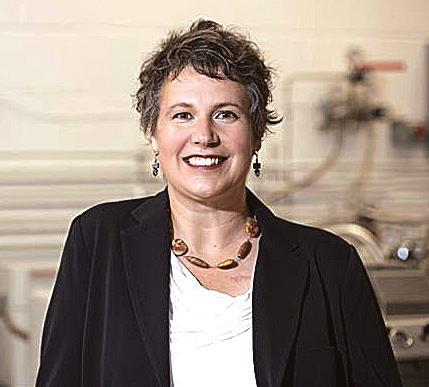
Sarah Haig Receives a Career Award to Improve the Treatment Processes for Drinking Water
Before it even touches our lips, drinking water is purified through a series of processes referred to as the “treatment train” at a centralized treatment plant. Utilities then add a disinfectant like chlorine or chloramine to the water to control the regrowth of microorganisms in both the distribution system and building plumbing.
Despite these treatments, drinking water that meets state and federal regulations still contains many types of bacteria. Though most surviving bacteria are harmless, some like drinking water-associated pathogens (DWPIs) – which
predominantly impact the immunocompromised – cause more than 145,000 human infections annually and cost the United States billions in healthcare costs.
Assistant Professor Sarah Haig received a $550,000 Faculty Early Career Development Award from the National Science Foundation (NSF) to learn how some DWPIs can survive drinking water treatment processes and determine better treatment processes to stop them from entering the human body.
According to NSF, the CAREER award is its “most prestigious in support of early-career faculty who have the potential to serve as academic role models in research and education and to lead advances in the mission of their department or organization.”
The Dangers of DWPIs
Several DWPIs are concerning; however, Legionella pneumophila and nontuberculous mycobacteria (NTM) cause the most respiratory infections and cost the greatest amount to treat.
The human body can stop these pathogens from entering its system, but people with immunosuppressive conditions like cancer, HIV, or preexisting respiratory issues such as COPD have a heightened chance of these pathogens evading their biological defense mechanisms. One possible
explanation is the overlap in mechanisms used by these pathogens to evade both drinking water treatment and the human immune system.
“Disinfection processes kill microorganisms by damaging cells through a process called chemical oxidative stress,” Haig explained. “The human immune system uses the same procedure to kill continued on next page > > >
Letter from the Chair
Dear friends, colleagues, and alumni,
Once again it is my privilege to share with you the outstanding accomplishments of our faculty and students over the past year. This issue includes some of our biggest stories, which continue to capture national and international attention.
First, I am very proud of Assistant Professor Sarah Haig on being one of five NSF CAREER Award recipients in the Swanson School. In a city and region carved by water over the millennia, Sarah continues to expand our knowledge of the microbiome within our water systems, whether in the field or in our homes. She has fostered several lasting collaborations in the medical, public health, and civil engineering disciplines here at Pitt and is very active in our department’s efforts to develop the curriculum for the undergraduate and graduate environmental engineering program.
I am especially excited about the inter- and transdisciplinary nature of our faculty research, who are extending their knowledge of civil engineering into other disciplines. Amir Alavi, for example, is applying his knowledge of structural engineering and metamaterials to healthcare devices.
Melissa Bilec continues to apply her research in circular economy and sustainability into areas of climate justice and socioeconomic impact. Meanwhile, Vikas Khanna has studied the impact of beef production in the U.S, and the disparity between where beef is raised and consumed, and the impact of nitrogen in our environment.
Transportation is one of our department’s strongest suits, with novel technologies being developed by Alex Stevanovic, Alessandro Fascetti, and public-private partnerships strengthening our Impactful Resilient Infrastructure Science and Engineering (IRISE) consortium led by Julie Vandenbossche and Joe Szczur. Our advances in these areas are gaining attention from leading officials throughout the Commonwealth.
Lastly, I would like to express my gratitude to our amazing students, who are continuing the leadership, professionalism, and innovation of our program since its establishment in 1844. This fall our ASCE Chapter hosted its annual career fair – a studentrun event that has inspired similar fairs in the Swanson School. The student leaders hosted 75 engineering firms from around the region, packing the concourse of the Petersen Events Center with networking and interviews. I spoke with several of our alumni who now work with these firms, who expressed their pride in our students’ abilities and how they set the bar for new civil and environmental engineers.
Thank you for your continued support, especially for our students. I look forward to seeing you in the new year, and welcome you to reach out at any time.
Sincerely,
Radisav Vidic, PhD, P.E.
William Keppler Whiteford Professor and Department Chair
From Treatment to Tap...
continued from previous page
pathogens, but despite these similarities it is still unknown if the DWPIs that survive oxidative stressors in drinking water treatment can do the same in someone’s body.
“My working theory is that low-level antibiotic exposure in the environment helped develop antibiotic resistant ‘superbugs;’ therefore it is possible that DWPIs surviving oxidative stress at the treatment plant may lead to pathogens which are more resistant to the immune system’s pathogen killing mechanisms,” Haig said.
Designing a New System to Stop DWPIs
Haig and her team will use a pilot drinking water treatment plant and laboratory-scale systems to find, quantify and identify how different treatment train and distribution system configurations impact chemical oxidative stress and test what impacts the survival of DWPIs. The completion of this project will create new fundamental knowledge that will guide better drinking water treatment plant design and operations, leading to fewer DWPI infections.
In addition to the scientific contributions of finding solutions to better treat drinking water, Haig’s CAREER award will also help create student education and training opportunities, including the mentoring of one graduate student and one undergraduate at Pitt as well as various K-12 activities.
The five-year project, “Drinking water treatment & distribution – the environmental training grounds for pathogens to evade the human immune system,” begins this year. ■
Publisher: Radisav Vidic, PhD, PE
Editor: Paul A. Kovach
Lead Writer: Kat Procyk, MPA
Designer: Leslie K. Sweeney
Novel BloodPowered Chip Offers Real-Time Health Monitoring
Metabolic disorders like diabetes and osteoporosis are burgeoning throughout the world, especially in developing countries.
The diagnosis for these disorders is typically a blood test, but because the existing healthcare infrastructure in remote areas is unable to support these tests, most individuals go undiagnosed and without treatment. Conventional methods also involve labor-intensive and invasive processes that are time-consuming and make real-time monitoring unfeasible, particularly in real life settings and in countryside populations.
Researchers at Pitt and University of Pittsburgh Medical Center are proposing a new device that uses blood to generate electricity and measure its conductivity, opening doors to medical care in any location.
“As the fields of nanotechnology and microfluidics continue to advance, there is a growing opportunity to develop lab-on-a-chip devices capable of surrounding the constraints of modern medical care,” said Amir Alavi, assistant professor of civil and environmental engineering. “These technologies could potentially transform healthcare by offering quick and convenient diagnostics, ultimately improving patient outcomes and the effectiveness of medical services.”
Now, We Got Good Blood
Blood electrical conductivity is a valuable metric for assessing various health parameters and detecting medical conditions.
This conductivity is predominantly governed by the concentration of essential electrolytes, notably sodium and chloride ions. These electrolytes are integral to a multitude of physiological processes, helping physicians pinpoint a diagnosis.
“Blood is basically a water-based environment that has various molecules that conduct or impede electric currents,” explained Dr. Alan Wells, the medical director of UPMC Clinical Laboratories, Executive Vice Chairman, Section of Laboratory Medicine at Pitt and UPMC, and Thomas Gill III Professor of Pathology, Pitt School of Medicine, Department of Pathology. “Glucose, for example, is an electrical conductor. We can see how it affects conductivity through these measurements. Thus, allowing us to make a diagnosis on the spot.”
Despite its vitality, the knowledge of human blood conductivity is limited because of its measurement challenges like electrode polarization, limited access to human blood samples, and the complexities associated with blood continued on page 5
Spinal Fusion Goes “Meta”
Assistant Professor Amir Alavi is applying his expertise in bridges and infrastructure to develop new materials that better treat spinal injury, repair and recovery. His proposal received a $557,000 boost from the National Institutes of Health to test the first “metamaterial” orthopedic implants.
With an estimated 342,000 procedures per year in the U.S., interbody spinal fusion is a popular procedure to treat a range of spinal pain and injuries, from herniated discs and degenerative diseases to trauma. Interbody fusion cages are spinal implants that are used in most of these procedures for better surgical outcomes. A successful fusion is also a balancing act – the cage should be stiff and strong enough to limit motion and relieve pressure, yet soft enough that the spine can still act to transfer load. However, the required strength and stiffness provided by current materials used in the fusion procedures can negatively impact the healing progress.
“Titanium and specific polymers, like polyetheretherketone (PEEK), are the most common materials used in spinal fusion cages because of their biocompatibility, strength and durability. While one might assume that the high rigidity of metal implants is desirable, it can lead to detrimental outcomes such as extreme compression, delayed bone healing, and even catastrophic destruction of the host bone,” explained Alavi. “There are also major concerns regarding the bone integration of PEEK cages.”
Alavi’s NIH funding is from a three-year Trailblazer R21 Award which allows new and early-stage investigators to pursue research programs of high interest to the National Institute of Biomedical Imaging and Bioengineering. Alavi is also among 23 Pitt scientists included in the 2023 Highly Cited Researchers list from Clarivate and was named one of “24 Pennsylvanians to Watch in 2024” by PennLive/ Harrisburg Patriot News.
“I am very excited about this project as it marks the first-ever testing of a “metamaterial orthopedic implant in vivo,” Alavi added. “Our mission is to discover the ideal interbody fusion cage – a holy grail that combines the necessary stiffness for stabilizing vertebrae movement, flexibility for load-sharing, and porosity to support both bone on-growth and in-growth. I believe that our metamaterial approach to designing interbody fusion cages is the most viable strategy to seamlessly integrate all these essential features into a single fusion cage.”
According to Alavi, metamaterials are more advanced than traditional elements, alloys or other materials because they can be designed to provide a wide range of desired mechanical properties, including ultra-light, ultra-stiff, ultra-high strength‐to‐density ratios, compliance, and high resilience. In addition, metamaterial implants open a vast design space as they can be fabricated using a wide variety of biocompatible materials.
The team is leveraging their generative artificial intelligence tools to accelerate the exploration of this design space, with tools that allow researchers like Alavi to utilize massive amounts of data not only about metamaterials, but also the spine and how the material needs to behave within the human body.
“The unit cells in these metamaterial implants can take various sizes and shapes. The number of possible configurations for these metamaterial implant can approach astronomical values. So, depending on the clinical requirements, target mechanical properties and anatomical matching set by our surgeons, we are dealing with a huge design space,” Alavi explained. “What generative AI allows us to do is combine all these parameters with every known material to identify a new metamaterial that responds to all medical needs and improves recovery. We can then create the metamaterial constructs and test them much more quickly, efficiently, and economically than traditional trial and error.”
The Trailblazer R21 Award will enable Alavi to first test the spinal fusion cages on animals before finalizing the treatment for human testing. He believes the process will eventually lead to next-generation metamaterial-based implants that can be used for treatment of other bone injuries and diseases requiring surgical intervention. His collaborator during the in vivo trials will be Allegheny General Hospital. ■
Novel Blood-Powered Chip...
continued from page 3
temperature maintenance. Measuring conductivity at frequencies below 100 Hz is particularly important for gaining a deeper understanding of the blood electrical properties and fundamental biological processes but is even more difficult.
A Pocket-Sized Lab
The research team is proposing an innovative, portable millifluidic nanogenerator lab-ona-chip device capable of measuring blood at low frequencies. The device utilizes blood as a conductive substance within its integrated triboelectric nanogenerator, or TENG. The proposed blood-based TENG system can convert mechanical energy into electricity via triboelectrification.
This process involves the exchange of electrons between contacting materials, resulting in a charge transfer. In a TENG system, the electron transfer and charge separation generate a voltage difference that drives electric current when the materials experience relative motion like compression or sliding. The team analyzes the voltage generated by the device under predefined loading conditions to determine the electrical conductivity of the blood. The self-powering mechanism enables miniaturization of the proposed blood-based nanogenerator. The team also used AI models to directly estimate blood electrical conductivity using the voltage patterns generated by the device.
For accuracy, the team compared its results with a traditional test which proved successful. This opens the door to testing where people live. In addition, blood-powered nanogenerators are capable of functioning in the body wherever blood is present, enabling self-powered diagnostics using the local blood chemistry.
The paper, “Millifluidic Nanogenerator Lab-ona-Chip Device for Blood Electrical Conductivity Monitoring at Low Frequency,” (DOI: 10.1002/ adma.202403568) was published by the journal Advanced Materials. ■
Pitt Engineers Partnering With County on Environmental and Climate Justice Solutions
As the climate warms, Pennsylvania rainfalls are becoming more extreme while flood-related risks are worsening, according to a recent report from the nonprofit organization Climate Central.
This intensity is only expected to climb with future warming – creating devastating effects on the health and stability of environmental justice communities, areas with predominantly people of color or those living below the poverty line, across Allegheny County.
Engineers at the Swanson School and Mascaro Center of Sustainability Innovation (MCSI) are partnering with the Allegheny County Health Department (ACHD) and Landforce, an employment and environmental social enterprise, through a three-year $930,411 Environmental Justice Government-to-Government (EJG2G) grant to increase climate resilience in environmental justice communities through water-based cleanup projects and green infrastructure to minimize flooding and associated public health risks in environmentally burdened communities in the county.
The Department of Emergency Services, Department of Sustainability and Allegheny County Sanitary Authority (ALCOSAN) are providing consultation for the climate resilience plans and green stormwater infrastructure designs. Allegheny CleanWays, a local nonprofit organization that works to eliminate illegal
dumping and littering in Allegheny County, will oversee the cleaning of illegal dumping grounds and removing trash from waterways.
“This partnership is emblematic of the important role universities can and should play with and in service of our communities, especially communities that are most affected by the flooding we’ve been experiencing these past few years,” said Melissa Bilec, co-director of Mascaro Center for Sustainable Innovation, Special Assistant to the Provost for Sustainability, and the George M. and Eva M. Bevier Professor of Civil and Environmental Engineering. “I feel honored and grateful to work with a talented team and aim to demonstrate the service and talent of Pitt Engineering and MCSI.”
Through Pitt’s sustainability capstone course –part of the undergraduate sustainability certificate and graduate degree program in sustainable engineering – students will partner with external stakeholders and determine solutions to these complex sustainability challenges.
“We’re excited to be partnering with Pitt to achieve measurable and meaningful environmental and public health results in our environmentally vulnerable communities,” said Dr. Stephen Strotmeyer, program manager, Chronic Disease Epidemiology, ACHD. “This has been a county goal since the creation of the Plan for a Healthier Allegheny to improve climate resilience and preparedness by 2027.”
As part of the grant, $93,110 will be allocated to Pitt to design small-scale green infrastructure projects that align with the climate resilience plans created by collaborations between municipal leaders and residents in environmental justice communities, the ACHD, the Steel Rivers and Turtle Creek Valley Councils of Governments (COGs), and other government and academic partners. The plans will use data from the ACHD Climate Resilience Dashboard and input from the community gathered during a series of focus groups.
“Students will meet with government councils, municipalities, and nonprofit partners to learn about the priorities of each community. The goal is that they create designs for green infrastructure projects that are cost effective within a reasonable timeframe,” said David Sanchez, MCSI associate director and associate professor of civil and environmental engineering. “These projects will be created by the community, for the community to divert stormwater and reduce the impacts of flooding.”
In addition to their physical projects, students will develop a model to estimate the amount of storm water diverted per project, the total projected environmental impact, and the estimated maintenance costs. ■
Convergence and Collaboration to Achieve Circularity
The linear consumption model of raw material extraction, production, use and disposal dominates the global economy, but it has led to serious unintended global consequences: from resource use to pollution including negative impacts on environmental and human health that disproportionately affect the Global South.
In contrast, circular economy – a model where products and materials are by design kept in continual use – aims to decouple economic growth from resource consumption.
While approaches to implement a circular economy (CE) continue to be discussed at the highest levels of government and global organizations, cities and communities are at the frontlines. Getting a CE to work in practice requires collaboration between government, businesses, local stakeholders and everyone in between.
A research team from the University of Georgia College of Engineering and Pitt’s Mascaro Center for Sustainable Innovation (MCSI) and Swanson School of Engineering have been awarded a $5,000,000 cooperative agreement with the National Science Foundation (NSF) to continue their efforts to build a circular economy. This Phase 2 project, Track I: SpheriCity – Circularity from Molecules to the Built Environment in Communities, is a continuation of their Phase 1 project, “A Tale of Two Cities: Optimizing Circularity from Molecules to the Built Environment,” and is part of the NSF’s Convergence Accelerator.
“The primary goal of Phase 1 of this project was to use the Circularity Assessment Protocol (CAP) framework – a standardized assessment protocol used to inform decision-making on materials usage and management – to converge circularity across four different categories: molecules, plastics, organic materials, and the built environment,” said Jenna Jambeck, Georgia Athletic Association Distinguished Professor of Environmental Engineering and PI. “In Phase 2 we’re making it easier for cities to conduct CAP, so community experiences can translate to eleven other locations throughout the US, eventually scaling to hundreds of cities.”
The team, called SpheriCity, also includes seven industry, government and NGO partners.
“We are using a network of networks approach in Phase 2. For example, we have partnered with the Green Building Alliance and working with their amazing leadership and team to expand the reach of CAP,” said Melissa Bilec (pictured), co-director of Mascaro Center for Sustainable Innovation, Special Assistant to the Provost for Sustainability, and the George M. and Eva M. Bevier Professor of Civil and Environmental Engineering. “For example, we have partnered with the Green Building Alliance and are working with their amazing leadership and team to expand the reach of CAP. Bilec is the coprincipal investigator. The research team at Pitt also includes Dr. Amy Brooks, post-doctoral associate, and Nicole Bell, doctoral student.
SpheriCity is expanding the CAP developed in Phase 1 to different materials outside of only plastics and organics by creating the first version of the Construction and Demolition (C&D) Convergence CAP.
Pittsburgh was used as a pilot location to understand what a Construction and Demolition CAP would look like when scaled to cities across the world. The methods and lessons learned for the newly updated and expanded CAP will be used for future implementations, including 11 new cities for Phase 2.
“The goal of the C&D Convergence CAP is to further educate cities and governments on moving toward circularity and to empower users to make more informed decisions,” Bilec said. “By understanding the value of materials already in use in their area, they can develop methods to recycle and reuse construction materials through deconstruction in order to meet their goals of reducing embodied carbon and meet their zero waste goals.”
As it continues to grow, the data will be publicly available through the Debris Tracker open access tool developed by Jambeck’s lab –joining over 7 million other data points in nearly 100 countries across the world. ■
Turning Crisis into Compassion During Brazilian Floods
By Lauren Stanick
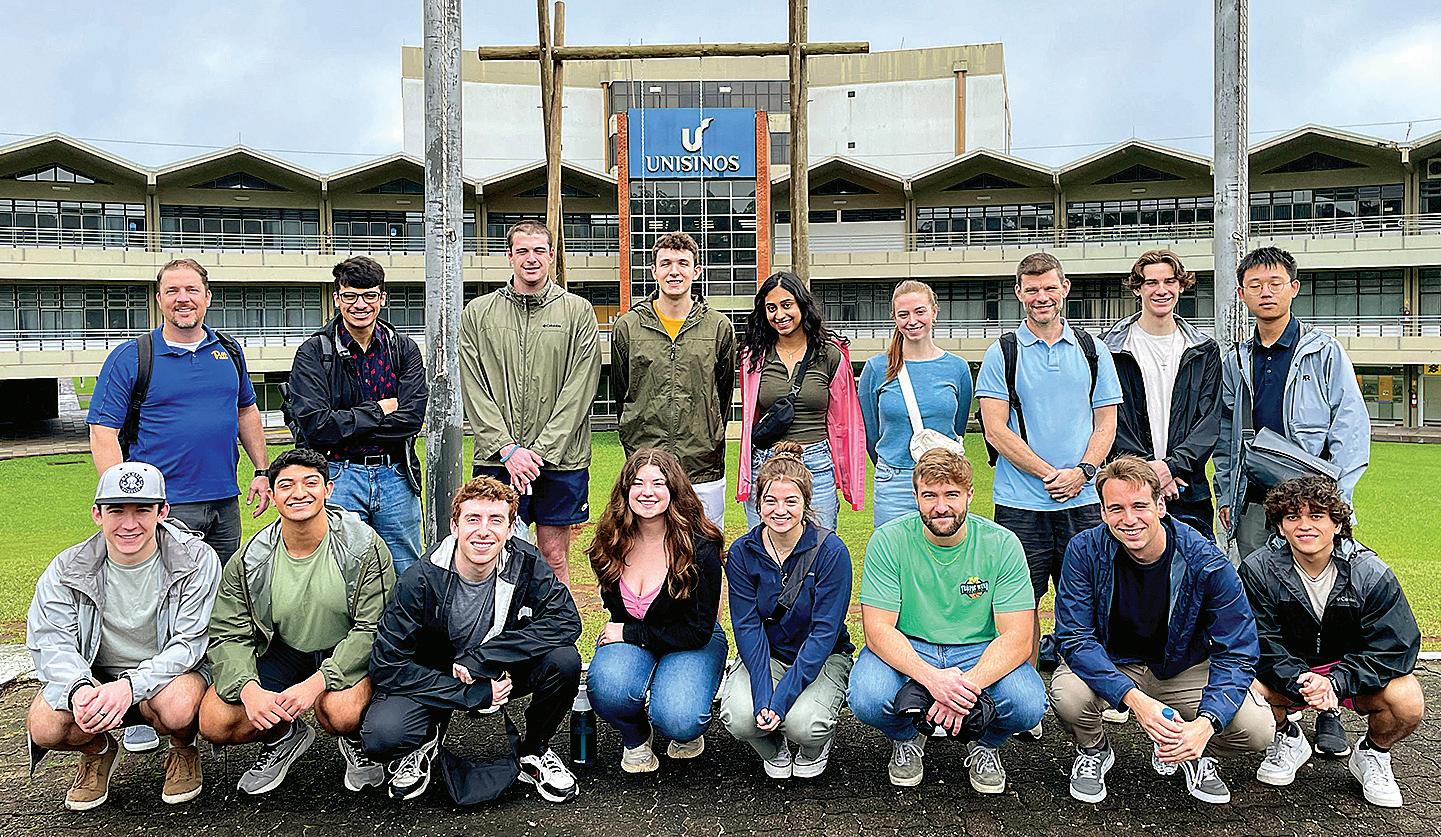
Planning for different circumstances is important when traveling – but how can one expect a natural disaster, especially when abroad? Students and faculty from the Swanson School of Engineering faced that challenge headon this spring when members of Pitt’s Exploration of Energy and Electrification Global Experiences program were caught in the catastrophic flooding of southern Brazil.
Within days of the group’s arrival in Rio Grande do Sul on Sunday, April 28, 150,000 Brazilians were displaced throughout Brazil’s southernmost state. At the height of flooding in mid-May, the International Labor Organization said that number had skyrocketed to nearly 700,000.
Witness to Disaster
While waiting to secure transportation out of the city, program directors Robert Kerestes, associate professor and undergraduate program director of electrical and computer engineering, and Tony Kerzmann, associate professor of mechanical engineering and materials science, were surprised to see how eager students were to help refugees arriving in São Leopoldo.
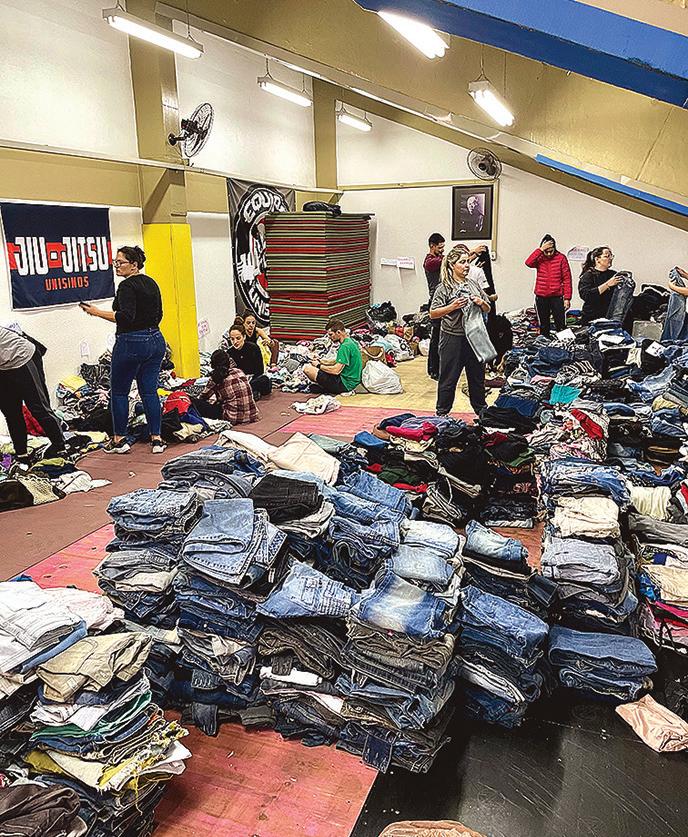
When Unisinos – the program’s partner institution – opened its doors to approximately 1,300 refugees on Saturday, May 4, Kerestes and Kerzmann suggested the group aid their relief efforts. The students were quick to lend a helping hand.
Students folded and organized donated clothes, distributed bedding supplies, helped to move furniture, and made themselves as helpful as possible.
Cassidy Laffey, a rising junior studying environmental engineering, said that it’s one thing to see disasters on the news, but another thing entirely to experience one firsthand.
“The lives of these refugees had just changed forever, but all I could do was bring them a blanket,” Laffey said.
Unisinos faculty noted the Pitt students’ decision to help was an organic response to the catastrophic events they watched unfold.
“This kind of decision-making is something we expect to see from undergraduate students,” said Tatiana Louise Avila de Campos Rocha, assistant
director of undergraduate affairs at Unisinos. “I know the kind of character Pitt teaches their students, so we weren’t surprised to see them volunteer. Soft skills like teamwork, kindness and empathy are critical in understanding the human condition as an engineer.”
In Dark Times, There is Always Light
The close-knit, supportive atmosphere among the refugees resonated with the students. Justin Winslow, a rising junior studying civil engineering, said that the selflessness and generosity he witnessed at Unisinos – by volunteers and refugees – initially surprised him.
“As we were setting supplies on the floor, I flashed back to the COVID-19 situation in the United States where people would ransack store shelves for supplies,” Winslow said. “But there was no rush or panic to hoard supplies. I could see in the way people acted how much they still cared about their neighbors.”
Reflecting on an Unexpected Experience
After securing transportation out of the affected area on Monday, May 6, Kerestes and Kerzmann led the group to Florianopolis where they spent
a day at Armação Beach to decompress and reflect on what they had experienced. They finished their trip at the Itaipu Dam – the second leading producer of hydroelectric power in the world – in Foz do Iguaçu to round out the program’s purpose of exploring energy alternatives.
“We felt bonded after leaning on each other for support during the humanitarian efforts,” Laffey said. “After seeing the devastation of the flooding, one of our collective takeaways is that the small inconveniences we encounter daily don’t matter. We all feel extremely appreciative of our lives and the opportunities we have here at home, and we were so grateful to make the most of the last few days of our trip.”
Throughout their time in Rio Grande do Sul, Kerestes and Kerzmann were in contact with the Pitt Global Experiences Office (GEO) to ensure the safety and security of all program members. The volunteering efforts were cleared by the GEO and are similar to efforts that occur through the GEO-operated service-learning programs. ■
When the Levee Breaks
With flooding becoming more frequent and severe because of climate change, the stakes are rising. Recent estimates place global flood-related damage at more than $50 billion annually, and experts predict an increase in damage to U.S. communities by the end of the century without new interventions.
Researchers from Pitt and Vanderbilt University received more than $729,307, with $317,811 coming to Pitt from the National Science Foundation (NSF) for a three-year project to address one of the most critical threats to flood protection infrastructure: backward erosion piping (BEP). This phenomenon, a major cause of levee and dam failures, occurs when water seeps through and erodes sand beneath flood barriers, potentially leading to catastrophic failures.
Alessandro Fascetti, assistant professor of civil and environmental engineering and Roberta Luxbacher Faculty Fellow, and Caglar Oskay, professor of civil and environmental engineering and professor of mechanical engineering at Vanderbilt, are developing a novel computational, artificial intelligence-driven model designed to predict BEP and help mitigate risks. Their project aims to revolutionize how flood protection systems are designed, maintained and monitored.
“Flooding is the most common and costly disaster in the U.S., and BEP is one of the least understood threats to levees and dams,” Fascetti said. “By developing a model that simulates BEP progression, we can provide engineers with the tools to predict when and where failures might occur, enabling them to take preventative action.”
The research will use Dual Random Lattice Modeling (DRLM) to capture the complex, threedimensional behavior of BEP as it evolves beneath levees and other protective structures. This model can describe the unique characteristics of soil and hydraulic conditions, allowing for more accurate predictions of when and how BEP will lead to system failure. The model will also be validated through experiments and real-world data from past flood events.
The Researchers’ Three Key Objectives:
■ Understanding the relationship between water pressure, soil conditions, and BEP initiation
■ Developing a novel computational framework for predicting BEP-related failures
■ Quantifying the risk of levee failure over time due to BEP progression
The project also includes a public outreach and education component. The team will engage with K-12 students and the public through interactive demonstrations, including an Augmented Reality Sandbox that simulates flood scenarios and demonstrates the importance of infrastructure in flood protection.
“We want to not only advance scientific knowledge but also raise awareness about flood risks and encourage the next generation of engineers,” Fascetti said. ■
Mitigating the Environmental Harm of PFAS ‘Forever Chemicals’
By Kim Martineau, IBM Research Science Writer
The Swanson School of Engineering is part of a new NSF-funded collaboration led by IBM Research and focused on developing tools to identify products with PFAS, accelerate the search for PFAS substitutes with the help of generative AI, and recommend materials for capturing PFAS at manufacturing sites.
Prized for their water and grease-repelling properties, PFAS can be found in nonstick pans, outdoor gear, food packaging, furniture, and even dental floss. Their ability to withstand harsh chemicals and punishing heat have also made them essential to making everything from computer chips to rechargeable batteries.
But PFAS, short for per- and polyfluoroalkyl substances, have also become pervasive. They’ve been found in our bodies, and in the water and soil of most places on earth. Some can take thousands of years to break down in nature, and even small exposures over long periods can be harmful. PFAS have been linked to cancer in humans and animals, thyroid disease, hormonal dysfunction, and high cholesterol, among other problems.
In the search for solutions, the U.S. National Science Foundation is funding an ambitious $5 million PFAS-replacement project called PFACTS, under its Convergence Accelerator initiative. IBM Research will lead a group of experts in academia, industry, and the non-profit sector in a multi-pronged effort to reduce the environmental impact of PFAS.
PFAS get into our bodies via contaminated food and drinking water. But unlike other organic compounds that accumulate in fatty tissue, PFAS are drawn to proteins, leading to accumulations in the blood and liver. Structurally, they resemble fatty acids, which means they end up interacting with a
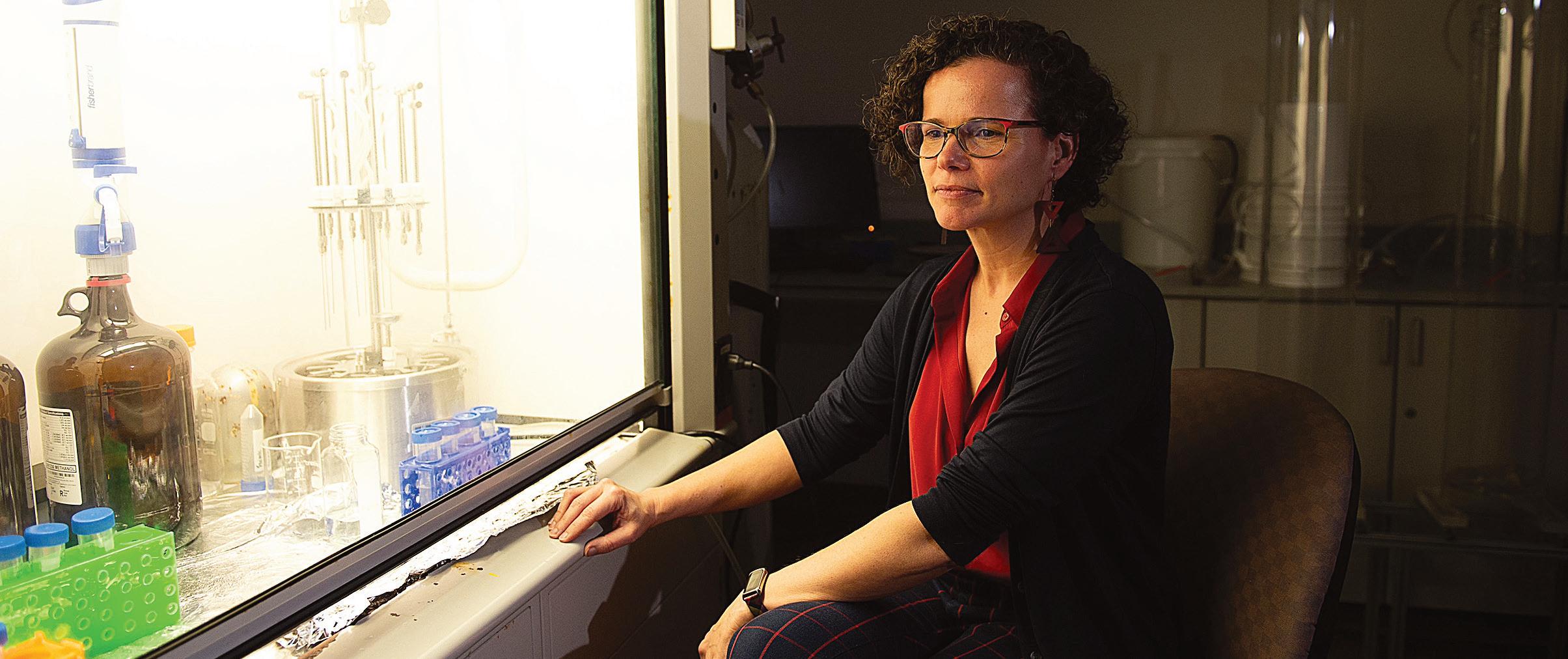
lot of the same systems in the body, said project collaborator Carla Ng, associate professor of civil and environmental engineering at the University of Pittsburgh (pictured above). “That allows them to muck things up because they can’t actually be metabolized.”
Other collaborators include co-principal investigators Daniel Sanders, materials scientist and manager and Jed Pitera, sustainable materials researcher both with IBM Research; Stacy Glass, co-founder of ChemForward; Damian Helbling, a water quality engineer at Cornell University; and Ash Wright, a researcher with Numat Technologies in Chicago.
The project has three objectives: to simplify the identification of PFAS chemicals and materials; to speed up the discovery of safer PFAS alternatives with the help of generative AI; and to recommend methods for capturing PFAS from industrial applications until viable replacements can be found.
Navigating the PFAS Maze
Government agencies have sought for decades to regulate PFAS, even as the number of compounds have proliferated wildly. Under the most expansive definition, there are now more than 7 million reported varieties, with detailed toxicology information existing for only about a dozen.
In the first phase of the NSF project, IBM and collaborator Digital Science, a London-based tech company, will gather into a single database all PFAS that have been reported in the scientific literature, along with their regulatory classifications.
The database is meant to be a common reference point for regulators, researchers, and industry, and to give companies, especially, a clearer path through a labyrinth of policies. To make the database accessible, IBM will
Beef, Pound for Pound
By Brandie Jefferson, University Communications and Marketing
Anyone who has researched ways to lower their environmental impact has likely heard they should eat less meat, particularly beef. Even at scale, cows are an inefficient way to feed people – it takes nearly four tons of water to recoup one ton of beef, and many farming practices emit greenhouse gasses and pollutants.
Pitt researchers are the first to trace one of those pollutants, nitrogen, along the U.S. beef supply chain at the county level. They found high spatial disconnect between where beef is eaten and where nitrogen’s impacts are felt.
Previous research looked at production-based impacts, said Vikas Khanna, professor of civil and environmental engineering. “They’ve asked, ‘what does it take to produce a certain quantity of beef?’ And they tend to report average environmental impacts,” such as how much water, greenhouse gasses or other pollutants result over the entire process.
In a paper published in the journal Environmental Science and Technology, Khanna and PhD student Anaís Ostroski map the impacts of nitrogen county by county, providing the clearest picture yet of which areas face some of the environmental effects of cattle farming. Khanna and Ostroski are joined by Oleg Prokopyev, a former professor of industrial engineering at Pitt now at the University of Zurich.
“It is essential to measure nitrogen losses and understand where they happen due to the cascading effects on the environment,” said Ostroski, the paper’s lead author. “A single molecule of reactive nitrogen can cause multiple adverse effects until it is converted back to stable atmospheric nitrogen. Food supply chains have grown increasingly complex; we found that when beef is consumed in a given county, it is associated with nitrogen losses in more than 200 counties on average.”
Our atmosphere is 79 percent nitrogen, but atmospheric nitrogen has strong bonds and doesn’t react with other substances. The nitrogen used for fertilizer, however, is reactive. As it accumulates it creates surface-level ozone, which can lead to respiratory problems. When rain washes nitrogen fertilizers from croplands into waterways, it can spark runaway algae growth, which takes oxygen from the water, suffocating fish and other marine life.
In 2017, beef consumption was responsible for about 1,330 gigagrams of nitrogen released into the environment – that’s enough to fertilize about 19.5 million acres, or 20% of all the corn grown in the United States.
The new research shows people living along the East Coast and in large swaths of California, Nevada and Arizona are more than 600 miles
away from the nitrogen that entered the environment in service of their burger.
The pollution happens in a few different ways along the supply chain. Cows are fed food that is grown using nitrogen fertilizers. Much of that is leached away by rainwater, tainting nearby land and water supplies.
Beef cattle are kept in processing facilities where nitrogen is released in wastewater. Here, Khanna sees an opportunity to minimize nitrogen pollution by implementing a circular economy model where valuable nutrients like nitrogen and phosphorus are recovered from the wastewater.
“Recouping nutrients from animal wastewaters would be a win-win solution,” he said. Nitrogen would be kept out of the ecosystem, and farmers could reuse the nitrogen as fertilizer while also reusing the treated water for irrigation.
While it’s important to look at technological solutions to reduce the impact of cattle farming on the environment, Khanna has words of caution about technological exuberance, “Let’s not just look at the trees and miss the forest. It is important to look at potential solutions from a holistic perspective to make sure we are not solving one problem at the expense of others.” ■
A Smarter, Safer Way to Monitor Our Streets
It’s a Monday, and you’ve overslept. You skip breakfast and rush to your car, hoping to make it to work on time. But a notoriously long red light delays you. You’re not just frustrated – you’re late.
For an engineer who specializes in transportation, ensuring others arrive to work on time is just one of their priorities.
“When we talk about road transportation, we have three areas that shape our work,” said Associate Professor Aleksandar Stevanovic.
“Safety is our primary concern, but we also think about efficiency and environmental implications. Most of the time, these areas go hand-in-hand.”
Stevanovic has spent most of his career researching traffic control – which can be through road signs, traffic signals and pavement markings – on arterial streets. He has published more than 250 journal and conference papers and presented at more than 100 international, national and state seminars and professional meetings on the subject. He has been principal investigator on ~40 research projects for almost $5 million in funding and has worked with various transportation agencies on the national, state and local levels.
That’s a lot of time spent on the road(s).
Smarter Streets
Most recently, Stevanovic is part of a $160,814 project with the city of Pittsburgh to improve the city’s intelligent transportation system’s infrastructure and operations in disadvantaged neighborhoods, or SmartPGH. With Stevanovic’s help, the city plans to deploy different smart technologies on its streets that support multimodal operations.
“By multimodal, I mean accessible public transportation by providing transit signal priority for buses, providing better detection of pedestrians, and more protected signal phasing for crossing the street,” Stevanovic said. “We are also looking into bike volumes and what areas people are delayed in their cars.”
There is one caveat for Stevanovic and his team: when these technologies are installed, it’s uncertain how efficiently they’ll function together since they typically operate independently. Worst case scenario: less than ideal performance from these technologies.
“We can’t test in the field because we could potentially put lives at stake,” Stevanovic said. “Instead, we use a very sophisticated, high-fidelity simulation to replicate the conditions that we have in the field with the same technologies that will be implemented.”
The simulation is more like that of a digital twin than virtual reality, meaning the research group can control different conditions to produce a result in order to form accurate predictions.
“You don’t get like this 3D view of the objects around yourself, but the way how traffic performs, number of vehicles, how fast vehicles move, number of pedestrians, where pedestrians move, and how they move in the network,” Stevanovic said. “Those things are very realistic.”
Reinventing the (Steering) Wheel
Unlike SmartPGH, Stevanovic and his team are incorporating virtual reality into a $120,000 project, in collaboration with the University of Virginia, under a consortium of regional universities led by Morgan State University .
In his lab, there’s an interactive environment where one person drives a car, another walks as a pedestrian, and a third rides a bike – all within the same virtual space. All other cars, pedestrians, bicyclists and landscapes are simulated. The environment itself is based on a corridor in Newark, Delaware because of its notable multimodal environment, maintained by the Delaware Department of Transportation.
Stevanovic emphasized that calling it a mere driving simulation system doesn’t capture its complexity.
“This creates a perfect environment for us to investigate multiple, multimodal traffic scenarios,” Stevanovic said. “By using these human agents in that environment, we can replicate some of the potential conflicts that happen and test the ability to avoid and resolve these conflicts without actually working with the people in the field. No one gets hurt.”
Though remote work has become more common, Stevanovic doesn’t believe it to be the perfect solution to traffic conditions. Stevanovic said it’s possible that multidisciplinary researchers could look at something as simple as the wheel – which dates back to the 4th millennium BC – and a car’s design to improve traffic conditions.
“We’ve never really questioned what a car should be – its design, features, or purpose,” Stevanovic said. “We typically follow evolutionary changes, not revolutionary ones. Maybe it’s time for a radical redesign to improve how we use our time, reduce delays, enhance safety for everyone, and make cars more eco-friendly.” ■
Pennsylvania’s Road to Innovation in Transportation
From cutting-edge extended reality training platforms for first responders to an overview of Pennsylvania Turnpike capital plans and implementation, the Transportation Forum 2024 highlighted what is down the road for the Pennsylvania transportation industry in the months and years ahead.
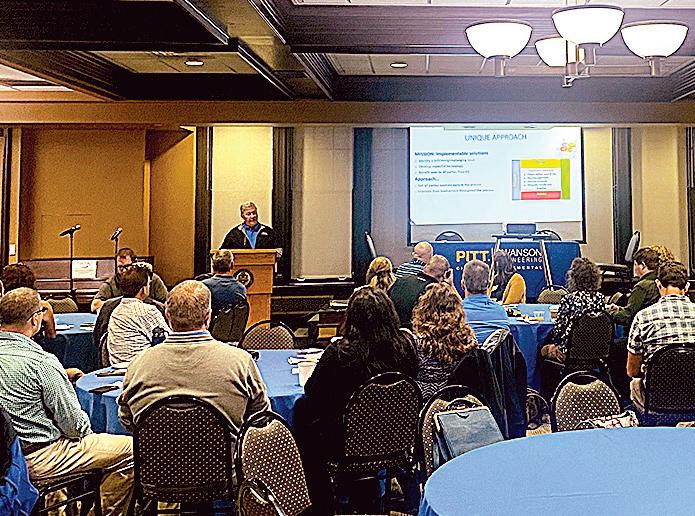
“Innovative Solutions through Research” highlighted faculty innovation at the Swanson School in addition to prevalent industry-related topics. Hosted by the University of Pittsburgh Center for Sustainable Transportation Infrastructure (CSTI) and the Impactful Resilient Infrastructure Science and Engineering (IRISE) Consortium in collaboration with the Pittsburgh chapters of WTS and American Society of Highway Engineers (ASHE) on Wednesday, March 20, 2024, the forum helps to promote, networking and collaboration between academics, researchers, and transportation and infrastructure organizations.
“This annual meeting is a great opportunity for members of government agencies like PennDOT to gain insight on novel transportation and infrastructure research at Pitt,” said Dana Vidic, IRISE Associate Director. “Traditionally, daily work schedules seldom allow time to delve into the latest advancements in research and groundbreaking technologies such as artificial intelligence. Part of the IRISE mission is to foster academic, industry, and government collaboration that ultimately benefits society.”
The Road to Innovation
The average public perception of transportation and infrastructure is probably limited to the roads we drive and the bridges we cross or - as with the recent Francis Scott Key Bridge collapse in Baltimore –what happens when infrastructure fails. What sets Pitt’s Transportation Forum apart is leveraging new technologies in civil engineering to improve construction and benefit the public at large.
Assistant Professors Amir Alavi and Alessandro Fascetti, and Anthony Gill Chair Professor Lev Khazanovich, presented on the evolving use of artificial intelligence and machine learning in safety, design and maintenance. Fascetti began by exploring the immense potential and limitations of artificial intelligence and machine learning, while Alavi focused on the potential of advanced materials and artificial intelligence in revolutionizing the field of civil infrastructure design. Khazanovich spoke on how to train GPT models to find potential causes of safety related accidents at construction sites.
Michael Carroll, PennDOT’s Secretary of Transportation and keynote speaker, addressed the challenges in facilitating the repair of transportation infrastructure throughout the state, which first requires cooperation from the Pennsylvania Senate and House of Representatives.
“Innovation in changing technologies is something we must lean into,” said Secretary Carroll. “We can’t continue to do things the same way forever. Continue the work that you do by convincing us with math and science that these strategies you’re employing are right and smart. I’m confident in the team we have assembled in central offices that they’ll deliver for the residents of this fine state.”
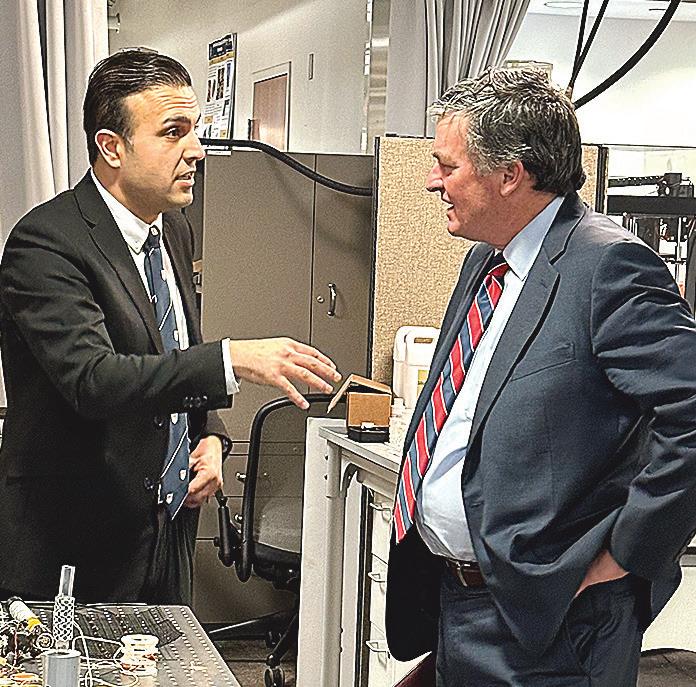
After the keynote address, Julie Vandenbossche, Professor and Associate Chair of Research in the Department of Civil and Environmental Engineering, led Secretary Carroll on a tour of Benedum Hall of Engineering, home of the Swanson School.
Fascetti showcased the Digital-Twin Infrastructure Science for Operations and Visualization in Engineering Resilience Laboratory and creation of virtual and augmented reality health and safety training systems. ■
IRISE Update
The IRISE Consortium continues to make strides in the development and deployment of needbased innovation in transportation infrastructure.
First, we are proud to welcome a new member to the IRISE consortium – the Southwestern Pennsylvania Commission (SPC). Their addition will strengthen our efforts in addressing the region’s transportation challenges by providing critical insights and collaboration. SPC is our region’s Metropolitan Planning Agency (MPO) and is responsible for funding and planning of our region’s transportation infrastructure. As an IRISE member, SPC will align its mission with IRISE to monitor and extend the life of our region’s transportation infrastructure through innovative research approaches to maximize the resources available to maintain this valuable regional asset.
This past year also brought PennDOT Secretary of Transportation Mike Carroll to the University of Pittsburgh to deliver the keynote address at our Annual Transportation Forum. His visit included tours of several IRISE labs, where he experienced firsthand the cutting-edge research that is shaping the future of transportation infrastructure.
In February 2024, IRISE hosted the PennDOT Executive Leadership Development Program (ELDP) at the University of Pittsburgh, aimed at cultivating the next generation of PennDOT leaders. The program was so well-received that
PennDOT requested it be held at the University again on October 2nd. Participants praised the Pitt lab tours for showcasing innovative research and practical applications, further strengthening the collaborative relationship between IRISE, Pitt, and PennDOT in tackling leadership and technical challenges in transportation.
IRISE research was honored at the 13th Annual International Conference on Concrete Pavements, where two projects received significant recognition. The work on “Evaluating Expertise of Concrete Pavement Construction in Modern Large Language Models” won the B. Frank McCullough Award for Best Student Poster, while the project “Leveraging State-of-the-Art Large Language Models for Accident Analysis in the Highway Construction Industry” was awarded the Bengt F. Friberg Award for Outstanding Paper by a Young Author.
IRISE faculty and students were also honored with the Best Paper Award at the Transportation Research Board (TRB) Annual Meeting by the AKC50 Standing Committee on Concrete Pavement Construction and Rehabilitation for their paper titled “Computer Vision-Based Estimation of The Effects of Vibration in Slipform Paving,” showcasing the consortium’s leadership in cutting-edge research. These awards highlight IRISE’s ongoing contributions to advancing transportation infrastructure research.
This year marks the launch of the IRISE TRI-PRO (Transportation Infrastructure Problem) Student
Competition Scholarship. For the competition, student teams will develop innovative solutions to a real-world problem – the Coal Valley Road landslide – provided by Michael Baker and Allegheny County, two IRISE members. We look forward to seeing the creative ideas that will emerge from the next generation of transportation engineers.
IRISE has also completed six major research projects in 2023-2024, all of which contribute to improving safety, efficiency, and sustainability in transportation infrastructure:
■ Identifying Major Causes of Construction Accidents
■ Investigating New Underground Technologies and Methods to Improve Highway Construction Safety and Efficiency
■ Integrating Additive Manufacturing with Accelerated Bridge Construction Techniques
■ Three-Dimensional Micro-Mechanical Characterization of Vibration and Compaction in Concrete Pavements
■ A Seminar Series on Innovative Stormwater Management in the Appalachian Plateau
■ The Landslide Best Practices Handbook
More information on these projects can be found at https://www.engineering.pitt.edu/irise ■
A Concrete Plan for Better Defense
Concrete pavements form the backbone of military airfields, roadways and infrastructure. However, current methods to assess the quality of concrete pavements are time-consuming and incompatible with the rapid pace of construction required by the Department of Defense.
Alessandro Fascetti, principal investigator, assistant professor of civil and environmental engineering and Roberta Luxbacher Faculty Fellow, is leading a team that received a $603,000 award from the Engineer Research Development Center (ERDC) of the Army Corps of Engineers for a 24-month project aiming at developing a novel approach to ensure the reliability and durability of Portland Cement Concrete (PCC) pavements critical to military operations around the world.
The research team’s innovative framework will investigate real-time, non-destructive testing (NDT) tools that will allow construction inspectors to assess the quality of pavements within 72 hours of placement – streamlining the decision-making process on whether to repair or replace pavement sections.
“Military infrastructure requires an unprecedented level of durability and reliability,” Fascetti said. “Our goal is to provide the DoD with advanced, easy-to-use field tools that will ensure quality control at the early stages of construction.”
Key Features of the Research:
■ Advanced Field-Testing Protocols: The project will investigate NDT techniques, including ultrasound tomography, ground-penetrating
radar (GPR) and infrared thermography, to detect defects in concrete pavements without damaging the material.
■ Early Detection of Defects: The team is developing methods to assess the integrity of newly placed concrete within the first 72 hours of curing, a critical time frame for identifying issues like poor consolidation or material segregation.
■ Non-Invasive Techniques: New tools will allow engineers to monitor subsurface defects, surface cracking, and other potential issues in real-time, ensuring a robust quality assurance process.
The research is supported by the ERDC and leverages the state-of-the-art facilities at Pitt, including the newly developed Pavement Consolidation Simulator. This advanced tool allows researchers to replicate real-world concrete paving conditions, leading to more accurate and reliable testing protocols.
Julie Vandenbossche, Vice Chair of Research, and Lev Khazanovich, Anthony Gill Chair Professor, both in the Department of Civil and Environmental Engineering, are serving as co-principal investigators on the project alongside Fascetti.
“We are creating practical, user-friendly tools that will not only advance the field of concrete pavement QA but also significantly improve the speed and accuracy of decision-making in the field,” said Khazanovich.
The project, “A Novel Framework for Quality Assurance for Concrete Pavements,” began in June 2024. ■
Mitigating the Environmental Harm of PFAS ‘Forever Chemicals’
continued from page 10
work with collaborator ChemForward, a nonprofit focused on safer chemistry adoption, to develop a user interface that companies can use to screen chemicals and materials in their supply chain for PFAS.
As the database is built out, companies will also be able to search for chemicals that can serve as PFAS substitutes as well as PFAS capture materials.
Finding PFAS replacements at an industrial scale is no easy task. Generative AI has potential to speed up the search if two main challenges can be overcome. One is predicting the health and environmental risks of replacement candidates. The other is engineering molecules that can match PFAS performance.
In the 2000s for example, the semiconductor industry, including IBM, replaced long-chain PFAS in their chip making processes for short chain PFAS which were thought at the time to be better for the environment. But recent evidence suggests that these compounds may also be hazardous.
To avoid a repeat scenario, researchers are trying to learn more about the mechanisms that make PFAS dangerous. Ng and her students are currently running simulations of how PFAS interact with proteins in the body. The simulation data will help steer generative AI models away from molecules with similar structures and disruptive effects. “Our mantra is to avoid regrettable substitutes,” she said.
The work of developing chemical substitutes typically takes a decade or more. With thousands of varieties in wide use, and unusual properties to replicate, PFAS could take longer. But the world has no time to wait.
“We need to do something immediately,” said Ng. “This is the time to make changes.” ■
AWARDS HONORS
Faculty
Amir Alavi Research funding
■ NIH Trailblazer Award ($577K) (Role: PI), “Investigating the effect of mechanical compliance of metamaterial interbody cages on spinal fusion progress in vivo,” 2024.
Professional service/ recognition
■ 2024 Faculty Honors Convocation Honorees receiving the award from Pitt’s Chancellor Joan Gabel and Provost Joseph McCarthy, April 5, 2024.
■ Promoted to Senior Editor at Measurement Journal, Elsevier (IF = 5.2)
■ Named 2023 Highly Cited Researcher by Clarivate Analytics. The list represents the 1% influential scientists in 2023 and includes about 7,000 scientists from more than 1,300 institutions in 67 nations and regions around the world.
Melissa Bilec Research funding
■ National Science Foundation ($5,000,000) (Role: Co-PI), “Convergence Accelerator Track I: SpheriCity – Circularity from Molecules to the Built Environment in Communities,” 2024.
■ Pitt Momentum Award (Total Award $400k) (Role: Co-PI), Rust to Resilience, 2024
■ Environmental Justice Government-to-Government with Allegheny County Health Department (Total award $930k) (Role: Pitt PI), 2024.
■ DOD, ESTCP (Total Award $2,213,690) (Role: Co-PI) “LifeCycle Greenhouse Gas and Cost Modeling for Reducing Emissions in Defense Buildings,” 2024.
■ UCSUR, Steven Manners Faculty Development Award (Total Award $19,403) (Role: PI) “Uncovering challenges and opportunities for advancing the University of Pittsburgh’s transition to the circular economy,” 2024.
John Brigham
Research funding
■ National Science Foundation, (Role: PI) $920,741 (total) Collaborative Research: Merging Human Creativity with Computational Intelligence for the Design of Next Generation Responsive Architecture.
Lei Fang Research funding
■ National Science Foundation: CBET-2429374 ($259,994) Role: lead PI Collaborative Research: How small is too small? On the Minimum Swimmer Size Required to Generate Sustained Biogenic Turbulence.
Professional service
■ Section chair: 2023 APS DFD Meeting
■ Section chair: 2024 APS March Meeting
Alessandro Fascetti Research funding
■ National Science Foundation. Collaborative Research: Understanding Backward Erosion Piping in Geotechnical Flood Protection Infrastructure. Award: CMMI-2330068. Role: Lead PI. Duration: 36 months. Grant: $317,811.
■ Engineer Research Development Center (ERDC), US Army Corps of Engineers (USACE). A Novel Framework for Quality Assurance of Concrete Pavements. Role: Lead PI. Duration 24 months. Grant: $603,745.
■ Impactful Resilient Infrastructure Science and Engineering (IRISE) Consortium. Supervised Learning for Classification of HighResolution LiDAR Point Clouds. Role: Lead PI. Duration: 24 months. Grant: $194,639.
Awards
■ Best Paper Award. Transportation Research Board Annual Meeting, Standing Committee on Concrete Pavement Construction and Rehabilitation (AKC50) (January 2024).
Sarah Haig Research funding
■ NSF CAREER: Drinking water treatment & distribution – the environmental training grounds for pathogens to evade the human immune system. ($550,000)
■ University of Pittsburgh Momentum Scaling grant –The Rust to Resilience (R2R) Environmental Chemical Research Center ($399,434) – PI: Alison Sanders.
Lev Khazanovich Awards
■ International Conference on Transportation and Development 2024, Best Poster Award: Muslim, H. B., Haider, S. W., & Khazanovich, L. “Dielectric-Based Index for Quality Evaluation of HMA Centerline Longitudinal Joint.”
■ 13th International Conference on Concrete Pavements (2024), B. Frank McCullough Award for Best Student Poster: Smetana, M., and Sukharev, I.; Khazanovich, L. (Advisor). “Evaluating Expertise of Concrete Pavement Construction in Modern Large Language Models.”
■ 13th International Conference on Concrete Pavements (2024), Bengt F. Friberg Award for Outstanding Paper by a Young Author: Smetana, M. for the paper “Leveraging State-of-theArt Large Language Models for
Accident Analysis in the Highway Construction Industry,” coauthored with Sukharev, I., Salles de Salles, L., and Khazanovich, L.
■ 13th International Conference on Concrete Pavements (2024), ACPA Robert G. Packard Award for Design Innovations in Concrete Pavements: Kennebeck, K., Khazanovich, L., Sen, S., Smetana, M., and Mu, F. for the paper “Developing a NextGeneration Concrete Pavement Analysis Tool: PITTSLAB.”
Piervincenzo Rizzo
Honors and awards
■ 2024 Most cited paper award. The paper (Nasrollahi, A., and Rizzo, P. (2019). “Numerical analysis and experimental validation of an nondestructive evaluation method to measure stress in rails,” ASME Journal of Nondestructive Evaluation, Diagnostics and Prognostics of Engineering Systems, August 2019, Vol. 2 / 031002-1, https:// doi.org/10.1115/1.4043949) was identified by the editorial board of the Journal as the most cited paper published in the journal in 2019, after 5 years of its publication.
Aleksandar Stevanovic
Research funding
■ Use of the Large Language Models to Improve Transportation Services, Morgan State University Transportation Center (SMARTER) (Direct sponsor); U.S. Department of Transportation (Prime sponsor), ($200,000 total/$100,000 available); September 2024 –September 2025. (Co-PI) (Dr. Lev Khazanovich is PI)
■ SmartPGH – Advanced Transportation and Congestion Management Technologies Deployment (Phase 2), Whitman, Requardt and Associates, LLP
■ (Direct Sponsor); PennDOT (Prime sponsor), ($160,814); March 2024 – April 2025. (PI)
■ Implementing and Testing Multimodal Equity through Connect Vehicle and Traffic Signal Operations in Virtual Reality, Morgan State University Transportation Center (SMARTER) (Direct sponsor); U.S. Department of Transportation (Prime sponsor), ($120,000); April 2024 – April 2025. (PI)
Professional service/ recognition
■ Moderator for Session C7: “Road transport operation management and service quality”, 8th International Conference on Road and Rail Infrastructure, May 15-17, 2024, Cavtat, Croatia.
■ Moderator for Session 4, ITSCC 2024 – International Traffic Signal Control Conference, July 29, 2024, Chengdu, Sichuan, China.
■ Peer Reviewer for the Fulbright Specialist Program, since January 2024
■ PTV Academic Committee, since February 2024
■ NSF-CMMI’s Game Changer Academies for Advancing Research Innovation, since April 2024
■ Scientific committee of the 12th Symposium of the European Association for Research in Transportation, 18-20 June, 2024, Espoo, Finland.
■ Scientific committee of the CETRA 2024 conference (International Conference on Road and Rail Infrastructure)
■ Scientific Committee of MVM 2024, the International Congress Motor Vehicle & Motors, Faculty of Engineering, University of Kragujevac, October 10-11, 2024, Kragujevac, Serbia.
IRISE
■ Julie Vandenbossche and Lev Khazanovich co-chaired the 5th Advanced Workshop on Concrete Pavements, held in Hudson, Wisconsin, from August 21 to 23, 2024. The event hosted 29 invited participants from eight different countries (USA, Mexico, Brazil, China, Australia, Belgium, Japan, and Malaysia). Among the attendees, 20 were from academia, three from government agencies, and six from industry. The objective of the event was to discuss critical issues and develop concepts to address existing limitations, knowledge gaps, and future directions for improving concrete pavement analysis, design, and construction. The first day of the workshop, held on Wednesday, August 21st, included a reception sponsored by the Impactful Resilient Infrastructure Science and Engineering (IRISE) consortium at the University of Pittsburgh. During this reception, students from the University of Pittsburgh presented seven posters showcasing IRISEsponsored research projects related to concrete pavement design, construction, and modeling.
Students
■ Adelle Holder (PhD student advised by Dr. Haig) was awarded an ARCS Scholarship, Summer 2024
■ Jemima Ohwobete (PhD student advised by Dr. Haig) was awarded a NSF GRFP, Spring 2024
■ J. Engelmeier (MPH student advised by Dr. Haig) was awarded a Pittsburgh Schweitzer Fellowship May, 2024-2025
■ S. Freemyer (UG student advised by Dr. Haig) was awarded a DOE Science Undergraduate Laboratory Internships, Summer 2024
■ Alma Kuppinger Forman (UG student) received PE Scholarship from the Society of Women Engineers
■ Cain J. Pfoutz (UG student) received DFI Trust Scholarship
■ Our undergraduate students Rachel Towler, Garret Phipps and Trey Blystone received cash awards for 2024 from the Pittsburgh Section of the American Society of Civil Engineers (ASCE) Student Award Foundation
■ Garrett Phipps (UG student) received 2024 Samuel Fletcher Tapman ASCE Student Chapter Scholarship
■ Jack Parkhurst (UG Student) received 2024 Founders Award from the Pittsburgh Area Chapter of the American Concrete Institute
■ Percy Curtis (UG Student) received the 2024 George Washington Prize awarded by SSoE to the top engineering student
Alumni
■ Isaiah Spencer-Williams (advised by Dr. Haig) started (07/24) a Postdoctoral fellowship at The University of Texas at Austin (Advisor, Mary Jo Kirisits)
■ Sarah Pitell (advised by Dr. Haig) started (08/24) as a Water Quality Engineer, PWSA, Pittsburgh, PA.
continued on next page
AWARDS HONORS
CEE Student Percy Curtis Wins the 2024 George Washington Prize
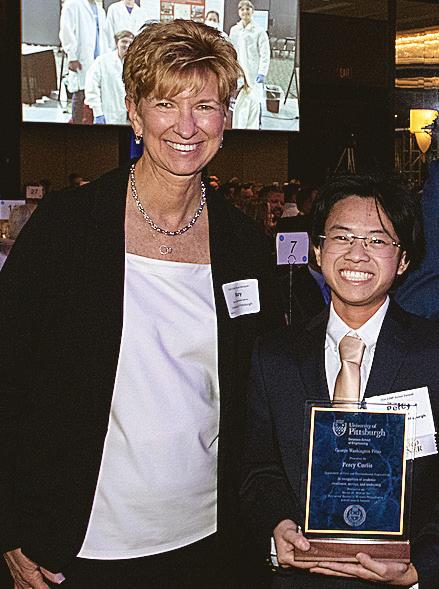
Percy Curtis, a senior majoring in environmental engineering at the Swanson School of Engineering, was the recipient of the 2024 George Washington Prize at the Engineers’ Society of Western Pennsylvania (ESWP) Engineering Awards Banquet. He received a $2,500 cash prize and a $7,500 Dean’s Fellowship to pursue graduate studies.
Curtis entered the environmental engineering program as a sophomore and was immediately noticed by his professors. Curtis then joined Professor Carla Ng’s research group through a “Research for Undergraduates” position funded by the National Science Foundation (NSF). Through collaborating with PhD students and postdocs, Curtis was a leader in evaluating the use of green infrastructure to control stormwater in the Pittsburgh region.
Curtis is also committed to improving the life of fellow students and others around the world. He served as president of the Pitt chapter of Engineers for a Sustainable World, and is the undergraduate co-chair for the Civil and Environmental Engineering Department’s Inclusion, Diversity, Equity and Access Committee. ■
Ecological Society of America Names Pitt’s Emily Elliott to 2024 Fellows
Professor Emily Elliott was elected to the Ecological Society of America Class of 2024 Fellows. The Society’s fellowship program recognizes the many ways in which its members contribute to ecological research, communication, education, management and policy. This year, the ESA Governing Board has confirmed nine new Fellows and ten new Early Career Fellows.
Elliott is a Professor in the Department of Geology & Environmental Science, with a secondary appointment in the Department of Civil and Environmental Engineering. She studies human impacts on nutrient cycling with a particular focus on feedback mechanisms and her research has advanced the use of stable isotopes to unravel nutrient dynamics in ecosystems. Elliot co-founded the Pittsburgh Water Collaboratory which builds academic-community partnerships, and she directs the Pitt Isotope Tracers Lab at the University of Pittsburgh. Both her leadership and achievements in mentoring have been recognized with national awards. She earned her MS and PhD in the Department of Geography and Environmental Engineering at Johns Hopkins University. ■
PhDs Conferred
Fall 2023
Margaret Ruth Benge (Andrew Bunger)
From Well Log to Formation Model: A Novel Methodology with Demonstration
Spring 2024
Alireza Enshaeian (Piervincenzo Rizzo)
Vibration-Based Nondestructive Estimation of Neutral Temperature in Continuous Welded Rails
Sarah Elizabeth Pitell (Sarah Haig)
Assessing the Impact of Showerhead Design Choices on Consumer Exposure to Drinking Water-associated Pathogens that can Cause Infections in the Immunocompromised
Isaiah Michael Spencer-Williams (Sarah Haig)
Understanding how Change in Operation and Design of Urban (waste) Water Infrastructure May Impact Connected Microbiomes and Public Health
Summer 2024
Taraneh Ardalan (Aleksandar Stevanovic)
Situationally Tailored and Analyzable Traffic Signal Control in Multimodal Networks
Madison Kratzer (Vikas Khanna)
Optimization-based Process, Life Cycle, and Technoeconomic Modeling and Evaluation of an Integrated AnMBR Treatment System for Wastewater Treatment and Resource Recovery
Anais Ostroski (Vikas Khanna)
Modeling and Optimization Frameworks for Assessing Environmental Impacts and Dependencies of Food Systems at Multiple Spatial Scales
Hajar Smaili (Carla Ng)
Identification and Evaluation of Bio-based Sorbents for the Remediation of Short-chain PFAS from Contaminated Water
Jessica Moriah Vaden (Melissa Bilec)
Exploring and Advancing Inclusivity in Engineering Education Across Academic Communities
ORIGAMI-INSPIRED ARCHITECTURE
Origami and kirigami have inspired a multidisciplinary team of engineers and architects to apply these ancient paperfolding art techniques to geometric principles and thereby create living buildings that respond to the sun, air, and ambient temperature. With the support of a $920,741 award from the National Science Foundation, the researchers will combine the creativity and experience of human designers with computational intelligence to increase the novelty and effectiveness of designs for environmentally responsive building technologies.
The principal investigator is Associate Professor John Brigham at Pitt. Co-investigators are Dale Clifford, professor of architecture at the California Polytechnic State University, and Evgueni Filipov, associate professor of civil and environmental engineering at the University of Michigan.
“Creating more efficient architecture which responds to its environment – whether at the highest LEED standard or living building standard – is critical to designing structures that are both sustainably efficient and healthy for the people who use them,” Brigham says. “Our goal is to combine human architectural and engineering design with machine learning and computational design optimization so that we create a new framework for origami-inspired adaptive structures.”
Brigham further explains that origami as an art was developed in the 17th century, but in the 20th century scientists and mathematicians began applying geometric and engineering principles to origami design. This understanding transformed the application of art to architecture.
A building’s design and materials are the greatest contributor to its energy efficiency and footprint, so designing a façade that responds
to its environment by folding to capture air or create shade, for example, greatly improves its carbon footprint and provides a healthier work environment.
However, one challenge in creating adaptive buildings is the difficulty in creating a holistic, systematic design that behaves as a complex system, rather than one that applies to electricity use and another solely to temperature.
Adapting Paper to Architecture
At first glance, comparing folded paper animals to architecture may seem incredulous. Brigham counters that the geometry behind the paperfolding strengthens the overall structure.
“The difference today is that artificial intelligence and machine learning help to integrate origami design with engineering and architecture and, most importantly, with human creativity,” Brigham says.
According to their proposal, the project will “simultaneously create a new educational track for architecture and engineering students to learn about and test their ideas for adaptive building concepts.” By providing this test bed and dataset, the researchers will create these new origamibased design processes, coupled with new instructional methods for future students.
“We are very excited that these new computational tools can augment human creativity and generate a wealth of knowledge that informs each generation of innovation, such that we create a self-learning design environment,” Brigham says. “This new framework will further expand innovation at an exponential rate to benefit structures from the smallest home to the largest office tower.” ■
EPA Regional Administrator Visits University of Pittsburgh to Discuss Research, Collaboration
U.S. Environmental Protection Agency (EPA) Mid-Atlantic Regional Administrator Adam Ortiz participated in a faculty roundtable at the University of Pittsburgh to discuss current projects, research trends, and innovative approaches to today’s environmental issues.
Hosted by the Mascaro Center for Sustainable Innovation and the Office of Sustainability, the interdisciplinary roundtable included representatives from several offices, including the Water Collaboratory, Circular Economy Program, and College of Arts and Sciences. The discussion provided Ortiz an overview of the proposed Pitt Sustainability Institute, how the university is addressing environmental justice in surrounding communities and grant funded research.
“Across the region, we’ve been meeting with faculty, researchers, and students to learn more about approaches to some of today’s biggest challenges, what they’re finding, and how EPA can support those efforts,” said EPA Mid-Atlantic Regional Administrator Adam Ortiz. “The interdisciplinary work happening at the University of Pittsburgh is exactly what’s needed to meet the complex environmental challenges of today.”
Visits such as these highlight EPA’s dedication to collaborating with academic institutions and promoting the importance of environmental education at all levels. Prior to his campus visit, Ortiz spent the morning with 3rd-5th graders at Pittsburgh’s Environmental Charter School. ■
A Multi-University Project to Better Understand Geothermal Power
Associate Professor Andrew Bunger is part of a Department of Energy-funded project to get to the heart of geothermal energy – deep in the rocks below.
The more than $3 million project, “Enhanced Geothermal System Concept Testing and Development at the Milford City, Utah Forge Site,” is led by Dr. Mileva Radonjic, associate professor and Samson Investment Chair in Petroleum Engineering at Oklahoma State University. In addition to Bunger, other researchers include Christine Ehlig-Economides and Jeffrey Rimer from the University of Houston; Jonny Rutqvist
from the Lawrence Berkely National Laboratory; and Hunjoo Lee, assistant professor of petroleum engineering at Oklahoma State.
Power generation from geothermal resources requires circulating large volumes of water or supercritical CO2 (scCO2). Initially, the water is cool at the surface, but harvests heat from dry hot rock, such as granite, once it is injected into the deep subsurface by fracturing the host rock or reactivating existing natural fractures.
This project is focused on a critical piece of this process – the engineered fracture system where the rock heats the water/scCO2. The team is
working to create a more resilient proppant, which will enable longer times for fractures to remain conductive to fluid flow.
The possible impact this research could have on society is substantial.
The team is not only working to make advancements in geothermal energy but is preparing future professionals as part of the workforce development for energy transition to make a difference, too. Each member instructs various courses at their locations covering topics specific to geothermal energy. ■