


























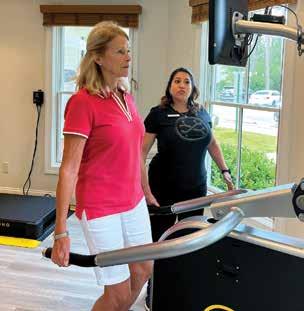
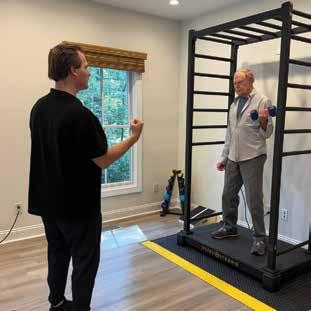
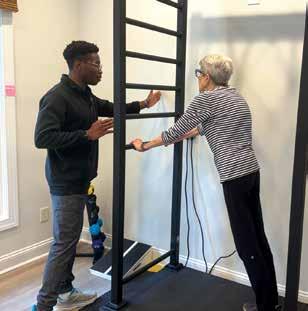























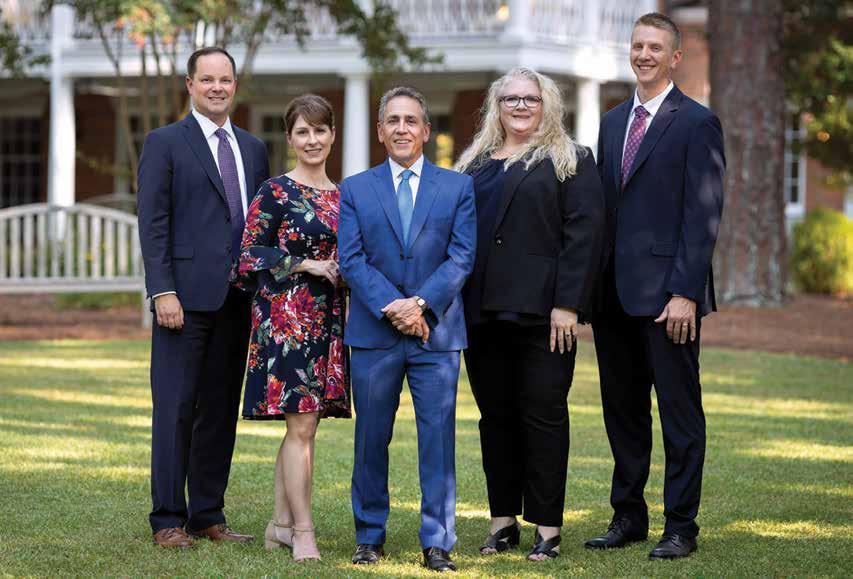
At Penick Village, residents enjoy a welcoming Southern Pines community where purposeful living and peace of mind go hand in hand. Our full continuum of care, thoughtfully designed services, and comfortable amenities help make each day easier, more engaging, and more connected. From maintenance-free living and chef-prepared dining to wellness programs, walking paths, enriching activities, and compassionate support when needs change, Penick Village offers a lifestyle centered on dignity, comfort, and belonging.
Penick Village is honored to be a Sponsor for Best of the Pines. Thank you for your support.
Ready to learn more about life at Penick Village? Call (910) 692-0300, email info@penickvillage1964.org, visit penickvillage.org, or use the QR Code to connect with our team today.







































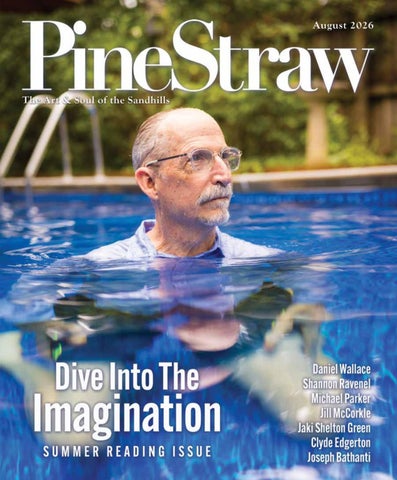
Volume 22, No. 8
David Woronoff, Publisher david@thepilot.com
Andie Stuart Rose, Creative Director andiesouthernpines@gmail.com
Jim Moriarty, Editor jjmpinestraw@gmail.com
Keith Borshak, Senior Designer keith@thepilot.com
Miranda Glyder, Senior Designer miranda@pinestrawmag.com
Alyssa Kennedy, Digital Art Director alyssamagazines@gmail.com
Emilee Phillips, Digital Content emilee@pinestrawmag.com
Campbell Pringle, Design Intern
CONTRIBUTING EDITORS
Jim Dodson, Stephen E. Smith
CONTRIBUTING PHOTOGRAPHERS
John Gessner, Laura L. Gingerich, Diane McKay, Tim Sayer
CONTRIBUTORS
Jenna Biter, Anne Blythe, Tom Bryant, Susan Campbell, Bill Case, Tony Cross, Brianna Rolfe Cunningham, Mart Dickerson, Bill Fields, Mary Novitsky, Lee Pace, Gary Palmer, Todd Pusser, Joyce Reehling, Deborah Salomon, Scott Sheffeld, Kimberly Daniels Taws, Tommy Tomlinson, Daniel Wallace, Ashley Walshe, Amberly Glitz Weber


ADVERTISING SALES
Samantha Cunningham, Advertising Director 910.693.2505
Christy Phillips, Sales Manager 910.693.2498
Kathy Desmond, 910.693.2515
Terry Hartsell, 910.693.2513
Erika Leap, 910.693.2514
Ginny Trigg, 910.693.2481
ADVERTISING GRAPHIC DESIGN
Mechelle Butler, Scott Yancey PS
Henry Hogan, Finance Director 910.693.2497
Darlene Stark, Circulation Director 910.693.2488
Tonnie Nester, Distribution Specialist
SUBSCRIPTIONS 910.693.2488
OWNERS
Jack Andrews, Frank Daniels III, David Woronoff In memoriam Frank Daniels Jr.
145 W. Pennsylvania Avenue, Southern Pines, NC 28387 www.pinestrawmag.com


By Jim DoDson
Is there anything nicer than a summer evening after a surprise rain shower cools off the world?
I think not. Of course, being in the “evening of life” myself, I am perhaps not an entirely objective source on the matter.
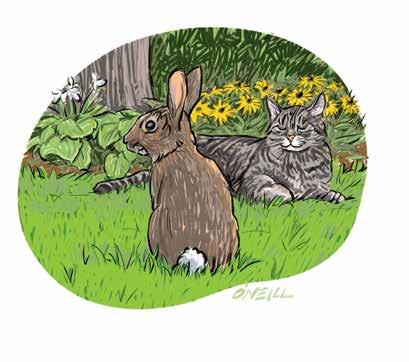
On the other hand, Homer’s grandkids seem to agree with me. Homer is the rabbit that has made my yard his home for several years. Or, at least, that’s what I nicknamed him.
I was sitting here quietly by myself moments ago beneath Old George, our elderly maple tree at the garden’s edge, enjoying the cooler air and an evening drink, when they suddenly appeared — three young rabbits racing directly past me into the front yard, chasing, tumbling and hopping joyfully over each other like a circus troupe of acrobats entering the center ring. I watched them race around until they settled down to nibble grass in the newest section of the yard.
of attractive suburban houses.
Fortunately, it still retains some of its character as an urban forest of mighty oaks and maples, and remains one of the oldest and most popular neighborhoods in the city.
Growing up in Starmount, I have a keen boyhood memory of the abundant rabbits in the yards and gardens of the neighborhood half a century ago. They clearly preceded humans in lovely Starmount Forest. And will likely outlive us all.
My mom, a dedicated gardener, liked to say that we were the “newcomers to Rabbit Land,” hence their natural “nibbling rights” in a special section of her backyard garden she set aside for them. She planted things rabbits love to eat — snapdragons, morning glories, daisies and black-eyed Susans — thereby keeping them away from her beloved peony border and roses. Decades later, I adopted a version of her strategy when I built a large woodland garden in Maine and included a huge patch of hosta plants at the back of our property, designed to keep the whitetail deer out of my fower beds. It worked like a charm.
I call them Homer’s grandkids because young kits appear every spring from the burrow where they reside beneath an ancient oak stump near my east garden gate, a well-protected enclave. I have no idea if Homer was the original patriarch (or, for that matter, matriarch) of the burrow, but a decade or so ago he captured our affections by showing up every morning and evening like clockwork to hang out with our old, gray tiger cat, Boo Radley. The two would often sit together in the garden as evening fell, just watching the day’s peaceful end. Theirs was an improbable “friendship” that went on for several years until Boo passed on and Homer went, well, wherever aging eastern cottontail rabbits go. I was inspired to write a whimsical book for my own grandkids, wondering at the time if I would ever have some. My artist friend, Harry Blair, drew the illustrations.
We live in Starmount Forest, so-named because its former wealthy owner was determined to keep the old-growth hardwoods intact — until he built a country club in the middle of it and passed the forest on to other owners, whose heirs — legend holds — began turning the forest into a postwar neighborhood
Like my mom, I fnd something comforting and even magical about our neighborhood rabbits. They’re all around us and simply part of daily life here, a reminder that nature is never far away. On an average morning or evening walk around the block, you’re liable see at least a couple dozen of them feeding peacefully in yards or resting under shrubs from the heat of a long summer day.
I’m sure part of my affection for them stems from growing up in a generation of kids weaned on Beatrix Potter’s beloved Tale of Peter Rabbit, the classic 1902 children’s book about a mischievous young rabbit who disobeys his mother and gets into big trouble in Mr. McGregor’s vegetable garden. It ends with Peter making a wild escape during which he loses his clothes and is put to bed with chamomile tea while his sisters, Flopsy, Mopsy and Cottontail, enjoy a nice supper. It was a fable meant to remind young ones to always mind their mama. I still own my childhood copy of the book, which I plan to soon pass along to my new granddaughter, June Bug. The wee book on Homer and Boo will soon follow.
Another book that will wend its way to her is a beautifully
illustrated frst edition of Richard Adams’ Watership Down, an allegorical adventure story about a group of brave rabbits who set off to fnd a safe haven after their rural Hampshire warren is slated for destruction and development — a tale that holds echoes of today’s headlines about immigrants.
Critics uniformly hailed Watership Down as a modern classic by comparing its epic motifs of spiritual faith, fight and survival to Homer’s Odyssey and Virgil’s The Aeneid. Adams himself described it merely as simple tales he improvised during a long family road trip to entertain his young daughters, Juliet and Rosamund. They pestered him to write down the story, which he eventually did, reading each bit as he fnished it to his daughters. Rejected by seven major publishing houses before London-based, independent press Rex Collings published it in 1972, Watership Down quickly became a runaway bestseller in both Britain and America.
I read it the summer before my sophomore year in college and still rank it among my favorite books.
•
It’s no surprise that rabbits have a magical presence across mythology and human culture. The science, lore, mystery and magic of what some believe to be the world’s most misunderstood herbivore have been an integral part of our own evolution as a species.
Rabbits, either hunted or raised domestically, have been revered for ages for their meat and fur. They are also held in high regard for their prodigious reproductive abilities — averaging four




to 12 kits per year. Rabbits reportedly fourish on every continent save for Antarctica.
Seen around the world as symbols of fertility, cunning and innocence, they also appear in the mythology of nearly every human society, from ancient Aztec to Asian. Native American peoples regarded the “Great Rabbit” to be the creator of the world. The rabbit is also one of the 12 celestial animals of the Chinese zodiac, where it is the symbol of longevity, peace and prosperity. Someone born under the sign of the rabbit is believed to be vigilant, witty, quick-minded and ingenious.
In Western society, the Easter Bunny evolved from German folklore. It joins Br’er Rabbit, Alice’s White Rabbit and the immortal Bugs Bunny as iconic fgures in our narrative lore. In his unpublished memoirs, Bugs’ creator, Friz Freleng, claimed to have modeled Bugs Bunny on Clark Gable’s wily, fast-talking character in the 1934 hit comedy flm It Happened One Night.
This may explain why my neighbors in the old Starmount Forest seem to share my affnity for our ever-present rabbits.
Life in Rabbit Land is good.
In a current world that lately seems out of balance and frequently beyond our daily comprehension, the presence of peaceful cottontails at dawn and dusk reminds us of life’s beauty, brevity and sweet hope of renewal. PS
Jim Dodson’s 17th book, The Road That Made America: A Modern Pilgrim Travels the Great Wagon Road, is available at The Country Bookshop
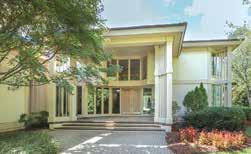
310 INVERRARY ROAD – FAIRWOODS ON 7
Overlooking multiple holes on iconic Pinehurst No. 2 including the 8th hole, 16th hole, 17th hole, and 18th hole.
$2,795,000

60 OAK MEADOW ROAD – FAIRWOODS ON 7 IMMEDIATE GOLF MEMBERSHIP. Seller to pay Signature level initiation fee. New stunning kitchen.
$1,295,000 – PENDING

1 COLLETT LANE – PINEHURST Private cul-de-sac in Donald Ross area. Pool, screened porch, deck, golf cart access to Village and Pinehurst Courses. $895,000

15 SHENECOSSETT DRIVE – PINEHURST NO. 6
Stunning golf course living. Perfectly positioned overlooking the lush green and sweeping fairway. $730,000

50 MCCASKILL ROAD W. – OLD TOWN
“Blinkbonnie” was built by fnancier Simon B. Chapin, showcases early-1900s Old Town charm on over an acre.
$2,495,000

117 CHANTICLEER DRIVE – FOREST CREEK Value in Forest Creek. Elegant interior designed for comfortable everyday living and efortless entertaining. Pool.
$1,195,000

20 FIELDS ROAD – OLD TOWN
LOCATION! One of the last “project’’ lots close to the famed Pinehurst No 2 Golf Course. Renovate or unique opportunity to build new construction in OLD TOWN.
$749,000

31 JUNIPER CREEK BLVD – PINEHURST NO. 6
Elegant custom brick home NEXT TO A PARK … in your back yard. Step outside to your own private retreat featuring a beautifully landscaped backyard with winding walking paths.
$695,000

175 BROOKHAVEN ROAD – FAIRWOODS ON 7 ACCESS TO IMMEDIATE GOLF Charter membership. Overlooking the 15th Hole on No 7 course in Fairwoods on 7. $1,595,000

78 GREENCASTLE DRIVE – NATIONAL LOCK-IT AND LEAVE-IT in Pinehurst No 9, National. Stunning, move-in ready!, Elegant tones, tasteful details. $1,159,000
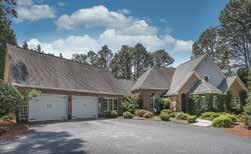
127 SAKONNET TRAIL – PINEHURST NO. 6
Impressive all-brick home in Pinehurst No. 6 with new Andersen windows, four bedrooms, and a separate ofce. $735,000
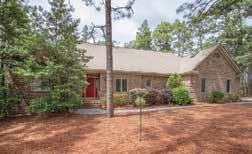
2 INTERLACHON DRIVE – PINEHURST NO. 6
Pinehurst CC membership available for transfer at reduced rates. Located on desirable Interlachon Drive, a private cul-de-sec close to large pond. Great for walking.
$599,000























Ever wonder where all that money went? Well Doug Lynam, the author of Taming Your Money Monster will break your problem down into nine “personalities” and offer a way to tame each one of them at 10:30 a.m. on Saturday, Aug. 29, at the Southern Pines Public Library, 170 W. Connecticut Ave., Southern Pines. For more information go to www.sppl.net.
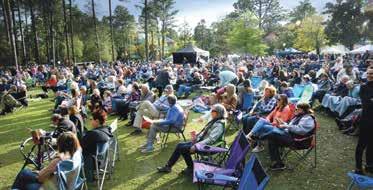
If it’s August it must be First Friday. Florencia & The Feeling, a funk, jazz, Latin-fair pop quintet from Johnson City, Tennessee, takes the stage at 5 p.m. (or thereabouts) on the greenspace beside the Sunrise Theater, 250 N.W. Broad St., Southern Pines, on, yes, Friday, Aug. 7. The band starred at the 2025 FloydFest and the 2024 MerleFest, if all that festing sounds good to you. The local rules don’t change just because it’s hot as you-know-what. No doggies, no outside moonshine. Well, fact is, there isn’t even any inside moonshine, but there will be beer and wine for sale. For more information you can always check out www.sunrisetheater.com.
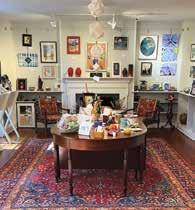

Dance at least part of the night away to the Chapel Hill-based, 10-piece band Liquid Pleasure at Live After 5 on Friday, Aug. 14, at the Village Arboretum, 375 Magnolia Road, Pinehurst. Scarlet Tantrum cranks things up at 5:15, and the music ends at 9 p.m. There will be stuff to keep the kids happy and food trucks for anyone who works up an appetite. For more information go to www.vopnc.org.
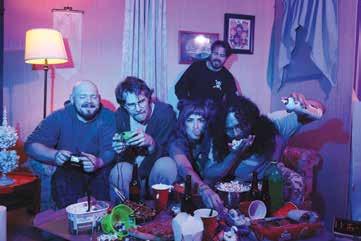
The dueling art openings for August happen on Friday, Aug. 7. The Arts Council of Moore County’s opening reception for the Fine Arts Festival is from 6 – 8 p.m. at the Campbell House, 482 E. Connecticut Ave., Southern Pines. The art will remain on display through Aug. 26. For more information go to www.mooreart.org. The Artists League of the Sandhills’ opening reception for “More Than Miniatures — Small Wonders” is from 5 – 7 p.m. at 129 Exchange St., Aberdeen. The art hangs until Aug. 28. Get more information at www.artistleague.org.

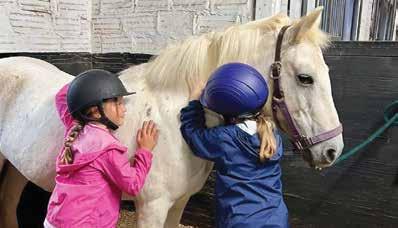
Weymouth Equestrians will hold two sessions of “Huga-Horse” at 10 a.m. and 11 a.m. on Saturday, Aug. 22, at the Weymouth Center barn, 555 E. Connecticut Ave., Southern Pines. The squeezing, hugging and patting are free, but tickets are required and limited to 15 per session. For more information go to www.weymouthcenter.org.

Enjoy a spot of tea and a gallery crawl in Seagrove on Saturday, Aug. 8, visiting Blue Hen Pottery, Dean & Martin Pottery, Eck McCanless Pottery, From the Ground Up, Red Hare Pottery and Thomas Pottery. You can run hot and cold with fancy new tea ware or iced tea pitchers and tumblers. Shops are open from 10 a.m. to 5 p.m. along the N.C. Pottery Highway. Maps are available at all the shops. Each stop will have tea from Carriage House Tea, and homemade treats and samples from The Table in Asheboro and the Seagrove Café.
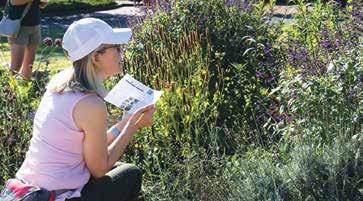
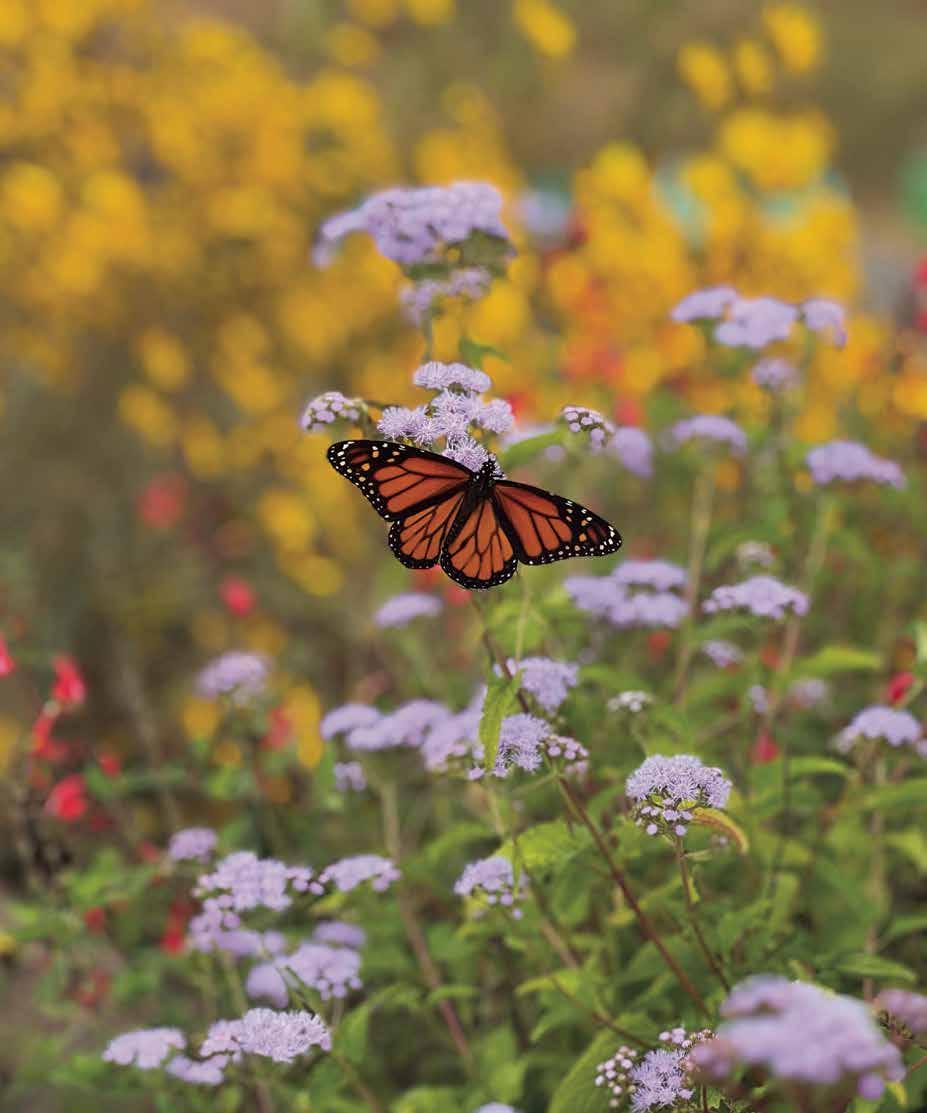
On Friday, Aug. 7, the Southern Pines Public Library and Moore County Master Gardeners will give a presentation at SPPL, 170 W. Connecticut Ave., at 10:30 a.m. on what a pollinator is and why they’re important. Then you can put that knowledge to good use on Saturday, Aug. 22, at 9 a.m., by joining citizen scientists all across the Southeast when you gather data counting pollinators in the gardens at Sandhills Community College. Registration is required. For info on the pollinator presentation go to www.sppl. net, and to join the pollinator census go to www.sandhills.edu/gardenevents.

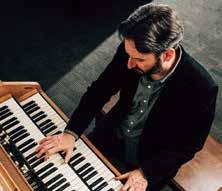
The Come Sunday Jazz series presents the Brian Felix Organ Trio on Sunday, Aug. 23, at 2 p.m. on the lawn of the Weymouth Center for the Arts & Humanities, 555 E. Connecticut Ave., Southern Pines. Rooted in organ-driven jazz, funk and soul, the trio blends reggae, samba, gospel and surf rock into its distinctive, unifed vision. For additional info go to www.weymouthcenter.org.
The Nashville-based jam band Airshow performs live with special guest Retrograde at 6:30 p.m. on Saturday, Aug. 22, at The Jive Hive, 2151 Vass-Carthage Road, Carthage. Formed by Cody Chelius and Steve Gallagher, along with Bill Baker and John Rodrigue, the foursome delivers a unique contrast of acoustic and mind-bending electric sounds. For information and tickets go to www.ticketmesandhills.com.
The Sandhills Community College Jazz Band takes the stage at BPAC’s Owens Auditorium, 3395 Airport Road, Pinehurst at 6:30 p.m. on Monday, Aug. 10, for “Swingin’ Under Blue Skies.” The concert is free but tickets are required. For info and tickets go to www.ticketmesandhills.com.


(July 23 – August 22)
Well, you’re gonna love this. This month, the solar eclipse in your sign spells all eyes on you. Imagine starring in your own sitcom, navigating plot twists and obstacles with charm, wit and fawless hair. Everyone notices. Dream come true, right? But here’s the kicker: You must drop the performance. It’s raw or nothing, baby. As for the lunar eclipse at month’s end, ask yourself this: Is it retail therapy or a shopping addiction?
Virgo (August 23 – September 22)
Two words: early bird.
Libra (September 23 – October 22)
Think of it as an initiation.
Scorpio (October 23 – November 21)
Stock up on chocolate.
Sagittarius (November 22 – December 21)
Stretch those hip fexors.
Capricorn (December 22 – January 19)
You don’t have to do it alone.
Aquarius (January 20 – February 18)
Bring a hammock.
Pisces (February 19 – March 20)
You’re in the weeds, darling.
Aries (March 21 – April 19)
Pause before texting back.
Taurus (April 20 – May 20)
Freeze your pesto.
Gemini (May 21 – June 20)
Bookmark the recipe.
Cancer (June 21 – July 22)
Trust your body’s wisdom. PS
Zora Stellanova lives in the N.C. mountains with her wolfdogs, Venus and Lilith. Although she prefers divining with loose-leaf pu-erh, she recommends a mugwort and passionfower blend for those seeking wisdom and clarity from the dream realm.
























Will we see his like again?
By A NNe Blythe
AsMajor League
Baseball enters its stretch run, separating pretenders from true contenders for post-season play, Raleighbased sportswriter Tim Brown has a new book that diamond purists will want to tuck into.

Although you can’t write a comprehensive Nolan Ryan life story without mentioning the record 5,714 career strikeouts and seven no-hitters, Brown chases a different plotline. In his biography Nolan: The Singular Life of an American Original, Brown goes beyond the box scores that detail the feats of the Hall of Famer with the longest playing career in MLB history. He takes his readers down to Alvin, Texas, the gritty, close-knit small town that shaped the ethos of the league’s ultimate power pitcher whose unparalleled longevity spanned 27 years.
“I think the essence of Nolan Ryan is here, in Alvin” Brown told a contemporary of the pitcher at a senior center Bingo game. “These are the towns that make men like him.”
Alvin doesn’t hide its pride. It has a statue of Ryan, a museum room dedicated to him, and a high school baseball feld, junior high and community center named for him. Restaurants proudly
display photos of the famous (infamous) headlock that Ryan threw on Chicago White Sox batter Robin Ventura in a 1993 game when the third baseman rushed the mound after a fast ball struck him on the arm. Brown dedicates a whole chapter to that legendary scene and one of the most replayed baseball clips of all time.
Through interviews with people who grew up with Ryan and knew his whole family as well as his wife, Ruth — Nolan’s high school sweetheart — Brown delivers much more than a baseball book. It’s a story of a family, a state and a way of life that led to a relentless work ethic. Brown’s profle of a man who has been the subject of dozens of books also embodies a good bit of myth-busting, while creating a few of its own.
With the gift of vivid storytelling that often sets sportswriters apart from the pack, Brown shows you the young boy pedaling his bike down narrow roads to “dusty ballfelds.” You can almost hear the Texas drawl of the longtime Alvin residents swapping their Ryan stories that often have only a tangential connection to the development of the hometown boy’s famous pitching arm.
“Undertake a retelling of Nolan Ryan’s life through the prism of time and discover that the stories of cowboys far out-

number the actual cowboys, which doesn’t make them any less entertaining,” Brown writes. “In real life, we’ve moved on to the drugstore kind, to keyboard outlaws and Fortnite addicts and snowplow parents and participation trophies and cars that drive themselves. Starting pitchers who beg out after fve innings and then get handshakes for it.
“Call it evolution if you must,” Brown continues. “What survives in the witnesses is the gooey insides of old age, the pixel-free highlights, and the romantic version of a game played on the last tendril of an ulnar collateral ligament.”
Ryan, the youngest of six children born to Martha Lee (Hancock) Ryan and Lynn Nolan Ryan Sr., was initiated into a tireless work ethic at a young age. He was up before dawn, rolling and delivering the now defunct Houston Post with his father, who also worked in the oil felds. He was steeped in the ranching culture, and grew up in a world where men were taught to do the work and own the outcome, no excuses. They were taught to speak only when necessary and stand by their word.
Brown acknowledges the adversity that Ryan faced in his career — his boom-or-bust years with the Mets, and the lingering feeling that he was unable to live up to his potential coming out of high school as a skinny kid with a triple-digit fastball. And it’s no secret that Ryan’s all-or-nothing pitching style — likely infuenced by the Alvin mindset baked into him — led to a high number of free tickets to frst base for the batters at the other end of his fast balls. Like another pitcher of his era — we’re thinking Bob Gibson — taking the mound was nothing less than taking charge. Pitcher and hitter were mano a mano.
In an interview incorporated in the prologue of Brown’s book, Ryan takes us to where he is now and the evolution of the sport that has made him an unmatched statistical anomaly and a seemingly untouchable benchmark for pitching durability. Surrounded “by the reminders of a life — not just a career, but a life — built on the ideal of fnishing what he’d started,” Brown writes, Ryan leans back in his leather chair, hoists a leg on the edge of the desk and says, simply, “The game has changed.”
“Not mad. Not put out. Just saying,” Brown writes.
Then Brown offers something for the purists to ponder as modern baseball bullpens rely on a parade of specialized relievers for the starters who rarely, if ever, stay on the mound for an entire game.
“Going on six decades after he arrived, that something like a Nolan Ryan happened in the same game that is today’s version is almost inconceivable,” Brown writes. “That it might again is unthinkable. Then, it’s fair to wonder if the game has changed all that much. Or if the men who play it have. That’ll have to work itself out.” PS
Anne Blythe has been a reporter in North Carolina for more than three decades covering city halls, higher education, the courts, crime, hurricanes, ice storms, droughts, foods, college sports, health care and many wonderful characters who make this state such an interesting place.


Pinehurst Medical Clinic's Medical Weight Management services focuses on your why. We evaluate, treat, and advocate for patients with the chronic disease of obesity and obesity-related conditions using evidence-based approaches. With services directed by board-certified physicians and diplomates of the American Board of Obesity Medicine.
METABOLIC WELLNESS • WEIGHT MANAGEMENT • DIET AND LIFESTYLE CHANGES TO ACHIEVE OPTIMAL HEALTH • WEIGHT HISTORY • NUTRITION • EXERCISE UNDIAGNOSED TYPE 2 DIABETES, HIGH CHOLESTEROL, OR SLEEP APNEA
Personalized treatments plans
In-person visits with one-on-one provider to patient weight management consultations
Guidance from a registered dietitian • Lab and medication management











Flickerstate, by F.A. Davidson
In this debut YA fantasy written by a young North Carolinian, Norah Sullivan has just discovered she’s a navigator: a person who can manipulate probability. The same day Norah’s navigation manifests, she and her father are swarmed by fickerbeasts. When a fickerbeast bites you, your risk of death skyrockets. And pretty soon, her father gets sick. Desperate to fnd a cure, Norah applies to the Academy of Navigation, where there are rumors of restricted information on beast bites hidden in research archives. Once on campus, Norah learns that only senior research assistants are allowed in the archives — and you can only become one by winning a team trial designed to push your navigation abilities to the brink. She’ll need to rely on her roommates, as well as her peer mentor, the handsome Vik Souza, to win the competition. But trouble arises at every turn. There are tensions in the group, romantic complications, and unexplained student disappearances. As Norah gets deeper into the competition, she realizes not everything is as it seems, and the stakes are much higher than she ever could have imagined.
Fallen for France, by Elizabeth Letts
Beddou is 6 years old when he is sent off to apprentice far from his High Atlas village in Morocco. His mother gives him six amber beads to help him fnd his way home. That same month, a magnifcent flly is born in Fes, in the splendor of the sultan’s palace. For a brief, golden time, the mare belongs to the boy. But Beddou’s heart is broken when a soldier steals his horse and disappears into France just as the Great War roars to a start. Finding her seems impossible, but he vows to try. Estelle, a young woman in France, fnds a distressed Arabian mare wandering alone in the meadow behind her house. She is determined to look after this radiant creature just as tenderly as she cares for her vulnerable younger brother. But soon her world is torn apart, and she loses both the horse and her brother. She will spend the rest of the war searching for both. Thomas is an Englishman hardened by his experience as a wartime veterinarian in France. He fnds the mare and promises to protect her — and the woman who once loved her — but he doubts his own ability to keep anyone safe. As the pathways of the unforgettable mare and
the boy’s desperate search intertwine, the separate strands of these strangers’ journeys converge, propelling them to make momentous choices that will change the course of their lives.
Etna, by Paul Yoon
After surviving years of a devastating war, ex-military dog Etna decides one night to leave the men he has fought alongside for years and return home — to the place where he was taken from when he was young. Thus begins an exhilarating odyssey told through the eyes of a dog as he traverses ruined landscapes and fghts to survive in a world that, even in peacetime, proves to be just as precarious. Along the way, he encounters other animals and humans who are attempting to fgure out how to start again. What makes a life when there is no home to go back to? How do we begin to trust each other again after such profound loss? This is a story about the power of an idea, about never giving up, and ultimately about fnding hope in the most dire of times.
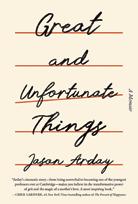
Great and Unfortunate Things, by Jason Arday
Jason Arday was born the second youngest of three boys and grew up in a colorful and lively section of South London. At 3 years old, he was diagnosed with autism and development delays. Experts told his parents that he would never be able to speak, write or live independently. An institution would best serve his needs, it was suggested. His parents would have none of it. Instead, thinking outside the box and drawing on her faith, his extraordinary mother, Giff, embraced his neurodivergence and fercely dedicated herself to helping her son realize a potential few others believed was possible. Giff drew on proverbs from her West African culture, popular music by the likes of Enya, and comedic television shows and movies to help Jason make sense of the world. In Great and Unfortunate Things, we see how Arday went from being nonverbal until he was 11 and illiterate until 18 to becoming a professor at Cambridge. Without romanticizing the struggle, it’s a story of a son’s determination against insurmountable odds and how his family and a band of ordinary people with extraordinary compassion joined forces to encourage Jason to believe in himself and maximize his capabilities.

Also this
August 23: October 25: March 21, 2027: April 25, 2027: May 23, 2027: Tue., August 18: 2:00 pm Sat., August 22: 10:00 am Sat., August 22: 2:00 pm


If The Moon, by Matthew Burgess, Illustrated by Matthew Forsythe

Brian Felix Trio
Grace McNally
Ari Hoenig Trio
Baron Tymas Quartet
The perfect lyrical bedtime book, If the Moon is a visual poem that soothes and smooths the transition from waking to sleeping. If the Earth and if the moon, if the whistling of a tune. If you drift, if you dream, into space, into streams . . . Softly step on tender feet, come and lift the latch of sleep. (Ages 3-7.)
The Hungry Forest, by Kaela Rivera
Ryan’s dad had a lot of rules: Never let others see you cry; never let other people hear you speaking Spanish; work extra hard; make sure you always succeed. But the most important of all: Never go into the forest. Too many kids have disappeared there.
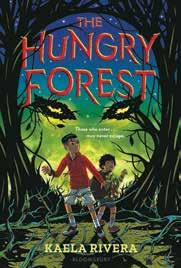
Since Dad’s death, Ryan’s been following those rules to be the kind of man his father would be proud of. But his anger has been getting stronger lately, and he fnds himself fghting with his little brother, Teddy, who constantly embarrasses Ryan. When Teddy hears their father calling them from the forest, he ventures inside. Ryan follows to save his brother and fnds that the place is as cursed as the legends say. And if he can’t fnd his brother and escape the forest before sunrise, they’ll be trapped there forever. (Ages 9-14.)
CARLOS MIGUEL PRIETO, MUSIC DIRECTOR
Experience the power of live orchestral music—all while enjoying subscriber savings and the convenience of securing your seats before the series sells out.
Violin Concerto
THU, SEPT 24, 2026 | 7:30PM
Carlos Miguel Prieto, conductor
Justin Bruns, violin
Haydn: Symphony No. 39
Mendelssohn: Violin Concerto
Mozart: Symphony No. 40
THU, DEC 10, 2026 | 7:30PM
Sophie Mok, conductor
Join us for an unforgettable celebration flled with joyful holiday hits, timeless festive classics, and plenty of musical sparkle to brighten your season.
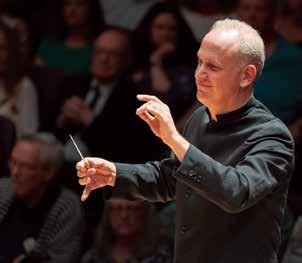
THU, JAN 28, 2027 | 7:30PM
Sophie Mok, conductor
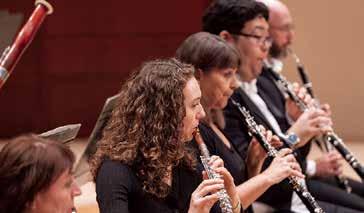
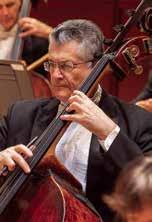
Leonid Finkelshteyn, double bass
Jessie Montgomery: “Strum”
Terry Mizesko: Double Bass Concerto Tchaikovsky: Serenade for Strings

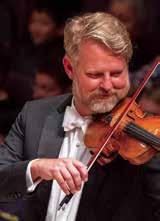
THU, APR 1, 2027 | 7:30PM
David Glover, conductor
Step into the glamour, romance, and unforgettable melodies of Broadway’s golden era. From dazzling orchestral showstoppers to timeless ballads, this concert celebrates the legendary music that defned a generation of musical theatre.
Concert Sponsor: Penick Village

The Magic Library of Waterfall Way, by Julie Abe
Finally help is now available to eliminate or reduce agonizing chronic knee pain and disability utilizing new state-of-the-art LASER technology. Patients that have NOT responded to medication or injections can now be helped.
In many cases, the need for knee replacement surgery can be delayed or eliminated and we can substantially relieve pain, improve function and help restore your quality of life teatments!
CLINICAL RESULTS SHOW SUCCESS WITH PATIENTS OF ALL AGES

No drugs, injections or surgery!
• Soothing therapy in comfortable surroundings
• No endless treatments!

Dr. Brian Dial

Dr. Brian Dial, a proud Robeson County native has spent over 20 years serving his community with grit and compassion. A graduate of UNC Pembroke and Life University of Chiropractic, he’s not only a seasoned chiropractor but a dedicated father of four who believes in helping others live pain-free, full lives. Known for his personal touch and innovative care, Dr. Dial now leads the charge with Laser Now therapy—a cutting-edge, drug-free solution that’s changing lives across the region. His mission is simple: restore freedom, movement, and vitality to the people he proudly calls neighbors.


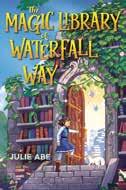
The Alterran Empire hasn’t had an Unremarkable born in centuries . . . until Lyra Hunt. All Lyra wants is a guild to call home — preferably one with a library full of storybooks — but because of her cursed fate, nearly everyone has rejected her. Then Lyra stumbles upon the secretive Guild of Scholars in the cozy little village of Waterfall Way. With their tight-knit community and magical Library, this might fnally be the perfect place for her. To be accepted, though, she must recover the Scholars’ crystal, the source of their magic that was lost in a terrifying fre. With the help of a mischievous new furry friend, Lyra must brave the Library’s cursed halls. Lyra may have an Extremely Unremarkable past, but she’ll do whatever it takes to fnd a guild — and a home — where she belongs. (Ages 8-11.)
Billy and the Hole, by Jessica Goecke
One day, Billy found a hole. It wasn't there yesterday. But there it was, right in his favorite spot, under his favorite tree. This hole in the ground is no ordinary hole in the ground. It speaks to Billy with a voice that’s cold and hard, like ancient stone. At frst, the hole in the ground is polite and kind, and tells Billy how clever he is. And, well, Billy just can’t resist his new odd friend and its nice words. But when the hole’s requests grow more extreme, and Billy can’t always meet them — Billy will have to take matters into his own hands before his new friend takes matters into its. (Ages 4-8.) PS

Compiled by Kimberly Daniels Taws, manager of The Country Bookshop.


By Bill Fields
It’s prime bluefsh season in my adopted home state of Connecticut, where anglers pursue the aggressive and toothy species in Long Island Sound. Our now-defunct local minor league team, the Bridgeport Bluefsh, had a ftting name. Its logo — cartoon fsh with baseball bat — wasn’t in the legendary graphic-design class of another long-gone franchise, the Hartford Whalers, but was very good.
I still remember the fght put forth by a blue I reeled in some years ago when a friend’s father took us out on his boat. It weighed about 10 pounds, the biggest fsh I’d ever caught. Because of their strong favor and oily nature, blues aren’t the best eating. But my host kindly cleaned my catch, and I was determined to have it for dinner.
Although my girlfriend was a good sport and cooked it, the kitchen reeked for hours after a meal that neither of us wanted to replay. We agreed if there were any more bluefsh in my future that a catch-and-release policy would be in effect.
My most memorable — and unexpected — fshing experience had taken place a decade earlier on the other side of the country in the company of one of the 20th century’s fnest golfers.
In advance of the 1998 U.S. Open at the Olympic Club in San Francisco, I was writing an in-depth feature for Golf World recalling the leading characters in a previous Open at Olympic: 1966, when Billy Casper defeated Arnold Palmer in a playoff after trailing him by seven strokes with nine holes left in the fourth round. It was Palmer’s most heartbreaking attempt in his unrequited quest to add a second U.S. Open title to his dramatic 1960 victory.
Understandably, Palmer wasn’t eager to rehash the details of 1966, but he agreed to a short interview, which took place in the parking lot of a Senior PGA Tour event as he regripped his clubs with fresh leather wrapping. Casper, on the other hand, whose 51
PGA Tour wins are the seventh-most all time, welcomed a visit.
I had arranged to meet Casper at his San Diego home, but when I phoned to touch base on the day I was traveling west, he called an audible. “Let’s go fshing,” he said, before telling me where to meet him on the waterfront that evening. I assumed we would be going out in the Pacifc Ocean on his boat. Upon arriving, however, I discovered Casper and I were among half a dozen passengers on a charter vessel motoring about 50 miles overnight and fshing for yellowtail the next day.
I settled into my bunk excited at the prospect of a captive interview subject. I woke up with a queasiness I’d never experienced as the boat rocked back and forth, minor movements that were causing major motion sickness. Shortly after sunrise, it was all I could do to make it to the galley, where I found Casper.
“They make a great breakfast burrito,” he said.
As Casper chowed down, I nursed a ginger ale. Another fsherman, seeing that I was hurting, said he had an extra antinausea wristband for which I would have emptied my wallet. I put on his gift and soon rallied enough to start interviewing Casper, who was friendly but clearly more interested in fshing than talking: There wasn’t going to be much on my microcassette tape to transcribe.
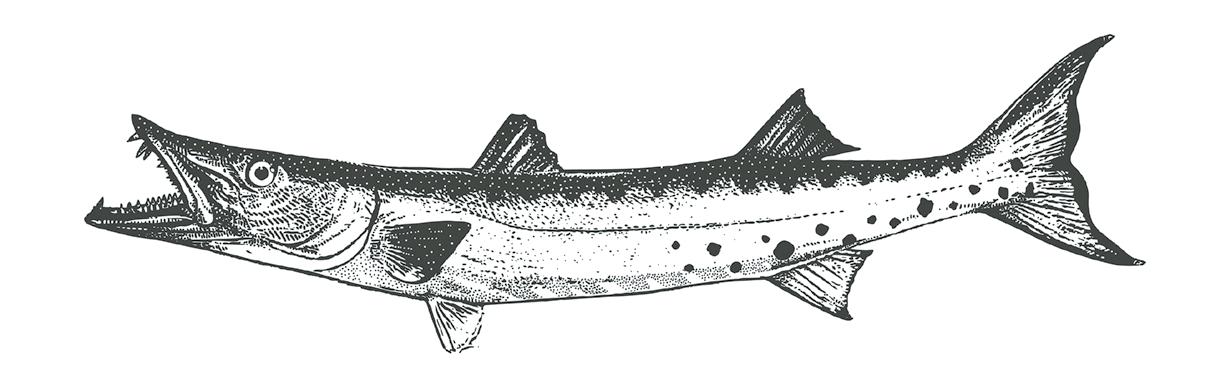
There was little action once we were outside with rod and reel. I was excited to catch a 30-inch barracuda, but the deckhand, viewing it as a nuisance, took it off the hook and threw the thrashing fsh back in the ocean before I had a chance to get someone to snap a photo of me with my catch.
Eventually, as the afternoon went on, Casper and someone else landed a few nice yellowtail. The trip wasn’t a shutout. My appetite having returned in the fresh air and sunshine, I enjoyed the deckhand’s offering of the freshest sashimi I’ve ever had.
When we got back to land 20 hours after heading out, Casper and I said our goodbyes. Walking a couple of blocks to my rental car after my frst ocean excursion, my legs felt as wobbly as Palmer’s game had been that fateful fnal nine in 1966. PS Southern Pines native Bill Fields, who writes about golf and other things, moved north in 1986 but hasn’t lost his accent.


By tommy tomliNsoN
This time of year provides one of the great pleasures in life: the golf nap.
I’m not much of a fan of watching golf on TV. I’m a huge fan of falling asleep in the middle of the fnal round of the Zero Turn Radius Lawn Mower Open or whatever the PGA Tour happens to be running on a given weekend.
The long stretches of quiet . . . the reverent tones of the announcers . . . the polite applause from the crowd . . . they’re better than melatonin washed down with warm milk. When I go down for a golf nap, sometimes I dream of my real-life golf adventures. Not that I was a good golfer. Never broke 100 in my life. But I do have a few stories.
I’m just going to come right out and say this one, even though it will sting every real golf lover like a chest hair wax: I played Augusta National, home of the Masters.
If you are not a golf fan, this is sort of like saying I stowed away in an Apollo capsule and walked around on the moon. Mortals are not supposed to do such things. You basically don’t get to play Augusta National unless you are: 1. a pro golfer; 2. a billionaire; or 3. you know a 1 or a 2.
Except . . . every year the club has a media day — or used to — where the shlubs who cover the tournament get to play. I’m told it’s a lot tougher to get an invitation now. But in the mid’80s, if you worked for the Augusta paper — which I did — you got one.
Here are the lights, high and low:
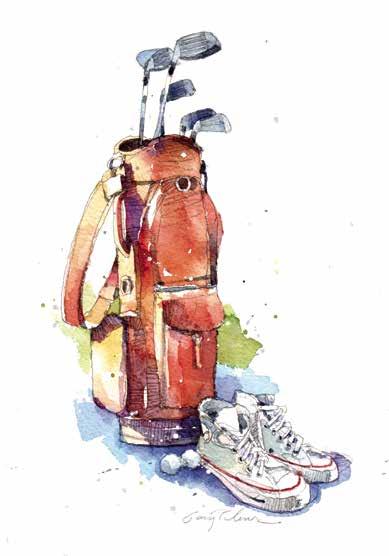
• I played with a set of mismatched clubs and wore a pair of Converse high-tops.
• Our playing partners accidentally put their cart into a power slide on a wet patch of grass on No. 10. If the course superintendent had spotted them, we might still be serving time.
• I carded a tidy 13 on No. 12, the short par-3 famously known as one of the thorniest holes in golf. You know one way to make it thorny? Knock four balls into Rae’s Creek.
• My fnal score was 118, a tidy 46-over.
• However! I parred No. 16, the par-3 where Tiger Woods holed his famous chip in 2005. Almost birdied it myself. (I told you there was a highlight.)
Believe it or not, that was not my most stressful day of golf. My most stressful day of golf was a few years later, in 1992, when I followed through on a pitch I made to my editors at the Charlotte Observer: What if I played all the miniature golf courses in Myrtle Beach in one day?
It soon became clear that, barring teleportation, there was no way to play all the courses in the Myrtle Beach area in a day — there were more than 60 back then. So I restricted my playing area to within 10 miles of the old Myrtle Beach Pavilion. That still left 16 sites, some with more than one course. It took 14 hours — which included drive time between the courses, occasional pee breaks, and waiting for two preteen boys who were in front of me at one course and argued after every single hole. Not that I still think about them or anything.
I played 369 holes in 851 strokes. On the last course I ended up playing with three French tourists. There was no possible way I could explain to them what I was doing.
I had a few other notable moments in my golfng life. I snap-




hooked a drive onto a cart path one time and the ball rolled halfway to the next county, a good 500 yards, like that scene in Tin Cup when Don Johnson wins Kevin Costner’s car. I had to shake hands on the frst tee of a tournament with a guy who, for reasons too convoluted to go into here, I was pretty sure was going to punch me. (He didn’t.) I watched a friend get so mad he threw his 5-iron up in a tree, then got his 6-iron stuck up there trying to knock it out.
But my playing career ended on a midweek morning at the old Renaissance Park course in Charlotte, now called the Harry L. Jones Sr. Golf Course. I was playing with some friends who were way better than me. Their drives found the fairway. My drives found the rough and the woods and the out-of-bounds markers. At one point I drove my cart across the fairway to track down a wayward shot, and a groundskeeper on a tractor roared over to yell at me for driving off the cart path. (Some courses let you stray from the path, others don’t; I hadn’t known the rules for this course.) He said he had a good mind to throw me out. I have enough stress in my life. I don’t need to get hollered at on a golf course by a guy in a John Deere hat on a John Deere.
A few holes later, I hit my best drive of the day — right down the middle. I don’t think I mentioned that one of the features of this particular course is the large boulders in some of the fairways. My shot hit one of those boulders as square as if I’d aimed it there. The ball rolled halfway back to me. My friends tried, and failed, not to laugh.
In that moment I could hear the golf gods speaking.
Put down the clubs, they said. Go home and have a nap. PS
Tommy Tomlinson is the author of two books, The Elephant in the Room and Dogland. He was a longtime columnist for the Charlotte Observer and has written for Esquire, The Atlantic, ESPN the Magazine and many other publications. His online newsletter is called The Writing Shed. He lives in Charlotte with his wife, Alix Felsing.
















story A Nd P hotogr APh By toNy Cross
My earliest recollection of a frozen daiquiri dates back to 1993-1994, when I lived on Kadena Air Base in Okinawa, Japan. There were many Sat urdays that my parents, broth er and I would go to the bowl ing alley in the late afternoon. There was a bar counter that served food and drinks, and be hind it was a medium-sized black machine that had two neon colors of frozen slush rotating up and down, back and forth.
“Frozen Daiquiris” the machine read.
I vaguely remember sneaking a sip of my mother’s one night. “Eww, disgusting!” I thought. In a million years I would never have believed that a daiquiri would be my favorite drink in the world. But here we are. The frozen daiquiris of my bowling alley days were indeed disgusting. Artifcial ingredients, corn syrup, and zero balance — one might wonder why this was even a thing. But frozen cocktails were most defnitely a thing, especially the banana daiquiri.
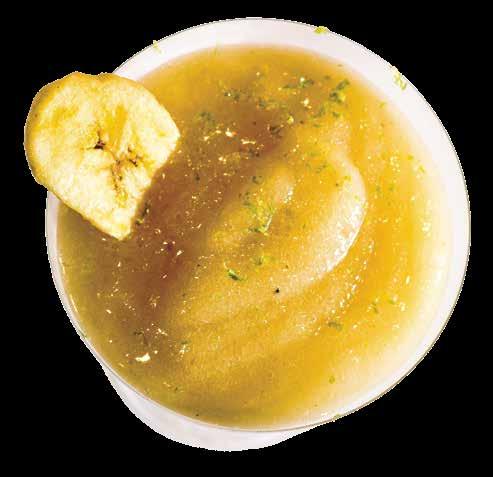
Specifcations
2 ounces Flor de Cana 4-year-old rum (keep at freezer temperature)
1/2 ounce Giffard Banane du Bresil (optional)
1/2 ounce strained lime juice
1 tablespoon sugar mix*
60 grams unrefrigerated very ripe/overripe banana (usually 1/2 of a whole banana)
5 drops salt solution**

Quoting from Garret Richard and Ben Schaffer’s book, Tropical Standard: Cocktail Techniques & Reinvented Recipes, “Harry Yee (who is known for the famous cocktail Blue Hawaii), has claimed to have been the frst to put a banana in a daiquiri, in the 1950s.” Yee, who spent more than 30 years as head bartender at the Hilton Hawaiian Village, started adding bananas to blended daiquiris, helping to put Hawaii on the exotic drinks map. Yee-haw to that!
These days, there are bartenders who use high-quality banana liqueurs in their daiquiris (I’ve gone this route), leaving the blender behind. But Richard’s adaptation of Yee’s daiquiri was all the rage in my kitchen a couple of years ago. There is chemistry in these ingredients — some of my favorite rums have notes of banana. Pro tip: Make sure to keep the rum in the freezer; this will help the temperature drop quicker in the blender with less water dilution. You’ll notice that the banana liqueur is optional in the specs — it's something I like to add to Richard’s recipe. PS
Tony Cross is an on-again, off-again bartender who founded and runs Reverie Cocktails, a kegged cocktail distribution company that has been represented everywhere from dive bars to baseball stadiums.
1/4 teaspoon xanthan gum Lime zest (garnish)
Execution
Combine all ingredients, sans xanthan gum, in a blender. Dry blend (without ice). Once sugar is dissolved, slowly add the gum while blending. Add 170 grams of crushed ice while continuing to blend. Pour unstrained into a large, chilled coupe. Garnish with lime zest.
*Sugar mix: equal parts (by weight) of turbinado and cane sugar
**Saline solution: combine 80 grams of water and 20 grams of salt into a dropper bottle





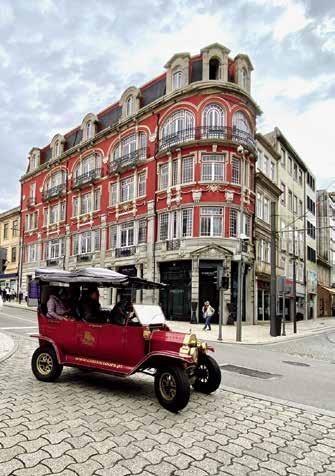














Would you like to have fun expanding your photography skills through programs, outings, competitions, and workshops? We welcome you to learn more about our club and inquire about membership. For meetings and information visit www. sandhillsphotoclub.org.












By deBor A h sAlomoN
Back to school: three little words, tons of emotion. The event remains fresh and sharp — but not always idyllic — eight decades later.
I started kindergarten in a Manhattan family neighborhood, at a progressive all-girls school with small classes and an interesting curriculum. The poems we memorized were in French. To this day I remember one about “la maison de Madame Souris” being “tres jolie.”
Madam Souris was a mouse.
We learned addition and subtraction with big, natural wood building blocks.
Cartoon characters did not invade our learning space.
We visited museums en masse, dressed in navy blue jumper uniforms with plain white blouses and, ugh, brown lace-ups.
This school believed in streaming quick learners into a higher grade. I was a quick-learn reader, so at the end of second grade I got skipped to fourth. Nobody noticed that I struggled with multiplication “tables.” Administration thought that since my mother had been a high school math teacher with an M.A. from Columbia University her daughter wouldn’t stumble on 12 x 9. So they gave her a pile of fash cards to wear out during summer vacation.
Another weak point: telling time, since at home we had the frst electric digital clock, with numbers that clicked into place.
That mid-1940s summer was spent in back-to-school dread. Even now, in a digital world, I wear only a clock-face watch lest I forget.
That resolved, I loved fourth grade and especially ffth grade where my teacher, Miss Parrot, lived up to her name by wearing jungle prints in neon colors.
We moved to Asheville at the beginning of sixth grade. I was enrolled in public school, about 30 students per class, including boys, with their “best” teacher — a lovely, kind, welcoming woman who spoke more Tennessee than French. I couldn’t understand a word she said.

Dungarees were for weekends only. Here, the “uniform” was a plaid cotton dress and saddle shoes from Sears. My mother had other ideas. So did the teaching staff. “Move her up to seventh grade,’’ they recommended.
Seventh grade was in another building, where students changed classes every hour. Remember, I was already a year younger than my classmates. Junior high is no place for a terrifed 11-year-old whose knowledge of the South came from reading Gone with the Wind.
Thank goodness I wasn’t forced.
So I spent sixth grade — still shaky on multiplying 12s — learning about schoolgirl cliques formed in utero. Back-to-school meant so much more than blue cloth-covered ring binders and No. 2 lead pencils. The squeals of best-friend reunions, for the most part, left me out.
Eventually I achieved “in” but that’s another story. I’m still shaky on multiples of 12. No problem since every electronic device includes a calculator.
Free public education is a many-splendored thing. Pre-Google students learned how to research a subject, sometimes for a “project,” which sent us running to encyclopedias and old Life magazines. Artifcial intelligence was as foreign a concept as walking on the moon.
True, a few hallmarks of back-to-school haven’t changed: Some kids will sport braces, others will have grown tall. There will always be the right shoes or sweater, but by 11th grade that nerdy little Yankee who knows a smattering of French will succeed — or get even — by making cheerleader.
Newspaper photographers regularly cover back-to-school, looking for an apprehensive frst-grader who clings to Mommy — or Daddy — which makes the nostalgic me want to whisper in his/her ear, “Don’t worry, sweetie. Just hang in there. Life’s not all multiplication tables.” PS
Deborah Salomon is a contributing writer for PineStraw and The Pilot. She may be reached at debsalomon@nc.rr.com.






By roBert KowAlsKi
It was that coming-of-age summer. My companions and I had escaped the prying eyes of our parents. Our interests turned from baseball cards to rock ’n’ roll.
Gary Evans lived a few doors down from me. He was several years older, so we didn’t hang out, but he had two things that piqued my interest that summer. First was his stunningly attractive sister, Amanda. She was every boy’s crush. Even the most courageous among us knew she was out of their league. Still, that didn’t stop us from hanging around the Dairy Queen where she worked part-time. She always gave us that beguiling smile that said she knew we weren’t there just for the chocolate-dipped cones.

stares of admiration from the kids. The girls took turns riding it around the block. Every day was a breath of fresh air. That is, until the day everything fell to pieces on a hot, muggy August afternoon.
The other item of interest was his 1968 Schwinn Orange Krate. The Orange Krate and its two siblings, the Lemon Peeler and Apple Krate, were to bicycles what muscle cars were to automobiles. The Krates were cool. They had a 5-speed stick shift; spring suspension front fork with a drum brake; longhorn handlebars and a banana seat with shock absorber suspension. Mania on two wheels.
For weeks I slow-walked by Gary’s house, admiring the bicycle he had abandoned after he moved on to automobiles. It was now or never. Could I strike a deal with Gary and make the Krate mine? I gathered my courage and $35 in lawnmowing money and negotiated my way to being the bike’s new owner. In an instant I became relevant. The guys were jealous. The girls were impressed. The stuff that dreams were made of came to pass.
For fve weeks that summer, the Krate and I paraded through the neighborhood. We were inseparable. We got
The guys and I got together for a swim at a local park. I left the Krate securely chained to a light pole. When I came back a couple of hours later, I went numb and all wobbly in the knees. The Krate was gone. All that was left was a broken lock lying on the ground. My best friend, Don, and I searched the park for hours. Nothing. Not even a ransom note.
At dinner that night, I broke the news to my dad. Ever the stoic, he looked at me and said, “Son, sometimes life throws you a curve. And all you can do is move on.”
His words didn’t help. I continued stabbing at the mashed potatoes. As we left the table, he put his arm around my shoulder and whispered, “Next time get a bigger lock.”
There would be other crushes in life. But there would never be another Orange Krate. Today, the Krate is a collector’s item. Some owners asking as much as $10,000 on eBay. Quite a nice investment had I been able to keep it. Still, I wouldn’t give up the great memories $35 bought me long ago — or my father's advice. PS
Robert Kowalski is a transplanted Midwesterner who is glad to be living in the Sandhills of North Carolina.




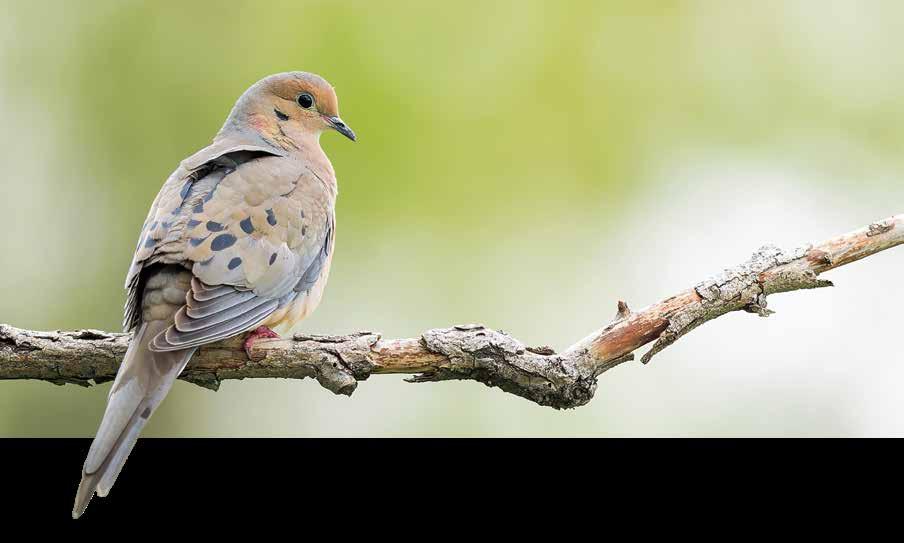
The beauty of doves is taken for granted. They are numerous, even abundant, everywhere we look. Their cryptic coloration and still habits make them easy to overlook. Mourning doves are the most familiar of the group statewide. Of course, we also have plenty of rock doves (aka pigeons) and increasing numbers of Eurasian collared doves here as well. However, it is the mourning dove that deserves our attention.
The species has a sleek, medium-sized light brown body and wings that are splotched with black. It also has a small head, a pale bluish crown and eye ring as well as a long wedge-shaped tail that is edged in white. At close range, a rosy sheen can be seen on the breast feathers of the males. The mourning dove’s name originates from its plaintive song. The hooting quality of the notes has been known to fool people into thinking they are hearing an owl.
By late summer doves are focking in large numbers, in and around big felds. They feed busily on the ground, swallowing a variety of seeds as they fatten up prior to migration. All doves will consume large amounts of whole seeds in their crop and then perch in a safe spot to digest. Where and how far they may fy depends on weather and food availability. Most do not move long distances but rather seek out areas that will hold a diversity of grains for weeks at a time. Flocks of hundreds of
fedging. Their tails may not be quite as long, nor will their heads be as distinctly patterned, but these are feld marks that are only visible at very close range. Three to fve clutches of two is not unexpected in a season. With the moderate climate in North Carolina, especially along our coast, mourning doves have been found breeding in every month of the year.
There is no better time for individual mourning doves to seek safety in numbers than early September. Labor Day weekend marks the beginning of hunting season, and doves are the frst on the calendar. Their robust population handles the harvest nationwide. This is due, at least in part, to their fast and erratic fight behavior that makes the birds a challenging target.
Dove hunting has a rich cultural history in the South. It is a time to bond with family and friends, enjoy the waning days of summer afeld and perhaps even bring home enough plump breasts for a hearty meal — or at least some tasty hors d’oeuvres. Scouting out the right spot is the key. Hunters will survey different known locations looking for the best variety of seed-bearing cover crops, strategic perching sites and hopefully at least a few doves hanging around. For those who do not have access to suitable private land for hunting doves, the State Game Lands (Sandhills, Caswell, Jordan and others) offer opportunities. Both manage habitat specifcally for mourning doves year-round. But even if you do not hunt, take some time out and look for these attractive birds — no binoculars are required. PS
Susan Campbell would love to receive your wildlife sightings and photos. She can be contacted by email at susan@ncaves.com.
story A Nd P hotogr APhs By todd P usser
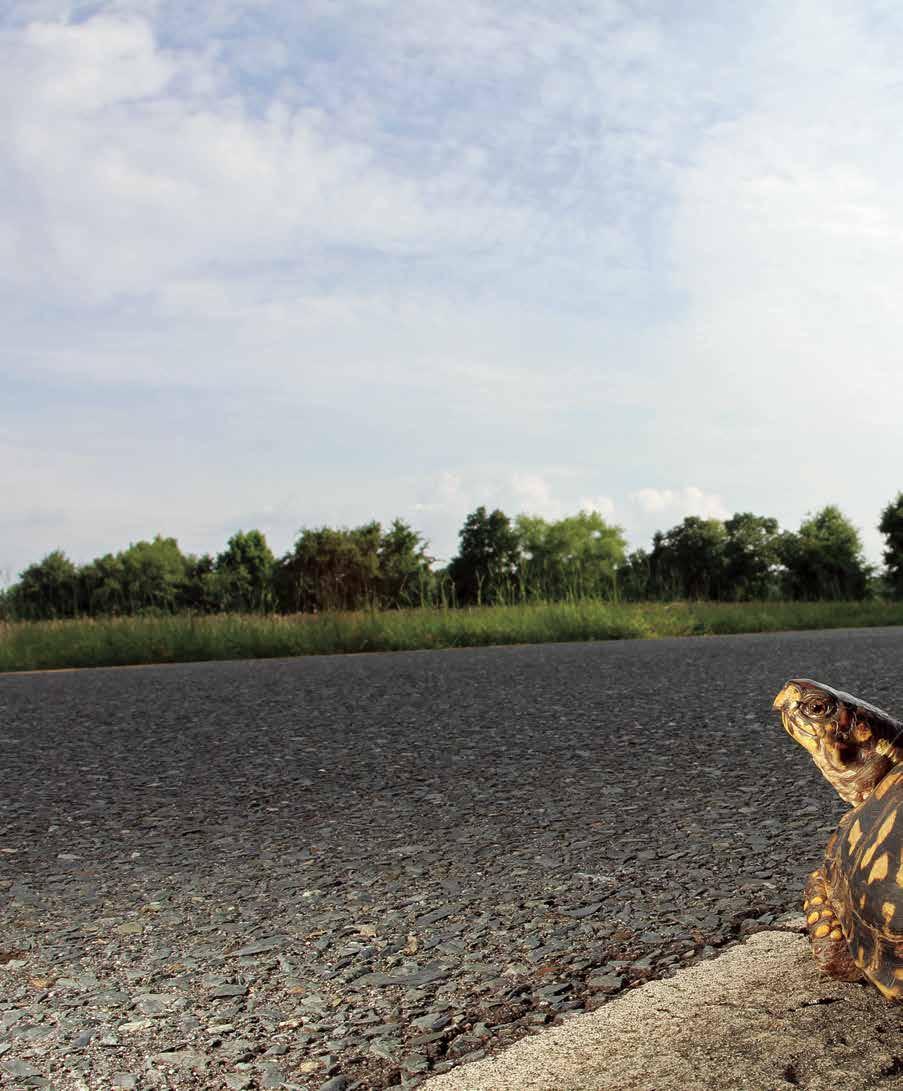
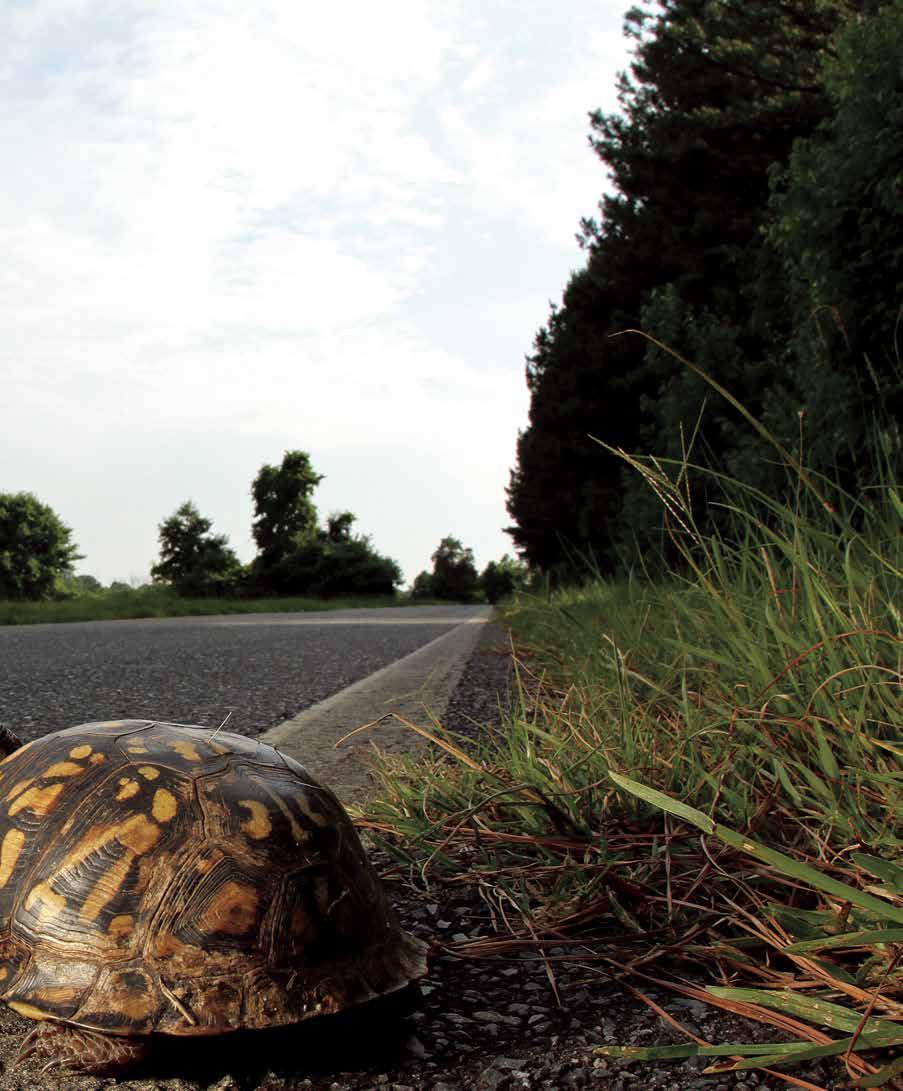
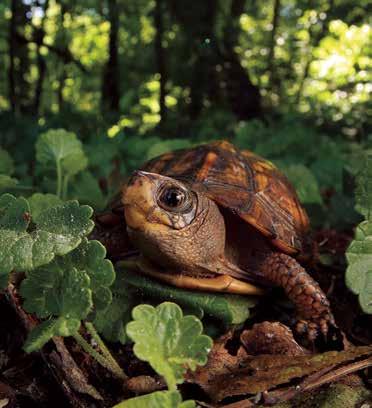
Rays of sunlight penetrate the grey skies hanging heavy over a rural backroad near Jackson Springs. Shallow puddles, left over from an earlier thunderstorm, dot the highway. Up ahead in the road, on a long straightaway, I spot the familiar shape of a box turtle in the opposite lane, near the white line, just making its way onto the asphalt. With head high, the turtle seems determined to get to the other side of the road. Checking for cars in the rearview mirror and not seeing any, I slow down and pull completely off the road onto a grassy shoulder. Hopping out of my car, I look both ways for traffc, then walk briskly back toward the turtle.
Seeing me, the turtle quickly withdraws deep inside its shell. The bottom of a box turtle’s shell is hinged, which allows the reptile to pull all of its body parts, including the tail, head and legs, safely inside, sealing them in like — you guessed it — a box. It makes for an effective defense against predators, but is no match for an automobile.
Box turtles possess high-domed shells that are covered in a smorgasbord of brown, yellow and orange blotches. The patterns of individual turtle shells are as unique as human fngerprints. The turtle on the highway is brightly colored and quite attractive. At over 8 inches in length, I can immediately tell that it is an adult.
Box turtles are long-lived reptiles. On Long Island, New York, researchers found a box turtle in 2002 with distinct markings carved onto the bottom of its shell by a well-known naturalist way back in 1921. At that time, the naturalist, John Treadwell Nichols, counted 22 individual growth rings on a single scute (a large, protective scale) on the side of the turtle’s shell, indicating


•
•



that the turtle was over 20 years of age. That means when the turtle was rediscovered in 2002, it was over 100 years old.
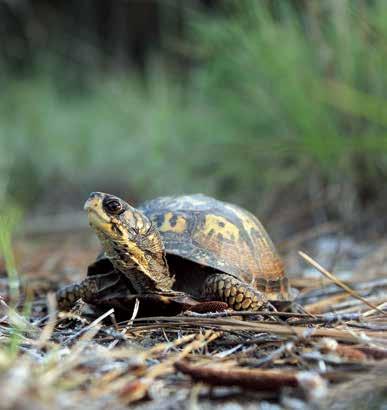
I reach down and gently pick up the turtle and closely examine its scales, trying to determine its age. Unlike the growth rings of a tree, the individual lines on this box turtle are worn and ill-defned. But they are plentiful. While no centenarian, the turtle has clearly lived a long life. I wonder how many times it has ventured across this highway during its lifetime. Unlike most other roads in Moore County, this particular blacktop is lightly traveled, allowing the box turtle to reach a ripe old age.
I walk the turtle across the road in the direction it was traveling. Had I placed it back on the side of the road from where it had traveled, the turtle would have only attempted to cross the road again once I left, doubling its chances of getting hit by a car.
A box turtle’s home range is small, typically only a few acres in size. As they age, box turtles instinctively familiarize themselves with each and every nook of their range. They memorize where food can be found, where drinking water is located, where the best places are to bury down into the soil for the winter and lay eggs in the summer. Over the course of their lifetime, box turtles use their strong homing abilities to return to those specifc locations within their range as they are needed. It does not matter if their routes cross roads flled with cars. All they know is that they need to get back to those familiar spots they are accustomed to us-


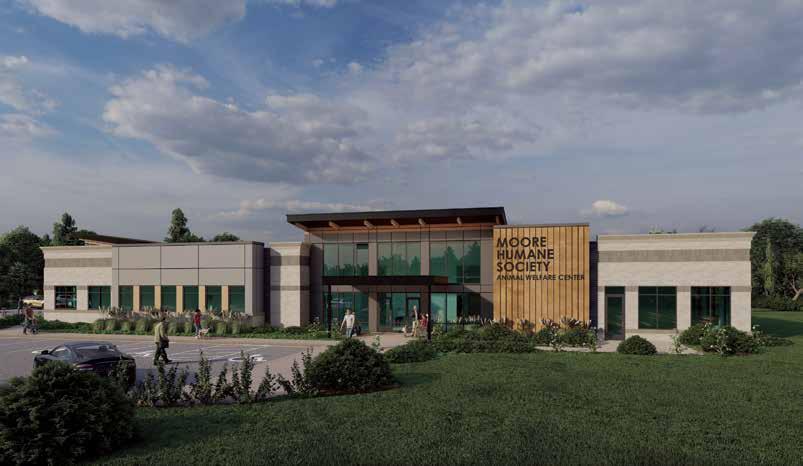
For 60 years, Moore Humane Society has carried out one of this community’s most meaningful missions: giving animals shelter, compassion and a second chance. Proudly no kill. Now, we’re expanding that promise.
Our new shelter, slated to open Early 2027, will allow us to care for exponentially more animals in far more comprehensive ways. Modern, larger kennels, more outdoor space, separate shelter veterinarian clinic, and much more! With this growth comes a greater need. Together, we’ve made this new facility possible — now we need the resources to sustain it.

•
•
•
•






ing. It is for this very reason that people should never move box turtles from one location to another.
Before I get to the woods on the opposite side of the road, the box turtle surprises me by extending its head from inside its shell. Its bright red eyes tell me it is an adult male. Females have brown colored eyes. Why the turtle was crossing the road here will never be known, but I can guess. Perhaps it was venturing across the asphalt to reach a well-known patch of mushrooms, a favorite food item, on the other side. Or perhaps it was looking for a mate.
In 1979, the N.C. General Assembly recognized the box turtle as the state’s offcial reptile, due to in large part to their familiarity and cute demeanor. Since then, populations of box turtles across North Carolina have suffered steep declines. Habitat destruction, death by lawn mowers and automobiles, over-collecting for the pet trade, and disease have all contributed to fewer turtles on the landscape.
Reaching the edge of the woods, I gently place the box turtle down onto a bed of golden pine needles. Fully extending its head and legs from its shell, the turtle glances briefy in my direction, then slowly walks deeper into the forest. I wish him luck. Turning back toward my car, I climb in and drive away. PS
Naturalist and photographer Todd Pusser grew up in Eagle Springs. He works to document the extraordinary diversity of life both near and far. His images can be found at www.ToddPusser.com.




By lee PACe
Ten years ago, Pinehurst Resort seemingly had it all — a worldfamous golf course that had hosted three U.S. Opens, eight more layouts designed by the greats of the golf architectural world from Donald Ross to Tom Fazio, and more than a century of history that staked it to its lofty position as the “St. Andrews of American golf.”
What it didn’t have, however, was a convenient venue for golfers coming off the No. 2 course to enjoy a post-round libation and the attendant scorecard parsing and bet-settling. There was a portable “veranda bar,” or golfers could walk from the locker room down two corridors to the 91st Hole, which was mostly a grab-and-go station in the center of the clubhouse with a view of the practice putting green.
“It was kind of the missing puzzle piece,” says Pinehurst President Tom Pashley. “We did not have a ftting end to a round of golf on one of the world’s fnest golf courses. It seemed like an odd omission.”
Pashley had just taken over from Don Padgett II in running the resort in 2014 when he huddled with Pinehurst owner Robert Dedman Jr. and personnel from golf operations, food and beverage, and the resort’s architectural and design consultants. The result in September 2016 was the opening of The Deuce — a facility on the east side of the clubhouse with an indoor bar and restaurant and outdoor veranda bar no more than 25 yards from the back edge of the 18th green of the No. 2 course.
Now on the cusp of its 10-year anniversary, The Deuce has proven an overwhelming success. The food is excellent. Prime rib does double-duty as a slab on a dinner plate or sliced thin for the popular French dip sandwich. Buffalo wings and tater tots with
three dipping sauces fy out of the kitchen. There is a lunch buffet to get golfers in and out and on to the frst tee of No. 2 in timely fashion.
The drinks menu is creative and expansive — from Pinehurst 1895 Lager to margaritas made with cucumber-jalapeno agave to an old-fashioned cocktail favored with orange and black cherry syrup — and accented with a piece of bacon cured daily in the kitchen with maple syrup and brown sugar. The Deuce Mule is vodka and ginger beer with a splash of cranberry juice served in a copper mule mug.
The décor is spot-on with sepia-toned photos of Donald Ross and his pencil-notated hole drawings. There are vintage postcards and scorecards and photos ranging from historical to contemporary, including, of course, the “Payne Pose” of Payne Stewart reacting to his winning putt in the 1999 U.S. Open. There’s a view out a series of picture windows onto the home hole of No. 2, and every visual of the name Deuce has the capital-D fashioned to resemble the numeral 2.
And then there’s the vibe.
The veranda flls on nice weather afternoons as golfers fnish their rounds, slake their thirsts and watch their buddies come in behind them. They may linger long enough to place a bet or two on whether some random 15-handicapper from Wisconsin can two-putt from 35 feet.
“It’s changed a lot since The Deuce opened,” says longtime Pinehurst caddie Thomas Trinchitella. “People enjoy watching golfers come up 18. They make a lot of bets. You get a nice clap for a good shot. You hear cheering and good-natured booing depending on what happens.”
“The Deuce has added so much energy to that side of the building,” Pashley adds. “You have a veranda full of people, and if you hit a good shot it’s so cool to hear a round of applause. If you make a long putt, people get excited.”
Pinehurst offcials considered a number of promotional tieins to the numeral 2, and the one that has stuck and become





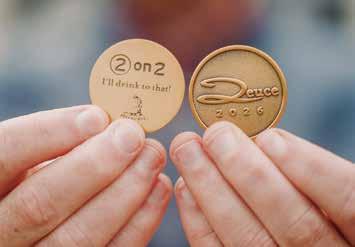
popular is awarding golfers a special coin if they make a 2 on any hole — generally a birdie on one the four par-3 holes. One side has the word “Deuce” and the year, the other side “2 on 2 / I’ll drink to that!” The design is tweaked each year, and the coin for 2026 is copper-colored. The resort handed out more than 5,000 Deuce coins in 2025, and the pursuit and acquisition of the coins has become a big deal in social media channels with these kinds of posts accompanied by photos or video clips:
“Mine from last year is a prized possession.”
“I made a 2 on 17 on New Year’s Day. Really cool tradition.”
“Missed a two-footer for two on six and it still haunts me.”
“Love the coins, the tradition and the memories on nine and 17,” one father posted of him and his son both making birdies in one round.
“One of my best golf moments ever. Hit it inside 12 inches on 17 and tap-in.”
It adds up to an experience that draws the likes of Bryson DeChambeau and his caddie when they were in Pinehurst early in 2024 — just months before he won the U.S. Open.
“No one noticed them or bothered them. They were wearing jeans and hoodies,” says bartender Stephen Coleman. “They just had burgers and a couple of drinks and watched the golf on TV. They had fun hanging out. That’s what The Deuce is all about.
“Everyone calls it the Disney World of golf. A lot of people say that. Everyone is so into golf it’s hard to have a bad time.”
Adds Vanessa Dozier, assistant manager at The Deuce: “It’s 100 percent family — you’ll see golfers from all over the world at the bar, and you’ll see locals who’ve made The Deuce their spot. It exudes what Pinehurst is all about — laughter and excitement and passion for golf.” PS
Lee Pace has written about golf in the Sandhills for more than three decades from his home in Chapel Hill. Write him at leepace7@gmail.com and follow him @LeePaceTweet.










you to its
The American Soundtrack: A 250th Anniversary Season Experience the Joy of Exceptional Music
THE WIZARD OF OZ No Place Like Home
Saturday, October 17th, 2026, 3:00 & 7:30 PM
HOLIDAY POPS
Comfort & Joy with The Carolina Philharmonic Saturday, Dec. 19th, 7:30pm & Sunday, Dec. 20th, 2026, 7:30pm
NORTHERN LIGHTS
Greig’s Piano Concerto and Music from the Edge of the World Saturday, January 30th, 2027, 7:30pm
MADE IN AMERICA
250 Years of Music, Memory and Imagination Saturday, April 3rd, 2027, 7:30pm
SOMEWHERE IN TIME
Rachmaninof, Romance and the Music of Memory Saturday, April 17th, 2027, 7:30pm
BEING ALIVE
A Sondheim Celebration with Broadway Stars Saturday, May 22nd, 2027, 7:30pm
VIP - $378
Six-Concert Subscription - Individual VIP ticket $70 Preferred - $297
Six-Concert Subscription - Individual Preferred ticket $55 General Reserved - $216
Six-Concert Subscription - Individual General Reserved ticket $40
All ticket prices include sales tax and processing fees. Concerts are in RE Lee Auditorium at Pinecrest High School.
You are Cordially Invited to Te Carolina Philharmonic’s 17th Annual Gala
Thursday, October 29th, 2026 • 5:30PM • The Pinehurst Fair Barn Festive Live & Silent Auctions • Open Bar • Black Tie Optional • Valet Parking $175 Per Person/$1,200 Per Table of Eight A Fundraiser for Music Education in Moore County
Experience the joy that The Carolina Philharmonic’s exceptional music education programs have brought to over 25,000 Moore County children.



I’d like to feel again, my six-year-old self skimming a long, sea oat-surrounded trail to the ocean like a skipping stone, the wind in my dark hair, legs pumping like pistons. And oh, that frst plunge into the water, the squealing — how it felt to be hit by a wave and tumble to the shore, as light as a shell. Now, it’s hard to walk the trails to the beach. Each step works my calf muscles, my bare feet sinking deep into hot sand. And the sun is like a blowtorch, not the gentle source of warmth that I remember, the ocean rife with dangers I knew nothing about as a child. So I settle into a folding chair with a book, my aging body slathered with the highest SPF, and watch a couple of kids scoop wet sand into bright plastic buckets while others splash in shallow pools, their faces the defnition of delight. If only I could snap my fngers, step out of a body that has become too weary and cumbersome, and run to the water like I used to — limbs weightless as a plover, my thoughts no heavier than a beach ball, a paper kite rising.
— Terri Kirby Erickson
Terri Kirby Erickson is the award-winning author of eight collections of poetry.

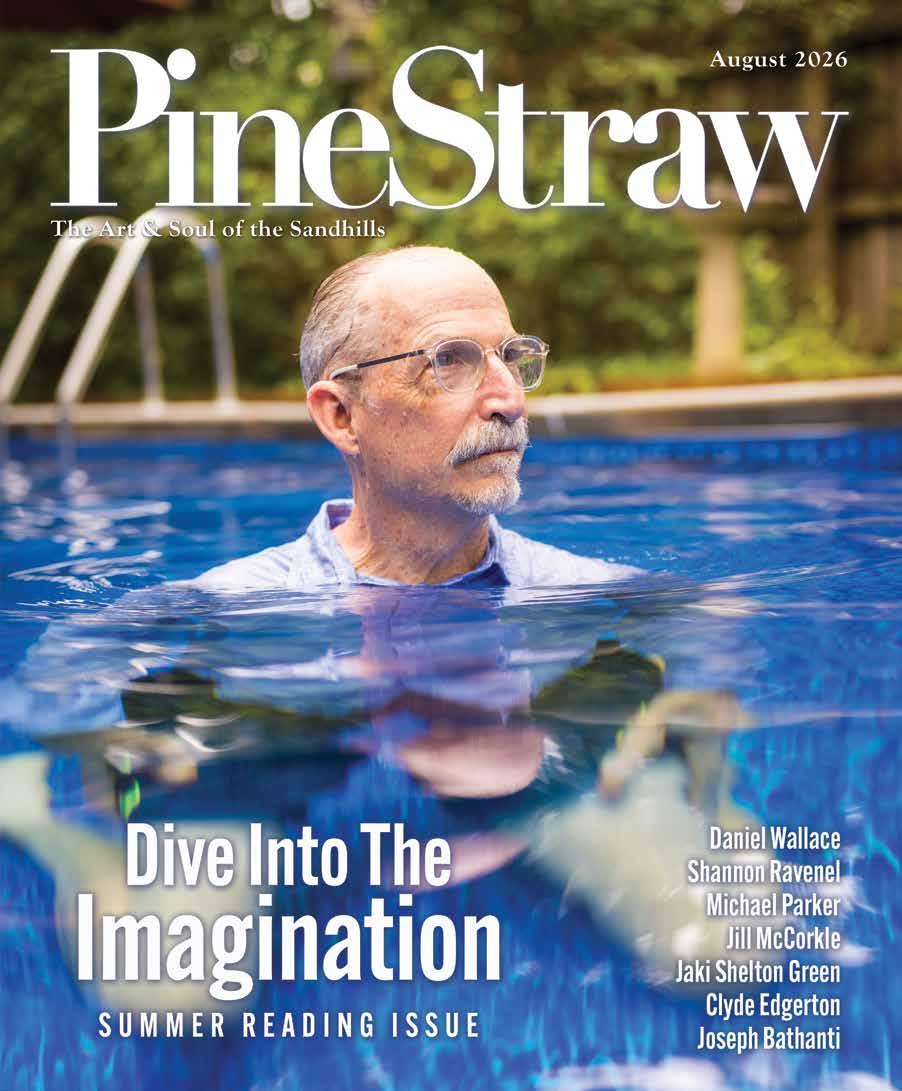
The 2026 induction ceremony for the North Carolina Literary Hall of Fame takes place in October at the Weymouth Center for the Arts & Humanities. Could there be a better time to devote our Summer Reading issue to the current and soon-to-be members of that exclusive club than now? We’ve asked three members of the class of 2026 to write a letter to one of their favorite fctional characters and, to round out the feld, we’ve surrounded them with four current enshrinees. The rules were simple: Pick a character you love, or hate, or even love to hate, and go from there.
And we think you’ll agree, the places they went are extraordinary.
FROM: Clyde Edgerton
To: Manley Pointer, the Bible salesman in “Good Country People,” by Flannery O’Connor

Dear Manley (if I may),
I got your penitentiary address from Henry Dampier, a character of mine who also sells Bibles. He knows you and I assume you know him.
A few days ago, Henry told me about your recent criminal activities, including getting caught again — stealing boxes of Gideon Bibles and then razoring out the title page (referencing “Gideon”).
I’ve not read the story “Good Country People” in a good while but I remember being drawn to your cleverness in that story, and also, aspects of your appearance — especially your yellow socks rolled down “to your ankles” or something like that. Images get stuck in your head, you know?
I am sending you this letter to let you know that you have been an inspiration to me in at least a couple of ways:
1. I sometimes go to bed at night happily anticipating the next morning’s completion of a scene I’m writing. On the second or third reading of “Good Country People,” when I was still a young writer, I came to realize that heaven for me would be the opportunity to write the last half or so of “Good Country People” — the part that would include your second visit to Hulga’s mother’s house. I realized that to know you were going back to visit again, and that I could write out what then happened, would be a kind of delightful heaven on earth for me. All this (including reading about your relationship to Hulga) fell onto me as I was learning to write fction.
2. A couple of writers got in touch with me early in this century, saying they were hoping to publish a book-length tribute to Flannery O’Connor, written by different writers — would I contribute?
Of course.
I decided to contribute a short story that included my character, a Bible salesman who was not you (but who knew you). I also wanted to include a “misft” in my story — one who knew Miss O’Connor’s famous character, The Misft. I wondered if the writers hoping to publish the O’Connor tribute book would accept a story rather than an essay. I was afraid they’d say no, so I didn’t ask, I just wrote the story, and I liked it so much I eventually made it into a novel: The Bible Salesman. I never heard from the writer/editors again, but was very happy, of course, that they — and you — helped me write a novel.
Thank you for your inspirations and best of luck in your post-prison endeavours. I wish for you the very best in all things. I read that you recently said that you were “going straight” now.
Have you ever thought about entering politics?
Please write back.
Sincerely,



From: Daniel Wallace
by John Cheever

Dear Ned Merrill,
This is the last time I’ll write to you. All the other letters have been returned to me, the sole response stamped on the unopened envelope by some heartless machine: OCCUPANT UNKNOWN. MOVED. VACANT. NO FORWARDING ADDRESS. Why do I keep hoping that somehow you will have returned to the house in Bullet Park, and that you will get my letter (the 5th? 6th?) and write back with an upbeat apology, explaining where you’ve been and what happened to you? I wonder if you even know.
I’m a fan, Ned. Maybe not a fan of yours but a fan of your incredible plan — to swim that Sunday morning the eight miles from the Westerhazy’s pool to your own home, realizing you could make it almost the entire way pool to backyard pool. You were not a young man, either, when the idea came to you, and perhaps that’s why you did it: a younger man would not have felt the need to prove to himself (and to all the lesser mortals) that something so incidental could be done, and certainly not with the same heedless and drunken joie de vivre. Only a man who had nothing to lose would do it, precisely because (whether he knew it or not) he had lost everything already. The old man’s still got it I can hear you telling yourself, over and over again, in those pools before the rains came.
You remind me of my father. You were more his generation than mine. I think you would have liked him. So many of the poolside scenes you swim through remind me of those “midsummer Sundays” at our own home, the kind when everyone sits around saying, “I drank too much last night.” I didn’t drink — I was just a kid — but my parents did. This is after we moved from Homewood to Mountain Brook, when my father started making real money and we had the pool in our backyard; in Homewood, we just had grass.
Those were the Sunday mornings the Hurleys would come over. Jack and Mary. They brought the V8 juice and the celery; my parents supplied the vodka, Worcestershire sauce, and Tabasco. By the pool they would shine themselves up with Baby Oil and sip on their Bloody Marys well into the afternoon, as the Alabama sun beat down on them. The Wallaces and the Hurleys drank, laughed, smoked, swam, all at the same time, too, sometimes, ashtrays and glasses balanced on a long yellow foat.
As it was with you (there’s a bar beside almost every pool you swim through on your journey home) those Sunday mornings were just as much about drinking as the party the night before may have been. Drinking was assumed. An expectation. No matter how many Sunday morning Bloody Marys they had though (and it was impossible to say how many, because they came to the poolside in a gigantic pitcher) they were never drunken, or even tipsy. They were relaxed. “This is so relaxing,” they said, eyes closed behind their porthole-sized sunglasses. And the sun baked them lobster red. They all seemed so old to me then, years beyond counting. But no: in 1970 I was 11 and my father was a mere 40 years old. The hair on his arms was going gray though and he wasn’t in the best of shape. Still, he would race me in the pool and win going away. And, like you, Neddy, he had a “simple contempt” for people who did not hurl themselves into pools, and pull themselves out of them by the

curb — no ladder for him. He still had it! At 40 he was at the top of his game. That’s what it looked like anyway.
I imagine you were about 40, too, when your story takes place, when you almost seem to fgure out how lost you were, and how much you’d lost.
Which brings me to why I’ve been writing to you.
My father died in 1997. He was 67, same age as I am now. And I can’t ask him, obviously, so I’m writing you to ask: When you swam back home, through almost a dozen pools, having a drink at as many of them as you possibly could, and when you made it back home and found that everything you had taken for granted wasn’t there anymore, when you caught up with yourself and the reality of your world — what did you do next? I can ask you that, right? Just because one story ends doesn’t mean they all do. When you fnally don’t have it anymore, what do you have? How long can you keep on swimming? That’s what I want to know. That’s what I need to know. Sooner the better too, because summer is almost over. That’s how it feels, anyway.
Thanks, and I hope all is well,


From: Joseph Bathanti
To: Colin Smith, the main character and narrator in “The Loneliness
by Alan Sillitoe

Dear Smith (Colin, if I may):
I recently reread Alan Sillitoe's brilliant novella, The Loneliness of the Long Distance Runner, in which you, the inimitable frst-person narrator, claim to have authored the tale. Thus, the novella becomes a pedigree of metafction. Most interesting — and I wish I had Sillitoe to consult on the matter. Is it he who brings you to life? Or are you the agent of that feat? And please stop me, if this gets to sounding like some puffed-up, egghead scholarly treatise.
Your voice is unforgettable. I’ve always had a soft spot for the cheeky and you have a gift for smartassery that would have been cherished in the working-class Little Italy of Pittsburgh in which I grew up, where the art of biting off your nose to spite your face has been empirically perfected. Tough kids with El Doradosized, Marxist chips on their shoulders and a viral antipathy for authority to match yours — and not a scrap of remorse among them. In truth, Colin, you’re a revolutionary; the authorities like to keep your sort in stir. You scare the bloody hell out of them. You even allude to Hungary and what I presume is the Hungarian Revolution of 1956; and there’s also the mention of “a big boot . . . likely to smash any nice picnic [you] might . . . make for [yourself].” It seems you’ve studied your fellow Englishman, Orwell: “If you want a picture of the future, imagine a boot stamping on a human face — forever.” You are a prole, one of the fellaheen, among those the “whip-hand” aims to force to their knees.
But you can take a punch as well as deal one. You throw the big race — the Blue-Ribbon Prize Cup for Long Distance Cross Country Running — so coveted by the “governor,” the borstal warden, a “pot-bellied pop-eyed, bastard” as you dub him — even though you’re meters and meters ahead of your closest competitor and the fnish line’s in sight. Like a convict, mere hours from parole, who jumps the fence. Rather than curry favor, you symbolically spit in the governor’s eye, which fetches you his outrage and a goodly dollop of additional hardship in borstal. More than anything, you exemplify so gloriously Albert Camus’ famous injunction from “The Myth of Sisyphus”: “There is no fate that can not be surmounted by scorn.” It’s the gesture, the gorgeous immemorable fourish, that seems precious, near sacramental, to you — that piss-oneverything mentality. It recalls Marlon Brando as he dies in Last Tango in Paris: removing the chewing gum
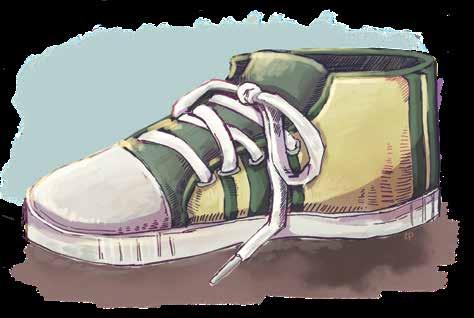

from his mouth and fxing it to the underside of the balcony railing before collapsing. How I admire your fare for self-immolation — Bravo! — though I don’t possess your threshold nor stamina for Purgatory.
But, of course, there’s more to it than that. Isn’t there always? You hail from a withered home where the only things in abundance are neglect, ennui and not enough dollars — and let’s not even broach the subject of love, though it’s there, but in the guise of yearning and desperation; nor should we mention your philandering mam; and your dad, whom you fnd dead, “ . . . like a skinned rabbit . . . lino and carpet” soaked in his blood. A tram-load of dysfunction. Trauma. Post traumatic stress.
You’ve a heart, Colin Smith, and a capacious one, though you purposefully secrete it beneath the bilious Eiderdown of regret and cynicism. After all, you’ve been — what we call here in North Carolina — stateraised, frst in Remand Homes, now in borstal — one joint after another — plotting your next lame caper and committed to the life of a lammist. You’re only seventeen, already “institutionalized.” Your name, Colin, means “whelp” or “young hound.” There it is: the childhood state in which you’re forever immured. Of course, all that’s left to you is scorn. Blessed searing scorn.
I actually have run from the “coppers” a few times and have found myself, along with a gaggle of my mates, in the backseat of a police car — but, just to be clear, for the most innocuous empty-headed schoolboy pranks, and we were released with barked threats of juvie and the legendary rubber hose designed to put would-be juvenile delinquents on the straight. Nothing even close to robbing a bakery and stashing the lolly in a drainpipe where it fows from the spout in a downpour and damningly presents itself at the feet of the suspicious copper at your door. I’ve not the sand for a life of crime and I had the tireless love and guidance of hard-working parents. They dreamt a better life for me long before I fgured out how to dream that dream myself — and I continually remind myself of the advice dispended to Nick Carraway from his father in the second sentence of The Great Gatsby: “Whenever you feel like criticizing anyone . . . just remember that all the people in this world haven’t had the advantages you’ve had.” Again, there it is. More to the point, I’ve never been incarcerated — Grace of God, and all that — though, over the years, I’ve spent considerable time in prisons as a writing teacher. I’ve also been a long-distance runner, though with nary a jot of your virtuoso clout.
Thus, I’ve now twigged you coming and going; and, make no mistake, I strangely love you and your ilk, taking my place in the cellblock, shackled to a prison cot. And I know enough to declare you a poet and contemplative. You offer not only a lyric tutorial on running — I’ve never read a more convincing account of the fabled “runner’s high” — but your metaphysical riff on being the frst and last man on earth simultaneously, as you run the dawn “frozen felds,” is the stuff of magic, clearly rooted in holy writ.
So, my iconoclastic falling-down funny brother-comrade, I look forward to your next book, and I pray you’re on the free side of concertina when you pen it. Please: never stop running; that’s how I imagine you — and weeping, perhaps as Jesus wept at the death of Lazarus.
Fingers crossed this missive makes it to you. Penitentiary mail is notoriously unreliable, and I hope this passes the grubby-handed censors.
In peace and solidarity,


From: Jill McCorkle
To: Charlotte, the barn spider in Charlotte’s Web, by E.B. White

Dear Charlotte,
Salutations! I have loved and admired you for 60 years and never glimpse the shining threads of a web that I don’t think of you. For almost 75 years, you have taught children — young and old — about friendship and the seasons and cycle of life. You have shown us the best and the worst of humanity, from fat greedy rats to innocent humble souls like Wilbur, forever loyal in his love and devotion. Your voice is one of reality and acceptance of life’s journey — a wise observation of grief — and what an individual leaves behind for future generations.
Here in the state of North Carolina, there are 8.2 million of Wilbur’s kind, not counting the additional wild ones roaming and rooting. Imagine the many webs it would take to save them! And especially at a time when there is so much talk about bacon products — soda, toothpaste, lollipops and cologne! — to name a few. I suspect the desire some have for bacon is not unlike what you felt about the many fies you devoured. But still, it is always hard not to think of Wilbur when pork products are discussed. And he was Some Pig; he was Terrifc, in fact! And what a lucky guy he was to have you and Fern and your many descendants in his life.
We could use your wisdom these days, Charlotte. You said: People are very gullible. They’ll believe anything they see in print. And oh, what an understatement that is. You would not even believe what people are believing! And it goes beyond print — made-up photos and videos, manufactured voices. There is a widespread struggle for truth. And there are those who make Templeton the fat rat look like Gandhi. Some even tried to use your name as code for a cruel, coldblooded operation designed to harm innocent people. You will be pleased to know that there was great public outrage over the use of your good name. After all, you taught the opposite. When Wilbur asked why you had been so kind to him, you said: By helping you, perhaps I was trying to lift up my life a trife. Heaven knows anyone’s life can stand a little of that.

Are there enough webs? Enough words? I like to believe that wisdom such as yours will always be repeated and if said and seen enough, will continue to hatch and grow. Your words to Wilbur are always worth repeating and you, dear Charlotte, are my reason for allowing discrete cobwebs in corners and the eaves of the porch (thank you), and you remain a reminder to stop and admire the intricate and beautiful artwork of nature and declare it a miracle and rightly so.
Sometimes your voice comes to me in the cadence of an elementary school teacher’s voice, reminiscent of all those times after lunch we were told we could rest our heads on our desks and just close our eyes and listen while chapter by chapter, the teacher’s voice would lull us into your world and your fnal day with Wilbur: These autumn days will shorten and grow cold. . . . Winter will pass, the days will lengthen, the ice will melt in the pas-
ture pond. The song sparrow will return and sing, the frogs will awake, the warm wind will blow again. All these sights and sounds and smells will be yours to enjoy, Wilbur — this lovely world, these precious days . . .
Your story left me crying and grieving too many times to count, Charlotte. I didn’t want Fern to grow up and choose time with a boy over time with Wilbur. And I didn’t want you to die. How could you die?! But then I learned something incredibly valuable. I could read your book all over again, and suddenly there you were — salutations! — and even knowing what was coming, I could once again get lost as I feared for Wilbur’s safety, marveled at your messages and hoped that Templeton — fat rat that he is — might have a change of heart. In addition to all else, you taught me the power of words on the page.
Thank you for all you have given to millions of readers (no exaggeration), and may your book always grace the shelves of schools and libraries as it fnds its way into young hands and changes their lives in wonderful ways.


From: Jaki Shelton Green
To: Celie, the protagonist and narrator in The Color Purple, by Alice
Walker

Dear Celie,
My mother taught me that the color purple was associated with royalty, luxury, power, spirituality, mystery and creativity, but your story taught me that purple was often a bruise, a dictionary version of a common contusion that happens when blood vessels under the skin break from an impact, leaking blood into the surrounding tissue. I became obsessed with the color purple in the 1970s and curated my second wedding in 1979 around shades of lavender, violet, grape, lilac, wisteria, magenta, fuchsia, mauve and plum . . . all juicy luxurious colors not knowing that within a year those lush sensual shades would be prickly stains on my broken heart. When I met you in 1982 after my “royal purple marriage” withered away, your defnition of purple seemed to make so much more sense to me.
Thank you for daring me to turn all the wounded fower petals upside down and crawl inside them to explore the other side of breaking skin and ruptured voice.
Thank you for your lessons about reclamation, fulfllment and independence. In the 1980s your presence in the world became a map for many women who were struggling with granting themselves the urgent and necessary permissions they needed in order to begin unraveling the expectations enforced and placed upon us by society, whether it originates from our
Our Southern lives are not too far apart. We both grew up in a time period with gender inequality and racial division. We both grappled with expectations placed upon us by male authority fgures in our lives, taking on the responsibilities which come with expectations, while our own dreams and desires are muted, invisible, and erased.
Like you, Celie, I broke the bonds of betrayal, emotional impoverishment, self-hate,

and began carving a pathway for the self that remembered to remember who she is and who she truly belongs to while re-embracing the color purple inside my gardens. Tiny purple blooms run rampant as groundcover almost choking out the other plants and my thoughts return to your words, “I don’t know how to fght. All I know how to do is stay alive.” So I allow them to make their own choices about survival and the other plants manage to keep on living.
And like the purple groundcover, you reminded us that we were never the bruises or the myths that someone tried to convince us that we were. Thank you, Celie, for demonstrating how you transformed from a silenced, abused victim to an independent, self-actualized woman. Thank you for demonstrating that female solidarity and “womanist” love are essential for overcoming both racial and patriarchal oppression.
Dearest Celie, you taught so many of us to sing out loud in felds of lavender declaring that we are a full embodiment of spiritual wholeness . . . celebrating how our relationships with other women can heal us and help us embrace the power to reject male supremacy, fnd our voices, reclaim our bodies, sexuality and cultural identity.
Celie, you may not remember, but my mother and my teenage daughter met you at the same time I met you. One paperback copy of Alice Walker’s The Color Purple was passed back and forth between the three of us. We were three generations in a matriarchal household daily discussing your identity search, racism, sexism and sensitive, often contrasting, generational perceptions about self-worth and double consciousness.
Thank you for being the character that my mother cheered on knowing you would not perish. Thank you for all the questions your character served nightly at our dinner table.
Thank you, Celie, for the uplifting lessons that my daughter and I taught each other about the power of intuitiveness, the power of utterance, the power of silence and witness, and all the grace that we granted each other in order to agree to disagree about your journey to liberation.
I am truly grateful for you allowing the ink’s breath to dream you awake.

With deep respect and admiration,

From: Michael Parker
by William Faulkner

Darl Bundren
Mississippi State Asylum Jackson, Mississippi
Alright now, Darl,
I thought of you the other day. I went for a long drive, trying to fnd some open country. I had to pass by all sorts of places you never, thank God, got to see: storage units, used car dealers, Korean barbecue, nails, nails, nails. I was in search of a landscape you would have encountered on the way to Jefferson with your family. On a backroad that dipped through a stand of pine down to a sudsy river I pulled over and felt, suddenly, your presence. I remembered how, when I frst met you many years ago, in college, I didn’t understand you because the professor said I had to. He wanted me to understand his version of you. He wrote on the board some of the things you said: “The hallway looks like a searchlight turned into rain.” He said what the hallway represented and the searchlight and the rain. All of a sudden it was Psych 101.
He barely mentioned the passage that spoke to me the most, the one that, if I had to sum you up (and why should I, how could I, though that’s the sort of thing we did in classes back then, pick a line and slim you down to ft it): “In a strange room you must empty yourself for sleep. And before you are emptied for sleep, what are you. And when you are emptied for sleep, you are not. And when you are flled with sleep, you never were. I don’t know what I am. I don’t know if I am or not.”
It wasn’t just because I had a hard time sleeping, then and now, or because, around the time when everyone else’s mind shuts down, mine ramps up. The way that second sentence ended in a period instead of a question mark opened something up for me: how a little squiggle of punctuation makes a question more desperate than the way you wrote it, which is just as much statement. But not. That’s what I liked. It is, but not. I didn’t know what I was, I didn’t even know if I was or not. Most days that is still the half-statement, half-question, Darl. See, you stuck with me, even though it’s been forty years now.
This kid who sat beside me in class said, “This mess is harder to understand than calculus if you ask me.” I had not asked him and had no idea how to even spell calculus, but I wanted to say, it’s not that bad if you listen hard and also maybe it’s just hard in a different way.
I do get that some of the things you said took a while to hear, though. You said you heard teeth in your brother Jewel’s breath. And, “In sunset we fall into furious attitudes, dead gesture of dolls.” That one went right over my head. But in that same chapter you said, “If we could just ravel out into time. That would be nice. It would be nice if you could just ravel out in time.” I never heard anyone say “ravel,” always “unravel,” and I too wanted to untwist into time. If I could just. Instead, I got more twisted up. I never forgot to wonder how nice it would be to ravel out. You taught me that also, Darl.
I wrote a term paper on you. I compared you to Hamlet, because, see, I don’t think you were

as crazy as everyone claimed. I believe you were faking it sometimes, because faking crazy is a way out of just going along. You never did just go along. The people in Jefferson called you “queer.” They meant odd. I read up on you recently and found a few professors saying you liked men. They said you were queer, as in “a queer,” like people used to say back in high school. Queer was a slur, but over time it has become an umbrella term classifying all kinds of sexual confgurations. I like how that word has changed meaning, how it went from the worst thing you might get called in high school to a word people nowadays use with pride. I get a kick out of the professors who don’t understand the original meaning of the word. He’s a queer one, I heard people say about some fellow when I was growing up, but the next time they would say he was peculiar. The professors seemed to believe you were confused about everything; therefore, you must be confused about what you like and who you like to do it with. “I don’t know if I am or not” does not mean you are confused. It means you know way more than the rest of us and are too smart to claim that such things can be fgured out one way or another.
A hillbilly Hamlet! Wrote the professor at the end of my term paper. He gave me a B minus. To get an A on any term paper about you (as if our connection had any kind of term limit; as if I didn’t believe you when you said, “it is as though time, running straight before us in a diminutive line, now runs parallel between us like a looping string, the distance being the doubling accretion of the thread and not the interval between”) would have bummed me out big time. I’d as soon my GPA suffer than agree with the professor and confne you to what struck me as another life sentence in the state asylum up in Jackson, where they shamefully sent you.
I ran into the kid who said he preferred calculus on the quad one day. Fuck a bunch of Faulkner, he said. I’m going to see if I can’t take that class pass/ fail. I was reminded of what you said about your brother: “Jewel knows who he is because he does not know that he does not know whether he is or not.” Though I liked that kid. I like people like him, for they make me question how they know what I don’t know and whether I even know it.
You don’t have to write back. I like writing to you, Darl. I feel myself raveling right out.


From: Shannon Ravenel
To: Johnny, a character in “Boy and Dog,” from
Brown

Dear Johnny —
There are many reasons to ponder this story about the death of your beloved dog, Bozo. You loved him so much. He was eleven and you are only eight. He must have seemed almost like your big brother. It is very, very sad to think of you fnding his dead body run over by a 1965 Mustang driven by a guy who returned to the place where he’d hit Bozo, not to see if Bozo was OK, but to fnd his car’s hubcap. He didn’t care about having killed your dog. And so you killed him, with a yellow brick. And all hell broke loose after that, which you describe in your unusual literary format (293 one-sentence paragraphs, each sentence in fve words), obviously a story emerging from the terrible grief of losing a beloved pet dog.
The double viewpoint — the boy’s and the author’s — captures my attention and makes me wonder. Could an eight-year-old really throw a brick hard enough to kill a grown man in his car? Could a boy that age really cause the hugely explosive scene, observe it, and outwait its end in order to retrieve his beloved dog’s body?
Or could that boy have had an extraordinary imagination? Could he have grown up to be an author? I think I know the answers.
Love,





Clyde Edgerton was inducted into the North Carolina Literary Hall of Fame in 2016. He is the author of 10 novels, a book of advice, a memoir, short stories and essays. He has received a Guggenheim Fellowship and, most recently, a 2025 O. Henry short story award. He lives in Wilmington, N.C.

Jill McCorkle was inducted into the North Carolina Literary Hall of Fame in 2018. Her frst two novels were published simultaneously in 1984 by the newly launched Algonquin Books of Chapel Hill. The author of seven novels and fve short-story collections, her many accolades include the John Dos Passos Prize for Excellence in Literature and the North Carolina Award for Literature.

Daniel Wallace will be inducted into the North Carolina Literary Hall of Fame in 2026. He is the author of six novels, a memoir, a short story collection and a children’s book. Wallace is the J. Ross MacDonald Distinguished Professor of English at the University of North Carolina at Chapel Hill, his alma mater.

Michael Parker will be inducted into the North Carolina Literary Hall of Fame in 2026. He is the author of eight novels and three collections of short stories. He has received fellowships in fction from the North Carolina Arts Council and the National Endowment for the Arts, as well as the Hobson Award for Arts and Letters, the North Carolina Award for Literature, and the 2020 Thomas Wolfe Prize.

Joseph Bathanti was inducted into the North Carolina Literary Hall of Fame in 2024. Among his many awards are the Sam Ragan Fine Arts Award, the Sherwood Anderson Award and the North Carolina Award for Literature. He is the author of over 20 books, including poetry, novels, short stories and nonfction. He was North Carolina’s poet laureate from 2012-14 and joined the faculty of Appalachian State University in 2001.
Jaki Shelton Green was inducted into the North Carolina Literary Hall of Fame in 2014 and is the ninth and current poet laureate of North Carolina. Her honors include receiving the North Carolina Award for Literature in 2003 and the North Carolina State University 2026 Honorary Doctorate of Humane Letters. Author of 10 books of poetry, an LP and two audio collections, she serves as poetry editor for Walter magazine and is a professor of Documentary Poetry at Duke University.
Shannon Ravenel will be inducted into the North Carolina Literary Hall of Fame in 2026. Born and raised in Charleston, South Carolina, she was editor of the Best American Short Stories series for 13 years and one of the founders of Algonquin Books of Chapel Hill. In 1986 she introduced the annual anthology New Stories from the South. During her time at Algonquin, Ravenel nurtured and advanced the work of numerous writers from the American South, including Clyde Edgerton and Jill McCorkle. PS

by Dale moeglI ng
By the end of the 1960s, professional golf had settled into a rhythm that made sense to everyone watching it. Four days. Seventy-two holes. Numbers gathered patiently and arranged on a leaderboard that revealed in orderly fashion who had played best. Arnold Palmer could hitch his pants for his army; Gary Player could fst-pump to the four corners of the earth; Jack Nicklaus could drive the ball vast distances and achieve the career grand slam in just seven years.
It was a system that worked. It was easy on the eyes — television’s eyes. It was also a system that had lost something. For Joseph C. Dey Jr., who after a 34-year career as the executive director of the USGA, became the frst commissioner of the newly created PGA Tournament Players Division (soon to be the PGA Tour) in 1969, the game was missing something that had once defned it: match play, the mano a mano format abandoned by the PGA Championship after 1957.
Dey’s demeaner was as formal as a Windsor knot. “He never removed his jacket in the offce, and was of the unshakable conviction that 9 to 5 meant exactly that, and not 9 until 4:50,” wrote another lion of the USGA, Frank Hannigan. Dey would resign as PGA Tour commissioner in 1974, handing the reins to Deane Beman. Among the things he accomplished in fve years included two tournaments, one with a lasting impact and one whose fame was rather more feeting.
Dey instituted the Tour’s stand-alone event now known as The Players Championship. A less enduring mark was left behind by the short-lived reintroduction of match play in professional golf known as the U.S. Professional Match Play Championship that debuted in 1971, followed by the Liggett & Myers Open U.S. Match Play Championship in 1972. Both were played in the late August heat on the highly regarded Dogwood Course of the Country Club of North Carolina, itself less than a decade old. The back-to-back years marked the return to Moore County of the best players in the world after Richard Tufts canceled the North and South Open following the 1951 season. The experiment in match play would last one additional year, played at MacGregor Downs Country Club in Cary, before it came to a merciful end.
As much of a button-downed traditionalist as Dey was, he was also willing to push the envelope. He once proposed that the U.S. Open be contested for three weeks over 216 holes on three different courses in three different parts of the United States. It was a concept that, to put it charitably, found no purchase with the USGA’s executive committee.
With visions of the grandeur of match play drama, the help of CCNC club president Richard A. Urquhart Jr., the infuence of club member William M. Jennings (president of the New York Rangers and a member of the NHL Hall of Fame) and the fnancial backing of Milton E. Harrington, the president of Liggett & Myers, Dey’s dream of the psychological drama of one-on-one golf became a reality.
The feld in 1971 was to comprise the 64 top names on the points list. All the usual suspects would be there. Lee Trevino. Palmer. Player. Nicklaus. And local favorite Julius Boros who had ties to Mid Pines Club. Rather than a traditional win-a-hole, halve-a-hole, lose-a-hole format, the matches would be contested at stroke play over 18 holes — pleasing for television in the days when only the last few holes could be broadcast.
A celebrity-rich feld showed up for the Tuesday pro-am: singer Glen Campbell, the astronaut Gene Cernan, New York Yankees great Mickey Mantle, the jockey Eddie Arcaro and,
probably the best known of all, Mayberry’s slapstick deputy Barney Fife, née Don Knotts.
The tweaking of the scoring, however, did nothing to alter the vagaries of match play. Nicklaus went out early. Player came undone in extra holes. Palmer didn’t fare any better. The fnals produced DeWitt Weaver, whose previous best fnish had been a third place in the ’71 Hawaiian Open, against San Diego’s Phil Rodgers, destined to become something of a short game guru in later years. Weaver’s one-under 71 was good for a 6-shot victory. The consolation match for third was won by Ken Still over Bruce Crampton. If match play was to survive on the professional tour, the “names” needed to survive to the weekend. Changes needed to be made. And made they were.
The 1972 version grafted the L&M Open at stroke play onto the U.S. Professional Match Play Championship, producing the world’s longest name for a single event. It would be dubbed, and redubbed, golf’s frst doubleheader. The match play would involve 16 players. The frst seven — Nicklaus, Trevino, Palmer, George Archer, Miller Barber, Frank Beard and Jerry Heard — came off the money list, joined by Weaver as the defender. The second eight would be determined by the frst 36 holes of the L&M. “Billed by contestants themselves as ‘The Forgotten Open,’ or ‘The World’s Richest Qualifer,’ or merely, the satellite,” wrote Golf World magazine’s Dick Taylor.
The week began much as the inaugural had, with a wealth of celebrities playing in the Amateur-Celebrity Pinehurst Invitational on course No. 2. Glen Campbell was back, as was Cernan. They were joined by Robert Stack, television’s Eliot Ness. Bob Hope said he hadn’t seen that much sand since his last USO tour.
There was a remunerative beneft to being promoted from the L&M to the match play. First place was $40,000 compared to $20,000 in the stroke play. After the frst 36 holes on CCNC’s Cardinal, there was a three-way playoff for the last two match play slots. Don Bies and Paul Moran got in, Jerry McGee didn’t.
The weekend schedule looked like this: Saturday opened with the frst round of matches, followed by the third round of the L&M and concluding with the second round of matches; Sunday began with the semifnal matches, followed by the fnal 18 of the L&M, fnishing the day with the fnal match. What’s the old saying, a camel is a horse designed by a committee?
In the end, television got what it wanted: Jack Nicklaus in the fnal. He beat Frank Beard 2 and 1. The television coverage by CBS actually broke away after Nicklaus’ victory and before the four-man playoff for the L&M between Lou Graham, Hale Irwin, Larry Zeigler and David Graham, won by Lou Graham with a birdie on the third extra hole.
As Sports Illustrated’s Dan Jenkins wrote, “The format was different, but the result was the same. Jack Nicklaus won again.” PS
Dale Moegling, a member of CCNC, has called Pinehurst home for nearly two decades and enjoys researching and preserving the rich history of The Country Club of North Carolina.
I’m not from here. Not exactly. It’s complicated.
My brother and I were the most celebrated circus performers of our day — and not just because we were twins. We were acrobats, famous for our high wire and fying trapeze act, although you’d have loved to have seen us on horseback. As kids, we were fearless — always climbing something treacherous; doing aerial backfips off any and all surfaces; launching from each other’s shoulders to great and ever-surprising heights.

We grew up in Brooklyn, drawing crowds everywhere from the beer garden to the market to the city park, where a big top scout saw us. Since our parents were German, folks called us “The Wúnderbirds.” The name stuck. Even as teenagers, it was always “Wúnderboy” and “Wúndergirl.” Most people didn’t even know we had real names (Lukas and Mia, in case you were wondering). Life on the road wasn’t always glamorous. It certainly wasn’t easy. But we loved it. Curious as they were, our troupe was our family. The old-timers became surrogate grandparents, especially
Madam Clara, the palm reader who gave us French Chews and spoke exclusively in couplets. We shared sleeping quarters with a mute clown named Prattle and a burlesque dancer named Peep, but most of our downtime was spent coddling Smoke and Mirror, the albino elephant “twins” who went bananas for chin scratches and wildfowers.
Did I mention that we also loved to travel?
The circus took us from one glittering city to the next, and eventually to Europe, where the opulent Old World architecture was unlike anything we’d ever seen. Sometimes we revisited our favorite places in our sleep. In fact, it wasn’t uncommon for us to wake up describing the same alleyway or brasserie or limestone garden fountain — as if we’d both been there. Every once in a while, we even popped into each other’s dreams. We never really tried to do it. It’s just something that we did.
As it would turn out, we could travel like this in waking life as well — something we also discovered by accident.
It was 1896. We were gearing up for another tour, had just spent nearly six hours practicing our aerial routine, and were taking a rest, sitting back-to-back with our eyes closed. We weren’t quite awake, but we weren’t quite asleep. Just some hazy space in-between. And then something indescribable happened. We — how do I say it? — jumped through space. One minute we were sitting beneath the high wire, the next we were standing in front of the soda fountain in the middle of town. I guess we’d both been thinking about ice cream sodas when — whoosh!
It was all quite surreal, quite thrilling. A bit like launching off the swinging trapeze. No one saw us, but when we made it back — two sodas and 12 miles later — Madam Clara gave us “the look.” She knew, and we knew she knew. She gave us a handful of Chews, shook her head, then leaned in close.
“Careful dancing between realms,” she whispered, “lest you’re sure you’re at the helm.”
We knew she was right. Still, after our frst leap through space, we were eager to do it again. Who wouldn’t be? And it’s not like we were afraid to jump.
After a great deal of trial and error, Lukas and I learned how to travel through space and time. I can’t really explain it, but it had a lot to do with not trying so hard. That, and we had to be touching. Either sitting back-to-back or holding hands. We were vaguely aware that we were completing some kind of circuit. But what did we really know? Not much.
On our off days, we practiced traveling short distances — fve miles or fve minutes or maybe both — careful to keep our little stunt to ourselves. Although Clara was on to us, Smoke and Mirror were the only souls who ever watched us leave or return. They never seemed too concerned, especially since we brought them treats. Sunfowers were always a big hit.
We weren’t bored with our little adventures, per se, but we
were curious to know just how far we could jump. A decade? A hundred years? It seemed like a bit of a risk, but, then again, risks were kind of our specialty.
So, we made a pact. We’d attempt to leap forward one century, buy ourselves an ice cream soda, then jump back.
That was that.
The night before the big launch, once Prattle was mewing in his sleep and Peep was off “entertaining” a guest, we snuck out of our quarters to meet at the elephant barn, where we’d jump at dawn. Knowing we were coming, Madam Clara was there, sitting in the dark. She’d already seen how things would play out, but she never meddled. She knew we wouldn’t listen if she tried.
“I am not here to change your fate. I’m here to kiss you at the gate,” she told us, wrapping her frail arms around each of us before placing her cracked lips on our foreheads.
We promised we’d be back for breakfast.
“How grand to see the future frst,” we chimed.
Clara held her tongue. She placed a French Chew into each of our palms, took our hands for a quiet moment, then said something that still gives me chills:
“If one shall remember and one shall forget, begin anew with no regret.”
We hadn’t a clue what Clara meant — her ditties often made sense only in hindsight — but we nodded anyway.
Once Clara left, we climbed into the stall with Smoke and Mirror, whose pink eyes cracked open when they whiffed the treats we brought them. We emptied our tote of the wild sea of ragweed we’d snagged from the roadside at golden hour. The elephants loved it, munching blissfully as we fed them fower spike after delicious yellow fower spike until — achoo!
I sneezed frst. Then Lukas. Then me again.
On and on this went until Smoke doused us with a trunkful of water from her trough. What a time to fnd out we were allergic to ragweed, but if the circus taught us anything, it was the show goes on. Within the hour, at the frst blush of light, Lukas and I prepared for takeoff. We held hands, set the intention of jumping 100 years through time, felt that familiar buzz of energy, and — we must have both sneezed — and let go of each other’s hands.
I landed here, in 1989. Seven years shy of a century! Thirtyseven years ago! And Lukas? I still don’t know. We were 18 when we jumped. We’ve been apart longer than we were together.
Sometimes, as I’m drifting off to sleep, I can feel his presence. Like he’s traveling toward me, if only for a visit. But even if we do fnd each other again, I know now that we can never go back. Not really. Because, here’s the truth: You can’t jump without letting go and beginning anew with no regret. PS
Ashley Walshe is a former editor of O.Henry and a longtime contributor to PineStraw.

The day’s waning light streams through foor-to-ceiling windows to illuminate a houseful of delightful curiosities.
Joseph Smith recovered the whale vertebra on the coffee table in an Army dive, and the Matisse knockoff was hanging in Allison Smith’s Raleigh apartment when the couple frst met. A European motorcycle helmet is a marriage of opposites: red and green, old and modern. “It’s like a spirit animal,” Joseph says. The helmet is the anchor in the home’s sea of personality.
“We love the hunt for thrifted things, but we also just love keeping our money local,” says Allison from a clay-colored couch.
“That actually is a point of pride,” Joseph says, beaming at his wife as their 10-month-old daughter, Imeleta Kimbrell, named
for both grandmothers and “Lettie” for short, babbles and squeals from the foor.
The Smiths moved into the 2,000-square-foot, mid-century modern fxer-upper in the spring of 2023. They swapped the walkability of a downtown rental for family life a few minutes outside Southern Pines where neighbors deliver brownies at move-in and gifts when a baby is born. “We were ready for a little bit more space,” says Allison.
The one-story brick build lounges on a smidge less than an acre in the shade of mature pines. Built in 1974, it has had numerous owners, and like a whisper loses shape in a game of telephone, its history has morphed into myths that can’t be


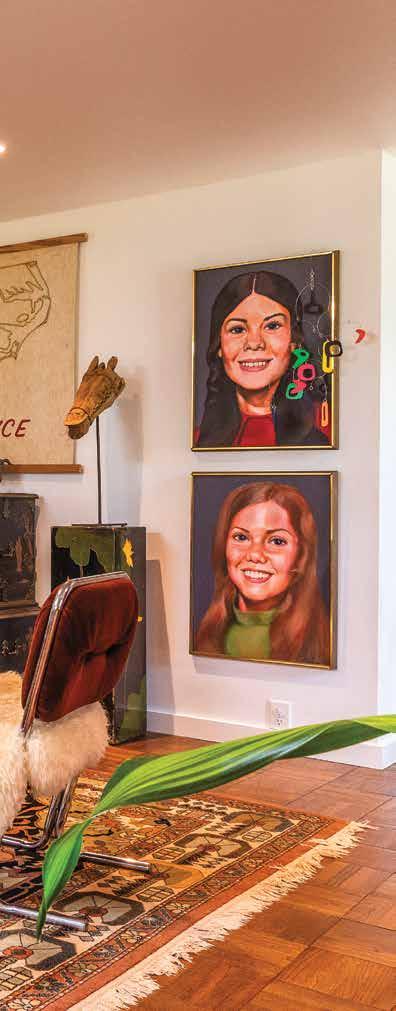
confrmed but are fun to believe. One thing is certain: Before previous owners painted the house black, it was referred to as “the dentist’s offce.” The house on Horseshoe Road is the rare instance where Allison is happy that the original brick had been painted.
Past the house number, set in a silver script that hints of diners and the Jetsons, lipstick red double doors welcome visitors into a curated space. The furniture and décor were inherited or purchased secondhand from estate sales, Community Thrift, Sandhills Coalition, Habitat for Humanity and Facebook Marketplace. “My favorite piece is probably that — what would you call that? Dresser? Chest? — the Asian chest,” Allison says, pointing to the black and gilt chinoiserie in the dining room. “That belonged to my grandparents. Ever since I was 5, I was like, “One day . . .’”
Beside the chest hangs a pair of portraits of girls who could ft in with the Brady Bunch. “We have no idea who they are,” says Joseph. The Smiths bought the paintings at a sale for something nearing $5 apiece and, in trying to identify the subjects, discovered their frst Realtor had been the previous owner of the paintings, also bought them at a sale, and doesn’t know who the girls are either.
Potatoes fll a prized brown ceramic bowl displayed prominently on

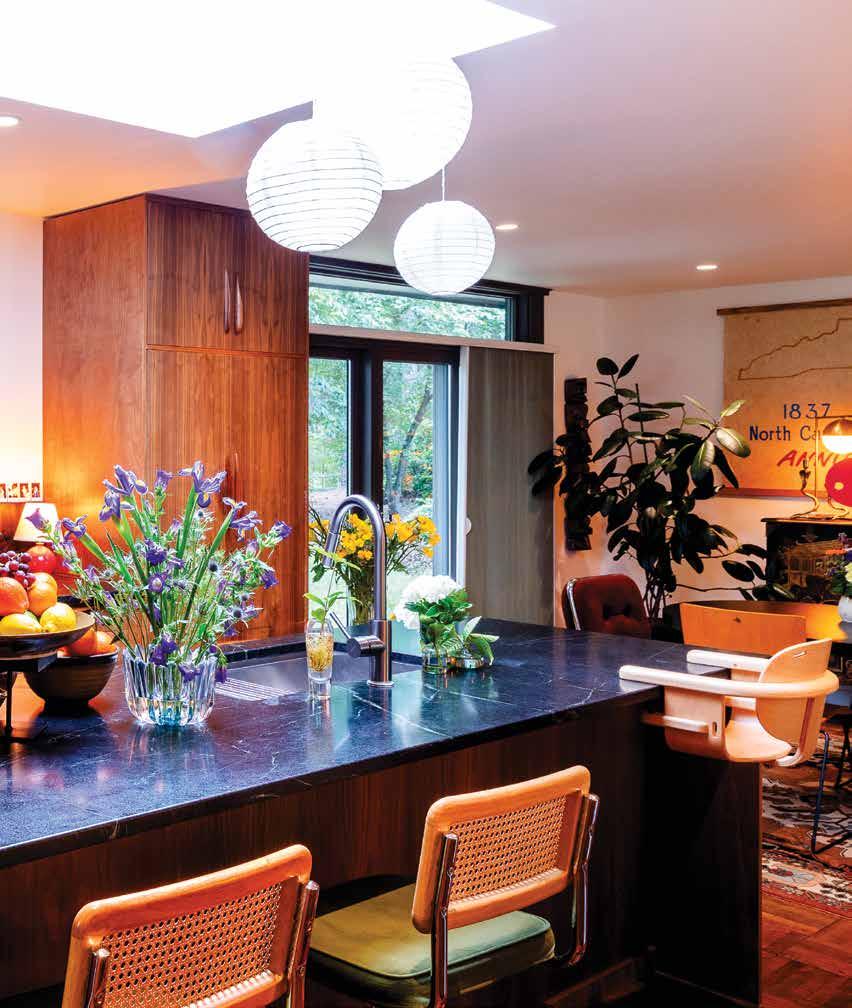
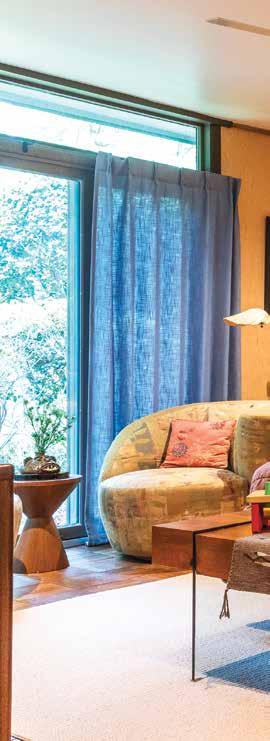

the kitchen island. “For me, my favorite thing is that bowl because Allison made it in a pottery class, and I love it,” says Joseph, with a wide grin. “I love that thing.”
Allison laughs. “He’s like, ‘If there’s a fre, other than you and Lettie, I’m taking that bowl,’” she says.
Smith House has two bedrooms for now, but soon there will be three. The room conversion is the last project in a series that started when they purchased the home serendipitously.
“We love mid-century modern homes,” Joseph says. “We were looking and looking. We really wanted to fnd a house that was us, or close enough to us that we could make it us. And we found a house.”
It was in Fayetteville. It had imported cypress panels and Japanese joinery. It was a mid-century modern dream, and for the Smiths, a Faustian bargain. “Are we going to go to Fayetteville and live in our dream house where we’re just far enough from her family to be too far?” Joseph says. Allison grew up in West End, a descendant of families who have been in the Sandhills for centuries. The Shaws — a many-times-great-grandmother was born in Shaw House. The Aumans of Auman Lake on her father’s side and the Pages of Aberdeen on her mother’s.
“The day that we’re going to sign the papers, our Realtor says, ‘Hey, you know there’s this other
house. It’s the last day on the market on Horseshoe Road over by Pine Needles if you want to at least give it a look,’” Joseph recalls. They were last to tour the property for best-and-fnal offers.
“We walked in. We saw the parquet foors. The big foor-to-ceiling windows. The big doors.” They were sold. Within the frst two years, Joseph and Allison had replaced the ceiling; opened the foor plan for dining, living and kitchen to mingle three-in-one; added birch paneling to the bedrooms; and remodeled the bathroom with upgrades that included a bidet after a trip to Italy. As DIYers, they did it all, from ceiling insulation to kitchen cabinets constructed of walnut plywood that complement the mid-century modern architecture.
“We both liked it before we got together,” Allison says of their mutual love for the aesthetic. “Neither of us took convincing to be into the style, thank goodness.”
“This might be, after the fact, why I think I like it,” says Joseph. “When I grew up, all of Las Vegas was midcentury homes like Palm Springs, kind of Eichler, single story, fat roof, palm tree.” (Joseph Eichler was an American real estate developer known for building mid-century modern houses priced for middle-class Californians.)
For Allison, relationships fed her appetite for good design. Her aunt and uncle worked at the architectural frm Hayes-Howell and Associates, and her grandmother “just had a love of beautiful things.” Allison jokes that her mom is the original Pinterest-er. To this day, Mom tears pages from home magazines and bestows them on whomever she thinks could be inspired to dive down a Facebook Marketplace rabbit hole.
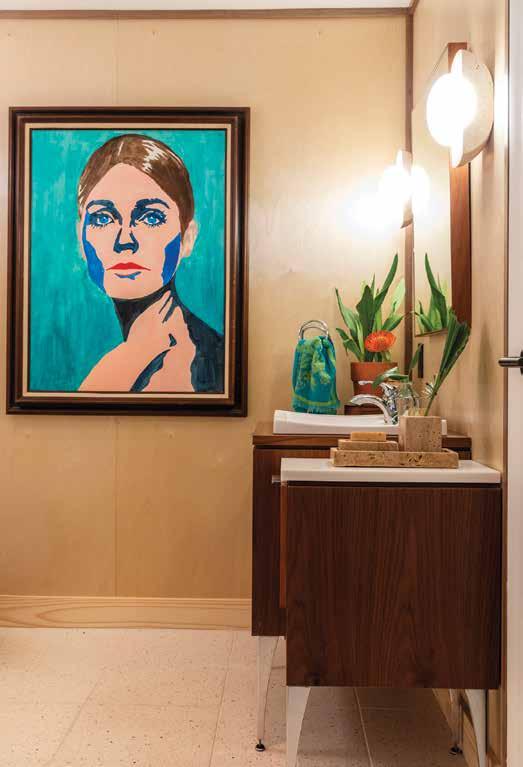
“The age of good furniture is gone,” Joseph says, matter-of-factly, “and if it’s not gone, you’re going to pay $48,000, but you can get it secondhand and cheaper, and somebody locally benefts.”
It’s already out there. Somebody might as well add it to their collection of delightful curiosities. PS
Jenna Biter is a writer and military wife in the Sandhills. She can be reached at jennabiter@ protonmail.com.







By Ashley wAlshe
August is a sunfower labyrinth; constellations of black-eyed Susans; the frst yellow leaf, descending.
Summer fades like fawn spots: subtly. It’s hard to notice when you’re in the thick of it. When earth bursts with conefower and primrose. When the forest foor is fush with chanterelles and electric redorange cinnabars.
We are cradled by lushness.
Wasn’t it yesterday that we were weaving among wild bramble, plucking warm berries, enlivened by the prickly kiss of thorn? Weren’t the frefies just twinkling, making magic of these balmy nights? Honeysuckle lingers in the sultry air. Bumblebees bustle as if summer, too, were gaining speed.
The garden continues its wild giving. Thistle goes to seed. Apples begin knocking upon the sweetly turning earth.
Back when the felds were soft with daisies, spotted fawns hid in plain sight, silent as dappled sunlight. Then, they knew only mother’s milk and stillness. Now, they know of woody browse, wildfowers, movement.
Hummingbirds fit among cardinal fowers. The carnival of butterfies delight in all directions. A golden leaf slow-dances toward the forest bed.
In our nectar-drunken state, we are living beyond time. Dreaming, almost. Lulled by the hum of bees and a purple blur of blazing star.
Summer holds us to her chest. We want for noth ing. But something is shifting in the soil that we can’t yet name.
Perhaps it’s the tender ache of be ing weaned. Of sensing the inevitable. Of let ting yourself get swept up in the dreamlike wonder of a seemingly endless summer.
Watermelon ice cream. Nothing says late summer magic quite like it. Especially when you make it yourself.
And it can be simple.
A quick internet search unearths recipes that require as few as two ingredients: frozen watermelon plus (coconut, almond or sweetened condensed) milk or yogurt. Add a pinch of salt for an added pop. Got a blender? Fresh ice cream in no time.

It’s sweet. It’s refreshing And, c’mon, it’s pink.
Serve with a sprig of fresh mint to take it to the next level.
August was nearly over — the month of apples and falling stars, the last care-free month for the school children. The days were not hot, but sunny and limpidly clear — the frst sign of advancing autumn.
Victor Nekrasov

How to get the biggest squeeze of summer: Freeze your pesto. Pickle something. Make honeysuckle sun tea.
Slice a tomato, straight off the vine. Drift among fowers as a butterfy. Listen for the whippoorwill at twilight. Let the feld crickets lull you to sleep. Wake up and smell the ginger lily. Watch the clouds reshape themselves. Arrange a bouquet of wildfowers. Dip your feet in a tinkling creek. Nap in a hammock.
Repeat. PS
The People + Businesses Making Our Community a More Vibrant Place to Live and Work
AUGUST 2026
SPONSORED SECTION
PHOTOGRAPHS BY LOLLY NAZARIO
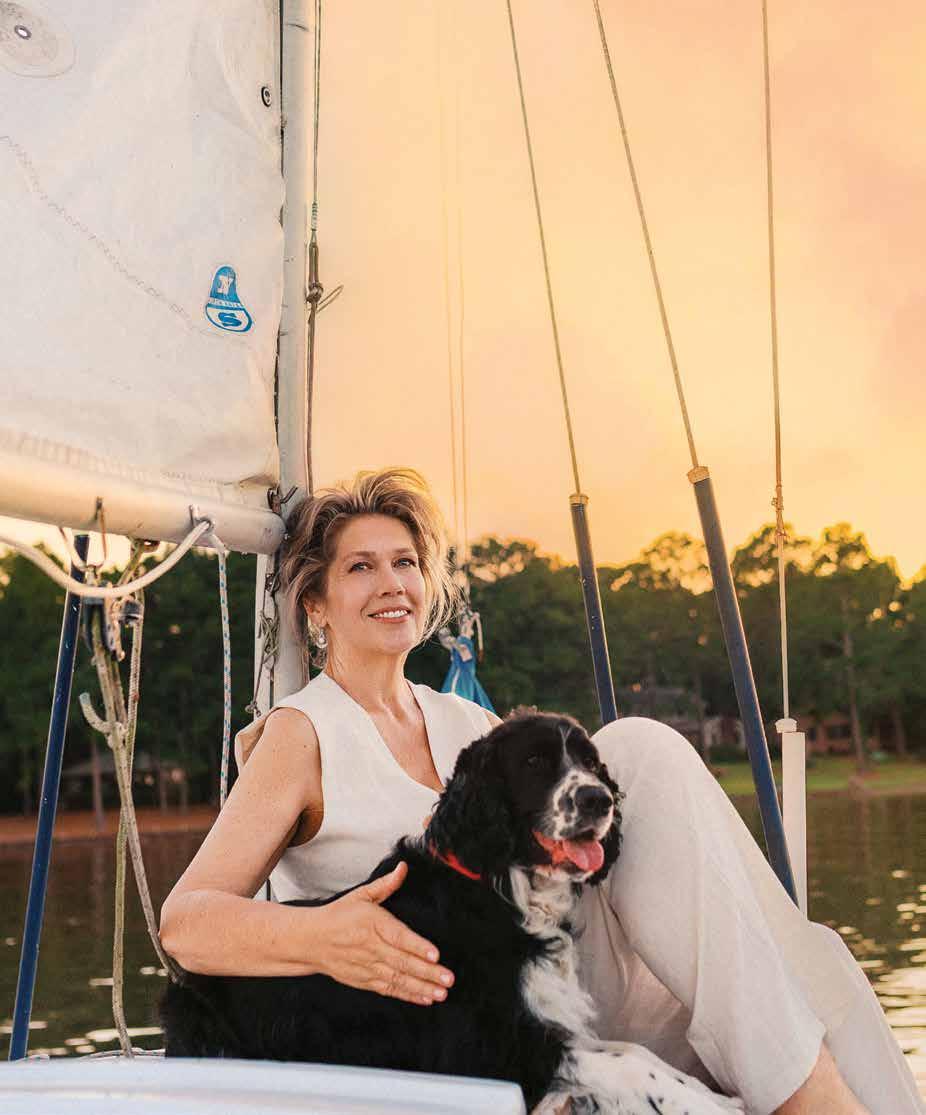

“Watch the sky, and adjust your sails.” Those were the words Sarah Casey heard from her father when he taught her to sail on the Chesapeake Bay, where the winds change from gentle breezes to white capped squalls quickly. He taught her not to panic and thrash the tiller, but to adjust her sails, and reach the goal. Years later, she crewed on his boat on an Annapolis to Bermuda race through a tropical depression. “The race belongs on a bucket list,” she says. “Sailing through a tropical depression does not!”
The lesson stayed with her. When life required unanticipated changes of course, Sarah assessed and adjusted her angle of attack, from taking on homeschooling to moving her grandmother in with her family. The goal never moved. The sails did.
Originally from Annapolis, MD, Sarah spent time traveling, living abroad, caring for horses and living on the water from Long Island to Bogue Sound. Those experiences taught her there is not just one perfect place to live and no single defnition of luxury. For one it’s a modern second home on a fairway. For another, it’s acreage that actually works for horses. For others, it’s a fip-fopped walk from their back door to their deep water dock. She and her husband found theirs in Seven Lakes, where they sail their boat and swim with their three dogs.
First licensed more than 20 years ago, she has renovated, rented, and taken raw land through construction and resale. Today, through Sarah Moves Moore at eXp Realty, she works with lake, golf and equestrian clients across Moore County, paying close attention to the diference between the house someone says they want and the life they describe wanting. Sometimes that gap has been so large, she has advised homeowners not to sell, encouraged buyers to build and redirected buyers to communities not originally on their radar.
“I would rather lose a transaction than have a client regret the decision,” she says. “Find the life frst. The house follows.”
CHIP CROMARTIE CEO
DIRECTOR OF SALES & MARKETING
Director of Construction

Since opening their doors in 1964, Penick Village has remained steadfast in its commitment to serving older adults with compassion, dignity, excellence, and innovation. As a faith-based, not-for-proft Life Plan Community, their mission has always been to cultivate a welcoming community where residents have the freedom to focus on wellness, meaningful relationships, and living life to its fullest.
Today, more than six decades later, that commitment continues through one of the most exciting chapters in the community’s history. A new campus expansion refects their dedication to providing attractive senior living options, while preserving the warm, vibrant community that has defned Penick Village for over 60 years. The expansion directly supports CEO Chip Cromartie’s strategic vision to grow and provide a personalized experience that fosters wellness, independence and carefree living.
Such a monumental undertaking could easily cause trepidation, but CFO Missy Smith has worked tirelessly throughout the project and bond fnancing to ensure Penick’s fnancial stability. “With over 82% of the project sold in 3 weeks, and 100% reserved for almost 18 months,” says Wendy Farrell, Director of Sales & Marketing, “I think it’s a powerful indication of the
community’s support, and their desire for this new space. I’m just really proud of the work my team has done.”
With the timely and timeless work by Blum Construction nearing completion, move-ins to these beautiful new residences are now underway and will continue throughout the Fall of 2026, welcoming new neighbors – and new friends – into the Penick Village family. “We’re really grateful for all of COO Carrie Dugas’ eforts to ensure a seamless integration of the new residents and their residences,” Chip says. Residents both present and future are already enjoying the new VanCamp Wellness Pavilion, featuring more than 5,400 square feet of thoughtfully designed wellness and gathering spaces that encourage lifelong ftness, learning, and connection. These new amenities refect Penick Village’s belief that thriving means caring for the mind, body, and spirit.
Behind every milestone celebrated together is a dedicated team whose passion, collaboration and commitment are shaping the future of Penick Village. Together, they are leading this transformational expansion while honoring the legacy built in 1964 — ensuring Penick Village remains a premier destination where community, wellness, innovation and exceptional service continue to thrive for generations to come.
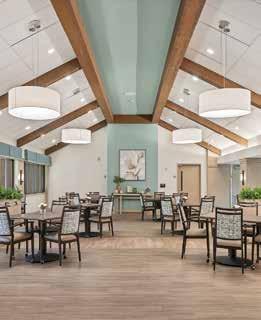
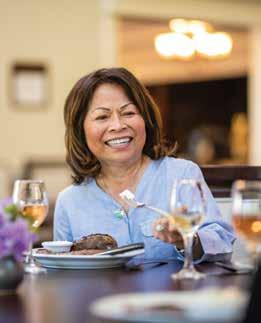
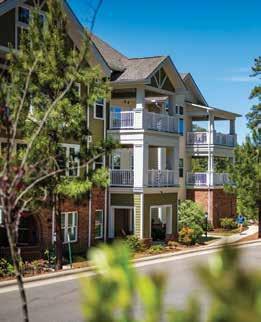
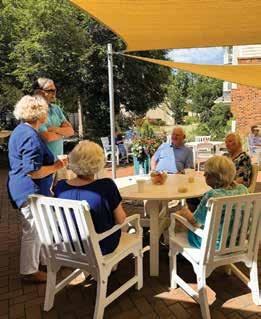

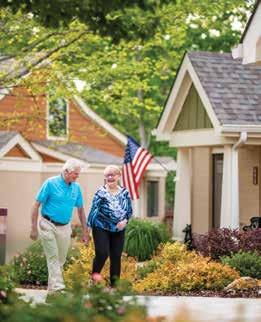


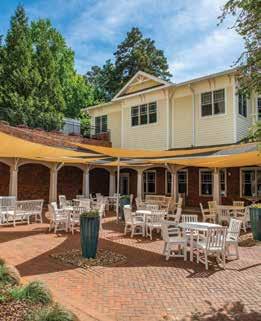
Geof Kenney’s journey to Pinehurst is as homegrown as the meals he creates. Raised in Lumberton, North Carolina, Geof developed an early appreciation for food from his grandfather, a farmer who taught him the importance of knowing where ingredients come from. He also learned the fundamentals of cooking by watching his parents prepare meals for their large family, where gathering around the table was a cherished tradition. While attending the University of North Carolina Wilmington, Geof honed his craft in the vibrant restaurant scene around Wrightsville Beach, working alongside accomplished chefs who helped shape his culinary career. As his experience grew in Knoxville, Tennessee, he had one clear goal in mind: becoming an executive chef.
Pinehurst Resort’s strong sense of community, exceptional quality of life and reputation as one of the country’s premier golf destinations ultimately drew Geof back to North Carolina. Childhood memories of visiting Pinehurst made the decision even more meaningful.
Today, Geof serves as Executive Chef of Wiregrass, Pinehurst’s farm-to-table restaurant in the Main Clubhouse. His culinary philosophy centers on creating memorable dining experiences that celebrate the region, its culture and its ingredients. Throughout his career, he has been especially passionate about Southern cuisine, showcasing fresh, locally sourced ingredients through thoughtful preparation and dishes that tell the story of a place. Wiregrass provides the perfect stage for that vision.
In addition to Wiregrass, Geof oversees culinary operations for the Pinehurst Country Club restaurant and the Deuce. By highlighting the favors, traditions, and seasonal ingredients of North Carolina’s Sandhills, he strives to create a true sense of place with every meal—continuing the family tradition that frst inspired him to bring people together around the table.
Approachable and deeply rooted in the local community, Wiregrass welcomes everyone to experience Geof’s distinctly regional approach to dining. The restaurant is open daily to the public for dinner from 5 p.m. to 9:30 p.m.

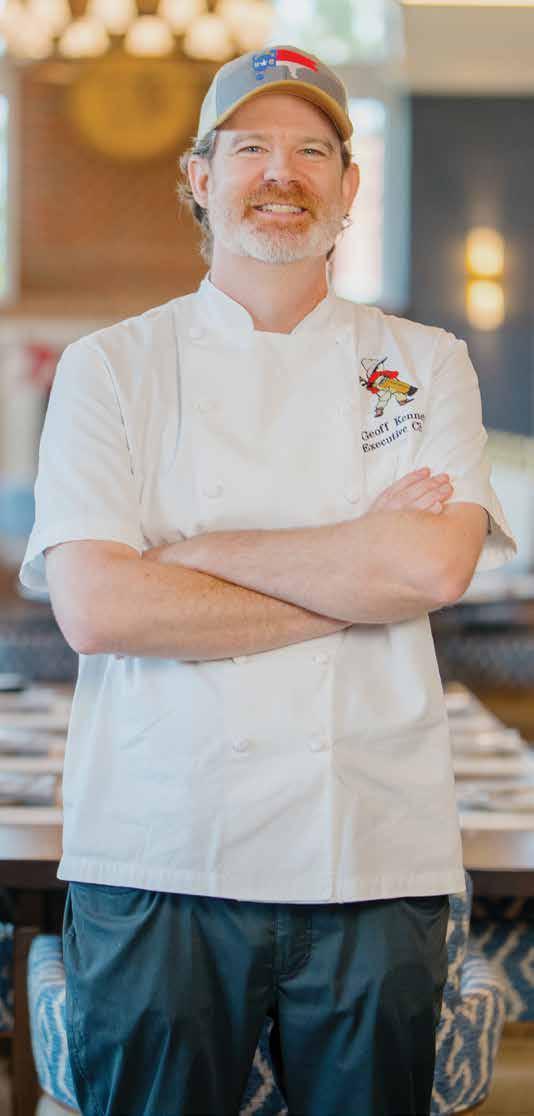

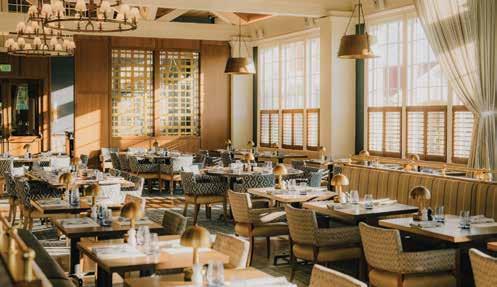

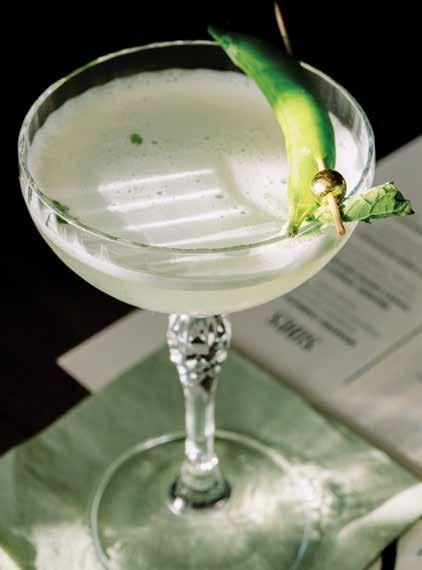
Born and raised in Carthage, Caleb Chalfinch grew up with a passion for numismatics – the study or collection of coins and currency. His childhood hobby led to a lifelong interest and eventually a career. In 2023 Caleb founded Coins of the Pines directly on the picturesque Carthage courthouse square. With family roots reaching back over 200 years, Moore County is home to Caleb and it’s that same hometown feel which keeps customers coming back.
“I Care,” Caleb says. “I want a customer who comes into my shop to feel comfortable.” At Coins of the Pines, everyone is treated with respect whether their purchase is worth $5 or $5,000. His goal is to have repeat business with a customer, building a relationship that will span years.
You might say relationships are his specialty. “Being a good husband to my wife and good father to my daughters is my greatest accomplishment,” Caleb says. In fact, his wife Maria was the driving force behind the business. Born on Long Island, NY to Italian descendants, Maria met and married Caleb after moving to Moore
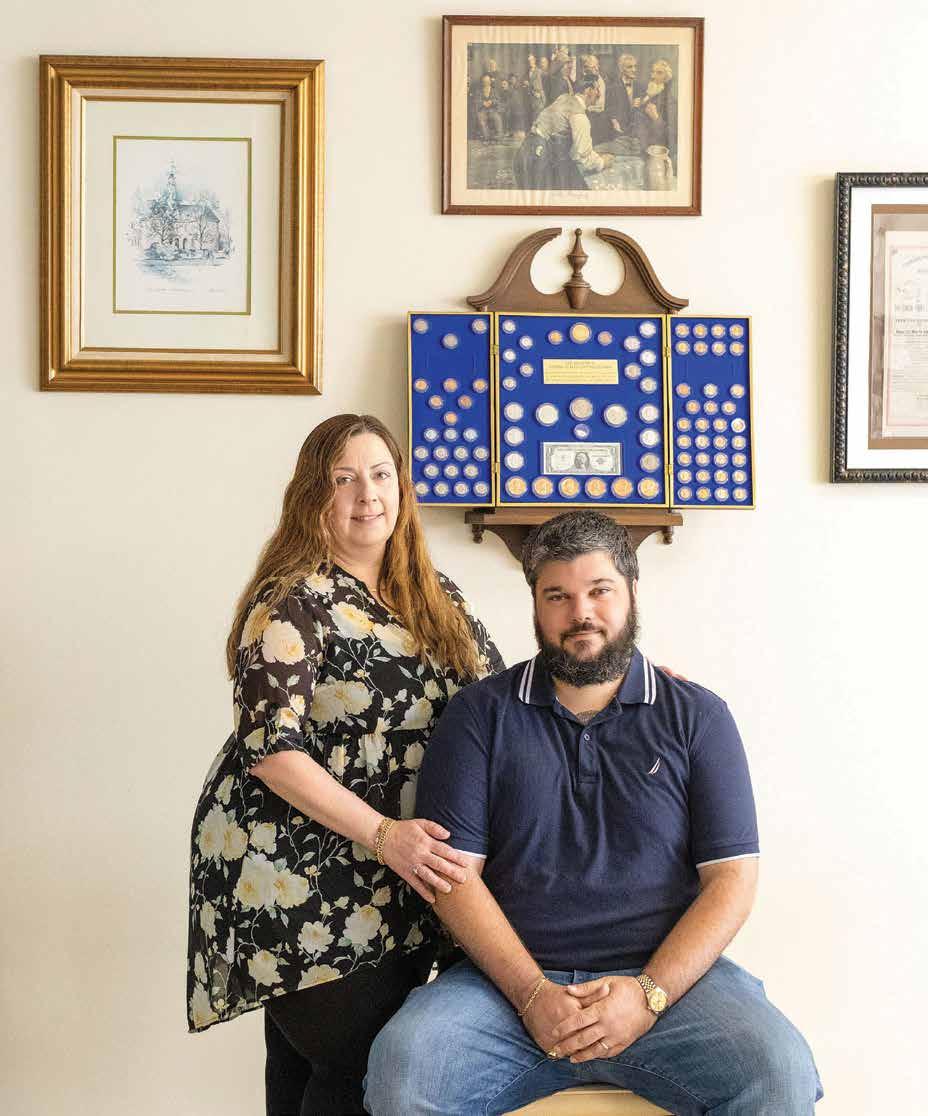
County, where she had fallen in love with the slower pace of life. Once one of New York City’s fnest, her determined personality is what enabled Caleb to turn his love for collecting and numismatics from a passion into a full-time business.
Coins of the Pines buys and sells all forms of coins and paper currency, as well as gold, silver or platinum bullion and coins for investment. They also purchase jewelry and sterling silver fatware. Naturally, collectable coins of all kinds and their numismatist owners fnd their way in or the shared enthusiasm…that, and the free appraisals on all items and collections, regardless of size.
Caleb and Maria pay top dollar for the coins passing through their shop, but perhaps just as importantly, they also give top level customer service. Together, they are building more than a family-owned and operated business – they are building a community. So whether you have a few inherited coins, are looking for an investment option in precious metals, or something in between, head to Coins of the Pines.

Will Stone’s path to medicine began not in a classroom, but as a Peace Corps volunteer in the Philippines. Arriving with a passion for helping others, he soon realized that good intentions alone weren’t enough. To make a meaningful diference, he needed the knowledge and skills that only medicine could provide, so he came to North Carolina to attend medical school.
Today, Dr. Stone is board certifed in both Urogynecology and Reconstructive Pelvic Surgery and Obstetrics and Gynecology. Through FirstHealth Urogynecology with Southern Pines Women’s Health Center, he joins an excellent team serving patients as the region’s board certifed civilian Urogynecologist.
His subspecialty focuses on pelvic foor disorders, including prolapse, urinary and bowel incontinence, and other complex pelvic conditions that can profoundly afect a woman’s quality of life. Yet for Dr. Stone, treating these conditions is about more than surgery or clinical expertise. He works to remove the stigma surrounding pelvic foor disorders—often brought on with pregnancy and menopause—and empower women to seek solutions.
“This is an area that absolutely needs the care,” says Dr. Stone. “We have a growing female population who remain socially and recreationally active. We’re very excited to ofer the full scope of evidence-based medical care to this community and all of the surrounding counties.”
To meet that need, Dr. Stone and FirstHealth are hoping to expand the subspecialty’s practice with additional staf and space in the near future. Dr. Stone and his family fell in love with Moore County during his active-duty time as a Urogynecologist at Womack Army Medical Center. “In a world that is rapidly changing,” he says, “this place feels like a beautiful, precious time capsule.”
Through his career he’s earned numerous honors for excellence in clinical care and resident education. But perhaps his greatest accomplishment is refected not in his credentials, but in the words of a grateful patient: “Dr. Stone is the doctor that all doctors should aim to be.”
Growth isn’t just about adding more agents. It’s about building the right team to support them.
As Keller Williams Pinehurst continues to grow, they are excited to announce Casey Barbera as the new broker-in-charge. Casey has built her business on professionalism, integrity and a genuine passion for helping others succeed. Her commitment to education, mentorship and servant leadership makes her a natural ft to help lead the KW Market Center into its next chapter.
“I’m incredibly excited to step into this role and join a leadership team that has already built something truly special. KW Pinehurst has a strong culture, talented agents and a reputation for excellence. I look forward to supporting our agents, building on that foundation, and helping the ofce continue to grow and thrive,” says new BIC Casey Barbera.
Meridith Mucci will continue in her role as Team Leader, allowing agents to beneft from even more coaching, business development and day-to-day support. Both Casey and Meridith actively own and operate successful real estate businesses, giving them frsthand insight into the opportunities and challenges agents face every day.
“Finding the right person to add to the leadership team was such an important decision, and we were willing to take our time to fnd the right ft. We weren’t just looking for experience or someone to simply fll the role. We were looking for someone who shares our values, our culture and our commitment to helping others succeed. Casey is that person, and I’m so excited about what we’ll be able to accomplish together for our agents and our community,” says Meridith Mucci
At KW Pinehurst, culture has always come frst. When you invest in people, everyone benefts. Better-trained, bettersupported agents create better experiences for buyers and sellers, and that’s what they believe our community deserves.
The next chapter at KW Pinehurst isn’t just about growth. It’s about growing with purpose.



Elite Roofng LLC has been serving homeowners and businesses across Moore County and the surrounding communities since 2006. Their more than 20 years in the industry has earned them a reputation for quality craftsmanship, dependable service and lasting customer relationships. While the company ofcially opened its doors in Aberdeen, North Carolina, the story began years earlier in Massachusetts, where Owner and President Tony Inglese Jr. frst launched his career in construction in the early 1990s. Starting with residential remodeling and roofng, he eventually expanded into new home construction, building the experience and expertise that would shape his future business.
It was in 2006 that Tony relocated his family to North Carolina, seeking new opportunities and a better quality of life –one he knew the Sandhills could ofer. After recognizing a shortage of reliable, high-quality roofng contractors in the area, he founded Elite Roofng with the simple mission of providing exceptional roofng solutions backed by honesty, professionalism and superior workmanship. More than two decades later, that commitment

remains the foundation of the company’s success.
Today, Tony still oversees every aspect of this business he built, from daily operations and employee leadership to sales, marketing, and long-term strategic planning. You can recognize him on the job site as the man with an afable smile, working hands-on with his team. His 25 years of experience as a licensed general contractor is inestimable, but it is ultimately Tony’s passion for the people he helps that continues to drive the company’s growth.
In 2025, Elite Roofng expanded its services through a partnership with longtime friend Tim Allred, owner of A&E Gutter Systems and Gutter Cleaning. A Moore County native, Tim’s local knowledge and expertise allow the companies to ofer customers a convenient one-stop solution for roofng and gutter services. When they are not busy leading the business, both Tony and Tim enjoy hunting, fshing, camping, boating and spending time outdoors with their families. Give Elite Roofng a call and give their family a chance to help yours.


Tucked away just of the bustle of Morganton Road is a little shop that was once a big dream. Owner Angie Clark still remembers the difcult period in her life years ago, when she heard a sermon preached from the book of Job: for there is hope of a tree, if it be cut down, that it will sprout again.
“I was at the lowest I had ever been and I remember lifting my head and thinking, ‘I can bloom again.’” A sentiment echoed in the revival of each carefully curated piece, awaiting its next home. Angie’s goal is to bring back the personal connection and enjoyment that makes shopping truly meaningful, while fnding new life for carefully curated furniture, antiques and décor. She believes homes should be flled with items that tell a story.
Angie’s own story began in her hometown of Maxton, N.C. as “a preacher’s kid who loved ministry work.” After earning a degree in economics and business at UNC Chapel Hill, she devoted herself to homeschooling her two children, while making a hobby of decorating and styling her home and church functions. Eventually, with the support of her husband Aric, she decided to spread her style wings. It was an exciting and terrifying leap of faith.
“Kathryn at Design Market in Aberdeen took a chance and gave me the opportunity to start with a vendors booth.” In March 2020, that little booth fedged into a fully feathered venture, which has only continued to grow since then. This fall, Bloom is proud to announce that they will become a dealer for the Italian luxury porcelain brand Ginori 1735.
From humble beginnings in her own home to a thriving boutique, Angie cannot help but see God’s faithfulness in it all.
“We each have a story and I hope to be an encouraging line in the story of everyone I meet.” She smiles. “Maybe someone who is at their lowest point will see my sign and God will let them know they too can Bloom Once Again.” Next time you are on Morganton Road, take the turn into Beverly Lane. You just might fnd what you’re looking for.

When you think of Wisconsin, tacos are probably not the frst thing that comes to mind. But for Jim O’Malley, combining two of his loves makes perfect sense. “I like to be creative in everything I do,” he says. “Being an entrepreneur requires self-drive and a willingness to take risks. A graduate of Valparaiso University with a degree in real estate development, Jim has spent decades building a multifaceted empire ranging from subdivision development to retail, self-storage units, warehouse and multifamily construction. In 2026 he added restaurant owner to his title.
His dream for Wisco Taco Foxtrot is to create a truly fun spot that builds community, blending food and fun with a Midwestern sense of hospitality. It’s his ofering to the Sandhills, one that honors his Wisconsin roots. The restaurant’s name is a nod to its location near the airport, aviation’s phonetic alphabet and a really cool love story.
Born in Milwaukee with a lifelong devotion to cheese curds, Jim’s connection to the Sandhills began in 1989, when his parents relocated to Whispering Pine. He’s traveled all over, and it was a fight through Atlanta that changed everything: in December 2017, a power outage grounded his plane for three-and-a-half hours. Somewhere in that unplanned layover, he struck up a conversation with a fight attendant. Both were widowed, and both were open to where the conversation might lead. He asked her to dinner that same day. They married in 2022, and the Sandhills is where they’ve built their life together.
With multiple indoor and outdoor spaces that can be rented private events, Jim envisions many ways to serve the community, from birthdays and anniversaries to military retirement parties. This summer, Wisco Taco Foxtrot will be hosting live music, game nights, patio parties, kid-friendly events and more.
When he’s not running the restaurant, Jim stays busy with his wife and co-owner, Stephanie O’Malley, their children and a steady rotation of travel, downhill skiing and golf. Looking ahead, he’s already eyeing new warehouse and retail projects on the horizon. His motto is “Work hard, but enjoy what you do” — a philosophy he’s brought to every venture, from his newest restaurant in Southern Pines to everything that came before it.
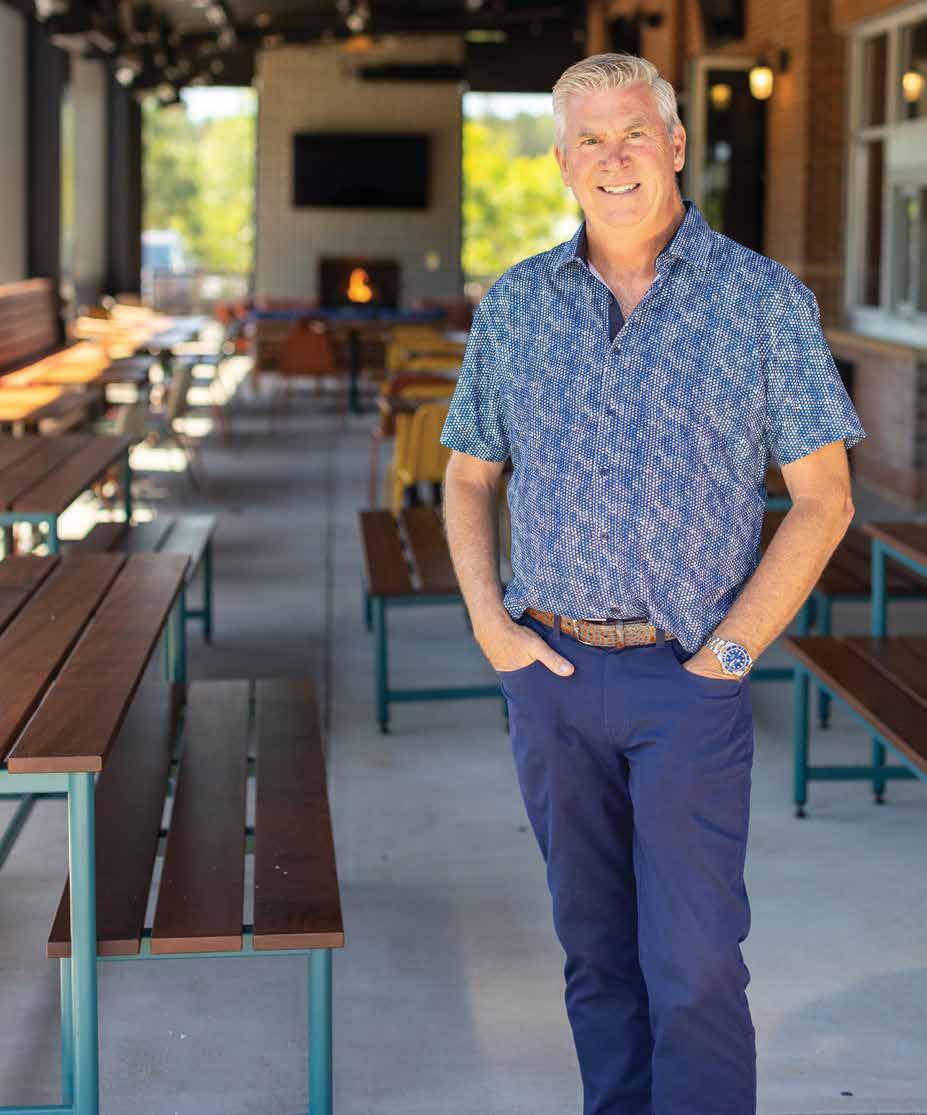
Now Open For Lunch
6 Days a Week

John D. Samples has long kept a special place in his heart for the O’Neal School. As a father, he watched his two children thrive there, maturing in an environment primed to help them succeed – an environment founded over 55 years before by other parents seeking a better, independent education for their own children. It was an experience that led him to become more involved as a trustee. He went on to help create a leadership program focused on cultivating essential leadership qualities in every student participant, such as resilience, confdence, efective communication, trust and emotional intelligence.
As a former Garrison Commander and retired Army Colonel, leadership is part and parcel to John. “I was privileged to lead soldiers, families and communities in a variety of challenging environments. What I discovered along the way is that the most rewarding part of leadership is investing in people and helping them grow into their full potential,” he says.
John and his family frst moved to Pinehurst in 2014 and knew then that this area was to be their forever home. When it came time to retire from the Army, stepping into the role of head of school felt like a natural continuation of his commitment to service and leadership.
“My experience as a Garrison Commander taught me how to build strong communities, steward resources responsibly and create environments where individuals can thrive,” he says. These will be reliable skills for a head of school preparing to guide O’Neal into its next chapter, while continuing to invest in the students, faculty, and families who make the school so special.
“I believe my greatest expertise lies in bringing people together around a shared vision,” says the new head of school. He is looking forward to a new mission of supporting faculty and staf, fostering student growth and preparing young people to lead with character, confdence and purpose.

Somewhere in the Sandhills, a retiree opens their quarterly statement and turns to the safe half of their portfolio. Much of it sits in bonds. For the last decade, playing it safe paid about two percent, often less than infation. That is the quiet math behind many comfortable-looking plans.
The usual fxes only swap one risk for another. Chase a better yield, and you buy lower quality. Stretch for a longer maturity, and you ride interest rates up and down.
Course Management Investment Advisors was built to solve that problem, not live with it. “The standard rule says put a substantial portion of your money in bonds and accept what it earns. Our clients deserve better,” says founder Albert Chen. The Pinehurst frm begins with each family’s goals, then shapes an income strategy to ft their needs, often using custom structured notes developed with issuing frms. That same
discipline carries over into tax, estate planning, and healthcare expenses.
The frm’s name is a golf term. Course management is the art of playing the long game, taking disciplined shots over heroic ones, and staying out of trouble that would wreck a good round. “We see ourselves as the caddie, not the player,” says partner Michael Bucceri. “We read the course, know where the trouble hides, and walk all eighteen holes with you.”
For most families, that walk runs two and three generations deep, and it covers the moments no brochure lists. Claiming Social Security. Steadying a family after the loss of a loved one. Helping a grandchild buy a frst car. Many of these families started as neighbors and stayed.
“Course Management is built for the back nine,” says senior wealth manager Doug Lynam. “No one should play it alone.”


2026
Although conscientious effort is made to provide accurate and up-to-date information, all events are subject to change and errors can occur! Please call to verify times, costs, status and location before planning or attending any events.
SATURDAY, AUGUST 1
MUSICAL. 11 a.m. - 12:30 p.m. Imagine Youth Theatre, Jr. presents The Lightning Thief: The Percy Jackson Musical. Owens Auditorium, 3395 Airport Road, Pinehurst. Info: www.ticketmesandhills.com.
STARLAB. 11:30 a.m. - 12 p.m. Journey together from our solar system to deep space, while exploring everything in between. Given Memorial Library, 150 Cherokee Road, Pinehurst. Info: www.vopnc.org.
MUSICAL. 7:30 p.m. Imagine Youth Theatre, Jr. presents Les Miserables, the school edition. There will be another performance on Aug. 2 at 2 p.m. Owens Auditorium, 3395 Airport Road, Pinehurst. Info: www.ticketmesandhills.com.
SUNDAY, AUGUST 2
WRITING GROUP. 3 p.m. Are you interested in creating fction, nonfction, poetry or comics? Come to the Sunday Afternoon Writing Group. Connect with other writers and artists, chat about your craft, and get feedback about your work. All levels welcome. Info: lholden@sppl.net.
MONDAY, AUGUST 3
QUILTS OF VALOR. 12 - 4 p.m. Quilts of Valor meets the frst Monday of each month to create lap quilts made especially for veterans. If you sew, bring your machine. If you don’t sew, you can iron or cut out fabrics for new designs. This is a free program. Moore County Senior Enrichment Center, 8040 U.S. 15-501, West End.
WEDNESDAY, AUGUST 5
PLAY TIME IN THE PARK. 10 a.m. - 12 p.m. Kids ages 3 - 12, bring your parents out and join other friends for giant checkers, giant Jenga, bubbles, fun and more. Free of charge. Downtown Park, Southern Pines. Info: (910) 692-7376.
To add or delete an event, email us at pinestraw.calendar@gmail.com
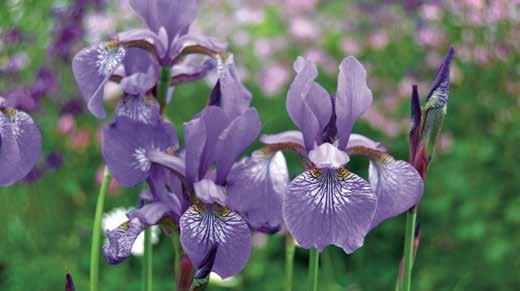
Friday August 7, 10 a.m.
Sandhills Community College, Ball Visitors Center
SUMMER READING. 10 a.m. - 12 p.m. Before it’s time to head back to school, take one more adventure exploring the great outdoors through reading and check off a summer reading bingo square. There will be nature-themed books and a fun craft while supplies last. Given Memorial Library, 150 Cherokee Road, Pinehurst. Info: www.vopnc.org.
THURSDAY, AUGUST 6
BAKE SALE FUNDRAISER. 11 a.m. - 1 p.m. The Senior Enrichment Center is hosting its annual bake sale. Moore County Senior Enrichment Center, 8040 U.S. 15501, West End. Info: (910) 947-4483.
FRIDAY, AUGUST 7
SPARK STORYTIME. 10 a.m. Join a special, once-a-month story time at Fire Station 82. Ages birth to 5 are welcome. Fire Station 82, 7850 NC-22, Carthage. Info: www.sppl.net.
PLANT PRESENTATION. 10 a.m. Join Heather Haley to learn the basics of properly planting and caring for irises in the home landscape. Limit 100 people. Cost is
$10 for members and $20 for non-members. Ball Visitors Center, 3245 Airport Road, Southern Pines. Info: www.sandhills.edu/ gardenevents.
POLLINATOR CENSUS PRESENTATION. 10:30 a.m. - 12:30 p.m. Join the Southern Pines Public Library and Moore County Master Gardeners for a presentation about what a pollinator census is, why it is important, and how you can participate. Southern Pines Public Library, 170 W. Connecticut Ave., Southern Pines. Info: www.sppl.net.
CURIOUS KIDS. 11 a.m. - 12 p.m. Join open-ended activities for curious kids ages 7 - 10 who like to build, test, mix, and fgure things out through hands-on problemsolving. This month, make a marble maze. While supplies last. Southern Pines Public Library, 170 W. Connecticut Ave., Southern Pines. Info: www.sppl.net.
POPSICLE POP UP. 12 - 1 p.m. All ages can cool off with Popsicles courtesy of Southern Pines Parks and Recreation. Athletic Complex, 190 Fire Lane, Southern Pines. Info: (910) 692-7376.
FIRST FRIDAY. 5 p.m. Enjoy a night on the Sunrise lawn with music by Florencia & The Feeling. Sunrise Theater, 250 N.W. Broad St., Southern Pines. Info: www. sunrisetheater.com.
OPENING RECEPTION. 5 - 7 p.m. The Artists League of the Sandhills presents “More Than Miniatures — Small Wonders.” The exhibit will be on display through Aug. 28. Artists League of the Sandhills, 129 Exchange St., Aberdeen. Info: www.artistleague.org.
FINE ARTS FESTIVAL. 6 - 8 p.m. Join the Arts Council of Moore County for the opening reception for the Fine Arts Festival. Artwork will remain on display through Aug. 26. Campbell House, 482 E. Connecticut Ave., Southern Pines. Info: www.mooreart.org.
MONDAY, AUGUST 10
SUMMER CONCERT SERIES. 6:30 - 8 p.m. The Sandhills Community College Jazz Band presents “Swingin’ Under Blue Skies.” Free, but tickets are required. Owens Auditorium, 3395 Airport Road, Pinehurst. Info: www.ticketmesandhills.com.
PHOTO CLUB. 7 p.m. The Sandhills Photo Club monthly meeting will be a competition featuring the topic “Long Exposure.” Members are invited to create ethereal and dreamlike images by capturing motion over time. Guests are welcome. Sandhills Horticultural Ball Garden Visitors Center, 3245 Airport Road, Southern Pines. Info: www.sandhillsphotoclub.org.
TUESDAY, AUGUST 11
HATHA YOGA. 10 - 11 a.m. Adults 55 and older can increase fexibility, balance, stability and muscle tone while learning the basic principles of alignment and breathing. You may gain strength, improve circulation and reduce chronic pain practicing gentle yoga postures and mindfulness. Free of charge. Douglass Community Center, 1185 W. Pennsylvania Ave., Southern Pines. Info: (910) 692-7376.
TWEEN BOOK CLUB. 3 - 4 p.m. At the Tween Read-Aloud Book Club, read an exciting book (or a few chapters) together, talk about any favorite moments and enjoy activities inspired by the story. No pressure, just books, fun and friends. Designed for ages 8 - 12. Activities for younger siblings will be available in the children’s area. Southern Pines Public Library, 170 W.
Connecticut Ave., Southern Pines. Info: www.sppl.net.
WEDNESDAY, AUGUST 12
TECH TIME. 11 a.m. Join a walk-in tech time to get hands-on help with tech questions. Whether you’re new to computers, want to learn more about your smartphone, or want to learn how to use your eReader, staff will guide you. Southern Pines Public Library, 170 W. Connecticut Ave., Southern Pines. Info: jmilford@sppl.net.
PICNIC IN THE PARK. 11 a.m. - 12 p.m. Ages 12 and under can join Southern Pines Parks and Recreation once a month for fun games, crafts and story time. Bring your own picnic lunch. Free of charge. Downtown Park, Southern Pines. Info: (910) 692-7376.
BOOK CHAT AND CHILL. 5:30 p.m. Join a book chat and chill night, a relaxed evening of bookish conversation, great company and literary inspiration. Bring a book to chat about or one to swap, if you’d like. Food and drinks will be available for purchase. Hickory Tavern, 9735 U.S. 15501, Pinehurst. Info: mhoward@sppl.net.
THURSDAY, AUGUST 13
GARDEN TOUR. 10 a.m. Join the Sandhills Horticultural Gardens’ docents who share secrets for creating a thriving monarch habitat. Free of charge. Limit of 15 people. Ball Visitors Center, 3245 Airport Road, Southern Pines. Info: www. sandhills.edu/gardenevents.
POETRY READING CLUB. 11 a.m.12 p.m. Adults 55 and older can bring a favorite poem or one you have written to share with friends. Free of charge. Douglass Community Center, 1185 W. Pennsylvania Ave., Southern Pines. Info: (910) 692-7376.
HOT GLASS, COLD BEER. 5:30 p.m.
This month is fameworking, with a live artist demonstration, live music and food trucks. Open to the public. Cost to attend is pay-what-you-can with a $5 suggested donation. Starworks, 100 Russell Drive, Star. Info: www.StarworksNC.org.
FRIDAY, AUGUST 14
LIVE AFTER 5. 5:15 - 9 p.m. Dance the night away with the band Liquid Pleasure. There will also be kids’ activities, food trucks and more. Free event. The Village Arboretum, 375 Magnolia Road, Pinehurst. Info: www.vopnc.org.
END OF SUMMER PARTY. 5:30 - 8 p.m.
As summer winds down join a Southern Pines Parks and Recreation party featuring food trucks, bounce houses, yard games, slides, music and more. Downtown Park, Southern Pines. Info: (910) 692-7376.
MOVIES IN THE PINES. 8 - 9:30 p.m.
All ages can enjoy a showing of Smurfs Downtown Park, Southern Pines. Info: (910) 692-7376.
SATURDAY, AUGUST 15
WELDING WORKSHOP. 9:30 a.m. Join this intro to welding workshop. Cost is $300. Starworks, 100 Russell Drive, Star. Info: www.StarworksNC.org.
STORYTIME. 10:15 a.m. - 12 p.m.
Saturday Storytime is a once-a-month program for children from birth to age 5. There will be stories, songs, rhymes and smiles as caregivers and young children interact and explore the fun of language and early literacy. Southern Pines Public Library, 170 W. Connecticut Ave., Southern Pines. Info: www.sppl.net.
MONDAY, AUGUST 17
DAY OF SERVICE. 11 a.m. - 2 p.m.
Assemble school kits for local children and families through Family Promise and Partners for Children & Families. Every kit helps provide school supplies to kids who need them most. Donate school supply items from Aug. 1 - 13 to help fll these kits. Everyone is welcome to participate, but children should be accompanied by an adult. Southern Pines Public Library, 170 W. Connecticut Ave., Southern Pines. Info: www.sppl.net.
TEEN SILENT BOOK CLUB. 3:30 - 5 p.m. Bring a book, eBook or audiobook and join a quiet reading time with snacks and good company. Optional book talk and social time follows. Southern Pines Public Library, 170 W. Connecticut Ave., Southern Pines. Info: www.sppl.net.
TUESDAY, AUGUST 18
JAMES BOYD BOOK CLUB. 2 p.m. This month the club will discuss At The Water’s Edge, by Sara Gruen. Free admission, but registration is required. The Great Room, Weymouth Center for the Arts & Humanities, 555 E. Connecticut Ave., Southern Pines. Info: www.weymouthcenter.org.
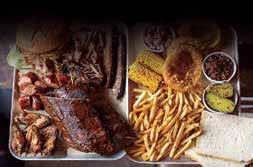









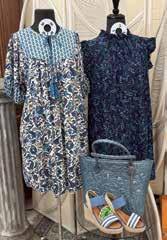




FRIDAY, AUGUST 21
POLLINATOR CENSUS. 9 - 11 a.m. Join a citizen-science project counting pollinators in the gardens. Alongside participants across the Southeast, you can help gather important data that supports pollinator conservation. Free, but registration is required. Ball Visitors Center, 3245 Airport Road, Southern Pines. Info: www.sandhills. edu/gardenevents.
CARDBOARD REGATTA. 10 a.m. - 12 p.m. Show off your boating skills creating your own boat made of cardboard, then paddle in the Southern Pines pool. Registration required. For ages 5 - 17. J. Pleasant Hines Pool Park, 730 S. Henley St., Southern Pines. Info: (910) 692-7376.
SATURDAY, AUGUST 22
CRAFT DAYS. Children and families can come by the library for a drop-in craft day to work on a fun, hands-on craft at their own pace. Crafts are designed for children in grades K-5 and their families. This is a self-guided activity, so caregivers should plan to assist as needed. While supplies
last. Southern Pines Public Library, 170 W. Connecticut Ave., Southern Pines. Info: (910) 692-8235 or www.sppl.net.
TWEEN CRAFT. All day. Tweens and teens can visit the teen space to work on a fun, hands-on craft at their own pace. These crafts are designed for older tweens and teens in middle school and high school. This is a self-guided activity, so caregivers plan to assist as needed. While supplies last. Southern Pines Public Library, 170 W. Connecticut Ave., Southern Pines. Info: www.sppl.net.
HUG-A-HORSE. 10 a.m. Weymouth Equestrians presents Hug-a-Horse. There will be a second session at 11 a.m. Free and open to the public, but advance registration is required. Limited to 15 participants per session. Families, please reserve just one ticket per household, regardless of the number of family members attending. Weymouth Center barn, 555 E. Connecticut Ave., Southern Pines. Info: www.weymouthcenter.org.
TEEN OUTING. 1 - 6:30 p.m. Teens ages 12 - 17 can travel to Chapel Hill to visit




the Morehead Planetarium and tour the science center. Lunch at Merritt’s Grill. Bus departs from the Rec Center, 160 Memorial Park Court, Southern Pines. Cost is $29 for residents and $40 for non-residents. Info: (910) 692-7376.
MUSIC PRESENTATION. 2 p.m. Dr. Brian Felix will take the audience on an audio and visual journey with a presentation on “The (Tone) Wheel is Turning: The Hammond Organ, the Grateful Dead and 1960s Rock.” The Great Room, Weymouth Center for the Arts & Humanities, 555 E. Connecticut Ave., Southern Pines. Info: www.weymouthcenter.org.
CONCERT EXPERIENCE. 6:30 p.m. Airshow performs live with special guest, Retrograde. The Jive Hive, 2151 VassCarthage Road, Carthage. Info: www. ticketmesandhills.com.
SUNDAY, AUGUST 23
STEAM. 2:30 - 3:30 p.m. Elementaryaged children and their caregivers are invited to learn about topics in science, technology, engineering, art and math,


and to participate in STEAM projects and activities. This month join a Lego block party. Southern Pines Public Library, 170 W. Connecticut Ave., Southern Pines. Info: (910) 692-8235 or www.sppl.net.
JAZZ. 2 p.m. Enjoy music from the Brian Felix Organ Trio. On the lawn at the Weymouth Center for the Arts & Humanities, 555 E. Connecticut Ave., Southern Pines. Info: www.weymouthcenter.org.
TUESDAY, AUGUST 25
CREATIVITY CLUB. 3:45 - 4:45 p.m.
Creativity Club at the fre station is a monthly program that will feature space geoboards in August. Activities are designed for kids in grades K-5 but are adaptable to other ages and abilities. Caregiver participation is required. Fire Station 82, 7850 N.C. 22, Carthage. Info: www. southernpines.net/FormCenter/Library-11/ Creativity-Club-Registration-117.
FRIDAY, AUGUST 28
STATE FARMER’S MARKET. 8 a.m. - 4 p.m. Adults 55 and older can visit the State Farmers Market and then head to lunch at
Clyde Cooper’s BBQ afterward. Cost is $10 for residents and $14 for non-residents. Info: (910) 692-7376.
VOTER REGISTRATION DRIVE. 12 - 1 p.m. Prepare for the midterm elections at a voter registration drive with the Moore County Board of Elections. Attendees can check and update their existing registration, register for the frst time or make a valid photo ID that can be used for voting. Southern Pines Public Library, 170 W. Connecticut Ave., Southern Pines. Info: www.sppl.net.
MOONLIGHT HIKE. 8 - 9 p.m. All ages are welcome to discover nature by moonlight. Children must be accompanied by an adult. Bring a fashlight. Weymouth Woods Nature Preserve, 1024 N. Fort Bragg Road, Southern Pines. Info: (910) 692-7376.
SATURDAY, AUGUST 29
MONEY TALK. 10:30 a.m. Join Doug Lynam for a “Taming Your Money Monster” talk. In his book Taming Your Money Monster: Nine Paths to Money Mastery with the Enneagram, Lynam maps these money monsters to the Enneagram — a nine-type personality framework —





and offers practical paths to taming each one. Southern Pines Public Library, 170 W. Connecticut Ave., Southern Pines. Info: www.sppl.net.
SUMMER MARKET. Come to the Moore County community summer market. Fair Barn, 200 Beulah Hill Road S., Pinehurst. Info: www.vopnc.org.
SUNDAY, SEPTEMBER 13
POP UP IN THE PINES. 11 a.m. - 4 p.m. Wander through stalls of talented makers, savor delicious bites and soak in the kind of community spirit that feels like an old-fashioned block party. Weymouth Center for the Arts & Humanities, 555 E. Connecticut Ave., Southern Pines. Info: www.popupinthepines.com.
MONDAYS
CHAIR YOGA. 9 - 10 a.m. For adults 55 and older. Help offset body aches encountered with desk work. This is an accessible yoga class for bodies not able to easily get

up from and down to the foor. Do standing or sitting in a chair. Free of charge. Douglass Community Center, 1185 W. Pennsylvania Ave., Southern Pines. Info: (910) 692-7376.
JIGSAW PUZZLES. 9 a.m. - 3 p.m. Adults 55 and older can enjoy puzzle fun with friends or solo. Free of charge. Puzzles can be done Monday through Friday. Douglass Community Center, 1185 W. Pennsylvania Ave., Southern Pines. Info: (910) 692-7376.
FITNESS MEMBERSHIP. 9 a.m. - 4:30 p.m. Adults 55 and older can use a variety of equipment such as treadmills, free weights, stationary bikes and more. Cost for a six-month membership is $18 for residents and $26 for non-residents. The ftness room is open Monday through Friday. Douglass Community Center, 1185 W. Pennsylvania Ave., Southern Pines. Info: (910) 692-7376.
INDOOR WALKING. 10 a.m. - 12 p.m. Adults 55 and older can get an indoor walking membership in the climatecontrolled gym. Membership can be used Monday through Friday. Cost for a six-month membership is $18 for residents
and $26 for non-residents. Southern Pines Recreation Center, 160 Memorial Park Ct., Southern Pines. Info: (910) 692-7376.
SENIOR FITNESS. 11 a.m. Adults 55 and older are invited to a TruFit gym class to improve strength, mobility and fexibility. Douglass Community Center, 1185 W. Pennsylvania Ave., Southern Pines. Info: (910) 692-7376.
RESTORATIVE YOGA. 12 p.m. For adults 55 and older. Practice gentle movements that may help alleviate pain while improving circulation and general wellbeing. Bring your own mat. Free of charge. Douglass Community Center, 1185 W. Pennsylvania Ave., Southern Pines. Info: (910) 692-7376.
BRIDGE. 1:30 - 4:30 p.m. For adults 55 and older. Enjoy games of bridge with friends. Douglass Community Center, 1185 W. Pennsylvania Ave., Southern Pines. Info: (910) 692-7376.
ACTIVE LIVING. 2:30 - 3:30 p.m. Adults 55 and older are invited to join a 12-week program teaching sedentary people the skills necessary to overcome barriers to becoming physically active. Free of charge.
Douglass Community Center, 1185 W. Pennsylvania Ave., Southern Pines. Info: (910) 692-7376.
TUESDAYS
VIRTUAL SPINNING CLASS. 8:30 - 9 a.m. Adults 18 and older can attend a 30-minute fun and effective bike workout. Limit of seven people per class. Free of charge. Douglass Community Center, 1185 W. Pennsylvania Ave., Southern Pines. Info: (910) 692-7376.
INTERVAL WALKING. 9:15 - 9:45 a.m. Adults 18 and older can do interval training alternating between periods of brisk and slow walking. Free of charge. No class on the second Tuesday of the month. Douglass Community Center, 1185 W. Pennsylvania Ave., Southern Pines. Info: (910) 692-7376.
PLAYFUL LEARNING. 10 a.m. - 2 p.m. Come to a drop-in, open playtime where children ages 0 - 3 can interact with other children and enjoy educational play. Given Memorial Library, 150 Cherokee Road, Pinehurst. Info: (910) 295-3642.
BABY RHYMES. 10:15 a.m. Baby Rhymes is designed for the youngest learners




(birth- 2) and their caregivers. Repetition and comforting movements make this story time perfect for early development and brain growth. There will be a duplicate session at 10:45 a.m. An active library card is required. Dates this month are Aug. 4, 11, 18 and 25. Southern Pines Public Library, 170 W. Connecticut Ave., Southern Pines. Info: (910) 692-8235 or www.sppl.net.
GAME DAY. 12 - 4 p.m. Fun, fellowship, games and activities. For adults 55 and older. Douglass Community Center, 1185 W. Pennsylvania Ave., Southern Pines. Info: (910) 692-7376.
CHESS. 1:30 - 5 p.m. Join a chess group, whether you are an experienced player or a beginner. This is a free program. Moore County Senior Enrichment Center, 8040 U.S. 15-501, West End.
TABLE TENNIS. 3 - 5 p.m. Adults 55 and older are invited to enjoy free games of table tennis while making new friends. The second Tuesday of the month games will be played on that Thursday instead. Douglass Community Center, 1185 W. Pennsylvania Ave., Southern Pines. Info: (910) 692-7376.

LINE DANCE. 4:45 p.m. Put on your dancing shoes and line dance. This is for beginners and is a free program. Moore County Senior Enrichment Center, 8040 U.S. 15-501, West End.
WEDNESDAYS
SANDHILLS FARMERS MARKET. 3
p.m. - 6 p.m. The Sandhills Farmers Market features the area’s farms, nurseries, bakeries, meat and egg providers, cheesemakers and specialty food producers. The market runs twice weekly through Sept. 30 at Tufts Park, 1 Village Green Road, W., Pinehurst. For more information visit: www.moorefarmfresh.com.
INTERVAL WALKING. 9:15 - 9:45 a.m. Adults 18 and older can do interval training alternating between periods of brisk and slow walking. Free of charge. Douglass Community Center, 1185 W. Pennsylvania Ave., Southern Pines. Info: (910) 692-7376.
CHAIR AEROBICS. 10 - 11 a.m. For adults 55 and older. Put on your boogie shoes and jam. Get ft to dance, partying up a sweat to great music through the decades.

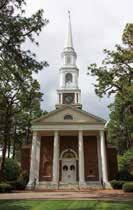

Stand and chair dance to this energizing, low-impact aerobic workout. Free of charge. Douglass Community Center, 1185 W. Pennsylvania Ave., Southern Pines. Info: (910) 692-7376.
BRAIN BOOST. 10 - 11 a.m. Test your memory while creating new brain connections. This is a free program. Moore County Senior Enrichment Center, 8040 U.S. 15-501, West End.
KNITTING. 10 - 11 a.m. Learn how to knit or come and knit with other people. This is a free program. Moore County Senior Enrichment Center, 8040 U.S. 15501, West End.
BABY STORYTIME. 10 - 11 a.m. Develop the foundation for your baby’s later reading with stories, songs and play. Open to parents and caregivers of infants from newborn to 24 months. Moore County Library, 101 W. Saunders St., Carthage. Info: (910) 947-5335.
LEARN AND PLAY. 10 a.m. - 12 p.m. Enjoy an open play date with developmental toys and puzzles for your toddler or preschooler and get early literacy tips for parents to incorporate into daily
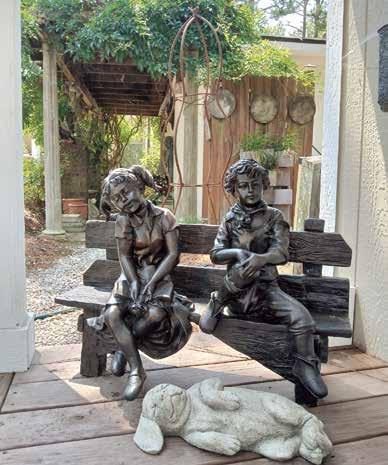

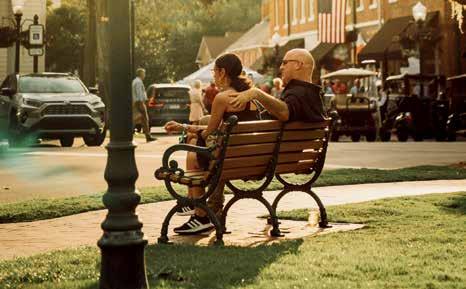
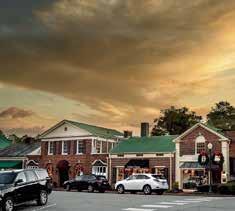

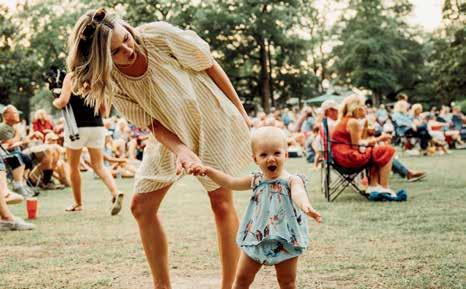
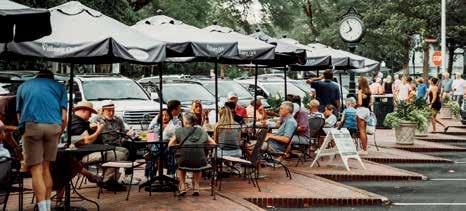

activities. Dates this month are Aug. 5, 12, 19 and 26. Southern Pines Public Library, 170 W. Connecticut Ave., Southern Pines. Info: (910) 692-8235 or www.sppl.net.
SENIOR FITNESS. 11 a.m. Adults 55 and older are invited to a TruFit gym class to improve strength, mobility and fexibility. Douglass Community Center, 1185 W. Pennsylvania Ave., Southern Pines. Info: (910) 692-7376.
PIANO. 11 a.m. - 12 p.m. Join Flint Long to play piano or just listen. This is a free program. Moore County Senior Enrichment Center, 8040 U.S. 15-501, West End.
LINE DANCING. 12 - 1 p.m. Looking for new ways to get your daily exercise in and care for yourself? Try line dancing. For adults 55 and older. Douglass Community Center, 1185 W. Pennsylvania Ave., Southern Pines. Info: (910) 692-7376.
CHAIR VOLLEYBALL. 1 - 2 p.m. For adults 55 and older. Get ft while having fun. Free to participate. Douglass Community Center, 1185 W. Pennsylvania Ave., Southern Pines. Info: (910) 692-7376.
BRIDGE. 1:30 - 4:30 p.m. For adults 55 and older. Enjoy games of bridge with friends. All materials included. Douglass Community Center, 1185 W. Pennsylvania Ave., Southern Pines. Info: (910) 692-7376.
DANCE. 2 - 2:30 p.m. For adults 55 and older. Instructor Maria Amaya will introduce you to dance ftness in a class designed for anyone who wants to gently and gradually increase cardio function, mobility and balance while having fun at the same time. Free of charge. Douglass Community

Center, 1185 W. Pennsylvania Ave., Southern Pines. Info: (910) 692-7376.
LINE DANCING. 2 p.m. The town of Vass hosts line dancing for seniors every other Wednesday. Cost is $5 per session. Vass Town Hall, 140 S. Alma St., Vass. Info: www.townofvassnc.gov.
LIBRARY PROGRAM. 3:30 p.m. At The Library After School (ATLAS) is an after-school program for children in grades K - 2 who enjoy activities, crafts, stories and meeting new friends. Dates this month are Aug. 5, 12, 19 and 26. Southern Pines Public Library, 170 W. Connecticut Ave., Southern Pines. Info: (910) 692-8235 or www.sppl.net.
TAI CHI. 6:30 p.m. Come learn tai chi. There is no age limit and the classes are open to the public. Cost is $10 per class. Seven Lakes West Community Center, 556 Longleaf Drive, Seven Lakes. Info: (910) 400-5646.
THURSDAYS
VIRTUAL SPINNING CLASS. 8:30 - 9 a.m. Adults 18 and older can do a fun and effective 30-minute bike workout. Limit of seven people per class. Free of charge. Douglass Community Center, 1185 W. Pennsylvania Ave., Southern Pines. Info: (910) 692-7376.
MOORE COUNTY FARMERS
MARKET. 9 a.m. - 1 p.m. The yearround market features “producer only” vendors within a 50-mile radius providing fresh, local and seasonal produce, fruits, pasture meats, eggs, potting plants, cut fowers and local honey. Crafts, baked goods, jams and jellies are also available. Market is located at the Armory Sports

Complex, 604 W. Morganton Road, Southern Pines.
GIVEN STORY TIME. 10 a.m. Bring your preschooler for stories, songs and activities. Given Memorial Library, 150 Cherokee Road, Pinehurst. Info: (910) 295-3642.
BALANCE AND FLEXIBILITY. 10 - 11 a.m. Adults 55 and older are invited to enjoy a class to help reduce the risk of taking a tumble and increase their ability to recover if they do. Free of charge. Douglass Community Center, 1185 W. Pennsylvania Ave., Southern Pines. Info: (910) 692-7376.
MUSIC AND MOTION. 10:15 and 10:45 a.m. Does your toddler like to move and groove? Join Music and Motion to get those wiggles out and work on gross and fne motor skills. For ages 2 - 5. An active library card is required. Dates this month are Aug. 5, 12, 19 and 26. Southern Pines Public Library, 170 W. Connecticut Ave., Southern Pines. Info: (910) 692-8235 or www.sppl.net.
GENTLE YOGA. 12:30 - 1:30 p.m. Adults 55 and older are invited to unwind, recharge and fnd peace in their week. Free of charge. Douglass Community Center, 1185 W. Pennsylvania Ave., Southern Pines. Info: (910) 692-7376.
MAHJONG. 1 - 3 p.m. For adults 55 and older. Mahjong involves skill, strategy, calculation and luck. Requires four players. Free of charge. Douglass Community Center, 1185 W. Pennsylvania Ave., Southern Pines. Info: (910) 692-7376.
IMPROVERS LINE DANCE. 3 - 5:30 p.m. Put on your dancing shoes and line dance. This is a free program. Moore County Senior Enrichment Center, 8040 U.S. 15501, West End.


LITTLE U. 3:45 p.m. Little U is a preschool program for children ages 3 1/2 - 5 featuring stories, songs, rhymes and activities exploring the world of books, language and literacy. Little U is a fun and interactive program designed to help preschoolers develop early literacy skills in preparation for kindergarten and beyond. Dates this month are Aug. 6, 13, 20 and 27. Southern Pines Public Library, 170 W. Connecticut Ave., Southern Pines. Info: (910) 692-8235 or www.sppl.net.
AEROBIC DANCE. 9 - 10 a.m. For adults 55 and older. Enjoy a low-to-moderate impact class with energizing music for an overall cardio and strength workout. Free of charge. Douglass Community Center, 1185 W. Pennsylvania Ave., Southern Pines. Info: (910) 692-7376.
JAM SESSION. 9:30 - 11:30 a.m. Do you like to play an instrument, sing or just listen to music? Join a music jam session. This is a free program. Moore County Senior Enrichment Center, 8040 U.S. 15-501, West End.
TAP CLASS. 10 - 11:30 a.m. For adults 55 and older. All levels welcome. Cost for six-month membership: $18/resident; $26/ non-resident. Douglass Community Center, 1185 W. Pennsylvania Ave., Southern Pines. Info: (910) 692-7376.
SENIOR FITNESS. 11:30 a.m. Adults 55 and older are invited to a TruFit gym class to improve strength, mobility and fexibility. Douglass Community Center, 1185 W. Pennsylvania Ave., Southern Pines. Info: (910) 692-7376.

QIGONG. 1 p.m. For adults 55 and older. Classes consist of chair and standing movements to help soothe achy feet and tight hips while easing low back pain and restriction in mobility. Free of charge. Douglass Community Center, 1185 W. Pennsylvania Ave., Southern Pines. Info: (910) 692-7376.
BRIDGE. 1:30 - 4:30 p.m. For adults 55 and older. Enjoy games of bridge with friends. All materials included. Douglass Community Center, 1185 W. Pennsylvania Ave., Southern Pines. Info: (910) 692-7376.
DRUM CIRCLE. 2 - 3 p.m. Adults 18 and older can feel the rhythm, fnd their groove and connect through the beat. No experience necessary. Free of charge. Douglass Community Center, 1185 W. Pennsylvania Ave., Southern Pines. Info: (910) 692-7376.
MOORE COUNTY FARMERS
MARKET. 8 a.m. - 12 p.m. This market features “producer only” vendors within a 50-mile radius providing fresh, local and seasonal produce, fruits, pasture meats, eggs, potting plants, cut fowers and local honey. Crafts, baked goods, jams and jellies are also available. The market runs through Nov. 21. Downtown Southern Pines, 156 S.E. Broad St., Southern Pines.
SANDHILLS FARMERS MARKET. 10 a.m. - 1 p.m. The Sandhills Farmers Market features the area’s farms, nurseries, bakeries, meat and egg providers, cheesemakers and specialty food producers. The market runs twice weekly through Sept. 30 at Tufts Park, 1 Village Green Road W., Pinehurst. For more information visit: www.moorefarmfresh.com. PS

PineNeedler Answers from page 127



300 Works. 30 Artists. Endless Inspiration. Featuring artists from the Sanford Brush & Palette Club

From paintings and pottery to notecards, journals, sculptures and one-of-a-kind treasures… there’s something for everyone to discover.
Hours: Thursday - Sunday, 11 - 4:00 PM and Special Events
Location: 507 N. Steele Street, Ste. 211, (in the historic Mann Center), Sanford, NC 27330

CYNTHIA ERIVO september 16


KEN BURNS
october 21


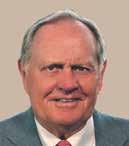
MICHAEL SCHUR JOSÉ ANDRÉS JACK NICKLAUS december 3february 25april 20
Season subscriptions on sale now. Single tickets on sale August 1. facetoface.wfu.edu








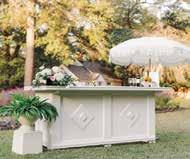





Bouquet Save Your Bouquet


Katie


Learn more at pinepressedflowers.com













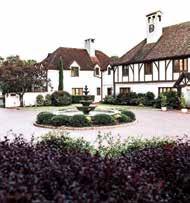



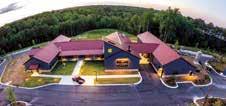





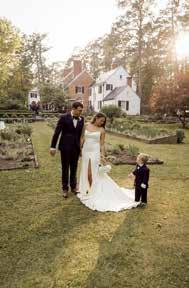







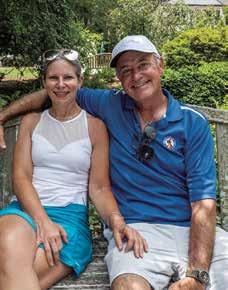
Weymouth Center For The Arts & Humanities
Saturday, June 27, 2026
Photographs by Diane McKay


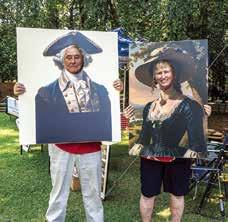

910.977.5656
















Across
Across
1. Forest cartoon bear
5. Dugout, for one
9. Polo or tee, e.g.
14. Acid related to gout
15. Teen woe
16. Healthiest thirst remedy
17. Creamy thirst remedy
19. Amorphous creature
20. Under-dress garment
21. Medical drainage implant
23. “Awesome!”
Across
64. Online publication
1. Forest cartoon bear
1. Forest cartoon bear
65. Wrath
5. Dugout, for one
5. Dugout, for one
66. Frothy thirst remedy
9. Polo or tee', e.g.
67. Rent
9. Polo or tee', e.g.
14. Acid related to gout
68. Abound
15. Teen woe
15. Teen woe
69. Catch Down
14. Acid related to gout
16. Healthiest thirst remedy
16. Healthiest thirst remedy
17. Creamy thirst remedy
1. “Dee-lish!”
2. Devout petitions
19. Amorphous creature
17. Creamy thirst remedy
3. Angler’s apparatus, 2 wds
20. Under- dress garment
19. Amorphous creature
24. Work out at the gym, 2 wds
26. Watch
28. Inactivity
30. More ashen
31. “C’___ la vie!”
32. Open, as a bottle
35. Loch monster
36. Summer whine, 2 wds
39. Porch plant
42. Arab leader
43. Alliance that includes Ukr.
46. Dodges
51. Tangy thirst remedy
54. Block and tackle part
55. ___ Khan
56. Graceful fiers
58. Gentle
59. Better
4. More distasteful
21. Medical drainage implant
20. Under- dress garment
23. "Awesome!"
5. “___, humbug!”
21. Medical drainage implant
6. Wood sorrels
24. Work out at the gym, 2 wds
23. "Awesome!"
7. Egyptian crosses with loops
26. Watch
24. Work out at the gym, 2 wds
8. Get ready to drive, 2 wds
28. Inactivity
30. More ashen
9. Fabric sample
26. Watch
10. ___ and cheese sandwich
31. "C'___ la vie!"
11. Restate
28. Inactivity
32. Open, as a bottle
12. Deal incentives
30. More ashen
35. Loch monster
13. Dealers
36. Summer whine. 2 wds
31. "C'___ la vie!"
49. Bird with iridescent feathers
18. Saliva
39. Porch plant
32. Open, as a bottle
22. “What’s ___?”
42. Arab leader
24. Even score
35. Loch monster
25. Pub offering
36. Summer whine. 2 wds
43. Alliance that includes Ukr.
27. Little
46. Dodges
39. Porch plant
29. Advil target
42. Arab leader
61. Reproductive cell fusion result
65. Wrath
66. Frothy thirst remedy 67. Rent
68. Abound
65. Wrath
37. Ooze
10. ___ and cheese sandwich
11. Restate
38. Kind of center
Balkan
43. Irish lass
44. Brewed thirst remedy
66. Frothy thirst remedy
49. Bird with iridescent feathers
69. Catch Down
39. Chickpea patty (var.)
12. Deal incentives 13. Dealers 18. Saliva
10. ___ and cheese sandwich
11. Restate
40. Commemorate in verse
22. "What's ___?"
1. "Dee-lish!"
41. Balkan republic (var.)
43. Irish lass
2. Devout petitions
33. Order between “ready” and “fre”
43. Alliance that includes Ukr.
51. Tangy thirst remedy
34. Get ready, for short
36. ___-European
46. Dodges
54. Block and tackle part
55. ___ Khan
67. Rent 68. Abound 69. Catch Down
3. Angler's apparatus, 2 wds
45. Blue hue
4. More distasteful

49. Bird with iridescent feathers
56. Graceful fliers
58. Gentle
51. Tangy thirst remedy
59. Better
54. Block and tackle part
61. Reproductive cell fusion result
55. ___ Khan
56. Graceful fliers
58. Gentle 59. Better
61. Reproductive cell fusion result
64. Online publication
12. Deal incentives
13. Dealers
44. Brewed thirst remedy
18. Saliva
24. Even score 25. Pub offering 27. Little 29. Advil target
47. Main meal choice
"Dee-lish!" 2. Devout petitions
5. "___, humbug!"
6. Wood sorrels
7. Egyptian crosses with loops
22. "What's ___?"
24. Even score
33. Order between "ready" and "fire"
25. Pub offering
34. Get ready, for short
___-European
64. Online publication
3. Angler's apparatus, 2 wds 4. More distasteful 5. "___, humbug!" 6. Wood sorrels
8. Get ready to drive, 2 wds
9. Fabric sample...
Fill in the grid so every row, every column and every 3x3 box contain the numbers 1-9.
7. Egyptian crosses with loops
Little 29. Advil target
Ooze 38. Kind of center 39. Chickpea patty (var.)
33. Order between "ready" and "fire" 34. Get ready, for short 36. ___-European 37. Ooze
Commemorate in verse
48. Editor’s request, for short
45. Blue hue
50. Ascends
41. Balkan republic (Var.)
47. Main meal choice
43. Irish lass
52. “Do you get my ___?”
53. Follow
48. Editor's request, for short
44. Brewed thirst remedy
50. Ascends
57. Ticked off
45. Blue hue
60. “Star Trek”rank: Abbr.
52. "Do you get my ___?"
47. Main meal choice
53. Follow
62. High school class
63. .0000001 joule
57. Ticked off
48. Editor's request, for short
60. "Star Trek" rank: Abbr.
50. Ascends
62. High school class
52. "Do you get my ___?"
63. .0000001 joule
53. Follow
57. Ticked off
60. "Star Trek" rank: Abbr.
62. High school class
63. .0000001 joule
Puzzle answers on page 119
8. Get ready to drive, 2 wds
Mart Dickerson lives in Southern Pines and welcomes suggestions from her fellow puzzle masters. She can be reached at martaroonie@ gmail.com.
9. Fabric sample...
38. Kind of center
39. Chickpea patty (var.)
40. Commemorate in verse
By Ashley h A rris
My 76-year-old mother, recovering from a hip replacement, steered her cart toward a cashier at Walmart. A line of fve carts snaked ahead of us, overfowing with groceries and restless toddlers. This could take an hour. No, I decided. It was time.
I gently took command of the cart and circled back to the spacious and orderly self-checkout section. Here patrons circulated freely, checked out quickly and marched out the door, smiling into the sunshine. Mom deserved this. “Let’s use the self-checkout.”
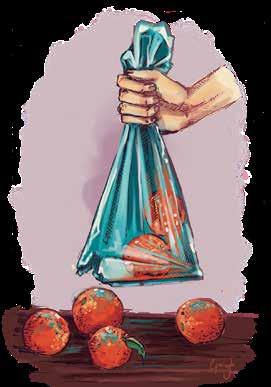
“No,” she said, her navy eyes widening with resolve, reminding me of the theory that all blue-eyed people shared one common ancestor, undoubtedly a stubborn soul who insisted on making her spears solely from the gingko tree.
I knew she was scared. Of the scanning and the codes. Of setting off some alarm that brought managers. I understood.
“This is exactly how I felt before I jumped off the high dive,” I reminded her. In her prime, Mom had been an expert swimmer, famous for her beautiful swan dives while I preferred to splash around in the kiddie section. “But you coached me through it. Remember?” At just 8 years old, I held my nose, dutifully stepped off the board, and much to my relief, bobbed right back up and doggie-paddled to her welcoming arms. That’s why I knew she could survive the self-checkout. I would be there for her. Still, she glared at me.
I sighed, moved by the gravitas of this moment. There comes a time in the life of every adult child when you realize that you must become the parent of your own parent. Today was the day I would take the bull by the horns. Or, in this case, the heifer by the hair.
“It’s so easy,” I said, rolling over to an empty register. “And there are friendly people here to help.” Sandra, one of my favorite clerks, chit-chatted with an elderly man while they weighed his avocados, the atmosphere lightened by laughter.
“OK,” Mom grumbled, realizing it was too late to protest.
“Watch this,” I said, grabbing a tub of potato soup and rolling it over the screen. A reassuring ping confrmed a successful scan.
“Your turn.”
But when she tried the same thing with a box of coffee pods, nothing happened. “Here,” I said, grabbing the box and bouncing it defnitively against the glass, which triggered the ping. “You must scan with authority. Show the scanner that you mean business.”
She nodded, and went for the next item, a box of tissues. This time she scanned it with a little more fnesse, and the scanner obligingly pinged. Then she followed with a box of crackers. Ping. Shampoo. Ping. More soup. Ping, ping, ping. Suddenly there was no stopping the blue-eyed woman whose callused-kneed ancestor foraged through the forest every day until she found enough berries and nuts to feed her family.
“You’re getting good at this,” I said. “I’m proud of you.” But now it was time for the fnal exam — a bag of six oranges, which would require a code. It was time for the pro to step in.
“Weighing produce is fun,” I reassured her, picking up the bag. Suddenly, the thin cellophane split, and those six oranges rolled in six different directions. The serenity of the self-checkout devolved into utter chaos, as patrons shuffed and hopped, dodging oranges or trying to catch them. Some were returned to us, and some were never seen again. My face burnt with embarrassment as we paid and walked out.
“You’re probably never going to do that again, are you?” I asked her.
Mom shook her head, treating me to the stare of a woman whose bloodline stood down a woolly mammoth outside the cave.
“Let me ask you something,” she said. “Did you ever jump off the high dive again?”
I never did, and she knew perfectly well I never did.
“It’s OK, honey,” she said, softening. And Mom became Mom again. “With some things, once is more than enough.” PS
Ashley Harris writes from the woods of southwest Randolph County, emerging occasionally to enjoy urban conveniences such as the self-checkout, fast food drive-throughs and the automatic car wash, which will be her next adventure with Mom.
At St. Joseph of the Pines, joining our Life Plan Community means living fully—with purpose, connection and joy. Whether music, ftness or connecting with friends is your passion, we celebrate every part of your journey and encourage you to grow, contribute and thrive! Reach
At St. Joseph of the Pines, joining our Life Plan Community means living fully—with purpose, connection and joy. Whether music, ftness or connecting with friends is your passion, we celebrate every part of your journey and encourage you to grow, contribute and thrive!
Scan the code or call 910-246-1023 to schedule your personal visit with St. Joseph of the Pines in Southern Pines today!
Scan the code or call 910-246-1023 to schedule your personal visit with St. Joseph of the Pines in Southern Pines today!