Above the Clouds: How a Skilled Aviator
Thinks and Acts by Eric Weaver

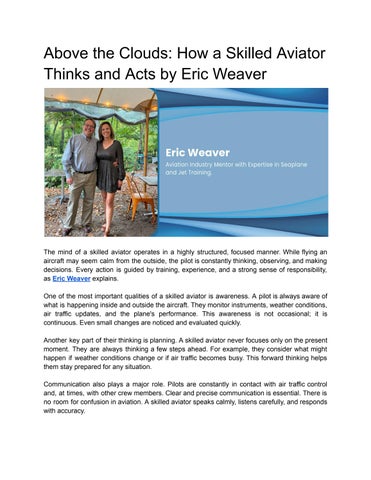
The mind of a skilled aviator operates in a highly structured, focused manner While flying an aircraft may seem calm from the outside, the pilot is constantly thinking, observing, and making decisions Every action is guided by training, experience, and a strong sense of responsibility, as Eric Weaver explains
One of the most important qualities of a skilled aviator is awareness A pilot is always aware of what is happening inside and outside the aircraft. They monitor instruments, weather conditions, air traffic updates, and the plane's performance. This awareness is not occasional; it is continuous Even small changes are noticed and evaluated quickly
Another key part of their thinking is planning A skilled aviator never focuses only on the present moment They are always thinking a few steps ahead For example, they consider what might happen if weather conditions change or if air traffic becomes busy. This forward thinking helps them stay prepared for any situation
Communication also plays a major role. Pilots are constantly in contact with air traffic control and, at times, with other crew members Clear and precise communication is essential There is no room for confusion in aviation. A skilled aviator speaks calmly, listens carefully, and responds with accuracy
Decision-making is another critical skill In the air, situations can change quickly A pilot must decide on the best course of action without delay. These decisions are not based on guesswork but on training and standard procedures Even under pressure, a skilled aviator remains calm and chooses the safest option.
Discipline is deeply rooted in a pilot’s routine Every flight follows strict procedures and checklists. A skilled aviator respects these rules because they are designed for safety. Even if a task feels repetitive, it is never ignored or rushed This discipline ensures that nothing important is missed
Mental strength is equally important Flying requires long hours of focus and responsibility A pilot must manage stress and stay mentally steady throughout the journey They train themselves to remain calm, even when unexpected challenges appear.
Finally, a skilled aviator is always learning. Aviation technology and procedures continue to evolve A good pilot keeps up to date with their knowledge and continues to improve their skills They reflect on their experiences and aim to become better with every flight
In simple terms, the mind of a skilled aviator is organized, alert, and disciplined It is shaped by training and strengthened by experience Every flight is a combination of careful thought, steady focus, and responsible action, all working together to ensure a safe journey through the skies.