
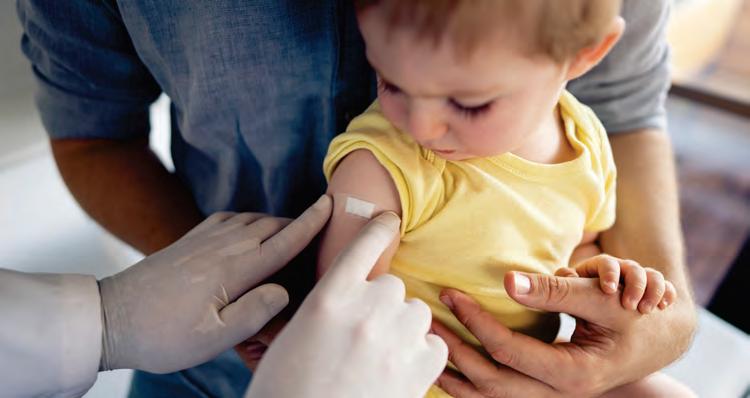
Why Vaccines Matter
• Protecting Your Child's Health: potentially life-threatening diseases.
Vaccines help prevent serious,
• Community Protection: also help protect others in the community, especially those who can't be vaccinated due to medical reasons.
Vaccines not only protect your child but
The CDC recommends a set
• CDC Recommendation: vaccination schedule to ensure timely protection from a variety of preventable diseases.
Common Myths About Vaccines
• Myth: Vaccines Cause
Autism
Extensive scientific research has shown no link
o Fact: between vaccines and autism. The CDC and other major health organizations, including the World Health Organization (WHO), have conducted numerous studies that found no connection between vaccines (including the MMR vaccine) and autism.
The original study that falsely
o Addressing Concerns: linked vaccines to autism was retracted, and its findings have been widely discredited.
Vaccines are safe, and protecting your child
o Message: from preventable diseases is far more important than any unfounded concerns.
How Vaccines Work
Vaccines stimulate the body's immune
• Immunity Explained: system to produce immunity to a disease without causing the disease itself.
• Long-Lasting Protection: immunity, while others require booster shots to maintain protection.
Some vaccines provide lifelong
Diseases That Have Been Eradicated or Controlled by Vaccines
Eradicated globally thanks to a worldwide
• Smallpox: vaccination effort. No cases have been reported since 1980.
• Polio: was declared polio-free in 1979, with only a few cases remaining worldwide.
Significant progress in reducing polio globally. The U.S.
• Measles: have drastically declined in countries with high vaccination rates. In the U.S., measles was eliminated in 2000, but recent outbreaks have occurred due to unvaccinated populations.
While still a concern in some regions, measles cases
Protecting Your Child from Serious Diseases
Vaccines protect children
• Vaccines Prevent Severe Illness: from diseases like whooping cough, chickenpox, diphtheria, and meningitis, which can cause long-term health problems or even death.
• Herd Immunity: High vaccination rates help protect those who cannot be vaccinated, such as babies, pregnant women, and those with weakened immune systems, by reducing the spread of disease.
The CDC Vaccine Schedule: What You Need to Know
The CDC has a
• Recommended Vaccines by Age: recommended vaccination schedule for infants, children, and adolescents. This includes vaccines for diseases like polio, measles, mumps, rubella, hepatitis, chickenpox, and more.
• Timing Is Key: best possible protection against preventable diseases.
Getting vaccinated on schedule ensures the
• Routine Check-Ups: Keep up with your child's doctor visits to stay on top of vaccines and any necessary boosters.